Posted in DOCTORS of the Church, MORNING Prayers, QUOTES of the SAINTS, SAINT of the DAY, The WORD

One Minute Reflection – 15 July

One Minute Reflection – 15 July

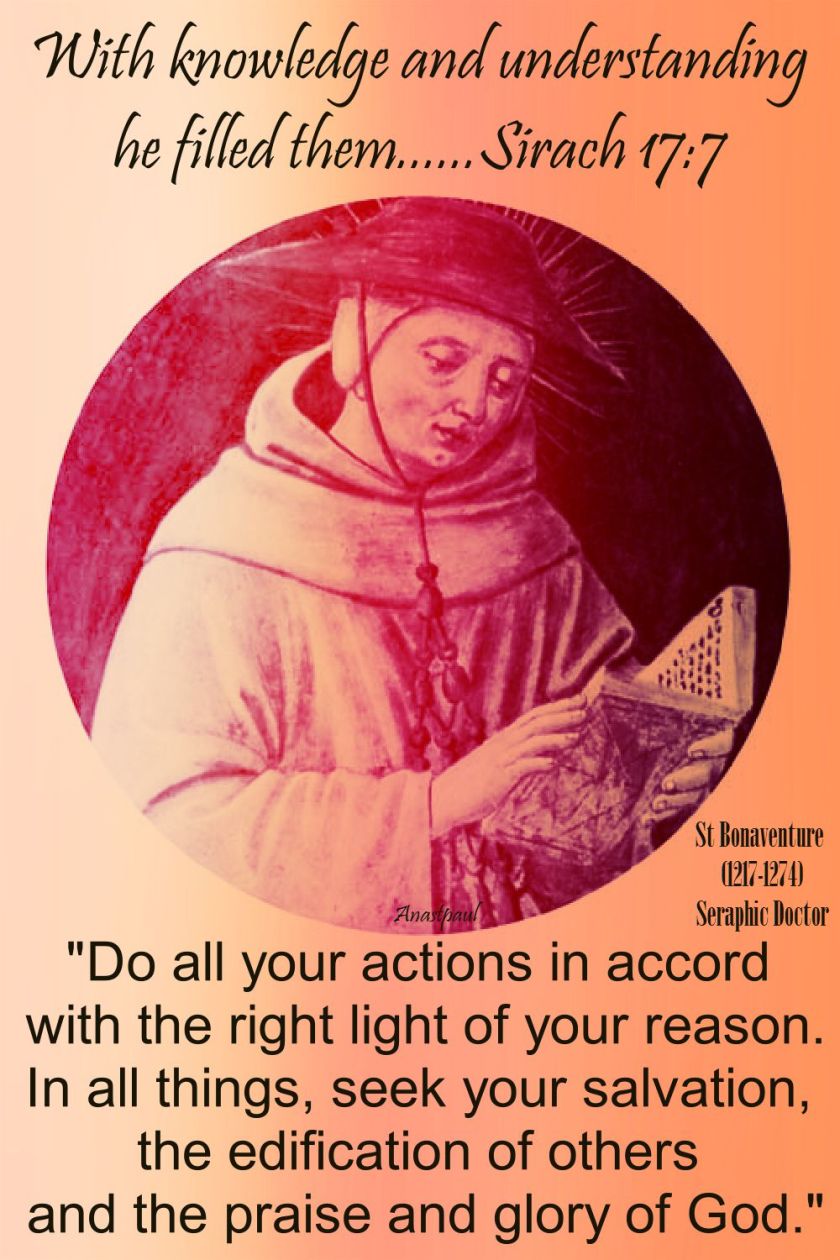
With knowledge and understanding he filled them……….Sirach 17:7

REFLECTION – “Do all your actions in accord with the right light of your reason.
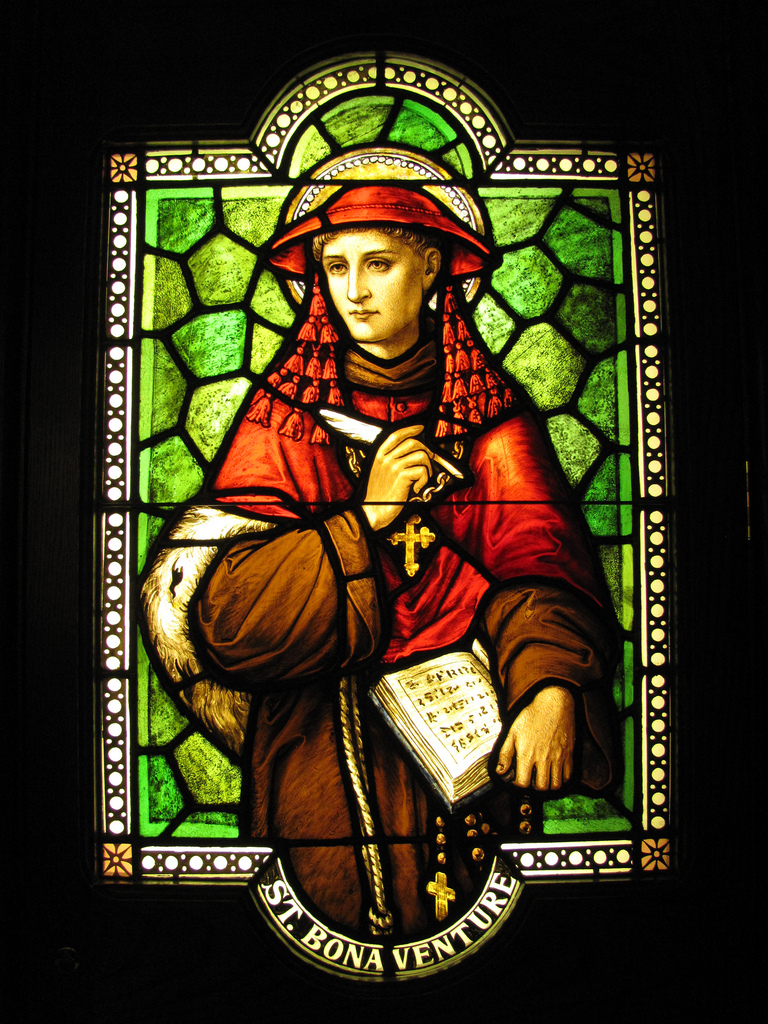
In all things, seek your salvation, the edification of others and the praise and glory of God.”…..St Bonaventure

do all yur actions-st bonaventure


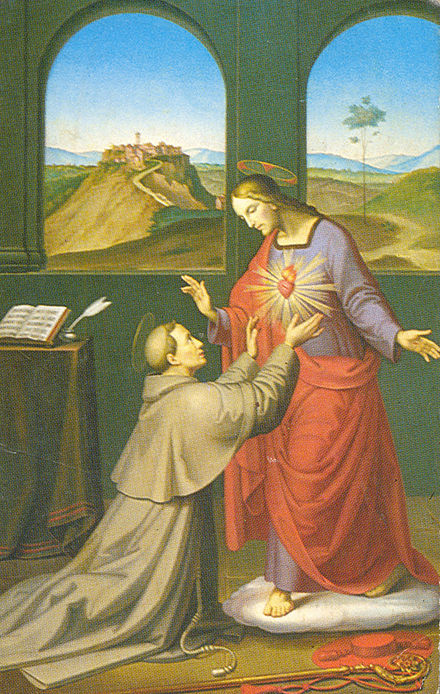
PRAYER – God of goodness and reason, grant me the gift of right reasoning and Christian understanding. Let me act always in accord with the dictates of that reason and so be pleasing to You. St Bonaventure , pray for us that we may always be graced with the gifts of Holy Spirit, amen.

st bonaventure pray for us

Posted in DOCTORS of the Church, MORNING Prayers, PRAYERS of the SAINTS, The HOLY EUCHARIST / The HOLY MASS

Our Morning Offering – 15 July

Our Morning Offering – 15 July

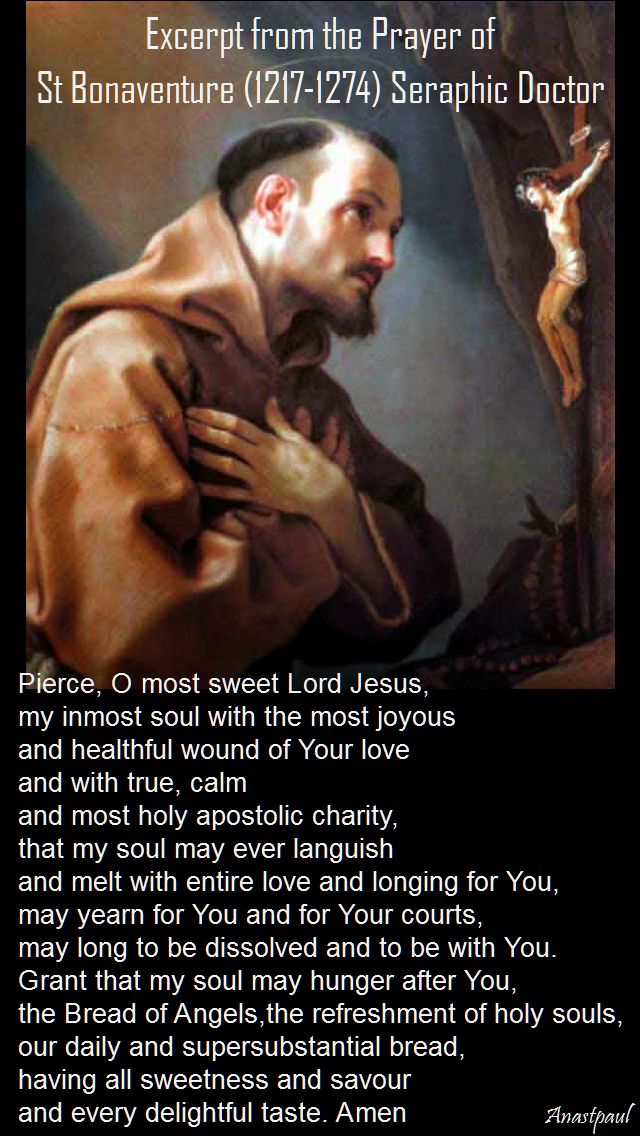
Excerpt from the Prayer of
St Bonaventure (1217-1274) Seraphic Doctor

Pierce, O most sweet Lord Jesus,
my inmost soul with the most joyous
and healthful wound of Your love
and with true, calm
and most holy apostolic charity,
that my soul may ever languish
and melt with entire love and longing for You,
may yearn for You and for Your courts,
may long to be dissolved and to be with You.
Grant that my soul may hunger after You,
the Bread of Angels,
the refreshment of holy souls,
our daily and supersubstantial bread,
having all sweetness and savour
and every delightful taste. Amen

pierce, o most sweet lord jesus - st bonaventure (excerpt)


Posted in DOCTORS of the Church, franciscan OFM, SAINT of the DAY, STOMACH DISEASES and PAIN, INTESTINAL DISORDERS

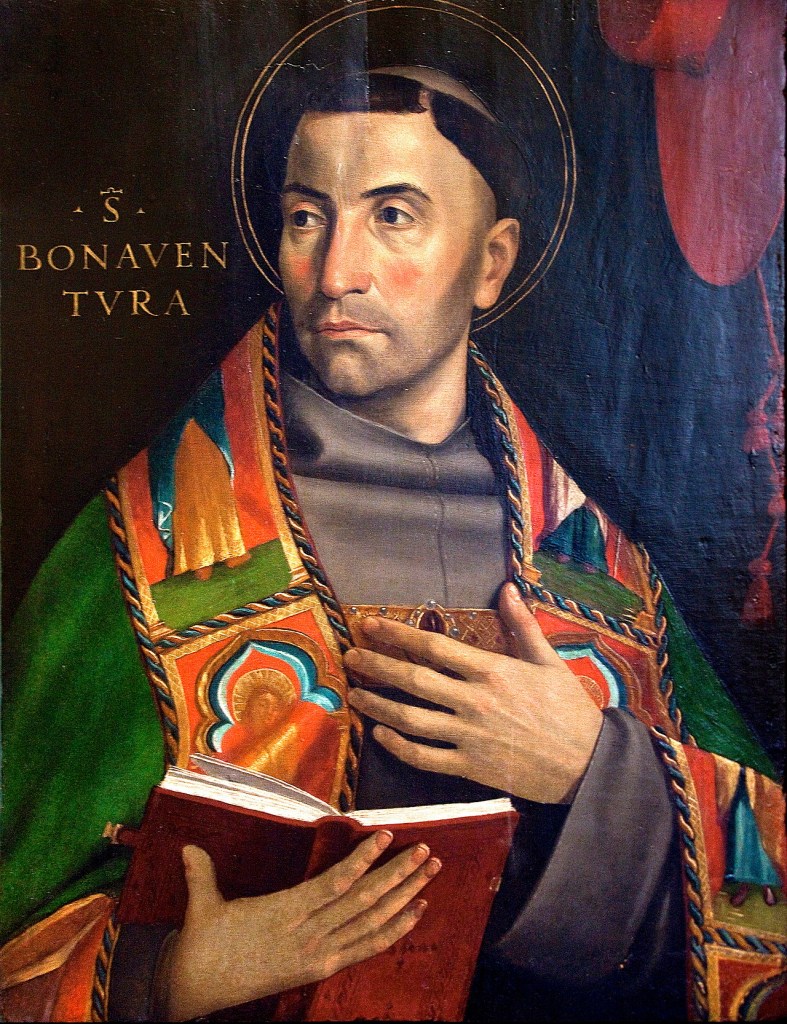
Saint of the Day – 15 July – St Bonaventure – Seraphic Doctor

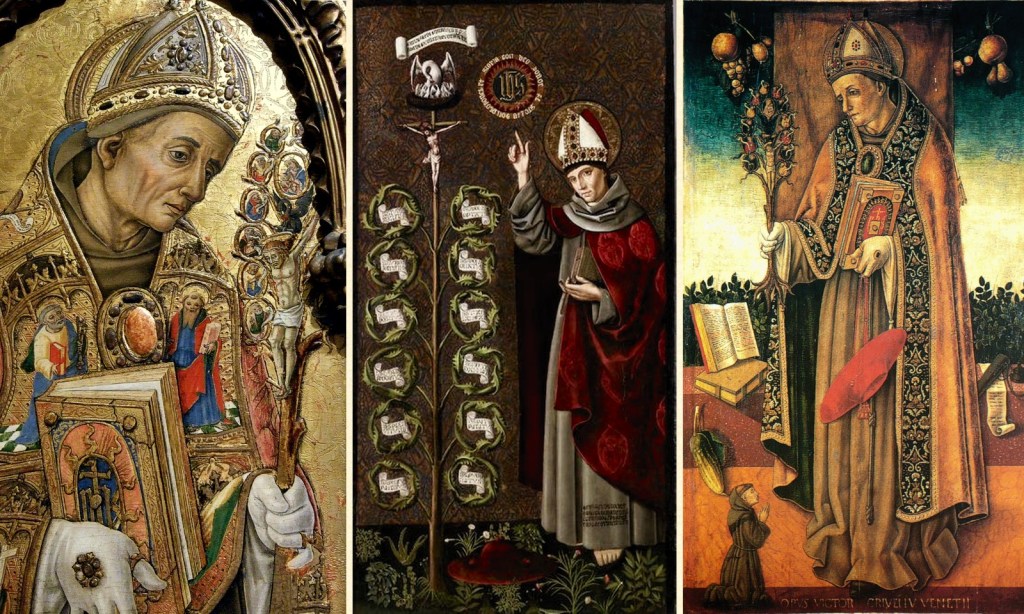
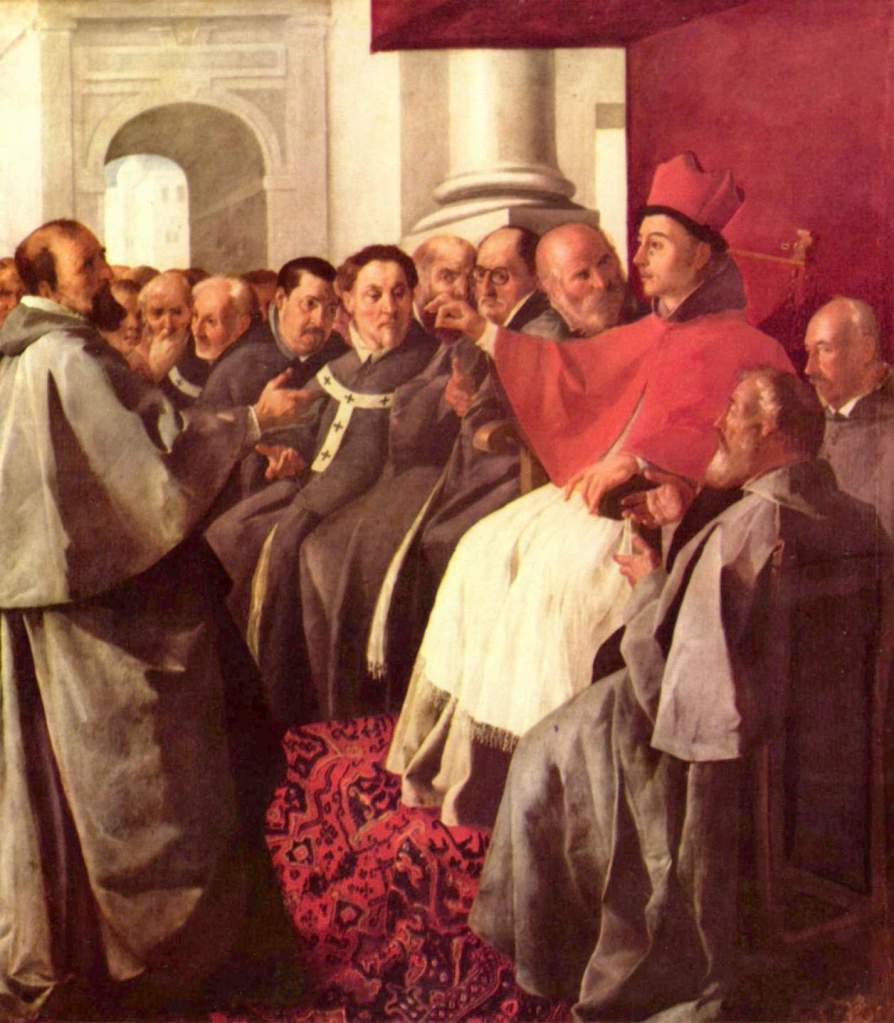
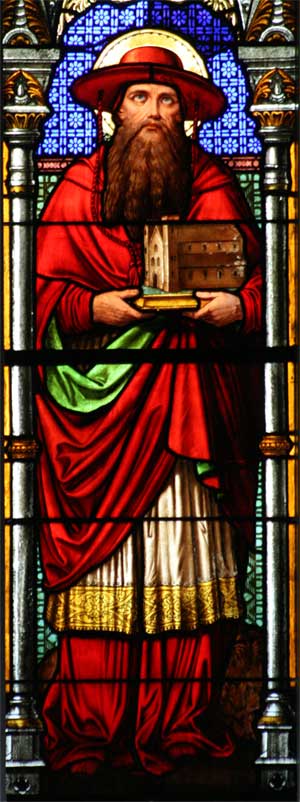
Saint of the Day – 15 July – St Bonaventure – Confessor, Bishop, Doctor of the Church – Friar, Theologian, Philosopher, Writer, Mystic, Preacher, Teacher – born in (1221 at Bagnoregio, Tuscany, Italy and died on 15 July 1274 at Lyon, France of natural causes).  He was born Giovanni di Fidanza and was the seventh Minister General of the Order of Friars Minor, he was also Cardinal Bishop of Albano.  Bonaventure was Canonised on 14 April 1482 by Pope Sixtus IV and declared a Doctor of the Church in the year 1588 by Pope Sixtus V.   He is known as the “Seraphic Doctor” (Latin: Doctor Seraphicus). PATRONAGES – against intestinal problems, stomach diseases, of – Bagnoregio, Italy, Banja Luka, Bosnia and Herzegovina, Cochiti Indian Pueblo, Saint Bonaventure University, New York.

St Bonaventure was born at Bagnorea in Umbria, not far from Viterbo, then part of the Papal States.   Almost nothing is known of his childhood, other than the names of his parents, Giovanni di Fidanza and Maria Ritella.

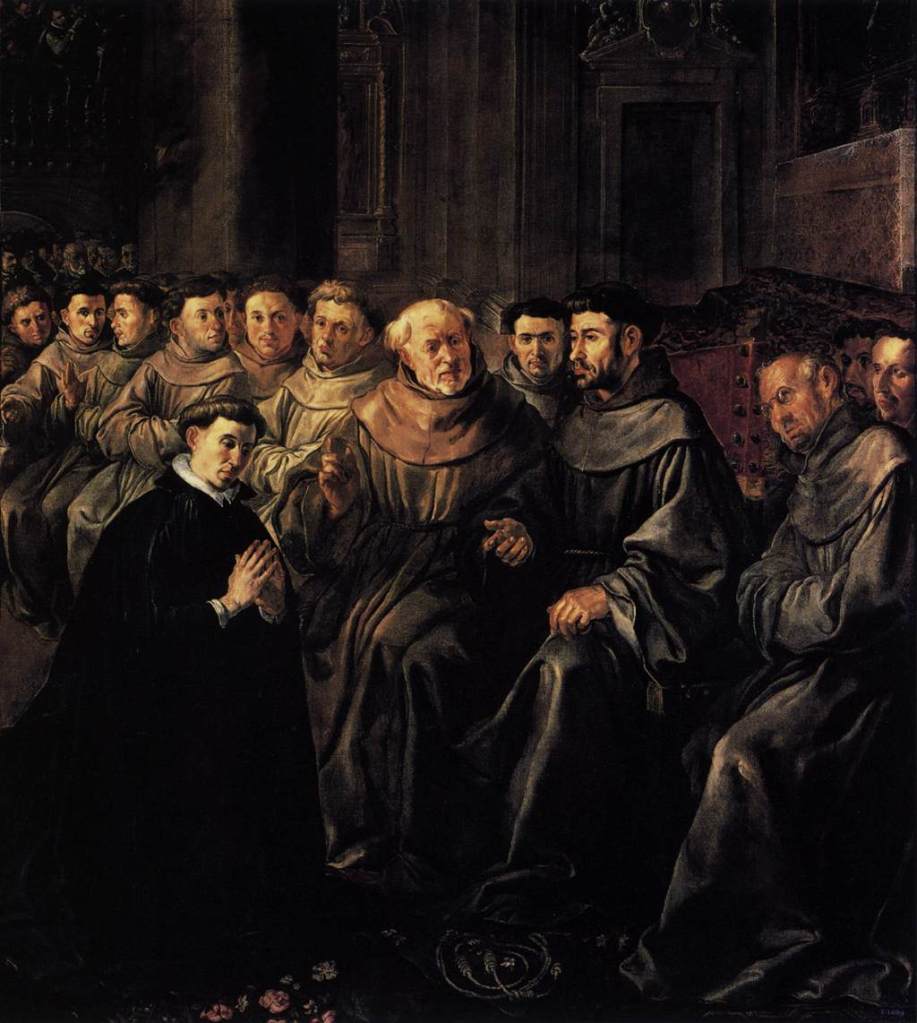
He entered the Franciscan Order in 1243 and studied at the University of Paris, possibly under Alexander of Hales and certainly under Alexander’s successor, John of Rochelle. In 1253 he held the Franciscan chair at Paris.    A dispute between seculars and mendicants delayed his reception as Master until 1257, where his degree was taken in company with Thomas Aquinas.   Three years earlier his fame had earned him the position of lecturer on The Four Books of Sentences—a book of theology written by Peter Lombard in the twelfth century—and in 1255 he received the degree of master, the medieval equivalent of doctor.

After having successfully defended his order against the reproaches of the anti-mendicant party, he was elected Minister General of the Franciscan Order.   On 24 November 1265, he was selected for the post of Archbishop of York;   however, he was never consecrated and resigned the appointment in October 1266.[6]

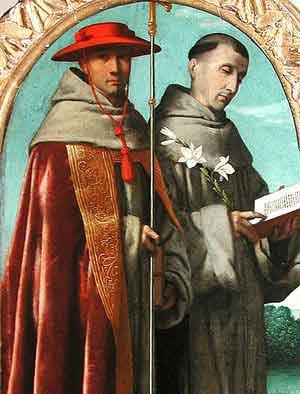
Bonaventure was instrumental in procuring the election of Pope Gregory X, who rewarded him with the title of Cardinal Bishop of Albano and insisted on his presence at the great Second Council of Lyon in 1274.   There, after his significant contributions led to a union of the Greek and Latin churches, Bonaventure died suddenly and in suspicious circumstances.   The 1913 edition of the Catholic Encyclopedia has citations that suggest he was poisoned but no mention is made of this in the 2003 second edition of the New Catholic Encyclopedia.   The only extant relic of the saint is the arm and hand with which he wrote his Commentary on the Sentences, which is now conserved at Bagnoregio, in the parish church of St. Nicholas.

He steered the Franciscans on a moderate and intellectual course that made them the most prominent order in the Catholic Church until the coming of the Jesuits.   His theology was marked by an attempt completely to integrate faith and reason.   He thought of Christ as the “one true master” who offers humans knowledge that begins in faith, is developed through rational understanding and is perfected by mystical union with God.

Bonaventure’s feast day was included in the General Roman Calendar immediately upon his canonisation in 1482.  In 1969 it was classified as an obligatory memorial and assigned to the date of his death, 15 July.

Posted in SAINT of the DAY

Saints’ Memorials – 15 July

St Bonaventure of Bagnoregio – Seraphic Doctor -(Memorial)

Dispersion of the Apostles: Commemorates the missionary work of the Twelve Apostles. It was first mentioned in the 11th century and was celebrated in the northern countries of Europe during the Middle Ages. It is now observed in Germany, Poland and some dioceses of England, France and the United States.—
Abundantia of Spoleto
Abudemius of Bozcaada
Adalard the Younger
Anrê Nguyen Kim Thông
Bl Anne Mary Javhouhey
Bl Antoni Beszta-Borowski
Apronia
Athanasius of Naples
Antiochus of Sebaste
Benedict of Angers
Bl Bernard of Baden
Bl Ceslas Odrowaz
David of Sweden
Donivald
Eberhard of Luzy
Edith of Tamworth
Eternus
Felix of Pavia
Gumbert of Ansbach
Haruch of Werden
Jacob of Nisibis
Joseph Studita of Thessalonica
Bl Michel-Bernard Marchand
Bl Peter Aymillo
Phêrô Nguyen Bá Tuan
Plechelm of Guelderland
Bl Roland of Chézery
Valentina of Nevers
Vladimir I of Kiev
—
Martyred Jesuit Missionaries of Brazil – 40 beati: A band of forty Spanish, Portugese and French Jesuit missionaries martyred by the Huguenot pirate Jacques Sourie while en route to Brazil. They are –
• Aleixo Delgado • Alonso de Baena • álvaro Borralho Mendes • Amaro Vaz • André Gonçalves • António Correia • Antônio Fernandes • António Soares • Bento de Castro • Brás Ribeiro • Diogo de Andrade • Diogo Pires Mimoso • Domingos Fernandes • Esteban Zuraire • Fernando Sánchez • Francisco Alvares • Francisco de Magalhães • Francisco Pérez Godoy • Gaspar Alvares • Gonçalo Henriques • Gregorio Escribano • Ignatius de Azevedo • Iõao • João Fernandes • João Fernandes • Juan de Mayorga • Juan de San Martín • Juan de Zafra • Luís Correia • Luís Rodrigues • Manuel Alvares • Manuel Fernandes • Manuel Pacheco • Manuel Rodrigues • Marcos Caldeira • Nicolau Dinis • Pedro de Fontoura • Pedro Nunes • Simão da Costa • Simão Lopes •
They were martyed on 15 and 16 July 1570 on the ship Santiago near Palma, Canary Islands. They were beatified on 11 May 1854 by Pope Pius IX.

Martyrs of Alexandria – 13 saints: Thirteen Christians who were martyred together. We know the names of three, no details about them and the other ten were all children. – Narseus, Philip and Zeno. Martyred in the early 4th-century in Alexandria, Egypt.

Martyrs of Carthage – 9 saints: A group of nine Christians who were martyred together. We know nothing else but their names – Adautto, Catulinus, Felice, Florentius, Fortunanziano, Januarius, Julia, Justa and Settimino. They were martyred in Carthaginian and their relics at the basilica of Fausta at Carthage.

Martyrs of Pannonia – 5 saints: Five 4th-century martyrs killed together. No information about them has survived except the names – Agrippinus, Fortunatus, Martialis, Maximus and Secundinus.

Posted in MORNING Prayers, The HOLY NAME

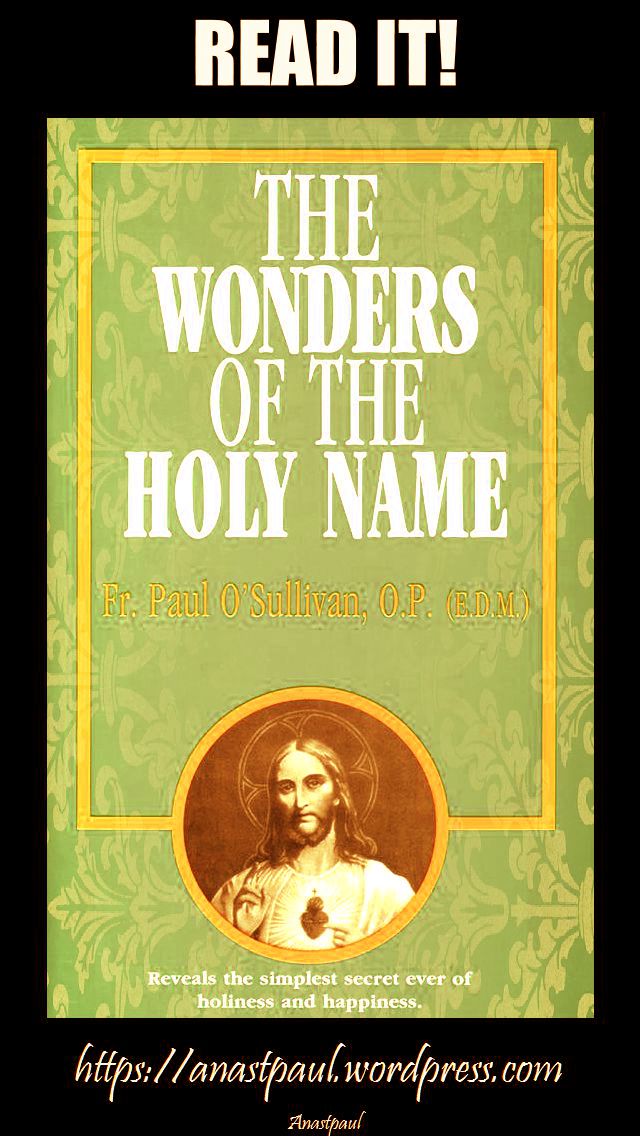
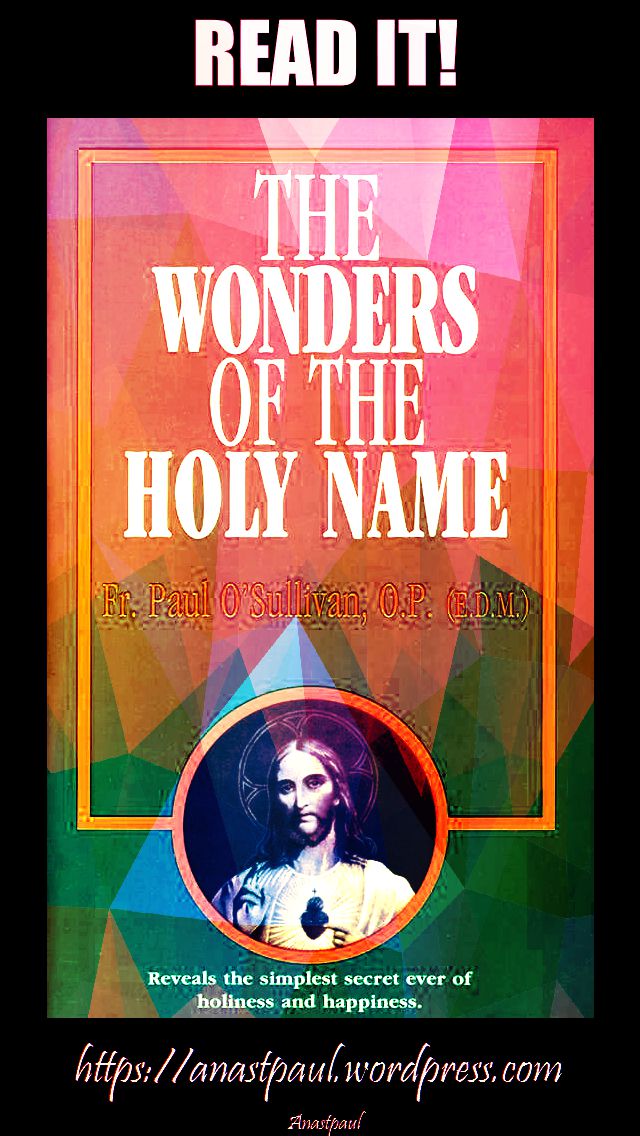
The Wonders of the Holy Name – Fr Paul O’Sullivan, O.P. – “Revealing the Simplest Secret Ever of Holiness and Happiness.” Part Five – 14 July

Previous Posts here: https://anastpaul.wordpress.com/category/the-holy-name/

St. Alexander and the Pagan Philosophers.

During the reign of the Emperor Constantine,
the Christian Religion was constantly and rapidly
making progress.
In Constantinople itself the Pagan Philosophers
felt much aggrieved at seeing many of their adepts
deserting the old religion and joining the new.
They pleaded with the Emperor himself, demanding
that in justice they should get a hearing and
be allowed to hold a public conference with the
Bishop of the Christians.   Alexander, who at the
time ruled the See of Constantinople, was a holy
man but not a keen logician.
He did not, for that fear to meet the representative
of the pagan Philosophers who was an astute
dialectician and an eloquent orator.   On the
appointed day before a vast assembly of learned
men the Philosopher began a carefully prepared
attack on the Christian teaching.   The Holy
Bishop listened for some time and then pronounced
the Name of Jesus which at once confounded the
Philosopher who not only completely lost the
thread of his discourse but was utterly unable,
even with the aid of his colleagues, to return to
the attack.

St Christina
St Christina a young Christian girl was a slave
in Kurdistan, a region almost entirely pagan.
It was the custom in that country when a child
was gravely ill that the mother should take it in her
arms to the houses of her friends and ask them
if they knew of any remedy that might benefit or
cure the little one.   On one of these occasions a
mother brought her sick child to the boys where
Christina lived,
On being asked if she knew of a remedy for that
sickness she looked at the child and said:
“Jesus, Jesus”.
On the instant the dying child smiled and leapt
with joy.   It was completely cured.
This extraordinary fact became soon known and
reached the ears of the Queen who herself was an
invalid.   She gave orders that Christina should be
brought to her presence.
On arriving at the Palace the royal patient
asked her if she could with the same remedy cure
her disordet:  which had baffled the skill of the
physicians.   Once more Christina pronounced with
great confidence:  “Jesus, Jesus”. and again this
divine Name was glorified.   The Queen instantly
recovered her health.
A third wonder was yet to be worked.   Some
days after the cure of the Queen the King found
himself suddenly face to face with certain death.
Escape seemed impossible. Mindful of the divine
power of the Holy Name, which he had witnessed
in the cure of his wife, his Majesty called out
Jesus, Jesus. whereupon he was snatched from the
dreadful peril.   Calling in his turn for the little
slave he learned from her the truths of Christianity
which he and a great multitude of his people
embraced.
St. Christina became a saint and her feast is
kept 11 December 15th.

the wonders of the holy name-day five-12 july

Posted in MORNING Prayers, SAINT of the DAY

Thought for the Day – 14 July

Thought for the Day – 14 July

It never ceases to amaze me how many saints we have, (all waiting to hear from us, by the way), who initially led lives totally against the precepts of natural moral order, Christ and Holy Scripture.   But God is never far off – the ‘Hound of Heaven’ goes before and behind us.   And God creates saints.   Seemingly random meetings, words, in the case of St Camillus – a sermon by a Capachin and a meeting with St Philip Neri, alters everything, for we know that nothing is random – God has penetrated our selfishness,   He becomes visible to our souls and once that happens we can only do our very best, try our hardest to do all for Him and as if everything depended on us.   All human effort is the dispensing of God’s divine power and only God’s grace can make us like Himself.

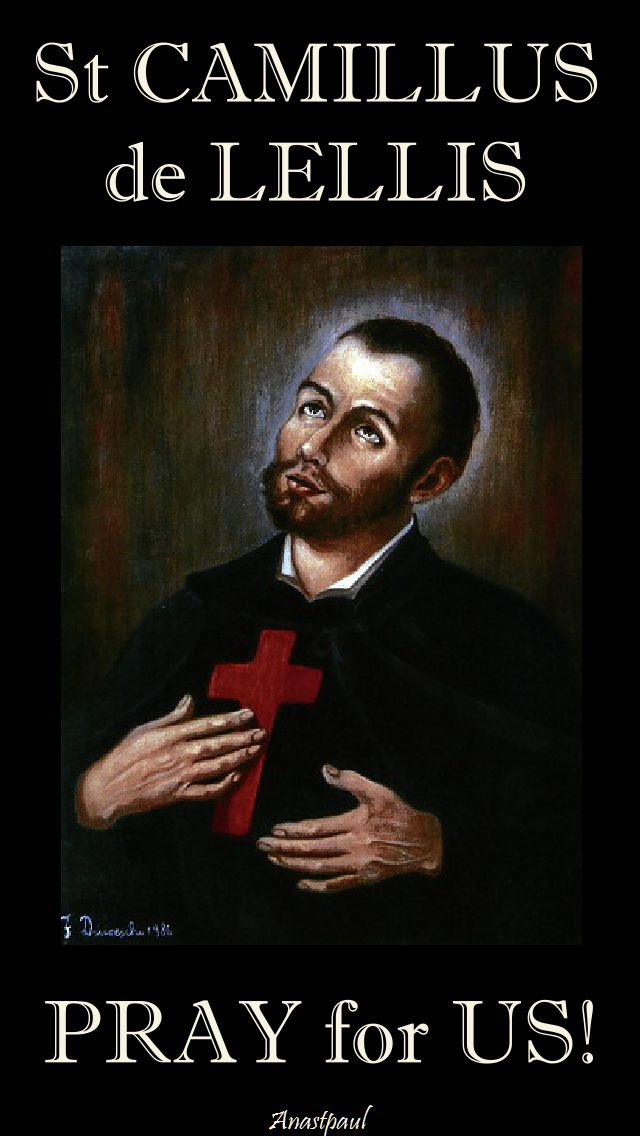
St Camillus de Lellis Pray for us!

st camillus de lellis - pray for us 2

Posted in MORNING Prayers, SAINT of the DAY

Quote/s of the Day – 14 July

Quote/s of the Day – 14 July

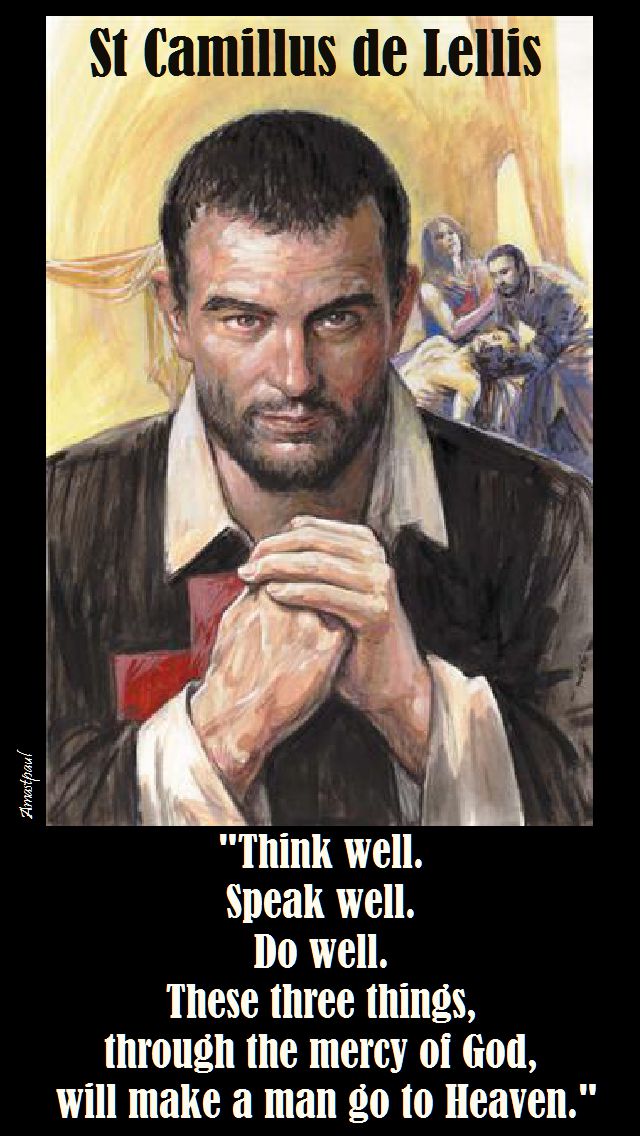
“Think well.
Speak well.
Do well.
These three things,
through the mercy of God,
will make a man go to Heaven.”

think well speak well do well-st camillus de lellis

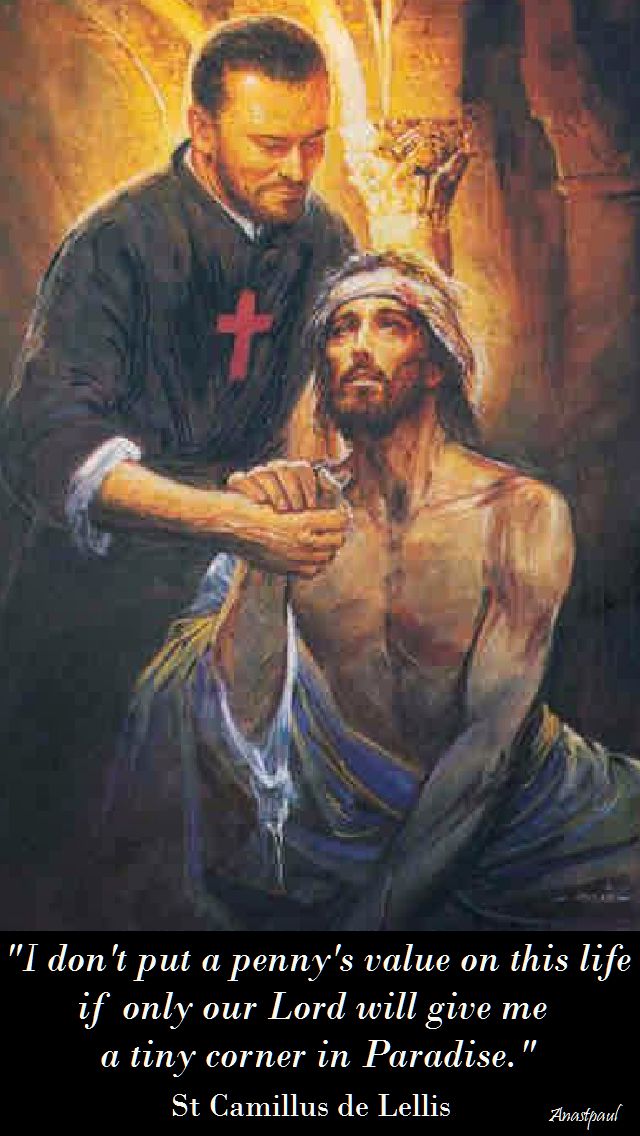
“I don’t put a penny’s value on this life
if only our Lord will give me
a tiny corner in Paradise.”

i donht put a penny's value on tis life - st camillus de lellis

St Camillus de Lellis

Posted in MORNING Prayers, QUOTES of the SAINTS, SAINT of the DAY, The WORD

One Minute Reflection – 13 July

One Minute Reflection – 13 July

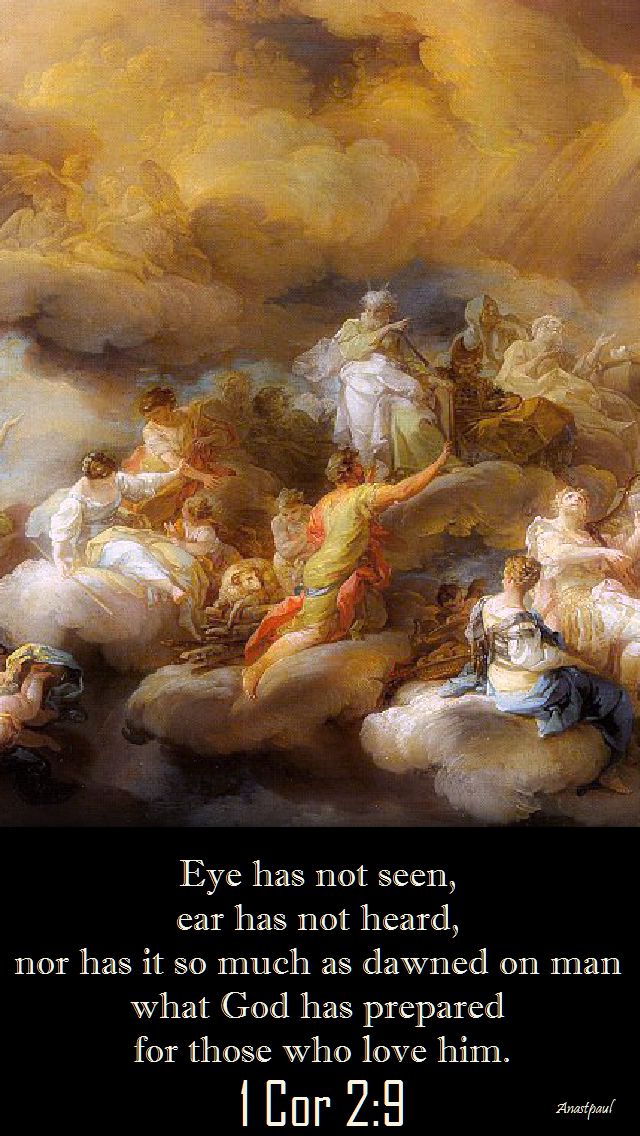
Eye has not seen, ear has not heard, nor has it so much as dawned on man what God has prepared for those who love him………1 Cor 2:9

1 cor 2 9

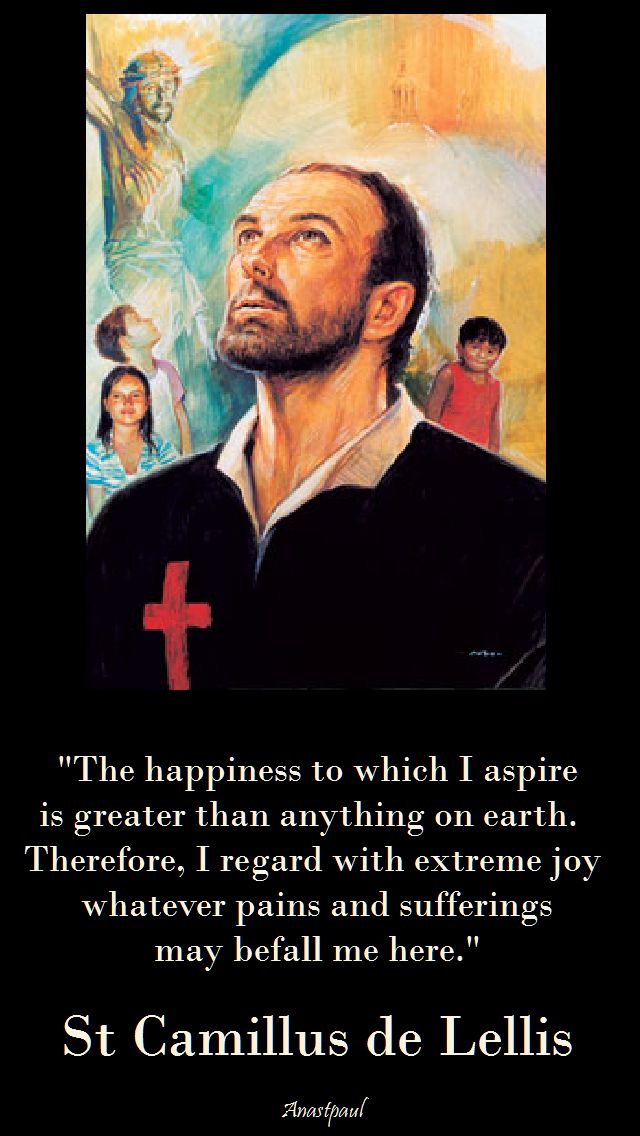
REFLECTION – “The happiness to which I aspire is greater than anything on earth. Therefore, I regard with extreme joy whatever pains and sufferings may befall me here.”………St Camillus de Lellis

the happiness to which I aspire - st camillus de lellis

PRAYER – Heavenly Father. keep my mind fixed on the surpassing joys stored up for me in heaven. And let me be willing to put up with all sufferings and pains that may come upon me. St Camillus de Lellis, pray for us, amen.

st camillus de lellis pray for us

Posted in MORNING Prayers, PRAYERS of the SAINTS

Our Morning Offering – 14 July

Our Morning Offering – 14 July

A Prayer for Enlightenment
St Alcuin of York (735-804)

Eternal light, shine into our hearts,
Eternal Goodness, deliver us from evil,
Eternal Power, be our support,
Eternal Wisdom,
scatter the darkness of our ignorance,
Eternal Pity, have mercy on us;
that with all our heart
and mind
and soul
and strength,
we may seek Your Face
and be brought by Your infinite mercy
to Your Holy Presence;
through Jesus Christ, our Lord
Amen.

PRAYER FOR ENLIGHTENMENT - st alcuin of york

Posted in NAPLES, Of HOSPITALS, NURSES, NURSING ASSOCIATIONS, Of the SICK, the INFIRM, All ILLNESS, SACRED and IMMACULATE HEARTS

Saint of the Day – 14 July – St Camillus de Lellis MI (1550-1614) Confessor, “The Giant of Charity.”

Saint of the Day – 14 July – St Camillus de Lellis MI (1550-1614) Confessor, Priest and Founder, Apostle of the Sick,  ((25 May 1550 at Bocchiavico, Abruzzi, Naples, Italy – 14 July 1614 at Genoa, Italy of natural causes).   He was Canonised on 29 June 1746 by Pope Benedict XIV.  Patronages –  against illness, sickness or bodily ills; sick people (proclaimed on 22 June 22 1886 by Pope Leo XIII), hospitals, hospital workers, nurses, Abruzzi, Italy.
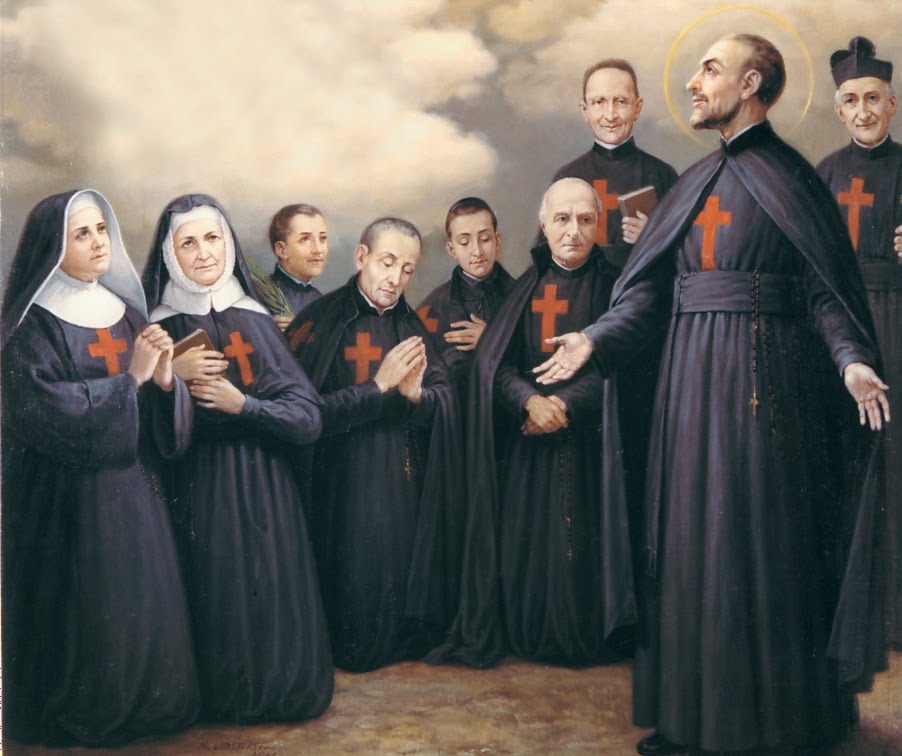
HEADER FIRST IMAGE

Founder of the Order of Clerks Regular, Ministers of the Infirm (abbreviated as M.I.), better known as the Camillians.
His experience in wars led him to establish a group of health care workers who would assist soldiers on the battlefield.   The large, red cross on their cassock remains a symbol of the Congregation today.   Camillians continue to identify themselves with this emblem on their habits, a symbol universally recognized today as the sign of charity and service. This was the original Red Cross, hundreds of years before the International Red Cross and Red Crescent Movement was formed.

During the Battle of Canizza in 1601, while Camillians were helping with the wounded, the tent in which they were tending to the sick and in which they had all of their equipment and supplies was completely destroyed and burned to the ground.   Everything in the tent was destroyed except the red cross of a religious habit belonging to one of the Camillians who was ministering to the wounded on the battlefield.   This event was taken by the Camillans to manifest divine approval of the Red Cross of St Camillus.

Members of the Order also devoted themselves to victims of Bubonic plague.   It was due to the efforts of the brothers and supernatural healings by de Lellis that the people of Rome credited de Lellis with ridding the city of a great plague and the subsequent famine.   For a time, he became known as the “Saint of Rome”.

De Lellis’ concern for the proper treatment of the sick extended to the end of their lives. He had come to be aware of the many cases of people being buried alive, due to haste and ordered that the Brothers of his Order wait fifteen minutes past the moment when the patient seemed to have drawn his last breath, in order to avoid this.   St Camillus Church and Museum in Italy http://himetop.wikidot.com/camillus-de-lellis-church-and-museum

Camillus de Lellis was born on May 25, 1550, at Bucchianico (now in Abruzzo, then part of the Kingdom of Naples).   His mother, Camilla Compelli de Laureto, was nearly fifty when she gave birth to him.   His father was an officer in both the Neapolitan and French royal armies and was seldom home.   De Lellis had his father’s temper and, due to her age and retiring nature, his mother felt unable to control him as he grew up.   She died in 1562.   As a consequence he grew up neglected by the family members who took him in after her death.   Tall for his age, at 16 De Lellis joined his father in the Venetian army and fought in a war against the Turks.

After a number of years of military service, his regiment was disbanded in 1575.   De Lellis was then forced to work as a labourer at the Capuchin friary at Manfredonia;  he was constantly plagued, however, by a leg wound he received while in the army, which would not heal.   Despite his aggressive nature and excessive gambling, the guardian of the friary saw a better side to his nature and continually tried to bring that out in him. Eventually the friar’s exhortations penetrated his heart and he had a religious conversion in 1575.   He then entered the novitiate of the Capuchin friars.   His leg wound, however, had continued to plague him and was declared incurable by the physicians, thus he was denied admission to that Order.

He then moved to Rome where he entered the Hospital of St. James (possibly founded by the Hospitaller Knights of St. James), which cared for incurable cases.  He himself became a caregiver at the hospital and later its Director.   In the meantime, he continued to follow a strict ascetic life, performing many penances, such as constant wearing of a hairshirt.   He took as his spiritual director and confessor, the popular local priest, Philip Neri, who was himself to found a religious congregation and be declared a saint.

De Lellis began to observe the poor attention the sick received from the staff of the hospital.   He was led to invite a group of pious men to express their faith through the care of the patients at the hospital.   Eventually he felt called to establish a religious community for this purpose and that he should seek Holy Orders for this task.   Neri, his confessor, gave him approval for this endeavour and a wealthy donor provided him with the income necessary to undertake his seminary studies.

He was ordained on Pentecost of 1584 by Lord Thomas Goldwell, Bishop of St Asaph, Wales and the last surviving Catholic bishop of Great Britain.   Camillus then retired from his service at the hospital and he and his companions moved to the Hospital of the Holy Ghost, where they assumed responsibility for the care of the patients there.

In 1586 Pope Sixtus V gave the group formal recognition as a congregation and assigned them the Church of St. Mary Magdalene in Rome, which they still maintain.   In 1588 they expanded to Naples and in 1594 St Camillus led his Religious to Milan where they attended to the sick of the Ca’ Granda, the main hospital of the city.   A memorial tablet in the main courtyard of the Ca’ Granda commemorates his presence there.

Pope Gregory XV raised the Congregation to the status of an Order, equivalent with the mendicant orders, in 1591.   At that time they established a fourth religious vow unique to their Order: “to serve the sick, even with danger to one’s own life.”

Throughout his life De Lellis’ ailments caused him suffering but he allowed no one to wait on him and would crawl to visit the sick when unable to stand and walk.   It is said that Camillus possessed the gifts of healing and prophecy.   He resigned as Superior General of the Order in 1607 but continued to serve as Vicar General of the Order.   By that time, communities of the Order had spread all throughout Italy, even as far as Hungary.   He assisted in a General Chapter of the Order in 1613, after which he accompanied the new Superior General on an inspection tour of all the hospitals of the Order in Italy.   In the course of that tour, he fell ill.   He died in Rome in 1614 and was entombed at the Church of St. Mary Magdalene.

Posted in SAINT of the DAY, The BLESSED VIRGIN MARY

Saints’ Memorials and Feasts of the Blessed Virgin Mary – 14 July

St Camillus de Lellis (Optional Memorial) – https://www.youtube.com/watch?v=FCTeMNeoCAY

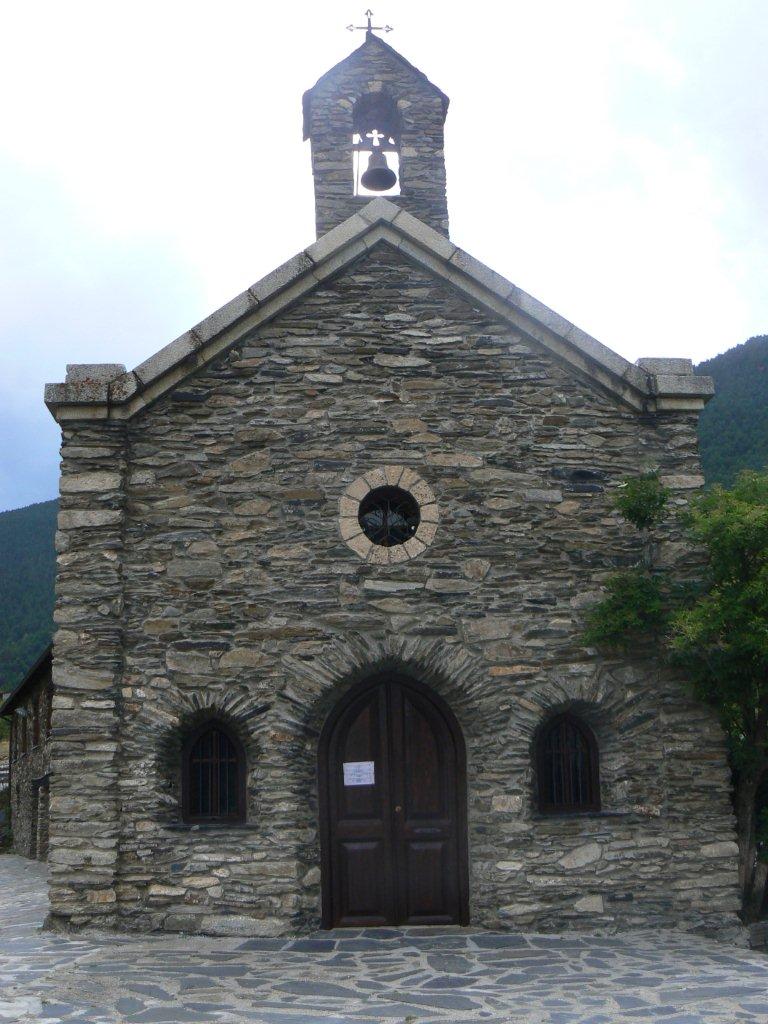
Mare de Déu de Canòlich: Read further – http://www.mariancalendar.org/mare-de-deu-de-canolich-canolich-sant-julia-de-loria-andorra/

Canolich façana
Our Lady of Dromon: Saint-Geniez, Alpes de Haute-Provence, Provence-Alpes-Côte d’Azur, France
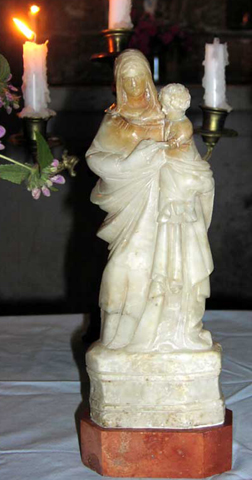
In 1656, about 2.5 miles from the alpine village of Saint-Geniez, as 12-year-old herder Honoré was praying before a wooden cross on a stone mound, he heard the voice of the Blessed Virgin asking him to dig there to uncover chapels dedicated to her long ago. Excavations on the mountain located a crypt chapel dating back to around 1000, on the site of the ancient city of Theopolis. The upper chapel holds an alabaster statue of the Virgin and Child from the 1600s. The annual pilgrimage takes place on Bastille Day, July 14.

dromon-stgeniez1
—
Bl Angelina di Marsciano
Bl Boniface of Canterbury
St Colman of Killeroran
St Cyrus of Carthage
St Deusdedit of Canterbury
St Donatus of Africa
Bl Dorotea Llamanzares Fernández
St Francis Solano
Bl Giorgio of Lauria
Bl Hroznata of Bohemia
Bl Humbert of Romans
St Idus of Ath Fadha
St Ioannes Wang Kuixin
St Just
St Justus of Rome
St Kateri Tekakwitha (Optional Memorial USA)
St Liebert
St Marchelm
Bl Michael Ghebre
St Optatian of Brescia
St Papias of Africa
Bl Toscana of Verona
St Ulric of Zell

Posted in CATHOLIC DEVOTIONS of the Month, MORNING Prayers, The HOLY NAME

The Wonders of the Holy Name – Fr Paul O’Sullivan, O.P. – “Revealing the Simplest Secret Ever of Holiness and Happiness.” Part Four – 13 July

Previous – here: https://anastpaul.wordpress.com/category/the-holy-name/

the wonders of the holy name-day four-13 july

Genseric the Goth

In the reign of Genseric the Arian King of the
Goths one of his favourite courtiers, the Count of
Armogasto, was converted from Arianism and joined
the Catholic Church.
The King on hearing of the fact fell into a
violent fury and calling the young nobleman to
his presence tried by every means in his power to
induce him to recant and return to the Arian sect.
Neither threats nor promises availed.  The Count
refused all overtures and held fast to his new
found faith.   Genseric then gave vent to his fury
and ordered the young man to be bound with
strong cords as tightly as the brawny executioners
could draw them.   The torment was intense but
the victim showed no sign of pain.   He repeated
two, or three times, Jesus. Jesus. Jesus, and lo!
the cords snapped like spiders’ webs and fell at his
feet.
Enraged beyond measure the tyrant now commanded
that the sinews of oxen, hard and tough as
wire, should be brought.   The Count was again
bound and the king bade the executioners use
their utmost strength.   Once more their victim
invoked the Name of Jesus and the new thongs,
like the old, snapped like threads.  Genseric
foaming with rage ordered the martyr to be bound
by the feet and hung from the branches of a tree,
head downwards.
Smiling at this new mode of torture Count
Armogasto folded his arms on his bosom and
repeating the Holy Name fell , into a tranquil
sleep as though he were lying on a soft and
comfortable couch.

D. Melchior smiles at his tormentors.

We have another incident of a similar kind
narrated of the Chinese Martyr, the Venerable
Dominican Bishop, D Melchior.
In one of the many persecutions which raged in
China and which gave so many saints to the
Church, this holy Bishop was seized and, after
having undergone the most brutal torments, was
condemned to a cruel death.
He was dragged to the market place in the
midst of a howling mob who came to gloat over
his sufferings.
They stripped him of his garments and five executioners,
armed with rough-edged swords, proceeded
to chop off his fingers one by one, joint by
joint, then his arms, then his legs, causing him
excruciating agony. Finally they hacked the flesh
from his poor body and broke his bones.
During this prolonged martyrdom no sign of
pain was visible on the Bishop’s countenance.
He was smiling and saying aloud, slowly, Jesus.
Jesus. Jesus, which gave him this wonderful
strength to the amazement of his executioners.
Neither cry nor groan escaped from his lips until
finally after hours of torture he quietly breathed
his last, with the same lovely smile lingering on
his face.
What wonderful consolation would we too not
feel, when confined to bed with sickness, or racked
by pain if we repeated devoutly the Name of Je sus.
Many people find it hard to sleep.
They will find help and consolation by invoking
in these sleepless moments the Holy Name, and
very probably will fall back into a tranquil slumber.


Posted in SAINT of the DAY

Thought for the Day – 13 July

Thought for the Day – 13 July

As German king and Holy Roman Emperor, Henry was a practical man of affairs.   He was energetic in consolidating his rule.   He crushed rebellions and feuds.   On all sides he had to deal with drawn-out disputes so as to protect his frontiers.   This involved him in a number of battles, especially in the south in Italy;  he also helped Pope Benedict VIII quell disturbances in Rome.   Always his ultimate purpose was to establish a stable peace in Europe.
According to eleventh-century custom, Henry took advantage of his position and appointed as bishops men loyal to him. In his case, however, he avoided the pitfalls of this practice and actually fostered the reform of ecclesiastical and monastic life.
All in all, this saint was a man of his times.   From our standpoint, he may have been too quick to do battle and too ready to use power to accomplish reforms.   But granted such limitations, he shows that holiness is possible in a busy secular life.   It is in doing our job that we become saints…………..Fr Don Miller, OFM

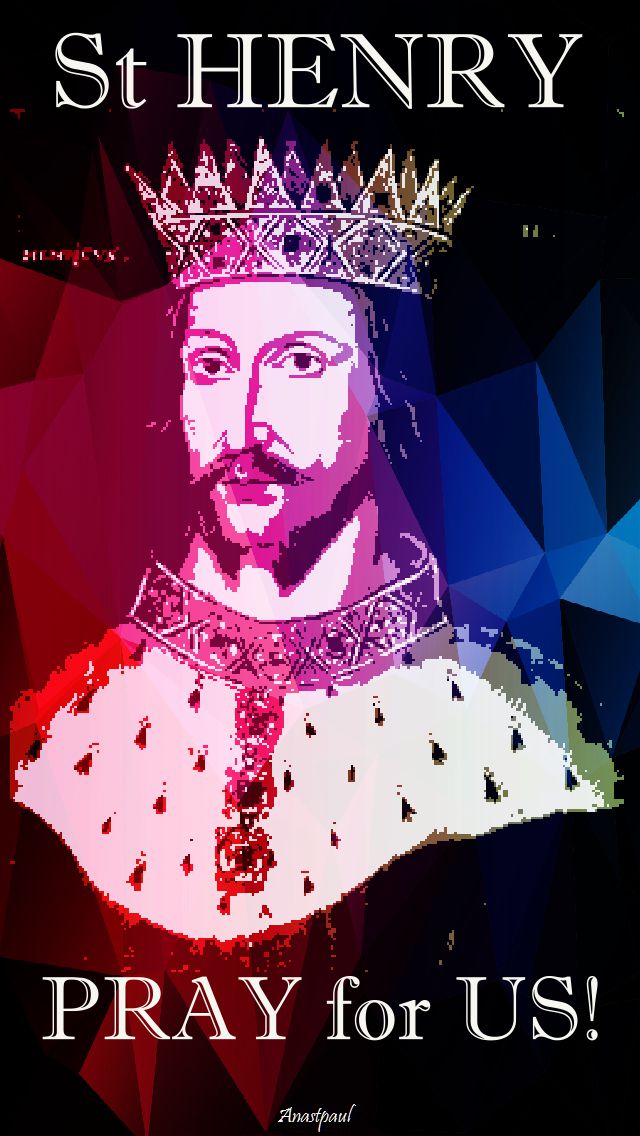
st henry pray for us2.


Posted in DOCTORS of the Church, FATHERS of the Church, MORNING Prayers, QUOTES of the SAINTS

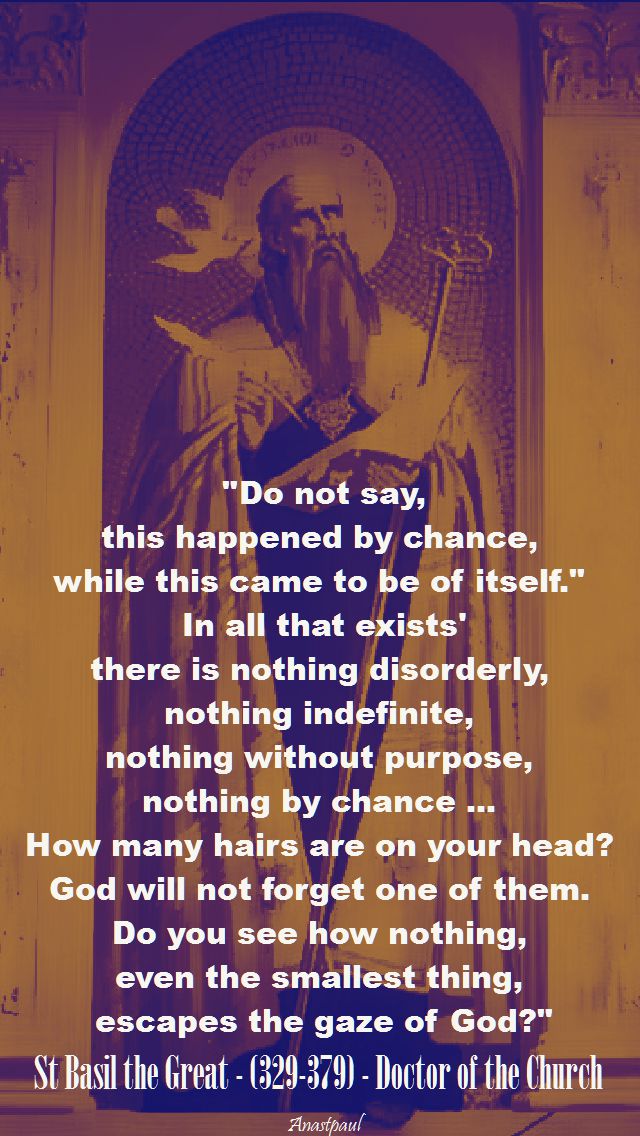
Quote of the Day – 13 July

“Do not say,
this happened by chance,
while this came to be of itself.”
In all that exists’
there is nothing disorderly,
nothing indefinite,
nothing without purpose,
nothing by chance …
How many hairs are on your head?
God will not forget one of them.
Do you see how nothing,
even the smallest thing,
escapes the gaze of God?”
Saint Basil the Great (329-379)
Father & Doctor of the Church

do not say, this happened by chance-st basil the great


Posted in MORNING Prayers, QUOTES of the SAINTS, SAINT of the DAY, The WORD

One Minute Reflection – 13 July

One Minute Reflection – 13 July

Not on bread alone is man to live but on every utterance that comes from the mouth of God………….Matthew 4:4

Matthew 4 4

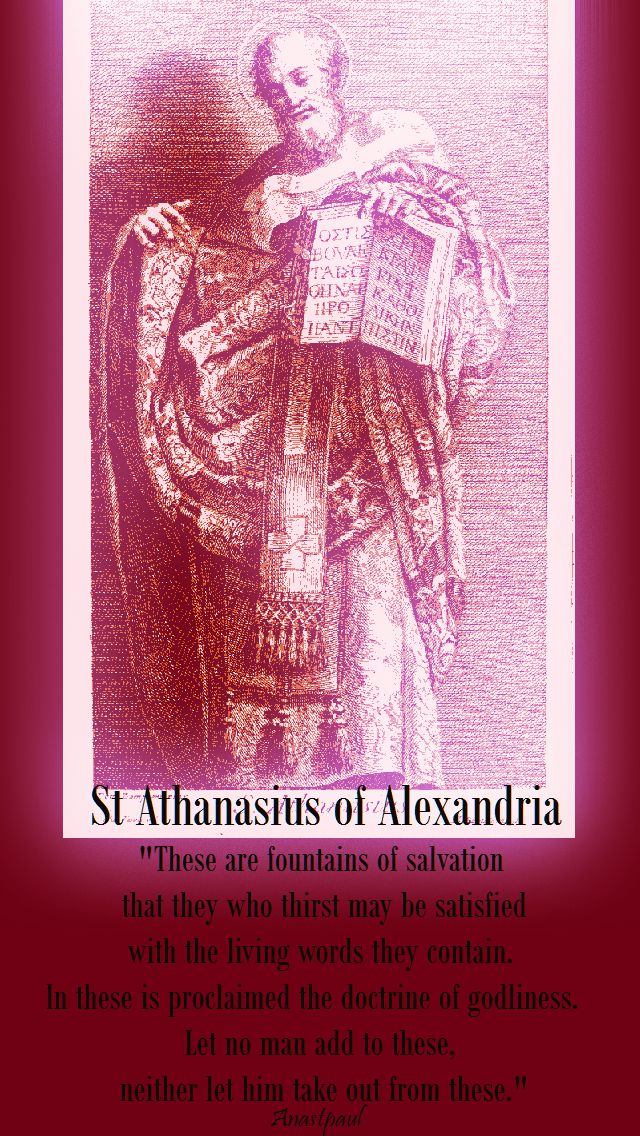
REFLECTION – “These are fountains of salvation that they who thirst may be satisfied with the living words they contain. In these is proclaimed the doctrine of godliness.  Let no man add to these, neither let him take out from these.”…….St Athanasius of Alexandria

these are fountains of salvation - St Athanasius of Alexandria

PRAYER – Heavenly Father, inspire me to meditate on Your holy words every day and fill me with Your Holy Spirit that I might not only understand them but be filled with the desire to follow and live their instructions.   May they be a consolation, a strength and an assistance on my journey to You.   St Henry – you were inspired and strove to live by the Holy Scriptures, please pray for us all, amen.

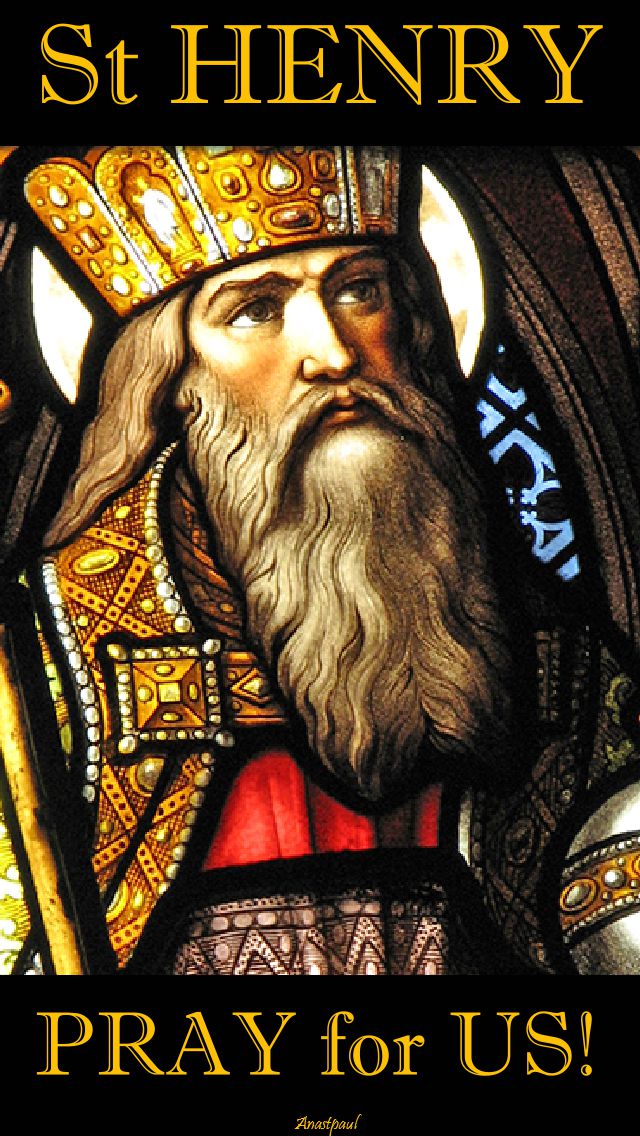
st henry pray for us

Posted in MORNING Prayers, PRAYERS of the SAINTS

Our Morning Offering – 13 July

Our Morning Offering – 13 July

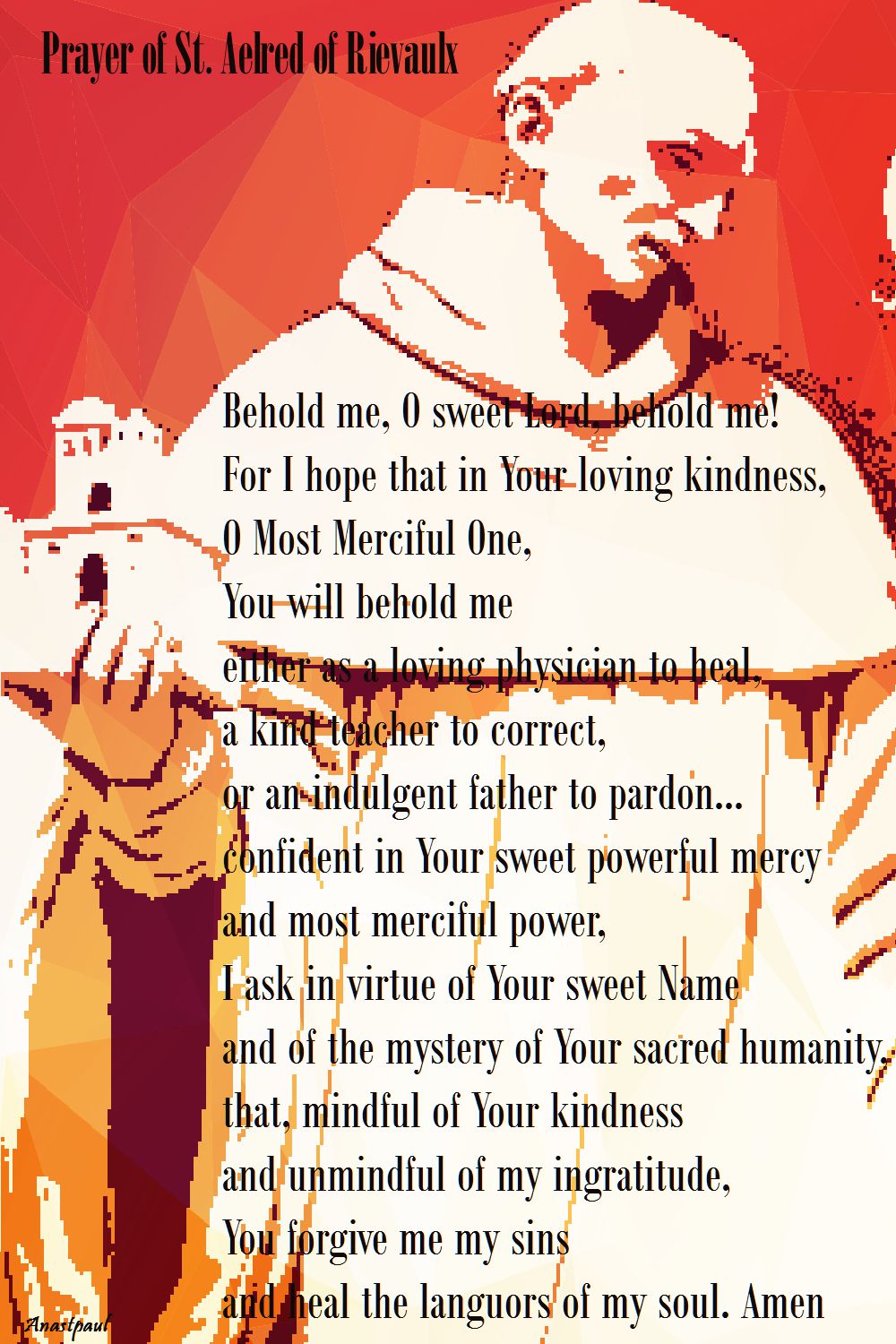
Prayer of St Aelred of Rievaulx

Behold me, O sweet Lord, behold me!
For I hope that in Your loving kindness,
O Most Merciful One,
You will behold me
either as a loving physician to heal,
a kind teacher to correct,
or an indulgent father to pardon…
confident in Your sweet powerful mercy
and most merciful power,
I ask in virtue of Your sweet Name
and of the mystery of Your sacred humanity,
that, mindful of Your kindness
and unmindful of my ingratitude,
You forgive me my sins
and heal the languors of my soul.
Amen

prayer of st aelred - behold my sweet lord

Posted in SAINT of the DAY

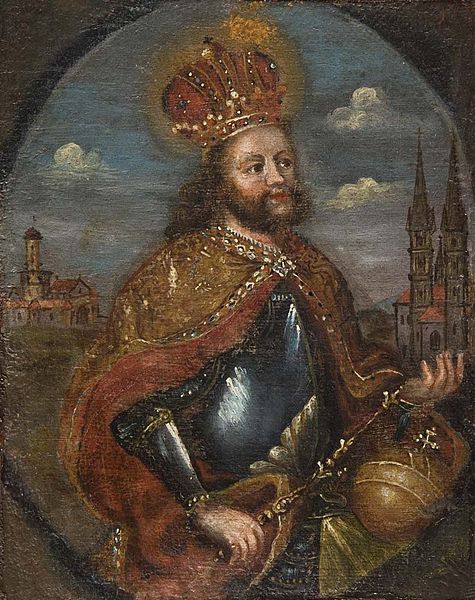
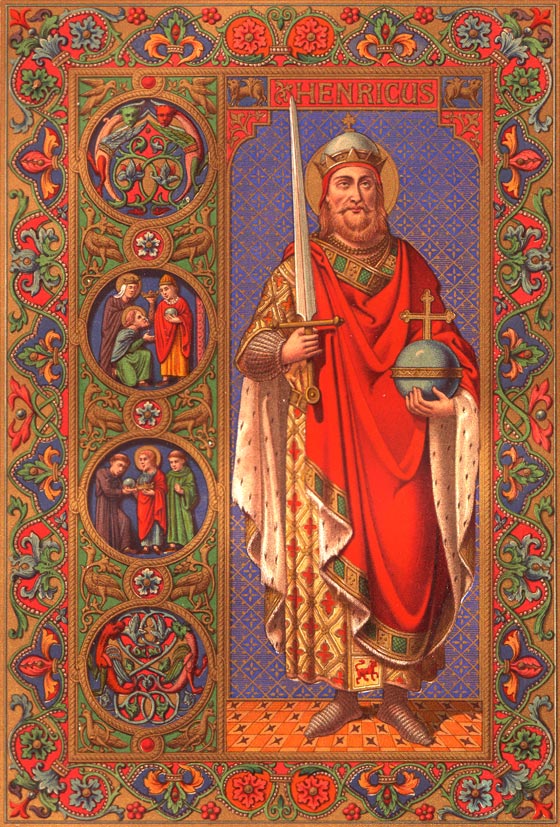
Saint of the Day – 13 July – St Henry II – Holy Roman Emperor

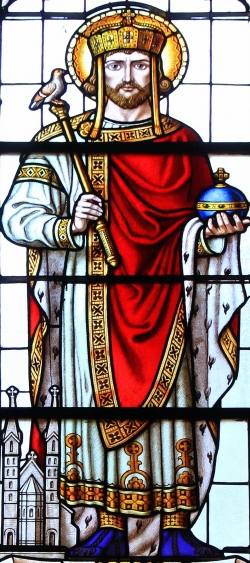
Saint of the Day – 13 July – St Henry II – Holy Roman Emperor – Also known as Good King Henry (6 May 972 at Albach, Hildesheim, Bavaria, Germany – 13 July 1024 at Pfalz Grona, near Göttingen, Saxony (in modern Germany) of natural causes.   Canonised in 1146 by Pope Blessed Eugene III.   Patronages – against sterility, childless people, disabled, handicapped or physically challenged people, dukes, kings, people rejected by religious orders, diocese of Bamberg, Germany, Basel, Switzerland, Benedictine Oblates.

St. Henry - Holy Roman Emperor 12

In the 10th century, leaders were not elected and so they did not have to worry about pleasing their subjects in order to stay in power.   Because of this, many emperors and kings took advantage of the power, luxury and honour of their position without responsibly working for the good of their people.   Kings often chose to ignore or to squelch conflict rather than to resolve it justly.   In the midst of these circumstances, Henry, the son of the Duke of Bavaria, set the example of a Christlike leader.   Jesus said that a leader is one who serves. And that is what Henry did.

Henry was married to Cunegunda of Luxembourg but they had no children.   When he was 34 years old, Henry became king of Germany.   As a ruler, Henry concentrated on the good of his people.   He built monasteries, helped the poor, fought against unjust seizure of power and relieved all kinds of oppression.

Once his brother-in-law and some other relatives complained that Henry was wasting the family fortune on the poor.   They actually got an army together to challenge Henry’s rule.   Henry met them on the battlefield and put down the uprising, then pardoned them out of Christian charity.

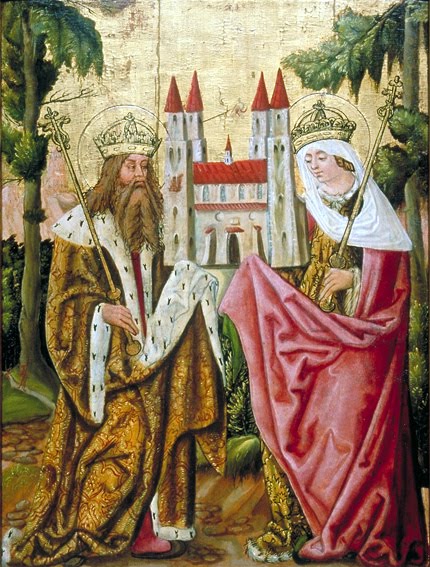
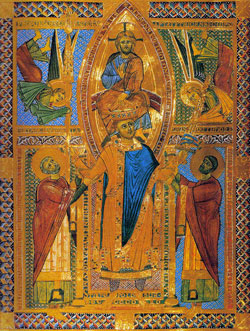
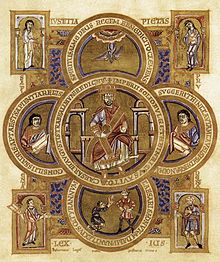
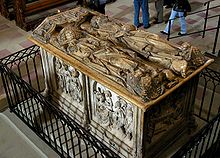
In 1014 Henry was crowned emperor of the Holy Roman Empire.   That title made him ruler of Germany, Austria, Switzerland, Belgium, Holland and northern Italy, as we know these countries today.   Henry was well known for his missionary spirit and for his protection of the Pope in times of trouble.   Henry ruled with a spirit of great humility and always sought to give the glory to God.   He used his position to promote the work of the Church and the peace and happiness of the people.   Henry is buried in the Cathedral of Bamberg beside his wife Cunegunda; he was canonised in 1146, and she was canonised in 1200.   The images below are Emperor Henry II’s Gospel and he and Empress Cunigunde’s tomb.

Posted in SAINT of the DAY, The BLESSED VIRGIN MARY

Saints’ Memorials and Feasts of the Blessed Virgin Mary

St Henry II (Optional Memorial)
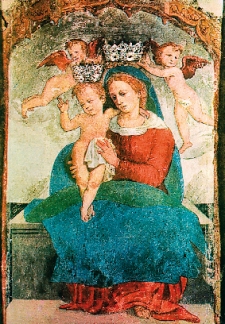
Our Lady of Grace of Valsorda:  – Read about Our Lady of Valsorda here:  http://mariancalendar.org/madonna-delle-grazie-di-valsorda-/-our-lady-of-grace-of-valsorda-garessio-valsorda-italy/

our lady of valsorda.jpg
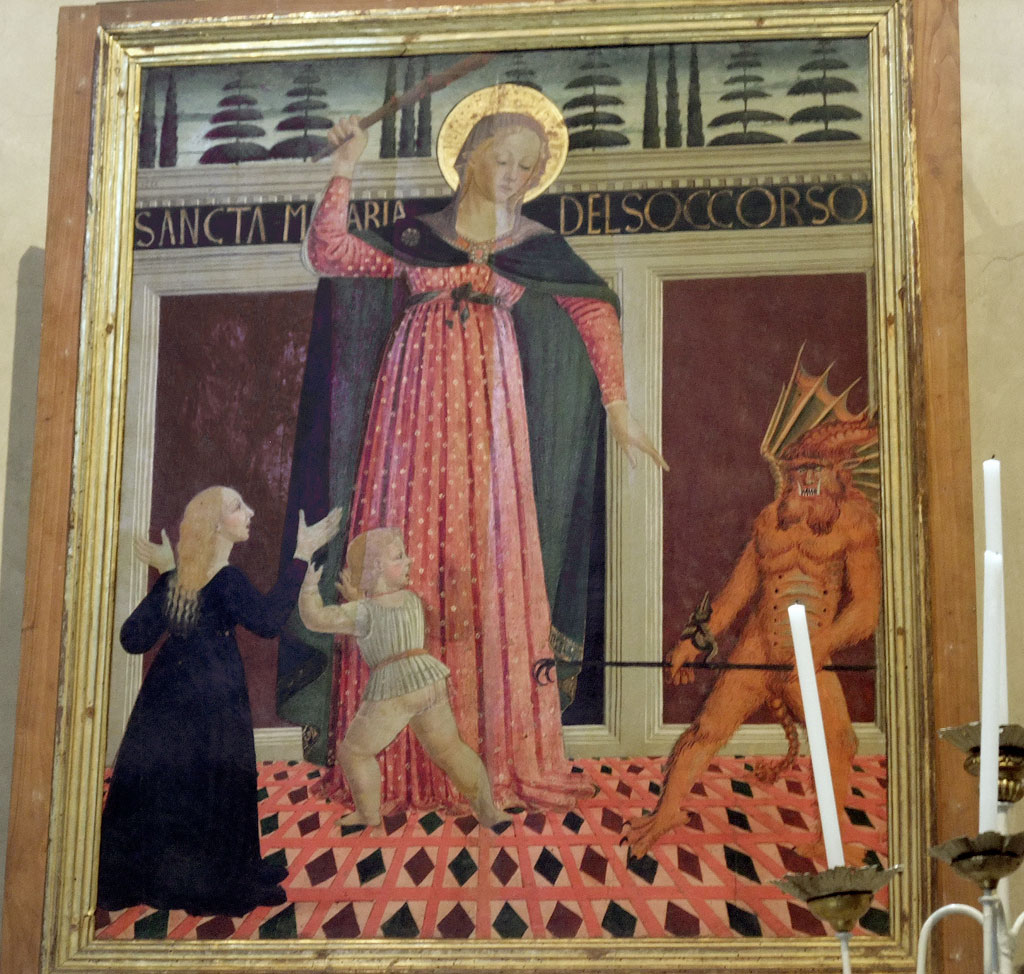
Our Lady of Soccorso/Our Lady of Help:  Read here:  http://wdtprs.com/blog/2012/03/beating-the-devil-the-madonna-del-soccorso/

our lady of soccorso
—
Bl Anne-Andrée Minutte
St Arno of Würzburg
Bl Barthélemy Jarrige de la Morelie de Biars
Bl Berthold of Scheide
St Clelia Barbieri
St Dogfan
Bl Élisabeth Verchière
St Emanuele Lê Van Phung
St Esdras the Prophet
St Eugene of Carthage
Bl Ferdinand Mary Baccilleri
St Iosephus Wang Kuiju
Bl James of Voragine
Bl Jean of France
St Joel the Prophet
Bl Louis-Armand-Joseph Adam
Bl Mariano de Jesus Euse Hoyos
Bl Marie-Anastasie de Roquard
Bl Marie-Anne Depeyre
Bl Marie-Anne Lambert
St Mildred of Thanet
St Muritta of Carthage
St Myrope
St Paulus Liu Jinde
St Salutaris of Carthage
St Sarra of Egypt
St Serapion of Alexandria
Serapion of Macedonia
Bl Thérèse-Henriette Faurie
Bl Thomas Tunstal
St Turiaf
—
Martyrs of Cyprus – 300 saints: 300 Christians who retired to Cyprus to live as cave hermits, devoting themselves to prayer and an ascetic life devoted to God. Tortured and martyred for their faith and their bodies dumped in the various caves in which they had lived. We know the names of five of them but no other details even about them – Ammon, Choulélaios, Epaphroditus, Eusthénios and Héliophotos. They were beheaded in the 12th century on Cyprus and their bodies dumped in the cave where they had lived and only rediscovered long afterwards.

Martyrs of Philomelio – 31 saints: 31 soldiers martyred for their faith in the persecutions of prefect Magno, date unknown. The only name that has come down to us is Alexander. In Philomelio, Phrygia (in modern Turkey).

Posted in CATHOLIC DEVOTIONS of the Month, DEVOTIO, MORNING Prayers, POETRY, QUOTES of the SAINTS, SAINT of the DAY, The HOLY EUCHARIST / The HOLY MASS

Thought for the Day – 12 July

Thought for the Day – 12 July

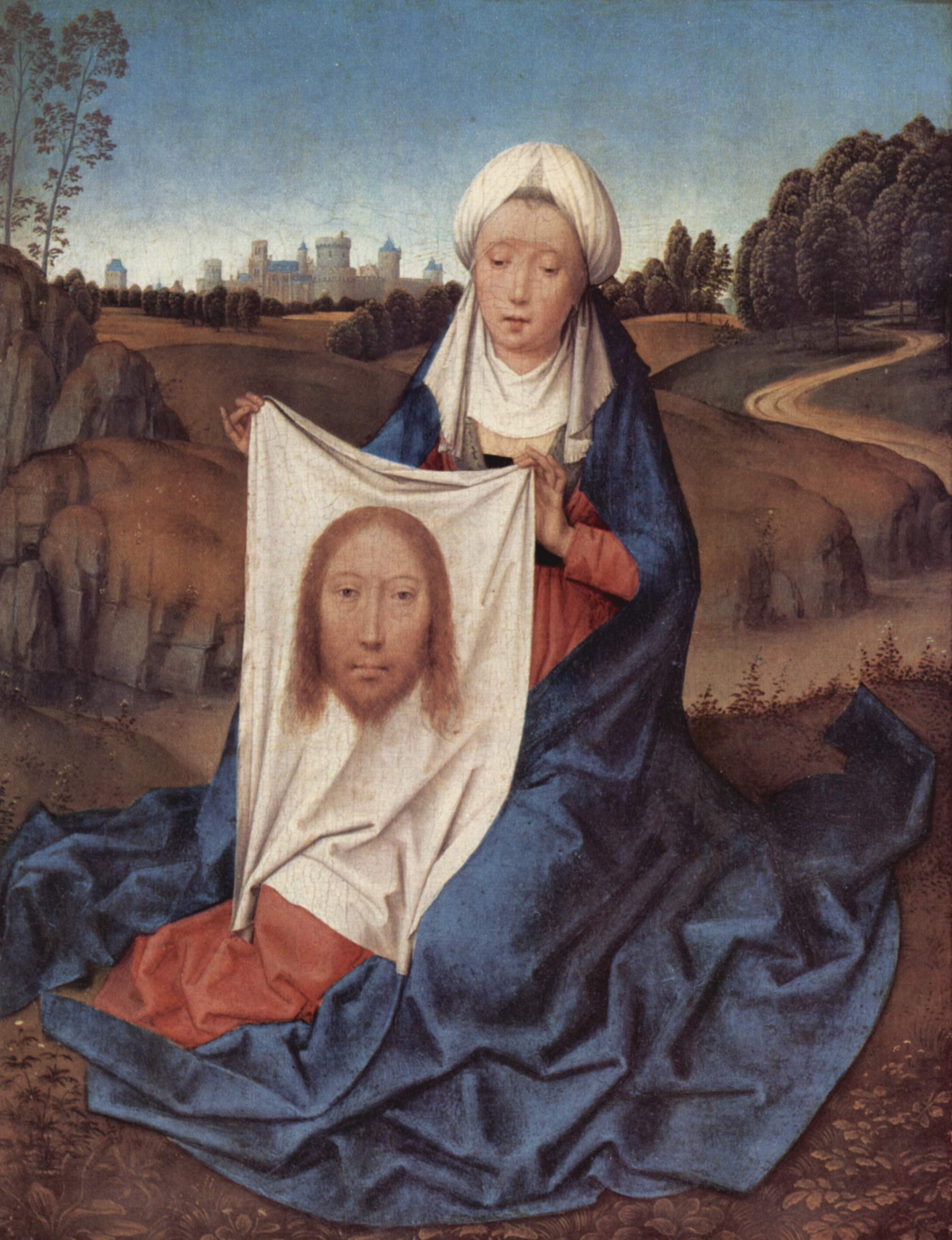
“Veronica?”

“Bernice Veronica” – both names referring to the Woman who wiped the Face of Jesus, commonly depicted in every Catholic church, at the Sixth Station of the Cross.
Did she exist?   And what does it mean to be “a Veronica?”   The Catholic Church tells us that a veil bearing a miraculous image of the Face of Jesus has existed since the earliest centuries, recorded in history and in art.   About the time this miraculous veil first appeared in Rome, in the Middle Ages, the name “Veronica” referred to the veil itself–“Veronica” meaning “vera” or true, and “icon” meaning image, or even more precisely, “to be present.”   Those who gazed upon the veil bearing the true Face of Jesus stood in God’s presence.   They were turned toward His Face.
Legends sprang up sometime later about a woman named “Veronica,” who was sometimes associated with the woman “Berenice” or “Bernice,” the bleeding woman who touches the hem of Jesus’s garment in the Gospel.
“These pious traditions cannot be documented, but there is no reason why the belief that such an act of compassion did occur should not find expression in the veneration paid to one called Veronica.” —The Catholic Encyclopedia.
Pope St. John Paul II expressed the answer to the question of Veronica most beautifully in his poem,

“Name”

In the crowd walking towards the place

[of the Agony]–

did you open up a gap at some point or were you

[opening it] from the beginning?

And since when? You tell me, Veronica.

Your name was born in the very instant

in which your heart

became an effigy: the effigy of truth.

Your name was born from what you gazed upon.

–Karol Wojtyla

name by karol wojtyla-st john paul

When a soul performs an “act of compassion,” Jesus leaves His image on the “veil” of the soul.   In other words, while contemplating the Face of Jesus in an image, in the Word of God in the Scriptures, in a person made in the image and likeness of God, or above all, in the Eucharist, the soul places itself in the Presence of God.   When we are turned completely toward the Face of God, through a daily face-to-face encounter in prayer–by the power of the Holy Spirit–God gradually transforms the soul into the “True Image” of His Son, Jesus Christ.   As Pope St. John Paul II says, our hearts must become an “effigy of truth,” a “true icon.”   Then our name too will be born from what we gaze upon. It will be “Veronica.”

St Veronica pray for us!

st veronica pray for us.2

Posted in CATHOLIC DEVOTIONS of the Month, DEVOTIO, MORNING Prayers, The HOLY NAME

The Wonders of the Holy Name – Fr Paul O’Sullivan, O.P. – “Revealing the Simplest Secret Ever of Holiness and Happiness.” Part Three – 12 July

Parts One and Two – here:  https://anastpaul.wordpress.com/2017/07/10/the-wonders-of-the-holy-name-fr-paul-osullivan-o-p-revealing-the-simplest-secret-ever-of-holiness-and-happiness/https://anastpaul.wordpress.com/category/the-holy-name/

the wonders of the holy name-day three-12 july

The Plague in Of Lisbon.
The City saved by the Holy Name.

A devastating plague broke out in Lisbon in
I432.    All who could do so fled in terror from the
city and thus carried the plague to every corner
of the entire country of Portugal.
Thousands of men, women and children, of all
classes, were swept away by the cruel sickness.
So virulent was the epidemic that men died everywhere,
at table, in the streets, in their houses, in
the shops, in the market places, in the Churches.    To
use the words of historians, it flashed like lightning
from man to man, or from a coat, a hat or
any garment that had been used by the plague
stricken.   Priests, doctors and nurses were carried
off in such numbers that the bodies of many lay
unburied in the streets so that the dogs licked up
the blood and ate the flesh of the dead, becoming
as a result infested with the dread disease and
spreading it still more widely among the unfortunate
people.
Among those who assisted the dying with
unflagging zeal was a venerable Bishop, Monsignor
Andre ‘ Dias who lived in the Convent of St. Dominic.
This holy man seeing that the epidemic,
far from diminishing, grew every day in intensity
and, despairing of human help, urged the
unhappy people to call on the Holy Name of
Jesus.   He was seen wherever the disease
was fiercest, urging, imploring the sick and the
dying as well as those who had not as yet been
stricken down, to repeat Jesus. Jesus.   “Write it
on cards”, he said, “and keep those cards on your
persons, place them at night under your pillows,
place them on your doors but above all constantly
invoke with your lips and in your hearts this most
powerful Name”.
He went about as an Angel of peace filling the
sick and the dying with courage and confidence.
The poor sufferers felt within them a new life and,
calling on Jesus, they wore the cards on their
breasts or carried them in their pockets.
Then summoning them to the great Church of St.
Dominic he once more spoke to them of the power
of the Name of Jesus, blessed wafer in the same
Holy Name, ordering all the people to sprinkle themselves
with it and sprinkle it on the faces of the sick
and dying.   ‘Wonder of wonders! the sick got well,
the dying arose from their agonies, the plague
ceased and the city was delivered in a few days from
the most awful scourge that had ever visited it.
The news spread to the whole country and all
began to call, with one accord, on the Name of
J esus.    In an incredibly short time all Portugal
was freed from the dread sickness.
The grateful people, mindful of the marvels they
had witnessed, continued their love and confidence
in the Name of our Saviour, so that in all their
troubles, in all dangers, when evils of any kind
threatened them they invoked the Name of Jesus.
Confraternities were formed in the Churches, processions
of the Holy Name were made monthly,
altars were raised in honour of this blessed Name,
so that the greatest curse that had ever fallen upon
the country was transformed into the greatest
blessing.
For long centuries this great confidence in the
Name of Jesus continued in Portugal and thence
spread to Spain, to France, and to the whole World.

Posted in EUCHARISTIC Adoration, MORNING Prayers, QUOTES of the SAINTS, The HOLY EUCHARIST / The HOLY MASS

Quote of the Day – 12 July

Quote of the Day – 12 July

“….in the Blessed Sacrament Our Lord Himself is the light which manifests Him as our model and reveals His beauties to us.    He is Himself His light, His means of being known, just as the sun is itself its own proof.   To make Himself known, He has only to show Himself.   Recognition of Him need not come from its being reasoned out.   A child does not have to discourse with himself to recognize his parents.   Our Lord reveals Himself through His presence, just as parents do.   But as we grow to know His voice better and as our hearts become more sympathetic to Him in emptying themselves of what is not Him, our Lord manifests Himself in a clearer and more intimate manner, which only those know, who love Him.   He gives the soul a divine conviction which overshadows the light of human reason.   Look at Magdalene:  one word from Jesus and she recognises Him.   He acts the same way in the Blessed Sacrament:  He says one word only but it rings in our very hearts:  “It is I!….”   We sense His Presence; we believe in it more firmly than if we were to see Him with bodily eyes.”

St Peter Julian Eymard

he is himself his light-st peter julian eymard

Posted in CATHOLIC DEVOTIONS of the Month, DOCTORS of the Church, MORNING Prayers, PRAYERS of the SAINTS, QUOTES of the SAINTS, SAINT of the DAY, The WORD

One Minute Reflection – 12 July

One Minute Reflection – 12 July

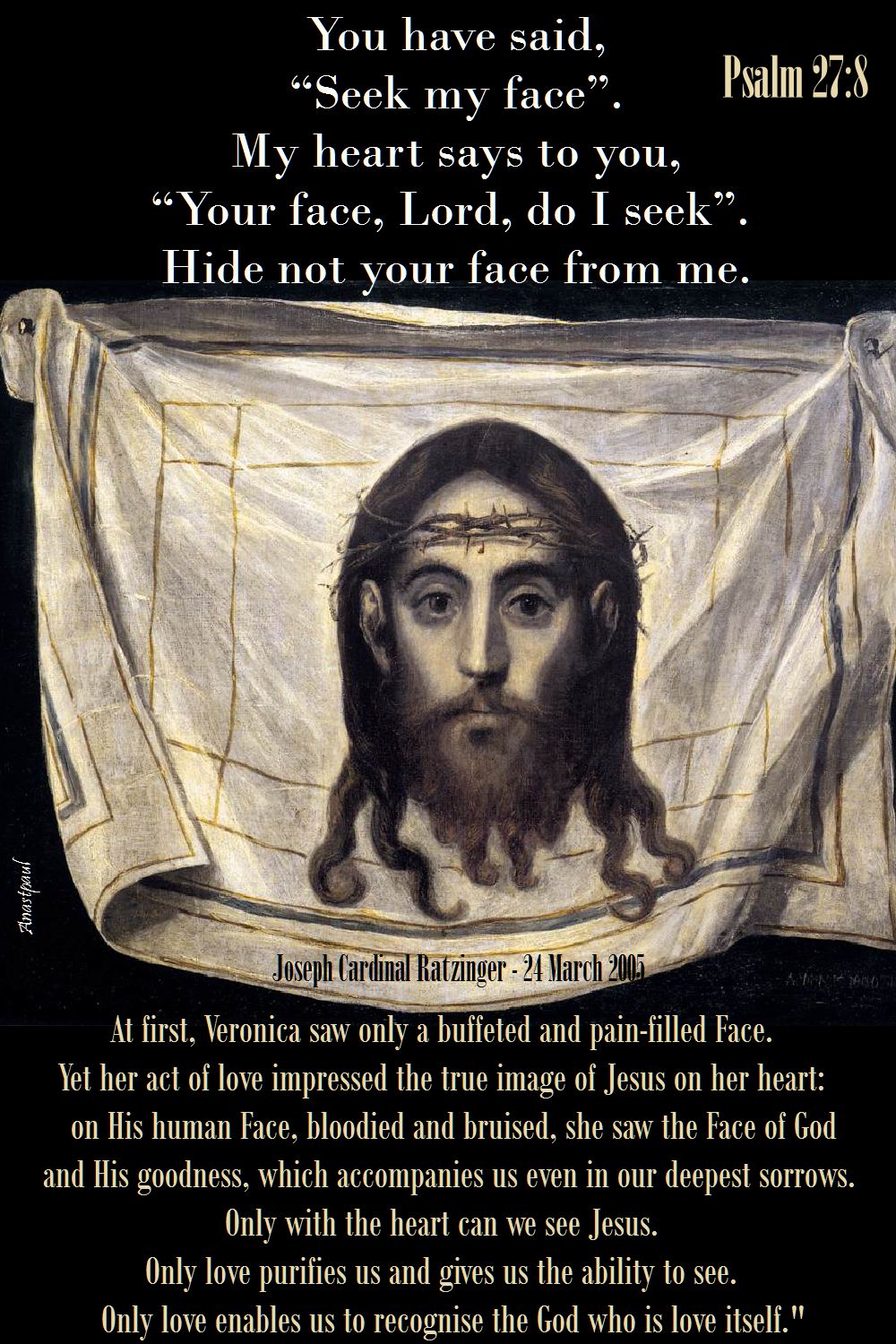
You have said, “Seek my face”. My heart says to you, “Your face, Lord, do I seek”.   Hide not your face from me.  Turn not your servant away in anger, you who have been my help.   Cast me not off, forsake me not, O God of my salvation………Psalm 27:8-9

REFLECTION – “Veronica- ‘Bernice’ in the Greek tradition, embodies the universal yearning of the devout men and women of the Old Testament, the yearning of all believers to see the Face of God.   On Jesus’ Way of the Cross, though, she at first did nothing more than perform an act of womanly kindness: she held out a facecloth to Jesus.   She did not let herself be deterred by the brutality of the soldiers or the fear which gripped the disciples.   She is the image of that good woman, who, amid turmoil and dismay, shows the courage born of goodness and does not allow her heart to be bewildered. “Blessed are the pure in heart”, the Lord had said in his Sermon on the Mount, “for they shall see God” (Mt 5:8).   At first, Veronica saw only a buffeted and pain-filled Face.   Yet her act of love impressed the true image of Jesus on her heart: on His human Face, bloodied and bruised, she saw the Face of God and His goodness, which accompanies us even in our deepest sorrows.  Only with the heart can we see Jesus. Only love purifies us and gives us the ability to see.   Only love enables us to recognize the God who is love itself.”…………..Joseph Cardinal Ratzinger (24 March 2005)

at first, veronica saw only a ...- joseph card ratzinger 24 march 2005

PRAYER – Lord God, grant us restless hearts, hearts which seek Your Face. Keep us from the blindness of heart which sees only the surface of things.   Give us the simplicity and purity which allow us to recognise Your presence in the world.   When we are not able to accomplish great things, grant us the courage which is born of humility and goodness. Impress Your Face on our hearts.   May we encounter You along the way and show Your image to the world. St Veronica, Pray for us! Amen.

st veronica pray for us

Posted in CATHOLIC DEVOTIONS of the Month, DEVOTIO, EUCHARISTIC Adoration, MORNING Prayers, PRAYERS of the SAINTS

Our Morning Offering – 12 July

Our Morning Offering – 12 July

The Eucharistic Face of Jesus
By Blessed Elizabeth of the Trinity

O Eucharistic Face of Jesus,
brightness of the glory of my God
and figure of His substance,
I want to spend my life gazing upon You,
to become totally impressionable
so that I might bear Your likeness
and become an effigy of Your countenance.
Through all darkness,
all emptiness,
all powerlessness,
I want to keep my eyes fixed on You
and to remain under Your great light.
O my beloved Sun,
so fascinate me
that I may never be able to leave Your radiance.
Amen

prayer to the eucharistic face of jesus by blessed elizabeth of the Trinity

Posted in SAINT of the DAY, STATIONS of the CROSS

Saint of the Day – 12 July – St Veronica

Saint of the Day – 12 July – St Veronica (1st Century) – Patronages:  against bleeding or haemorrhages, domestic workers, dying people, laundry workers, linen weavers, maids, parsonage or rectory housekeepers, photographers, seamstresses, washerwomen.

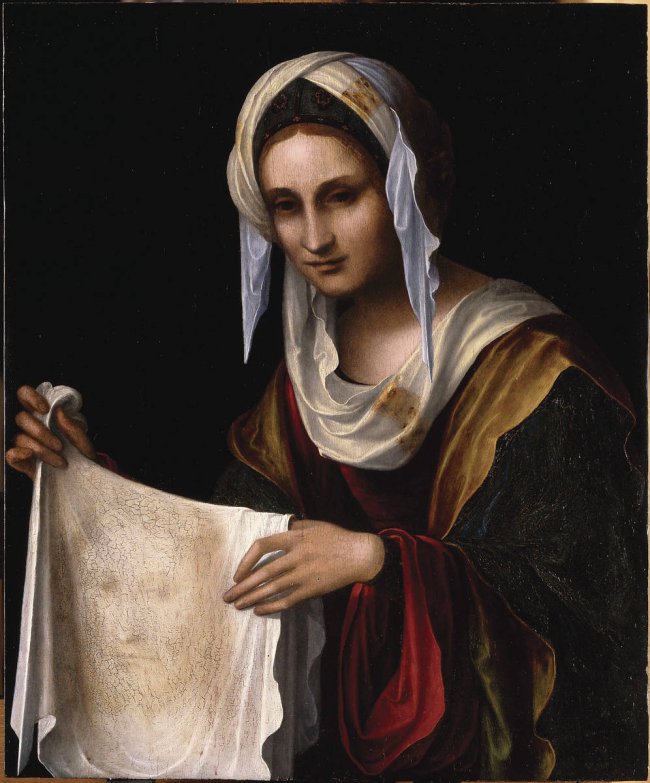
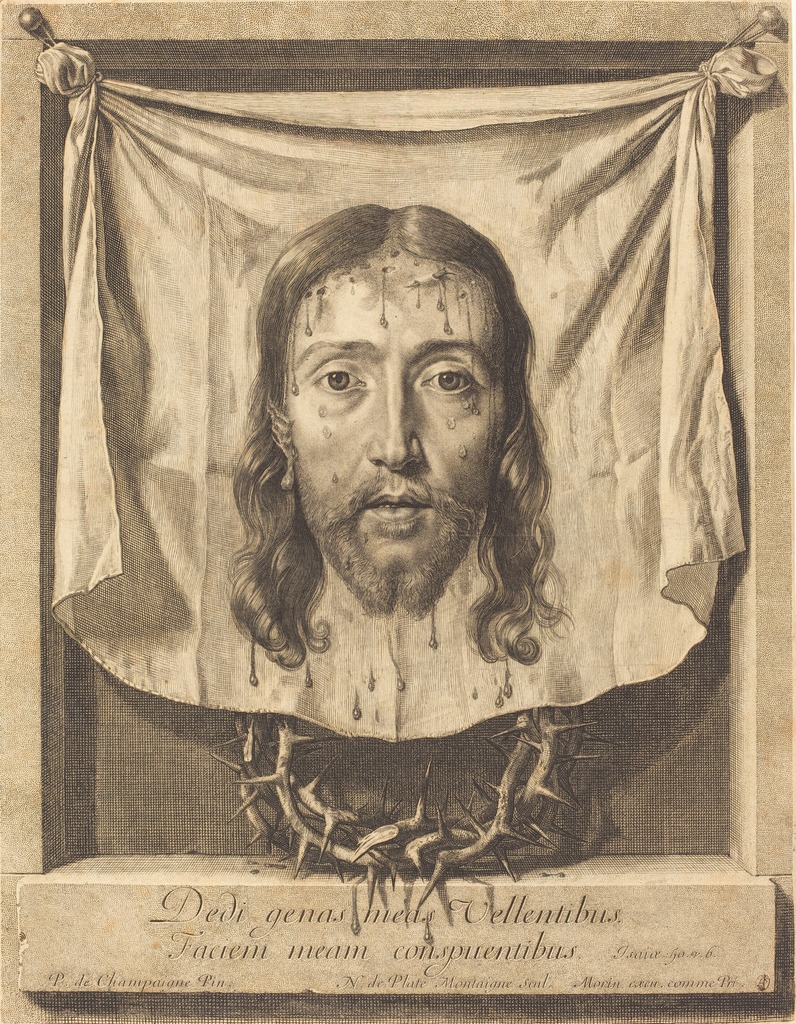
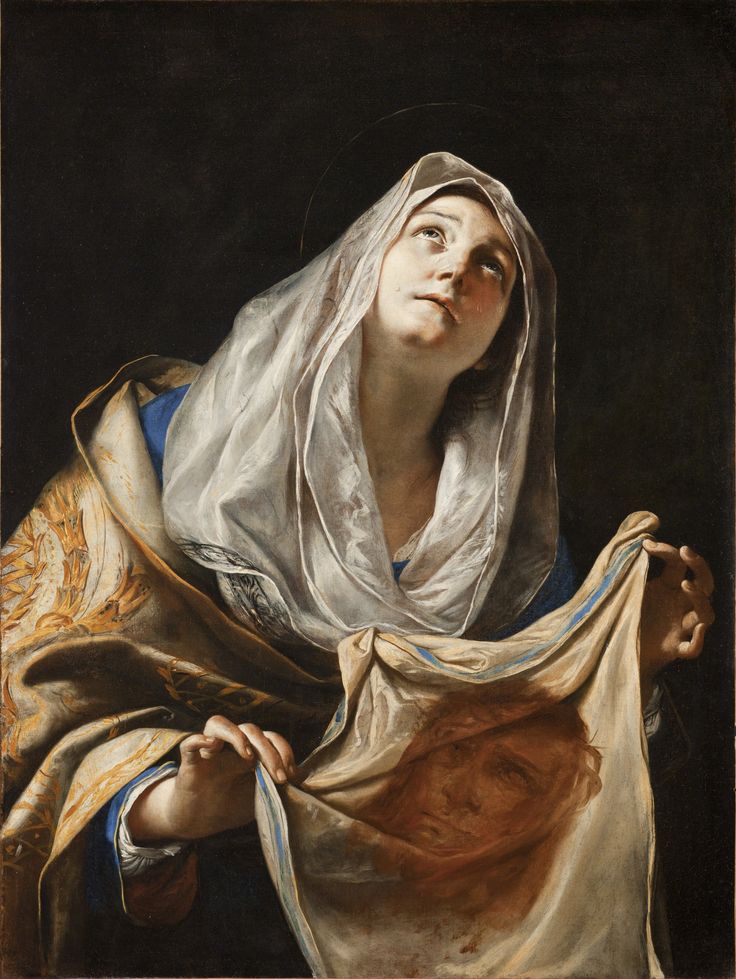
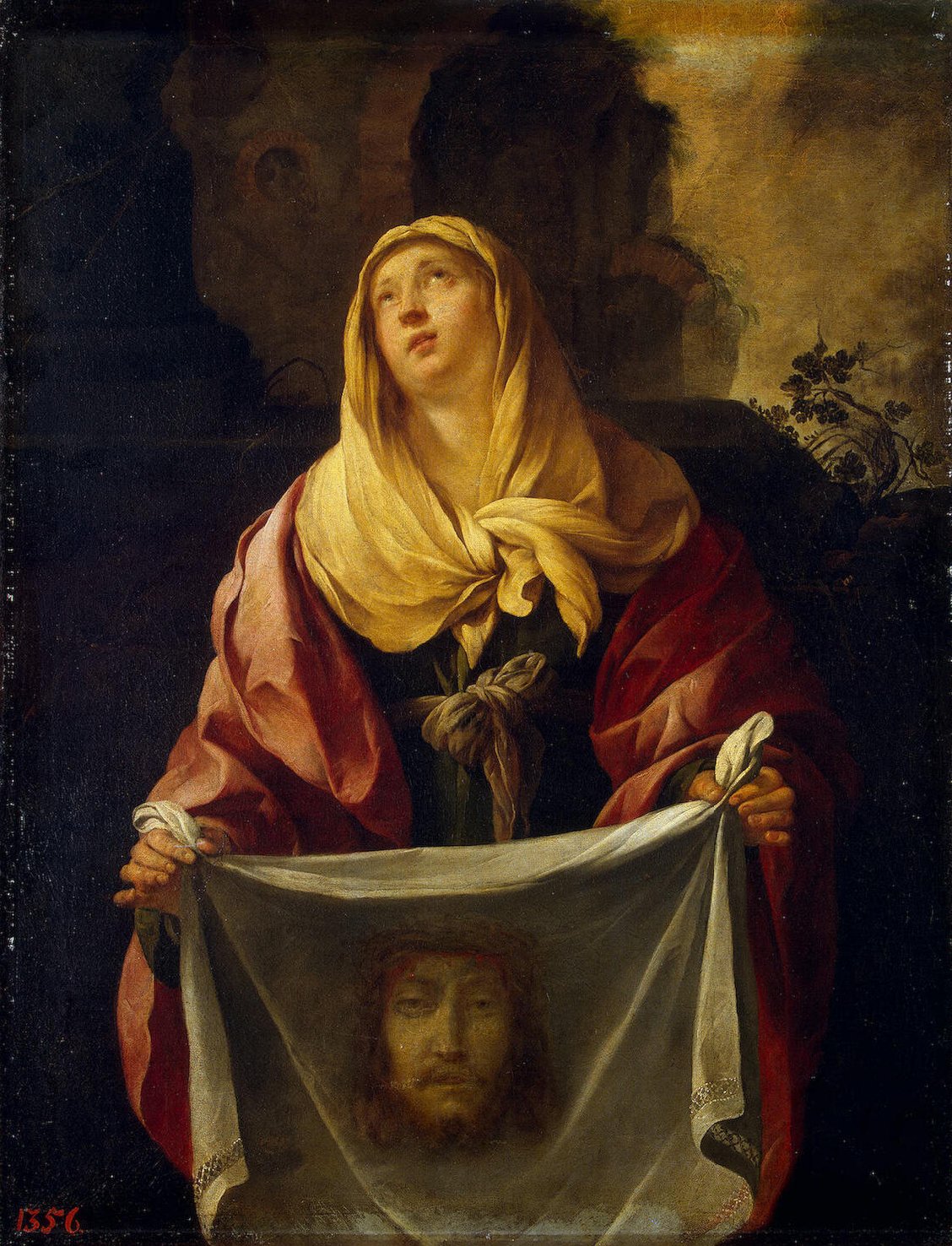
Saint Veronica is known as the woman who offered a cloth to Jesus so He could wipe His face on the way to His crucifixion.   The cloth is believed to exist today in the Vatican and is considered one of the most treasured relics of the Church.

Sainte Véronique (Costa Lorenzo)
Costa Lorenzo

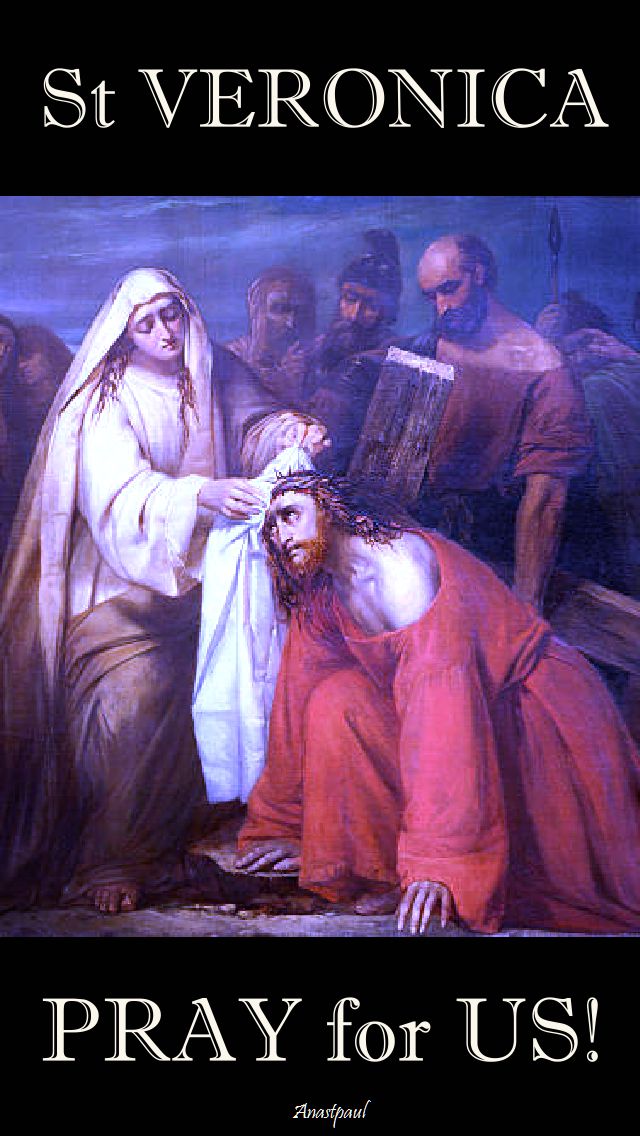
Saint Veronica is not mentioned in the Bible but is known to us by Catholic tradition and in the Sixth Station of the Cross, “Veronica Wipes the Face of Jesus.”

Christ was carrying the cross to Calvary, His face dripping with sweat and blood, Saint Veronica, a bystander, was moved with compassion.   She approached Jesus and offered Him a cloth, likely her veil, which He accepted and used to wipe His face.

The image of his face was miraculously imprinted on the cloth.

martin-schongauer-christ-and-saint-veronica-on-the-way-to-calvaryst veronica 5 - El Greco3st veronica 6 - El Greco3st veronica 7 - Flemalle Detail Veil

There are no legends from the period which speak of Veronica either before or after her act of compassion.   We do not know when she was born or when she died.   She is literally lost to history.   However, the cloth may still exist today, kept safe at St. Peter’s in Rome.   This particular cloth bearing the likeness of Christ’s face, although ancient and difficult to distinguish, is considered one of the most treasured relics in the Vatican. According to legend, it is the original relic, although throughout the ages many copies were created and some were passed along as genuine.
Most of what we know about the veil was recorded in the medieval period, although it was first mentioned as being in the hands of Pope John VII in the early eighth century. The veil and the legend surrounding it became very popular in the thirteenth though fifteenth centuries when the veil was on public display.   Indulgences were granted for people who performed devotions before it.

The fate of the veil was obscured by violence in 1527 by the Sack of Rome in which it may have been destroyed.   Many reproductions were created at this time and it is unfortunately unclear if the veil still kept by the Vatican is the original or a reproduction. In 1616, Pope Paul V banned the production of all copies of the veil, which has become popular.   In 1629, Pope Urban VIII went a step further and ordered the destruction of all copies, or that existing copies should be delivered to the Vatican.   Anyone who disobeyed this order was to be excommunicated.

st veronica 2st veronicaSt. Veronica by Jacques BlanchardSaint Veronica. Hans Memling

The Veil of Veronica has since been kept at St Peter’s Basilica and is shown to the public, on the fifth Sunday of Lent each year.

Posted in SAINT of the DAY

Saints’ Memorials – 12 July

St Agnes De
St Andreas the Soldier
St Ansbald of Prum
St Balay
St Clement Ignatius Delgado Cebrian
Bl David Gonson
St Epiphana
St Faustus the Soldier
St Felix of Milan
St Fortunatus of Aquileia
St Hermagorus of Aquileia
St Hilarion of Ancyra
St Jason of Tarsus
Bl Jeanne-Marie de Romillon
St John Gualbert
St John Jones
St John the Georgian
Bl Lambert of Cîteaux
St Louis Martin
Bl Madeleine-Thérèse Talieu
Bl Marguerite-Eléonore de Justamond
St Marie-Azélie Guérin / ZELIE Martin
Bl Marie Cluse
St Menas the Soldier
St Menulphus of Quimper
St Nabor of Milan
St Paternian of Bologna
St Paulinus of Antioch
St Phêrô Khan
St Proclus of Ancyra
St Proculus of Bologna
St Uguzo of Carvagna
St Veronica- https://www.youtube.com/watch?v=-V4SMR4kkqM&list=PL58g24NgWPIzvBk2IQVES_xC4WTm6-CDI#action=share
St Viventiolus of Lyons
—
Martyrs of Nagasaki – 8 beati: Additional Memorial – 10 September as one of the 205 Martyrs of Japan
Eight lay people, many them related to each other, who were martyred together:
• Catharina Tanaka
• Ioannes Onizuka Naizen
• Ioannes Tanaka
• Ludovicus Onizuka
• Matthias Araki Hyozaemon
• Monica Onizuka
• Petrus Araki Chobyoe
• Susanna Chobyoe
12 July 1626 in Nagasaki, Japan
Beatified on 7 May 1867 by Pope Blessed Pius IX

Posted in CATHOLIC DEVOTIONS of the Month, DEVOTIO, MORNING Prayers, The HOLY NAME

The Wonders of the Holy Name – Fr Paul O’Sullivan, O.P. – “Revealing the Simplest Secret Ever of Holiness and Happiness.” – PART TWO – 11 July

Part One – here:  https://anastpaul.wordpress.com/2017/07/10/the-wonders-of-the-holy-name-fr-paul-osullivan-o-p-revealing-the-simplest-secret-ever-of-holiness-and-happiness/

the wonders of the holy name-day two-11 july

What must we do?

St. Paul tells us that we must do all we do
whether in word or work in the Name of Jesus.
“Whether you eat or whether you drink or
whatever else you do, do all in the Name of our
Lord Jesus Christ”.
In this way every act becomes an act of love
and of merit and moreover we receive grace and
help to do all our actions perfectly.
We must therefore do our best to form the
habit of saying Jesus, Jesus, Jesus very often
every day.   We can do so when dressing, when
working – no matter what we are doing – when
walking, in moments of sadness, at home and in
the street, everywhere.
Nothing is easier if only we do it methodically.
We can say it countless times every day.
Bear in mind that each time we say Jesus 1) we
give God great glory, 2) we receive great graces
for-ourselves 3) and we help the souls in Purgatory.
We shall now quote a few examples to show
the power of the Holy Name.

The World in Danger – Saved by the Holy Name.

In the year 1274 great evils threatened the World.
The Church was assailed by fierce enemies from
within and without.   So great was the danger
that the Pope Gregory X, who then reigned called
a Council of Bishops in Lyons to determine on the
best means of saving society from the ruin that
menaced it.   Among the many means proposed
the Pope and Bishops chose what they considered
the easiest and most efficacious of all,
viz. the frequent repetition of the Holy Name of
Jesus.
The Holy Father then begged the Bishops of
the World and their priests, to call on the Name
of Jesus and to urge their peoples to place all their
confidence in this all-powerful Name, repeating
it constantly with boundless trust.   The Pope
entrusted the Dominicans especially with the
glorious task of preaching the wonders of the
Holy Name in every country, a work they accomplished
with unbounded zeal.
Their Franciscan brothers ably seconded them.
St Bernardine of Siena and St. Leonard of PortMaurice
were ardent Apostles of the Name of
Jesus.
Their efforts were crowned with success so
that the enemies of the Church were overthrown,
the dangers that threatened society disappeared
and peace once more reigned supreme.
This is a most important lesson for us because
in these our own days dreadful sufferings are
crushing many countries and still greater evils
threaten all the others.
No government, or governments seem strong
and wise enough to stem this awful torrent of
evils.   There is but one remedy and that is prayer.
Every Christian must turn to God and ask Him
to have mercy on us.   The easiest of all prayers,
as we have seen, is the Name of Jesus.
Everyone without exception can invoke this
Holy Name hundreds of times a day, not only
for bis own intentions, but also to ask God to
deliver the World from impending ruin.
It is amazing what one person who prays can
do to save his country and save society.   We
read in Holy Scripture how Moses saved by his
prayer the people of Israel from destruction, how
one pious woman, Judith of Betulia, saved her city
and her people when the rulers were in despair
and about to surrender themselves to their enemies.
Again we know that the two cities of Sodom
and Gomorrha, which God destroyed by fire for
their sins and crimes, would have been pardoned
had there been only ten good men to pray for
them!
Over and over again we read of kings, emperors,
statesmen and famous military commanders who
placed all their trust in prayer thus working
wonders.   If the prayers of one man can do much
what will not the prayers of many do?
The Name of Jesus is the shortest, the easiest
and the most powerful of prayers.   Everyone can
say it even in the midst of his daily work.   God
cannot refuse to hear it.
Let us then invoke the Name of Jesus, asking
Him to save us from the calamities that threaten us.

Posted in CONTEMPLATIVE Prayer, JESUIT SJ, MORNING Prayers

The Gift of Contemplative Prayer

The Gift of Contemplative Prayer

by Margaret Silf

Probably most of us, if we think of contemplative prayer at all, regard it as something that is beyond us and practiced only by a few contemplative monks and nuns whose whole lives are devoted to prayer.   Yet I have heard respected and experienced spiritual guides say that contemplation is often given to those you would least expect—to harassed mothers and people who think they can’t pray, to children, to the sick and dying, to people with no academic learning about prayer or Scripture or theology.   God sometimes seems to speak, heart to heart, in this mysterious way, to the untaught and unpracticed. None of us should imagine that the ways of contemplative prayer are closed to us because God is always infinitely larger than our expectations.

I suggest that creation itself gives us a gateway.   In every moment of our lives, a silent, invisible miracle of exchange is taking place.   We breathe out the air that our bodies no longer need, which is mainly carbon dioxide, a waste product for us but the very thing that the green leaves on the trees and plants need to produce their own energy.   So they receive our carbon dioxide and, through the process of photosynthesis, produce not only their own life energy, but also oxygen—a waste product for them but the very thing we need to live.   Whenever I stop my busyness for a few moments to look around me, I am amazed at this arrangement and it makes me think of prayer.

So perhaps a good way to open our hearts up to the gift of contemplation is simply to become still, and, quite literally, to breathe out our waste—all that clogs us and deadens us—and to breathe in God’s renewing life, as we breathe in the fresh oxygen that the plants have made for us.   This simple, deliberate breathing exercise can become something like what the French peasant was doing as he looked at God and God looked at him.   We are becoming aware of the mysterious exchange of life between ourselves and God.   And there is no reason that any period of quiet might not become prayer of this kind.

There may be other creatures who can help you cross the threshold of contemplation. If there is a baby in the family, try simply holding her in your arms as she sleeps and letting God hold both of you in his.   Nothing more.   No deep thoughts.   No search for meaning.   Just be there.

A cat (if you are not allergic to them!) can also be a great aid to prayer.   My own cat loves to sleep round my neck.   At first I found this disturbing but when he has settled into a particular hollow (perhaps where he can feel my pulse), he will lie there, quite still, just purring deeply, until he falls asleep and the purring ceases.   When he does this, I let myself find a hollow close to God’s pulse and let my own prayer become just a sleepy purr and then the silence of content.   Or you might discover prayer on a park bench.   The other day I was in Hyde Park and I spent a few minutes listening to the deep-throated cooing of the pigeons. I wanted to join them because, in their way, they were engaged in contemplative prayer, simply expressing, in this peaceful murmur, the song of their beings.

In your own home, prayer awaits you in the opening of a flower, the rising of your bread dough, or the steady, imperceptible development of a child.   Spend time in silence, aware of the wonder that is being unfolded in your cakes and your children, your houseplants or your garden.   For this is the essence of contemplative prayer—simple awareness, allowing God to be God, without trying to put the limitations of shape or meaning around him.

Contemplation, like all prayer, is pure gift and not anything we can achieve.   It happens when prayer becomes, wholly and utterly, the flow of God’s grace, transforming the land it flows through, like Ezekiel’s stream.   Or it happens when we lose consciousness of our own part in it and become simply receptors and carriers of grace.   It happens when we realise that our transformation depends on nothing but God’s grace and love, and, like the chrysalis, let go of all activity to try to achieve our own redemption.

When we try to describe it, we fail, for it lies beyond the world of words.   We can open our hearts to it by the practice of awareness but we cannot bring it about, any more than we can force a flower to open or an egg to hatch.   And in our silent, trustful waiting, we are acknowledging that God is God, the source and the destination, the means and the end of all our prayer, whatever form it may take.

from Close to the Heart: A Practical Approach to Personal Prayer

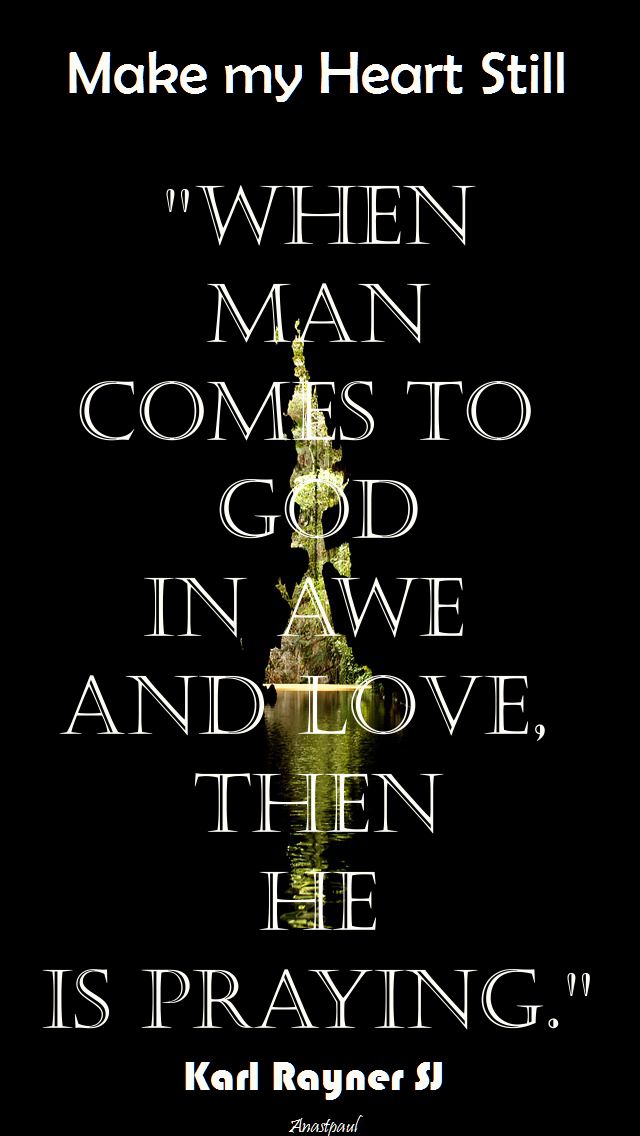
Make my Heart Still

“Lord take my poor heart. It is often so far from You, lost in a thousand things and in the trifles that fill up my everyday life. Lord, only You can collect the thoughts of my heart and have it concentrate on You, You who are the centre of all hearts, the Lord of all souls. Only You can bestow the spirit of prayer, only Your grace is able to allow me to find You amidst this multitude of things, amdist the distractions of everyday life, YOU, the one necessity, the one person with whom my heart can become still.”

“When man comes to God in awe and love, then he is praying.”

Karl Rayner SJ – The Mystical Way in Everyday Life

when man comes to god in awe and love-karl rayner sj

Posted in MORNING Prayers, SAINT of the DAY

Thought for the Day – 11 July

Thought for the Day – 11 July

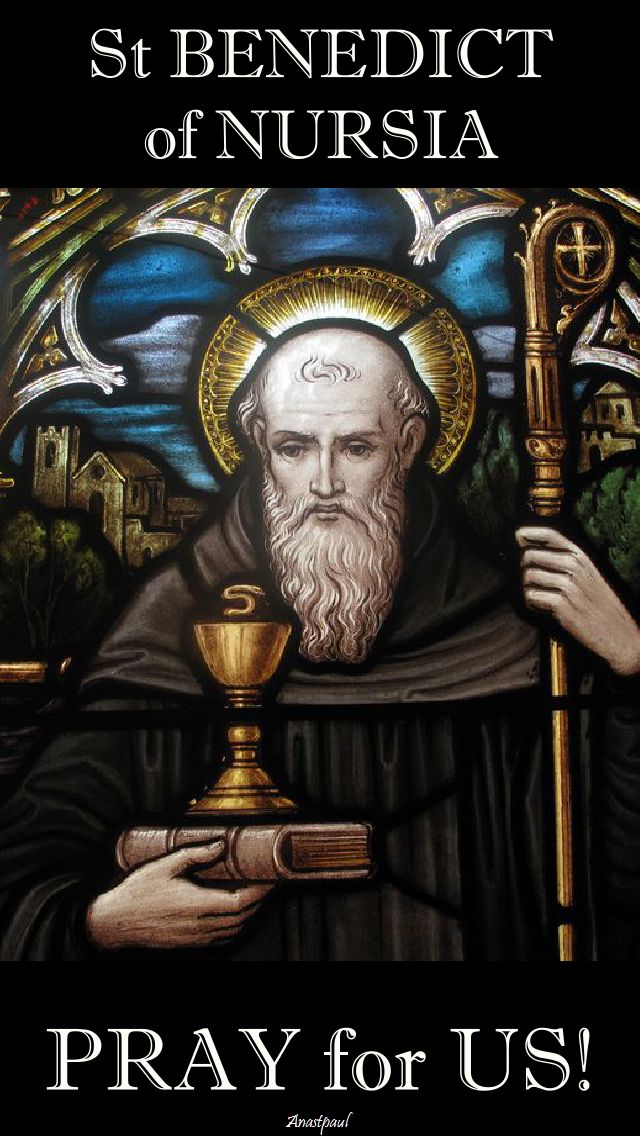
Seeking God is not the activity only of monks and nuns in monasteries.   Rather, it is the task given to all of the baptised.   And while most of us will not enter monastic life, there is an “inner monk” within us that compels us to seek God in our individual vocations and lives, whether as a diocesan priest, as principal of a high school, as members of families, married or single.   Seeking God takes place in the here and now, in this situation, with these people, in this family, this workplace, this school and in this time.   It is not only for those holy monks;  it is for me!   In his Rule, St. Benedict gives the world the roadmap to seeking God.   Prayer, work, obedience, simplicity of life and stability help monks seek God;  adapted, they can help the rest of us, too.

The monastic day is bookmarked by prayer early in the morning and in the evening, along with several moments of communal prayer throughout the day.   For anyone seeking God, prayer has to become the primary activity of the day.   It cannot be put aside for “more pressing” matters.   Prayer is the first priority of one’s day and all other activities of work, home and family work around it.   Monks pray the Liturgy of the Hours seven times a day, which lay people can also pray if they so desire.   However one prays, time with the Lord is a necessary component in seeking Him.   The Eucharist is the heart of prayer and anyone seriously seeking God ought to consider it a daily practice, if possible.   It is in those moments of spending time with the Lord that the person will detect His presence in his heart and soul.

Prayer, work, obedience, stability and simplicity of life marks the life of monks.   In developing the “inner monk” within you, take what you can from the monastic lifestyle to find God in your life…………Msgr. Bernard Bourgeois

St Benedict, Pray for us!

st benedict - pray for us 3

Posted in MORNING Prayers, SAINT of the DAY

Quote/s of the Day – 11 July

Quote/s of the Day – 11 July

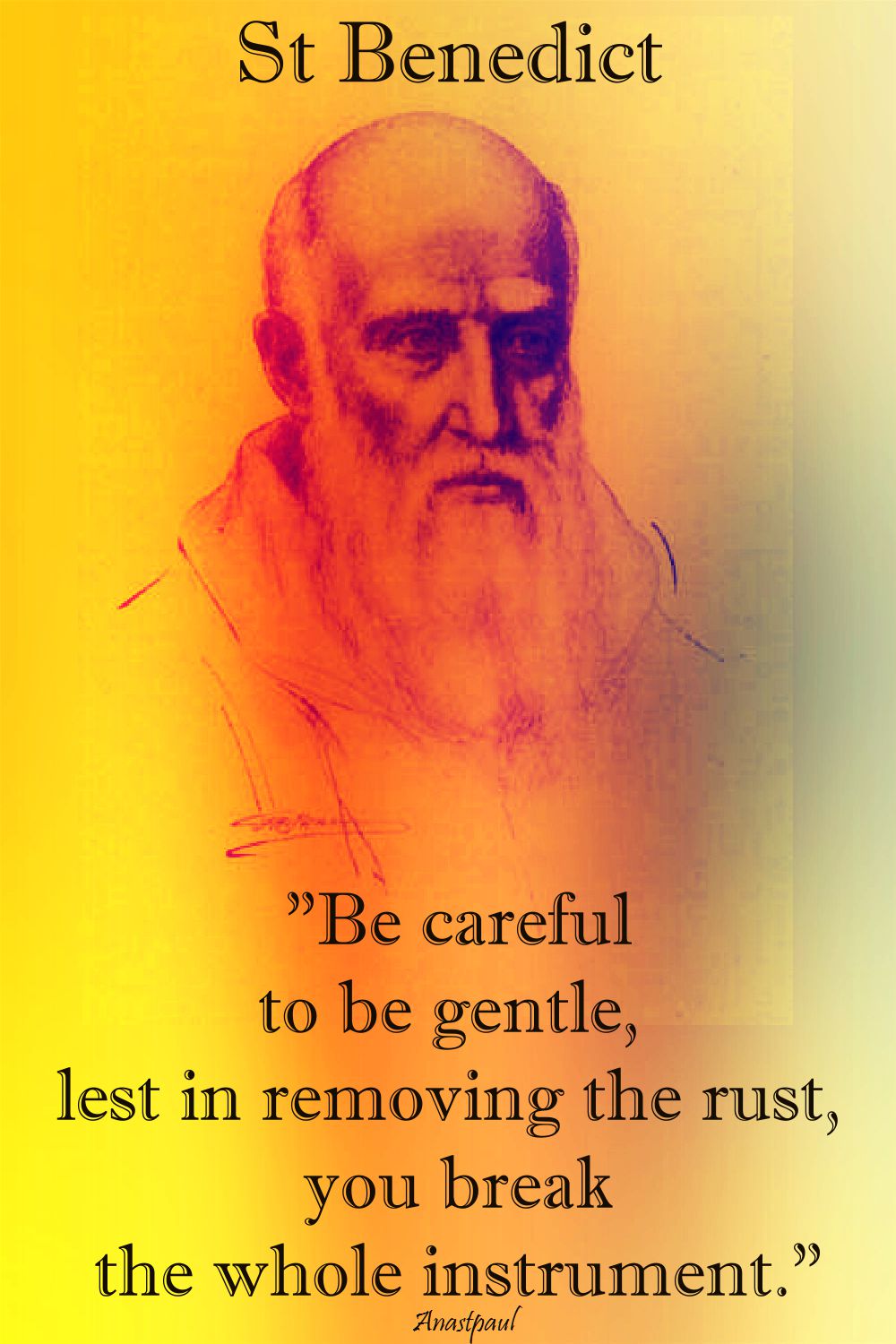
“Be careful to be gentle, lest in removing the rust, you break the whole instrument.”

becareful to be gentle - st benedict

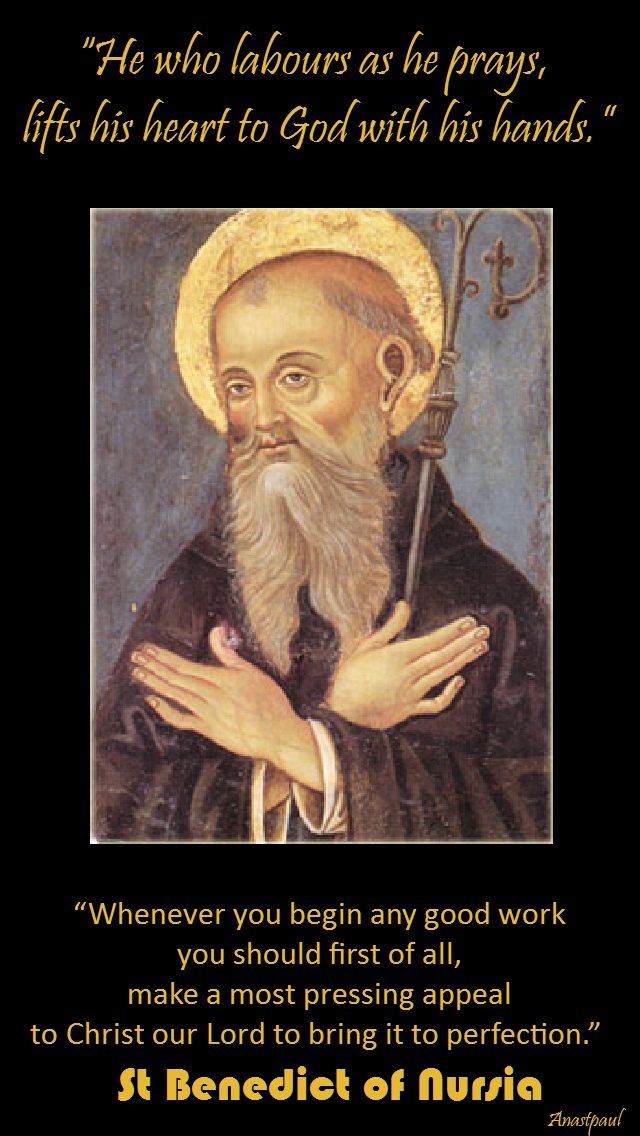
“He who labours as he prays,
lifts his heart to God with his hands.”

“Whenever you begin any good work
you should first of all,
make a most pressing appeal
to Christ our Lord to bring it to perfection.”

he who labours as he prays-st benedict


Posted in MORNING Prayers, QUOTES of the SAINTS, SAINT of the DAY, The WORD

One Minute Reflection – 11 July

One Minute Reflection – 11 July

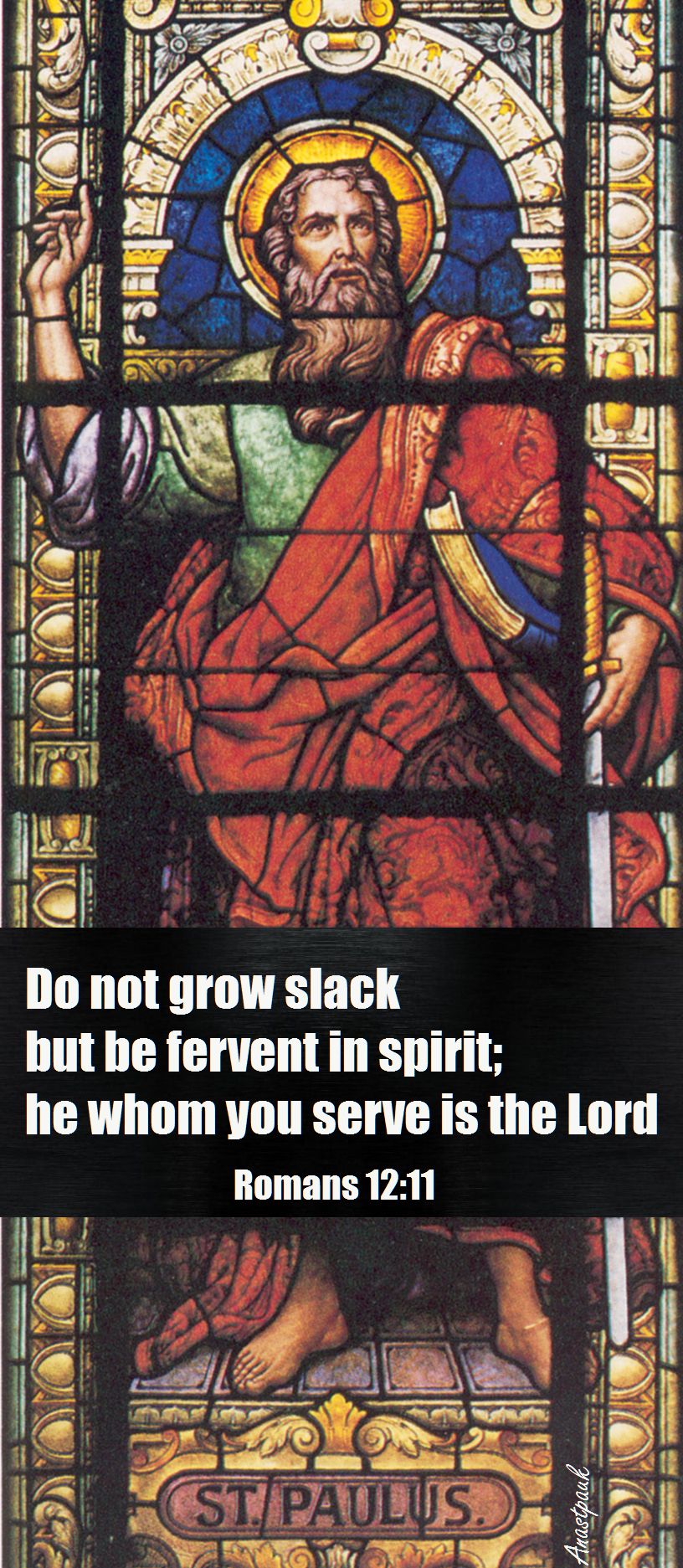
Do not grow slack but be fervent in spirit; he whom you serve is the Lord…….Romans 12:11

romans 12 11

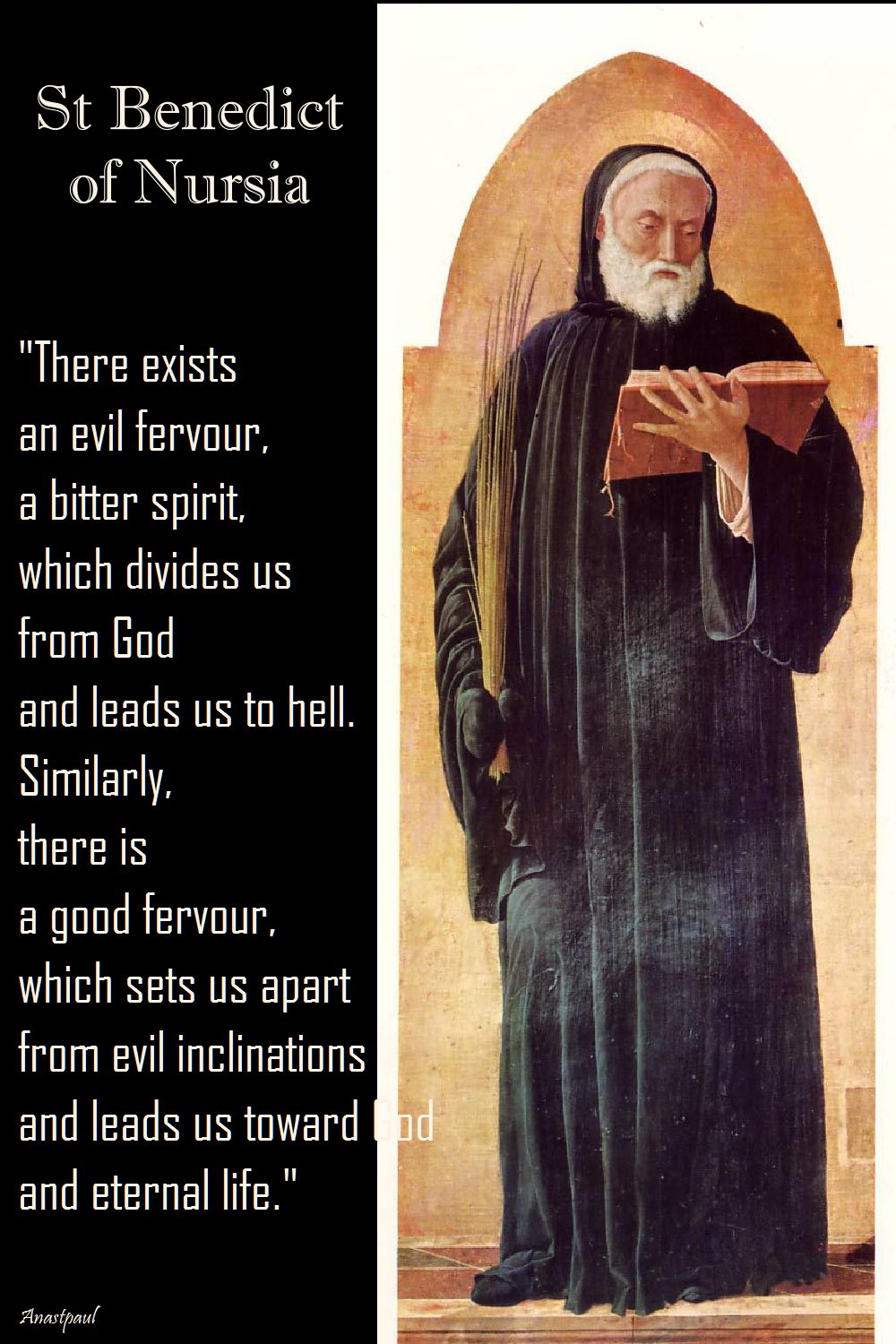
REFLECTION – “There exists an evil fervour, a bitter spirit, which divides us from God and leads us to hell.
Similarly, there is a good fervour, which sets us apart from evil inclinations and leads us toward God and eternal life.”

st benedict - there exists an evil fervour

PRAYER – Loving Father, grant me to have a true fervour in Your service. Let me never tire of following Your Son’s example and avoiding evil. St Benedict, pray for us! Amen

st benedict - pray for us 2