Saint Abraham the Patriarch, originally Abram, was the founder of the Hebrew nation and father of all believers in the true God. He was born at Ur, Chaldea, 1948 years after the creation of the world.
Thare had three sons, Abram, Nachor, and Aran. Abram married Sarai. Thare took Abram and his wife, Sarai, and Lot, the son of Aran, who was dead, and leaving Ur of the Chaldees, came to Haran and dwelt there till he died. Then, at the call of God, Abram, with his wife, Sarai, and Lot, and the rest of his belongings, went into the Land of Chanaan.
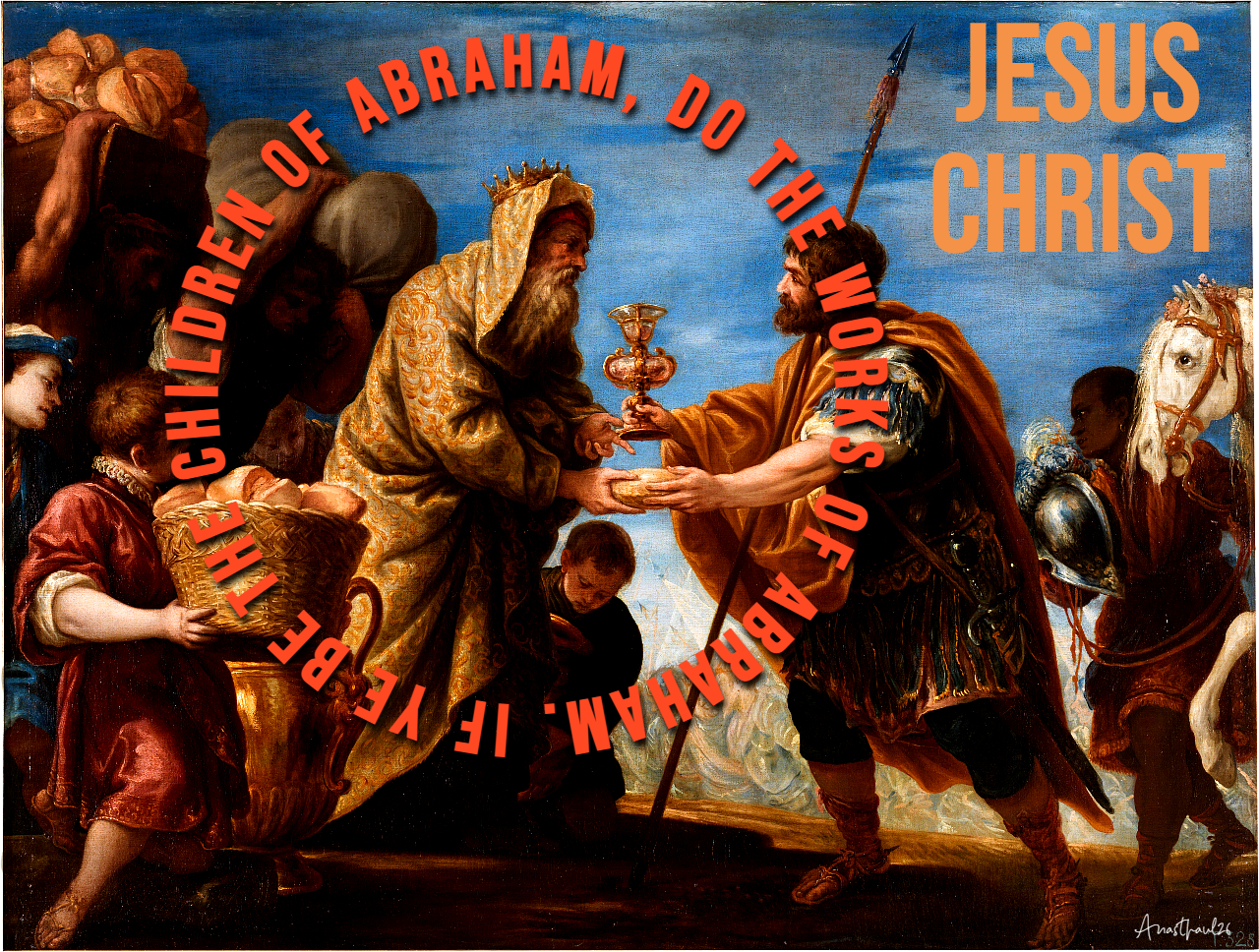
During his travels and adventures, which took him to Egypt as well as had him battle kings, he met Melchisedech, king of Salem,who brought forth bread and wine, and blessed him. Abram gave him tithes of all he had; but for himself he reserved nothing. God promised Abram that his seed should be as the stars of heaven, and he would possess the land of Chanaan.
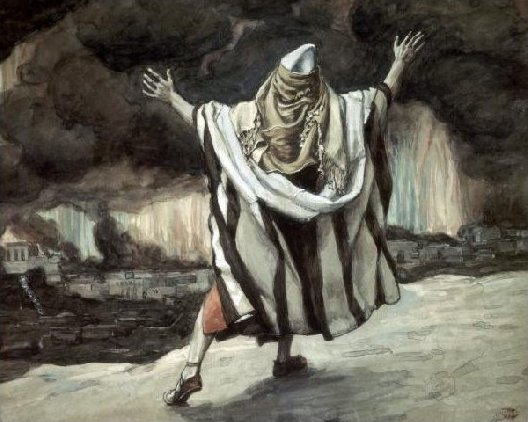
Abraham was told of the impending destruction of Sodom and Gomorrah but obtained from God the promise that He would not destroy them if He found ten just men therein. The next morning Abraham, looking from his tent towards Sodom, saw the smoke of destruction ascending to heaven.
Abraham had a dispute with Abimelech over a well at Bersabee, which ended in a covenant being made between them. It was after this that the great trial of the faith of Abraham took place. God commanded him to sacrifice his only son Isaac. When Abraham had his arm raised and was in the very act of striking, an angel stayed his hand and made the most wonderful promises to him of the greatness of his posterity because of his complete trust in God.
Sarah died at the age of 127, and Abraham, having purchased from Ephron the Hethite the cave in Machpelah near Mambre, buried her there. He married Cetura, and had by her six children. Finally, leaving all his possessions to Isaac, he died at age 170, and was buried by Isaac and Ismael in the cave of Machpelah.
A golden hour was my conception, for then began the principle of the salvation of all, and darkness hastened to light.
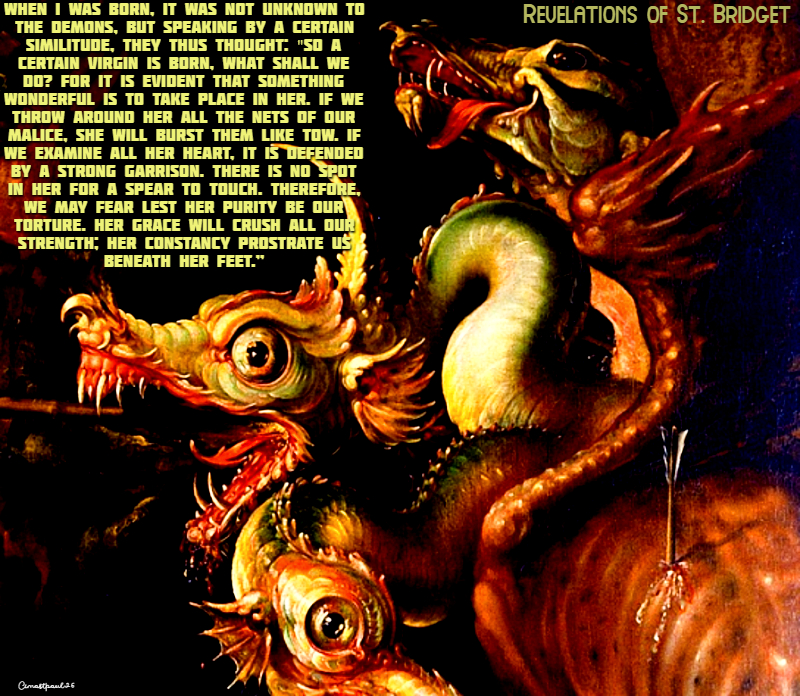
When I was born, it was not unknown to the demons, but speaking by a certain similitude, they thus thought: “So a certain virgin is born, what shall we do? For it is evident that something wonderful is to take place in her. If we throw around her all the nets of our malice, she will burst them like tow. If we examine all her heart, it is defended by a strong garrison. There is no spot in her for a spear to touch. Therefore, we may fear lest her purity be our torture. Her grace will crush all our strength; her constancy prostrate us beneath her feet.”
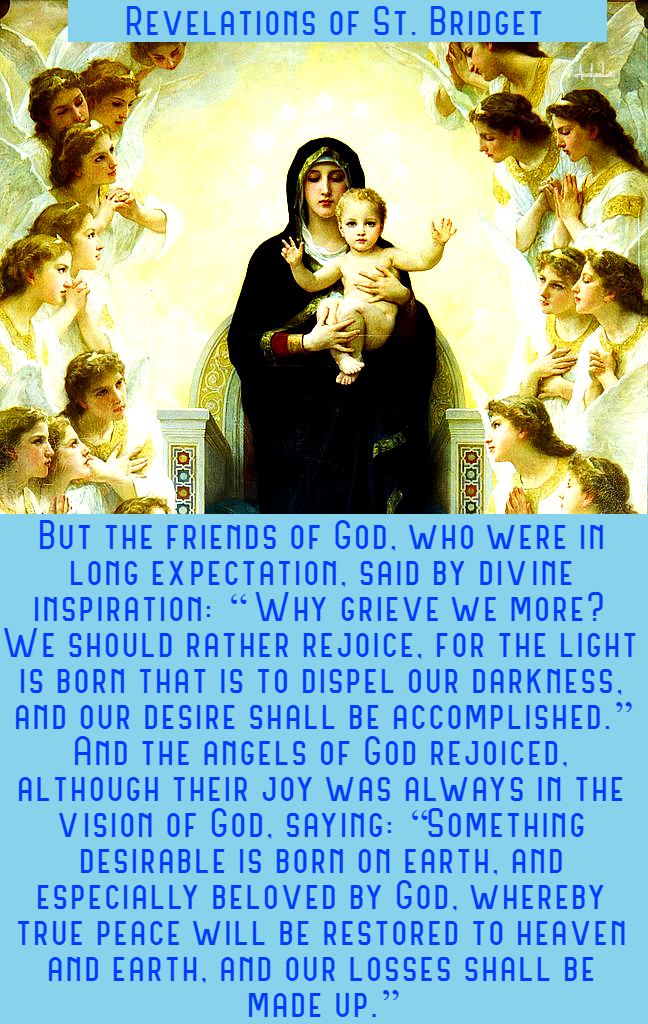
But the friends of God, who were in long expectation, said by divine inspiration: “Why grieve we more? We should rather rejoice, for the light is born that is to dispel our darkness, and our desire shall be accomplished.” And the angels of God rejoiced, although their joy was always in the vision of God, saying: “Something desirable is born on earth, and especially beloved by God, whereby true peace will be restored to heaven and earth, and our losses shall be made up.”
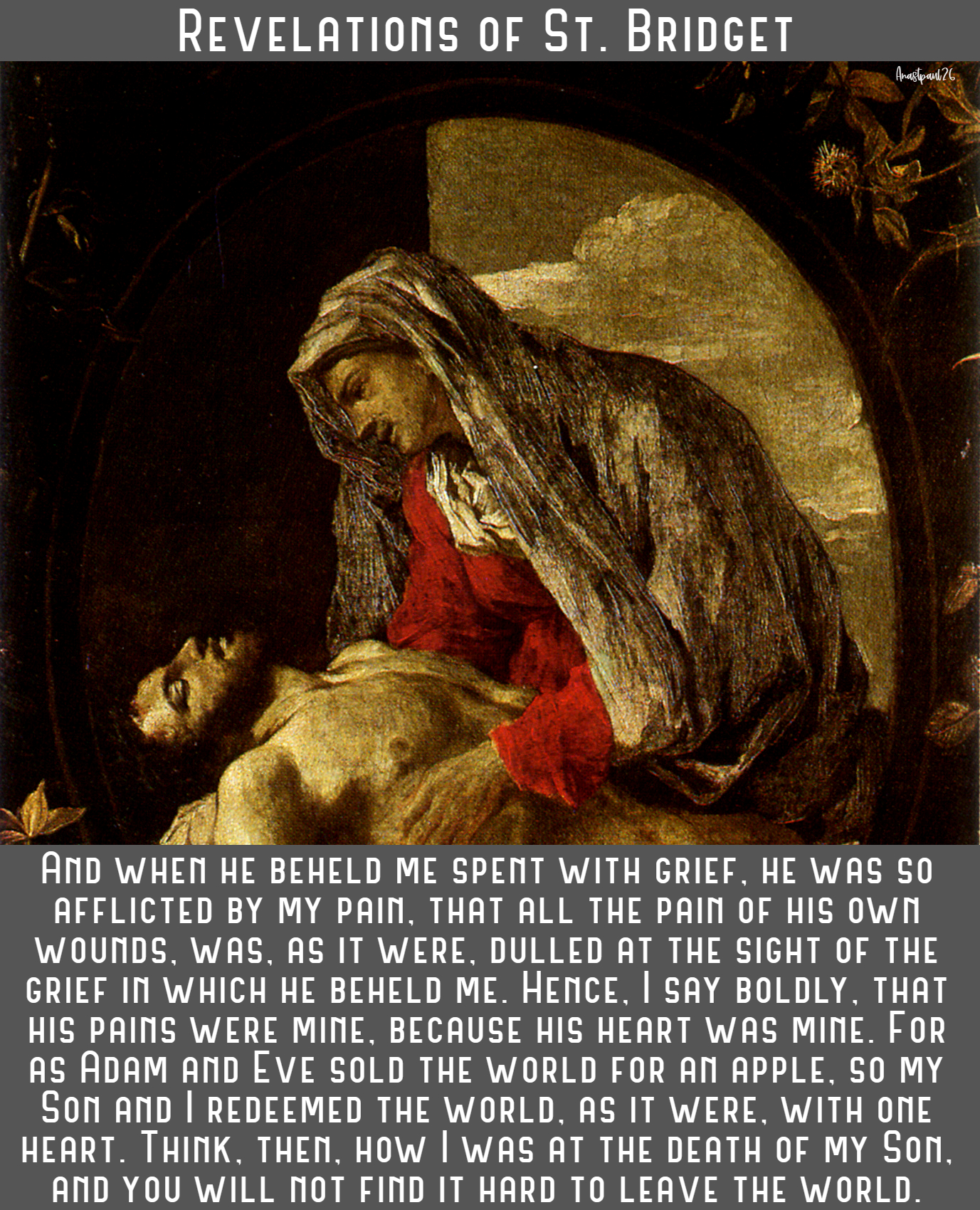
And when he beheld me spent with grief, he was so afflicted by my pain, that all the pain of his own wounds, was, as it were, dulled at the sight of the grief in which he beheld me. Hence, I say boldly, that his pains were mine, because his heart was mine. For as Adam and Eve sold the world for an apple, so my Son and I redeemed the world, as it were, with one heart. Think, then, how I was at the death of my Son, and you will not find it hard to leave the world.
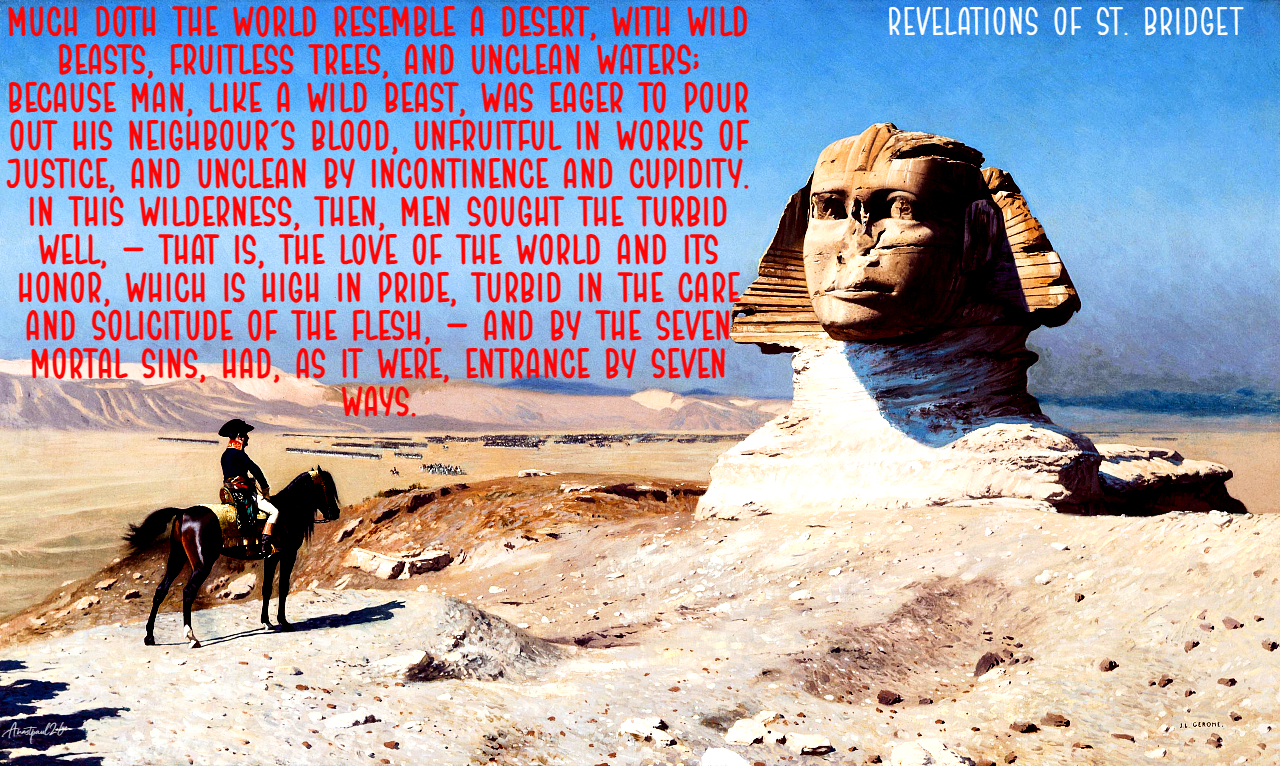
Much doth the world resemble a desert, with wild beasts, fruitless trees, and unclean waters; because man, like a wild beast, was eager to pour out his neighbour’s blood, unfruitful in works of justice, and unclean by incontinence and cupidity. In this wilderness, then, men sought the turbid well, — that is, the love of the world and its honor, which is high in pride, turbid in the care and solicitude of the flesh, — and by the seven mortal sins, had, as it were, entrance by seven ways.
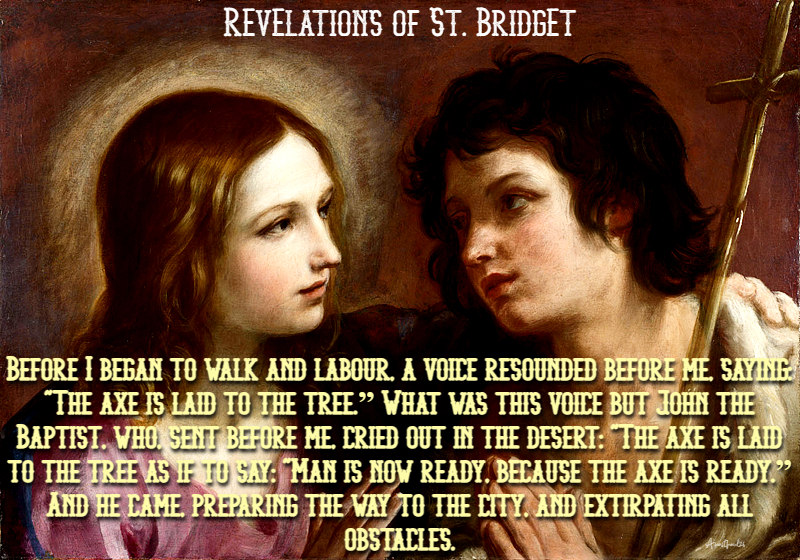
Before I began to walk and labour, a voice resounded before me, saying: “The axe is laid to the tree.” What was this voice but John the Baptist, who, sent before me, cried out in the desert: “The axe is laid to the tree as if to say: “Man is now ready, because the axe is ready.” And he came, preparing the way to the city, and extirpating all obstacles.
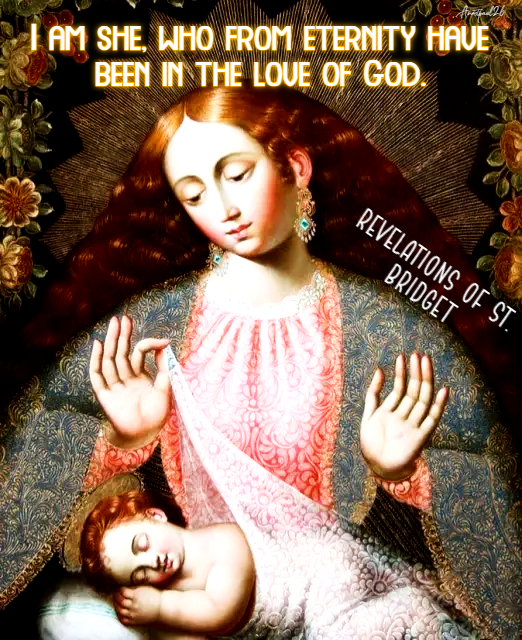
I am she, who from eternity have been in the love of God.
But of the fruit of the Spirit is: charity, joy, peace, patience, kindness, goodness, long-suffering, mildness, faith, modesty, continency, chastity. Against such things there is no law. And they who belong to Christ have crucified their flesh with its passions and desires.
Gal 5:16-24
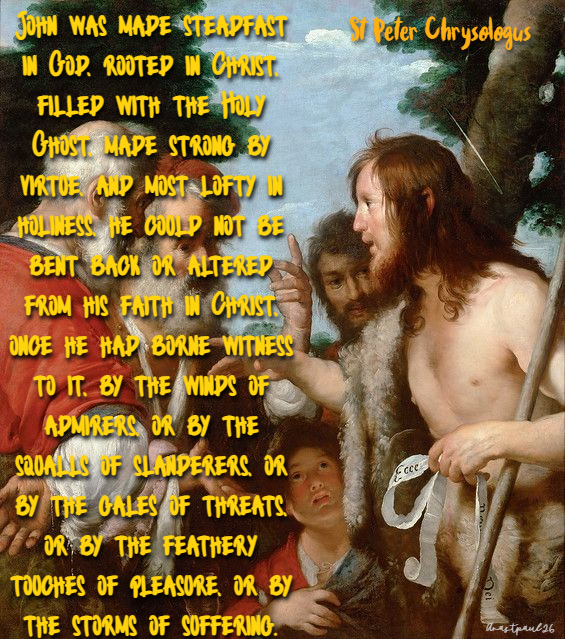
John was made steadfast in God, rooted in Christ, filled with the Holy Ghost, made strong by virtue, and most lofty in holiness, he could not be bent back or altered from his faith in Christ, once he had borne witness to it, by the winds of admirers, or by the squalls of slanderers, or by the gales of threats, or by the feathery touches of pleasure, or by the storms of suffering.
St Peter Chrysologus
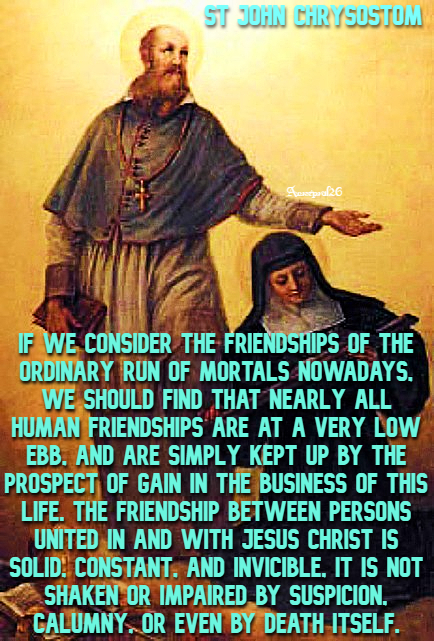
If we consider the friendships of the ordinary run of mortals nowadays, we should find that nearly all human friendships are at a very low ebb, and are simply kept up by the prospect of gain in the business of this life. The friendship between persons united in and with Jesus Christ is solid, constant, and invicible, it is not shaken or impaired by suspicion, calumny, or even by death itself.
St John Chrysostom
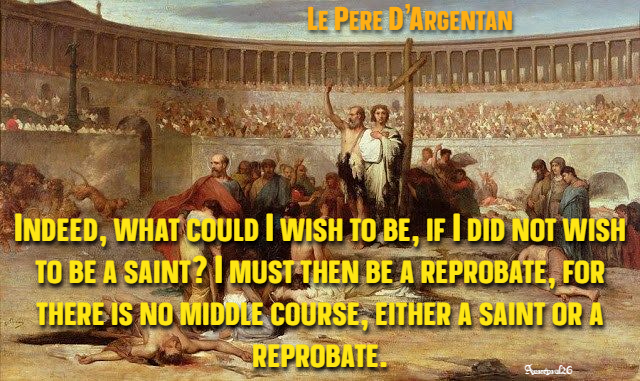
Indeed, what could I wish to be, if I did not wish to be a saint? I must then be a reprobate, for there is no middle course, either a saint or a reprobate.
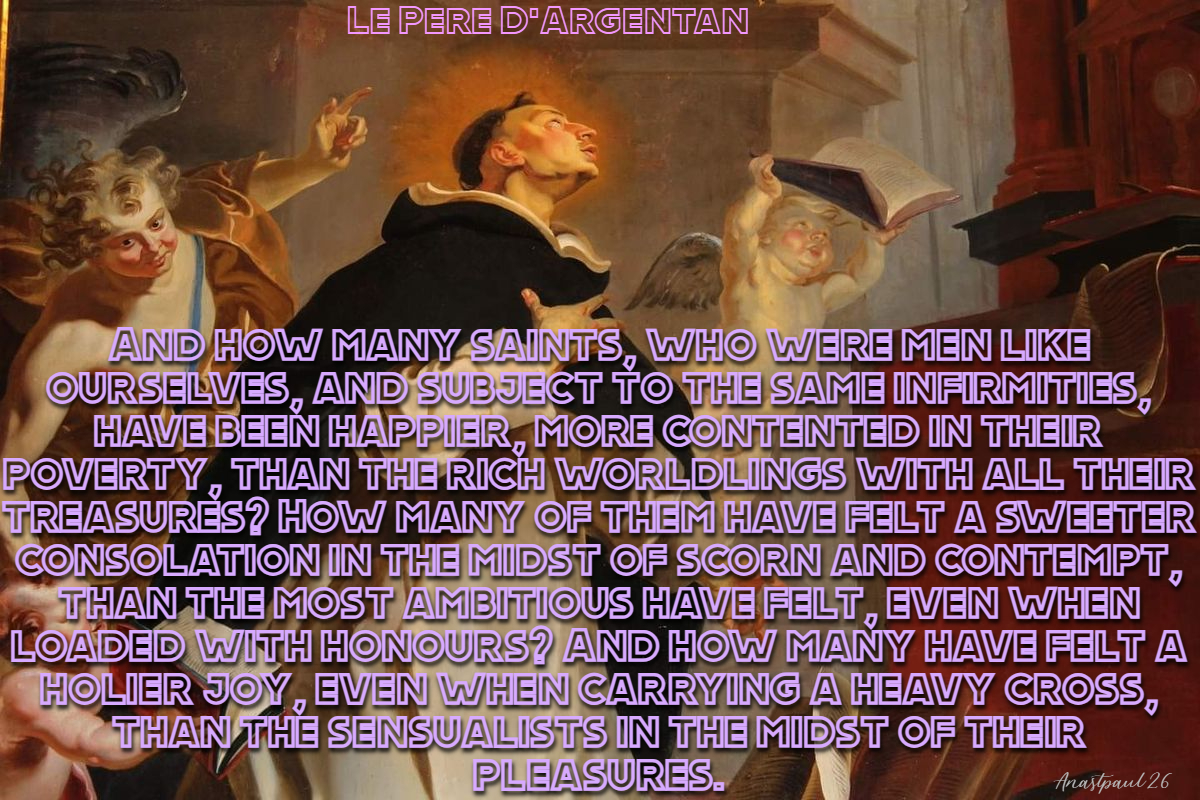
LePere D’Argentan
And how many saints, who were men like ourselves, and subject to the same infirmities, have been happier, more contented in their poverty, than the rich worldlings with all their treasures? How many of them have felt a sweeter consolation in the midst of scorn and contempt, than the most ambitious have felt, even when loaded with honours? And how many have felt a holier joy, even when carrying a heavy cross, than the sensualists in the midst of their pleasures.
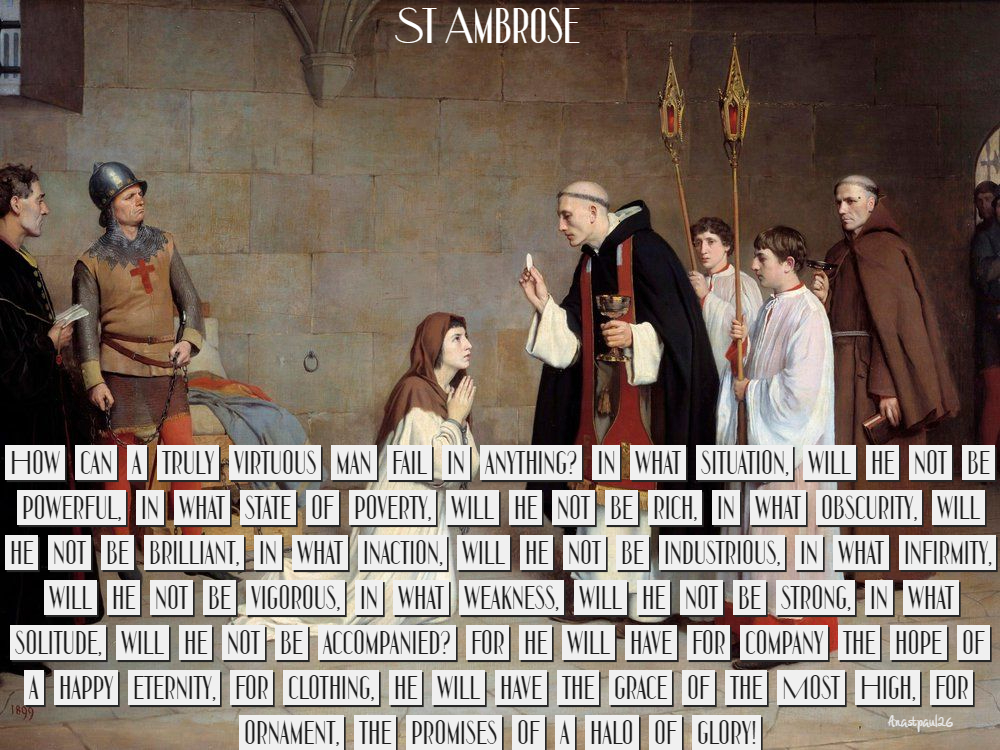
LePere D’Argentan
How can a truly virtuous man fail in anything? In what situation, will he not be powerful, in what state of poverty, will he not be rich, in what obscurity, will he not be brilliant, in what inaction, will he not be industrious, in what infirmity, will he not be vigorous, in what weakness, will he not be strong, in what solitude, will he not be accompanied? for he will have for company the hope of a happy eternity, for clothing, he will have the grace of the Most High, for ornament, the promises of a halo of glory! Let us recollect that the Saints were not of a more excellent nature than ours, but were more orderly and regular, that they were not exempt from sins, but that they took pains to correct their faults.
St Ambrose
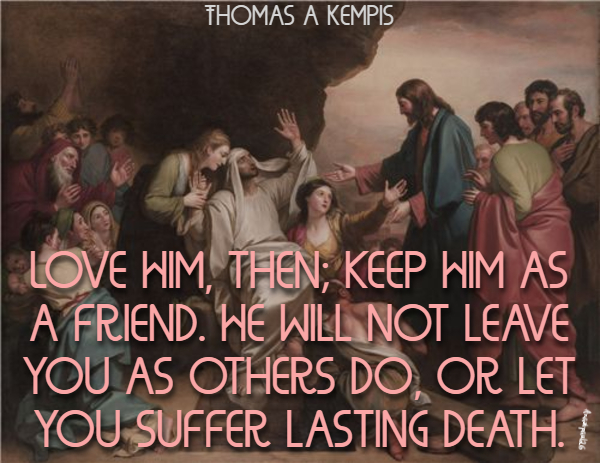
Love Him, then; keep Him as a friend. He will not leave you as others do, or let you suffer lasting death. Sometime, whether you will or not, you will have to part with everything. Cling, therefore, to Jesus in life and death; trust yourself to the glory of Him who alone can help you when all others fail. You will quickly be deceived if you look only to the outward appearance of men, and you will often be disappointed if you seek comfort and gain in them. If, however, you seek Jesus in all things, you will surely find Him. Likewise, if you seek yourself, you will find yourself — to your own ruin. For the man who does not seek Jesus does himself much greater harm than the whole world and all his enemies could ever do.
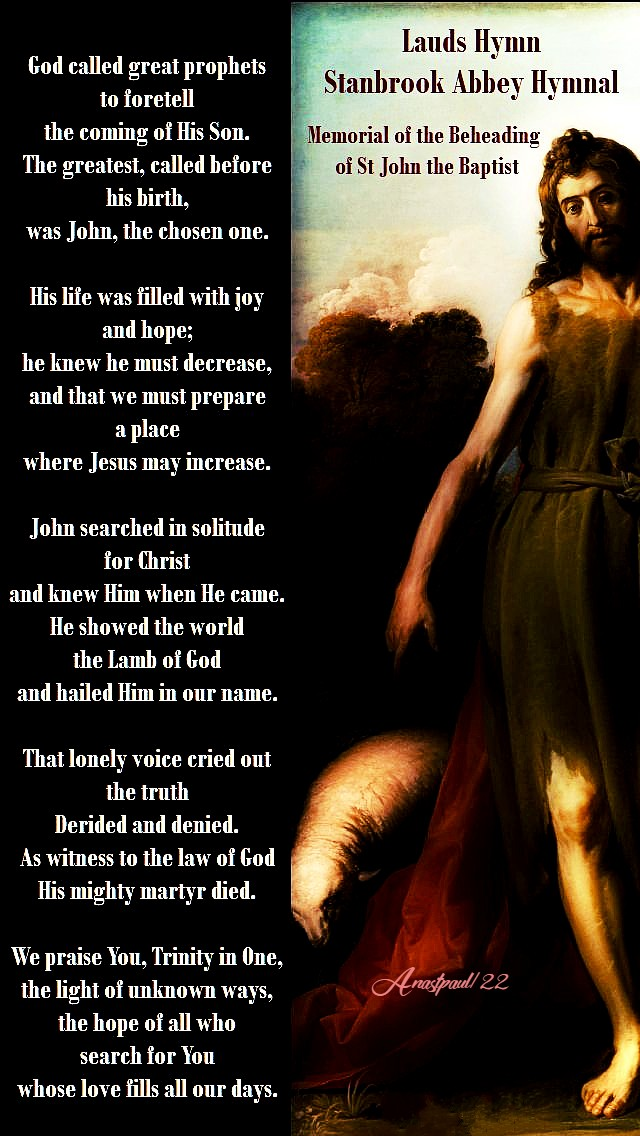
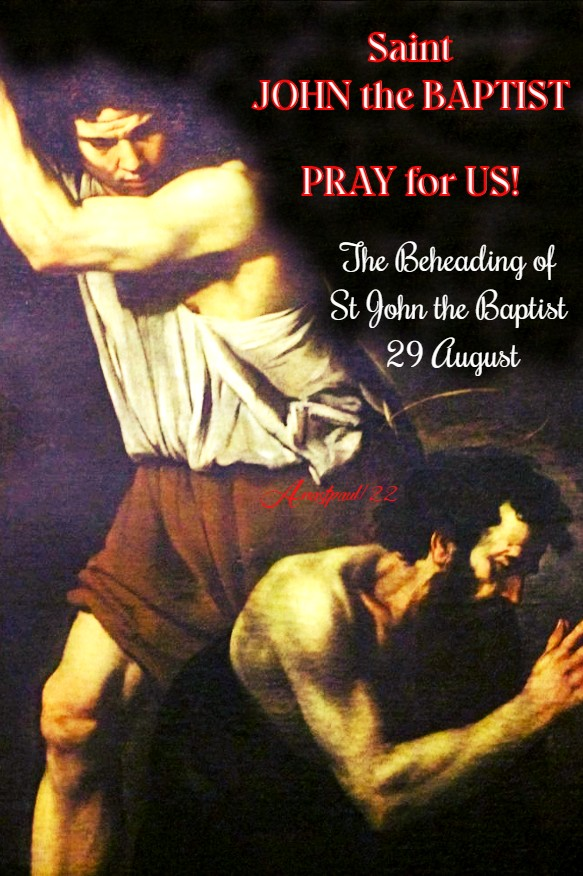
One Minute Reflection –29 August – The Beheading of Saint John the Baptist – Reading: Ps 118:46-47, Ps 91:2, Jer 1:17-19, Mark 6:17-29
For Herod feared John, knowing that he was a just and holy man.
Mark 6:17-29
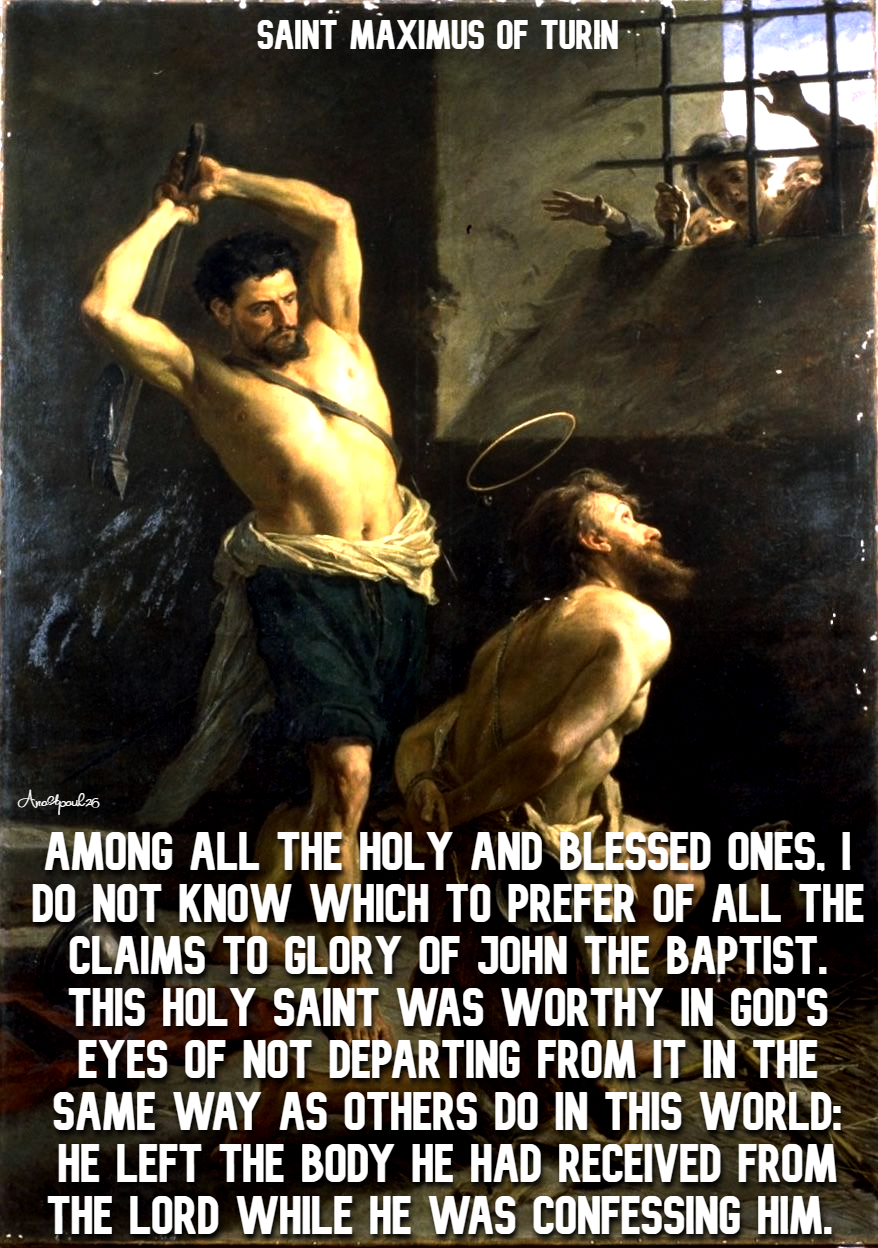
REFLECTION – Among all the holy and blessed ones, I do not know which to prefer of all the claims to glory of John the Baptist, whose feast we celebrate today : his miraculous birth or his even more miraculous death. His birth carried a prophecy with it, his death, the truth; his birth announced the Savior’s coming, his death condemned Herod’s incestuous relationship. This holy saint was worthy in God’s eyes of not departing from it in the same way as others do in this world: he left the body he had received from the Lord while he was confessing him. In all things John fulfilled God’s will since his life, like his death, corresponded to God’s designs.
Even while still in his mother's womb he celebrated the Lord's coming with joyful movements since he was unable to do so by word. Elizabeth said to blessed Mary: “When the voice of your greeting reached my ears, the child in my womb leaped for joy”. John, then, rejoiced before his birth, and even before his eyes could see what the world looks like, his spirit already recognised who is its Lord. I think that this is the meaning of the prophet's words: “Before I formed you in the womb, I knew you; before were born I had consecrated you”. So let us not be astonished if, locked up in the prison where Herod had put him, he went on preaching Christ by means of his disciples' mediation for, enclosed as he was in his mother's womb, he already proclaimed the Lord's coming with his bounds.
St Maximus of Turin
PRAYER – May the great festival of St John the Baptist, Thy Precursor and Martyr, we beseech Thee, O Lord, assure for us the results of Thy saving help. Who lives and reign with God the Father, in the unity of the Holy Spirit, God, world without end. Amen
Quote/s of the Day – 29 August – The Beheading of Saint John the Baptist
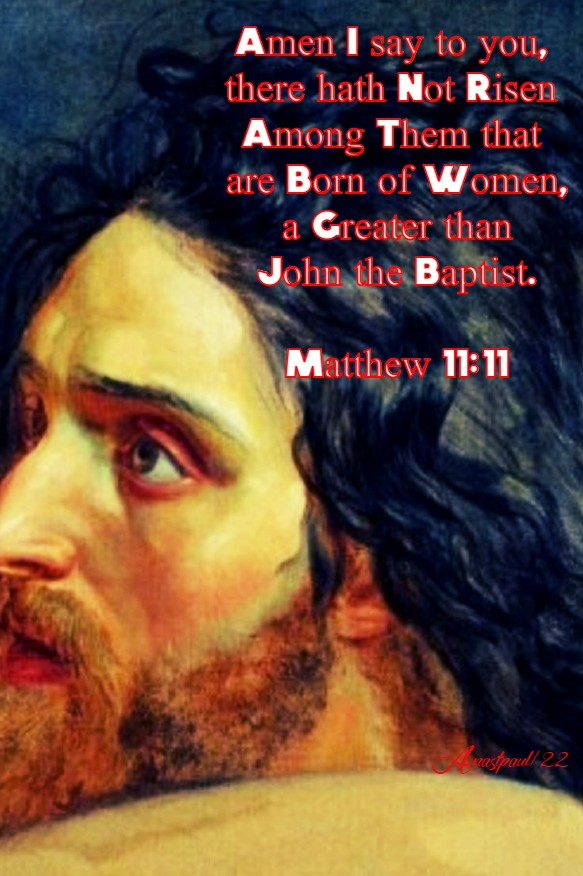
“Amen I say to you, there hath not risen among them that are born of women, a greater than John the Baptist.”
Matthew 11:11
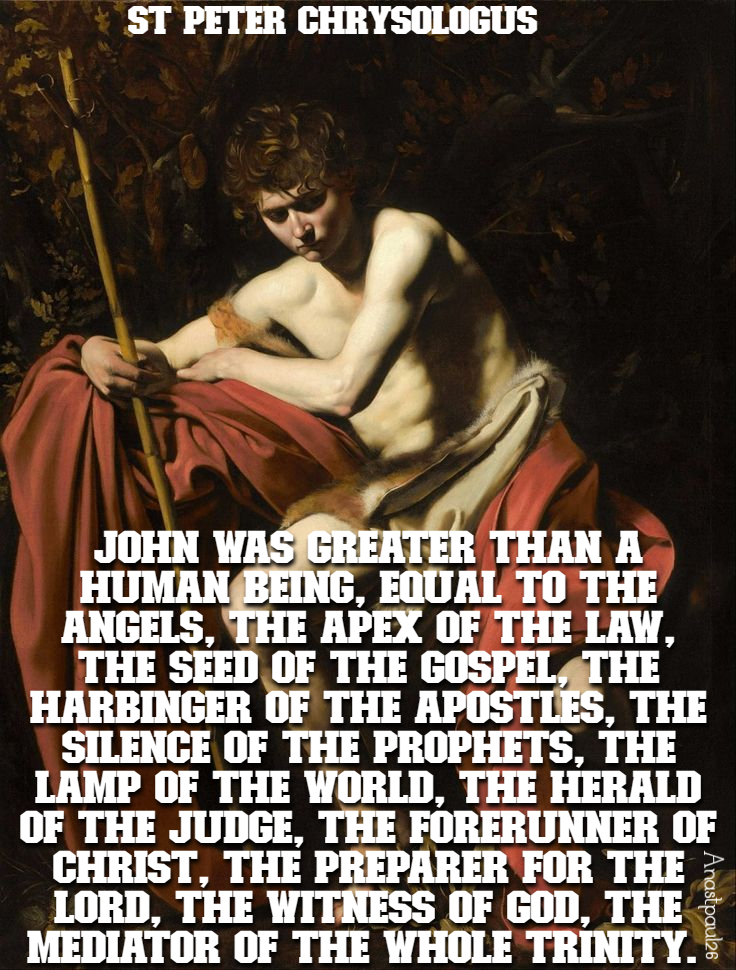
John was greater than a human being, equal to the angels, the apex of the Law, the seed of the Gospel, the harbinger of the apostles, the silence of the prophets, the lamp of the world, the herald of the Judge, the forerunner of Christ, the preparer for the Lord, the witness of God, the mediator of the whole Trinity.
St Peter Chrysologus
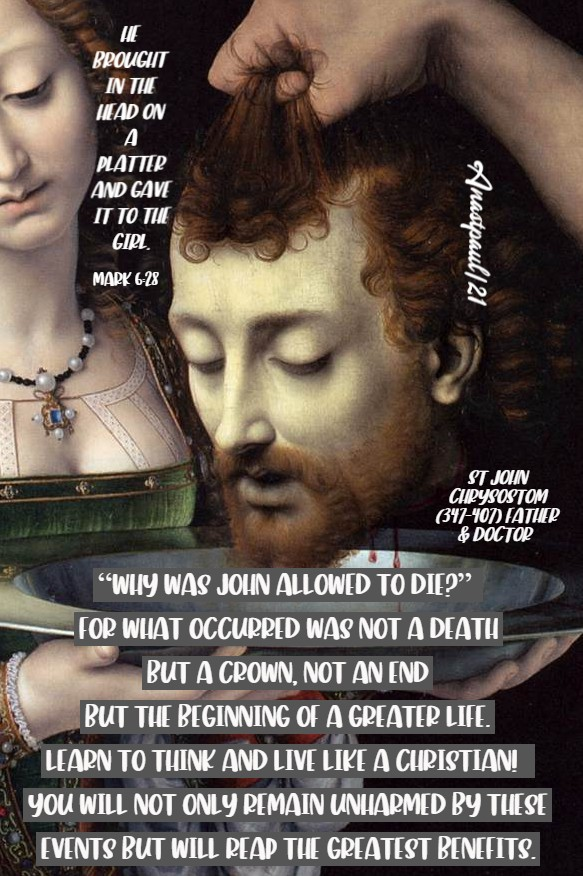
Why was John allowed to die? For what occurred was not a death but a crown, not an end but the beginning of a greater life. Learn to think and live like a Christian. You will not only remain unharmed by these events but will reap the greatest benefits.
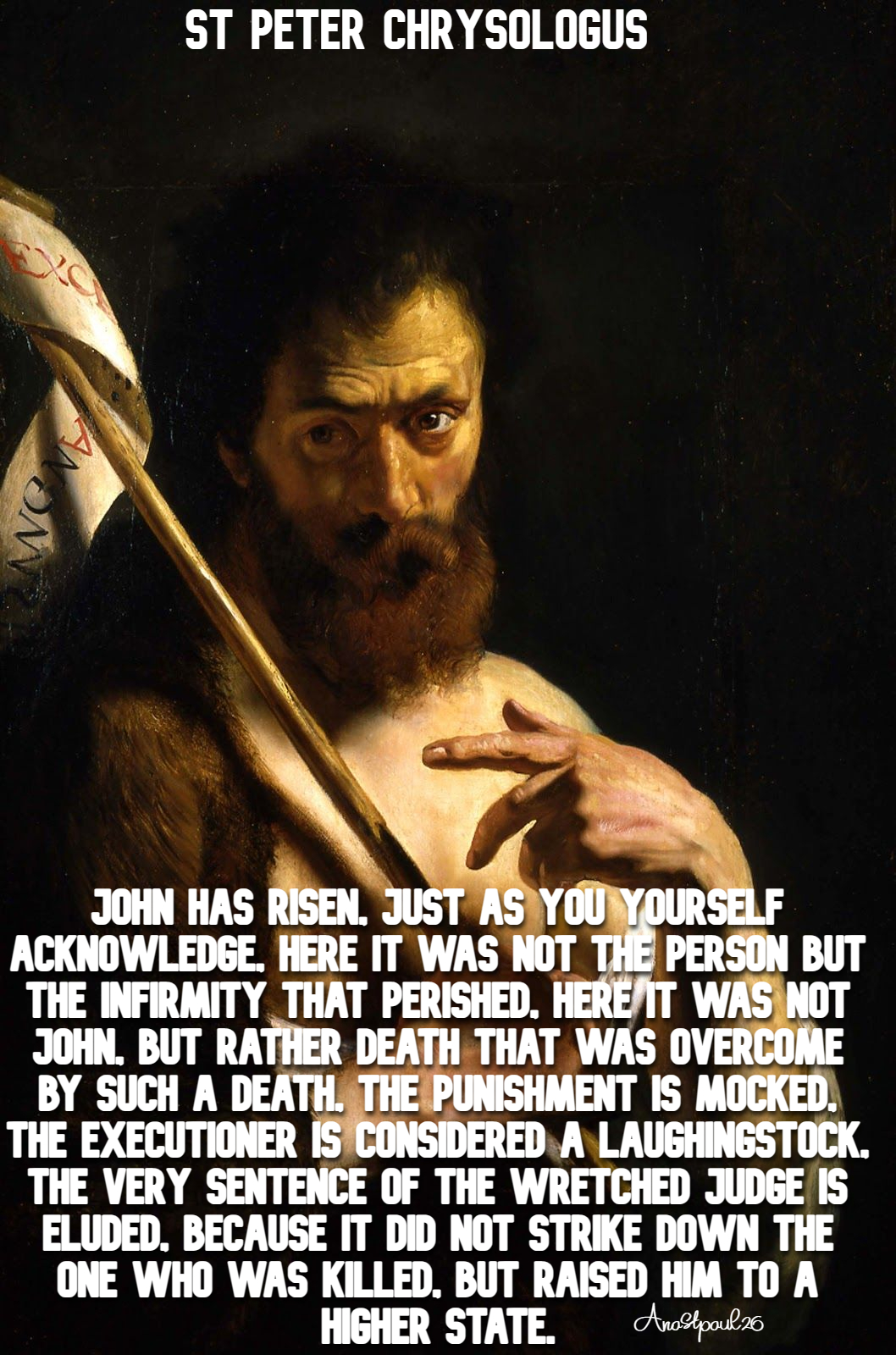
John has risen, just as you yourself acknowledge, here it was not the person but the infirmity that perished, here it was not John, but rather death that was overcome by such a death, the punishment is mocked, the executioner is considered a laughingstock, the very sentence of the wretched judge is eluded, because it did not strike down the one who was killed, but raised him to a higher state.
St Peter Chrysologus
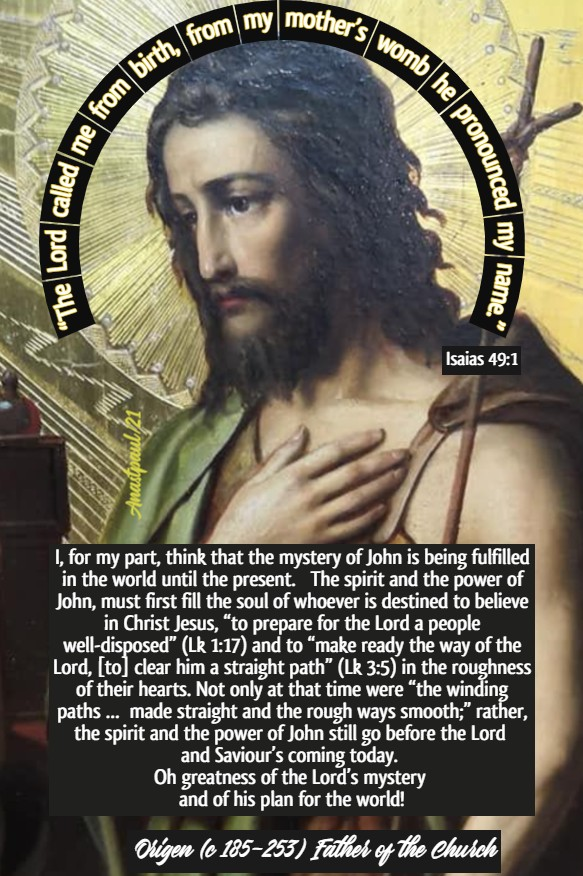
I, for my part, think that the mystery of John is being fulfilled in the world until the present. The spirit and the power of John, must first fill the soul of whoever is destined to believe in Christ Jesus, “to prepare for the Lord a people well-disposed” and to “make ready the way of the Lord, [to] clear Him a straight path” in the roughness of their hearts. Not only at that time were “the winding paths … made straight and the rough ways smooth;” rather, the spirit and the power of John still go before the Lord and Saviour’s coming today. Oh greatness of the Lord’s Mystery and of His plan for the world!
Origen
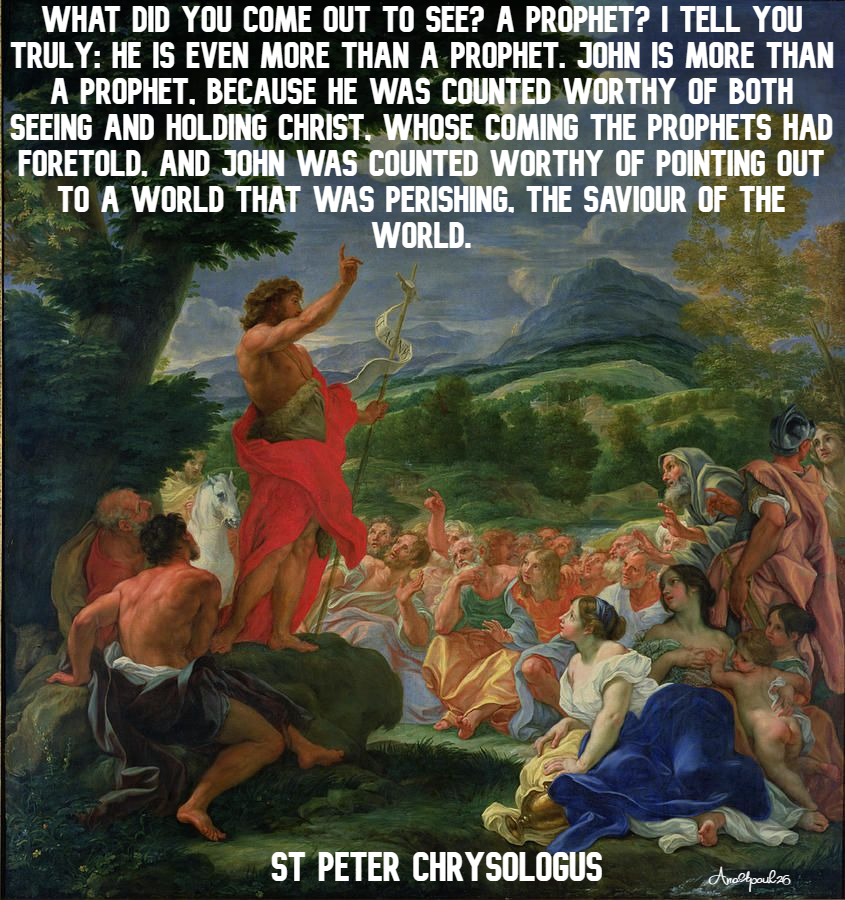
What did you come out to see? A prophet? I tell you truly: he is even more than a prophet. John is more than a prophet, because he was counted worthy of both seeing and holding Christ, whose coming the prophets had foretold, and John was counted worthy of pointing out to a world that was perishing, the Saviour of the world.
St Peter Chrysologus
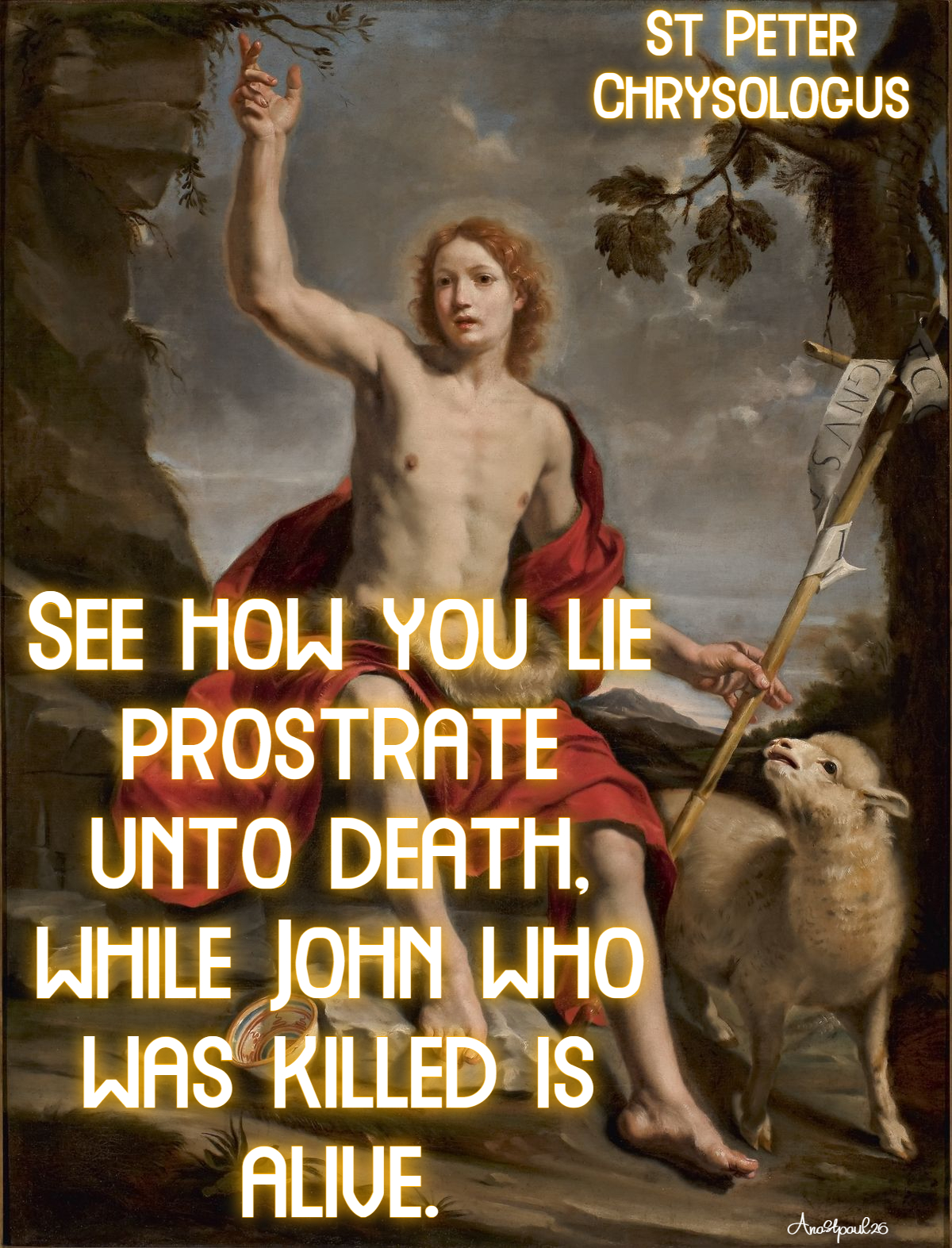
See how you lie prostrate unto death, while John who was killed is alive. You have lost the purple that received its colour from dye, John is forever gloriously clothed with the radiant purple from his blood. Your dinner guests are now made to share in your punishment, John partakes of the heavenly banquet with the choirs of angels. He hears the dulcet tones of heaven unceasingly; you hear forever the wailing and gnashing in hell. He, who was condemned as the price for your harlot and your dancing-girl, is now honoured with the kingdom and with heavenly rewards, for the sentence you gave, you have received recompense along with your daughter in Tartarus.
Quote/s of the Day – 30 July – “Month of the Most Precious Blood”– The Memorial of St Peter Chrysologus (c 400-450) “Golden Words,” Father & Doctor of the Church
Impiety always suffers from a fever, cruelty is always possessed by madness. Fury does not know that it is depriving itself of clemency, for indeed he rages against himself as often as he aims for another, he punishes himself by striking down the innocent, he is completely destroying himself when he is cruel to a just person. See how John, as you yourself say, is now alive in Christ. He who has come to cure all with heavenly grace returns to punish you.
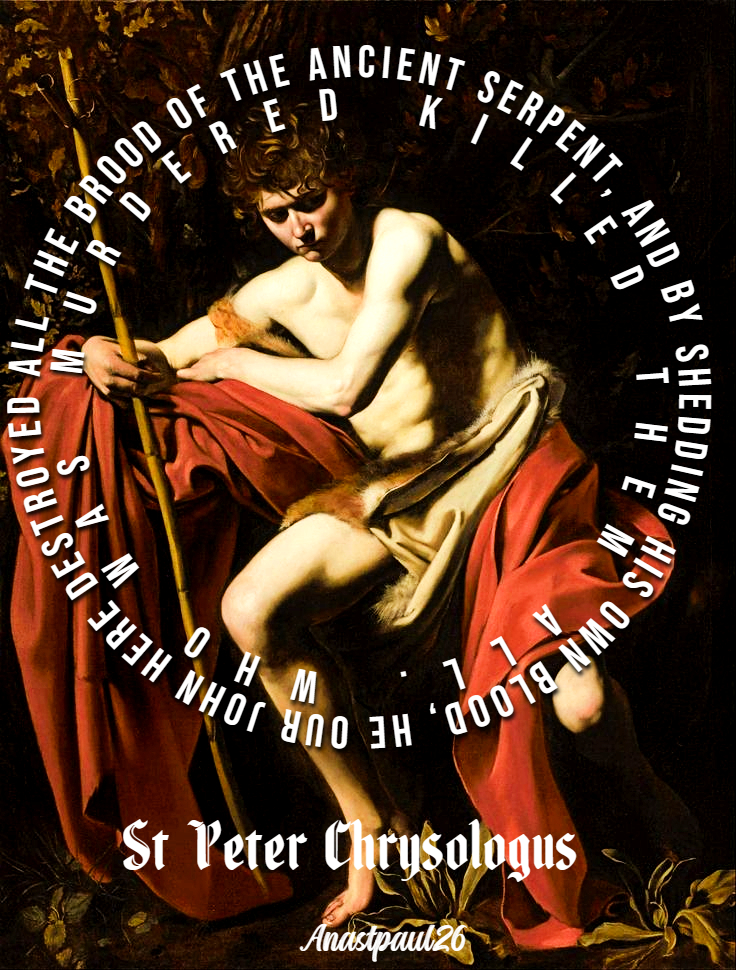
In concluding our remarks, we bring to your attention that the serpent ran in vain, for our John here destroyed all the brood of the ancient serpent, and by shedding his own blood, he who was murdered killed them all.
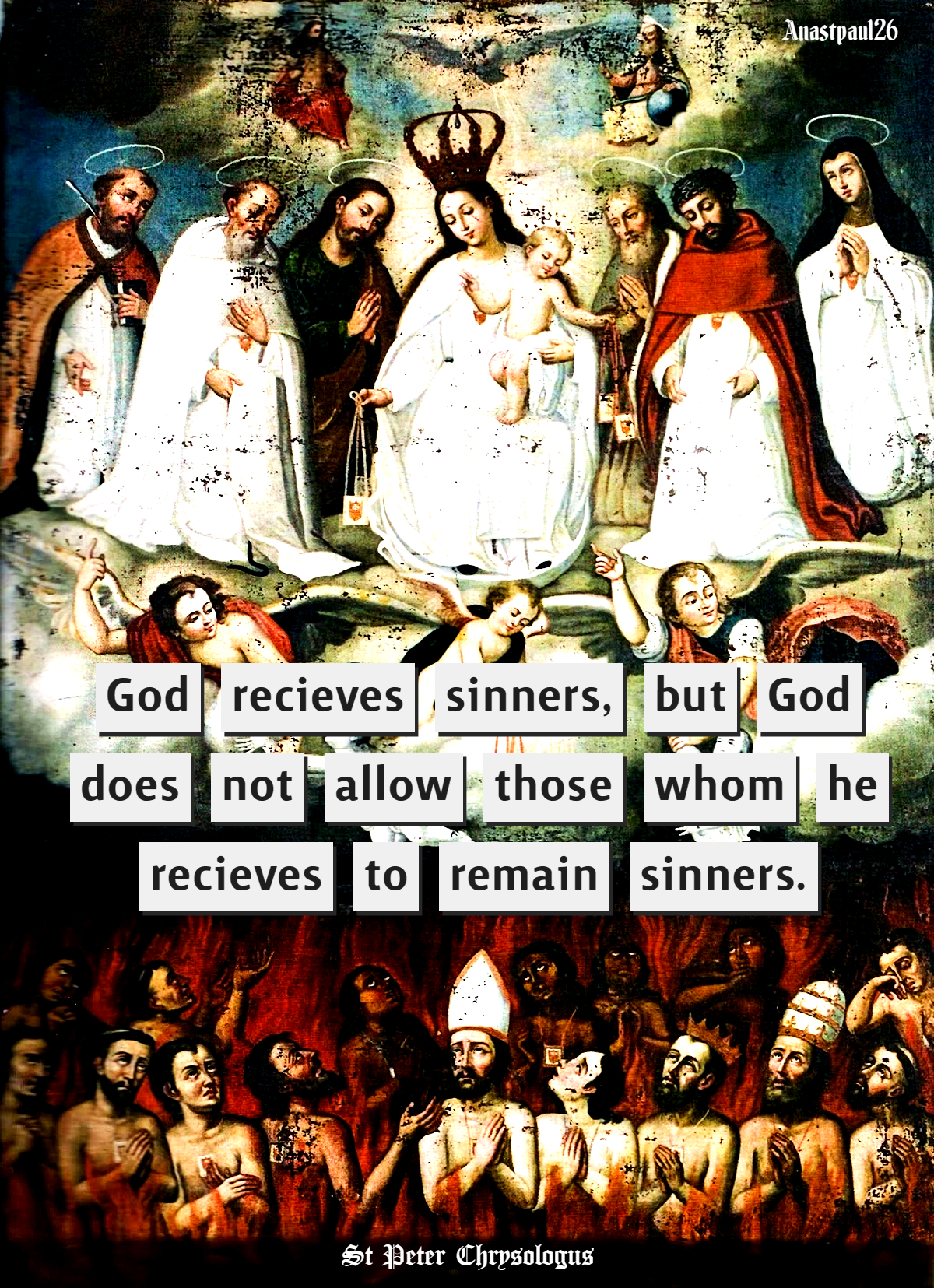
God recieves sinners, but God does not allow those whom he recieves to remain sinners.
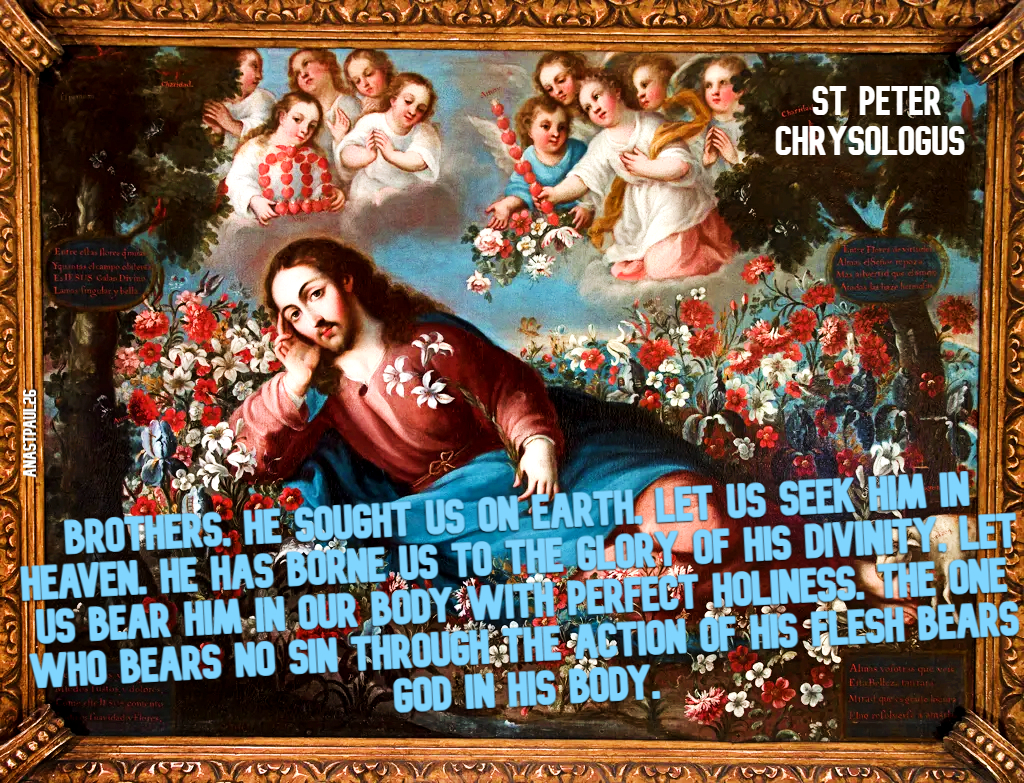
Brothers, he sought us on earth, let us seek him in heaven. He has borne us to the glory of His divinity, let us bear him in our body with perfect holiness. The one who bears no sin through the action of his flesh bears God in his body.
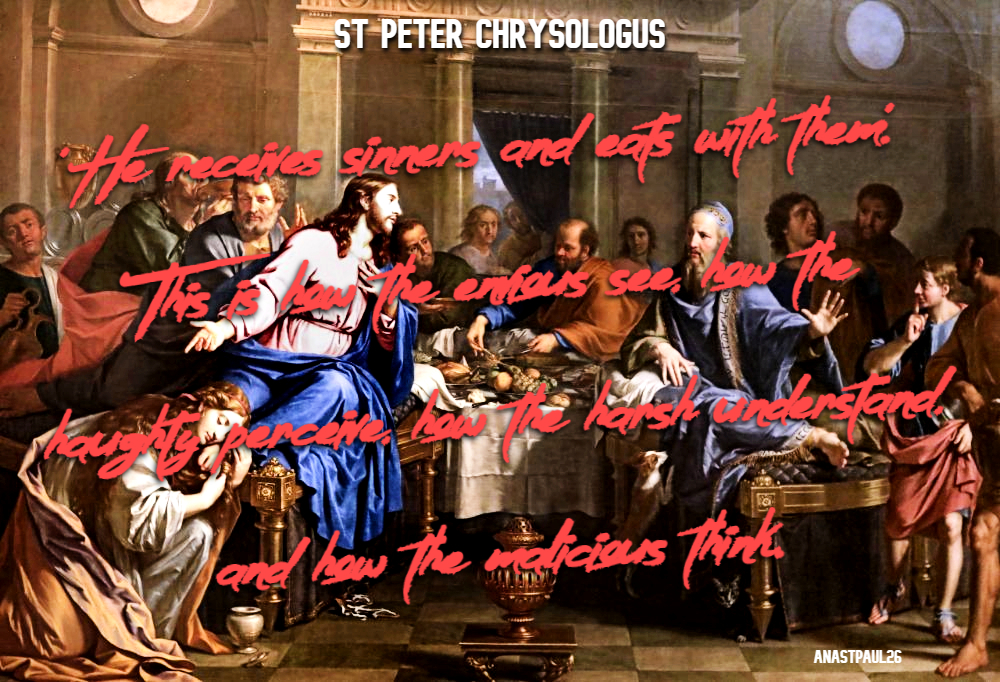
‘He receives sinners and eats with them.’ This is how the envious see, how the haughty perceive, how the harsh understand, and how the malicious think.
‘Give it me on a dish.’ Why on a dish? Why do you carry about in a precious vessel the one whom you have killed so cheaply, except for the reason that ‘precious in the sight of the Lord is the death of his saints’? This very thing that you want, you do not accomplish as you yourself want, since a heavenly purpose is at work doing something other than what you want.
Summon the sky and invoke the earth, so that both the earth be amazed and the sky marvel at the new kind of mercy presented by the Lord. What mind perceives, what ear grasps, what teaching has communicated the lesson to which the evangelist draws his Christian audience when he says: Love your enemies. Mortal perception does not absorb this, the human heart does not grasp this, the fleshy condition rejects this, the world’s hearing does not let this in. The feeble mind is insufficient to love those who love it, and fickle human nature is able only with difficulty to be charitable to those who are charitable.
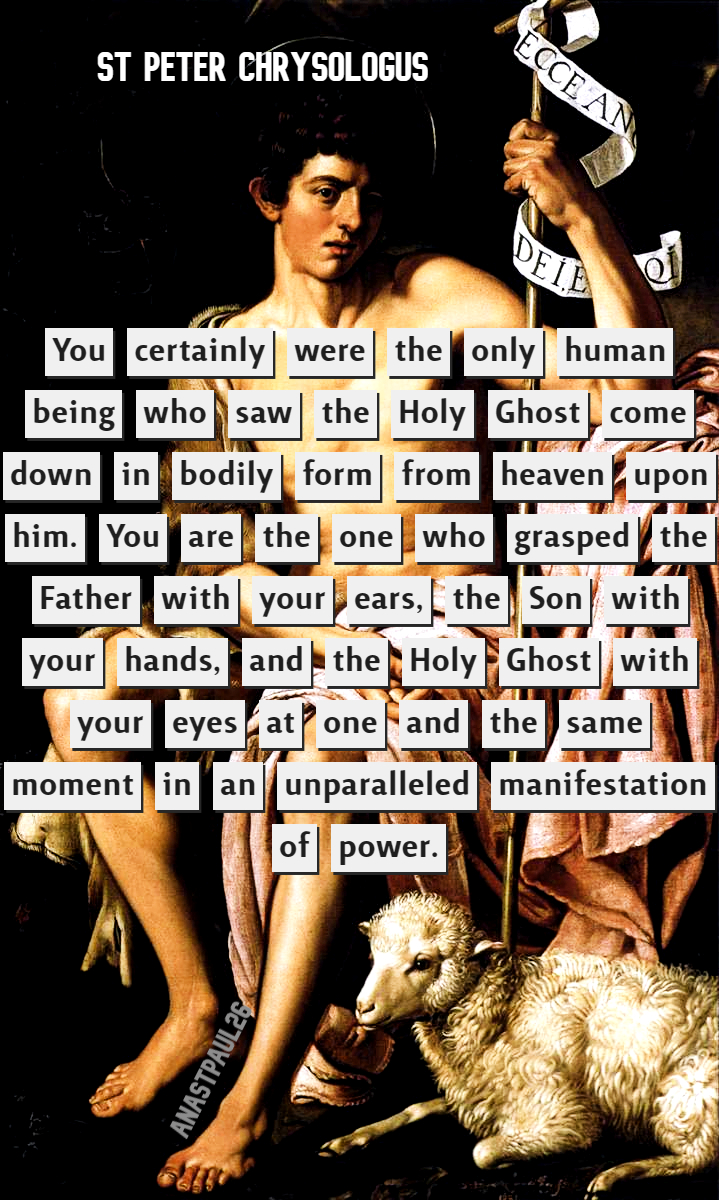
You certainly were the only human being who saw the Holy Ghost come down in bodily form from heaven upon him. You are the one who grasped the Father with your ears, the Son with your hands, and the Holy Ghost with your eyes at one and the same moment in an unparalleled manifestation of power.
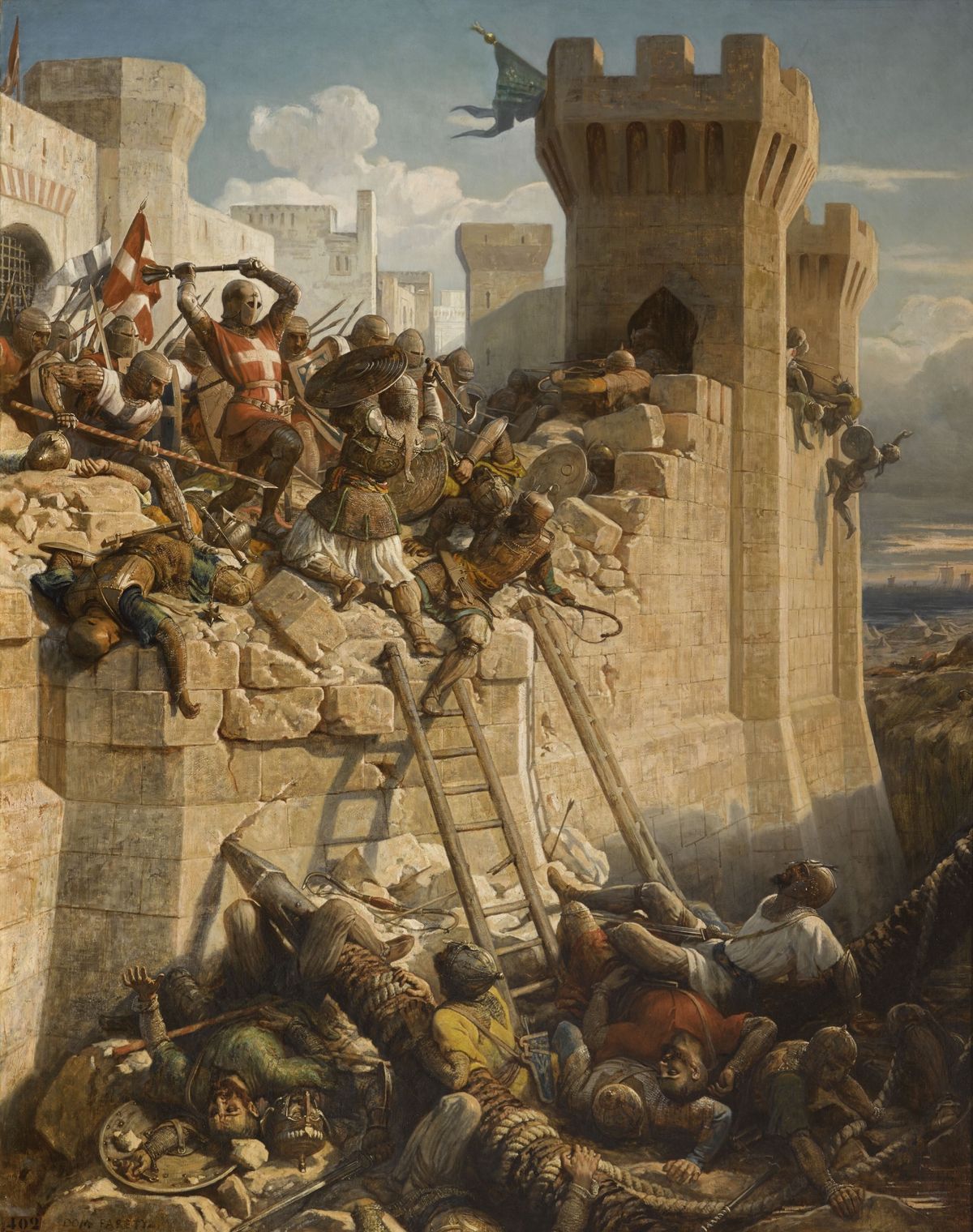
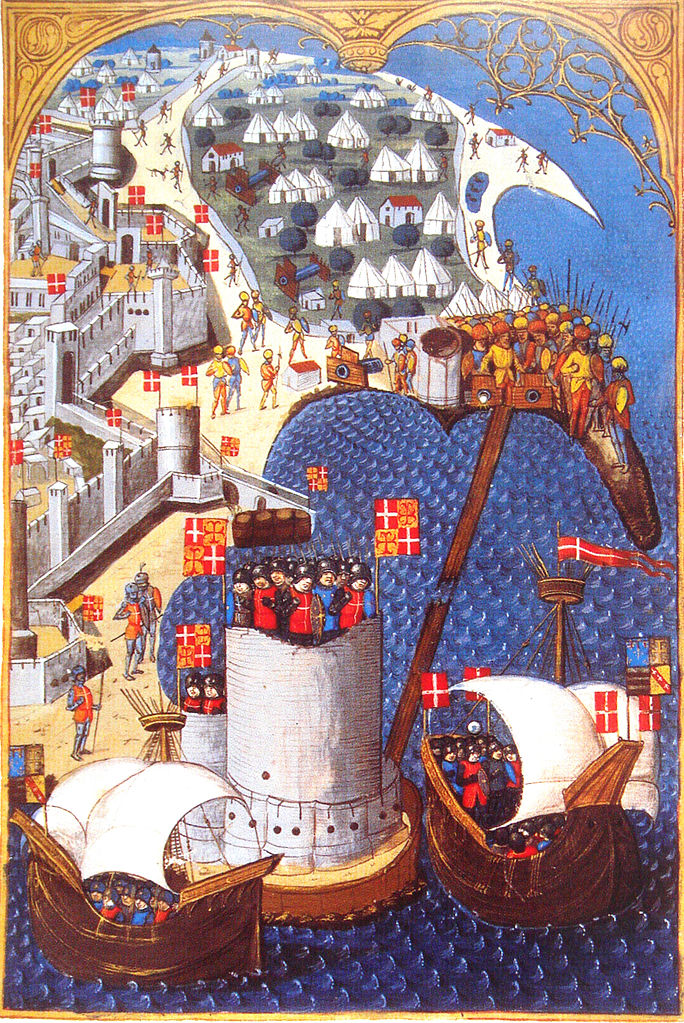
The Siege of Rhodes. Victory over the Turks by the Knights Hospitaller at Rhodes in 1480 through the intercession of Our Lady, final battle 27 July 1480 – commemorated on 28 July:
Constantinople, the capital of the Byzantine Empire, the last remnant of the Holy Roman Empire, fell to the “Scourge of Europe,” the Sultan Mehmet II, in the year 1453. This dire news was almost impossible to believe in the rest of Christendom but, it was sadly true and Constantinople was made into the new seat of the Ottoman Empire.
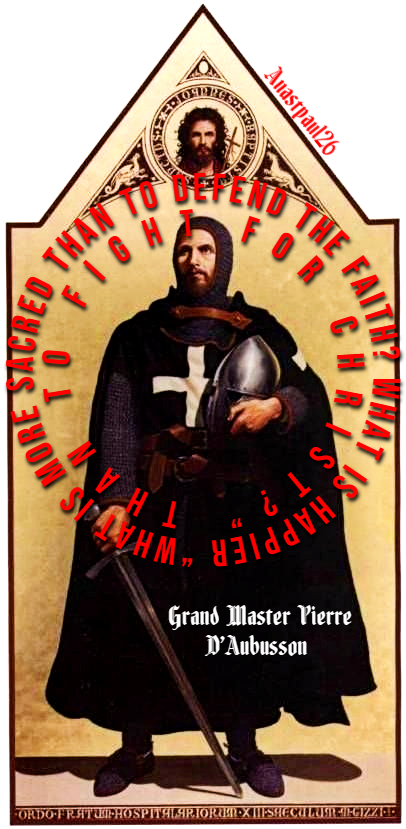
A few short years later, Pierre D’Aubusson was Grand Master of the Hospitallers, the Knights of Saint John, living on the island of Rhodes. He and his Knights were untiring opponents of Islam, sworn to do everything in their power to fight against them. Having made the island of Rhodes their home, the Knights harassed Ottoman shipping lanes and assisted with attacks against the Ottoman Empire.
In the year 1479, D’Aubusson refused to pay tribute to Mehmet in exchange for peace and furthermore, had the audacity to continue harassing the sultan’s shipping lanes. The Grand Master continued to work on the massive fortifications on Rhodes as he awaited the siege of Rhodes that he knew would soon come. His walls were strong but the Grand Master had only a few hundred Knights and about 2,000 natives to defend them.
Mehmet was not intimidated by the Christian defenses on Rhodes, for he had huge cannons and basilisks which had blasted holes in the stout walls of Constantinople. He also had over 70,000 men in his army, and he was determined to wipe out “that abode of the sons of Satan,” as he referred to the Catholic Knights of Rhodes.
The Siege of Rhodes began with a tremendous bombardment on the Tower of Saint Nicholas. Grand Master Pierre D’Aubusson was not intimidated as he asked: “What is more sacred than to defend the Faith? What is happier than to fight for Christ?”
Breaches were eventually made in the walls and the Muslim’s unremittingly attempted to rush through the breaches. Many of the Turks had to be forced to attack the defenses, as their commanders lashed them forward with whips and chains. The Janissaries, however, did not have to be urged, for they were the sultan’s finest troops. They were warriors to the core and advanced over the fallen bodies of their comrades, anxious to cross swords with the Catholic Knights.
Finally, the Tower of Italy began to crumble from the terrific assault, and large breaches opened in the wall. The Bashi-Bazouks and Janissaries rushed into the breach, placing the standard of Islam above the Tower.
On witnessing this act, the Grandmaster rushed into the breach together with a few of his excellent Knights. Howling and raging like madmen, the Janissaries pressed the assault, for the Knights seemed too few to stand against their wave after wave of thousands of elite warriors. Yet, the Grandmaster stood, insensible of any wounds he received in return for the carnage he wreaked among the fanatical Muslim warriors.
Fighting with broken blades and notched axes, the Knights of Saint John continued to hold the breach, cutting down any who approached them, until a huge Janissary rose up and hurled a spear with all his might directly at the Grand Master. Propelled at incredible speed, the sharp steel tip easily pierced D’Aubusson’s breastplate, puncturing a lung. The Grand Master went down beneath a torrent of hacking blades as the Knights struggled to drag his body from the fray.
By his courageous stand D’Aubusson had proven he was at least the equal of any Grand Master in history, but now, he was wounded unto death and could do no more. The siege of Rhodes appeared to be lost as D’Aubusson’s Knights struggled to haul him to safety. Thousands of Jannisaries were rushing into the breach with no-one to stop them and at this point the Knights knew, it would take a miracle to keep Rhodes from being overrun.
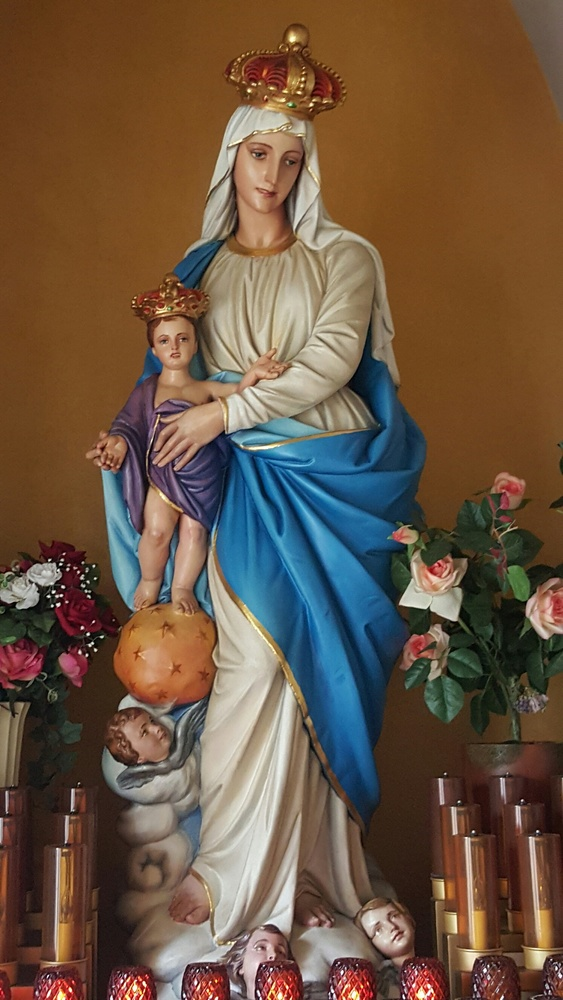
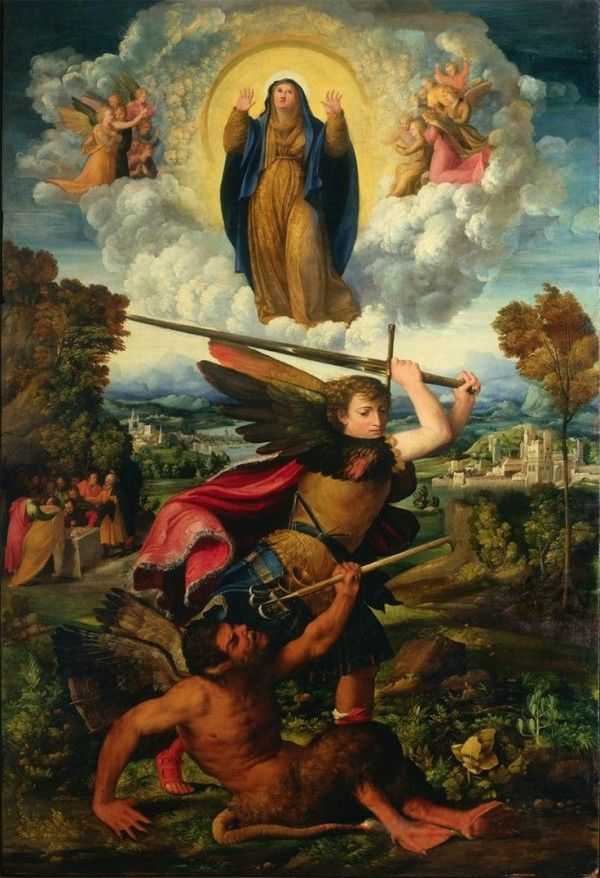
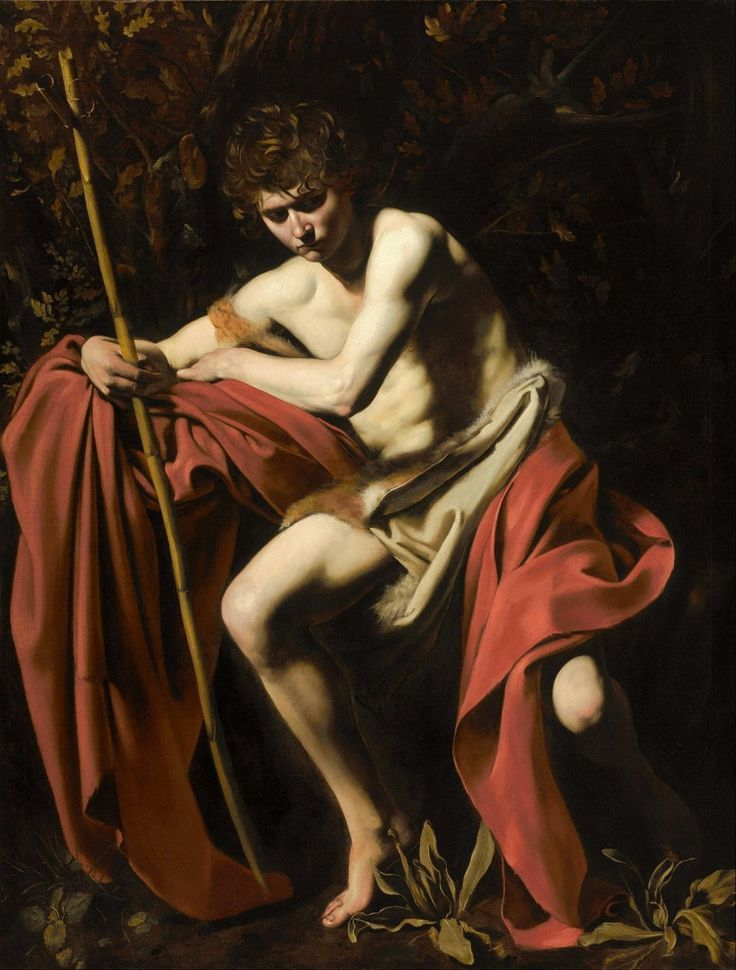
A miracle is exactly what they got. Suddenly there appeared in the sky “a refulgent cross of gold, by the side of which stood a beautiful woman clothed in garments of dazzling white, a lance in her hand and a shield on her arm, accompanied by a man dressed in goatskins and followed by a band of heavenly warriors armed with flaming swords.” It was the glorious figures of Saint John the Baptist, the Patron Saint of the Order of Saint John, Saint Michael the Archangel brandishing his unsheathed sword and the Queen of Heaven, the Blessed Virgin Mary herself, dressed in battle array!
The Turks turned at the sight and ran in panic-stricken flight. Thousands fell as they fled, cut down and pursued through the breaches by the Knights of Rhodes and their heavenly allies. Chased all the way back to their camp, it was now the defeated Muslims who suffered the insult of having their sultan’s own standard captured.
The siege of Rhodes had ended, and Grandmaster D’Aubusson later recovered of his wounds. He had lost 231 of his Knights but that was nothing compared to the thousands upon thousands of Muslim warriors who lay dead upon his shores.
It was in the year of Our Lord 1480 that the Knights of Rhodes had gained this signal victory over the Turks, by the help of the Blessed Virgin, whom the Knights regarded ever after as Our Lady of Victory. They renewed their dedication to her who had appeared on the walls during the siege of Rhodes holding a lance in her hand to defend them, bringing with her Saint Michael the Archangel and a heavenly army. She, the Patroness of the Sovereign and Military Order of Hospitallers, had turned the formerly obstinate enemy, who retired in disorder, to lose the greater part of their army. Thanks BE to Our Lady of Victory, the all-conquering sword of Mehmet II had shattered upon the walls of Rhodes!
St Acacius of Miletus
St Arduinus of Trepino St Botwid of Sudermannland St Camelian of Troyes St Celsus of Rome Bl Christodoulos Bl Davíd Carlos-Marañon St Eustathius of Galatia St Pope Innocent I (Died 417) St Irene of Cappadocia Bl John Soreth St José Caselles-Moncho Bl José Melchór García-Sampedro Suárez Bl Josep Castell-Camps St Longinus of Satala St Lucidius of Aquara St Lyutius Bl Manuel Segura-López St Nazarius of Rome
Martyred in the Spanish Civil War – Thousands of people were murdered in the anti-Catholic persecutions of the Spanish Civil War from 1934 to 1939.
Martyrs of Fernán Caballero – 14 beati: Fourteen Claretian clerics who were martyred together in the Spanish Civil War. – 28 July 1936 in Fernán Caballero, Ciudad Real, Spain. Bl Antolín Astorga Díez Bl Enrique Serra Chorro Bl Gregorio Charlez Ribera Bl Joan Ayats Plantalech Bl Joan Bover Teixidor Bl Joan Costa Canal Bl José Aurelio Calleja de Hierro Bl José Gutiérrez Arranz Bl Josep Camí y Camí Bl Josep Martí Coll Bl Lluis Casanovas Vila Bl Lorenzo Arribas Palacio Bl Manuel Collellmir Sentíes Bl Miguel Léibar Garay Bl Narcís Felíu Costa Bl Pedro Alonso Fernández Bl Pelagi Ayats Vergés Bl Pere Vilar Espona Bl Primitivo Sandín Miñambres Bl Ramon Gros Ballbé Bl Vicente Toledano Valenciano








You must be logged in to post a comment.