Posted in EUCHARISTIC Adoration, PAPAL MESSAGES, PRACTISING CATHOLIC, SAINT of the DAY, The BLESSED VIRGIN MARY, The HOLY EUCHARIST / The HOLY MASS

Thought for the Day – 16 February – May we all become Sacramentini!

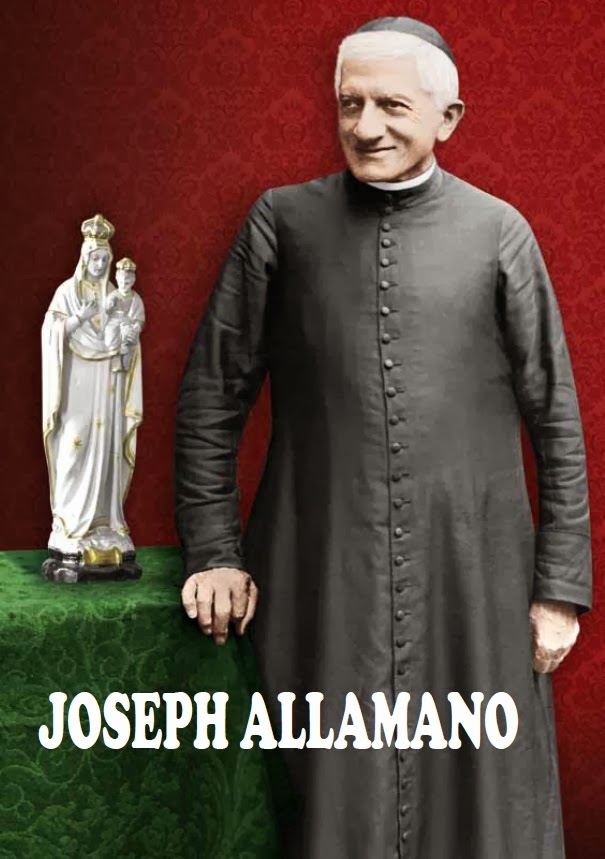
Thought for the Day – 16 February – The Memorial of Blessed Joseph Allamano (1851–1926) – Founder of the Consolata Missionaries and Consolata Missionary Sisters and of World Mission Sunday

20 October 2019 will mark the 93rd World Mission Sunday and this year, the Holy Father has proclaimed October as as ‘Extraordinary Missionary Month’ to be marked and celebrated in the whole Church throughout the world and entrusted the mission of the Church in the world especially to St Pope John Paul II, as Pope Francis made the announcement he said – “On the day of the liturgical memory of Saint John Paul II, missionary Pope, we entrust to his intercession the mission of the Church in the world.’

The first World Mission Day was celebrated in October 1926, eight months after the death of Blessed Joseph Allamano.   This is not a simple coincidence because Joseph Allamano dedicated a great deal of his time and influence during the last years of his life, to the effort of creating awareness in the Church, about the need for a World Mission Day to be celebrated once a year by all Catholics.

This was in line with his vision that Missions and missionary work were the duty of every baptised believer, each one according to his abilities and possibilities but none exempted.   Allamano did not see here on earth the fulfilment of his efforts for the creation of this day of prayer and commitment but witnessed it from heaven.

He can be compared to Fidelis of Sigmaringen (1577-1622), a saint he especially admired and proposed as Patron to his Missionaries, who in his time insisted tirelessly on the need to create in Rome a Congregation for the Evangelisation of the Peoples and died a martyr of the faith in April 1622, three months before the creation of the Congregation of Propaganda Fide (for the Propagation of the Faith).

For Allamano it was not simply a question of awakening the missionary zeal in others, he always looked at his faith, whatever the circumstances, as a faith to be shared with the entire world.   He would subscribe especially to the Pope Benedict’s message statement that “every Christian community is born missionary and it is exactly on the basis of the courage to evangelise that the love of believers for their Lord is measured”. (Pope Benedict’s Message 2001 – To All the Churches of the World)

The sources of Joseph’s personal tenderness for all, for the whole world, were Our Lady Consolata and the Eucharist.   The love towards our Mother Mary and the Eucharist made him speak words belonging uniquely to him.   He became progressive resulting in marked changes in his attitude and behaviour  . It was a life shaped by Mary and Jesus. Familiar to us, the sons and daughters of Allamano, are these very words, ‘First Saints and then Missionaries.’

For sure, Blessed Allamano was an excellent father in human relationships.   Who was the source of his inspiration and wisdom?   Indeed, it is only from the Eucharist that Joseph Allamano found God in His essence, the pure love.   Therefore, Allamano became a witness of the pure love, Jesus.   Ultimately, he was inspired to send missionaries to be ‘SACRAMENTINI’ as he would say.   He sent them to ‘love the Eucharist’.

My prayer, is that Blessed Joseph Allamano, priest and missionary for the entire world, may bless all our parish communities and all the Catholics of the world, that our zeal and determination may be increased, to make our treasure, the Gospel and the Holy Eucharist, our Lord and Saviour, available to all.
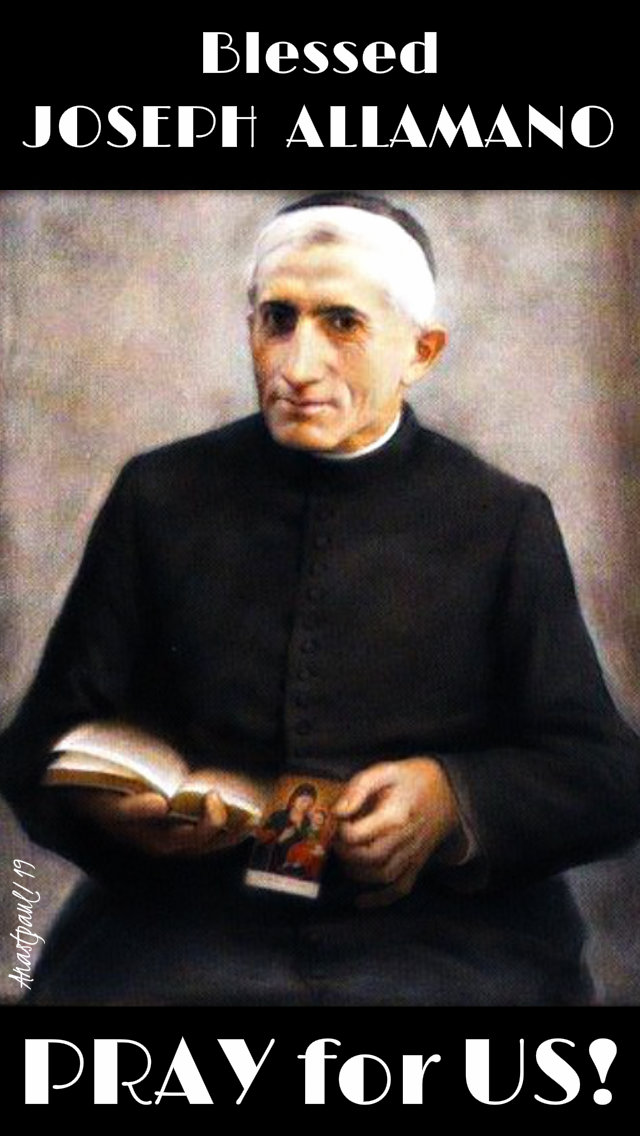
May we all become Sacramentini!  Amenbl joseph allamano pray for us no 2 - 16 feb 2019.jpg

Posted in ON the SAINTS, QUOTES of the SAINTS, QUOTES on PRIESTS, the PRIESTHOOD and CONSECRATED LIFE, SAINT of the DAY

Quote/s of the Day – 16 February – A Priest for the whole world.

Quote/s of the Day – 16 February – The Memorial of Blessed Joseph Allamano (1851–1926) – Founder of the Consolata Missionaries and Consolata Missionary Sisters

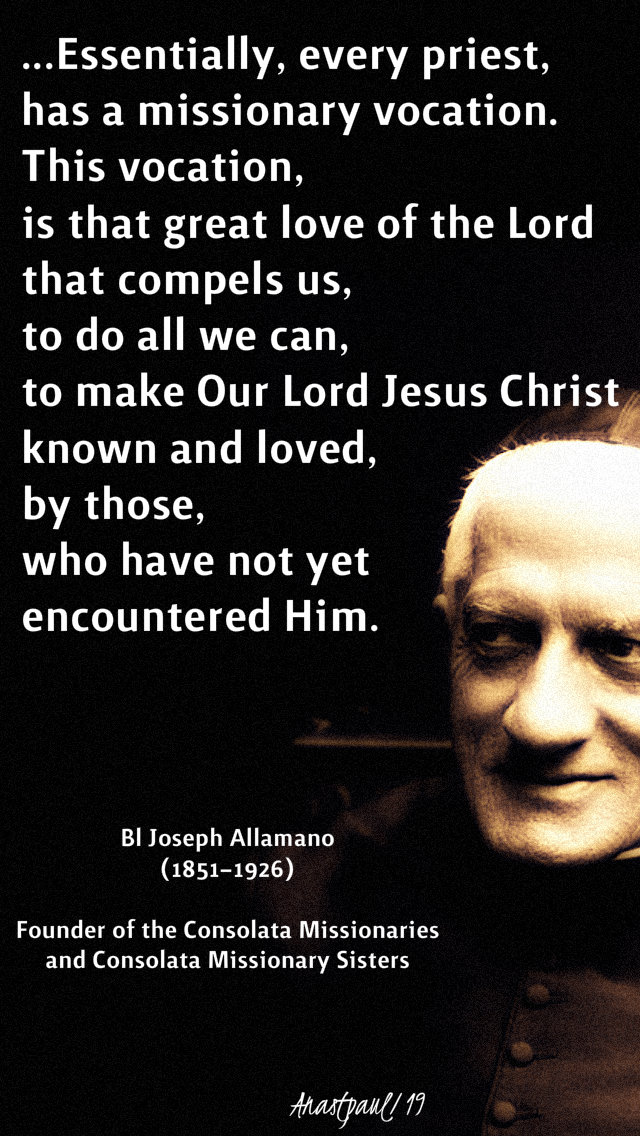
“…Essentially, every priest has a missionary vocation.
This vocation, is that great love of the Lord, 
that compels us, to do all we can,
to make Our Lord Jesus Christ known and loved,
by those, who have not yet encountered Him.”

Blessed Joseph Allamano (1851–1926)essentially, every priest - bl joseph allamano 16 feb 2019

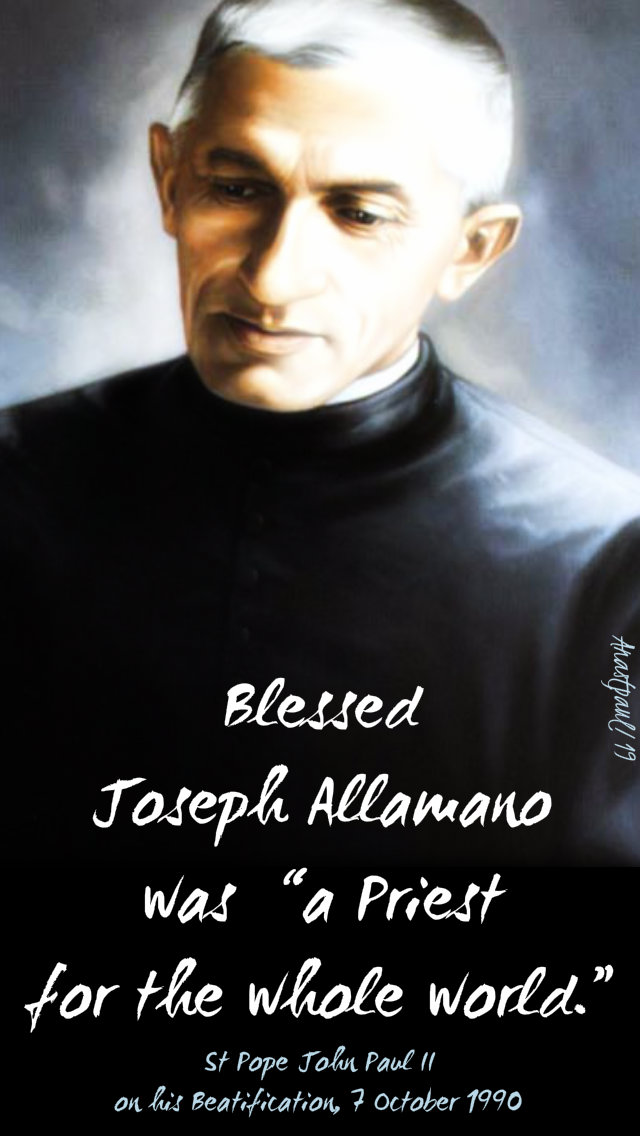
Blessed Joseph Allamano was
“a Priest for the whole world.”

St Pope John Paul II

on the Beatification of Bl Joseph Allamano, 7 October 1990bl joseph allamano was a priest for the whole world - st john paul 16 feb 2019

Posted in MORNING Prayers, SAINT of the DAY, The WORD

One Minute Reflection – 16 February -And the Lord God made for Adam and for his wife, garments of skins and clothed them.

One Minute Reflection – 16 February – Saturday of the Fifth week in Ordinary Time, Year C – First Reading: Genesis 3:9-24 and the Memorial of Blessed Joseph Allamano (1851–1926)

And the Lord God made for Adam and for his wife, garments of skins and clothed them…Genesis 3:21

REFLECTION – “The merciful protection of God for man and woman, in every case, never fails either of them.   Let us not forget this!   The symbolic language of the Bible tells us, that before exiling them from the Garden of Eden, God made for man and woman garments of skins and clothed them (cf. Gn 3:21).   This act of tenderness, means that, in the painful consequences of our sin, God does not want us to be left naked and abandoned to our fate as sinners.”…Pope Francis – General Audience, 16 September 2015genesis 3 -21 and the lord god made for adman - the merciful protection - pope francis 16 feb 2019.jpg

PRAYER – Loving and merciful Father!   In all our needs, even when we turn from You and cause You sorrow, You are there to help us!   You grace us with garments of love to protect us from the evils which surround us.   Bless us we pray, as we turn to You in pain and repentance and by the sufferings of Your divine Son Whom You sent to redeem us, grant us peace.   May the prayers of Blessed Joseph Allamano intercede in our strife as we make our way home to You.   Through Jesus our Lord, with the Holy Spirit, one God for all eternity, amen.bl joseph allamano pray for us 16 feb 2019

Posted in MARIAN PRAYERS, MARIAN Saturdays, Our MORNING Offering, PRAYERS of the SAINTS, The BLESSED VIRGIN MARY

Our Morning Offering – 16 February – O Mary, My Mother

Our Morning Offering – 16 February – Saturday of the Fifth week in Ordinary Time, Year C – Marian Saturdays

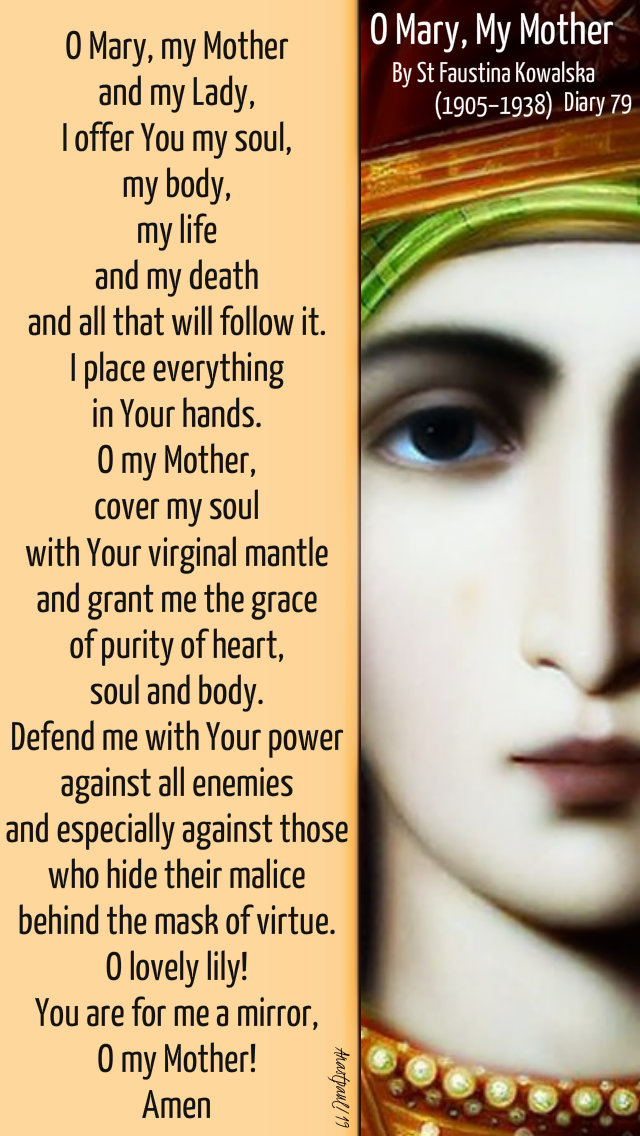
O Mary, My Mother
By St Faustina Kowalska (1905–1938)

O Mary, my Mother
and my Lady,
I offer You my soul, my body,
my life and my death
and all that will follow it.
I place everything in Your hands.
O my Mother,
cover my soul with Your virginal mantle
and grant me the grace
of purity of heart, soul and body.
Defend me with Your power against all enemies
and especially against those
who hide their malice
behind the mask of virtue.
O lovely lily!
You are for me a mirror,
O my Mother!
Amen

(Diary 79)o mary my mother - st faustina - 16 feb 2019.jpg

Posted in SAINT of the DAY

Saint of the Day – 16 February – Blessed Joseph Allamano (1851–1926)

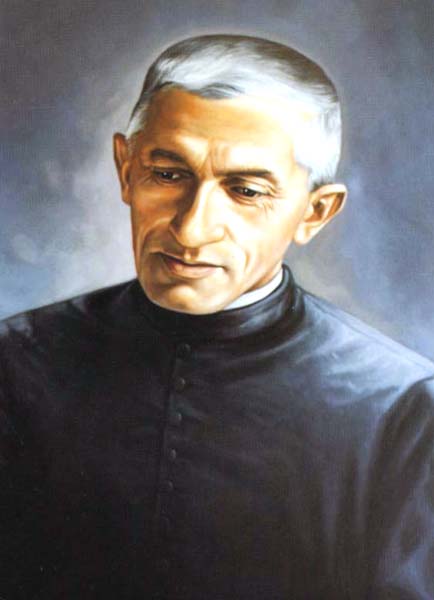
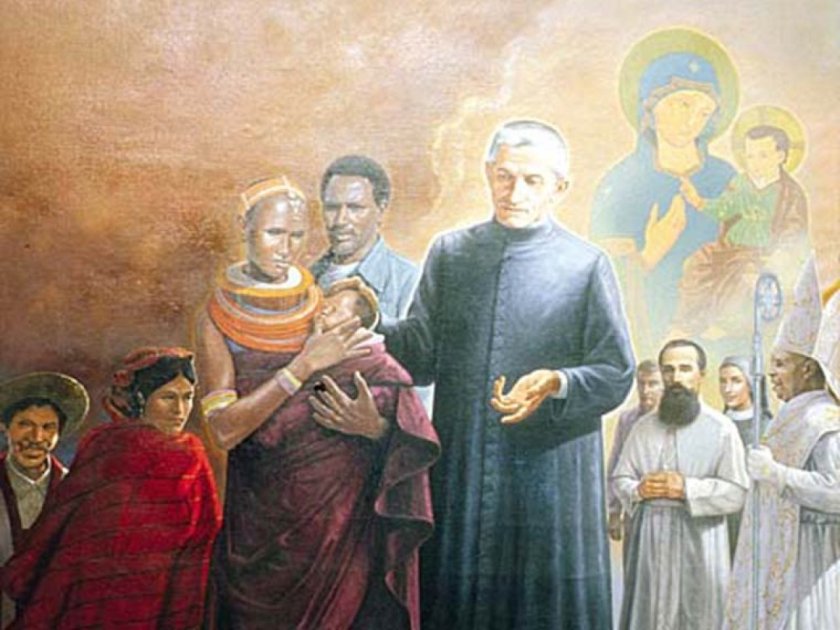
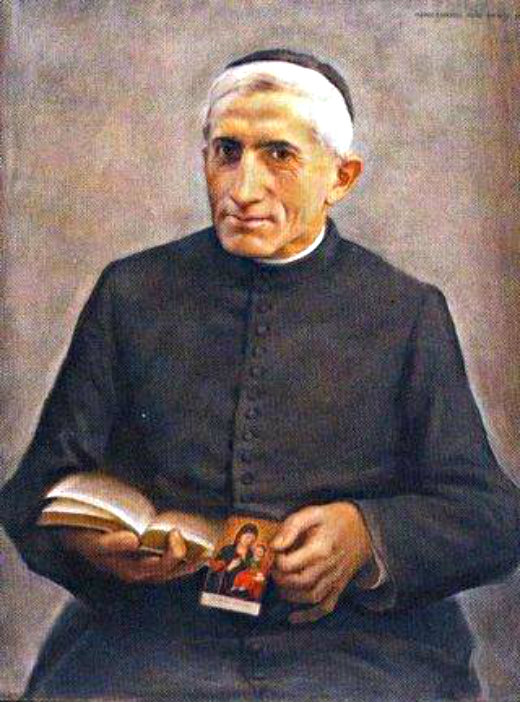
Saint of the Day – 16 February – Blessed Joseph Allamano (1851–1926) (aged 75) – Priest, Founder of the Consolata Missionaries (I.M.C.) congregation for males and another for females, known as the Consolata Missionary Sisters.   Blessed Joseph also served as the rector of the Santuario della Consolata, the Church of the Virgin of the Consolation, a prominent Marian sanctuary and minor basilica in central Turin, Piedmont, Italy. Colloquially, the sanctuary is known as La Consla and he transformed the shrine into a source of spiritual renewal for the faithful.   Patronages – Consolata Missionaries, Consolata Missionary Sisters, all Missionaries.Bl Joseph Allamano

Giuseppe Ottavio Allamano was born in Asti on 21 January 1851 as the fourth of five children to Joseph and Marianna Cafasso Allamano.   His mother was the younger sister of Saint Joseph Cafasso (1811–1860).   His father died of anthrax when Giuseppe was three.

6_23_Joseph_Caffaso
St Joseph Cafasso (1811–1860) – https://anastpaul.wordpress.com/2018/06/23/saint-of-the-day-23-june-st-joseph-cafasso-1811-1860-priest-of-the-gallows/

He attended the Oratory at Valdocco and, as his Teacher, he had none other than Don Bosco.   At 22 he was ordained a priest in Turin and immediately placed in the responsible position of the formation of young seminarians.   In 1876 he obtained a doctorate in theology and at 29 he was appointed as the rector of the most important Marian shrine in the city, dedicated to the “Madonna Consolata” and formulator of the young clergy at the Ecclesiastical Council.   Between 1883 and 1885 he restructured the Sanctuary and repaired the roof.   In 1899 he commissioned the architect Carlo Ceppi to expand the interior space for the faithful with the construction of four circular chapels. Joseph ensured that the shrine became a source of spiritual renewal for all the peoples of Turin.

986px-Santuario_della_Consolata_Torino
Church of the Virgin of the Consolation, “La Consla”, Turin
768px-Consolata_di_torino,_interno,_25
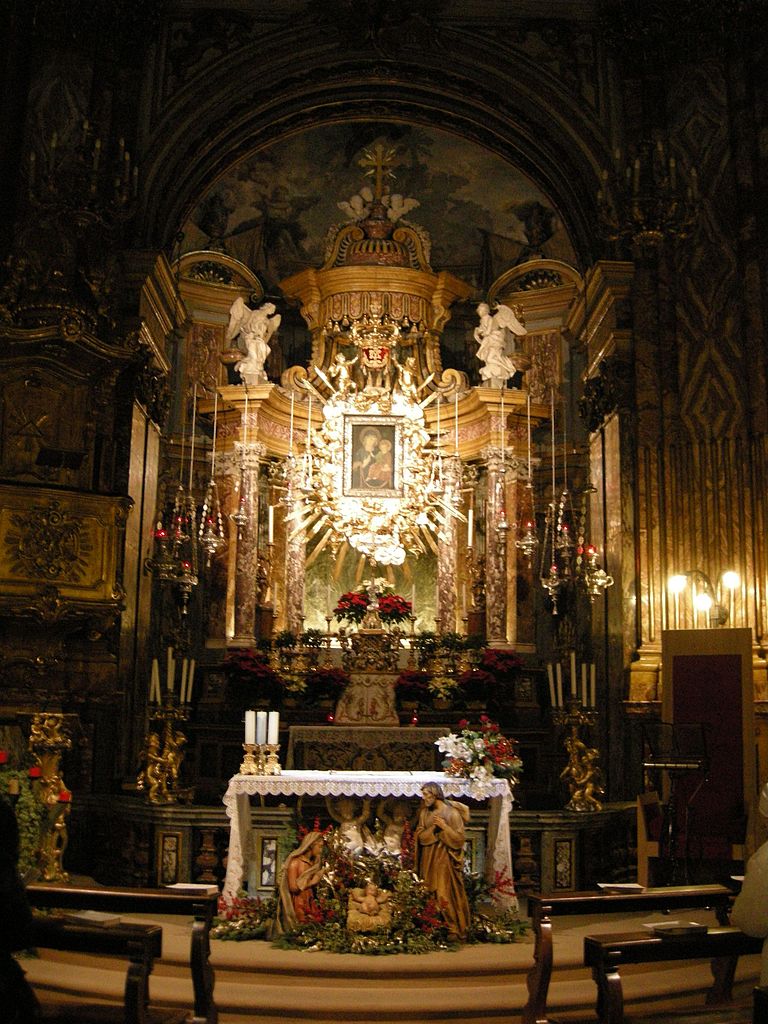
Altar with icon of the Virgin of the Consolation.

He also responded to requests for spiritual and material comfort of Turin supporting various social initiatives and promoting the Catholic newspapers.   In 1899 he began publishing the monthly La Consolata.

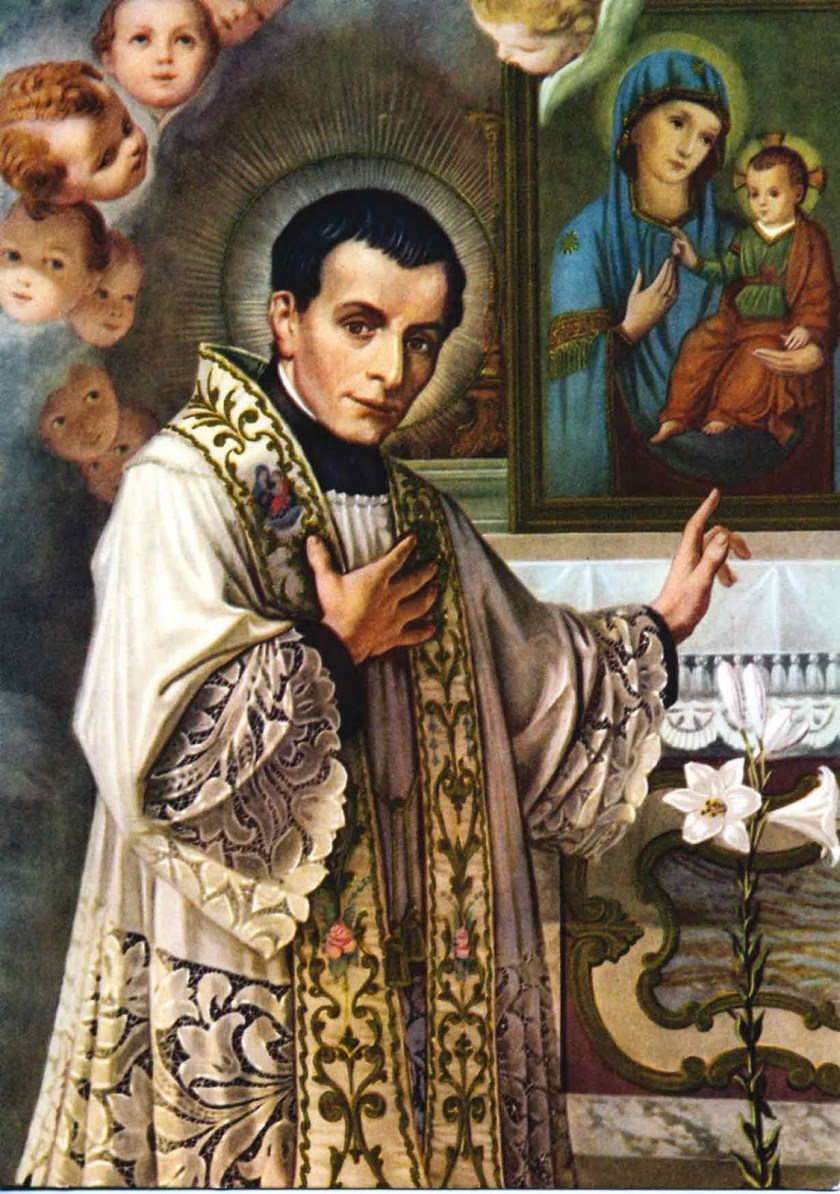
On recovering from a severe illness in 1891, he vowed to found a missionary society for priests and laymen.   Thus the Consolata Missionaries was born on 29 January 1901.   The first missionaries reached Kenya in 1902, joined in 1903 by the Sisters of Cottolengo [founded by St Joseph Benedict Cottolengo (1786–1842)].   He also founded the Consolata Missionary Sisters for women on 29 January 1910.   Their founding statement is:  “The cult of the Consolata will not only be contemplative but active”.   That is, with the missions, the Marian shrine will acquire a universal dimension.bl joseph allamano missionary founder.jpg

Due to the increasing size of the Christian population it became quite clear that there were not enough priests and brethren to cater to the pastoral needs of the people. Allamano expressed this deep concern to Pope Pius X during a visit to Rome in 1912.   He urged the pope to do something and perhaps establish an annual mission day to awaken missionary vocations.  The advent of the first World War ensured that the proposal was postponed.   During World War I, he worked to assist refugees and the seminarians who had been drafted.   He also worked on the cause of his uncle, who was beatified in 1925.joseallamano

But, his idea for an annual day for missionaries came in 1927 when Pope Pius XI instituted World Mission Day.

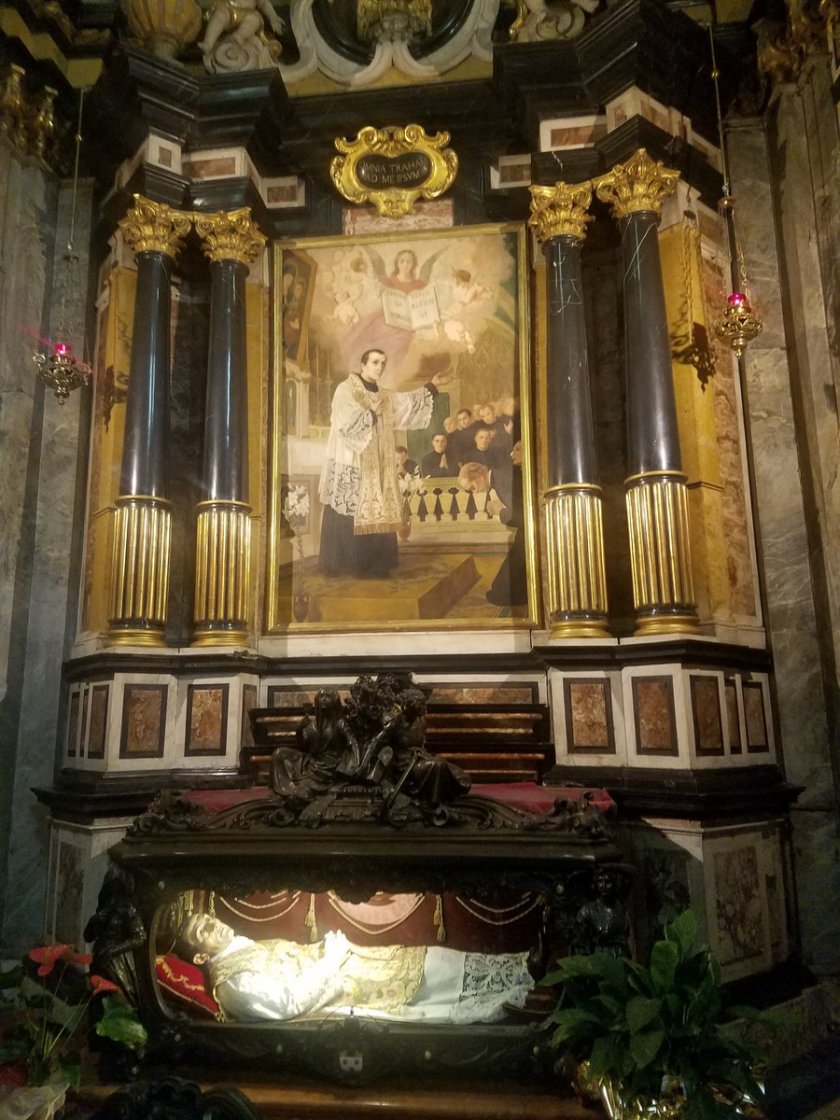
He died in Turin on 16 February 1926.   His body is now preserved and venerated in the Mother House of the Consolata Missionaries, in Turin.

He was beatified by St Pope John Paul II on 7 October 1990 and his feast was set for 16 February, the day of his return to the Father’s House.

shrine bl joseph allamano
The Shrine of Blessed Joseph Allamano Mother House of the Consolata Missionaries, in Turin

Allamano_picConsolata

Posted in SAINT of the DAY

Memorials of the Saints – 16 February

St Aganus of Airola
Bl Bernard Scammacca OP (1430-1487) (aged 57)
About St Bernard: https://anastpaul.wordpress.com/2018/02/16/saint-of-the-day-16-february-blessed-bernard-scammacca-o-p-1430-1487/

St Faustinus of Brescia
St Gilbert of Sempringham
St Honestus of Nimes
St John III of Constantinople
Bl Joseph Allamano (1851–1926) (aged 75)
St Julian of Egypt
St Juliana of Campania
St Juliana of Nicomedia
St Nicola Paglia
St Onesimus of Ephesus
Bl Philippa Mareria

Martyrs of Cilicia – 12 saints:  A group of Christians who ministered to other Christians who were condemned to work the mines of Cilicia in the persecutions of Maximus. They were arrested, tortured and martryed by order of the governor Firmilian.
• Daniel
• Elias
• Isaias
• Jeremy
• Samuel
The group also includes the three known have been sentenced to the mines –
• Pamphilus
• Paul of Jamnia
• Valens of Jerusalem
and those who were exposed as Christians as a result of these murders –
• Julian of Cappadocia
• Porphyrius of Caesarea
• Seleucius of Caesarea
• Theodule the Servant
They were martyred in 309 in Cilicia, Asia Minor (in modern Turkey).

Posted in DIVINE Mercy, Goodness, Patience, SACRED and IMMACULATE HEARTS, SAINT of the DAY

Thought for the Day – 15 February – Saint Claude de la Colombiere and Blessed Michael Sopoćko share a few things in common

Thought for the Day – 15 February – the Memorial of St Claude de la Colombiere (1641-1682) Apostle of the Sacred Heart and Blessed Michal Sopoćko (1888-1975) Apostle of Divine Mercy

Saint Claude de la Colombiere

and Blessed Michael Sopoćko

share a few things in commonbl sopocka and st claude 15 feb 2019.jpg

We celebrate the feast day of Blessed Michael Sopoko today, 15 February, which makes for a perfect opportunity to discuss one of the more curious details in the life of St Faustina Kowalska (1905–1938), known today as the Lord’s “secretary” of Divine Mercy.

So what’s so curious?

Amazing parallels can be drawn between St Faustina’s confessor, Blessed Sopoćko and the confessor of another saint — and “secretary” — St. Margaret Mary Alacoque (1647-1690), who received the revelations of the Sacred Heart in the 1670s.

In other words, the similarities between the holy priests Blessed Michael Sopoćko (1888-1975) and St Claude de la Colombiere, SJ (1641-1682), both of whom died today and, therefore, we celebrate their entry into life today.

Blessed Sopoćko , ordained to the priesthood over 100 years ago, served as confessor and spiritual director to St Faustina Kowalska, who received revelations of the Divine Mercy in the 1930s.   Saint Claude served as confessor and spiritual director of St Margaret Mary Alacoque, who received the revelations of the Sacred Heart in the 1670s.

So here is where the parallels begin. Saint Margaret Mary Alacoque, like St Faustina, had doubts at first about her revelations.   For both young women, it was their confessors who played a large role in alleviating their doubts and encouraging them to embrace the special role the Lord seemed to be placing upon them.

But the parallels get even better.   Since St Margaret Mary Alacoque led a cloistered life — quiet and humble — it was her confessor who carried the burden of spreading the Sacred Heart message and devotion to the outside world.   This was the same situation with Fr Sopocko, who led the efforts to introduce the public to Faustina’s powerful private revelations and who arranged for the Lord’s requests of Faustina to be accomplished.   That includes hiring a painter to paint the image of the Merciful Saviour, now among Christianity’s most recognised images.

Here’s another interesting fact:

Saint Claude Colombiere died today, 15 February, the same day Blessed Sopoćko died. And 15 February, also happens to be St Faustina’s name day — the day of her patron saint, St Faustus.

Of course, when considering how the devotions to Divine Mercy and the Sacred Heart so strongly compliment each other, these details are far more than “curious.”   Certainly, they are Divine Providence at work, right?st claude and bl michal 15 feb 2019.jpg

Dr Robert Stackpole, STD, director of the St John Paul II Institute of Divine Mercy, a lay apostolate of the Marian Fathers of the Immaculate Conception, notes, “Much like the traditional devotion to the Sacred Heart, our Lord gave to St. Faustina new forms in which His Merciful Heart was to be honoured and new vessels for a fresh outpouring of His grace. Namely, the Image of Divine Mercy; the Chaplet of Divine Mercy and, of course, a new feast for the universal Church — the Feast of Divine Mercy, intended for the Sunday after Easter.”

None of these parallels have escaped the attention of Fr Seraphim Michalenko, MIC, a world-renown expert on the life of St Faustina and the message of Divine Mercy.

He notes that it took 300 years for Fr Claude Colombiere to be canonised.
“And here, Fr Sopoćko died in 1975 and he’s already beatified [in 2008],” Fr Seraphim says.

So what does his rapid rise to the honours of the altar, mean for us?

“That God is in a hurry to get His message out,” says Fr Seraphim.BlSopockoStFaustina

Adapted from the Library Archive of The Divine Mercy – (Felix Carroll Feb 13, 2014)

Read Dr Stackpole’s series that explores the relationship between The Sacred Heart and The Divine Mercy. Part 1, Part 2, Part 3, Part 4, and Part 5.

St Claude de la Colombiere, Pray for Us!st-claude-pray-for-us-15-feb-2017.jpg

Blessed Michal Sopoćko, Pray for Us!bl michal sopocka pray for us no 2 15 feb 2019.jpg

Posted in DIVINE Mercy, Goodness, Patience, FRUITS of the SPIRIT, JESUIT SJ, PRACTISING CATHOLIC, QUOTES of the SAINTS, QUOTES on HOPE, QUOTES on LOVE, QUOTES on MERCY, QUOTES on PRAYER, QUOTES on TRUST and complete CONFIDENCE in GOD, SAINT of the DAY, The HOLY EUCHARIST / The HOLY MASS, The HOLY GHOST

Quote/s of the Day – 15 February – St Claude & Blessed Michal

Quote/s of the Day – 15 February – the Memorial of St Claude de la Colombiere (1641-1682) Apostle of the Sacred Heart and Blessed Michal Sopoćko (1888-1975) Apostle of Divine Mercy

“Lord, I am in this world to show Your mercy to others.
Other people will glorify You, by making visible the power of Your grace,
by their fidelity and constancy to You.
For my part I will glorify You,
by making known how good You are to sinners,
that Your mercy is boundless
and that no sinner, no matter how great his offences,
should have reason to despair of pardon.
If I have grievously offended You, My Redeemer,
let me not offend You even more,
by thinking that You are not kind enough to pardon me.”for-my-part-i-will-glorify-you-st-claude-de-la-colombiere-15-feb-2018.jpg

“God is more honoured by a single Mass
than He could be by all the actions of angels
and men together, however fervent and heroic they might be.
Yet, how FEW hear Mass with the intention of giving God
this sublime honour!
How FEW think with joy on the glory a Mass gives to God.
How FEW rejoice to possess the means of honouring Him
as He deserves! . . .
If we only knew the treasure we hold in our hands!”god-is-more-honoured-by-a-single-mass-st-claude-15-feb-2017

“When the Holy Spirit is in a soul,
He communicates Himself
in one way or another.
We can say,
that He makes virtue contagious
and turns a simple faithful
into an apostle!”

St Claude de la Colombiere (1641-1682)when the holy spirit is in a soul - st claude de la colombiere - 15 feb 2019

“Prayer is necessary to receive the help of God,
as grain is needed to harvest … a humble and trustful prayer,
for what is necessary for salvation,
is never lost.
It is heard at least by the fact,
that it begs for the grace,
to abide in prayer.”prayer is necessary - bl michal sopocka 15 feb 2019

“The decisive factor in obtaining God’s Mercy is trust.
Trust is the expectation of someone’s help.
It does not constitute a separate virtue
but is an essential condition of the virtue of hope
and an integral part of the virtues of fortitude and generosity.
Because trust springs from faith,
it strengthens hope and love
and is, moreover, linked up, in one way or another,
with the moral virtues.
It may, therefore, be called the basis on which,
the theological virtues unite with the moral.
The moral virtues, originally natural,
become supernatural,
if we practice them with trust in God’s help.”

Blessed Michal Sopoćko (1888-1975)the moral virtues - bl michal sopocka 15 feb 2019.jpg

Posted in FATHERS of the Church, MORNING Prayers, QUOTES of the SAINTS, QUOTES on CONVERSION, QUOTES on SIN, SACRED and IMMACULATE HEARTS, SAINT of the DAY, The HOLY EUCHARIST / The HOLY MASS, The WORD

One Minute Reflection – 15 February – Nothing else, than the body that proved itself superior to death and became the source of our life.

One Minute Reflection – 15 February – Friday of the Fifth Week in Ordinary Time, Year C – Today’s First Reading: Genesis 3:1-8 and the Memorial of St Claude de la Colombiere (1641-1682) Apostle of the Sacred Heart and Blessed Michal Sopoćko (1888-1975) Apostle of Divine Mercy

“The woman saw that the tree was good for food and pleasing to the eyes and the tree was desirable for gaining wisdom.   So she took some of its fruit and ate it and she also gave some to her husband, who was with her and he ate it.”...Genesis 3:6

REFLECTION – “Those who have been tricked into taking poison, offset its harmful effect, by another drug.   The remedy, moreover, just like the poison, has to enter the system, so that its remedial effect, may thereby spread through the whole body.   Similarly, having tasted the poison, that is the fruit, that dissolved our nature, we were necessarily in need of something to reunite it.   Such a remedy had to enter into us, so that it might by its counteraction, undo the harm the body had already encountered from the poison.   And what is this remedy?   Nothing else, than the body that proved itself superior to death and became the source of our life.”…St Gregory of Nyssa (c 335–c395) Father of the Church (Catechetical Oration, 27)genesis 3 6 the woman saw that the fruit was good - those who have been tricked - st gregory of nyssa 15 feb 2019.jpg

PRAYER – Heavenly Father, Your great mercy, gave us Your Son!   Surely nothing can be a greater proof to us of Your unending love and mercy to Your lowly creatures, we who are dust.   Through Him, who died and rose for us, You have shown us the way of true mercy. Grant us this day that by the intercession of St Claude and Blessed Michal, we may take up our crosses with Him, never leaving the love of His Sacred Heart, so that we may join Your holy saints in eternal life.   Through Your Son, our Lord Jesus Christ, in union with the Holy Spirit, one God forever, amen.st-claude-pray-for-us-15-feb-2018.jpg

bl michal sopocka pray for us - apostle of divine mercy 15 feb 2019.jpg

Posted in DIVINE Mercy, Goodness, Patience, Our MORNING Offering, PRAYERS of the CHURCH, PRAYERS of the SAINTS, QUOTES of the SAINTS, QUOTES on CHARITY, QUOTES on MERCY, SAINT of the DAY

Our Morning Offering – 15 February – Help Me, O Lord that I may be Merciful

Our Morning Offering – 15 February – The Memorial of Blessed Michał Sopoćko (1888-1975) Apostle of Divine Mercy

Help Me, O Lord that I may be Merciful
St Faustina Kowalska (1905–1938)

“Help me, O Lord, …
that my eyes may be merciful,
so that I will never be suspicious
or judge by appearances
but always look for what is beautiful
in my neighbours’ souls
and be of help to them…
That my ears may be merciful,
so that I will be attentive to my neighbours’ needs
and not indifferent to their pains and complaints.…
That my tongue may be merciful,
so that I will never speak badly of others
but have a word of comfort and forgiveness for all.…
That my hands may be merciful and full of good deeds.…
That my feet may be merciful,
so that I will hasten to help my neighbour,
despite my own fatigue and weariness.…
That my heart may be merciful,
so that I myself will share
in all the sufferings of my neighbour.”

(Extract from Divine Mercy in My Soul, Diary of St Maria Faustina Kowalska, 163)
This prayer was used by Pope Francis for the Year of Mercy 2015 to be universally prayed by the Church.help me o lord that I may be merciful st faustina - 15 feb 2019.jpg

Posted in DIVINE Mercy, Goodness, Patience, SAINT of the DAY, VATICAN Resources

Saint of the Day – 15 February – Blessed Father Michał Sopoćko (1888-1975) Priest, Apostle of Divine Mercy

Saint of the Day – 15 February – Blessed Father Michał Sopoćko (1888-1975) Priest, Apostle of Divine Mercy, Professor of Pastoral Theology at Vilnius University, Founder of Congregation of Sisters of Merciful Jesus, Chaplain during WWII.   He is best known as the Spiritual Director of Saint Faustina Kowalska (1905–1938).   Patronage – Białystok.sopocko.jpg

Michał Sopoćko was born on 1 November 1888 in Nowosady (Juszewszczyzna), then under Imperial Russia.   The Czarist authority persecuted the Catholic Church as well as both the Polish and Lithuanian people within in its territories.   In the Sopoćko family, of noble lineage, the Polish and Catholic traditions were conserved and developed.   The young Michal matured in this religious and patriotic atmosphere.   Motivated by a desire for unconditional service to God, the Church and humanity, he entered the Major Seminary in Vilnius.   On 15 June 1914, he was ordained to the priesthood by Bishop Franciszek Karewicz.Sopoćko.jpg

For four years (1914-1918) he worked as a parochial vicar in Taboryszki, where he opened two mission churches at Miedniki and at Onżadòw, as well as various schools.

As informed by someone that the German authorities may arrest him, he left the parish and went to Warsaw.   There he became a military chaplain for the Polish army.   While dedicated to his ministry as chaplain, he enrolled as a student in the Faculty of Theology at the University of Warsaw and from which he obtained a doctoral degree.   At the same time, he graduated from the National Pedagogical Institute.   In 1924, he became a co-ordinator of the regional military chaplaincies, based in Vilnius.

In 1927, Archbishop Romuald Jalbrzykowski entrusted to him the responsibility of being Spiritual Director for the Major Seminary.   During this same period he taught for the faculty of Theology at Stefan Batory University, also in Vilnius.   He eventually requested the Archbishop to release him from both the military pastoral care and from the seminary duties.   His desire was to dedicate himself entirely to theological pursuits.   In 1934, he received the title of ‘docent’ in pastoral theology.   While teaching, he never forgot the importance of pastoral service.   He was rector of St Michael Church and also served as confessor for Religious Sisters.

One of the most significant events of Fr Sopoćko’s life occurred in 1933, when he became the Spiritual Director of Sr (now Saint) Faustina Kowalska of the Congregation of Sisters of Mary Mother of Mercy.  He continued to assist the Saint after his transfer to Łagiewniki and where she died on 5 October 1938.   As her confessor, he undertook a thorough evaluation of Sr Faustina’s mystical experiences concerning devotion to the Divine Mercy.   Following his advice, she wrote of these in her “Diary.”   To this day this remains a spiritual classic.BlSopockoStFaustina

The Divine Mercy devotion became a life-giving inspiration for Fr Sopoćko.   Due to his assistance and under the direction of Sister Faustina, the artist Eugeniusz Kazimirowski painted the first portrait of Jesus as the Divine Mercy. PRC-116-Blessed-Sopocko1-fr

Fr Sopoćko wrote extensively on the subject of the Divine Mercy and, in 1938, he established a committee charged with building the Divine Mercy Church in Vilnius. However, this attempt had to be halted due to the onset of World War II.   But despite the war and German occupation, Fr Sopoćko persisted in his efforts to promote the devotion to the Divine Mercy. sopockodivinemercy1

Filled with zeal, he constantly helped those who were oppressed and threatened with extermination, for example, numerous Jewish people.  Fortunately, he managed to avoid arrest and imprisonment.   In 1942, along with his fellow seminary professors and students, he was forced to go into hiding near Vilnius.   He remained concealed for two years.   Yet it was during that very time when Fr Sopoćko played a major role in establishing a new Religious Congregation.   According to the revelations of Sr Faustina, this Congregation was to promote love for the Divine Mercy.   After the War, he wrote the Congregation’s constitution.  And he became actively engaged in the growth and development of what we know as the Congregation of the Sisters of the Divine Mercy.bl michal sopocko art.jpg

In 1947, Archbishop Jałbrzykowski, for two years at Białystok with his diocesan Curia, sought that Fr Sopoćko come to the same city.   He accepted a position as professor in the Archdiocesan Major Seminary.   There he taught pedagogy, catechetics, homiletics, pastoral theology and spirituality.   Additionally, he continued to further the apostolate of the Divine Mercy.   He also made serious efforts to obtain official approval for the Divine Mercy devotion from the Church authorities.   Fr Sopoćko worked tirelessly on the biblical, theological and pastoral bases by which to explain the doctrinal truth concerning the Divine Mercy devotion.   His publications were translated into numerous languages including: Latin, English, French, Italian and Portuguese.bl michal

Fr Michal Sopoćko died on 15 February 1975, in his apartment on Poleska Street.   He was popularly acclaimed for his sanctity.   He was buried in the parish cemetery in Białystok. Following the inauguration of the process for his Beatification, his body was moved to the Church of the Divine Mercy (30 November 1988)…vatican.va

Fr Michal’s cause for beatification was started at the Vatican in 1987.   In 2004, St Pope John Paul II issued a decree on the virtues of Father Sopoćko.   In December 2007, Pope Benedict XVI approved of a miracle through his intercession.   His solemn beatification took place on Sunday 28 September 2008, at the Sanctuary of Divine Mercy in Białystok.ksiadz-Sopocko.jpg

Posted in SAINT of the DAY

Memorials of the Saints – 15 February

St Agape of Terni
Bl Angelus de Scarpetti
St Berach of Kilbarry
St Claude de la Colombierre SJ (1641-1682)
Beautiful St Claude: https://anastpaul.wordpress.com/2018/02/15/saint-of-the-day-15-february-st-claude-de-la-colombiere-s-j-1641-1682/

St Craton
St Decorosus of Capua
St Dochow
St Druthmar of Corvey
St Eusebius of Asehia
St Farannan of Iona
St Faustinus
St Faustus of Monte Cassino
St Georgia
St Joseph of Antioch
St Jovita
Bl Michał Sopoćko (1888-1975) Apostle of Divine Mercy

St Onesimus the Slave
St Quinidius of Vaison
St Severus of Abruzzi
St Walfrid

Martyrs of Antioch: 5 saints
A group of Christians murdered together. We know the names of five of them – Agapev, Baralo, Isicio, Joseph and Zosimus.

Martyrs of Passae:
Castulus
Lucius
Magnus
Saturninus

Martyrs of Prague – 14 beati – Franciscan Friars Minor martyred together by a mob led by Lutherans –
Franciscan Friars Minor martyred together by a mob led by Lutherans.
• Blessed Antonín of Prague
• Blessed Bartolomeo Dalmasoni
• Blessed Bedrich Bachstein
• Blessed Christoffel Zelt
• Blessed Didak Jan
• Blessed Emmanuel of Prague
• Blessed Gaspare Daverio
• Blessed Giovanni Bodeo
• Blessed Girolamo degli Arese
• Blessed Jakob of Prague
• Blessed Jan of Prague
• Blessed Juan Martínez
• Blessed Klemens of Prague
• BlessedSimon of Prague
They were martyred on
• Shrove Tuesday 15 February 1611 at the Church of Our Lady of the Snows in Prague, Czech Republic
• body dumped nearby but given Christian burial on 19 February 1611 in the monastery
• re-interred in the side chapel of the church in 1616.
Beatified
13 October 2012 by Pope Benedict XVI

Martyrs of Sweden:
Sigfrid
Sunaman
Unaman
Winaman

Martyred in the Spanish Civil War:
Bl Pere Vallmitjana Abarca

Posted in Uncategorized

Blessed John Henry Newman cleared for Sainthood!

Blessed John Henry Newman cleared for Sainthood!blessed john henry newman cleared for canonisation alleluia - 14 feb 2019.jpg

Pope Francis on Tuesday 12 February, authorised the Congregation for the Causes of Saints, to promulgate 8 decrees including those of Bl Cardinal John Henry Newman and Blessed Sr Mariam Thresia and thus, cleared the way for their Canonisation.

The Pope received in audience Cardinal Angelo Becciu, the Prefect of the Vatican Congregation for the Causes of Saints and authorised him to promulgated two decrees on miracles for sainthood, a decree on martyrdom and 5 on heroic virtues.

Blessed John Henry Cardinal Newman
A miracle attributed to the intercession of Cardinal Newman has been recognised, clearing him for canonisation.

Born in London on 21 February 1801 and died in Edgbaston on 11 August 1890, the noted theologian and poet was first an Anglican priest and later a Catholic priest and cardinal, who was an important figure in the religious history of England of his time.

He was one of the leading figures of the Oxford Movement that originated at Oxford University in 1833, that sought to link the Anglican Church more closely to the Roman Catholic Church.

He is revered by both the Catholic as well as the Anglican Churches.

As a Catholic priest, he founded the Oratory of St Philip Neri in Edgbaston, England.

Pope Benedict XVI beatified Cardinal Newman on 19 September 2010, in Birmingham, England.

Perhaps the hymn and poem that Blessed John Henry is best known for is, “Lead kindly light.”Lead Kindly Light no 2 14 feb 2019 Bl john henry newman 25 jan2019 for the conv of st paul.jpg

Blessed Sr Mariam Thresia
Pope Francis also recognised another miracle, clearing the way for the canonisation of Indian nun, Blessed Mariam Thresia Chiramel Mankidiyan, the foundress of the Congregation of the Holy Family (CHF).
The nun belonging to the Syro-Malabar Catholic Church was born in Puthenchira on 26 April 1876 and died in Kuzhikkattussery on 8 June 1926.

She is known for her extraordinary charity, especially a preferential love for the poorest of the poor.
She was declared venerable on 28 June 1999 and was beatified on 9 April 2000 by St Pope John Paul II in Rome.bl_maramthresia.jpg

The other decrees on the causes of saints are as follows:

– the martyrdom of the Ecuadoran Servant of God, Victor Emilio Moscoso Cárdenas, a Jesuit priest. He was born in Cuenca (Ecuador) on 21 April 1846 and killed, in hatred of the Faith, in Riobamba (Ecuador) on 4 May 1897.

– the heroic virtues of the Hungarian Servant of God Cardinal Joseph Mindszenty, Archbishop of Esztergom and primate of Hungary.   Born in Csehimindszent (Hungary) on 29 March 1892, he died in Vienna (Austria) on 6 May 1975.

– the heroic virtues of the Italian Servant of God John Baptist Zuaboni, a diocesan priest, founder of the Secular Institute Society of the Holy Family.   He was born in Vestone on 24 January 1880 and died in Brescia (Italy) on 12 December 1939.

– the heroic virtues of Spanish Servant of God Emanuele García Nieto, a Jesuit priest.   He was born in Macotera (Spain) on 5 April 1894 and died in Comillas (Spain) on 13 April 1974.

– the heroic virtues of Italian Servant of God Serafina Formai (born: Letizia), founder of the Missionary Sisters of the Good News.   She was born in Casola Lunigiana (Italy) on 28 August 1876 and died in Pontremoli (Italy) on 1 June 1954.

– the heroic virtues of Colombian Servant of God Maria Berenice Duque Hencker (born: Ana Julia), foundress of the Little Sisters of the Annunciation.   She was born in Salamis (Colombia) on 14 August 1898 and died in Medellín (Colombia) on 25 July, 1993.

Posted in DOCTORS of the Church, FATHERS of the Church, QUOTES of the SAINTS, QUOTES on CONVERSION, QUOTES on LOVE, SAINT of the DAY

Thought for the Day – 14 February – “Satisfying our Restless Hearts”

Thought for the Day – 14 February – The Memorial of St Valentine (176-273) Martyr

SATISFYING OUR RESTLESS HEARTS
by Fr Steve Grunow

“And what is this God?   I asked the earth and it answered: ‘I am not God and all the things in the earth made the same confession.’   I asked the sea and the deeps and creeping things and they answered:   ‘We are not your God, seek higher.’   I asked the winds that blow and the whole air with all that is in it and the wind answered: ‘  I am not God.’   I asked the heavens, the sun, the moon, the stars and they answered:   ‘Neither are we God whom you seek.’   So I asked all those things that entice the senses:   ‘Tell me then of this Mysterious One that I search for.’   And all cried out to me in one great voice: ‘God made us and God made you…’”

“So I set about to find God and found that I could not find Him until I embraced the mediator between God and man, Christ Jesus, who is all over all these things, who was calling me and saying: ‘I am the Way, the Truth and the Life…’”

These marvellous words belong to St Augustine….

St Augustine is one of the most renowned and influential saints of the Church, though his early life did not foreshadow such an identity and mission.   He lived much of his young life in resistance to God’s will and purposes.   Preoccupied with his body, he sought satisfaction in sex.   Preoccupied with power, he sought to ingratiate himself with the mighty.   Preoccupied with status, he sought self-promotion.   Preoccupied with wealth, he tried to sell himself to a career.

And none of these things, for all their allure and all their promises, brought him satisfaction.

As a result, Augustine embraced the prevailing esoteric and arcane “spiritualities” of his day.   He followed strange gods in an attempt to shake his alarming sense of dissatisfaction.   This left him emptier and even more diminished.

But a reckoning came that changed Augustine forever.

“I found myself weeping in the bitter sorrow of my heart.   And suddenly I heard a voice from a nearby house, a child’s voice, boy or girl I do not know – but it was sort of a sing song that repeated over and over again.   ‘Take and read, take and read.’   Wiping away my tears I took this as a divine command and opened the scriptures and in silence read the passage on which my eyes first fell – ‘Not in rioting and drunkenness, not in debauchery and impurity, not in contention and envy but put on the Lord Jesus…’”i found myself weeping in the bitter sorrow - sdt augustine - conversion - 14 feb 2019

So this is what Augustine did- he discarded the skin of his old self and put on the Lord Jesus.   And what God did with Augustine was remarkable.   He became a leader in the Faith, as a teacher, priest and bishop.   His writings have directed the mind and soul of the Church for centuries.   His influence is with us still- in how we pray, how we worship, and in what we believe.

At the heart of the Gospel is the call to conversion in Christ.   There is no moment in our life when this call does not beckon toward us.   There is no time in our life we are exempt from the summons.   Conversion is the substance of the work of the spiritual life. Conversion in Christ is our privileged spiritual way.

Like Augustine, so many of us fall into the illusion that something other than God can satisfy us or give our lives purpose and meaning.   Like the young Augustine, we are captivated by self-deception that directs us away from the one who is absolutely necessary – Christ.   In response to all the futility of our refusals, the wisdom of St Augustine rings true:

“You have made us for yourself and our hearts are restless until they rest in you.”

St Augustine, Pray for Us!st augustine pray for us 14 feb 2019.jpg

Posted in DOCTORS of the Church, FATHERS of the Church, JESUIT SJ, QUOTES of the SAINTS, QUOTES on LOVE, SAINT of the DAY

Quote/s of the Day – 14 February – Falling in love

Quote/s of the Day – 14 February – The Memorial of St Valentine (176-273) Martyr

“You have made us
for Yourself, O Lord
and our heart is restless
until it rests in You.”you have made us for yourself - st augustine 14 feb 2019.jpg

“God loves each of us as if there were only one of us.”

St Augustine (354-430) Father & Doctorgod loves each of us as if - st augustine - 9 jan 2018

“Nothing is more practical
than finding God,
that is, than falling in love
in a quite absolute, final way.
What you are in love with,
what seizes your imagination
will affect everything.
It will decide what will
get you out of bed
in the mornings,
what you will do
with your evenings,
how you spend
your weekends,
what you read,
who you know,
what breaks your heart
and what amazes you
with joy and gratitude.
Fall in love, stay in love
and it will decide everything.”

Servant of God Fr Pedro Arrupe SJ (1907-1991)

(the 28th Superior General of the Society of Jesus)nothing is more practical than falling in love - servant of god pedro arrupe sj no 2- 14 feb 2019.jpg

Posted in DIVINE Mercy, Goodness, Patience, DOCTORS of the Church, FATHERS of the Church, MORNING Prayers, QUOTES on CONSCIENCE, QUOTES on CONVERSION, QUOTES on FAITH, QUOTES on FEAR, QUOTES on FORGIVENESS, QUOTES on REPENTANCE, QUOTES on TRUST and complete CONFIDENCE in GOD, SAINT of the DAY, The WORD

One Minute Reflection – 14 February – “The faith of the Canaanite woman”

One Minute Reflection – 14 February – Thursday of the Fifth week in Ordinary Time, Year C – Gospel: Mark 7:24–30 and the Memorial of Sts Cyril and Methodius “Apostles to the Slavs”- Patrons of Europe and St Valentine (176-273) Martyr

But immediately a woman, whose little daughter was possessed by an unclean spirit, heard of him and came and fell down at his feet....Mark 7:25

REFLECTION – “O woman, your faith is great.   Let it be done to you as you wish” (Mt 15:28).   Indeed, she had great enough faith, since she knew neither the ancient miracles, commands and promises of the prophets, nor the more recent ones of the Lord himself. In addition, as often as she was disregarded by the Lord, she persevered in her entreaties and she did not cease knocking by asking him, though she knew only by popular opinion that he was the Saviour.   On account of this, she secured the great object for which she implored…
If one of us has a conscience polluted by the stain of avarice, conceit, vain-glory, indignation, irascibility, or envy and the other vices, he has “a daughter badly troubled by a demon” like the Canaanite woman.   He should hasten to the Lord, making supplication for her healing…   Being submissive with due humility, [such a person] must not judge himself to be worthy of the company of the sheep of Israel (that is, souls that are pure) but instead, he must be of the opinion that he is unworthy of heavenly favours. Nevertheless, let him not, in despair, rest from the earnestness of his entreaty but with his mind free of doubt, let him trust in the goodness of the supreme Benefactor, for the one who could make a confessor from a robber (Lk 23:39f.), an apostle from a persecutor (Acts 9:1-30, an evangelist from a publican (Mt 9:9-13) and who could make sons for Abraham out of stones, could turn even the most insignificant dog into an Israelite sheep.”...St Bede the Venerable (673-735) – Father & Doctor of the Churchmark 7 25 the caananite woman - if one of us - st bede 14 feb 2019.jpg

PRAYER – Help us Lord, to cleave to You alone and grow in sanctity and charity. Create in us a clean heart O Lord!   As we walk in the ways of Your divine Son, our Saviour, may we grow in faith and by our lives and words, be a light in the world.   Grant that by the prayers of Sts Valentine and Sts Cyril and Methodius, we may be strengthen and grow in worthiness to receive Your grace.   Through our Lord Jesus Christ in unity with the Holy Spirit, one God forever, amen.st valentine pray for us 14 feb 2019sts-cyril-and-methodius-pray-for-us-14-feb-2018-no-2

Posted in JESUIT SJ, Our MORNING Offering, PRAYERS of the SAINTS, PRAYERS to the SAINTS, SAINT of the DAY

Our Morning Offering – 14 February -Prayer for Unbelievers

Our Morning Offering – 14 February – Thursday of the Fifth week in Ordinary Time, Year C and the Memorial of Sts Cyril and Methodius “Apostles to the Slavs”- Patrons of Europe

Prayer for Unbelievers
By St Francis Xavier (1506-1552)

Eternal God,
Creator of all things
remember that the souls of unbelievers
have been created by You,
in Your own image and likeness
and formed to become Your own People..
Behold, O Lord,
how, to Your dishonour,
hell is being filled with these very souls.
Remember that Jesus Christ, Your Son,
for their salvation, suffered a most cruel death.
Do not permit, O Lord, I beseech You,
that Your divine Son be any longer
despised by unbelievers
but rather, being appeased by the prayers
of Your saints and the Church,
the most holy spouse of Your Son,
deign to be mindful of Your mercy
and forgetting their idolatry
and their unbelief,
bring them to know Him,
Whom You did send,
Jesus Christ, Your Son, Our Lord,
Who is our health, life and resurrection,
through Whom,
we have been redeemed and saved,
and to Whom,
be all glory forever.
Amenprayer for unbelievers by st francis xavier sj 14 feb 2019.jpg

Prayer on the Memorial of Sts Cyril & Methodius
“Patrons of Europe”

Almighty and everlasting God,
who by the power of the Holy Spirit
moved Your servant Cyril
and his brother Methodius,
to bring the light of the Gospel
to a hostile and divided people,
overcome all bitterness
and strife among us,
by the love of Christ.
May we take Your word
into our hearts
that we may share it with all
and be one in professing the true faith.
Make us one united family
under the banner of the Prince of Peace,
who lives and reigns with You and the Holy Spirit,
one God, now and forever,
amen.prayer - sts cyril and methodius memorial 14 feb 2019.jpg

Posted in SAINT of the DAY, Uncategorized

Saint of the Day – 14 February – St Juan García López-Rico O.SS.T. (1561-1613)

Saint of the Day – 14 February – St Juan García López-Rico O.SS.T. (1561-1613) Aged 51, Religious Priest of the Trinitarian Order (The Order of the Most Holy Trinity and of the Captives), Reformer, Ascetic and Penitent, prolific Writer, Theologian.   St Juan was born on 10 July 1561 in Ciudad Real, Spain and died on 14 February 1613 in Córdoba, Spain of natural causes.img-Saint-Juan-García-López-Rico.jpg

St Juan was born as the fifth of eight children in 1561 to Xixón and Isabel García Marcos López-Rico.   Three of his siblings also entered religious life.

His religious calling manifested when he was fifteen when he met St Teresa of Avila. This awakened in him a calling to the Carmelites but instead he chose another order.   He studied grammar with the Carmelites in Almodóvar del Campo and then commenced his theological studies in Baeza and Toledo.

He assumed the habit of the Trinitarian Order at the age of nineteen on 28 June 1580 and made his religious profession on 29 June 1581.   He was ordained to the priesthood in 1585.   On 20 August 1599 he obtained approval for the reformation of the Trinitarians and was granted the approval of Pope Clement VIII.   He drew his inspiration of reform from St Teresa of Avila and her reform of the Carmelites.    He commenced his plan of reformation for the monasteries and continued despite opposition that he faced.st juan.jpg

The process for canonisation commenced under Pope Innocent XI on 16 February 1677 which granted him the posthumous title Servant of God.  Pope Clement XIII approved that he had lived a life of heroic virtue and proclaimed him to be Venerable on 10 August 1760.st juan statue.JPG

After the approval of two miracles attributed to his intercession Pope Pius VII beatified him on 26 September 1819 and the approval of a third allowed for St Pope Paul VI to canonise him on 25 May 1975.shrine of st juan.jpg

Posted in SAINT of the DAY

Memorials of the Saints – 14 February

St Cyril (827-869) (Memorial)
St Methodius (826-885) (Memorial)
The great Saints Cyril & Methodius: https://anastpaul.wordpress.com/2018/02/14/saints-of-the-day-14-february-sts-cyril-827-869-methodius-826-885/

St Valentine (176-273) Martyr (Optional Memorial)
The story of Saint Valentine: https://anastpaul.wordpress.com/2017/02/14/blessed-memorial-of-st-valentine-14-february/

St Abraham of Harran
St Antoninus of Sorrento
St Auxentius of Bithynia
St Conran of Orkney
St Eleuchadius
St Juan García López-Rico O.SS.T. (1561-1613)
St Nostrianus of Naples
St Theodosius of Vaison
St Valentine of Terni
Bl Vicente Vilar David
St Vitale of Spoleto

20 Mercedarians of Palermo
Martyrs of Alexandria – 16 saints
Martyrs of Rome
Felicula
Vitalis
Zeno

Martyrs of Terni: Three Christians who gave proper burial to Saint Valentine of Terni. Martyred in the persecutions of Aurelius.
273 in Terni, Italy – Apollonius, Ephebus, Proculus.

Martyrs of Alexandria: A group of Christians murdered in various ways for their faith in Alexandria, Egypt. We know the names and a few details about 16 of them – Agatho, Agatone, Ammonio, Ammonius, Antonius, Bassiano, Bassianus, Cirione, Cyrio, Dionysius, Dionysius, Lucio, Moses, Moses, Proto and Tonione.

Posted in CATHOLIC-PRAYERS OF THE CHURCH, DOMINICAN OP, MARIAN DEVOTIONS, MARIAN PRAYERS, PRAYERS of the CHURCH, SAINT of the DAY, The BLESSED VIRGIN MARY

Thought for the Day – 13 February – Friendship with Christ

Thought for the Day – 13 February – the Memorial of Blessed Jordan of Saxony OP (1190-1237)

We know little of Jordan’s life before he came into contact with the famous Dominican Reginald of Orleans, a contemporary of St Dominic himself.   Jordan was a successful young student at the University of Paris, already known for the unembarrassed witness of his holy life, when he first heard Reginald preach and met the Dominicans in Paris. God used this contact with the friars to enable Jordan to discern his own call to the Order and once he entered, he gave all he had.   Jordan’s spiritual and practical gifts were recognised immediately and when he had worn the habit only two months he was chosen as a delegate to the Dominican general chapter in Bologna, Italy.   The following year Jordan was elected a provincial superior and when St Dominic died, Jordan succeeded him as the master general of the entire Order.   The Order was only six years old!   It developed rapidly under his leadership, however, growing both in membership and influence throughout Europe.   Jordan was able to carry out the dream which St Dominic had only begun before his death.

Even this brief sketch could make us suspicious, that perhaps Jordan was simply a brilliant young man with leadership skills, that enabled him to rise quickly in his chosen career, at the same time winning success for the Order.   Closer consideration, however, gives us deeper insight into Jordan’s success.   Youthful himself, he had a tremendous respect for the young and their desire to give themselves to something great.   In his own restlessness to give himself, he had obviously come face to face with the restless love of Christ Himself and he had surrendered to it.   Jesus was real to Jordan, a Friend whom he’d come to know and love deeply in his life of prayer.   Jordan understood the restless hunger of the world around him and he couldn’t rest, until that world would come to know this same Friend.   It was this selfless love for Jesus Christ (the kind which St Thomas calls the love of friendship) which gave Jordan the drive to preach, to spend his time with the young, to pour himself out in the building tasks required in a growing religious order.   We are told that he added four new provinces, gained teaching positions for the friars at the University of Paris and established the first general house of studies of the Order.   Jordan also served as spiritual director to many, among them a young Italian noblewoman named Blessed Diana d’Andalo (1201–1236) (who became a Dominican nun).   In the midst of all of this, he found time to write a number of books, including a life of St Dominic (whom he knew personally and loved deeply).

Men of his day responded by the hundreds, to Jordan’s zeal for Christ, some of them mere youths and others established professionals who felt the call of God through Jordan’s words and example.   They were drawn to a life of holiness by this Dominican with a gift of preaching, who lived what he preached with such obvious joy.   It was Jordan who initiated the custom of singing the Salve Regina in procession each night after Compline, to ask Our Lady’s protection of the brothers against temptations from the devil.   This is a custom still practised by Dominicans throughout the world and by our community each night.

Hail, holy Queen, Mother of Mercy,
Hail our life, our sweetness and our hope.
To thee do we cry,
Poor banished children of Eve;
To thee do we send up our sighs,
Mourning and weeping in this valley of tears.
Turn then, most gracious advocate,
Thine eyes of mercy toward us;
And after this our exile,
Show unto us the blessed fruit of thy womb, Jesus.
O clement, O loving,
O sweet Virgin Mary.

℣ Pray for us, O holy Mother of God,
℟ that we may be made worthy
of the promises of Christ.

Let us pray:
Almighty, everlasting God,
who by the co-operation of the Holy Spirit
didst prepare the body and soul
of the glorious Virgin-Mother Mary
to become a dwelling-place fit for Thy Son,
grant that as we rejoice in her commemoration,
so by her fervent intercession,
we may be delivered from present evils
and from everlasting death.
Through the same Christ our Lord.
Amensalve regina - hail holy queen 13 feb 2019.jpg

Jordan of Saxony met an untimely death at the age of 47, drowning in an accident which occurred on his return from a pilgrimage to the Holy Land in 1237.   In his vigorous life, Jordan extended what Father Dominic had begun so carefully and he opened avenues on which the Order would continue to struggle and to flourish.

The secret that makes his message so relevant today?   It is the secret of deep and personal friendship with Christ, a friendship which cannot be contained but sets the world on fire.

Blessed Jordan of Saxony, Pray for Us!bl jordan of saxony pray for us 13 feb 2019.jpg

Posted in DOMINICAN OP, QUOTES of the SAINTS, QUOTES on CHARITY, QUOTES on SANCTITY, SAINT of the DAY, The WORD

Quote/s of the Day – 13 February – Blessed Jordan of Saxony OP (1190-1237)

Quote/s of the Day – 13 February – the Memorial of Blessed Jordan of Saxony OP (1190-1237)

“There are two ways of keeping God’s word,
namely, one, whereby we store in our memory
what we hear and the other,
whereby we put into practice, what we have heard
(and none will deny that the latter, is more commendable,
inasmuch, as it is better to sow grain,
than to store it in the barn).”there-are-two-ways-bl-jordan-of-saxony-13-feb-2018.jpg

Meeting a vagabond upon the road who feigned sickness and poverty, Blessed Jordan gave him one of his tunics, which the fellow at once carried straight to a tavern for drink. The brethren, seeing this done, taunted him with his simplicity:

‘There now, Master, see how wisely you have bestowed your tunic.’

‘I did so,’ said he,
‘because I believed him to be in want,
through sickness and poverty
and it seemed, at the moment,
to be a charity to help him. 
Still, I reckon it better, to have parted
with my tunic than with charity.’

Blessed Jordan of Saxony (1190-1237)

Posted in DOMINICAN OP, MORNING Prayers, SAINT of the DAY, The WORD

One Minute Reflection – 13 February – “All these evil things come from within and they defile a man.”

One Minute Reflection – 13 February – Wednesday of the Fifth week in Ordinary Time, Year C. Gospel: Mark 7:14-23 and the Memorial of Blessed Jordan of Saxony OP (1190-1237)

And he said, “What comes out of a man is what defiles a man.   For from within, out of the heart of man, come evil thoughts, fornication, theft, murder, adultery, coveting, wickedness, deceit, licentiousness, envy, slander, pride, foolishness.   All these evil things come from within and they defile a man.” Mark 7:20-23

REFLECTION – “The boundary between good and evil does not pass outside of us but rather within us.   We could ask ourselves: where is my heart?   Jesus said:  “Where your treasure is, there will your heart be also”.   What is my treasure?   Is it Jesus, is it His teaching?   If so, then the heart is good.   Or is my treasure something else?   Thus it is a heart which needs purification and conversion.   Without a purified heart, one cannot have truly clean hands and lips which speak sincere words of love — it is all duplicitous, a double life — lips which speak words of mercy, of forgiveness but only a sincere and purified heart can do this.”…Pope Francis – Angelus, 30 August 2015mark 7 20 what comes out of a man - the boundary between good and evil - pope francis 13feb2019.jpg

PRAYER – God our Saviour, through the grace of Baptism, You made us children of light. Hear our prayer, that we may always walk in that light and work for truth, as Your witnesses before men.   May our hearts be purified by You grace and may our hands and lips speak with sincere words of love. Blessed Jordan, you worked and walked with zeal and passion in the light of the Lord, please pray for us.   We make our prayer, through Christ our Lord with the Holy Spirit, God forever, amen.bl-jordanofsaxony-prayforus-13-feb-2017-2.jpg

Posted in DOCTORS of the Church, FATHERS of the Church, Our MORNING Offering, PRAYERS of the SAINTS

Our Morning Offering – 13 February – Wednesday of the Fifth week in Ordinary Time, Year C

Our Morning Offering – 13 February – Wednesday of the Fifth week in Ordinary Time, Year C

Only For You, In You, By You.
By St Augustine (354-430) Father & Doctor of the Church

Lord Jesus,
let me know myself and know You
and desire nothing save only You.
Let me hate myself and love You.
Let me do everything, for the sake of You.
Let me humble myself and exalt You.
Let me think of nothing, except You.
Let me die to myself and live in You.
Let me accept whatever happens, as from You.
Let me banish self and follow You
and ever desire to follow You.
Let me fly from myself and take refuge in You,
That I may deserve, to be defended by You.
Let me fear for myself.
Let me fear You
and let me be among those, who are chosen by You.
Let me distrust myself and put my trust in You.
Let me be willing to obey, for the sake of You.
Let me cling to nothing, save only to You,
And let me be poor, because of You.
Look upon me, that I may love You.
Call me, that I may see You
and for ever enjoy You.
Amenonly fo you in you by you - st augustine 13 feb 2019.jpg

Posted in SAINT of the DAY

Saint of the Day – 13 February – Blessed Christine of Spoleto OSA (1435-1458)

Saint of the Day – 13 February – Blessed Christine of Spoleto OSA (1435-1458) – Widow, mother, religious nun of the Order of Saint Augustine – born Agostina Camozzi in 1435 at Lake Lugano, Italy and died on 13 February 1458 in Spoleto, Italy of natural causes. Blessed Christine led a dissolute life as a widow and a soldier’s mistress before she became a nun and adopted a life of total repentance.

Agostina Camozzi was the daughter of a well-known doctor in Ostenso in the Italian province of Como.   A graceful and attractive young woman, she married at an early age but within a short time was left widowed.   In a second unmarried relationship she suffered the loss of her only child, a son.   A subsequent marriage left her widowed again, this time at the hands of a jealous rival.

In about 1450 Agostina underwent a serious conversion, became an Augustinian Tertiary and changed her name to that of Christine.   Her time in the order became noted for the severe austerities that she imposed upon herself as penance for her earlier life and she lived in a number of convents where she became known as a miracle-worker until settling in Spoleto.   She clothed herself in a habit that was made from sown-together rags and meditated with great remorse, on the passion of Jesus Christ

In 1457 she undertook a pilgrimage with the intention of visiting Assisi, Rome and Jerusalem.   Together with another tertiary she arrived in Spoleto in the province of Perugia where she devoted herself to the care of the sick and where she died on 13 February 1458, not yet 30 years of age.   Her body was interred in the Church of Saint Nicholas in Spoleto, which at the time belonged to the Augustinians.

Her reputation as a woman of holiness and a worker of numerous miracles caused devotion to Christine to spread quickly and widely.   Pope Gregory XVI confirmed her cult in 1834, proclaiming her blessed.bl christine of spoleto.jpg

Posted in SAINT of the DAY

Memorials of the Saints – 13 February

St Adolphus of Osnabruk
St Aimo of Meda
Bl Beatrix of Ornacieux
St Benignus of Todi
Bl Berengar of Assisi
St Castor of Karden
St Christine of Spoleto OSA (1435-1458) 
St Dyfnog
St Ermenilda of Ely
Bl Eustochium of Padua
St Fulcran of Lodève
St Fusca of Ravenna
St Gilbert of Meaux
St Gosbert of Osnabruck
St Guimérra of Carcassone
St Huno
Blessed Jordan of Saxony OP (1190-1237)
Biography: https://anastpaul.wordpress.com/2018/02/13/saint-of-the-day-13-february-blessed-jordan-of-saxony-o-p-1190-1237/

St Julian of Lyon
St Lucinus of Angers
St Marice
St Martinian the Hermit
St Maura of Ravenna
St Modomnoc
St Paulus Lio Hanzuo
St Peter I of Vercelli
St Phaolô Lê Van Loc
St Stephen of Lyons
St Stephen of Rieti

Posted in DOCTORS of the Church, FATHERS of the Church, QUOTES of the SAINTS, QUOTES on PRAYER, SAINT of the DAY

Thought for the Day – 12 February – The Prayer of St Ethelwald (Died c 740)

Thought for the Day – 12 February – the Memorial of St Ethelwald (Died c 740)

How Ethelwald, successor to Cuthbert, leading a hermit’s life, calmed a tempest by his prayers when the brethren were in danger at sea. [687-699]
The venerable Ethewald succeeded the man of God, Cuthbert, in the exercise of a solitary life, which he spent in the isle of Fame before he became a bishop.   After he had received the priesthood, he consecrated his office by deeds worthy of that degree for many years in the monastery which is called Inhrypum.

To the end that his merit and manner of life may be the more certainly made known, I will relate one miracle of his, which was told me by one of the brothers for and on whom the same was wrought; to wit, Guthfrid, the venerable servant and priest of Christ, who also, afterwards, as abbot, presided over the brethren of the same church of Lindisfarne, in which he was educated.

“I came,” says he, “to the island of Fame, with two others of the brethren, desiring to speak with the most reverend father, Ethelwald.   Having been refreshed with his discourse and asked for his blessing, as we were returning home, behold on a sudden, when we were in the midst of the sea, the fair weather in which we were sailing, was broken and there arose so great and terrible a tempest, that neither sails nor oars were of any use to us, nor had we anything to expect but death.   After long struggling with the wind and waves to no effect, at last we looked back to see whether it was possible by any means at least to return to the island whence we came but we found that we were on all sides alike cut off by the storm, and that there was no hope of escape by our own efforts. But looking further, we perceived, on the island of Fame, our father Ethelwald, beloved of God, come out of his retreat to watch our course, for, hearing the noise of the tempest and raging sea, he had come forth to see what would become of us.   When he beheld us in distress and despair, he bowed his knees to the Father of our Lord Jesus Christ, in prayer for our life and safety and, as he finished his prayer, he calmed the swelling water, in such sort that the fierceness of the storm ceased on all sides and fair winds attended us over a smooth sea to the very shore.   When we had landed and had pulled up our small vessel from the waves, the storm, which had ceased a short time for our sake, presently returned and raged furiously during the whole day, so that it plainly appeared, that the brief interval of calm had been granted by Heaven, in answer to the prayers of the man of God, to the end that we might escape.”

The man of God remained in the isle of Fame twelve years,and died there but was buried in the church of the blessed Apostle Peter, in the isle of Lindisfarne, beside the bodies of the aforesaid bishops.’

These things happened in the days of King Aldfrid, who, after his brother Egfrid, ruled the nation of the Northumbrians for nineteen years.

From Bede’s Ecclesiastical History of England
By The Venerable Bede (673-735)
Father & Doctor of the Church

We beseech Thee, Lord,
open Thy heavens, open our eyes,
may Thy gifts descend to us,
may our hearts look back to Thee.
May Thy throne be laid open to us,
while we receive the benefits which we implore,
may our mind be laid open to Thee,
while we render the service which is enjoined to us.
Look down from Heaven, O Lord,
behold and visit this vine
which Thy right hand hath planted.
Strengthen the weak,
relieve the contrite,
confirm the strong.
Build them up in love,
cleanse them with purity,
enlighten them with wisdom,
keep them with mercy.
Lord Jesus, Good Shepherd,
who laid down Thy life for the sheep,
defend the purchase of Thy blood.
Feed the hungry, give drink to the thirsty,
seek for the lost, convert the wandering,
bind up that which is broken.
Put forth Thine own hand from Heaven
and touch the head of each one here.
May they feel the touch of Thy hand
and receive the joy of the Holy Spirit,
that they may remain blessed for evermore.
Amen

Saint Ethelwald (Died c 740)the prayer of st ethelwald 12 feb 2019

When we pray,
let it be our whole being
that turns towards God –
our thoughts,
our heart…
The Lord will be moved
to incline towards us
and come to our help…

St Pio of Pietralcina “Padre Pio” (1887-1968)when we pray - st padre pio 12 feb 2019

Posted in QUOTES of the SAINTS, QUOTES on CONVERSION, QUOTES on SANCTITY, The WORD, Thomas a Kempis

Quote/s of the Day – 12 February – Gospel: Mark 7:1–13

Quote/s of the Day – 12 February – Tuesday of the Fifth week in Ordinary Time, Year C – Gospel: Mark 7:1–13

And he said to them,

“You have a fine way of rejecting the commandment of God,

in order to keep your tradition!”…Mark 7:9mark 7 0 - you have a fine way of rejecting the commandment of god in order to keep your tradition 12 feb 2109

“If you wish to enter into life,
keep My commandments.
If you will know the truth,
believe in Me.
If you will be perfect,
sell all.
If you will be My disciple,
deny yourself.
If you will possess the blessed life,
despise this present life.
If you will be exalted in heaven,
humble yourself on earth.
If you wish to reign with Me,
carry the Cross with Me.
For only the servants of the Cross
find the life of blessedness
and of true light.”if-you-wish-to-enter-into-life-imitation-chapeter-56-12-feb-2018.jpg

“MY CHILD,
the more you depart from yourself,
the more you will be able to enter into Me.
As the giving up of exterior things,
brings interior peace,
so the forsaking of self,
unites you to God.
I will have you learn perfect surrender to My will,
without contradiction or complaint.”

The Imitation of Christ Chapter 56
Thomas à Kempis (1380-1471)my child the more you depart = imitation - thomas a kempis chap 56 12 feb 2019

Posted in DIVINE Mercy, Goodness, Patience, MORNING Prayers, QUOTES of the SAINTS, QUOTES on HOPE, QUOTES on PRAYER, The BLESSED VIRGIN MARY, The WORD

One Minute Reflection – 12 February – Gospel: Mark 7:1–13

One Minute Reflection – 12 February – Tuesday of the Fifth week in Ordinary Time, Year C – Gospel:  Mark 7:1–13

And he said to them, “Well did Isaiah prophesy of you hypocrites, as it is written,
‘This people honours me with their lips but their heart is far from me..”...Mark 7:6

REFLECTION – “Prayer is a heart to heart with God… Prayer that has been carried out well, touches God’s heart and prompts Him to answer us.   When we pray, let it be our whole being that turns towards God – our thoughts, our heart… The Lord will be moved to incline towards us and come to our help…mark 7 6 well did isaiah prophesy of you people - prayer is a heart to heart with god - st padre pio 12 feb 2019.jpg
Pray and hope.   Do not get upset, worrying doesn’t help.   God is merciful and will hear your prayer.   Prayer is our best weapon, it is the key that opens God’s heart.   You need to speak to Jesus less with your lips than with your heart.”…St Pio of Pietralcina “Padre Pio” (1887-1968)pray and hope - st padre pio 12 feb 2019.jpg

PRAYER – Look with favour on our morning prayer, Lord and in Your saving love let Your light penetrate the hidden places of our hearts.   May no sordid desires darken our minds, renewed and enlightened as we are, by Your heavenly grace.   May we live by the Light of Your divine Son and follow His precepts.   May the Mother of perpetual succour, pray for us.   We make our prayer through Christ our Lord with the Holy Spirit, God forever, amen.mother of perpetual succour pray for us 12 feb 2019.jpg

Posted in Our MORNING Offering, PRAYERS of the SAINTS, Thomas a Kempis

Our Morning Offering – 12 February – Remember Your Mercies, Lord

Our Morning Offering – 12 February – Tuesday of the Fifth week in Ordinary Time, Year C

Remember Your Mercies, Lord
By Thomas à Kempis (1380-1471)

O Lord, my God,
You are my all and every good.
And what am I,
that I should presume to address You?
I am the poorest of Your servants
and a wretched worm,
far more poor and worthless
than I can ever realise or express.
Yet, Lord, remember that I am nothing,
I have nothing and can do nothing.
You alone are good, just and holy,
You can do all things,
fill all things,
bestow all things,
leaving only the wicked empty-handed.
Remember Your mercies, Lord
and fill my heart with Your grace,
since it is Your will
that none of Your works should be worthless.
How can I endure this life of sorrows,
unless You strengthen me
with Your mercy and grace?
Do not turn Your face from me,
do not delay Your coming,
nor withdraw Your consolation from me,
lest my soul become like a waterless desert.
Teach me, O Lord, to do Your will,
teach me to live worthily and humbly in Your sight,
for You are my wisdom,
who know me truly
and who knew me before the world was made
and before I had my being.
Amenremember your mercies lord - by thomas a kmepis 12 feb 2019.jpg

Posted in MARIAN TITLES, SAINT of the DAY

Feast of Our Lady of Argenteuil and the Seamless Tunic (c 500) – 12 February

Feast of Notre-Dame-de-Argenteuil / Our Lady of Argenteuil and the Seamless Tunic (c 500) – 12 February

Our Lady of Argenteuil, Paris, built by King Clovis I containing a portion of the Seamless Garment.xOurLadyofArgenteuil.jpg

The Abbot Orsini wrote: “This priory preserves a portion of the seamless garment of Our Lord.

In about the year 500, Clovis was the King of the Franks but he was not yet a Catholic.   Years passed as his wife Clotilda prayed for her husband to convert, yet always King Clovis demurred.   Then one fateful day Clovis was engaged in a desperate battle, finding himself sorely bested.   At the point of ruin he cried aloud to the Christian God to assist him, promising to forsake his pagan gods if he were granted a miraculous victory.

Looking up to heaven, Clovis cried:

“Jesus Christ, whom Clotilda declares to be the Son of the Living God, who it is said gives aid to the oppressed and victory to those who put their hope in Thee, I beseech the glory of Thy aid!   If Thou shalt grant me victory over these enemies and I test that power which people consecrated to Thy name say they have proved concerning Thee, I will believe in Thee and be baptised in Thy name.   For I have called upon my gods but, as I have proved, they are far removed from my aid.   So I believe that they have no power, for they do not succour those who serve them.   Now I call upon Thee and I long to believe in Thee – all the more that I may escape my enemies!”

God was pleased to answer Clovis’ petition immediately, for no sooner had he prayed than his enemies fled the field.   Clovis won the battle and he was a man of his word. Hating his former error, Clovis converted to the True Faith.

It is related in the Gospels that Christ’s executioners played dice over this tunic. According to legend, that tunic was found in the fourth century by Saint Helena, the mother of Emperor Constantine.   It was then kept at Constantinople until the eighth century.

In the year 800, the Empress Irene of Byzantium offered Charlemagne the Holy Tunic at his coronation as Emperor of the West.   The emperor then gave the relic to the priory of Argenteuil when his daughter, Theodrade, became abbess.holy-tunic-close-up-marc-antoine_mouterde_argenteuil_2016-03-25-3-e1459629490824.jpg

In the year 850 the Normans plundered the village of Argenteuil, including the Basilica of Saint Dennis but the tunic was hidden in a wall before their arrival.   When the abbey was rebuilt in 1003, the relic was restored.   It is venerated until the 16th century when it was partially burned by Huguenots in 1567.

During the French Revolution the Benedictine priory was destroyed and the relic then given to a parish church for safekeeping.   In 1793, a priest found it necessary to cut it into pieces and bury them in his garden to protect them from profanation.   In 1795, after the priests imprisonment had ended, the Holy Tunic appeared again and the different fragments were sewn back together.

The Holy Tunic was displayed again in the nineteenth century and pilgrimages resumed. On the 13 of December in 1983, the parish priest of Saint Dennis discovered the tunic had been stolen.   On 2 February 1984, Father Guyard received a phone call from a stranger promising to return the treasure to the condition that their names would be kept secret. That same evening the tunic, with its case, was found in the Basilica of Saint Dennis.

The last solemn exposition of the tunic took place during the Easter holiday in 2016.   In six days, approximately 80,000 people came to see the tunic.knight-guards-marc-antoine_mouterde_argenteuil_2016-03-25-7-e1459628517884

The Holy Tunic measures nearly 5’ by 3’ in size.   The fibres are wool and of a very regular size.   It is a soft, lightweight fabric and the weaving is uniform and regular with a twisted “Z,” made on a primitive loom.   The tunic is remarkable for a tunic woven manually, as it is made without any seam, including the sleeves.   The dark brown fabric is typical of the clothing in the early centuries of the Christian era.   The fabric was dyed brown, using a method widely in practice at the time by people of modest means.   The construction and dyeing show the tunic to date from the time of Christ.   It is the garment worn by Christ after the Flagellation and along the road to Calvary as He carried His cross.   Christ’s blood and sweat thus impregnate the fabric.    In 1985 a test was done showing the blood was type AB.   Pollen common to Palestine have also been found in the fabric.marc-antoine_mouterde_argenteuil_2016-03-25-2