One Minute Reflection – 30 April – The Memorial of St Catherine of Siena (1347-1380) Virgin, Doctor of the Church – 2 Corinthians 10:17-18; 11:1-2, Matthew 25:1-13
“But at midnight there was a cry, ‘Behold, the bridegroom! Come out to meet him.” – Matthew 25:6
REFLECTION – “The souls’ husband is the Holy Spirit, by His grace. When His interior inspiration calls the soul to repentance, then every enticement of vice is in vain. The pride that wants command, the greed and lust that consumes everything: this was the master that used to control and ravage the soul. Their very names have been removed from the repentant sinner’s mouth… When grace is poured into the soul and gives it light, God makes a covenant with sinners. He is reconciled with them… Then is celebrated the wedding of the Bridegroom with His bride, in the peace of a pure conscience.” – St Anthony of Padua (1195-1231) Doctor of the Church
PRAYER – Grant, we beseech Thee, O Almighty God, that we which do keep the birthday of Thy blessed Virgin Catherine and do year by year renew her memorial with solemn gladness in Thy presence, may likewise be conformed to the pattern of her saintly walk with Thee. Through Jesus Christ, Thy Son our Lord, Who lives and reigns with Thee, in the unity of the Holy Ghost, God, world without end. Amen (Collect).
St Lawrence of Novara St Louis of Córdoba St Mariano of Acerenza St Maximus of Ephesus St Mercurialis of Forlì St Peter of Córdoba St Pomponius of Naples St Quirinus of Rome St Rodopiano of Aphrodisias St Sophia of Fermo St Swithbert the Younger Bl Ventura of Spello Bl William Southerne
Martyrs of Montpellier: A group of 70 Mercedarian Friars, led by Blessed Luigi Puell, who were Martyred by Huguenots for trying to bring people back to the Catholic Church. They were Martyred in 1567 in Montpellier, France.
Saint of the Day – 28 April – Blessed Luchesius TOSF (c 1180 – 1260) Married Layman, Apostle of the poor and the sick, the first Franciscan Tertiary, Penitent. Born as Luchesius Modestini at Poggibonsi, Umbria, Italy and died in 1260 at Poggibonsi, Umbria, Italy of natural causes. Patronages – death of children, lost vocations, of Poggibonsi, Italy. Also known as – Lucchese, Luchesio, Luchesius of Poggibonsi. Beatified in 1273 by Pope Gregory X (cultus confirmed).
The Roman Martyrology reads: “At Poggibonsi in Tuscany, the blessed Lucchese, who, at first greedy for profit and then converted, wore the habit of the Third Order of Penitents of St Frances, sold his goods and distributed them to the poor, serving God and neighbour in poverty and humility, according to the spirit of the Gospel.”
A contemporary of Saint Francis, Luchesius Modestini was born around 1180 in a small village in Tuscany. In his early life he was a soldier. He was stationed at one point in Poggibonsi, a small but thriving town between Florence and Siena. When he abandoned his military career, he settled there and married a local woman named Buona.
Luchesius became a merchant, selling provisions to the many pilgrims travelling the Via Francigena, the main highway from the north to Rome, who passed through the town. He became very successful and also engaged in moneylending. Both he and his wife, gained the reputation as grasping, unfeeling people.
In his early 30s, Luchesius underwent a religious conversion and began to reach out to help the poor of the area. His wife followed his example and the two of them began to think about separating in order to devote themselves to God in religious life. Saint Francis visited Poggibonsi shortly afterward and the couple approached him for advice. Perhaps at his recommendation, they decided to remain together as a married couple and persevere in their life as penitents living in the world.
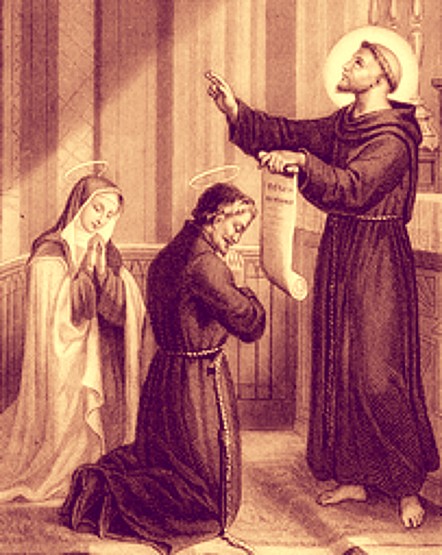
According to tradition, Francis clothed them with the habit, thus making them the first people to become lay Franciscan penitents. They retained only a small piece of farmland for themselves and devoted the rest of their lives to sharing what they had with the poor and needy.
Dedicated to penance and prayer, he frequently approached the Sacraments and spread the perfume of his holiness in the village and its surroundings, confirmed, even in life, by the gift of miracles. He was assiduous in listening to and meditating on the Word of God, in being present at the Liturgy and in all the fraternal and community celebrations,. Luchesius was dedicated to all sorts of penances, in silence, in detachment from things and from the world, in humility, in patience and in enduring crosses and temporal miseries.
Thus he spent the rest of his life loving God, the poor and the sick and spreading the sweet perfume of Christ everywhere through his goodness and mercy.
As they grew older, according to tradition, when Buonadonna saw her elderly husband failing, she begged him not to die before her; shortly after, she fell victim to a fever and they died the same day, 28 April 1260. They were buried in the Franciscan Church , which was later dedicated to him (see below)and a popular cult began immediately, which was officially recognised by the Church in 1274.
St Benedict of the Bridge St Cronan of Roscrea St Cyril of Turov Bl Gerard of Bourgogne Bl Hanna Helena Chrzanowska OSB (1902-1973) Bl Józef Cebula Blessed Luchesius TOSF (c1180 – 1260) Layman – The first Franciscan Tertiary
St Pollio of Cybalae St Simeon of Jerusalem St Stephen of Tarsus St Tertullian of Bologna St Theophilus of Brescia St Winewald of Beverley
St Zita of Lucca (1212-1272) Virgin, Laywoman, Apostle of the Poor. – Her reputation was such that Dante in the Inferno referred to the City of Luccam, her birthplace and home, as “Santa Zita.” P atronages – housewives, butlers, housemaid, domestic servants (proclaimed by Pope Pius XII), housemaid, lost keys, maids, manservants, people ridiculed for their piety, rape victims, servants, servers, single laywomen, waiters, Lucca, Italy. Her body is incorrupt. Biography:. https://anastpaul.wordpress.com/2017/04/27/saint-of-the-day-27-april-st-zita-of-lucca/
Martyrs of Nicomedia: A group of Christians murdered together for their faith. In most cases all we have are their names – Dioscurus, Evanthia, Felicia, Felix, Germana, Germelina, Johannes, Julius, Laetissima, Nikeforus, Papias, Serapion and Victorinus. They died at Nicomedia, Bithynia, Asia Minor (modern Izmit, Turkey).
One Minute Reflection – 16 April – Holy Saturday (Vigil Mass of Easter) – Matthew 28,1-7.
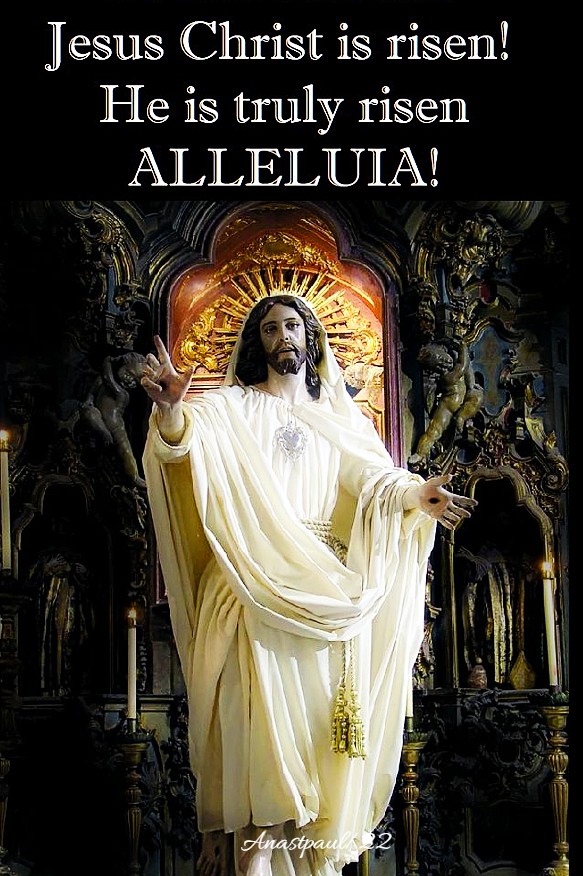
“And the Angel answering, said to the women: Fear not you, for I know that you seek Jesus Who was Crucified, He is not here, for He is risen, as He said.” – Matthew 28:5-6
REFLECTION – “When the third day dawned of the Lord’s sacred repose in the tomb (…) Christ, the “power and Wisdom of God” (1 Cor 1:24), with the author of death lying prostrate, conquered even death itself and opened to us access to eternity, when He raised Himself from the dead by His divine power in order to make known to us the paths of life.
Then there was a great earthquake, for an angel of the Lord came down from heaven, with raiment like snow and his countenance like lightening. He appeared attractive to the devout and severe to the wicked – for he terrified the soldiers and comforted the timid women, to whom the Lord Himself first appeared after rising, because their intense devotion so merited. Then He was seen by Peter, then by the disciples going to Emmaus, then by all the apostles except Thomas. Later He presented Himself to be touched by Thomas, who proclaimed his faith: “My Lord and my God.” And thus, during forty days, He appeared in many ways to His disciples, both eating and drinking with them.
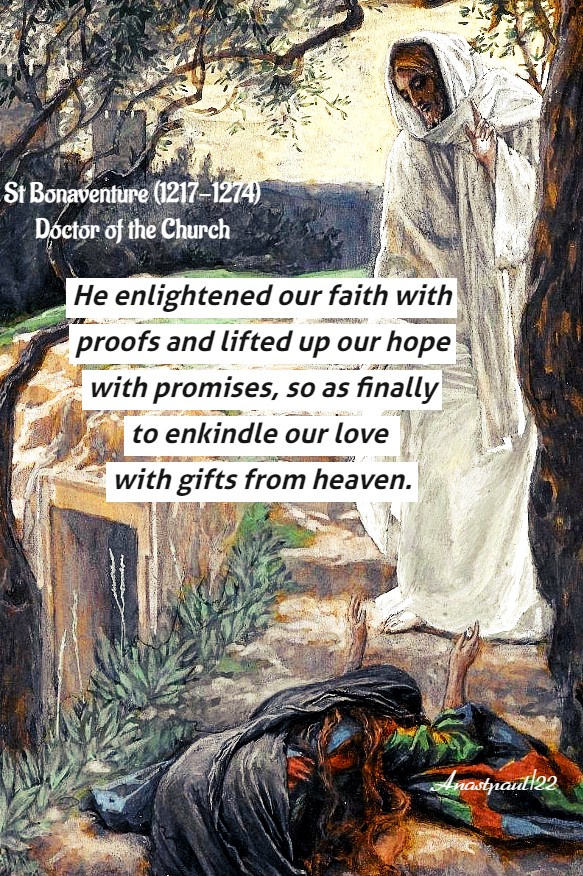
He enlightened our faith with proofs and lifted up our hope with promises, so as finally to enkindle our love with gifts from heaven.” … St Bonaventure (1217-1274) Doctor of the Church
PRAYER – O God, Who dost illuminate this most holy night by the glory of the Lord’s Resurrection, preserve in the new children of Thy family, the spirit of adoption which Thou hast given, that renewed in body and mind, they may render to Thee a pure service. Through our Lord Jesus Christ, Thy Son, who lives and reigns with Thee in the unity of the Holy Ghost, God, world without end. Amen (Collect).
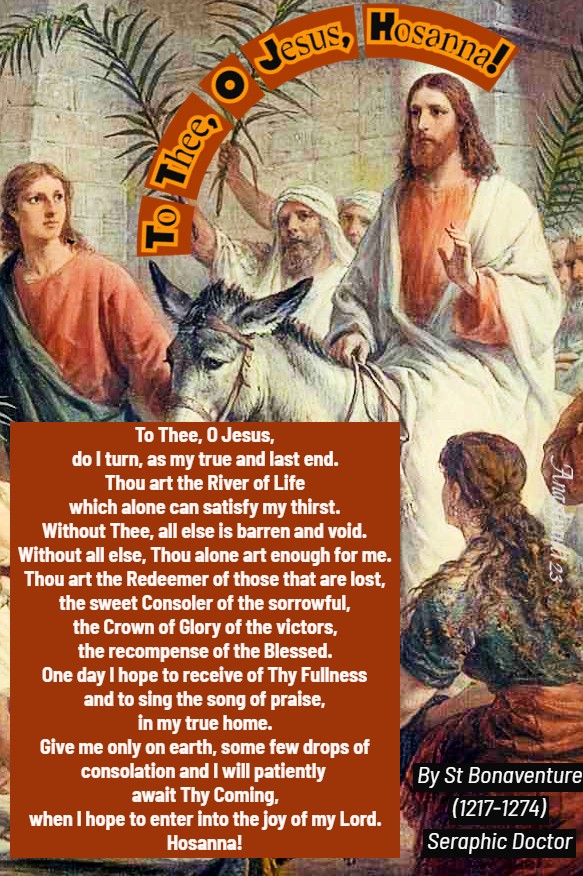
To Thee, O Jesus, Hosanna! By St Bonaventure (1217-1274) Seraphic Doctor of the Church
To Thee, O Jesus, do I turn, as my true and last end. Thou art the River of Life which alone can satisfy my thirst. Without Thee, all else is barren and void. Without all else, Thou alone art enough for me. Thou art the Redeemer of those that are lost, the sweet Consoler of the sorrowful, the Crown of Glory of the victors, the recompense of the Blessed. One day I hope to receive of Thy Fullness and to sing the song of praise, in my true home. Give me only on earth, some few drops of consolation and I will patiently await Thy Coming, when I hope to enter into the joy of my Lord. Hosanna!
Saint of the Day – 10 April – Blessed Marcus Fantuzzi OFM (c 1405-1479) Priest and Friar of the Friars Minor, renowned Preacher, Superior, then Vicar General of the Observant Friars Minor. Born in c 1405 at Bologna, Italy as Pace or Pasotto and died on 10 April 1479 at Piacenza, Italy of natural causes. Also known as – Marcus Fantucci, Mark Fantucci, Marcus of Bologna, Pace, Pasotto. Additional Memorial – 19 April on some local calendars.
The Roman Martyrology reads: “In Piacenza, Blessed Marcus Fantuzzi of Bologna, Priest of the Order of Minors, distinguished for his piety, prudence and preaching.”
Among the beautiful Palaces in Bologna, which, to this day, gives evidence of the glory enjoyed by this City in the Middle Ages, one of the most beautiful is the Palace of the Fantuzzi. Marcus was born there, in the year c 1405, the only son of this wealthy patrician family.
When Blessed Marcus had completed his studies in philosophy as well as in civil and ecclesiastical law, at the University of his native City and the question of choosing a state of life arose, this generous young man, for whom the glory of his world was too insignificant, went to the door of the poor Franciscan Convent and asked to be admitted there.
Marcus received the habit on the Feast of his holy Patron, St Mark. He was then twenty-six years old. Blessed James Primadizzi was charged to initiate him in the religious life and St Bernardine of Siena was his teacher in theology. Under such direction, Marcus made rapid progress in perfection and, within a few years, had developed into so perfect a religious, that he was appointed Guardian of the Convent of Fonte Colombo, that venerable abode where our Divine Saviour dictated the holy Rule to St Francis.
Marcus was ever zealous for the faithful observance of the holy Rule. After he had given proof of his sterling qualities as Superior in several other Convents, he was elected Provincial and in the year 1452, Vicar General of the Observant Friars Minor. Later again, he had to discharge the duties of this office for two terms announcing the word of God to the people but above all, he was solicitous to maintain the faithful observance of the Rule of his Convents.
When the King of Bosnia, who had lately been converted to the Faith by the Friars Minor, imposed upon his subjects a special tax for the support of the Convents, Marcus begged him to leave his people full liberty in the matter, so that the benefactors might not lose their merits and the spirit of poverty of his brethren might not suffer injury. On the other hand, this wise director did not wish to impose any precepts over and above those already laid down in the Rule. Hence, when a suggestion was made, at one of the Chapters, that perpetual abstinence should be imposed on all the religious, Father Marcus would not permit its adoption, saying:
“Our perfection consists in the observance of our Rule. It can do no good to add thereto anything more perfect,, since in such cases, the more perfect is enemy to that which is good.”
More edifying than his zeal and wisdom in the administration of his office, was the humility he displayed when he completed his third period of administration. He prostrated himself before his brethren and, with tears, accused himself of the many faults which he believed he had committed, in the administration of his office.
Because of his wisdom and zeal for the interests of the Church, Popes Nicholas V, Callistus III, Pius II and Paul II held him in high regard. The last named Pope wished even to raise him to the Cardinalate but Father Marcus, however, withdrew from Rome and found a way to evade this honour. It was not without the permission of God, that for a time, Marcus received little consideration in the order but the holy Friar bore all without a word of complaint.
Full of zeal for the honour of God and the salvation of souls, Blessed Marcus preached everywhere with the fervour of an Apostle. In his seventy-fourth year he still preached the Lenten sermons at Piacenza. It was then that he was attacked by a fever that brought him close to death’s door. He asked to see the Guardian of the Convent of the Friars Minor, which was located in the suburbs of the City and said to him:
“Father, although I am a great sinner and not worthy to die in your Convent, still I beg you to grant me the privilege that I may be taken to it.”
There, after devoutly receiving the Viaticum, Blessed Marcus Fantuzzi died the death of the just in Holy Week, of the year 1479. His mortal remains are kept in the Church of Santa Maria di Campagna. The cult, paid to him, which had already been widespread for four centuries, was confirmed by Pope Pius IX in 1868.
Bl Antonio Vallesio St Apollonius of Alexandria Bl Archangelus Piacentini St Bademus St Bede the Younger St Beocca of Chertsey Bl Boniface Zukowski Bl Eberwin of Helfenstein St Ethor of Chertsey St Ezekiel the Prophet
St Malchus of Waterford Bl Marco Mattia Blessed Marcus Fantuzzi OFM (c 1405-1479) Priest
St Miguel de Sanctis O.SS.T (1591-1625) Priest of the Order of the Most Holy Trinity and of the Captives also known as the Trinitarian Order or the Trinitarians, Mystic, Penitent, Ecstatic, Apostle of prayer, mortification, of the poor and the sick, he had a special devotion to the Blessed Sacrament and would fall into ecstatic prayer during the Consecration at Holy Mass, so much so, that he became known as “El Extático”, “The Ecstatic.” Pope Pius IX Canonised Miguel on 8 June 1862. About St Miguel: https://anastpaul.com/2020/04/10/saint-of-the-day-10-april-st-miguel-de-sanctis-o-ss-t-1591-1625/
St Palladius of Auxerre St Paternus the Scot
Martyrs of Carthage – 50 Saints: A group of 50 Christians who were imprisoned in a pen of snakes and scorpions and then Martyred, all during the persecutions of Decius. Only six of their names have come down to us – Africanus, Alessandro, Massimo, Pompeius, Terence and Teodoro. Beheaded in 250 at Carthage.
Martyrs of Georgia: Approximately 6,000 Christian Monks and lay people Martyred in Georgia in 1616 for their faith by a Muslim army led by Shah Abbas I of Persia.
Martyrs of Ostia: A group of criminals who were brought to the faith by Pope Saint Alexander I while he was in prison with them. Drowned by being taken off shore from Ostia, Italy, in a boat which was then scuttled, c 115.
St Brogan St Casilda of Toledo St Concessus the Martyr St Demetrius the Martyr St Dotto St Eupsychius of Cappadocia St Gaucherius St Hedda the Abbot St Heliodorus of Mesopotamia St Hilary the Martyr St Hugh of Rouen OSB (Died 730) Bishop, Monk Bl James of Padua Blessed John of Vespignano
Martyrs of Croyland – 9 Saints: A group of Benedictine Monks Martyred by pagan Danes – Agamund, Askega, Egdred, Elfgete, Grimkeld, Sabinus, Swethin, Theodore and Ulric. Croyland Abbey, England.
Martyrs of Masyla: Massylitan Martyrs Group of Christians Martyred in Masyla in northwest Africa.
Martyrs of Pannonia: Seven Virgin-Martyrs in Sirmium, Pannonia (modern Sremska Mitrovica, Serbia).
Martyrs of Thorney Abbey – 3+ Saints: A group of Hermits, hermitesses and monks who lived in or around Thorney Abbey who were Martyred together during raids by pagan Danes. We know little more than the names of three – Tancred, Torthred and Tova. 869 by raiders at Thorney Abbey, Cambridgeshire, England.
Saint of the Day – 8 April – Blessed Julian of Saint Augustine OFM (c 1550-1606) Lay Brother of the Friars Minor, Hermit, Ascetic, Born in c 1550 as Julián Martinet Gutiérrez at Medinaceli, Diocese of Segovia, Castile, Spain and died on 8 April 1606 at Saint Didacus Friary, Alcalá de Henares, Spain of natural causes. Also known as – Julian Martinet, Fray Julián de Alcalá.
Julian’s father was a French nobleman who, in order to escape from the violent pressure exerted on him by the Calvinists, seeking to make him apostatise from the Catholic Faith, fled to Spain, leaving all his wealth behind. There Julian was born and reared amid unpretentious circumstances but in a very Christian manner. The boy was devoted to piety, his greatest pleasure being to serve the Priests at the Altar.
As a young man, Julian accompanied for some time, a Missionary of the Franciscan Order on his apostolic journeys. This Friar arranged for his admission with the Friars Minor as a lay brother in the Convent of Maria of Salzeda. Julian began his convent life with ardent zeal, he practised such extraordinary acts of mortification that he was considered eccentric and God almighty permitted, as a means of trial, that he was dismissed from the Convent This trial Julian bore with admirable fortitude.
Blessed Julian of Saint Augustine withdrew to a neighbouring mountain, where he built a hut in order to live as a Hermit. Once a day he came to the gate of the Convent from which he had been dismissed, to receive food with the other poor. While waiting for the food to be dispensed, he would instruct the others in the Catechism, and when a poor person one day came clad ina dirty and torn garment, he took off his own garment and gave it to that him
On account of such virtues, the dismissed novice was again received into the Convent, where, after successfully enduring the time of probation, he pronounced his vows. In the zeal that always consumed him, he was impressed with the value of obedience. to such a degree, that he sometimes said that he would rather die than not obey. He constantly wore iron girdles and fasted so strenuously that the physicians declared it was a miracle that he could live and work. While on his rounds to gather alms, he edified everyone by his modest and humble demeanour.
Full of zeal for God and the salvation of souls, he brought many a sinner back to the Church by his exhortations and corrected much that was wrong among the people, who greatly esteemed him. In a special way, he denounced frivolous entertainment. He often exhorted the young people to keep away from such dangerous amusements and many followed his warning. The fires that had been built in the open for the night dances, he stamped out with his bare feet.
A true son of St Francis, he loved holy poverty and practised it so rigorously that he did not even wish to have his own cell. The nights he passed in prayer in the Church, or he rested a bit in some corner of the Friary. During his fervent prayers he was often favoured with visions. In spite of this, he always remained so humble, that he considered himself the greatest sinner and accepted all acts of contempt as deserved treatment.
Blessed Julian of Saint Augustine closed his holy life in the Convent of Alcala on the 8th of April, 1606. At once the people began publicly to venerate him and Philip III, King of Spain at that time, urged his Beatification. The proceedings were, however, often interrupted until the jubilee year of 1825, when Pope Leo XII inscribed him solemnly among the Blessed.
Friday of Passion Week, the Fifth Week in Lent +2022
Our Lady of the Seven Sorrows THE FEAST DAY OF THE SEVEN DOLORS IS TRADITIONALLY THE FRIDAY OF PASSION WEEK, WHICH IS THE FRIDAY BEFORE GOOD FRIDAY, OR ON 15 SEPTEMBER.
St Dionysius of Corinth Bl Domingo Iturrate Zubero Bl Gonzalo Mercador St Herodion of Patras Blessed Julian of Saint Augustine (OFM c 1550-1606) Lay Brother
Bl Libania of Busano St Phlegon of Hyrcania St Redemptus of Ferentini
Martyrs of Africa – 3 Saints: A group of African Martyrs whose name appears on ancient lists but about whom nothing is known but their names – Januarius, Macaria and Maxima.
Martyrs of Antioch – 4 Saints: A group of Christians Martyred together for their faith. We know little more than their names – Diogene, Macario, Massimo and Timothy. They died in Antioch, Syria.
Martyrs of Seoul – 5 Saints: A group laymen who were Martyred together in the apostolic vicariate of Korea. • Augustinus Jeong Yak-jong • Franciscus Xaverius Hong Gyo-man • Ioannes Choe Chang-hyeon • Lucas Hong Nak-min • Thomas Choe Pil-gong They died on 8 April 1801 at the Small West Gate, Seoul, South Korea
Our Morning Offering – 7 April – Thursday in Passion Week, the Fifth Week of Lent
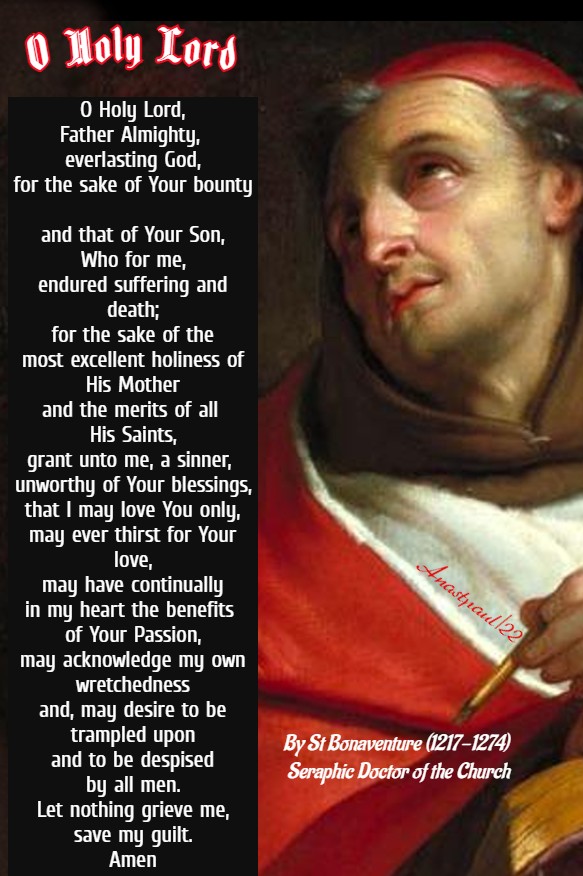
O Holy Lord By St Bonaventure (1217-1274) Seraphic Doctor of the Church
O Holy Lord, Father Almighty, everlasting God, for the sake of Your bounty and that of Your Son, Who for me, endured suffering and death; for the sake of the most excellent holiness of His Mother and the merits of all His Saints, grant unto me, a sinner, unworthy of Your blessings, that I may love You only, may ever thirst for Your love, may have continually in my heart the benefits of Your Passion, may acknowledge my own wretchedness and, may desire to be trampled upon and to be despised by all men. Let nothing grieve me, save my guilt. Amen
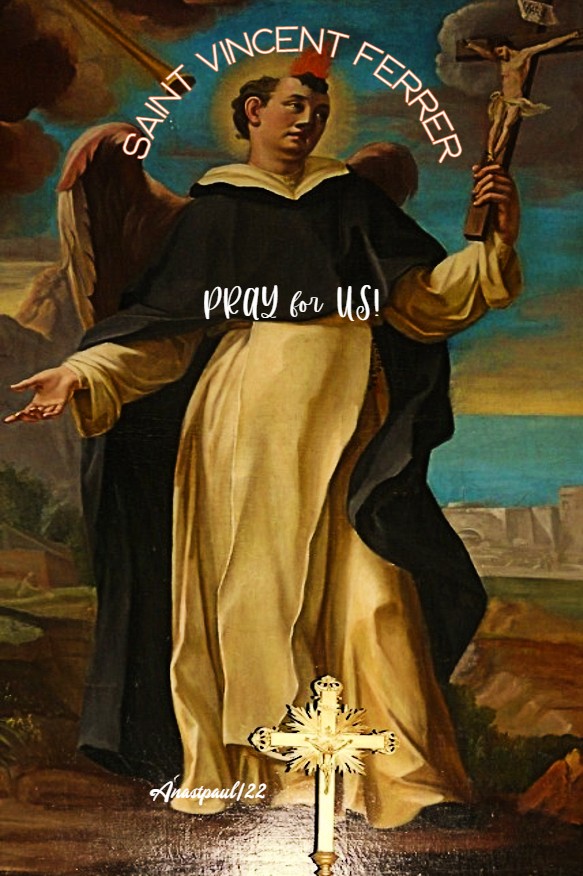
One Minute Reflection – 5 April – Tuesday in Passion Week – Daniel 14:27-42, John 7:1-13 and the Memorial of St Vincent Ferrer OP (1350-1419)
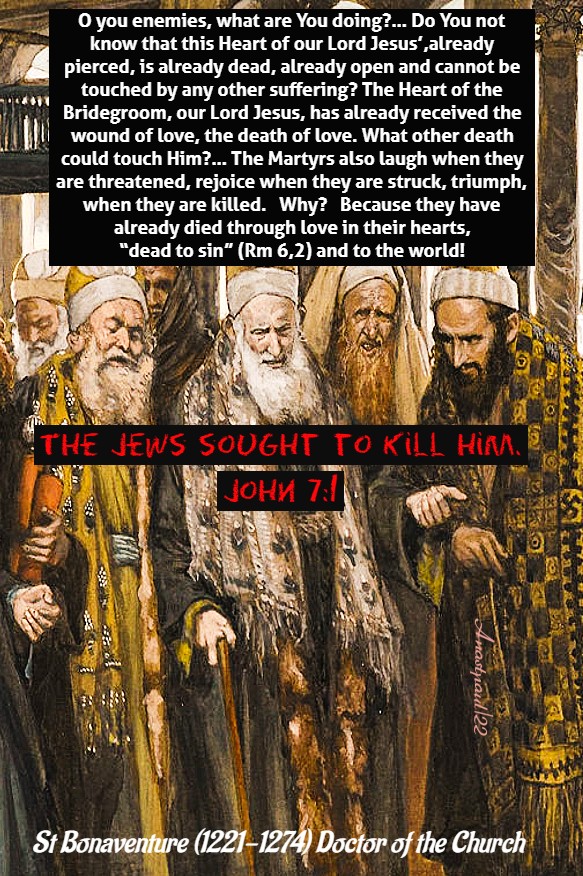
“The Jews sought to kill Him.” – John 7:1
REFLECTION – “I am the true vine,” Jesus says (Jn 15,1)… People dig trenches around this vine; that is to say, cunningly dig traps. When they plot to make someone fall into a snare. it is as if they dug a pit in front of Him. That is why He mourns about it, saying: “They have dug a pit before me” (Ps 56[57],7)…
However, they discovered that these traps caused no harm to the vine. To the contrary, in digging these pits they themselves fell into them (Ps 56[57],7)… Then they kept on digging: not just His Hands and His Feet (Ps 21[22],17) but they pierced His side with a lance (Jn 19,34) and uncovered the interior of that Sacred Heart, which had already been wounded by the spear of love. The Bridegroom says in the song of His love that: “You have wounded my heart, my sister, my spouse” (Sg 4,9 Vg.). O Lord Jesus, Your Heart has been wounded with love by Your spouse, Your friend, Your sister. Why, then, was it necessary for your enemies to wound you again? O you enemies, what are You doing?… Do You not know that this Heart of our Lord Jesus’,already pierced, is already dead, already open and cannot be touched by any other suffering? The Heart of the Bridegroom, our Lord Jesus, has already received the wound of love, the death of love. What other death could touch Him?… The martyrs also laugh when they are threatened, rejoice when they are struck, triumph, when they are killed. Why? Because they have already died through love in their hearts, “dead to sin” (Rm 6,2) and to the world!
Thus Jesus’ Heart has been wounded and put to death for our sake… Physical death triumphed for a moment but only to be conquered forever. It was blotted out when Christ rose from the dead because “death has no power over Him anymore” (Rm 6,9). – St Bonaventure (1221-1274) Doctor of the Church (The Mystical Vine, ch. 3, § 5-10).
PRAYER – O God, Who graciously enlightened Your Church by the virtues and preaching of blessed Vincent, Your Confessor, grant that we, Your servants, may be taught by his example and delivered from all harm by his intercession. Through Jesus Christ, Thy Son our Lord, Who lives and reigns with Thee, in the unity of the Holy Ghost, God, world without end. Amen (Collect).
Saint of the Day – 3 April – Blessed Gandulphus of Binasco OFM (c 1200-1260) Priest and Friar of the Friars Minor of St Francis, renowned Preacher mainly in Sicily, Hermit, Miracle-worker . He was one of those who entered the Order while the Seraphic Father was still alive and the life he led was one of great self-abnegation. Born in c 1200 at Binasco, Lombardy, Italy and died on Holy Saturday 3 April 1260 at the San Nicolò Hospital in Polizzi Generosa, Sicily, Italy of natural causes. Patronage – Polizzi Generosa, Italy (chosen by citizens and confirmed in 1320). Also known as – Gandulphus Sacchi, Gandulphus of Polizzi, Generosa, Gandulphus of Polizzo, Gandolf, Gandolfo, Gandulf. Additional Memorial – relics processed in Polizzi Generosa, Italy on the 3rd Sunday of September.
Gandulphus was born to the nobility, a member of the wealthy and powerful Sacchi family in Binasco (near Milan). He joined the Franciscans while Saint Francis was still alive and made his final vows and was Ordained to the Priesthood in c 1224.
In 1256, he founded the Franciscan convent at Termini Imerese, Italy.
Gandulphus spent the majority of his life in Sicily, preaching the Gospel throughout the region. Many miracles were worked by his intercession. In 1260, a young mute man was cured outside Polizzi Generosa, Italy, which led to his preaching having great effect on the local people, so much so, that after his death, the people requested that he become the Patron Saint of their City, which was granted and confirmed in 1320.
Gandulphus became alarmed at hearing himself highly commended, which induced him to embrace the solitary life, lest he should be tempted to vainglory. With one companion, Brother Pascal, he left the Friary at Palermo and set out for the wild district in which he had determined to settle. Afterwards, from time to time, he would emerge from his retreat to evangelise the people of the neighbouring districts, upon whom his discourses and miracles made a profound impression. Once while he was preaching at Polizzi, the sparrows chattered so loudly that the congregation could not hear the sermon. Gandulphus appealed to the birds to be quiet and we are told that they kept silence until the conclusion of the sermon. On that occasion the holy man told the people that he was addressing them for the last time and in fact, immediately upon his return to the hospital of St Nicholas, where he was staying, he was seized with fever,and died on Holy Saturday as he had foretold, in 1260.
When his body was enshrined, the watchers declared that during the night there had flown into the Church a number of swallows, who had separated into groups and had sung, in alternating choirs, a Te Deum of their own.
Gandulphus’ preaching and miracles ,had such a profound effect on the Sicilians who still, to this day, have a great veneration for him. His relics were re-enshrined in a marble ark in 1482 and then translated in 1549 in a Reliquary covered in silver leaf. On 10 March 1881 Pope Leo XIII confirmed his cultus.
Bl Alexandrina di Letto St Attala of Taormina St Benatius of Kilcooley St Benignus of Tomi St Burgundofara St Chrestus St Comman St Evagrius of Tomi Bl Francisco Solís Pedrajas Blessed Gandulphus of Binasco OFM (c 1200-1260)Priest, Friar of the First Order of St Francis and became a Franciscan during St Francis’ lifetime..
Martyred in England Robert Middleton Thurstan Hunt Martyred in the Mexican Revulution José Luciano Ezequiel Huerta-Gutiérrez José Salvador Huerta-Gutiérrez
Martyr in Thessalonica Agatho Casia Eutychia Philippa
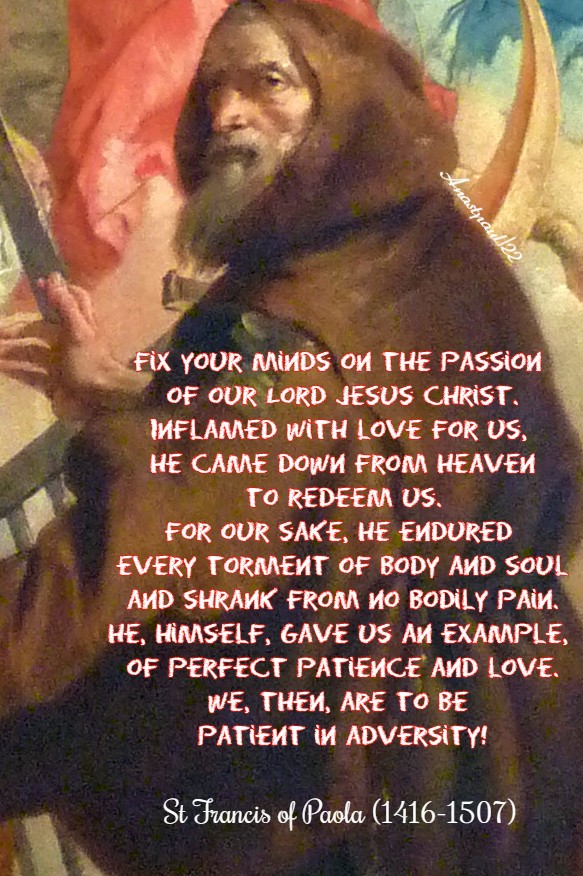
Quote/s of the Day – 2 April – The Memorial of St Francis of Paola OM (1416-1507)
“Fix your minds on the Passion of our Lord Jesus Christ. Inflamed with love for us, He came down from Heaven to redeem us. For our sake, He endured every torment of body and soul and shrank from no bodily pain. He, Himself, gave us an example of perfect patience and love. We, then, are to be patient, in adversity!”
“See to it that you refrain from harsh words. But if you do speak them, do not be ashamed to apply the remedy from the same lips, that inflicted the wounds.”
“The recollection of an injury, is . . . a rusty arrow and poison for the soul.”
One Minute Reflection – 2 April – Saturday of the Fourth Week in Lent – Isaias 49:8-15, John 8:12-20 and the Memorial of St Francis of Paola OM (1416-1507)
“You know neither Me nor My Father. If you knew Me, you would then know My Father also.” – John 8:19
REFLECTION – “[Christ speaks:] I became useless to those who knew Me not because I shall hide Myself, from those who possessed Me not. And I will be with those who love Me. All my persecutors have died and they, who trusted in Me, sought Me because I am living! I arose and am with them and will speak by their mouths. For they have rejected those who persecute them and I threw over them, the yoke of My love. Like the arm of the bridegroom over the bride (cf Sg 2,6), so is My yoke over those who know Me. And as the bridal feast is spread out by the bridal pair’s home, So is My love, by those who believe in Me.
I was not rejected, although I was considered to be so and I did not perish, although they thought it of Me. Sheol saw Me and was shattered and Death ejected Me and many with Me. I have been vinegar and bitterness to it and I went down with it as far as its depth. Death was released because it was not able to endure My Face.
And I made a congregation of living, among his dead (1P 3,19; 4,6) and I spoke with them, by living lips; in order that My word may not fail. And those who had died ran toward Me and they cried out and said, “Son of God, have pity on us. And deal with us according to Your kindness and bring us out from the chains of darkness. And open for us, the door by which we may go forth to You, for we perceive, that our death does not approach You. May we also be saved with You because You are our Saviour.”
Then I heard their voice and placed their faith in My Heart. And I placed My Name upon their forehead (Rv 14,1) because they are free and they are Mine! – Odes of Solomon (Hebrew Christian text from the beginning of the 2nd century) N° 42
PRAYER – O God, the greatness of the humble, Who raised blessed Francis, Your Confessor, to the glory of Your Saints, grant, we beseech You, that, by his merits and our imitation of his life, we may happily attain the rewards promised to the humble. Through Jesus Christ, Thy Son our Lord, Who lives and reigns with Thee, in the unity of the Holy Ghost, God, world without end. Amen (Collect).
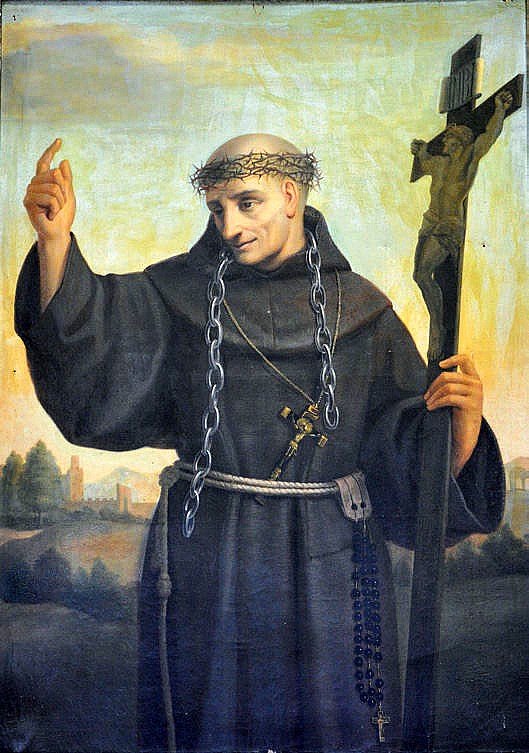
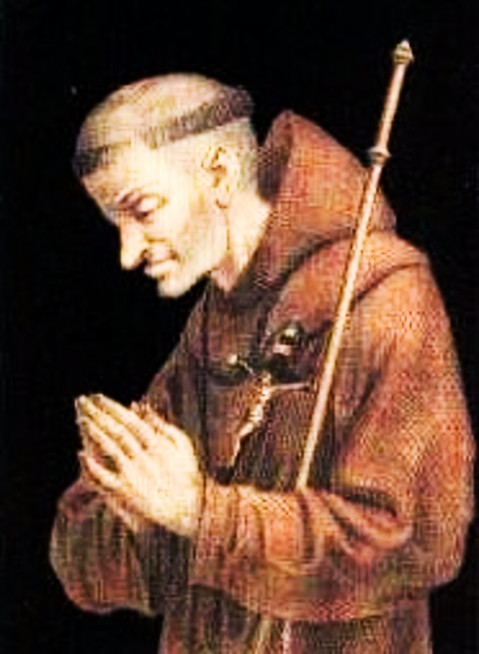
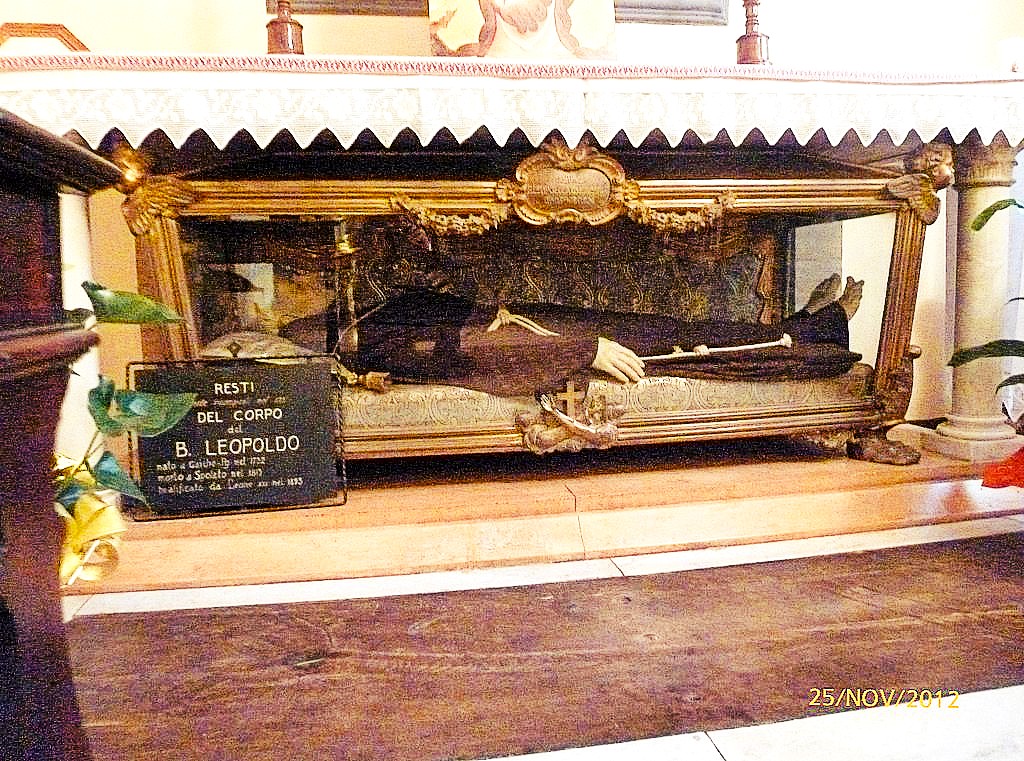
Saint of the Day – 2 April – Blessed Leopold of Gaiche OFM Cap (1732-1815) Priest and Friar of the Order of Friars Minor of the Capuchin branch, Missionary Preacher in Italy, called “The Apostle of Umbria.” He became renowned for wearing a crown of thorns. He served in a position of power in the Franciscan Order in the Umbrian region in which he supported strong adherence to the Rule of Saint Francis. Born as Giovanni Croci on 30 October 1732 in Gaiche di Piegaro, Perugia, Italy and died on 2 April 1815 , aged 82, in Monteluco, Perugia, Italy of natural causes.
Giovanni Croci was born on 30 October 1732 to poor farmers and he lived a pious life which he learned from his devout parents. Giovanni worked as a shepherd as a child. He studied with his Parish Priest, learning both secular and divine lessons.
It was a shining moment for Giovanni’s parent,s when he announced his intention to become a Capuchin Friar. In 1752, he entered the Franciscan Convent in his hometown and assumed the religious name of “Leopold” upon admittance, taking the habit for the first time in the Convent of Saint Bartholomew in Cibottola. Leopold was Ordained to the Priesthood in 1757 after completing his Novitiate. He was regarded as an excellent student and a pious follower of the Rule.. He received his Ordination from the Bishop of Terni Cosimo.
In 1768, after his Profession and Ordination, Leopold was appointed as an “Apostolic Missionary” and for ten yeas, travelled across multiple the region from Diocese to Diocese, preaching the Gospel. As his guide, Leopold adopted the methods of St Leonard of Port Maurice. In 1772, 4 years after commencing his apostolate, Leopold was appointed as the “Chief Missionary” of the Order.
Leopold kept a journal of his travels and work, in which he recorded, that he preached 330 Missions with each lasting an average of two weeks and he also led a total of 40 Lenten Retreats. He restored the Devotion of the Via Crucis in many areas where it had fallen into obscurity or had been suppressed during the times of various political persecutions.
In 1781, Leopold was appointed as the Provincial General of the Order in the Umbrian region. His tenure was noted for his strong insistence on the careful study and application of the Rule of Saint Francis of Assisi.
In 1788 he chose Monteluco near Spoleto, as the site of a Monastery, he wished to build. The Monastery of Saint Francis was built and Leopold remained there as part of an ongoing spiritual retreat of strict observance. In 1809 he climbed a mountain in a protest against the invasion of the Italian nation, led by Napoleon Bonaparte and planted a tree representing justice and liberty but, the invasion forced him to leave the Convent, which was subsequently closed down. , He was briefly imprisoned for his refusal to be part of the Napoleonic Republic.’s laws and excesses. He began to preach once more following the European Restoration not long after.
He travelled to Rome in 1814, where he met with Pope Pius VII and in a private audience when he requested the Pope’s assistance in restoring the Monteluco Convent. Once that was done he returned and spent the remainder of his life there.
During a sermon for Christmas in 1814 Leopold was taken ill and died a few months later, on 2 April 1815 of that illness and was buried in the Church of Saint Francis in Spoleto. His tomb immediately became the site of miracles.
The process of Beatification opened in Spoleto in 1844 under Pope Gregory XVI . Upon the recognition of his model life of heroic virtue, he was proclaimed to be Venerable on 13 February 1855 after Pope Pius IX granted his approval.
The acceptance of two miracles attributed to his intercession allowed for Pope Leo XIII to celebrate his Beatification on 12 March 1893.
The current postulator of the cause is Father Giovangiuseppe Califano OFM.
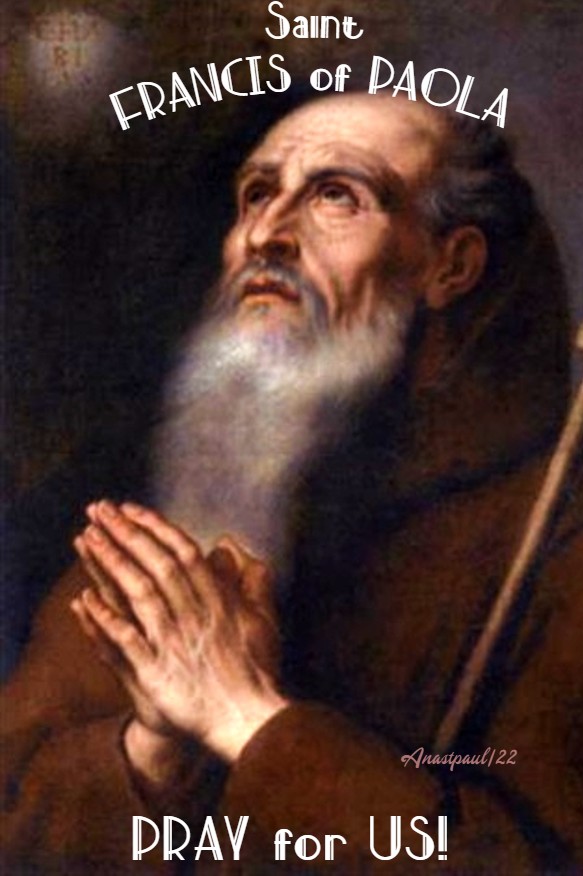
St Francis of Paola O.M. (1416-1507) known as “Saint Francis the Fire Handler” – Monk and Founder, inspired with the Gift of Prophecy and still called the “Miracle-Worker” Apostle of the poor, Peacemaker. He was an Italian mendicant Friar and the Founder of the Order of Minims. Unlike the majority of founders of men’s religious orders and like his Patron Saint, Francis was never ordained a priest. His Body was Incorrupt until destroyed in the French Revolution. (Memorial) St Francis’s Life: https://anastpaul.wordpress.com/2018/04/02/saint-of-the-day-2-april-st-francis-of-paola-o-m-1416-1507/
St Abundius of Como St Agnofleda of Maine St Appian of Caesarea St Bronach of Glen-Seichis St Constantine of Scotland St Ðaminh Tuoc Bl Diego Luis de San Vitores-Alonso St Ebbe the Younger St Eustace of Luxeuil St Gregory of Nicomedia St John Payne Blessed Leopold of Gaiche OFM Cap (1732-1815) Priest St Lonochilus of Maine St Musa of Rome Bl Mykolai Charnetsky St Nicetius of Lyon
Martyrs of Africa – 10 Saints: A group of ten Christians Martyred together in Africa, date unknown. We have six of their names – Marcellinus, Procula, Quiriacus, Regina, Satullus and Saturnin but no other information has survived.
Martyrs of Thessalonica – 16 Saints: Sixteen Christians who were Martyred together in Thessalonica in Greece, date unknown. We know nothing else about them but 13 of their names – Agapitus, Agatophus, Cyriacus, Dionysius, Gagus, Julianus, Mastisius, Proculus, Publius, Theodoulus, Urbanus, Valerius and Zonisus.
Our Morning Offering – 31 March – Thursday of the Fourth week in Lent
Forgive Me, Good Jesus By St Leonard of Port Maurice (1676-1751)
Lord, I confess that up until now I have not lived as a Christian. I am not worthy to be numbered among Your elect. I recognise that I deserve to be damned but Your mercy is great and, full of confidence in Your grace, I say to You that I wish to save my soul, even if I have to sacrifice my fortune, my honour, my very life, as long as I am saved. If I have been unfaithful up to now, I repent, I deplore, I detest my infidelity, I ask You humbly to forgive me. Forgive me, good Jesus and strengthen me, that I may be saved. I ask You not for wealth, honour or prosperity, I ask You for one thing only, to save my soul. Amen
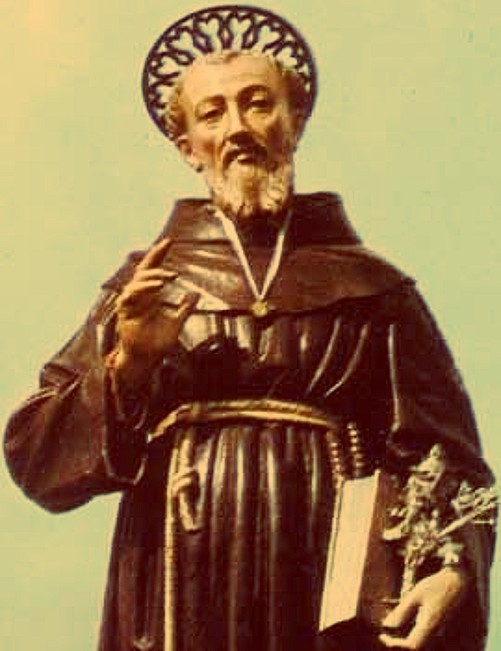
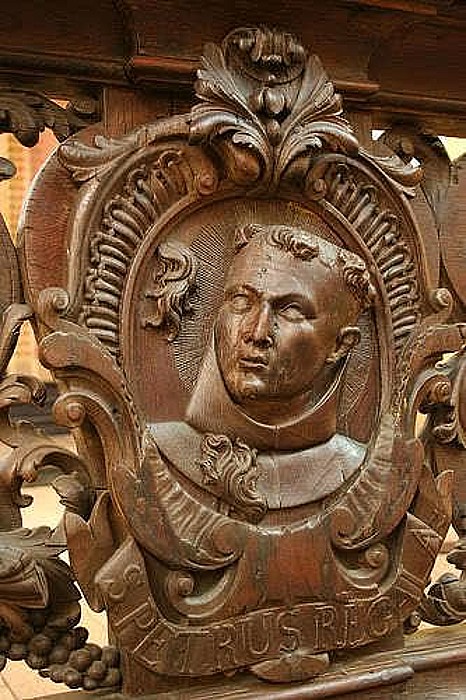
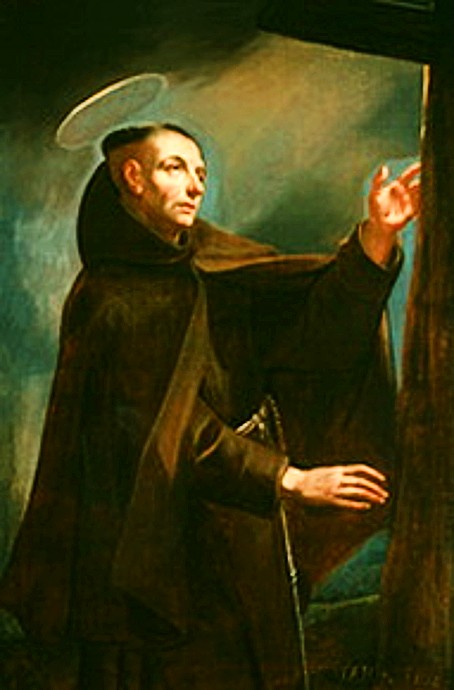
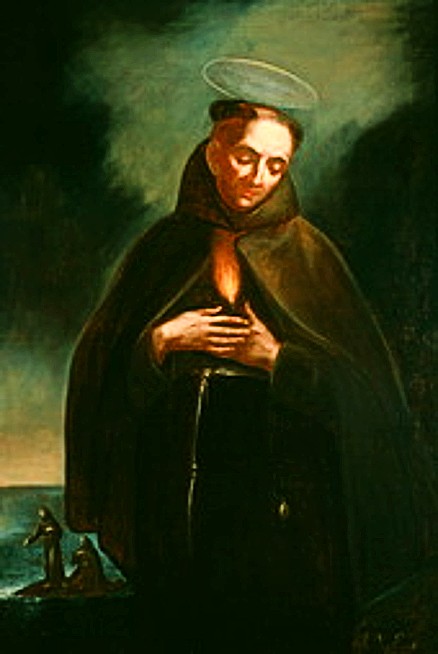
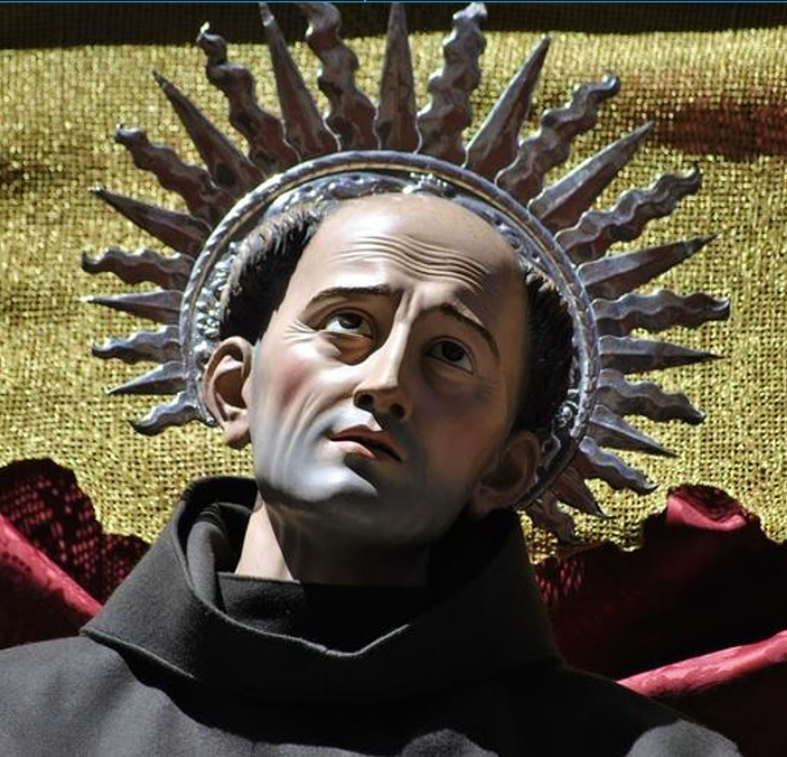
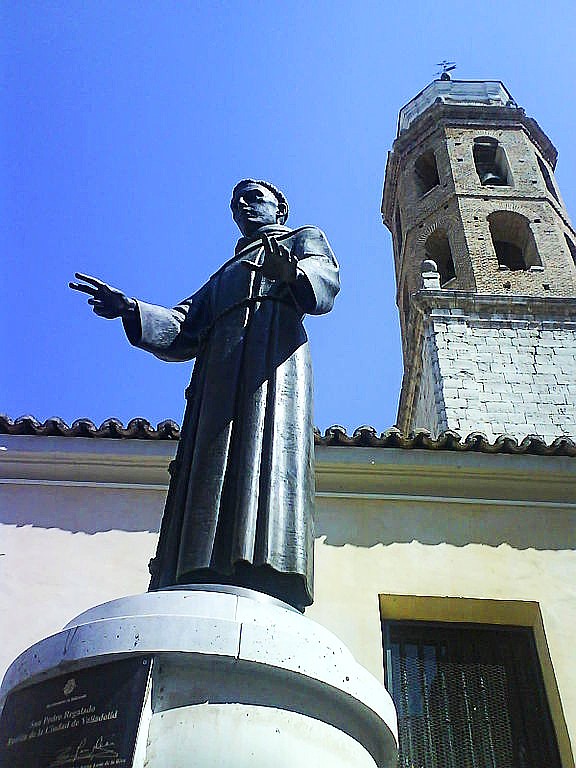
Saint of the Day – 30 March – Saint Peter Regalatus OFM (1320-1456) Priest, Friar of the Friars Minor, Superior, gifted with bi-location, prophecy and miracle working. Born in 1390 at Valladolid, Spain and died on 30 March 1456 at Aguilera, Spain of natural causes. Patronage – Valladolid, Spain. Also known as – Pedro de Regalado, Pedro Regalado, Peter Regalati, Peter Regulatus. Additional Memorial – 13 May – translation of his relics. His body is incorrupt.
The Roman Martyrology reads: “In Aguilera in Castile in Spain, Saint Peter Regalado of Valladolid, Priest of the Order of Minors, who was distinguished for humility and rigour of penance and built two cells, in which only twelve Friars could live in solitude.”
Peter was born in 1390 in Valladolid in Spain to a noble family of Jewish descent. He soon lost his father. At the age of ten years, Peter begged to be admitted into the Conventual Franciscans, which favour was granted him three years later and at the age of thirteen, his mother granting her permission to enter the Franciscan Monastery in his hometown. He had no other ambition than to lead a life of prayer and penance, considering his mother’s visits nothing more than a useless distraction.
Peter was conquered by the ideals of Peter da Villacreces, committed to re-establishing in the Iberian peninsula the original observance of the Franciscan Rule and from 1404 he followed him to he newly founded convent at Aguilera, where he found the solitude, poverty and the climate of prayer, he had so longed for. The young Lope de Salinas y Salazar also joined them. Lope was then called to hold the office of Vicar in Castile, with jurisdiction over the Convents of Burgos and founded another sixteen hermitages before his death.
In 1414 Peter da Villacreces had to participate in the Council of Constance, where he obtained the approval of the reform he had undertaken and left our saint in charge of .Aguilera, Both Peters, then in 1422, took part in the Provincial Chapter but here Peter da Villacreces died and Peter Regalatus was definitively entrusted with the guidance of the Monastery of Aguilera,
In 1426 he went to Burgos in order to recommend to his old friend Lope, not to abandon the reforming work undertaken by their common master. In the way traced by the latter, Peter had found his desire for holiness satisfied. He was in fact neither a founder nor a reformer but a simple ascetic and contemplative. He lived in conditions of penance and extreme poverty but his care for his brothers in need and his love for the sick became proverbial. With the gift of tears, his affectionate nature was manifested and likewise his burning love for God was proven. He performed several miracles on the banks of the Duero and, with irony it is said, that his work did not consist in much more.
In 1427 at Medina del Campo Peter attended the Concordia, a meeting of the followers of Peter Villacreces, the Reformer, where it was decided to remain united with the Conventual Friars. From 1442 he became Vicar of the Villacrecians and, therefore, the third successor of the Founder.. Finally, in 1456, hearing his death approaching, he decided to leave for Burgos to ask Lope, in vain, to accept the Vicariate of the Villacrecians. He died in Aguilera on 30 March 1456.
Statue at Valladolid
It was not long before numerous miracles occurred at his tomb and thirty-six years later, when he was exhumed to transfer his remains to the Church, his body was found incorrupt. He was Beatified on 11 March 1684 by Pope Innocent XI and on 29 June in 1746, Pope Benedict XIV Canonised PeterRegalatus of Valladolid by enrolling him in the register of Saints. Italian and Spanish iconography usually portrays the saint in the act of distributing bread to the poor, calling their gaze to the Crucifix.
Blessed Amadeus of Savoy (1435-1472) IXth Duke of Savoy, nicknamed “the Happy,” was the Duke of Savoy, from 1465 to 1472, apostle of the poor and ill, a pious, humble and gentle ruler. Amadeus was a particular protector of Franciscan Friars and endowed other religious houses, as well as homes for the care of the poor and suffering. Biography: https://anastpaul.com/2021/03/30/saint-of-the-day-30-march-blessed-amadeus-of-savoy-1435-1472/
St Clinius of Pontecorvo St Cronan Mochua St Damiano St Domnino of Thessalonica St Fergus of Downpatrick St Irene of Rome Bl Joachim of Fiore
Bl Maria Restituta Kafka St Osburga of Coventry St Pastor of Orléans St Patto of Werden St Quirinus the Jailer St Peter Regalatus OFM (1320-1456) Priest, Friar of the Friars Minor.
St Regulus of Scotland St Regulus of Senlis St Secundus of Asti St Tola St Zozimus of Syracuse
Martyrs of Constantinople: Fourth-century Christians who were exiled, branded on the forehead, imprisoned, tortured, impoverished and murdered during the multi-year persecutions of the Arian Emperor Constantius. They were martyred between 351 and 359 in Constantinople.
Martyrs of Korea: Marie-Nicolas-Antoine Daveluy Iosephus Chang Chu-gi Lucas Hwang Sok-tu Martin-Luc Huin Pierre Aumaître
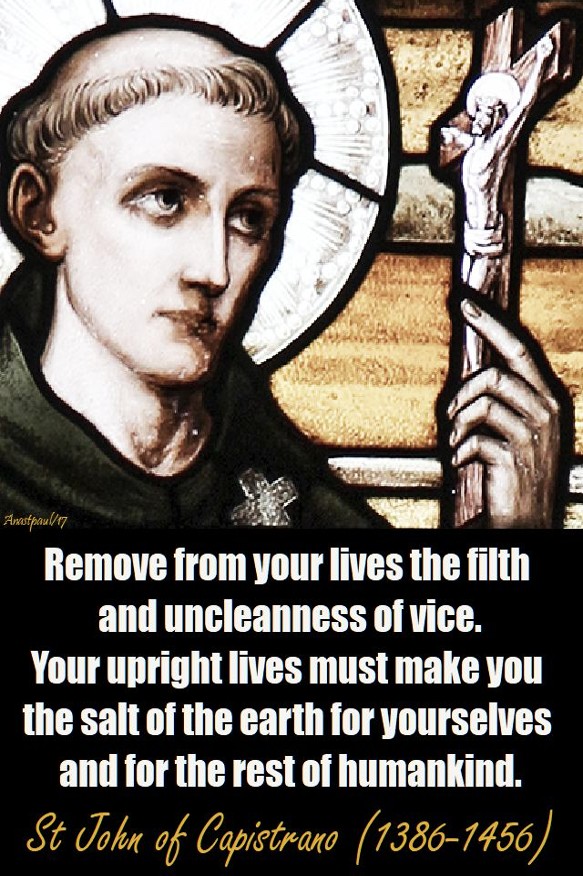
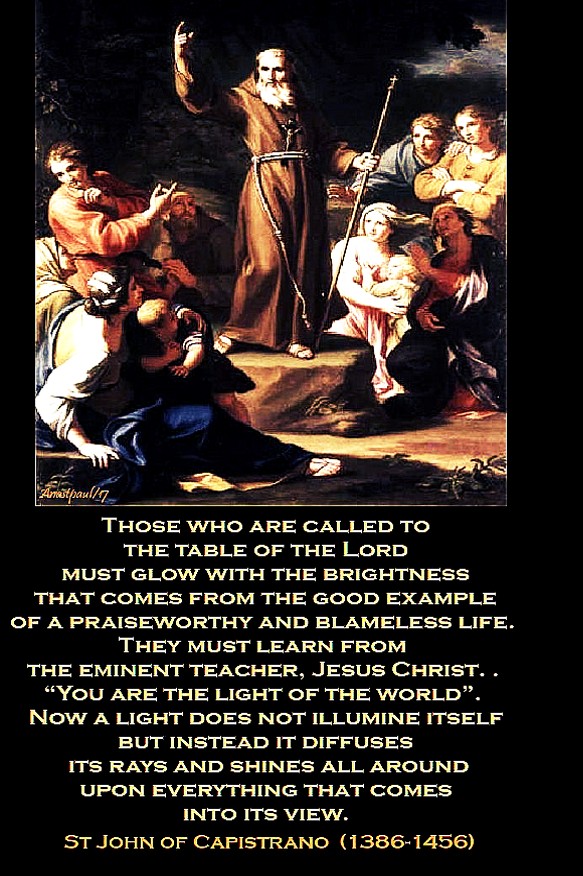
Quote/s of the Day – 28 March – The Memorial of St John of Capistrano OFM (1386-1456)
“Remove from your lives the filth and uncleanness of vice. Your upright lives must make you the salt of the earth for yourselves and for the rest of humankind…”
“Those who are called to the table of the Lord must glow with the brightness that comes from the good example of a praiseworthy and blameless life. They must learn from the eminent Teacher, Jesus Christ. . “You are the light of the world” (see Matthew 5:14). Now a light does not illumine itself but instead, it diffuses its rays and shines all around upon everything that comes into its view..“
St John of Capistrano OFM (1386-1456) Friar of the Friars Minor, Priest, Confessor and Preacher. Famous as a preacher, theologian and inquisitor, trained lawyer, he earned himself the nickname ‘the Soldier Saint’ when in 1456 at age 70 he led a crusade against the invading Ottoman Empire at the siege of Belgrade. Feast Day moved from 28 March in 1969. Biography: https://anastpaul.com/2017/10/23/saint-of-the-day-23-october-st-john-capistrano-ofm-1386-1456-the-soldier-saint/
St Cyril the Deacon Bl Dedë Maçaj St Donal O’NeylaC St Dorotheus of Tarsus St Gundelindis of Niedermünster St Guntramnus (c 532-592) King, Confessor St Hesychius of Jerusalem St Hilarion of Pelecete Bl Jean-Baptiste Malo Bl Jeanne Marie de Maille St Proterius of Alexandria Bl Renée-Marie Feillatreau épouse Dumont St Rogatus the Martyr St Successus the Martyr St Tutilo of Saint-Gall
Bl Aimone of Halberstadt St Amphilochius of Illyria St Alexander of Drizipara St Alexander of Pannonia St Alkeld the Martyr St Amator the Hermit St Augusta of Treviso (Died 5th Century) Virgin Martyr St Claudio Gallo St Cronidas of Illyria St Ensfrid of Cologne Bl Francesco Faà di Bruno Bl Frowin of Engelberg St Gelasius of Armagh
Martyrs of Bardiaboch: A group of Christians who were arrested, tortured and executed together for their faith during the persecutions of Persian King Shapur II. Martyrs. – Abibus, Helias, Lazarus, Mares, Maruthas, Narses, Sabas, Sembeeth and Zanitas. 27 March 326 at Bardiaboch, Persia.
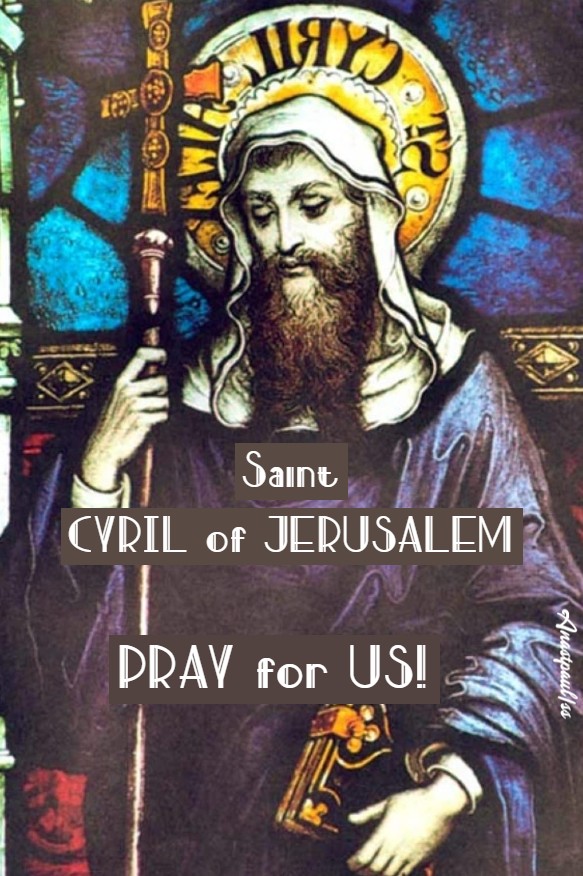
One Minute Reflection – 18 March – Friday of the Second Week of Lent – Genesis 37:6-22Matthew 21:33-46 and the Memorial of St Cyril of Jerusalem (c 313-386) Bishop of Jerusalem, Confessor and Father & Doctor of the Church
“They seized him, threw him out of the vineyard and killed him.”– Matthew 21:39
REFLECTION – “I am the true vine,” Jesus says (Jn 15,1)… People dig trenches around this Vine, that is to say, cunningly dig traps. When they plot to make someone fall into a snare, it is as if they dug a pit in front of him. That is why He mourns about it, saying: “They have dug a pit before me” (Ps 56[57],7)… Here is one example of these snares: “They brought a woman who had been caught in adultery” to our Lord Jesus, “saying: ‘Moses commanded us to stone such women. So what do you say?’ ” (Jn 8,3f.)… And here is another: “Is it lawful to pay the census tax to the Emperor or not?” (cf. Mt 22,17)…
However, they discovered, that these traps caused no harm to the Vine. To the contrary, in digging these pits, they themselves fell into them (Ps 56[57],7)… Then they kept on digging, not just His Hands and His Feet (Ps 21[22],17) but they pierced His Side with a lance (Jn 19,34) and uncovered the interior of that Sacred Heart, which had already been wounded by the spear of love. The Bridegroom says in the song of His love that: “You have wounded my heart, my sister, my spouse” (Sg 4,9 Vg.). O Lord Jesus, Your Heart has been wounded with love by Your spouse, Your friend, Your sister. Why, then, was it necessary for Your enemies to wound You again? O you enemies, what are you doing?… Do you not know that this Heart of Our Lord Jesus,’,already pierced, is already dead, already open and cannot be touched by any other suffering? The Heart of the Bridegroom, Our Lord Jesus, has already received the wound of love, the death of love. What other death could touch Him?… The Martyrs also laugh when they are threatened, rejoice when they are struck, triumph when they are killed. Why? Because they have already died through love in their hearts, “dead to sin” (Rm 6,2) and to the world…
Thus Jesus’ Heart has been wounded and put to death for our sake… Physical death triumphed for a moment but only to be conquered forever. It was blotted out when Christ rose from the dead because “death has no power over him any more” (Rm 6,9). –St Bonaventure (1221-1274), Franciscan, Doctor of the Church (The Mystical Vine, ch. 3, § 5-10)
PRAYER – Grant us, we beseech You, Almighty God, through the intercession of the blessed Bishop Cyril, so to acknowledge You, the only true God,and Jesus Christ Whom You have sent, that we may be found worthy to be forever numbered among the sheep who hear His Voice. Through the same Jesus Christ, Thy Son, Our Lord, Who lives and reigns with Thee in the unity of the Holy Ghost, God, world without end. Amen (Collect).
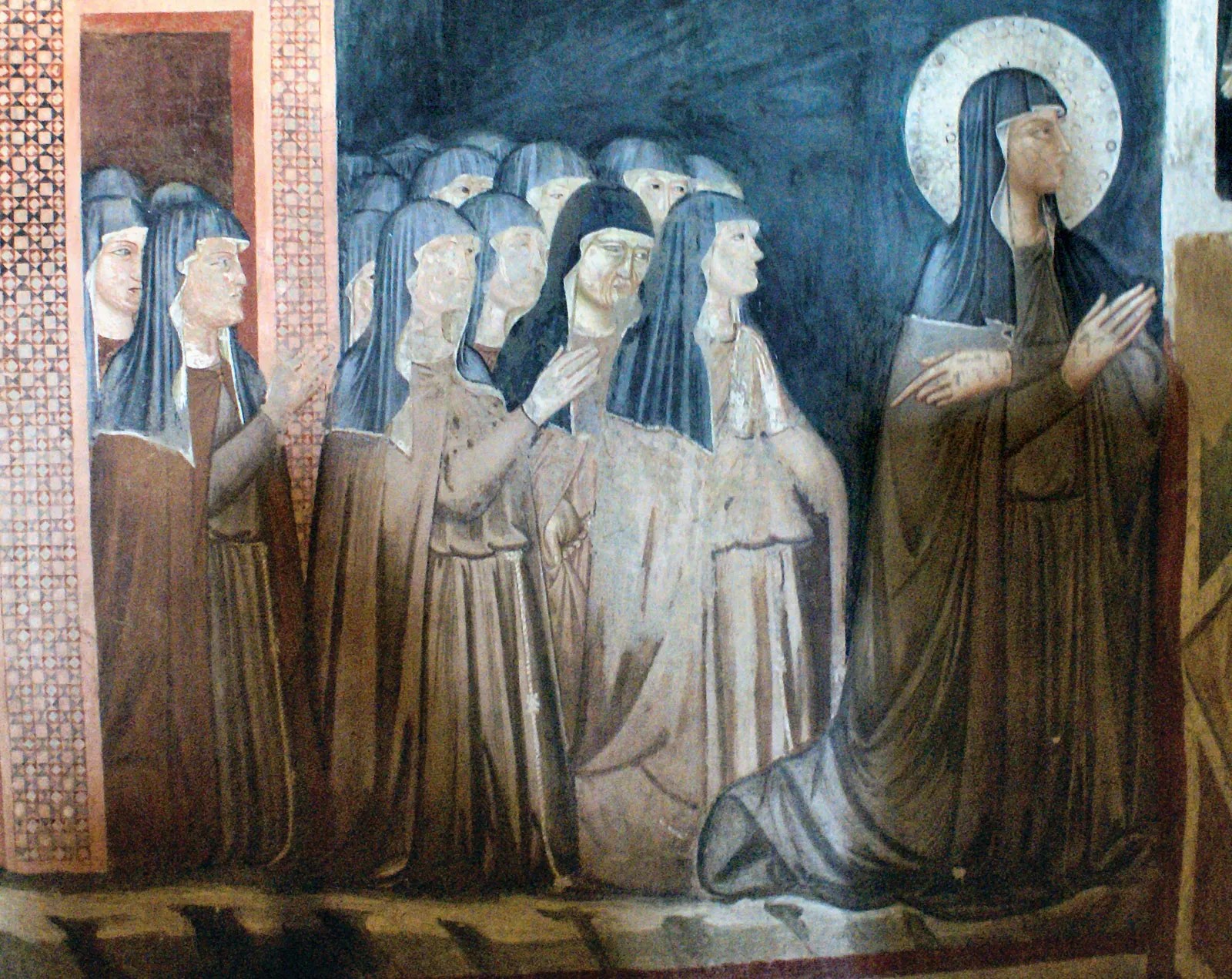
Saint of the Day – 16 March – St Benedicta of Assisi OSC i (Died 1260) Poor Clare Nun, Abbess Died 1260 of natural causes. The Franciscan Martyrology affirms, that her life shone out in singular prudence and a great reputation for virtues and miracles.
Benedicta entered the Poor Clares of Assisi in 1214, she succeeded St Clare in the government of the Monastery of St Damiano, remaining in that office until 1260.
She almost certainly is the same one we find Abbess in 1227 in Siena and from 1240 to 1248 in Vallegloria near Spello.
Benedicta was present at the process and Canonisations of St. Clare in November 1253. After Clare’s death, Brother Leone and Brother Angelo entrusted the Breviary used by St Francis to Benedicta.
She witnessed the beginning of the construction of the Basilica in honour of St Clare (1257), the transfer of the Poor Clares from St Damiano to the abuilding annexed to the old Church of St George and perhaps also, the transfer of the body of St Clare from the Church: of St George to the new Basilica, if one accepts, with the Bollandists, as the date of death on 19 October instead of 16 March. 1260.
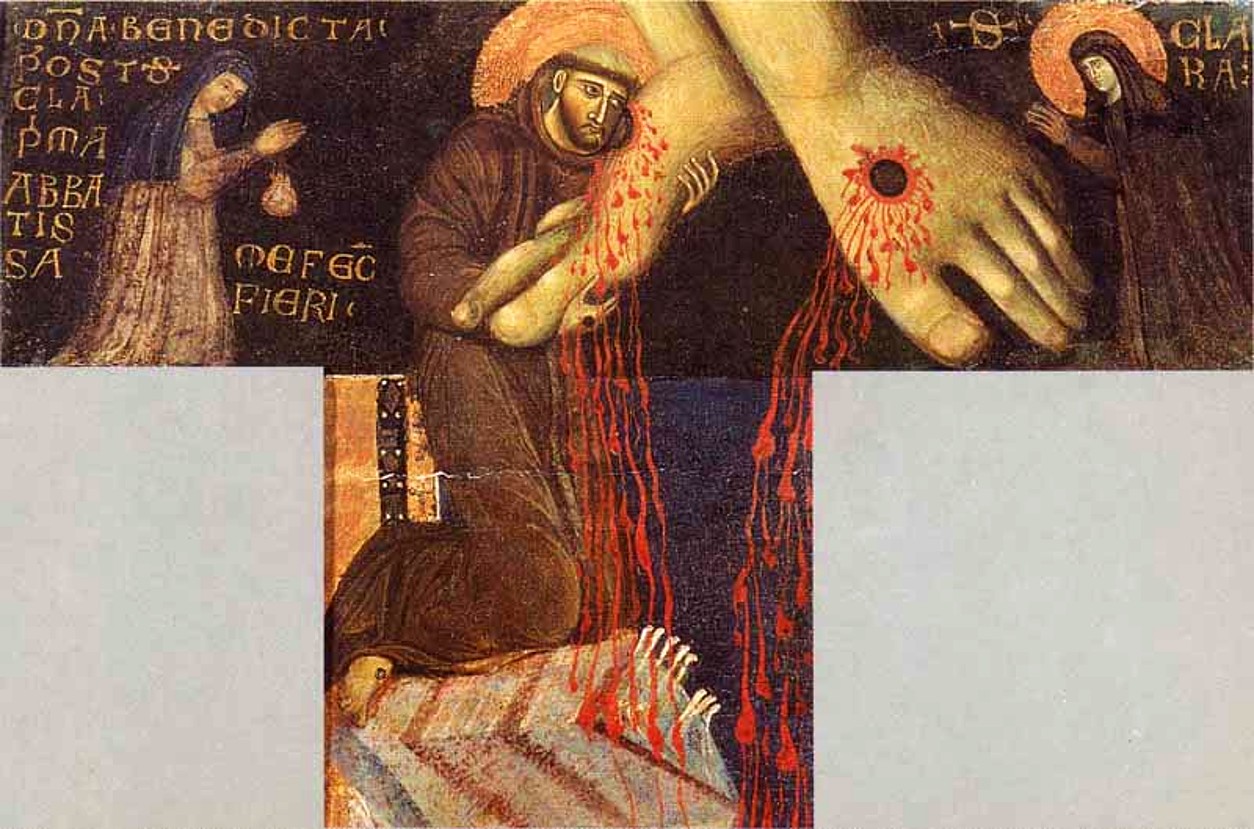
She was buried in the Church of St George. In 1602 the Bishop of Assisi, Crescenzi, had her relics placed with those of the blessed Amata and of St Agnes of Assisi in the Chapel dedicated to the latter, in the Basilica of St Clare. In it, above the main Altar, a large shaped cross is venerated, with St Clare and the blessed Benedetta and with the following legend in Gothic characters: “Domina Benedicta post Sanctam Claram before Abbatissa me fecit fieri,” – “Blessed Woman, first Abbess after St Clare.”
St Abban of Kill-Abban St Abraham Kidunaia St Agapitus of Ravenna St Aninus of Syria St Benedicta of Assisi OSC (Died 1260) Poor Clare Nun St Dionysius of Aquileia St Dentlin of Hainault Bl Eriberto of Namur St Eusebia of Hamage St Felix of Aquileia
St Hilary of Aquileia Bl Joan Torrents Figueras Bl John Amias St Julian of Anazarbus St Largus of Aquileia St Malcoldia of Asti St Megingaud of Wurzburg
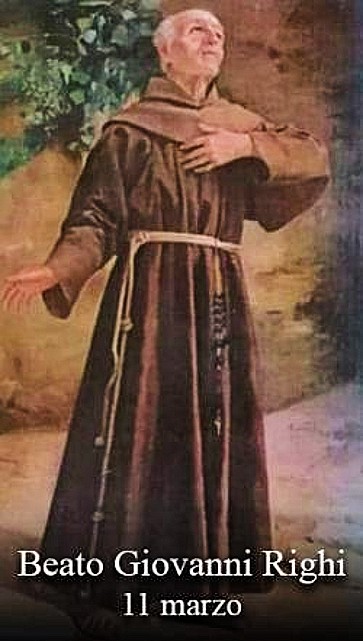
Saint of the Day – 11 March – Blessed John Baptist Righi of Fabriano OFM (1469–1539) Priest, Confessor, Friar of the Friars Minor, Ascetic, Ecstatic, renowned Preacher, Peace-maker, Hermit. Born as Giovanni Battista Righi in 1469 at Fabriano, Ancona, Italy and died on 11 March 1539 of natural causes. Also known as – Giovanni Battista da Fabriano, Giovanni da Fabriano, Giovanni Righi, Joannes de Fabriano, Johannes Baptista Righi, John Baptist of Fabriano. His body is incorrupt.
John was born in Fabriano of the Righi family. From an early age, he was very obedient to the teachings he received in his family. Reading the life of St Francis of Assisi, he decided to become a Franciscan Friar. And so, in the prime of his youth, our Blessed wore the Franciscan habit in the Convent of Forano, near Rieti. After his profession, he devoted several years to the study of philosophy and theology before being Ordained a Priest. For many years he was a very obedient and humble Friar. It is assumed that the young professed went from Forano to the solitary Convent of La Romita, a former Monastery of the Camaldolese.
Giovanni spent practically the rest of his life, about fifty years, up there in Romita, sometimes dedicated to the apostolate and more often, to silence and prayer, penance, reading the works of the Holy Fathers of the Church. In the solitude of La Romita, our blessed found what his heart desired. In the Church, there was a venerable image of Jesus Crucified, which belonged to St John of the Marches – John made it the object of frequent visits, ardent prayers, profound meditations and even,, by permission of the Lord, not rare ecstasies.
Emulating his seraphic Father, he ardently wanted to unite himself to the sufferings of Jesus, to transform himself into the Crucified Love, so little loved by much of the world. He found another object that touched his heart and fueled his filial piety: a terracotta image, which represented the Blessed Virgin contemplating the Child Jesus lying on her lap and which was flanked by the figures of the Apostle St James the Greater and St Francis of Assisi. And so, the solitary devotee spent long hours at the foot of the new and captivating image of the Mother of the Lord, exchanging affections and feelings. In the evening, after the Matins prayer, when his brothers retired to rest, he remained in the choir to continue his prayers which often ended in ecstasy. exchanging affections and feelings. In the evening, after the Matins prayer, when his brothers retired to rest, he remained in the choir to continue his prayers which often ended in ecstasy. exchanging affections and feelings.
In the dense forest that surrounded the solitary Convent, there was and still is, a small cave, like a hermitage inside the hermitage, where John went to devote himself to prayer and penance . For our blessed, Heaven on earth was in his retreat and solitude. But charity and obedience required him, from time to time, to undertake long journeys.
At that time, the different lords and noble families of the region were in conflict. Society and the Church experienced the ups and downs of the progress of a rebirth in all orders. And in high society, as well as among soldiers and ordinary people, demoralisation and the decline of good manners was the norm. John was not an eloquent orator but with his simple and persuasive word he managed to touch hearts and lead them to conversion.
He embarked on long journeys with joy of spirit to pacify the belligerents or to exhort both warring parties to convert and change their lives. When he travelled, always accompanied by another friar as was obligatory, he brought with him nothing but his peaceful poverty and his firm trust in God. his word was always a warm exhortation to the fulfillment of the divine Commandments, to the frequency of the Sacraments, to love one’s neighbour, to free the world from slavery. And he spoke with such zeal and persuasion that many were converted to God, reconciled, confessed, they did penance for their sins. The fame of the simple Friar spread throughout the Marches of Ancona.
Great was the charity of John with all those who met him on his travels or with those who came to him for spiritual guidance and Confession.. But what he practiced with the Friars of his Convent was even greater. He was attentive to their wants and needs and his greatest joy was to serve the sick, giving them every care promptly and gently.
His love for Jesus Crucified, the constant object of his love and contemplation, led him to practice the austerities and penances typical of the ancient anchorites, whose writings he read with pleasure, in particular those of St John Climacus. He continually fasted on bread and water, eating only one meal a day and even less during Lent. As a true son of St Francis, he loved poverty and practiced it, contenting himself with the patched tunic and the Breviary for the liturgical praise of the Lord. His cell, later transformed into an oratory, was small and sober. Indeed, his reputation for holiness soon spread throughout the region and when our Friar travelled, sick people were brought to him even from distant regions, to bless them,and there were numerous votive offerings that were and still are displayed.
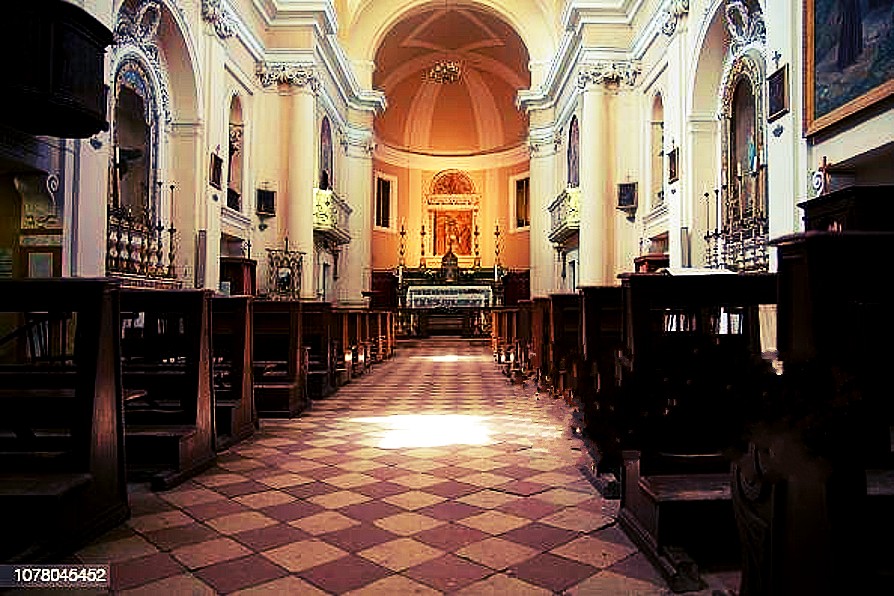
One day he was seized by a great malaise. The Friars came, gave him first aid and looked after him until it seemed to them that the danger had passed, then they withdrew . Soon after, left alone in his small cell, he fell asleep peacefully in the Lord. His body was buried in the cemetery of the Convent but, ten years later, it was unearthed, found incorrupt and placed in an urn under the Altar of the Holy Christ. And there, in the Church of San Giacomo della Romita, he is still preserved and venerated today. His cult was confirmed by Pope Leo XIII on 7 September 1903.
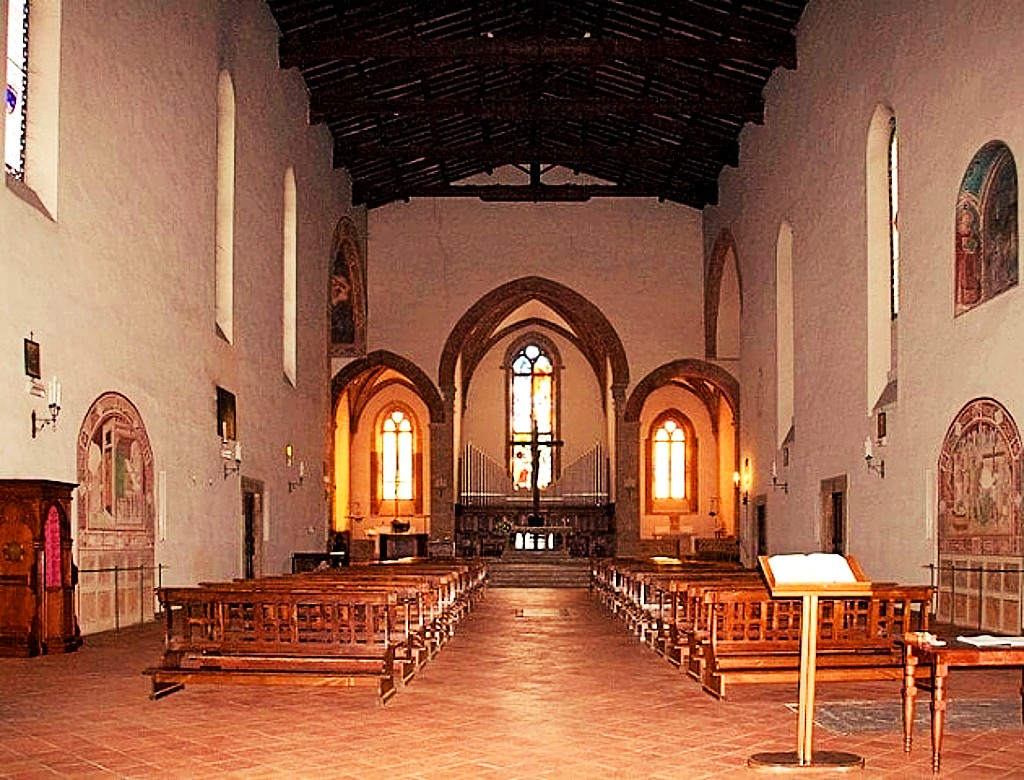
The Church where the Body of Blessed John Righi is enshrined





















 AnaStpaul
You must be logged in to post a comment.