Quote/s of the Day – 5 August – “The Month of the Immaculate Heart of Mary” – Santa Mariæ ad Nives, Dedication of the Basilica of Our Lady of the Snows
“Mary, Mother of Grace, it becomes you to be mindful of us, as you stand near Him who granted you all graces, for you are the Mother of God and our Queen. Help us for the sake of the King, the Lord God and Master, Who was born of you.”
St Athanasius (297-373) Father & Doctor of the Church
“Mary was placed by God in the centre of history and we can say that everything was made through her and with her and in her.”
St Bernard (1090-1153) Mellifluous Doctor of the Church
“Mary is the divine Page on which God the Father wrote the Word of God, His Son. Let us draw near to her and read her!”
St Albert the Great (1200-1280) Doctor of the Church
“Mary seeks for those who approach her devoutly and with reverence, for such she loves, nourishes, and adopts as her children. ”
St Bonaventure (1221-1274) Seraphic Doctor of the Church
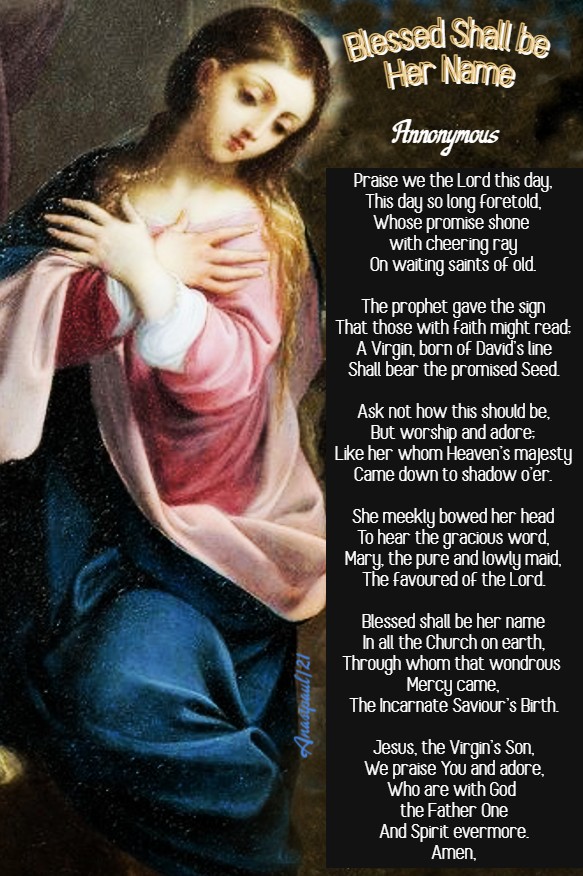
Blessed Shall be Her Name Anonymous Author
Praise we the Lord this day, This day so long foretold, Whose promise shone with cheering ray On waiting saints of old.
The prophet gave the sign That those with faith might read; A Virgin, born of David’s line Shall bear the promised Seed.
Ask not how this should be, But worship and adore; Like her whom Heaven’s majesty Came down to shadow o’er.
She meekly bowed her head To hear the gracious word, Mary, the pure and lowly maid, The favoured of the Lord.
Blessed shall be her name In all the Church on earth, Through whom that wondrous Mercy came, The Incarnate Saviour’s Birth.
Jesus, the Virgin’s Son, We praise You and adore, Who are with God the Father One And Spirit evermore. Amen
Portiuncula Indulgence: An Indulgence which may be gained in any Church so designated by the Bishop, by all the faithful who, after Confession and Holy Communion, visit such Churches between noon of 1 August and midnight of 2 August, or on the Sunday following. The Indulgence is toties quoties and is applicable to the souls in Purgatory.
St Exuperius of Bayeux St Faith St Faustus St Felix of Gerona St Friard Blessed Giovanni Bufalari OSA (c 1318-c 1350) St Hope St Jadwiga Karolina Zak St Jonatus St Justin of Paris St Kenneth of Wales St Leontius of Perga St Maur St Nemesius of Lisieux Bl Orlando of Vallombrosa St Peregrinus of Modena St Rioch Bl Rudolph St Secundel St Secundus of Palestrina St Sophia St Verus of Vienne
Seven Holy Machabees – 8 Saints: “At Antioch, the Martyrdom of the Seven Holy Brothers, the Machabees and thei mother, who suffered under King Antiochus Epiphanes. Their relics were transferred to Rome and placed in the Church of St Peter in Chains.”
Saints Faith, Hope and Charity: The daughters of Saint Sophia. While still children, they were tortured and Martyred for their faith in the persecutions of Hadrian. They were scourged, thrown into a fire, and then beheaded.
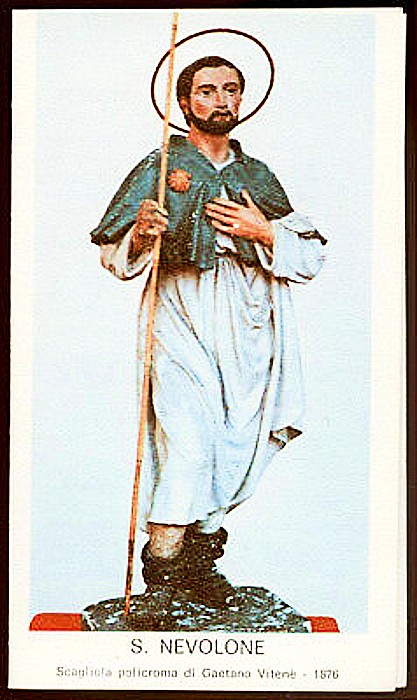
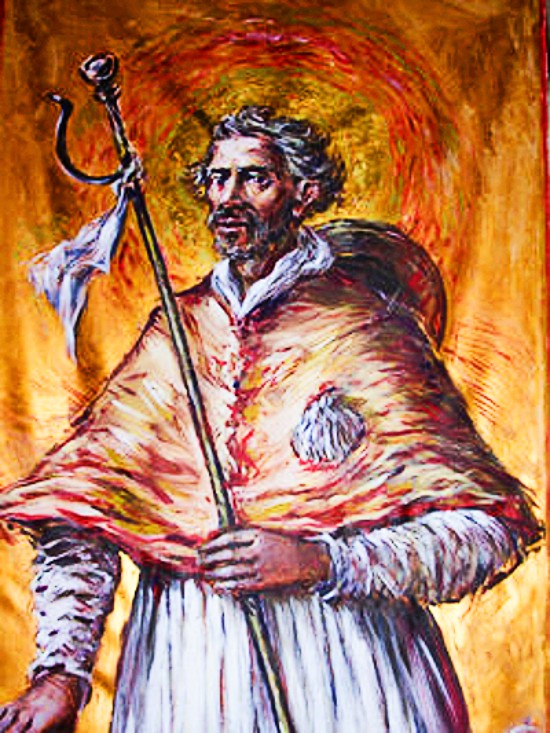
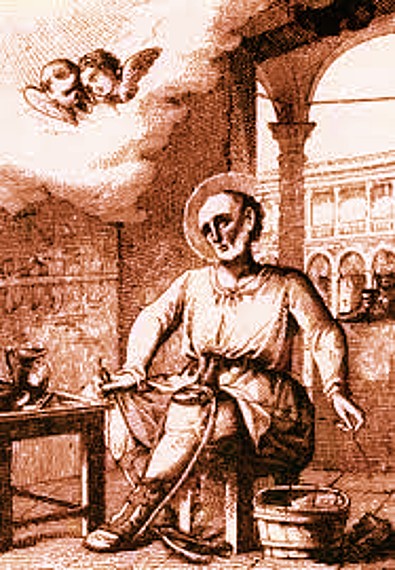
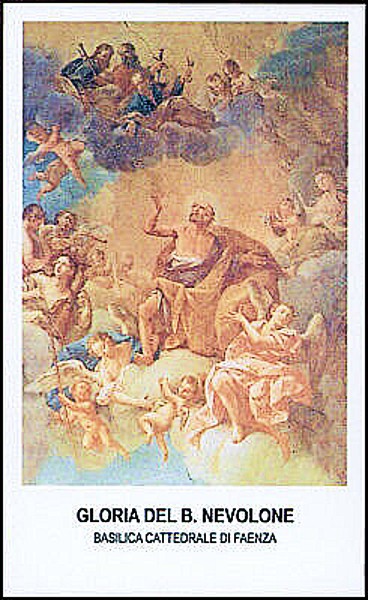
Saint of the Day – 27 July – Blessed Nevolone of Faenza OFM (Died 1280) Penitent, Pilgrim, Widower, Lay Friar of the Order of Friars Minor, then a Camaldolese Hermit, Apostle of the poor and sick, worked as a Cobbler / Shoemaker.. Born in the 13th Century Faenza, Italy and died on 27 July 1280 in Faenza, Italy of natural causes. Patronage – Faenza, cobblers, shoemakers, shoe repairers (chosen by the cobblers of Rimini, Italy in 1331). Also known as – Nevolo of Tavensia, Nevolone, Novellone, Nevolonius. Beatified on 4 June 1817 by Pope Pius VII.
In the great family of Saints the shoemaker stands next to the king’s son and the penitent who has atoned for the errors of his earlier life, may associate with the innocent man who has never lost the grace of God.
Born of devout parents at Faenza, Italy, Nevellon learned the trade of a shoemaker but his bad conduct caused great grief to them, especially to his good mother. He married when he was quite young and it was hoped, that now at least, he would change his ways but he continued in the same bad habits, inflicting still greater pain on his family. His mother, however, prayed and sighed without ceasing that the good Lord, Who consoled the widow of Naim by raising her son to life, would also raise her son from a spiritual death to a new life.
The prayers and tears of the mother did not remain unanswered. Almighty God caused Nevellon to become seriously ill. The nearness of death opened his eyes; he reflected on his past years, grace touched his heart and with bitter tears of true contrition, he vowed that if he recovered, he would lead a penitential life. He also resolved to make a pilgrimage to the tombs of the Holy Apostles Peter and Paul at Rome and to the tomb of St James at Compostela.
A few days later Nevellon recovered his health as if by a miracle . He was then only twenty four years old but he remained faithful to his promise all the rest of the days of his life, even up to an advanced age.
From that time on, prayer and work were his daily occupation. He became a Franciscan tertiary and converted his wife to an active faith. His charity to the poor nearly ruined his business.Mindful of the words, “Alms purge away sins” (Tob. 12,9), Blessed Nevellon retained only so much of his wages, as was necessary for he and his wife’s support and the remainder he divided among the poor and the sick. In the beginning, his wife, who was somewhat anxious over their temporalities, was much vexed at this liberality but when she saw the great blessings that attended her husband’s charity, she gave full consent.
Nevellon severely chastised his body for the sins of his past life and amid great hardships, undertook the pilgrimages he had promised, including several trips to Compostela. When his wife died, Nevelone became a Franciscan Lay Brother. But seeking greater unity with God in prayer and mortification he became a Camaldolese Hermit at the Monastery of San Maglorio in Faenza, Italy where his reputation for piety and wisdom continued to grow, leading many to emulate his spiritual ascent.
After giving the most edifying example of penance and many holy virtues for a space of fifty-six years, holy Nevellon died peacefully in the Lord in 1280. God glorified him in life and in death by miracles. His remains were interred in the Cathedral of San Pietro in Faenza. By 1282, 2 years after his death, there were so many pilgrims to his tomb that guards had to be posted to maintain order. With the approval of the Pope his native town celebrates his feast and shoemakers have chosen him for their special Patron.
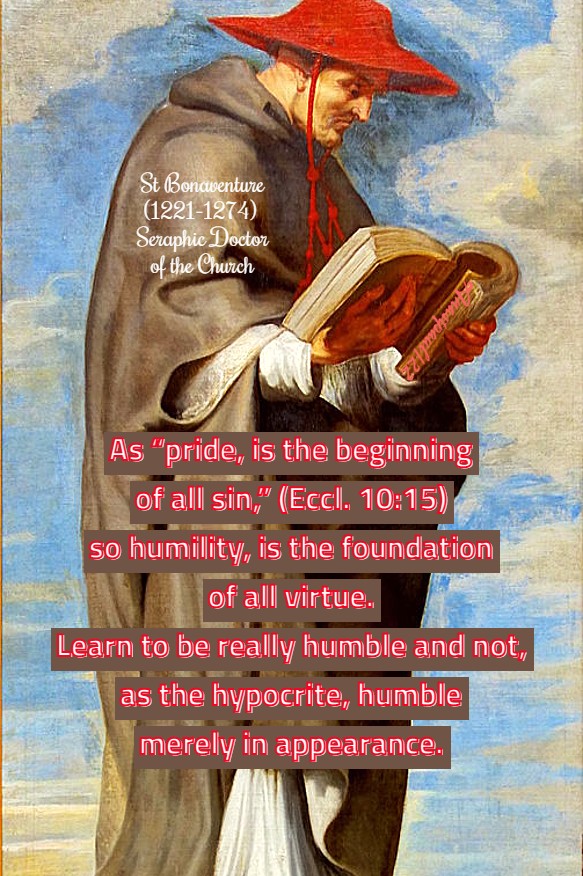
Quote/s of the Day – 14 July – “The Month of the Precious Blood” – The Memorial of St Bonaventure OFM (1221-1274) Seraphic Doctor of the Church (No images until later. We are being subjected to constant Power Cuts again – they can be up to 8 hours per day.)
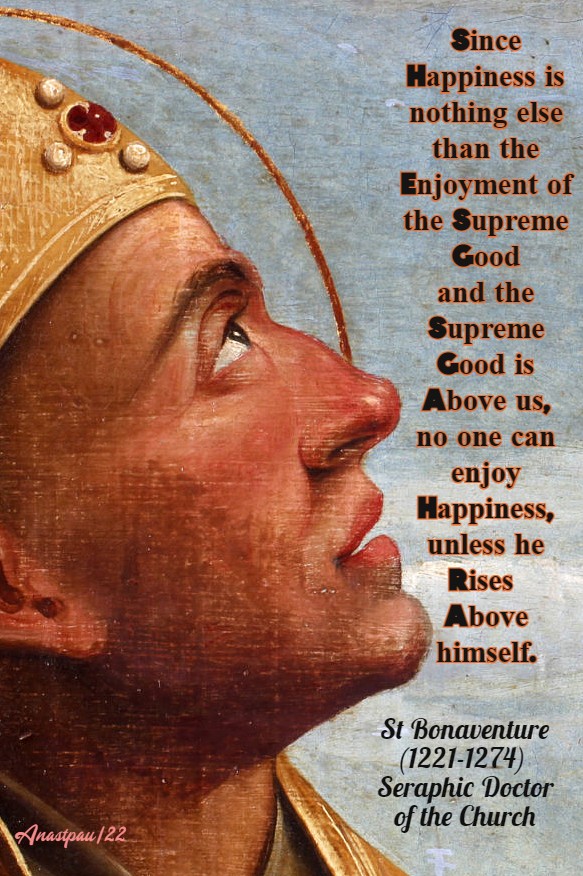
“Since happiness is nothing else than the enjoyment of the Supreme Good and the Supreme Good is above us, no-one can enjoy happiness, unless he rises above himself.”
“As “pride, is the beginning of all sin,” (Eccl. 10:15) so humility, is the foundation of all virtue. Learn to be really humble and not, as the hypocrite, humble merely in appearance.”
Our Morning Offering – 14 July – “The Month of the Most Precious Blood” and the Memorial of St Bonaventure OFM (1221-1274) Seraphic Doctor of the Church
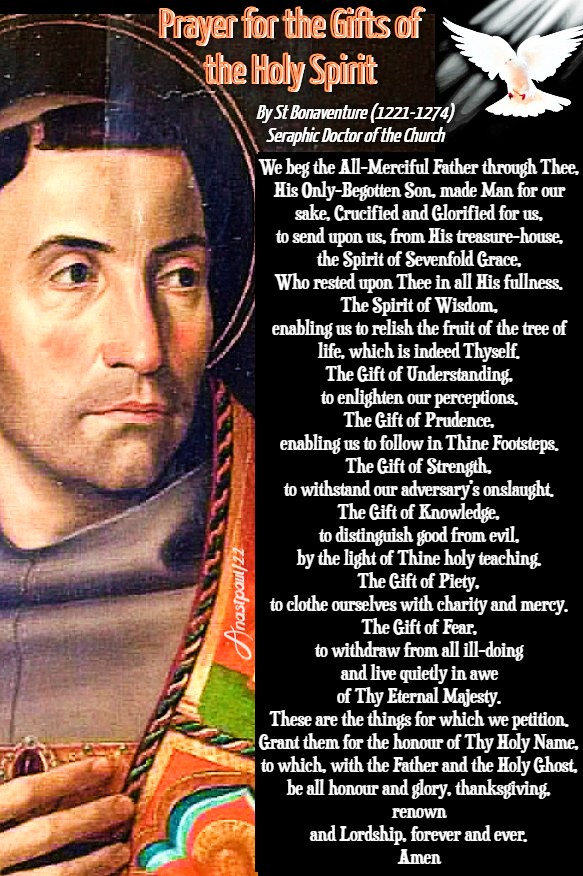
Prayer for the Gifts of the Holy Spirit By St Bonaventure (1221-1274) Seraphic Doctor of the Church
We beg the All-Merciful Father through Thee, His Only-Begotten Son, made Man for our sake, Crucified and Glorified for us, to send upon us, from His treasure-house, the Spirit of Sevenfold Grace, Who rested upon Thee in all His fullness.
The Spirit of Wisdom, enabling us to relish the fruit of the tree of life, which is indeed Thyself. The Gift of Understanding, to enlighten our perceptions. The Gift of Prudence, enabling us to follow in Thine Footsteps. The Gift of Strength, to withstand our adversary’s onslaught. The Gift of Knowledge, to distinguish good from evil, by the light of Thine holy teaching. The Gift of Piety, to clothe ourselves with charity and mercy. The Gift of Fear, to withdraw from all ill-doing and live quietly in awe of Thy Eternal Majesty.
These are the things for which we petition. Grant them for the honour of Thy Holy Name, to which, with the Father and the Holy Ghost, be all honour and glory, thanksgiving, renown and Lordship, forever and ever. Amen
One Minute Reflection – 10 July – “The Month of the Precious Blood” – The Fifth Sunday after Pentecost and the Solemnity of the Most Precious Blood – Hebrews 9:11-15, John 19:30-35
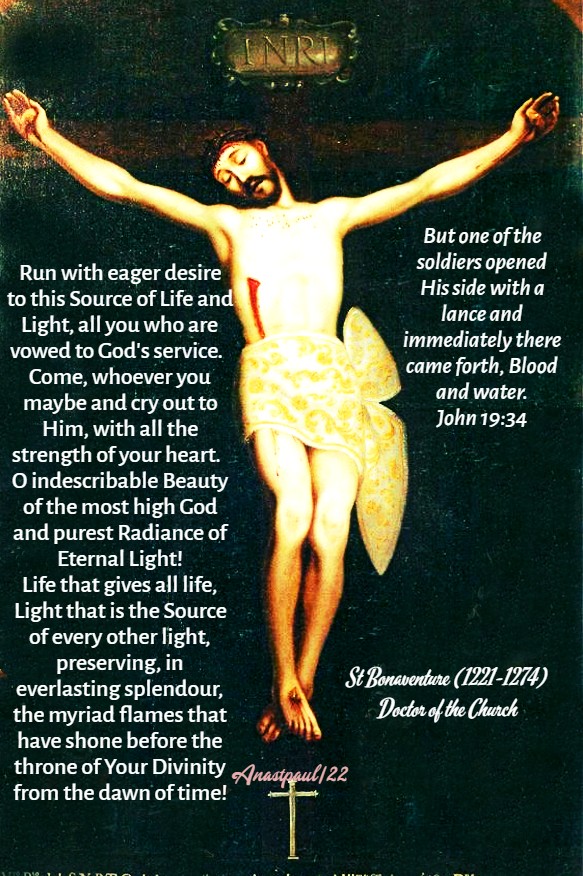
“But one of the soldiers opened His side with a lance and immediately there came forth, Blood and water.” – John 19:34
REFLECTION – “Take thought now, redeemed man and consider how great and worthy is He, Who hangs on the Cross for you… Arise, then, beloved of Christ! Imitate the dove ‘that nests in a hole in the cliff’ (Jr 48:28), keeping watch at the entrance ‘like the sparrow that finds a home’(Ps 84:4). There, like the turtledove, hide your little ones, the fruit of your chaste love. Press your lips to the Fountain, draw water from the wells of your Saviour; for this is the spring flowing out of the middle of paradise, dividing into four rivers, inundating devout hearts, watering the whole earth and making it fertile.
Run with eager desire to this Source of Life and Light, all you who are vowed to God’s service. Come, whoever you maybe and cry out to Him, with all the strength of your heart. O indescribable Beauty of the most high God and purest Radiance of Eternal Light! Life that gives all life, Light that is the Source of every other light, preserving, in everlasting splendour, the myriad flames that have shone before the throne of Your Divinity from the dawn of time!
Eternal and inaccessible Fountain, clear and sweet stream, flowing from a hidden spring, unseen by mortal eye! None can fathom Your depths nor survey Your boundaries, none can measure Your breadth, nothing can sully Your purity. From You flows ‘the river which gladdens the city of God’ (Ps 46:5) and makes us cry out with joy and thanksgiving, in hymns of praise to You, for we know, by our own experience, that ‘with You is the Source of Life and in Your Light we see light’ (Ps 36:10).” – St Bonaventure (1221-1274) Doctor of the Church (The Tree of Life, 29-30, 47, – Breviary)
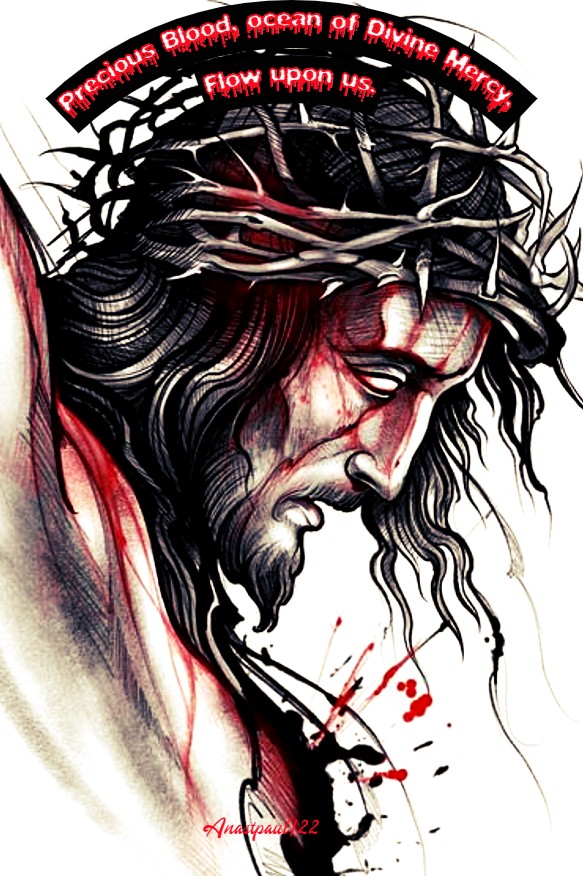
PRAYER – Almighty, eternal God, Who made Thy Only Begotten Son the Redeemer of the world and willed to be reconciled by His Blood, grant us, we beseech Thee, so to worship in this Sacred rite the price of our salvation and to be so protected by its power against the evils of the present life on earth, that we may enjoy its everlasting fruit in Heaven. Through the same Jesus Christ, Thy Son our Lord, Who lives and reigns with Thee, in the unity of the Holy Ghost, God, world without end. Amen (Collect). Aspiration:Precious Blood, ocean of Divine Mercy, Flow upon us.
Quote/s of the Day – 7 July – The Memorial of St Lawrence of Brindisi OFM Cap (1559-1619) Confessor, The “Franciscan Renaissance Man,” Priest
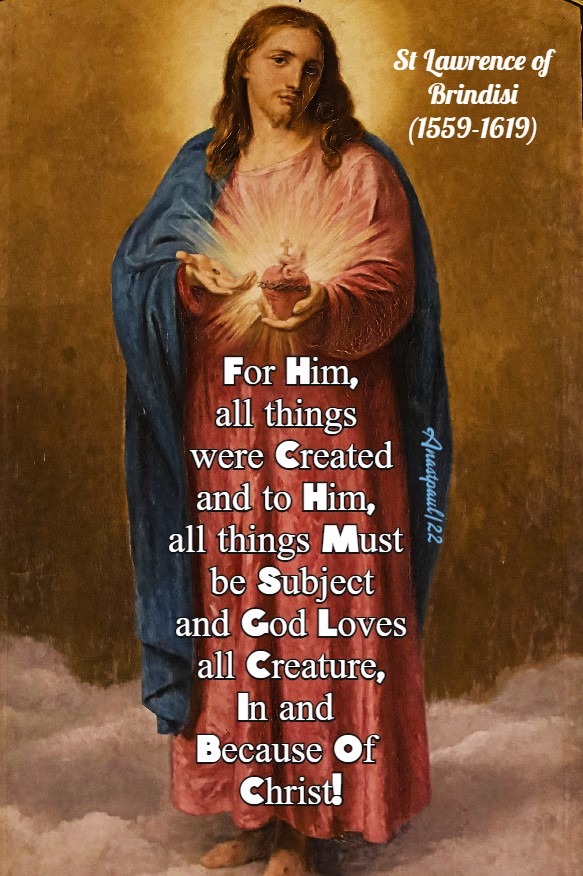
“For Him all things were created and to Him, all things must be subject and God loves all creature, in and because of Christ.”
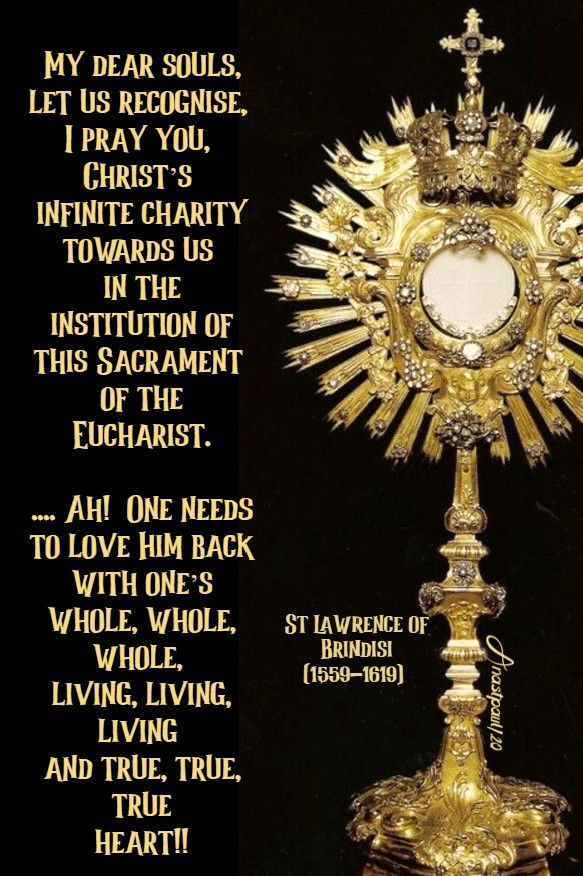
“My dear souls, let us recognise, I pray you, Christ’s infinite charity towards us in the institution of this Sacrament of the Eucharist. In order that our love be a spiritual love, He wills a new heart, a new love, a new spirit for us. It is not with a carnal heart but with a spiritual one, that Christ has loved us with a gratuitous love, a supreme and most ardent love, by way of pure grace and charity. Ah! One needs to love Him back with one’s whole, whole, whole, living, living, living and true, true, true heart!”
Saint Cyril (827-869) Saint Methodius (826-885) “Apostles to the Slavs,” Sibling Brother Bishops, Confessors, Theologians, Missionaries, Writers, Preachers, Patrons of Europe. Creators of the Glagolitic alphabet, the first alphabet used to transcribe Old Church Slavonic and Cyrillac Alphabet, which was developed from it. Their Feast Day is 7 July (moved in 1969). The great Saints Cyril & Methodius: https://anastpaul.wordpress.com/2018/02/14/saints-of-the-day-14-february-sts-cyril-827-869-methodius-826-885/
St Lawrence of Brindisi OFM Cap (1559-1619) Confessor, The “Franciscan Renaissance Man,” Priest and Friar of the Friars Minor Capuchin, Theologian, Vicar General of the Franciscans, Language scholar, Humanist, Philosopher, Biblicist, Preacher, Missionary, Professor, International Administrator, Confidant of Popes, Emperors, Kings and Princes, Diplomatic envoy, Army Chaplain, Military Strategist and Morale builder, Polemicist, Prolific writer. He was Beatified on 1 June 1783 by Pope Pius VI and Canonised on 8 December 1881 by Pope Leo XIII. His Zealous Life: https://anastpaul.com/2017/07/21/saint-of-the-day-21-july-st-lawrence-of-brindisi-o-f-m-cap-doctor-of-the-church/
St Alexander St Angelelmus of Auxerre St Apollonius of Brescia
Blessed Pope Benedict XI OP (1240-1303) Cardinal-Priest of St Sabina, Bishop of Ostia then of Rome, Dominican Friar, Prior Provincial of Lombardy prior to becoming the Master of the Order in 1296, Apostolic Papal Legate to Hungary and France, Teacher, Preacher, Writer and renowned Scholar with special emphasis on Biblical commentary. His Papacy began on 22 Ocober 1303 and ended at his death on 7 July 1304. His Life: https://anastpaul.com/2020/07/07/saint-of-the-day-7-july-blessed-pope-benedict-xi-1240-1303/
Bl Bodard of Poitiers St Bonitus of Monte Cassino St Carissima of Rauzeille St Eoaldus of Vienne St Ethelburga of Faremoutier St Hedda of Wessex St Maelruan Bl Marie-Gabrielle-Françoise-Suzanne de Gaillard de Lavaldène St Medran St Merryn Bl Oddino Barrotti St Odo of Urgell St Odran St Palladius of Ireland St Pantaenus of Alexandria
St Pantænus (Died c 216) Father of the Church, Theologian, Philosopher, Teacher, Confessor and Defender of the Faith, Writer and interpreter of the Bible, the Trinity and Christology, |Missionary. Convert ofthe disciples of the Apostles. Head of the Alexandrian School of Learning – a famous pupil was St Clement of Alexandria. Biography: https://anastpaul.com/2019/07/07/saint-of-the-day-7-july-st-pantaenus-father-of-the-church-died-c-216/
St Prosper of Aquitaine (c 390-c 436) Theologian, Married Layman, Writer, disciple abd friend of St Augustine. St Syrus of Genoa St They
Martyrs of Durres – 7 Saints: Also known as – Martyrs of Dyrrachium/Martyrs of Durazzo. A group of seven Italian Christians who fled Italy to escape the persecutions of Emperor Hadrian. Arrived in Dyrrachium, Macedonia to find Saint Astius tied to a cross, covered in honey, laid in the sun and left to be tortured by biting and stinging insects. When they expressed sympathy for Astius, they were accused of being Christians, arrested, chained, weighted down, taken off shore and drowned. We know little more about each of them than their names – Germaus, Hesychius, Lucian, Papius, Peregrinus, Pompeius and Saturninus. They were born in Italy and were martyred at sea c117 off the coast of Dyrrachium (Durazzo), Macedonia (modern Durres, Albania).
Thought for the Day – 13 June – Meditations with Antonio Cardinal Bacci (1881-1971)
St Anthony
“St Anthony joined the Franciscan Order and joyfully set off for the coast of Morocco in search of Missionary labour and of Martyrdom. But, when he landed on African soil, he was struck down by a serious attack of malaria, which compelled him to return to his native land.
There is no foreseeing the designs of Divine Providence. The boat in which Anthony was travelling was battered by a tempest and had to go ashore in Italy. Henceforward, Italy was Anthony’s second fatherland. It was here, that he conducted his remarkable and fruitful apostolate and slowly accomplished his Martyrdom, by the daily struggle for perfection.
… We have all been called to a state of holiness. Perfection, moreover, is a gradual Martyrdom. … (Cf Pt 1)
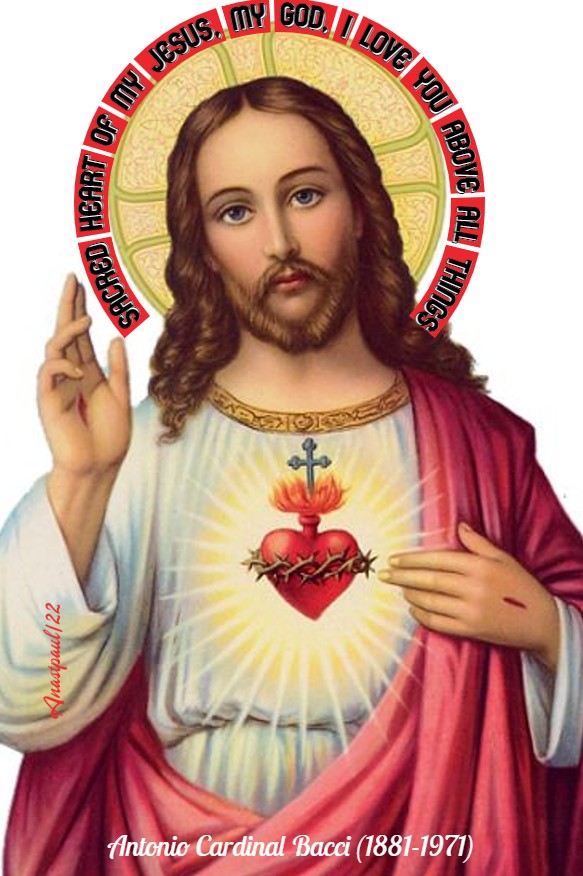
Aspiration: Sacred Heart of my Jesus, my God, I love You above all things.”
Quote/s of the Day – 13 June – The Memorial of St Anthony of Padua (1195-1231) Evangelical Doctor of the Church
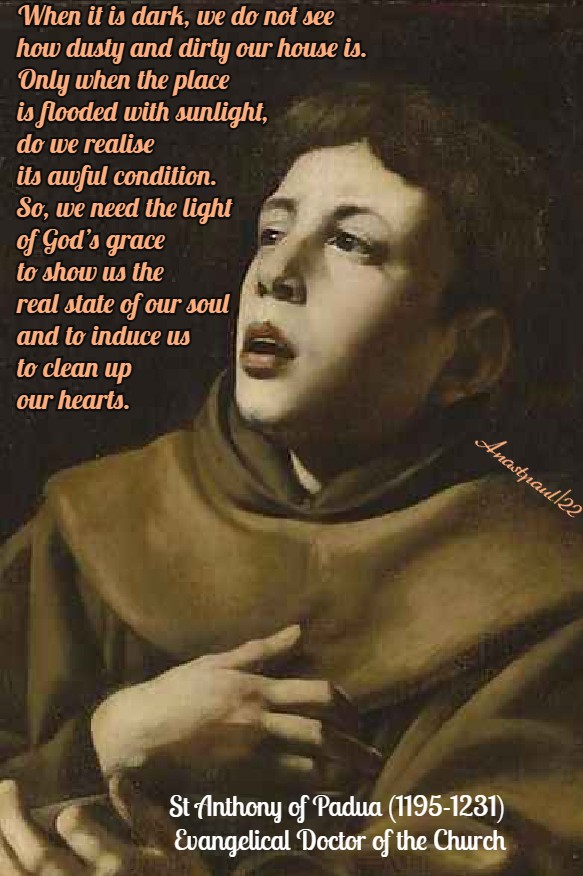
“When it is dark, we do not see how dusty and dirty our house is. Only when the place is flooded with sunlight, do we realise its awful condition. So, we need the light of God’s grace to show us the real state of our soul and to induce us to clean up our hearts!”
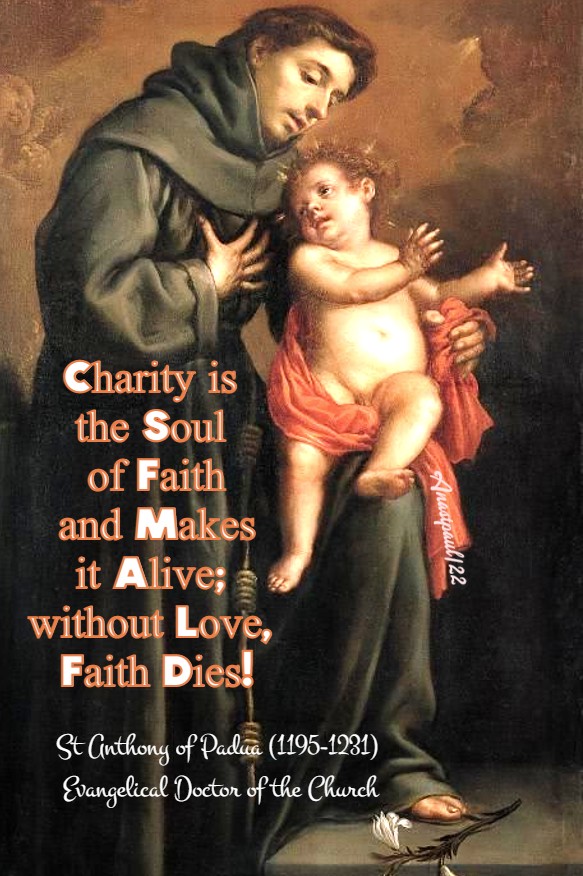
“Charity is the soul of faith and makes it alive; without love, faith dies!”
“Christ acts like a loving mother. To induce us to follow Him, He gives us Himself as an example and promises us a reward in His kingdom.”
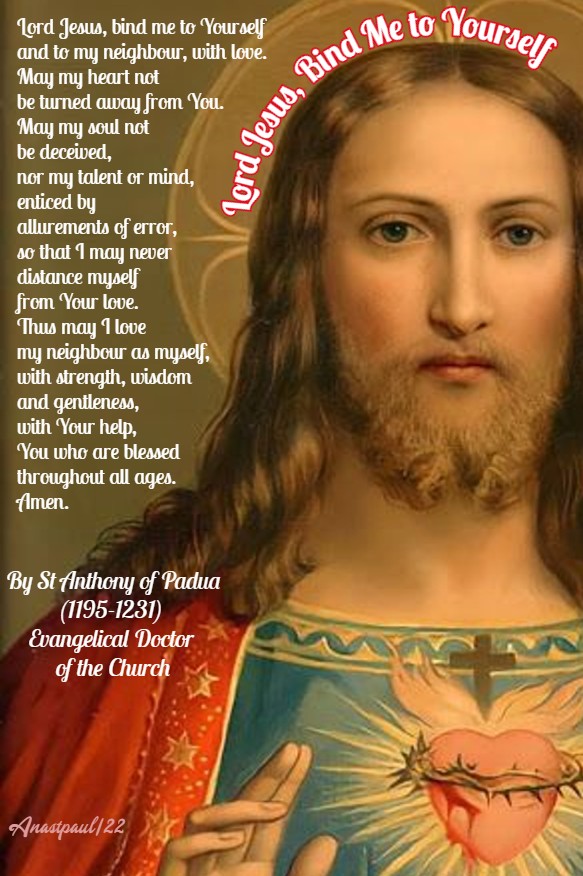
Lord Jesus, Bind Me to Yourself
Lord Jesus, bind me to Yourself and to my neighbour, with love. May my heart not be turned away from You. May my soul not be deceived, nor my talent or mind, enticed by allurements of error, so that I may never distance myself from Your love. Thus may I love my neighbour as myself, with strength, wisdom and gentleness, with Your help, You who are blessed throughout all ages. Amen.
St Anthony of Padua (1195-1231) Evangelical Doctor of the Church
Our Morning Offering – 13 June – The Memorial of St Anthony of Padua (1195-1231) Evangelical Doctor of the Church
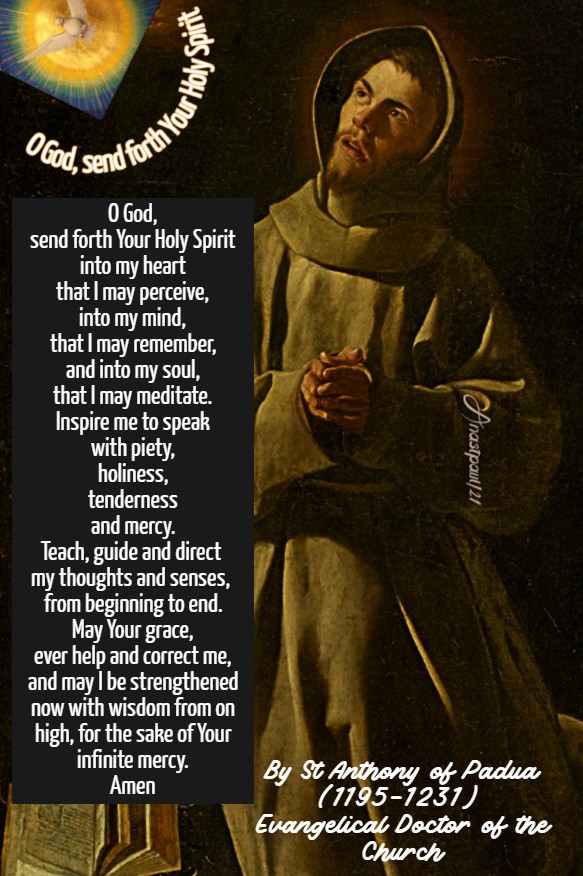
O God, Send Forth Your Holy Spirit By St Anthony of Padua (1195-1231) Doctor of the Church
O God, send forth Your Holy Spirit into my heart that I may perceive, into my mind, that I may remember, and into my soul, that I may meditate. Inspire me to speak with piety, holiness, tenderness and mercy. Teach, guide and direct my thoughts and senses, from beginning to end. May Your grace, ever help and correct me, and may I be strengthened now with wisdom from on high, for the sake of Your infinite mercy. Amen
Quote/s of the Day – 7 June – Pentecost Tuesday – Acts 8:14-17, John 10:1-10.
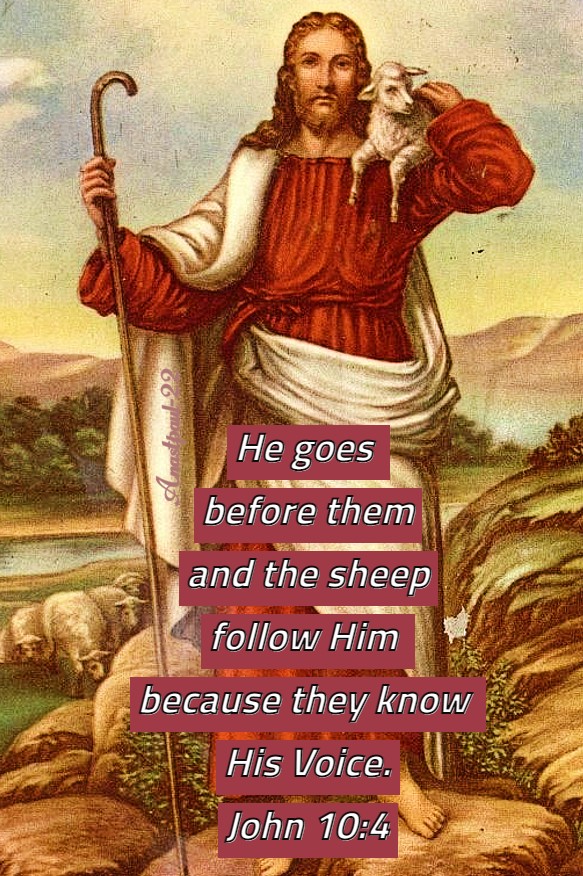
“… He goes before them and the sheep follow Him because they know His Voice.”
John 10:4
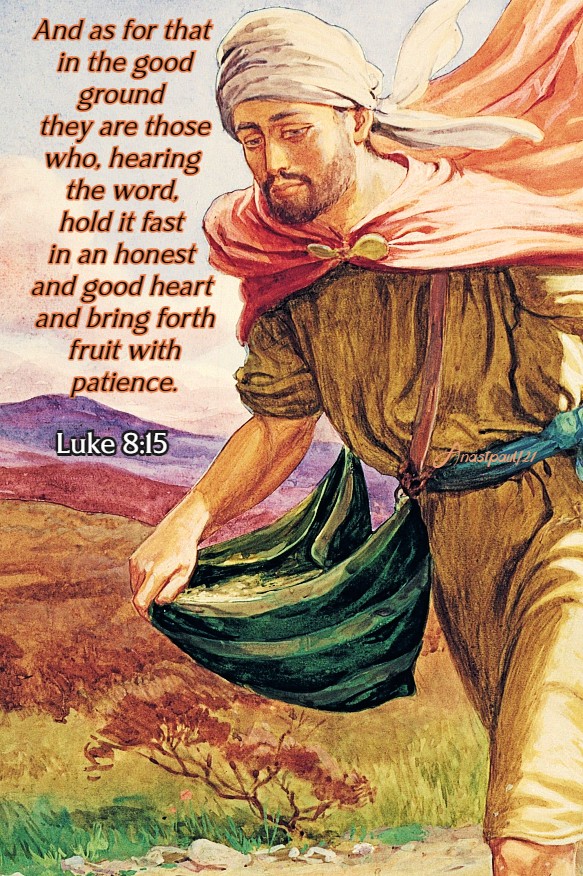
“And as for that in the good ground they are those who, hearing the word, hold it fast in an honest and good heart and bring forth fruit with patience.”
Luke 8:15
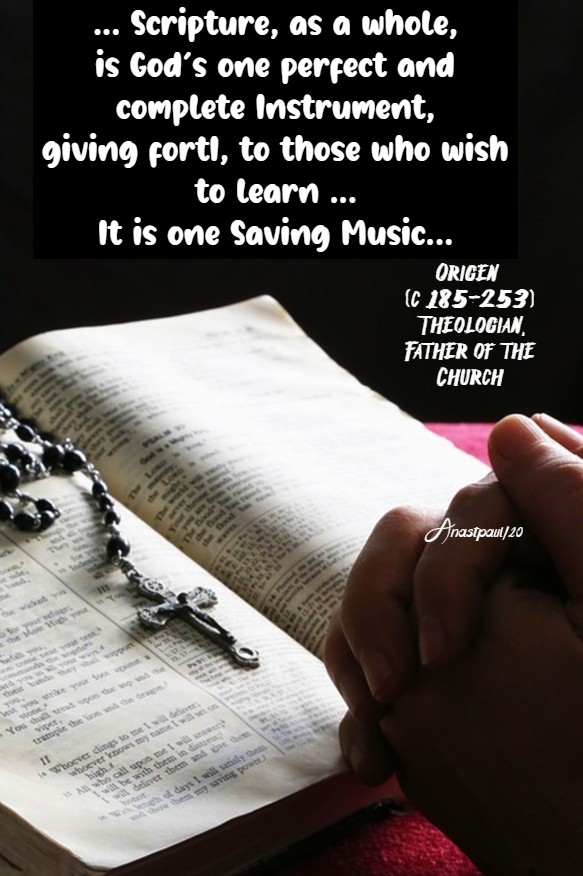
“… Scripture, as a whole, is God’s one perfect and complete instrument, giving forth, to those who wish to learn … It is one Saving Music…”
Origen (c 185-253) Theologian, Father of the Church
“If you believe what you like in the Gospels and reject what you don’t like, it is not the Gospel you believe but yourself.”
St Augustine (354-430) Father and Doctor of Grace
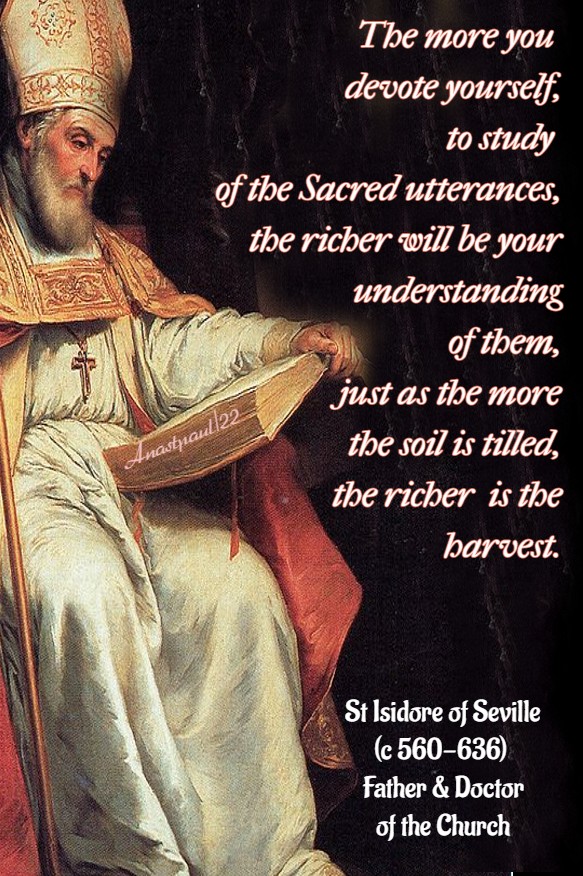
“The more you devote yourself, to study of the Sacred utterances, the richer will be your understanding of them, just as the more the soil is tilled,, the richer is the harvest.”
St Isidore of Seville (c 560-636) Father & Doctor of the Church
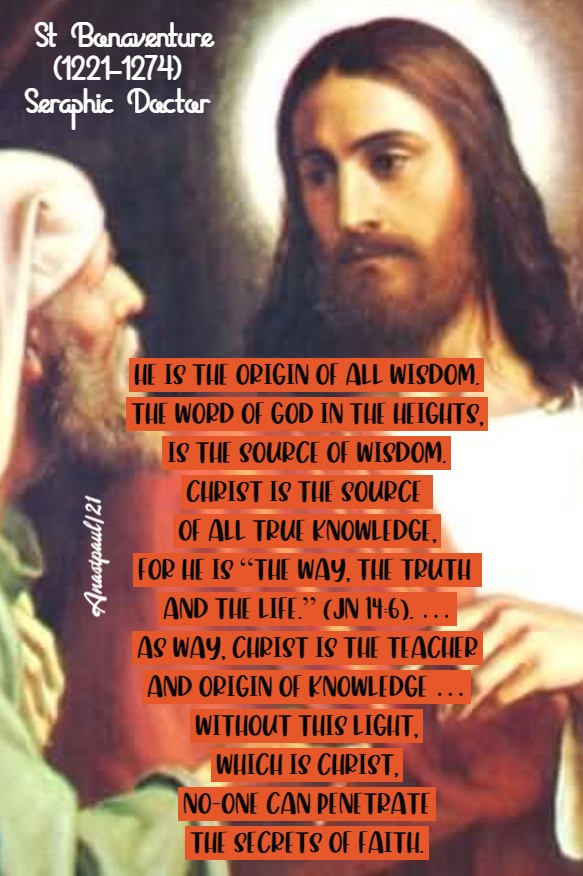
“He is the origin of all wisdom. The Word of God in the heights, is the source of wisdom. Christ is the source of all true knowledge, for He is “the way, the truth and the life.” (Jn 14:6). … As way, Christ is the teacher and origin of knowledge … Without this Light, which is Christ, no-one can penetrate the secrets of faith.”
One Minute Reflection – 4 June – “Month of the Sacred Heart” – The Vigil of Pentecost – Acts 19:1-8, John 14:15-21.
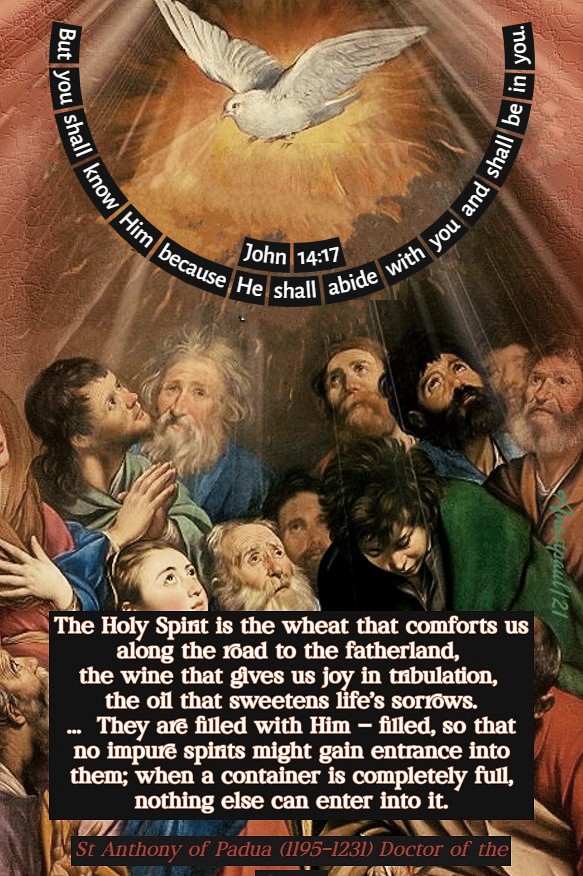
“But you shall know Him because He shall abide with you and shall be in you.” – John 14:17
REFLECTION – “The Holy Spirit is the wheat that comforts us along the road to the Fatherland, the wine that gives us joy in tribulation, the oil that sweetens life’s sorrows. This threefold support was needed by the Apostles, who had to go out to preach through the whole world. This is why Jesus sends the Holy Spirit to them. They are filled with Him – filled, so that no impure spirits might gain entrance into them for when a container is completely full nothing else can be put into it.
The Holy Spirit “will teach you” (Jn 16,13) so that you can know; he will prompt you so that you can will. He gives both knowledge and will add to this our “ability” according to the measure of our strength and we shall be temples of the Holy Spirit (1Cor 6,19).” – St Anthony of Padua (1195-1231) Doctor of the Church (Sermons for Sundays and the Feasts of the Saints).
PRAYER – Grant, we beseech Thee, almighty God, that the brightness of Thy glory may shine upon us and may the light of Thy Light may, through the enlightenment of the Holy Spirit, strengthen the minds of those who are reborn through Thy grace. Through Jesus Christ, Thy Son our Lord, Who lives and reigns with Thee, in the unity of the Holy Ghost, God, world without end. Amen (Collect).
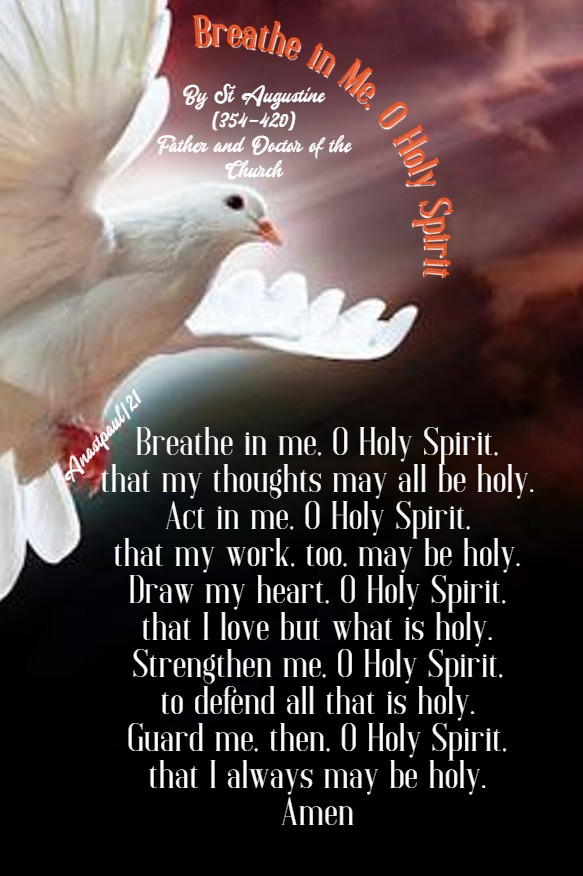
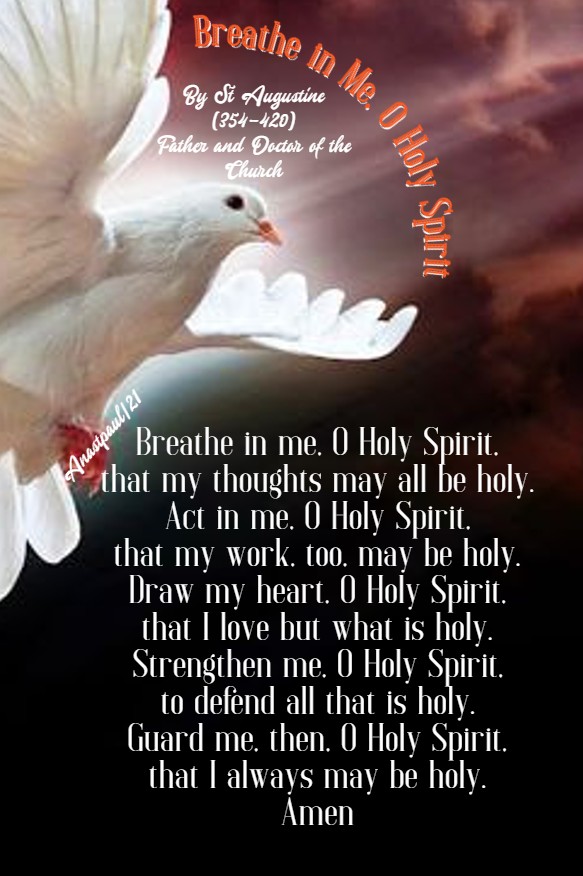
Breathe in Me, O Holy Spirit By St Augustine (354-420)
Breathe in me, O Holy Spirit, that my thoughts may all be holy. Act in me, O Holy Spirit, that my work, too, may be holy. Draw my heart, O Holy Spirit, that I love but what is holy. Strengthen me, O Holy Spirit, to defend all that is holy. Guard me, then, O Holy Spirit, that I always may be holy. Amen
St Francis Caracciolo CRM (1563-1608) Priest, Co-Founder of the Congregation of the Clerics Regular Minor with Venerable John Augustine (1551-1587) the “Adorno Fathers,” Confessor, Apostle of the Eucharistic Adoration. His body was given enough preparation for a long journey to Naples. Truly, God has left His own sign on him. When the body was lanced, the blood spouted a red and scented fluid and his vital organs were incorrupt. Around his heart were printed the words of the Psalm: “The zeal of your house consumes me” (Ps 69:10). Wow!: https://anastpaul.com/2020/06/04/saint-of-the-day-4-june-saint-francis-caracciolo-crm-1563-1608/
St Aldegrin of Baume St Alexander of Verona St Alonio St Aretius of Rome Bl Boniface of Villers St Breaca of Cornwall St Buriana of Cornwall St Christa of Sicily St Clateus of Brescia St Cornelius McConchailleach St Croidan St Cyrinus of Aquileia St Dacian of Rome St Degan St Edfrith of Lindisfarne St Elsiar of Lavedan St Ernin of Cluain Bl Francis Ronci Bl Margaret of Vau-le-Duc St Medan Bl Menda Isategui St Metrophanes of Byzantium St Nennoc St Nicolo of Sardinia St Optatus of Milevis
St Petroc of Cornwall (Died c 594) Abbot St Quirinus of Croatia St Quirinus of Tivoli St Rutilus of Sabaria Saturnina of Arras St Trano of Sardinia St St Walter of Fontenelle Walter of Serviliano
Martyrs of Cilicia – 13 Saints: A group of 13 Christians who were Martyred together. The only details about them that have survived are their names – • Cama• Christa• Crescentia• Eiagonus• Expergentus• Fortunus• Italius • Jucundian• Julia• Momna• Philip• Rustulus• Saturnin They were martyred in in Cilicia, Asia Minor (in modern Turkey), date unknown
Martyrs of Nyon – 41 Saints: A group of 41 Christians Martyred together for refusing to sacrifice to imperial Roman idols. We know the names of some but no other details. • Amatus• Attalus• Camasus• Cirinus• Dinocus• Ebustus• Euticus• Eutychius • Fortunius• Galdunus• Julia• Quirinus• Rusticus• Saturnina• Saturninus • Silvius• Uinnita• Zoticus Martyred by being beheaded in Noviodunum (modern Nyon, Switzerland).
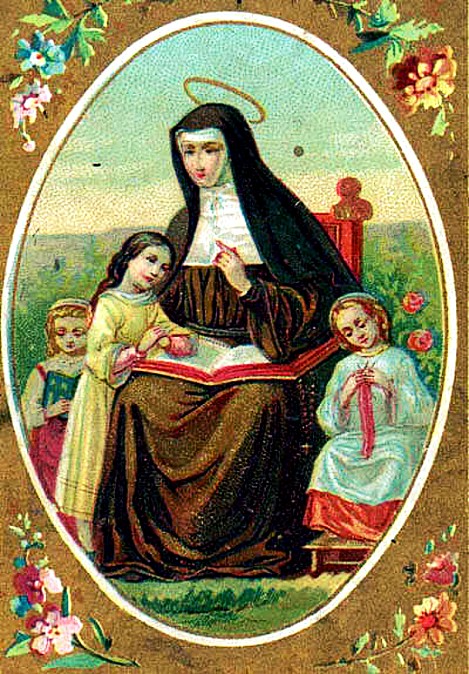
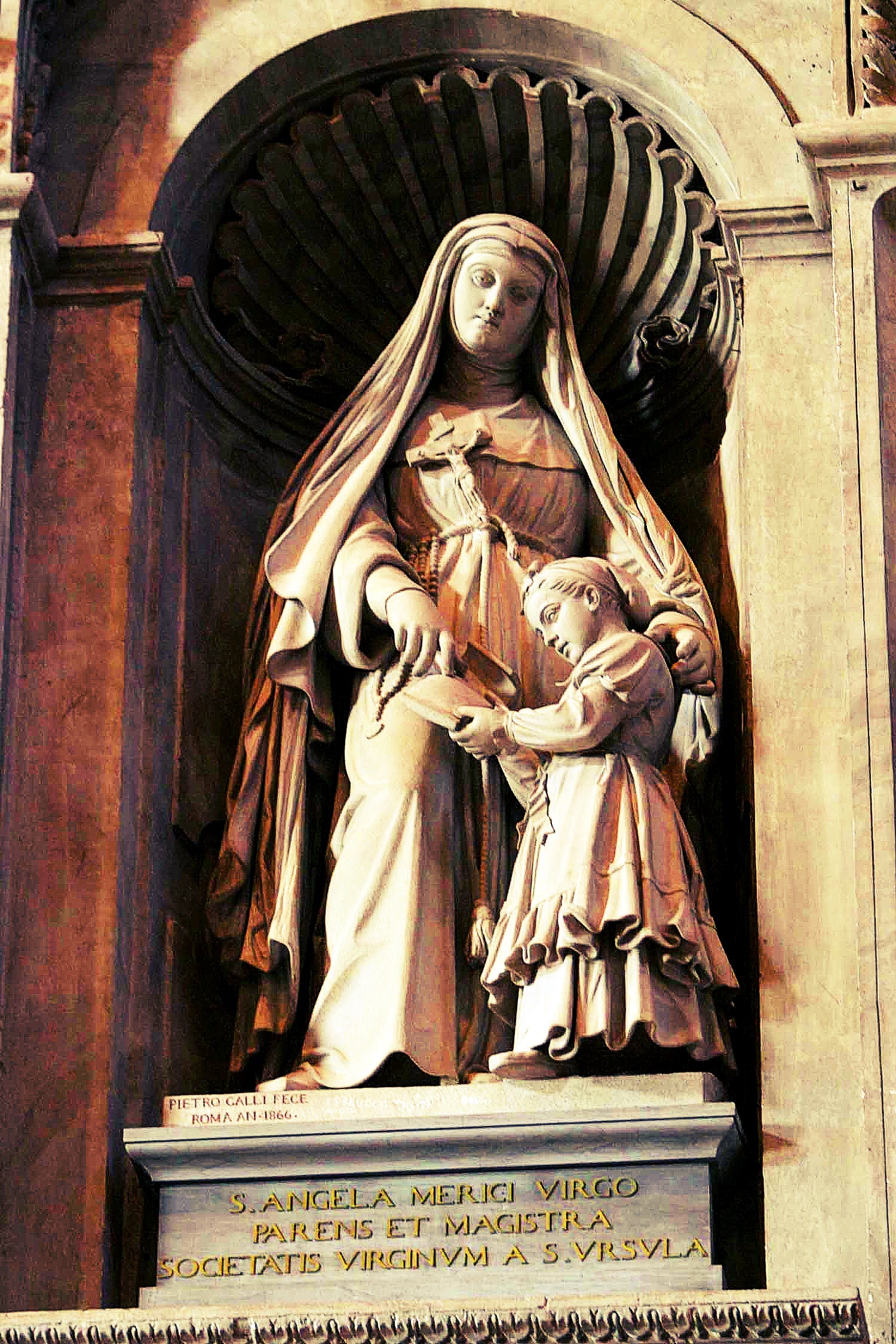
Saint of the Day – 1 June – Saint Angelica de Merici TOSF (1474-1540) Virgin, Founder the Company of St Ursula, later called the Ursulines, Third Order Franciscan, Mystic, Apostle of the poor, sick and needy, Teacher, Penitent and Ascetic. Patronages – sickness, handicapped people, loss of parents, courage,
Angela de Merici was born of virtuous parents at Decenzano, a town in the Diocese of Verona, near lake Benago, in the Venetian territory. From her earliest years, she kept the strictest guard over the lily of her virginity, which she had resolved should never be taken from her. She had a thorough contempt for those outward deckings, on which so many women set their hearts. She purposely disfigured the beauty of her features and hair, that she might find no favour, save with the Spouse of our souls.
Whilst yet in the bloom of youth, she lost her parents, whereupon, she sought to retire into a desert, that she might lead a life of penance. Being prevented by an uncle, she fulfilled, at home, what she was not permitted to do in a wilderness. She frequently wore a hairshirt and took the discipline. She never ate flesh-meat, except in case of sickness, she never tasted wine, except on the Feasts of our Lord’s Nativity and Resurrection and, at times, would pass whole days without taking any food at all.
She spent much time in prayer and exceedingly little in sleep and that little, on the ground. The devil having once appeared to her in the form of an angel of light, she at once detected his craft, and put him to flight. At length, having resigned her right to the fortune left her by her parents, she embraced the Rule of the Third Order of St. Francis, received the habit and united evangelical poverty, to the merit of virginity.
She showed her neighbour every kind office in her power and gave to the poor a portion of her own food, which she procured by begging. She gladly served the sick. She gained the reputation of great sanctity in several places, which she visited, either that she might comfort the afflicted, or obtain pardon for criminals, or reconcile them that were at variance, or reclaim sinners from the sink of crime.
She had a singular hungering after the Bread of Angels, which she frequently received and such was the vehemence of her love of God, that she was often in a state of ecstacy. She visited the Holy Places of Palestine with extraordinary devotion. During her pilgrimage, she lost her sight on landing on the isle of Candia but recovered it when leaving. She also miraculously escaped shipwreck and falling into the hands of barbarians. She went to Rome, during the Pontificate of Pope Clement the Seventh, in order to venerate the firm Rock of the Church and to gain the great Jubilee Indulgence. The Pope having had an interview with her, he at once discovered her sanctity and spoke of her to others in terms of highest praise, nor would he have allowed her to leave the City, had he not been convinced that heaven called her elsewhere.
Having returned to Brescia, she took a house near the Church of Saint Afra. There, by God’s command, which was made known to her by a voice from heaven and by a vision, she instituted a new society of Virgins under a special discipline and holy rules, which she herself drew up. She put her Institute under the title and patronage of Saint Ursula, the brave leader of the army of virgins.
She also foretold,, shortly before her death, that this Institute would last to the end of the world. At length, being close upon seventy years of age, laden with merit, she took her flight to Heaven and in the year 1540, on 27 January 27. Her corpse was kept for thirty days before being put in the grave and preserved the flexibility and appearance of a living body. It was laid in the Church of Saint Afra, amidst the many other Relics wherewith that Church is enriched.
Many miracles were wrought at her tomb. The rumour of these miracles spread not only through Brescia and Decenzano but also in other places. The name of Blessed was soon given to Angela and her image used, to be put on the Altars of St Charles Borromeo. A few years after Angela’s death, it was affirmed, that she was worthy of Canonisation. Clement the Thirteenth ratified and confirmed the devotion thus paid her by the Faithful, which had already received the approbation of several Bishops and the encouragement of several Indults of Sovereign Pontiffs. Finally, after several new miracles had been juridically proved, Pius the Seventh enroled Angela in the list of holy Virgins, in the solemn Canonisation celebrated in the Vatican Basilica, on the 24th of May, in the year 1807.
“Angela realised the whole meaning of her beautiful name. In a mortal body, she possessed the purity of the blessed Spirits and imitated their celestial energy by the vigorous practice of every virtue. This heroine of grace, trampled beneath her feet, everything that could impede her heavenward march.” – Abbot Dom Prosper Guéranger OSB (1805-1875)
Our Morning Offering – 29 May – Sunday within the Octave of Ascension
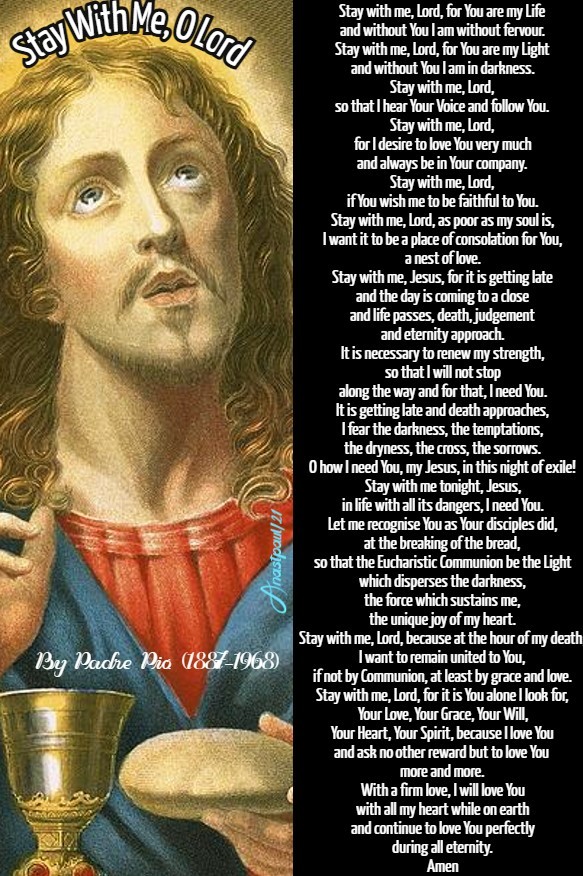
Stay With Me, O Lord By Padre Pio (1887-1968)
Stay with me, Lord, for You are my Life and without You, I am without fervour. Stay with me, Lord, for You are my Light and without You, I am in darkness. Stay with me, Lord, so that I hear Your Voice and follow You. Stay with me, Lord, for I desire to love You very much and always be in Your company. Stay with me, Lord, if You wish me to be faithful to You. Stay with me, Lord, as poor as my soul is, I want it to be a place of consolation for You, a nest of Love. Stay with me, Jesus, for it is getting late and the day is coming to a close and life passes, death, judgement and eternity approach. It is necessary to renew my strength, so that I will not stop along the way and for that, I need You. It is getting late and death approaches, I fear the darkness, the temptations, the dryness, the cross, the sorrows. O how I need You, my Jesus, in this night of exile! Stay with me tonight, Jesus, in life with all its dangers, I need You. Let me recognise You as Your disciples did, at the breaking of the bread, so that the Eucharistic Communion be the Light which disperses the darkness, the force which sustains me, the unique joy of my heart. Stay with me, Lord, because at the hour of my death, I want to remain united to You, if not by Communion, at least by grace and love. Stay with me, Lord, for it is You alone I look for, Your Love, Your Grace, Your Will, Your Heart, Your Spirit, because I love You and ask no other reward but to love You more and more. With a firm love, I will love You with all my heart while on earth and continue to love You perfectly, during all eternity. Amen.
St Aigulf of Bourges St Atto of Pistoia St Aureliano of Pavia St Ausonius of Angoulême St Baoithin of Ennisboyne St Basiliscus of Pontus (Died c 310) Bishop
St Boethian of Pierrepont St Castus the Martyr St Conall of Inniscoel Bl Diego de Baja Bl Dionisio Senmartin St Emilius the Martyr St Faustinus the Martyr St Francisco Salinas Sánchez St Fulgencio of Otricoli Bl Fulk of Castrofurli Bl Giacomo Soler Bl Giusto Samper St Helen of Auxerre
St Lupo of Limoges St Marcian of Ravenna St Margaret of Hulme Bl Pedro of the Assumption St Quiteria St Romanus of Subiaco St Timothy the Martyr St Venustus the Martyr
Martyred in Japan John Baptist Machado Matthias of Arima Pedro of the Assumption
Martyred in the Spanish Civil War: • Blessed Francisco Salinas Sánchez • Blessed José Quintas Durán
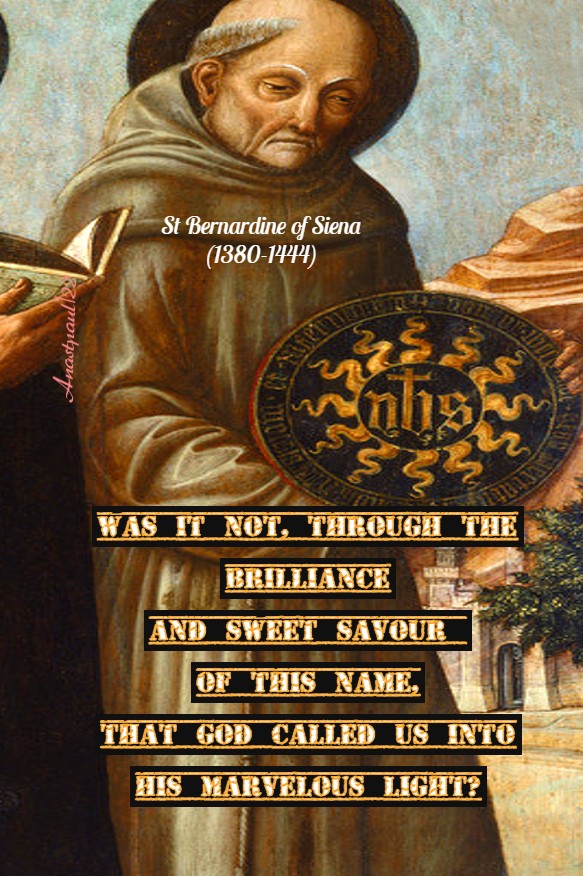
Quote/s of the Day – 20 May – The Memorial of St Bernadine of Siena OFM (1380-1444) Confessor
“Was it not through the brilliance and sweet savour of this Name, that God called us into His marvelous light?”“
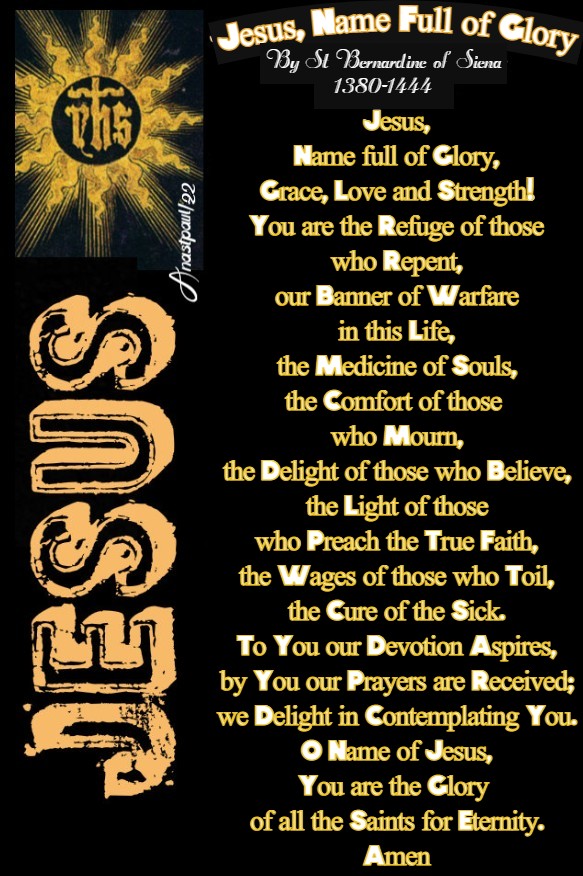
Jesus, Name Full of Glory By St Bernardine of Siena (1380-1444)
Jesus, Name full of Glory, Grace, Love and Strength! You are the Refuge of those who repent, our Banner of Warfare in this life, the Medicine of souls, the Comfort of those who mourn, the Delight of those who believe, the Light of those who preach the True Faith, the Wages of those who toil, the Cure of the sick. To You our devotion aspires, by You our prayers are received; we delight in contemplating You. O Name of Jesus, You are the Glory of all the Saints for Eternity. Amen
St Abercius Bl Albert of Bologna St Alexander of Edessa St Althryda St Anastasius of Brescia St Aquila of Egypt Bl Arnaldo Serra and Companions St Asterius of Edessa St Austregisilus of Bourges (c 551-624) Bishop St Basilla of Rome St Baudelius of Nîmes St Codrato
St Plautilla of Rome St Protasius Chong Kuk-bo St Rafaél García Torres St Talaleo of Egea St Thalalaeus of Edessa St Theodore of Pavia St Tomás Valera González
St Crispin of Viterbo St Cyriaca of Nicomedia and Companions St Cyril of Trèves St Dunstan of Canterbury (909-988) Bishop of London, Worcester then Archbishop of Canterbury St Evonio of Auvergne
Quote/s of the Day – 18 May – The Memorial of St Venantius (Died c 250) Martyr – Wisdom 5:1-5, John 15:1-7
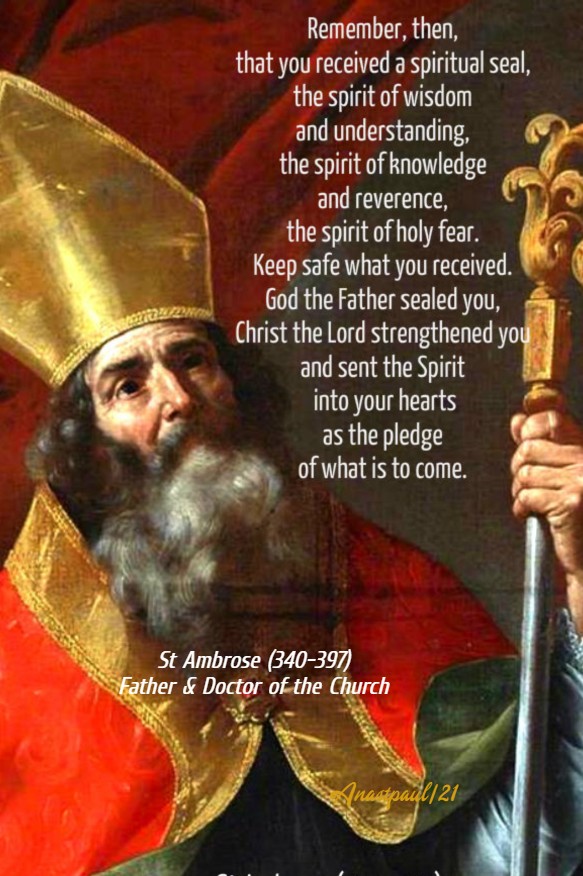
“Remember, then, that you received a spiritual seal, the spirit of wisdom and understanding, the spirit of knowledge and reverence, the spirit of holy fear. Keep safe what you received. God the Father sealed you, Christ the Lord strengthened you and sent the Spirit into your hearts as the pledge of what is to come.”
St Ambrose (340-397) Father & Doctor of the Church
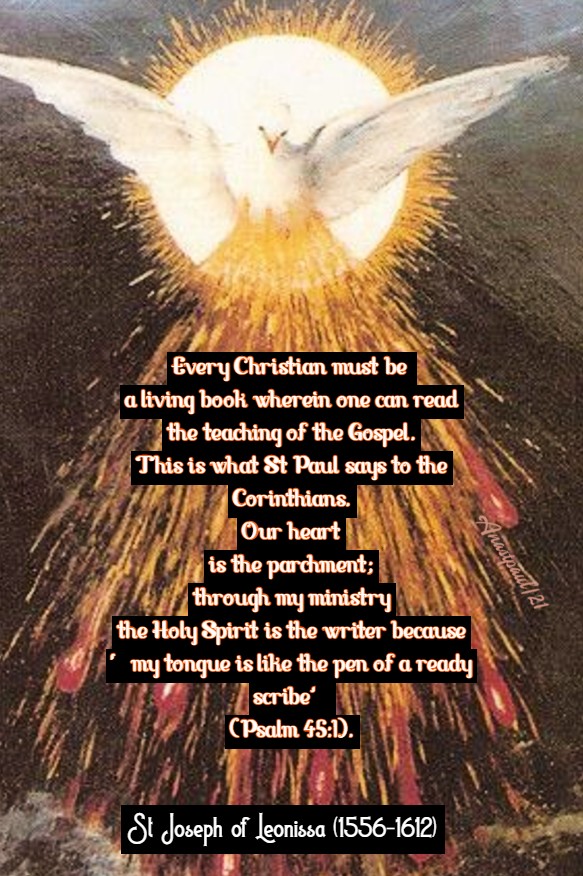
“Every Christian must be a living book wherein one can read the teaching of the Gospel. This is what St Paul says to the Corinthians. Our heart is the parchment; through my ministry the Holy Spirit is the writer because ‘my tongue is like the pen of a ready scribe’ (Psalm 45:1).”
St Joseph of Leonissa OFM CAP (1556-1612)
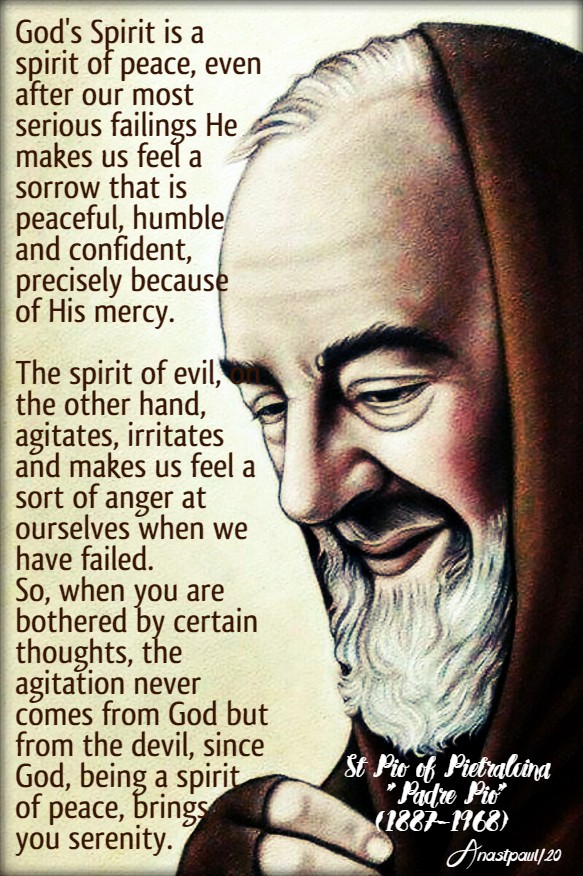
“God’s Spirit is a spirit of peace, even after our most serious failings He makes us feel a sorrow that is peaceful, humble and confident, precisely because of His mercy.
The spirit of evil, on the other hand, agitates, irritates and makes us feel a sort of anger at ourselves when we have failed. So, when you are bothered by certain thoughts, the agitation never comes from God but from the devil, since God, being a spirit of peace, brings you serenity.”
St Pio of Pietralcina “Padre Pio” (1887-1968)
( Letter 549)
Breathe in Me, O Holy Spirit By St Augustine (354-420) Father and Doctor of the Church
Breathe in me, O Holy Spirit, that my thoughts may all be holy. Act in me, O Holy Spirit, that my work, too, may be holy. Draw my heart, O Holy Spirit, that I love but what is holy. Strengthen me, O Holy Spirit, to defend all that is holy. Guard me, then, O Holy Spirit, that I always may be holy. Amen
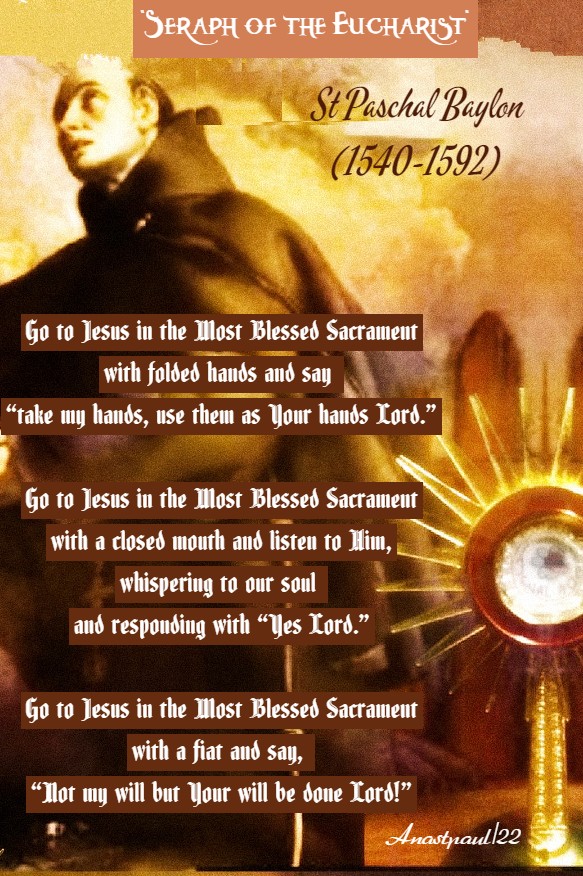
Quote/s of the Day – 17 May – The Memorial of St Paschal Baylon OFM (1540-1592) Confessor, “Seraph of the Eucharist,” “Saint of the Blessed Sacrament,” “Servant of the Blessed Sacrament.” Franciscan Lay Brother.
“Go to Jesus in The Most Blessed Sacrament with folded hands and say “take my hands, use them as Your hands Lord.”
“Go to Jesus in the Most Blessed Sacrament with a closed mouth and listen to Him, whispering to our soul and responding with “Yes Lord.”
“Go to Jesus in the Most Blessed Sacrament with a fiat and say, “Not my will but Your will be done Lord!”
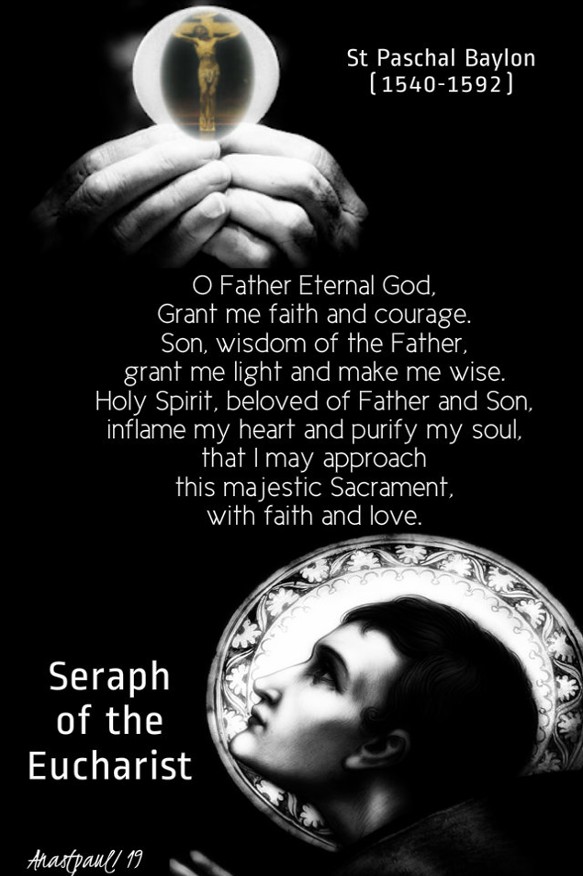
“O Father Eternal God, Grant me faith and courage. Son, wisdom of the Father, grant me light and make me wise. Holy Spirit, beloved of Father and Son, inflame my heart and purify my soul, that I may approach this majestic Sacrament, with faith and love.”
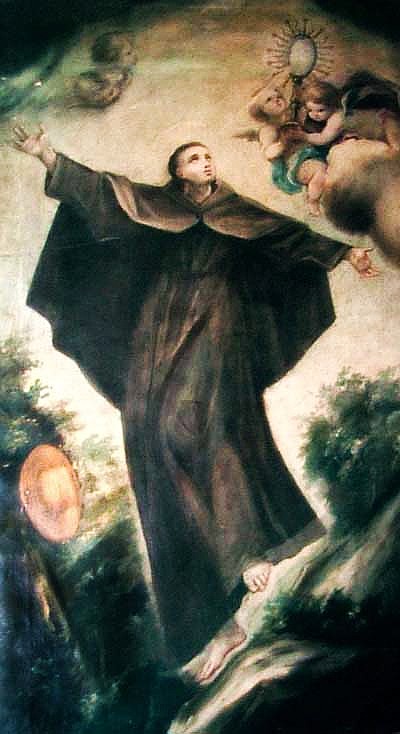
Saint of the Day – 17 May – St Paschal Baylon OFM (16 May 1540 – 17 May 1592) Spanish Lay Brother “Seraph of the Eucharist,” “Saint of the Blessed Sacrament,” “Servant of the Blessed Sacrament,” Franciscan Lay Brother, Mystic…….. Also known as – Pasquale, PascaL. Paschal was Beatified on 29 October 1618 by Pope Paul V and Canonised on 16 October 1690 by Pope Alexander VIII. Pope Leo XIII[7] proclaimed the saint as the “Seraph of the Eucharist” as well as the Patron of Eucharistic congresses and affiliated associations.
The Roman Martyrology states: “At Villa Real near Valencia in Spain, Saint Pasquale Baylon, a religious of the Order of Friars Minor, who, always showing himself caring and kind to everyone, constantly venerated the Mystery of the Most Holy Eucharist with fervent love.”
Childhood and early years: Let’s start by saying that the Spanish name Pasquale, is of Christian origin and is also widely used in the feminine – Pasqualina. It was given to children born on Easter Sunday but its distant origins are Jewish (Pesach = passage) meaning the passage of the Jewish people through the Red Sea and the passage of the Angel of the Lord, who saved, the Jewish firstborns, by marking their houses with the blood of the lamb, to distinguish them from the Egyptians, who were destined for death, in the last plague of Egypt. However, this is not the case with Pasquale Baylon, who was born on 16 May 1540, the day of Pentecost (which is also called in Spanish, “Pascua de Pentecostés.” From his childhood, he showed a marked devotion to the Holy Eucharist, which would later become the centre of his entire religious life. He was a shepherd first of the family’s flock, then in the service of other masters. The solitude of the fields favoured meditation, his desire for continuous prayer. He also began to mortify his young body with long fasts and painful flagellations.
Franciscan vocation: At the age of 18 he asked to join the Convent of Santa Maria di Loreto, of the Reformed Franciscans called Alcantarini by St Peter of Alcantara, reformer of the Order. But he was not accepted, perhaps due to his young age. In order to remain in the vicinity of the Convent, he entered the service, again as a shepherd, of the very wealthy landowner, Martín García. Admired by this young employee, he proposed to adopt Paschal, sin order to make him his heir. However, Paschal refused this offer as he was more determined than ever to enter among the Friars of St. Francis. In 1560, he was admitted to the Convent of St Maria di Loreto, where he made his religious profession on 2 February 1564. He never wanted to ascend to the Priesthood, despite the favourable opinion of his superiors because he did not feel worthy.
Friar, Porter, Cook, gifted with holy wisdom: For years Paschal fulfilled the various services necessary to the convent, especially as a Porter, a task that he always carried out with great goodness. Although so young, he acquired a reputation for holiness, for his Christian virtues but also for the miraculous deeds attributed to him. He was truly “Pentecostal,” that is, favoured by the extraordinary gifts of the Holy Spirit, including that of wisdom: he could read and write but he was not very cultured. Still, he was constantly asked for advice by many illustrious persons
On mission among the Calvinists: In 1576, even the Provincial Father of the Alcantarins of Spain, having to communicate urgently with the Father General residing in Paris, thought of sending Brother Paschal with the letter, knowing full well the serious difficulties of the journey, for the crossing of some French Provinces, which at that time were dominated by Calvinists. In fact, the Friar was made the object of continuous derision, insults, beatings. In Orléans, he too was in danger of death by stoning! There, Paschal had disputed with the Calvinist in regard to the Holy Eucharist debunking their false arguments.
“São Pascoal Bailão adora a Eucaristia” – Convento de São Pedro de Alcântara, Arenas de San Pedro (Espanha) – Foto: Francisco Lecaros
Seraph of the Eucharist: On returning from his delicate and dangerous mission, Paschal composed a small book of definitions and sentences on the Real Presence of Jesus in the Blessed Sacrament and, on the divine power transmitted to the Roman Pontiff. As evidence of this great devotion, for which he was nicknamed “Seraph of the Eucharist,” we have received his personal thoughts and prayers, which he added to the collections of writings on Eucharistic themes.
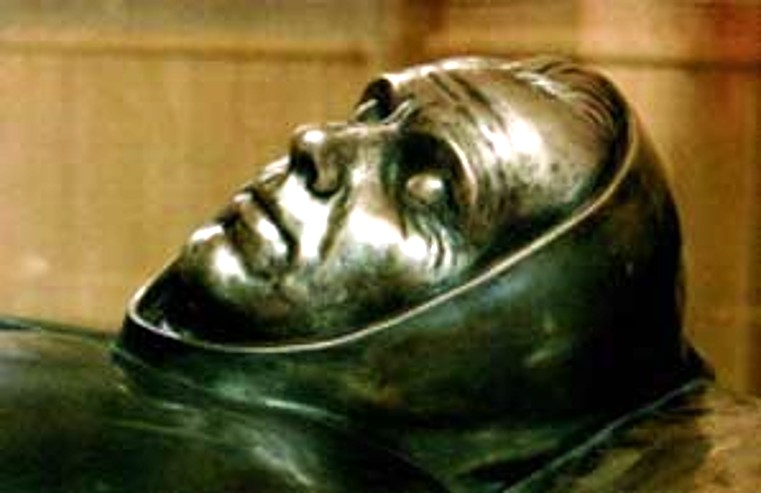
Death: In order to acquire greater perfection, Paschal underwent continuous and heavy mortifications and increasingly numerous penances, to the point that his health was now compromised. On 17 May 1592, the day after his fifty-second birthday, Paschale died at the Convent of the Rosary in Villarreal, near Valencia. As had happened on the day of his birth, it was Pentecost! The funeral saw the participation of a crowd of faithful, who wanted to pay homage of heartfelt veneration to the body of the humble lay Franciscan Brother, whose holiness, fand miracles were well-known throughout the Catholic world.
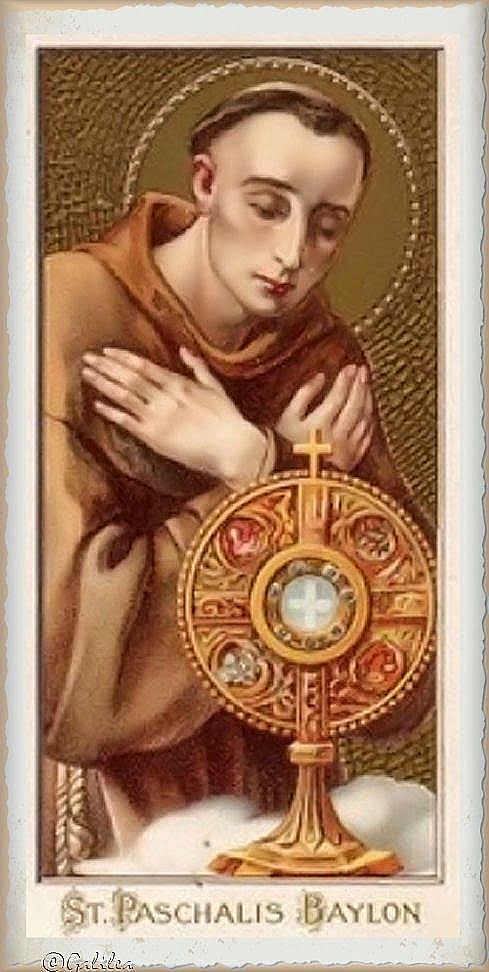
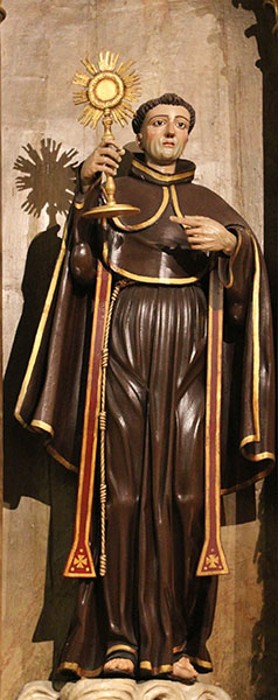
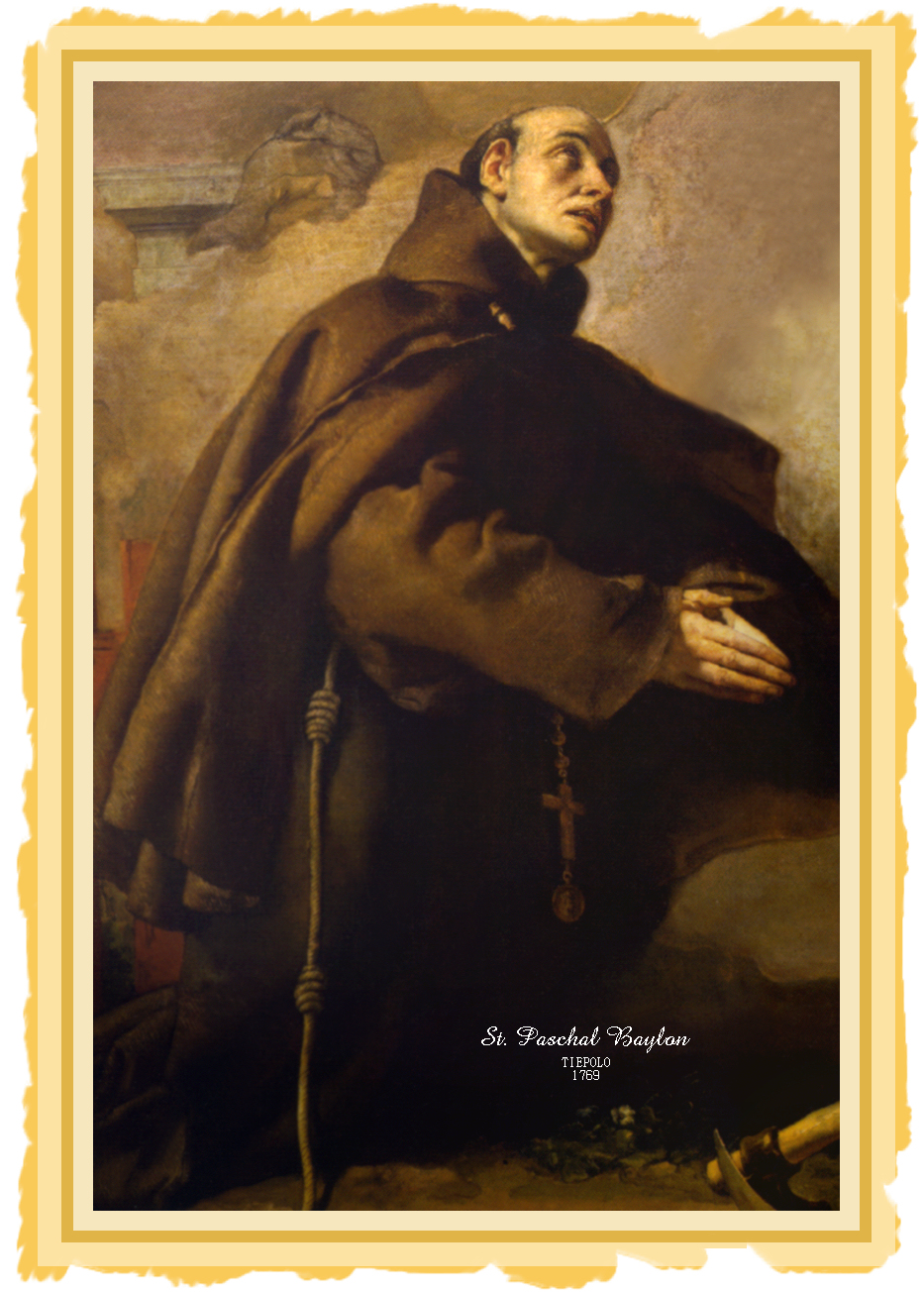
Veneration and iconography: He was particularly revered in Naples, subject to Spanish domination. The cult was concentrated in two large and famous Franciscan Convents, once belonging to the Alcantarini but still existing – St Paschal a Chiaia and St Paschal Granatello. His name was given to generations of children, especially in Southern Italy. He was Beatified 26 years after his death, on 29 October 1618, by Pope Paul V and proclaimed a Saint on 16 October 1690 by Pope Alexander VIII. His remains, which were venerated with great devotion in Villarreal, were desecrated and dispersed during the Spanish Civil War; some were later recovered and returned to the City in 1952. Over the centuries, his passionate devotion to the Eucharist have inspired the many artists who have depicted him. Paschal usually appears in the act of adoring the Blessed Sacrament in a Monstrance.
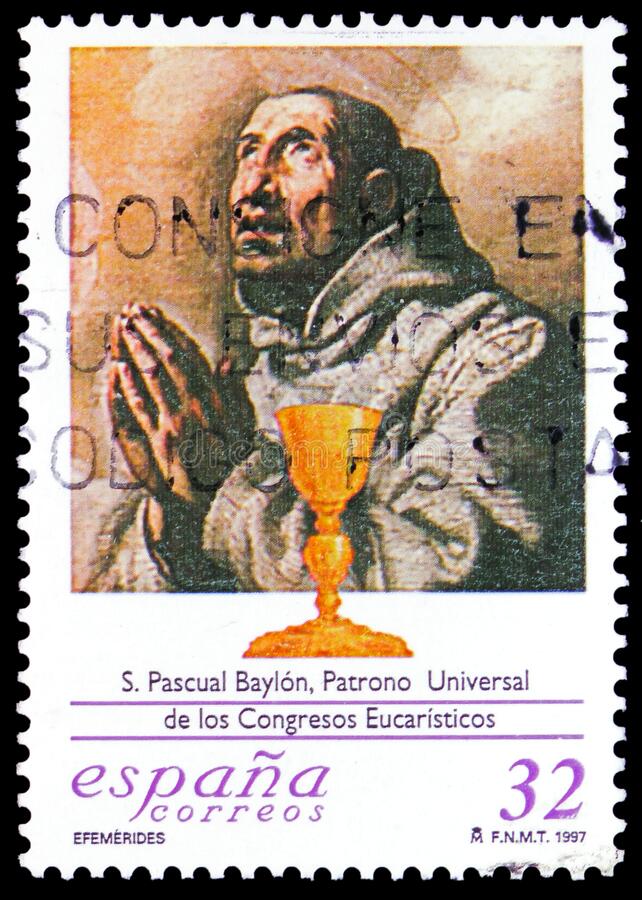
Official and traditional Patronages: Pope Leo XIII, on 28 November 1897, proclaimed him Patron of Eucharistic Congresses and Associations. Popularly he is also considered Patron of cooks and pastry chefs, on the basis of his humble services carried out in the Convent – according to tradition, Paschal is the creator of the famous desert called Zabaglione, whose name evidently derives from him. Probably due to a resemblance in the sound of Paschal’s Surname (“St Paschal Baylonne”). Paschal is finally invoked by single women looking for a husband and by women in general.
St Paschal Baylon OFM (1540-1592) “Seraph of the Eucharist,” “Saint of the Blessed Sacrament,” “Servant of the Blessed Sacrament.” Franciscan Lay Brother, Mystic…….. A man remarkable for innocence of life and the spirit of penance. Pope Leo XIII declared him the heavenly patron of Eucharistic Congresses and Societies and Apostolates, formed in honour of the Most Blessed Sacrament. About this beautiful Saint: https://anastpaul.wordpress.com/2018/05/17/saint-of-the-day-17-may-st-paschal-baylon-o-f-m-1540-1592-the-seraph-of-the-eucharist/
St Heraclius of Noviodunum Bl Ivan Ziatyk St Madron of Cornwall St Maildulf of Malmesbury St Maw
St Paul of Noviodunum St Peter Lieou St Rasso of Grafrath St Restituta of Carthage St Silaus of Lucca St Solochanus of Chalcedon St Thethmar St Victor Roma
Martyrs of Alexandria – 3 Saints: Three Christians Martyred together; no details about them have survived except their names: Adrio, Basilla and Victor. 4th century Alexandria, Egypt.
Martyrs of Nyon: A group of Christians Martyred together in the persecutions of Diocletian. We know little more than three of their names: Aquilinus, Heradius and Paul. 303 at Noyon, Switzerland.
Our Morning Offering – 16 May – “The Month of the Blessed Virgin Mary”
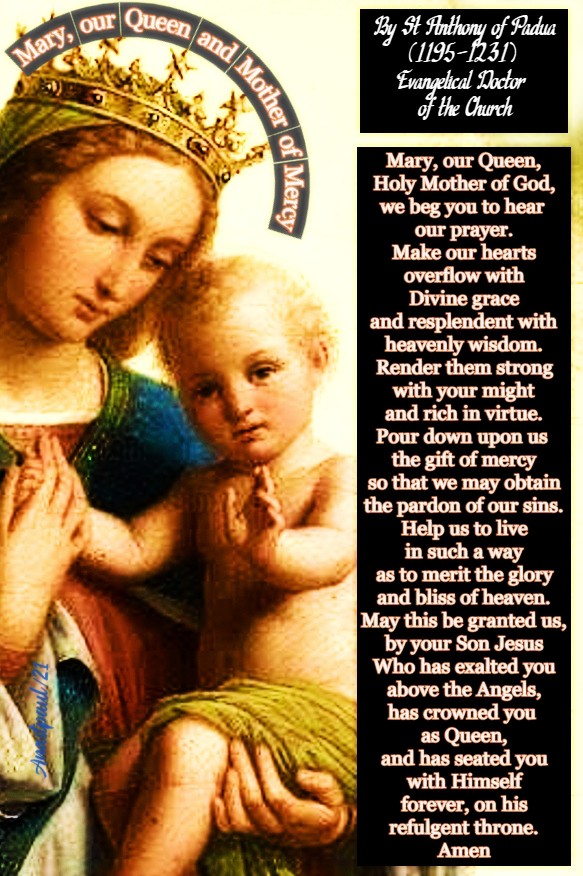
Mary, our Queen and Mother of Mercy By St Anthony of Padua (1195-1231) Evangelical Doctor of the Church
Mary, our Queen, Holy Mother of God, we beg you to hear our prayer. Make our hearts overflow with Divine grace and resplendent with heavenly wisdom. Render them strong with your might and rich in virtue. Pour down upon us the gift of mercy so that we may obtain the pardon of our sins. Help us to live in such a way as to merit the glory and bliss of Heaven. May this be granted us, by your Son Jesus Who has exalted you above the Angels, has crowned you as Queen, and has seated you with Himself forever, on his refulgent throne. Amen.
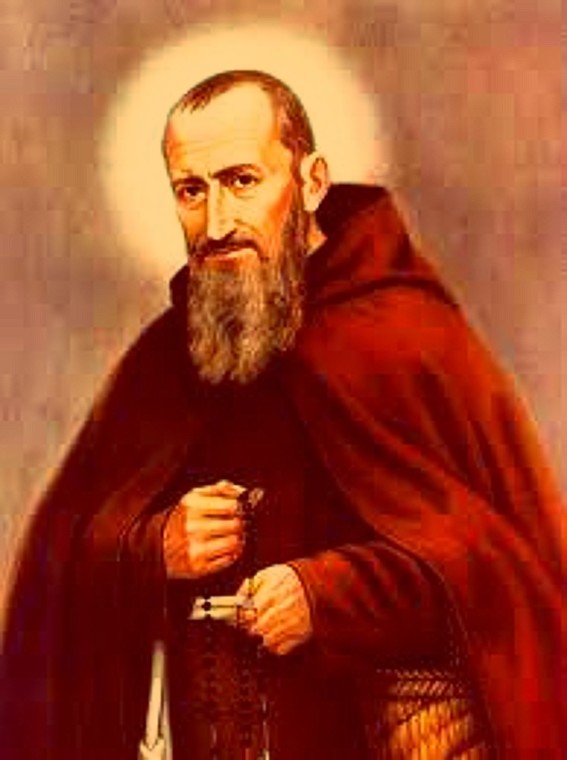
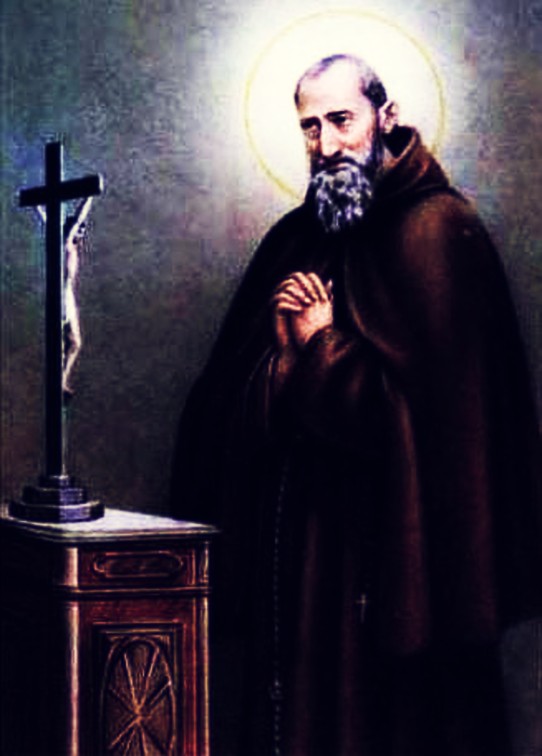
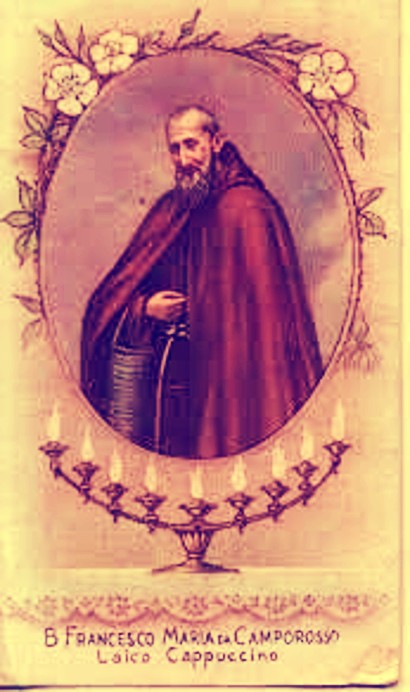
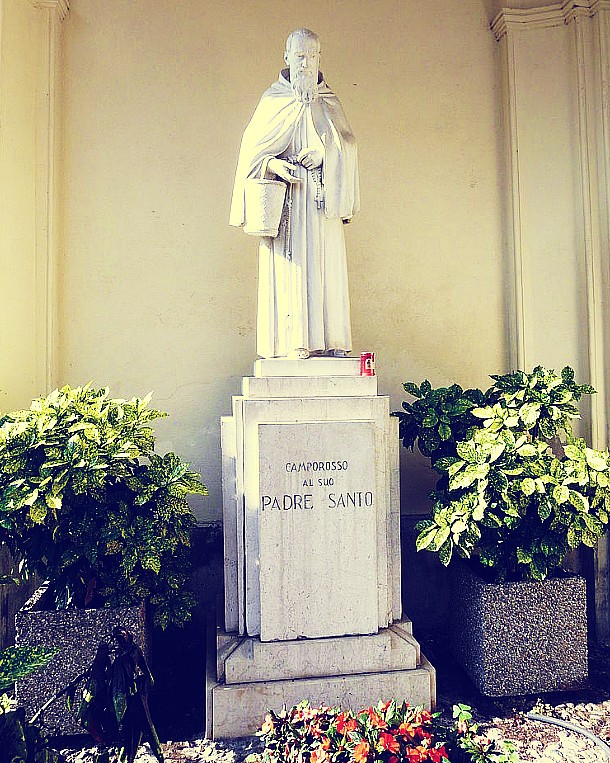
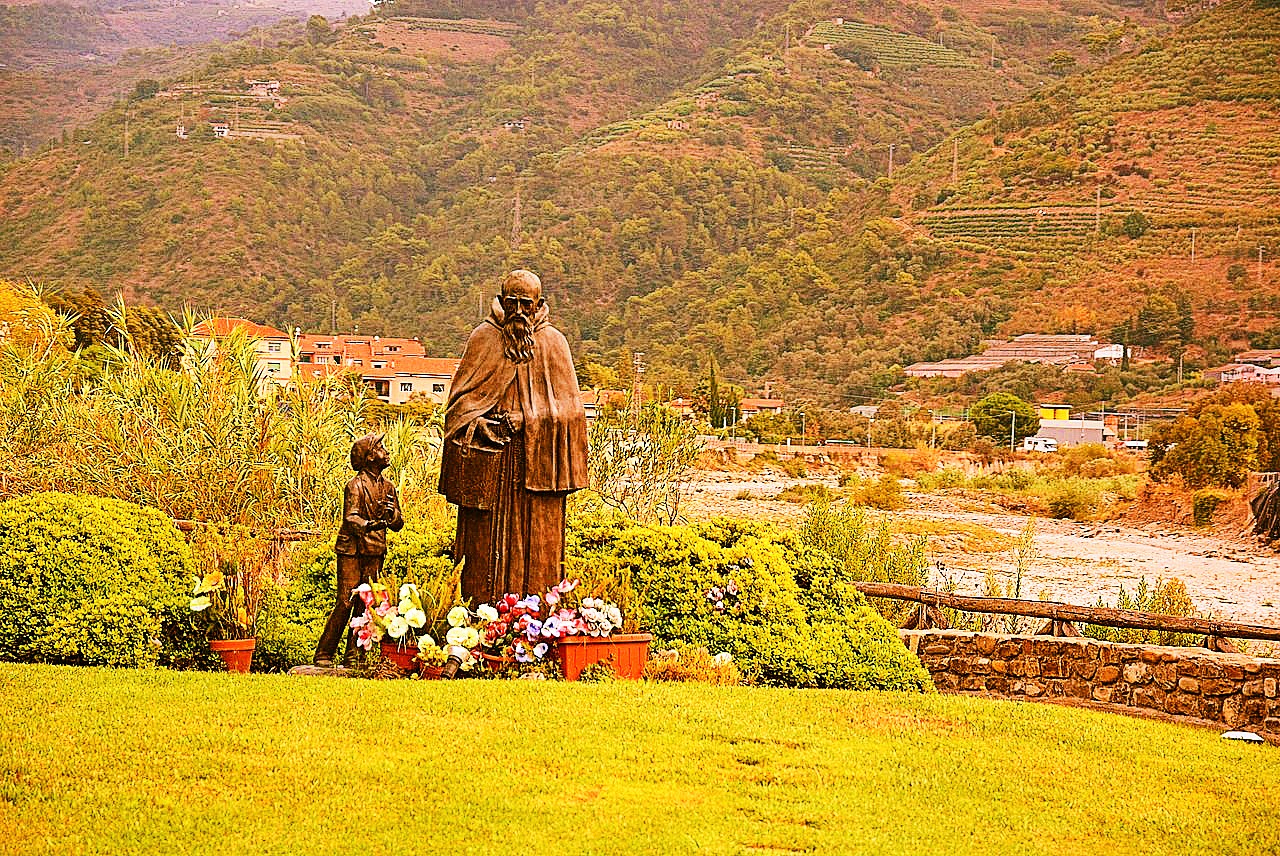
Saint of the Day – 11 May – St Francesco Maria da Camporosso OFM Cap (1804-1866) Lay Friar of the Friars Minor Capuchin Branch, “Quaestor” or Alms collector, as well as humble services such as Infirmarian, Cook, Gardener, Sacristan, gentle carer of the Poor, the sick, the imprisoned, the needy of all kinds, both spiritual and material. Francesco was gifted with immense graces to touch the hearts of all, both small and great and to listen and advise, often blessed with the gifts of prophecy and mind-reading. Born Giovanni Evangelista Croese on 27 December 1804 at Camporosso, Liguria, Kingdom of Sardinia. Italy and died on 17 September 1866 (aged 61) at Genoa, Italy. Patronage – Camporosso. Also known as St Frances Mary of Camporosso, Giovanni Croese, Antonio.
Giovanni Croese was born on 27 December 1804 in the small village of Camporosso near the town of Ventimiglia on the west coast of the Italian Riviera. He was the fourth of the five children of Anselmo Croese and Maria Antonia Gazzo, farm workers. ,Giovanni received his Baptism on 29 December in his local Parish Church and was named Giovanni Evangelista.
He attended school for a little while and was a less than enthusiastic student. So at seven years of age, Giovanni began to work with the family. He used to lead a small cow to pasture, a guarantee of something to eat for the family. He helped by working in the fields – small parcels of land, where the family could produce some oil, wine and vegetables. Marian devotion was strong in the family. When he was a little more than ten years old, he fell seriously ill. He was taken on pilgrimage to the Sanctuary of Our Lady of the Lake, near Nice. This impressed him deeply and he began to visit the Franciscan Friars and knew one of the Friars, Br. Giovanni, quite well.
On 14 October 1822, aged nearly 18, he entered the Conventual Friary at Sesti Ponente as a tertiary, with the name Br Antonio. Life here, however, was more comfortable than at home and the young man was dissatisfied. He longed for absolute poverty and for deeper meditative prayer. He decided then, to take the Capuchin habit. Unable to get the consent of his Superiors for a transfer, with the agreement of Br Alessandro Canepa da Genova, a Capuchin he knew, he fled Sestri one morning in late autumn. He was accepted at San Francesco di Volti, a Capuchin Hermitage where he received the name Br Francesco Maria. He remained a postulant for nearly three years. He was outstanding for his spirit of charity, even to the point of giving his food to the poor and contenting himself with the leftovers, as one witness testified. However, such deeds were not new to him. Since he was little, he was used to them. It is said that during a trip to Mentone, where his father was trying to set up a small business, he gave away a newly acquired piece of his clothing to a boy his age, dressed in rags. In a temper, his father gave him a sound slap. The young Giovanni replied by offering his other cheek, earning from his father a hug of admiration instead.
The experience at Voltri, in reality, completed that of Sestri. So, at the end of 1825, with the authority of the Vicar Provincial, Antonio da Cipressa, Br Francesco Maria left for the Hermitage of San Barnaba in Genoa, to do his Novitiate year. On 17 December he received the Novice Habit and his master, Br Bernardo da Pontedecimo, had to moderate the young man’s fervour. However, his companions, who shared that experience with him, remembered his goodness and cordiality. He had chosen to be a Lay Friar and would confide later, that, he did so after the example of Saint Francis: “it is preferable to be humble and obedient.”
One year later on 17 December 1826, aged 22, he professed his vows into the hands of Fr Samuel Bocciardo da Genova. He had just turned twenty two but his spiritual maturity convinced the Superiors, to assign him straightaway to the main Friary of the Province, that of the Immaculate Conception in Genoa. He would remain there for the rest of his life.
This Friary was a focal point of many religious and social activities. Apart from the usual Friary observances and apostolates, the Friary also included the Provincial Curia, the Infirmary, the “Lanificio” (a facility for spinning and weaving their own fabrics, traditionally in wool) for the clothing of the Friars, a Pharmacy which also offered health care to the public, the supervision of the public weigh scales and the distribution of firewood from the port bridge of the Immaculate Conception. The new arrival was given various tasks: – firstly, in the office and then, in an initiation to various humble services such as Infirmarian, Cook, Gardener, Sacristan. The processes say that he was “always tireless and calm.”
Almost five years passed uneventfully, but his charity grew ever more refined, so that in 1831 when the old rural Questor, Br Pio da Pontedecimo could no longer continue. Br Francesco Maria became his companion. His vocation and mission that would make him the most famous Questor of his Province was now beginning to take shape. He travelled about the little valley of Bisagno for around two years, visiting the various ‘villas’ of the farm workers. This was a precious apprenticeship that taught him his style of life and one of his ways to relate with the public, with words of faith, patience, charity, humility and devotion.
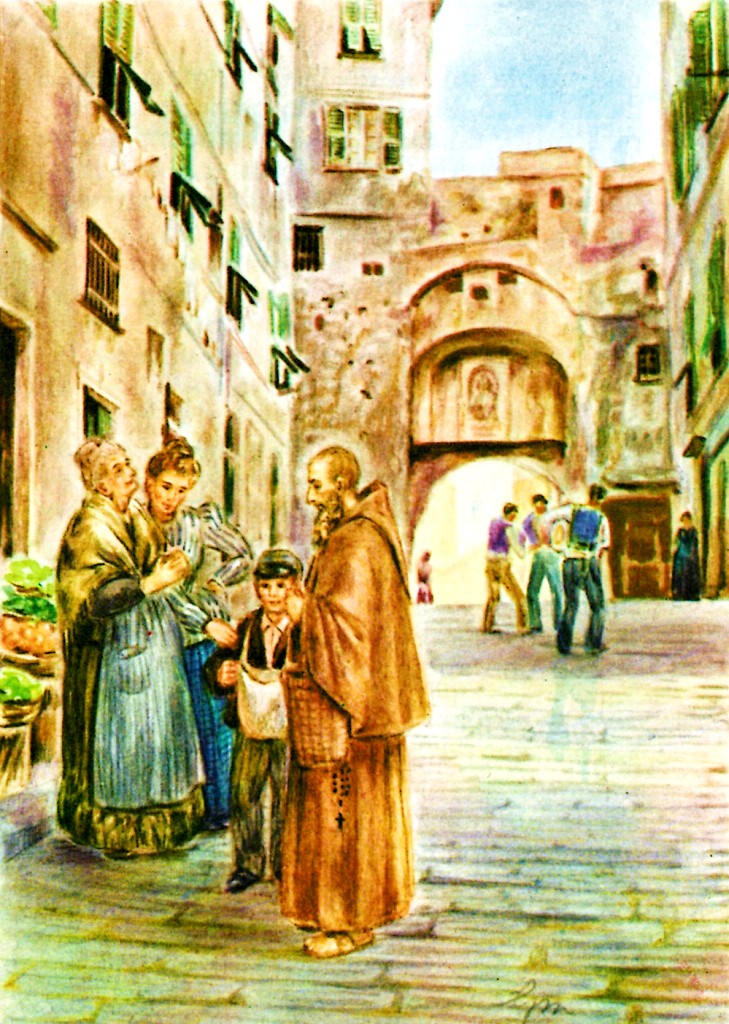
The outstanding results of this rural questing, urged the Guardian to entrust to him, the City questing. The people, who had already intuited his holiness, would come to depend upon him. They were so accustomed to see him along the streets of the City, that they felt the need to do so. After attending some Masses very early in the morning, he used to walk through the streets of the City with his sack slung over his shoulder and always with a child carrying a small bag around his neck, to receive alms of money. He chose Saint Felice da Cantalice, as his protector.
However, it would not be possible to tell the story of his life now, without first saying something about the history of the City of Genoa in the nineteenth century. It was fermenting with tensions and hesitant steps of the Risorgimento. He listened to everyone and people of all kinds, whether small or great, entrusted him confidently with their own day-to-day concerns. There are countless ‘fioretti’ (stories) about this, which are often charming and miraculous and that translate realistically and exactly, the scene of this new development of the City. Its main narrators were the mothers at home, the shopkeepers, the sailors, the handlers on the wharves, the little children with their little problems, the merchants who asked advice, the sick whom he went to visit even when requiring great sacrifice on his own part, the incarcerated who sought greater justice. The Lord endowed him with special gifts when he answered questions, that had not yet been asked! or when he spoke of things far away or in the future. His fame spread even outside the City, beyond the little streets that he frequented. With great effort he had to answer the many letters he received, a massive correspondence which has been almost completely lost.
One date, 1840, represents the great regard for his service, even among his confreres. The Superiors made him “Capo-sportella,” or the Chief Questor, the guide and co-ordinator of the group of Questor Friars. He substituted the sack slung over his shoulder with the wattle basket woven according to a uniquely Capuchin technique. This basket he carried on his arm. He was authorised to beg for the more refined kinds of food needed by the sick and could enter the port area where valuable goods were sold.
In the Monastery he organised a storeroom to collect goods there and then distribute them, as well as administer the Mass alms and assign the various Questor Friars to different locations. These new authoritative responsibilities allowed the “holy father,” as the people already called him, usually, to provide more timely and ongoing help, even financial help, for families and individuals in difficulty, especially the families of those who had emigrated to America, or the families of sailors away from home for prolonged periods. Among his benefactors there were also protestants, Jews and non-believers who willingly contributed to his collection, certain that the proceeds would go to the poor. His Superiors also authorised him to do that. They trusted his prudence and balance, a trust that overcame simple objections during the process of Beatification.
The lamp of his piety was replenished, above all, in the silent hours of the night. He sought to find time for his prayer in many ways: – by frequent visits to Churches along the streets, meditations, particularly upon the sufferings of Christ and faithfulness to the liturgical life of the fraternity. And penance – he was extremely strict with himself, sleeping only on bare planks. He was content with a few crusts of bread soaked in hot water and would only wear threadbare and patched habits. He always went about barefoot. For years he only ate once a day and made constant use of a hair shirt and the flail. However, he was ready in obedience and with freedom of spirit, to use greater care, as can be read in the depositions of his process, spreading a truly attractive kind of holiness. With the people, his spirituality assumed that popular touch of immediacy and spontaneity but also, with a missionary ardour, so vibrant in the Church at that time and which he desired so much. “Oh to be young again. I could go with our missionaries!” He also concerned himself with fostering vocations and to set young men, without means, on the road to the Priesthood.
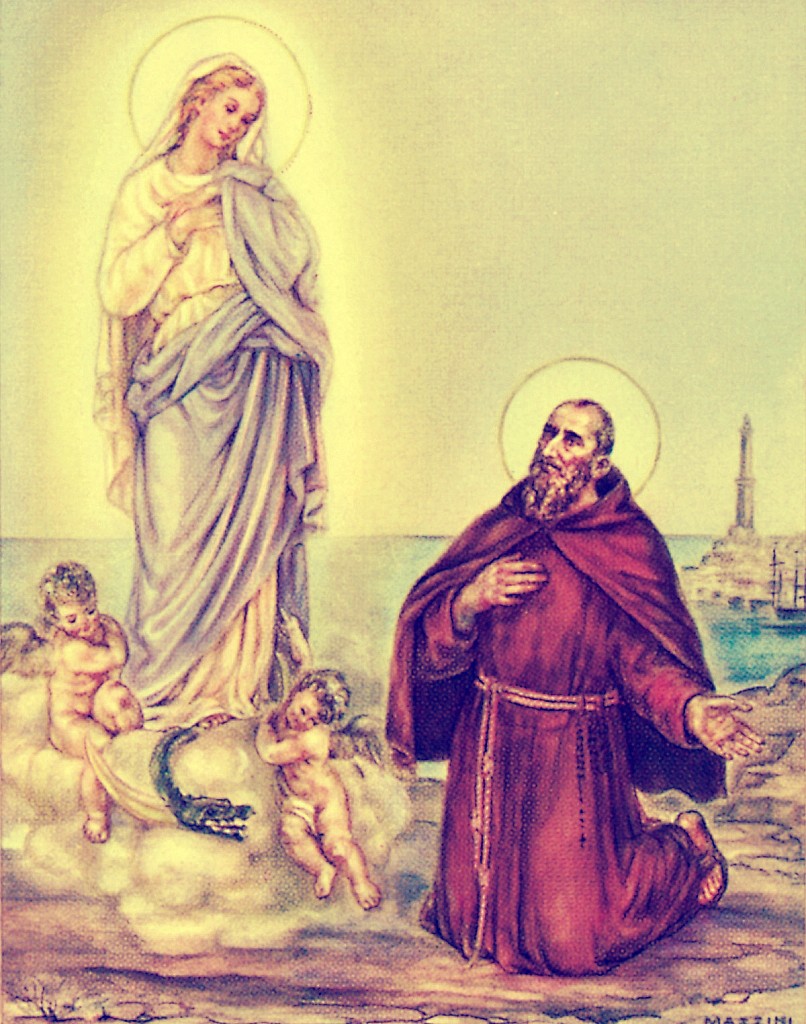
Popular iconography portrays him as tall, thin, austere, inseparable from that basket, and always accompanied by a boy with the offering box. His generous help for the people he met in his daily questing made him well-known in every quarter of the Genoa. In the evening, when he returned to the Friary, he found an ever growing number of people whose needs were well beyond his strength. These he invited to entrust themselves to the intercession of Our Lady. This is a particular aspect of the Francesco Maria’s spirituality that is expressed in the Statue by G Galletti and dedicated to him by the people of Genoa. In it the saint is represented inviting a vagabond, a mother with her dying baby and a dock worker, to invoke the Blessed Virgin.
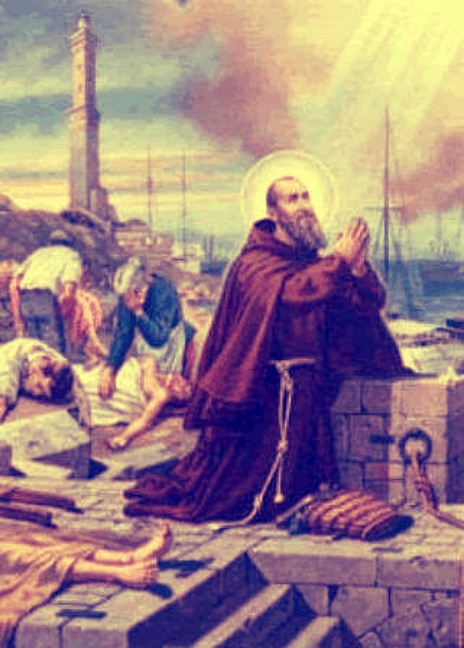
In the final years of his life he employed even harsher mortifications and continued in his commitments, despite a grave infirmity, which affected his legs. His simple spirituality found its focus in the offering of sacrifice, nourished by faith and hope. His letters express this. He either wrote them himself with tremendous effort, or would dictate them. The most representative image of him, traceable to a picture painted by Fr Donato and given to the blessed Pope Pius IX, shows him in the act of giving his life for the salvation of Genoa.
In 1866 in fact, when the port city was struck by a cholera epidemic and Francesco Maria was unable to help the sick, due to the precarious condition of his health, he offered his life for the defeat of the sickness. He died from the sickness three days later on 17 September 1866. According to some contemporary sources, the number of cholera victims started to diminish at the same time.
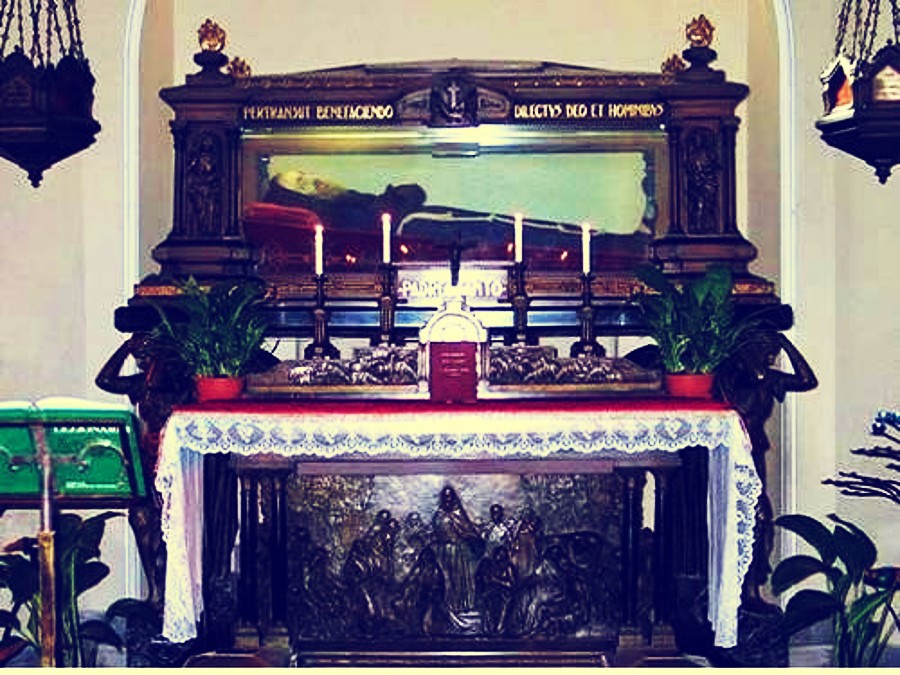
His body, covered with quicklime, was first buried in the cemetery at Staglieno where a monument was erected to him by public subscription. In 1914, his remains were translated to the Friary Church where he had lived most of his life. After his death, the faithful continued to turn to him with devotion. Graces and miracles began to occur which were attributable to his intercession. After the initial stages, his cause was introduced in Rome on 9 August 1896.
The decree recognising the heroism of his virtue was signed on 18 December 1922. Pope Pius XI Beatified him on 30 June 1929. John XXIII Canonised him on 9 December 1962. The City of Genoa has erected a monument in the port district to Saint Francisco as their Patron Saint.
St Anastasius of Lérida St Anthimus of Rome St Bassus of Sabina St Bertilla St Criotan of MacReddin Bl Diego of Saldaña St Evellius of Pisa St Fabius of Sabina St Francesco Maria da Camporosso OFM Cap (1804-1866) Friar of the Friars Minor Capuchin Branch St Francesco de Girolamo SJ St Fremund of Dunstable St Gengulphus of Burgundy
Bl Illuminatus St Illuminatus of San Severino Bl James Walworth Bl John Rochester St Maiulo of Hadrumetum
St Mamertus (Died c 477) Archbishop of Vienne in Gaul – present day France, Theologian, Writer, Founder of the introduction of the praying of Litanies prior to Ascension Day, called “Rogation Days.” Rogation days are days of prayer and fasting in the Church. They are observed with processions and the praying of the Litany of the Saints. The major Rogation is held on 25 April, the minor Rogations are held on Monday to Wednesday, preceding Ascension Thursday. The word Rogation comes from the Latin verb rogare, meaning “to ask,” which reflects the beseeching of God, for the appeasement of His anger and for protection from calamities. His Life: https://anastpaul.com/2019/05/11/saint-of-the-day-11-may-st-mamertus-died-c-475/
St Mozio of Constantinople St Possessor of Verdun St Principia of Rome St Tudy St Vincent L’Hénoret Bl Vivaldus St Walbert of Hainault
Martyrs of Camerino: An imperial Roman official, his wife, their children and servants, all of whom were converts and martyrs: Anastasius, Aradius, Callisto, Eufemia, Evodius, Felice, Primitiva, Theopista.
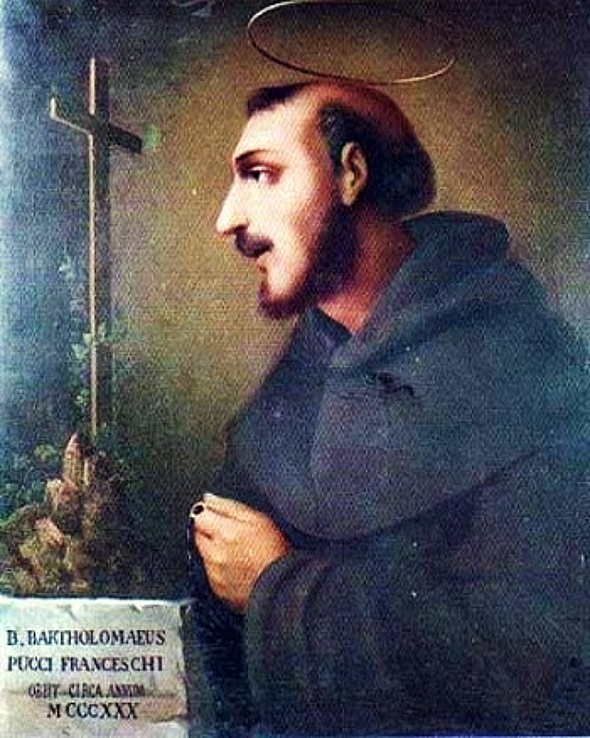
Saint of the Day – 6 May – Blessed Bartolomeo Pucci-Franceschi OFM (Died 1330) Priest and Friar of the Friars Minor after having been a husband and father of 4. Confessor, Mystic and Miracle-worker. Born latter 13th century in Montepulciano, Tuscany, Italy and died on 6 May 1330 in Montepulciano, Tuscany, Italy of natural causes.
The Roman Martyrology reads today: “In Montepulciano in Tuscany, blessed Bartolomeo Pucci-Franceschi, Priest of the Order of Minors, who, having left his wife, children and all his possessions for the love of God, became Christ’s poor man.”
Bartolomeo was born in Montepulciano in the second half of the 13th century. From a noble family, he married the daughter of Captain Tommaso del Pecora, Millia, with whom he had four children. In 1290, when his children reached the age of majority, Bartholomew and his wife, were able to embrace the religious vocation. Bartolomeo joined the Order of Minors of the City Convent of St Francis
From rich he became poor, for love of Christ and if many admired him he had to bear the contempt of those who considered him a madman. The humble Franciscan led the rest of his life between prayers, visions of the Madonna and angels. Considered by his fellow citizens as a chosen soul, he worked miracles while still alive.
Fra Bartolomeo died, as a very old, on 6 May 1330 in Montepulciano and was buried in the Church of the Convent. The relics were then transferred, in 1930, to the Church of St Augustine. On 24 June 1880, Pope Leo XIII confirmed his cult from immemorial times.
The example of Blessed Bartholomew is singular, in fact he reconciled, during his life, the different vocations of man: as a spouse, as a parent and as a religious consecrated to God.
Feast of St John the Apostle and Evangelist before the Latin Gate: The Roman Martyrology states of this Feast today: At Rome, the feast of St John before the Latin Gate. Being bound and brought to Rome from Ephesus by the order of Domitian, he was condemned by the Senate to be cast, near the said gate, into a vessel of boiling oil, from which he came out more healthy nd vigorous than before! About this wondrous Miracle: https://anastpaul.com/2021/05/06/saint-of-the-day-6-may-st-john-the-evangelist-before-the-latin-gate/
Bl Anthony Middleton Blessed Bartolomeo Pucci-Franceschi OFM (Died 1330) Priest of the Friars Minor after having been a husband and father of 4. Confessor, Mystic and Miracle-worker.
St Benedicta of Rome St Colman Mac Ui Cluasigh of Cork St Colman of Loch Eichin St Dominic Savio St Edbert of Lindisfarne Bl Edward Jones St Evodius of Antioch
St Marianus of Lambesa Bl Peter de Tornamira St Petronax of Monte Cassino St Protogenes of Syria Bl Prudence Castori St Theodotus of Kyrenia St Venerius of Milan St Venustus of Africa St Venustus of Milan Bl William Tandi
The Solemnity of Saint Joseph – 4 May: Between 1870 and 1955, an additional Feast was celebrated in honour of Saint Joseph as Spouse of the Blessed Virgin Mary and Patron of the Universal Church, the latter title having been given to him by Pope Pius IX. Originally celebrated on the third Sunday after Easter with an octave, after Divino Afflatu of Saint Pius X (see Reform of the Roman Breviary by Pope Pius X), it was moved to the preceding Wednesday (because Wednesday is the day of the week specifically dedicated to St Joseph, St John the Baptist and local Patrons). The Feast was also retitled The Solemnity of Saint Joseph. This celebration and its accompanying Octave were abolished during the modernisation of rubrics under Pope Pius XII in 1955.
St Albian of Albée Bl Angela Bartolomea dei Ranzi Bl Angela Isabella dei Ranzi St Antonia of Constantinople St Antonina of Nicaea St Antonia of Nicomedia St Antonius of Rocher St Arbeo of Freising St Augustine Webster St Cunegund of Regensburg St Curcodomus of Auxerre St Cyriacus of Ancona St Enéour St Ethelred of Bardney St Florian of Lorch Bl Hilsindis
Blessed Jean-Martin Moyë (1730-1793) French Priest, Missionary to China, Founder of the Sisters of the Congregation of Divine Providence – the first expression of consecrated life among the women of China. Writer, Teacher, Innovator, Evangelist. Beatified on 21 November 1954 by Pope Pius XII. Biography: https://anastpaul.wordpress.com/2018/05/04/saint-of-the-day-4-may-blessed-jean-martin-moye-1730-1793/
Blessed Ladislas of Gielniów OFM Cap (c 1440-1505) “The Apostle of Lithuania,” Priest of the Order of Friars Minor Capuchin, zealous and tireless Evangelist, renowned Preacher, Poet and Hymnist, disciple of St Bernardine of Siena and his Apostolate of the Most Holy Name of Jesus and a devotee of the Passio of Christ. Ladislas served his Order in various capacities which included both a Doorkeeper and as its Provincial! He travelled across Poland to evangelise and was a noted preacher. About Blessed Ladislas: https://anastpaul.com/2021/05/04/saint-of-the-day-4-may-blessed-ladislas-of-gielniow-ofm-cap-c-1440-1505/
St Luca da Toro
Bl Marco Ongaro of Conegliano OFM Bl Margareta Kratz Bl Michal Giedroyc St Nepotian of Altino Bl Paolino Bigazzini St Paulinus of Cologne St Paulinus of Senigallia St Pelagia of Tarsus St Porphyrius of Camerino Rino St Richard Reynolds OSsS (c 1492-1535) Martyr, Monk of the Bridgettine Order (the Order of the Most Holy Saviour (Ordo Sanctissimi Salvatoris; abbreviated OSsS).
Carthusian Martyrs of England: A group of Carthusian Monks who were hanged, drawn and quartered between 19 June 1535 and 20 September 1537 for refusing to acknowledge the English royalty as head of the Church: • Blessed Humphrey Middlemore • Blessed James Walworth • Blessed John Davy • Blessed John Rochester • Blessed Richard Bere • Blessed Robert Salt • Blessed Sebastian Newdigate • Blessed Thomas Green • Blessed Thomas Johnson • Blessed Thomas Redyng • Blessed Thomas Scryven • Blessed Walter Pierson • Blessed William Exmew • Blessed William Greenwood • Blessed William Horne • Saint Augustine Webster • Saint John Houghton • Saint Robert Lawrence
Martyrs of Cirta: Also known as • Martyrs of Cirtha • Martyrs of Tzirta A group of clergy and laity Martyred together in Cirta, Numidia (in modern Tunisia) in the persecutions of Valerian. They were – Agapius, Antonia, Emilian, Secundinus and Tertula, along with a woman and her twin children whose names have not come down to us.
Martyrs of England: 85 English, Scottish and Welsh Catholics who were Martyred during the persecutions by Protestants in the 16th and 17th centuries. They are commemorated together on 22 November. • Blessed Alexander Blake • Blessed Alexander Crow • Blessed Antony Page • Blessed Arthur Bell • Blessed Charles Meehan • Blessed Christopher Robinson • Blessed Christopher Wharton • Blessed Edmund Duke • Blessed Edmund Sykes • Blessed Edward Bamber • Blessed Edward Burden • Blessed Edward Osbaldeston • Blessed Edward Thwing • Blessed Francis Ingleby • Blessed George Beesley • Blessed George Douglas • Blessed George Errington • Blessed George Haydock • Blessed George Nichols • Blessed Henry Heath • Blessed Henry Webley • Blessed Hugh Taylor • Blessed Humphrey Pritchard • Blessed John Adams • Blessed John Bretton • Blessed John Fingley • Blessed John Hambley • Blessed John Hogg • Blessed John Lowe • Blessed John Norton • Blessed John Sandys • Blessed John Sugar • Blessed John Talbot • Blessed John Thules • Blessed John Woodcock • Blessed Joseph Lambton • Blessed Marmaduke Bowes • Blessed Matthew Flathers • Blessed Montfort Scott • Blessed Nicholas Garlick • Blessed Nicholas Horner • Blessed Nicholas Postgate • Blessed Nicholas Woodfen • Blessed Peter Snow • Blessed Ralph Grimston • Blessed Richard Flower • Blessed Richard Hill • Blessed Richard Holiday • Blessed Richard Sergeant • Blessed Richard Simpson • Blessed Richard Yaxley • Blessed Robert Bickerdike • Blessed Robert Dibdale • Blessed Robert Drury • Blessed Robert Grissold • Blessed Robert Hardesty • Blessed Robert Ludlam • Blessed Robert Middleton • Blessed Robert Nutter • Blessed Robert Sutton • Blessed Robert Sutton • Blessed Robert Thorpe • Blessed Roger Cadwallador • Blessed Roger Filcock • Blessed Roger Wrenno • Blessed Stephen Rowsham • Blessed Thomas Atkinson • Blessed Thomas Belson • Blessed Thomas Bullaker • Blessed Thomas Hunt • Blessed Thomas Palaser • Blessed Thomas Pilcher • Blessed Thomas Pormort • Blessed Thomas Sprott • Blessed Thomas Watkinson • Blessed Thomas Whitaker • Blessed Thurstan Hunt • Blessed William Carter • Blessed William Davies • Blessed William Gibson • Blessed William Knight • Blessed William Lampley • Blessed William Pike • Blessed William Southerne • Blessed William Spenser • Blessed William Thomson • They were Beatified on 22 November 1987 by Pope John Paul II.
Martyrs of Novellara: A Bishop and several his flock who were Martyred together in the persecutions of Diocletian and whose relics were kept and enshrined together. We know nothing else about them but the names – Apollo, Bono, Cassiano, Castoro, Damiano, Dionisio, Leonida, Lucilla, Poliano, Tecla, Teodora and Vespasiano. They were Martyred on 26 March 303. Their relics were enshrined in the parish of Saint Stephen in Novellara, Italy in 1603.



















You must be logged in to post a comment.