Posted in MARIAN TITLES, QUOTES "CARPE DIEM" - Seize the Day

Notre-Dame de Valfleury / Our Lady of Valfleury, France (800) and Memorial of the Saints – 6 November

Notre-Dame de Valfleury / Our Lady of Valfleury, France (800) – 6 November:

The title traces its origins to the image of the Black Madonna at Valfleury (Loire), France, near St Etienne and St Chamond south of Lyons and is venerated annually on 6 November.

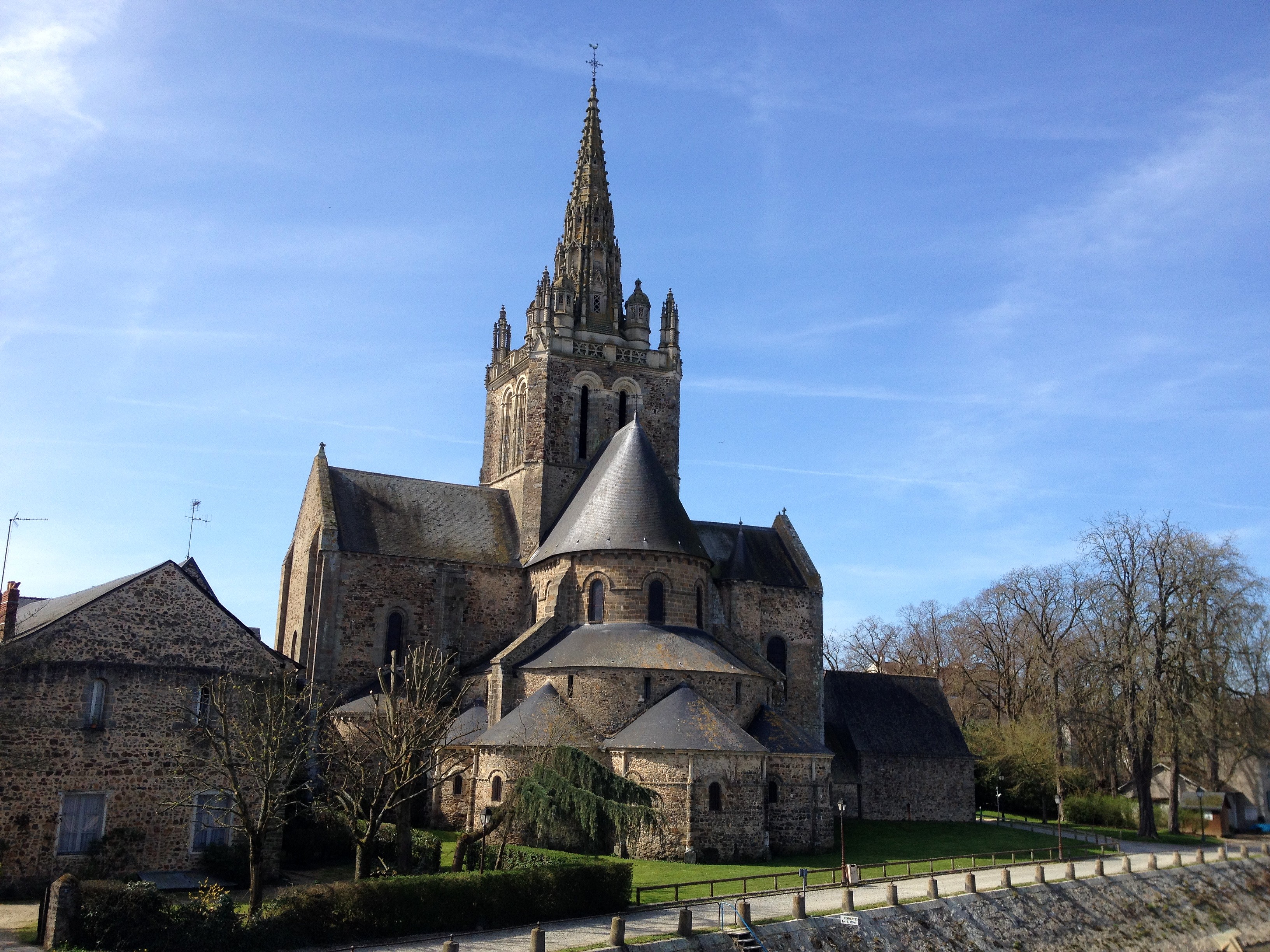
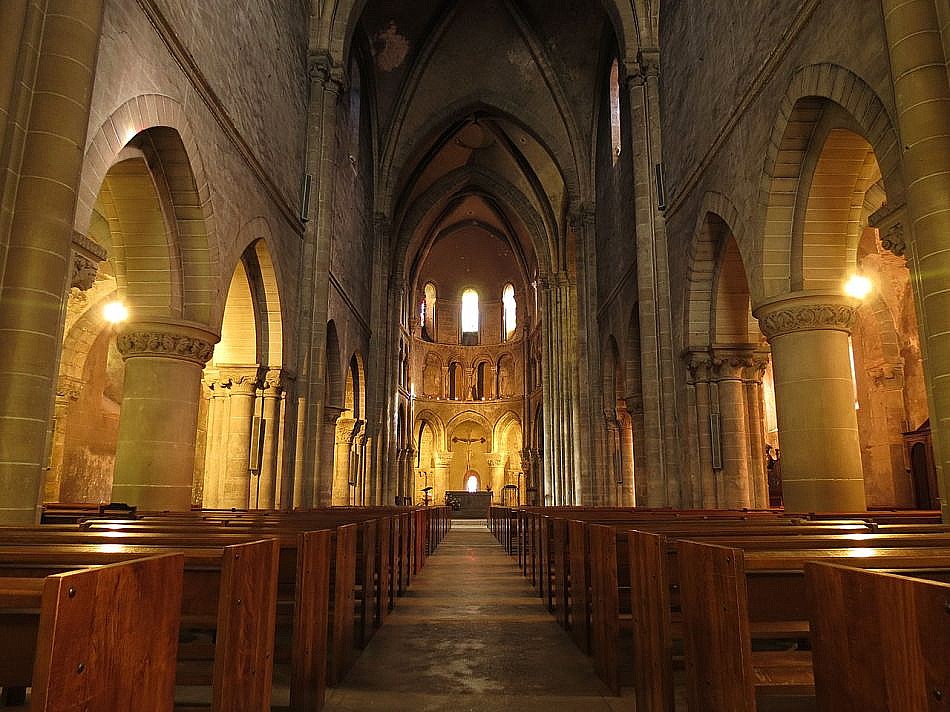
The original Statue, in wood, dates to Christmas 800 when the image was found in a broom bush. Pilgrimages began as early as the eighth century, almost ceased entirely during the years of the plagues that struck the region and resumed in earnest again in 1629. The Shrine is a Church partially underground that had appeared in the written records by the end of the tenth century. Entrance to the Church is at the base of a massive rock formation, on top of which, stands the Romanesque tower of the 12th century and steeple. Among the unique features of the Church are 22 steps cut from the rock inside the entrance. A number of frescoes depict eventS in Christ’s life. The miraculous cures of a child on a pilgrimage was reported to have occurred in the Chapel in 1842. In 1854, Pope Pius IX granted the pilgrimage of Vals, a plenary indulgence.

Benedictine Monks established a priory there and called the place “valley flowers.” In 1625, the Congregation of Saint Vincent de Paul succeeded them. They established a mission house and took care of the pilgrimage Church which replaced the original Shrine and was erected in 1809.

St Atticus
St Barlaam of Novgorod
Bl Beatrice of Olive
Bl Christina of Stommeln
St Demetrian of Cyprus
St Edwen of Northumbria
St Efflam of Brittany
St Emilian of Faenza
St Erlafrid of Hirschau
St Felix of Fondi
St Felix of Genoa
St Felix of Thynissa
St Illtyd
St Israel of Limoges

St Leonard of Noblac (c 496-559) Monk, Hermit, Abbot, Miracle-worker.
About St Leonard: https://anastpaul.wordpress.com/2017/11/06/saint-of-the-day-st-leonard-of-noblac-c496-559/

St Leonard of Reresby
Bl Leonianus of Autun
St Melaine of Rennes
St Paul of Constantinople
St Pinnock
St Severus of Barcelona
Bl Simon of Aulne
St Stephen of Apt
St Theobald of Dorat

St Théophane Vénard MEP (1829-1861) Priest Martyr, Missionary.
His Life and Death:

https://anastpaul.com/2018/11/06/saint-of-the-day-6-november-saint-jean-theophane-venard-m-e-p-1829-1861-martyr/

St Valentine of Genoa
St Victor Chumillas-Fernández
St Winnoc of Wormhoult (Died 716/717) Abbot

Martyrs of Antioch – 10 saints: Ten Christians murdered together by Arabs after their seizure of Antioch, Syria. No names or other details about them have come down to us. 637 in Antioch, Syria.

Martyrs of Gaza – 9 saints: A group of Christian soldiers who were captured by Saracens invading the area of Gaza in Palestine. When the men continued to profess their Christianity, they were executed. We know the names of some of the martyrs – Himerius, John (2 of them), Kallinikos (Callinoco), Paul, Peter, Stephen and Theodore (2 of them). They were beheaded in Gaza, Palestine.

Martyrs of Spain – 498 saints and beati: – Martyred Franciscan Capuchins of Barcelona – 26 beati
Martyred Vincentians of Spain – 14 beati

Posted in JESUIT SJ, MARIAN TITLES, SAINT of the DAY

Feast of the Holy Relics, Nossa Senhora da Medalha Milagrosa / Our Lady of the Miraculous Medal, Monte Sião, Brazil (1939) and Memorials of the Saints

Feast of the Holy Relics:
About: https://anastpaul.wordpress.com/2017/11/05/feast-of-the-holy-relics-5-november/

Nossa Senhora da Medalha Milagrosa / Our Lady of the Miraculous Medal, Monte Sião, Brazil (1939)5 November now moved to 27 November:

The first Church in Monte Sião appeared in 1849, dedicated to Our Lady of the Miraculous Medal, built by the founder of the place, Antonio Bernardes de Souza. The official Consecration of the Church took place on 13 April 1850. In the Parish of Father Luigi Cocoresi, from 1883 to 1890, more precisely in 1881, the Chapel was replaced by the Parish Church, built on top of in in the same square. The new Church was also built of clay based on strips of sawn wood.
In the parish administration of Fr. José Eugênio de Faria – Fr Zequinha – in 1934, the construction of the current Mother Church began, which is located in the same place as the previous otwo
The Church’s architecture resembles the style of Roman art from the 12th century and the main Altar is entirely carved in wood, where the centenary image of the Patron Saint, the Blessed Mother, can be seen. The image of Our Lady of the Miraculous Medal, which adorns the main Altar, was brought to Monte Sião around 1860 and came from Portugal, through a Portuguese farmer, Mr João Pereira Batista Machado, who would have funded both its acquisition and the transportation. The image arrived at the Port of Rio de Janeiro and was brought to the City on the back of animals, inside a cargo jack and wrapped in dry corn husk.

In 1937, at the request of the Bishop, the image was removed from the Altar and sent to a Chapel in the countryside, claiming that the Statue looked too modern.
The faithful greatly missed the Statue in the Igreja Matriz. It was then, that between 1937 and 1939, the City of Monte Sião was inflicted by a period of great drought. There was rain in every other City but not there. The people then associated the lack of rain with the absence of the Statue of their Patron and went to intercede with the Parish Priest, to bring the Statue back. On 5 November 1939, the Statue was allowed to return. The day was sunny and a procession was held to honour the Patroness.
When the Statue reached the City, the first drops began to fall and then a heavy rain, soaking everyone. This was called the rain miracle and after that, everything went smoothly. The Statue underwent a restoration in the year 2015, which returned all the original features to the image, which had been lost with previous restorations.
Although the Feast was 5 November it was moved to co-incide with the official Feast of the Miraculous Medal, 27 November, which is a local public holiday, when it is celebrated after a Novena between 18 and 26 November, with a Mass in honour of the Patron , the Blessed Maria of the Miraculous Medal.

All Saints and Blesseds of the Society of Jesus:

The Society of Jesus, commonly known as the Jesuits, was Founded in 1534 by Saint Ignatius Loyola (1491-1556) at Montmartre, Paris, France. A body of clerics regular organised for Apostolic work, following a religious rule and relying on alms for their support. It was the chief instrument of the Catholic Reformation. Pope Paul III approved the new rule in 1540 and Ignatius was elected the first general of the order in 1541. The constitutions, drafted by him and based on his Spiritual Exercises were adopted in 1558. It was the first order which enjoined by its constitutions devotion to the cause of education. The ministry of the Society consists chiefly in preaching. teaching catechism. administering the sacraments. conducting missions in parishes, taking care of parishes. organising pious confraternities, teaching in schools of every grade, writing books, pamphlets, periodical articles, going on foreign missions and special missions when ordered by the current Holy Father, to whom they take a vow of total obedience. Our current Holy Father, Pope Francis is a Jesuit and has jokingly wondered aloud who is boss of whom in his Order. The general resides at Rome, Italy and has a council of assistants. The motto of the Society is Ad Majorem Dei Gloriam (For the greater glory of God).
All Jesuit Saints and Blesseds:
https://anastpaul.com/2018/11/05/feast-of-all-the-saints-and-blesseds-of-the-society-of-jesus/

St Augustine of Terracina
Bl Bernhard Lichtenberg
St Bertille (c 629-c 703) Abbess
St Canonica
St Comasia
St Ðaminh Mau
St Dominator of Brescia
St Elizabeth
St Domninus the Physician
St Epistemis
St Eusebius of Terracina
St Felix of Terracina
St Fibitius
St Galation
St Gerald of Beziers
Bl Gomidas Keumurjian
Bl Gregory Lakota
St Guetnoco
St Guido Maria Conforti
St St Hermenegild
St Idda
St Juan Antoni Burró Mas
St Juan Duarte Martín
St Kanten
St Kea
St Laetus of Orleans
St Magnus of Milan
St Mamete
St Marco of Troia
Bl María del Carmen Viel Ferrando
Bl Simon Ballachi
St Spinulus of Moyen-Moûtier
St Sylvanus of Syria
St Zachary

Martyrs of Caesarea Maritima – 4 saints: Four young Christian men who were martyred together in the persecutions of Maximian – Aussenzius, Philotheus, Timothy and Theotimus. They were martyred in the arena at Caesarea Maritima, Palestine.

Martyred in the Spanish Civil War:
• Blessed Juan Antoni Burró Mas
• Blessed Juan Duarte Martín
• Blessed María del Carmen Viel Ferrando

Posted in MARIAN TITLES, SAINT of the DAY

Santa Maria alla Porta Luigi / Our Lady of Port Louis, Milan and Memorials of the Saints – 4 November

Santa Maria alla Porta Luigi / Our Lady of Port Louis, Milan, Italy – 4 November:

The ancient City of Milan, Italy, has had three completely different systems of walls defending the City throughout the ages. The oldest walls were Roman, built in the Republican and Imperial eras. The second wall was built in the 12th century, shortly after the City was razed by Frederick Barbarossa. The third, and final wall system was built in the 16th century by the Spanish rulers of Milan. Even though in most places there is little left of the walls, the gates, or “ports” contributed to the layout of the City as the streets passed through the gates from a central hub. The Roman gates were Porta Romana, Porta Ticinese, Porta Vercellina and so on, with each wall having gates with a variety of names. None of them, however, has had the name of Porta Luigi There is no Church in Milan to St. Louis and I can find no reference to this feast of Mary, that was once famous enough to have a date on the calendar. (https://www.roman-catholic-saints.com/our-lady-of-port-louis.html).

I (Ana) have found a Church called “Santa Maria alla Porta” (Holy Mary at the Gate), see below, which dates from very early times, certainly before the 12th Century. Although a Church already stood in the same Milanese location since before the year 1105, the present Church was erected in 1652 under Spanish rule.

St Charles Borromeo (1538-1584) Archbishop of Milan (Memorial)
About St Charles:
https://anastpaul.wordpress.com/2017/11/04/saint-of-the-day-st-charles-borromeo-1538-1584/
And on the 400th Anniversary of St Charles’s Canonisation:
https://anastpaul.wordpress.com/2017/11/04/pope-benedict-xvi-on-the-commemoration-of-the-fourth-centenary-of-the-canonisation-of-st-charles-borromeo-1538-1584-4-november-2010/

St Agricola of Bologna
St Amandus of Avignon
St Amandus of Rodez
St Birstan
St Clarus the Hermit
St Clether
St Emeric of Hungary (c 1007-1031) Confessor, Prince and heir to the Hungarian Throne, Son of St Stephen, King of Hungary

St Felix of Valois (1127 – 1212) Priest, Confessor, Hermit, Co-Founder of the Trinitarians.
His Feast day should be 20 November by order of Pope Innocent XI (General Roman Calendar 1679-1969).
About St Felix:

https://anastpaul.com/2018/11/04/saint-of-the-day-4-november-st-felix-of-valois-1127-1212/

Bl Frances d’Amboise
St Gerard de Bazonches
St Gregory of Burtscheid
Bl Helen Enselmini
Bl Henry of Zweifalten
St Hermas of Myra
Bl Joan Antoni Burró Mas
St Joannicus of Mount Olympus
St John Zedazneli
St Modesta of Trier
St Nicander of Lycia
St Patrobas
St Perpète
St Philologus
St Pierius
St Proculus of Autun
Bl Teresa Manganiello
St Vitalis of Bologna

Posted in MARIAN TITLES, SAINT of the DAY, St Louis-Marie Grignion de MONTFORT

Notre-Dame des Miracles et Vertus / Our Lady of Miracles and Virtues, Rennes, France (14th Century) and Memorials of the Saints

Notre-Dame des Miracles et Vertus / Our Lady of Miracles and Virtues, Rennes, France (14th Century) – 3 November:

The Statue of Our Lady of Miracles and Virtues, often simply called Our Lady of Miracles, is a depiction of Virgin and Child. Installed in 1876, it replaces the original Statue venerated since the fourteenth century and destroyed during the French Revolution. The original Statue was first mentioned in the fourteenth century , as part of a miracle that would have occurred during a siege of the City. It is created in 1445 and her hands were restored in 1522.

The English, having made a mine to ignite the Town, it is said that the candles in the Chapel were found miraculously alight; t he bells rung of themselves and the image of the Blessed Virgin was seen to stretch out its arms towards the middle of the Chapel where the mine had been concealed, which by that means, was discovered. The people rushed to the spot and so the plot was uncovred and the entire Town saved through the intervention of Our Lady of Rennes. Great was the rejoicing and deep the gratitude of the people.
Known today as the Basilica of Saint Sauveur in Rennes, it is located in the heart of historic Rennes, which was once the capital of Brittany. It is situated at the termination of Saint-Sauveur Street on which its façade faces.
As the original Gothic Church partially collapsed in the year 1682, the Classical style Church that can currently be seen, was constructed beginning in 1703 and Consecrated in August of 1719.

In the year 1793, during the French Revolution, the Church was made into a Temple of Reason and the miraculous Statue of Our Lady was destroyed. It was not until 1802, after the end of the Terror, that the Church was opened again to worship. The Church was made into a minor Basilica in 1916 by Pope Benedict XV.
In 1634, the miracle of Our Lady’s intervention against the English invaders, was officially recognised by the Bishop of Rennes, Pierre Cornulier.
There are many more miracles attributed to Our Lady, including the miraculous cure of Magdalene Morice in the year 1761. She had gangrene in her right foot which was instantly healed on Easter Sunday.
The Statue of Our Lady of Miracles and Virtues currently displayed at the Basilica was placed there in February of 1876.
In 1684 a boy of eleven left home for the City of Rennes in the hopes of enrolling at the Jesuit College of Thomas a Becket. The young Louis-Marie was an intelligent boy who was taken under the guidance of the Jesuit Priest, and it was at Rennes that he began to consider a possible vocation to the Priesthood. It was here, at the Shrine of Our Lady at Rennes, that Saint Louis-Marie de Montfort made the final decision to become a Priest.

St Martin de Porres OP (1579-1639) (Optional Memorial) “Saint of the Broom,” Dominican lay Brother, Miracle-worker, Apostle of Charity, Mystic.
Full biography here:

https://anastpaul.wordpress.com/2017/11/03/saint-of-the-day-3-november-st-martin-de-porres-o-p-saint-of-the-broom/

St Acepsimas
St Acheric of Vosges
Bl Alphais of Cudot
Bl Berardo dei Marsi
Bl Berchtold of Engelberg
St Caesarius
St Cecilio Manrique Arnáiz
St Clydog
St Cristiolus
St Domnus of Vienne
St Elerius
St Englatius
St Florus of Lodeve
St Francisco Colom González
St Gaudiosus of Tarazona
St Germanus
St Guenhael
St Hermengaudius of Urgell
St Hilary of Viterbo
St Hubert of Liege (c 656-727) Bishop, the “Apostle of the Ardennes”
Bl Ida of Toggenburg
St José Llorach Bretó
St José Ruiz de la Torre
St Libertine of Agrigento
Bl Lorenzo Moreno Nicolás

St Malachy O’More of Armagh (1094 – 1148) Bishop, Abbot, Confessor, Reformer, Miracle-Worker, Primate of Ireland, gifted with the charism of Propjecy.
Biography:

https://anastpaul.com/2018/11/03/saint-of-the-day-3-november-st-malachy-of-armagh-1094-1148/

St Papulus
St Pierre-François Néron
St Pirmin
St Quartus
St Rumwold of Buckingham
St Sylvia of Rome
St Theophilus
St Valentine of Viterbo
St Valentinian
St Vitalis
St William of Vosges
St Winifred of Wales
St Wulganus

Innumerable Martyrs of Saragossa: A large group of Christians martyred in Zaragoza, Spain by Dacian during the persecutions of Diocletian. Dacian ordered all Christians of the city into exile under pain of death; when they were assembled to leave, Dacian ordered imperial soldiers to massacre the lot of them. They were martyred in 304.

Martyred in the Spanish Civil War:
• Blessed Cecilio Manrique Arnáiz
• Blessed Francisco Colom González
• Blessed José Llorach Bretó
• Blessed José Ruiz de la Torre

Posted in MARIAN TITLES, NOVEMBER - Month of the SOULS in PURGATORY, PURGATORY, SAINT of the DAY, The HOLY SOULS

The Commemoration of All the Faithful Departed – All Souls Day, Notre-Dame D’Emminont / Our Lady of Emminont. Abbeville, France (12th Century) and Memorials of the Saints – 2 November

The Commemoration of All the Faithful Departed – All Souls Day (Commemoration): Commemoration of the faithful departed in Purgatory. Abbot Odilo of Cluny instituted it in the Monasteries of his congregation in 998, other religious orders took up the observance and it was adopted by various Diocese and gradually by the whole Church. The Office of the Dead must be recited by the clergy on this day and Pope Benedict XV granted to all Priests, the privilege of saying three Masses of requiem –
• one for the souls in Purgatory
• one for the intention of the Holy Father
• one for the Priest’s intentions
If the feast should fall on Sunday it is kept on 3 November.
Patronage: Monselice, Italy

Details here:
https://anastpaul.com/2018/11/02/commemoration-of-all-souls-day-2-november/
AND:
https://anastpaul.wordpress.com/2017/11/02/the-commemoration-of-all-the-holy-souls-in-purgatory-2-november/

Notre-Dame D’Emminont / Our Lady of Emminont. Abbeville, France (12th Century) – 2 November:

The Shrine to Our Lady of Emminont, or Notre-Dame D’Emminont, is near Abbeville in France. It is much visited by pilgrims devoted to the Mother of God who at their prayers and petitions, still performs many miracles and favours for her people.

The relics of Saint Wulfram (also spelled Wulfran or Vulfran) of Sens, who died in 656, were brought to the Shrine in the year 1058. Until that time, the Church had been known as the Collegiate Church of Our Lady in Abbeville but after the relics of Saint Wulfram were interred there, the Church was rededicated in Saint Wulfram’s honour. The Church retains that name to this day.

Franciscan Friars, well-versed in wood carving, cared for the Shrine. They were consulted in 1510 concerning work on the Cathedral of Amiens. In richness of detail, Abbeville surpasses many other Cathedrals. The nave was built between the years 1488 to 1539 and the small choir between 1661 and 1663. The construction was paid for by the King of France, and Count of Ponthieu and the faithful of Abbeville. The Church is much smaller than it was originally intended to be, as the initial blueprint for the Church was never completed. The nave is quite short, has only two bays and the choir is extremely small. Still, the façade is a superb masterpiece of the flamboyant Gothic style.
During the French Revolution the Church of Saint Wulfram was profaned and given the name of a “Temple of Reason” by the unreasoning revolutionaries who sought to destroy the immutable God by demolishing priceless monuments and artifacts and even, the glory of their own history.
The Town of Abbeville was heavily bombed by the German’s during World War II, so that much of what is seen there today is of fairly modern origin. The Church was also damaged, but efforts were made to restore it to its former grandeur.
The list of favours granted by Our Lady of Emminont, is indeed very long. It includes miraculous cures, astounding spiritual and temporal favours and streams of graces and blessings.

St Ambrose of Agaune
St Amicus of Fonte Avellana
St Amicus of Rambone
St Baya of Scotland
St Domninus of Grenoble
St Erc of Slane
St Eustochium of Tarsus
St George of Vienne
Bl John Bodey
St Jorandus of Kergrist
St Justus of Trieste

Blessed Pius of St Aloysius CP (1868-1889) Passionist Seminarian died aged 21.
Biography:

https://anastpaul.com/2019/11/02/saint-of-the-day-2-november-blessed-pius-of-st-aloysius-cp-1868-1889/


St Marcian of Chalcis
Bl Margaret of Lorraine
St Mateo López y López
St Maura of Scotland
St Theodotus of Laodicea
St Victorinus of Pettau (Died c 304) Bishop Martyr

St Willebald of Bavaria

Martyrs of Isfahan – 5+ saints: Acindynus, Pegasius and Anempodistus were Persian priests who were imprisoned, tortured, interrogated and martyred in the persecutions of king Sapor II of Persia; he considered any Christian to be a Roman spy and anti-Persian. The three were brought back to life, miraculously healed, freed from their chains and began preaching Christianity, miraculously healing Sapor II in the process. This defiance enraged Sapor so much that he ordered them executed again; they were thrown into a cauldron of molten lead but walked out unharmed. This miracle brought one of the torturers, Aphthonius, to convert; he was immediately martyred. Other attempts were made to kill them, and they emerged each time unharmed. Senator Elpidiphorus led a group speaking in favour of the Christians for their courage and faith; he was immediately executed. In the end the original three Christians were burned to death. Martyrs all – Acindynus, Anempodistus, Aphthonius, Elpidephorus and Pegasius.
They were born in Persia and Died:
• c.350 in Isfahan, Persia
• relics transferred to Constantinople and enshrined in a church dedicated to them
• some relics taken to France in 1204 during the 4th Crusade
• relics in France were lost when hidden from anti-Christian forces in the French Revolution
• relics in France re-discovered in 1892 in Grozon.

Martyrs of Sebaste – 10 saints: A group of ten soldiers in the imperial Roman army of Emperor Licinius Licinianus who were executed together for refusing to burn incense as a sacrifice to the emperor. The only details that have survived are five of their names – Agapius, Cartherius, Eudoxius, Styriacus and Tobias. They were burned at the stake in 315 in Sebaste (in modern Turkey).
Posted in FEASTS and SOLEMNITIES, MARIAN TITLES, SAINT of the DAY

Solemnity of All Saints, Virgen de la Palma / Our Lady of the Palm, Algeciras, Spain (1755) and Memorials of the Saints – 1 November

All Saints Day (Solemnity) – (a Holy Day of Obligation) Instituted to honour all the saints, known and unknown. It owes its origin in the Western Church to the dedication of the Roman Pantheon in honour of the Blessed Virgin Mary and all the Martyrs by Pope Saint Boniface IV in 609, the anniversary of which was celebrated at Rome on 13 May. Pope Saint Gregory III Consecrated a Chapel in the Vatican Basilica in honour of All Saints, designating 1 November as their feast. Pope Gregory IV extended its observance to the whole Church. It has a Vigil and Octave and is a Holy Day of Obligation – the eve is popularly celebrated as Hallowe’en. Patronage – Arzignano, Italy.

About:
https://anastpaul.com/2019/11/01/solemnity-of-all-saints-1-november/
AND:
https://anastpaul.com/2018/11/01/1-november-solemnity-of-all-saints/
AND:
https://anastpaul.wordpress.com/2017/11/01/1-november-the-feast-of-all-the-saints/

Virgen de la Palma / Our Lady of the Palm, Algeciras, Spain (1755) – 1 November:

The Church of Our Lady of the Palm preceded by many years, the miracle which made it famous. The miracle for which it is best remembered, took place during an earthquake and a tidal wave on the 1November, 1755. There had been an extremely strong earthquake on that day that was reported to have been felt throughout all of Europe. Algeciras is a seaport of Spain exposed to the Atlantic Ocean in the Province of Cadiz and was directly in the path of the tidal wave, said to be more than 90 feet high. The recently reported tsunamis in Asia pales in comparison to that wave. Lisbon, with 275,000 inhabitants, lost 90,000 people and had 85% of its buildings destroyed by the wave. The water penetrated as much as 8 kilometers inland, mainly striking Portugal, Spain, and Africa.
The townspeople of Algeciras were in terror and were on the point of abandoning the Town when two unidentified men – thought later to be the Patron Saints of the City – closed the water gates and urged the people to go to the Capuchin Church of Our Lady of the Palm. Here a Mass was in progress. The Priest calmly finished the Mass, seized a banner with a picture of Our Lady on it and went out into the street where the wall of water was already advancing upon them. He planted the banner in the street almost in the shadow of the great wave and called out in a loud voice, “Thus far, my Mother.”
The water advanced as far as the banner and then miraculously stopped its forward progression, even though, up until that point, it had destroyed everything in its path. Then, as the Priest walked boldly forward toward the wall of water with the banner in his upraised hand, that gigantic wave receded from him and turned away from the face of Mary to return placidly to the ocean.
An anniversary procession was established, along with a confraternity of Our Lady of the Palm. With the exception of 1837, when there was a Civil War, the procession is held annually. The Rosary is recited along the route of the tidal wave and prayers of thanksgiving said.
Many years after the first miracle, another storm caused the people to remember Our Lady of the Palm. Ships were wrecked in the harbour and the ocean was violently disturbed. The people demanded a procession of Our Lady of the Palm and when the procession was finished, the storm abated. Hail Glorious and Blessed Mother, where is our faith today!

St Amabilis of Auvergne
St Austremonius
St Benignus of Dijon
St Cadfan
St Caesarius of Africa
St Caesarius of Damascus
St Ceitho
St Cledwyn of Wales
Bl Clemens Kyuemon
St Cyrenia of Tarsus
St Dacius of Damascus
St Deborah the Prophetess
St Dingad
Bl Dionysius Fugixima
St Floribert of Ghent
St Gal of Clermont
St Genesius of Lyon
St Germanus of Montfort
St Harold the King
St James of Persia
St Jerome Hermosilla
St John of Persia
St Julian of Africa
St Juliana of Tarsus
St Lluís Estruch Vives
St Marcel of Paris
St Mary the Slave
St Mathurin
St Meigan
St Nichole
St Pabiali of Wales
St Pere Josep Almató Ribera Auras
St Peter Absalon
Bl Peter Paul Navarra
Bl Petrus Onizuka Sadayu
St Rachel the Matriarch
Blessed Ranieri Rasini OFM (c 1250-1304 Lay Friar of the Order of Friars Minor
St Ruth the Matriarch
St Salaun of Leseven
St Severinus of Tivoli
St Valentin Faustino Berri Ochoa
St Vigor of Bayeux

Posted in CHRIST the KING, FEASTS and SOLEMNITIES, MARIAN TITLES, SAINT of the DAY

Solemnity of Christ the King, Vigil of All Saints Day, Nuestra Señora del Rosario de Río Blanco, Argentina and Memorials of the Saints – 31 October

Solemnity of Christ the King – Twenty Third Sunday after Pentecost – https://anastpaul.com/2018/11/25/25-november-the-solemnity-of-our-lord-jesus-christ-king-of-the-universe/

Thirty First Sunday in Ordinary Time

Vigil of All Saints Day or All Hallow’s Eve: Eve of the Feast of All Hallows, that is, All Saints Day. Halloween is a day on which many quaint customs are revived. It is popular in the United States and Scotland and in the US has become the second largest secular holiday of the year.

Nuestra Señora del Rosario de Río Blanco y Paypaya de Jujuy / Our Lady of the Rosary of Rio Blanco (of the White River) and Paypaya, Argentina , 17th Century – 31 October:

In the Province of Jujuy, Our Lady of the Rosary is the main Patron, who was added the title of “Paypaya and White River.” Local tradition tells that the Virgin defended the City from attacks by the Indians.
The most beautiful devotion is the procession which takes place on 31 October, the day on which the image is removed from its precious altar next to the nave of the Cathedral of Jujuy and is taken to the Sanctuary of the White River…The people displaying their deep religious faith, expressed in their great devotion to the Virgin “Our Lady of the Rosary of White River and Paypaya,” the history refers to the colonial era of the mid-seventeenth century.
Entering through the side entrance of the court, located next to the Cathedral of San Salvador de Jujuy, in the centre of the long nave, is the Chapel of Our Lady of the Rosary of White River and Paypaya, a clothed image 60 cm. height. There is another Statue is in the Chapel of the City of Rio Blanco.

Commemoration of All Holy Relics (Dominicans)

St Alphonsus Rodriguez SJ (1532-1617) Spanish Lay Brother of the Society of Jesus, Doorkeeper, Mystic, Visionary, Apostle of Charity and of Prayer, Spiritual Adviser.
Biography:

https://anastpaul.com/2018/10/31/saint-of-the-day-31-october-st-alphonsus-rodriguez-sj-1532-1617/

St Ampliatus
St Antoninus of Milan
St Apelles of Eraclea Sintica
St Arnulf of Novalesa
St Begu of Hackness
Bl Christopher of Romagna
Bl Dominic Collins
St Epimachus of Melusio
St Erth of Cornwall
St Foillan of Fosses (Died 655) Bishop Martyr, Missionary, Abbot
Bl Irene Stefani
St Jesús Miquel Girbau
Bl Leon Nowakowski
St Lucilla of Rome
Bl Maria de Requesens
Bl Modesta Moro Briz
St Narcissus
St Notburga of Cologne
St Quentin
Bl Pilar Isabel Sánchez Suárez
St Stachys of Constantinople

Blessed Thomas Bellacci TOSF (1370-1447) Lay Friar and Third Order Franciscan, Penitent, Confessor, renowned Missionary Preacher, Papal Legate, Novice Master and Vicar General of the Order.
Biography:

https://anastpaul.com/2020/10/31/saint-of-the-day-31-october-blessed-thomas-bellacci-tosf-1370-1447/

St Urban

St Wolfgang of Regensburg (c 934 –994) “The Great Almoner,” Bishop, Monk, Missionary, Ascetic, Apostle of Charity. He is regarded as one of the three great German saints of the 10th century, the other two being Saint Ulrich and Saint Conrad of Constance.
St Wolfgang’s life:

https://anastpaul.com/2019/10/31/saint-of-the-day-31-october-saint-wolfgang-of-regensburg-c-934-994/

Posted in FATHERS of the Church, MARIAN Antiphons, MARIAN DEVOTIONS, MARIAN PRAYERS, MARIAN Saturdays, MARIAN TITLES, OCTOBER - The HOLY ROSARY and The HOLY ANGELS, Our MORNING Offering, PRAYERS of the SAINTS, The HOLY ROSARY/ROSARY CRUSADE

Our Morning Offering – 30 October – To Our Lady of the Rosary By St Amadeus of Lausanne

Our Morning Offering – 30 October – “Month of the Holy Rosary” and Mary’s Day

Through Thee, to Us, our Saviour Came
To Our Lady of the Rosary
By St Amadeus of Lausanne O.Cist (1108-1159)

Through thee, to us, our Saviour came,
Through thee, to Him, we fain would go.
Our lives are marred by wrong and shame,
Yet, confidence in thee we know.
The friendship thou dost give to all
Who love thy name, shall ever be
Assurance thou wilt hear our call,
Sweet Lady of the Rosary!

Thou art our Strength upon the way,
Our Morning Star, to cheer and guide;
Our Beacon Light to show the day,
And lead us to the Saviour’s Side;
A Comforter in ev’ry pain
We find, O Mother blest, in thee,
And seek we, never, thee in vain,
Fair Lady of the Rosary!

Thy praises, Mary, we would sing,
And all our faculties employ,
That unto thee our hearts might bring
A glory-crown of love and joy.
Bless thou each humble effort made
In thy regard and grant that we,
May by thy influence be swayed,
Our Lady of the Rosary!

Posted in MARIAN TITLES, SAINT of the DAY

Madonna della Mondovi / Our Lady of Mondovi, Piemonte, Italy – 16th Century and Memorials of the Saints – 30 October

Madonna della Mondovi / Our Lady of Mondovi, Piemonte, Italy – 16th Century – 30 October:

Our Lady of Mond0vi, also known as the Madonna della Mondovi, is located at Vicoforte, in Piedmont, Italy. There a picture was found upon which a tile-maker had painted and placed on a brick pillar which he had erected for that purpose. This pillar has since been enclosed in a Church which was built in the year 1645 at the behest of Maria Cristina of France. The request was made in memory of the miraculous rescue of a child from the river, which took place in 1644 through the invocation of the image of the Blessed Virgin. Since that time there have been many miracles which have been wrought and continue to attract a great concourse of people.

The peasant folk especially venerated Our Lady at this Shrine and obtained numerous favours in answer to their prayers.
The Church was enlarged in 1779 and equipped with a Baptistery in 1807. Inside, enriched with precious furnishings donated by the Savoy Princes and frescoes by Bartolomeo Guidobono and others. On the Altar, the miraculous image of the Blessed Mother is kept. The original image has been almost completely repainted in twentieth-century restorations.

St Angelo of Acri OFM Cap (1669-1739) Priest of the Franciscan Capuchins, Confessor, Preacher, Missionary, Evangeliser, Miracle-Worker, Apostle of Charity and Mercy to the sick, Mystic with the gifts of prophecy, bi-location, visions and the ability to see into men’s souls in Confession. His body is incorrupt and is enshrined in in the Basilica dedicated to him in Acri.
The Story of St Angelo:

https://anastpaul.com/2018/10/30/saint-of-the-day-30-october-st-angelo-of-acri-ofm-cap/

St Arilda
St Asterius of Amasea

Blessed Benvenuta Bojani OP (1254-1292) Member of the Third Order of Saint Dominic, Mystic, Repentant. miracle-worker.
Biography:

https://anastpaul.com/2019/10/30/saint-of-the-day-30-october-blessed-benvenuta-bojani-op-1254-1292/

St Egelnoth the Good
St Eutropia of North Africa
St Gerard of Potenza

St Germanus of Capua (Died c 541) Bishop of Capua, Italy, Confessor, Papal Legate. St Germanus was a close friend of St Benedict of Nursia. The Roman Matyrology states: St Germanus, Bishop and Confessor, a man of great sanctity, whose soul, at the hour of death, was seen by St Benedict taken to heaven by angels.
His Life:

https://anastpaul.com/2020/10/30/saint-of-the-day-30-october-saint-germanus-of-capua-died-c-541/

St Herbert of Tours
Bl Jean-Michel Langevin
Bl John Slade
St Lucanus of Lagny
St Marcellus the Centurion
St Marcian of Syracuse
St Maximus of Cumae
St Nanterius of Saint-Mihiel
Bl Oleksa Zarytsky (1912-1963) Martyr
Bl Raymond of Cardona
St Saturninus of Cagliari
St Serapion of Antioch
St Talarica of Scotland
Bl Terrence Albert O’Brien
St Theonestus of Philippi (Died 425) Bishop, Martyr
St Zenobia of Aegea
St Zenobius of Aegea

Martyrs in Africa: A group of 100 to 200 Christians murdered in the early persecutions, and about whom we know nothing except that they died for their faith.

Posted in MARIAN TITLES, SAINT of the DAY

Nostra Signora di Oropa / Our Lady of Oropa, Piedmont, Italy, (3rd Century) and Memorials of the Saints – 29 October

Nostra Signora di Oropa / Our Lady of Oropa, Piedmont, Italy (3rd Century) – 29 October:

This image, of cedar wood, six feet high, is in a Chapel which Saint Eusebius, Bishop of Vercelli (c 283-371), caused to be built. He often retired there during the troubles caused by the Arians.
The Sanctuary of the black Virgin of Oropa, high in the Alps north of Biella, is traditionally associated with Saint Eusebius of Vercelli, who died in 371 but the circumstances of the story are anachronistic. Yet the Shrine is certainly an old one, and throughout the Middle Ages was associated with a Community of Canon Regulars.
The vast range of buildings there today were begun by the Dukes of Savoy, early in the seventeenth century and form one of the most complete pilgrimage centres in the world (there is even a theatre). It is recorded that here in 1895, contemplating the space and beauty of the mountains, Marconi heard the first call to his life’s work.
View of the Ancient complex

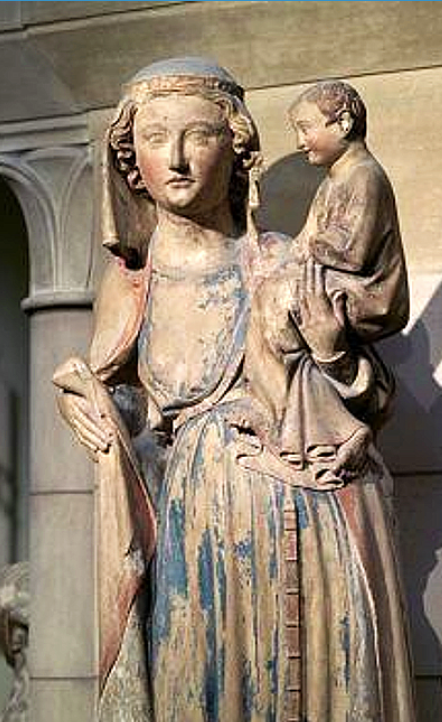
The black cedar-wood Statue has been crowned four times, the last time in 1920 – the three superimposed diadems (the fourth is represented by a halo of twelve stars) can hardly be said to add to the beauty of the image.

The Statue wearing the 4 Crowns (offered by the local townspeople) in 1620, 1720 and 1820, respectively.

Discovery of the Statue of Our Lady of Oropa at Jerusalem – Saint Eusebius who had been exiled to Syria because of his differences with the Arians, died in the year c 371. While in exile, the Emperor Constantine permitted him some freedom. Eusebius discovered among some ruins in Jerusalem three Statues of Our Lady. On his triumphant return after the Arians had been temporarily overthrown, he gave two of the Statues away . The third he kept for himself, placing it in a little hermitage at Oropa which he often visited.
In the 5th and 6th centuries when Arianism again reared its ugly head, the faithful Catholics took refuge at the Shrine of Our Lady of Oropa.
At one time it was decided to transport the Statue to another place. As the procession marched along, the Statue became so heavy that the men who carried it could not move on. Only when they decided to take Our Lady back to her original Shrine at Oropa were they able to move.

The last addition to the sanctuary was the Upper Basilica, a monumental Church built between 1885 and 1960 due to the large number of pilgrims visiting Oropa. It can hold 3000 people and its dome is 80 metres high.

In 1617, the complex of the Sacro Monte di Oropa (literally Sacred Mount of Oropa) was built not far from the Sanctuary. It is a devotional path now composed of twelve Chapels (plus another seven nearby) containing groups of Statues representing scenes from the story of the Virgin Mary’s life.
The Chapel of Our Lady of Oropa is a beautiful one and thousands of pilgrims today make their way there as they have done over the centuries.
The Holy See asked the authorities in 1856 to make a list of the miracles recorded at the Shrine. It is long and impressive. Then, as now, Our Lady of Oropa has a way with her Divine Son.

St Abraham Kidunaia (c 296-c 366) Priest, Hermit. The Vita of St Abraham was written by his friend, St Ephrem (306-373) Father and Doctor of the Church.
St Abraham of Rostov
St Achahildis of Wendelstein
St Anne of Mount Olympus

Blessed Chiara “Luce” Badano (1971 –1990) Laywoman, Died of cancer aged 18.
Biography:

https://anastpaul.com/2020/10/29/saint-of-the-day-29-october-blessed-chiara-luce-badano-1971-1990/

St Colman of Kilmacduagh
St Dodone of Wallers-en-Fagne
St Donatus of Corfu
St Ermelinda of Meldaert
St Eusebia of Bergamo
St Felician of Carthage

St Gaetano Errico (1791-1860) Priest, Founder of the Missionaries of the Sacred Hearts of Jesus and Mary in 1836, Teacher, Confessor, Apostle of Charity, Eucharistic Adorer.
Biography:

https://anastpaul.com/2018/10/29/saint-of-the-day-29-october-st-gaetano-errico-1791-1860/

St Honoratus of Vercelli
St John of Autun
St Kennera
St Mary of Edessa
St Narcissus of Gerona

St Narcissus of Jerusalem (c 99-c 215) Bishop of Jerusalem, miracle-worker.
His Life:

https://anastpaul.com/2019/10/29/saint-of-the-day-29-october-st-narcissus-of-jerusalem-c-99-c-215/

St Sigolinus of Stavelot
St Stephen of Cajazzo
St Terence of Metz
St Theodore of Vienne
St Zenobius of Sidon

Martyrs of Douai – (160 saints and beati): 160 priests, laymen and religious who studied at the English College in Douai, France, then returned to minister to covert Catholics in England during a period of government persecution of the Church, and were murdered for their work.

Martyrs of Lucania – (4 saints): A group of Christians executed together for their faith. Only their names have survived – Felician, Hyacinth, Lucius and Quintus. Their martyrdom occurred in Lucania, southern Italy.

Martyred in the Spanish Civil War:
• Blessed Arsenio Merino Miguel
• Blessed Benito Paradela Novoa
• Blessed Joaquina Rey Aguirre
• Blessed José Ruiz Bruixola
• Blessed Maurilio Tobar González
• Blessed Ponciano Nieto Asensio
• Blessed Victoria Arregui Guinea

Posted in FEASTS and SOLEMNITIES, MARIAN TITLES, MIRACLES, SAINT of the DAY, The APOSTLES & EVANGELISTS

Feast of Saints Simon and Jude, Apostles of Christ, Lord of Miracles/Señor de los Milagros de Nazarenas, Notre-Dame de Vivonne / Our Lady of Vivonne, Savoy, France and Memorials of the Saints – 28 October

Feast of Saints Simon and Jude, Apostles of Christ:
https://anastpaul.com/2018/10/28/feast-of-the-apostles-sts-simon-and-jude-28-october/
AND:
https://anastpaul.com/2019/10/28/feast-of-saints-simon-and-jude-apostles-of-christ-28-october/

St Jude Thaddeus Apostle

St Simon the Apostle/the Zealot

Lord of Miracles/Señor de los Milagros de Nazarenas – A mid-17th-century painting of the Crucifixion that is venerated in Lima, Peru and its celebration involves one of the largest processions in the world.

It was painted by an unnamed African taken to Peru as a slave from what is now Angola. Above the Cross is the Holy Spirit and God the Father. Below and to the right of Jesus, is His mother, the Virgin Mary with her heart pierced by a sword of sorrow. Kneeling and weeping at the foot of the cross is St Mary Magdalene.

The name originated on 13 November 1655 when everything around it was destroyed in an earthquake that left the painting standing and undamaged. Christ is shown enduring the pain of Crucifixion.
Every year in October, hundreds of thousands of devotees from all races and economic backgrounds participate in a procession honouring the image through the streets of Lima. Boulevards are decorated in purple on 18,19 and the final Feast 28 October to celebrate the Lord of Miracles.

Notre-Dame de Vivonne / Our Lady of Vivonne, Savoy, France – 28 October:

The Abbot Mathieu Orsini wrote: “Our Lady of Vivonne, in Savoy, where a miraculous image is venerated, which was found by a ploughman while preparing his field for the spring planting.”

Vivonne is a village in France having a population of somewhat less than 5,000 inhabitants and located about 20 kilometers south of Poitiers. It is situated on a rocky height looking down upon the three rivers that flow through the region. There are apparently two Churches in the village, the better known church being the Church of Saint George, on which construction began in the twelfth century. The other Church is Our Lady of Sais-les-Vivonne.
According to tradition, a farmer was ploughing his field when he overturned something peculiar in the sod. To his great surprise, the man found the object was a Statue of the Blessed Virgin Mary. The good farmer took the Statue, now known as Our Lady of Vivonne, or Notre-Dame de Vivonne, to his home. After lovingly cleaning the debris from the Statue, the farmer took it to the local Church and gave it to the Parish Priest. The Priest immediately placed the Statue in the Church later that same day.
The next morning when he returned to the Church, he found that the Statue was missing. After much inquiry and searching the farmer found the Statue was once again in his field. The man returned it to the Church but once again it disappeared from its place, only to be found again in the field. This occurred a total of three times before it was decided to build a Shrine where it had been found. The strange phenomenon brought people from near and far to the Shrine. Soon the image proved to be miraculous and pilgrimages began. The Church which was built to honour the image of Our Lady was given to the Carmelite Order. I can find no images of this Church online.

St Abdias of Babylon
St Abraham of Ephesus
St Alberic of Stavelot
St Anastasia the Elder
St Anglinus of Stavelot
St Cyril of Rome
St Cyrilla of Rome
St Diomedes the Younger
St Dorbhene of Iona
St Eadsin of Canterbury (Died 1050) Archbishop of Canterbury
St Elius of Lyon
St Faro of Meaux

St Fidelis of Como (Died c 304) Soldier-Saint Martyr
His Life and Death:

https://anastpaul.com/2020/10/28/saint-of-the-day-28-october-saint-fidelis-of-como-died-c%e2%80%89304-martyr/

St Genesius of Thiers
St Gioan Dat
St Godwin of Stavelot
St Maria Ascuncion
St Remigius of Lyons
St Rodrigo Aguilar Aleman
St Salvius of Amiens

Martyrs of Avila – 3 saints: Two sisters and a brother who, during a period of persecution, fled Talavera de la Reina, Spain, were caught and executed. Martyrs: Christeta, Sabina and Vincent. 303 in Avila, Spain.

Martyred in the Spanish Civil War:
• Blessed Claudio Julían García San Román
• Blessed Maria Asuncion

Posted in MARIAN PRAYERS, MARIAN TITLES, Our MORNING Offering, PRAYERS of the SAINTS

Our Morning Offering – 27 October – Most Holy Virgin Mary, Help of Christian

Our Morning Offering – 27 October – “Month of the Holy Rosary”

She, who stands at the Altar of the Eucharistic Sacrifice, without many of us today, will always be our help, most especially in these times of increasing persecution. Although deprived of the Sacraments, we will never be deprived of her Perpetual Succour.

Most Holy Virgin Mary,
Help of Christian
By St John Bosco (1815-1888)

Most Holy Virgin Mary,
Help of Christians,
how sweet it is to come to thy feet
imploring thy perpetual help.
If earthly mothers cease not
to remember their children,
how can thou,
the most loving of all mothers, forget me?
Grant then to me, I implore thee
thy perpetual help in all my necessities,
in every sorrow and especially in all my temptations.
I ask for thy unceasing help
for all who are now suffering.
Help the weak,
cure the sick,
convert sinners.
Grant through thy intercession,
many vocations to the religious life.
Obtain for us, O Mary, Help of Christians,
that having invoked thee on earth
we may love and eternally thank thee in Heaven.
Amen

Posted in MARIAN TITLES, SAINT of the DAY

Vigil of Saints Simon and Jude, Dedication of the Basilica of Auxilium Christianorum / Our Lady Help of Christians, Turin, Italy, built by St John Bosco (1868) and Memorials of the Saints – 27 October

Vigil of Saints Simon and Jude

Dedication of the Basilica of Auxilium Christianorum / Our Lady Help of Christians, Turin, Italy, built by St John Bosco (1868) – 27 October:

The vast and magnificent Basilica of Our Lady in Turin, Italy, built by Saint John Bosco (1815-1888) between 1863 and 1868, was inspired by a dream-vision which he had in October 1844. The Blessed Virgin showed Don Bosco a vast and lofty Church and said:

This is my house; from it my glory shines forth. You will understand everything when, with your material eyes, you will see in actual fact, what you now see with the eyes of your mind.

Nineteen years later, Don Bosco finally set to work on the Basilica of Our Lady Help of Christians. Our Lady, in a second vision, chose the location as that of the place of the Martyrdom of Saint Adventer Solutor and Saint Octavious, who were both soldiers under the Emperor Maximianus in the fourth century.
When the foundation of the Church was laid, Don Bosco went to the contractor, Charles Buzzetti and told him:

I want to pay you at once for this fine work. I don’t know if it will be much but this is all I have.

He then took out his little purse and emptied the contents into the hand of the contractor, who was expecting a handful of gold coins. His jaw dropped in dismay when he saw in his hand only eight pennies.

Do not be alarmed,” Don Bosco quickly added with a smile, “the Madonna will see to the payment of her Church. I am just the instrument, the cashier.” And to those standing by he concluded, “You will see!

The whole Church was put up by means of graces granted by Mary,” Don Bosco often said. One sixth of the cost, about one million lire in those days, was borne by the generous contributors, devout persons; the rest came from the small offering of those, who had been aided by Mary.

Every stone, every ornament, represents one of her graces,” insisted Don Bosco. The original contractor, who received the eight cents, later testified that, “The Church was paid for to the last cent.

Our Lady Help of Christians

Among the monuments of the Church, the most splendid is the painting above the main Altar. Our Blessed Lady Help of Christians occupies the central position and is surrounded by symbols – God the Father, the Holy Spirit, the Apostles and Evangelists. It measures more than 28 metres square and is bordered with gold.

There was much opposition to the project of building a Church dedicated to and in honour of Our Lady Help of Christians but Don Bosco insisted. It appears he had a supernatural knowledge, that the future of his own congregation and that of the whole world in the not too distant future, depended on the powerful protection of Mary, Help of Christians, just as it had needed and obtained that protection at Lepanto on 7 October 1571 and at Vienna, on 12 September 1683.
Don Bosco, with the gracious assistance of the Blessed Virgin Moher, succeeded and the vast Church was Consecrated and dedicated on 9 June 1868 with the crowing on 27 October. The dedication festivities lasted nine days and on each day a Bishop preached while another took part in the ceremonies.
By the turn of the nineteenth century, the Church of Our Lady Help of Christians in Turin had become famous and in 1911, Pope Saint Pius X gave it the crowning glory by raising it to the rank of a Basilica – The Basilica of Our Lady Help of Christians!

The Feast Day of Our Lady Help of Christians is 24 May and was instituted by Saint Pius V in 1573, in thanksgiving for the decisive victory of Christianity over Islamism at the Battle of Lepanto in 1571.
All the information here including the dreams of St John Bosco:

https://anastpaul.com/2018/05/24/feast-of-our-lady-help-of-christians-24-may/

The Processional Statue of Our Lady Help of Christians, Turin

St Abban of Magh-Armuidhe
St Abraham the Poor

Blessed Bartholomew of Vicenza OP (c 1200–1271) Bishop, Confessor, Dominican Friar, renowned Preacher, Defender of the Faith, Writer, Theologian, diplomatic peacemaker.
His Life:

https://anastpaul.com/2019/10/27/saint-of-the-day-27-october-blessed-bartholomew-of-vicenza-op-c-1200-1271/

St Capitolina
St Colman of Senboth-Fola
St Colman of Templeshambo
St Desiderius of Auxerre
St Elesbaan of Ethiopia (Died c 555) King, Confessor, Penitent Hermit and Monk

St Emeline of Boulancourt (c 1115-c 1178) Virgin, Lay Sister, Hermit.
https://anastpaul.com/2020/10/27/saint-of-the-day-27-october-saint-emeline-of-boulancourt-c-1115-c-1178/

St Erotheides
St Florentius of Trois-Châteaux

St Frumentius (Died c 383) “Apostle to Ethiopia,“ Bishop, Confessor.
St Frumentius’ Biography:

https://anastpaul.com/2018/10/27/saint-of-the-day-27-october-st-frumentius-died-c-383-apostle-to-ethiopia/

St Gaudiosus of Naples
Bl Goswin of Clairvaux
St Namatius of Clermont
St Odrian of Waterford
Bl Salvador Mollar Ventura
St Thraseas of Eumenia
St Uni

Posted in MARIAN TITLES, SAINT of the DAY

Notre-Dame de la Victoire / Our Lady of Victory, near Senlis, France (1225) and Memorials of the Saints – 26 October

Notre-Dame de la Victoire / Our Lady of Victory, near Senlis, France (1225) – 26 October:

The Abbot Orsini wrote: “Dedication of Our Lady of Victory, near Senlis, in the year 1225, by Guarin, Bishop of Senlis and Chancellor of France. This Abbey was built by Philip Augustus, in thanksgiving for the victory which he gained over the Emperor Otho IV, at Bouvines, in the year 1214.”

The Battle of Bouvines took place on 27 July 1214 and although, it is no longer much remembered as a famous battle, it is one in which the world was changed in its aftermath. Easily one of the most significant battles to take place in the Middle Ages, there were combatants from several European countries taking part on one side or the other.
With the death of King Richard the Lion-hearted, his brother John claimed the lands of Normandy along with England, even though he had no right to them, as they rightfully belonged to his nephew, a boy named Arthur. John probably killed Arthur, as he was the one with the most to gain. When King Philip Augustus heard that John was claiming to be the Duke of Normandy, he called him to account for his nephew. When John refused, King Philip took away his right to rule Normandy. Rather than submit, John joined forces with the German Emperor and the Count of Flanders in open rebellion.
King Philip went to Mass with his troops just prior to the battle. His army probably numbered in total about 15,000 men, while the allied forces arrayed against him, were nearly double that size. Knowing that his noblemen were anxious about the upcoming battle, King Philip took off his Crown and placed it upon the Altar, saying: “If anyone here thinks he can wear this crown more worthily than I, let him step forward to take it.” Philip’s men loudly reaffirmed their faith in their King and went enthusiastically to the battle.
The battle was hotly contested,and both King Philip and Otto IV of Germany had several horses killed beneath them. At one point, when King Philip was unhorsed, he was surrounded by Flemish pikemen. It is related that his life was only saved due to the superior plate mail armour he wore,but later events came to demonstrate that it was also because of the intervention of the Blessed Virgin Mary.
King Philip captured the Count of Flanders and took him back to France to display him to his nobles like a pet in an iron cage. The victory did much more than bring an end to the King of England’s claims to Brittany and Normandy, it also helped strengthen the Monarchy in France as it simultaneously weakened the monarchy in England. When King John returned to England, his position was so weakened that he felt compelled to sign the Magna Carta, which greatly limited his power over his subjects. Otto IV of Germany was deposed soon after he returned to his own realm.
In thanksgiving for his victory, King Philip Augustus founded the Abbey of Victory between Senlis and the Bishop Mount, to honour the Mother of God for this signal victory.

St Adalgott of Einsiedeln
St St Alanus of Quimper
St Albinus of Buraburg
St Alfred the Great (849-899) King of Wessex
St Alorus of Quimper
St Amandus of Strasburg
St Amandus of Worms
St Aneurin
St Aptonius of Angouleme
St Arnold of Queralt
St Bean of Mortlach
St Bernard de Figuerols

Blessed Bonaventura of Potenza OFM Conv (1651-1711) Priest and Religious of the Order of Friars Minor Conventual, Miracle-worker, blessed with the gift of prophecy.
His Story:

https://anastpaul.com/2019/10/26/saint-of-the-day-26-october-blessed-bonaventura-of-potenza-ofm-conv-1651-1711/
St Cedd
Bl Celina Chludzinska
St Cuthbert of Canterbury

Blessed Damian dei Fulcheri OP (Died 1484) Priest of the Order of Preachers, Friar, renowned Preacher.
His Life:

https://anastpaul.com/2020/10/26/saint-of-the-day-26-october-blessed-damian-dei-fulcheri-op-died-1484/

St Eadfrid
St Eata of Hexham

St Pope Evaristus – (c 44 – c 107) Martyr, Pope Evaristus accounted as the fifth Bishop of Rome, holding office from c 99 to his death c 108.
Biography:

https://anastpaul.com/2018/10/26/saint-of-the-day-26-october-st-pope-evaristus-c-44-c-108/

St Felicissimus of Carthage
St Fulk of Piacenza
St Gaudiosus of Salerno
St Gibitrudis
St Gwinoc
St Humbert
St Lucian
St Marcian
St Quadragesimus of Policastro
St Rogatian of Carthage
St Rusticus of Narbonne
St Sigibald of Metz

Martyrs of Nicomedia – 5 saints

Posted in MARIAN TITLES, SAINT of the DAY

Virgen Blanca – The Dedication of the Cathedral of Our Lady of Toledo, Spain and the White Virgin (1087) and Memorials of the Saints – 25 October

Virgen Blanca – The Dedication of the Cathedral of Our Lady of Toledo, Spain and the White Virgin (Also known as the Smiling Madonna) (1085) – 25 October:

The Abbot Orsini wrote: “Dedication of Our Lady of Toledo, in Spain, about the year 1075, by Bernard, Archbishop of that City.

The City of Toledo in Spain was not reconquered until 1085, when King Alfonso VI, King of Leon and Castile, took the City from the Moors. This was an important step in the Reconquista, as Toledo had once been the capital of Visigothic Spain. The City’s Cathedral had been desecrated and used as a mosque by the Moslem invaders of Spain but the people had the pleasure of seeing it blessed and consecrated in the year 1087. It was placed under the advocacy of the Blessed Virgin Mary, as King Alfonso wrote:

I, Alfonso, Emperor of all Spain by God’s Providence, convened with the Bishops, namely, that for these ten will I preserve the papal honour of Saint Mary of the City of Toledo, which was formerly the See…”

In 1225 a new Cathedral was begun to replace the older one, for which King Fernando III drew up the plans and laid the cornerstone. Fernando’s good friend, the Archbishop Rodrigo Ximenez de Rada, worked very enthusiastically for the completion of the new Cathedral where he was Bishop.
There are so many masterpieces of art and beautiful Shrines in the City of Toledo, Spain, that a visitor may easily miss the White Virgin. She stands atop an Altar in the choir of Toledo’s magnificent Cathedral. It is said that you can live to be 100 years old, visit this wonderful Cathedral once a week for all of your life and still never finish discovering its glories!

The sacred image of Our Lady is a polychromed alabaster Statue of French origin from the twelfth century. Both Mother and Child are clothed in white, their garments bordered with jeweled gold. Their faces darkened by time, are framed with curly, strawberry-blond hair.
The Statue has also been called the “Smiling Virgin of Toledo;” for the Child’s right hand caresses His Mother’s face, tickling her chin. She responds with a smile that gives this image its popular name. It is also called the “Virgin of Prima” and the “Virgen Blanca.”
There is also another artifact worthy of special mention and that is the ten foot tall great Monstrance of Arfe. It is made of both silver and gold, inset with precious gems. It took nearly 8 years to construct and is done in a Gothic style that is truly a magnificent work of art.

St Alfons Arimany Ferrer
St Bernard of Calvo
St Canna verch Tewdr Marw
St Chrysanthus

St Crispin & St Crispian – (†285 or 286) Martyrs, Twsin brothers Laymen.
Their Story:

https://anastpaul.com/2018/10/25/saints-of-the-day-25-october-sts-crispin-crispinian-%e2%80%a0285-or-286-martyrs/

St Cyrinus of Rome
St Daria
St Dulcardus
Bl Edmund Daniel
St Fronto of Périgueux
St Fructus of Segovia
St Gaudentius of Brescia (Died 410) Bishop
St George of Périgueux
St Goeznoveus of Leon
St Guesnoveus
Bl Henry of Segusio
St Hilary of Javols
St Hilary of Mende
St Hildemarca of Fecamp
St Januarius of Sassari
St Lucius of Rome
St Lupus of Bayeux
St Mark of Rome

St Maurus of Pécs OSB (c 1000-c 1075) Bishop, the first Hungarian Benedictine Monk and Abbot, Peace-maker, Writer and Hagiographer.
His Life:

https://anastpaul.com/2020/10/25/saint-of-the-day-25-october-saint-maurus-of-pecs-osb-c-1000-c-1075/

St Miniato of Florence
St Peter of Rome
St Protus of Sassari
St Recaredo Centelles Abad
St Tabitha

Blessed Thaddeus McCarthy (c 1455–1492) “White Martyr of Munster” – Bishop
The Pain of Earthly Rejection but Beloved of the Lord:

https://anastpaul.com/2019/10/25/saint-of-the-day-25-october-blessed-thaddeus-mccarthy-c-1455-1492-the-white-martyr-of-munster/
St Theodosius of Rome

Martyrs of Constantinople:
Marciano
Martirio

Martyrs of Cruz Cubierta – 5 beati: A mother, Blessed María Teresa Ferragud Roig de Masiá and her four daughters, Blessed María Joaquina Masiá Ferragud, Blessed María Vicenta Masiá Ferragud, Blessed María Felicidad Masiá Ferragud and Blessed Josefa Ramona Masiá Ferragud, all nuns, who were Martyred in the Spanish Civil War, on 25 October 1936 in Cruz Cubierta, Alzira, Valencia, Spain.
They were Beatified on 11 March 2001 by St Pope John Paul II.

Forty Martyrs of England and Wales – 40 saints: Following the dispute between the Pope and King Henry VIII in the 16th century, faith questions in the British Isles became entangled with political questions, with both often being settled by torture and murder of loyal Catholics. In 1970, the Vatican selected 40 martyrs, men and women, lay and religious, to represent the full group of perhaps 300 known to have died for their faith and allegiance to the Church between 1535 and 1679. They each have their own day of memorial, but are remembered as a group on 25 October.

• Alban Roe • Alexander Briant • Ambrose Edward Barlow • Anne Line • Augustine Webster • Cuthbert Mayne • David Lewis • Edmund Arrowsmith • Edmund Campion • Edmund Gennings • Eustace White • Henry Morse • Henry Walpole • John Almond • John Boste • John Houghton • John Jones • John Kemble • John Lloyd • John Pain • John Plesington • John Rigby • John Roberts • John Southworth • John Stone • John Wall • Luke Kirby • Margaret Clitherow • Margaret Ward • Nicholas Owen • Philip Evans • Philip Howard • Polydore Plasden • Ralph Sherwin • Richard Gwyn • Richard Reynolds • Robert Lawrence • Robert Southwell • Secular Clergy • Swithun Wells • Thomas Garnet.

Martyred in the Spanish Civil War:
• Blessed Alfons Arimany Ferrer
• Blessed Recaredo Centelles Abad

Posted in ArchAngels and Angels, FEASTS and SOLEMNITIES, MARIAN TITLES, SAINT of the DAY

Twenty Second Sunday after Pentecost, Beata Vergine delle Grazie / The Blessed Virgin of Grace, Udine, Friuli-Venezia Giulia, Italy (1479) and Memorials of the Saints – 24 October

Twenty Second Sunday after Pentecost
Thirtieth Sunday in Ordinary Time

Saint Raphael the Archangel
The Feast day of Saint Raphael was included for the first time in the General Roman Calendar in 1921, for celebration on 24 October. With the 1969 revision of the General Roman Calendar, the Feast was transferred to September 29 for celebration together with Archangels Saints Michael and Gabriel.

Beata Vergine delle Grazie / The Blessed Virgin of Grace, Udine, Friuli-Venezia Giulia, Italy (1479) – Fourth Sunday of October:

When Sir John Emo was serving as Venetian Ambassador to Constantinople, Sultan Mohammed II gave him a Byzantine-style icon of the Virgin nursing the Child.
In 1479, Sir Emo became Lieutenant of Udine, a City in northeast Italy then under the Republic of Venice, bringing the icon with him to the governor’s castle. Not long afterward, one of the palace cooks nearly lost a hand in the kitchen but it healed when touched to the image. News of the miracle inspired popular devotion, so Sir Emo decided to move the image to the Church of Sts. Gervais and Protasius, where it entered in procession on 8 September 1479. By 1495, the Church was too small for all the pilgrims and a new Sanctuary was begun, consecrated to Our Lady of Graces and run by the Servants of Mary. On 6 September 1870 the Church Crowned the icon; in 1922, it named the Shrine a Minor Basilica.

On the fourth Sunday of October, the City both fulfills and renews, a vow made during the plague of 1555. The Beata Vergine delle Grazie is also credited with saving the region from the plague of 1599, the cholera of 1836 and the bombardment of the war in1944.

St Anthony Mary Claret CMF (1807-1870) Known as “The Spiritual Father of Cuba.” In the first years, records show, that he Confirmed 100,000 people and performed 9,000 Sacramental Marriages.Archbishop of Cuba, one of the Fathers of the First Vatican Council,Confessor to the Queen of Spain, Missionary, Founder of the Congregation of Missionary Sons of the Immaculate Heart of Mary, commonly called the Claretians, Confessor, Mystic, Social Reformer, Spiritual Director, Writer, Publisher, Preacher, Apostle of Charity. He was declared venerable by Pope Leo XIII in 1899. He was Beatified in 1934 and in 1950, Canonised by Pope Pius XII. His heart is incorrupt.
The 1969 revision of the calendar moved St Anthony Feast to the day of his death, 24 October (from the 23rd) which had been the Feast of Saint Raphael the Archangel since 1921.
(Optional Memorial)
About St Anthony Mary here:
https://anastpaul.wordpress.com/2017/10/24/saint-of-the-day-24-october-st-anthony-mary-claret-1807-1870-cmf/

Bl Amado García Sánchez
St Audactus of Thibiuca
St Cadfarch
St Ciriacus of Hierapolis
St Claudian of Hierapolis
St Ebregislus of Cologne
St Felix of Thibiuca
St Fortunatus of Thibiuca
St Fromundus of Coutances
St Giuse Lê Dang Thi

Blessed Giuseppe Baldo (1843 – 1915) Priest and Founder of both the Little Daughters of Saint Joseph (1894) and the Sisters of Charity of Saint Mary (1882), Apostle of Charity, Founder of numerous charitable institutions.
His Life:

https://anastpaul.com/2019/10/24/saint-of-the-day-24-october-blessed-giuseppe-baldo-1843-1915/
St Januarius of Thibiuca

St Luigi Guanella (1842-1915) “Servant of Charity,” Priest, Founder the Daughters of Saint Mary of Providence (1890) and the Servants of Charity (24 March 1908) alongside his friends Fr David Albertario (1846-1902) and Blessed Giuseppe Toniolo (1845-1918). Apostle of Charity, Marian devotee, Eucharistic Adorer and passionate promoter.
Guanella also founded the Pious Union of Saint Joseph (1914) with his supporter and first member St Pope Pius X.
St Luigi’s Life:

https://anastpaul.com/2018/10/24/saint-of-the-day-24-october-st-luigi-guanella-1842-1915-servant-of-charity/

St Maglorius of Wales
St Marcius of Monte Cassino
St Martin of Vertou

St Proclus of Constantinople (Died c 446) Archbishop of Constantinople, Confessor, Defender of the Church and of the Blessed Virgin, Writer, renowned Preacher.
About St Prochus:

https://anastpaul.com/2020/10/24/saint-of-the-day-24-october-saint-proclus-of-constantinople-died-c-446/

St Senoch
St Senócus of Tours
St Septimus of Thibiuca

Martyrs of Ephesus – 3 saints: Three Christians martyred together. All we know about them are the names Mark, Sotericus and Valentina.
They were stoned to death near Ephesus, Asia Minor (in modern Turkey). Their relics are enshrined on the island of Tasos.

Posted in FEASTS and SOLEMNITIES, MARIAN TITLES, SAINT of the DAY

Feast of the Most Holy Redeemer, Notre-Dame-de-Grace / Our Lady of Grace in Equemauville, Honfleur, France and Memorials of the Saints – 23 October

Feast of the Most Holy Redeemer – The Feast of the Most Holy Redeemer was a Catholic liturgical feast. It is celebrated in Venice as the Festa del Redentore. It is also celebrated by the Redemptorists and was celebrated in the City of Rome. The feast is found only in the special calendar of some Diocese and religious Orders and is celebrated with proper Mass and Office either on the third Sunday of July or on 23 October.
https://anastpaul.com/2019/10/23/the-feast-of-the-most-holy-redeemer-23-october/

St John of Capistrano OFM (1386-1456) “The Soldier Saint.” Franciscan Friar and Priest, Confessor and Preacher. Famous as a preacher, theologian and inquisitor, trained lawyer, he earned himself the nickname ‘the Soldier Saint’ when in 1456 at age 70 he led a crusade against the invading Ottoman Empire at the siege of Belgrade with the Hungarian military commander John Hunyadi, called the Athleta Christi (“Christ’s Champion”) by Pope Pius II. (Optional Memorial)
St John’s Story here:

https://anastpaul.wordpress.com/2017/10/23/saint-of-the-day-23-october-st-john-capistrano-ofm-1386-1456-the-soldier-saint/

Notre-Dame-de-Grace / Our Lady of Grace in Equemauville, Honfleur, France – also known as Our Lady of Consolation (1524) 20 June (The Crowning) and 23 October:
https://anastpaul.com/2021/06/20/notre-dame-de-grace-our-lady-of-grace-our-lady-of-consolation-honfleur-france-1524-and-memorials-of-the-saints-20-june/

St Allucio of Campugliano (c 1070–1134) Layman
Bl Anne-Joseph Leroux
St Amo of Toul
St Arethas of Negran

Blessed Arnold Reche FSC (1838-1890) French Religious Brother of the Institute of the Brothers of the Christian School (LaSallian Brothers) founded by St Jean-Baptiste de La Salle (1651-1719) in 1725.
About Blessed Arnold:

https://anastpaul.com/2018/10/23/saint-of-the-day-23-october-blessed-arnold-reche-fsc-1838-1890/

St Benedict of Sebaste
St Clether
St Domitius
St Elfleda
St Ethelfleda
St Gratien of Amiens
St Henry of Cologne
St Ignatius of Constantinople

Blessed John Angelo Porro OSM (1451-1505) Priest, Religious of the Order of Servants of Mary, Penitent, Catechist, Hermit.
His Story:

https://anastpaul.com/2020/10/23/saint-of-the-day-23-october-blessed-john-angelo-porro-osm-1451-1505/

Bl John Buoni
St John of Syracuse
St Oda of Aquitaine
St Phaolô Tong Viet Buong
St Romanus of Rouen
St Severinus of Cologne
St Syra of Faremoutiers
St Theodoret of Antioch
Bl Thomas Thwing
St Verus of Salerno

Martyrs of Cadiz – 2 saints
Germanus
Servandus
Martyrs of Hadrianopolis – 2 saints
Dorotheus
Severus
Martyrs of Nicaea – 3 saints
Euerotas
Socrates
Theodota

Martyrs of Valenciennes – 6 beati: A group of Urusuline and Briggittine nuns murdered together in the anti-Christian excesses of the French Revolution. They were guillotined on 23 October 1794 in Valenciennes, Nord, France and Beatified on 13 June 1920 by Pope Benedict XV.
• Anne-Joseph Leroux
• Clotilde-Joseph Paillot
• Jeanne-Louise Barré
• Marie-Augustine Erraux
• Marie-Liévine Lacroix
• Marie-Marguerite-Joseph Leroux

Martyred in the Spanish Civil War including Martyrs of Manzanares (7 beati):
• Agapit Gorgues Manresa
• Agustín Nogal Tobar
• Andrés Navarro Sierra
• César Elexgaray Otazua
• Cristóbal González Carcedo
• Dorinda Sotelo Rodríguez
• Eduardo Valverde Rodríguez
• Felipe Basauri Altube
• José María Fernández Sánchez
• Juan Nuñez Orcajo
• Leonardo Olivera Buera
• Manuel Navarro Martínez
• Roque Guillén Garcés
• Toribia Marticorena Sola

Posted in MARIAN TITLES, SAINT of the DAY

Notre-Dame de Talant / Our Lady of Talant, near Dijon, France (1443) and Memorials of the Saints – 22 October

Notre-Dame de Talant / Our Lady of Talant, near Dijon, France (also known as the Virgin of St Luke (1443) – 22 October:

Until the twelfth Century, the French “Mons de Talant,” located at the gates of Dijon and belonging to the Estate of the Abbey of Saint-Benigne, was a completely uninhabited place. Considered as if accursed by some, the grounds were given a wide berth and altogether avoided. To others, possessing a more lively imagination, the location was said to be frequented by fairies.
In 1208, the Duke of Burgundy, Eudes III, undertook the construction of the Fortress of Talant in order to ensure a safer shelter of its treasures and archives, then in his Ducal Palace of Dijon. He founded north of the castle, a new fortified City and a Priory for some Monks of Saint Benedict. A Church, begun at the same time as the other works, was one of the earliest Gothic Churches in the Duchy of Burgundy.
The finished enclosure of the City was 1110 meters long and flanked by 33 towers. Duke Eudes III welcomed, particularly all the serfs who fled the oppression of their lord. Many peasants, attracted by the notion of freedom and the ability to work freed from all hindrance, began to arrive in droves. In 1216, the Duke granted the inhabitants the right to administer themselves by promulgating “the Charter of Commune,” exempting them from taxation and military service.
So many people were attracted to Talant that it became necessary to enlarge the Church. A bell tower was also added but the extra weight was too great and the walls began to bow outward. External buttresses were added in the 15th century to solve the problem.
John the Fearless, eldest son of Philip the Bold, returning from the Crusade in 1396, brought back as a trophy the Statue “Virgin of St Luke” that he offered to Talant. The Statue of the Virgin is exposed in the Church and in 1443, the Bishop of Langres, Charles de Poitiers, Consecrated the Church to the Mother of God.
During the Eighth War of Religion, in 1585, the partisans of Guise seized the fortress by cunning. After its return to the hands of the King in 1598, the decision was made to demolish the castle and the ramparts of the City. The work was finished in 6 months and Talant was reduced to the condition of a simple village. The Church of Notre-Dame remains, however and has been classified as an historic monument since 20 July 1908. The Statue of the Virgin of St Luke, can still be seen there.

St Pope John Paul II (1920-2005) (Optional Memorial)
Biography here:

https://anastpaul.com/2018/10/22/saint-of-the-day-22-october-st-pope-john-paul-ii-the-great-1920-2005/
AND:
https://anastpaul.wordpress.com/2017/10/22/saint-of-the-day-22-october-st-pope-john-paul-ii-1920-2005/

St Abericus Marcellus
St Alodia of Huesca
St Apollo of Bawit
St Benedict of Macerac
St Bertharius of Monte Cassino
St Cordula

St Donatus of Fiesole (Died 874) Bishop of Fiesole, Irish Nobleman, Monk, Priest, Poet, Confessor, Writer, Scholar, Professor, Adviser to Emperors Louis the Pious and Lothair I, Founder of San Martino a Mensola Abbey and leader of two military expeditions against the Saracens.
His Life:

https://anastpaul.com/2020/10/22/saint-of-the-day-22-october-st-donatus-of-fiesole-died-874/

Bl Esclaramunda of Majorca
St Hermes of Adrianople
St Ingbert
St Leothade of Auch
Blessed Lucia Bartolini Rucellai (Died 1520)
St Lupenzius
St Mark of Jerusalem

St Mary Salome (First Century) Disciple of Jesus, wife of Zebedee and Mother of Saints James and John, Apostles of Christ:
https://anastpaul.com/2019/10/22/saint-of-the-day-22-october-saint-mary-salome-first-century-disciple-of-jesus/


St Maroveus of Precipiano
St Mellon
St Moderan of Rennes
St Nepotian of Clermont
St Nunctus of Mérida
St Nunilo of Huesca
St Philip of Adrianople
St Philip of Fermo
St Rufus of Egypt
St Symmachus of Capua
St Valerius of Langres
St Verecundus of Verona

Martyrs of Heraclea – 4 saints: A group of four clerics in Heraclea (modern Marmara Ereglisi, Turkey) who were arrested in the persecutions of Diocletian. They were imprisoned, abused and ordered to turn over all the scriptures that they had hidden from authorities; they refused and were executed together. Martyrs. – Eusebius, Hermes, Philip and Severus. They were burned at the stake in 304 in Adrianople (modern Edirne, Turkey).

Martyrs of Adianople:
• Blessed Alexander
• Blessed Anna
• Blessed Elisabeth
• Blessed Glyceria
• Blessed Heraclius
• Blessed Theodota

Martyred in the Spanish Civil War:
• Blessed Álvaro Ibáñez Lázaro
• Blessed Andrés Zarraquino Herrero
• Blessed Estanislao García Obeso
• Blessed Germán Caballero Atienza
• Blessed José Menéndez García
• Blessed Josep Casas Lluch
• Blessed Luis Minguel Ferrer
• Blessed Pedro Lorente Vicente
• Blessed Victoriano Ibañez Alonso

Posted in MARIAN TITLES, SAINT of the DAY

Madonna del Rosario / Our Lady of the Rosary, Noepoli, Italy and Memorials of the Saints – 21 October

Madonna del Rosario / Our Lady of the Rosary, Noepoli, Potenza, Basilicata, Italy – 21 October

The Church of Maria del Rosario, built in 1830, is located in a farmhouse in Noepoli. It has one nave and a marble altar along with a Statue of Our Lady of the Rosary from the seventeenth century and a wooden Crucifix from the sixteenth century.

The community of Noepoli prepares for the celebration of the Feast of Our Lady of the Rosary with a Rosary Novena that begins on 12 October in the Churche. On 20 October, the Holy Rosary of the afternoon is followed by a prayer vigil in honour of Our Lady of the Rosary. The townspeople gather on 21 October for a procession around the village. . The beautiful festa continues with local musicians and dancing and finishes with spectacular fireworks.

St Agatho the Hermit
St Asterius of Périgord
St Asterius of Rome
St Berthold of Parma
St Celina of Meaux

Blessed Karl of Austria (1887 – 1922) King of Hungary, Bohemia, Dalmatia and Croatia & Emperor of Austria, devotee of the Sacred Heart and of the Holy Eucharist, Peacemaker, Social Reformer.
Blessed Karl’s Story:

https://anastpaul.com/2018/10/21/saint-of-the-day-21-october-blessed-karl-of-austria-1887-1922-emperor-king/

St Cilinia
St Condedus
St Domnolus of Pouilly
St Finian Munnu
St Gebizo

Blessed Giuseppe “Pino” Puglisi (1937-1993) Priest, “Mafia” Martyr, social reformer and activist.
Dear Blessed Fr Pino:

https://anastpaul.com/2019/10/21/saint-of-the-day-21-october-blessed-giuseppe-pino-puglisi-1937-1993-priest-martyr/

Bl Gundisalvus of Lagos

St Hilarion of Gaza (c 291-371) Hermit according to the example of St Anthony, Miracle-worker.
Biography here:

https://anastpaul.wordpress.com/2017/10/21/saint-of-the-day-21-october-st-hilarion-of-gaza-c-291-371/

Bl Hilarion of Moglena
St Hugh of Ambronay
Bl Imana of Loss
Bl Iulianus Nakaura
St John of Bridlington
St Letizia
St Maurontus of Marseilles
St Malchus of Syria

Blessed Peter Capucci OP (1390-1445) Priest, Friar of the Order of Preachers, Confessor, Penitent, Wonderworker, he was called “the Preacher of Death.”
About Blessed Peter:

https://anastpaul.com/2020/10/21/saint-of-the-day-21-october-blessed-peter-capucci-op-1390-1445/

St Petrus Yu Tae-Ch’ol
St Pontius de Clariana
St Raymond of Granada
Bl Sancho of Aragon
Bl Severinus of Bordeaux
Bl Tuda of Lindisfarne
Bl Viator of Lyons
St William of Granada
St William of Montreal
St Zaira
St Zoticus of Nicomedia

Martyrs of Nicaea – 279 saints:

Martyrs of Nicomedia – 3 saints:
Caius of Nicomedia
Dasius of Nicomedia
Zoticus of Nicomedia

Martyred in the Spanish Civil War:
• Blessed Genaro Fueyo Castañon
• Blessed Isidro Fernández Cordero
• Blessed Segundo Alonso González

Saint Ursula and Companions: (Died c 238) Legendary princess, the daughter of a Christian British king and Saint Daria. She travelled Europe in company of either 11 or 11,000 fellow maidens; the 11,000 number probably resulted from a misreading of the term “11M” which indicated 11 Martyrs, but which a copyist took for a Roman numeral. Ursula and her company were tortured to death to get them to renounce their faith, and old paintings of them show many of the women being killed in various painful ways. Namesake for the Ursuline Order, founded for the education of young Catholic girls and women.
There are other saints closely associated with Ursula and her story –
travelling companions who were martyred with her

Antonia of Cologne
Cesarius of Cologne
Cyriacus of Cologne
Daria
Fiolanus of Lucca
Ignatius of Cologne
James of Antioch
Mauritius of Cologne
Pontius of Cologne
Sulpitius of Ravenna
Vincent of Cologne
Travelling companion, but escaped the massacre:
• Cunera
led by a dove to the lost tomb of Ursula:
• Cunibert of Cologne

St Wendelin (c 554-617) Hermit, Abbot

Posted in MARIAN TITLES, SAINT of the DAY

Dedication of the Abbey of Our Lady, Pontigny, France (1114) and Memorials of the Saints – 20 October

Dedication of the Abbey of Our Lady, Pontigny, France (1114) – 20 October:

The Abbot Orsini wrote: “The Dedication of the Church of Pontigny, four leagues from Auxerre, under the title of Our Lady. This Abbey was founded in 1114 by Thibaud, Count of Champagne.

The former abbey of Pontigny is nestled in the Serein valley in the north of Burgundy, and is one of the oldest sites of the Cistercian order. Being only the second Cistertian monastery, it was established in the year 1114 by Blessed Hugh of Macon, the companion of Saint Bernard, in this valley north of Auxerre in the French Department of Yonne. It is notable, that Hugh later became the Bishop of Auxerre.

The Monks valued the land, the woods and streams they were surrounded by and cultivated large farms around their Abbey. They raised various crops, bread pigs and sheep and made terracotta bricks. It was that strong economic base that enabled them to construct the great Romanesque style Church that reached an impressive length of 120 metres that still stands intact today.
In the year 1164 the Abbey received the Archbishop of Canterbury and Primate of England St Thomas à Becket while he was an exile due to his opposition to King Henry and in 1206 the Queen of France, Alix de Champagne, was buried in the choir of the Abbey.
The wealthy Abbey was looted and burned by the Huguenots in about 1529 during the Wars of Religion. During the French Revolution the Abbey was suppressed, and its buildings largely sold or destroyed, save for the Church. Unlike most Churches during the time of the French Revolution, the Abbey of Pontigny is completely preserved and is now thought to be the largest Cistercian Church in France. The Church is notable for its arches and columns with twin bays, its vaults on two columns and portal with tympanum cross and wrought iron hinges.
Known as the Church of Notre-Dame-et-Saint-Edme Pontigny, or Our Lady of Saint Edmond of Pontigny, the old Church Abbey monastery became the Parish Church of the village of the same name after the French Revolution.
The church of Notre-Dame-et-Saint-Edme Pontigny is now abandoned and it is used simply as a kind of cultural meeting place.

St Acca (c 660-742) Bishop, Abbot, Missionary, Theologian, Musician.
About St Acca:

https://anastpaul.com/2019/10/20/saint-of-the-day-20-october-saint-acca-c-660-742/

St Adelina
St Aderald
St Aidan of Mayo
St Andrew of Crete
St Artemius Megalomartyr
St Barsabias
St Bernard of Bagnorea
St Bradan
St Caprasius of Agen
St Cornelius the Centurion (1st Century) traditionally believed to have become th First Bishop of Caesarea

Blesseds Daudi Okello (c 1902 -1918) & Jildo Irwa (c 1906-1918) – Martyrs of Uganda.
Biography here:

https://anastpaul.wordpress.com/2017/10/20/saints-of-the-day-20-october-blessed-daudi-okelo-1902-ca-1918-and-jildo-irwa-1906-ca-1918/

Bl Gundisalvus of Silos
St Irene

Blessed James Strepar OFM (c 1340-1409) Archbishop of Halicz, Poland from 1392 until his death Religious Priest of the Order of Friars Minor, Missionary. St Pius X proclaimed Blessed James, along with St Anthony of Padua, the Patrons of the Conventual Franciscan Order of Krakow Province. He was given the title of “Protector of the Kingdom, Defender and Guardian of the Homeland,” for his exceptional merits, including civil ones. Such was he considered by all. He was Canonised by by Pope Pius VI on 11 September 1791. His body is incorrupt.
His Life:

https://anastpaul.com/2020/10/20/saint-of-the-day-20-october-blessed-james-strepar-ofm-c-1340-1409/

St John of Kanty/Cantius (1390-1473) Priest, Theologian, Scholastic Philosopher, Physicist, Teacher, Confessor, Philosopher, Apostle of Charity – Patron of Poland and Lithuania.
His Life:

https://anastpaul.com/2017/12/23/saint-of-the-day-23-december-st-john-of-kanty-cantius-1390-1473/

St Leopardo of Osimo
St Lucas Alonso Gorda

St Maria Bertilla Boscardin (1888 – 1922) Religious nursing Sister of the Teachers of Saint Dorothy, Daughters of the Sacred Heart.
Biography:

https://anastpaul.com/2018/10/20/saint-of-the-day-20-october-st-maria-bertilla-boscardin-1888-1922/

St Martha of Cologne
St Maximus of Aquila
St Orora
St Saula of Cologne
St Sindulphus of Rheims

Blessed Tiburcio Arnáiz Muñoz SJ (1865-1926) (Beatified 20 October 2019 in the Cathedral of Malaga, Spain) His feast day will be 20 October

St Usthazanes
St Vitalis of Salzburg

Posted in MARIAN TITLES, SAINT of the DAY

Virgen del Camino / Our Lady of the Way, León, Spain (1505) and Memorials of the Saints – 19 October

Virgen del Camino / Our Lady of the Way, Valverde de la Virgen, León, Castile and León, Spain (1505) – 19 October:

On 2 July 1505, while watching his sheep, Alvar Simón Fernández saw the Virgin, radiant with light and heard her say: “Go to the city and tell the Bishop to come to this place and install this image my Son wishes to appear here, for the good of this land.” The shepherd answered, “Señora, how will they believe it was you who sent me?” She asked for his slingshot and with it launched a small stone, saying, “When the Bishop sees this stone it will be so large that he will know I have sent you and where you find the stone, is where my Son and I want you to put the image.”

The miraculously-located Shrine was outside the City of León on the Camino de Santiago, the pilgrim road to Compostela, hence the title Virgin of the Way The Virgen del Camino was declared Patron of the León region in 1914. The Statue is a 84 centimetre wooden Pietà, which the Basilica’s website dates to 1514. Its coronation, which Pope Benedict XI authorised in 1917, was carried out on 19 October 1930. The large, modern Sanctuary was completed in 1961 and houses the Statue. The Virgin of the Way is honoured today and on 15 September, the feast of Our Lady of Sorrows.

St Paul of the Cross CP (1604-1775) Priest, Mystic, Preacher, endowed with miraculous powers of healing and prophecy, Founder of the Congregation of the Passion of Jesus Christ known as the Passionists. Canonised on 29 June 1867 by Blessed Pope Pius IX who placed his Feast on 28 April. It was moved in 1969.
So great was his eloquence when he spoke of the Passion that both he and his hearers would shed tears and the most hardened hearts were moved to repentance.
(Optional Memorial)
About St Paul here:
https://anastpaul.wordpress.com/2017/10/19/saint-of-the-day-st-paul-of-the-cross-1604-1775/

Bl Agnes of Jesus
St Altinus
St Aquilinus of Evreux
St Asterius of Ostia
St Beronicus of Antioch
St Desiderius of Longoret
St Ednoth
St Ethbin
St Eusterius of Salerno
St Frideswide

Blessed Jerzy Popieluszko (1947-1984) Priest and Martyr, Social Justice Activist. Martyred by the Communist occupiers of Poland during and after World War II.
His Life and Death:

https://anastpaul.com/2019/10/19/saint-of-the-day-19-october-blessed-jerzy-popieluszko-1947-1984-priest-and-martyr/

St Laura of Cordoba
St Lucius of Rome
St Luke Alonso Gorda
St Lupus of Soissons
St Matthaeus Kohyoe
St Pelagia of Antioch

St Peter of Alcantara OFM (1499-1562) Franciscan Friar and Priest, Mystic, Ecstatic, Writer, Preacher, Reformer, Hermit, Apostle of Prayer, Eucharistic Adoration, the Passion and Charity, Miracle-worker.
Biography:

https://anastpaul.com/2018/10/19/saint-of-the-day-19-october-st-peter-of-alcantara-ofm-1499-1562/

St Philip Howard (1557–1595) Martyr, Married, Layman

St Potenzianus of Sens
St Ptolemy of Rome
St Sabiniano of Sens
St Theofrid

Blessed Thomas Hélye (c 1180-1257) Priest, Penitent, Teacher, Missionary and renowned Preacher.
An unusual story:

https://anastpaul.com/2020/10/19/saint-of-the-day-19-october-blessed-thomas-helye-c-1180-1257/

St Varus of Kemet
St Verano of Cavaillon

Martyred in the Spanish Civil War: 18 Beati
• Blessed Antonio Elizalde Garvisu
• Blessed Constantino Miguel Moncalvillo
• Blessed Dionisio Arizaleta Salvador
• Blessed Emiliano Pascual Abad
• Blessed Eusebio de Las Heras Izquierdo
• Blessed Ferran Castán Messeguer
• Blessed Francesc Solá Peix
• Blessed Francisco Marco Martínez
• Blessed Francisco Milagro Mesa
• Blessed Francisco Simón Pérez
• Blessed Josep Ferrer Escolà
• Blessed Josep Ribé Coma
• Blessed Julio Leache Labiano
• Blessed Juan Senosiaín Zugasti
• Blessed Manuel Font y Font
• Blessed Narcís Simón Sala
• Blessed Nicolas Campo Giménez
• Blessed Pere Vives Coll

Posted in MARIAN TITLES, MEDITATIONS - ANTONIO CARD BACCI, OCTOBER - The HOLY ROSARY and The HOLY ANGELS, QUEENSHIP of MARY, ROSARY REFLECTIONS and QUOTES, The HOLY ROSARY/ROSARY CRUSADE

Thought for the Day – 18 October – The Fifth Glorious Mystery – The Crowning of the Blessed Virgin Mary as Queen of Heaven and Earth

Thought for the Day – 18 October – Meditations with Antonio Cardinal Bacci (1881-1971)

“Month of the Holy Rosary”
The Fifth Glorious Mystery
The Crowning of the Blessed Virgin Mary
as Queen of Heaven and Earth

“Mary is also styled, ‘Queen of the Patriarchs‘ because, it was through her, that they came to possess the object of their desires, the divine Redeemer, Who released them from Limbo and brought them to Heaven.
She is ‘Queen of the Prophets‘ because, their prophecies were realised through her.
She is ‘Queen of the Apostles‘ whom she assisted and encouraged after the departure of her divine Son.
She is the ‘Queen of Martyrs‘ because, her maternal heart was pierced by a sword of sorrow.
She is ‘Queen of the Confessors‘ because, nobody else was capable of so deep and lively a profession of the Faith.
She is ‘Queen of Virgins‘ because, her virginal purity was crowned by the supreme dignity of Mother of God.
She is ‘Queen, moreover, of all the Saints‘, for no other human creature could ever surpass, or even dream of the summit of holiness, to which she attained.
Above all, however, she is our Mother and our most powerful Queen.
She loves us because, we have been redeemed by the Blood of her Son, Jesus Christ and she desires to obtain God’s favours for us and to take us under her maternal protection.

We, the children of Eve, in exile in the vale of tears, should turn to Mary with confidence and trust in her power to save us.”

Antonio Cardinal Bacci

PART ONE HERE:
https://anastpaul.com/2020/10/17/thought-for-the-day-17-october-the-fifth-glorious-mystery-the-crowning-of-the-blessed-virgin-mary-as-queen-of-heaven-and-earth/

Posted in FEASTS and SOLEMNITIES, MARIAN TITLES, SAINT of the DAY, The APOSTLES & EVANGELISTS

Feast of St Luke the Evangelist, Notre-Dame de Reims / Our Lady of Rheims and Memorials of the Saints – 18 October

St Luke the Evangelist (Feast)
St Luke here:

https://anastpaul.wordpress.com/2017/10/18/saint-of-the-day-st-luke-the-evangelist-18-october/
AND:
https://anastpaul.com/2018/10/18/saint-of-the-day-18-october-st-luke-the-evangelist/

Notre-Dame de Reims / Our Lady of Rheims – Dedication of the Church of Our Lady of Rheims (405) built by St Nicasius – 18 October:

Dedication of Our Lady of Rheims, built by St Nicasius (died c 407), Archbishop of that City period in the year 405. It was Saint Nicasius who prophesised that France would be invaded by the Vandals, telling the people of Rheims to prepare themselves. When the Vandals finally arrived at the City gates, St Nicasius went out to meet them with his sister, a faithful deaconess. All were killed but their sacrifice gave time for more of the people of Rheims to flee to safety.
It is interesting to note, that when St Nicasius was beheaded he was praying Psalm 119. He was slain at the moment when he reached the phrase “Adhaesit pavimento anima mea,” which means, “my soul is attached to dust.” After he was decapitated, his head struck the ground and he miraculously continued the psalm, saying: “Vivifica me, Domine, secundum verbum tuum,” which means, “revive me, Lord, with your words.
This was the Church where King Clovis humbly confessed his belief in the Triune God and was baptised by St Regimius in 496 and where, all of the subsequent French Kings were crowned. In the Gallery of the Kings there is a magnificent painting of the baptism of King Clovis surrounded by images of all of his successors.

The Baptism of King Clovis by the Master of Saint Giles (16th cent)

This Church, having fallen to ruins, was later rebuilt by Ebo and Hincmar. It was finished in the year 845 and still remains a place of pilgrimage to the Mother of God. At one time enemies of the Cathedral chapter set fire to a monastery of Rheims. Among the relics which the sacristan tried to save was an ivory statue of the Virgin, containing some of her hair. The sacristan prayed fervently to the Virgin that she would preserve this relic. The Abbot, entering the ruins of the Church, found the Statue upright and unharmed as if placed there reverently. From thence forward, the image was believed to be miraculous.
The present Cathedral takes the place of the older churches, the previous one having been damaged by fire in 1210. It was not completed until the 14th century, and is the beautiful Gothic Cathedral that can still be seen today, after much restoration work after the bombardments of WWI and II.

St Acutius of Pozzuoli
St Amabilis of Auvergne (c 397- c 475) Priest, Confessor
St Asclepiades of Antioch
St Athenodorus
St Brothen
Bl Burchard I
St Cadwaladr of Brittany
Bl Domenico of Perpignano
St Eutychius of Pozzuoli
St Gwen
St Gwen of Tagarth
St Gwendoline

St Julian Sabas the Hermit (4th Century) Hermit, Confessor and miracle-worker.
Biography:

https://anastpaul.com/2020/10/18/saint-of-the-day-18-october-saint-julian-sabas-the-hermit-4th-century/

St Justus of Beauvais (c 278—c 287) Martyr, Child of nine years of age. He is a Cephalophores.
About St Justus:

https://anastpaul.com/2019/10/18/saint-of-the-day-18-october-st-justus-of-beauvais-c-278-c-287-martyr/

Bl Margherita Tornielli
St Monon of Nassogne
St Proculus of Pozzuoli
Bl Theobald of Narbonna
St Tryphonia of Rome

Martyrs of Africa – 9 saints: A group of Christians martryed together in Africa. The only details that have survived are the names – Beresus, Dasius, Faustinus, Leucius, Lucius, Martialis, Victoricus, Victrix and Viktor. They were martyred in c.300 in Africa.

Martyred in the Spanish Civil War:
• Blessed Alfredo Almunia López-Teruel
• Blessed Francisco Roselló Hernández
• Blessed Isidro Juan Martínez

Posted in MARIAN TITLES, SAINT of the DAY

Twenty First Sunday after Pentecost, Könnyezo Szuz Mária / Our Lady of Tears or the Weeping Madonna, Hungary and Memorials of the Saints – 17 October

Twenty First Sunday after Pentecost
Twenty Ninth Sunday in Ordinary Time

Könnyezo Szuz Mária / Our Lady of Tears or the Weeping Madonna (Sajópálfala, Miskolci, Borsod-Abaúj-Zemplén, Hungary) (1717) – Third Sunday of October, 16 February:

During the Turkish occupation of the late 1600s, the town of Sajópálfala in northeastern Hungary was destroyed and deserted. Not long after Greek Catholics resettled the area. The painting of the Madonna and Child in their village Church perspired and wept bloody tears, from 6 January to 16 February 1717.

The investigating Bishop took the picture to Eger, where it stayed in the Franciscan Church until the Communists dissolved the religious orders in 1950. Then the painting was lost to the faithful of Sajópálfala, who had made an annual pilgrimage to Eger on the Feast of Our Lady of Sorrows.

In 1969, they located the original weeping image in a Church in the Diocese of Pécs, where a friar had taken it when the Eger Monastery closed. On 25 October 1973, after 256 years, the Weeping Virgin Mary returned to the Church of the Visitation in Sajópálfala, where the main pilgrimage days are now Pentecost Sunday and the third Sunday in October.

St Margaret Mary Alacoque VHM (1647-1690) Virgin, Nun of the Order of the Visitation of Holy Mary, Mystic, Saint and Apostle of the Sacred Heart. Her feast day was moved to after Vatican II and prior to that was 17 October. (Optional Memorial)
Biography here:

https://anastpaul.wordpress.com/2017/10/16/saint-of-the-day-16-october-st-margaret-mary-alacoque-1647-1690-v-h-m/

St Ignatius of Antioch (c 35 – 107) Father of the Church – Bishop of Antioch and Martyr (Memorial)
Feast until 1969 is 1 February.
Full Biography of St Ignatius here:

https://anastpaul.wordpress.com/2017/10/17/saint-of-the-day-17-october-st-ignatius-of-antioch-c-35-c-108-father-of-the-church/
And Pope Benedict’s Catechesis here:
https://anastpaul.com/2018/10/17/saint-of-the-day-17-october-st-ignatius-of-antioch-c-35-107-father-of-the-church/

St Anstrudis of Laon

Blessed Balthassar of Chiavari OFM (1420–1492) Priest of the Order of Friars Minor of the strict observance, Confessor, renowned Preacher, Professor of Theology, Superior General of the Order.
Biography:

https://anastpaul.com/2020/10/17/saint-of-the-day-17-october-blessed-balthassar-of-chiavari-ofm-1420-1492/

Bl Battista de Bonafede
St Berarius I of Le Mans
St Catervus
St Colman of Kilroot
Blessed Contardo Ferrini TOSF (1859-1902) Layman, Third Order Franciscan

St Ethelbert of Eastry
St Ethelred of Eastry
St Florentius of Orange

St Francois Isidore Gagelin (1799-1833) Priest and Martyr, Missionary, was a member of the Paris Foreign Missions Society in Vietnam.
His Life and Death:

https://anastpaul.com/2019/10/17/saint-of-the-day-17-october-saint-francois-isidore-gagelin-1799-1833-priest-and-martyr/

Bl Gilbert the Theologian
St Heron of Antioch
Bl Jacques Burin
St John the Short/Dwarf
St Louthiern
St Mamelta of Persia
St Nothelm of Canterbury
St Richard Gwyn
St Rudolph of Gubbio
St Rufus of Rome
St Serafino of Montegranaro
St Solina of Chartres
St Zosimus of Rome

Martyrs of Nicomedia – 3 saints: A group of Christians martyred in the persecutions of Diocletian. The only details about them that have survived are their names – Alexander, Marianus and Victor. 303 in Nicomedia (in modern Turkey).

Martyrs of Valenciennes -5 beati: A group of Ursuline nuns martyred in the persecutions of the French Revolution.
• Hyacinthe-Augustine-Gabrielle Bourla
• Jeanne-Reine Prin
• Louise-Joseph Vanot
• Marie-Geneviève-Joseph Ducrez
• Marie-Madeleine-Joseph Déjardins

Martyrs of Volitani: A group of martyrs who were praised by Saint Augustine of Hippo. In Volitani, proconsular Africa (in modern Tunisia).

Martyred in the Spanish Civil War:
• BlessedFidel Fuidio Rodriguez
• BlessedJosé Sánchez Medina
• BlessedPerfecto Carrascosa Santos
• BlessedTársila Córdoba Belda de Girona

Posted in ART DEI, MARIAN TITLES, REDEMPTORISTS CSSR, SAINT of the DAY

Dedication of the Church of Our Lady of Milan (1417) by Pope Martin V and Memorials of the Saints – 16 October

Dedication of the Church of Our Lady of Milan (1417) by Pope Martin V – 16 October:

The Abbot Orsini wrote: “Dedication of Our Lady of Milan, by Pope Martin V, in the year 1417. This Church was built in 1388 by John Galleas, Duke of Milan.”

The magnificent Milan Cathedral is a Gothic Cathedral that has its roots in the fourth centurY. Today it is one of the most famous and celebrated structures in all of Europe. It is the second largest Church in Italy after St Peter’s Basilica in Rome and the third largest Catholic Church in the world.

Dedicated to the Mother of God, the present Cathedral was begun in the 14th century but was not completed until the 20th century when the last gate was finally installed in 1965. Emperor Napoleon Bonaparte himself ordered that the façade be finished in the year 1805, as he desired to see the beautiful structure completed. He guaranteed that the French would pay for the work, although they never actually did. Even so, it took seven years to complete the work. There were other additions that followed, including stained glass windows and various arches and lace-like spires. In the end it can be said, that the Cathedral required 6 centuries to complete and is one of the largest Cathedrals in the entire world.

The Madonnina Spire or guglia del tiburio (“lantern spire“), one of the main features of the Cathedral, was erected in 1762 at the height of 108.5 m (356 ft), as designed by Francesco Croce. At the top of the spire is the polychrome Madonnina Statue, designed and built by Carlo Pellicani in 1774, during the episcopacy of Bishop Giuseppe Pozzobonelli who supported the idea to place the Madonnina at the top of the Cathedral, By tradition, no building in Milan may be higher than the Madonnina.

The first Church thought to occupy the location was built by Saint Ambrose, although there is an old baptistery which was constructed in about 335. The good Abbot appears to have been incorrect in dating the Cathedral from 1388, as there is a plate attached to a stone on the Church which states: “El Principio del Duomo di Milano Nel Anno 1386.”

St Ambrose barring Theodocius from Milan Cathedral

The Milan Cathedral houses a Holy Nail which was used to Crucify Christ. It is marked by a tiny red light located in the dome above the apse. There are more Statues on this Cathedral than any other in the world, 3159 in total. 2245 of these are on the exterior together with 96 gargoyles and 135 spires. It is said that if the Statues were placed on top of each other, they would reach a height of about 5,300 meters (3.3 miles).

The Cathedral is 158.5 meters (520 feet) long, 92 meters (302 feet) wide. It has a cruciform plan in the form of a Latin cross that covers nearly 12,000 square meters. 40,000 people can fit comfortably within. Its construction was up five naves, a central and two lateral on each side, resting on 40 columns of 24.50 meters (80 feet) each.

Access to the Cathedral is made through five large bronze doors from Piazza Duomo. The central one [pic. below] is the oldest and was created in the nineteenth century by Ludovico Pogliaghi.

After exploring the inside, visitors can pay a small fee to take a fascinating trip to the Duomo’s roof via
steps or elevator. It is an amazing experience to walk among the forest of spires and the view from the roof is unmatched. On a clear day you can see as far as the Alps and Apennines.

St Margaret Mary Alacoque VHM (1647-1690) Virgin, Nun of the Order of the Visitation of Holy Mary, Mystic, Saint and Apostle of the Sacred Heart. Her feast day was moved to after Vatican II and prior to that was 17 October. (Optional Memorial)
Biography here:

https://anastpaul.wordpress.com/2017/10/16/saint-of-the-day-16-october-st-margaret-mary-alacoque-1647-1690-v-h-m/

St Amandus of Limoges
St Ambrose of Cahors
Bl Anicet Koplinski
Bl Augustine Thevarparampil
St Balderic
St Baldwin
St Bertrand of Comminges
St Bolonia
St Conogon of Quimper
St Dulcidius of Agen
St Eliphius of Toul
St Eremberta of Wierre
St Florentinus of Trier

St Gall (c 550–c 646) “Apostle of Switzerland,” Monk, Missionary, Hermit – he was a disciple and one of the traditional twelve companions of Saint Columbanus on his mission from Ireland to the continent.
About St Gall:

https://anastpaul.com/2020/10/16/saint-of-the-day-16-october-saint-gall-c-550-c-646/

St Gerard Majella CSsR (1726-1755) Religious Lay Brother of the Congregation of the Holy Redeemer, better known as the Redemptorists, Apostle of the Holy Eucharist, Apostle of Charity, known as a Thaumaturge.
St Gerard’s Story:

https://anastpaul.com/2018/10/16/saint-of-the-day-16-october-st-gerard-majella-c-ss-r-1726-1755/

Bl Gerald of Fossanuova
St Hedwig of Andechs (1174-1243) Mother, Widow, High Duchess of Poland
Bl Jesús Villaverde Andrés
Bl Józef Jankowski
St Junian
St Lull
St Magnobodus of Angers

St Marie Marguerite d’Youville (1701–1771) Foundress of the Sisters of Charity – commonly known as the Grey Nuns of Montreal., Widow, “Mother of Universal Charity.”
Her Life:

https://anastpaul.com/2019/10/16/saint-of-the-day-16-october-saint-marie-marguerite-dyouville-1701-1771/

St Martinian of Mauretania
St Mummolinus
St Saturian of Mauretania
St Silvanus of Ahun
St Victor of Cologne
St Vitalis of Noirmoutier

Martyrs in Africa – 220 saints: A group of 220 Christians martyrs about whom we know nothing but that they died for their faith.

Martyrs of North Africa – 365 saints: A group of 365 Christians who were martyred together in the persecutions of the Vandal king Genseric. The only details that have survived are the names of two of the martyrs – Nereus and Saturninus. 450 in North Africa.

Posted in MARIAN TITLES, SAINT of the DAY

Virgen de los Remedios / Virgin of the Remedies, Rubite, Granada, Spain (12th Century) and Memorials of the Saints – 15 October

Virgen de los Remedios / Virgin of the Remedies, Rubite, Granada, Spain (12th Century) – 15 October:

The Virgin of Los Remedios is the title of the Virgin Mary which was promoted by the Trinitarian Order, founded in the late 12th century. The devotion became tied to the re-conquest of Spain, then still at its height. In the following century it spread to other parts of Europe.
When Spain began the exploration and conquest of the Americas, it was a favourite devotion of the Spanish conquistadores.
It remains a popular devotion in Spain.
Patronages – Diocese of San Cristóbal de La Laguna, the island of Tenerife, and the city of Cali, Colombia.

This Statue of the Virgin of Los Remedios, is kept in the Cathedral of the Diocese of San Cristóbal de La Laguna (Tenerife, Spain)

St Teresa of Jesus of Avila OCD (1515-1582) Doctor of the Church (Memorial)
Biography here:

https://anastpaul.wordpress.com/2017/10/15/saint-of-the-day-15-october-st-teresa-of-jesusof-avila-1515-1582-doctor-of-the-church/
AND:
https://anastpaul.com/2019/10/15/saint-of-the-day-15-october-saint-teresa-of-avila-ocd-1515-1582/
AND Excerpt of Pope Benedict’s Catechesis on St Teresa:
https://anastpaul.com/2018/10/15/saint-of-the-day-15-october-st-teresa-of-avila-of-jesus-1515-1582-doctor-of-the-church/

St Antiochus of Lyon
St Aurelia of Strasbourg (Died 1027) Virgin Recluse, Princess
St Callistus of Huesca
St Cannatus of Marseilles
Bl Cipriano Alguacil Torredenaida
St Euthymius the Younger
Bl Josefa Martínez Pérez
St Leonard of Vandoeuvre
Bl Narcis Basté y Basté
Bl Pere Verdaguer Saurina
Bl Ramón Esteban Bou Pascual
St Sabinus of Catania
St Severus of Trier

St Thecla of Kitzengen OSB (Died c 790) a Benedictine Nun and Abbess. Born in England, she went to Germany to assist Saint Boniface in his missionary labours.
Her Life:

https://anastpaul.com/2020/10/15/saint-of-the-day-15-october-st-thecla-of-kitzengen-osb-died-c-790/

St Willa of Nonnberg

Martyrs of Cologne: A group of 360 Christian soldiers martyred together in the persecutions of Diocletian and Maximian. They were martyred in 303 outside the city walls of Cologne, Germany.

Martyred in the Spanish Civil War:
• Blessed Cipriano Alguacil Torredenaida
• Blessed Josefa Martínez Pérez
• Blessed Narcis Basté y Basté
• Blessed Pere Verdaguer Saurina
• Blessed Ramón Esteban Bou Pascual

Posted in MARIAN PRAYERS, MARIAN TITLES, OCTOBER - The HOLY ROSARY and The HOLY ANGELS, Our MORNING Offering, The HOLY ROSARY/ROSARY CRUSADE

Our Morning Offering – 13 October – Our Lady of Fatima, Queen of the Most Holy Rosary

Our Morning Offering – 13 October – “Month of the Holy Rosary” and the 104th Anniversary of the Last Apparition of Our Lady of Fatima and the Miracle of the Sun

Our Lady of Fatima.
Queen of the Most Holy Rosary

O Most Holy Virgin Mary,
Queen of the most holy Rosary,
you were pleased to appear
to the children of Fatima
and reveal a glorious message.
We implore you,
inspire in our hearts
a fervent love
for the recitation of the Rosary.
By meditating on the mysteries
of our redemption
that are recalled therein,
may we obtain the graces
and virtues that we seek,
through the merits of Jesus Christ,
our Lord and Redeemer.
Amen.

Posted in MARIAN TITLES, MIRACLES, SAINT of the DAY

Our Lady of Fatima: The Sixth & Final Apparition & the Miracle of the Sun (1917) (104th Anniversary and Memorials of the Saints – 13 October

Our Lady of Fatima: The Sixth & Final Apparition & the Miracle of the Sun (1917) 13 October (104th Anniversary +2021)

The Day the Sun Danced…
The Miracle of the Sun which occurred miraculously on 13 October 1917, attended by a large crowd who had gathered in Fátima, Portugal, in response to a prophecy made by three shepherd children, Lúcia Santos and Francisco and Jacinta Marto. The prophecy was that the Virgin Mary (referred to as Our Lady of Fátima), would appear and perform miracles on that date. Newspapers published testimony from witnesses who said that they had seen extraordinary solar activity, such as the Sun appearing to “dance” or zig-zag in the sky, careen towards the Earth, or emit multicolored light and radiant colours. According to these reports, the event lasted approximately ten minutes.

The local Bishop opened a canonical investigation of the event in November 1917, to review witness accounts and assess whether the private revelations from Mary were compatible with Catholic doctrine. The local Priest conducting the investigation was particularly convinced by the concurring testimony of the extraordinary solar phenomena, received from secular reporters, government officials and other skeptics in attendance. Bishop José da Silva declared the miracle “worthy of belief” on 13 October 1930, permitting “officially the cult of Our Lady of Fatima” within the Catholic Church.

At a gathering on 13 October 1951 at Fátima, the Papal Legate, Cardinal Federico Tedeschini, told the million people attending, that on 30 October, 31 October, 1 November and 8 November 1950, Pope Pius XII himself witnessed the miracle of the Sun from the Vatican gardens.

Blessed Alexandrina of Balazar/Maria da Costa (1904-1955) Portuguese Laywoman, Victim Soul, Mystic, Salesian Co-operator.
Her Life:

https://anastpaul.com/2019/10/13/saint-of-the-day-13-october-blessed-alexandrina-maria-da-costa-1904-1955/

St Benedict of Cupra
St Berthoald of Cambrai

St Edward King and Confessor (c 1003-1066) “Confessor ” reflects his reputation as a Saint who did not suffer Martyrdom, as opposed to King Edward the Martyr.
St Edward’s Life:

https://anastpaul.com/2018/10/13/saint-of-the-day-13-october-st-edward-king-and-confessor-c-1003-1066/

St Carpus of Troas
St Chelidonia
St Comgan the Monk
St Florence of Thessalonica
St Fyncana
St Fyndoca
Bl Gebrand of Klaarkamp

St Gerald of Aurillac (855-909) Consecrated Celibate Noble Layman
Biography here:

https://anastpaul.wordpress.com/2017/10/13/saint-of-the-day-13-october-gerald-of-aurillac-855-909/

St Leobono of Salagnac
St Lubentius (Died 370) Priest, Disciple of St Martin of Tours

Blessed Maddalena Panattieri OP (1443–1503) Religious of the Sisters of Penance of Saint Dominic, Stigmatist, she was blessed with many Mystical gifts.
Her Life:

https://anastpaul.com/2020/10/13/saint-of-the-day-13-october-blessed-maddalena-panattieri-op-1443-1503/

St Maurice of Carnoet
St Regimbald of Speyer
St Romulus of Genoa
St Simbert of Augsburg
St Theophilus of Antioch
St Venantius

Three Crowns of Cordoba – (3 saints): Three Christian men martyred in the persecutions of Diocletian – Faustus, Januarius and Martial.
They were burned to death in 304 in Cordoba, Spain.

Martyred in the Spanish Civil War:
• Blessed Àngel Presta Batllé
• Blessed ángel Ramos Velázquez
• Blessed Antonio Ayet Canós
• Blessed Ruperto García Arce
• Blessed Salustiano González Crespo
• Blessed Tomás Pallarés Ibáñez
• Blessed Francesc Mitjá i Mitjá
• Blessed Herminio Motos Torrecillas
• Blessed Joan Puig Serra

Posted in MARIAN TITLES, SAINT of the DAY

Feasts of Our Lady and Memorials of the Saints – 12 October

Nossa Senhora Aparecida / Our Lady Aparecida, Aparecida, Sao Paulo, Brazil (1717) – 12 October: Also known as – Our Lady Who Appeared:
Nuestra Señora del Pilar / Our Lady of the Pillar (Imus, Philippines) – 12 October:
Both of these Marian Feasts here:

https://anastpaul.com/2020/10/12/feast-of-our-lady-aparecida-our-lady-of-the-pillar-and-memorials-of-the-saints-12-october-2/

Virgen de Zapopan / Our Lady of Zapopan, Zapopan, Jalisco, Mexico, (1541) – 18 January, 12 October:

Today the village of Zapopan is a quiet little place not many miles from Guadalajara, reached by an excellent highway. Its tranquility and religious atmosphere must be a far cry from pre-Conquest times, when it was a feudal district and tributary of the powerful King of Tonala. In those days the Indians of the district worshiped an idol called Teopintzintl, “The Child God,” to which they offered gifts of hare and partridge. When the kingdom of Tonala bowed to Nuno de Guzman in 1530, Zapopan came under Spanish dominion. The Indian Queen, Chihuapili Tzapotzinco, ordered all the chieftains under her rule, to render their obedience to the Spanish Crown and in March of 1530 the Governor of Atemajac, under whose jurisdiction lay Zapopan, complied with this order. The Mixton War of 1541, however, depopulated the district and the Commander of Tlaltenango, Francisco de Bobadilla, obtained the Viceroy’s permission to repopulate Zapopan with Indians from Tlaltenango, thus lessening the chance of another uprising.

On the eighth of December, 1541, the people of Zapopan was resettled in accordance with the agreement, and on that day, the Franciscan Fray Antonio de Segovia, gave to the newly settled colony, a small image of Our Lady of the Immaculate Conception. For ten years it had accompanied him on his apostolic journeys. In fact, only a short while before, while the Mixton War was still in progress, Fray Antonio, with his missionary companion Fray Miguel de Bolonia, had gone among the warring Indians, the image about his neck, exhorting them to make peace with the Spaniards. It is related that while Fray Antonio was preaching, the Indians saw luminous rays issuing from the image of Our Lady, and that this fact, as much as his preaching, caused them to stop fighting. In thirty-six hours Fray Antonio de Segovia brought to the Viceroy for pardon, more than six thousand Indians, who had laid down their arms. From that time Fray Antonio called the image La Pacificadora,She Who Makes Peace.”

The image is made of paste – pieces of cornstalk, smoothed and cemented together with glue. It is little more than 30 centimetres in height and represents the Virgin Mary under her title of the Immaculate Conception. The hands, joined before the breast, are of wood. The original sculpture donated by Fray Antonio de Segovia consisted only of the upper half, it is believed, the lower section having been added at a later date. As the lower half is not in proportion to the upper, the reconstruction gives a stunted effect to the image. However, nowadays the Statue is always covered with rich vestments of fabric, the disproportion is not apparent.

In its sculptured form, the Statue represents Our Lady standing with her feet upon a rudely formed crescent moon. She wears a red tunic and a dark blue mantle outlined in gold. One may find much to be desired in the image, considered as a work of art. Yet we must remember that it has the honour of being the first image of the Virgin Mary venerated in the State of Jalisco and that it has seen the Church, in that part of Mexico, grow from the tiniest seed to the great, many-branched tree of the present-day Catholic Faith. Furthermore, for over four centuries, Our Lady of Zapopan has been a constant channel of heavenly favours to the people of Jalisco. A beautiful Church has bee built to house and enshrine her and it remains a vital source of devotion and pilgrimage. Our Lady under this title is celebrated on 18 January and 12 October.

St Amelius of Mortara
St Amicus of Mortara

St Carlo Acutis (1991-2006) Aged 15 Layman

St Cyprian
St Domnina of Anazarbus
St Edisto
St Edistius of Ravenna

St Edwin of Northumbria (586-616) King and Martyr.
About St Edwin:

https://anastpaul.com/2017/10/12/saint-of-the-day-12-october-st-edwin-of-northumbria-586-616/
St Evagrius the Martyr
St Felix
St Herlindis

Blessed Jan Beyzym SJ (1850–1912) Priest of the Society of Jesus, “The Apostle of the Lepers of Madagascar.”
Biography:

https://anastpaul.com/2019/10/12/saint-of-the-day-12-october-blessed-jan-beyzym-sj-1850-1912-the-apostle-of-the-lepers-of-madagascar/

St Juan Osiense
St Maximilian of Celeia
St Meinards
St Monas of Milan (Died 249)Rodobaldo Cepolla

St Pantalus of Basle
St Priscian the Martyr
St Relindis

St Rodobaldo II Cipolla of Pavia (Died 1254) Bishop of Pavia. St Roboaldo II is remembered as a zealous shepherd and for his intense charitable activity.
About St Rodobaldo:

https://anastpaul.com/2020/10/12/saint-of-the-day-12-october-saint-rodobaldo-ii-cipolla-of-pavia-died-1254/

Bl Roman Sitko
St Salvinus of Verona
St Serafino of Montegranaro OFM Cap (1540-1604) Franciscan Capuchin Lay Friar
Bl Thomas Bullaker

St Wilfrid (c 633-709) Bishop, Abbot, Founder of Monasteries and Churches.
His Life:

https://anastpaul.com/2018/10/12/saint-of-the-day-12-october-st-wilfrid-c-633-709/

Martyred in the Spanish Civil War:
• Blessed Bartolomé Caparrós García
• Blessed Eufrasio of the Child Jesus
• Blessed José González Huguet
• Blessed Pedro Salcedo Puchades
• Blessed Rafael Lluch Garín

Posted in FEASTS and SOLEMNITIES, Hail MARY!, MARIAN REFLECTIONS, MARIAN TITLES, MEDITATIONS - ANTONIO CARD BACCI, MOTHER of GOD, QUOTES on LOVE of GOD, The BLESSED VIRGIN MARY, The INCARNATION, The NATIVITY of the BLESSED VIRGIN MARY, To JESUS through MARY

Thought for the Day – 11 October – Mary, Mother of God

Thought for the Day – 11 October – Feast of the Divine Maternity – Meditations with Antonio Cardinal Bacci (1881-1971)

Mary, Mother of God

“The near-infinite greatness of Mary, flows from the fact, that she is the Mother of God.
The Eternal Word of the Father, consubstantial with Him in nature and equal to Him in majesty, willed to become man in order to set us free from the slavery of sin and to regain Heaven for us.
He became man in the chaste womb of the Virgin Mary.
He took a human body and soul and was born of her, as the God-Man.
For this reason, there is attributed to His Divine Person, the title of Son of Mary and to Mary, the title of Mother of God.

There is a relationship between Mary and each of the three Divine Persons, for she is the daughter of God the Father, the spouse of the Holy Spirit by whose power the Word became incarnate in her and the mother of the Word made Man.
She is, moreover, in the words of Dante, the “termine fisso di eterno consiglio” (Paradiso 33:1-3).
In other words, she is the centre of the eternal plan which God established for the redemption of the human race.
It was God’s eternal design to reunite creation to the Uncreated, by means of Mary.
She became the mother of the Eternal Word, in whom the divine and human natures were indissolubly united.
He redeemed us by His infinite merits but, in this work of redemption, He employed the co-operation of His holy Mother.
All the graces, privileges and virtues of Mary, flow from this great mystery of her divine Motherhood.

As befitted the future Mother of God, she was conceived free from the stain of original sin and full of grace.
Her mortal life was a continuous ascent towards the highest peak of sanctity.
When she died, she was assumed body and soul into Heaven, where she was crowned in glory, as Queen of Angels and Queen of Saints.
When we consider the sublime nobility of Our Lady, we should be moved to love and venerate her.
This love and veneration does not subtract in the slightest from God’s glory, because, she is the Mother of God.
In fact, it is a great advantage to us, to imitate her and to call on her to intercede for us.

Antonio Cardinal Bacci