One Minute Reflection – 25 October – Friday of the Twenty Ninth week in Ordinary Time, Year C, Gospel: Luke 12:54-59 and the Memorial of Bl Thaddeus McCarthy (c 1455–1492)
“As you go with your accuser before the magistrate, make an effort to settle with him on the way, lest he drag you to the judge and the judge hand you over to the officer and the officer put you in prison.” … Luke 12:58
REFLECTION – “Now all of us, without exception, upon earth are guilty of offences, he who has a suit against us and accuses us, is the wicked Satan – for he is “the enemy and the exactor.” While, therefore, we are in the way, that is, ere yet we have arrived at the termination of our life here, let us deliver ourselves from him, let us do away with the offences of which we have been guilty, let us close his mouth, let us seize upon the grace that is by Christ, which frees us from all debt and penalty and delivers us from fear and torment, lest, if our impurity be not cleansed away, we be carried before the judge and given over to the exactors, that is, the tormentors, from whose cruelty no man can escape, yea, rather, who will exact vengeance for every fault, whether it be great or small.
Far removed from this danger are those who search for the time of Christ’s corning and are not ignorant of His mystery but well know that the Word, though He be God, has shone forth upon the inhabitants of earth in likeness as one of us, that freeing them from all blame, He may bless with exceeding happiness those who believe in Him and acknowledge Him as God and the Son of God, by Whom and with Whom to God the Father be praise and dominion, with the Holy Spirit, forever and ever, Amen” … St Cyril of Alexandria (376-444), Father & Doctor of the Church – Commentary on Luke (1859) Sermons 89-98.
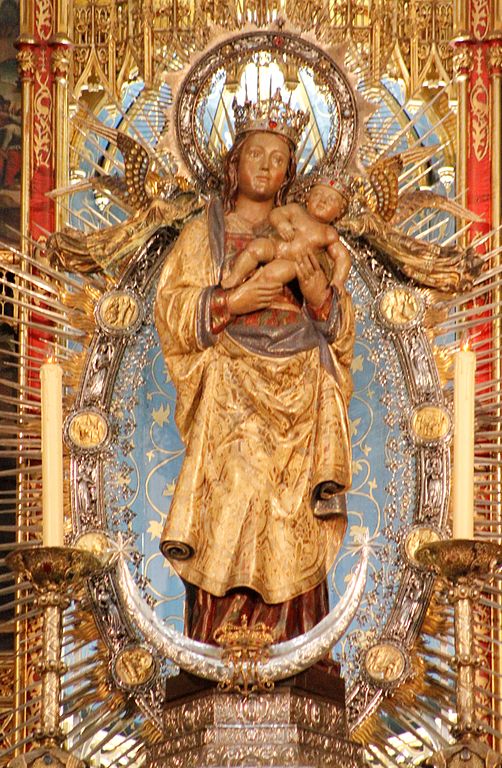
PRAYER – Lord God, You fill us with Your grace and teach us true faith. Strengthen in our hearts that faith that no trials may quench the fire, that we may seek Your face in every moment and accept AND LIVE all of Your will. Send us Your Spirit to keep the fire blazing. May the humble love and intercession of Mary Mother of our faith, be our succour and may Blessed Thaddeus McCarthy intercede for us on our pilgrim way. Through Jesus Christ, Your Son our Lord, with the Holy Spirit, God forever, amen.
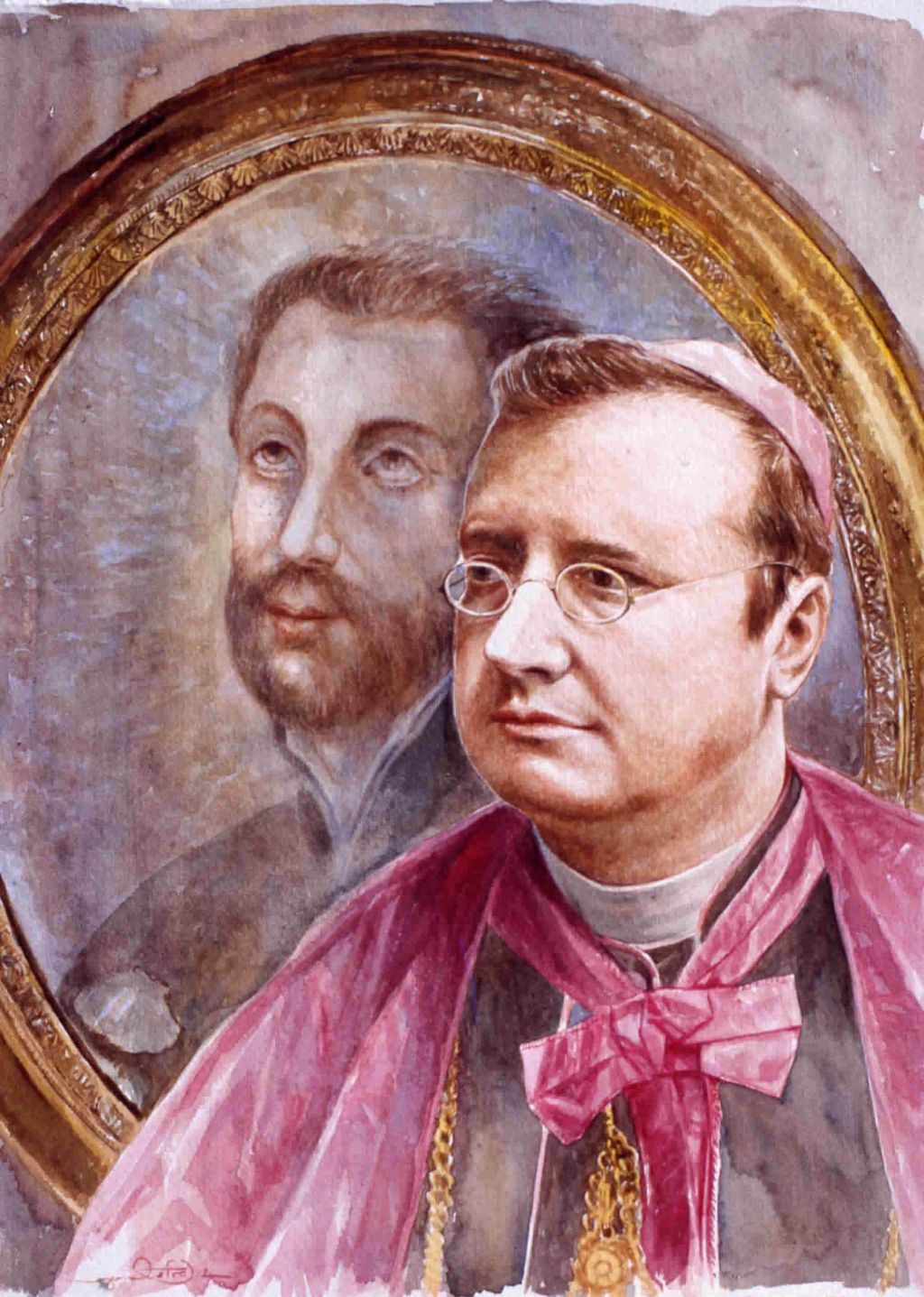
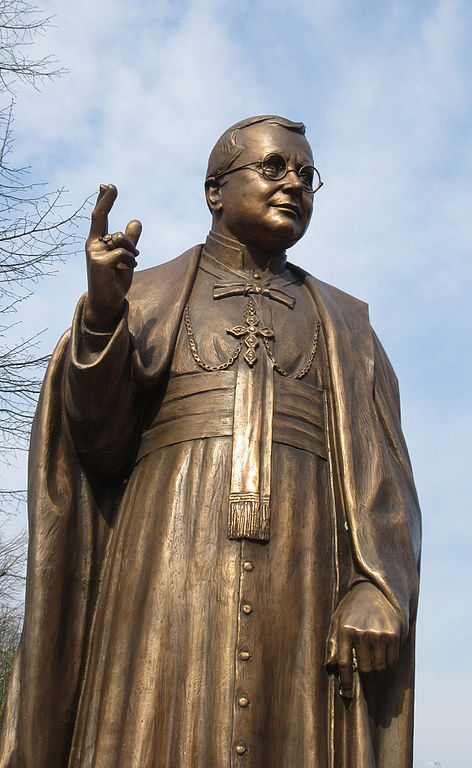
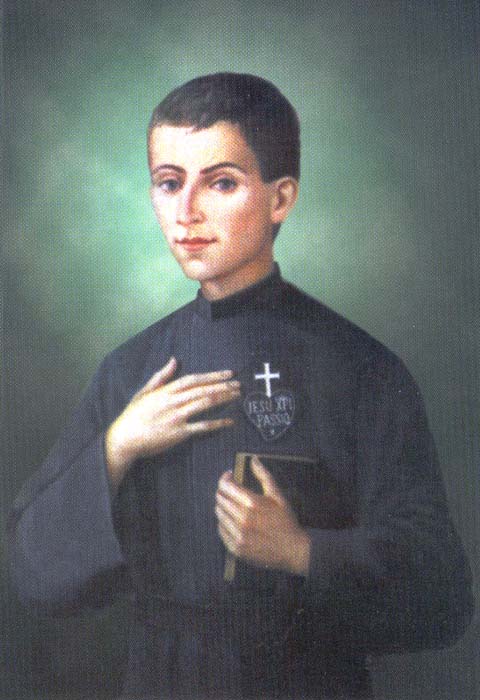
Saint of the Day – 25 October – Blessed Thaddeus McCarthy (c 1455–1492) the “White Martyr of Munster” – Bishop – born Tadhg Mac Cárthaigh in c1455 in County Cork, Ireland and died on 25 October 1492 in a pilgrim’s hostel at Lvrea, Italy of natural causes. He was a Bishop who never ruled his See/s, even though he was appointed to two of them – Bishop of Ross, Ireland in 1482 and Bishop of Cork and Cloyne in 1490. Patronages – exiles, the homeless, those suffering calumny, rejection and persecution, pilgrims.
Bishop Thaddeus McCarthy, the young Irish Prelate whose immemorial cult was confirmed by Pope Leo XIII in 1896, was born in the middle of the fifteenth century. He studied theology first under his uncle, one Canon Thady McCarthy and then in Paris and in Rome. At the age of 27 he was named bishop of Ross by Pope Sixtus IV and consecrated in Rome. Returning to Ireland, he discovered that his see was already in the possession of one Hugh O’Driscoll, also appointed to it by the same Pope Sixtus IV. It would seem that news had reached Rome of the death of Hugh O’Driscoll, either by simple misinformation or by political intrigue. Bishop O’Driscoll assumed that Thaddeus was an imposter and in 1488 obtained his excommunication by Pope Innocent VIII. Thaddeus appealed the excommunication, a Roman commission judged in his favour and in 1490 he was named Bishop of Cork and Cloyne.
A Wandering Bishop
Bishop Thaddeus attempted to take possession of his new see but was prevented from entering his cathedral by supporters of Gerald Fitzgerald who, with the support of local chieftains, had usurped his jurisdiction over the diocese of Cork and Cloyne. Armed men took possession of the cathedral preventing Thaddeus from entering. Everywhere he turned, he suffered the pain of rejection. For two years, he travelled from town to village armed with the papal documents announcing his rightful appointment and absolution from any criminal charge. This persecution as such was the outcome of political pressure. By now, he was alone, having strenuously opposed any form of retaliation by his own McCarthy clan. They, in response, abandoned him. Now, without family support, status and security but with unwavering faith and trust in God, he once again set off for Rome to plead his case to the Pope.
The Pontiff gave him a new document dated 18 July 1492 and ordered the powerful Gerald Earl of Kildare to protect Thaddeus, to support him and to restore him to his rightful place as Bishop of Cork and Cloyne.
Blessed Thaddeus appeals to the Pontiff (detail of the Thaddeus altar, Cobh)
The Pilgrim
Fearing that an attempt would be made on his life, Thaddeus disguised himself as a humble pilgrim and set out on foot from Rome. On the evening of 24 October 1492, an exhausted Thaddeus arrived at a hostel for pilgrims in Ivrea, Italy. He was wearing the hooded habit of a pilgrim with its distinctive sign of the oyster shell. The innkeeper received the poor pilgrim warmly and provided him with a room for the night. At dawn, a strange and wonderful light was seen shining from the room. Upon entering it, the innkeeper found the lifeless body of 37 year old Thaddeus McCarthy, radiant with a heavenly beauty.
Blessed Thaddeus is often depicted wearing the scallop shell – symbol of a pilgrim
The local bishop was apprised of the phenomenon, he had, in fact, dreamed that very night of an unknown bishop ascending into the glory of heaven. He recognised Thaddeus as the bishop of his dream. Further investigation revealed that Thaddeus’ wallet contained the papal documents recognising him as bishop of Cork and Cloyne, and an episcopal ring. Clothed in episcopal robes, Thaddeus’ body attracted crowds of the local faithful to the cathedral where he lay in state. He was buried in the cathedral of Ivrea, where his tomb became a place of extraordinary graces and miracles.
The death of Thaddeus, St Colmán’s Cathedral, Cobh
A Pontiff Between Ireland and Italy
In 1742, 350 years later, when the tomb of Thaddeus McCarthy was opened, his body was found to be incorrupt. Devotion to the Irish bishop developed and in 1847 the clergy and faithful of Ivrea donated a large amount of money for victims of the Great Hunger in Ireland. The contact between Ireland and Ivrea resulted in a movement for the beatification of Bishop Thaddeus. In 1896, Pope Leo XIII confirmed his immemorial cult. Major relics of the Blessed were sent from Ivrea to the church at Cork, Ross and Cloyne. Below are the relic of Thaddeus’s leg bone and a prayer for his Canonisation, both part of the shrine on the North Cathedral, Cork.
Blessed Thaddeus McCarthy is known as The White Martyr of Munster because the mental and physical sufferings that he endured with heroic patience. He is a patron of people in every sort of affliction, especially of those suffering rejection, homelessness, calumny and exile. Here is the liturgical collect for his feast:
O God, who didst adorn Blessed Thaddeus, Thy Confessor and Thy Bishop
with invincible fortitude in bearing adversity, grant, we beseech Thee, that following his example as we make our pilgrim way upon earth, we may prevail mightily over the things that come against us.
One will recognise in the Collect, the allusion to Romans 8:35–39:
Who then shall separate us from the love of Christ? Shall tribulation? or distress? or famine? or nakedness? or danger? or persecution? or the sword? (As it is written: For thy sake we are put to death all the day long. We are accounted as sheep for the slaughter.) But in all these things we overcome, because of him that hath loved us. For I am sure that neither death, nor life, nor angels, nor principalities, nor powers, nor things present, nor things to come, nor might, nor height, nor depth, nor any other creature, shall be able to separate us from the love of God, which is in Christ Jesus our Lord.
Blessed Thaddeus McCarthy never accomplished what he was consecrated to accomplish. in this life but now he has two Diocese after all. He is beloved in Ivrea and in Cobh! He never governed his diocese, ordained new priests, or even confirmed anybody, as best we can tell. But he fulfilled his purpose – he gave his life for God, earning the title “White Martyr of Munster.” Below, the magnificent shrine and relics in the beautiful Cathedral in Ivrea, Italy, where Thaddeus lies and at the bottom, the equally magnificent side-chapel dedicated to his memory in St Colmán’s Cathedral, Cobh, Ireland. And, all over Ireland Shrines and side-chapels are dedicated to the Blessed and beloved Thaddeus.
A window dedicated to Blessed Thaddeus in the Church in Caheragh, near Skibbereen
On 25 October his feast day, let’s ask his intercession for those who are discouraged by lack of results, that they would seek not to be successful but to be faithful. Blessed Thaddeus McCarthy, pray for us!
St Alfons Arimany Ferrer
St Bernard of Calvo
St Canna verch Tewdr Marw
St Chrysanthus St Crispin & St Crispian – (†285 or 286) Martyrs Their Story: https://anastpaul.com/2018/10/25/saints-of-the-day-25-october-sts-crispin-crispinian-%e2%80%a0285-or-286-martyrs/
St Cyrinus of Rome
St Daria
St Dulcardus
Bl Edmund Daniel
St Fronto of Périgueux
St Fructus of Segovia
St Gaudentius of Brescia
St George of Périgueux
St Goeznoveus of Leon
St Guesnoveus
Bl Henry of Segusio
St Hilary of Javols
St Hilary of Mende
St Hildemarca of Fecamp
St Januarius of Sassari
St Lucius of Rome
St Lupus of Bayeux
St Mark of Rome
Bl Maurus of Pécs
St Miniato of Florence
St Peter of Rome
St Protus of Sassari
St Recaredo Centelles Abad
St Tabitha Bl Thaddeus McCarthy (c 1455–1492)
St Theodosius of Rome
—
Martyrs of Constantinople:
Marciano
Martirio
Martyrs of Cruz Cubierta – 5 beati: A mother, Blessed María Teresa Ferragud Roig de Masiá and her four daughters, Blessed María Joaquina Masiá Ferragud, Blessed María Vicenta Masiá Ferragud, Blessed María Felicidad Masiá Ferragud and Blessed Josefa Ramona Masiá Ferragud, all nuns, who were Martyred in the Spanish Civil War, on 25 October 1936 in Cruz Cubierta, Alzira, Valencia, Spain.
They were Beatified on 11 March 2001 by St Pope John Paul II.
Forty Martyrs of England and Wales – 40 saints: Following the dispute between the Pope and King Henry VIII in the 16th century, faith questions in the British Isles became entangled with political questions, with both often being settled by torture and murder of loyal Catholics. In 1970, the Vatican selected 40 martyrs, men and women, lay and religious, to represent the full group of perhaps 300 known to have died for their faith and allegiance to the Church between 1535 and 1679. They each have their own day of memorial, but are remembered as a group on 25 October.
• Alban Roe • Alexander Briant • Ambrose Edward Barlow • Anne Line • Augustine Webster • Cuthbert Mayne • David Lewis • Edmund Arrowsmith • Edmund Campion • Edmund Gennings • Eustace White • Henry Morse • Henry Walpole • John Almond • John Boste • John Houghton • John Jones • John Kemble • John Lloyd • John Pain • John Plesington • John Rigby • John Roberts • John Southworth • John Stone • John Wall • Luke Kirby • Margaret Clitherow • Margaret Ward • Nicholas Owen • Philip Evans • Philip Howard • Polydore Plasden • Ralph Sherwin • Richard Gwyn • Richard Reynolds • Robert Lawrence • Robert Southwell • Secular Clergy • Swithun Wells • Thomas Garnet.
Canonised on 25 October 1970 by St Pope Paul VI
Martyrs of Rome – 67 saints: A group of 46 soldiers and 21 civilians martyred together in the persecutions of Claudius II. 269 in Rome, Italy.
Martyred in the Spanish Civil War:
• Blessed Alfons Arimany Ferrer
• Blessed Recaredo Centelles Abad
Thought for the Day – 24 October – The Memorial of St Anthony Mary Claret (1807-1870)
Jesus foretold that those who are truly His representatives would suffer the same persecution as He did. Besides 14 attempts on his life, Anthony had to undergo such a barrage of the ugliest slander that the very name Claret became a byword for humiliation and misfortune. The powers of evil do not easily give up their prey. No-one needs to go looking for persecution. All we need to do is be sure we suffer because of our genuine faith in Christ, not for our own whims and lack of prudence. St Anthony pulled no punches but preached the Truth, fearless in the love of Christ and His Church, His Bride!
From the beginning Anthony wanted to be a priest. His seminary life was exemplary and he was ordained on 13 June 1835. He resolved never to waste a moment of time and during his 35 years as a priest he wrote 200 books and pamphlets and preached some 25,000 sermons.
On one trip, besides travelling, he preached 205 sermons in 48 days, 12 in one day. To make sure his efforts might be recognised for what they were, he started off by reminding his hearers that the ordinary motives for labour are money, pleasure or honour. But these were not his motives:
“… not money, for I do not want a penny from anybody… Nor do I preach for pleasure, for what pleasure can I possibly take in spending myself all day, in being fatigued from early morning until late at night?… I must be in the confessional most of the morning, the whole of the afternoon and in the evening, instead of resting, I have to preach. This is not just for a day, but… for months and years…
Perhaps I labour for honour… no, not for honour either… A preacher is exposed to many calumnies. If praised by one, he is misunderstood by another, treated as the Jews treated Jesus, Who was calumniated by maligners of His person, of His words and works, before they finally seized, scourged and killed Him by a most painful and shameful means. But like the apostle St Paul, I fear none of these things, since I value my soul more than my body. At any cost, I must discharge the ministry I have received from God Our Lord, which is to preach the Gospel… I have no worldly end in view but… that God may be known, loved and served by all the world… that sins and offences against Him may be hindered as much as possible…
Another thing that spurs me on, to preach ceaselessly, is the thought of the multitude of souls which fall in the depths of hell… Who die in mortal sin, condemned forever and ever… I see how many live habitually in mortal sin, so that never a day passes without increasing the number of their iniquities. They commit sin as easily as they drink a glass of water, just for diversion, or for a laugh. These unfortunate ones run to hell of their own accord, blind as bats… If you were to see a blind man about to fall into a pit or over a precipice, would you not warn him? Behold, I do the same and do it I must, for this is my duty… You may tell me that sinners will insult me, that I should leave them alone… Ah no, I can’t abandon them. They are my dear brothers. If you had a beloved brother who, sick and in the throes of delirium, were to insult you with all the angry words imaginable, would you abandon him? I am certain you wouldn’t. You would have even more compassion for him, do your utmost for his speedy recovery. This is how I feel in regard to sin ners. These poor souls are in a delirium and the more in need of our pity…
You may say the sinner doesn’t think of hell, nor even believe in it. So much the worse for him. Do you by chance think he will escape condemnation because of his unbelief? Truth is independent of belief… I must warn sinners and make them see the precipice which leads to the unquenchable fires of hell, for they will surely go there if they do not amend their ways. Woe to me if I do not preach and warn them, for I would be held responsible for their condemnation… How often I pray, with St Catherine of Siena – ‘O my God, grant me a place by the gates of hell, that I may stop those who enter there saying: Where are you going, unhappy one? Back, go back! Make a good confession. Save your soul. Don’t come here to be lost for all eternity!”
Further he boldly proclaimed – “The sole reason why society is perishing is because it has refused to hear the word of the Church, which is the word of life, the word of God. All plans for salvation will be sterile if the great word of the Catholic Church is not restored in all its fullness.”
His own words, are the best description for St Anthony’s life:
“A Son of the Immaculate Heart of Mary is a man on fire with love, who spreads its flames wherever he goes. He desires mightily and strives by all means possible to set the whole world on fire with God’s love. Nothing daunts him, he delights in privations, welcomes work, embraces sacrifices, smiles at slander and rejoices in suffering. His only concern is how he can best follow Jesus Christ and imitate Him in working, suffering and striving constantly and single-mindedly, for the greater glory of God and the salvation of souls.”
St Anthony Mary Claret, Pray for the world, the Church, for us all, amen!
Quote/s of the Day – 24 October – The Memorial of St Anthony Mary Claret (1807-1870) and St Luigi Guanella (1842-1915)
“When I am before the Blessed Sacrament. I feel such a lively faith that I can’t describe it. Christ in the Eucharist is almost tangible to me… When it is time for me to leave, I have to tear myself away from His sacred presence.”
“Lord, by the words of consecration, the substance of the bread and wine is converted into the substance of Your Body and Blood. All powerful Lord, say over me the word which will change me into You.”
Our Morning Offering – 24 October – Thursday of the Twenty Ninth week in Ordinary Time, Year C and the Memorial of St Anthony Mary Claret (1807-1870)
May I know You and Make You known By St Anthony Mary Claret (1807-1870) Founder of the Claretian Missionaries
O my God and my Father,
may I know You
and make You known,
love You
and make You loved,
serve You
and make You served,
praise You
and make all creatures praise You.
Grant, my Father,
that all sinners be converted,
all the just persevere in grace
and all of us
attain to eternal glory.
Amen
Saint of the Day – 24 October – Blessed Giuseppe Baldo (1843 – 1915) Priest and Founder of both the Little Daughters of Saint Joseph (1894) and the Sisters of Charity of Saint Mary (1882), Apostle of Charity, Founder of numerous charitable institutions – born on 19 February 1843 in Puegnago, Brescia, Italy and died on 24 October 1915 (aged 72) in Ronco all’Adige, Verona, Italy of natural causes. He is the Patron of his Orders and of Ronco all’Adige.
Giuseppe Baldo was born in Brescia on 19 February 1843 as the sixth of nine children to the farmer Angelo Baldo and his wife, the midwife Ippolita Casa, six of the Baldo’s nine children died as infants. He was Baptised on 20 February in the parish church of Saint Michael the Archangel by Fr Domenico Ottini.
He commenced his studies for the priesthood in Verona on 7 December 1858 and had excellent results in all of his studies. The Bishop of Verona, Luigi di Canossa ordained him to the priesthood on the Feast of the Assumption, 15 August 1865 after he had received a special papal dispensation, from Pope Pius IX, as he was much younger than the rules required.
He spent a year as assistant priest in the suburban parish of Montorio, after which he was called by his bishop to carry out the prestigious role of vice president of the Verona Bishopric, where he remained for 11 years as an appreciated educator and spiritual director. Feeling inspired to devote himself to a broader apostolate, he asked and obtained permission to be sent as the parish priest to Ronco all’Adige, Verona, where he remained until his death. He took possession of his parish on 17 November 1877 but he was immediately opposed by the Mafia and Freemasons, who threatened to kill him if he displayed any public religious ceremonies..
In 1882 Blessed Guiseppe established a new religious congregation, the Sisters of Charity of Saint Mary. In 1888, he decided to found another order to administer and run the kindergarten and the canteen he had established for malnourished children. He also opened a hospital called “Casa Ippolita” in 1888 and in 1893 he founded a shelter for older people. On 21 November 1894 he founded the Little Daughters of Saint Joseph while the first ten postulants received their habits on 24 June 1896 from the Bishop of Verona, Cardinal Luigi di Canossa. The first seven female religious made their profession into the order on 25 June 1897.
The first superior appointed was not Baldo but rather Sr Clementina Forante who managed the congregation from 1864 until 1928. The order received diocesan approval on 3 May 1895 while receiving the Papl decree from St Pope Pius X on 10 February 1913 and full Papal approval – after Baldo’s death – from Pope Pius XII on 3 April 1940.
Blessed Giuseppe spent 38 years of such intense and zealous charitable and spiritual work in his Parish and the surrounds, often being threatened and abused by the local gangsters but he carried on, with total trust in the love and power of God. He died on 24 October 1915 after 22 months of a long and painful illness. His remains were transferred to the Motherhouse of the congregation on 7 September 1950. His orders now operate in Georgia, Kenya, Uganda, Italy and Rwanda amongst other places and as of 2005 there were 405 religious in 68 houses.
At the end of the canonical process, on 26 January 1987 Blessed Giuseppe received the recognition of the heroic nature of his virtues. And two years later, on 31 October 1989, he was raised to the altars with the title of Blessed at St Peter’s by St Pope John Paul II.
Bl Amado García Sánchez
St Audactus of Thibiuca
St Cadfarch
St Ciriacus of Hierapolis
St Claudian of Hierapolis
St Ebregislus of Cologne
St Felix of Thibiuca
St Fortunatus of Thibiuca
St Fromundus of Coutances
St Giuse Lê Dang Thi Bl Giuseppe Baldo (1843 – 1915)
St Januarius of Thibiuca St Luigi Guanella (1842-1915) St Luigi’s Life: https://anastpaul.com/2018/10/24/saint-of-the-day-24-october-st-luigi-guanella-1842-1915-servant-of-charity/
St Maglorius of Wales
St Marcius of Monte Cassino
St Martin of Vertou
St Proclus of Constantinople
St Senoch
St Senócus of Tours
St Septimus of Thibiuca
—
Martyrs of Ephesus – 3 saints: Three Christians martyred together. All we know about them are the names Mark, Sotericus and Valentina.
They were stoned to death near Ephesus, Asia Minor (in modern Turkey). Their relics are enshrined on the island of Tasos.
Thought for the Day – 24 October – The Feast of the Holy Redeemer
St John Paul II from ‘Redemptor Hominis’ his first Enycyclical, ‘The Redeemer of Humankind.’ In it he dealt with the core of our faith, the Person of Jesus Christ, the Redeemer of the World.
10 . The human dimension of the mystery of the Redemption
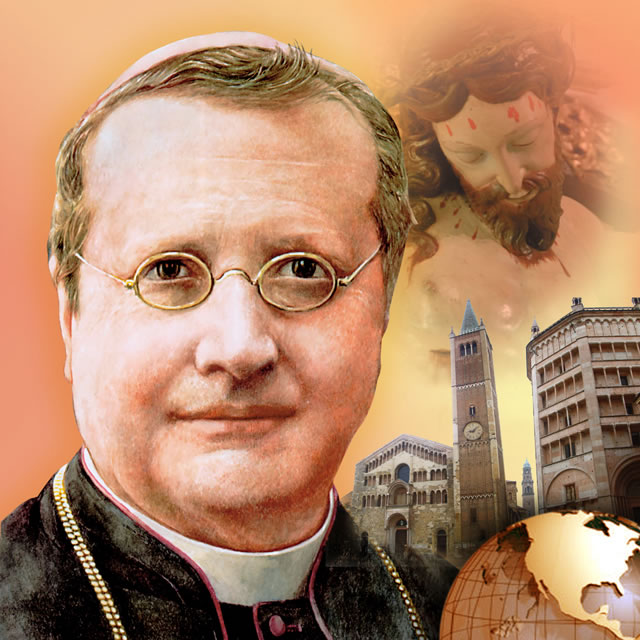
We cannot live without love. We remain beings that are incomprehensible for ourselves, our lives are senseless, if love is not revealed to us, if we do not encounter love, if we do not experience it and make it our own, if we do not participate intimately in it. This, as has already been said, is why Christ the Redeemer “fully reveals man to himself”, ‘fully reveals us to ourselves’.
If we may use the expression, this is the human dimension of the mystery of the Redemption. In this dimension we find again the greatness, dignity and value that belong to our humanity.
In the mystery of the Redemption we become newly “expressed” and, in a way, are newly created. We are newly created! “There is neither Jew nor Greek, there is neither slave nor free, there is neither male nor female; for you are all one in Christ Jesus”64.
If we wish to understand ourselves thoroughly-and not just in accordance with immediate, partial, often superficial and even illusory standards and measures of his being-we must with our unrest, uncertainty and even our weakness and sinfulness, with our life and death, draw near to Christ. We must, so to speak, enter into Him with all His own self, we must “appropriate” and assimilate the whole of the reality of the Incarnation and Redemption in order to find ourselves. If this profound process takes place within us, we then bear fruit not only of adoration of God but also of deep wonder at ourselves.
How precious must we be in the eyes of the Creator, if we “gained so great a Redeemer” and if God “gave his only Son “in order that we “should not perish but have eternal life”.
God does not leave us groping in the dark. He has shown Himself to us as a man. In His greatness, He has let Himself become small. ... Pope Benedict XVI
Pardon us, O Lord, Pardon us By William of Saint-Thierry OSB, O.Cist. (c 1075-1148) Abbot, Monk, Theologian, Mystic, Writer Friend of St Bernard of Clairvaux (1090-1153)
Pardon us, O Lord, pardon us.
We beg to shift the blame for our sins,
we make excuses.
But no-one can hide
from the Light of Your Truth,
which both enlightens those,
who turn to it and exposes those,
who turn away.
Even our blood and our bones
are visible to You,
who created us out of dust.
How foolish we are,
to think that we can rule our own lives,
satisfying our own desires,
without thought of You.
How stupid we are,
to imagine that we can keep our sins hidden.
But although we may deceive other people,
we cannot deceive You.
And since You see into our hearts,
we cannot deceive ourselves,
for Your Light reveals to us,
our own spiritual corruption.
Let us, therefore, fall down before You,
weeping with tears of shame.
May Your judgement,
give new shape to our souls.
May Your power, mould our hearts
to reflect Your love.
May Your grace, infuse our minds,
so that our thoughts reflect Your Will.
Amen
Our Morning Offering – 23 October – Wednesday of the Twenty Ninth Week in Ordinary Time, Year C and the Feast of the Most Holy Redeemer celebrated today by the Redemptorists
Jesus, My Saviour, Help Me By St Alphonsus Liguori (1696-1787) Most Zealous Doctor
Jesus, my Saviour, help me.
I am resolved truly to love You
and to leave all to please You.
Help me to free myself
from everything that hinders me
from belonging wholly to You
who have loved me so much.
By your prayers, O Mother Mary,
which are so powerful with God,
obtain for me this grace
to belong wholly to God.
Amen
The Feast of the Most Holy Redeemer was a Catholic liturgical feast. It is celebrated in Venice as the Festa del Redentore. It is also celebrated by the Redemptorists and was celebrated in the City of Rome.
The feast is found only in the special calendar of some dioceses and religious orders and is celebrated with proper Mass and Office either on the third Sunday of July or on 23 October. In Venice this feast has been observed for more than four centuries with great solemnity. In 1576 a plague broke out in Venice which in a few days carried off thousands of victims. To avert this scourge the Senate vowed to erect a splendid temple to the Redeemer of mankind and to offer therein, each year, on the third Sunday of July public and solemn services of thanksgiving. Scarcely had the plague ceased, when they began to fulfil their vow. The church was designed by the famous Andrea Palladio and the corner-stone was laid by the Patriarch Trevisan on 3 May 1577. The celebrated painters Paolo Veronese and Jacopo Tintoretto decorated the interior. The church was consecrated in 1592 and, at the urgent solicitations of Pope Gregory XIII, placed in charge of the Capuchin Fathers.
By concession of Pope Benedict XIV, dated 8 March 1749, the Congregation of the Most Holy Redeemer solemnises this feast as a double of the first class with an octave on the third Sunday of July. The same congregation also keeps the feast as a greater double on 23 October and 25 February and has, besides, the privilege of reciting once a month the votive office of the Most Holy Redeemer.
‘You have redeemed us Lord, in Your Blood’
In Rome also Pope Pius VIII introduced the feast and by a Decree of 8 May 1830, the Sacred Congregation of Rites assigned it to 23 October. The characteristics of the Mass and Office are joy and gratitude for the ineffable graces and benefits of the Redemption. This appears especially from the Introit “Gaudens gaudebo”, from the antiphons of Lauds “Cantate Domino”, from the Epistle of the Mass, taken from St Paul to the Ephesians, (chapter 1), “Blessed be the God and Father of our Lord Jesus Christ, Who hath blessed us with spiritual blessings . . . in Christ”. For this reason white is the colour of the vestments and not red, as in the Mass of the Passion.
‘I, the Lord, am your Redeemer’
Why do Redemptorists celebrate the Feast of the Most Holy Redeemer?
Who are Redemptorists?
A young priest, Alphonsus de Liguori, 36 years of age, gathered a group of companions around him in November of 1732. He was passionate about reaching out to people who were abandoned, socially and religiously, in the countryside all around the then-great city of Naples, in Italy. They were ‘like sheep without a shepherd’. After a shaky start -his first companions left him -he gathered a group of like-minded men around him, who had the same passion, to go out to people, to share the Good News of Jesus of Nazareth with them, to show them the divine dignity that was in each human being and to share with them, the wonder of being redeemed, being set free, by the blood that Jesus shed for all people, everywhere.
That was the dream then. That is still the same dream now. Redemptorists all over the world (about 6000 in number) and their companions work to bring the joy of the Gospel to everyone we meet. ‘Caritas Christi urget nos’ –Christ’s love drives us.
‘Simon, do you love me?’ asked Jesus of Simon Peter. ‘Yes, Lord, you know that I love you’. ‘Feed my sheep!’ That’s what the young Alphonsus taught, again and again, that Redemptorists are to be about – if we love Jesus Christ (‘Jesus Christ is the centre of your life’ as a group – this is in our Constitutions), If we love Him, we will feed his people constantly. Hold us to it!
Why the name ‘Redemptorists’? The full title in Latin is ‘Congregatio Santissimi Redemptoris’ – a congregation of priests and brothers, under the title of ‘The Most Holy Redeemer’. In Italy, we are known as the Missionari Redentoristi, (playing on the word Redemptoris, in the Latin) and in Ireland we call ourselves ‘Redemptorist Missionaries’. Our middle name is SENT – just like Jesus! Everything about us is meant to reflect that -the way we live, the way we work, the way we pray, the joy in us, our community life together around the person of Jesus, the Redeemer. ‘The Son of Man did not come to be served but to serve’, Jesus said.
And St Mark tells us, about the calling of the Twelve Apostles: ‘he called them to be with him and to go out.’ ‘ To be with him’ in our lives, in our prayer and preparation, ‘to go out’ in our efforts always to reach out, to go to people, to be with them along the road of life, to go out physically to people, to reach out by all media available.
The Nuns of the Redemptoristine Order were founded one year before us. They live enclosed lives of prayer for the whole world. In Ireland, they are in Drumcondra, in St Alphonsus’ Monastery, St Alphonsus Road.
Both the Redemptoristines and the Redemptorists are constantly praying that young women and young men, in their twenties and older, will come and share the passion in us for people. We want the work of the Most Holy Redeemer to continue into future generations. … (Redemptorists, Ireland).
‘Every new generation is a continent to be won for Christ!’ (St John Paul II)
St Benedict of Sebaste
St Clether
St Domitius
St Elfleda
St Ethelfleda
St Gratien of Amiens
St Henry of Cologne
St Ignatius of Constantinople
Bl John Angelo Porro
Bl John Buoni
St John of Syracuse
Oda of Aquitaine
St Phaolô Tong Viet Buong
St Romanus of Rouen
Bl Severinus Boethius
St Severinus of Cologne
Syra of Faremoutiers
St Theodoret of Antioch
Bl Thomas Thwing
St Verus of Salerno
—
Martyrs of Cadiz – 2 saints
Germanus
Servandus
Martyrs of Hadrianopolis – 2 saints
Dorotheus
Severus
Martyrs of Nicaea – 3 saints
Euerotas
Socrates
Theodota
Martyrs of Valenciennes – 6 beati: A group of Urusuline and Briggittine nuns murdered together in the anti-Christian excesses of the French Revolution. They were guillotined on 23 October 1794 in Valenciennes, Nord, France and Beatified on 13 June 1920 by Pope Benedict XV.
• Anne-Joseph Leroux
• Clotilde-Joseph Paillot
• Jeanne-Louise Barré
• Marie-Augustine Erraux
• Marie-Liévine Lacroix
• Marie-Marguerite-Joseph Leroux
Martyred in the Spanish Civil War including Martyrs of Manzanares (7 beati):
• Agapit Gorgues Manresa
• Agustín Nogal Tobar
• Andrés Navarro Sierra
• César Elexgaray Otazua
• Cristóbal González Carcedo
• Dorinda Sotelo Rodríguez
• Eduardo Valverde Rodríguez
• Felipe Basauri Altube
• José María Fernández Sánchez
• Juan Nuñez Orcajo
• Leonardo Olivera Buera
• Manuel Navarro Martínez
• Roque Guillén Garcés
• Toribia Marticorena Sola
Thought for the Day – 22 October – The Memorial of St Pope John Paul II (1920-2005)
Happy feast day of St John Paul the Poet!
Many know that St John Paul II’s talents included acting and athletics but did you know the Saint is also an accomplished poet? He loved to write about nature, humanity and God and wrote poetry throughout his life – as a student, a quarry worker, a priest, bishop and Pope, beginning in 1939 and publishing under pseudonyms in Poland. It wasn’t until he became Pope that his poetry was published throughout the world.
Known to family and friends as Lolek (a nickname that translates as “Chuck”), the future John Paul II learned about suffering at an early age when his mother died of heart and kidney problems in 1929, shortly before his ninth birthday. This poem below, “Over This, Your White Grave”” was written before he was twenty.
Over This, Your White Grave
Over this, your white grave
the flowers of life in white—
so many years without you—
how many have passed out of sight?
Over this your white grave
covered for years, there is a stir
in the air, something uplifting
and, like death, beyond comprehension.
Over this your white grave
oh, Mother, can such loving cease?
for all his filial adoration
a prayer:
Give her eternal peace—
“Veronica?”
“Bernice Veronica” – both names referring to the Woman who wiped the Face of Jesus, commonly depicted in every Catholic church, at the Sixth Station of the Cross.
Did she exist? And what does it mean to be “a Veronica?”
St Pope John Paul II expressed the answer to the question of Veronica most beautifully in his poem, “Name”
“Name”
In the crowd walking towards the place
[of the Agony]–
did you open up a gap at some point or were you
[opening it] from the beginning?
And since when? You tell me, Veronica.
Your name was born in the very instant
in which your heart
became an effigy: the effigy of truth.
Your name was born from what you gazed upon.
Karol Wojtyla
St Peter’s Square had a special meaning for St John Paul. In earlier days he wrote a poem about it. Below is an excerpt from it:
Marble Floor
Marble floor
our feet meet the earth in this place,
there are so many walls,
so many colonnades,
yet we are not lost. If we find
meaning and oneness,
it is the floor that guides us….
Peter, you are the floor, that others
may walk over you… You guide their steps…
You want to serve their feet that pass
as rock serves the hooves of sheep.
The rock is a gigantic temple floor,
the cross a pasture.
St Peter’s name means “a rock” and Christ said of him “on this Rock I will build my Church.” The poem is about the role of the Holy Father, who is a shepherd to his flock, a guide to the Church.
St John Paul, keep being our Shepherd by your Prayers!
Quote/s of the Day – 22 October – The Memorial of St Pope John Paul II (1920-2005)
“Never, as in the Rosary, do the life of Jesus and that of Mary, appear so deeply joined. Mary lives only in Christ and for Christ!”
“Not only the devil is involved in spiritual warfare but the Holy Spirit is equally involved, or more involved in it, bringing men and women of goodwill, the ability to overcome evil in their lives, so that they too can say: “Where evil abounded, grace super-abounded!” (Rom 5:20).”
St John Paul II (The Holy Spirit (Dominum Et Vivificantem – 1986)
“Let the eyes of our faith
never wander from the Cross of Calvary.”
“Do not abandon yourselves to despair. We are the Easter people and hallelujah is our song.”
One Minute Reflection – 22 October – Tuesday of the Twenty Ninth Week in Ordinary Time, Year C, Gospel Luke 12:35–38 and the Memorial of St Pope John Paul II (1920-2005)
Blessed are those servants whom the master finds awake when he comes ... Luke 12:37
REFLECTION – “What are we to do if we are to overcome our weakness of soul? There are two means – prayer and detachment from self. Our Lord Jesus counsels us to watch. We must be on the watch if we want our heart to be pure but our watching must be peaceful if our heart is to be touched. Because it can be moved by good things or bad, within or without. Thus we need to watch carefully.
As a general rule God’s inspiration is an unobtrusive grace, we mustn’t turn it away… if our heart’s aren’t awake, grace turns back. Divine inspiration is very exact, just as a writer guides his pen, so the grace of God, guides the soul. So let us try hard to attain greater interior recollection.
Our Lord wants us to desire to love Him. The watchful soul notices when it falls and realises that, of itself, it cannot reach it’s destination. That is why it experiences the need for prayer. Our petition is founded on the conviction that we can do nothing of ourselves but God can do all. Prayer is needed to obtain light and strength.” … Saint Maximilian Kolbe OFM (1894-1941) Martyr – Conference of 13/2/1941
PRAYER – Lord God, strengthen in our hearts the faith You have given us, so that no trials may quench the fire Your Spirit has kindled within us. May Your Light shine through our lives and be constantly lit to lead us ready for the day the Lord Jesus calls. St John Paul, by your prayers, may our way be made holy. Through Jesus Christ with the Holy Spirit, God forever, amen.
Our Morning Offering – 22 October – Tuesday of the Twenty Ninth Week in Ordinary Time, Year C and the Memorial of St Pope John Paul II (1920-2005)
Be with Us, More and More By St John Paul II (1920-2005)
Be with us, more and more.
Meet us more and more often
because we need it so much.
Speak to us by your motherhood,
by your simplicity and by your holiness.
Speak to us
by your Immaculate Conception!
Speak to us continually!
And obtain for us the grace–
even if we are distant–
of not becoming insensitive
to your presence in our midst.
Amen
Saint of the Day – 22 October – Saint Mary Salome (First Century) Disciple of Jesus, wife of Zebedee and Mother of Saints James and John, Apostles. She appears briefly in the canonical gospels and in apocryphal writings. She is named by Mark as present at the Crucifixion and as one of the women who found Jesus’s tomb empty. Interpretation has further identified her with other women who are mentioned but not named in the canonical gospels. In particular, she is identified as the wife of Zebedee, the mother of James and John, two of the Twelve apostles. In medieval tradition Salome (as Mary Salome) was counted as one of the Three Marys who were daughters of Saint Anne, so making her the sister or half-sister of Mary, the Blessed Virgin Mother of Jesus. Patronage – Veroli, Italy.
Descent from the Cross: Mary of Cleophas, Mary Salome and John the Evangelist, by Rogier van der Weyden (1399/1400-1464)
Like the Jewish greeting “Shalom” and the Arab “Salaam,” Salome is based on an Aramaic word meaning health and peace. It would be hard to think of a more fitting name for a mother.
Lucas Cranach the Elder (1472–1553), “The Altarpiece of the Holy Kinship or Torgau” — detail of Salome
It is quite probable that Salome was the sister of the Blessed Virgin and it is certain that she was the wife of Zebedee and the mother of James the Greater and John the Evangelist (Matthew 20:20; 27:56). In the Gospel of St Matthew (20:20ff) it is written: “Then the mother of the sons of Zebedee approached Him with her sons and did Him homage, wishing to ask Him for something. He said to her, ‘What do you wish?’ She answered Him, ‘Command that these two sons of mine sit, one at Your right and the other at Your left, in Your kingdom.”
Salome was one of the women who followed Jesus and served him (Mark 15:41), witnessed His Crucifixion and death at Calvary (Matt. 27:56; Mark 15:40) and who brought spices to embalm Him on Easter morning (Mark 16:1ff) (Delaney, Encyclopedia). Legend says that after the Resurrection she went to Veroli, Italy and spent the rest of her life there spreading the Good News.
In art, Mary Salome is shown with her two sainted children (James and John) in her arms. Occasionally Mary Salome is present at the Nativity because there is a legend that the doubting Salome was a midwife, who came, unbelieving, to the stable at Bethlehem and was converted (cf. Jameson, Legends of the Madonna). Sometimes Mary Salome together with Mary Cleophas support the Virgin at the Crucifixion or they are present with Mary Magdalene at the Resurrection.
The Crucifixion 1475 – 1485. Master of the Legend of St Catherine
St Abericus Marcellus
St Alodia of Huesca
St Apollo of Bawit
St Benedict of Macerac
St Bertharius of Monte Cassino
St Cordula
St Donatus of Fiesoli
Bl Esclaramunda of Majorca
St Hermes of Adrianople
St Ingbert
St Leothade of Auch
St Lupenzius
St Mark of Jerusalem St Mary Salome (First Century)
St Maroveus of Precipiano
St Mellon
St Moderan of Rennes
St Nepotian of Clermont
St Nunctus of Mérida
St Nunilo of Huesca
St Philip of Adrianople
St Philip of Fermo
St Rufus of Egypt
St Symmachus of Capua
St Valerius of Langres
St Verecundus of Verona
—
Martyrs of Heraclea – 4 saints: A group of four clerics in Heraclea (modern Marmara Ereglisi, Turkey) who were arrested in the persecutions of Diocletian. They were imprisoned, abused and ordered to turn over all the scriptures that they had hidden from authorities; they refused and were executed together. Martyrs. – Eusebius, Hermes, Philip and Severus. They were burned at the stake in 304 in Adrianople (modern Edirne, Turkey).
Martyrs of Adianople:
• Blessed Alexander
• Blessed Anna
• Blessed Elisabeth
• Blessed Glyceria
• Blessed Heraclius
• Blessed Theodota
Martyred in the Spanish Civil War:
• Blessed Álvaro Ibáñez Lázaro
• Blessed Andrés Zarraquino Herrero
• Blessed Estanislao García Obeso
• Blessed Germán Caballero Atienza
• Blessed José Menéndez García
• Blessed Josep Casas Lluch
• Blessed Luis Minguel Ferrer
• Blessed Pedro Lorente Vicente
• Blessed Victoriano Ibañez Alonso
Thought for the Day – 21 October – The Memorial of Blessed Giuseppe “Pino” Puglisi (1937-1993) Priest, Martyr of the Mafia
Giuseppe “Pino” Puglisi was killed in Palermo on 15 September 1993, his 56th birthday. A courageous defender of the poor in the Sicilian capital’s inner city neighbourhood of Brancaccio, Blessed Father Puglisi worked tirelessly to convince young people that there was a better life than organised crime. He was extremely outspoken about the Mafia and preached against collusion, intimidation and omerta–the code of silence. As the BBC reported, “He was famous for a rhetorical question, which he used as a catch phrase in order to encourage Sicilians to stand up and fight organised crime – ‘And what if somebody did something?’” Despite numerous threats against him, he continued to teach the word of Christ and support men, women, and children in need with the hopes that they would peacefully join his anti-Mafia mission.
Once on trial, his killers revealed that they were haunted by Father Pino’s smile. They recalled that when they gunned him down in front of his home and the church where he preached, he said, while looking them in the eyes, “I’ve been expecting you.” Six men are currently serving life sentences for his murder.
Blessed Father Puglisi was declared a Martyr by Pope Benedict XVI and was Beatified on 25 May 2013, when more than 50,000 people attended the ceremony.
When Pope Francis visited Palermo on the 25th anniversary of the assassination of Blessed Pino Puglisi, he honoured this priest shot at point-blank range by the Mafia. Pope Francis insisted that true happiness and a real change in Sicilian society will come only when people love and care for one another rather than trying to grab as much money and power as they can.
“Having always leads to wanting. I have something and immediately want another and another without end. The more you have the more you want . It’s a horrible addiction,” Pope Francis said, celebrating Mass in Palermo.
“On the other hand, one who loves finds himself and discovers how beautiful it is to help others has joy on the inside and a smile on the outside, just like Father Pino” The pope’s visit to Sicily ended with an outdoor meeting with tens of thousands of teenagers and young adults in a Palermo square.
He urged them to dream and to love one another and to fight every form of corruption that flows from or builds up the Mafia.
“No to the Mafia mentality, to illegality, to the logic of crime, which are corrosive poisons for human dignity,” the pope said. “No to every form of violence. Those who use violence are not human. And the youngest of you, remember and promise me none of you will be bullies.”
“Promise me – No violence. No bullying,” he said. “No to resignation. Everything can change if people open their hearts and stand firm in hope.”
Blessed Pino Puglisi, Pray for Sicily, pray for us all!
Quote/s of the Day – 21 October – Monday of the Twenty Ninth week in Ordinary Time, Year C and the Memorial of Blessed Giuseppe “Pino” Puglisi (1937-1993) Priest, Martyr
“Let us consider that mosaic of Jesus in Monreale Cathedral. Each of us is like a little glass tile in that great mosaic. Therefore, each of us must understand our role and help others understand theirs, so that together, we can make up the unique face of Christ.”
“If everyone does something, then we can do a lot.”
“Each of us feels an inclination, a charism within ourselves. A project, which makes each of us unique, irreplaceable. This call, this vocation, is the sign of the Holy Spirit in us. Only by listening to this voice can we make sense of our lives.”
“No man is far from the Lord. The Lord loves freedom, does not impose His love. He does not force the heart of any of us. Every heart has its own time, which, even we, cannot understand. He knocks and stands at the door. When the heart is ready it will open.”
One Minute Reflection – 21 October – Monday of the Twenty Ninth week in Ordinary Time, Year C, Gospel: Luke 12:13-21 and the Memorial of Blessed Giuseppe “Pino” Puglisi (1937-1993) Priest, Martyr
But God said to him, ‘Fool! This night your soul is required of you and the things you have prepared, whose will they be?’ … Luke 12:20
REFLECTION – “Take heed, watch – for you do not know when the time will come» (Mk 13:33)… Let us then consider this most serious question, which concerns everyone of us so nearly—What it is to watch for Christ. He says, “Watch ye therefore, for ye know not when the Master of the house cometh, at even, or at midnight, or at the cock-crowing, or in the morning, lest coming suddenly, He find you sleeping. And what I say unto you, I say unto all, Watch!” (v.35 f.)…
Many men indeed are open revilers of religion, or at least openly disobey its laws but let us consider those who are of a more sober and conscientious cast of mind. They have a number of good qualities and are in a certain sense and up to a certain point religious but they do not watch… They do not understand that they are called to be strangers and pilgrims upon the earth (Heb 11:13) and, that their worldly lot and worldly goods, are a sort of accident of their existence and that they really have no property… Now, it cannot surely be doubted, that multitudes in the Church, are such as I have been describing and that they would not, could not, at once welcome our Lord on His coming…
It is a most affecting and solemn thought, that He has actually called our attention to this very danger… He warns His disciples of the danger of having their minds drawn off from the thought of Him, by whatever cause, He warns them against all excitements, all allurements of this world, He solemnly warns them, that the world will not be prepared for His coming and tenderly entreats of them, not to take their portion with the world. He warns them by the instance of the rich man whose soul was required, of the servant who ate and drank (Lk 12:45) and of the foolish virgins (Mt 25:2)… The bridal train is sweeping by—Angels are there—the just made perfect are there—little children and holy teachers and white-robed saints and martyrs washed in blood… His Bride hath made herself ready (Rv 19:7). She has already attired herself, while we have been sleeping.” … St John Henry Newman (1801-1890) – Cardinal, Founder of the Oratory in England, Theologian – Sermon: “Watching” (PPS, vol. 4, no. 22, passim)
“I’ve been expecting you.” – Blessed Giuseppe “Pino” Puglisi (1937-1993) Priest, Martyr – HIS LAST WORDS TO HIS MURDERERS
PRAYER – Almighty ever-living God, grant that we may always conform our will to Yours and serve Your majesty in sincerity of heart. Teach us to lay up riches in heaven and may the prayers of Blessed Pino Puglisi, who bravely fought against the worldly evils of the Mafia, assist us in our daily struggles against the idols of the world. Through our Lord Jesus Christ, Your Son, who lives and reigns with You in the unity of the Holy Spirit, one God, forever and ever, amen.
Saint of the Day – 21 October – Blessed Giuseppe “Pino” Puglisi (1937-1993) Priest, Martyr, teacher, vocations, youth and social reformer and activist – was a Roman Catholic priest in the rough Palermo neighbourhood of Brancaccio, Sicily. He openly challenged the Mafia who controlled the neighbourhood and was killed by them on his 56th birthday in the same town. His life story has been retold in a book, Pino Puglisi, il prete che fece tremare la mafia con un sorriso (2013) and portrayed in a film, Come Into the Light (“Alla luce del sole” original Italian title) (2005).
Dom Pino Puglisi was born in Brancaccio, a working-class neighbourhood in Palermo (Sicily), into a family of modest means. His father was a shoemaker and his mother a dressmaker. He entered the seminary at age sixteen. Following ordination, he worked in various parishes, including a country parish afflicted by a bloody vendetta.
Puglisi was ordained as a priest on 2 July 1960 by Cardinal Ernesto Ruffini from Palermo. Ruffini regarded Communism as a greater threat than the Mafia. He once questioned the Mafia’s very existence. To a journalist’s question of “What is the Mafia?” he responded: “So far as I know, it could be a brand of detergent.” This denial persuaded Puglisi of the need to challenge church authorities. “We can, we must criticise the church when we feel it doesn’t respond to our expectations, because it’s absolutely right to seek to improve it,” he said. With his trademark humour, Puglisi added: “But we should always criticise it like a mother, never a mother-in-law!”
With little support from the Palermo archdiocese, Puglisi tried to change his parishioners’ mentality, which was conditioned by fear, passivity and omerta – imposed silence. In his sermons, he pleaded to give leads to authorities about the Mafia’s illicit activities in Brancaccio, even if they could not actually name names. He refused their monies when offered for the traditional feast day celebrations and would not allow the Mafia “men of honour” to march at the head of religious processions.
He tried to discourage the children from dropping out of school, robbing, drug dealing and selling contraband cigarettes. He ignored a series of warnings and declined to award a contract to a construction firm which had been “indicated” to him by the Mafia for the restoration of the church, where the roof was collapsing. Those parishioners that made attempts to reform matters were sent strong messages. A small group who organised for social improvement found the doors of their houses torched, their phones receiving threats and their families put on notice that worse things lay in store.
On 15 September 1993—Puglisi’s 56th birthday—he was killed outside his home by a single bullet shot at point-blank range. He was taken unconscious to a local hospital, where surgeons could not revive him. The murder was ordered by the local Mafia bosses, the brothers Filippo and Giuseppe Graviano. One of the hitmen who killed Puglisi, Salvatore Grigoli, later confessed and revealed the priest’s last words as his killers approached: “I’ve been expecting you.”
Puglisi’s murder shocked Italy. There was an immediate call by eight priests in Palermo for the Pope to travel to Palermo to be present at his funeral. St Pope John Paul II, however, was scheduled to be in Tuscany on that date and did not attend the memorial service. At the funeral Mass the Archbishop of Palermo, Cardinal Salvatore Pappalardo, spoke out very strongly against the Mafia, echoing the Pope’s words on a visit to Agrigento, Sicily, just months earlier.
The Stamp issued by the Vatican on the 25th Anniversary of Blessed Pino’s death
On 14 April 1998, the Mafiosi Gaspare Spatuzza, Nino Mangano, Cosimo Lo Nigro and Luigi Giacalone received life sentences for the killing of Puglisi. The Graviano brothers also received life sentences for ordering the killing.
During his visit to Sicily in November 1994, sT Pope John Paul II praised Puglisi as a “courageous exponent of the Gospel.” He urged Sicilians not to allow the priest’s death to have been in vain and warned that silence and passivity about the Mafia was tantamount to complicity.
Puglisi’s favourite rhetorical quote—“Se ognuno fa qualcosa, allora si può fare molto” – “If everyone does something, then we can do a lot” —is scrawled on walls in Brancaccio. In 1999, the Cardinal of Palermo started his Beatification process, proclaiming Puglisi a Servant of God.
To underscore this anti-Mafia conviction, he composed a parody of the Our Father in the Sicilian language: “O godfather to me and my family, You are a man of honour and worth. Your name must be respected. Everyone must obey you. Everyone must do what you say for this is the law of those who do not wish to die. You give us bread, work; who wrongs you, pays. Do not pardon; it is an infamy. Those who speak are spies. I put my trust in you, godfather. Free me from the police and the law.”
On 28 June 2012, Pope Benedict XVI approved the Vatican Congregation for the Causes of Saints to designate Puglisi a Martyr in a first step to Beatify the slain priest. The Pope signed a decree acknowledging that Father Puglisi had been killed “in hatred of the faith” meaning that he can be beatified – the last step before sainthood – without a miracle being attributed to his intercession with God.
Tomb of Pino Puglisi at the Cathedral of Palermo.
The Beatification of Pino Puglisi took place on 25 May 2013. The Open-Air Mass took place at the Foro Italico ‘Umberto I’, a large green area that forms one of the promenades of Palermo. The Mass was presided over by Paolo Cardinal Romeo, Metropolitan Archbishop of Palermo, with Salvatore Cardinal de Giorgi, Metropolitan Archbishop Emeritus of Palermo, as the Papal Legate who performed the Rite of Beatification. Estimates state that 50,000 people attended the Mass. During his Angelus address, the following Sunday, 26 May, Pope Francis stated that the newly Beatified Puglisi was first and foremost ‘an exemplary priest and a martyr’, as well as condemning mafia groups.
“The disciple of Christ is a witness. Christian’s witness can get into difficulties,it can become martyrdom. The step is short, indeed it is martyrdom that gives value to the testimony. Remember Saint Paul: “I desire to die even to be with Christ.” Here, this desire becomes a desire for communion that transcends even life.”
Bl Hilarion of Moglena
St Hugh of Ambronay
Bl Imana of Loss
Bl Iulianus Nakaura
St John of Bridlington
St Laura of Saint Catherine of Siena
St Letizia
St Maurontus of Marseilles
St Malchus of Syria
Bl Peter of Città di Castello
St Petrus Yu Tae-Ch’ol
St Pontius de Clariana
St Raymond of Granada
Bl Sancho of Aragon
Bl Severinus of Bordeaux
Bl Tuda of Lindisfarne
Bl Viator of Lyons
St Wendelin
St William of Granada
St William of Montreal
St Zaira
St Zoticus of Nicomedia
—
Martyrs of Nicaea – 279 saints:
Martyrs of Nicomedia – 3 saints:
Caius of Nicomedia
Dasius of Nicomedia
Zoticus of Nicomedia
Martyred in the Spanish Civil War:
• Blessed Genaro Fueyo Castañon
• Blessed Isidro Fernández Cordero
• Blessed Segundo Alonso González
Saint Ursula and Companions: (238) Legendary princess, the daughter of a Christian British king and Saint Daria. She travelled Europe in company of either 11 or 11,000 fellow maidens; the 11,000 number probably resulted from a misreading of the term “11M” which indicated 11 Martyrs, but which a copyist took for a Roman numeral. Ursula and her company were tortured to death to get them to renounce their faith, and old paintings of them show many of the women being killed in various painful ways. Namesake for the Ursuline Order, founded for the education of young Catholic girls and women.
There are other saints closely associated with Ursula and her story –
travelling companions who were martyred with her
Antonia of Cologne
Cesarius of Cologne
Cyriacus of Cologne
Daria
Fiolanus of Lucca
Ignatius of Cologne
James of Antioch
Mauritius of Cologne
Pontius of Cologne
Sulpitius of Ravenna
Vincent of Cologne
Travelling companion, but escaped the massacre:
• Cunera
led by a dove to the lost tomb of Ursula:
• Cunibert of Cologne
Saint of the Day – 20 October – Saint Acca (c 660-742) Bishop, Abbot, Missionary, Theologian, Musician – born in c 660 in Northumbria, England and died on 20 October 742 at Whithorn, Galloway, Scotland of natural causes. Patronage – learning.
During his youth, St Acca first served in the household of Bosa, the future Bishop of York and a student of St Wildrid. After meeting St Wilfrid (c 633-710), possibly as early as 678, St Acca joined him and accompanied him on his missionary travels. Later he told his friend, St Bede the Venerable, of their stay at Utrecht with the Saint Archbishop Willibrord, Wilfrid’s old pupil who was carrying on his work of converting continental heathens. Their missionary journeys together lasted for 13 years.
On the return from their second journey to Rome in 692, Wilfrid was reinstated at Hexham and made Acca the Abbot of St Andrew’s monastery there. During Wilfrid’s later years, Acca was the older man’s loyal companion, eventually succeeding him in 709 as Abbot and Bishop.
Hexham Abbey
St Acca approached his duties with much energy, in ruling the Diocese and in conducting the services of the church. He also carried on the work of church building and decorating started by Wilfrid. St Bede left a glowing account of the work Acca did during the quarter of a century when he led the community at Hexham. He adorned the church with paintings, sculpture and rich hangings, he gathered sacred relics and built side-chapels to house them, he created a library of godly books, he brought from Kent a skilled teacher of Gregorian chant named Maban, to ensure that the music and liturgy of the church were as fine as any in Europe.
Acca was both an accomplished musician himself and a learned theologian. St Bede describes Acca as “…a most experienced cantor, most learned in sacred writings …and thoroughly familiar with the rules of ecclesiastical custom.”
He was known also for his encouragement of students by every means in his power. It was Acca who persuaded Fr Stephen of Ripon, a Priest, to write the Life of St Wilfrid and he lent many materials for the Historia ecclesiastica gentis Anglorum to Bede, who dedicated several of his most important works, especially those dealing with Holy Scripture, to him.
For reasons now unknown Acca either withdrew, or was driven from, his Diocese in 732. Hexham tradition says he became bishop of Whithorn in Galloway, Scotland, while others claim he founded a see on the site of St Andrews, bringing with him relics collected on his Roman tour, including those of St Andrew. Yet a third account states that having fallen out with the Northumbrian king, Acca went to live in exile in Ireland on a remote coast before returning to Hexham. St Andrew’s Church in Aycliffe is said to have been once dedicated to Acca.
Acca was buried at Hexham near the east wall of the abbey. Two finely carved crosses, fragments of one of which still remain, were erected at the head and foot of his grave. He was revered as a saint immediately after his death. His body was translated at least three times – in the early 11th century, by Alfred of Westow, sacrist of Durham, in 1154, at the restoration of the church, when the relics of all the Hexham saints were put together in a single shrine and again in 1240. His feast day is 20 October. The translation of his relics is commemorated on 19 February.
Remnant of cross that stood at St Acca’s grave, Hexham Abbey
The only surviving writing of St Acca is a letter addressed to Bede and printed in St Bede’s work.
Thought for the Day – 19 October – The Memorial of Bl Jerzy Popiełuszko (1947-1984) Priest and Martyr
This beloved and unassuming young priest of Poland was a true hero of that tortured land during the Soviet Communist occupation. Now a Blessed, Father Jerzy was beloved by everyone in his homeland, believers and non-believers alike, because of his bravery in the face of extreme hatred on the part of the Communist officials. His story should be much more widely known than it is.
Never in good health, the strongest part of Father Jerzy were his hands. His most beloved possessions were the crucifix and Rosary sent to him by St Pope John Paul II, a fellow countryman. He was sickly his whole life, yet he never complained of illness or injury. One day, when he was making toys with his brothers and sisters, a nail pierced his palm. Later, one of the children noticed blood dripping from his hand. One of his siblings told the parents because young Jerzy did not want to bother anyone.
Young Jerzy’s great hero was Saint Maximillian Kolbe, another Polish priest who gave his life to save another prisoner – a man with a family – at Auschwitz. He determined early on to become a priest but kept it a secret so that the authorities could not alter his examination results or pressure the family to keep him out of the seminary.
In 1966, his entire seminary class was drafted into the special indoctrination unit in violation of a church-state agreement. This cruel treatment was reserved for the most outspoken church leaders, including the future St Pope John Paul II.
The horrible treatment he received in this “special unit” broke his health but not his spirit. He wrote to his father “It turned out to be very tough but I can’t be broken by threats or torture.” His seminary professors demanded that he take a period of rest but he refused. “One doesn’t suffer when one suffers for Christ,” was his reply.
St Pope John Paul said, on his apostolic journey to Poland in 1999:
“Blessed are those who are persecuted for righteousness’ sake, for theirs is the kingdom of heaven” (Mt 5:10).
“Our century too has written a great martyrology. I myself, in the course of the twenty years of my papacy, have raised to the glory of the altars many groups of martyrs: Japonese, French, Vietnamese, Spanish, Mexican. And how many martyrs there were during the time of the Second World War and under Communist totalitarianism! They suffered and gave their lives in the death camps of Hitler or those of the Soviets. In a few days, in Warsaw, I will beatify 108 martyrs who gave their lives for the faith in the concentration camps. Now is the time to remember all these victims and to grant them the honour which is their due. These are “the martyrs, many of them nameless, ‘unknown soldiers’ as it were of God’s great cause”, as I wrote in the Apostolic Letter Tertio Millennio Adveniente (No. 37). And it is good that we speak of them in Poland, since this country had a special role in this contemporary martyrology. It is good that we speak of them in Bydgoszcz! All gave testimony of fidelity to Christ in spite of sufferings which horrify us by their cruelty. Their blood was poured out on our land and made it fertile for growth and for the harvest. That same blood continues to bring forth fruit a hundredfold for our nation, which perseveres faithfully alongside Christ and the Gospel. Let us persevere unceasingly in union with them. Let us thank God that they emerged victorious from their labours: “God … tried them like gold in the furnace, and like a sacrificial offering he accepted them” (Wis 3:6). They represent for us a model to be followed. From their blood we ought to draw strength for the sacrifice of our own life, which we must offer to God each day. They are an example for us, so that, like them, we may give a courageous witness of fidelity to the Cross of Christ.
4. “Blessed are you when men revile you and persecute you … on my account” (Mt 5:11).
Christ does not promise an easy life to those who follow Him. Instead, He proclaims that, by living according to the Gospel, they are to become a sign of contradiction. If He Himself suffered persecution, so too will His disciples: “Beware of men”, he says, “for they will deliver you up to councils and flog you in their synagogues” (Mt 10:17).
Dear Brothers and Sisters! Every Christian, united to Christ through the grace of Holy Baptism, has become a member of the Church and “no longer is his own” (cf. 1 Cor 6:19) but belongs to the one who died and rose for our sake. From that moment on, the baptised enter into a particular bond of community with Christ and His Church. They, therefore, have the duty of professing before others the faith they have received from God through the Church. At times this demands great sacrifice on our part, to be offered each day and sometimes for an entire lifetime. This firm perseverance alongside Christ and His Gospel, this readiness to face “sufferings for righteousness’ sake”, often involve acts of heroism and can take the form of an authentic martyrdom, carried out every day and at every moment of life, drop by drop, until the final “it is finished”.” – Homily in Bydgoszcz – Monday, 7 June 1999 (Excerpt)
Quote/s of the Day – 19 October – The Memorial of Bl Jerzy Popiełuszko (1947-1984) Priest and Martyr
”To live in Truth is the basic minimum of human dignity, even if the price to defend the Truth could be costly. You need to always remain faithful to the Truth. Truth can never be betrayed.”
“Truth never changes. It cannot be destroyed by any decision or legal act. Telling the truth with courage, is a way, leading directly to freedom. A man who tells the Truth, is a free man, despite external slavery, imprisonment or custody.”
“It is not enough for a Christian to condemn evil, cowardice, lies and use of force, hatred and oppression. He must at all times be a witness to and defender of justice, goodness, truth, freedom and love. He must never tire of claiming these values as a right both for himself and others.”
“Truth, like Justice, is connected to Love and Love has a Price.”
“An idea which needs rifles to survive, dies of its own accord.”
One Minute Reflection – 19 October – Saturday of the Twenty-eighth week in Ordinary Time, Year C, Gospel: Luke 12:8-12 and The Memorial of Blessed Jerzy Popieluszko (1947-1984) Priest and Martyr
“And I tell you, every one who acknowledges me before men, the Son of man also, will acknowledge before the angels of God…” … Luke 12:8
REFLECTION – “It seems to me that in the history of the Church, in the history of Christianity, there are many examples showing to what extent you have to defend the Truth. You have to defend it to the end. Jesus Christ sacrificed His life in order to announce His Divine Truth. Likewise, the apostles sacrificed their lives. Therefore, the role of the priest is to proclaim the Truth and suffer for the Truth…… If necessary, even to die for the truth. Such examples are plenty in Christianity and from these examples, we should draw conclusions, for ourselves.” … Blessed Jerzy Popieluszko (1947-1984) Priest and Martyr
PRAYER – God of power and mercy, You gave Blessed Jerzy Popieluszko, the grace to overcome the sufferings of his nation through the good of the Gospel and to face his own martyrdom with unfailing courage through Your love for him, grant us, who celebrate his victory, that the power of Your protecting hand may keep us unshaken in the face of our ancient enemy and all his hidden snares. Blessed Jerzy Popieluszko, pray for us! Through our Lord Jesus Christ, in union with our Father and the Holy Spirit, one God for all eternity, amen.
Saint of the Day – 19 October – Blessed Jerzy Popieluszko (1947-1984) Priest and Martyr, Worker for Social Justice – born on 14 September 1947 in Okopy, Podlaskie, Poland, was kidnapped on 19 October 1984 by the Sluzba Bezpieczenstwa (Security Service of the Ministry of Internal Affairs), the Communist Polish secret police and beaten to death from 19 to 20 October 1984 near Wloclawek, Pomorskie, Poland. Patronage – Solidarity.
Fr Jerzy was born on 14 September 1947 in Okopy near Suchowola. After finishing school, he attended the priests’ seminary at Warsaw. He served his army duties in a special force, aimed to keep young men from becoming priests. This treatment had no effect on Popiełuszko, as, after finishing his army service, he continued his studies. As a young priest he served in parishes in Warsaw, which consisted of the common people as well as students. In 1981, Jerzy Popiełuszko joined the workers, taking part in strikes in the Warsaw Steelworks. Thereafter, he was associated with workers and trade unionists from the Solidarity movement who opposed the Communist regime in Poland.
This slideshow requires JavaScript.
He was a staunch anti-communist and in his sermons, interwove spiritual exhortations with political messages, criticising the Communist system and motivating people to protest. During the period of martial law the Catholic Church was the only force that could voice protest comparatively openly, with the regular celebration of Mass presenting opportunities for public gatherings in churches.
Popiełuszko’s sermons were routinely broadcast by Radio Free Europe, and thus became famous throughout Poland for their uncompromising stance against the regime. The swecret police tried to silence or intimidate him. When those techniques did not work, they fabricated evidence against him, he was arrested in 1983 but soon released on intervention of the clergy and pardoned by an amnesty.
A car accident was set up to kill Jerzy Popiełuszko on 13 October 1984 but he evaded it. The alternative plan was to kidnap him, it was carried out on 19 October 1984. The priest was beaten to death by three Security Police officers – Captain Grzegorz Piotrowski, Leszek Pękala, and Waldemar Chmielewski. They pretended to have problems with their car and flagged down Fr Jerzy’s car for help. They proceeded to attack him – he was severely beaten – to death, tied up and put in the trunk of the car. The officers bound a stone to his feet and dropped him into the Vistula Water Reservoir near Włocławek from where his body was recovered on 30 October 1984.
Blessed Jerzy’s almost unrecognisable battered body
News of the political murder caused an uproar throughout Poland and the murderers and one of their superiors, Colonel Adam Pietruszka, were convicted of the crime. More than 250,000 people, including Lech Wałęsa, attended his funeral on 3 November 1984. Despite the murder and its repercussions, the Communist regime remained in power until 1989. Fr Jerzy’s murderers – Captain Grzegorz Piotrowski, Leszek Pękala, Waldemar Chmielewski and Colonel Adam Pietruszka, responsible for giving the order to kill – were jailed but released later as part of an amnesty.
Popiełuszko was posthumously awarded the Order of the White Eagle, Poland’s highest decoration, in 2009. After death, he was buried in St Stanislaus Kostka Church, Warsaw where millions of visitors had paid tribute at his tomb.
This slideshow requires JavaScript.
He was Beatified by Archbishop Angelo Amato as the representative of Pope Bernedict XVI on 6 June 2010 in Warsaw’s Piłsudski Square. His mother, Marianna Popiełuszko was present at the event. More than 1 000,000 people attended the open-air mass in the Polish capital Warsaw to beatify Father Jerzy Popieluszko. Poland Post issued a set of stamps on that same day to mark the beatification.
Blessed Jerzy’s Mother
In October 2013, Cardinal Kazimierz Nycz – the Archbishop of Warsaw, the diocese where Popiełuszko was killed – announced that a miracle attributed to the intercession of the Polish priest has been identified and confirmed in France. Thus Cardinal Nycz predicts that Popiełuszko will likely be canonised soon based on the credibility of the case presented. A miracle was investigated in a diocesan process in France and the results of that investigation turned over to the Vatican for assessment.
At his funeral, an estimated one million people surrounded his church in Warsaw and as one, they promised to continue his struggle for freedom through non-violence thus living his motto “overcome evil with good” and we know that they won!
“Rest in peace, Father Jerzy. Solidarity is alive because you gave your life for it.”
North American Martyrs (Optional Memorial) – 8 saints: Two priests and six lay-brothers, all Jesuits, who were sent as missionaries to the area of modern Canada and New York and who were murdered by the locals for their work.
• Saint Antoine Daniel
• Saint Charles Garnier
• Saint Gabriel Lalemant
• Saint Isaac Jogues
• Saint Jean de Brébeuf
• Saint Jean de la Lande
• Saint Noel Chabanel
• Saint Rene Goupil
Canonised – 29 June 1930 by Pope Pius XI
Bl Agnes of Jesus
St Altinus
St Aquilinus of Evreux
St Asterius of Ostia
St Beronicus of Antioch
St Desiderius of Longoret
St Ednoth
St Ethbin
St Eusterius of Salerno
St Frideswide Bl Jerzy Popieluszko (1947-1984) Priest and Martyr
St Philip Howard
St Potenzianus of Sens
St Ptolemy of Rome
St Sabiniano of Sens
St Theofrid
St Varus of Kemet
St Verano of Cavaillon
—
Martyred in the Spanish Civil War: 18 Beati
• Blessed Antonio Elizalde Garvisu
• Blessed Constantino Miguel Moncalvillo
• Blessed Dionisio Arizaleta Salvador
• Blessed Emiliano Pascual Abad
• Blessed Eusebio de Las Heras Izquierdo
• Blessed Ferran Castán Messeguer
• Blessed Francesc Solá Peix
• Blessed Francisco Marco Martínez
• Blessed Francisco Milagro Mesa
• Blessed Francisco Simón Pérez
• Blessed Josep Ferrer Escolà
• Blessed Josep Ribé Coma
• Blessed Julio Leache Labiano
• Blessed Juan Senosiaín Zugasti
• Blessed Manuel Font y Font
• Blessed Narcís Simón Sala
• Blessed Nicolas Campo Giménez
• Blessed Pere Vives Coll
You must be logged in to post a comment.