Posted in SAINT of the DAY

Memorials of the Saints – 13 November

St Frances Xavier Cabrini (Optional Memorial, United States only – her Universal Feast Day is 22 December and this is the Day on which I will honour her on this site.)

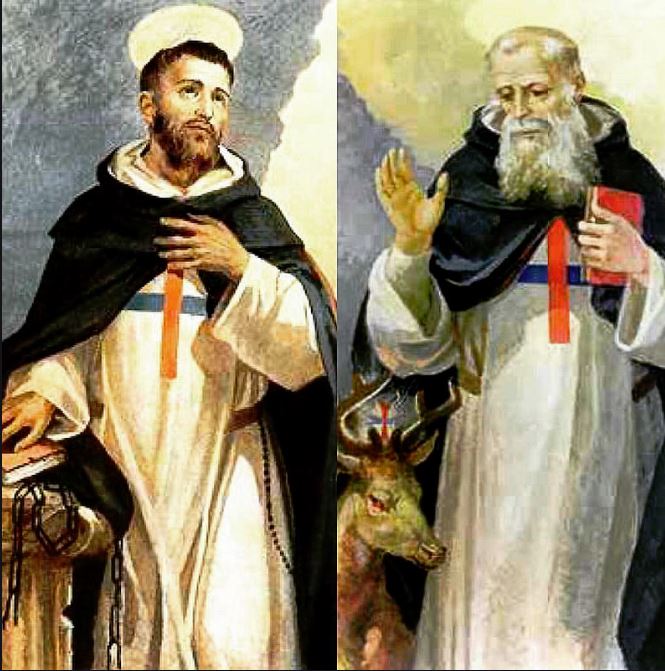
All Saints of the Augustinian Order:  On 13 November (The birthday of St Augustine), we celebrate the feast of All Saints of the Augustinian Order.   On this day we call to mind the many unsung brothers and sisters of the Augustinian family who have “fought the good fight” and celebrate now, in Heaven.
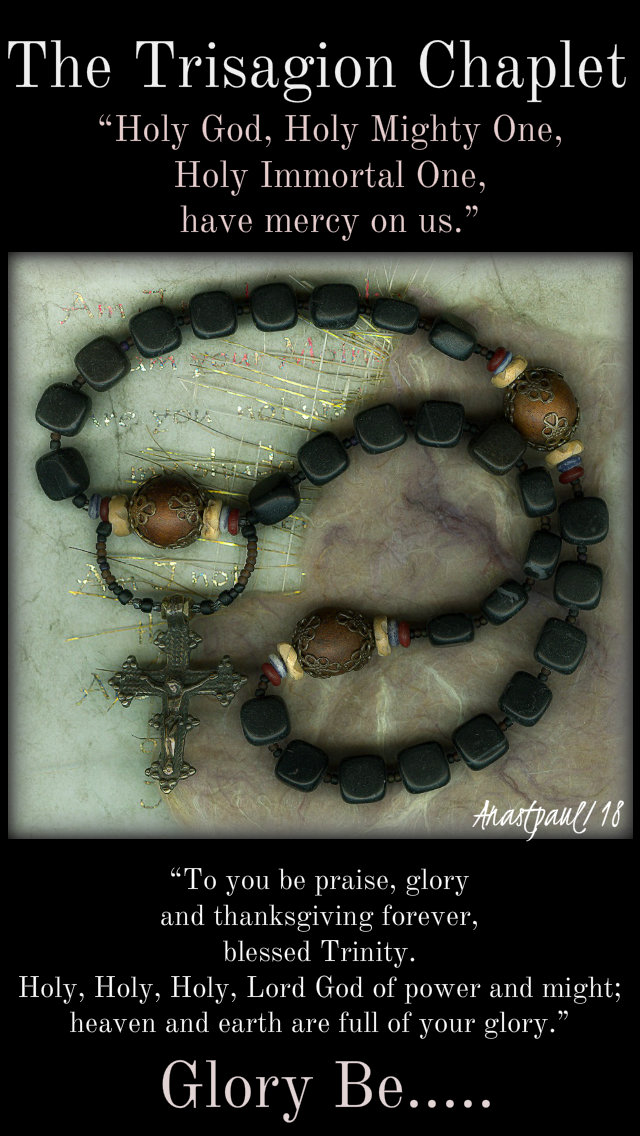
Let us pray for one another that we too may one day join in the “unceasing chorus of praise” with all our Augustinian brethren in Heaven.happy birthday st augustine 13 nov 2018ALL SAINTS OF THE AUGUSTINIAN ORDER - 13 NOV BIRTHDAY OF ST AUGUSTINE

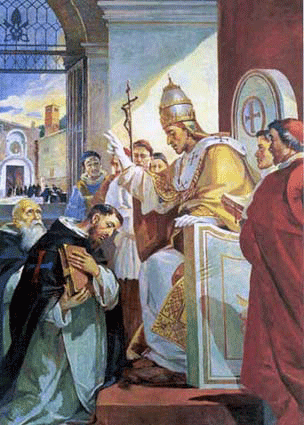
All Saints of the Benedictine & Cistercian Orders:  Those interested in the Benedictine family may be interested to know that today, within the Benedictine liturgical tradition, is traditionally celebrated the feast of All Saints of the Benedictine Order – In Festo Omnium Sanctorum Ordinis S.P.N. Benedicti.
The Cistercians — who also follow the Rule of St Benedict — likewise observe this day for All Saints of their Order.   (On a related note, the Benedictines also traditionally observe 14 November as All Souls of their Order.All-Benedictine-Saints 13 NOV 2018

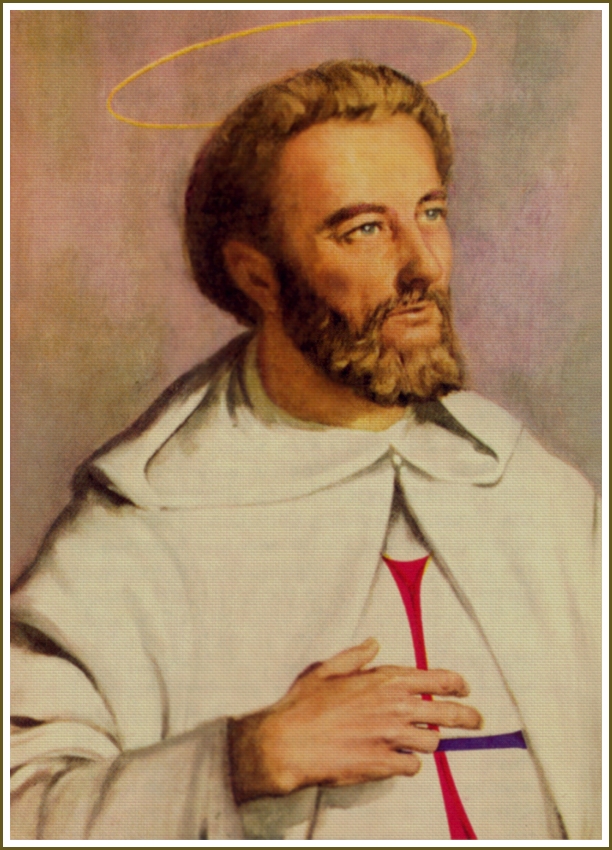
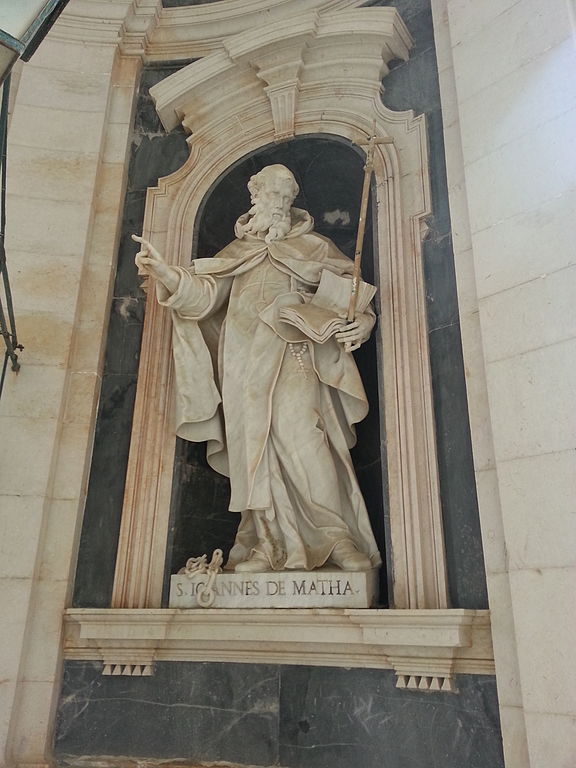
All Saints of the Premonstratensian Order:  The Order of Canons Regular of Prémontré, also known as the Premonstratensians, the Norbertines and, in Britain and Ireland, as the White Canons , are a Roman Catholic religious order of canons regular founded in Prémontré near Laon in 1120 by Saint Norbert, who later became Archbishop of Magdeburg.   Premonstratensians are designated by O.Praem. following their name.   St Norbert was a friend of Saint Bernard of Clairvaux and so was largely influenced by the Cistercian ideals as to both the manner of life and the government of his order.
Aside from St Norbert there are at present fifteen saints of the Order who have been Canonised or have had their immemorial cults confirmed by the Holy See.


St Abbo of Fleury
St Agostina Pietrantoni S.D.C. (1864-1894)
St Amandus of Rennes
St Amanzio
St Beatrix of Bohemia
St Brice of Tours
St Caillin
Bl Carl Lampert
St Chillien of Aubigny
Bl Christopher Eustace
St Columba of Cornwall
St Dalmatius of Rodez
Bl David Sutton
St Devinicus
St Didacus
St Eugenius of Toledo
St Florido of Città di Castello
St Gredifael
St Himerius
St Homobonus of Cremona
Bl John Sutton
Bl Juan Gonga Martínez
St Juan Ortega Uribe
St Leoniano of Vienne
Bl María Cinta Asunción Giner Gomis
Bl Maurice Eustace
St Maxellendis
St Mitrius
St Pope Nicholas I
St Paterniano
St Quintian of Rodez
Bl Robert Fitzgerald
Bl Robert Montserrat Beliart
Bl Robert Scurlock
St Stanislaus Kostka SJ (1550-1568):
Biography here: https://anastpaul.wordpress.com/2017/11/13/saint-of-the-day-13-november-st-stanislaus-kostka-sj-1550-1568/

Bl Thomas Eustace
Bl Warmondus of Ivrea
Bl William Wogan

Martyrs of Caesarea – 5 saints: A group of Christians murdered for their faith in the persecutions of Diocletian, Galerius Maximian and Firmilian. – Antoninus, Ennatha, Germanus, Nicephorus and Zebinas. 297 at Caesarea, Palestine.

Martyrs of Ravenna – 3 saints: A group of Christians murdered together in the persecutions of Diocletian. The only information about them that has survived are three names – Solutor, Valentine and Victor. c 305 in Ravenna, Italy.

Martyrs of Salamanca – 5 saints: The first group of Christians exiled, tortured and executed for their adherence to the Nicene Creed during the persecutions of the Arian heretic Genseric. – Arcadius, Eutychianus, Paschasius, Paulillus and Probus.
Born in Spain and Martyred in 437. Their relics are at Medina del Campo, Spain.

Posted in ON the SAINTS, papal ENCYCLICALS, PAPAL ENCYLICALS, QUOTES on the CHURCH, SAINT of the DAY, Uncategorized

Thought for the Day – 12 November – “He gave his life for the unity of the Church” – The Memorial of St Josaphat (1584-1623) Bishop and Martyr

“He gave his life for the unity of the Church”

Pope Piux XI
Bishop of Rome

An excerpt from Ecclesiam Dei

Memorial of St Josaphat (1584-1623) Bishop and Martyr “the thief of souls.”PopePiusXI

“In designing his Church God worked with such skill that in the fullness of time it would resemble a single great family embracing all men.   It can be identified, as we know, by certain distinctive characteristics, notably its universality and unity.

Christ the Lord passed on to His apostles the task He had received from the Father: ‘I have been given all authority in heaven and on earth.   Go, therefore, and make disciples of all nations.’   He wanted the apostles as a body to be intimately bound together, first by the inner tie of the same faith and love which flows into our hearts through the Holy Spirit and, second, by the external tie of authority exercised by one apostle over the others.   For this he assigned the primacy to Peter, the source and visible basis of their unity for all time.  So that the unity and agreement among them would endure, God wisely stamped them, one might say, with the mark of holiness and martyrdom.

Both these distinctions fell to Josaphat, Archbishop of Polock of the Slavonic rite of the Eastern Church.   He is rightly looked upon as the great glory and strength of the Eastern Rite Slavs.   Few have brought them greater honour or contributed more to their spiritual welfare than Josaphat, their pastor and apostle, especially when he gave his life as a martyr for the unity of the Church.   He felt, in fact, that God had inspired him to restore world-wide unity to the Church and he realised that his greatest chance of success lay in preserving the Slavonic rite and Saint Basil’s rule of monastic life within the one universal Church.

Concerned mainly with seeing his own people reunited to the See of Peter, he sought out every available argument which would foster and maintain Church unity.   His best arguments were drawn from liturgical books, sanctioned by the Fathers of the Church, which were in common use among Eastern Christians, including the dissidents.   Thus thoroughly prepared, he set out to restore the unity of the Church.   A forceful man of fine sensibilities, he met with such success that his opponents dubbed him “the thief of souls.”

The seeds of separation were sown in the fourth century when the Roman Empire was divided into East and West.   The actual split came over customs such as using unleavened bread, Saturday fasting and celibacy.   No doubt the political involvement of religious leaders on both sides was a large factor and doctrinal disagreement was present.   But no reason was enough to justify the present tragic division in Christendom, which is 64 percent Roman Catholic, 13 percent Eastern—mostly Orthodox—Churches and 23 percent Protestant and this when the 71 percent of the world that is not Christian, should be experiencing unity and Christ-like charity from Christians! (These figures from Franciscan Media)

St Josaphat, Ora pro Nobis!st jospahat - pray for us - ora pro nobis - 12 nov 2018

Posted in CATHOLIC-PRAYERS OF THE CHURCH, DEVOTIO, MORNING Prayers, PRACTISING CATHOLIC, PRAYERS for VARIOUS NEEDS, PRAYERS of the CHURCH, SAINT of the DAY

Quote of the Day – 12 November – The Memorial of St Josaphat (1584-1623) Martyr

Quote of the Day – 12 November – The Memorial of St Josaphat (1584-1623) Martyr

St Josaphat’s favourite devotional exercise was to make prostrations in which the head touches the ground, saying, the Jesus prayer:

‘Lord Jesus Christ,
Son of God,
have mercy on me,
a sinner.”

St Josaphat (1584-1623)the jesus prayer 3 - 13 feb 2018 - shrove tuesday

the jesus prayer - st josaphat's favourite - 12 nov 2018

Posted in DOCTORS of the Church, FATHERS of the Church, MORNING Prayers, QUOTES of the SAINTS, QUOTES on FORGIVENESS, QUOTES on TEMPTATION, SAINT of the DAY, The WORD

One Minute Reflection – 12 November – Today’s Gospel: Luke 17:1-6

One Minute Reflection – 12 November – Today’s Gospel: Luke 17:1-6 – Monday of the Thirty-second week in Ordinary Time, Year B and The Memorial of St Josaphat (1584-1623) Martyr

“Temptations to sin are sure to come but woe to the person through whom they occur!   It would be better for him, if a millstone were put around his neck and he be thrown into the sea, than for him to cause one of these little ones to sin…” Luke 17:1-2luke 17 1-2 - temptations are sure to come but it would be better - 12 nov 2018

REFLECTION – “The accompanying discussion that immediately follows these opening remarks and speaks of our pardoning our brothers and sisters in case they ever sin against us, leads us to the idea that these were the offences meant.   What are these offences?   They are, I suppose, mean and annoying actions, fits of anger whether on good grounds or without justification, insults, slander and other stumbling blocks similar to these.   He says that these temptations must come.   Is this then because God, who governs all, forces people to their commission of sin?   Away with the thought!   Nothing that is evil comes from Him.   He is the fountain of all virtue.   Why then must this happen?   They clearly happen because of our infirmity, for all of us stumble in many things, as it is written.   Nevertheless, He says, that there will be woe to the person who lays the stumbling blocks in the way.   He does not leave indifference in these things without rebuke but restrains it by fear of punishment.   He still commands us to bear with patience those who cause sins to happen.”…St Cyril of Alexandria (376-444) – Father & Doctor – Commentary on Luke, “Homilies 113-116”he says that these temptations must come - st cyril of alex - 12 nov 2018

PRAYER – O Lord our God, grant that we may not so much seek to be consoled as to console, to be understood as to understand, to be loved as to love and to be only good influences to our neighbour.   That by our love, our brothers in faith may be one  . St Josaphat you fought and struggled to unite the Church and by your efforts achieved the crown of martyrdom, please pray for our world, for a one united faith. Amenst-josaphat-pray-for-us-12 NOV 2017 - 2

Posted in SAINT of the DAY

Saint of the Day – 12 November – St Josapha OSBM (1584-1623) Martyr

Saint of the Day – 12 November – St Josaphat OSBM (1584-1623) Martyr

In 1964, newspaper photos of Pope Paul VI embracing Athenagoras I, the Orthodox patriarch of Constantinople, marked a significant step toward the healing of a division in Christendom that has spanned more than nine centuries.Saint_Josaphat_Catholic_Church_(Detroit,_MI)_-_relic_of_Saint_Josaphat

In 1595, the Orthodox bishop of Brest-Litovsk in present-day Belarus and five other bishops representing millions of faithful, sought reunion with Rome.   John Kunsevich—who took the name Josaphat in religious life—was to dedicate his life and die for the same cause.   Born in what is now Ukraine, he went to work in Wilno and was influenced by clergy adhering to the 1596 Union of Brest  . He became a Basilian monk, then a priest and soon was well known as a preacher and an ascetic.

He became bishop of Vitebsk at a relatively young age and faced a difficult situation. Most monks, fearing interference in liturgy and customs, did not want union with Rome. By synods, catechetical instruction, reform of the clergy and personal example, however, Josaphat was successful in winning the greater part of the Orthodox in that area to the union.st josaphat holy card

But the next year a dissident hierarchy was set up and his opposite number spread the accusation that Josaphat had “gone Latin” and that all his people would have to do the same.   He was not enthusiastically supported by the Latin bishops of Poland.st josaphat

Despite warnings, he went to Vitebsk, still a hotbed of trouble.   Attempts were made to foment trouble and drive him from the diocese – a priest was sent to shout insults to him from his own courtyard.   When Josaphat had him removed and shut up in his house, the opposition rang the town hall bell and a mob assembled.   The priest was released but members of the mob broke into the bishop’s home.   Josaphat was struck with a halberd, then shot and his body thrown into the river.   It was later recovered and is now buried in St Peter’s Basilica in Rome. simmler_martyrdom_of_josaphat_kuntsevych_1-e1478942443428

Josaphat’s death brought a movement toward Catholicism and unity but the controversy continued and the dissidents, too, had their martyr.   After the partition of Poland, the Russians forced most Ruthenians to join the Russian Orthodox Church.

St Josaphat’s body was discovered incorrupt five years later, though the clothing had rotted away.   Again in 1637 it was still white and supple.    A beautiful silver reliquary was made for it, with a life-size image of the reclining Saint surmounting it.   The body was again exposed intact in 1767.   It was eventually taken to the Basilica of Saint Peter in Rome.    Pope Leo XIII Canonised Saint Josaphat in 1867.  He was the first saint of the Eastern Church to be Canonised by Rome.tomb of st josaphat at the vatican

Remarkably, the saint’s onetime rival – the Orthodox Archbishop Meletius – was reconciled with the Catholic Church in later years.

Posted in DOMINICAN OP, SAINT of the DAY

Memorials of the Saints – 12 November

St Josaphat Kuncewicz OSBM (1584-1623) Martyr (Memorial)
All About St Josaphat:   https://anastpaul.wordpress.com/2017/11/12/saint-of-the-day-12-november-st-josaphat-kuncewicz-1584-1623/

St Arsatius
St Astricus of Ungarn
St Aurelius
St Cadwallader
St Cummian Fada
St Cunibert of Cologne
St Emilian Cucullatus
St Evodius of Le Puy
St Hesychius of Vienne
Bl John Cini della Pace
Bl José Medes Ferrís
St Lebuin of Deventer
St Livinus of Alost
St Machar of Aberdeen
St Margarito Flores-García
St Namphasius
St Nilus the Elder
St Paternus of Sens
St Publius
St Renatus of Angers
St Rufus of Avignon
Bl Ursula Medes Ferris
St Ymar of Reculver

Five Polish Brothers – martyrs:  They weren’t Polish and they weren’t related but were instead five Italian Benedictine monks who worked with Saint Adalbert of Prague as missionaries to the Slavs and were martyred together.   They were – Benedict, Christinus, Isaac, John and Matthew. Born in Italy.   They were martyred in 1005 at the Benedictine monastery near Gnesen, Poland and Canonised by Pope Julius II.

Posted in QUOTES of the SAINTS, QUOTES on DEATH, SAINT of the DAY

Thought for the Day – 11 November – The Memorial of St Martin of Tours (c 316-397)

Thought for the Day – 11 November – The Memorial of St Martin of Tours (c 316-397)

Martin knew long in advance the time of his death and he told his brethren that it was near.   Meanwhile, he found himself obliged to make a visitation of the parish of Candes. The clergy of that church were quarrelling and he wished to reconcile them.

Although he knew that his days on earth were few, he did not refuse to undertake the journey for such a purpose, for he believed that he would bring his virtuous life to a good end if by his efforts peace was restored in the church.

He spent some time in Candes, or rather in its church, where he stayed.   Peace was restored and he was planning to return to his monastery when suddenly he began to lose his strength.   He summoned his brethren and told them he was dying.   All who heard this were overcome with grief.   In their sorrow, they cried to him with one voice: “Father, why are you deserting us?   Who will care for us when you are gone? Savage wolves will attack your flock and who will save us from their bite when our shepherd is struck down?   We know you long to be with Christ but your reward is certain and will not be any less for being delayed.   You will do better to show pity for us, rather than forsake us.”

Thereupon he broke into tears, for he was a man in whom the compassion of our Lord was continually revealed.   Turning to our Lord, he made this reply to their pleading: “Lord, if Your people still need me, I am ready for the task, Your will be done.”

Here was a man words cannot describe.   Death could not defeat him nor toil dismay him.   He was quite without a preference of his own, he neither feared to die nor refused to live.   With eyes and hands always raised to heaven he never withdrew his unconquered spirit from prayer.   It happened that some priests who had gathered at his bedside suggested that he should give his poor body some relief by lying on his other side.   He answered:  “Allow me, brothers, to look toward heaven rather than at the earth, so that my spirit may set on the right course when the time comes for me to go on my journey to the Lord.”

“Never was there any word on his lips but Christ and never was there a feeling in his heart except piety, peace and tender mercy.”

a letter by Sulpicius Severus (c 360 – c 425) Born around 360 AD in the region of Gaul (modern France) called Aquitaine, Sulpicius Severus was an up and coming lawyer till his wife’s death caused him to pause and take stock of his life.   The example of his frend, St Paulinus of Nola (354-431) and the exhortations of St Martin, bishop of Tours, led to his conversion to the monastic life.   He settled on an estate in Southern Gaul and set to work writing the life of St Martin who was still alive at the time.   The work became very influential on later authors writing lives of the saints.   According to one author, Sulpicius was ultimately ordained a priest and lived till about 420.

St Martin of Tours, Pray for Us!st martin of tours - pray for us - 11 nov 2018

Posted in QUOTES of the SAINTS, QUOTES on CHARITY, QUOTES on CONSCIENCE, QUOTES on CONVERSION, QUOTES on FAITH, QUOTES on PEACE, SAINT of the DAY, The SIGN of the CROSS

Quote/s of the Day – 11 November – The Memorial of St Martin of Tours (c 316-397)

Quote/s of the Day – 11 November – The Memorial of St Martin of Tours (c 316-397)

“Now let me fight for God.
As for your bonus, let someone
who is going to join the battle receive it.
I am a soldier of Christ-
combat is not permitted me.”now let me fight for god - st martin of tours - 11 nov 2018

“In the name of the Lord Jesus
and protected
only by the sign of the cross,
without shield or helmet,
I shall penetrate the enemy’s ranks
and not be afraid.”

St Martin of Tours (c 316-397)in-the-name-of-the-lord-jesus-st-martin-of-tours-11-nov-2018

Posted in DOCTORS of the Church, MORNING Prayers, QUOTES of the SAINTS, QUOTES on LOVE, SAINT of the DAY, The WORD

One Minute Reflection – 11 November – Today’s Gospel: Mark 12:38–44

One Minute Reflection – 11 November – Today’s Gospel: Mark 12:38–44 – Thirty Second Sunday in Ordinary Time, Year B and The Memorial of St Martin of Tours (c 316-397)

“For they all contributed out of their abundance but she out of her poverty has put in everything she had, her whole living.”…Mark 12:44

REFLECTION – “Now if someone is wondering what the cost is, here is their answer – he who offers a Kingdom in heaven has no need of earthly coin.   No one can offer God anything except what already belongs to Him since all that exists is His.   And yet God does not give away so great a thing without a price being placed on it, He does not give it to someone who doesn’t value it.   For indeed, nobody gives away something they hold dear without placing some kind of value on it.   From now on, then, if God has no need of your goods neither does He have to give you this great thing if you refuse to love Him, all He requires is love, without which nothing constrains His giving.   Love, then, and you will receive the Kingdom, love and you will possess it… Love God more than yourself and already you begin to have what it is you desire to possess fully in heaven.”…St Anselm (1033-1109) Doctor of the Churchmark 12 44 - but she gave everything - from now on then - st anselm - 11 nov 2018

PRAYER – Lord God, Your Son has shown us the way. As we follow in His steps, may we never wander from the path that leads to life.   Renew the wonders of Your grace in our hearts so that neither death nor life may separate us from Your love.   Holy Father, as You were glorified by the life and death of St Martin, grant that by his prayers, we may receive strength to always give You our hearts, minds and selves.   Through our Lord, Jesus Christ, with You in union with the Holy Spirit, one God for all eternity, amen.st-martin-of-tours-pray-for-us-11-nov-2017-no-2

Posted in Our MORNING Offering, PRAYERS of the SAINTS, SAINT of the DAY

Our Morning Offering – 11 November – Prayer of St Martin of Tours

Our Morning Offering – 11 November – The Memorial of St Martin of Tours (c 316-397)

I Will Fight Beneath Your Banner, Lord
Prayer of St Martin of Tours (c 316-397)

Lord, if Your people still have need
of my services,
I will not avoid the toil.
Your will be done.
I have fought the good fight long enough.
Yet if You bid me continue to hold
the battle line in defense
of Your camp,
I will never beg to be excused
from failing strength.
I will do the work You entrust to me.
While You command,
I will fight beneath Your banner.
Ameni will fight beneath your banner lord - st martin of tours - 11 nov 2018.jpg

Posted in SAINT of the DAY

Saint of the Day – 11 November – St John the Almoner (c 550-c 616)

Saint of the Day – 11 November – St John the Almoner (c 550-c 616) – born in c 550 at Amathus, Cyprus and died there in c 616 of natural causes.   He is also known as John the Almsgiver, John the Merciful, John V of Alexandria, John Eleymon and Johannes Eleemon.  He  was the Chalcedonian Patriarch of Alexandria in the early 7th century (from 606 to 616).   He is the patron saint of the Knights Hospitaller, Casarano, Italy and of Limassol, Cyprus.st john the almoner - header

St John was born at Amathus as the son of Epiphanius, governor of Cyprus and was of noble descent.   In early life he was married and had children but when his wife and children died, he entered religious life, he was around 40-50 at this time.

On the death of the Patriarch Theodore, the Alexandrians requested Emperor Phocas to appoint John his successor, which was accordingly done.   One of the first steps he took was to make a list of several thousand needy persons, whom he took under his especial care.   He always referred to the poor as his “masters”, because of their mighty influence at the Court of the Most High.   He assisted people of every class who were in need.   On Wednesday and Friday in every week, he sat on a bench before the church, to hear the complaints of the needy and aggrieved.

st john the merciful enlrgd edit
John the Almoner, second half of the 15th century, Warsaw National Museum

He was a reformer who attacked simony and fought heresy by means of improvements in religious education.   He also reorganised the system of weights and measures for the sake of the poor and put a stop to corruption among the officials.   He increased the number of churches in Alexandria from seven to seventy.

The work  of St Vitalis of Gaza (died c 625), a monk who worked among the prostitutes of the city, was a noteworthy episode of John’s reign.   The Patriarch was considered to have behaved with wisdom for not punishing this monk who was notorious for visiting the unsavoury and dangerous areas of the city and his judgement was vindicated, only after the death of St Vitalis, when the story of the monk’s mission of mercy became known.

St John visited the hospitals three times every week and he freed a great many slaves. John is said to have devoted the entire revenues of his see to the alleviation of those in need.   A rich man presented him with a magnificent bed covering; he accepted it for one nigh, but then sold it and disposed of the money in alms.   The rich man bought the article and again presented it to John, with the same result.   This was repeated several times but John drily remarked: “We will see who tires first.”

st-john-the-alms-giver-by-Titian-Tiziano-Vecellio-142
St John the Almoner by Titian, c 1545

When the Sassanachs sacked Jerusalem in 614, John sent large supplies of food, wine and money to the fleeing Christians.   But eventually the Persians occupied Alexandria and John himself, in his old age, was forced to flee to his native country, where he died in c 616.

From Cyprus his body was moved to Constantinople, then in 1249 to Venice, where there is a church dedicated to him, the Chiesa di San Giovanni Elemosinario, although his relics are preserved in another church, San Giovanni in Bragora, in a separate chapel. Another relic was sent to King Matthias Corvinus of Hungary.   It was placed in the private Royal Chapel in Buda Castle, which was dedicated to him.   In our time, his body lies in the St John the Merciful Chapel in St Martin’s Cathedral in Bratislava, Slovakia.
A church in Cospicua, Malta, is dedicated to him and one of the bastions of the Santa Margherita Lines in the same city is also named after him.

st john the almoner - art
Saint John the Almoner at the Church of San Giovanni in Bragora.
Posted in SAINT of the DAY

Memorials of the Saints – 11 November

St Martin of Tours (c 316-397) (Memorial)
Biography here: https://anastpaul.wordpress.com/2017/11/11/saint-of-the-day-11-november-st-martin-of-tours-c-316-397/

Bl Alicia Maria jadwiga Kotowska
St Bartholomew of Rossano
St Bertuin of Malonne
St Cynfran of Wales
St Isidre Costa Hons
St John the Almoner (c 550-c 616)
Bl Josaphat Chichkov
Bl Kamen Vitchev
Bl Luigia Poloni
St Marina of Omura
St Menas Kallikelados
St Mennas of Santomenna
St Mercurius the Soldier
Bl Pavel Dzjidzjov
St Rhediw
St Theodore the Studite
St Turibius of Palencia
St Veranus of Lyon
St Veranus of Vence
Bl Vincent Eugene Bossilkoff

Martyrs of Torredembarra: Members of the Brothers of the Christian Schools, Discalced Carmelites, and Carmelite Tertiaries of Education who were martyred together in the Spanish Civil War.
• Blessed Bonaventura Toldrà Rodon
• Blessed Damián Rodríguez Pablo
• Blessed Felipe Arce Fernández
• Blessed Frederíc Vila Bartolì
• Blessed Isidre Tarsá Giribets
• Blessed Joan Roca Vilardell
• Blessed José Alberich Lluch
• Blessed Josep Boschdemont Mitjavila
• Blessed Josep Maria Bru Ralduá
• Blessed Julio Alameda Camarero
• Blessed Lluís Domingo Oliva
• Blessed Mariano Navarro Blasco
• Blessed Miquel Saludes Ciuret
• Blessed Pedro de Eriz Eguiluz
They were martured on 11 November 1936 in Torredembarra, Tarragona, Spain and Beatified
• 13 October 2013 by Pope Francis
• beatification celebrated in Tarragona, Spain.

Posted in CHRISTMASTIDE!, DIVINE Mercy, Goodness, Patience, DOCTORS of the Church, FATHERS of the Church, MORNING Prayers, PAPAL SERMONS, PRACTISING CATHOLIC, QUOTES of the SAINTS, QUOTES on CONVERSION, QUOTES on DIVINE PROVIDENCE, QUOTES on ETERNAL LIFE, QUOTES on FAITH, QUOTES on GRACE, QUOTES on HUMAN DIGNITY, QUOTES on JOY, QUOTES on TRUTH, QUOTES on UNITY/with GOD, SAINT of the DAY

Thought for the Day – 10 November – Christian, Remember Your Dignity by St Pope Leo the Great

Thought for the Day – 10 November – Christian, Remember Your Dignity by St Pope Leo the Great

Today we celebrate the feast day of Pope Saint Leo the Great (c 400-461).   St Leo is referred to by many names, including “Doctor of Doctrine” and “Doctor of Unity of the Church.”   He is the first pope to be referred to by the title “Great” and the first pope made Doctor of the Church.   His writings, unifying doctrine and peacemaking, continue to inspire and instruct us today in the ways of the faith.   Below, an excerpt from a homily, encouraging Christians to take heed of the joy of Christ and exhorts them to live in freedom and dignity of the Incarnation!

Christian, Remember Your Dignity!

Dearly beloved, today our Saviour is born, let us rejoice.   Sadness should have no place on the birthday of life.   The fear of death has been swallowed up; life brings us joy with the promise of eternal happiness.
No one is shut out from this joy, all share the same reason for rejoicing.   Our Lord, victor over sin and death, finding no man free from sin, came to free us all.   Let the saint rejoice as he sees the palm of victory at hand.   Let the sinner be glad as he receives the offer of forgiveness.   Let the pagan take courage as he is summoned to life.
In the fullness of time, chosen in the unfathomable depths of God’s wisdom, the Son of God took for Himself our common humanity in order to reconcile it with its creator.   He came to overthrow the devil, the origin of death, in that very nature by which He had overthrown mankind.
And so at the birth of our Lord the angels sing in joy – Glory to God in the highest and they proclaim peace to men of good will as they see the heavenly Jerusalem being built from all the nations of the world.   When the angels on high are so exultant at this marvellous work of God’s goodness, what joy should it not bring to the lowly hearts of men?
Beloved, let us give thanks to God the Father, through His Son, in the Holy Spirit, because in His great love for us He took pity on us and when we were dead in our sins He brought us to life with Christ, so that in Him we might be a new creation.   Let us throw off our old nature and all its ways and, as we have come to birth in Christ, let us renounce the works of the flesh.
Christian, remember your dignity and now that you share in God’s own nature, do not return by sin to your former base condition   Bear in mind who is your head and of whose body you are a member.   Do not forget that you have been rescued from the power of darkness and brought into the light of God’s kingdom.
Through the sacrament of baptism you have become a temple of the Holy Spirit.   Do not drive away so great a guest by evil conduct and become again a slave to the devil, for your liberty was bought by the blood of Christ.

St Pope Leo the Great, Pray for Us!st pope leo the great pray for us 10 nov 2018

Posted in DOCTORS of the Church, EUCHARISTIC Adoration, FATHERS of the Church, QUOTES of the SAINTS, QUOTES on ETERNAL LIFE, QUOTES on FAITH, QUOTES on PEACE, QUOTES on SANCTITY, QUOTES on SUFFERING, QUOTES on the CROSS of CHRIST, SAINT of the DAY, The HOLY CROSS, The HOLY EUCHARIST / The HOLY MASS, The HOLY FACE, The HOLY NAME, The PASSION

Quote/s of the Day – 10 November – The Memorial of St Pope Leo the Great (c 400-461) Doctor of the Church and St Andrew Avellino CR (1521 – 1608)

Quote/s of the Day – 10 November – The Memorial of St Pope Leo the Great (c 400-461) Doctor of the Church and St Andrew Avellino CR (1521 – 1608)

“By Baptism we are made flesh of the Crucified.”

“The cross of Christ is the true ground
and chief cause of Christian hope.”

“Let no one be ashamed of the cross
by which Christ has redeemed the world.
None of us must be afraid to suffer
for the sake of justice or doubt the
fulfilment of the promises,
for it is through toil that we come to rest
and through death that we pass to life.”by-baptism-st-leo-the-great-quotes-on-the-cross-10-nov-2018

“Our sharing in the Body and Blood of Christ
has no other purpose than to transform us
into that which we receive.”our sharing int he body and blood - st pope leo the great 10 nov 2018

“He that sees another in error
and endeavours not to correct it,
testifies himself to be in error.”he that sees another in error and endavours NOT - st pope leo the great - 10 nov 2018

“The birthday of the Lord
is the birthday of peace.”the birthday of the lord is the birthday of peace - st pope leo the great - 10 nov 2018

“Beyond our grasp,
He chose to come within our grasp.
Existing before time began,
He began to exist at a moment in time.”

St Pope Leo the Great (c 400-461) Doctor of the Churchbeyond our grasp - st pope leo the great - 10 nov 2018

“One cannot separate
the most Holy Eucharist
from the Passion of Jesus.”

St Andrew Avellino (1521 – 1608)one cannot separate - st andrew avellino - 10 nov 2018

Posted in FATHERS of the Church, MORNING Prayers, QUOTES of the SAINTS, QUOTES on CHARITY, QUOTES on ETERNAL LIFE, SAINT of the DAY, The WORD

One Minute Reflection – 10 November – Today’s Gospel: Luke 16:9–15- Commentary by St Clement of Alexandria

One Minute Reflection – 10 November – Today’s Gospel: Luke 16:9–15 – Saturday of the Thirty First Week in Ordinary Time, Year B and The Memorial of St Leo the Great (c 400-461) Doctor of the Church and St Andrew Avellino CR (1521 – 1608)

“I tell you, make friends for yourselves with dishonest wealth, so that when it fails, you will be welcomed into eternal dwellings.”...Luke 16:9

REFLECTION – “Consider, then, the splendid reward for your liberality – an everlasting habitation!   O excellent trade!   O divine commerce!   You purchase immortality for money and, by donating the empty things of the world, receive in exchange an eternal mansion in heaven!   So then, you rich who have wisdom, apply yourselves to this business… Why let yourselves be transfixed by diamonds and emeralds, by houses that fire devours, time destroys, or earthquakes throw down?   Aspire for nothing other than to dwell in the heavens and reign with God.   A mere man, a beggar will gain you this kingdom… The Lord did not say:  “Give, be generous and bountiful, help your brothers” but: “Make friends for yourselves”.   Friendship comes about not by one gift but by long intimacy.   For neither faith, nor charity nor patience are the work of one day but “he who endures to the end shall be saved.” (Mt 10:22)...St Clement of Alexandria (150- 215)i tell you make friends for yourselves luke 16 9 - so then you rich who have wisdom st clement of alexandria 10 nov 2018

PRAYER – Lord God, You built Your Church on the firm foundation of the Apostle Peter and You promised that the gates of hell would never overcome it.   So too, may we trust in Your power, that by our faith we may receive the grace to withstand the enemy who will not prevail against us.   May we always serve You in our brother and may your Holy Spirit grant us the grace of fortitude to withstand our temptations and thus gain eternal life, supported by the prayers of St Pope Leo the Great and St Andrew Avellino, keep us ever faithful to Your love. Amenst pope leo the great pray for us - 10 nov 2018


Posted in Against APOPLEXY or STROKES, NAPLES, Of a Holy DEATH & AGAINST A SUDDEN DEATH, of the DYING, FINAL PERSEVERANCE, DEATH of CHILDREN, DEATH of PARENTS, SAINT of the DAY, Uncategorized

Saint of the Day – 10 November – St Andrew Avellino CR (1521 – 1608)

Saint of the Day – 10 November – St Andrew Avellino CR (1521 – 1608) Theatine Priest (Cong of the Clerics Regular of Divine Providence founded by St Cajetan 1480-1547), Canon and Civil Lawyer, Reformer, Founder of many new Theatine houses, Preacher, Spiritual Advisor, Confessor – born in 1521 at Castronuovo, Sicily as Lorenzo (called Lancelotto by his mother) and died on 10 November 1608 at Naples, Italy of a stroke. Patronages – against apoplexy or strokes, against sudden death, for a holy death, Badolato, Naples, Sicily, Italy.Antonino Cinniardi, Saint Andrew Avellino Intercedes for Piazza

After a holy youth devoted to serious studies of philosophy and the humanities in Venice, Lancelot Avellino was ordained priest by the bishop of Naples.   He was assigned to the chaplaincy of a community of nuns, sadly in need of reform, his intrepid courage and perseverance finally overcame many difficulties and regular observance was restored in the monastery.   Certain irritated libertines, however, decided to do away with him and, waiting for him when he was about to leave a church, felled him with three sword thrusts.   He lost much blood but his wounds healed perfectly without leaving any trace. The viceroy of Naples was ready to employ all his authority to punish the authors of this sacrilege but the holy priest, not desiring the death of sinners but rather their conversion and their salvation, declined to pursue them.   One of them, however, died soon afterwards, assassinated by a man who wished to avenge a dishonour to his house.avellino

He was still practising law, which he had studied in Naples, one day a slight untruth escaped him in the defence of a client and he conceived such regret for his fault that he vowed to practice law no longer.   In 1556, at the age of thirty-six, he entered the Theatine Order, taking the name of Andrew out of love for the cross.   After a pilgrimage to Rome to the tombs of the Apostles, he returned to Naples and was named master of novices in his Community.  Andreas_Avellino

After holding this office for ten years, he was elected superior.   His zeal for strict religious discipline and for the purity of the clergy, as well as his deep humility and sincere piety, induced the General of his Order to entrust him with the foundation of two new Theatine houses, one at Milan and the other at Piacenza.   By his efforts, many more Theatine houses rose up in various dioceses of Italy.   As superior of some of these new foundations, he was so successful in converting sinners and heretics by his prudence in the direction of souls and by his eloquent preaching that numerous disciples thronged around him, eager to be under his spiritual guidance.   One of the most noteworthy of his disciples was Lorenzo Scupoli, the author of The Spiritual Combat.   St Charles Borromeo was an intimate friend of Avellino and sought his advice in the most important affairs of the Church.   He also requested Avellino to establish a new Theatine house in Milan.

Though indefatigable in preaching, hearing confessions and visiting the sick, Avellino still had time to write some ascetical works.   His letters were published in 1731 at Naples in two volumes and his other ascetical works were published three years later in five volumes.Saint Andrew Avellino

On 10 November 1608, when beginning the Holy Sacrifice of the Mass, he was stricken with apoplexy and, after receiving the Holy Viaticum, died at the age of 88.   In 1624, only 16 years after his death, he was Beatified by Pope Urban VIII and in 1712 was Canonised by Pope Clement XI.  His remains lie buried in the Church of St Paul at Naples.death of st andrew

Posted in DOCTORS of the Church, FATHERS of the Church, SAINT of the DAY

Memorials of the Saints – 10 November

St Pope Leo the Great (c 400 – 461) Father & Doctor of the Church (Memorial) – Pope Emeritus Benedict XVI said that Leo’s papacy “…was undoubtedly one of the most important in the Church’s history.”

About: https://anastpaul.wordpress.com/2017/11/10/saint-of-the-day-10-november-st-pope-leo-i-doctor-of-the-church-c-400-461/

St Aedh Mac Bricc
St Andrew Avellino (1521 – 1608) Theatine Priest

St Anianus the Deacon
St Baudolino
St Demetrius of Antioch
St Elaeth the King
St Eustosius of Antioch
St Grellen
St Guerembaldus
St Hadelin of Sees
Bl Joaquín Piña Piazuelo
St John of Ratzenburg
St Joseph the Martyr
St Justus of Canterbury
St Leo of Melun
St Monitor of Orleans
St Narses of Subagord
St Nonnus of Heliopolis
St Orestes of Cappadocia
St Probus of Ravenna
St Theoctiste of Lesbos
St Tryphaena of Iconium
St Tryphosa of Iconium

Martyred Sisters Adorers – 23 beati: 23 nuns, all members of the Sisters Adorers, Handmaids of Charity and of the Blessed Sacrament who were martyred together in the Spanish Civil War.
• Blessed Aurea González
• Blessed Belarmina Pérez Martínez
• Blessed Cecilia Iglesias del Campo
• Blessed Concepción Vázquez Areas
• Blessed Dionisia Rodríguez De Anta
• Blessed Emilia Echevarría Fernández
• Blessed Felipa Gutierrez Garay
• Blessed Francisca Pérez de Labeaga García
• Blessed Josepa Boix Rieras
• Blessed Lucía González García
• Blessed Luisa Pérez Adriá
• Blessed Magdalena Pérez
• Blessed Manuela Arriola Uranda
• Blessed María Dolores Hernández San Torcuato
• Blessed María Dolores Monzón Rosales
• Blessed María García Ferreiro
• Blessed Maria Mercè Tuñi Ustech
• Blessed María Zenona Aranzábal de Barrutia
• Blessed Prima de Ipiña Malzárraga
• Blessed Purificación Martínez Vera
• Blessed Rosa López Brochier
• Blessed Sinforosa Díaz Fernández
• Blessed Teresa Vives Missé
They were martyred on 10 November 1936 in Madrid, Spain and Beatified on 28 October 2007 by Pope Benedict XVI.

Martyrs of Agde – 3 saints: A group of Christians who were tortured and martyred together in the persecutions of Diocletian. The only about them to survive are the names – Florentia, Modestus and Tiberius. Martyred c 303 in Agde, France.

Posted in FEASTS and SOLEMNITIES, PAPAL SERMONS, SAINT of the DAY, The BLESSED VIRGIN MARY

Thought for the Day – 9 November – Pope Benedict on the Feast of the Dedication of St John Lateran

Thought for the Day – 9 November – Pope Benedict on the Feast of the Dedication of St John Lateran

In a sense, St John Lateran is the parish church of all Catholics, because it is the pope’s cathedral.   This church, is the spiritual home, of the people who are the Church.

Excerpt of Pope Benedict’s

Angelus Address 9 November 2008

“The Word of God during this Solemnity recalls an essential truth – the stone temple is the symbol of the living Church, the Christian community, that the Apostles Peter and Paul had, in their Letters, already understood as a “spiritual building”, constructed by God with the “living stones” that are the Christians, upon the one foundation that is Jesus Christ, who is in turn compared to the “cornerstone” cf. 1 Cor 3: 9-11, 16-17; 1 Pt 2: 4-8; Eph 2: 20-22).   “Brethren,… you are God’s building”, St Paul writes and he adds, “God’s temple is holy, and you are that temple” (1 Cor 3: 9c, 17).

The beauty and the harmony of churches, destined to render praise to God, invites us human beings too, though limited and sinful, to convert ourselves to form a “cosmos”, a well-ordered construction, in close communion with Jesus, who is the true Holy of Holies.   This reaches its culmination in the Eucharistic liturgy, in which the “ecclesia” that is, the community of baptised finds itself again united to listen to the Word of God and nourish itself on the Body and Blood of Christ.   Gathered around this twofold table, the Church of living stones builds herself up in truth and in love and is moulded interiorly by the Holy Spirit, transforming herself into what she receives, conforming herself ever more to her Lord Jesus Christ.   She herself, if she lives in sincere and fraternal unity, thus becomes a spiritual sacrifice pleasing to God.

Dear friends, today’s feast celebrates an ever current mystery – that God desires to build himself a spiritual temple in the world, a community that adores Him in spirit and truth (cf. Jn 4: 23-24).

But this occasion reminds us also of the importance of the concrete buildings in which the community gathers together to celebrate God’s praises.   Every communit,y therefore, has the duty to carefully guard their holy structures, which constitute a precious religious and historical patrimony.   For this we invoke the intercession of Mary Most Holy, so that she might help us to become, like her, a “house of God”, living temple of his love.”

gods-desire-to-build-pope-benedict-9-nov-2017

mary most holy pray for us - 9 nov 2018

Posted in DOCTORS of the Church, FATHERS of the Church, FEASTS and SOLEMNITIES, QUOTES of the SAINTS, QUOTES on the CHURCH, SAINT of the DAY

Quote/s of the Day – 9 November – The Feast of the Dedication of St John Lateran

Quote/s of the Day – 9 November – The Feast of the Dedication of St John Lateran

“What was done here, as these walls were rising,
is reproduced when we bring together those who believe in Christ.
For, by believing they are hewn out, as it were,
from mountains and forests, like stones and timber
but by catechising, baptism and instruction they are,
as it were, shaped, squared and planed
by the hands of the workers and artisans.
Nevertheless, they do not make a house for the Lord,
until they are fitted together through love”.

St Augustine (354-430) Doctor of the Church – Sermon 36what-was-done-here-st-augustine-9-nov-2017

“Today’s feast, brothers, ought to be all the more devout as it is more personal.
For other celebrations we have in common with other ecclesiastical communities
but this one is proper to us, so that if we do not celebrate it, nobody will.
It is ours because it concerns our church,
ours because we ourselves are its theme.
You are surprised and even embarrassed, perhaps,
at celebrating a feast for yourselves.
But do not be like horses and mules that have no understanding.
Your souls are holy because of the Spirit of God dwelling in you,
your bodies are holy because of your souls
and this building is holy because of your bodies.”

St Bernard of Clairvaux (1090-1153) Doctor of the Churchtoday's feast brothers - st bernard on the dedication of st john lateran 9 nov 2018

“Is not this an image of today’s event?
The ancient generations came up to this place,
generations of Romans, generations of bishops of Rome,
successors of St Peter
and they sang this hymn of joy, which I repeat today with you.
I join these generations, I, the new Bishop of Rome,
John Paul II, Polish by origin.
I stop on the threshold of this temple
and I ask you to welcome me in the Lord’s name.
I beg you to welcome me, as you welcomed my Predecessors
throughout the centuries, as you welcomed, only a few weeks ago,
John Paul I, so beloved by the whole world!
I beg you to welcome me too.
The Lord says:
“You did not choose me, but I chose you” (Jn 15:16).
This is the only appeal I can make –
I am not here by my own will.
The Lord has elected me.
In the Lord’s name I beg you therefore – welcome me!”

St Pope John Paul (1920-2005)
RITE OF POSSESSION OF THE CHAIR
OF THE BISHOP OF ROME
HOMILY OF HIS HOLINESS JOHN PAUL II
Basilica of St John Lateran
Sunday, 12 November 1978the ancient generations came up to this place - st john paul - 9 nov 2018

Posted in DOCTORS of the Church, FATHERS of the Church, FEASTS and SOLEMNITIES, MORNING Prayers, QUOTES of the SAINTS, QUOTES on the CHURCH, QUOTES on UNITY/with GOD, SAINT of the DAY, The WORD

One Minute Reflection – 9 November – The Feast of the Dedication of St John Lateran – Today’s Gospel: John 2:13–22

One Minute Reflection – 9 November – The Feast of the Dedication of St John Lateran – Today’s Gospel: John 2:13–22

But he spoke of the temple of his body...John 2:20

REFLECTION – “Because Solomon was a prophet he built a temple of stone and wood… for the living God, who made heaven and earth and whose dwelling is in the skies… Why did God ask that a temple be built?   Was he lacking somewhere to live?   Listen to Stephen’s speech at the time of his passion:  “Solomon,’ he said, “built a house but the most High does not live in man-made temples” (Acts 7:48).   Why, then, did he build, or cause to be built, a temple?   To prefigure Christ’s body.   The first temple was only a shadow (Col 2:17), when light comes, shadows flee away.   Are you now looking for the temple Solomon built?   You will find a ruin.   Why is this temple only a ruin?   Because the reality it announced has been fulfilled.   The true temple, the Lord’s body, also fell but has been raised up again and raised up in such a way it will fall no more…
What about our own bodies?   They are members of Christ  . Listen to Saint Paul:  “Do you not know that your bodies are members of Christ?” (1Cor 6:15).   When he says: “Your bodies are members of Christ”, what does this mean but that our bodies, joined to Christ our head (Col 1:18), together form a single temple, God’s temple.   Together with Christ’s body, our bodies are this temple… Let yourselves be built up in unity that you may not fall in ruins by remaining separate.”…St Augustine (354-430) Father & Doctor of the Churchbut he spoke of the temple of his body luke 2 20 - together with christ's body - augustine - 9 nov 2018

PRAYER – Almighty God, as we recall with joy, the Dedication of this house of Yours on each recurring anniversary, listen to Your people’s prayer and grant that our worship here may be a sincere and holy service, honouring Your Name and bringing us the fullness of redemption.   Through Jesus Christ, our Lord, in union with the Holy Spirit, one God for all eternity, amen.feast of the dedication of st john lateran - 9 nov 2018

Posted in FEASTS and SOLEMNITIES, SAINT of the DAY

Feast of the Dedication of The Cathedral of the Most Holy Saviour and of Saints John the Baptist and John the Evangelist in the Lateran  – 9 November

Feast of the Dedication of  The Cathedral of the Most Holy Saviour and of Saints John the Baptist and John the Evangelist in the Lateran – 9 November

The residence of the Popes which was named the Lateran Palace was built by Lateranus Palutius, whom Nero put to death to seize his goods.   It was given in the year 313 by Constantine the Great to Saint Miltiades, Pope and was inhabited by his successors until 1308, when they moved to Avignon.   The Lateran Basilica built by Constantine near the palace of the same name, is the first Basilica of the West.   Twelve councils, four of which were ecumenical, have assembled there, the first in 649, the last in 1512.

If for several centuries the Popes have no longer dwelt in the Palace, the primacy of the Basilica is not thereby altered, it remains the head of all churches.   Saint Peter Damian  (1007-1072) Doctor of the Church, wrote that just as the Saviour is the Head of the elect, the church which bears His name is the head of all the churches.   Those of Saints Peter and Paul, to its left and its right, are the two arms by which this sovereign and universal Church embraces the entire earth, saving all who desire salvation, warming them, protecting them in its maternal womb.feast of the ded john lateran 9 nov 2018

The Divine Office narrates the dedication of the Church by the Pope of Peace, Saint Sylvester:

“It was the Blessed Pope Sylvester who established the rites observed by the Roman Church for the consecration of churches and altars.   From the time of the Apostles there had been certain places dedicated to God, which some called oratories and others, churches.   There, on the first day of the week, the assembly was held and there the Christian people were accustomed to pray, to hear the Word of God and to receive the Eucharist.   But never had these places been consecrated so solemnly, nor had a fixed altar been placed there which, anointed with sacred chrism, was the symbol of Our Lord Jesus Christ, who for us is altar, victim and Pontiff.

But when the Emperor Constantine through the sacrament of Baptism had obtained health of body and salvation of soul, a law was issued by him which for the first time permitted that everywhere in the world Christians might build churches.   Not satisfied to establish this edict, the prince wanted to give an example and inaugurate the holy labours.   Thus in his own Lateran palace, he dedicated a church to the Saviour,and founded the attached baptistry under the name of Saint John the Baptist, in the place where he himself, baptised by Saint Sylvester, had been cured of leprosy.   It is this church which the Pontiff consecrated in the fifth of the ides of November and we celebrate the commemoration on that day, when for the first time in Rome a church was thus publicly consecrated and where a painting of the Saviour was visible on the wall before the eyes of the Roman people.”christo salvatori - lateran

When the Lateran Church was partially ruined by fires, enemy invasions and earthquakes, it was always rebuilt with great zeal by the Sovereign Pontiffs.   In 1726, after one such restoration, Pope Benedict XIII consecrated it anew and assigned the commemoration of that event to the present day.   The church was afterwards enlarged and beautified by Popes Pius IX and Leo XIII.st john lateran - 9 nov 2018

Posted in FEASTS and SOLEMNITIES, MARIAN TITLES, SAINT of the DAY, Uncategorized

Feast of the Dedication of St John Lateran, Our Lady of Almudena (Madrid) and Memorials of the Saints – 9 November

Dedication of the Basilica of Saint John Lateran (Feast):   The oldest and first in rank of the four basilicas of Rome, Italy.   The name is derived from the Laterani family, on the site of whose palace the basilica stands.   King Constantine presented this palace to the Church.   Its annual celebration throughout the Latin Church is a sign of love and unity with the Papacy and Pope.
The original church building, probably adapted from the hall of the palace, was dedicated to the Saviour and from its splendour was known as the Basilica Aurea. Though several times destroyed and rebuilt, the basilica retained its ancient form, being divided by rows of columns into aisles and having an atrium with colonnades.   The tasteless restoration of the 17th century changed its appearance.   A monastery was formerly between the basilica and the city wall of which the cloister still remains. The original apse survived until 1878, when it was destroyed and a deeper apse built.   The ancient mosaics have been preserved.   The high altar, which is of wood and is believed to have been used by Saint Peter, is now encased in marble.   In the upper part of the baldachinum are the heads of the Apostles, Peter and Paul.   The baptistery is an octagonal edifice with porphyry columns.   The font is of green basalt.   This basilica has been the cathedral of Rome since the 4th century.

More here: https://anastpaul.wordpress.com/2017/11/09/feast-of-the-dedication-of-the-basilica-of-saint-john-lateran-9-november/

Our Lady of Almudena:   The Virgin of Almudena (Virgen de la Almudena) is a medieval icon of the Virgin Mary, mother of Jesus Christ.   The image is the advocation of the Virgin that serves as a patroness of Madrid, Spain.
Intriguingly, however, its name derives from the Arabic term of Al Mudayna, or the citadel.   There are various legends regarding the ico.   One story is that in 712, prior to the capture of the town by the advancing Muslim forces, the inhabitants of the town secreted the image of the virgin, for its own protection, inside the walls surrounding the town.   In the 11th century, when Madrid was reconquered by the King Alfonso VI of Castile, the Christian soldiers endeavoured to find the statue.   After days of prayer, the spot on the wall hiding the icon crumbled, revealing the statue.   Another legend is that as Christian soldiers approached the town, they had a vision of Mary imploring them to allow her to lead them into the city.   Again the miraculous crumbling of the wall occurred, with the icon showing an entry route through the walls.
The Cathedral of Madrid is dedicated to this advocation of the Virgin and her feast day, 9 November, is a major holiday in Madrid.502px-Virgin_de_la_Almudena_-_Catedral_de_la_Almudena


St Agrippinus of Naples
St Alexander of Salonica
St Aurelius of Riditio
St Benignus of Armagh
St Eustolia
St Francisco José Marín López de Arroyave
St Gabriel Ferretti
Bl George Napper
Bl Gratia of Cattaro
Bl Helen of Hungary
Bl Henryk Hlebowicz
St Jane of Segna
Bl Ludovico Morbioli (1433-1485)
St Justo Juanes Santos
St Luigi Beltrame Quattrocchi
St Luis Morbioli
St María de la Salud Baldoví Trull
Bl María del Carmen of the Child Jesus
St Pabo
St Sopatra
St Theodore Stratelates
St Ursinus of Bourges
St Valentín Gil Arribas
St Vitonus of Verdun

Martyrs of Constantinople – 3 saints: A group of ten Catholic Christians who tried to defend an image of Jesus over the Brazen Gate of Constantinople from an attack by Iconoclasts during the persecutions of emperor Leo the Isaurian. The group of was seized by soldiers, condemned by judges for opposing the emperor, and martyred. The only details that have survived are three of their names – Julian, Marcian and Maria. They were martyred in 730 at Constantinople (modern Istanbul, Turkey).

Martyred in the Spanish Civil War:
• Blessed Anastasio Garzón González
• Blessed Francisco José Marín López de Arroyave
• Blessed Justo Juanes Santos
• Blessed María de la Salud Baldoví Trull
• Blessed Valentín Gil Arribas

Posted in CATECHESIS, franciscan OFM, MARIAN QUOTES, MARIAN TITLES, PAPAL SERMONS, SAINT of the DAY, The BLESSED VIRGIN MARY

Thought for the Day – 8 November – Pope Benedict on Blessed John Duns Scotus

Thought for the Day – 8 November – The Memorial of Blessed John Duns Scotus OFM (c 1265-1308)

Excerpt from Pope Benedict XVI’s

Catechesis on Blessed John Duns Scotus
General Audience – 7 July 2010

“The Immaculate Conception”

This morning, after several Catecheses on various great theologians, I would like to present to you another important figure in the history of theology.   He is Blessed John Duns Scotus, who lived at the end of the 13th century.   An ancient epitaph on his tombstone sums up the geographical coordinates of his biography:  “Scotland bore me, England received me, France taught me, Cologne in Germany holds me”.   We cannot disregard this information, partly because we know very little about the life of Duns Scotus.   He was probably born in 1266 in a village called, precisely, “Duns”, near Edinburgh.
Attracted by the charism of St Francis of Assisi, he entered the Family of the Friars Minor and was ordained a priest in 1291.   He was endowed with a brilliant mind and a tendency for speculation, which earned him the traditional title of Doctor subtilis, “Subtle Doctor”.
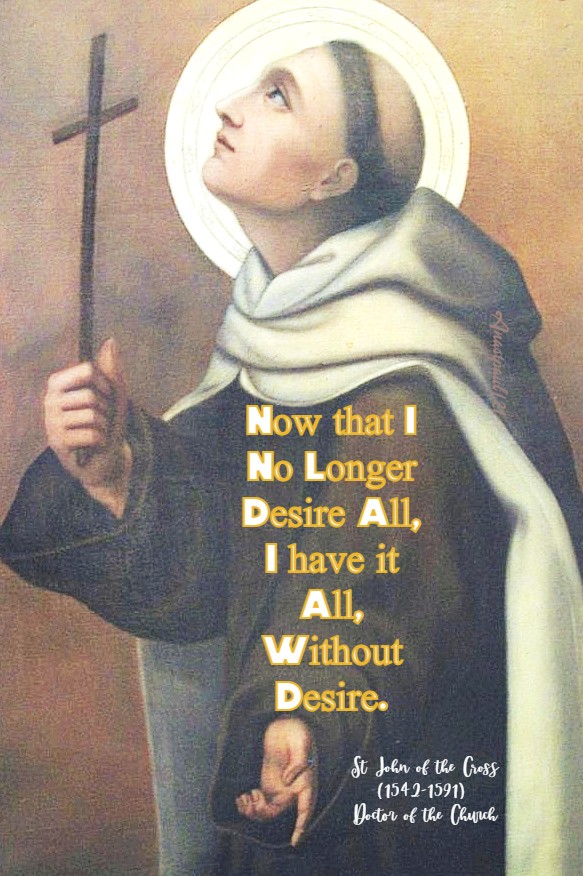
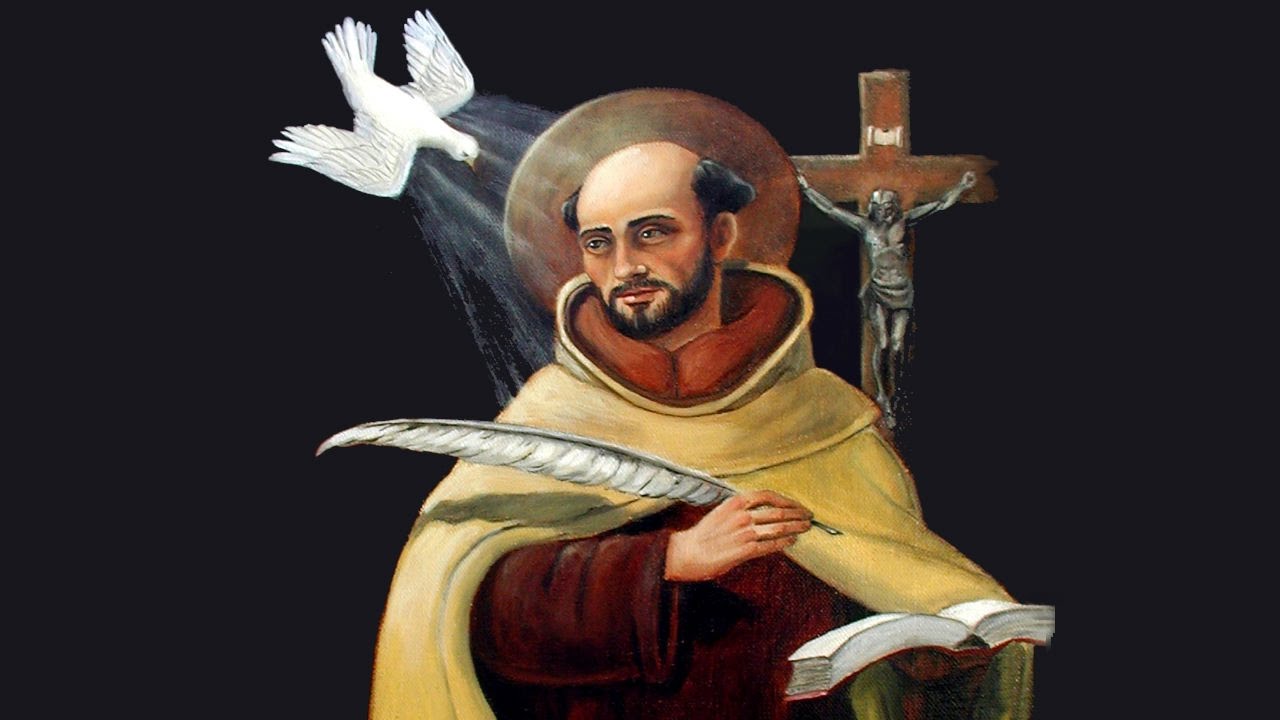
Mary is the subject of the Doctor subtilis’ thought.   In the times of Duns Scotus the majority of theologians countered with an objection that seemed insurmountable, the doctrine which holds that Mary Most Holy was exempt from original sin from the very first moment of her conception – in fact, at first sight the universality of the Redemption brought about by Christ might seem to be jeopardised by such a statement, as though Mary had had no need of Christ or His redemption.   Therefore the theologians opposed this thesis.   Thus, to enable people to understand this preservation from original sin Duns Scotus developed an argument that was later, in 1854, also to be used by Bl Pope Pius IX when he solemnly defined the Dogma of the Immaculate Conception of Mary.   And this argument is that of “preventive Redemption”, according to which the Immaculate Conception is the masterpiece of the Redemption brought about by Christ because the very power of His love and His mediation obtained, that the Mother be preserved from original sin.   Therefore Mary is totally redeemed by Christ but already before her conception.   Duns Scotus’ confreres, the Franciscans, accepted and spread this doctrine enthusiastically and other theologians, often with a solemn oath, strove to defend and perfect it.

In this regard I would like to highlight a fact that I consider relevant.   Concerning the teaching on the Immaculate Conception, important theologians like Duns Scotus enriched what the People of God already spontaneously believed about the Blessed Virgin and expressed in acts of devotion, in the arts and in Christian life in general with the specific contribution of their thought.   Thus faith both in the Immaculate Conception and in the bodily Assumption of the Virgin was already present in the People of God, while theology had not yet found the key to interpreting it in the totality of the doctrine of the faith.   The People of God therefore precede theologians and this is all thanks to that supernatural sensus fidei, namely, that capacity infused by the Holy Spirit that qualifies us to embrace the reality of the faith with humility of heart and mind. In this sense, the People of God is the “teacher that goes first” and must then be more deeply examined and intellectually accepted by theology.

May theologians always be ready to listen to this source of faith and retain the humility and simplicity of children!   I mentioned this a few months ago saying: “There have been great scholars, great experts, great theologians, teachers of faith who have taught us many things.   They have gone into the details of Sacred Scripture… but have been unable to see the mystery itself, its central nucleus…. The essential has remained hidden!… On the other hand, in our time there have also been “little ones” who have understood this mystery.   Let us think of St Bernadette Soubirous; of St Thérèse of Lisieux, with her new interpretation of the Bible that is “non-scientific’ but goes to the heart of Sacred Scripture”

Dear brothers and sisters, Bl Duns Scotus teaches us that in our life the essential is to believe that God is close to us and loves us in Jesus Christ and, therefor,e to cultivate a deep love for Him and for His Church.   We on earth are witnesses of this love.   May Mary Most Holy help us to receive this infinite love of God, which we will enjoy eternally to the full in Heaven, when our soul is at last united to God for ever in the Communion of Saints.

Blessed John Duns Scotus, Pray for Us!bl john duns scotus pray for us - 8 nov 2018 no 2

Posted in QUOTES of the SAINTS, SAINT of the DAY, The MOST HOLY & BLESSED TRINITY

Quote/s of the Day – 8 November – The Memorial of Blessed John Duns Scotus OFM (c 1265-1308)

Quote/s of the Day – 8 November – The Memorial of Blessed John Duns Scotus OFM

(c 1265-1308)

O Lord our God!
You are one in nature.
You are one in number.
Truly have You said
that besides You there is no God.
For though many may be called gods
or thought to be gods,
You alone are by nature God.
You are the true God from whom,
in whom
and through whom,
all things are,
You are blessed forever.
Amen!

Blessed John Duns Scotuso lord our god - bl john duns scotus - 8 nov 2018

Posted in DIVINE Mercy, Goodness, Patience, DOCTORS of the Church, franciscan OFM, MORNING Prayers, QUOTES of the SAINTS, QUOTES on DIVINE PROVIDENCE, SAINT of the DAY, The WORD

One Minute Reflection – 8 November – Today’s Gospel: Luke 15:1–10

One Minute Reflection – 8 November – Today’s Gospel: Luke 15:1–10 – Thursday of the Thirty First week in Ordinary Time, Year B and the Memorial of Blessed John Duns Scotus OFM (c 1265-1308)

“What man of you, having a hundred sheep, if he has lost one of them, does not leave the ninety-nine in the wilderness and go after the one which is lost, until he finds it? And when he has found it, he lays it on his shoulders, rejoicing.”…Luke 15:4-5

REFLECTION – “The fact of re-finding something we had lost always fills us anew with joy.   And this joy is greater than that we felt before losing it, when the thing was safely kept.   But the parable of the lost sheep speaks more of God’s tenderness than of the way in which people usually behave.   It expresses a profound truth.   To leave behind something of importance for love of what is more humble, is characteristic of divine power, not of human possessiveness.   For God even brings into existence what is not, He sets out in search of what is lost while still keeping what He had left in place and He finds what had strayed without losing what He has under His protection.
That is why, this shepherd is not of earth but of heaven.   The parable is not in any respect, a representation of human achievements but it conceals divine mysteries, as the numbers it mentions immediately show: “What man among you,” says the Lord, “having a hundred sheep and losing one of them…”   As you see, the loss of a single sheep has sorely tried this shepherd, as though the whole flock, deprived of His protection, had set out along a treacherous path.   This is why, leaving the ninety-nine others there, He sets out in search of the one.   He attends to one alone so that, in that one, all may be found and saved.”…St Peter Chrysologus (c 400-450) Doctor of the Churchand when he has found it - luke 15 5 - he attends to one alone so that in that one all may be found and saved st peter chrysologus - 8 nov 2018

PRAYER – Lord God, in Your wisdom, You created us, by Your providence You rule us, penetrate our inmost being with Your holy light, so that our way of life, may always be one of faithful service to You. With great love we thank You for the great gifts You shower upon us and for being our Father, who seeks and finds us when we are lost.   Grant that by the intercession of Blessed John Duns Scotus, we may ever seek to stay true to our baptism.   Through Jesus, our Lord, with the Holy Spirit, God forever, amen.bl john duns scotus pray for us - 8 nov 2018

Posted in CATHOLIC-PRAYERS OF THE CHURCH, MARIAN PRAYERS, MARIAN TITLES, Our MORNING Offering, PRAYERS of the CHURCH, SAINT of the DAY

Our Morning Offering – 8 November 2018 – The Memorial of Blessed John Duns Scotus OFM (c 1265-1308)

Our Morning Offering – 8 November 2018 – The Memorial of Blessed John Duns Scotus OFM (c 1265-1308) “Defender of Mary’s Immaculate Conception”

Prayer in Honour of Mary, 
the Immaculate Conception

We praise You, Lord,
in this daughter of Israel,
who sang the songs of David,
who knew the deeds of Judith,
and held in her heart
the burning words of Isaiah.
We pray as Mary did,
may Your name be holy,
may the hungry be filled
and the rich know hunger,
may the proud be scattered
and and the oppressed raised up,
may Your love be ever with Your people.
We make our prayer always
through Mary’s child,
for from her arose the sun of justice,
Jesus, who is Lord forever and ever.
Amenprayer in honour of mary the imm conception - 8 nov mem of bl john dun scotus

Posted in franciscan OFM, SAINT of the DAY

Saint of the Day – 8 November – Blessed John Duns Scotus OFM (c 1265-1308)

Saint of the Day – 8 November – Blessed John Duns Scotus OFM (c 1265-1308) Doctor Subtilis (Subtle Doctor) Franciscan Friar, Priest, Theologian, Philosopher, Lecturer – known as “The minstrel of the Word Incarnate” and “Defender of Mary’s Immaculate Conception”.HEADER bl john scotus

A humble man, John Duns Scotus has been one of the most influential Franciscans through the centuries.   Born at Duns in the county of Berwick, Scotland, John was descended from a wealthy farming family.   In later years, he was identified as John Duns Scotus to indicate the land of his birth – Scotia is the Latin name for Scotland.

John received the habit of the Friars Minor at Dumfries, where his uncle Elias Duns was superior.   After novitiate, John studied at Oxford and Paris and was ordained in 1291. More studies in Paris followed until 1297, when he returned to lecture at Oxford and Cambridge.   Four years later, he returned to Paris to teach and complete the requirements for the doctorate.BlJohnDunsScotus8-11

In an age when many people adopted whole systems of thought without qualification, John pointed out the richness of the Augustinian-Franciscan tradition, appreciated the wisdom of Aquinas, Aristotle, and the Muslim philosophers—and still managed to be an independent thinker.   That quality was proven in 1303, when King Philip the Fair tried to enlist the University of Paris on his side in a dispute with Pope Boniface VIII.  John Duns Scotus dissented and was given three days to leave France.

In Scotus’s time, some philosophers held that people are basically determined by forces outside themselves.   Free will is an illusion, they argued.   An ever-practical man, Scotus said that if he started beating someone who denied free will, the person would immediately tell him to stop.   But if Scotus didn’t really have a free will, how could he stop?   John had a knack for finding illustrations his students could remember!BL JOHN DUN SCOTUS

After a short stay in Oxford, Scotus returned to Paris, where he received the doctorate in 1305.   He continued teaching there and in 1307 so ably defended the Immaculate Conception of Mary that the university officially adopted his position.   That same year, the minister general assigned him to the Franciscan school in Cologne where John died in 1308.   He is buried in the Franciscan church near the famous Cologne cathedral.BL duns-scotus

Drawing on the work of John Duns Scotus, Pope Pius IX solemnly defined the Immaculate Conception of Mary in 1854.   On 20 March 1993 John Duns Scotus, the “Subtle Doctor,” was beatified by St Pope John Paul II at St Peter’s Basilica in Rome.

Bl John Duns Scotus, “The minstrel of the Word Incarnate” and “Defender of Mary’s Immaculate Conception” was presented by St Pope John Paul II to our age “wealthy of human, scientific and technological resources, but in which many have lost the sense of faith and lead lives distant from Christ and His Gospel,” as “a Teacher of thought and life.” For the Church, he is “an example of fidelity to the revealed truth, of effective, priestly and serious dialogue in search for unity.”header - Beato_Giovanni_Duns_Scoto_B

Posted in SAINT of the DAY

Memorials of the Saints – 8 November

St Adeodatus I, Pope
St Clair of Tours
St Cybi of Caenarvon
St Drouet
St Elizabeth of the Trinity
About St Elizabeth:  https://anastpaul.wordpress.com/2017/11/08/saint-of-the-day-8-november-st-elizabeth-of-the-trinity-o-c-d-1880-1906/

St Gervadius
St Giuse Nguyen Ðình Nghi
St Godfrey of Amiens
St Gregory of Einsiedeln
St John Baptist Con
Bl John Duns Scotus OFM (c 1265-1308)

Bl Maria Crucified Satellico
St Martinô Tho
St Martinô Ta Ðuc Thinh
St Maurus of Verdun
St Moroc of Scotland
St Phaolô Nguyen Ngân
St Tysilio of Wales
St Willehad of Bremen
St Wiomad of Trèves

All Deceased Dominicans

All Saints of the Diocese of Evry: A regional memorial of all the saints and beati of the calendar who have a connection to the Diocese of Evry-Corbeil-Essonnes, France.
• Blessed Isabella of France, founded the Longchamp monastery
• Blessed Nicolas Gaudreau, pastor of Vert-le-Petit
• Blessed Pierre Bonse, pastor of Massy
• Our Lady of Good Guard, patron saint of the diocese, venerated in Longpont-sur-Orge, France
• Saint Corbinian, born in Saint-Germain-lès-Arpajon
• Saint Denis of Paris, evangelizer of part of Essonne and revered ni Longpont-sur-Orge
• Saint Eloi, who lived in Chilly-Mazarin
• Saint Germain of Paris
• Saint William of Bourges, son of Count Baldwin IV of Corbeil
• Saint William of Aebelholt, pastor of Brunoy
• Saint Wulfran of Sens, born in Milly-la-Forêt
• Blessed Nativelle, vicar of Longjumeau
• Blessed René Le Bris, pastor of Bris-sous-Forges
• Saint Spire of Bayeux, whose relics are in Corbeil in the cathedral that bears his name
All Saints of Wales

Augustinian Martyrs of Spain

Four Crowned Martyrs: Saint Castorus, Saint Claudius, Saint Nicostratus, and Saint Simpronian. Skilled stone carvers in the 3rd century quarries. Martyred when they refused to carve an idol of Aesculapius for Diocletian. They were drowned in the River Sava in 305. Patronages – • against fever• cattle• sculptors• stone masons, stonecutters.

Martyred in the Spanish Civil War
• BlessedAntolín Pablos Villanueva
• BlessedLaureano Pérez Carrascal
• BlessedManuel Sanz Domínguez
• BlessedMaximino Serrano Sáiz

Posted in QUOTES - J R R Tolkien and MORE, QUOTES on ETERNAL LIFE, QUOTES on FAITH, QUOTES on HELL, SAINT of the DAY

Thought for the Day – 7 November – The Memorial of St Willibrord (c 658 – 739) “Apostle to the Frisians”

Thought for the Day – 7 November – The Memorial of St Willibrord (c 658 – 739) “Apostle to the Frisians”

The king demanded to know why he had violated their sacred places and insulted their god.   The herald of truth answered him with steady courage:

“O king, you do not adore God but the devil.   He has foully deluded you so that he can thrust your soul into everlasting fire.   For there is no God but one.   He created sky, earth, sea and everything that is in them.   Whoever worships Him with true faith will have life forever.   I urge you finally to renounce that foolish delusion of your ancestors, and to believe in the one Almighty God and Our Lord Jesus Christ.   I call on you to be baptised in the font of life and wash away all your sins.   Then with all wickedness and wrongdoing cast away from you, you may live as a new man in all reasonableness, righteousness and holiness.   If you do this you will win an eternal life of glory with God and His saints.   But if instead you reject the path of salvation, then be most assured that you will suffer eternal tortures and hellish flames along with the devil to whom you pay court.”

St Willibrord, Pray for Us!st willibrord pray for us - no 2 - 7 nov 2018

Posted in QUOTES of the SAINTS, QUOTES on ETERNAL LIFE, QUOTES on FAITH, SAINT of the DAY

Quote of the Day – 7 November – The Memorial of St Willibrord (c 658 – 739) “Apostle to the Frisians”

Quote of the Day – 7 November – The Memorial of St Willibrord (c 658 – 739) “Apostle to the Frisians”

“… there is no God but one,
who created heaven and earth,
the seas and all that is in them
and those who worship Him,
in true faith, will possess eternal life.”

St Willibrord (c 658 – 739)there is no god but one - st willibrord - 7 nov 2018