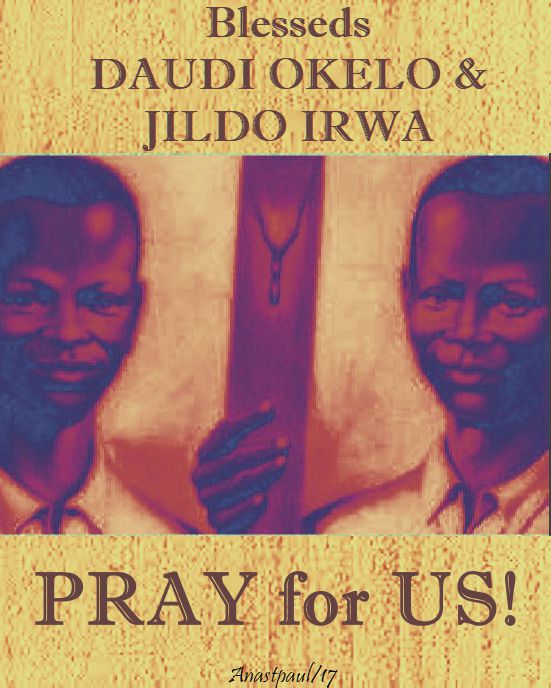
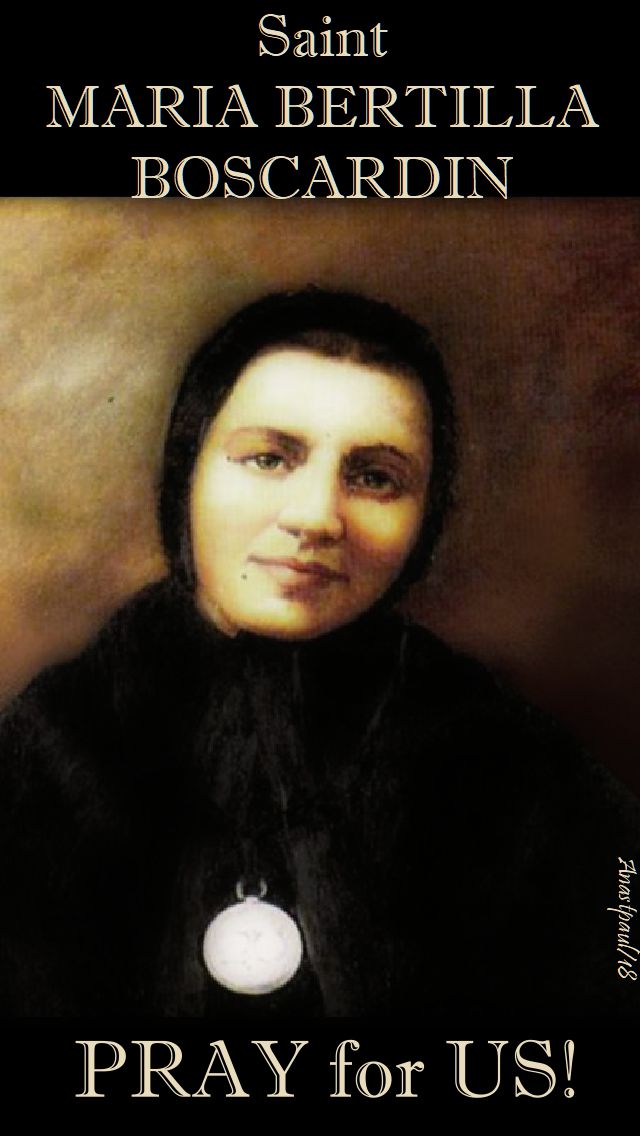
One Minute Reflection – 20 October – Today’s Gospel: Luke 12:8-12 = – Saturday of the Twenty-eighth week in Ordinary Time, Year B – The Memorial of The Memorial of Blesseds Okelo & Irwa & (1918) St Maria Bertilla Boscardin
(1888 – 1922)
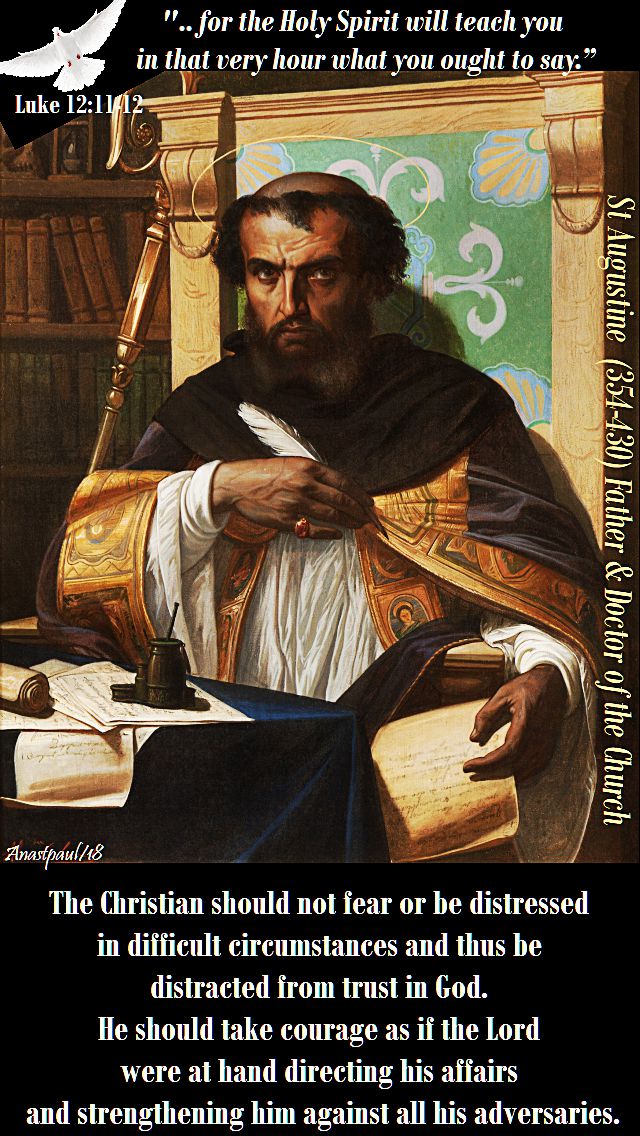
“…do not be anxious how or what you are to answer or what you are to say; for the Holy Spirit will teach you in that very hour what you ought to say.”…Luke 12:11-12
REFLECTION – “The Christian should not fear or be distressed in difficult circumstances and thus be distracted from trust in God. He should take courage as if the Lord were at hand directing his affairs and strengthening him against all his adversaries. It is as if the Holy Spirit were instructing him, even as to the very replies he should make to his enemies.”… St Augustine (354-430) Father & Doctor of the Church (The Morals, 63)”
PRAYER – All-powerful, eternal God, grant us the grace of Your Spirit and fill us with the light of understanding and love. Grant that by the prayers of your Saints we may be strengthened and depend only on You. Blessed Okelo and Irwa and St Maria Bertilla, pray for us. We make our prayer through Jesus, our Lord with the Holy Spirit, God forever, amen.
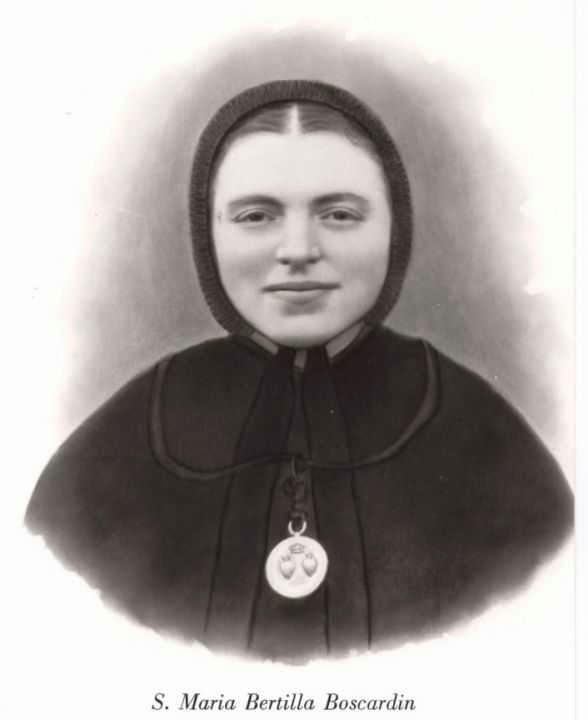
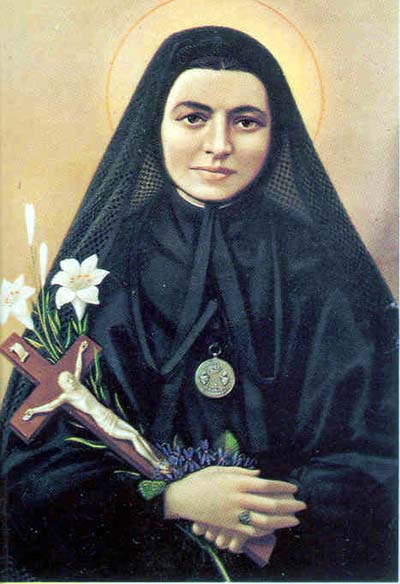
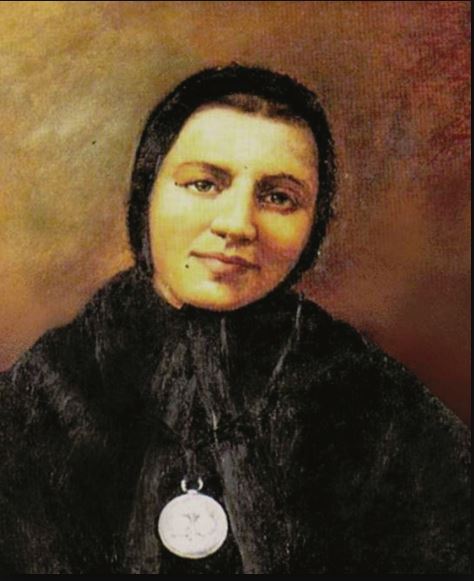
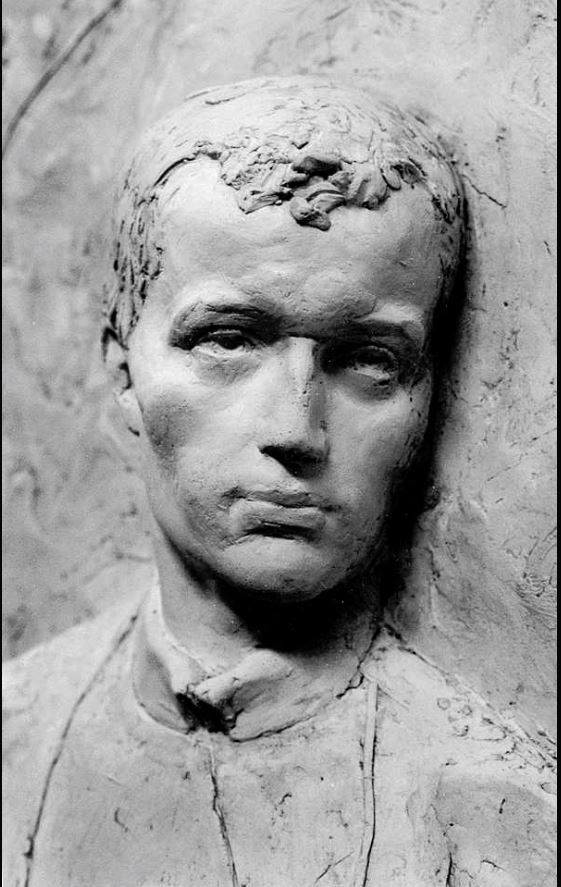
Saint of the Day – 20 October – St Maria Bertilla Boscardin (1888 – 1922) – Religious nursing Sister of the Teachers of Saint Dorothy, Daughters of the Sacred Heart – born on 6 October 1888 at Brendola, Italy as Anna Francesca Boscardin and died on 20 October 1922 of cancer at Treviso, Italy.
St Maria (1888–1922) was an Italian nun and nurse who displayed a pronounced devotion to duty in working with sick children and victims of the air raids of World War I. She was born into a peasant family and was known as Annette in her family and hometown. Her father, Angelo Boscardin, would testify during her beatification process that he was jealous, violent and frequently drunk. As a child she could only attend school irregularly, as she was needed to help at home and in the fields. When she did attend school, she also worked as a servant in a nearby home. ,,She did not display any particular talents, was thought to be not particularly intelligent and was often the target of insulting jokes. ,,These included being referred to as a “goose” for her slowness by a local clergyman.
She was allowed to make her First Holy Communion at eight and a half years old, when the authorised age in those years was eleven. At twelve years old, she was accepted into the parish association of the “Children of Mary” apostalate. The parish priest gave her a catechism as a gift. They found it in the pocket of her habit, when she died, at 34 years old.
After being rejected for admission to one order because of her slowness, she was accepted as a member of the Teachers of Saint Dorothy, Daughters of the Sacred Heart at Vicenza in 1904, taking the name “Maria Bertilla”. She herself internalised some of her earlier criticism, telling the novice-mistress of the order, “I can’t do anything. I’m a poor thing, a goose. Teach me. I want to be a saint.” She worked there as a kitchen maid and laundress for three years.
She was then sent to Treviso to learn nursing at the municipal hospital there, which was under the direction of her order. During her training period, she was once placed to work in the kitchen. However, upon completing her training, she was promoted to working with victims of diphtheria in the hospital’s children’s ward. During the air raids of Treviso following the disastrous Battle of Caporetto, the hospital fell under the control of the military. Sister Bertilla was noted for her unwavering care of her patients, particularly those who were too ill to be moved to safety.
This devotion to duty, attracted the attention of the authorities of a local military hospital. However, her Sister Supervisor did not appreciate Sister Bertilla’s work and reassigned her to work in the laundry, a position she remained in for four months until being reassigned by a higher superior, who put Sister Bertilla in charge of the children’s isolation ward at the hospital. Shortly thereafter, Sister Bertilla’s already poor health got worse. A painful tumour which she had had for several years had progressed to the point of requiring an operation, which she did not survive. She died in 1922.
Her reputation for simplicity and devoted, caring hard work had left a deep impression on those who knew her. A memorial plaque placed on her tomb refers to her as “a chosen soul of heroic goodness … an angelic alliviator of human suffering in this place.” Crowds flocked to her first grave at Treviso. After a tomb was erected for her at Vicenza, it became a pilgrimage site where several miracles of healing took place.
In 1961, 39 years after her death, she was Canonised as a saint by St Pope John XXIII. The crowd in attendance included members of her family as well as some of her patients.
Thought for the Day – 19 October – The Memorial of St Peter of Alcantara OFM (1499-1562)
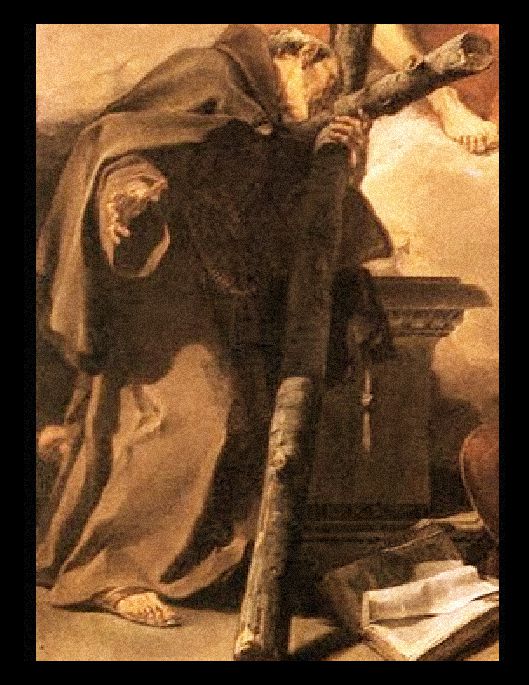
Everywhere he could do so, he planted crosses, for the Passion of Our Lord was engraved in his heart.
Wherever they were to be placed, even on mountains and however heavy they might be, he went to the destined sites carrying them on his shoulders. From these heights he would then preach the mysteries of the Cross, afterwards remaining in prayer there. Shepherds saw him several times in the air, at the height of the highest trees of the forests.
Never did he go anywhere except on foot, even in his old age. He was often seen prostrated before a large crucifix, shedding torrents of tears and he was found in ecstasy once at the height of the traverse of a crucifix.
The goal was following Christ in ever greater purity of heart. Whatever obstructed that path could be eliminated with no real loss. If men do not go about barefoot now, nor undergo sharp penances as Saint Peter did, there remain many ways of trampling on the spirit of the world and Our Lord teaches them, when He finds in souls the necessary courage.
Quote of the Day – 19 October – The Memorial of St Peter of Alcantara OFM (1499-1562), St Isaac Jogues SJ (1607-1646) The North American Martyrs) & Bl Jerzy Popiełuszko (1947-1984)
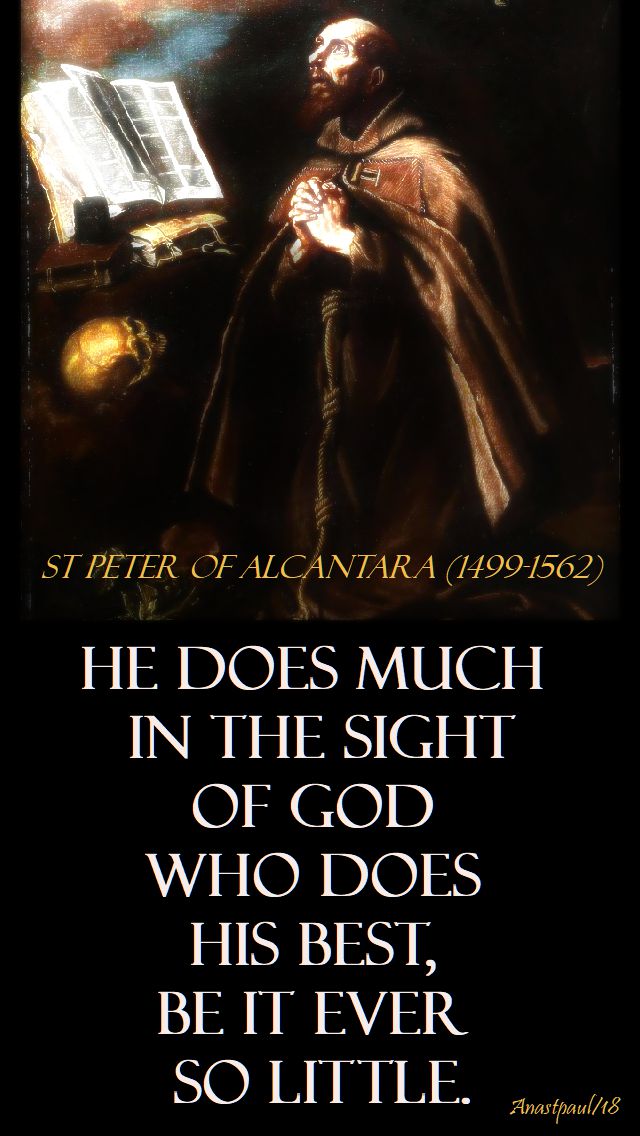
“He does much in the sight of God who does his best, be it ever so little.”
“No tongue can express the greatness of the love which Jesus Christ bears to our souls. He did not wish, that between Him and His servants, there should be any other pledge than Himself…
St Peter of Alcantara (1499-1562)
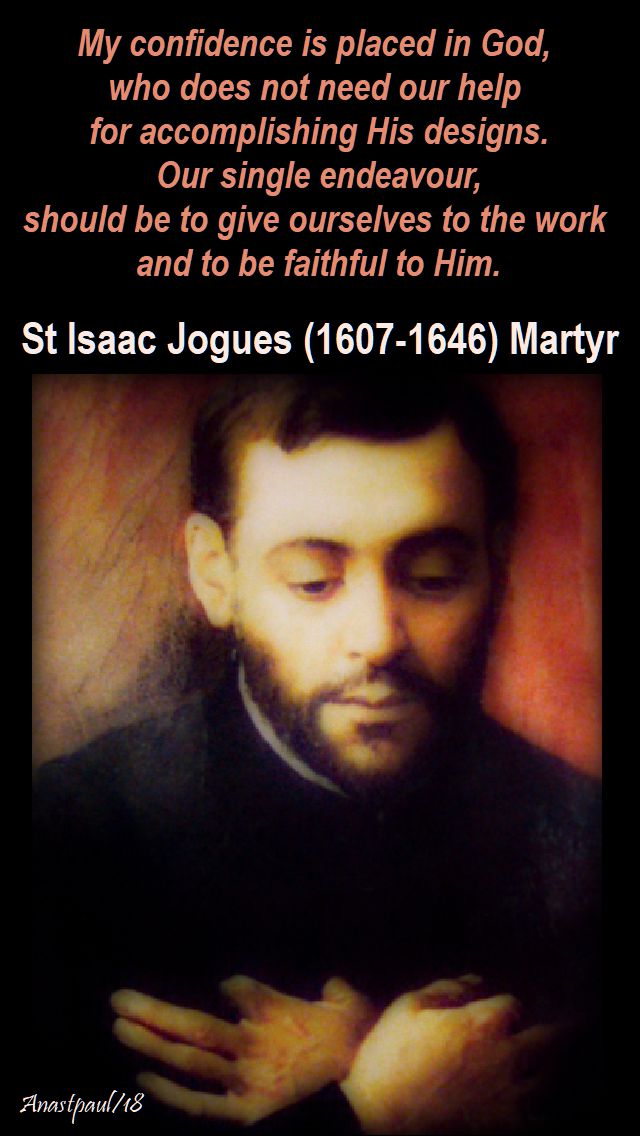
“My confidence is placed in God, who does not need our help for accomplishing His designs. Our single endeavour, should be to give ourselves to the work and to be faithful to Him.”
St Isaac Jogues SJ (1607-1646) Martyr
”To live in Truth is the basic minimum of human dignity, even if the price to defend the Truth could be costly. You need to always remain faithful to the Truth. Truth can never be betrayed.”
“Truth, like Justice, is connected to Love and Love has a Price.”
One Minute Reflection – 19 October – Today’s Gospel: Luke 12:1–7 – Friday of the Twenty-eighth week in Ordinary Time, Year B and the Memorial of St Peter of Alcantara OFM (1499-1562)
“Why, even the hairs of your head are all numbered. Fear not, you are of more value than many sparrows.”...Luke 12:7
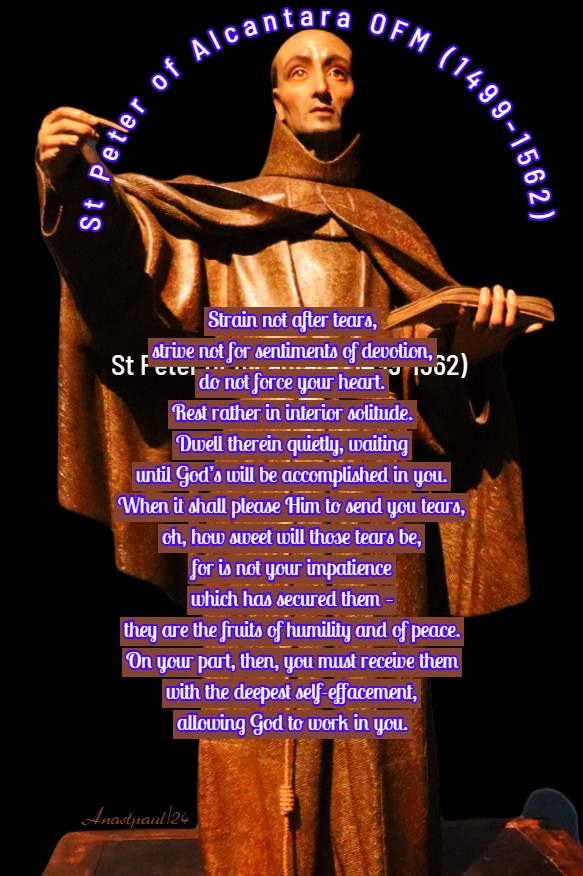
REFLECTION – “Strain not after tears, strive not for sentiments of devotion, do not force your heart. Rest rather in interior solitude. Dwell therein quietly, waiting until God’s will be accomplished in you. When it shall please Him to send you tears, oh, how sweet will those tears be, for is not your impatience that has secured them: they are the fruits of humility and of peace. On your part, then, you must receive them with the deepest self-effacement, allowing God to work in you. Note well, that if ever you fancy this desire or the securing of these affections to be in any measure due to yourself, you will infallibly expose yourself to the losing of them.”…St Peter of Alcantara – Treatise on Prayer and Meditation’
PRAYER – My Lord and patient God, help me to practice patience in doing good. No matter what may occur, allow me to face each day with quiet courage and without complaint, knowing You are always at my side and that all is part of Your divine plan. I pray for total abandonment to Your Will. Grant that by the intercession of St Peter of Alcantara, we may grow in trust, leaving all in our Father’s hands. We make our prayer through Christ our Lord, with the Holy Spirit, God forever, amen.
Our Morning Offering – 19 October – The Memorial of St Peter of Alcantara OFM (1499-1562)
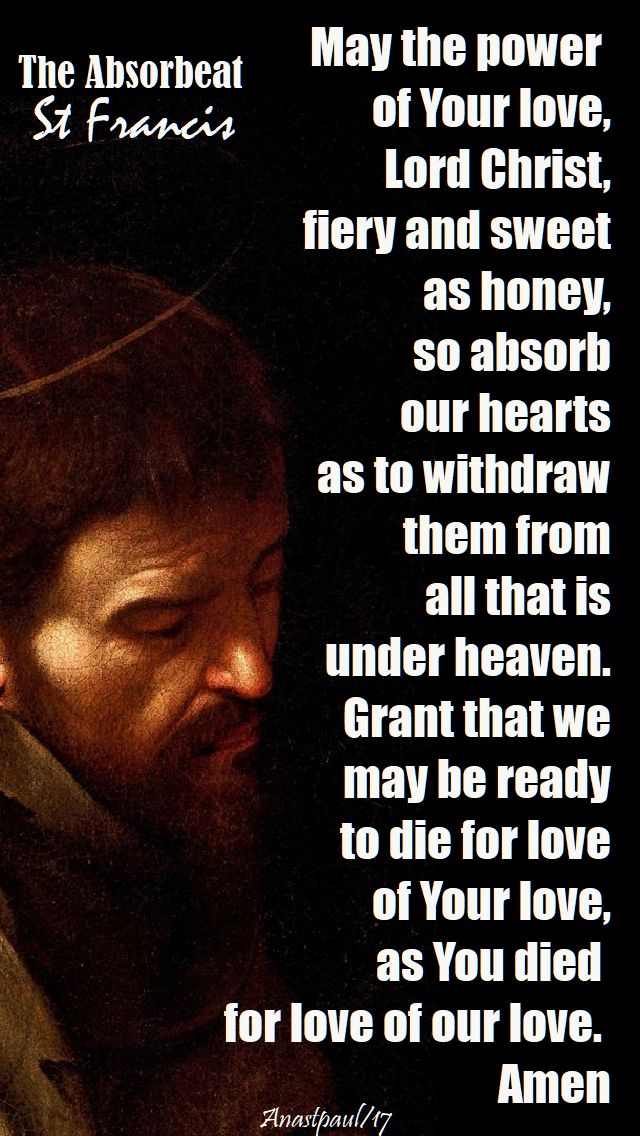
The Absorbeat St Francis of Assisi (1181/82-1226)
May the power of Your love, Lord Christ,
fiery and sweet as honey,
so absorb our hearts
as to withdraw them
from all that is under heaven.
Grant that we may be ready
to die for love of Your love,
as You died for love of our love.
Amen
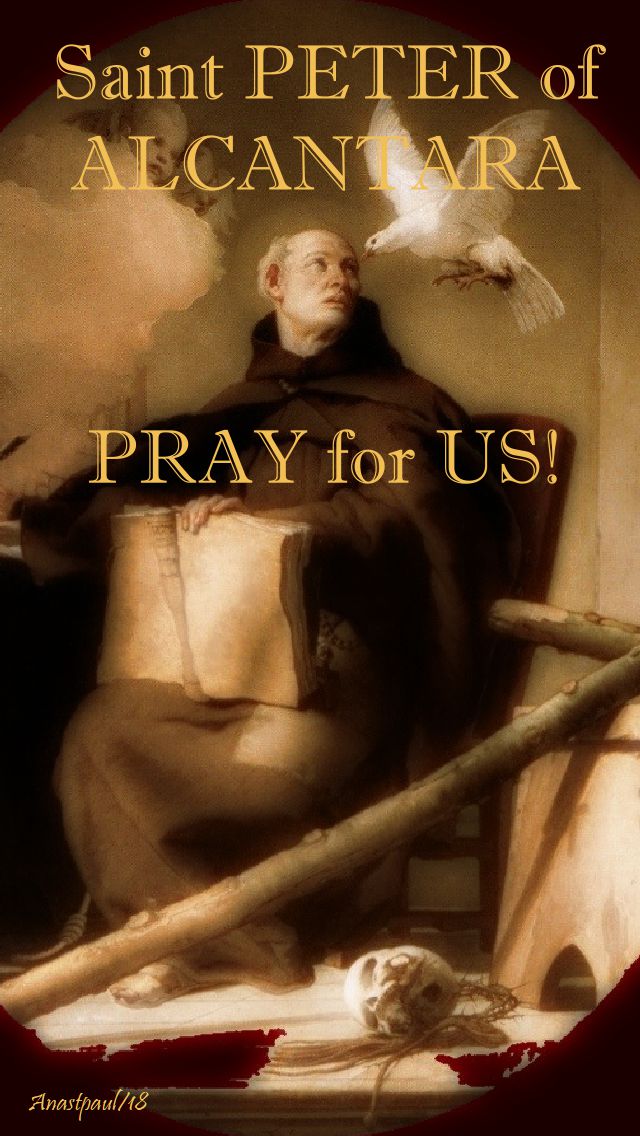
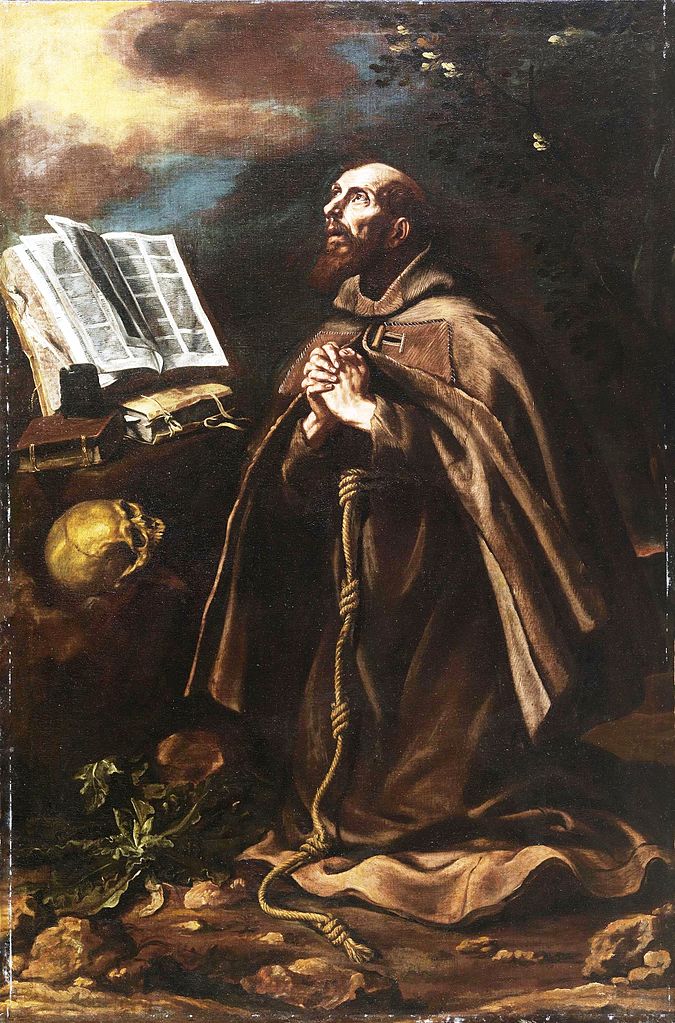
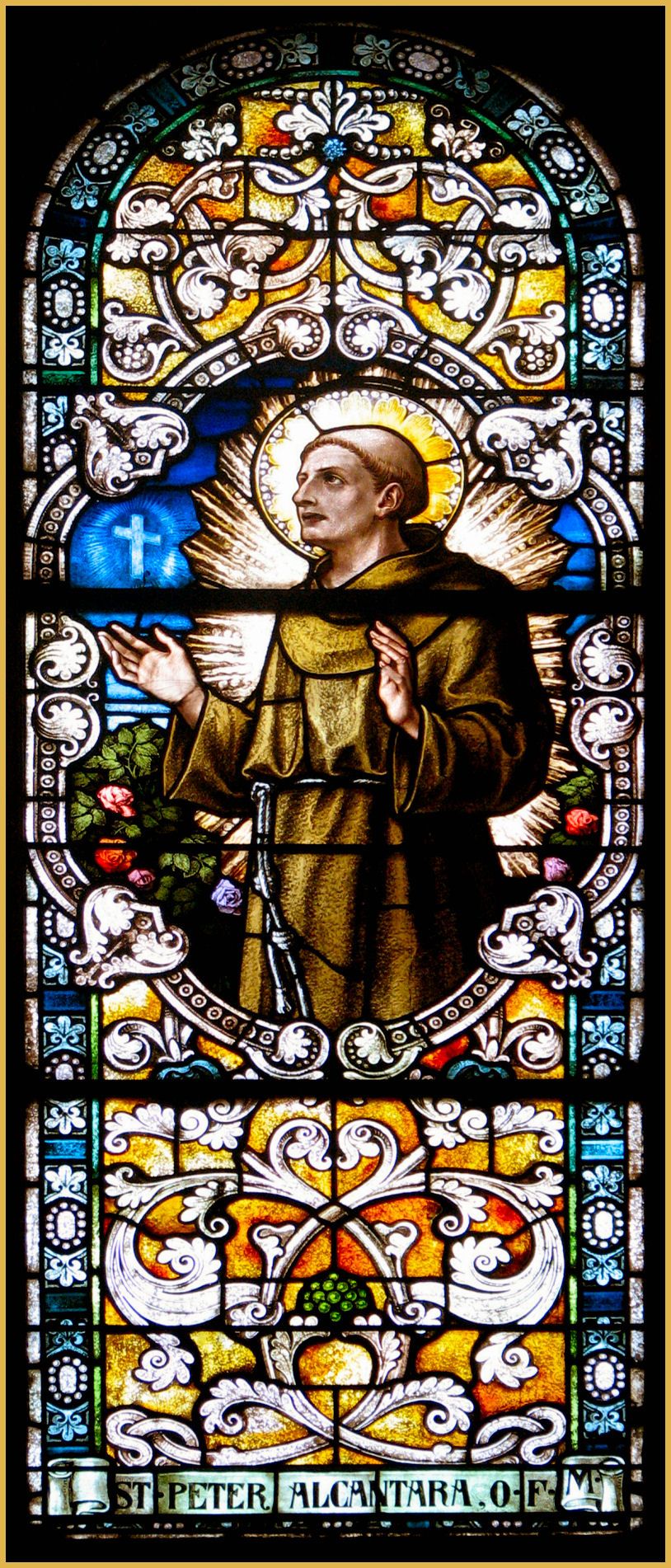
Saint of the Day – 19 October – St Peter of Alcantara OFM (1499-1562) – Franciscan Friar and Priest, Mystic, Ecstatic, Writer, Preacher, Reformer, Hermit, Apostle of Prayer, Eucharistic Adoration, the Passion and Charity, Miracle-worker – born in 1499 at Alcantara, Estremadura, Spain and died on 18 October 1562 at Estremadura, Spain of natural causes. Patronages – Nocturnal Adoration of the Blessed Sacrament, Brazil (named by Pope Blessed Pius IX in 1862), Estremadura Spain (named in 1962), night watchmen, watchmen.
His father, Peter Garavita, was the governor of Alcantara and his mother was of the noble family of Sanabia. After a course of grammar and philosophy in his native town, he was sent, at the age of fourteen, to the University of Salamanca. Returning home, he became a Franciscan in the convent of the Stricter Observance at Manxaretes in 1515. At the age of twenty-two he was sent to found a new community of the Stricter Observance at Badajoz. He was ordained priest in 1524 and the following year made guardian of the convent of St Mary of the Angels at Robredillo. A few years later he began preaching with much success. He preferred to preach to the poor and his sermons, taken largely from the Prophets and Sapiential Books, breathe the tenderest human sympathy.
Having been elected minister of St Gabriel’s province in 1538, Peter set to work at once. At the chapter of Plasencia in 1540 he drew up the Constitutions of the Stricter Observants but his severe ideas met with such opposition that he renounced the office of provincial and retired with St John of Avila into the mountains of Arabida, Portugal, where he joined Father Martin a Santa Maria in his life of eremitical solitude. Soon, however, other friars came to join him and several little communities were established. Peter being chosen guardian and master of novices at the convent of Pallais. In 1560 these communities were erected into the Province of Arabida. Returning to Spain in 1553 he spent two more years in solitude and then journeyed barefoot to Rome and obtained permission of Pope Julius III to found some poor convents in Spain under the jurisdiction of the general of the Conventuals. Convents were established at Pedrosa, Plasencia, and elsewhere; in 1556 they were made a commissariat, with Peter as superior, and in 1561, a province under the title of St Joseph. The reform spread rapidly into other provinces of Spain and Portugal.
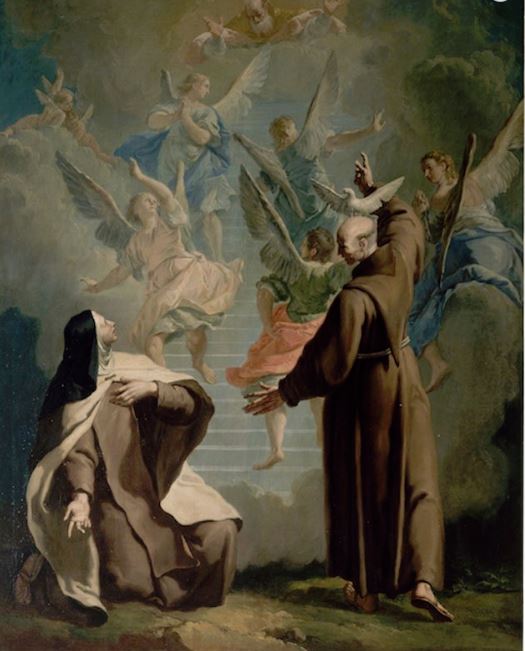
In 1562 the province of St Joseph was put under the jurisdiction of the general of the Observants and two new custodies were formed. Besides the above-named associates of Peter may be mentioned St Francis Borgia SJ, St John of Avila (Doctor of the Church) and Blessed Louis of Granada O.P. In St Teresa of Avila OCD (Doctor of the Church), Peter perceived a soul chosen of God for a great work and her success in the reform of Carmel was in great measure due to his counsel, encouragement and defence. It was a letter from St Peter (14 April 1562) that encouraged her to found her first monastery at Avila. St Teresa’s autobiography is the source of much of our information regarding Peter’s life, work and gifts of miracles and prophecy. According to St Teresa of Ávila, it was a very common thing for him to take food only once in three days and that sometimes he would go a week without eating.
Perhaps the most remarkable of Peter’s graces were his gift of contemplation and the virtue of penance. Hardly less remarkable was his love of God, which was at times so ardent as to cause him, as it did St Philip Neri, sensible pain and frequently rapt him into ecstasy. The poverty he practised and enforced was as cheerful as it was real and often let the want of even the necessaries of life be felt. In confirmation of his virtues and mission of reformation God worked numerous miracles through his intercession and by his very presence. Besides the Constitutions of the Stricter Observants and many letters on spiritual subjects, especially to St Teresa, he composed a short treatise on prayer, which has been translated into all the languages of Europe.
He was a man of remarkable austerity and poverty who travelled throughout Spain preaching the Gospel to the poor. He wrote a Treatise on Prayer and Meditation, which was considered a masterpiece by St Teresa, St Francis de Sales (Doctor of the Church) and Louis of Granada.
While in prayer and contemplation, he was often seen in ecstasies and levitation. On his deathbed, he was offered a glass of water which he refused, saying that “Even my Lord Jesus Christ thirsted on the Cross…” He died while on his knees in prayer on 18 October 1562 in a monastery at Arenas.
Death of St Peter of Alcantara
He was Beatified on 18 April 1622 by Pope Gregory XV and Canonised on 28 April 1669 by Pope Clement IX.
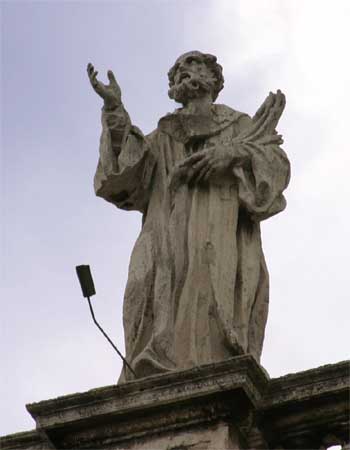
Statue of St Peter of Alcantara at St Peter’s Basilica
North American Martyrs (Optional Memorial) – 8 saints: Two priests and six lay-brothers, all Jesuits, who were sent as missionaries to the area of modern Canada and New York and who were murdered by the locals for their work.
• Saint Antoine Daniel
• Saint Charles Garnier
• Saint Gabriel Lalemant
• Saint Isaac Jogues
• Saint Jean de Brébeuf
• Saint Jean de la Lande
• Saint Noel Chabanel
• Saint Rene Goupil
Canonised – 29 June 1930 by Pope Pius XI
Bl Agnes of Jesus
St Altinus
St Aquilinus of Evreux
St Asterius of Ostia
St Beronicus of Antioch
St Desiderius of Longoret
St Ednoth
St Ethbin
St Eusterius of Salerno
St Frideswide
Bl Jerzy Popieluszko
St Laura of Cordoba
St Lucius of Rome
St Luke Alonso Gorda
St Lupus of Soissons
St Matthaeus Kohyoe
St Pelagia of Antioch
St Peter of Alcantara OFM (1499-1562)
St Philip Howard
St Potenzianus of Sens
St Ptolemy of Rome
St Sabiniano of Sens
St Theofrid
St Varus of Kemet
St Verano of Cavaillon
—
Martyred in the Spanish Civil War: 18 Beati
• Blessed Antonio Elizalde Garvisu
• Blessed Constantino Miguel Moncalvillo
• Blessed Dionisio Arizaleta Salvador
• Blessed Emiliano Pascual Abad
• Blessed Eusebio de Las Heras Izquierdo
• Blessed Ferran Castán Messeguer
• Blessed Francesc Solá Peix
• Blessed Francisco Marco Martínez
• Blessed Francisco Milagro Mesa
• Blessed Francisco Simón Pérez
• Blessed Josep Ferrer Escolà
• Blessed Josep Ribé Coma
• Blessed Julio Leache Labiano
• Blessed Juan Senosiaín Zugasti
• Blessed Manuel Font y Font
• Blessed Narcís Simón Sala
• Blessed Nicolas Campo Giménez
• Blessed Pere Vives Coll
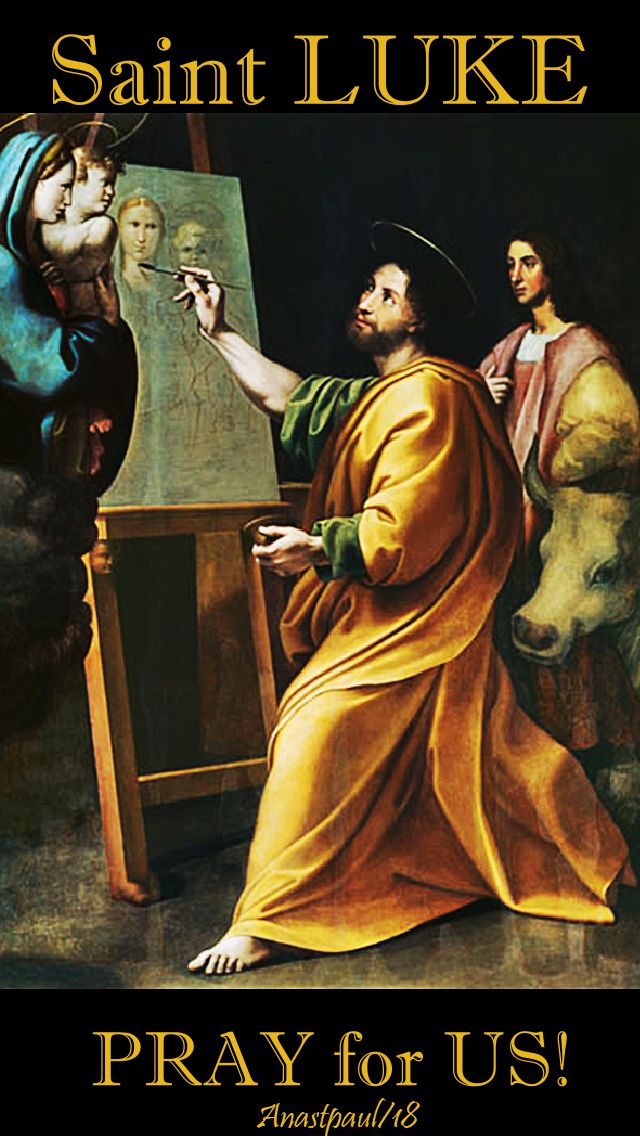
Thought for the Day – 18 October – The Feast of St Luke the Evangelist – St Luke the Painter and the Painter in Words.
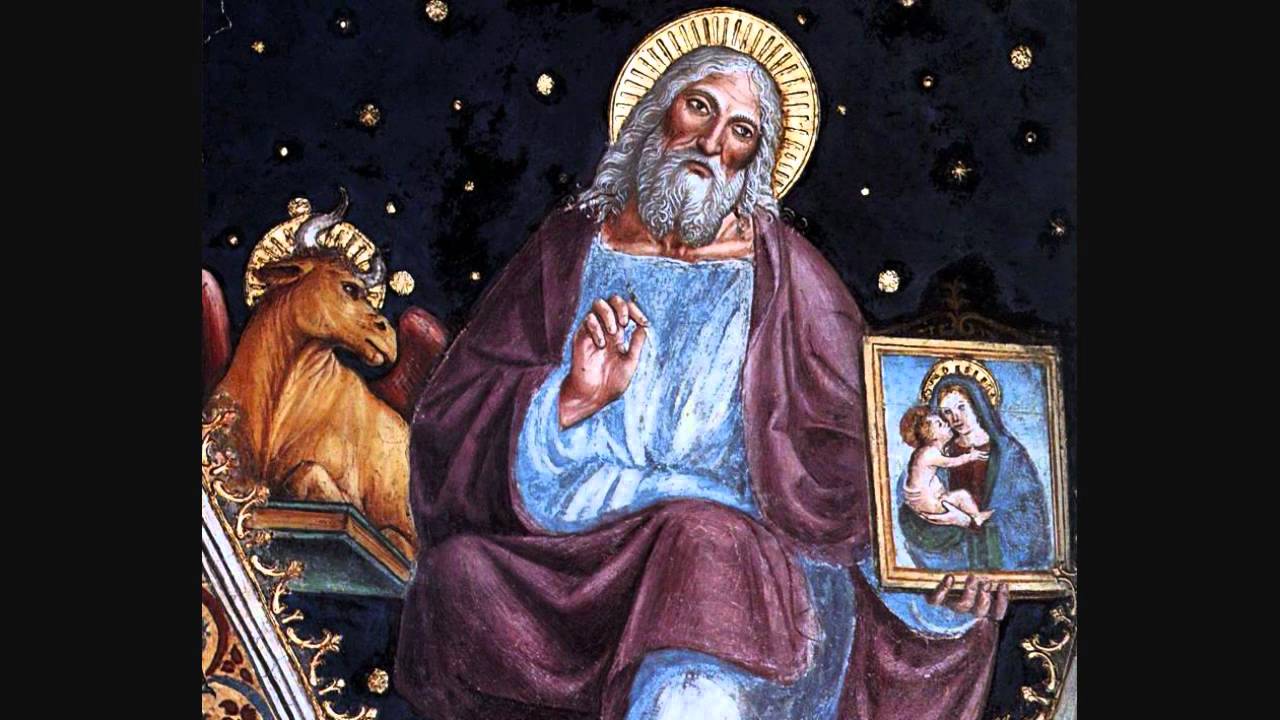
“According to a pious tradition, Luke is thought to have painted the image of Mary, the Virgin Mother. But the real portrait that Luke draws of Jesus’ Mother is the one that emerges from the pages of his work – in scenes that have become familiar to the People of God, he draws an eloquent image of the Virgin. The Annunciation, the Visitation, the Nativity, the Presentation in the Temple, life in the home of Nazareth, Jesus’ discussion with the doctors and His being lost and Pentecost have provided abundant material down the centuries for the ever new creations of painters, sculptors, poets and musicians.
What is most important however is to discover that, through pictures of Marian life, Luke introduces us to Mary’s interior life, helping us at the same time to understand her unique role in salvation history.
Mary is the one who says fiat, a personal and total “yes” to God’s invitation, calling herself the “handmaid of the Lord” (Lk 1: 38). This attitude of total assent to God and unconditional acceptance of His Word represents the highest model of faith, the anticipation of the Church as the community of believers.
The life of faith grows and develops in Mary through sapiential meditation on the words and events of Christ’s life (cf. Lk 2: 19, 51). She “ponders in her heart” to understand the deep meaning of His words, in order to assimilate it and share it with others.
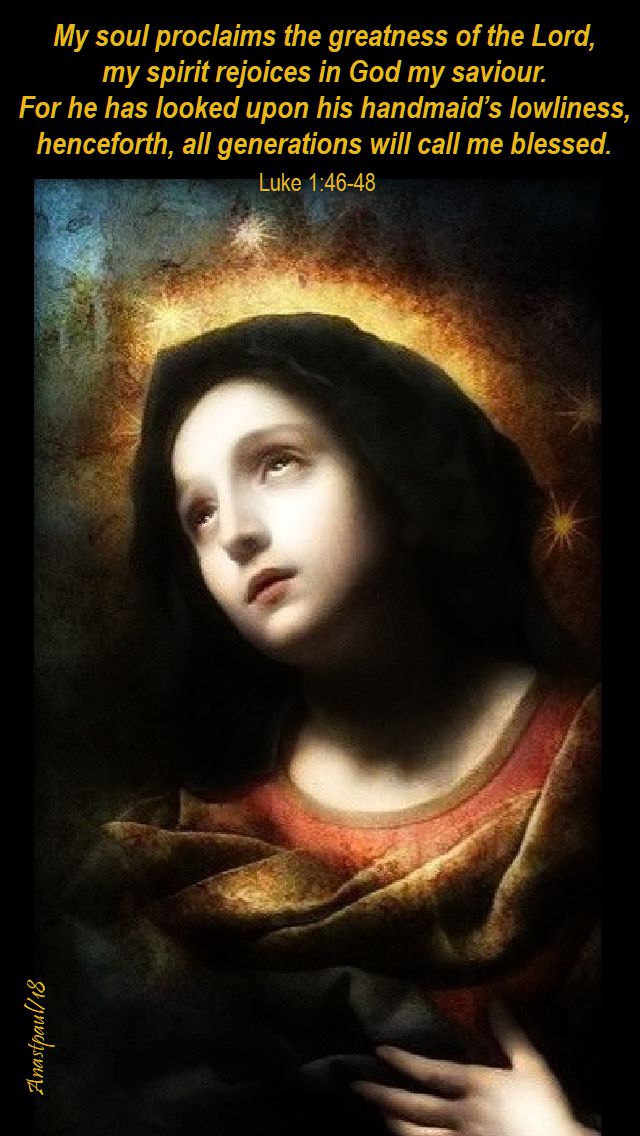
The Magnificat hymn (cf. Lk 1: 46-55) shows another important aspect of Mary’s “spirituality”: she embodies the figure of the poor person, capable of putting all her trust in God, who casts down the mighty from their thrones and raises up the lowly.
Luke also describes the figure of Mary in the early Church, showing that she is present in the Upper Room as they await the Holy Spirit – “All these [the 11 Apostles] with one accord devoted themselves to prayer, together with the women and Mary the mother of Jesus, and with his brethren” (Acts 1: 14).
The group gathered in the Upper Room forms the original nucleus of the Church. Within it Mary carries out a double role: on the one hand, she intercedes for the birth of the Church through the Holy Spirit; on the other, she shares her experience of Jesus with the newborn Church.
Luke’s work thus offers the Church … a powerful stimulus to make the most of the “Marian dimension” of Christian life as she follows the way of Christ.” …St Pope John Paul 15 October 2000
Quote of the Day – – 18 October – The Feast of St Luke the Evangelist
“My soul proclaims the greatness of the Lord, my spirit rejoices in God my saviour. For he has looked upon his handmaid’s lowliness, henceforth, all generations will call me blessed.”
One Minute Reflection – 18 October – Today’s Gospel: Luke 10:1–9 – The Feast of St Luke the Evangelist
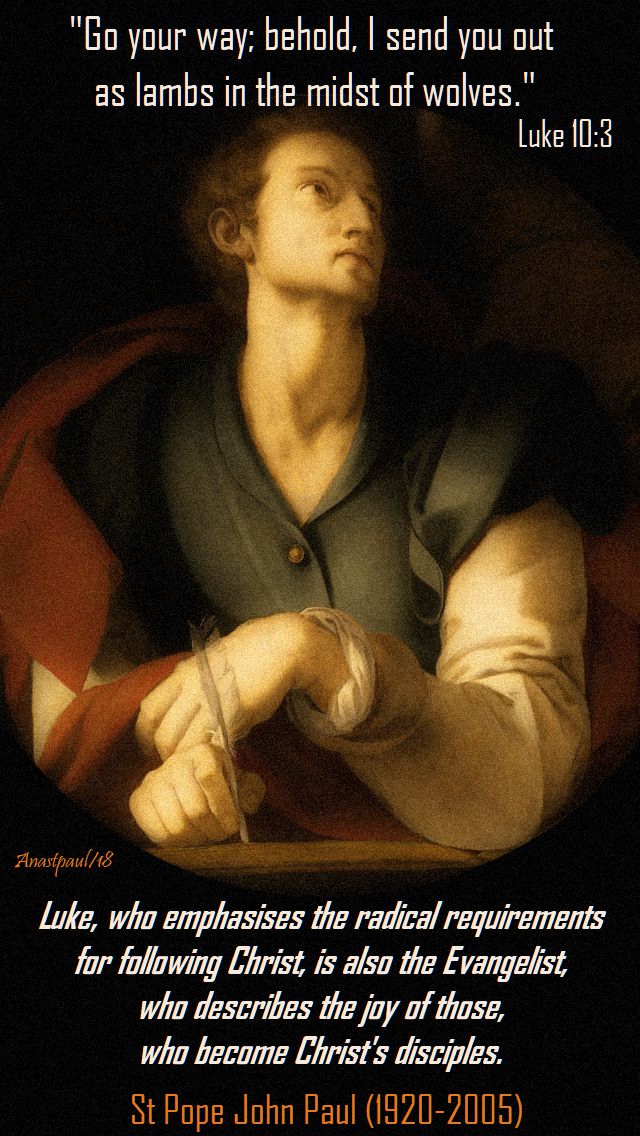
“Go your way; behold, I send you out as lambs in the midst of wolves.”…Luke 10:3
REFLECTION – “We must abandon ourselves to the power of the Spirit, who is able to infuse light and especially love for Christ; we must open ourselves to the inner fascination that Jesus works in the hearts of those who aspire to authenticity, while fleeing from half measures. This is certainly difficult for human beings but it becomes possible with the grace of God (cf. Lk 18: 27). On the other hand, if following Christ means carrying the Cross each day, the latter in turn is the tree of life leading to the resurrection. Luke, who emphasises the radical requirements for following Christ, is also the Evangelist who describes the joy of those who become Christ’s disciples.”…St Pope John Paul (1920-2005) 15 October 2000
PRAYER – Lord God, You chose St Luke to reveal the mystery of Your love in his preaching and his writings. Grant, we pray, that we may grow in love for the Holy Face of Christ, His words and His directions, revealed to us in the Gospels, in the example of your saints. Today, on his feast, we especially look to St Luke, to guide, teach and pray for us. We make our prayer through our Lord Jesus Christ, with the Holy Spirit, one God with You, forever and ever, amen.
Saint of the Day – 18 October – St Luke the Evangelist
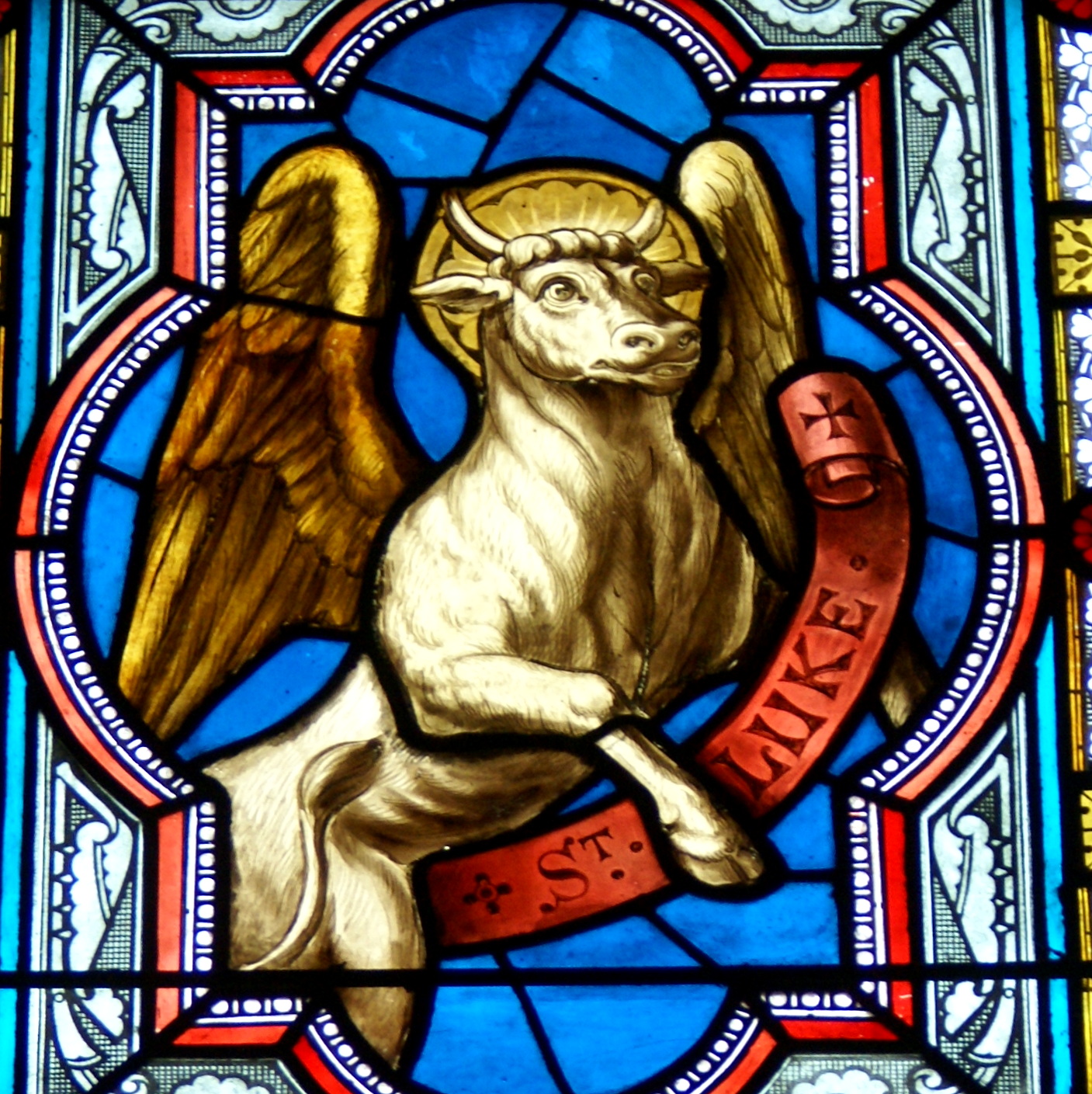
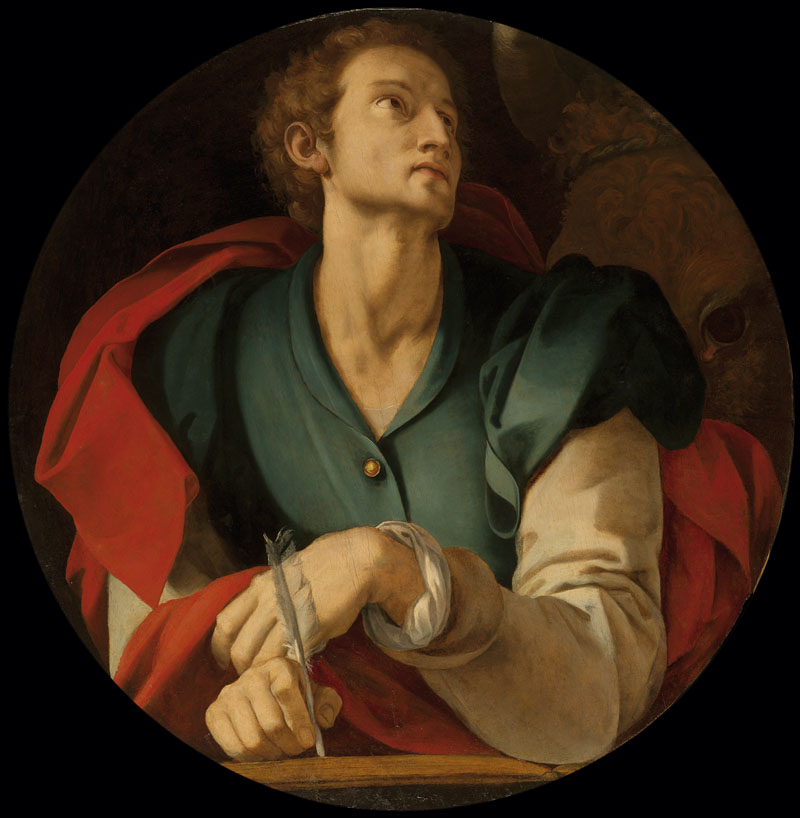
St Luke, the inspired author of the third Gospel and of the Acts of the Apostles, was a native of Antioch in Syria and a physician and one of the early converts from paganism. He accompanied St Paul on a considerable part of his missionary journey. He was also his companion while in prison at Rome on two different occasions. His account of these events, contained in the Acts, is first hand history. His symbol is a Winged Ox anticipated by Ezekiel. The ox, recognised as the animal of sacrifice, was applied to St Luke because his Gospel emphasises the atonement made by Christ’s sacrifice of Himself on the Cross. His name means “bringer of light” (= luke).
Luke’s Gospel is, above all, the Gospel of the Merciful Heart of Jesus. It emphasises the fact that Christ is the salvation of all men, especially of the repentant sinner and of the lowly. Legend says that Luke painted the Blessed Virgin’s portrait. It is certainly true that he painted the most beautiful word-picture of Mary ever written.
St Luke came from Antioch, was a practising physician and was one of the first converts to Christianity. He accompanied St Paul, who converted him, on his missionary journeys and was still with him in Rome when St Paul was in prison awaiting death. We hear no more of him afterwards and nothing is known of his last years. The Church venerates him as a Martyr.
St Luke’s Gospel is principally concerned with salvation and mercy – in it are preserved some of our Lord’s most moving parables, like those of the lost sheep and the prodigal son. Dante calls St Luke the “historian of the meekness of Christ.” It is also St Luke who tells us the greater part of what we know about our Lord’s childhood.
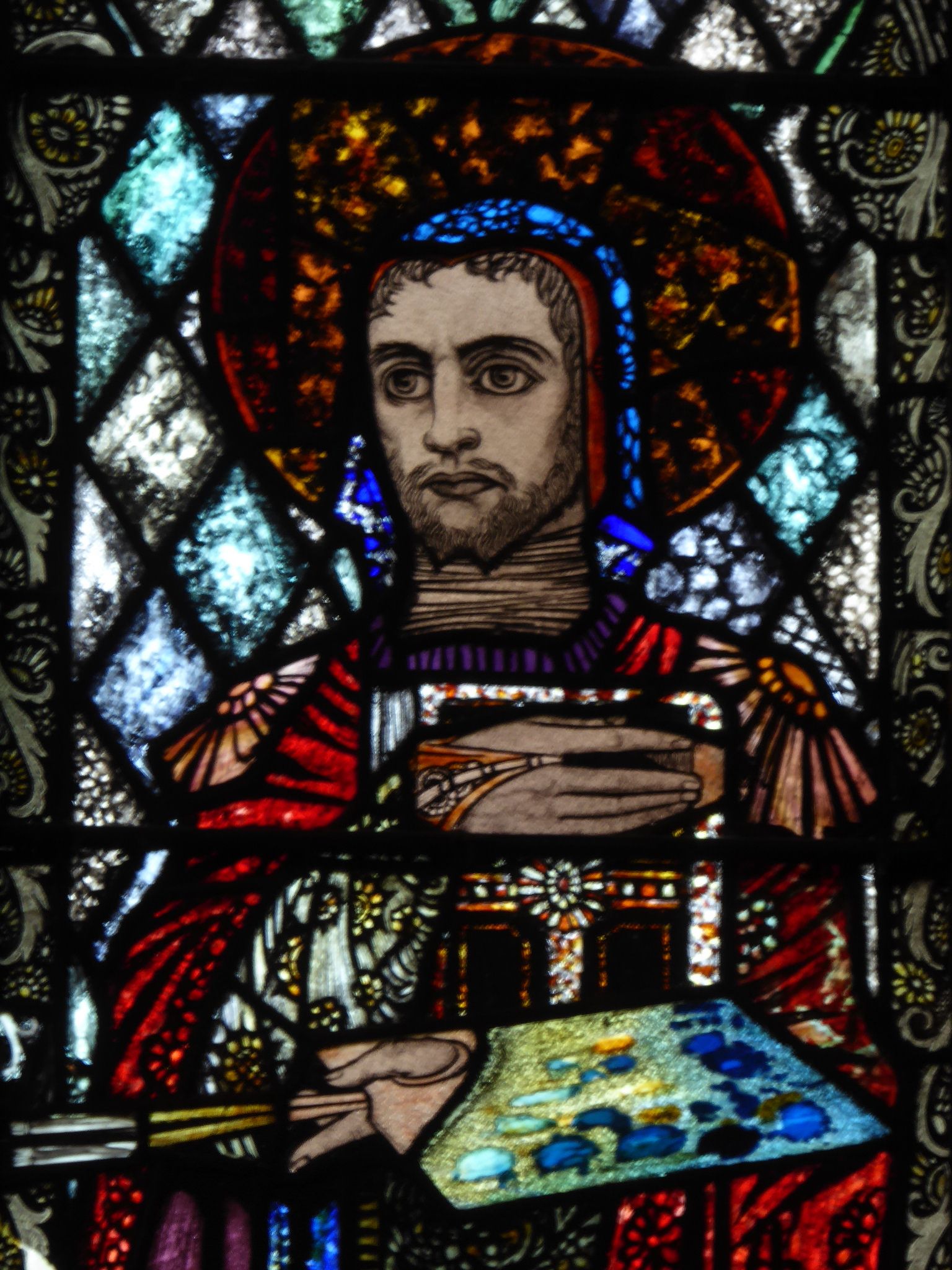
“According to tradition he was an artist, as well as a man of letters and with a soul alive to all the most delicate inspirations, he consecrated his pencil to the holiest use and handed down to us the features of the Mother of God. It was an illustration worthy of the Gospel which relates to the divine Infancy and it won for the artist a new title to the gratitude of those who never saw Jesus and Mary in the flesh. Hence St Luke is the patron of Christian art.” …-Excerpted from The Liturgical Year, Abbot Gueranger O.S.B.
St Luke did not personally know our Lord and like St Mark, the author of the second Gospel, he is not included among the apostles. For this reason the Gospel chosen for their feast is the account of the sending forth of the seventy-two disciples. According to St Jerome, St Luke died in Achaia (Greece) at the age of 84 and it is unknown whether or not he died a martyr’s death.
His symbol is a Winged Ox anticipated by Ezekiel. The ox, recognised as the animal of sacrifice, was applied to St Luke because his Gospel emphasises the atonement made by Christ’s sacrifice of Himself on the Cross. His name means “bringer of light” (= luke).
St Acutius of Pozzuoli
St Asclepiades of Antioch
St Brothen
Bl Burchard I of Halberstadt
St Cadwaladr of Brittany
Bl Domenico of Perpignano
St Eutychius of Pozzuoli
St Gwen
St Gwen of Tagarth
St Gwendoline
St Isaac Jogues
St Julian the Hermit
St Justus of Beauvais
Bl Margherita Tornielli
St Monon of Nassogne
St Proculus of Pozzuoli
Bl Theobald of Narbonna
St Tryphonia of Rome
—
Martyrs of Africa – 9 saints: A group of Christians martryed together in Africa. The only details that have survived are the names – Beresus, Dasius, Faustinus, Leucius, Lucius, Martialis, Victoricus, Victrix and Viktor. They were martyred in c.300 in Africa.
Martyred in the Spanish Civil War:
• Blessed Alfredo Almunia López-Teruel
• Blessed Francisco Roselló Hernández
• Blessed Isidro Juan Martínez
Thought for the Day 17 October – St Ignatius of Antioch (c 35 – 107) Father of the Church, Martyr – “Doctor of Unity”
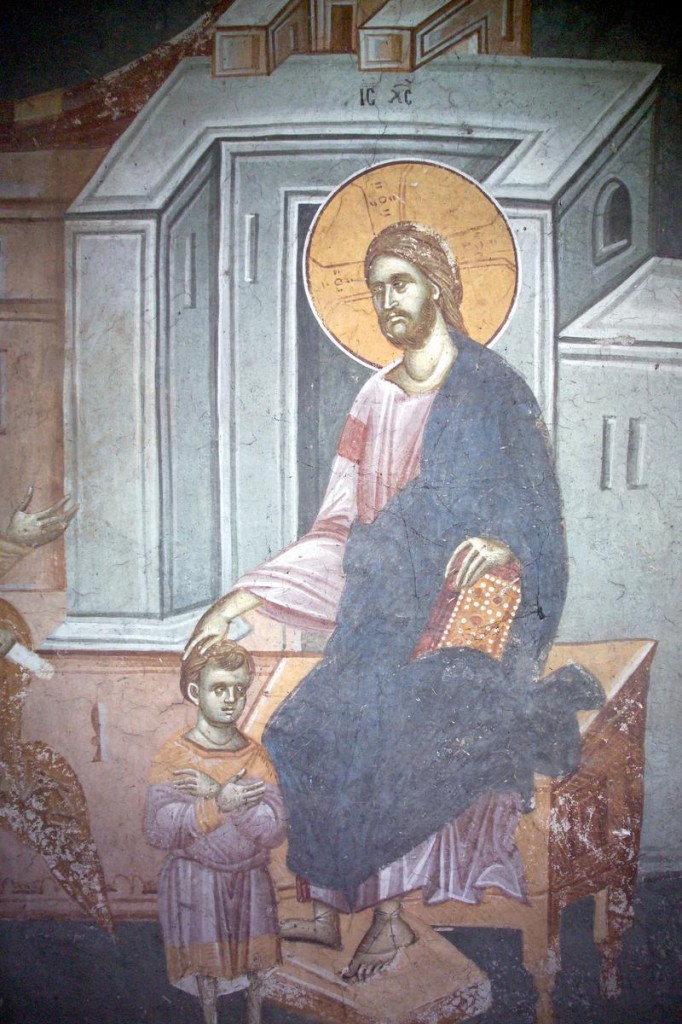
Note: St John Chrysostom (347-407) , who grew up in Antioch, taught that St Ignatius had been ordained at the hands of St Peter. According to ancient tradition, St Ignatius was the child whom Christ had held, as described in Matthew 18:4, as depicted in the fresco below from the Gračanica.
Detail from a fresco depicting Christ picking up the child St Ignatius, from the account in the Gospel of St Matthew 18:4.
Excerpt from Pope Benedict’s Catechesis on St Ignatius
Wednesday, 14 March 2007
For Ignatius unity was first and foremost a prerogative of God, who, since he exists as Three Persons, is One in absolute unity. Ignatius often used to repeat that God is unity and that in God alone is unity found in its pure and original state. Unity to be brought about on this earth by Christians is no more than an imitation as close as possible to the divine archetype.
Overall, it is possible to grasp in the Letters of Ignatius a sort of constant and fruitful dialectic between two characteristic aspects of Christian life: on the one hand, the hierarchical structure of the Ecclesial Community and on the other, the fundamental unity that binds all the faithful in Christ.
Consequently, their roles cannot be opposed to one another. On the contrary, the insistence on communion among believers and of believers with their Pastors was constantly reformulated in eloquent images and analogies – the harp, strings, intonation, the concert, the symphony. The special responsibility of Bishops, priests and deacons in building the community is clear.
This applies first of all to their invitation to love and unity. “Be one”, Ignatius wrote to the Magnesians, echoing the prayer of Jesus at the Last Supper: “one supplication, one mind, one hope in love…. Therefore, all run together as into one temple of God, as to one altar, as to one Jesus Christ who came forth from one Father and is with and has gone to one” (7: 1-2).
Imploring from the Lord this “grace of unity” and in the conviction that the whole Church presides in charity (cf. Romans, Prologue), I address to you yourselves the same hope with which Ignatius ended his Letter to the Trallians: “Love one another with an undivided heart. Let my spirit be sanctified by yours, not only now but also when I shall attain to God…. In [Jesus Christ] may you be found unblemished”(13).
And let us pray that the Lord will help us to attain this unity and to be found at last unstained, because it is love that purifies souls.
Quote/s of the Day – 17 October – The Memorial of St Ignatius of Antioch (c 35 – 107) Father of the Church, Martyr
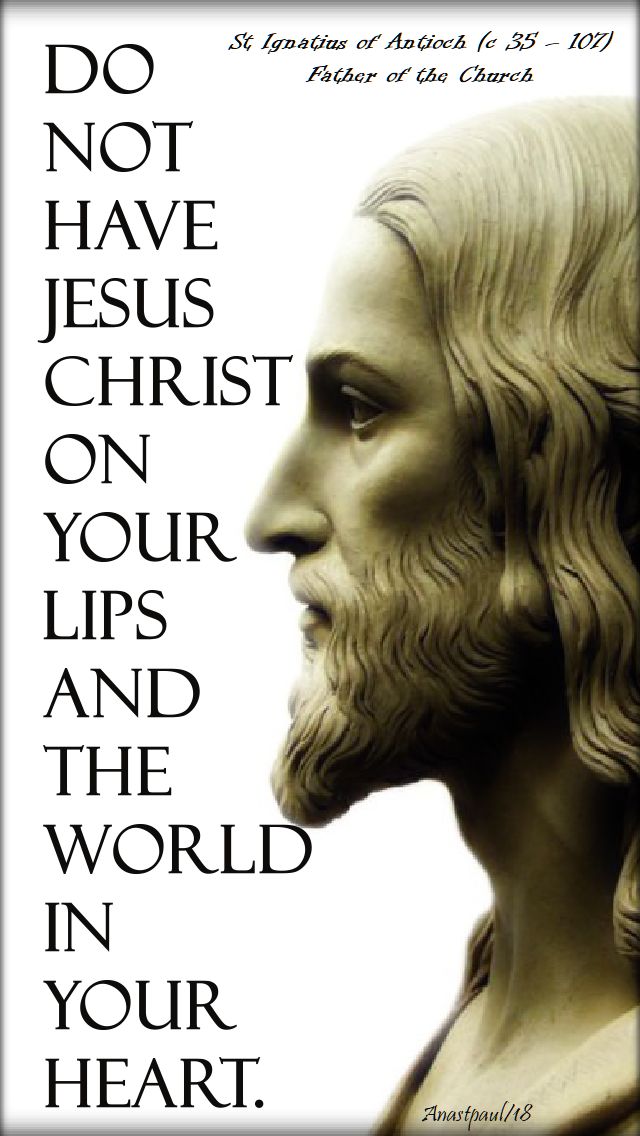
“Do not have Jesus Christ on your lips and the world in your heart.”
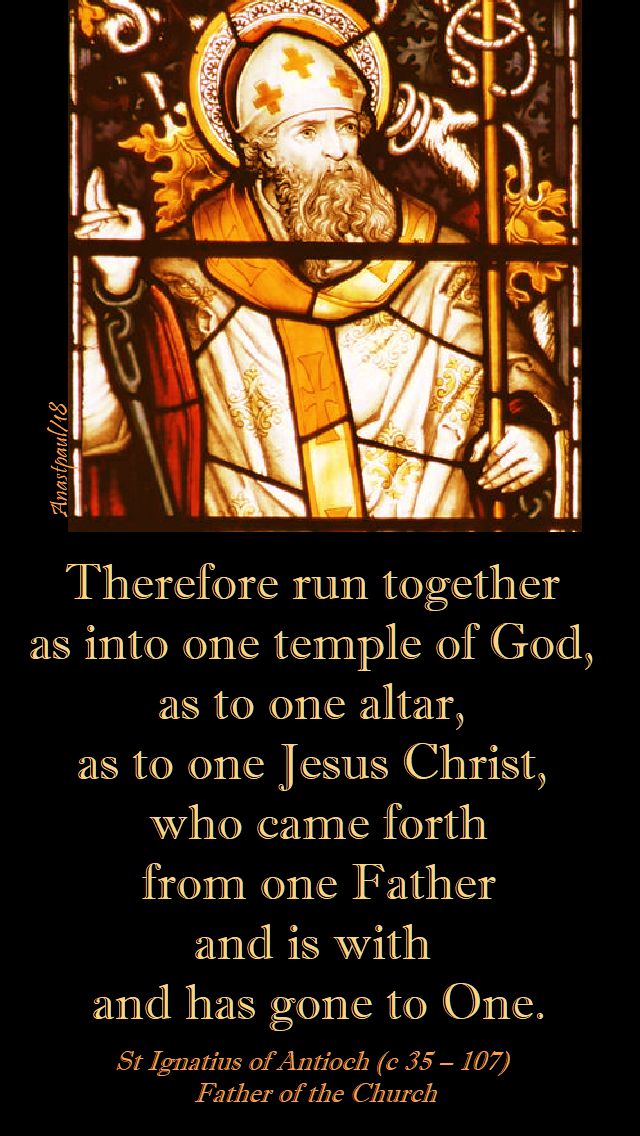
“Therefore run together as into one temple of God, as to one altar, as to one Jesus Christ, who came forth from one Father and is with and has gone to One.”
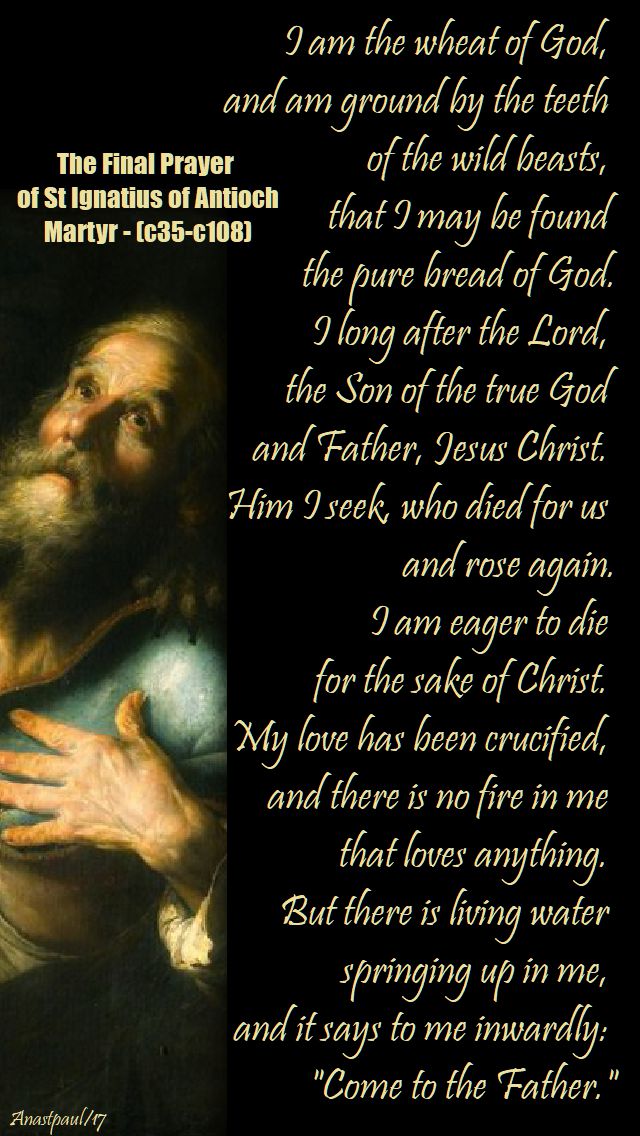
“I am the wheat of God, and am ground by the teeth of the wild beasts, that I may be found the pure bread of God. I long after the Lord, the Son of the true God and Father, Jesus Christ. Him I seek, who died for us and rose again. I am eager to die for the sake of Christ. My love has been crucified, and there is no fire in me that loves anything. But there is living water springing up in me, and it says to me inwardly: “Come to the Father.”
St Ignatius of Antioch (c 35 – 107) Father of the Church, Martyr
One Minute Reflection- 17 October – Today’s Gospel: Luke 11:42-46 – Wednesday of the Twenty-eighth week in Ordinary Time, Year B and the Memorial of St Ignatius of Antioch (c 35 – 107) Father of the Church, Martyr
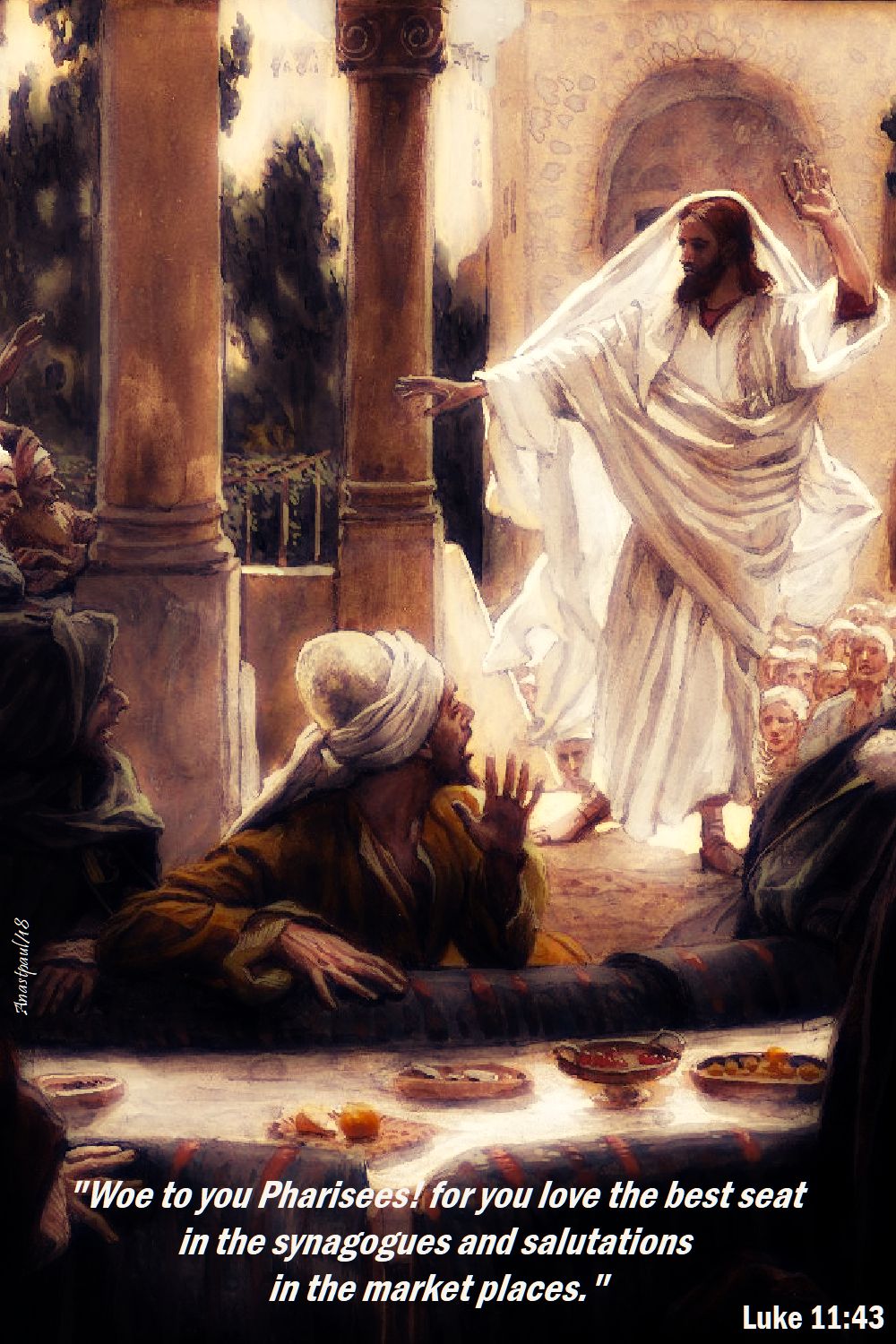
“Woe to you Pharisees! for you love the best seat in the synagogues and salutations in the market places.”…Luke 11:43
REFLECTION – “Christianity is not a matter of persuading people of particular ideas but of inviting them to share in the greatness of Christ. So pray that I may never fall into the trap of impressing people with clever speech but instead I may learn to speak with humility, desiring only to impress people with Christ Himself.”…St Ignatius of Antioch
PRAYER – Heavenly Father, grant that I may believe what I have learned, never presuming to know better than the teachings of Holy Mother Church and that I may put into practice what I believe. Let my commitment be like unto the Martyr, St Ignatius of Antioch, who went with joy to his horrific death, for the faith in Christ, Your Son, God with You and the Holy Spirit. St Ignatius, pray for us, amen.
Saint of the Day – 17 October – St Ignatius of Antioch (c 35 – 107) Father of the Church, Martyr
Excerpt from Pope Benedict’s Catechesis on St Ignatius
Wednesday, 14 March 2007
Today, we will be speaking of St Ignatius, who was the third Bishop of Antioch from 70 to 107, the date of his martyrdom. At that time, Rome, Alexandria and Antioch were the three great metropolises of the Roman Empire. The Council of Nicea mentioned three “primacies”: Rome but also Alexandria and Antioch participated in a certain sense in a “primacy”.
St Ignatius was Bishop of Antioch, which today is located in Turkey. Here in Antioch, as we know from the Acts of the Apostles, a flourishing Christian community developed. Its first Bishop was the Apostle Peter – or so tradition claims – and it was there that the disciples were “for the first time called Christians” (Acts 11: 26). Eusebius of Caesarea, a fourth-century historian, dedicated an entire chapter of his Church History to the life and literary works of Ignatius (cf. 3: 36).
Eusebius writes: “The Report says that he [Ignatius] was sent from Syria to Rome and became food for wild beasts on account of his testimony to Christ. And as he made the journey through Asia under the strictest military surveillance” (he called the guards “ten leopards” in his Letter to the Romans, 5: 1), “he fortified the parishes in the various cities where he stopped by homilies and exhortations and warned them above all to be especially on their guard against the heresies that were then beginning to prevail, and exhorted them to hold fast to the tradition of the Apostles”.
The first place Ignatius stopped on the way to his martyrdom was the city of Smyrna, where St Polycarp, a disciple of St John, was Bishop. Here, Ignatius wrote four letters, respectively to the Churches of Ephesus, Magnesia, Tralli and Rome. “Having left Smyrna”, Eusebius continues, Ignatius reached Troas and “wrote again”: two letters to the Churches of Philadelphia and Smyrna and one to Bishop Polycarp. Thus, Eusebius completes the list of his letters, which have come down to us from the Church of the first century as a precious treasure. In reading these texts one feels the freshness of the faith of the generation which had still known the Apostles. In these letters, the ardent love of a saint can also be felt.
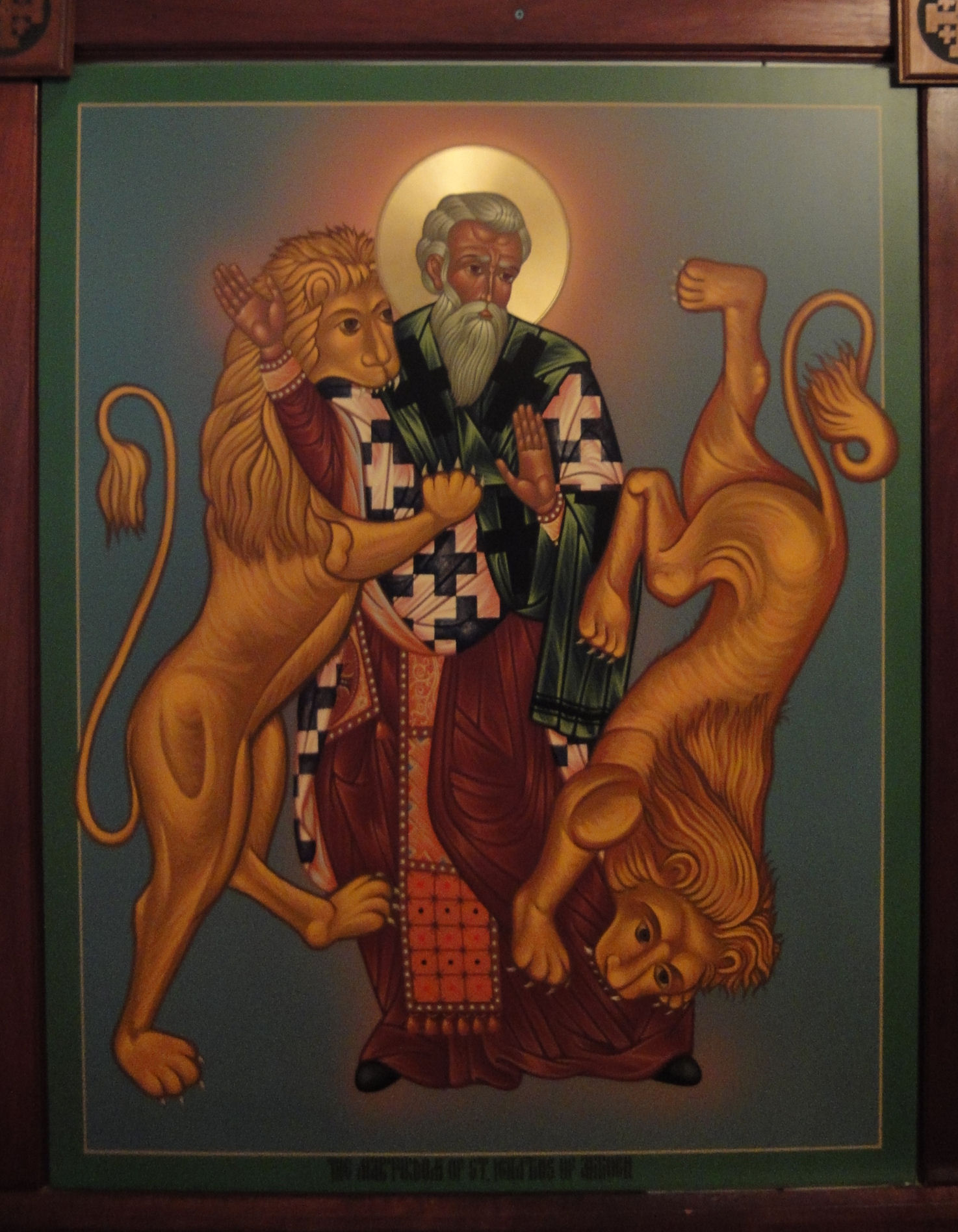
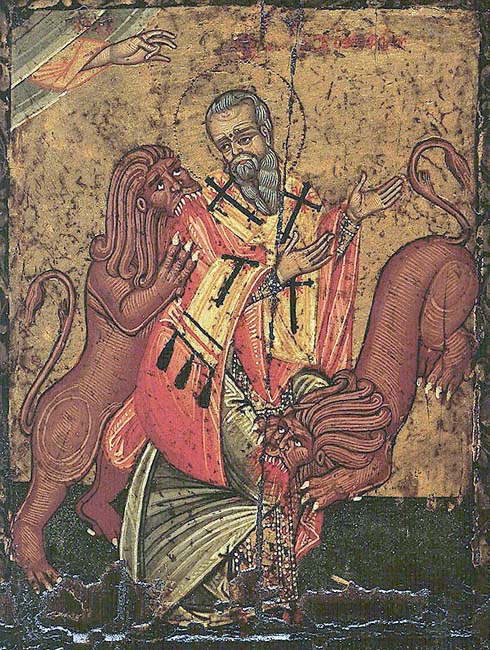
Lastly, the martyr travelled from Troas to Rome, where he was thrown to fierce wild animals in the Flavian Amphitheatre.
No Church Father has expressed the longing for union with Christ and for life in Him with the intensity of Ignatius. We therefore read the Gospel passage on the vine, which according to John’s Gospel is Jesus. In fact, two spiritual “currents” converge in Ignatius, that of Paul, straining with all his might for union with Christ and that of John, concentrated on life in Him. In turn, these two currents translate into the imitation of Christ, whom Ignatius several times proclaimed as “my” or “our God”.
Thus, Ignatius implores the Christians of Rome not to prevent his martyrdom since he is impatient “to attain to Jesus Christ”. And he explains, “It is better for me to die on behalf of Jesus Christ than to reign over all the ends of the earth…. Him I seek, who died for us: Him I desire, who rose again for our sake…. Permit me to be an imitator of the Passion of my God!” (Romans, 5-6).
One can perceive in these words on fire with love, the pronounced Christological “realism” typical of the Church of Antioch, more focused than ever on the Incarnation of the Son of God and on His true and concrete humanity: “Jesus Christ”, St Ignatius wrote to the Smyrnaeans, “was truly of the seed of David”, “he was truly born of a virgin” “and was truly nailed [to the Cross] for us” (1: 1). Ignatius’ irresistible longing for union with Christ was the foundation of a real “mysticism of unity”. He describes himself: “I therefore did what befitted me as a man devoted to unity”(Philadelphians, 8: 1).
For Ignatius unity was first and foremost a prerogative of God, who, since He exists as Three Persons, is One in absolute unity. Ignatius often used to repeat that God is unity and that in God alone is unity found in its pure and original state. Unity to be brought about on this earth by Christians is no more than an imitation as close as possible to the divine archetype.
Ignatius was the first person in Christian literature to attribute to the Church the adjective “catholic” or “universal” – “Wherever Jesus Christ is”, he said, “there is the Catholic Church” (Smyrnaeans, 8: 2). And precisely in the service of unity to the Catholic Church, the Christian community of Rome exercised a sort of primacy of love: “The Church which presides in the place of the region of the Romans and which is worthy of God, worthy of honour, worthy of the highest happiness… and which presides over love, is named from Christ and from the Father…” (Romans, Prologue).
St Ignatius on the South Colonnade St Peter’s Basilica c 1669-1670
As can be seen, Ignatius is truly the “Doctor of Unity” – unity of God and unity of Christ (despite the various heresies gaining ground which separated the human and the divine in Christ), unity of the Church, unity of the faithful in “faith and love, to which nothing is to be preferred”(Smyrnaeans, 6: 1).
Ultimately, Ignatius’ realism invites the faithful of yesterday and today, invites us all, to make a gradual synthesis between configuration to Christ (union with Him, life in Him) and dedication to His Church (unity with the Bishop, generous service to the community and to the world).
St Anstrudis of Laon
Bl Balthassar of Chiavari
Bl Battista de Bonafede
St Berarius I of Le Mans
St Catervus
St Colman of Kilroot
Bl Contardo Ferrini
St Ethelbert of Eastry
St Ethelred of Eastry
St Florentius of Orange
St Francois Isidore Gagelin
Bl Gilbert the Theologian
St Heron of Antioch
Bl Jacques Burin
St John the Short/Dwarf
St Louthiern
St Mamelta of Persia
St Nothelm of Canterbury
St Richard Gwyn
St Rudolph of Gubbio
St Rufus of Rome
St Serafino of Montegranaro
St Solina of Chartres
St Zosimus of Rome
—
Martyrs of Nicomedia – 3 saints: A group of Christians martyred in the persecutions of Diocletian. The only details about them that have survived are their names – Alexander, Marianus and Victor. 303 in Nicomedia (in modern Turkey).
Martyrs of Valenciennes -5 beati: A group of Ursuline nuns martyred in the persecutions of the French Revolution.
• Hyacinthe-Augustine-Gabrielle Bourla
• Jeanne-Reine Prin
• Louise-Joseph Vanot
• Marie-Geneviève-Joseph Ducrez
• Marie-Madeleine-Joseph Déjardins
Martyrs of Volitani: A group of martyrs who were praised by Saint Augustine of Hippo. In Volitani, proconsular Africa (in modern Tunisia).
Martyred in the Spanish Civil War:
• BlessedFidel Fuidio Rodriguez
• BlessedJosé Sánchez Medina
• BlessedPerfecto Carrascosa Santos
• BlessedTársila Córdoba Belda de Girona
Thought for the Day – 16 October – The Memorial of St Gerard Majella C.Ss.R. (1726-1755)
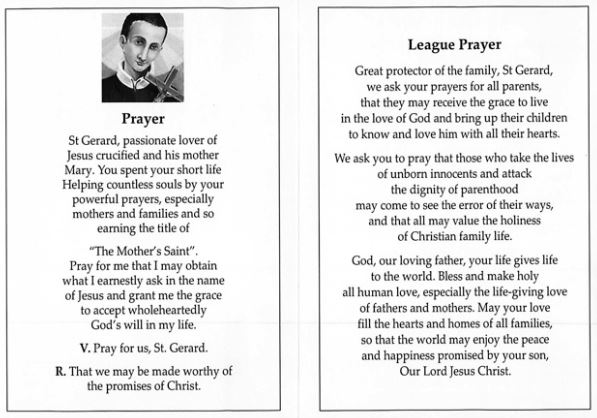
St Gerard’s Family League
Although his life was short, he managed to achieve great holiness. So numerous were the miracles God worked through him, that even during his lifetime he was called the“ wonder-worker “.
Since his death in 1775, countless favours and miracles have been granted and worked through his intercession. (In this regard, I know personally of a miracle granted by St Gerard’s intercession.)
As well as the patron of a good confession, he has become well known as the patron of mothers and has been invoked as a constant source of help and inspiration to parents.
The League of St Gerard is an association of Christians united in prayer for family life and its Christian values.
The League Prayer is on the site but I copied it here too.
Membership is open to all.
All information here: http://www.redemptorists.co.uk/what-we-do/league-of-st-gerard/1697-st-gerard-family-league.html
Quote/s of the Day – 16 October – The Memorial of St Margaret Mary Alacoque (1647-1690) and St Gerard Majella (1726-1755)
“Let us begin in earnest to work out our salvation, for no-one will do it for us, since even He Himself, Who made us without ourselves, will not save us without ourselves!”
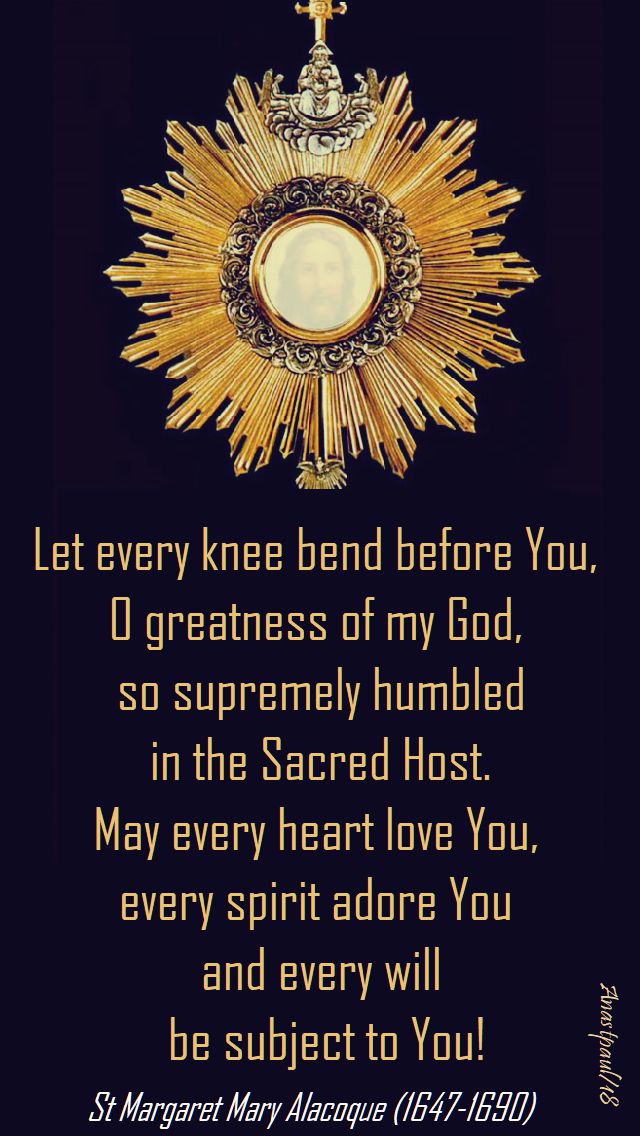
“Let every knee bend before You, O greatness of my God, so supremely humbled in the Sacred Host. May every heart love You, every spirit adore You and every will be subject to You!
St Margaret Mary Alacoque (1647-1690)
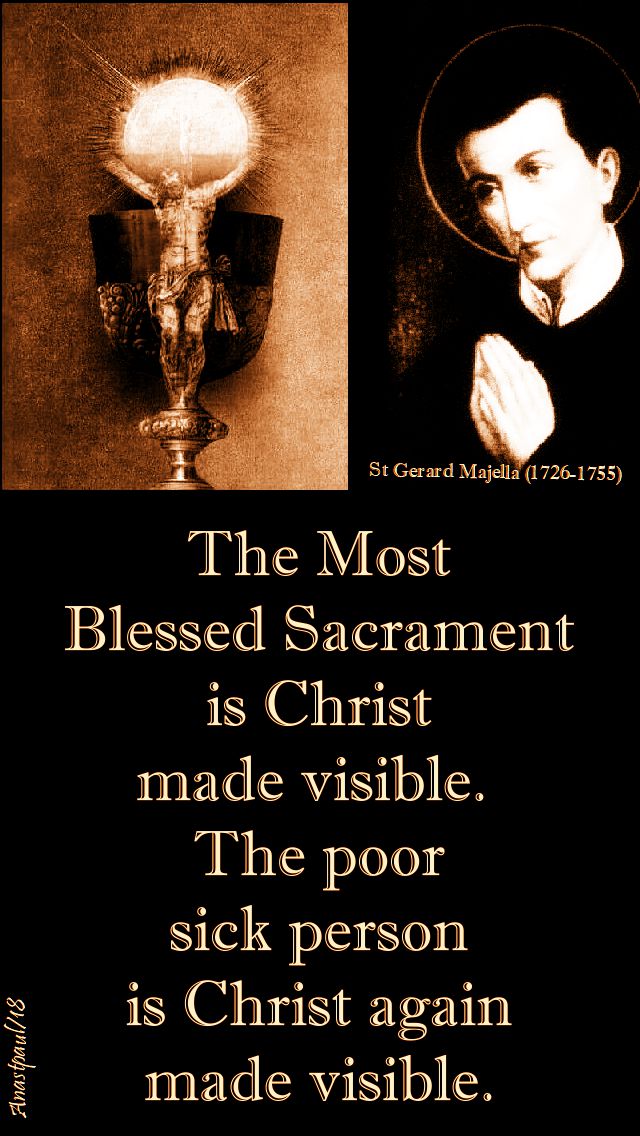
“The Most Blessed Sacrament is Christ made visible. The poor sick person is Christ again made visible.”
One Minute Reflection – 16 October – Today’s Gospel: Luke 11:37–41 – Tuesday of the Twenty-eighth week in Ordinary Time, Year B and The Memorial of St Gerard Majella C.Ss.R. (1726-1755)
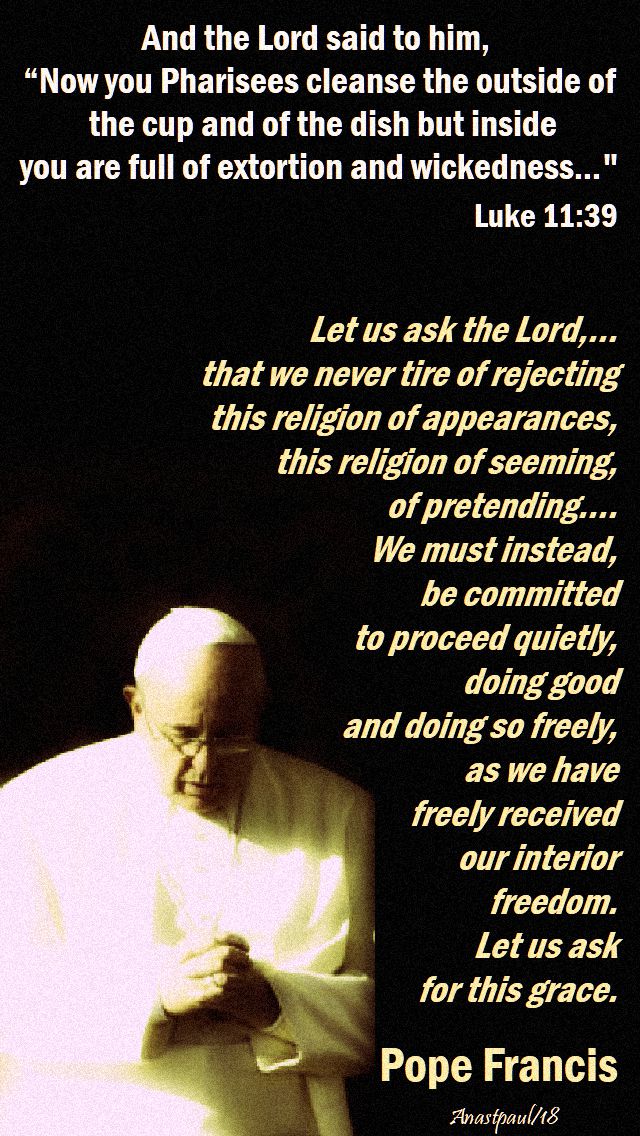
And the Lord said to him, “Now you Pharisees cleanse the outside of the cup and of the dish but inside you are full of extortion and wickedness.”...Luke 11:39
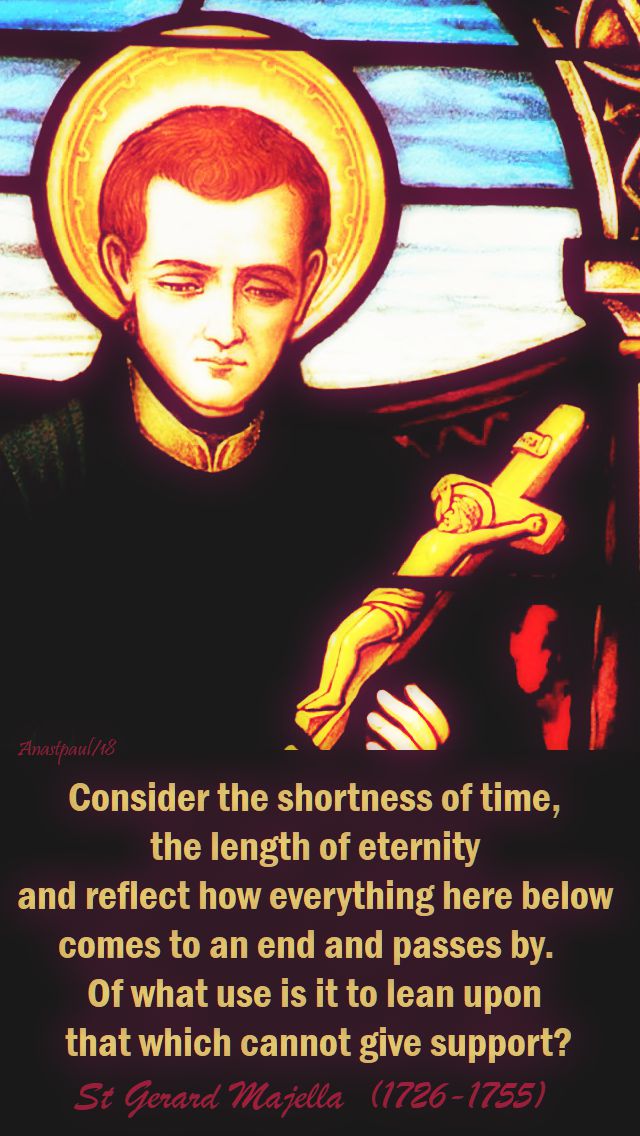
REFLECTION – “Consider the shortness of time, the length of eternity and reflect how everything here below comes to an end and passes by. Of what use is it to lean upon that which cannot give support?”...St Gerard Majella (1726-1755)
“Let us ask the Lord that we never tire of going down that path, that we never tire of rejecting this religion of appearances, this religion of seeming, of pretending…. We must instead be committed to proceed quietly, doing good and doing so freely, as we have freely received, our interior freedom. Let us ask for this grace.”…Pope Francis – Santa Marta, 11 October 2016
PRAYER – Lord Jesus Christ, You wondrously revealed all of the deep treasures of Your Heart to Your saints. May their merits and example win us the grace to love You above all things and in all things so that we may make our abode in Your own Sacred Heart. With You, for You and in You, may we assist and love our neighbour. Hear the prayers of St Gerard Majella on our behalf dear Lord, we beg. Who live and reign forever, amen
Our Morning Offering – 16 October – The Memorial of St Gerard Majella C.Ss.R. (1726-1755)
Thanksgiving Prayer for St Gerard and Request for his Intercession
Almighty and loving Father,
We thank You for giving St Gerard to us
as a most appealing model and powerful friend.
By his example,
he showed us how to love and trust You.
You have showered many blessings
on those who call upon him.
For Your greater glory and my welfare,
please grant the favours
which I ask in his name.
………………………………..
(Mention your needs here…)
And you, my powerful patron,
intercede for me before the throne of God.
Draw near to that throne
and do not leave it until you have been heard.
O good saint,
to you I address my fervent prayers,
graciously accept them
and let me experience in some way
the effects of your powerful intercession.
Through Jesus Christ, with the Holy Spirit,
God forever,
Amen.
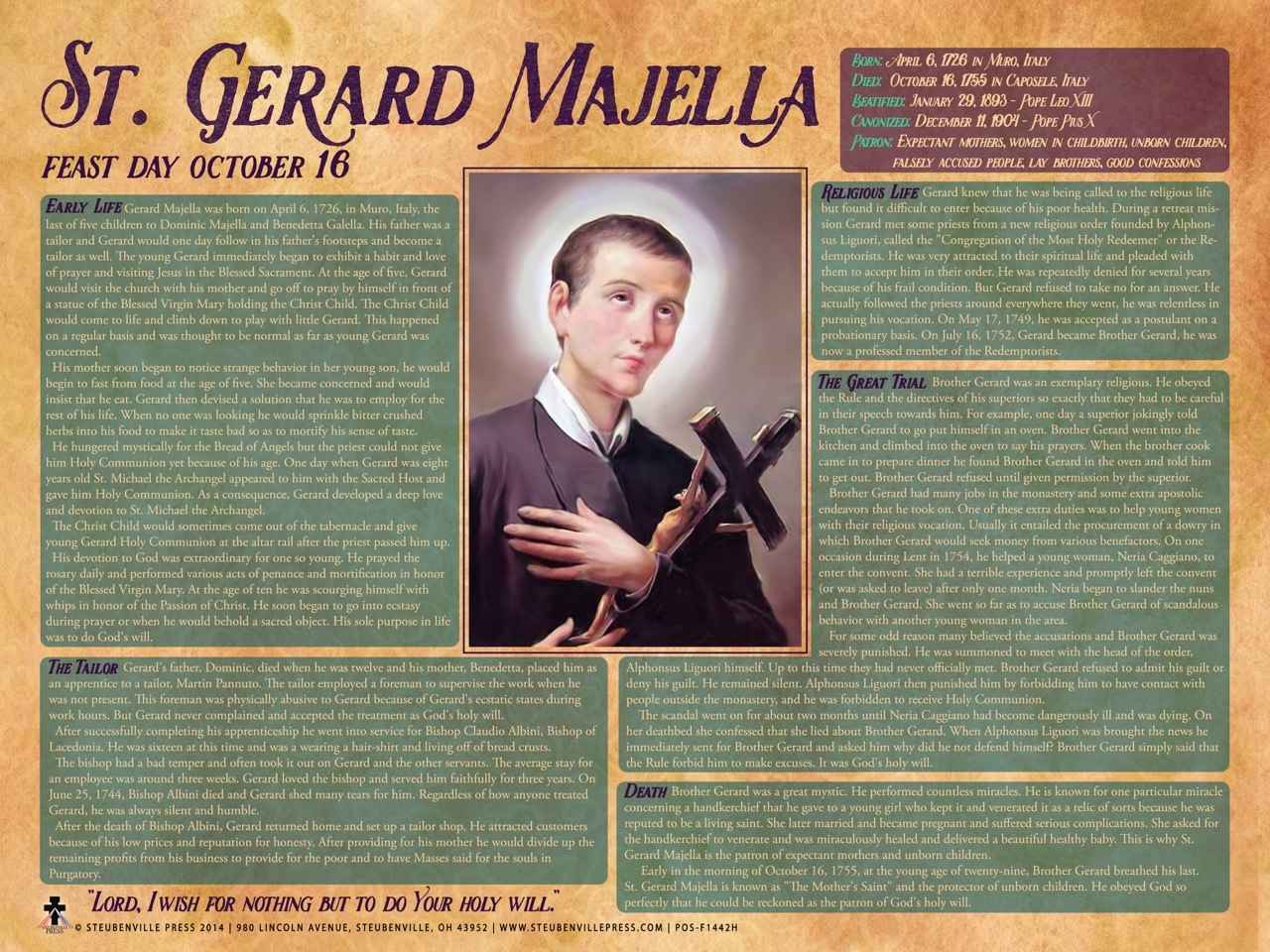
Saint of the Day – 16 October – St Gerard Majella C.Ss.R. (1726-1755) Religious Lay Brother of the Congregation of the Redeemer, better known as the Redemptorists, Apostle of the Holy Eucharist, Apostle of Charity, known as a Thaumaturge, a Saint who works miracles not just occasionally but as a matter of course. Born on 23 April 1725 at Muro, Italy as Gerardo Maiella and died on 16 October 1755 at Caposele, Provincia di Avellino, Campania, Italy of tuberculosis, aged just 29. Patronages – children (and unborn children in particular); childbirth; mothers (and expectant mothers in particular); motherhood; falsely accused people; good confessions; lay brothers; tennis ball football, head boys and Muro Lucano, Italy.
St Gerard was born in Muro Lucano, Basilicata, the youngest of five children. He wanted very much to receive Holy Communion at the age of seven and went to the Communion railing one day with the others but the priest, seeing his age, passed him up; and he went back to his place in tears. The following night, Saint Michael the Archangel brought him the Communion he so much desired. His tailor father died when Gerard was twelve, leaving the family in poverty. His mother then sent him to her brother so that he could teach Gerard to sew and follow in his father’s footsteps. However, the foreman was abusive. The boy kept silent but his uncle soon found out and the man who taught him resigned from the job. After four years of apprenticeship, he took a job as a servant to work for the local Bishop of Lacedonia. Upon the bishop’s death, Gerard returned to his trade, working first as a journeyman and then on his own account. He divided his earnings between his mother and the poor and in offerings for the souls in Purgatory.
He tried to join the Capuchin Order but his health prevented it. He had acquired a reputation of sanctity and finally, when he was 23 years old, he obtained the aid of some missionaries to second his request and was admitted as a Coadjutor of the newly founded Congregation of the Most Holy Redeemer, known as Redemptorists, in 1749. The order was founded in 1732 by Saint Alphonsus Liguori (1696-1787 Doctor of the Church) at Scala, near Naples. The essentially missionary order is dedicated to “preaching the word of God to the poor.” Its apostolate is principally in giving of missions and retreats.
During his life, he was very close to the peasants and other outsiders who lived in the Neapolitan countryside. In his work with the Redemptorist community, he was variously gardener, sacristan, tailor, porter, cook, carpenter and clerk of works on the new buildings at Caposele.
At 27, the good-looking Majella became the subject of a malicious rumour. An acquaintance, Neria, accused him of having had relations with a young woman. When confronted by St Alphonsus Liguori, the founder, on the accusations, the young lay brother remained silent. The girl later recanted and cleared his name.
Some of Majella’s reported miracles include restoring life to a boy who had fallen from a high cliff, blessing the scanty supply of wheat belonging to a poor family and making it last until the next harvest and several times multiplying the bread that he was distributing to the poor. One day, he walked across the water to lead a boatload of fishermen through stormy waves to the safety of the shore. He was reputed to have had the gift of bilocation and the ability to read souls.
Once he conducted a group of students on a nine-day pilgrimage to Mount Gargano, where the Archangel Michael had appeared. They had very little money for the tri, and when they arrived at the site, there was none left. Gerard went before the Tabernacle and told Our Lord that it was His responsibility to take care of the little group. He had been observed in the church by a religious, who invited the Saint and his companions to lodge in his residence. When the party was ready to start home again, Gerard prayed once more, and immediately someone appeared and gave him a roll of bills.
His last will was a small note on the door of his cell: “Here the will of God is done, as God wills and as long as God wills.” He died at 29 of tuberculosis.
One miracle in particular explains how Majella became known as the special patron of mothers. A few months before his death, he visited the Pirofalo family and accidentally dropped his handkerchief. One of the Pirofalo girls spotted the handkerchief moments after he had left the house and she ran after Gerard to return it. “Keep it,” he said to her. “You may need it some day.” Years later when the girl, now a married woman, was on the verge of losing her life in childbirth, she remembered the words of the saintly lay brother. She asked for the handkerchief to be brought to her. Almost immediately, the pain disappeared and she gave birth to a healthy child. That was no small feat in an era when only one out of three pregnancies resulted in a live birth and word of the miracle spread quickly.
Because of the miracles that God worked through Gerard’s prayers with mothers, the mothers of Italy took Gerard to their hearts and made him their patron. At the process of his beatification, one witness testified that he was known as “il santo dei felice parti,” “the saint of happy childbirths.” It is a well-known patronage and many miracles still occur. The St Gerard Majella Annual Novena takes place every year in St Josephs Church, Dundalk, Ireland. This annual nine-day novena is the biggest festival of faith in Ireland. St Joseph’s sponsors the St Gerard’s Family League, an International Association of Christians united in prayer for their own and other families, to preserve Christian values in their home and family life. Since his death in 1775, countless favours and miracles have been granted and worked through his intercession. As well as the patron of a good confession, he has been invoked as a constant source of help and inspiration to parents.
St Gerard was Beatified in Rome on 29 January 1893, by Pope Leo XIII. He was Canonised less than twelve years later on 11 December 1904, by St Pope Pius X.
St Amandus of Limoges
St Ambrose of Cahors
Bl Anicet Koplinski
Bl Augustine Thevarparampil
St Balderic
St Baldwin
St Bertrand of Comminges
St Bolonia
St Conogon of Quimper
St Dulcidius of Agen
St Eliphius of Toul
St Eremberta of Wierre
St Florentinus of Trier
St Gall
St Gerard Majella C.Ss.R. (1726-1755)
Bl Gerald of Fossanuova
Bl Jesús Villaverde Andrés
Bl Józef Jankowski
St Junian
St Lull
St Magnobodus of Angers
St Marguerite d’Youville
St Martinian of Mauretania
St Mummolinus
St Saturian of Mauretania
St Silvanus of Ahun
St Victor of Cologne
St Vitalis of Noirmoutier
—
Martyrs in Africa – 220 saints: A group of 220 Christians martyrs about whom we know nothing but that they died for their faith.
Martyrs of North Africa – 365 saints: A group of 365 Christians who were martyred together in the persecutions of the Vandal king Genseric. The only details that have survived are the names of two of the martyrs – Nereus and Saturninus. 450 in North Africa.
Thought for the Day – 15 October – The Memorial of St Teresa of Jesus/Avila (1515-1582) Doctor of the Church “Doctor of Prayer”
Excerpt of Pope Benedict’s Catechesis
on the Doctors of the Church
Wednesday, 2 February 2011
“It is far from easy to sum up in a few words Teresa’s profound and articulate spirituality. I would like to mention a few essential points. In the first place St Teresa proposes the evangelical virtues as the basis of all Christian and human life and in particular, detachment from possessions, that is, evangelical poverty and this concerns all of us; love for one another as an essential element of community and social life; humility as love for the truth; determination as a fruit of Christian daring; theological hope, which she describes as the thirst for living water. Then we should not forget the human virtues: affability, truthfulness, modesty, courtesy, cheerfulness, culture.
Secondly, St Teresa proposes a profound harmony with the great biblical figures and eager listening to the word of God. She feels above all closely in tune with the Bride in the Song of Songs and with the Apostle Paul, as well as with Christ in the Passion and with Jesus in the Eucharist. The Saint then stresses how essential prayer is. Praying, she says, “means being on terms of friendship with God frequently conversing in secret with Him who, we know, loves us” (Vida 8, 5). St Teresa’s idea coincides with Thomas Aquinas’ definition of theological charity as “amicitia quaedam hominis ad Deum”, a type of human friendship with God, who offered humanity His friendship first – it is from God that the initiative comes (cf. Summa Theologiae II-II, 23, 1).
Prayer is life and develops gradually, in pace with the growth of Christian life – it begins with vocal prayer, passes through interiorisation by means of meditation and recollection, until it attains the union of love with Christ and with the Holy Trinity. Obviously, in the development of prayer climbing to the highest steps does not mean abandoning the previous type of prayer. Rather, it is a gradual deepening of the relationship with God that envelops the whole of life.
Dear brothers and sisters, St Teresa of Jesus is a true teacher of Christian life for the faithful of every time. In our society, which all too often lacks spiritual values, St Teresa teaches us to be unflagging witnesses of God, of His presence and of His action. She teaches us truly to feel this thirst for God that exists in the depths of our hearts, this desire to see God, to seek God, to be in conversation with Him and to be His friends.
This is the friendship we all need that we must seek anew, day after day. May the example of this Saint, profoundly contemplative and effectively active, spur us too every day to dedicate the right time to prayer, to this openness to God, to this journey, in order to seek God, to see Him, to discover His friendship and so to find true life – indeed, many of us should truly say: “I am not alive, I am not truly alive because I do not live the essence of my life”.
Therefore time devoted to prayer is not time wasted, it is time in which the path of life unfolds, the path unfolds to learning from God an ardent love for Him, for His Church and practical charity for our brothers and sisters. Many thanks.”
Quotes of the Day – 15 October – The Memorial of St Teresa of Jesus/Avila (1515-1582) Doctor of the Church
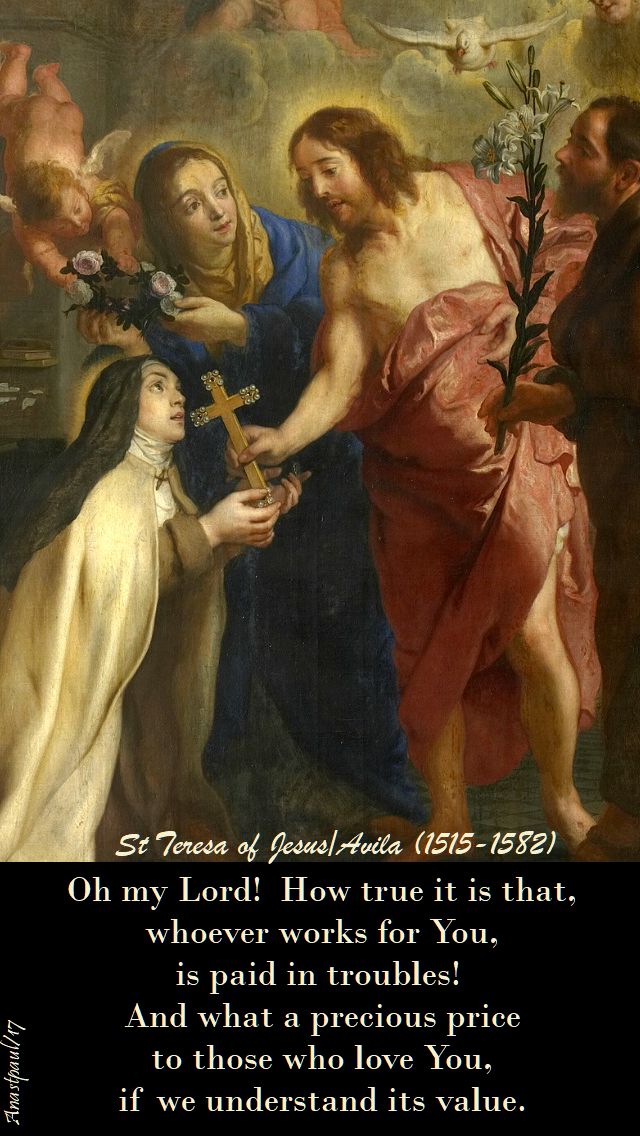
“Oh my Lord! How true it is that, whoever works for You, is paid in troubles! And what a precious price to those who love You, if we understand its value.”
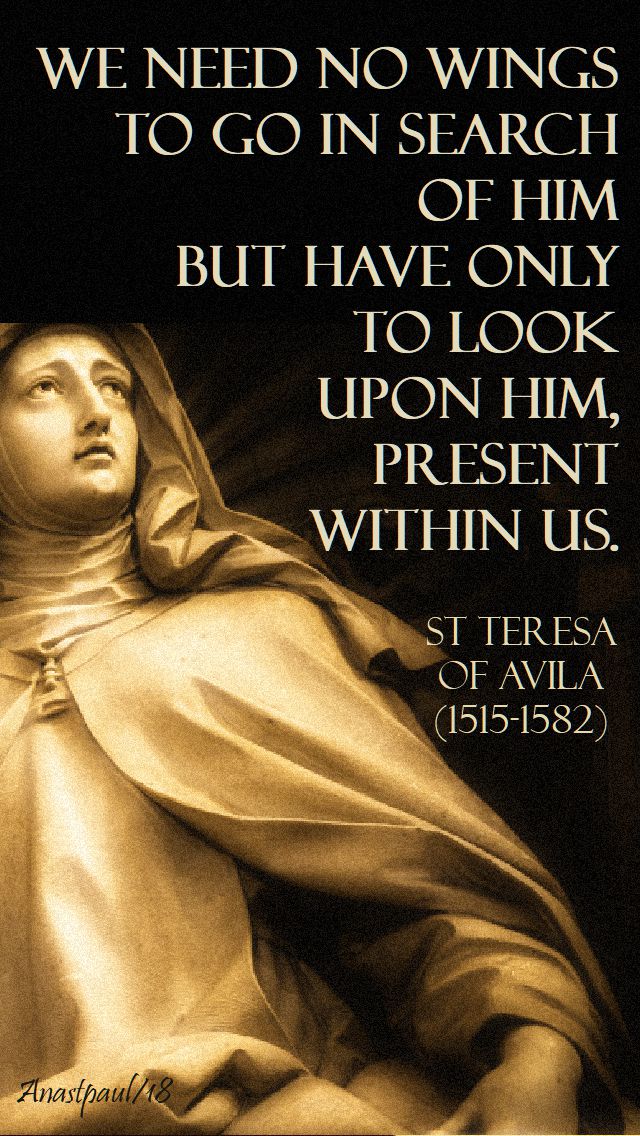
“We need no wings to go in search of Him but have only to look upon Him, present within us.”
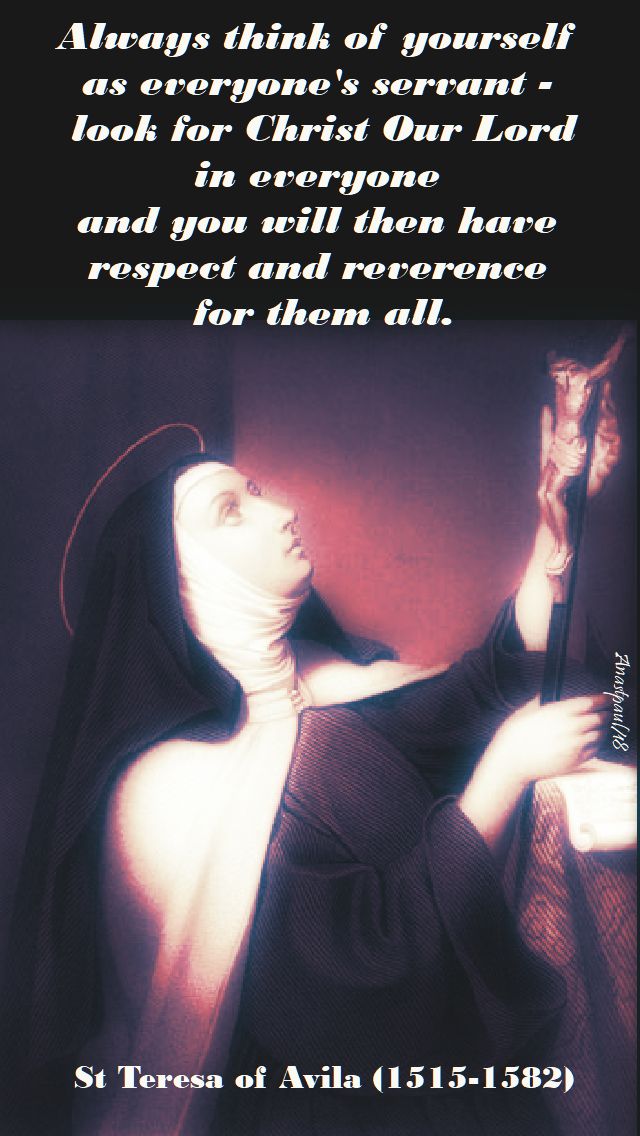
“Always think of yourself as everyone’s servant; look for Christ Our Lord in everyone and you will then have respect and reverence for them all.”
One Minute Reflection – 15 October – Today’s Gospel: Luke 11:29–32 – Monday of the Twenty-eighth week in Ordinary Time, Year B and the Memorial of St Teresa of Jesus/Avila (1515-1582) Doctor of the Church “Doctor of Prayer”
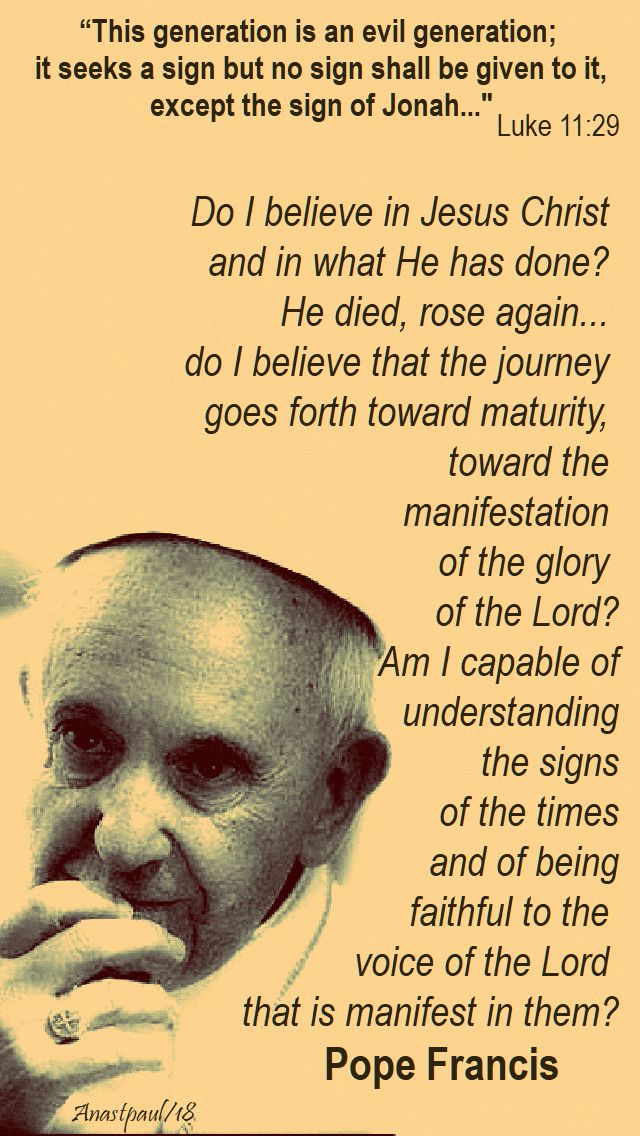
“This generation is an evil generation; it seeks a sign but no sign shall be given to it except the sign of Jonah…”…Luke 11:29
REFLECTION – “Am I attached to my things, to my ideas, closed? Or am I open to the God of surprises? Am I a stationary person or a person on a journey?….Do I believe in Jesus Christ and in what He has done? He died, rose again… do I believe that the journey goes forth toward maturity, toward the manifestation of the glory of the Lord? Am I capable of understanding the signs of the times and of being faithful to the voice of the Lord that is manifest in them?”…Pope Francis 13 October 2014
Better Your faithful love than life itself;
my lips will praise You.
Thus I will bless You all my life,
in Your name lift up my hands. (Ps 63:3-4)
PRAYER – Almighty God, our Father, You sent St Teresa of Jesus to be a witness in the Church to the way of perfection. Sustain us by her spiritual doctrine and kindle in us, the longing for true holiness. Through Christ, our Lord, in union with the Holy Spirit, God forever. May the intercession of St Teresa be a source of strength, amen
Our Morning Offering – 15 October – The Memorial of St Teresa of Jesus/Avila (1515-1582) Doctor of the Church “Doctor of Prayer”
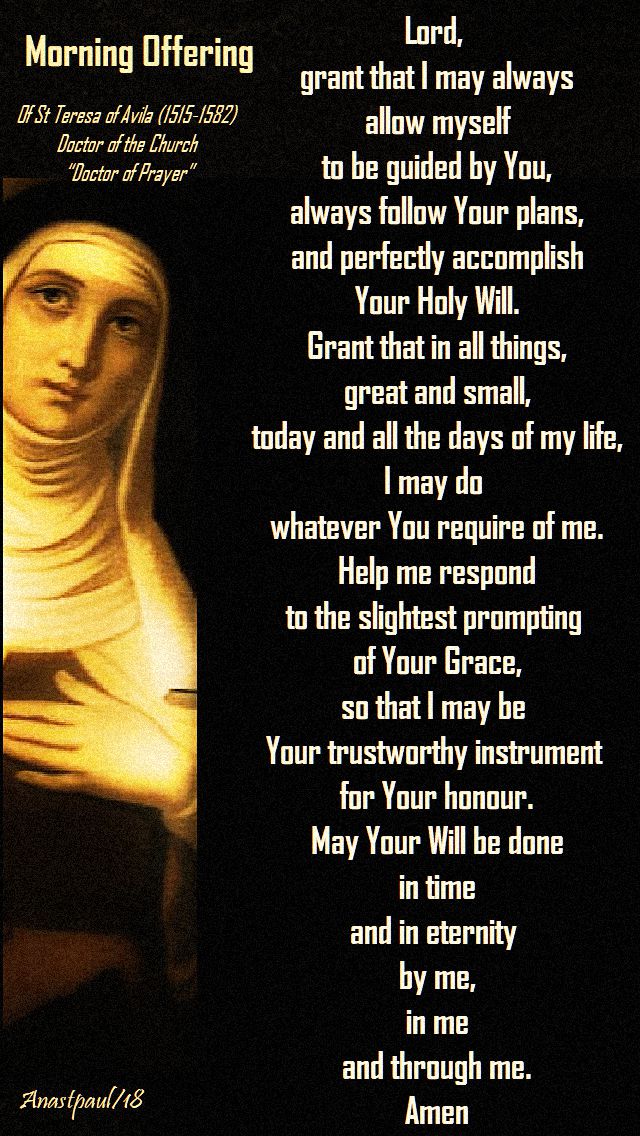
Morning Offering Of St Teresa of Avila (1515-1582)
Lord,
grant that I may always
allow myself
to be guided by You,
always follow Your plans,
and perfectly accomplish
Your Holy Will.
Grant that in all things,
great and small,
today and all the days of my life,
I may do
whatever You require of me.
Help me respond
to the slightest prompting
of Your Grace,
so that I may be
Your trustworthy instrument
for Your honour.
May Your Will be done
in time
and in eternity
by me,
in me
and through me.
Amen
Excerpt of Pope Benedict’s Catechesis
on the Doctors of the Church
Wednesday, 2 February 2011
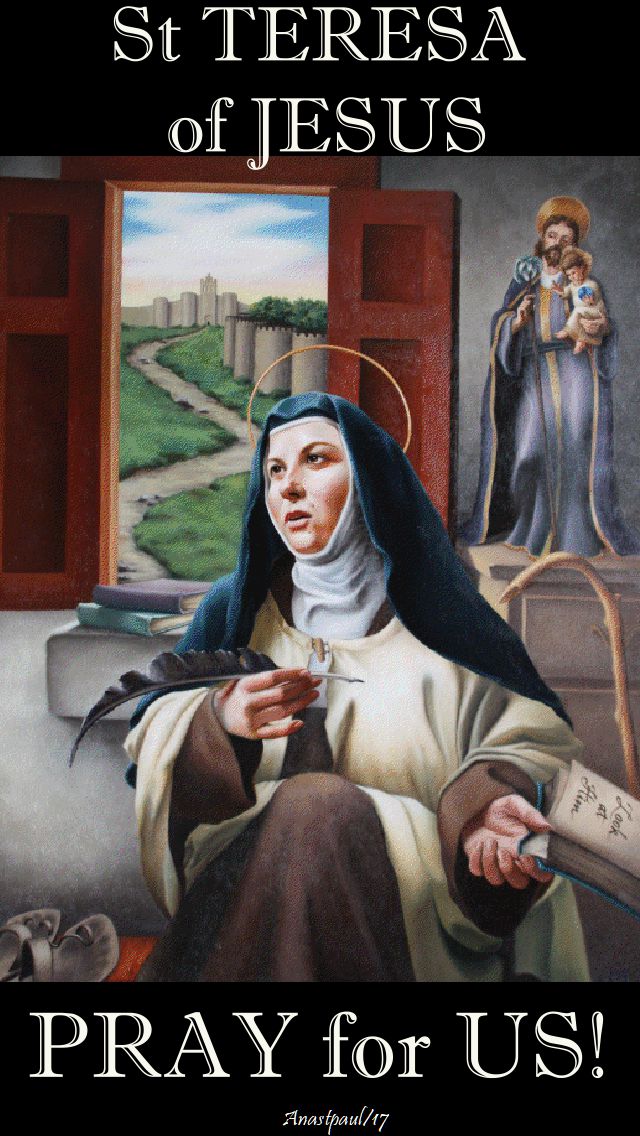
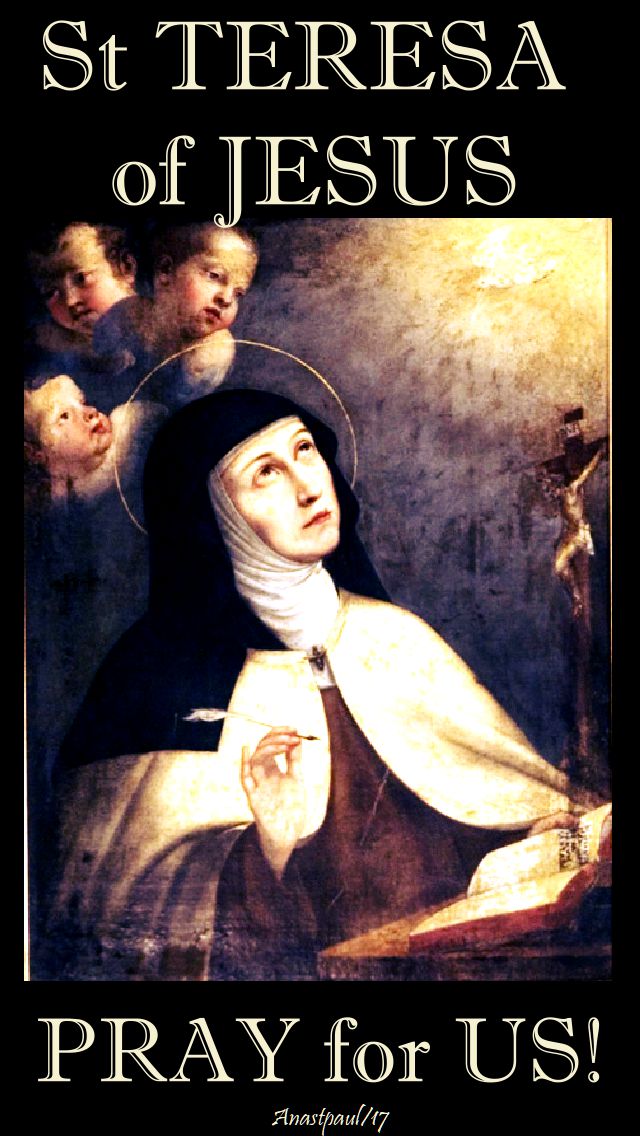
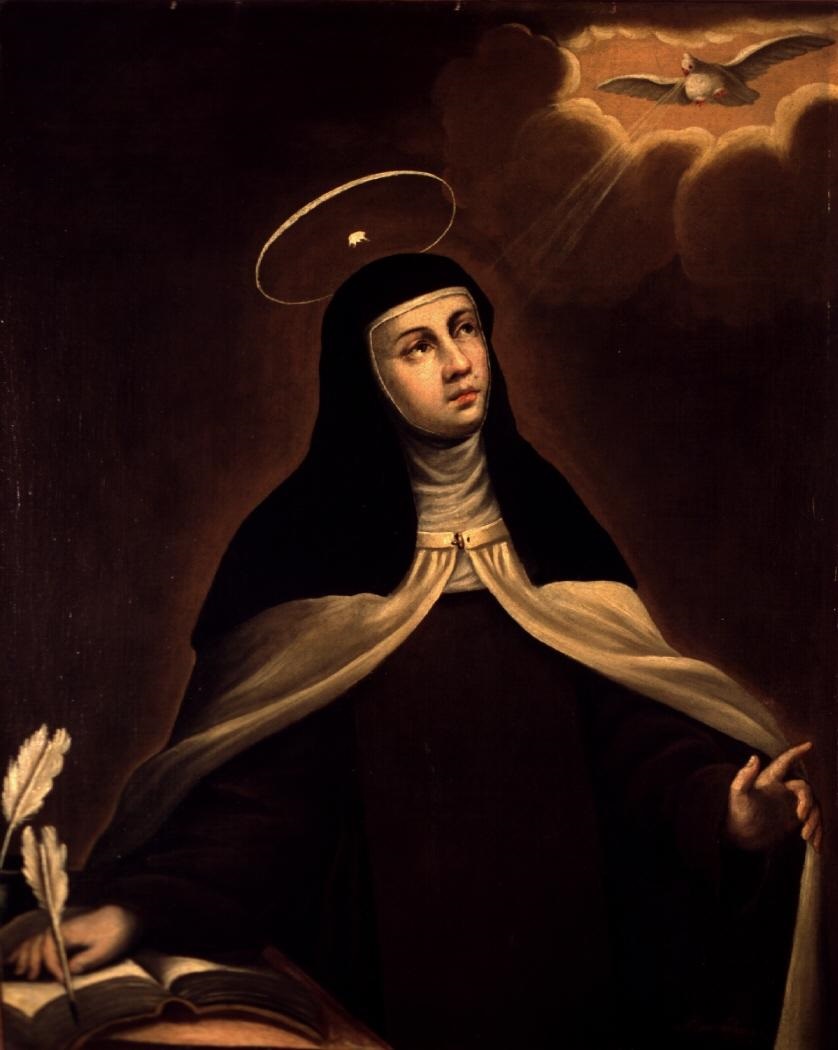
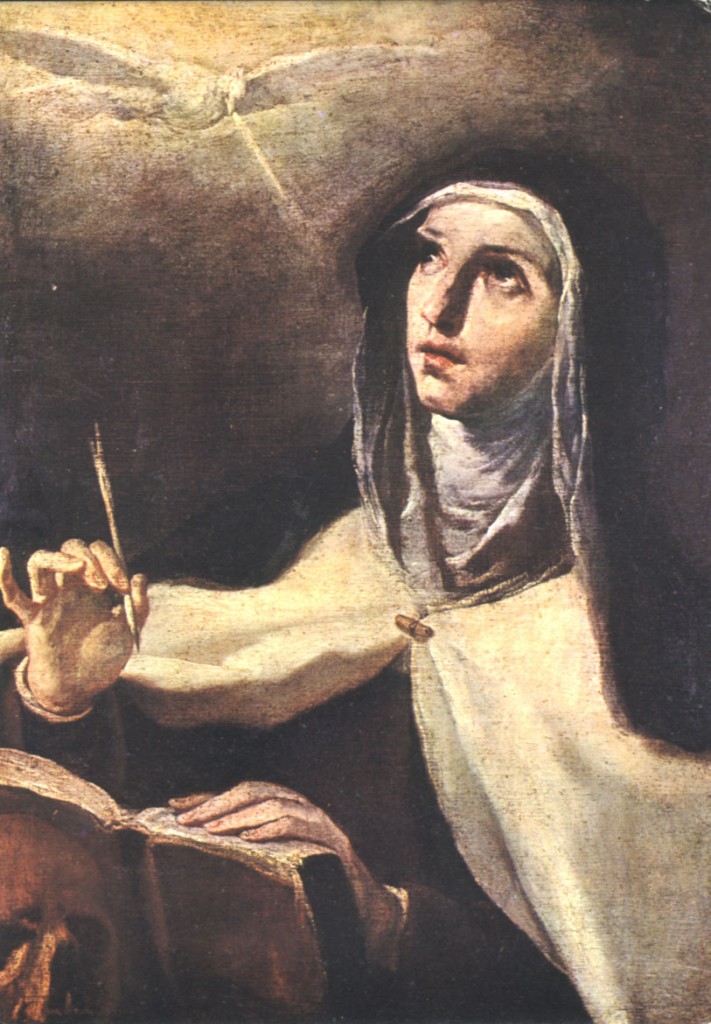
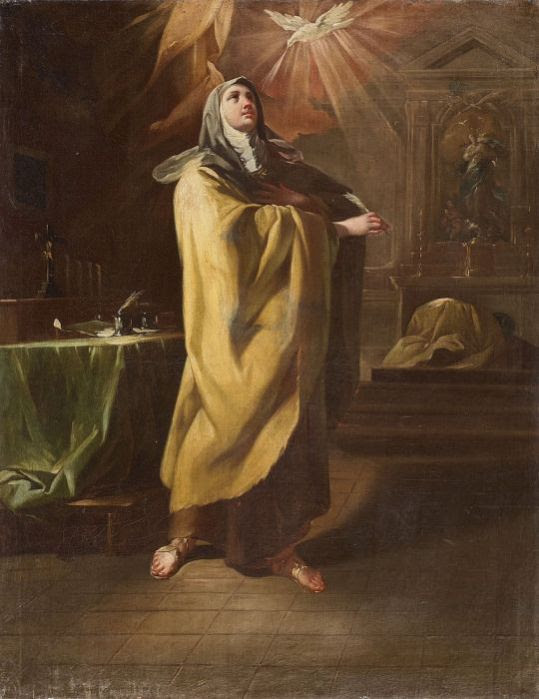
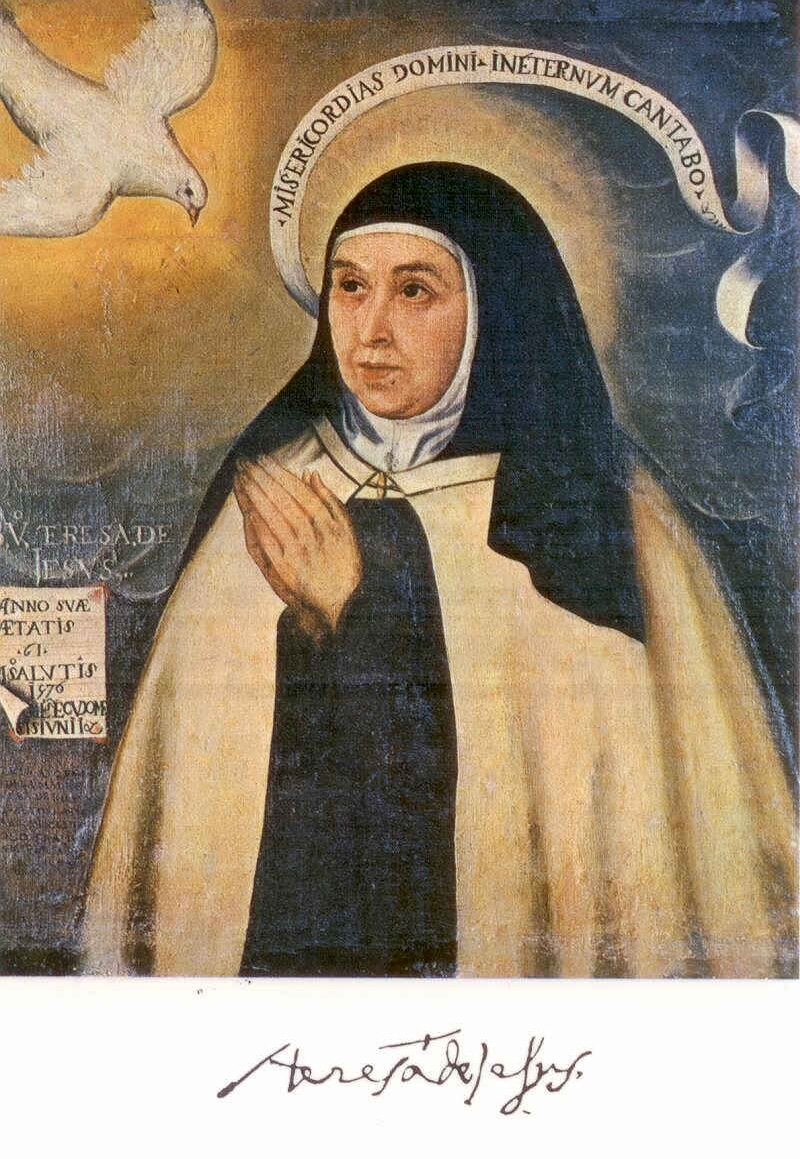
St Teresa, whose name was Teresa de Cepeda y Ahumada, was born in Avila, Spain, in 1515. In her autobiography she mentions some details of her childhood – she was born into a large family, her “father and mother, who were devout and feared God”. She had three sisters and nine brothers.
While she was still a child and not yet nine years old she had the opportunity to read the lives of several Martyrs which inspired in her such a longing for martyrdom that she briefly ran away from home in order to die a Martyr’s death and to go to Heaven (cf. Vida, [Life], 1, 4) – “I want to see God”, the little girl told her parents.
A few years later Teresa was to speak of her childhood reading and to state that she had discovered in it the way of truth which she sums up in two fundamental principles. On the one hand was the fact that “all things of this world will pass away” while on the other God alone is “forever, ever, ever”, a topic that recurs in her best known poem: “Let nothing disturb you, Let nothing frighten you, all things are passing away: God never changes. Patience obtains all things. Whoever has God lacks nothing, God alone suffices”. She was about 12 years old when her mother died and she implored the Virgin Most Holy to be her mother (cf. Vida, I, 7).
When she was 20 she entered the Carmelite Monastery of the Incarnation, also in Avila. In her religious life she took the name “Teresa of Jesus”. Three years later she fell seriously ill, so ill that she remained in a coma for four days, looking as if she were dead (cf. Vida, 5, 9). In the fight against her own illnesses too, the Saint saw the combat against weaknesses and the resistance to God’s call: “I wished to live”, she wrote, “but I saw clearly that I was not living but rather wrestling with the shadow of death, there was no one to give me life and I was not able to take it. He who could have given it to me had good reasons for not coming to my aid, seeing that He had brought me back to Himself so many times and I as often had left Him” (Vida, 7, 8).
In 1543 she lost the closeness of her relatives, her father died and all her siblings, one after another, emigrated to America. In Lent 1554, when she was 39 years old, Teresa reached the climax of her struggle against her own weaknesses. The fortuitous discovery of the statue of “a Christ most grievously wounded”, left a deep mark on her life (cf. Vida, 9). The Saint, who in that period felt deeply in tune with the St Augustine of the Confessions, thus describes the decisive day of her mystical experience: “and… a feeling of the presence of God would come over me unexpectedly, so that I could in no wise doubt either that He was within me, or that I was wholly absorbed in Him”(Vida, 10, 1).
Artist – Yaquinto de Corrado
Parallel to her inner development, the Saint began in practice to realise her ideal of the reform of the Carmelite Order – in 1562 she founded the first reformed Carmel in Avila, with the support of the city’s Bishop, Don Alvaro de Mendoza and shortly afterwards also received the approval of John Baptist Rossi, the Order’s Superior General. In the years that followed, she continued her foundations of new Carmelite convents, 17 in all. Her meeting with St John of the Cross was fundamental. With him, in 1568, she set up the first convent of Discalced Carmelites in Duruelo, not far from Avila. In 1580 she obtained from Rome the authorisation for her reformed Carmels as a separate, autonomous Province. This was the starting point for the Discalced Carmelite Order.
Indeed, Teresa’s earthly life ended while she was in the middle of her founding activities. She died on the night of 15 October 1582 in Alba de Tormes, after setting up the Carmelite Convent in Burgos, while on her way back to Avila. Her last humble words were: “After all I die as a child of the Church” and “O my Lord and my Spouse, the hour that I have longed for has come. It is time to meet one another”.
Teresa spent her entire life for the whole Church although she spent it in Spain. She was beatified by Pope Paul V in 1614 and Canonised by Pope Gregory XV in 1622 . The Servant of God (now Canonised yesterday, 14 October 2018) Paul VI proclaimed her a “Doctor of the Church” in 1970.
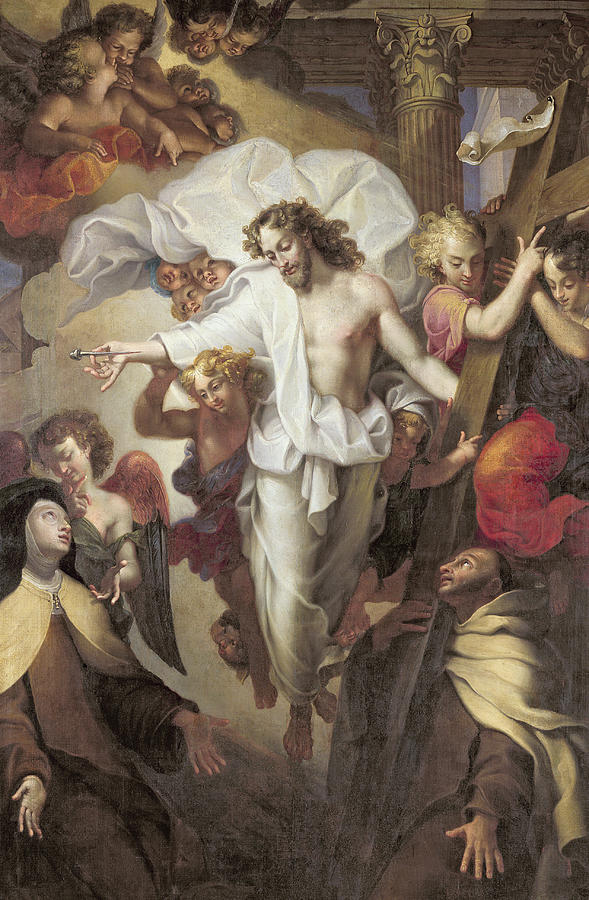
Christ Resurrected Between St Teresa Of Avila & St John of the Cross by Michel des Gobelins Corneille





















You must be logged in to post a comment.