Posted in MARIAN TITLES, SAINT of the DAY

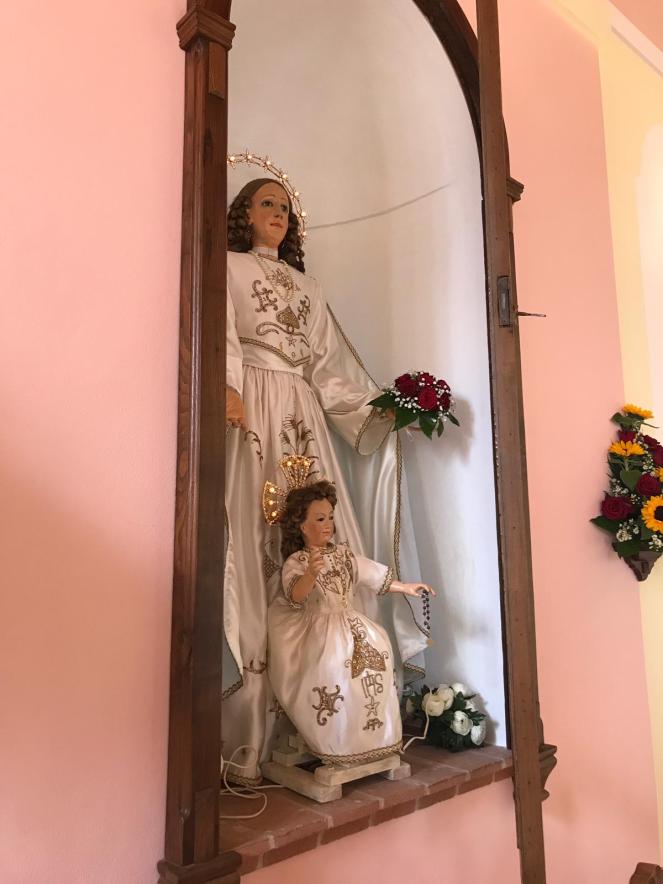
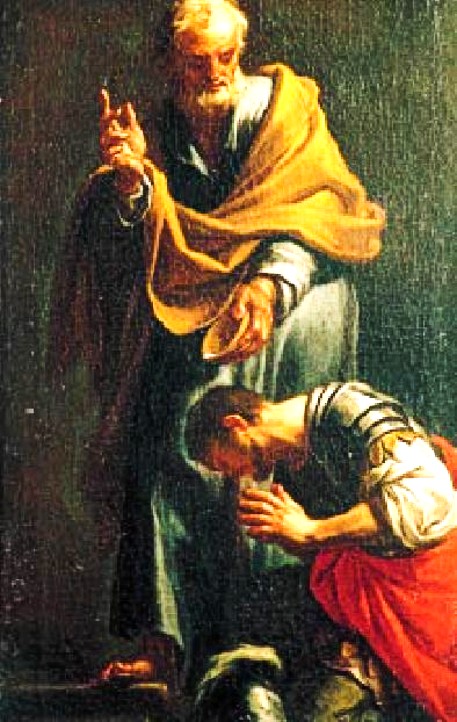
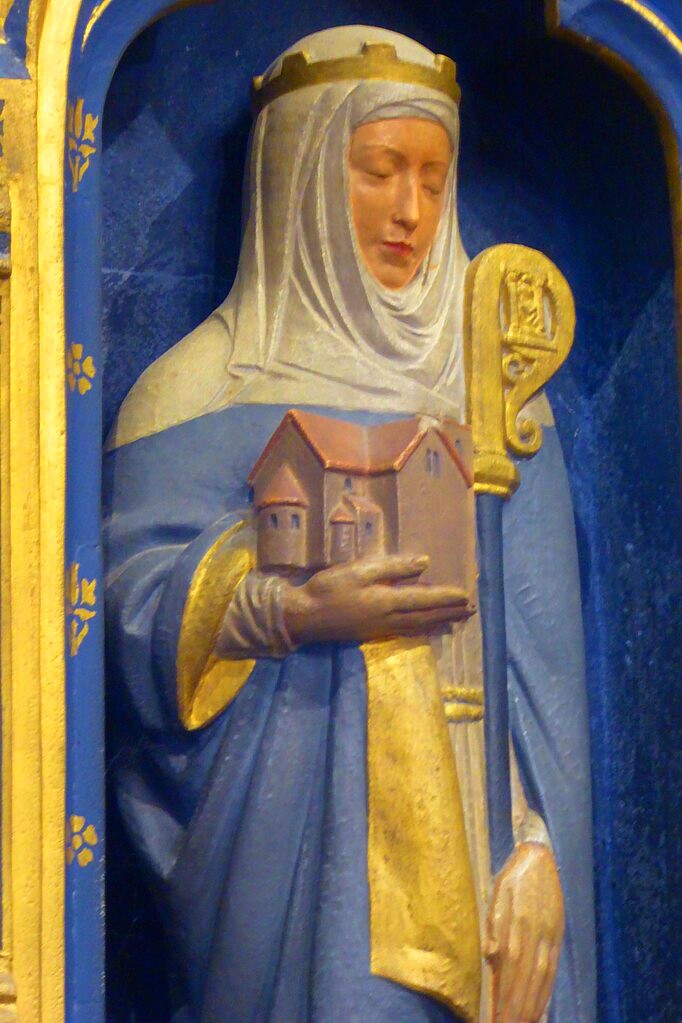
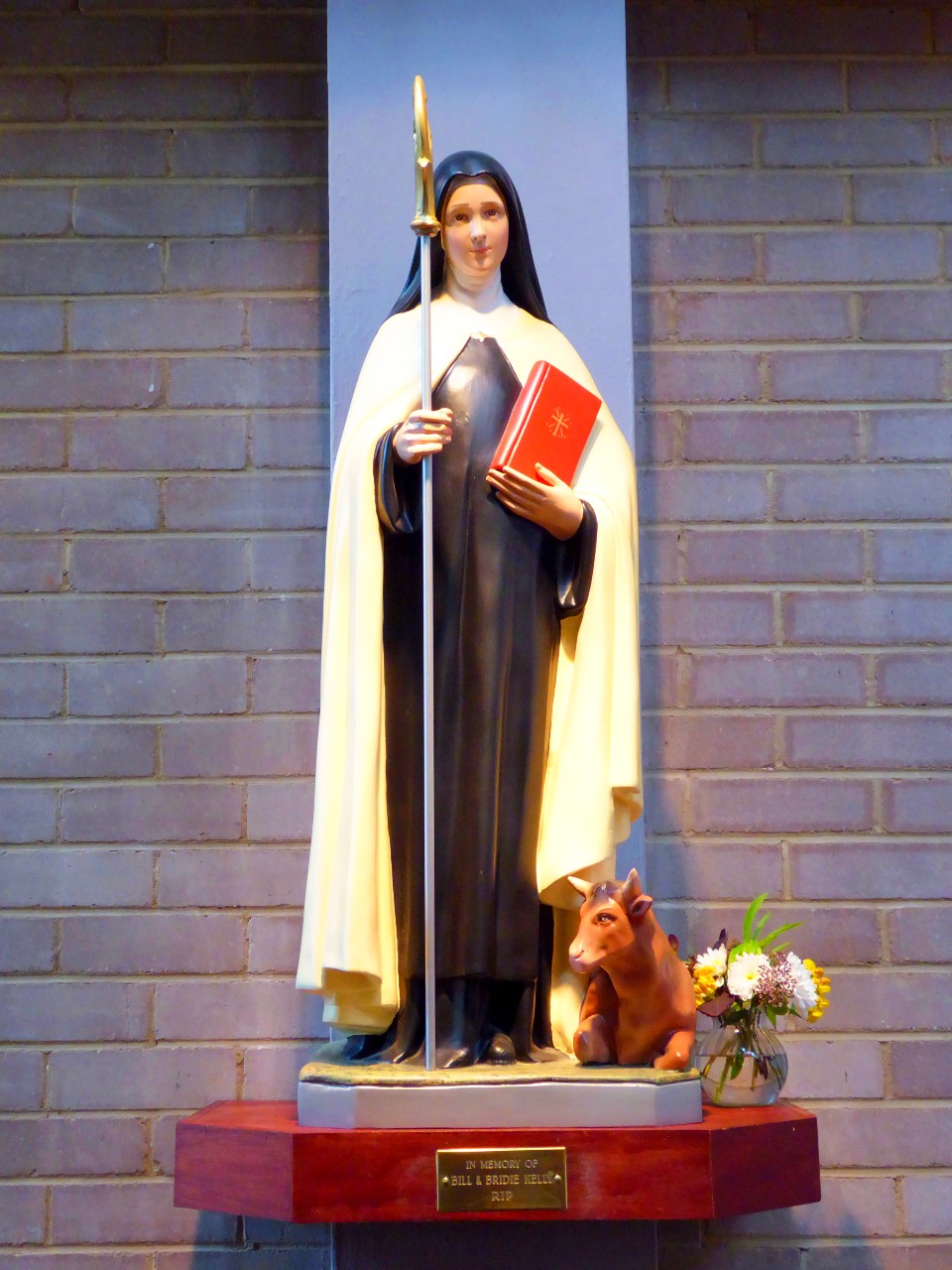
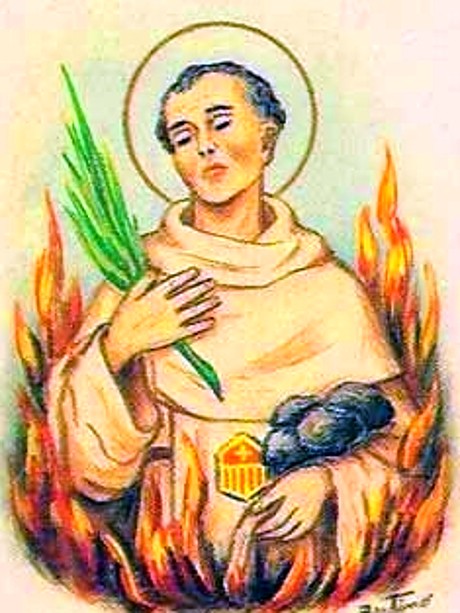
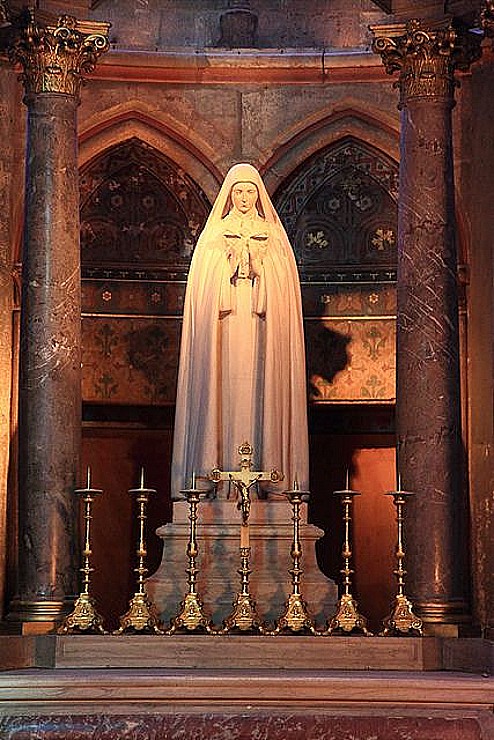
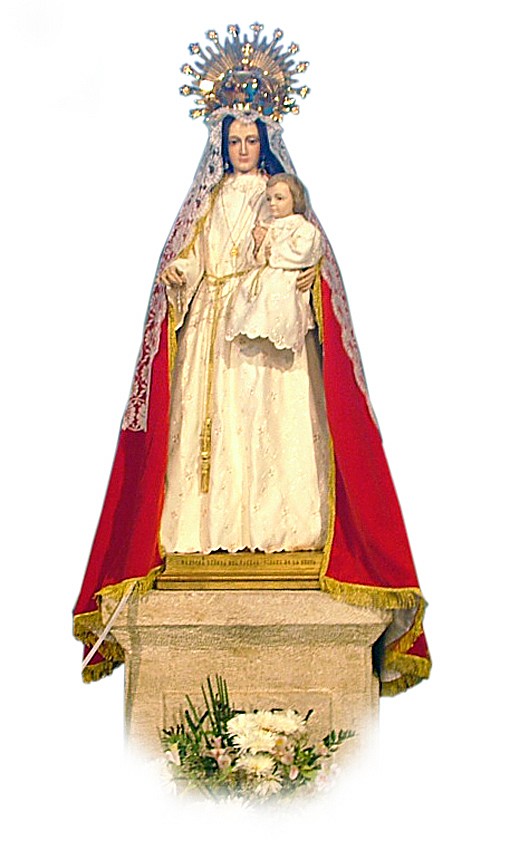
Matka Boża Leśniańska / Blessed Mother of Leśna, Poland (1683), St Isaac Jogues & Companions and the Saints for 26 September

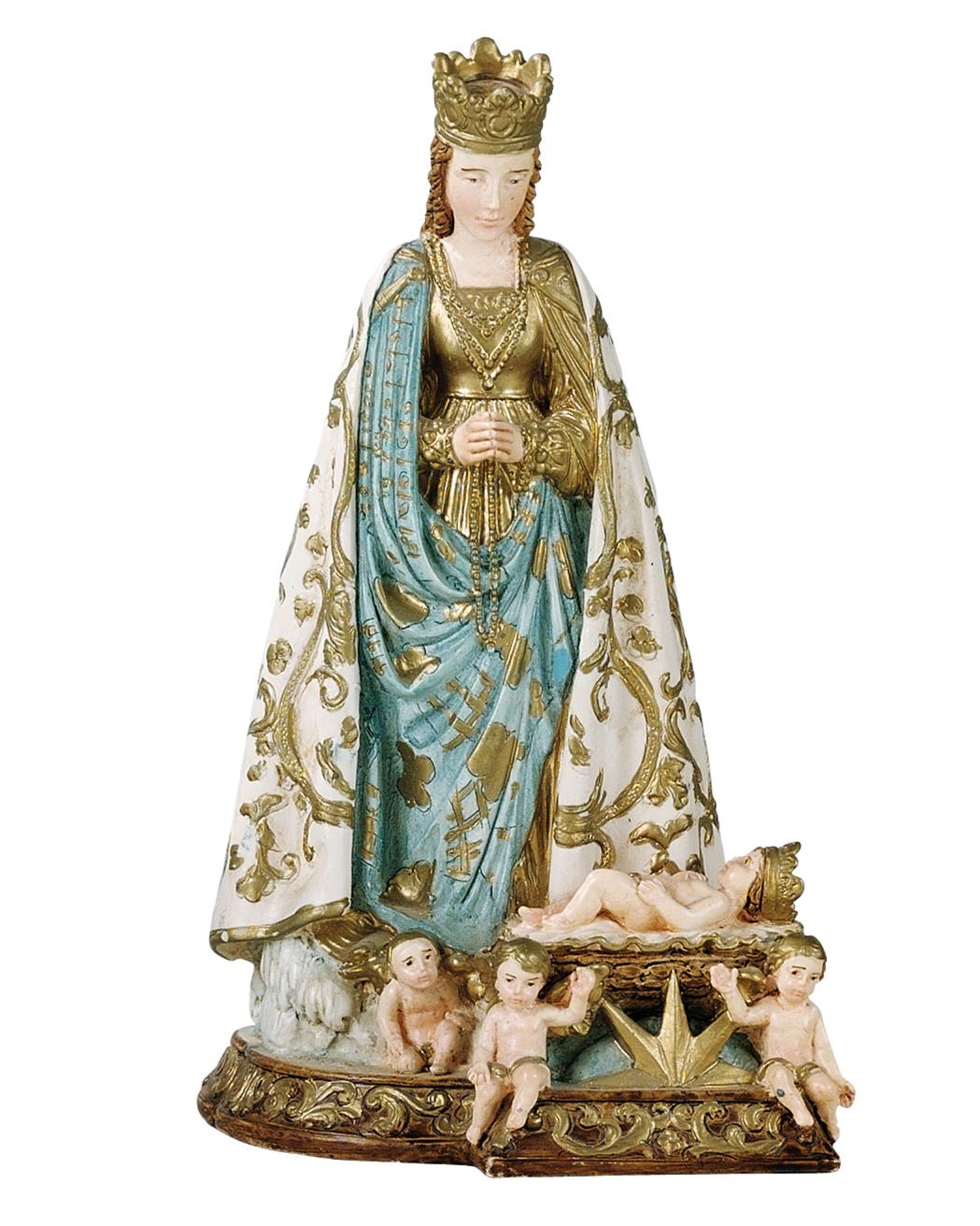
Matka Boża Leśniańska / Blessed Mother of Leśna, Leśna Podlaska, Biała Podlaska, Lublin, Poland (1683) – 26 September:
HERE:
https://anastpaul.com/2021/09/26/matka-boza-lesnianska-blessed-mother-of-lesna-lesna-podlaska-biala-podlaska-lublin-poland-1683-and-memorials-of-the-saints-26-september/

St Cyprian of Antioch (Died 2nd Century) Bishop Martyr AND St Justina of Antioch (Died 2nd Century) Virgin Martyr

St Amantius of Tiphernum
St Callistratus of Constantinople
St Colman of Elo
St Eusebius of Bologna

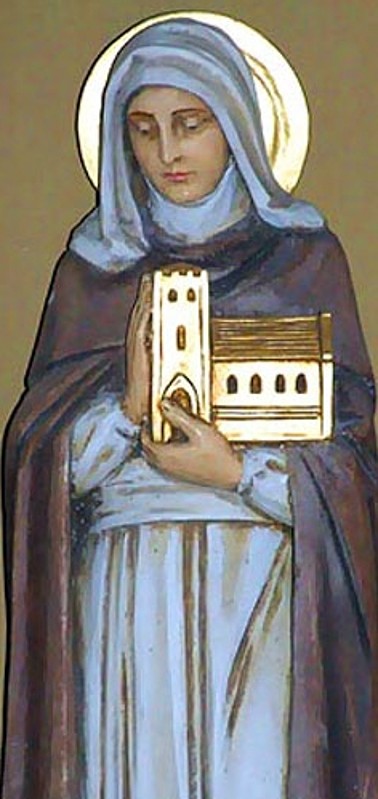
St Justina of Antioch (Died 2nd Century) Virgin Martyr (+See above wiuth St Cyprian)
St Marie Victoire Therese Couderc
St Meugant

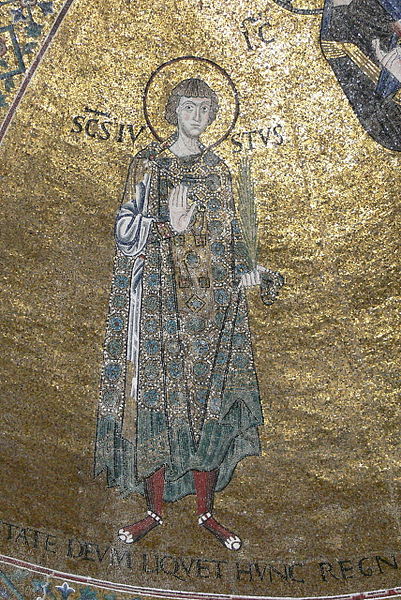
St Senator of Albano
St Vigilius of Brescia

Posted in SAINT of the DAY

Saint of the Day – 25 September – Saint Anathalon of Milan, Bishop

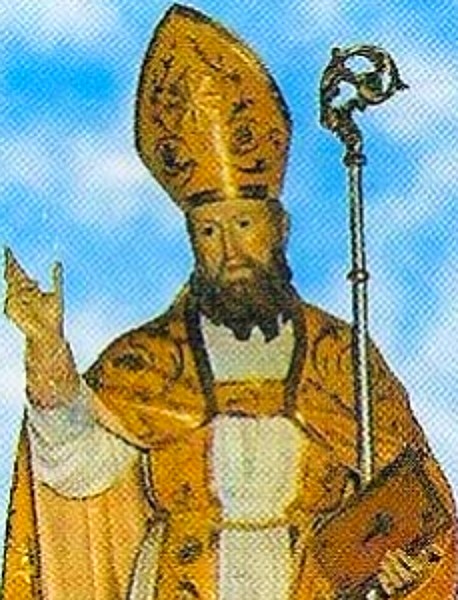
Saint of the Day – 25 September – Saint Anathalon of Milan 1st Century Bishop of Milan, Italy, Consecrated by Saint Barnabas. Also known as – Anatalone, Anatelon, Anatalo, Anatolo, Anatolio, Anatalofle, Anatelofl, Anatolofle, Anatolius. Additional Memorial – 24 September in the Diocese of Brescia.

The Roman Martyrology reads today: “St Anathalon, Bishop, who was a disciple of the blessed Apostle Barnabas and succeeded him in the See of Milan.”

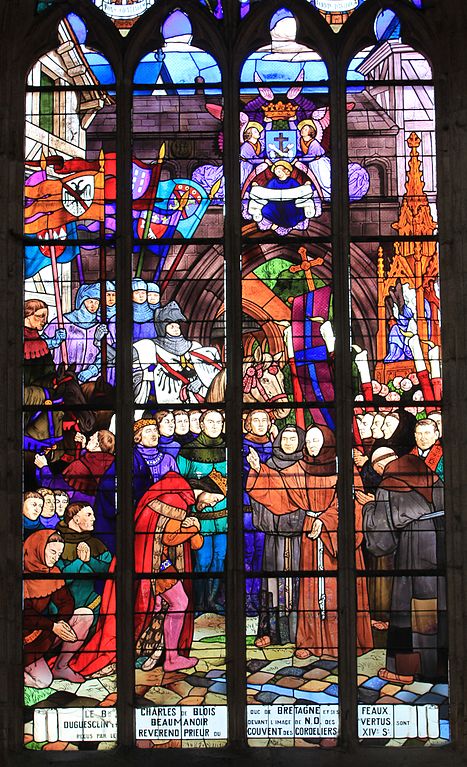
This window resides in the Church of Ablis, Yvelines, France.

Anathalon is regarded as the first Bishop of Milan. Having been the assistant and disciple of St Barnabas, the Apostle, he was designated and Consecrated by the latter to become the Bishop of Milan.

A later tradition makes our Saint the first Bishop of Brescia too, as that City certainly came under the jurisdiction of Milan. In Brescia his Feast day is celebrated on 24 September.

Nothing is known about the life and Episcopate of Anathalon, except that he had a Greek name, that he was bishop of Milan and that he died during a pastoral trip to Brescia which was under his jurisdiction.

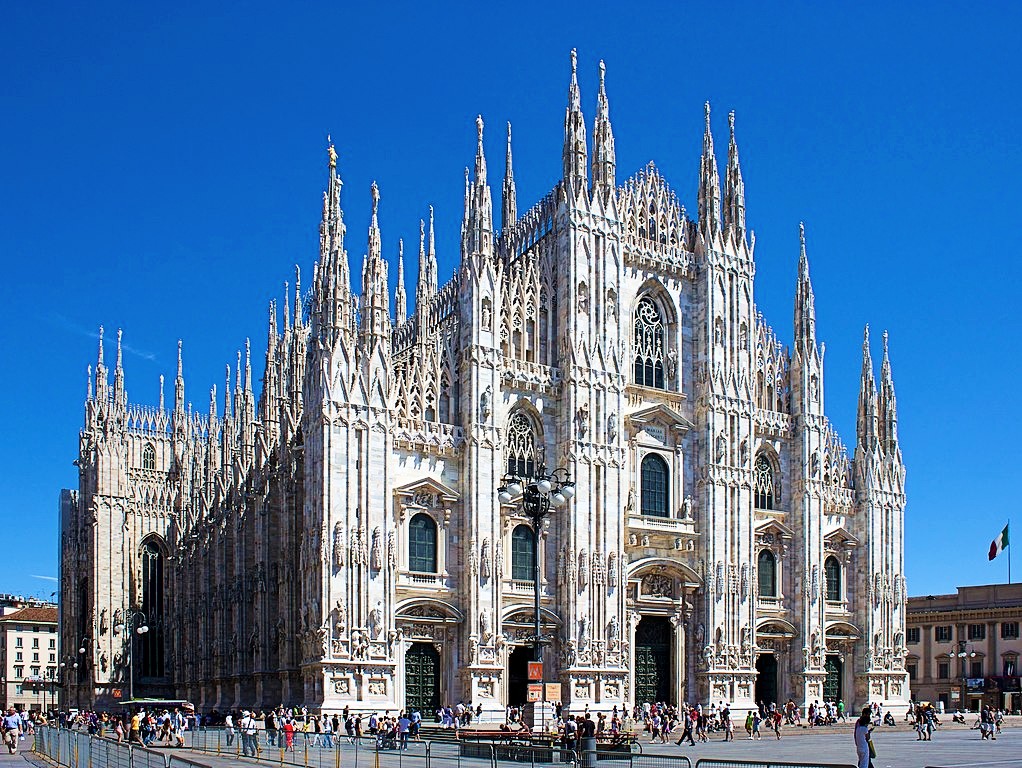
The older place of veneration for this Saint was the Basilica ad Concilia Sanctorum in Milan, today no more extant, near the present Church of San Babila. In 1268 his Relics were discovered in Brescia and translated to the Church of Saint Florian. In 1472 his Relics were translated to the Old Cathedral of Brescia where they still reside today (see the Cathedral below).

Posted in MARIAN TITLES, SAINT of the DAY

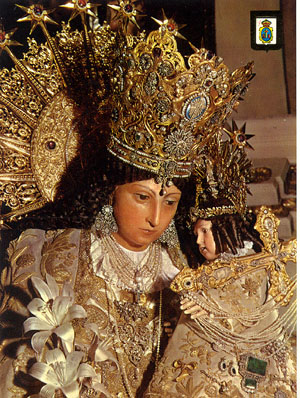
Divina Pastora de las Almas ‘ The Divine Shepherdess of Souls, Spain (1703) and the Saints remembered on 25 September

Divina Pastora de las Almas ‘ The Divine Shepherdess of Souls, Cantillana, Sevilla, Andalucía, Spain (1703) – Fourth Saturday of September or 25 September:
HERE:

https://anastpaul.com/2021/09/25/feasts-of-our-lady-and-memorials-of-the-saints-25-september/

Saint Cleopas (First Century) Disciple of Christ – one of the two Disciples of the Way to Emmaus. Martyr.
St Cleophas:

https://anastpaul.com/2021/09/25/saint-of-the-day-25-september-saint-cleopas-first-century-disciple-of-christ/

St Vincent Strambi CP (1745-1824) Bishop, Priest of the Passionist Order of St Paul of the Cross, Apostle of Charity, Preacher, Teacher, Writer. Beatified on 26 April 1925 at Saint Peter’s Basilica, by Pope Pius XI and Canonised on 11 June 1950 by Pope Pius XII.
Biography here:

https://anastpaul.wordpress.com/2017/09/25/23731/
AND MORE HERE:
https://anastpaul.com/2018/09/25/saint-of-the-day-25-september-st-vincent-strambi-c-p-1745-1824/

St Anacharius of Auxerre
Saint Anathalon of Milan 1st Century Bishop of Milan, Italy, Consecrated by Saint Barnabas (see his name listed below).


St Aurelia of Macerata
St Caian of Tregaian

St Egelred of Crowland
St Ermenfridus of Luxeuil
St Firminus of Amiens

St Fymbert

St Mewrog
St Neomisia of Mecerata
St Paphnutius of Alexandria
St Principius of Soissons
St Solemnis of Chartres

Posted in SAINT of the DAY

Saint of the Day – 24 September – Saint Isarnus (Died 1043) Abbot

Saint of the Day – 24 September – Saint Isarnus (Died 1043) Abbot of of Saint-Victor near Toulouse, Reformer, Apostle of the destitute and deprived. Born in Marseilles, Provence (in modern France) and died there on 24 September in 1043 of natural causes. Also known as – Isarnus of Marseilles, Isarn, Isarnus of Toulouse, Isarno of… Ysarn of…

Little is known of the life of Saint Isarnus, Abbot of Saint Victor Monastery in Marseilles. We do not know the date of his birth but the date of his death has been handed down to us.

Originally from Toulouse, he was educated by the Canons of Saint Anthony of Pamiers. He received the monastic Habit, during his stay in Agde, from the hands of Stephen II, the Bishop of the City.

His appointment as the Abbot of the Monastery of Saint-Victor is singular. Upon the death of Abbot Geoffrey, in 1021, the Monks were unable to reach an agreement on the appointment of a successor. During the Chapter meetings, Abbot du Montmajour, the acting President of the Assembly, asked the youngest of the Oblates to propose a name. The Oblate named Isarnus, who immediately received the Abbey blessing.

Abbey Saint-Victor

Isarnus’ reputation for virtue and particularly, his charity and supernatural gifts, attracted many vocations. He reformed the Abbey and carried this reformation to numerous Monasteries in the centre of France and in Catalonia.

Saint Isarnus was a man of prayer and during his government, he particularly distinguished himself for his generosity towards the poor. Saint Odilo of Cluny, his friend, used to enumerate the eight virtues practiced by Isarnus: chastity, humility, mercy, patience, the inclination to fasting, vigils, prayers and contempt for vainglory.

We know that Saint Isarnus went to Spain to ransom some Monks of the community of Lérins, who had been captured by the Arabs and, that he died shortly after his return to Marseilles.

This might be the Tomb of St Isarnus. Anyway it resides in the Chapel of St Isarnus at St-Victor’s Abbey

He was buried in the Monastery Church, his Tomb is located in the Crypt of the Abbatial Church.In the second half of the 14th Century, his Relics were translated in the presence of Pope Urban V, who then also Canonised him. A biography has been written about Saint Isarnus which presents itself as the work of an anonymous pilgrim who passed through Saint Victor of Marseilles. But it is very likely that it was written by a Monk of the Abbey. The work, which contains many edifying facts about Saint Isarnus, was written in a period very close to the events narrated, so it is believed that the historic details corresponds to the truth.

Interior of the Abbey Church of St-Victor

Although in memory of Saint Isarnus, is set on 25 September 25 in the Diocese of Pamiers and on the 26th in that of Marseilles, his Feast was set on the day of his death, 24 Septembe.

Posted in MARIAN TITLES, SAINT of the DAY

Nuestra Señora de las Mercedes / Our Lady of Ransom, Spain (1218), Our Lady of Walsingham / Virgin of the Sea (1061) and the Saints for 24 September

Nuestra Señora de las Mercedes / Our Lady of Mercy / Our Lady of Ransom, Barcelona, Spain (1218) – 1 August, 10 August – The Founding of the Mercedarian Order and 24 September:
HERE:

https://anastpaul.com/2020/09/24/our-lady-of-mercy-our-lady-of-ransom-our-lady-of-walsingham-virgin-of-the-sea-24-september-and-memorials-of-the-saints/

Our Lady of Walsingham / Virgin of the Sea (1061) – 24 September:
HERE:

https://anastpaul.com/2021/09/24/our-lady-of-walsingham-virgin-of-the-sea-1061-marian-feasts-and-memorials-of-the-saints-24-september/


St Andochius of Autun
St Chuniald
Bl Colomba Matylda Gabriel
St Coprio
St Erinhard
St Felix of Autun

St Gislar
St Isarnus of Toulouse (Died 1043) Abbot
St Lupus of Lyons

St Paphnutius of Egypt

St Thyrsus of Autun
St Ysarn of Saint Victor

Posted in INCORRUPTIBLES, SAINT of the DAY

Saint of the Day – 23 September – Blessed Peter Acotanto (1108-1187) Hermit

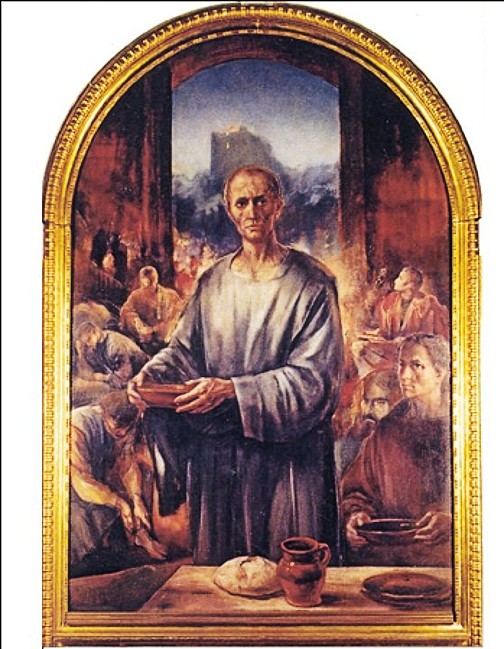
Saint of the Day – 23 September – Blessed Peter Acotanto (1108-1187) Hermit, Apostle of the poor, the most deprived and desparate peoples of Venice. Born in 1108 in Venice, Italy and died there in on 23 September1187 of natural causes. Patronage – of Venice, Italy. His Body is Incorrupt.

According to the Venetian tradition based on a manuscript preserved in the Church of St Basil Peter Acotanto was born in 1108 to the noble Acotanto family, a family which could boast very ancient origins. The same Church of the district where the Acotanto family lived, St Basil, had been built by their family in the 10th Century.

Peter practiced charity in an eminent way – in the poor he saw Christ and in almsgiving – a manifestation of faith, even if many times the poor people took advantage of it. They besieged his house before he went out, they guarded the door when he had to return, they interrupted his walk on the street with importunate requests but Peter patient and generously, welcomed everyone and did not let anyone leave disconsolate or in tears.

In the darkest night, to hide from the sight and applause of men and known only to God, Who assisted him, with his own hands, Peter loaded his little domestic boat with bread, wood, oil, clothes and other necessary items for the poor, the miserable and the deprived. Peter pushed his boat alone through the troubled and angry waters and in the midst of raging winds and with continuous danger to his health and his life, he went here and there, to various distant districts of the City, in search of the most derelict poor and made a generous distribution to them of the abundant load, saving them in this way from the imminent misfortune of having to die from cold or hunger.

Peter pushed his boat alone through the troubled and angry waters, assisting the poor wherever he found them

For the poor Peter became poor himself. He sold everything he had and did not even keep enough for himself to live on. Peter then retired to San Giorgio Monastery among the Benedictines who had been his life teachers. He wore very poor clothes and wished to do the humblest services for the Monks, such as cultivating the vegetable garden and carrying water to the Monastery kitchen after drawing it with difficulty from the well. He was content with very little food and often fasted completely. The example of virtue which he displayed to the Monks was such that, on the death of Abbot Pasquale, they wished to appoint him as their Superior but Peter instead obtains permission to live as a Hermit next to the Monastery. With his own hands he builds a small hut and between fasting and mortification he spent the last years of his life alone in his little hut.

He died on 23 September 1187, the date he had predicted for his death, surrounded by his brothers. He was buried in the Church of San Basilio (commonly known as San Basegio) in Venice where he enjoyed a reputation for sanctity for the miracles performed through his intercession and the incorruption of his body, found in 1250.

In 1305 the body was transferred to another tomb in the nearby cemetery and, in 1340, it was finally transferred inside theChurch, above the Altar of the Crucifix. Recognised as a miracle worker, Pope Clement XIII declared Peter Blessed in 1759.

In 1810, following the Napoleonic suppression of the Church of San Basiio , his relics were transferred to the nearby Church of San Sebastiano and then, in 1821, to the Church of Saints Gervasio and Protasio where they are still venerated today.

In 1946, Prof. Peter Leonardi founded the Blessed Peter Acotanto Charity to assist the evicted from Giudecca and Terese. About 500 of the most needy families were assisted. He worked for human promotion, especially for young people, by opening recreation centers, schools and refectories, where children from the assisted neighbourhoods were welcomed and entertained with games, songs, readings, and food. He set up professional courses and carpentry workshops to teach a trade to abandoned children. The Peter Acotanto Charity ceased its activities in 1964.

Blessed Peter Acotanto on the Church of San Rocco in Venice
Posted in INCORRUPTIBLES, MARIAN TITLES, SAINT of the DAY

 Nuestra Senora de Valvanera / Our Lady of Valvanera, Spain (9th Century), St Pope Linus, St Thecla and the rest of the Saints for 23 September

Nuestra Senora de Valvanera / Our Lady of Valvanera, La Rioja, Spain (9th Century) – 23 September:
HERE:

https://anastpaul.com/2021/09/23/nuestra-senora-de-valvanera-our-lady-of-valvanera-la-rioja-spain-9th-century-and-memorials-of-the-saints-23-september/

St Thecla (1st century) Virgin Martyr, Disciple of St Paul.
Her Life and Death:

https://anastpaul.com/2019/09/23/saint-of-the-day-23-september-st-thecla-1st-century-virgin-and-martyr/

St Adamnan of Iona/Eunan of Iona (c 628-704) Relative of Saint Columban. Monk at Drunhome, Donegal, Ireland. Abbot of Iona in 679. President-general of all the Columban houses in Ireland. Hagiographer and Spiritual Writer, Poet, Statesman, Canon Lawyer. Canonised on 11 July 1898 by Pope Leo XIII (cultus confirmed).
His Life:

https://anastpaul.com/2021/09/23/saint-of-the-day-23-september-saint-adamnan-of-iona-or-st-eunan-of-iona-c-628-704/

St Cissa of Northumbria
St Constantius of Ancona


Blessed Elena Duglioli (1472-1520) Widow. Beatified on 26 March 1828 by Pope Leo XII. Her body is Incorrupt.
Her Life:

https://anastpaul.com/2023/09/23/saint-of-the-day-23-september-blessed-elena-duglioli-1472-1520-widow/

Blessed Guy of Durnes O.Cist. (Died c1157) Abbot
Blessed Peter Acotanto (1108-1187) Hermit
St Polyxena

Posted in SAINT of the DAY

Saint of the Day – 22 September – St Emmeramus of Regensburg, Bishop Martyr

Saint of the Day – 22 September – St Emmeramus of Regensburg (also historically known as Ratisbon) (Died c690) Bishop Martyr, Missionary Born in Poitiers, France and died on 22 September c652 in Feldkirchen near Munich in Bavaria by being murdered. Patronages – of Poitiers in France and of the City and Diocese of Regensburg in Germany. Also known as – Emmeran, Emmeranus, Emmerano, Emeran, Heimrammi, Haimeran, Haimhramm,or Heimeran.

The Roman Martyrology reads today: “At Ratisbon, in Bavaria, St Emmeramus, Bishop and Martyr, who, to deliver others, endured patiently a most cruel death, for the sake of Our Lord.

Painting in the Parish Church in Aschheim near Munich

Emmeramus was a Monk and Bishop of Poitiers, left the Kingdom of the Franks at the end of the 7th Century to evangelise in Regensburg, Bavaria, where he was received with benevolence by Duke Theodo. The latter wanted to keep him as the Bishop of his territory or, at least, as the Abbot of a Monastery there.

It is not known how long Emmeramus exercised his pastoral ministry at the Duke’s Court or whether he founded a Monastery near the church of St George.

When leaving for Rome, Emmeramus was unjustly accused of having kidnapped Uta, the Duke’s daughter. To avenge this dishonour, Lambert, the girl’s brother, pursued Emmeramus with an armed troop and caught up with him at Klein-helfendorf, near Aibling (Diocese of Freising). Wishing to protect the real culprit, Emmeramus did not defend himself and received numerous wounds. The Clerics who accompanied him carried him to Ascheim where death put an end to his cruel sufferings. His tortures had involved a ladder, different tortures being applied for each rung thereon. At his death, a heavenly ladder was seen being extended to the Martyr for his final climb to his his great Lord.

The body of the Saint was brought back to Regensburg and buried in the Church of St George. The famous Monastery which takes his name, was built on his tomb and his cult eclipsed that of Everard, the oldest Bishop of the City. Bishop Gaubald (739-761) attended to the solemn elevation of the Relics and built a new Church in his honour. In the same way, Bishop Erembert of Freising (739-747) had a Church built on the site of his torture, in Klein-helfendorf.

In 1898, in the Monastery of St Emmeramus a tomb was discovered containing a skeleton that immediately crumbled to dust and some believed that they were in the presence of the ancient Martyr; another tomb had in fact been erected in the upper Church around 1340.

The oldest evidence of veneration is found in the Waldendorff fragment of a Regensburg Sacramentary from the time of St Boniface. Emmeramus’ Feast is celebrated on 22 September the date on which he is mentioned in the oldest Martyrologies. A monastic Office of his own was composed by Arnold of Vohrburg.

Emmeramus’ life and suffering was written around 772 by Arbeo of Freising. According to recent research, Emmeramus fell victim to a massive court intrigue against Duke Theodo. The date of his Martyrdom is also given as either 685, 692 and around 715.

Posted in AUGUSTINIANS OSA, MARIAN TITLES, SAINT of the DAY

PENTECOST XVIII, Madonna di Porto Salvo / Our Lady of Porto Salvo, Italy (1843), St Thomas of Villanova, St Maurice and Companions and all the Saints for 22 September

PENTECOST XVIII

Bl Alfonso da Cusco
St Basilia
St Digna of Rome
St Emerita of Rome
St Emmeramus of Regensburg (Died c690) Bishop Martyr
St Florentius the Venerable

St Irais
St Jonas
St Lauto of Coutances
St Lindru of Partois

Blessed Otto of Freising O.Cist. (c1111-1158) Bishop of Freising, Cistercian Priest and Abbot Historian, Reformer, Diplomatic Peace-maker, Defender of the Church, Crusader. Born between 1111 and 1114 in Klosterneuburg near Vienna, Austria and died at Morimond, Champagne, France, on 22 September, 1158 at the young age of 47 at the most.
Holy Man of Many Talents St Otto:

https://anastpaul.com/2023/09/22/saint-of-the-day-22-september-blessed-otto-of-freising-o-cist-c1111-1158-bishop/

St Sadalberga
St Sanctinus of Meaux

St Septimius of Jesi (Died c 307) the first Bishop of Jesi in Italy, Confessor, Martyr., Miracle-worker .
His Lif and Death:

https://anastpaul.com/2022/09/22/saint-of-the-day-22-september-saint-septimius-of-jesi-died-c-307-bishop-confessor-martyr/

St Sigfrid of Wearmouth
St Silvanus of Levroux
St Symphorian

Posted in SAINT of the DAY

Saint of the Day – 21 September – St Maura (c827-850) Virgin

Saint of the Day – 21 September – St Maura (c827-850) Virgin, Apostle of prayer and of the poor and needy, devoted carer of the needs of the Church, acting in the role of a Sacristan, Miracle-worker.
Born in c827 at Troyes, Champagne, France and died there in 850 of natural causes. Also known as – Maura of Troyes.

Maura was born to a noble family in Troyes, France, in around 827 and, from a young age devoted herself to prayer. As a young girl, her prayers converted her father, Mauranus who had previously lived a worldly life. After his death, Maura continued to live at home, praying, serving the poor, and caring for her mother, who was named either Seluca or Sedulia. Maura’s prayers and example were also credited with her brother, Eutropius’ strong faith and he later became the Bishop of Troyes.

When not praying or serving the poor, Maura greatly enjoyed meeting the material needs of local Priests and the Troyes Cathedral, later, the Seat of her brother. She would make Sacred Vestments, trim the candles, fill oil lamps and prepare wax for the Altar. In fact, Bishop Prudentius of Troyes, a personal friend, wore an Alb spun and woven by her. In other words, she acted as the Sacristan and as Religious Sisters do.

Maura spent every morning in Church, praying. She fasted on Wednesday and Friday, sustaining herself only on small amounts of bread and water. Sometimes, she would walk several miles to visit her Spiritual Director at his Monastery. She was known to produce copious amounts of tears while praying, considered a gift from God. She also performed miracles but asked the people she assisted by her intercession, not to make these gifts known.

She died on 21 September 850, at the age of 23. She was buried in the Cemetery of Château-Nore-de-Troyes.

At least three known posthumous miracles are attributed to Maura . After her death, her body was washed but the water was claimed to have changed into milk. A young man was believed to have been cured of “a burning fever” after drinking this milk. A young woman, whose husband disliked a large birthmark on her cheek, also drank the milk and the birthmark disappeared.

Maura was declared a Saint by all the community, who honoured her annually on the day of her death, her Feast Day.+

Posted in DOMINICAN OP, SAINT of the DAY, The APOSTLES & EVANGELISTS

St Matthew – Apostle, Evangelist and Martyr, Beata Vergine del Tresto / The Blessed Virgin of Tresto, Italy (1468) and Memorials of the Saints for 21 September

Beata Vergine del Tresto / The Blessed Virgin of Tresto, Ospedaletto Euganeo, Italy (1468) – 21September:
HERE:

https://anastpaul.com/2021/09/21/feast-of-st-matthew-apostle-and-evangelist-beata-vergine-del-tresto-the-blessed-virgin-of-tresto-ospedaletto-euganeo-italy-1468-and-memorials-of-the-saints-21-september/

St Alexander of the Via Claudia
St Eusebius of Phoenicia
St Gerulph

St Isaac of Cyprus – Bishop and Martyr in Cyprus. Martyr. No further information has survived.
St Jonas the Prophet
St Landelino of Ettenheim

St Maura (c827-850) Virgin
St Meletius of Cyprus – Bishop and Confessor in Cyprus. Martyr. No further information has survived.

Posted in SAINT of the DAY

Saint of the Day – 20 September – Saint Clicerius of Milan (Died c438) Bishop and Confessor

Saint of the Day – 20 September – Saint Clicerius of Milan (Died c438) Bishop and Confessor. Clicerius was the Archbishop of Milan from 436 to 438. Also known as – Glicerius, Glycerius, Clycerius, Clicerio, Glicerio.

The Roman Martyrology reads today: “At Milan, St Clicerius, Bishop and Confessor.

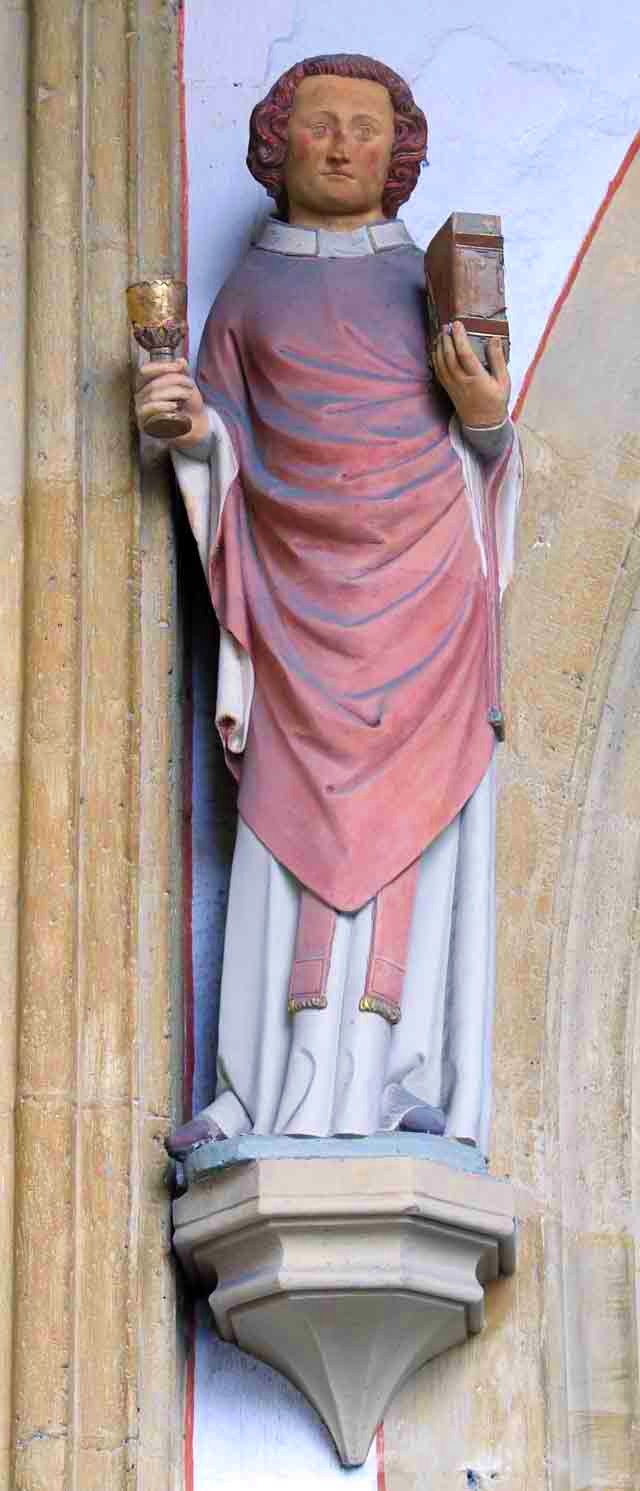
The Statue resides in the Church of Sts Nazarius and Celsus in Milan, near his Shrine

Almost nothing is known about the life and the Episcopate of Glycerius. He was a Deacon of Milan before being elected as the Archbishop of Milan in 436.

He probably had been a tutor of the Western Roman Emperor, Valentinian III, a position which he possibly maintained, evenduring his Episcopacy. He passed most of his reign in Antioch in Syria.

The Relics of our Saint

It is believed Clicerius died around mid September 438 and was buried in the Church of Saint Nazarius and Celsus in Milan. In that Church fragments of his funeral epigraph have been discovered. His Feast Day is 20 September.

Epigraph for Glycerius, reconstructed from the fragments of the original stone, in the left transept of Church of Saint Nazarius.
Posted in EMBER DAYS, MARIAN TITLES, SAINT of the DAY

EMBER Friday – Fast and Abstinence, Vigil of St Matthew, Apostle and Evangelist, Notre-Dame-au-Pied-d’Argent / Our Lady with the Silver Foot) (1284), St Eustachius, Wife and Sons – Martyrs (Died c 188) and the Saints for 20 September

EMBER Friday – Fast and Abstinence
https://anastpaul.com/2020/12/16/today-is-an-ember-day-did-you-remember/


St Candida of Carthage
St Clicerius of Milan (Died c438) Bishop and Confessor
St Dionysius of Phrygia
St Dorimedonte of Synnada
St Eusebia of Marseilles
St Evilasius of Cyzicum
St Fausta of Cyzicum
Bl John Eustace
St Priscus

Bl Thomas Johnson

Posted in INCORRUPTIBLES, SAINT of the DAY

Saint of the Day – 19 September – St Theodore of Canterbury (c602-690) the 7th Archbishop of Canterbury

Saint of the Day – 19 September – St Theodore of Canterbury (c602-690) the 7th Archbishop of Canterbury, England and the first archbishop to rule the whole English Church. Theodore was an important and memorable figure in the English Church. Born inc 602 in the City of St Paul’s birth, Tarsus in Cilici, Greece, now in modern Turkey and died on 19 September 690 in Canterbury, Kent, England of natural causes. Also known as – Theodore of Tarsus. His body is Incorrupt.

The Roman Martyrology reads today: “At Canterbury, the holy Bishop, Theodore, who was sent to England by Pope Vitalian and was renowned for learning and holiness.

After the death of St Deusdedit, the Archbishop of Canterbury, King Oswi of Northumberland and King Egbert of Kent, sent a virtuous and learned Priest – named Wighard – to Rome that he might be Consecrated as the new Bishop and duly confirmed to that important See by the Pope himself. However, sadly, Wighard and most of those who attended him, died in Italy of the Plague and Pope Vitalian chose instead, Adrian, Abbot of Niridian, near Naples, to be raised to that dignity. This Abbot was by birth an African. He understood Greek and Latin perfectly and was thoroughly versed in theology, as well as in monastic and Ecclesiastical discipline. But so great were his fears of the dignity to which he was called that the Pope was compelled, by his entreaties and tears, to yield to his excuses. He insisted, however, that Adrian should find a person equal to that charge and should, himself, attend upon and assist him in instructing the inhabitants of this remote island in the perfect discipline of the Church.

Adrian first named to the Pope a Monk called Andrew but he was judged incapable of the necessary physical strength on account of his bodily infirmities, although otherwise a person extremely well qualified. There was then at Rome, a Greek Monk named Theodore, aged sixty-six, a native of Tarsus in Cilicia, a man of exemplary life and well skilled in divine and human learning and in the Greek and Latin languages. Adrian presented him to the Pope and procured that he should be made a Bishop, promising to bear him company into England.

Theodore was duly Consecrated in 668 and then set out from Rome with St Adrian and St Benedict Biscop, later the Bishop and Abbot of Wearmouth and Jarrow, Durham. In 669 they reached Canterbury, where Theodore appointed Adrian the Abbot of Sts Peter and Paul Monastery, afterward named St Augustine’s.

There they created a famous school influential in the lives of such brilliant scholars as the celebrated historian St Bede the Venerable and the skilled Church architect St Aldhelm.

Theodore organised the English Church, many Sees which were vacant on his arrival and others which needed to be divided. In 672 he called the first General Synod of the English Church at Hertford, to end certain Celtic practices and to divide Diocese. The division issue was postponed, but the Synod imposed the date of the Roman Easter, established obedience for Clerics and Monks, forbade Bishops to interfere in matters relating to and of other diocese and reaffirmed the Church teaching on Marriage and Divorce.

During this period Theodore came into sharp conflict with St Wilfrid, whom he had appointed as the Bishop of York but whom he soon deposed. In 677/678, St Wilfrid went to Rome to protest. Meanwhile, in 678, Theodore helped settle relations between King Aethelred of the Anglo-Saxon Kingdom of Mercia and King Ecgfrith of Northumbria, whom Aethelred had defeated in battle.

Theodore’s Synod at Hatfield in 679, his 2nd Genral Synod, cleared the English Church from associations with the heresy of the Monothelites. Few things have rendered the name of St Theodore more famous than his Penitential or Code of Canons, prescribing the term of public penance for penitents, according to the quality and enormity of their sins. In this Penitential it is stated that when a Monk died, Holy Mass was offered for him on the day of his burial, on the third day after and as often again, as the Abbot thought proper. Also, the Holy Sacrifice was offered for the laity and accompanied by fasting. This Penitential which had been colated and published by his disciples, became highly influential in England and on the Continent.

Theodore, being more than eighty years old and seized with frequent bouts of illness, was desirous of being reconnciled with St Wilfrid. He, therefore, requested the exiled holy Prelate to come to him at London, begged his pardon for having consented with the Kings to his deprivation, without any fault on his side, did all he could to make amends and restored him to his See of York. For this purpose he wrote strong letters to Alfrid, King of Northumberland – who had succeeded his brother Egfrid, to Ethelred, King of the Mercians and to others who were opposed to St Wilfrid or were interested in this affair. Theodore had the comfort of seeing his endeavours everywhere successful.

One of Theodore’s greatest achievement was to adapt the Roman ideal of a centralised Church to English conditions. His establishment of a centralised Church under the Archbishopric of Canterbury in close alliance with secular rulers, was maintained by his successors. No biography of Theodore has survived.

This Medallion resides on the west facade of Westminster Cathedral

St Theodore was the Archbishop of Canterbury for twenty two years and died in 690, at the age of eighty-eight years. His memory is honoured on 19 September the date of his death. He was buried in the Monastery of St.Peter, which afterwards took the name of St Augustine. In 1091 his body was found Incorrupt when it was re-interred in the Cathedral.

Canterbury Cathedral

The Lives of:
St Adrian of Canterbury:
https://anastpaul.com/2018/01/09/saint-of-the-day-9-january-st-adrian-of-canterbury-c-635-710/
St Benedict Biscop:
https://anastpaul.com/2021/01/12/saint-of-the-day-12-january-st-benedict-biscop-osb-c-628-690/
St Wildrid:
https://anastpaul.com/2018/10/12/saint-of-the-day-12-october-st-wilfrid-c-633-709/

Posted in INCORRUPTIBLES, MARIAN TITLES, SAINT of the DAY

Notre-Dame de la Salette / Our Lady of La Salette), France (1846), St Januarius of Naples (Died c 304) and all the Saints for 19 September

Notre-Dame de la Salette / Our Lady of La Salette), La Salette-Fallavaux, Isère, Rhône-Alpes, France (1846) 19 September:
Our Lady appeared to two small children, Melanie Mathieu and Maximin Giraud, on the mountain of La Salette in the French Alps. She was crying and around her neck was a crucifix, with a hammer and pincers on either side – 19 September 1846. Approved by the Diocesan Bishop in 1851.
Read the story here:

https://anastpaul.wordpress.com/2017/09/19/feast-of-our-lady-of-la-salette-19-september/

St Januarius of Naples (Died c 304) Confessor, Bishop, Martyr
About St Januarius here:

https://anastpaul.wordpress.com/2017/09/19/saint-of-the-day-19-september-st-januarius

St Emilie de Rodat (1787–1852) Nun and Founder of the Sisters of the Holy Family, Mystic. Venerable Pope Pius XII Beatified her on 9 June 1940 and Canonised her on 23 April 1950.
Biography:

https://anastpaul.com/2019/09/19/saint-of-the-day-19-september-saint-emily-de-rodat-1787-1852/

St Alonso de Orozco Mena OSA (1500 – 1591) Augustinian Priest, Preacher, Writer, Apostle of Charity, Spiritual Director, Marian Devotee, Ascetic.
Biography:

https://anastpaul.com/2018/09/19/saint-of-the-day-19-september-st-alonsus-de-orozco-mena-o-s-a-1500-1591/

St Arnulph of Gap
Bl Carolus Hyon Song-Mun
St Constantia of Nocera
St Desiderius of Pozzuoli
St Eustochius of Tours
St Felix of Nocera
St Festus of Pozzuoli

St Goeric of Metz (c570-c643) Bishop Goeric is listed as the 30th Bishop of Metz, having governed that See from 625 to 642 or 643.
The Roman Martyrology rads: “In Metz in Austrasia, still in the territory of today’s France, Saint Goeríco or Abo, Bishop, who succeeded Saint Arnulf, whose body was transported with veneration to this City.
His Life:

https://anastpaul.com/2023/09/19/saint-of-the-day-19-september-saint-goeric-of-metz-c570-c643-bishop/

St Maria de Cervellón OdeM (1230 – 1290) Virgin, Catalan Superior of Second Order of the Mercedarians in her region. Mystic, graced with the gift of bilocation, Apostle of the poor, the abandoned, the needy. She was the first woman to wear the Habit of the ‘ Order of the Blessed Virgin Mary of Ransom. She is considered the Founder of the Mercedary Nuns.
Her entry in the Roman Martyrology states: “At Barcelona in Spain, blessed Maria de Cervellione, Virgin of the Order of Our Lady of Ransom. She is commonly called Maria of Help on account of the prompt assistance she renders to those who invoke her.
Patronages – Mercadarian Nuns and Sisters, Navigators, against shipwreck, Spanish sailors, of the abandoned.
On 13 February1692, Pope Innocent XII gave a favourable judgement and confirmed her immemorial cult;and she was introduced into the Roman Martyrology as a Saint on 8 November 1729. Her body is Incorrupt.
Her Holy Life:

https://anastpaul.com/2021/09/19/saint-of-the-day-19-september-st-maria-de-cervellon-odem-1230-1290/
Please watch this video if you are able to spare the time. It is absolutely beautiful.

St Pomposa
St Sequanus
St Sosius of Puzzuoli
St Theodore of Canterbury (c602-690) the 7th Archbishop of Canterbury
St Trophimus of Synnada

Martyrs of Antioch – 3 Saints: Christians imprisoned, tortured and executed in various ways in the persecutions of Emperor Probus; some names have come down to us – Dorymedon, Sabbatius and Trophimus. c 277 at Antioch (in modern Turkey).

Martyrs of Phunon – (4 aints): Four bishops in Egypt who were sentenced to forced labour in a rock quarry and martyred in the persecution of Diocletian. Noted for celebrating Mass in prison. – Elias, Nilus, Patermuzio and Peleus. They were burned to death in 310 at Phunon, near Petra in Palestine.

Posted in SAINT of the DAY

Saint of the Day – 18 September – Saint Didier of Rennes (7th Century) Bishop and Martyr

Saint of the Day – 18 September – Saint Didier of Rennes (7th Century) Bishop and Martyr. Born in Rennes, in Brittany, modern France and died by being murdered by robbers, near what is now called Saint-Dizier-l’Évêque.

Didier was born in Rennes in the 7th Century, where he studied and became the Bishop of that City in about 660. We have his signature on the Decrees of a Synod held in Rheims in 682.

He resigned and went on a Pilgrimage to Rome in a group of clerics which included his Deacon, Saint Reinfroid. On their return they passed through German lands and then south of the Vosges, near today’s Saint-Dizier-l’Évêque and was welcomed in the local Church.

Saint Didier and Saint Rainfroi with the group of Pilgrims

Having preached there, Dider proceeded on his journey but was soon attacked by robbers who killed him and his Acolytes, hoping to find holy vessels of the Church, near the village of Croix, Belfort. Didier was buried in the Church there and a cult arose around him as is attested in a 727 Charter in Murbach Abbey. Many miracles are ascribed to his intercession. His Feast Day is celebrated there today, 18 September.

A rock named “The Step of the Devil and the Feet of Saint Didier”, found near Saint-Dizier-l’Évêque, has indentations which are believed to be the remains of a struggle between the devil and the Saint, the devil being our Saint’s muderer!

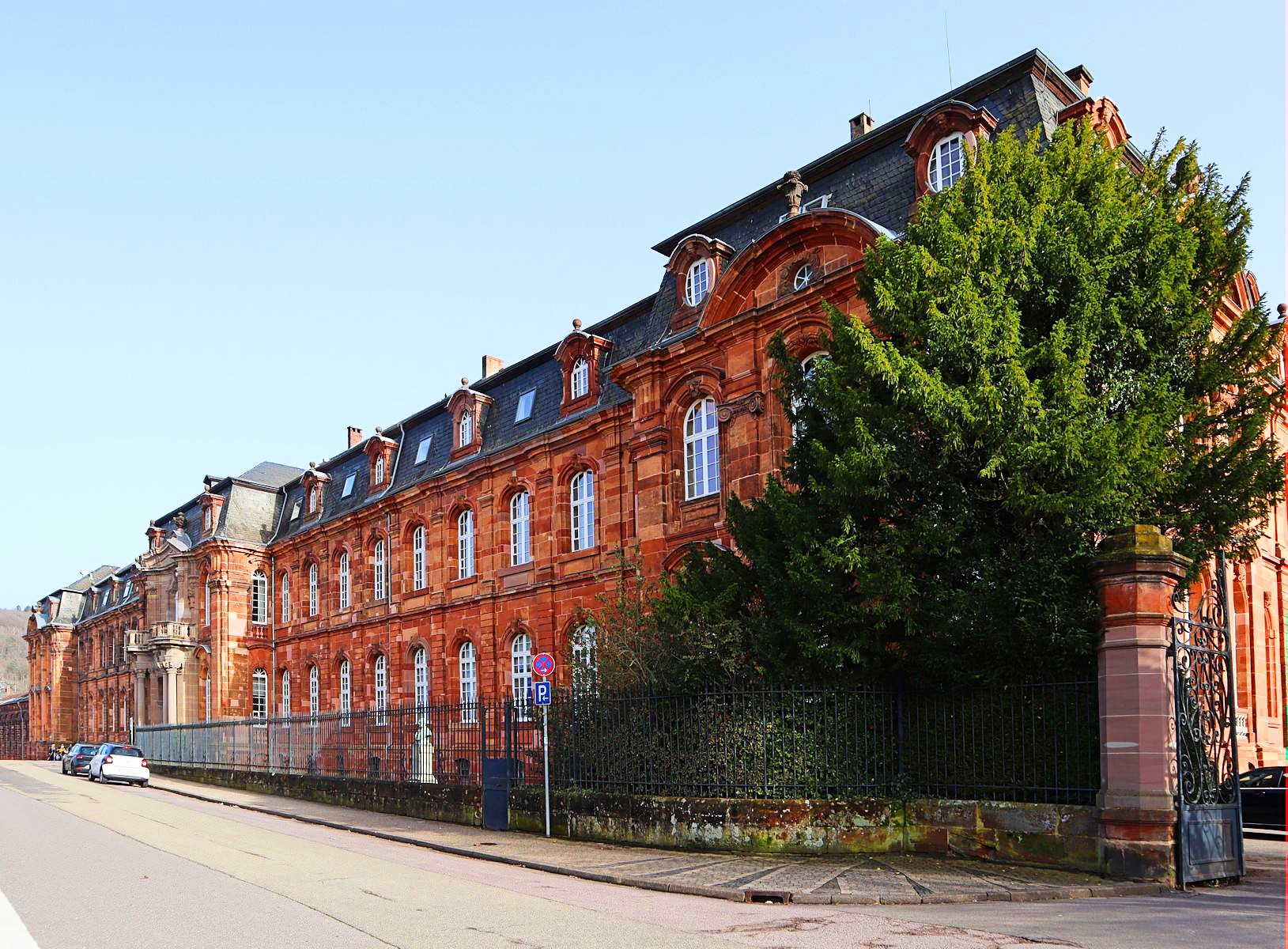
Many Towns and Villages and presumably there would also be many Churches named for this Saint Didier including Saint-Didier, Ille-et-Vilaine (see the Church in the latter Village, dedicated to our Saint Didier below) but there are others which are named after other Saints of the same name.

Posted in DOMINICAN OP, franciscan OFM, MARIAN TITLES, SAINT of the DAY

Ember Wednesday, Santa Maria della Querce / Our Lady of the Oak, Italy (1417), St Joseph of Cupertino and more Saints for 18 September

Ember Wednesday – Fast and Abstinence (or Partial in some Countries): https://anastpaul.com/2020/12/16/today-is-an-ember-day-did-you-remember/

Santa Maria della Querce / Our Lady of the Oak, Lucignano, Arezzo, Tuscany, Italy (1417) – Third Sunday of September, 8 August :
HERE:

https://anastpaul.com/2021/08/08/santa-maria-della-querce-our-lady-of-the-oak-lucignano-arezzo-tuscany-italy-1417-and-memorials-of-the-saints-8-august/

St Joseph of Cupertino OFM Conv. (1603-1663) Confessor, Religious Priest of the First Order of St Francis and Friar, Mystic, Miracle-worker.
If ever a tiny child began life with nothing in his favour it was Joseph of Cupertino; he had only one hopeful and saving quality—that he knew it. … – Read on and be ashamed, for this is a Saint before the Throne of God!
All about the this holy Flying Saint here: 
https://anastpaul.wordpress.com/2017/09/18/saint-of-the-day-18-september-st-joseph-of-cupertino-o-f-m-conv-1603-1663/

St Ariadne

St Didier of Rennes (7th Century) Bishop
St Eumenius Thaumaturgus

St Eustorgius of Milan (Died c349) The Ninth Bishop of Milan, Confessor, Defender of the Faith. Both St Athanasius and St Ambrose remember Eustorgius of Milan as one of the most steadfast and illustrious opponents of the Arian heresy.
The Roman Martyrology says of him: “At Milan, St Eustorgius, Bishop of that City, highly recommended by blessed Ambrose.
Biography:

https://anastpaul.com/2021/09/18/saint-of-the-day-18-september-saint-eustorgius-of-milan-died-c-349/

St Ferreolus the Tribune
St Ferreolus of Limoges
St Hygbald
St Irene of Egypt

St Juan Macias OP (1585-1645) Dominican Lay Friar, Mystic, Apostle of Charity and Prayer, Miracle-Worker.
About St Juan:

https://anastpaul.com/2018/09/18/saint-of-the-day-18-september-st-juan-macias-o-p-1585-1645/

St Lambertus of Freising (c895-957) Bishop

St Methodius of Olympus (Died c311) Confessor, Bishop, Martyr, Ecclesiastical Scholar and Author, renowned Theologian.
The Roman Martyrology reads today: “The same da, [as St Joseph of Cupertino] the birthday of St Methodius, Bishop of Olympus in Lycia and afterwards of Tyre. Most renowned for his eloquence and learning. St Jerome says that he won the Crown of Martyrdom at Chalcis in Greece at the end of the last persecution there.
His Life and Death:

https://anastpaul.com/2023/09/18/saint-of-the-day-18-september-saint-methodius-of-olympus-died-c311-bishop-martyr/

St Oceano of Nicomedia

St Richardis (839-c 895) Holy Roman Empress, Benedictine Abbess.
Biography:

https://anastpaul.com/2019/09/18/saint-of-the-day-18-september-saint-richardis-839-c-895/

St Sophia of Egypt

Posted in franciscan OFM, SAINT of the DAY

Saint of the Day – 17 September – The Feast of The Stigmata of St Francis of Assisi

Saint of the Day – 17 September – The Feast of The Stigmata of St Francis of Assisi

The Stigmata of St Francis
From the Liturgical Year, 1903
Feast Day – 17 September

St Francis Receives the Stigmata, by Giotto, 1295-1300; originally painted for the church of St Francis in Pisa, now in the Louvre. The predella panels show the vision of Pope Innocent III, who in a dream beheld St Francis holding up the collapsing Lateran Basilica, followed by the approval of the Franciscan Rule, and St Francis preaching to the birds.

The great Patriarch of Assisi will soon appear a second time in the holy Liturgy and we shall praise God for the marvels wrought in him by Divine Grace. The subject of today’s Feast, while a personal glory to St Francis, is of greater importance for its mystical signification.

The Man-God still lives in the Church by the continual reproduction of His Mysteries in this His Bride, making her a faithful copy of Himself.
In the 13th Century, while the charity of the many had grown cold, the Divine Fire burned with redoubled ardour in the hearts of a chosen few. It was the hour of the Church’s passion; the beginning of that series of social defections, with their train of denials, treasons and derisions which ended in the proscription we now witness. The Cross had been exalted before the eyes of the world – the Bride was now to be nailed thereto with her Divine Spouse, after having stood with Him in the pretorium exposed to the insults and blows of the multitude.

Like an artist, selecting a precious marble, the Holy Ghost chose the flesh of the Assisian Seraph as the medium for the expression of His Divine Thought. He, thereby manifested to the world, the special direction He intended to give to the sanctity of souls; He offered to Heaven a first and complete model of the new work He was meditating, viz: the perfect union, upon the very Cross, of the Mystical Body with its Divine Head. Francis was the first to be chosen for this honour but others were to follow and, henceforward, here and there through the world, the Stigmata of Our Blessed Lord will ever be visible in the Church.

Let us read in this light the admirable history
of the event composed by the Seraphic Doctor.
St Bonaventure, in honour of his holy father St Francis.

Two years before the faithful servant and minister of Christ, Francis, gave up his spirit to God, he retired alone into a high place which is called Mount Alverna and began a forty-day fast in honour of the Archangel St Michael. The sweetness of heavenly contemplation was poured out on him more abundantly than usual, until, burning with the flame of celestial desires, he began to feel an increasing overflow of these Divine favours. While the seraphic ardour of his desires thus raised him up to God and the tenderness of his love and compassion, was transforming him into Christ, the Crucified Victim of excessive love.

One morning, about the Feast of the Exaltation of the Holy Cross, as he was praying on the mountain side, he saw what appeared to be a Seraph, with six shining and fiery wings, coming down from Heaven. The vision flew swiftly through the air and approached the man of God, Who then perceived that it was not only winged but also Crucified; for the Hands and Feet were stretched out and fastened to a Cross; while the wings were arranged in a wondrous manner, two being raised above the head, two outstretched in flight and the remaining two crossed over and veiling the whole body. As he gazed, Francis was much astonished,and his soul was filled with mingled joy and sorrow. The gracious aspect of Him, Who appeared in so wonderful and loving a manner, gave Francis exceeding joy, while the sight of His cruel Crucifixion pierced his heart with a sword of sorrowing compassion.

He, who appeared outwardly to Francis, taught him inwardly that, although weakness and suffering are incompatible with the immortal life of a Seraph, yet this vision had been shown to him, to the end, that he, Christ’s lover, might learn how his whole being was to be transformed into a living Image of Christ Crucified, not by martyrdom of the flesh but by the burning ardour of his soul. After a mysterious and familiar colloquy, the Vision disappeared, leaving the Saint’s mind burning with Seraphic ardour and his flesh impressed with an exact image of the Crucified, as though, after the melting power of that fire, it had next been stamped with a seal. For immediately, the marks of nails began to appear in his hands and feet, their heads showing in the palms of his hands and the upper part of his feet and their points visible on the other side. There was also a red scar on his right side, as if it had been wounded by a lance and from which blood often flowed staining his tunic and underclothing.

Francis, now a new man, honoured by this new and amazing miracle and, by a hitherto unheard of privilege, adorned with the Sacred Stigmata, came down from the mountain bearing with him the Image of the Crucified, not carved in wood or stone by the hand of an artist but engraved upon his flesh by the Finger of the living God.
The seraphic man well knew that it is good to hide the secret of the King; wherefore, having been thus admitted into His King’s confidence, he strove, as far as in him lay, to conceal the Sacred marks. But it belongs to God to reveal the great things which he himself has done and hence, after impressing those signs upon Francis in secret, He publicly worked miracles by means of them, revealing the hidden and wondrous power of the Stigmata. by the signs wrought through them.

Pope Benedict XI. willed that this wonderful event, which is so well attested and in Pontifical diplomas has been honoured with the greatest praises and favours, should be celebrated by a yearly solemnity. Afterwards, Pope Paul V., wishing the hearts of all the faithful to be enkindled with the love of Christ Crucified, extended the Feast to the whole Church.

Posted in AUGUSTINIANS OSA, franciscan OFM, MARIAN TITLES, SAINT of the DAY

The Stigmata of St Francis of Assisi and the Saints for 17 September

The Stigmata of St Francis of Assisi:
HERE:

https://anastpaul.com/2021/09/17/feast-of-the-stigmata-of-st-francis-of-assisi-and-memorials-of-the-saints-17-september/

St Agathoclia
St Brogan of Ross Tuirc
Blessed Cherubino Testa OSA (1451-1479) Priest, Friar
St Columba of Cordova
St Crescentio of Rome
St Emmanuel Nguyen Van Trieu
St Flocellus

St Francis Mary of Camporosso OFM Cap (1804-1866) Lay Friar of the Friars Minor Capuchin Branch, “Quaestor” or Alms collector, as well as humble services such as Infirmarian, Cook, Gardener, Sacristan, gentle carer of the Poor, the sick, the imprisoned, the needy of all kinds, both spiritual and material. Francesco was gifted with immense graces to touch the hearts of all, both small and great and to listen and advise, often blessed with the gifts of prophecy and mind-reading. Born Giovanni Evangelista Croese on 27 December 1804 at Camporosso, Liguria, Kingdom of Sardinia. Italy and died on 17 September 1866 (aged 61) at Genoa, Italy. P
The Beloved Questor:

https://anastpaul.com/2022/05/11/saint-of-the-day-11-may-st-francesco-maria-da-camporosso-ofm-cap-1804-1866-the-beloved-questor/

St Justin of Rome

St Lambert (c635-c 700) Bishop & Martyr, Bishop of Maastricht, Confessor, Missionary.
His Life and Death:

https://anastpaul.com/2020/09/17/saint-of-the-day-17-september-st-lambert-c-635-c-700/

St Narcissus of Rome

St Peter Arbues OSA (1442-1485) Spanish Priest Martyr, Canon Regular of the Augustinian Order, learned Professor and Inquisitor. Murdered in the Cathedral of Saragossa for the carrying out the duties of his state. Canonised by Pope Pius IX in 1867.
His Life and Death:

https://anastpaul.com/2021/09/17/saint-of-the-day-17-september-saint-peter-arbues-osa-1442-1485-priest-martyr/

St Rodingus

St Satyrus of Milan (c335-c378) Confessor, Older brother of St Ambrose (340-397) Father and Doctor and St Marcellina (c330-c398) Consecrated Virgin
Patronages – of Sacristans of the Archdiocese of Milan.
St Satvrus Life:

https://anastpaul.com/2023/09/17/saint-of-the-day-17-september-st-satyrus-of-milan-c335-c378-confessor/

St Socrates
St Stephen
St Theodora
St Uni of Bremen

Posted in SAINT of the DAY

Saint of the Day – 16 September – Saint Eugenia of Hohenburg (Died c735) Abbess

Saint of the Day – 16 September – Saint Eugenia of Hohenburg (Died c735) Abbess. Born in Alsace in France and died at Hohenburg Abbey on Odilienberg also in Alsace. Eugenia was the second abbess of the Hohenburg Abbey, in Alsace, France, from 721 to 735. Also known as – Eugenia of Odilienberg, Eugenia of Alsace Eugenia of Altitona, Eugenia of Altodunum, Eugénie. The name Egenia means “noble born” from the Greek. Additional Memorial 26 September on some calendars.

Mosaic, 12th Century, in the Chapel of Tears of the Monastery of Mont Sainte-Odile

Eugenia was the daughter of the Alsatian Duke Adalbert and his wife Gerlind and sister of St Attala of Strasbourg and Gundelindis. She succeeded her aunt Odilia as Abbess at the Hohenburg Monastery – today’s Mont Sainte-Odile Monastery – on Mount Odilienberg in Alsace.

Eugenia was buried in the Chapel of the Monastery on Mount Odilienberg. Her Relics were lost in the Thirty Years’ War.

The Hohenburg Monastery atop Mount Odile.
Posted in MARIAN TITLES, SAINT of the DAY

Nuestra Señora de las Lajas / Our Lady of the Flagstones, Colombia (1754), Saints Cornelius and Cyprian and the Saints for 16 September

Nuestra Señora de las Lajas / Our Lady of the Flagstones, Potosí, Caldas, Colombia (1754) – 16 September:
HERE:
https://anastpaul.com/2021/09/16/nuestra-senora-de-las-lajas-our-lady-of-the-flagstones-potosi-caldas-colombia-1754-and-memorials-of-the-saints-16-september/

St Pope Cornelius (Martyred in 253) the 21st Pope during the persecutions of Papal Ascension:  251 until his death in 253.
St Cyprian of Carthage (190-Martyred in 258) Bishop, Martyr, learned Rhetorician, Teacher, Writer, Theologian
Saints Cyprian and Cornelius:

https://anastpaul.wordpress.com/2017/09/16/saints-of-the-day-16-september-st-pope-cornelius-and-st-cyprian-of-carthage-martyrs/

St Abundantius of Rome
St Abundius of Rome
St Cunibert of Maroilles
St Curcodomus
St Dulcissima of Sutri

St Edith of Wilton (961-984) Virgin, Nun, Princess, Founder of a Church and a Hospital for the poor. Born in 961 at Kensing, Kent, England and died on 15 September 984 aged just 23 years, a date foretold by Saint Dunstan of Canterbury, of natural causes. Edith is one of the most venerated female Saints of England. Her extensive legacy continues to this day – there is a Pilgrimage route, “St Edith’s Way” and annual devotions take place on her Feast day.
An Astounding Life:

https://anastpaul.com/2023/09/16/saint-of-the-day-16-september-saint-edith-of-wilton-961-984-virgin-nun-princess/

St Eugenia of Hohenburg (Died c735) Abbess

St Euphemia (c290-c 305) Virgin Martyr
Her Life and Death:

https://anastpaul.com/2021/09/16/saint-of-the-day-16-september-saint-euphemia-c-290-c-305-virgen-martyr/

St John of Rome

Blessed Luigi Ludovico Allemandi (c 1390-1450) Bishop and Cardinal, called “The Cardinal of Arles.” Blessed Luigi was a Priest driven by immense love for the Holy Mother of God and for the Church. His involvement in various Councils and Papal dissentions, were the result of his great desire to maintain the purity of the Chair of Peter. He was Beatified in 1527 by Pope Clement VII.
His Life;

https://anastpaul.com/2020/09/16/saint-of-the-day-blessed-luigi-ludovico-allemandi-c-1390-1450/

St Lucia and St Geminianus of Rome +
St Ludmila
St Marcian the Senator
Bl Martin of Huerta
Bl Michael Himonaya

St Ninian (Died 432) “Apostle to the Southern Picts,” Bishop, Missionary, Monastic Founder, Wonderworker.
Biography:

https://anastpaul.com/2018/09/16/saint-of-the-day-16-september-st-ninian-c-360-died-432-apostle-to-the-southern-picts/

Bl Paul Fimonaya
St Priscus of Nocera
St Rogellus of Cordoba
St Sebastiana
St Servus Dei
St Stephen of Perugia

Martyrs of the Via Nomentana: Four Saints: Christian men Martyred together, date unknown – Alexander, Felix, Papias and Victor. They were Martyred on the Via Nomentana outside Rome, Italy.
Posted in SAINT of the DAY

Saint of the Day – 15 September – Blessed Rolando de Medici (c1330-1386) Hermit

Saint of the Day – 15 September – Blessed Rolando de Medici (c1330-1386) Hermit, Penitent. Born in c1330 in Milan, Italy and died on 15 September 1386 in Bargone, near Genoa in Italy. Also known as Roland, Orlando.
Born into the renoiwned and sometimes infamouse, Medici family of Milan, in 1360, Rolando, at about thirty years of age, driven by the desire for a holy life, retired to the life of a Hermit.

Rolando settled in the woods near Bargone in Genoa. He lived for twenty-six years in continuous silence, feeding on what the woods offered him and, in wintertime, he begged. But his efforts met only sad indifference or, far worse – fear and anger, because he was regarded as mad or dangerous. He was often beaten until he bled. He dressed in the habit with which he began his hermit life, then patched with leaves and finally with a goatskin.

Rolando’s life was a continuous prayer and contemplation – he contemplated his Creator in creation all around him. Exhausted by penance, he was found almost dead near the Castle of Bargone. He was taken to the Castle’s Church, where he broke his silence, during the visit of the Carmelite, Domenico de Dominicis of Cremona: here he justified his inability to receive the Sacraments during his life as a Hermit which he was then able finally to receive.

A period of rest lengthened his life for a while and he finally died on 15 September 1386. He was buried in Busseto in the Church of the Holy Trinity near to the Parish Church of St Bartholomew.

His cult grew immediately from his death, even if the Church recognised the cult of the Blessed Rolando de’ Medici only on 25 September 1853 by Pope Pius IX, after a long process of Canonisation begun in 1563. The Martyrology remembers him on 15 September.

The image below is now our Blessed Rolando but an unidentified Hermit, “The Anchorite” (1881) by  Teodor Axentowicz.

Posted in FEASTS and SOLEMNITIES, MATER DOLOROSA - Mother of SORROWS, SAINT of the DAY

Pentecost XVII, The Feast of the Seven Sorrows of the Blessed Virgin, St Nicomedes, Priest and Martyr and the Saints for 15 September

PENTECOST XVII

The Octave of the Nativity of the Blessed Virgin and
The Feast of the Seven Sorrows of the Blessed Virgin
About this Sorrowful and Glorious Feast:

https://anastpaul.wordpress.com/2017/09/15/memorial-of-our-lady-of-sorrows-15-september/
AND:
https://anastpaul.com/2021/09/15/saint-of-the-day-15-september-our-sorrowful-mother-mary-the-seven-sorrows/

St Aichardus
St Albinus of Lyon
St Aprus of Toul
St Bond of Sens
St Emilas of Cordoba
St Eutropa of Auvergne Holy 5th Century widow in Auvergne, France. No other information has survived.
St Hernan
St Jeremias of Cordoba
St Joseph Abibos
St Mamillian of Palermo
St Melitina
St Mirin of Bangor
St Nicetas the Goth

St Nicomedes (Died c71) Priest and Martyr.
The Roman Martyrology reads today: “In Rome, on the Nomentan Way, the birthday of the blessed Nicomedes, Priest and Martyr. As he said to those who would compel him to sacrifice:
“I sacrifice only to the Omnipotent God, who reigns in Heaven.”
He was scourged, for a very long time with leaded whips and thus, went to our Lord.

His Life and Death:
https://anastpaul.com/2023/09/15/saint-of-the-day-15-september-st-nicomedes-died-c71-priest-and-martyr/

St Porphyrius the Martyr
St Ribert
St Ritbert of Varennes
Blessed Rolando de Medici (c1330-1386) Hermit
Bl Tommasuccio of Foligno
St Valerian of Châlon-sur-Saône
St Valerian of Noviodunum
St Vitus of Bergamo

Martyrs of Adrianopolis – 3 Saints: Three Christian men Martyred together in the persecutions of Maximian – Asclepiodotus, Maximus and Theodore. They were martyred in 310 at Adrianopolis (Adrianople), a location in modern Bulgaria.

Martyrs of Noviodunum – 4 Saints: Three Christian men martyred together, date unknown – Gordian, Macrinus, Stratone and Valerian.
They were martyred in Noviodunum, Lower Moesia (near modern Isaccea, Romania).

Mercedarian Martyrs of Morocco – 6 Beati: A group of six Mercedarians who were captured by Moors near Valencia, Spain and taken to Morocco. Though enslaved, they refused to stop preaching Christianity. Martyrs. – Dionisio, Francis, Ildefonso, James, John and Sancho. They were crucified in 1437 in Morocco.

Posted in SAINT of the DAY

Saint of the Day – 14 September – Saint Odilard of Nantes (8th Century) Bishop

Saint of the Day – 14 September – Saint Odilard of Nantes (8th Century) Bishop of Nantes, France. Also known as – Odilardus, Odilardo.

Odilard was the Bishop of Nantes who in the chronology of the Bishops of the Diocese, was included after Deotmar, mentioned in 757 and before Alan. In some lists, he appears in twenty-fifth place, in others in twenty-ninth place, placed between the years 776-800.

We know nothing about his personal life. In modern historical writings, Saint Odilard is mentioned in a deed of donation of Charlemagne in the year 797, where he appears among the guarantors in a transaction concerning two “villae” which were located in the region of Angers.

Even if, in the second collection of documents of Saint Albinus, Bishop Odilard does not appear as a Saint, the Diocese of Nantes, in its Proper, celebrates him today, 14 September.

Posted in FEASTS and SOLEMNITIES, MARIAN TITLES, SAINT of the DAY

Feast of the Exaltation of the Holy Cross and of The FIinding of the TRUE CROSS, Nossa Senhora de Nazaré / Our Lady of Nazareth, Portugal (1182) and Memorials of the Saints – 14 September

Feast of the Exaltation of the Holy Cross:
This feast was observed in Rome before the end of the 7th Century. It commemorates the recovery of the Holy Cross, which had been placed on Mount Calvary by St Helena and not forgetting St Macarius, the Bishop of Jerusalem..
About this great Feast:

https://anastpaul.wordpress.com/2017/09/14/feast-of-the-exaltation-of-the-holy-crosstriumph-of-the-holy-cross-14-september/
AND by St Augustine:
https://anastpaul.com/2020/09/14/feast-of-the-exaltation-of-the-holy-cross-14-september-let-me-not-boast-except-in-the-cross-of-our-lord-jesus-christ/

FEAST OF THE FINDING OF THE TRUE CROSS:
https://anastpaul.com/?s=the+finding+of+the+true+cross
AND:
If you would like to read St Macarius life:
https://anastpaul.com/2022/03/10/saint-of-the-day-10-march-saint-macarius-died-c-335/

Nossa Senhora de Nazaré / Our Lady of Nazareth, Portugal (1182) -14 September:
HERE:

https://anastpaul.com/2021/09/14/feast-of-the-exaltation-of-the-holy-cross-nossa-senhora-de-nazare-our-lady-of-nazareth-portugal-1182-and-memorials-of-the-saints-14-september/

St Aelia Flaccilla

St Albert of Jerusalem (1149-1215) also known as St Albert of Vercelli – Bishop, Canon Lawyer, Diplomat and Peacemaker and is regarded as a Co-Founder of the Carmelite Order.
Biography:

https://anastpaul.com/2018/09/14/saint-of-the-day-14-september-st-albert-of-jerusalem-1149-1214/

St Caerealis

St Cormac of Cashel (c836-908) BishopKing of Munster, Ireland, a great Scholar and Writer. Cormac was probably the first Bishop of Cashel and the compiler of the “Psalter of Cashel” an Irish history. Irish writers have celebrated him for his learning, piety, charity and valour.
His Zealous Life:

https://anastpaul.com/2023/09/14/saint-of-the-day-14-september-saint-cormac-of-cashel-c836-908-bishop-king/

St Crescentian of Carthage
St Crescentius of Rome
St Generalis of Carthage
St Giulia Crostarosa
St Jean Gabriel Taurin du Fresse

St Maternus of Cologne (Died c 325)Bishop, the first Bishop of Cologne and Founder of the Diocese of Tongeren, Germany. In Cologne and in his hometown of Trier, the faithful began to venerate him as a Saint. A popular cult of which the splendid 13th century stained glass windows in the Cathedral Chapel dedicated to his name, also testify. He was buried in the Cathedral of Cologne but the Cathedral of St Peter in Trier boasts a large Reliquary, which became and remains, a pilgrimage site.
Biography;

https://anastpaul.com/2021/09/14/saint-of-the-day-14-september-saint-maternus-of-cologne-died-c-325/

St Odilard of Nantes (8th Century) Bishop

St Peter of Tarentaise O.Cist (1102-1174) Cistercian Monk, Archbishop of Tarentaise from 1141 until his death, Abbot, Apostle of Charity, Miracle-worker.
There are two Saints named Saint Peter of Tarentaise who lived one Century apart. The Saint we honour today, is the younger Peter, born in France in the early part of the 12th Century. The other Saint Peter if Tarentaise, became Pope Innocent V.
His Life:

https://anastpaul.com/2019/09/14/saint-of-the-day-14-september-saint-peter-of-tarentaise-o-cist-1102-1174/


St Rosula of Carthage
St Sallustia
St Victor of Carthage

Posted in SAINT of the DAY

Saint of the Day – 13 September – Saint Litorius of Tours (Died 371) Bishop

Saint of the Day – 13 September – Saint Litorius of Tours (Died 371) the 2nd Bishop of Tour, reigning for 34 years from 337 until his death in 371. He built the first Churches and the Basilica of Tours. Born in Tours and died there on 13 September 371 of natural causes. Also known as Lidore

St Gregory of Tours in the Historia Francorum gives some information about Litorius (lat. Litorius, the 2nd Bishop of Tours. Born in this City, he was consecrated Bishop in the first year of the Empire of Constans (337-338), who succeeded, their father Constantine, together with his brothers Constantine II and Constantius II.

The Christian community of Tours must have been small in number, Litorius saw it grow considerably, so much so that he was able to build the first Church in the City. He later built a Basilica on the house of a senator, where Litorius was himself later buried.

He died on 13 September 371 and was succeeded by the famous Saint Martin, the second Gregory, who began to preach during the Episcopate of Litorius. However, it is not known whether the two Saints knew one another but it does seem unlikely that a man of the earth of that City and the Bishop there too, did not know his Clerics..

The Feast of Litorius was celebrated on 13 September, since the 6th Century in his Basilica. Tthe Martyrology of Hieronymia bears witness to this with the words: “In Tours deposition of Litorius, Bishop”

Some false manuscripts have distorted the name of Litorius into Ligorius and a forger has attributed to him a fabulous life, adorning him with the crown of martyrdom.

Posted in MARIAN TITLES, SAINT of the DAY

Resumed Mass of Sunday, Beata Vergine delle Grazie / Blessed Virgin of Grace, Chieri, Torino, Piedmont, Italy (1630) and Memorials of the Saints for 13 September

Resumed Mass of Sunday

Beata Vergine delle Grazie / Blessed Virgin of Grace, Chieri, Torino, Piedmont, Italy (1630) – Second Monday of September:
HERE:
https://anastpaul.com/2021/09/13/beata-vergine-delle-grazie-blessed-virgin-of-grace-chieri-torino-piedmont-italy-1630-and-memorials-of-the-saints-13-september/

St Aigulf

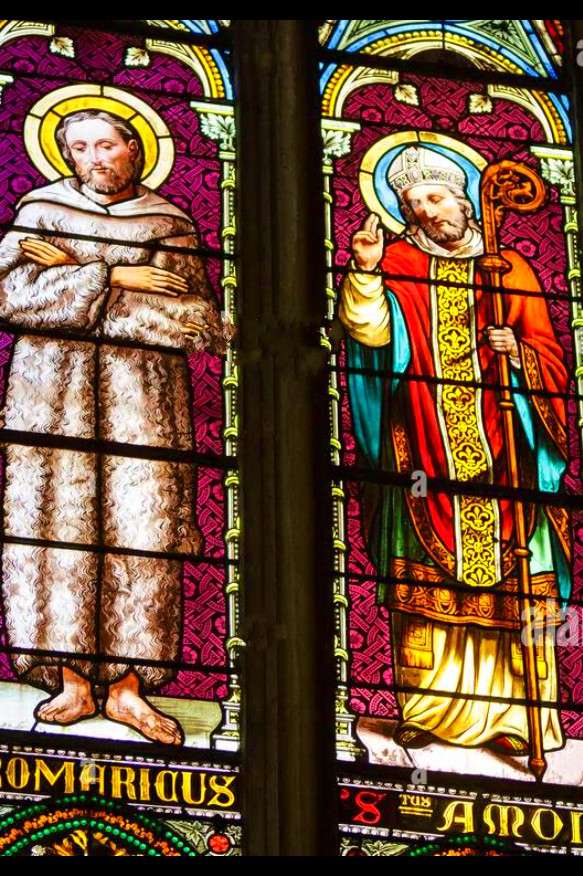
St Amatus OSB (c560-c 627) Monk, Abbot, Hermit, Penitent, miracle-worker, together with St Romaric, he founded Remiremont Abbey.
Biography:

https://anastpaul.com/2020/09/13/saint-of-the-day-13-september-saint-amatus-c-560-c-627/

St Barsenorius
St Columbinus of Lure

St Emiliano of Valence (Died 374) Bishop. The first Bishop of Valence, in France., although certain historians are uncertain of this. We believe that he governed this See from 347 until his death in 374.
Our Saint:

https://anastpaul.com/2023/09/13/saint-of-the-day-13-september-st-emiliano-of-valence-died-374-bishop/

St Eulogius of Alexandria (Died 608) Bishop and Confessor, Abbot, Defender of the True Faith against the heresy of Monophysitism (the denial of the two natures of Jesus), great friend and correspondent of St Gregory the Great.
Feast day changed after 1969 but today is his Feast.
About this holy Father:
https://anastpaul.com/2022/06/13/saint-of-the-day-13-june-st-eulogius-of-alexandria-died-c-607-archbishop-confessor/


St Evantius of Autun
St Gordian of Pontus
St Julian of Ankyra
St Litorius of Tours (Died 371) Bishop
St Macrobius
St Marcellinus of Carthage

St Maurilius of Angers (c 336-426) Bishop of Angers, Cantor for Saint Ambrose, (Bishop of Milan and Father and Doctor of the Church), Disciple of St Martin of Tours.
His Life:

https://anastpaul.com/2019/09/13/saint-of-the-day-saint-maurilius-of-angers-c-336-426/

St Nectarius of Autun

St Notburga (c 1265-1313) Virgin, Laywoman, Servant, Apostle of the poor, Born in c 1265 at Rattenberg, Austria and died on 13 September 1313 at Buch , Austria.
Lovely Saint Notburga:

https://anastpaul.com/2021/09/13/saint-of-the-day-13-september-saint-notburga-c-1265-1313/

St Philip of Rome
St Venerius of Tino

Posted in SAINT of the DAY

Saint of the Day – 12 September – Saint Juventius of Pavia (1st Century) Bishop and Confessor

Saint of the Day – 12 September – Saint Juventius of Pavia (1st Century) Bishop, Confessor, Disciple of St Hermagoras the first Bishop of Achilles (died c70), himself a disciple of St Mark the Evangelist. Patronages – of the City and the Diocese of Pavia, Italy, co-patron with St Syrus. Also known as – Eventius, Iventius, or Inventius.

The Roman Martyrology reads today: “At Pavia, St Juventius, the Bishop, mentioned on the 8th of February (the day of his birthday into Heaven, although today is his Feast Day). He was sent to that City, with St Cyrus by blessed Hermagoras, disciple of the Evangelist St Mark. They both preached the Gospel of Christ there and, being renowned for great virtues and miracles, illumined the neighbouring Cities by divine works. They close their glorious careers in peace, invested with the Episcipol dignity.

This image from a Fresco in Pavia Cathedral is either St Juventius or St Syrus

In the company of St Syrus, Juventius fought against Arianism. He worked to challenge and convert those who followed Arianism in his Diocese.

Traditions regarding both St Juventius and Syrus vary, the latter being the first Bishop of Pavia and we presume our Saint was his Assistant or Auxiliary Bishop. We have nothing further on St Juventius personal details.

St Syrus here:
https://anastpaul.com/2021/12/09/saint-of-the-day-9-december-saint-syrus-of-pavia-1st-century/

Posted in MARIAN TITLES, SAINT of the DAY, The HOLY NAME of MARY

Feast of the Holy Name of Mary (1683 ), St Dymphna (7th Century) Virgin Martyr and the Saints for 12 September

Feast of the Holy Name of Mary (1683 ) – 12 September:
This Feast was first observed at Cuenca, Spain in 1513, then extended to the Universal Church and assigned to its present place and rank by Pope Innocent XI in 1683, in thanksgiving to God and the Blessed Virgin, for the liberation of Vienna, France and the signal victory over the Turks on 12 September 1683.
It is the Titular Feast of the Society of Mary (Marianists) and of the Congregation of the Oblates of Mary Immaculate.

Blessed Mother Mary:
https://anastpaul.com/2017/09/12/blessed-memorial-of-the-most-holy-name-of-mary-12-september/
AND:
https://anastpaul.com/2023/09/12/saint-of-the-day-12-september-the-feast-of-the-holy-name-of-mary/

St Dymphna (7th Century) Virgin Martyr “The Lily of Éire,” Virgin Martyr, Princess.
Patronages – runaways, mental disorders, neurological disorders, survivors of incest, survivors of sexual assault, depression, anxiety.
St Dymphna Life and Death:

https://anastpaul.com/2020/05/15/saint-of-the-day-15-may-saint-dymphna-7th-century-the-lily-of-eire-virgin-martyr/

St Ailbe (Died 528) Bishop “The Patrick of Munster,” Confessor, Evangelist – Saint Ailbe is venerated as one of the four great Patrons of Ireland.
Biography:

https://anastpaul.com/2020/09/12/saint-of-the-day-12-september-saint-ailbe-died-528-the-patrick-of-munster/

Blessed Apolinaris Franco Garcia OFM (1575-1622) Priest, Martyr, Franciscan Friar (Observant), Missionary to Japan. He was Beatified by Pope Pius IX on 27 July 1867.
On the same occasion, one hundred and sixty other Japanese martyrs who died between 1617 and 1632 were Beatified.
His Life and Death:

https://anastpaul.com/2021/09/12/saint-of-the-day-12-september-blessed-apolinaris-franco-garcia-ofm-1575-1622-priest-martyr/

St Autonomous
St Curonotus
St Dominic Magoshichi
St Eanswida
St Francis of Saint Bonaventure
St Franciscus Ch’oe Kyong-Hwan

St Guy of Anderlecht (c950–1012) Hermit and Pilgrim known as “the Poor Man of Anderlecht.”
His Life:

https://anastpaul.com/2019/09/12/saint-of-the-day-12-september-saint-guy-of-anderlecht-c-950-1012/

Martyrs of Alexandria – 6 Saints: A group of Christians Martyred in the persecutions of Diocletian. We know little more than their names – Hieronides, Leontius, Sarapion, Seleusius, Straton and Valerian. They were drowned c 300 at Alexandria, Egypt.

Martyrs of Phrygia – 3 Saints: Three Christians who were Martyred for destroying pagan idols. We know little more than their names – Macedonius, Tatian and Theodolus. They were burned to death in 362 in Phrygia (modern Turkey).

Posted in SAINT of the DAY

Saint of the Day – 11 September – Saint Theodora the Penitent (Died 491) Abbot, Penitent, Recluse.

Saint of the Day – 11 September – Saint Theodora the Penitent (Died 491) Abbot as Theodore, Penitent, Recluse. Born in Alexandria, Egypt and died in 491 of natural causes in Egypt. Also known as – Theodora of Alexandria.

Theodora had been a married woman in Alexandria, Egypt. But she had succumbed to the attentions of another man and had committed adultery. Filled with remorse, she became a penitent, dressed as a man to enter the Monastery, where she later became the Abbot.

She was accused of sinful relations by a woman who had just had a child. Rather than reveal her identity, she agreed to leave the Monastery, keeping the child with her, raising it patiently.
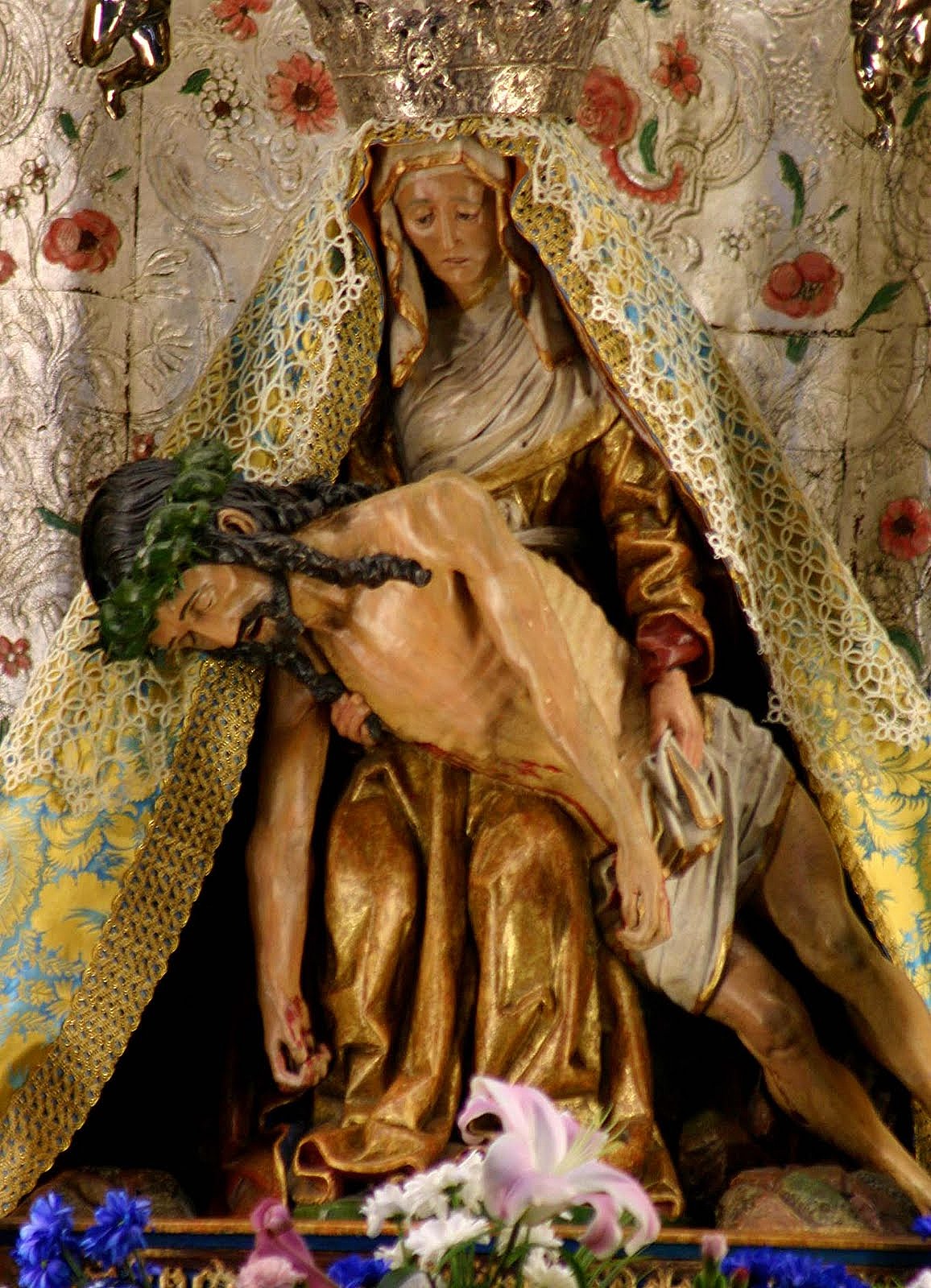
It was only after her death that it was discovered that the Abbot Theodore, unjustly accused, was Theodora, a holy woman.