Saint of the Day – 13 February – Saint Castor (Died c400) Priest, Hermit, evangeliser. Born in Aquitaine in France and died in around 400 in Karden , today part of Treis-Karden on the Moselle in Rhineland-Palatinate, Germany. Patronage – of the City of Koblenz, in Germany. Also known as – Castore, Kastor, … of Karden. The name Castor is derived from Greek and means “the excellent one.”
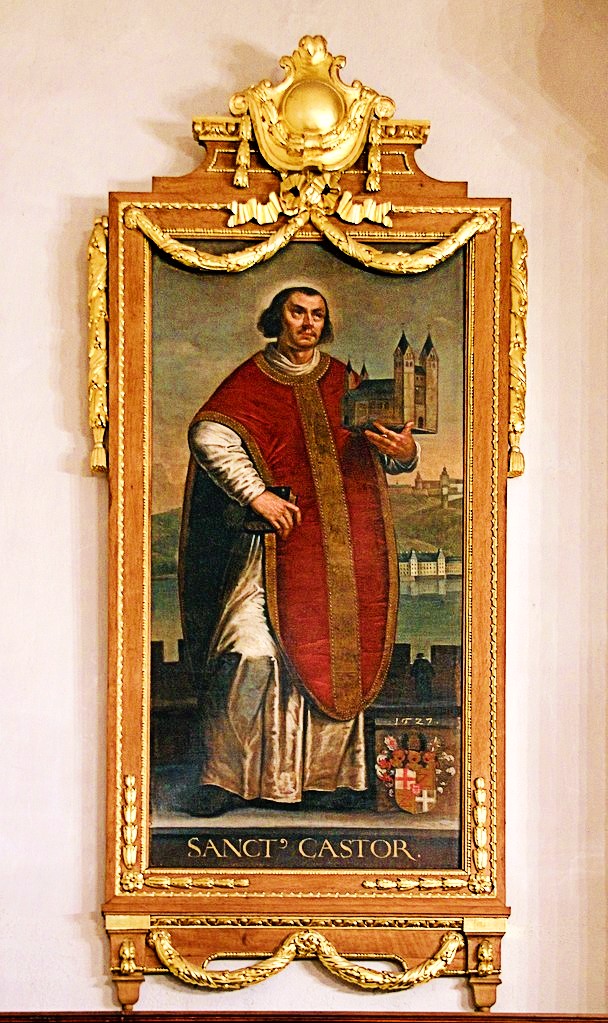
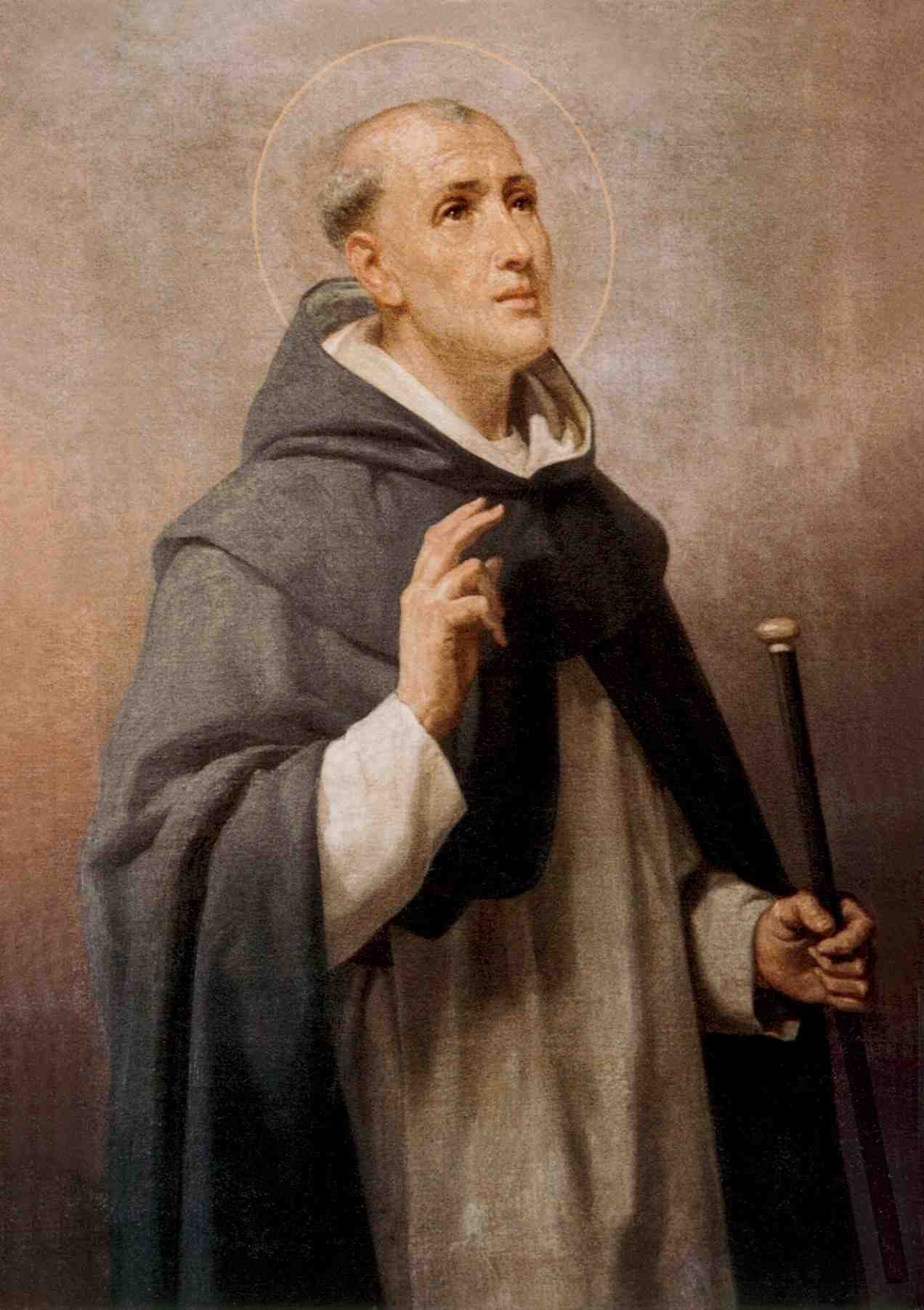
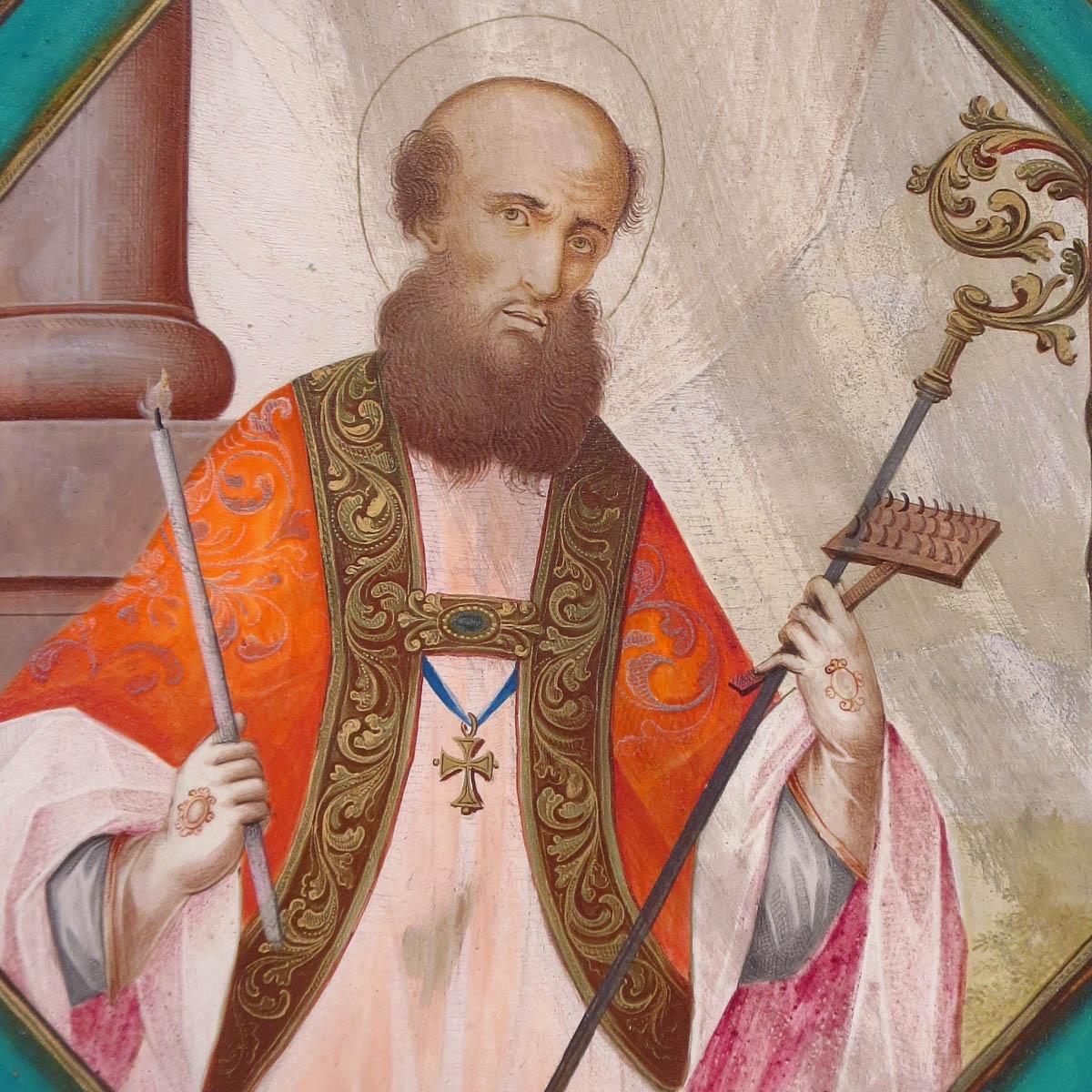
This painting at the Basilica of St Castor in Koblenz
According to the legendary life story from the 10th/12th Century, Castor was a student of the Saint Bishop Maximinus of Trier and was Ordained a Priest by him.
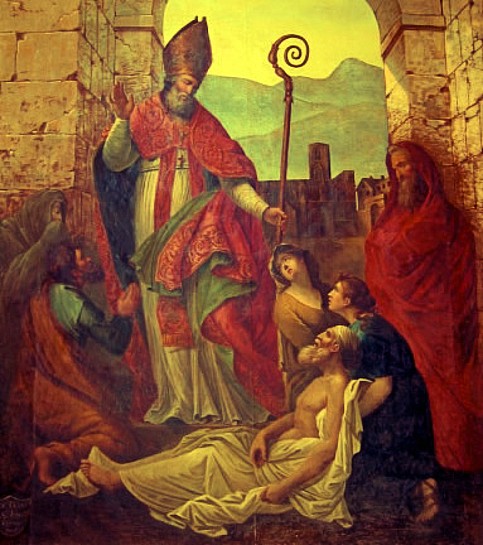
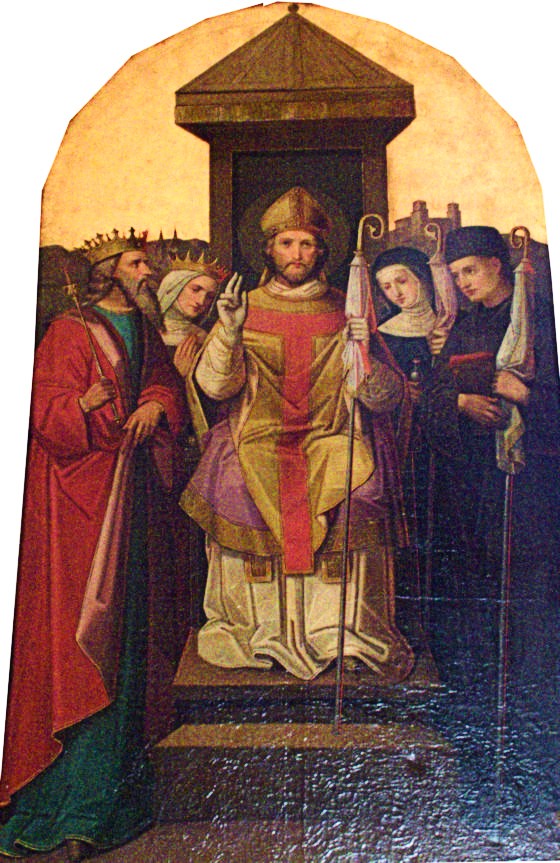
St Castor is presented to Bishop Maximin by his parents. Designed by Joseph Anton Nikolaus Settegast for Frescoes in the Koblenz Cathedral.
He lived as a Hermit in Karden and there, united disciple companions to lead an exemplary pious life. Castor’s companions included the Aquitanian pilgrim Saint Potentinus and Potentinus’ two sons Felicius and Simplicius.
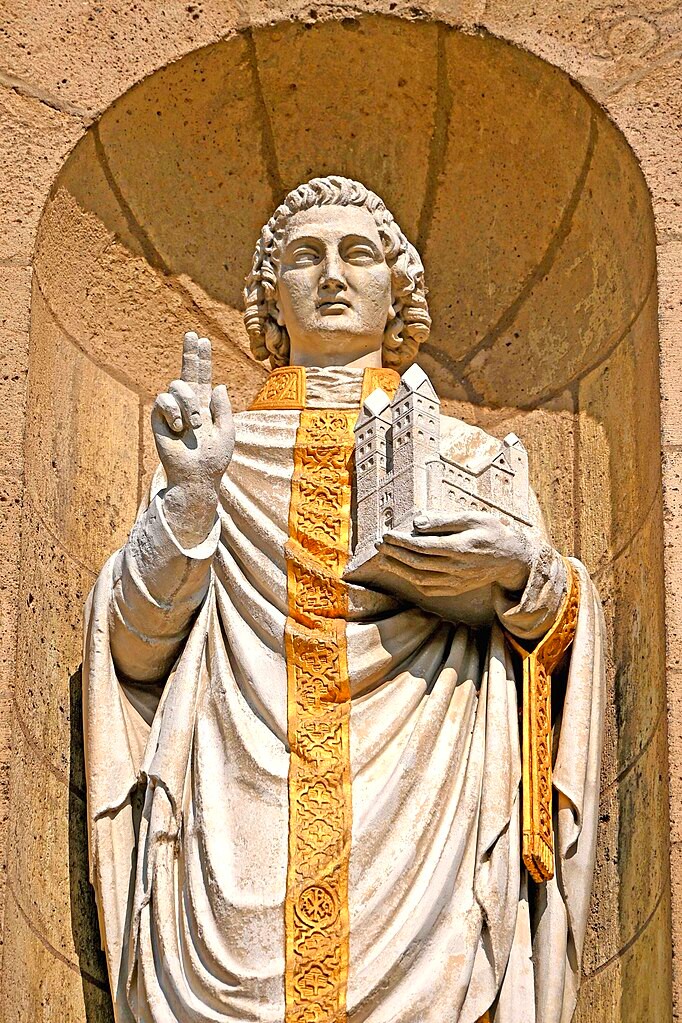
Statue in front of the Church of St Castor in Karden
A tale tells how Castor asked Moselle boatmen for salt. But they only mocked him and wanted to continue sailing. Suddenly a violent wind arose and whipped the waves so high that the boat threatened to capsize. In their distress, the boatmen begged the man of God for help. Castor knelt down and prayed – as suddenly as it had come, the storm subsided. The pagan boatmen were converted by this miracle and thanked Castor with plenty of salt.
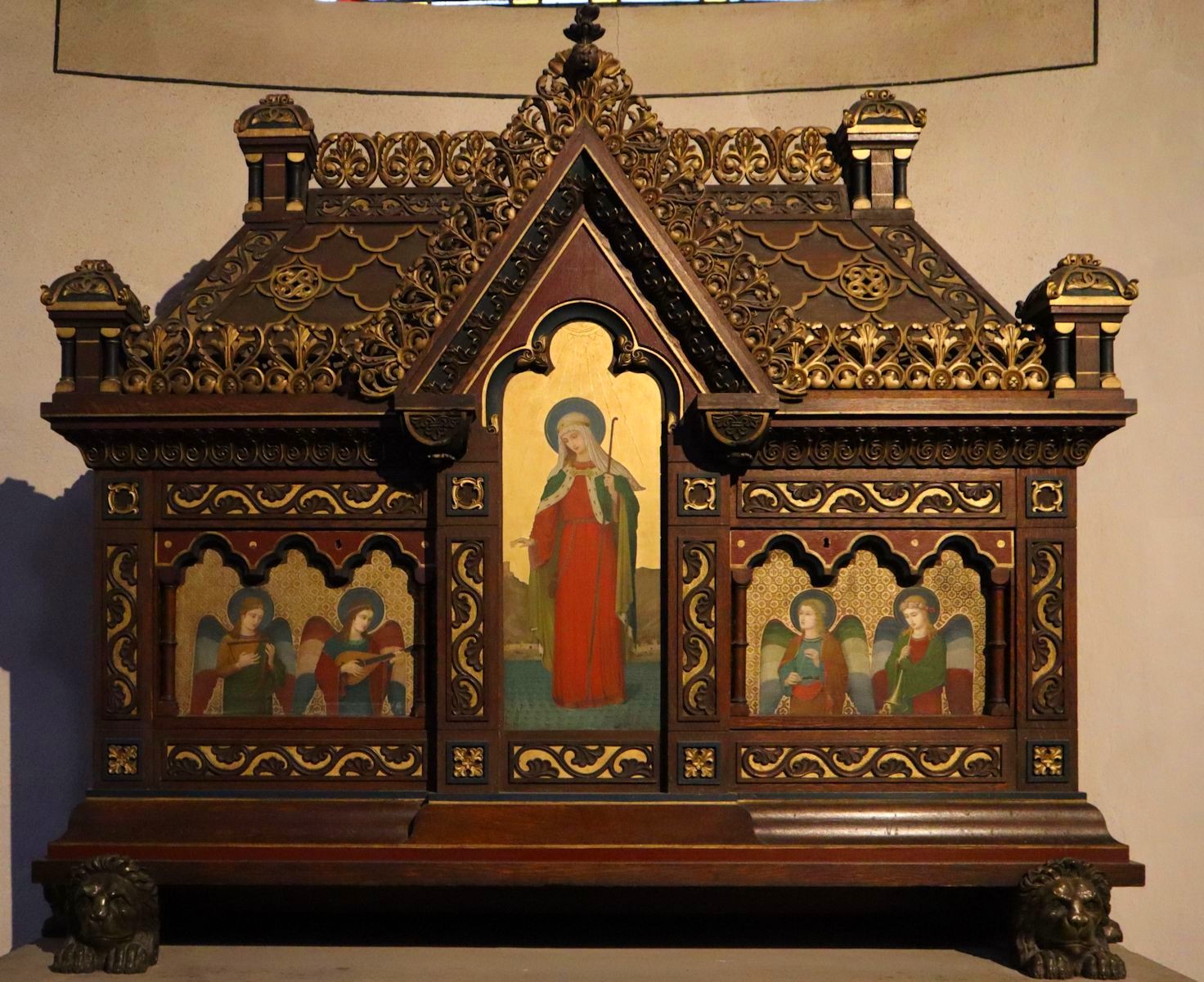
Relic Shrine, 1906, in the Kastorkirche in Koblenz
Castor died at Karden at an advanced age.
Reliquary made of gilded fir-tree wood, 15th Century, in the Church of St Castor in Karden
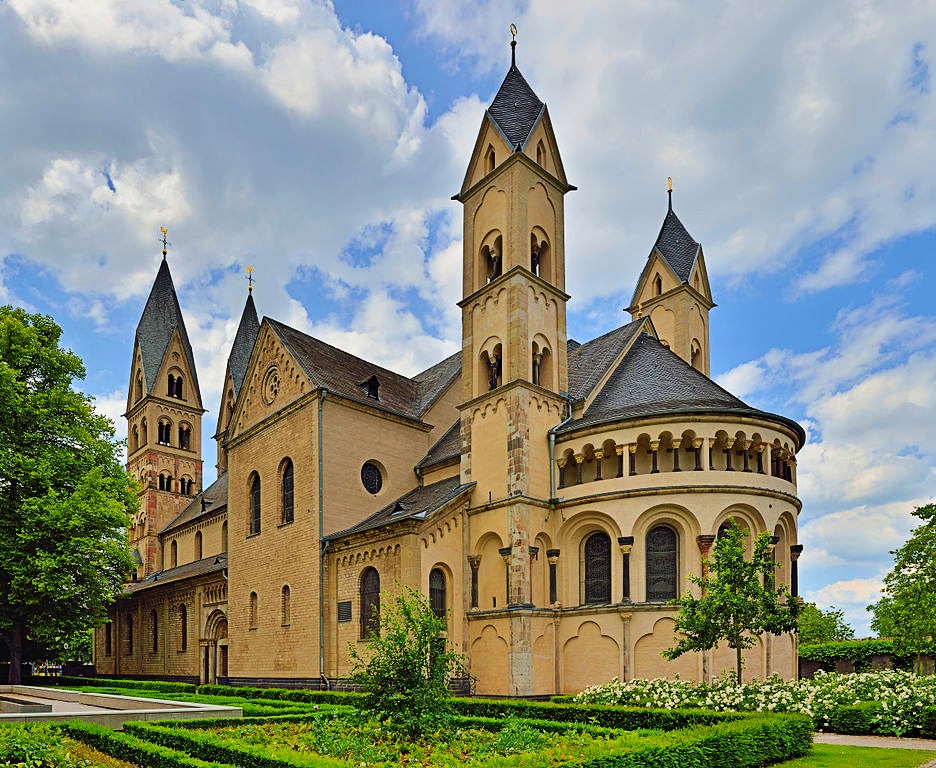
Castor’s cult maintained in Trier was – like that of Potentinus of Steinfeld – evidently intended to strengthen influence in the Lower Moselle region, since the area actually belonged to the Diocese of Mainz. Bishop Wiomad of Trier found – again possibly to document a claim to this area – bones in Karden around 782 which were identified as Castor’s Relics and transferred them to the Church then dedicated to St Paulinus of Trier which then received the Patronage of Castor. In 836, most of these Relics were then brought by Archbishop Hetti of Trier to Koblenz, to the later Collegiate Church built by him, of which Castor became the Patron; this Church was rebuilt in the 11th/12th Century as a Basilica dedicated to St Castor.
St Catherine de Ricci OP (1522-1590) Virgin, Tertiary of the Order of Preachers, Mystic, Stigmatist, Ecstatic, Counsellor to many in both secular and spiritual matters, a highly admired Administrator and Advisor,blessed with many mystical charism including visions of Christ, both as a Baby and Adult, bilocation and miracles. Her body is Incorrupt. A Mighty Handmaid: https://anastpaul.com/2022/02/13/saint-of-the-day-13-february-saint-catherine-de-ricci-op-1522-1590/
Saint of the Day – 12 February – Saint Ethelwald (Died c740) Bishop of Lindisfarne from 721 until his death, Abbot. Also known as – Aethelweald, Aedilauld, Ethilwald, Ethelwold. Additional Memorial – 21 April (translation of his Relics). Ethelwald is the last Bishop of Lindisfarne to have been revered as a Saint. He is often mistaken for his near contemporary, Æthelwold of Farne.
Born between the 7th and 8th Centuries, Ethelwald was a disciple of Saint Cuthbert (c634-687) known as “The Wonder-Worker of England.”
Having entered the Monastery of Melrose, he became first Prior and thethe Abbot. In 721, after the death of Bishop Ealfrid, he was elected as the Bishop of Lindisfarne.
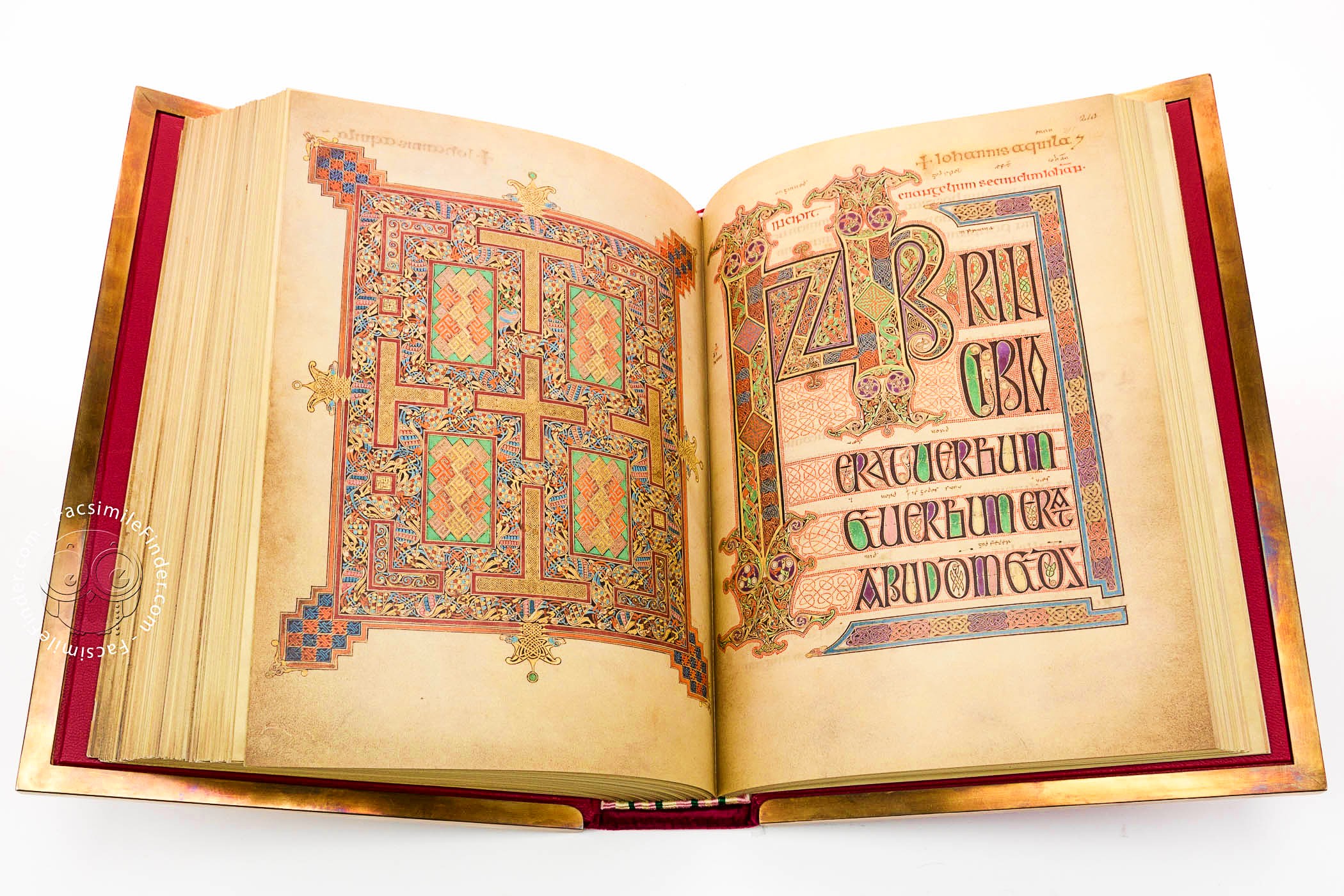
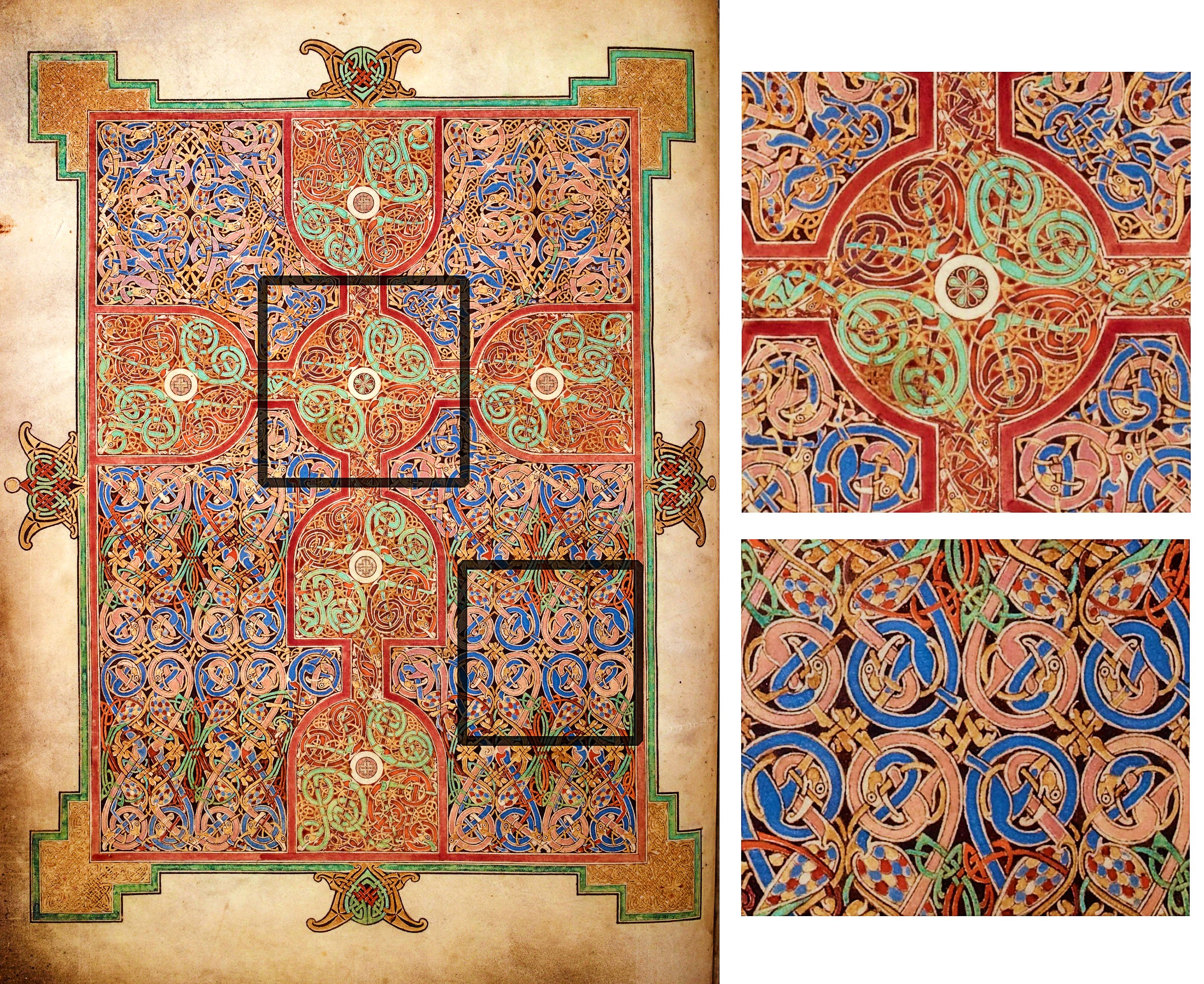
He is most remembered for his contribution to the production of the renowed Illuminated Lindisfarne Gospels. Ethelwald took the raw Manuscripts which his predecessor Eadfrith had collected and had Billfrith bind them. The Lindisfarne Gospel ( which I have been blessed to see) now resides in the British Museum.
He died around the year 740 and was buried in the Cathedral. His Relics, together with those of Saint Cuthbert and other Saints, were transferred to Scotland in 875, then to Chester in 883 and finally, to Durham in 995. Below might be St Ethelwald’s Tomb residing in the now protestant Cathedral at Durham. I have been there and have seen St Cuthbert’s Tomb but I cannot recall seeing St Ethelwald’s.
The Seven Holy Founders of the Order of the Blessed Virgin Mary (the Servites) Pope Leo XIII Canonised them all on 15 January 1888. After the Canonisation of the Seven Founders, their Feast was inserted in the General Roman Calendar for celebration on 11 February, the anniversary of the granting of canonical approval to the order in 1304. In 1909, 11 February became the Feast of Our Lady of Lourdes and the Feast of the seven founders was moved to 12 February. In 1969 the Feast was moved to 17 February. HERE: https://anastpaul.com/2018/02/17/saints-of-the-day-17-february-the-seven-holy-founders-of-the-servite-order-osm-formation-on-15-august-1233/
St Alexius of Kiev St Ammonius of Alexandria Bl Anthony of Saxony
St Anthony Kauleas of Constantinople (c829-901) Bishop, Confessor, Defender of orthodoxy. Anthony was a pious man exercising mortification and penances. He generously endowed monastic foundations and founded or re-founded the Kauleas Monastery with the support of the emperor, who preached at the Church’s dedication. Buried in the Church of his Monastery, Anthony was held responsible for many miracles. The Roman Martyrology reads: “At Constantinople, St Anthony, a Bishop in the time of the Emperor Leo VI.” Holy and Courageous St Anthony: https://anastpaul.com/2024/02/12/saint-of-the-day-12-february-st-anthony-kauleas-of-constantinople-c829-901-bishop-confessor/
St Modestus of Alexandria St Modestus of Carthage St Modestus the Deacon Bl Nicholas of Hungary St Sedulius Bl Thomas of Foligno
Martyrs of Albitina – 46 Saints: During the persecutions of Diocletian, troops were sent to the churches of Abitina, North Africa on a Sunday morning; they rounded up everyone who had arrived for Mass and took them all to Carthage for interrogation by pro-consul Anulinus. The 46 who proclaimed their Christianity were executed. We know some of their names and stories. They were tortured to death in 304 in prison at Albitina, North Africa.
Saint of the Day – 11 February – Saint Castrensis (5th Century) Bishop of Carthage and then in Italy, of Castel Volturno or Sessa Aurunca. Patronages – All in Italy: Castel Volturno, Marano di Napoli, the City and Archdiocese of Monreale, San Castrese di Sessa Aurunca. Also known as – Castrensis of Sessa, Castrensis of Campania, Castrensis of Africa, Castrense… Castrese… Castrenze… Additional Memorial – 1 September as one of the Exiles of Campania; in Castel Volturno he is celebrated in August; in Capua on 29 December and on the 2nd Sunday in May, as the date of the translation of his Relics.
The Roman Martyrology reads today: “At Capua, St Castrensis, Bishop.”
St Castrensis depicted in the Naplian Marble Calendar
Castrensis who lived around the 5th Century, is remembered in the “Marble Calendar” of Naples even though very little is known about him.
During the persecution of the Vandals led by Genseric (390-477), together with other Priests and faithful, he was sent off embarked on an old ship without a rudder, an anchor and cables, with the aim of drowning all on board. But they landed miraculously in Campania, Italy on 10 May, where he began to carry out his Apostolate.
It is uncertain whether he was the Bishop of Castel Volturno or Sessa Aurunca but he led the faithful of his City with love and zeal.
Biographers report two miraculous prodigies performed by him during his life and the liberation of a man possessed by the devil and the saving of a ship full of people (both episodes are depicted in two Mosaic panels in the Cathedral of Monreale, see below). The inscription above the Mosaics says: “He saves the sailors and rescues them from the anger of the demon which he had forced to go out from the body of the posessed man.”
Castrensis died at the end of the 5th Century “among his people, after having celebrated the Mysteries and having descended, by himself, into the tomb” and was immediately venerated by the people throughout Campania and in many other regions.
The Blessed Virgin with St Castrensis, on the right of St John the Baptist
He was considered a martyr because he was depicted in some paintings, discovered around 1881 in a cave in Calvi (Caserta) and dating to the 7th Century, together with the Martyr Priscus.
The Archbishop of Capua, Alfano, who had to accompany Princess Giovanna, daughter of King Henry II of England and sister of Richard the Lionheart, to Palermo, brought as a wedding gift to King William II, the body of St Castrensis without the head which remained in Capua (see Vita di Guglielmo II , Palermo 1770).
The Relics are today preserved in the Cathedral of Monreale, in the Chapel of the same name , inside a silver urn made by Cardinal Cosimo Torres, in 1637. On the plaque of the urn one can read: “ St Castrensis, eternal Bastion of the City of Monreale. ”
Castrensis is highly venerated in Castel Volturno (Caserta), where, in August, a procession along the river, is held in his honour. In Capua, which celebrates St Castrensis on 29 December and the second Sunday of May, the date of the translation).
A Processional Statue of St Castrensis probably from Castel Volturno
St Calocerus (Died c130) Bishop and Confessor of Ravenna St Castrensis (5th Century) Bishop St Dativus the Senator Bl Elizabeth Salviati St Etchen of Clonfad St Eutropius of Adrianopolis St Felix the Senator
St Gobnata (6th Century) Abbess, Founder of a Convent and ‘Order’ of Sisters, Miracle-worker, Apostle of the sick. Patronages – of bees, beekeepers. About St Gobnata or Abigail:
St Lucius of Adrianople St Pedro de Jesús Maldonado-Lucero St Saturninus of Africa St Secundus of Puglia
St Severinus of Agaunum (Died c507) Abbot, Miracle-worker, gifted with Prophecy and healing the sick. Born in Burgundy, France and died in c507 at Chateau-Landon in Gatinais, of natural causes whilst travelling towards his Monastery. The Roman Martyrology reads: “At Chateau-Landon, St Severin, Abbot of the Monastery of Aqaunum, by whose prayers the Christian King Clovis, was deliovered from a long sickness.” Holy Severinus: https://anastpaul.com/2024/02/11/saint-of-the-day-11-february-st-severinus-of-agaunum-died-c507-abbot/
St Simplicius of Vienne (Died c417) Bishop St Theodora the Empress
Guardians of the Sacred Scriptures: Also known as – Anonymous Martyrs in Africa– Martyrs of Africa – Martyrs of Numidia – Martyrs of the Sacred Books A large number of Christians tortured and murdered in Numidia (part of modern Algeria) during the persecutions of Diocletian but whose names and individual lives have not survived. They were ordered to surrender their sacred books to be burned. They refused. Martyrs. c 303 in Numidia.
Martyrs of Africa – 5 Saints: A group of five Christians who were Martyred together; we know nothing else but the names of four of them – Cyriacus, Oecominius, Peleonicus and Zoticus.
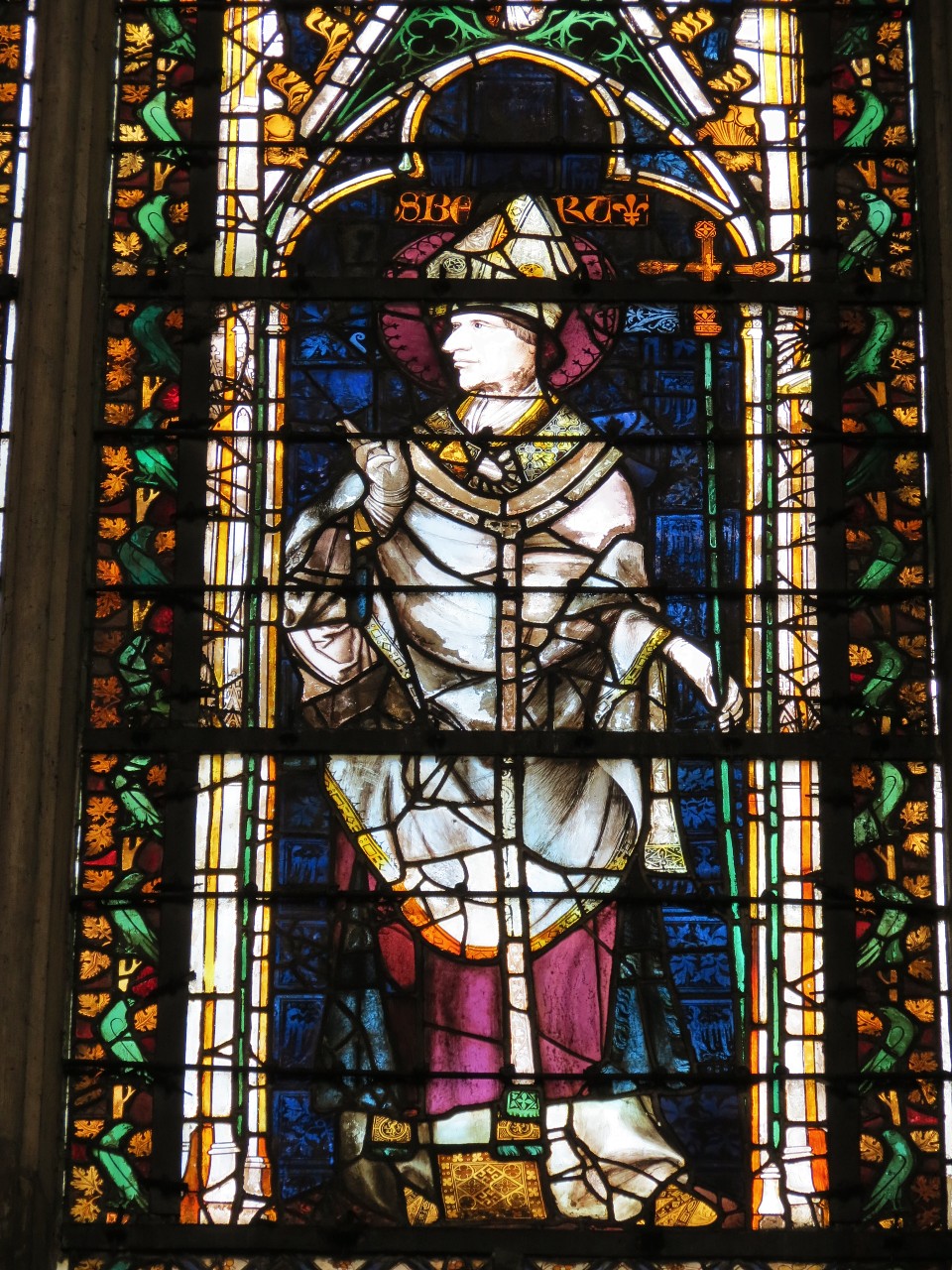
Saint of the Day – 10 February – Saint Bruno von Waldeck (c1000-1055) Bishop of Minden, Germany, renowned and fervent Preacher, evangeliser, Apostle of the needy and careful defender and promotor of the social needs of his flock, In the list of Bishops of the Diocese he is ranked 16th after Siegbert, who died in 1036 and before Egilbert. The Diocese of Minden was erected by Charlemagne in the year 803, whose first Bishop was Erkanbert, a Monk of the Abbey of Fulda, one of the first missionaries in that territory. Through the story of tradition, it is believed that Saint Bruno led his community from 5 May 1037 to 10 February 1055, the date of his death. Also known as – Bruno of Waldeck, Brun/o of Minden, run…
Unknown German Bishop who might be our St Bruno
Saint Bruno von Waldeck, the 16th Bishop of Minden, from 1037 to 10 February 1055, was a man of deep faith and devotion, who dedicated himself passionately to his pastoral work, promoting the spread of Christianity and the well-being of his flock.
Born around 1000 to a noble family, Bruno received a high-level education which prepared him to hold important positions in the Church. He became a Royal Chaplain and in 1036 a Canon at the then Cathedral in Magdeburg.
In 1037, at the direction of Emperor Henry III, he was appointed as the Bishop of Minden, a Diocese located in north-western Germany. Bruno proved to be an enlightened and wise Bishop, who dedicated himself passionately to his pastoral work. He was a fervent preacher, who worked to spread Christianity among the pagan populations who inhabitedthe region.
He was also a tireless builder of Churches and Monasteries which helped strengthen the presence of the Church. One of his major contributions was the foundation of the Monastery of St Maurice on the Werder in the Town of Minden. The Monastery was an important centre of culture, education and devotion and contributed to the growth of the Christian Faith in the region. In 1434, the Monastery was moved to its current location on the opposite side of the Weser, due to the risk of flooding. In 1810, due to the protestant upheavels, this wonderful Monastery was closed after many oppresions and restrictions. Its Church remains and thank goodness still belongs to the Catholic Church.
Bruno also took an interest in the well-being of his faithful, promoting social justice and charity towards the needy.
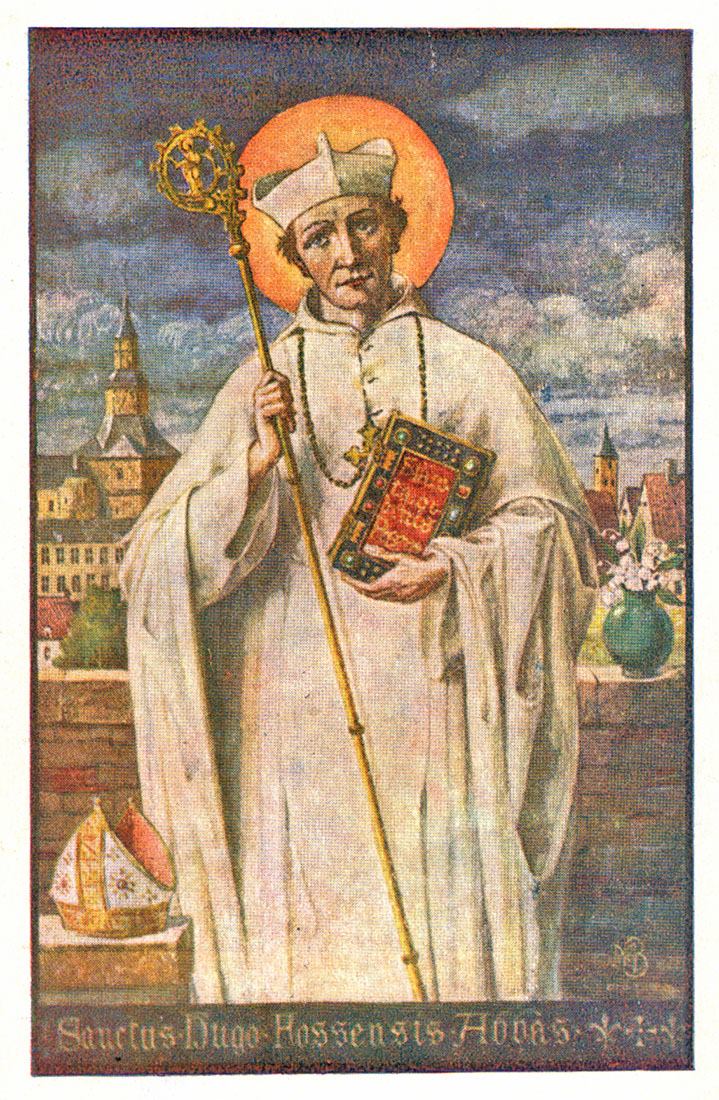
Blessed Hugh of Fosse OPraem (c1093-1164) Priest of the Order of Canons Regular of Prémontré, also known as the Premonstratensians, the Norbertines and the White Canons. Hugh was one of St Norbert’s first disciples and later became the first Abbot of Prémontré. Blessed Hugh was Beatified on 13 July 1927 by Pope Pius XI. Blessed Hugh’s Life of Grace: https://anastpaul.com/2023/02/10/saint-of-the-day-10-february-blessed-hugh-of-fosse-opraem-c1093-1164-priest-abbot/
St Paganus Bl Paul of Wallachia Bl Pierre Frémond St Porfirio St Prothadius of Besançon St Salvius of Albelda St Silvanus of Terracina
St Soteris the Martyr (Died c304) Virgin Martyr. The Roman Martyrology reads: “At Rome, on the Appian Way, St Soteres, Virgin and Martyr, who was descended of a noble race, as St Ambrose testifies but for the love of Christ, set at naught the consular and other dignities of her family. On her refusal to sacrifice to the gods, she was, for a long time, cruelly buffeted. After she had overcome varioys other torments, she was struck with the sword and joyfully went to her heavenly Spouse.” Her Life and Death: https://anastpaul.com/2024/02/10/saint-of-the-day-10-february-saint-soteris-the-martyr-died-c304-virgin-martyr/
Martyred Soldiers in Rome: A group of ten Christian soldiers who were Martyred together for their faith. We know little more about them but four of their names – Amantius, Hyacinth, Irenaeus and Zoticus. • 120 at Rome, Italy. They were buried on the Via Lavicana outside RomeAmantius, Hyacinth, Irenaeus, Zoticus.
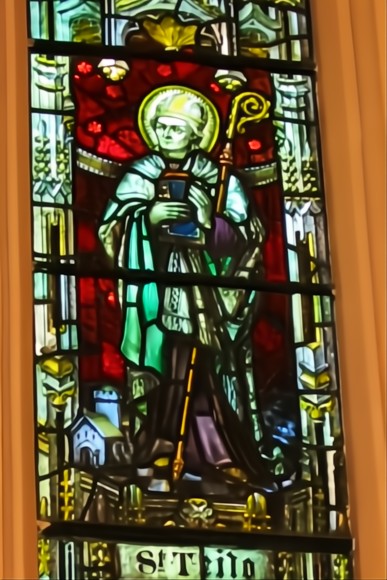
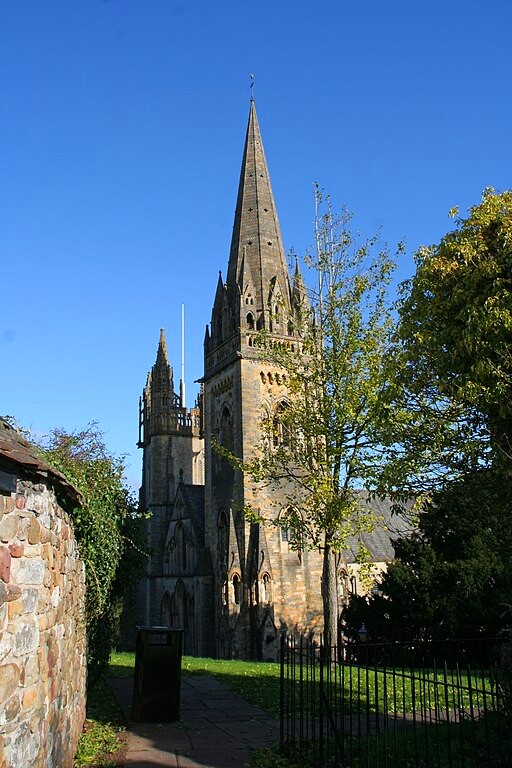
Saint of the Day – 9 February – Saint Teilo (6th Century) Bishop of Llandaff, Wales. Welsh born in Penally, Wales and died at his See of Llandaff. Most Welsh sources confirm that Teilo was a close relative of St David, spiritual student of St Dyfrid and St Paulinus of Wales. Patronages – against fever, of horses, of apple orchards, farms and farmers, the City and Diocese of Cardiff (Capital of Wales), the Town of Saint-Thélo in Brittany, France . Also known as – Teilio, Teilus, Thelian, Teilan, Teilou, Teliou, Elidius, Eliud, Dillo, Dillon. The festival in honour of Saint Teilo is observed at different times of the year at different locations. In Wales and at Saint-Thélo, on 9 February; at Dol, on 29 November and on 25 November in the rest of the Churches in Brittany. Following 1752, however, his fair at Llandeilo in Wales, was not observed on the 9th but eleven days later on the 20th February or on the Sunday following that date.
St Teilo was probably born at Penally, near Tenby in Pembrokeshire, Wales, around the year 500. Although there are conflicting reports about his early life, he was thought to be a cousin of the national Patron of Wales, St David.
He received his education at institutions directed by Saints, one being St Dyfrid, who he succeeded as the Bishop of Llandaff, founding the very first Church in Llandaff, where the Cathedral stands today. He was also educated by St Paulinus of Wales at a place thought to be Whitland in Carmarthenshire. Here he is thought to have made contact with his cousin and became a close companion St David.
He travelled extensively, including Brittany, Rome and Jerusalem and to St David’s in north Pembrokeshire, where David founded his Monastery. Teilo too founded a Monasteries in Llandeilo (the name of the Town literally means ‘Church of St Teilo’), the place with which he is most associated and at Penally. Penally Abbey was located on the pilgrims’ trail to St David’s.
Legend has it that Teilo went on pilgrimage to Jerusalem with Saints David and St Padarn around the year 518. Three seats, one decorated ornately in gold, one of bronze and one of cedar, were erected in their honour in readiness for their Ordination as Bishops by the Bishop of Jerusalem. The legend has it that the humble Teilo chose the simple wooden seat.
A plague of Yellow Fever devastated parts of Wales in the year 547. Teilo and his followers fled, firstly to Cornwall and then to Brittany, where they were welcomed by St Samson of Dol. It is thought that Teilo and Samson planted a grove of apple-bearing trees between Dol and Cai, where the apple groves are still known as the groves of Teilo and Samson and still bear fruit today.
At Landaul in Brittany, Teilo is considered the Patron Saint of apple trees and the town of Saint-Thélo in Brittany which bears his name. At St. Teilo’s Church, one of the stained glass windows, shows an apple tree in honour of St Teilo.
Teilo returned from Brittany to Llandaff. He died on 9 February, most likely in the year 560. After his death he became one of the most venerated Saints in Wales. Several sites in Wales claim to house his remains. A tomb of St Teilo is located in Llandaff Cathedral while a part of his skull is kept in the South Chapel.
At least 25 Churches and schools in Wales, Brittany, Cornwall and Devon are dedicated to him.
St Attracta of Killaraght St Brachio of Auvergne St Cuaran the Wise St Didymus of Membressa St Donatus the Deacon St Eingan of Llanengan St Emilian of Membressa St Lassa of Membressa Bl Marianus Scotus St Maro St Nebridius of Egara St Nicephorus of Antioch St Poëmus of Membressa St Primus the Deacon
St Raynald of Nocera (c1150-1217) Bishop of Nocera, Umbria, Italy, Hermit, Monk, Abbot. His body is incorrupt. The Roman Martyrology reads: “In Nocera Umbra, St Rainaldo, Bishop, formerly a Camaldolese Monk of Fonte Avellana, who, while carrying out the Episcopal office, firmly preserved the habits of monastic life.” The Ascetic Bishop: https://anastpaul.com/2022/02/09/saint-of-the-day-9-february-saint-raynald-of-nocera-c-1150-1217/
St Romanus the Wonder Worker St Ronan of Lismore St Sabino of Abellinum
St Sabinus of Canosa (c461–566) Bishop, Confessor, Monk, Papal Legate, Miracle-worker, graced with the charism of prophecy, Defender of the Faith against heretics, friend of Saint Benedict of Nursia, builder of Churches and Monasteries, following the Benedictine discipline of Ora et labora. His Zealous and Devoted Life: https://anastpaul.com/2021/02/09/saint-of-the-day-9-february-saint-sabinus-of-canosa-c-461-566-bishop/
St Teilo (6th Century) Bishop of Llandaff, Wales
Martyrs of Alexandria: An unknown number of Christians who were massacred inthe 4th Century Alexandria, Egypt by Arian heretics for adhering to the true Faith.
Martyrs of Membressa: A group of 44 Christians Martyred together. We know little else about them some names – Ammon, Didymus, Emilian, Lassa, Poemus They were Martyred in Membressa in Africa.
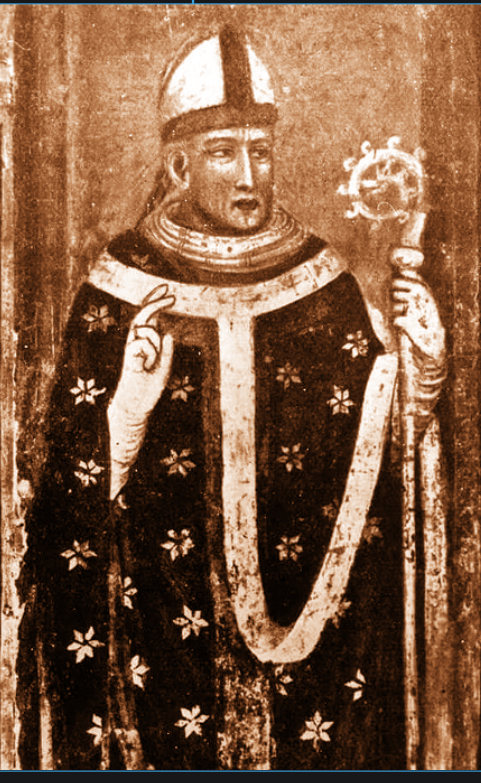
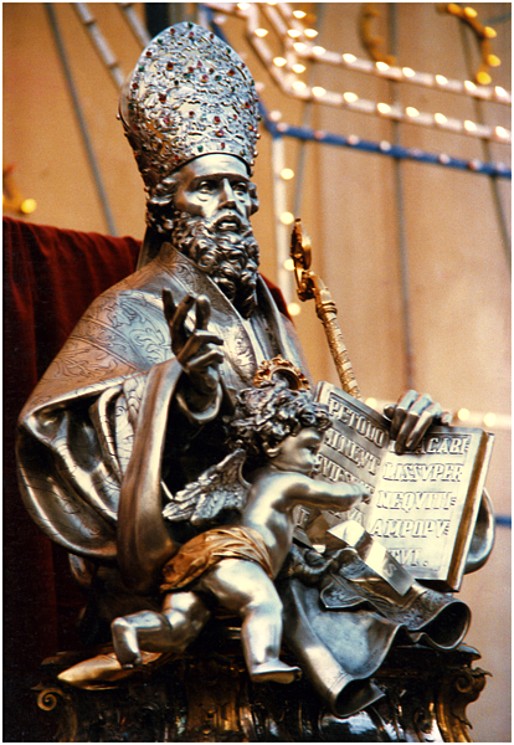
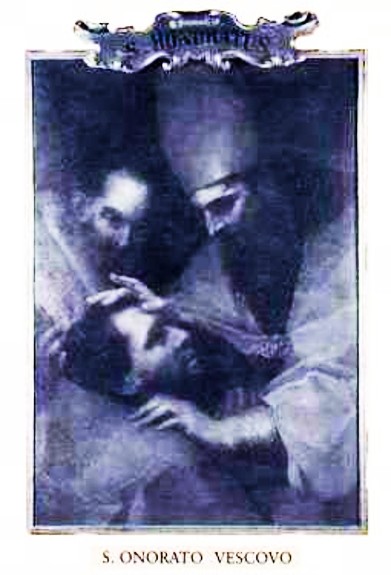
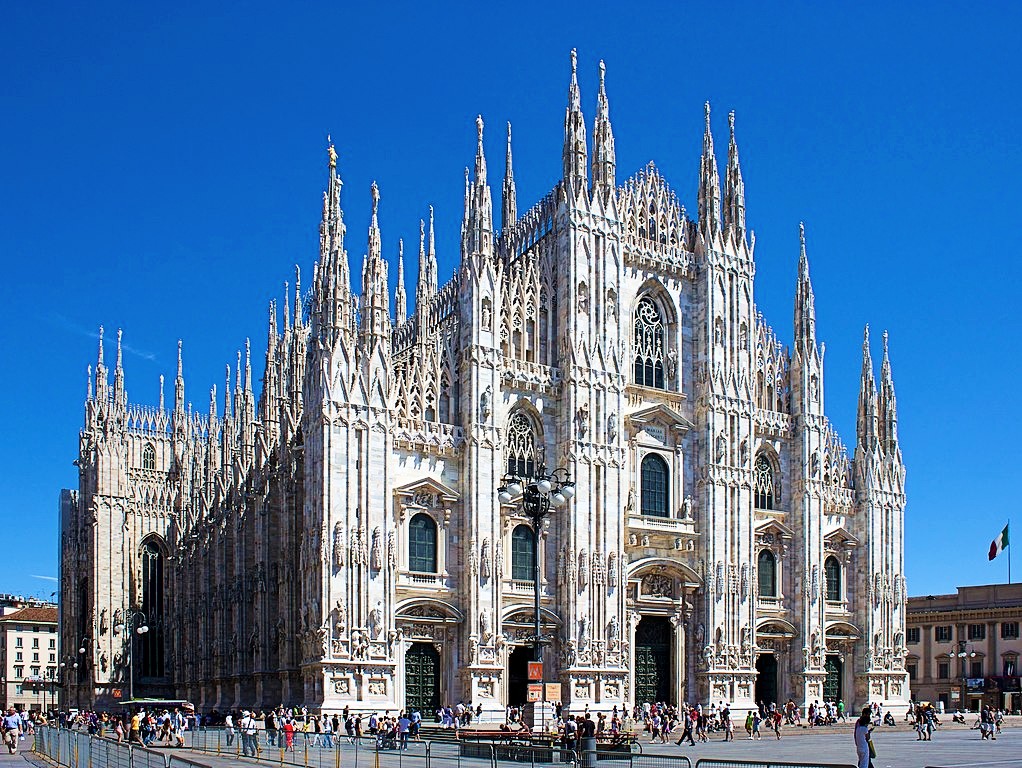
Saint of the Day – 8 February – St Honoratus (Died c571) Bishop and Confessor of Milan. Honoratus was of Milanese origin but he died in exile in Genoa in c571. He was the 29th Bishop of Milan from 560 to 571. Also known as – Onorato, Honoratus of Milan, Honoratius …
The Roman Martyrology reads today: “At Milan, the demise of St Honoratus, Bishop and Confessor.”
Honoratus loved his Diocese and rejoiced when, accompanying his guests to visit the Basilica of St Laurence, they exclaimed: “It surpasses in beauty almost all the Churches in Italy.”
He desired peace and, when the Lombards entered Milan on 3 September 569, he moved with part of the Clergy to Genoa. He hoped and prayed the Barbarian would not be cruel to the population, to the poor people, who were entrusted to him as their shepherd. Perhaps he was inspired by the Bishops who had preceded him: especially St Eusebius, a hundred years earlier, who had left Milan upon the arrival of Attila, to return immediately to support the victims and reassure them.
Unfortunately, Honoratus died after a few months in Genoa and the Lombard danger continued for decades. He now rests in the Basilica of Sat Eusebius, from where he repeats to us the words of Saint Ambrose: “How can you expect to overcome the test, if, in the Name of Christ, you do not know how to face adversities and dangers? For this reason, hope is the only thing which does not disappoint our hearts.”
According to the Liber Notitiae Sanctorum Mediolani (14th Century) Saint Honoratus’ Feast was celebrated on 8 January, later set on 8 February.
St Cyriacus of Rome St Dionysus of Armenia St Elfleda of Whitby St Emilian of Armenia St Giacuto St Gisela St Honoratus (Died c571) Bishop and Confessor of Milan St Inventius of Pavia Bl Jacoba de Settesoli St Kigwe St Laureatus of Rome St Lucius of Rome St Meingold St Mlada of Prague St Nicetius of Besançon St Oncho of Clonmore St Paul of Rome
St Stephen of Muret (c1046-1124) Abbot, Founder of the Abbey of Grandmont (the Mother House) and the Order of Grandmont. The Roman Martyrology reads: “At Muret, near Limoges, the birthday of the Abbot, St Stephen, Founder of the Order of Grandmont, celebrated for his virtues and miracles.” A Grace-filled Life: https://anastpaul.com/2024/02/08/saint-of-the-day-8-february-saint-stephen-of-muret-c1046-1124-abbot/
Martyrs of Constantinople: Community of 5th Century Monks at the Monastery of Saint Dius at Constantinople. Imprisoned and Martyred for loyalty to the Vatican during the Acacian Schism. 485 in Constantinople.
Martyrs of Persia: An unknown number of Christians murdered in early 6th-century Persia. Legend says that so many miracles occurred through the intercession of these Martyrs that the King decreed an end to the persecution of Christians.
Saint of the Day – 7 February – St Moses the Hermit (Died c389) Bishop and Apostle of the Saracens, Hermit in the desert and then Bishop, Missionary, Peace-maker. Moses had no fixed See after his Consecration as Bishop, journeying instead with his nomadic flock, converting many and keeping peace between the different tribes and the Roman imperial authorities. Born in Arabia and died there in c389 of natural causes. Also known as – Moses of the Saracens, Venerable Moses the Bishop. (Not to be confused with Moses the Black (330-405), another Saint of the region who is celebrated on 28 August.)
The Roman Martyrology reads today: “In Egypt, St Moses, a venerable Bishop, who first led a solitary life in the desert and being afterwards made Bishop, at the request of Mauvia, the Queen of the Saracens, converted the great part of that barbarous oeiokes to the Faith and rich in merits, passed peacefully to his reward.”
It is not known when or precisely where Moses was born but for some time in the 4th Century, Moses, like his ancient namesake, spent many years travelling and preaching in the wilderness in the border regions between Egypt and Syria.
His life of preaching attracted a large following. This reputation was noted by Socrates of Constantinople, the Christian Historian, who describes him as “a Saracen by birth, who led a monastic life in the desert” and, who had become “exceedingly eminent for his piety, faith and miracles.”
Socrates’ description of Moses comes by way of his retelling of the exploits of Queen Mauvia, who promised to end her armed revolt against the Roman Empire, on the condition that Moses be “constituted Bishop over her nation.”
Valens, the Roman Emperor, had no choice but to accept. Mauvia’s forces, originating in southern Syria, had defeated those of Rome’s on multiple occasions, marching through Palestine and Phoenicia, to reach the border with Egypt. Moses, however, refused to be Ordained by the Arian patriarchal See at Alexandria, choosing to be Consecrated by an orthodox Bishop living in exile instead.
Pope Gregory III (Papal reign 731-741) recalled the example of Moses as a Hermit Monk then Bishop, in a dialogue with the nephew of St Boniface, when trying to convince him to join his uncle in the German mission. It is quoted of the author, Irfan Shahid: “Thus an Arab Monk Bishop was presented as a model for the English Saint.”
FIRST FRIDAY of the Month: Attend Holy Mass and Receive Holy Communion on each First Friday; The Nine Fridays must be consecutive; They must be made in honour and in reparation to His Sacred Heart.
St Romuald (c 951-1027) Monk, Abbot, Ascetic, Founder of the Camaldolese Order and a major figure in the Eleventh-Century “Renaissance of eremitical asceticism.” His Feast Day is today and was thus from 1595. It was changed to 19 June in 1969 after Vatican II. St Romuald’s body is incorrupt. St Romuald’s Life: https://anastpaul.com/2018/06/19/saint-of-the-day-19-june-st-romuald-c-951-1027/
St Adaucus of Phrygia St Amulwinus of Lobbes St Anatolius of Cahors Bl Anselmo Polanco Bl Anthony of Stroncone
St Augulus St Chrysolius of Armenia St Fidelis of Merida
St Lorenzo Maiorano (Died 545) Bishop of Siponto, Italy, Miracle-worker gifted with Prophecy and visions. Collaborator with St Michael in the Apparition at Gargano, known as “The Defender of the People.” St Lorenzo is also called the “Patron Saint of Foreigners” by the citizens of Siponto, having been a foreigner himself. His Life: https://anastpaul.com/2023/02/07/saint-of-the-day-7-february-saint-lorenzo-maiorano-died-545-bishop/
St Luke the Younger
Blessed Mary of Providence/Eugénie Smet HHS (1825-1871) Nun and Founder of the Society of the Helpers of the Holy Souls. Her apostolate has spread throughout the world – now in 24 countries and continues to minister to the Souls in the Body of Christ — both those on earth and those who have departed this world. Beatified in Rome on 26 May 1957 by Pope Pius XII. Biography: https://anastpaul.com/2021/02/07/saint-of-the-day-7-february-blessed-mary-of-providence-hhs-1825-1871/
St Meldon of Péronne St Moses the Hermit (Died c389) Bishop St Parthenius of Lampsacus
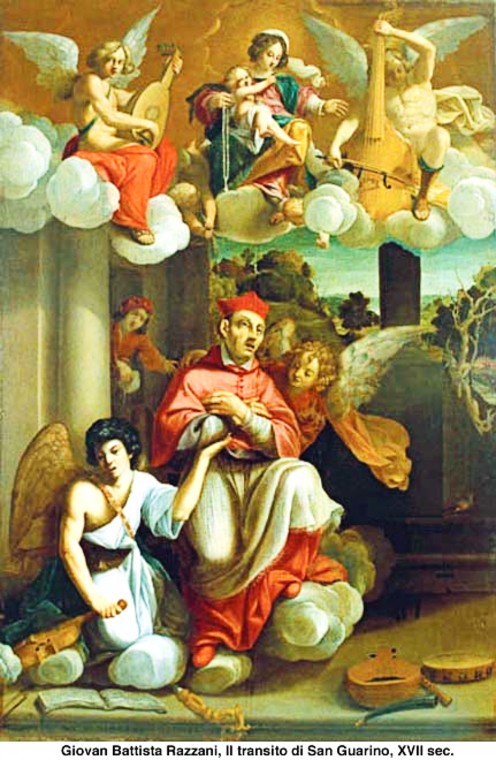
Saint of the Day – 6 February – St Guarinus Foscari CRSA (c1080-1158) Cardinal Bishop of Palestrina in Italy, from December 1144, Canon Regular of St Augustine, renowned for his great compassion and assistance to the poor of Palestrina. Born in c1080 in Bologna, Italy and died there of natural causes on 6 February 1158. He was Canonised by Pope Alexander III ia year after his death, in 1159. Also known as – Guarino, Guarinus of Palestrine, Guerin, Garin.
The Roman Martyrology states today: “At Bologna, St Guarinus, the Bishop of Palestrina and Cardinal, renowned for holiness of life.”
Guarinus Foscari was born in Bologna around 1080. He was a member of the noble Guarini household, while his mother was a Foscari. Guarinus Foscari was well educated and was quite fond of literature. Despite opposition from his parents, he was Ordained to the Priesthood at the age of 24. He was later named as the Canon of the Cathedral of Bologna. He was still at the Cathedral, when, in around 1104, he joined the Santa Croce Congregation of Canons at Mortara. Prior to his departure, he donated all of his goods to contribute towards the building of a hospital.
At the age of 59, Guarinus was elected to fill an opening which the death of the Bishop of Pavia created but evaded his Episcopal Consecration by escaping by clambering away, out of a window. Guarinus then went into hiding until another election was held.
During the Advent season of 1144, Pope Lucius II sent for him and he again attempted to avoid higher office. Lucius II had Guarinus arrested but he again escaped for a brief period. But again. Pope Lucius II had him appointed in December 1144 as the Cardinal-Bishop of Palestrina. He also bestowed on him a number of gifts suitable to a person of his new standing, including some fine horses which Guarinus immediately sold and distributing the funds to the poor.
Feeling unworthy of the position, Guarinus left his post twice. The first time, he was recalled from Subiaco due to the orders of Pope Eugene III. The second time he went to Ostia but, finding Saracens there,, he fled to Rome.
Guarinus was the Bishop for thirteen years and remained out of the troublesome Roman politics which so defined the time and temperament of Rome. As a Cardinal, he participated in three Conclaves which saw the elections of Pope Eugene III, Pope Anastasius IV and Pope Adrian IV.
Our Saint died at the age of 78 on 6 February 1158. He had been breatly loved for his humility and for his great generosity to the poor. He was Canonised by Pope Alexander III in 1159 just over a year after his death
Guarinus was buried in the Crypt of the Cathedral of Sant’Agapito. In 1473 Palestrina was looted and his remains were hidden for fear of desecration. Although a search was made in 1754, they were not located.
Saint Pedro Bautista Blásquez y Blásquez OFM (1542-1597) Priest Martyr and the 26 Martyrs of Japan – Died by Crucifixion on 5 February 1597. Canonised on 8 June 1862 by Pope Pius IX.
St Amand of Moissac St Amand of Nantes St Andrew of Elnone
St Antholian of Auvergne St Brinolfo Algotsson Cassius of Auvergne Bl Diego de Azevedo St Ethelburga of Wessex Bl Francesca of Gubbio St Gerald of Ostia St Gonsalo Garcia OFM St GuarinusFoscari CRSA (c1080-1158) Bishop St Guethenoc St Hildegund St Ina of Wessex St Jacut St Liminius of Auvergne St Maximus of Aurvergne St Mel of Ardagh St Melchu of Armagh St Mun of Lough Ree St Relindis of Eyck St Revocata St Saturninus St Tanco of Werden St Theophilus St Theophilus the Lawyer
St Vaast of Arras (c 453-539 or 540) Bishop – The First Bishop of Arras, France , Hermit, Ascetic, Miracle-worker, Advisor to King Clovis. The Roman Martyrology reads: “In Arras in Belgian Gaul, today in France, Saint Vedastus, Bishop, who, sent by Saint Remigius Bishop of Rheims to the devastated City, catechised King Clovis, re-established the Church and held it for about forty years and brought to an end, the need of work for evangelisation among the previously still pagan peoples of the region.” St Vaast is another Patron of eye diseases, problems and blindness. Biography: https://anastpaul.com/2022/02/06/saint-of-the-day-6-february-saint-vaast-of-arras-c-453-539-or-540/
St Victorinus of Auvergne
Martyrs of Emesa: At Emesa in Phrenicia, in the time of the Emperor Maximian, St Silvanus, the Bishop, who after having governed that Church for forty years, was delivered to the beasts with two other Christians and, having his limbs all mangled, received the Palm of Martyrdom. The other two are recorded as St Luke the Deacon and St Mucius the Lector.
Saint of the Day – 5 February – St Luca di Demenna (Died 995) Founder Abbot of the Monastery of Sts Elia and Anastasius in Carbone, Potenza, Italy, Miracle-worker. Born in Sicily and died on 5 February 995 at his Monastery in in Carbone in the Province of Potenza, Italy, of natural causes.
Luca was born in Sicily, in Demenna and was initiated into the Basilian asceticism in the Monastery of St Philip of Agira, where other famous Greek Monks of the 10th Century were also trained.
To escape the harassment of the invading Saracens, who had conquered the Island, he crossed the strait and went to place himself under the discipline of St Elias Speleota of Reggio. But soon the City of Reggio Calabria in southern Italy also became the target of Saracen raids, so Luca took the road further north. Here he founded a Monastery in the territory of Noepoli, where he restored the crumbling Church of St Peter and lived with his disciples for seven years, practicing the most rigourous asceticism and dedicating himself to working in the fields, so as to change the desert into a garden.
Desiring greater solitude, Luca moved to the territory of Agromonte, near the river Agri, where he restored the Monastery of St Julian. He lent his work of Christian charity to the soldiers wounded in the conflict between the Saracens and the Germans of Otto II; he fortified the castle of Armento and the Church of the Mother of God, leaving their custody to his disciples.
From here, in around 971, the famous Monastery of Sts Elia and Anastasius in Carbone in the Province of Potenza. This Monastery became the headquarters of St Luca, both as a fortified bulwark against the incursions of the Saracens and as a training ground for the many miracles that he worked there.
Here Luca died assisted by St Saba of Collesano on 5 February 995 and was buried in the Monastery Church, where he was publicly venerated as a Saint.
St Indract St Isidore of Alexandria St Jesús Méndez-Montoya Bl John Morosini St Kichi Franciscus St Luca di Demenna (Died 995) Abbot
St Modestus of Carinthia
Bl Primo Andrés Lanas St Saba the Younger St Vodoaldus of Soissons
Martyrs of Pontus: An unknown number of Christians who were tortured and martyred in assorted painful ways in the region of Pontus (in modern Turkey) during the persecutions of Maximian.
The Twenty-Six Martyrs of Japan: 26 Saints – the First Martyrs of Japan. Martyred on 5 February 1597 by Crucifixion, also known as Pedro Bautista Blasquez y Blasquez and 22 companions, along with Paulus Miki and 2 companions, were Beatified on 14 September 1627 by Pope Urban VIII, and Canonised on 8 June 1862 by Pope Pius IX.
Saint of the Day – 4 February – St Fingen (Died c1005) Abbot, Missionary, builder/restorer of Monastery buildings and Reformer of the practices of the communities living therein. Born in Ireland in the 8th Century and died in c1005 in Metz, France. Also known as – Fingen of Metz.
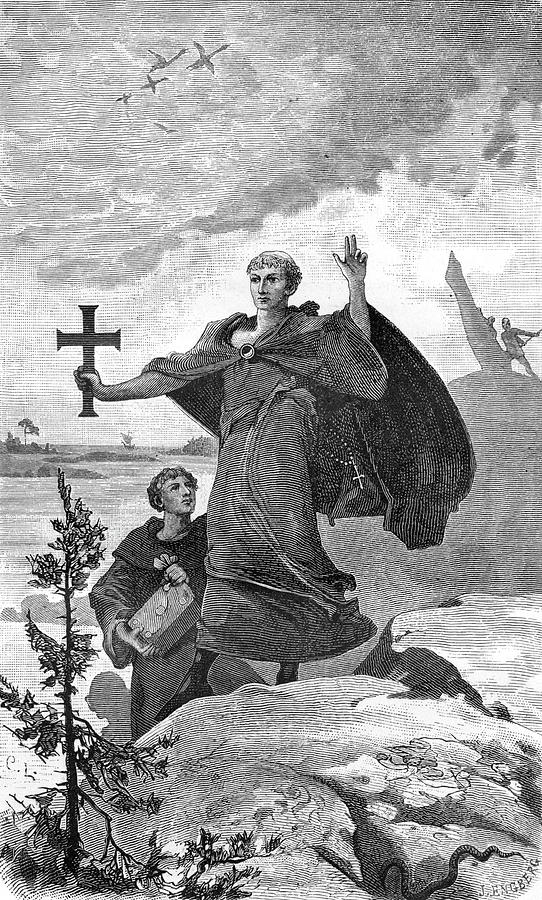
An image of an ancient Abbot
Fingen, a celebrated Irish Monk and Abbot, migrated to the Kingdom of Lothaire as a Missionary, where he acquired a reputation for restoring old Monastery buildings. Lothaire was a medieval successor Kingdom of the Carolingian Empire. It comprised present-day Lorraine (France), Luxembourg, Saarland (Germany).
In around 991, one of the Monasteries restored by Fingen, Saint Symphorien’s, was placed under Fingen’s care as the Abbot by Bishop Saint Adalbero.
At the insistence of the dowager Empress Saint Adelaide Pope John XVII issued a charter which declared that only Irish Monks would administer the Abbey as long as they could be found. She obtained a similar charter from King Otto III in 992.
Fingen’s final work, with the help of seven of his Irish Monks, was the restoration of Saint-Vannes in Verdun. By 1001, Saint-Vannes was attracting distinguished applicants, such as Blessed Frederick of Arras, Count of Verdun and his friend Blessed Richard, the Vicar of the Diocese of Rheims, who later became the Abbot of Saint-Vannes.
Fingen’s Relics can be found in Saint-Clement’s Church in Metz, (SEE BELOW) where the Epitah highly praises him.
St Isidore of Pelusium Martyr. No other information has survived.
St Jane de Valois O.Ann.M and TOSF (1464-1505) Princess, Queen, Founder, Religious Sister, Mystic, Teacher. Founded the monastic Order of the Sisters of the Annunciation of Mary. From this Order later sprang the religious congregation of the Apostolic Sisters of the Annunciation, founded in 1787 to teach the children of the poor. She was Canonised on 28 May 1950 by Pope Pius XII. Biography: https://anastpaul.wordpress.com/2018/02/04/saint-of-the-day-4-february-saint-jane-of-valois-o-ann-m-1464-1505/
St Themoius St Theophilus the Penitent St Vincent of Troyes St Vulgis of Lobbes
Jesuit Martyrs of Japan: A collective memorial of all members of the Jesuits who have died as Martyrs for the faith in Japan.
Martyrs of Perga – 4 Saints: A group of shepherds Martyred in the persecutions of Decius. The only details we have about them are the names – Claudian, Conon, Diodorus and Papias. They were Martyred in c 250 in Perga, Asia Minor (in modern Turkey).
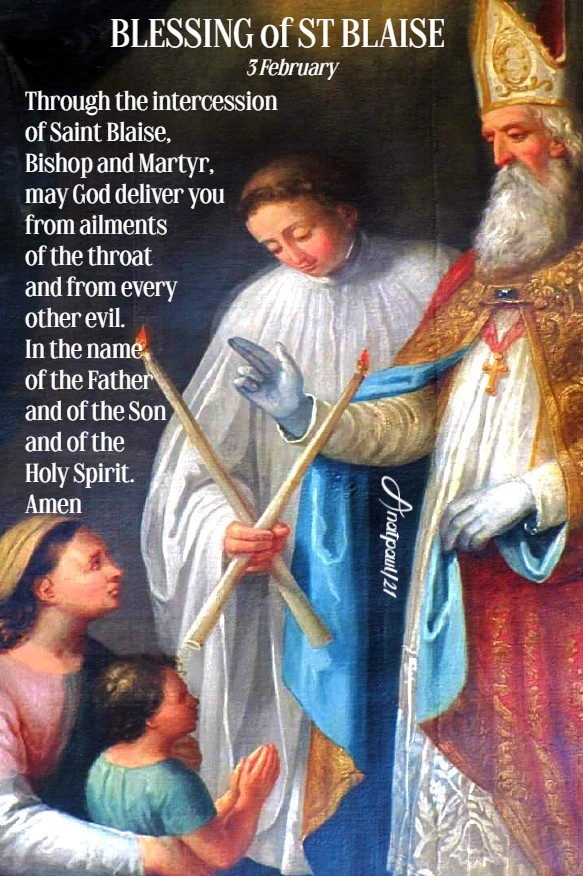
Quote of the Day – 3 February – St Blaise (Died c316) Martyr Bishop, Physician, Miracle-worker
The Blessing of the Throats is a Sacramental of the Church, ordinarily celebrated today, the Feast day of Saint Blaise.
THE BLESSING of ST BLAISE Through the intercession of Saint Blaise, Bishop and Martyr, may God deliver you from ailments of the throat and from every other evil. In the name of the Father and of the Son and of the Holy Spirit. Amen
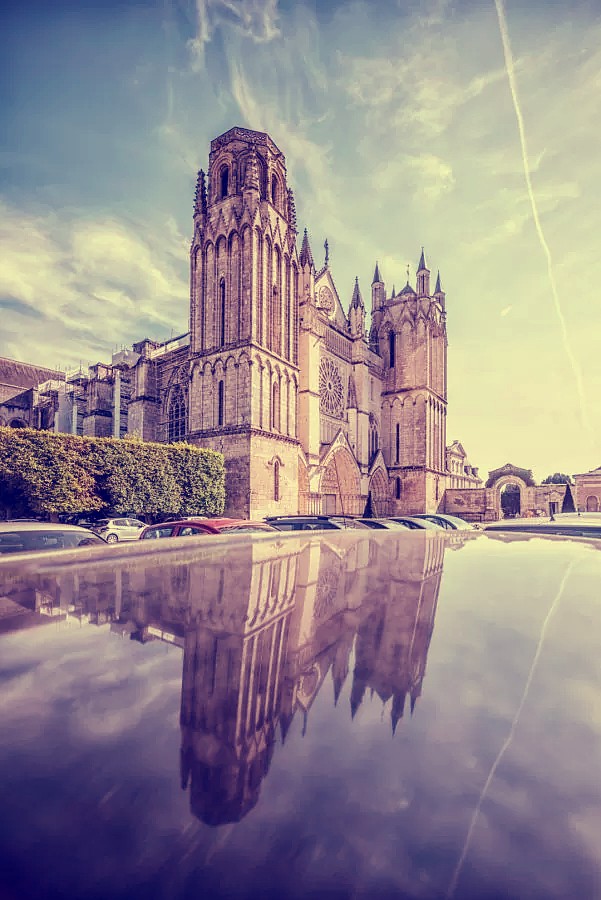
Saint of the Day – 3 February – St Leonius (4th Century) Priest in Poitiers and a disciple of St Hilary. We believe Leonius was born in Poitiers in the 4th Century. He died in the latter part of this Century late 4th century in Poitiers, Aquitaine, France of natural causes. Also known as – Leonius of Luçon, Leonio… Léone… Lienne… Additional Memorial – 14 February (in the Archdiocese of Poitiers).
Poitiers Cathedral of St Peter
Leonius was born in Poitiers into a Christian family. He studied Scripture and theology and was Ordained a Priest by St Hilary. His teacher, St Hilary, was a prominent Theologian and the Bishop of Poitiers who supported the Doctrine of the Trinity against Arianism which held that Jesus Christ was not God.
He was a faithful disciple of St Hilary and followed him into exile when the Emperor Constantius II began persecuting Christians who held the Doctrine of the True Faith and did not subscribed to the heresy of the Arians.
Leonius and St Hilary spent several years in exile, during which they preached the Gospel and fought against Arianism.
Leonius assisted St Hilary on his deathbed and died himself at an advanced age towards the end of the 4th Century. His Relics were transferred to La-Roche-sur-Yon in 994 but were lost during the Hundred Years’ War. The Diocese of Lucon celebrates St Leonius today, on 3 February and that of Poitiers, on the 14th of this month.
St Anna the Prophetess St Berlinda of Meerbeke St Blasius of Armentarius St Blasius of Oreto St Caellainn St Celerinus of Carthage St Clerina of Carthage St Deodatus of Lagny St Eutichio St Evantius of Vienne St Felix of Africa St Felix of Lyons Bishop of Lyons, France. No other information has survived.
St Lawrence the Illuminator ) Died 576) Bishop, Peacemaker – graced with the charism of granting clarity of understanding to both sides of disagreeing parties, Founded the Farfa Monastery where he died. Born in Syria and died in 576 at the Monastery at Farfa, Italy, of natural causes. Patronages – against eye diseases and blindness, of the blind – both bodily and spiritual cases. His Life of Grace: https://anastpaul.com/2024/02/03/saint-of-the-day-3-february-saint-lawrence-the-illuminator-died-576-bishop/
St Leonius (4th Century) Priest St Liafdag St Lupicinus of Lyon St Margaret of England St Oliver of Ancona St Philip of Vienne St Remedius of Gap St Sempronius of Africa St Tigrides St Werburga of Bardney St Werburga of Chester
Benedictine Martyrs: A collective memorial of all members of the Benedictine Order who have died as Martyrs for the Faith.
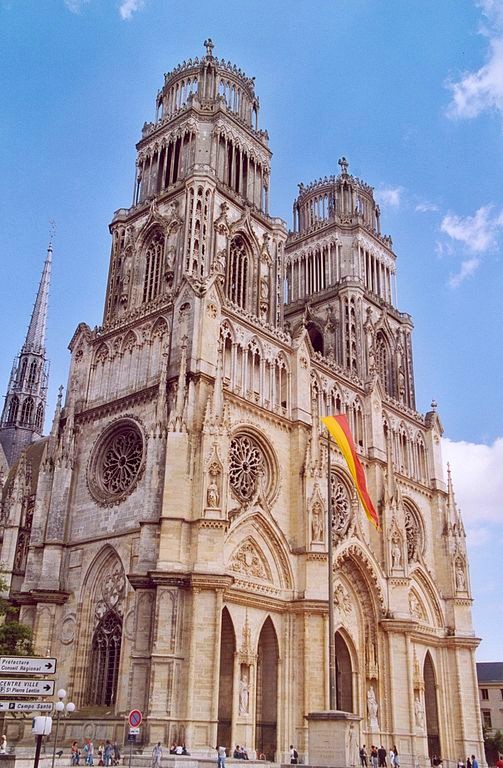
Saint of the Day – 2 February – St Flosculus (5th-6th Century) the 11th Bishop of Orléans, in France, a beloved and zealous shepherd of the French Diocese of Orléans, a renowned and highly effective Preacher and a active and committed Apostle of charity and of the poor and needy. Patronages – of the City and Diocese of Orléans , of all Preachers and Priests. Also known as – Floscolo, Flosculus. Flou, Fulcolus, Furcolus, Fuscolus.
The Roman Martyrology simply states: “At Orléans, the holy Bishop Flosculus.”
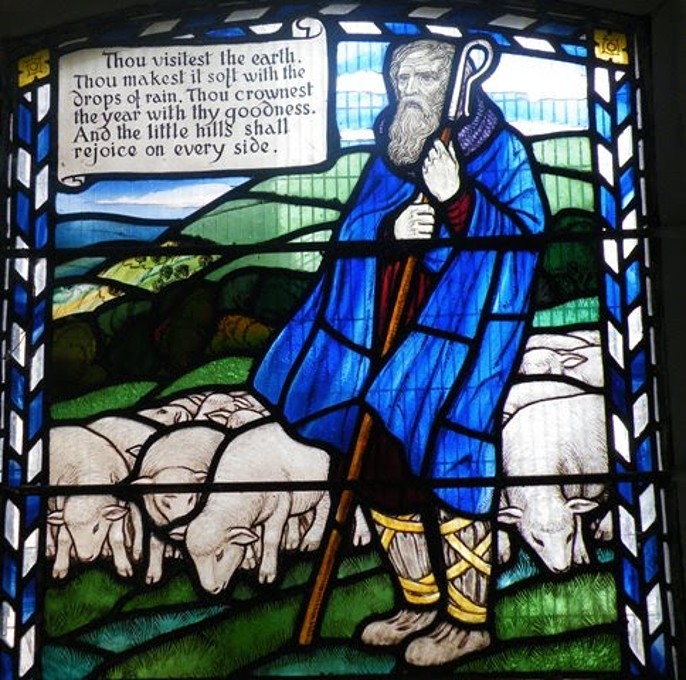
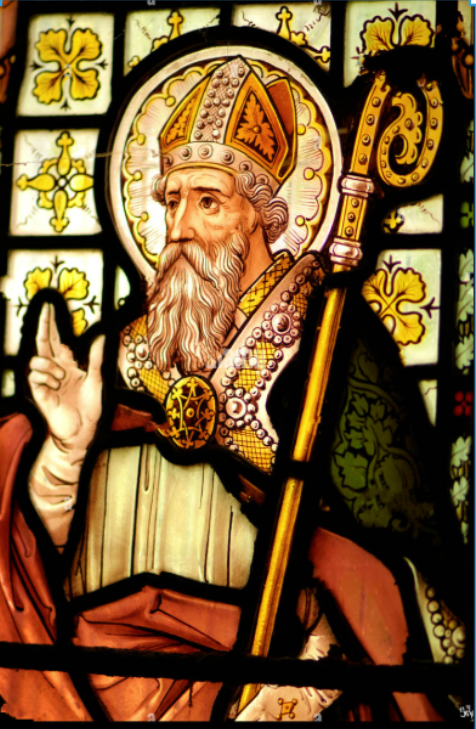
This Stained glass image is actually of an unknown Bishop
Very little is known about Flosculus but, it is certain that, he was a Bishop much loved by his people. His life is recorded by only one document, the Martyrology of St Jerome which reports his death on 2 February, unknown year.
The list of Bishops of Orléans, places him in eleventh place. From this latter record, we deduce that Flosculus was a very active Bishop in his Diocese. He was an eloquent preacher and a tireless worker for the spread of the Gospel. He also devoted himself to the poor and needy and was a great example of charity and compassion. His fame for sanctity, spread rapidly and he was soon venerated as a Saint by the people of Orléans. His cult was confirmed by Pope Pius IX in 1871.
In addition to the Martyrology of St Jerome, there are also some legends transmitted regarding Saint Flosculus. One of these relates that one day, while the saint was preaching in a square in Orléans, a man who had fallen from grace accused him of being an impostor. Flosculus, without batting an eye, looked him in the eye and said: “If what I say is false, may heaven strike me down!” At that moment, lightning struck the man, killing him instantly. This legend can also be seen as a metaphor for the strength of Saint Flosculus’ faith. His words, were so powerful, being the Word of his Master, that they could defeat evil!
On this date, St Flosculus’ Feast, 2 February, Holy Masses and Processions in his honour are held in many Churches in Orléans. The Saint is the Patron of the City and Diocese of Orléans and of all Preachers and Priests.
In Lombardy, Saint Flosculus is especially venerated in the Province of Mantua, Italy. In Castiglione delle Stiviere, in Mantua, there is a Church dedicated to the Saint. In this Church, on 2 February, a Procession and festivities are held in his honour.
Our Lady of the Candles – Nuestra Señora de la Purificación y la Candelaria, is a Marian title and image venerated by Filipino Catholics. The image, which is enshrined on the balcony of Jaro Cathedral, is known as the Patroness of Jaro District of Iloilo City and the whole of the Western Visayas. The Feast Day of Our Lady of the Candles is on Candlemas (2 February) and is celebrated in Iloilo City with a Solemn Pontifical Mass presided by the Archbishop of Jaro.
St Adalbald of Ostrevant St Adeloga of Kitzingen St Agathodoros of Tyana St Apronian the Executioner Bl Bernard of Corbara St Bruno of Ebsdorf St Candidus the Martyr St Columbanus of Ghent
St Cornelius the Centurion (1st Century) traditionally believed to have become the First Bishop of Caesarea, the Roman Centurion who is considered to be the one of first Gentile to convert to the Faith, (along with the conversion and Baptism of the Ethiopian eunuch – Acts 8). as related in Acts of the Apostles 10:1-49. The Baptism of Cornelius and his household, is an important event in the history of the early Church, for it points to the first century use of infant Baptism. His Feast was moved after 1969 but should be today. The Wonderful Faith of St Cornelius: https://anastpaul.com/2021/10/20/saint-of-the-day-20-october-saint-cornelius-the-centurion-1st-century/
St Cornelius’ dream
St Felician the Martyr St Feock St Firmus of Rome St Flosculus (5th-6th Century) Bishop of Orléans St Fortunatus the Martyr St Hilarus the Martyr
St Lawrence of Canterbury (Died 2 February 619) The Second Archbishop of Canterbury, the successor of St Augustine of Canterbury from 604 until his death in 619, but he was Consecrated as Archbishop by his predecessor, St Augustine, during Augustine’s lifetime, to ensure continuity in the office, Benedictine Monk, Missionary. He was a member of the Gregorian mission sent from Italy to England to Christianise the Anglo-Saxons. About St Lawrence: https://anastpaul.com/2022/02/02/saint-of-the-day-2-february-saint-lawrence-of-canterbury-died-619/
Saint of the Day – 1 February – Saint Severus (Died c344) the 12th Bishop of Ravenna, previously a married wool-merchant and father of 2 daughters. Severus had been miraculously elected as the Bishop by a Dove. Born in Ravenna and died there on 1 February in c344 of natural causes. Patronages – glove makers, hatters, weavers.
The Roman Martyrology states today: “At Ravenna, the holy Bishop Severus, whose great virtues deserved that he should be raised to the Episcopate by the sign of a Dove.”
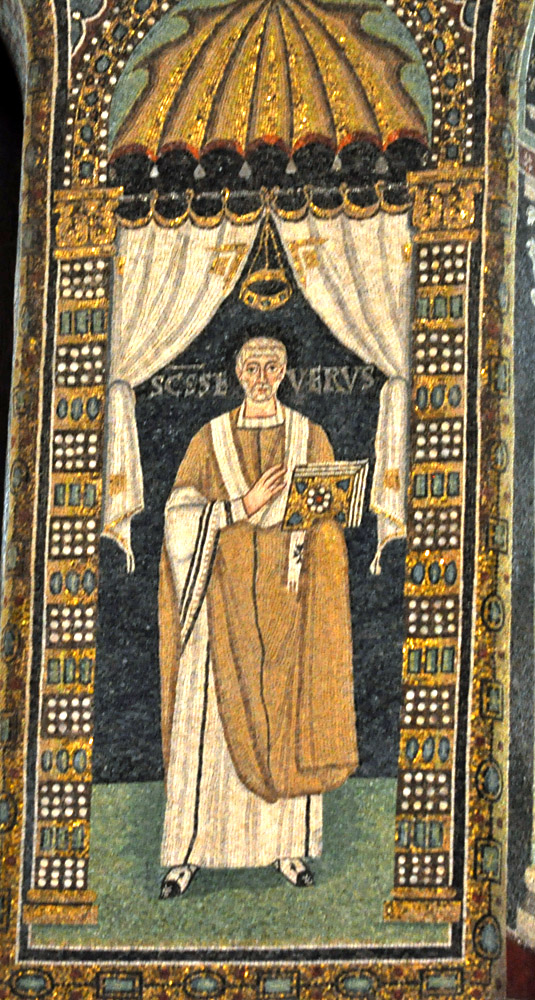
Sant’Apollinare in Clase: St. Severus
From the ancient ‘Episcopal Catalogue’ we discover that St Severus was the 12th Bishop of Ravenna, after Marcellinus and before Liberius; unfortunately nothing is known about his life, except that his name appears among the participants in the Council of Sardica (ancient name of Sofia in Bulgaria), held in 342-343. He is among the signatories of the Decrees of this Council, of the letter to Pope St Julius I (337-352) and of that, to all the Bishops.
As reported by the medieval hagiographers Agnellus and Liutulf, Severus died on 1 February in a year after 342 and on this day, he was remembered in the ancient Italian Calendar, later inserted in the ‘Martyrology of St. Jerome.’ He was buried in the area of Classe near Ravenna, called the ‘Vicus Salutaris’ in a Chapel called “monasterium St Rophili” adjoining the south, of the 6th Century Basilica.
Testimonies of the ancient cult were reported in two translations ofthe Relics of our holy Bishop, St Severus, one cited on 27 November which took place in Milan, shortly after the Episcopate of St Ambrose (340-397), together with those of four other Saints and a second translation celebrated on 3 September in Aquileia, also with those of four other Saints, including St Andrew the Apostle.
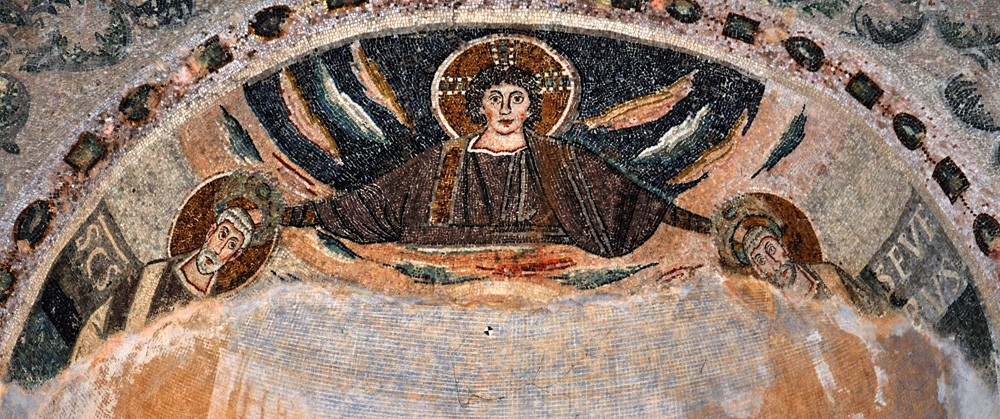
The great testimony of the cult paid to him in Ravenna are the mosaics of St Apollinare in Classe (consecrated in 549), located in the lower part of the apse, representing the Bishops St Severus, St Orsius, Ecclesius and Ursicinus, the first two bear the title “Sanctus” proof of this certain cult.
And then there is the great Basilica of St Severus, begun by Bishop Peter III in 575 and completed by Giovanni Romano (578-595) and Consecrated by him on 17 May 582, also placing the Sarcophagus of the Saint there. This Basilica, combined with a large Benedictine Monastery, remained intact until the 15th Century, then after various events, it was definitively abandoned and destroyed. It was a large Basilica with three naves divided by twelve columns on each side; it had a polygonal apse on the outside and a semi-circular one on the inside (Ravenna type).
As for the literary texts concerning St Severo, they are largely legendary, collected and transcribed by medieval hagiographers. But the two sermons by St Peter Damian (1007-1072) are of great value. The details drawn from these sermons, says that Severus had been a poor wool merchant from Ravenna and after attending Church after the death of Bishop Marcellinus, mistakenly attended at the election of his successor. There, a dove landed several times on his head, so that all the people recognised that he was the chosen one of God. St Peter Damian also reports that during the celebration of the Sacrifice of the Mass, Severus fell into ecstasy. And by a miracle of bilocation, St Severus was present at the death of his friend Saint Geminianus of Modena. Finally, feeling close to death, he opens the Tomb which he had prepared, lay down in it and gives up his soul to God.
In 842 a Frankish Monk named Felix stole St Severus’ Relics and transferred them first to Mainz and then to Erfurt, thus spreading the cult throughout Germany, with Churches being built in his honour. But much more numerous were the Churches dedicated to him throughout Ravenna and in the surrounding Italian districts.
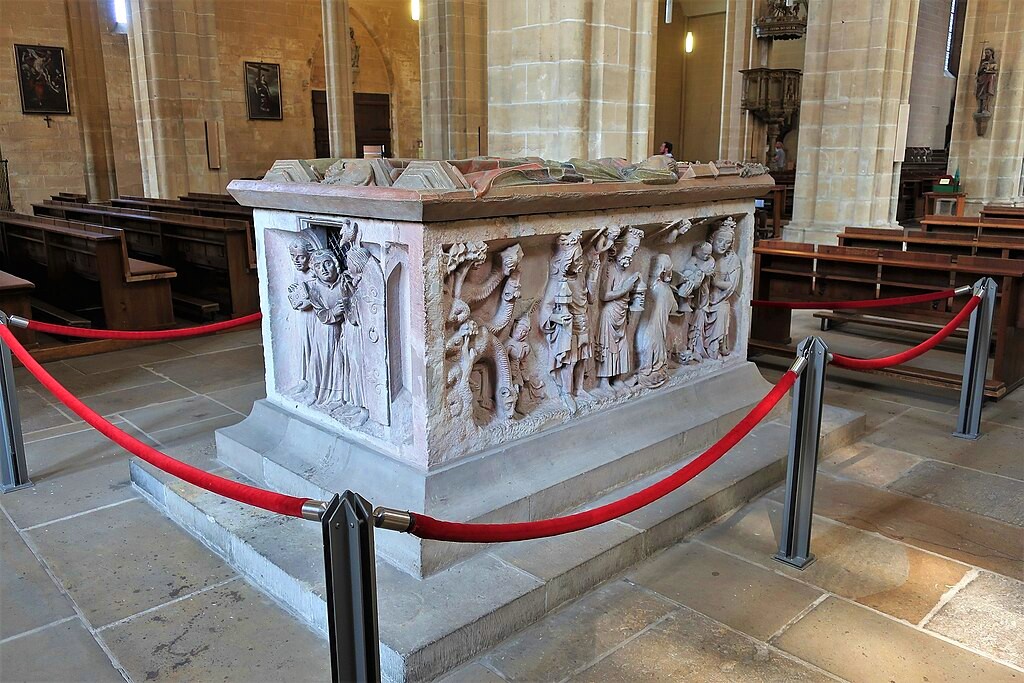
The marble bas-reliefs placed on the 14th Century Tomb in the Saint’s Church in Erfurt, depict him dressed in Bishop’s robes, surrounded by the figures of his wife and daughter, in a devout act of prayer.
Bl Anthony Manzoni St Asclepiades St Autbert of Landevenec St Brigid of Fiesole St Cecilius of Granada St Cinnia of Ulster St Clarus of Seligenstadt St Crewenna St Darlaugdach of Kildare St Henry Morse St Jarlath Bl John of the Grating St Kinnia St Paul of Trois-Châteaux St Raymond of Fitero
Saint of the Day – 31 January – St Julius (Late 4th Century) Priest and Confessor, Missionary, Miracle-worker. Both in Italy. Born probably in Greece and died of natural causes on the Island named after him, San Giuulio. Patronages – of Cavenago di Brianza and of Orta San Giulio,Also known as – Julius of Orta, … of Novara, Giulio….
31 January is traditionally the Feast day of St Julius, a Priest and Confessor of the later 4th Century. He is said to have been a Greek from the Island of Aegina, who, together with his brother Julian, migrated to northern Italy in the days of the Emperor Theodosius I (379-395).
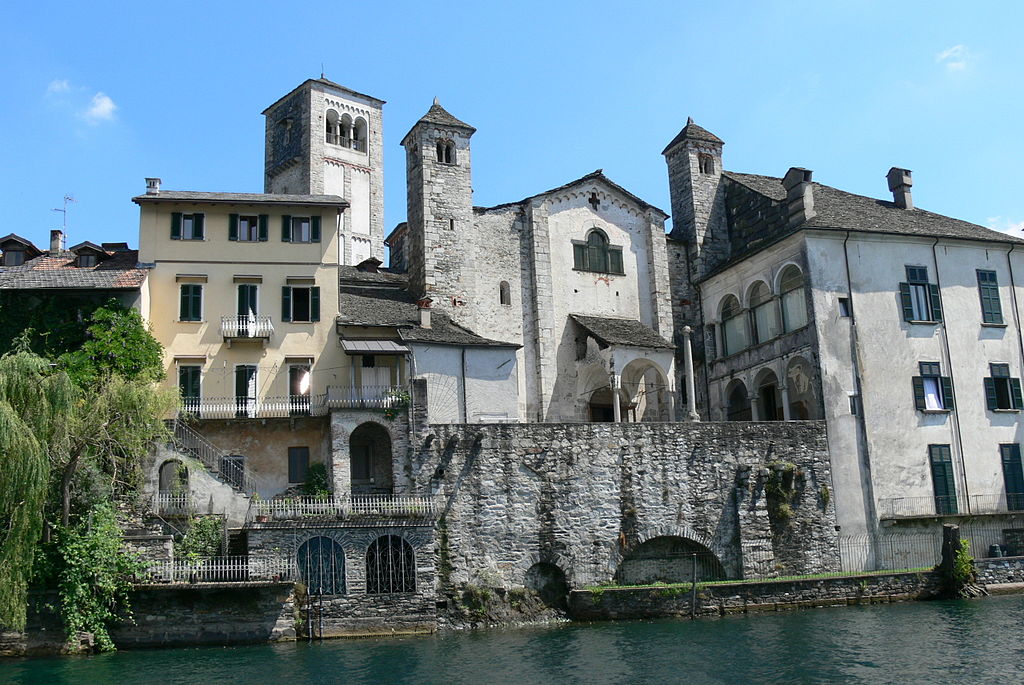
The Island of St Julius (Isola di San Giulio) in the Lado d’Orta.
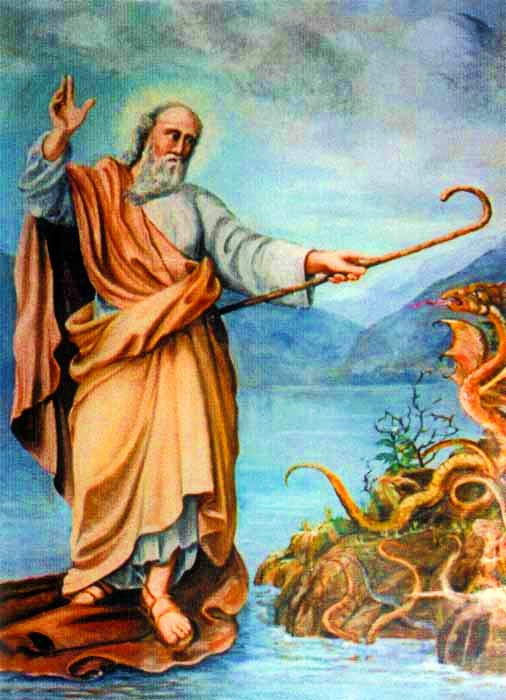
The 2 brothers set about evangelising the region. After they had built 99 Churches in various places, Julius chose, as the place for the 100th an Island in the middle of Lago d’Orta, a lake near Novara in the Piedmont region. But, unable to find anyone to take him to the Island which was infested with serpents, he spread his cloak on the waters and used it as a boat. Upon reaching the Island, he drove away the serpents and established his Church.
St Julius driving the serpents away
Modern archeological research has in fact confirmed that a Church was built in very ancient times on the iIland in the same place where a large Basilica now stands, dedicated to St Julius. He is also mentioned by the 8th Century historian of the Lombards, Paul the Deacon. Julius’ (presumed) Relics are preserved in the Crypt of this Basilica. Below is the exterior of the Basilica.
St Madoes St Marcella St Martin Manuel St Nicetas of Novgorod St Tryphaena of Cyzicus St Tysul St Ulphia of Amiens St Waldo of Evreux St Wilgils
Martyrs of Corinth – 14 Saints: A group of Christians tortured and Martyred together in Corinth, Greece in the persecutions of Decius. We know nothing about them except some names – Anectus, Claudius, Codratus, Crescens, Cyprian, Diodorus, Dionysius, Nicephorus, Papias, Paul, Serapion, Theodora, Victor and Victorinus.
Martyrs of Canope: A group of Christians tortured and Martyred together in Corinth, Greece in the persecutions of Decius. We know nothing about them except some names – Anectus, Claudius, Codratus, Crescens, Cyprian, Diodorus, Dionysius, Nicephorus, Papias, Paul, Serapion, Theodora, Victor and Victorinus.
Martyred in Alexandria, Egypt: Cyriacus Metranus Saturninus Tarskius Thyrsus Victor Zoticus
Saint of the Day – 30 January – St Martina (Died c228) Virgin Martyr. Patronages –of Rome, Italy, of nursing mothers.
The Roman Martyrology reads today: “In Rome, commemoration of Saint Martina, holy virgin and Martyr.”
Martina was a Deaconess and the daughter of a noble ex-consul and orphaned at an early age, she was described as a noble and beautiful virgin. She so openly testified to her Christian Faith that she could not escape the persecutions under Severus Alexander (222-235). .
Being arrested and commanded to worship the idols, she refused, whereupon she was subjected to various tortures and was finally beheaded.
These tortures according to her Vita include being scourged. She was condemned to be devoured by wild beasts in the amphitheater but was miraculously untouched by them. These beasts, instead, lay docilely at her feet like pet cats.
She was then thrown onto a burning pyre, from which she also escaped unhurt and was finally beheaded. Her hagiography records that some of her executioners, seeing the glorious miracles and the great joy and courage with which she was filled during the tortures, converted to Christianity and were themselves beheaded.
The Blessed Virgin Mary with St Agnes and St Martina, by El Greco.
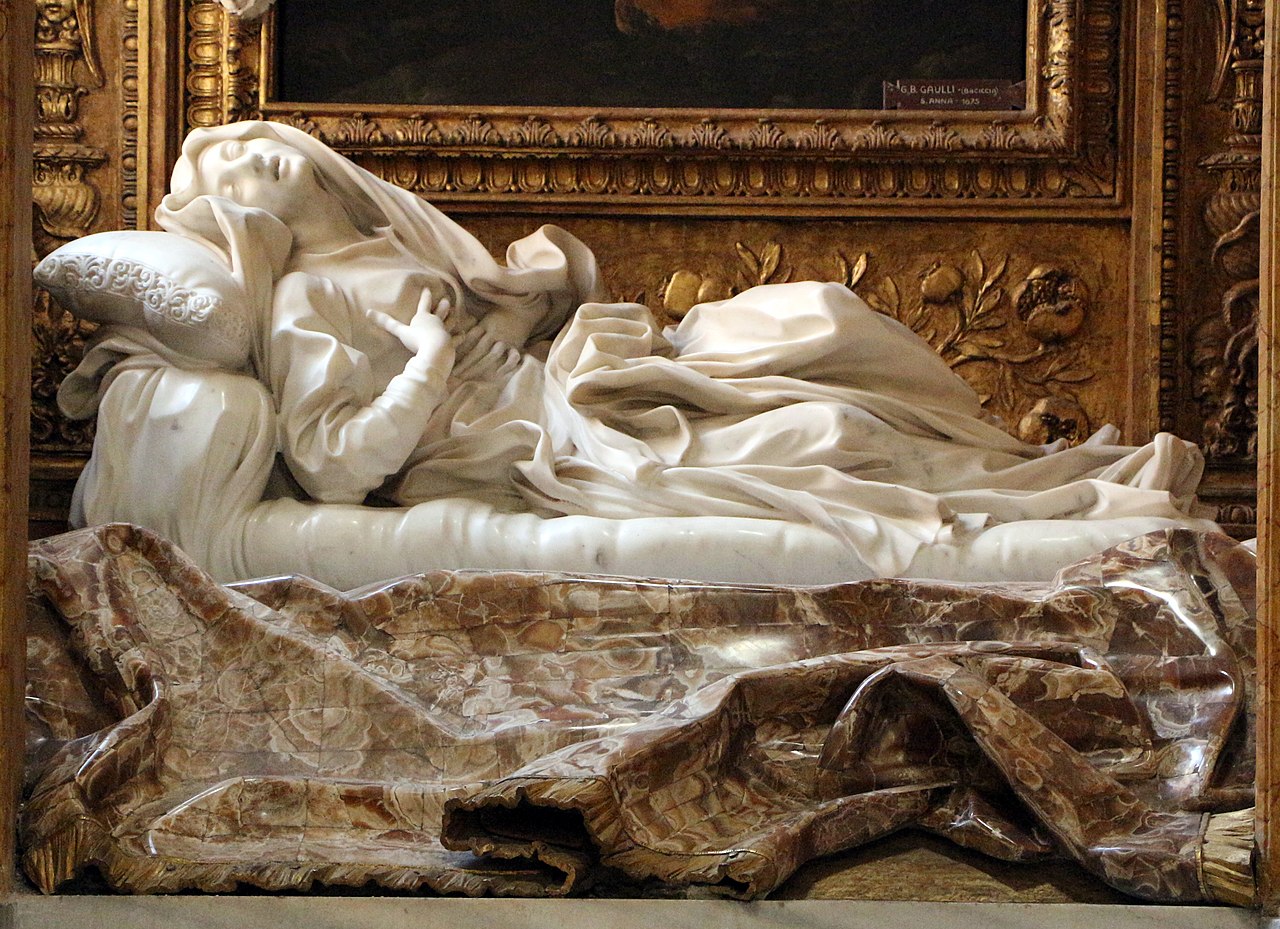
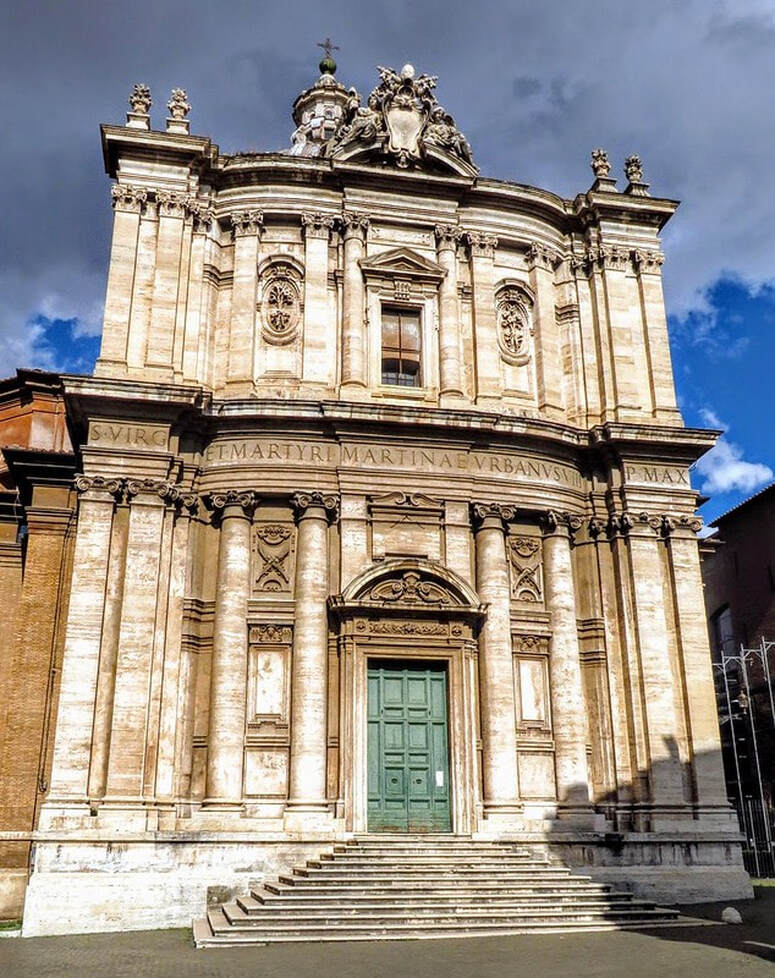
Ostia, at the mouth of the Tiber, was the scene of her Martyrdom but her body was transported to Rome,where a Church near the Mamertine Prison, Santi Luca e Martina, was later dedicated in her honour. See the Church below and the beautiful Statue which is situate under the High Altar.
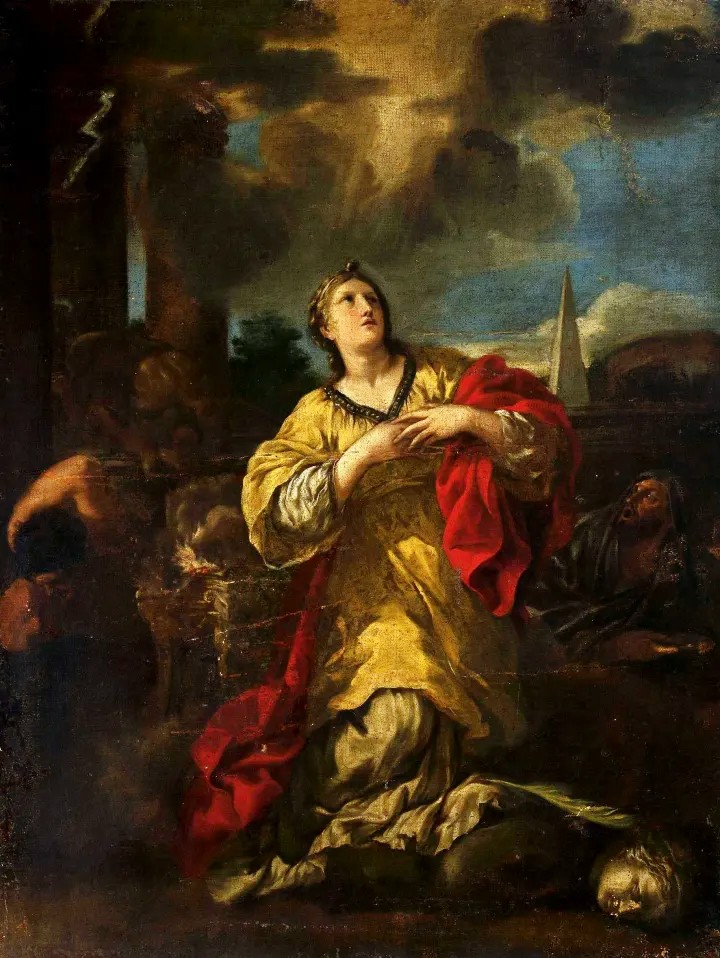
Pietro da Cortona The Martyrdom of St Martina
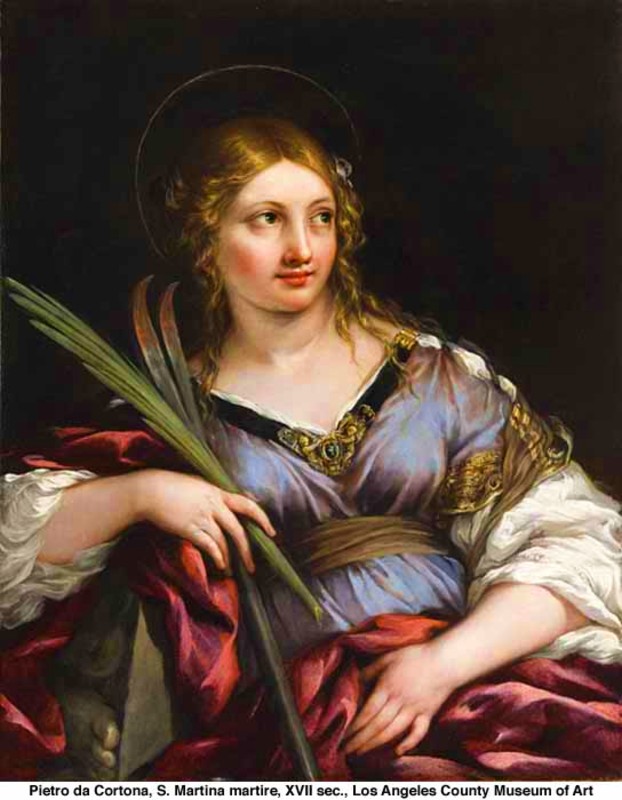
On 25 October 1634, during the restoration of the Crypt, buried remains were found by the painter Pietro da Cortona (see the first image above and the one showing her Martyrdom, above this paragraph, painted by da Cortona), president of the Accademia di San Luca and were attributed to the Martyred Saint Martina. Pope Urban VIII (1568-1644), who occupied the Holy See at that time, had the Church repaired and, it is believed that he composed the Hymns which are sung at her Office.







































You must be logged in to post a comment.