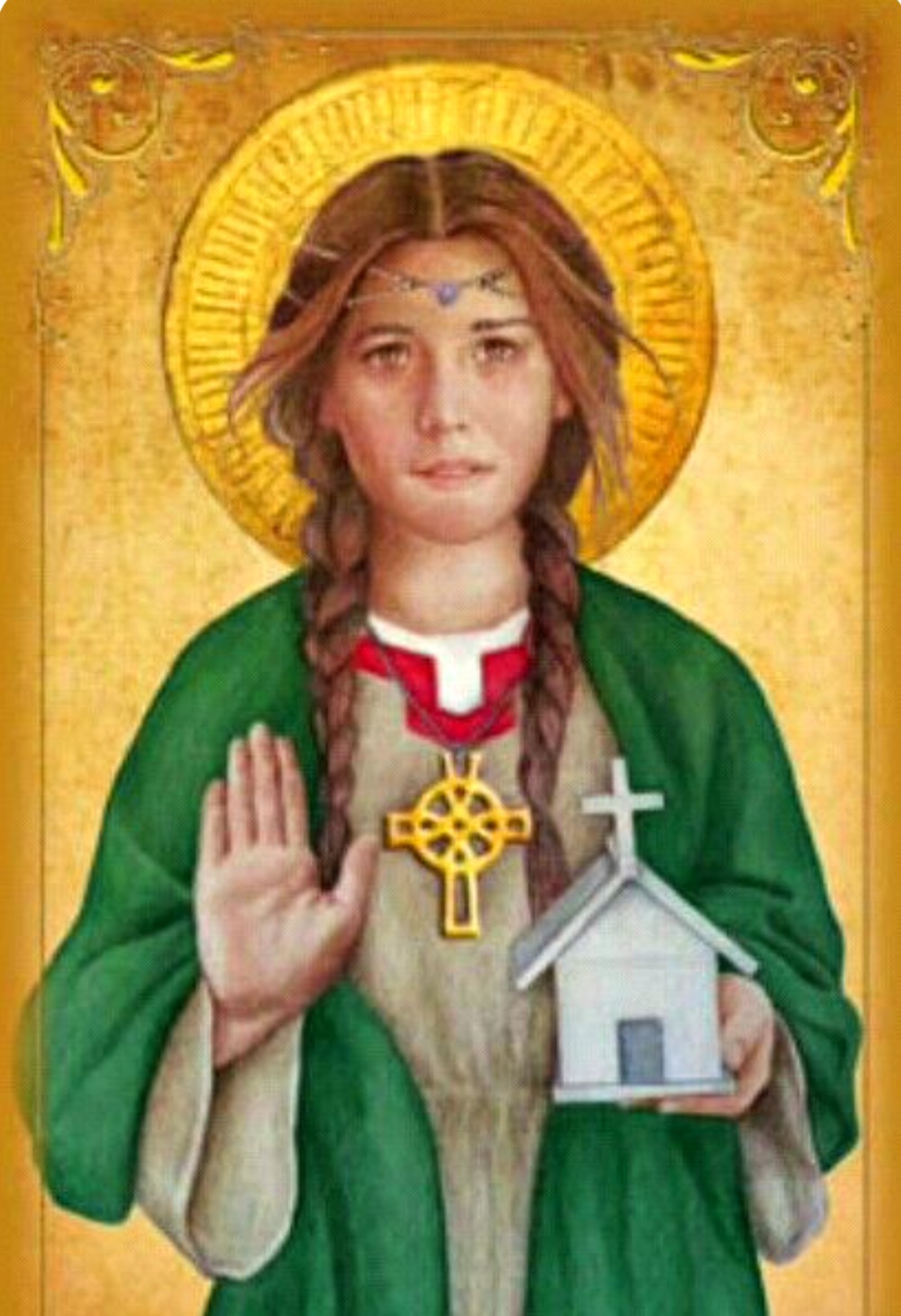
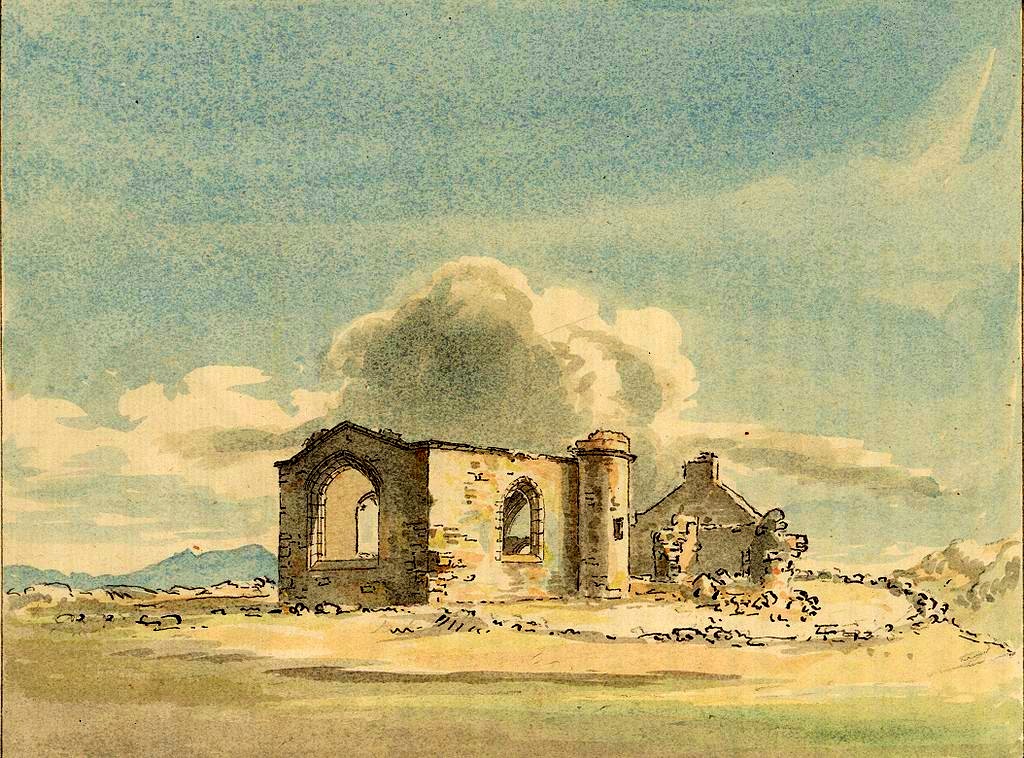
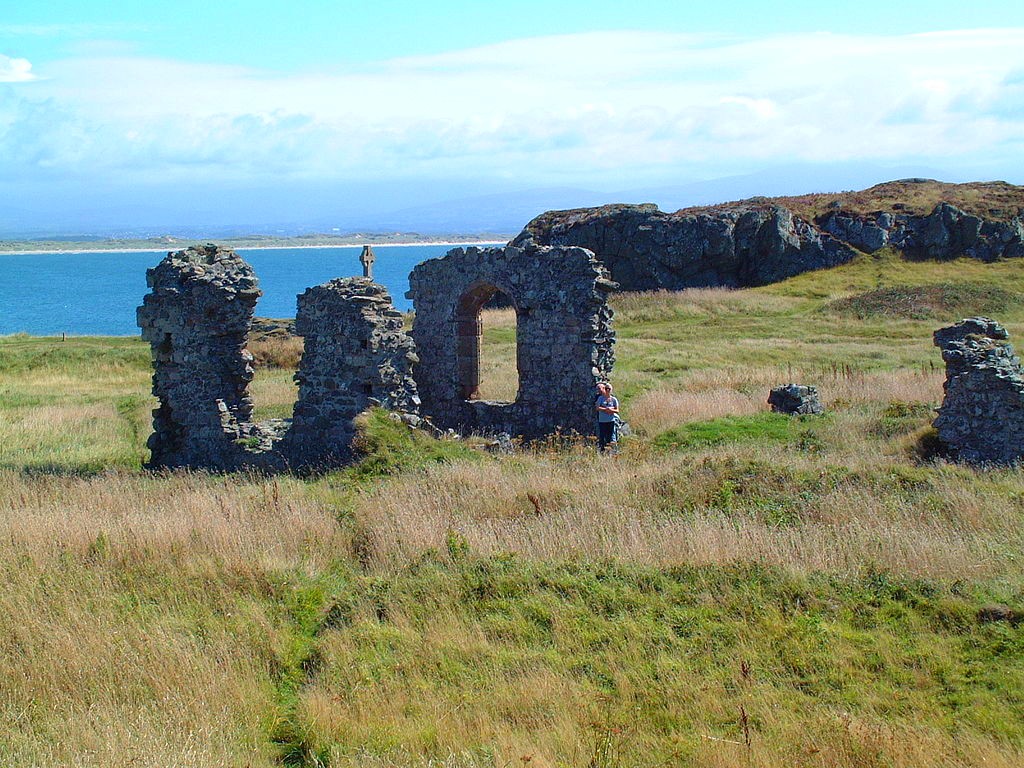
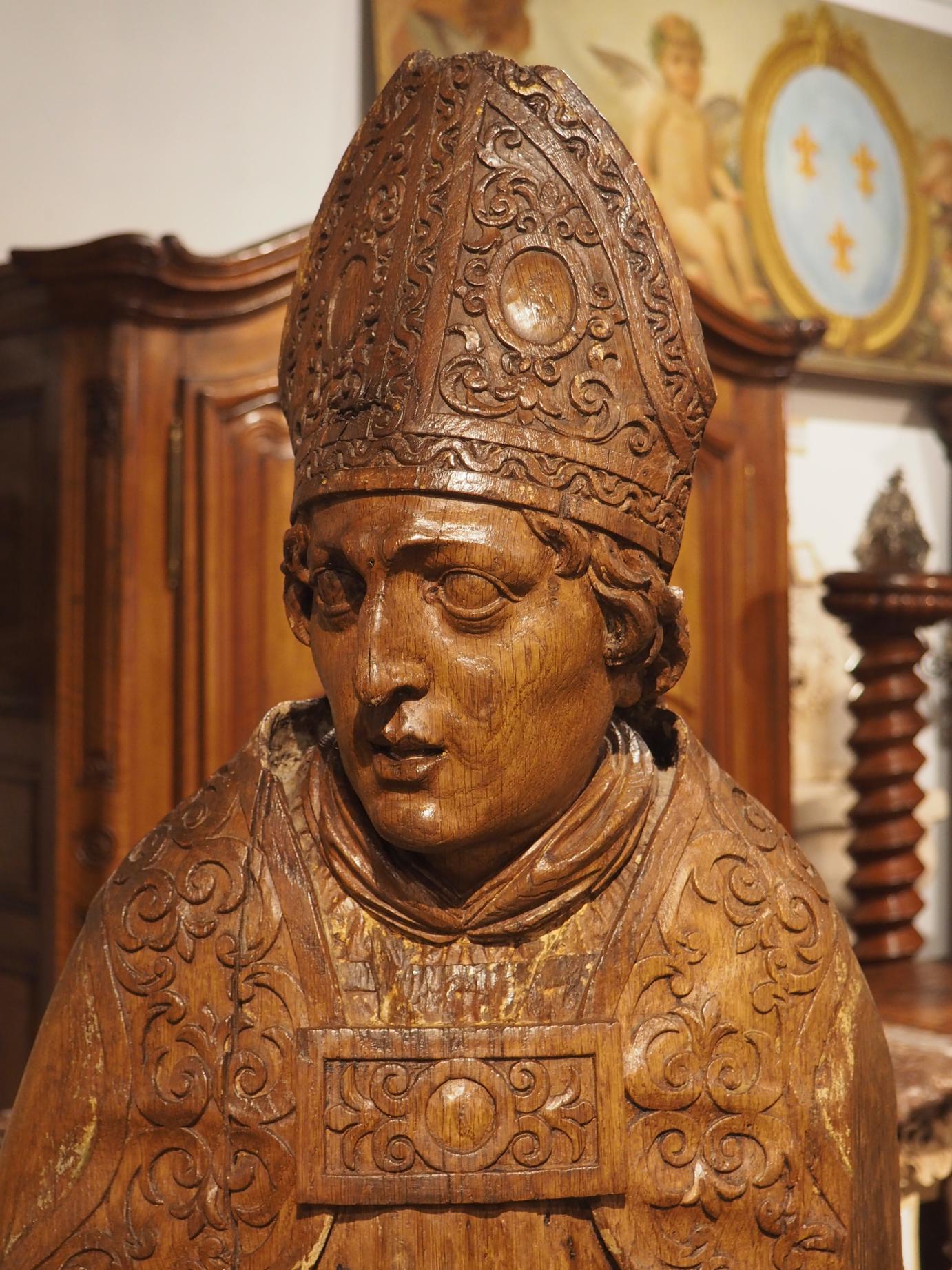
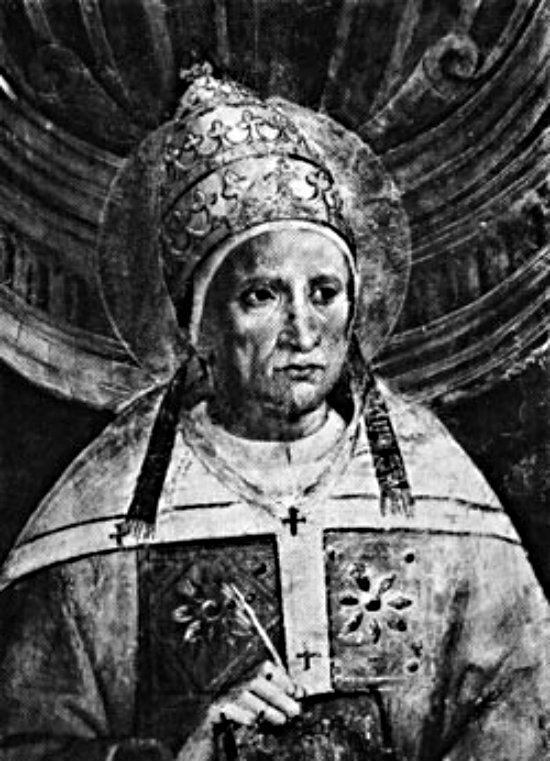
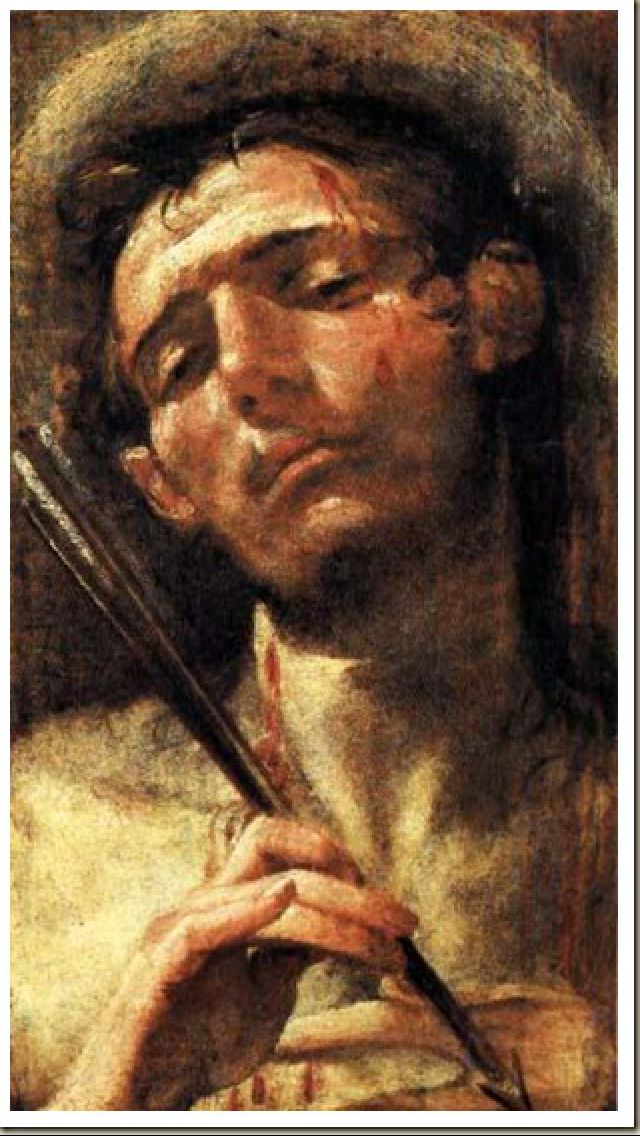
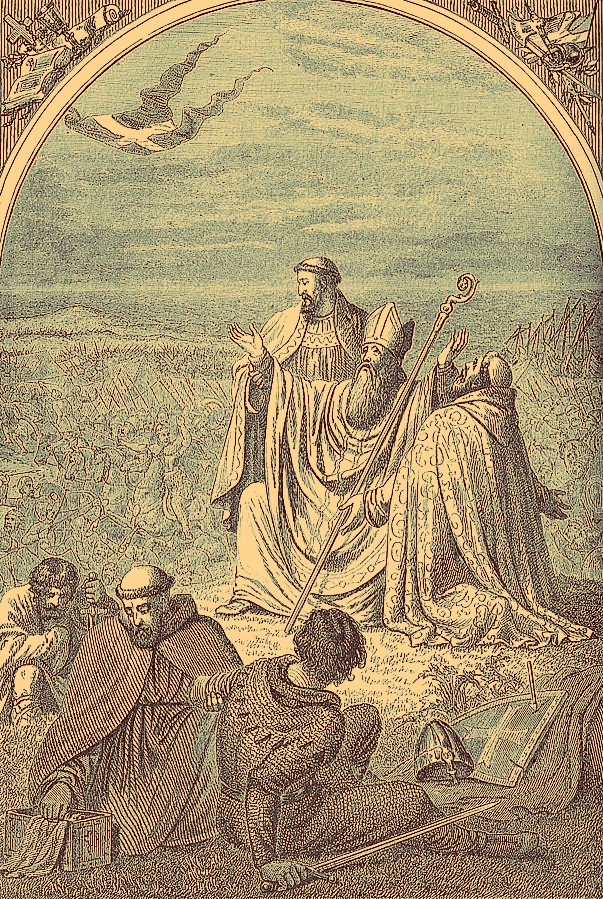
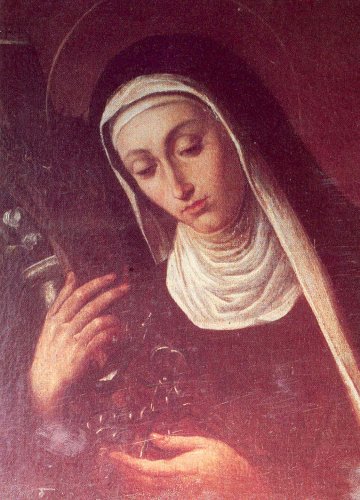
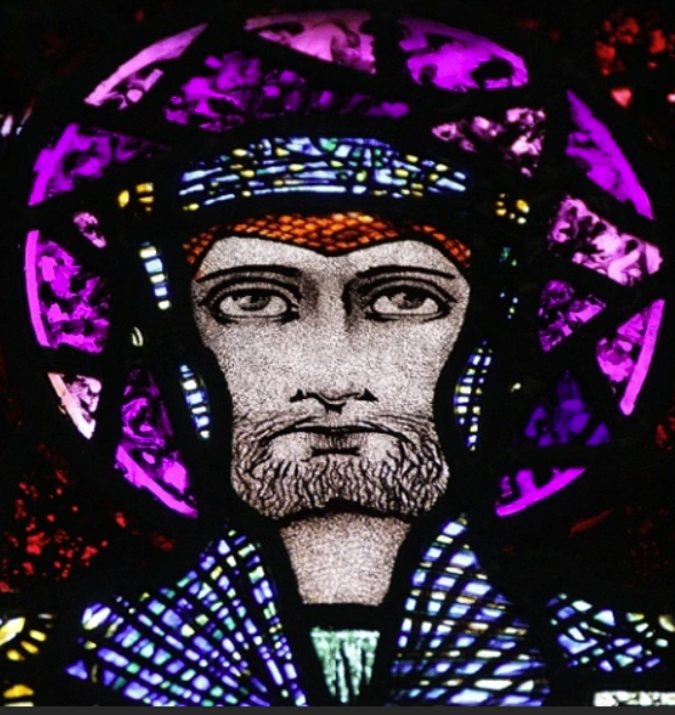
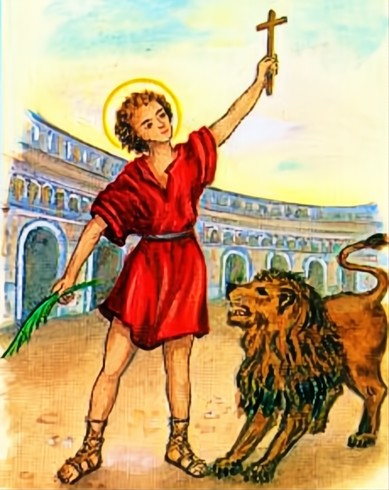
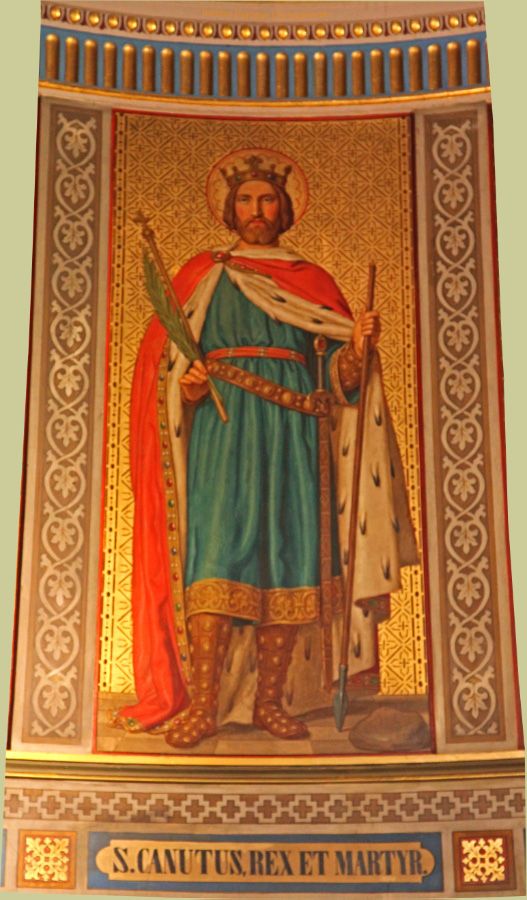
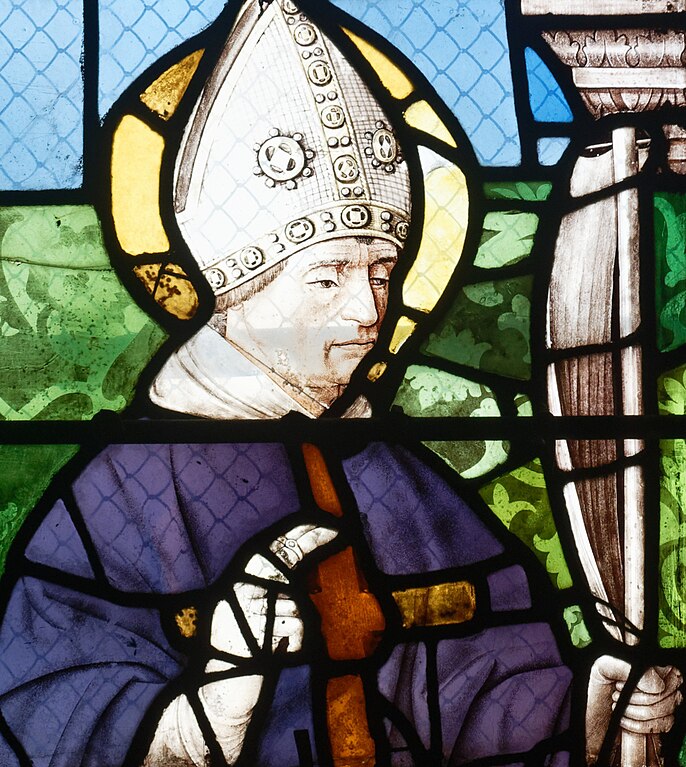
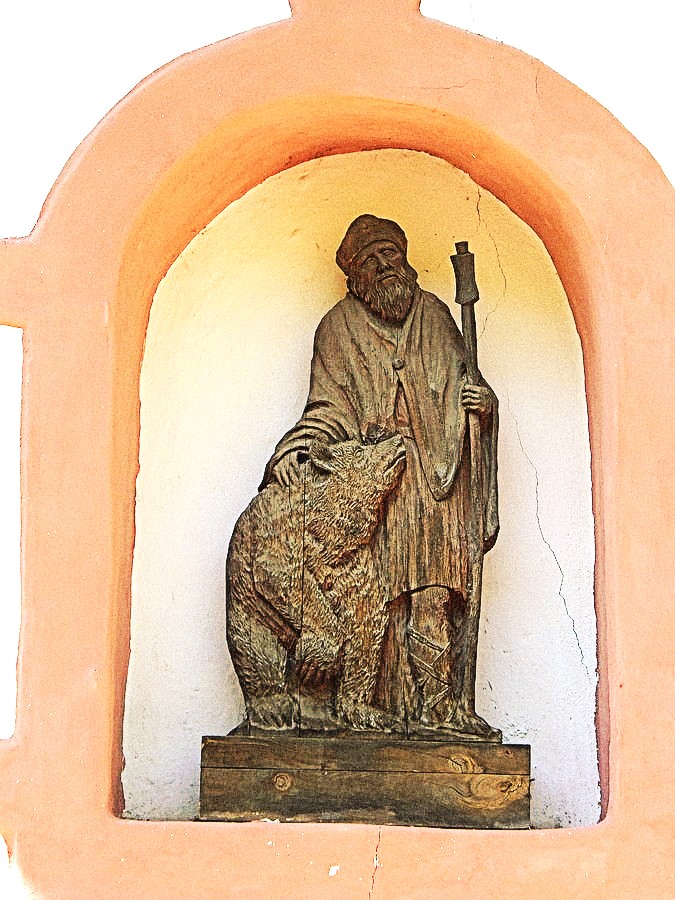
Saint of the Day – 10 November – Saint Elaeth the King (6th Century) Monk, Poet, founder of a Church on Anglesea Island which is dedicated to him and a miraculous Holy Well. Born as a Prince in the North of England and died in Anglesea, Wales of natural causes. Patronage – of Llaneleth, Anglesea, Wales. Also known as – Eleth…. “Elaeth Frenhin.”
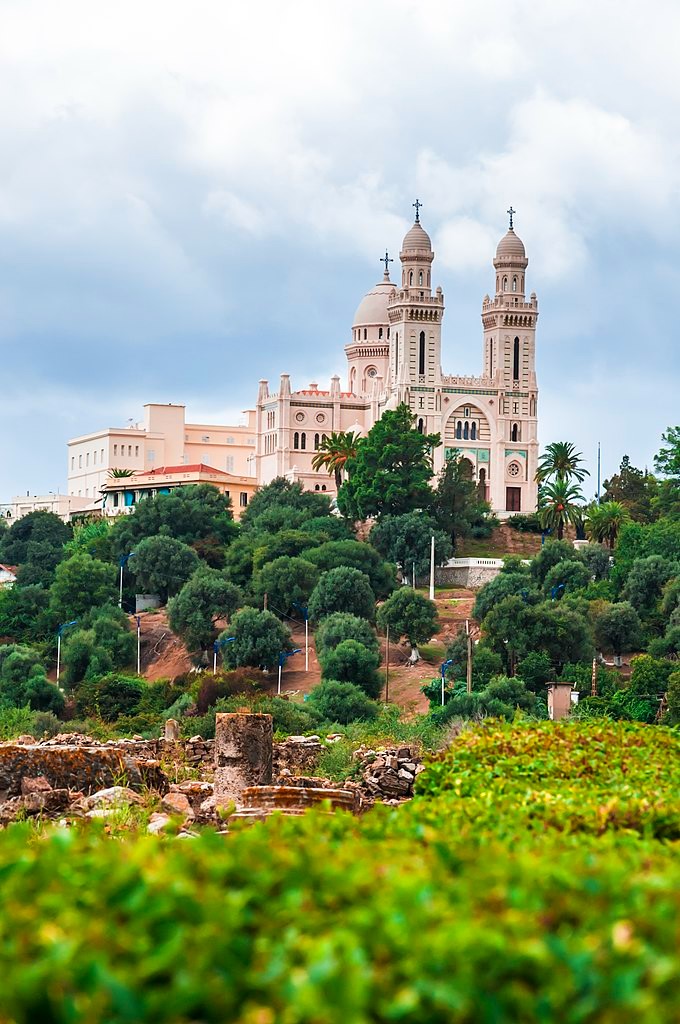
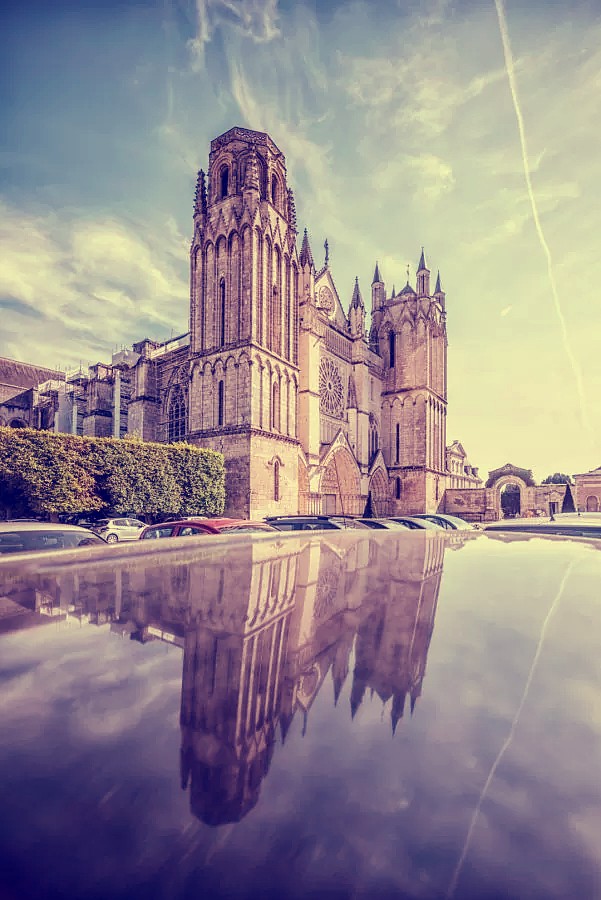
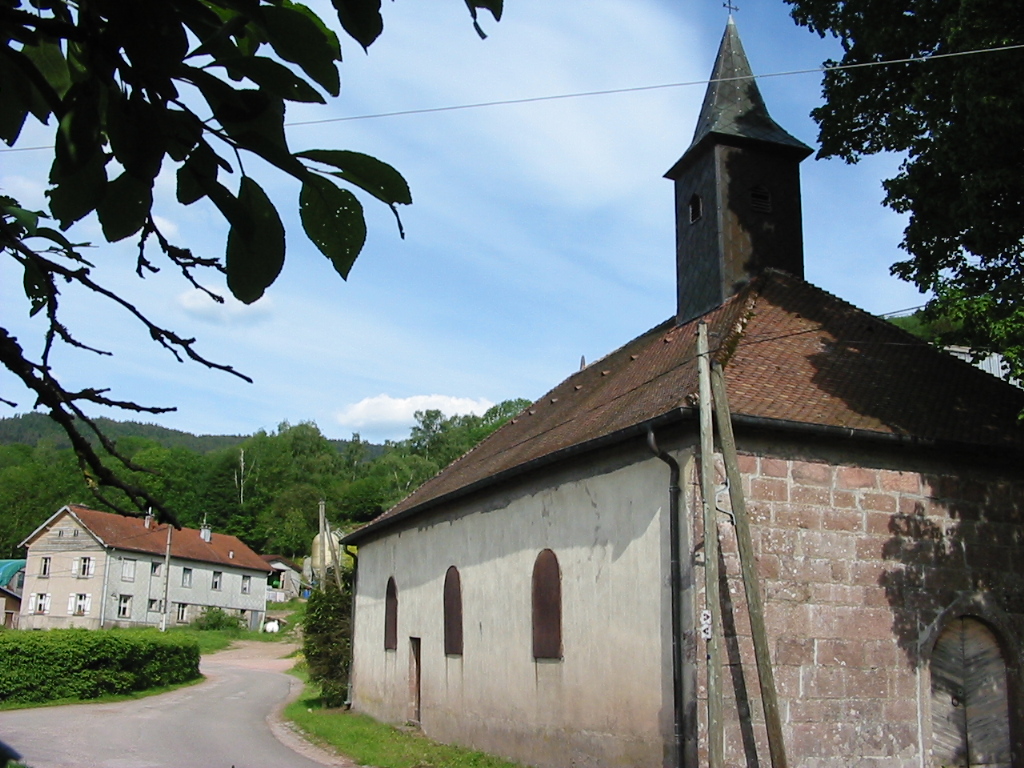
Saint Elaeth Church
Little is known for certain about Elaeth’s life; his date and place of birth and date of death are unknown but we do know that he lived in the 6th Century. He was the son of Meurig and his wife, Onen Greg, the daughter of Gwallog. Elaeth was a King in the North of England and is sometimes referred to as “Elaeth Frenhin” (the Welsh for Elaeth the King).
He was ousted from his land and, thereafter, travelled to Anglesey, an Island off the coast of North Wales and settled there in the Monastery run by St Seiriol at Penmon, at the South Eastern corner of the Island.
Some religious poetry the wrote has been preserved in medieval manuscripts. The Black Book of Carmarthen, from the 12th Century, attributes two poems of seven stanzas to his authorship, one of simple construction and the other more complex. Both “are written in a strain of deepest piety.”
He is the Founder of St Eleath’s Church, Amlwch, in the North of Anglesey. A Holy Well nearby, known as “Ffynnon Elaeth” is regarded as having miraculous qualities.
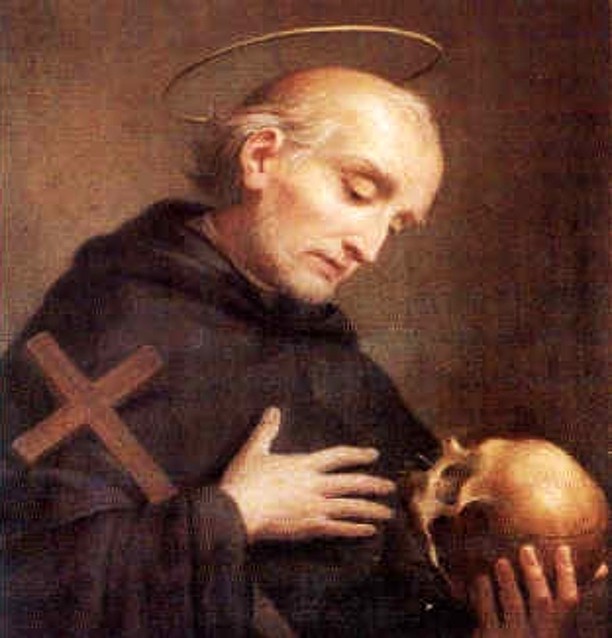
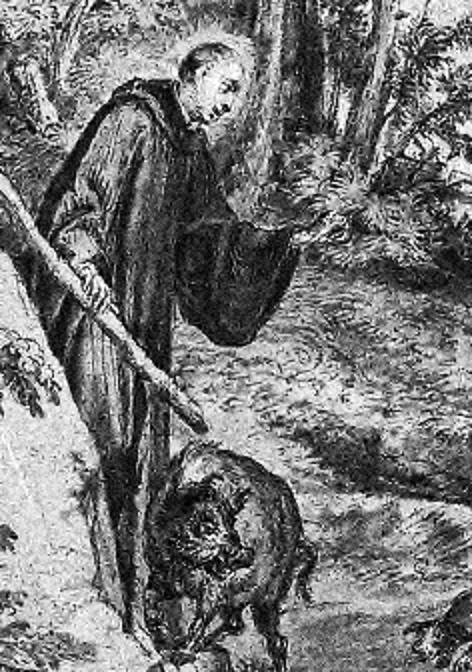
St Baudolino (c700–c740) Hermit, Pilgrim. Mystic, Miracle-worker. Baudolino lived at the time of the Lombard King Liutprand (712-744) and the oldest testimony which speaks of him is given to us by the historian Paolo Diacono, a Lombard Benedictine Monk (c720-799) practically a contemporary of the Saint. A “Man of Wonderful Sanctity”: https://anastpaul.com/2023/11/10/saint-of-the-day-10-november-saint-baudolino-c700-c740-hermi/
St Demetrius of Antioch St Elaeth the King (6th Century) Monk St Eustosius of Antioch St Grellen St Guerembaldus St Hadelin of Sees St John of Ratzenburg St Joseph the Martyr
St Leo of Melun Venerated at Melun, France, but no details of their life have survived. St Monitor of Orleans St Narses of Subagord St Nonnus of Heliopolis St Orestes of Cappadocia St Probus of Ravenna Bishop St Theoctiste St Tryphaena of Iconium St Tryphosa of Iconium
Martyrs of Agde – 3 Saints: A group of Christians who were tortured and Martyred together in the persecutions of Diocletian. The only about them to survive are the names – Florentia, Modestus and Tiberius. Martyred c 303 in Agde, France.
Saint of the Day – 9 November – St Agrippinus of Naples (3rd Century) Bishop, Miracle-worker, a zealous shepherd and Defender of his faithful people. Patronage – Arzano, Italy. Also known as – Agrippino, Arpinus.
The Roman Martyrology reads today: “At Naples in Campania, St Agri[[inus, the Bishop, renowned for miracles”
Saint Agrippino was almost as popular as Saint Januarius of the Liquifying blood.
According to tradition, Agrippino was the 6th Bishop of the Neapolitan Diocese. A 9th Century writer praised him thus: “In love with his country, defender of the City, he did not cease to pray everyday, for us, his fellow servants.” He greatly increases the army of those who believe in the Lord and gathers them in the bosom of the Holy Mother, the Church.
There is not much information about him. He lived and died at the end of the 3rd Century .There is, however, in the words of the unknown author, a particular warmth, an intent of praise which demonstrates how the memory of St Agrippinus, even in the absence of more precise details, had particular prominence among that of other Neapolitan Bishops. It is clear, in short, how the veneration of this Saint was, exceptionally fervent. There does seem to be a Biography too by L Caspar, I would be fascinated to read it.
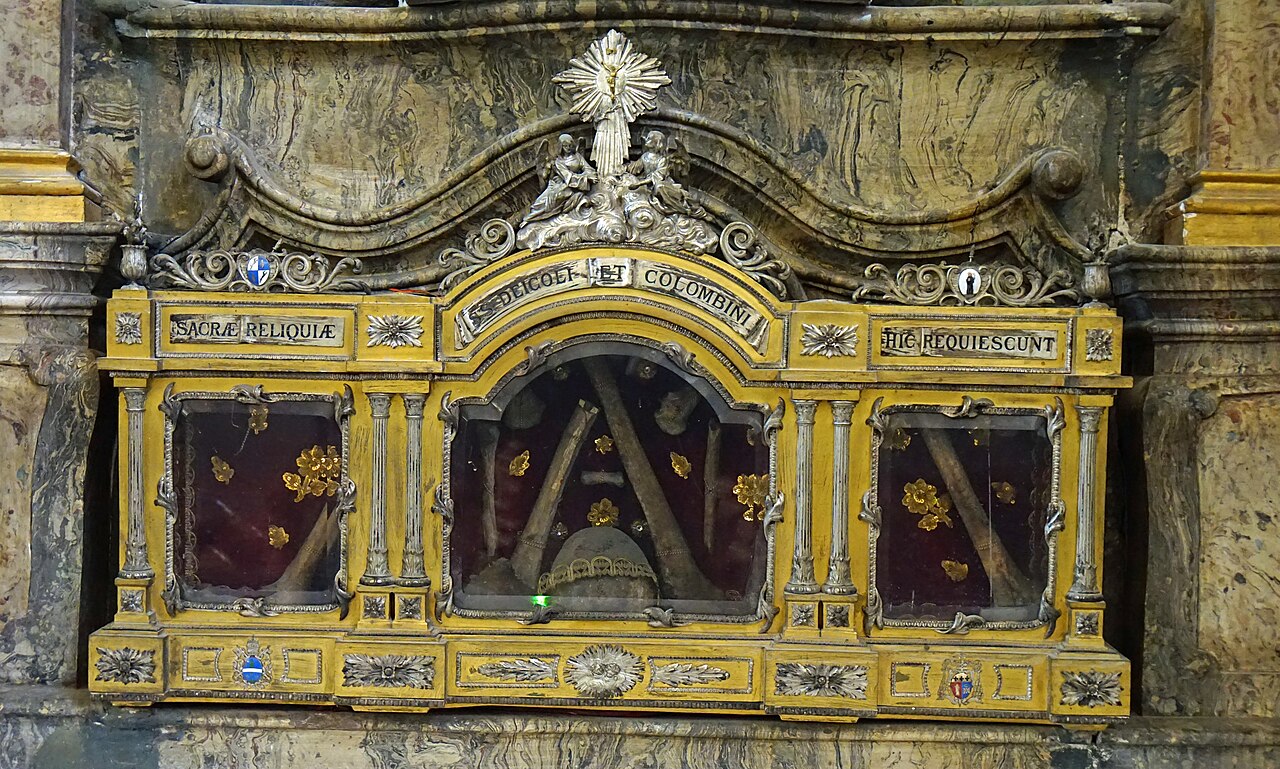
The translation of his Relics took place in the so-called Stefania, that is, in the Church built in the 5th Century to make room for the new Cathedral. Previously, his Relics had rested in the Catacombs of St Januarius.
A thousand years later, in 1744, Cardinal Spinelli searched for the Relics of the ancient Bishop. He found a marble vase with the following inscription: “Uncertain Relics which are thought to be the body of Saint Agrippinus.” Uncertain Relics which only a more examination or new documents will be able to assign with certainty to our Saint Bishop Agrippinus, a shepherd venerated and loved almost on a par with San Januarius because he too was in love with his City and protected the Neapolitan faithful.
Saint of the Day – 8 November – St Clarus of Tours (Died c397) Priest, Disciple of St Martin of Tours (c316-397), Hermit. Also known as – Clair, Chiaro.
The Roman Martyrology reads today: “At Tours, St Clarus, Priest, whose Epitaph was written by St Paulinus.”
Monastery in Marmoutier
Clarus was born in Auvergne to an illustrious family. He became a disciple of St Martin at the Monastery in Marmoutier. After being Ordained a Priest, Clarus performed various functions in the education of the Monks, which make him resemble a modern Master of Novices. In this role, Clarus thus gave proof of his prudence and judgement, he wisely selected candidates for the Religious life.
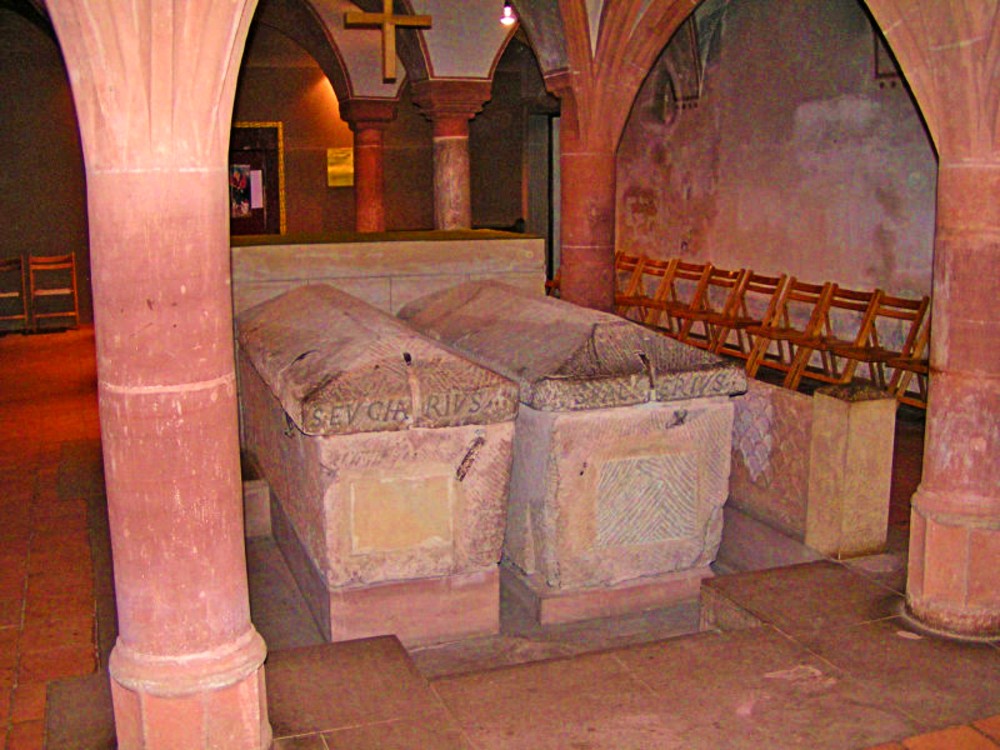
Clarus lived his last years as a Hermit near the Monastery. After his death, St Sulpicius Severus (c363–c425) had him buried in the Church of Primuliacum, south-western France and asked St Paulinus of Nola for an suitable Epitaph for the Tomb. St Paulinus sent him three, to choose from, in which, playing on the name, he praised the merits of Clarus and asked for his intercession. The cult seems to have spread in a very late period: the Roman Martyrology, in which it was introduced, names it on 8 November, a few days before Saint Martin, whom he would have preceded in death by a short period which occurred around 396 or 397.
Four Crowned Martyrs: Saint Castorus, Saint Claudius, Saint Nicostratus and Saint Simpronian. Skilled stone carvers in the 3rd century quarries. Martyred when they refused to carve an idol of Aesculapius for Diocletian. They were drowned in the River Sava in 305. Patronages – against fever, cattle, sculptors, stone masons, stonecutters.
All Deceased Dominicans All Saints of Bologna, Italy All Saints of Wales Augustinian Martyrs of Spain
All Saints of the Diocese of Evry: A regional memorial of all the Saints and Beati of the calendar who have a connection to the Diocese of Evry-Corbeil-Essonnes, France:
Blessed Isabella of France, founded the Longchamp monastery
Blessed Nicolas Gaudreau, pastor of Vert-le-Petit
Blessed Pierre Bonse, pastor of Massy
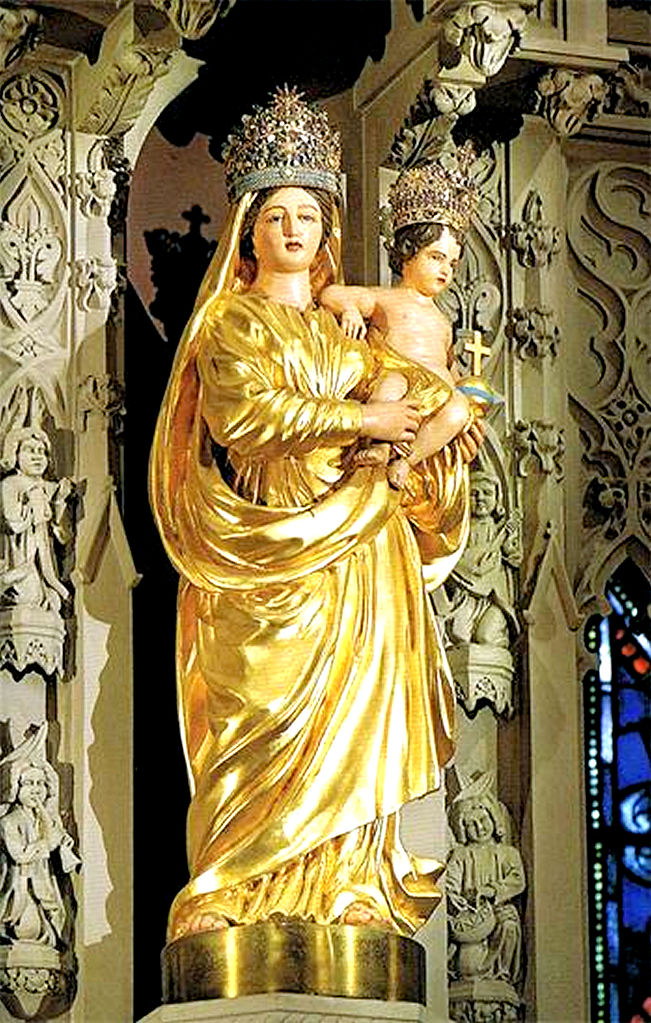
Our Lady of Good Guard, patron saint of the diocese, venerated in Longpont-sur-Orge, France
Saint Corbinian, born in Saint-Germain-lès-Arpajon
Saint Denis of Paris, evangelizer of part of Essonne and revered ni Longpont-sur-Orge
Saint Eloi, who lived in Chilly-Mazarin
Saint Germain of Paris
Saint William of Bourges, son of Count Baldwin IV of Corbeil
Saint William of Aebelholt, pastor of Brunoy
Saint Wulfran of Sens, born in Milly-la-Forêt
Blessed Nativelle, vicar of Longjumeau
Blessed René Le Bris, pastor of Bris-sous-Forges
Saint Spire of Bayeux, whose relics are in Corbeil in the cathedral that bears his name
Saint of the Day – 7 November – Blessed Lucia of Settefonti (Died 12th Century) Consecrated Virgin, Nun, Abbess. Born as Lucia Chiari, near Bologna, Italy and died at Settefonti in the same vicinity of natural causes.
The legendary tale of the beautiful Lucia takes place in the 12th Century in Bologna. A little girl is born into the noble Chiari family. Her mother, who is very religious, teaches her to love Jesus. Lucia grows into a beautiful girl with blond hair. Everyone admires her and the boys dream of marrying her but Lucia decides to Consecrate herself to Jesus and wear the habit of a cloistered Nun forever.
Lucia entered the Monastery in Settefonti, near Bologna. These are years in which the City is tormented by the struggles between the Guelphs (loyal to the Pope) and the Ghibellines (loyal to the Emperor). A Knight from Bologna, Count Diotagora Fava, called Rolando, sees Lucia in Church before she has taken her vows and falls in love with her.
In order to meet her, he asks to be lodged in the Castle of Ozzano (Bologna). Every morning he travels an arduous path to go to the Church where Lucia, who has by now, become the Abbess, goes to Mass with the other Nuns. Every morning, Rolando, waits for Lucia to see her. Never a word between the two, nothing but loving looks ensue. But Abbess Lucia is troubled by the handsome Knight who for months, even in winter, in the cold, snow and rain, appears every day at Mass.
Lucia becomes ill because she suffers: she wants to stay true to her vocation but she also feels she loves the Knight. Lucia no longer goes to Mass but the young man goes anyway. Lucia then decides to speak to Rolando and begs him to respect her desire to belong only to Jesus.
Rolando, in sadness and desperation, decides to fight for Christ and leaves on the Crusade to free the Holy Land from the Saracens. He is taken prisoner, chained and thrown into a cell. The Crusader has a fever and always thinks of Lucia who has so much faith in the Lord. He calls out to her, asks for help. One night he dreams of her and hears her sweet voice saying to him: “Dear Rolando, I am dead but God grants me the grace that you may be freed.”
Legend has it that when Rolando awoke, he found his chains broken. Amazed by the miracle, the Saracens let him return to Italy. Rolando went to Lucia’s Tomb in Settefonti. Here the Knight wept bitterly and left his broken chains, in memory of the miracle.
Today, Lucia’s Relics are buried in the Basilica of Sant’Andrea di Ozzano, where Rolando’s broken chains are also found. For those who wish, there is a path through the woods and hill, which takes the visitor to the places where the two young lovers of Jesus lived.
Lucia’s cult was confirmed and she was Beatified in 1779 by Pope Pius VI.
The Feast of All Saints of the Order of Preachers: “Fountain of all holiness, You stirred up in our holy brothers and sisters an extraordinary love of truth, conformity to Christ Crucified and a thirst for the salvation of souls: may we imitate them in offering You thanksgiving on account of the way of life they gave us.” — From the Intercessions at Lauds for the Feast of All Saints of the Order of Preachers. HERE: https://anastpaul.com/2019/11/07/thought-for-the-day-7-november-feast-of-all-dominican-saints/
St Achillas (Died 313) Bishop of Alexandria, Egypt, Confessor, Scholar particularly in Philosophy and Theology. Bishop St Theonas had Ordained him to the Priesthood and appointed Achillas as the Head of the Catechetical School of Alexandria upon the departure of St Pierius, for Rome, who we celebrated on 4 November. Born in Alexandria, Egypt and died there in 313 of natural causes. The Roman Martyrology states of him today: “At Alexandria, blessed Achillas, a Bishop renowned for erudition, faith and purity of life.” His Holy Life: https://anastpaul.com/2023/11/07/saint-of-the-day-7-november-saint-achillas-died-313-bishop-confessor/
St Gebetrude of Remiremont St Herculanus of Perugia St Hesychius of Mytilene St Hieron of Mytilene Bl Hyacinth Castañeda Puchasons St Lazarus the Stylite Blessed Lucia of Settefonti (Died 12th Century) Virgin St Nicander of Mytilene Bl Peter Ou St Prosdocimus of Padua St Prosdocimus of Rieti St Raverranus of Séez St Rufus of Metz St Taurion of Amphipolis St Thessalonica of Amphipolis St Tremorus of Brittany
Saint of the Day – 6 November – St Israel du Dorat (c950-1014), Priest, Vicar General of the Diocese of Limoges, Poet, Professor of Theology at the Episcopal school. Born in c950 in Dorat, France and died there on 22 December 1014 of natural causes. Also known as Leonard, Israel of Limousin, Israel of Limoges. Additional Memorials – 13 September in Limousi, 22 December (the day of his death) and 27 January (translation of Relics) in Dorat.
Israel du Dorat was born around 950 in a noble family of Dorat, at the gate of Dinsac, between Limoges and Poitiers. A stone cross marks the location of the house of his birth.
His parents dedicated him to divine service. After his studies he beccame the Master in the Regular Chapter of Dorat , where after his training, he was received as a Canon. Israel was Ordained to the Priesthood and was appointed as the Vicar General of Bi, Aldouin, of Limoges. He then taught theology at the Episcopal school,and wrote a versified life of Christ in the Limousin language, a century before the lyrical poetry of the troubadours.
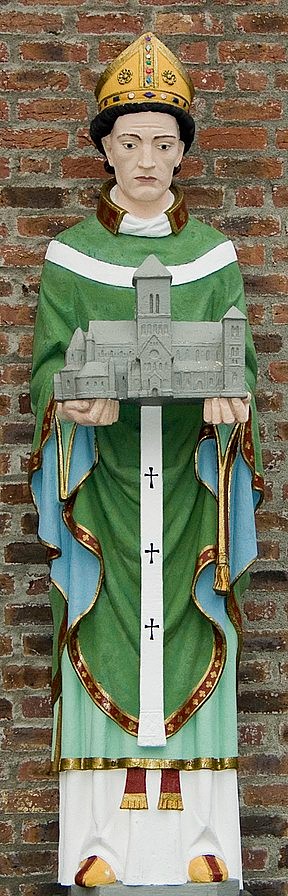
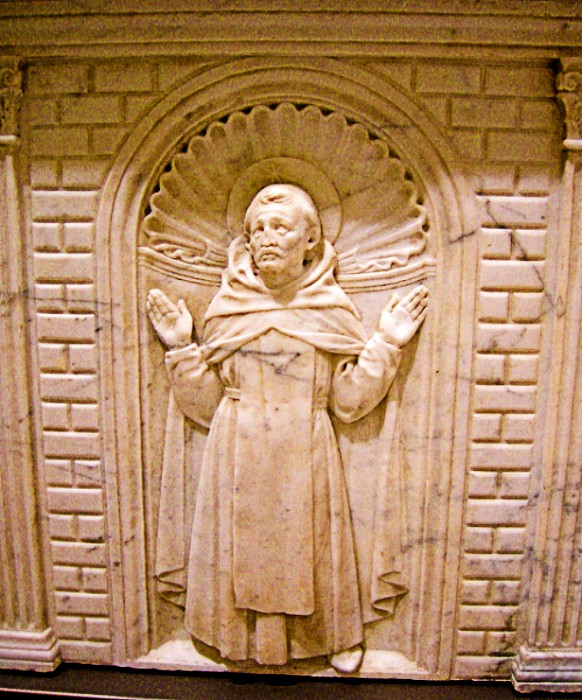
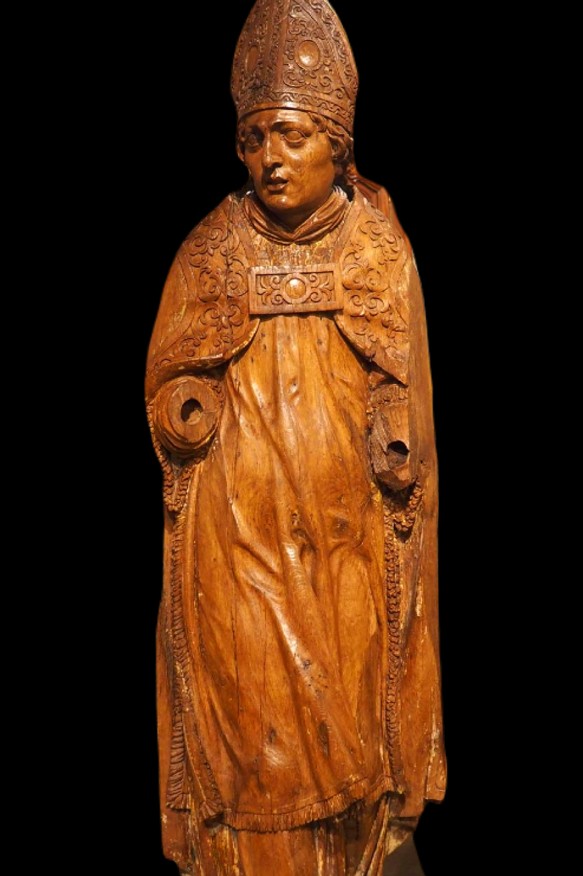
This Statue resides in the Church of Dorat
In 994 , during a plague epidemic, he treated the sick and buried the dead himself.
He accompanied Bishop Aldouin on his journey to see Robert II the Pious , King of France.
When the Monks and their Prior, Itier of the Abbey of Saint-Junien had been violently attacked and massacred in the Parish of Étagnac , while they were collecting tithes, Pope Sylvester II charged Israel with the re-establishment of this community as the Provost. He had the Church rebuilt.
In 1006 , he returned to Dorat, where he was a great choirmaster and trained many disciples, including Saint Theobald of Dorat (c990-1070).. He died there on 22 December 1014. A year earlier, Israel had seen the foundations of the current collegiate Church of Saint-Pierre du Dorat emerge from the ground to replace the old Church destroyed by fire.
After his death, our sweet St Israel, he continued to heal and comfort the many pilgrims who thronged to his tomb. Because of the many miracles attributed to him, he became the object of an important cult throughout the region.
On 27 January 1130, his Relics were transferred to the Crypt of the new Collegiate Church of Dorat dedicated to St Peter, see below, with those of Saint Théobald (Feast: 20 December).
St Demetrian of Cyprus St Edwen of Northumbria St Efflam of Brittany St Emilian of Faenza St Erlafrid of Hirschau St Felix of Fondi St Felix of Genoa St Felix of Thynissa St Illtyd St Israel du Dorat (c950-1014) Priest
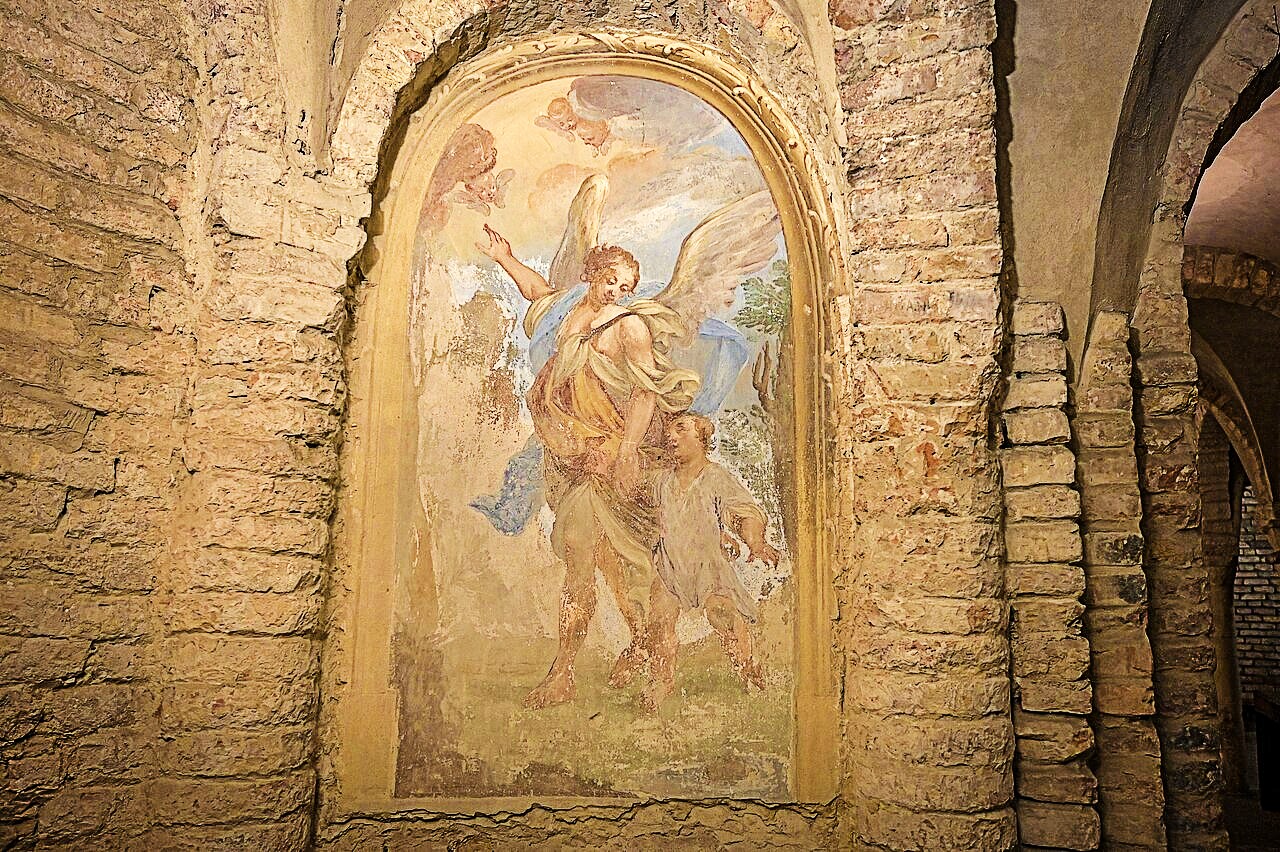
St Melaine of Rennes (Died c535) Bishop of Rennes in Brittany, France, Confessor, previously a Monk and Abbot, Royal Advisor, Miracle-worker. The Roman Martyrology reds: “At Rennes, in France, St Melanius, Bishop and Confessor, who displayed innumerable virtues and with his thoughts ever fixed on Heaven, passed from the world in glory.” His Life of Holiness: https://anastpaul.com/2023/11/06/saint-of-the-day-6-november-saint-melaine-of-rennes-died-c535-bishop-confessor/
St Paul of Constantinople St Pinnock St Protasius of Lausanne St Severus of Barcelona Bl Simon of Aulne St Stephen of Apt St Theobald of Dorat St Valentine of Genoa
Martyrs of Antioch – 10 Saints: Ten Christians murdered together by Arabs after their seizure of Antioch, Syria. No names or other details about them have come down to us. 637 in Antioch, Syria.
Martyrs of Gaza – 9 Saints: A group of Christian soldiers who were captured by Saracens invading the area of Gaza in Palestine. When the men continued to profess their Christianity, they were executed. We know the names of some of the Martyrs – Himerius, John (2 of them), Kallinikos (Callinoco), Paul, Peter, Stephen and Theodore (2 of them). They were beheaded in Gaza, Palestine.
Saint/s of the Day – 5 November – St Zachary (1st Century) Priest and Prophet, Father of St John the Baptist and Spouse of St Elizabeth, mother of the same blessed Precursor of Jesus Christ. Patronages – of childless couples, of patience, of Malta and the Hospitallers of Jerusalem. Zachary is also known as Zachariah.
The Roman Martyrology begins today’s list with: “St Zachary, Priest and Prophet, father of the blessed John the Baptist. Also, St Elizabeth, mother of the same most holy Precursor.”
Zachary was a Priest at the Temple in Jerusalem whilst his wife, Elizabeth was a cousin of the Virgin Mary. According to the Gospel of St Luke Chapter 1, Elizabeth was “of the daughters of Aaron.” She and her husband Zachary were “righteous before God, walking blamelessly in all the commandments and ordinances of the Lord” (1:5–7), but they were sadened by their childlessness.
While Zachary was in the temple of the Lord (1:8–12), Zachary was visited by the Archangel Gabriel: “Do not be afraid, Zechary; your wife Elizabeth will bear you a son and you are to call him John. He will be a joy and delight to you, and many will rejoice because of his birth, for he will be great in the sight of the Lord. He is never to take wine or other fermented drink and he will be filled with the Holy Ghost even before he is born.” Luke 1:13–15.
Zachary doubted since both he and his wife were old. The Angel identified himself as Gabriel and told Zachary that he would be “dumb and not able to speak” until the words were fulfilled because he did not believe. When the days of his ministry were complete, he returned to his house (Luke 1:16–23). After this, his wife Elizabeth became pregnant and for six months remained in seclusion. “The Lord has done this for me,” she said. “In these days he has shown His favour and taken away my disgrace among the people.” — Luke 1:24–25.
The coming to pass of these things and their circumstances; the visit of our Lady to her kinswoman Elizabeth, when she too was filled with the Holy Ghost and greeted Mary as blessed among women; Mary’s hymn of praise, ‘My soul doth magnify the Lord;’ after St John’s birth the return of speech, of whichZacharye had been deprived, so that he spoke in prophecy, “Blessed be the Lord, the God of Israel, Who hath visited and redeemed His people” – these things are all set out in the first Chapter of St Luke’s Gospel.
After these events, nothing more is heard of Zachary and his wife. But, it is common opinion among the fathers, e.g.Saints Basil, Cyril of Alexandria and others, that St Zachary died a Martyr and according to an apocryphal writing, he was killed in the Temple, “between the porch and the altar” by command of Herod because he refused to disclose the whereabouts of his son. But the Roman Martyrology makes no mention of Martyrdom when it name Zachary and Elizabeth on 5 November, this day on which their Feast is kept.
Feast of the Holy Relics: https://anastpaul.com/2022/11/05/feast-of-the-holy-relics-5-november-2/ AND: About: https://anastpaul.wordpress.com/2017/11/05/feast-of-the-holy-relics-5-november/ Protestantism pretends to regard the veneration which the Church pays to the Relics of the Saints, as a sin and contends that this pious practice is a remnant of paganism. The Council of Trent, on the contrary, has decided that the bodies of the Martyrs and other Saints, who were living members of Jesus Christ and temples of the Holy Ghost, are to be honoured by the faithful. This decision was based upon the established usage of the earliest days of the Church and upon the teaching of the Fathers and of the Councils. The Council orders, however, that all abuse of this devotion is to be careffully avoided and forbids any Relics to be exposed which have not been approved by the Bishops and, these Prelates are recommended, to instruct the people faithfully, in the teaching of the Church on this subject. While we regret, then, the errors of the impious and of heretics, let us profit by the advantages which we gain, by hearkening to the voice of the Church!
All Saints and Blesseds of the Society of Jesus: The Society of Jesus, commonly known as the Jesuits, was Founded in 1534 by Saint Ignatius Loyola (1491-1556) at Montmartre, Paris, France. A body of clerics regular organised for Apostolic work, following a religious rule and relying on alms for their support. It was the chief instrument of the Catholic Reformation. Pope Paul III approved the new rule in 1540 and Ignatius was elected the first general of the order in 1541. The constitutions, drafted by him and based on his Spiritual Exercises were adopted in 1558. It was the first order which enjoined by its constitutions devotion to the cause of education. The ministry of the Society consists chiefly in preaching. teaching catechism. administering the sacraments. conducting missions in parishes, taking care of parishes. organising pious confraternities, teaching in schools of every grade, writing books, pamphlets, periodical articles, going on foreign missions and special missions when ordered by the current Holy Father, to whom they take a vow of total obedience. Our current Holy Father, Pope Francis is a Jesuit and has jokingly wondered aloud who is boss of whom in his Order. The general resides at Rome, Italy and has a council of assistants. The motto of the Society is Ad Majorem Dei Gloriam (For the greater glory of God). All Jesuit Saints and Blesseds: https://anastpaul.com/2018/11/05/feast-of-all-the-saints-and-blesseds-of-the-society-of-jesus/
St Canonica St Comasia St Dominator of Brescia +St Elizabeth (1st Century) Mother of St John the Baptist St Domninus the Physician St Epistemis St Eusebius of Terracina St Felix of Terracina St Fibitius St Galation
St Gerald of Béziers OSA (1070–1123) Bishopof Béziers from 1121 until the day of his death, Canon Regular of St Augustine and the 2nd Prior of the community at Cassan Abbey, Apostle of the poor and sick, Gerald built a Hospital and restored and extended the Abbey, Miracle-worker. Born around 1070 in Puissalicon and died on 5 November 1123 in Béziers in France of natural causes. Patronages – Puissalicon and the town of Saint-Guiraud and of children suffering from eye diseases. His Life of Love: https://anastpaul.com/2023/11/05/saint-of-the-day-5-november-saint-gerald-of-beziers-osa-1070-1123-bishop/
Bl Gomidas Keumurjian Bl Gregory Lakota St Guetnoco St Hermenegild St Idda St Juan Antoni Burró Mas St Juan Duarte Martín St Kanten St Kea St Laetus of Orleans St Magnus of Milan St Mamete St Marco of Troia St Spinulus of Moyen-Moûtier St Sylvanus of Syria +St Zachary (1st Centuiry) Priest and Prophet, Father of St John the Baptist
Martyrs of Caesarea Maritima – 4 Saints: Four young Christian men who were Martyred together is the persecutions of Maximian – Aussenzius, Philotheus, Timothy and Theotimus. They were martyred in the arena at Caesarea Maritima, Palestine.
Saint of the Day – 4 November – Saint Amantius of Rodez (Died c440) The 1st Bishop of Rodez, Miracle-worker. Also known as – Amand, Amans, Amandus, Amatius. Additional Memorials – 1 and 13 November.
The Roman Martyrology reads today: “At Rodez, in France, the blessed Saint Amantius, the Bishop, whose life was resplendent with sanctity and miracles.”
The Bibliotheca Hagiographica Latina recalls a Life of Saint Amantius and a narrative collection of the miracles he performed.
The Life, erroneously attributed to St Venantius Fortunatus, has an eminently legendary character. It is believed to have been written by a cleric of the Church of Rodez towards the second half of the 6th Century.
Altarpiece in the Chapel of the Penitents of Espalion .
According to this report, Amantius was born in Rodez where he professed the Christian Faith since childhood. He was a Priest and Bishop of his hometown, leading an exemplary life, for which, he was endowed by the Lord, with the gift of miracles.
According to some scholars, Amantius was the 1st Bishop of Rodez, living in apostolic times; according to others, he lived between the 5th and 6th Centuries, and another group believe it was at the end of the 13th Century and the 14th Century. The second hypothesis has, in its favour, the testimony of Saint Gregory of Tours, who reports that Quintianus, successor of Amantius, transferred his body to the Basilica built by the Saint. Bishop Quintianus participated in the Councils of Agde (506) and Orléans (511).
The Roman Martyrology commemorates Saint Amantius on 4 November, while in the main Codices of St Jerome, he is remembered on 1 and 13 November. Amantius was venerated not only in the Diocese of Rodez but also in numerous other French Diocese.
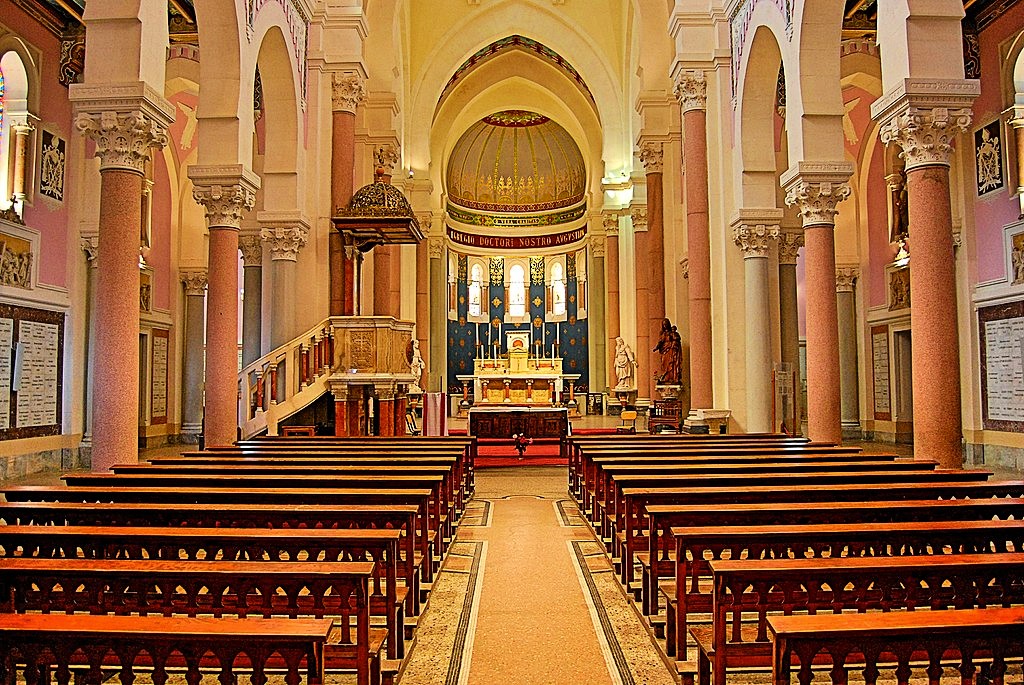
The Nave of the Church of St Amantius in Rodez – a pity it was so ruines by VII
St Vitalis (Died c 304) Martyr and St Agricola (Died c 304) Latmen Martyrs. Martyrs, Laymen. They died in c 304 in Bologna, Italy in the persecution of Diocletian. Patronage – Bologna. The Roman Martyrology reads: “In Bologna, Saints Vitalis and Agricola, Martyrs, of whom, according to what Saint Ambrose recounts, the first was first a slave to the other, then a companion in Martyrdom: Vitalis, in fact, suffered such torments that there was no longer any part of his body without wound. Agricola, not at all terrified by the torture of his slave, imitated him in Martyrdom by undergoing crucifixion.” Their Lives and Deaths: https://anastpaul.com/2022/11/04/saints-of-the-day-4-november-st-vitalis-died-c-304-and-st-agricola-died-c-304-martyrs/
St Amandus of Avignon St Amantius of Rodez (Died c440) Bishop St Birstan St Clarus the Hermit St Clether
Bl Frances d’Amboise St Gerard de Bazonches St Gregory of Burtscheid Bl Helen Enselmini Bl Henry of Zweifalten St Hermas of Myra St Joannicus of Mount Olympus St John Zedazneli St Modesta of Trier St Nicander of Lycia St Patrobas St Perpète St Philologus
St Pierius (Died c309) Priest, Co-Director of the Catechetical School of Alexandria, Scholar, renowned Preacher and Exegetical Writer.. He died in Rome in c309 of natural causes which St Jerome assures us of. The Roman Martyrology reads today: “The birthday of St Pierius, Priest of Alexandria, who, being deeply versed in the Sacred Scriptures, leading a very pure life and freed from all impediments in order to apply to Christian philosophy, taught the people with great renown and published various treatise, under the Emperors Carus and Diocletian, when St Theonas governed the Church of Alexandria. After the persecutions, he spent the remainder of his life at Rome, where he rested in peace in the Lord.” His Life of Grace: https://anastpaul.com/2023/11/04/saint-of-the-day-4-november-st-pierius-died-c309-priest-confessor/
Saint of the Day – 3 November – Saint Winifred (Died 7th Century) Virgin Martyr. Born in Tegeingl (modern-day Flintshire) Wales and died in Gwytherin (in modern-day Conwy) also in Wales. Patronages – of Holywell in Flintshire, Wales; against unwanted advances, of the Diocese of Shrewsbury. Also known as – Winefride, Wenefreda, Winifreda, Gwenffrewi.
The Roman Martyrology reads today: “In England, St Winifred, Virgin and Martyr.”
St Winifred’s Statue in the Well Chapel
The story of St Winifred, the 7th Century Virgin and Martyr is told in two 12th Century ‘Lives’ one written by Robert Pennant, Prior of Shrewsbury Abbey in Shropshire in England and a shorter work of unknown authorship, known as the Vita Prima. Both works tell substantially the same story of the origin of theour Saint and of her famous Well.
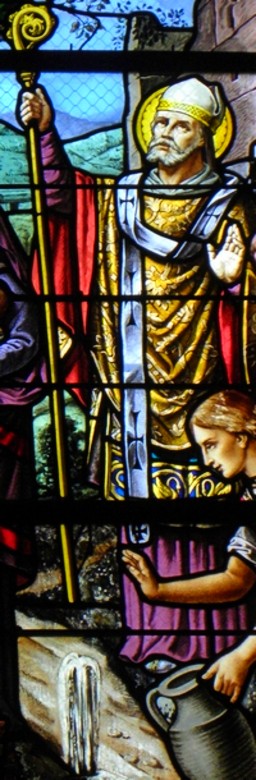
Winifred was the daughter of Teuyth, a chieftain of Tegeingl, who had permitted St Beuno to establish a Church within his territory. Beuno became Winifred’s religious instructor and spiritual guide (later iterations of the story make him Winefride’s uncle) and, at an early age, she took a vow of chastity, intending to devote her life to God.
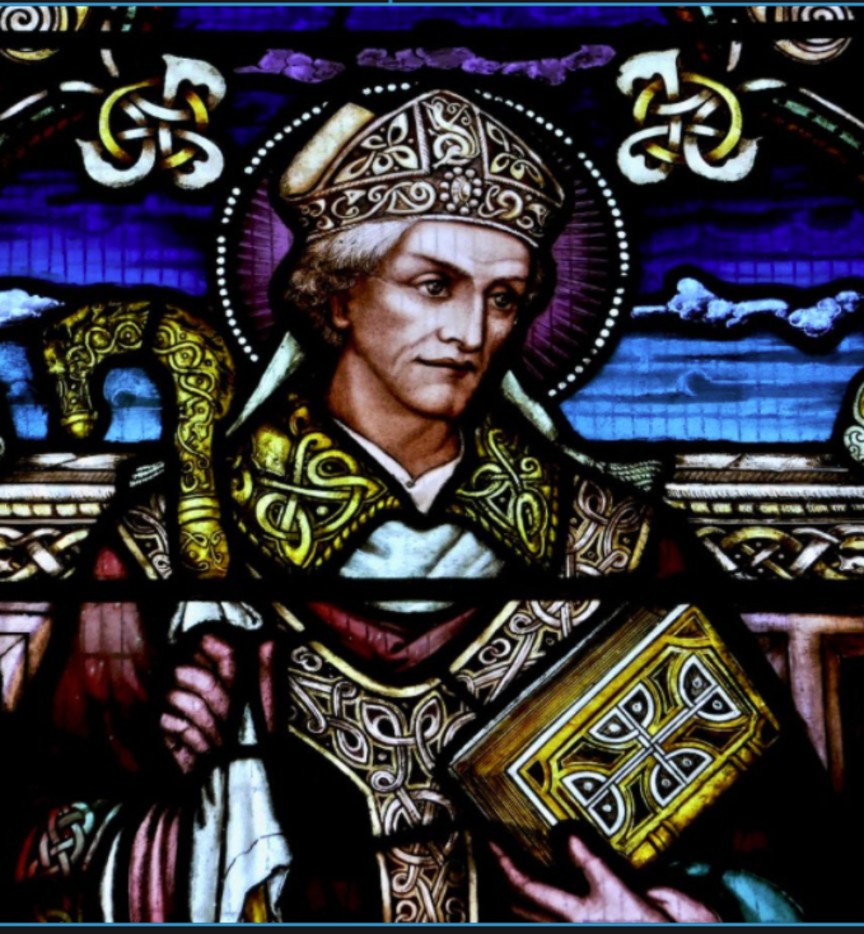
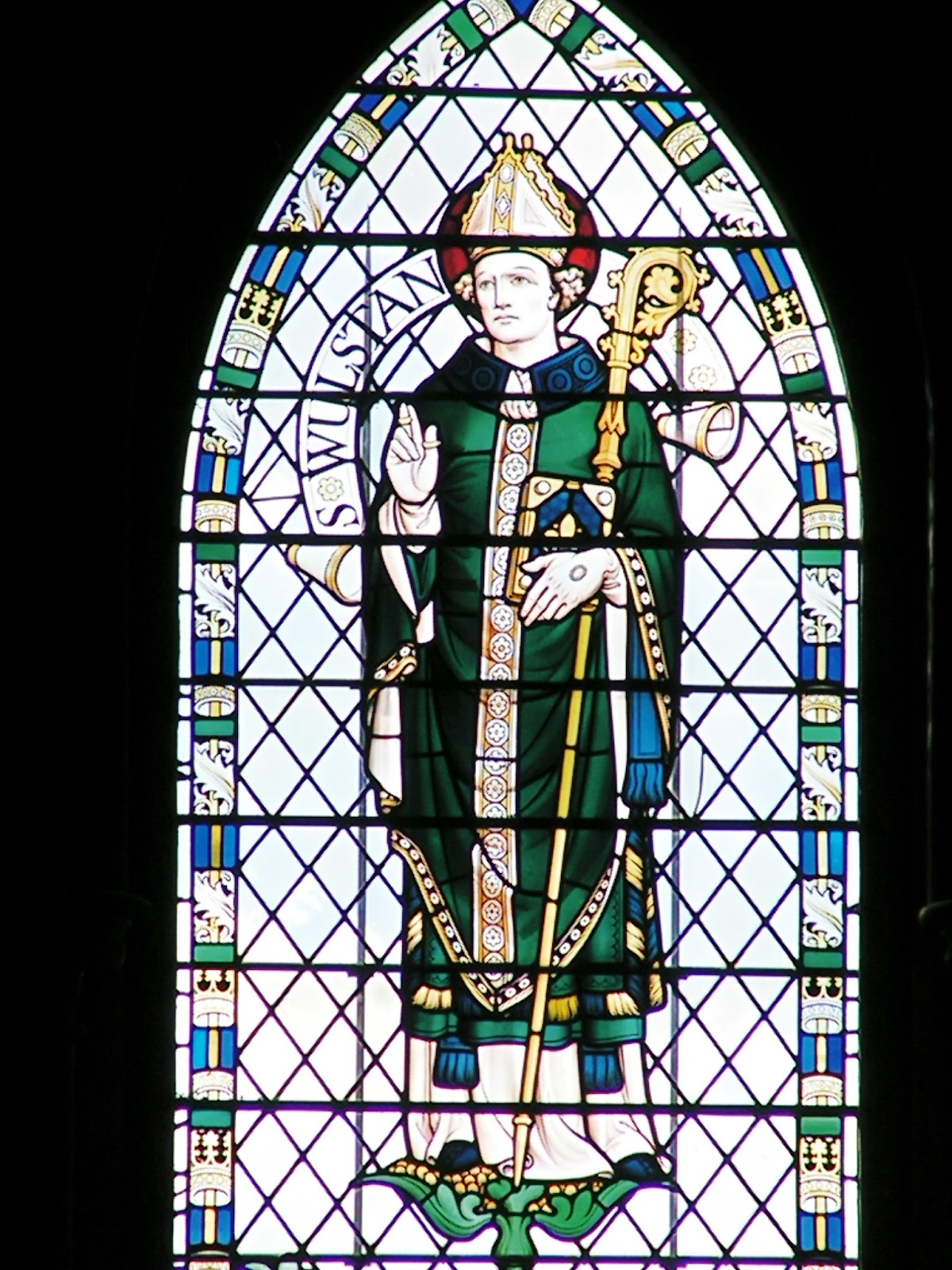
The Glass image of St Winifred resides in Cardiff
One Sunday morning, while her parents were at Mass, a Prince named Caradoc visited their home. Finding Winifred alone, he tried to coerce her to unchaste actions, threatening to force her if she refused. Winifred pretended to consent, only asking that she first be allowed to retire to her chamber to change her garments. By this ruse she managed to escape the house and fled down the valley towards St Beuno’s Church. As she reached it, Caradoc caught up with her and decapitated her with his sword. Her body fell to the ground, outside the Church door, but her head landed inside the threshold,and where it fekk, a spring burst forth from the earth.
The Martyrdom of St Winifred
St Beuno came forward and pronounced a curse upon Caradoc, who was instantly struck dead. Then St Beuno placed Winifred’s head back onto her body and prayed for her revival. The prayer was granted and Winifred returned to life, the only trace of her injury being a thin white line around her neck. The two 12th-century source give differing accounts of her later life but both agree that she took command of an Abbey in Gwytherin, where she eventually died and was buried.
St Winifred’s Well, a holy and miraculous Well and a Welsh National Shrine located in the Welsh Town of Holywell in Flintshire of which Town, St Winifred is the Patron. The Well is unique among Britain’s sacred sites in that it retained a continuous pilgrimage tradition throughout the English Reformation. During the Middle Ages, the Well formed part of the Estate of nearby Basingwerk Abbey. It was visited by several English Monarchs, including Richard II and Henry IV.
St Winifred’s miraculous Well
Veneration of Winifred as a Virgin Martyr Saint is attested from the 12th Century. She is mostly venerated in England, not in Wales which led Caesar Baronius to list her as an “English Saint” in his Roman Martyrology of 1584.
In 1138, Relics of Winifred were carried to Shrewsbury to form the basis of an elaborate Shrine there, hence her Patronage of that Town. The Church of St. Winifred, Stainton is a 12th Century Church located in the Village of Stainton, South Yorkshire.
St Acepsimas St Acheric of Vosges Bl Alphais of Cudot Bl Berardo dei Marsi Bl Berchtold of Engelberg St Caesarius St Cecilio Manrique Arnáiz St Clydog St Cristiolus St Domnus of Vienne St Elerius St Englatius St Florus of Lodeve St Gaudiosus of Tarazona St Germanus St Guenhael St Hermengaudius of Urgell St Hilary of Viterbo
St Sylvia Mother of St Gregory the Great, Pope St Theophilus St Valentine of Viterbo St Valentinian St Vitalis St William of Vosges
St Winifred (Died 7th Century) Virgin Martyr
St Wulganus
Innumerable Martyrs of Saragossa: A large group of Christians martyred in Zaragoza, Spain by Dacian during the persecutions of Diocletian. Dacian ordered all Christians of the city into exile under pain of death; when they were assembled to leave, Dacian ordered imperial soldiers to massacre the lot of them. They were Martyred in 304.
Saint of the Day – 2 November – Saint Theodotus (c260–c335) Bishop of Laodicea (in modern Turkey), Philosopher, possibly a Physician, Theologian. He initially defended the Arians but after being provisionally excommunicated, he repented his stance and became a defender of orthodoxy.
The Roman Martyrology reads today: “At Laodicea in Syria, St Theodotus, a Bishop, powerful in words and adorned with good works and virtues.”
An artist’s representation of Laodicea
According to St Eusebius of Caesarea’s Historia Ecclesiastica, Theodotus “proved his personal name … true” and was a gift from God to the Diocese of Laodicea. St Eusebius also praises him for his knowledge of “the science of bodily healing” and for being a “dedicated student of divine teachings”, implying that he was trained in both medicine and theology, prior to becoming bishop. He used his medical training to treat the faithful during the Great Persecution. Eusebius and Theodotus were probably born around the same time. They were close friends and Ecclesiastical allies throughout their Episcopal careers. Eusebius dedicated two Apologetic works, Praeparatio evangelica and Demonstratio evangelica, written between about 312 and 318, to Theodotus.
Theodotus attended the Provincial Council of Antioch held in late 324 or early 325. He was one of only three Bishopswho refused to subscribe to the Council’s statement of faith which was based on the theology of the Bishop of Alexandria, Alexander I, an Arian. They were excommunicated pending their recantation at the “great and holy Synod” scheduled for June 325. Theodotus attended the Synod, which took place in Nicaea and subscribed to the Nicene Creed and Decrees, thus redeeming himself. He attended at least 2 further Councils and supported orthodoxy.
Because none of Theodotus’ writing survives, it is impossible to know Theodotus’ exact interpretation and theology with any exactitude. He may have defended Arius more out of loyalty to the Alexandrian Church, with which Laodicea had strong connections, than out of strong theological agreement.
All Souls Day – The Commemoration of All the Faithful Departed: Commemoration of the faithful departed in Purgatory. Abbot Odilo of Cluny instituted it in the Monasteries of his congregation in 998, other religious orders took up the observance and it was adopted by various Diocese and gradually by the whole Church. The Office of the Dead must be recited by the clergy on this day and Pope Benedict XV granted to all Priests, the privilege of saying three Masses of requiem – one for the souls in Purgatory one for the intention of the Holy Father one for the Priest’s intentions If the feast should fall on Sunday it is kept on 3 November. Patronage: Monselice, Italy HERE: https://anastpaul.com/2018/11/02/commemoration-of-all-souls-day-2-november/ AND: https://anastpaul.wordpress.com/2017/11/02/the-commemoration-of-all-the-holy-souls-in-purgatory-2-november/
St Ambrose of Agaune St Ambrose of Agaune St Amicus of Fonte Avellana St Amicus of Rambone St Baya of Scotland St Domninus of Grenoble St Erc of Slane St Eustochium of Tarsus St George of Vienne
Blessed John Bodey (1549-1583) Layman, Martyr, Husband and Schoolmaster. Born in 1549 at Wells, Somerset, England and died on 2 November 1583 at Andover, England by being hanged, drawn and quartered for the crime of being a Catholic and refusing to accept Elizabeth I, Queen of England, as the Head of the Church. Blessed John was Beatified on 15 December 1929 together with Blessed John Slade (feast day 30 October), by Pope Pius XI. His Life and Death: https://anastpaul.com/2023/11/02/saint-of-the-day-2-november-blessed-john-bodey-1549-1583-layman-martyr/
St Jorandus of Kergrist St Justus of Trieste St Marcian of Chalcis
Martyrs of Isfahan – 5+ Saints: Acindynus, Pegasius and Anempodistus were Persian priests who were imprisoned, tortured, interrogated and Martyred in the persecutions of king Sapor II of Persia; he considered any Christian to be a Roman spy and anti-Persian.
Martyrs of Sebaste – 10 Saints: A group of ten soldiers in the imperial Roman army of Emperor Licinius Licinianus who were executed together for refusing to burn incense as a sacrifice to the emperor. The only details that have survived are five of their names – Agapius, Cartherius, Eudoxius, Styriacus and Tobias. They were burned at the stake in 315 in Sebaste (in modern Turkey).
Saint of the Day – 1 November – Saint Cadfan (c530-c590) Founding Abbot of Bardsey Abbey in Wales, Missionary, Founder of many Monasteries. Born in c530 in Brittany (in modern France) and died in Wales in c590 of natural causes. Patronage – of Llangadfan names after St Cadfan. Also known as – Gideon or Cadfan of Wales, Caden, Cadoan, Cadouen, Caduan, Cadvan, Catamanu, Catamanus, Catman, Catouan, Catuuan, Catvan, Gadfan, Kavan. Additional Memorial – 1 January as one of the Breton Missionaries to Britain.
Most of the information we have of Cadfan’s life is from the Vita by Llywelyn the Bard in the 12th Century.
Cadfan was a French nobleman, the son of Eneas Ledewig and Princess Gwen Teirbron. As a young man, he was drawn to a life in the Church, probably through the influence of his elder half-brother, St Winwaloe.
He founded places of worship in Finistere and the Cotes-du-Nord before leading a large band of missionaries to Western Wales with his cousin, St Tydecho and friend, St Cynllo.
In Wales, Cadfan founded a renowned Monastery at Towyn in Meirionydd, in northern Powys but later moved to the seclusion of Bardsey Island. The Monastery he established there, which he dedicated to Our Lady as St Mary’s Abbey, became a spirtitual destination for holy men and royalty alike. Cadfan’s confessor was St Hywyn who lived just across the water in Aberdaron.
The Ruins of St Mary’s Abbey on the Island of Bardsey
It is said that, not only his original followers but some 20,000 further Saints were subsequently buried in the Abbey’s graveyard.
Cadfan died on 1st November, sometime in the late 6th Century. He was succeeded as Abbot of Bardsey by St Lleuddad who buried him in the Abbey Church. Centuries later, his body was translated to a more fitting Shrine in Llandaff Cathedral.
November “The Month of the Holy Souls in Purgatory”
All Saints Day – (a Holy Day of Obligation) Instituted to honour all the saints, known and unknown. It owes its origin in the Western Church to the dedication of the Roman Pantheon in honour of the Blessed Virgin Mary and all the Martyrs by Pope Saint Boniface IV in 609, the anniversary of which was celebrated at Rome on 13 May. Pope Saint Gregory III Consecrated a Chapel in the Vatican Basilica in honour of All Saints, designating 1 November as their feast. Pope Gregory IV extended its observance to the whole Church. It has a Vigil and Octave and is a Holy Day of Obligation – the eve is popularly celebrated as Hallowe’en. Patronage – Arzignano, Italy. ABOUT: https://anastpaul.com/2019/11/01/solemnity-of-all-saints-1-november/ AND: https://anastpaul.com/2018/11/01/1-november-solemnity-of-all-saints/ AND: https://anastpaul.wordpress.com/2017/11/01/1-november-the-feast-of-all-the-saints/
St Benignus of Dijon St Cadfan (c530-c590) Abbot St Caesarius of Africa St Caesarius of Damascus St Ceitho St Cledwyn of Wales Bl Clemens Kyuemon St Cyrenia of Tarsus St Dacius of Damascus St Deborah the Prophetess St Dingad Bl Dionysius Fugixima St Floribert of Ghent St Gal of Clermont St Genesius of Lyon St Germanus of Montfort St Harold the King St James of Persia St John of Persia St Julian of Africa St Juliana of Tarsus St Lluís Estruch Vives St Marcel of Paris St Mary the Slave St Mathurin St Meigan St Nichole St Pabiali of Wales Bl Pere Josep Almató Ribera Auras St Peter Absalon Bl Peter Paul Navarra Bl Petrus Onizuka Sadayu St Rachel the Matriarch
Saint of the Day – 31 October – Saint Quentin (Died c287) Martyr, Roman Senator, Missionary. Died in c287 after horrible torments he was finally beheaded. Patronages – against coughs, whooping courgh, colds, against dropsy, against sneezing, of bombardiers, of Chaplains, locksmiths, porters, surgeons, tailors, of Amiens in France, of Monticelli Terme in Italy. Also known as – Quentin of Vermand, Quentin of Amiens, Quinten… Quintin…Quintino… Quintinus… Additional Memorials – 24 June on some calendars, 3 January (discovery of his body), 25 October (translation of the body). In art Quentin is often depicted as a Deacon.
The Roman Martyrology reads today: “At Saint Quentin, in France, St Quintinus, a Roman citizen and Senator, who endured Martyrdom under the Emperor Maximian. By the revelation of an Angel, his body was found incorrupt after the lapse of 55 years.”
Quentin belonged to a Roman senatorial family and came to Gaul under the Emperor Maximian to work with St Lucian who was later also Martyred near Beauvais in c290, as a missionary of faith in the area around Amiens.
The Life os St Quentin Unknown Dutch Master
He was arrested in Vermand and finally beheaded near what is now St-Quentin. According to later tradition, he was pricked with nails, doused with hot pitch and his body thrown into the River Somme. Around 55 years later, the blind Roman noblewoman, Matron Eusebia had the body recovered from the Somme following a vision and buried in a Chapel she had built.
The Martyrdom of St Quentin – Unknown artist
According to St Gregory of Tours, Quentin was already being venerated in the 6th Century. Around 641, St Eligius of Noyon found the Relics and made a richly decorated Tomb (St Eligius being a renowned craftsman and goldsmith) – the first recorded story of the Passion of St Quentin dates from that time.
Due to the large stream of pilgrims to the Church dedicated to the Martyr , the Town of St-Quentin developed on this site. The Church, which was renovated between 813 and 826 and again in the 13th Century, contains Quentin’s Tomb and today is a very large Basilica and is still a place of pilgrimage and miracles, so much so, that a new Church, the current Basilica, had to be erected to accommodate the faithful. The Processional Bust and Reliquary below might be that crafted by St Eligius (?).
St Quentin’s Relics in the Basilica at St Quentin
In 881, because of the Norman invasions, the Relics were taken to Laon. In Parma, the Church of San Quintino is dedicated to our Saint which dates to an old Oratory which was built outside the City walls.
the processional Religuary of St Quentin kept in the Basilica
The Martyrs Sts Victoricus and Fuscian were St Quentin’s followers.
Vigil of All Saints Day or All Hallow’s Eve: Eve of the Feast of All Hallows, that is, All Saints Day. Halloween is a day on which many quaint customs are revived. It is popular in the United States and Scotland and in the US has become the second largest secular holiday of the year.
St Wolfgang of Regensburg (c934 –994) “The Great Almoner,” Bishop, Monk, Missionary, Ascetic, Apostle of Charity. He is regarded as one of the three great German Saints of the 10th Century, the other two being Saint Ulrich and Saint Conrad of Constance. He was Canonised in 1052 by Pope Leo IX. St Wolfgang’s life: https://anastpaul.com/2019/10/31/saint-of-the-day-31-october-saint-wolfgang-of-regensburg-c-934-994/
Saint of the Day – 30 October – St Marcian of Syracuse (1st Century) the 1st Bishop of Syracuse, Martyr. Disciple of St Peter and sent by the Apostle to Italy. Born in Antioch and died in Syracuse. Sicily, Italy. Patronages – the City and Archdiocese of Gaeta, the Archdiocese of Syracuse, Sicily, Italy. Also known as – Marcianus. Marciano, Martian. Additional Memorials – 2 June (City of Gaeta, Italy) 14 June (Archdiocese of Syracuse, Sicily, Italy) 31 October on some calendars.
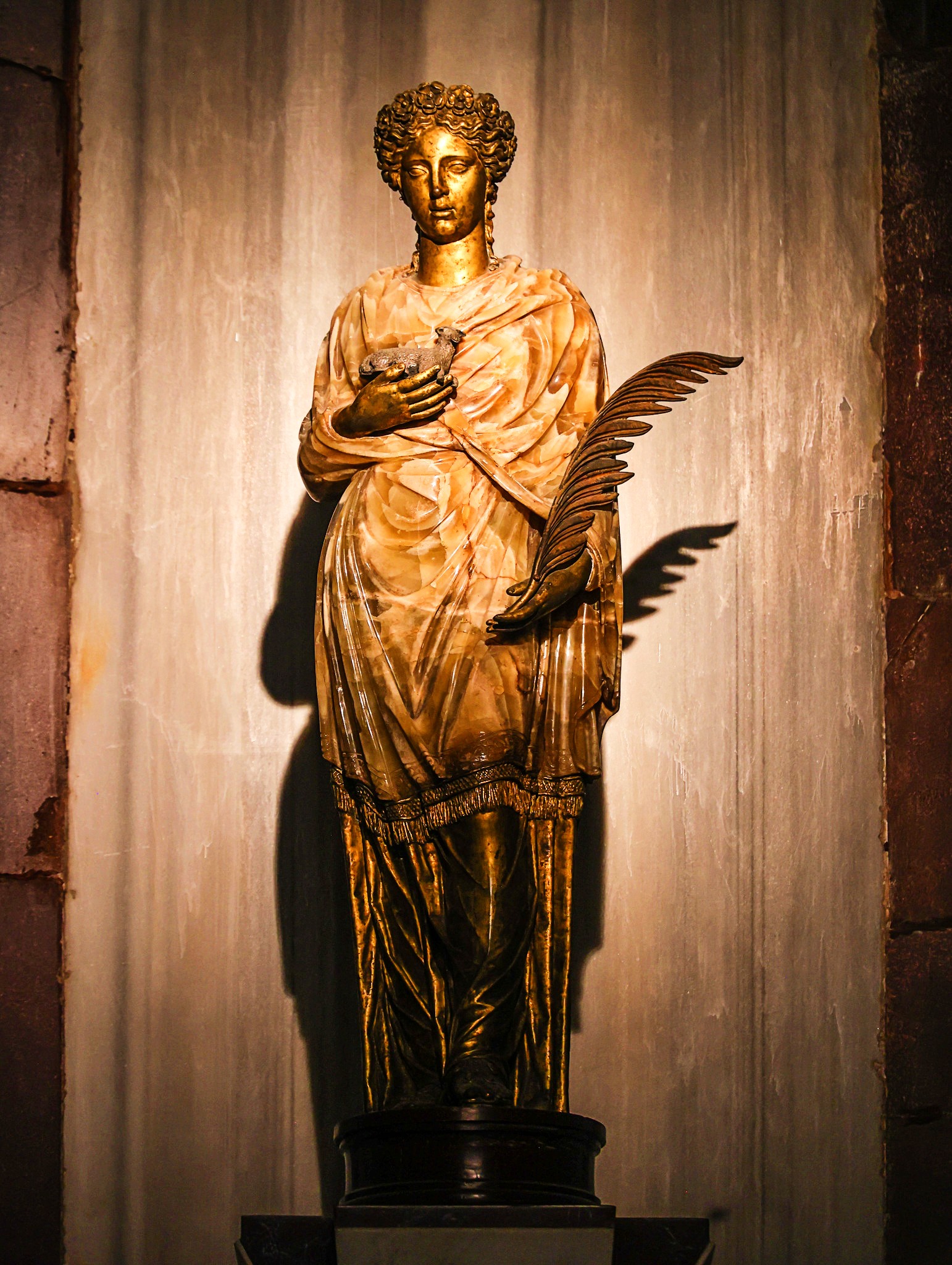
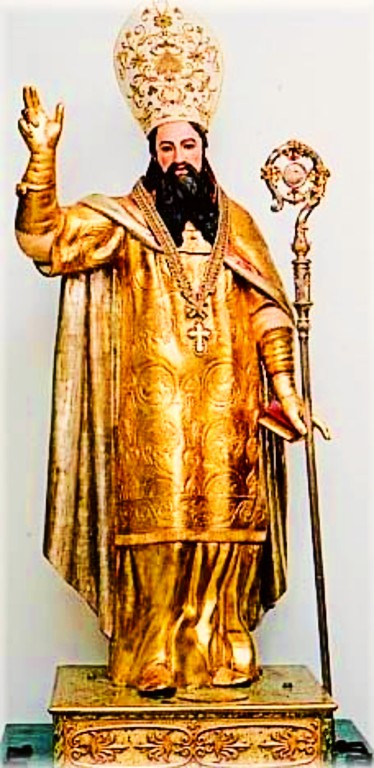
Statue of St. Marcian in the Syracuse Cathedral
According to tradition, Marcian was the f1st Bishop of Syracuse and a disciple of the Apostle Peter. He is considered the first bishop of the West, as he arrived in Sicily while the Apostle was still in Antioch.
Sources on Marcian are considered late, as they are found only from the Byzantine era (7th century) onward.
The oldest image of Marcian is found in the catacombs of St. Lucy in Rome. It is a fresco dating from the 8th Century. Another depiction of him was found inside the crypt of St. Marcian, a Basilica built over an ancient early Christian complex that tradition has identified as the saint’s dwelling and later as his Tomb. However, his Relics are not found in Syracuse; they are kept in the cities of Gaeta and Messina.
Statue of St Marcian on the top of the Syracuse Cathedral
St Germanus of Capua (Died c541) Bishop of Capua, Italy, Confessor, Papal Legate. St Germanus was a close friend of St Benedict of Nursia. The Roman Martyrology states: St Germanus, Bishop and Confessor, a man of great sanctity, whose soul, at the hour of death, was seen by St Benedict taken to heaven by angels. His Life: https://anastpaul.com/2020/10/30/saint-of-the-day-30-october-saint-germanus-of-capua-died-c-541/
St Herbert of Tours
Blessed John Slade (Died 1583) Layman Martyr. Beatified on 15 December 1929 by Pope Pius XI. The Roman Martyrology: “At Winchester in England, blessed John Slade, Martyr, who was hanged on the gallows and cruelly disemboweled for having refused the power of Queen Elizabeth I in spiritual matters.” His Life and Death: https://anastpaul.com/2023/10/30/saint-of-the-day-30-october-blessed-john-slade-died-1583-layman-martyr/
St Lucanus of Lagny St Marcellus the Centurion St Marcian of Syracuse (1st Century) Bishop Martyr St Maximus of Cumae St Nanterius of Saint-Mihiel Bl Raymond of Cardona St Saturninus of Cagliari St Serapion of Antioch St Talarica of Scotland Bl Terrence Albert O’Brien St Theonestus of Philippi (Died 425) Bishop, Martyr St Zenobia of Aegea St Zenobius of Aegea
Martyrs in Africa: A group of 100 to 200 Christians murdered in the early persecutions and about whom we know nothing except that they died for their faith.
Saint of the Day – 29 October – Saint Theodore of Vienne (Died c575) Abbot, Priest, Hermit, Miracle-worker, disciple of St Caesarius of Arles (470-543). He passed his whole life in the doing of good works and to him the Diocese of Vienne owes the erection of several Churches and Monasteries. Also known as – Theuderius or Theuderis, Theudar, Theodore, Cherf, Chef, French: Theudère de Vienne.
The Roman Martyrology reads today: “At Vienne, the departure from this world of the blessed St Theodore, Abbot.”
Theodore was born in the 6th Century of one of the best families of the City of Vienne, in Arcisse, near the modernTown of Saint-Chef. By the interior call of the Holy Ghosti he wished to enter Lérins Abbey on the French Riviera as a Monk. However, his teacher, St Caesarius the Bishop of Arles led Ordained him Priest.
Thus he returned to Vienne where a group of disciples gathered round him, for whom he established at least one Monastery, although it is believed that he had established a few others nearby, as well as Churches.
Theodore spent the last twelve years of his life in a walled up cell in the Church of Saint Lawrence, Vienne, where he died around 575. He was known as a miracle worker.
Theodore is celebrated in the Diocese of Grenoble-Vienne on 29 October. The Village of Saint-Chef was called Saint-Theudère by the Church of Vienne in the earliest days of Christianity. The Village may be called Saint-Chef today because of a tradition that the head (caput, chef) of the Saint was kept there.
St Abraham of Rostov St Anne of Mount Olympus St Colman of Kilmacduagh St Dodone of Wallers-en-Fagne St Donatus of Corfu St Ermelinda of Meldaert St Eusebia of Bergamo St Felician of Carthage St Honoratus of Vercelli St John of Autun St Kennera St Mary of Edessa St Narcissus of Gerona
St Sigolinus of Stavelot St Stephen of Cajazzo St Terence of Metz St Theodore of Vienne (Died c575) Abbot St Zenobius of Sidon
Martyrs of Douai – 160 Saints and Beati: 160 Priests, Laymen and Religious who studied at the English College in Douai, France, then returned to minister to covert Catholics in England during a period of government persecution of the Church and were murdered for their work.
Martyrs of Lucania – 4 Saints: A group of Christians executed together for their faith. Only their names have survived – Felician, Hyacinth, Lucius and Quintus. Their Martyrdom occurred in Lucania, southern Italy.
Saint of the Day – 28 October – Saint Honoratus of Vercelli (c330-415) the 3rd Bishop of Vercelli, Disciple of St Eusebius of Vercelli, the 1st Bishop of Vercelli and a close friend of the great Father and Doctor of the Church, St Ambrose (340-397). Born in c330 in Vercelli in the region of Piedmont in northern Italy and died on 28 or 29 October 415 (records vary) at his See and hometown of Verelli of natural causes. Also known as – Honoratius. Additional Memorial – 29 October.
The Roman Martyrology reads today: “At Vercelli, St Honoratus, the Bishop.”
St Honaratus Fresco administering the Last Rites to St Ambrose seen in the Vercelli Cathedral
Honoratus was a disciple of St Eusebius and trained in the spiritual and Ecclesiastical life by the City’s first Bishop (from c340-371).
In 355 he accompanied his master in exile, to Scythopolis and in his wanderings through Cappadocia, Egypt and Illyria.
In 396, Honoratus was elected as the new Bishop of Vercelli after Lidmenius (Limenio). The election took place on the recommendation of Saint Ambrose of Milan, who personally Concecrated him.
At Easter 397, Honoratus was in Milan to visit and minister to St Ambrose who was very ill. On Good Friday St Amrose lay, with his arms outstretched in the form of a cross for many hours, while moving his lips in constant prayer. Honoratus was resting in another room when he seemed to hear a voice calling out three times to him: “Get up! Hurry up! He’s dying!” He went immediately and administered the Last Rites and soon after, the holy Bishop was dead, early in the morning of Easter Eve, 4 April 397, not yet sixty years old.
Honoratus died on 28 or 29. October 415. He was buried next to Eusebius and Lidmenius. His memorial day is October 28 or 29.
Saint of the Day – 27 October – Saint Abraham the Poor (Died c372) Hermit. Born in Menuf, Egypt and died in c372 of natural causes. Also known as – Abraham the Child, Abraham the Simple, Abraham the Hermit.
Born in the Town of Menuf in Egypt, Abraham became a disciple of Pachomius (Died c348), who founded Monastic community, in the delta region of the Nile River.
There Abraham remained a disciple of Pachomius for 23 years until the death of his Master, after which he spent the following years of his life as a Hermit, dwelling alone in a cave.
His nicknames ‘the poor’ ‘the simple’ and ‘the child’ refer to his trusting and simple life and his childlike faith. “Amen I say to you, unless you be converted and become as little children, you shall not enter into the Kingdom of Heaven. Whosoever, therefore, shall humble himself, as this little child, he is the greater in the Kingdom of Heaven. ” (Matthew 18:3-4. His Feast Day is celebrated on 27 October.
CHRIST the KING “Therefore, by our Apostolic authority, we appoint the Feast of Our Lord Jesus Christ the King, annually, on the last Lord’s day in the Month of October that is to say, on the Sunday which immediately precedes the Feast of All Saints, to be observed everywhere in the world. Likewise we enjoin, that the dedication of the human race to the Most Sacred Heart of Jesus be annually renewed upon that selfsame day.” From the Encyclical Letter of Pope Pius XI Quas Primas; 11 December 1925 https://anastpaul.com/2018/11/25/25-november-the-solemnity-of-our-lord-jesus-christ-king-of-the-universe/ AND: https://anastpaul.com/2022/10/30/30-october-christ-the-king/
PENTECOST XXIII
Dedication of the Basilica of Auxilium Christianorum / Our Lady Help of Christians, Turin, Italy, built by St John Bosco (1868) – 27 October: HERE: https://anastpaul.com/2021/10/27/88503/
St Abban of Magh-Armuidhe St Abraham the Poor (Died c372) Hermit.
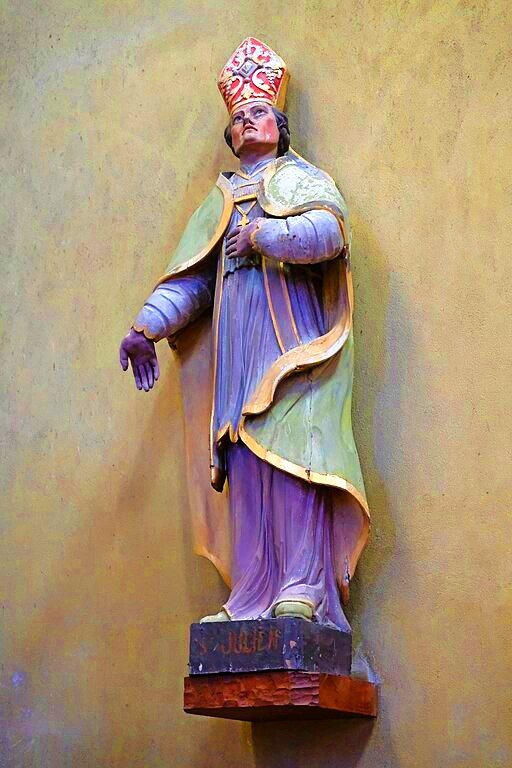
St Namatius of Clermont (Died c462) Bishop, the Eighth or Ninth Bishop of Clermont (then called Arvernis) from 446 until his death in 462 and founded Clermont’s first Cathedral, bringing the Relics of Saints Vitalis and Agricola from Bologna, Italy, to enshrined therein.dedicating the Cathedral to them. This good Sheoherd: https://anastpaul.com/2023/10/27/saint-of-the-day-27-october-saint-namatius-of-clermont-died-c462-bishop/
Saint of the Day – 26 October – Saint Rusticus of Narbonne (Died 461) Bishop of Narbonne from 3 October 427 (or 430) until his death and Confessor, Monk. Born either at Marseilles or at Narbonnaise, died on 26 Ocober 461 of natural causes. Also known as – Rustique, Rustico, Rustus.
The Roman Martyrology reads today: “At Narbonne, St Rusticus, Bishop and Confessor, who flourished in the time of the Valentinian and Leo.”
An unknown Bishop Saint – it might be St Rusticus
Rusticus was the son of a Bishop named Bonose and the nephew, on his mother’s side, of another Bishop named Arator, the seats of both being unknown.
According to trecords, when he had completed his education in France, Rusticus went to Rome, where he soon gained a reputation as a public speaker but, he wished to embrace the religious life and detract himself from worldly persuits.
He wrote to St Jerome, who advised him to continue his studies, commending him to imitate the virtues of St Exuperius of Toulouse and to follow the advice of Proculus, then the Bishop of Marseille. Thus Rusticus entered the Lérins Abbey.
He was Ordained at Marseilles and on 3 October 427 (or 430) was Consecrated as the Bishop of Narbonne. He was present at the First Council of Ephesus in 431. With all his zeal, he could not prevent the progress of the Arian heresy which, the Goths were spreading abroad; there is evidence that an Arian rival Bishop was established in Narbonn too.
The siege of Narbonne by the Goths in 436 and dissensions among the Catholics so disheartened him that he wrote to Pope Leo I, renouncing the Bishopric but Pope Leo dissuaded him (Epistle CLXVII).
Rusticus then endeavoured to consolidate the Catholics. In 444–450, he rebuilt the Cathedral in Narbonne, destroyed by fire in 441, dedicated to Saint Genesius of Arles. The first stone was laid on 18 November 444, and the new building iConsecrated on 29 November 445 (inscription dated this dayis preserved in the Narbo Via Museum) – see below.
Lintel with dedicatory inscription of Bishop St Rusticus, dated 29 November 445
Rusticus named his Archdeacon, Hermes as the Bishop of Béziers but the latter could not take possession of his seat; he then wanted to designate him as his successor but Pope Leo, to whom he wrote on this subject, refused. Hermes succeeded him but the matter was referred to Pope Hilary, Leo’s successor, who held a Council in Rome on this matter. Finally, by a letter of 3 December 462, the Pope confirmed Hermes in Narbonne but with diminished powers over the Province.
In 451, he assisted at the convocation of forty-four Bishops of Gaul and approved Pope Leo’s letter to Flavian, concerning Nestorianism. Rusticus was present too at a Council of Arles, with thirteen Bishops, to decide the debate between Theodore, Bishop of Fréjus and the Abbey of Lérins. In 449, Rusticus was one of the twelve Bishops who assembled to elect Ravennius as the new Bishop of Arles. In fact, a letter from Ravennius to Rusticus, proves the high esteem in which he was held. Rusticus’ own letters are lost, with the exception of the one to St Jerome and a long letter written in reply by St Jerome and two others to Pope Leo, written either in 452 or 458.
St Adalgott of Einsiedeln St Alanus of Quimper St Albinus of Buraburg
St Alfred the Great (849-899) King of Wessex, Confessor, Scholar, Writer and Translator, negotiator. He administered justice with insight and fairness, protected the poor, and encouraged art and the crafts. He tried in all that he did, to rule as a model Christian King. For all this, he alone among the rulers of England is called “the Great.” This Great Saint’s Life: https://anastpaul.com/2021/10/26/saint-of-the-day-26-october-saint-alfred-the-great-849-899/
St Alorus of Quimper St Amandus of Strasburg St Amandus of Worms St Aneurin St Aptonius of Angouleme St Arnold of Queralt St Bean of Mortlach St Bernard de Figuerols
St Gaudiosus of Salerno St Gibitrudis St Gwinoc St Humbert St Lucian Martyr of Nicomedia and Companions St Marcian St Quadragesimus of Policastro St Quodvultdeus St Rogatian of Carthage St Rusticus of Narbonne (Died 461) Bishop and Confessor St Sigibald of Metz
You must be logged in to post a comment.