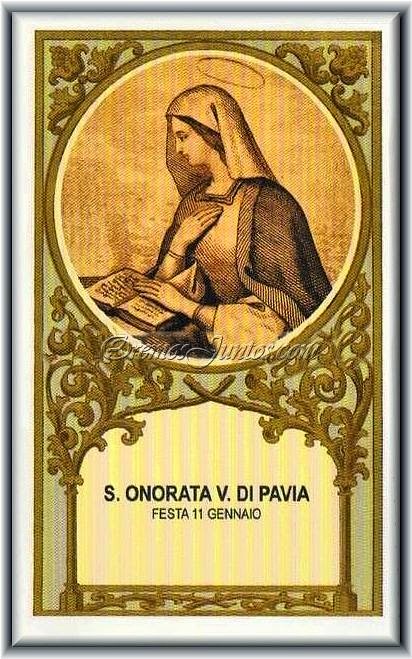
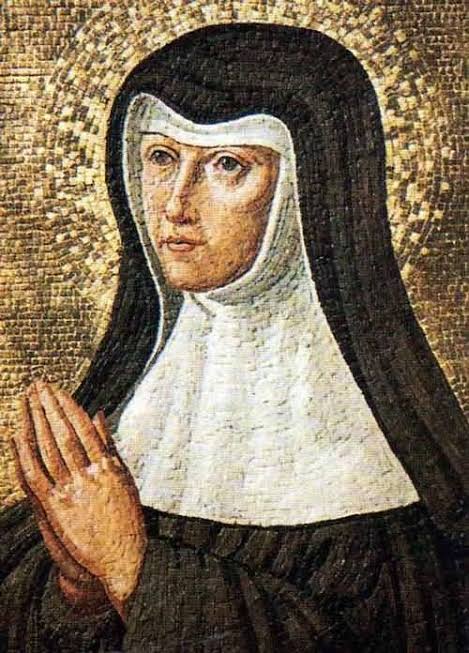
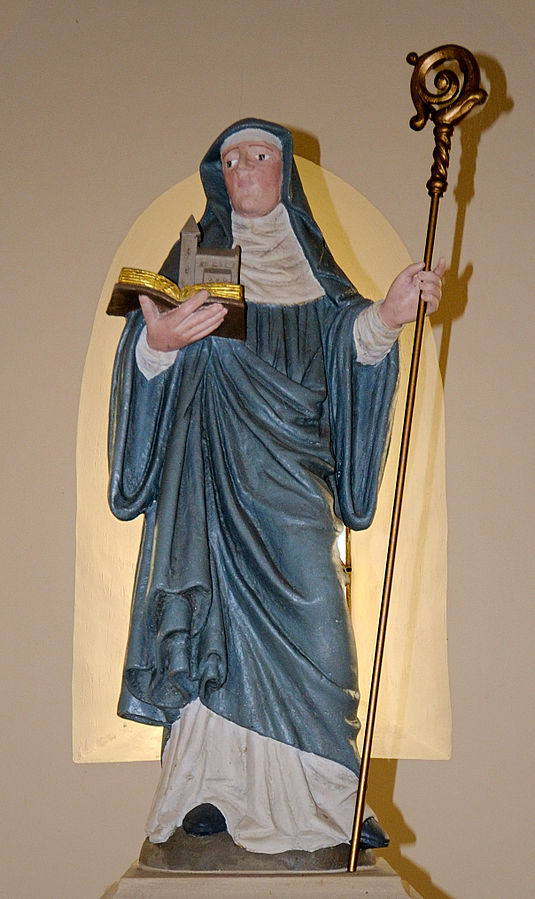
Saint of the Day – 11 January – St Honorata (Died c500) Virgin Consecrated to God and sister of Saint Epiphanius, the Bishop, in the City of Pavia in Italy. Born in Pavia and died there in c500 of natural causes. Also known as – Onorata, Honorata of Pavia..
What we know of Honorata is extracted from the Vita of Saint Epiphanius, her brother and the Bishop of Pavia, written by Saint Ennodius, who was his successor in the Episcopal See.
She was born in Pavia. It is said that she was the sister of Saints Liberata, Especiosa, Luminosa and Epiphanius. She was a Nun at the Convent of San Vicente de Pavia, where she received a good education and training from her sister Saint Liberata or Saint Luminosa. She was Consecrated by her brother Saint Epiphanius of Pavia.
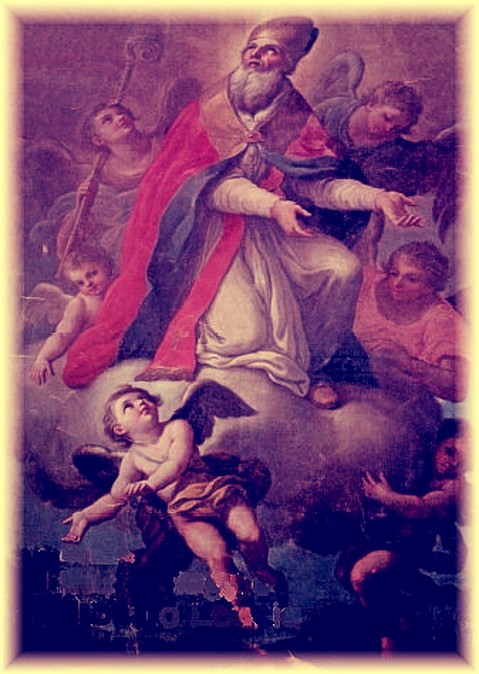
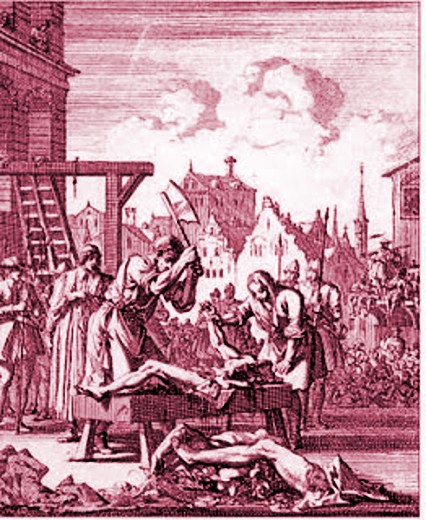
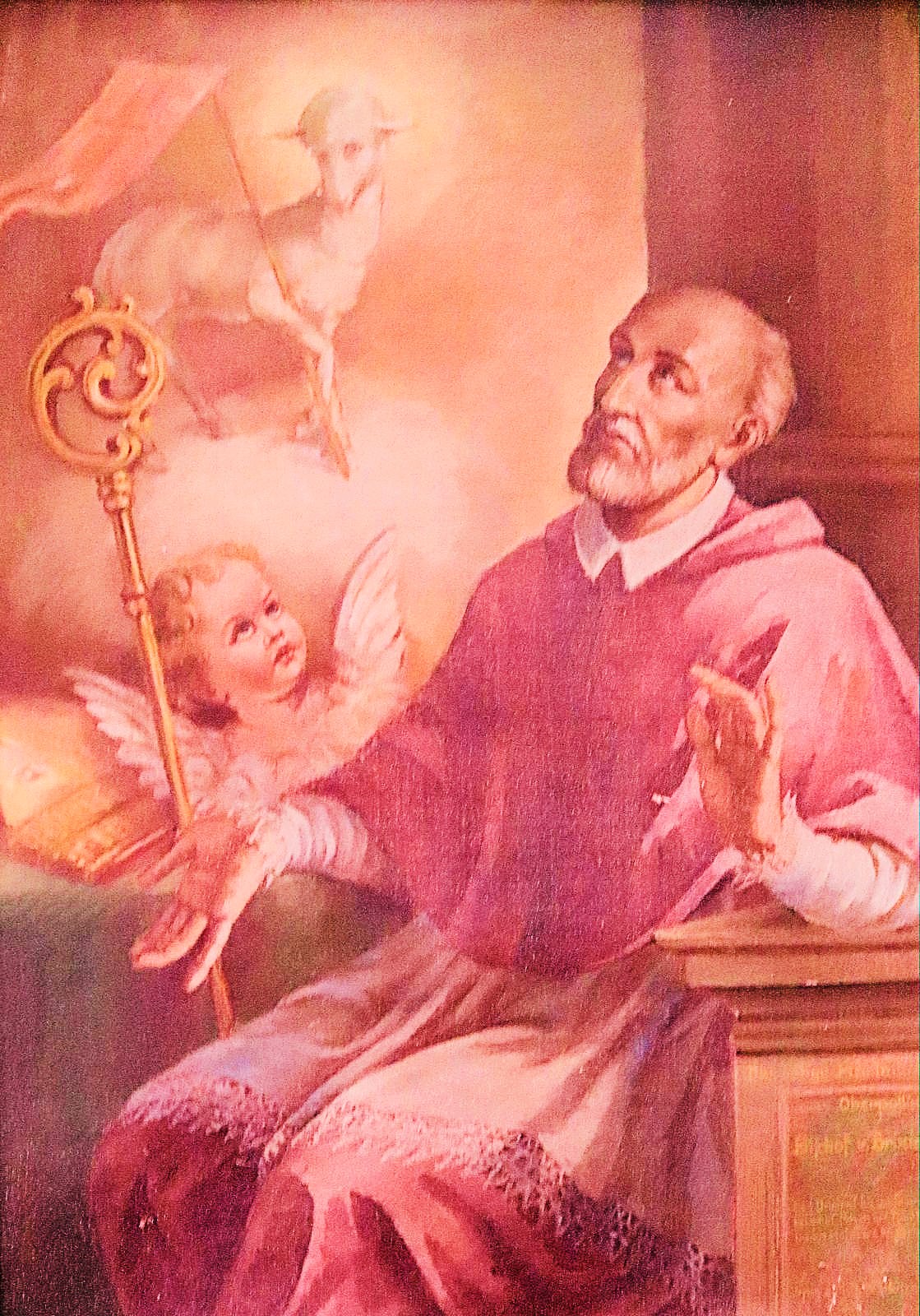
Honorata lived in the Convent until the invasion of the Barbarians who captured her and later freed her through the intercession of her brother Saint Epiphanius. The image below shows Honorata being rescued by her brother.
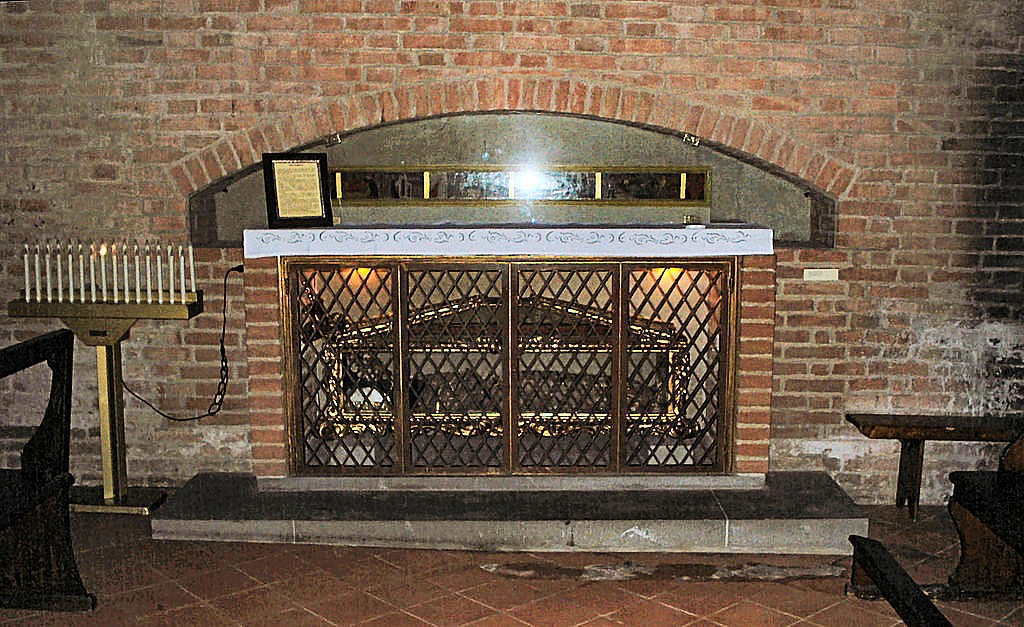
She was always highly esteemed for her gift of prayer and her dedication to the things of God and her neighbour. She died in her Convent in Pavia. Her remains are preserved in the Convent of Santa Maria in Pavia.
Some traditions believe that Honorata was buried together with the virgins Luminosa, Liberata and Especiosa in the Basilica of San Vicente, in the Church where the remains of Bishop Saint Epiphanius were transferred. 11 January is the anniversary of this translation. Of the group of virgins mentioned, all buried in the Church of San Vicente, only Saint Honorata has been inscribed in the Roman Martyrology which simply states: “In Pavia, Honorata, Virgin.”
St Pope Hyginus (Died 142) Papal Ascension c 138. It is believed he was a Martyr for Christ and suffered during the persecution of Antoninus, although our ancient sources do not confirm this. Tradition holds that during his Papacy he determined the various prerogatives of the clergy and defined the grades of the ecclesiastical hierarchy. Hyginus also instituted Godparents at Baptism to assist the baptised during their Christian life. In addition, he decreed, that all Churches be Consecrated. His Life and Death: https://anastpaul.com/2022/01/11/saint-of-the-day-11-january-saint-pope-hyginus-died-142/
St Boadin of Ireland St Breandan of Ireland (the name is not an error) St Eithne St Fedelemia St Honorata (Died c500) Virgin St Leucius of Alexandria (Died 5th Century) Bishop Martyr
St Liberata of Pavia St Lucius the Soldier St Luminosa of Pavia St Mark the Soldier St Michael of Klopsk St Palaemon St Paldo St Peter of Alexandria St Peter of Anea St Peter the Soldier
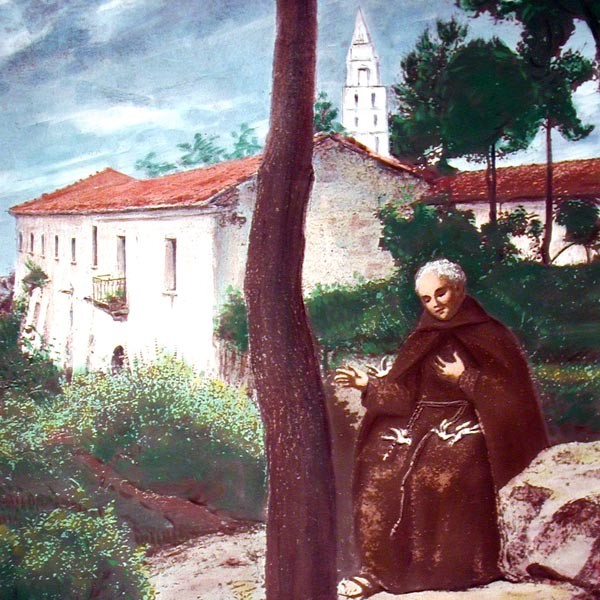
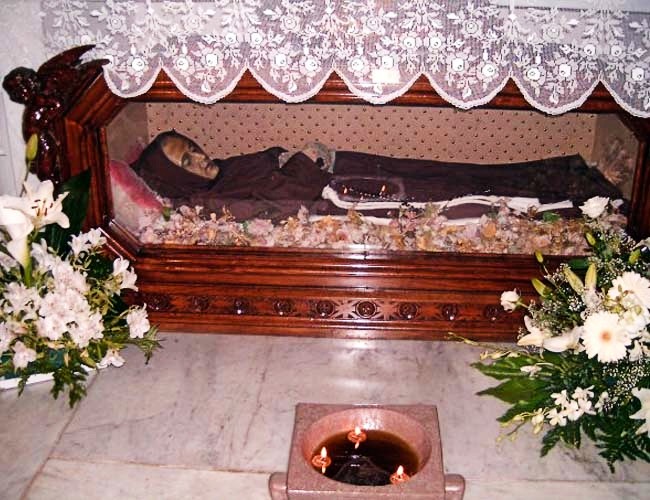
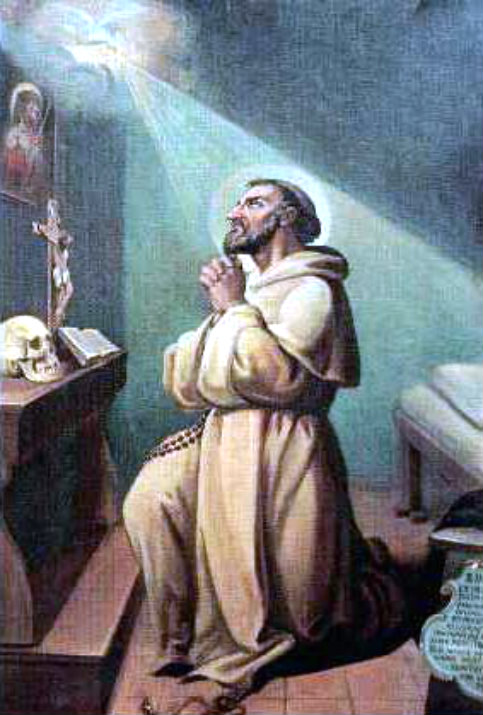
Saint of the Day – 10 January – Blessed Giles of Lorenzana OFM (1443-1518) Lay Brother of the Friars Minor, Hermit, Ascetic, Mystic, Apostle of the all in need. Born in 1443 in Laurenzana, Italy as Bernardin de Bello and died on 10 January 1518 in Laurenzana, Italy of natural causes. Patronage – of the City and Diocese of Laurenzana, Italy. Also known as – Giles di Bello, Bernardi … Bernardin … Egidi … Egidius … Blessed Giles was Beatified on 27 June 1880 by Pope Leo XIII. His body is Incorrupt.
Born of pious parents at Lorenzana in Italy, Giles received the name of Bernardine in Baptism. Even as a youth he received the gift of devotion in so eminent a degree that at prayer, his countenance glowed with fervour and he was often seen raised a foot or more from the floor. This attracted general attention and people came from the surrounding places in order to witness Giles at prayer.
The devout young man, however, desired nothing more than to serve God in seclusion. In order, therefore, to withdraw from the attention of the world and also, to progress in Christian perfection, he asked for admission as a Lay Brother at the Convent of the Friars Minor. This request was granted. He was given the name Giles after the saintly Brother Giles, one of the first companions of St Francis of Assisi.
Burning with love for God, Giles knew no greater joy in the Order than to devote himself to the contemplation of heavenly things and, since his superiors were convinced that he was doing great things for the honour of God and the salvation of souls, they permitted him to live in a hermitage close to the Convent.
Here he lived only for God, to Whom he sacrificed his body by severe fasting, and his soul by constant prayer. He overcame the attacks of hell which, like many other great Saints, he had frequently to endure, without ever yielding, for an instant. When he had finished his course, God called him to the eternal union on 10 January 1518.
The Convent bells rang by themselves when Giles of Lorenzana died and a very great concourse of people flocked to venerate him. Many miracles occurred at his grave. Several years after his death his body was found still perfect and Incorrupt, although he had been buried in a very damp place which should have promoted decay. The veneration which had been accorded to him since time immemorial was approved by Pope Leo XIII.
Even today, the cult of Blessed Egidio is very much alive among the people of the central-northern area of Basilicata.
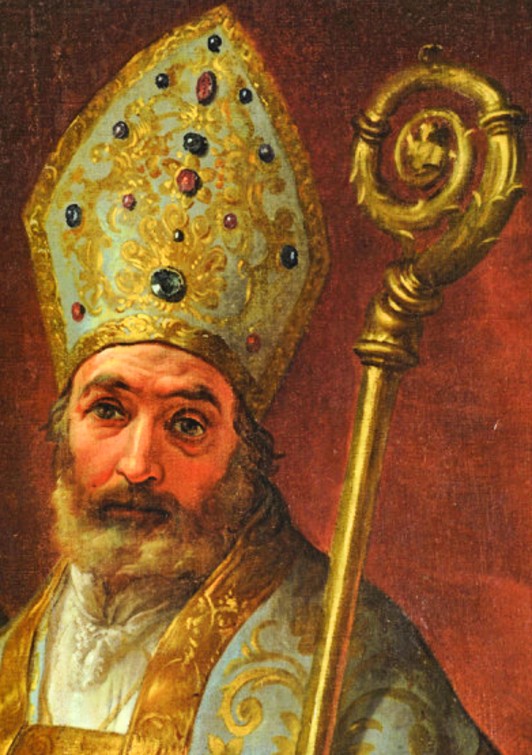
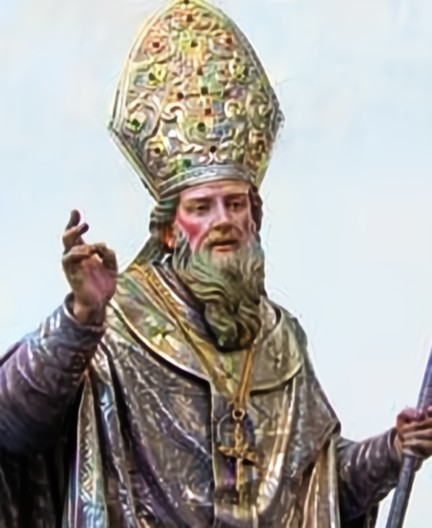
Saint of the Day – 9 January – Blessed Antony Fatati (c1410-1484) Bishop, holding many illustrious Papal appointments for a few Popes in succession. Blessed Antony was austere to himself but generous towards the poor. As the long-serving Bishop of Teramo and then of Ancona, Antony displayed the perfect example of a zealous and loving shepherd. Born in c1410 in Ancona, in the Marches, Italy and died there on 9 January 1484 of natural causes, aged around 74 years. Additional Memorial – 2 September in Ancona. Blessed Antony was Beatified by Pope Pius VI on 9 May 1795. Also known as – Anthony of Teramo, Anthony of Ancona, Antoine… Antonio… His Body is Incorrupt.
Blessed Antony Fatati was born in Ancona to a noble family. He studied in Bologna, Italy and, after Ordination, was appointed a Canon and vicar of the Vatican Chapter of St Peter’s Basilica.
He was then appointed as a senior Chaplain and Cleric of the Apostolic Camera (Treasury) in the Roman Curia, the General Treasurer of the Marches and Vicar General of that Province.
In 1450 he was elected to the Episcopal See of Teramo and, in 1463, of Ancona. In between these elections, in 1456, the King of Naples Alfonso V of Aragon, became so impressed with Antony, the King asked him to be one of his Councilors.
In his long and fruitful pastoral activity, Blessed Antony distinguished himself for his prudence, equanimity, austerity and generosity. He was a shepherd attentive to the needs of his people, whom he guided with wisdom and firmness. He worked to promote charity and social justice and to defend the Catholic Faith.
He was also a man of great culture and profound devotion and piety, devoting himself to prayer and meditation and was an example of Christian life for all who knew him.
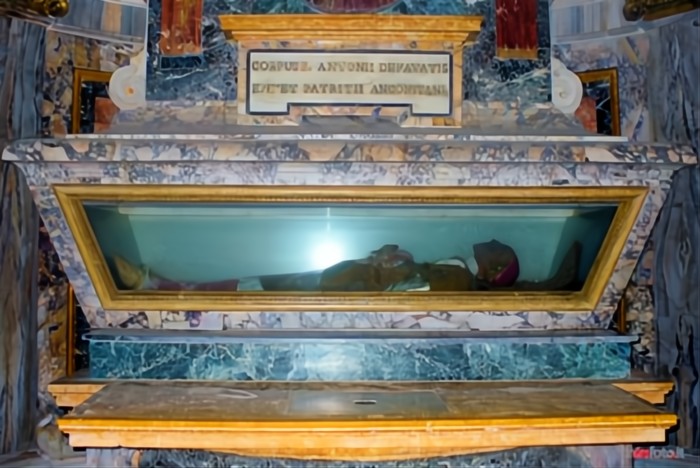
Blessed Antony died in his Diocese on 9 January 1484. He was interred in the Diocesan Cathedral. In 1529 his body were found incorrupt after their exhumation. In 1795 a new sarcophagus was commissioned in order to display Blessed Antony’s Incorrupt body for the veneration of the faithful.
St Peter of Sebaste (c340-c391) Bishop of Sebaste in Lesser Armenia. Member of the glorious family of Saints – He was the younger brother of Basil the Great, Gregory of Nyssa, the famous Christian Hermit Naucratius and Macrina the Younger and a close friend of Gregory of Nazianzen, all Saints. Of course, Basil and Gregory of Nazianzen are both Doctors too. St Pete‘r’s Biography: https://anastpaul.com/2021/01/09/saint-of-the-day-9-january-st-peter-of-sebaste-c-340-c-391-bishop/
Blessed Antony Fatati (c1410-1484) Bishop. His Body is Incorrupt. St Brithwald of Canterbury St Eustratius of Olympus Bl Franciscus Yi Bo-Hyeon St Honorius of Buzancais
St Marcellinus of Ancona (Died c577) The 5th Bishop of Ancona, Italy. Patronages – against fire (a raging fire ceased by St Marcellinus waving his prayer book at it; the book survived the fire with only slight damage; afterwards, people who touched it, while praying, were cured of ailments), of Ancona, Italy. The Roman Martyrology reads: “At Ancona, St Marcellinus, Bishop, who, according to St Gregory the Great, miraculously delivered that City from destruction by fire.” Holy Marcellinus: https://anastpaul.com/2024/01/09/saint-of-the-day-9-january-saint-marcellinus-of-ancona-died-c577-bishop/
St Marciana Bl Martinus In Eon-min St Maurontius St Nearchus St Paschasia of Dijon St Philip Berruyer St Polyeucte
Martyrs of Africa – 21 Saints: A group of 21 Christians murdered together for their faith in the persecutions of Decius. The only details to survive are 14 of their names – Artaxes, Epictetus, Felicitas, Felix, Fortunatus, Jucundus, Pictus, Quietus, Quinctus, Rusticus, Secundus, Sillus, Vincent and Vitalis. They were Martyred in c 250.
Martyrs of Antioch – 6 Saints: A group of Christians Martyred together during the persecutions of Diocletian – Anastasius, Anthony, Basilissa, Celsus, Julian and Marcionilla.
Saint of the Day – 8 January – Blessed Edward Waterson (Died 1593) Priest and Martyr, Missionary to his own beleagured English Catholic people under the horrors set in motion by Henry VIII and now being perpetuated by his daughter Elizabeth I. Edward was born in London, England and died by being hanged, drawn and quartered on 8 January 1593 at Newcastle-on-Tyne, England. The prison horses refused to drag Edward to the scaffold and when the guards finally got him there, the ladder for climbing to the scaffold platform, of its own volition jerked to and fro to keep them from climbing it, until Edward himself, made the Sign of the Cross over it and it settled into its position. Additional Memorial – 29 October as one of the Martyrs of Douai.
Hung, drawn and quartered
Little is known of the English Martyr, Blessed Edward Waterson, before 1588. In that year, this young English Protestant, apparently a man of some status, stopped off at Rome on the way back from a trip he had made to Turkey in the company of some British merchants. He had an unusual story to tell about the Turkish visit. There he had met a wealthy Turk who had taken such a liking to him that he offered him the hand of his daughter in marriage. With one proviso. If he chose the girl, he must first convert to Islam.
Whether the young lady appealed to Edward, the proviso did not. Sorry, he answered, he would not abandon his faith in Christ. Travelling home Edward stopped in Rome and there he must have told the tale of his refusal at the English College in Rome. This college was an ancient hospice for British pilgrims which, in 1579 had also been turned into a Seminary for the training of English Catholic young men for the secular Priesthood and the dangerous Apostolate of the English mission. Even though now a Seminary, the college still had accommodations for pilgrims and visitors to Rome. Edward’s name is entered in its Pilgrims’ Book from 29 November to 11 December 1588.
For the young Englishman who had refused to convert to Islam, that was a momentous fortnight. While at the College, he asked to be instructed in the Catholic beliefs. He received the instructions and converted to the Catholic faith of his English forefathers. Whether this decision was impromptu or long-maturing is not known.
One of the Martyrs of Douai
Edward was not even content to remain a layman. In December he left Rome for the English College at Reims, France, to enroll as a student for the Priesthood. On completing his training, he was Ordained a Priest on 11 March 1592. He had not shown himself to be a brilliant student but he was acknowledged to be a model of humility and self-denial.
In June 1592, the Church authorities at Reims sent the new Priest back to England to begin his work. He knew, of course, that he was courting death. Particularly over the past seven years, many English Douai Seminary Priests had been executed for treason as a result of a law enacted against Priests in 1585. But so great was Edward’s zeal that he declared that if given the choice between owning all France for a year or going to England on the mission, he would choose the latter.
Father Waterson’s Apostolate as a Missionary was very creditable. It was also very brief., around a year. In the summer of 1593 he was arrested and put in harsh confinement at Newcastle-upon-Tyne. At Newcastle, too, he was tried and condemned to death for functioning as a Priest. Execution was set for 7 January 1594.
Those who attended his execution at Newcastle reported some unusual happenings. Catholic Archdeacon Trollope said that when the young Priest was tied down to the hurdle (the wicker sledge used to drag traitors to the place of execution), the horses refused to pull it, so he had to be walked to the scaffold. At the gallows, too, the ladder by which he had to mount the platform began to jerk free and twist about on its own. Only when Father Waterson made the Sign of the Cross over it did it come to rest against the platform. According to the law of execution in treasonable cases, his body was cut down from the hangman’s rope before he was dead, disemboweled and cut into four quarters.
Edward Waterson was Beatified by Pope Pius XI in 1929. Twice tested for his Faith in the Lord Jesus Christ, he had passed the test. He is an interesting illustration of how varied in background were the men and women who were Martyred during the English Reformation. Their witness to the Faith is a many-splendoured memorial!
St Apollinaris the Apologist (Died 2nd Century) Confessor, Defender of the True Faith against heretics, Writer, renowned Scholar. Bishop, Apologist. The Roman Martyrology states: “In Hierapolis in Phrygia, in today’s Turkey, Saint Apollinaris, Bishop, who shone under the Emperor Marcus Aurelius for doctrine and holiness.” A Courageous and Zealous Life: https://anastpaul.com/2022/01/08/saint-of-the-day-8-january-saint-apollinaris-the-apologist-died-2nd-century/
St Athelm of Canterbury St Atticus of Constantinople St Carterius of Caesarea
Blessed Edward Waterson (Died 1593) Priest and Martyr
St Ergnad of Ulster St Erhard of Regensburg St Eugenian of Autun St Garibaldus of Regensburg St Gudule of Brussels St Helladius St Julian of Beauvais St Lucian of Beauvais St Maximian of Beauvais St Maximus of Pavia Bl Nathalan of Aberdeen St Patiens of Metz St Pega of Peakirk
St Severinus of Noricum (c410-482) Abbot, Hermit, Missionary, the “Apostle to Noricum” (Noricum is the Latin name for the Celtic Kingdom or Federation of Tribes which included most of modern Austria and part of Slovenia). He established Monasteries and refuge centres for those stricken by war. Severinus was graced with the gifts of prophecy and miracles. Biography: https://anastpaul.com/2023/01/08/saint-of-the-day-8-january-saint-severinus-of-noricum-c-410-482-the-apostle-to-noricum/
St Theophilus the Martyr St Thorfinn St Wulsin of Sherborne
Martyrs of Greece – 9 Saints: A group of Christians honoured in Greece as Martyrs, but we have no details about their lives or deaths – Euctus, Flix, Januarius, Lucius, Palladius, Piscus, Rusticus, Secundus and Timotheus
Martyrs of Terni – 4 Saints: A group of Christian soldiers in the imperial Roman army. Executed during the persecutions of Emperor Claudius. Martyrs. – Carbonanus, Claudius, Planus and Tibudianus. They were martyred in 270 in Terni, Italy.
Saint of the Day – 7 January – Blessed Albert of Siena ECMC (Died c1181) Hermit of St Romuald’s Camaldolese Hermits of Mount Corona, Pilgrim, Penitent, Ascetic, Miracle-worker. Born at Asciano, near Siena in the early 1100s and died in Montealceto not far from his birth Town in c1181 of natural causes. The name Albert means – shining through nobility (Old High German). Also known as – Alberto.
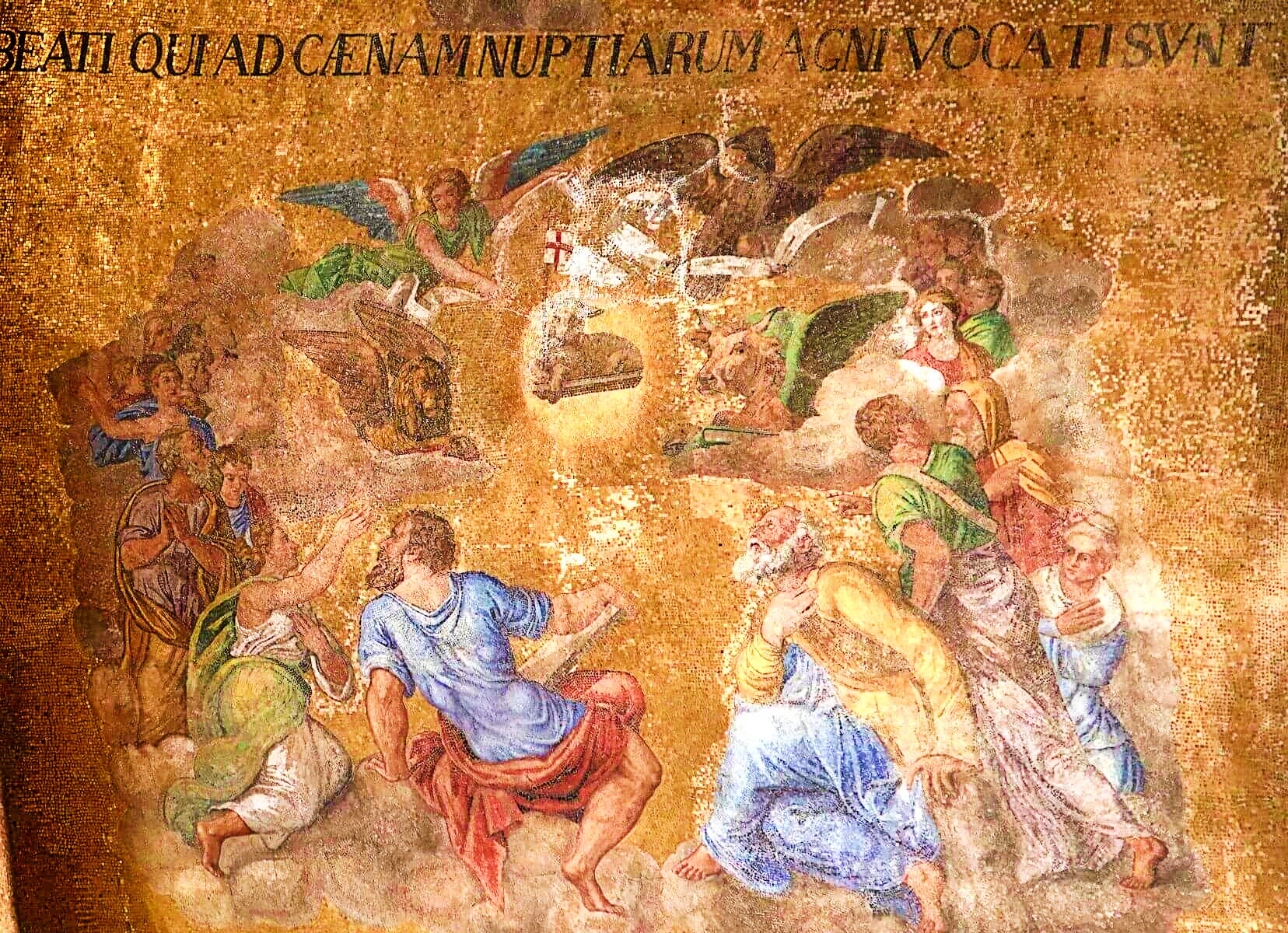
Mosaic in the Cathedral of San Marco in Venice: The Blessed Albert Enter Heaven.
From his earliest childhood, Albert gave proofs of his future holiness by taking food from his mother only at certain times, as if he wanted to fast and, when he was a little older, he set aside three days a week for fasting.
In addition, he made great and long pilgrimages – to Rome, to Apulia, to Mount Gargano, to Venice, to the Promised Land and to Compostella and lived as a Hermit after his return.
The Camaldolese Monk Anselm, often came to him, where they would scourge each other to tame the flesh. Albert then went to Poitou to St William , who had previously been a Count but had given up all worldly riches and honours and become a Monk.
Albert increased his mortification and penances. He put on hair clothes, slept on the bare ground, often stayed awake all night, ate and drank little and because, he wanted to earn his bread by manual labour, like his forefathers in the Egyptian desert, he turned to farming.
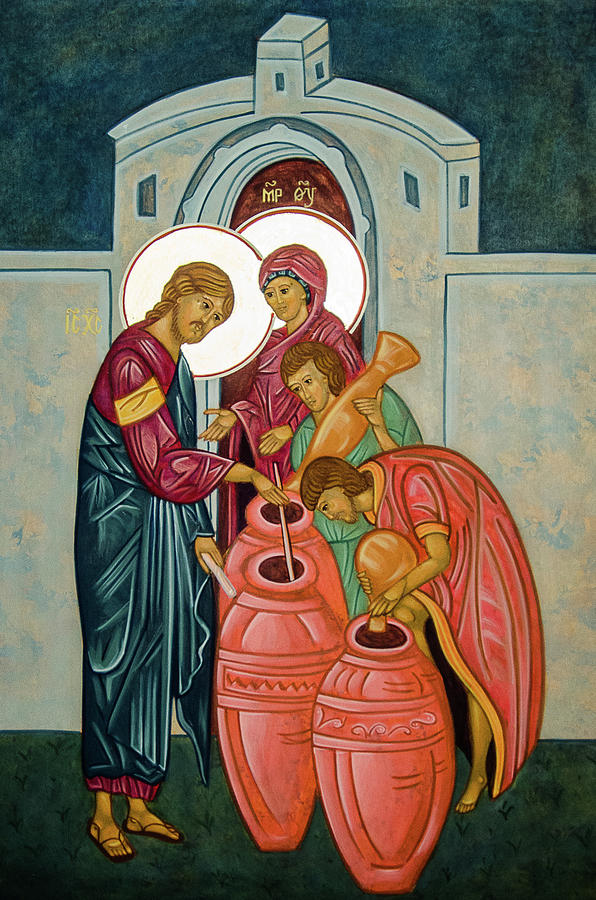
Through his intercession, many and varied miracles occurred, in particular water was often turned into wine through his prayers. But because he was held in great esteem by the people because of these miracles, Albert withdrew into solitude again and for this purpose went with his relative Grifolus to Mount Toricelli which, until there arrival had remained un inhabited due to its reputation for violent storms and high winds.
Blessed Albert’s Hermitage on Mount Toricelli
Here, he and his cousin, Grifolus, themselves little cells and Albert drove away the storms and winds by prayer which, prayer remains in force to this day, preventing the recurrence and return of sorms and high winds!
Albert refreshed the workers who came to assist the cultivation of the land, with a small vessel of wine which multiplied miraculously.
After Albert had lived a holy life on this mountain for 27 years, it happened that one day, while he was working in the fields, a hare ran up the wide sleeve of his habit. Those present wanted to kill the animal but he would not allow that and instead set it free. But the animal had hardly been outside when it jumped at him again to hide because it sensed the danger of nearby hunters. Because of this incident, Albert is depicted in paintings with a hare sitting in his sleeve.
During his holy life he had to endure many snares from the devil, who particularly attacked him in the form of a woman but he remained victorious and drove him out of his cell with blows. But, when the saint felt strong temptations, he rolled himself in nettles, following the example of St Benedict.
According to some traditions, Albert last lived in the Hermitage of Montalceto, not far from his hometown, He died there in the peace of Christ around the year 1181.
Blessed Albert of Siena (Died c1181) Hermit St Aldric of Le Mans Bl Ambrose Fernandez St Anastasius of Sens St Brannock of Braunton St Candida of Greece St Cedd St Clerus of Antioch St Crispin I of Pavia St Cronan Beg St Emilian of Saujon St Felix of Heraclea St Giuliano of Gozzano (c350-c391) Deacon, Missionary St Januarius of Heraclea St Julian of Cagliari St Kentigerna
St Lucian of Antioch (Died 312) Confessor, Priest, Marty, Teacher, Theologian, Writer, Founder of the renowned School of Antioch. The Roman Martyrology reads: “The birthday of the blessed Lucian. a Priest of the Church of Antioch and Martyr, who was distinguished for his learning and eloquence. He suffered at Nicomedia for the confession of Christ, in the persecution of Galerius Maximian and was buried at Helenopolis, in Bithynia. His praises have been proclaimed by St John Chrysostom.” His Life and Death: https://anastpaul.com/2024/01/07/saint-of-the-day-7-january-saint-lucian-of-antioch-died-312-confessor-priest-martyr/
St Pallada of Greece St Polyeuctus of Melitene St Reinhold of Cologne St Spolicostus of Greece St Theodore of Egypt St Tillo of Solignac
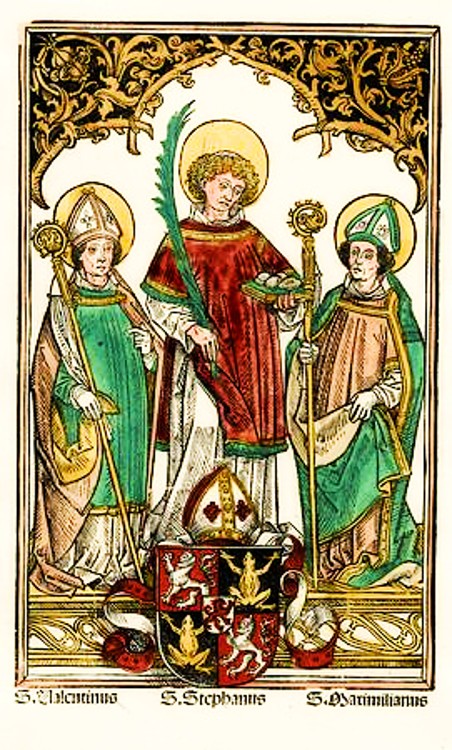
St Valentine of Passau (Died 475) Bishop in Passau in the Rhaetia region, Switzerland, an area in the border region of modern Italy, Austria and Switzerland, Monk, Abbot, Missionary, Hermit, Miracle-worker. Died on 7 January 475 at Mais, Tyrol, Austria of natural causes. Patronages – against convulsions, against cramps/stomach pain, against epilepsy, against gout, against plague/epidemics, against demonic possession, of cattle diseases, of pilgrims, poor people, City and Diocese of Passau. Biography: https://anastpaul.com/2023/01/07/saint-of-the-day-7january-st-valentine-of-passau-died-475-bishop/
St Virginia of Ste-Verge Bl Wittikund of Westphalia
Saint of the Day – 6 January – Saint Nilammon of Geris (Died c404) Hermit. Born in Egypt in the 4th Century and died in the early 5th, c404 in Geris of natural but miraculous causes. Also known as – Nilammone, Nilamon, Nillammon. His name means: “the son of my people from the Nile” (Hebrew)
The Roman Martyrology reads today: “At Geris in Egypt, St Nilammon, Anchoret, who, whilst he was carried to a Bishopric againsat his will, gave up his soul to God in prayer.”
Nillammon lived as a recluse in a small stone-walled house near Geris (Gerrum) in Egypt. The people and the Patriarch Theophilos I of Alexandria – who was known for his passionate hostility to St John Chrysostom – wanted to Consecrate him as the Bishop of the City.
But he could not be persuaded to leave his little house near this Town which he had barricaded with stones and to accept the Episcopal dignity. He then locked himself in and would die praying, with scores of people pleading with him to reconsider his decision, standing outside. While he was still praying fevently to be released from this great honour but imposing Office, Nillammon died naturally.
The information about Nilammon comes from the Church Historian Sozomenus (c400-c450), who lived and worked shortly after Nilammon’s life.
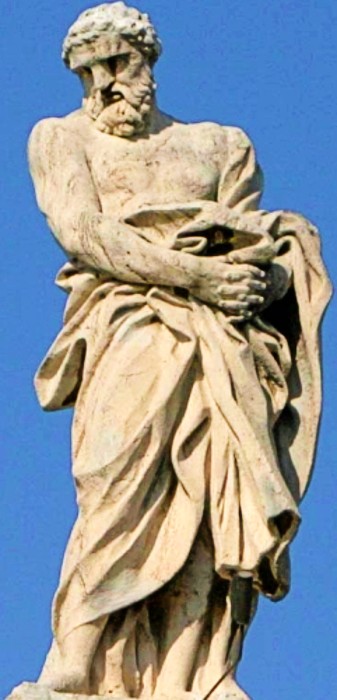
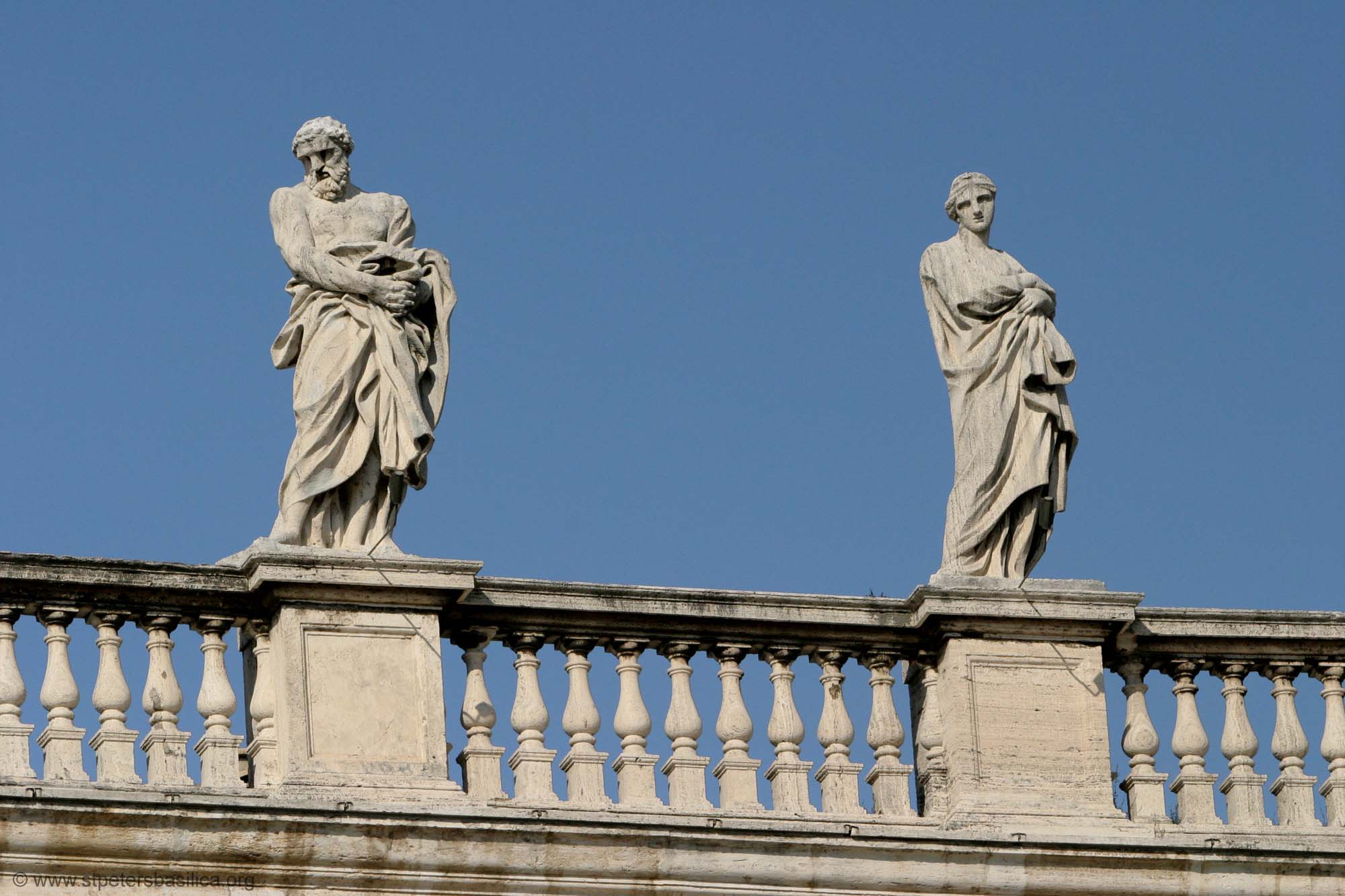
St Nilammon is one of the 140 Colonnade saints which adorn St Peter’s Basilica and surround the Square, below St Nilammon is on the left with St Fabiola on the right – this is the North Colonnade.
The Epiphany of the Lord Epiphany celebrates the visit of the three Kings or Magi (Wise Men) to the Christ Child, signifying the extension of salvation to the Gentiles. The date of Epiphany, one of the oldest Christian Feasts, is 6 January, the 12th day after Christmas. However, in some countries, the celebration of Epiphany is transferred to the Sunday which falls between 2 January and 8 January (inclusive). Greece, Ireland, Italy and Poland continue to observe Epiphany on 6 January as do traditional Catholics throughout the world. Because Epiphany is one of the most important Feasts, it is a Holy Day of Obligation.
Saint Caspar, Saint Melchior and Saint Balthasar (1st Century) otherwise known as the Three Wise Men/Kings or the Magi – they are all Martyrs. Patronages – against epilepsy/of epileptics, against thunder, furriers, motorists, pilgrims, playing card manufacturers, sawmill workers, travellers, travelling merchants, Cologne, Germany, Saxony. Additional Memorials – 23 July (translation of Relics); 24 July (Cologne, Germany where their Relics lie). Their Lives and Deaths: https://anastpaul.com/2024/01/06/saints-of-the-day-6-january-saint-caspar-saint-melchior-and-saint-balthasar-1st-century-martyrs/
St Charles of Sezze OFM (1613-1670) Stigmatist, Friar, of the Friars Minor, Mystic, Writer, Advisor. His Beatification was celebrated in 1882 while Pope Pius XII approved his Canonisation in 1958 but the Pope died before he could Canonise the Friar so his successor, Pope John XXIII did so on 12 April 1959. His body is incorrupt. About St Charles: https://anastpaul.wordpress.com/2018/01/06/saint-of-the-day-6-january-st-charles-of-sezze-o-f-m-1613-1670/
St Demetrius of Philadelphia St Diman Dubh of Connor St Edeyrn St Eigrad St Erminold of Prüfening
St Julian of Antinoë St Julius Bl Luc of Roucy Bl Macarius the Scot St Macra of Rheims St Merinus
St Melaine of Rennes (Died 530) Bishop of Rennes in Brittany, France, Confessor, previously a Monk and Abbot, Royal Advisor, Miracle-worker. The Roman Martyrology reds: “At Rennes, in France, St Melanius, Bishop and Confessor, who displayed innumerable virtues and with his thoughts ever fixed on Heaven, passed from the world in glory.” Another Feast Day which should be today but was moved in 1969. His Holy Life: https://anastpaul.com/2023/11/06/saint-of-the-day-6-november-saint-melaine-of-rennes-died-c535-bishop-confessor/
St Nilammon of Geris (Died c404) Hermit St Petran of Landévennec
St Pia of Quedlinburg St Pompejanus Bl Raymond de Blanes St Schotin St Wiltrudis of Bergen
Martyrs in Africa: Unknown number of Christian men and women who were Martyred in the persecutions of Septimus Severus. They were burned to death c 210.
Martyrs of Sirmium – 8 Saints: A group of Christians Martyred together for their faith. The only surviving details are the names of eight of them – Anastasius VIII, Florianus, Florus, Jucundus, Peter, Ratites, Tatia and Tilis. They were martyred in the 4th century at Syrmium, Pannonia (modern Sremska Mitrovica, Vojvodina, Serbia).
Twelve Apostles – Saints of Ireland: Twelve 6th Century Irish Monks who studied under Saint Finian at Clonard Abbey and then spread the Faith throughout Ireland. Each has his own commemoration but on this day, they and their good works are considered and celebrated together. Although Saint Finian is sometimes included, most ancient writers list them as –
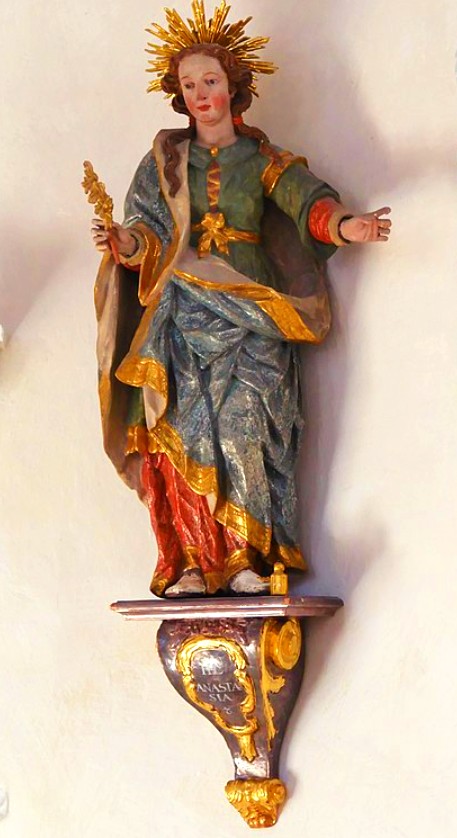
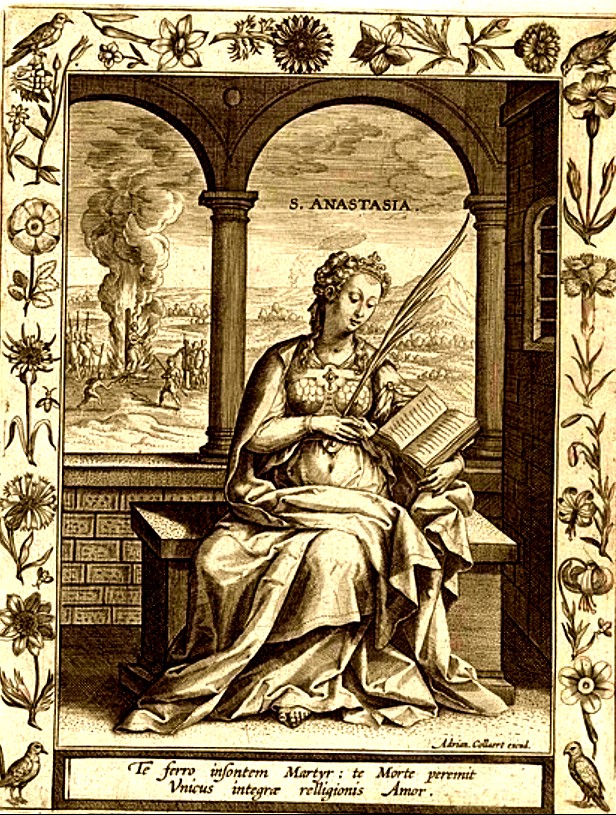
Saint of the Day – 25 December – Saint Anastasia of Sirmium (Died 304) Widow, Martyr. Patronages – of martyrs, weavers, widows, Borgorose, Italy, Burana in Kyrgyzstan. She is one of seven women who, along with Blessed Virgin Mary, are commemorated by name in the Roman Canon of the Mass.
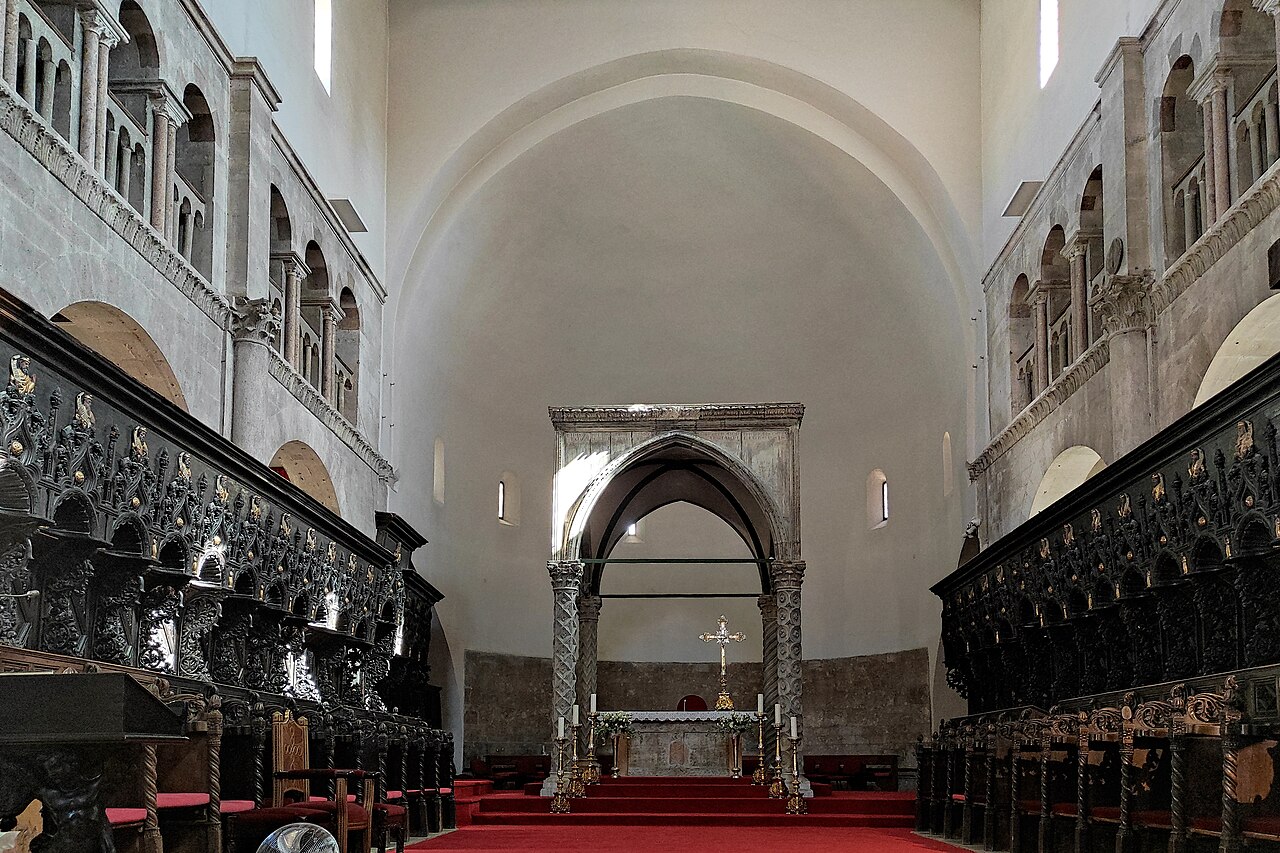
From a Triptych in Zadar Cathedral
Before the liturgical reforms of the 20th Century, this Martyr enjoyed the distinction, unique in the Roman Liturgy, of having a special commemoration in the second Mass on Christmas Day. Since the time of St Gregory the Great (Papacy 590-604) and celebrated by the Pope himself, her name was also inserted into the Roman Canon.
The Roman Martyrology reads today: “The birthday of St Anastasia, who, in the time of Diocletian, first suffered a severed and harsh imprisonment on the part of her her husband, Publius, in which, however, she was much consoled and encouraged by the Confessor of Christ, St Chrysogonus. Afterwards, she was thrown into prison again by order of Florus, Prefect of Illyria and, finally having her hands and feet stretched out, she was tied to stakes with a fire kindled about her in the midst of which, she ended her Martyrdom on the Island of Palmarola, whither she had been conveyed with two hundred men and seventy women, who have made Martyrdom a glorious thing by the various kinds of death they so courageously endured. ”
Anastasia, daughter of Pretestato a noble Roman, was a native of Sirmium, Pannonia, a Roman City in what is now Yugoslavia. She was the wife of Publius, a pagan, nevertheless, she was entirely devoted to assisting the Christians of Rome, who were forbidden, by an unjust law, to carry out any profession. Her husband, who was very much against her good works, cruelly punished her every disobedience but she was comforted by the advice of St Chrysogonus, who was also persecuted and imprisoned.
After her husband’s death, she was able to exercise her Christian charity more freely. Her spiritual advisor St Chrysogonus, had been arrested and sent to the Imperial Court in Aquileia, Anastasia accompanied him on the journey from Rome and witnessed the interrogation and then his beheading, the body was abandoned at the home of the three Christian sisters Agape, Chionia, Irene, who with the help of the holy priest Zoilus, gave him burial and for this they were all arrested.
Then Diocletian left for Macedonia taking with him all the imprisoned Christians and with them Anastasia; from Macedonia he moved towards Sirmium in Illyria, here the matron Theodota and her three sons were reported to him as fugitive Christians and he had them imprisoned.
The interest which Anastasia had in the fate of the four, aroused the suspicion of the pagans who reported her to the prefect Probus; these, after interrogations and vain attempts to make her renounce Christ, kept her in chains for a month and then put her on a pierced ship, together with other Christians and criminals and sent it out to sea to a certain death. But they miraculously escaped the stormy seas and landed at Palmaria, where they were again captured and offered freedom in exchange for honouring the gods. After their consistent refusal they were all massacred, while Anastasia was burned alive. Her ashes were collected by a woman named Apollonia who placed them in a small Church in her garden.
Although this ‘passio’ is probably partly enhanced and imagined, it is certain that the cult of a Martyr St Anastasia in Sirmium, is very ancient and then spread to Constantinople and Rome. In Sirmium, her Relics were venerated until about 460, when then, the Bishop Gennadius had them transferred to Constantinople to the Church that later took her name. In Rome, since the 4th Century, there was a Titular Church, already dedicated to her, right in the centre of pagan memories (Circus Maximus, on the Palatine).
She is depicted without particular attributes among the virgins in procession in the Church of St Apollinare Nuovo, also present on the bronze door of St Mark in Venice, in the Cathedral of Zadar in Sirmium (Yugoslavia) and others. In ancient times various Churches were dedicated to her, including that of Verona and the other very ancient and important for its historical and archaeological aspect, in Rome, already mentioned which, in the 7th Century, was already listed as the third most important Church after the Lateran and St Mary Major. The Cathedral of Zadar (Sirmium) is also dedicated to her.
The Nativity of Our Lord, Christmas Day! Celebration of the Anniversary of the Birth of Our Lord. In the earliest days of the Church there was no such Feast, the Saviour’s Birth was commemorated with the Epiphany by the Greek and other Eastern Churches. First mention of the Feast, then kept on 20 May, was made by Clement of Alexandria c 200. The Latin Church began in c 300 to observe it on 25 December, though there is no certainty that Our Lord was born on that day. Today, Priests have the privilege of saying three Masses, at midnight, daybreak and morning. This was originally reserved to the Holy Father alone – beginning about the 4th century he celebrated a midnight Mass in the Lateran Basilica (in which according to tradition, the manger of Bethlehem is preserved), a second in the Church of Saint Anastasia, whose Feast comes on 25 December and a third at the Vatican Basilica. Many peculiar customs of the day are the outcome of the pagan celebrations of the January calendar. The Christmas tree, of which the first known mention was made in 1605 at Strasbourg, was introduced into France and England in 1840. The Feast is a Holy Day of Obligation, preceded by the preparatory season of Advent and by a special Vigil – should it fall on a Friday it abrogates the law of abstinence. Of course, Christmas attracts an Octave, when this wonderful Mystery and Miracle is celebrated for eight days. https://anastpaul.com/2019/12/25/the-solemnity-of-the-nativity-of-our-lord-jesus-christ-25-december-2/ AND: https://anastpaul.com/2018/12/25/the-solemnity-of-the-nativity-of-our-lord-jesus-christ-25-december/ AND: https://anastpaul.wordpress.com/2017/12/25/25-december-the-solemnity-of-the-birth-of-our-lord-jesus-christ-2/
St Adalsindis of Hamay St Alburga of Wilton St Anastasia of Sirmium (Died 304) Widow, Martyr
Saint of the Day – 24 December – Saint Gregory of Spoleto (Died c304) Priest Martyr. Died in Spoleto, Italy after many tortures by being beheaded in c304.
The Roman Martyrology reads today: “At Spoleto, the holy Priest, Gregory. In the time of the Emperors Diocletian and Maximian, he was first beaten with rough clubs and then, after being exposed on the gridiron and improised, was struck on the knees with iron carding instrucments, burned on the sides with firebrands and finally, beheaded.”
Gregory was a holy Priest of Spoleto, in Italy, who employed his time, night and day, in fasting and prayer and in teaching others the holy law of God.
It happened that Flaccus, a General of the armed forces, arrived at that City with a special order from the Emperor Maximian, to punish all the Christians. An information was laid before him, stating that Gregory seduced many and despised the gods and the Emperors. Soldiers were immediately despatched to bring him bound before his tribunal. When he appeared, Flaccus, with a stern countenance, said: “Are you Gregory of Spoleto?” The Martyr answered, “I am.” Flaccus again said, “Are you the enemy of the gods and the enemy of the princes?” St. Gregory replied, “From my infancy, I have always served the God Who formed me out of the earth.” Flaccus asked, “Who is your God?” “He,” replied the Martyr, “Who made man to His Own Image and likeness, Who is all-powerful and immortal and Who will render to all men according to their works.” Flaccus said, “Do not use many words but do what I command you.” The Martyr replied, “I know not what your command implies but I do what I am bound to do.” Flaccus urged, “If you desire to save yourself, go to the wonderful temple and sacrifice to the great gods and you shall be our friend and shall receive many favours from our most invincible Emperors.” St Gregory said, “I desire not such a friendship, nor do I sacrifice to devils but to my God, Jesus Christ.”
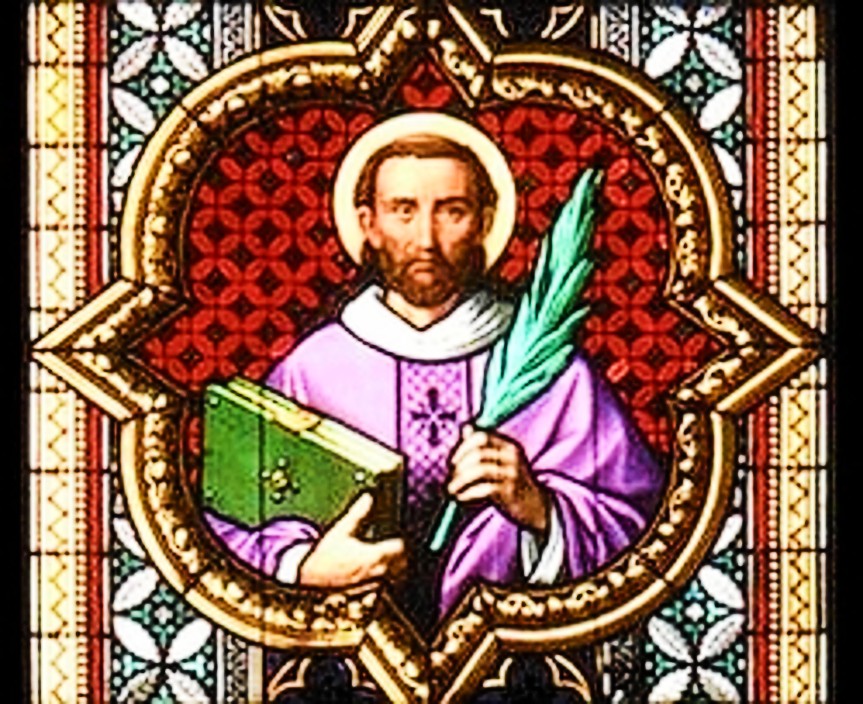
The Judge commanded him to be buffeted on the face, beaten with clubs and tortured on the rack and at length, ordered his head to be cut off. This happened in 304. His Relics were originally enshrined in a Church which bears his name at Spoleto. In the 10th Century, St Bruno, the Archbishop of Cologne, transferred Gregory’s Relics to his City’s Cathedral, which gave rise to an impressive local iconography and cultus. In the few figures of the Saint (the 14th Century stained glass window of the Cathedral and the frontispiece of the Cologne Missal) Gregory is depicted in priestly robes with a book in his hand, the Palm of Martyrdom and the sword with which he was beheaded.
In 1037, Baronius found a copy of these Acta of our Saint Gregory, an authentic testimony of a glorious miracle wrought by the touch of these Relics.
The Vigil of the Nativity oL Our Lord Jesus Christ Midnight Mass is the first Liturgy of Christmastide which is celebrated on the night of Christmas Eve, traditionally beginning at midnight when Christmas Eve gives way to Christmas Day. This popular Christmas custom is a jubilant celebration of the Mass in honour of the Nativity of Jesus Christ.
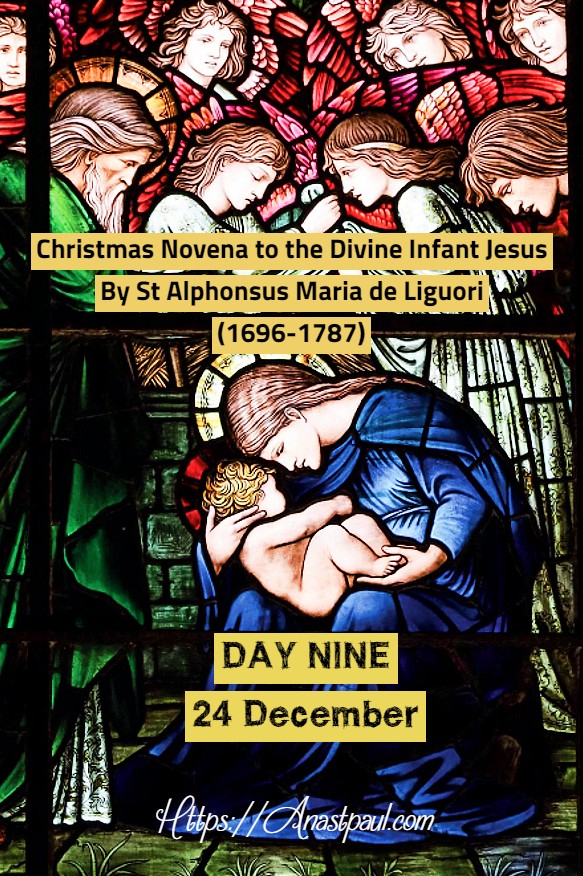
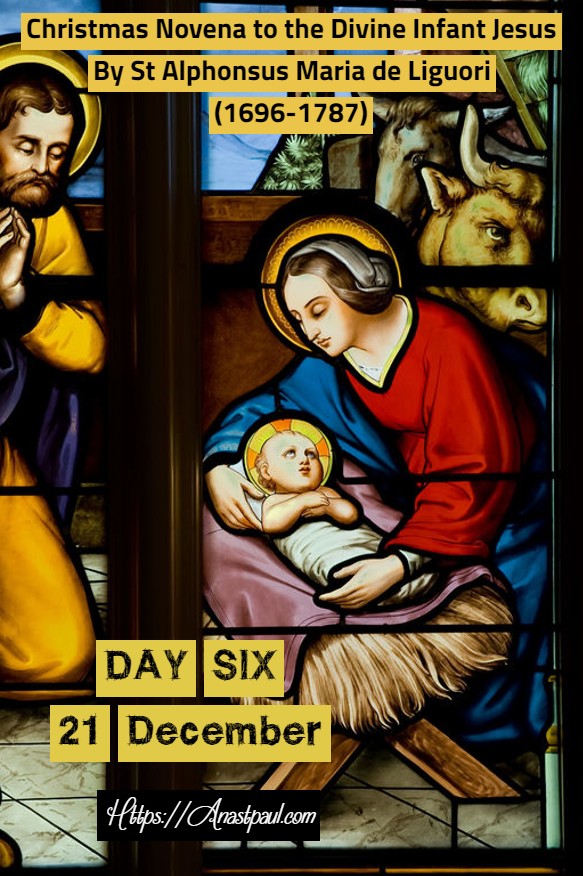
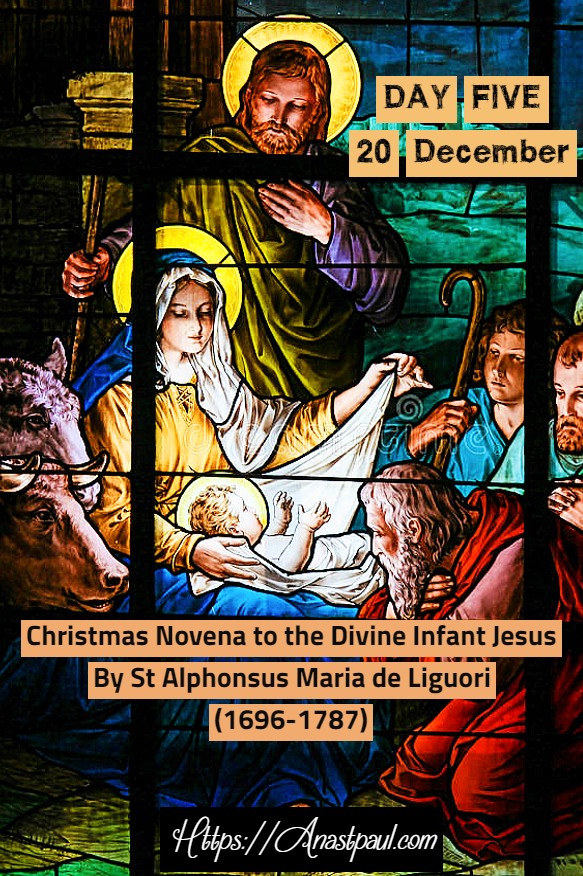
Christmas Novena to the Divine Infant Jesus By St Alphonsus, THE NINTH DAY
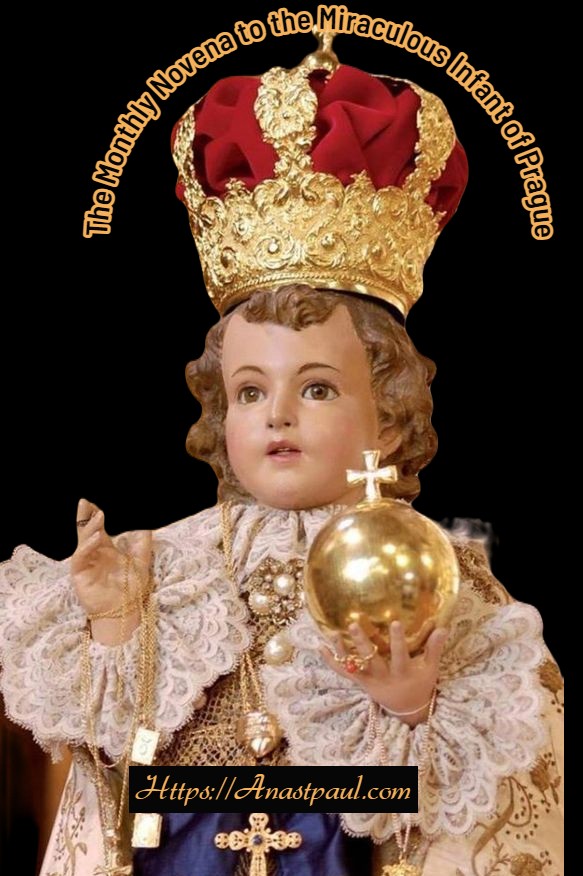
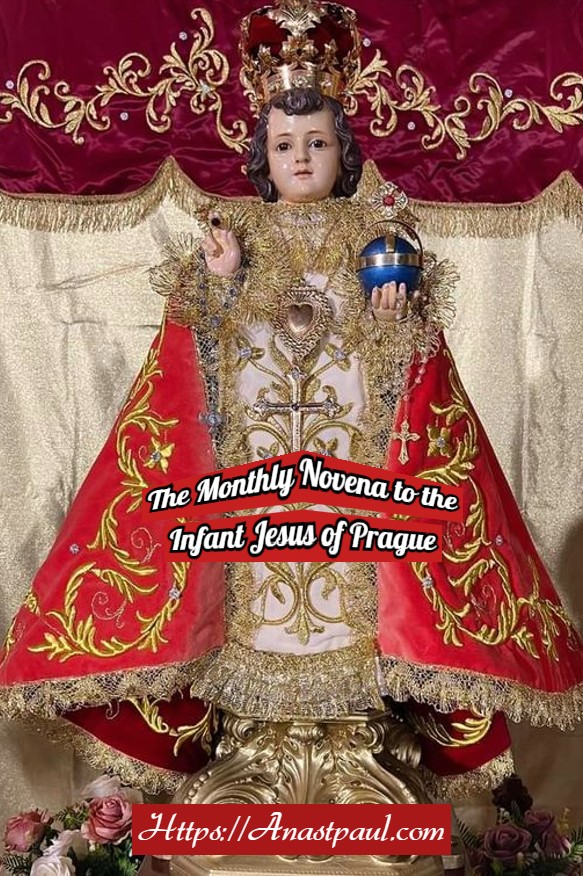
The Miraculous Monthly Novena to the Infant Jesus of Prague The Ninth Day
St Irmina of Oehren (Died c716) Virgin Princess, Nun, Abbess, Founder and Co-founder of 2 Monasteries, benefactress of St Willibrord, the great Missionary Saint of Germany. The Roman Martyrology states: “In Trier in Austrasia, in Germany, Saint Irmina, Abbess of the Monastery of Öhren, who, a virgin consecrated to God, gave Saint Willibrord a small Monastery she founded in her villa in Echternach and was a generous giver of her goods.” Her Life: https://anastpaul.com/2021/12/24/saint-of-the-day-24-december-saint-irmina-of-oehren-died-c-716/
St Mochua of Timahoe
St Trasilla (Sixth Century) Virgin, Aunt of Saint Pope Gregory the Great (540-604) The Roman Martyrology reads today: “At Rome, the birthday of the holy Virgin, Trasilla, Aunt of St Gregory, Pope, who writs of her that at the hour of her death, she saw Jesus coming to her.” St Trasilla’s Life: https://anastpaul.com/2022/12/24/saint-of-the-day-24-december-st-trasilla-sixth-century-virgin/
Blessed Mercedarian Brother: Blessed Dionysius Roneo Blessed Philip Claro Blessed Giulio Pons Blessed Peter of Valladolid
Blessed Mercedarian Sisters: Blessed Anna Maria Prieto Blessed Anna de Arrano Blessed Orsola de Larisgoizia Blessed Maguna Mary Blessed Margaret Blessed Mary of the Assumption Sarria
Martyred Maidens of Antioch – 40 Saints: A group of forty Virgins Martyred in the persecutions of Decius. None of their names have come down to us. They were martyred in 250 in Antioch, Syria.
Martyrs of Tripoli – 6 Saints: A group of Christians Martyred together, date unknown. The only details that have survived are six of the names – Drusus, Lucian, Metrobius, Paul, Theotimus and Zenobius. They were martyred in Tripoli, Libya.
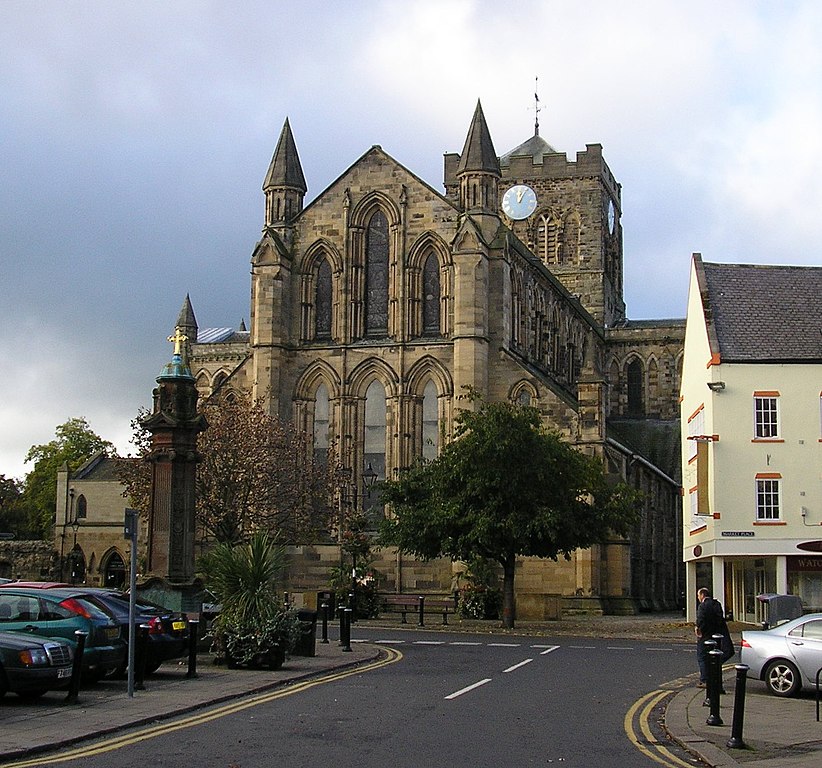
Saint of the Day – 23 December – Saint Frithbert of Hexham (Died 766) Bishop of Hexham, England serving his Diocese for 32 years and administering Lindisfarne. He died on 23 December 766 of natural causes. Also known as – Fridebert, Frithubeorht, Frideberto, Frithelbert.
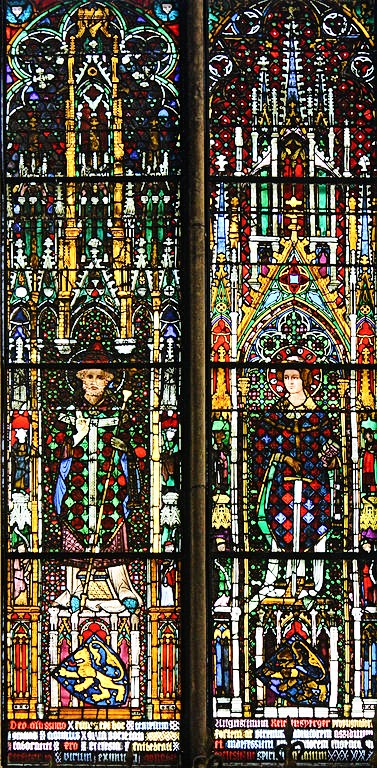
The Reredos at Hexham Abbey depicting the 7 Canonised Bishops. St Firthbert is shown second from the right,
As the 7th Bishop of Hexham, Frithbert served as the Bishop for a lengthy 32 years until his death. He had been Cconsecrated on 8 September 734 by Archbishop Ecgbert. The Diocese which developed in the territory between the Rivers Aln and Tees, had its Seat in the Monastery founded by St Wilfrid of York in 674. Only thirteen Bishops of this ancient Diocese are known and 7 of them are Canonised Saints. After the devastating raids of the Danish Vikings in the 9th Century, around the year 821, the Diocese was united with that of Lindisfarne.
In 750, when Cynewul, then the Bishop of Lindisfarne – was imprisoned for political reasons during a dynastic clash, Frithbert also administered the See of Lindisfarne.
He died on 23 December 766, the same year as Archbishop Ecgbert. St Bede praised Firthbert as a “truly faithful Bishop.”
St Frithbert’s Relics were re-discovered at Hexham in 1154.
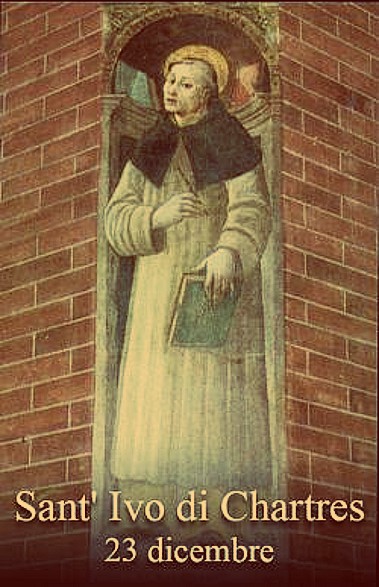
St Ivo of Chartres (c1040-1115) Bishop of Chartres, France from 1090 until his death, Confessor, Reformer, Defender of the Faith, Lawyer, Canon Lawyer, Teacher and Theologian, Writer. The Roman Martyrology states: “In Chartres in France, Saint Ivo, Bishop, who re-established the Order of the Canons and did much work and wrote to promote harmony between the clergy and the civil powers and for the good of the Church.” Biography: https://anastpaul.com/2021/12/23/saint-of-the-day-23-december-saint-ivo-of-chartres-c-1040-1115/
St John Cirita St John Stone St Mardonius of Rome St Mazota of Abernethy St Migdonius of Rome
St Servulus (Died c 590) Layman, Beggar, paralysed by Palsy from birth. Saint Servulus was a perfect model of submission to the divine Will; it would be difficult to offer a more consoling example to persons afflicted by poverty, illnesses and the other miseries of life. It is Saint Gregory the Great who narrates for us his edifying story. St Servulus’ Life of devotion: https://anastpaul.com/2020/12/23/saint-of-the-day-23-december-saint-servulus-died-c-590/
Martyrs of Crete – 10 Saints: A group of ten Christians who died in the persecutions of Decius. They were – Agathopus • Basilides • Cleomenes • Eunician • Euporus • Evaristus • Gelasius • Saturninus • Theodulus • Zeticus They were martyred in 250 on the island of Crete.
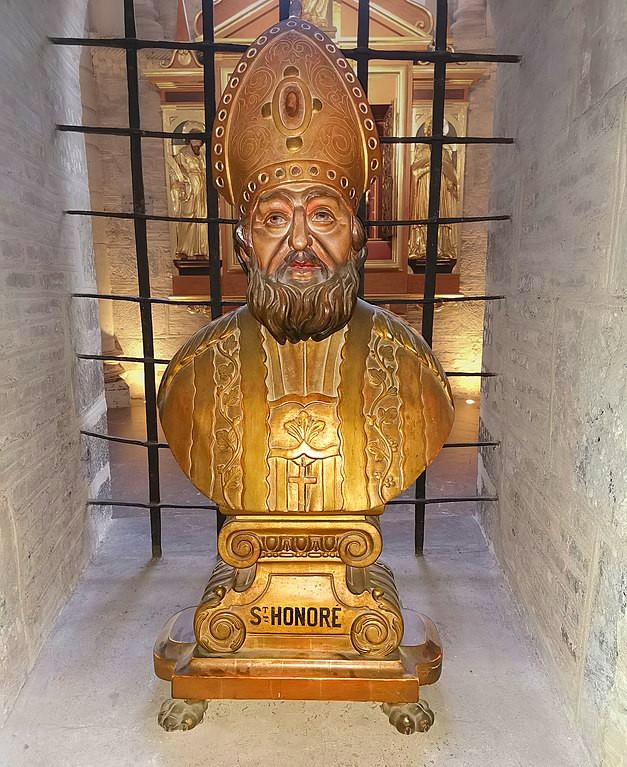
Saint of the Day – 22 December – Saint Honoratus of Toulouse (3rd Century) the 2nd Bishop of Toulouse, France Born in Navarre, Spain and died Toulouse, France of natural causes. Also known as – Honore, Onorato.
Bust of St Honoratus in Toulouse
We have very little information about this Saint, of whom we know only that he was the 2nd Bishop of Toulouse, in modern France. He was converted to Christianity by the Founder of the Church in Toulouse, Saint Saturninus who then sent him, to Pampolona in Spain to evangelise the region.
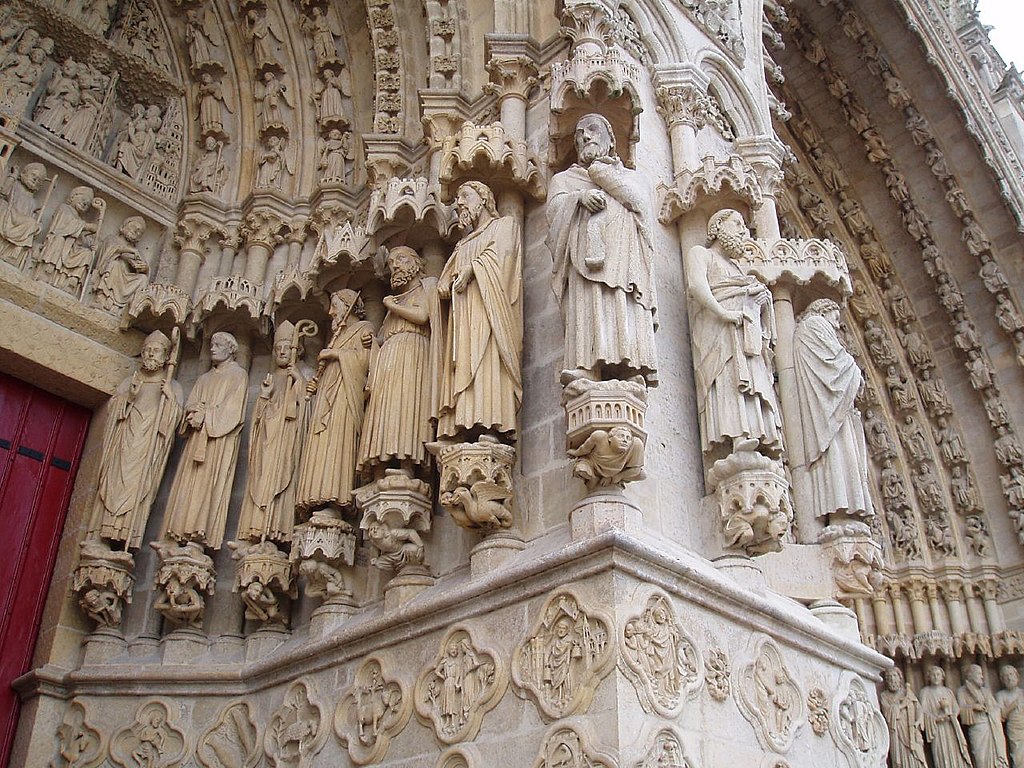
There he met Firminus, son of the senator Firmus, the Governor of Pamplona, converted him and took him back to Toulouse to meet St Saturninus, who then Baptised him and later Ordained him as a Priest. Firminus later founded the Diocese of Amiens and there died a Martyr’s death.
Our Saint was chosen as his successor and Consecrated as the Bishop of Toulouse by his Spiritual Master, St Saturninus. Most of this information is extracted from the Vita of St Firminus.
The cult of Saint Honoratus began in the 13th Century when his Tomb was discovered in the Basilica of Saint-Sernin in Toulouse and whereafter, a Shrine was erected containing his Relics and miracles were reported.
St Abban of New Ross Bl Adam of Saxony St Amaswinthus of Málaga St Athernaise of Fife St Bertheid of Münster St Chaeremon of Nilopolis
St Flavian of Acquapendente (Died 363) Martyr Layman, Prefect of Imperial Rome, Husband of Saint Dafrosa, Father of Saint Bibiana and Saint Demetria. The Roman Martyrology states: “At Rome, ex-Prefect, who, under Julian the Apostate, was condemned to be branded for Christ and banished to Aquae Taurinae, where he gave up his soul to God in prayer.” His Life and Death: https://anastpaul.com/2021/12/22/saint-of-the-day-22-december-saint-flavian-of-acquapendente-died-363-martyr/
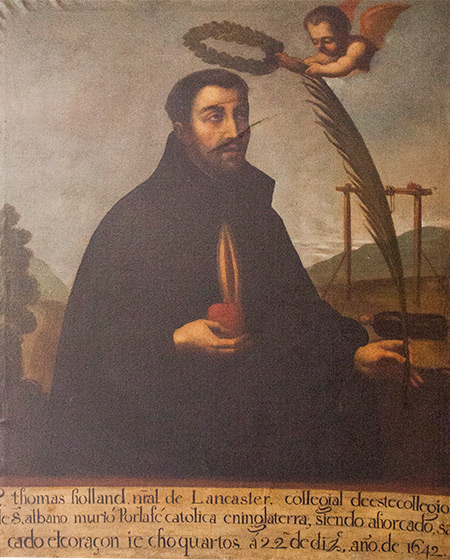
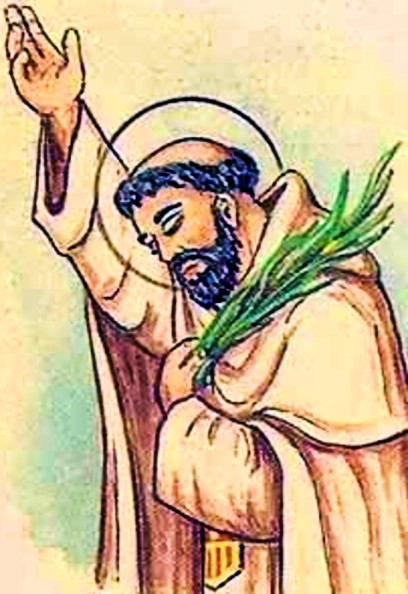
Blessed Thomas Holland SJ (1600-1642) Priest of the Society of Jesus and Martyr. of England and Wales. With eyes closed in prayer, Fr Holland looked at a Priest secretly in the crowd and received absolution. After he was hanged, his body was beheaded and quartered and exposed on London Bridge. Fr Holland was only forty-two years of age and a Jesuit for eighteen years. Pope Pius XI Beatified him on 15 December 1929. His Life and Death: https://anastpaul.com/2019/12/22/saint-of-the-day-22-december-blessed-thomas-holland-sj-1600-1642-priest-and-martyr-his-faith-was-his-crime/
Martyrs of Ostia – 3 Saints: A group of Christians Martyred together. The only details about them to survive are three names – Demetrius, Florus and Honoratus. They were martyred at Ostia, Italy.
Martyrs of Rhaitu – 43 Saints: 43 Monks Martyred by Blemmyes, in Raíthu, Egypt, date unknown.
Martyrs of Via Lavicana – 30 Saints: A group of 30 Christians Martyred together in the persecutions of Diocletian. Died in c 303 in Rome, Italy and were buried between two bay trees on the Via Lavicana outside Rome.
Saint of the Day – 21 December – Saint James of Valencia O.deM. (Died 1362) Martyr, Missionary, Frair of the Mercedarians (the Order of Our Lady of Mercy and the Redemption of the Captives), Apostle of the poor. Born in Valencia, Spain and died in 1362 by being stoned to death in Algiers, Tunisia, North Africa whilst on a mission to ransom prisoners.
At the age of 27, James entered the Mercedarian Convent of El Puig. Spain where he took the Vows and Habit of the Order.
James was A great friend of the poor, he led a life completely crucified in the practice of rigid austerities which all his fellow religious admired.
In the year 1362, while he was in Algiers in Africa to redeem slaves and captives, he was captured by the Jews while preaching Christ in the synagogue. In hatred of the Faith, he was killed with sticks and stones and gloriously reached the choir of Martyrs.
The Order celebrates his Feast Day today on 21 December.
Saint of the Day – 20 December – St Hoger (Died 916) Bishop of Hamburg-Bremen in Saxony, modern Germany where he died of natural causes on 20. Hoger was a Reformer and strict disciplinarian of the Clergy. Also known as – Hogerus, Hojerus, Holger, Hotgerns, Huggar.
Bremen Cathedral Facade showing some of it’s Saints
Hoger born in the 9th Century. He became a Monk in the Monastery of Corvey (New Corbie) at Höxter on the Weser River in Saxony, Germany.
Towards the end of the life of the holy Archbishop, Adalgar of Hamburg-Bremen, age and illness made it necessary for him to obtain an auxiliary Bishop and the choice fell on Hoger. Later, five neighbouring Bishops were assigned to assist the Archbishop in his duties.
Adalgar died on 9 May 909 and Hoger succeeded as the 4th Archbishop of Hamburg-Bremen. He was known for his strict application of clerical discipline.
Shortly after his death, under his successor Reginwart (916-918), the Diocese was attacked by the Huns, who burned Bremen.
Hoger died on 20 December 916 in Bremen. He was buried in the Church of St Michael in Bremen. 120 years later, in 1036, his Relics were translated and enshrined in the Cathedral on the occasion of the recognition of his cultus as a Saint. His Feast Day is the day of his death.
St Attala of Strasbourg St Bajulus of Rome St Crescentius of Africa St Damian of Padua St Dominic of Brescia
St Dominic de Silos OSB (1000-1073) Monk, Abbot. He was a Spanish Monk, to whom the Abbey of Santo Domingo de Silos, where he served as the Abbot, is dedicated. The mother of the better-known Saint Dominic de Guzmán, the Blessed Joan of Aza, prayed at his Shrine before she was able to conceive the son she named for him. That son would grow up to found the Dominican Order. Dominic’s special patronage thus became connected with pregnancy and until the establishment of the Second Spanish Republic in 1931, his abbatial crozier was used to bless the queens of Spain and was placed by their beds when they were in labour. Biography: https://anastpaul.wordpress.com/2017/12/20/saint-of-the-day-20-december-st-dominic-de-silos-o-s-b-c1000-1073/
St Eugene of Arabia St Hoger (Died 916) Bishop Bl John de Molina St Julius of Gelduba Bl Lorenzo Company St Liberatus of Rome St Macarius of Arabia St Malou of Hautvillers St Paul of Latra Blessed Peter de la Cadireta
St Ursicinus of Saint-Ursanne (c552-c625) Abbot, Hermit, disciple of St Columban (543-615). Born in c552 in either France or Ireland and died on 20 December in c625 near modern St-Ursanne, Jura, Switzerland of natural causes. Patronages – against stiff neck, Besançon in France, in Switzerland – Basel, Saint-Ursanne. A Saint Patron against a Stiff Neck!: https://anastpaul.com/2023/12/20/saint-of-the-day-20-december-saint-ursicinus-of-saint-ursanne-c552-c625-abbot/
Saint of the Day – 19 December – Saint Gregory of Auxerre (c455-c540) Bishop and Confessor who reigned as the Bishop of that Diocese for nearly 13 years. Probably born in France in c455 and died in Auxerre, France in c540 of natural causes.
The Roman Martyrology reads: “At Auxerre, St Gregory, Bishop and Confessor.”
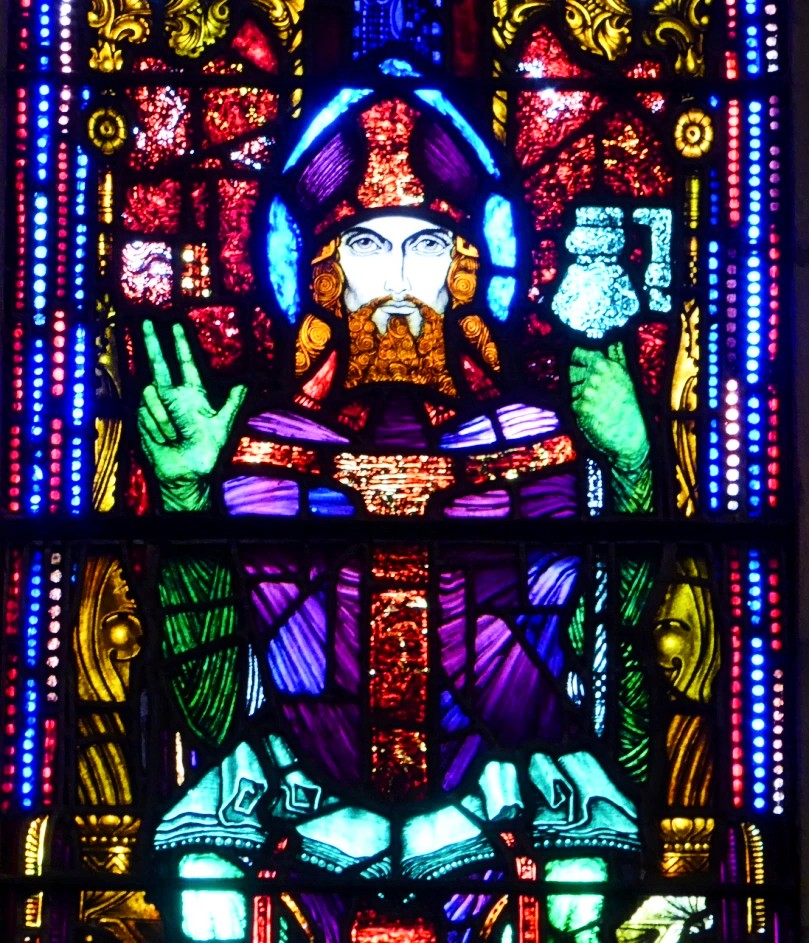
A Window in Auxerre Cathedral showing an ancient Bishop which might be our St Gregory
Saint Gregory was the 12th Bishop of Auxerre. In the chronology of Bishops, he was placed after Saint Theodosius and before Saint Optatus.
If Saint Theodosius is mentioned at the first Council of Orléans in 511 and Saint Optatus had a very short Episcopate around 530, the pastoral government of our Gregory also appears within those dates.
He appears in the first catalogue of bishops compiled in the year 875, by the canons Rainogala and Agaldo, considered quite truthful by later historians, even if doubts were raised about the chronology before the 7th Century.
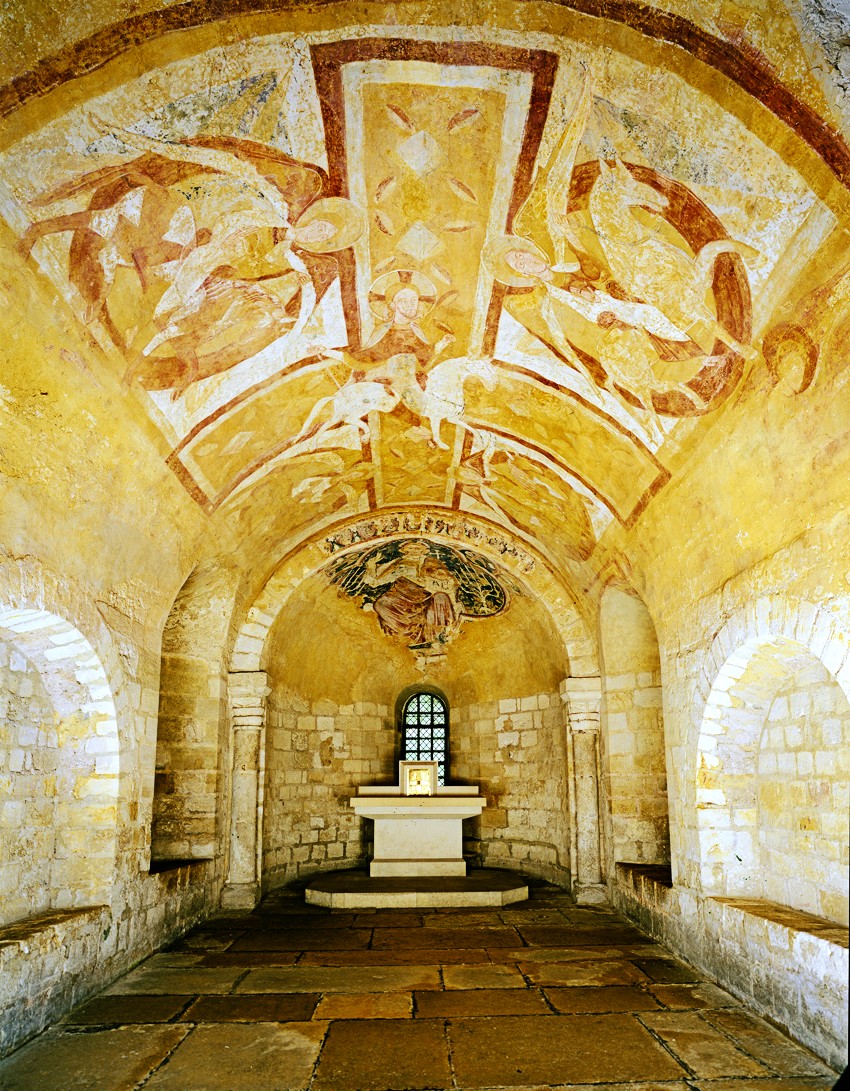
In the ancient text “Gesta Episcopurum Autissiodorensium” it is reported that Gregory governed the Diocese of Auxerre for twelve and a half years and died at the age of eighty-four. It is said that he died on 19 December of an unspecified year and was buried in the Crypt of Saint Germanus. His seven-line Epitaph, painted in the 12th Century on a pillar of the Crypt, is now almost completely erased.
In 1635, Bishop Dominique Séguier exhumed and recognised his remains. The Roman Martyrology lists his Feast Day as today, 19 December.
A portion and ceiling of the Crypt at Auxerre Cathedral
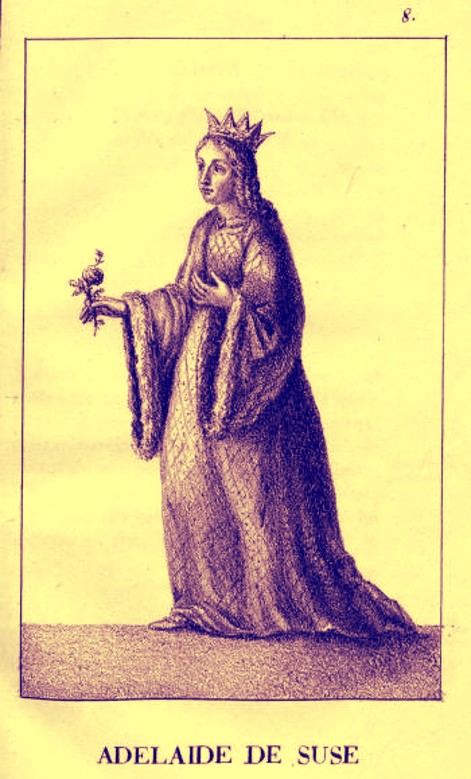
St Adelaide of Susa (c1014-1091) Countess, Married Laywoman, mother of 5, widowed 3 times. Born in c1014 in Turin, Italy and died on 19 December 1091 also in Italy. Adelaide made donations to the Monasteries of Turin, founded the Monastery of Santa Maria at Pinerolo and received communication from many leading Ecclesiastical dignitaries of the day. She also furthered the processes of reform within the Church hierarchy. Her Life: https://anastpaul.com/2023/12/19/saint-of-the-day-19-december-saint-adelaide-of-susa-c1014-1091-widow/
St Boniface of Cilicia Bl Cecilia of Ferrara St Fausta of Sirmium St Gregory of Auxerre (c455-c540) Bishop and Confessor St Jaume Boguñá Casanovas St Johannes Gogniat St Josep Albareda Ramoneda
Blessed Mercedarian Fathers – (6 Beati): A group of Mercedarian Friars noted for their dedication to the Order’s Rule, for their continuous prayer life and their personal piety. Blessed Bartolomeo of Podio Blessed Giovanni of Verdera Blessed Guglielmo de Gallinaris Blessed Guglielmo of Prunera Blessed Pietro of Benevento Blessed Pietro of Gualba
Martyrs of Nicaea – (4 Saints): A group of Christians Martyred together. The only surviving details are four of their names – Darius, Paul, Secundus and Zosimus. They were martyred at Nicaea, Bithynia (modern Izmit, Turkey).
Martyrs of Nicomedia – 5 Saints: A group of Christians Martyred together in the persecutions of Diocletian. We know little more than the names of five – Anastasius, Cyriacus, Paulillus, Secundus and Syndimius. They were martyred in 303 at Nicomedia, Asia Minor.
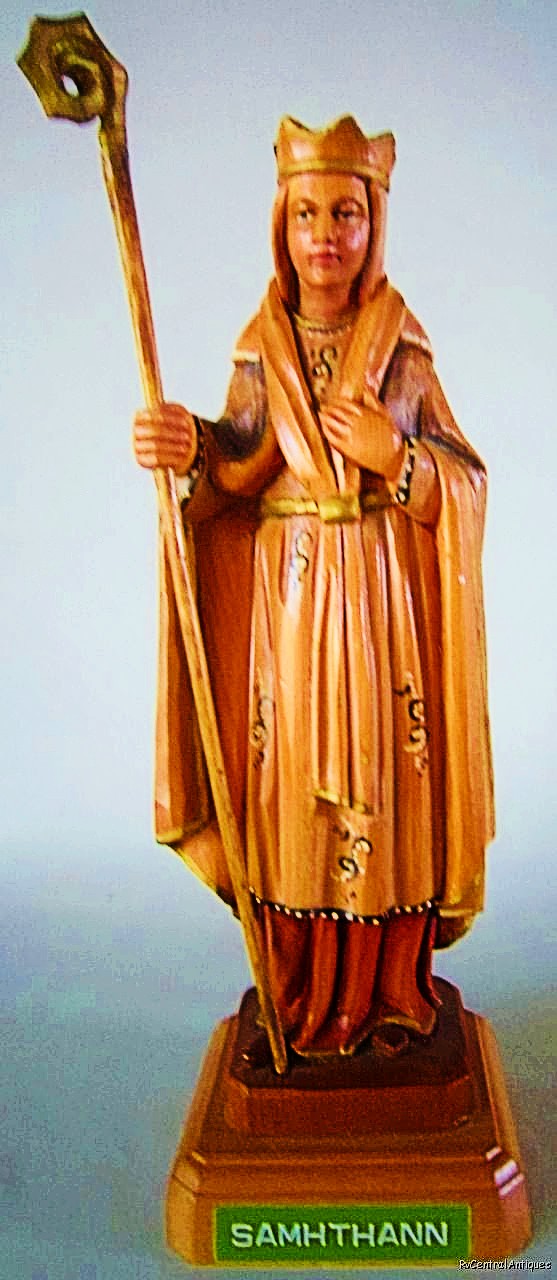
Saint of the Day – 18 December – Saint Samthann (Died 739) Virgin, Abbess of the Monastery she had founded, Clonbroney. Born in Ireland and died at her Convent Clonbroney in 739. Also known as – Samthan, Samthana, … of Clonbroney.
The ‘Life of Samthann’ is known mainly from an early 14th-Century manuscript. Below is taken from this ‘Life of Saint Samthann’ from a translation by two Irish Priests, Fathers Diamuid O’Laoghaire and Peter O’Dwyer:
Samthann’s father’s name was Diamramus and her mother’s Columba. As she matured her foster-father, Cridan, King of the Ui Coirpri, gave her in marriage to a nobleman. Before the marriage solemnities were celebrated, the nobleman saw, at midnight, something like a ray of the sun, extended through the roof of the house, onto the bed in which Samthann was sleeping with the King’s two daughters. Amazed by the unusual vision of light at such an hour, he rose immediately and, advancing toward his spouse’s bed, found that her face was illumined by that ray. He was very happy to be gifted with a spouse who was surrounded by heavenly light.
The following night, when the solemnities had been celebrated, both were entering the marriage bed, as is customary … but before the consumation of the marriage, … tiredness overcame Cridan. Then Samthann gave herself to prayer, knocking at the doors of Divine Mercy beseeching God might keep her virginity unblemished. And God heard her prayer, for at about midnight that Town in which they lived seemed to outsiders to be on fire. A flame of extraordinary magnitude was seen ascending from the mouth of the holy virgin to the roof of the house. A mighty cry was raised outside in the Town and those who were asleep within, were awakened. Together, they hastened to extinguish the fire.
In the meantime the holy virgin Samthann hid herself in a cluster of ferns nearby. The fire vanished immediately without doing any damage. When morning came, her foster-father, the King, set out to look for her. When he found her, she begged him to change his decision and allow her to marry her only true Spouse, the King of Heaven. Then the King said, “We offer you to God, the Spouse Whom you choose.” Then she, with her husband’s permission, entered the Monastery of the virgin Cognat where she remained for a time.
Later Samthann became the Abbess of the Convent of Clonbroney. Many miracles were attributed to her. When a worker hired by Samthann to build an Oratory silently wished for himself and his co-workers, a feast of forty bread loaves with butter, cheese and milk, he was soon awed to see this dream meal brought to them.Smiling at his astonishment, Samthann said to him, “The thought of your heart is fulfilled, is it not?”
St Samthan had founded Clonbroney (Cluain-Bronach) Abbey in County Longford, a house which refused large donations, for fear of losing the simplicity of their lives.
Her cultus was promoted by Saint Virgilius of Salzburg. Her name is in both the Litany and the Canon of the Irish Stowe missal which had been compiled in thelate 8th or early 9th Century.
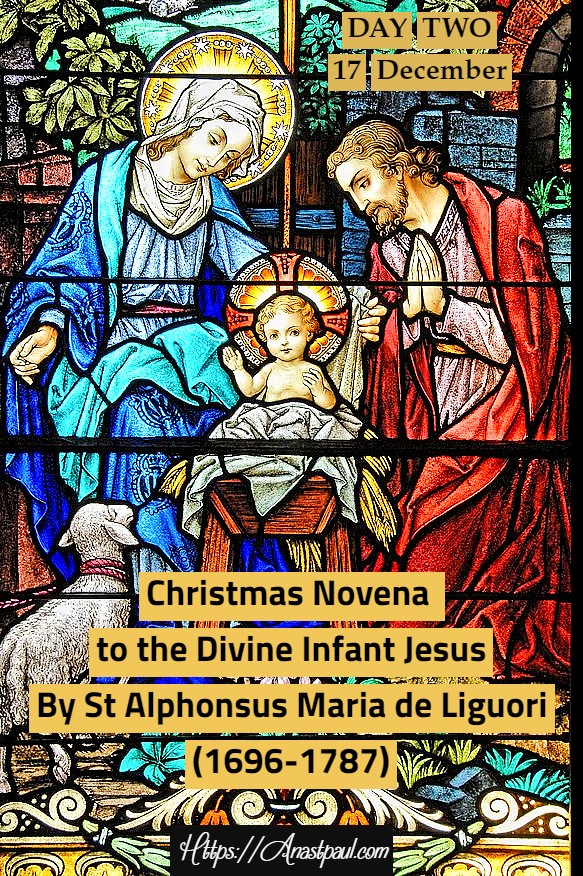
Christmas Novena to the Christ Child – Day Three:THE THIRD DAY
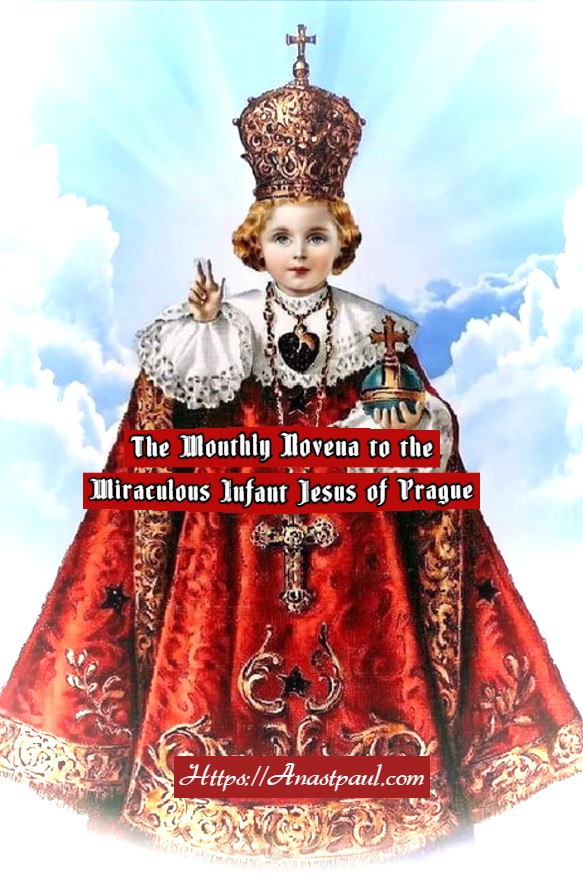
The Monthly Novena to the Infant of Prague – LINK : The Third Day
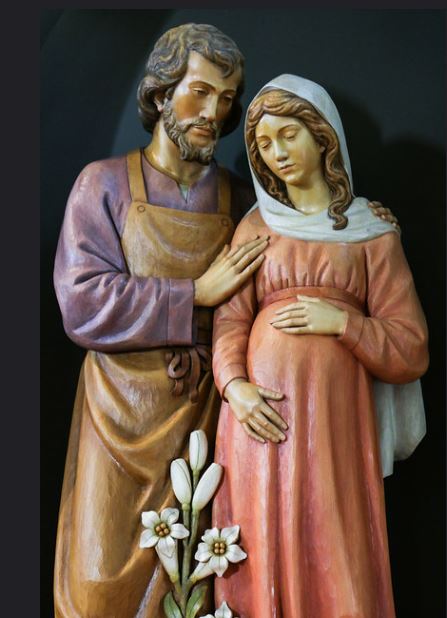
Our Lady of the Expectation – This Feast originated in Spain. When the Feast of the Annunciation (25 March) was transferred to 18 December because of the regulation forbidding Feasts in Lent, it remained on this date after the Annunciation was again celebrated on its original date. It impressed on the faithful, the sentiments of the Blessed Virgin as the time of her delivery approached. More about the Feast here: https://anastpaul.com/2018/12/18/the-feast-of-our-lady-of-expectation-18-december/
St Mawnan of Cornwall – He is lincluded in various calendars in the British Isles. A Town in the County of Cornwall is named for him. No reliable information about his life has survived. St Rufus of Philippi+ St Samthann (Died 739) Virgin, Founder Abbess St Theotimus of Laodicea– Martyr. No further information has survived.
Mercedarians Redeemers – Also known as “Blessed Redentori.” A group of Mercedarian Friars who worked together, under the leadership of Saint Peter de Amer, to ransom prisoners and minister to them after. Blessed Bernardo de Pratis Blessed Giacomo de Lara Blessed Louis Gasco Blessed Peter de Quesada Blessed Peter of Barcelona Blessed William de Quadres
Martyrs of Northwest Africa – 42 Saints: Mercedarian Redeemers – 6 beati – These are a group of Mercedarian Friars who worked together, under the leadership of Saint Peter de Amer, to ransom (e.g., redeem) prisoners and minister to them after.
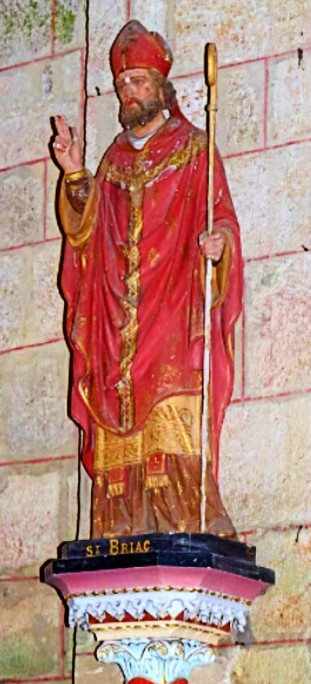
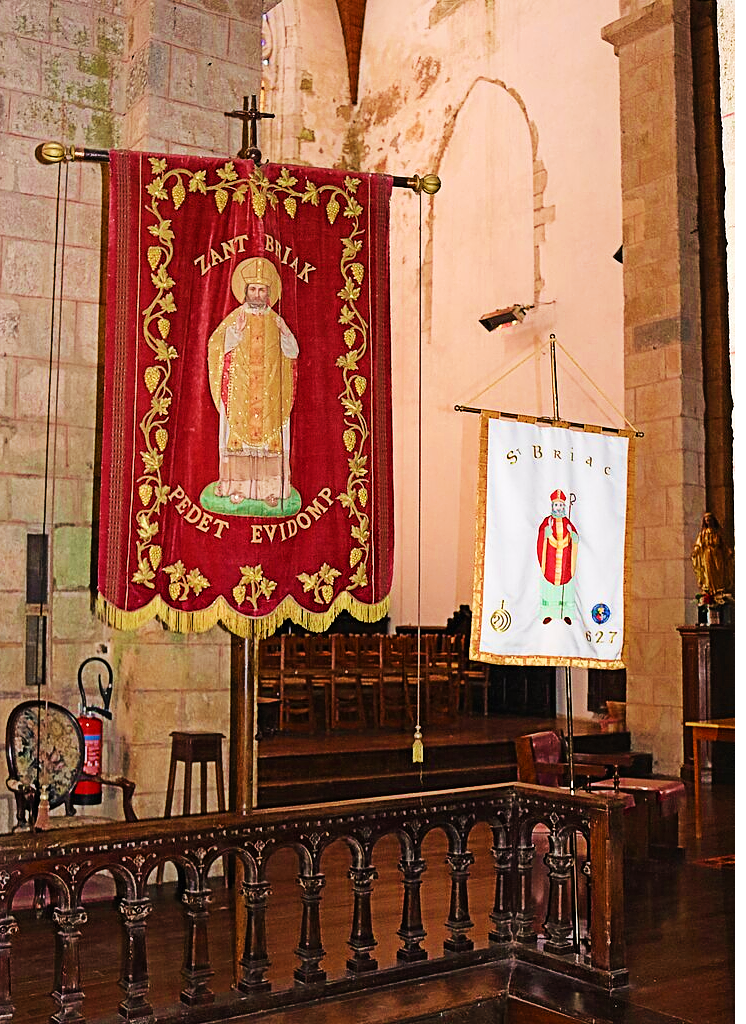
Saint of the Day – 17 December – St Briarch (Died 627) Abbot, Priest, Missionary, Founder of the Monastery of Bourbriac from which a village grew (Briarch Village), Hermit Born in Ireland and died in 627 in Bourbiac, France of natural causes. Patronages – against epilepsy, against mental illness, against headaches. Also known as – Briarch of Brittany, Briach…Briac…Briachus…Briag…Briagenn…Briarch of Bourbriac.
In the 6th Century, the Benedictines spread throughout Europe, Monks who lived according to the Rule of Saint Benedict, based on prayer and work. Even in Ireland, the ideas of the Italian Monk captured the interest of many young men.
This is the case of the Saint celebrated today – the nobleman Briarch. He abandoned luxury, wealth and a brilliant career and left his native Island home, to go to Wales. Here, his monastic life began under the guidance and direction of St Tual (Died c560) The young nobleman, who had become a Priest, decided to cross the sea once again and reached Brittany in North-west France, which at that time was called Armorica.
Briaco was not alone; he was accompanied by seventy fellow Monks. In this area, the Priest built a Monastery around which a village was born, the current French City of Bourbriac (Briarch Village).
In the Monastery, the Monks prayed, cultivated the land, copied the Sacred Scriptures and other Latin and Greek spiritual works by hand and welcomed the many in need of food, care and protection. The Monks also taught the locals how to cultivate the fields and how to read and write. Monasteries thus become places of peace and work for many desperate people fleeing from invasions.
After some time, Briarch wished to embrace solitude in order to grow in sanctity and to unite himself to God. He took refuge in the forest and lived as a Hermit. He prayed, fasted and immersed himself in mediationon. His isolation did not mean, however, running away from people, towards whom Briarch was always kind.
Celebrating St Briarch today on his Feast
In fact, during his stay in the forest, many miracles occurred due to his intercession. He made a sick person wear his habit and immediately a miraculous cure occurred. Another individual, suffering from obsessive thoughts which caused him to suffer great anxiety, was healed by the prayers of the Irish Hermit. On another occasion, a man, bitten by a poisonous snake, was immediately saved from death by the intervention of Briarch.
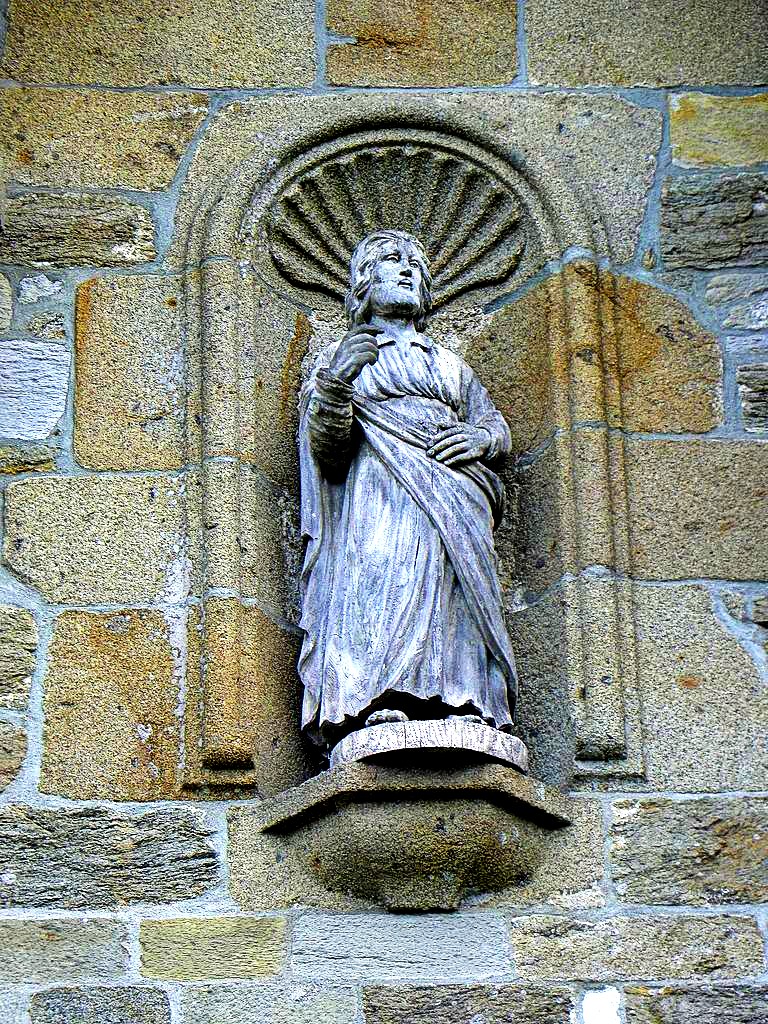
On the facade of the St Briac Church at Saint-Briac-sur-Mer
Briarch then undertook another journey, this time as a Pilgrim to Rome to meet Pope Pelagius II and to visit the holy places. On his return however in 627, he stopped in the South of France, in Arles, some sources say he died here and others that he did reach his beloved Monastery in Brittany, where he died.
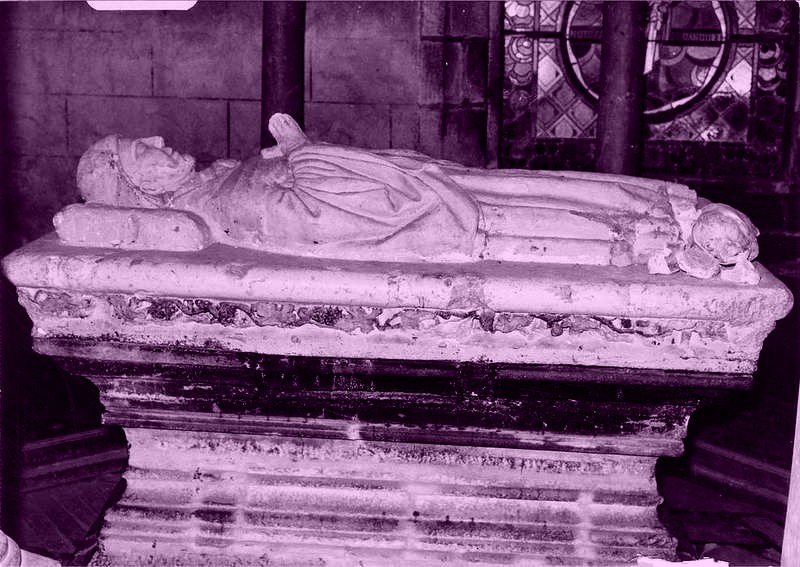
Briarch is buried in the Church of Bourbriac. There is still a Sarcophagus from the Merovingian period, probably the stone coffin in which he was laid to rest. Under the Church is the Crypt from the 11th Century, probably built as Briarcc’s final resting place, where believers could venerate him without disturbing the service in the Church above. A spring can still be seen near the Church.
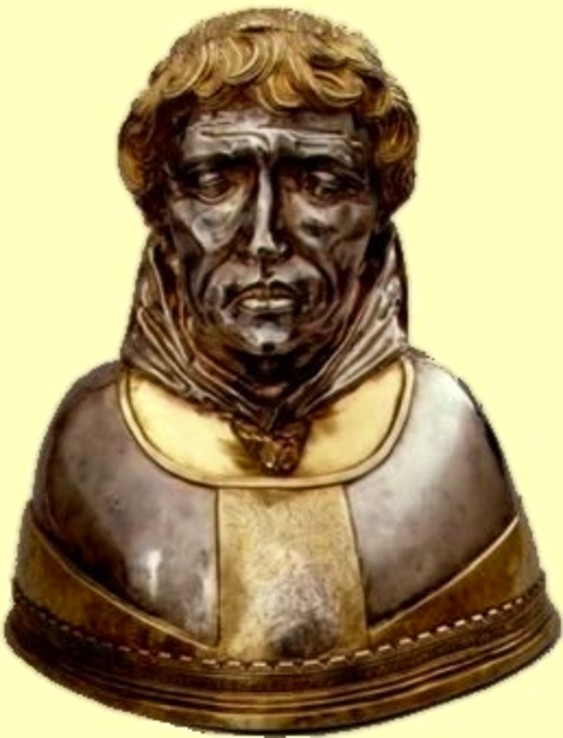
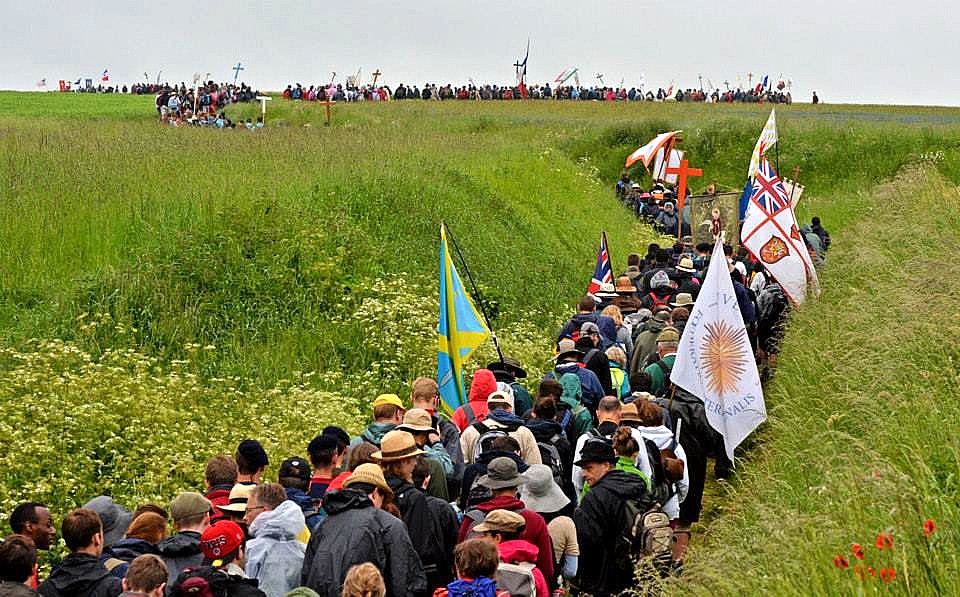
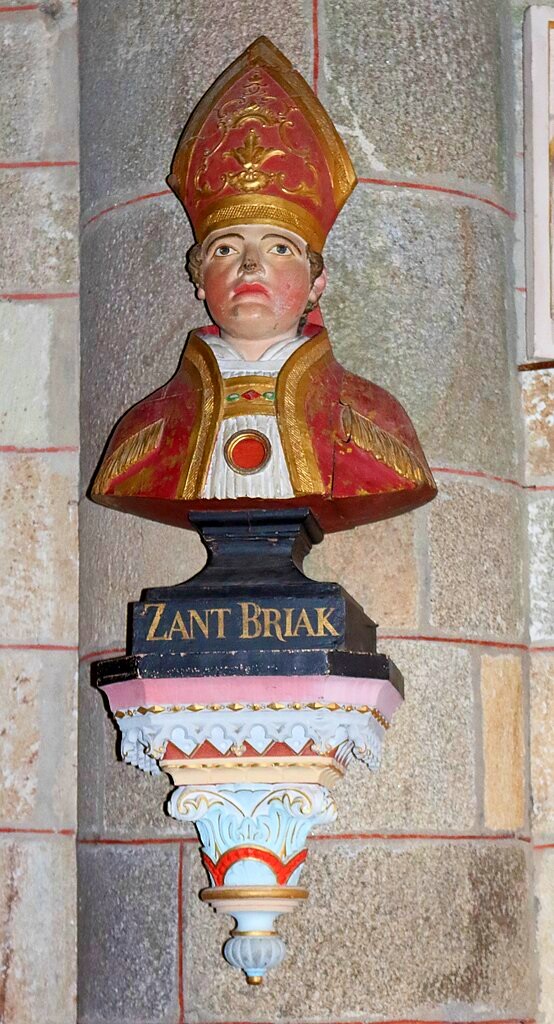
A pardon (penitential procession) is held on Ascension Day. On that occasion, the Reliquary of St Briarch, in the form of a bust is carried around the former Monastery grounds. There are numerous Churches, Towns, Villaes, regions named after St Briarch in France.
The Reliquary of St Briarch used in the Pardon Procession
St Begga of Ardenne (c613-693) Widow, Mother of 3 children, Founder of Churches and a Monastery of which she became the first Abbess. Patronages – Ardenne, against stuttering and of stutterers. he Roman Martyrology reads: “At Ardenne, at the Seven Churches, St Begga Widow, sister of St Gertrude of Nivelles.” St Begga’s Holy Life: https://anastpaul.com/2023/12/17/saint-of-the-day-17-december-saint-begga-of-ardenne-c613-693-widow/
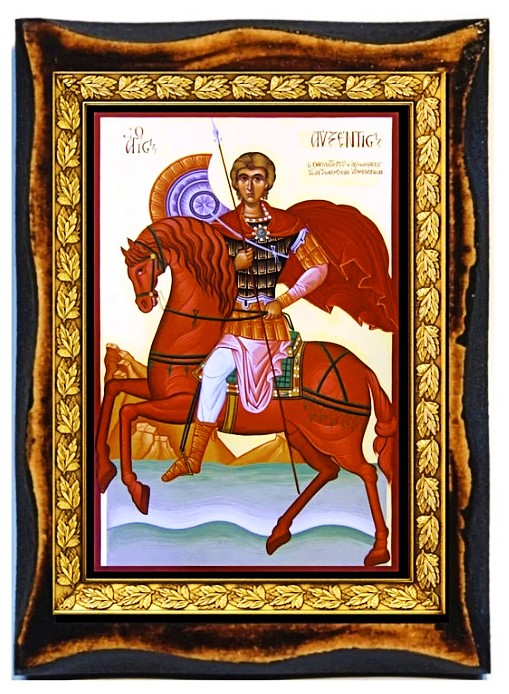
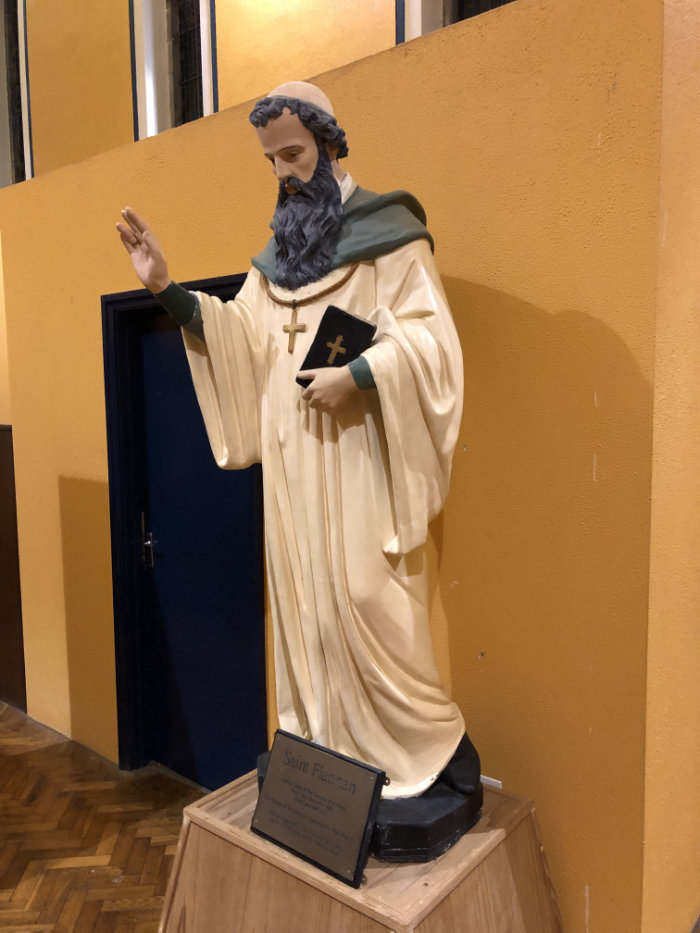
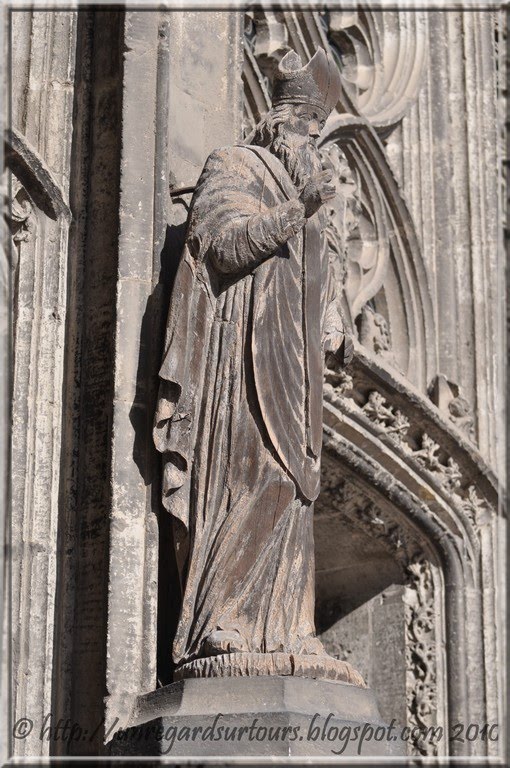
St Briarch (Died 627) Abbot St Judicaël St Maxentiolus St Modestus of Jerusalem
Martyrs of Eleutheropolis – (60+ Martyrs-Beati): Approximately 60 Christian soldiers in the imperial Roman army of emperor Heraclius; they were murdered as a group for their faith by invading Saracen Muslims. We know the names of two of them – Calaoicus and Florian. 638 in Eleutheropolis (Beit Jibrin), Palestine.


























You must be logged in to post a comment.