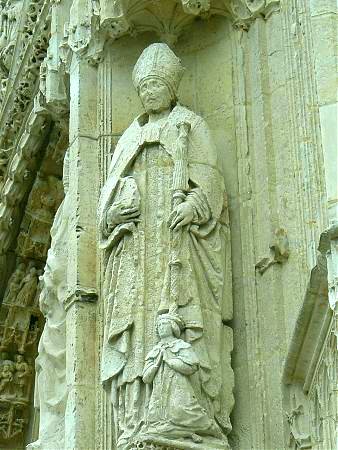
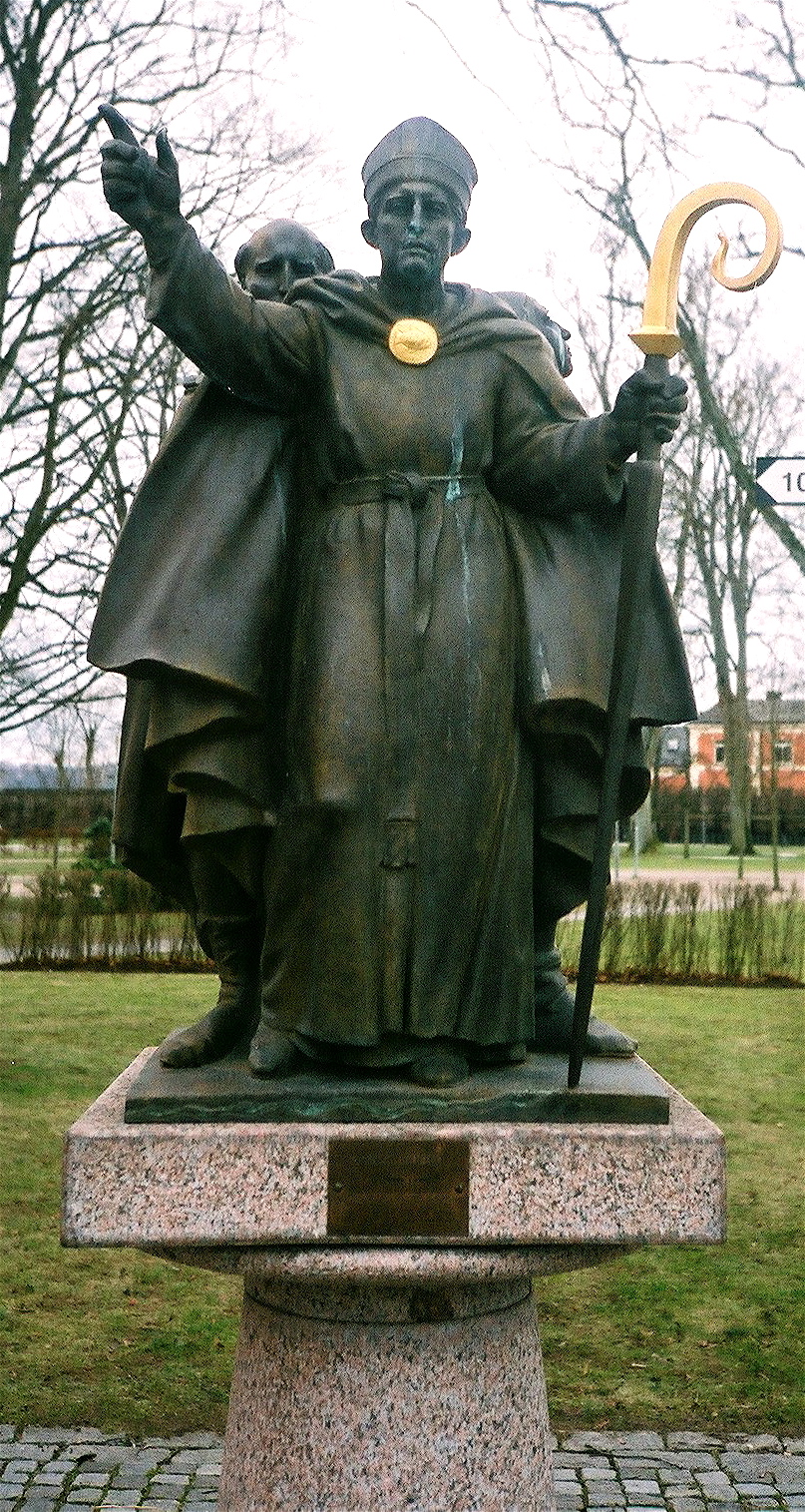
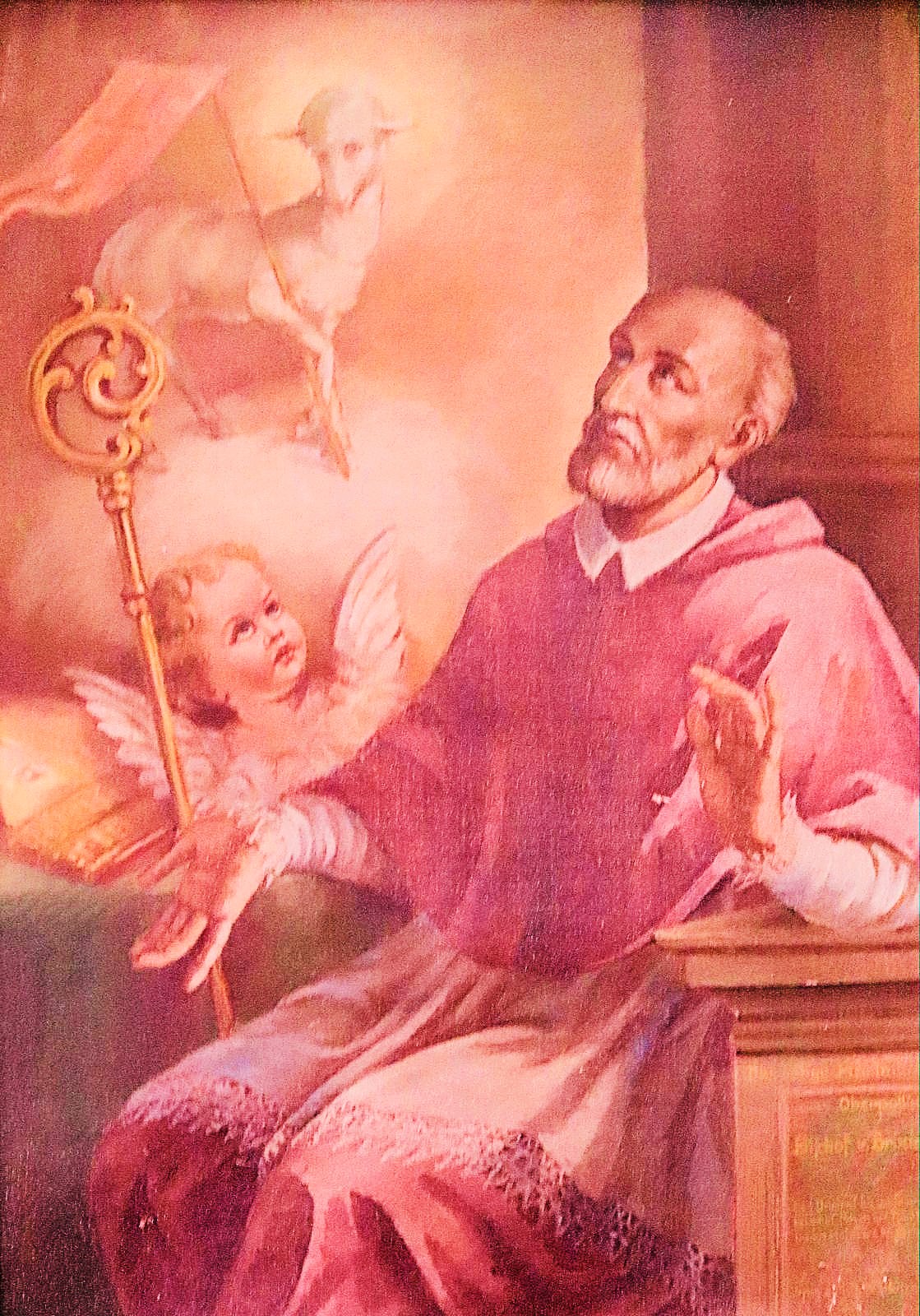
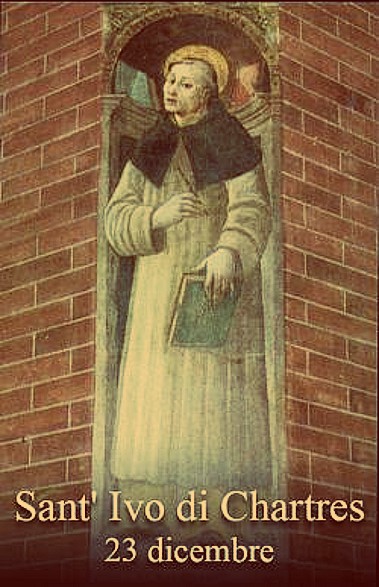
Saint of the Day – 18 December – Saint Desiderius (8th Century) Monk of Fontenelle in Normandy, France and a disciple of its Founder, St Wandrille. Also known as – Desideratus.
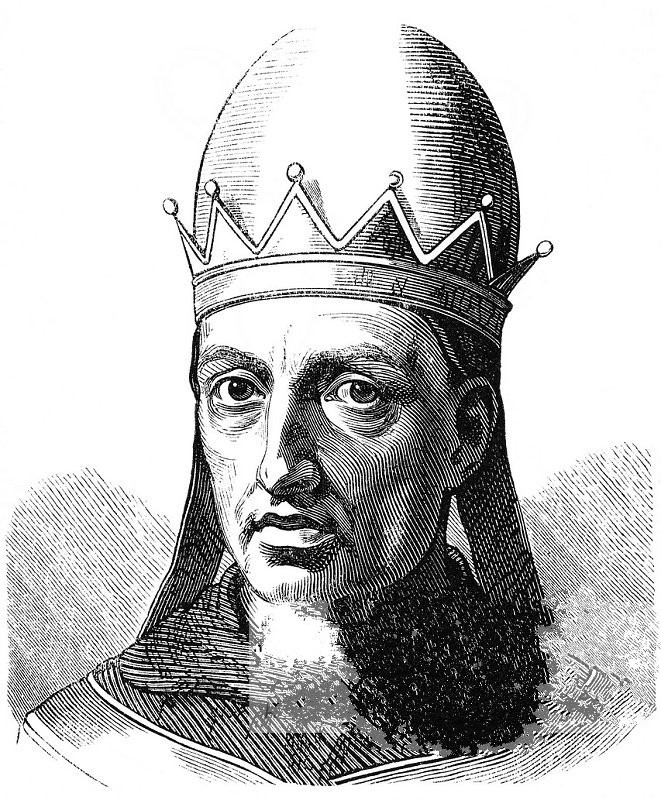
Illumination of Fontanelle, perhaps showing St Wandrille,the King and perhaps St Desiderius
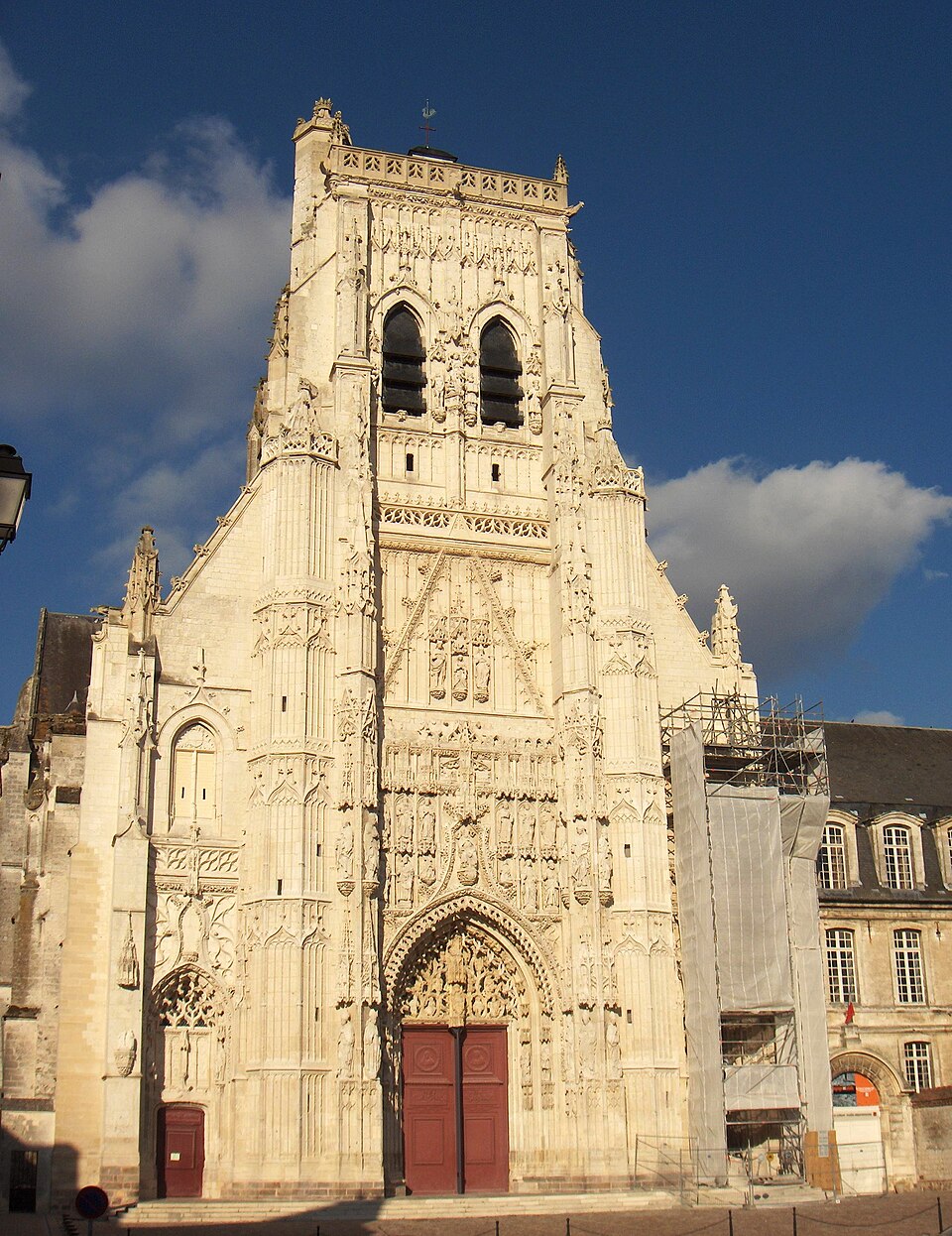
The Abbey of Saint Wandrille of Fontenelle, located in Normandy, was founded in 667 by Saint Wandrille, who built it on land obtained through the intercession of his friend St Auden, Archbishop of Rouen.
We have some information about Desiderius in the text on the life of Saint Auden. This text recounts that Desideratus was the son of Saint Waning, the Founder of Fécamp Monastery, who, when he was an official at the Royal Court of Clotaire III, assisted Saint Wandrille in the construction of the Monastery of Fontanelle.
The young Desiderius was entrusted to the Founder of the Monastery of Fontanelle and became his disciple. Desiderius was commemorated with his own cult in Fontanelle.
We do not know the year in which he died, while there is an historical trace of the translation of his Relics to Ghent in modern Belgium which took place in the year 859.
The remembrance of Saint Desideriud was fixed on his Feast Day, set for 18 December.
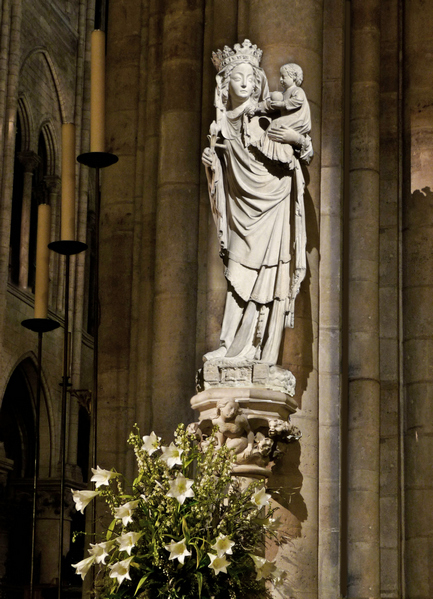
Our Lady of the Expectation – This Feast originated in Spain. When the Feast of the Annunciation (25 March) was transferred to 18 December because of the regulation forbidding Feasts in Lent, it remained on this date after the Annunciation was again celebrated on its original date. It impressed on the faithful, the sentiments of the Blessed Virgin as the time of her delivery approached. More about the Feast here: https://anastpaul.com/2018/12/18/the-feast-of-our-lady-of-expectation-18-december/
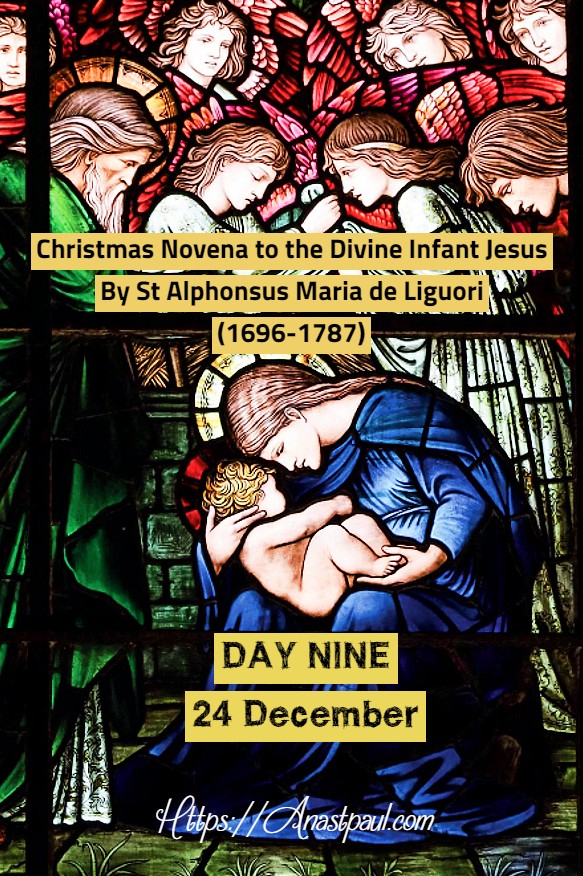
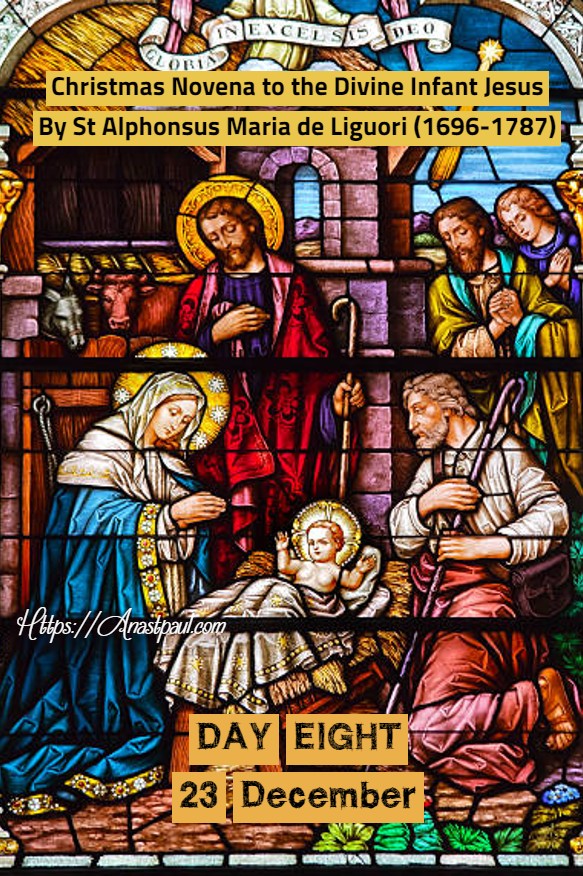
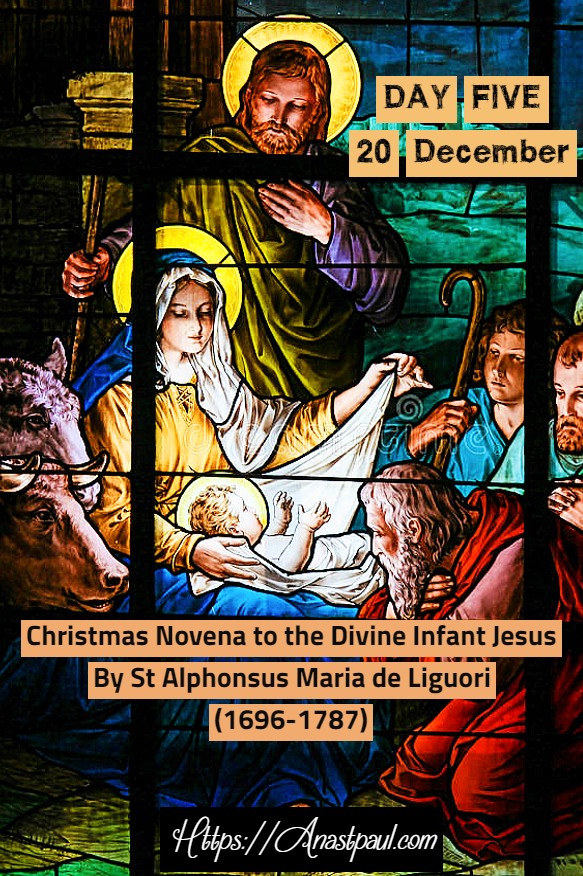
Christmas Novena to the Christ Child – Day Three:THE THIRD DAY
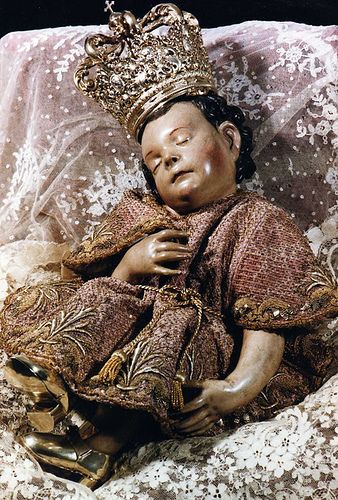
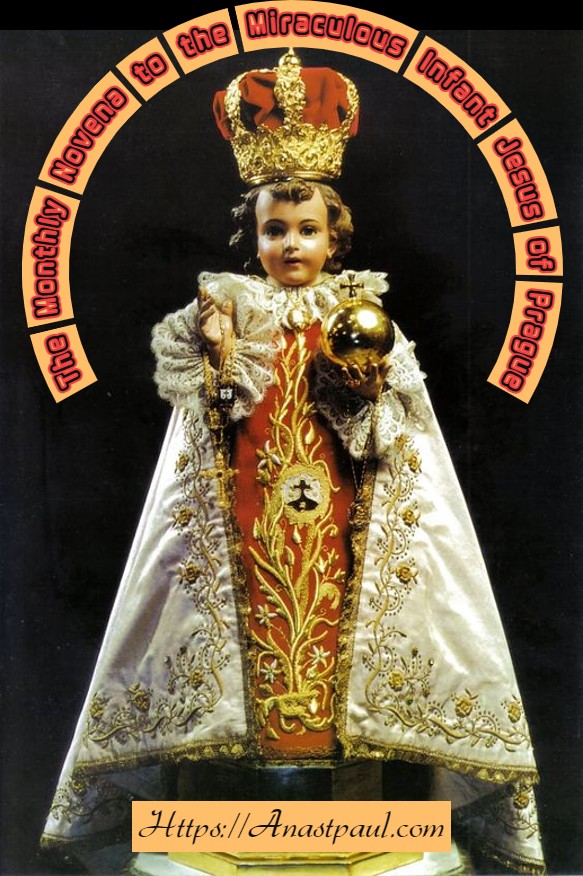
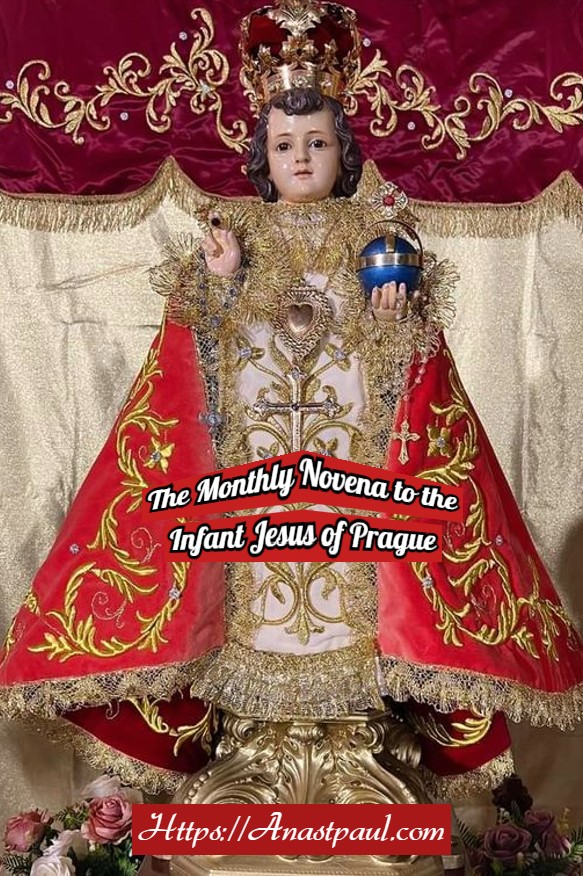
The Monthly Novena to the Infant of Prague – LINK : The Third Day
St Mawnan of Cornwall – He is included in various calendars in the British Isles. A Town in the County of Cornwall is named in his memory. No reliable information about his life has survived. St Rufus of Philippi +
Mercedarians Redeemers – Also known as “Blessed Redentori.” A group of Mercedarian Friars who worked together, under the leadership of Saint Peter de Amer, to ransom prisoners and minister to them after. Blessed Bernardo de Pratis Blessed Giacomo de Lara Blessed Louis Gasco Blessed Peter de Quesada Blessed Peter of Barcelona Blessed William de Quadres
Martyrs of Northwest Africa – 42 Saints: Mercedarian Redeemers – 6 beati – These are a group of Mercedarian Friars who worked together, under the leadership of Saint Peter de Amer, to ransom (e.g., redeem) prisoners
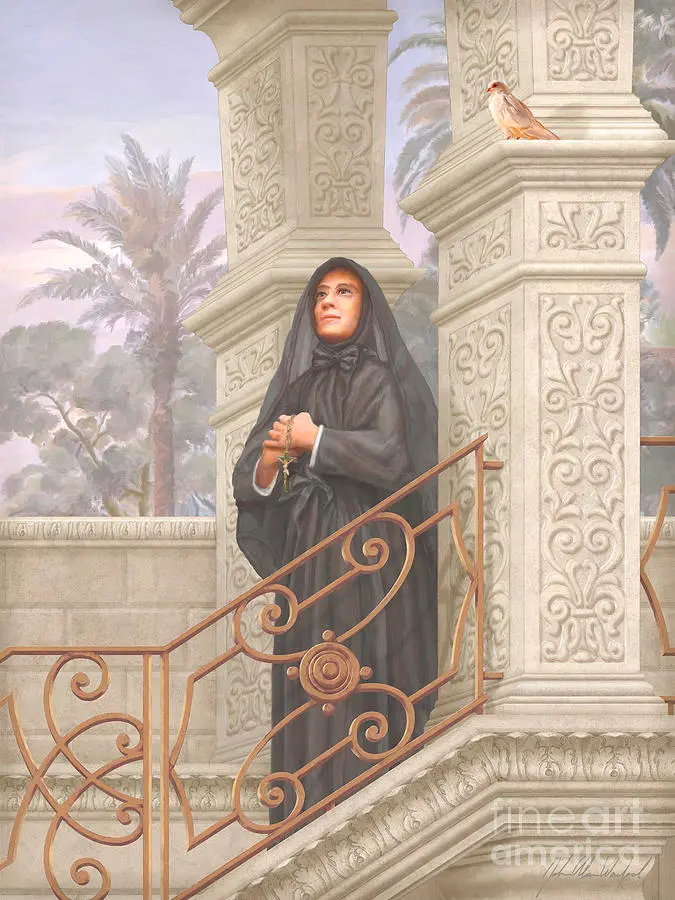
Saint of the Day – 17 December – Saint Yolanda (c1231-c1283) OP Virgin, Nun of the Order of Preachers, the daughter of the Count of Vianden. Also known as – Yolande, Iolanda, … of Vianden.
Yolanda life is famously recorded in the epic poem “Yolanda von Vianden” written by Friar Hermann of Veldenz OP which is one of only two works we have from him, the other being a prose account Vita of her life.
This poem recounts how, as a young girl, she wished to become a Nun but her parents wished her to make a good marriage. Indeed, her mother had hoped to arrange a marriage to the noble Walram of Monschau, in order to consolidate the influence of the Counts of Vianden, especially in their relations with the Counts of Luxembourg.
In 1245, when Yolanda was 14, her mother, the Marchioness Marguerite of Courteney, brought Yolanda along as her companion on a visit to the Dominican Monastery of Marienthal, where Yolanda unexpectedly fled into the protection of its cloister and gained admission as a Novice.
A year later, in 1236, her mother returned, now with the armed support of several noblemen, threatening to destroy the Monastery unless Yolanda agreed to leave. The girl was thus persuaded to return to Vianden where her parents once again attempted to change her wishes by keeping her in Vianden Castle. But Yolanda did not waver. If anything, she became more steadfast and reinforced in her views through discussions with well-known Dominican Friars such as Walter von Meisemburg and St. Albertus Magnus.
Finally, even her mother relented and agreed that Yolanda should return to Marienthal. Entering a life of prayer and charity, Yolanda developed in her monastic life through the years and, in 1258, was eventually elected the Monastery’s Prioress. She remained there until hr death 25 years later in c1283. Her mother also joined the Monastery after the death of her husband during a Crusade (1252).
There is little remaining evidence of the life of Yolanda apart from a skull, said to be hers which is displayed at the Church of the Trinitarians in Vianden. As the monastery was closed in the 18th Century, there is no trace of her there today.
Yolanda’s steadfast resolve to leave the riches and privileges of the nobility in favouur of an austere and devout life in a monastery was as sensational as it was inspiring. ,no doubt explains why Friar Hermann was inspired to write her life story and why she has become such a revered Saint, above all, for Luxembourgish women.
St Begga of Ardenne (c613-693) Widow, Mother of 3 children, Founder of Churches and a Monastery of which she became the first Abbess. Patronages – Ardenne, against stuttering and of stutterers. he Roman Martyrology reads: “At Ardenne, at the Seven Churches, St Begga Widow, sister of St Gertrude of Nivelles.” St Begga’s Holy Life: https://anastpaul.com/2023/12/17/saint-of-the-day-17-december-saint-begga-of-ardenne-c613-693-widow/
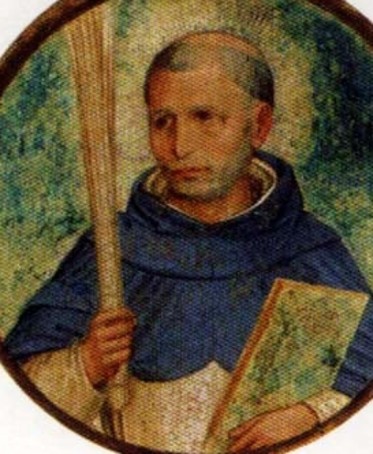
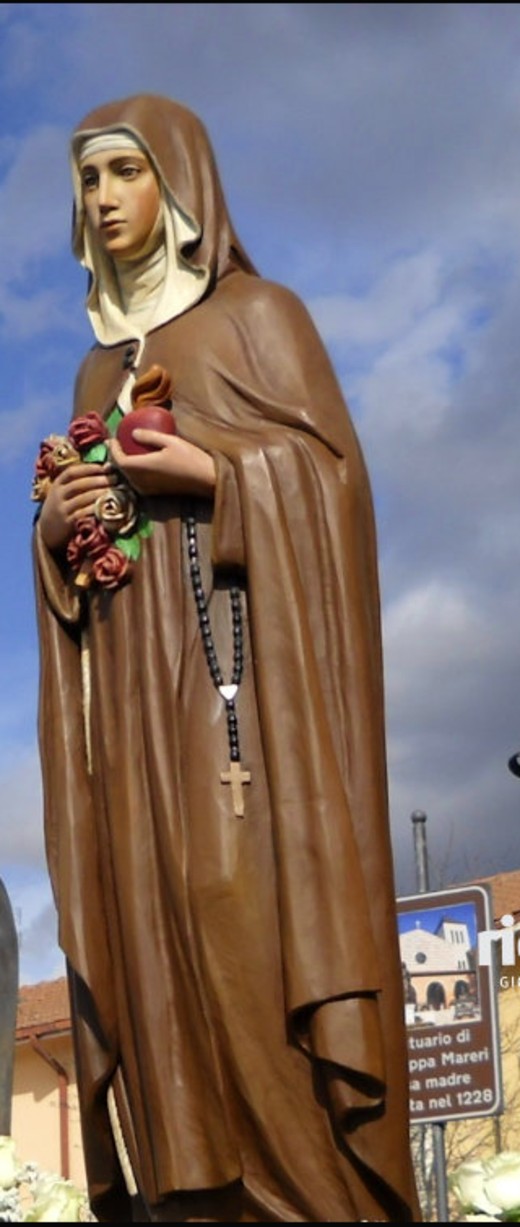
St Yolanda (c1231-c1283)OP Virgin, Nun of the Order of Preachers
Martyrs of Eleutheropolis – (60+ Martyrs-Beati): Approximately 60 Christian soldiers in the imperial Roman army of emperor Heraclius; they were murdered as a group for their faith by invading Saracen Muslims. We know the names of two of them – Calaoicus and Florian. 638 in Eleutheropolis (Beit Jibrin), Palestine.
Saint of the Day – 16 December – St Macarius (Died 1005) Abbot of Collesano, Ascetic, spiritual guide, a man of great humility and charity, miracle-worker. Born of Italian and Greek heritage in the 9th Century.
Macarius’ life is linked to that of his father, Christopher and his brother, Saba. Christopher, having taken refuge in the Monastery of San Filippo d’Agira at the foot of Mount Etna, received the Habit from the Abbot Nicephorus, who authorised him to lead a Hermit’s life in the forest of San Michele di Crisma. There he was joined by his wife Cali and his sons Saba and Macario, who all took the monastic Habit.
A severe famine which struck Sicily in 940-941, forced them to take refuge in Calabria; disembarking at Cessaniti, near Nicotera, they wandered through the mountains and woods until they reached the famous Monastic of Mercurio, on the north-western border of Calabria with Lucania.
Here they founded the two Monasteries of San Michele Arcangelo and San Stefano Protomartyr. They then went on a pilgrimage to Rome to venerate the tombs of the Apostles and, on their return, stopped at the Monastery of San Lorenzo, near Latiniano, where Christopher died, followed shortly thereafter by Cali, who was head of a community of women.
The two brothers, Saba and Macarius, took charge of the various Monasteries of Mercurion, encouraging the Monks to persevere in their vocation and not to be discouraged by the constant Saracen raids.
Upon Saba’s death in 995, Macarius succeeded him in the direction of the Monasteries scattered throughout Mercurion and Latiniano.
The biographer testifies to the prudence with which he governed, his profound humility and, above all, his great purity. To these virtues he combined the exercise of that excessive corporal rigour which characterised the Italo-Greek Monks of the time.
He performed many miracles, causing his cell to become a destination for pilgrims of all kinds.
His life ended ten years after that of his brother, on 16 December 1005. St Macarius is remembered on this day by both the Roman and Greek Monks.
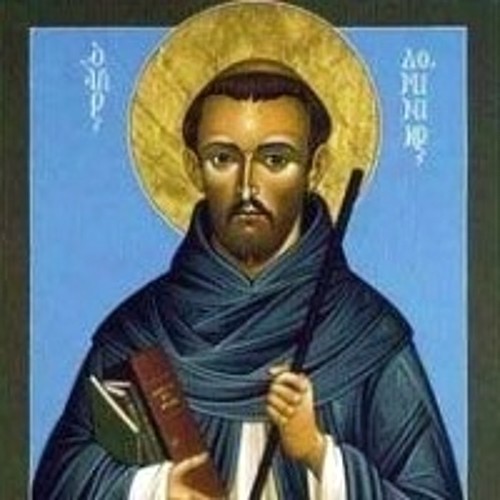
St Beoc St Dominic Dosso Bl Elizabeth of Saint Francis
St Everard of Friuli (c815-867) Duke, Count, Soldier, Founder of Churches and a Monastery. In contrast to his soldiering life, St Everard was a peacemaker, a humble and loving Master with a social conscience, striving always to free serfs, wherever possible or at least to free them from their burdens and assisting the poor and needy in all their deprivations. His Humble Life: https://anastpaul.com/2021/12/16/saint-of-the-day-16-december-saint-everard-of-friuli-c-815-867/
St Irenion (Died 389) Bishop No further information can be found Bl James of Tunis St Macarius (Died 1005) Abbot of Collesano
Martyred Women of North-West Africa: A large group of women Martyred in the persecutions of Hunneric, Arian King of the Vandals. 482 in North-West Africa.
Martyrs of Ravenna – 4 Saints: A group of Christians Martyred together. Four names and no other information has survived – Agricola, Concordius, Navalis and Valentine. c 305 at Ravenna, Italy.
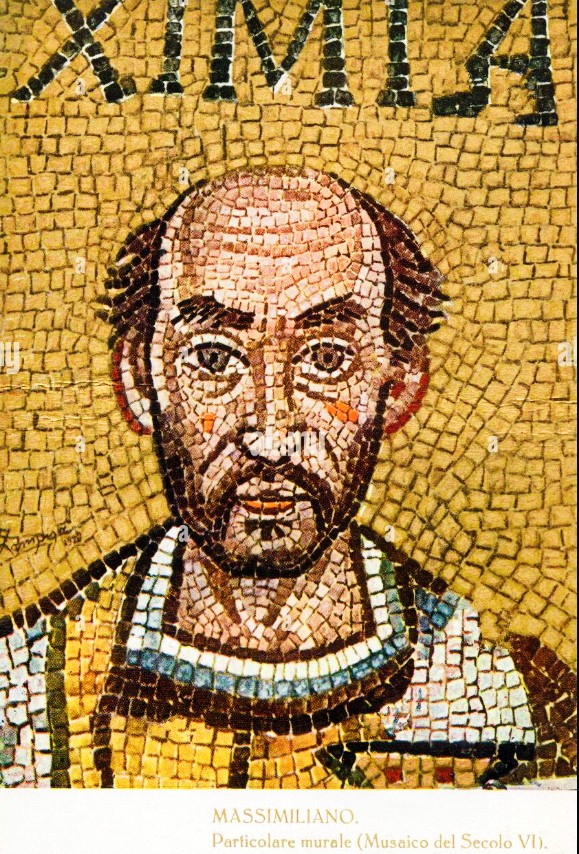
Saint of the Day – 15 December – Saint Maximinus (Died c520) Confessor and Abbot of the Abbey of Micy, Orleans, France. He was the 2nd Abbot of Micy Abbey, founded by his uncle, St Eusebius, with Maximinus assistance and was the 1st Abbot. At this time Maximinus was Ordained to the Priesthood and is renowned in his region for Miracles. Later in life Maximinus became a Hermit. Born in Verdun and died in Micy, both in France. Also known as – Mesmin (Maximin.
The Roman Martyrology reads today: “In the Diocese of Orleans, St Maximinus, Confessor.”
The oldest document relating to Maximinus, who lived in the late 5th and early 6th Century, is a Vita written in the first half of the 9th Century by a certain Berthold, a Monk of Micy and dedicated to Jonah, the then Bishop of Orléans. Three Centuries separate the events from the account, so the historical facts might require a certain amount of the historian must exercise caution.
According to this Vita, Maximinus was originally from Verdun and the nephew of a Priest of the City named Euspicius, to become a Saint too. The inhabitants of Verdun had rebelled against King Clovis I (481-511), who came to lay siege to the City but then, through the intervention of St Euspicius, pardoned the rebels. Upon retiring from the City, the King took St Euspicius and Maximinus with him and went to Orléans, where he recommended them to the City’s Bishop and donated the district of Micy, located four kilometers west of the City (now Saint-Pryvé Saint-Mesmin), to found a Monastery. St Euspicius, already elderly, had arranged for the deed of gift to be drawn up in Maximinus’ name. Maximinus was Ordained Deacon and Priest and, even before his uncle’s death which occurred two years after their arrival in Orléans, became the Abbot of Micy.
Under Maximinus’ rule, the new Monastery developed rapidly and the community grew significantly. According to his biographer, Maximinus performed several miracles, most notably the slaying of a dragon which had its lair in a cave on the banks of the Loire and is believed to have taken this cave as his cell when he became a Hermit in his last years.
He died on 15 December in an unspecified year and was buried in the Dragon’ Cave by the same Bishop Eusebius (500-530), who had welcomed his uncle and himself upon their arrival in Orléans.
At the end of the 7th Century, Maximinus’s Relics were transferred to Orléans by Bishop Sigobert, who also dedicated a Church to the Saint in the City. Bishop Jonah (818-842) returned them to the Abbey of Micy, restored after a long period of decline.
The cult of Maximinus spread throughout France in the Middle Ages; his Feast is celebrated in the Dioceses of Orléans, Tours, Paris, Beauvais and Bordeaux. He is always listed in the Proper of Orléans on 15 December, the date on which he is inscribed in the Roman Martyrology.
The Octave Day of the Immaculate Conception of the Blessed Virgin Mary
The Christmas Novena to the Divine Infant Jesus by St Alphonsus Maria de Liguori – BEGINS on 16 December: This Novena is translated from the Italian of Saint Alphonsus Maria de Liguori and was first published in 1758. Although this Novena is intended, primarily as a preparation for the Feast of our Lord’s Nativity, it can be used with spiritual profit at any time of the year, as a devotion in honour of the Infant Jesus. This translation by the Redemptorists of the UK.
AND/OR: December, naturally being the Month of the Divine Infant, is a wonderful time to begin this Monthly practice: The Monthly Novena to the Infant Jesus of Prague From 16 to 24 December (and of every Month on the same dates).
St Maximinus (Died c520) Confessor and Abbot of the Abbey of Micy, Orleans, France St Offa of Essex St Paul of Latros St Silvia of Constantinople St Urbicus
St Valerian(c377-c457) Confessor, Bishop of Abbenza . The Roman Martyrology this day states: “In Africa, the holy Bishop Valerian, who, being upwards of eighty years old, in the persecution of the Vandals, under the Arian King Genseric, was asked to deliver the Sacred vessels of the Church and, as he constantly refused, an order was issued to drive him, all alone, out of the City and all were forbidden to allow him to stay, either in their houses or on their land. For a long time, he remained lying on the public roads in the open air and thus, in the confession and defence of the Catholic verity, closed his blessed life.” Pray for Us, Holy St Valerian: https://anastpaul.com/2023/12/15/saint-of-the-day-15-december-saint-valerian-of-abbenza-c377-c457-
Martyrs of North Africa – 7 Saints: A group of Christians Martyred together for their faith in North Africa. The only details about them that survive are their names – Caelian, Candidus, Faustinus, Fortunatus, Januarius, Lucius and Mark.
Martyrs of Rome – 22 Saints: A group of 22 Christians Martyred together in the persecutions of Valerian. The only details we have are five of their names – Antonius, Irenaeus, Saturnin, Theodorus and Victor. c 258 in Rome, Italy.
DISCLAIMER: Please note: I cannot control the content of the Advertisements on this Site, or of pop-ups which may appear, The revenue from the Advertisements, however, does provide a little assistance in the support of the Site. I do apologise for any inappropriate content.
Saint of the Day – 14 December – Saint Pompey (4th Century?) Bishop of Pavia, Italy. Also known as Pompeius.
The Roman Martyrology reads today: “Ar Pavia, Pompey, Bishop.”
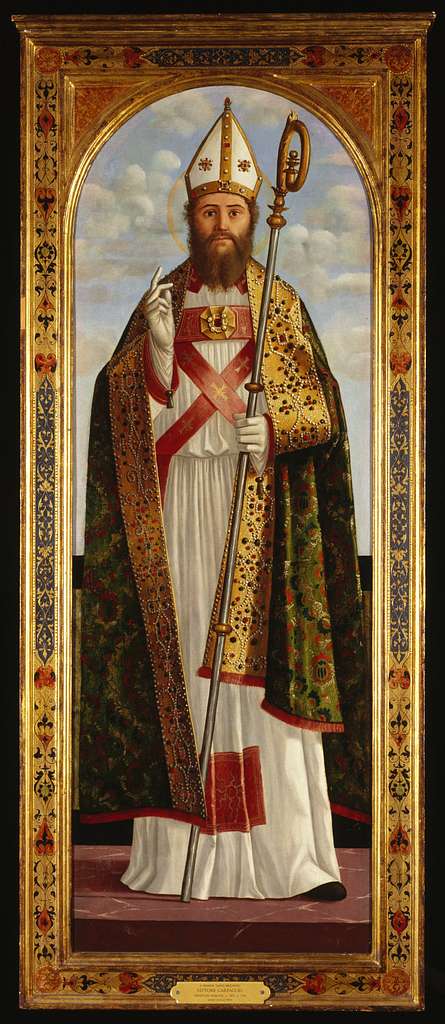
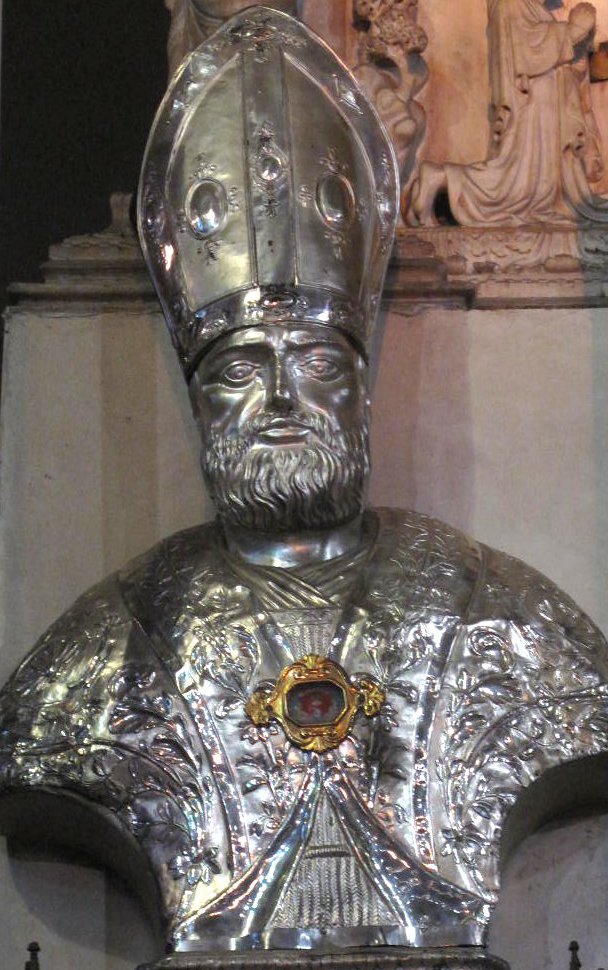
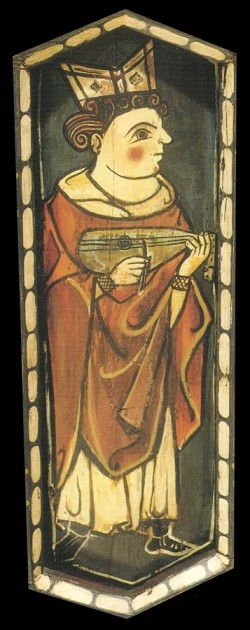
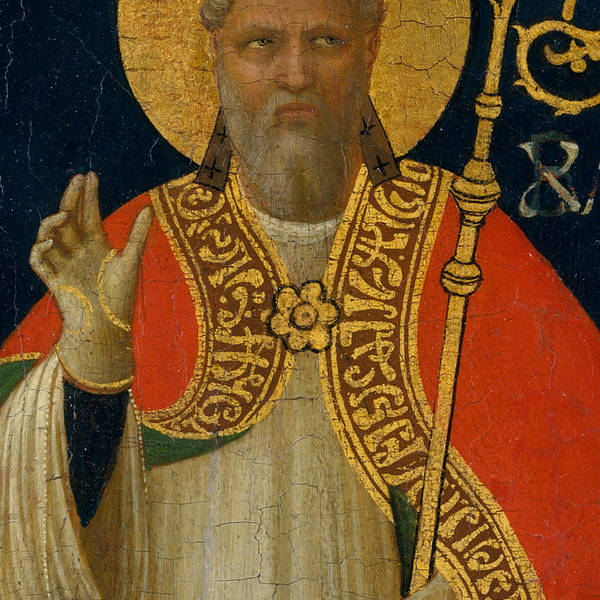
A Bishop Saint – Master of the Graduals of San Salvatore in Pavia | Italy, Lombardy c1500
Five days ago, on 9 December, we celebrated Saint Syrus, the first Bishop of Pavia and the legendary evangeliser of much of the Po Valley. In the imposing task of casting the net of the fisher of men over that flat and fertile land, stretching as far as the eye could see, around the towers and bell towers of Pavia, he had, as his collaborator Saint Pompey.
Pompey succeeded Saint Syrus when the latter—it is not clear in what year, or even in what Century—rested in deserved glory. There is, therefore, little more to add about this Saint, the second Bishop in the list of shepherd which tradition assigns to Pavia. Also because, about Saint Pompey, very little is known, if anything, at all. One must turn to the life of Saint Strus himself to learn that Pompey’s Episcopate was brief and peaceful. Nothing else.
He was succeeded by Bishop Saint Giovenzo; while Saint Pompey was buried, with Saint Syrus, in that Church of Saints Gervasius and Protasius.
Given this scant and precarious information, it would not have been necessary to dedicate the day to Saint Pompey—and this would not have diminished the true and great glories of the City of Pavia. If we have done so, it is because, for better or worse, he is the most celebrated of the Saints named Pompey.
Of the Saints, however, even when we know almost nothing about them, as in the case of Saint Pompey, we can be sure of one thing; we remember them for having performed, certainly and only, good works for the glory of Christ and His Church. (Source: Parish Archive).
Saint of the Day – 13 December – St Antiochus (2nd Century) Martyr of Sulci, Sardinia, Italy. Died by being beaten to death in the first quarter of the 2nd Century on Sulci, Sardinia. Patronages – of miners, of the following places in Italy: Atzara, the Diocese of Iglesias, the City of Ozieri, the Diocese of Ozieri, Palmas Arborea, the City of Sant’Antioco, the Island of Sant’Antioco, in Sardinia. Also known as – Antiochus of Plumbaria, Antioco…
The Roman Martyrology reads today: “Near Sardinia, on the Island of Solta, the Martyrdom of St Antiochus, under the Emperor Adrian.”
On the Feast Day of Saint Lucy, Sardinia also commemorates another Martyr, Saint Antiochus. He is linked to the region’s mines, where the Romans also forced many Christians to work during the persecutions.
Among them is Antiochus, who was exiled to the splendid Island which bears his name (now connected to the mainland by a bridge).
Antiochus was an Physician who, in the first half of the 2nd Century, during the reign of Emperor Hadrian, travelled through Galatia and Cappadocia, caring, not only for the bodies but also for the souls, of those he encountered. The conversions he inspired led to his arrest and exile in Sardinia.
Even as a prisoner, his Christian witness was so strong that it opened the heart of the Soldier Cyriacus, his jailer, to faith in Christ.
This infuriated the imperial authorities, who sentenced him to death. Before dying, however, Antiochus invoked God’s protection over Sardinia and its people, who still venerate him today.
The Church in the Island’s capital Sant’Antioco, named after Antiochus, was dedicated to him in the 5th Century. His Tomb is in the Crypt beneath ithis Church.
Additional Feast Days in Italy: 13 November (Dioceses of Iglesias and Ozieri, Italy) 16 July (Island of Sant’Antioco) 1 August (Island of Sant’Antioco) 15th day after Easter (Island of Sant’Antioco) 2nd Sunday after Easter (Palmas Arborea, Italy)
St Antiochus (2nd Century) Martyrof Sulci, Sardinia, Italy
Blessed Antonio Grassi Cong. Orat. (1592 – 1671) Priest of the Oratorians of St Philip Neri, Confessor, Tertiary of the Order of St Francis, Spiritual advisor, Counsellor, Mediator, Miracle Worker, Apostle of the poor and the sick. He was Beatified on 30 September 1900 by Pope Leo XIII. Blessed Antonio’s Holy Life: https://anastpaul.com/2018/12/13/saint-of-the-day-13-december-blessed-antonio-grassi-cong-orat-1592-1671/
Bl Bartholomew of Tuscany St Edburgh of Lyminge St Einhildis of Hohenburg Bl Elizabeth Rose St Jodocus
Blessed Giovanni Marinoni CR (1490-1562) Priest of the Theatines of St Cajetan (1480-1547) (The Congregation of the Clerics Regular of the Divine Providence), renowned Preacher and spiritual director. Patron of Preachers. He was Beatified on 5 December 1764, by a Bull of Pope Clement XIII, who also granted an Office in his honour, to his Order, to be celebrated on 13 December. Holy and Blessed Priest: https://anastpaul.com/2019/12/13/saint-of-the-day-blessed-giovanni-marinoni-cr-1490-1562/
St Martino de Pomar St Roswinda St Tassio of Bavaria
Blessed Mercedarian Knights – 7 Beati: A group of Mercedarian Knights who fought the enemies of the Catholic faith in the first Century of the Order. Blessed Bernardo de Podio Blessed Giacomo de Copons Blessed Giovanni de Bruquera Blessed Guglielmo de Sa Blessed Pietro Boguer Blessed Pietro Ricart Blessed Raimondo de Frexa
Martyrs of Sebaste – 5 Saints: A group of Christians Martyred together in the persecutions of Diocletian. We know little more than their names – Auxentius, Eustratius, Eugene, Mardarius and Orestes. They were martyred in c 302 at Sebaste, Armenia (in modern Turkey) and their relics are enshrined at the church of Saint Apollinaris in Rome, Italy.
Thought for the Day – 12 December – Meditations with Antonio Cardinal Bacci (1881-1971)
Mary, a Light in the Darkness
“Let us imagine for a moment, that we have grown blind and are forever plunged in darkness. It is an unhappy thought. Never again to see those who are dear to us, never to see the light of the sun nor any of the splendours of the universe. We should feel as if were alone, for we should have to depend only on sounds and on the voices of others for communication with the external world. As St Augustine points out, however, in his commentary on the miracle of the man who had been blind from birth, we are all more or less blind in the supernatural order. The world is the image of God but, do we see His Presence in everything which surrounds us? Is it not more often the case that created things distract us and lead us to forget their Creator, because, we regard them as a means of satisfying our own comfort and our own ego? We should look on creatures as go-betweens which help us to ascend to God, the beginning and end of all creation.
Unfortunately, instead of climbing this mystical ladder which leads us to God, we often descend it. We forget God and become excessively wrapped up in worldly affairs. Sometimes matters may be even worse, not only do we forget God through our love of creatures but, we use them, to offend Him. God has given us eyes to admire His works and, as a result, to lead us to praise, thank and love Him. Instead, we often use this wonderful gift in order to commit sin. He has given us the gift of speech, the gift of hearing and other senses. But how do we employ them? The tongue is a marvellous invention but, as St James writes, “if anyone does not offend in the word, he is a perfect man, able also to lead round by the bridle, the whole body … With it we bless God the Father and, with it, we curse men, who have been made after the likeness of God. Out of the same mouth, proceed blessing and cursing. These things, my brethren ought not to be so” (Js 3:2-10). What can be said of vision and of speech can be said of all the senses and faculties of body and soul. They are all God’s gifts and should, therefore, be used as means of bringing ourselves closer to Him. If creatures lead us away from God and cause us to forget Him, or if, worse still, they cause us to offend Him, then we are spiritually blind and far more unfortunate than those who have lost their natural vision.
Most Holy Mary, during your earthly pilgrimage, you never once lost sight of God. Grant that I may not be lost in the darkness of this world. Grant that I may not be ensnared by the passing charm and false beauty of these created things which surround me. Grant that I may see, in all things, the Presence and Beauty of God, so that I may always continue to advance, nearer and nearer to Him. Amen.”
Saint of the Day – 12 December – Saint Ida O.Cist (c1190-c1231) Virgin, Sister of the Cistercian Order, Mystic, Miracle-worker, Apostle of the poor, of the Holy Souls and a most dedicated child of the Blessed Virgin Mother. Born in c1190 in Nivelles, Belgium and died on 12 December in either 1231 or 1232 at her Convent in Rameige, Belgium. Patronages – against toothache, of the Holy Souls in Purgatory. Also known as – Ida of Nivelles, … of Metz, Ita.
Ida was born into a prosperous mercantile family in Nivelles, an important market town and pilgrimage destination in Brabant, a short distance to the south of Brussels. After her father died, the family arranged for her to be married.
She was aged only nine or sixteen (sources differ) and not wishing to marry she fled to a Beguinage, a Community of chaste Godly women who lived in a shared community but without taking vows or becoming cloistered. The Beguinage Community accepted her. They comprised seven women who lived near the Church of the Holy Sepulchre in her home town. There, Ida became a Beguine Sister.
She moved in around 1213 being accepted into the Cistercian Convent at Kerkom near Tienen. (The Convent relocated shortly afterwards to La Ramée.) There she worked as a writer and illustrator. She reported numerous visions and developing a particularly close relationship with the Virgin Mary. She is also celebrated for her exceptional dedication to assisting the suffering poor.
Goswin of Bossut, a Cistercian Monk, wrote a biography of Ida shortly after her death.
Martyrs of Alexandria – 6 Saints: A group of six Christians Martyred for their faith during the persecutions of Decius. We know little more than five of their names – Alexander, Ammonaria, Dionysia, Epimachus and Mercuria. They were burned to death c 250 in Alexandria, Egypt.
Martyrs of Trier – 4 Saints and Companions: “At Treves (Trier), the holy Martyrs, Maxentius, Constantius, Crescentius, Justinus and their companions, who suffered in the persecutions of Diocletian, under the Governor Rictiovarus.”
Saint of the Day – 11 December – Blessed Hugolinus Magalotti (Died 1373) Hermit, spiritual guide, Miracle-worker. A holy solitary so steeped in prayer, virtue and mortification that he became the target of the devil’s attacks, who sought constantly to lead him astray by ferocious temptations. Born in Camerino, Italy and died there om 11 December1373. Also known as – Hugoline, Hugolino, Ugolino. Beatified on 4 December 1856 by Pope Pius IX.
Hugolinus was a scion of the famous and noble family of the Magalotti. He was born toward the close of the fourteenth Century on an estate near the City of Camerino, Italy. His mother died while he was still quite young but his excellent father was deeply concerned about the education of the boy, so that nothing was left wanting. By his obedience, affection and other virtues, Hugolinus gave much joy to this father. His lively temperament caused him many a struggle but the the grace of God and the guidance of his father helped him overcome his evil inclinations.
As he grew older, Hugolinus applied himself to the study of the sciences. Spiritual books, however, held the greatest attraction for him. He read them constantly, impressed their lessons on his mind and heart and regulated his life accordingly. He did not speak much but his example edified everyone.
After his father died, the youth thought he heard addressed to him the words of our Lord to the rich young man: “If you wish to be perfect, go, sell what you have and give to the poor” (Mt 19:21). Hugolinus did not hesitate a moment. He sold all his possessions and divided the proceeds among the poor, particularly the widows and orphans. Stripped of all material things, Hugolinus Magalotti withdrew to a hermitage, where he led a truly celestial life. Prayer and meditation were the nourishment of his soul and upon his body he imposed the severest fasts and mortifications.
The enemy of virtue did not neglect to attack him severely. He would tempt him by stirring up sensual desires and reminding him of the pleasures he could enjoy in the world. At other times, he would frighten him by appearing to him in horrible forms. But Hugolinus proved to be a good soldier of Jesus Christ; prayer, penance and especially trustful appeal to the Immaculate Mother of God, made him victorious in every struggle.
God rewarded the fidelity of His servant with extraordinary favours. Enlightened by God, he gave advice and consolation to the faithful, who approached him in great numbers. He miraculously restored health to many of them who were ill.
When Hugolinus perceived his end was drawing near, he became even more intimately united to God. Having received the last Sacraments several times, he died peacefully in the Lord in 1373. His body was laid to rest in the Church of St John the Baptist at Figni, Camerino and immediately the people began to venerate him. This veneration was approved by Pope Pius IX and Pope Leo XIII granted affirmation of his Feast.
Blessed Jerome Ranuzzi OSM (c 1410-c 1468) “The Angel of Good Counsel,” “The Blessed Bachelor,” Priest and Friar of the Order of the Servants of Mary, the Servites, Theologian, Adviser both spiritual and secular, renowned for his learning and scholarship, Penitent and Hermit with a great love of solitude and silence. His body is incorrupt and is still available for veneration in St Mary of the Servites, Urbano, Italy. His cult was confirmed on 1 April 1775 by Pope Pius VI with the title of Blessed. The Roman Martyrology states: “In Sant’Angelo in Vado always in the Marches, Blessed Girolamo, Priest of the Order of the Servants of Mary, who in solitude and silence reached the wisdom of holiness.” The Angel of Good Counsel: https://anastpaul.com/2021/12/11/saint-of-the-day-11-december-blessed-jerome-ranuzzi-osm-c-1410-c-1468-the-angel-of-good-counsel/
Blessed Severin Ott O.Praem. (1627-1708) Priest and Friar of the Norbertines or Premonstratensians.
Martyrs of Saint Aux-Bois – 3 Saints: Two Christian missionaries and one of their local defenders who faith in the persecutions of governor Rictiovarus – Fuscian, Gentian and Victoricus. They were beheaded in 287 in Saint Aux-Bois, Gaul (in modern France).
Martyrs of Rome – 3 Saints: Three Christians murdered in the persecutions of Diocletian for giving aid to Christian prisoners – Pontian, Practextatus and Trason. They were imperial Roman citizens. They were martyred in c 303 in Rome, Italy.
Saint of the Day – 10 December – Blessed Brian Lacey (Died 1591) Lay Martyr. Born in Brockdish, Norfolk, England and died by being hanged on 10 December 1591 at Tyburn Tree London, England. Beatified on 15 December 1929 by Pope Pius XI.
Brian Lacey was one of the London Martyrs of 1591. On 18 October 1591, a royal proclamation led to the stricter enforcement of the laws against Catholics in England, the first fruits of which were seven Martyrdoms in London on the following 10 December, one of whom was Brian Lacey.
Brian, a Yorkshire gentleman, was a cousin and assistant of the Venerable Montford Scott and after torture, was condemned for aiding and helping this Priest. Brian’s own brother had informed against them!
Lacey was committed to Bridewell Palace where he was cruelly tortured by Topcliffe in the vain endeavour to elicit at whose houses he had visited with Scott. He was arraigned before the Lord Mayor at the Old Bailey and condemned to be hanged for aiding and abetting a Piests.
Five years previously Lacey had suffered imprisonment in Newgate for religion and he was then three times examined by Justice Young. Information against him as a distributor and dispenser of letters to Catholics and against Montford Scott had been given by his own brother, Richard Lacey, gentleman, of Brockdish, Norfolk.
St Abundius Blessed Brian Lacey (Died 1591) Lay Martyr BL Bruno of Rommersdorf St Caesarius of Epidamnus St Carpophorus St Deusdedit of Brescia (Died c700) Bishop
St Edmund Gennings St Emérico Martín Rubio St Florentius of Carracedo St Fulgentius of Afflighem St Gemellus of Ancyra St Gonzalo Viñes Masip Bl Guglielmo de Carraria St Guitmarus St Hildemar of Beauvais Bl Jerome Ranuzzi Bl John Mason
St Julia of Merida St Lucerius St Maurus of Rome St Mercury of Lentini St Polydore Plasden Bl Sebastian Montanol Bl Sidney Hodgson St Sindulf of Vienne St Swithun Wells
Martyrs of Alexandria – 3 Saints: A group of Christians murdered for their faith in the persecutions of Galerius Maximian – c 312. The only details that have survived are three of the names – Eugraphus, Hermogenes and Mennas.
Saint of the Day – 9 December – Saint Cyprian (Died c586) Abbot of Perigord, France, Hermit, miracle-worker. Also known as – Cyprien.
The Roman Martyrology reads today: “At Perigord in France, the holy Abbot Cyprian, a man of great sanctity.”
St Gregory of Tours, after calling Cyprian a man “of great sanctity,” says of him: “He has often cured lame hands, restored the use of limbs to paralytics and restored sight to the blind. Three lepers have recovered their health thanks to his anointings. And nowadays it is not uncommon for the sick to be cured by praying with faith, at his Tomb.”
Adonis, who composed the Eulogy following St Gregory, mentions him in his Martyrology on 9 December, certainly arbitrarily; Usuard placed the Feast of the holy Abbot on the same date, as well as the Churches which celebrated his memory.
Further details of Cyprian are given in the Vitae of Saint Amandus and Saint Sorus – according to these texts, three young men from Auvergne, namely Sorus, Amandus and Cyprian, at the time of Clotaire I (511-561) placed themselves under the direction of Savalone, Abbot of the Monastery of Genouillac. After three years they retired to a secluded place but then separated to live in solitude. Sorus (whose name, from then on, meant “hermit” in the Celtic language) retired to Terranova, Amand and Cyprian to places that later took their names (St Amand-de-Coly and St Cyprien, in the Dordogne). Sorus cured the King of Burgundy, Saint Guntram (561-592), of leprosy and, upon his death, was buried by Cyprian and Amand.
According to another source, Cyprian lived at the time of Carterius, the Bishop of Périgord, who participated in the Council of Mâcon in 585 – accepting these chronological data, it must be admitted that Cyprian was a contemporary of St Gregory of Tours but that he died before 587, the year in which the latter began composing the In Gloria Confessorum.
St Michaela Andrusikiewicz St Nectarius of Auvergne
St Peter Fourier CRSA (1565-1640) “The Good Father of Mattaincourt,” Priest, Founder, Reformer, Confessor, Ascetic, Theologian, Teacher, Preacher, Apostle of Prayer, Penance and Charity, Marian devotee. In 1597, together with the Blessed Alix Le Clerc, St Peter founded the Congregation of Notre Dame of Canonesses Regular of St Augustine, who were committed to the free education of children, taking a fourth vow to that goal. St Peter was Beatified on 20 January 1730 by Pope Benedict XIII and Canonised on 27 May 1897 by Pope Leo XIII. “The Good Father of Mattaincourt” : https://anastpaul.com/2018/12/09/saint-of-the-day-9-december-st-peter-fourier-c-r-s-a-1565-1640/
Blessed Mercedarian Fathers – (10 Beati): The memorial of ten Mercedarian Friars who were especially celebrated for their holiness: Arnaldo de Querol • Berengario Pic • Bernardo de Collotorto • Domenico de Ripparia • Giovanni de Mora • Guglielmo Pagesi • Lorenzo da Lorca • Pietro Serra • Raimondo Binezes • Sancio de Vaillo
Martyrs of North Africa – (24 Saints): Twenty-four Christians murdered together in North Africa for their faith. The only details to survive are four of their names – Bassian, Peter, Primitivus and Successus.
Martyrs of Samosata – (7 Saints): Seven Martyrs crucified in 297 in Samosata (an area of modern Turkey) for refusing to perform a pagan rite in celebration of the victory of Emperor Maximian over the Persians. They are – Abibus, Hipparchus, James, Lollian, Paragnus, Philotheus and Romanus. They were crucified in 297 in Samosata (an area in modern Turkey).
Saint of the Day – 8 December – Saint Patapius (7th Century) Hermit, spiritual guide, Miracle-worker. Born in Thebes in Egypt and died in Constantinople. Patronage – against Dropsy (oedema). Also known as – Patapius of Thebes, Patapius of Egypt, Patapios…Patario…Patapius…
The Roman Martyrology reads today: “At Constantinople, St Patapius, Solitary, renowned for virtues and miracles.”
We have no certain information regarding the exact period of his life; some evidence suggests he had arrived in Constantinople around the time in which two other Egyptians, Bara and Rabula, founded Monasteries there (late 5th, early 6th Century). The Bollandists propose the 7th Century.
St Andrew of Crete (660-740), who lived at a time close to that of Patapius, wrote a Life, a narrative of his miracles. John of Euchaites (11th Century) speaks of an ancient Life, already mentioned by St Andrew of Crete but both authors certainly adhered to tradition in their works, developing above all the hagiographical style.
Patapius, originally from Thebes in Egypt, spent a certain number of years in solitude in the surroundings of this City; then he went to Constantinople, stopping in the Blachernae district, near the City Walls, where he lived for a long time. His fame for sanctity immediately attracted numerous visitors. He cured a blind man, a man with dropsy, a possessed man and a woman suffering from a breast disease. Upon his death, amid popular veneration, he was buried in the Church of St John the Baptist in a nearby Monastery called the Egyptian Monastery, where his body was still venerated at least until the 15th Century.
St Anastasia of Pomerania St Anthusa of Afric St Casari of Villeneuve-lès-Avignon
St Eucharius of Trier (Died 3rd Century) the First Bishop of Trier, Germany, Date and place of birth are unknown but Eucharius is believed to have been of Italian origin. Additional Memorial in Limburg, Germany of the 3 Bishops sent by St Peter, occurs on 11 September. – The Roman Martyrology reads: “At Treves, St Eucharius, disciple of the blessed Apostle Peter and the first Bishop of that City.” His Holy Life: https://anastpaul.com/2023/12/08/saint-of-the-day-8-december-saint-eucharius-of-trier-died-3rd-century-bishop/
St Gunthildis St Macarius of Alexandria St Patapius (7th Century) Hermit
St Romaric (Died 653) Married French noble layman, Abbot, Founder of the renowned Remiremont double Monastery in north-eastern France. Died in 653 of natural causes. He was Canonised on 3 December 1049 by Pope Leo IX. The Roman Martyrology reads today: “In the Monastery of Luxeuil, St Romericus, Abbot, who left the highest station at the Court of King Theodebert, renounced the world and surpassed all others in the observance of monastic discipline.” About St Romaric: https://anastpaul.com/2022/12/08/saint-of-the-day-8-december-saint-romaric-died-653-abbot/
St Sophronius of Cyprus(6th Century) Bishop of the Island of Cyprus, off the coast of Greece, Apostle of widows and orphans, the poor and needy. It is believe, by his name which Greek meaning is ‘the wise‘, that he was of noble Greek origin. The Roman Martyrology reads today: “In Cyprus, the holy Bishop Sophronius, who was a devoted protector of orphans and widows and a friend to the poor and the opporessed.” His Fervent Life: https://anastpaul.com/2024/12/08/saint-of-the-day-8-december-saint-sophronius-of-cyprus-6th-century-bishop/
DISCLAIMER: Please note: I cannot control the content of the Advertisements on this Site, or of pop-ups which may appear, The revenue from the Advertisements, however, does provide a little assistance in the support of the Site. I do apologise for any inappropriate content.
Saint of the Day – 7 December – Saint Geretranus (6th Century) Bishop of Bayeux in Normandy, France. Also known as – Gérétran, Geretrandno, Geretrand.
In the chronology of Bishops, Geretranus is listed eleventh after Leudovald, mentioned after 614 and before Saint Ragnobert, mentioned before 627.
Geretranus is only mentioned in the ancient Episcopal catalogues and we know absolutely nothing about him, his life and his Episcopate.
It should be noted that the Episcopal catalogues of Bayeux from the 12th and 13th Centuries are reliable and historically documented but they only begin with Bishop Hugh of Ivry, who lived at the of the advent of the 1th Century and died in 1049.
Regarding the early Bishops, the catalogues are incomplete, although they present a series of 14 Saintly Bishops, most of whom are derived from hagiographical and liturgical traditions.
In local Martyrologies, Geretranus’ Feast Day was set on 7 December but according to some, even that date does not correspond to ab authentic date i.e. of his death, given that on that day the Bishop St Gerbold (Died c691) was celebrated, who governed the Diocese after some years of Geretranus. However St Gerbold’s Feast is actually now on 5 December due to the conflict with St Ambrose on 7 December.
Saint of the Day – 6 December – Saint Polychronius (4th Century) Priest Martyr. Defender of the True Faith against heresy, in particular Arianism. Died by being murdered bu members of this cult.
The Roman Martyrology reads today: “The same day, St Polychronius, Priest who, in the time of the Emperor Constantius, was attacked by the Arians and put to death while at the Altar celebrating Holy Mass.”
Maybe St Gregory the Wonderworker
A Priest who attended the Council of Nicaea and opposed the Arians.
For this public action he was assassinated by Arian extremists during the reign of Emperor Constantine II while celebrating Holy Mass.
Saint of the Day – 5 December – Saint Nicetius (c513-c566) Bishop of Trier (formerly Treves), a most zealous shepherd, travelling extensively and preaching with tireless teaching. A courageous Reformer and Defender of the Church against all heresies and all forms of immoral living. Nicetius was one of the most important Bishops of his era. Born into a Gallo-Roman family in the latter 5th Century in Auvergne, France and died in c566 at his See in Trier. Also known as – Nicetus, Nicezio, Nizier, or Niketius. Additional Feast – 1 October in Trier.
The Roman Martyrology reads today: “At Treves, St Nicetius, Bishop, a man of great sanctity.”
From a young age, Nicetius displayed a deep religious devotion and was drawn towards a life of piety and service to God. He entered monastic life at Limoges and quickly distinguished himself by his dedication and holiness.
His reputation reached the ears of King Theodoric I, who held Nicetius in high regard for his virtue and wisdom. Impressed by his qualities, King Theodoric supported Nicetius in his pursuit of the Episcopacy. In 532, Nicetius was Consecrated as the Bishop of Trier, Gaul which is part of modern Germany. He inherited a Diocese which had become indifferent towards the Faith and he immediately began to bring about much-needed reforms and revitalisation. One of his first acts as Bishop was to rebuild the Cathedral, a symbol of his commitment to restoring the prominence of Christianity in the area.
Nicetius was a tireless advocate for the Faith and he dedicated himself to preaching and teaching to reawaken the love of God among the people. He travelled extensively throughout his Diocese, delivering daily sermons and exhorting, both commoners and aristocracy, to live virtuous lives in accordance with Christian principles.
His fearless denunciations of immorality were evident in his excommunication of King Clotaire I, who was known for his immoral conduct. This courageous act resulted in his exile from his own Diocese.
Throughout his life, Nicetius attended several important Councilss, including those held in Clermont in 535, Orleans in 549, Toul in 550 and Paris in 555. At these Councils, he played a key role in formulating Decrees and defending the orthodox Faith against various heresies, most notably Monophysitism.
In addition to his role as a reformer and defender of the Faith, Nicetius also focused on the internal affairs of his See. He undertook efforts to restore discipline among the Clergy and promote holiness and genuine devotion. His reforms were successful in rejuvenating the spiritual life of the Clergy in his Diocese.
Saint Nicetius of Trier died in around 566. He was buried in the Church of Saint Maximin in Trier, Germany, where his Tomb became a site of veneration by the faithful. Although no specific Patronages have been attributed to him, Saint Nicetius remains an exemplary figure of moral courage, piety and zeal for the Church of Christ. His legacy as a reformer and revitaliser of the Church lives on, inspiring generations of believers to strive for holiness and the preservation of Christian obedience and the principles of sanctity. He was recognised as a Saint by the Catholic Church before the formal process of Canonisation was established.
Blessed Bartholomew Fanti O.Carm. (c 1428-1495) Carmelite Priest, renowned Preacher of Mantua . Humble and gentle, Bartholomew gave an example to everyone of a life of prayer, of loving kindness and generosity to all and of faithful service to the Lord. He was remembered and revered, even during his life, for his great love ot the Blessed Sacrament, which was the source and the summit of his apostolic life, together with his love and devotion to the Virgin Mother. His Beatification received the Papal approval of Pope Pius X on 18 March 1909. Gentle Bartholomew: https://anastpaul.com/2021/12/05/saint-of-the-day-5-december-blessed-bartholomew-fanti-o-carm-c-1443-1495/
St Basilissa of Øhren St Bassus of Lucera St Bassus of Nice St Cawrdaf of Fferreg St Christina of Markyate St Consolata of Genoa St Crispina St Cyrinus of Salerno – Bishop. Martyr. No other information has surived.
St Gratus Bl Giovanni Gradenigo St Justinian St Martiniano of Pecco St Nicetius (c513-c566) Bishop of Trier St Pelinus of Confinium
Martyrs of Thagura – 12 Saints: A group of twelve African Christians who were Martyred together in the persecutions of Diocletian. The only details about them that have survived are five of their names – Crispin, Felix, Gratus, Juliua and Potamia. They died in 302 in Thagura, Numidia
Saint of the Day – 4 December – St Meletus (4th Century) Bishop of Pontus, Scholar and learned Bishop of great sanctity. Pontus is a region within Anatolia on the southern coast of the Black Sea, located in the modern-day eastern Black Sea region of Turkey … Also known as – Meletiu, Melitiusi, Melezio.
The Roman Martyrology reads today: “In Pontus, blessed St Meletus, Bishop and Confessor, who, joined to an eminent gift of knowledge, the more distinguished glory of fortitude and integrity of life.”
After praising the Martyr Saint Pamphilus, St Eusebius, in his Historia Ecclesiastica, adds: “Among the men of rare qualities who are of our time, (i.e. of the 4th Century) we know Pierius, an Alexandrian Priest and Meletus, Bishop of the Churches of Pontus.”
After pausing to praise Pierius, he continues: “Meletus—called *Attic Honey by men of learning—answered the ideal of the erudite in every field of doctrine. One could not sufficiently admire the force of his eloquence. Perhaps some will say this was a natural gift in him but who was superior to him in terms of the sum of his experience and the breadth of his erudition? Even at a single test you would have had to admit that in all disciplines based on reasoning he was the most able and eloquent. The sanctity of his life, moreover, was not inferior to his other qualities. I learned to know him for 7 years, when during the persecution, he had withdrawn to the regions of Palestine.”
It was necessary to cite this in full, as it is the principal source which, through such a laudatory portrait, introduces us to this Prelate.
According to Philostorgius, Meletus was the Bishop of Sevastopol. However, one can hardly give credence to this author’s assertions when he places Meletus in the Arian sect. This could not be reconciled with the praise given to him by both St Athanasius of Alexandria and St Basil of Caesarea.
Usuard is the first to include him in his, Martyrology, with a eulogy taken from St Eusebius on the arbitrary date of 4 December. P. Galesini, influenced by Usuard, introduced Meletus on this same day. G Meulen (Molano) takes up the eulgy of Usuard that Baronius reproduced almost verbatim in the Roman Martyrology.
*Attic Honey used as an analogy referring to a rare Greek Honey crafted from by the bees from fine herbs and flowers.
St Peter Chrysologus (c 400-450) “Golden Words” Confessor,, Father & Doctor of the Church – Bishop of Ravenna, Italy. Today we celebrate the Memorial of Saint Peter Chrysologus, a fifth-century Italian Bishop known for testifying courageously to Christ’s full humanity and divinity during a period of the heresy called “Monophysite.” The saint’s title, Chrysologus, signifies “golden speech” in Greek. Named as a Doctor of the Church in 1729 by Pope Benedict XIII., he is distinguished as the “Doctor of Homilies” for the concise but theologically rich reflections he delivered during his time as the Bishop of Ravenna. 176 of his sermons have survived – it is the strength of these beautiful explanations of the Incarnation, the Creed, the place of Mary and John the Baptist in the great plan of salvation, Mary’s perpetual Virginity, the penitential value of Lent, Christ’s Eucharistic presence and the Primacy of St Peter and his successors in the Church. FEAST DAY: 4 December (General Roman Calendar 1729-1969) https://anastpaul.com/2018/07/30/saint-of-the-day-30-july-st-peter-chrysologus-c-400-450-golden-words/
Bl Francis Galvez St Heraclas of Alexandria Bl Jerome de Angelis St John the Wonder Worker
St Maruthas (Died c415) Bishop, Confessor, Theologian, Writer, honoured in the Syrian Rite Church as a Doctor of the Church. He was a friend of Saint John Chrysostom and acted as an Ambassador between the East Roman Emperor and the Persian Emperor. The Roman Martyrology reads: “In the kingdom of Persia, St Maruta, Bishop, who, having restored peace for the Church, presided over the Council of Seleucia, restored the Churches of God which had collapsed during the persecution of King Sabor and placed the relics of the Martyrs of Persia in the City Seat of the Bishop, since then called Martiropoli.” Feast Day seems to have fallen victim to the changes made byy VII. His Holy Life: https://anastpaul.com/2022/02/16/saint-of-the-day-16-february-saint-maruta-died-c-415/
You must be logged in to post a comment.