Bl Adolphus of Tunis Bl Arnaldo of Tunis St Albina of Caesarea St Ananias St Azarias St Beanus (Died c 1012) Bishop St Beoc St Dominic Dosso Bl Elizabeth of Saint Francis
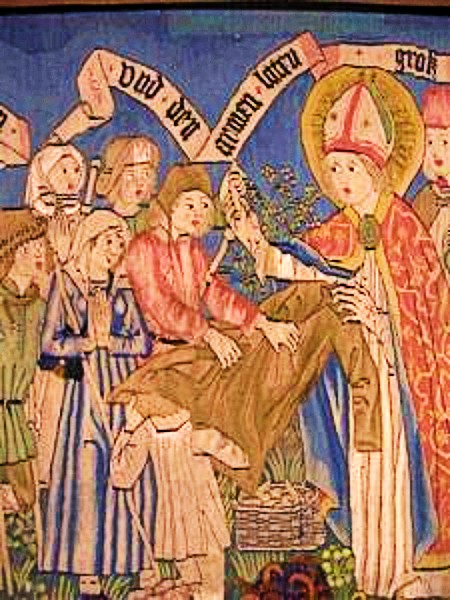
St Everard of Friuli (c 815-867) Duke, Count, Soldier, Founder of Churches and a Monastery. In contrast to his soldiering life, St Everard was a peacemaker, a humble and loving Master with a social conscience, striving always to free serfs, wherever possible or at least to free them from their burdens and assisting the poor and needy in all their deprivations. His Life: https://anastpaul.com/2021/12/16/saint-of-the-day-16-december-saint-everard-of-friuli-c-815-867/
Haggai the Prophet St Irenion Bl James of Tunis St Jean Wauthier St Macarius of Collesano
Martyred Women of North-West Africa: A large group of women Martyred in the persecutions of Hunneric, Arian King of the Vandals. 482 in North-West Africa.
Martyrs of Ravenna – 4 Saints: A group of Christians Martyred together. Four names and no other information has survived – Agricola, Concordius, Navalis and Valentine. c 305 at Ravenna, Italy.
St Pope Melchiades (Died 314) Bishop of Rome from 2 July 311- 19 or 11 January 314)
St Abundius St Albert of Sassovivo St Angelina of Serbia Bl Brian Lacey BL Bruno of Rommersdorf St Caesarius of Epidamnus St Carpophorus St Deusdedit of Brescia
St Edmund Gennings St Emérico Martín Rubio St Florentius of Carracedo St Fulgentius of Afflighem St Gemellus of Ancyra St Gonzalo Viñes Masip Bl Guglielmo de Carraria St Guitmarus St Hildemar of Beauvais Bl Jerome Ranuzzi Bl John Mason
St Julia of Merida St Lucerius St Maurus of Rome St Mercury of Lentini St Polydore Plasden Bl Sebastian Montanol Bl Sidney Hodgson St Sindulf of Vienne St Swithun Wells St Thomas of Farfa Bl Thomas Somers St Valeria
Martyrs of Alexandria – 3 Saints – A group of Christians murdered for their faith in the persecutions of Galerius Maximian – c 312. The only details that have survived are three of the names – Eugraphus, Hermogenes and Mennas.
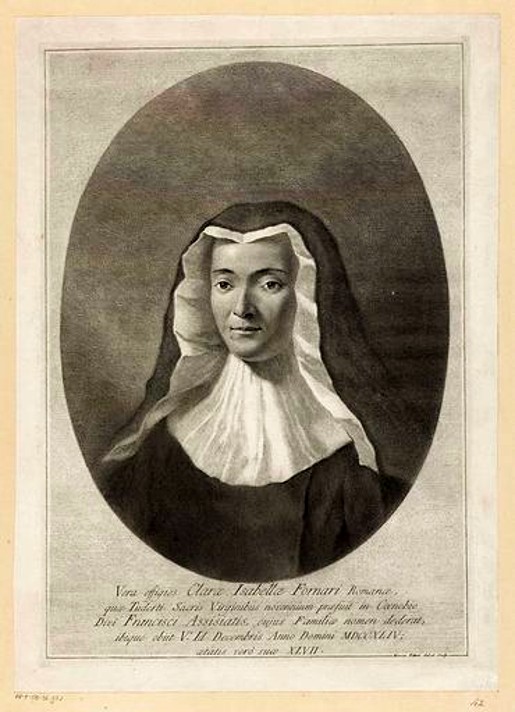
Saint of the Day – 9 December – Venerable Clara Isabella Fornari OSC (1697–1744) Virgin, Nun of the Poor Clares, Mystic, Stigmatist, Ecstatic, Born on 25 June 1697 at Rome, Italy as Ana Felícia Fornari and died on 9 December 1744. Also known as – Ana Felecia Fornari, Chiara Fornari.
Born in Rome on 25 June 1697, Ana Felícia Fornari entered the novitiate of the Poor Clares in Todi at the age of fifteen. Her religious life was guided by her Confessor, the Jesuit, Fr Crivelli. Taking the name Clara Isabella, she made her profession the following year, and since then her life became a series of the most extraordinary phenomena, recorded in the Beatification process and confirmed under oath by her companions, her Confessor and her doctor.
She had frequent and prolonged ecstasies; she received numerous visits from Our Lord, the Blessed Virgin, St Clare and St Catherine Siena. During one of them, Jesus put the ring which symbolised His spiritual consortium, on her finger. He took pleasure in calling her “His spouse of pain .”
Clara Isabella participated, in fact, in the sufferings of the Divine Crucified: her hands, feet and side were marked with visible Stigmata, from which blood sometimes flowed. On her head was a crown whose thorns grew inwards, coming out over her forehead, falling off and falling bloodied. The tortures and demonic persecutions she suffered are reminiscent of those suffered a hundred years later by the Holy Parish Priest of Ars. Since her novitiate, the devil had tempted her with despair and suicide; then he mistreated her, throwing her down the stairs and tried to take her faith. In the last months of her life, she seemed abandoned by God, having lost even the memory of past consolations. She only regained her former joy shortly before her death, in the year 1744. A Beatification process for Mother Clara Isabella is underway.
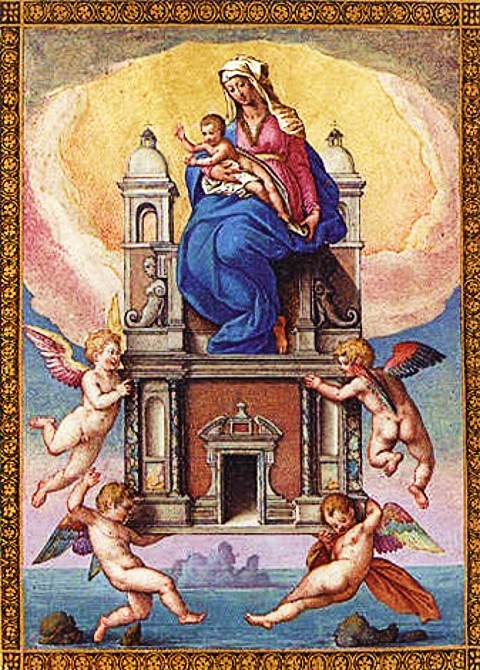
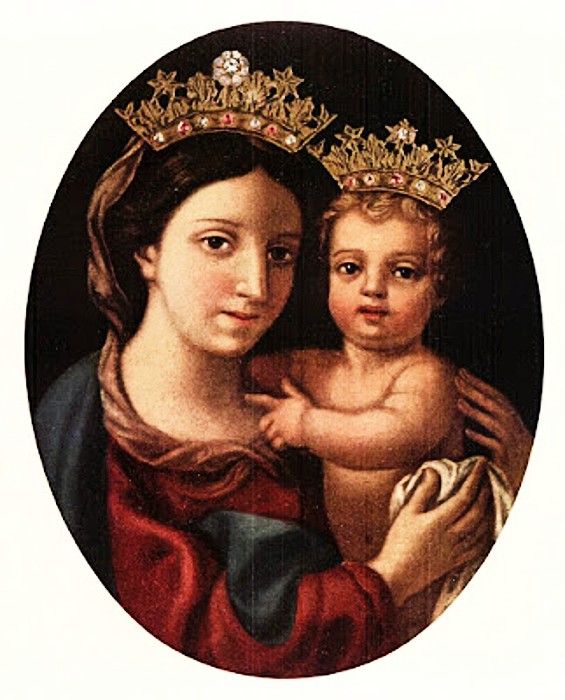
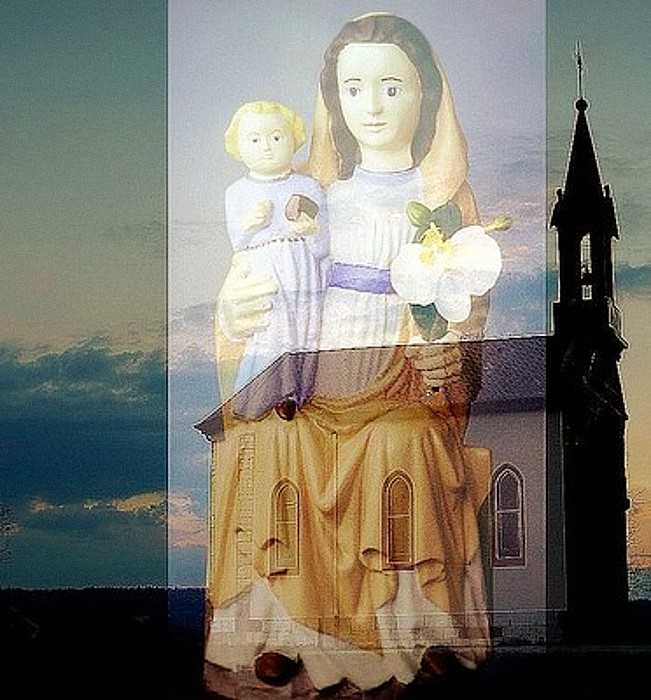
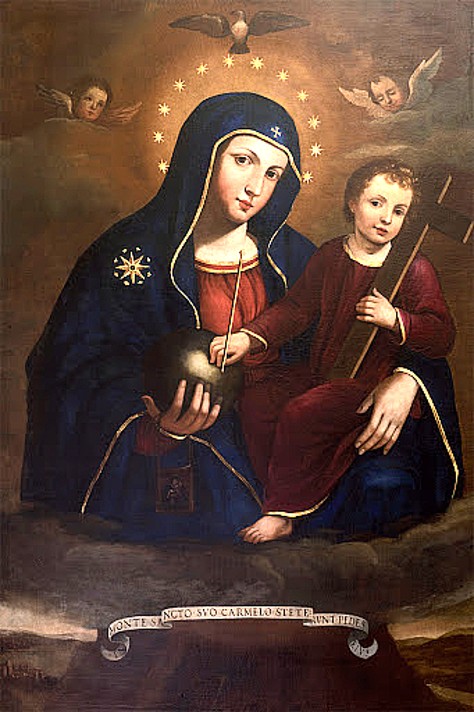
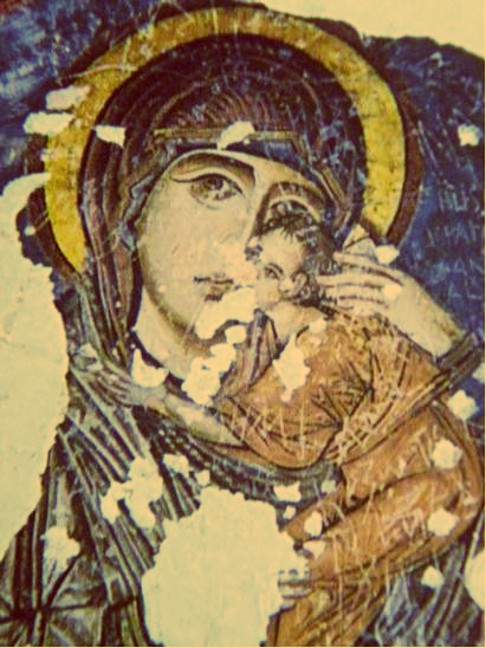
Devotion to Our Lady of Confidence (Madonna della Confiança): The invocation of Nossa Senhora da Confiança was introduced into the Church in the 18th century by Venerable Clara Isabella Fornari, who had a very special devotion to the Holy Mother of God and always carried a painting with her, an artwork of the Madonna with the Child Jesus in her arms.
Soon several copies began to circulate in Italy. Many graces and cures were attributed to this painting and in 1917 Pope Benedict XV Crowned Nossa Senhora da Confiança canonically confirming its Title and the day of its feast – 24 February.
The picture was painted by the great Italian artist Carlo Maratta (1625-1713). In 1704 he became Court Painter to Louis XIV. It is said that the renowned artist gave the painting to a young noblewoman who became Abbess of the Convent of the Poor Clares of St Francis in the City of Todi. She is today Venerable Mother Clara Isabella Fornari.
According to the Venerable’s own words, Our Lady made special promises to her regarding this painting: “My Celestial Lady, with the love of a true Mother, assured me that all souls who confidently present themselves before this image, will obtain true knowledge , sorrow and repentance for their sins and the Blessed Virgin will grant them a particular devotion and tenderness for Her.” (This promise applies not only to the original painting, but also to all copies of it.)
One of the copies was taken to the Major Seminary in Rome, of which she became Patroness. Every year, on the 24th of February, the Pontiff himself goes to venerate her.
Among the prodigious facts that prove Her protection of the Seminary are the two occurences (1837 and 1867), when a cholera epidemic hit the Eternal City but the Roman Seminary was miraculously spared by the powerful intercession of its Patroness.
In the 1st. World War, about a hundred seminarians were sent to the battlefront and placed themselves under the special protection of Our Lady of Confidence. They all returned alive, a grace they attributed to the protection of the Blessed Virgin. In gratitude, they enthroned the blessed painting in a new Chapel of marble and silver.
Saint of the Day – 8 December – Saint Romaric (Died 653) Married French noble layman, Abbot, Founder of the renowned Remiremont double Monastery in north-eastern France. Died in 653 of natural causes. He was Canonised on 3 December 1049 by Pope Leo IX. Also known as – Romaricus, Romary or Remire.
The Roman Martyrology reads today: “In the Monastery of Luxeuil, St Romericus, Abbot, who left the highest station at the Court of King Theodebert, renounced the world and surpassed all others in the observance of monastic discipline.”
Romaric was a Count Palatine, that is a Count attached to the Royal Court, operating there as an official or administrator. He lived at the Court of King Theodebert II. His parents were killed by Queen Brunhilda,and because of the enmity of his family with this Queen, he wandered without a home. However, with the fall of the Queen, he was received at the Court of Chlothar II and his lands were restored to him.
Disenchanted with life as a Courtier, Romaric experienced a religious conversion through the missionary efforts of St Amatus of Grenoble (c 560-c 627), a Monk of Luxeuil Abbey.
Romaric entered Luxeuil and trained in the ways of monastic life. With the approval of Abbot Eustace, Romaric and Amatus founded a double Monastery for men and women, later given the name of Remiremont (Romariki Mons). The Monastery was built on land belonging to Romaric. St Amatus served as the first Abbot with Romaric as the Prior. One of the earlier Monks in Remiremont was St Romaric’s friend St Arnulf (c 580-640), later the Bishop of Metz. See here:https://anastpaul.com/2021/07/18/saint-of-the-day-18-july-saint-arnulf-of-metz-c-580-640/
In around 625, Romaric succeeded Amatus as Abbot, a position he would hold for 30 years.. Many people were attracted to the holy life he established there and many they came to join him, including several members of his family who embraced religious life . tTwo of his daughters, Ozeltruda and Zeberga, his granddaughter Gebetruda and his grandson Adelphus.
Romaric died in 653 while on a mission to the Frankish Court to petition for Dagobert to receive the crown. Romaric’s Relics were enshrined at the Altar of Remiremont in 1051but both Church and Relics were destroyed in the French Revolution.
St Gunthildis of Ohrdruf Bl Johanna of Cáceres St Macarius of Alexandria St Marin Shkurti St Patapius St Rafael Román Donaire St Romaric (Died 653) Married Layman, Abbot St Sofronius of Cyprus
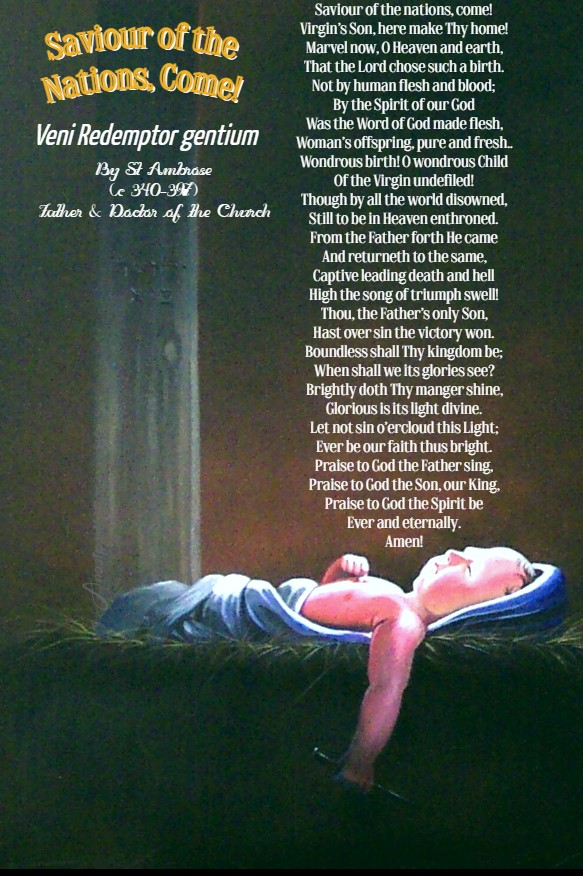
Our Morning Offering – 7 December – “The Month of the Divine Infant and the Immaculate Conception” – St Ambrose (340-397) – Confessor, Bishop, Father and Doctor of the Church
Veni Redemptor Gentium Saviour of the Nations, Come! St Ambrose’s Advent Hymn
Saviour of the nations, come! Virgin’s Son, here make Thy home! Marvel now, O Heaven and earth, That the Lord chose such a birth.
Not by human flesh and blood; By the Spirit of our God Was the Word of God made flesh, Woman’s offspring, pure and fresh.
Wondrous birth! O wondrous Child Of the Virgin undefiled! Though by all the world disowned, Still to be in Heaven enthroned.
From the Father forth He came And returneth to the same, Captive leading death and hell High the song of triumph swell!
Thou, the Father’s only Son, Hast over sin the victory won. Boundless shall Thy kingdom be; When shall we its glories see?
Brightly doth Thy manger shine, Glorious is its light divine. Let not sin o’ercloud this Light; Ever be our faith thus bright.
Praise to God the Father sing, Praise to God the Son, our King, Praise to God the Spirit be Ever and eternally. Amen!
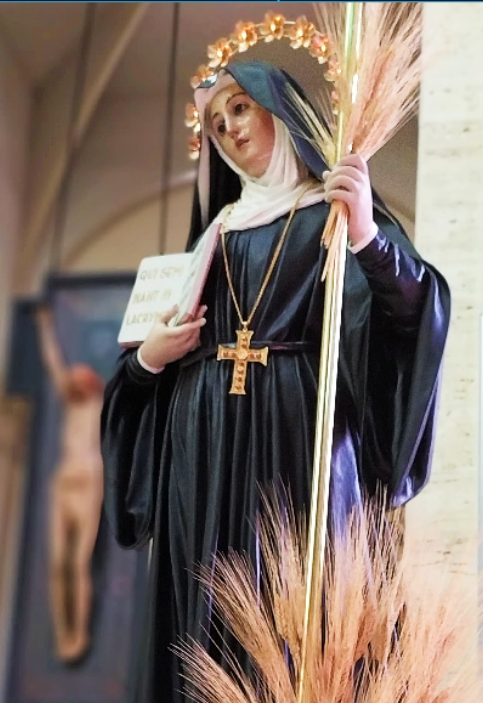
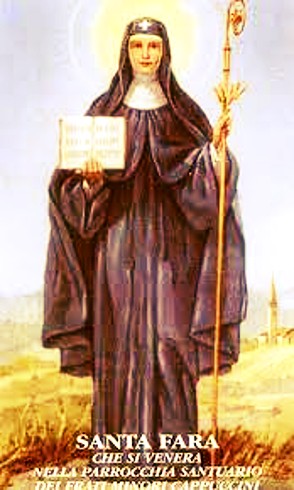
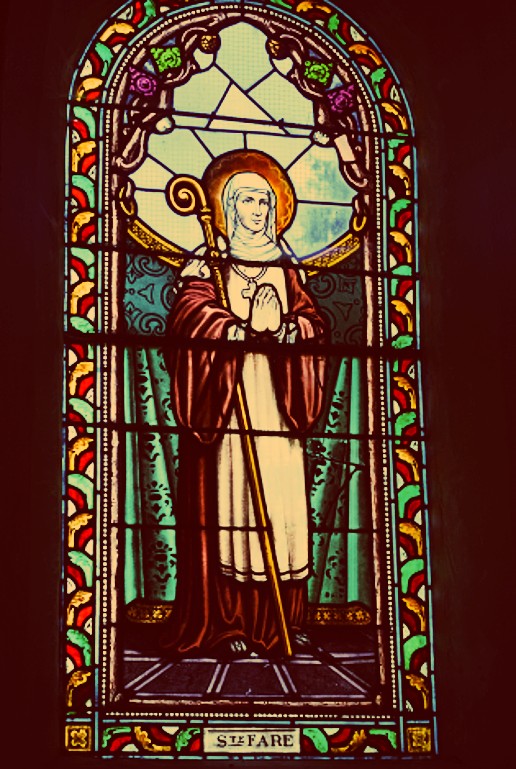
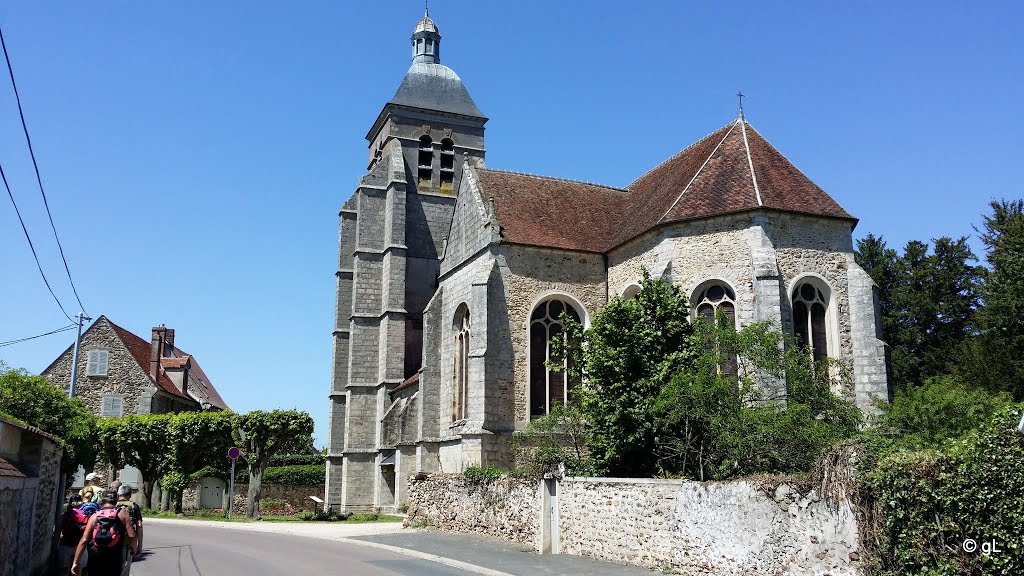
Saint of the Day – 7 December – St Burgundofara / more commonly known as Fara (c 595-c 643) Virgin, Nun, Abbess, Founder of the famous Evoriacum Monastery, near Paris in France, which after her death was renamed in her honour, Faremoutiers Abbey (Fara’s Monastery). The surrounding town is also knamed in her honour as is the Cathedral. Born in c 595 in Burgundy, France and died of natural causes in 643 or 655 or 657 near Meaux, France (records vary). Also known as – Burgondophora, Fare.Patronage – of Faremoutiers, France.
St Burgundofara in Faremoutiers Cathedral
Faremoutiers Abbey was the first “double” Monastery in France. These Celtic double Monasteries began in Ireland and they were places where both Monks and Nuns lived on the same monastic grounds, under the Rule of an Abbott or Abbess. The Nuns and Monks lived in separate quarters, but often worked and worshipped together.
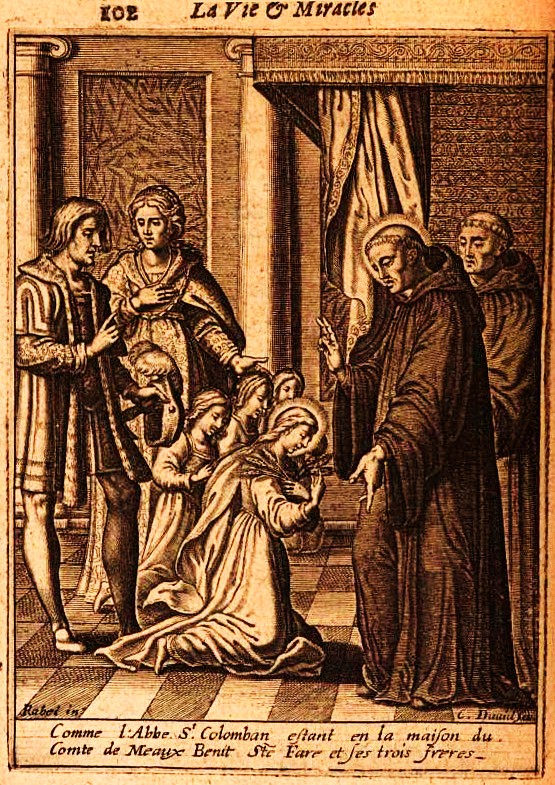
Burgundofara’s family was knowns as the Faronids, named after her brother Saint Faro (Died c 675) the Bishop of Meaux in France. Her name may mean: ‘She who moves the Burgundians.’ When Burgundofara was a child, St Columbanus, the famous Irish Monk, visited in her home and blessed and dedicated her to God. This left such an indelible mark upon her soul that she resisted her parents’ attempts to force her to marry a few years later. Burgundofara spoke boldly to her father about becoming a Nun. She said to him: “To lose my life for the sake of virtue and fidelity to the promise I have made to God, would be a great happiness.”
St Columbanus blesses Burgundofara
As Founder and Abbess of Faremoutiers Abbey, Burgundofara grew into a strong leader who was not afraid to speak her mind. Those who lived on her monastic grounds discovered that she was both tough and tender.
Interestingly, it is recorded by the 7th Century Columbanian Monk and Hagiographer of the renowned Life of St Columbanus (he also wrote Burgundofara’s Vita), Jonas of Bobbio that a Monk named Agrestius from one of Columbanus’ Monasteries “felt called” to patronise Burgundofara concerning his thoughts, on how she was not being a good Abbess. He castigated her for using the Rule of Columbanus (of which he did not approve) in her Monastery.
This is how Jonas of Bobbio recorded that historical confrontation, “Agrestius then made his way to Burgundofara to try, if he might defile her with his insinuations. But the virgin of Christ confounded him, not in a feminine manner but with a virile response: “Why have you come here, you confuter of truth, inventor of new tales, pouring out your honey-sweetened poison, to change healthy food into deadly bitterness? You slander those whose virtues I have experienced. From them I received the doctrine of salvation. Their erudition has opened the way to the Kingdom of Heaven for many. Recall the words of Isaiah: ‘Woe unto them that call evil good and good evil.’ Hurry and turn wholly away from this insanity.”
She was known for not only her personal courage, strength and toughness but also for her tender care, counsel and devotion, for those at Faremoutiers. Jonas of Bobbio wrote that after serving as Abbess of Faremoutiers for thirty-seven years, Burgundofara had a fever and died. She was so tough that miraculously, she managed to come back to life to make restitution with three Nuns, whom she had hurt. She received their forgiveness, lived six more months and then prophesied of the date and time of her death. When she died, it was recorded that her body smelled of sweet balsam.
A solemn Mass was held thirty days after Abbess Burgundofara’s final death. Hopefully, it is not blasphemous to ponder that they waited this long, to ensure that she would not come back to life. Her Will (Testamentum) confirmed that all the servants she had freed in her lifetime, would continue to be free.
The Faremoutiers Monastic grounds still exist, 1400 years later. Sadly, the French Revolution destroyed her monastic buildings but in 1931, a group of Benedictine Nuns came to reoccupy a building on the very spot of the ruins of the old Abbey. A few Nuns still live and serve there.
Yes, Abbess Burgundofara was a strong, powerful, and deeply spiritual leader.
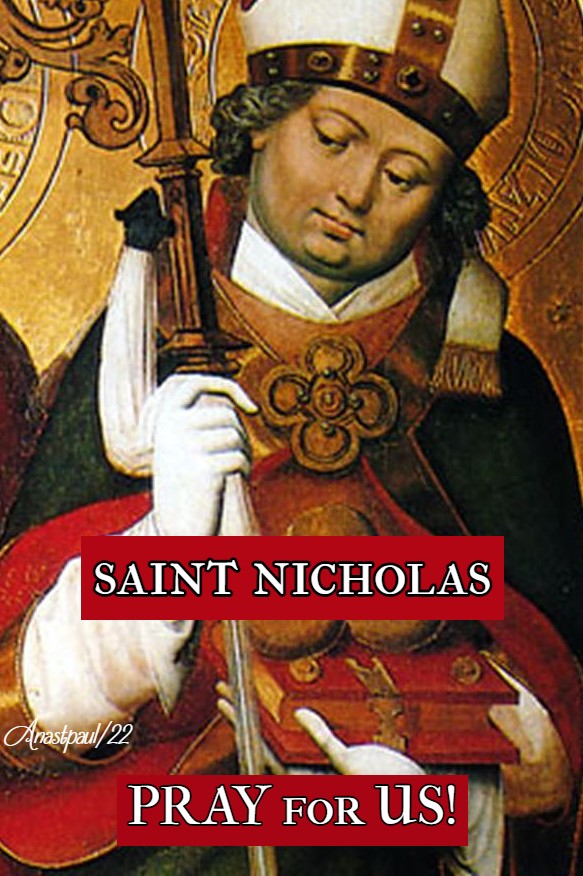
One Minute Reflection – 6 December – St Nicholas (270-343) Confessor, Bishop – Hebrews 13:7-17, Matthew 25:14-23 – Scripture search here: https://www.drbo.org/
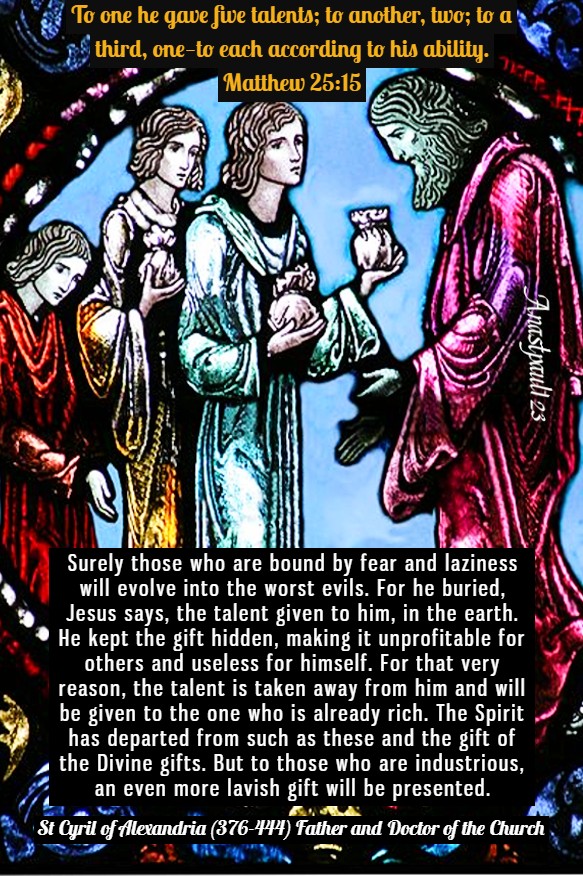
“To one He gave five talents; to another, two; to a third, one—to each according to his ability. Then he went away. Immediately …” – Matthew 25:15
REFLECTION – “The man who is the landowner is actually the Creator and Lord of all. The Word compares the time the landowner spends away from home, in the parable, to either the Ascension of Christ into Heaven, or, at any rate, to the unseen and invisible character of the Divine Nature. Now, one must conceive of the property of God, as those in each Country and City, who believe in Him. He calls His servants, those who, according to the times, Christ crowns with the glory of the Priesthood. For the holy Paul writes, “No-one takes this honour upon himself; he must be called by God.”
He hands over [His property] to those who are under Him, to each giving a spiritual gift, so that he might have character and aptitude. We think that this distribution of the talents, is not supplied to the household servants in equal measure because, each is quite different from the other, in their understanding. Immediately they head out for their labours, He says, directly, indicating to us here, that apart from the procrastination of one, they are fit to carry out the work of God.
Surely those who are bound by fear and laziness will evolve into the worst evils. For he buried, Jesus says, the talent given to him in the earth. He kept the gift hidden, making it unprofitable for others and useless for himself. For that very reason, the talent is taken away from him and will be given to the one who is already rich. The Spirit has departed from such as these and the gift of the divine gifts. But to those who are industrious, an even more lavish gift will be presented.” – St Cyril of Alexandria (376-444) Archbishop of Alexandria, Father and Doctor of the Church (Fragment 283)
PRAYER – O God, Thou Who made the holy Bishop Nicholas renowned for countless miracles, grant, we beseech Thee that by his merits and prayers, we may be saved from the fires of hell. Through Jesus Christ, Thy Son our Lord, Who lives and reigns with Thee, in the unity of the Holy Ghost, God, world without end. Amen (Collect).
Saint of the Day – 6 December – Saint Gerard of La Charité OSB (Died c 1109) Abbot, Founder of Monasteries, Reformer. Born towards the end of the 9th Century in the County of Namur in Belgium and died in 1109 of natural causes. Also known as – Gerhard of La-Charité-sur-Loire.
Gerard was born of a noble family towards the end of the ninth Century, in the County of Namur in Belgium. An engaging sweetness of temper, added to a strong inclination to piety and devotion, gained for him, from the cradle, the affection and esteem of all.
He at first followed the career of arms but never lost his piety amid the distractions and temptations of camp life. When sent on an important mission to the Court of France, by the Count of Namur, he was greatly edified by the fervour of the Benedictine Monks of Saint Denys in Paris and earnestly desired to join them and to consecrate himself to God. Returning home he settled his temporal affairs and returned to Monastery of St Denis, with great joy. He lived for eleven years with devout fervour in this Monastery, and then was Ordained a Priest.
So great was his reputation for holiness that in 931 he was sent by his Abbot to found an Abbey upon his own estate at Brogne, three leagues from Namur. He established this new Abbey, then built himself a little cell near the Church, where he lived as a recluse. But not for long, for he was then called to establish new Monasteries, which he did at Auxerre, Nevers, Bourges, Meaux, Paris, etc… Over the years, the foundations extended to England, Portugal, Venice and other Italian Cities.
The Abbey at La-Charité-sur-Loire.
A new mission was his next role – that of introducing strict monastic discipline in eighteen Abbeys. Gerard applied himself to this immense undertaking with energy and zeal and completed it successfully, assuming the duties of a Benedictine Abbot General over these and all the new foundations.
When he had spent almost twenty years in these zealous labours, feeling his end approaching, he requested permission to become a simple Monk and he again retired to his cell at the Abbey of Brogne, which is now named for him, to prepare his soul for the final journey. To this he was called on 3 October c 1109.
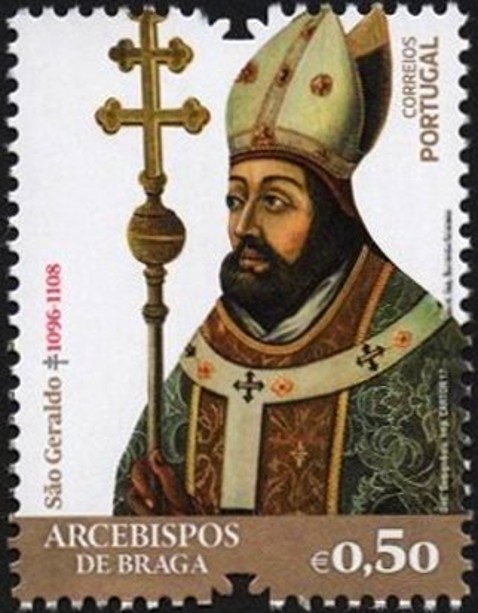
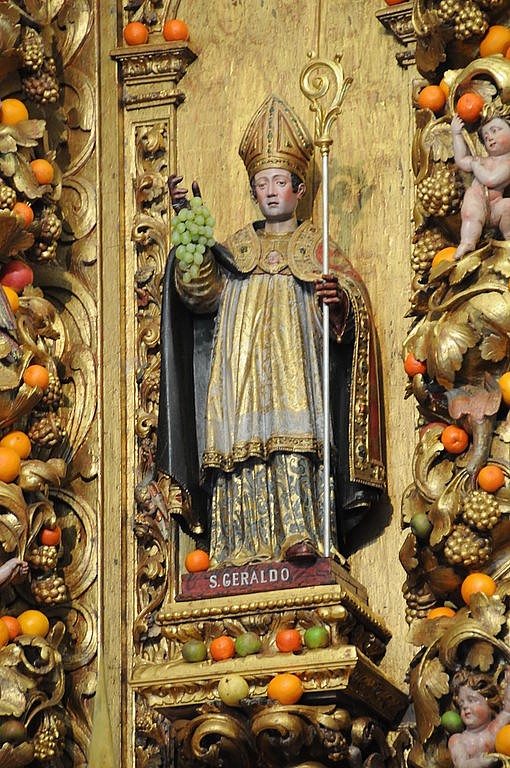
Saint of the Day – 5 December – Saint Gerald of Braga (Died 1109)Archbishop of Braga, Portugal, Abbot, Reformer. He renewed divine worship and restored Churches. Born in Cahors, Gascony, France and died on 5 December 1109 at Bornos, Portugal of natural causes. Patronage – of Braga, Portugal. Also known as – Geraldo, Gérald de Moissac.
The Vita Sancti Geraldi was written by one Bernard, a companion and fellow Cluniac Monk from France but we have no information from it.
In the latter half of the 11th Century, the Archbishop of Toledo named Bernard, was delegated by the Pope to bring about an Ecclesiastical reform in Spain. He called in various French Clerics and Monks, among whom was St Gerald, Abbot of Moissac, who was appointed choir director for the Cathedral of Toledo.
So well did this saintly man fulfill his duties and so much did he influence the faithfulf that, when the See of Braga became vacant, Gerald was selected by the clergy and people of that City, to be their Bishop.
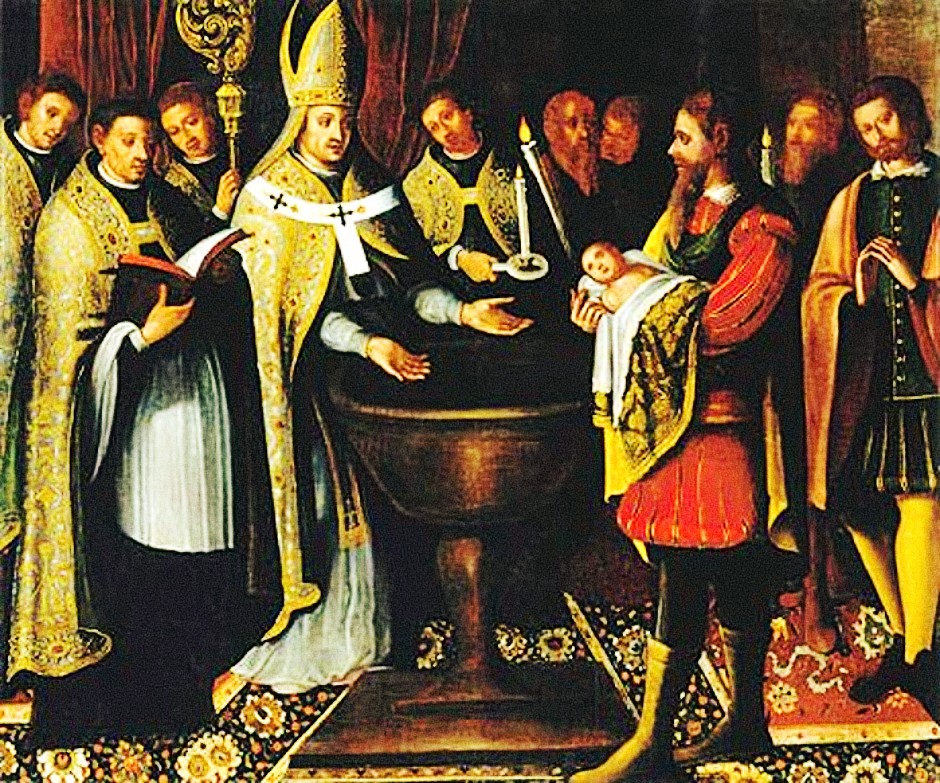
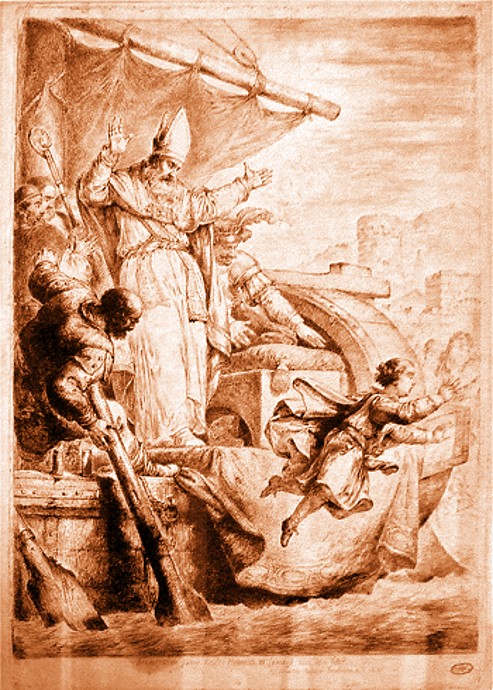
Gerald visited his entire Diocese, eradicating the abuse that had become rife there, especially that of the administering of Ecclesiastical investiture by laymen. It is known that St Gerald baptised the future King Afonso I (c 1106-1185) of Portugal, see image below.
This man of God was called to his heavenly reward on 5 December 1108, at Bornos, Portugal.
Saint of the Day – 4 December – Saint Anno II (c 1010-1975) Archbishop of Cologne from 1056 until his death. From 1063 to 1065 he acted as Regent of the Holy Roman Empire for the minor Emperor Henry IV, Reformer, founder of Monasteries and builder of Churches. Born in c 1010 in Swabia, Germany and died on 4 December 1075 in Siegburg, Germany of natural causes. He is the Patron of gout sufferers.
He was a founder or co-founder of Monasteries (Michaelsberg, Grafschaft, St Maria ad Gradus, St George, Saalfeld and Affligem) and a builder of Churches, advocated clerical celibacy and introduced a strict discipline in a number of Monasteries. He was a man of great energy and ability, whose action in recognising Pope Alexander II (the authentic Pope during a time of strife in the Church) was of the utmost consequence, for Henry IV and for Germany.
Anno was born to a noble family in Swabia, Germany and was educated in Bamberg, where he subsequently became head of the Cathedral school. In 1046, he became Chaplain to the Emperor Henry III and accompanied him on his campaigns against King Andrew I of Hungary. In 1054, the Emperor appointed him the administrative and liturgical head, at the newly erected Cathedral of Goslar and Archbishop of Cologne two years later.
The tears he abundantly shed during the whole ceremony of his Consecration were a proof of his sincere humility and devotion. The foot of the altar was his soul’s delight, comfort and refuge. The poor he sought out in their cottages and carried to them, sometimes on his own shoulders, blankets and other necessaries. He fasted much, watched the greatest part of the night, subdued his body with hair shirts and preached to his flock with the assiduity and zeal of a St Paul. He reformed all the Monasteries of his Diocese and built two of Regular Canons at Cologne, and three of Benedictines in other parts.
According to contemporary sources, Anno led an extremely ascetic life . Nevertheless, he was a fearsome adversary to anyone perceived as a threat to the interests of his Archdiocese. His plans to seize the prosperous Monastery in Malmedy, challenging the authority of the Imperial Abbey of Stavelot-Malmedy, caused much controversy and ultimately failed. On the other hand, he founded the Benedictine Abbey of Michaelsberg, modelled on the Italian Abbey of Fruttuaria, which soon evolved into a centre of the Cluniac Reforms in Germany.
After the death of Emperor Henry III in 1056, the Archbishop took a prominent part in the government of the Empire, during the minority of the six-year-old heir to the throne, Henry IV. He was the leader of the party which, in April 1062, seized the person of Henry in the Coup of Kaiserswerth and deprived his mother, Empress Agnes, of power. Anno for a short time was able to exercise the chief authority in the Empire but he was soon obliged to share this with his fellow conspirators, Archbishop Adalbert of Bremen and Archbishop Siegfried of Mainz, retaining for himself, the supervision of Henry’s education and the title of Magister.
The office of Arch-Chancellor of the Imperial Kingdom of Italy was at this period regarded as an appanage of the Archbishopric of Cologne and this was probably the reason why Anno had a considerable share in settling a Papal dispute brewing since 1061,- relying on an assessment by his nephew, Bishop Burchard of Halberstadt, he declared Alexander II to be the rightful Pope at a Synod held at Mantua in May 1064 and took other steps to secure his recognition against Empress Agnes’ candidate Antipope Honorius II.
Returning to Germany, however, he found the chief power in the hands of Archbishop Adalbert of Bremen and as he was disliked by the young Emperor, Anno gradually lost ground at the Imperial Court, although he regained some of his former influence, when Adalbert fell from power in 1066. In the same year he was able to secure the succession of his nephew, Conrad of Pfullingen, as Archbishop of Trier. By 1072 he had become Imperial Administrator and thus, the second most powerful man, acting as an arbitrator in the rising Saxon Rebellion.
No City north of the Alps was so rich in great Churches, Sanctuaries, Relics and religious communities as Cologne was. It was known as the “German Rome,” With the growth of the municipal prosperity, the pride of the citizens and their desire for independence, also increased and caused them to feel more dissatisfied with the sovereignty of the Archbishop. This resulted in bitter feuds between the Bishops and the City which lasted for two centuries, with varying fortunes.
The first uprising occurred under Anno II, at Easter of the year 1074. The citizens rose against the Archbishop but were defeated within three days and severely punished. It was reported he had allied himself with William the Conqueror, King of England, against the Emperor. Having cleared himself of this charge, Anno took no further part in public business and died in Siegburg Abbey on 4 December 1075, where he was buried.
In 1064 Archbishop Anno,donated Relics to his favourite foundation, the Abbey of St. Michael on the Michaelsberg, where he also decided his burial place in the same Church which he had Consecrated in 1066 and,when he was Canonised in 1183 by Pope Lucius III, his bones were lifted out of the grave hewn into the rocky subsoil of the Abbey Church and laid in the magnificent Anno Shrine, which today, is the highlight of this beautiful pilgrim Church.
St Peter Chrysologus (c 400-450) “Golden Words” Confessor,, Father & Doctor of the Church – Bishop of Ravenna, Italy. Today we celebrate the Memorial of Saint Peter Chrysologus, a fifth-century Italian Bishop known for testifying courageously to Christ’s full humanity and divinity during a period of the heresy called “Monophysite.” The saint’s title, Chrysologus, signifies “golden speech” in Greek. Named as a Doctor of the Church in 1729 by Pope Benedict XIII., he is distinguished as the “Doctor of Homilies” for the concise but theologically rich reflections he delivered during his time as the Bishop of Ravenna. 176 of his sermons have survived – it is the strength of these beautiful explanations of the Incarnation, the Creed, the place of Mary and John the Baptist in the great plan of salvation, Mary’s perpetual Virginity, the penitential value of Lent, Christ’s Eucharistic presence and the Primacy of St Peter and his successors in the Church. FEAST DAY: 4 December (General Roman Calendar 1729-1969) https://anastpaul.com/2018/07/30/saint-of-the-day-30-july-st-peter-chrysologus-c-400-450-golden-words/
St Ada of Le Mans St Adelmann of Beauvais St Anno II (c 1010-1975) Archbishop of Cologne St Apro
St Bernardo degli Uberti St Bertoara of Bourges St Christianus St Clement of Alexandria St Cyran of Brenne St Eraclius St Eulogio Álvarez López St Ezequiel Álvaro de La Fuente St Felix of Bologna Bl Francis Galvez St Francisco de la Vega González St Heraclas of Alexandria St Jacinto García Chicote Bl Jerome de Angelis St John the Wonder Worker St Maruthas St Melitus of Pontus
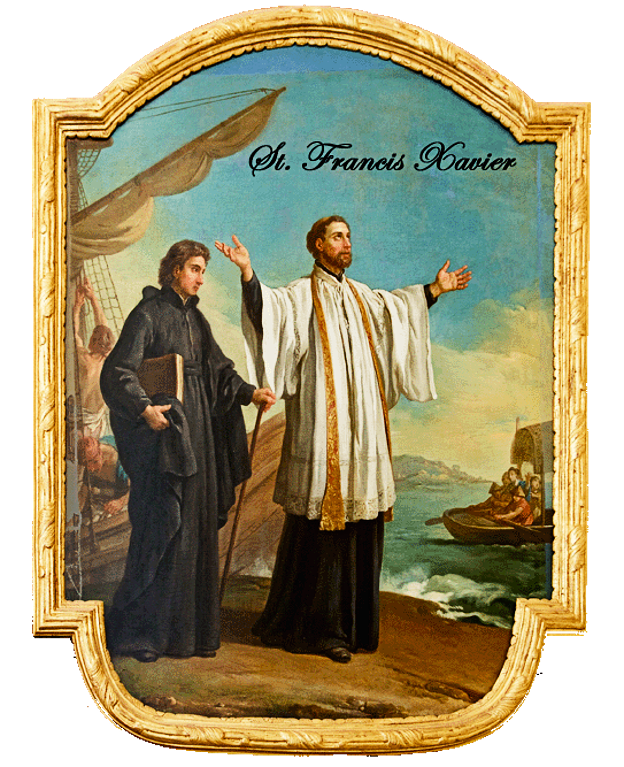
One Minute Reflection – 3 December – The Memorial of St Francis Xavier SJ (1506-1552) Confessor – Romans 10:10-18, Mark 16:15-18 – Scripture search here: https://www.drbo.org/
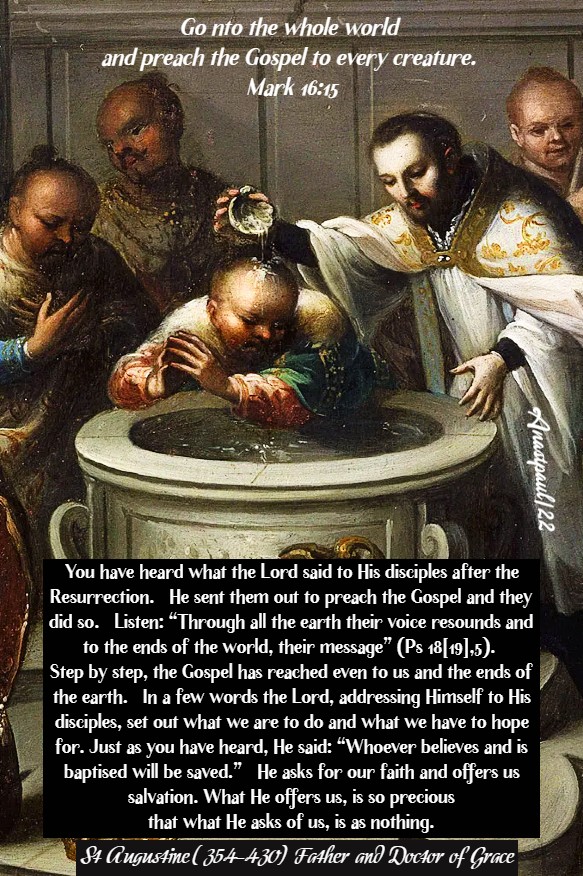
“Go into the whole world and preach the Gospel to every creature.” – Mark 16:15
REFLECTION – “You have heard what the Lord said to His disciples after the Resurrection. He sent them out to preach the Gospel and they did so. Listen: “Through all the earth their voice resounds and to the ends of the world, their message” (Ps 18[19],5). Step by step, the Gospel has reached even to us and the ends of the earth. In a few words the Lord, addressing Himself to His disciples, set out what we are to do and what we have to hope for. Just as you have heard, He said: “Whoever believes and is baptised will be saved.” He asks for our faith and offers us salvation. What He offers us, is so precious that what He asks of us, is as nothing.
“The children of men take refuge in the shadow of Thy wings, O my God… from Thy delightful stream, Thou gives them to drink, for with Thee, is the Fountain of Life” (Ps 35[36],8f.). Jesus Christ is the Fountain of Life. Before the Fountain of Life came to us, we had only a human salvation like that of the beasts, of which the psalm speaks: “Man and beast you save, O Lord” (Ps 35[36],7). But now the Fountain of Life has come even to us, the Fountain of Life died for our sakes. Will He refuse us His Life,Who, for our sakes, gave His Death? He is salvation and this salvation is not worthless, like the other one. Why? Because it does not pass away. The Lord has come. He died but He killed death. In Himself, He brought an end to death. He assumed it and He killed it. Where is death now, then? Look for it in Christ and it is no longer there. It used to be there but there it died. O Life, Death of death! Take heart: it will also die in us. What was fulfilled in the Head will also be fulfilled in the members and death will die in us, too!” – St Augustine (354-430) Father and Doctor of Grace (Sermon 233).
PRAYER – O God, Thou Who were pleased to gather into Thy Church the peoples of the Indies by the preaching and miracles of blessed Francis, mercifully grant that we, who honour his glorious merits, may also imitate the example of his virtues. Through Jesus Christ, Thy Son our Lord, Who lives and reigns with Thee, in the unity of the Holy Ghost, God, world without end. Amen (Collect).
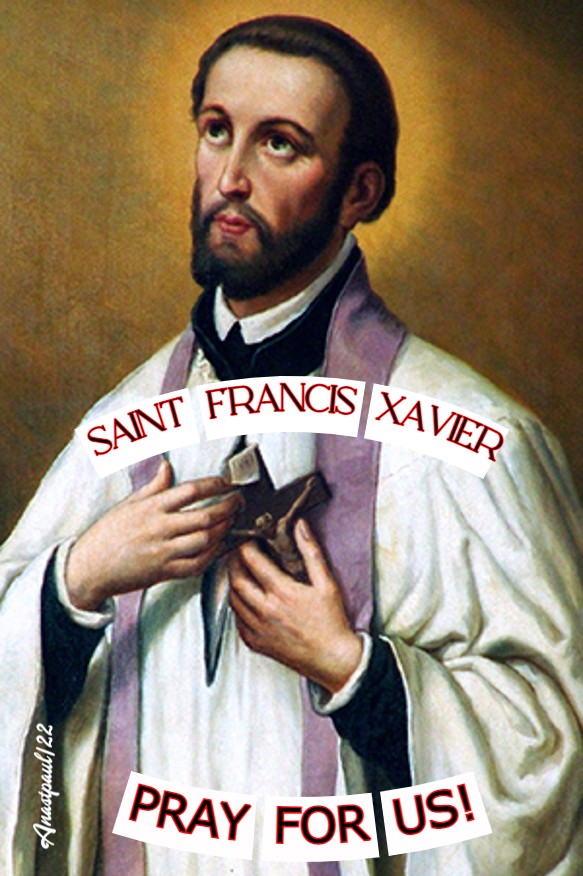
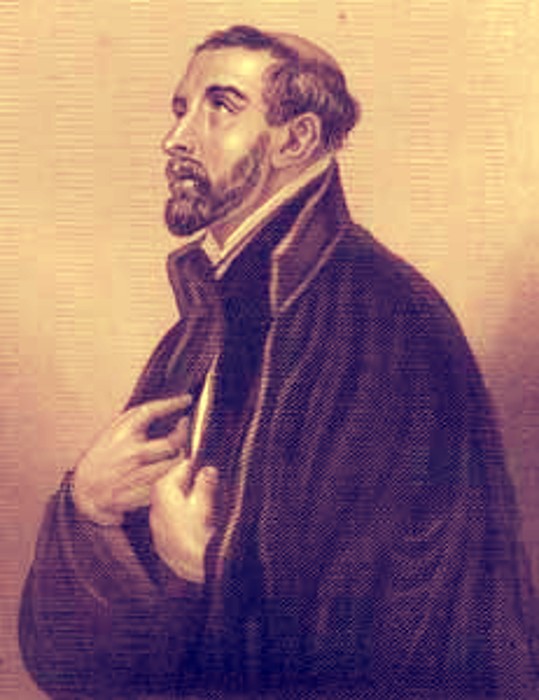
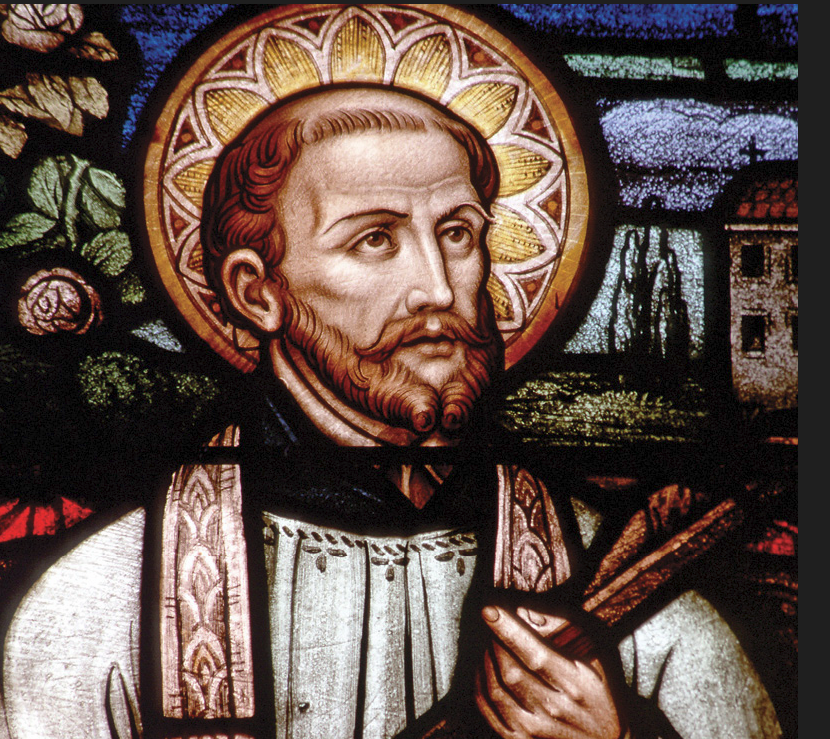
Saint of the Day – 3 December – St Francis Xavier SJ (1506-1552) Confessor, Priest, Missionary, Miracle-worker, co-Founder with St Ignatius Loyola (1491-1556) and St Peter Faber (1506-1546) of the Society of Jesus. One of the Greatest Missionaries since St Paul. St Francis was Canonised on 12 March 1622 by Pope Gregory XV. His body is incorrupt.
St Francis Xavier By Fr Francis Xavier Weninger SJ (1805-1888) Part One -(His early years, before departing for the Indies).
St Francis Xavier,–the great Apostle of the Indies, as he is called in the Bull of his Canonisation–the celebrated Thaumaturgus of the 16th Century, the irreproachable witness of the truth of our holy religion, the ornament of the Society of Jesus and of the entire Catholic Church–was of Royal lineage and was born of illustrious parents, at the Castle of Xavier, in the Kingdom of Navarre.
Having passed his childhood there, he was sent to the University of Paris, to study the liberal arts, for which he evinced an especial inclination. He applied himself so diligently and made so much progress that he was not only created. Doctor of Philosophy but also appointed to instruct others in that science. All his aim was to gain honours and to become great in the eyes of the world. His father intended to recall him home after some years but his sister, who was Prioress in the Convent of the Poor Clares at Gandia and had the reputation of being a Saint, knew, by Divine inspiration, the great work for which her brother was destined by the Almighty and persuaded her father not to insist on his return, saying, in a prophetic manner that Francis was chosen to become the apostle of many nations.
Whilst Xavier was teaching at Paris, St Ignatius came to the same City to finish his studies. Knowing, by Divine inspiration, how much good Francis, who was so highly gifted by the Almighty, would be able to do for the salvation of souls, he sought the friendship of the young Professor and gradually showed him the emptiness, of all temporal greatness and drew him from his eagerness to obtain worldly honours, by repeating the earnest words of Christ: “What will it profit a man if he gain the whole world and lose his own soul!” These words of our Saviour, coming from the lips of a St Ignatius, so deeply pierced the heart of Xavier and made so indelible an impression that he became entirely converted.
Taking St Ignatius as his guide, he followed his precepts and after having most fervently gone through the “Spiritual Exercises,” he resolved to devote himself, with Ignatius, to the greater glory of God.
On the Feast of the Assumption of the Blessed Virgin, in the year 1534, Ignatius, St Francis and five others, made a vow in the Church of Montmartre at Paris, to consecrate their lives to the salvation of souls. Soon after, St Francis, by the order of St Ignatius, went with some of these zealous men to Italy.
At the very beginning of this journey, which was to be performed on foot, St Francis gave a striking proof of the ardour of his spirit. Before his conversion, he had been a great lover of dancing and gymnastic exercises and, so greatly excelled in them that he had taken great pride in these accomplishments. To punish this vanity, he tied his arms and ankles so tightly with small knotted cords, that he could not make the least motion without pain. After the first day’s march, his pains became so intense that he fainted away and was forced to reveal the cause. The cords had cut so deeply into the flesh that they could hardly be seen. The surgeon who was called, declared that a painful operation was necessary to cut the cords out of the flesh.St Francis and his companions, not wishing to be delayed on their way, prayed for aid from on High and, on the following morning they found, not only the cords broken but all the wounds entirely healed. Having given due thanks to the Almighty for this miracle, they continued their journey.
At Venice, St Francis spent two months in the hospital, nursing the sick most tenderly. While there, it happened that he found, among the sick, one who was suffering from a loathsome ulcer. St Francis felt a natural repugnance to approach the poor patient, but, recollecting the maxim of St. Ignatius, “Conquer thyself,” he unhesitatingly went to the sick, embraced him kindly and putting his lips to the ulcer, cleansed it of all offensive matter. As a reward for so heroic a victory over self, God restored the sick man’s health and took from St Francis all repugnance to the most hideous forms of disease.
Two months after this, he was Ordained Priest and said his first Holy Mass, amid a flood of tears, after having prepared himself for it, by forty days of solitude, many prayers, austere fasting and other penances.
At Rome, whither he was called by St Ignatius, he preached for a time with great success. It was at this period that John III., King of Portugal, requested the Pope to send him six of the disciples of St Ignatius, for the Indies. St Ignatius, on account of the small number of his followers, gave only two, Simon Rodriguez and Nicholas Bobadilla but, as the latter fell ill just before the time appointed for setting out, St Francis Xavier., whom Heaven had selected for this mission, was sent in his stead.
No tongue can tell the joy with which the Saint received this news, which fulfilled that which had been shown him, years before, in a mysterious dream. It had appeared to him, in his sleep that he had a negro on his shoulders, whom he was obliged to carry and that he was so fatigued, as to sink to the ground under his burden. He then awoke and found himself in truth, covered with perspiration and extremely tired.
He was soon prepared for his journey from Rome to Lisbon, whence he was to sail for the Indies and having received, from St Ignatius, valuable instructions and from the Vicar of Christ, the Papal Blessing, with the powers of an Apostolic Nuncio, he set out with his companion, Rodriguez, carrying nothing with him but the Crucifix on his breast, his Breviary under his arm and his staff in his hand.
At the holy house of Loretto, where he stopped on his way, he commended his important mission to his divine Mother, and begged, with childlike trust, for her motherly assistance. Feeling in his heart that his prayer had been heard, he was greatly comforted, on leaving this blessed spot. To be continued …
St Ethernan St Hilaria the Martyr St Jason the Martyr St John of Africa St Lucius St Lucy the Chaste St Magina of Africa St Mamas St Marcos García Rodríguez St Maurus the Martyr St Seleucus St Stephen of Africa St Theodore of Alexandria St Theodulus of Edessa St Valeriano Rodríguez García St Veranus Zephaniah the Prophet
Martyrs of Nicomedia: Christians Martyred together in the persecutions of Diocletian – Ambicus, Julius and Victor. c 303 in Nicomedia, Bithynia (modern Izmit, Turkey).
Saint of the Day – 2 December – Saint Avitus of Rouen (Died c 325) the 3rd Bishop of Rouen i Normandy, modern France. Also known as – Avidien, Avinziano, Avinzio, Avit, Avitianus, Avitien, Avito, Evincianus.
Ancient Bishop
Avitus succeeded Bishop Mellonius and settles in Rouen from 314. Avitus is the first historically attested Bishop by his presence, with Materne II, Bishop of Cologne, at the first Council of Gaul in Arles in 314, where he signed and supported the Decrees promulgated by this Council.
The Acta Archiepiscoporum Rotomagensium tell us that “This blessed pontiff was an honest spirit, impeccable in his manners and attentive to the salvation of souls under his charge.”
He is buried in the crypt of the Church of Saint-Gervais in Rouen, and his feast day is celebrated on 2 December.
St Evasius of Brescia St Habakkuk the Prophet Bl John Amero
Blessed Jan van Ruysbroec (c 1293-1382) Known as John “the Admirable,” “the Ecstatic Doctor,” “the Divine Doctor.” Priest, Hermit, Mystic, Spiritual Director and Spiritual Writer. Beatified on 1 December 1908 by Pope Pius X. About Blessed Jan: https://anastpaul.com/2018/12/02/saint-of-the-day-2-december-blessed-john-van-ruysbroeck/ St Lupus of Verona St Nonnus of Edessa St Oderisius de Marsi OSB (Died c 1105) Italian Cardinal, Abbot of Monte Cassino, Mediator and Peacemaker. St Pimenio in Rome St Pontian
Bl Robert of Matallana St Silvanus
Greek Martyrs of Rome – (9 Saints): Several Greek Christians Martyred in the persecutions of Valerian – Adria, Aurelia, Eusebius, Hippolytus, Marcellus, Mary Martana, Maximus, Neon and Paulina. They were martyred by various means between 254 and 259 in Rome, Italy and are buried in the Callistus catacombs, Rome.
Martyrs of Africa – (4 Saints): Four Christians Martyred in Africa in the persecutions of Arian Vandals – Januarius, Securus, Severus and Victorinus.
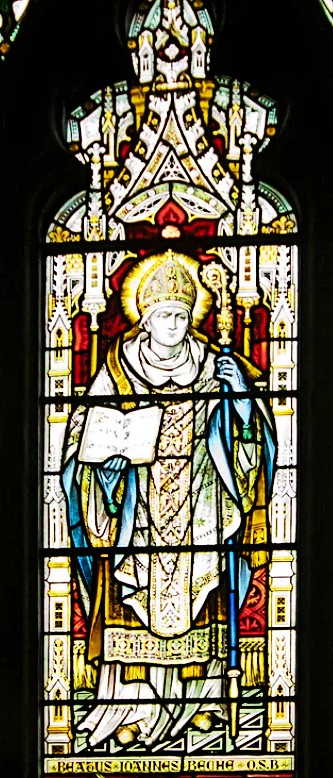
Saint of the Day – 1 December – Blessed John Beche OSB (Died 1539) Benedictine Abbot Martyr, The Last Abbot of St John in Colchester, friend of St John Fisher and St Thomas More, both Martyrs, Born as Thomas Marshall in Colchester, England where he also died on 1 December 1539 by being hanged, drawn and quartered during the persecution of the Church by Henry VIII.
Thomas Marshall, commonly known as John Beche, was a member of the Colchester Beche family, who were a dynasty of renowned pewtersmiths in the town. He was educated at Oxford University (probably Gloucester Hall now Worcester College), where he took his degree of Doctor of Divinity in 1515. He then became the twenty-sixth Abbot of St Werburgh’s, Chester (now Chester Cathedral) and went onto become Abbot of St John the Baptist’s Monastery, Colchester on 10 June 1530.
On 30 March 1534, Abbot Beche took his seat in the House of Lords. In that year, the Act of Supremacy was passed, by which Henry VIII made himself Head of the Church in England and on 7 July, he, the Prior and his community of 14 Monks, signed their agreement to the Act. Many clergymen considered the break with Rome of a temporary nature and that it was possible to distinguish between the King as head of the Church in temporal matters, though not in matters spiritual.
But the Abbot was a strong opponent of the King’s new policy and a friend and admirer of St Thomas More and St John Fisher. Following the execution of three Carthusian Priors, Fisher and More during 1535, his expressions of reverence for them was reported to the authorities. In his homilies, he publicly called them Martyrs of the Catholic Faith and denounced the persecution of the Church.
In November, 1538, Beche denied the legal right of Henry VIII’s royal commission to confiscate his Abbey. He was then committed to the Tower of London on a charge of treason, despite being discharged, he was re-arrested and taken back to Colchester.
The only remaining part of St John’s Abbey is the Gatehouse, above
The Abbot’s servant said that his master denied that the King could suppress the Abbey because it was above the yearly value of 300 specified in the statute. Other witnesses testified that Beche had said that “God would take vengeance for the tearing down of these houses of religion.”, that Fisher and More “died like holy men and it was great sorrow for their deaths” and he claimed that the King had broken with the Catholic Church because he wanted, against the Commandments of God and of the Church, to marry Anne Boleyn. John initially denied these charges but at his trial in Colchester, in November, 1539, he no longer pleaded against the charges. He was convicted and executed. The execution occurred on the Abbot’s lands, probably at Greenstead. His pectoral cross was rescued by the Mannock family of Gifford Hall, Stoke-by-Nayland, who entrusted it to Buckfast Abbey in Devon, where it still remains. On this Cross is inscribed:
“May the Passion of our Lord Jesus Christ bring us out of sorrow and sadness. This Sign of the Cross shall be in the heavens when our Lord shall come to judgement. Behold, O man, the Redeemer suffered for thee. He that will come after Me, let him take up his cross and follow Me.”
Pope Leo XIII decreed the Beatification of Abbot John Beche on 13 May 1895.
St Agericus of Verdun St Agnofleta St Alexander Briant St Ambon of Rome St Ananias of Arbela St Ansanus the Baptizer Bl Antony Bonfadini St Candida of Rome St Candres of Maestricht St Cassian of Rome St Castritian of Milan Bl Christian of Perugia St Constantine of Javron St Declan St Didorus St Domnolus of Le Mans
St Evasius of Asti St Filatus of Rome St Florence of Poitiers St Florentius St Grwst St Jabinus of Rome and Companions Blessed John Beche OSB (Died 1539) Abbot Martyr St Latinus of Rome St Leontius of Fréjus St Lucius of Rome St Marianus St Marina of Rome St Martinus St Nahum the Prophet St Natalia of Nicomedia St Olympiades St Proculus of Narni St Ralph Sherwin St Resignatus of Maastricht Bl Richard Langley St Rogatus of Rome St Simon of Cyrene St Superatus of Rome St Ursicinus of Brescia
Martyrs of Oxford University: A joint commemoration of all the men who studied at one of the colleges of Oxford University and who were later Martyred for their loyalty to the Catholic Church during the official persecutions in the Protestant Reformation in England under Elizabeth I. They are:
Blessed Edward James • Blessed Edward Powell • Blessed Edward Stransham • Blessed George Napper • Blessed George Nichols • Blessed Hugh More • Blessed Humphrey Pritchard • Blessed James Bell • Blessed James Fenn • Blessed John Bodey • Blessed John Cornelius • Blessed John Forest • Blessed John Ingram • Blessed John Mason • Blessed John Munden • Blessed John Shert • Blessed John Slade • Blessed John Storey • Blessed Lawrence Richardson • Blessed Mark Barkworth • Blessed Richard Bere • Blessed Richard Rolle de Hampole • Blessed Richard Sergeant • Blessed Richard Thirkeld • Blessed Richard Yaxley • Blessed Robert Anderton • Blessed Robert Nutter • Blessed Robert Widmerpool • Blessed Stephen Rowsham • Blessed Thomas Belson • Blessed Thomas Cottam • Blessed Thomas Pilcher • Blessed Thomas Plumtree • Blessed Thomas Reynolds • Blessed William Filby • Blessed William Hart • Blessed William Hartley • Saint Alexander Briant • Saint Cuthbert Mayne • Saint Edmund Campion • Saint John Boste • Saint John of Bridlington • Saint John Roberts • Saint Ralph Sherwin • Saint Thomas Garnet • Saint Thomas More.
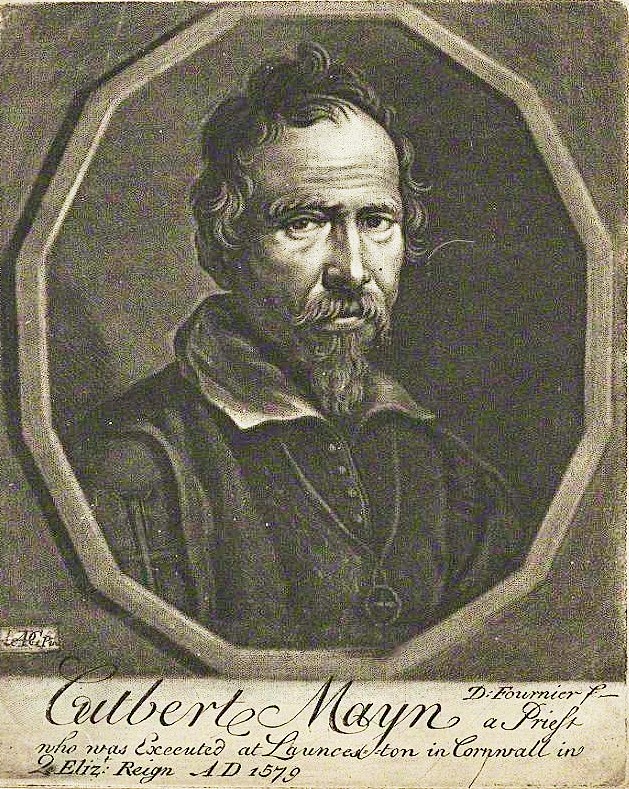
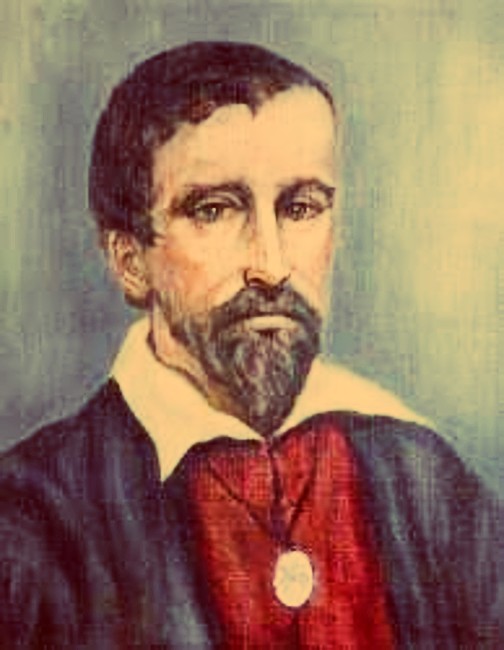
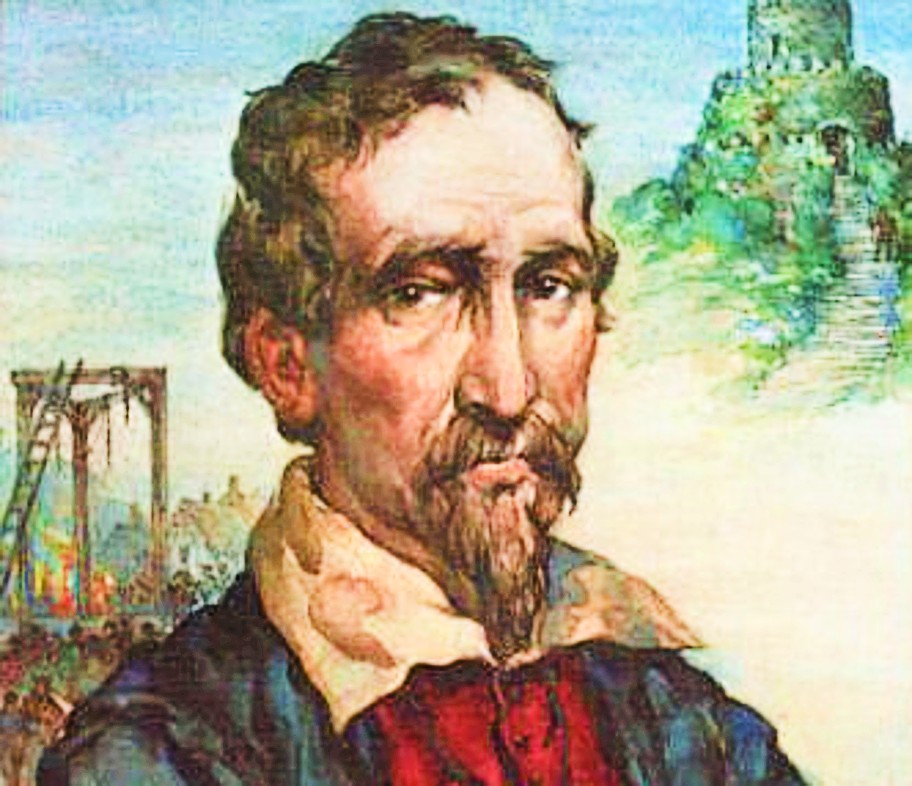
Saint of the Day – 30 November – Blessed Cuthbert Mayne (1544-1577) Priest Martyr Born in 1544 at Youlston, Devonshire, England and died at the age of 33, by being hanged, drawn and quartered on 30 November 1577 at Launceston, Cornwall, England. Additional Memorials – • 25 October as one of the Forty Martyrs of England and Wales, • 29 October as one of the Martyrs of Douai, • 1 December as one of the Martyrs of Oxford University.
The son of William Mayne, Cuthbert Mayne was born at Youlston, near Barnstaple in Devon and was Baptised on 20 March 1543/4 – the feaast of St Cuthbert. His uncle was a minister of the Church of England and the family expected the good natured Mayne would inherit his uncle’s rich church. This uncle paid his way through Barnstaple Grammar School and he was ordained a Protestant minister at the age of eighteen and instituted rector of Huntshaw, near Torrington.
After ordination, Cuthbert Mayne attended University, first at St Alban Hall, then at St John’s College, in Oxford, where he was made chaplain. He became BA on 6 April 1566 and MA. on 8 April 1570. Whilst at Oxford, Cuthbert met St Edmund Campion and other Catholics. At some point Cuthbert too, became a Catholic. Late in 1570, a letter addressed to him from Fr Gregory Martin (translator of the Vulgate who remained at Douai) fell into the hands of the protestaznt bishop of London and officers arrested him and the others mentioned in the letter. Being warned by Blessed Thomas Ford (aslo a Martyr), Mayne evaded arrest by going to Cornwall and then, in 1573, to the English College at Douai. Douai.
Cuthbert Mayne was Ordained a Priest at Douai in 1575 and on 7 February, the following year, he obtained the degree of Bachelor of Theology at Douai University. Shortly afterwards, on 24 April 1576, he left for the English mission in the company of another Priest and future Martyr, John Payne. He soon took up his abode in the Parish of Probus, Cornwall, with the Recusant Catholic Francis Tregian, where Cuthbert passed as his steward.
Elizabeth I’s agents quickly became aware of Cuthbert Mayne’s presence in the area and the authorities began a systematic search for him in June 1576, when the Bishop of Exeter William Broadbridge came to the area. High sheriff Sir Richard Grenville, a noted anti-Catholic officer, conducted a raid on Tregian’s house on 8th June 1577, during which the crown officers “bounced and beat at the door” to Cuthbert Mayne’s chamber.
On gaining entry, Grenville discovered a Catholic devotional Sacramental, an Agnus Dei around Mayne’s neck and took him into custody along with his books and papers. Tregian suffered imprisonment and loss of possessions for harbouring a Roman Catholic Priest.
While awaiting trial at the circuit assizes, Cuthbert was imprisoned in Launceston gaol, being chained to his bedposts. The authorities sought a death sentence but had difficulty in framing a treason indictment to that end. At the opening of the trial on 23 September 1577, there were five counts against him… Amongst them was – that he had taught of the Pope and denied the Queen’s ecclesiastical supremacy while in prison; that he had brought into the Kingdom an Agnus Dei and delivered it to Francis Tregian; that he had celebrated Mass.
Cuthbert answered all counts. On the third count, he said that he had asserted nothing definite on the subject to the three illiterate witnesses who swore to the contrary. On the fourth count, he said that the fact he was wearing an Agnus Dei at the time of his arrest, did not establish that he had brought it into the Kingdom or delivered it to Tregian. On the fifth count, he said that the presence of a Missal, a Chalice and Vestments in his room, did not establish that he had celebrated Mass.
The trial judge, Justice Sir Roger Manwood, directed the jury to return a verdict of guilty, stating that, “where plain proofs were wanting, strong presumptions ought to take place.” The circumstantial case, in other words, was to be sufficient to prove the indictments. The jury found Mayne guilty of high treason on all counts and accordingly, he was sentenced to be hanged, drawn and quartered. Mayne responded, “Deo gratias!”
With him had been arraigned Francis Tregian and eight other laymen. The eight were sentenced to seizure of their goods and life imprisonment, Tregian to die (in fact he spent 26 years in prison).
After the sentencing, Judge Jeffries took exception to the proceedings and referred the matter to the Privy Council. The Council submitted the case to the whole bench of Judges, which was inclined to leniency on the grounds of the flimsiness of the evidence. Nevertheless, the Council ordered the execution to proceed. On the night of 27 November Cuthbert Mayne’s cell was reported, by his fellow prisoners, to have become full of a “great light.”
Before being brought to the place of execution, Cuthbert Mayne was offered his life, in return for a renunciation of his religion and an acknowledgment of the supremacy of the Queen as head of the Church. Declining both offers, he kissed a copy of theSacred Scriptures, declaring that, “the Queen neither ever was, nor is, nor ever shall be, the head of the Church of England.”
A special, high gibbet was erected in the marketplace at Launceston and Cuthbert was executed there on 30 November 1577. He was not allowed to speak to the crowd but only to say his prayers quietly. Just as he was about to be hanged, he refused to implicate his co-religionists. It is unclear if he died on the gibbet. It has been said that he was cut down alive but in falling, struck his head against the butcher’s scaffold. He was unconscious when being drawn, and quartered.
Relics of Cuthbert’s body survive in various locations. He was the first “Seminary Priest,” the group of Priests who were trained, not in England but in houses of studies on the Continent. He was also one of the group of prominent Catholic Martyrs of the persecution, who were later designated as the Forty Martyrs of England and Wales.
Cuthbert Mayne was Beatified by Pope Leo XIII, by means of a decree of 29 December 1886..
St Abraham of Persia St Anders of Slagelse Bl Andrew of Antioch Bl Arnold of Gemblours St Castulus of Rome St Constantius of Rome St Crider of Cornwall Blessed Cuthbert Mayne (1544-1577) Priest Martyr St Domninus of Antioch St Euprepis of Rome Bl Everard of Stahleck
Bl Joscius Roseus St Justina of Constantinople St Mahanes the Persian St Maura of Constantinople St Merola of Antioch St Mirocles of Milan St Sapor St Simeon of Persia St Trojan St Tudwal of Tréguier Bl William de Paulo Zosimus the Wonder Worker
Martyrs of Saxony – 6 Saints: Missionaries who worked with Saint Willehad of Bremen. Martyrs. – Attroban, Benjamin, Emmingen, Folkard, Gerwald and Grisold. They were martyred on 30 November 782 at River Weser, Lawer Saxony, Germany.
Saint of the Day – 29 November – Blessed Redemptorus of the Cross OCD (1598-1638) Martyr, Portuguese Lay Brother of the Order of Discalced Carmelites, Missionary, ex-soldier. Born as Tomás Rodrigues da Cunha in Paredes de Coura, Portugal on 15 March 1598 and died by torture in 1638, aged 40, on the Malay Archipelago. Also known as Redemptus. Redemptorus was Beatified on 10 June 1900 by Pope Leo XIII together with Blessed Denis of the Nativity, who was Martyred with Redemptorus.
Tomás first served as a soldier in the Portuguese army in India, where, in 1615, he joined the Carmelites in Goa as a lay brother, taking the name Redemptorus of the Cross.
Redemptorus was sent by the superiors of the Order to accompany Father Denis of the Nativity as part of an ambassadorial mission from the Portuguese Empire to the Sultan of Aceh in modern day Indonesia. The mission was led by Dom Francisco Sousa de Castro as Ambassador.
Once in Aceh, all the members of the mission were seized and arrested, at the instigation of the Dutch authorities based in Jakarta. They were then subjected to torture and those members of the mission who refused to deny their faith, were executed one by one. The two friars were led to a desolate spot on the seashore, where Redemptorus was shot with arrows, after which his throat was slit. Father Denis, a Crucifix in his hands, was the last to die, his skull shattered by a blow of a scimitar.
Dom Castro, the Ambassador, was the only survivor. He was held in captivity for three years, until his family paid a large ransom for his release.
O God, Who in Thy wondrous providence, led the blesseds Denis and Redemptorus through the perils of the sea, to the Palm of Martyrdom, grant, through their intercession that in the midst of earthly vicissitudes and worldly desires, we may remain steadfast even unto death in the confession of Thy name. Through Jesus Christ our Lord. Amen. (Collect)
Bl Denis of the Nativity left and Bl Redemptorus of the Cross
All Saints of the Seraphic Order (Franciscan): the Church celebrates the many Franciscan Saints who followed in the footsteps of St Francis. It is a special day for all Franciscans to celebrate theFfeast of ‘All the Saints of the Seraphic Order.’ Also on this day in 1223, the final Rule of life for Franciscan Friars was approved. To commemorate this and all the saintly examples produced in the Franciscan Order, on this day all the Saints of the Seraphic order are remembered at Franciscan Churches throughout the world.
Bl Frederick of Ratisbon St Hardoin of Brittany St Illuminata of Todi St James of Saroug Bl Jutta of Heiligenthal St Paphnutius of Heracleopolis St Paramon St Philomenus of Ancyra St Radbod of Utrecht Blessed Redemptorus of the Cross OCD (1598-1638) Martyr,, Portugeuse Lay Brother of the Order of Discalced Carmelites. St Sadwen of Wales St Saturninus of Rome St Saturninus of Toulouse St Sisinius of Rome St Walderic of Murrhardt
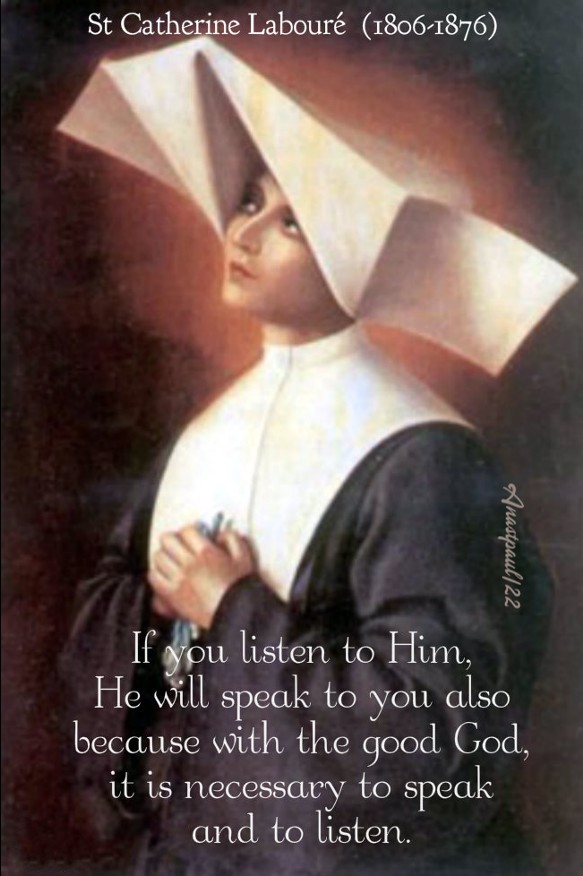
Quote/s of the Day – 28 November – The Memorial of St Catherine Labouré DC (1806-1876) Virgin, Religious Sister of the Daughters of Charity of Saint Vincent de Paul and the Marian visionary of the Miraculous Medal.
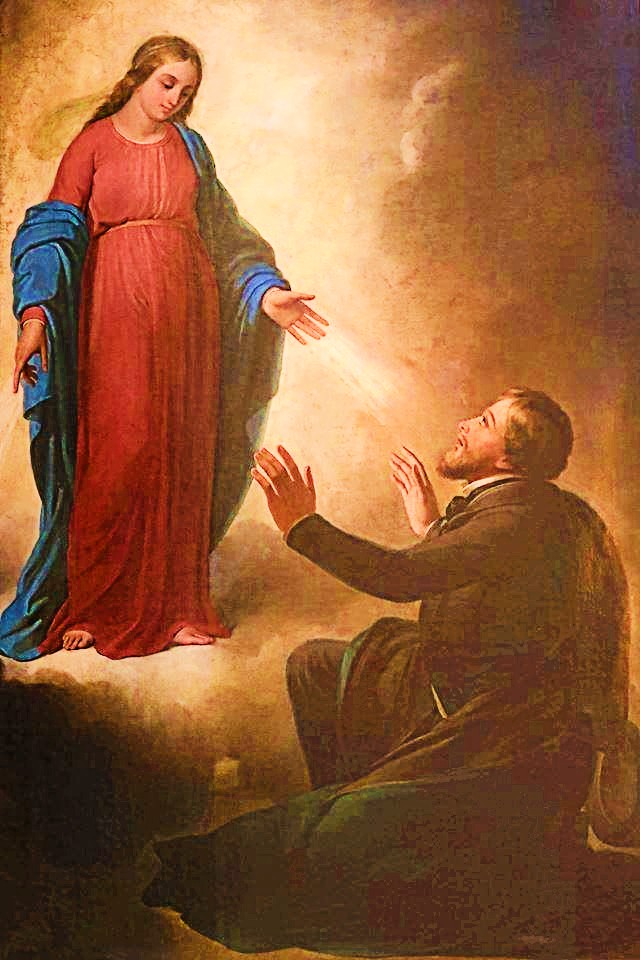
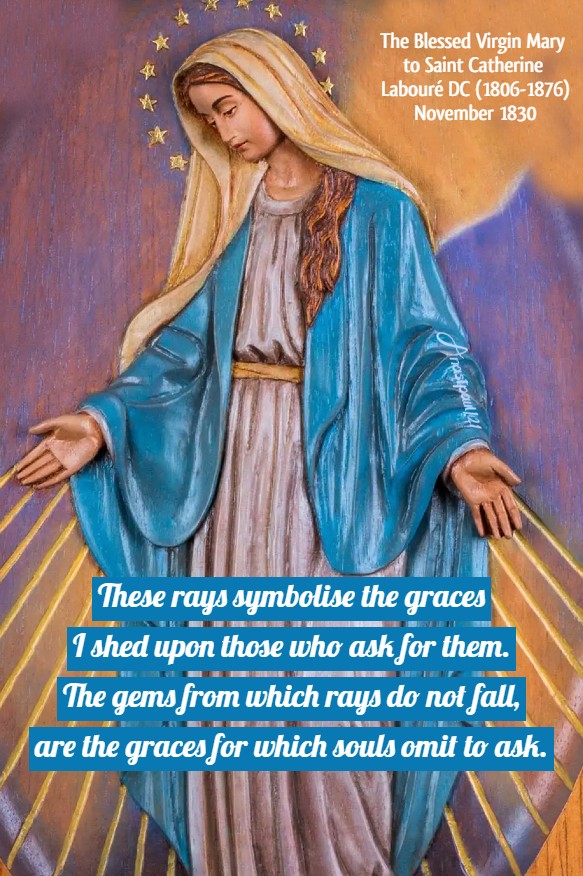
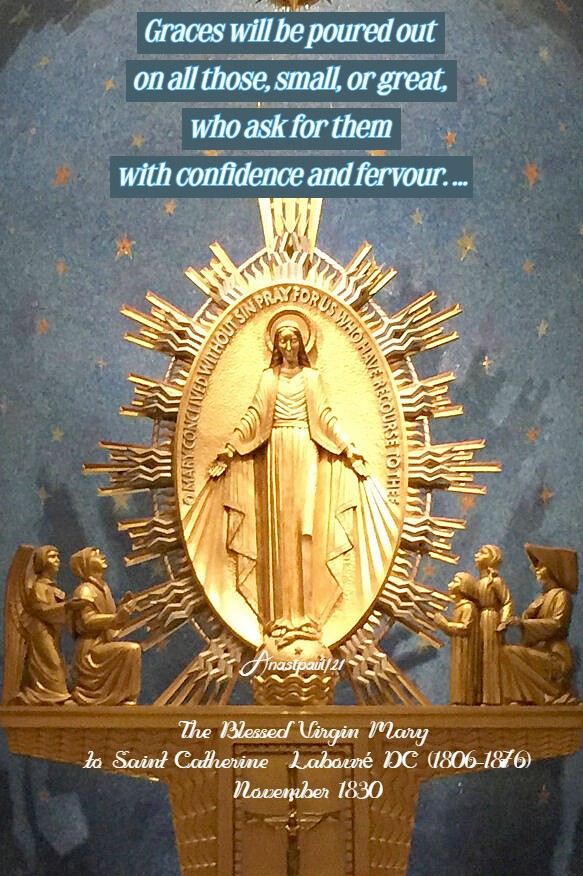
THE PROMISES OF THE MEDAL When Our Lady appeared to Saint Catherine Labouré on 27 November 1830, rays of light flowed from the rings (made of precious stones) on her fingers. However, some of the stones on the rings did not shine.
Our Lady explained:
“These rays symbolise the graces I shed upon those who ask for them. The gems from which rays do not fall are the graces for which souls omit to ask.”
“Graces will be poured out on all those, small, or great, who ask for them with confidence and fervour. … ”
The Blessed Virgin Mary to Saint Catherine Labouré DC (1806-1876) November 1830
“If you listen to Him, He will speak to you also because with the good God, it is necessary to speak and to listen.”
Saint of the Day – 28 November – Blessed James Thompson (Died 1582) Priest Martyr , also known as James Hudson (an alias used to deflect the enemies of the Church). Born in the 16th century in York, North Yorkshire, England and was schooled and brought up there. He died by being hanged on 28 November 1582 in his hometown, York. He was Beatified on 29 December 1886 by Pope Leo XIII. Additional Memorial – 29 October as one of the Martyrs of Douai.
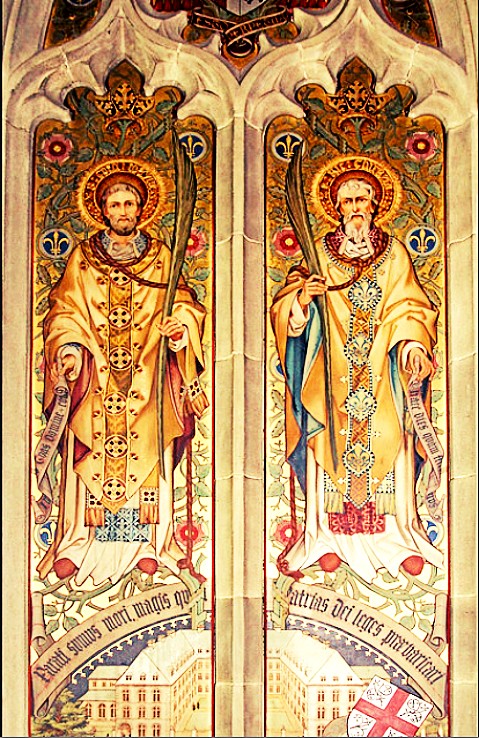
This depiction of two of the Douai Martyrs with the Douai College beneath them is in Ushaw College, Durham. Picture by Dominican Lawrence OP.
James arrived at Dr Allen’s College at Rheims on 19 September 1580 and in May of the next year, 1581, by virtue of a special dispensation, was admitted at Soissons, with one Nicholas Fox, firstly as a Deacon and then within 12 days, to the Sacred Orders of the Priesthood, although at the time he was so ill that he could hardly stand.
He was sent on the mission to England, the following 10 August and was arrested at York on 11 August, 1582. On being taken before the Council of the North, he frankly confessed his Priesthood, to the astonishment of his fellow citizens, who knew that he had not been away more than a year.
James was then loaded with double irons and was imprisoned, first in a private prison. When he could no longer pay for his private cell, he was sent to the castle.
On 25 November he was brought to the bar and condemned to the penalties of high treason. Three days later he suffered with great joy and tranquillity at the Knavesmire, York, cintinually protesting that he had never plotted against the Queen and that he died in and for the Catholic Faith. He refused to dispute with the Protestant minister in attendance.
While he was hanging, he first raised his hands to Heaven, then beat his breast with his right hand and finally made a great Sign of the Cross. In spite of his sentence, he was neither disembowelled nor quartered but was buried under the gallows.
Blessed James was Beatified by Pope Leo XIII on 29 December 1886.
NOTE:Between 1577 – the date of the Martyrdom of St Cuthbert Mayne, the Protomartyr of the English Seminary at Douai – and 1680, the date of the execution of Thomas Thwing, the College’s last Martyr, 158 College members (Priests and Laymen, secular and religious) were Martyred by the State, for their Catholic Faith. Usually under the charge of Treason or for refusing to take the Oath of Allegianceand Supremacy to Elizabeth I, as Supreme Governor of the Church. Each time the news of another execution reached the College, a solemn Mass of thanksgiving was sung.
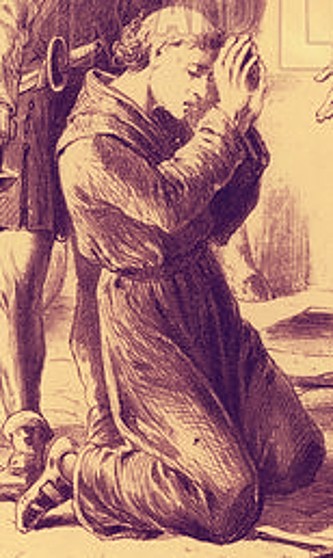
Illustration for Memoirs of Missionary Priests by Bishop Challoner (Jack, 1878)
Bl Calimerius of Montechiaro St Fionnchu of Bangor
St Pope Gregory III (Died 741) Bishop of Rome 11 February 731 until his death on 28 November 741. (His Feast was moved to 10 December in 1969), The Roman Martyrology states: “St Rome, the blessed Pope Gregory III, who departed for Heaven with a reputation for great sanctity and miracles.“ His Life: https://anastpaul.com/2021/11/28/saint-of-the-day-28-november-saint-pope-gregory-iii-died-741/
St Hilary of Dijon St Hippolytus of Saint Claude St Honestus of Nimes St Irenarcus
St James of the Marches OFM Conv. (1391-1476) Priest of the Friars Minor Conventional, Confessor, brilliant Preacher, Penitent, Reformer, Writer, Papal legate, Inquisitor, founder of several monasteries in Bohemia, Hungary and Austria. St James was Canonised on 10 December 1726 by Pope Benedict XIII. His body is Incorrupt. About St James: https://anastpaul.com/2019/11/28/saint-of-the-day-28-november-saint-james-of-the-marches-ofm-1391-1476/
Blessed James Thompson (Died 1582) Priest Martyr St Papius St Quieta of Dijon St Rufus St Simeon the Logothete St Sosthenes of Colophon (1st Century) Bishop, Martyr. St Stephen the Younger Bl Theodora of Rossano
Martyrs of Constantinople – 8 Saints: A group of over 300 Christians Martyred during the persecutions of the Iconoclast Emperors. We have a lot of information on Saint Stephen the Younger, but for the others we have nothing but seven of their names – Andrew, Auxentius, Basil, Gregor, John, Peter and Stefan. They were scourged, stoned and/or dragged to death through the streets of Constantinople in 764.
Martyrs of North Africa – 13 Saints: A group of thirteen clerics killed or exiled in the persecutions of Arian Vandals in North Africa – Crescens, Crescentian, Cresconius, Eustace, Felix, Florentian, Habetdeum, Hortulanus, Mansuetus, Papinianus, Quodvultdeus, Urban and Valerian.
Martyrs of Tiberiopolis – 14 Saints: A group of fourteen Christian Laymen, Deacons, Priests and Bishops who were Martyred together in the persecutions of Julian the Apostate – Basil, Chariton, Comasios, Daniel, Etymasius, Hierotheos, John, Nicephorus, Peter, Sergius, Socrates, Theodore, Thomas and Timothy. 361 at Tiberiopolis, Phyrgia (in modern Turkey)
Saint of the Day – 27 November – St Secundinus of Ireland (c 373-448) Bishop, Missionary, Founder, first Bishop and Patron Saint of Domhnach Sechnaill, Co. Meath, who is traditionally believed to have been as a disciple of St Patrick and one of the first Bishops of Armagh, Poet and Hymnist. Born in c 375 in Gaul (modern France, possibly the area of Auxerre) and died on 27 November 448 of natural causes. Also known as – Secundinus of Dunsaghlin• Secundinus of Dunseachlin• Secundinus of Dunshaughlin• Seachnal, Seachnall, Sechnall, Secundin. Additional Memorial – 6 December (joint celebration of the missionary work of Secundinus and Saint Auxilius).
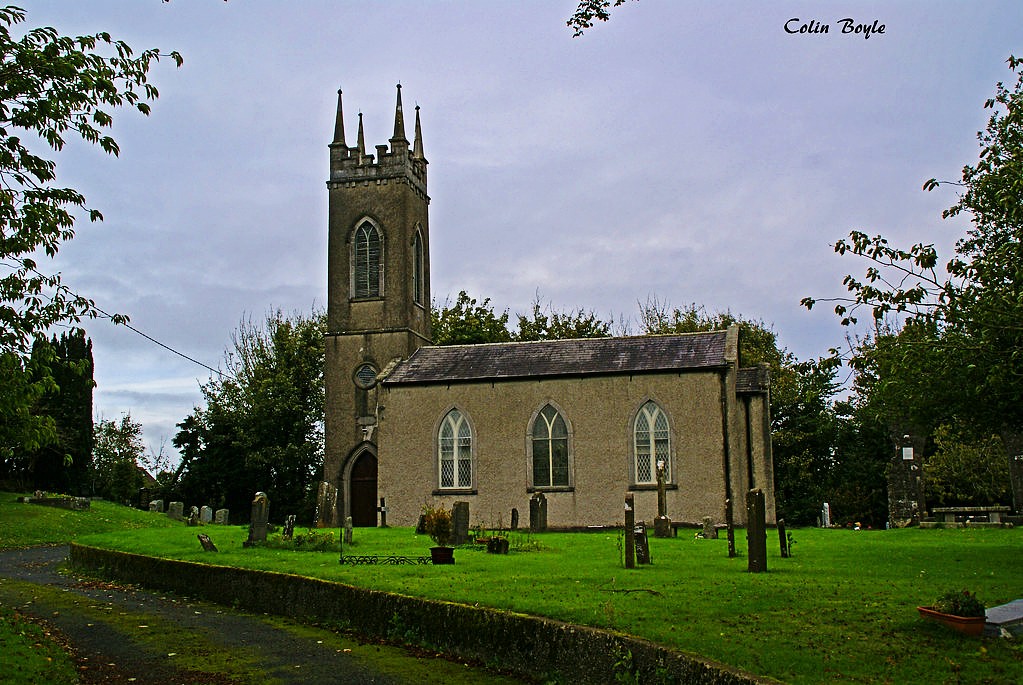
St Secundinus Church in Dunsaghlin
Secundinus is a well known Late Latin name, a derivative of Secundus … Several known fifth-century Bishops bore the name and in Gaul it continued to be used into the 7th Century when we find bishops of Lyon and Sisteron called Secundinus.
The Irish annals report that in 439, Bishops Secundinus, Auxilius (who was the brother of Secundinus and thus, also a nephew of St Patrick) and Iserninus arrived in Ireland to the aid of St Patrick in his mission. Secundinus preached in the north and east. There are many conflicting documents about him – whether he was a Priest or Bishop when he arrived, if he had been there before, etc. Later tradition, appears to suggest that Secundinus and Auxilius were of Italian origin. Details to this effect are first given in the Irish preface to the Hymn of Secundinus, as found in some manuscript versions of the Liber Hymnorum. It states that Secundinus was a son of Restitutus and St Patrick’s sister, thus making him the nephew of St Patrick.
Secundinus wrote two important Hymns found in the Irish Liber Hymnorum and the Bangor Antiphonary. the earliest poems of the Irish Church, one of which was an alphabetical Hymn in honour of Saint Patrick, that is the Hymn of Secundinus spoken of above.
St Patrick, according to his Tripartite Life, entrusted his See of Armagh, to Secundinus when he went to Rome to obtain Relics of Sts Peter and Paul, while the preface to the Hymn of Secundinus, tells that Patrick had sent Secundinus off to obtain them in person.
An account of Saint Secundinus (Seachnall) from Father Cogan’s 1862 Diocesan history of Meath, includes:
“The first notice of Dunshaughlin which occurs in our annals, a very remarkable one indeed, is its connection with St Secundinus In fact it owes its origin to this Saint and derives its name from him. … St Secundinus was a native of Gall and son of Restitutus, a Lombard, by, it is said, Liemania, otherwise named Darerca, who is usually said to have been the sister to St Patrick. According to Tirechan’s list, Secundinus and Auxilius, his brother, were disciples of St Patrick and seem to have accompanied him from the commencement of his mission to Ireland. After a few years they were sent to Britain or Gaul to be Consecrated, as, according to the established usage of the Church, three Bishops are required for the consecration of another. The Annals of Ulster and Innisfallen remark, at 439, that the Bishops Secundinus, Auxilius and Isserninus, were sent this year (439) to aid St Patrick. Seachnall fixed his See at Dunshaughlin and was reputed a very wise, prudent and holy man. In the Four Masters he is called “St Patrick’s Bishop without fault.”. So high was the opinion St Patrick had of him that when he went to preach the Gospel in Leinster and Munster, he appointed Secundinus to preside over the converts of Meath and the North. Hence he is called “St Patrick’s Vicar or Suffragan.” It is recorded that on one occasion, he expressed disapprobation at St Patrick’s extreme disinterest in refusing presents from the wealthy, by means of which he could support the religious Converts who might be in distress. On St Patrick explaining his reasons, St Secundinus asked forgiveness and composed a Hymn in his honour which, most probably, was the first Christian Latin Hymn composed in Ireland. It has been published by Father Colgan and republished by Ware, who calls it an alphabetical Hymn because the strophes, consisting each of four lines, begin with the letters of the alphabet, following in order. It appears too in the ancient Antiphonarium Benchorense, a work certainly beyond one thousand years old, which has been republished by Muratori. There are different readings in the various editions but substantially the same. Secundinus’s Hymn is frequently referred to in our ancient writers and many favours are promised to those who reverently recite it.
After a holy and edifying life, … Secundinus died on the 27th of November, 448, in the seventy-fifth year of his age,and was interred in his own Church of Dunshaughlin. He was the first Bishop who died in Ireland and has been held in special reverence throughout the Diocese of Meath. As an instance of this, the name Maol-Seachlan (servant of St Seachnall) was common amongst the ancient Irish (but particularly in the royal race of Meath. The O’Maolseachlains, or O’Melaghlins, who belonged to the great branch of the Southern Hy-Nialls or Clan Colman, took their name from their ancestor Maolseachlain (Latinised Malachias and Anglicised Maiachy), who again took his name from the first Bishop of Dunshaughlin. This name O’Maelseachlain, has been Anglicised MacLoughlin since the reign of Queen Anne.”
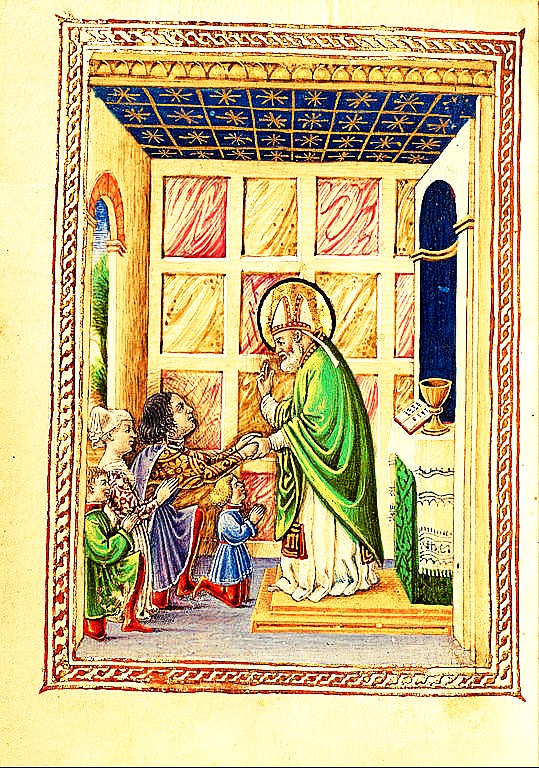
Saint of the Day – 26 November – Saint Bellinus of Padua (Died 1151) Bishop of Padua and Martyr, Reformer (he led a reform of the spiritual lives of the Clergy in his Diocese) he rebuilt the Cathedral and opened schools, Miracle-worker. Born in the late 11th Century in Padua, Italy and died by being stabbed by assassins in 1151 on a forest road while on a trip to Rome. Patronages – the City and Diocese of Adria, Italy, against dog bites, against rabies. Also known as – Bellino. He was Canonised by Pope Eugene IV.
Artwork by Taddeo Crivelli – St Bellinus dyring Mass
Bellinus, according to some sources from Germany, was born in the region on the Baltic Sea but, according to others, he was the son of the noble Bertaldo family in Padua and became the Bishop of Padua in 1128 .
Even as a Priest, he was loyal to the legitimate Popes Callistus II and Honorius II, while his predecessor in office, supported the anti-popes. In 1144 Bellinus made a pilgrimage to Rome to meet Pope Celestine II.
In Padua as the Bishop, he introduced reforms in the clergy, appointed canons, had the Cathedral rebuilt after it was destroyed in 1117 by an earthquake and saw to it that schools were built.
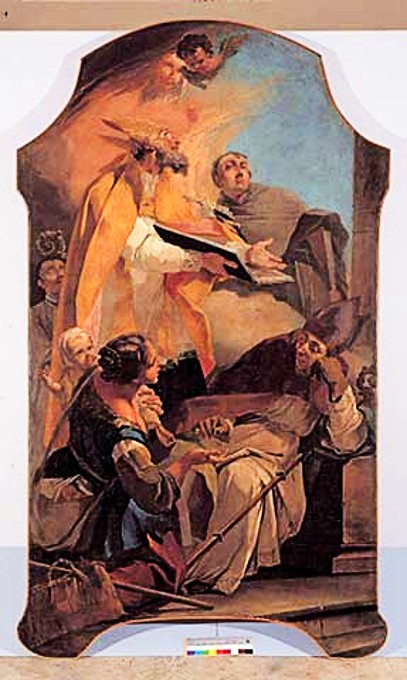
Mattia Bortoloni – The Saints Bellinus, Anthony of Padua and Thomas of Villanova
Bellinus worked zealously to rebuild the status and dignity of the Church and defended Church rights against the secular powers. He, therefore, entered into conflicts with the influential Capodivacca family, who organised hired assassins to attack him. They met him during a journey to Rome in a forest in Fratta Polesinelet and murdered him.
Bellinus’ corpse was taken to the Church of San Giacomo di Fratta, After a flood, his bones were taken to the new Church dedicated to him in San Bellino near Rovigo. In 1647, his Relics were moved to a Chapel in the same Church.
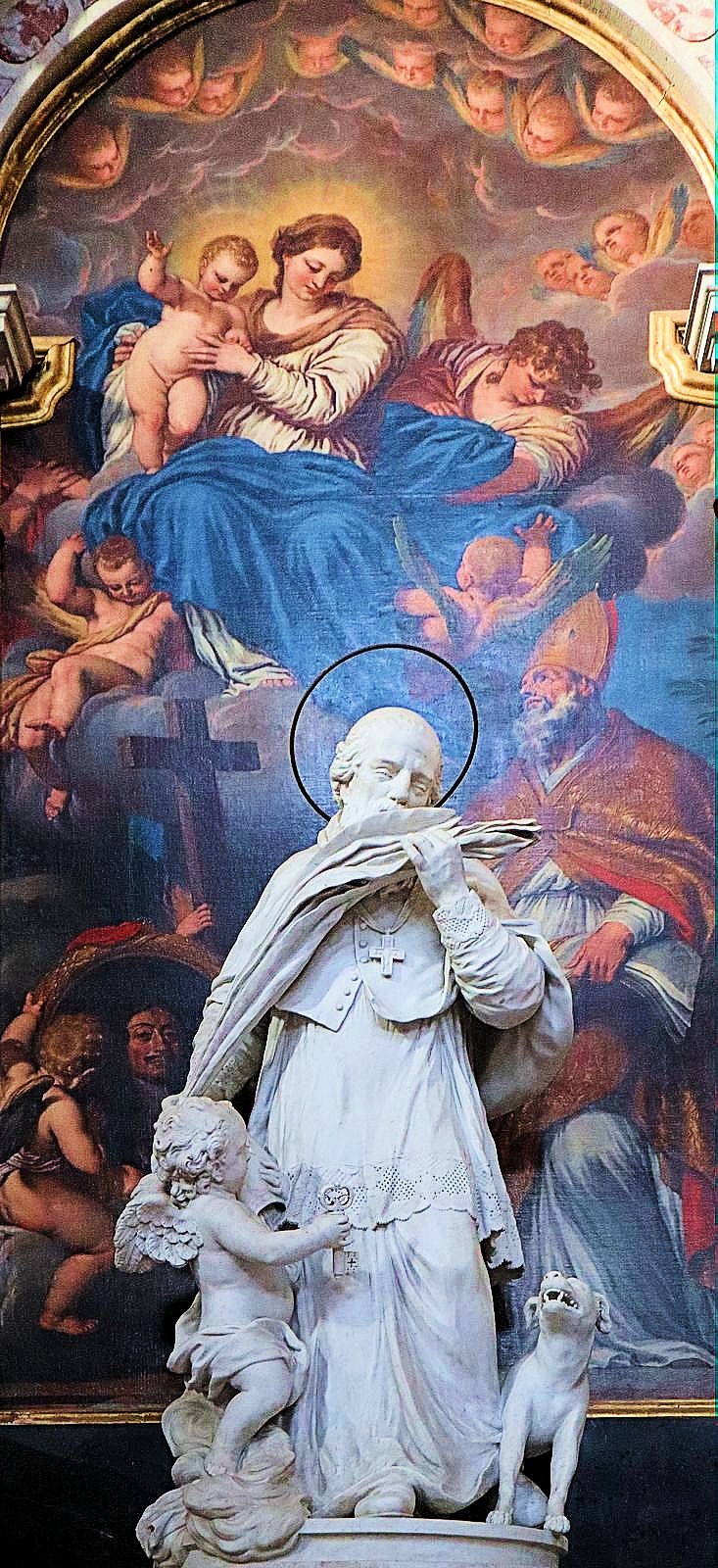
Marble statue, 1672, in the Cathedral of Chioggia. The Altarpiece behind shows Bishop St Liborius of le Mans
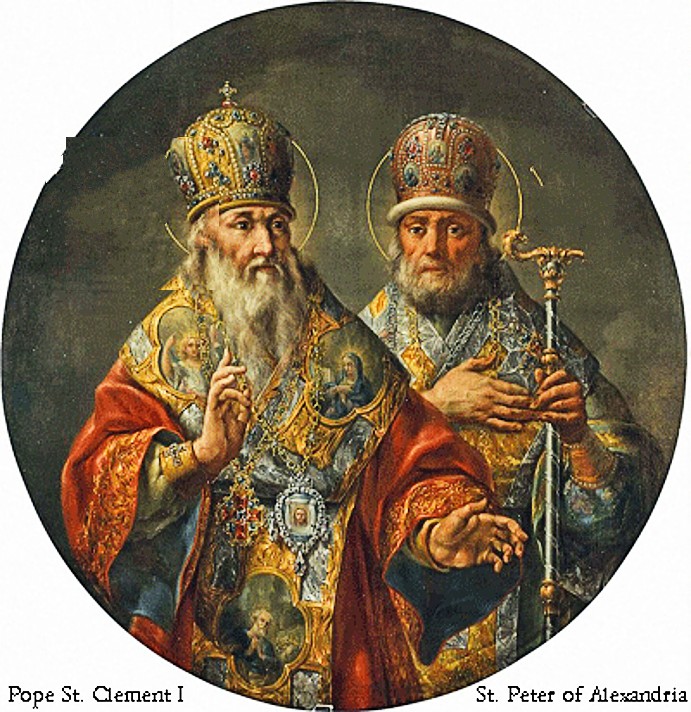
Saint of the Day – 26 November – Saint Peter of Alexandria (Died 311) Bishop Martyr, known as the “Seal of the Martyrs” Born at Alexandria, Egypt and died by Martyrdom in 311 at Alexandria, Egypt. Tradition attests that the Egyptian Bishop was the last believer to suffer death at the hands of Roman imperial authorities for his faith in Christ. For this reason, St Peter of Alexandria is known as the “Seal of the Martyrs.”
He is said to have undertaken severe penances for the sake of the suffering Church during his lifetime and written letters of encouragement to those in prison, before going to his own death at the close of the “era of the Martyrs.”
Peter was born and raised in Alexandria but both the date of Peter’s birth and of his Ordination as a Priest, are unknown. It is clear, however, that he was chosen to lead Egypt’s main Catholic community in the year 300, after the death of Saint Theonas of Alexandria. He may have previously been in charge of Alexandria’s well-known Catechetical School, an important centre of religious instruction in the early Church. Peter’s own theological writings were cited in a later fifth-century dispute over Christ’s divinity and humanity.
In 302, the Emperor Diocletian and his subordinate Maximian, attempted to wipe out the Church in the territories of the Roman Empire. They used their authority to destroy Church properties, imprison and torture believers and eventually kill those who refused to take part in pagan ceremonies. As the Bishop of Alexandria, Peter offered spiritual support to those who faced these penalties, encouraging them to hold to their faith without compromise.
One acute problem for the Church during this period, was the situation of the “lapsed.” These were Catholics who had violated their faith by participating in pagan rites under coercion but who later, repented and sought to be reconciled to the Church. Peter issued canonical directions for addressing their various situations and these guidelines became an important part of the Eastern Christian tradition for centuries afterward.
Around the year 306, Peter led a Council which deposed Bishop Meletius of Lycopolis, a member of the Catholic hierarchy who had allegedly offered sacrifice to a pagan idol. Peter left his Diocese for reasons of safety during some portions of the persecution , travelling through many lands, encouraging his flock by letter, before returning to his City to guide the Alexandrian Church personally during this period. He secretly visited those imprisoned, assisted widows and orphans, and conducted clandestine services. His absence from Alexandria, however, gave Meletius an opening to set himself up as his rival and lead a schismatic church in the area.
The “Meletian schism” would continue to trouble the Church for years after the death of Alexandria’s legitimate Bishop. Saint Athanasius, who led the Alexandrian Church during a later period, in the fourth century, claimed that Meletius personally betrayed Peter of Alexandria to the state authorities during the Diocletian persecution.
Although Diocletian himself chose to resign his rule in 305, persecution continued under Maximinus Daia, who assumed leadership of the Roman Empire’s eastern half in 310. The early Church historian, Eusebius, attests that, in 311, Maximinus, during an imperial visit to Alexandria, unexpectedly ordered its Bishop to be seized and killed without imprisonment or trial. Three Priests – Faustus, Dio and Ammonius – were reportedly beheaded along with him.
St Peter of Alexandria’s entry in the “History of the Patriarchs of the Coptic Church of Alexandria” (a volume first compiled by a Coptic Bishop in the 10th century) concludes with a description of the aftermath of his death.
“And the City was in confusion and was greatly disturbed, when the people beheld this Martyr of the Lord Christ. Then, the chief men of the City came, and wrapped his body in the leathern mat, on which he used to sleep and they took him to the Church … And, when the liturgy had been performed, they buried him with the fathers. May his prayers be with us and all those who are Baptised!”
St Leonard of Port Maurice OFM (1676-1751) Confessor, Priest and Friar of the Friars Minor, reacher – in particular Parish Mission Preacher, Ascetic Writer, Spiritual Director. St Leonard founded many pious societies and confraternities and exerted himself to spread devotion to the Sacred Heart of Jesus, the Perpetual Adoration of the Most Blessed Sacrament, the Blessed Virgin Mary and the Passion of Christ. He was among the few to insist that the concept of the Immaculate Conception of Mary be defined as a Dogma of the Faith. He was Beatified on 19 June 1796 by Pope Pius VI and Canonised on 29 June 1867 by Pope Pius IX. About St Leonard: https://anastpaul.com/2018/11/27/saint-of-the-day-27-november-st-leonard-of-port-maurice-ofm-1676-1751/
Bl Albert of Haigerloch St Alypius Stylites St Amator of Autun St Basolus of Verzy St Bellinus of Padua (Died 1151) Bishop and Martyr St Bertger of Herzfeld St Conrad of Constance Bl Delphine of Glandèves St Egelwine of Athelney St Ida of Cologne St James the Hermit St Magnance of Ste-Magnance St Marcellus of Nicomedia St Martin of Arades St Nicon of Sparta Bl Pontius of Faucigny St Sabaudus of Trier St Siricius, Pope St Stylianus St Vacz
Martyrs of Alexandria – 650+- Saints: A group of approximately 650 Christian Priests, Bishops and Laity Martyred together in the persecution of Maximian Galerius. We have the names and a few details only seven of them – Ammonius, Didius, Faustus, Hesychius, Pachomius, Phileas and Theodore. The were born in Egypt and were martyred there in c 311 in Alexandria, Egypt.
Martyrs of Capua – 7 Saints: A group of seven Christians Martyred together. The only details about them to survive are the names – Ammonius, Cassianus, Felicissimus, Nicander, Romana, Saturnin and Serenus. They were martyred in Capua, Campania, Italy, date unknown.
Martyrs of Nicomedia – 6 Saints: A group of six Christians Martyred by Arians. Few details have survived except their names – Marcellus, Melisus, Numerius, Peter, Serenusa and Victorinus. Martyred in 349 in Nicomedia, Bithynia, Asia Minor (modern Izmit, Turkey).





















 AnaStpaul
You must be logged in to post a comment.