Saint of the Day – 29 May – St Maximinus of Trier (Died c 346) the Fifth Bishop of Trier and Confessor, Defender of the True Faith, Miracle-worker. (Died c 346) Born at Silly near Poitiers, France and died in c 346. Patronage – of the City of Trier and of the Diocese, protection against perjury, loss at sea and destructive rains. Also known as – Maximus, Maximin.
The Roman Martyrology states of him today: “At Treves, the blessed Maximinus, Bishop and Confessor, who received, with honour, the father St Athanasius, banished by the Arian persecutors.”
Maximinus was an opponent of Arianism and was supported by the courts of Constantine II and Constans, who harboured, as an honoured guest, St Athanasius twice during his exile from Alexandria. These two incidents were in 336–37 and again, in 343. In the Arian controversy, Maximinus had begun in the party of St Paul I of Constantinople; however, he took part in the Synod of Sardica convoked by Pope Julius I (c 342) and, when four Arian Bishops consequently came from Antioch to Trier, with the purpose of winning Emperor Constans to their side, Maximinus refused to receive them and induced the Emperor to reject their proposals.
He was born near Poitiers, nobly descended, and related to Maxentius, Bishop of that City before St.Hilary. The reputation of the sanctity of St Agritius, Bishop of Triers, drew him, as a young man. to Trier and after a most virtuous education, he was admitted to Holy Orders. Upon the death of Agritius, Maximinus was chosen as his successor.
When St Athanasius was banished to Triers in 336, Maximinus received him, not as a person disgraced but, as a most glorious Confessor of Christ and thought it a great happiness, to enjoy the company of so illustrious a Saint. St Athanasius stayed with him for two years; and his works bear evidence to the indefatigable vigilance, heroic courage and exemplary virtue, of our Saint, who was before that timem famous for the gift of miracles.
St Paul, Bishop of Constantinople, being banished by Constantius, found also a retreat at Triers and, in Maximinus, a powerful protector. Our saint, by his counsels, precautioned the Emperor Constans against the intrigues and snares of the Arians and on every occasion, discovered their artifice and opposed their faction.
He was one of the most illustrious Defenders of the Catholic Faith in the Council of Sardica in 347 and had the honour to be ranked, by the Arians, together with St Athanasius, in an excommunication, which they pretended to fulminate against them at Philippopolis.
He also sent Sts Castor and Lubentius as Missionaries to the valleys of the Mosel and the Lahn.
Maximinus is said to have died in Poitou in 349, having made a journey thither to see his relatives. His cult began right after his death. His feast is celebrated on 29 May, on which day his name stands in the Martyrologies of St Jerome, St Bede, St Ado,and others. Trier honours him as its Patron. In the autumn of 353 his body was buried in the Church of St John near Trier, where in the seventh century was founded the famous Benedictine Abbey of St.Maximinus, which flourished till 1802.
St Maximinus Abbey at Trier
His body was afterwards translated to Triers on the day which is now devoted to his memory. St Maximinus, by protecting and harbouring Saints, received himself the recompense of a Saint.
Notre-Dame des Ardents / Our Lady of Ardents, Arras, France (1095) – 29 May:
The Abbot Orsini wrote: “A wax candle is kept in the Cathedral of Arras, which is held to have been brought thither by Our Lady, in the year 1095.”
Our Lady of Ardents, or Notre-Dame des Ardents d’Arras in French, is a small, charming red brick Church in the lower part of Town in Arras.. It was built in the beautiful style unique to the twelfth Century, in order to celebrate the appearance of the Blessed Virgin and to commemorate the miraculous assistance, she gave to the people then living in the region. According to Tradition, there was a terrible epidemic that was given the name ‘the hellfire’ that ravaged the countryside in that year of 1105 and all men felt, that they were in the clutches of the specter of Death. The Evil of Ardent, the disease caused a kind of gangrene in the limbs and the strange sickness, caused terrible suffering in all parts of the body and laid low, both men and women and even their children, throughout the whole of the region.
There were, at that time, two minstrels, one named Itier, who lived in Brabant and the other, named Norman, who lived in the Chateau de Saint-Pol. They had vowed a mortal hatred, as Norman had killed Itier’s brother. One night they both had the same dream – the Virgin Mary, dressed in white, appeared to them and told them to go to the Cathedral. Norman, who was closer, arrived first. As he entered the Cathedral he saw all the patients who had taken refuge there. He found the Bishop and told him of the apparition but Bishop Lambert thought that Norman was mocking him and sent him away. Itier arrived the following day and also spoke to the Bishop. When the Bishop told Itier that someone named Norman had come to tell him of the same vision, Itier asked where he was because he intended to kill him on the field, to avenge his brother’s death. Bishop Lambert then understood, that the Blessed Virgin had sent the two men to be reconciled. The Bishop spoke to each separately and then put them in each other’s presence and asked them to give each other, the kiss of peace and then spend the night in prayer, inside the Cathedral.
It was Pentecost Sunday, 28 May 1105, at about three o’clock in the morning, when the Virgin Mary appeared to the two minstrels in the Cathedral. Norman and Itier witnessed a sudden light as the Blessed Virgin descended from the height of the nave, carrying a lighted candle in her hands. She gave the men the candle intended for the healing of the sick and explained to them, what they must do. A few drops of the wax that fell from the candle were to be mingled with water, giving it miraculous properties the people would then drink this water.
All who believed were healed. The two minstrels, now brothers, distributed the miraculous water and the epidemic ceased. There were many prodigies of healing that went on for hundreds of years, especially with wounds, inflammations and ulcers. All of this shows how reconciliation and prayer, are pleasing to God and can precipitate great miracles, as well as ending or preventing wars. The Bishop of Arras wanted to build a Church worthy of Our Lady of Ardents and to receive the relic of the Holy Candle. The Church was consecrated in 1876 just before the definitive establishment of the Third Republic.
The Reliquary of the Holy Candle
This relic, the Holy Candle, can still be seen today. On the eve of Corpus Christi and the four following days, the Holy Candle was lit and shown to the people. It has not diminished! The reliquary of the Holy Candle is a masterpiece of art, which preserves the relic of the Holy Candle. The content of the reliquary has been the object of veneration and every year, it is presented to pilgrims, during the time period which runs between Ascension Thursday and Pentecost.
St Maria Magdalena de’ Pazzi O.Carm (1566-1607) Carmelite Nun and Mystic, Ecstatic, she bi-located and was the intercessor of many miracles, Stigmatist. She was Beatified in 1626 by Pope Urban VIII. At her Canonisation in 1668, her body was declared miraculously incorrupt. Her Feast day was moved in 1969 to 25 May. Biography: https://anastpaul.com/2020/05/25/saint-of-the-day-25-may-saint-maria-magdalena-de-pazzi-o-carm-1566-1607/
St Bona of Pisa St Conon the Elder St Conon the Younger St Daganus St Eleutherius of Rocca d’Arce St Felix of Atares St Gerald of Mâcon Bl Gerardesca of Pisa Bl Giles Dalmasia St Hesychius of Antioch St John de Atarés
St Maximinus of Trier (Died c 346)Bishop and Confessor St Maximus of Verona St Restitutus of Rome Bl Richard Thirkeld St Theodosia of Caesarea and Companions St Votus of Atares St William of Cellone
Martyrs of Toulouse: A group of eleven Dominicans, Franciscans, Benedictines, clergy and lay brothers who worked with the Inquisition in southern France to oppose the Albigensian heresy. Basing their operations in a farmhouse outside Avignonet, France, he and his brother missioners worked against heresy. Murdered by Albigensian heretics while singing the Te Deum on the eve of Ascension. They were beaten to death on the night of 28 to 29 May 1242 in the church of Avignonet, Toulouse, France and Beatified on 1 September 1866 by Pope Pius IX (cultus confirmation). • Adhemar • Bernard of Roquefort • Bernard of Toulouse • Fortanerio • Garcia d’Aure • Pietro d’Arnaud • Raymond Carbonius • Raymond di Cortisan • Stephen Saint-Thibery • William Arnaud • the Prior of Avignonet whose name unfortunately has not come down to us. The Church in which they died was placed under interdict as punishment to the locals for the offense. Shortly after the interdict was finally lifted, a large statue of the Blessed Virgin Mary was found on the door step of church. Neither the sculptor nor the patron was ever discovered, nor who delivered it or how. The people took it as a sign that they were forgiven, but that they should never forget, and should renew their devotion to Our Lady. They referred to the image as “Our Lady of Miracles.” Until recently there was a ceremony in the church on the night of the 28th to 29th of May, the anniversary of the martyrdom. Called “The Ceremony of the Vow”, parishioners would gather in the church, kneel with lit candles, and process across the Church on their knees, all the while praying for the souls of the heretics who had murdered the Martyrs.
Martyrs of Trentino: Three missionaries to the Tyrol region of Austria, sent by Saint Ambrose and welcomed by Saint Vigilius of Trent. All were Martyred – Alexander, Martyrius and Sisinius. They were born in Cappadocia and died in 397 in Austria.
Saint of the Day – 28 May – Blessed Margaret Plantagenet Pole (1473-1541) Martyr, Laywoman, Countess of Salisbury, Married, Mother, Born in 14 August 1473 in Somerset, Wilshire, England as Margaret Plantagenet and died by being beheaded on 28 May 1541 on Tower Hill, London, England. Attributes-Martyr’s palm, Rosary, Tunic or Vestment bearing the Five Wounds of Christ.
The life of Margaret Pole, Countess of Salisbury, was tragic from her cradle to her grave. Nay, even before she was born, death in its most violent or dreaded forms, had been long busy with her family—hastening to extinction, a line that had swayed the destinies of England for nearly four centuries and a half. Her grandfather was that splendid Richard Neville, Earl of Warwick, the mighty King-maker, who as the “last of the Barons,” so fittingly died on the stricken field of garnet and whose soldier’s passing, gave to Shakespeare, a theme worthy of some of his most affecting lines. Her father was the George, Duke of Clarence, brother of Edward IV, whose death in the Tower in January, 1478, has been attributed to so many causes. The murdered “Princes in the Tower,” Edward V and his little brother, the Duke of York, were her first cousins, while her only brother, Edward, Earl of Warwick, was judicially murdered by Henry VII to ensure his own possession of the Crown. The list of tragedies in the family of the Blessed Margaret is still far from complete but sufficient instances have been given, to justify the description we have given of her whole career.
Margaret, Countess of Salisbury, was born at Farley Castle, near Bath, on 14 August, in or about the year 1473. Her mother, Isabel, daughter of the above-mentioned “King-maker,” died on 22 December 1476 and her father, in the Tower only two years later. During the reign of Edward IV, little Margaret and her brother, were brought up at Sheen, with the children of her uncle, King Edward IV. At his death, Margaret and Edward, after a short stay at Warwick Castle—their ancestral home—resided for a short time at the Court of Richard III. When the crook-back King’s son died, the youthful Earl of Warwick, became de jure heir to the Crown and Margaret, his sister, in the same way, Princess Royal. These short-lived honours, however, ended in 1485, when the victory of Bosworth, gave the Throne, to the Tudor Adventurer who, as Henry VII was to introduce a new dynasty and the oldest and most repulsive form of Oriental despotism, into the realm! By the time of the death of Harry Tudor’s appalling son, the country had become abject and prostrate! …
Drawing of Margaret as a child
In 1491, when Margaret was about eighteen years of age, she was married by the King, Henry VII, to a distant relative and thorough-going supporter of his own, Sir Richard Pole. The Order of the Garter was conferred upon this gentleman, who hailed from Buckinghamshire and, in 1486, on the birth of Prince Arthur, the King’s eldest son, he received the high position of Governor to the Prince of Wales.
Lady Pole, as she was now known, appears to have been happy in her union. Five children were born of the marriage and both, she and her husband, stood high in the favour of the cold and calculating King. But, one dark cloud hung ever over her. All this time, her unhappy brother, the true heir to the Crown, lay in the Tower, his only “crime,” of course, being that summed up in the phrase, “the right of the first-born is his!” Secluded from all society and most shamefully neglected, the poor young Earl of Warwick, grew up in almost total ignorance and simplicity, so as not to know, as men said, “a goose from a capon.” … Then, in 1499, came his alleged attempt to escape, together with another claimant, the plebeian Perkin Warbeck and the cruel and selfish despot had a plausible pretext for bringing the “last of the Plantagenets to the scaffold.” This was one of the most brutal and callous State murders in the whole of English history and the absence of any sort of protest, either from the servile hierarchy, or the upstart lords that bowed down before Henry’s throne, shows how deeply the nation had already sunk in political and social slavery! The decapitated corpse of the young man and perfectly innocent Earl, thus foully done to death, was interred at Bisham Priory, near Maidenhead, a place where his grief-stricken sister was to find a home nearer the end of her own sorrow-laden and tragic life.
When the sickly Arthur, married Catharine of Aragon and went to keep his short-lived Court at Ludlow Castle, Lady Pole became one of the ladies of the Princess of Wales. The appointment must have carried with it poignant reflections on both sides. For Catharine herself believed—and was later bitterly to make her foreboding known—that no good could come of her union with the scion of the Tudor House, since that union had been brought about by the price of innocent blood! For the “most Catholic”—and most calculating—King Ferdinand VII, her father, had made it one of the conditions of his daughter’s nuptials, that there should be no claimants to the English Crown. His royal brother of England, had forthwith nobly obliged, by presenting to the Monarch of Castile and Aragon, the head of the innocent Warwick, on a charger—and “all went merry as a marriage-bell”—for a time! Catharine on her side, soon conceived a great affection for the sister of one, so cruelly sacrificed to make smooth her own matrimonial path. She did all she could to forward the interests of the Pole family, notably after the death of Sir Richard in 1503. There can also be little doubt, that when, in November 1513, Parliament reversed the infamous Act of Attainder passed on her murdered brother and restored to Margaret’s family the title and estates, forfeited on that iniquitous occasion, the excellent Queen Catharine again proved herself a friend at Court and facilitated by her influence, the partial undoing of this hideous murder by statute.
When the Princess Mary, afterwards Queen, was baptised in the Church of the Franciscan Observants at Greenwich, the Countess of Salisbury—as Lady Margaret Pole had now become, owing to the reversal of her brother’s attainder and the restoration of the ancestral honours—held the child at the font. Nine years later, she was nominated Governess of the Princess and appointed to preside over the Court of the little royal lady at Ludlow Castle, one of the official residences of the Princes and Princesses of Wales.
Meanwhile, the children of Margaret were growing up and the most interesting of them was undoubtedly Reginald, the future Cardinal and last Catholic Archbishop of Canterbury. Endowed by Providence with great personal beauty and rare mental gifts, he possessed what was greater than these, that sense of principle and that elevated moral standard, which were so conspicuously lacking to the ruling and upper classes, throughout the Tudor period. A boy Bachelor of Oxford at the age of fifteen, he had afterwards studied the Canon Law at Padua. The world, indeed, was at the feet of this singularly gifted youth. Henry was to think of making him Archbishop of York after the death of Wolsey and still later, was even more intensely to think of having him assassinated! Meanwhile, as a most winsome and delectable youth, he was a decided “catch” from the matrimonial point of view and good Queen Catharine, ever eager to serve a family that had suffered so much through her but surely not by her, had ideas of marrying the Princess Mary to the brilliant son of her almost lifelong friend. The “future” of the much-discussed Reginald, however, was settled and settled finally, by the complications and menaces of the royal divorce question, which became acute about 1527-8.
A little later, the French Ambassador, Castillon, horrified at the well-nigh weekly slaughter, which had become almost a mere incident in the life of England at this period, exclaimed: “I think few Lords feel safe in this country!” Reginald Pole, to whom the King looked for learned and moral support at this crisis, was certainly one of the majority, so to save his head, he prudently withdrew to the Continent, under the pretext of pursuing his theological studies.
The immediate effect of the King’s divorce and subsequent “marriage” with Anne Boleyn, was to deprive the Margaret, Countess of Salisbury of her post of Governess to the Princess Mary and, indeed, to cause her forcible separation from her charge, to whom she had become tenderly attached. Robbed thus of the friends of her youth—doomed to see many of them die in prison or on the scaffold—herself declared illegitimate and deprived of her just rights—is it any wonder that Mary learnt to loathe the very name of the “Reformation?” For ,from the first, its aiders and abetters, ever showed themselves, the thick and thin supporters of despotism—the despotism that plundered the Church and the poor—cynically gave the “people” a Bible which most of them could neither read nor understand—and filled the whole country with nauseating phrases and catchwords, redolent of cant and hypocrisy! All this has to be borne in mind in judging of the Queen of “bloody” memory. After the breaking up of the Princess Mary’s household, Margaret, Lady Salisbury went to live for a time at Bisham, close to her murdered brother’s “last long home.”
The greater Abbeys, as is well-known, were not suppressed till 1539 but for many months before this, it was generally understood throughout England, that the Religious Houses were doomed. Henry’s prodigality was enormous and his meretricious Court and the host of extravagances, its pleasures—noble and ignoble—entailed, made him cast envious eyes on the age-long monastic Foundations and their material possessions. This was quite apart from their known dislike of his schismatic policy and ,so the fate of Abbeys and Priories was soon sealed. The Priory of Canons Regular of St. Augustine at Bisham, was dear to Margaret and her family, apart from its sacred character and the fact, that the remains of their murdered relative, the ill-fated Earl of Warwick, lay buried within its precincts. For it had been founded by William de Montacute, Earl of Salisbury, in the reign of Edward III and so, might almost be regarded, as a quasi possession of the house. Margaret now advised the Prior, not to resign the Priory unless the inevitable occurred, when, of course, all would be able to see, that the dissolution had been made by force. The said Prior was ejected to make way for the notorious William Barlow, who, shortly afterwards, “surrendered” the House to the King.
The year that saw the passing of Bisham and the rest of the abodes of “the Monks of Old,” was the year of the appearance of Reginald Pole’s treatise, De Unitate Ecclesiastical The book gave the lie to almost every one of Henry’s recent declarations, on the subject of the Church and, in arraigning him at the bar of Ecclesiastical history and Catholic doctrine, exposed him to the condemnation of Europe. The rage of the royal Nero, of course, knew no bounds. In vain did he command Pole to return to England without excuse or delay, so as to lose his head! Equally in vain, did he instruct Sir Thomas Wyatt and other of his agents abroad, to have his daring relative assassinated! Reginald Pole was now a Cardinal and busy pushing forward the initial negotiations and arrangements, which were to prepare the way for the Council of Trent. His office as Legate to the Low Countries, was all in the same direction—to make peace between the Emperor and France and so facilitate, the opening of the Council, which was to do so much to heal the wounds of Holy Church. He was not, as Lingard shows, (History, vol. v., chap. ii.), engineering a crusade against the Tudor Monster, although, no doubt, the thought of such a movement was uppermost In many minds!
Unable either to get the Cardinal in his toils, or murdered out of hand, Henry struck at his kinsfolk and acquaintances. In November,1538, Henry Lord Montague, Sir Geoffrey Pole, Sir Edmund Neville, the Marquis of Exeter and Sir Nicholas Carew, were lodged in the Tower on the usual charge of “Treason.”
Historic accuracy compels us to admit that Cardinal Pole, like Lord Stafford in 1680, was not “a man beloved of his own relatives,” at least in this crisis. His own mother had seen the danger likely to arise from his book and had even spoken of him as “a traitor.” His brother, Lord Montague had likewise written letters of remonstrance to him. Needless to say, all this was largely pro forma, to divert Henry’s fatal wrath but whatever was the object, all was in vain and this crowd of noble personages, except Sir Geoffrey Pole, were done to death after the usual judicial mummery on Tower Hill, on 3 January, 1539. Before being officially murdered, Lord Montague asked for absolution, for having taken the Oath of Supremacy and this fact is said to have sealed his fate. The “execution” of these gentlemen, as usual, caused universal horror and Henry was widely compared to the worst of the persecutors in the days of pagan Rome, although that heathen city, at least, had the advantage of a Pretorian Guard to deliver its citizens from their tyrants, when these got past all bearing.
While her family was being prepared for the slaughter—to make a Tudor holiday—the now aged Countess of Salisbury was living in retirement at Warblington, near Havant in Hampshire. She was arrested there, by Fitz William, Earl of Southampton and Goodrich, Bishop of Ely, on 13 November 1538 and almost immediately removed to Cowdray, Sussex. Here she remained several months, being treated by the Earl of Southampton, her jailer, with great harshness. Her trunks and coffer, were searched and in one of these was found, a tunic or “vestment,” embroidered with the Five Wounds. It looks as if an ordinary tabard adorned with one of the devices of the Plantagenets, Margaret’s ancestors, had come to light but Cromwell and his Master affected to see in this old raiment, a traitorous connection with the “Pilgrimage of Grace,” the banner of which, was a representation of Our Lord’s Wounds. Another murder by Act of Parliament, of course, went forward and on 28 June 1539, the Margaret, Countess of Salisbury, her eldest son, the Marquis of Exeter and a number of other persons, including three Irish Priests “for carrying letters to the Pope,” were added to the “attainted” victims of the King.
The news of his dear mother’s condemnation, greatly affected the Cardinal. “You have heard, I believe, of my mother being condemned by public Council to death, or rather to eternal life,” he wrote on 22 September, of the same year. “Not only has he, who condemned her, condemned to death, a woman of seventy—than whom he has no nearer relative, except his daughter and of whom, he used to say, there was no holier woman in his kingdom—but, at the same time, her grandson, son of my brother, a child, the remaining hope of our race. See how far this tyranny has gone, which began with Priests, in whose order it only consumed the best, then to nobles and there, too, destroyed the best.” (Epistolae Poli, ii, 191.)
On the very day that the obsequious Divan, misnamed Parliament, passed the Bill of Attainder, Margaret was transferred from Cowdray to the Tower. There for two years, she suffered much from cold and neglect, for she had been hurried to London without any time to make the necessary preparations. At last it was resolved, to add her venerable name to those of the other Martyrs of the Faith. She was sacrificed out of hatred for her son, the great champion of the Church, whose discourses and writings had done so much to expose, to the world, the villainies of the Tudor Tiberius and his Sejanus, Thomas Cromwell, and make all just men shrink with horror, at the very mention of the names of these two oppressors of the human race. Margaret was taken to East Smithfield early in the morning of 28 May 1541 and there beheaded on a low block or log, in the presence of the Lord Mayor, Aldermen and a few other spectators. The regular headsman was away from London at the time and his deputy, an unskilful lout, hacked at the blessed Martyr, in such a way, as to give some foundation to the story, afterwards made current by Lord Herbert of Cherbury, that she had refused to lay her head on the block and was, therefore, struck repeatedly by the executioner till she fell dead. Before her death, she prayed for the King, Queen (Catherine Howard), Prince of Wales (later Edward VI) and the Princess Mary. Her last words were: “Blessed are they who suffer persecution for justice’ sake for theirs is the Kingdom of Heaven.“
The body of the Blessed Margaret, was interred in the Tower, in that Chapel dedicated to St Peter’s Chains, whose illustrious dead and historic associations, are enshrined in Macaulay’s memorable lines . She was declared Blessed, with many of the rest of the English Martyrs, by Pope Leo XIII, on 29 December,1886. Others than her co-religionists, no doubt, like to reflect, that a life, so marked by piety and so full of griefs ever heroically borne, has after the lapse of nearly four centuries, been thus honoured and that the last direct descendant of the Plantagenet line, has her place in the Hagiography of the Church so long associated with their sway. – Fr Alban Butler (1710–1773) English Priest and Hagiographer.
Our Lady, Queen of the Apostles – Celebrated on the First Saturday after the Ascension – 28 May +2022:
After the Ascension, the Apostles returned to the Upper Room to await the coming of the Paraclete, as we read in Acts 1:13-14:
“When they entered the city they went to the upper room where they were staying, Peter and John and James and Andrew, Philip and Thomas, Bartholomew and Matthew, James son of Alphaeus, Simon the Zealot and Judas son of James. All these devoted themselves, with one accord, to prayer, together with some women, and Mary the Mother of Jesus, and his brothers.”
Mary joins the Apostles in the Cenacle. She provides a model of prayer and encourages the Apostles to wait and pray for the Holy Spirit . She models how to be active in preparing for the Holy Spirit. It is in her role in the Cenacle that she was endowed with one of the oldest Titles, Queen of Apostles. Mary leads all men to the Truth and to Christ, just as she brought forth the Light of the World. Through Our Lady, the Apostles bring the Good News of salvation to the whole world .
Pope Leo XIII in Adiutricem Populi wrote of Mary in the Cenacle:
“With wonderful care she nurtured the first Christians by her holy example, her authoritative counsel, her sweet consolation, her fruitful prayers. She was, in very truth, the Mother of the Church, the Teacher and Queen of the Apostles, to whom, besides, she confided no small part of the divine mysteries which she kept in her heart.”
Traditionally, the Saturday after Ascension Thursday is the Feast of Our Lady, Queen of the Apostles (the Feast was removed in the 1969 post Vatican II changes). The Feast was originally requested by the Pallottine Fathers. This title appears in the oldest forms of the Litany of Loreto and many Religious Congregrations include this Title within their names or is part of their devotions, such as Salvatorians, Claretians, Pallottines, Missionaries of Steyl, Paulines and more.
St Accidia Bl Albert of Csanád St Bernard of Menthon St Caraunus of Chartres St Caraunus the Deacon St Crescens of Rome St Dioscorides of Rome St Eoghan the Sage St Gemiliano of Cagliari
Bl Mary of the Nativity St Moel-Odhran of Iona St Paulus of Rome St Phaolô Hanh St Podius of Florence Bl Robert Johnson St Senator of Milan Bl Thomas Ford St Ubaldesca Taccini St William of Gellone Bl Wladyslaw Demski
Martyrs of Palestine: A group of early 5th century Monks in Palestine who were Martyred by invading Arabs.
Martyrs of Sardinia – 6 Saints: A group of early Christians for whom a Church on Sardinia is dedicated; they were probably Martyrs but no information about them has survived except the names Aemilian, Aemilius, Emilius, Felix, Lucian and Priamus. Patrons of the Diocese of Alghero-Bosa, Italy.
Martyred in the Spanish Civil War: Blessed Luís Berenguer Moratona
Quote/s of the Day – 27 May – St Bede the Venerable (673-735) Confessor, Father and Doctor of the Church –
“Unfurl the sails and let God steer us, where He will.”
“He alone loves the Creator perfectly, who manifests a pure love for his neighbour.”
Grant us Your Light, O Lord By The Venerable St Bede (673-735) Father and Doctor of the Church
Grant us Your light, O Lord, so that the darkness of our hearts, may wholly pass away and we may come at last, to the Light of Christ. For Christ is that Morning Star, who, when the night of this world has passed, brings to His saints, the promised light of life and opens to them, everlasting day. Amen.
St Bede the Venerable (673-735) Father and Doctor of the Church
St Bede became known as “Venerable Bede or Bede the Venerable” (Latin: Beda Venerabilis) by the 9th Century because of his great devotion and holiness but this was not linked to consideration for sainthood. According to a legend, the epithet was miraculously supplied by Angels. It was first utilised in connection with St Bede, where he was grouped with others, who were called “venerable,” at two Ecclesiastical Councils, held at Aachen in 816 and 836. Paul the Deacon (c 720-c 796) Italian Monk, Writer, Historian, then referred to him as Venerable consistently. By the 11th and 12th Centuries, the title had become commonplace and it is rarely omitted today.
One Minute Reflection – 27 May – Saint Bede the Venerable (673-735) Confessor, Father and Doctor of the Church – 2 Timothy 4:1-8, Matthew 5:13-19
“You are the salt of the earth” – Matthew 5:13
REFLECTION – “Salt is useful for so many purposes in human life! What need is there to speak about this? Now is the proper time to say why Jesus’ disciples are compared with salt. Salt preserves meats from decaying into stench and worms. It makes them edible for a longer period. They would not last through time and be found useful without salt. So also Christ’s disciples, standing in the way of the stench that comes from the sins of idolatry and fornication; support and hold together, this whole earthly realm.” – Origen Adamantius (c 185-253) Priest, Theologian, Exegist, Writer, Apologist, Father – (Fragment 91).
PRAYER – O God, Who enlightened Your Church with the learning of blessed Bede, Your Confessor and Doctor, graciously grant that Your servants may ever be enlightened by his wisdom and helped by his merits. Through Jesus Christ, Thy Son our Lord, Who lives and reigns with Thee, in the unity of the Holy Ghost, God, world without end. Amen (Collect).
Saint of the Day – 27 May – Saint Bede the Venerable (673-735) Confessor, Priest, Monk, Father and Doctor of the Church (Added by Pope Leo XIII in 1899),
Today, … England brings forward her illustrious son, the Venerable Bede. This humble Monk, whose life was spent in the praise of God, sought his Divine Master in nature and in history but above all in Holy Scripture, which he studied with a loving attention and fidelity to Tradition. He, who was ever a disciple of the ancients, takes his place today among his masters, as a Father and Doctor of the Church.
He thus sums up his own life: “I am a Priest of the Monastery of the Blessed Apostles Peter and Paul. I was born on their land and ever since my seventh year, I have always lived in their house, observing the Rule, singing day by day in their Church and making it my delight to learn, to teach, or to write. Since I was made a Priest, I have written commentaries on the Holy Scripture for myself and my brethren, using the words of our venerated Fathers and following their method of interpretation. And now, good Jesus, I beseech Thee, Thou Who hast given me in Thy mercy, to drink of the sweetness of Thy Word, grant me now, to attain to the Source, the Fount of Wisdom,and to gaze upon Thee forever and ever.” (Bede, Hist. Eccl. cap. ult.)
The holy death of the servant of God was one of the most precious lessons he left to his disciples. His last sickness lasted fifty days and he spent them, like the rest of his life, in singing the Psalms and in teaching. As the Feast of the Ascension drew near, he repeated over and over again, with tears of joy, the Antiphon: O King of Glory, Who hast ascended triumphantly above the heavens, leave us not orphans but send us the Promise of the Father, the Spirit of Truth. He said to his disciples, in the words of St Ambrose: “I have not lived in such a way, as to be ashamed to live with you but I am not afraid to die, for we have a good Master.” Then returning to his translation of the Gospel of St John and a work, which he had begun, on St Isidore’s Day, he would say: “I do not wish my disciples to be hindered after my death, by error, nor to lose the fruit of their studies.”
On the Tuesday before the Ascension ,he grew worse and it was evident that the end was near. He was full of joy and spent the day in dictating and the night in prayers of thanksgiving. The dawn of Wednesday morning found him urging his disciples to hurry on their work. At the hour of Tierce they left him to take part in the procession made on that day (the last of the Rogation days), with the relics of the Saints. One of them, a youth, who stayed with him, said: “Dear Master, there is but one chapter left; hast thou strength for it?” “It is easy,” he answered with a smile, “take thy pen, cut it and write – but make haste.” At the hour of None, he sent for the Priests of the Monastery and gave them little presents, begging them to remember him at the Altar. All wept. But he was full of joy, saying: “It is time for me, if it so please my Creator, to return to Him Who made me out of nothing, when as yet I was not. My sweet Judge has well ordered my life and now, the time of dissolution is at hand. I desire to be dissolved and to be with Christ. Yea, my soul longs to see Christ my King in His beauty.”
So did he pass this last day. Then came the touching dialogue with Wibert, the youth mentioned above. Dear master, there is yet one sentence more. Write quickly. After a moment – “ It is finished,” said the youth. “Thou sayest well,” replied the blessed man. “It is finished. Take my head in thy hands and help me face the Oratory, for it is a great joy to me to see myself facing that holy place where I have so often prayed.” When they had laid him on the floor of his cell, he said: “Glory be to the Father and to the Son and to the Holy Ghost” and when he had named the Holy Ghost, he yielded up his soul.
St Acculus of Alexandria St Antanansio Bazzekuketta St Barbara Kim St Barbara Yi
St Bruno of Würzburg (c 1005-1045) Bishop Prince, Imperial Chancellor of Italy from 1027 to 1034. Bruno rebuilt the existing Cathedral, constructed many new Churches and improved education, to which purpose he composed a well-known exegesis on the Psalms to which he appended an analysis of ten Biblical hymns, consisting of extracts from the writings of the Church Fathers. Under his direction the Cathedral school flourished. About St Bruno: https://anastpaul.com/2020/05/27/saint-of-the-day-27-may-st-bruno-of-wurzburg-c-1005-1045-bishop-prince/
Bl Dionysius of Semur Bl Edmund Duke St Eutropius of Orange St Evangelius of Alexandria St Frederick of Liège Bl Gausberto of Montsalvy St Gonzaga Gonza St James of Nocera Bl John Hogg St Julius the Veteran and Companions St Liberius of Ancona St Matiya Mulumba Bl Matthias of Nagasaki St Melangell St Ranulphus of Arras St Restituta of Sora and Companions Bl Richard Hill Bl Richard Holiday St Secundus of Troia
Nostra Signora di Caravaggio / Our Lady of Caravaggio, Lombardy, Italy (1432) – 26 May:
Title given to the Blessed Virgin Mary who appeared in an apparition on 26 May 1432 in the countryside outside Caravaggio, Lombardy, Italy. Giannetta de’ Vacchi Varoli was cutting hay in a field when the Virgin appeared. Mary requested penance from and a chapel built by the locals. A new spring of healing water appeared in the hay field. The apparition anniversary became a day of pilgrimage to the Shrine of Santa Maria del Fonte built at the site and devotion to the Madonna of Caravaggio spread through the region and eventually around the world. In 1879, Italians from Lombardy built a chapel for their settlement in southern Brazil. As it was the only sacred art that any of them possessed, they dedicated the Chapel to the Madonna di Caravaggio. Today the shrine hosts over a million pilgrims annually. Patronage – Diocese of Cremona, Italy.
St Alphaeus St Anderea Kaggwa Bl Andrea Franchi St Becan of Cork Bl Berengar of Saint-Papoul St Damian the Missionary St Desiderius of Vienne St Pope Eleuterus St Felicissimus of Todi St Fugatius the Missionary St Gioan Ðoàn Trinh Hoan St Guinizo of Monte Cassino St Heraclius of Todi Bl Lambert Péloguin of Vence
St Odulvald of Melrose St Paulinus of Todi St Peter Sanz St Ponsiano Ngondwe St Priscus of Auxerre and Companions St Quadratus of Africa St Quadratus the Apologist St Regintrudis of Nonnberg St Simitrius of Rome and Companions St Zachary of Vienne
Quote/s of the Day – 25 May – St Madeleine Sophie Barat RSCJ (1779-1865) Virgin, Religious, Foundress of the Religious of the Sacred Heart of Jesus
“Our Lord, Who saved the world, through the Cross, will only Work for the good of souls, through the Cross.”
“God does not ask of us, the perfection of tomorrow, nor even of tonight but only, of the present moment. ”
“More is gained by indulgence, than by severity.”
“Let us leave acts, not words. No-one will have time to read us.”
“Give only good example, to the children; never correct them, when out of humour or impatient. We must win them by an appeal to their piety and to their hearts. Soften your reprimands with kind words; encourage and reward them. That is, in short, our way of educating.”
One Minute Reflection – 25 May – “The Month of the Blessed Virgin Mary” and the Memorial of St Pope Gregory VII (1015-1085) – 1 Peter 5:1-4; 5:10-11., Matthew 16:13-19
“Upon this rock I will build my church” – Matthew 16:18
REFLECTION – “Peter was to receive on deposit, the keys of the Church, or rather the keys of Heaven and, he should see himself entrusted with the numerous people. What did the Lord actually say to him? “Whatever you bind on earth shall be bound in heaven and whatever you loose on earth shall be loosed in heaven” (Mt 16:19). For Peter had a somewhat abrupt character; if he had been without sin what sort of forgiveness would the disciples have received from him? This is why divine grace allowed him to fall into a certain fault, in order that his own trial should make him benevolent towards others. Do you see how God can let someone fall into sin; this Peter, the leader of the Apostles, the unshakable foundation, indestructible rock, first in the Church, impregnable harbour, unshakable tower — this same Peter who had said to Christ: “Even though I should have to die with you, I will not deny you” (Mt 26:35), Peter who, by a divine revelation, had confessed the Truth: “You are the Christ, Son of the Living God” (Mt 16:16). (…) But as I said, God arranged it in this way and allowed Peter to sin because, he had it in mind, to confer numerous people on him and he feared, that his roughness, joined to his impeccability, might make him unsympathetic towards his brothers. He gave way to sin so that, remembering his own failure and the kindness of the Lord, he might testify to others, a grace of philanthropy in accord with the divine design conceived by God. The fall had been permitted, to the one, who was going to see himself entrusted with the Church, the Pillar of the Church, the Harbour of the Faith; the fall had been permitted to Peter, the Doctor of the Universe, in order that, the forgiveness received, might remain the foundation of love for others.” – St John Chrysostom (347-407) Bishop of Constantinople, Father and Doctor of the Church – On the apostle Peter and the prophet Elijah
PRAYER – O God, the strength of those who trust in You, Who fortified blessed Gregory, Your Confessor and Pontiff, with the virtue of firmness to protect the freedom of the Church, grant us, by his example and intercession, bravely to overcome all evil. Through Jesus Christ, Thy Son our Lord, Who lives and reigns with Thee, in the unity of the Holy Ghost, God, world without end. Amen (Collect).
Saint of the Day – 25 May – St Madeleine Sophie Barat RSCJ (1779-1865) Virgin, Religious, Foundress of the Religious of the Sacred Heart of Jesus, a worldwide religious institute of Teachers. Born on 12 December 1779 at Joigny, France and died on Ascension Thursday, 25 May 1865, aged 85 at Paris, France of natural causes. Patronage – Teachers. Her body is incorupt.
She was a delicate little girl, spoilt, bubbling over with life and intelligence. Born during the night of 13 December 1779 in the little Burgundian town of Joigny in the glimmer from a neighbour’s burning house, she was premature and so frail that she was Baptised at dawn. She was the third child in a family of craftsmen, barrel-makers and vine-growers, who lived comfortably enough, in a small house in the rue du Puits-Chardon (today, 11 rue Davier). When she was seven, she became the pupil of her brother Louis, eleven years her senior. He was teaching in the local college until he was old enough to be able to be Ordained Priest. Under his austere direction, she made astonishing progress in all her subjects, both secular and religious, yet she regretted hardly having time to play with friends her own age, even at the time of the grape harvest and traditional holiday in the country of vineyards! Her family’s Jansenistic severity, might have crushed and destroyed her liveliness but, fortunately, she kept her spontaneous vivacity and joyful character.
During the Revolution, Sophie was a courageous adolescent. She, who so loved study had to work as a seamstress and became an excellent embroidress. She had to be the link between her father, a good workman but illiterate and her mother, more refined, sensitive and cultured. Above all, she had to sustain the courage of her family when her brother was made prisoner by the revolutionaries and only escaped the guillotine by the intervention of providence. It was then that Sophie discovered devotion to the Sacred Heart and now, she put all her trust in the love of Christ.
Still very young, she gave proof of resolve and generosity, when her brother, liberated by the fall of Robespierre, asked her to come to Paris to continue her education. Certainly it cost her dearly to tear herself away from her mother’s tenderness but she was resolved to give herself entirely to God. The Revolution had closed all the Convents and her brother’s offer ,opened to her a way of renunciation and generosity. For five years she lived in Paris, a life of prayer and study, giving herself to catechising the children of the Marais quartier.
In 1800 her brother introduced her to Fr Varin who was trying to establish a congregation of religious women, founded on the spirituality of the Heart of Christ and vowed to education. She had wanted to enter Carmel but the appeal of Fr Varin made her reflect. The exceptional culture she had acquired, the needs of a society that was gradually coming out of the revolutionary torments and which lacked guidelines, were these not signs of the Will of God for her?
On 21 November 1800, in Paris, she made her first religious commitment. A year later, a first community was established at Amiens, of which she was soon named Superior. While for political reasons, the Congregation could only take the name of Society of the Sacred Heart in 1815. II spread gradually, to Grenoble, then to Poitiers where the first noviciate was opened. She was named Superior General at the age of twenty-six. Henceforward, Madeleine Sophie’s life merged with that of the Society of the Sacred Heart, which she governed. She crossed France and Europe, going wherever she was asked to found Boarding Schools. And she insisted on opening a free school, or sometimes an orphanage, alongside each one, to which poor girls came flocking, since at that time, there were no communal schools.
This long religious life from 1800 to 1865 was filled with prayer, work and suffering but also with deep joy.
First, prayer, intense and prolonged for seven hours, day and night sometimes. Faith in the Love of God, manifested in the Heart of Jesus, was so important for her, that what counted was to respond to this Love by adoration and making it known and loved by all, throughout the world.
This prayer animated her immense work and her entire life. To bring up children and young people one must first love them, seek to understand them, respect their budding personality, instruct them in awakening their faculties, exercising their judgement, affirming their will and developing in them, the sense of responsibility. It was in that spirit that she formed the Religious of the Sacred Heart to be Teachers. Her task was varied. She had to open schools, to negotiate with religious and civil authorities, buy or rent property, construct or adapt buildings. She also had to send groups of religious to various places, at a time when these had to assume almost single-handedly, all the tasks of teaching, administration and material work.
Once she had established Convents, she had to visit them. But journeys at that time, by coach hired with much trouble, were long, difficult and sometimes dangerous. There was also, a large correspondence to maintain, so as to keep in touch, advise and encourage. She opened 122 Convents. Several disappeared, suppressed as a result of war, persecution by hostile regimes or simply because, certain foundations had not been wise.
At her death in 1865, 89 of them were flourishing. Thousands of young people were being educated there, by 3,500 religious. These houses were dispersed throughout 16 countries of Europe, Africa, North and South America. In 1818, she had sent St Philippine Duchesne to the United States, where she opened the first schools in very hard conditions and in great poverty.
These results that might make one think of a triumphant development, should not create an illusion – they were only obtained in the midst of great trials and at the price of suffering,: long and repeated illnesses, epidemics which ravaged entire regions, decimating religious and pupils alike. 1350 Religious of the Sacred Heart died before their foundress. Political troubles, revolutions and persecutions, chased the religious from Northern Italy and Switzerland. Mother Barat was also faced with contradictions and even calumnies against herself and her work, dissensions at the interior of the Congregation, as a result of misunderstandings and incomprehension. Twice, from 1809 to 1815 and from 1839 to 1843, crises put in peril the very existence of the Society of the Sacred Heart. Madeleine Sophie rose above them all with her usual weapons – silence, humility and the prayer which united her ever more closely to Jesus Christ. From Him she drew an unshakeable hope and full forgiveness for those who made her suffer.
What can one say of the joys, which, on the other hand lightened her life – her union with God, the approbation and support of the Church, to which she was so deeply attached, the esteem and affection which responded to her loving devotedness, for she had a truly exceptional gift of communion with others and friendship.. She welcomed everyone in the same way – Ecclesiastical dignitaries, Princesses, men distinguished by their culture or their power, workmen, religious, pupils and their parents. She showed so much interest, such a quality of listening and sympathy that one left her conscious of having been understood and comforted. Her preferences were for the poor and the deprived, for whom she always had time, help and delicate attention.
In her old age, the only relaxation she allowed herself, was to see the Junior School of the Rue de Varenne, brought to see her by their mistress. They came across the garden to the Mother House, Boulevard des Invalides and sat round her under a great cedar tree, whence ensued joyous exchanges. Saint Madeleine Sophie listened to them, asked them questions, answered their questions and passed round sweets. It was mutual joy; for the children knew well who loved them.
Saint Madeleine Sophie died in Paris on 25 May, 1865. Ascension Day. She was buried in the cemetery at Conflans. In 1904, when the French Sisters were expelled by the Combes laws, her body was transferred to the Sacred Heart at Jette, Brussels. Since her Beatification in 1908 by St Pius X, her well-preserved body has been exposed in a Shrine. She was Canonised n 24 May 1908 by Pope Pius XI
Since 20 May 1998, her Shrine has been at 31 rue de l’Abondance 1210 Brussels. You can go there to pray to Saint Madeleine Sophie.
Today nearly 4,000 religious try to follow her example and continue her work. All over the world, thousands of pupils, former pupils and all sorts of people, benefit, often without knowing it,, from her influence, her holiness and her love. St Madelein Sophie Barrat, pray for our children, pray for us all! Thanks be to God, amen.
Our Lady the Nea/New Church of the Virgin Mary or New Church of St Mary, Mother of God, built by the Emperor Justinian the Good, Jerusalem (530) – 25 May:
The Abbot Orsini wrote: “Our Lady the Nea or New, at Jerusalem, built by the Emperor Justinian, at Jerusalem, in the year 530.”
The Emperor Justinian the Good, is justifiably famous for many achievements and among them his construction of the magnificent Church of the Holy Wisdom, the Hagia Sophia, which is now a mosque in Istanbul. There was once another Church, though, dedicated to the Blessed Virgin, that must have been just as splendid and an architecture wonder, as is, the Hagia Sophia but this magnificent structure was destroyed by an earthquake.
Recent archeological excavations have uncovered the foundations of the Church, but there were also one of Justinian’s court historians, a man named Procopius of Caesarea, who wrote in great detail about the construction of the Nea Church of Our Lady the New, Mother of God:
“These things the Emperor Justinian accomplished by human strength and skill but he was also assisted by his pious faith, which rewarded him with the honour he received and aided him in this cherished plan. The Church required throughout, columns whose appearance would not fall short of the beauty of the building and of such a size, that they could resist the weight of the load which would rest upon them. However, the site itself, being very far from the sea, inland and walled about on all sides by hills, that were quite steep, made it impossible for those who were preparing the foundations to bring columns from outside.
But when the impossibility of this task was causing the Emperor to become impatient, God revealed a natural supply of stone, perfectly suited to this purpose, in the nearby hills, one which had either lain therein concealment previously, or was created at that moment. Either explanation is credible to those who trace the cause of it to God, for while we, in estimating all things by the scale of man’s power, consider many things to be wholly impossible, for God nothing in the whole world can be difficult or impossible. So, the Church is supported on all sides by a number of huge columns from that place, which in colour resemble flames of fire, some standing below and some above and others in the stoas which surround the whole Church, except on the side facing the east.
Two of these columns stand before the door of the Church, exceptionally large and probably second to no column in the whole world. Here is added another colonnaded stoa, which is called the narthex, I suppose because it is not broad. Beyond this is a court with similar columns, standing on the four sides. From this there lead doors to the interior, which are so stately, that they proclaim to those walking outside what kind of sight they will meet within. Beyond there is a wonderful gateway and an arch, carried on two columns, which rises to a very great height. Then as one advances, there are two semi-circles which stand facing each other on one side of the road which leads to the Church, while facing each other on the other side, are two hospices, built by the Emperor Justinian. One of these is destined for the shelter of visiting strangers, while the other is an infirmary for poor persons suffering from diseases.”
Ruins of the Columns
Archaeologists working in the region near Jerusalem, believe they have found this miraculous quarry. They have found a stone pillar that was cracked and, therefore, not used, in a field of similar stones. Although the field cannot be linked to the Nea, it does seem to prove, that the stone for the Church was available for the project.
Recent archeology confirms that the Church was very large for the time, at over 100 meters long and 52 meters wide and probably had 5 aisles. St Antoninus of Piacenza, who visited the Basilica in about 570, wrote: “with its great congregations of Monks and its guest houses for men and women. In catering for travellers, they have a vast number of tables and more than three thousand beds for the sick!”
. In 1977, archeologists, led by Professor Nachman Avigad, found a large Greek inscription above a Cross that confirmed that construction of the Church was attributed to the generosity of Emperor Justinian. At that time, a corner of the Church, outside the Old City walls, was incorporated into the Beth Shalom Garden. In the following years, investigative and preservation work continued and in 1988 the restored vaults were incorporated into the Garden of Redemption.
Emperor Justinian the Good
St Pope Gregory VII (1015-1085) Confessor, Bishop of Rome 22 April 1073 to his death in 1085, Monk, Priest, Reformer, Administrator, Adviser. Pope Gregory “was probably the most energetic and determined man ever to occupy the See of Peter and was driven by an almost mystically exalted vision of the awesome responsibility and dignity of the papal office” (Eamonn Duffy, Saints and Sinners: A History of the Popes). Biography: https://anastpaul.com/2018/05/25/saint-of-the-day-25-may-st-pope-gregory-vii-c-1015-1085/
St Agustin Caloca St Aldhelm of Sherborne Bl Antonio Caixal Bl Bartolomeo Magi di Amghiari St Canio St Cristobal Magallanes Jara St Denis Ssebuggwawo St Dionysius of Milan St Dunchadh of Iona St Egilhard of Cornelimünster Bl Gerardo Mecatti St Gerbald St Injuriosus of Auvergne St Iosephus Chang Song-Jib Bl James Bertoni Bl Juan of Granada St Leo of Troyes St Madeleine Sophie Barat RSCJ (1779-1865) Virgin, Religious, Foundress of the Religious of the Sacred Heart of Jesus. St Matthêô Nguyen Van Ðac Phuong St Maximus of Evreux Bl Nicholas Tsehelsky St Pasicrates of Dorostorum Bl Pedro Malasanch St Pherô Ðoàn Van Vân St Scholastica of Auvergne St Senzio of Bieda St Urban I, Pope St Valentio of Dorostorum St Victorinus of Acquiney St Winebald of Saint Bertin St Worad of Saint Bertin St Zenobius of Florence
Saint of the Day – 24 May – Blessed Philip of Piacenza OSA (Died 1306) Priest of the Order of the Hermits of St Augustine. Ascetic, Penitent, Miracle-worker.
Blessed Philip, a contemporary of St Nicholas of Tolentino OSA (1245-1305), was one of those who bore witness to the tradition of holiness, which the Order has had since its very beginnings.
The Anonymous Florentine in A Brief Life of Some Hermit Friars, offers the following information concerning Philip:
Friar Philip, who spent his ministry in the City of Piacenza, Italy, practiced an admirable asceticism. For he used an iron breastplate to subdue his flesh, instead of the wool or haircloth employed by other servants of God. It was, therefore, fitting for God to work miracles on his behalf. I heard what I am narrating from Friar Albertino of Cumi, who actually experienced it. More than once when I was a student at Genoa, he told me how he had recovered from a severe fever by commending himself to both the renowned miracle worker, Friar Philip and our Patron, Saint Augustine.
Friar Philip also freed Master William of Cremona, the present Prior General of the Order, from an infirmity of the leg. And he conferred the blessing of health on many other sick people, especially those suffering from melancholy. All this is well known at the Augustinian Monastery in Piacenza.
Philip lived and worked in the Augustinian Monastery of Saint Lawrence in Piacenza, Italy. After his death on 24 May 1306, the people remembered him and celebrated his memory. Since the suppression of religious houses in 1808, his body has been preserved and venerated, in the Cathedral Church of Piacenza.
Our Lady of China: Our Lady of China is a title for the Virgin Mary in China who is believed to have appear at the small village of Donglu in 1900. In Chinese she is called Zhōnghuá Shèngmǔ. She is also known as Our Lady of Donglu.
St Afra of Brescia Bl Benedict of Cassino
St David, King of Scotland (1085-1183) King David was a social and religious Reformer, a man of great administrative skills, apostle of charity and of holy piety. He transformed his Kingdom by the widespread introduction of Catholic Churches and Monasteries, thus also assisting in the international diplomatic influence of his country, it’s farming and agricultural wealth and it’s education. He was the main force and instrument of God in Christianising Scotland. St David’s life: https://anastpaul.com/2020/05/24/saint-of-the-day-24-may-st-david-king-of-scotland-1085-1183/
Bl Diego Alonso St Donatian of Nantes St Gennadius of Astroga St Hubert of Bretigny St Joanna the Myrrhbearer Bl John del Prado Bl John of Montfort Bl Juan of Huete Bl Louis-Zéphirin Moreau St Manahen St Marciana of Galatia St Meletius the Soldier Bl Nicetas of Pereslav St Palladia St Patrick of Bayeux Blessed Philip of Piacenza OSA (Died 1306) Priest of the Order of the Hermits of St Augustine St Rogatian of Nantes St Sérvulo of Trieste St Simeon Stylites the Younger
St Susanna Martyr (Died 2nd Century) One of a group of wives of 2nd century Martyred soldiers under the command of Saint Meletius. Following the death of the soldiers, the wives and children were Martyred, as well.
Bl Thomas Vasière St Vincent of Lérins St Vincent of Porto Romano
Martyrs of Istria: A group of early Martyrs in the Istria peninsula. We know little more than some names – Diocles, Felix, Servilius, Silvanus and Zoëllus.
Martyrs of Plovdiv: 38 Christians Martyred together in the persecutions of Diocletian and Maximian. We don’t even known their names. They were beheaded in Plovdiv, Bulgaria.
Saint of the Day – 23 May – Saint Desiderius of Langres (c 307-c 356) Martyr, the Third Bishop of Langres, France. St Desiderius is a Cephalophores (one who picks up his head, after being beheaded and walks). Born in c 307 in Genoa, Italy and died by being beheaded in c 356 near Langres, France. Patronages – of the City and Diocese of Langres, of difficult or impossible situations, he is invoked for assistance for those seeking the truth, of Assago and Castelnuovo Scrivia both towns in Italy. Also known as – Desiderius of Genoa, Desiderio of…, Dizier of…, Didier of…, Désiré of… Additional Memorial – 19 January (translation of his relics).
The Roman Martyrology reads: “Near Langres in Lugdunense Gaul, now in France, the passion of St Desiderius, offering himself serenely for the good of the flock entrusted to him.”
Desiderius occupies the third place in the list of Bishops of Langres, it seems he was a native of the surroundings of Genoa and miraculously appointed to the Episcopal See of Langres.
A cleric from the aforementioned City named Varnacario, wrote an account of his Martyrdom at the beginning of the seventh century, based on local traditions. According to this account by Varnacario, the Bishop Desiderius was beheaded during an invasion of the Vandals in which he offered himself to save his flock.
A legend says that after his beheading, the holy Bishop, like so many other cephalophores, picked up his head and returned to the City, through a crack in the rock that had opened to let him pass, this opening is still shown today.
The City of Langres also remembers him on 19 January, the anniversary of the transfer of the relics of St Desiderius which occurred in 1315. His cult spread, not only in France but also in Italy, Switzerland, Germany. He is the Patron Saint of the City of Langres and many Churches in the Diocese are dedicated to him. His tomb was kept in a Benedictine Priory in the centre of the City.
In 1354, a famous brotherhood apostolate was founded in his honour to which Kings and Princes belonged. St Desiderius is invoked as a witness to the truth of the oaths and as a protector in difficult situations.
Rogation Day: Rogation Days are days of prayer and fasting in the Church. They are observed with processions and the praying of the Litany of the Saints. The major Rogation is held on 25 April, the minor Rogations are held on Monday to Wednesday, preceding Ascension Thursday. The word Rogation comes from the Latin verb rogare, meaning “to ask,” which reflects the beseeching of God, for the appeasement of His anger and for protection from calamities. Rogation Days began in the Fifth Century in France by St Mamertus (Died c 477) Archbishop of Vienne. His Life here: https://anastpaul.com/2019/05/11/saint-of-the-day-11-may-st-mamertus-died-c-475/
St Basileus of Braga St Desiderius of Langres (c 307-c 356) Bishop Martyr St Epitacius of Tuy St Euphebius of Naples St Eutychius of Valcastoria St Florentius of Valcastoria St Goban Gobhnena
Martyrs of Béziers: 20 Mercedarian Friars murdered by Huguenots for being Catholic. Martyrs. 1562 at the Mercedarian convent at Béziers, France.
Martyrs of Cappadocia: A group of Christians tortured and Martyred in the persecutions of Diocletian and Galerius. Their names and the details of their lives have not come down to us. They were crushed to death in c.303 in Cappadocia (in modern Turkey).
Martyrs of Carthage: When a civil revolt erupted in Carthage in 259 during a period of persecution by Valerian, the procurator Solon blamed it on the Christians, and began a persecution of them. We know the names and a few details about 8 of these martyrs – Donatian, Flavian, Julian, Lucius, Montanus, Primolus, Rhenus and Victorius. They were beheaded in 259 at Carthage (modern Tunis, Tunisia).
Martyrs of Mesopotamia: A group of Christians Martyred in Mesopotamia in persecutions by imperial Roman authorities. Their names and the details of their lives have not come down to us. They were suffocated over a slow fire in Mesopotamia.
Martyrs of North Africa: A group of 19 Christians Martyred together in the persecutions of the Arian Vandal King Hunneric for refusing to deny the Trinity. We know little more than a few of their names – Dionysius, Julian, Lucius, Paul and Quintian. c 430.
Saint of the Day – 22 May – St Basiliscus of Pontus (Died c 310) Martyr, Bishop of Comana in Pontus, Asia Minor (in modern Turkey) Died by beheading in c 310 in Comana, Pontus (in modern Turkey). Also known as – Basiliscus of Pontus, Basilicus, Basilisco.
The Roman Martyrology reads: “At Comana, in Pontus, under the Emperor Maximian and the Governor Agrippa, the holy Martyr Basiliscus, who was forced to wear iron shoes, pierced with heated nails and endured many other trials. Being at last decapitated and thrown into a river, he obtained the glory of Martyrdom.”
In our earliest sources Basiliscus is said to have announced in a vision at Comana, to the dying St John Chrysostom, the latter’s immediate entry into Heaven and to lead him home and to have identified himself as a Bishop of Comana, Martyred at Nicomedia under Maximian at about the same time as St Lucian of Antioch (who is reported by Eusebius to have been Martyred in 312 under Maximinus Daia).
In the seventh- or eighth-century Vitas of St John Chrysostom ascribed to George of Alexandria Basiliscus, makes the same appearance but identifies himself as a military Martyr. In this latter construction, he has a legendary Greek-language Passio, making him a Martyr at Comana under Maximian. In this version, Basiliscus was brought to a pagan temple to perform ritual sacrifice, which resulted, both in the temple’s being set afire by lightning and in the destruction of its idols, after which he was executed on this day, by decapitation and his body was thrown into the river Iris. Christians secretly retrieved the Saint’s remains and buried them in a freshly plowed field, where later a Martyrion or Shrine, was built in his honour. Thus far Basiliscus’ own Passio.
A related account under today’s date in a Byzantine menologion (the Greek version of the Martyrology) specifies, that he had been tortured by being forced to wear iron shoes studded with red-hot nails.
St Aigulf of Bourges St Atto of Pistoia St Aureliano of Pavia St Ausonius of Angoulême St Baoithin of Ennisboyne St Basiliscus of Pontus (Died c 310) Bishop
St Boethian of Pierrepont St Castus the Martyr St Conall of Inniscoel Bl Diego de Baja Bl Dionisio Senmartin St Emilius the Martyr St Faustinus the Martyr St Francisco Salinas Sánchez St Fulgencio of Otricoli Bl Fulk of Castrofurli Bl Giacomo Soler Bl Giusto Samper St Helen of Auxerre
St Lupo of Limoges St Marcian of Ravenna St Margaret of Hulme Bl Pedro of the Assumption St Quiteria St Romanus of Subiaco St Timothy the Martyr St Venustus the Martyr
Martyred in Japan John Baptist Machado Matthias of Arima Pedro of the Assumption
Martyred in the Spanish Civil War: • Blessed Francisco Salinas Sánchez • Blessed José Quintas Durán
Saint of the Day – 21 May – Saint Godric of Finchale (c 1070-1170) Hermit, Merchant, Pilgrim, Hymnist, Spiritual Advisor to Saints, both great and small, friend of all animals. Born in c 1070 at Walpole, Norfolk, England and died in 1170 at Finchale, County Durham, England of natural causes, Also known as – Godrick
Godric’s life was recorded by a his contemporary, a Monk named Reginald of Durham. Several other Hagiographies are also extant. According to these accounts, Godric, who began from humble beginnings as the son of Ailward and Edwenna, “both of slender rank and wealth but abundant in righteousness and virtue,” was a pedlar, then a sailor and entrepreneur and may have been the captain and owner of the ship which conveyed King Baldwin I of Jerusalem to Jaffa in 1102.
After years at sea, Godric went to the Island of Lindisfarne and there experienced a vision of St Cuthbert. This encounter changed his life and, thereafter, he devoted himself to Christianity and service to God.
After many pilgrimages around the Mediterranean, Godric returned to England and lived with an elderly hermit named Aelric for two years. Upon Aelric’s death, Godric made one last pilgrimage to Jerusalem and then returned home, where he convinced Ranulf Flambard, the Bishop of Durham, to grant him a place to live as a Hermit at Finchale near the Monastery, by the River Wear. He had previously served as doorkeeper, the lowest of the minor orders, at the hospital Church of nearby St Giles Hospital in Durham. He is recorded to have lived at Finchale for the final sixty three years of his life, occasionally meeting with visitors approved by the Prior of Finchale Monaster, under whose care and obedience he lived and died. A Monk of that house was his Confessor, said Mass for him and administered him the Sacraments in a Chapel adjoining to his cell, which the holy man had built in honour of St John the Baptist.
Finchale Monastery today
As the years passed, his reputation grew, and St Thomas à Becket (Martyr) (1118-1170) and Pope Alexander III, both reportedly sought Godric’s advice as a wise and holy man.
Reginald of Durham.describes Godric’s physical attributes:
For he was vigorous and strenuous in mind, whole of limb and strong in body. He was of middle stature, broad-shouldered and deep-chested, with a long face, grey eyes most clear and piercing, bushy brows, a broad forehead, long and open nostrils, a nose of comely curve and a pointed chin. His beard was thick and longer than the ordinary, his mouth well-shaped, with lips of moderate thickness, in youth, his hair was black, in age as white as snow; his neck was short and thick, knotted with veins and sinews; his legs were somewhat slender, his instep high, his knees hardened and horny with frequent kneeling; his whole skin rough beyond the ordinary, until all this roughness was softened by old age.
This Statue resides at the Church named in his honour
For several years before his death, Godric was confined to his bed by sickness and old age. Father William of Newburgh OSA, Augustinian Priest and Historian, who visited him during that time, tells us that although his body appeared in a manner dead, his tongue was ever repeating the sacred names of the Three Divine Persons and, in his countenance, there appeared a wonderful dignity, accompanied with an unusual grace and sweetness. Having remained in his desert for sixty-three years, he was seized with his last illness and happily departed to his Lord on the 21st of May, 1170,
His body was buried in the Chapel of St John Baptist. Many miracles confirmed the opinion of his sanctity and a little Chapel was built in his memory by Richard, brother to Hugh Pidsey, Bishop of Durham.
St Godric is often remembered for his affinity with and kindness toward animals and many stories recall his protection of the creatures, who lived near his forest home. According to one of these, he hid a stag from pursuing hunters; according to another, he even allowed snakes to warm themselves by his fire.
Godric lived on a diet of herbs, wild honey, acorns, crab-apples and nuts. He slept on the bare ground.
Reginald of Durham recorded four hymns of St Godric. They are the oldest hymns in English for which the original musical settings survive. Reginald describes the circumstances in which Godric learnt the first hymn. In a vision, the Virgin Mary appeared to Godric “two maidens of surpassing beauty clad in shining white raiments,” at her side. They pledged to come to his aid in times of need and the Virgin herself, taught Godric a hymn of consolation, to overcome grief or temptation Saintë Marië Virginë.
The novel Godric (1981) by Frederick Buechner is a fictional retelling of his life and travels. It was a finalist for a Pulitzer Prize.
Church of Our Lady of Mercy and St Godric of Finchale in Durham
St Adalric of Bèze Bl Adilio Daronch St Ageranus of Bèze St Ansuinus of Bèze St Antiochus of Caesarea Philippi
St Bairfhion of Killbarron St Berard of Bèze St Collen of Denbighshire
St Constantine the Great St Donatus of Caesarea St Eutychius of Mauretania
St Genesius of Bèze St Godric of Finchale (c 1070-1170) Hermit Bl Hemming of Åbo St Hospitius St Isberga of Aire Bl Jean Mopinot Bl Lucio del Rio St Mancio of Évora Bl Manuel Gómez González St Nicostratus of Caesarea Philippi
St Polieuctus of Caesarea St Polius of Mauretania St Restituta of Corsica St Rodron of Bèze St Secundinus of Cordova St Secundus of Alexandria St Serapion the Sindonite St Sifrard of Bèze Bl Silao St Synesius St Theobald of Vienne St Theopompus St Timothy of Mauretania St Valens of Auxerre St Vales St Victorius of Caesarea
Martyrs of Egypt: Large number of Bishops, Priests, Deacons and lay people banished when the Arian heretics seized the diocese of Alexandria, Egypt in 357 and drove out Saint Athanasius and other orthodox Christians. Many were old, many infirm and many, many died of abuse and privations while on the road and in the wilderness. Very few survived to return to their homes in 361 when Julian the Apostate recalled all Christians and then many of those later died in the persecutions of Julian.
Martyrs of Pentecost in Alexandria: An unspecified number of Christian clerics and lay people who, on Pentecost in 338, were rounded up by order of the Arian bishop and Emperor Constantius and were either killed, or exiled, for refusing to accept Arian teachings. 339 in Alexandria, Egypt.
Martyrs of Caesarea Philippi Antiochus Nicostratus
Martyrs of Mauretania Eutychius Polius Timothy Monks of Tibhirine Célestin Ringeard Christian de Chergé Christian Lemarchand Christophe Lebreton Michel Fleury Paul Dochier Paul Favre-Miville
Quote/s of the Day – 20 May – The Memorial of St Bernadine of Siena OFM (1380-1444) Confessor
“Was it not through the brilliance and sweet savour of this Name, that God called us into His marvelous light?”“
Jesus, Name Full of Glory By St Bernardine of Siena (1380-1444)
Jesus, Name full of Glory, Grace, Love and Strength! You are the Refuge of those who repent, our Banner of Warfare in this life, the Medicine of souls, the Comfort of those who mourn, the Delight of those who believe, the Light of those who preach the True Faith, the Wages of those who toil, the Cure of the sick. To You our devotion aspires, by You our prayers are received; we delight in contemplating You. O Name of Jesus, You are the Glory of all the Saints for Eternity. Amen
One Minute Reflection – 20 May – The Memorial of St Bernadine of Siena OFM (1380-1444) Confessor – Ecclesiasticus 31:8-11, Matthew 19:27-29.
“And everyone who has left house, or brethren, or sisters, or father, or mother, or wife, or children, or lands for My Name’s sake, shall receive a hundredfold and shall possess life everlasting.” – Matthew 19:29
REFLECTION – “Seek for nothing, desiring to enter for love of Jesus, with detachment, emptiness and poverty in everything in this world. You will never have to do with necessities greater than those to which you made your heart yield itself – for the poor in spirit are most happy and joyful in a state of privation and he who has set his heart on nothing, finds satisfaction everywhere.
The poor in spirit (Mt 5:3) give generously all they have and their pleasure consists in being thus deprived of everything for God’s sake and out of love to their neighbour … Not only do temporal goods – the delights and tastes of the senses – hinder and thwart the way of God but spiritual delights and consolations also, if sought for or clung to eagerly, disturb the way of virtue.” – St John of the Cross (1542-1591) Carmelite, Doctor of the Church (Spiritual maxims, nos. 352, 355,356, 364; 1693 edition).
PRAYER – O Lord Jesus, Who bestowed on blessed Bernardine, Your Confessor, an unusual love for Your Holy Name, we beseech You, by his merits and intercession, graciously pour upon us the spirit of Your love. Who lives and reigns with God the Father, in the unity of the Holy Spirit, God, world without end. Amen (Collect).
Saint of the Day – 20 May – St Austregisilus of Bourges (c 551-624) Bishop of Bourges from 612 to 624. Priest, Monk, Abbot Born in c 551 in Bourges, France and died in 624 of natural causes. Patronage – Bourges, France. Also known as – Aoustrille, Austregesilio, Outril, Outrille.
Austregisilus was born of noble but not very wealthy parentsin Bourges and when he was about 24, he was sent to live at the Court of King Saint Guntram (died c 592).
There, according to his Vita, he was falsely accused of forging an authorisation for one of the Courtiers and was ordered to fight a duel to prove his innocence.
By Divine intervention, it is reported, his slanderer was kicked to death by his own horse on the morning the ordeal.
Austregisilus then left the Court, became a Monk and a Priest and was appointed Abbot of St Nicetius Monastery in Lyon.
He was Consecrated Bishop of Bourges on 13 February 612. In October 614 he attended a Synod which met at Paris and his name appears eighth in the list of 79 Bishops who signed the Decrees.
He is reported to have granted a hermitage at Bourges to St Amandus, who became his disciple and later became the zealous and effective missionary to Flanders, known as the “Apostle of Belgium.” He Ordained St Sulpitius the Pious as cleric of his Church, then Deacon and Priest and appointed him Director of his Episcopal school and finally his successor as Bishop of Bourges.
The French villages of Saint-Outrille and Saint-Aoustrille are named after him.
St Abercius Bl Albert of Bologna St Alexander of Edessa St Althryda St Anastasius of Brescia St Aquila of Egypt Bl Arnaldo Serra and Companions St Asterius of Edessa St Austregisilus of Bourges (c 551-624) Bishop St Basilla of Rome St Baudelius of Nîmes St Codrato
St Plautilla of Rome St Protasius Chong Kuk-bo St Rafaél García Torres St Talaleo of Egea St Thalalaeus of Edessa St Theodore of Pavia St Tomás Valera González
One Minute Reflection – 19 May – The Memorial of St Peter Celestine (1210-1296) Pope and Confessor – 1 Peter 5:1-4; 5:10-11, Matthew 16:13-19
“Upon this rock I will build my church” … Matthew 16:18
REFLECTION – “Nothing escaped the Wisdom and Power of Christ, the elements of nature lay at His service, spirits obeyed Him, Angels served Him. … And yet, out of all the world, Peter alone was chosen to stand at the head, for the calling of all the peoples and the oversight of all the Apostles and Fathers of the Church. Thus, even though there are many Priests and shepherds among the People of God, Peter governed them all in person, while Christ also governs them in the capacity of Head. …
The Lord asks all the Apostles what people think of Him and they all say the same thing, so long as they are making known the doubts deriving from human ignorance. But when the Lord demands to know, what the disciples themselves think, the first to confess the Lord, is he, who is the first in dignity of the Apostles. As he had said: “You are the Christ, the Son of the Living God,” Jesus answers him: “Blessed are you, Simon son of Jonah. For flesh and blood has not revealed this to you, but my heavenly Father.” That is to say, blessed are you because my Father taught this to you. Earthly opinion has not led you astray but it is heavenly inspiration that has instructed you. It is not flesh and blood that enabled you to discover Me but He, Whose only Son I am.
“And so I say to you,” that is to say- just as my Father has manifested My Divinity to you, so, I Am making known your superiority to you. “You are Peter” namely, I am the unshakeable Rock, the Cornerstone who makes two peoples one (Eph 2:14), the foundation other than which, no-one can lay any other (1 Cor 3:11). But you also, you are rock, since you are impregnable by My Strength and, what I have by virtue of My Power, you have in common with Me, by the fact,, that you participate in it. “On this rock I will build my Church” … On the firmness of this foundation, He says, will I build an everlasting temple and my Church, whose summit is to reach to Heaven, will be raised on the strength of that faith.” … Saint Pope Leo the Great (400-461) Father and Doctor of the Church ( 4th sermon for the Anniversary of his Conse
PRAYER – O God, Who raised blessed Peter Celestine to the lofty dignity of Supreme Pontiff and taught him to prefer self-abasement instead; mercifully grant that by his example, we may look upon all worldly things as naught and may be worthy, to reap in joy, the rewards promised to the humble. Through Jesus Christ, Thy Son our Lord, Who lives and reigns with Thee, in the unity of the Holy Ghost, God, world without end. Amen (Collect).
Saint of the Day – 19 May – Saint Dunstan of Canterbury (909-988) Bishop of London, Worcester then Archbishop of Canterbury, Priest, Monk, Abbot. As Abbot, he was the principal agent in the restoration of English monasticism, following the devastation of the Viking invasions. He was renowned as a great Scholar, Painter, Musician and Metalsmith, Writer and Poet, as well as being a Counsellor of Kings and a zealous reforming Bishop. Born in 909 at Baltonsborough, Glastonbury, England and died on 19 May 988 at Canterbury, England of natural causes. Patronages – Armourers, blacksmiths, the blind and sight-impaired, bell-ringers, goldsmiths, silversmiths, jewellers, lighthouse keepers, locksmiths, musicians, swordsmiths, Diocese of Charlottetown, Prince Edward Island, Canada.
St Dunstan was the son of Heorstan, Anglo-Saxon nobleman, born in the early 10th century near Glastonbury during the reign of King Athelstan. Northern Europe and the British Isles had been under attack and conquest from the Danes and Vikings for several centuries and many coastal communities and monasteries, had been destroyed by the invaders. As a young boy he was introduced to the Irish scholars who visited the renowned Monastery at Glastonbury.
After recovering from a near fatal illness, beloved to be leprosy, he pursued his studies with a zeal for knowledge and artistic skills. He became well known for his devotion and was summoned by his uncle Athelm, Archbishop of Canterbury, to enter his service. He soon became a favourite of King Aethelstan which aroused the envy of the King’s Court. St. Dunstan was accused of studying magic and heathen literature and was attacked by his enemies who bound, gagged him and threw him into a filthy pit . He escaped to Winchester and entered the service of the Bishop, another uncle, St Alphege. Following an illness caused by his treatment at Court, he was persuaded by his uncle to become a Monk.
Following his Ordination to the Priesthood by his uncle in 934, he returned to Glastonbury and built a cell alongside the Church of St Mary. His cell was tiny only 5 feet (150 cms) long by 2ft 6ins(75 cms) wide. At this time, the devil tempted him but Dunstan seized Satan’s face with his smith’s tongs.
In 940 after the death of King Aethelstan, he was summoned by the new King, Eadmund and appointed a Counsellor but again he was driven from the Court by jealous courtiers. After narrowly escaping death while hunting, the King remembered the harsh treatment that Dunstan had received at Court. At Glastonbury, he took St Dunstan by the hand, gave him a kiss of peace and led him to the Abbot’s throne.
In his position as Abbot of Glastonbury, St Dunstan set about recreating the monastic life and rebuilding the Abbey. He rebuilt the Church of St Peter, the cloister and reestablished the monastic enclosure. Only two years later, King Eadmond was assassinated, and was succeeded by Eadred. As Abbot of Glastonbury, Dunstan was appointed Guardian of the Royal treasure. The new King encouraged the spread of Christian devotion and observance and the expulsion of heathendom. Dunstan became deeply involved in secular politics and incurred the enmity of the West Saxon nobles, for denouncing their immorality and for urging peace with the Danes.
In 955, Eadred died and was succeeded by Eadwig. Different from his predecessor he was under the influence of two unprincipled women. After the coronation, Dunstan discovered the King with his two harlots and was again forced to flee from the Court in exile. He took refuge at a Benedictine Monastery in Ghent. He stayed in Ghent for a year, during which time he came into contact with the reformed continental monasticism which was to inspire his vision of Benedictine perfection.
In 957, the nobles, unable to endure the excesses of King Eadwig, drove him out. His successor Eadgar, asked St Dunstan to return and appointed him Archbishop of Worchester In the following year, the See of London became vacant and was conferred on Dunstan, who held it simultaneously with Worcester.
One of Eadwig’s final acts had been to appoint a successor to Archbishop Oda of Canterbury, who died on 2 June 958. The chosen candidate was Ælfsige of Winchester but he died of cold in the Alps as he journeyed to Rome to receive the Pallium. In his place. Eadwig then nominated the Bishop of Wells, Byrhthelm. However, as soon as Edgar became King, he reversed this second choice on the ground that Byrhthelm had not been able to govern even his first Diocese in a successful manner. The Archbishopric was then conferred on Dunstan.
In 960, Dunstan journeyed to Rome to receive the Pallium from Pope John XII. On his journey there, Dunstan’s acts of charity were so lavish as to leave nothing for himself and his attendants. His steward complained but Dunstan replied that they trust in the Lord Jesus Christ and all would be well..
On his return from Rome, Dunstan at once regained his position as virtual prime minister of the Kingdom. By his advice, Ælfstan was appointed to the Bishopric of London and Oswald, to that of Worcester. In 963, Æthelwold, the Abbot of Abingdon, was appointed to the See of Winchester. With their aid and with the ready support of King Edgar, Dunstan was able to implement his reforms in the English Church. The Monks were taught to live in a spirit of self-sacrifice and Dunstan actively enforced the law of celibacy. He forbade the practices of simony (selling ecclesiastical offices for money) and ended the custom of clerics appointing relatives to offices under their jurisdiction. New Monasteries were built and in some of the great Cathedrals, Monks took the place of the Secular Canons and Canons were obliged to live according to rule. The Parish Priests were compelled to be qualified for their office; they were urged to teach Parishioners not only the truths of the Christian faith but als, trades to improve their lives. The state saw reforms as well. Good order was maintained throughout the realm and there was respect for the law. Trained bands policed the north and a navy guarded the shores from Viking raids. There was a level of peace in the Kingdom unknown in living memory.
Dunstan’s influence under the new Monarch began to wane and he retired to Canterbury. His retirement at Canterbury consisted of long hours, both day and night, spent in private prayer, as well as his regular attendance at Mass and the daily Office. He visited the Shrines of St Augustine and St Æthelberht, and there are reports of a vision of angels who sang to him heavenly canticles. He worked to improve the spiritual and temporal well-being of his people, to build and restore Churches, to establish schools, to judge suits, to defend widows and orphans, to promote peace and to enforce respect for purity. He practised his crafts, made bells and organs and collated the books in the Cathedral library. He encouraged and protected European scholars who came to England, and was active as a Teacher in the Cathedral school.
On the Vigil of Ascension Day 988, it is recorded that a vision of angels warned he would die in three days. On the Feast day of Ascension itself, Dunstan celebrated Holy Mass and preached three times to the faithful. In this last address, he announced his impending death and wished his congregation well. That afternoon he chose the spot for his tomb, then went to his bed. His strength failed rapidly and on Saturday morning, 19 May, he caused the Clergy to assemble. Mass was celebrated in his presence, then he received Extreme Unction and the Viaticum and died. Dunstan’s final words are reported to have been, “He hath made a remembrance of His wonderful works, being a merciful and gracious Lord: He hath given food to them that fear Him.“
The English people accepted him as a Saint shortly thereafter. He was formally Canonised in 1029 Pope John XIX. That year, at the Synod of Winchester, St Dunstan’s feast was ordered to be kept solemnly throughout England
English literature contains many references to St Dunstan, for example, in A Christmas Carol by Charles Dickens and in this folk rhyme:
St Dunstan, as the story goes, Once pull’d the devil by the nose With red-hot tongs, which made him roar, That he was heard three miles or more.
Another story relates how Dunstan nailed a horseshoe to the Devil’s hoof when he was asked to re-shoe the Devil’s horse. This caused the Devil great pain and Dunstan only agreed to remove the shoe and release the Devil, after he promised never to enter a place where a horseshoe is over the door. This is the origin of the lucky horseshoe. Until St Thomas Becket’s fame overshadowed Dunstan’s, St Dunstan was the most popular Saint in England for nearly two centuries, having gained fame for the many stories of his greatness, not least among which, were those concerning his famed cunning in defeating the Devil. Eighteen Churches in England are named after St Dunstan, including two famous ones in the City of London, as well as a number of schools, hospitals and other institutions, including the Charity established to help those blinded as a result of war.
Dunstan had been buried in his Cathedral and when that building was destroyed by a fire in 1074, his relics were translated by Archbishop St Lanfranc to a tomb on the south side of the High Altar, in the rebuilt Canterbury Cathedral. The Monks of Glastonbury used to claim, that during the sack of Canterbury by the Danes in 1012, Dunstan’s body had been carried ,for safety, to their Abbey. This story was disproved by Archbishop William Warham, who opened the tomb at Canterbury in 1508. They found Dunstan’s relics still to be there. Within a century, however, his s=Shrine was destroyed during the English Reformation.
BEFORE YOU ASK: _ I have been unsuccessful in ascertaining the reason for St Dunstan’s Patronage of the Blind. All I have so far found is the result of his Patronage – the worldwide organisations under his Patronage which are dedicated to the care and assistance of the blind and sight-impaired. I will keep trying.
The image below is from the Manuscript known as the “Glastonbury Classbook” – it is a portrait of Christ,and the Monk kneeling beside Him is believed to be a self-portrait of St Dunstan. The text beside the Monk says: “Dunstanum memet clemens rogo, Christe, tuere / Tenarias me non sinas sorbsisse procellas” (‘I ask, merciful Christ, that You protect me, Dunstan; do not permit the Taenarian storms to swallow me‘). Then the Statue of St Dunstan beneath the above, is on his tomb in Canterbury Cathedral and shows him holding the Glastonbury Classbook – how lovely!
St Crispin of Viterbo St Cyriaca of Nicomedia and Companions St Cyril of Trèves St Dunstan of Canterbury (909-988) Bishop of London, Worcester then Archbishop of Canterbury St Evonio of Auvergne
Saint of the Day – 18 May – Saint Eric of Sweden (c 1120-1161) King of Sweden, Martyr, Confessor, Defender of the oppressed. Born in c 1120 and died on 18 May 1161 at Uppsala, Sweden by being beheaded as he left Holy Mass. Patronages – Sweden, the Capital of Sweden, Stockholm and of farmers. Also known as – Henry of Sweden, Eric The Lawgiver, Eric IX.
The only full account of Eric’s life is a Hagiographic dating from the late 13th century. It writes that Eric was of royal blood and was unanimously chosen King of Sweden. It also states that Eric reigned for ten years, which would put the beginning of his reign in c 1150. If this is correct ,he would have been a rival King to Sverker I, who had ascended the throne in c. 1132 and was murdered in 1156. At any rate, it is assumed that Eric was recognised in most Provinces after 1156. While his paternity is obscure, there is good evidence, that he strengthened his claims to the throne, by marriage to the Danish princess Christina Björnsdotter, a granddaughter of King Inge the Elder. They were blessed with four children.
Eric did much to consolidate Christianity in his realm. The only reliable source mentioning his reign is a Cistercian chronicle from c 1200. Quite contrary to the impression of pro-clerical policy of the Eric Hagiography, it says that King Eric and Queen Christina harassed the Monks of Varnhem Abbey in Västergötland. Some Monks left for Denmark where Vitskøl Abbey was founded in 1158. After this, however, Eric and Christina changed their stance and allowed Varnhem to be reorganised under Abbot Gerhard of Alvastra Abbey. An early 13th-century source adds that he made donations to Nydala Abbey in Småland.
Eric is attributed with the initial spread of the Church and the Christian faih into Finland, “which at this time was pagan and did Sweden great harm.” In an effort to conquer and convert the Finns, he led the First Swedish Crusade east of the Baltic Sea. “Then Eric the Saint asked the people of Finland to accept Christianity and make peace with him. But when they refused to accept it, he fought against them and conquered them by the sword, avenging the blood of the Christian men which they had spilled often and for a long time. And when he had scored such an honourable victory he prayed to God, falling on his knees with tears in his eyes. Then one of his good men asked why he cried, since he should rejoice over the honourable victory ,which he had won over the enemies of Jesus Christ and the holy faith. He then replied: I am happy and praise God since He gave us victory. But I greatly regret that so many souls were lost today, who could have gained eternal life if they had accepted Christianity.” Eric persuaded an English Bishop sT Henry of Uppsala to remain in Finland to evangelise the Finns, later becoming a martyr too.
Eric is portrayed as the ideal of a just ruler, who supported those who were oppressed by the mighty and expelled the rude and unfair from his Kingdom. He was responsible for codifying the laws of his Kingdom, which became known as King Eric’s Law (or the Code of Uppland). Additionally, it is believed that he established a monastic chapter in Old Uppsala, begun by Benedictines who had come from the Danish Abbey of Odense or from Vreta Abbey.
According to Eric’s Hagiography, the Devil inspired Magnus Henriksson, who wished to exercise his claims to the throne, in his machinations. He used gifts and grand promises to attract Swedish nobles, including “a mighty man in the kingdom”. If this is based on sound tradition it may mean that Magnus allied with Karl of the rival House of Sverker. This assumption is supported by a statement in a late medieval chronicle.
Unbeknownst to the King, the allies gathered a considerable army and accosted Eric near Uppsala when he attended Mass on the Feast of the Ascension in May 1160. The King, being informed of the approach of the enemy, heard Mass to the end, then armed himself and the few men at hand and went out to meet Magnus’ troops. He was pulled off his horse onto the ground by the swarming rebels, who taunted and stabbed him, then beheaded him.
St Eric at the Ascension Mass just before he was Martyred
A papal bull to his son, Canute I confirms that he was killed by unspecified enemies. The short chronicle in the Västgötalagen from c 1240 says: “The twelfth [King] was Eric. He was rashly killed in an unhappy moment. He always gave a good example while he lived and God rewarded him well. Now his soul is at rest with God and his Angels and his bones rest in Uppsala. And he has, with God’s help, made and manifested many precious miracles.”
Eric’s son Canute I, was eventually able to reclaim the throne and established the House of Eric as the ruling dynasty and used the memory of his father, to anchor the Christian faith and his regime.
The assassinated King Eric was buried in the Old Uppsala Church, which he had rebuilt. In about 1167, as his son began to take power, Eric’s body was enshrined. Eric’s son Canute encouraged veneration of his father as a Martyr. The miracle of a fountain springing from the earth where the King’s head fell became a site of pilgrimage. In 1273, a century after Canute consolidated Sweden, Eric’s relics and regalia were transferred to the present Cathedral of Uppsala, built on the Martyrdom site. The translation both displayed and extended, the depth of his religious cult. The Catholic Cathedral in Stockhol, is dedicated to Saint. King Eric.
St Eric’s Relics
St Eric is the Patron Saint of Sweden and of its capital, Stockholm and his crowned head is depicted in the City’s Coat of Arms.
Martyrs of Ancyra – 8 Saints: Seven nuns Martyred in the persecutions of Diocletian and the innkeeper who was executed for giving them a Christian burial: Alexandria, Claudia, Euphrasia, Julitta, Matrona, Phaina, Thecusa and Theodatus. c.304 in Ancyra, Galatia (in modern Turkey).

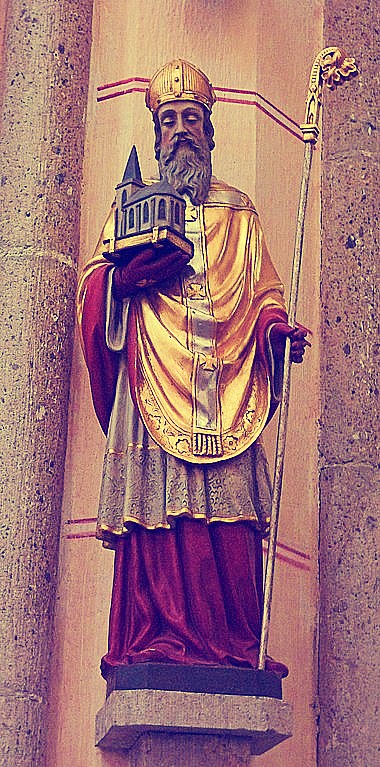
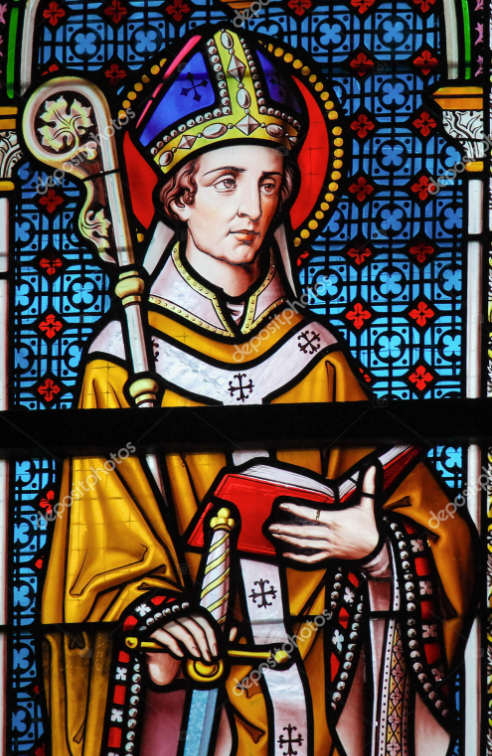
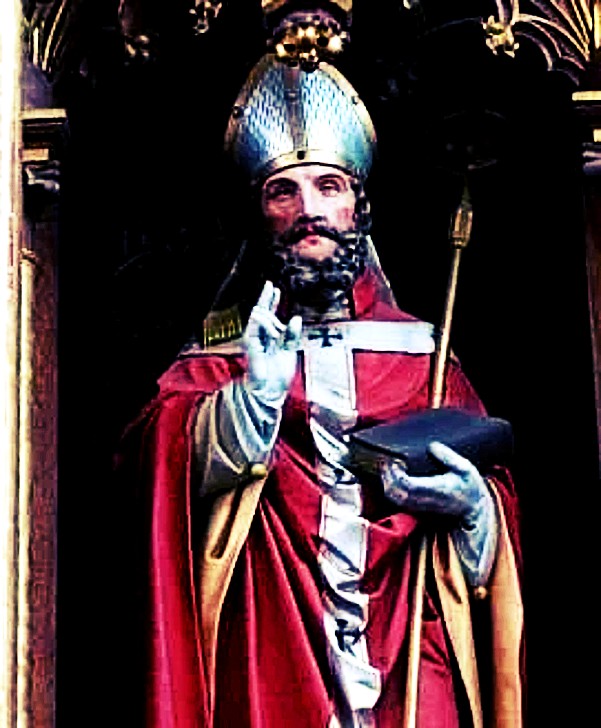
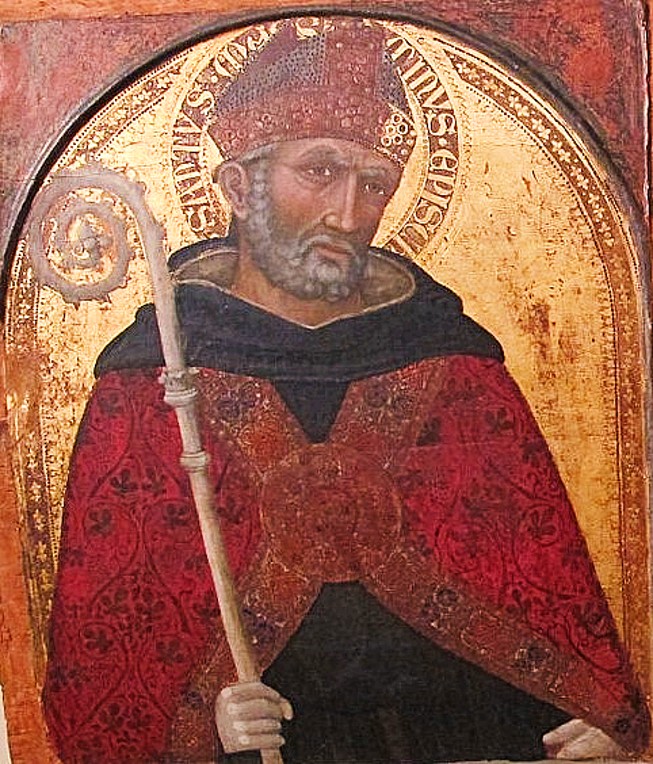
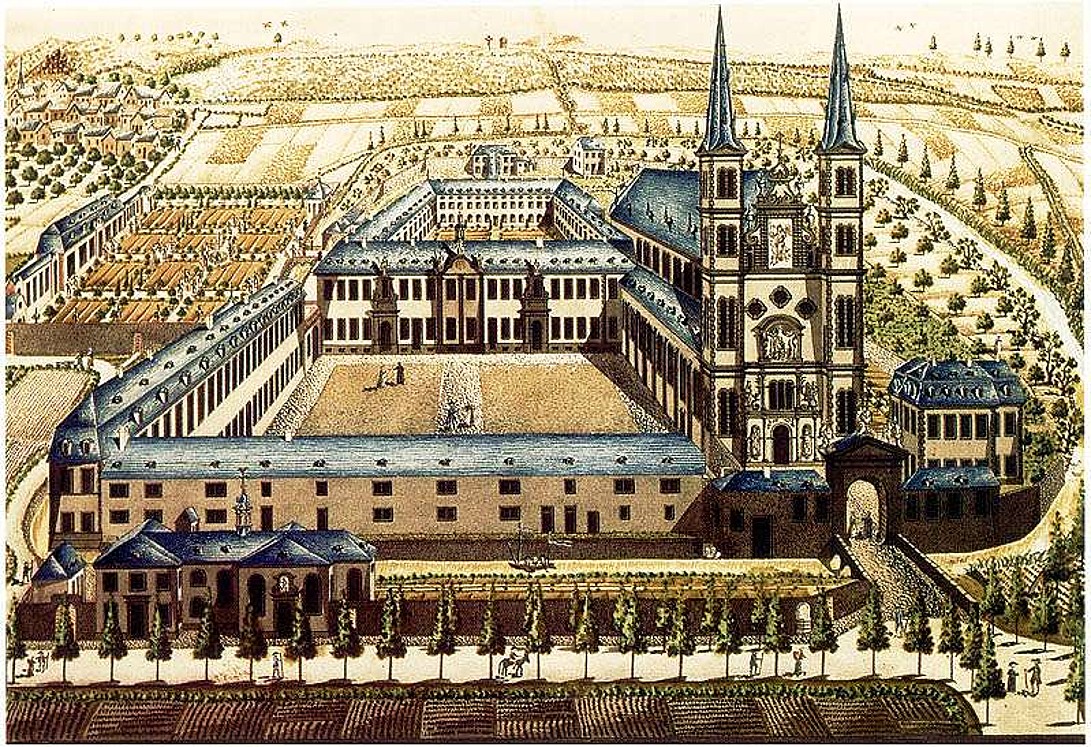
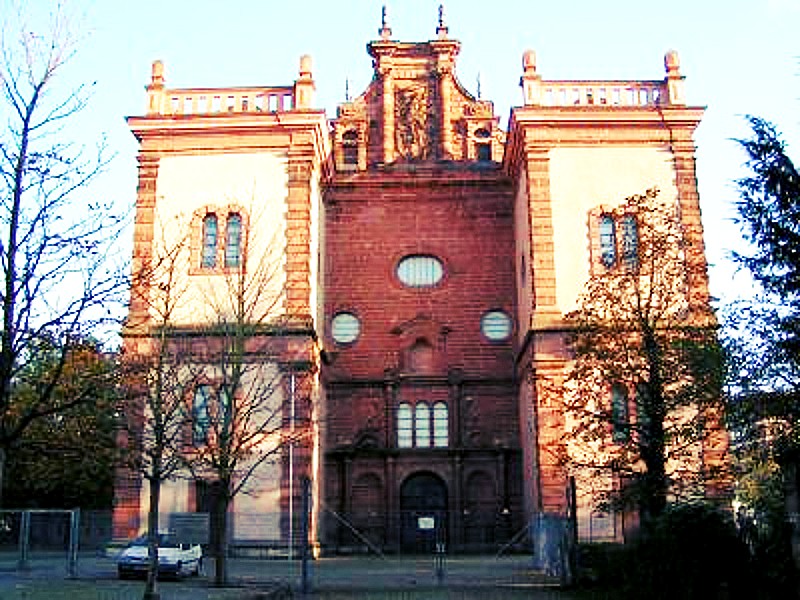

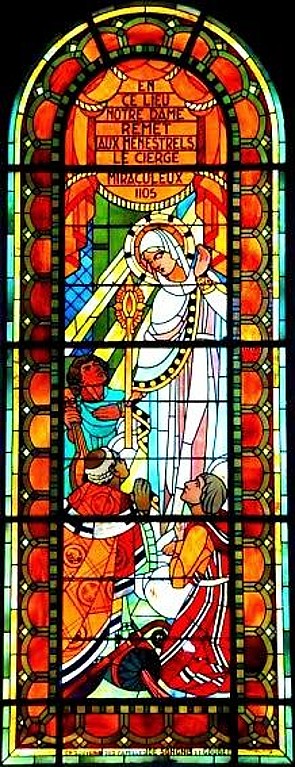
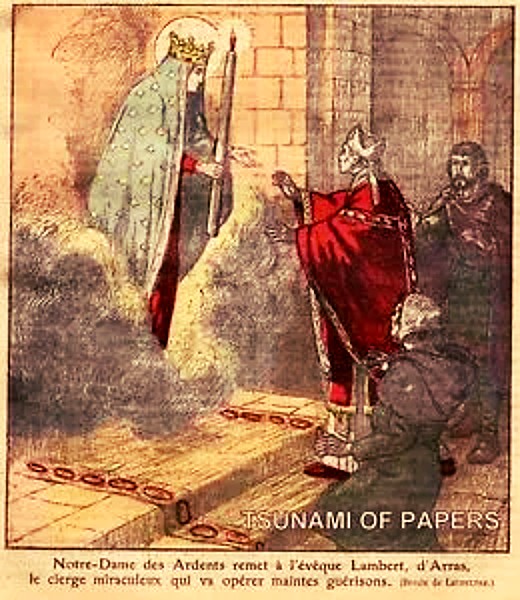
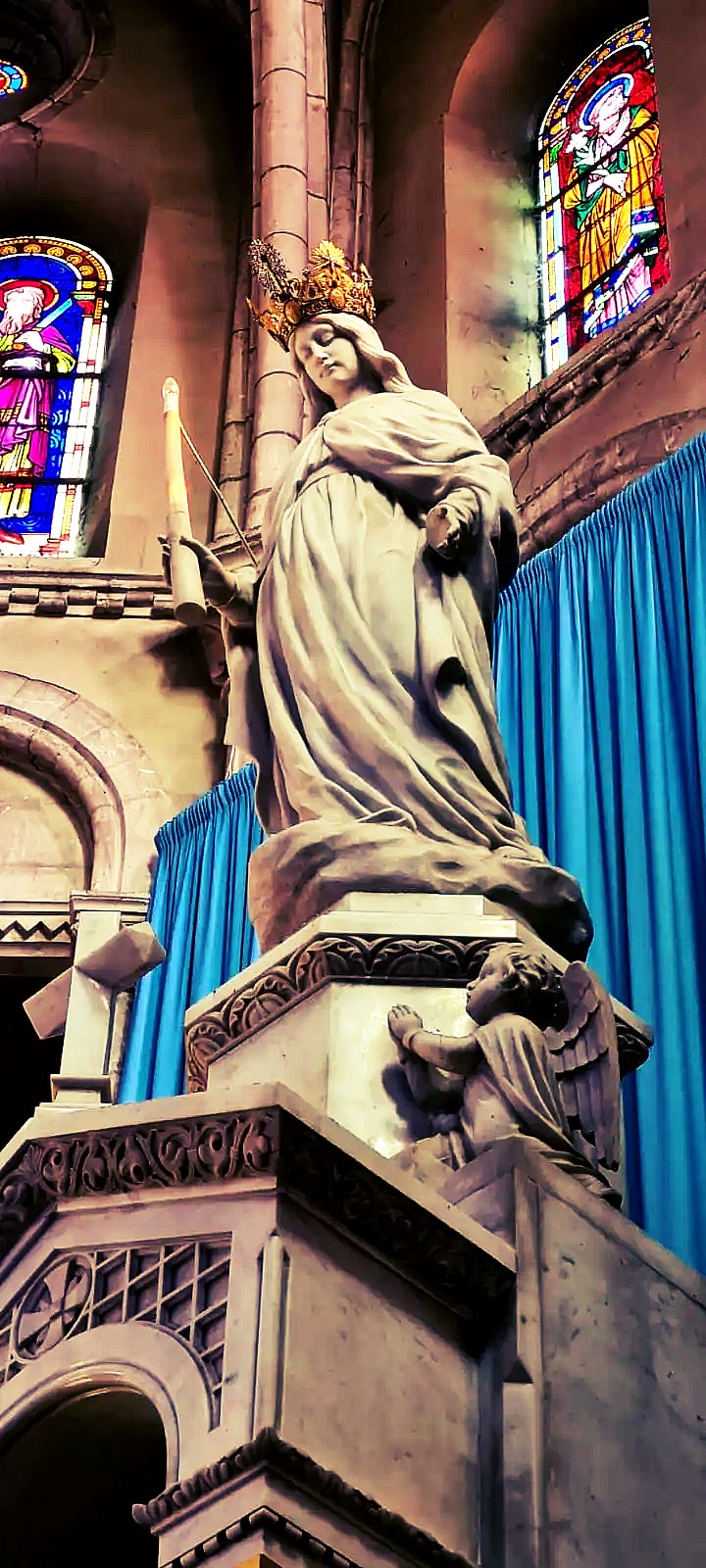
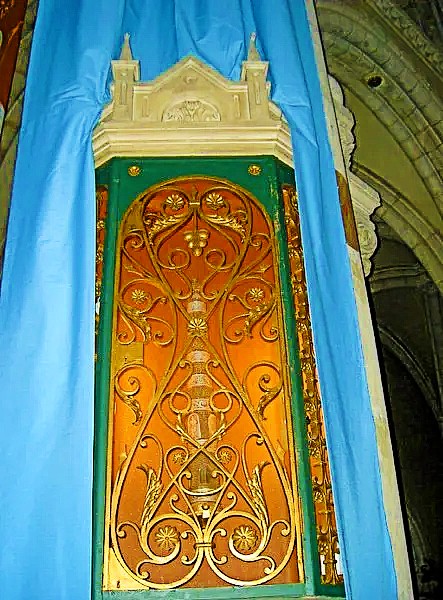


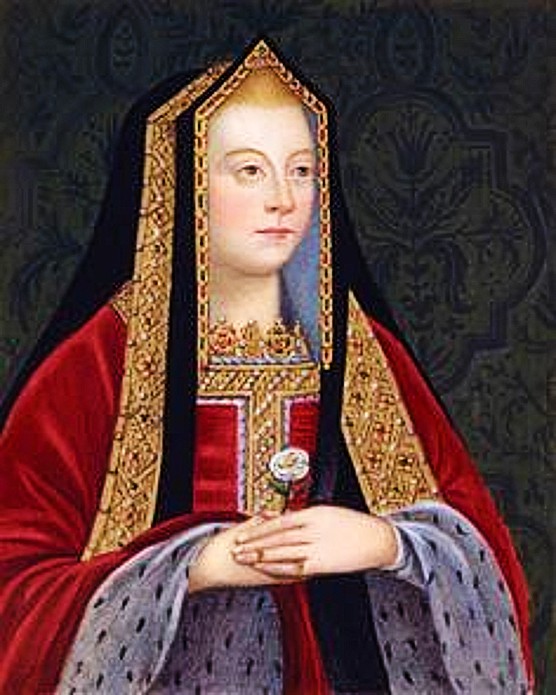


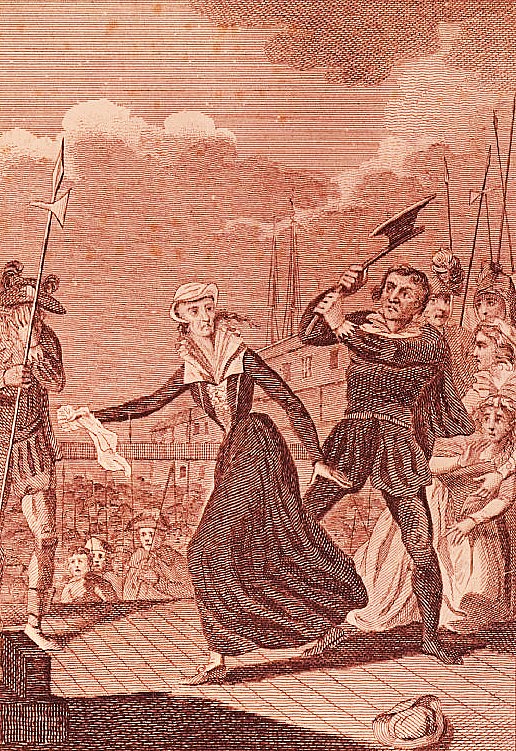


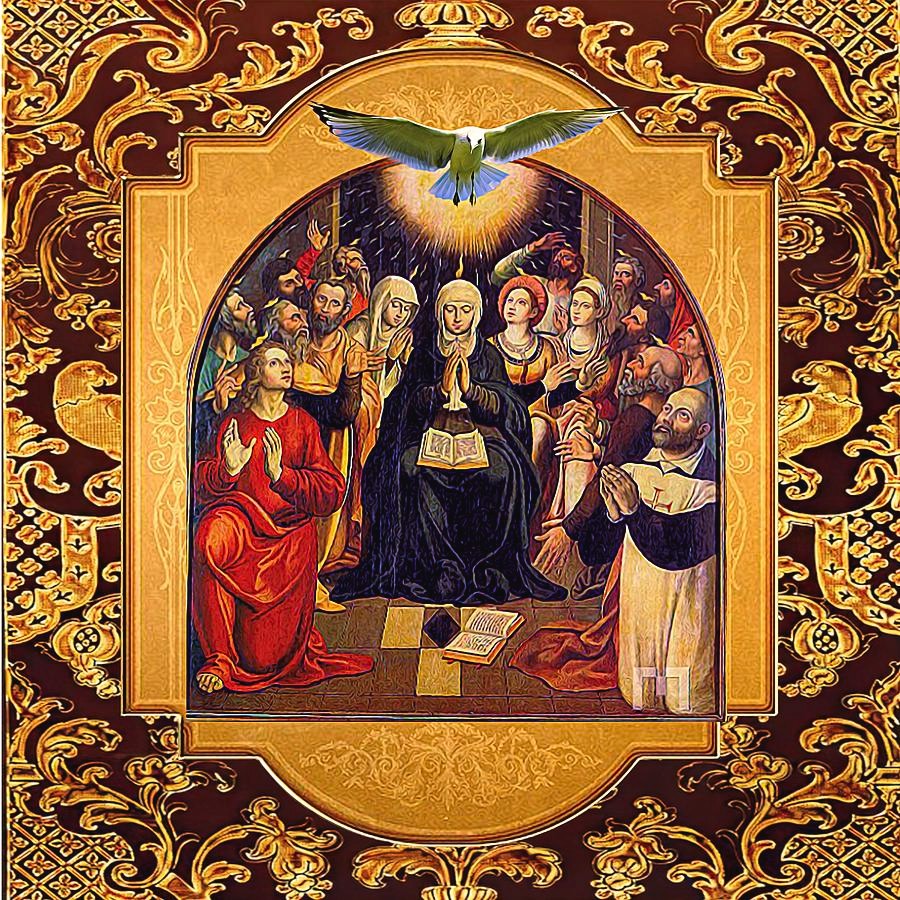
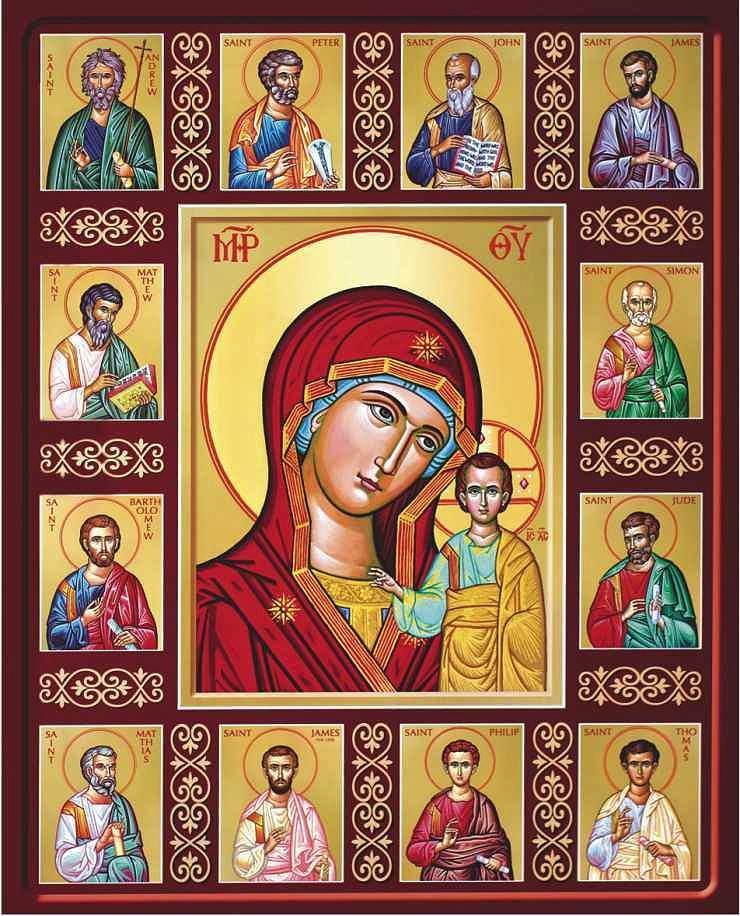
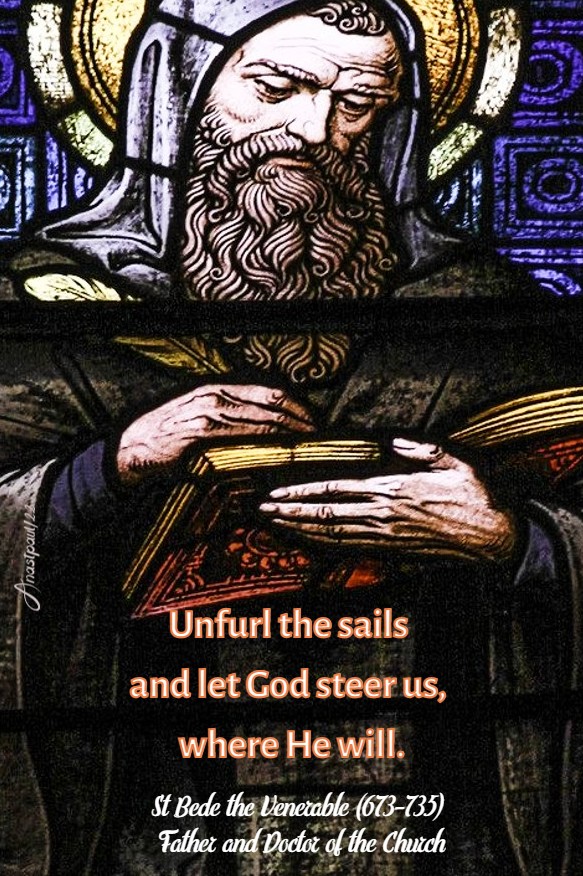
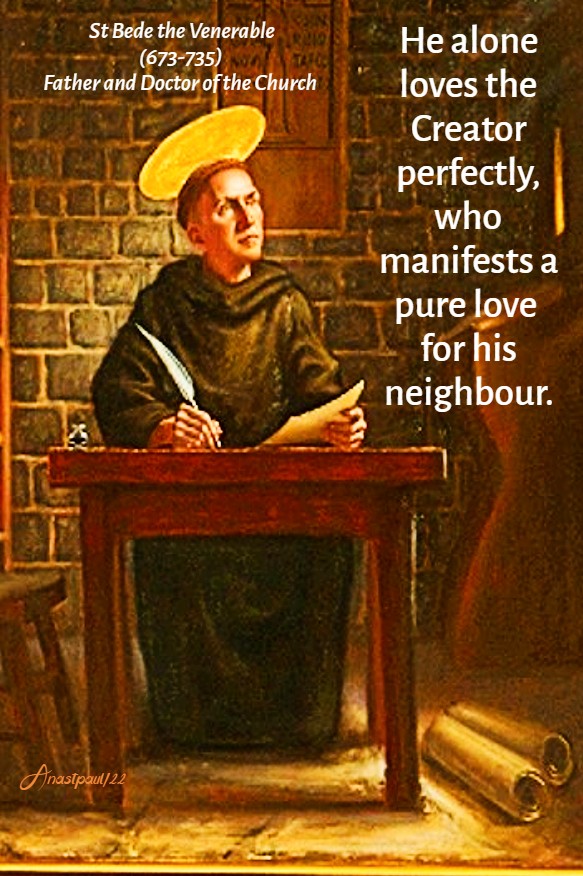
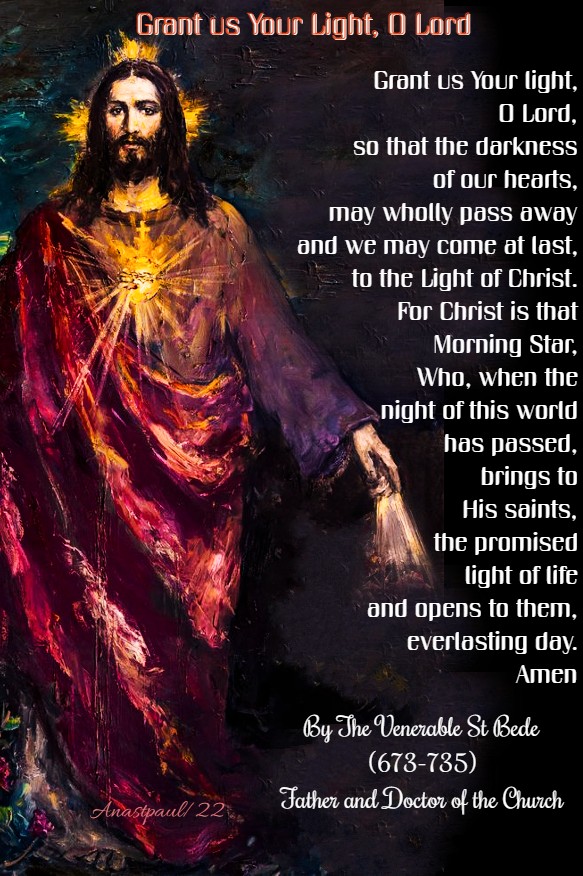

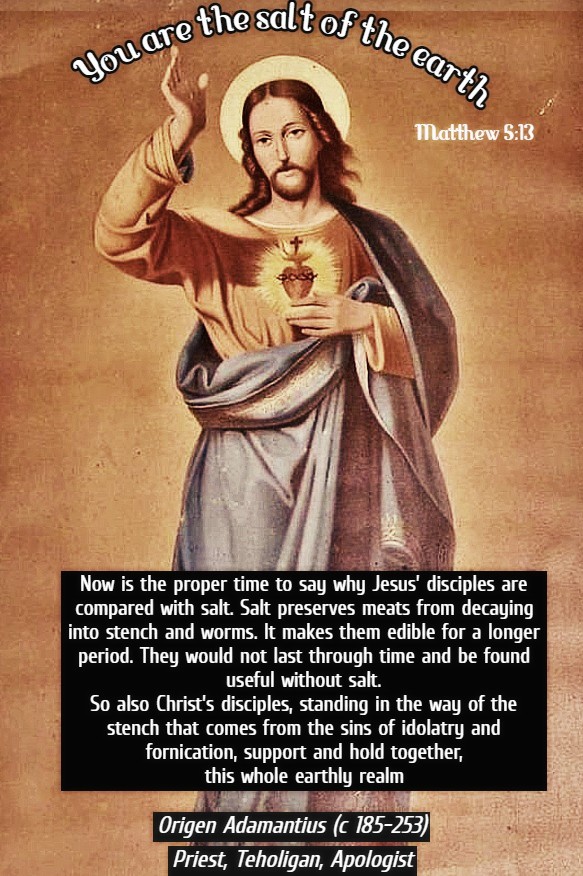
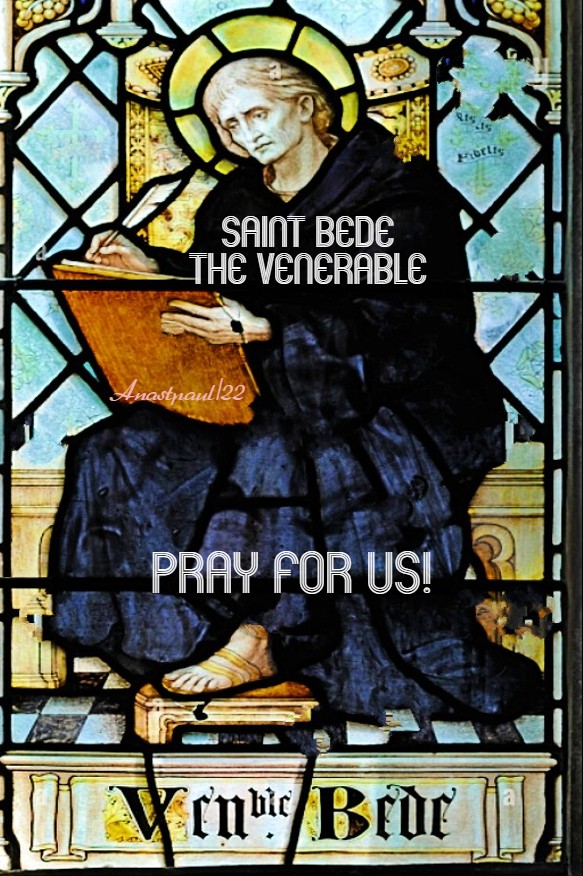

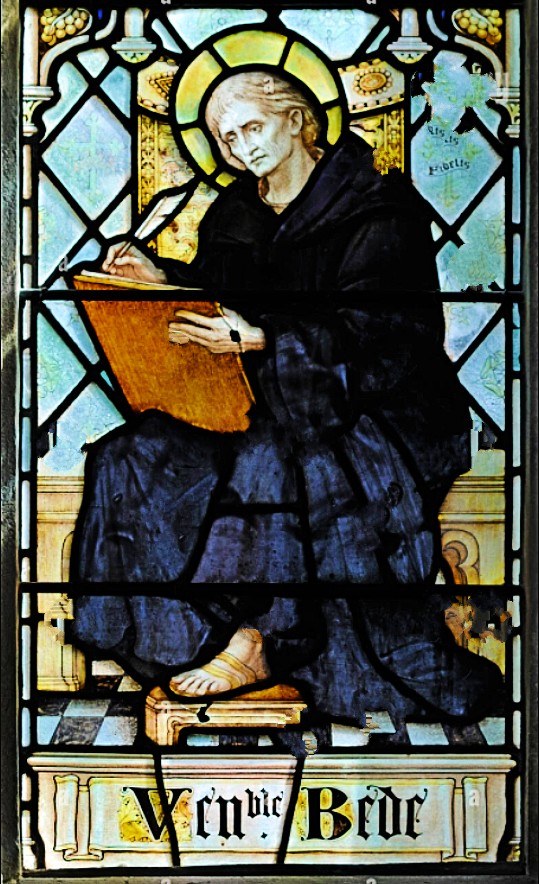
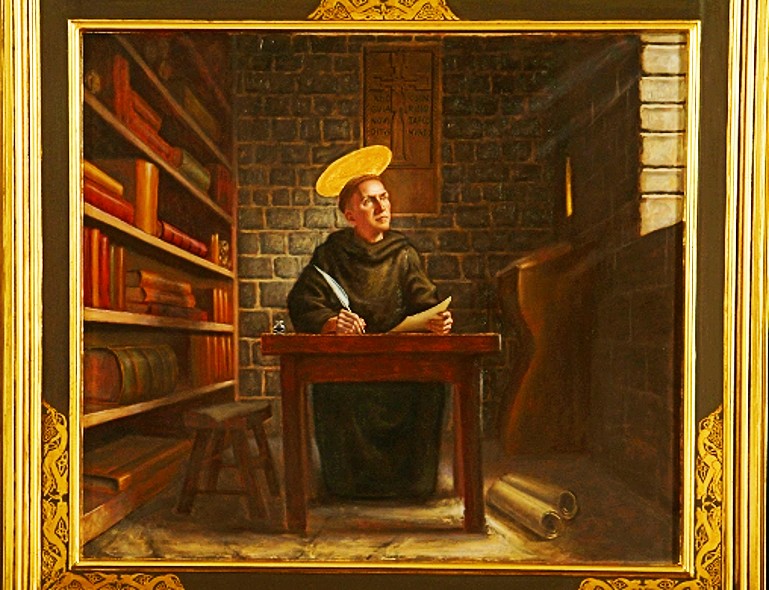
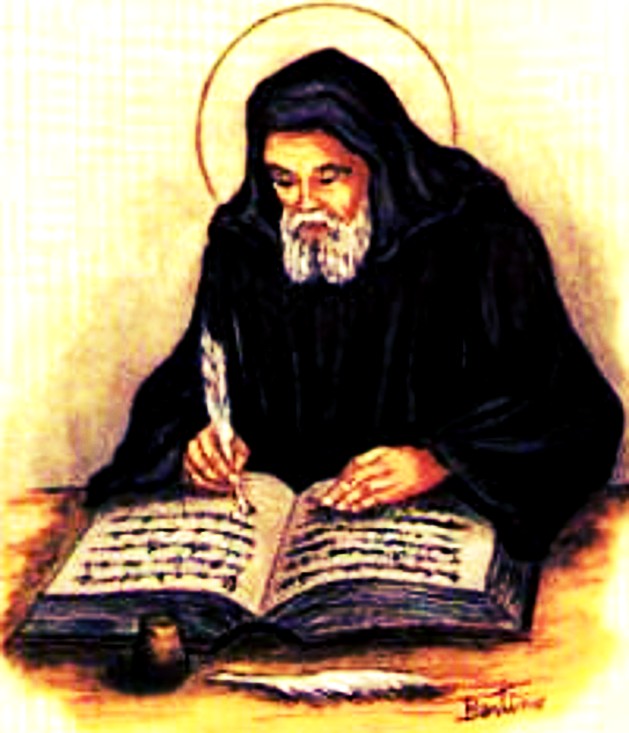
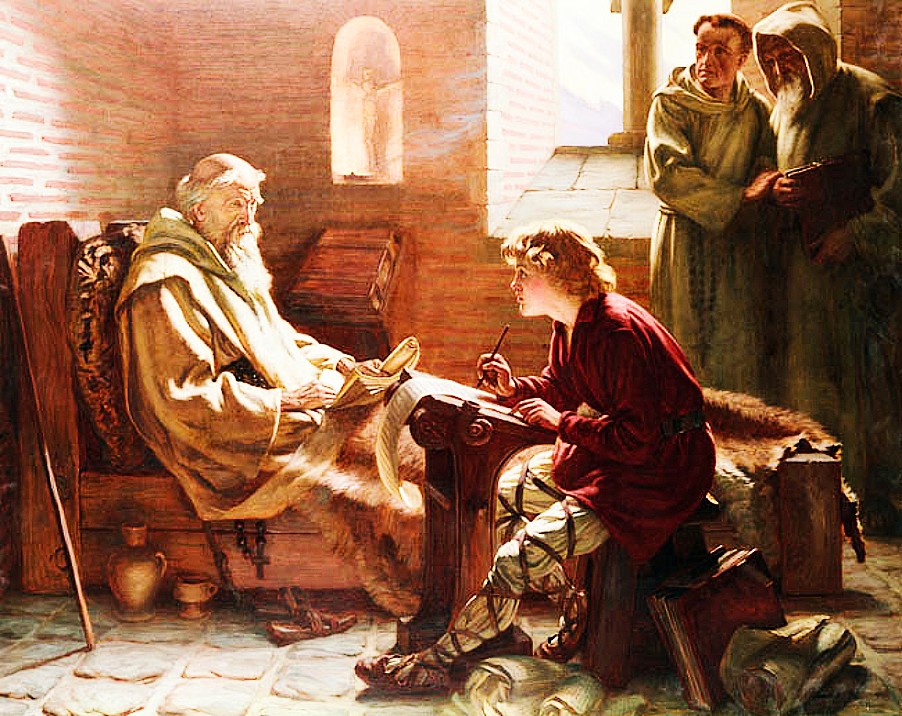
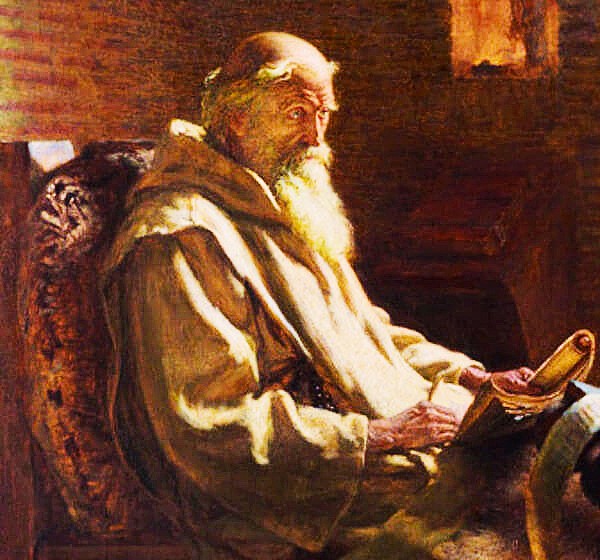
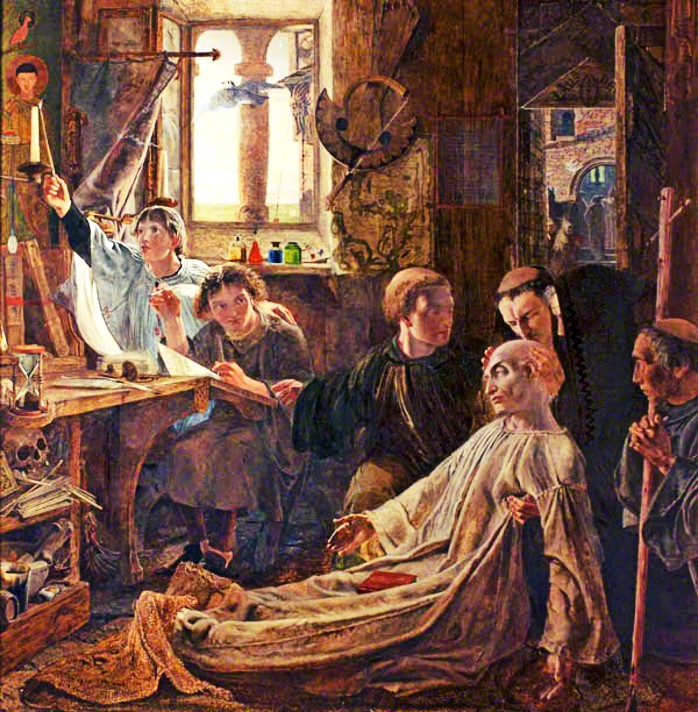
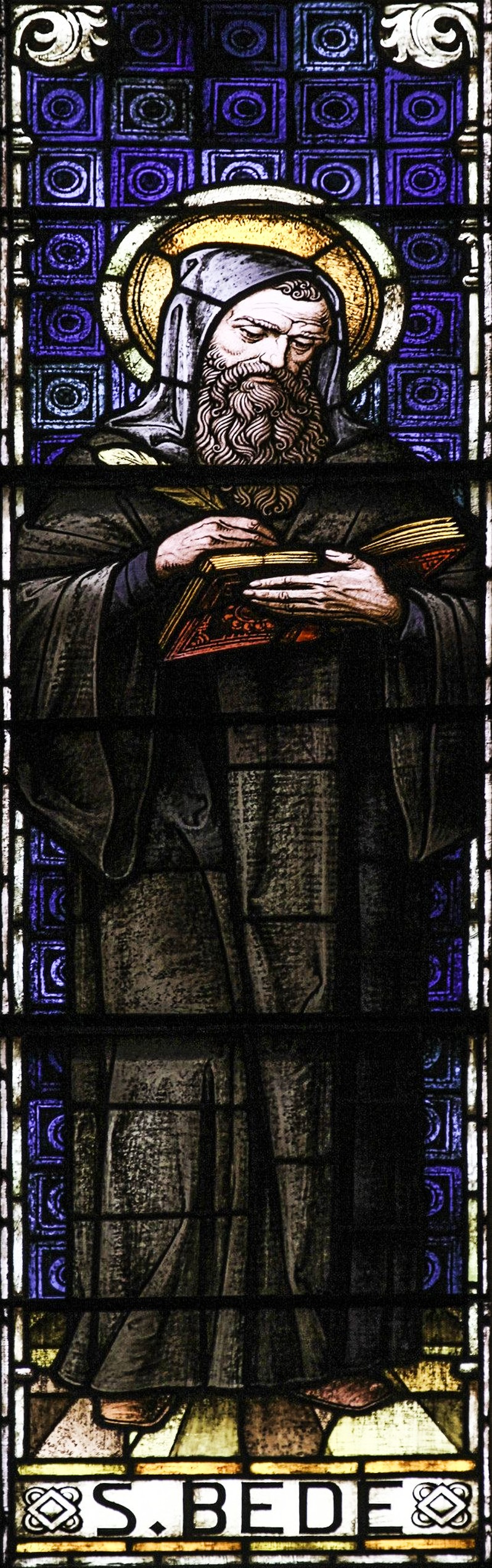

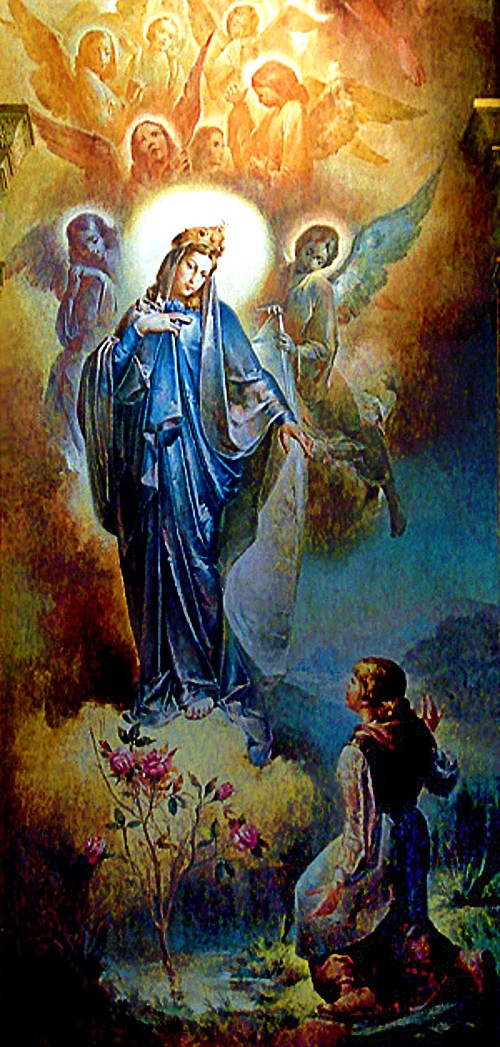

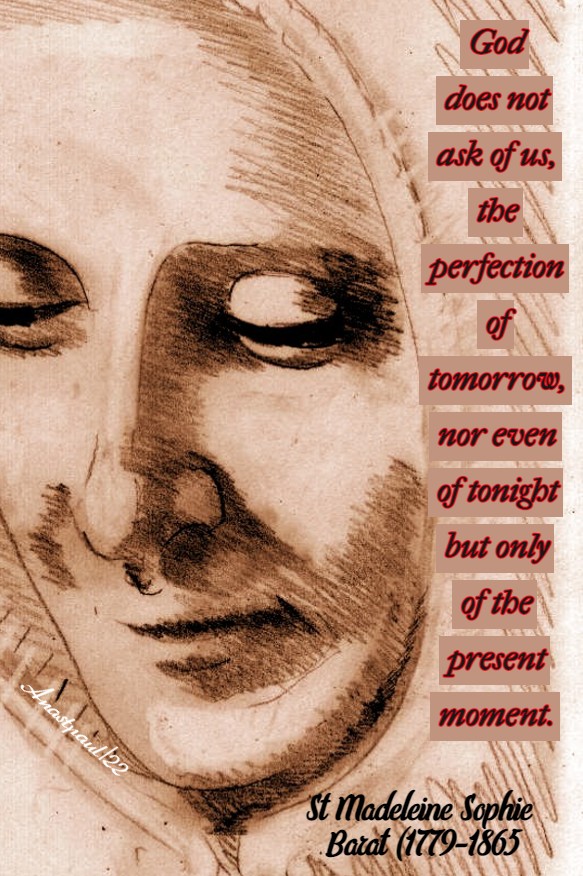
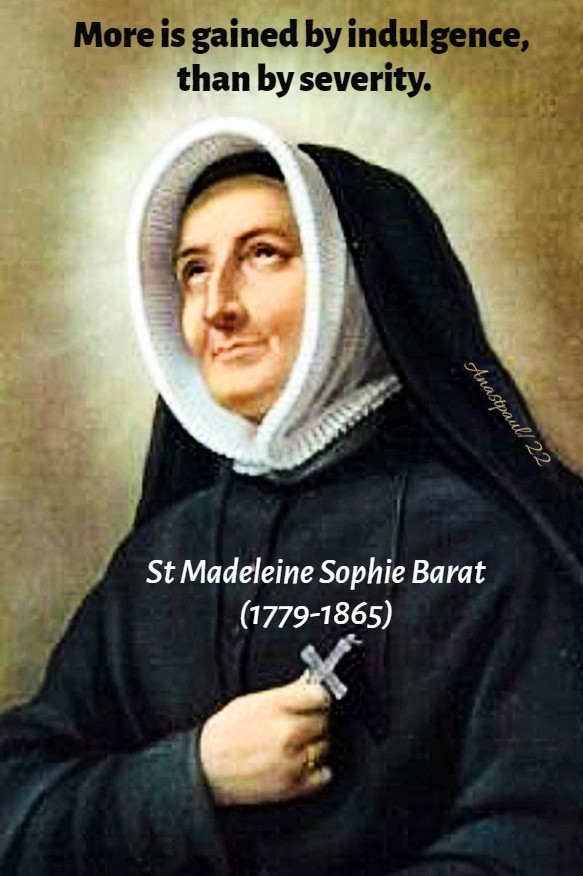
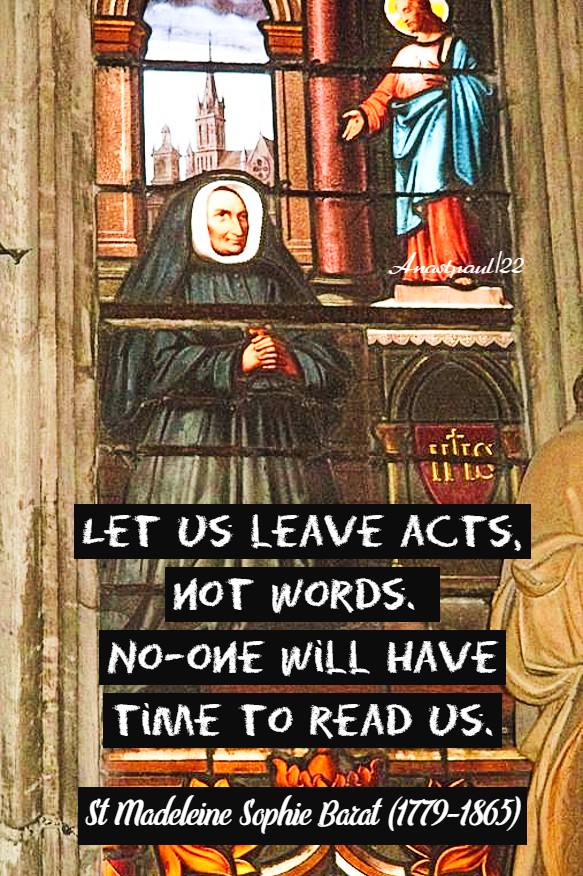

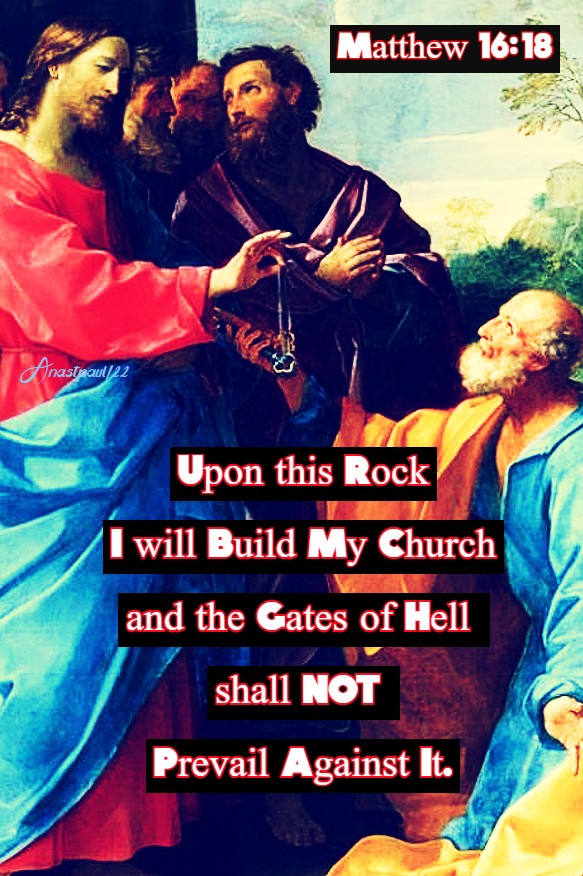


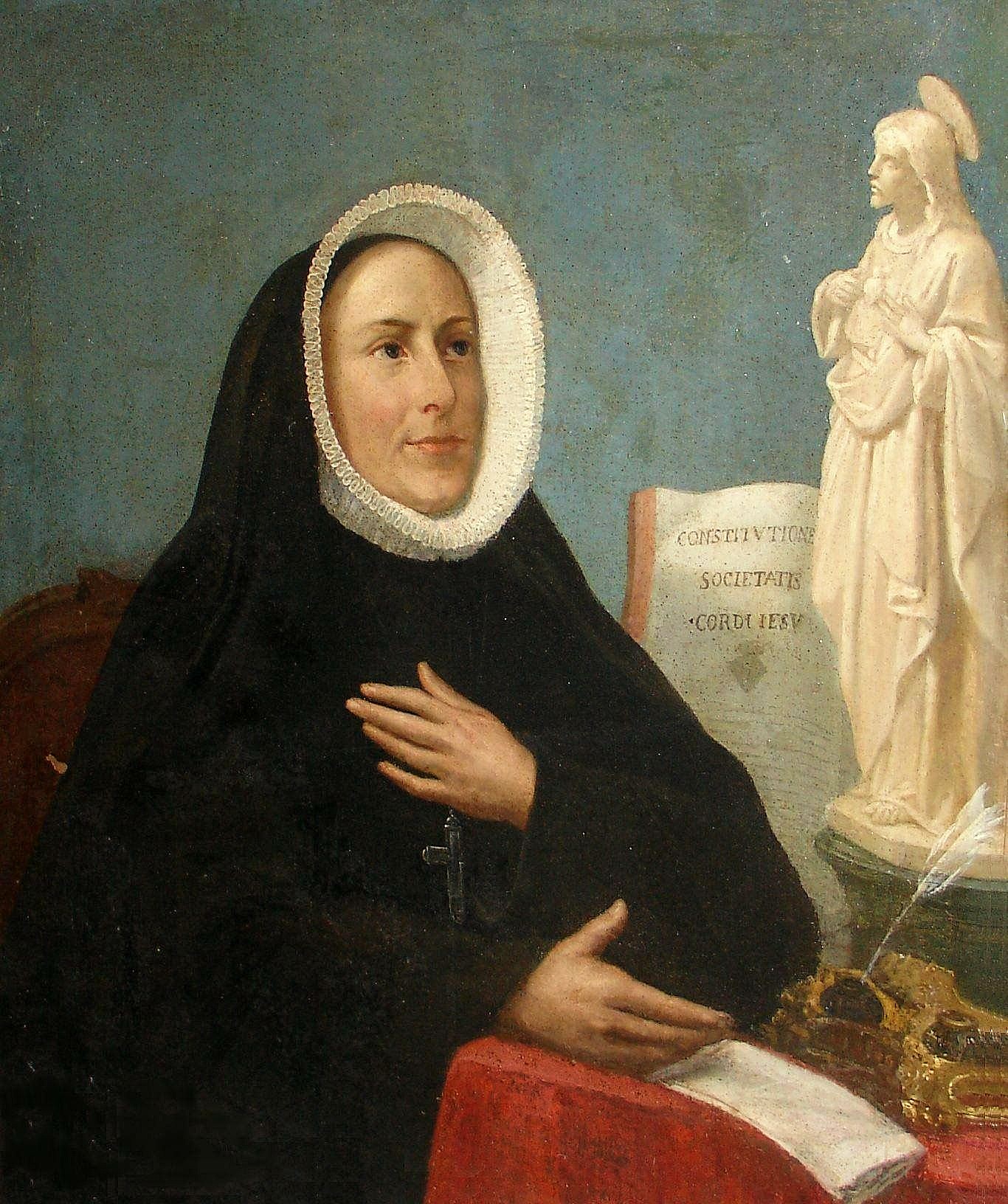
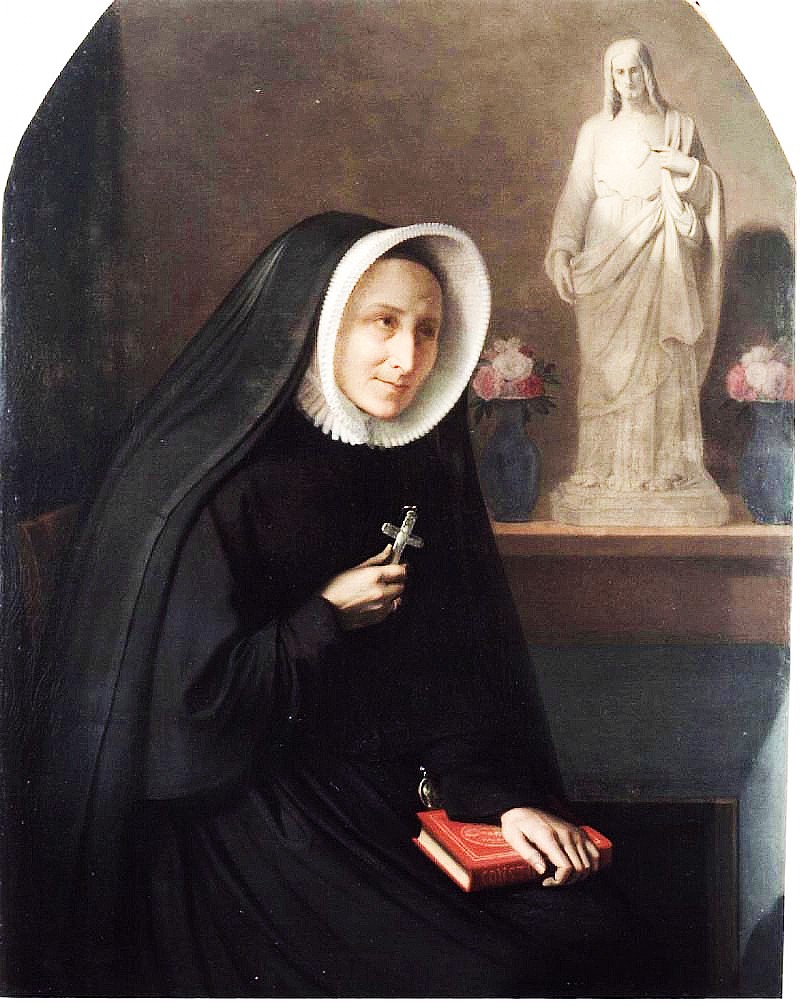
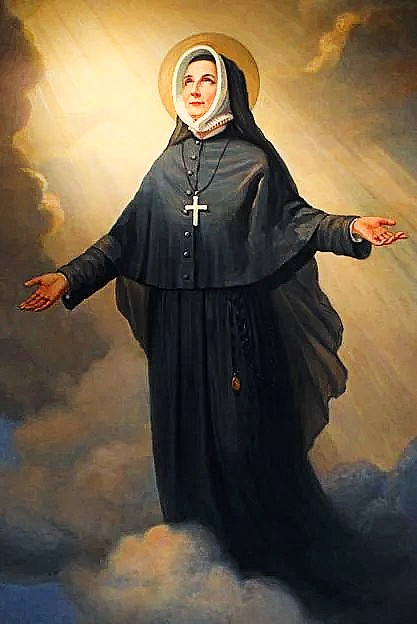
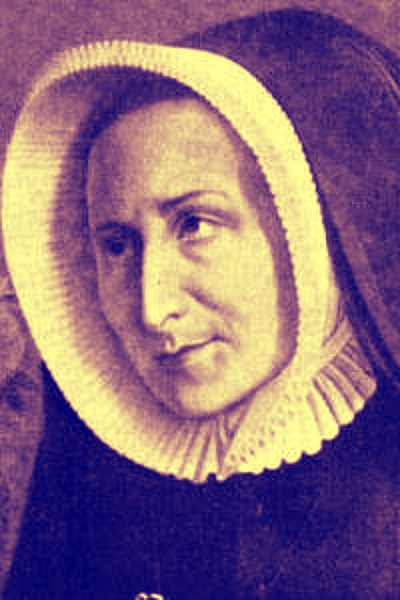
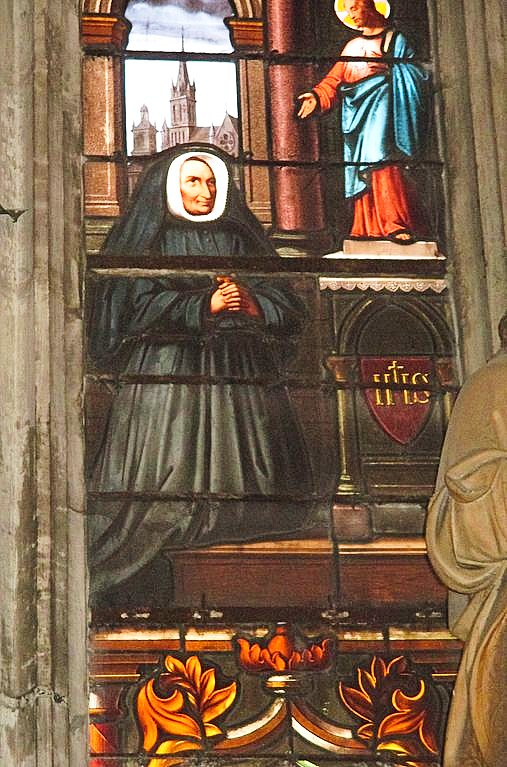
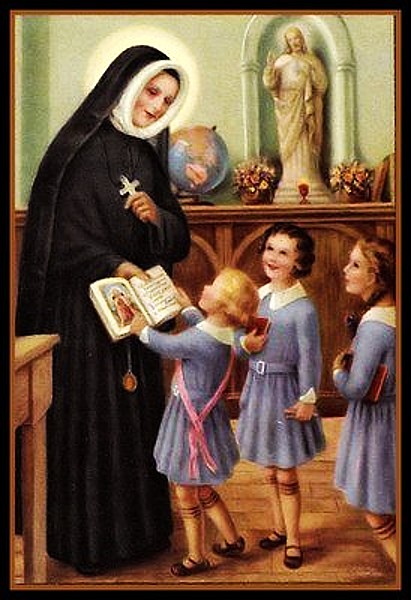
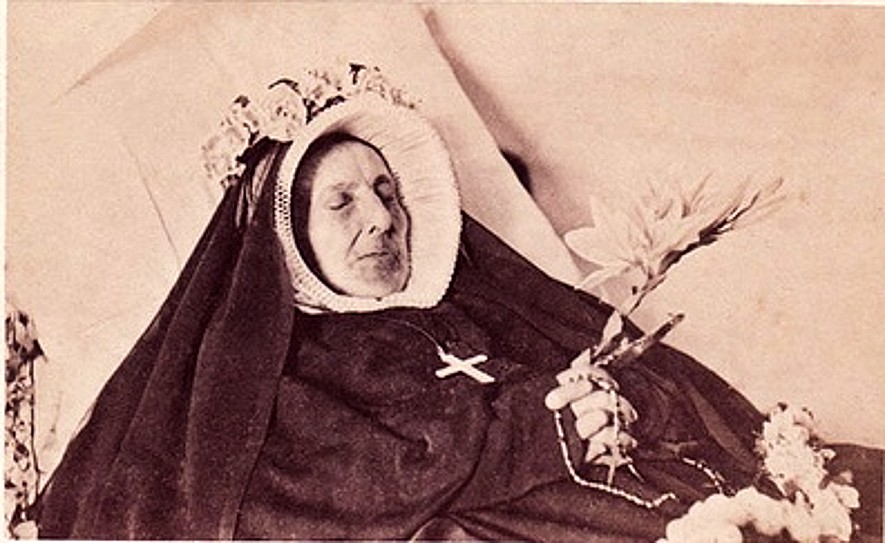
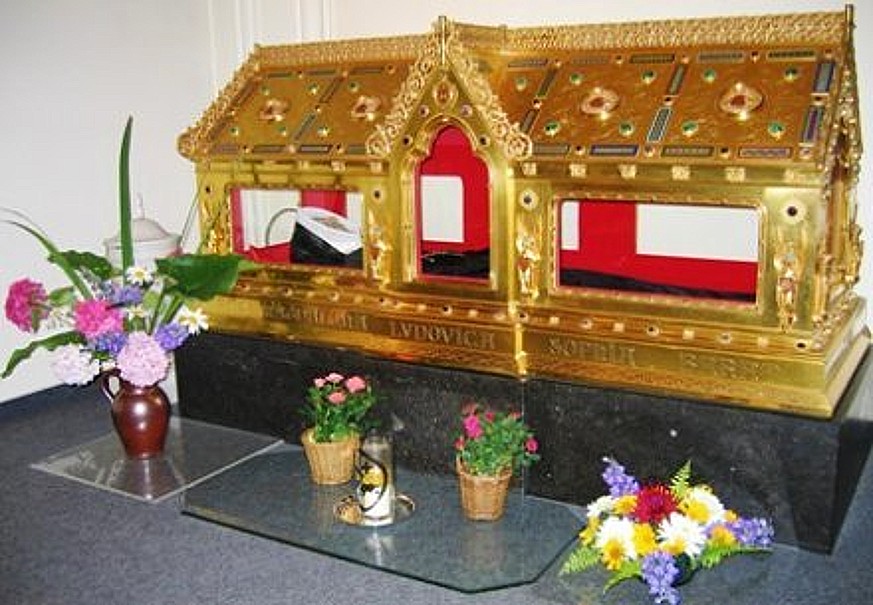
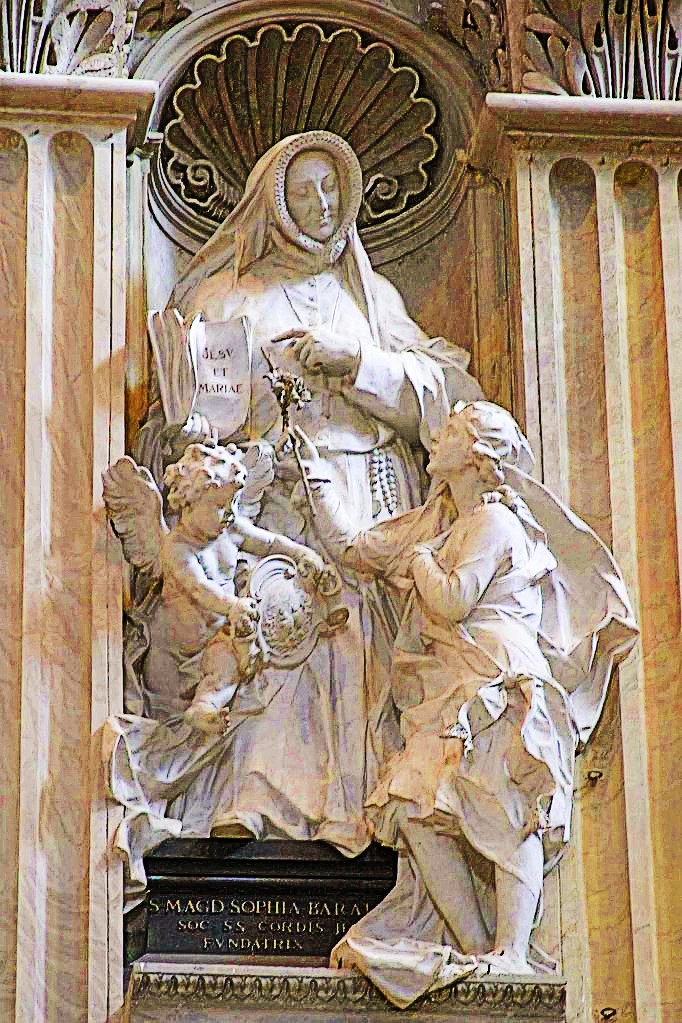
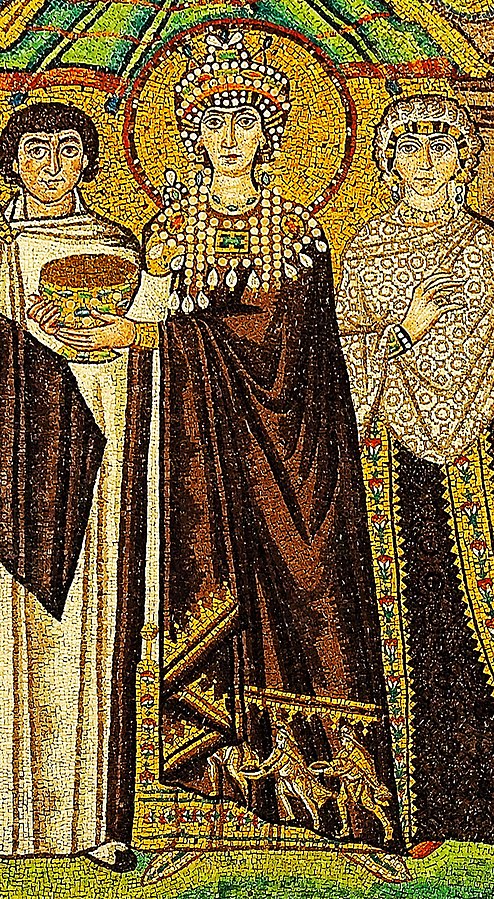
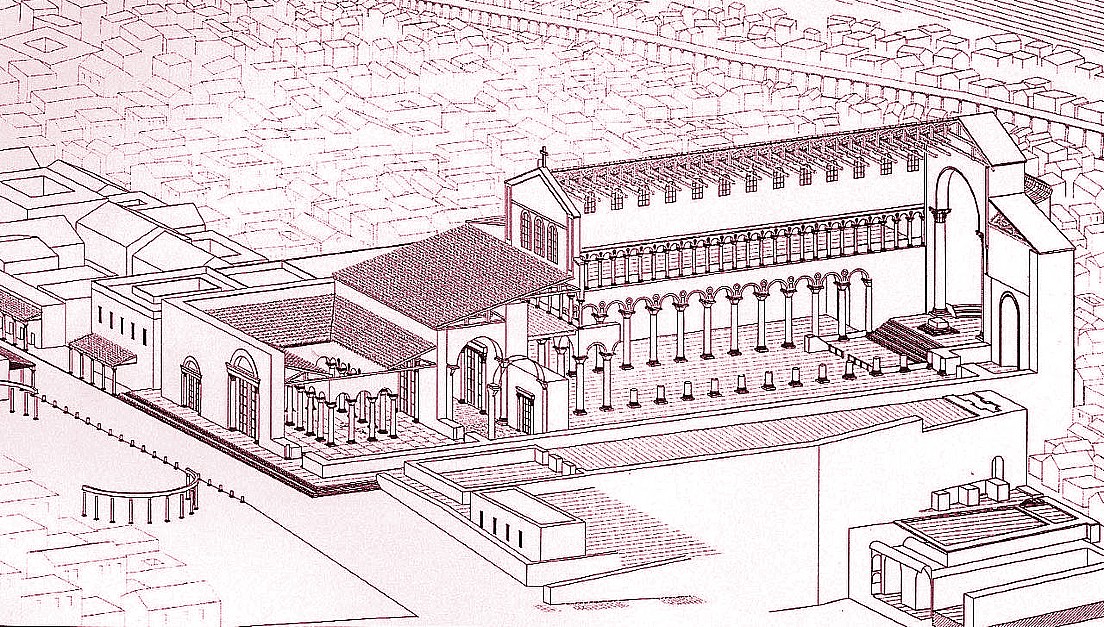
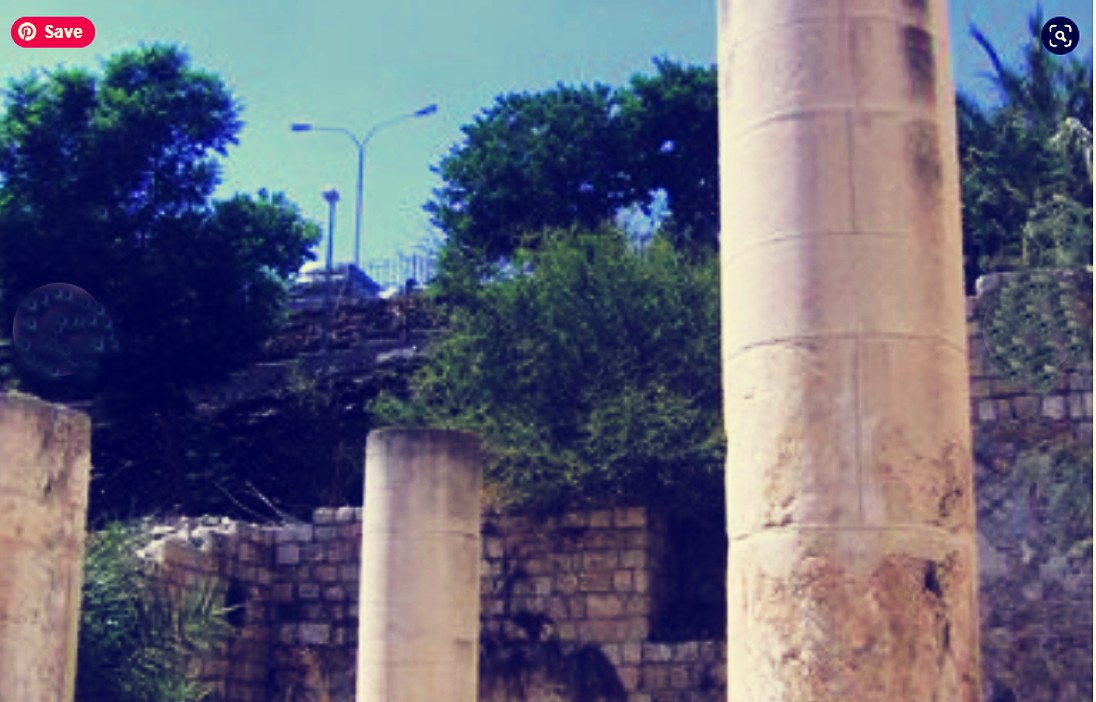
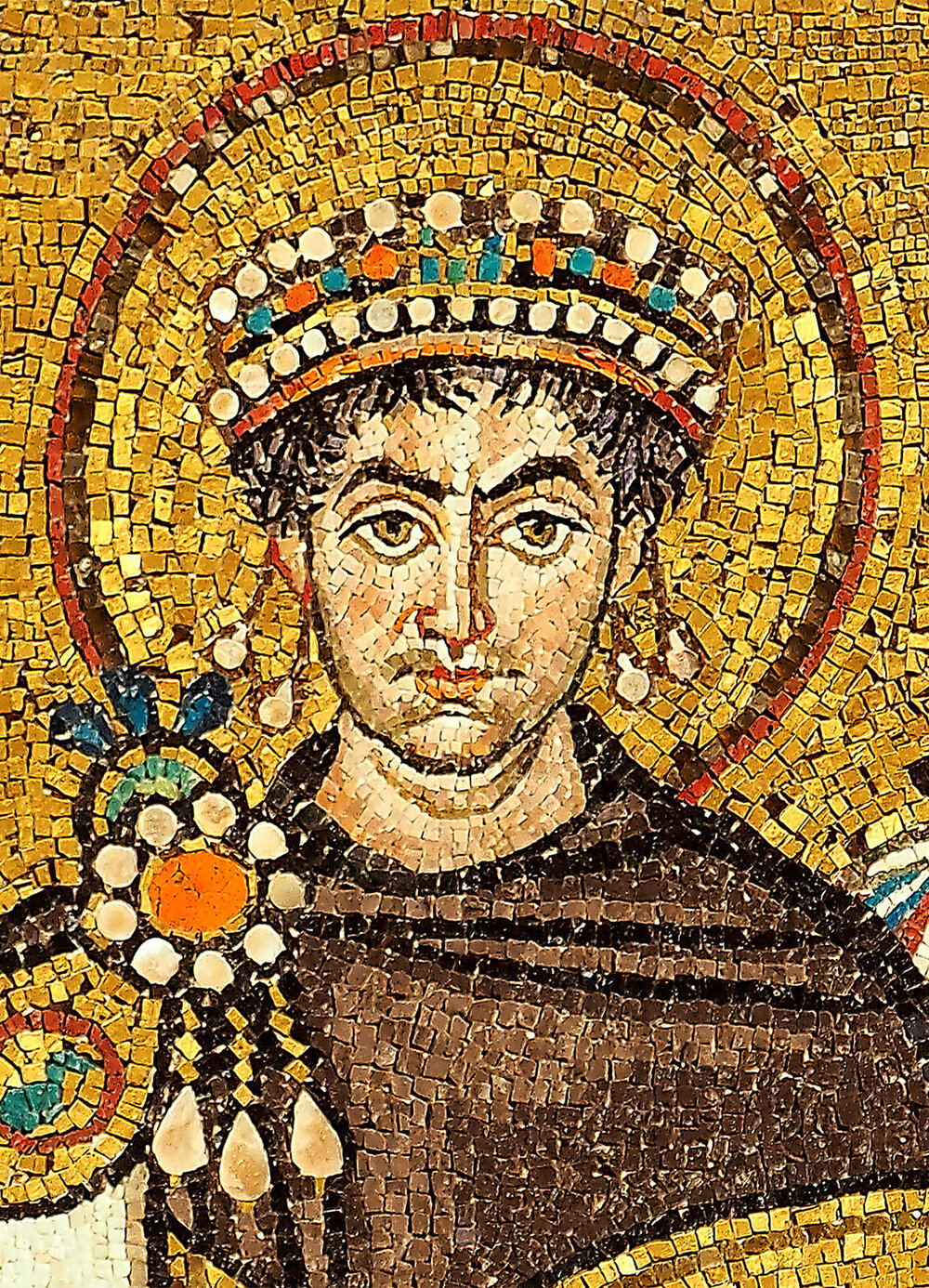

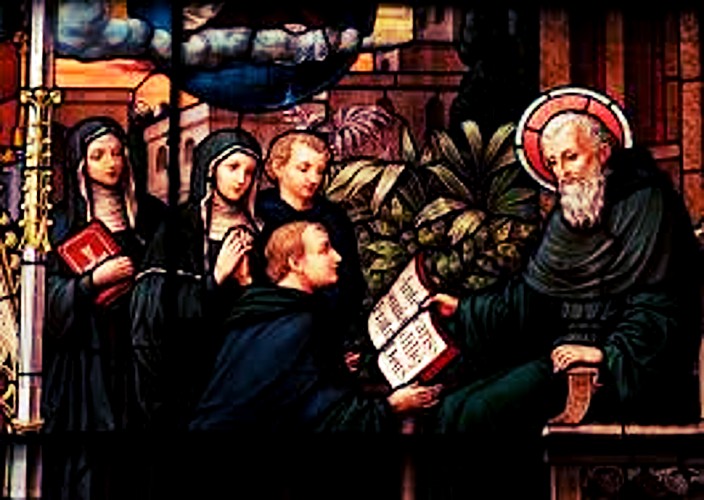
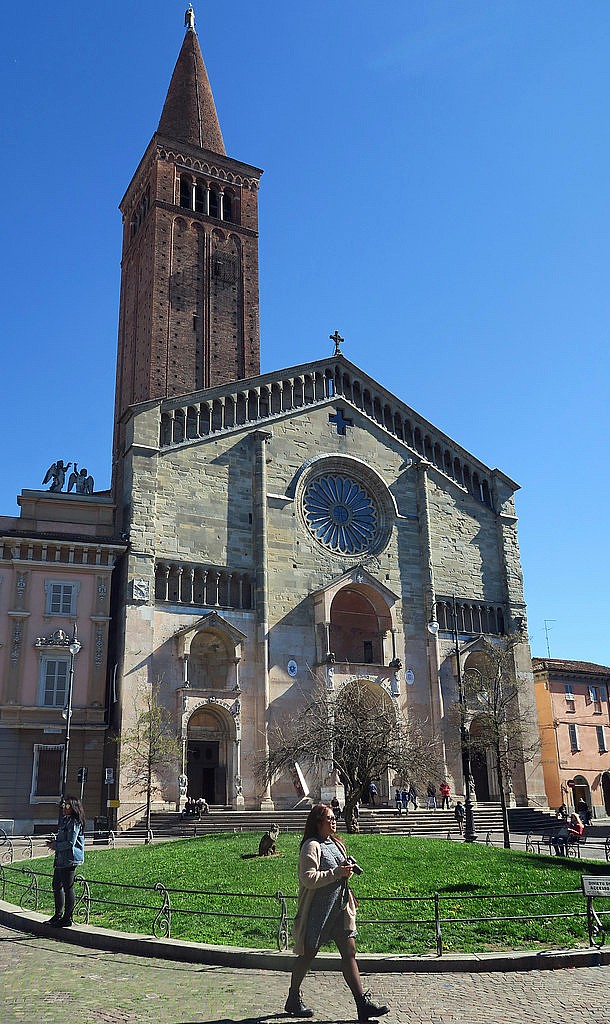
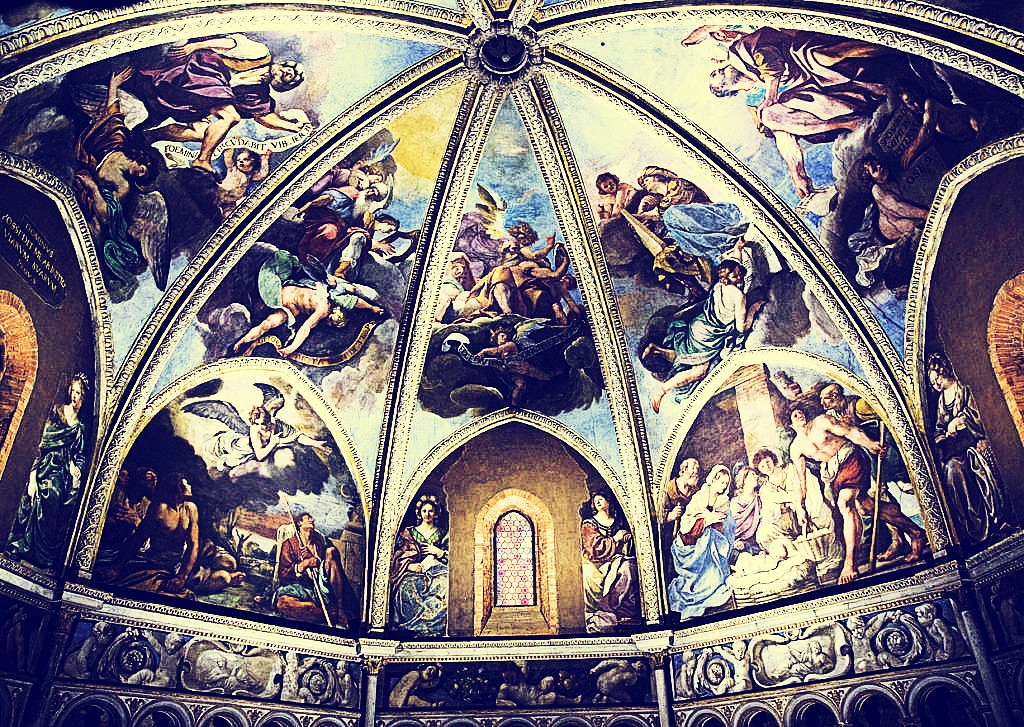



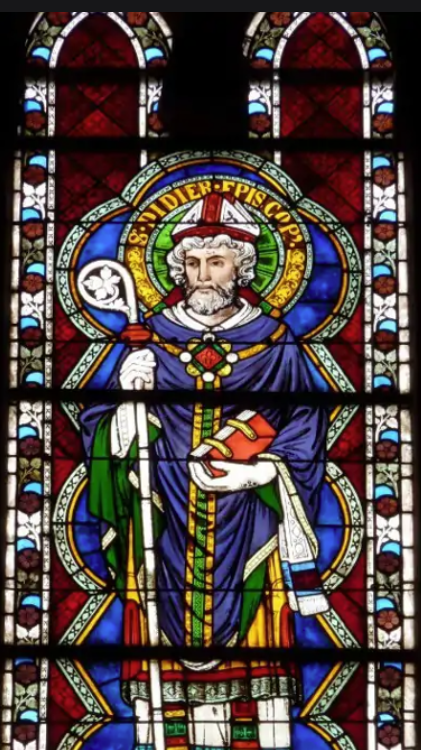
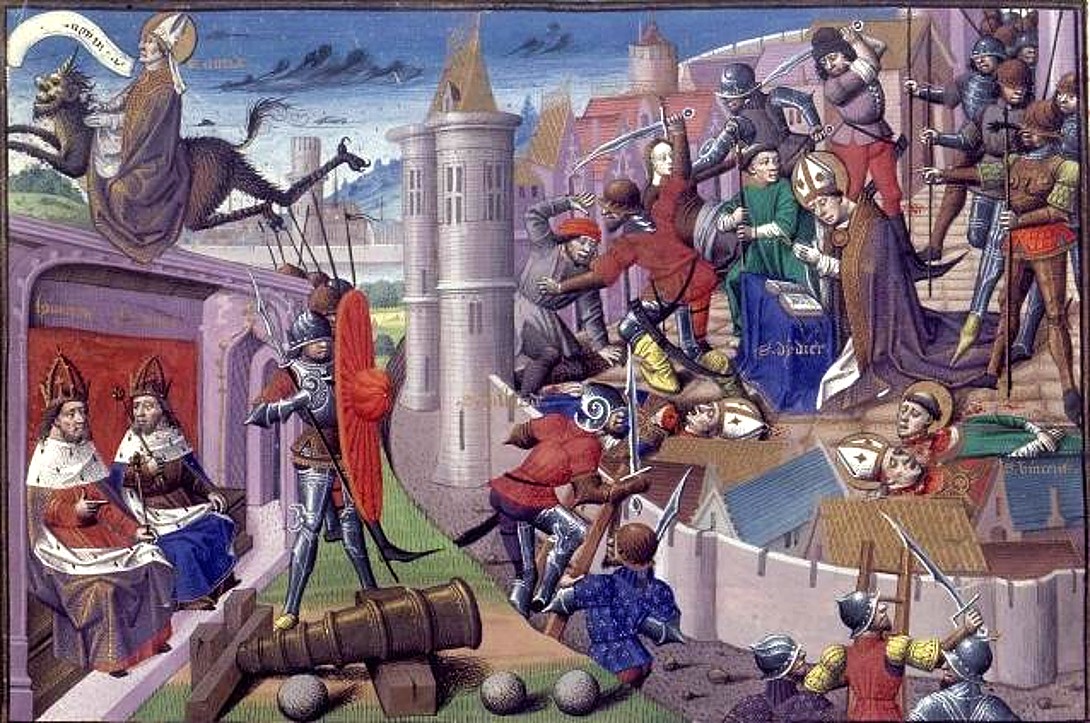
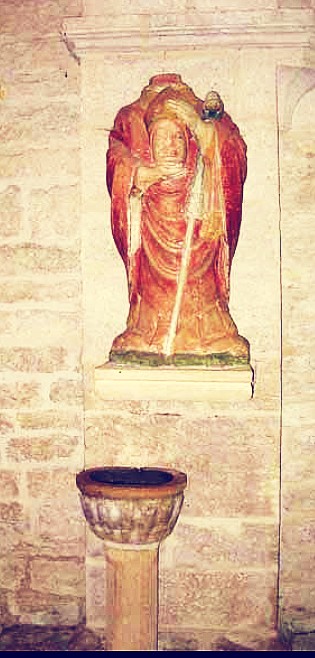
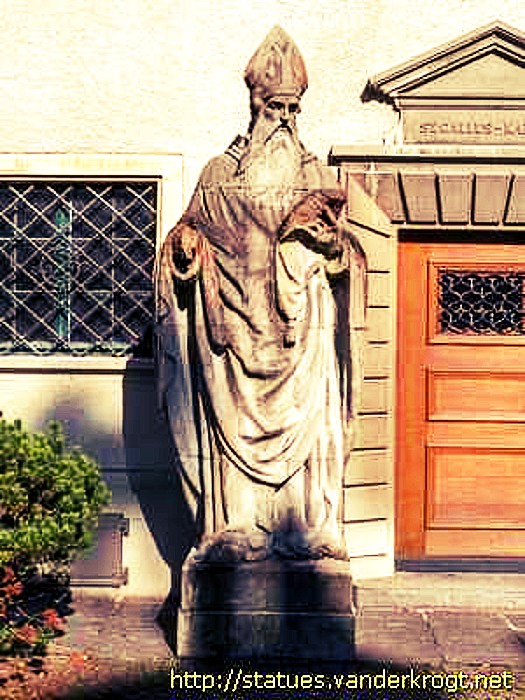
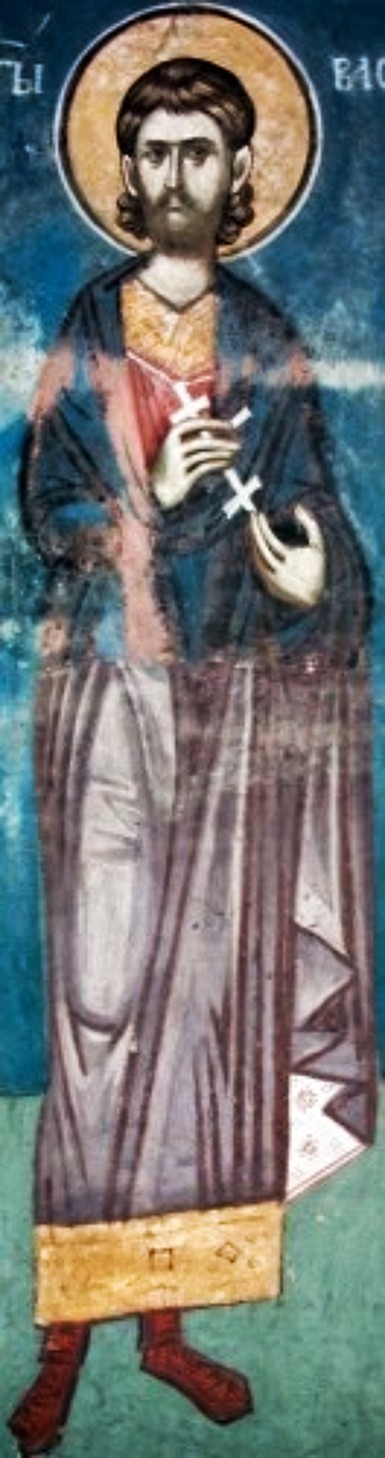

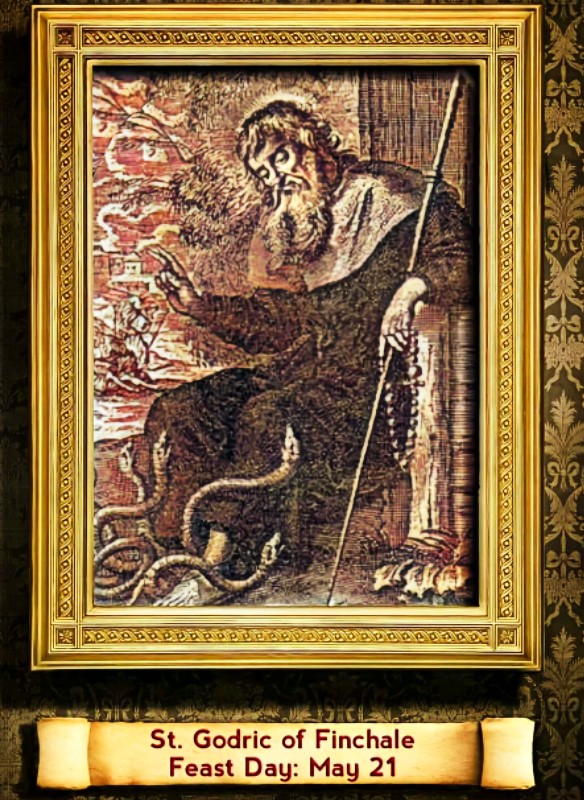
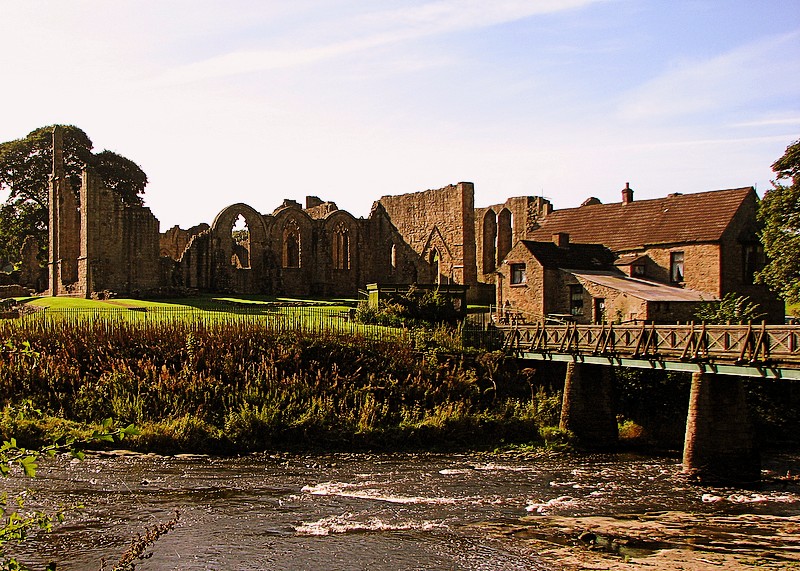
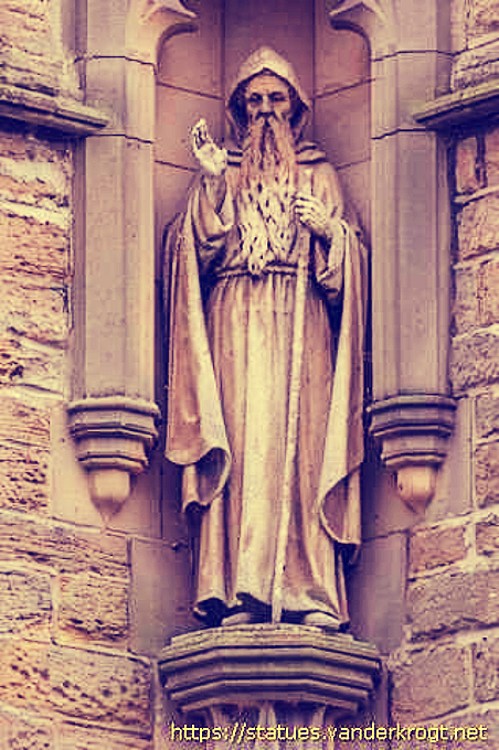

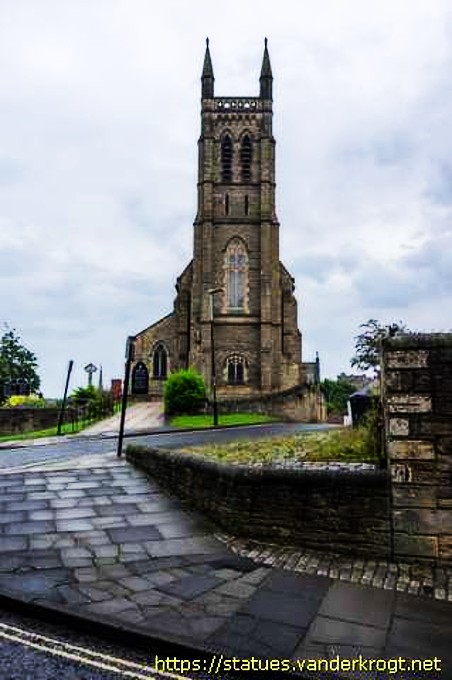

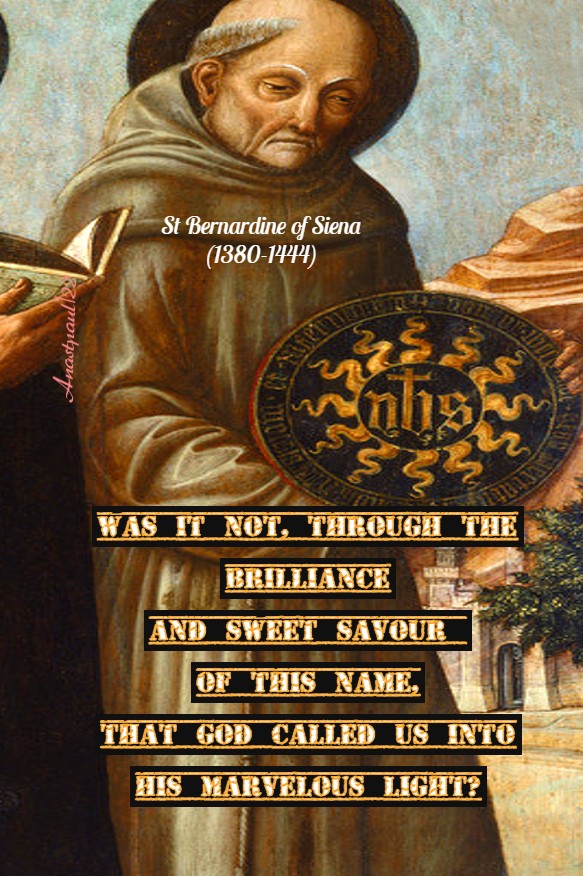

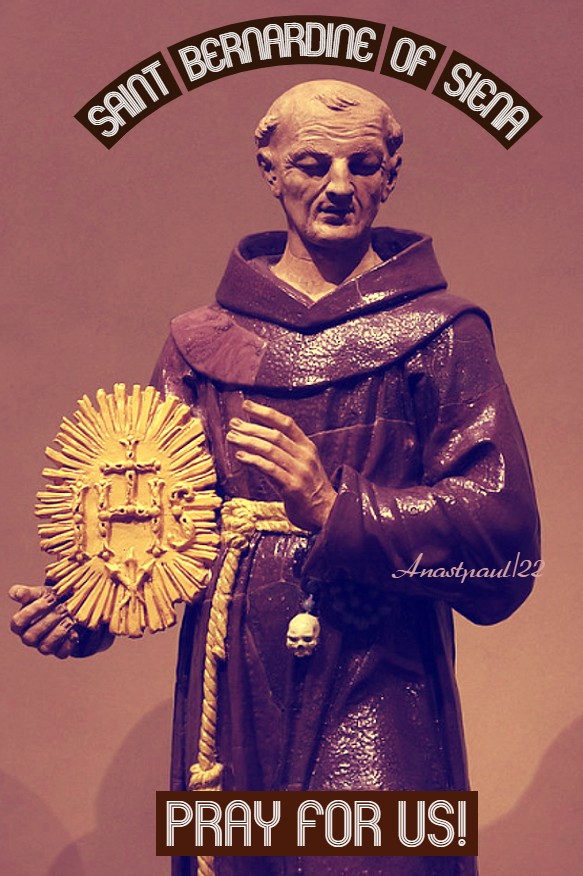
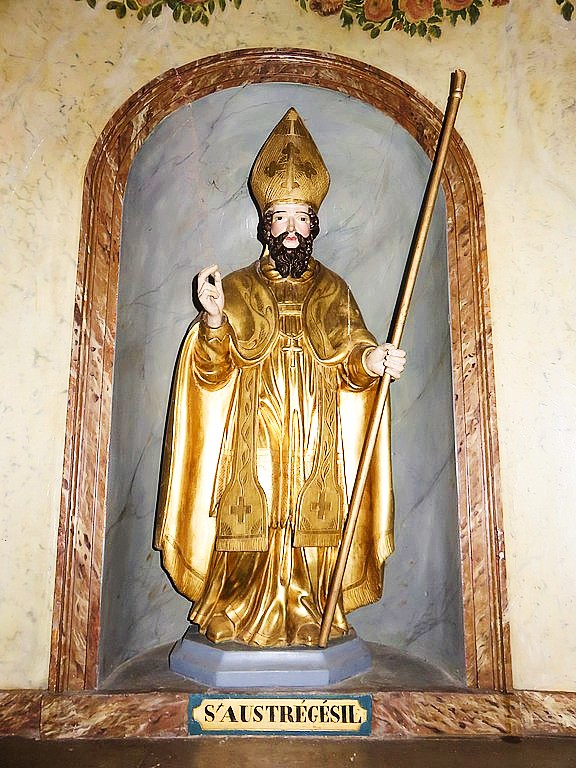
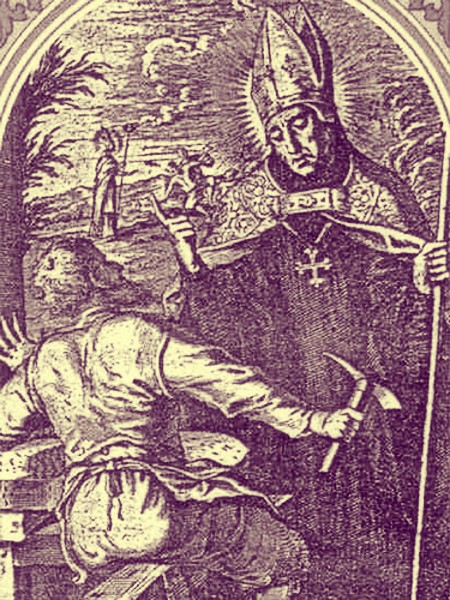


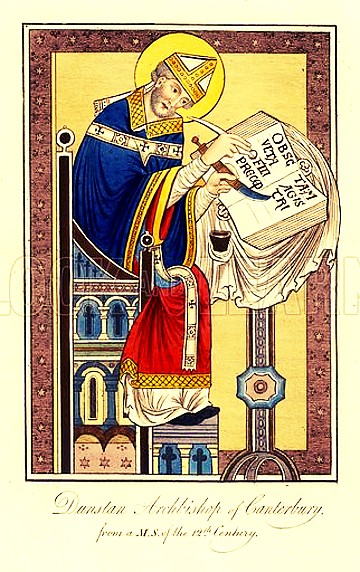
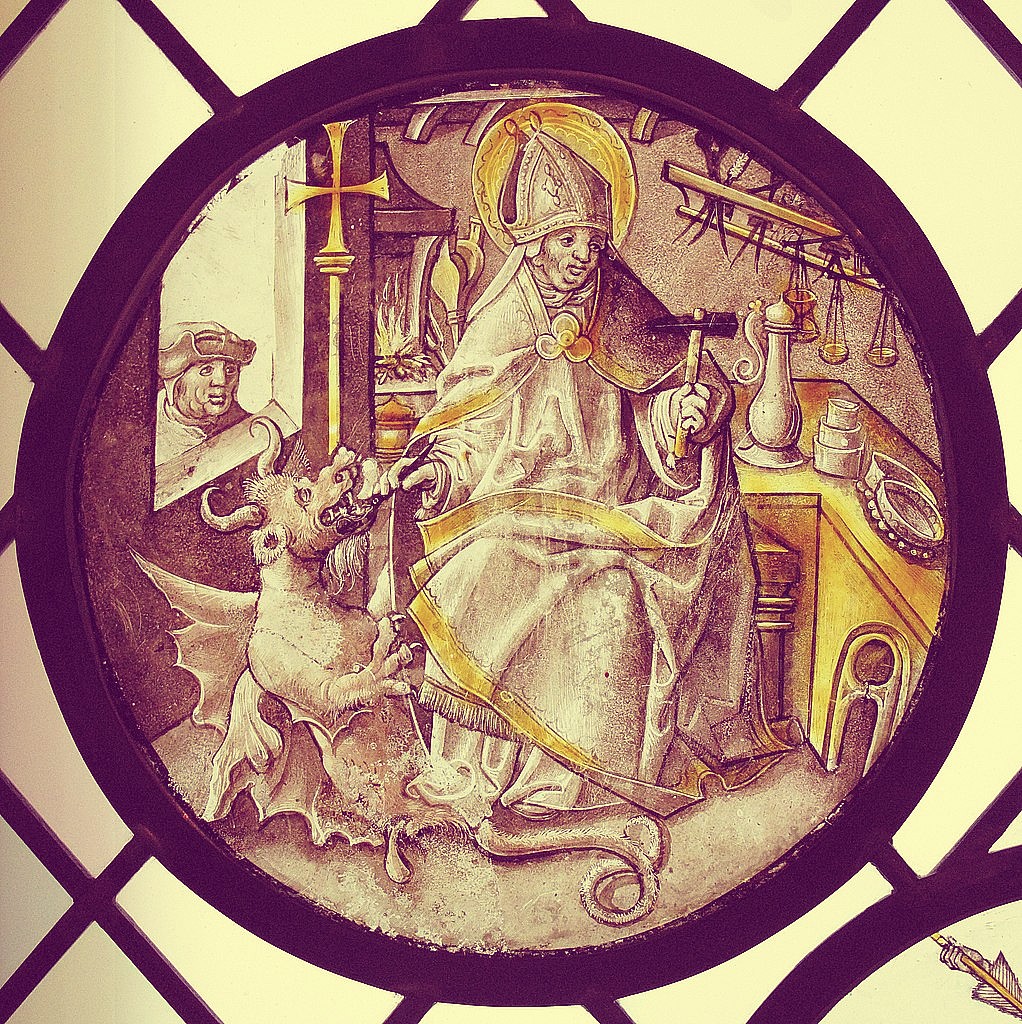
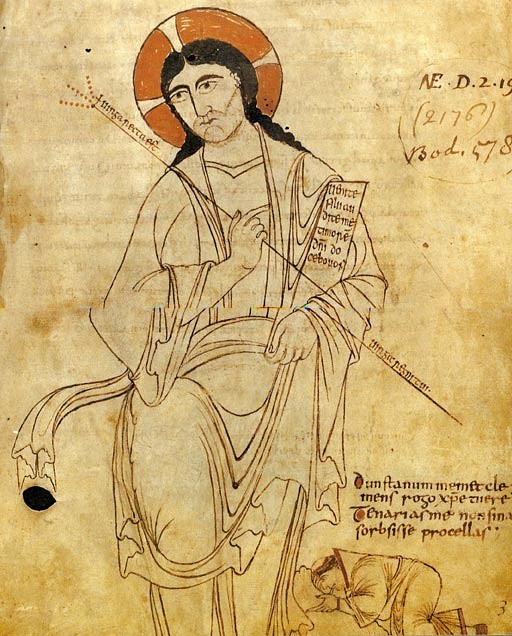
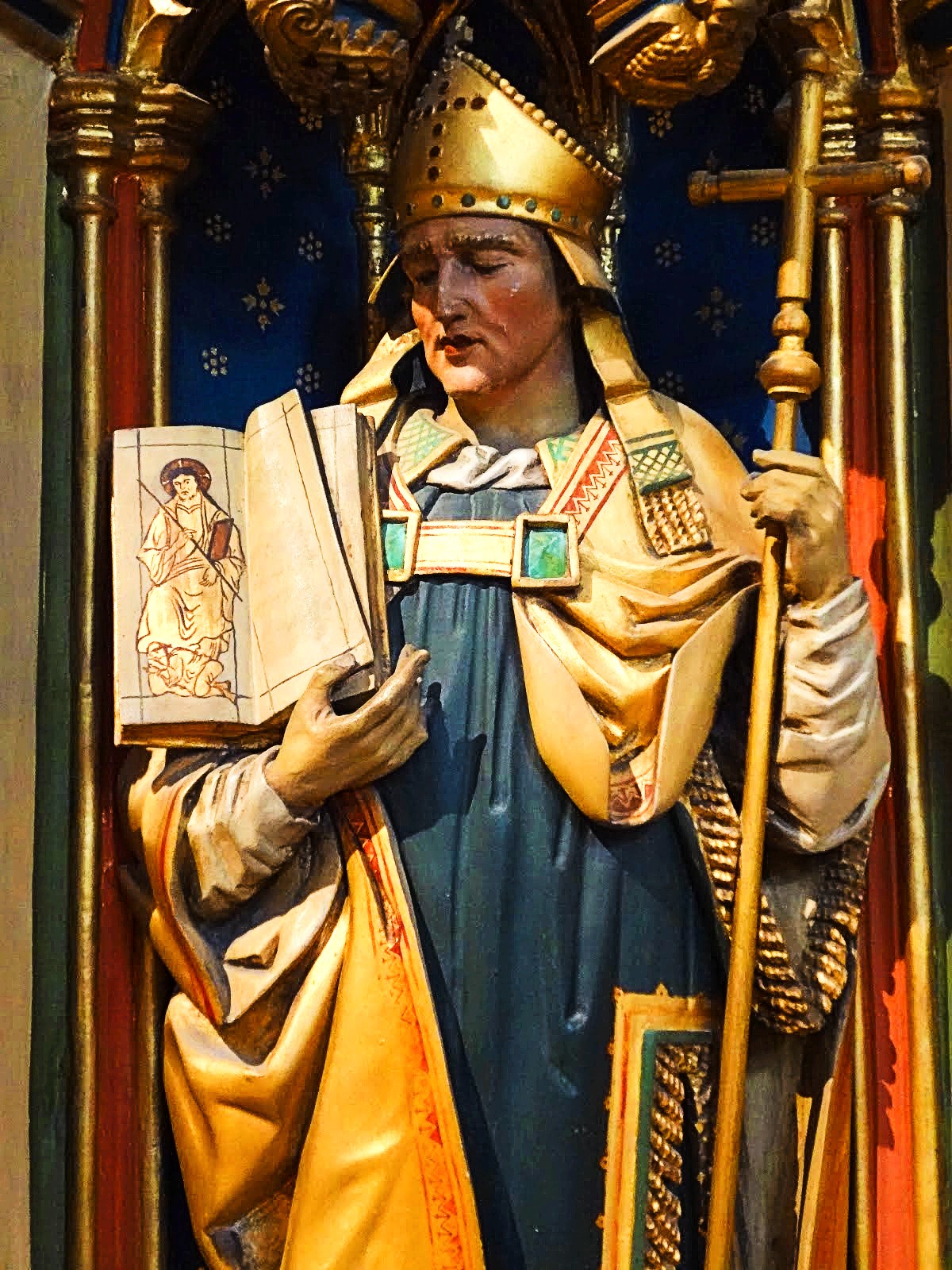

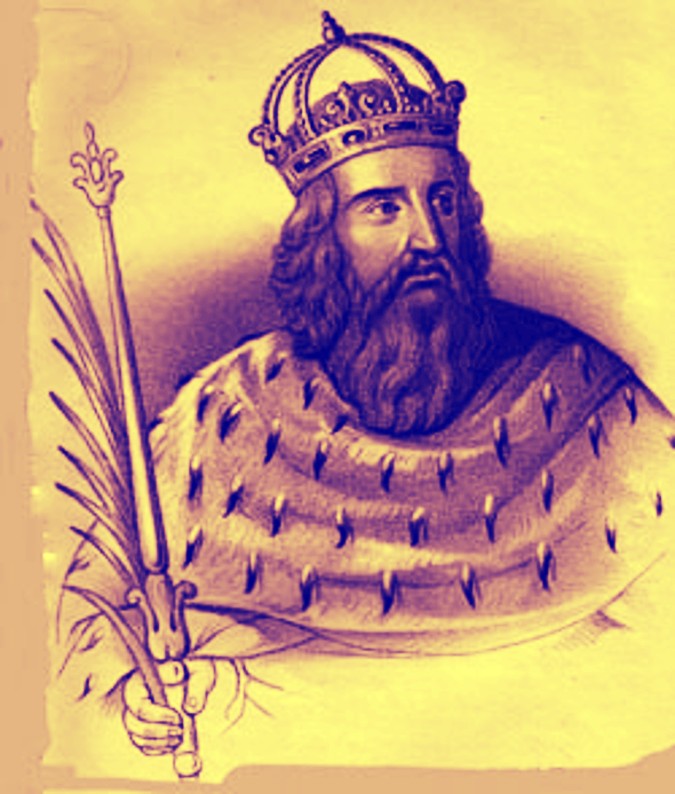
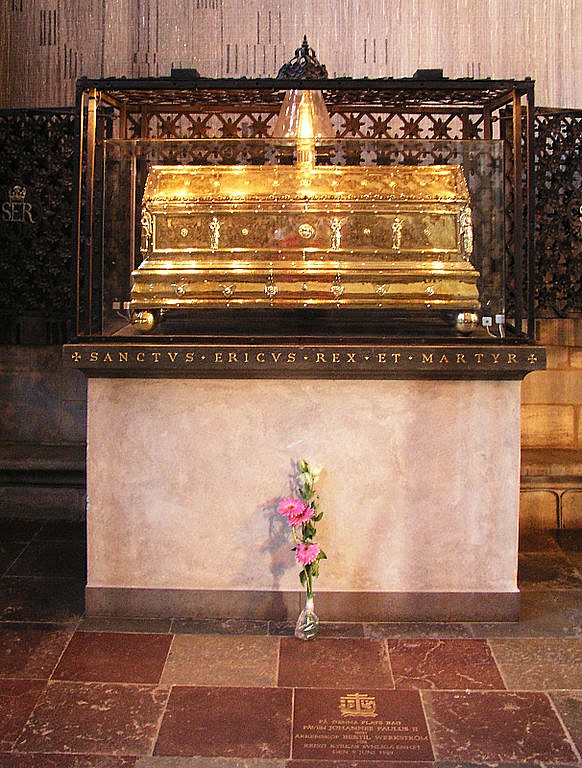
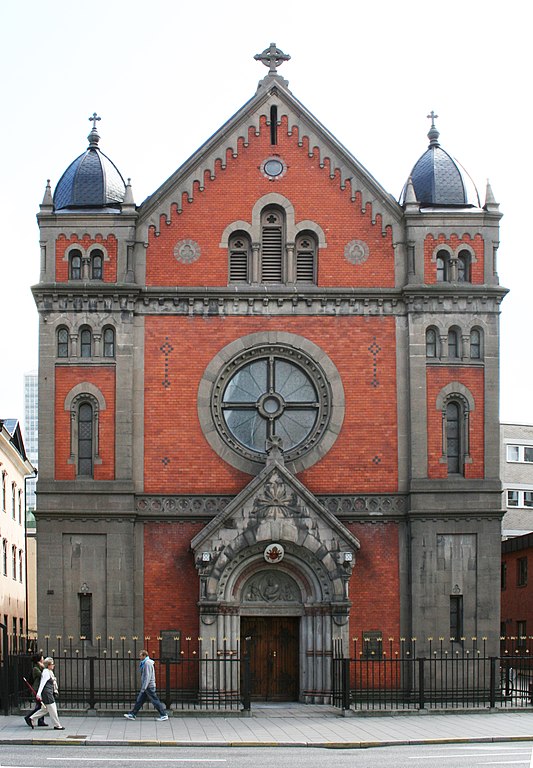


 AnaStpaul
You must be logged in to post a comment.