Saint of the Day – 24 September – Saint Rusticus of Clermont (Died 446) Bishop of Clermont, Confessor – the Seventh Bishop of Clermont in Auvergne, concerning whose election Saint Gregory of Tours relates, that it was brought about by a special intervention of Divine Providence. Born in Auvergne, France and died in 446 in Clermont, Auvergne of natural causes. Also known as – Rustique, Rotiri. Rusticus of Auvergne.
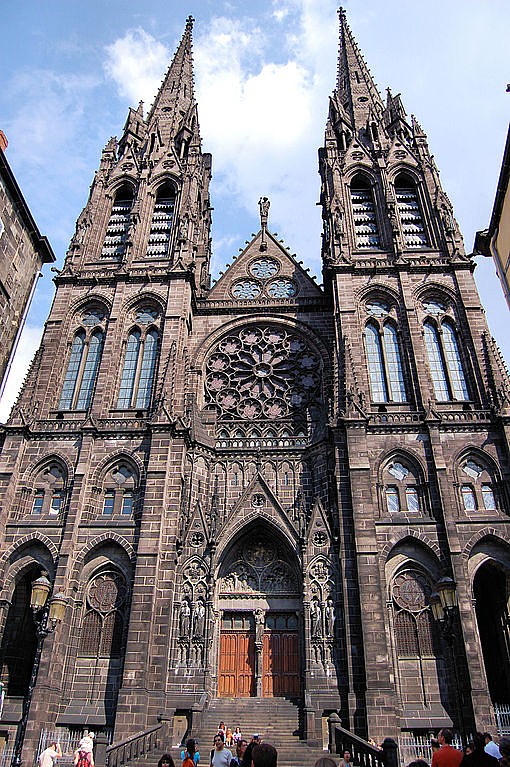
At Clermont Cathedral
Rusticus was a Priest in Clermont, remarkable for the sanctity of his manners. He was a native of the Diocess and had the administration of a Parish there. This is all which is known, with any cerntainty, concerning his life.
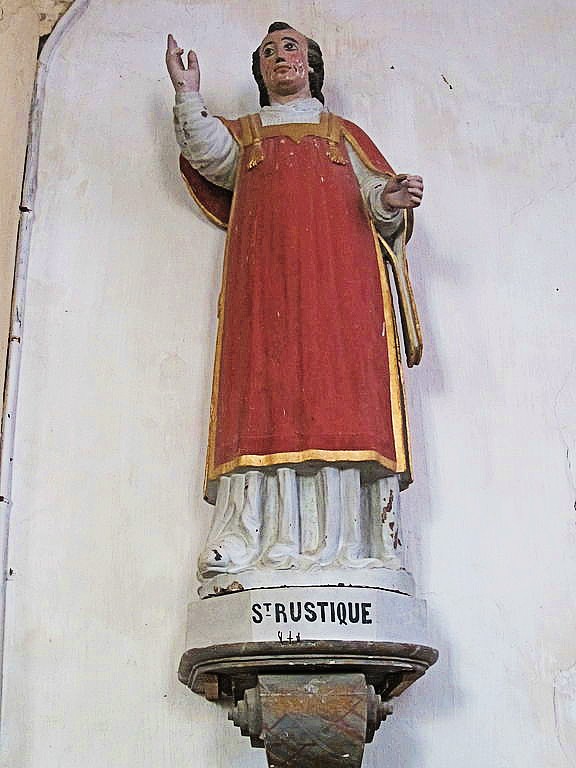
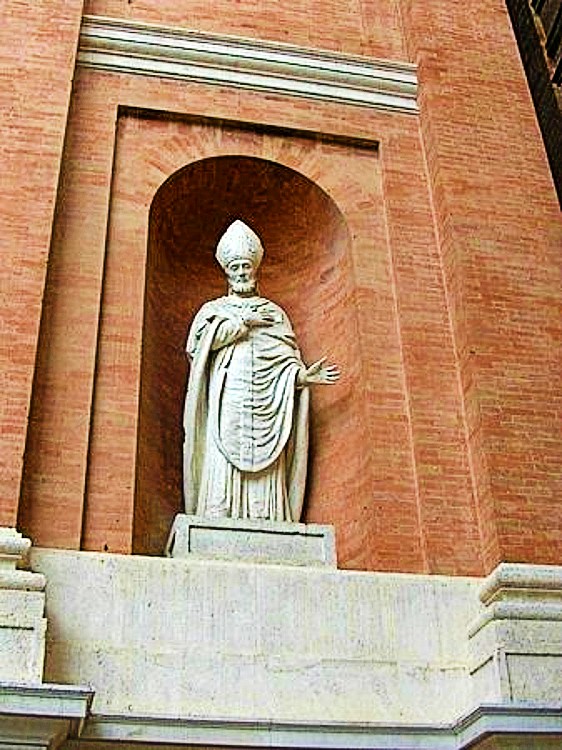
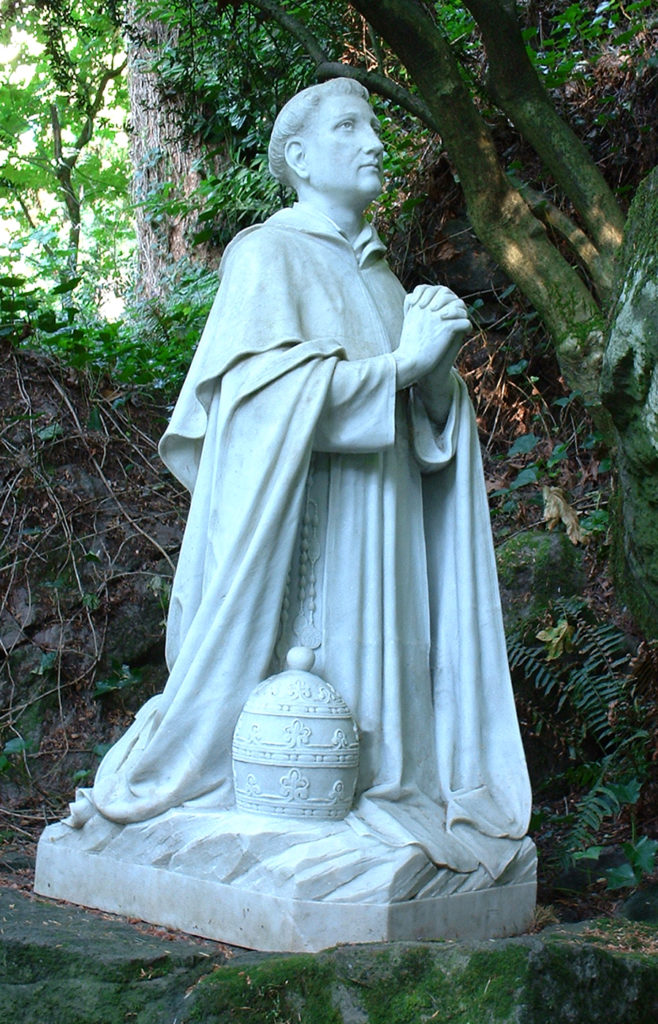
Église Saint-Denis in Saint-Denis-le-Vêtu – Statue of saint Rustique
When the former Bishop, Venerandus, died on the 24th of December, 423,. It is said that an assembly of citizens were adiscussing candidates to succeed Venerandus, when a veiled Nun told them to let the Lord make the choice and the chosen would appear.
At that moment, Rusticus arrived and the woman cried out that he was the one appointed by the Lord.
Rusticus duly succeeded as the Bishop of Clermont. His term as the Bishop was 22 years long , from 424 to 446. He was succeeded by Saint Namatius, who was the Bishop from 446 to 462 and founded Clermont Cathedral.
Martyrs of Chalcedon – (49 Saints): Forty-nine Christian choir singers of the Church in Chalcedon in Asia Minor who were Martyred together in their persecutions of Diocletian in 304.
One Minute Reflection – 23 September – “The Month of the Seven Sorrows of the Blessed Virgin Mary and the Holy Cross” and the Mermorial of St Pope Linus (c 10 – c 76) Successor to St Peter – Osee 14:2-10, Luke 7:36-50
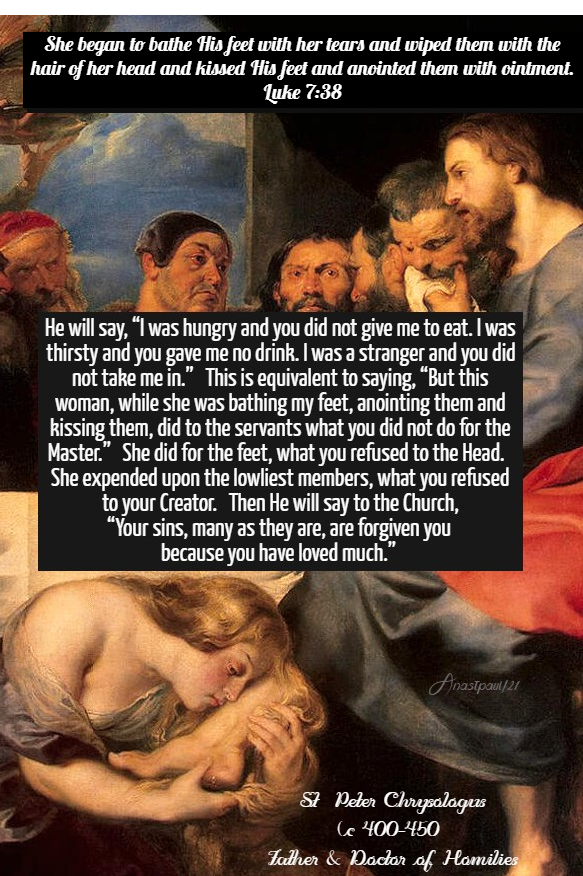
“She began to bathe His feet with her tears and wiped them with the hair of her head and kissed is feet and anointed them with ointment.” – Luke 7:38
REFLECTION – “With her hands of good works, she holds the feet of those who preach His Kingdom. She washes them with tears of charity, kisses them with praising lips and pours out the whole ointment of mercy, until He will turn her. This means that He will come back to her and say to Simon, to the Pharisees, to those who deny, to the nation of the Jews, “I came into your house. You gave me no water for my feet.”
When will He speak these words? He will speak them when He will come in the Majesty of His Father and separate the righteous from the unrighteous, like a shepherd who separates the sheep from the goats. He will say, “I was hungry and you did not give me to eat. I was thirsty and you gave me no drink. I was a stranger and you did not take me in.” This is equivalent to saying, “But this woman, while she was bathing my feet, anointing them and kissing them, did to the servants, what you did not do for the Master.” She did for the feet, what you refused to the Head. She expended upon the lowliest members, what you refused to your Creator. Then He will say to the Church, “Your sins, many as they are, are forgiven you because you have loved much.”– St Peter Chrysologus (c 400-450) Bishop of Ravenna, Father and “Doctor of Homilies” (Sermon 95).
PRAYER – Look forgivingly on Thy flock, Eternal Shepherd, and keep it in Thy constant protection, by the intercession of blessed Linus Thy Sovereign Pontiff, whom Thou didst constitute Shepherd of the whole Church. Through the same Jesus Christ, Who lives and reigns with God the Father, in the unity of the Holy Spirit, God, world without end. Amen (Collect).
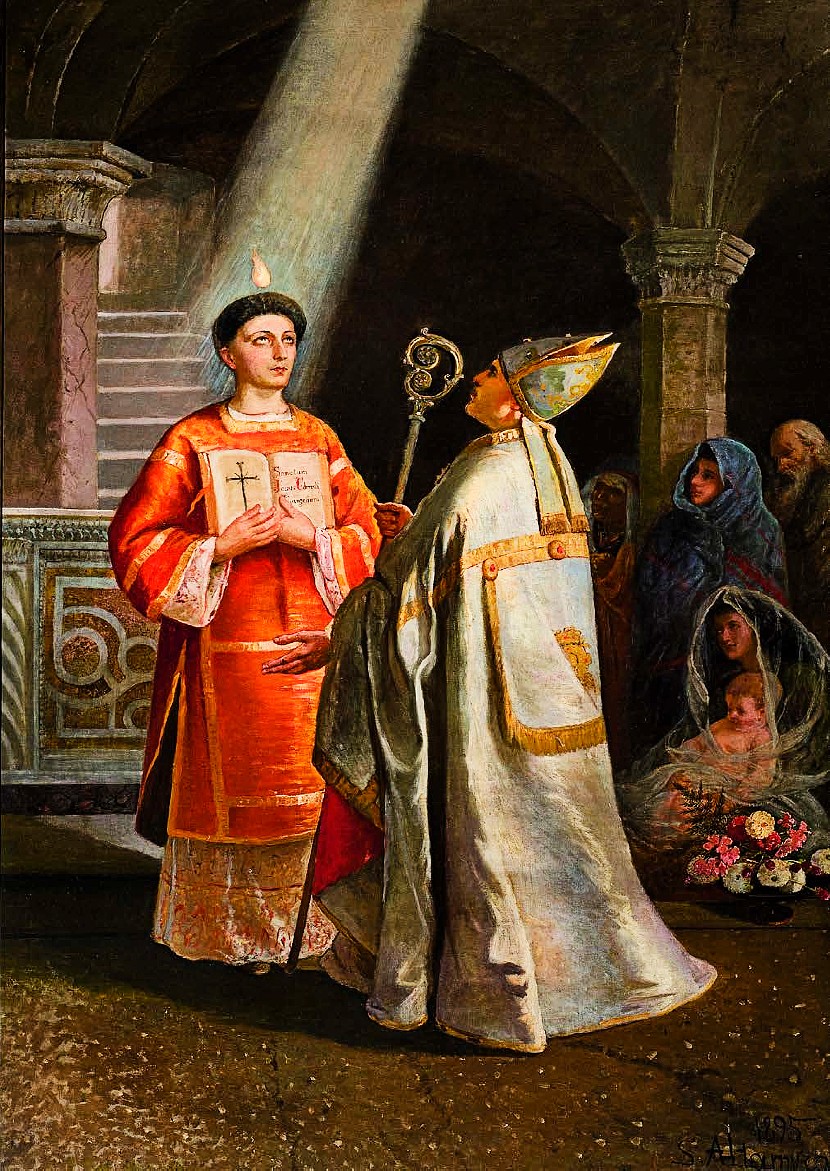
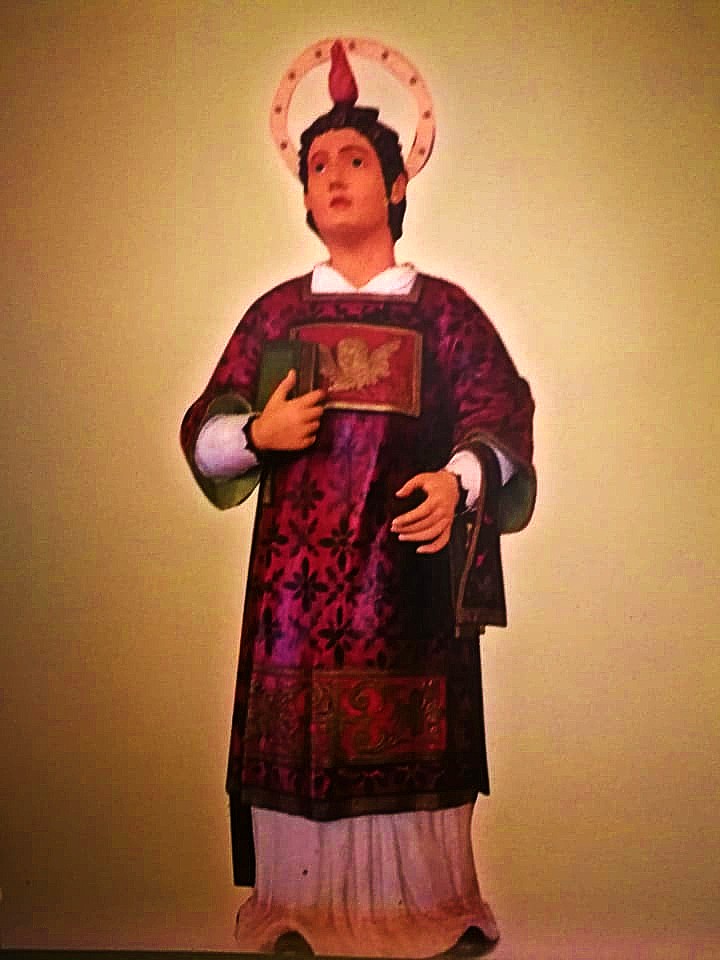
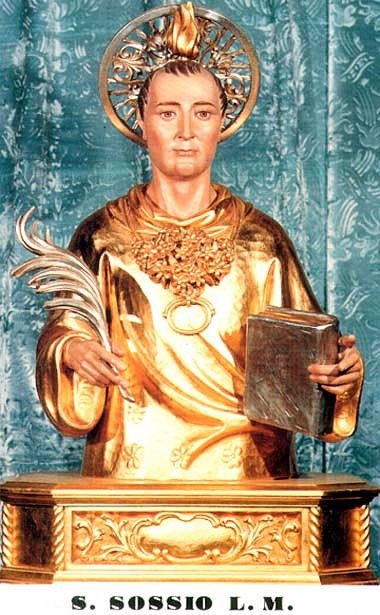
Saint of the Day –23 September – Saint Sosius (275-305) Confessor, Deacon and Martyr. His holiness and wisdom drew many Prelates to his feet, seeking spiritual assistance. St Sosius was a Deacon of Misenum, an important naval base of the Roman Empire in the Bay of Naples. Born in 275 in Miseno, Italy and died by being beheaded on 19 September 305, along with St Januarius, at Pozzuoli, Campagna, Italy. Patronages – ailments of the bones, of Frattamaggiore, Italy, San Sossio Baronia, Italy. Also known as – Sosius of Misenum, of Miseno, Sosius of Puzzuoli, Sosier, Sosio, Sosius, Sossio, Sossius, Sosso.
The Roman Martyrology reads: “At Capo Miseno in Campania, St Sosius, Deacon and Martyr, who, as Pope St Symmachus reports, wishing to save his Bishop from death, instead found death together with him, obtaining equal glory at the same price.””
Sosius was born in Miseno in 275, as reported by the Martyrology of the Venerable Bede. He was one of the most ardent leaders of early Christian groups. Giovanni Diacono defined him as “a man in whom all the charisms of Grace were crowded.”
To demonstrate the fame of holiness which he enjoyed, while still alive, it is enough to remember that illustrious Prelates felt the need to come to Miseno to confer with the seraphic Deacon. Pope Symmachus shows him very zealous to the point of sacrifice and he was so full of the Holy Spirit that his advice was also requested by the great Neapolitan Bishop, St Januarius. During one of these visits, in 304, St Januarius,, celebrating the Holy Mass on the third Sunday of Easter, saw a flame similar to that descending on the forehead of the Apostles, on the day of Pentecost, appear on the head of Sosius, while he was reading the Gospel. St Januarius, evealed the vision to many there.
Sts Sosius and Januarius
The persecution started the year before by Diocletian had, in the meantime, reached its peak and Misenus, seat of the imperial praetorian fleet, was an extremely dangerous place for Christians. But not for this reason, not for any dangers, would Sosius limit his work, continuing with fervour in the preaching of the word of Christ against false idols.
Betrayed by informers, he was taken to prison in Pozzuoli and tortured to deny his faith. St Januarius himself, who was not unaware of the danger to which he was exposed, went to visit him in prison and on that occasion, he too was imprisoned, along with Sts Desiderius and Festus. All were destined to be fed to the beasts in the Amphitheater of Pozzuoli but, a series of miraculous events did not allow the condemnation to be carried out, “…when the animals came near the Saints, they fell affectionately at their feet and refused to harm them,” therefore, they were condemned to be beheaded.
Sosius’ body was transferred to Miseno on 23 September of the same year, which was set as his feast day. The destruction of Miseno by the Saracens caused the migration of the population towards the interior, with the subsequent foundation of Frattamaggiore. here the Misenati brought with them the cult of the Saint, making him the Patron Saint of the City.
The Benedictines, who, at the beginning of the 10th Century, found the remains in the ruins of the Church of Misenate, kept the body in Naples, at the Convent of St Severinus, preserving it from the raids of the Saracens. Thanks to them, the cult spread in Campania, in Lazio and even in Africa.
In 1807, following the suppression of the Convent by Napoleon, the remains of the Saint, together with those of the Apostle of Norico St Severinus, who for many centuries had rested next to the Benedictine Convent, were translated to the mother Church of Frattamaggiore, where still today, they are the object of the love and veneration of all.
St Sosius is also particularly venerated in Castro dei Volsci (Frosinone). The people effectively invoke him against the ailments of the bones.
Saint Sossius (right) with Saint Severinus, Altar painting from the eponymous Church of Saints Severinuaande Sossius in Naples, late 15th Century.
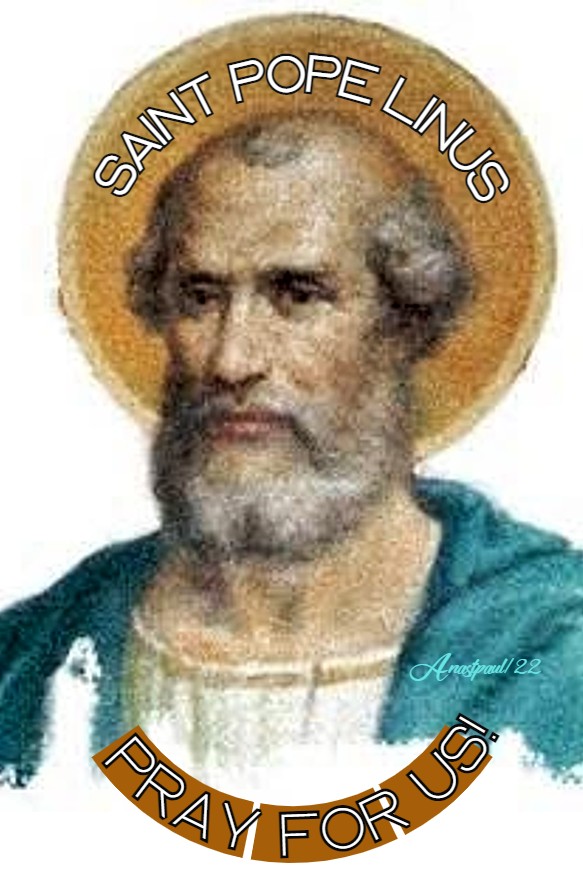
St Pope Linus (c 10 – c 76) Successor to St Peter. Papacy lasted from c 67 to his death. Among those to have held the position of pope, Peter, Linus and Clement are specifically mentioned in the New Testament. Linus is mentioned in the closing greeting of the Second Epistle to Timothy as being with Paul in Rome near the end of Paul’s life. About St Pope Linus: https://anastpaul.com/2018/09/23/saint-of-the-day-23-september-st-pope-linus-c-10-c-76-successor-to-st-peter/
St Cissa of Northumbria St Constantius of Ancona Bl Francisco de Paula Victor Bl Guy of Durnes Bl Helen Duglioli St Peter Acontanto St Polyxena St Sosius (275-305) Confessor, Deacon and Martyr Bl William Way St Xantippa
Martyrs of Syracuse – (4 Saints): Group of Christians deported from Syracuse, Sicily by invading Saracens and sent to North Africa where they were tortured and executed for their faith. Martyrs. The names that have survived are Andrew, Antony, John and Peter. c900
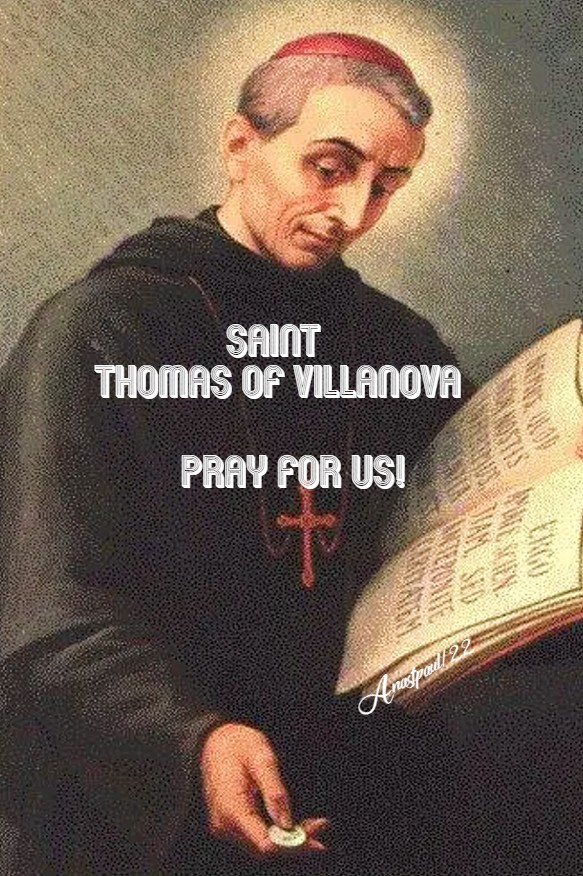
One Minute Reflection – 22 September – The Memorial of St Thomas of Villanueva OSA (1488-1555) Archbishop, Confessor – Sirach 44:16-27; 45:3-20, Matthew 25:14-23
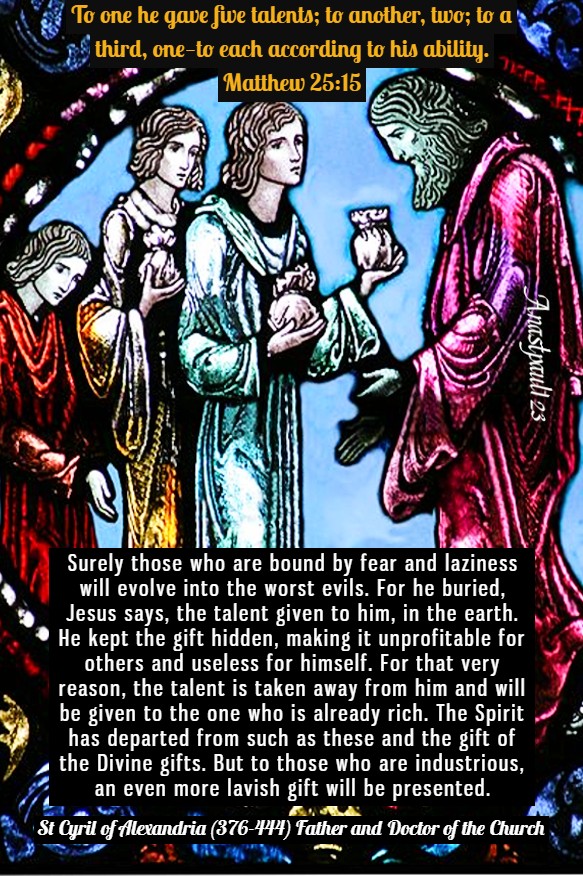
“To one he gave five talents; to another, two; to a third, one—to each according to his ability. Then he went away. Immediately …” – Matthew 25:15
REFLECTION – “The man who is the landowner is actually the Creator and Lord of all. The Word compares the time the landowner spends away from home, in the parable, to either the Ascension of Christ into Heaven, or, at any rate, to the unseen and invisible character of the Divine Nature. Now, one must conceive of the property of God, as those in each country and city who believe in Him. He calls His servants, those who according to the times, Christ crowns with the glory of the Priesthood. For the holy Paul writes, “No-one takes this honoUr upon himself; he must be called by God.”
He hands over [His property] to those who are under Him, to each giving a spiritual gift, so that he might have character and aptitude. We think that this distribution of the talents, is not supplied to the household servants in equal measure because, each is quite different from the other, in their understanding. Immediately they head out for their labours, He says, directly, indicating to us here, that apart from the procrastination of one, they are fit to carry out the work of God.
Surely those who are bound by fear and laziness will evolve into the worst evils. For he buried, Jesus says, the talent given to him in the earth. He kept the gift hidden, making it unprofitable for others and useless for himself. For that very reason, the talent is taken away from him and will be given to the one who is already rich. The Spirit has departed from such as these and the gift of the divine gifts. But to those who are industrious, an even more lavish gift will be presented.” – St Cyril of Alexandria (376-444) Archbishop of Alexandria, Father and Doctor of the Church (Fragment 283)
PRAYER – O God, Who endowed blessed Bishop Thomas with the virtue of special pity for the poor, we beseech Thee, through his intercession, generously to pour forth the riches of Thy mercy upon all those who pray to Thee. Through Jesus Christ, Thy Son our Lord, Who lives and reigns with Thee, in the unity of the Holy Ghost, God, world without end. Amen (Collect).
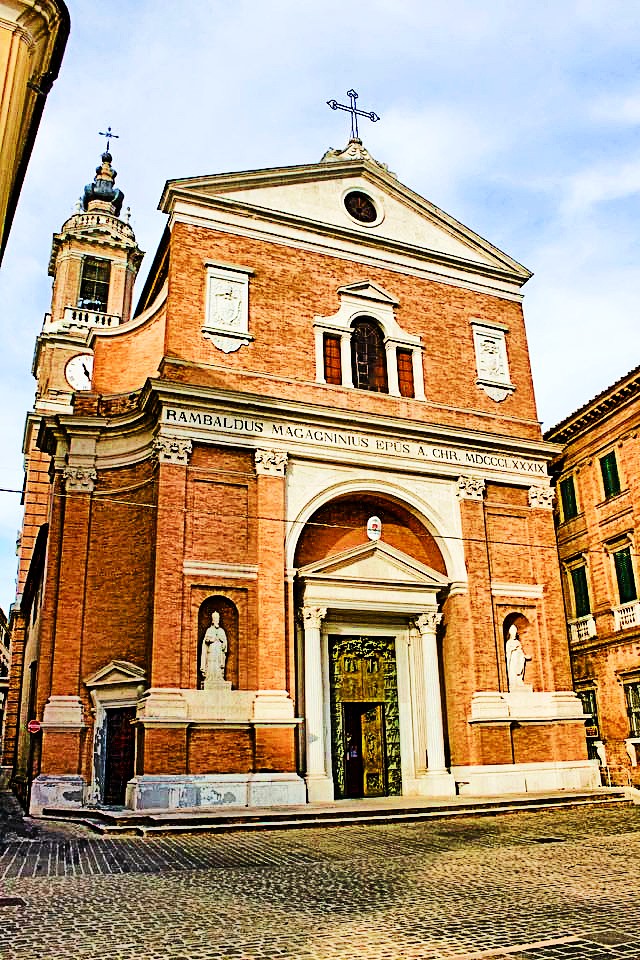
Saint of the Day – 22 September – Saint Septimius of Jesi (Died c 307) the first Bishop of Jesi in Italy, Confessor, Martyr., Miracle-worker Born in Germany and died by being beheaded in Jesi, Italy. Patronages – the City and Diocese of Jesi. Also known as – Settimio.
St Septimius is venerated as the first Bishop of the Diocese of Jesi and is considered the builder of the first Cathedral,which, although dedicated to the Holy Saviour retained the name of Septimius as the name of the founder (as was the custom).
Fresco of St Septimius, by Biagio Bigatti, 1937. Iesi Cathedral.
Very ancient documents from Jesi, bear 461 as the date of the death of the holy Bishop and Martyr, however, this date seems to be in error when contrasted with the other historical events of the time. The office tells us that Septimius, born in Germany, devoted himself to liberal studies and a military life, then, in contrast to the opinion of his relatives, he converted to Christianity and came to Italy with some friends.
He began to preach the faith in Milan but was forced to leave that City, following the spread of Diocletian’s persecution. He travelled to Rome where he worked wonders and converted many to the True Faith. He was so successful in evangelising the pagans and became so renowned for the many miracles worked through his prayers, that Pope Marcellus I (308-309) Consecrates him as the Bishop of Jesi.
Septimius began immediately his pastoral mission and, at the same time, began the work of building a Cathedral. But in this City he found the Judge Florentius, who forbid him to continue his apostolate and gave him the ultimatum to sacrifice to the gods within five days, according to the imperial edict. Septimius, however, ignored Florentius’ demands and continues to preach the Gospel of Christ and convert pagans and perform miracles, At the end of the five days, Septimius was arrested and beheaded.
Although his place of burial was lost, by 1208 the Cathedral was named for him, His body was finally rediscovered in 1469 and translated to the Cathedral. In 1623 a new Altar was Consecrated to him where his body is now enshrined. His cult, however, had always been venerated because the Cathedral of Jesi was already dedicated to St Septimius.
Until 1623, St Septimius’ celebration was on 5 September and after that year, it was fixed at 22 September. St Septimius is the Patron Saint of the City of Jesi and of the Diocese, which he had established.
St Thomas of Villanueva/Villanova OSA (1488-1555) Archbishop, Confessor, Religious Priest of the Order of St Augustine,Writer, Preacher, Teacher, Apostle of Charity, Mystic, Miracle-Worker often called “the Almsgiver” and “the Father of the Poor“, Reformer. Canonised on 1 November 1658 by Pope Alexander VII. About St Thomas here: https://anastpaul.com/2017/09/22/saint-of-the-day-22-september-st-thomas-of-villanova-o-s-a/
St Irais St Jonas St Lauto of Coutances St Lindru of Partois Bl Otto of Freising St Sadalberga St Sanctinus of Meaux St Septimius of Jesi (Died c 307) Bishop, Confessor, Martyr St Sigfrid of Wearmouth St Silvanus of Levroux St Symphorian
Martyrs of the Theban Legion: + Martyrs (c 287) A Roman imperial legion of 6,600 soldiers, all of whom were Christians; they had been recruited from the area around Thebes in Upper Egypt, were led by Saint Maurice and served under Emperor Maximian Herculeus. Around the year 287, Maximian led the army across the Alps to Agaunum, an area in modern Switzerland, in order to suppress a revolt by the Bagandre in Gaul. In connection with battle, the army offered public sacrifices to the Roman gods; the Theban Legion refused to participate. For refusing orders, the Legion was decimated – one tenth of them were executed. When the remainder refused to sacrifice to the gods, they were decimated again. When the survivors still refused to sacrifice, Maximinian ordered them all killed. Martyrs. Known members of the Legion include: Alexander of Bergamo Candidus the Theban Chiaffredo of Saluzzo Exuperius Fortunato Innocent of Agaunum Maurice Secundus the Theban Ursus the Theban Victor of Agaunum Victor of Xanten Victor the Theban Vitalis of Agaunum Other profiled Saints associated with the Legion include: Antoninus of Piacenza (martyred soldier; associated by later story tellers) Adventor of Turin (not a member; associated by later story tellers) Cassius (may have been a member) Florentius the Martyr (may have been a member) George of San Giorio (not a member; associated by later story tellers) Gereon (not a member, but another soldier who was martyred for refusing to make a sacrifice to Roman gods) Octavius of Turin (not a member; associated by later story tellers) Pons of Pradleves (escaped the massacre to become an evangelists in northern Italy) Secundus of Asti (not a member but linked due to art work) Solutor of Turin (not a member; associated by later story tellers) Tiberio of Pinerolo (may have been a member) Verena (wife of a member of the Legion) They were Martyred c 287 in Agaunum (modern Saint-Maurice-en-Valais, Switzerland. A Basilica was built in Agaunum to enshrine the relics of the Legion. The full story: https://anastpaul.com/2018/09/22/saints-of-the-day-22-september-st-maurice-and-the-martyrs-of-the-theban-legion-martyrs-c
St Alexander of the Via Claudia Bl Diego Hompanera París St Eusebius of Phoenicia St Francisco Pastor Garrido St Gerulph St Herminio García Pampliega St Iphigenia St Isaac of Cyprus Bl Jacinto Martínez Ayuela St Jonah the Prophet Bl José María Azurmendi Mugarza Bl Josep Vila Barri St Landelino of Ettenheim Bl Manuel Torró García
St Maura of Troyes St Meletius of Cyprus Bl Nicolás de Mier Francisco St Pamphilus of Rome Bl Vicente Galbis Gironés Bl Vicente Pelufo Orts
Martyrs of Gaza – 3 Saints: Three brothers, Eusebius, Nestulus and Zeno, who were seized, dragged through the street, beaten and murdered by a pagan mob celebrating the renunciation of Christianity by Julian the Apostate. They were burned to death in 362 on a village garbage heap in Gaza, Palestine.
Saint/s of the Day – 29 August – Blessed John of PerugiaOFM (Died 1231) Priest and Blessed Peter of Sassoferrato OFM (Died 1231) Lay Brother, Martyrs, Confessors, Friars of the Friars Minor. Both were beheaded in 1231 in Valencia, Spain. We have no artworks of the two Saints, those below are generic Franciscans.
A Franciscan Friar
The two Friars Minor, Blessed John of Perugia, a Priest, and Peter of Sassoferrato, a lay brother, were sent to Spain with a large number of Friars by St Francis himself. There, they were assigned to the kingdom of Aragon, where they built a small Convent in the little town of Teruel and reaped much fruit, by their holy lives, their prayers and their sermons on penance.
Their longing for the conversion of the infidels and the hope of obtaining the Palm of Martyrdom urged Friars John and Peter to go to the larger city of Valencia, which was governed, at that time, by the Moorish King Azotus. The Friars began to preach in public that Jesus Christ is the true Son of God and that only through Him, can we be saved. Azotus was a bitter enemy of the Christians.
Hearing of the activities of the Friars, he had them seized and cast into prison. He used every possible means to force them to apostatise. But when promises and threats alike, failed to shake their constancy, he condemned them to be beheaded. The Friars thanked the King,, praying fervently to God to enlighten their persecutor and in His mercy, to grant him the grace of conversion to the true Faith. Then, Blessed John of Perugia and Peter of Sassoferrato were beheaded. This occurred in the year 1231.
A few years later, James I, the Catholic King of Aragon, made war on Valencia. His army defeated the army of Azotus, who by this ill fortune and by the grace which the holy Martyrs had won for him from God, recognised Mohammed as a false prophet and Christ as the Saviour of the world. King James rejoiced exceedingly when Azotus asked to be Baptised. After his Baptism, Azotus offered the Friars Minor, his former palace for a Convent.
“When I was still an infidel,” he told them, “I caused your brethren to be executed at Teruel. I sincerely regret this crime and desire to make reparation for it. Accept my palace, in which the blood of many holy Martyrs has been shed and convert it into a convent.”
The palace was remodeled into a Convent and, next to it, a Church was erected in honour of the two Martyrs. On 11 September 1704, Pope Clement XI approved the public veneration which was paid to them and in 1783, Pope Pius VI again honoured them by confirming their cultus.
Blessed John of Perugia`OFM (Died 1231) Martyr, Friar of the Friars Minor AND Blessed Peter of Sassoferrato OFM (Died 1231) Martyr, Friar of the Friars Minor
St Adelphus St Adausia of Rome St Alberic of Bagno de Romagna St Basilia of Sirmium Bl Bronislava St Candida of Rome St Edwold the Hermit St Euthymius of Perugia St Maximian of Vercelli St Medericus St Nicaeus of Antioch St Paul of Antioch St Repositus of Velleianum Bl Richard Herst St Sabina of Troyes St Sator of Velleianum St Sebbe of Essex St Velleicus St Victor of La Chambon St Vitalis of Velleianum
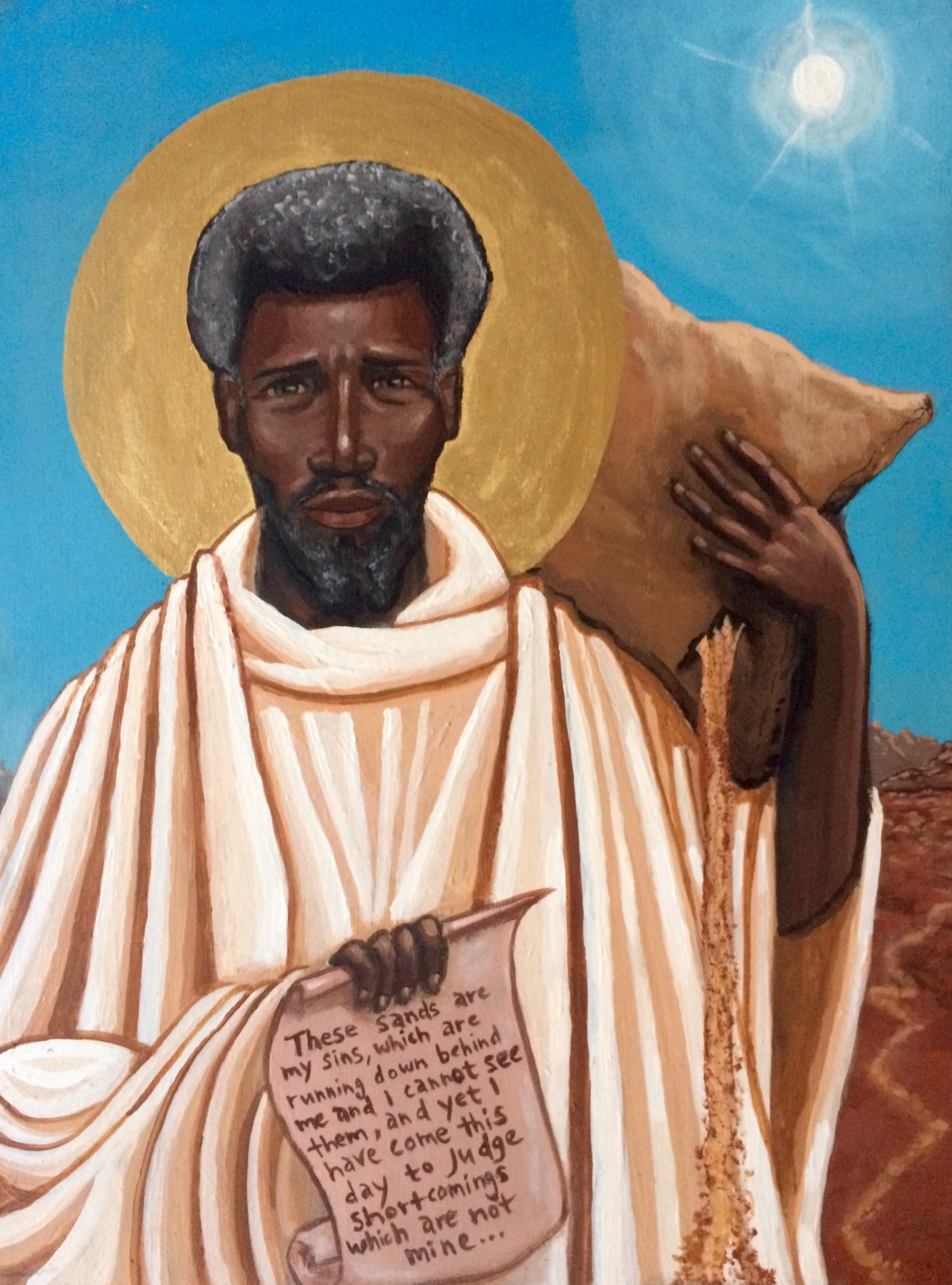
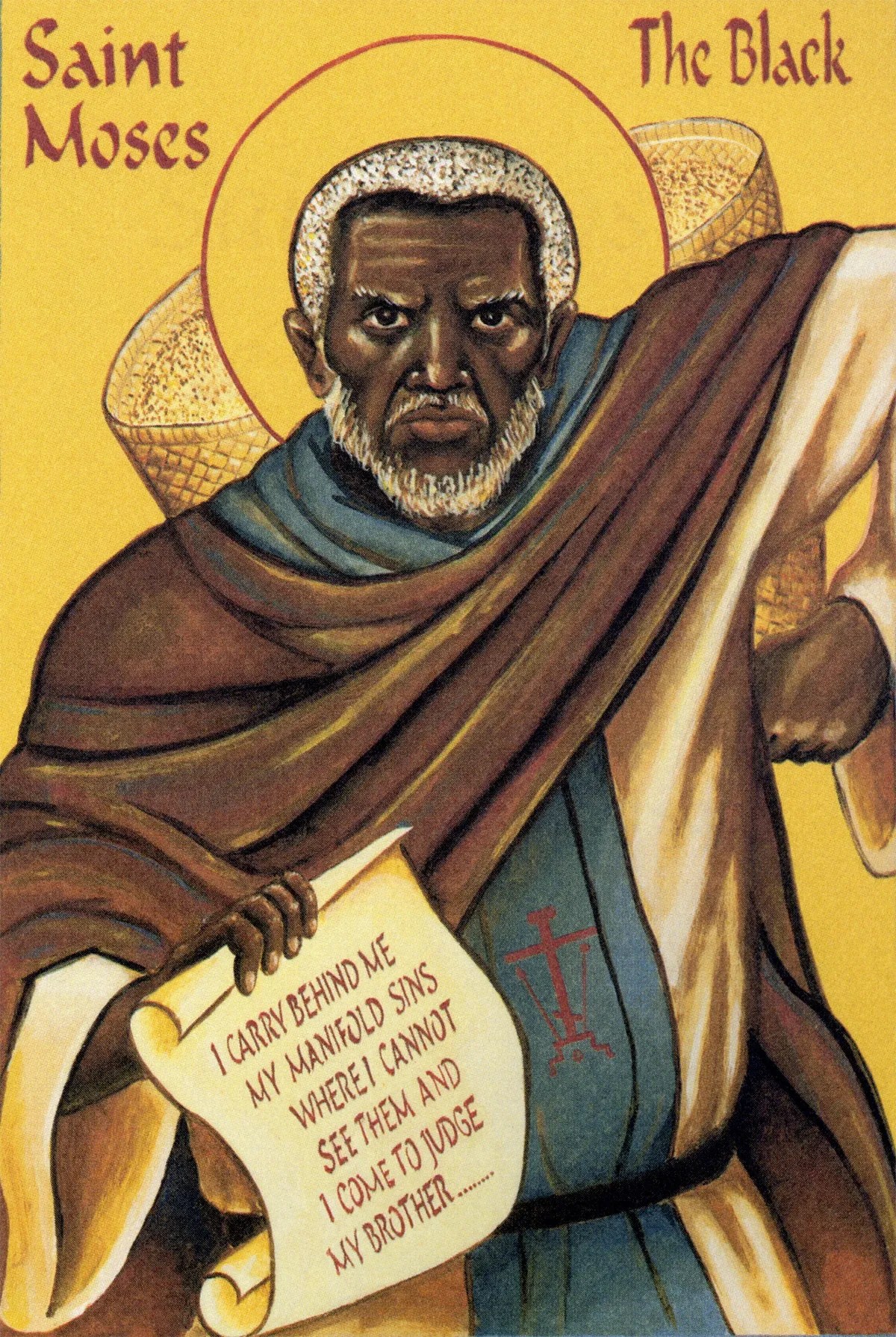
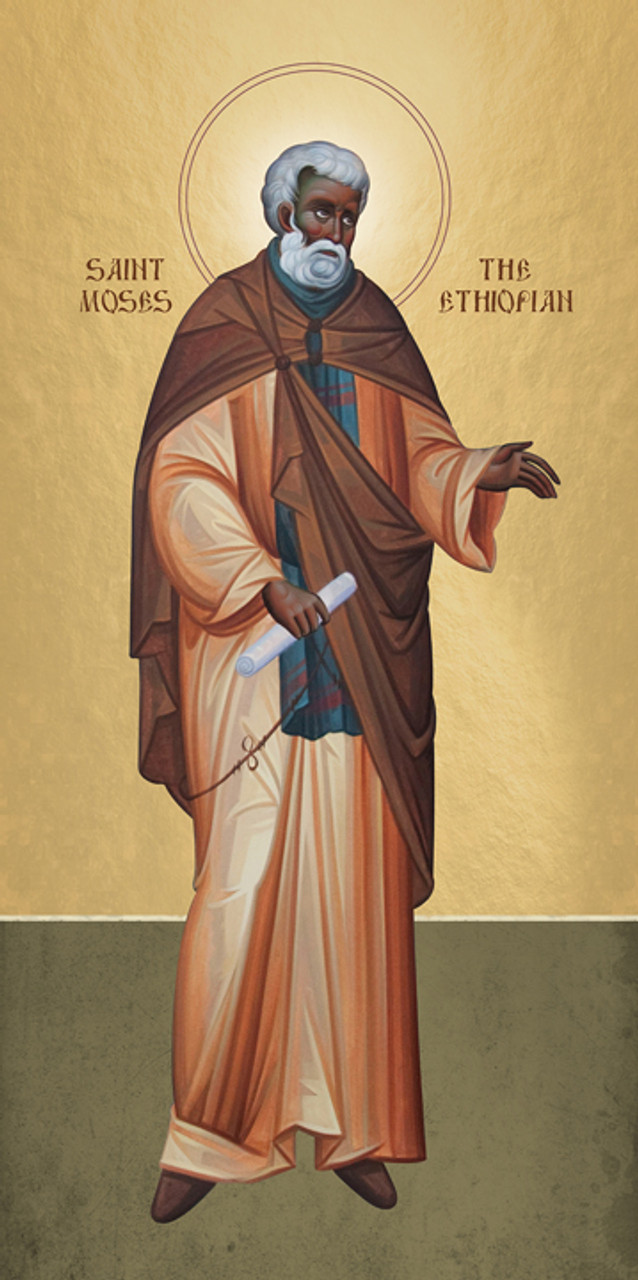
Saint of the Day – 28 August – Saint Moses the Black (330-405) Priest, Monk, Hermit, Penitent, Evangeliser. Born in 330 Ethiopian ancestry and died by being murdered 405 by Berbers at Petra, Skete, Egypt. Patronage – of Africa. Also known as – Moses the Ethiopian, Moses of Scete.
The Roman Martyrology reads: “St Moses, an Ethiopian, who gave up a life of robbery and became a renowned anchorite. He converted many robbers and led them to a Monastery.”
Moses the Black lived during the fourth century in Egypt. He was an Ethiopian and he was black of skin and, therefore, called “Murin” (meaning “like an Ethiopian”). In his youth he was the slave of an important man but after he committed a crime, his master banished him and he joined a band of robbers.
Moses and his band of brigands did many evil deedss. People were afraid at the mere mention of his name. He spent several years leading a sinful life but through the great mercy of God he repented, left his band of robbers and went to one of the desert Monasteries. Here he wept for a long time, begging to be admitted as one of the brethren. The Monks were not convinced of the sincerity of his repentance but the former robber would not be driven away nor silenced. He continued to ask that they accept him.
Moses was completely obedient to the Abbot and the brethren and he poured forth many tears of sorrow for his sinful life. After a certain while, Moses withdrew to a solitary cell, where he spent the time in prayer and the strictest fasting in a very austere lifestyle.
Once, four of the robbers of his former band descended upon his cell. He had lost none of his great physical strength, so he tied them all up. Throwing them over his shoulder, he brought them to the Monastery, where he asked his superiors what to do with them. The superiors ordered that they be set free. The robbers, learning that they had chanced upon their former ringleader and that he had dealt kindly with them, followed his example: they repented and became Monks. Later, when the rest of the band of robbers heard about the repentance of Moses, then they also gave up their thievery and became fervent Monks.
Moses was not quickly freed from the passions. He went often to the Confessor, seeking advice on how to be delivered from the passions of profligacy. Being experienced in the spiritual struggle, the his Confessor taught him never to eat too much food, to remain partly hungry while observing the strictest moderation. But the temptations did not cease to trouble Moses in his dreams.
Then he learnt of the all-night vigil. The Monk stood the whole night at prayer, so he would not fall asleep. From his prolonged struggles Moses fell into despondency and when there arose thoughts about leaving his solitary cell, his Confessor instead, strengthened the resolve of his disciple.
Moses undertook a new penance. Making the rounds by night of the wilderness cells, he carried water from the well to each brother. He did this especially for the superiors, who lived far from the well and who were not easily able to carry their own water. Once, kneeling over the well, Moses felt a powerful blow upon his back and he fell down at the well like one dead, lying there in that position until dawn. Thus did the devils take revenge upon the Monk for his victory over them. In the morning the Monks carried him to his cell and he lay there a whole year crippled.
Accounts about his conversion spread even beyond the bounds of the wilderness. The governor of the land wanted to see the Saint. When he heard of this, Moses decided to hide from any visitors and he departed his own cell. Along the way he met servants of the governor, who asked him how to get to the cell of the Hermit. Moses. The Monk answered them: “Go no farther to see this unworthy Monk.” The servants returned to the Monastery where the governor was waiting and they told him the words of the Monk they had chanced to meet. The brethren, hearing a description of his appearance, told them that they had encountered Moses himself.
After many years of monastic obedience, study and piety, Moses was Ordained Deacon. The Bishop clothed him in vestments and said, “Now Moses is entirely white!” The Saint replied, “Only outwardly, for God knows that I am still dark within.” Through humility, the Saint believed himself unworthy of the office of Deacon. Having put him to the test, the Bishop then Ordained Moses Priest . St Moses laboured for fifteen years in this rank and gathered around himself many disciples.
When the Saint reached age 75, he warned his Monks that soon brigands would descend upon the Monastery and murder all that were there. The Saint blessed his Monks to leave, in order to avoid violent death. His disciples began to beseech him to leave with them but he replied: “For many years already, I have awaited the time when the words which my Master, the Lord Jesus Christ, should be fulfilled: “All who take up the sword, shall perish by the sword” (Mt. 26: 52). After this, seven of the brethren remained with him and one of them hid nearby during the attack of the robbers. The robbers killed Moses and the six Monks who remained with him. Their death occurred in about the year 405.
St Facundinus of Taino St Felix of Venosa St Fortunatus of Salerno St Gaius of Salerno St Gorman of Schleswig St Hermes of Rome (Died 120) Martyr Bl Hugh More Bl James Claxton St Januarius of Venosa St Julian of Auvergne St Moses the Black (330-405) Priest, Monk, Hermit, Penitent. St Pelagius of Istria St Restitutus of Carthage St Rumwold the Prince St Septiminus of Venosa
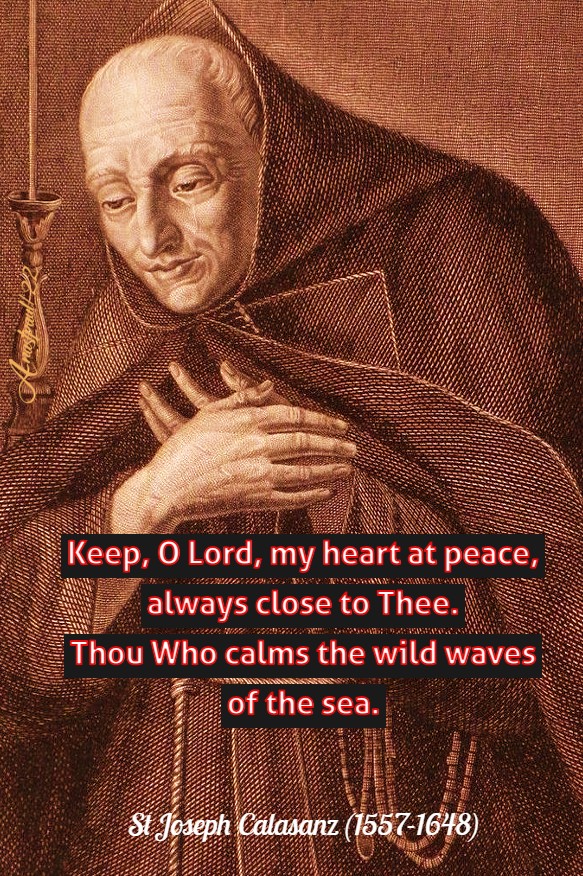
Quote/s of the Day – 27 August – St Joseph Calasanz/Calasantius (1557-1648) Spanish Confessor
“Like the saplings of plants, the young are easily influenced, as long as someone works to teach their souls. But if they are allowed to grow hard, we know well that the possibility of one day bending them, diminishes a great deal and is sometimes utterly lost.”
“Keep, O Lord, my heart at peace, always close to Thee. Thou Who calms the wild waves of the sea.”
St Carpophorus St David Lewis St Decuman St Ebbo of Sens St Etherius of Lyons St Euthalia of Leontini St Fortunatus of Potenza Bl Gabriel Mary St Gebhard of Constance St Giovanni of Pavia St Honoratus of Potenza St John of Pavia St Licerius of Couserans St Malrubius of Merns St Narnus of Bergamo St Phanurius St Poemen Bl Roger Cadwallador St Rufus of Capua St Sabinian of Potenza St Syagrius of Autun
Martyrs of Tomi – 5 Saints: A group of 17 Christians imprisoned and excuted for their faith during the persecutions of Diocletian. They miraculously were unburned by fire and untouched by wild animals. We know the names and a few details on five of them – John, Mannea, Marcellinus, Peter and Serapion. They were tied to stakes and burned alive; they emerged unharmed – thrown to wild animals in the amphitheatre; the animals ignored them; they were beheaded in 304 in Tomi, Mesia (modern Costanza, Romania).
Martyrs of Nagasaki – 14 Beati: A group of fourteen missionaries and Japanese native Christians, who were Martyred together for their faith. They died on 16 August 1627 in Nagasaki, Japan and were Beatified on 7 May 1867 by Pope Pius IX. • Blessed Antonius of Saint Francis • Blessed Bartolomé Díaz Laurel • Blessed Caius Akashi Jiemon • Blessed Francisca Pinzokere • Blessed Francisco of Saint Mary • Blessed Franciscus Kuhyoe • Blessed Leo Kurobyoe Nakamura • Blessed Lucas Tsuji Kyuemon • Blessed Ludovicus Matsuo Soyemon • Blessed Magdalena Kiyota • Blessed Maria Shobyoe • Blessed Michaël Koga Kizayemon • Blessed Thomas Sato Shin’emon • Blessed Tsuji Shobyoe
Saint of the Day – 26 August – St Alexander of Bergamo (Died c 301) Martyr, Confessor, Imperial Roman Centurion Died by being beheaded c 287. Patronages – Bergamo, Italy, City of, Diocese of Bergamo, Capriate San Gervasio, Italy, Cervignano d’Adda, Italy. Freiburg im Breisgau, Germany. Also known as – Alessandro da Bergamo.
The Roman Martyrology reads: “At Bergamo in Lombardy, St Alexander, Martyr, who was one of the Theban Legion and endured Martyrdom bt being beheaded for the constant confession of the Name of Our Lord Jesus Christ.”
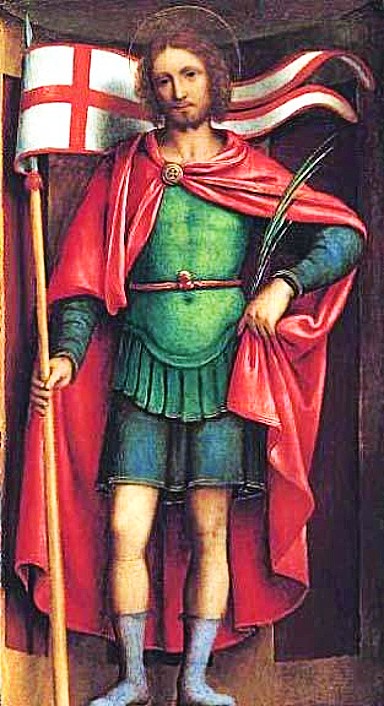
Alexander, Patron Saint of the City and Diocese of Bergamo, is traditionally portrayed dressed as a Roman soldier with a banner bearing a white fleur-de-lis. The banner was that of the Theban Legion of St Maurice (a Roman legion consisting, according to legend, of only Egyptian soldiers of the Thebaide region) in which Alexander was, according to the Acts of Martyrdom, a Centurion Commander.
The Roman Theban legion, used mainly in the east, was moved west to counter the attacks of the Quadi and the Marcomanni. During the crossing of the Valais River, the Legion was ordered to search for Christians, against whom persecution had been unleashed. The Legionaries, who were also Christians, refused and were punished for their insubordination through decimation carried out at Agaunum (current day St Moritz).
Decimation consisted of killing one man in every ten. As the Legionaries continued to refuse to persecute the Christians, a second decimation was ordered and, later, the Emperor ordered their massacre.
Very few survived, among whom, Alexander, Cassius, Severinus, Secundus and Licinius, who sought shelter in Italy. However, in Milan, Alexander was recognised and placed in prison, where he refused to recant and deny Christ.
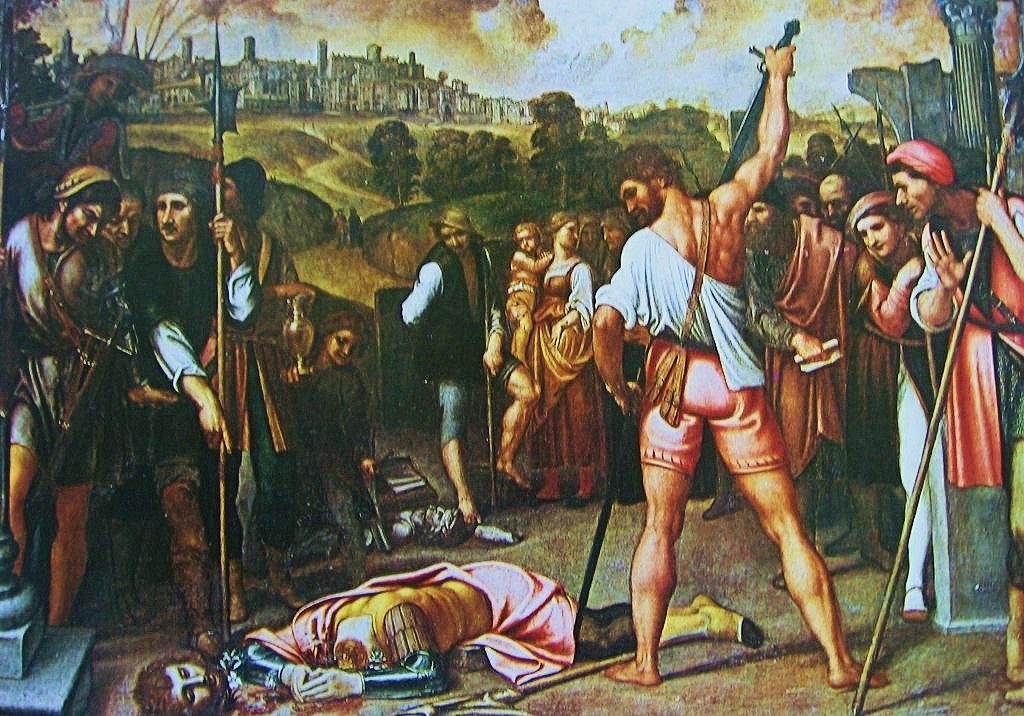
The Martyrdom of St Alexander
While incarcerated, he received the visit of St.Fidelis and the Bishop St Maternus. It was precisely St. Fidelis who managed to arrange Alexander’s escape to Como, where he was captured again. He was brought back to Milan and sentenced to death by decapitation.
The Martyrdom of St Alexander
However, during the execution, the executioner’s arms became stiff and lame. He was, therefore, thrown in prison again. He managed to escape once more and reached Bergamo passing through Fara Gera d’Adda and Capriate. In Bergamo, he was taken in by Prince Crotacio, who recommended he hide. But Alexander began preaching and converting many citizens of Bergamo, amongst whom, the Martyrs Saints Fermus and Rusticus. He was, therefore, discovered and captured yet again and publically beheaded on 26 August c 287-303, where the Church of Sant’Alessandro in Colonna now stands.
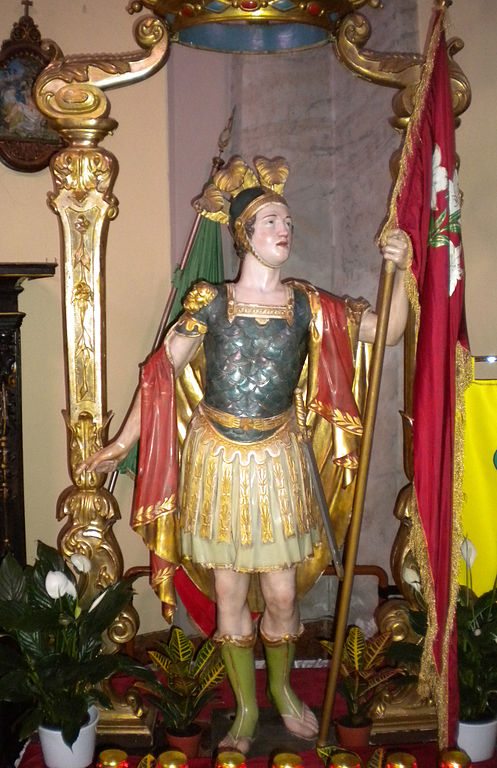
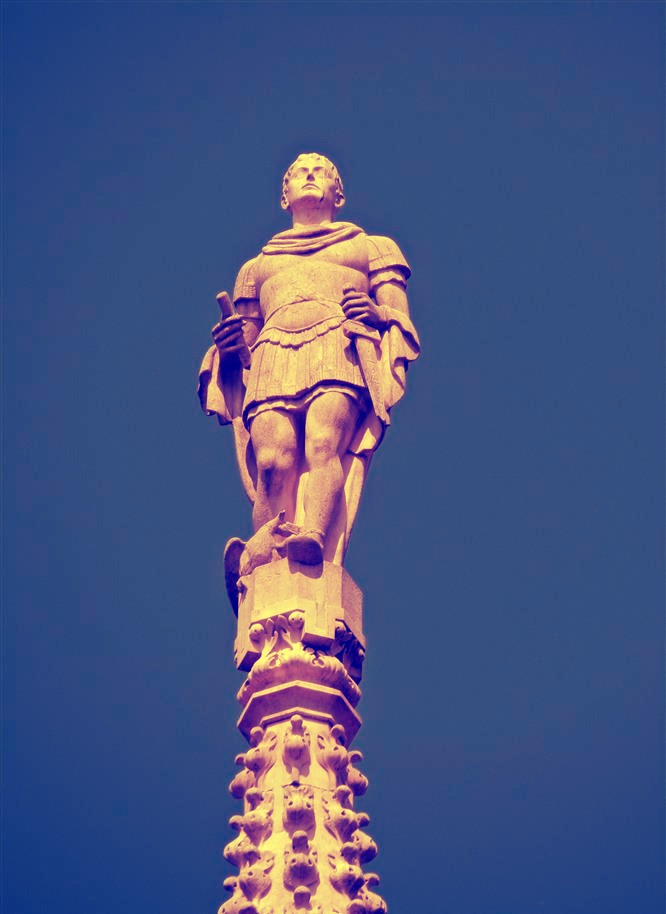
Statue of St Alexander atop Milan Cathedral
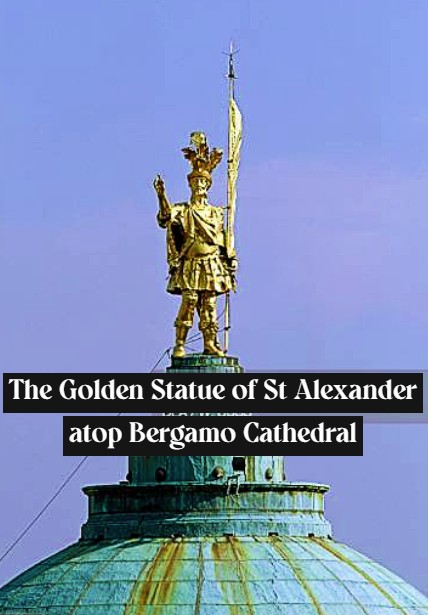
Bergamo Cathedral is dedicated to him. In Rome , the Santi Bartolomeo and Alessandro dei Bergamaschi is dedicated to him, among others, as one of the Patron Saint Churches for natives of Bergamo living in Rome. . Alexander is also one of the Patron Saints of Freiburg im Breisgau, Germany.
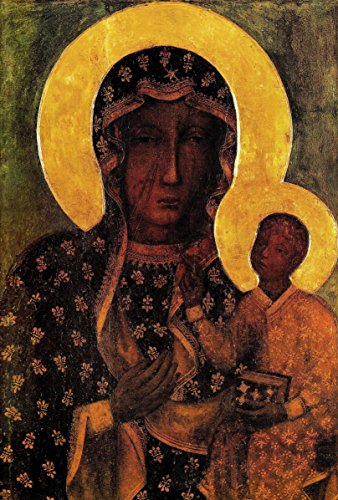
Our Lady of Czestochowa, Queen of Poland – Our Lady of Czestochowa is a revered icon of the Virgin Mary housed at the Jasna Góra Monastery in Częstochowa, Poland. Several Pontiffs have recognised the venerated icon, beginning with Pope Clement XI who issued a Canonical Coronation to the image on 8 September 1717 via the Vatican Chapter. Patron of Poland. According to tradition, the Icon of Jasna Góra (Bright Mountain) was painted by St Luke the Evangelist on a tabletop built by Jesus Himself and the Icon was discovered by St Helen, mother of Emperor Constantine and collector of Christian Relics, in the Holy Land. Visit our Mother here: https://anastpaul.wordpress.com/2017/08/26/blessed-feast-of-our-lady-of-czestochowa-queen-of-poland-26-august/
St Abundius the Martyr St Alexander of Bergamo (Died c 287) Martyr, Imperial Roman Centurion St Anastasius the Fuller St Bregwin of Canterbury St Elias of Syracuse St Eleutherius of Auxerre St Felix of Pistoia Bl Herluin Bl Ioachim Watanabe Jirozaemon St Irenaeus of Rome
St Jeanne Elisabeth des Bichier des Anges FC (1773-1838) (commonly referred to as St Elisabeth Bichier) and known as “the Good Sister” – Religious and co-Founder with Saint André Hubert Fournet (whom we celebrate on 13 May – https://anastpaul.com/2020/05/13/saint-of-the-day-13-may-saint-andre-hubert-fournet-1752-1834-the-good-father/) of the Sisters of the Cross, Sisters of St Andrew, a religious congregation which was established for the care of the poor and the instruction of rural children in the Diocese of Poitiers in 1807. She also helped to inspire the founding of a community of Priests dedicated to Missionary service, the St Elisabeth died in 1838, at which time there were about 600 Daughters of the Cross serving in some 100 communities. She was Beatified by Pope Pius XI in 1934 and Canonised by Pope Pius XII in 1947. Biography: https://anastpaul.com/2020/08/26/saint-of-the-day-26-august-saint-jeanne-elisabeth-des-bichier-des-anges-fc-1773-1838/
Bl Jean Bassano Bl Jean of Caramola Bl Juan Urgel Bl Margaret of Faenza St Maximilian of Rome St Melchizedek the Patriarch St Orontius of Lecce St Pandwyna St Rufinus of Capua St Secundus the Theban St Victor of Caesarea St Victor the Martyr St Vyevain of York
Martyrs of Celano – 3 Saints: Three Christians, Constantius, Simplicius and Victorinus, Martyred in the same area at roughly the same time. They were Martyred in c 159 in the Marsica region of Italy. At some point their relics were interred under the main Altar of the San Giovanni Vecchio Church in the Collegiata di Celano and were authenticated in 1057 by Pope Stephen IX. The city was depopulated in 1222; when it was re-built, the relics were re-enshrined in the Churc
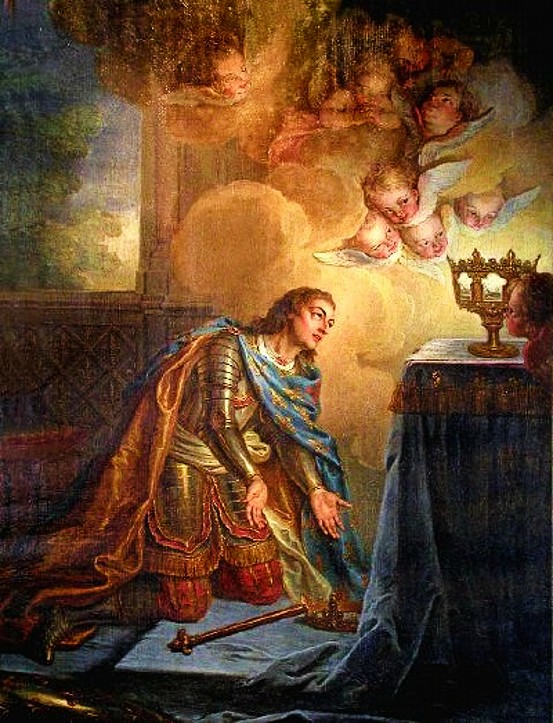
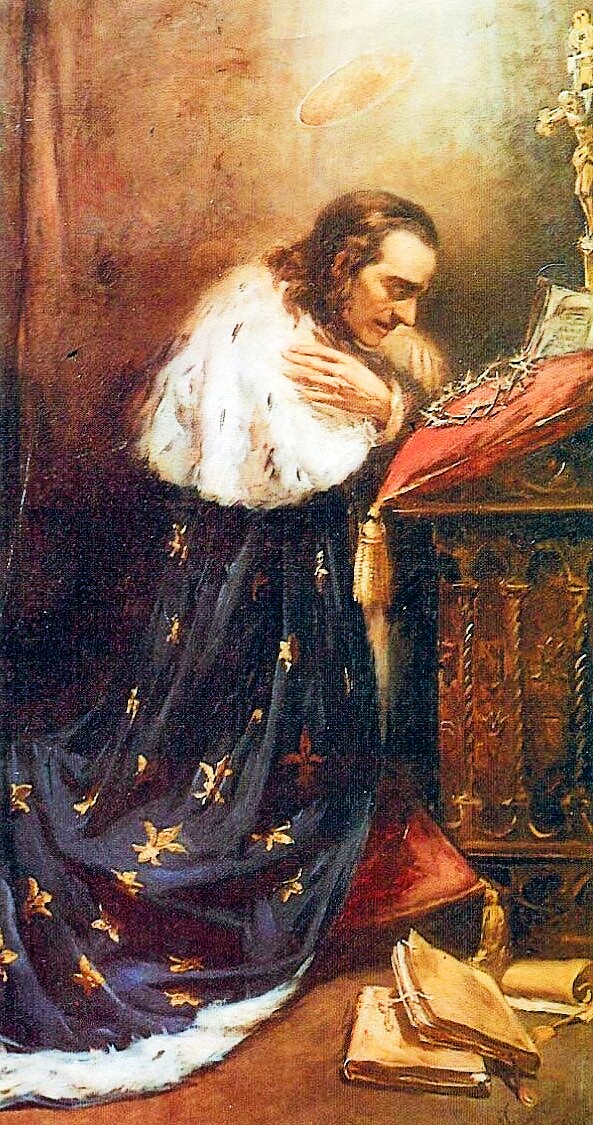
Quote of the Day – 25 August – St Louis IX (1214-1270) Confessor, King of France
The instructions which St Louis gave to the heir of his crown and which, he had constantly observed himself, testify to his great devotion and holiness. These were the last admonitions of the Holy King:
Love God, the Almighty, above all else.
Flee sin more quickly than you would a serpent.
Become not fainthearted, in adversity.
Become not elevated, in the days of prosperity.
Show the wounds of your soul frequently, to your spiritual physician and refuse no remedies, however bitter, to heal them.
Pray diligently.
Be compassionate and generous to the poor.
If your mind is harassed with doubt, consult a devout man.
Keep faithful and pious counsellors around you and dismiss those who are wicked.
All that is good hold fast: all that is bad discard.
Lend a willing ear to those who speak of God.
Listen not to calumniators and slanderers.
So long as you reign, leave not unpunished those who blaspheme God and the Saints.
First be grateful to God, then to men.
Love and protect justice and neither neglect nor despise, the complaints of the needy.
In your own affairs, when they are not perfectly clear, speak and act against yourself.
Refund immediately the possessions of others.
Protect the clergy.
Love and honour your parents.
If you are obliged to war against Christians, spare the Churches and the Convents.
Endeavour to terminate all contentions with kindness.
Guard all your officials with a watchful eye.
Ever show due reverence to the Pope.
Overstep not the bounds of moderation in your expenses.
When I have departed, let prayers and Masses be said for the repose of my soul.
Saint of the Day – 25 August – St Louis IX (1214-1270) King of France Confessor, King, Reformer, Apostle of Charity.
This remarkable man was born on 25 April 1214, near Paris, France. When his grandfather, King Philip II of France, passed away, his son, Prince Louis the Lion, became King Louis VIII. His wife became Queen Blanche. Their son, now Prince Louis, was only nine-years-old.
Three years later Louis’ father died and the boy was crowned King Louis IX. Because of his young age the Queen Mother, Blanche, took over the reins of government. A great woman in her own right, she made sure her son would be prepared for his life as King. Queen Blanche, also known as Blanche of Castille, took her Catholic faith very seriously. She was rigid and determined in teaching her son the faith and managed to instill genuine piety and a deep sense of devotion in him. She was quoted as having told her son, “I love you, my dear son, as much as a mother can love her child but I would rather see you dead at my feet, than that you should commit a mortal sin.”
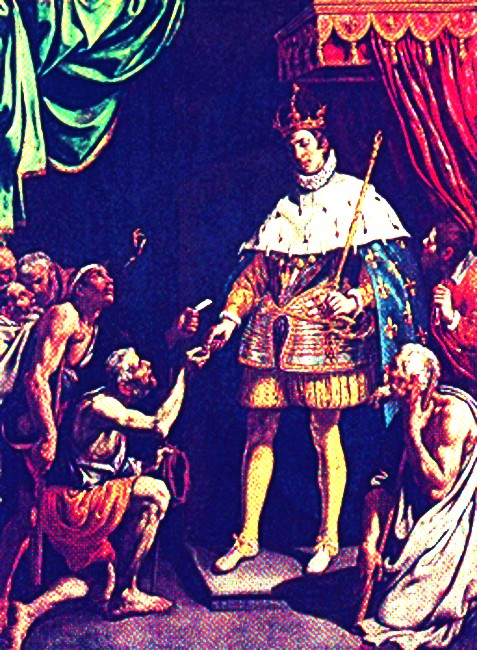
At the age of 21, Louis took charge of the government. His mother’s influence in his life was apparent because there was a force within Louis that made him strive to rule justly and to attain sanctity. King Louis had a pronounced affinity for the sick and poor of his kingdom. He treated the downtrodden with compassion, understanding and with a humility that was unheard of in a king.
Everyday King Louis IX would have three special guests called in from among the poor to have dinner with him…Since there were always crowds of poor and hungry outside the palace, he would try to have as many of them fed as was possible. During Lent and Advent anyone who presented themselves before him was given a meal and often, the King served them himself. He even had lists compiled of needy people in every Province under his rule.
Louis married his true love, Margaret of Provence on 27 May 1234. Queen Margaret was filled with religious fervour as was her husband and they truly made a beautiful couple while setting a fine example for all married couples. They both enjoyed each other’s company and liked riding together, listening to music and reading. King Louis and Queen Margaret had eleven children.
Louis was a strong-willed and strong-minded man with a powerful faith. His word was trusted throughout the Kingdom, and his courage, in taking action against wrongs was remarkable. Amazingly, this King had true respect for anyone with whom he had dealing, especially the poor and downtrodden. King Louis built Churches, libraries, hospitals and orphanages. He treated both Princes and commoners equally.
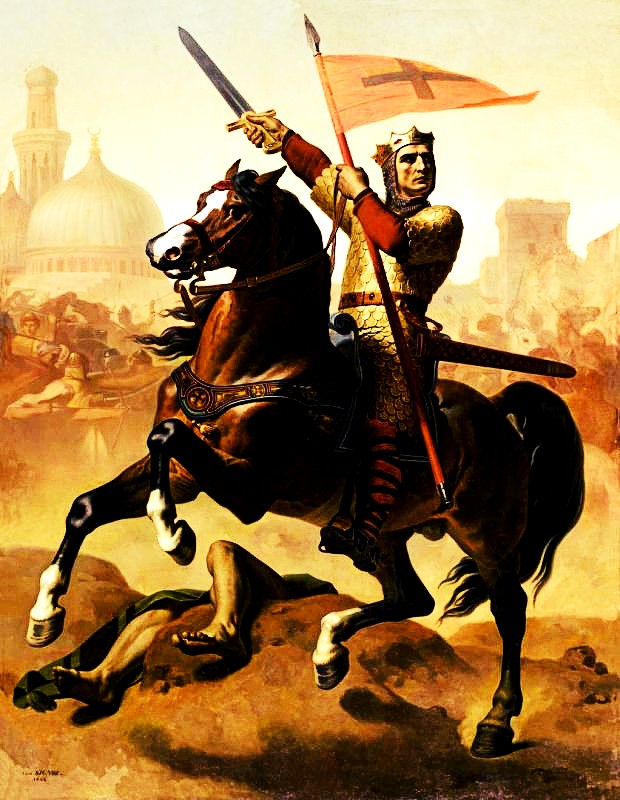
King Louis had taken his army on the 7th Crusade in 1248. This proved to be a disaster and the king was captured by the Muslims. After an absence of six years, he was successfully ransomed and returned home. In 1270 he sought redemption for his first failure and embarked on another crusade. It was summer in northern Africa and dysentery and typhoid swept through the dirty camps. King Louis IX, died while lying on a bed of ashes saying the name of the City he had not relieved; “Jerusalem, Jerusalem.”
Pope Boniface VIII, proclaimed Louis a Saint in 1297. He is the only King of France named a Saint by the Church. This man was a true gentleman as he tried to treat everyone with courtesy, love and respect, whilst remaining strong and just at the same time. He is most beloved both in France and across the Catholic world.
St Alessandro Dordi St Andreas Gim Gwang-Ok St Aredius of Limoges St Ebbe the Elder St Eusbius of Rome St Genesius of Arles St Genesius of Brescello St Genesius of Rome St Gennadius of Constantinople St Geruntius of Italica St Ginés de la Jara St Gregory of Utrecht St Gurloes of Sainte Croix St Hermes of Eretum St Hunegund of Homblieres St Julian of Syria St Julius of Eretum Bl Ludovicus Baba Bl Ludovicus Sasada Bl Luis Cabrera Sotelo St Maginus St Marcian of Saignon
St Maria Micaela of the Blessed Sacrament (1809-1865) “Mother Sacramento” was a Spanish professed Religious and the Founder of the Handmaids of the Blessed Sacrament, Apostle and martyr of charity. In 1922, Pope Pius XI, proclaimed Mother Sacramento’s heroic virtues. On 25 July 1925, he Beatified her and on 4 March 1934, he Canonised her. Her Life: https://anastpaul.com/2019/08/25/saint-of-the-day-25-august-saint-maria-micaela-of-the-blessed-sacrament-1809-1865/
St Menas of Constantinople Bl Miguel Carvalho St Nemesius of Rome St Patricia of Naples Bl Pedro de Calidis Bl Pedro Vázquez St Peregrinus of Rome St Petrus Gim Jeong-Duk St Pontian of Rome
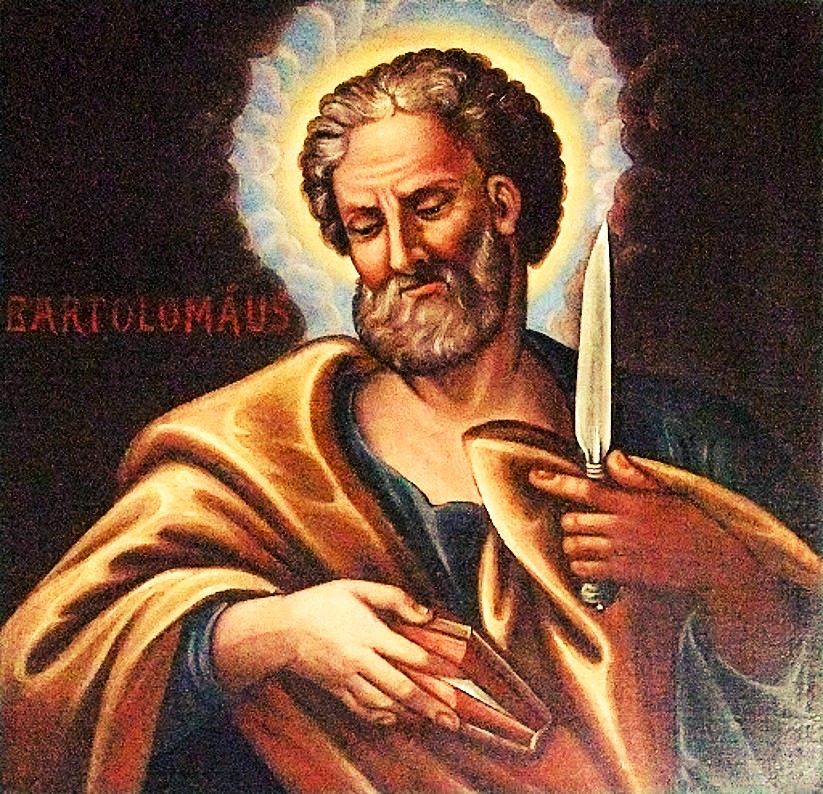
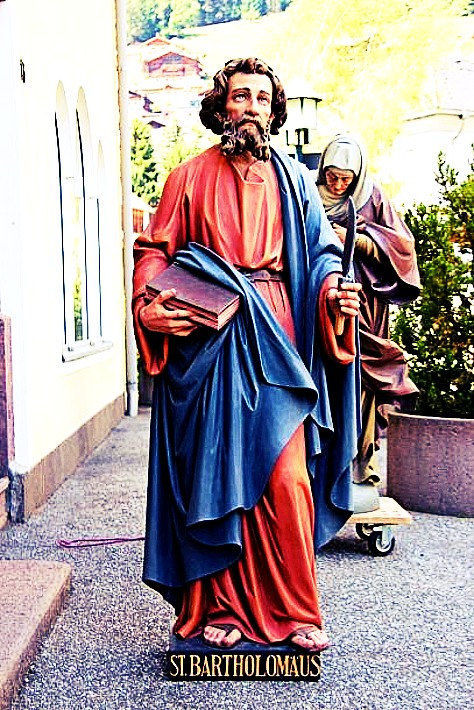
Saint of the Day – 24 August – St Bartholomew the Apostle and Martyr. Saint Bartholomew, whose name appears only in the lists of the Apostles, is believed to be Nathanael, whom Philip brought to Christ. He preached in Persia and Egypt and was flayed alive in Armenia. His relics are believed to be in the Church of Saint Bartholomew in Rome. Patronages –Armenia; bookbinders/publishers; butchers; Florentine cheese and salt merchants; Gambatesa, Italy; Catbalogan, Samar; Għargħur, Malta; leather workers; neurological diseases; plasterers/construction workers; shoemakers; tanners; trappers; skin diseases/rashes, against involuntary shaking disorders; Los Cerricos (Spain), 16 further cities all over the world.
Saint Bartholomew Apostle and Martyr Excerpt from The Liturgical Year By Prosper Guéranger OSB (1805-1875)
A witness of the Son of God, one of the princes who announced His glory to the nations, lights up this day with his apostolic flame.
Personally, who was this Apostle who borrowed such solemnity from the scene of his apostolic labours? Under the name or surname of Bartholomew (“Son of Tholmai“), the only mark of recognition given him, by the first three Gospels, do we see, as many have thought that Nathaniel, whose presentation to Jesus by Philip forms so sweet a scene in St John’s Gospel (1: 45-51)? A man of uprightness, innocence and simplicity, … for whom, the Man-God had choice graces and caresses from the very beginning.
Be this as it may, the lot which fell to our Saint among the Twelve, points to the special confidence of the Divine Heart. The heroism of the terrible Martyrdom which sealed his apostolate, reveals his fidelity. The dignity preserved by the nation he grafted onto Christ, in all the countries where it has been transplanted, witnesses to the excellence of the sap first infused into its branches. When, two centuries and a half later, St Gregory the Illuminator, so successfully cultivated the soil of Armenia, he did but quicken the seed sown by the Apostle, which the trials never wanting to that generous land, had retarded for a time but could not stifle. …
We learn from Eusebius and from St Jerome that before going to Armenia, his final destination, St Bartholomew evangelised the Indies, where Pantaenus a century later found a copy of St Matthew’s Gospel in Hebrew characters, left there by him. …
The City of Rome used to celebrate the Feast of St Bartholomew on the following day, as do also the Greeks who commemorate on 25 August – a translation of the Apostle’s relics. It is owing, in fact, to the various translations of his holy body and to the difficulty of ascertaining the date of his Martyrdom that different days have been adopted for his Feast ,by different Churches, both in the east and in the west. The 24th of this month, consecrated by the use of most of the Latin Churches, is the day assigned in the most ancient Martyrologies, including that of St Jerome. In the 13th Century, Pope Innocent III, having been consulted as to the divergence, answered that local custom was to be observed.
The Church gives just the following Lessons for the life of the Apostle of Armenia:
The Holy Apostle Bartholomew was a native of Galilee. It fell to his lot to preach the Gospel in western India;and he announced to those nations the coming of Our Lord Jesus Christ according to the Gospel of St Matthew. But after converting many souls to Jesus Christ in that Province and, undergoing much labour and suffering, he went into eastern Armenia.
Here he converted to the Christian Faith, the King Polymius and his Queen, as well as twelve Cities. This caused the pagan priests of that nation to be exceedingly jealous of him and they stirred up Astyages, the brother of King Polymius against the Apostle, so that he commanded him to be flayed alive and finally beheaded. In this cruel Martyrdom he gave up his soul to God.
His body was buried at Albanapolis, the town of eastern Armenia where he was Martyred but it was afterwards taken to the island of Lispari and thence to Beneventum. Finally it was translated to Rome by the Emperor Otto III and placed on the island of the Tiber, in a Church dedicated to God under his invocation.
On this day of thy Feast, O holy Apostle, the Church (in the Collect of the Mass) prays for grace to love what thou didst believe and to preach what thou didst teach. Not that the Bride of the Son of God, could ever fail, either in faith or in love but She knows, only too well that, although Her Head is ever in the light and Her heart ever united to the Spouse, in the Holy Ghost Who sanctifies Her, nevertheless ,Her members and particular Churches may detach themselves from their centre of life and wander away in darkness. O thou who didst choose the west as the place of thy rest, thou in whose precious relics Rome glories in possessing, bring back to St Peter, the nations thou didst evangelise, that we may together, enjoy the treasures of our concordant traditions and go to God, even at the cost of being despoiled of all things, by the course so grand and yet so simple, taught us by thy example and by thy sublime theology. Amen.
St Eutychius of Troas St George Limniotes St Irchard
St Jeanne-Antide Thouret (1765-1826) French Religious and the Founder of the Thouret Sisters – renamed the Sisters of Divine Charity., Apostle of Charity and the Poor and helpless, Teacher. Thouret’s life was one of service to children and the ill across France in schools and hospitals – some of which her order established. This active apostolate did not cease when the French Revolution forced her into exile. She continued her work in both Switzerland and the Kingdom of Prussia. St Jeanne-Antide was Canonised on 14 January 1934 by Pope Pius XI. Her Life: https://anastpaul.com/2019/08/24/saint-of-the-day-24-august-saint-jeanne-antide-thouret-1765-1826/
St Patrick the Elder St Ptolemy of Nepi St Romanus of Nepi St Sandratus St Taziano of Claudiopolis
One Minute Reflection – 23 August – St Philip Benizi OSM (1233-1285) Confessor – 1 Corinthians. 4:9-14, Luke 12:32-34
“For where your treasure is, there also will your heart be.” – Luke 12:34
REFLECTION – “All this is what that treasure brings about. Either through almsgiving, it raises the heart of a man into Heaven, or through greed it buries it in the earth. That is why He said, “For where your treasure is, there your heart will be also.” O man, send your treasure on, send it ahead into Heaven, or else your God-given soul will be buried in the earth! Gold comes from the depth of the earth — the soul, from the highest Heaven. Clearly it is better ,to carry the gold to where the soul resides, than to bury the soul, in the mine of the gold. That is why God orders those who will serve in His Army here below, to fight as men stripped of concern for riches and unencumbered by anything. To these He has granted the privilege of reigning in Heaven.” – St Peter Chrysologus (c 400-450) Bishop of Ravenna, “Doctor of Homilies” Father and Doctor of the Church (Sermon 22)
PRAYER – O God, Who through St. Philip, Thy Confessor, gave us an outstanding example of humility, grant that Thy household may follow his example by scorning worldly prosperity and, ever seek the things of Heaven Through Jesus Christ, Thy Son our Lord, Who lives and reigns with Thee, in the unity of the Holy Ghost, God, world without end. Amen (Collect).
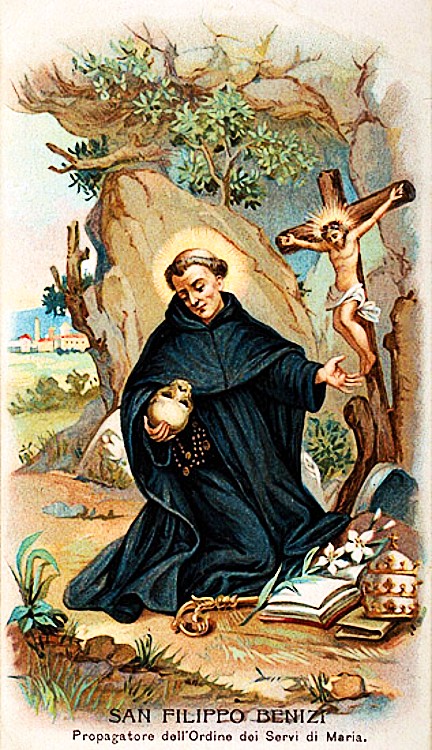
Saint of the Day – 23 August – St Philip Benizi OSM (1233-1285) Confessor, Priest and Co-Founder (one of the Seven Holy Founders of the Order of Servants of Mary) OSM, Servite Priest General of his Order, Reformer, Preacher, Medical Doctor., Miracle-worker.
St Philip Benizi, Confessor By Fr Francis Xavier Weninger SJ (1805-1888)
St Philip was born at Florence into the noble Florentine family of Benizi and before his birth, the Almighty had revealed to his pious mother, that he would become illustrious for his holiness. It seemed to her that a bright shining light emanated from her, which, spreading more and more, at last illumined the whole world with its rays. This was one of the inducements which led her to neglect nothing, which was necessary, to form in her son, the mind and heart of a Saint. She was still more strengthened in this decision, by the following event:
Two Religious of the newly founded Order of the Servites, came to her house. Philip, at that time only five months old, after looking at them for some moments, said: “Behold the servants of Mary, give alms to them, my mother.” All present, greatly surprised at this miracle, concluded, rightly that God had ordained a remarkable future for this child. The same might be divined from his entire conduct, while yet but a child: all his actions seemed to be imprinted with the seal of holiness.
Having finished his studies, he was one day thinking about his vocation and it being the Thursday after Easter, he went into the Chapel of the Servites, which stood on the outskirts of Florence, to attend Holy Mass. At the Epistle were read the words of the Holy Ghost to St Philip: “Draw near and join thyself to the chariot.”” Having heard these words, he went into an ecstasy and it seemed to him that he was alone in a vast wilderness, where nothing was to be seen but sterile mountains, steep rocks and cliffs, or marshes overgrown with thorns, swarming with poisonous reptiles and full of snares. He screamed with fear and looking around, for a meabs to save himself, he saw, high in the air, the Blessed Virgin in a chariot, surrounded by Angels and Saints and holding in her hand, the habit of the Servites. At the same time, he heard from the lips of Mary the words which had just been read in the Epistle. “Draw near and join thyself to the Chariot.” After this revelation, Philip no longer doubted that he was called to enter the Order of the Servites and going, the following day, to the dwelling of the seven Founders of this Order, he requested to be received as a lay-brother.
He was readily accepted, but after having served in that capacity for a few years, his talent, knowledge and holiness were so manifest that he was Ordained Priest, after which, he was raised from one dignity to another, until he was at last made General of the entire Order.
Although he at first humbly opposed this choice, yet when forced to obey, he became zealous in his labours to disseminate the principles of the holy Order, whose object is to reverence the Blessed Virgin and to promote her honour. He sent some of the religious to Scythia, to preach the Gospel and to spread the veneration of the Blessed Virgin. He himself, with two companions went through an incredible number of Cities and Provinces, everywhere exhorting sinners to repentance, endeavouring to calm the contentions which, at that period, disturbed the Christian world, disabusing, by his sermons, those who refused obedience to the Pope and animating all, to greater love of God and devotion to the Blessed Virgin.
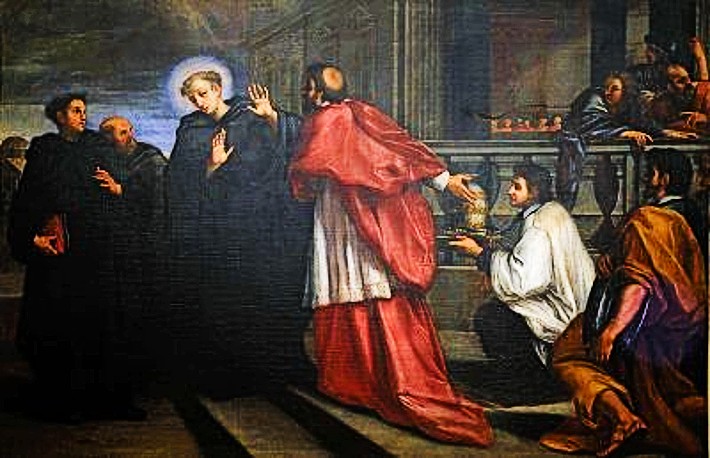
The Lord aided him visibly in all his undertakings and obtained for him, the highest regard from both clergy and laity. When the Cardinals, assembled at Viterbo to elect a new Pope, were unable to agree, they, at length, unanimously chose Philip, as all deemed him worthy of this high dignity. Philip, informed of it, was terrified and fled into the desert of Mount Thuniat, where he remained concealed in a cave, until another was elected Pope. This was not less an evidence, of his humility, than his election had been, of the high regard in which his virtues and the many miracles he had performed, were held by the Prelates of the Church.
His innocence and purity he carried unspotted to the grave but in order to preserve them, he was very severe to himself. He possessed in an eminent degree, the spirit of prayer, for, besides occupying a great portion of the night in devotional exercises, he also raised his mind to God, during his various occupations, by means of short aspirations. He never undertook anything without first recommending it in prayer to God and, the more important the affair, the longer and more fervent were his prayers.
The only object of his many and labourious voyages, was the glory of God and the good of men and his constant endeavour was, to prevent offences of the Divine Majesty and to work for the salvation of souls. But how shall we express his tender devotion to the Blessed Virgin, whom he had loved and honoured as a mother from his earliest childhood? In her honour, while yet a youth, he kept several festivals and performed many prayers.
He entered the Order of the Servites, because they regarded it their duty, to promote her veneration and honour. In every sermon, he admonished the people to honour Mary and to call upon her in all their troubles. In a word, he neglected nothing which he deemed necessary or useful, to institute and disseminate, due devotion to the Queen of Heaven. Although in many places, he had to endure much hardship and persecution, his love of God and the Blessed Virgin could not be discouraged from continuing in his apostolic labours.
Meanwhile, the weakness of his body manifested plainly that his last hour was approaching. He ,therefore, went to his Convent at Todi and there, first visited the Church. He prostrated himself before the Altar and when, after a long and fervent prayer, he again rose, he said: “Lord, receive my thanksgiving,; here is my place of rest.”
On the festival of the Assumption of Our Lady, he preached his last sermon, with such eloquence and unction, that all his listeners were greatly moved. On leaving the pulpit, he was seized with a fever, which, although by others thought of no consequence, was regarded by himself, as a messenger of death. Hence, he had himself carried into a special apartment and laid down but could not be persuaded to divest himself, of the rough hair-shirt which he constantly wore.
The days that he remained on earth after this, he employed in instructing and exhorting his religious, in prayers to God and invoking the intercession of the Blessed Virgin, in repenting of his sins and in longing to be admitted to the presence of the Most High. After having received,, with great devotion, the holy Sacraments, he requested his brethren to say the Litany of the Saints. When they came to the words: “We sinners. we beseech Thee to hear us!” he fell into an ecstasy and lost his consciousness to such a degree that he seemed already to have expired.
In this state he remained for three hours, when one of his friends loudly called him. He awakened as if from a deep slumber and related how fearful a struggle, he had had with Satan. How the latter had reproached him with his sins and endeavoured to make him despair of the mercy of God. But when the combat was at its height, the Blessed Virgin had appeared to him and, driving away Satan, had not only saved him from all danger,but had also shown him the crown which awaited him in the other world. Having related this to those around him, who were all awestruck, he requested what he called “his book,” the Crucifix and pressing it to his heart, he intoned the hymn of praise of St Zachary and after it, the 30th Psalm: “In thee, O Lord, have I hoped!” Arriving at the words: “Into thy hands I commend my spirit,” he looked once again at the Crucifix and ended his holy and useful life, on the Octave of Our Lady’s Assumption, in the year 1285.
The biography of this Saint contains many miracles which he performed during his life and many more which took place, by his intercession, after his happy death.
St Philip Benizi OSM (1233-1285) Confessor, Co-Founder (one of the Seven Holy Founders of the Order of Servants of Mary) OSM, Servite Priest Genera\Superior, Reformer, Preacher, Medical Doctor. St Philip was Beatified on 8 October 1645 by Pope Innocent X and Canonised on 12 April 1671 by Pope Clement X – he was first Servite to be Canonised. Biograph: https://anastpaul.wordpress.com/2017/08/23/saint-of-the-day-23-august-st-philip-benezi/
Notre-Dame de la Victoire de Valois / Our Lady of Victory of Valois, France (1328) – 23 August:
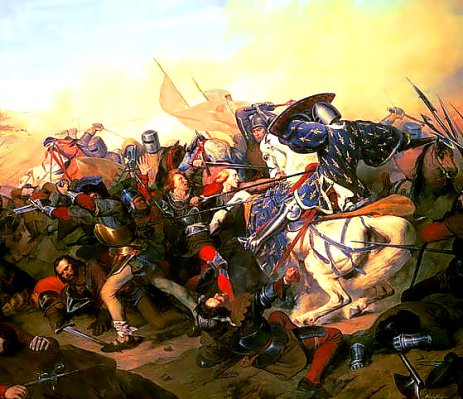
The Feast of Our Lady of Victory of Valois concerns Our Lady’s intercession in the Battle of Cassel, which was fought between the French, under Philip of Valois and the Flemish near Mount Cassel on 23 August in the year 1328. Philip of Valois, or King Philip VI, “Philip the Fortunate,” was the King of France beginning that year until his death in 1350.
Philip led his army against the band of Flemish rebels under Nicolas Zannekin, who were seeking independence from French rule. Having refused to pay what they considered to be excessive taxes to the Count of Flanders, they eventually imprisoned the King’s representative and captured several French towns. The Pope asked Philip to do what he could with the rebels but after having restored the Flemish aristocracy, the Flemish rebels had turned even on them, killing many of them. Philip was certain of victory, taking 2,500 knights and 12,000 infantry and archers with him into battle. Not knowing where he would attack, the Flemish rebels would have to divide their forces to protect their territory. Even so, the Flemish under Zannekin brought 15,000 soldiers into the field at Cassel.
For three days the two armies did nothing but taunt each other, although the Flemish commenced a direct attack on the French on the third day. Apparently, the French were caught off-guard, for many of them had taken off their armour because of the extreme heat that day. Fleeing in panic, the knights left the field, while much of the French nobility, who stood their ground were wounded. The Duke of Lorraine was slain and the situation appeared desperate.
It is recorded that Philip of Valois, being surrounded by Flemish soldiers as the flower of his nobility fell, had recourse to the Blessed Virgin, who immediately delivered him from that danger. The Dauphin of Vienne, Guigues VIII de la Tour-du-Pin, had been given the command of Philip’s 7th Corps. He led a counter attack which shattered the Flemish assault, while the knights regrouped and attacked the Flemish from the rear. The Flemish were defeated and victory assured by Our Lady of Victory of Valois.
Our of gratitude for this favour, when he made his entry into Paris, Philip went straight to Notre Dame Cathedral. Going into the Church on horseback, he proceeded the whole length of the nave to the Crucifix and there, laid down his arms. The picture of this Monarch on horseback, was, for a long time, to be seen in that Church, to which Philip gave a revenue of 100 livres, to be levied on his domain of Gatinais.
St Abbondius of Rome St Altigianus St Apollinaris of Rheims St Archelaus of Ostia St Asterius of Aegea St Claudius of Aegea St Domnina of Aegea St Eleazar of Lyons St Eonagh St Flavian of Autun Bl Franciszek Dachtera Bl Giacomo Bianconi of Mevania St Hilarinus St Ireneus of Rome Bl Jean Bourdon St Lupo of Novi St Luppus St Maximus of Ostia St Minervius of Lyons St Neon of Aegea St Quiriacus of Ostia St Theonilla of Aegea St Timothy of Rheims
Martyrs of Agea – 4 Saints: A group of Christian brothers, Asterius, Claudius and Neon, denounced by their step-mother who were then tortured and Martyred in the persecutions of Pro-consul Lysias. They were crucified in 285 outside the walls of Aegea, Cilicia (in Asia Minor) and their bodies left for scavengers.
St Andrew of Fiesole St Anthusa of Seleucia St Antoninus of Rome St Arnulf of Eynesbury St Athanasius of Tarsus Bl Bernard Perani St Dalmau Llebaría Torné St Epictetus of Ostia St Ethelgitha of Northumbria St Fabrician of Toledo St Felix of Ostia
St John Kemble (1599 – 1679) Martyr, Priest. Ordained in 1625, he returned to Monmouthshire and served more than 50 years as an itinerant Priest, winning admirers even among Protestants. After being dragged on a hurdle to Widemarsh Common, Kemble declared on the scaffold that he died for the religion that had made this country Christian and that he forgave all his enemies. He was then obliged to encourage the executioner, who had no stomach for his task. Biography: https://anastpaul.com/2018/08/22/saint-of-the-day-22-august-st-john-kemble-1599-1679-martyr/
St John Wall St Josep Roselló Sans St Julio Melgar Salgado St Maprilis of Ostia St Martial of Ostia St Maurus of Rheims St Narciso de Esténaga y Echevarría St Philibert of Toledo Bl Richard Kirkman St Saturninus of Ostia Bl Simeon Lukach St Sigfrid of Wearmouth St Symphorian of Autun
Our Morning Offering – 21 August – The Memorial of St Jane Frances de Chantal VHM (1572-1641)
Prayer of Abandonment By St Jane Frances de Chantal (1572-1641)
O sovereign goodness of the sovereign Providence of my God! I abandon myself forever to Thy arms. Whether gentle or severe, lead me henceforth whither Thou will. I will not regard the way through which Thou will have me pass but keep my eyes fixed upon Thee, my God, who guides me. My soul finds no rest without the arms and the bosom of this heavenly Providence, my true Mother, my strength and my rampart. Therefore I resolve with Thy Divine assistance, 0 my Saviour, to follow Thy desires and Thy ordinances, without regarding or examining why Thou does this rather than that but I will blindly follow Thee, according to Thy Divine will, without seeking my own inclinations. Hence I am determined to leave all to Thee, taking no part therein, save by keeping myself in peace in Thy arms, desiring nothing, except as Thou incites me to desire, to will, to wish. I offer Thee this desire, 0 my God, beseeching Thee to bless it. I undertake all it includes, relying on Thy goodness, liberality and mercy, with entire confidence in Thee, distrust of myself, and knowledge of my infinite misery and infirmity. Amen.
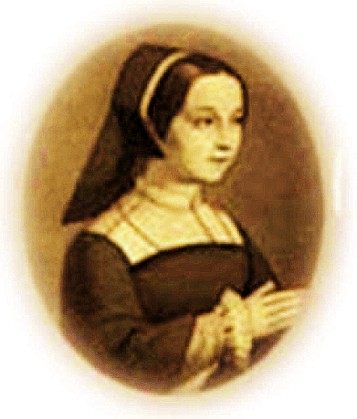
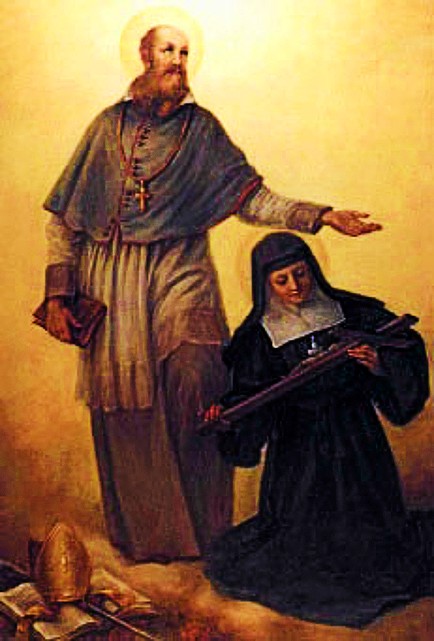
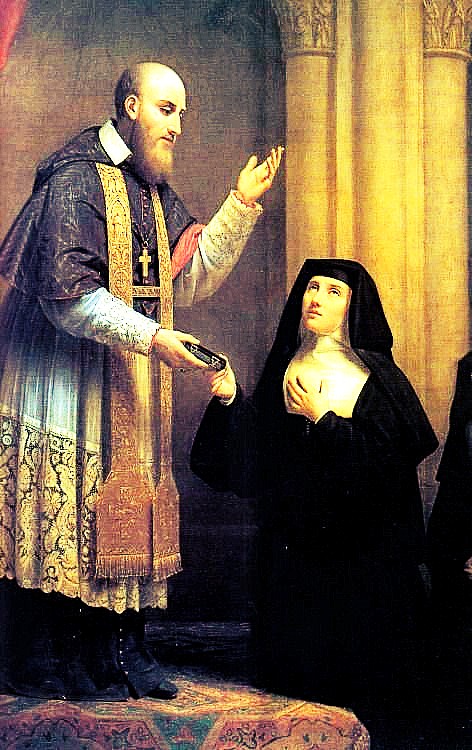
Saint of the Day – 21 August – St Jane Frances de Chantal (1572-1641) Widow, Mother, Foundress of the Congregation of the Visitation. Close friend of St Francis de Sales and St Vincent de Paul, both of whom guided and assisted her and her foundation, spiritually Patronages – against in-law problems, against the death of parents, forgotten people, parents separated from children, widows.
St Jane Frances de Chantal, Widow From the Liturgical Year, 1909
Jane Frances Freiniot de Chantal was born at Dijon in Burgundy, France, of noble parents and from her childhood gave clear signs of her future great sanctity. It was said that when only five years of age, she put to silence a Calvinist nobleman by substantial arguments, far beyond her age, and, when he offered her a little present, she immediately threw it into the fire, saying: “This is how heretics will burn in hell because they do not believe Christ when He speaks.”
When she lost her mother, she put herself under the care of the Virgin Mother of God,and dismissed a maid servant who was enticing her to love of the world. There was nothing childish in her manners. she shrank from worldly pleasures, and thirsting for martyrdom, she devoted herself entirely to religion and piety. She was given in marriage by her father to the Baron de Chantal and in this new state of life, she strove to cultivate every virtue and busied herself in instructing in faith and morals, her children, her servants and all under her authority. Her liberality in relieving the necessities of the poor was very great and more than once, God miraculously multiplied her stores of provisions – on this account, she promised never to refuse anyone who begged an alms in Christ’s Name.
Her husband, having been killed while hunting, she determined to embrace a more perfect life and bound herself ,by a vow of chastity. She not only bore her husband’s death with resignation but, overcame herself, so far, as to stand as the Godmother, to the child of the man who had killed him, in order to give a public proof that she pardoned him. She contented herself with a few servants and with plain food and dress, devoting her costly garments, to pious usages. Whatever time remained from her domestic cares, she employed in prayer, pious reading and good works. She could never be induced to accept offers of a second marriage, even though, honourable and advantageous. In order not to be shaken in her resolution of observing chastity, she renewed her vow and imprinted the most Holy Name of Jesus Christ upon her breast with a red-hot iron. Her love grew more ardent day by day. She had the poor, the abandoned, the sick and those, who were afflicted with the most terrible diseases, brought to her and not only sheltered, and comforted but also, nursed them. She washed and mended their filthy garments and did not shrink from putting her lips to their running sores.
Having learnt the will of God from St Francis de Sales, her Director, she founded the Institute of the Visitation of Our Lady. For this purpose, she quitted, with unfaltering courage, her father, her father-in-law and even her son, over whose body she had to step, in order to leave her home, so violently did he oppose her vocation. She observed her Rule with the utmost fidelity and so great was her love of poverty that she rejoiced to be in want, of even the necessaries of life.
She was a perfect model of Christian humility, obedience, and all other virtues. Wishing for still higher ascensions in her heart, she bound herself by a most difficult vow, always to do what she thought most perfect. At length when the Order of the Visitation had spread far and wide, chiefly through her endeavours, after encouraging her sisters to piety and charity, by words and example and also, by writings full of divine wisdom, laden with merits, she passed to the Lord at Moulins, having duly received the Sacraments of the Church. She died on the 13 December, in the year 1641.
St Vincent de Paul, who was, at a great distance, saw her soul being carried to Heaven and St Francis de Sales coming to meet her. Her body was afterwards translated to Annecy. Miracles having made her illustrious, both before and after her death, Pope Benedict XIV. placed her among the Blessed and Pope Clement XIII. among the Saints. Pope Clement XIV. commanded her Feast to be celebrated by the Universal Church.
The 11th Sunday after Pentecost Sunday within the Octave of the Assumption
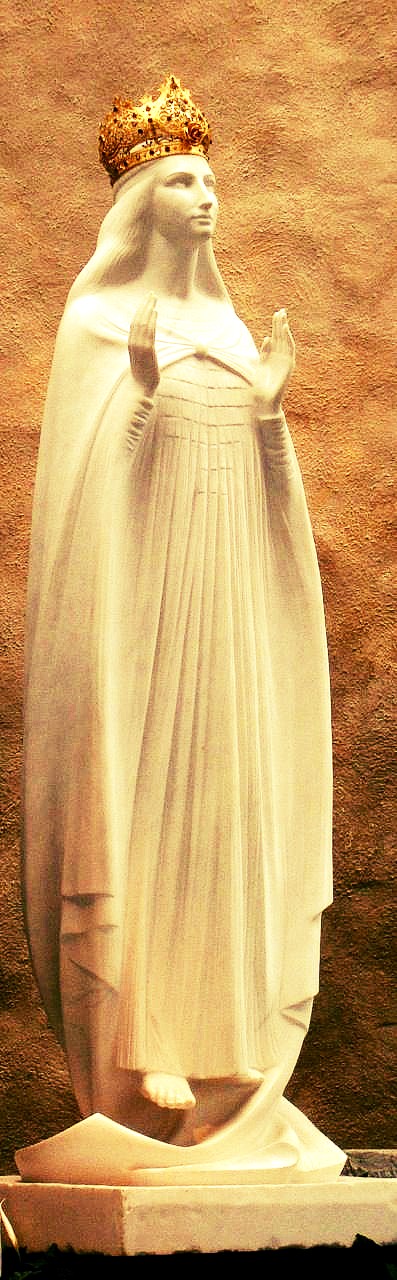
Our Lady of Knock, Ireland (1879) – 21 August:
The Apparition in County Mayo in Ireland of Our Lady of Knock is reported to have occurred on the evening of 21 August 1879, the Vigil of the Octave of the Feast of the Assumption. Those who witnessed the miracle, ranged in age from five years old to seventy five.
The Apparition was described as follows: “Our Lady was wearing a large, brilliant crown and clothed in white garments. On her right was Saint Joseph, his head inclined toward her and on her left Saint John the Evangelist. To the left of Saint John was an Altar on which stood a Crucifix and a lamb.” Standing only a few feet off the ground, the Blessed Virgin wore a white cloak and was described by witnesses as being incredibly beautiful. She wore a bright golden crown and appeared to be praying with her eyes looking toward Heaven with her arms bend in front of her with her palms facing inward.”
Fifteen parishioners stood, before the Apparition, for two hours as they recited the Rosary. Although it was daylight when the Apparition began, the weather changed and it began to rain heavily. The area around the Apparition appeared unaffected, however, as the ground remained dry, as long as the vision lasted. Our Lady did not speak but the gable of the Church where the Apparition occured was covered with a cloud of light.
Saint Joseph, also wore white robes and stood on the Virgin’s right. He inclined his head respectfully toward the Blessed Virgin. Saint John the Evangelist wore a miter and appeared to be preaching as he held a book in his left hand.
Since then thousands of people have made pilgrimages to Knock to pray to Our Lady. Their prayerful, penitential and reverential spirit, has been commended again and again by visitors from other lands. No sign of commercialism detracts from the purely religious atmosphere of that hallowed spot. People from all walks of life kneel in humble supplication before the Shrine of Our Lady, fully confident that she has sanctified that spot by her appearance there. Organised pilgrimages from various Diocese are conducted frequently to the Shrine The Holy Rosary comprises the main portion of the devotion – the Shrine is, therefore, appropriately called the Rosary Shrine. The “Knock Shrine Annual” relates many wonderful accounts of cures and conversions effected at the Shrine.
St Agapius of Edessa St Agathonicus of Constantinople St Anastasius Cornicularius St Aria of Rome St Avitus I of Clermont St Bassa of Edessa Bl Beatrice de Roelas St Bernhard of Lérida St Bernard de Alziva St Bonosus St Camerinus of Sardinia St Cameron St Cisellus of Sardinia St Cyriaca St Euprepius of Verona St Fidelis of Edessa Bl Gilbert of Valenciennes St Gracia of Lérida St Hardulph St Joseph Nien Vien Bl Ladislaus Findysz St Leontius the Elder St Luxorius of Sardinia St Maria of Lérida St Maximianus the Soldier St Maximilian of Antioch St Natale of Casale Monferrato St Paternus of Fondi St Privatus of Mende St Quadratus of Utica
Saint of the Day – 20 August – St Bernard (1090-1153) Abbot, Confessor, “Doctor Mellifluus” of the Church and the Last Father of the Church,“The Bard of Mary.”
A Beautiful Portrait of the Saint Excerpt From “Saint Bernard” An Oracle of the 12th Century By Father Hugo Henry Hoever
“The whole world knows that God glorified his servant Bernard, Abbot of Clairvaux, through miraculous signs. However, he displayed the greatest miracle ,in his own person. His gaze was serene and his appearance humble. In his sermons, he exercised prudent caution and, his actions were filled with fear of God. He was a man of meditation and prayer, who, in all his undertakings, trusted more in prayer than in his own abilities. God had given this holy soul a fitting body to assist him. A more spiritual, than sensual charm, enveloped his whole appearance. Heavenly glory brightened his face and from his eyes shone out, the innocence of an angel and the simplicity of a dove. So great was the interior beauty and fullness of grace of this man, that it was radiated in his bodily exterior. The body of the Saint was built most tenderly and almost completely without flesh. A fine red covered his cheeks. His hair was very fair and the reddish beard grew grey, in the last years of his life. Although he was only of medium height, Bernard appeared tall rather than short. If he could withdraw from exterior businesses, he prayed, read, wrote, taught his Monks or enjoyed silent meditation …
Clothing: With regard to clothing, Bernard liked poverty,but not uncleanliness. This would, he said, rather be a sign of negligence or reveal a proud man, who is intent on snatching some false glory from his fellowmen. In the later years of his life, by order of the visiting Abbots, he wore, besides the “Cuculla” (cowl) and tunic, a short woolen coat and a head-wear of similar material. In spite of his bodily sufferings, he could not be induced to put on a fur.
Gift of Speech: Notwithstanding his weak body, Bernard had a strong and beautiful voice which was given him by God because He had chosen him for the office of preacher. Bernard knew well how to adapt his speech to the audience. With people from the country hespoke like someone ,who himself, was reared in the country. When he was dealing with representatives of other classes, his words sounded as though he were familiar with their occupations in detail. This gift of eloquence which God had bestowed upon him, became evident also, by the fact, that the Germans, with great enthusiasm, listened to his sermons, although they did not understand his language. No interpretation in their own language, could have more edified, or more deeply affected them. They contritely beat their chests during his sermons and wept loudly.
Interior Recollection: When Bernard visited the Charter house (Chartreuse) near Grenoble, Prior Guigo was amazed by the refined saddlery of Bernard’s riding-animal which corresponded little with his poverty. When the holy Abbot learned of this, he was also surprised and asked what kind of saddle it was. Bernard had ridden from Clairvaux to the Charterhouse without taking notice of the saddle and up to this hour, he did not know what it looked like. The riding-animal, belonged to his uncle, a Cluniac Monk, who lived close by and who had lent it to him. Bernard had used the horse just as his uncle had left it. When the Prior heard this explanation, it was again his turn to be surprised. How must this servant of God have guarded his eyes! Bernard, on his long way, had not noticed what he (the Prior) had caught at first glance. In a similar way, Bernard travelled a whole day along the shore of Lake Geneva, without noting it, or at least without being conscious of it. When, in the evening, his companions spoke about the lake, he asked, to the surprise of all, the time during which they had passed the lake!
From the very first, Bernard always endeavoured to keep away from worldly things and to stay at the Monastery. For a certain time, he was able to carry out this plan, since the reference to his bodily weakness afforded a favourable excuse. But finally, the distressed condition of the Church of God and the command of the Pope, as well as of the Abbots of the Order, to whom he readily submitted all his affairs, compelled him to step out of his solitude. He was surprised, when he heard religious-minded people, laughing loudly. Often, we heard Bernard say, that, since he entered the Monastery, it was more difficult for him to laugh, than to suppress the laughter.
The Humble, Amiable Monk: Bernard had lived already for several years in Clairvaux, when one day he decided to pay a friendly visit to Bishop Hugo of Grenoble and the Carthusians living close by. The Bishop, who recognised the sanctity in his guest, received him with such respect, that he fell upon his knees before him. When the Abbot saw the aged Bishop in that position, he was much embarrassed. Immediately, he also went on his knees and then he received the Kiss of peace. From this time on, Bernard and the Bishop were intimate friends and seemed to be of one heart and soul.
With the same love and respect, the holy Abbot was received by Prior Guigo and the other Friars of the chartreuse. They were delighted to find in his person, the picture that they had formed of him, in their minds, from his letters. (Gaufrid, Vita Bernardi, lib. Ill, c. 1-3).
Bodily Sufferings and DeatH: Bernard’s health suffered from several bodily diseases. Especially dangerous, was a narrowing of his gullet which hardly permitted the reception of solid food. Moreover, he had a serious gastric condition. He found it difficult to stand for long periods – for this reason, he usually sat and moved around only a little.
After the holy Abbot had brought peace to Metz and all of Lorraine, he returned to the Monastery and suffered much from the infirmities of his slowly decaying body. However, he faced death gladly and cheerfully, just as one who enters the desired harbour and reefs the sails one by one. When Bishop Godfrey of Langres asked Bernard for his advice in an official affair, he was astonished at his indifference. Bernard replied: ‘Do not be surprised, I do not belong to this world any longer.’
He who desires further information on his sickness, can obtain this knowledge from a letter which Bernard, a few days before his death, sent to a friend: ‘I was glad to receive your letter but my condition does not permit me to enjoy it fully. How could one even speak of pleasure, when suffering prevails. Sleep eludes me, so that pain is not even interrupted for a time, by the blessing of drowsiness of the senses. A sick stomach is the cause of almost all my sufferings. Day and night it must be strengthened with beverages, since it inexorably rejects any solid food . . . The feet and legs are swollen like those of a dropsical person. That nothing remains concealed between friends, I want to add that in spite of all hardship, the spirit remains willing in the weak flesh. Pray to the Divine Redeemer, that He may not detain the imminent death but mercifully allow me to die.‘
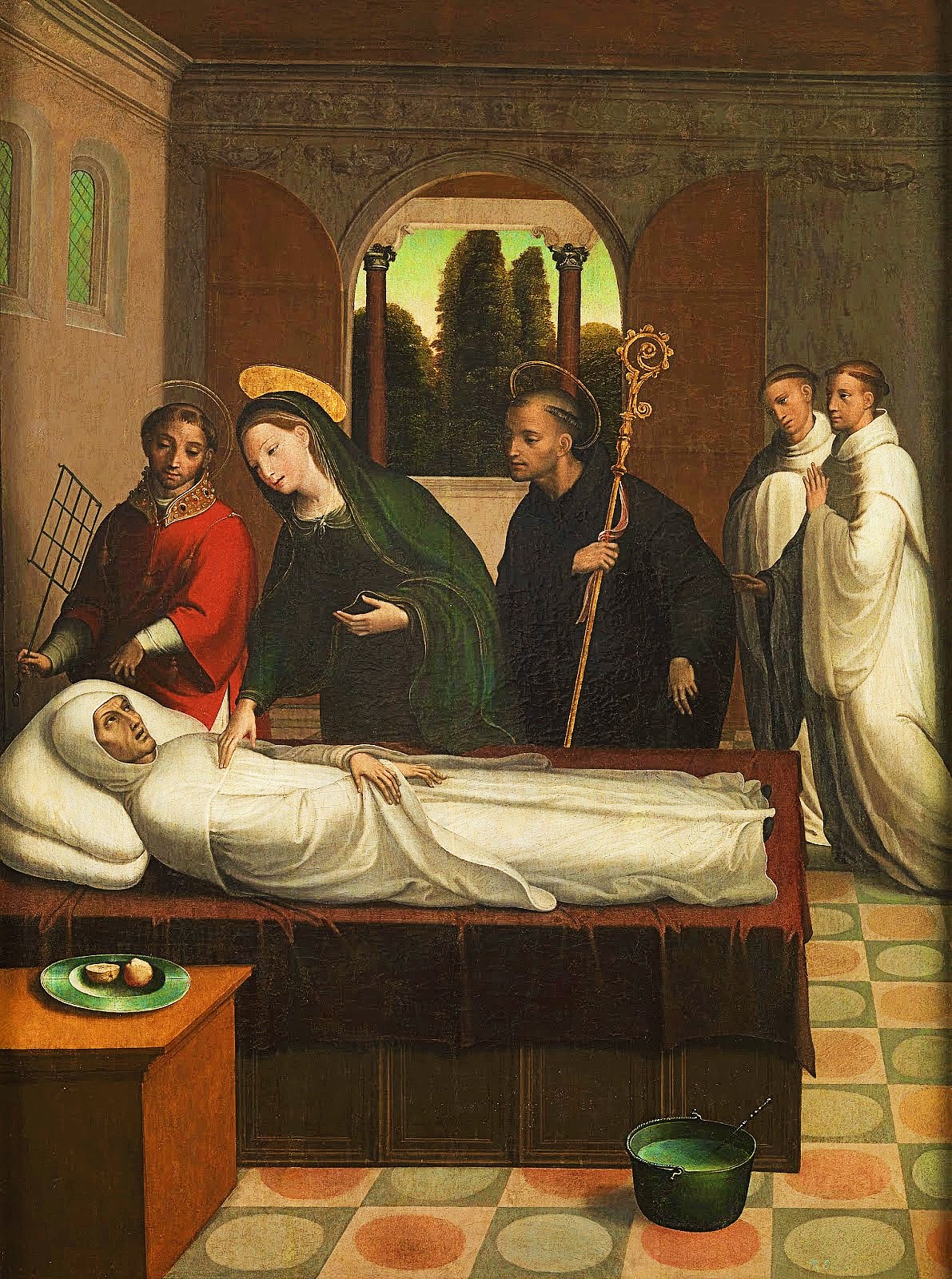
Finally, when the mortal frame was completely shattered, the waiting soul returned home. When this day of death commenced which, for Bernard was the beginning of eternal reward, the neighbouring Bishops and many Abbots and Friars, gathered together. Now the loyal servant of our Lord, the first Abbot of Clairvaux, the (direct or indirect) Founder of more than 160 Monasteries! happily completed his course of life. He died at the age of almost 63, on 20 August 1153, in the presence of his spiritual sons.
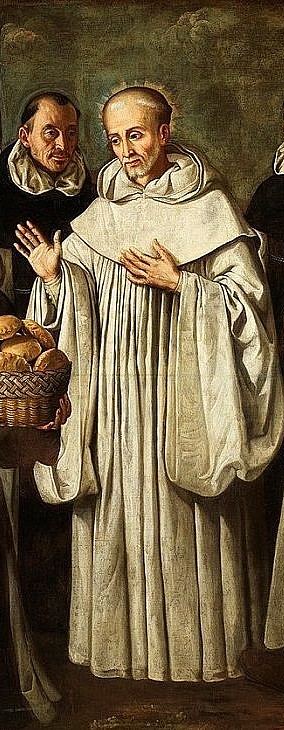
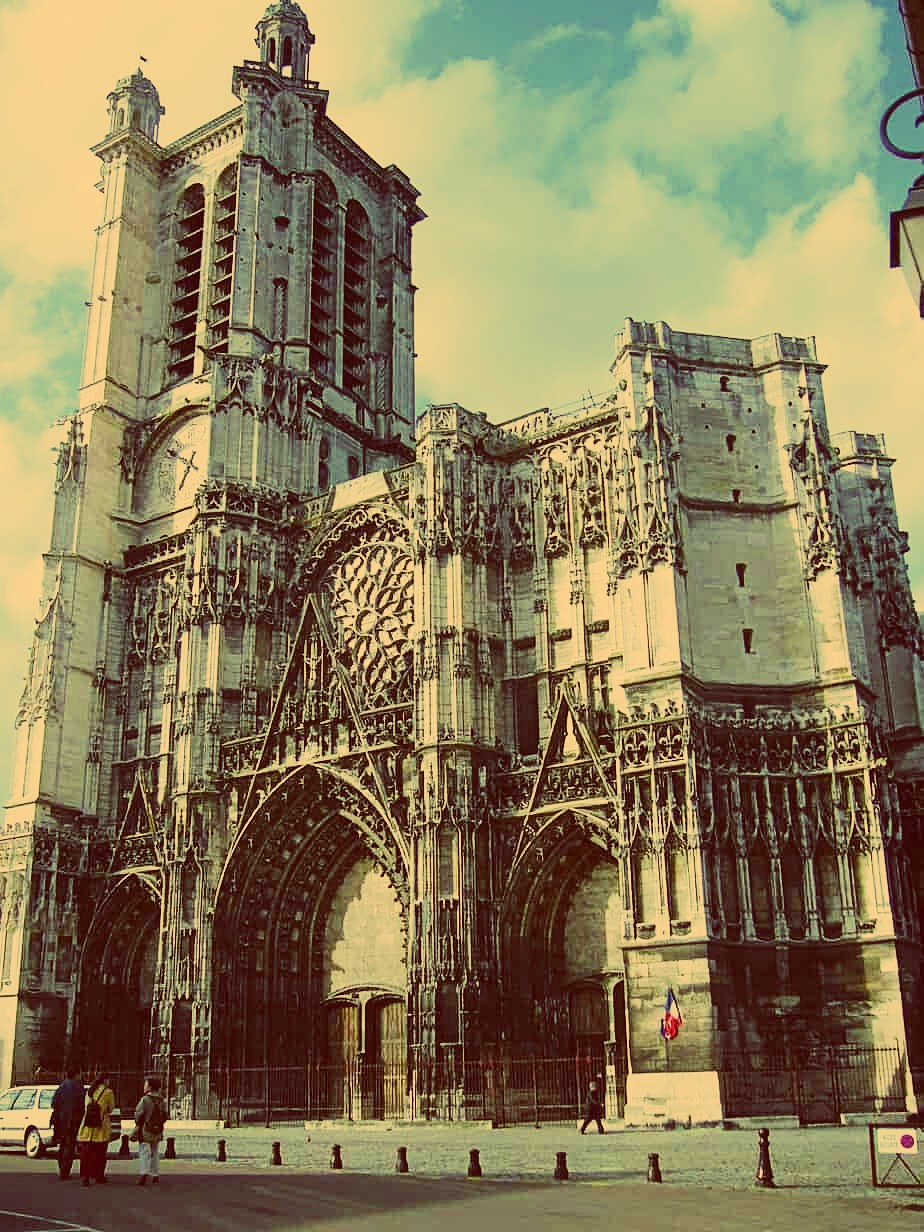
On 22 August he was buried in front of the Altar of the Blessed Virgin and Mother, whose most devoted Priest he was. Upon his request a capsule with relics of St Thaddeus, which he had received that same year from Jerusalem, was laid on his chest. He desired to celebrate the day of general resurrection in communion with this Apostle.” (Gaufrid, Vita Bernardi lib. V, c. 2). St Bernard’s Tomb now rests in Troyes Cathedral, below.































You must be logged in to post a comment.