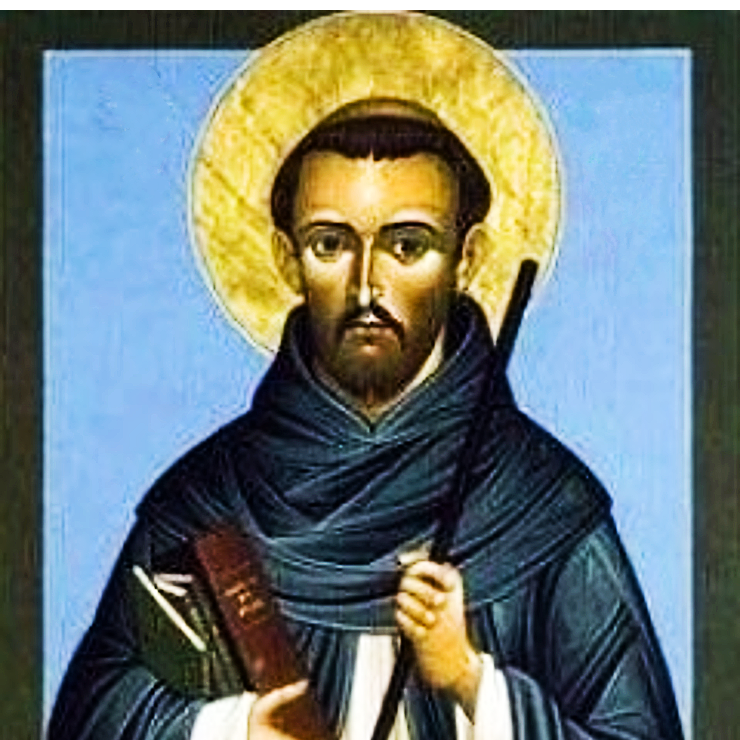
St Bernard O.Cist. (1090-1153) Abbot of the Order of Citeaux (the Cistercians), Confessor, “Doctor Mellifluus” of the Church and the Last Father of the Church,“The Bard of Mary”- Theologian, Reformer, Writer, Mystic, Preacher, Mariologist, Advisor, Mediator, Poet. St Bernard, the Founding Abbot of Clairvaux Abbey in Burgundy, France, was one of the most commanding Church leaders in the first half of the twelfth century, as well as, one of the greatest spiritual masters of all time and the most powerful propagator of the Cistercian reform. St Bernard’s Life: https://anastpaul.com/2017/08/20/saint-of-the-day-20-august-st-bernard-of-clairvaux-abbot-confessor-doctor-of-the-church-doctor-mellifluus-and-the-last-father-of-the-church/
St Brogan St Burchard of Worms St Christopher of Cordoba St Cristòfol Baqués Almirall St Edbert of Northumbria Bl Georg Hafner Bl Gervais-Protais Brunel St Gobert of Apremont St Haduin of Le Mans St Heliodorus of Persia St Herbert Hoscam St Leovigild of Cordoba Bl Louis-François Lebrun St Lucius of Cyprus St Maximus of Chinon
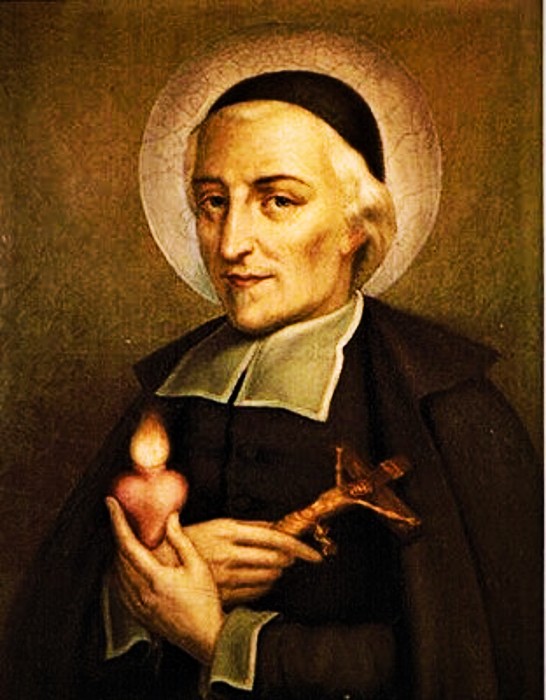
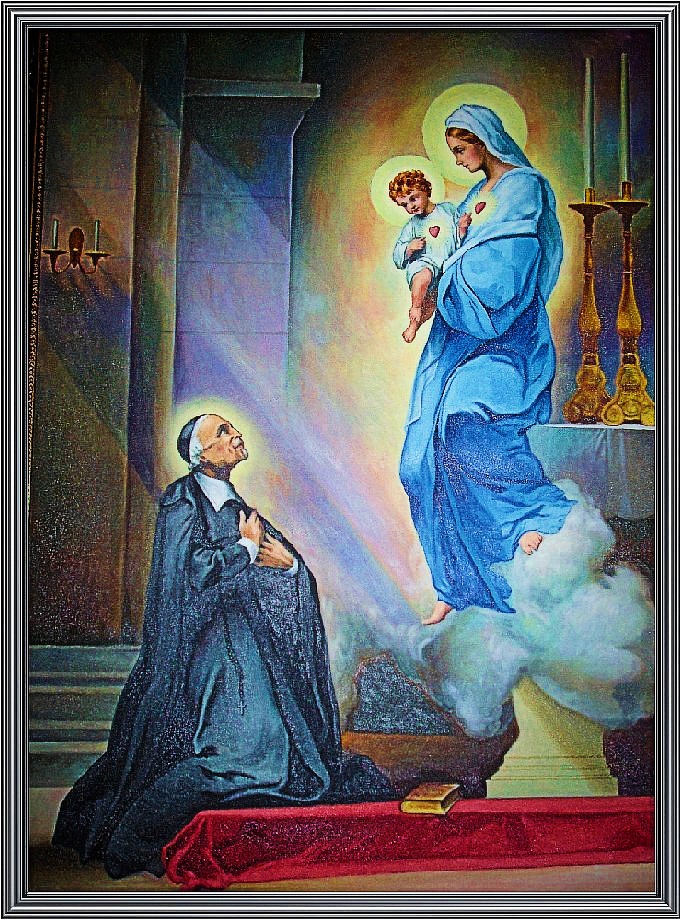
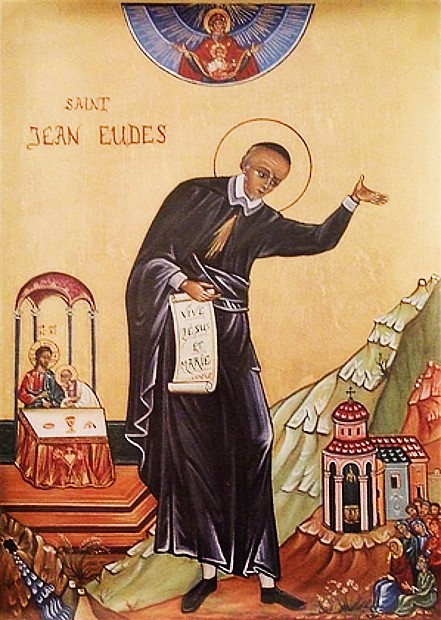
Saint of the Day – 19 August – St John Eudes (1601-1680) Confessor, “The Apostle of Two Hearts.”
Saint John Eudes, Confessor From the Roman Breviary
John was born in the year 1601, of pious and respectable parents, at a village commonly known as Ri, in the Diocese of Seez. While still a boy, when he was fed with the Bread of Angels, he cheerfully made a vow of perpetual chastity. Having been received at the College of Caen, directed by the Fathers of the Society of Jesus, he was conspicuous for a remarkable piety and, committing himself to the protection of the Virgin Mary, when still a youth, he signed, with his own blood, the special covenant he had entered into with her.
Having completed his courses of letters and of philosophy, with great distinction and having spurned opportunities of marriage, which had been arranged for him, he enrolled himself with the Congregation of the Oratory, founded by Cardinal de Berulle and was ordained Priest at Paris. He was on fire with a marvellous love towards his neighbour, for he took the most constant pains, in caring for both the souls and bodies, of those smitten with the Asiatic plague, in many different places.
He was made Rector of the Oratorian house at Caen but, since he had been thinking for a long time, of educating suitable young men for the service of the Church, earnestly asking for the Divine assistance, with a brave spirit, he most regretfully departed from the associates with whom he had lived for twenty years.
Accordingly, associating five Priests with himself, in the year 1643, on the feastday of the Annunciation of the Blessed Virgin Mary, he founded a Congregation of Priests, to whom he gave the most holy names of Jesus and Mary and opened the first Seminary at Caen. A great many others followed immediately, in Normandy and Brittany, also founded by him. For the recalling of sinful women to a Christian life, he founded the Order of Our Lady of Charity; of which most noble tree, the Congregation of the Good Shepherd of Angers is a branch. Furthermore, he founded the Society of the Admirable Heart of the Mother of God and other charitable institutions.
He was the author of many excellent treatises and laboured as an Apostolic Missionary to the very end of his life, preaching the Gospel in very many villages and cities,and even in the Royal Court.
His matchless zeal was very conspicuous in promoting the salutary devotion, towards the most Sacred Hearts of Jesus and Mary, whose liturgical worship he was the first of all to devise, although not without some Divine inspiration. He is, therefore, held to be the father, the teacher and the apostle of that worship.
Courageously withstanding the doctrines of the Jansenists, he preserved, unalterable obedience towards the Chair of Peter, and he constantly prayed to God, both for his enemies as well as for his brethren.
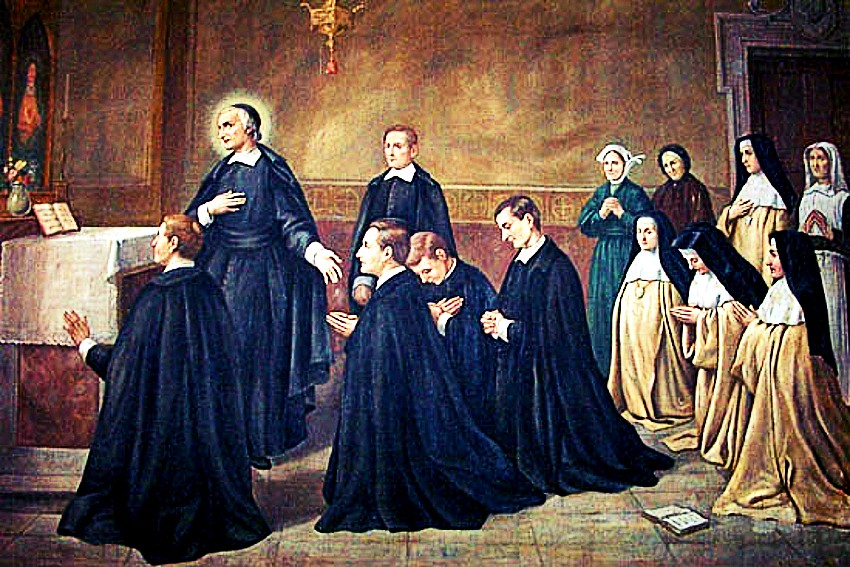
St John Eudes with Fathers and Sisters of the Congregations he founded
Broken by so my labours, rather than by years, desiring to be freed and to be with Christ, on 19 August 1680, frequently repeating the sweet Names of Jesus and Mary, he died in peace. As he became illustrious by many miracles, Pope Pius X added him to the list of the Blessed and, as he still shone forth with new signs and wonders, Pope Pius XI, in the holy year 1925 and on the day of Pentecost, placed him among the Saints and extended his Office and Mass, to the Universal Church.
A Magnificat By St John Eudes (1601-1680) A Hymn of Praise and Thanksgiving to the Sacred Heart of Jesus and to the Holy Heart of Mary
My soul doth magnify the admirable Heart of Jesus and Mary And my spirit rejoices in Thou great Heart. Jesus and Mary have given me their Heart, This immense Heart, in order that all in me May be performed in its love.
Infinite praise to them, for their ineffable gift. This Heart infinitely merciful, has done great things for me. It has possessed me from the womb of my mother. Infinite thanksgiving for Thou ineffable gifts.
The abyss of my misery has called on the abyss of His Mercy. Infinite thanksgiving for His ineffable gifts. This Heart infinitely meek has presented me With blessings of its sweetness. Infinite thanksgiving for His ineffable gifts. Amen
St John Eudes (1601-1680) Confessor, Priest, Missionary, Founder, Preacher, Writer, Mystic, he founded the Congregation of Jesus (The Eudists) and Mary and the Order of Our Lady of Charity and was the Author of the propers for the Mass and Divine Office of the Sacred Hearts of Jesus and Mary. Known as “The Apostle of Two Hearts.” Beatified on 25 April 1909 by Pope Pius X and Canonised on 31 May 1925 by Pope Pius XI. Biography here: https://anastpaul.wordpress.com/2017/08/19/saint-of-the-day-19-august-st-john-eudes-apostle-of-two-hearts/
St Andrew the Tribune St Badulf of Ainay St Bertulf of Luxeuil St Calminius St Credan of Evesham St Donatus of Mount Jura St Elaphius of Châlons St Guenninus Bl Guerricus Bl Hugh Green
Blessed Jordan of Pisa OP (c 1255–1311) Dominican Friar, Theologian, Professor, renowned Preacher, Founder of the Confraternity of the Holy Redeemer at Pisa, Visionary, Marian devotee, promoter and daring innovator of the vernacular Italian language as a ‘church’ language and a tool for evangelisation. On 23 August 1833, Blessed Jordan’s cultus was confirmed by Pope Gregory XVI and in 1838 he was Beatified by Pope Gregory XVI. His Life: https://anastpaul.com/2019/08/19/saint-of-the-day-blessed-jordan-of-pisa-op-c-1255-1311/ St Julius of Rome
St Louis of Toulouse OFM (1274-1297) Prince and Bishop, Neapolitan Prince of the Capetian House of Anjou, Franciscan Friar and Priest, Apostle of Prayer, of Penance and of the poor and the sick. He had received the last sacraments on the Feast of the Assumption of Our Lady and on the 19th of August, 1297, while pronouncing the holy name of Mary, he yielded his soul to God. Because of the many miracles that were wrought at his tomb, he was Canonised as early as 1317, during the lifetime of his mother. Lovely St Louis: https://anastpaul.com/2020/08/19/saint-of-the-day-19-august-saint-louis-of-toulouse-ofm-1274-1297-prince-and-bishop/
St Magnus of Anagni St Magnus of Avignon St Magnus of Cuneo St Marianus of Entreaigues St Marinus of Besalu St Magino of Tarragona St Mochta St Namadia of Marsat St Rufinus of Mantua St Sarah the Matriarch St Sebaldus St Thecla of Caesarea St Timothy of Gaza
Martyrs of Nagasaki – 15 Beati: A group of missionaries and their laymen supporters who were executed for spreading Christianity in Japan. • Antonius Yamada • Bartholomaeus Mohyoe • Iacobus Matsuo Denji • Ioachim Díaz Hirayama • Ioannes Miyazaki Soemon • Ioannes Nagata Matashichi • Ioannes Yago • Laurentius Ikegami Rokusuke • Leo Sukeemon • Ludovic Frarijn • Marcus Takenoshita Shin’emon • Michaël Díaz Hori • Paulus Sankichi • Pedro de Zúñiga • Thomas Koyanagi They were beheaded on 19 August 1622 at Nagasaki, Japan and Beatified on 7 May 1867 by Pope Pius IX.
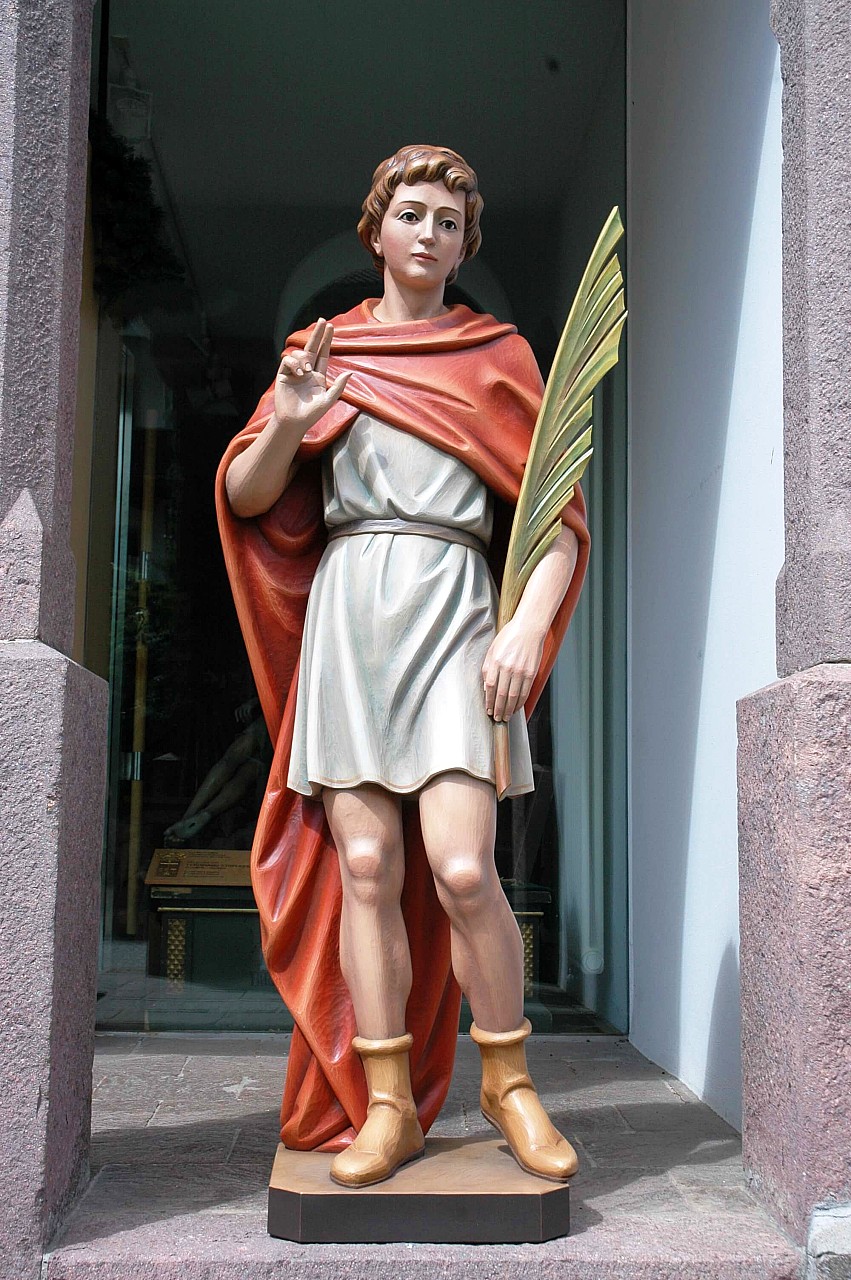
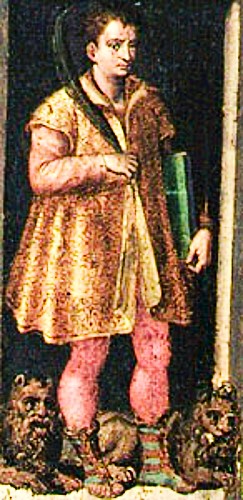
Saint of the Day – 18 August – St Agapitus the Martyr (c 259- c 274) Roman Youth aged 15 Born in c 259 in Palestrina, Italy and died in c 274 by being thrown to wild animals in the arena. When the animals would not touch him, he was beheaded at Palestrina, Italy. Patronages – against colics, Palestrina, Italy. Also known as –
The Roman Martyrology reads: “At Palestina, the birthday of the holy Martyr Agapitus. Although only fifteen years of age, as he was fervent in the love of Christ, he was arrested by order of te Emperor Aurelian and scourged for a long time. Afterwards, under the Prefect Antiochus, he endured more severed torments and, being delivered to the lions by the Emperor’s order without receiving any injury, he was finally struck with the sword and thus, merited his crown.”
Agapitus, was a member of the noble Anicia family of Palestrina, He was condemned to death under the Prefect Antiochus and the Emperor Aurelian, for being a Christian.
Agapitus was but 15 years old, when he was apprehended by the tyrant Aurelian, on account of being a Christian. As he unflinchingly proclaimed his belief in Christ, he was whipped with scourges and then cast into a dungeon, without any food, that he might thus be forced to forsake Christianity.
When Antiochus, the Prefect, found him, at the end of five days, more determined than before, he ordered a live coal to be put upon his head. The brave youth stood immovably under this torture and praising God, said: “A head, which would wear an eternal crown in Heaven, must not hesitate to wear suffering and pain upon earth. Wounds and burns make my head the more worthy to be crowned with eternal glory.”
Antiochus, greatly provoked, ordered them to whip the holy youth till his body became one great wound, after which, they hung him by the feet over a fire, hoping to suffocate him. But they failed for, after a long silence, he addressed the Prefect saying: “Behold, Antiochus, the people will say that all thy ingenuity, all thy wit, ends in smoke.”
Statue of St Agapitus by Marco Antonio Prestinari (c 1605-1607) in Museo del Duomo, Milan
Enraged at this remark, the tyrant had him again cruelly whipped and ordered boiling water to be poured into the open wounds. After this, they knocked all his teeth out and broke his jaws with blows.
The Martyrdom of St Agapitus
But God punished the tyrant for his cruelty; He caused him to fall from his seat and break his neck. Aurelian, hearing of this, ordered the Martyr to be thrown to the wild beasts but, as they refused to touch him, he was finally beheaded. Thus ended the glorious Martyrdom of the holy youth, Agapitus, in around 274.
Agapitus is mentioned in the ancient Martyrologies, including the Martyrologium Hieronymianum of St Jerome, Around the 5th Century, Pope Felix III built a Basilica in his honour on the supposed site of his Martyrdom. His relics were kept in the Basilica and a cemetery grew around it. At some uncertain date, his relics were translated to the present Cathedral of Palestrina, dedicated to him.
Agapitus is honoured in the Tridentine Calendar by a commemoration added to the Mass and canonical hours in the liturgy of the day within the Octave of the Assumption.
St Crispus of Rome St Daig Maccairaill Bl Domenico de Molinar St Eonus of Arles St Ernan St Evan of Ayrshire St Firminus of Metz St Florus of Illyria Bl Francus of Francavilla Bl Gaspar di Salamanca St Hermas of Rome St John of Rome St Juliana of Myra St Juliana of Stobylum St Laurus of Illyria St Leo of Myra Bl Leonard of Cava St Maximus of Illyria Bl Milo of Fontenelle St Polyaenus of Rome St Proculus of Illyria
Blessed Rinaldo of Concorezzo (c 1245 – 1321) Bishop of Vicenza from 1296 until his 1303 appointment as the Archbishop of Ravenna-Cervia holding that until his death, Doctor of Canon Law, Papal envoy, Arbitrator and Peace-maker. Archbishop Rinaldo was also a close friend of Dante Alighieri. His Courageous Life: https://anastpaul.com/2020/08/18/saint-of-the-day-18-august-blessed-rinaldo-of-concorezzo-c-1245-1321/
St Ronan of Iona St Serapion of Rome
Massa Candida: Also known as Martyrs of Utica and the White Company: Three hundred 3rd century Christians at Carthage, who were ordered to burn incense to Jupiter or face death by fire. Martyrs. Saint Augustine of Hippo and the poet Prudentius wrote about them. They were forced to cast themselves into a pit of burning lime c 253 at Carthage, North Africa.
Saint of the Day – 17 August – St Hyacinth OP (1185-1257) ) Confessor, Priest. “Apostle of Poland” and “Apostle of the North” also known as “the Polish St Dominic.
Saint Hyacinth, Confessor By Fr Francis Xavier Weninger SJ (1805-1888)
St Hyacinth, a great ornament of the celebrated Order of Preachers, was born in Poland. He was the son of illustrious parents, who educated him according to the dictates of Christianity. During the years devoted to his studies, he was an example of innocence, piety and industry. His uncle, the Bishop of Cracow, appointed him Canon in his Cathedral, so that he might employ him in the administration of his See. When he left for Rome, on account of troubles at home, he took Hyacinth with him. St Dominic, so celebrated for his apostolic zeal and for the miracles he wrought, was also in Rome at the time. Hyacinth, observing the wonderful zeal and piety of this holy man and of his companions, felt a growing desire to join them. He and three of his fellow-travellers, who had the same inclination, went to St Dominic and begged him to receive them into his newly founded Order. The Saint received them willingly and instructed them how to lead a religious life, to preach in a Christian spirit and to labour successfully for the spiritual welfare of men. After a few months, the holy founder had so thoroughly imbued them with his spirit that he did not hesitate, after they had taken their vows, to send them into their native country, to preach the word of God and promote the salvation of souls.
At Cracow, where Hyacinth had formerly preached, by his edifying life, he now began to preach with words and God gave them such power that he reformed the most hardened sinners, induced others to become more zealous in the service of the Almighty and animated all, to be more solicitous for the salvation of their souls. That all this might have a more solid foundation, he gathered a number of spiritual co-operators about himself and, having instructed them, according to the maxims of St Dominic, he established a Dominican Monastery at Cracow. Hyacinth, who had been chosen Superior by the new members, was an example to all. Besides the prescribed fast-days of his Order, he fasted all Fridays and vigils, on bread and water. The greater part of the night he passed in fervent prayer, before the Blessed Sacrament. He allowed himself only a very short rest on the bare floor and scourged himself severely every night. The whole day was occupied with hearing confessions, preaching, visiting the sick and similar pious exercises.
He had particular devotion to the Blessed Sacrament and to the Blessed Virgin and never undertook anything before offering his work to God and begging the assistance of His Blessed Mother. She appeared to him once, on the eve of the Feast of her Assumption, saying to him: “Be assured, my son, that thou shalt receive everything thou askest from my Son.” The comfort these words afforded the holy man, may be easily imagined. He, however, asked only for what was necessary for the salvation of souls. His own and his companion’s pious labours were all directed to the same end.
When he thought that he had firmly established religious principles and practices among the inhabitants of Cracow and the whole Diocese, he sent his preachers to different places to labour in the same manner. He himself, also left Cracow and it is astonishing, how many Countries he journeyed through, how many Convents he established everywhere for apostolic labourers, how many souls he converted to the true faith or to a more virtuous life. To aid his pious endeavours, God gave him power to work miracles and so great was their number, that he might well be called the Thaumaturgus, or wonder-worker of his age.
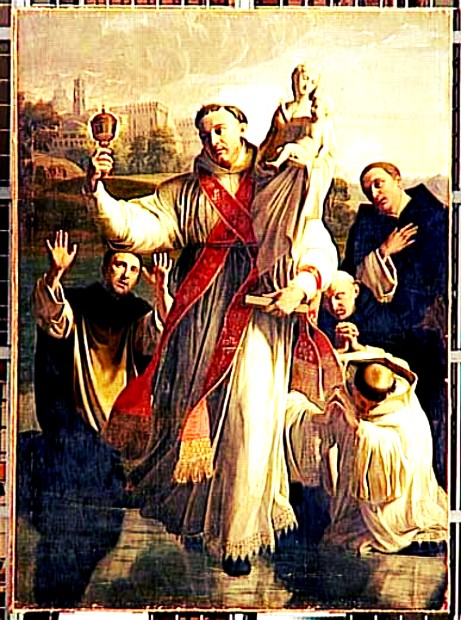
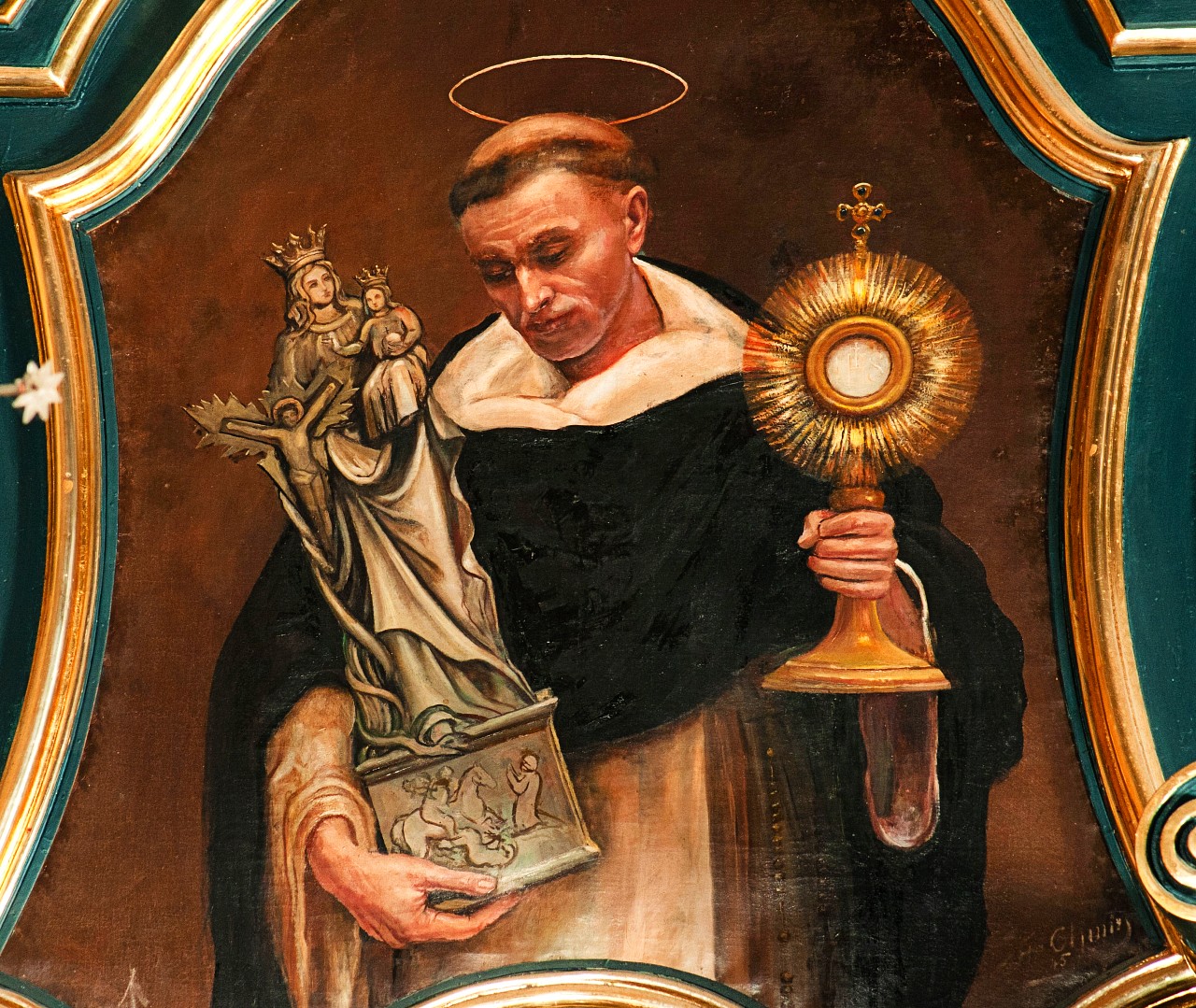
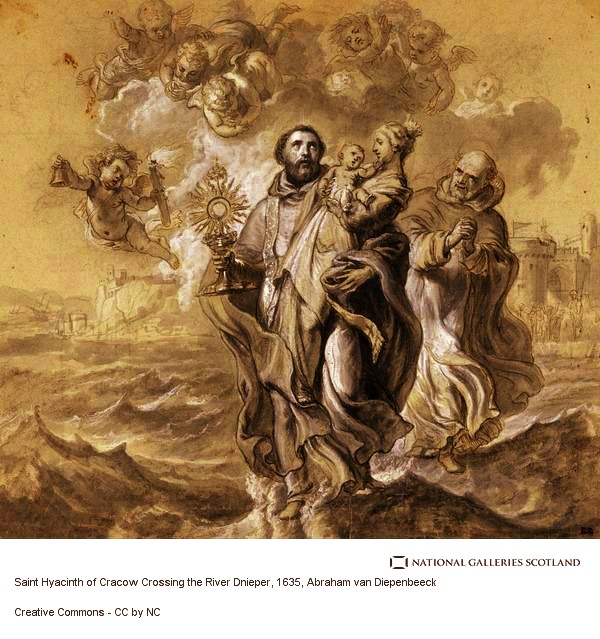
A miraculous event occurred in Russia, when the Tartars stormed Kiow, where the Saint had founded a Church and Convent. He was standing at the Altar when they entered the City, spreading destruction and desolation around them. After finishing the Holy Sacrifice, the Saint, still in his Priestly robes, took the Ciborium containing the Blessed Sacrament and telling his Priests to follow him without fear, he went towards the Church door. When passing a large alabaster statue of the Blessed Virgin, before which he had often said his prayers, he distinctly heard a voice saying: “My son Hyacinth, wilt thou leave me here to be at the mercy of my enemies?” The Saint’s eyes filled with tears. “How can I carry thee? ” said he; “the burden is too heavy.” “Only try,” was the response; “my Son will assist thee to carry me without difficulty.” The holy man with streaming eyes, took the statue and found it so light that he could carry it with one hand. Thus, carrying the Ciborium in one hand and the statue in the other, he and his companions passed through the enemy unassailed, to the gates of the City. Not finding any soldiers there, they passed on and reached Cracow in safety.
Whether Almighty God made His servants invisible to the Tartars on this occasion, or in some other manner prevented them from harming them, is not known but, it is a fact that they left the City unmolested. When they reached the river, over which there was no bridge, nor a boat to convey them across, the Saint, trusting in the power of Him Whom he carried in his right hand and, in the intercession of her whom he held in his left, fearlessly stepped upon the water and crossed it with dry feet.
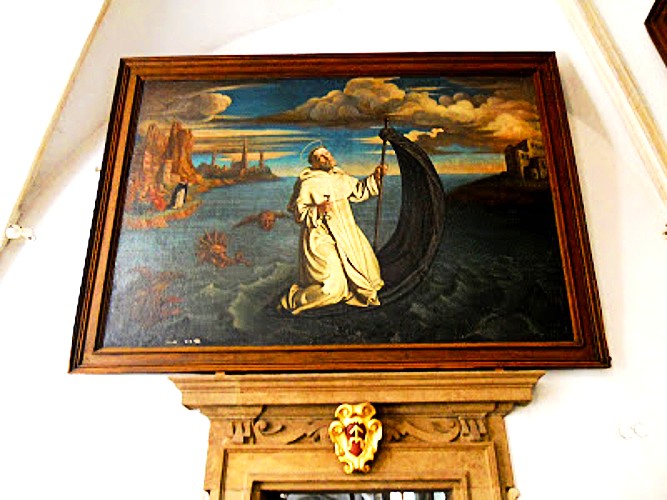
A similar and perhaps, still greater miracle occurred at another time. He was going to Vicegrad to preach but, on reaching the river, found no vessel which he could use to reach the opposite bank. Spreading his cloak on the water, he sat upon it and was floated safely across and brought his companions over in the same manner. By this and many other miracles, God glorified His servant even on earth.
For forty years this holy man had laboured for the salvation of souls, when, in 1257, it was revealed to him that he should assist, in Heaven, at the triumph of the Blessed Virgin, on the Feast of her glorious Assumption. On the Feast of St Mary ad Nives, he was taken ill. On the eve of the Assumption, he gave his last instruction to the Priests of his Order, after which, he prepared for the festival and,, having recited the Office of the day, he fixed his eyes on Heaven and said the psalm, “In thee, O Lord, have I hoped,” to the words, “Into thy hands I commend my spirit,” when he calmly expired, at the age of 74. The innocence and chastity which he possessed at the time of his Baptism, remained unspotted until the end.
After his death, the miracles which the Almighty continued to work through this Saint, were the means of proclaiming to all the world, the sanctity and merits of His blessed servant.
St Amor of Amorbach St Anastasius of Terni St Benedicta of Lorraine St Carloman St Cecilia of Lorraine
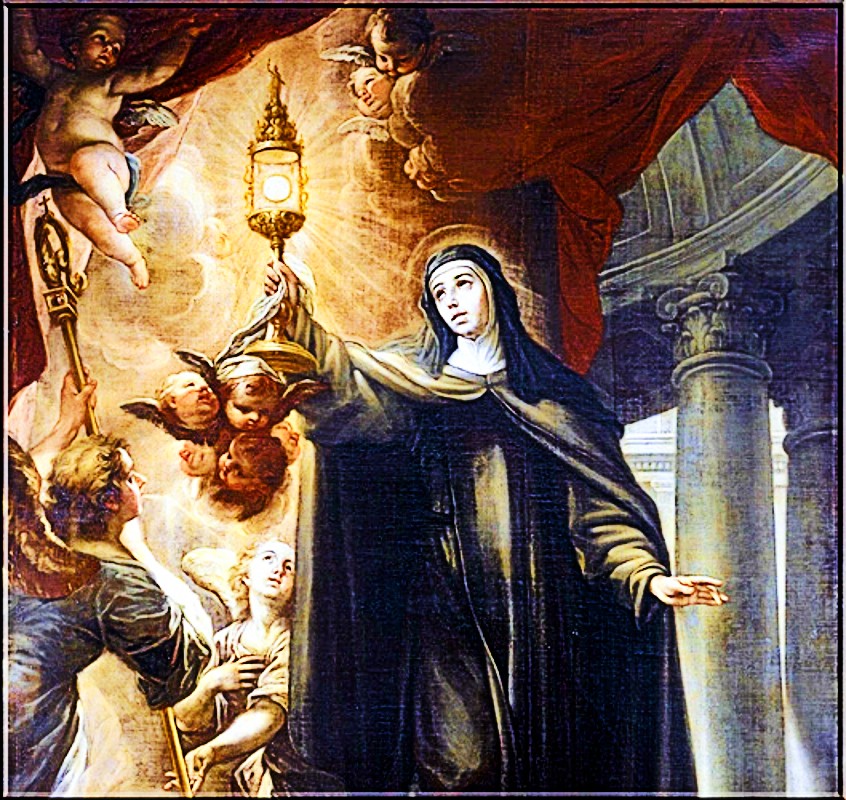
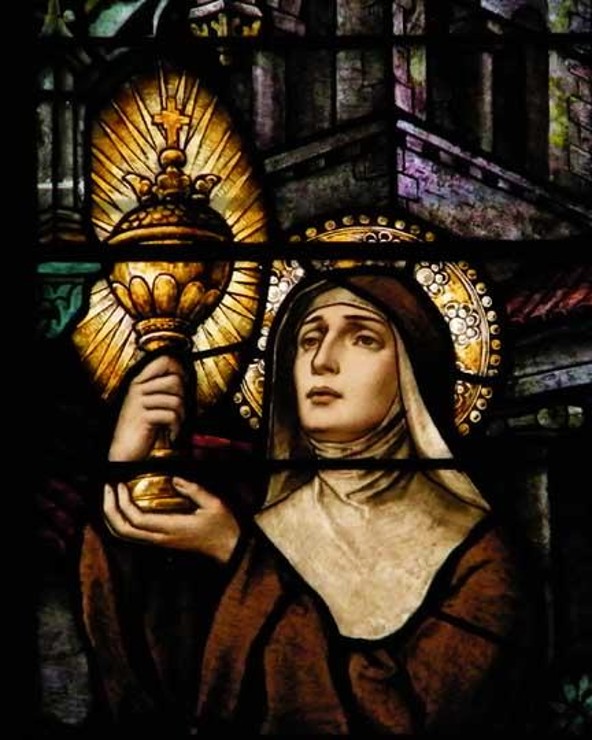
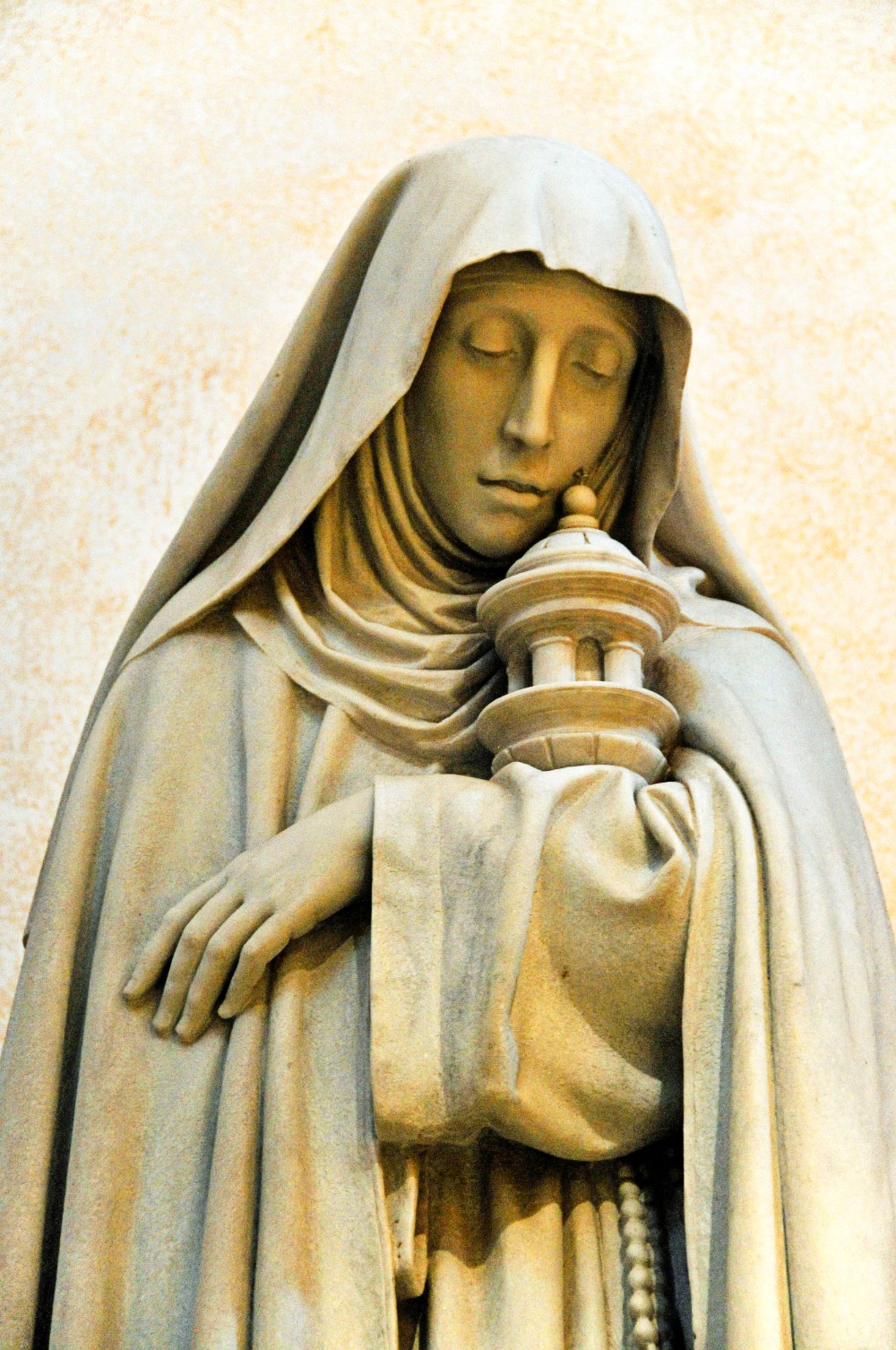
St Clare of the Cross of Montefalco (c 1269-1308) Augustinian Nun and Abbess, before becoming a nun, St Clare was a member of the Third Order of St Francis (Secular), Mystic, Penitent, Spiritual adviser. Beatified by Pope Clement XII. On 8 December 1881, the Feast of the Immaculate Conception, Pope Leo XIII Canonised Clare. Her Life: https://anastpaul.com/2019/08/17/saint-of-the-day-17-august-saint-clare-of-the-cross-of-montefalco-c-1269-1308/
St Donatus of Ripacandida St Drithelm St Elias the Younger St Eusebius of Sicily St James the Deacon St Jeroen of Noordwijk St Juliana of Ptolemais St Mamas St Myron of Cyzicus
St Nicolò Politi (1117-1167) Basilian Monk and Hermit. He was known for his miracles even during his childhood and was Venerated as a saint even before his death. St Nicolò was Canonised on 7SJune 1507, at Saint Peter’s Basilica, Rome, by Pope Julius II. About St Nicolò: https://anastpaul.com/2020/08/17/saint-of-the-day-17-august-st-nicolo-politi-1117-1167/
One Minute Reflection – 16 August – “The Month of the Immaculate Heart of Mary” – St Joachim, Father of the Blessed Virgin Mary – Ecclesiasticus 31:8-11, Matthew1:1-16
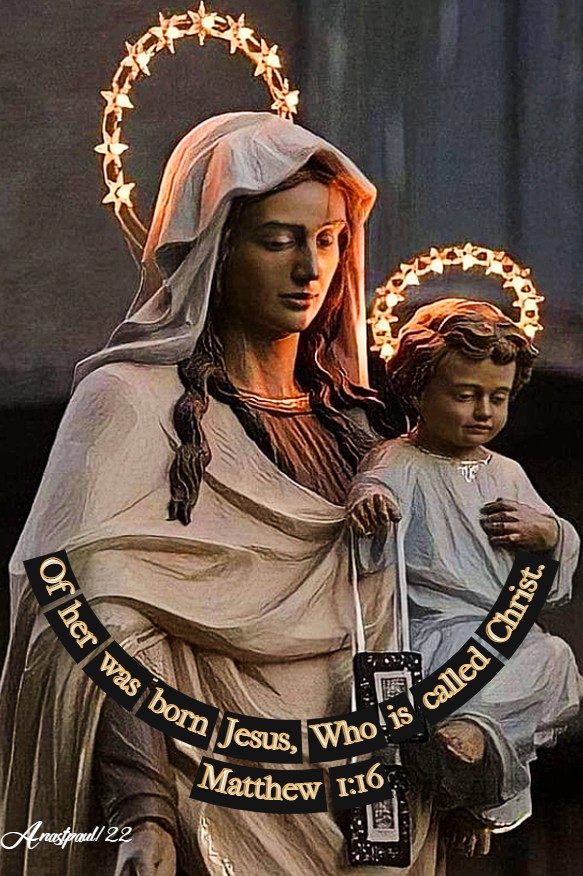
“And Jacob begot Joseph, the husband of Mary and of her was born Jesus, Who is called Christ.” – Matthew 1:16
REFLECTION – “Let all creation celebrate and sing the holy childbirth of a holy woman, for she has brought a lasting treasure into the world. … Through her, the creative Word of God has been united to the whole creation and we celebrate the ending of human barrenness, the ending of the sickness that kept us from possessing all our good. … Nature has given way to grace … As the Virgin Mother of God had to be born of barren Anna, so nature remained without fruit until grace had produced its own. It was to open the womb of its mother, she who would give birth to “The Firstborn of all creation” in whom “all things hold together” (Col 1:15,17).
O blessed couple, Joachim and Anna! All creation owes you thanks; through you it has offered the Creator the best of all His gifts: a Mother worthy of veneration, the only Mother worthy of the One who created her. ”- St John Damascene (675-749) Monk, Theologian, Father and Doctor of the Church – Homily on the Nativity of the Virgin Mary, 1-2 (cf SC 80, p. 48).
PRAYER – O God, Who, willed St Joachim to be the father of Thy Son’s Mother; grant, we beseech Thee that we may ever enjoy the spiritual help of him whose feast we celebrate. Through the same Jesus Christ, Thy Son our Lord, Who lives and reigns with Thee, in the unity of the Holy Ghost, God, world without end. Amen (Collect).
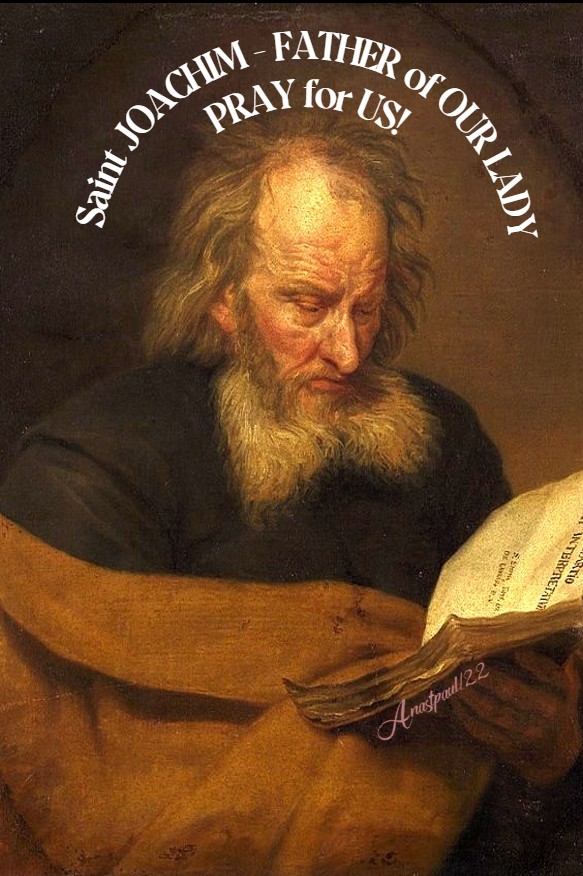
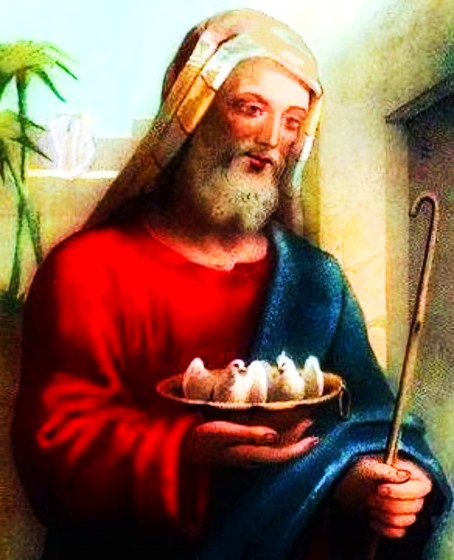
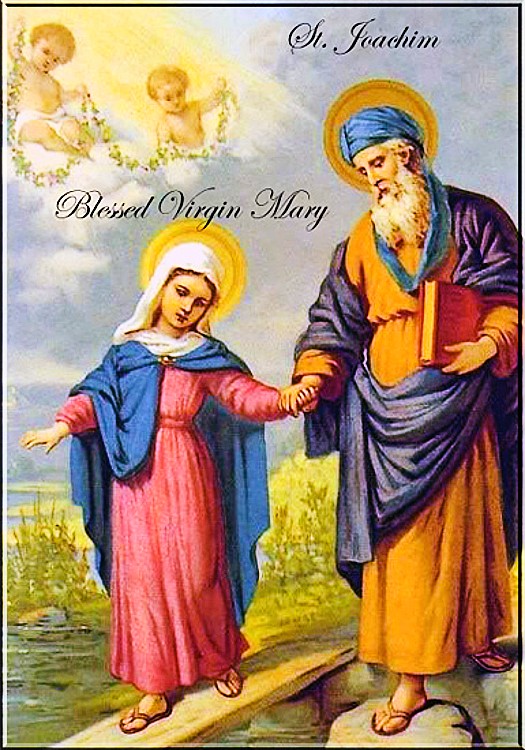
Saint of the Day – 16 August – St Joachim, Father of the Blessed Virgin Mary. St Joachim is regarded as the Father of the Virgin Mary, Mother of God, our Lord Jesus and Saviour. St Joachim was a retired Priest or Holy man of his time. He is the Patron Saint of Fathers, Grandfathers, Grandparents, Married Couples, Cabinet Makers, Puerto Rico, Dolores, Eastern Samar; Fasnia (Tenerife). The name Joachim in Hebrew means, “God Prepares.”
At the temple, Joachim’s sacrifice was rejected, as the couple’s childlessness was interpreted as a sign of Divine displeasure. Joachim consequently withdrew to the desert, where he fasted and did penance and prayed for 40 days. Angels then appeared to both Joachim and Anne to promise them a child.
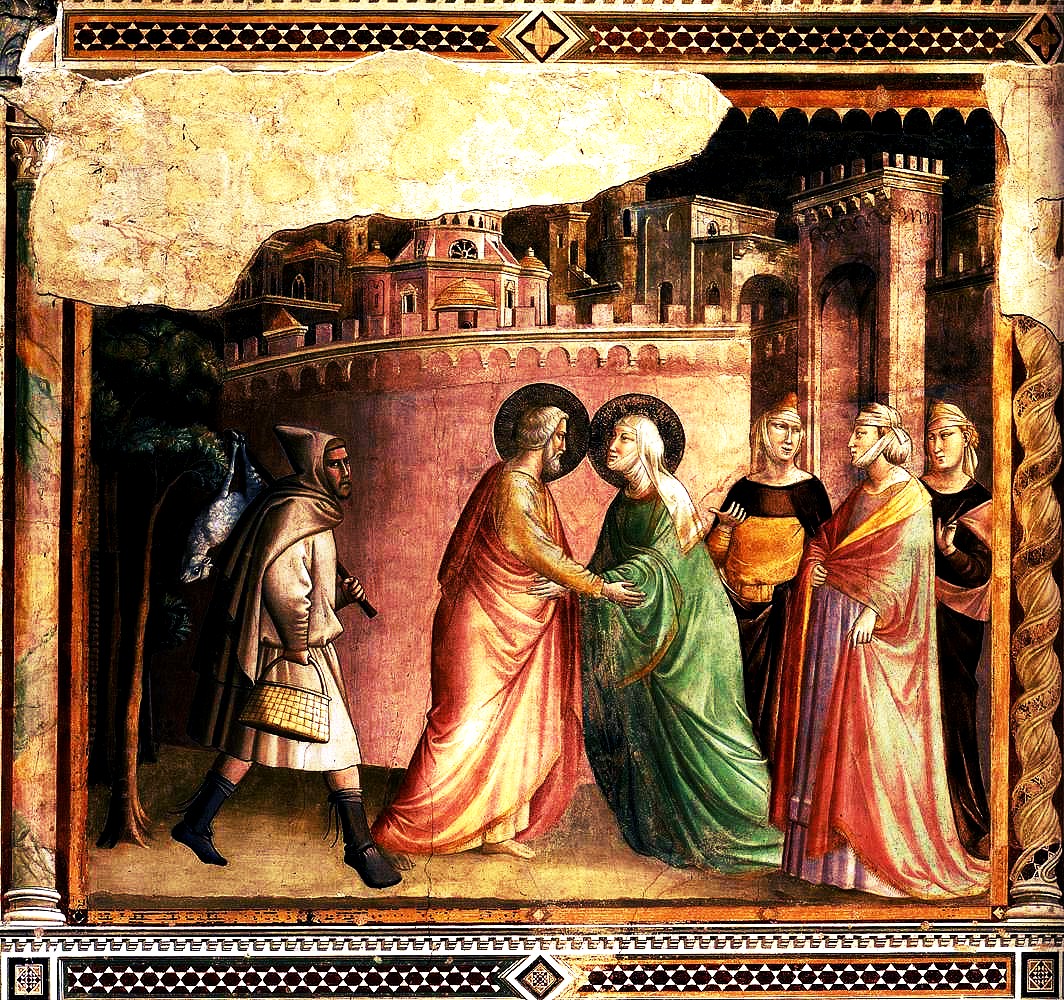
Joachim returned to Jerusalem and embraced Anne at the City gate, located in the Walls of Jerusalem. An ancient belief held that a child born of an elderly mother who had given up hope of having offspring was destined for great things. It is also tradition that Joachim would give Mary to the service of the Temple when the girl was only three years old.
Joachim is neither mentioned in historical or canonical writings but is still widely revered and is the namesake of many Church institutions. The only source of information regarding St Joachim, is the non-biblical Gospel of James, an apocryphal book that was, nonetheless, widely read.
St Joachim meets St Anne at the City Gate
In the 1500 – 1600’s, Joachim’s image appeared on many European coins ,including , in about 1520, the famous Joachim’s Taler, a silver coin in Bohemia. Some of those coins are still seen today, in the hands of collectors.
We know St Joachim as the Father of Our Lady. Although little is actually known about this Saint, one can imagine the love he had for his child, who came late in life to he and St Anne. The tradition tells us he was a Priest or Holy man of God and much can be taken from that. We too, may not always know what God may have in store for us – but one thing is certain, if we stay close to God, serve Him with all our strength, we too can merit life eternal, like St Joachim.
Blessed Angelo Agostini Mazzinghi O.Carm. (1385-1438) was an Italian Priest and a professed member of the Carmelite Order. He was a noted Preacher, Prior and Reformer, Teacher of theology and was known for his pious devotion to the Holy Eucharist, the Blessed Virgin Mary and the Carmelite Rule of Life and to the profession of the Gospel. His Life: https://anastpaul.com/2019/08/16/saint-of-the-day-16-august-blessed-angelo-agostini-mazzinghi-o-carm-1385-1438/
St Arsacius of Nicomedia St Frambaldo Bl Iacobus Bunzo Gengoro Bl Jean-Baptiste Menestrel Bl John of Saint Martha Bl Laurence Loricatus Bl Magdalena Kiyota Bokusai Bl Maria Gengoro Bl Ralph de la Futaye St Serena Bl Simon Kiyota Bokusai Bl Thomas Gengoro St Titus the Deacon
St Ugolina of Vercelli (c 1239-c 1300) Anchorite, Recluse, Penitent, Spiritual advisor. The very strange story that of this Blessed Ugolina who shut herself in a hermitage, representing herself as a man and remained there for forty-seven years! The aim of her subterfuge was to escape the aims of her father, who wished her to marry. In order not to reveal her secret, she called herself Ugo without revealing her identity to anyone. for nearly fifty years Her Life: https://anastpaul.com/2021/08/16/saint-of-the-day-16-august-saint-ugolina-of-vercelli-c-1239-c-1300/
Martyrs of Palestine – 33 Saints: Thirty-three Christians Martyred in Palestine; they are commemorated in old martyrologies but the date and exact location have been lost.
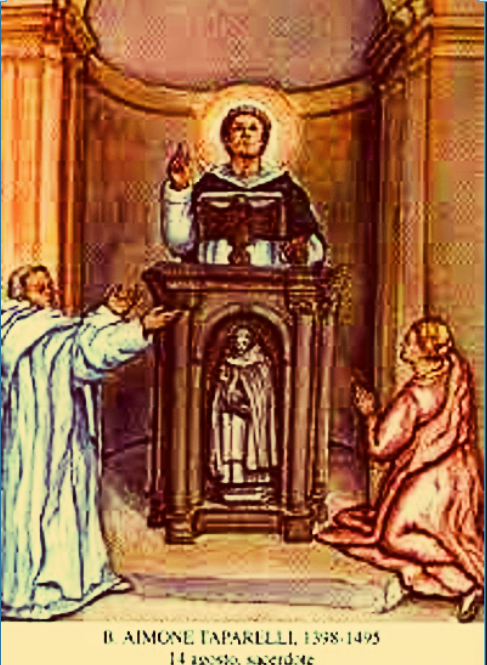
Saint of the Day – 15 August – Blessed Aimo Taparelli OP (c 1395-1495) Priest and Friar of the Order of Preachers, widower and father, Reformer., spiritual writer. He served as an Inquisitor-General for his order in the Lombard and Liguria regions of Italy and became a travelling preacher in northern Italian Cities. Born in c 1395 at Savigliano, Piedmont, Italy and died on 15 August 1495 (aged 100 years) at Savigliano, Piedmont of natural causes. Also known as – Aimone Taparelli, Haymo Taparelli, Elmo. Additional Memorial – 17 August, in Savigliano of which Town Aimo is the Patron. His name means “defends the house with the sword.” Aimo was Beatified on 29 May 1856 by Pope Pius IX.
The Roman Martyrology reads today: “In Savigliano in Piedmont, Blessed Aimone Taparelli, Priest of the Order of Preachers, tireless defender of the truth.”
Aimo was born around 1395 in Savigliano to nobles who were the Counts of Lagnasco. The Tapparelli, one of the oldest families of Savigliano, boasted illustrious Ecclesiastics over the centuries.
Aimo first pursued a career in law and was married and a father. But soon became a widower, mourning both the death of his wife and his children. Aimo felt the call to the religious life instead.
He felt the call to the religious life and to this end he studied at Turin, graduating in Theology and Sacred Scripture. Embracing complete self-denial, he entered the Order of Preachers at Savigliano in 1441 at the San Domenico Convent.
From his earliest years, he engaged in an intense apostolate. He was a worthy son of St Dominic, for the effectiveness of his sermons and for the austerity of his life. When the clear fame of his virtues reached the Savoy Court, Duke Amedeo IX wanted him to be his Chaplain and Confessor. He was then appointed Professor at the University of Turin (lecturer in Theology).
He returned to Savigliano and was appointed as the Inquisitor-General for his Order in the Lombard and Ligurian regions. He was appointed as such to replace the murdered Fr Bartolomeo Cerveri. He carried out this delicate task with care and tireless preservation of the Catholic faith, strengthened by the example of his previous confreres in this role, who had suffered martyrdom in carrying out this mission. In the case of Blessed Antonio Pavoni (1325-1374), he personally organised his honourable burial .
In 1468 he became Superior of his Convent and then Prior of it in 1483. He was confirmed twice as the Inquisitor-General in 1483 and in 1489 and finally, Aimo was appointed as the Provincial Vicar. As he defended the values of Catholicism, his zeal in restoring and confirming discipline within the Order was equal, so much so that he is remembered among the most ardent reformers of the fifteenth century.
However, he also loved solitude and when he could, he retired to a small hermitage in Verzuolo, where there was a Chapel dedicated to St Cristina, 5 kilometers from his Convent.
Aimo composed various religious writings and promoted the cult of the Mother of God, towards whom,he always nourished deep devotion.
In 1495 at almost 100 years old, Aimo predicted his death. A pious legend tells that the Angels warned him that it would take place on the Feast of the glorious Assumption of the Virgin. In bed, reciting the Office, he pressed the Crucifix to his heart and, having received the Sacraments, he expired saying “To serve God is to reign.”
The Friars in choir, read the introit of the solemn Mass. With difficulty they removed the Crucifix from his hands while a crowd had already gathered at the Convent.
Aimo was buried in the choir, in a new tomb, where the faithful, who soon wanted his relics, could go to pray. Some brought wax tablets as ex-votos. Two extraordinary miracles are well remembered – the healing of a woman’s mother from cancer and the conception of a child, in old age, of a couple believed to be sterile. They were from the Genola family and the newborn, who was given the name Aimo, would become an illustrious scholar.
At the beginning of the 19th century his remains were brought to St Domenic Church in Turin. Pope Pius IX, on 29 May 1856, approved the cult, setting its memorial of the Blessed Aimo for 17 August, which date is still honoured in Savigliano.
St Alypius of Thagaste (Died 430) Bishop Bishop of the See of Thagaste (in what is now Algeria) in 394, Confessor, Reformer, Defender of the Faith against heresy, Lawyer, teacher, spiritual advisor. He was a lifelong disciple and friend of Saint Augustine of Hippo and joined him in his conversion (in 386; Confessions 8.12.28) and life in Christianity. He is credited with helping establish Augustine’s Monastery in Africa. Most of what is known about him comes from Augustine’s autobiographical Confessions. Biography: https://anastpaul.com/2021/08/15/saint-of-the-dy-saint-alypius-of-thagaste-died-430/
Blessed Alfred of Hildesheim OSB (Died 874) Bishop, Benedictine Monk, Confessor, Founder of Essen Abbey, Hildesheim Cathedral, many Convents, Schools and Seminaries, Royal Spiritual Adviser to the East Frankish King Louis the German, Diplomatic Peacemaker, he was know for his great devotion to the Blessed Virgin Mary. His Lifestory: https://anastpaul.com/2020/08/15/saint-of-the-day-15-august-blessed-alfred-of-hildesheim-osb-died-874-bishop/
Blessed Aimo Taparelli OP (c 1395-1495) Priest of the Order of Preachers Bl Alberto Berdini of Sarteano St Arduinus of Rimini St Napoleon of Alexandria
St Simplician (c 320-c 401) Archbishop of Milan and Successor of St Ambrose (340-397) Doctor of the Church in the Archdiocese of Milan, Teacher, Catechist, Writer, Mystic. St Ambrose used to call Simplician father, as a sign of spiritual relationship but they were also great friends. Simplician took also an active part in the conversions of both Alypius of Thagaste and Augustine of Hippo. The meeting between Augustine and Simplican occurred in Milan in 386 and it is recorded in Augustine’s Confessions. After his conversion, Augustine also called Simplician father and in 397 he dedicated to Simplician two books on the issue of predestination, known as De Diversis Quaestionibus ad Simplicianum. St Augustine, remembered and referred to him with deep gratitude, calling him the “spiritual father of my soul” and would submit his own writings to him to review and comment. Details of the life of St Simplician here: https://anastpaul.wordpress.com/2017/08/15/saint-of-the-day-15-august-st-simplician-of-milan/
Martyrs of Nicomedia – 3 Saints: Three Christians Martyred together. No details survive but the names – Eutychian, Philip and Straton. They were martyred in Nicomedia, Bithynia (in modern Turkey).
Saint of the Day – 14 August – Blessed Giuliana Puricelli (1427-1504) Nun, Co-Foundress, Abbess. She was the first companion of the Blessed Caterina da Pallnza, and is regarded as the Co-Founder of the Ambrosian hermitages of the Sacro Monte di Varese. Born in 1427 near Busto Arsizio and died on 15 August 1501 at Varese , Italy. Also known as Juliana.
Giuliana was born in 1427 to a peasant family. Her father, a rough and violent man, did not wish his daughter to consecrate herself to the Lord and desired to marry her.
On 14 October 1454, the feast of San Callistus, at the age of twenty-seven Giuliana, went secretly to the Sacro Monte di Varese and placed herself under the spiritual direction of the Blessed Caterina of Pallanza, who had been leading a hermit’s life there for some years.
She began, with the authorisation of Pope Sixtus IV, on 10 August 1476. the monastic life in a Convent erected near the Sanctuary of Santa Maria del Monte or Sacro Monte di Varese, naming Caterina as the first Superior. Upon her death, in 1478, Giuliana succeeded to her position, becoming the second Abbess, which she held until the day of her death, in 1501.
Giuliana, lived heroically in humility, a spirit of penance, obedience and service to others, offering spiritual and material help through the windows off the Convent.
She died on 15 August 1501. The fame of holiness of Giuliana Puricelli was a constant in the neighbourhood of the Monastery. The faithful considered her a saint, even during her life. The fame and miracles grew with her death and. Pope Clement XIV recognised her immemorial cult by giving her the title of Blessed.
The body of the blessed, first buried in the cemetery, on 23 October 1650 was solemnly transferred to the choir of the Monastery of the Ambrosians. Later, in 1729, on the occasion of the diocesan confirmation of the cult, it was moved, together with that of the Blessed Caterino, to n oratory especially erected, near the Marian Sanctuary, where they are currently located, exposed for the veneration of the faithful.
Giuliana’s feast, which initially occurred on 23 October, in memory of the solemn translation of 1650, is celebrated on 14 August starting from 1770.
St Eusebius of Rome (Died 357) Priest, Confessor. “At Rome, the birthday of the blessed Priest Eusebius, who for the defence of the Catholic Faith, was shut up in a room of his own house by the Arian Emperor, Constantius, where constantly persevering in prayer for seven months, he rested in peace. His body was removed by the Priests, Gregory and Orosius and buried in the cemetery of Cllistus on the Appian Way.” – Roman Martyrology. His Life: https://anastpaul.com/2020/08/14/saint-of-the-day-14-august-saint-eusebius-of-rome-died-357-priest-confessor/
St Athanasia of Timia St Callistus of Todi St Demetrius of Africa St Eberhard of Einsiedeln St Eusebius of Palestine St Fachanan of Ross Blessed Giuliana Puricelli (1427-1504) Nun, Co-Foundress. St Marcellus of Apamea Bl Sanctes Brancasino St Ursicius of Nicomedia
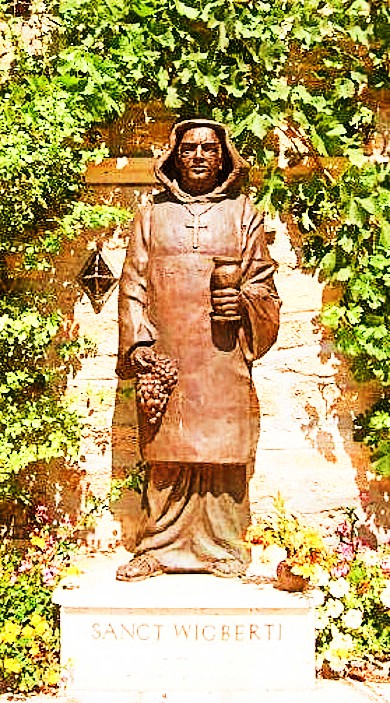
Saint of the Day – 13 August – St Wigbert of Fritzlar (c 675-c 746) a learned Scholar and Abbot, Missionary, Miracle-worker, gifted with a penetrating understanding of Sacred Scripture as well as the gift of prophecy, companion of St Boniface, the Apostle of Germany. Born in c 518 in Erfurt, Saxony (England) and died on 13 August c 587 in Poitiers, France of natural causes. Wigbert was known as a quiet and gentle man and a great teacher. Both St Alcuin and St Bede knew and mentioned him in their historical writings of the times and of the Church. St Bede admired his contempt of this world and his learning. Patronages – against drowning, against fever/high temperature, against leprosy/skin diseases for example against scabies, against the death of parents, against ulcers, difficult marriages, of potters, weavers, Poitiers, France.
Wigbert was born in England about 675 of noble parents. He was known for the purity of his morals, his zeal for the salvation of souls, his boundless love, his penetrating knowledge and familiarity with the Sacred Scriptures.
Wigbert became a Monk, working with great piety to increase his sanctity in the monastic environment, to live the Rule in its entirety and to help others to do the same. He spent many years in Ireland, there using his great skill in teaching to help others in their search for knowledge and wisdom. St Boniface summoned him from England to Germany and, in about the year 734 Wigbert went to Germany to join the great Missionary. , There he was made Abbot of the Monastery of Hersfeld in Hesse. Among his pupils was St Sturmi, first Abbot of Fulda.
In about 737, Boniface transferred Wigbert to Thuringia as Abbot of Ohrdruf, where he worked with the same success as in Hersfeld. Later, Wigbert obtained Boniface’s permission to return to Hersfeld to spend his remaining days in stillness and to prepare for the hour of death.
Even in old age and in illness, he continued his austere mode of life, until the very end. The Saint reposed at Hersfeld in about 746. He was buried at Fritzlar in an inconspicuous grave but during an incursion of Saxons (774), his remains were taken for safety to Buraburg and from there, in 780, his sacred relics were transferred by Abbot St Lullus to Hersfeld.
In the year 850 a beautiful Church was built and dedicated to St Wigbert but it was razed by fire in 1037. A new Church replaced it and dedicated in 1144 but it burned in 1761 in a great fire. Thereafter, St Wigbert’s sacred relics were never found again by men.
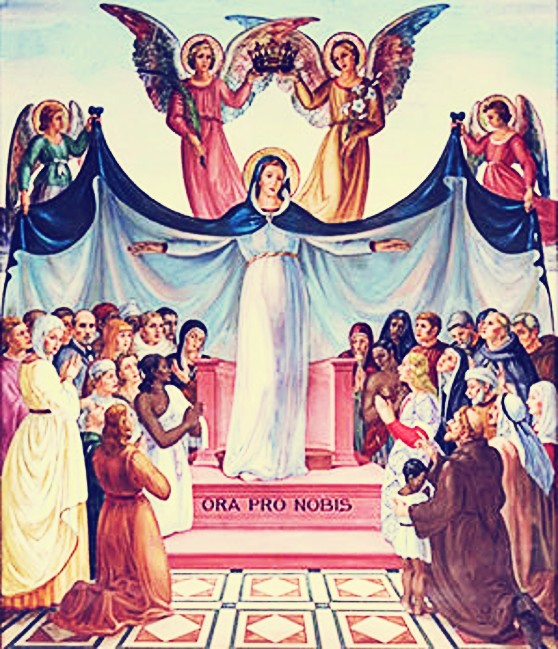
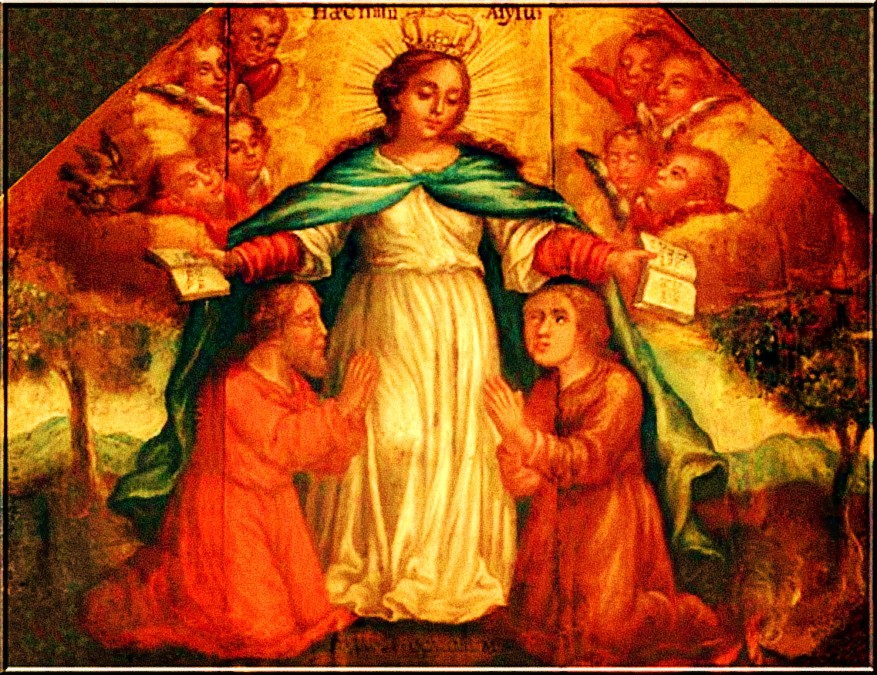
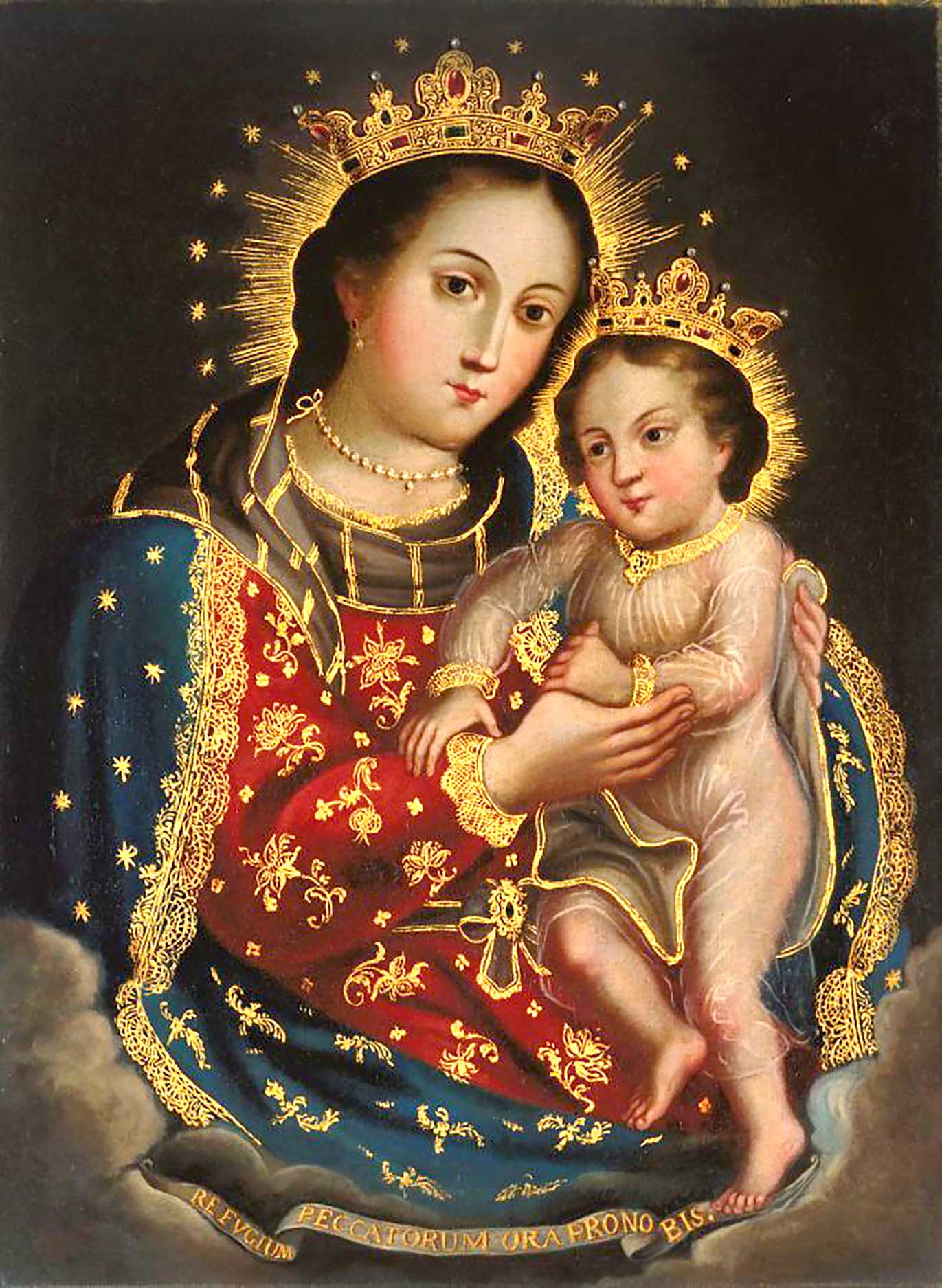
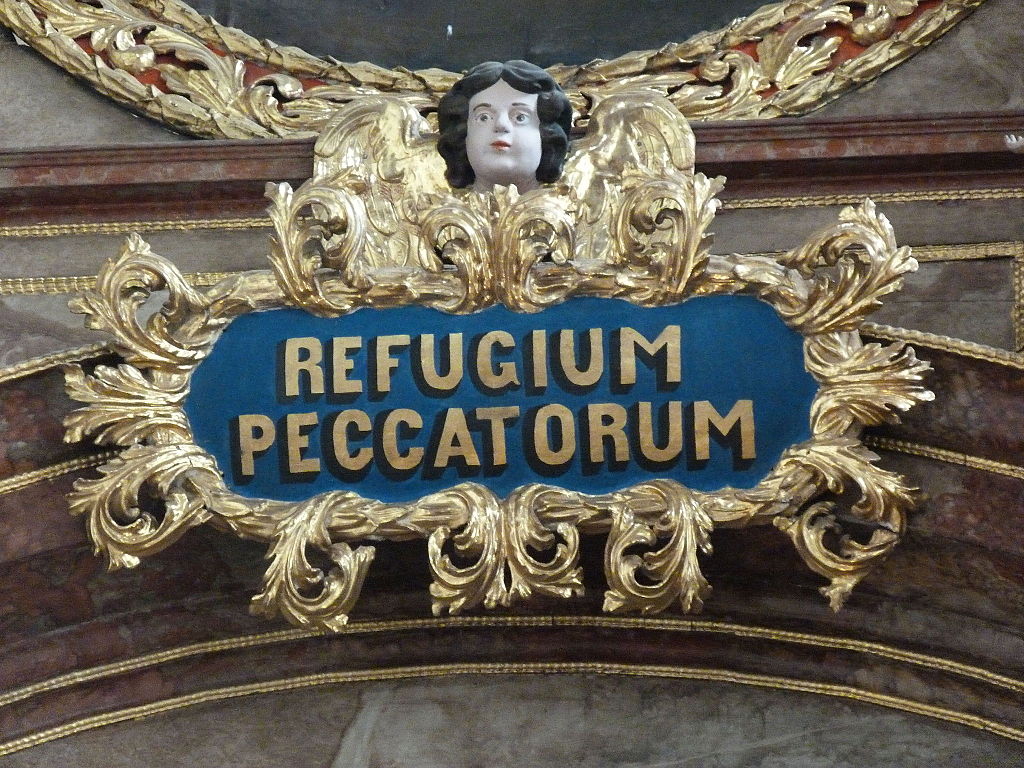
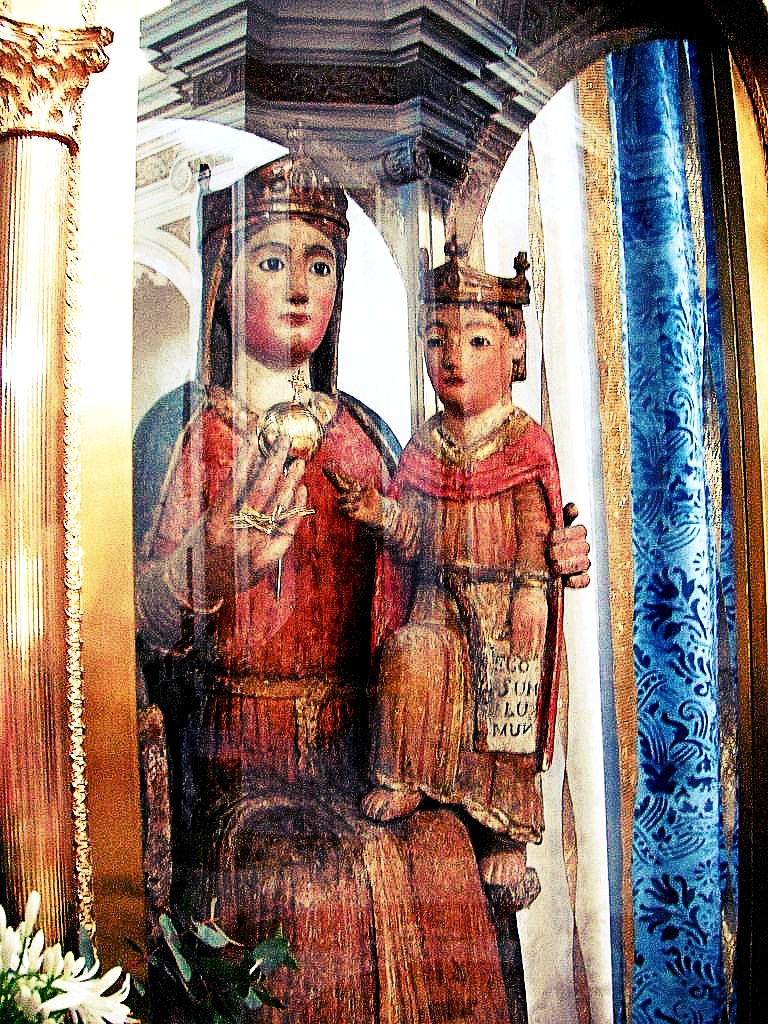
Our Lady, Refuge of Sinners / Refugium Peccatorum – St John Damascene calls Mary a City of Refuge to all who flee to Her.
Blessed Antonio Baldinucci SJ (1665-1717) had a particular devotion to the Refugium Peccatorum image of Virgin Mary in the Church of the Gesu (Frascati) in Italy. He commissioned a copy which he considered miraculous and carried with him in his travels.
The Jesuits spread copies of the image of the Madonna of Refuge in Mexico by the 19th century and it began to be depicted in missions there, often with clouds surrounding the lower portion of the image of the Virgin Mary holding the Child Jesus. The term “Refugium Pstjohnberchmanseccatorum” is also used other works of Roman Catholic Marian art. For instance, there is a marble statue representing the Virgin Mary, on the grand staircase of the old municipal palace in Venice, Italy. The name came from the fact that the convicts were allowed to stop in front of the Virgin Mary’s statue to pray for their soul on the way to the scaffold. The traditional feast day of Our Lady, Refuge of Sinners is today, 13 August.
St Hippolytus Bishop Martyr St Cassian (of Imola) Martyr
St John Berchmans SJ (1599-1621) Jesuit Novice – born Jan Berchmans on 13 March 1599 at Driest, Brabant, Belgium and died on 13 August 1621 at Rome, Italy of natural causes. Patronages – Altar Servers, Jesuit novices and students. He had a special devotion to God’s Mother and to him is owed the Little Rosary of the Immaculate Conception. Biography: https://anastpaul.com/2019/08/13/saint-of-the-day-13-august-saint-john-berchmans-sj-1599-1621/
St Anastasius the Monk St Anastasius the Priest St Benildus St Cassian of Todi St Concordia St Conn O’Rourke Bl Gertrude of Altenberg St Helen of Burgos St Herulph of Langres Bl John of Alvernia St Junian of Mairé St Ludolph
St Maximus the Confessor (c 580-662) Father of the Church, Monk, Abbot, Theologian, Confessor, Scholar, Writer. Also known as St Maximus of Constantinople and St Maximus the Theologian. St Maximus, a man of fearless courage in witnessing to – “confessing” – even while suffering, the integrity of his faith in Jesus Christ, true God and true man, Saviour of the world and of His Holy Catholic Church. His Life: https://anastpaul.com/2020/08/13/saint-of-the-day-13-august-saint-maximus-the-confessor-c-580-662-father-of-the-church/
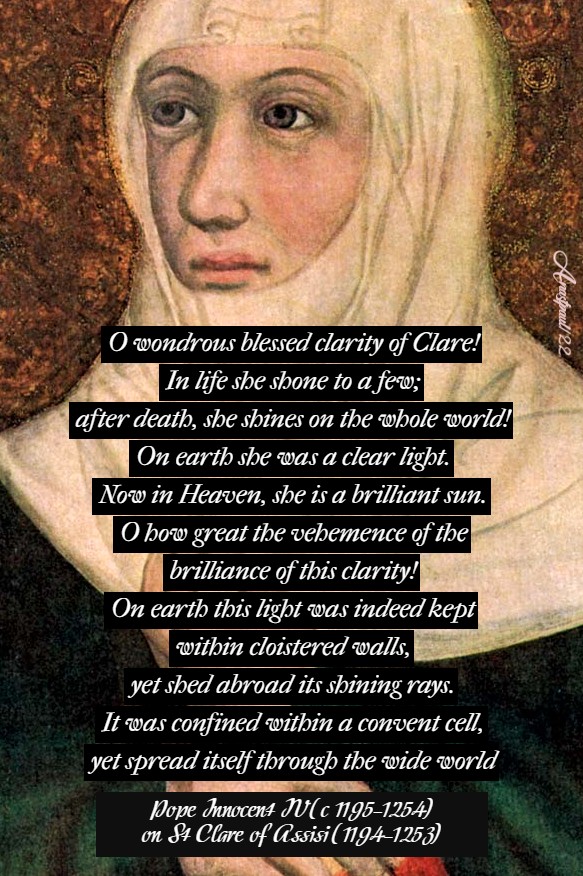
Quote/s of the Day – 12 August – St Clare of Assisi (1194-1253) Virgin
“O wondrous blessed clarity of Clare! In life she shone to a few; after death, she shines on the whole world! On earth she was a clear light. Now in Heaven, she is a brilliant sun. O how great the vehemence of the brilliance of this clarity! On earth this light was indeed kept within cloistered walls, yet shed abroad its shining rays. It was confined within a convent cell, yet spread itself through the wide world.”
Pope Innocent IV (c 1195-1254) Papal reign 25 June 1243-1254
Saint of the Day – 12 August – St Clare of Assisi (1194-1253) Virgin. Patronages – embroiderers, needle workers, eyes, against eye disease, for good weather, gilders, gold workers, goldsmiths, laundry workers, television (proclaimed on 14 February 1958 by Pope Pius XII because when St Clare was too ill to attend the Holy Mass, she had been able to see and hear it, on the wall of her room.), television writers, Poor Clares, Assisi, Italy, Santa Clara Indian Pueblo.
The Roman Martyrology reads today: “At Assisi, in Umbria. Italy, St Clare, Virgin, the first of the poor woman of the Order of Minors. Being celebrated for holiness of life and miracles. she was placed among holy virgins, by Alexander IV.”
St Clare, Virgin, Founder, Mystic, Miracle-worker By Fr Francis Xavier Weninger SJ (1805-1888) (Excerpt)
St.Clare, Founder of the Order which bears her name, was born of rich and pious parents, at Assisi, in the district of Umbria, in Italy. She received the name of Clare, which means “clear or bright,” for the following reason. While her mother Hortulana, was kneeling before a Crucifix, praying that God might aid her in her hour of delivery, she heard the words: “Do not fear. You will give birth to a light which shall illumine the whole world.”
From her earliest childhood, prayer was Clare’s only delight. She gave to the poor all the presents which she received from her parents. She despised all costly garments, all worldly pleasures. Beneath the fine clothes she was obliged to wear, she wore a rough hair-girdle. She partook of so little food that it seemed as if she wished to observe a continual fast.
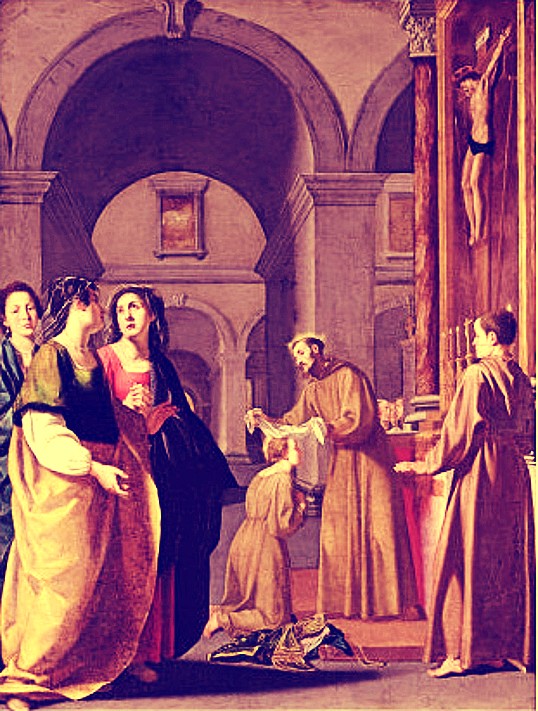
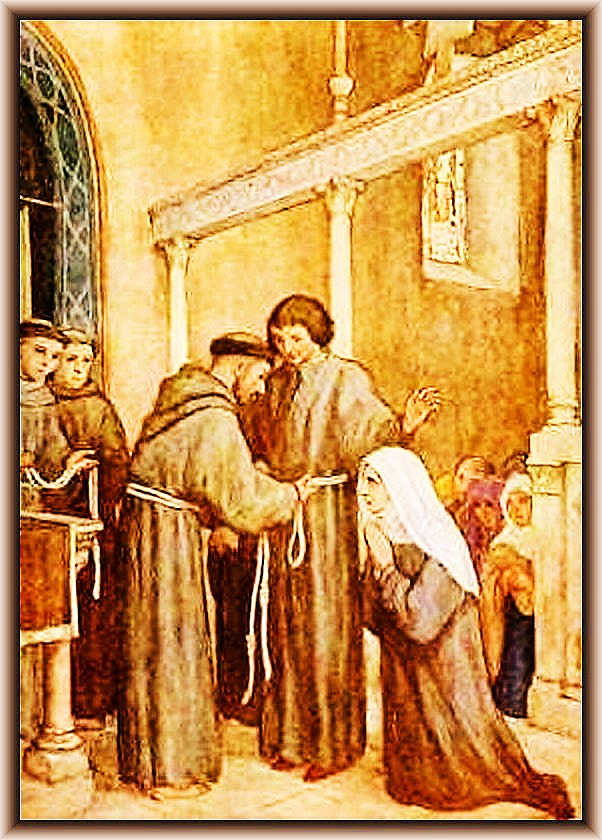
During this same period lived St Francis, surnamed “the Seraphic,” on account of his great virtues. Clare frequently went to him and confided to him, her desire to renounce the world and to consecrate her virginity to God and to lead a perfect life in the most abject poverty. St Francis who saw that besides other gifts and graces, she was filled with the most ardent love of God, possessing great innocence of heart and despising the world, strengthened her in her holy desire, while at the same time, he tested her constancy. Being sufficiently convinced that her desires were inspired by Heaven, he advised Clare to leave her home, which she did on Palm Sunday, going to the Church of the Portiuncula, where she had her hair cut off, as a sign that she would enter a religious life. She divested herself of all feminine ornament, and attired in a penitential garb, tied around her with a cord, she was placed. by St Francis in a vacant Benedictine Convent. She was at that time just eighteen years of age.
When her parents heard of what she had done, they hastened to the Convent, to take Clare home, declaring that this choice of a state of life was only a childish whim, or that she had been persuaded to it by others. Clare, however, after opposing their arguments, fled into the Church, and clinging to the Altar with one hand, with the other she showed her head shorn of its hair, exclaiming: “Know all, that I desire no other bridegroom but Jesus Christ. Understanding well what I was doing, I chose Him and I will never leave Him.” Astonished at this answer, all returned home, admiring her virtue and piety. Clare thanked God for this victory and was, on account of it, all the more strengthened in her resolution.
Clare had a sister younger than herself, named Agnes. A few days later she, too, fled from her parents’ roof and going to Clare, wished to be invested in the same habit and to serve God in the same manner. St Clare received her joyfully but as all her relatives were provoked beyond measure that she, too, had entered a Convent, twelve of them went and forcibly tore her from her sister’s arms. Clare took refuge in prayer and, as if inspired by the Almighty, ran after her sister, loudly calling her by name. God assisted her by a miracle. Agnes suddenly became immovable, as if rooted to the ground and no-one possessed strength enough to drag her from where she stood. Recognising in this, the powerful hand of God, they opposed her no longer but allowed her to return to the Convent.
Meanwhile, St Francis had rebuilt the old Church of St Damiano and had bought the neighbouring house. Into this house he placed his first two religious daughters, Clare and Agnes, who were speedily joined by others, desirous of conforming themselves to the rule of life which St Francis had given to Clare. This was the beginning of the Order of Poor Clares, which has since given to the world, so many shining examples of virtue and holiness, to the salvation of many thousands of souls.
St Clare was appointed Abbess by St Francis and filled the office for forty two years with wonderful wisdom and holiness. Her mother too, together with her youngest daughter, took the habit and submitted to the government of St Clare.
She was, to all in her charge, a bright example of poverty. In austerity towards herself, she was more to be admired than imitated. The floor or a bundle of straw was her bed, a piece of wood, her pillow. Twice during the year she kept a forty days’ fast on bread and water. Besides this, three days of the week, she tasted no food and so little on the others that it is marvellous that she could sustain life with it. The greater part of the night, she spent in prayer and her desire for mortification was so great that St. Francis compelled her to moderate her austerities.
She nursed the sick with the greatest pleasure, as in this work of charity, she found almost constant opportunity to mortify and overcome herself. Besides all her other virtues, she was especially remarkable for her devotion to the Blessed Sacrament. She sometimes remained whole hours immovable before the Tabernacle and was often seen in ecstacy, so great was her love for the Saviour it concealed. She sought her comfort in Him alone in all her trials, amidst all her persecutions and how great were the graces she thereby received, the following event will sufficiently illustrate.
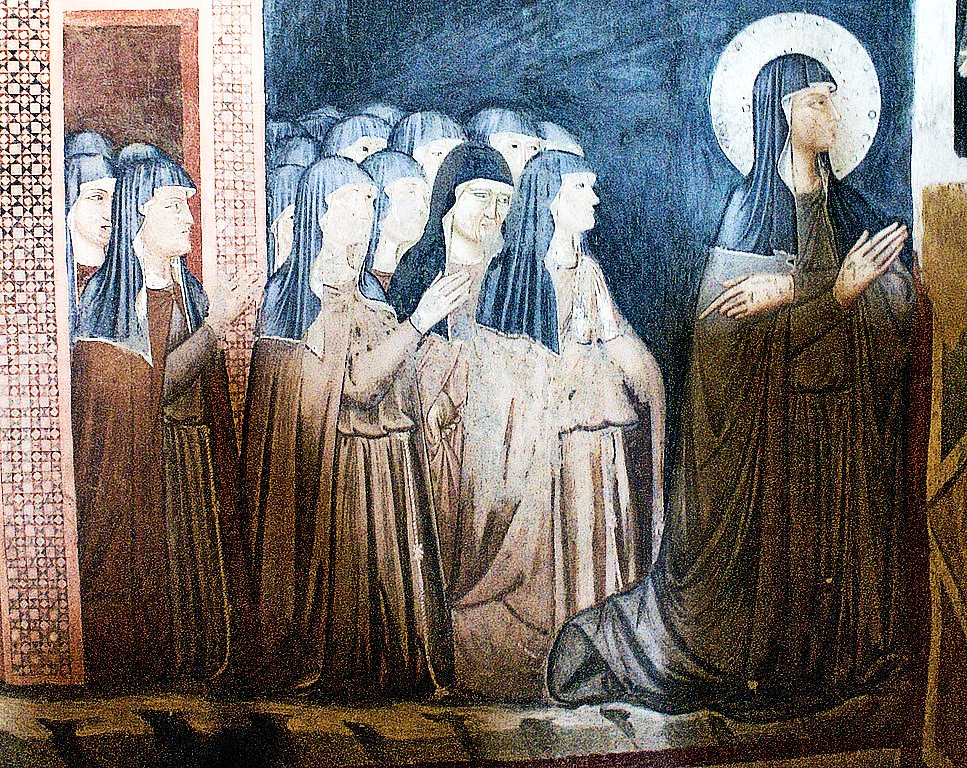
The Saracens besieged Assisi and made preparations to scale the walls of the Convent. St Clare, who was sick at the time, had herself carried to the gates of the Convent, where, with the Ciborium, containing the Blessed Sacrament, in her hands, prostrating herself in company with all her religious, she cried aloud: “O Lord, do not give into the hands of the infidels, the souls of those who acknowledge and praise Thee. Protect and preserve Thy handmaidens whom Thou hast redeemed with Thy Precious Blood.” A voice was distinctly heard, saying: “I will protect you always.”
The result proved that this was the Voice of Heaven. The Saracens, seized with a sudden fear, betook themselves to flight, those who had already scaled the walls, became blind and flung themselves down. Thus were St Clare and her religious protected and the whole City preserved from utter devastation, by the piety and devotion of the Saint to the Blessed Sacrament. We must omit many miracles which God wrought through His faithful servant.
[When St Clare] … had reached the age of sixty years, during twenty-eight of which, she had suffered from various painful maladies, although she had not been confined to her bed, or rather, her bundle of straw. Her patience while suffering was remarkable and she was never heard to complain.
The hour of her death drew near and she saw a great many white-robed virgins come to meet her, among whom was one who surpassed all the rest in beauty. She followed them and they led her to see the Almighty face-to face. Several who had read in the depths of her heart, said that she died more from the fervour of her love for God, than from the effects of her sickness. Her holy death took place in 1253. The great number of miracles wrought after her death, through her intercession and the heroic virtues which made her so remarkable, induced Pope Alexander IV., only two years later, to place her in the number of Saints.
St Porcarius of Lerins St Simplicio of Vercelli St Ust
Martyrs of Augsburg – 4 Saints: The mother, Hilaria,and three friends of of Saint Afra ofAugsburg. While visiting the tomb of Saint Afra who were seized by the authorities and Martyred when they visited Afra’s tomb – Digna, Eunomia, Euprepia and Hilaria. They were burned alive c 304.
Martyrs of Rome – 5 Saints: A group of Christians Martyred together in the persecutions of Diocletian. We know little more than their names – Crescentian, Juliana, Largio, Nimmia and Quiriacus. • c.304 in Rome, Italy • buried on the Ostian Way outside Rome.
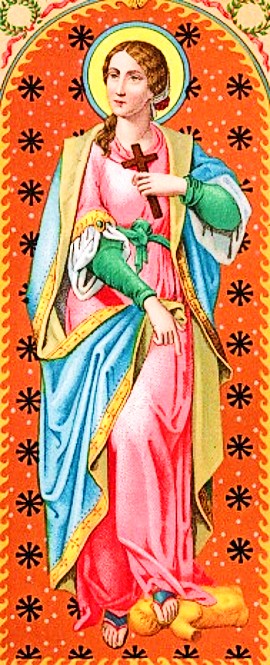
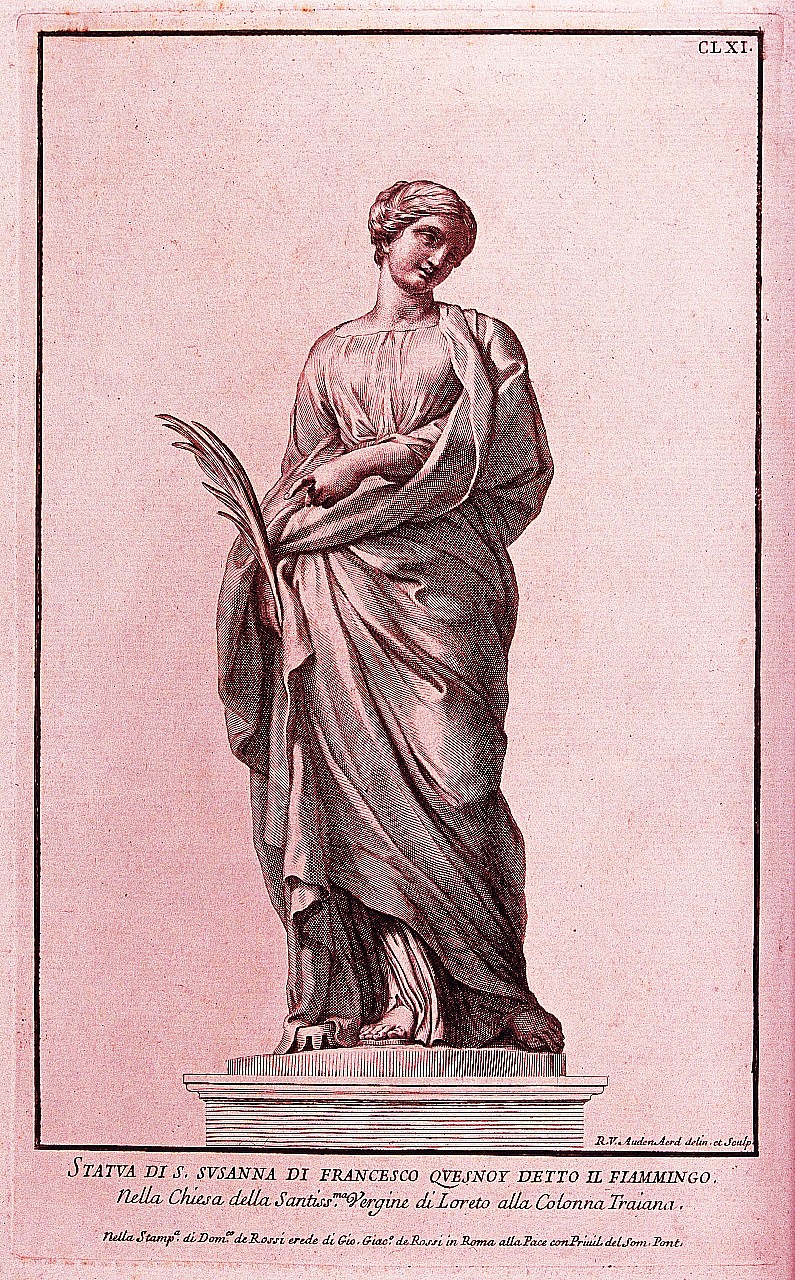
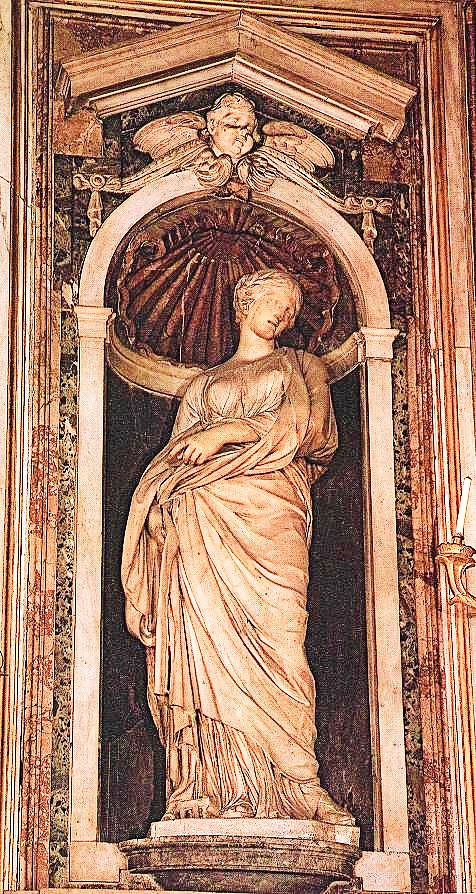
Saint of the Day – 11 August – Saint Susanna of Rome (Died c 295) Virgin Martyr. Laywoman who had taken a private vow of Virginity. Died by beheading in c 295 in her father’s house at Rome, Italy.
The Roman Martyrology reads today: “At Rome, the holy virgin Susanna, a woman of noble race and niece of the blessed Pontiff Caius. She erited the Palm of Martyrdom by being behead in the time of Diocletian.”
Saint Susanna was nobly born in Rome, the daughter of a certain St Gabinius, who, after his conversion became a Priest. she was also the niece of Pope Saint Caius, her father’s brother.
This family was also related to the Emperor Diocletian. Susanna’s father had raised her with great care in the fear of God and love of Jesus Christ and she had made a private vow of virginity. Diocletian, wishing to obtain the consent of this very beautiful maiden, to marry his favourite, Maximian. He sent a certain Claudius, another member of her family, to propose the espousals. She refused to consent, making her vow of virginity, known to her father and Saint Caius. She said that even if she had not resolved to conserve her chastity, she would not wish to marry a man responsible for the massacre of an infinite number of Christians. The Emperor’s messenger was converted by her confession of faith and became a fervent penitent.
When Diocletian received no answer from his messenger, concerning the results of the commission and then learned of the conversion of Claudius, he was irate. The, with Claudius. he arrested Susanna, Gabinius her father and several other Christians. He had Susanna beaten in her residence, then decapitated.
The Emperor’s wife, Prisca, who was also a Christian in secret, buried her body clandestinely and prayed to her as a holy Martyr. Later, the house of Gabinius was transformed by Pope Saint Caius into a Church. It eventually became a Convent for Cistercian Nuns.
Saint Susanna suffered towards the beginning of Diocletian’s reign, about the year 295.
Bl Jean-Georges Rehm Bl John Sandys St Lelia St Rusicola of Arles St Rufinus of Marsi Bl Theobald of England and Companion St Taurinus of Evreux Bl William Lampley
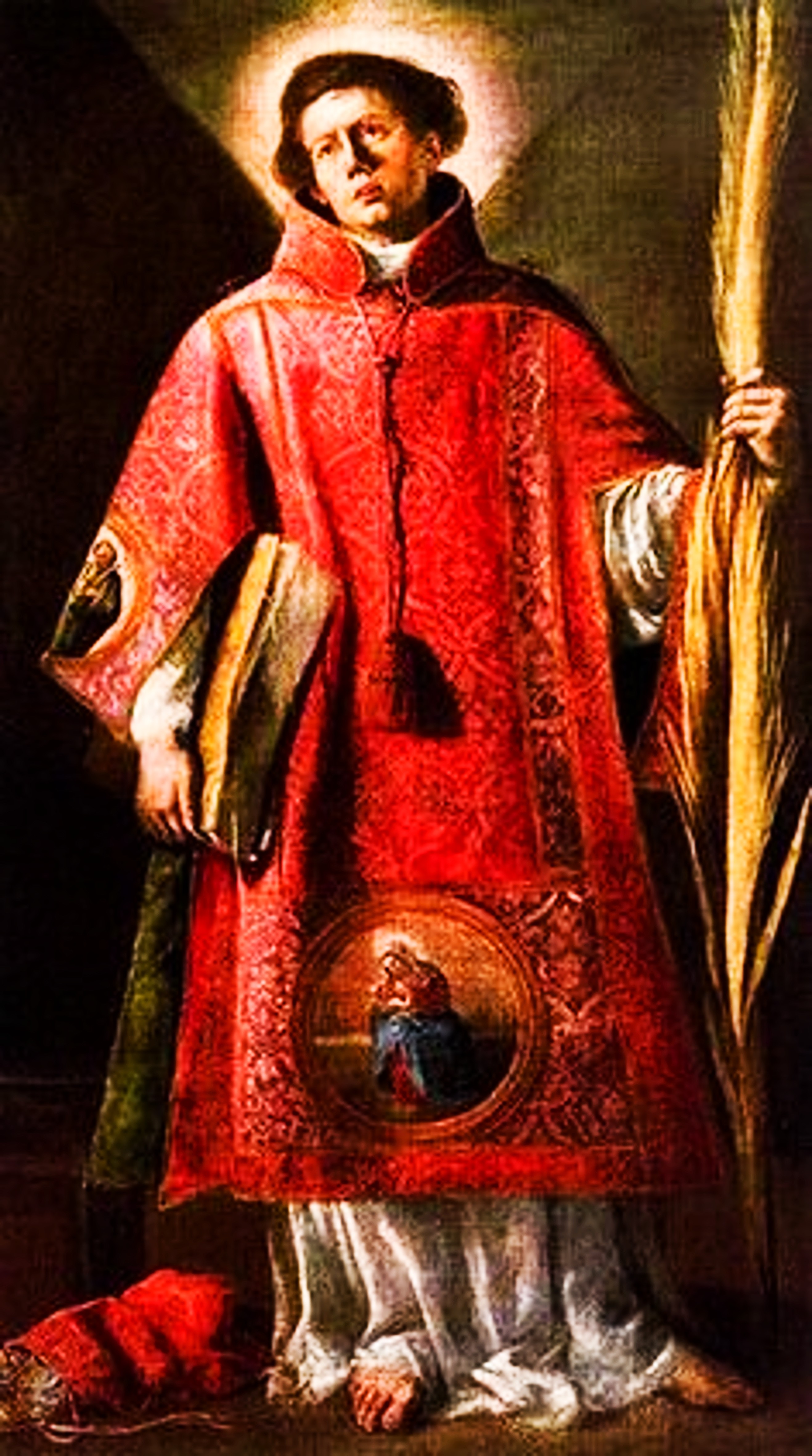
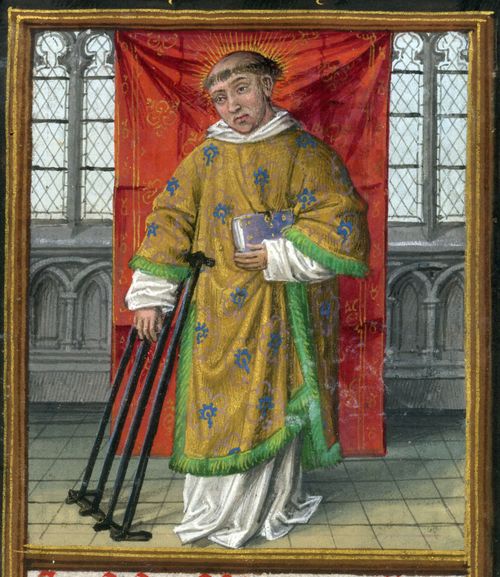
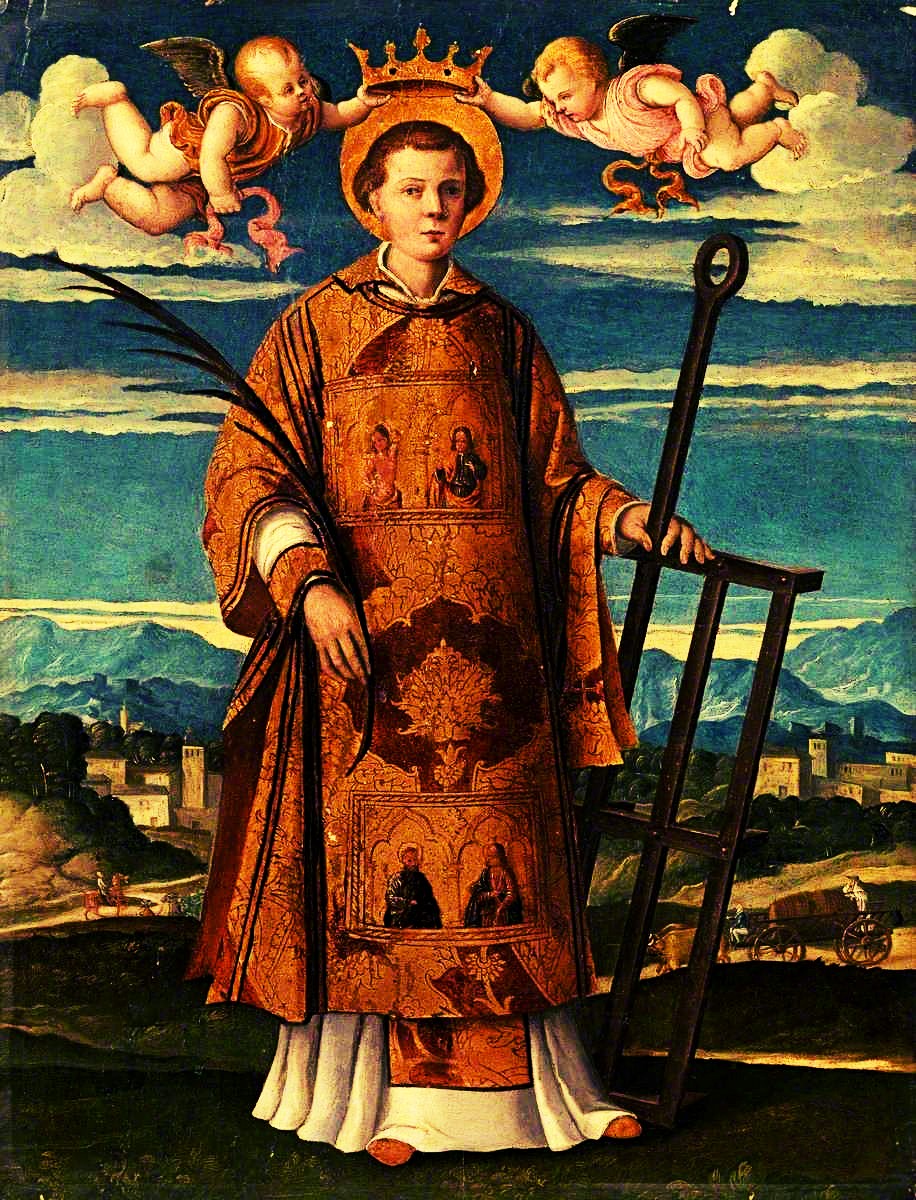
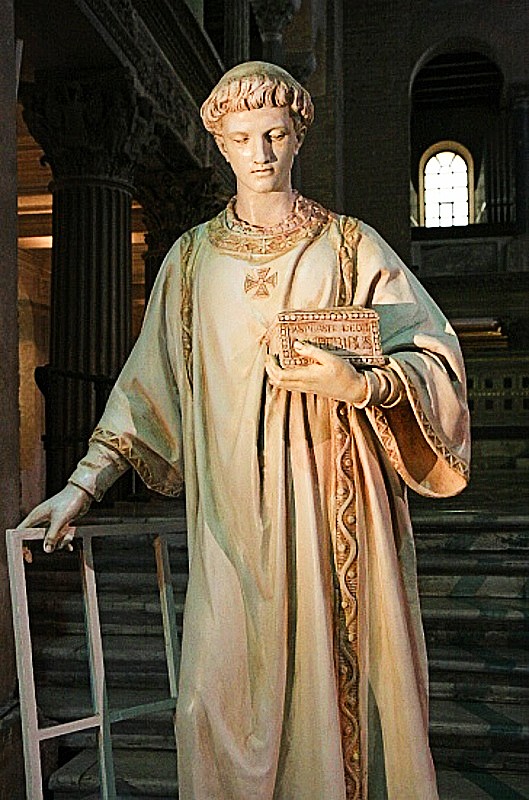
Saint of the Day – 10 August – St Lawrence (Died 258) Martyr “Keeper of the Treasures of he Church.”
St Lawrence, Martyr By Fr Francis Xavier Weninger SJ (1805-1888)
The many and high encomiums [praises] which were paid to St Lawrence by the most ancient and illustrious of the holy Fathers of the Church, St Augustine, St Ambrose, St Leo I, St Maximus and St Peter Chrysologus, are the surest sign that this Saint has always been considered one of the most famous Martyrs, who gave their blood for Christ.
He was born of Christian parents, in the middle of the Third Century, at Osca, a City in Aragon. His father’s name was Orentius, his mother’s, Patientia, both are honoured as Saints. Such parents gave a holy education to their son. He early evinced, on all occasions, an especial love for God, a fearless constancy in the true faith and a watchful care over the preservation of his purity. While yet young in years, he went to Rome and won, by his blameless life, the highest regard of all who came in contact with him. Pope Xystus or Sixtus Ordained him Deacon. His functions were to serve the Pope at the Altar, to take charge of the treasures of the church and to distribute the revenues which were destined for the maintenance of the sextons and the poor.
A terrible persecution of the Christians took place at the period of which we speak. Pope Sixtus was seized and thrown into the Mamertine prison. Lawrence seeing him, from a distance, dragged along, ran towards him and bitterly weeping, said: “Father, where are you going without your son? Holy Pontiff, where are you hastening without your deacon? You have never been wont to offer the Holy Sacrifice without me, your servant. In what have I displeased you, O my Father? Have you found me unworthy of you and of your sacred service? Prove me now and see if you have chosen a fit servant in trusting me with the dispensing of the Blood of Christ!” This and more said the Saint, desiring to suffer with St Sixtus for the Lord’s sake. The holy Pope replied: “I do not leave you, my son but you will have to suffer a great trial. We being old, have not much to endure but you, strong in your youth, must gain a more glorious victory over the tyrant. Do not weep. In three days, you will follow me. Go now and take care of the Treasures of the Church that are in your keeping.”
Lawrence, comforted by the prophecy of the holy Pope, went immediately and secured the sacred vessels of the Altar and the vestments of the Priests, distributed among the poor the money which had been collected for them, visited the Christians assembled in different houses and subterranean vaults, exhorted all to constancy and employed the whole night in deeds of charity and humility. The following day, when the Pope was being led away to execution, the holy Levite approached him again, saying: “Holy Father, do not leave me; for, the treasures which you committed to my care, are all distributed.” The Pope comforted the Saint as he had done the day before and was led away and ended his life by the sword.
Meanwhile, some of the soldiers, having heard Lawrence speak of treasures, informed the Emperor Valerian of the fact, and that tyrant, as avaricious as he was cruel, had Lawrenc apprehended and gave him, in charge of Hippolytus, an officer, who placed him in a prison where several malefactors were kept. One of these, Lucilius, had wept so much during his imprisonment, that he had become blind. St Lawrence, pitying him, advised him to embrace the Christian faith and be baptised, as by that, his sight would be restored. Lucilius followed his advice and soon after Baptism, his sight returned. Hippolytus, touched by the grace of God at this miracle, was converted with his whole household. The next day, the Emperor commanded that Lawrence should be brought to him.
The valiant Confessor of Christ rejoiced at this message and said to Hippolytus: “Let us go, for two glorious crowns are prepared for you and me.” The Emperor asked him who he was, whence he came and where he had concealed the Treasures of the Church. The first and second questions Lawrence fearlessly answered, saying: “I am a Christian, born in Spain.” To the third, he made answer, that if the Emperor would allow him a little time, he would gather the Treasures and show them to him. Delighted at this, the Emperor willingly granted him the desired time but ordered Hippolytus, not to leave his side for a moment, lest he should escape.
The Saint assembled all the poor he could find and leading them to the tyrant, said: “Behold, these are the Treasures of our Church.” The Emperor, regarding this as an insult, was greatly enraged and swore by the gods to be revenged. He gave Lawrence over to the prefect with the command to torture him in the most painful manner, if he refused to worship the idols. The prefect, who was as cruel as the Emperor himself, ordered his brutes to tear off the Saint’s clothes and to lash him, like a vile slave, till his whole body was a mass of blood and wounds. After this, he displayed a great many instruments of torture, with the menace that they would be used upon him, if he longer refused to worship the gods. Lawrence looked unconcernedly upon them and said: “They cannot frighten me. I have long desired to suffer for the sake of Christ. Your idols are not worthy to be worshipped, they are no gods and I will never sacrifice to them.”
Hardly had these words passed his lips, when the holy man was stretched upon the rack, then raised high in the air and his whole body whipped with scourges on the ends of which were fastened iron stars or spurs. After this, they applied lighted torches to his mangled body. The Martyr’s constancy could not be shaken. Turning his eyes heavenward, he only asked for strength to endure.
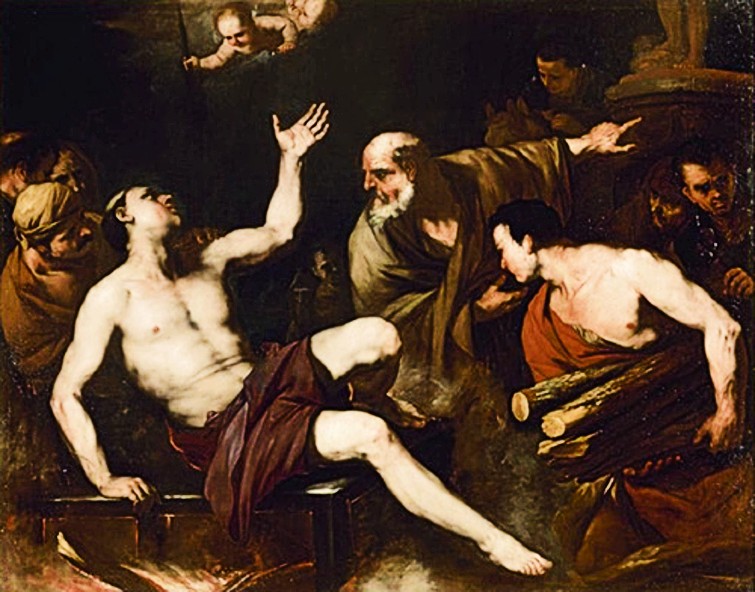
… Early on the next day, the prefect ordered the executioners to make an iron bed in the form of a gridiron, put live coals under it, stretch and bind the Saint upon it and slowly roast him. The command was fulfilled to the great horror of all present. The Saint, however, lay as quietly on the red hot gridiron as if it had been a bed of roses, only saying at intervals: “Receive, O Lord, this burnt-offering as an agreeable fragrance.” His countenance beamed with heavenly joy and the Christians, who were present, said that a divine light had surrounded him and his body exuded a sweet fragrance.
After having been burned thus a long time, he turned his eyes towards the prefect and said: “I am sufficiently roasted on one side, turn me over and eat my flesh.” How the tyrant received these words can easily be imagined. The Saint, however, continued to be cheerful and filled with divine consolation. He praised God and thanked Him for the grace vouchsafed him to die for his faith.
At last, with his eyes raised to Heaven, he gave his heroic soul into the hands of his Redeemer, on the 10th of August, 258. Many of the heathens, who were present, were converted by this glorious Martyrdom to the Faith of Christ.
St Lawrence (Died 258) Martyr “Keeper of the Treasures of he Church,” Martyr, Archdeacon. St Lawrence was one of the seven Deacons of the City of Rome under Pope St Sixtus II, who were martyred in the persecution of the Christians by decree of the Roman Emperor Valerian. St Lawrence here: https://anastpaul.wordpress.com/2017/08/10/saint-of-the-day-feast-of-st-lawrence-of-rome-martyr/
St Deusdedit the Cobbler St Gerontius Bl Hugh of Montaigu St Paula of Carthage St Thiento of Wessobrunn
Martyrs of Alexandria – 260+ Saints: A large number of Christians who were Martyred in Alexandria, Egypt between 260 and 267 in the persecutions of Decius and Valerian, whose names have not come down to us and who are commemorated together.
Martyrs of Rome – 165 Saints: Group of 165 Christians Martyred in the persecutions of Aurelian. 274 in Rome, Italy.
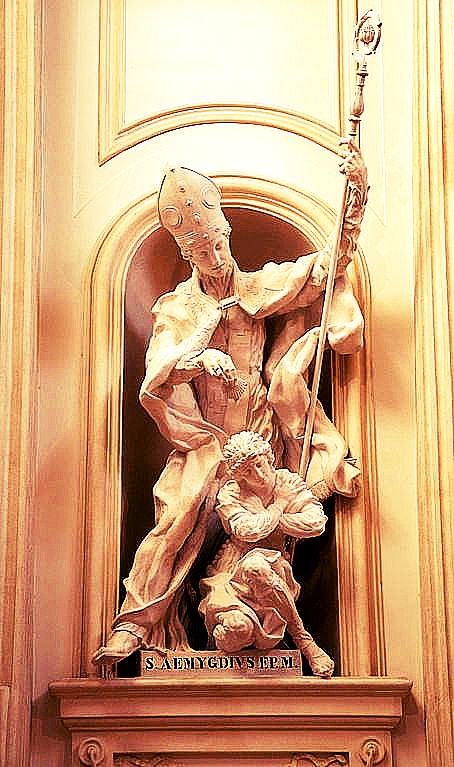
Saint of the Day – 9 August – Saint Emigdius (c 272 – c 303) Bishop Martyr, Confessor, Miracle-worker. Born probably in Trier in south-western Germany in c 272 and died by being beheaded in c 303. Patronages – against earthquakes – against natural disaster, of the City and Diocese of Ascoli Piceno, of the Cities of L’Aquila, Cingoli, San Ginesio, Nocera Umbra, Italy. Also known as – Emygdius, Emigdius, Emigdio.
The Roman Martyrology states of him today: “St EmIgdius, Bishop and Martyr, who was Consecrated Bishop by Pope Marcellus and sent thither to preach the Gospel. He received the crown of Martyrdom for the confession of Christ, under the Emperor Diocletian.”
Emigdius was a pagan converted and was baptised by St Nazarius and St Celsus in Trier. . With others who had been converted to Christianity, he first went to Milan , where he was Ordained a Priest, then to Rome.
In Rome he cured the paralytic daughter of his host Gratianus, who had given him access to his home on Tiber Island. Gratianus and his family then converted to Christianity. Emigdius also cured a blind man. The people of Rome believed him to be the son of Apollo and carried him off by force to the Temple of Aesculapius on the island in the Tiber, where he cured many of the sick. Emygdius declared himself a Christian, however and tore down the pagan altars and smashed into pieces a statue of Aesculapius. H e also converted many to Christianity which enraged the Prefect of the City.
He was Consecrated a Bishop by Pope Marcellus and sent to Ascoli Piceno. On his way to Ascoli, Emigdius converted many more people, and performed a miracle where he made water gush out of a rockface after striking a portion of a cliff. Polymius, the local Governor, attempted to convince Emygdius to worship Jupiter and the goddess Angaria, the patroness of Ascoli. Polymius also offered him the hand of his daughter Polisia. Instead, Emygdius baptised her as a Christian in the waters of the Tronto, along with many others.
St Emigdius baptising Polisia
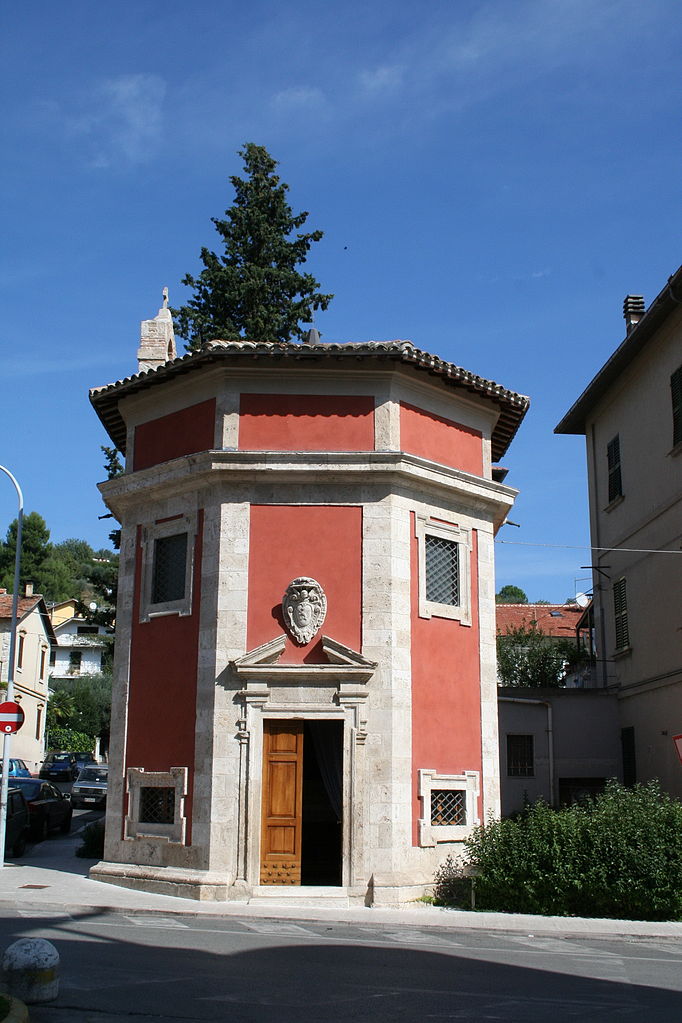
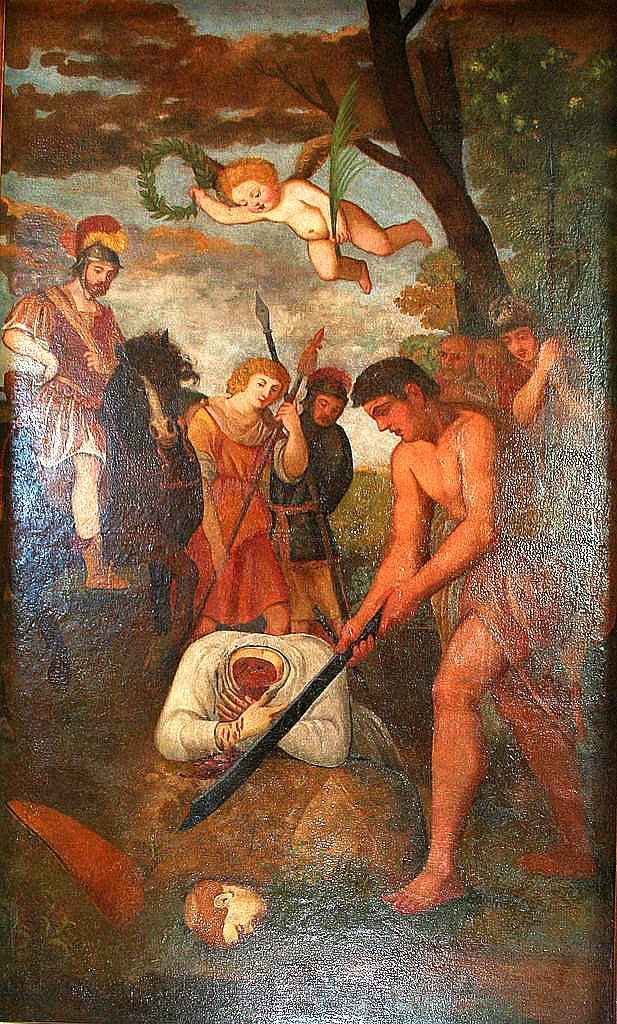
Enraged, Polymius decapitated him on the spot now occupied by the Sant’Emidio Red Temple, as well as his followers Eupolus (Euplus), Germanus and Valentius (Valentinus). Emygdius stood up, carried his own head to a spot on the mountainside, where he had constructed an Oratory (the site of the present-day Sant’Emidio alla Grotte). After Emygdius’ Martyrdom, his followers attacked Polymius’ palace and pulled it down.
Sant’Emidio Red Temple
The Martyrdom of St Emigdius
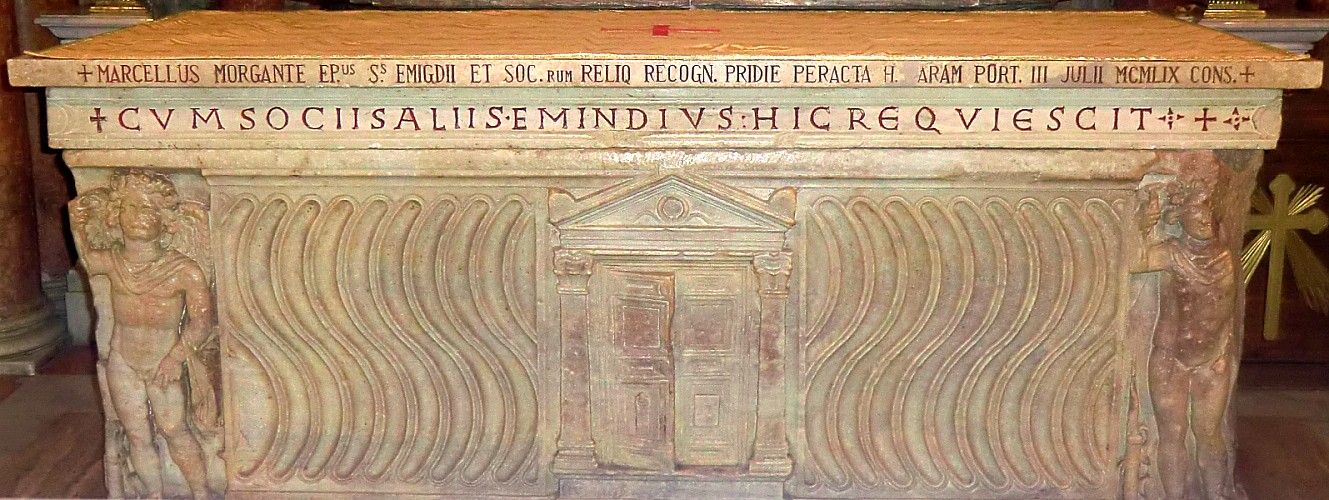
His hagiography was written probably by a Monk of French origin in the eleventh century, after the rediscovery of the Saint’s relics, which had been conserved in a Roman sarcophagus. However, his hagiography was attributed to his disciple Valentius, who was Martyred with him. The cult of Saint Emygdius is ancient, documented by Churches dedicated to him since the eighth century. The translation of his relics from the catacomb of Sant’Emidio alla Grotte to the Crypt of the Cathedral of Ascoli, happened probably around the year 1000 under Bernardo II, Bishop of Ascoli Piceno.
St Emigdius’ Tomb in Ascoli Cathedral
In 1703, a violent earthquake occurred in the Marche but did not affect the City of Ascoli Piceno. The City’s salvation was attributed to Emigdius and he was thenceforth, invoked against earthquakes. As a result of this event, a Church was deciated to the Saint in 1717. Additionally, many Towns appointed him as Patron, erecting Statues in his honour in the Parish Churches (L’Aquila, 1732; Cingoli, 1747; San Ginesio, 1751; and Nocera Umbra, 1751)
Emigdius is considered to have protected Ascoli from other dangers. A dazzling vision of Emigdius deterred Alaric I, King of the Visigoths, from destroying Ascoli in 409. The troops of Conrad II, Holy Roman Emperor passed through the region in 1038 carrying the dreaded disease – the Plague; Bernardo I, Bishop of Ascoli, invoked Emydgius’ aid and the spread of the Plague was immediately arrested. During World War II, on 3 October 1943, Emigdius protected the City against the Germans and against the hunting and arrest of the Italian partisans.
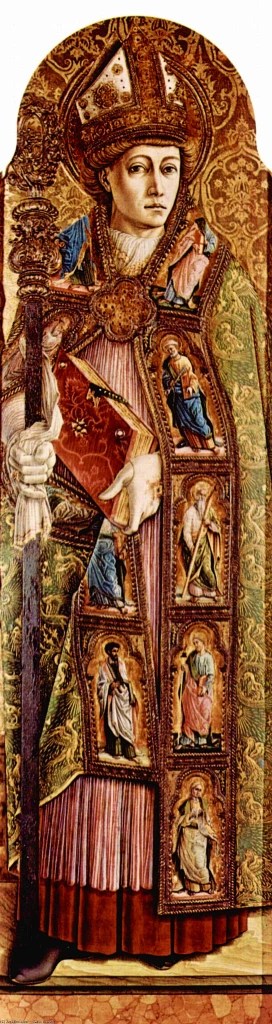
The Annunciation, with Saint Emigdius is an Altarpiece by Italian artist Carlo Crivelli showing an artistic adaptation of the Annunciation. The Altarpiece was painted for the Church of the Annunziata in Ascoli Piceno, in the region of Marche, to celebrate the self-government granted to the town in 1482 by Pope Sixtus IV. St Emygdius is shown in the passageway on the left.
Bl Michal Tomaszek St Nathy St Numidicus of Carthage St Phelim Bl Richard Bere St Rusticus of Sirmium St Rusticus of Verona St Secundian of Civitavecchia St Stephen of Burgos Bl Thomas Palaser St Verian of Civitavecchia Bl Zbigniew Adam Strzalkowski
Martyrs of Civitavecchia: Three Christians Martyred together in the persecutions of Decius. We know little more than the names – Marcellian, Secundian and Verian. 250 near Civitavecchia, Italy.
Martyrs of Constantinople: 10 Saints: A group of ten Christians who were arrested, tortured and executed for defending an icon of Christ in defiance of orders from Emperor Leo the Isaurian. We know the names of three, but nothing else about them – Julian, Marcian and Mary. They were beheaded in Constantinople.
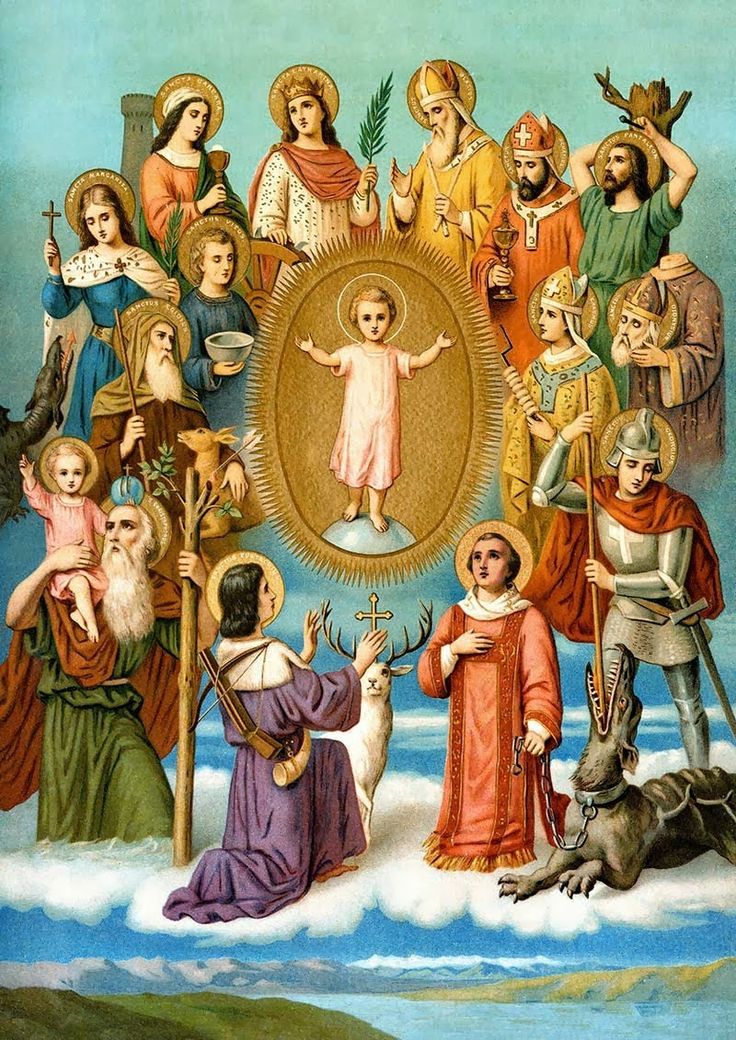
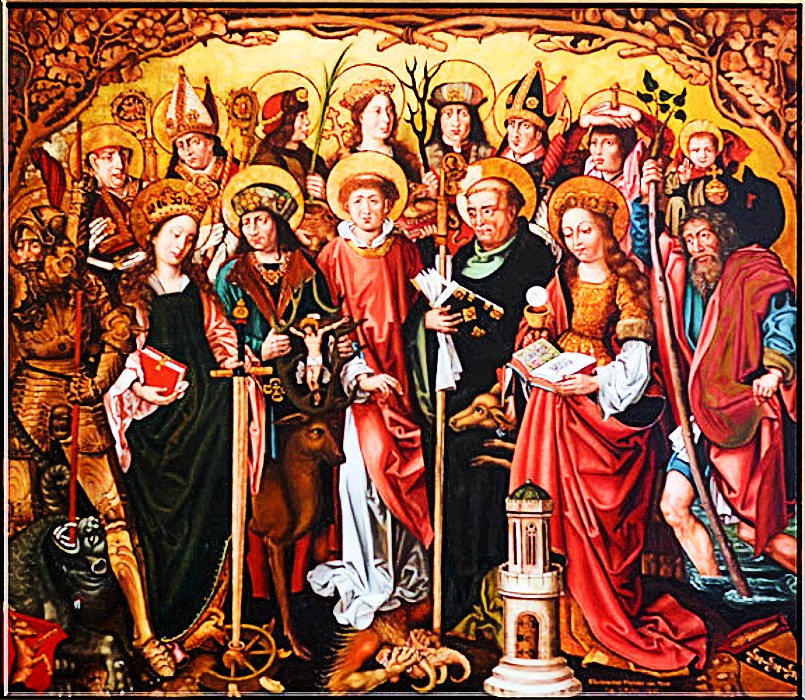
Saint/s of the Day – 8 August – The Fourteen Holy Helpers. A group of Saints invoked with special confidence because they have proven themselves efficacious helpers in adversity and difficulties, are known and venerated under the name Fourteen Holy Helpers.
The Notable Martyrs Saints within the Group are: Acacius, Barbara, Blaise, Christopher, Cyriacus, Catherine of Alexandria, Denis, Erasmus of Formia, Eustace, George, Giles, Margaret of Antioch, Pantaleon and Vitus.
Devotion to these fourteen ,as a group, spread in response to the Black Plague which devastated Europe from 1346 to 1349. Among its symptoms were the tongue turning black, a parched throat, violent headache, fever, and boils on the abdomen. It attacked without warning, robbed its victims of reason and killed within a few hour. Many died without the last Sacraments.
Brigands roamed the streets, people suspected of contagion were attacked, animals died, people starved, whole villages vanished into the grave, social order and family ties broke down and the disease appeared incurable. The pious turned to Heaven, begging the intervention of the Saints, praying to be spared or cured. This group devotion began in Germany–the Diocese of Wurzburg having been renowned for its observance.
Pope Nicholas V attached Indulgences to devotion of the Fourteen Holy Helpers in the 16th century.
Saint Christopher and Saint Giles are nvoked against the plague itself. Saint Denis is prayed to for relief from headache, Saint Blaise for ills of the throat, Saint Elmo for abdominal maladies, Saint Barbara for fever and Saint Vitus against epilepsy. Saint Pantaleon is the Patron of physicians, Saint Cyriacus invoked against temptation on the deathbed and Saints Christopher, Barbara and Catherine, for protection against a sudden and unprovided death. Saint Giles is prayed to for a good Confession and Saint Eustace as healer of family troubles. Domestic animals were also attacked by the plague and so, Saints George, Elmo, Pantaleon and Vitus are invoked for the protection of these animals. Saint Margaret of Antioch is the Patron of safe childbirth.
The legends of the Fourteen Holy Helpers are replete with the most glorious examples of heroic firmness and invincible courage in the profession of the Faith, which ought to incite us to imitate their fidelity in the performance of the Christian and social duties. If they, with the aid of God’s grace, achieved such victories, why should not we, by the same aid, be able to accomplish the very little which is desired of us? God rewarded His victorious champions with eternal bliss – the same crown is prepared for us, if we but render ourselves worthy of it. God placed the seal of miracles on the intrepid confession of His Servants and a mind imbued with the spirit of faith, sees nothing extraordinary therein because our Divine Saviour, Himself said, “Amen, amen I say to you, he that believes in Me, the works that I do, he also shall do and greater than these shall he do” (John 14:12). In all the miraculous events wrought in and by the Saints, there appears only the victorious omnipotent Power of Jesus Christ and the living faith, in which His Servants operated in virtue of this power.
The histories of the Saints are called Legends. This word is derived from the Latin,and signifies something that is to be read, a passage the reading of which is prescribed. Therefore, the Legends of the Saints are the lives of the holy Martyrs and Confessors of the Faith. Some of them occur in the Roman Breviary which the Catholic Clergy is obliged to read everyday. (The corruption of this word has occurred in modern times, giving it a meaning of either “unprovable story or celebrity.”)
St Eleutherius of Constantinople St Ellidius St Famianus of Compostela St Gedeon of Besancon St Hormisdas of Persia Bl John Felton Bl John Fingley St Largus St Leobald of Fleury St Leonidas of Constantinople St Marinus of Anzarba St Mummolus of Fleury St Myron the Wonder Worker St Rathard of Diessen St Severus of Vienne St Sigrada St Smaragdus St Ternatius of Besançon St Ultan of Crayke Bl William of Castellammare di Stabia
Martyrs of Albano – 4 Saints: Four Christians who were Martyred together, and about we today know little more than their names – Carpóforo, Secondo, Severiano and Vittorino. They were martyred in Albano, Italy – their remains are interred in the San Senator cemetery, on the Appian Way, 15 miles from Rome, Italy.
Martyrs of Rome – 5 Saints: Five Christians Martyred together; we know nothing else about them but the names – Ciriaco, Crescenziano, Giuliana, Memmia and Smaragdus. They were martyred at the 7 mile marker, on the Via Ostia, Rome, Italy.
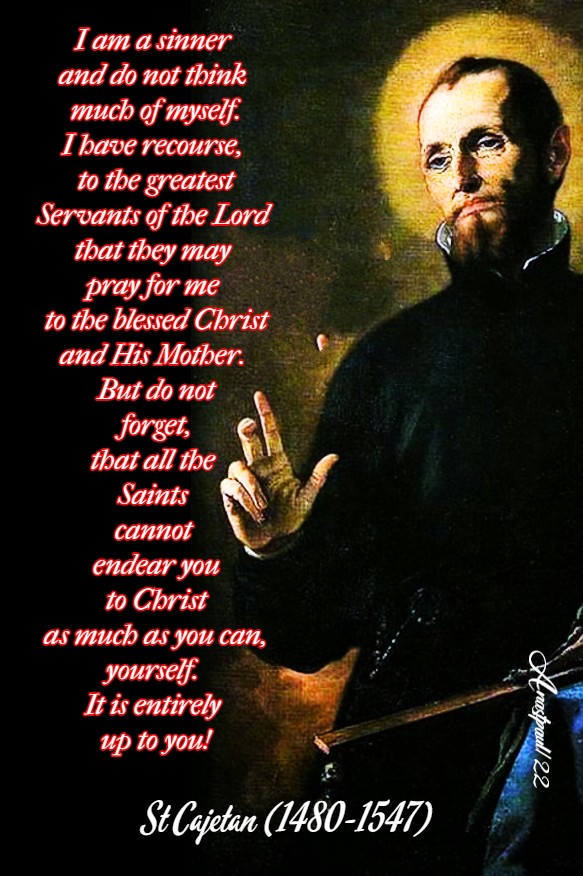
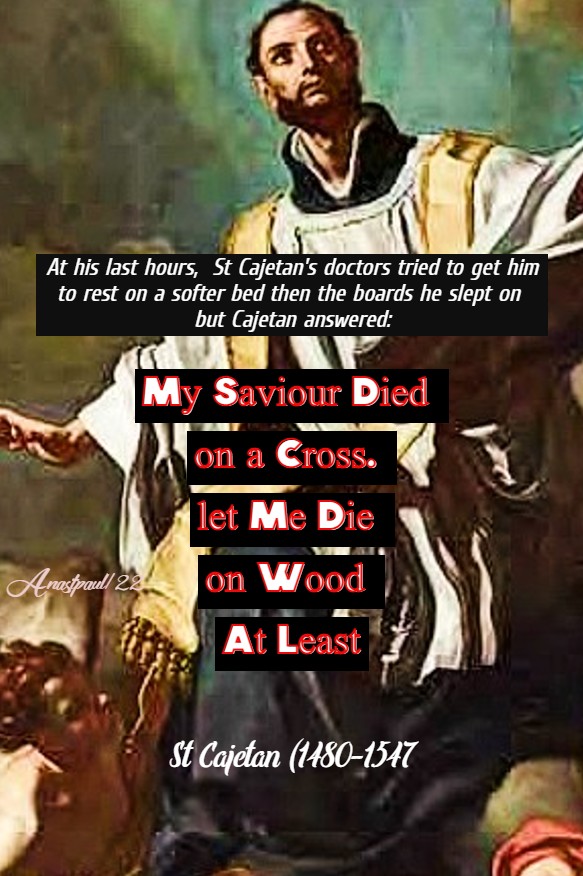
Quote/s of the Day – 7 August – The Memorial of St Cajetan (1480-1547) Confessor
“I am a sinner and do not think much of myself. I have recourse, to the greatest Servants of the Lord that they may pray for me to the blessed Christ and His Mother. But do not forget, that all the Saints cannot endear you to Christ as much as you can yourself. It is entirely up to you!”
At his last hours, St Cajetan’s doctors tried to get him to rest on a softer bed then the boards he slept on but Cajetan answered:
“My Saviour died on a Cross. let me die on wood at least.”
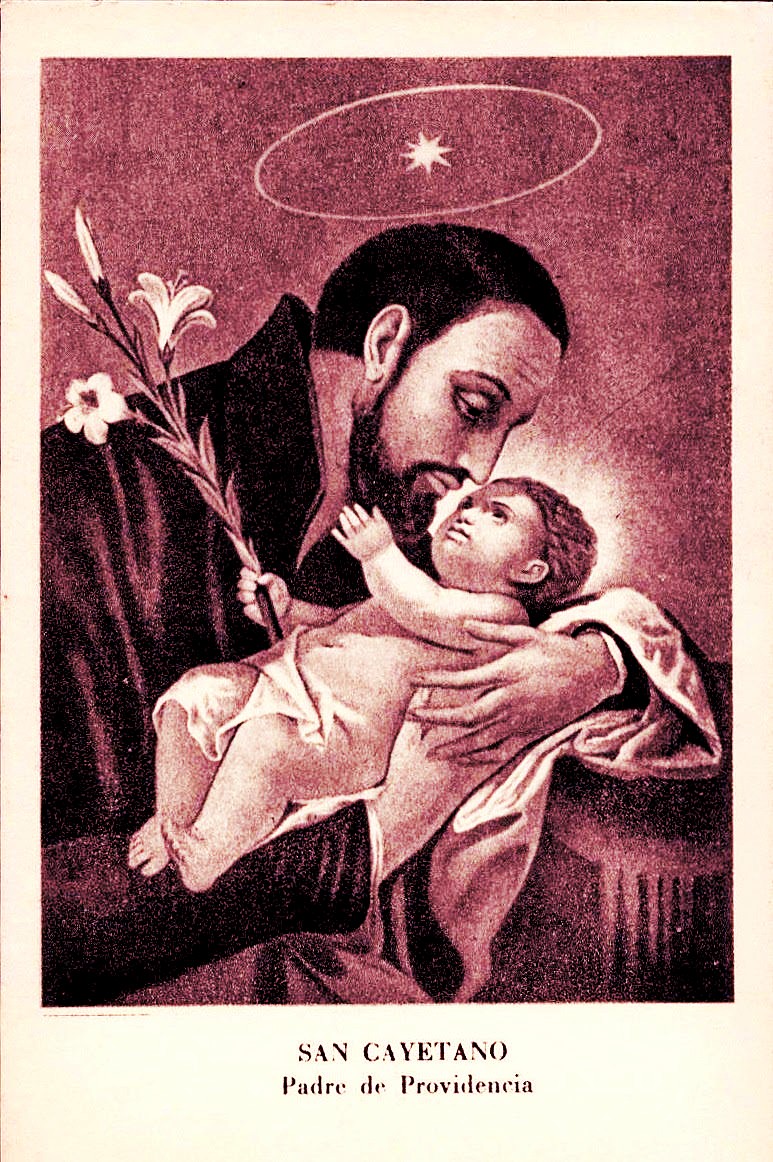
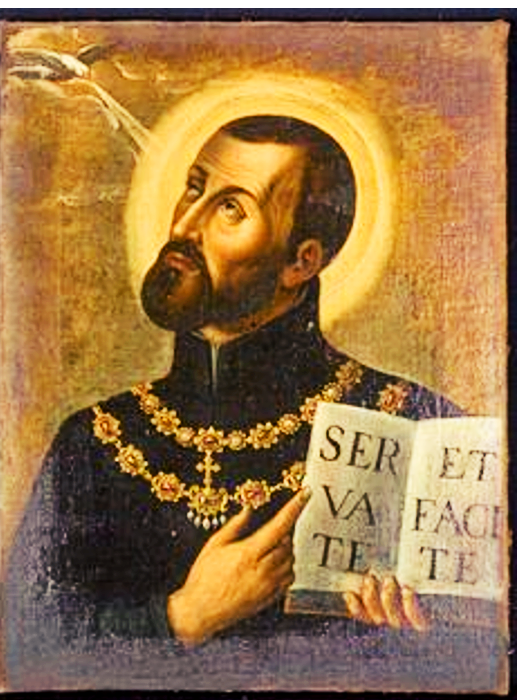
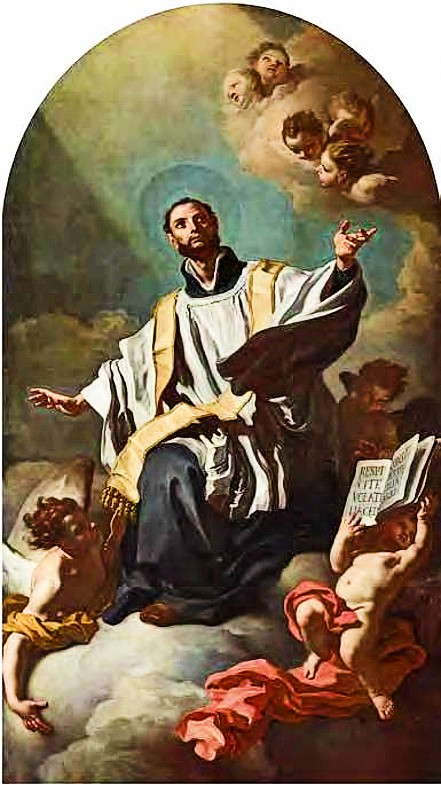
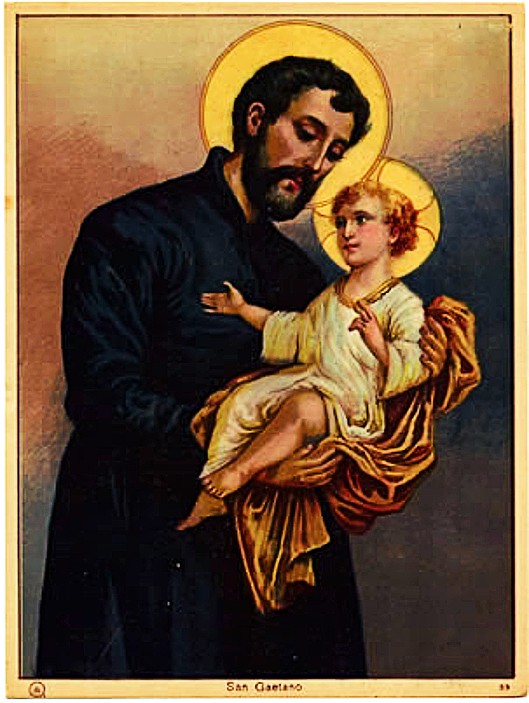
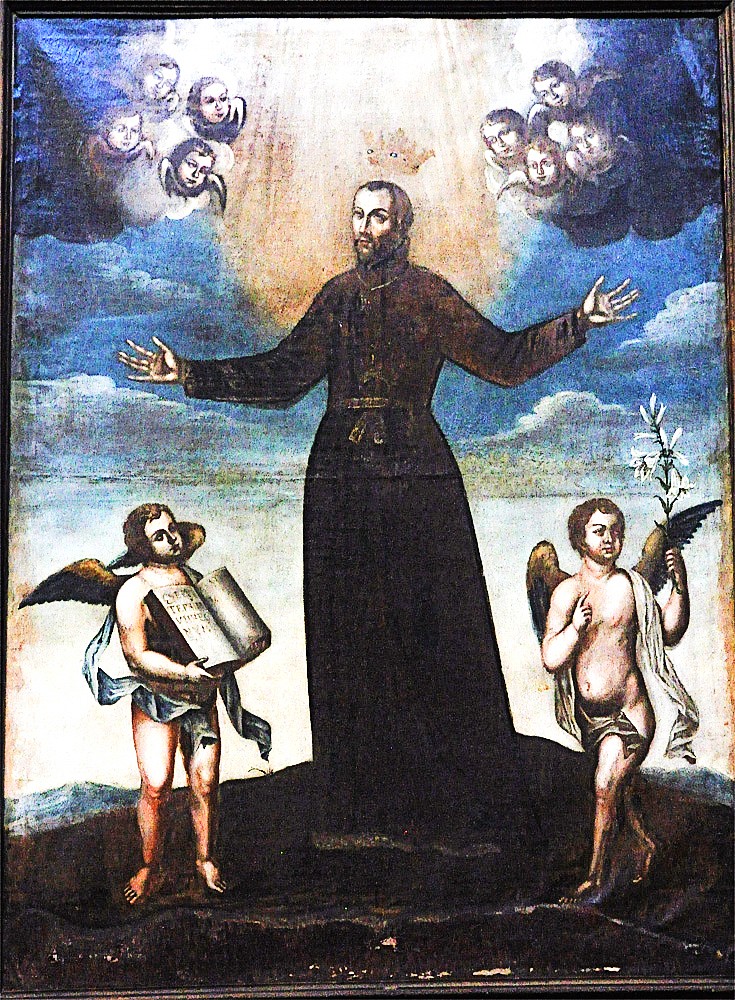
Saint of the Day – 7 August – St Cajetan (1480-1547) Confessor, Priest, Known as the “Father of Providence” and the “Huntsman of Souls” – Founder of the Theatine Order.
Saint Cajetan of Thienna, Confessor From the Liturgical Year, 1901
Cajetan was born at Vicenza of the noble house of Thienna and was at once dedicated, by his mother, to the Virgin Mother of God.
His innocence appeared so wonderful from his very childhood that everyone called him “the Saint.” He took the degree of Doctor in Canon and Civil law at Padua and then went to Rome where Julius II. made him a Prelate. When he received the Priesthood, such a fire of Divine love was enkindled in his soul that he left the Court to devote himself entirely to God. He founded hospitals with his, own money and himself served the sick, even those attacked with pestilential maladies. He displayed such unflagging zeal, for the salvation of his neighbour that he earned the name of the “Huntesman of Souls.”
His great desire was to restore Ecclesiastical discipline, then much relaxed, to the form of the Apostolic life and to this end, he founded the Order of Regular Clerks. They lay aside all care of earthly things, possess no revenues, do not beg, even the necessaries of life from the faithful but live only on alms, spontaneously offered. Clement VII. having approved this institution, Cajetan made his solemn vows at the High Altar of the Vatican Basilica, together with John Peter Caraffa, Bishop of Chieti, who was afterwards Pope Paul IV and two other men of distinguished piety.
During the sack of Rome, Cajetan was most cruelly treated by the soldiers, to make him deliver up his money which the hands of the poor, had long ago carried into the heavenly treasures. He endured with the utmost patience stripes, torture and imprisonment. He persevered unfalteringly in the kind of life he had embraced, relying entirely upon Divine Providence and God never failed him, as was sometimes proved by miracles.
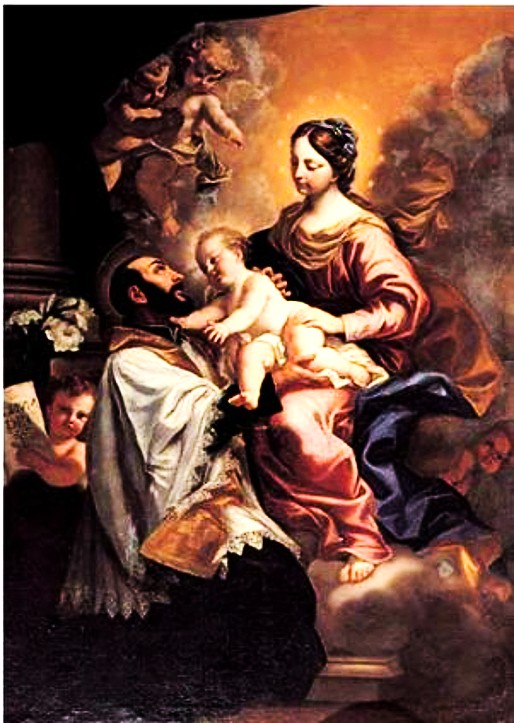
He was a great promoter of constant and deeply pious attention at the Divine worship, of the beauty of the House of God, of exactness in holy ceremonies and of the frequence of the most Holy Eucharist. More than once he detected and foiled, the wicked subterfuges of heresy. He would prolong his prayers for eight hours, without ceasing, to shed tears being often rapt in ecstasy and was renowned for the gift of prophecy. At Rome, one Christmas night, while he was praying at our Lord’s crib, the Mother of God was pleased to lay the Infant Jesus in his arms.
He would spend whole nights in chastising his body with disciplines, and could never be induced to relax anyof the austerity of his life, for he would say, he wished to die in sackcloth and ashes.
At length he fell into an illness caused by the intense sorrow he felt, at seeing the people offend God by heresy and sedition and, at Naples, after being refreshed by a heavenly vision, he passed to Heaven. His body is honoured with great devotion in the Church of St. Paul in that Town. As many miracles worked by him both while living and in death. made his name illustrious, Pope Clement X. enrolled him amongst the Saints.
St Albert of Trapani O.Carm. (c 1240-1307) Carmelite Priest, Confessor, Preacher, Evangeliser, apostle of prayer and a devout servant of the Blessed Virgin and the Passion of Christ. St Teresa of Jesus (1515-1582) and St Mary Magdalene de Pazzi (1566-1607) were especially devoted to him, the Bl Baptist Spagnoli (1447–1516) composed a sapphic ode in his honour. His Life: https://anastpaul.com/2019/08/07/saint-of-the-day-7-august-saint-albert-of-trapani-o-carm-c-1240-1307/
Bl Cassian Vaz Lopez-Neto St Claudia of Rome St Donat St Donatian of Chalons-sur-Marne St Donatus of Besancon St Faustus of Milan St Hilarinus of Ostia St Hyperechios Bl Jordan Forzatei St Julian of Rome St Peter of Rome
Martyred Deacons of Rome – 6 Saints: A group of Deacons who were Martyred with Pope Saint Sixtus II. We know nothing about them but their names and their deaths – Agapitus, Felicissimus, Januarius, Magnus, Stephen and Vincent. They were beheaded on 6 August 258 in a cemetery on the Appian Way, Rome, Italy.
Martyrs of Como – 6 Saints: A group of Christian soldiers in the imperial Roman army. Martyred in the persecutions of Maximian. We know little else but the names – Carpophorus, Cassius, Exanthus, Licinius, Secundus and Severinus. c.295 on the north side of Lake Como, near Samolaco, Italy. Their relics in the church of San Carpoforo, Como, Italy.






























You must be logged in to post a comment.