Posted in MARIAN TITLES

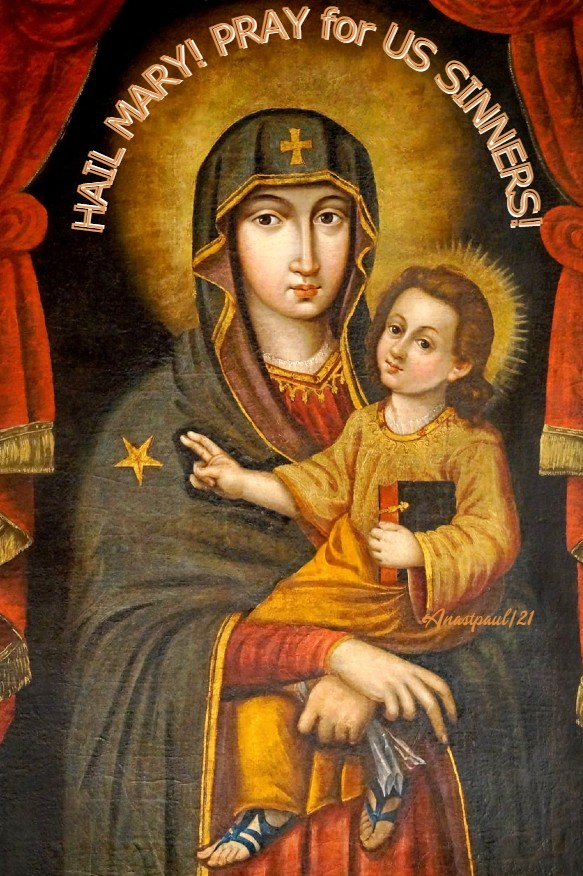
Nostra Signora di Oropa / Our Lady of Oropa, Piedmont, Italy, (3rd Century) and Memorials of the Saints – 29 October

Nostra Signora di Oropa / Our Lady of Oropa, Piedmont, Italy (3rd Century) – 29 October:
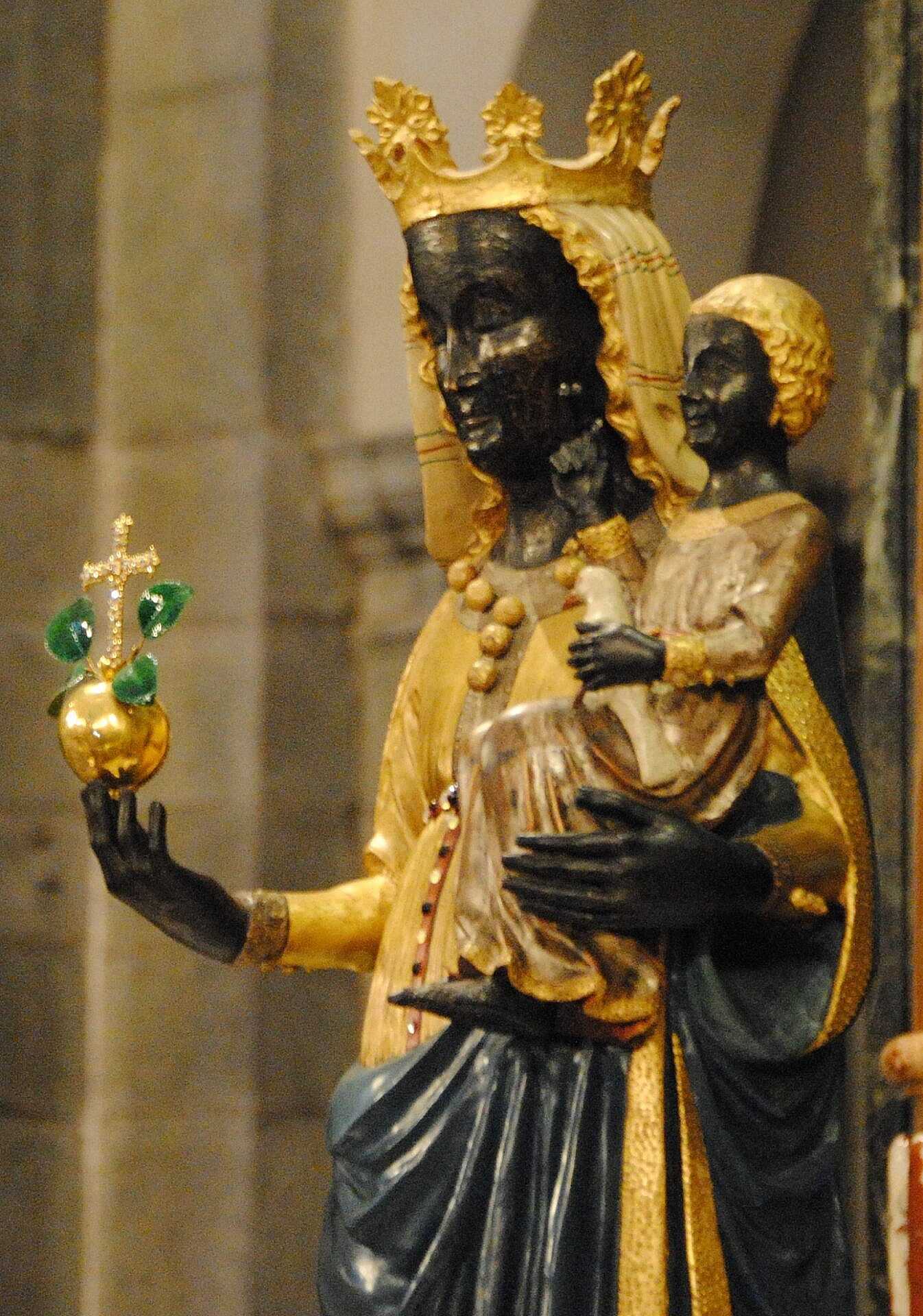
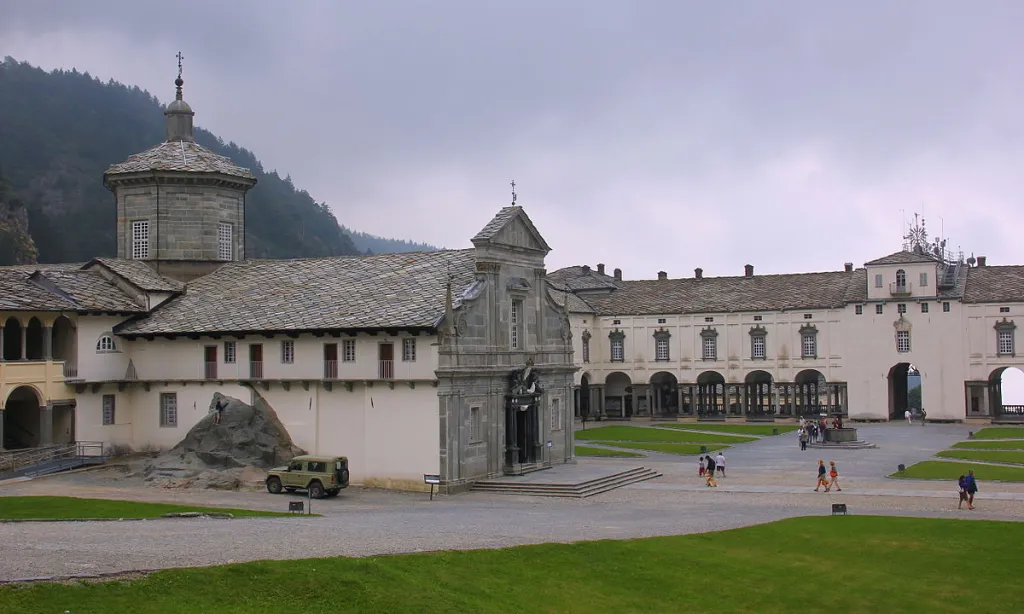
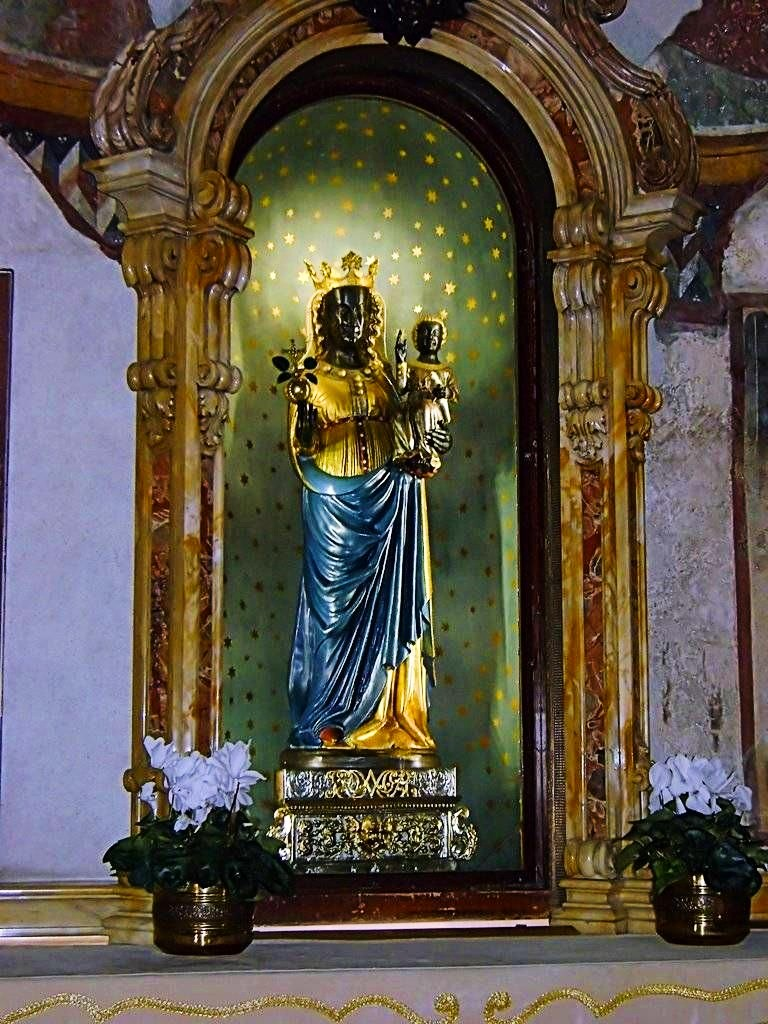
This image, of cedar wood, six feet high, is in a Chapel which Saint Eusebius, Bishop of Vercelli (c 283-371), caused to be built. He often retired there during the troubles caused by the Arians.

The Sanctuary of the black Virgin of Oropa, high in the Alps north of Biella, is traditionally associated with Saint Eusebius of Vercelli, who died in 371 but the circumstances of the story are anachronistic. Yet the Shrine is certainly an old one, and throughout the Middle Ages was associated with a Community of Canon Regulars.

The vast range of buildings there today were begun by the Dukes of Savoy, early in the seventeenth century and form one of the most complete pilgrimage centres in the world (there is even a theatre). It is recorded that here in 1895, contemplating the space and beauty of the mountains, Marconi heard the first call to his life’s work.
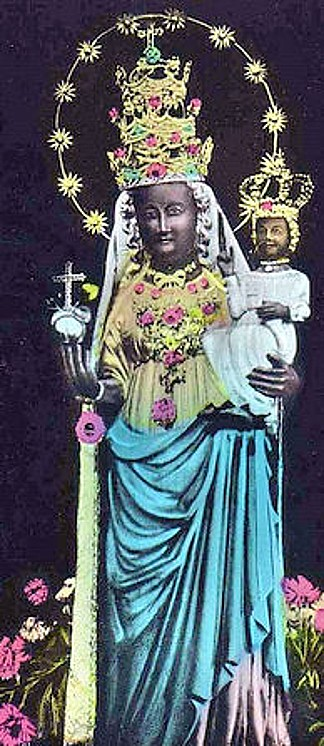
The black cedar-wood Statue has been crowned four times, the last time in 1920 – the three superimposed diadems (the fourth is represented by a halo of twelve stars) can hardly be said to add to the beauty of the image.
Discovery of the Statue of Our Lady of Oropa at Jerusalem – Saint Eusebius who had been exiled to Syria because of his differences with the Arians, died in the year c 371. While in exile, the Emperor Constantine permitted him some freedom. Eusebius discovered among some ruins in Jerusalem three Statues of Our Lady. On his triumphant return after the Arians had been temporarily overthrown, he gave two of the Statues away . The third he kept for himself, placing it in a little hermitage at Oropa which he often visited.

In the 5th and 6th centuries when Arianism again reared its ugly head, the faithful Catholics took refuge at the Shrine of Our Lady of Oropa. At one time it was decided to transport the Statue to another place. As the procession marched along, the Statue became so heavy that the men who carried it could not move on. Only when they decided to take Our Lady back to her original Shrine at Oropa were they able to move.
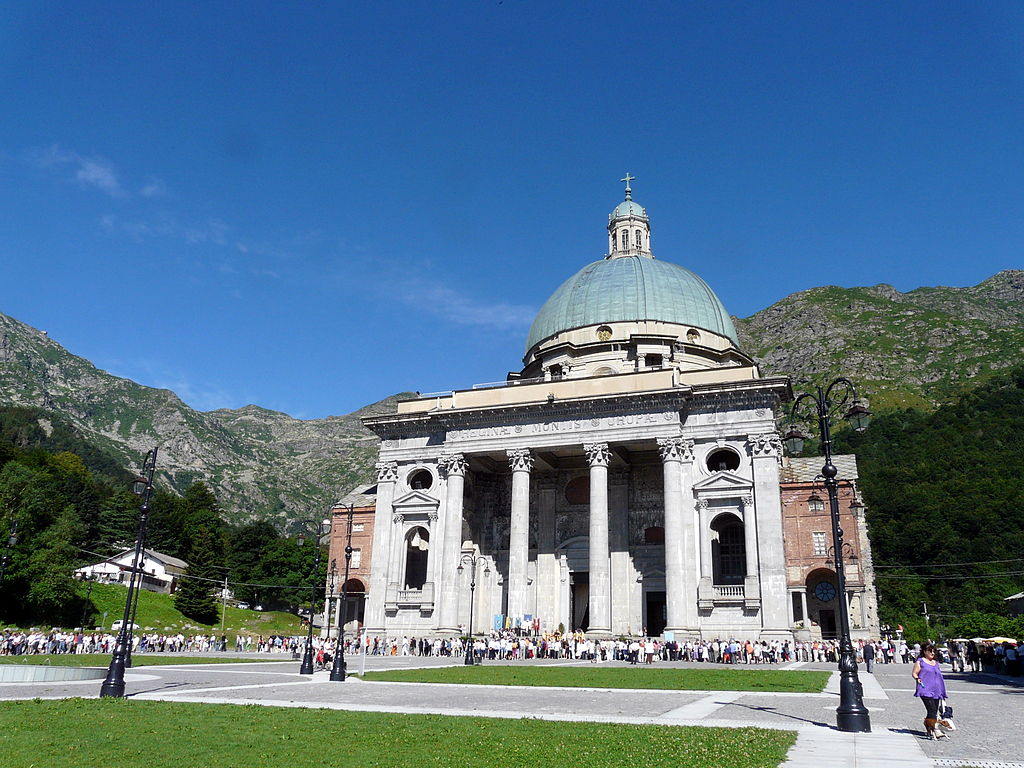
The last addition to the sanctuary was the Upper Basilica, a monumental Church built between 1885 and 1960 due to the large number of pilgrims visiting Oropa. It can hold 3000 people and its dome is 80 metres high.
In 1617, the complex of the Sacro Monte di Oropa (literally Sacred Mount of Oropa) was built not far from the Sanctuary. It is a devotional path now composed of twelve Chapels (plus another seven nearby) containing groups of Statues representing scenes from the story of the Virgin Mary’s life.
The Chapel of Our Lady of Oropa is a beautiful one and thousands of pilgrims today make their way there as they have done over the centuries.
The Holy See asked the authorities in 1856 to make a list of the miracles recorded at the Shrine. It is long and impressive. Then, as now, Our Lady of Oropa has a way with her Divine Son.

St Abraham Kidunaia (c 296-c 366) Priest, Hermit. The Vita of St Abraham was written by his friend, St Ephrem (306-373) Father and Doctor of the Church.
St Abraham of Rostov
St Achahildis of Wendelstein
St Anne of Mount Olympus

St Colman of Kilmacduagh
St Dodone of Wallers-en-Fagne
St Donatus of Corfu
St Ermelinda of Meldaert
St Eusebia of Bergamo
St Felician of Carthage

St Gaetano Errico (1791-1860) Priest, Founder of the Missionaries of the Sacred Hearts of Jesus and Mary in 1836, Teacher, Confessor, Apostle of Charity, Eucharistic Adorer.

St Honoratus of Vercelli
St John of Autun
St Kennera
St Mary of Edessa
St Narcissus of Gerona

St Narcissus of Jerusalem (c 99-c 215) Bishop of Jerusalem, miracle-worker.

St Sigolinus of Stavelot
St Stephen of Cajazzo
St Terence of Metz
St Theodore of Vienne
St Zenobius of Sidon
—
Martyrs of Douai – (160 saints and beati): 160 priests, laymen and religious who studied at the English College in Douai, France, then returned to minister to covert Catholics in England during a period of government persecution of the Church, and were murdered for their work.

Martyrs of Lucania – (4 saints): A group of Christians executed together for their faith. Only their names have survived – Felician, Hyacinth, Lucius and Quintus. Their martyrdom occurred in Lucania, southern Italy.

Martyred in the Spanish Civil War:
• Blessed Arsenio Merino Miguel
• Blessed Benito Paradela Novoa
• Blessed Joaquina Rey Aguirre
• Blessed José Ruiz Bruixola
• Blessed Maurilio Tobar González
• Blessed Ponciano Nieto Asensio
• Blessed Victoria Arregui Guinea
Posted in SAINT of the DAY

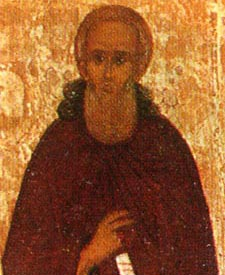
Saint of the Day – 29 October – Saint Abraham of Rostov

Saint Abraham of Rostov, also known as Averkii, Avraamii, was a Russian convert from paganism and a monk, taking the name Abraham. Born in the 10th century in Galich, Russia, as a young man Abraham was struck down by a nearly fatal illness, then cured by prayer.

Becoming a travelling evangelist and preacher in Rostov, Russia, he had a vision of Saint John the Divine, who gave him his own staff, which Abraham used to smash the pagan stone idol of Veles (god of the underworld in Slavic paganism) in Rostov; he then built the monastery of the Theophany on the site of the old pagan temple, and the staff was later carried into battle by Ivan the Terrible who hoped to benefit from its holy power. Upon the successful defeat of the Kazan khans he returned it and ordered the construction of the stone Cathedral of the Theophany in 1553- 1555.

The saint built two parish churches, one dedicated to Saint John, and started charitable organizations. Chosen abbot, he led by doing the most menial tasks, and serving all others. Convinced by his preaching, many pagans were baptized

He died at the monastery of Rostov, Russia of natural causes and was buried at the church of the Theophany monastery.

Posted in Our MORNING Offering

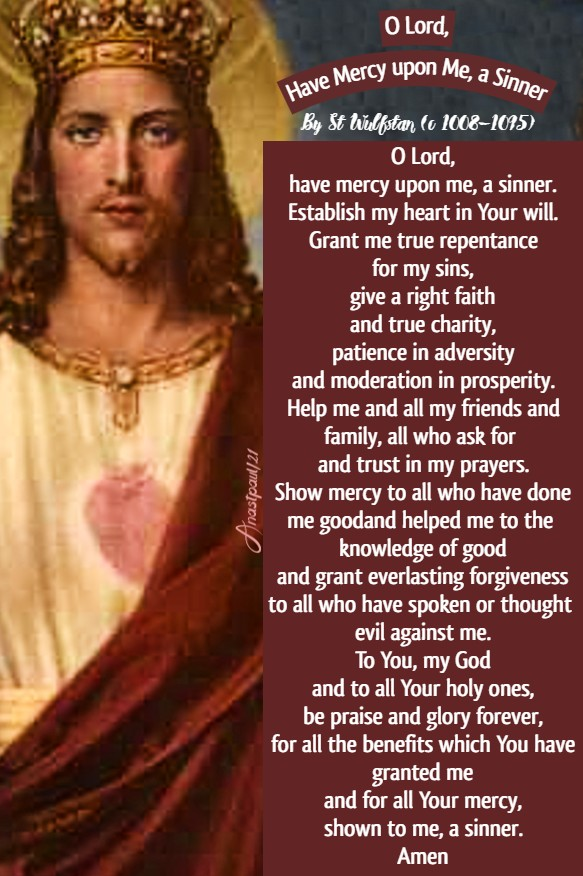
Our Morning Offering – 29 October – O Lord, Have Mercy upon Me, a Sinner

O Lord,
Have Mercy upon Me, a Sinner
By St Wulfstan (c 1008–1095)
Bishop of Worcester

O Lord,
have mercy upon me, a sinner.
Establish my heart in Your will.
Grant me true repentance for my sins,
give a right faith
and true charity,
patience in adversity
and moderation in prosperity.
Help me and all my friends and family,
all who ask for and trust in my prayers.
Show mercy to all who have done me good
and helped me to the knowledge of good
and grant everlasting forgiveness
to all who have spoken or thought
evil against me.
To You, my God and to all Your holy ones,
be praise and glory forever,
for all the benefits which You have granted me
and for all Your mercy,
shown to me, a sinner.
Amen

Posted in ONE Minute REFLECTION

One Minute Reflection – 29 October – Let the light of your countenance shine upon us

One Minute Reflection – 29 October – “Month of the Holy Rosary” – Readings: Ps 129:3-4, Ps 129:1-2, Phil 1:6-11, Matt 22:15-21

If You, O Lord, mark iniquities, Lord, who can stand? But with You is forgiveness, O God of Israel.

Ps 129:3-4

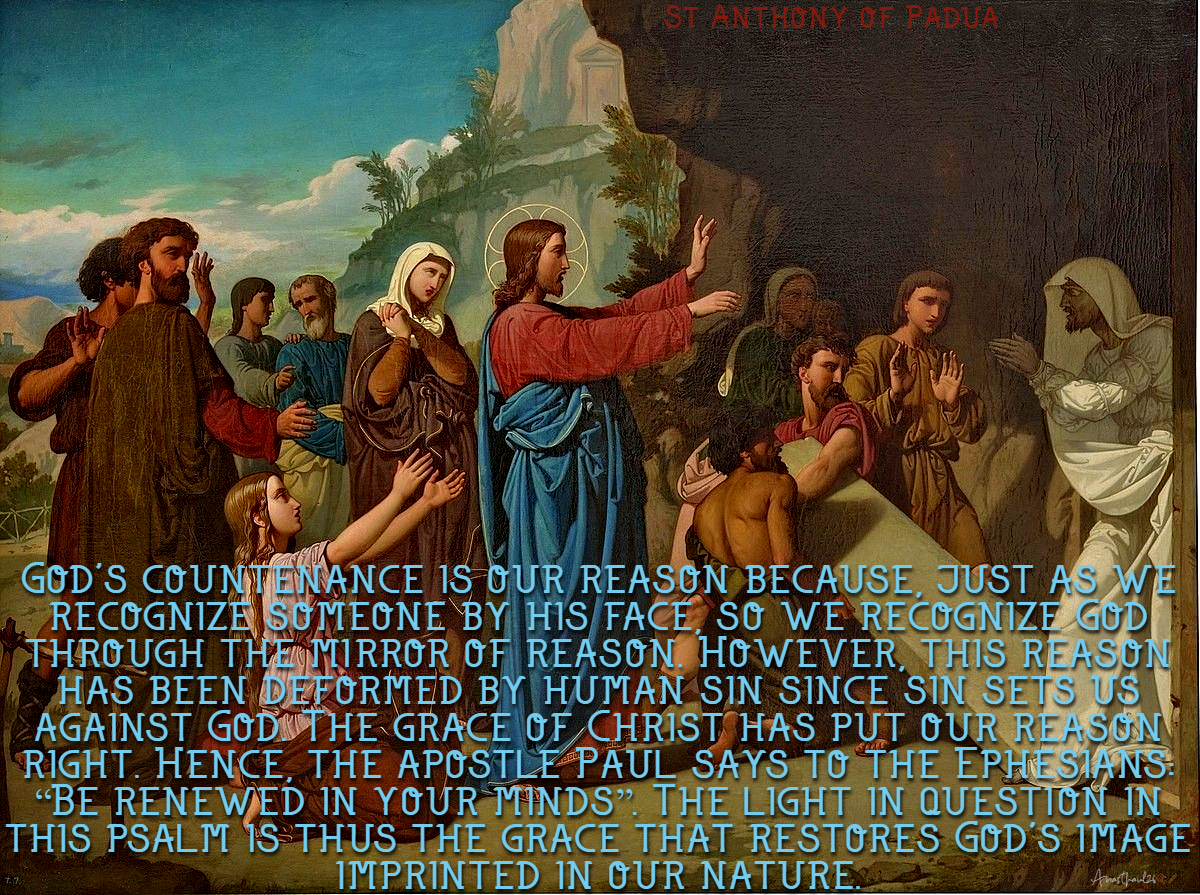
REFLECTION –Just as this coin bears the image of Caesar, so our soul is in the image of the Blessed Trinity, as one of the psalms says: “The light of thy countenance has been imprinted upon us”. Lord, the light of your countenance, that is to say the light of your grace that sets your image within us and makes us become like you, has been imprinted upon us, that is to say imprinted in our rational faculty, which is the highest power of our soul and receives this light as wax receives the mark of a seal. God’s countenance is our reason because, just as we recognize someone by his face, so we recognize God through the mirror of reason. However, this reason has been deformed by human sin since sin sets us against God. The grace of Christ has put our reason right. Hence, the apostle Paul says to the Ephesians: “Be renewed in your minds”. The light in question in this psalm is thus the grace that restores God’s image imprinted in our nature.

The whole Trinity has marked mankind with its likeness. With the memory it resembles the Father; with the understanding it resembles the Son; by love it resembles the Holy Spirit. From the beginning of creation man was made “in the image and likeness of God”. The image in his understanding of truth, the likeness in his love of virtue. The light on God's countenance is thus the grace that justifies us and brings to light once again our created image. This light constitutes man's whole good, his true good; it sets its mark on him just as the emperor's image marked the coin. That is why the Lord adds: “Repay to Caesar what belongs to Caesar”. It was as if he said: Just as you repay Caesar with his image so repay God with your soul, beautified and marked by the light of his countenance.

St Anthony of Padua

PRAYER – Almighty, ever-living God, shed the light of Your glory on the peoples who are living in the shadow of death, as You did long ago, when our Lord Jesus Christ, the Sun of Justice, came among us from on high. As He taught us the way to life may we keep the precepts and finally reach our everlasting home. May the Mother of Jesus, our Lord and our always loving and merciful Mother, keep us forever in her prayers. With Jesus our Lord and our God, with the Holy Spirit, one God with You now and for all eternity, amen.

Posted in CATHOLIC Quotes

Quote/s of the Day – 29 October – That you may approve the better things

Twentieth Century Christians should soak themselves in the Church Fathers. There, already, they will find difficulties they are tempted to think insoluble overcome by utter fidelity to God’s Word. All Christians, even those personally called to different vocations, must think with the Church and find in the Church’s judgment a criterion for their own scales of value.

J.M Perrin OP

I ask, then, what is the meaning of men’s obstinate determination to shut their eyes and to refuse to look on what is as clear as day? I have said that there are diversities of gifts in the Church, and that virginity is one gift and wedlock another. And shortly after I have used the words: I allow marriage also to be a gift of God, but there is a great difference between gift and gift.

St Jerome

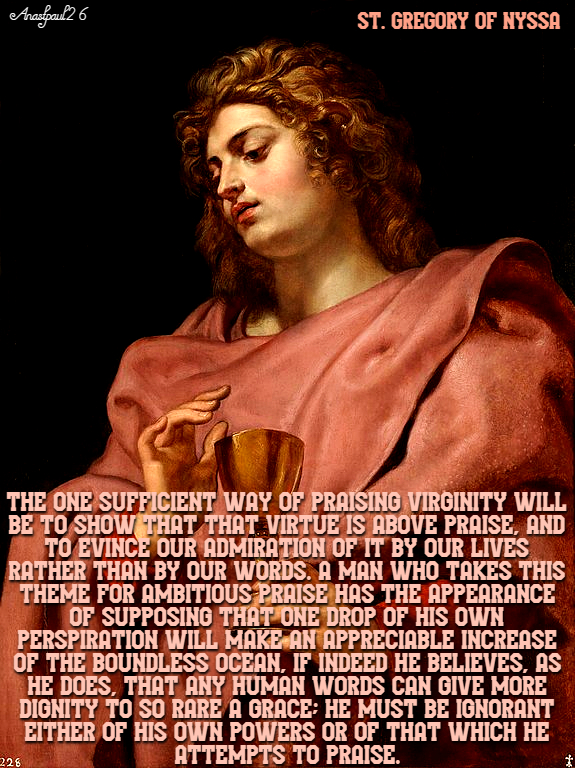
The one sufficient way of praising virginity will be to show that that virtue is above praise, and to evince our admiration of it by our lives rather than by our words. A man who takes this theme for ambitious praise has the appearance of supposing that one drop of his own perspiration will make an appreciable increase of the boundless ocean, if indeed he believes, as he does, that any human words can give more dignity to so rare a grace; he must be ignorant either of his own powers or of that which he attempts to praise.

St. Gregory of Nyssa

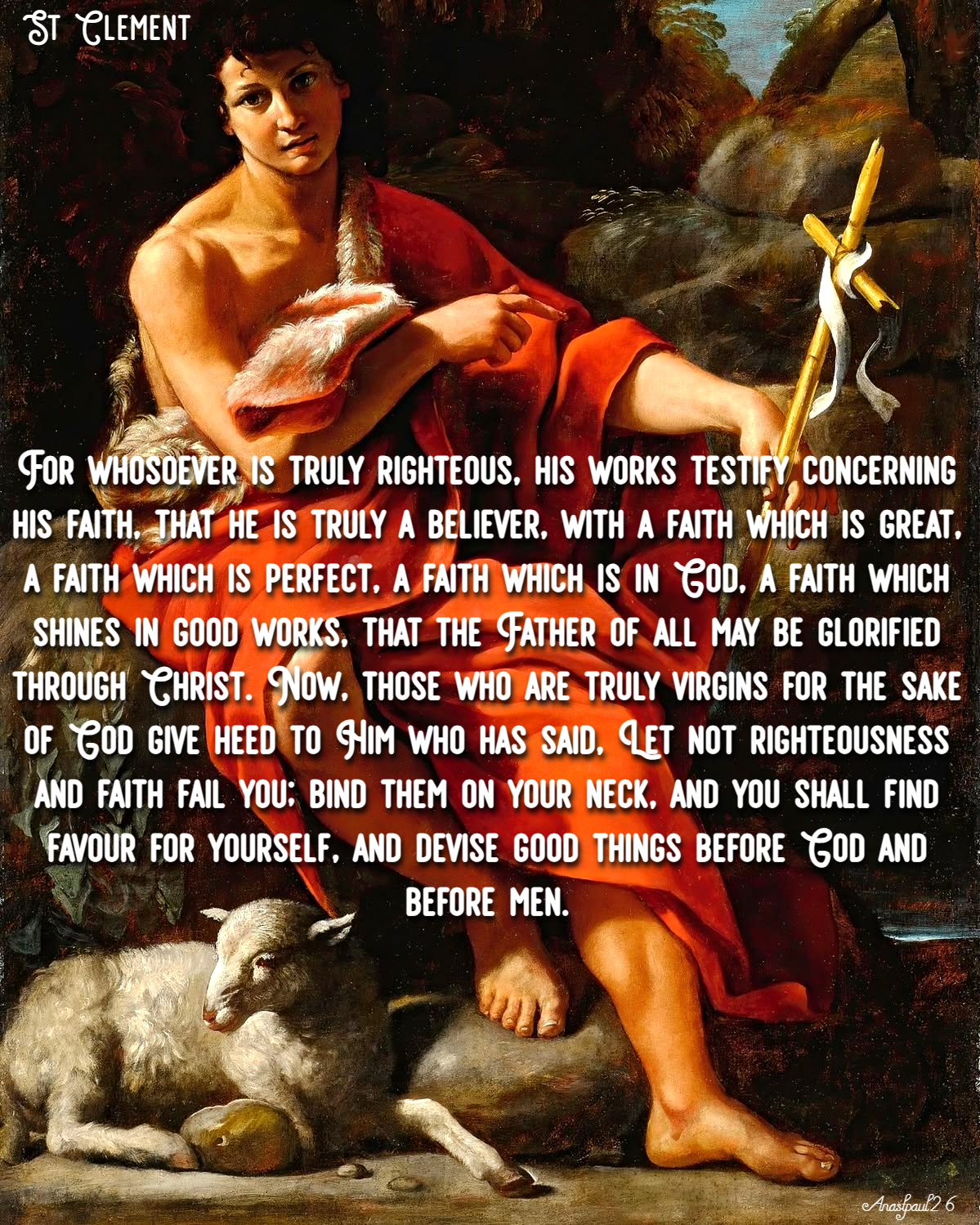
For whosoever is truly righteous, his works testify concerning his faith, that he is truly a believer, with a faith which is great, a faith which is perfect, a faith which is in God, a faith which shines in good works, that the Father of all may be glorified through Christ. Now, those who are truly virgins for the sake of God give heed to Him who has said, Let not righteousness and faith fail you; bind them on your neck, and you shall find favour for yourself, and devise good things before God and before men.

St Clement

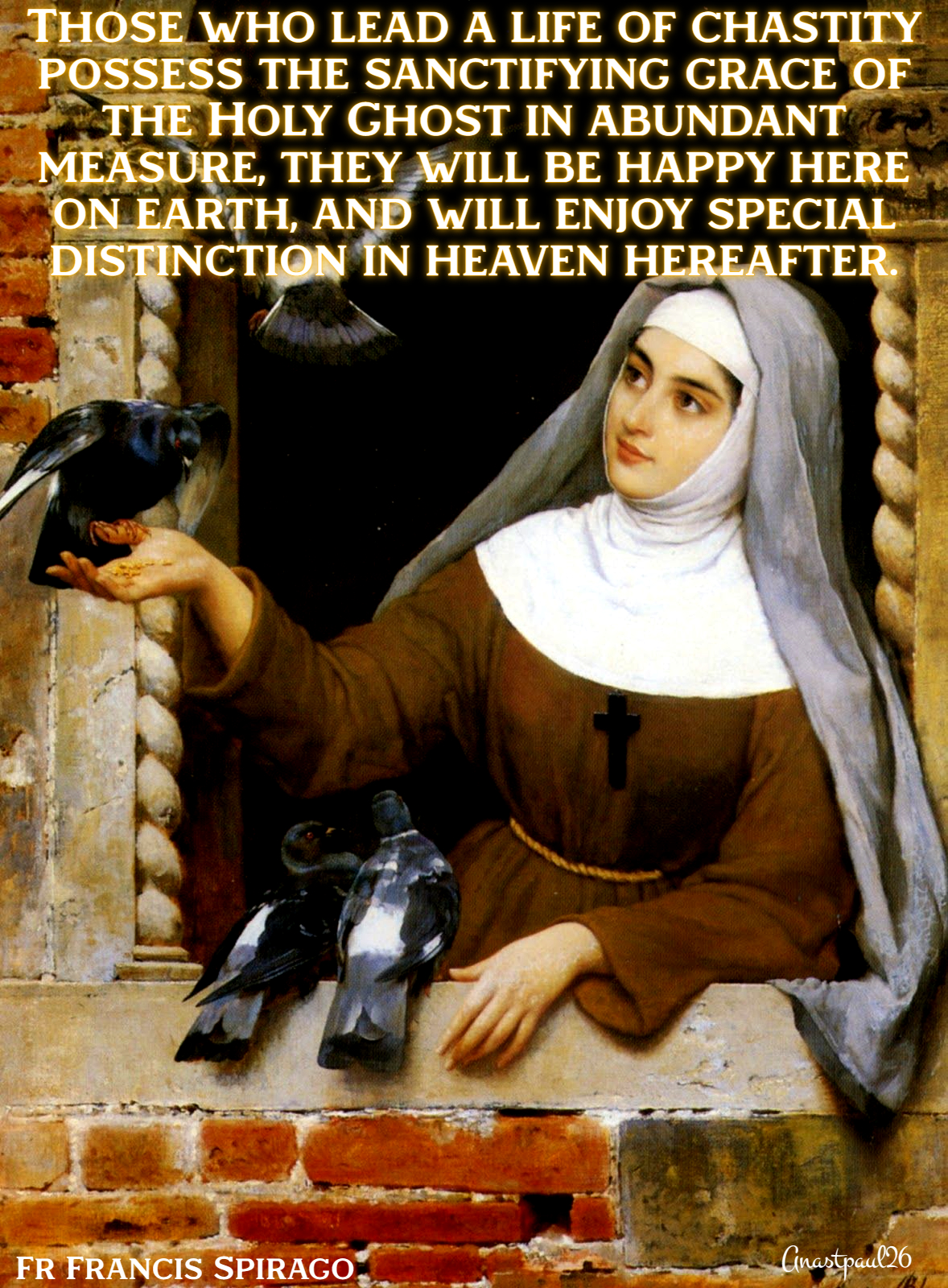
Those who lead a life of chastity possess the sanctifying grace of the Holy Ghost in abundant measure, they will be happy here on earth, and will enjoy special distinction in heaven hereafter.

Fr Francis Spirago

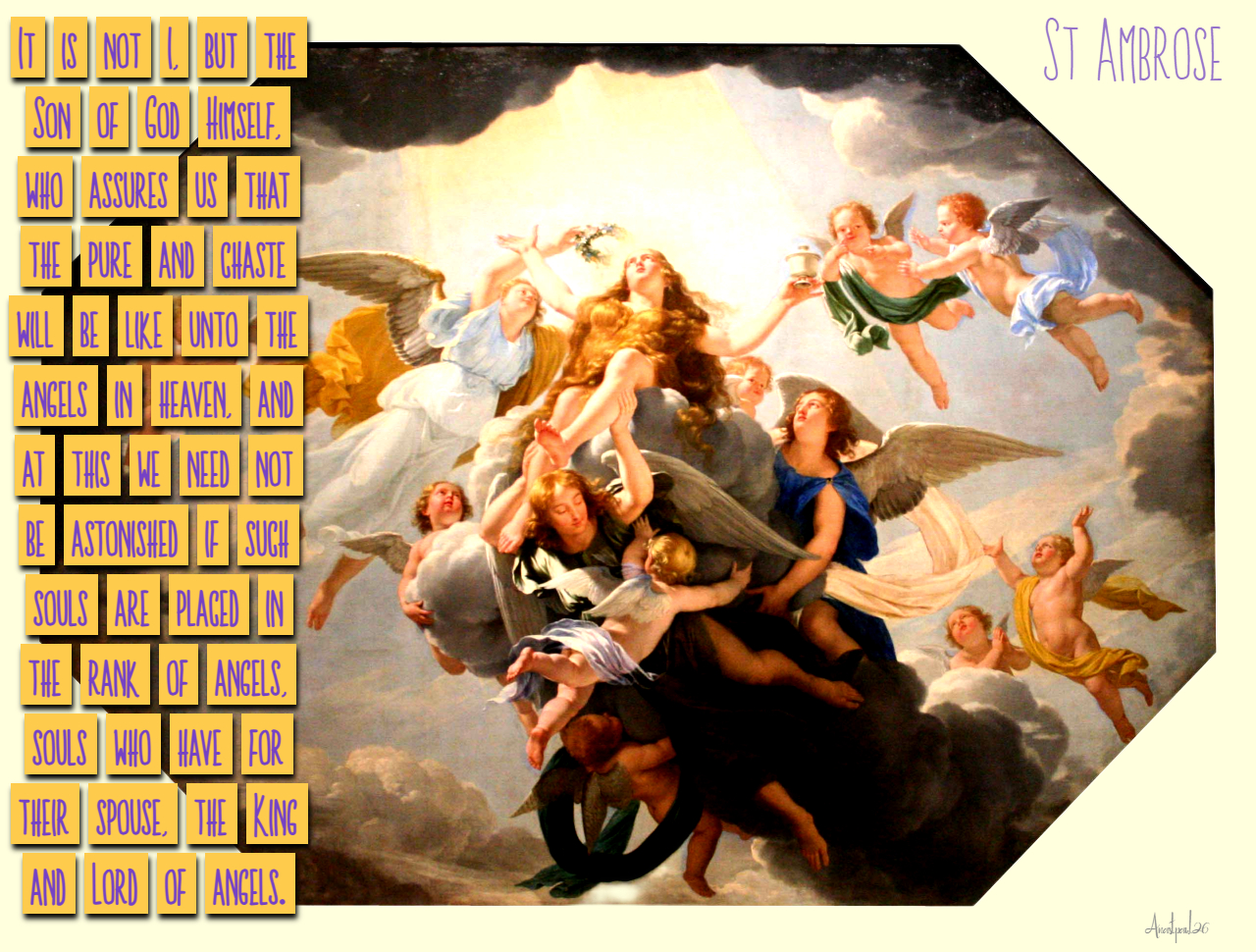
It is not I, but the Son of God Himself, who assures us that the pure and chaste will be like unto the angels in heaven, and at this we need not be astonished if such souls are placed in the rank of angels, souls who have for their spouse, the King and Lord of angels.

St Ambrose

Virginity brings us nearer to God. It seeks for a model in God Himself, says St Ambrose, for the eternal Father is virgin and Father. God also has an extraordinary love and tenderness for pure souls, it is to these, in particular, that He confers or reveals His secrets, or on whom He deigns to bestow his favours.

St Astere

He that can take, let him take it.

Jesus Christ

Posted in OCTOBER - The HOLY ROSARY and The HOLY ANGELS

Thought for the Day – 29 October – Holy angels I revere you

The Glories of the Holy Angels

Venerable Henri Boudon, Archdeacon of Evreux

OCTOBER NINETEENTH.
The Angels of our Family and Relations.

Honour the Angels of your family and relations; they often render services which yo would not receive from your own Angels, perhaps because of some advantage which is derived from some good which you do for those of whom they have charge.

Practice—A communion in honour of these Angels.
Asp.—Holy Angels! I revere you.

OCTOBER TWENTIETH.
The Angels of our Friends and Benefactors.

Pay particular respect to those holy Spirits who are entrusted with the guardianship of your friends and benefactors, knowing that the services which they render to you are often prompted by these blessed Angels. Your Confessor being your best friend, his Angel deserves special devotion and affection.
Practice—Pay a visit to these Angels : read 3d Motive, 1st part of the preceding work.
Asp.—Lord ! charge thy Angels to keep us in all our ways.

OCTOBER TWENTY-FIRST.
The Angels of our City and Kingdom.

That God has appointed certain Angels, to watch over and defend kingdoms and provinces, we are assured of in the Book of Genesis. Towns and cities too have their respective Angels. We ought often and earnestly recommend these places to their guardian care, and beg, while we thank them for past protection, so that they would arrest by their prayers the torrent of vice and immorality, which so loudly demands vengeance.

Practice—Say the Office of the Angels
Asp.—In sight of thy Angels, O Lord! will I sanctify thy name.

OCTOBER TWENTY-SECOND.
The Angels of our Parish.

Invoke the Angels of your parish, that they may avert from it the wrath of the Most High, excited by the continual offences committed against him. Father le Fevre, first companion of St. Ignatius, used to invoke the Angels of the different places in which he preached, that they might dispose the people to profit by his sermons,

Practice—Say the Litany of the Angels, for the reign of God in your parish.
Asp.—O Holy Angels ! preserve us from all evil, especially that of sin.

OCTOBER TWENTY-THIRD.
The Angels of Heretics and Infidels.

Spend this day in making reparation to the Angels for the ill return made for all their cares by Heretics and Infidels. The former blaspheme against them, whilst the latter are in total ignorance or disbelief of them.

Practice—Interiorly salute the Angels of all whom you meet.

Asp.—May every creature praise the Angels!

OCTOBER TWENTY-FOURTH.
St. Raphael.

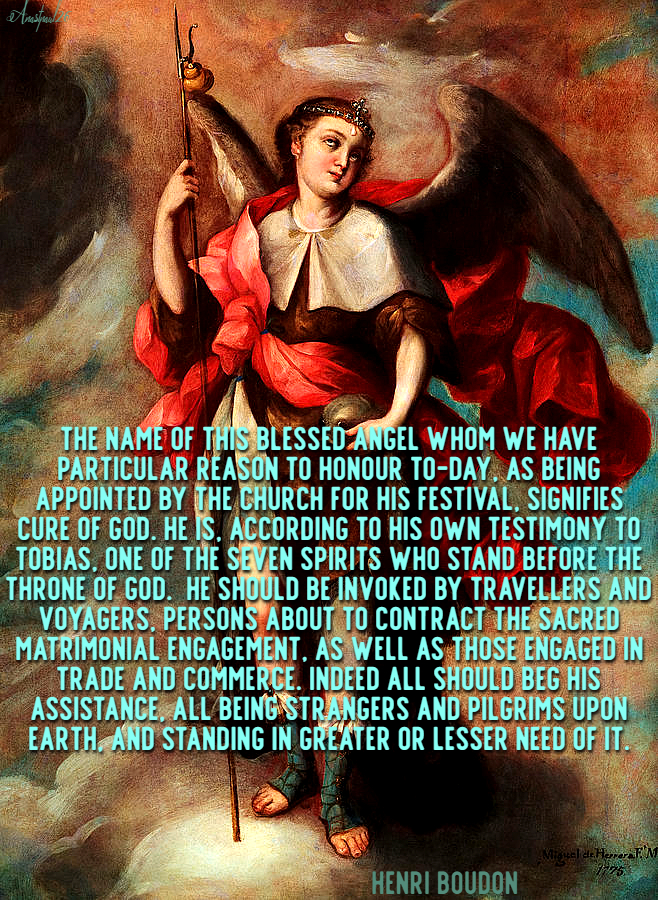
The name of this blessed Angel whom we have particular reason to honour to-day, as being appointed by the Church for his festival, signifies cure of God. He is, according to his own testimony to Tobias, one of the seven Spirits who stand before the Throne of God. From having so safely conducted that good man in his journey to Rages, and the many helps afforded by him during his stay in that city, he should be invoked by travellers and voyagers, persons about to contract the sacred matrimonial engagement, as well as those engaged in trade and commerce. Indeed all should beg his assistance, all being strangers and pilgrims upon earth, and standing in greater or lesser need of it.

Practice—Consult St. Raphael on all your affairs, and say the 90th Psalm.
Asp.—O Angel of God, illumine, defend and preserve me this day, and for ever.