Posted in MARIAN TITLES

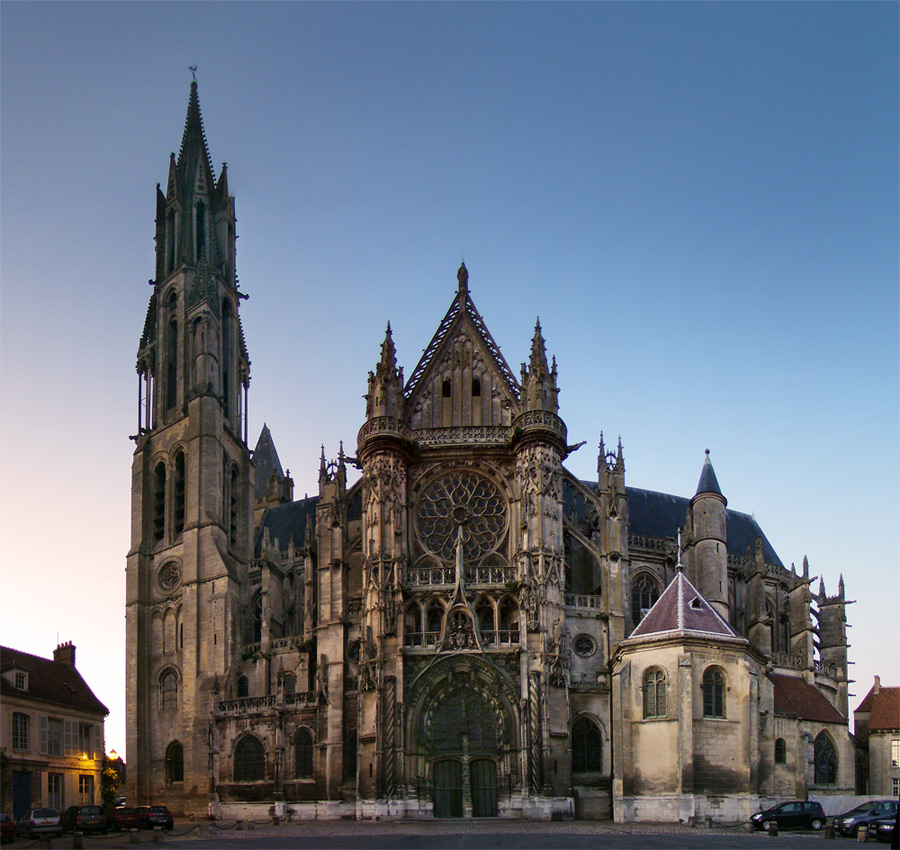
Notre-Dame de la Victoire / Our Lady of Victory, near Senlis, France (1225) and Memorials of the Saints – 26 October

Notre-Dame de la Victoire / Our Lady of Victory, near Senlis, France (1225) – 26 October:

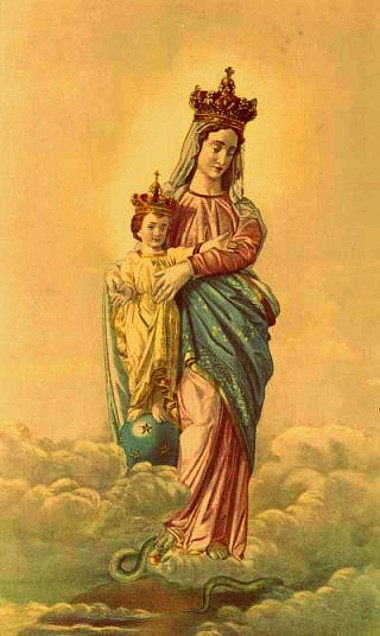
The Abbot Orsini wrote: “Dedication of Our Lady of Victory, near Senlis, in the year 1225, by Guarin, Bishop of Senlis and Chancellor of France. This Abbey was built by Philip Augustus, in thanksgiving for the victory which he gained over the Emperor Otho IV, at Bouvines, in the year 1214.”
The Battle of Bouvines took place on 27 July 1214 and although, it is no longer much remembered as a famous battle, it is one in which the world was changed in its aftermath. Easily one of the most significant battles to take place in the Middle Ages, there were combatants from several European countries taking part on one side or the other.

With the death of King Richard the Lion-hearted, his brother John claimed the lands of Normandy along with England, even though he had no right to them, as they rightfully belonged to his nephew, a boy named Arthur. John probably killed Arthur, as he was the one with the most to gain. When King Philip Augustus heard that John was claiming to be the Duke of Normandy, he called him to account for his nephew. When John refused, King Philip took away his right to rule Normandy. Rather than submit, John joined forces with the German Emperor and the Count of Flanders in open rebellion.

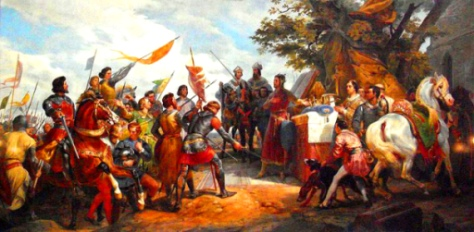
King Philip went to Mass with his troops just prior to the battle. His army probably numbered in total about 15,000 men, while the allied forces arrayed against him, were nearly double that size. Knowing that his noblemen were anxious about the upcoming battle, King Philip took off his Crown and placed it upon the Altar, saying: “If anyone here thinks he can wear this crown more worthily than I, let him step forward to take it.” Philip’s men loudly reaffirmed their faith in their King and went enthusiastically to the battle.
The battle was hotly contested,and both King Philip and Otto IV of Germany had several horses killed beneath them. At one point, when King Philip was unhorsed, he was surrounded by Flemish pikemen. It is related that his life was only saved due to the superior plate mail armour he wore,but later events came to demonstrate that it was also because of the intervention of the Blessed Virgin Mary.

King Philip captured the Count of Flanders and took him back to France to display him to his nobles like a pet in an iron cage. The victory did much more than bring an end to the King of England’s claims to Brittany and Normandy, it also helped strengthen the Monarchy in France as it simultaneously weakened the monarchy in England. When King John returned to England, his position was so weakened that he felt compelled to sign the Magna Carta, which greatly limited his power over his subjects. Otto IV of Germany was deposed soon after he returned to his own realm.

In thanksgiving for his victory, King Philip Augustus founded the Abbey of Victory between Senlis and the Bishop Mount, to honour the Mother of God for this signal victory.
St Adalgott of Einsiedeln
St Alanus of Quimper
St Albinus of Buraburg
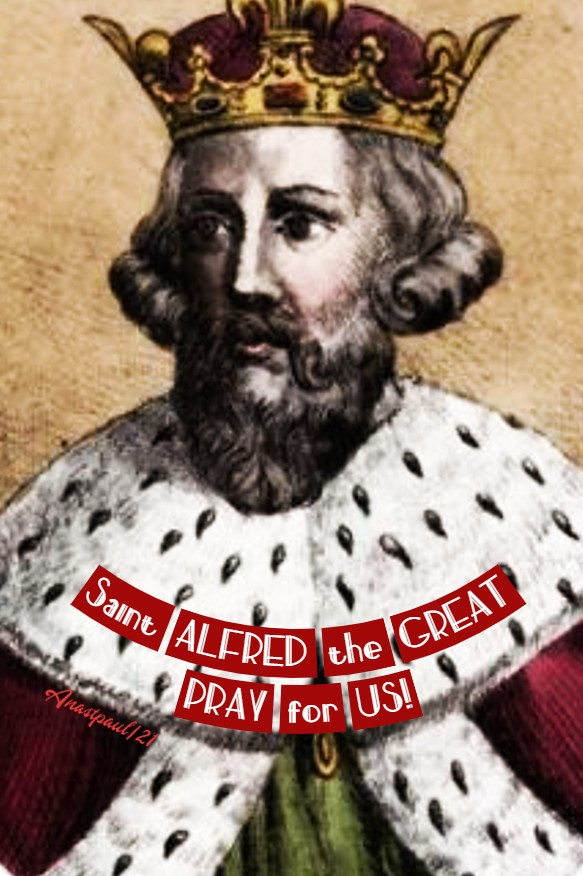
St Alfred the Great (849-899) King of Wessex
St Alorus of Quimper
St Amandus of Strasburg
St Amandus of Worms
St Aneurin
St Aptonius of Angouleme
St Arnold of Queralt
St Bean of Mortlach
St Bernard de Figuerols

Blessed Bonaventura of Potenza OFM Conv (1651-1711) Priest and Religious of the Order of Friars Minor Conventual, Miracle-worker, blessed with the gift of prophecy.

St Cedd
Bl Celina Chludzinska
St Cuthbert of Canterbury

Blessed Damian dei Fulcheri OP (Died 1484) Priest of the Order of Preachers, Friar, renowned Preacher.

St Eadfrid
St Eata of Hexham

St Pope Evaristus – (c 44 – c 107) Martyr, Pope Evaristus accounted as the fifth Bishop of Rome, holding office from c 99 to his death c 108.

St Felicissimus of Carthage
St Fulk of Piacenza
St Gaudiosus of Salerno
St Gibitrudis
St Gwinoc
St Humbert
St Lucian
St Marcian
St Quadragesimus of Policastro
St Rogatian of Carthage
St Rusticus of Narbonne
St Sigibald of Metz
—
Martyrs of Nicomedia – 5 saints
Posted in SAINT of the DAY

Saint of the Day – 26 October – Saint Lucian

Saint Lucian, a martyr born in the 3rd century, spent his early life as a demon worshipper and sorcerer. When a Christian woman fended off his spells simply by making the Sign of the Cross, he gave up his idolatrous life and converted to Christianity. He turned his devotion to the study of magic to a study of the Faith, and spent the rest of his days working against the errors of his earlier life. He was martyred in 250 the persecutions Decius.

Patronages: Converts, possesed people

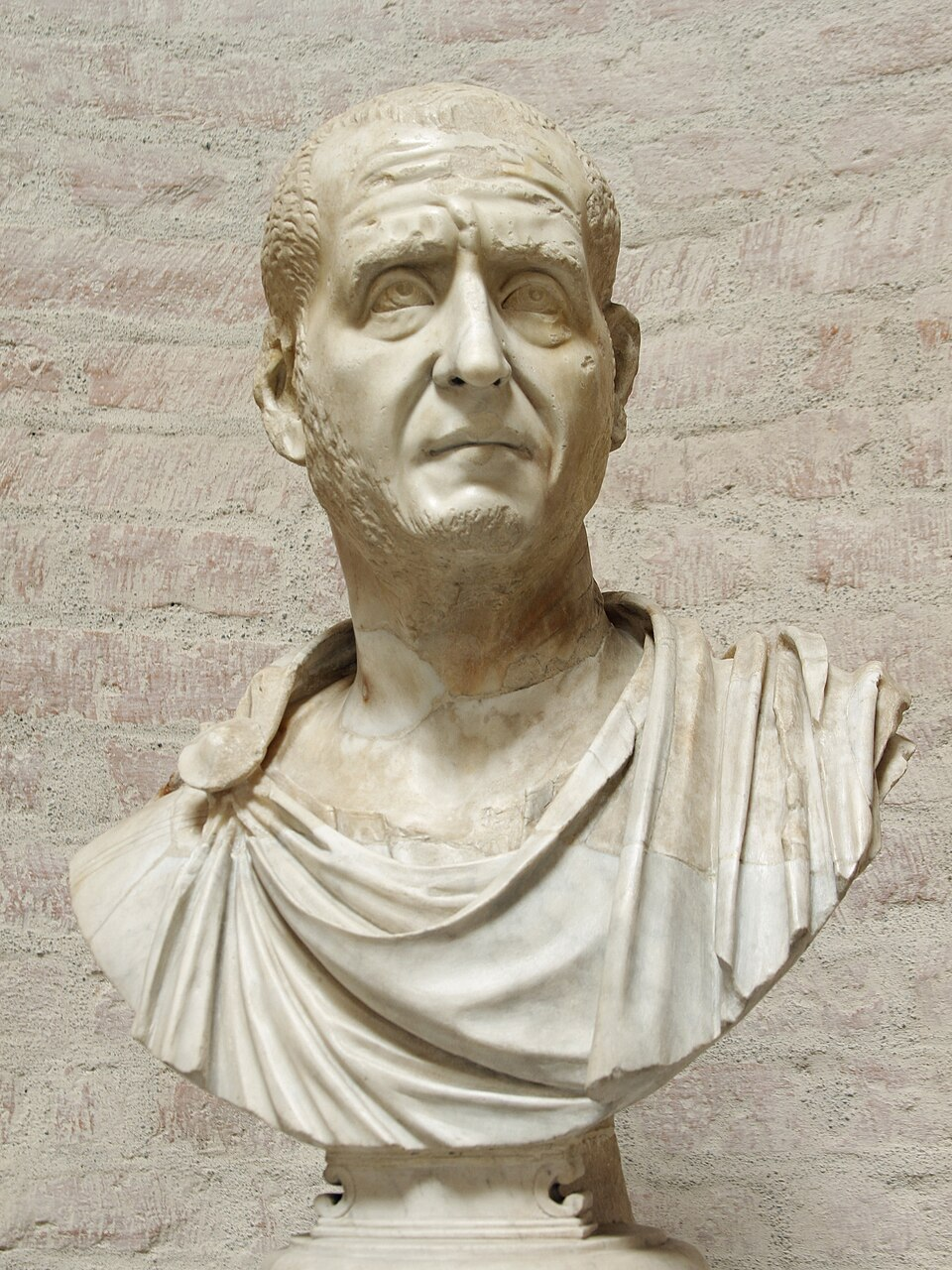
Emperor Decius

In June 251 Decius died alongside his co-emperor Herennius Etruscus in the Battle Abrittus against the Goths; their successors Trebonianus Gallus and Hostilian rescinded Decius’ decree, ending the persecution after eighteen months.

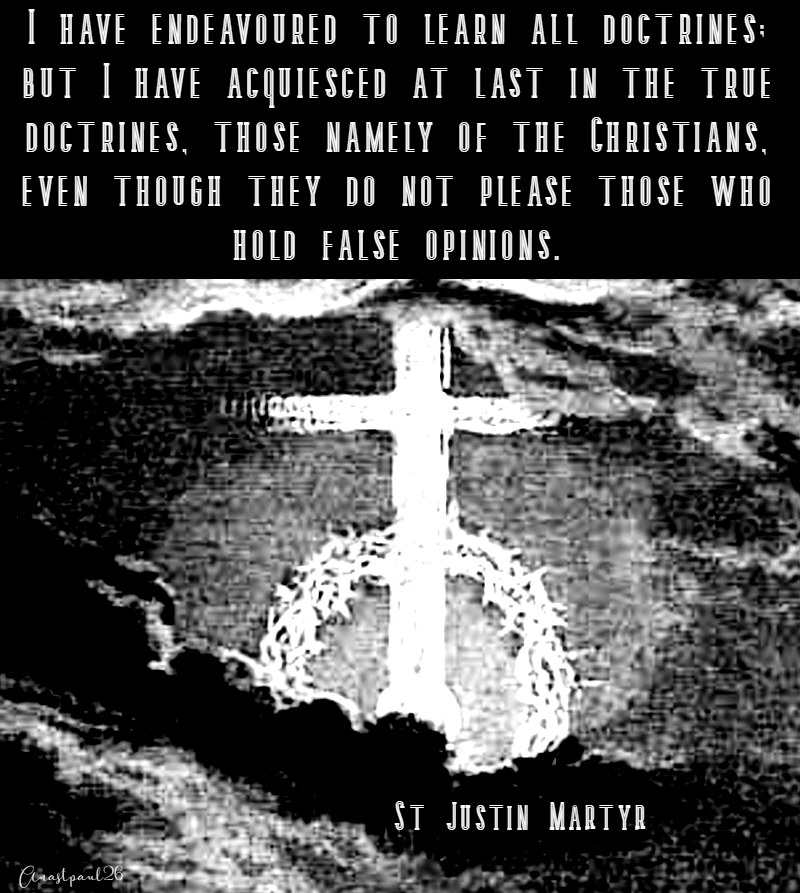
I have endeavoured to learn all doctrines; but I have acquiesced at last in the true doctrines, those namely of the Christians, even though they do not please those who hold false opinions.

St Justin Martyr

Posted in Our MORNING Offering

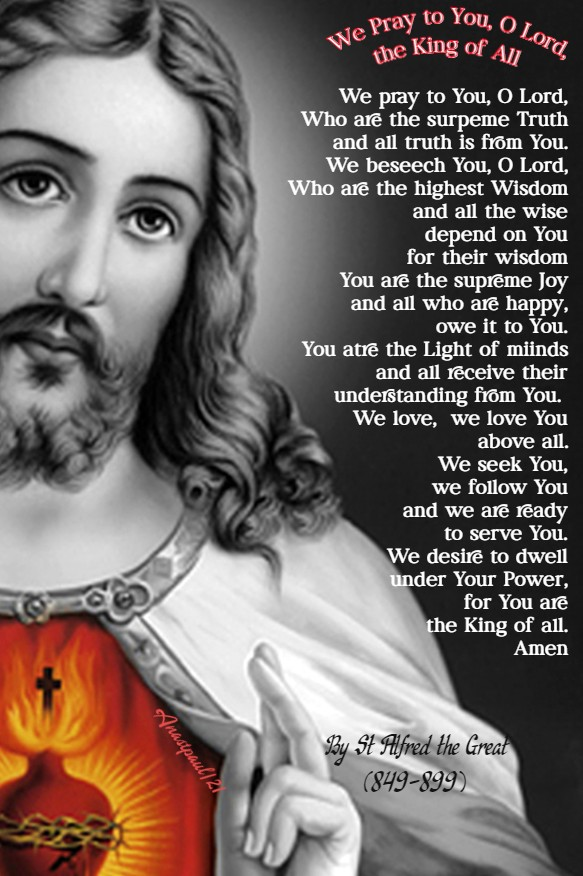
Our Morning Offering – 26 October – We Pray to You, O Lord, the King of All

We Pray to You, O Lord,
the King of All
By St Alfred the Great (849-899)

We pray to You, O Lord,
Who are the surpeme Truth
and all truth is from You.
We beseech You, O Lord,
Who are the highest Wisdom
and all the wise depend on You
for their wisdom.
You are the supreme Joy
and all who are happy,
owe it to You.
You are the Light of minds
and all receive
their understanding from You.
We love, we love You above all.
We seek You,
we follow You
and we are ready to serve You.
We desire to dwell under Your Power,
for You are the King of all.
Amen

Posted in ONE Minute REFLECTION

One Minute Reflection – 26 October – On fulfilling ones duties

One Minute Reflection – 26 October – Readings: Ps 129:3-4, Ps 129:1-2, Phil 1:6-11, Matt 22:15-21

Then He said to them, Render, therefore, to Caesar the things that are Caesar’s, and to God the things that are God’s.

Matt 22:15-21

REFLECTION – The good order of things in this world depends upon the fidelity with which each person performs the duties of their state of life. All disorder originates in negligence upon this point. What a grand thing it would be if all acquitted themselves of their duties! It is perhaps the thing that is most neglected even among pious people, indeed probably more often among those than among others. Yet people do not accuse themselves of it.

People who neglect the duties of their state are discordant voices in the harmony of the world, no matter what else they do. In choosing a state of life, the human advantages are considered but not the duties. It is impossible to neglect these duties without harming others. And as God has their interests at heart even more than his own, such neglect is very dangerous.

Sins of omission on this point are easily committed. They are hardly noticed, and consequently reparation is rarely made for them. These are sins that are committed by doing nothing; sins that do not consist in bad actions but which are often the consequence of some good work. By neglecting your duties, you condemn both yourself and others to punishment: others because you do not teach their duty and make them fulfil it; and yourself because you do not fulfil your own.

Bl Claude la Colombière

PRAYER – True light of the world, Lord Jesus Christ, as You enlighten all men for their salvation, give us grace, we pray, to herald Your coming by preparing the ways of justice and of peace. Help us Lord, that we may sprout and bear fruit, fitting to grow and be a home of comfort to our neighbour. By the prayers of St Alfred the Great, may we too be beacons of Your Light and of the glory of Your Kingdom. Through Jesus our Lord, Who lives and reigns with the Father and the Holy Spirit, God forever, amen.

Posted in CATHOLIC Quotes

Quote/s of the Day – 26 October – St Alfred the Great

Very often it has come to my mind what men of learning there were formerly throughout England and how nowadays we would have to seek them outside. Thanks be to God Almighty that we now have any supply of teachers at all! As often as you can, free yourself from worldly affairs so that you may apply that wisdom which God gave you wherever you can. Remember what punishments befell us in this world when we ourselves didn’t cherish learning nor transmit it to other men.

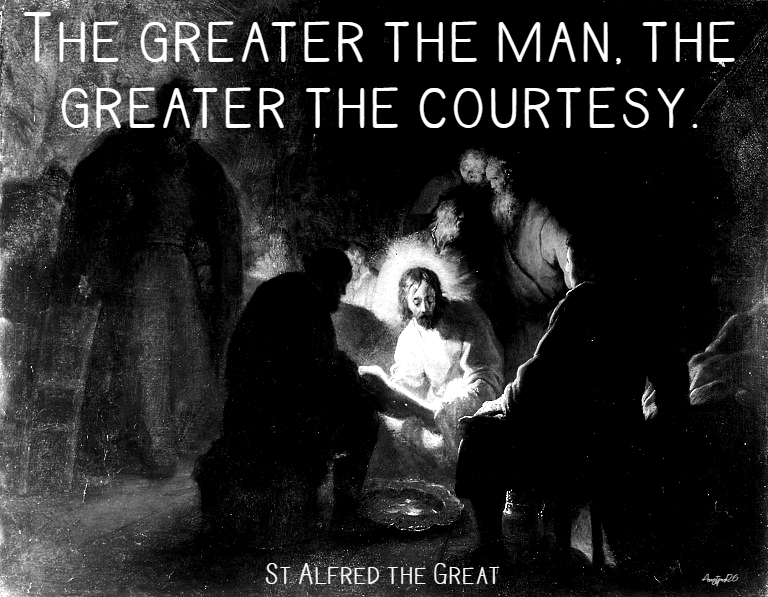
The greater the man, the greater the courtesy.

Doom very evenly! Do not doom one doom to the rich; another to the poor! Nor doom one doom to your friend; another to your foe!

Never believe the speech of all men, nor all the things that you hear sung.

I am part of all whom I have met.

All things have rest: why should we toil alone. We only toil, who are the first of things.

Posted in OCTOBER - The HOLY ROSARY and The HOLY ANGELS

Thought for the Day – 26 October – The Days of October

The Glories of the Holy Angels

Venerable Henri Boudon, Archdeacon of Evreux

OCTOBER EIGHTH.
The Dominations—the Sixth Choir.

Zeal for the divine glory distinguishes the Dominations. They are devoured. by their concern for the interests of God— their principal office is to manifest his will. We, too, ought to be interested for all that involves the honour of this ever adorable Being, as the conversion of sinners, the perfection of the just, the decoration of altars. We should also beg of God to manifest his will to us by these blessed Intelligences—and then take care to fulfil it scrupulously, as being the shortest way to perfection and sanctity.

Practice—Give practical proof of your zeal for the glory of God; do something for his reign in souls, as instructing the ignorant, &c.
Asp.—Holy Dominations ! animate us with your zeal.
Lecture—Half 7th Motive

OCTOBER NINTH.
The Thrones—the Seventh Choir.

The Scripture says of the Lord, that He is seated on Thrones. Hence, then, blessed Spirits are called Angels of Peace—beings calm, tranquil, immovable. Address yourselves to them for that peace of soul which is the fruit of a good conscience. Invoke them for such as are prone to hatred, passion, and impatience; and, after their example, be you yourself meek, calm, peaceful with all.

Practice—In the morning, dispose yourself to great sweetness and patience—and every hour make an act thereof.
Asp.—O Holy Thrones! obtain that that divine peace, which surpasses all understanding, may keep our hearts and minds in Christ Jesus, our Lord.”
Lecture—Conclude 7th Motive in preceding work, commenced yesterday.

OCTOBER TENTH.
The Cherubim—the Eighth Choir.

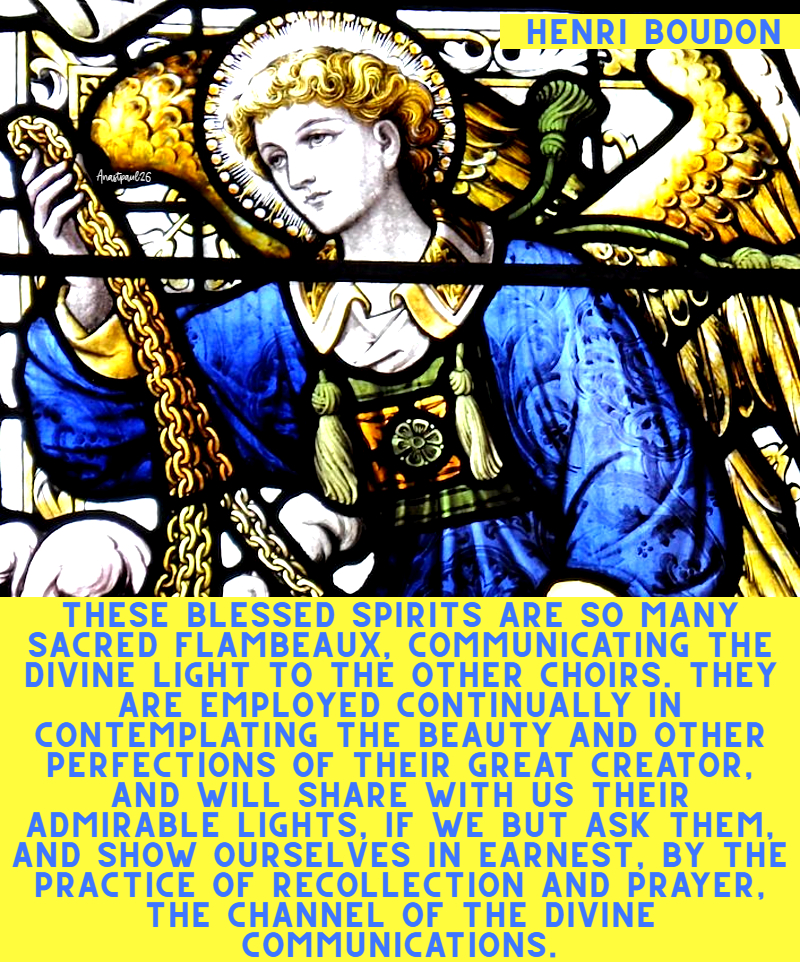
These blessed Spirits are so many sacred flambeaux, communicating the divine light to the other Choirs. They are employed continually in contemplating the beauty and other perfections of their great Creator, and will share with us their admirable lights, if we but ask them, and show ourselves in earnest, by the practice of recollection and prayer, the channel of the divine communications.

Practice—Spend this day in great silence and recollection; be occupied with the consideration of the Divine perfections endeavour to “ know God, and him whom he has sent, Jesus Christ.”

Asp.—Ah ! blessed Cherubim ! teach us to pray.

OCTOBER ELEVENTH.
The Seraphim—the Ninth Choir.

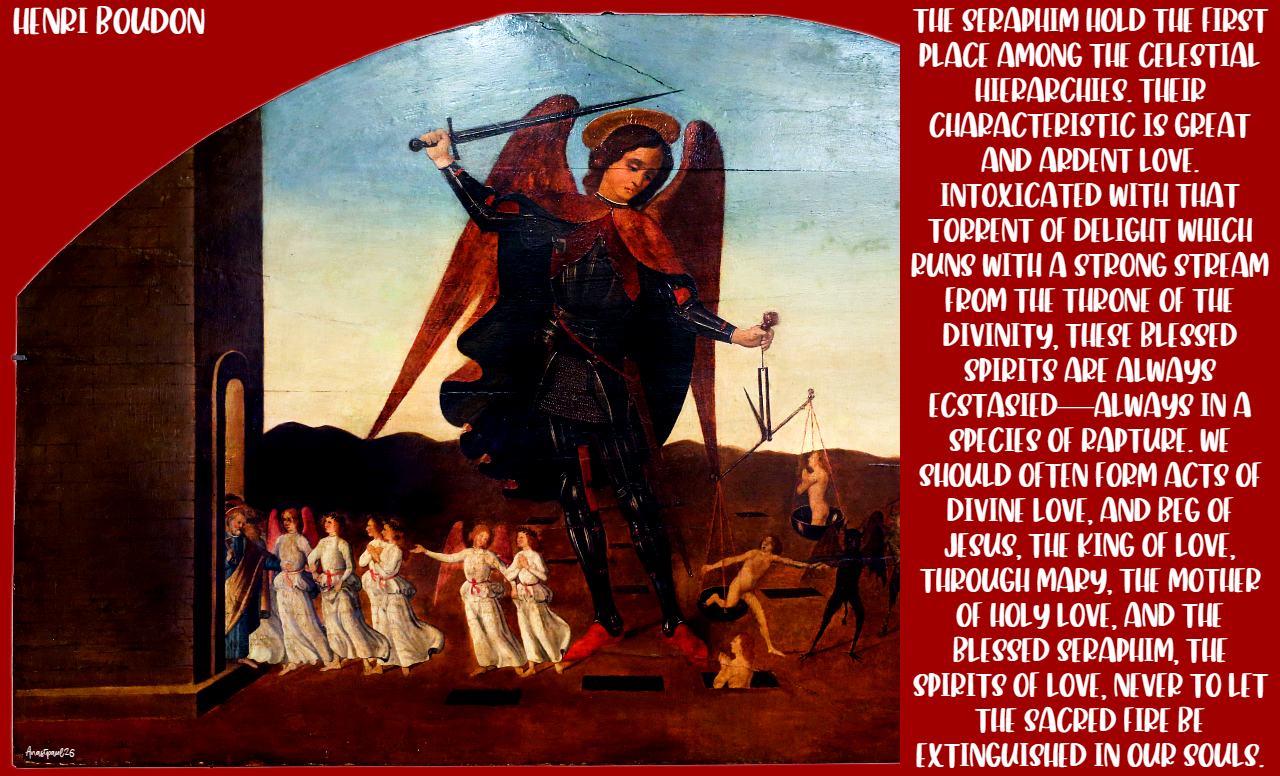
The Seraphim hold the first place among the Celestial Hierarchies. Their characteristic is great and ardent love. Intoxicated with that torrent of delight which runs with a strong stream from the throne of the Divinity, these blessed Spirits are always ecstasied—always in a species of rapture. We should often form acts of divine love, and beg of Jesus, the King of love, through Mary, the mother of holy love, and the blessed Seraphim, the Spirits of love, never to let the sacred fire be extinguished in our souls.

Practice—Try to become a Seraph in love; let this be your habitual disposition. “Love, and do what you will.” Ask this great gift fervently.
Asp.—Ah ! blessed Seraphim! make us love.