Posted in GOUT, KNEE PROBLEMS, ARTHRITIS, etc, SAINT of the DAY

Saint of the Day – 15 January – Saint Bonitus of Clermont (c623-706) Bishop, Confessor

Saint of the Day – 15 January – Saint Bonitus of Clermont (c623-706) Bishop, Confessor, Chancellor of the Kingdom, Governor of Provence, Diplomatic peacemaker, Protector of Slaves and active advocate for its abolition, a man of deep devotion and Asceticism, Promoter of monasticism, builder of Churches and Monasteries., Miracle-worker. Heir to a rich heritage, he used his resources not only to beautify Churches and Monasteries but also, to relieve the miseries of the poor. Bonitus is a much loved and endearing Saint in France and, in some ways, a very modern figure.
Born in c623 in Auvergne, France and died in 706 in Lyon, France of natural causes. Patronages – against leg ailments (gout), of Clermont and Lyons, France, of Bonito, Italy. Also known as – Bonet, Bonito, Bonnet, Bont, Bunìto, Bunìtë, Bonnite.

The Roman Martyrology reads: “At Clermont, in Auvergne, St Bonitus, Bishop and Confessor.

Bonitus was born in Auvergne around 623–630 (but the place is unknown, probably Clermont). He came from a large aristocratic family from Auvergne, who held important positions in France (like many Bishops at that time). He made, perhaps in Clermont, very careful studies in law, grammar and literature, in order to prepare himself for a political career. He was thus noticed by King Sigebert II who entrusted him with high functions at Court. After the death of his father, he became the Chancellor of King Sigebert III, then, in around 677, he was sent to Marseille as the Governor of Provence.

He exercised this function with great gentleness (while the time was particularly marked by violence). He strongly opposed the sale of slaves and bought back those he could reach, to free them. Despite his responsibilities, he practiced severe asceticism and demonstrated great piety. This is how the cult of Saint Sidoine Apollinaire (former Bishop of Clermont) would have developed early in Provence, and this thanks to the action of Bonitus (he indeed had great admiration for this Bishop who courageously defended the Province of Auvergne against the Visigoths).

Bonitus’elder brother, St Avitus, was then the Bishop of Clermont. Feeling his death approaching, he persuaded his entourage and the faithful of Clermont, to elect Bonitus in his place. This was done around 689 or 690, with the consent of the clergy and the approval of the King (according to the tradition of the time).

His Episcopate in Clermont extended over approximately ten years, illustrated by his piety and charity. He gave new impetus to the famous Episcopal school (founded at the beginning of the 6th Century) responsible for training young clerics. He also took care of the training of his clergy and organised missions in regions which were still poorly Christianised — these missions seemed a novelty for the time.

He favoured the monastic expansion then underway, either by encouraging the restoration of ruined Monasteries (for example the Abbey of Menat by a young Monk Ménélée), or by establishing new Monasteries (perhaps Royat, Chamalières, Beaumont…) , or by favouring founders (for example Calmin who built Mozac). In his undertakings, Bonitus benefited from the friendly assistance of the pious Count Genèsius who then Governed Auvergne.

Inhabited by profound piety, Bonitus was also concerned with liturgical celebrations — instituting a solemn fast and then a famous and miraculous procession of prayer which he ordered in Clermont, to pray for the cessation of the long drought which was desolating Auvergne and, an abundant rain poured down and alloweda beneficial and a succesful and long-awaited harvests!.

However, after ten years of Episcopate, he was assailed by scruples. Bonitus resigned his Seat and retired, as a penance, as a simple Monk at the Benedictine Abbey of Manglieu. In fact, he thought that his designation as Bishop had not been valid and that it was hardly reconcilable with Canonical rules because he had been chosen by his brother. Feeling remorseful, when he was the Bishop, he sought advice from several Monks, including the renowned Monk Tillo, of the Abbey of Solignac, near Limoges, who suggested he resign. What motivated his decision. (We can also assume that his appointment had perhaps caused resentment among high-ranking Priests, including the one who would be his successor, Nordebert…).

After having practiced monastic life for some time in Manglieu, he decided to undertake, despite his great age, a pilgrimage to Rome via Lyon, where he stayed for a time in the Monastery of Isle-Barbe. In reality,, he was sought out in Manglieu, in order to settle various disciplinary or doctrinal disputes which had arisen in the Lyon region and in the north of Italy. This is how, among other things, he resolved a conflict between the Bishop of Lyon and the Duke of Burgundy and, as a wise advisor, he succeeded in appeasing the revolt between the King of Lombard and his subjects. We can sense here the experience of the politician he once was.

Then, arriving in Rome, he made his devotions at the Tombs of the Apostles Peter and Paul and then he started his journey his way back home. During this period, he returned with captives, whose freedom he had purchased in Rome and, according to reports, he performed miracles with the oil brought from the Tomb of Saint Peter.

Finally, he returned to Lyon where he lived for four years in a Monastery and took care to re-establish good relations with his successor in Clermont. In 706, therefore, very old, he died in Lyon of an attack of gout. His body, believed to be miraculous, was then placed in the Saint-Pierre Monastery of this City.

The Bishop of Clermont requested the transfer of his remains to Auvergne. It was not without many difficulties — Clermont and Lyon fought over the Relics! Finally, after six years of negotiations, he sent the Abbot of Manglieu (the same one who had welcomed Bonitus into his Monastery) to Lyon to settle this long dispute. And the Relics were brought back triumphantly to Clermont. The translation would have taken place around 712(?) and the remains deposited in the Saint-Maurice Church, a very old Church which was restored for the occasion. It was located below the Poterne, near the current Rue Sidoine Apollinaire and this cCurch then became a place of pilgrimage, it also took the name of Saint Bonitus (later, it woulf be destroyed under the Revolution).

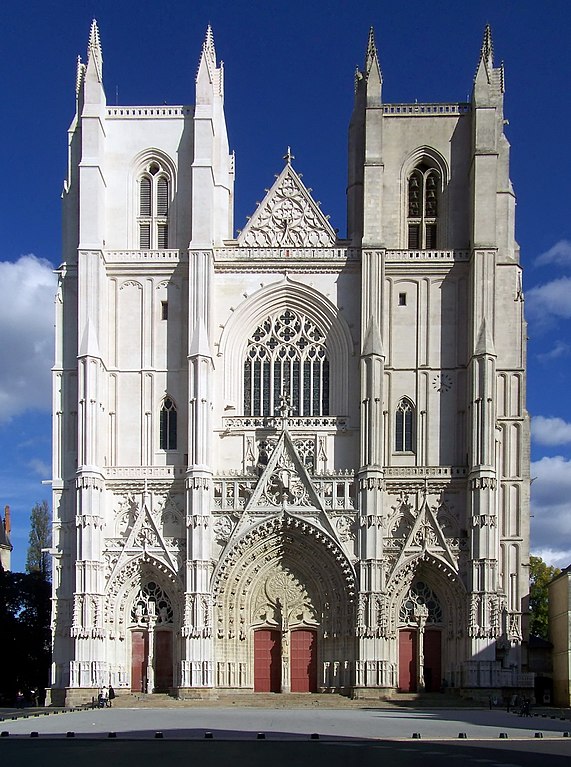
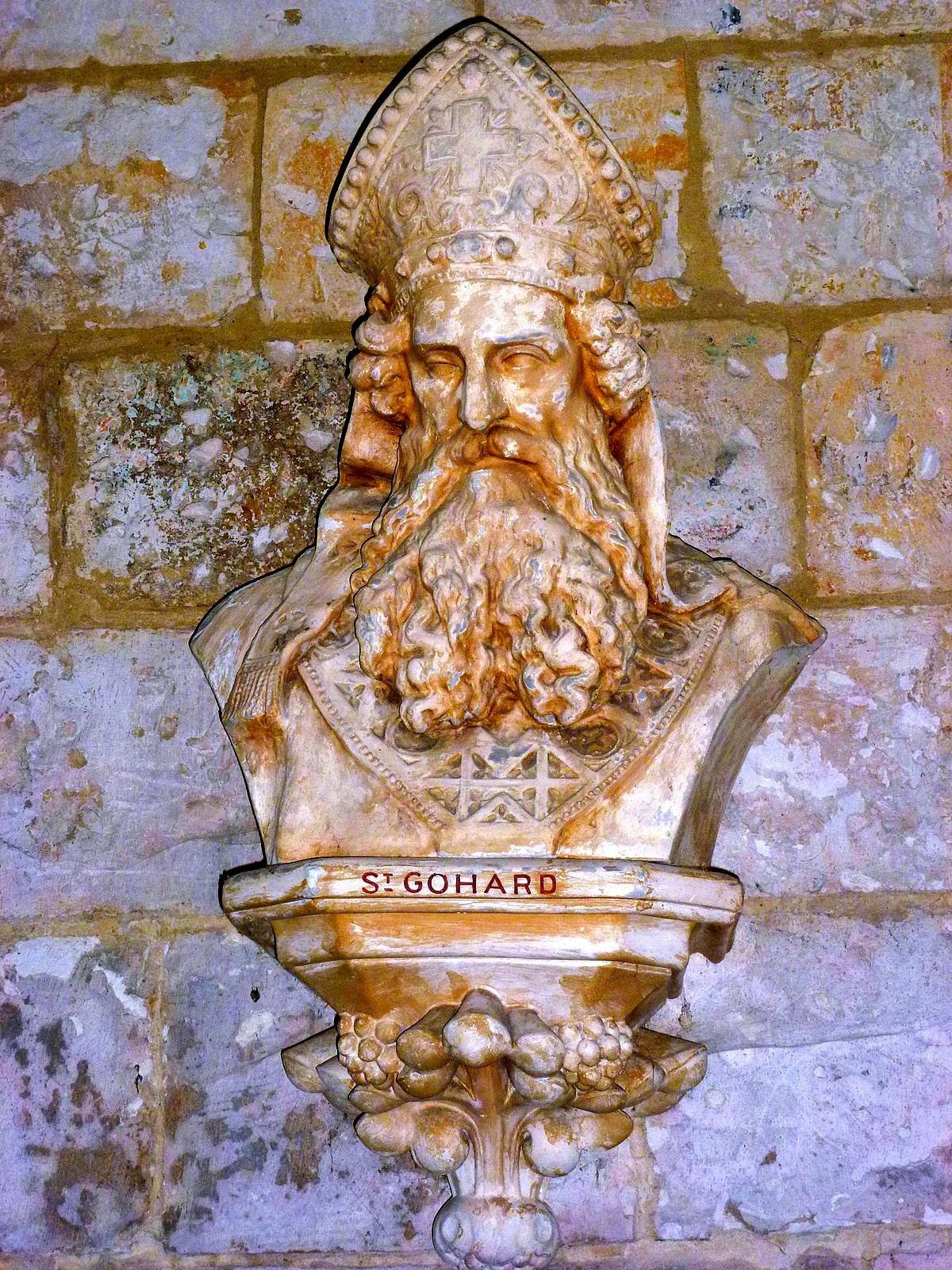
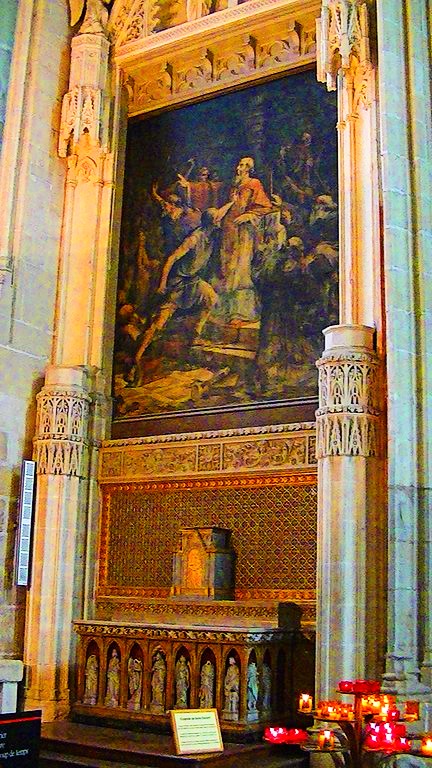
In 1095, the Relics were transferred to the recently built cathedral and placed in a chapel in the apse which will bear his name. In the 13th century, in the new Gothic cathedral, the chapel dedicated to Saint Bonnet was decorated with a set of stained glass windows which tell the story of his life in a slightly legendary way! A beautiful reliquary of gilded silver was made to enclose his relics. But it was destroyed during the Revolution and its relics disappeared.

Bonifus’ fame was significant and numerous Relics of the Saint were scattered in various places (as was often the custom, especially during the Middle Ages). This is why a certain number of places and Churches bear his name in France, particularly in the Diocese of Lyon, Marseille, Autun and, especially in Auvergne in the vast territory of the former Diocese of Clermont. Today, in the area of Puy-de -Dôme (therefore, the current Diocese of Clermont), he is the Patron of 17 Churches.

In order to establish his biography, historians were able to rely on a reliable source, being the “Vita Sancti Boniti = The Life of Saint Bonitus” written shortly after his death by a Monk from Manglieu. He wrote down what he had learned, often from direct witnesses (including the Abbot of Manglieu). Subsequently, much later legends were written which took pleasure in embellishing his life but, they at least testify to the popularity of the Saint and the fervour of his cult (he was invoked particularly for leg ailments).
He was the 28th Bishop and he closes (to this day!) the list of holy Bishops of Clermont. Currently his Feast is celebrated in the Diocese on 16 January (supposed day of his death) but the 1914 Roman Martyrology which is used for the Traditional Calendar, shows his day and festival as 15 January.

The above graceful and factual rendition of our Saint Bonitus’ life, is from the Diocese of Clermont.

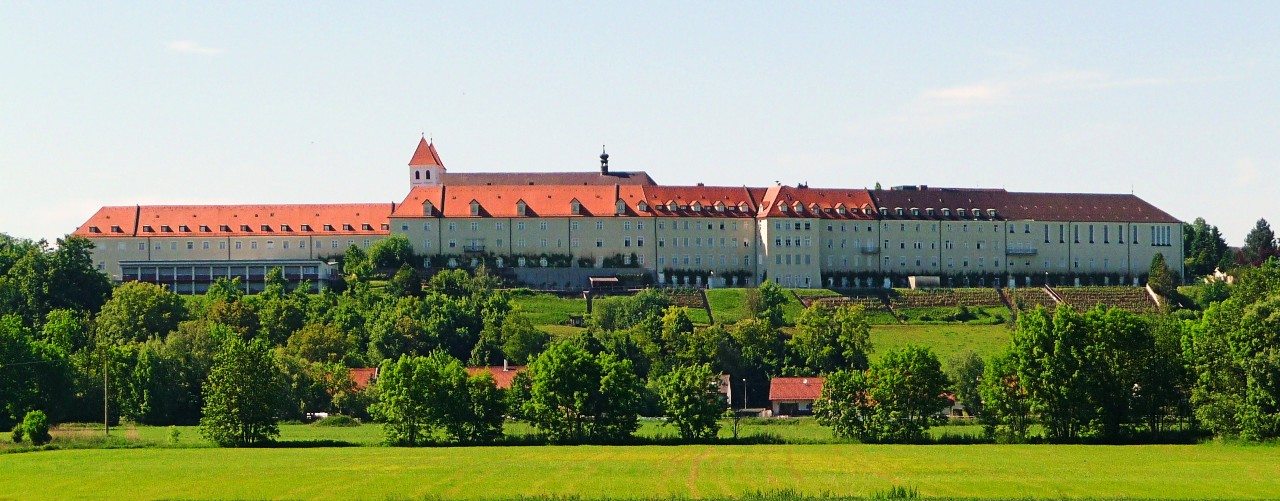
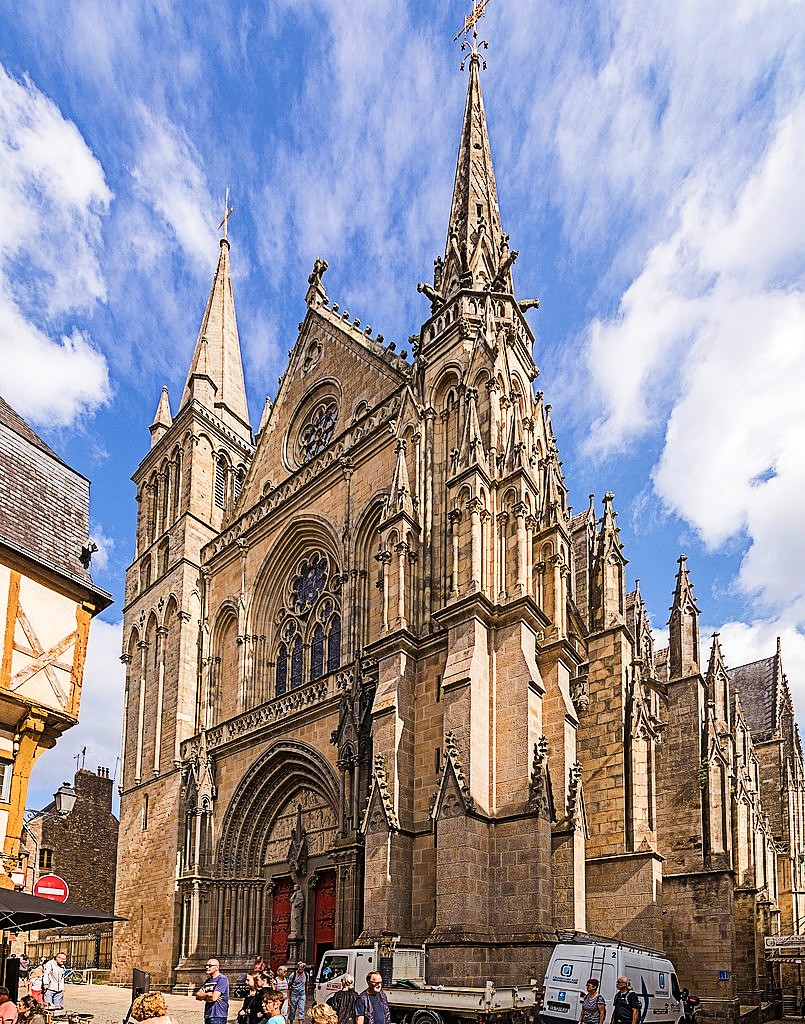
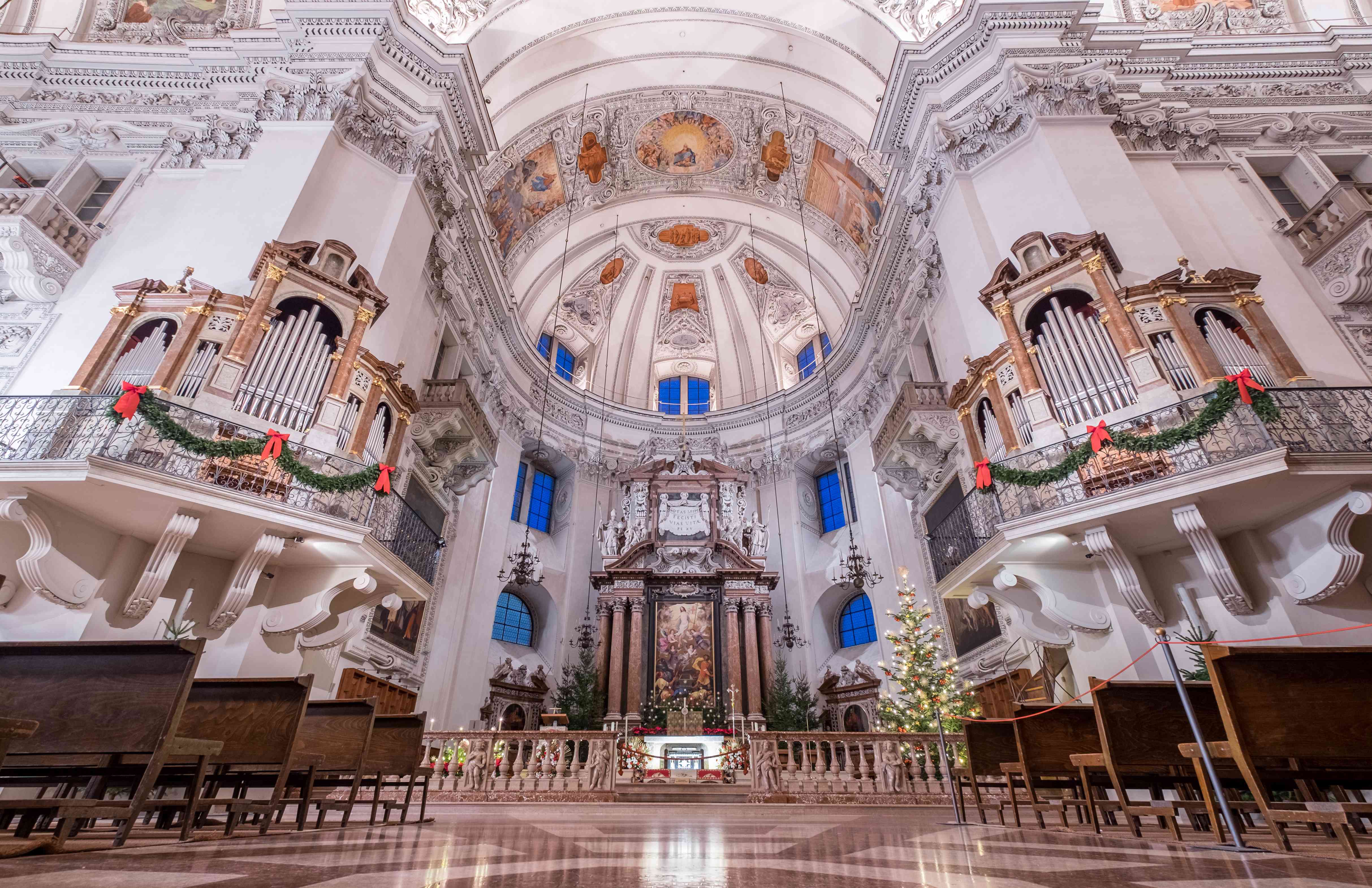
Clermont Cathedral
Posted in MARIAN TITLES, SAINT of the DAY

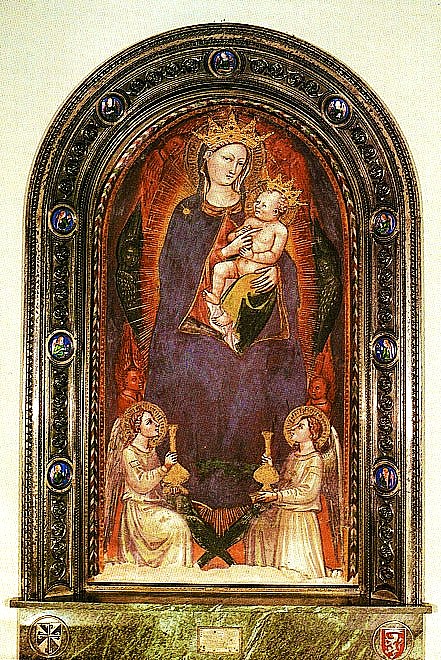
Our Lady of Prompt Succour, Notre-Dame de Banneux / Our Lady of Banneux, St Paul the Hermit, St Macarius of Egypt, St Maurus and all the Saints for 15 January

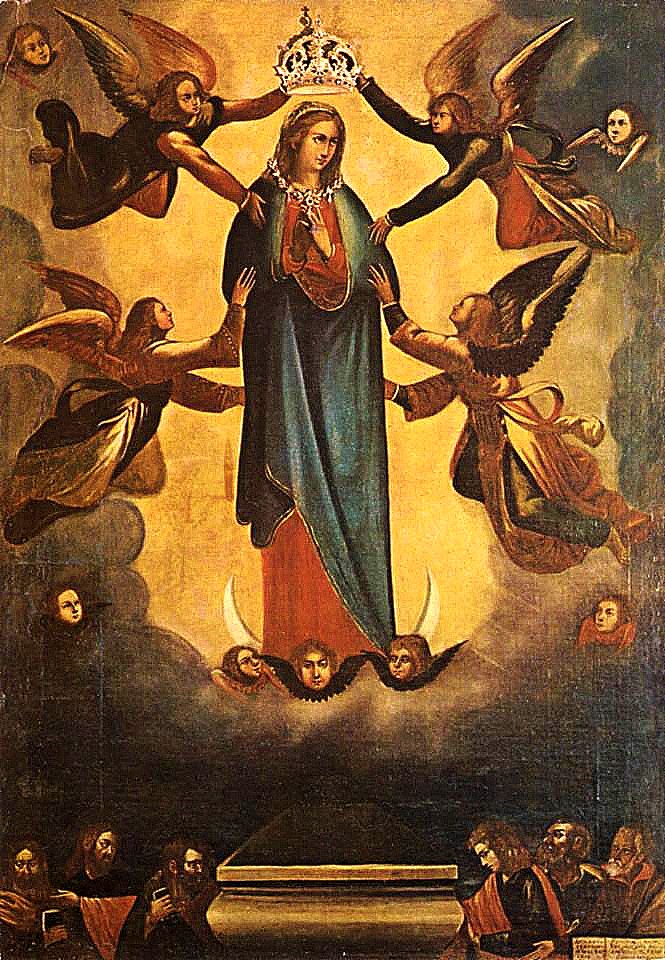
Our Lady of Prompt Succour, New Orleans, USA (1809) – 8 January and 15 January:
Such wonderful miracles – read about the Marian Patron of Louisiana here:
https://anastpaul.com/2019/01/08/memorials-of-the-saints-8-january/

Notre-Dame de Banneux / Our Lady of Banneux, Belgium (under 2 Titles – Notre Dame des Pauvres / Our Lady of the Poor and Reine des Nations / Queen of Nations) (15 January – 2 March 1933) 15 January:
Here:
https://anastpaul.com/2021/01/15/our-lady-of-banneux-belgium-and-memorials-of-the-saints-15-january/

St Blaithmaic of Iona
St Bonitus of Clermont (c623-706) Bishop, Confessor
St Britta
St Ceolwulf of Northumbria
St Emebert of Cambrai
St Ephysius of Sardinia
St Eugyppius
Bl Geoffrey of Peronne
Bl Giacomo Villa
St Gwrnerth
St Habakkuk the Prophet
St Isidore of Scété
St Isidore the Egyptian
St Ita of Killeedy
St John Calabytes
St Liewellyn
St Lleudadd of Bardsey
St Malard of Chartres
St Maximus of Nola
St Michaeas +
Bl Peter of Castelnau
St Placidus

St Probus of Rieti

St Sawl
St Secondina of Anagni
St Secundina of Rome
St Tarsicia of Rodez
St Teath

Posted in CHRIST the PHYSICIAN, GOD ALONE!, QUOTES on GRACE, QUOTES on TRUST and complete CONFIDENCE in GOD, SELF-DISTRUST, SOLDIERS/ARMOUR of CHRIST, THE SPIRITUAL COMBAT - Fr Lorenzo Scupoli, The WILL of GOD

Thought for the Day – 14 January – Further Directions to Attain Self-Distrust and Trust in God

Thought for the Day – 14 January – The Spiritual Combat (1589) – Dom Lorenzo Scupoli OSM (c1530-1610)

None shall be crowned who has not fought well.” 2 Tim 2: 5

VI: … Further Directions on How to Attain
Self-Distrust and Trust in God

“Since our whole power to subdue our enemies arises, principally from self-distrust and trust in God, I will give you some further directions to enable you, by the Divine Assistance, to acquire it.

Know then, for a certain truth that neither all gifts, natural or acquired, nor all graces given gratis, nor the knowledge of all Scripture, nor long habitual exercise in the service of God, will enable us to do His will, unless, in every good and acceptable work to be performed, in every temptation to be overcome, in every
peril to be avoided, in every Cross to be borne in conformity to His will, our heart be sustained and supported by an especial aid from Him and His Hand be outstretched to help us.
We must, then, bear this in mind all our life long, everyday, every hour, every moment — that we may never indulge, so much as a thought of self-confidence!
And as for confidence in God, know that it is as easy to Him to conquer many enemies as few; the old and experienced, as the weak and young.

Therefore, we will suppose a soul to be heavy-laden with sins, to have every possible fault and every imaginable defect and to have tried, by every possible means and every kind of Spiritual Exercise, to forsake sin and to practice holiness.
We will suppose this soul to have done all this and yet, to have failed in making the smallest advance in holiness, nay, on the contrary, to have been borne the more strongly towards evil.
For all this the soul must not lose trust in God, nor give up its spiritual conflict and lay down its arms but still fight on resolutely, knowing that none is vanquished in this spiritual combat but he who ceases to struggle and loses confidence in God, whose succour never fails His soldiers, although He sometimes permits them to be wounded.

Fight on, then, valiantly — for on this depends the whole issue of the strife, for there is a ready and effectual remedy for the wounds of all combatants who look confidently to God and to His aid for help and, when they least expect it, they shall see their enemies dead at their feet. Amen!”

Dom Lorenzo Scupoli

Posted in CHRIST, the WAY,TRUTH,LIFE, DOCTORS of the Church, FATHERS of the Church, FEBRUARY - THE BLESSED TRINITY (Traditional), GOOD FRIDAY, HOLY WEEK, QUOTES on CREATION, QUOTES on DEATH, QUOTES on ETERNAL LIFE, QUOTES on HEAVEN, QUOTES on HELL, QUOTES on HUMILITY, QUOTES on SIMPLICITY, QUOTES on SIN, QUOTES on the CROSS of CHRIST, QUOTES on THE WORLD, SAINT of the DAY, The HOLY CROSS, The MOST HOLY & BLESSED TRINITY, The PASSION

Quote/s of the Day – 14 January – St Hilary

Quote/s of the Day – 14 January – St Hilary (315-368) Confessor, Bishop, Father and Doctor of the Church

The Son of God,
is nailed to the Cross
but on the Cross,
God conquers human death.
Christ, the Son of God, dies
but all flesh is made alive in Christ.
The Son of God is in hell
but man is carried back to Heaven!

(On the Trinity Book II)I

When I look at Thine heavens,
according to my own lights,
with these weak eyes of mine,
I am certain, with reservation,
that they are Thine heavens.
The stars circle in the heavens,
reappear year after year,
each with a function and service to fulfil.
And, although I do not understand them,
I know that Thou, O God, are in them.

Little children follow and obey their father.
They love their mother.
They know nothing of covetousness,
ill-will, bad temper, arrogance and lying.
This state of mind opens the road to Heaven.
To imitate our Lord’s own humility,
we must return to the simplicity
of God’s little ones.

MORE:
https://anastpaul.com/2023/01/14/quote-s-of-the-day-14-january-st-hilary-2/

St Hilary (315-368)
Father and Doctor of the Church

Posted in CHRIST the WORD and WISDOM, CHRIST, the BRIDEGROOM, DOCTORS of the Church, FATHERS of the Church, MIRACLES, ONE Minute REFLECTION, The WORD

One Minute Reflection – 14 January – Why did our Lord change water into wine as His first Sign? – St Ephrem

One Minute Reflection – 14 January – “The Month of the Most Holy Name of Jesus and of the Holy Family”– Second Sunday after the Epiphany and the Feast day of St Hilary (315-368) Confessor, Bishop, Father and Doctor of the Church – Romans 12:6-16; John 2:1-11 – Scripture search here: https://www.drbo.org/

This, the first of His Signs, Jesus worked at Cana in Galilee and manifested His Glory and His disciples believed in Him…” – John 2:11

REFLECTION – “Why did our Lord change water into wine as His first Sign? It was to show how God, Who transforms nature into something else, also works His transformation in the womb of the Virgin. In the same way, as the crown of His miraculous deeds, Jesus opened a tomb to make known His freedom, with regard to the death, which is hungry to swallow up everything.

To both authenticate and confirm, the twofold reversal of nature, brought by His Birth and His Resurrection, Jesus changed water into wine, without in any way altering the stone water-jars. This was the symbol of His own Body, miraculously conceived and wonderfully created in a virgin, without the working of a man… Contrary to their normal use, the jars… brought new wine into the world, without ever repeating the same miracle again. In the same way the Virgin conceived and brought Emmanuel into the world, (Is 7,14) without afterwards conceiving again. The miracle of the stone water-jars was that what was small, became great, sparseness was changed into superabundance, plain water into sweet wine… In Mary, on the other hand, the greatness and glory of the Godhead changed its appearance to take on the aspect of weakness and humiliation.

Those jars were used for the Jewish purifications; into them our Lord poured His teaching: He demonstrated that He came according to the Law and the prophets but with the purpose of changing them all, through His teaching, as the water became wine… «The Law was given through Moses; grace and truth came through Jesus Christ» (Jn 1,17). The bridegroom who lived in Cana, invited the Bridegroom from Heaven and the Lord, Who was ready for that wedding, answered His invitation. Those seated at table invited Him, Who sets worlds in His Kingdom and He sent them a wedding gift, able to delight them… They had no wine, even of an ordinary sort, He poured a little from His own abundance for them. In return for their invitation, He Himself, invited them to His own wedding!” – St Ephrem (306-373) Deacon in Syria, Father and Doctor of the Church (Commentary on the Diatessaron, 5, 6f).

PRAYER – O God, Who gave to Thy people blessed Hilary, as a minister of salvation, grant we beseech Thee that we, who cherished him on earth as a teacher of life, may be found worthy to have him as an intercessor in Heaven. Through Jesus Christ, Thy Son our Lord, Who lives and reigns with Thee, in the unity of the Holy Ghost, God, world without end. Amen (Collect).

Posted in BLESSED TRINITY PRAYERS, DOCTORS of the Church, FATHERS of the Church, Our MORNING Offering, PRAYERS of the SAINTS, The MOST HOLY & BLESSED TRINITY, The SIGN of the CROSS

Our Morning Offering – 14 January – In the Name of the Father, Son and Holy Ghost By St Hilary

Our Morning Offering – 14 January – “The Month of the Most Holy Name of Jesus and of the Holy Family” – Second Sunday after the Epiphany and the Feast day of St Hilary (315-368) Confessor, Bishop, Father and Doctor of the Church

In the Name of the Father, Son and Holy Ghost
By St Hilary (315-368)
Father & Doctor of the Church

Father, keep us from vain strife of words.
Grant to us constant profession of the Truth!
Preserve us in a true and undefiled faith
so that we may hold fast to that
which we professed
when we were Baptised
in the Name of the Father, Son and Holy Ghost,
that we may have Thou for our Father,
that we may abide in Thy Son
and in the fellowship of the Holy Ghost.
Through Jesus Christ, Our Lord.
Amen

Posted in Against SNAKE BITES / POISON, DOCTORS of the Church, FATHERS of the Church, GOUT, KNEE PROBLEMS, ARTHRITIS, etc, Of LAWYERS & CANON Lawyers, Attorneys, Solicitors, Barristers, Notaries, Para-Legals, Of the SICK, the INFIRM, All ILLNESS, PATRONAGE - of MOTHERS, MOTHERHOOD, SAINT of the DAY

Saint of the Day – 14 January – St Hilary (315-368) Confessor, Bishop, Father and Doctor of the Church, “Doctor of the Divinity of Christ”

Saint of the Day – 14 January – St Hilary (315-368) Confessor, Bishop, Father and Doctor of the Church, Writer, Philosopher, Theologian, Preacher, Defender of the Faith, Doctor of the Divinity of Christ, Miracle-worker.  The “Hammer of the Arians” and “Athanasius of the West.” Patronages – against rheumatism, against snakes and snakebites, children with learning impediments, children learning to walk, lawyers, mothers, of the sick, of La Rochelle and Poitiers in France,4 Cities in Italy. Also known as – Ilario di Poitiers, Malleus Arianorum.

The Roman Martyrology reads yesterday, 13 January the day of his death: “At Poitiers, in France, the birthday of St Hilary, Bishop and Confessor of the Catholic Faith which he courageously defended and for which he was banished for four years to Phrygia, where, among other miracles, he raised a man from the dead. Pope Pius IX declared him a Doctor of the Church.  His festival is celebrated on the 14th day of this Month.”

This staunch defender of the Divinity of Christ was a gentle and courteous man, devoted to writing some of the greatest theology and was like his Master in being labeled a “disturber of the peace.” In a very troubled period in the Church, his holiness was lived in both scholarship and controversy.

Raised a pagan, he was converted to Christianity when he met his God of nature in the study of Sacred Scriptures. His wife was still living when he was chosen, against his will, to be the Bishop of Poitiers in France. He was soon involved in the immense fight against what became the scourge of the 4th Century, -Arianism which denied the Divinity of Christ.

The heresy spread rapidly. St Jerome said “The world groaned and marvelled to find that it was Arian.” When Emperor Constantius ordered all the Bishops of the West to sign a condemnation of Athanasius, the great Defender of the Faith in the East, Hilary refused and was banished from France to far off Phrygia. Eventually he was called the “Athanasius of the West.”

While in Phrygia, however, he continued to govern his Diocese, as well as writing two of the most important of his contributions to theology. While there, he was invited by some semi-Arians (hoping for reconciliation) to a Council the Emperor called to counteract the Council of Nicea. But Hilary predictably defended theTruth of the Church and when he sought public debate with the heretical bishop who had exiled him, the Arians, dreading the meeting and its outcome, pleaded with the Emperor to send this troublemaker back home to the small Town of Poitiers, where his enemies hoped he would fade into obscurity. Hilary was welcomed by his people but he continued the fight against the heretics without ceasing.

While Hilary closely followed the great St Athanasius, in exegesis and Christology respectively, his work shows many traces of vigorous independent thought. St Jerome and others consider our St Hilary as the first Catholic Hymnist. Hilary is the pre-eminent Latin writer of the 4th Century (before Sts Ambrose and Augustine) and his works continue to be highly influential. Remember this Hymn we prayed yesterday for the Octave of the Epiphany and the Baptism of the Lord:

Jesus Refulsit Omnium
Jesus, Light of All the Nations

By St Hilary (315-368)
Father & Doctor of the Church
Doctor of the Divinity of Christ

Jesus, the merciful Redeemer of all nations,
shone forth on this day;
let the faithful of every race
celebrate Him in their songs of praise.

A Star, shining in the heavens,
announces His Birth;
it leads the way
and guides them to His Crib.

Prostrating, they adore the Infant
wrapped in swaddling clothes;
they confess Him to be the true God,
offering Him their mystic gifts.

Thirty years of His life had passed
and He, the infinitely pure God,
seeks the laver of baptism.

John, the favoured Baptist
trembles as he bends the head of Jesus
beneath the waters–that Jesus whose Blood
was to purify the whole earth from its sins.

The Divine Voice of the Father is heard from Heaven,
bearing testimony to His Son
and the Holy Ghost, too, is present,
the Giver of holy grace.

We beseech Thee in humble supplication,
O Jesus! protect Thy people;
we ask it of Thee by the power Thou didst show
when Thou didst command
the water to be changed into wine.

May praise, honour and all power
be to the Trinity forever and forever.
Amen

(Verses 4-6 omitted on the image).
I could not find the name of the Translator of this version of this Hymn, often referred to as “the oldest” Christmas Hymn.

More:
https://anastpaul.wordpress.com/2018/01/13/saint-of-the-day-13-january-st-hilary-of-poitiers-315-368-father-doctor-of-the-church/

Saint Hilary in glory surrounded by Angels by Correggio (c1489–1534)
Posted in GOD ALONE!, QUOTES on HUMILITY, QUOTES on PRESUMPTION, QUOTES on PRIDE, QUOTES on SIN, QUOTES on TRUST and complete CONFIDENCE in GOD, SELF-DISTRUST, THE SPIRITUAL COMBAT - Fr Lorenzo Scupoli

Thought for the Day – 13 January – Of the Error of Many, Who Mistake Faint-heartedness for a Virtue

Thought for the Day – 13 January – The Spiritual Combat (1589) – Dom Lorenzo Scupoli OSM (c1530-1610)

None shall be crowned who has not fought well.” 2 Tim 2: 5

V: Of the Error of Many, Who Mistake
Faint-heartedness for a Virtue

“Many also deceive themselves in this way, they mistake the fear and uneasiness which follow after sin, for virtuous emotions and know not, that these painful feelings spring from wounded pride and a presumption which rests upon confidence in themselves and their own strength.
They have accounted themselves to be something and relied unduly upon their own powers.
Their fall proves to them, the vanity of this self-dependence and they are immediately troubled and astonished, as at some strange thing and are disheartened at seeing the prop, to which they trusted, suddenly give way!

This can never befall the humble man, who trusts in his God alone and in nothing, presumes upon himself.
Although grieved when he falls into a fault, he is neither surprised nor disquieted, for he knows that his own misery and weakness, already clearly manifested to himself, by the Light of Truth, have brought all this upon him.

Dom Lorenzo Scupoli

Posted in CHRIST the WORD and WISDOM, DOCTORS of the Church, FATHERS of the Church, FEBRUARY - THE BLESSED TRINITY (Traditional), QUOTES on THE VOICE OF GOD, St JOHN the BAPTIST, The BAPTISM of the LORD, The HOLY GHOST, The MOST HOLY & BLESSED TRINITY, The WORD

Quote/s of the Day – 13 January – The Baptism of the Lord

Quote/s of the Day – 13 January – “The Month of the Most Holy Name of Jesus and of the Holy Family” – Octave Day of Epiphany – Isaias 60:1-6, John 1:29-34 –

I saw the Spirit coming down as a dove
from the Heaven and He remained upon Him.

John 1:32

Jesus rises from the waters – the world rises with Him.
The heavens, like Paradise with its flaming sword,
closed by Adam for himself and his descendants,
are rent open. The Spirit comes to Him as to an equal,
bearing witness to His Godhead.
A Voice bears witness to Him from Heaven,
His place of origin.
The Spirit descends in bodily form like the Dove
which, so long ago, announced the ending of the flood
and so, gives honour to the Body, Who is One with God.

St Gregory Nazianzen (330-390)
Father and Doctor of the Church

Christ was born of the Holy Spirit
and, since it was fitting,
that He should fulfill all justice,
He entered into the waters of baptism
to sanctify them.
When He left the Jordan,
He was filled with the Holy Spirit,
Who had descended upon Him,
in the form of a dove.
As the Evangelist tells us:
Jesus, full of the Holy Spirit,
returned from the Jordan.

St Gaudentius of Brescia (Died 410)

Posted in BAPTISM, CATECHESIS, CHRIST the WORD and WISDOM, DOCTORS of the Church, FATHERS of the Church, ONE Minute REFLECTION, QUOTES on FAITH, QUOTES on THE VOICE OF GOD, St JOHN the BAPTIST, The BAPTISM of the LORD, The HOLY GHOST, The WORD

One Minute Reflection – 13 January – ‘ … Make ready then the vessel of your soul that you may become a son of God … ‘

One Minute Reflection – 13 January – Octave Day of Epiphany – Isaias 60:1-6, John 1:29-34 – Scripture search here: https://www.drbo.org/

And I knew Him not but He who sent me to Baptise with water said to me: He upon whom thou shalt see the Spirit descending and remaining upon Him, He it IS, Who Baptises with the Holy Spirit. And I saw and I gave testimony that this is the Son of God.” – John 1:33-34

REFLECTION – “Jesus Christ was the Son of God, yet He preached not the Gospel before His Baptism. If the Master Himself followed the right time in due order, ought we, His servants, to venture out of order? From that time Jesus began to preach (Matthew 4:17) , when the Holy Ghost had descended upon Him in a bodily shape, like a Dove, (Luke 3:22) not that Jesus might see Him first, for He knew Him even before He came in a bodily shape but, that John, who was Baptising Him, might behold Him. For I, says he, knew Him not but He that sent me to Baptise with water, He said to me, upon Whomsoever you shall see the Spirit descending and abiding on Him, that is He (John 1:33).

If you too have unfeigned piety, the Holy Ghost comes down on you also and a Father’s Voice sounds over you from on high — not, ‘This is My Son’ alone because ‘In the beginning was the Word, and the Word was with God and the Word was God.’ To Him belongs the ‘IS’ since He is always the Son of God – but to you, has now been made, since you have not the sonship by nature but receive it by adoption. He eternally ‘IS’ but you receive the grace progressively.

Make ready then the vessel of your soul that you may become a son of God and an heir of God and joint-heir with Christ (Romans 8:17); if, indeed, you are preparing yourself that you may receive; if you are drawing near in faith that you may be made faithful; if of set purpose, you are putting off the old man!” – St Cyril of Jerusalem (315-387) Bishop of Jerusalem, Father and Doctor of the Church (Catechetical Lecture 3: 14-15).

PRAYER – O God, Whose Only-begotten Son appeared in the substance of our flesh, grant, we pray Thee that we, who acknowledge His outward likeness to us, may deserve to be inwardly refashioned in His Image. Through the same Jesus Christ, Thy Son our Lord, Who lives and reigns with Thee, in the unity of the Holy Ghost, God, world without end. Amen (Collect).

Posted in BREVIARY Prayers, DOCTORS of the Church, FATHERS of the Church, HYMNS, Our MORNING Offering, PRAYERS of the SAINTS, THE EPIPHANY of the LORD, The EPIPHANY Prayers

Our Morning Offering – 13 January – Jesus Refulsit Omnium – Jesus, Light of All the Nations By St Hilary

Our Morning Offering – 13 January – “The Month of the Most Holy Name of Jesus and of the Holy Family” – The Eighth Day, The Octave of the Epiphany

Jesus Refulsit Omnium
Jesus, Light of All the Nations

By St Hilary (315-368)
Father & Doctor of the Church
Doctor of the Divinity of Christ

Jesus, the merciful Redeemer of all nations,
shone forth on this day;
let the faithful of every race
celebrate Him in their songs of praise.

A Star, shining in the heavens,
announces His Birth;
it leads the way
and guides them to His Crib.

Prostrating, they adore the Infant
wrapped in swaddling clothes;
they confess Him to be the true God,
offering Him their mystic gifts.

Thirty years of His life had passed
and He, the infinitely pure God,
seeks the laver of baptism.

John, the favoured Baptist
trembles as he bends the head of Jesus
beneath the waters–that Jesus whose Blood
was to purify the whole earth from its sins.

The Divine Voice of the Father is heard from Heaven,
bearing testimony to His Son
and the Holy Ghost, too, is present,
the Giver of holy grace.

We beseech Thee in humble supplication,
O Jesus! protect Thy people;
we ask it of Thee by the power Thou didst show
when Thou didst command
the water to be changed into wine.

May praise, honour and all power
be to the Trinity forever and forever.
Amen

(Verses 4-6 omitted on the image).
I could not find the name of the Translator of this version of this Hymn, often referred to as “the oldest” Christmas Hymn.

Posted in SAINT of the DAY

Saint of the Day – 13 January – Saint Viventius Benedicente of Blera (Died 484) Bishop

Saint of the Day – 13 January – Saint Viventius Benedicente of Blera (Died 484) Bishop of Blera, in the Province of Viterbo, Italy, during which time he also became a Hermit. Patronage – of Blera, the City and the Diocese. Also known as – Vivenzio. Additional Memorials – Easter Monday, 2nd Sunday in May, 11 December in Blera.

According to an oral tradition, Viventius was an illustrious and beloved Bishop of Blera from 457 to 484. There is indeed a very strong oral tradition about this Saint, rich in poetic and evocative details but, unfortunately, no document of historical value which can help us to reconstruct the phases of his earthly life.

According to tradition, the Bishop, in addition to his devout and holy life, he administered the Diocese with firmness but also with the gentleness of a father, dedicated his free time from pastoral commitments, to assisting the sick and especially the dying. One day two unbelieving and vicious nobles, irritated by the admonitions of the Bishop, who invited them to convert, decided to play an atrocious prank on him, to discredit him in the eyes of the faithful. Having bribed the servants, they had his tunic replaced with a female one during the night. Then they woke him, begging him to rush to a house in the town to assist a dying man. In order not to waste time, Viventius did not even light the lamp but putting on his female dress in the darkness, which was only distinguishable from his own by a few gatherings, without noticing anything. Arriving at the house of the dying man, he found the two nobles there who publicly reprimanded him for that unusual garment, saying to those present: D“o you see how brazen this Bishop is who we venerate as a saint? Not only does he associate intimately with women but he is not even ashamed of dressing in their clothes!”

When, the next day, the population found out about it, they accused him of having caused a scandal with his unacceptable behavior, some even tried to stone him. Barely saved from the angry crowd, Viventius gathered the Priests protesting his innocence and telling them that he would leave Blera forever. He retreated to a cave about seven miles away, on the slopes of the Norchia valley, in a place called “the seven caves” to atone, not for his non-existent error but, for those of his slanderous persecutors. Despite his distance he continued to direct the Diocese through his Priests who came to visit him.

Painting of St Viventius in the Church in Blera

When, thanks to a vision, he knew that he would soon die, he sent for one of his spiritual daughters who had become blind in old age, ordering her to go to Blera to ask the faithful to come and fetch him with a cart on which he would return to the Town. That it was Providence that wanted it was understood from a miraculous event – some indomitable bulls, yoked to the wagon, suddenly became tame. The woman, who wanted to escape that embassy, ​​objected that her blindness prevented her from doing so. “Go, daughter, and you will see, ” replied Viventius and at those words her sight returned.

Faced with the miracle, the inhabitants of Blera hastened to carry out the Bishop’s orders, realising, with amazement that the docile bulls were heading, without any apparent guide, to the Hermit’s cave. Viventius boarded the cart which, instead of following the shortest route, crossed the borders of the Diocese while the bells of the villages across which the wagon travelled, rang in celebration, even though no bell-ringer was present. Iit was theproof of his innocence. Arriving in Blera, he blessed the population, who had repented for having believed those impostors and finally died – it was 13 December which has become his liturgical feast.

St Viventius celebration and procession in Blera

His body was buried in the Collegiate Church of Blera which is dedicated to the Assumption of the Blessed Mother and our St Viventius. The Crypt therein, with cross vaults embellished with stuccos and capitals, houses the Tomb of the Saint. The marble portal of the Church is surmounted by the bust of Viventius. We also find an image of the Saint inside the Church – he is depicted on a large canvas together with San Sensia and the Madonna Assunta. A Chapel in the right nave of the Collegiate Church is also dedicated to St Viventius.

St Viventius’ Tomb

In fact, the Saint is much loved, the veneration of the Patron Saint is still strongly felt and rooted in the souls of the Bleranians.  According to some, Saint Viventius (the name derives from the Latin Vicentius and means ‘who is filled with vitality’) was the Confessor of Vergy in France, who is also celebrated today.

The Martyrology of Usuardo mentions him on 13 January and from there he passed into the Roman Martyrology on the same date. In Blera, our Saint is celebrated on 11 December. But such a loved Patron has 2 further celebrations, which consist of pilgrimages to his hermitage (prior to becoming the Bishop), one on Easter Monday and the other on the second Sunday of May. The Bleranrians, therefore, celebrate their Saint three times a year – on the occasion of the two pilgrimages and on 11 December.

The Hermitage of St Viventius
Posted in MARIAN TITLES, SAINT of the DAY

The Octave of the Epiphany, Panny Marie Vítězné / Our Lady of Victory, Prague (1620) and Memorials of the Saints – 13 January

The Eighth Day, The Octave of the Epiphany

St Agrecius of Trier
St Andrew of Trier
St Berno of Cluny
St Designatus of Maastricht
St Elian of Brittany
St Enogatus of Aleth
St Erbin of Cornwall
St Glaphyra
St Gumesindus of Córdoba
St Hermylus
St Hildemar of Arrouaise
Bl Ida of Argensolles
Bl Ivetta of Huy Widow, Mother, Recluse, Mystic

Bl Matteo de Lana
St Peter of Capitolíade

St Servusdei of Córdoba
St Stephen of Liège
St Stratonicus

St Viventius of Verzy
St Viventius Benedicente of Blera (Died 484) Bishop

Posted in CONFESSION/PENANCE, QUOTES on PRESUMPTION, QUOTES on PRIDE, QUOTES on TRUST and complete CONFIDENCE in GOD, SELF-DISTRUST, THE SPIRITUAL COMBAT - Fr Lorenzo Scupoli

Thought for the Day – 12 January – How a man may know whether he is active in Self-Distrust and Trust in God

Thought for the Day – 12 January – The Spiritual Combat (1589) – Dom Lorenzo Scupoli OSM (c1530-1610)

None shall be crowned who has not fought well.” 2 Tim 2: 5

IV. How a man may know whether he is active
in Self-Distrust and Trust in God

“The presumptuous servant, often supposes that he has acquired
Self-Distrust and Trust in God, when the case is far otherwise!
And this will be made clear to you by the effect produced on your mind by a fall.
If you are so saddened and disquieted thereby, (a fall) as to be tempted to despair of making progress or doing good, it is a sure sign that your trust is in self and not in God.
For he who has any large measure of self-distrust and trust in God, feels neither surprise, nor despondency, nor bitterness, when he falls; for he knows this has arisen from his own weakness and want of trust in God.

On the contrary, being, rendered, thereby, more distrustful of self, more humbly confident in God, detesting above all things, his fault and the unruly passions which have occasioned it and mourning, with a quiet, deep and patient sorrow, over his offence against God, he pursues his enterprise and follows after his enemies, even to the death, with a spirit more resolute and undaunted than before.

I would that these things were well considered by certain persons, so-called spiritual, who cannot and will not be at rest, when they have fallen into any fault.
They rush to their spiritual father, rather to get rid of the anxiety and uneasiness which springs from wounded self-love, than for that purpose which should be their chief end, in seeking him, to purify themselves from the stain of sin and to fortify themselves against its power, by means of the most Holy Sacrament of Penance!”

Dom Lorenzo Scupoli

Posted in "Follow Me", CHRIST, the WAY,TRUTH,LIFE, DOCTORS of the Church, DOMINICAN OP, GOD ALONE!, GOD is LOVE, OUR Cross, PRAYERS of the SAINTS, QUOTES on LOVE of GOD, St Francis de Sales, THE EPIPHANY of the LORD

Quote/s of the Day – 12 January – We have come to adore Him

Quote/s of the Day – 12 January – “The Month of the Most Holy Name of Jesus and of the Holy Family” – Seventh Day Within the Octave of The Epiphany – Isaias 60:1-6; Matthew 2:1-12

We have seen His Star in the east
and are come to adore Him.

Matthew 2:2

Thus we offer the Lord,
Gold, when we shine in His Sight
with the Light of heavenly wisdom ….
We offer Him Frankincense,
when we send up pure prayer before Him
and Myrrh, when, “mortifying our flesh
with its vices and passions” (Gal 5:24)
by self-control, we carry the cross behind Jesus.

St Bruno of Segni O.Cart. (c 1030 -1101)

Bishop (1st Sermon on the Epiphany PL 165, 863).

Grant me, O my God
By St Vincent Ferrer OP (1350-1419)

Good Jesus,
let me be penetrated with love
to the very marrow of my bones,
with fear and respect toward Thee.
Let me burn with zeal for Thy honour,
so that I may deeply resent,
all the outrages committed against Thee,
especially those of which,
I myself have been guilty.
Grant further, O my God,
that I may humbly adore
and acknowledge Thee,
as my Creator and penetrated with gratitude
for all Thy benefits,
I may never cease to render Thee thanksgiving.
Grant that I may bless Thee in all things,
praise and glorify Thee,
with a heart full of joy and gladness
and obeying Thee with docility
in every respect, I may one day,
despite my ingratitude and unworthiness,
be seated at Thine table
together with Thine Holy Angels and Apostles,
to enjoy ineffable delights for all eternity!
Amen

He who most loves
will be most loved.

(Letters to Persons in Religion III, 43)

Do much for God
and do nothing without love:
refer everything to this love;
eat and drink with it in mind!

(Letter to Madame de Chantal)

The love of God,
is the end, the perfection
and the excellence of the universe.

(Treatise on the Love of God
Book 10, Chapter 1)​

St Francis de Sales (1567-1622)
Doctor of Charity

Posted in "Follow Me", CHRIST the KING, CHRIST the LIGHT, CHRIST, the WAY,TRUTH,LIFE, DOCTORS of the Church, FATHERS of the Church, QUOTES on GRACE, QUOTES on OBEDIENCE, THE EPIPHANY of the LORD, The WORD

One Minute Reflection – 12 January – ‘Shine like a Star! …’

One Minute Reflection – 12 January – “The Month of the Most Holy Name of Jesus and of the Holy Family”– Seventh Day Within the Octave of The Epiphany – Isaias 60:1-6; Matthew 2:1-12 – Scripture search here: https://www.drbo.org/

Where is He Who is born King of the Jews? For we have seen His Star in the east and are come to adore Him.” – Matthew 2:2

REFLECTION – “All these things we know to have taken place ever since the Three Wise Men, aroused in their far-off land, were led by a Star to recognise and worship the King of Heaven and earth.
The responsiveness of that Star exhorts us to imitate it’s obedience and, as much as we can, to make ourselves servants of that grace which invites us all to Christ.
For, whoever lives religiously and chastely in the Church and “sets his mind on the things which are above, not on the things that are upon the earth” (Col 3:2) resembles that heavenly light in a certain sense.
So long as he maintains in himself the brightness of a holy life, he points out to many, like a Star, the way that leads to God.
All having this concern, dearly-beloved… you will shine in the Kingdom like children of Light.
”… St Pope Leo the Great (400-461) Father & Doctor of the Church.

PRAYER – O God, Thou Who by the guidance of a star this day revealed Thy Only-begotten Son to the Gentiles, mercifully grant that we, who know Thee now by faith, may come to behold Thee in glory. Through the same Jesus Christ, Thy Son our Lord, Who lives and reigns with Thee, in the unity of the Holy Ghost, God, world without end. Amen (Collect).

Posted in DIVINE Mercy, Goodness, Patience, DOCTORS of the Church, FATHERS of the Church, GOD ALONE!, GOD is LOVE, Holy Name PRAYERS, HYMNS, JANUARY month of THE MOST HOLY NAME of JESUS, Our MORNING Offering, PRAYERS of the SAINTS, QUOTES on ETERNAL LIFE, QUOTES on HOPE, QUOTES on JOY, QUOTES on LOVE of GOD, The HOLY FACE, The HOLY NAME

Our Morning Offering – 12 January – Jesus, the Very Thought of Thee!

Our Morning Offering – 12 January – “The Month of the Most Holy Name of Jesus and of the Holy Family” – Seventh Day Within the Octave of The Epiphany

Jesu Dulcis Memoria
Jesus, the Very Thought of Thee!

By St Bernard (1090-1153)
Father and the Mellifluous Doctor of the Church

Jesus, the very thought of Thee
With sweetness fills the breast!
Yet sweeter far Thy Face to see
And in Thy Presence rest.

No voice can sing, no heart can frame,
Nor can the memory find,
A sweeter sound than Jesus’ Name,
The Saviour of mankind.

O hope of every contrite heart!
O joy of all the meek!
To those who fall, how kind Thou art!
How good to those who seek!

But what to those who find?
Ah! this nor tongue, nor pen, can show
The love of Jesus, what it is,
None but His loved ones know.

Jesus! our only hope be Thou,
As Thou our Prize shall be;
In Thee be all our glory now
And through eternity.
Amen

Posted in franciscan OFM, SAINT of the DAY

Saint of the Day – 12 January – Blessed Bernard of Corleone OFM Cap (1605-1667)

Saint of the Day – 12 January – Blessed Bernard of Corleone OFM Cap (1605-1667) Lay Brother of the Order of Friars Minor Capuchin, previously a Cobbler. Born on 6 February 1605 at Corleone, Palermo, Sicily as Filippo Latino and died on 12 January 1667 at Palermo, Sicily. Patronages – Mafia victims, expectant mothers. Also known as – Bernardo de Corleone, Brother Bernardo, Filippo Latino, Philipi Latini. He was Beatified on 15 May 1768 by Pope Clement XIII.

Bernard was born in Corleone in the Province of Palermo, in Sicily, Italy. He was the third of six children of Leonardo and Francesca Latini. The family lived in modest circumstances but they never lacked the essentials. The Town of Corleone received its name, “Lionheart” for its heroism during the uprising against the French occupation in 1282 which is known in history. as “The Sicilian Vesper.”

The family house was commonly known as Casa di Santi (House of the Saints) because of the charity of the father and the kindness of all the children. Filippo’s father was a Tanner and he himself, became a Cobbler by profession. But he had another passion, namely the sword and he was considered the best duelist in all of Sicily.

After competing in a duel, he had wounded a man named Vito Canino, so severely that he would be permanently disabled, forcing him to flee from the authorities and seeking Ecclesiastical asylum in the Church of the Capuchins in Palermo. He was safe there, because in the 17th Century, the Church’s right of asylum still applied – no-one could be arrested in a holy place, being a “City of Refuge” (Numbers 35:11-28).

In the silence of the Church, Bernard began to meditate on his life and his past sins and he was graced and penetrated with a deepe sense of self-knowledge and self-dislike, realising that he had not obeyed or loved God. With remorseful tears, he asked God for forgiveness and decided to live the rest of his life in repentance and penance. He left Corleone and went to Caltanisetta, where in 1632, he joined the Capuchins as a Lay Brother with the Religious name “Bernard.”

The only thing he longed for was to grow in spiritual perfection and the way there was humility and penance. The strict rule of lathe Order was not enough for him, so he imposed extreme penance on himself to atone for his past sins. He slepton the floor and never for more than three hours at a time. Even the poor Monastery meals he considered as gluttony.

But his graces were as great as his penances. He never learned to read and write, yet he reached the highest spiritual heights. In time, he could read people’s hearts and became renowned for his many miracles. His intercession was also instrumental in miraculous cures of animals.

Bernard lived a simple life, working as a cook, bering transferred from one Monastery to another, in the Province. We know that he spent his last fifteen years in Palermo itself. Exhausted by pmortifications, he sought refuge at the Tabernacle, where he prayed continually. There, he became ill on the Feast of The Epiphany on 6 January 1667 and he died on 12 January 1667, barely 62 years old. Before the funeral, his tunic had to be changed a total of nine times because all had been torn to pieces by the faithful who wanted to secure a Relic.

Posted in MARIAN TITLES, SAINT of the DAY

Within the Octave of The Epiphany, Nuestra Señora La Conquistadora / Our Lady the Conqueror, Santa Fe, New Mexico, St Benedict Biscop and the Saints for 12 January

Seventh Day Within the Octave of The Epiphany

Bl Bartholomew Alvarez
Bl Bernardo de Plano
St Biccianus
Blessed Bernard of Corleone OFM Cap (1605-1667) Lay Brother of the Order of Friars Minor Capuchin

St Caesaria of Arles
St Caroticus
Bl Emmanuel d’Abreu
St Eutropius
St Ferreolus of Grenoble Bishop Martyr
Bl John Gaspard Cratz
St John of Ravenna
Bl Lucia of Valcaldara
St Martinian of Belozersk
St Peter of Abessala
St Probus of Verona
St Quinctus the Soldier
St Satyrus

St Tigrius
St Victorian of Asana
Bl Vincent da Cunha

Posted in "Follow Me", CHRIST the WORD and WISDOM, CHRIST, the WAY,TRUTH,LIFE, QUOTES on OBEDIENCE, QUOTES on PRESUMPTION, QUOTES on SANCTITY, QUOTES on TRUST and complete CONFIDENCE in GOD, SELF-DISTRUST, SOLDIERS/ARMOUR of CHRIST, The GOOD SHEPHERD, THE SPIRITUAL COMBAT - Fr Lorenzo Scupoli

Thought for the Day – 11 January – Of Trust in God – The FOUR WAYS

Thought for the Day – 11 January – The Spiritual Combat (1589) – Dom Lorenzo Scupoli OSM (c1530-1610)

None shall be crowned who has not fought well.” 2 Tim 2: 5

The First Two Weapons
of the Spiritual Combat

II: Of Trust in God (Confidence) The FOUR WAYS

“And this also may be accomplished in four ways:

  • FIRSTLY, by asking it of God.
  • SECONDLY, by gazing, with the eye of faith, at the Infinite Wisdom and Omnipotence of God, to which nothing is impossible or difficult and confiding in His unbounded goodness and unspeakable willingness, to give, hour-by-hour and moment-by-moment, all things needful for the spiritual life and perfect victory over ourselves, if we will but throw ourselves, with confidence into His Arms.
    For how shall our Divine Shepherd, Who followed after His lost sheep for three-and-thirty years, with loud and bitter cries, through that painful and thorny way wherein He spilled His Heart’s Blood and laid down His life — how shall He refuse to turn His quickening glance upon the poor sheep, which now follow Him in obedience to His commands, or with a desire (though sometimes faint and feeble) to obey Him!
    When it cries to Him piteously for help, will He not hear and laying it upon His Divine Shoulders, call upon His friends and all the Angels of Heaven to rejoice with Him?
    For if our Lord ceased not to search most diligently for the blind and deaf sinner, the lost drachma of the Gospel, till He found them — can He abandon him, who, like a lost sheep, cries and calls piteously upon his Shepherd?
    And, if God knocks continually at the heart of man, desiring to enter in and sup there and to communicate to it, His gifts, who can believe that when that heart opens and invites Him to enter, He will turn a deaf ear to the invitation, and refuse to come in?
  • THIRDLY, the third way to acquire this holy confidence is, to call to mind that truth so plainly taught in Holy Scripture — that no-one, who trusted in God has ever been confounded.
  • The FOURTH which will serve, at once, towards the attainment of self-distrust and of trust in God, is this — when any duty presents itself to be done, any struggle with self to be made, any victory over self to be attempted, before proposing or resolving upon it, think firstly upon your own weakness; next turn, full of self-distrust, to the Wisdom, the Power and the Goodness of God and in reliance upon these, resolve to labour and to fight generously.

Then, with these weapons in your hands and with the help of prayer (of which we shall speak in its proper place), set yourself to labour and to strive.
Unless you observe this order, though you may seem to yourself to be doing all things in reliance upon God, you will too often find yourself mistaken; for so common, is a presumptuous self-confidence and so subtle, are the forms it assumes that it lurks almost always, even under an imagined self-distrust and fancied confidence in God.

To avoid presumption, as much as possible and in order that all your works maybe wrought in distrust of self and trust in God, the consideration of your own weakness must precede the consideration of God’s Omnipotence and both, together, must precede all your actions!

Dom Lorenzo Scupoli

PART ONE:
https://anastpaul.com/2024/01/10/thought-for-the-day-10-january-ii-of-trust-in-god-confidence/

Posted in CHRIST the LIGHT, DOMINICAN OP, GOD ALONE!, JANUARY month of THE MOST HOLY NAME of JESUS, QUOTES on CONSOLATION, QUOTES on DEATH, QUOTES on FAITH, QUOTES on GRACE, QUOTES on HAPPINESS, QUOTES on HOPE, QUOTES on JOY, QUOTES on LOVE of GOD, QUOTES on PEACE, QUOTES on STRENGTH, QUOTES on SUFFERING, QUOTES on TEMPTATION, QUOTES on TRUST and complete CONFIDENCE in GOD, SOLDIERS/ARMOUR of CHRIST, St Francis de Sales, The HEART, The HOLY NAME, The MOST HOLY REDEEMER, Our SAVIOUR, The WILL of GOD

Quote/s of the Day – 11 January – The source of Joy

Quote/s of the Day – 11 January – “The Month of the Most Holy Name of Jesus and of the Holy Family” – Within the Octave of Epiphany – Isaias 60:1-6, Matthew 2:1-12

And seeing the Star they rejoiced
with exceeding great joy.

Matthew 2:10

Faith in Jesus and in the power of His Holy Name
is the greatest spiritual force in the world today.
It is a source of joy and inspiration in our youth;
of strength in our manhood,
when only His Holy Name and His grace,
can enable us to overcome temptation;
of hope, consolation
and confidence at the hour of our death,
when more than ever before,
we realise, that the meaning of Jesus is
‘Lord, the Saviour.’
We should bow in reverence to His Name
and submission to His Holy Will.

Bl Henry Suso OP (1290-1365)

Should everything turn upside down,
I do not say around us but within us,
that is to say, should our soul be sad,
happy, in sweetness, in bitterness,
peaceful, troubled, in light, in darkness,
in temptation, in rest, in enjoyment,
in disgust, in dryness, in gentleness,
should the sun burn it or the dew refresh it,
ah! this point of our heart,
our spirit, our higher will, which is our compass,
should, nevertheless, always and at all times,
turn unceasingly, tend perpetually
towards the love of God!

St Francis de Sales (1567-1622)
Doctor Caritatis

(From the Letters)

Posted in CHRIST the KING, CHRIST the WORD and WISDOM, DECEMBER - The DIVINE INFANCY and The IMMACULATE CONCEPTION, DOCTORS of the Church, ONE Minute REFLECTION, QUOTES on GRACE, QUOTES on LOVE of GOD, REDEMPTORISTS CSSR, St Alphonsus de Liguori,, The DIVINE INFANT, THE EPIPHANY of the LORD, The HEART, The REDEMPTION, The WORD

One Minute Reflection – 11 January – ‘ … Let us too, with the holy Magi, adore our little King Jesus …’

One Minute Reflection – 11 January – “The Month of the Most Holy Name of Jesus and of the Holy Family” – Within the Octave of Epiphany – Isaias 60:1-6; Matthew 2:1-12 – Scripture search here: https://www.drbo.org/

And seeing the Star, they rejoiced with exceeding great joy.” – Matthew 2:10

REFLECTION – “Jesus is born poor in a stable; the Angels of Heaven indeed acknowledge Him but men abandon and forsake Him on earth. Only a few shepherds come and pay Him homage. But our Redeemer was desirous of communicating to us the grace of His redemption and begins, therefore, to manifest Himself to the Gentiles, who knew Him least. Therefore, He sends a Star to enlighten the holy Magi, in order that they may come and acknowledge and adore their Saviour. This was the first and sovereign grace bestowed upon us–our vocation to the Faith which was succeeded by our vocation to grace, of which men were deprived.

Behold the Wise Men, who immediately, without delay, set off upon their journey. The Star accompanies them as far as the cavern where the Holy Infant lies. On their arrival, they enter and what do they find? They found the Child with Mary. They find a poor maiden and a poor Infant wrapped in poor swaddling-clothes, without anyone to attend on Him or assist Him. But, lo! on entering into the little shed, these holy pilgrims feel a joy which they had never felt before; they feel their hearts chained to the dear little Infant Whom they behold. The straw, the poverty, the cries of their little Saviour–oh, what darts of love! Oh, what blessed flames are they to their enlightened hearts! The Infant looks upon them with a joyful countenance and this is the mark of affection, with which He accepts them amongst the first-fruits of His Redemption.

The holy Kings then look at Mary, who does not speak –she remains silent but with her blessed countenance which breathes the sweetness of paradise, she welcomes them and thanks them for having been the first to come and acknowledge Her Son (as indeed He is) for their Sovereign Lord. See also how, out of reverence, they adore Him in silence and acknowledge Him for their God, kissing His Feet and offering Him their gifts of Gold, Frankincense and Myrrh. Let us too, with the holy Magi, adore our little King Jesus and let us offer Him all our hearts.” – St Alphonsus de Liguori (1696-1787) Bishop, Founder of the Redemptorists, Most Zealous Doctor (The Adoration of the Magi),

PRAYER – O God, Thou Who by the guidance of a star this day revealed Thy Only-begotten Son to the Gentiles, mercifully grant that we, who know Thee now by faith, may come to behold Thee in glory. Through the same Jesus Christ, Thy Son our Lord, Who lives and reigns with Thee, in the unity of the Holy Ghost, God, world without end. Amen (Collect).

Posted in DOCTORS of the Church, franciscan OFM, Holy Name PRAYERS, JANUARY month of THE MOST HOLY NAME of JESUS, Our MORNING Offering, PRAYERS of the SAINTS, QUOTES on JOY, The HOLY NAME

Our Morning Offering – 11 January – Sweet Jesus, Thy Name is Joy By St Anthony of Padua

Our Morning Offering – 11 January – “The Month of the Most Holy Name of Jesus and of the Holy Family” – Sixth Day within the Octave of Epiphany

Sweet Jesus, Thy Name is Joy
By St Anthony of Padua OFM (1195-1231)
Doctor of the Church

Sweet Jesus,
is there anything sweeter than Thee?
To remember Thee is more delightful
than everything else.
Thy Name is joy – it is the true
Gate of our Salvation.
What else are Thou, Jesus,
if not our Saviour?
Be our Redeemer.
Give us the virtues of hope and love,
just as Thou hast given us faith,
our primary joy.
Give us the words which we need
to praise Thee always.
With the help and through the prayers
of Thy Mother.
Thou who art blessed throughout the ages.
Amen

Posted in SAINT of the DAY

Saint of the Day – 11 January – St Leucius of Brindisi (Died c180) Bishop, Confessor

Saint of the Day – 11 January – St Leucius of Brindisi (Died c180) Bishop, Confessor, Missionary. Born in Eastern Europe and died in c180 in Brindisi, Italy of natural causes.  Patronages – of Atessa, the City of Brindisi and the Archdiocese of Brindisi-Ostuni, all in Italy. Also known as – Leucio.

The Roman Martyrology reads: “At Brindisi, the holy saint Leucius, Bishop and Confessor.

St Leucius was the first Bishop of Brindisi,who founded the Diocese of Brindisi in 165. A second Bishop of the same name is also honoured as a Saint but he lived in the 5th Century and was Martyred – this latter was mentioned by St Gregory the Great.

Not much is known of Leucius’ early life, although it is believed that he was born in Eastern Europe, to Eudecius and Euphrodisia and was given the name of Eupressius at birth. The young Eupressius was educated and spent the formative years of his life in Alexandria, Egypt.

Following the death of his mother, he entered monastic life. A heavenly vision, during a memoria of the Virgin, would change his name from Eupressius to Leucius (this name means bright, pure as the light). Having already been Ordained a Bishop, Leucius wished to undertake a Missionary Apostolate in Brindisi, to liberate the pagans. Leucius left Alexandria for Brindisi, which at the time was one of the largest ports of the Mediterranean, in the southern part of Italy.

Leucius first became renowned when many pagans in Apulia heard him preaching the Gospel during a drought. He claimed that if they had faith in his message, the rains would come. After the rains fell, the pagans were immediately converted to Chris. Soon after, he became the first Bishop of Brindisi and proceeded to build the Churches of St Mary’s and St John the Baptist.

However, the honour of the Mother of God, however, it is more likely that the Bishop of Brindisi of the 5th Century, was the one who built a Church in honour of the Blessed Virgin. After all, that custom became the norm only after the Blessed Virgin Mary was proclaimed as the Mother of God at the Council of Ephesus in 431. Immediately afterwards, Santa Maria Maggiore was built in Rome. From that moment, every City built a St Mary’s Church as if for battle. It is, therefore, logical that the roots of the St Mary’s Church in Brindisi, dates from the 4th Century rather than the 2nd.

The later part of his life is unknown but according to tradition, he suffered martyrdom in the year 180 but this is not acknowledged in the Martyrology. Soon after his death his remains were returned to Brindisi, there they remained until the Lombard invasion of 768, when they were moved to Trani, then to the capital of the Duchy of Benevento and finally to the Basilica Cathedral of Brindisi, see below.

Posted in MARIAN TITLES, SAINT of the DAY

Within the Octave of Epiphany, St Pope Hyginus (Died 142) Martyr, Notre-Dame de Bessiere / Our Lady of Bessiere, France, Madonna della Vetrana / Our Lady of the Vetrana, Italy (1691) and all the Saints for 11 January

Sixth Day Within the Octave of Epiphany

St Alexander of Fermo

St Boadin of Ireland
St Breandan of Ireland (the name is not an error)
St Eithne
St Fedelemia
St Honorata of Pavia
St Leucius of Alexandria (Died 5th Century) Bishop Martyr

St Leucius of Brindisi )Died c180) Bishop Confessor

St Liberata of Pavia
St Lucius the Soldier
St Luminosa of Pavia
St Mark the Soldier
St Michael of Klopsk
St Palaemon
St Paldo
St Peter Balsam
St Peter of Alexandria
St Peter of Anea
St Peter the Soldier

St Salvius of North Africa (Died 6th Century) Martyr

St Severus of Alexandria
St Speciosa of Pavia
St Taso
St Theodosius the Soldier
St Theodosius of Antioch

St Tipasio of Tigava

Posted in GOD ALONE!, QUOTES on STRENGTH, SELF-DISTRUST, THE SPIRITUAL COMBAT - Fr Lorenzo Scupoli

Thought for the Day – 10 January – II: Of Trust in God (Confidence)

Thought for the Day – 10 January – The Spiritual Combat (1589) – Dom Lorenzo Scupoli OSM (c1530-1610)

None shall be crowned who has not fought well.” 2 Tim 2: 5

The First Two Weapons
of the Spiritual Combat

II: Of Trust in God (Confidence)

Self-distrust, necessary as we have shown it to be in this conflict, is not alone sufficient.
Unless we would be put to flight, or remain helpless and vanquished in the hands of our enemies, we must add to it perfect trust in God and expect from Him alone, succour and victory
!
For, as we, who are nothing, can look for nothing from ourselves but falls and, therefore, should utterly distrust ourselves; so, from our Lord, may we assuredly expect complete victory in every conflict.
To obtain His help, let us, therefore, arm ourselves with a lively Confidence in Him.
And this also may be accomplished in four ways: …
[Be here tomorrow, God willing] ”

Dom Lorenzo Scupoli

Posted in "Follow Me", AUGUSTINIANS OSA, CHRIST the LIGHT, CHRIST the WORD and WISDOM, CHRIST, the WAY,TRUTH,LIFE, DOCTORS of the Church, FATHERS of the Church, GOD ALONE!, PRACTISING CATHOLIC, QUOTES on GRACE, QUOTES on HEAVEN, QUOTES on HUMILITY, QUOTES on LOVE of GOD, QUOTES on OBEDIENCE, QUOTES on SELF-DENIAL, QUOTES on THE WORLD, THE EPIPHANY of the LORD, The FAITHFUL on PILGRIMAGE, The WORD

Quote/s of the Day – 10 January – Following His Star

Quote/s of the Day – 10 January – Within the Octave of The Epiphany – Isaias 60:1-6; Matthew 2:1-12 – Scripture search here: https://www.drbo.org/

We have seen His Star in the East
and have come, with gifts,
to worship the Lord.
Alleluia!

Matthew 2:2

Behold, the star
which they had seen in the east,
went before them
until it came and stood
over where the Child was…

Matthew 2:9

I implore you to live with me and,
by believing, to run with me;
let us long for our Heavenly Country,
let us sigh for our Heavenly Home,
let us truly feel that here, we are strangers.
What shall we then see?
Let the gospel tell us:
In the beginning was the Word
and the Word was with God
and the Word was God.
You will come to the fountain,
with whose dew you have already been sprinkled.
Instead of the ray of Light
which was sent through slanting
and winding ways, into the heart of your darkness,
you will see the Light Itself,
in all its purity and brightness.
It is to see and experience this Light
that you are now being cleansed. …
It has been good for us to share
the common Light,
good to have enjoyed ourselves,
good to have been glad together.
When we part from one another,
let us not depart from Him!

St Augustine (354-430)
Father and Doctor of Grace

The obedience of the Star
calls us to imitate its humble service:
to be servants, as best we can,
of the grace which invites all men
to find Christ.

St Pope Leo the Great (400-461)
Father and Doctor of the Church

… For this day, I must abide in thy house.
Luke 19:5

But He says to all:
“Come down quickly, for the exalted
freedom of the spirit cannot be maintained,
except through lowly obedience of mind.
You must know and love Me,
as both God and a human being,
higher than all and lower than all!
You will savour Me when I raise you up
above all things and above yourself to Myself
and, when you lower yourself beneath all things
and beneath yourself, to Me and for My sake.
Then, I will have to come to your house
and remain living with you and in you
and you with Me and in Me!

Bl Jan van Ruysbroeck (1293-1381)

(A Mirror of Eternal Blessedness)

Posted in CHRIST the LIGHT, CHRIST the SUN of JUSTICE, CHRIST the WORD and WISDOM, DOCTORS of the Church, FATHERS of the Church, QUOTES on FAITH, QUOTES on GOOD WORKS, QUOTES on HUMILITY, QUOTES on OBEDIENCE, THE EPIPHANY of the LORD, The KINGDOM of GOD / HEAVEN, The WORD

One Minute Reflection – 10 January – ‘… The obedience of the Star calls us to imitate its humble service …’

One Minute Reflection – 10 January – “The Month of the Most Holy Name of Jesus and of the Holy Family” – Within the Octave of The Epiphany – Isaias 60:1-6; Matthew 2:1-12 – Scripture search here: https://www.drbo.org/

Arise, be enlightened, O Jerusalem, for thy Light is come and the glory of the Lord is risen upon thee.” – Isaias 60:1

REFLECTION – “This is the day which Abraham saw and rejoiced to see, when he knew that the sons born of his faith would be blessed in his seed, that is, in Christ. Believing that he would be the father of the nations, he looked into the future, giving glory to God, in full awareness that God is able to do what He has promised.

This is the day which David prophesied in the Psalms, when he said: All the nations which you have brought into being, will come and fall down in adoration in Thy presence, Lord and glorify Thy Name. Again, the Lord has made known His salvation; in the sight of the nations, He has revealed His Justice.

This came to be fulfilled, as we know, from the time when the Star beckoned the Three Wise Men out of their distant country and led them, to recognise and adore, the King of Heaven and earth. The obedience of the Star calls us to imitate its humble service: to be servants, as best we can, of the grace which invites all men to find Christ.

Dear friends, you must have the same zeal to be of help to one another, then, in the Kingdom of God, to which faith and good works are the way, you will shine as children of the Light: through our Lord Jesus Christ, Who lives and reigns with God the Father and the Holy Ghost, forever and ever. Amen.” – St Pope Leo the Great (400-461) Father and Doctor of the Church (An excerpt from his On the Lord’s Epiphany, Sermon 3).

PRAYER – O God, Thou Who by the guidance of a star this day revealed Thy Only-begotten Son to the Gentiles, mercifully grant that we, who know Thee now by faith, may come to behold Thee in glory. Through the same Jesus Christ, Thy Son our Lord, Who lives and reigns with Thee, in the unity of the Holy Ghost, God, world without end. Amen (Collect).

Posted in DECEMBER - The DIVINE INFANCY and The IMMACULATE CONCEPTION, DOCTORS of the Church, JULY - The MOST PRECIOUS BLOOD, Our MORNING Offering, PRECIOUS BLOOD PRAYERS, Quotes on SALVATION, REDEMPTORISTS CSSR, The DIVINE INFANT, THE EPIPHANY of the LORD, The EPIPHANY Prayers, The MOST HOLY REDEEMER, Our SAVIOUR, The MOST PRECIOUS BLOOD

Our Morning Offering – 10 January – O Child, So Worthy of Our Love, (O Grant Me that Gold, Incense and Myrrh Which I Lack)

Our Morning Offering – 10 January – “The Month of the Most Holy Name of Jesus and of the Holy Family” – Within the Octave of The Epiphany

O Child, So Worthy of Our Love,
I Offer Thee My Heart

(O Grant Me that Gold, Incense and Myrrh
Which I Lack
)
By St Alphonsus Liguori (1696-1787)
Most Zealous Doctor

O Child so worthy of our love,
I see You lying on the straw in this cave,
so poor and despised.
Yet faith teaches me, that You are my God
come down from heaven for my salvation.
I acknowledge You as my Sovereign Lord and Saviour,
as such I proclaim You,
yet, I have nothing at all to offer You.
I am without Love’s Gold,
since I have given my love to the things of this world –
I have only loved my own whim, rather than loving You,
so infinitely worthy of love.
I am without Prayer’s Incense,
since I have lived wretchedly without thinking of You.
I have no Myrrh of Mortification since,
so as not to forsake some paltry pleasures,
I have so often saddened Your infinite goodness.
So what am I to offer You?
O my Jesus, I offer You my heart, soiled and naked as it is.
Take it and change it, for You have come down to us
to wash our guilty hearts with Your Blood
and so transform us from sinners into saints.
O grant me that Gold, Incense and Myrrh which I lack.
Grant me the Gold of Your Holy Love;
grant me the Incense which is the spirit of prayer;
grant me Myrrh,
the willingness and strength to deny myself
in all that displeases You…
O holy Virgin, you welcomed those devout Magi Kings
with keen affection and satisfied them.
Deign to welcome and comfort me also,
I, who come, following their example,
to visit and offer myself to your Son
Amen.

Posted in SAINT of the DAY

Saint of the Day – 10 January – St Pope Agatho (Died 681)

Saint of the Day – 10 January – St Pope Agatho (Died 681) Bishop of Rome from 27 June 678 (at this time over 100 years old) until his death on 10 January 681. Born in Sicily of Greek parentage, probably in Palermo of which City he is the Patron. Known for his affability and charity, on account of the many miracles attributed to his intercession, he has been styled as “Thaumaturgus or Wonderworker.” Also known as – Agathon, Agatone, Agathonius.

The Roman Martyrology reads today: “At Rome, the Pope, St Agatho, who terminated a liferemarkable for sanctity and learning by a holy death.”

Agatho was originally a Benedictine Monk at St Hermes in Palermo and there is good authority that he was more than 100 years old when, in 678, he ascended the Papal Chair asthe successor to Pope Donus.

Shortly after Agatho became the Supreme Pontiff, Saint Wilfred, Archbishop of York, who had been unjustly and uncanonically deposed from his See by Theodore of Canterbury, arrived in Rome to invoke the authority of the Holy See on his behalf. At a Synod which Pope Agatho convoked in the Lateran to investigate the affair, Wilfred was restored to his See.

The main event of Agatho’s Pontificate remains however, the Sixth Ecumenical Council, held in Constantinople in 680, at which the Papal Legates presided and which practically ended the Monothelite heresy. Before the Decrees of the Council arrived in Rome for the approval of the Pope, Agatho had died on 10 January 681 and was laid to rest in St Peter’s Old Basilica.

His memory is still wonderfully celebrated in Greece.

Artwork and Shrine of St Agatho at Lipari Cathedral in Sicily