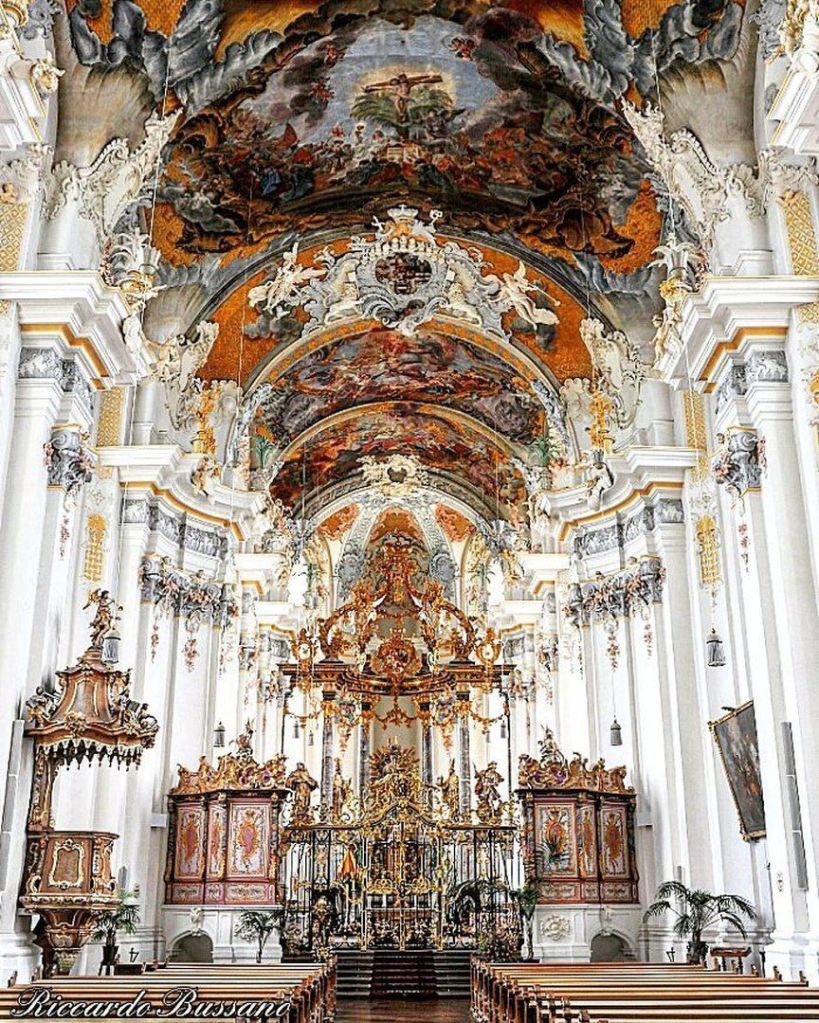
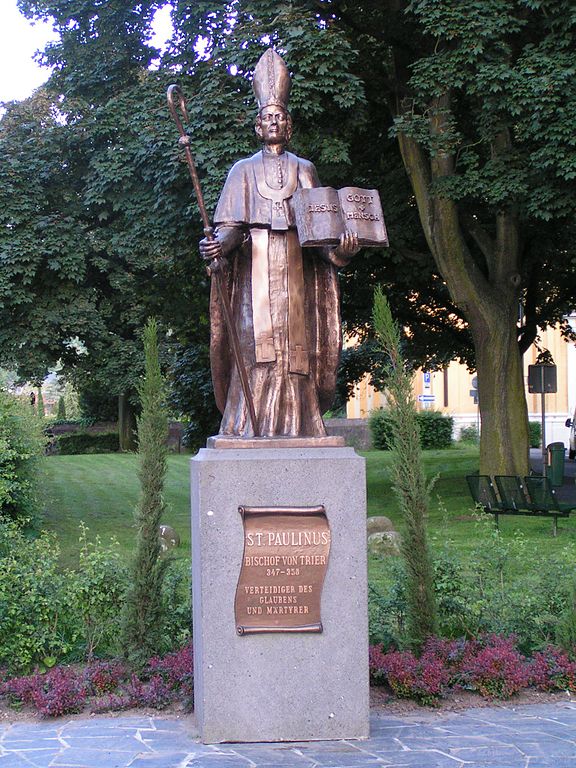
One Minute Reflection – 16 May – “Mary’s Month” – Saturday of the Fifth Week of Easter, Readings: Acts 16:1-10, Psalm 100:1-3, 5, John 15:18-21 and the Memorial of St Margaret of Cortona TOSF (1247-1297)
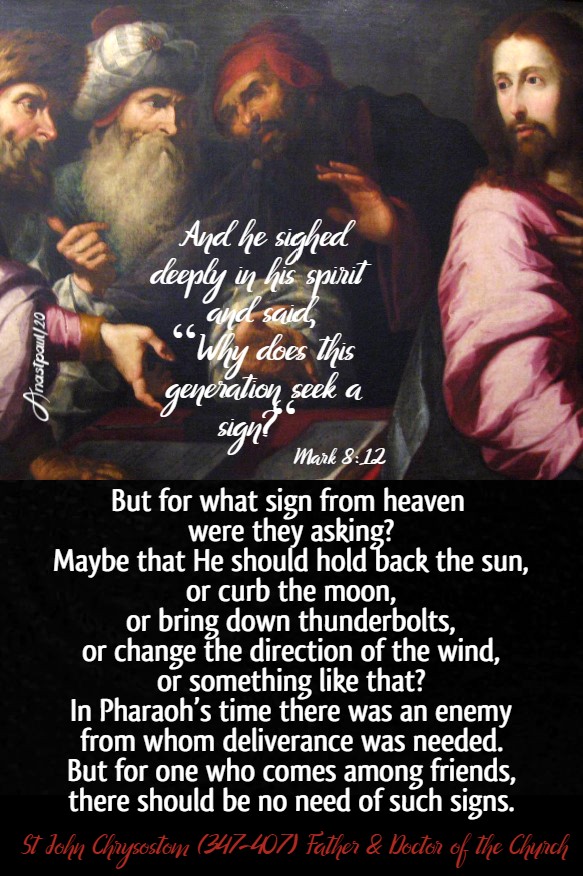
“If the world hates you, know that it has hated me first. If you were of the world, the world would love you as its own but because you are not of the world but I chose you out of the world, therefore, the world hates you.” … John 15:18-19
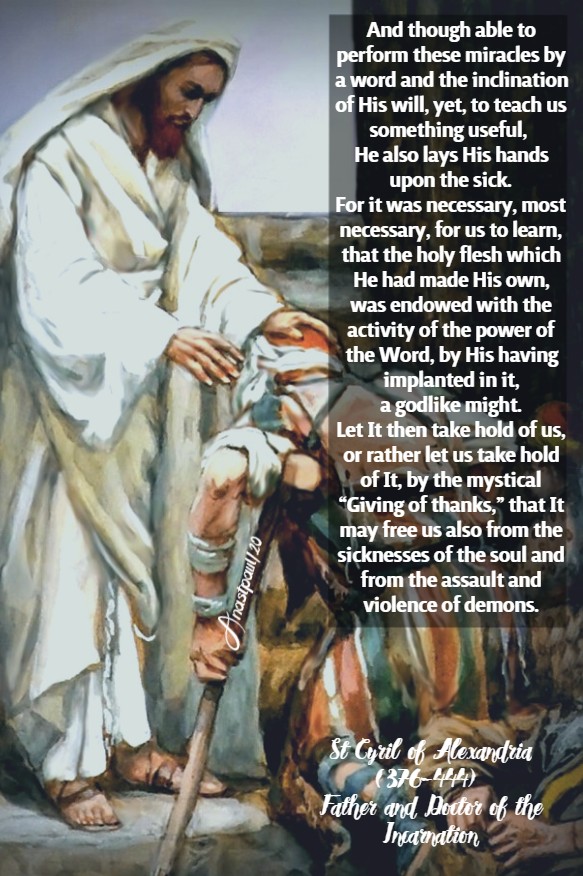
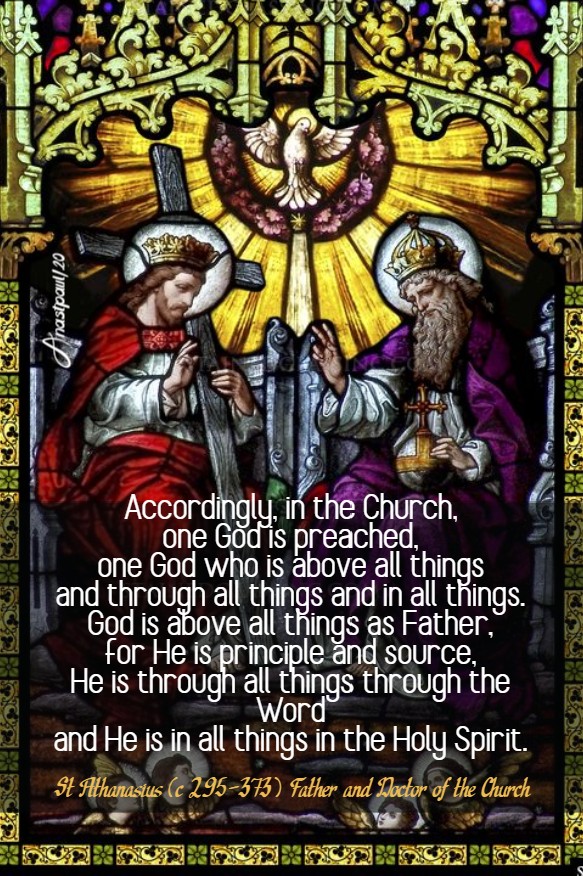
REFLECTION – “Our Lord’s will is that we should rejoice and leap for joy when we are persecuted (Mt 5:12) because, when persecutions come, it is then, that crowns are given for faith (cf. Jas 1:12), it is then, that Christ’s soldiers prove themselves, then that the heavens open to their witness.
We aren’t employed in God’s force only to think of quiet, running away from service when the Teacher of humility, patience and suffering has Himself provided the same service before us. What He taught, He first of all, carried out and, if He exhorts us to stand firm, it is because He Himself suffered before us and on our behalf.
If we are to take part in competitions in the stadium, we exercise and train ourselves and think ourselves highly honoured if, before the eyes of the crowd, we have the happiness of receiving the prize.
But here is a trial that is both noble and outstanding in another way, in which God watches us – we, His children – take part in the combat and Himself gives us a heavenly crown ( 1Cor 9:25). The angels watch us too and Christ comes to our aid.
So let us arm ourselves with all our might, let us fight the good fight, with brave hearts and solid faith.” … St Cyprian of Carthage (c 200- c 258) Bishop and Martyr, Father of the Church
PRAYER – Almighty God, grant that Your faithful, who rejoice in the protection of the Blessed Virgin Mary, may be delivered from every evil here on earth, put on the armour of Your Son and fight the good faith bearing His standard. Through her prayer and the prayers of Your Saints and St Margaret of Cortona, may we come to the enduring joys of heaven. We make our prayer through her Son, our Lord Jesus Christ, one God with You, in the union of the Holy Spirit, forever amen.
Our Morning Offering – 16 May – “Mary’s Month” – Saturday of the Fifth Week of Easter
Let Me Love Your Jesus By St Ildephonsus (c 607-670)
Virgin Mary, hear my prayer,
through the Holy Spirit,
you became the Mother of Jesus,
from the Holy Spirit,
may I too have Jesus.
Through the Holy Spirit,
your flesh conceived Jesus,
through the same Spirit,
may my soul receive Jesus.
Through the Holy Spirit,
you were able to know Jesus,
to possess Jesus
and to bring Him into the world.
Through the Holy Spirit,
may I too come to know your Jesus.
Imbued with the Spirit, Mary, you could say
“I am the handmaid of the Lord,
be it done unto me according to your word,”
in the Holy Spirit, lowly as I am,
let me proclaim the great truths about Jesus.
In the Spirit, you now adore Jesus as Lord
and look on Him as Son,
in the same Spirit, Mary,
let me love your Jesus.
Amen
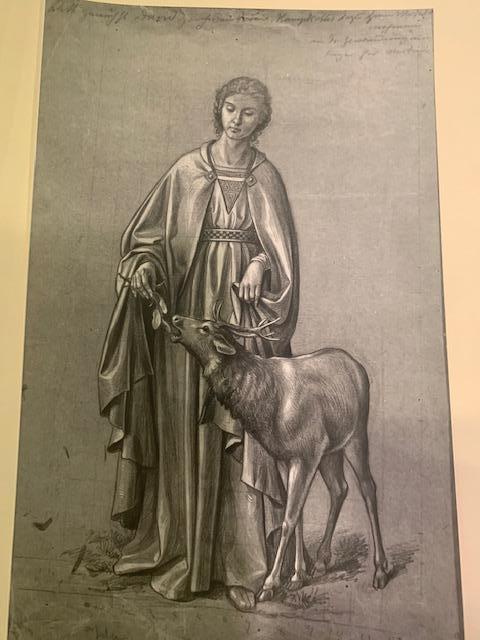
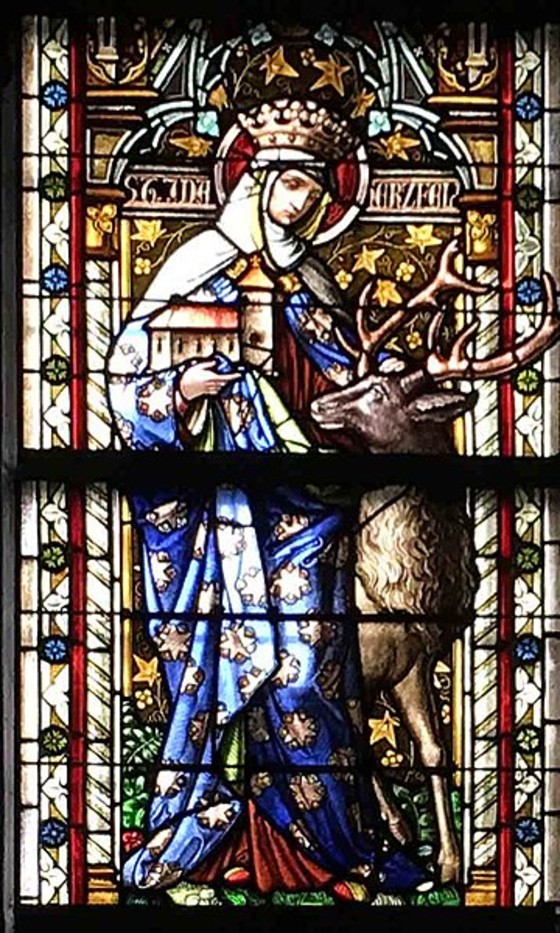
Saint of the Day – 16 May – Saint Margaret of Cortona TOSF (1247-1297) “The Mary Magdalene of the Franciscan Order,” Third Order Franciscan, Penitent, Mystic, Founder of a Third Order Franciscan Apostalate the “Le Poverelle” (Italian for “The Little Poor Ones”) who worked in the Hospital for the homeless, the sick and the poor that St Margaret had founded – born in 1247 at Laviano, near Perugia, Italy and died on 22 February 1297 (aged 49–50) at Cortona, Italy. Patronages -against temptations, falsely accused people, homeless people, insanity, loss of parents, mental illness, mentally ill people, midwives, penitent women, single mothers, people ridiculed for their piety, reformed prostitutes, sexual temptation, single laywomen, third children. Her body is incorrupt.
Margaret was born of farming parents, in Laviano, a little town in the diocese of Chiusi. At the age of seven, Margaret’s mother died and her father remarried. Sadly, the Stepmother and stepdaughter did not like each other. As she grew older, Margaret became more wilful and reckless and her reputation in the town suffered. At the age of 17 she met a young man, according to some accounts, the son of Gugliemo di Pecora, lord of Valiano and she ran away with him. Soon Margaret found herself installed in the castle, not as her master’s wife, for convention would never allow that but, as his mistress, which was more easily condoned. For ten years, she lived with him near Montepulciano and bore him a son.
When her lover failed to return home from a journey one day, Margaret became concerned. The unaccompanied return of his favourite hound alarmed Margaret. The hound led her into the forest to his murdered body. That crime shocked Margaret deeply, she began to be burdened with a great sorrow for the life of sin which she had accompanied him into and for the final destination of his soul. She resolved to enter into a life of prayer and penance. Margaret returned to his family all the gifts he had given her and left his home. With her child, she returned to her father’s house but her stepmother would not have her. Margaret and her son then went to the Franciscan Friars at Cortona, where her son eventually became a friar. She fasted, avoided meat, and subsisted on bread and vegetables.
In 1277, after three years of probation, Margaret joined the Third Order of Saint Francis and chose to live in poverty. Following the example of St Francis of Assisi, she begged for sustenance and bread. She pursued a life of prayer and penance at Cortona and there established a hospital for the sick, homeless and impoverished. To secure nurses for the hospital, she instituted a congregation of Tertiary Sisters, known as “Le Poverelle” (Italian for “The Little Poor Ones”).
While in prayer, Margaret recounted hearing the words, “What is your wish, poverella?” (“little poor one?”), and she replied, “I neither seek nor wish for anything but You, my Lord Jesus.”[citation needed] She also established an order devoted to Our Lady of Mercy and the members bound themselves to support the hospital and to help the needy.
On several occasions, Margaret participated in public affairs. Twice, claiming divine command, she challenged the Bishop of Arezzo, Guglielmo Ubertini Pazzi, in whose diocese Cortona lay, because he lived and warred like a prince. She moved to the ruined church of Basil of Caesarea, now Santa Margherita and spent her remaining years there; she died on 22 February 1297.
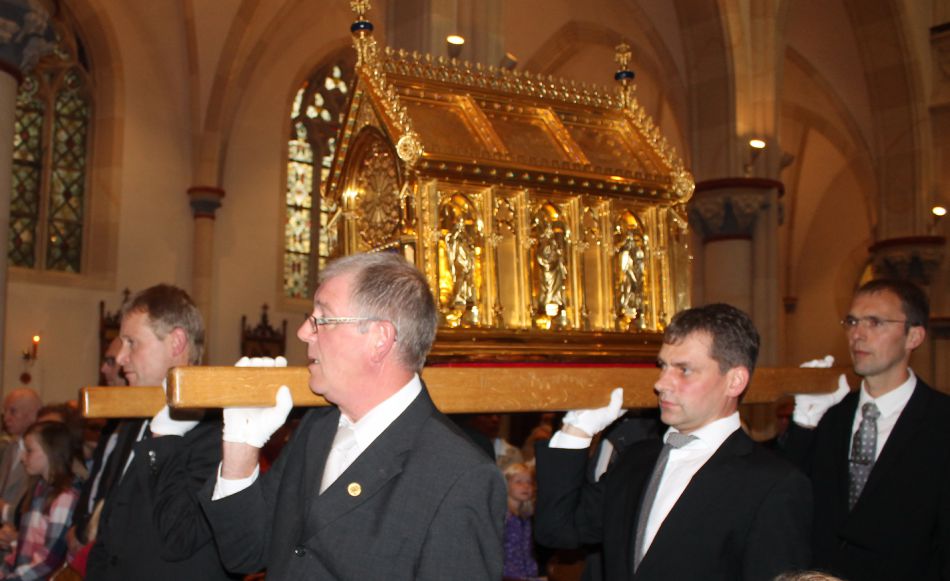
After her death, the Church of Santa Margherita in Cortona was rebuilt in her honour. Her incorrupt body is preserved in a silver casket inside the church. Hundreds of reports of miracles, both physical and spiritual, are still reported by those who come here to venerate her. Margaret was Canonised by Pope Benedict XIII on 16 May 1728.
St Carantac
St Carantoc
St Diocletian of Osimo
St Felix of Uzalis
St Fidolus of Aumont
St Fiorenzo of Osimo
St Fort of Bordeaux
St Francoveus
St Gennadius of Uzalis
St Germerius of Toulouse
St Hilary of Pavia
St Honorius of Amiens
Bl Louis of Mercy St Margaret of Cortona TOSF (1247-1297) (This is a very good homily – listen if you can).
St Ubaldus Baldassini
St Victorian of Isauria
Bl Valdimir Ghika
—
Martyrs of Saint Sabas: A group of monks, whose names have not come down to us, who were massacred by Moors at the monastery of Saint Sabas in Palestine.
The Angelus
Moments with Saint Pope John XXIII (1881-1963)
“It is the custom in Catholic countries for the bells to ring the Angelus at dawn … “The angel of the Lord declared unto Mary.”
This peal of bells, after the darkness of the night, represents the light that returns in splendour, while the heavens bow down to meet the earth.
The angel’s greeting is answered by our prayer which recalls the wonderful truth: “and she conceived by the Holy Ghost.”
The woman, daughter of Eve, chosen before all ages for this privilege, is called to a unique motherhood, to become, by a divine miracle, the Mother of Jesus.
How our hearts throb with joy as we repeat together, a prayer in which Mary is invoked as our Mother too! …
These are simple and familiar words – but it is good to meditate on all they stand for, in recollection and peace of mind.
The Son of God has become the Son of Mary, our brother and has lived among us – and we know well what this means for us.
First of all thirty years of silence, work and obedience.
Then three years of the apostolate, teaching, miracles, all-conquering light.
Then the hour of humiliation and sacrifice, but, in the end the triumph!”
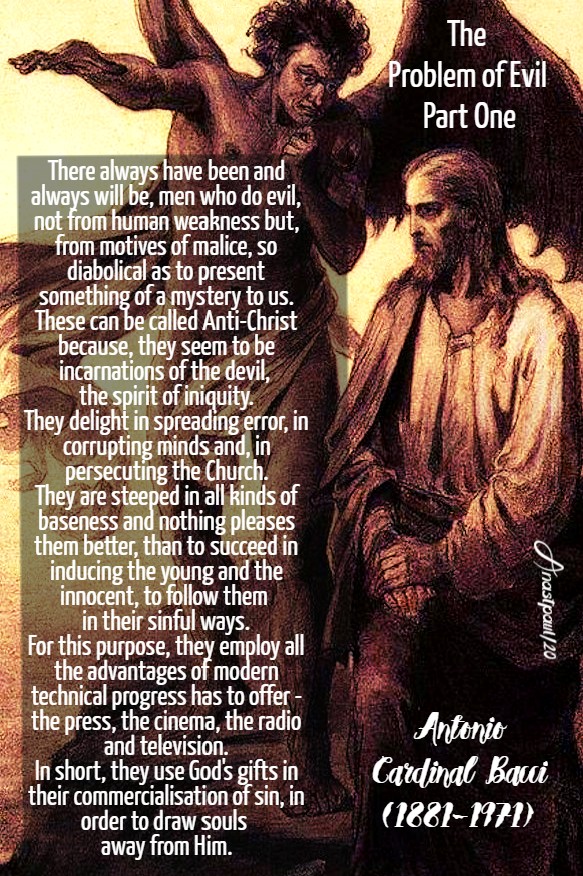
Thought for the Day – 15 May – Meditations with Antonio Cardinal Bacci (1881-1971)
The Power of Mary
“Virgin most powerful, pray for us.” This is one of the invocations to Our Lady in her Litany. Mary’s power derives from her divine Motherhood. The Eternal Word was made man in her most chaste womb. By assuming our human nature in the Hypostatic Union, He became her Son. In the same way as a mother can give instructions to her son, Mary can pray to Jesus with full confidence that she will be answered. Not only has she the power of love, over Him but, also the power of a mother. Her prayers have the force of a command and it is impossible for them to go unheeded. When Mary seeks a favour from her divine Son for us, who are her adopted sons, says St Peter Damian, she commands rather than prays, she is more like the mistress than the handmaid of the Lord (Serm 41 de Nativitate). Some ecclesiastical writers go as far as describing Mary as being omnipotent in grace and in intercession, even as God is omnipotent by reason of His nature. “O Mother of God,” writes St Gregory of Nicomedia, “you have such invincible power, that the multitude of our sins can never exhaust your mercy. Nothing can resist your power, for your Creator regards your glory as His own” (Orat de Exitu B Virg). This doctrine should console even the most hopeless sinners. It is enough to have loving recourse to Mary and we shall be sure of salvation.”
Quote/s of the Day – 15 May – Friday of the Fifth Week of Easter, Readings: Acts 15:22-31, Psalm 57:8-12, John 15:12-17
“Love one another as I have loved you”
John 15:12
“Jesus carries us to the inn. Imagine you are in the arms of Jesus, being carried, half-dead in sin—some of your own making, some done to you—to a place of help. You can rest in His arms. In another surprise, the inn is the Church, the hospital for sinners. The innkeeper might be a priest, family member, or friend who helps you through a dark time in your life.
This is the rest of the story – the Good Samaritan is Jesus! He always pursues us, even when we don’t ask for it—even in our sins. We must receive the Good Samaritan’s love and mercy first, or we have nothing to give away (1 Jn 4:19)! And then our response to this love is repentance—going beyond the mind we have now/giving up the lies we believe about God or ourselves—and then going to confession. This is followed by The Ultimate Challenge – to be that good neighbour or the innkeeper in a world where everyone is wounded by something! Be like Jesus—be a good spiritual neighbour in a dark and lonely world!
In a world which demands of Christians a renewed witness of love and fidelity to the Lord, may all of us feel the urgent need, to anticipate one another in charity, service and good works (cf. Heb 6:10).”
One Minute Reflection – 15 May – “Mary’s Month” – Friday of the Fifth Week of Easter, Readings: Acts 15:22-31, Psalm 57:8-12, John 15:12-17 and the Memorial of St Dymphna (7th Century) “The Lily of Éire”
“This is my commandment, that you love one another as I have loved you. Greater love has no man than this, that he lay down his life for his friends.”” ... John 15:12-13
REFLECTION – “Love, indeed, is the source of all good things, it is an impregnable defence and the way that leads to heaven. He who walks in love can neither go astray, nor be afraid, love guides him, protects him and brings him to his journey’s end.
My brothers, Christ made love the stairway that would enable all Christians to climb to heaven. Hold fast to it, therefore, in all sincerity, give one another practical proof of it and by your progress in it, make your ascent together.” … St Fulgentius of Ruspe (460-533) Bishop – An excerpt from his Sermon 3
PRAYER – Almighty God and Father, You gave us a new birth in holy baptism and a new life in Your Son, who first loved us and gave His life for us. Grant us, we pray, the grace to love all as He did and bear much fruit, always striving after what He has taught who goes ahead of us, to lead us to You. May the prayers of His beloved Mother and ours and St Dymphna, grant us help and inspiration as we travel the road to eternal life. Through Christ our Lord, in the unity of the Holy Spirit, God now and for all eternity, amen.
Our Morning Offering – 15 May – “Mary’s Month” – Friday of the Fifth Week of Easter
My Lady, My Refuge and my Strength By St Germanus (c 634- c 733) Patriarch of Constantinople
My refuge and my strength
My Lady,
my refuge, life and help,
my armour and my boast,
my hope and my strength,
grant that I may enjoy
the ineffable, inconceivable gifts of your Son,
your God and our God,
in the heavenly kingdom.
For I know surely
that you have power to do as you will,
since you are Mother of the most High.
Therefore, Lady most pure,
I beg you
that I may not be disappointed in my expectations
but may obtain them, O Spouse of God,
who bore Him, who is the expectation of all,
Our lord Jesus Christ,
true God and master of all things,
visible and invisible,
to whom belongs all glory, honour and respect,
now and always and through endless ages.
Amen
Saint of the Day – 15 May – Saint Dymphna (7th Century) “The Lily of Éire” Virgin Martyr, Princess. Born in the 7th century in Ireland and died in Gheel in Belgium. Patronages – runaways, mental disorders, neurological disorders, survivors of incest, survivors of sexual assault, depression, anxiety.
The story of Dymphna was first recorded in the 13th century by a canon of the Church of St. Aubert at Cambrai, France. It was commissioned by Guiard of Laon (1238–1248), the Bishop of Cambrai. The author expressly stated that his work was based upon a long-standing oral tradition as well as a persuasive history of miraculous cures of the mentally ill.
Born during the 7th century to Irish royalty, St Dymphna’s mother, the Queen, had the girl baptised and raised in the faith in secret because of her husband’s pagan beliefs. When Dymphna was only fourteen, her beloved mother died and the King went mad in his great state of grief. He decided that he wanted to marry Dymphna, his own daughter, because she looked so much like her mother. Dymphna, who had made a vow of virginity before God, was horrified by her father’s proposal and adamantly refused.
To escape the king’s inevitable outrage over her rejection, Dymphna fled the kingdom. She was accompanied by her Confessor, Fr Gerebran, as well as several faithful servants from her father’s court. The group settled in Belgium in a city called Gheel near a shrine of St Martin of Tours. While there, Dymphna used her wealth to care for the sick and poor of the region.
Unfortunately, her father discovered her whereabouts and he sailed to Gheel in the hopes of bringing her back with him. Upon his arrival, the King continued his attempts to convince Dymphna to marry him, promising great wealth and esteem if she accepted his offer. Still, she would not change her mind, staying true to her vow of virginity and refusal to enter an incestuous relationship. In his anger, the King ordered his men to kill Fr Gerebran while he himself beheaded Dymphna. She was only fifteen years old at the time.
Both Dymphna and the priest, Fr Gerebran, were later named Saints and Dymphna was honoured with the crown of Martyrdom. She was declared Patroness of those with mental problems because of the great anguish her father’s mental affliction caused.
A church was built in Gheel in her name and many people suffering from mental disorders began travelling there for cures. Soon, the church was so full that an addition was added onto it but even then it still could not contain all the visitors. As a result, the townspeople of Gheel began accepting the mentally ill travellers into their homes. This tradition continues to this day.
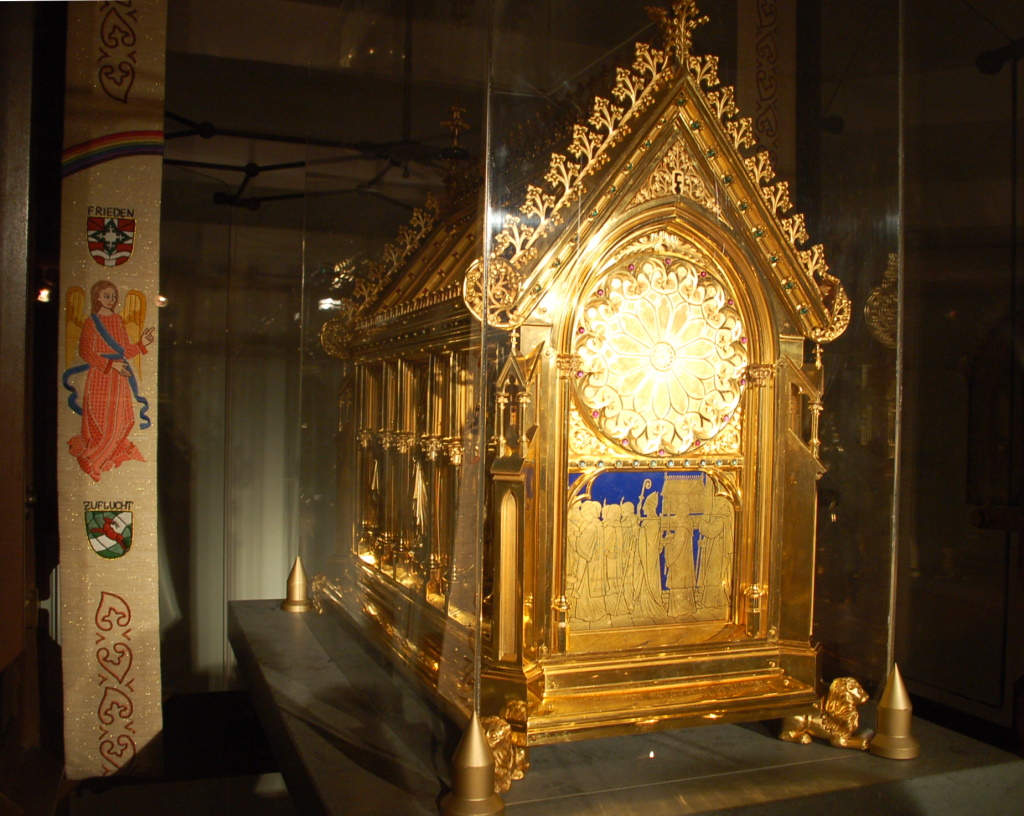
St Dymphna’s in Gheel
The remains of Dymphna were later put into a silver reliquary and placed in the Gheel Church. The remains of Fr Gerebran were moved to Xanten, Germany. During the late 15th century the original St Dymphna Church in Gheel burned down. A second “Church of St Dymphna” was then built and Consecrated in 1532. The church still stands on the site where her body is believed to have first been buried.
Good Saint Dymphna,
great wonder-worker in every affliction of mind and body,
we humbly implore your powerful intercession
with Jesus through Mary, the Health of the Sick,
in our present need.
………………………… (Mention it)
Saint Dymphna,
Martyr of purity,
Patroness of those who suffer
with nervous and mental afflictions,
beloved child of Jesus and Mary,
pray to Them for us
and obtain our requests.
(Pray one Our Father, one Hail Mary and one Glory Be.)
Bercthun of Beverley
Bertha of Bingen
St Caecilius of Granada
St Caesarea of Otranto
St Cassius of Clermont
Bl Clemente of Bressanone
St Colman Mc O’Laoighse
St Ctesiphon of Verga
Bl Diego of Valdieri St Dymphna (7th Century) Virgin Martyr “The Lily of Éire”
St Euphrasius of Andujar (1st Century) Martyr St Euphrasius’ Life: https://anastpaul.com/2019/05/15/saint-of-the-day-15-may-saint-euphrasius-of-andujar-1st-century/
St Gerebernus
St Hallvard of Oslo
St Hesychius of Gibraltar
St Hilary of Galeata
St Indaletius of Urci
St Isaias
St Isidore of Chios
Bl Joan Montpeó Masip
St Maximus of Clermont
St Nicholas the Mystic
St Rupert of Bingen
St Secundus of Avila
St Simplicius of Sardinia
St Sophia of Rome
St Victorinus of Clermont
St Waldalenus of Beze
—
Martyrs of Maleville: 50 Mercedarian friars murdered for their faith by Huguenots. 1563 in the Mercedarian convent of Maleville in Rodez, France.
Martyrs of Persia: Three Christians who were tortured, mutilated, imprisoned, starved and finally executed together for refusing to worship the sun and fire during the persecutions of Shapur II. We know nothing else about them but their names: Bohtiso, Isaac and Simeon. They were beheaded or burned at the stake (records vary) in the late 3rd century somewhere in Persia
Martyrs of Lampsacus:
Andrew of Troas
Denysa of Troas
Paul of Troas
Peter of Lampsacus
Praying With Our Mother
Moments with Saint Pope John XXIII (1881-1963)
“My dear brothers in Christ and in the love of Mary!
The Sacred Altar is the meeting point, of all, that is for the Christian and the Catholic, a vision of heavenly doctrine, inspired by divine grace, the inexhaustible source of strength, holiness and joy in our life here below, in the certainty of the eternal life to come.
Follow Me then to this Blessed Altar of My Sacrifice, which is the Sacrifice offered for you and with you, for all that is dearest to you in the innermost sanctuary of your souls and in your family life and in the various relationships of your civil and social activity.
The land where we were born, which is so dear to us, is always, even when resplendent with natural beauty, full of thorns and of things which cause us distress and pain.
True comfort is found, only in union with the Cross of Christ and His sufferings, united with the sorrows of His Mother, who is our Mother too.
Oh, how beautiful is and how consoling, to believe, live and pray with our Mother, sharing in her love with her Son, the Word of God, made man for us, as a sign of blessing, prosperity and peace amid the uncertainties of this present life, in the certain hope of the eternal joys which await us. Amen.
Thought for the Day – 14 May – Meditations with Antonio Cardinal Bacci (1881-1971)
The Refuge of Sinners
“Refuge of sinners, pray for us.”
This is one of the most beautiful invocations in the Litany of Loreto.
In the second half of the Hail Mary, the Church, knowing that we are all sinners, teaches us to pay to our heavenly Mother: “Pray for us sinners, now and at the hour of our death.”
When a mother sees her sons going astray or behaving badly, she does not cease to love them.
One might say, that, she loves them all the more, because, in addition to her natural affection, she develops a sense of anxious compassion for them when she thinks of the way in which they have risked their eternal salvation by sinning.
Mary’s attitude to us is like this.
The only difference is, that our earthly mothers suffer as a result of our transgressions and ingratitude without being able to do much to change us.
Mary, on the other hand, being the Mother of Jesus as well as our Mother, is not only willing but able, to help us. No matter how enormous our sins may be, no matter how irresistible our carnal instincts may seem, no matter how hopelessly we may have plunged into the depths of evil, it is enough for us to raise our eyes in confidence towards Mary. Like a merciful Mother, she will obtain for us from God, forgiveness and the strength to return to the path of penitence and of peace. “Poor ship-wrecked sinners,” says St Bonaventure, “have recourse to Mary and she will lead you to the port of salvation.” (In Ps 8).
Our good Mother, St Bernard tells us, does not shrink in horror from the most wretched of sinners.
He need only turn to her for help and she will save him from damnation (Or Pan ad BV).
How comforting it should be for us to realise that we have such a merciful and powerful Mother. Let us turn to her with trust and humility and she will certainly assist us.”
Quote/s of the Day – 14 May – Thursday of the Fifth Week of Easter, Readings: Acts 1:15-17, 20-26, Psalm 113:1-8, John 15:9-17
“You are my friends if you do what I command you. “
John 15:14
“It is not that we keep His commandments first and that then He loves but that He loves us and then we keep His commandments. This is that grace which is revealed to the humble but hidden from the proud.”
“God provides the wind but man must raise the sails.”
“A man may lose the good things of this life against his will but, if he loses the eternal blessings, he does so with his own consent.”
“Christ is not valued at all, unless He is valued above all.”
“He who created you, without you, will not justify you, without you.”
“If we live good lives, the times are also good. As we are, such are the times.”
One Minute Reflection – 14 May – “Mary’s Month” Thursday of the Fifth Week of Easter, Readings: Acts 1:15-17, 20-26, Psalm 113:1-8, John 15:9-17 and the Feast of St Matthias, Apostle of Christ
“…All that I have heard from my Father, I have made known to you.” … John 15:15
REFLECTION – “Among His disciples Christ chose twelve chief ones whom He destined to be the teachers of the nations. Accordingly, after one of these had been struck off, He commanded the eleven others, on His departure to the Father, to “go and teach all nations” who were to be “baptised into the Father, the Son and the Holy Spirit” (Mt 28,19).
So the Apostles – whom this designation indicates as ‘the sent’ – on the authority of a prophecy which occurs in a psalm of David, immediately chose Matthias by lot in place of Judas. They obtained the promised power of the Holy Spirit for the gift of miracles and tongues and, after first bearing witness to faith in Jesus Christ, throughout Judaea and founding Churches there, they next went out into the world and preached the same teaching of faith to the nations. (…)
Now what it was they preached – in other words, what it was that Christ revealed to them – can properly be proved, in no other way, than by those very Churches that the Apostles founded in person, by directly declaring the Gospel to them, first by word of mouth and subsequently by their epistles. If, then, these things are so, it is manifest that all doctrine that agrees with the Apostolic Churches, which are the matrix and source of the faith, must be reckoned as true and as undoubtedly containing that, which those Churches received, from the Apostles, the Apostles from Christ and Christ from God.” … Tertullian, full name Quintus Septimius Florens Tertullianus (c 155- c 240) Father of the Church
PRAYER – Lord God, You chose St Matthias to complete the number of the twelve. By his prayer, include us among Your chosen ones, since we rejoice to see that the lot marked out for us, is in Your Love. May the Mother of Jesus, the Apostles and our Mother, ever intercede for us all. Through Jesus the Christ, our Lord, with the Holy Spirit, God now and forever, amen.
Our Morning Offering – 14 May – “Mary’s Month” – Thursday of the Fifth Week of Easter
Mary, I Beg You By St Anselm (1033-1109) Magnificent Doctor Marian Doctor
Mary, I beg you,
by that grace through which
the Lord is with you
and you will to be with him,
let your mercy be with me.
Let love for you always be with me,
and the care for me be always with you.
Let the cry of my need,
as long as it persists,
be with you,
and the care of your goodness,
as long as I need it,
be with me.
Let joy in your blessedness
be always with me,
and compassion for my wretchedness,
where I need it,
be with you.
Amen
Saint of the Day – 14 May – Blessed Giles of Santarem OP (1185-1265) Dominican Friar, Confessor, Penitent – born Gil Rodrigues de Valadares in 1185 at Vaozela, Portugal and died on 14 May 1265 in Santarem, Portugal of natural causes.
Blessed Giles was born at Vouzella, near Coimbra, Portugal, about in 1185. His father was the governor of Coimbra and a Counsellor of Sancho I, the king of Portugal. Although his father wanted Giles to enter the ecclesiastical state and the King was lavish in bestowing ecclesiastical benefices on Giles, while still a child, Giles, however, wanted to study medicine. After some time studying philosophy in Coimbra, Giles left to study medicine in Paris.
Blessed Giles was intercepted by a kindly stranger on his trip to Paris, who promised to teach him magic if he would sign his soul over to the devil in blood. Blessed Giles, the legend continues, signed away his soul and studied magic for seven years before going to Paris where he excelled in his medical studies and was noted for many fantastic cures. However, we know that at some point Blessed Giles reformed his life and repented.
He returned to Portugal and took the Dominican habit in at a newly erected convent in Palencia in about 1224. Shortly after arriving in Palencia, his Dominican superiors sent Blessed Giles to the Dominican convent at Scallabis, present day Santarem, Portugal. There he led a life of prayer and penance and for seven years was tormented about the compact he had entered into with the devil. However, according to Blessed Giles’ biographer, finally Satan was compelled to surrender Giles’ soul and placed the compact he had signed before the Altar of the Blessed Virgin.
After this experience, Giles returned to Paris to study theology. On his second return to Portugal, he became famous for his piety and learning. He was twice elected provincial of the Dominican Order in Spain.
Noted for his humble service to his brethren, he died at Santarem on 14 May 1265. Blessed Giles was Beatified by Pope Benedict XIV (cultus confirmed) on 9 May 1748.
St Ampelio
St Boniface of Ferentino
St Boniface of Tarsus
St Carthage the Younger
St Corona the Martyr
St Costanzo of Capri
St Costanzo of Vercelli
Bl Diego of Narbonne
St Dyfan
St Engelmer
St Erembert of Toulouse
St Felice of Aquileia
St Fortunatus of Aquileia
St Gal of Clermont-Ferrand Blessed Giles of Santarem OP (1185-1265)
St Henedina of Sardinia
St Justa of Sardinia
St Justina of Sardinia
St Maria Domenica Mazzarello
St Maximus St Michel Garicoïts (1797-1863) Biography: https://anastpaul.com/2019/05/14/saint-of-the-day-14-may-saint-michel-garicoits-1797-1863/
St Pons of Pradleves
St Pontius of Cimiez
St Tuto of Regensburg
St Victor the Martyr
—
Martyrs of Seoul – 5 Beata: A group of lay people martyred together in the apostolic vicariate of Korea.
• Petrus Choe Pil-je
• Lucia Yun Un-hye
• Candida Jeong Bok-hye
• Thaddeus Jeong In-hyeok
• Carolus Jeong Cheol-sang
14 May 1801 at the Small West Gate, Seoul, South Korea – Beatified: 15 August 2014 by Pope Francis
Behold Your Mother
Moments with Saint Pope John XXIII (1881-1963)
“Shortly before His death, Jesus, seeing His Mother with the beloved disciple by her side, said to Mary, indicating John: “Behold your son.”
Then He said to His disciple: “Behold our Mother.”
As if enraptured by the infinite generosity of God, St Robert Bellarmine asserts, that whoever draws near to the most high God with a frank and open heart may obtain grace and salvation. In fact, Jesus, who wanted us to be co-heirs with Himself of His Father’s Kingdom, invites us too, to share in the kindness of His perfect Mother and, she herself loves to carry on her work of mercy and solicitude for all who are working their way to their home with her Son.
“Let us then,” says Bellarmine, “hasten with confidence to Christ’s throne of grace and with prayers and profound contrition, let us beg Him to repeat for everyone of us, the words He said His Mother: “Behold your son.” In the same way, as He looks at Mary, may He repeat to everyone of us, the wonderful invitation: “Behold your Mother.”
In short, here we find our true relationship, already established on earth, with Jesus our Redeemer and our brother and our relationship with Mary, the Mother of Jesus and of all who belong to the to those He has wished to redeem.
It is, therefore, a glory of Catholic worship and of the Christian Doctrine, which always presents the Lord Jesus to us with His Mother by His side.
How eternally happy are those faithful, who invoke the heavenly Queen by the sweet name of Mother and faithfully follow her counsel, her inspiration and her example!”
Thought for the Day – 13 May – Meditations with Antonio Cardinal Bacci (1881-1971)
Mary, Our Hope
In the beautiful prayer, known as the Salve Regina or Hail, Holy Queen, the Church salutes Mary as “our life, our sweetness and our hope.” Mary is our hope, because, she gave us our Saviour, Jesus and, because, she prays to Him continually for the graces which we need. Following the example of Luther, modern Protestants raise the objection that Mary cannot be regarded as a source of hope, because, all our trust should be placed in God. Anyone who places his trust in creatures, draws down God’s curse upon himself, they say and, they go on to quote from Jeremiah: “Cursed be the man that trusteth in man” (Jer 17:5). But this is true only, when we trust in creatures independently of God, as if we can derive any good from them, without recourse to God. We invoke Mary, however, as the Mother of God and our Mediatrix with Him. She is our hope, insofar as she obtains for us from God, the graces and favours which we require. St Bernard assures us, that God has placed in Mary’s hands, all the riches which He wishes to bestow on us (Serm de aquaed). “He will never experience eternal ruin,” says St Anselm, “for whom Mary has once prayed.” St Bernard calls upon Mary as the foundation of all his hope (Ibid). Let us remember, that Mary is our loving Mother who wishes us to pray to her, because, she knows that if she intercedes on our behalf, she will certainly be heard. It should be most consoling to us to have such a good and powerful Mother in whom, we can safely trust in every peril and in every necessity. Let us pray to her with love and faith, in the certainty that, we shall be answered in the way that is best for us. Let us say along with St John Damascene: “O Mother of God, if I place my trust in you, I shall be saved. If I am under your protection, I have nothing to fear, because to be devoted to you, is to possess a weapon of salvation which God grants only to those, whom He desires to redeem” (Serm de Nat, cap 4).
Quote/s of the Day – 13 May – “Mary’s Month” The Memorial of Our Lady of Fatima
“Look, my Daughter,” Our Lady said to Lúcia on 10 December 1925, “at my heart, surrounded with thorns, with which ungrateful men pierce me. “
Our Lady assured Lúcia: “My Immaculate Heart will be your refuge and the way that will lead you to God.” Thus, if we devote ourselves to her Immaculate Heart, Mary will lead us to her Son, Jesus Christ and we will be on the way to Heaven.
One Minute Reflection – 14 May – “Mary’s Month” – Wednesday of the Fifth Week of Easter, Readings: Acts 15:1-6, Psalm 122:1-5, John 15:1-8 and the Memorial of Our Lady of Fatima and St André-Hubert Fournet (1752-1834)
“Without me you can do nothing” … John 15:5
REFLECTION – “Holiness begins from Christ and Christ is its cause. For no act, conducive to salvation, can be performed unless it proceeds from Him as from its supernatural source. “Without me,” He says, “you can do nothing.”(Jn 15:5). If we grieve and do penance for our sins if, with filial fear and hope, we turn again to God, it is because He is leading us. Grace and glory flow from His inexhaustible fullness…
When the Sacraments of the Church are administered by external rite, it is He who produces their effect in souls. He nourishes the redeemed with His own flesh and blood and thus calms the turbulent passions of the soul; He gives increase of grace and prepares future glory for souls and bodies.
Christ our Lord wills the Church to live His own supernatural life and by His divine power permeates His whole Body and nourishes and sustains each of the members, according to the place which they occupy in the body, in the same way as the vine, nourishes and makes fruitful the branches, which are joined to it. (cf. Jn 15:4-6).” … Venerable Pius XII (1976-1958) Papacy 1939 to 1958 – Encyclical “Mystici Corporis”
PRAYER – Holy God and Father, help us to discern through prayer and meditation what You truly want of us. Then enable us to offer it to You and indeed, to offer ourselves and all we have and all we are, to You. When You bring us sufferings to mould us closer and make us more like You, help us to accept them and offer them back to You. Following Your divine Son, let us pick up those crosses in peace and love. Our Lady of Fatima, pray for us! St André-Hubert Fournet, pray for us. Through Christ our Lord, with the Holy Spirit, God now and forever, amen.
Our Morning Offering – 13 May – “Mary’s Month” and the 103rd Anniversary of Our Lady of Fatima – Wednesday of the Fifth Week of Easter
Official Prayer of Consecration To Our Lady of Fatima (Issued for the Jubilee in 2017)
Our lady of Fatima Hail,
Mother of the Lord,
Virgin Mary,
Queen of the Rosary of Fatima!
Blessed among all women,
you are the image of the Church dressed in the Paschal light,
you are the honour of our people,
you are the triumph over the mark of evil.
Prophecy of the merciful Love of the Father,
Teacher of the Annunciation of the Good News of the Son,
Sign of the burning Fire of the Holy Spirit,
teach us, in this vale of joys and sorrows,
the eternal truths that the Father reveals to the little ones.
Show us the strength of your mantle of protection.
In your Immaculate Heart,
be the refuge of sinners
and the way that leads to God.
In Faith, Hope and Love,
I surrender myself to you.
Through you, I consecrate myself to God,
O Virgin of the Rosary of Fatima.
And thus surrounded by the Light that comes from your hands,
I will give Glory to the Lord, forever and ever.
Amen
Saint of the Day – 13 May – Saint André-Hubert Fournet (1752-1834) Priest and Co-Founder with St Jeanne-Élisabeth Bichier des Ages of the Congregation of the Daughters of the Cross, Apostle of the poor, needy, children and the aged. He is known as “the Good Father.”Born on 6 December 1752 at Maille, France and died on 13 May 1834 at La Puye, Vienne, France of natural causes. Patronage – the Daughters of the Cross.
André-Hubert Fournet was born on 6 December 1752 in Vienne to Pierre Fournet and Florence Chasseloup. He was the 9th of a family of 10 children . He grew up surrounded by the love of his parents and siblings. He was a carefree child, laughing, exuberant, he preferred play to work. As a pupil at the Châtellerault Secondary School, he was loved by all his classmates for his joyful drive and frankness. André-Hubert’s first teacher, his mother, was surprised by her child’s exuberance but she also knew his heart and his great tenderness. “One day, my good André, you will be a priest. You will go up to the altar and pray for your mother.” His mother planted the idea and then she left all the space to God. God did not seem in a hurry… nor did André-Hubert, who wrote on the first page of one of his books: “This book belongs to André-Hubert, a good boy, who will never be a monk or a priest.”God works His plan in His own time…
After his classical studies, he studied law for just a year. But his studies didn’t go well and so without consulting anyone, he joined the army. One day, in his military uniform, he went to his uncle’s house, the priest of Saint-Pierre de Maillé. His uncle received him coldly with the words: “Your visit is at the wrong address! I don’t have a nephew in the military service.” However, there was a door which was always open to him, that of his mother’s heart. Madame Fournet directed her son to one of his uncles, a priest in Haims, in the Vienne region. This uncle was reserved, austere, meditative. Haims is a harsh, isolated and lonely area of the countryside. In this solitary environment, André-Hubert reflected and prayed. The fruits of this period of quiet and peaceful reflection led him at 22, to enter the Seminary and become a Priest.
In 1776 he was Ordained to the Priesthood and was then sent to his own hometown, (succeeding his uncle) to become the Parish Pries to the great happiness of his mother who had her wish fulfilled.
One day, whilst awaiting some friends for lunch he prepared a table filled with food for them. Then, there was the sound of footsteps and he happily wents to open for his guests, only to find a beggar asking for alms. “I have no money…” “What! No money…” replied the poor man. “Your table is covered with it!” The beggar’s words were for André-Hubert, the Words of Jesus Christ. He cried for a long time, prostrated on the flagstones of the church. Through the beggar’s words, Jesus Christ entered his heart and completely took possession of it. The passionate and generous, André-Hubert, had the courage to change his whole life.
The French Revolution saw him refuse to take the oath and he continued his now illegal pastoral mission in secret. On 6 April 1792 – on Good Friday – he was arrested for his activities. He declined being taken to jail in a carriage and said since Jesus Christ carried His cross it, behoved His followers to travel on foot. He would escape and at one point assumed the place of a dead person on a bier. But confident in Divine Providence, he decided to leave, taking the path of exile to Spain. Spain welcomed the French priest, the fugitive. From 1792 to 1797, André-Hubert took refuge in Los Arcos, a small town in Navarre.
Illustration of Los Arcos, Spain, Fr André-Hubert’s home for 5 years
But he misses his abandoned parishioners of Saint-Pierre de Maillé He heard their voices. So, he decided to return to France, alone. In France, calm had not yet returned. Refractory priests were still in danger. These were very difficult times. It was still the era of catacombs! But our Pastor is brave. As a precaution, Fr André-Hubert celebrated the Eucharist clandestinely, sometimes in one place, sometimes in another.
In 1798 he met St Jeanne-Elisabeth Bichier des Ages, who had approached him for spiritual guidance. Their first meeting was decisive. Elisabeth became his collaborator in the founding of the Congregation of the Daughters of the Cross. In the aftermath of the Revolution, Fr André wanted to educate children, the aged and care for the sick. He entrusted this mission to Elisabeth, the young lady he met at Les Marsyllis. Around Elisabeth, a small community was born. Fr André-Hubert became the Spiritual and Apostolic leader of this new family.
In 1801 as better days dawn, Fr André-Hubert returned to Maillé and in 1802, re-established himself in his rectory. His parish was his family. In all their homes, he is called “the Good Father.” He knew all his parishioners. He loved them and is loved by them.
After 40 years of parish ministry, Good Father André retired and left Maillé to dedicate himself in his ageing years to the Congregation of the Sisters of the Cross, which had moved to in a former convent of the Fontevristes in La Puye. Here, he interceded for many miracles – on more than one occasion, he multiplied the food for the members of the new congregation.
Until his old age, the Good Father kept an expression of simplicity and humility. In the sun of God’s love, the transfiguration of his being continued in deep holiness, charity, humility and zeal.
On 13 May 1834, aged 81, Fr André-Hubert opened his eyes to the sun without decline.
After the approval of 2 miracles, he was Beatified on 16 May 1926 by Pope Pius XI and Canonised on June 1933 by the same Pope, after a further 2 miracles.
Our Lady of Succour of Sicily: Devotion to the Blessed Virgin Mary under this title began in Palermo, Sicily in the 14th century and has since spread throughout the Augustinians. It began when Father Nicola Bruno, who suffered from severe and long-term pains in his side, prayed to Our Lady for healing while meditating on a painting of Mary in which she used a stick or club to chase away the dragon and protect the infant Jesus, the artist was making reference to passages in Genesis and Revelations that referred to the eternal enmity between The Woman and the serpent. That night, Father Nicola received a vision of Mary and was healed. The painting received the title “Our Lady of Help” and the devotion began. Since 1804 the celebration has had its own liturgy.
Our Lady of the Most Blessed Sacrament: St Peter Julian Eymard (1811-1868) and Our Lady of the Blessed Sacrament.
The title of Our Lady of the Blessed Sacrament was first given to Mary by St Peter Julian Eymard in May 1868, while speaking to his novices. A few years later he described what her statue should look like: “The Blessed Virgin holds the Infant in her arms and He holds a chalice in one hand and a Host in the other.” He exhorted them to invoke Mary: “Our Lady of the Blessed Sacrament, pray for us who have recourse to thee!”
St Abban of Abingdon
St Agnes of Poitiers St André-Hubert Fournet (1752-1834) “The Good Father”
St Anno of Verona
St Argentea of Cordoba
St Euthymius the Illuminator
Bl Fortis Gabrielli
Bl Gerard of Villamagna
Bl Gemma of Goriano
St Glyceria of Trajanopolis
St John the Silent Bl Julian of Norwich (c 1342-c 1416) Biography: https://anastpaul.com/2019/05/13/saint-of-the-day-13-may-blessed-julian-of-norwich-c-1342-c-1416/
St Lucius of Constantinople
St Mael of Bardsey
Bl Magdalen Albrizzi
St Merewenna of Rumsey
St Mucius of Byzantium
St Natalis of Milan
St Onesimus of Soissons
St Servatus of Tongres
St Valerian of Auxerre
—
Martyrs of Alexandria: A group of Catholic Christians martyred in the church of Theonas, Alexandria, Egypt by order of the Arian Emperor Valens. Their names have not come down to us. 372 in Alexandria, Egypt.
To Jesus Through Mary
Moments with Saint Pope John XXIII (1881-1963)
The simple words of the first page of Matthew’s Gospel: “Mary, of whom Jesus was born, who is called Christ” (Mt 1:16) suffice for me, to establish the fundamental principle of all the great theological teaching which illustrates the connection between the Blessed Sacrament and Our Lady.
Christian piety has rejoiced to learn from the Book of Acts, that Mary was present at the first gatherings of the faithful, when they broke read together as brothers and spent long hours in prayer.
And modern art has often portrayed the heavenly Mother in the act of receiving, from the hand of St John, the beloved apostle, the Communion of the Body and Blood of her Son.
But all this is superfluous and unnecessary for our convinced belief.
When we say, that in the Eucharist, we have the Son and in Mary, we have His Mother, have we not said all?
The great genius of Hippo, St Augustine, with his eagle-eyed power of vision, found the words which so brilliantly contain the Doctrine – Ave corpo vero, nato de Maria Virgine – Hail, true body, born of the Virgin Mary!
In this way – a delightful thing to say, a sublime thing to contemplate – the terms of this twofold mystery are merged into one, so that Mary appears to us radiant in the light of the Eucharistic mystery; they are merged and yet they are the two extreme points, between which is evolved and developed, the whole Catholic Dogma of the Incarnation and of the continuing life of the Church.
Thought for the Day – 12 May – Meditations with Antonio Cardinal Bacci (1881-1971)
“All Generations Shall Call Me Blessed”
‘A Jewish girl, poor in this world’s goods but rich in virtue, arrived after a long and difficult journey at a village in the hills of Judea, called Hebron. There, she paid a visit to her cousin, Elizabeth. When Elizabeth saw the girl, she was immediately enlightened by the Holy Spirit with the knowledge, that her visitor, was the Mother of God. “How have I deserved,” she cried out, “that the mother of my Lord, should come to me?” (Lk 1:43). At these words, Mary looked up towards Heaven and gave spontaneous expression to a hymn of humble acknowledgement to God, Who had “regarded the lowliness of His Handmaid” (Lk 1:48). Then she made a solemn prophecy, which would surely have assured the cynical intellectuals and nobles of the land but, which history has wonderfully fulfilled. “Behold” she said, “all generations shall call me blessed” (ibid). We can testify today, that this miracle came to pass. All the nations have paid reverence to the Jewish girl, who became the Mother of God and our Mother, the Queen of Heaven and earth, the comforter of the afflicted, the conqueror of Satan and the invincible Guardian of the Church. From the engravings in the Catacombs, to the celestial Madonnas of the Angelico, from the rudimentary sculpture of Roman art, to the prayerful statues on the pinnacles of more modern Cathedrals, the image of Mary has shone as a beacon of hope for all generations. Men bow before her and ask for light, for comfort and for pardon. “If anyone follows Mary,” says St Bernard, “he will not lose his way; if anyone pray to her, he will not despair; if anyone thinks of her, he will not sin; if anyone reaches out to her, he will not fall; if anyone places himself under her protection, he need have no fear; if anyone places himself under her leadership, he will never give up; if anyone pays homage to her, he is certain reach his destination safely“ (Homil Missus est 2:17).”
Quote/s of the Day – 12 May – “Mary’s Month” Tuesday of the Fifth Week of Easter, Readings: Acts 14:19-28, Psalm 145:10-13, 21, John 14:27-31
“Let not your hearts be troubled, neither let them be afraid.”
John 14:27
‘He breathed on them and said to them, “Receive the holy Spirit” ‘
Lord Jesus Christ, once again grant that of us, too, there may be but “one heart and mind” (Acts 4:32) for then there will be “a great calm” (Mk 4:39).
My dear listeners, I exhort you to good will and kindness to one another and peace with all. For were we to have charity among ourselves, we would have both peace and the Holy Spirit. Let us undertake to become devout and pray to God… since the apostles persevered in prayer… If we set ourselves to fervent prayer then the Holy Spirit will enter us and say: “Peace be with you! It is ,; be not afraid” (cf. Mk 6:50)…
And what ought we to ask God for, my brethren? For all that is for His honour and the salvation of your souls and, in a word, for the help of the Holy Spirit – “Send forth your Spirit and they will be created” (Ps 104[103]:30) – peace and tranquillity…”
St Francis de Sales (1567-1622)
Bishop of Geneva and Doctor of the Church
First Sermon for Pentecost
“Peace is not the product of terror or fear. Peace is not the silence of cemeteries. Peace is not the silent result of violent repression. Peace is the generous, tranquil contribution of all to the good of all. Peace is dynamism. Peace is generosity. It is right and it is duty.”
St Óscar Romero (1917–1980)
“May the God of love and peace, set your hearts at rest and speed you on your journey, may He meanwhile, shelter you from disturbance by others, in the hidden recesses of His love, until He brings you, at last, into that place of complete plenitude, where you will repose forever, in the vision of peace, in the security of trust and in the restful enjoyment of His riches.”
St Raymond of Peñafort (1175-1275)
“Father of Canon Law”
One Minute Reflection – 11 May – “Mary’s Month” Tuesday of the Fifth Week of Easter, Readings: Acts 14:19-28, Psalm 145:10-13, 21, John 14:27-31
“My peace I give to you”… John 14:27
REFLECTION – “God’s Spirit is a spirit of peace, even after our most serious failings He makes us feel a sorrow that is peaceful, humble and confident, precisely because of His mercy. The spirit of evil, on the other hand, agitates, irritates and makes us feel a sort of anger at ourselves when we have failed. Yet it falls very much to ourselves to practice charity in the first place. So, when you are bothered by certain thoughts, the agitation never comes from God but from the devil, since God, being a spirit of peace, brings you serenity.” … St Pio of Pietralcina “Padre Pio” (1887-1968) – Letter 549
PRAYER – Loving Father, grant us the grace to strive after perfect love. Help us to bring forth frequents acts of love so that we may grow in this greatest of virtues and thus find perfect peace. In the great love of Your divine Son, who gave Himself for us, He filled us with peace and hope. May these gifts grow always in our hearts. We ask for the intercession of Mary, the Blessed Virgin, His Mother. Through Christ our Lord, with the Holy Spirit, God forever, amen.
Our Morning Offering – 12 May – “Mary’s Month” Tuesday of the Fifth Week of Easter
Gracious Lady, Mother and Virgin By St Augustine (354-430) Doctor of Grace
Gracious Lady,
you are a Mother and Virgin.
You are the Mother of the body and soul
of our Head and Redeemer.
You are also truly Mother
of all the members
of Christ’s Mystical Body.
For through your love,
you have co-operated
in the begetting of the faithful in the Church.
Unique among women,
you are Mother and Virgin,
Mother of Christ and Virgin of Christ.
You are the beauty and charm of earth, O Virgin.
You are forever, the image of the holy Church.
Through a woman came death,
through a woman came life,
yes, through you, O Mother of God.
Be with us through this life.
Amen
You must be logged in to post a comment.