Posted in MARIAN TITLES

The Nineteenth Sunday after Pentecost, The Miracle of Ocotlán, Notre-Dame de Bonne Nouvelle / Our Lady of Good News (Rennes, Ille-et-Vilaine, Brittany, France) 1720 and Memorials of the Saints – 3 October

The Miracle of Ocotlán – 3 October
Our Lord of Mercy
“The Prodigy of Ocotlán ”

This is a major miracle that you’ve probably never heard of, the appearance of Christ in the clouds, in Ocotlan, Mexico, in 1847.

Notre-Dame de Bonne Nouvelle / Our Lady of Good News (Rennes, Ille-et-Vilaine, Brittany, France) 1720 – First Sunday of October, 23 December:
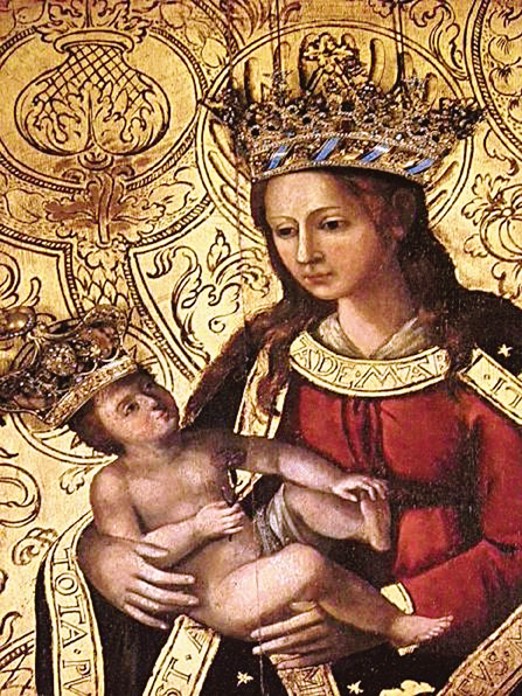
Jean de Montfort founded the Dominican Convent of Our Lady of Good News in Rennes to pay a vow taken during the battle of Auray in 1364, where his victory settled him as Duke of Brittany. In the following century, a panel painting in the Convent’s cloister gained a reputation for miracles, resulting in the building of a separate Chapel to give due veneration to Our Lady and to accommodate the pilgrims.

Another vow was paid after the plague of 1632, which spared Rennes the serious devastation which the surrounding regions suffered. In thanks,giving to the Madonna, the City gave Our Lady of Good News a solid silver model of the town and, from 1634, observed a votive celebration every year on 8 September, the Feast of Mary’s Birth. Another miracle occurred during the great fire of 23 December 1720, when, as their wooden houses burned, the people of Rennes saw Our Lady of Good News look down in compassion from the sky.

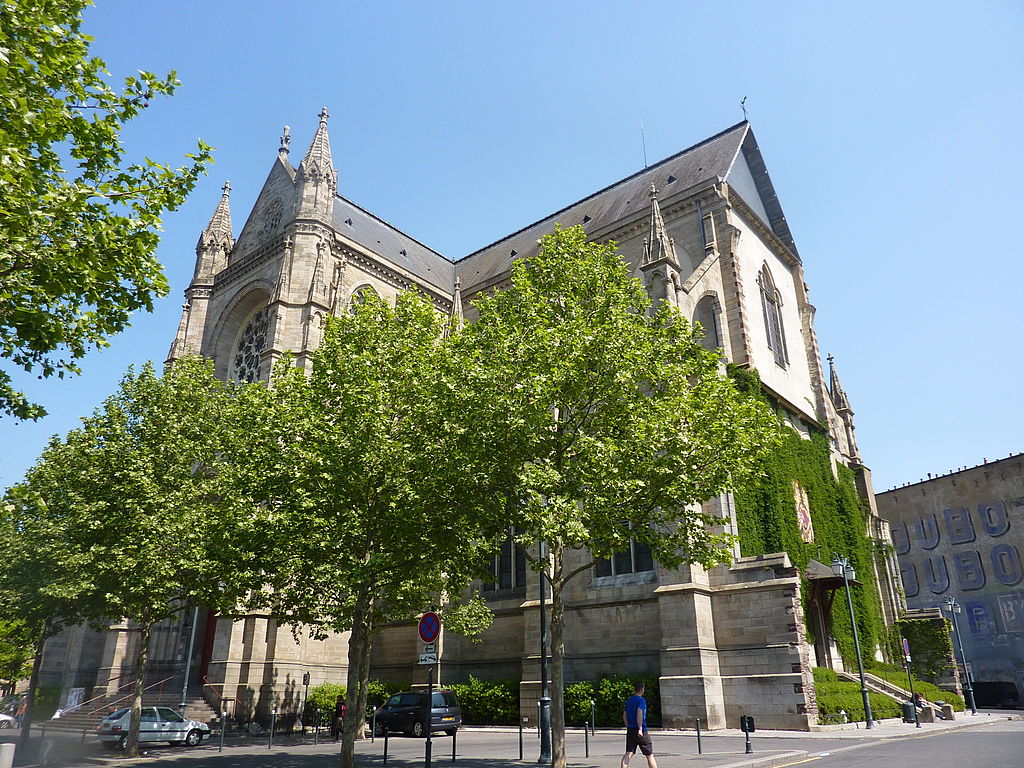
During the French Revolution, the silver model, was melted down. The Chapel was destroyed and the Convent used to store fodder. A gardener saved the holy image, which he gave to the neighbouring Church of St Aubin. In 1849, a cholera epidemic inspired a new vow. A new silver-plated model city was commissioned from Napoleon III’s goldsmith and the September votive feast reinstated. When St Aubin’s became too small for all the pilgrims, a new Church was built, dedicated in 1904 to St Aubin and Notre-Dame de Bonne Nouvelle.
The painting was canonically crowned in 1908. In recent years the votive feast has been held on the first Sunday in October rather than 8 September.

St Adalgott of Chur
Bl Agostina of the Assumption
St Candidus the Martyr
St Cyprian of Toulon
Bl Damian de Portu
St Dionysius the Aeropagite
Bl Dominic Spadafora
St Ewald the Black
St Ewald the Fair
St Froilan

St Gerard of Brogne (c 895 – 959) Priest, Abbot of Brogne, Reformer.

St Hesychius
Bl Juan Tapia
Bl Maddalena the Greater
St Maximian of Bagaia
St Menna

St Theodore Guerin SP (1798 – 1856) Religious, Foundress of the Sisters of Providence of Saint Mary-of-the-Woods and numberous schools, Educator.

Bl Utto of Metten
St Virila OSB (Died c 950) Abbot
St Widradus
—
Martyrs of Alexandria – 9 saints: A number of Christian martyrs remembered together. We know the names Caius, Cheremone, Dionysius, Eusebio, Fausto, Lucio, Maximus, Paul, Peter and that there were at least two more whose names have not come down to us, and that’s about all we know.

Martyrs of Brazil – 30 beati: On 25 December 1597 an expedition of colonists, with two Jesuit and two Franciscan evangelists, arrived at Natal, Rio Grande do Norte, Brazil. The region was colonized by Portuguese Catholics but was invaded by Dutch Calvinists who soon took over the whole territory. They immediately made a policy of the persecution of Catholics. On Sunday 16 July 1645 at Cunhau, Brazil, 69 people were gathered in the Chapel of Our Lady of the Candles for Mass celebrated by Father Andre de Soveral. At the moment of the elevation a group of Dutch soldiers attack the Chapel, murdering many of the faithful including Father Andre; the parishioners died professing their faith and asking pardon for their sins. On 3 October 1645, 200 armed Indians and a band of Flemish troops, led by a fanatical Calvinist convert, hacked to death an unknown number of people of Rio Grande including:
• Blessed Ambrosio Francisco Ferro
• Blessed André de Soveral
• Blessed Antônio Baracho
• Blessed Antônio Vilela
• Blessed Antônio Vilela Cid
• Blessed Diogo Pereira
• Blessed Domingos Carvalho
• Blessed Estêvão Machado de Miranda
• Blessed Francisco de Bastos
• Blessed Francisco Mendes Pereira
• Blessed João da Silveira
• Blessed João Lostau Navarro
• Blessed João Martins
• Blessed José do Porto
• Blessed Manuel Rodrigues de Moura
• Blessed Mateus Moreira
• Blessed Simão Correia
• Blessed Vicente de Souza Pereira
and other lay people whose names have not come down to us.
Posted in MARIAN TITLES

Our Lady of Guadalupe, Spain, (14th century) and Memorials of the Saints – 13 September

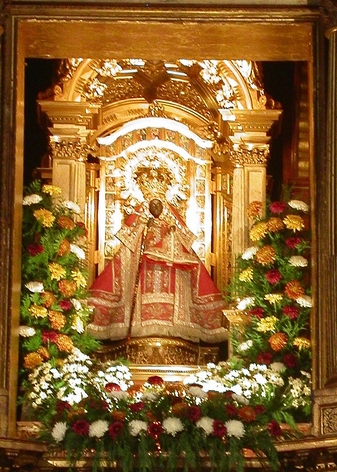
Our Lady of Guadalupe in Extremadura, Spain:

The original Our Lady of Guadalupe in Spain

The Marian shrine of Our Lady of Guadalupe is located in the Extremadura region of what was the Kingdom of Castile. The shrine houses a Black Madonna, a statue crafted by the loving hands of Saint Luke the Evangelist himself and given to Saint Leander, Archbishop of Seville, by Pope Gregory I. It is one of the fifteen Black Madonnas in Spain. The statue was canonically crowned on 12 October 1928 by Pope Pius XI with a crown designed and crafted by Father Felix Granda, and crowned in the presence of King Alfonso XIII of Spain.

Spain was invaded by the Muslims in the year 711. The beloved statue of the Blessed Virgin was taken by the Christians who fled before the advance of the invading hordes, placing the statue in a strongbox and burying it in a cave in the hills near the Guadalupe River in Extremadura. When those who had safeguarded the statue died, the existence of it and the knowledge of its location was lost.

In the year 1326, the Blessed Virgin appeared to a shepherd near the village of Guadalupe, asking him to have priests dig at the site of the apparition. When they did, the priests found the strongbox that had been buried in the earth over 600 years previously. It contained documents that identified the cherished statue that became known as Our Lady of Guadalupe. A Marian shrine was built there in her honor.

A copy of the Extremaduran image is enshrined in Loboc Church in the island province of Bohol, and has documented miracles attributed to the Virgin.

Immediately pilgrims began to visit the shrine dedicated to Our Lady of Guadalupe, and in 1340, King Alfonso XI endowed the sanctuary over which he took a particular interest. It was in that same year that Abu Hasan of Morocco had invaded the Iberian Peninsula with a huge army, intending to march into Castile and reverse the earlier Catholic expansion into what had been Muslim territory. The battle of Rio Salado had been hard fought, though it ended in a Christian victory that King Alfonso attributed to the intercession of the Blessed Virgin, Our Lady of Guadalupe.

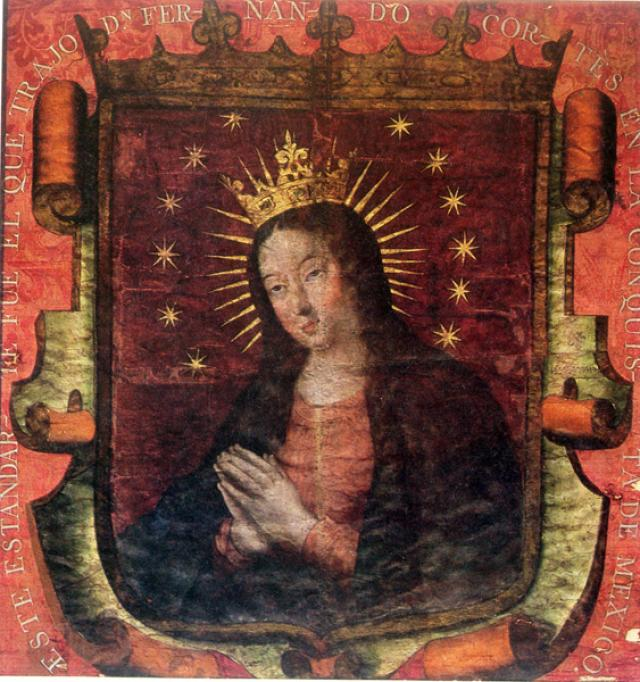
Banner of Cortés preserved in the Army Museum in Toledo (Spain)

In 1389 the Spanish architect, Juan Alphonso, began the church, which has walls ornamented with magnificent votive offerings, attesting to more than three thousand authentic miracles of the Blessed Virgin, Our Lady of Guadalupe.

The veneration for Our Lady of Guadalupe crossed the ocean, and was established by miracles in Mexico. The magnificent captain, Hernan Cortez, conquered the evil Aztec Empire under a Marian standard. Cortez himself was from Extremadura.

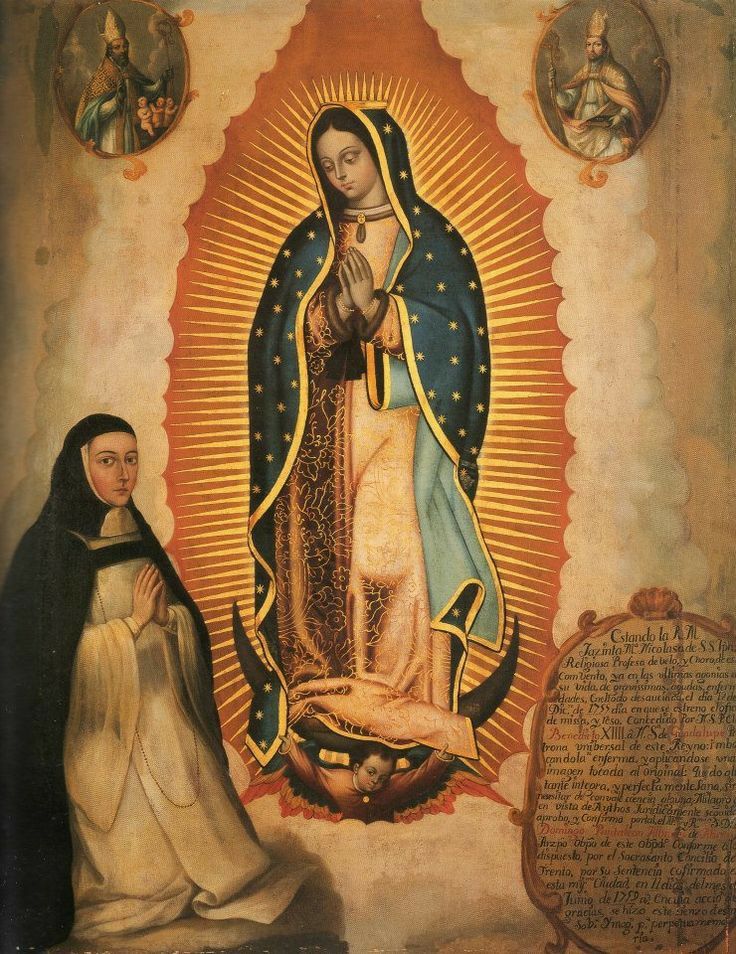
Our Lady of Guadalupe in Mexico

St John Chrysostom (347-407) “Golden Mouthed” Father & Doctor of the Church (Memorial of his Departure).

Dedication of the Basilicas of Jerusalem: Commemoration of the dedications of the Basilicas built on Mount Calvary and the Church of the Holy Sepulchre in Jerusalem.
—
St Aigulf

St Amatus OSB (c 560-c 627) Monk, Abbot, Hermit, Penitent, miracle-worker, together with St Romaric, he founded Remiremont Abbey.

St Barsenorius
Bl Claude Dumonet
St Columbinus of Lure
St Emiliano of Valence
St Evantius of Autun
St Gordian of Pontus
Bl Hedwig of Hreford
St Julian of Ankyra
St Ligorius
St Litorius of Tours
St Macrobius
St Marcellinus of Carthage
Bl María López de Rivas Martínez

St Maurilius of Angers (c 336-426) Bishop of Angers, Cantor for Saint Ambrose, (Bishop of Milan and Father and Doctor of the Church), Disciple of St Martin of Tours.

St Nectarius of Autun

St Notburga (c 1265-1313) Virgin
St Philip of Rome
St Venerius of Tino
—
Martyrs of Ireland:
• Blessed Edward Stapleton
• Blessed Elizabeth Kearney
• Blessed James Saul
• Blessed Margaret of Cashel
• Blessed Richard Barry
• Blessed Richard Butler
• Blessed Theobald Stapleton
• Blessed Thomas Morrissey
• Blessed William Boyton

Martyred in the Spanish Civil War including the Martyrs of Pozo de Cantavieja – 11 beati:
• Blessed Bienvenido Villalón Acebrón
• Blessed Emilio Antequera Lupiáñez
• Blessed Florencio Arnáiz Cejudo
• Blessed Francisco Rodríguez Martínez
• Blessed Joaquín Gisbert Aguilera
• Blessed José Álvarez-Benavides de La Torre
• Blessed José Cano García
• Blessed José Román García González
• Blessed Juan Capel Segura
• Blessed Juan Ibáñez Martín
• Blessed Luis Eduardo López Gascón
• Blessed Manuel Alvarez y Alvarez
• Blessed Manuel Martínez Giménez
• Blessed Pío Navarro Moreno
• Blessed Ramiro Argüelles Hevia
• Blessed Sabino Ayastuy Errasti
• Blessed Teófilo Montes Calvo