Posted in SAINT of the DAY

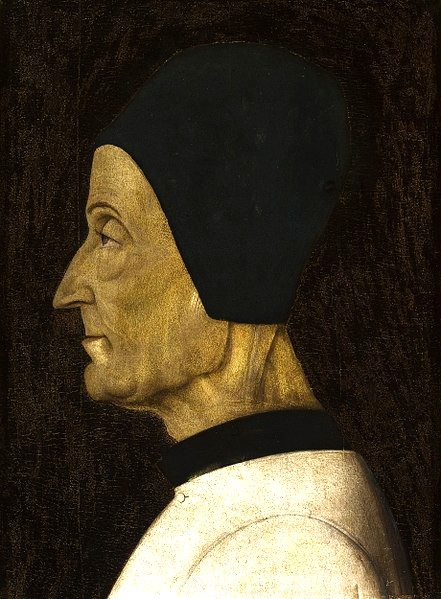
Saint of the Day – 5 September – Saint Lawrence Justinian (1381-1455)

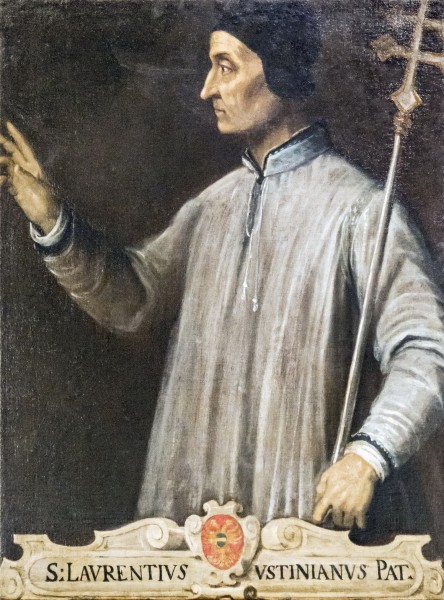
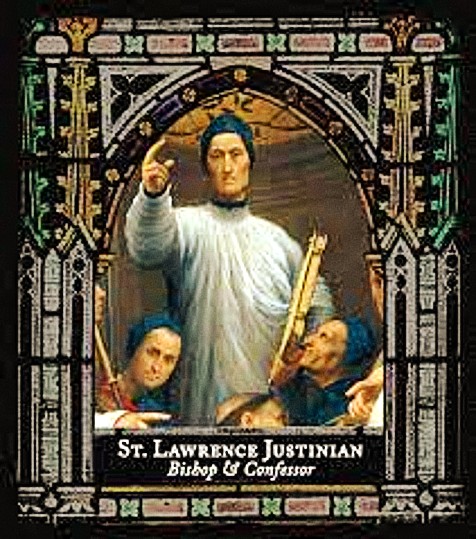
Saint of the Day – 5 September – Saint Lawrence Justinian (1381-1455) Bishop of Venice, Confessor, Reformer, Spiritual writer. Born on 1 September 1381 at Venice, Italy and died on 8 January 1455 at Venice of natural causes. Also known as – Lorenzo Giustiniani, Laurence…Laurentius…Patriarch of Venice. Patronage – Venice, Italy. Additional Memorial – 8 Jamuary.

The Roman Martyrology states of him today: “The Feast of St Lawrence Justinian, first Patriarch of Venice, who, by glorious miracles and virtues, illustrated the Episcopal dignity which he received against his will on this day. His birthday into Heaven is 8 January.”

Lawrence Justinian was a member of the well-known Giustiniani family, which includes several Saints. The piety of his mother seems to have served as an inspiration for his own piety and he chose a life of prayer and service. In 1404, after he had been Ordained a Deacon, at the suggestion of an uncle who was a Priest, he joined a community of Canons regular following a monastic form of life on the island of San Giorgio in Alga. He was admired by his fellows for his poverty, mortification and fervency of prayer. Two years after his Ordination to the Priesthood in 1407, the community accepted the Rule of St. Augustine. He was chosen to be the first Prior of the community.

Lawrence promoted the Constitutions which had been established for the Canons Regular of St George’S Monastery, which was embraced by other communities of Canons in the region and shortly thereafter, he became the Prior General of his Congregation. He was so zealous in spreading the merits of his community, that he was looked upon as if he were the actual Founder of the Order.

His great humility was a lesson to all his fellow Canons – when he went out begging, even to his own family home where the servants were embarrassed and as quickly as they could, gave him the bread he sought and then hrried him away, before the family were aware that their ‘child‘ was the beggar at the door.

Lawrence, although he had no great oratory skills preached very effectively, on the one hand, continuing to go around with his habit and saddlebag begging and, on the other hand, writing tirelessly.  He wrote for the learned and the ignorant, theological treatises and popular pamphlets, offering everyone a guide to personal reform in faith and practicing that faith. He urged the faithful to recover a sense of communion with the whole Church, he encouraged trust in God’s mercy rather than fear of His justice.

In 1433, Pope Eugene IV, one of the Founders of the Monastery of San Giorgio, named Lawrence as the Bishop of Castello. Although he resisted this elevation to the Episcopal dignity supported by his brother Canons in protest, Pope Eugene, who knew him very well, did not heed his protesting pretexts – his tiredness, the task too difficult, etc … He found a Diocese in disarray and his administration was marked by considerable growth and reform. In 1451, Pope Nicholas V united the Diocese of Castello with the Patriarchate of Grado, and the seat of the Patriarchate was moved to Venice, making Lawrence the first Patriarch of Venice, a post that he held for over four years.

It was during Lawrence’s rule that Constantinople fell to Muslim forces. Due to their centuries of close trading partnerships with the Byzantine Empire, the people of Venice were in distress as to their future. He took a leading role in helping the Republic to deal with the crisis, working with the Senate to help chart its future, as well as with the clergy and people.

He died on 8 January 1455 and was Canonised by Pope Alexander VIII (1689–1691) on 16 October 1690. His works, consisting of sermons, letters and ascetic treatises, have been frequently reprinted.

Pope Innocent XII (1691–1700) inserted his Feast day into the General Roman Calendar for celebration on 5 September, the Anniversary of his elevation to the Episcopate.

Duomo (Padua) – cappella di San Lorenzo Giustiniani – Statua di Lorenzo Giustiniani
Posted in MARIAN TITLES, SAINT of the DAY

Notre-Dame, Folgoët / Our Lady of Folgoët Finistère, Brittany, France (1650) and Memorials of the Saints – 5 September

The Fifteenth Sunday after Pentecost +2021
Twenty third Sunday in Ordinary Time

Notre-Dame, Folgoët / Our Lady of Folgoët Finistère, Brittany, France (1650) – First Sunday or the First Week of September:

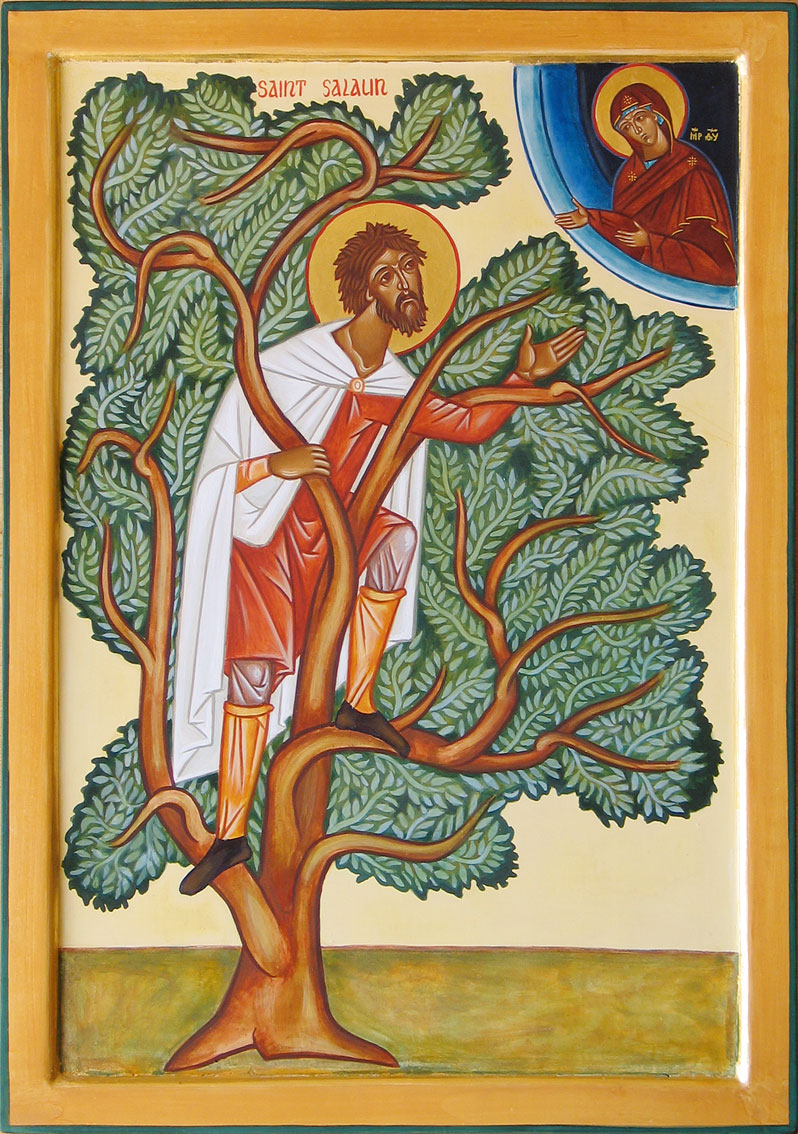
Known as the “the fool of the woods,St Salaün (Died1358 – Memorial on1 November) lived in a forest clearing near a spring, over which he enjoyed hanging from an oak branch, immersed to his shoulders, singing O Maria.” He lived by begging: “Ave Maria! Salaün could eat some bread!” After he died in 1358, aged 48, in the woods near the spring, people found a white lily with “Ave Maria” in gold lettering on its petals — growing from the mouth of the dead fool buried beneath.

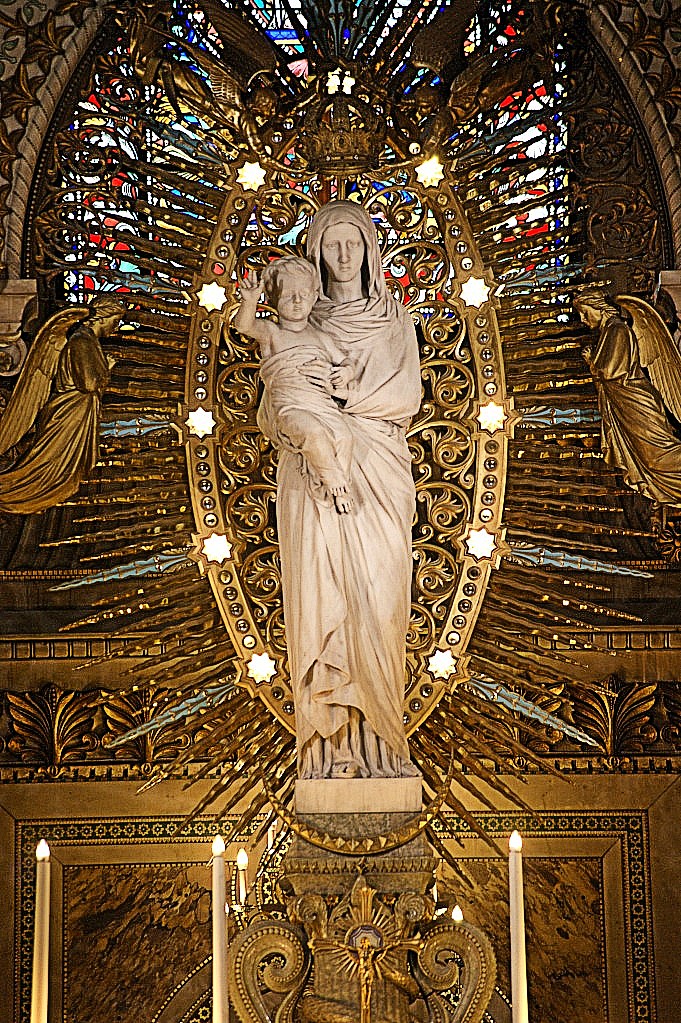
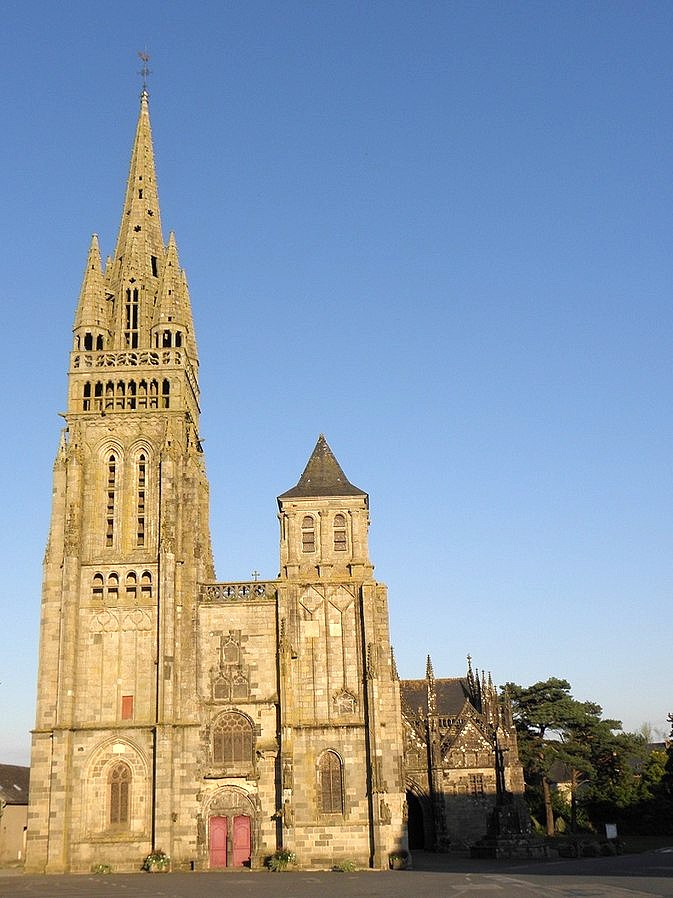
The Basilica of Notre-Dame du Folgoët was begun on the spot in 1365, completed in 1419 and consecrated in 1423. Its main Altar is over the spring, channeled into a basin behind the Church. In 1888, a dark stone Virgin was crowned Our Lady of Folgoët, replacing a polychrome wooden Statue which was moved to a side Altar. The Black Virgin is standing, holding the Child with her left arm; both wear large crowns. Her back is flat; the statue may have been on the exterior of the Church before the Revolution, when some Statues were damaged and removed for safekeeping from the marauding mobs of the French Revolution.

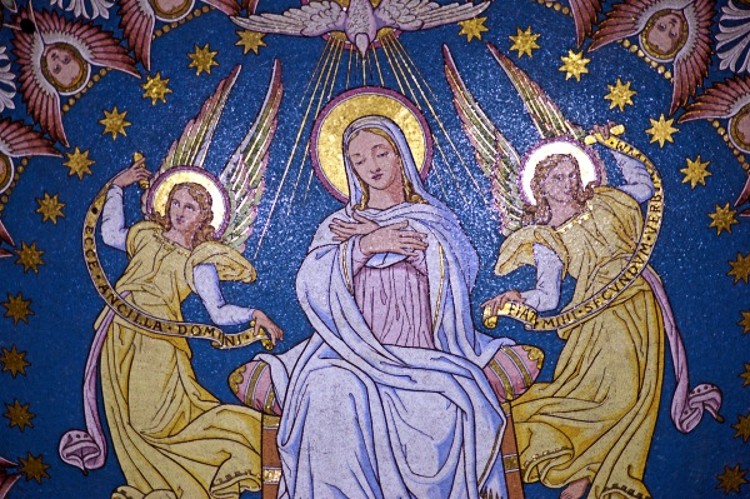
Basilica ceiling

In the late 1500s, the big pilgrimage date was 15 August Feast of the Assumption. Three hundred years later, the celebration moved to 8 September, Nativity of the Virgin. Since 1970 the Grand Pardon has been held the first weekend in September, with a succession of processions and Masses in the Breton language.

St Albert of Butrio

St Alvito de León (Died 1063) Bishop. Alvito was the Confessor to King Fernando I of León, a Monk and the Benedictine Abbot of the Sahagún Monastery.
His Life:
https://anastpaul.com/2020/09/05/saint-of-the-day-5-september-saint-alvito-de-leon-osb-died-1063/

Bl Anselm of Anchin
St Anseric of Soissons

St Bertin the Great (c 615-c 709) Benedictine Monk and Abbot, Missionary.
Biography:

https://anastpaul.com/2019/09/05/saint-of-the-day-5-september-saint-bertin-the-great-c-615-c-709/

St Charbel
Bl Florent Dumontet de Cardaillac
St Genebald of Laon
Bl Gendtilis
Bl Gerbrand of Dokkum
St Guise Hoang Luong Canh
Blessed John the Good OSA (c 1168-1249) Bishop
Bl Jordan of Pulsano
St Lawrence Justinian (1381-1455) Bishop
St Obdulia
St Phêrô Nguyen Van Tu
St Romulus of Rome

St Mother Teresa of Calcutta MC (1910-1997) Founder of the Order of the Missionaries of Charity, Apostle of Charity, Missionary, Nobel Peace Prize Winner 1978, Anti-Abortion Activist .
Full Biography here:

https://anastpaul.wordpress.com/2017/09/05/saint-of-the-day-5-september-st-mother-teresa-of-calcutta-mc/
And her story from the Vatican here:
https://anastpaul.com/2018/09/05/saint-of-the-day-5-september-st-teresa-of-calcutta-m-c-1910-1997/

St Victorinus of Amiterme
St Victorinus of Como
Bl William Browne

Martyrs of Armenia – 1,000 saints: A group of up to 1,000 Christian soldiers in the 2nd century imperial Roman army of Trajan, stationed in Gaul. Ordered to sacrifice to pagan gods, they refused and were transferred to Armenia. Ordered again to sacrifice to pagan gods, they refused again. Martyrs. We know the names of three of them, but nothing else – Eudoxius, Macarius and Zeno.

Martyrs of Capua – 3 saints: Three Christians who were martyred together. Long venerated in Capua, Italy. We know their names, but little else – Arcontius, Donatus and Quintius. They were martyred in Capua, Italy.

Martyrs of Nicomedia – 80 saints: A group of 80 Christians, lay and clergy, martyred together in the persecutions of Valens. We know little more than the names of three of them – Menedemo, Teodoro and Urbano. They were locked on a boat which was then set on fire on the shore of Nicomedia, Bithynia (in modern Turkey) c 370.

Martyrs of Porto Romano – 4+ saints: A group of Christians martyred together in the persecutions of Marcus Aurelius. We know little more than their names – Aconto, Herculanus, Nonno and Taurino. c180 at Porto Romano, Italy.

Posted in CHRIST the LIGHT, CHRIST, the WAY,TRUTH,LIFE, FEASTS and SOLEMNITIES, I BELIEVE!, JANUARY month of THE MOST HOLY NAME of JESUS, QUOTES for CHRIST, QUOTES of the SAINTS, QUOTES on FAITH, QUOTES on SUFFERING, QUOTES on TEMPTATION, SOLDIERS/ARMOUR of CHRIST, The HOLY NAME, The WILL of GOD

Quote/s of the Day – 3 January – The Power of the Most Holy Name of Jesus

Quote/s of the Day – 3 January – Feast of the Most Holy Name of Jesus

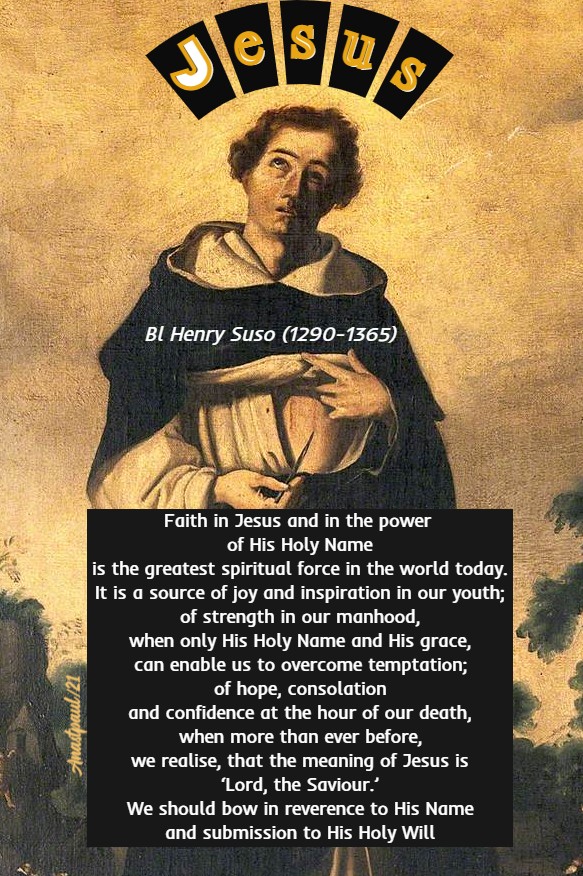
“Faith in Jesus and in the power of His Holy Name
is the greatest spiritual force in the world today.
It is a source of joy and inspiration in our youth;
of strength in our manhood,
when only His Holy Name and His grace,
can enable us to overcome temptation;
of hope, consolation
and confidence at the hour of our death,
when more than ever before,
we realise, that the meaning of Jesus is
‘Lord, the Saviour.’
We should bow in reverence to His Name
and submission to His Holy Will.”

Bl Henry Suso (1290-1365)

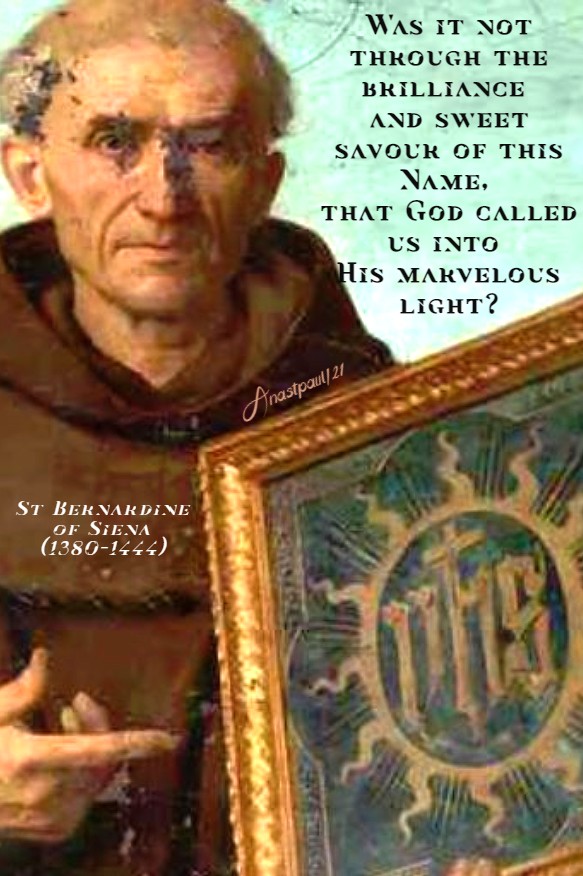
“Was it not through the brilliance
and sweet savour of this Name,
that God called us into
His marvelous light?”

St Bernardine of Siena (1380-1444)

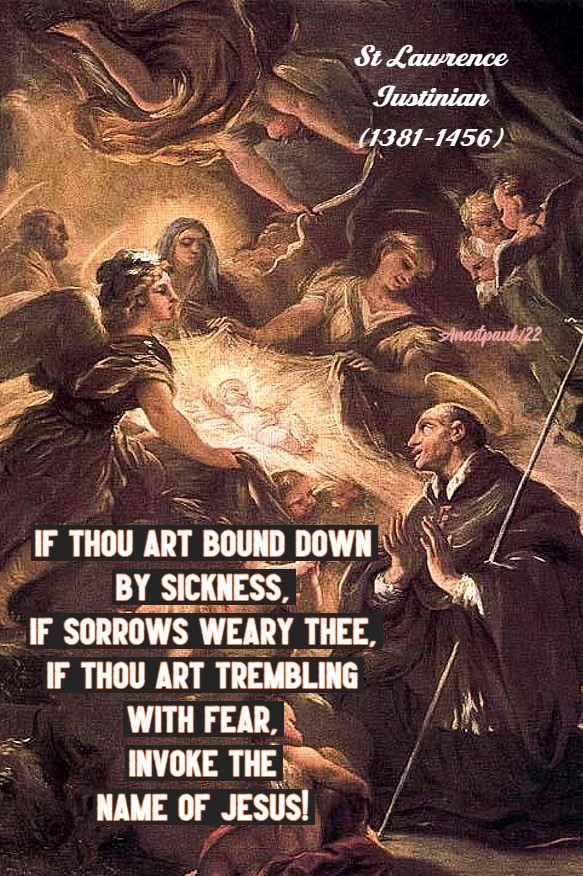
“If thou are bound down by sickness,
if sorrows weary thee,
if thou are trembling with fear,
invoke the name of Jesus.”

St Lawrence Justinian (1381-1456)

More here:
https://anastpaul.com/2019/01/03/quote-s-of-the-day-3-january-the-feast-of-the-most-holy-name-of-jesus/