Posted in franciscan OFM, SAINT of the DAY

Saint of the Day – 13 August – Blessed Mark of Aviano OFM Cap (1631-1699)

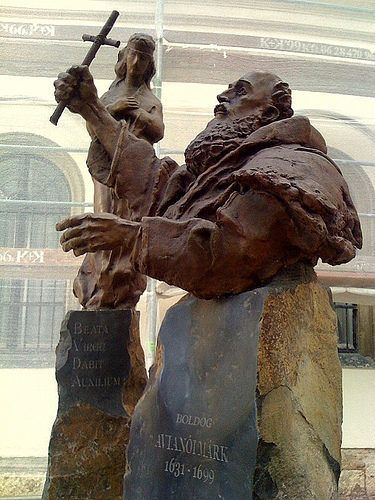
Saint of the Day – 13 August – Blessed Mark of Aviano OFM Cap (1631-1699) – Franciscan Capuchin Friar, Priest, Preacher, Spiritual Advisor, Political Advisor, Peace-maker, Miracle worker and the inventor of Cappuccino – born on 17 November 1631 at Aviano, Italy as Carlo Domenico Cristofori and died on 13 August 1699 of cancer in Vienna, Austria.bl mark - header 1

Carlo Domenico Cristofori was born in Aviano, a small community in the Republic of Venice (Italy).   Educated at the Jesuit College in Gorizia, at 16 he tried to reach the island of Crete, where the Venetians were at war with the Ottoman Turks, in order to preach the Gospel and convert the Muslims to Christianity.   On his way, he sought asylum at a Capuchin convent in Capodistria, where he was welcomed by the Superior, who knew his family and who, after providing him with food and rest, advised him to return home.

Inspired by his encounter with the Capuchins, he felt that God was calling him to enter their Order.   In 1648, he began his novitiate.   A year later, he professed his vows and took his father’s name, Marco, becoming Fra’ Marco d’Aviano.   On 18 September 1655 he was ordained a priest in Chioggia.   His ministry entered a new phase in 1664, when he received a licence to preach throughout the Republic of Venice and other Italian states, particularly during Advent and Lent.   He was also given more responsibility when he was elected Superior of the convents of Belluno in 1672 and Oderzo in 1674.

His life took an unexpected turn in 1676, when he gave his blessing to a nun, bedridden for some 13 years, she was miraculously healed.   The news spread far and wide and it was not long before the sick and many others from all social strata, began to seek him out.

header bl mark

Among those who sought his help was Leopold I, Holy Roman Emperor, whose wife had been unable to conceive a male heir.   From 1680 to the end of his life, Marco d’Aviano became a close confidant and adviser to him, providing the irresolute and often indecisive emperor with guidance and advice for all problems, political, economic, military or spiritual.   His forceful, energetic and sometimes passionate and fiery personality proved a good complement for Leopold’s Hamlet-like tendency to allow endless doubts and scruples to paralyse his capacity for action.

As the danger of war with the Ottoman Turks grew near, Marco d’Aviano was appointed by Pope Innocent XI (Memorial yesterday) as his personal envoy to the Emperor.   An impassioned preacher and a skillful mediator, Marco d’Aviano played a crucial role in resolving disputes, restoring unity and energising the armies of the Holy League, which included Austria, Poland, Venice and the Papal States under the leadership of the Polish king Jan III Sobieski.   In the decisive Battle of Vienna (1683), the Holy League succeeded in inflicting a defeat on the invading Ottoman Turks.   This marked the end of the last Turkish attempt to expand their power in Europe and the beginning of the long European counter-offensive that was to continue ultimately until the disintegration of the Ottoman Empire in 1918.   This may therefore be considered one of the decisive battles of history.   It also put an end to the period of Ottoman revival in Europe.

From 1683 to 1689 Marco participated in the military campaigns, playing a crucial role in promoting good relations within the Imperial army and encouraging the soldiers.   He was present at the liberation of Buda in 1686 and at the siege of Belgrade in 1688.   He always maintained a strictly religious spirit, to which any violence and cruelty were repugnant.   As a result, at the siege of Belgrade several hundred Muslim soldiers successfully appealed to him personally, in order to avoid being massacred upon capture.

In the 2012 Polish and Italian historical drama film The Day of the Siege: September Eleven 1683 about the Battle of Vienna, Marco d’Aviano is portrayed by F. Murray Abraham.

Polish_poster_for_the_film_September_Eleven_1683

bl mark aviano statue

Legend has it that when the Ottomans fled before the European army, they left behind a lot of their strong, bitter coffee.   The Christian soldiers, to make this liberated coffee more palatable, mixed it with honey and milk and named the drink after Mark’s Order, the Capuchins and thus Cappuccino was created.    It is probably just a fable but I favour believing it, allowing the reminder of a quick prayer to Blessed Mark whenever I drink one.   We can never have too many intercessors, can we?

In the judgement of historians, Marco’s influence over Leopold was exercised responsibly, in the sole interests of Christianity and of the House of Austria.   In one of his private letters to the Emperor, Marco actually scolds him quite forcefully for granting a benefit to one of his brothers, reminding him that, by so doing, he was only providing ammunition for the enemies of their cause.

Blessed Mark died of cancer on August 13, 1699 in Vienna.   He is buried in the Kapuzinerkirche, in whose vault the Habsburg emperors are buried.   He was Beatified on 27 April 2003 by St Pope John Paul II.

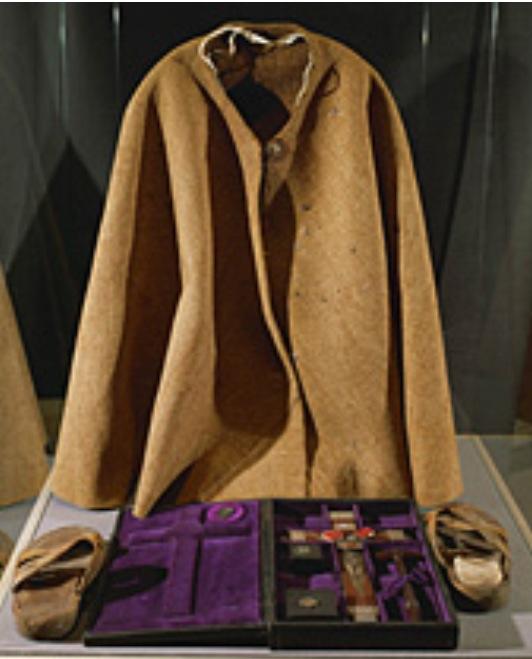
garments and relics - bl mark
Relics of Blessed Mark
Posted in MARIAN DEVOTIONS, MARIAN TITLES, SAINT of the DAY, The BLESSED VIRGIN MARY

Feast of Our Lady, Refuge of Sinners/Refugium Peccatorum and Memorials of the Saints – 13 August

St Pope Pontian Martyr (Died 235) (Optional Memorial)
St Hippolytus (170 – 235) Martyr (Optional Memorial)

Details of St Pope Pontian & St Hippolytus here: https://anastpaul.wordpress.com/2017/08/13/saints-of-the-day-13-august-st-pope-pontian-and-st-hippolytus-martyrs/

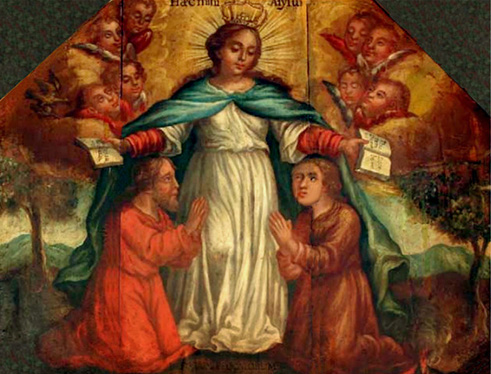
Our Lady, Refuge of Sinners/Refugium Peccatorum:   St John Damascene calls Mary a city of refuge to all who flee to Her.   This idea of a city of refuge is an old Scriptural fact calling attention to the humanity, the pity, of the old Jewish Law, which established certain cities of refuge where criminals might find escape from the arm of the authorities.   For instance there were no less than six Levitical Cities, three on either side of the Jordan, where men who had been guilty of the act of involuntary homicide might find protection and immunity, until they were released from banishment by the death of the High Priest.   These six cities were obliged to receive the homicides and to lodge them without any charge.   But there were at least 48 cities which had this privilege of asylum. Nor was it a peculiarly Jewish custom.   Even the Greeks and Romans had their cities of asylum.   The Jewish idea was brought into Christianity. One of the beautiful customs in the Middle Ages was “the right of sanctuary,” by which those who ran foul of the law could not be taken so long as they remained in the Church, or sanctuary.   And this is Our Lady, Refuge of Sinners!
Refugium Peccatorum is one part of four Marian advocations in the Litany of Loreto, the others being Salus Infirmorum (healer of the sick) Consolatrix Afflictorum (consoler of the afflicted) and Auxilium Christianorum (help of Christians).   Each advocation extolling Mary’s role as advocate for spiritual and corporeal mercy has a rich history but in general, the notion of asking the Blessed Virgin Mary for help in temporal needs dates back to Saints Justin Martyr, Irenaeus and Ambrose of Milan.
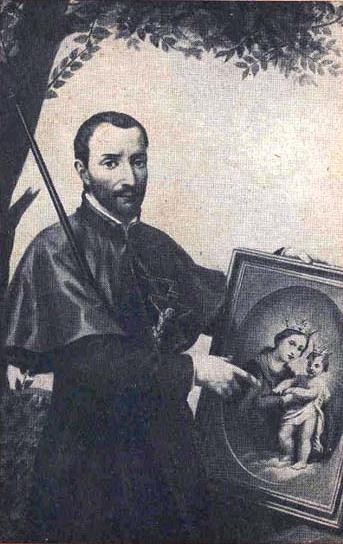
The 18th century Jesuit preacher, Blessed Antonio Baldinucci (1665-1717) had a particular devotion to the Refugium Peccatorum image of Virgin Mary in the Church of the Gesu (Frascati) in Italy and commissioned a copy which he considered miraculous and carried it with him in his travels.   The Jesuits spread copies of the image of the Madonna of Refuge in Mexico by the 19th century and it began to be depicted in missions there, often with clouds surrounding the lower portion of the image of the Virgin Mary holding the Child Jesus.

Antonio_Baldinucci
The term “Refugium peccatorum” is also used other works of Roman Catholic Marian art. For instance, there is a marble statue representing the Virgin Mary, on the grand staircase of the old municipal palace in Venice, Italy.   The name came from the fact that the convicts were allowed to stop in front of the Virgin Mary’s statue to pray for their soul on the way to the scaffold.
The traditional feast day of Our Lady, Refuge of Sinners is today, 13 August.refuge-of-sinners

St Anastasius the Monk
St Anastasius the Priest
St Benildus
St Cassian of Imola
St Cassian of Todi
St Concordia
St Conn O’Rourke
Bl Gertrude of Altenberg
St Helen of Burgos
St Herulph of Langres
Bl Jakob Gapp
Bl John of Alvernia
St John Berchmans S.J. (1599-1621)

St Junian of Mairé
St Ludolph
Bl Marco d’Aviano/Mark of Aviano OFM Cap (1631-1699)
St Maximus the Confessor
St Nerses Glaietsi
St Patrick O’Healy
Bl Pierre Gabilhaud
St Radegund
St Radegunde
St Wigbert of Fritzlar
Bl William Freeman

Martyred in the Spanish Civil War:
• Blessed Francesc Castells Areny
• Blessed Inocencio García Díez
• Blessed José Bonet Nadal
• Blessed José Boher y Foix
• Blessed José Juan Perot y Juanmarti
• Blessed Jose Tàpies y Sirvant
• Blessed Josep Alsina Casas
• Blessed Luciano Hernández Ramírez
• Blessed Maria de Puiggraciós Badia Flaquer
• Blessed Mateo Despóns Tena
• Blessed Modesto García Martí
• Blessed Pascual Araguàs y Guàrdia
• Blessed Pedro Martret y Molet
• Blessed Silvestre Arnau y Pascuet

Martyred Claretians of Barbastro – 51 beati:
• Blessed Agustín Viela Ezcurdia
• Blessed Alfons Miquel Garriga
• Blessed Alfons Sorribes Teixidó
• Blessed Antolín Calvo y Calvo
• Blessed Antoni Dalmau Rosich
• Blessed Atanasio Vidaurreta Labra
• Blessed Eduardo Ripoll Diego
• Blessed Esteve Casadevall Puig
• Blessed Eusebi Maria Codina Millà
• Blessed Felipe de Jesús Munárriz Azcona
• Blessed Francesc Roura Farró
• Blessed Francisco Castán Meseguer
• Blessed Gregorio Chirivas Lacamba
• Blessed Hilario Llorente Martín
• Blessed Jaume Falgarona Vilanova
• Blessed Joan Baixeras Berenguer
• Blessed Joan Codinachs Tuneu
• Blessed José Amorós Hernández
• Blessed José Blasco Juan
• Blessed José Figuero Beltrán
• Blessed José Pavón Bueno
• Blessed Josep Maria Badía Mateu
• Blessed Josep Ormo Seró
• Blessed Josep Ros Florensa
• Blessed Juan Díaz Nosti
• Blessed Juan Echarri Vique
• Blessed Juan Sánchez Munárriz
• Blessed Leoncio Pérez Ramos
• Blessed Lluís Escalé Binefa
• Blessed Lluís Lladó Teixidor
• Blessed Lluís Masferrer Vila
• Blessed Manuel Buil Lalueza
• Blessed Manuel Martínez Jarauta
• Blessed Manuel Torras Sais
• Blessed Miquel Masip González
• Blessed Nicasio Sierra Ucar
• Blessed Pedro García Bernal
• Blessed Pere Cunill Padrós
• Blessed Rafael Briega Morales
• Blessed Ramon Illa Salvia
• Blessed Ramon Novich Rabionet
• Blessed Salvador Pigem Serra
• Blessed Sebastià Riera Coromina
• Blessed Sebastián Calvo Martínez
• Blessed Secundino Ortega García
• Blessed Teodoro Ruiz de Larrinaga García
• Blessed Tomàs Capdevila Miró
• Blessed Wenceslau Clarís Vilaregut
They were martyred on 2 August through 18 August 1936 in Barbastro, Huesca, Spain and Beatified on 25 October 1992 by Pope John Paul II.

Posted in MORNING Prayers, QUOTES of the SAINTS, SUNDAY REFLECTIONS, The HOLY CROSS, The HOLY EUCHARIST / The HOLY MASS

Sunday Reflection – 12 August – Nineteenth Sunday in Ordinary Time, Year B

Sunday Reflection – 12 August – Nineteenth Sunday in Ordinary Time, Year B

Jesus, our Daily Sacrifice

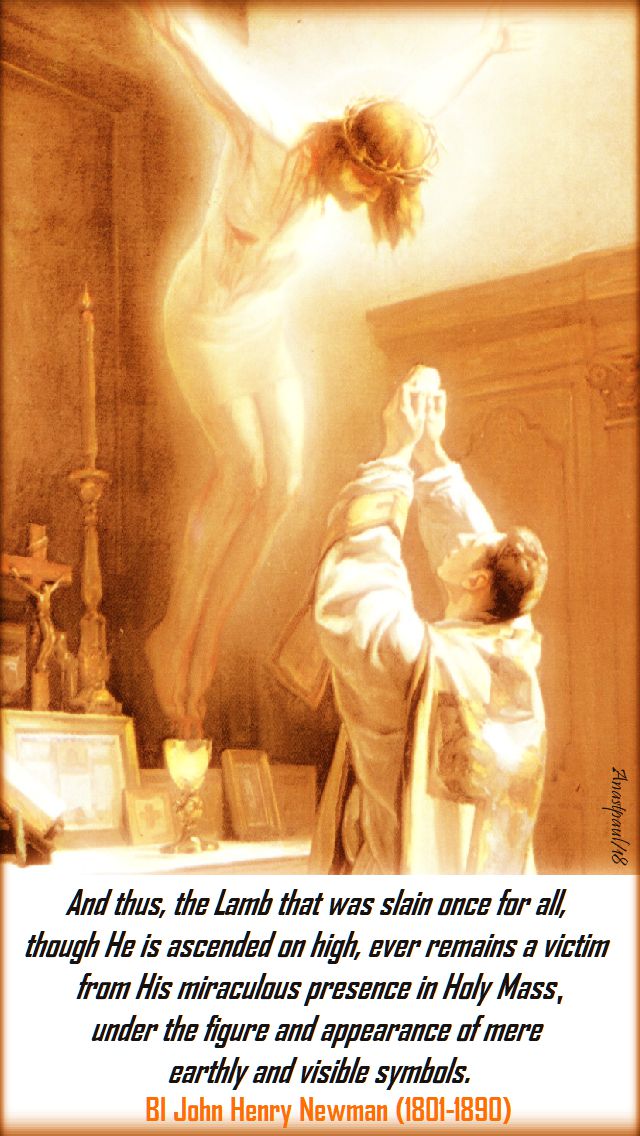
“Our Lord not only offered Himself as a Sacrifice on the Cross but He makes Himself a perpetual, a daily Sacrifice, to the end of time.

In the Holy Mass, that One Sacrifice on the Cross once offered is renewed, continued, applied to our benefit.
He seems to say, ‘My Cross was raised up 1800 years ago – and only for a few hours and very few of my servants were present there – but I intend to bring millions into my Church.   For their sakes then, I will perpetuate My Sacrifice, that each of them may be as though they had severally been present on Calvary.   I will offer Myself up, day by day to the Father, that everyone of my followers, may have the opportunity to offer his petitions to Him, sanctified and recommended by the all-meritorious virtue of My Passion.   Thus, I will be a Priest forever, after the order of Melchisedech – My priests shall stand at the Altar – but not they but I rather, will offer.   I will not let them offer mere bread and wine but I Myself, will be present upon the Altar instead and I will offer up Myself invisibly, while they perform the outward rite.’

And thus, the Lamb that was slain once for all, though He is ascended on high, ever remains a victim from His miraculous presence in Holy Mass under the figure and appearance of mere earthly and visible symbols.”

Blessed John Henry Newman (1801-1890)
Jesus, our Daily Sacrifice, Prayers, Verses and Devotionsand thus, the lambe that was slain - bl j h newman - 12 aug 2018 - sunday reflection

Posted in DOCTORS of the Church, FATHERS of the Church, MORNING Prayers, QUOTES of the SAINTS, QUOTES on FAITH, QUOTES on JOY, QUOTES on PATIENCE, QUOTES on PEACE, QUOTES on PERSEVERANCE, QUOTES on SANCTITY, SAINT of the DAY

Thought for the Day – 12 August – The Memorial of St Jane Frances de Chantal (1572-1641)

Thought for the Day – 12 August – The Memorial of St Jane Frances de Chantal (1572-1641)

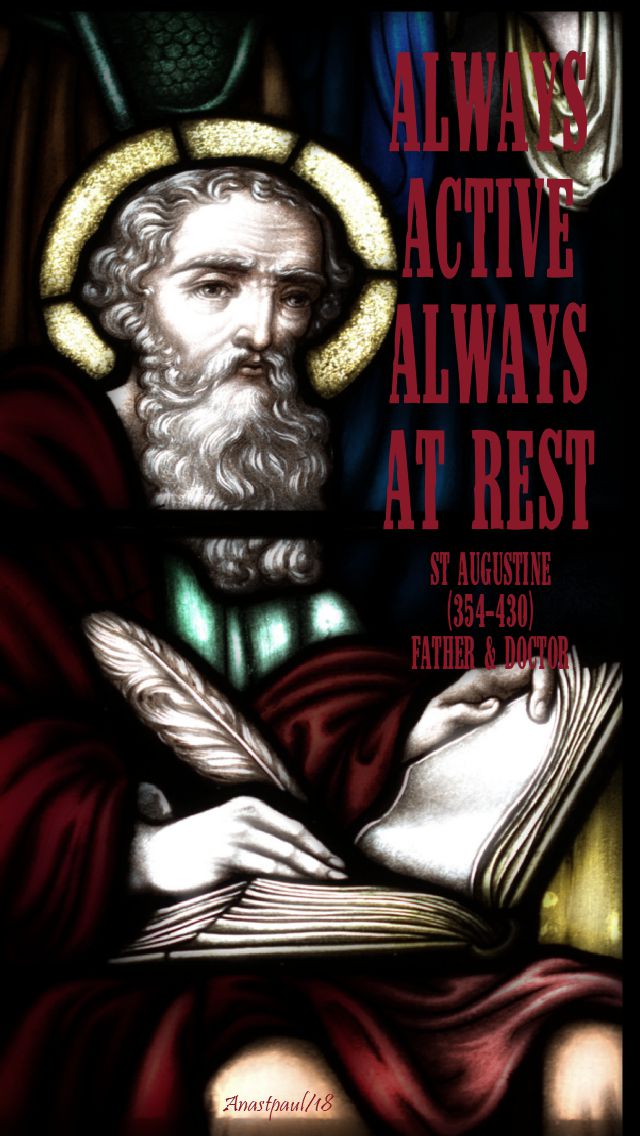
Always active, always at rest. – St Augustine (354-430) Father & Doctoralways active always at rest - st augustine - 12 august 2018

At the age of sixteen, Jane Frances de Frémyot, already a motherless child, was placed under the care of a worldly-minded governess.   In this crisis, she offered herself to the Mother of God and secured Mary’s protection for life.   When a Protestant sought her hand, she steadily refused to marry “an enemy of God and His Church” and shortly afterwards, as the loving and beloved wife of the Baron de Chantal, made her house the pattern of a Christian home.
But God had marked her for something higher than domestic sanctity.   Two children and a dearly beloved sister died and, in the full tide of prosperity, her husband’s life was taken by the innocent hand of a friend.   For seven years the sorrows of her widowhood were increased by ill-usage from servants and inferiors and the cruel importunities of friends, who urged her to marry again.   Harassed almost to despair by their entreaties, she branded on her heart the name of Jesus and in the end left her beloved home and children to live for God alone.
It was on the 19th of March 1609, that Madame de Chantal bade farewell to her family and relations.   Pale, and with tears in her eyes, she passed round the large room, sweetly and humbly taking leave of each.   Her son, a boy of fifteen, used every entreaty, every endearment, to induce his mother not to leave them and at last passionately flung himself across the door of the room.   In an agony of distress, she passed on over the body of her son to the embrace of her aged and disconsolate father.   The anguish of that parting reached its height when, kneeling at the feet of the venerable old man, she sought and obtained his last blessing, promising to repay in her new home his sacrifice by her prayers.
Well might St Francis call her “the valiant woman.”
She was to found with St Francis de Sales a great Order.   Sickness, opposition, want, beset her and the death of children, friends and of St Francis himself followed, while eighty-seven houses of the Visitation rose under her hand.   Nine long years of interior desolation completed the work of God’s grace and in her seventieth year, St Vincent of Paul saw, at the moment of her death, her soul ascend, as a ball of fire, to heaven.

May we all rest in Christ and His Mother!

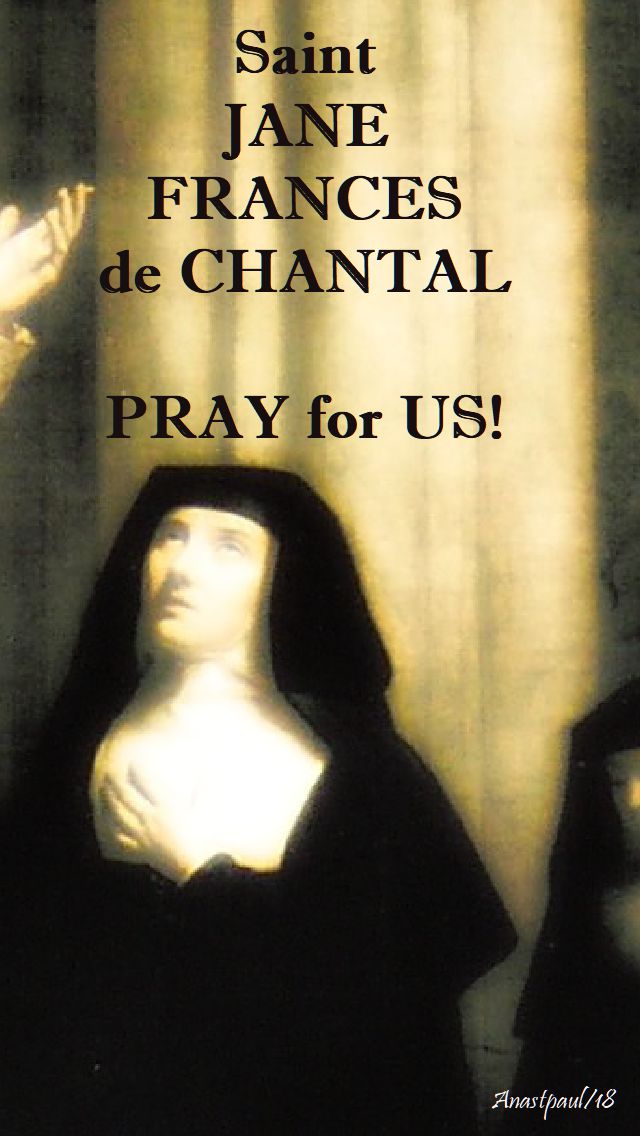
St Jane Frances de Chantal, Pray for us!st jane frances de chantal pray for us - 12 aug 2018

Posted in MORNING Prayers, QUOTES of the SAINTS, QUOTES on PERSEVERANCE, QUOTES on PRAYER, QUOTES on TRUST and complete CONFIDENCE in GOD, SAINT of the DAY

Quote/s of the Day – 12 August – The Memorial of St Jane Frances de Chantal (1572-1641)

Quote/s of the Day – 12 August –

The Memorial of St Jane Frances de Chantal (1572-1641)

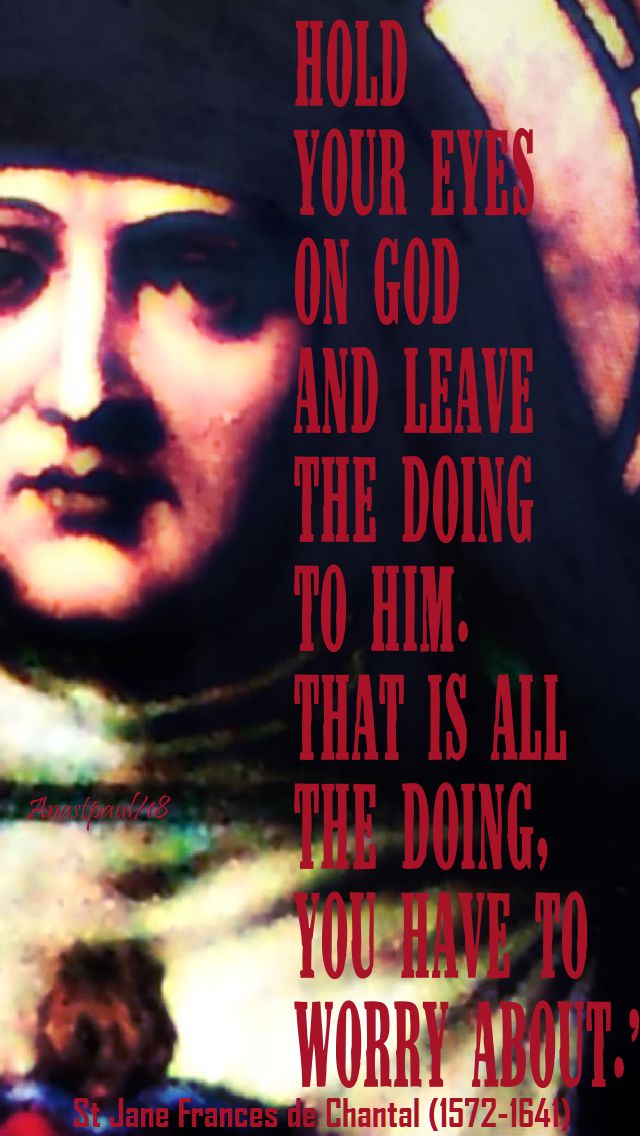
“Hold your eyes on God
and leave the doing to Him.
That is all the doing,
you have to worry about.”

St Jane Frances de Chantal (1572-1641)

(More Quotes by St Jane here:  https://anastpaul.wordpress.com/2017/08/12/quotes-of-the-day-12-august-the-memorial-of-st-jane-frances-de-chantal-1572-1641/ )hold your eyes on god - st jane de chantal - 12 aug 2018

Posted in DOCTORS of the Church, FATHERS of the Church, MORNING Prayers, QUOTES of the SAINTS, SAINT of the DAY, The HOLY EUCHARIST / The HOLY MASS, The WORD

One Minute Reflection – 12 August – Today’s Gospel: John 6:41–51

One Minute Reflection – 12 August – Nineteenth Sunday in Ordinary Time, Year B – Today’s Gospel: John 6:41–51

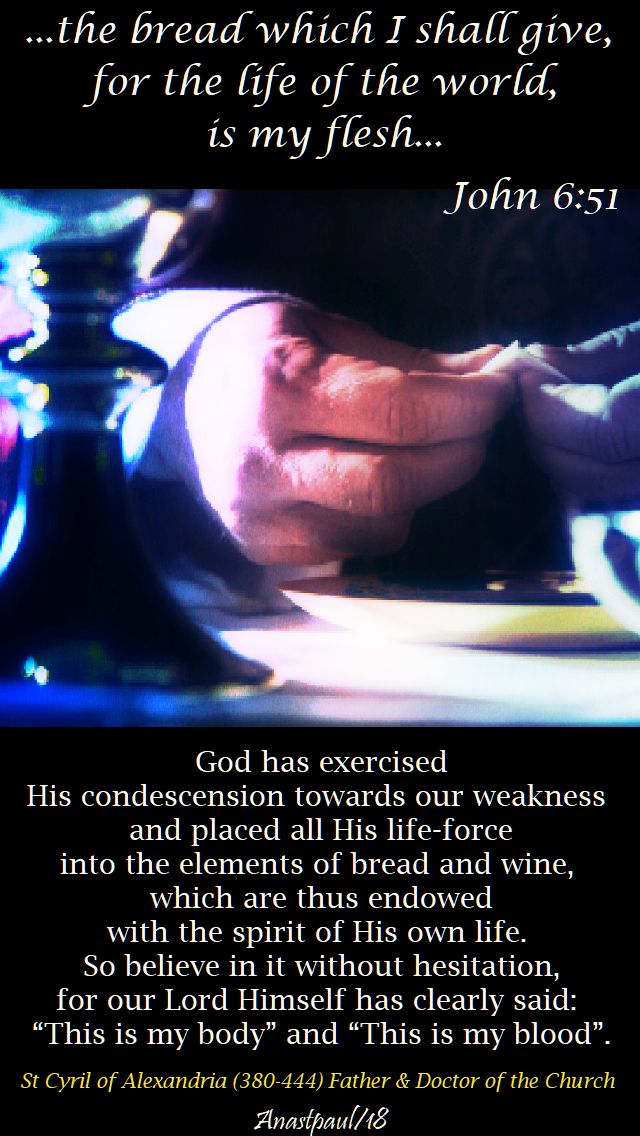
…the bread which I shall give, for the life of the world is my flesh...John 6:51

REFLECTION – “How could humankind, which remained riveted to the earth and subject to death, gain entry to immortality once more?   Its flesh had to become assimilated to the life-giving force in God. Now, God the Father’s life-giving force is His Word, His only Son, and so it was He whom God sent as Saviour and Redeemer…
If you put a breadcrumb into oil, water or wine, it at once soaks up their properties. If you place iron into contact with fire it will shortly become full of the fire’s energy and, even though by nature it is only iron, will take on the appearance of fire.   In the same way, then, God’s life-giving Word, by uniting Himself to the flesh He assumed, caused it to become life giving.
Did He not say: “Whoever believes in me has eternal life. I am the bread of life.”   And again: “I am the living bread that came down from heaven; whoever eats this bread will live for ever and the bread that I will give is my flesh… Unless you eat the flesh of the Son of Man and drink his blood, you do not have life within you.”   So then, by eating the flesh of Christ, the Saviour of us all and drinking His blood, we have life in ourselves, we become one with Him, we remain in Him and He in us.
Therefore it is for Him to enter within us, through the Holy Spirit, in a way fitting to God and to mingle with our body, after a fashion, through the holy flesh and precious blood, we receive, under the forms of bread and wine, as our life-giving blessing.   Indeed…, God has exercised His condescension towards our weakness and placed all His life-force into the elements of bread and wine, which are thus endowed with the spirit of His own life. So believe in it without hesitation, for our Lord Himself has clearly said: “This is my body” and “This is my blood”.”…St Cyril of Alexandria (380-444) Bishop, Father & Doctor of the Churchthe bread which i shall give john 6 51 - god has exercised his condescension - st cyril of alex - 12 aug 2018

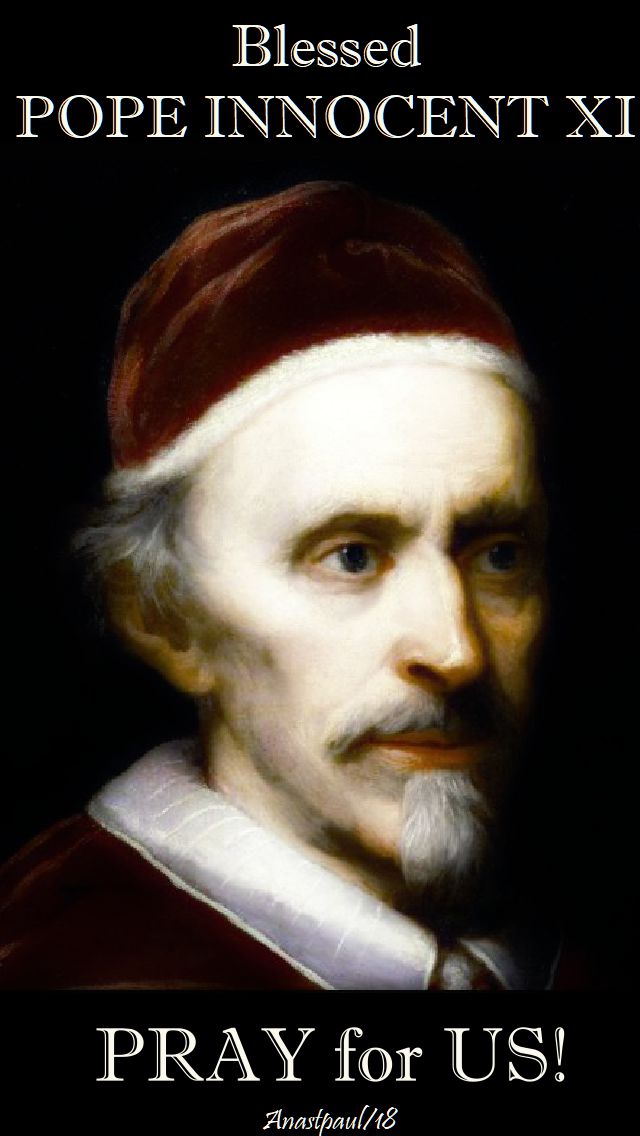
PRAYER – Almighty God and Father, by Your grace, we are made one in mind and heart. Give us a love for what You command and a longing for what You promise, so that, amid this world’s changes, our hearts may be set on the world of lasting joy.   Grant, we pray that by the prayers of St Jane de Chantal and Blessed Pope Innocent XI, we will be made always faithful and may Mary, the Mother of our life, lead us to our everlasting joy, Your Son, Jesus Christ.   Through Him, with Him and in Him, in the union of the Holy Spirit, one God forever, amen.st-jane-de-chantal-pray-for-us=12 august 2017bl pope innocent xi - pay for us - 12 august 2018

Posted in DOCTORS of the Church, MORNING Prayers, PRAYERS of the SAINTS, The HOLY EUCHARIST / The HOLY MASS

Our Morning Offering – 12 August – Nineteenth Sunday in Ordinary Time, Year B

Our Morning Offering – 12 August – Nineteenth Sunday in Ordinary Time, Year B

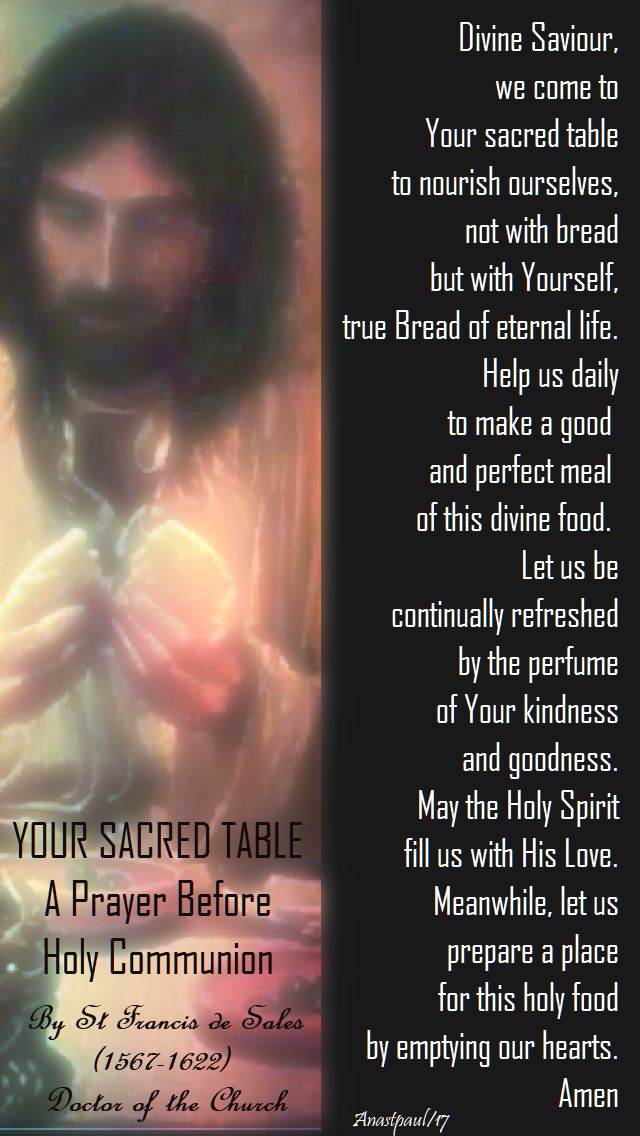
Your Sacred Table
A Prayer Before Holy Mass and Communion
By Saint Francis de Sales (1567-1622) Doctor of the Church

Divine Saviour,
we come to Your sacred table
to nourish ourselves,
not with bread but with Yourself,
true Bread of eternal life.
Help us daily to make a good and perfect meal
of this divine food.
Let us be continually refreshed
by the perfume of Your kindness and goodness.
May the Holy Spirit fill us with His Love.
Meanwhile, let us prepare a place
for this holy food by emptying our hearts.
Amenyour sacred table - prayer before holy comm - st francis de sales - 5 nov 2017

Posted in SAINT of the DAY

Saint of the Day – 12 August – Blessed Pope Innocent XI (1611-1689)

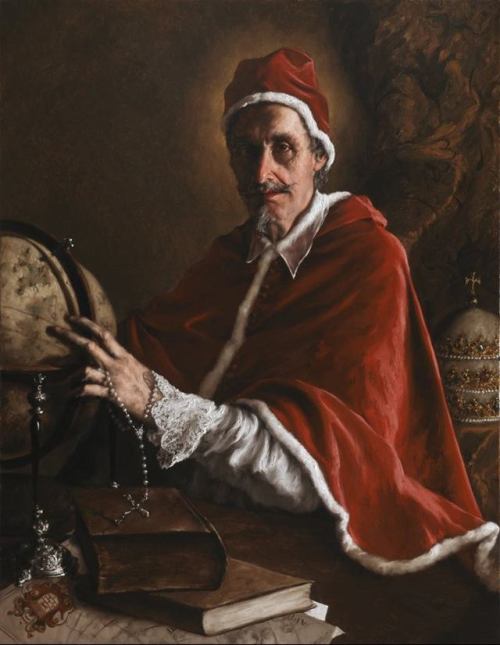
Saint of the Day – 12 August – Blessed Pope Innocent XI (1611-1689) Bishop of Rome, Lawyer, Apostle of Charity, Reformer, Administrator – born Benedetto Odescalchi on 19 May 1611 at Como, Italy and died on 12 August 1689 at Rome, Italy of natural causes.   Patronage – Diocese of Novara, Diocese of Como.   He is known in Budapest as the “Saviour of Hungary” and “Father of the Poor”   Papal Ascension – he was elected unanimously on 21 September 1676 and installed on 4 October 1676 and reigned until his death.Inocencius_XI

Blessed Innocent was born to a noble family and educated by the Jesuits at Como and studied jurisprudence at Rome and Naples.

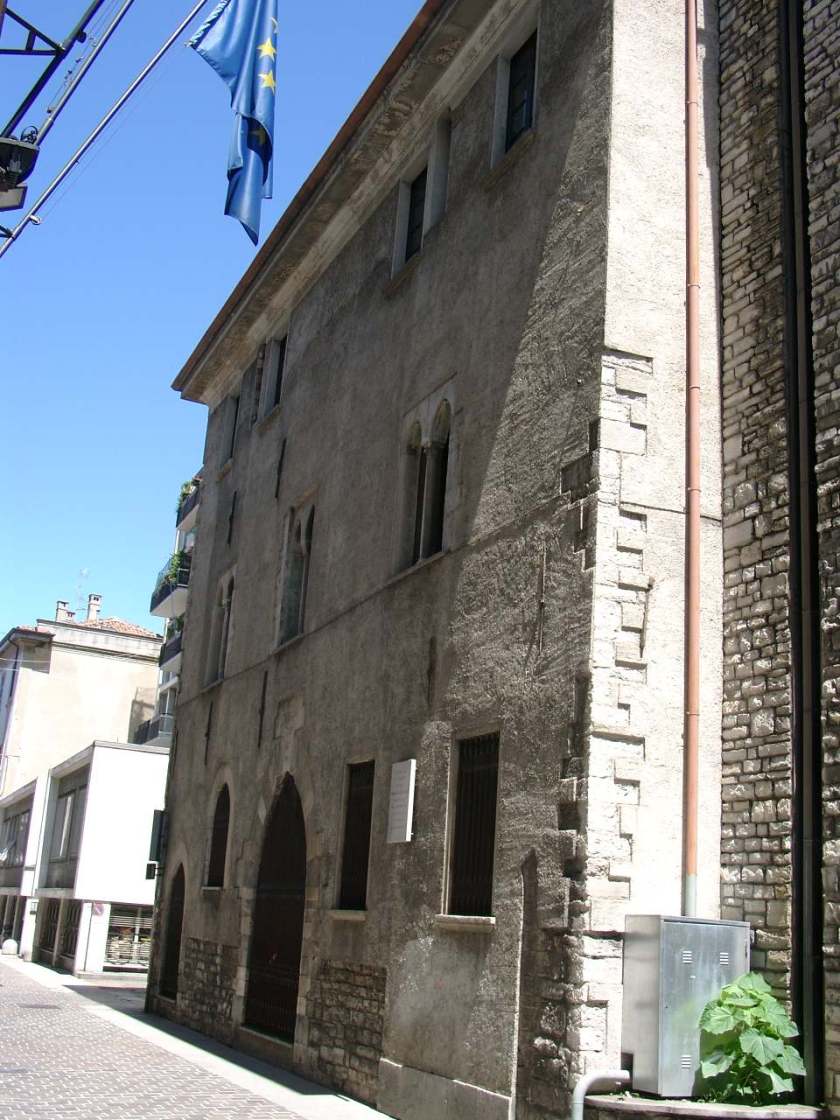
Geburtshaus_Innozenz_XI.in Como. jpg
Birthplace of Blessed Pope Innocent XI in Como

Pope Urban VIII appointed him successively prothonotary, president of the Apostolic Camera, commissary at Ancona, administrator of Macerata and Governor of Picena.   Innocent X then made him Cardinal-Deacon of Santi Cosma e Damiano on 6 March 1645 and, somewhat later, Cardinal-Priest of Sant’ Onofrio.

As cardinal he was beloved by all on account of his deep piety, charity and unselfish devotion to his duties.   When he was sent as legate to Ferrara in order to assist the people stricken with a severe famine, the pope introduced him to the people of Ferrara as the “father of the poor”, “Mittimus patrem pauperum”.     In 1650 he became Bishop of Novara, a capacity in which he spent all the revenues of his see in order to relieve the poor and sick of his diocese.   With the permission of the pope, he resigned as Bishop of Novara in favour of his brother, Giulio, in 1656 and went to Rome, where he took a prominent part in the consultations of the various congregations in which he was a member.

Benedetto was unanimously elected pope on 21 September 1676 and he took the name of Innocent XI.   Immediately upon his accession he turned all his efforts towards reducing the expenses of the Curia.   He passed strict ordinances against nepotism among the cardinals and he himself lived very parsimoniously and exhorted the cardinals to do the same.

innocent XI

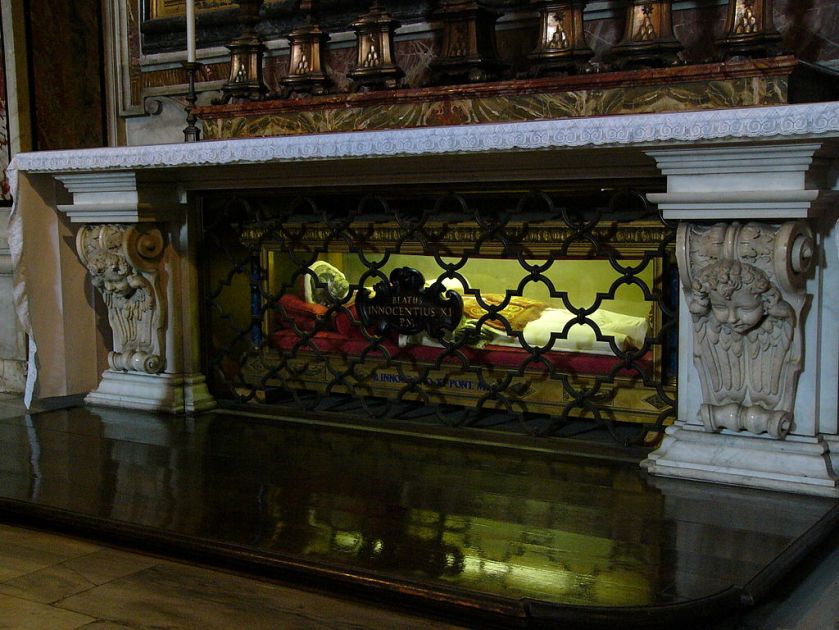
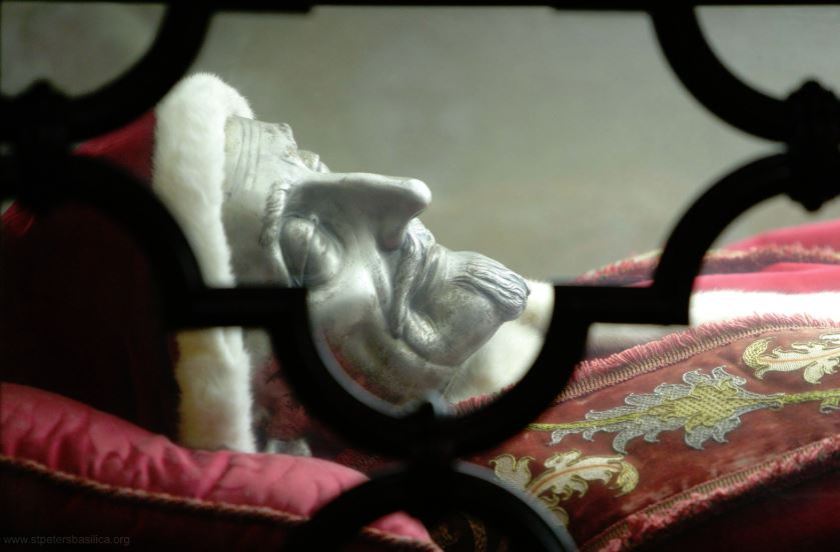
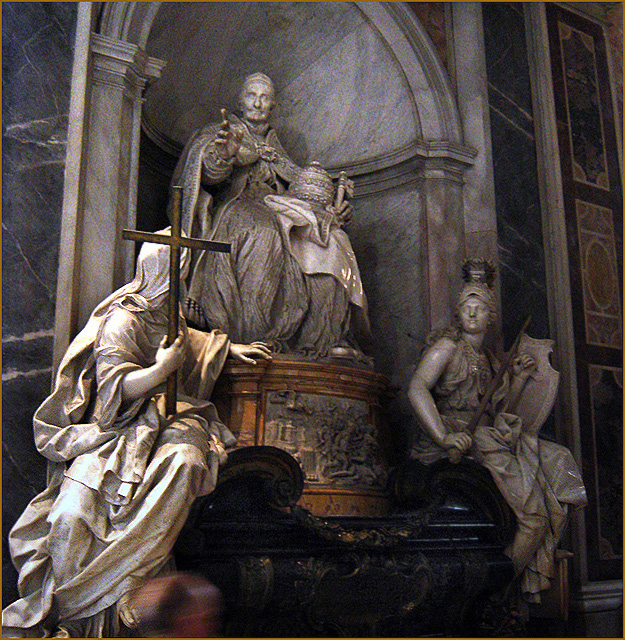
His pontificate was marked by the prolonged struggle with Louis XIV of France on the subject of the so-called “Gallican Liberties” and also about certain immunities claimed by ambassadors to the papal court.   Innocent died on 12 August of 1689 after a long illness.  He was seventy-eight years of age.   His body lies with those of St Pius X (1903 – 1914), Blessed John XXIII (1958 – 1963) and, eventually, with St John Paul II (1978 – 2005) in the Basilica of St Peter’s in Rome.Tomb_of_Innocentius_XI_in_the_Chapel_of_St._Sebastian_of_Saint_Peter's_Basilicainnocent body

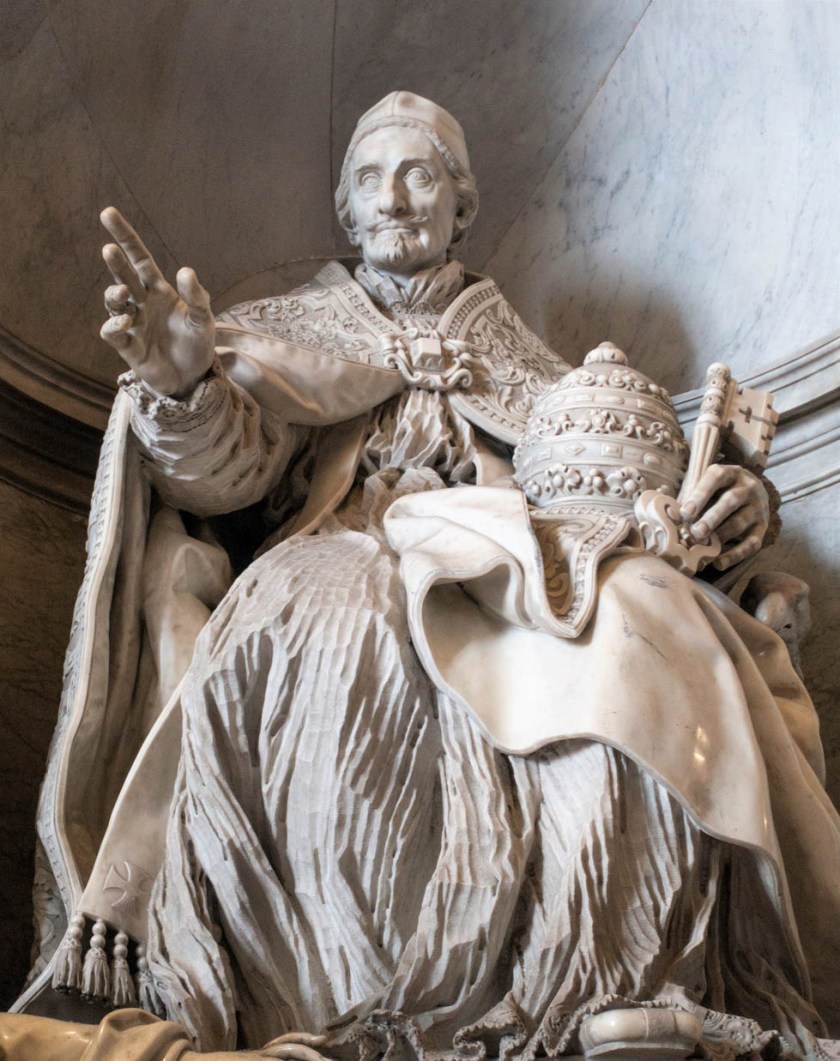
The cause for his Canonisation was first introduced in 1714 but the influence of France forced it to be suspended in 1744.   In the 20th century it was reintroduced and Pope Pius XII Beatified him on 7 October 1956.   Below is the Monument to Blessed Pope Innocent XI at  St Peter’s Basilica.INNOCENT LG statueMonument to Pope Innocent XI, St. Peter's Basilica

Posted in SAINT of the DAY

Memorials of the Saints – 12 August

St Jeanne de Chantal/Jane Frances de Chantal (1572-1641) (Optional Memorial)
Details of St Jane here: https://anastpaul.wordpress.com/2017/08/12/saint-of-the-day-12-august-st-jane-frances-de-chantal/

St Anicetus of Marmora
St Antôn Nguyen Ðích
Bl Charles Meehan
St Discolio of Vercelli
St Euplus of Catania
St Eusebius of Milan
St Felicissima the Blind
St Giacobe do Mai Nam
St Gracilian
St Herculanus of Brescia
Bl Pope Innocent XI (1611-1689)

St Jambert of Canterbury
Bl Józef Stepniak
Bl Józef Straszewski
St Julian of Syria
Bl Karl Leisner
St Macarius of Syria
St Merewenna
St Micae Nguyen Huy My
St Murtagh of Killala
St Photinus of Marmora
Bl Pierre Jarrige de la Morélie de Puyredon
St Porcarius of Lerins
St Simplicio of Vercelli
St Ust

Martyrs of Augsburg – 4 saints: The mother, Hilaria, and three friends of of Saint Afra of Augsburg. While visiting the tomb of Saint Afra who were seized by the authorities and martyred when they visited Afra’s tomb – Digna, Eunomia, Euprepia and Hilaria. They were burned alive c 304.

Martyrs of Rome – 5 saints: A group of Christians martyred together in the persecutions of Diocletian. We know little more than their names – Crescentian, Juliana, Largio, Nimmia and Quiriacus.
• c.304 in Rome, Italy
• buried on the Ostian Way outside Rome.

Martyred in the Spanish Civil War:

Bl Antoni Perulles Estivill
Bl Atilano Dionisio Argüeso González
Bl Buenaventura García-Paredes Pallasá
Bl Carles Barrufet Tost
Bl Domingo Sánchez Lázaro
Bl Enrique María Gómez Jiménez
Bl Félix Pérez Portela
Bl Gabriel Albiol Plou
Bl José Jordán Blecua
Bl Josep Nadal Guiu
Bl Juana Pérez Abascal
Bl Manuel Basulto Jiménez
Bl Manuel Borràs Ferré
Bl Miquel Domingo Cendra

and these below:
Martyrs of Barbastro – 6 beati: Six Claretian brothers and priests who were martyred together in the persecutions of the Spanish Civil War.
• Gregorio Chirivas Lacamba
• José Pavón Bueno
• Nicasio Sierra Ucar
• Pere Cunill Padrós
• Sebastián Calvo Martínez
• Wenceslau Clarís Vilaregut
They were martyred on 12 August 1936 in Barbastro, Huesca, Spain and Beatified on 25 October 1992 by Pope John Paul II.

Martyrs of La Torre de Fontaubella – 4 beati: Four parish priests who were murdered together in the persecutions of the Spanish Civil War.
• Antoni Nogués Martí
• Joan Rofes Sancho
• Josep Maria Sancho Toda
• Ramon Martí Amenós
They were martyred on 12 August 1936 in La Torre de Fontaubella, Tarragona, Spain and Beatified on 13 October 2013 by Pope Francis. Their beatification celebrated in Tarragona, Spain.

Martyrs of Puerta de Hierro – 5 beati: Five nun in the Archdiocese of Madrid, Spain, all members of the Daughters of Charity of Saint Vincent de Paul, and all martyred together in the Spanish Civil War.
• Estefanía Saldaña Mayoral
• María Asunción Mayoral Peña
• María Dolores Barroso Villaseñor
• María Severina Díaz-Pardo Gauna
• Melchora Adoración Cortés Bueno
They were martyred on 12 August 1936 in Puerta de Hierro, Aravaca, Madrid, Spain and Beatified on
27 October 2013 by Pope Benedict XVI.


Posted in MORNING Prayers, QUOTES of the SAINTS, SAINT of the DAY

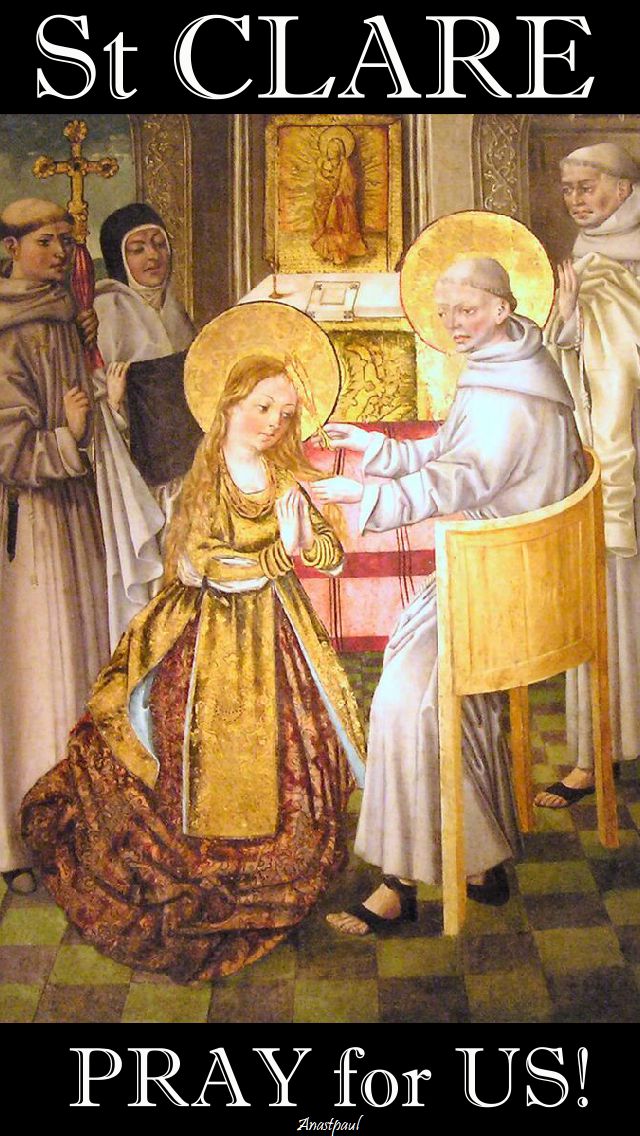
Thought for the Day – 11 August – The Memorial of St Clare of Assisi (1194-1253)

Thought for the Day – 11 August – The Memorial of St Clare of Assisi (1194-1253)

O wondrous blessed clarity of Clare!
In life she shone to a few,
after death she shines on the whole world!
On earth she was a clear light,
Now in heaven she is a brilliant sun.

O how great the vehemence of the
brilliance of this clarity!
On earth this light was indeed kept
within cloistered walls,
yet shed abroad its shining rays.
It was confined within a convent cell,
yet spread itself through the wide world.

Pope Innocent IV  (1195-1254)

He, Christ, is the splendour of eternal glory, “the brightness of eternal light and the mirror without cloud.”   Behold, I say, the birth of this mirror.   Behold Christ’s poverty even as He was laid in the manger and wrapped in swaddling clothes.   What wondrous humility, what marvellous poverty!   The King of angels, the Lord of heaven and earth resting in a manger!   Look more deeply into the mirror and meditate on His humility, or simply on His poverty.   Behold the many labours and sufferings He endured to redeem the human race.   Then, in the depths of this very mirror, ponder His unspeakable love which caused Him to suffer on the wood of the cross and to endure the most shameful kind of death.   The mirror Himself, from His position on the cross, warned passers-by to weigh carefully this act, as He said:  “All of you who pass by this way, behold and see if there is any sorrow like mine.”
Let us answer His cries and lamentations with one voice and one spirit:  “I will be mindful and remember and my soul will be consumed within me.”from a letter to Blessed Agnes of Prague by Saint Clare of Assisi

Saint Clare of Assisi, Pray for us!st-clare-pray-for-us-11 aug 2017 3

Posted in CONTEMPLATIVE Prayer, EUCHARISTIC Adoration, franciscan OFM, MORNING Prayers, ON the SAINTS, QUOTES of the SAINTS, QUOTES on CHARITY, QUOTES on FAITH, QUOTES on LOVE, QUOTES on PRAYER, QUOTES on SANCTITY, SAINT of the DAY, The BLESSED VIRGIN MARY, The HOLY EUCHARIST / The HOLY MASS

Quote/s of the Day – 11 August – The Memorial of St Clare of Assisi (1194-1253)

Quote/s of the Day – 11 August – The Memorial of St Clare of Assisi (1194-1253)

“We become what we love and who we love shapes what we become.
If we love things, we become a thing.
If we love nothing, we become nothing.
Imitation is not a literal mimicking of Christ,
rather it means becoming the image of the beloved,
an image disclosed through transformation.
This means we are to become vessels of God’s
compassionate love for others.”

St Clare’s second letter to Blessed Agnes of Praguewe-become-what-we-love-st-clare-11 aug 2017

“ Blessed be You, O God, for having created me. ”

St Clare’s Last Wordsblessed-be-you-o-god-st-clare-11 aug 2017

“Cling to His most sweet Mother,
who carried a Son whom the heavens could not contain;
and yet she carried Him in the little enclosure of her holy womb
and held Him on her virginal lap.”cling-to-his-most-sweet-mother-st-clare-11 aug 2017

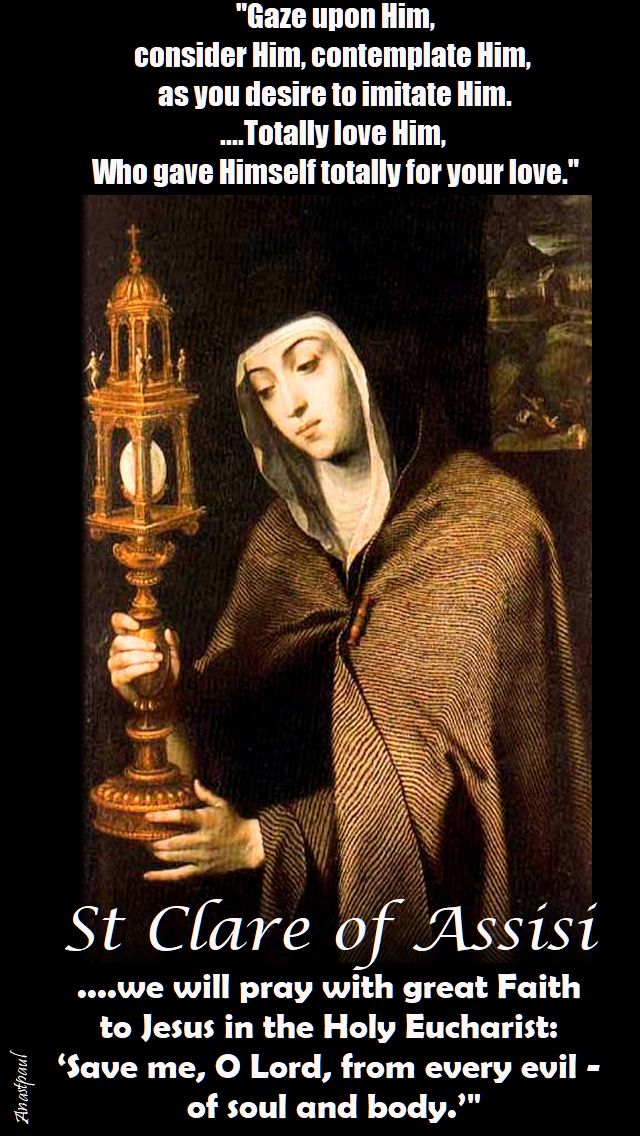
“Gaze upon Him, consider Him, contemplate Him,
as you desire to imitate Him.
….Totally love Him, Who gave Himself totally for your love.”

“They say that we are too poor
but can a heart which possesses the infinite God be truly called poor?
We should remember this miracle of the Blessed Sacrament when in Church.
Then we will pray with great Faith to Jesus in the Holy Eucharist:
‘Save me, O Lord, from every evil – of soul and body.’”

St Clare of Assisi (1194-1253)gaze-upon-him-consider-him-st-clare.11 aug 2017

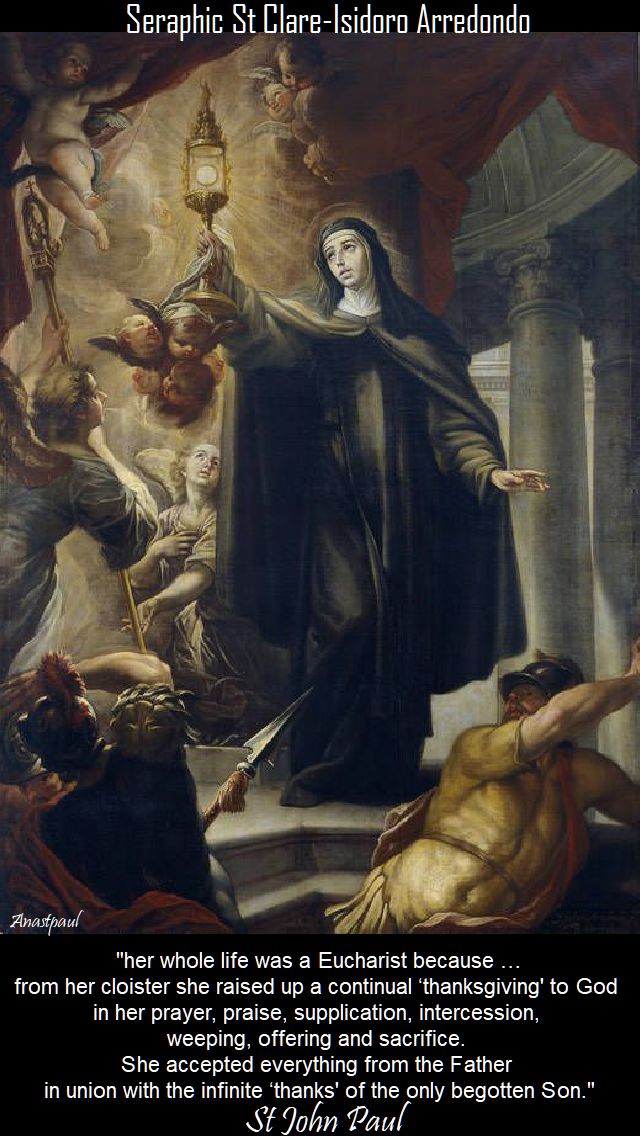
St Pope John Paul II said of Saint Clare:
“her whole life was a Eucharist because …
from her cloister she raised up a continual ‘thanksgiving’ to God
in her prayer, praise, supplication, intercession, weeping, offering and sacrifice.

She accepted everything from the Father in union with the infinite ‘thanks’ of the only begotten Son.”

St Pope John Paul II (1920-2005)her-whole-life-was-a-eucharist-st-john-paul - 11 aug 2017

Posted in DOCTORS of the Church, FATHERS of the Church, franciscan OFM, MORNING Prayers, QUOTES of the SAINTS, QUOTES on FAITH, SAINT of the DAY, The WORD

One Minute Reflection – 11 August – Saturday of the Eighteenth week in Ordinary Time, Year B – Today’s Gospel: Matthew 17:14–20

One Minute Reflection – 11 August – Saturday of the Eighteenth week in Ordinary Time, Year B – Today’s Gospel: Matthew 17:14–20

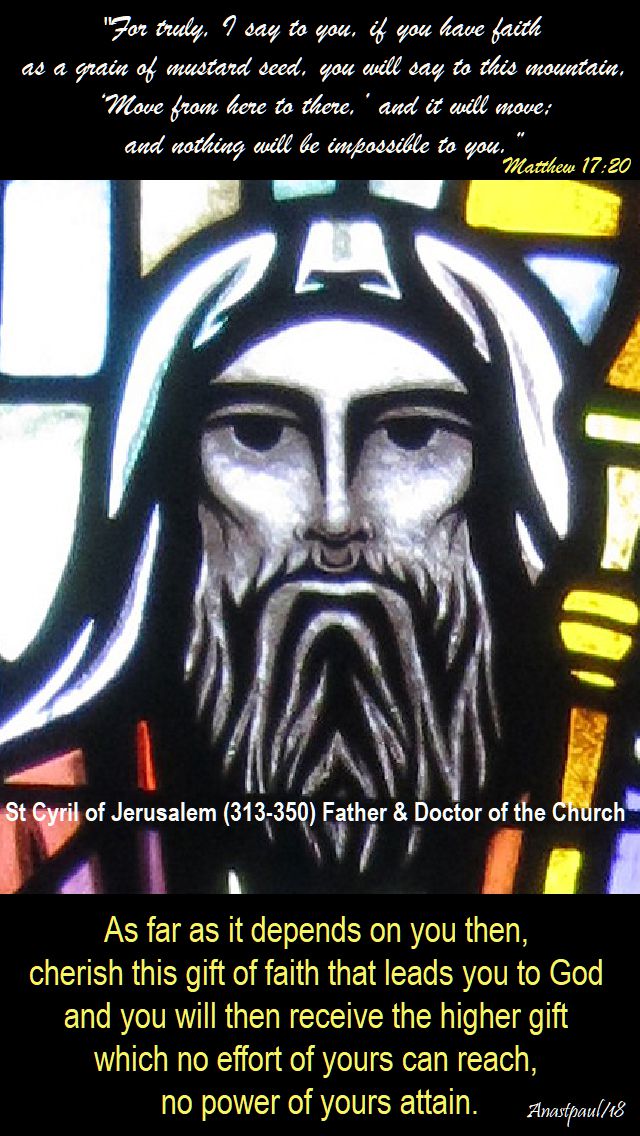
He said to them, “Because of your little faith.   For truly, I say to you, if you have faith as a grain of mustard seed, you will say to this mountain, ‘Move from here to there,’ and it will move; and nothing will be impossible to you.”…Matthew 17:20

REFLECTION – “The word “faith” has one syllable but two meanings.   First of all it is concerned with doctrine and it denotes the assent of the soul to some truth.   Faith in this sense brings blessing and salvation to the soul, as the Lord said:  “He who hears my word and believes in him who sent me, has eternal life.” (Jn 5:24)…
The word “faith” has a second meaning:  it is a particular gift and grace of Christ.  “To one is given throu gh the Spirit the utterance of wisdom and to another the utterance of knowledge according to the same Spirit, to another faith by the same Spirit, to another gifts of healing” (1Cor 12:8-9).   Faith in the sense of a particular divine grace conferred by the Spirit is not, then, primarily concerned with doctrine but with giving a person powers quite beyond their natural capability.   Whoever has this faith will say to a mountain: “Move from here to there” and it will move and anyone who can in fact say these words through faith and “believes without hesitation that they will come to pass,” (Mk 11:23) receives this particular grace.   It is to this kind of faith that the Lord’s words refer: “If you have faith as a grain of mustard seed.”   Now a mustard seed is small in size but its energy thrusts it upwards with the force of fire.   Small are its roots, great the spread of its boughs and once it is fully grown the birds of the air find shelter in its branches (Mt 13:32).  So too, in a flash, faith can produce the most wonderful effects in the soul.
Enlightened by faith the soul gazes at the glory of God so far as human nature allows and, even before the consummation of all things, ranging beyond the boundaries of the universe, it has a vision of the judgement and of God making good the rewards he promised.    As far as it depends on you then, cherish this gift of faith that leads you to God and you will then receive the higher gift which no effort of yours can reach, no power of yours attain.”…Saint Cyril of Jerusalem (313-350) Bishop of Jerusalem, Father & Doctor of the Church (Baptismal Catechesis 5)if you have faith the size of a mustard seed - matthew 17 20 - as far as it depends on you then - sy cyril of jerusalem - 11 aug 2018

PRAYER – Holy God, grant we pray, Your Holy Spirit of love and divine grace to grow ever more in faith.   By our prayers and love for You and our neighbour, may we merit Your divine assistance.   Lord Jesus, help us to dwell often on the manner in which we are following You.   Let us strive each day to become more and more like You in all things and, to become beacons of Your Light, to all the world.   St Clare of Assisi, you who were a light to all, pray for us, amen.st-clare-of-assisi-pray-for-us-11 aug 2017

Posted in EUCHARISTIC Adoration, franciscan OFM, MORNING Prayers, PRAYERS of the SAINTS, The HOLY EUCHARIST / The HOLY MASS

Our Morning Offering – 11 August – The Memorial of St Clare of Assisi(1194-1253)

Our Morning Offering – 11 August – The Memorial of St Clare of Assisi(1194-1253)

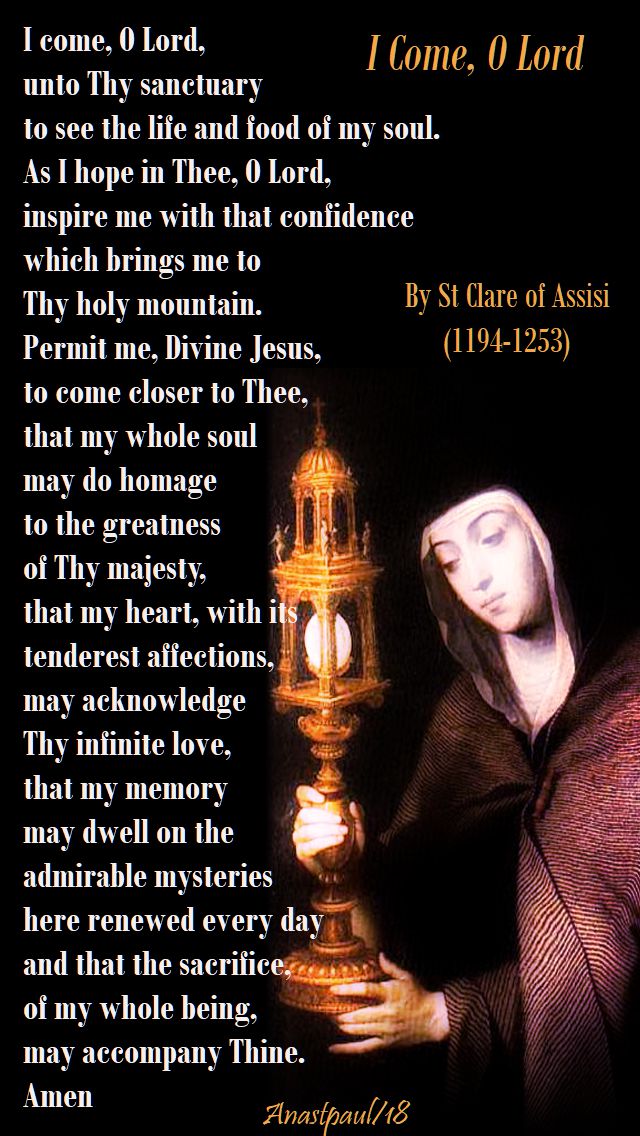
I Come, O Lord
By St Clare of Assisi (1194-1253)

I come, O Lord,
unto Thy sanctuary
to see the life and food of my soul.
As I hope in Thee, O Lord,
inspire me with that confidence
which brings me to Thy holy mountain.
Permit me, Divine Jesus,
to come closer to Thee,
that my whole soul may do homage
to the greatness of Thy majesty,
that my heart,
with its tenderest affections,
may acknowledge Thy infinite love,
that my memory may dwell
on the admirable mysteries
here renewed every day
and that the sacrifice,
of my whole being,
may accompany Thine.
Ameni come o lord into thy sanctuary - st clare - 11 aug 2018

Posted in Of the SICK, the INFIRM, All ILLNESS, PATRONAGE - IMPOSSIBLE CAUSES, PATRONAGE - MENTAL ILLNESS, PATRONAGE - ORPHANS,ABANDONED CHILDREN, PATRONAGE - PRISONERS, PATRONAGE-INFERTILITY & SAFE CHILDBIRTH, PRIESTS, all CLERGY, SAINT of the DAY

Saint of the Day – 11 August – St Philomena (c 291 – 304) “The Wonder Worker”

Saint of the Day – 11 August – St Philomena (c 291 – 304) “The Wonder Worker”  Virgin, Martyr.   Patronages – against barrenness, infertility, sterility, against bodily ills, against mental illness, against sickness, sick people, babies, infants, newborns, toddlers , children, young people, youth, Children of Mary, desperate, forgotten, lost or impossible causes, Living Rosary, orphans, poor people, Priests, prisoners, students, test takers.giuseppe-bezzuoli-santa-filomenast philomena header

The tomb of this virgin and martyr, unknown until the first years of the 19th century, was providentially discovered in 1802 in the catacombs of Priscilla on the Via Salaria, Rome, Italy.   It was covered by stones, the symbols on which indicated that the body was a martyr named Saint Philomena.   The bones were exhumed, catalogued and effectively forgotten since there was so little known about the person.Cathédrale_Notre-Dame-de-l'Assomption_de_Montauban_-_Couronnement_de_sainte_Philomène_-_Jules_Jolivet_PM82000423

In 1805 Canon Francis de Lucia of Mugnano, Italy was in the Treasury of the Rare Collection of Christian Antiquity (Treasury of Relics) in the Vatican.   When he reached the relics of Saint Philomena he was suddenly struck with a spiritual joy and requested that he be allowed to enshrine them in a chapel in Mugnano.   After some disagreements, settled by the cure of Canon Francis following prayers to Philomena, he was allowed to translate the relics to Mugnano.   Miracles began to be reported at the shrine including cures of cancer, healing of wounds and the Miracle of Mugnano in which Venerable Pauline Jaricot was cured a severe heart ailment overnight.   Philomena became the only person recognised as a Saint solely on the basis of miraculous intercession as nothing historical was known of her except her name and the evidence of her martyrdom.st philomena 2

God, by many miracles, made the discovery of Saint Philomena’s body famous and the cult of the young Saint spread everywhere with an extraordinary rapidity.   She received such exceptional homage, that she deserves to be placed in the first ranks of the virgin martyrs, whom the Church venerates.   The Holy Curé of Ars called her his dear little Saint and performed wonders himself by his prayers to her.st philomena Masa Feszty (Hungarian, 1895–1979)

Certain revelations having the character of authenticity say that Saint Philomena was the daughter of a Greek prince, who accompanied her parents to Rome on a journey and that her glorious martyrdom occurred there under Diocletian in the third century.   The two arrows engraved on her tombstone in opposite directions referred to the efforts of the persecutor to slay her with a volley of arrows, after Angels preserved her from death by drowning;  the arrows turned against the archers.   Finally she was beheaded, like so many other miraculously protected heroes and heroines of Christ.   This opinion, which certain circumstances attending the translation of her relics in 1805 to the city of Mugnano appeared to verify, has prevailed.   In that city, devotion to her has been extraordinary and remains so to this day, miracles have multiplied both there and elsewhere for those who invoke her.

Other very serious studies, maintain that she was a child of the Roman people, immolated in the first century for Jesus Christ, at the age of twelve or thirteen years.   An examination of her bones permitted her age to be estimated and the vial of dried blood in her tomb clearly indicated her martyrdom.   The instruments of torture painted on the terra cotta plaque which enclosed her tomb — an arrow, an anchor, a torch — show us what sort of tortures she bore, all of which are known to us through other martyrdoms of the same early centuries.   The inscription:   Peace be with you, Philomena, reveals her name.st-philomena2

What is beyond doubt is that this Saint responds unfailingly to the faith of those who invoke her.   Invoked everywhere with wonderful success, she was entitled the wonder-worker of the 19th century.   She has shown herself to be the protectress, in particular, of small children.   A mother whose young son died despite her prayers, placed a picture of the Saint on his corpse, begging that he be returned to her.   And the child rose as though from sleep, stood up beside his bed and had no more symptoms of any sickness whatsoever.   A little girl who had put out her eye playing with a pair of scissors, which injury was declared irreparable by physicians, had her eye restored when she washed her face in oil taken from the Saint’s lamp and this eye seemed to everyone more vivid and bright than the other.st philomena

Many doubts remain about this little Saint, however, although she is no longer anywhere on the Church’s calendar, devotion to her has never floundered or diminished.   Personal devotion to any saint and we know ourselves, that there are many unknown saints around us and when they leave this earth, we ask them for their prayers of intercession and therefore, the faithful continue without doubt to venerate St Philomena.

Popes loved her and they were joined in fervour by some of the era’s greatest saints  . John Vianney, the Cure of Ars, called Philomena the True Light of the Church Militant.   He built a basilica in her honour, where he installed the relic he had been given by the Venerable Pauline Jaricot, foundress of the Society for the Propagation of the Faith. (Innumerable “pagan babies” were given the name Philomena in honour of the foundress’s favourite saint, as I recall.)   Father Damien dedicated the first leper chapel on Molokai in her honour.   The American missionary saints John Neumann and Frances Cabrini spread devotion to Philomena throughout the Catholic United States.   St Peter Julian Eymard was a great devotee as was St Anthony Mary Claret.  Padre Pio, himself no mean wonder-worker, once silenced critics of her cult by snarling, “For the love of God!  It might well be that her name is not Philomena but this Saint has performed many miracles and it is not the name that did them.”st philomena statue

Posted in SAINT of the DAY

Memorials of the Saints – 11 August

St Clare of Assisi (1194-1253) (Memorial)
The story of St Clare: https://anastpaul.wordpress.com/2017/08/11/saint-of-the-day-11-august-st-clare-of-assisi/

St Alexander the Charcoal Burner
St Cassian of Benevento
St Chromatius the Prefect
St Digna of Todi
St Equitius of Valeria
St Gaugericus of Cambrai
Bl Jean-Georges Rehm
Bl John Sandys
St Lelia
St Philomena (Died 304) Virgin Martyr

St Rusicola of Arles
St Rufinus of Marsi
St Susanna of Rome
St Taurinus of Evreux
Bl Theobald of England and Companion
St Tiburtius of Rome
Bl William Lampley

Martyred in the Spanish Civil War
Bl Armando Óscar Valdés
Bl Benjamín Fernández de Legaria Goñi
Bl Carlos Díaz Gandía
Bl Rafael Alonso Gutiérrez
Bl Ramon Rosell Laboria

Posted in MORNING Prayers, QUOTES of the SAINTS, QUOTES on CHARITY, SAINT of the DAY, The WORD

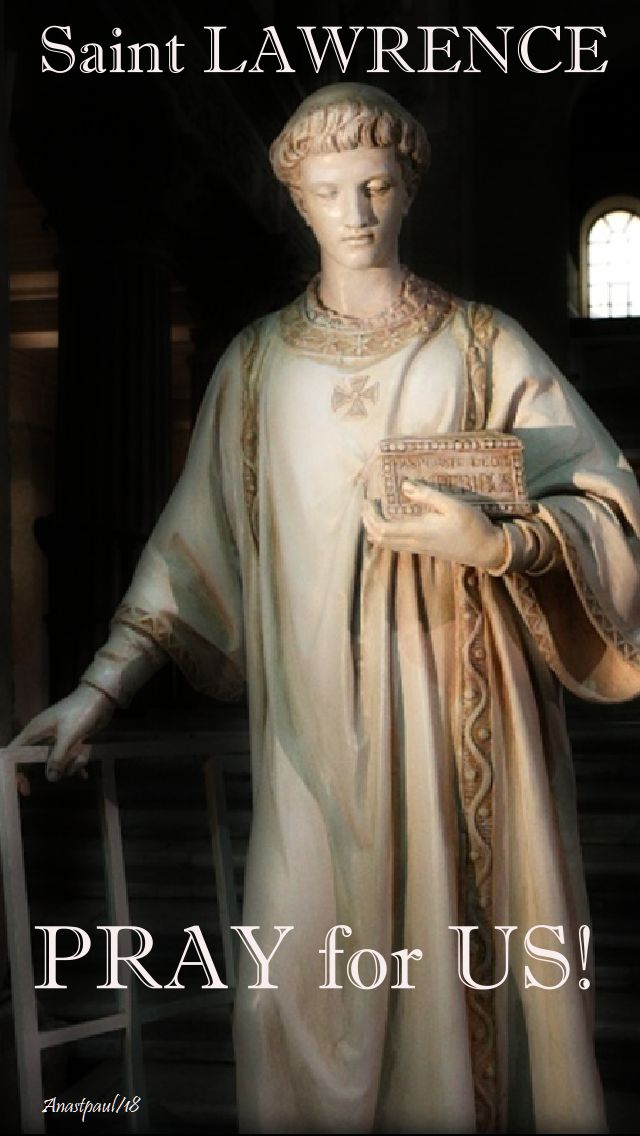
Thought for the Day – 10 August – Feast of St Lawrence, Martyr (died 258)

Thought for the Day – 10 August – Feast of St Lawrence, Martyr (died 258)

When the archdeacon returned, instead of bringing vessels of gold and silver, he brought the poor of the city, saying, “Behold, these choice pearls, these sparkling gems that adorn the temple, these sacred virgins, I mean, and these widows who refuse second marriage…. Behold then, all our riches.”

“Come. You have my Father’s blessing!

Inherit the kingdom prepared for you”

Christ, that is to say, heavenly mercy, comes to the door of your house every day, not only spiritually to the door of your soul but also materially to the door of your house.   For every time a poor person approaches your house, it is without any doubt Christ who is coming, He who said:  “As often as you did it for one of these little ones, you did it for me.”   So don’t harden you heart, give a little money to Christ, from whom you want to receive the Kingdom.   Give a piece of bread to Him, from whom you hope to receive life. Welcome Him into your home, so that He might welcome you into His paradise.   Give Him alms, so that in return He might give you eternal life.

What audacity to want to reign in heaven with Him to whom you refuse to give alms in this world!   If you receive Him during this earthly journey, He will welcome you into His heavenly happiness;  if you despise Him here in your homeland, He will turn His eyes away from you in His glory.   A Psalm says: “In your city, Lord, you despise their image.” (Ps 72:20 Vulg.)   If we despise those who are made in the image of God (Gen 1:26) in our city, that is to say, in this life, we must fear being rejected in His eternal city.   So be merciful here below…   Thanks to your generosity, you will hear that wonderful word said to you:   “Come.   Inherit the kingdom prepared for you”

Saint Caesarius of Arles (470-543), Monk and Bishop (Sermon 26 # 5)

St Lawrence, your total and complete response to Christ is our example today, please pray for us!st lawrence pray for us - 10 aug 2018

Posted in DOCTORS of the Church, FATHERS of the Church, MORNING Prayers, PAPAL SERMONS, QUOTES of the SAINTS, QUOTES on LOVE, SAINT of the DAY, The WORD

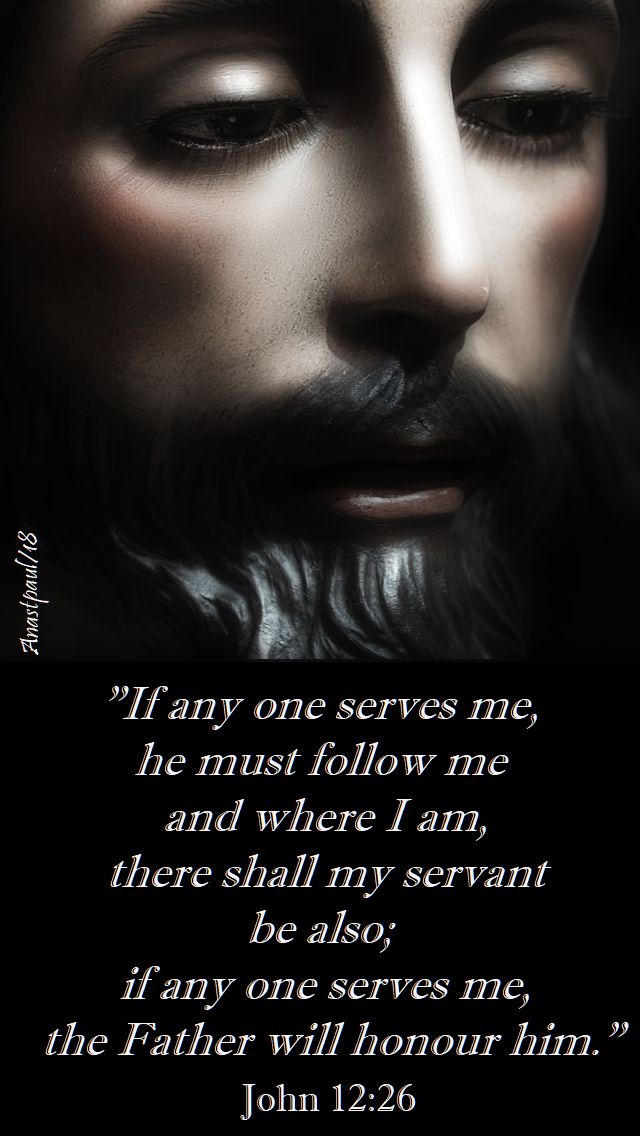
Quote of the Day – 10 August – Feast of St Lawrence, Martyr (died 258) – Today’s Gospel: John 12:24–26

Quote of the Day – 10 August – Feast of St Lawrence, Martyr (died 258) – Today’s Gospel: John 12:24–26if anyone serves me - john 12 26 - 10 august 2018

“Jesus brought new hope into the world and He did so in the manner of the seed:  He became very small, like a grain of wheat, He left his heavenly glory in order to come among us, He “fell into the earth”.
But this still was not enough.
In order to bear fruit, Jesus experienced love to the fullest, allowing Himself to be split open by death as a seed lets itself split open under the ground.   Precisely there, at the lowest point of His abasement — which is also the loftiest point of love — hope burgeoned.
When we choose the hope of Jesus, we gradually discover, that the successful way of life is that of the seed, that of humble love.   There is no other way to conquer evil and give hope to the world.   But you might tell me: “No, it is a losing rationale!”  . It might seem so, seem that it is a losing rationale because those who love, lose power.   Have you considered this?   Those who love, lose power;  those who give, impart something and loving is a gift.
In reality, the rationale of the seed that dies, of humble love, is God’s way and only this bears fruit.”

Pope Francis General Audience, 12 April 2017)when we choose the hope of jesus - john 12 24-26 - pope francis - 10 aug 2018.jpg

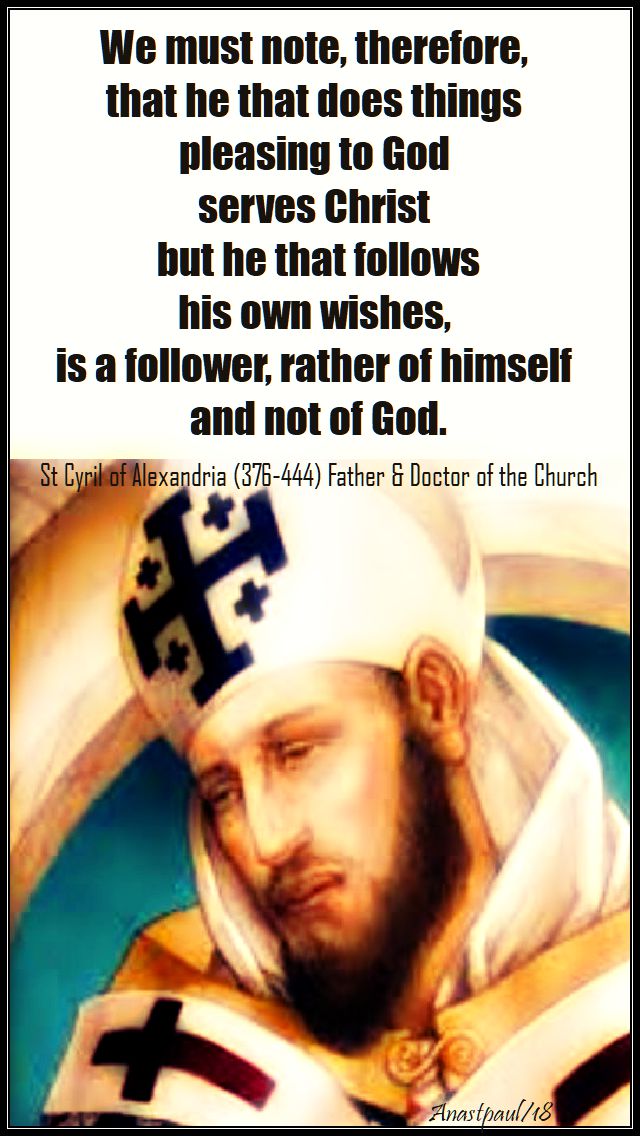
“We must note, therefore,
that he that does things pleasing to God,
serves Christ but he that follows his own wishes,
is a follower, rather of himself and not of God.”

St Cyril of Alexandria (376-444)we must note therefore that he does - st cyril of alex - 10 august 2018

Posted in DOCTORS of the Church, FATHERS of the Church, MORNING Prayers, ON the SAINTS, SAINT of the DAY, The WORD

One Minute Reflection – 10 August – Feast of St Lawrence, Martyr (died 258) – Today’s Gospel: John 12:24–26

One Minute Reflection – 10 August – Feast of St Lawrence, Martyr (died 258) – Today’s Gospel:  John 12:24–26

“If anyone serves me, he must follow me and where I am, there shall my servant be also; if any one serves me, the Father will honour him.”…John 12:26if anyone serves me - john 12 26 - 10 august 2018

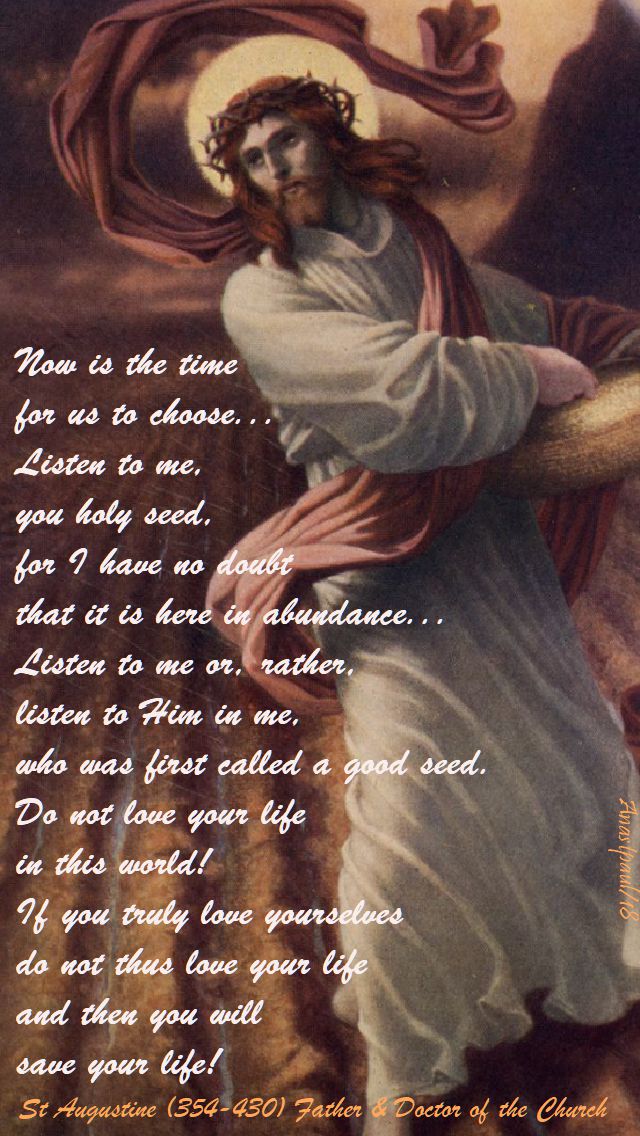
REFLECTION – “Dear brothers, your faith recognises this seed fallen into the earth that death has multiplied.   Your faith recognises it because it dwells in your hearts.   No christian hesitates to believe what Christ said of Himself.   But when this seed died and multiplied, many seeds were scattered on the earth.    Saint Lawrence is one of them and today we celebrate the day when he was sown.   We see what a tremendous harvest has sprung up from all those seeds scattered over all the earth and the sight fills us with joy, provided only that we ourselves belong to God’s grain store, by His grace.
For not everything that is harvested goes into the grain store.   The same necessary and fruitful rain causes both good seed and straw to grow but we don’t store both of them in the barn.   Now is the time for us to choose…  Listen to me, you holy seed, for I have no doubt that it is here in abundance…  Listen to me or, rather, listen to Him in me who was first called a good seed.   Do not love your life in this world!   If you truly love yourselves do not thus love your life and then you will save your life!.. “Whoever loves his life in this world will lose it.”   It is the good seed who said that: the seed thrown into the ground who died that He might bear much fruit.   Listen to Him because as He speaks so has He done.  He both teaches us and shows us the way by example.
Christ wasn’t attached to the life of this world.   He came into the world to be stripped of Himself, to give His life and take it up again when He willed…  He, the true man, is true God, a sinless man that He might take away the sin of the world, clothed with power so great that He could truly say:  “I have power to lay down my life and power to take it up again.   No one can take it from me;   it is I who lay it down and I who take it up again” (Jn 10,18)…. St Augustine (354-430) Father & Doctor of the Church (Sermon 305)now is the time for us to choose - st augustine - 10 august 2018

PRAYER – Lord God, You inspired St Lawrence with so ardent a love that his life was renowned for the service of Your people and his death for the splendour of his martyrdom.   Help us to love what he loved and to life as he showed us.   St Lawrence, Martyr for Christ and His Church, pray for us.   Through our Lord, Jesus Christ, in union with the Holy Spirit, one God forever and ever amen.st lawrence pray for us - 10 august 2018

Posted in DOCTORS of the Church, franciscan OFM, MORNING Prayers, SAINT of the DAY

Our Morning Offering – 10 August – Feast of St Lawrence, Martyr (died 258)

Our Morning Offering – 10 August – Feast of St Lawrence, Martyr (died 258)

O Love Eternal
By St Francis De Sales OFM Cap (1567-1622) Doctor of the Church

O love eternal,
my soul needs
and chooses You eternally!
Ah, come Holy Spirit,
and inflame our hearts with Your love!
To love – or to die!
To die – and to love!
To die to all other love
in order to live in Jesus’ love,
so that we may not die eternally.
But that we may live in Your eternal love,
O Saviour of our souls,
we eternally sing,
“Live, Jesus!
Jesus, I love!
Live, Jesus, whom I love!
Jesus, I love,
Jesus who lives and reigns
forever and ever.
Ameno love eternal - st francis de sales - 10 aug 2018

Posted in franciscan OFM, SAINT of the DAY

Saint of the Day – Blessed Amadeus of Portugal O.F.M. (1420–1482)

Saint of the Day – Blessed Amadeus of Portugal O.F.M. (1420–1482) Religious, Reformer, Miracle-Worker and Confessor – he was a Portuguese nobleman who became first a monk, then left that life to become a friar of the Franciscan Order.   He is also known as Amadeus Menez de Silva, Amedeus…., João de Menezes da Silva, João Mendes de Silva, Peter John Silva Meneses.   Later he became a reformer of that Order, which led to his founding of a distinct branch of the Friars Minor that was named after him, later suppressed by the Pope in order to unite them into one great family of Friars Minor Observants (1568).   Born in 1420 in Morocco as João de Menezes da Silva and died on 10 August 1482 in Milan, Italy of natural causes.   Patronage – against fever (water from a spring at his monastery was reported to heal fever patients).

Beato_Amadeo_da_Silva

Blessed Amadeus began his religious life in the Hieronnymite monastery of Notre-Dame de Guadalupe (Spain), where he spent about ten years.   Desirous of joining the Franciscans, he went to Italy, where after some delay he was received into the order and, living in various convents, chiefly at Milan, attracted attention by his virtue and miracles.

Under the protection of the Archbishop of Milan, he established the convent of Notre-Dame de la Paix (1469) which became the centre of a Franciscan reform.   The minister general of the order Francesco della Rovere, later pope under the name of Sixtus IV, extended his protection to him.   Other foundations were made in Italy, among them one in Rome.

Supernatural favours obtained through his intercession aided in the spread of his cult, he was known as ‘blessed’ long before his death.   He composed a yet published treatise entitled “De revelationibus et prophetiis”, two copies of which are mentioned by Nicholas Antonio.   The work of another Amadeus, “Homilies on the Blessed Virgin”, has been erroneously attributed to him.

The convents he founded continued after his death to form a distinct branch of the Franciscans, the friars were called the Amadeans or Amadists and they had twenty-eight houses in Italy, the chief one, Saint Peter de Montorio, in Rome.    Pope Innocent VIII gave them the convent of Saint Genesto near Cartagena in Spain (1493).   The successors of Blessed Amadeus, preserved his foundation in its original spirit until Saint Pius V suppressed it along with similar branches of the Franciscan Order and united them into one great family of Friars Minor Observants in 1568.

Blessed Amadeus’ remains are interred under the high altar of his monastery in Milan.

Posted in SAINT of the DAY

Memorials of the Saints – 10 August

St Lawrence (Died 258) Martyr (Feast)
A very comprehensive post on St Lawrence here: https://anastpaul.wordpress.com/2017/08/10/saint-of-the-day-feast-of-st-lawrence-of-rome-martyr/


St Agathonica of Carthage
St Agilberta of Jouarre
Bl Amadeus of Portugal O.F.M. (1420–1482)
St Aredius of Lyon
St Asteria of Bergamo
Bl Augustine Ota
St Bassa of Carthage
St Bessus
St Bettelin
St Blane
Bl Claude-Joseph Jouffret de Bonnefont
St Deusdedit the Cobbler
Bl Edward Grzymala
Bl Franciszek Drzewiecki
Bl Francois François
St Gerontius
Bl Hugh of Montaigu
Bl Lazare Tiersot
St Paula of Carthage
St Thiento of Wessobrunn

Martyrs of Alexandria – 260+ saints: A large number of Christians who died in Alexandria, Egypt between 260 and 267 in the persecutions of Decius and Valerian, whose names have not come down to us and who are commemorated together.

Martyrs of Rome – 165 saints: Group of 165 Christians martyred in the persecutions of Aurelian. 274 in Rome, Italy.

Martyred in the Spanish Civil War:
• Blessed Antonio González Penín
• Blessed José Toledo Pellicer
• Blessed José Xavier Gorosterratzu Jaunarena
• Blessed Juan Martorell Soria
• Blessed Victoriano Calvo Lozano

Posted in CARMELITES, MORNING Prayers, QUOTES on LOVE, QUOTES on SUFFERING, SAINT of the DAY

Thought for the Day – 9 August – The Memorial of St Teresa Benedicta of the Cross (1891-1942) Martyr

Thought for the Day – 9 August – The Memorial of St Teresa Benedicta of the Cross (1891-1942) Martyr

“A Lesson in Love”

Her name reflects her beloved spiritual sister and fellow Carmelite, Teresa of Ávila and her fate of sharing in the Cross of Christ in a very tangible, visible way. Edith, now Teresa Benedicta of the Cross, viewed her own life as a sacrificial offering to God for her people. In 1939, she offered her life to God for all those she loved:  for the Church, for the Carmelite Order, for the Jewish people, for her family, and for “the deliverance of Germany and peace throughout the world.”   Rather than give in to despair, darkness and hopelessness, Edith offered her own life and sufferings to God for others—even for those who murdered her.   She saw herself as her brothers’ keeper and asked Our Lord to accept her life for theirs.

A Jewish businessman from Cologne, Julius Markan, who had been put in charge of the prisoners at Westerbork Camp, remembers how she cared for those around her as they faced death. He wrote:

“Amongst the prisoners who were brought in on the 5th of August, Sister Benedicta stood out on account of her calmness and composure.   The distress in the barracks and the stir caused by the new arrivals were indescribable. Sister Benedicta was just like an angel, going around amongst the women, comforting them, helping them and calming them.   Many of the mothers were near to distraction, they had not bothered about their children the whole day long but just sat brooding in dumb despair.   Sister Benedicta took care of the little children, washed them and combed them, attending to their feeding and other needs.   During the whole of her stay there, she washed and cleaned for people, following one act of charity with another, until everyone wondered at her goodness.”

Another person who met her on the way to her death, Dr. Wielek, recalled a conversation he had with her in Westerbork just before she was transferred to Auschwitz:

“In one conversation she said to me: ‘The world is made up of opposites but in the end nothing remains of these contrasts.   What only remains is great love. How is it possible for it to be otherwise?’”

Indeed in this world, we do experience such opposites,good and evil, joy and suffering, life and death. “What only remains is great love.”   Edith’s final conviction teaches us how to suffer, how to offer ourselves and how to embrace a world so seemingly full of violations against the human person.   Edith shows how to live as a balm for these wounds in the world—and how such a life lived for Christ will ultimately heal it.
(Angela Micali Stout)

St Teresa Benedicta of the Cross, Pray for us!st-teresa-benedicta-pray-for-us-2-9 aug 2017

Posted in CARMELITES, MORNING Prayers, QUOTES of the SAINTS, QUOTES on CHARITY, QUOTES on COURAGE, QUOTES on DIVINE PROVIDENCE, QUOTES on FAITH, QUOTES on PEACE, QUOTES on PRAYER, QUOTES on the CROSS of CHRIST, SAINT of the DAY

Quote/s of the Day – 9 August – The Memorial of St Teresa Benedicta of the Cross (1891-1942) Martyr

Quote/s of the Day – 9 August – The Memorial of St Teresa Benedicta of the Cross (1891-1942) Martyr

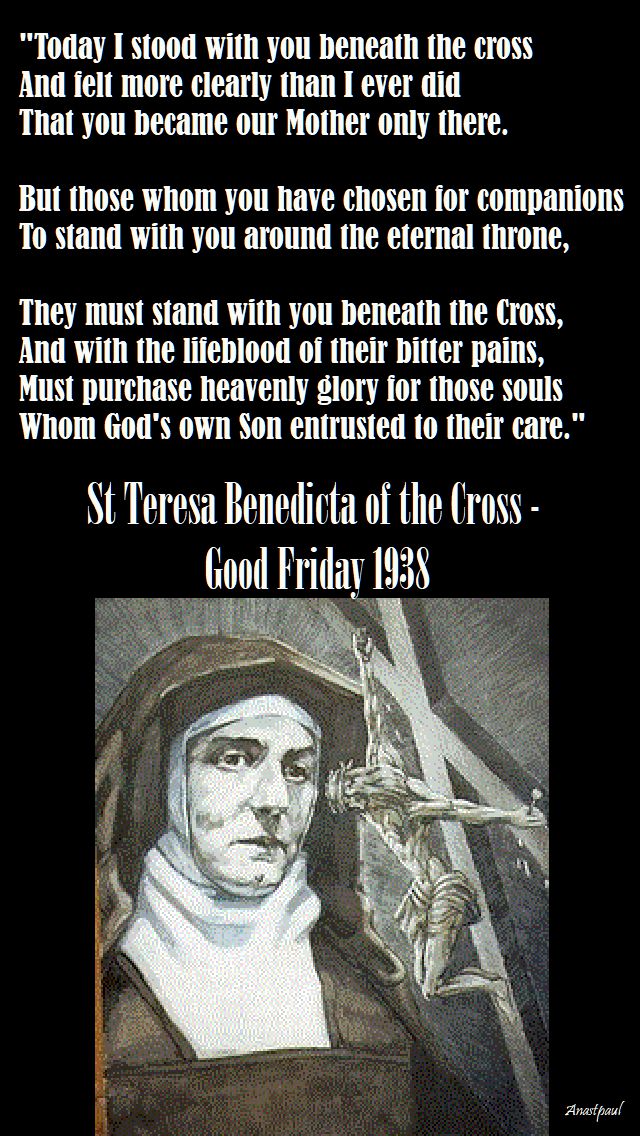
“Today I stood with you beneath the cross
And felt more clearly than I ever did
That you became our Mother only there.

But those whom you have chosen for companions
To stand with you around the eternal throne,

They must stand with you beneath the Cross,
And with the lifeblood of their bitter pains,
Must purchase heavenly glory for those souls
Whom God’s own Son entrusted to their care.”

St Teresa Benedicta of the Cross – Good Friday 1938today-i-stood-with-you-beneath-the-cross-st-teresa-benedicta-9 aug 2017

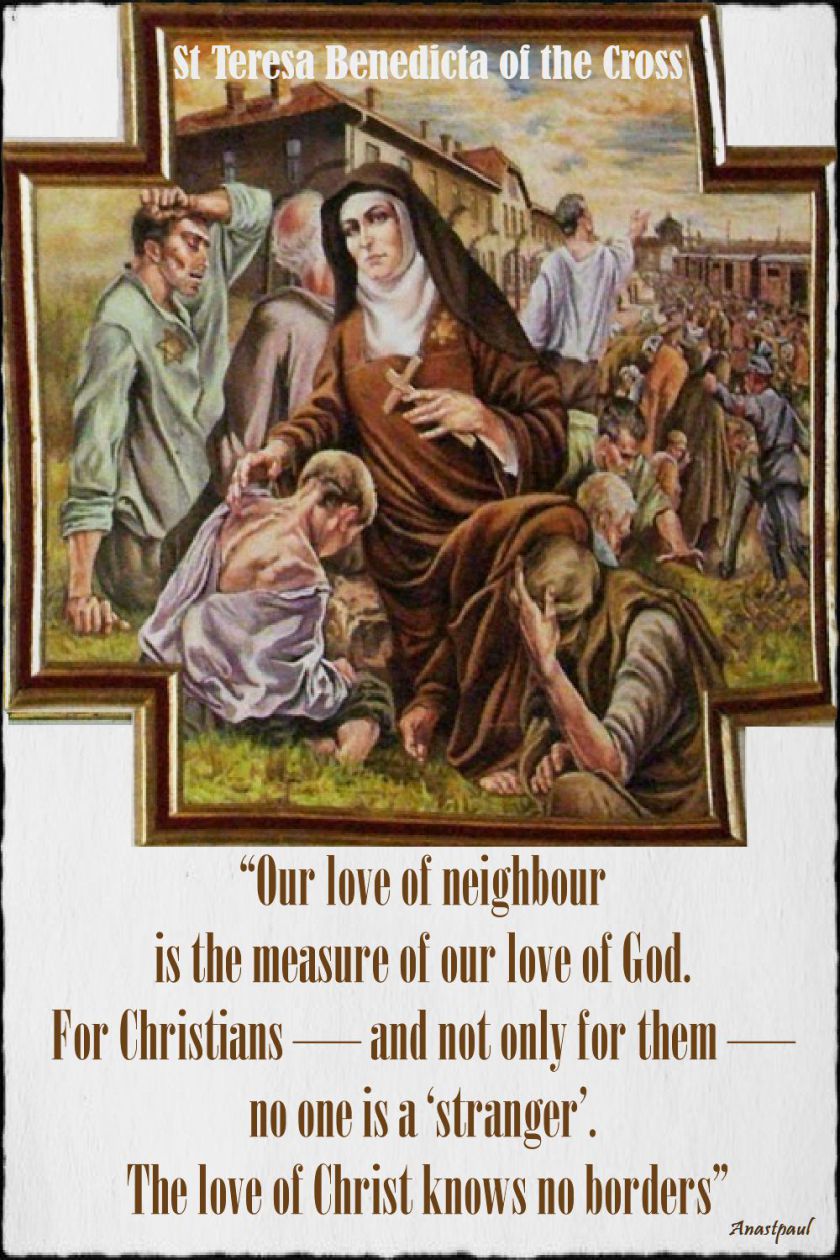
“Our love of neighbour is the measure of our love of God.
For Christians — and not only for them —
no one is a ‘stranger’.
The love of Christ knows no borders”our-love-of-neighbour-is-the-measure-of-our-love-of-god-st-teresa-benedicta-9 aug 2017

“God is there in these moments of rest
and can give us, in a single instant, exactly what we need.
Then the rest of the day can take its course,
under the same effort and strain, perhaps, but in peace.
And when night comes and you look back over the day
and see how fragmentary everything has been
and how much you planned that has gone undone
and all the reasons you have, to be embarrassed and ashamed:
just take everything, exactly as it is,
put it in God’s hands and leave it with Him.
Then you will be able to rest in Him – really rest –
and start the next day, as a new life.”just take everything - st teresa benedicta of the cross - 9 aug 2018

“Whatever did not fit in with my plan, did lie within the plan of God.
I have an ever deeper and firmer belief,
that nothing is merely an accident.
when seen in the light of God, that my whole life,
down to the smallest details,
has been marked out for me,
in the plan of Divine Providence
and has a completely coherent meaning in God’s all-seeing eyes.
And so I am beginning to rejoice,
in the light of glory, wherein this meaning, will be unveiled to me.”i have an ever deeper and firmer belief - st teresa benedicta of the cross - 9 aug 2018

“Every true prayer, is a prayer of the Church,
by means of that prayer, the Church prays,
since it is the Holy Spirit, living in the Church,
Who in every single soul, ‘prays in us with unspeakable groanings’.”every true prayer - st teresa benedicta of the cross - 9 aug 2018

“Since Mary is the prototype of pure womanhood,
the imitation of Mary, must be the goal of girls’ education.”

St Teresa Benedicta of the Cross (1891-1942) since mary is the prototype - st teresa benedicta of the cross - 9 aug 2018

Posted in CARMELITES, MORNING Prayers, QUOTES on SIN, SAINT of the DAY, The WORD

One Minute Reflection – 9 August – Today’s Gospel: Matthew 16:13–23

One Minute Reflection – 9 August – Thursday of the Eighteenth week in Ordinary Time, Year B – Today’s Gospel:  Matthew 16:13–23 and the Memorial of St Teresa Benedicta of the Cross (1891-1942) Martyr

“Whatever you bind on earth shall be bound in heaven and whatever you loose on earth shall be loosed in heaven.“…Matthew 16:19whatever you bind on earth - matthew 16 -19

REFLECTION – “Sin is before all else, an offence against God, a rupture of communion with Him.   At the same time it damages communion with the Church.   For this reason, conversion entails, both God’s forgiveness and reconciliation with the Church, which are expressed and accomplished liturgically, by the sacrament of Penance and Reconciliation.

Only God forgives sin (Mk 2,7).   Since He is the Son of God, Jesus says of Himself, “The Son of man has authority on earth to forgive sins” (Mk 2,10) and exercises this divine power:  “Your sins are forgiven” (v.5; Lk 7,48).   Further, by virtue of His divine authority He gives this power to men to exercise in His name (Jn 20,21).   Christ has willed that in her prayer and life and action, His whole Church should be the sign and instrument of the forgiveness and reconciliation that He acquired for us at the price of His blood.   But He entrusted the exercise of the power of absolution, to the apostolic ministry, which He charged with the “ministry of reconciliation” (2Cor 5,18).   The apostle is sent out “on behalf of Christ” with “God making his appeal” through him and pleading: ”  Be reconciled to God” (v.20).

During His public life, Jesus not only forgave sins but also made plain the effect of this forgiveness, He reintegrated forgiven sinners, into the community of the People of God from which sin had alienated or even excluded them.   A remarkable sign of this is the fact that Jesus receives sinners at His table (Mk 2,16), a gesture that expresses in an astonishing way, both God’s forgiveness and the return to the bosom of the People of God (cf. Lk 15; 19,9).”…Catechism of the Catholic Church – § 1440-1443ccc 1440 - sin is before all else, an offence against god - 9 aug 2018

PRAYER – Lord our God, the Light and Creator of Light, grant that faithfully pondering on all that is holy, we may ever live in the splendour of Your presence.   By the help and intercession of St Teresa Benedicta, You may never permit us to separate ourselves from You and thus we may come, to completion in You, Through Jesus Christ with the Holy Spirit, one God forever, amen.st-teresa-benedicta-pray-for-us-9 aug 2017

Posted in CARMELITES, MORNING Prayers, PRAYERS of the SAINTS, SAINT of the DAY, The TRANSFIGURATION, Uncategorized

Our Morning Offering – 9 August – The Memorial of St Teresa Benedicta of the Cross (1891-1942) Martyr

Our Morning Offering – 9 August – The Memorial of St Teresa Benedicta of the Cross (1891-1942) Martyr

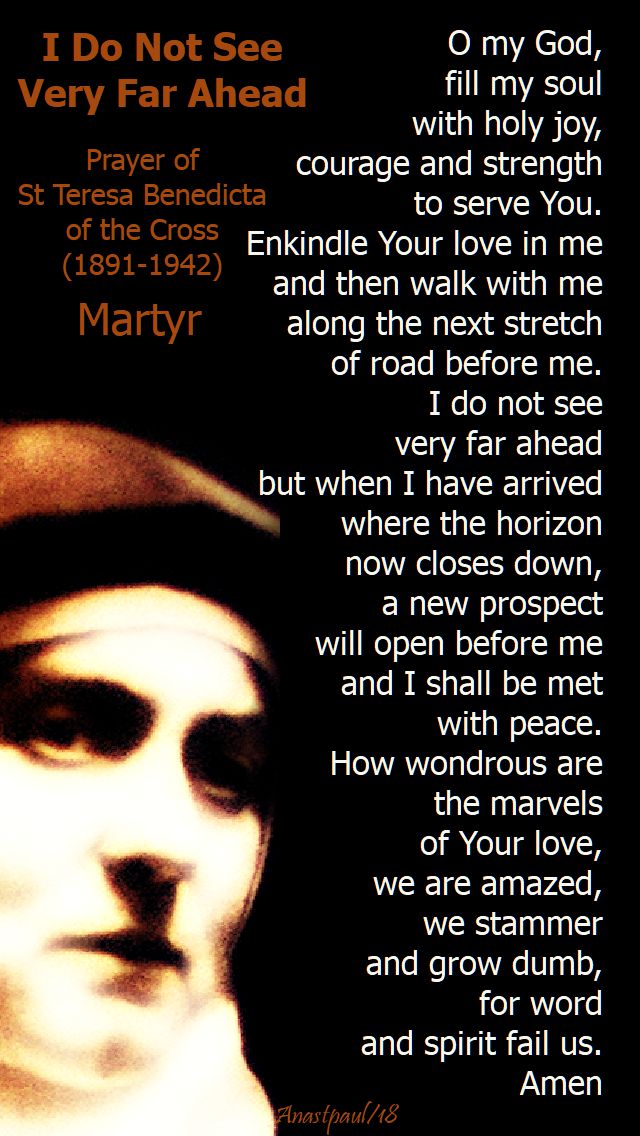
I Do Not See Very Far Ahead
By St Teresa Benedicta of the Cross (1891-1942)

O my God,
fill my soul with holy joy,
courage and strength to serve You.
Enkindle Your love in me
and then walk with me
along the next stretch of road before me.
I do not see very far ahead
but when I have arrived
where the horizon now closes down,
a new prospect will open before me
and I shall be met with peace.
How wondrous are the marvels of Your love,
we are amazed,
we stammer and grow dumb,
for word and spirit fail us.
Ameni do not see very far ahead - st teresa benedicta of the cross - 9 aug 2018

Posted in CARMELITES, SAINT of the DAY, VATICAN Resources

Saint of the Day – 9 August – St Teresa Benedicta of the Cross/Edith Stein (1891-1942)

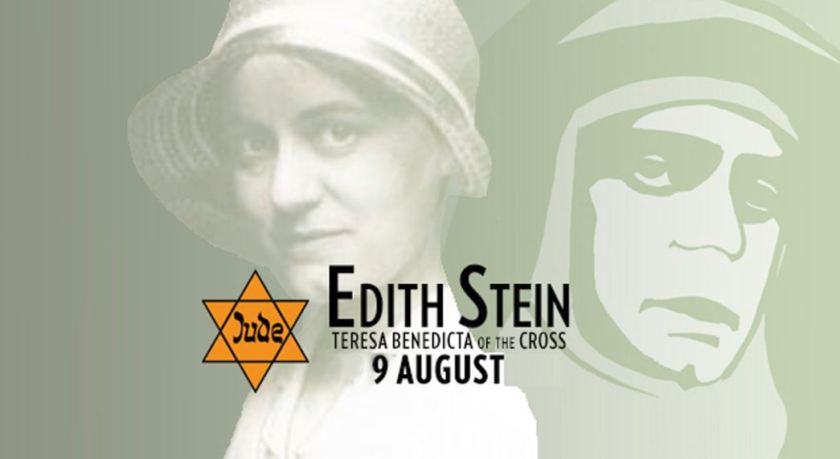
Saint of the Day – 9 August – St Teresa Benedicta of the Cross/Edith Stein (1891-1942) Nun, Discalced Carmelite, Martyr.   Below is a lengthy biography from the Vatican, it’s worth reading.

“We bow down before the testimony of the life and death of Edith Stein, an outstanding daughter of Israel and at the same time a daughter of the Carmelite Order, Sister Teresa Benedicta of the Cross, a personality who united within her rich life a dramatic synthesis of our century.   It was the synthesis of a history full of deep wounds that are still hurting … and also the synthesis of the full truth about man.   All this came together in a single heart that remained restless and unfulfilled until it finally found rest in God.”   These were the words of Pope John Paul II when he beatified Edith Stein in Cologne on 1 May 1987.
EDITH STEYN - SNIP

Edith Stein was born in Breslau on 12 October 1891, the youngest of 11, as her family were celebrating Yom Kippur, that most important Jewish festival, the Feast of Atonement.   “More than anything else, this helped make the youngest child very precious to her mother.”   Being born on this day was like a foreshadowing to Edith, a future Carmelite nun.   Edith’s father, who ran a timber business, died when she had only just turned two.   Her mother, a very devout, hard-working, strong-willed and truly wonderful woman, now had to fend for herself and to look after the family and their large business.   However, she did not succeed in keeping up a living faith in her children.   Edith lost her faith in God. “I consciously decided, of my own volition, to give up praying,” she said.

In 1911 she passed her school-leaving exam with flying colours and enrolled at the University of Breslau to study German and history, though this was a mere “bread-and-butter” choice.   Her real interest was in philosophy and in women’s issues.   She became a member of the Prussian Society for Women’s Franchise.   “When I was at school and during my first years at university,” she wrote later, “I was a radical suffragette.   Then I lost interest in the whole issue.  Now I am looking for purely pragmatic solutions.”st teresa benedicta info

In 1913, Edith Stein transferred to Gottingen University, to study under the mentorship of Edmund Husserl.   She became his pupil and teaching assistant and he later tutored her for a doctorate.   At the time, anyone who was interested in philosophy was fascinated by Husserl’s new view of reality, whereby the world as we perceive it does not merely exist in a Kantian way, in our subjective perception.   His pupils saw his philosophy as a return to objects:  “back to things”.   Husserl’s phenomenology unwittingly led many of his pupils to the Christian faith.   In Gottingen Edith Stein also met the philosopher Max Scheler, who directed her attention to Roman Catholicism.   Nevertheless, she did not neglect her “bread-and-butter” studies and passed her degree with distinction in January 1915, though she did not follow it up with teacher training.

“I no longer have a life of my own,” she wrote at the beginning of the First World War, having done a nursing course and gone to serve in an Austrian field hospital.   This was a hard time for her, during which she looked after the sick in the typhus ward, worked in an operating theatre and saw young people die.   When the hospital was dissolved, in 1916, she followed Husserl as his assistant to the German city of Freiburg, where she passed her doctorate summa cum laude (with the utmost distinction) in 1917, after writing a thesis on “The Problem of Empathy.”

During this period she went to Frankfurt Cathedral and saw a woman with a shopping basket going in to kneel for a brief prayer.   “This was something totally new to me.   In the synagogues and Protestant churches I had visited people simply went to the services. Here, however, I saw someone coming straight from the busy marketplace into this empty church, as if she was going to have an intimate conversation.  It was something I never forgot.”   Towards the end of her dissertation she wrote:   “There have been people who believed that a sudden change had occurred within them and that this was a result of God’s grace.”   How could she come to such a conclusion?   Edith Stein had been good friends with Husserl’s Göttingen assistant, Adolf Reinach and his wife.   When Reinach fell in Flanders in November 1917, Edith went to Göttingen to visit his widow.   The Reinachs had converted to Protestantism.   Edith felt uneasy about meeting the young widow at first but was surprised when she actually met with a woman of faith.   “This was my first encounter with the Cross and the divine power it imparts to those who bear it … it was the moment when my unbelief collapsed and Christ began to shine his light on me – Christ in the mystery of the Cross.”

Later, she wrote:   “Things were in God’s plan which I had not planned at all. I am coming to the living faith and conviction that – from God’s point of view – there is no chance and that the whole of my life, down to every detail, has been mapped out in God’s divine providence and makes complete and perfect sense in God’s all-seeing eyes.”

In Autumn 1918 Edith Stein gave up her job as Husserl’s teaching assistant.   She wanted to work independently.   It was not until 1930 that she saw Husserl again after her conversion and she shared with him about her faith, as she would have liked him to become a Christian, too.   Then she wrote down the amazing words: “Every time I feel my powerlessness and inability to influence people directly, I become more keenly aware of the necessity of my own holocaust.”

Edith Stein wanted to obtain a professorship, a goal that was impossible for a woman at the time.   Husserl wrote the following reference:  “Should academic careers be opened up to ladies, then I can recommend her whole-heartedly and as my first choice for admission to a professorship.”   Later, she was refused a professorship on account of her Jewishness.

Back in Breslau, Edith Stein began to write articles about the philosophical foundation of psychology.   However, she also read the New Testament, Kierkegaard and Ignatius of Loyola’s Spiritual Exercises.   She felt that one could not just read a book like that but had to put it into practice.   In the summer of 1921. she spent several weeks in Bergzabern (in the Palatinate) on the country estate of Hedwig Conrad-Martius, another pupil of Husserl’s.   Hedwig had converted to Protestantism with her husband.   One evening Edith picked up an autobiography of St Teresa of Avila and read this book all night. “When I had finished the book, I said to myself: This is the truth.”   Later, looking back on her life, she wrote:  “My longing for truth was a single prayer.”young st teresa
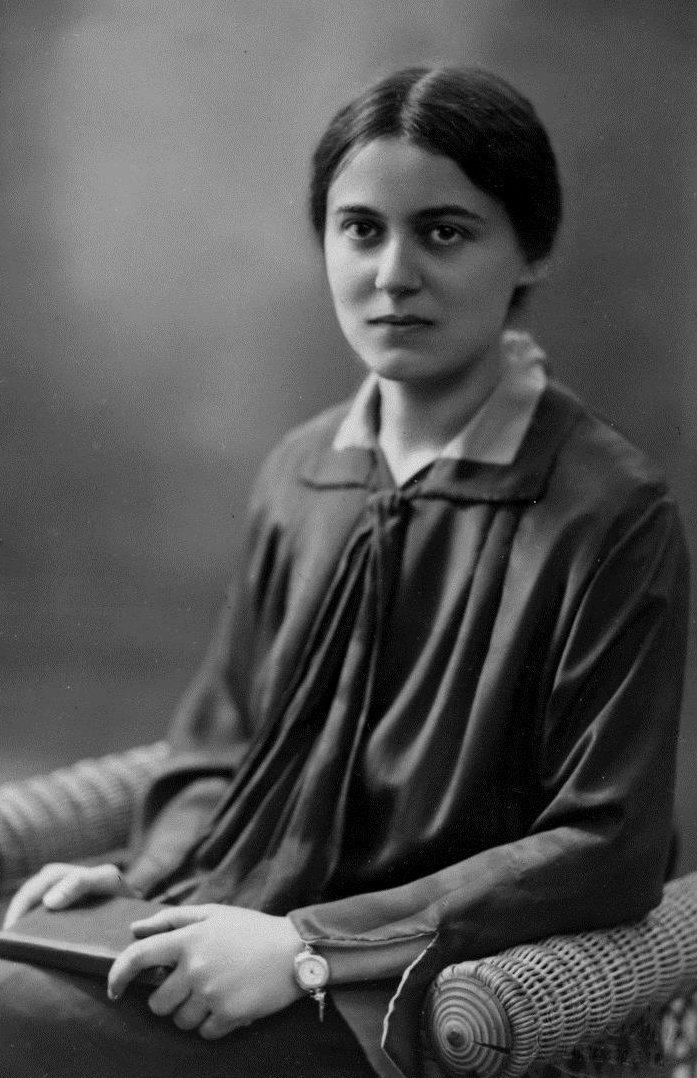
On 1 January 1922 Edith Stein was baptised.   It was the Feast of the Circumcision of Jesus, when Jesus entered into the covenant of Abraham.   Edith Stein stood by the baptismal font, wearing Hedwig Conrad-Martius’ white wedding cloak.   “I had given up practising my Jewish religion when I was a 14-year-old girl and did not begin to feel Jewish again until I had returned to God.”   From this moment on she was continually aware that she belonged to Christ not only spiritually but also through her blood.   At the Feast of the Purification of Mary – another day with an Old Testament reference – she was confirmed by the Bishop of Speyer in his private chapel.   After her conversion she went straight to Breslau:   “Mother,” she said, “I am a Catholic.”   The two women cried. Hedwig Conrad Martius wrote:  “Behold, two Israelites indeed, in whom is no deceit!” (cf. John 1:47).

Immediately after her conversion she wanted to join a Carmelite convent.   However, her spiritual mentors, Vicar-General Schwind of Speyer and Erich Przywara SJ, stopped her from doing so.   Until Easter 1931 she held a position teaching German and history at the Dominican Sisters’ school and teacher training college of St Magdalen’s Convent in Speyer.   At the same time she was encouraged by Arch-Abbot Raphael Walzer of Beuron Abbey to accept extensive speaking engagements, mainly on women’s issues.   “During the time immediately before and quite some time after my conversion I … thought that leading a religious life meant giving up all earthly things and having one’s mind fixed on divine things only.   Gradually, however, I learnt that other things are expected of us in this world…   I even believe that the deeper someone is drawn to God, the more He has to `get beyond himself’ in this sense, that is, go into the world and carry divine life into it.”

She worked enormously hard, translating the letters and diaries of Cardinal Newman from his pre-Catholic period as well as Thomas Aquinas’ Quaestiones Disputatae de Veritate.   The latter was a very free translation, for the sake of dialogue with modern philosophy.   Erich Przywara also encouraged her to write her own philosophical works. She learnt that it was possible to “pursue scholarship as a service to God… It was not until I had understood this that I seriously began to approach academic work again.”   To gain strength for her life and work, she frequently went to the Benedictine Monastery of Beuron, to celebrate the great festivals of the Church year.

In 1931 Edith Stein left the convent school in Speyer and devoted herself to working for a professorship again, this time in Breslau and Freiburg, though her endeavours were in vain.   It was then that she wrote Potency and Act, a study of the central concepts developed by Thomas Aquinas.   Later, at the Carmelite Convent in Cologne, she rewrote this study to produce her main philosophical and theological oeuvre, Finite and Eternal Being.   By then, however, it was no longer possible to print the book.   In 1932 she accepted a lectureship position at the Roman Catholic division of the German Institute for Educational Studies at the University of Munster, where she developed her anthropology.   She successfully combined scholarship and faith in her work and her teaching, seeking to be a “tool of the Lord” in everything she taught. “If anyone comes to me, I want to lead them to Him.”

In 1933 darkness broke out over Germany.   “I had heard of severe measures against Jews before.   But now it dawned on me that God had laid his hand heavily on His people and that the destiny of these people would also be mine.”   The Aryan Law of the Nazis made it impossible for Edith Stein to continue teaching.   “If I can’t go on here, then there are no longer any opportunities for me in Germany,” she wrote; “I had become a stranger in the world.”   The Arch-Abbot of Beuron, Walzer, now no longer stopped her from entering a Carmelite convent.   While in Speyer, she had already taken a vow of poverty, chastity and obedience.   In 1933 she met with the prioress of the Carmelite Convent in Cologne.   “Human activities cannot help us but only the suffering of Christ.   It is my desire to share in it.”st teresa benedicta icon
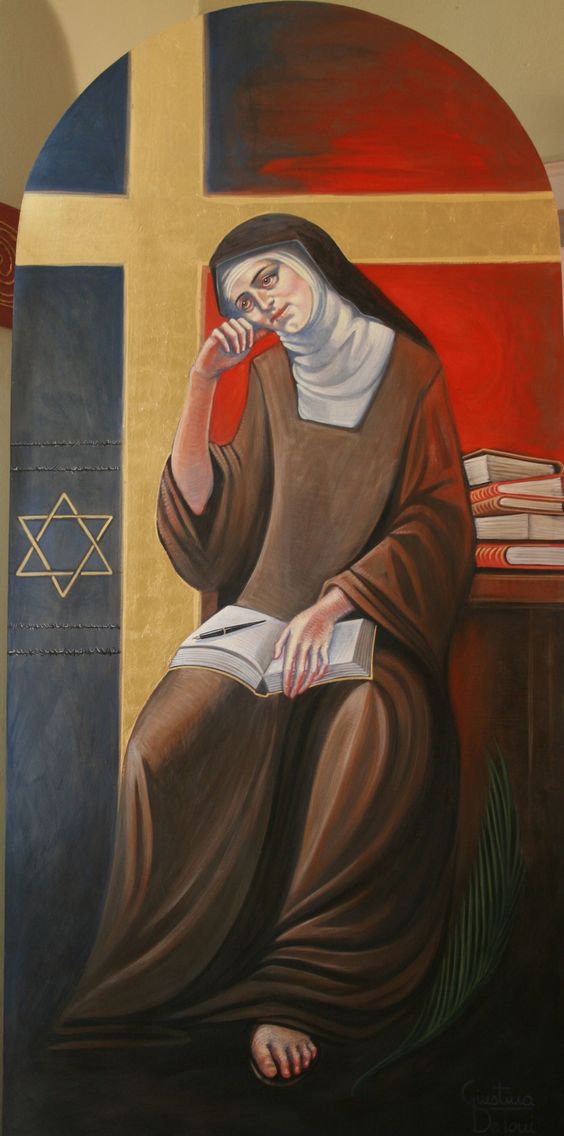
Edith Stein went to Breslau for the last time, to say good-bye to her mother and her family.   Her last day at home was her birthday, 12 October, which was also the last day of the Feast of Tabernacles.   Edith went to the synagogue with her mother.   It was a hard day for the two women.   “Why did you get to know it [Christianity]?” her mother asked, “I don’t want to say anything against Him.   He may have been a very good person.   But why did He make Himself God?” Edith’s mother cried.   The following day Edith was on the train to Cologne.   “I did not feel any passionate joy.   What I had just experienced was too terrible.   But I felt a profound peace – in the safe haven of God’s will.”   From now on she wrote to her mother every week, though she never received any replies.   Instead, her sister Rosa sent her news from Breslau.

Edith joined the Carmelite Convent of Cologne on 14 October and her investiture took place on 15 April, 1934.   The mass was celebrated by the Arch-Abbot of Beuron.   Edith Stein was now known as Sister Teresia Benedicta a Cruce – Teresa, Blessed of the Cross. In 1938 she wrote:  “I understood the cross as the destiny of God’s people, which was beginning to be apparent at the time (1933).   I felt that those who understood the Cross of Christ should take it upon themselves on everybody’s beha  lf. Of course, I know better now what it means to be wedded to the Lord in the sign of the cross.   However, one can never comprehend it, because it is a mystery.”   On 21 April 1935 she took her temporary vows.   On 14 September 1936, the renewal of her vows coincided with her mother’s death in Breslau.   “My mother held on to her faith to the last moment.   But as her faith and her firm trust in her God … were the last thing that was still alive in the throes of her death, I am confident that she will have met a very merciful judge and that she is now my most faithful helper, so that I can reach the goal as well.”   When she made her eternal profession on 21 April 1938, she had the words of St John of the Cross printed on her devotional picture:   “Henceforth my only vocation is to love.”   Her final work was to be devoted to this author.St Teresa Benedicta of the Cross-lg
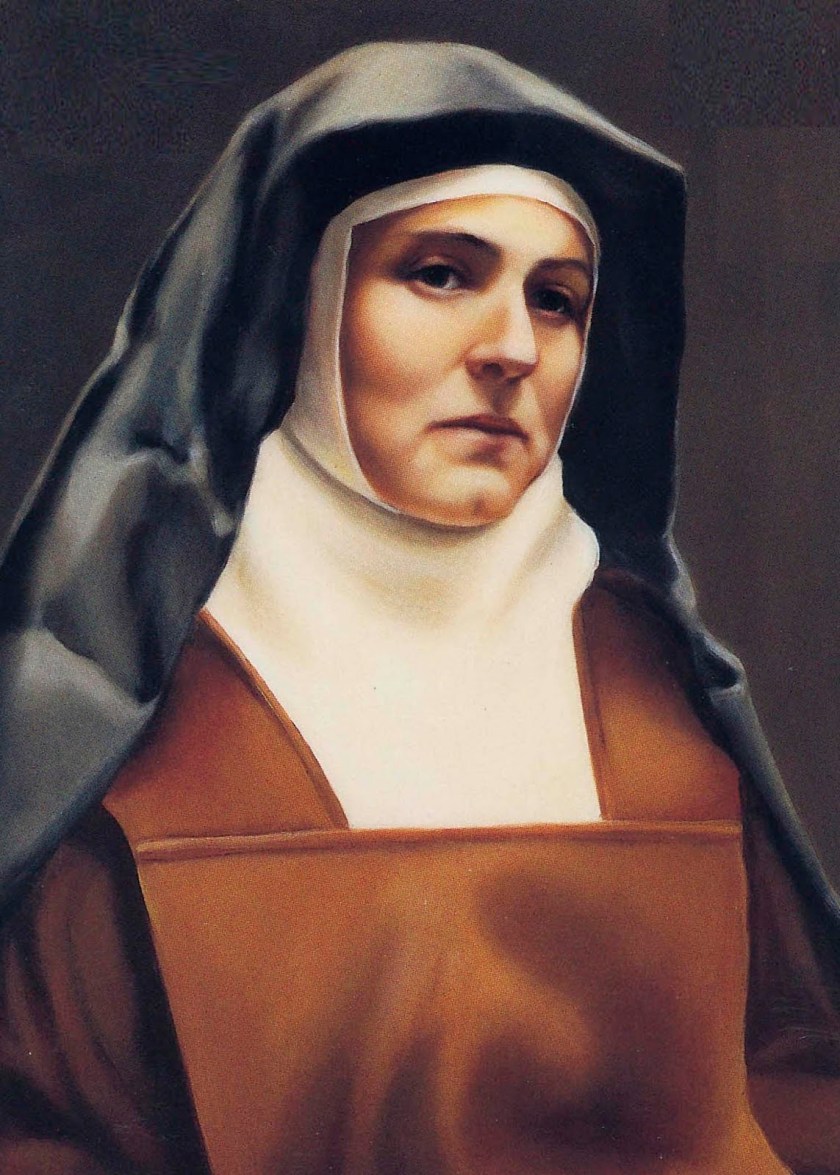
Edith Stein’s entry into the Carmelite Order was not escapism.   “Those who join the Carmelite Order are not lost to their near and dear ones but have been won for them, because it is our vocation to intercede to God for everyone.”   In particular, she interceded to God for her people:   “I keep thinking of Queen Esther who was taken away from her people precisely because God wanted her to plead with the king on behalf of her nation.   I am a very poor and powerless little Esther but the King who has chosen me is infinitely great and merciful.   This is great comfort.” (31 October 1938)

On 9 November 1938 the anti-Semitism of the Nazis became apparent to the whole world.   Synagogues were burnt and the Jewish people were subjected to terror.   The prioress of the Carmelite Convent in Cologne did her utmost to take Sister Teresia Benedicta a Cruce abroad.   On New Year’s Eve 1938 she was smuggled across the border into the Netherlands, to the Carmelite Convent in Echt in the Province of Limburg.   This is where she wrote her will on 9 June 1939:  “Even now I accept the death that God has prepared for me in complete submission and with joy as being his most holy will for me. I ask the Lord to accept my life and my death … so that the Lord will be accepted by His people and that His Kingdom may come in glory, for the salvation of Germany and the peace of the world.”st teresa benedicta artwork
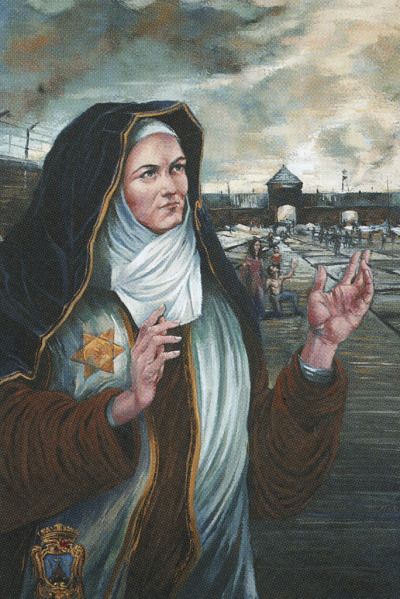
While in the Cologne convent, Edith Stein had been given permission to start her academic studies again.   Among other things, she wrote about “The Life of a Jewish Family” (that is, her own family): “I simply want to report what I experienced as part of Jewish humanity,” she said, pointing out that “we who grew up in Judaism have a duty to bear witness … to the young generation who are brought up in racial hatred from early childhood.”

In Echt, Edith Stein hurriedly completed her study of “The Church’s Teacher of Mysticism and the Father of the Carmelites, John of the Cross, on the Occasion of the 400th Anniversary of His Birth, 1542-1942.”   In 1941 she wrote to a friend, who was also a member of her order:  “One can only gain a scientia crucis (knowledge of the cross) if one has thoroughly experienced the cross.   I have been convinced of this from the first moment onwards and have said with all my heart:   ‘Ave, Crux, Spes unica’ (I welcome you, Cross, our only hope).”   Her study on S. John of the Cross is entitled: “Kreuzeswissenschaft” (The Science of the Cross).

Edith Stein was arrested by the Gestapo on 2 August 1942, while she was in the chapel with the other sisters.   She was to report within five minutes, together with her sister Rosa, who had also converted and was serving at the Echt Convent.   Her last words to be heard in Echt were addressed to Rosa:  “Come, we are going for our people.”   Together with many other Jewish Christians, the two women were taken to a transit camp in Amersfoort and then to Westerbork.   This was an act of retaliation against the letter of protest written by the Dutch Roman Catholic Bishops against the pogroms and deportations of Jews.   Edith commented, “I never knew that people could be like this, neither did I know that my brothers and sisters would have to suffer like this. … I pray for them every hour.   Will God hear my prayers?   He will certainly hear them in their distress.”   Prof. Jan Nota, who was greatly attached to her, wrote later:  “She is a witness to God’s presence in a world where God is absent.”st teresa benedicta art

On 7 August, early in the morning, 987 Jews were deported to Auschwitz.  It was probably on 9 August that Sister Teresia Benedicta a Cruce, her sister and many other of her people were gassed.
When Edith Stein was beatified in Cologne on 1 May 1987, the Church honoured “a daughter of Israel”, as Pope John Paul II put it, who, as a Catholic during Nazi persecution, remained faithful to the crucified Lord Jesus Christ and, as a Jew, to her people in loving faithfulness.”   St John Paul II canonised her in 1998 and proclaimed her a co-patroness of Europe the next year.Edith-Stein_0
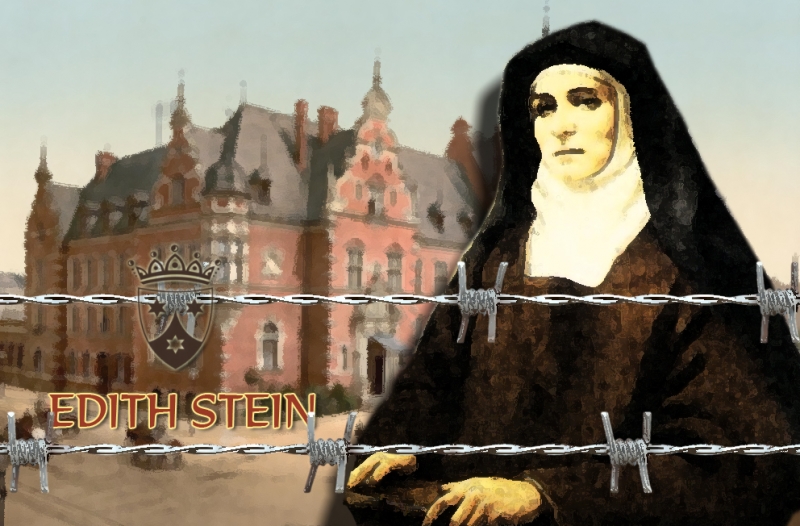
More here:  https://anastpaul.wordpress.com/2017/08/09/saint-of-the-day-9-august-st-teresa-benedicta-of-the-cross-ocd/

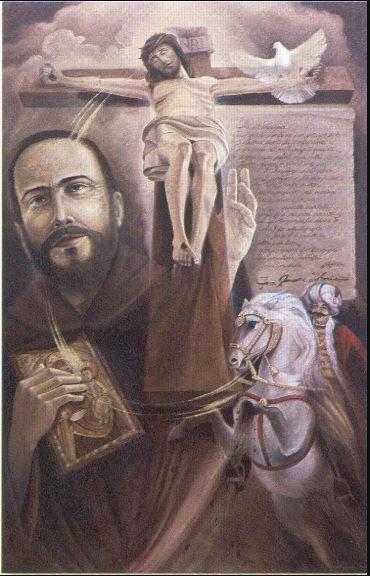
Posted in CARMELITES, SAINT of the DAY

Memorials of the Saints -9 August

St Teresa Benedicta of the Cross OCD (1891-1942)Martyr, Co-Patron of Europe  (Optional Memorial)
https://anastpaul.wordpress.com/2017/08/09/saint-of-the-day-9-august-st-teresa-benedicta-of-the-cross-ocd/
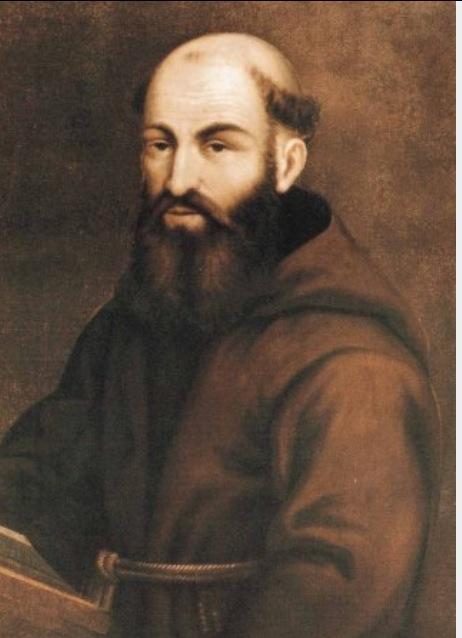
St Amor of Franche-Comté
St Autor of Metz
St Bandaridus of Soissons
St Bonifacia Rodriguez Castro
St Candida Maria de Jesus Cipitria y Barriola
St Claude Richard
St Domitian of Châlons
Bl Falco the Hermit
St Firmus of Verona
Bl John Norton
Bl John of Salerno
Bl John Talbot
St Marcellian of Civitavecchia
Bl Michal Tomaszek
St Nathy
St Numidicus of Carthage
St Phelim
Bl Richard Bere
St Romanus Ostiarius
St Rusticus of Sirmium
St Rusticus of Verona
St Secundian of Civitavecchia
St Stephen of Burgos
Bl Thomas Palaser
St Verian of Civitavecchia
Bl Zbigniew Adam Strzalkowski

Martyrs of Civitavecchia: Three Christians martyred together in the persecutions of Decius. We know little more than the names – Marcellian, Secundian and Verian. 250 near Civitavecchia, Italy.

Martyrs of Constantinople: 10 saints: A group of ten Christians who were arrested, tortured and executed for defending an icon of Christ in defiance of orders from Emperor Leo the Isaurian. We know the names of three, but nothing else about them – Julian, Marcian and Mary. They were beheaded in Constantinople.

Martyred in the Spanish Civil War:
Martyred Colombians of Barcelona: – 7 beati: Additional Memorial – 30 July as one of the Martyred Hospitallers of Spain
A group of Colombian members of the Hospitallers of Saint John of God who worked together in Spain, and who were martyred together in the Spanish Civil War.
• Blessed Alfonso Antonio Ramírez Salazar
• Blessed Gabriel Maya Gutiérrez
• Blessed José Velázquez Peláez
• Blessed Luis Ayala Niño
• Blessed Luis Modesto Páez Perdomo
• Blessed Ramón Ramírez Zuluoga
• Blessed Rubén de Jesús López Aguilar
They were martyred on 9 August 1936 in Barcelona, Spain and Beatified on 25 October 1992 by Pope John Paul II.
Martyred in the Spanish Civil War:
Bl Antonio Mateo Salamero
Bl Faustino Oteiza Segura
Bl Florentín Felipe Naya
Bl Florentino Asensio Barroso
Bl Francisco López-Gasco Fernández-Largo
Bl Guillermo Plaza Hernández
Bl Joan Vallés Anguera
Bl José María Garrigues Hernández
Bl Josep Figuera Rey
Bl Josep Maria Aragones Mateu
Bl Julián Pozo Ruiz de Samaniego
Bl Mateo Molinos Coloma
Bl Narcís Sitjà Basté

Posted in MORNING Prayers, PAPAL SERMONS, SAINT of the DAY

Second Thoughts for the Day – 8 August – The Memorial of St Mary of the Cross MacKillop (1842-1909)

Second Thoughts for the Day – 8 August – The Memorial of St Mary of the Cross MacKillop (1842-1909)

“In the vastness of the Australian continent, Blessed Mary MacKillop was not daunted by the great desert, the immense expanses of the outback, nor by the spiritual “wilderness” which affected so many of her fellow citizens.   Rather, she boldly prepared the way of the Lord, in the most trying situations.   With gentleness, courage and compassion, she was a herald of the Good News among the isolated “battlers” and the urban slum-dwellers.   Mother Mary of the Cross knew that behind the ignorance, misery and suffering which she encountered there were people, men and women, young and old, yearning for God and his righteousness.   She knew, because she was a true child of her time and place:  the daughter of immigrants who had to struggle at all times to build a life for themselves in their new surroundings.

Her story reminds us of the need to welcome people, to reach out to the lonely, the bereft, the disadvantaged.   To strive for the kingdom of God and His righteousness, means to strive to see Christ in the stranger, to meet Him in them and to help them to meet Him in each one of us!”

– Pope Benedict XVI on the Beatification of St Mary of the Cross MacKillop (Thursday 19 January 1005), whose prayers we request!st mary of the cross mackillop pray for us 8 aug 2018-no 4.

Posted in DOMINICAN OP, MORNING Prayers, SAINT of the DAY

Thought for the Day – 8 August – The Memorial of St Dominic (1170-1221)

Thought for the Day – 8 August – The Memorial of St Dominic (1170-1221)

St Dominic possessed such great integrity and was so strongly motivated by divine love, that without a doubt he proved to be a bearer of honour and grace.   And since a joyful heart animates the face, he displayed the peaceful composure of a spiritual man in the kindness he manifested outwardly and by the cheerfulness of his countenance. Wherever he went he showed himself in word and deed to be a man of the Gospel.

During the day no one was more community-minded or pleasant toward his brothers and associates.   During the night hours no one was more persistent in every kind of vigil and supplication.   He seldom spoke unless it was with God, that is, in prayer, or about God and in this matter, he instructed his brothers.   Frequently he made a special personal petition that God would deign to grant him genuine charity in caring for and obtaining the salvation of men.   For he believed that only then would he be truly a member of Christ, when he had given himself totally for the salvation of men, just as the Lord Jesus, the Saviour of all, had offered Himself completely for our salvation.   So, for this work, after a lengthy period of careful and provident planning, he founded the Orders of Friars Preachers.

In his conversations and letters he often urged the brothers of the Order to study constantly the Old and New Testaments.   He always carried with him the gospel according to Matthew and the epistles of Paul and so well did he study them that he almost knew them from memory.

Two or three times he was chosen bishop but he always refused, preferring to live with his brothers in poverty.

Of him Pope Gregory IX declared: “I knew him as a steadfast follower of the apostolic way of life.   There is no doubt that he is in heaven, sharing in the glory of the apostles themselves.”
– from various writings on the history of the Order of Preachers

St Dominic, Pray for us!st-dominic-pray-for-us-2.-8 aug 2017

Posted in DOMINICAN OP, MORNING Prayers, QUOTES of the SAINTS, QUOTES on CHARITY, QUOTES on DIVINE PROVIDENCE, QUOTES on EVANGELISATION, QUOTES on FAITH, QUOTES on HUMILITY, QUOTES on LOVE, QUOTES on MERCY, QUOTES on PERSEVERANCE, QUOTES on SUFFERING, QUOTES on TRUST and complete CONFIDENCE in GOD, SAINT of the DAY

Quote/s of the Day – 8 August – The Memorials of St Dominic (1170-1221) and St Mary of the Cross MacKillop (1842-1909)

Quote/s of the Day – 8 August – The Memorials of St Dominic (1170-1221)

and St Mary of the Cross MacKillop (1842-1909)

“We must sow
the seed,
not hoard it.”we must sow the seed not hoard it - st dominic - 8 aug 2018.jpg

“Heretics are to be converted by an example of humility
and other virtues far more readily, than by any external
display or verbal battles.
So let us arm ourselves with
devout prayers and set off showing signs of genuine humility
and go barefooted to combat Goliath.”heretics-st-dominic-8 aug 2017

“A man who governs his passions is master of his world.
We must either command them or be enslaved by them.
It is better to be a hammer than an anvil.”

St Dominic (1170-1221)a-man-who-governs-his-passions-st-dominic-8 aug 2017

“Whatever troubles may be before you,
accept them bravely,
remembering Whom you are trying to follow.
Do not be afraid.
Love one another, bear with one another
and let charity guide you all your life.
God will reward you as only He can.”

St Mary of the Cross MacKillop (1842-1909)whatever troubles may be - st mary of the cross - 8 aug 2018