Blog

Posted in JULY - The MOST PRECIOUS BLOOD

Thought for the Day – 19 July – The Precious Blood a Lesson of Patience

The Precious Blood – Short Meditations for July

By Rev. Richard F. Clarke

19th Day – The Precious Blood a Lesson of Patience

If we watch the Son of God during those scenes in His sacred passion in which He shed His blood for us, we notice in one and all His exceeding and incomparable patience. During the agony in the garden it was the sight of the brutal ingratitude of man that caused the sweat of blood to flow from His sacred limbs. How could He endure to suffer for such wretches? Yet meekly and patiently He endured their sacrileges, blasphemies, impurities, wanton hatred of God, which rose up before Him as He knelt there in Gethsemani.

At the pillar, again, what divine patience! Not a look of anger, not a word of reproach. There He stands, the picture of uncomplaining endurance. What a lesson for me! How ready I am to complain when when I receive some fancied slight or some trifling injury! How different am I from the Son of God! What a contrast is my conduct to His! O Jesus! teach me to endure without complaint my sufferings, which are small indeed when compared with Thine!

See Him once more upon the cross! Listen to the jibes and sneers cast at Him by the priests, their taunts of His inability to save Himself, Messias though He was. How all this must have aggravated His physical agony! Yet His constant prayer was Father, forgive them! O Jesus, grant me more of the patience and meekness Thou didst show while Thy Precious Blood was ebbing forth on the altar of the cross!

Posted in MARIAN TITLES

Notre-Dame-de-Bonne Délivrance / Our Lady of Good Deliverance, Schwarzen Madonna / Black Madonna of Einsiedeln, Schwyz, Switzerland (853) and Memorials of the Saints – 18 July

Notre-Dame-de-Bonne Délivrance / Our Lady of Good Deliverance (14th Century): 18 July
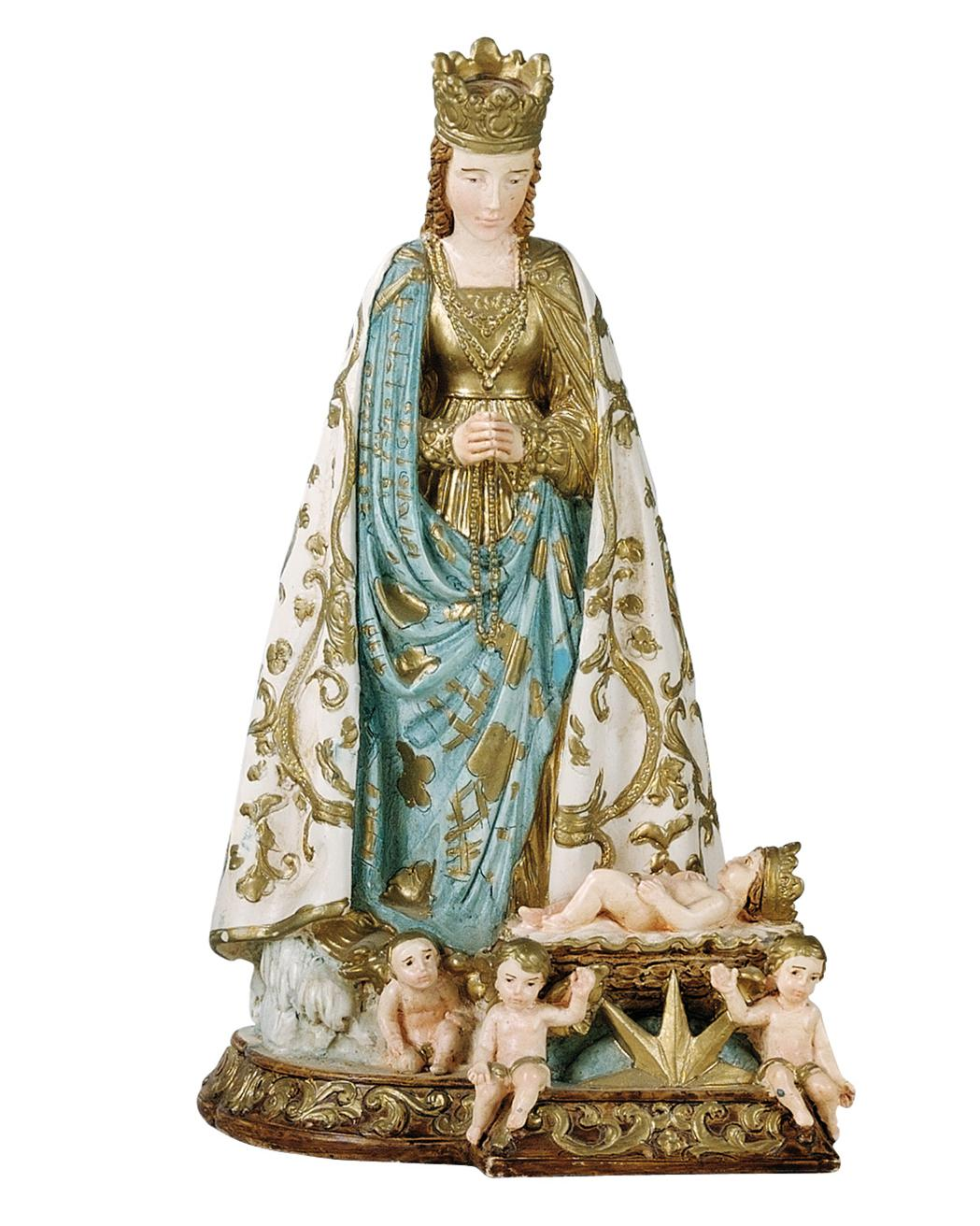
Since the 1000s, the Church of Saint-Etienne-des-Grès in the old Latin Quarter of Paris had a chapel to Our Lady of Good Deliverance, where, across the centuries, pilgrims sought the Virgin’s help in their of sufferings. During the Wars of Religion and counter-Reformation, her Confraternity had 12,000 members, including the King and Queen of France.

Schwarzen Madonna / Black Madonna of Einsiedeln, Schwyz, Switzerland (853) – First Sunday after Our Lady of Mount Carmel:

“Einsiedeln” means “hermitage.” It was the home of St Meinrad (c 797–861) Martyr, a Benedictine Monk who retreated to this place in the pine woods to live in solitude, with a pair of tame crows for company. Abbess Hildegarde of Zurich gave him a Statue of the Madonna for the forest Chapel built in 853, which soon became a place of pilgrimage. In 863, hoping to get his stash of pilgrim donations, two thieves murdered the Saint, who was living in poverty. The crows alerted people, who found and buried the body and executed the killers.

In 948, Benedictines built a Church on the site of St Meinrad’s hermitage. On 14 September, the night before Bishop Conrad was to bless the new Church, he dreamed that Jesus Himself was blessing it. In the morning, when he began the ceremony, everyone heard a voice say, “Stop, for the Church has been Consecrated divinely.” In 1028 the first of five fires destroyed everything but the Chapel containing the Statue. These miracles increased popular devotion to the Shrine, which was repeatedly rebuilt.

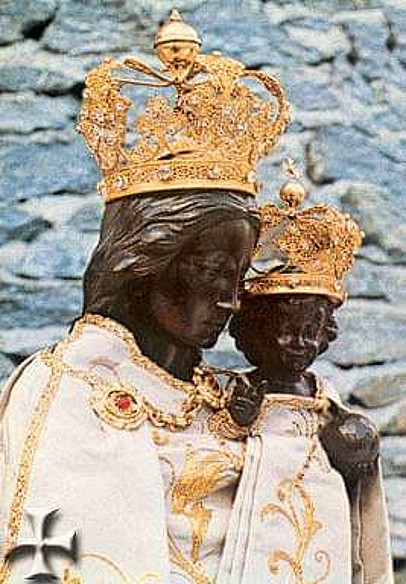
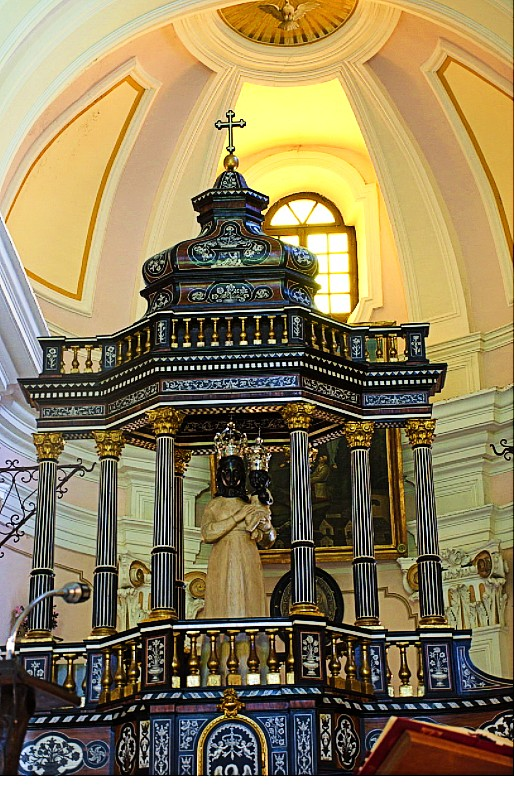
Although tradition holds the present Statue to be the original, it is unlike any that remain from the Ottonian period. Carved of dark wood, the graceful, sweet-faced Madonna, her right knee slightly bent, stands a little over three feet tall, holding the Divine Child in her left arm. This is a typical late Gothic work of the mid-1400s, possibly installed after the third fire in 1465. Displayed before a great aureole of golden rays,the Statue has worn elaborate vestments in colours matching those of Priests for each liturgical season. The Feast of Our Lady of Einsiedeln is 16 July but is usually celebrated on the Sunday following. Even greater pilgrimages occur on 14 September in honour of the Church’s miraculous Consecration.

St Aemilian of Dorostorium
St Alanus of Sassovivo
St Alfons Tracki
Blessed Angeline of Marsciano
Bl Arnold of Amiens
St Arnold of Arnoldsweiler
St Arnoul the Martyr
St Arnulf of Metz (c 580-640) Bishop
St Athanasius of Clysma
Bl Bernard de Arenis
Bl Bertha de Marbais

St Bruno of Segni OSB (1049-1123) Benedictine Bishop, Confessor, Missionary, Papal Advisor, Theologian.

St Ðaminh Ðinh Ðat
St Edburgh of Bicester (Died c 620) Abbess, Nun, Pr5incess
St Elio of Koper

St Frederick of Utrecht (c 815 – c 838) Martyr Bishop

St Goneri of Treguier
St Gundenis of Carthage
Bl Herveus
Bl Jean-Baptiste de Bruxelles
St Marina of Ourense
St Maternus of Milan
St Minnborinus
St Pambo of the Nitrian Desert
St Philastrius of Brescia
St Rufillus of Forlimpopoli
St Scariberga of Yvelines

St Simon (Szymon) of Lipnica OFM Cap (1435/1440-c 1482) Priest of the Franciscan Order of Friars Minor Capuchin.

St Theneva
St Theodosia of Constantinople

Martyrs of Silistria – 7 saints: Seven Christians who were martyred together. No details about them have survived but the names – Bassus, Donata, Justus, Marinus, Maximus, Paulus and Secunda. They were martyred in Silistria (Durostorum), Moesia (in modern Bulgaria), date unknown.

Martyrs of Tivoli – 8 saints: A widow, Symphorosa and her seven sons ( Crescens, Eugene, Julian, Justin, Nemesius, Primitivus and Stracteus) martyred in Tivoli, Italy in the 2nd-century persecutions of Hadrian.

Posted in SAINT of the DAY

Saint of the Day – 18 July – Saint Clair of Epte

St Clair of Epte, also known as Clair of Beauvais or Clare. The name Sinclair comes indirectly from St. Clare or St. Clere, or St. Clair, or in Latin, Sanctus Clarus. He lived near the town that is now called St. Clair sur l’Epte, northwest of Paris in France, on the edge of Normandy.

Born to the nobility, Clair felt a call to religious life, and lived at home much like a monk. His father arranged a marriage for him to a nearby wealthy heiress, and when the young man said he preferred to devote himself to God, the woman tried to seduce him in order to joined the two families together. When he refused her, she became enraged, and swore vengeance. Clair fled to the region of Normandy, France, where he lived as a hermit. Word spread of his wisdom and ability to heal by prayer, and Clair had to keep moving from place to place in order to have solitude. Ordained a priest in 870. Hermit in the woods around Nacqueville, France, and then at a hermitage on the banks of the river Epte where he lived with brother hermit and spiritual son named Cyrin. He was finally located by agents sent by his spurned would-be wife, and murdered on her orders.

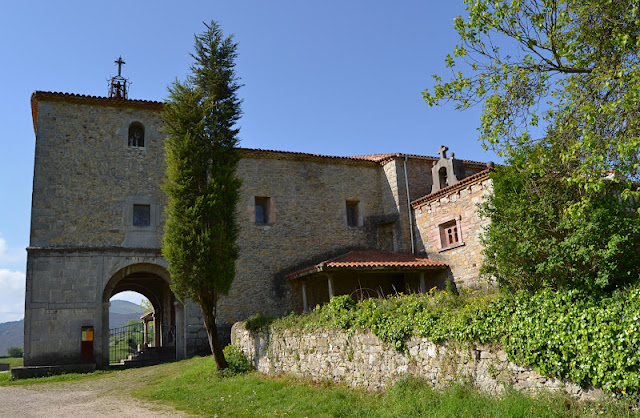
The church of Our Lady, in Saint-Clair-sur-Epte

One of the agents beheaded Clair whilst he knelt in prayer, which is why he is frequently depicted, like St Denis, holding his head in his hands. The blood flowed copiously from his neck but a spring instantly flowed out of the ground and washed away all signs of it.

Clair’s death and the miracle of the spring increased his renown. His hut was transformed into a chapel and eventually a church was built on the spot. Ten years after the murder enough houses were built at the spot to establish a village which was named, St Clair, after the martyr.

The treaty of Saint-Clair-sur-Epte in 911 established Rollo, a Norse warlord and Viking leader, as the first Duke of Normandy.

Posted in Our MORNING Offering

Our Morning Offering – 18 July – Anima Christi

Our Morning Offering – 18 July – “Month of the Most Precious Blood”

Anima Christi

Soul of Christ, sanctify me
Body of Christ, save me
Blood of Christ, inebriate me
Water from the side of Christ, wash me
Passion of Christ, strengthen me
Good Jesus, hear me
Within Your wounds, shelter me
from turning away, keep me
From the evil one, protect me
At the hour of my death, call me
Into Your presence lead me
to praise You with all Your saints
Forever and ever,
Amen

For many years the Anima Christi was popularly believed to have been composed by Saint Ignatius Loyola (1491-1556) , as he puts it at the beginning of his Spiritual Exercises and often refers to it. In the first edition of the Spiritual Exercises Ignatius merely mentions it, evidently supposing that the reader would know it. In later editions, it was printed in full. It was by assuming that everything in the book was written by Ignatius that it came to be looked upon as his composition. On this account the prayer is sometimes referred to as the Aspirations of St. Ignatius Loyola and so my image shows St Ignatius at prayer.

However, the prayer actually dates to the early fourteenth century and was possibly written by Pope John XXII but its authorship remains uncertain. It has been found in a number of prayer books printed during the youth of Ignatius and is in manuscripts which were written a hundred years before his birth. The English hymnologist James Mearns found it in a manuscript of the British Museum which dates to about 1370. In the library of Avignon there is preserved a prayer book of Cardinal Pierre de Luxembourg (died 1387), which contains the prayer in practically the same form as we have it today. It has also been found inscribed on one of the gates of the Alcázar of Seville, which dates back to the time of Pedro the Cruel (1350–1369).

The invocations in the prayer have rich associations with Catholic concepts that relate to the Eucharist (Body and Blood of Christ), Baptism (water) and the Passion of Jesus (Precious Blood and Holy Wounds).

Posted in ONE Minute REFLECTION

One Minute Reflection – 18 July – This is My commandment, that you love one another as I have loved you

This is My commandment, that you love one another as I have loved you.

John 15:12-16

REFLECTION – Since all of our Lord’s sacred utterances contain com­mandments, why does he say about love as if it were a special commandment: “This is my commandment, that you love one another?” It is because every commandment is about love, and they all add up to one commandment be­cause whatever is commanded is founded on love alone. As a tree’s many branches come from one root, so do many virtues come forth from love alone. The branch which is our good works has no sap unless it remains attached to the root of love. Our Lord’s commandments are then both many and one: many through the variety of the works, one in their root which is love.

Our Lord himself instructs us to love our friends in him, and our enemies for his sake. That per­son truly possesses love who loves his friend in God and his enemy for God’s sake.

There are some people who love their neighbors, drawn by blood relationship or by natural affection, and Scripture does not oppose this kind of love. But what we give freely and naturally is one thing, and the obedience we owe to the Lord’s commandments out of love is another. Those I’ve mentioned indisputably love their neighbors… but their love does not come from spiritual but from natural motives. Therefore when the Lord said: “This is my commandment, that you love one another”, he added immediately: “Just as I have loved you,” meaning, “You must love for the same reason that I have loved you.”

Saint Gregory the Great ( Homilies on the Gospels, no. 27)

PRAYER – O Lord Jesus, I adore you wounded on the Cross, having drunk vinegar and gall. I beg you, that your wounds may be the remedy of my soul. Amen. Our Father. Hail Mary.

Posted in QUOTES on LOVE, QUOTES on LOVE of GOD

Quote/s of the Day – 18 July – Greater love than this no one has, that one lay down his life for his friends

Quote/s of the Day – 18 July – “Month of the Most Precious Blood” – Readings: John 15:13, Ps 40:2, 1 John 3:13-18, John 15:12-16

Greater love than this no one has, that one lay down his life for his friends.

John 15:13

Suffering is the ancient law of love;
there is no quest without pain;
there is no lover who is not also a Martyr.

Bl Henry Suso (1295-1366)

Wherefore, O blessed, you may regard yourselves as having been translated from a prison to, we may say, a place of safety. It is full of darkness, but you yourselves are light; it has bonds, but God has made you free. Unpleasant exhalations are there, but you are an odour of sweetness. The judge is daily looked for, but you shall judge the judges themselves. Sadness may be there for him who sighs for the world’s enjoyments. The Christian outside the prison has renounced the world, but in the prison he has renounced a prison too. It is of no consequence where you are in the world — you who are not of it. And if you have lost some of life’s sweets, it is the way of business to suffer present loss, that after gains may be the larger.

Tertullian (To the Martyrs)

 Moreover, also, the blessed Saturus related this his vision, which he himself committed to writing:— We had suffered, says he, and we had gone forth from the flesh, and we were beginning to be borne by four angels into the east; and their hands touched us not. And we floated not supine, looking upwards, but as if ascending a gentle slope. And being set free, we at length saw the first boundless light; and I said, ‘Perpetua’ (for she was at my side), ‘this is what the Lord promised to us; we have received the promise.’ And while we are borne by those same four angels, there appears to us a vast space which was like a pleasure-garden, having rose-trees and every kind of flower. And the height of the trees was after the measure of a cypress, and their leaves were falling incessantly. Moreover, there in the pleasure-garden four other angels appeared, brighter than the previous ones, who, when they saw us, gave us honour, and said to the rest of the angels, ‘Here they are! Here they are!’ with admiration. And those four angels who bore us, being greatly afraid, put us down; and we passed over on foot the space of a furlong in a broad path. There we found Jocundus and Saturninus and Artaxius, who having suffered the same persecution were burnt alive; and Quintus, who also himself a martyr had departed in the prison. And we asked of them where the rest were. And the angels said to us, ‘Come first, enter and greet your Lord.’

Tertullian (The Passion of the Holy Martyrs Perpetua and Felicity)

Wherefore, continuing to enjoy fair winds, we were reluctantly hurried on in one day and a night, mourning [as we did] over the coming departure from us of this righteous man. But to him this happened just as he wished, since he was in haste as soon as possible to leave this world, that he might attain to the Lord whom he loved.

The Martyrdom of Ignatius

Now Paul rejoices with Stephen,
with Stephen he enjoys the brightness of Christ;
he exults with Stephen,
he reigns with Stephen.
There, where Stephen arose,
the first, stoned under Paul’s very eyes,
there too, Paul has risen
with the help of Stephen’s prayers!

St Fulgentius of Ruspe (c 462 – 533)
Bishop in North Africa

Posted in JULY - The MOST PRECIOUS BLOOD

Thought for the Day – 18 July – 18th Day – The Precious Blood a Lesson of Sacrifice

The Precious Blood – Short Meditations for July

By Rev. Richard F. Clarke

18th Day – The Precious Blood a Lesson of Sacrifice

Why did the Eternal Father choose for His co-equal Son that He should close His sojourn on earth by the cruel agony and unspeakable degradation of shedding for man the last drop of the Precious Blood? Would it not have sufficed to redeem us from sin if He had appeared on earth for one instant clad in human form? Yes, but then man would never have learnt the lesson of sacrifice. He would not have been moved to regard suffering as a necessary part of the ideal life. We thank Thee, O Lord, for this Thy commiseration for our blindness and our ignorance!

The lesson of sacrifice for the sake of others is one that Our Lord’s life teaches us throughout. Nothing for Himself, no concession to His human nature for its own sake. No avoiding of pain or reproach on account of the suffering it entailed, but rather a joyful acceptance of all that might be to man a source of grace and a motive of virtue. May I rejoice, O Lord, to have the privilege of following Thee step by step along Thy path of suffering.

This road of suffering is also one that leads us to solid happiness in this world and eternal joy in the next. It is for our own interest to sacrifice ourselves. Who are so happy as they who shed their blood for Christ? For them no purgatory, whatever their past life, but an immediate entrance into the celestial paradise. Such a sacrifice as this may not be asked of me, but how do I make those that I know would be pleasing to Him Who sacrificed Himself wholly for me?

Posted in MARIAN TITLES

Madonna dell’Umiltà / The Madonna of Humility, Pistoia, Tuscany, Italy (1490), Madonna della Campitelli / Our Lady of Campitelli, Italy (524) and Memorials of the Saints – 17 July

Madonna dell’Umiltà / The Madonna of Humility, Pistoia, Tuscany, Italy (1490) – 17 July

Madonna della Campitelli / Our Lady of Campitelli, Italy (524) – 17 July and 2 February:

The Sanctuary of Sancta Maria in Campitelli is one of the most celebrated of Rome. It is dedicated to the Blessed Virgin Mary, and is located on the Piazza di Campitelli in Rome, Italy.

There is venerated at the Church a precious image that was transported from the portico of the palace of the Roman matron, Galla Patrizia Seveath, to whom the Virgin herself appeared on 17 July 524. The icon is only 25 centimeters high. Mention is made of the miraculous appearance by Pope Gregory the Great. The image is known as Our Lady in the Portico, or the Madonna del Portico.

The Church where the icon was kept was known as Santa Galla Antiqua and it used to be located just north of the Piazza Bocca della Verita and west of the Via Petroselli. It was destroyed by Mussolini under pretext that the street should be widened.

In the year 1618 the congregation was transferred to a new Church known as Santa Maria in Campitelli, finished in 1667. The work of the Shrine is that of the architect Rainaldi. The new edifice was erected by vote of the people in thanksgiving for the preservation of the city from the pestilence of 1656 and was designed in the Baroque style. There are tall columns on the façade of the church that were intended to include statues, although the statues were never completed as originally planned.

The icon of Our Lady of Campitelli is surrounded by an ornate Shrine behind the High Altar and there is a stairway behind the display that allows a closer inspection of the famous Icon. It is not open to the general public.

Many times the sacred image of Our Lady of Campitelli has been carried in procession through the streets of Rome – the people invoking Mary’s protection against pestilence, epidemics and earthquakes. This image is also invoked under the title of Our Lady of Security and two feasts are commemorated in Mary’s honour – 17 July and 2 February.

St Alexius of Rome (Died early 5th Century) Hermit, Mystic, beggar – known as “the Man of God.”

St Andrew Zorard OSB (c 980 – c 1008) Hermit, Monk, Missionary
Bl Arnold of Himmerod
Bl Bénigne
Bl Biagio of the Incarnation

Bl Carlos de Dios Murias OFM Conv (1945-1976) Priest Martyr
St Cynllo
St Ennodius of Pavia
St Fredegand of Kerkelodor
St Generosus
St Gorazd
St Hedwig, Queen of Poland
St Hyacinth of Amastris
St Kenelm
St Pope Leo IV

St Magnus Felix Ennodius
St Marcellina
St Nerses Lambronazi

St Petrus Liu Zeyu
Bl Sebastian of the Holy Spirit
Bl Tarsykia Matskiv
St Theodosius of Auxerre
St Theodota of Constantinople
St Turninus

Martyrs of Compiegne (16 beati): Sixteen Blessed Teresian Martyrs of Compiègne. Eleven Discalced Carmelite nuns, three lay sisters and two lay women servants who were martyred together in the French Revolution. They were the earliest martyrs of the French Revolution that have been recognised.
• Angelique Roussel • Anne Pelras • Anne-Marie-Madeleine Thouret • Catherine Soiron • élisabeth-Julitte Vérolot • Marie Dufour • Marie Hanniset • Marie-Anne Piedcourt • Marie-Anne-Françoise Brideau • Marie-Claude-Cyprienne Brard • Marie-Françoise de Croissy • Marie-Gabrielle Trezel • Marie-Geneviève Meunier • Marie-Madeleine-Claudine Lidoine • Rose-Chretien de Neuville • Thérèse Soiron •
They were guillotined on 17 July 1794 at the Place du Trône Renversé (modern Place de la Nation) in Paris, France.

Martyrs of Scillium (12 saints): A group of twelve Christians martyred together, the final deaths in the persecutions of Emperor Marcus Aurelius. Upon their conviction for the crime of being Christians, the group was offered 30 days to reconsider their allegiance to the faith; they all declined. Their official Acta still exist. Their names –
• Acyllinus • Cythinus • Donata • Felix • Generosa • Januaria • Laetantius • Narzales • Secunda • Speratus • Vestina • Veturius
They were beheaded on 17 July 180 in Scillium, Numidia (in North Africa).

Posted in SAINT of the DAY

Saint of the Day – 17 July – St Kenelm

Saint Kenelm or Cynehelm, is an Anglo-Saxon saint, venerated throughout medieval England, and mentioned in the Canterbury Tales (The Nun’s Priest’s Tale, lines 290–301. William of Malmesbury, writing in the 12th century, recounted that “there was no place in England to which more pilgrims travelled than to Winchcombe on Kenelm’s feast day”.

Saint Kenelm was the son of Cenwulf, King of Mercia (796–821). According to 12th-century documents from Winchcombe Abbey, King Kenelm ascended the throne at the age of seven. He was beheaded at the instigation of his sister Cwenthryth, who wanted to take the throne, and his body was buried in an unmarked spot in Clent Forest, south of Birmingham. Saint Kenelm’s soul is said to have then risen in the form of a dove carrying a scroll. It flew to Rome, where it left the scroll at the feet of Saint Hierarch Pascal, Bishop of Rome. The message on the scroll read: ‘Down in a cow meadow, under a thorn, with his head missing, lies poor Kenelm, born king.’ Saint Pascal then wrote to the Archbishop of Canterbury, who commissioned a group of monks to search for the king’s body. The discovery of his body led to the establishment of a chapel at the site, marked by miraculous events, including the ringing of church bells by themselves, and the emergence of a healing spring at the point where the exhausted monks struck the ground with their staffs.

While searching, the monks saw a pillar of light shining above a bush in Worcestershire. Buried beneath it, they found the body of Saint Kenelm. The monks transported his relics to Winchcombe Abbey, where they were kept and remained there for several hundred years, where miracles were reported. Wells marked the course of his body from the Clent Hills.

His sister, Queen Cwenthryth, was reading a Psalter when she heard the bells ringing unaided by human hands. When she was told that her brother’s body had been found, she cried ‘If that be true, may both my eyes fall upon this book.” Her eyes immediately fell from her head upon the book. She and her lover were put to death, and their bodies cast into a ditch.

Posted in Our MORNING Offering

Our Morning Offering – 17 July – Deign, O Immaculate Virgin

Our Morning Offering – 17 July – “Month of the Most Precious Blood”

Deign, O Immaculate Virgin
By St Paschasius Radbertus (785–865)

Deign, O Immaculate Virgin,
Mother most pure,
to accept the loving cry of praise
which we send up to you
from the depths of our hearts.
Though they can but add little to your glory,
O Queen of Angels,
you do not despise, in your love,
the praises of the humble and the poor.
Cast down upon us a glance of mercy,
O most glorious Queen,
graciously receive our petitions.
Through your immaculate purity of body and mind,
which rendered you so pleasing to God,
inspire us with a love of innocence and purity.
Teach us to guard carefully the gifts of grace,
striving ever after sanctity, so that,
being made like the image of your beauty,
we may be worthy to become,
the sharers of your eternal happiness.
Amen

Posted in ONE Minute REFLECTION

One Minute Reflection – 17 July – By their fruits you will know them

One Minute Reflection – 17July – “Month of the Most Precious Blood” – Readings: Ps 46:2, Ps 46:3, Rom 6:19-23, Matt 7:15-21

By their fruits you will know them.

Matt 7:15-21

REFLECTION Vice mimics virtue, and the tares strive to be thought wheat, growing like the wheat in appearance, but being detected by good judges from the taste. The devil also transfigures himself into an angel of light; not that he may reascend to where he was, for having made his heart hard as an anvil, he has henceforth a will that cannot repent; but in order that he may envelope those who are living an Angelic life in a mist of blindness, and a pestilent condition of unbelief. Many wolves are going about in sheep’s clothing, their clothing being that of sheep, not so their claws and teeth: but clad in their soft skin, and deceiving the innocent by their appearance, they shed upon them from their fangs the destructive poison of ungodliness.

We have need therefore of divine grace, and of a sober mind, and of eyes that see, lest from eating tares as wheat we suffer harm from ignorance, and lest from taking the wolf to be a sheep we become his prey, and from supposing the destroying Devil to be a beneficent Angel we be devoured: for, as the Scripture says, he goes about as a roaring lion, seeking whom he may devour. This is the cause of the Church's admonitions, the cause of the present instructions, and of the lessons which are read.

St Cyril of Jerusalem (Catechetical Lecture 4:1)

PRAYER – Lord God, in Your wisdom You created us, by Your Providence, You rule us. Penetrate our inmost being with Your holy light so that our way of life may always be one of faithful service and childlike trust in You. Grant that by the intercession of our most Holy and Blessed Virgin Mother, we may always follow behind Your Son, obey His Words and grasp His hand, to lead us to You, Through Jesus Christ our Lord with the Holy Spirit, one God now and for all eternity, amen

Posted in CATHOLIC Quotes

Quote/s of the Day – 17July – ‘Lord, Lord’

Not everyone who says to me,
‘Lord, Lord,’
will enter the Kingdom of Heaven
but only the one who does
the will of my Father in Heaven.

Matthew 7:21

We recognise a tree by its fruit
and we ought to be able to recognise
a Christian by his action.
The fruit of faith
should be evident in our lives,
for being a Christian is more than making
sound professions of faith.
It should reveal itself in practical
and visible ways.
Indeed, it is better to keep quiet
about our beliefs
and live them out,
than to talk eloquently about what we believe
but fail to live by it!

St Ignatius of Antioch (c 35-c 108)
Martyr
Apostolic Father of the Church

God is Good but He is also Just…
So do not underestimate God –
His love for men
should not become a pretext,
for negligence on our part.

St Basil the Great (329-379)
Father and Doctor of the Church

If anyone who calls upon the Name of the Lord,
resists the Lord’s Commands
by living perversely,
it is evident, that the good,
which the tongue has spoken,
has NOT emanated from the good treasure in his heart.
It was not the root of a fig tree
but that of a thorn bush,
which produced the fruit of such a confession —
a conscience, which is, bristling with vices
and not one filled,
with the sweetness
of the love of the Lord!

St Bede the Venerable (673-735)
Father and Doctor of the Church

Posted in JULY - The MOST PRECIOUS BLOOD

Thought for the Day – 17 July – 17th Day – The Precious Blood quenching the Flames of Hell

The Precious Blood – Short Meditations for July

By Rev. Richard F. Clarke

17th Day – The Precious Blood quenching the Flames of Hell

Mortal sin can only have two endings: to be blotted out by the Precious Blood, or incur the eternal punishment of hell. By the first it is totally extinguished: by the second it is retained as a testimony to the justice of God and to His infinite holiness, which cannot endure to look upon iniquity. Pray for a great horror of mortal sin, which involves such consequences: everlasting misery for the unrepentant, and the pouring forth of the Precious Blood as the only the only remedy even for those who do penance for their sins.

The guilt of mortal sin is entirely abolished by the blood of Christ, and also the eternal punishment. But the temporal punishment only so far as the sinner has a sufficient contrition for his sin and does all in his power to atone for it. For many who die in the love and fear of God there will remain a heavy debt still to be paid.

How are we to apply to our souls the blood of Christ so that we may be free from temporal punishment as well as from guilt? (1) We must offer up our sufferings in union with those of the Son of God, and bear them with meekness and resignation for His sake. (2) We must make frequent acts of the love of God and seek to bear Him in continual remembrance. (3) We must perform some determinate penaces, for determinate sins, both for sins in the past, and tendencies to sin in the present. (4) We must give alms if we can. (5) We must try and extinguish our own sins by saving others from sin. To prevent one mortal sin is to extinguish a virtual hell.

Posted in MARIAN TITLES

Our Lady of Mount Carmel, Nuestra Señora del Carmen (Rute, Córdoba, Andalucía, Spain) (17th Century) and Memorials of the Saints – 16 July

Our Lady of Mount Carmel -Mary is said to have given the Scapular to an early Carmelite named Saint Simon Stock. (Optional Memorial)

The Brown Scapular of Our Lady of Mount Carmel

Nuestra Señora del Carmen (Rute, Córdoba, Andalucía, Spain) (17th Century) 16 July, 13 February – Patron of Rute:

By order of Pope Pius XI, Our Lady of Mount. Carmel was proclaimed Patron of the Town of Rute in southern Spain on 13 February1924. Her beloved image goes back to the late 1600s, when Luisa Roldán (La Roldana) of Seville carved the head and hands. Made to be dressed, the Statue did not have a proper body until the 1960s.

It occupies a neo-baroque setting over the High Altar, also of the 1960s. Rute honours its Patron several times a year. The anniversary celebration lasts three days, culminating on 13 February with Mass, presentations to the Chief of the Brotherhood and the Fiesta Queen of gifts made for the Virgin, and a ceremony of kissing the Scapular of Our Lady of Mount. Carmel. Her liturgical feast day, 16 July is the focus of another three-day celebration. On the last Sunday of June, the procession is held, when the Statue goes in procession through the neighbourhood to the main Parish Church of Santa Catalina Mártir. Another triduum is celebrated around the feast of the Assumption, 14-16 August.

Bl André de Soveral
St Andrew the Hermit
St Antiochus of Sebaste
Bl Arnold of Clairvaux
Bl Arnold of Hildesheim

Blessed Arnulf of Hildesheim
St Athenogenes of Sebaste

St Bartholomew of Braga OP – Archbishop of Braga also known as Bl Bartholomew of the Martyrs (Bartolomeu Fernandez dei Martiri Fernandes) (1514-1590) Portuguese Dominican Friar and Priest, Writer, Theologian, Advisor, Teacher and Catechetical writer, Apostle of Charity founding a series of hospitals and hospices in Braga and surrounds.

St Benedict the Hermit

Blessed Ceslaus Odrowaz OP (c 1184– 1242) (Brother of St Hyacinth) Priest and Friar of the Order of Preachers, Confessor, Spiritual Advisor, miracle-worker.

Bl Claude Beguignot
Bl Domingos Carvalho
St Domnin
St Domnio of Bergamo
Bl Dorothée-Madeleine-Julie de Justamond
St Elvira of Ohren
St Eugenius of Noli
St Faustus
St Faustus of Rome and Milan
St Fulrad of Saint Denis
St Generosus of Poitou
St Gobbán Beg
St Gondolf of Saintes
St Grimoald of Saintes
St Helier of Jersey
Bl Irmengard
Bl John Sugar
St Landericus of Séez
Bl Madeleine-Françoise de Justamond
Bl Marguerite-Rose de Gordon
Bl Marguerite-Thérèse Charensol
Bl Marie-Anne Béguin-Royal
Bl Marie-Anne Doux

St Marie-Madeline Postel (1756-1846) Religious Sister and Founder of the Sisters of Christian Schools of which she is the Patron, Teacher, Franciscan tertiary.

Bl Marie-Rose Laye
Bl Milon of Thérouanne
Bl Nicolas Savouret
Bl Ornandus of Vicogne
St Paulus Lang Fu
St Reinildis of Saintes ( c 630 – c 700) Virgin, Laywoman, Martyr
Bl Robert Grissold
Bl Simão da Costa
St Sisenando of Cordoba
St Tenenan of Léon
St Teresia Zhang Heshi
St Valentine of Trier
St Vitalian of Capua
St Vitaliano of Osimo
St Yangzhi Lang

Martyrs of Antioch – 5 saints: Five Christians who were martyred together. No details about them have survived by the names – Dionysius, Eustasius, Maximus, Theodosius and Theodulus. They were Martyred in Antioch, Syria, date unknown.

Posted in SAINT of the DAY

Saint of the Day – 16 July – Bl Robert Grissold

One of the English Martyrs. Blessed Robert Grissold (or Greswold) was a native of Rowington, the son of John and Isabel Grissold of Poundley End, Rowington. John was a weaver and he and his wife had seven sons and one daughter. Of yeoman stock, and he was the servant of a Mr Sheldon of Broadway in Worcestershire. Both Robert and his brother John had a reverence for Catholic priests. John was the servant of Fr Henry Garnet, SJ, and was so badly racked after the Gunpowder Plot that it was rumoured he was dead. It was probably in Mr Sheldon’s service that Robert encountered John Sugar, who had been a clergyman of the Anglican Church but had become a Catholic, studied at the English College, Douai, and was ordained a priest on 21st April 1601. Having returned to England, he travelled on foot throughout Warwickshire, Staffordshire and Worcestershire, where he ministered to the ‘poorer and meaner sort of Catholics.’ Robert accompanied the priest to his old home, where news of the priest’s arrival was noised abroad.

On Sunday, 8th July 1603 a warrant was issued to search the house of a Catholic dwelling in Rowington for the arrest of a Catholic priest who was rumoured to be there. This was probably the house of William Skynner, Lord of the Manor or Rowington, a Catholic who in 1592 had been in trouble for harbouring a priest. On this occasion no priest was found and the searchers went to the house of Robert, Henry and Ambrose Grissold, Robert’s three unmarried uncles, who kept house together and were known to be Catholics. One of the searchers was Clement Grissold, nephew of the three brothers and first cousin of Robert; he it was who directed the search to the Grissold household. Again, no priest was found.

However, on the highway near Baddesley the search party encountered Robert and John Sugar. They were betrayed by a relative of Grissold who offered to let him leave. “Cousin, if you will go your way you may,” said Clement; but Robert replied, “I will not, except I may have my friend with me.”

Both were imprisoned in Warwick Gaol, where they languished for a year. On 13th July 1604 John Sugar was arraigned for being a Catholic priest and was condemned to be hanged, drawn and quartered. Authorities offered both men a final chance at pardon if they would conform to the Church of England by attending Anglican services, but Grissold, approximately 29 years old, steadfastly refused, affirming his loyalty to the Catholic faith.

On 16th July they were taken to the place of execution, known as Gallows Hill. John Sugar was drawn on a hurdle. Robert was given the opportunity of not following through the mud, but he replied, ‘I have not thus far followed him to leave him now for a little mire.’

Fr Sugar was executed first. He said on the scaffold: “Be ye all merry, for we have not occasion of sorrow but of joy: for although I shall have a sharp dinner, yet I trust in Jesus Christ that I shall have a most sweet supper.”

Seeing the halter with which he was to be hanged lying on the ground, Robert went and dipped it in John Sugar’s blood, and going up the ladder he said to the people, ‘Bear witness, good people, that I die here not for theft, nor for felony, but for my conscience.’ Then he forgave his persecutors and the hangman, made an act of contrition, and called on the name of Jesus. Lastly, he commended himself into the hands of Almighty God and was turned off the ladder; he hanged until he was quite dead. He was buried beneath the gallows, while the head and quarters of John Sugar were set up on the gates of Warwick.

Posted in Our MORNING Offering

Our Morning Offering – 16 July – “The Flos Carmeli”

Our Morning Offering – 16 July – The Memorial of Our Lady of Mount Carmel

“The Flos Carmeli
The Flower of Carmel”
By St Simon Stock (1165-1265)

O most beautiful Flower of Mount Carmel,
fruitful vine, splendour of Heaven,
Blessed Mother of the Son of God,
Immaculate Virgin,
assist me in this my necessity.
O Star of the Sea,
help me and show me herein
that thou art my Mother.
O Holy Mary, Mother of God,
Queen of Heaven and earth,
I humbly beseech thee from the bottom of my heart,
to succour me in this my necessity.
There are none that can withstand thy power.
O show me herein, that thou art my Mother. Amen.

O Mary, conceived without sin,
pray for those who have recourse to thee.

(Repeat three times)

Sweet Mother, I place this cause in thy hands.
(Repeat three times)

This prayer, the “Flos Carmeli” (“The Flower of Carmel”), was composed by St Simon Stock (1165-1265), a Carmelite, so-called because he and other members of his order lived atop Mount Carmel in the Holy Land. St Simon Stock was visited by the Blessed Virgin Mary on 16 July 1251, at which time, she bestowed upon him a scapular, or habit, (commonly called “the Brown Scapular”), which became part of the liturgical clothing of the Carmelite order
Oral tradition tells of St Simon Stock praying, with a passionate intensity to Our Lady of Mount Carmel, during a time of great distress and hardship for the Order. With fervour and faith, he prayed his prayer, the Flos Carmeli for the first time. And Our Lady answered his prayer. Thus, for seven centuries the Flos Carmeli continues to be prayed to the Blessed Mother with the firm faith that she she will answer its request with her powerful help.

Posted in ONE Minute REFLECTION

One Minute Reflection – 16 July – Beware of false prophets, who come to you in sheep’s clothing, but inwardly are ravenous wolves

Beware of false prophets, who come to you in sheep’s clothing, but inwardly are ravenous wolves.

Matt 7:15-21

REFLECTION – Could Jesus Christ, my brothers, give us more clear and more certain evidence to make us known and distinguish good Christians from the bad, than by telling us that we will know them, not in their words, but to their works. A good tree, he tells us, cannot bear bad fruits, like a bad tree cannot bear good ones. Yes, my brothers, a Christian who has only a false devotion, an affected virtue and who is only external, despite all the precautions he will take to counterfeit himself, will soon let the disturbances of his heart appear from time to time, either in his words, or in his actions. No, my brothers, there is nothing so common that these virtues be ‟apparent”, that is to say a hypocrisy. We will see at the last judgment that most Christians have only had a religion of whim or mood, that is to say, inclinations, and that very few have only sought God in what they have done.

We first say that a Christian who wants to work sincerely in his salvation, must not be content to do good works; But he still has to know who he does them for and how he should do them. Secondly, we say that it is not enough to appear virtuous in the eyes of the world, but that it is still necessary to be in the heart. If, now, my brothers, you ask me how we can know that a virtue is true and that it will lead us to heaven, my brothers, here it is: listen to it well, gravel it well in your heart; so that each action you will do, you can know if it will be rewarded in heaven. I say that for an action to please God, it must have three conditions: the first, that it is interior and perfect; the second, humble and without return to oneself; the third, both constant and persistent: if in everything you do, you will find these conditions, you are sure to work for the heavens.

St John Vianney (Sermon for the 4th Sunday after Pentecost)

PRAYER – Almighty God, to whom this world with all its goodness and beauty belongs, give us grace joyfully to begin this day in Your name and to fill it, with an active love for You and for our neighbour. Grant us the grace to repent of our sins, to turn to the Cross of Your Son and to beg Him, in His great love and suffering, to forgive us again! Mary, the Madonna of Humility, intercede for us in our weakness and help us become humble and look only at the face of Christ. Amen

Posted in CATHOLIC Quotes

Quote/s of the Day – 16 July – The Lord, the Most High, the awesome, is the great King over all the earth

Quote/s of the Day – 16 July – “Month of the Most Precious Blood” – Readings: Ps 46:2, Ps 46:3, Rom 6:19-23, Matt 7:15-21

“I say to you,
something greater
than the temple is here …”

Matthew 12:6

“The Word of God, as consubstantial with the Father,
has all things in common with Him and, therefore,
has necessarily supreme and absolute dominion,
over all things created.”

St Cyril of Alexandria (376-444) Father & Doctor of the Church

“The kingdom of God, in the words of our Lord and Saviour,
does not come for all to see; nor shall they say:
Behold, here it is, or behold, there it is;
but the kingdom of God is within us,
for the word of God is very near, in our mouth and in our heart.
Thus it is clear that he who prays for the coming of God’s kingdom,
prays rightly to have it within himself,
that there it might grow and bear fruit and become perfect. For God reigns in each of his holy ones.

Origen (c185-253) Father of the Church

“Follow Me. I am the Way, the Truth and the Life. 
Without the Way, there is no going. 
Without the Truth, there is no knowing. 
Without the Life, there is no living. 
I am the Way, which you must follow, 
the Truth, which you must believe, 
the Life, for which you must hope. 
I am the inviolable Way, 
the infallible Truth, 
the unending Life. 
I am the Way that is straight, 
the supreme Truth, 
the Life that is true, 
the blessed, the uncreated Life. 
If you abide in My Way, you shall know the Truth
and the Truth shall make you free
and you shall attain life everlasting.”

Thomas à Kempis

Posted in JULY - The MOST PRECIOUS BLOOD

Thought for the Day – 16 July – The Trampling on the Precious Blood

The Precious Blood – Short Meditations for July

By Rev. Richard F. Clarke

16th Day – The Trampling on the Precious Blood

There are some who not only waste the Precious Blood, but actually trample it under their feet. These are they who, being washed from all their sins in the most Precious Blood of Jesus, deliberately turn back again to the sins they have abandoned, and set at naught His proffered love and friendship, and become far worse at the end than they were at the beginning. My Jesus! may I never be guilty of such base ingratitude!

But there are other still worse, who, after having been enrolled in the army of Jesus Christ, desert His standard and profess themselves unable to accept the teaching of the Church. Through pride or vice or covetousness they lose all their love of their holy faith and appreciation of its truth. These do indeed trample on the Precious Blood, and put Christ Our Lord to shame. Yet at any time, without God’s grace, I might be guilty of a like abandonment of my faith. O my God, make me always faithful to Thee!

There is a still lower depth. Some not only lose their faith, but become it enemies and traducers. They esteem the blood with which they are sanctified an unclean thing, and offer an affront to the Spirit of grace. They assail the Church, its ministers, its sacraments, its doctrines, with lying lips and open insult. How can any ever fall so low as this? Yet among them all will be found some who were once more pleasing to God than I. May I take warning from them and humble myself, and cherish as an inestimable treasure the grace won for me by the Precious Blood!

Posted in MARIAN TITLES

Mariae Virginis Molanus / Our Lady of Molanus, Jerusalem (1099) and Memorials of the Saints – 15 July

Mariae Virginis Molanus / Our Lady of Molanus, Jerusalem (1099) – 15 July :

In the year 1099, the Christian armies arrived in Jerusalem, overjoyed that they had survived and reached their objective. Their joy turned nearly to despair, however, as they ran short of food and suffered greatly with a plague during the siege of the City.

The leaders of the Crusade concluded, that they could not win without courting the Divine Assistance. It was agreed by all, that they should march together barefoot around the City while singing litanies to the Blessed Virgin Mary. This they did, as the Jews had done centuries before at Jericho, while praying, fasting and giving alms. Eight days later, Godfrey of Bouillon, known as the “Defender of the Holy Sepulchre,” was the first to breach the walls and set foot in Jerusalem, which was then swiftly taken.

The Muslims were finally defeated after what had been a long and difficult siege and the First Crusade ended with a Christian victory. Now that the City was in Christian hands, the Crusaders desired that they should have a king for the new Kingdom of Jerusalem. The nobleman Raymond of Saint Gilles was offered the crown but he refused, as it did not seem proper to him to be named king in that holy place. Next, Robert Courte-Heuse also refused. Finally, Godfrey of Bouillon, who had so distinguished himself in the taking of Jerusalem, was asked to accept the crown.

Godfrey of Bouillon was a good man, the son of Blessed Ida of Bouillon, whose father was the Duke Godfrey of Lorraine, himself a descendent of Blessed Charles the Great. Although Godfrey agreed to be made king, still, as they were about to crown him King of Jerusalem, Godfrey pushed aside the crown, saying, “I cannot wear a diadem in the place where my Lord wore a Crown of Thorns.” Instead, as he had prayed at Our Lady at Boulogne-sur-mer before leaving on the Crusade, he credited the Blessed Virgin Mary with the victory, and symbolically gave the crown to Our Lady of Molanus.
After the victory, clad in white garments, the Crusaders expressed, in solemn procession, hymns and prayers, their gratitude to the Mother of God for giving them this singular victory over the enemies of the Church.

The annual celebration in remembrance of the victory occurs each year on 15 July with a Mass offered to Our Lady of Molanus. Formerly the feast of this event was celebrated with a double office and octave.

St Bonaventure of Bagnoregio OFM (1221-1274) – Seraphic Doctor of the Church – Friar of the Friars Minor Order of St Francis, Bishop, Theologian, Philosopher, Writer, Mystic, Preacher, Teacher. One of the early Biographers of St Francis.(Memorial)

Dispersion of the Apostles: Commemorates the missionary work of the Twelve Apostles. It was first mentioned in the 11th century and was celebrated in the northern countries of Europe during the Middle Ages. It is now observed in Germany, Poland and some dioceses of England, France and the United States.

St Abundantia of Spoleto
St Abudemius of Bozcaada
St Adalard the Younger
St Anrê Nguyen Kim Thông

Blessed Anne-Mary Javouhey (1779-1851) “The Mother of the Slaves,” Religious Sister, Missionary and Founder of the Sisters of Saint Joseph of Cluny. Imagine a Mother Teresa in the France of Napoleon’s day and you will have a picture of Anne-Marie Javouhey. Nanette, as she was called, was a “velvet brick,” a thin layer of gentleness covering her determined core. A competent leader, Nanette dominated every scene in her adventurous life. Blessed Anne-Marie was Beatified on 15 October 1950 by Ven Pope Pius XII.

Bl Antoni Beszta-Borowski
St Apronia
St Athanasius of Naples
St Antiochus of Sebaste
St Benedict of Angers
Blessed Bernard of Baden TOSF (1428-1458)
St David of Sweden
St Donivald
St Eberhard of Luzy
St Edith of Tamworth
St Eternus
St Felix of Pavia
St Gumbert of Ansbach
St Haruch of Werden
St Jacob of Nisibis
St Joseph Studita of Thessalonica
Bl Michel-Bernard Marchand
Bl Peter Aymillo
St Phêrô Nguyen Bá Tuan
St Plechelm of Guelderland
Bl Roland of Chézery
St Valentina of Nevers
St Vladimir I of Kiev

Martyred Jesuit Missionaries of Brazil – 40 beati: A band of forty Spanish, Portugese and French Jesuit missionaries martyred by the Huguenot pirate Jacques Sourie while en route to Brazil. They are –
• Aleixo Delgado • Alonso de Baena • álvaro Borralho Mendes • Amaro Vaz • André Gonçalves • António Correia • Antônio Fernandes • António Soares • Bento de Castro • Brás Ribeiro • Diogo de Andrade • Diogo Pires Mimoso • Domingos Fernandes • Esteban Zuraire • Fernando Sánchez • Francisco Alvares • Francisco de Magalhães • Francisco Pérez Godoy • Gaspar Alvares • Gonçalo Henriques • Gregorio Escribano • Ignatius de Azevedo • Iõao • João Fernandes • João Fernandes • Juan de Mayorga • Juan de San Martín • Juan de Zafra • Luís Correia • Luís Rodrigues • Manuel Alvares • Manuel Fernandes • Manuel Pacheco • Manuel Rodrigues • Marcos Caldeira • Nicolau Dinis • Pedro de Fontoura • Pedro Nunes • Simão da Costa • Simão Lopes •
They were martyed on 15 and 16 July 1570 on the ship Santiago near Palma, Canary Islands. They were beatified on 11 May 1854 by Pope Pius IX.

Martyrs of Alexandria – 13 saints: Thirteen Christians who were martyred together. We know the names of three, no details about them and the other ten were all children. – Narseus, Philip and Zeno. Martyred in the early 4th-century in Alexandria, Egypt.

Martyrs of Carthage – 9 saints: A group of nine Christians who were martyred together. We know nothing else but their names – Adautto, Catulinus, Felice, Florentius, Fortunanziano, Januarius, Julia, Justa and Settimino. They were martyred in Carthaginian and their relics at the basilica of Fausta at Carthage.

Martyrs of Pannonia – 5 saints: Five 4th-century martyrs killed together. No information about them has survived except the names – Agrippinus, Fortunatus, Martialis, Maximus and Secundinus.

Posted in SAINT of the DAY

Saint of the Day – 15 July – St Vladimir I of Kiev

Vladimir the Great, Vladimir I Sviatoslavich, Volodymyr I Sviatoslavych, Vladimir Veliky. Grandson of Saint Olga of Kiev. Son of the pagan Norman-Rus prince Svyatoslav of Kiev and his consort Malushka. Grand prince of Kiev. Prince of Novgorod in 970. Vladimir’s father of the Rurik dynasty and after his death in 972, Vladimir was forced to flee abroad after his brother Yaropolk murdered his other brother Oleg to become the sole ruler of Rus’. Vladimir assembled a Varangian army and, with the help of an uncle, returned to depose Yaropolk in 978. By 980 Vladimir had consolidated the Kievan realm from Ukraine to the Baltic Sea, and had solidified the frontiers against Bulgarian, Baltic, and Eastern nomads.

Christianity had made some progress in Kiev, but Vladimir remained pagan, had seven wives, established temples, and participated in idolatrous rites, possibly involving human sacrifice. Around 987, Byzantine Emperor Basil II sought military aid from him. The two reached a pact for aid that involved the giving of Basil’s sister Anne in marriage, and Vladimir becoming a Christian. Never before had a Byzantine imperial princess, and one “born in the purple”, married a barbarian. Vladimir was baptized, took the patronal name Basil in compliment to his brother-in-law, and ordered the Christian conversion of Kiev and Novgorod. Idols were thrown into the Dnieper River, and the new Rus Christians adopted the Byzantine rite in the Old Church Slavonic language. The reason for his choice of the Byzantine rite, is that his envoys were most impressed with their visit to Constantinople, saying, “We knew not whether we were in Heaven or on Earth … We only know that God dwells there among the people, and their service is fairer than the ceremonies of other nations.”

Vladimir expanded education, judicial institutions, and aid to the poor. He and Anne had the martyr sons Saint Boris and Saint Gleb. Following the death of Anne in 1011, another marriage affiliated him with the German Holy Roman emperors. His daughter became the consort of Casimir I the Restorer of Poland.

Vladimir then formed a great council out of his boyars and set his twelve sons over his subject principalities. During his Christian reign, he lived the teachings of the Bible through acts of charity. He would hand out food and drink to the less fortunate, and made an effort to go out to the people who could not reach him. His work was based on the impulse to help one’s neighbors by sharing the burden of carrying their cross. He founded numerous churches, including the Desyatynna Tserkva (Cathedral of the Tithes), established schools, protected the poor and introduced ecclesiastical courts. He lived mostly at peace with his neighbors, the incursions of the Pechenegs alone disturbing his tranquility.

Vladimir fell ill, most likely of old age, and died at Berestove, near modern-day Kiev on the 15th of July 1015 . The various parts of his dismembered body were distributed among his numerous sacred foundations and were venerated as relics.

Patronages: Converts, parents of large families, reformed and penitent murderers, Russia, Ukrainian Catholic Diocese of Stamford, Connecticut, archeparch of Winnipeg, Manitoba

Posted in Our MORNING Offering

Our Morning Offering – 15 July – To our Lady of Sorrows By St Bonaventure

Our Morning Offering – 15 July – “Month of the Most Precious Blood” and the Memorial of St Bonaventure (1221-1274) Seraphic Doctor of the Church

To our Lady of Sorrows
By St Bonaventure (1217-1274)
Seraphic Doctor of the Church

O most holy Virgin,
Mother of our Lord Jesus Christ,
by the overwhelming grief you experienced
when you witnessed the Martyrdom,
the Crucifixion and the Death,
of your Divine Son,
look upon me, with eyes of compassion
and awaken in my heart,
a tender commiseration for those sufferings
and a sincere detestation of my sins,
in order that,
being disengaged from all undue affection
for the passing joys of this earth,
I may sigh after the eternal Jerusalem
and that, henceforward, all my thoughts
and all my actions may be directed
towards this one most desirable object,
the honour, glory and love
of our divine Lord Jesus,
and to you,
the Holy and Immaculate
Mother of God.
Amen.

Posted in ONE Minute REFLECTION

One Minute Reflection – 15 July – At an hour that you do not expect, the Son of Man is coming.

One Minute Reflection – 15 July – “Month of the Most Precious Blood” – Readings: Ps 36:30-31, Ps 36:1, Sir 31:8-11, Luke 12:35-40

At that time, Jesus said to His disciples, Let your loins be girt about and your lamps burning, and you yourselves like men waiting for their master’s return from the wedding; so that when he comes and knocks, they may straight-way open to him. Blessed are those servants whom the master, on his return, shall find watching. Amen I say to you, he will gird himself, and will make them recline at table, and will come and serve them.

Luke 12:35-40

REFLECTION – “At an hour you do not expect, the Son of Man will come.” Jesus says this to them so that the disciples would stay awake and always be ready. If he tells them he will come when they are not expecting him this is because he wants to make them practice virtue zealously, without relaxing. It is as though he were saying to them: “If people knew when they were going to die, they would be completely ready for the day”…But the end of our life is a secret hidden from us all…

This is why the Lord expects two qualities of his steward: that he should be faithful, lest he attribute to himself anything that belongs to his master, and that he should be wise, so that he might suitably administer everything put in his charge. So we ought to have these two qualities if we are to be ready at the Master’s coming… Because this is what happens due to our not knowing the day we shall meet him: we say to ourselves: “My master is delayed in coming.” The faithful and wise steward has no such thoughts. Wretch! using the excuse that your Master is late, do you imagine he won’t come at all? His coming is certain. Then why don’t you stay on your guard? No, the Lord is not slow in coming; this lateness is purely in the imagination of the wicked servant.

Saint John Chrysostom (Sermon 77 on St Matthew)

PRAYER – O glorious Apostle and worker of miracles, St Vincent Ferrer, new angel of the Apocalypse and our kind protector, receive our humble prayers and obtain for us a copious shower of divine favors. By that love with which thy heart was inflamed, obtain for us from the Father of mercies the pardon of all our sins, confirmation in the Faith, and perseverance in good works; so that by living as good and fervent Christians we may become worthy of thy powerful patronage. Extend thy patronage also to our bodies, and free us from our infirmities. Protect our lands from the violence of tempest and hail, and keep misfortune far from us. Thus, blessed by thee in the goods of soul and body, we shall be ever devout to thee, and one day see thee in heaven, there with thee to praise God forever and ever. Amen.

Posted in CATHOLIC Quotes

Quote/s of the Day – 15 July – St Bonaventure

Quote/s of the Day – 15 July – “Month of the Most Precious Blood” and the Memorial of St Bonaventure OFM (1221-1274) Seraphic Doctor of the Church

“As “pride is the beginning of all sin,” (Eccl. 10:15)
so humility is the foundation of all virtue.
Learn to be really humble and not,
as the hypocrite, humble merely in appearance.”

“Run with eager desire
to this Source of Life and Light,
all you who are vowed
to God’s service.”

St Bonaventure’s Sermon of 4 October 1255

“When we pray,
the voice of the heart
must be heard ,
more than that proceeding
from the mouth.”

“If you do not know
your own dignity and condition,
you cannot value anything
at its proper worth.”

Have mercy on me, O Lady,
for thou art called the Mother of Mercy.
And according to thy mercy,
cleanse me from all my iniquities.
Pour forth thy grace upon me
and withdraw not from me
thine accustomed clemency.
For I will confess my sins to thee
and I will accuse myself of all my crimes before thee.
Reconcile me to the Fruit of thy womb:
and make peace for me with Him,
Who has created me.
Amen.”

The Psalter of the Blessed Virgin Mary by St Bonaventure

“Mary seeks for those
who approach her devoutly and with reverence,
for such she loves, nourishes,
and adopts as her children. ”

“Men do not fear a powerful hostile army,
as the powers of hell,
fear the name and protection of Mary.”

Posted in Uncategorized

Thought for the Day – 15 July – Happy the man found without fault

Happy the man found without fault, who turns not aside after gain, nor puts his trust in money nor in treasures! Who is he, that we may praise him? For he has done wonders in his life. He has been tested by gold and come off safe, and this remains his glory forever; he could have sinned but did not, could have done evil but would not, so that his possessions are secure in the Lord, and the assembly of the Saints shall recount his alms.

Sir 31:8-11

Posted in JULY - The MOST PRECIOUS BLOOD

Thought for the Day – 15 July – 15th Day – The Waste of the Precious Blood

The Precious Blood – Short Meditations for July

By Rev. Richard F. Clarke

15th Day – The Waste of the Precious Blood

It seems a strange thing to say that the Precious Blood of Jesus was wasted, and in one sense it is true that every drop fulfilled the design for which it was shed in the honour it gave to God and the immeasurable reward that it won for the sacred humanity of the Son of God. But as regards men, for whom it was shed, it was in great measure wasted, because they in their folly and guilt refused the boon that was offered them. Alas! what madness to spurn such a treasure, every drop of which was worth a million worlds!

How do men waste the Precious Blood? Whenever the reject any grace that was won for them, whether it be a grace to avoid sin, or a grace that was intended to carry them on to a higher level of virtue, their rejection renders it, as far as they are concerned, inefficacious. It has been offered in vain, on account of their non-acceptance of the grace offered them.

Their rejection of it does not simply leave them where they were but puts them in a worse position than before it was received. They are less ready to receive further graces. They have disqualified themselves for at least a portion of the rich store of grace that God had prepared for them. The Precious blood has not only been shed in vain for them, but through their perversity has been for their disadvantage, and not for their benefit, in respect of the grace they have rejected and other graces which would have followed from it. Pray, then, that you may never willingly reject any grace, lest your birthright, like Esau’s, should prove a curse rather than a blessing.

Posted in MARIAN TITLES

Mare de Déu de Canòlich / Mother of God of Canòlich, Canòlich, Sant Julià de Lòria, Andorra, Spain (1223) and Memorials of the Saints – 14 July

Mare de Déu de Canòlich / Mother of God of Canòlich, Canòlich, Sant Julià de Lòria, Andorra, Spain (1223) – 14 July and 4th Saturday of May

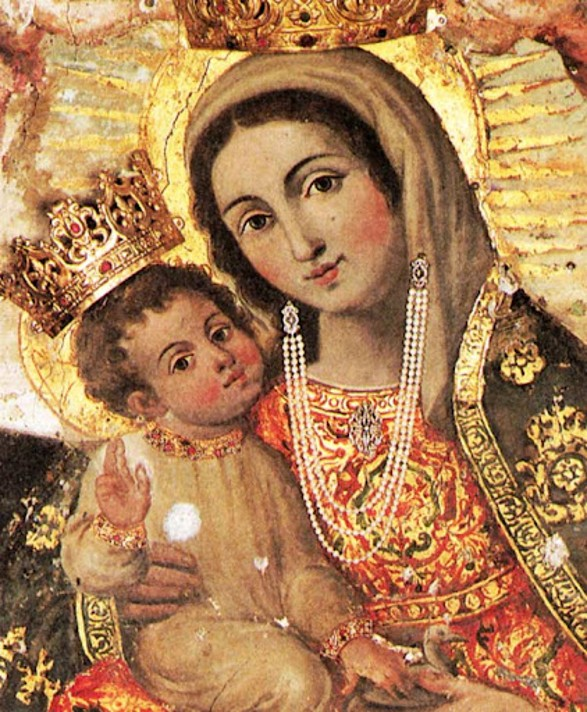
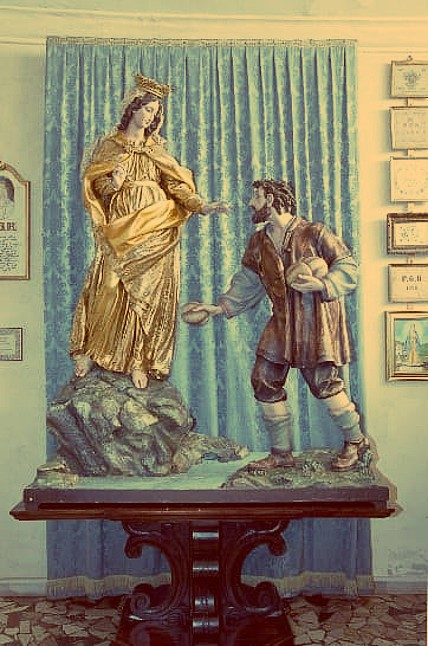
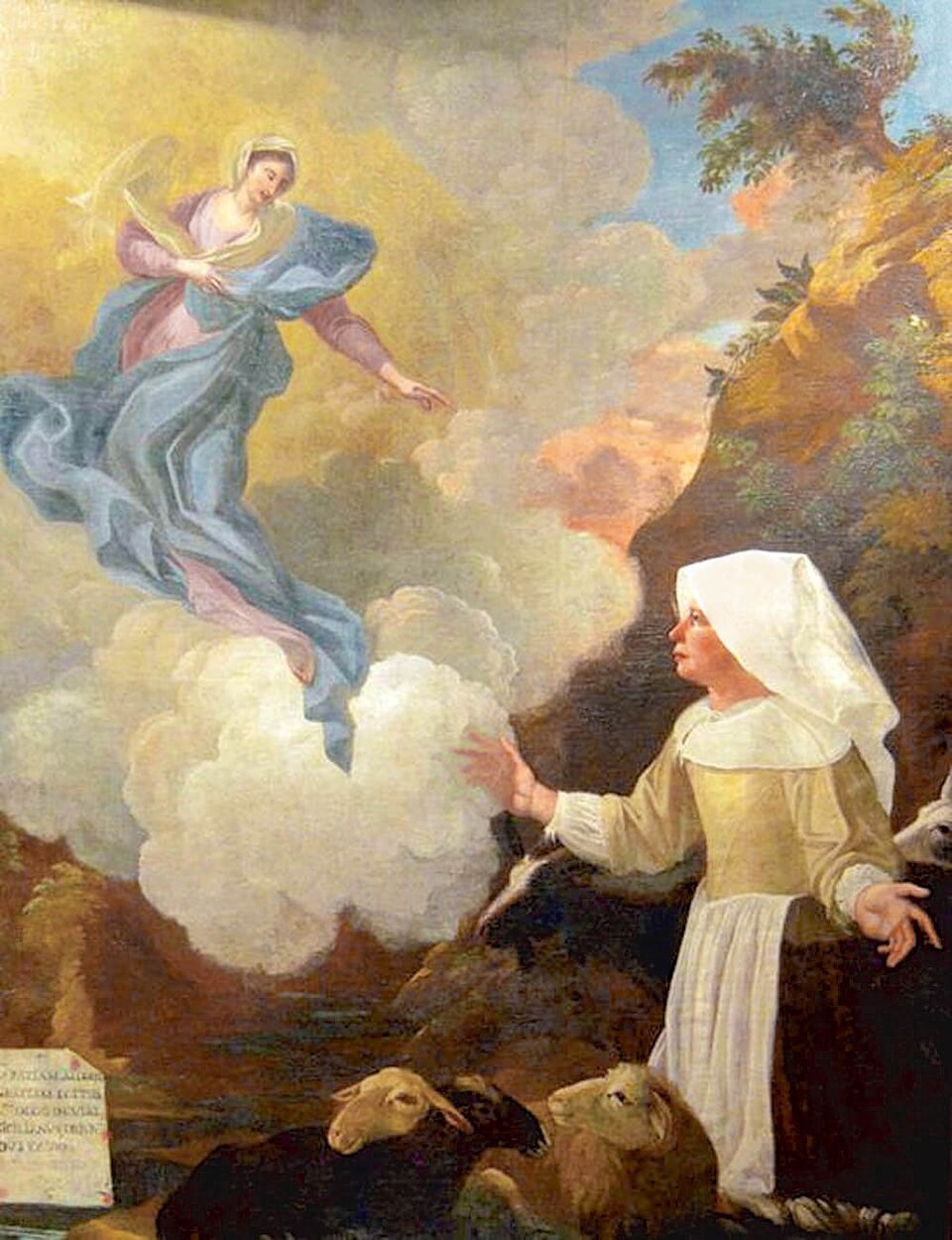
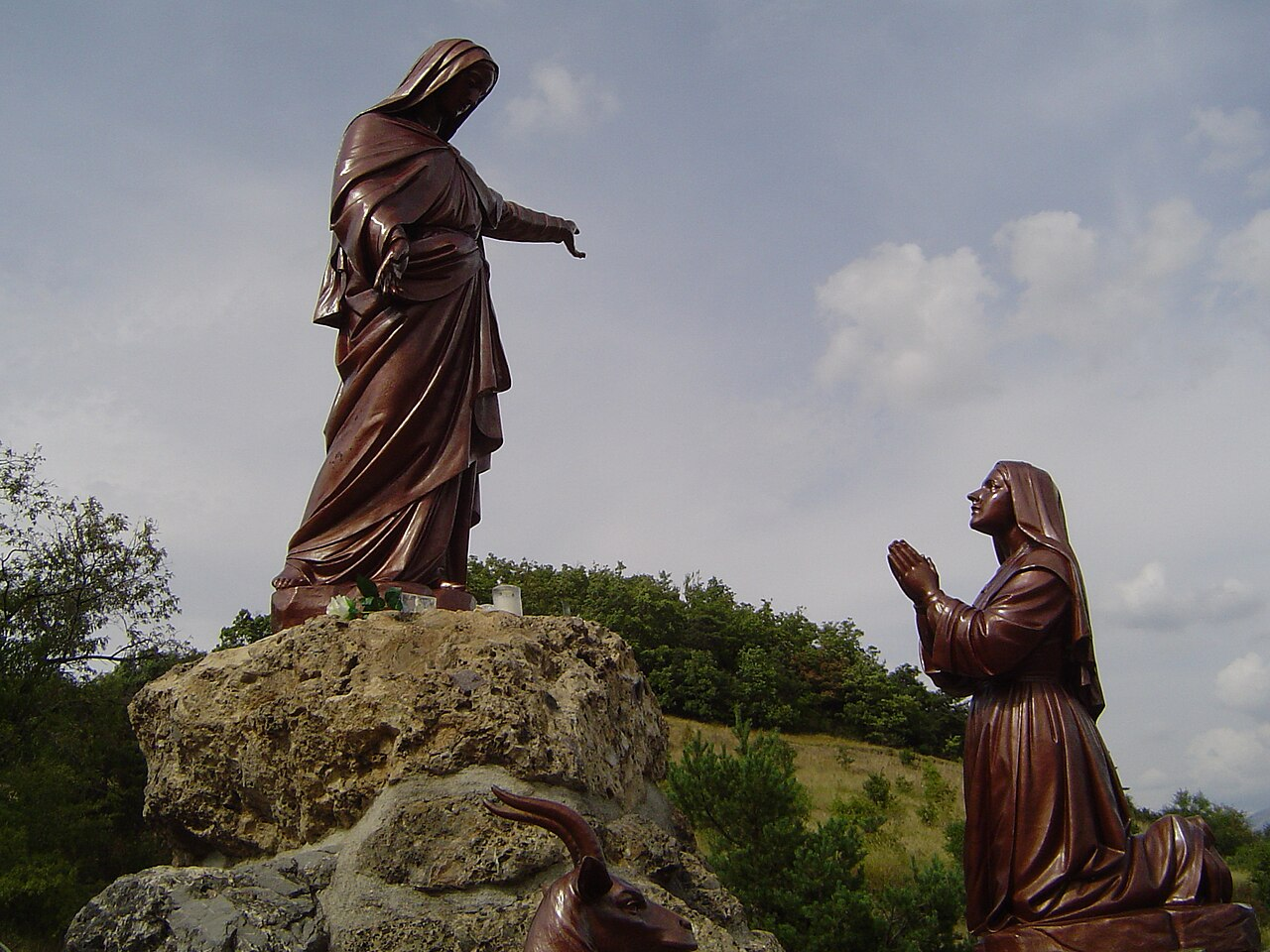
On 14 July 1223, a shepherd was pasturing his flock near the village of Canòlich in southern Andorra, when suddenly a bird with brilliant plumage came to rest on an outcrop. The shepherd approached and caught the bird with no trouble and carried it to his house. The next day the bird had disappeared and again he found it in the field. The sequence recurred three times but the last time, the shepherd found an image of the Virgin Mary in a niche in the rock.

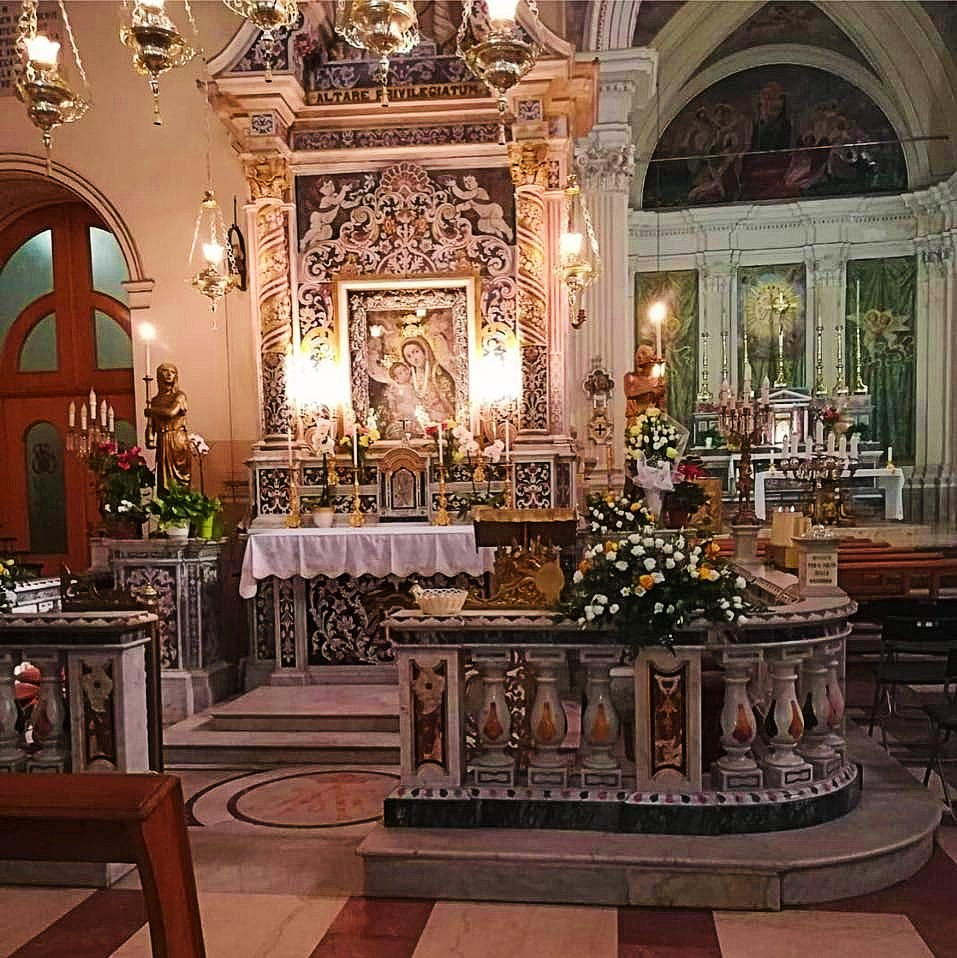
In response to this prodigy, the people of Sant Julià de Lòria Parish decided to build a Shrine to the Virgin where her Statue was found. Many miracles ensued at the Shrine and still do. Sadly now, nothing remains of that Church. The present Sanctuary, containing a baroque Altarpiece from a previous Shrine, dates from the 1970s. The Romanesque image of the Mother of God of Canòlich resides in the Parish Church of Sant Julià y San Germà in the urban centre of Sant Julià de Lòria: a wooden Statue from the late 1100s, with original polychrome.

On the last Saturday in May, parishioners gather in Sant Julià de Lòria for morning fireworks and Mass in the Virgin’s honour. Then the celebration — moves to Canòlich, for Masses at the Sanctuary and after Mass, dancing, and blessing and distribution of bread.

St Camillus de Lellis MI (1550-1614) (Optional Memorial) Priest and Founder the Order of the Ministers of the Sick, or simply as the “Camillians,” known as “The Giant of Charity.”

Bl Boniface of Canterbury
St Colman of Killeroran
St Cyrus of Carthage
St Deusdedit of Canterbury
St Donatus of Africa
Bl Dorotea Llamanzares Fernández

St Francisco Solano y Jiménez OFM (1549 – 1610) Priest , Friar of the Order of Friars Minor, Missionary, Musician, Preacher, Miracle worker, Apostle of the Blessed Sacrament, the Holy Virgin Mother and of Prayer, Polyglot – “The Wonder Worker of Whe New World. ”
Blessed Gaspar de Bono OM (1530– 1604) Priest, Friar of the Order of Minims
Bl Giorgio of Lauria
Bl Hroznata of Bohemia
Bl Humbert of Romans
St Idus of Ath Fadha
St Ioannes Wang Kuixin
St Just
St Justus of Rome

St Liebert
St Marchelm
Bl Michael Ghebre
St Optatian of Brescia
St Papias of Africa
Bl Toscana of Verona
St Ulric of Zell

Posted in SAINT of the DAY

Saint of the Day – 14 July – St Toscana

She was born in Zevio, near Verona about 1280. Her parents were noble and good Christians. As a child she had a great devotion for virginity so she refused all her suitors. But her family insisted that she marry. So she married a nobleman, Alberto, of the house of Occhi di Cape. She went to live in Verona with him, where she imitated the women of the Old Testament, as well as Saint Anna and Saint Elizabeth, living in perfect matrimonial chastity and taking care of her husband and her house, and also doing good works. She gave all the alms she could, and each day at three in the afternoon, she went to the Hospital of the Holy Sepulchre belonging to the Order of Saint John of Jerusalem in order to visit the poor and wash their feet, to take care of the sick and wounded, from whose ulcers she pressed the pus without showing disgust or revulsion.

She did not bear any children, and so, when her husband died young, she took a vow of chastity. She mourned he companion and said:

“I thank Thee, o Christ! for having delivered my husband from the perils of the world and from its trials and tribulations, and me from the very heavy burden of marriage. Now, I consecrate myself entirely to Thee; now, I offer Thee myself as Thy servant and Thy slave. I desire no other husband or beloved than Thee; no one, if not Thee, will I take as a second husband. I love no one. Receive me. I shall follow the path which is straight in Thine eyes. In Thee are my hope and my faith. Thou wilt give me strength and aid; then I shall overcome the very cunning enemy. What can man do without Thee? And what would the creature do without its Creator? If Thou art present, I am victorious. If Thou bringest help, I win a glorious triumph.”

With these words she began an angelic life of prayer, penance, and works of mercy. The price of her labour was always divided into three parts: one for the priests, the other for the pilgrims and the poor, and the third for her own livelihood. In spite of the austerity of her life, her beauty only increased. Three young men saw her, admired her, and were impelled by the devil to plot to share her, with or without her consent.

One evening, Toscana was absorbed in contemplation in her room when one of these wicked men entered through the window and approached her. But he had not taken three steps when the Lord permitted the devil to choke him; the fiend fell to the floor, dead. Horrified, the saint did not dare call out, for fear of scandal, and, feeling faint with fear before the lifeless body, she besought God’s counsel: she knelt and began to pray. Meanwhile, the second would-be thief of honour grew impatient outside. He was troubled by the long silence, expecting a great deal of commotion. He followed the path taken by the first. Stunned, he noticed the corpse and the woman prostrated at its feet. Seized by fright, he was rushing headlong toward the window when the Evil One seized him by the collar and strangled him. At the outcry of his companion, the third malefactor rushed in. Before the terrifying spectacle, he fell stone dead.

Although her embarrassment grew, the saint did not lose confidence and awaited the Lord’s decision. It appeared in the guise of the parents of the three young men. Surprised at not seeing them return to tell of their progress, the parents came for news to the young widow’s house. How great was their consternation when received by the saint, they found their offspring lifeless! They threw themselves at her feet and implored her to restore the men to life so that they might do penance for their sin. She consented to do so and began to pray fervidly; the three villains revived, went to confession, said their prayers and died again – an event which excited the greatest astonishment and the most respectful fears in the city.

But this incident convinced Toscana of the difficulty a young woman experiences when living alone in the world. She decided to enter the Order of Saint John of Jerusalem to which she had already rendered so many services. She obtained a very solitary little cell in the garden of the convent of the Holy Sepulchre, in Verona. She took on the habit of the sisters and continued with renewed ardour her noble work.

She begged for her food and ate only bread and water, never eating to satiety. On Sundays, she made a feast of vegetables mixed with a small amount of oil. Entirely free now, she visited the churches and the holy places of Verona on solemn occasions in order to earn indulgences. But not to be seen. – she went there as soon as dawn appeared in the sky, when there was still no one in the streets. One day, as she went toward the church of the Holy Apostles, she met some thieves who took her poor cloak. She relinquished it to them gladly and ran away. But they wishing to divide their booty, drew their swords; immediately their hands withered. Stunned and grieving, they ran after the saint, returned her cloak, and implored her forgiveness. She consented to pray for them, made the sign of the cross on the hands struck by the wrath of God, and they became whole again as before. But she did not allow these wretches to leave without delivering to them a sermon to exhort them to change their lives and do penance.

She was seized by a serious attack of fever, and an angel came to warn her that her end was near. She felt such deep joy at the news that she gave thanks profusely. Then she had herself laid on the bare ground and remained there in the greatest spirit of mortification. She asked to be buried in the gateway of the Hospital, in the road, without honours. Finally she died, saying:

“I have chosen to be scorned in the house of God, rather than to live under the tents of sinners”.

As she was closing her eyes there was heard, like an echo, the sound of angels answering her in Latin:

Veni, famula Christi, Toscana, accipe coronam quam tibi Dominus praeparavit in aeternum.

Come bride of Christ, accept the crown ; which the Lord has prepared  for you.

Santa Toscana – In 1342, the Knights Hospitaller acquired the relics of Santa Toscana which were placed in an ark atop the main altar.

“Transfer of the body of Saint Toscana”, oil painting on canvas, end of the 17th century, at the seat of the Delegation of the Order of Malta in Verona

Posted in Our MORNING Offering

Our Morning Offering – 14 July – St Alphonsus Liguori’s Prayer for the Gift of Prayer

Our Morning Offering – 14 July – “Month of the Most Precious Blood”

Prayer for the Gift of Prayer
By St Alphonsus Liguori (1696-1787)
Most Zealous Doctor of the Church

O Incarnate Word,
You have given Your Blood and Your Life
to confer on our prayers that power by which,
according to Your promise,
they obtain for us all that we ask.
And we, O God,
are so careless of our salvation,
that we will not even ask You for the graces
that we must have, if we should be saved!
In prayer You have given us the key
of all Your Divine treasures
and we, rather than pray,
choose to remain in our misery.
Alas! O Lord, enlighten us,
and make us know the value of prayers,
offered in Your name and by Your merits,
in the eyes of Your Eternal Father.
Amen

Posted in ONE Minute REFLECTION

One Minute Reflection – 14 July – You are the salt of the earth

One Minute Reflection – 14 July – “Month of the Most Precious Blood” – Readings: Sir 15:5, Ps 91:2, 2 Tim 4:1-8, Matt 5:13-19

In that time Jesus said to His disciples: You are the salt of the earth. But if the salt lose its savour, wherewith shall it be salted? It is good for nothing any more but to be cast out, and to be trodden on by men.

REFLECTION – Now then, after giving them due exhortation, He refreshes them again with praises. As thus: the injunctions being high, and far surpassing those in the Old Testament; lest they should be disturbed and confounded, and say, How shall we be able to achieve these things? hear what He says: You are the salt of the earth. Implying, that of absolute necessity He enjoins all this. For not for your own life apart, says He, but for the whole world, shall your account be. For not to two cities, nor to ten or twenty, nor to a single nation am I sending you, as I sent the prophets; but to earth, and sea, and the whole world; and that in evil case. For by saying, You are the salt of the earth, He signified all human nature to have lost its savor, and to be decayed by our sins. For which cause, you see, He requires of them such virtues, as are most necessary and useful for the superintendence of the common sort. For first, the meek, and yielding, and merciful, and righteous, shuts not up his good deeds unto himself only, but also provides that these good fountains should run over for the benefit of others. And he again who is pure in heart, and a peacemaker, and is persecuted for the truth’s sake; he again orders his way of life for the common good. Think not then, He says, that you are drawn on to ordinary conflicts, or that for some small matters you are to give account. You are the salt of the earth.

Do you see how by degrees He indicates their superiority to the very prophets? In that He says they are teachers, not of Palestine, but of the whole world; and not simply teachers, but awful ones too. For this is the marvellous thing, that not by flattering, nor soothing, but by sharply bracing them, as salt, even so they became dear to all men.

St John Chrysostom (Homily 15 on Matthew)

PRAYER – May the annual festival of blessed Bonaventura, Your Confessor and Bishop, we beseech You, O Lord, render us pleasing to Your loving kindness, so that this service of sacred propitiation may be a blessed recompense for him and secure for us the gifts of Your grace.
Through our Lord…

“If you learn everything, except Christ, you learn nothing.
If you learn nothing, except Christ, you learn everything.”

 St Bonaventure