Quote/s of the Day – 31 January – St John Bosco “Don Bosco” SDB (1815-1888) Priest, Confessor, Founder.
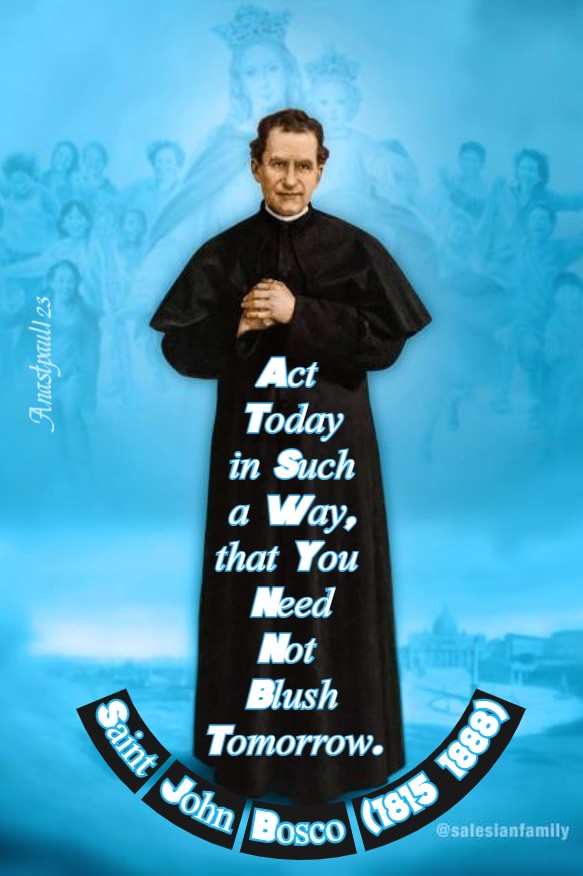
“Act today in such a way, that you need not blush tomorrow.”
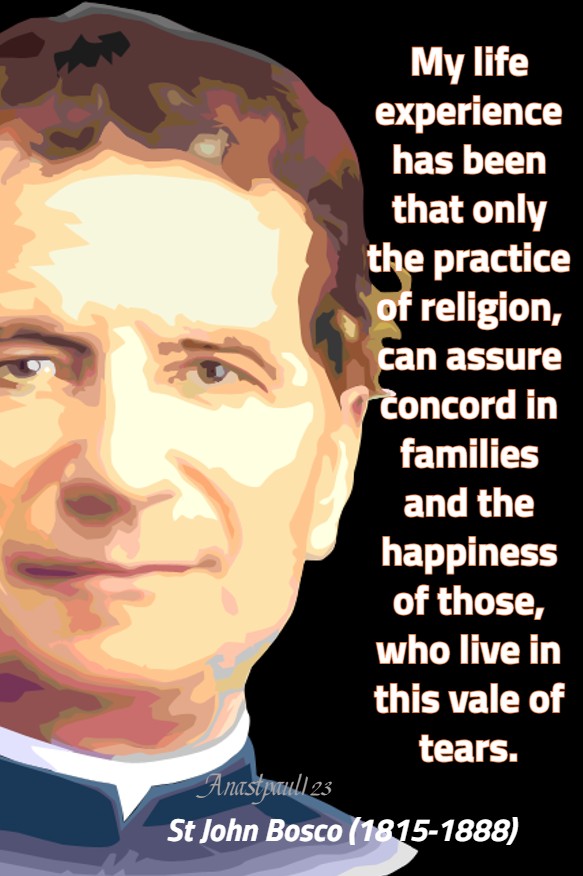
“My life experience has been that only the practice of religion, can assure concord in families and the happiness of those, who live in this vale of tears.”
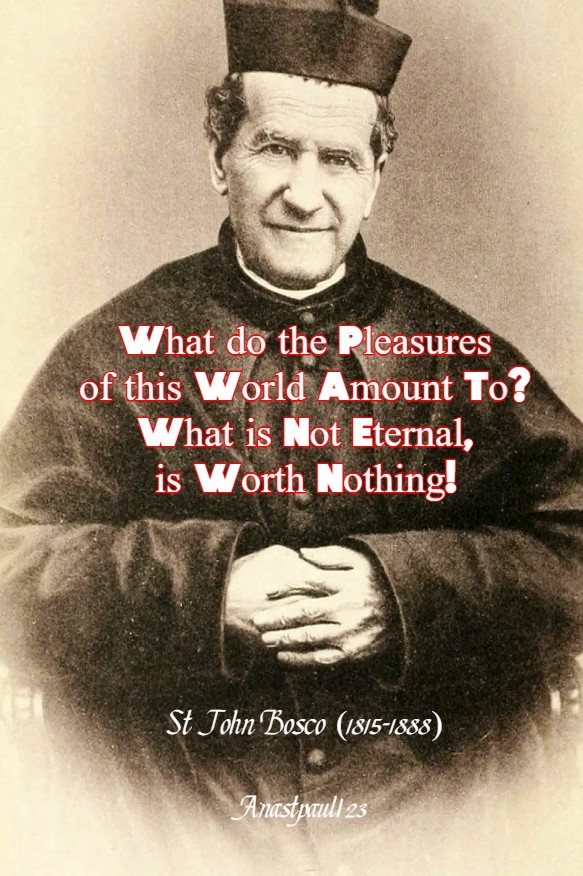
“What do the pleasures of this world amount to? What is not eternal, is worth nothing!”
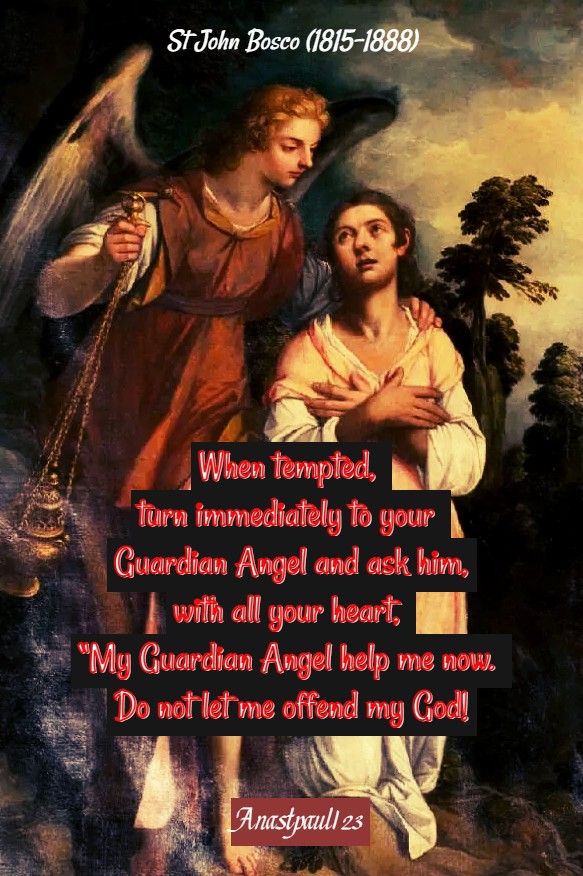
“When tempted, turn immediately to your Guardian Angel and ask him, with all your heart, “My Guardian Angel help me now. Do not let me offend my God!”
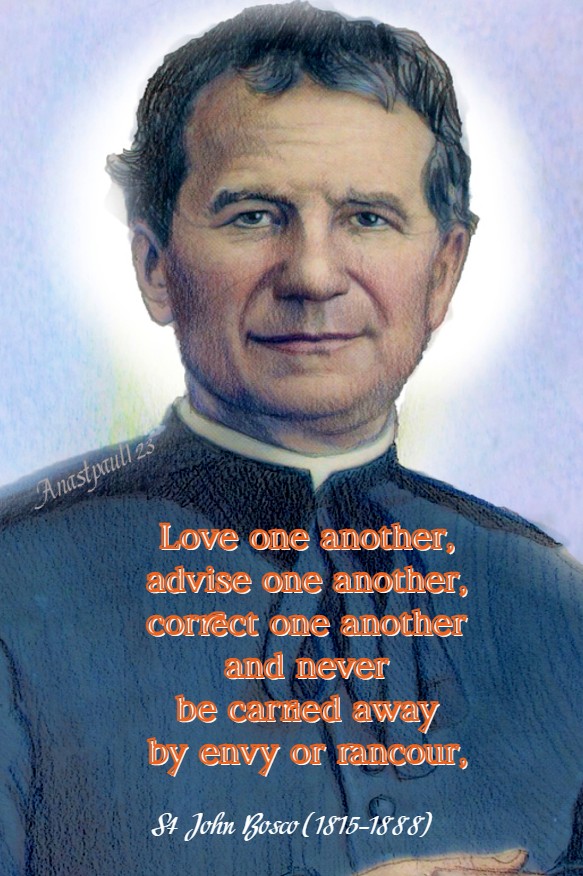
“Love one another, advise one another, correct one another and never be carried away by envy or rancour,”
Our Morning Offering – 30 January – Memorial of St Martha (1st Century) Virgin Martyr
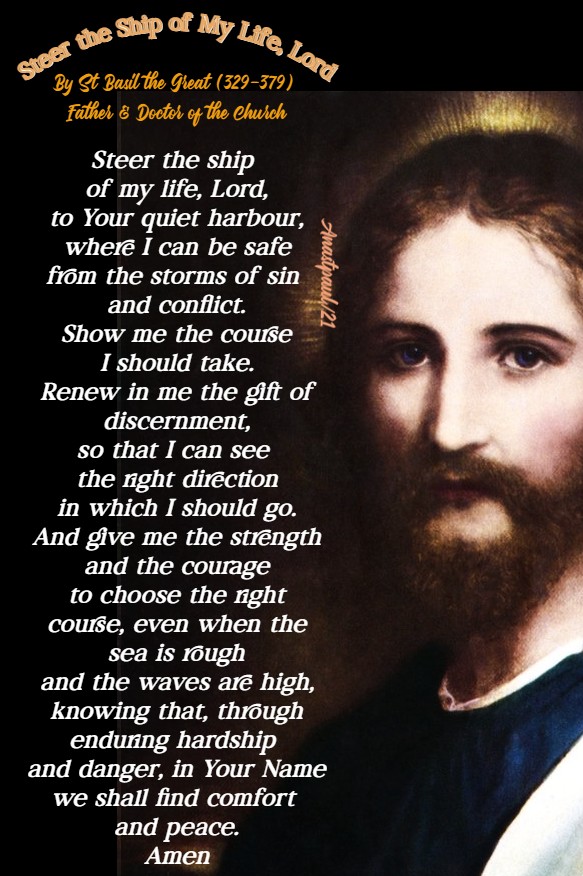
Steer the Ship of My Life, Lord By St Basil the Great (329-379) Father & Doctor of the Church
Steer the ship of my life, Lord, to Your quiet harbour, where I can be safe from the storms of sin and conflict. Show me the course I should take. Renew in me the gift of discernment, so that I can see the right direction in which I should go. And give me the strength and the courage to choose the right course, even when the sea is rough and the waves are high, knowing that through enduring hardship and danger in Your name we shall find comfort and peace. Amen
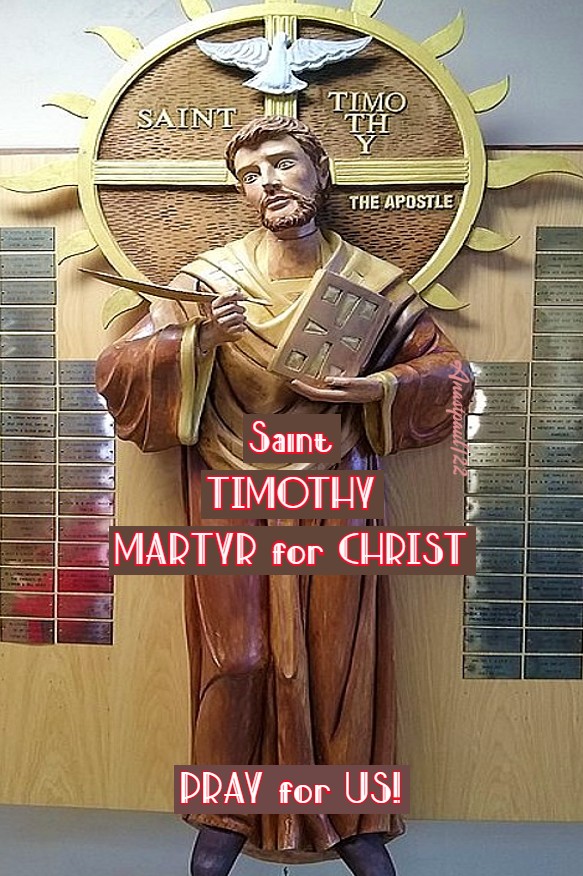
One Minute Reflection – 24 January – St Timothy (1st Century) Disciple of St Paul, Bishop and Martyr – 1 Timothy 6:11-16, Luke 14:26-33.– Scripture search here: https://www.drbo.org/
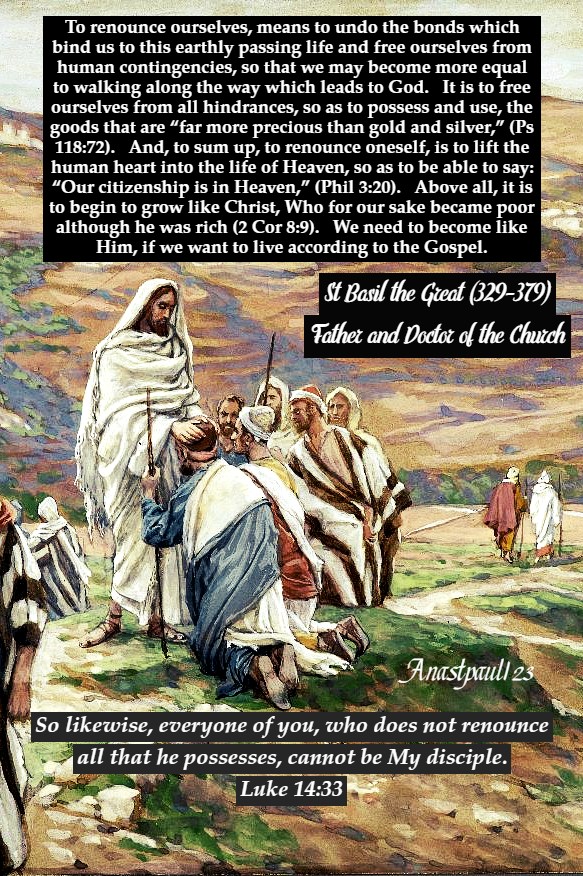
“So likewise, everyone of you, who does not renounce all that he possesses, cannot be My disciple.” – Luke 14:33
REFLECTION – “Our Lord Jesus Christ said to all, on many occasions and while giving many demonstrations of it: “If anyone wishes to come after me, he must deny himself, take up his cross and follow me,” (cf Lk 9:23) and again: “anyone of you who does not renounce all that he possesses cannot be My disciple.” Thus, He seems to demand of us the most entire renunciation… “Where your treasure is, there also will your heart be,” He says elsewhere (Mt 6:21). So if we keep back for ourselves any earthly goods or any perishable supplies, our minds will remain sunk in them as though in mud. Then, inevitably, our souls will become unable to contemplate God and will be unmoved by desire for the splendours of Heaven and for the good things promised us. We shall only be able to acquire those good things, if we ask for them unceasingly, with a burning desire that will, besides, make easy the effort needed to gain them.
To renounce ourselves, means to undo the bonds which bind us to this earthly passing life and free ourselves from human contingencies, so that we may become more equal to walking along the way which leads to God. It is to free ourselves from all hindrances, so as to possess and use, the goods that are “far more precious than gold and silver,” (Ps 118:72). And, to sum up, to renounce oneself, is to lift the human heart into the life of Heaven, so as to be able to say: “Our citizenship is in Heaven,” (Phil 3:20). Above all, it is to begin to grow like Christ, Who for our sake became poor although he was rich (2 Cor 8:9). We need to become like Him, if we want to live according to the Gospel.” – St Basil the Great (329-379) Monk and Bishop of Caesarea in Cappadocia, Father and Doctor of the Church (Greater Monastic Rules Q.8).
PRAYER – Be mindful of our weakness, Almighty God and because the burden of our sins weighs heavily upon us, may the glorious intercession of blessed Timothy, Your Martyr and Bishop, sustain us. Through Jesus Christ, Thy Son our Lord, Who lives and reigns with Thee, in the unity of the Holy Ghost, God, world without end. Amen (Collect).
Quote/s of the Day – 22 January – The Third Sunday after the Epiphany – Romans 12:16-21, Matthew 8:1-13 – Scripture search here: https://www.drbo.org/
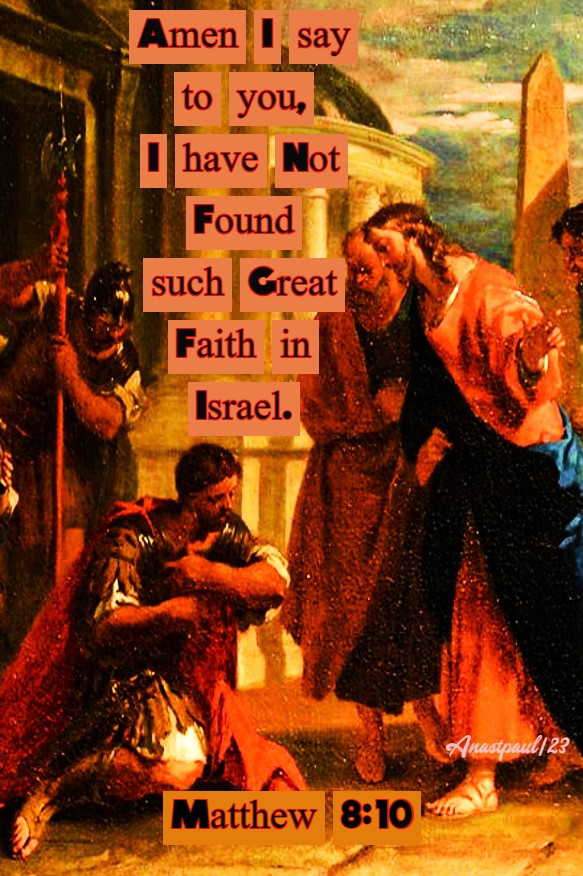
“Amen I say to you, I have not found such great faith in Israel.”
Matthew 8:10
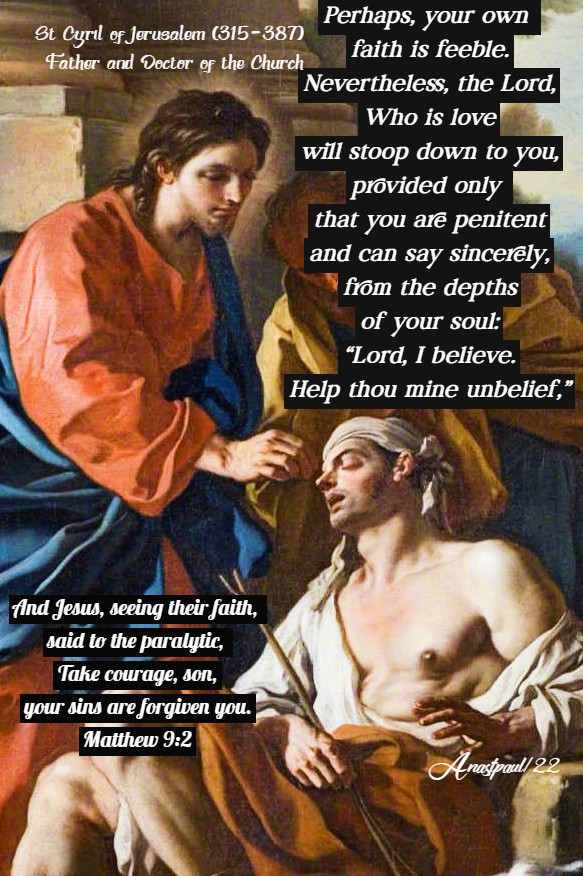
“And Jesus, seeing their faith, said to the paralytic, Take courage, son, your sins are forgiven you.”
Matthew 9:2
“Perhaps, your own faith is feeble. Nevertheless, the Lord, who is love will stoop down to you, provided only that you are penitent and can say sincerely, from the depths of your soul: “Lord, I believe. Help Thou mine unbelief,” (Mark 9:23)……”
St Cyril of Jerusalem (315-387) Father and Doctor of the Church
“If I only touch his garment, I will be made well.” Jesus turned and seeing her he said, “Take heart, daughter, your faith has made you well.” And instantly the woman was made well.”
Matthew 9:21-22
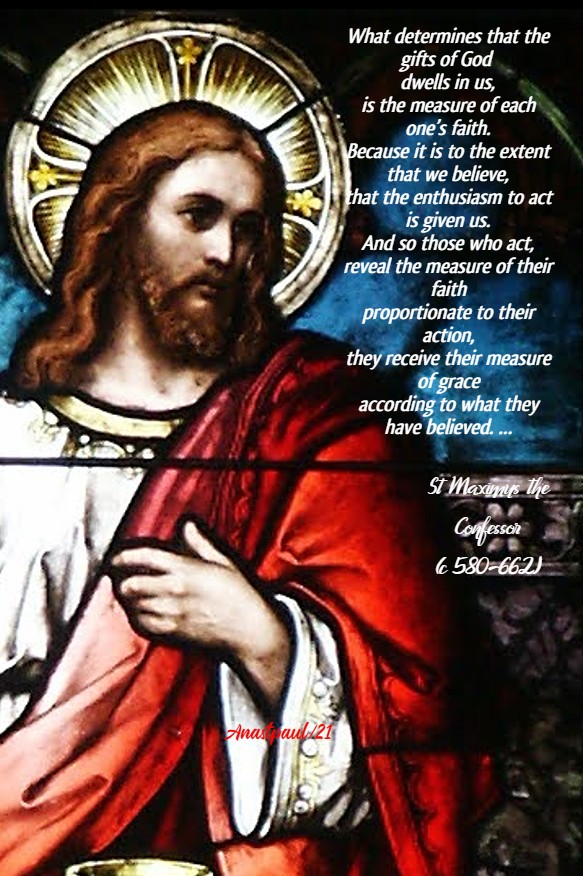
“What determines that the gifts of God dwells in us, is the measure of each one’s faith. Because it is to the extent that we believe, that the enthusiasm to act is given us. And so those who act, reveal the measure of their faith proportionate to their action, they receive their measure of grace according to what they have believed. …”
St Maximus the Confessor (c 580-662) Monk and Theologian
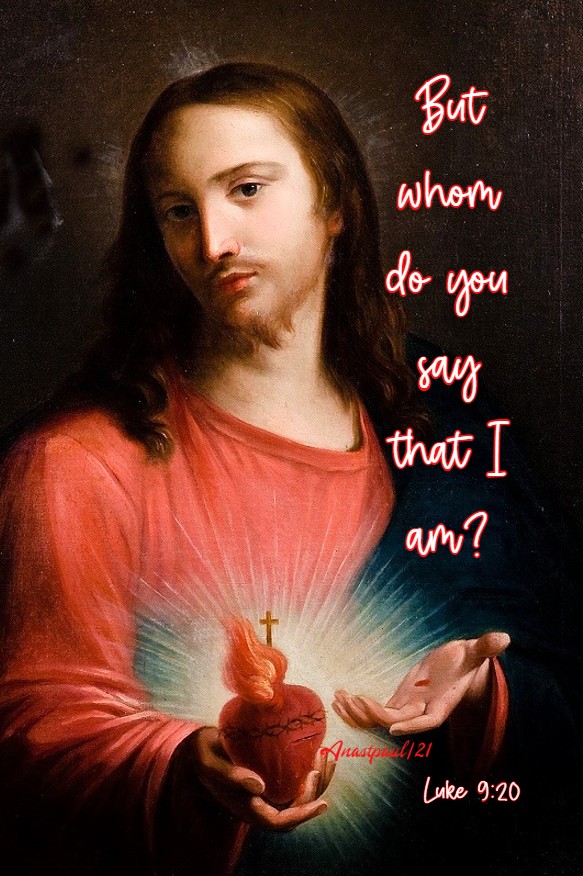
“But whom do you say that I Am?”
Luke 9:20
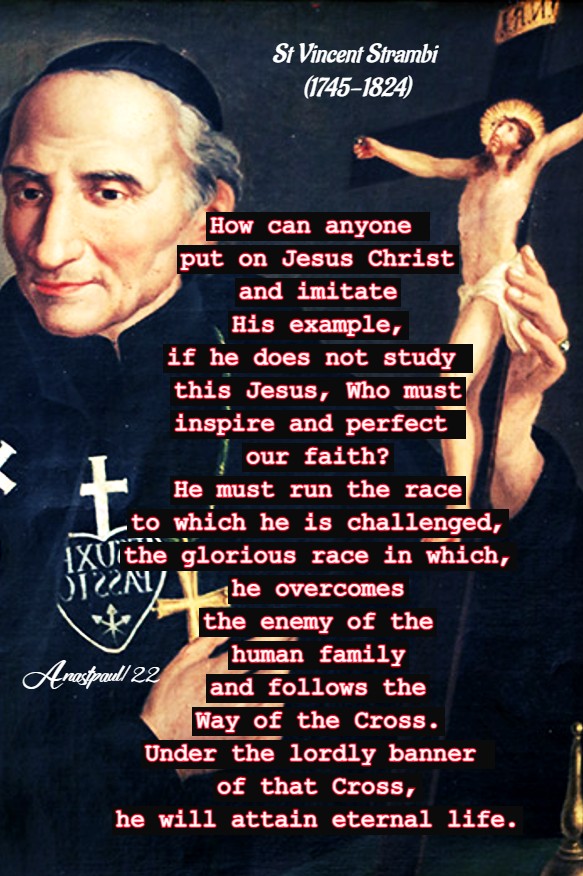
“… How can anyone put on Jesus Christ and imitate His example, if he does not study this Jesus, who must inspire and perfect our faith? He must run the race to which he is challenged, the glorious race in which, he overcomes the enemy of the human family and follows the Way of the Cross. Under the lordly banner of that Cross, he will attain eternal life.”
St Vincent Strambi CP (1745-1824)
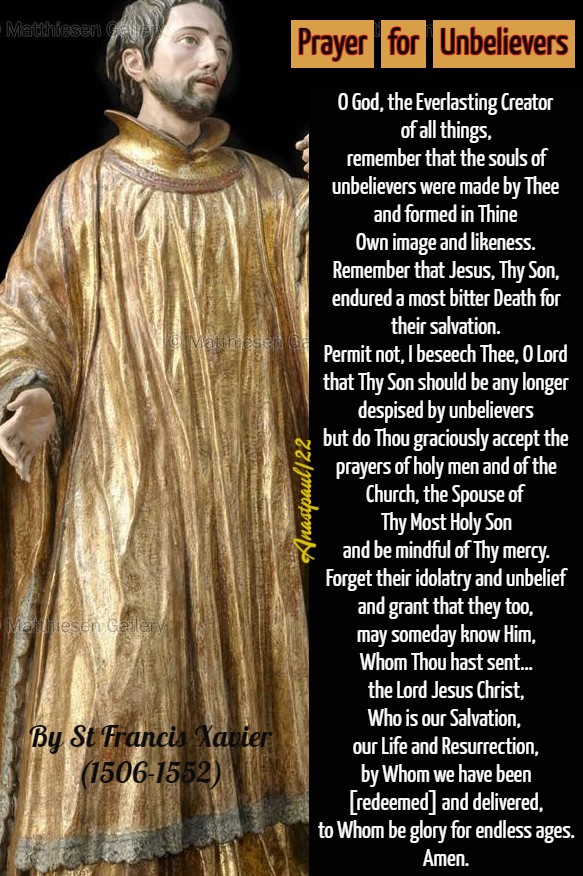
Prayer for Unbelievers By St Francis Xavier (1506-1552)
O God, the Everlasting Creator of all things, remember that the souls of unbelievers were made by Thee and formed in Thine own image and likeness. Remember that Jesus, Thy Son, endured a most bitter Death for their salvation. Permit not, I beseech Thee, O Lord that Thy Son should be any longer despised by unbelievers but do Thou graciously accept the prayers of holy men and of the Church, the Spouse of Thy Most Holy Son and be mindful of Thy mercy. Forget their idolatry and unbelief and grant that they too, may someday know Him, Whom Thou hast sent…the Lord Jesus Christ, Who is our Salvation, our Life and Resurrection, by Whom we have been [redeemed] and delivered, to Whom be glory for endless ages. Amen.
One Minute Reflection – 21 January – “The Month of the Most Holy Name of Jesus” – St Agnes (c 291- c 304) Virgin and Martyr – Ecclesiasticus 51:1-8, 12, Matthew 25:1-13 – Scripture search here: https://www.drbo.org/
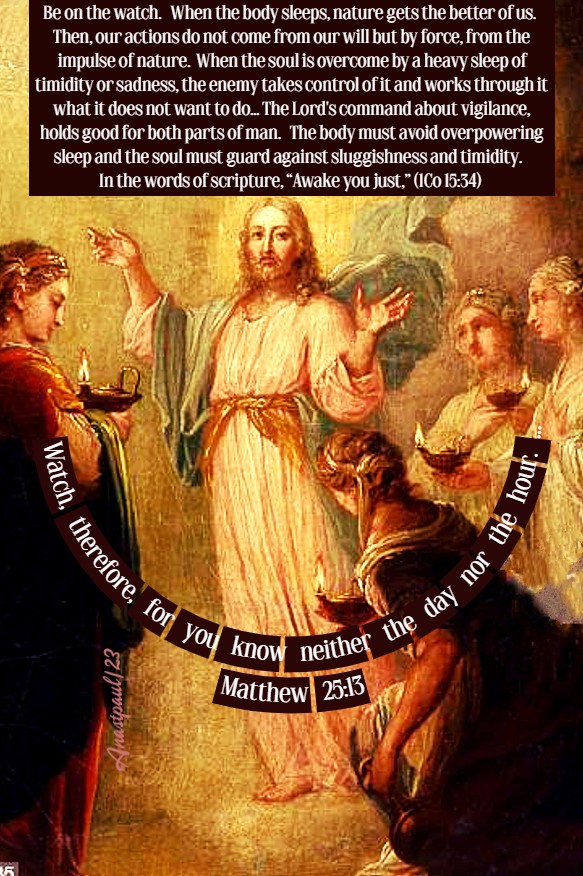
“Watch, therefore, for you know neither the day nor the hour.” – Matthew 25:13
REFLECTION – “To prevent His disciples from questioning Him about the time of His Coming, Christ said, ‘Of that hour no-one knows, neither the Angels nor the Son. It is not for you to know the times or moments.’ (Mt 24:36; Apoc 1:7). He hid the time from us, so that we would be on the watch and so, that each of us might think that the Coming will happen in His own lifetime…
Be on the watch. When the body sleeps, nature gets the better of us. Then, our actions do not come from our will but by force, from the impulse of nature. When the soul is overcome by a heavy sleep of timidity or sadness, the enemy takes control of it and works through it what it does not want to do… The Lord’s command about vigilance, holds good for both parts of man. The body must avoid overpowering sleep and the soul must guard against sluggishness and timidity. In the words of scripture, “Awake you just,” (1Co 15:34) and “I rose up and Am still with you,” (Ps 138:18) and “Do not lose heart” (cf Ep 3:13)…
“Five of them were foolish and five of them were prudent,” the Lord says. Their virginity had nothing to do with Him calling them wise, for they were all virgins but rather, their good works. Even though your chastity is of angelic holiness, note well that the Angels’ holiness is free of all envy or other evil. So even though you are not rebuked for impurity, take care not to be so, for impatience or anger either… “Gird your loins” so that chastity may lighten our steps. “And light your lamps” (Lk 12:35) because the world is black as night, it stands in need of the light of the upright. “Your light must shine before others, that they may see your good deeds and glorify your heavenly Father” (Mt 5:16).” – St Ephrem (306-373) Deacon in Syria, Father and Doctor of the Church [Commentary on the Diatessaron, 18, 15f. ; SC 121] (trans. cf Breviary).
PRAYER – Almighty, eternal God, Thou Who choose the weak things of the world to confound the strong, mercifully grant that we, who are celebrating the feast of blessed Agnes, Thy Virgin and Martyr, may reap the benefit of her patronal intercession with Thee. Through Jesus Christ, Thy Son our Lord, Who lives and reigns with Thee, in the unity of the Holy Ghost, God, world without end. Amen (Collect).
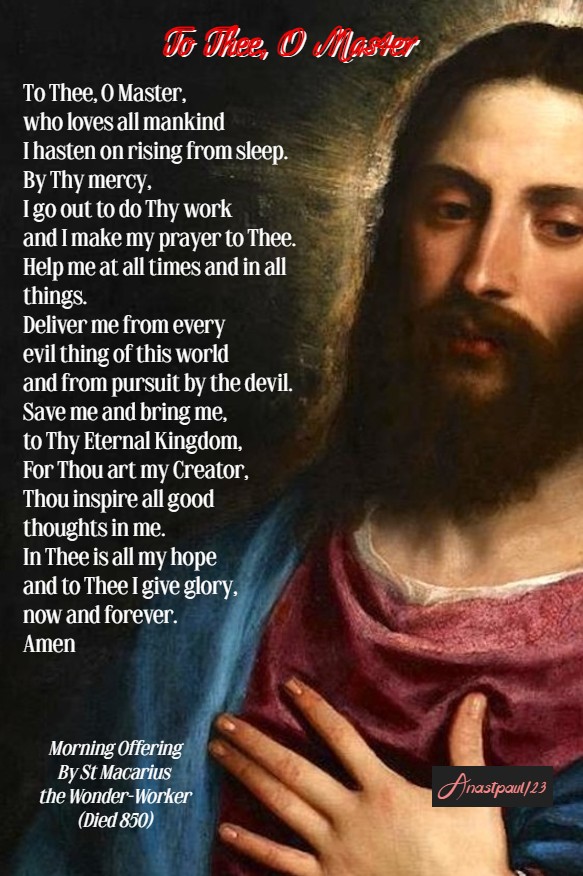
To Thee, O Master Morning Offering By St Macarius the Wonder-Worker (Died 850)
To Thee, O Master, who loves all mankind I hasten on rising from sleep. By Thy mercy, I go out to do Thy work and I make my prayer to Thee. Help me at all times and in all things. Deliver me from every evil thing of this world and from pursuit by the devil. Save me and bring me, to Thy Eternal Kingdom, For Thou art my Creator, Thou inspire all good thoughts in me. In Thee is all my hope and to Thee I give glory, now and forever. Amen
Eternal God, Our Refuge By St Boniface (672-754) Martyr
Eternal God, the refuge and help of all Thy children, we praise Thee for all Thou hast given us, for all Thou hast done for us, for all that Thou art to us. In our weakness, Thou art strength, in our darkness, Thou art light, in our sorrow, Thou art comfort and peace. We cannot number Thy blessings, we cannot declare Thy love – for all Thy graces, we bless Thee. May we live as in Thy presence, and love the things that Thou loves and serve Thee in our daily lives, through Jesus Christ our Lord. Amen
One Minute Reflection – 7January – Within the Octave of Epiphany – Isaias 60:1-6, Matthew 2:1-12 – Scripture search here: https://www.drbo.org/
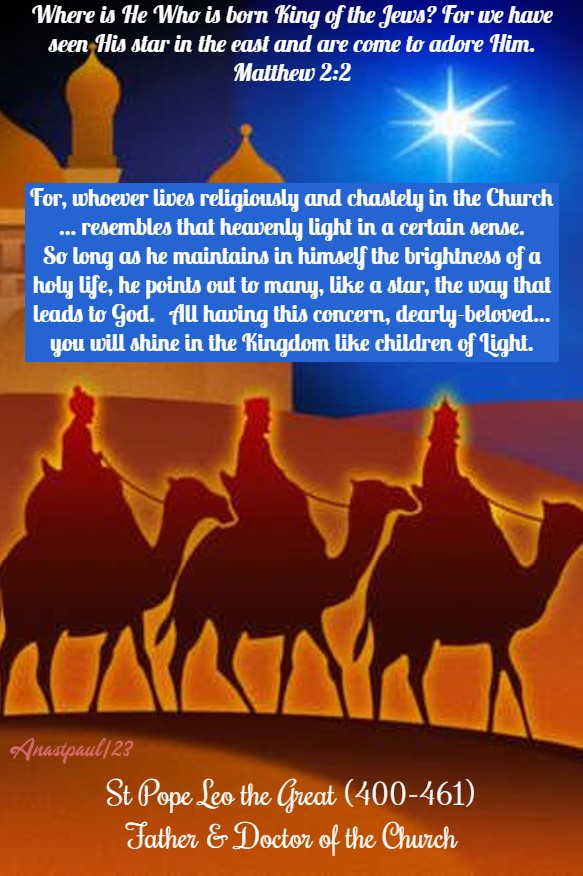
“Where is He Who is born King of the Jews? For we have seen His star in the east and are come to adore Him.” – Matthew 2:2
REFLECTION – “All these things we know to have taken place ever since the three wise men, aroused in their far-off land, were led by a star to recognise and worship the King of Heaven and earth. The responsiveness of that star exhorts us to imitate it’s obedience and, as much as we can, to make ourselves servants of that grace which invites us all to Christ. For, whoever lives religiously and chastely in the Church and “sets his mind on the things which are above, not on the things that are upon the earth” (Col 3:2) resembles that heavenly light in a certain sense. So long as he maintains in himself the brightness of a holy life, he points out to many, like a star, the way that leads to God. All having this concern, dearly-beloved… you will shine in the Kingdom like children of Light.”… St Pope Leo the Great (400-461) Father & Doctor of the Church.
PRAYER – O God, Thou Who by the guidance of a star this day revealed Thy Only-begotten Son to the Gentiles, mercifully grant that we, who know Thee now by faith, may come to behold Thee in glory. Through the same Jesus Christ, Thy Son our Lord, Who lives and reigns with Thee, in the unity of the Holy Ghost, God, world without end. Amen (Collect).
Bl Adolphus of Tunis Bl Arnaldo of Tunis St Albina of Caesarea St Ananias St Azarias St Beanus (Died c 1012) Bishop St Beoc St Dominic Dosso Bl Elizabeth of Saint Francis
St Everard of Friuli (c 815-867) Duke, Count, Soldier, Founder of Churches and a Monastery. In contrast to his soldiering life, St Everard was a peacemaker, a humble and loving Master with a social conscience, striving always to free serfs, wherever possible or at least to free them from their burdens and assisting the poor and needy in all their deprivations. His Life: https://anastpaul.com/2021/12/16/saint-of-the-day-16-december-saint-everard-of-friuli-c-815-867/
Haggai the Prophet St Irenion Bl James of Tunis St Jean Wauthier St Macarius of Collesano
Martyred Women of North-West Africa: A large group of women Martyred in the persecutions of Hunneric, Arian King of the Vandals. 482 in North-West Africa.
Martyrs of Ravenna – 4 Saints: A group of Christians Martyred together. Four names and no other information has survived – Agricola, Concordius, Navalis and Valentine. c 305 at Ravenna, Italy.
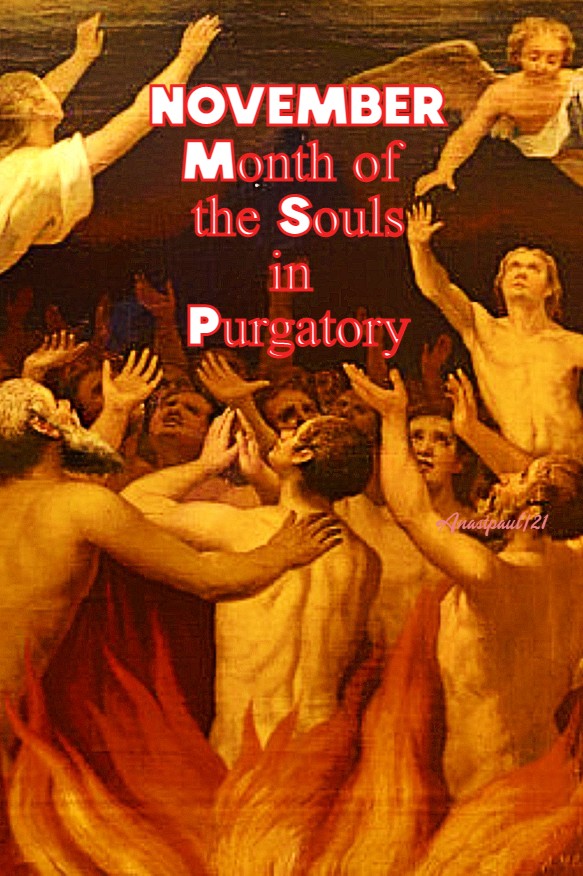
“By the practice of Indulgences, the Church places at the charitable disposal of the faithful, the inexhaustible treasure accumulated, from age to age, by the superabundant satisfactions of the Saints, added to those of the Martyrs and united to those of our Blessed Lady and the infinite residue of our Lord’s sufferings. These remissions of punishment, she grants to the living, by her own direct power but, she nearly always approves of and permits, their application to the dead, by way of suffrage, that is to say, in the manner in which, as we have seen, each of the faithful may offer to God, Who accepts it, for another, the suffrage or succour of his own satisfactions.” (The Liturgical Year,Abbot Prosper Guéranger OSB (1805-1875).
A Partial Indulgence may be obtained, by devoutly visiting a Cemetery and praying there for the departed, mentally or vocally. One may gain a Plenary Indulgence visiting a Cemetery each day, between 1 November and 8 November. These Indulgences are applicable only to the Souls in Purgatory.
A Plenary Indulgence, again applicable only to the Souls in Purgatory, is also granted when the faithful piously visit a Church or a public Oratory on 2 November. In visiting the Church or Oratory, it is required, that one Our Father and the Creed be recited and then the usual conditions are fulfilled, within 20 days.
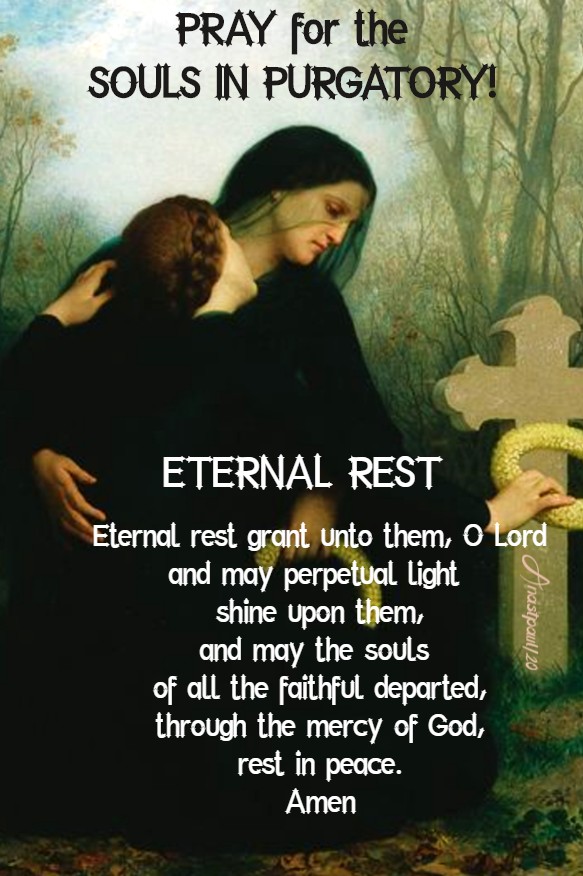
A Partial Indulgence, applicable only to the Souls in Purgatory, can be obtained when the Eternal Rest (Requiem aeternam) is prayed:
ETERNAL REST
Eternal rest grant unto them, O Lord and may perpetual light shine upon them and may the souls of all the faithful departed, through the mercy of God, rest in peace. Amen
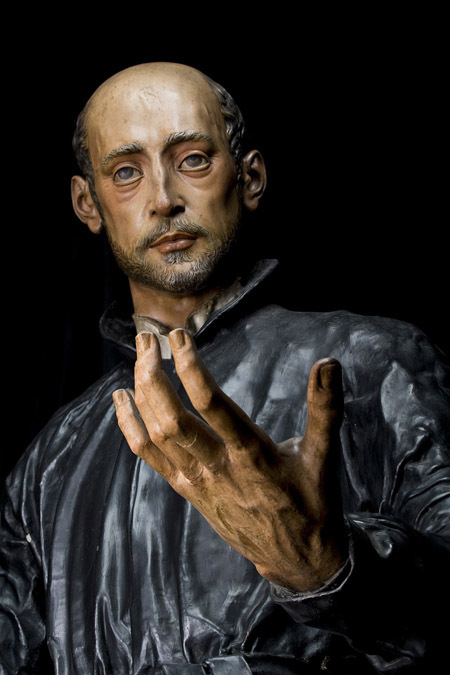
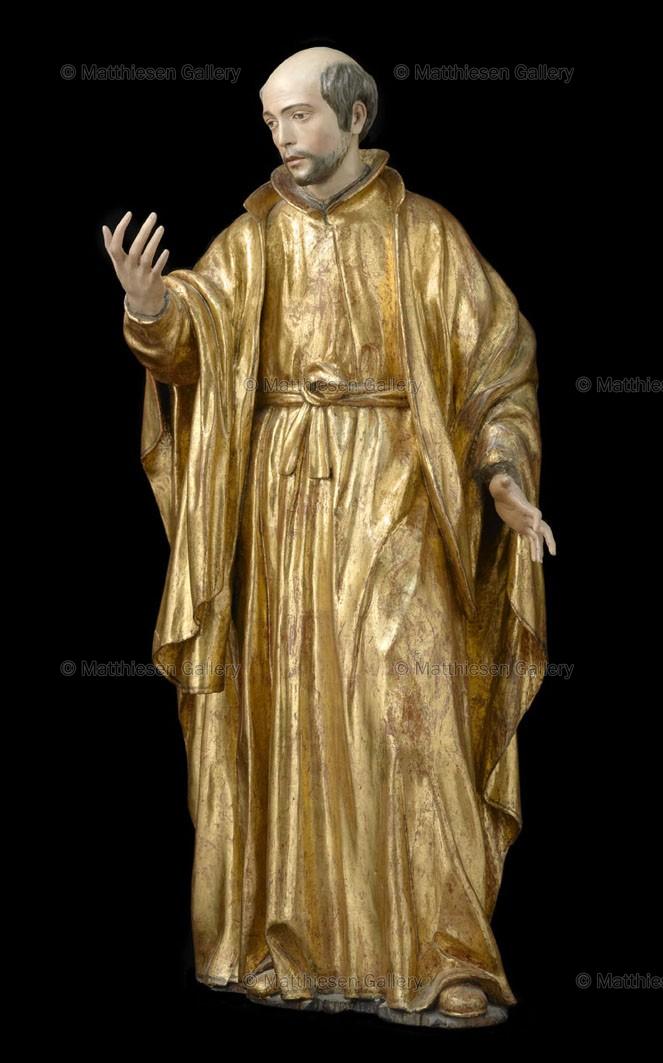
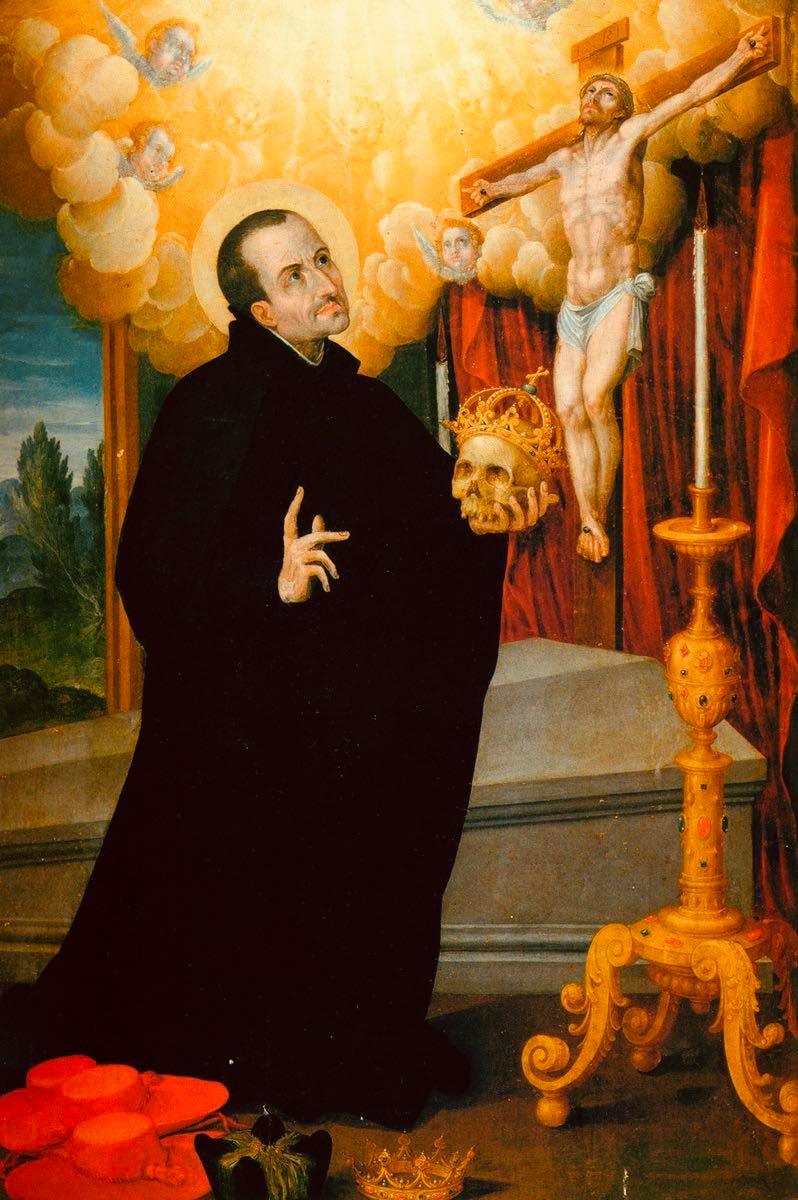
Saint of the Day – 10 October – St Francis Borgia SJ (1510-1572) Confessor, Priest of the Society of Jesus, Advisor, Missionary, Evangelist, Administrator par excelleance. Francisco de Borja y Aragon was the 4th Duke of Gandía, was a Grandee of Spain, a Spanish Jesuit and third Superior General of the Society of Jesus
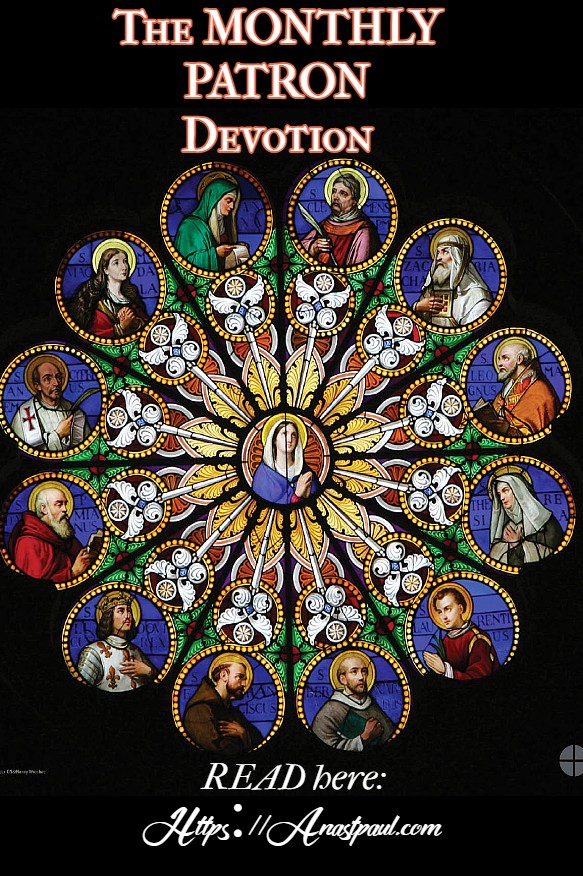
“St Francis instituted at his Court, before he entered the religious life, the veneration of the Saints of the Month. Every Catholic, besides worshipping the Almighty, ought to honour the Saints. We should especially honour the Divine Mother, as the Queen of all the Saints, then, the foster-father of Christ, St Joseph and further,, our Guardian Angel and Patron Saint. Besides this, we ought to select some special Patrons, for whom we feel particular esteem and love. It is also very beneficial, to adopt the practice of the “Monthly Patrons.” This consists in selecting, on the last day of every month, a Saint whose festival will be celebrated during the following month. Daily should he be invoked and honoured. If possible his life should be read and something from it, be selected for imitation. We may also approach the Sacraments on his festival, or on the Sunday after it and employ a little more time than usual, in good works. It is known, that several great servants of God, at the end of their days, called upon the Saints whom they had honoured as their Monthly Patrons during life and it cannot be doubted, that they received benefit and comfort. “Everyone,” says St Bonaventure, “ought to venerate an especial Saint with great devotion. To him, he ought daily, to commend himself and practise some good work, in his honoru.” By Fr Francis Xavier Weninger SJ (1805-1888)
Because the life of St Francis Borgia is rather long for one post, I post below, a part of it on his childhood and youth. Hopefully, we do not have to wait a year before I add to it. It is excerpted from the Lives of the Saints by Fr Alban Butler (1711-1773.)
St Francis Borgia, Fourth Duke of Gandia and Third General of the Jesuits, was son to John Borgia, Duke of Gandia and Grandee of Spain and of Joanna of Arragon, daughter of Alphonso, natural son to Ferdinand V King of Arragon … who was the great-grandfather to our Saint. The family of Borgia or Borja, had long flourished in Spain but in 1455, received a new lustre, by the exaltation of Cardinal Alphonso Borgia to the Pontificate, under the name of Calixtus III.
St Francis was born in 1510, at Gandia, a town which was the chief seat of the family, in the Kingdom of Valencia. His pious mother had a great devotion to St Francis of Assisi and, in the pangs of a dangerous labour, made a vow that if she brought forth a son, he should be called Francis.
As soon as he began to speak, his parents taught him to pronounce the Holy Names of Jesus and Mary, which he used often to repeat with wonderful seriousness. At five years of age he recited, everyday on his knees, the chief parts of the Catechism. All his diversion was to set up pious pictures, make little altars, imitate the ceremonies of the Church and teach them to the little boys, who were his pages. From the cradle he was mild, modest, patient and affable to all. The noble sentiments of gratitude and generosity, which he then began to discover, were certain presages of an innate greatness of soul – the former being inseparable from a goodness of heart and the latter, when regulated by prudence and charity, being the greatest virtue of a Prince, who is raised above others, only that he may govern and do good to mankind.
Francis, at seven years of age, could read his mother tongue and the Latin Office of the Blessed Virgin very distinctly. His father, therefore, thought it time for him to learn writing and grammar, for which purpose he appointed him a preceptor of known prudence, learning and piety, who was called Dr.Ferdinand. At the same time, he was furnished with a governor, whose business it was, at different hours, to fashion the young Prince to the exercises that were suitable to his birth, in proportion as his age was capable of them. It was the first care of the parents, in the choice of the masters whom they placed about their son, that they were persons of uncommon piety, whose example might be a continual lesson of virtue and whose instructions, should all ultimately tend to the grafting, in his mind, true sentiments of morality and religion, without which all other accomplishments, lose their value.
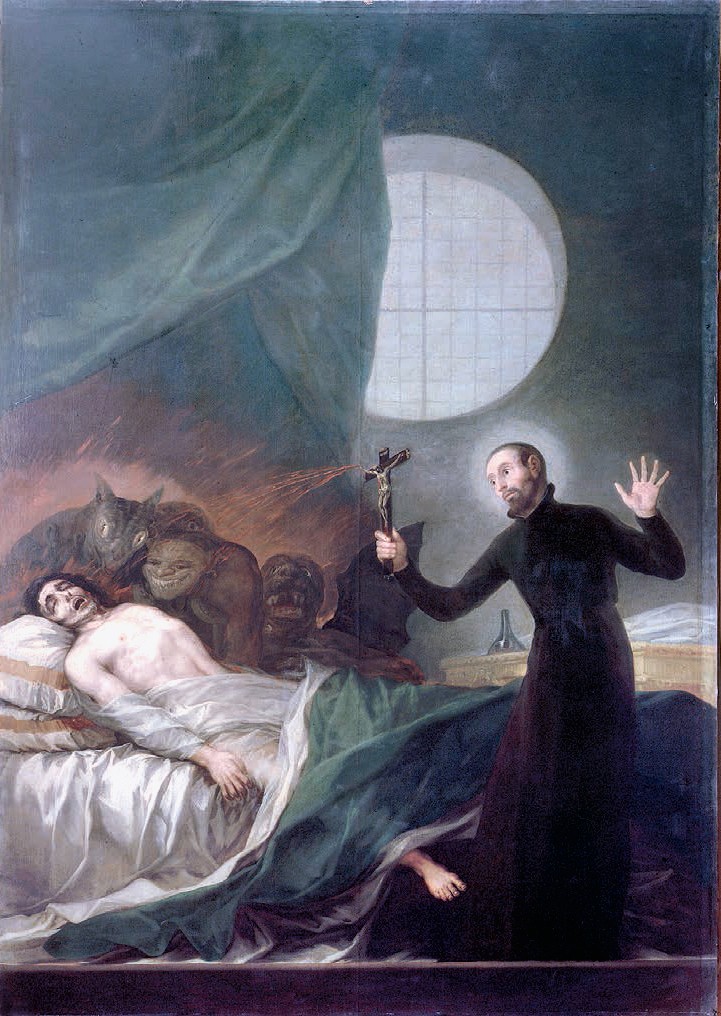
St Francis Borgia assists at the death of a impenitent by Goya
Before he was ten years old , Francis began to take wonderful delight in hearing sermons and spent much time in practising devotions, being tenderly affected to the Passion of our Divine Redeemer, which he honoured with certain daily exercises. In his tenth year, his pious mother fell dangerously ill; on which occasion, Francis, shutting himself up in his chamber, prayed for her with abundance of tears. This was the first time he used that practice of mortification, which he afterwards frequently made a part of his penance. It pleased God that the Duchess died of that distemper in 1520. This loss cost Francis many tears, though he moderated his grief by his entire resignation to the Divine will. Her pious counsels had always been to him a great spur to virtue and he took care never to forget them.
At that time, Spain was filled with tumults and insurrections of the common people, against the regency. The rebels, taking advantage of the absence of the young King, Charles V.(who was then in Germany, where he had been chosen Emperor,) plundered the houses of the nobility in the Kingdom of Valencia and made themselves masters of the town of Gandia. The Duke fled with his whole family. Going to Saragossa, he left his son Francis, then twelve years old, under the care of the Archbishop, John of Arragon, who was his uncle, being brother to his deceased mother. The Archbishop made up a household for his nephew and provided him with masters in grammar, music,and fencing, which he had begun to learn. The young nobleman laboured at the same time, to improve daily in grace and in every virtue.
At the age of fifteen, Francis was sent to Tordesillas, to be taken into the family and service of the Infanta Catharine, sister to Charles V. who was soon after to be married to John III. King of Portugal. The marriage was accomplished in 1525 but when the Infanta went into Portugal, the Duke of Gandia, who had greater plans for his son in Spain, recalled him, and engaged the Archbishop of Saragossa to re-assume the care of his education. When he had finished rhetoric, Francis studied philosophy for two years under an excellent master, with extraordinary diligence and applause. …
By the eighteenth year of his age, Francis had strong inclinations to entera religious state. … But in 1528, his father and uncle, to divert his thoughts from a religious life, removed him from Saragossa to the Court of Charles V. , where they hoped his thoughts would take a different turn. He considered his duty to his Prince, as his duty to God and although he willingly accepted, every mark of his Prince’s regard for him, he was very solicitous in all things to refer himself, his actions,and whatever he received from God, purely to the Divine honour. … (TO BE CONTINUED …)
Quote/s of the Day – 7 October – The Month and Feast of the Most Holy Rosary
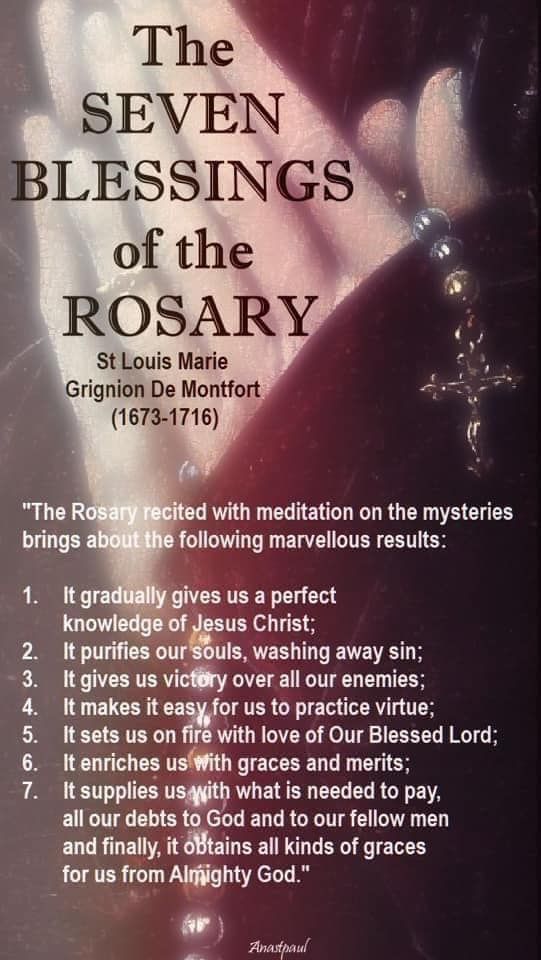
THE SEVEN BLESSINGS OF THE HOLY ROSARY
“The Rosary, recited with meditation on the mysteries, brings about the following marvellous results:
It gradually gives us a perfect knowledge of Jesus Christ;
It purifies our souls, washing away sin;
It gives us victory over all our enemies;
It makes it easy for us to practice virtue;
It sets us on fire with love of Our Blessed Lord;
It enriches us with graces and merits;
It supplies us with what is needed to pay, all our debts to God and to our fellow men and finally, it obtains all kinds of graces for us from Almighty God.”
St Louis Marie Grignion De Montfort (1673-1716)
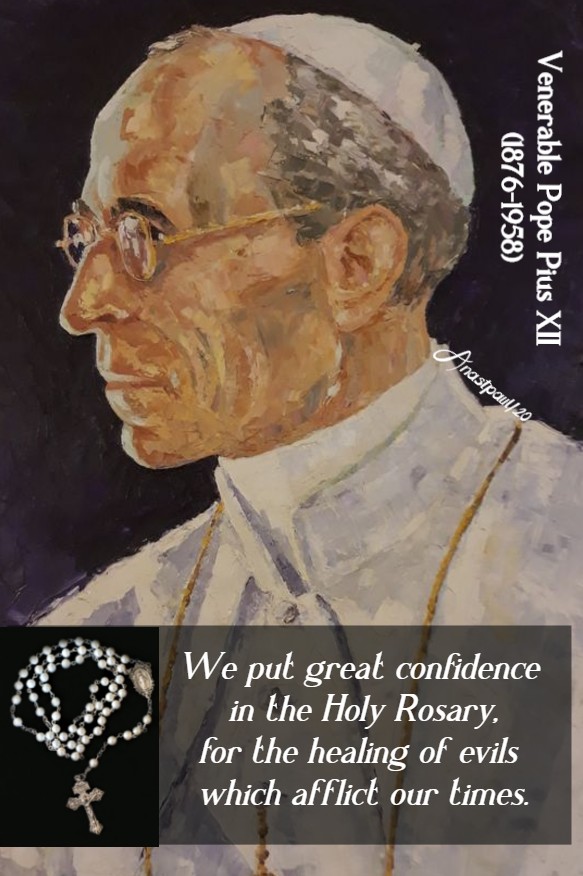
“We put great confidence in the Holy Rosary, for the healing of evils which afflict our times.”
Martyrs of Chalcedon – (49 Saints): Forty-nine Christian choir singers of the Church in Chalcedon in Asia Minor who were Martyred together in their persecutions of Diocletian in 304.
Our Morning Offering – 23 September – “The Month of the Seven Sorrows of the Blessed Virgin Mary and the Holy Cross”
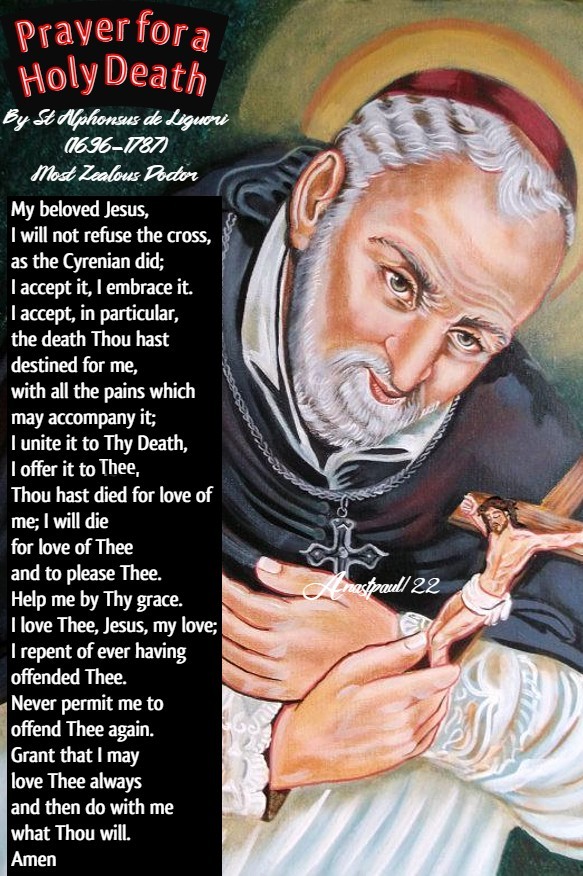
Prayer for a Holy Death By St Alphonsus de Liguori (1696-1787) Most Zealous Doctor
My beloved Jesus, I will not refuse the cross, as the Cyrenian did; I accept it, I embrace it. I accept, in particular, the death Thou hast destined for me, with all the pains which may accompany it; I unite it to Thy Death, I offer it to Thee Thou hast died for love of me; I will die for love of Thee and to please Thee. Help me by Thy grace. I love Thee, Jesus, my love; I repent of ever having offended Thee. Never permit me to offend Thee again. Grant that I may love Thee always and then do with me what Thou will. Amen
St Pope Linus (c 10 – c 76) Successor to St Peter. Papacy lasted from c 67 to his death. Among those to have held the position of pope, Peter, Linus and Clement are specifically mentioned in the New Testament. Linus is mentioned in the closing greeting of the Second Epistle to Timothy as being with Paul in Rome near the end of Paul’s life. About St Pope Linus: https://anastpaul.com/2018/09/23/saint-of-the-day-23-september-st-pope-linus-c-10-c-76-successor-to-st-peter/
St Cissa of Northumbria St Constantius of Ancona Bl Francisco de Paula Victor Bl Guy of Durnes Bl Helen Duglioli St Peter Acontanto St Polyxena St Sosius (275-305) Confessor, Deacon and Martyr Bl William Way St Xantippa
Martyrs of Syracuse – (4 Saints): Group of Christians deported from Syracuse, Sicily by invading Saracens and sent to North Africa where they were tortured and executed for their faith. Martyrs. The names that have survived are Andrew, Antony, John and Peter. c900
St Alexander of the Via Claudia Bl Diego Hompanera París St Eusebius of Phoenicia St Francisco Pastor Garrido St Gerulph St Herminio García Pampliega St Iphigenia St Isaac of Cyprus Bl Jacinto Martínez Ayuela St Jonah the Prophet Bl José María Azurmendi Mugarza Bl Josep Vila Barri St Landelino of Ettenheim Bl Manuel Torró García
St Maura of Troyes St Meletius of Cyprus Bl Nicolás de Mier Francisco St Pamphilus of Rome Bl Vicente Galbis Gironés Bl Vicente Pelufo Orts
Martyrs of Gaza – 3 Saints: Three brothers, Eusebius, Nestulus and Zeno, who were seized, dragged through the street, beaten and murdered by a pagan mob celebrating the renunciation of Christianity by Julian the Apostate. They were burned to death in 362 on a village garbage heap in Gaza, Palestine.
Thought for the Day – 27 August – Meditations with Antonio Cardinal Bacci (1881-1971)
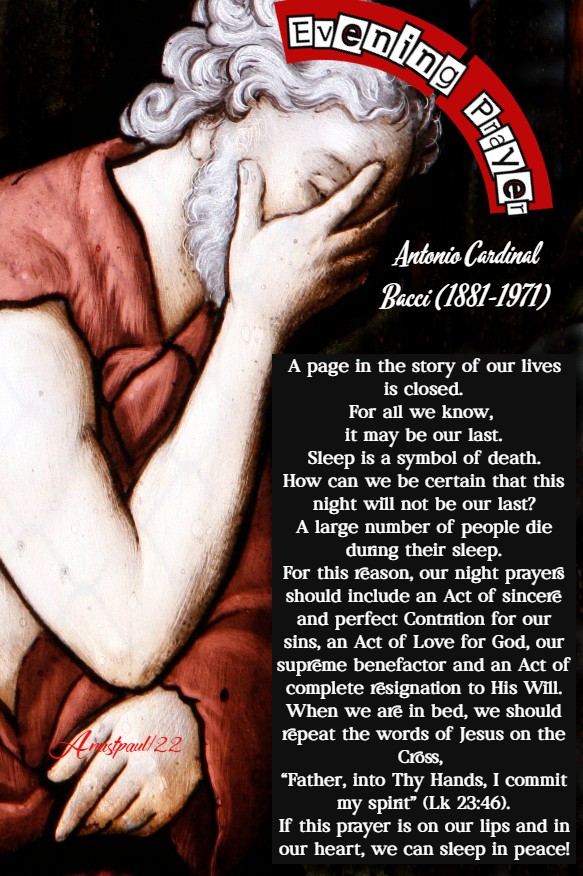
Evening Prayer
“A page in the story of our lives is closed. For all we know, it may be our last. Sleep is a symbol of death. How can we be certain that this night will not be our last?
A large number of people die during their sleep. For this reason, our night prayers should include an Act of sincere and perfect Contrition for our sins, an Act of Love for God, our supreme benefactor and an Act of complete resignation to His Will.
When we are in bed, we should repeat the words of Jesus on the Cross, “Father, into Thy Hands, I commit my spirit” (Lk 23:46). If this prayer is on our lips and in our heart, we can sleep in peace.”
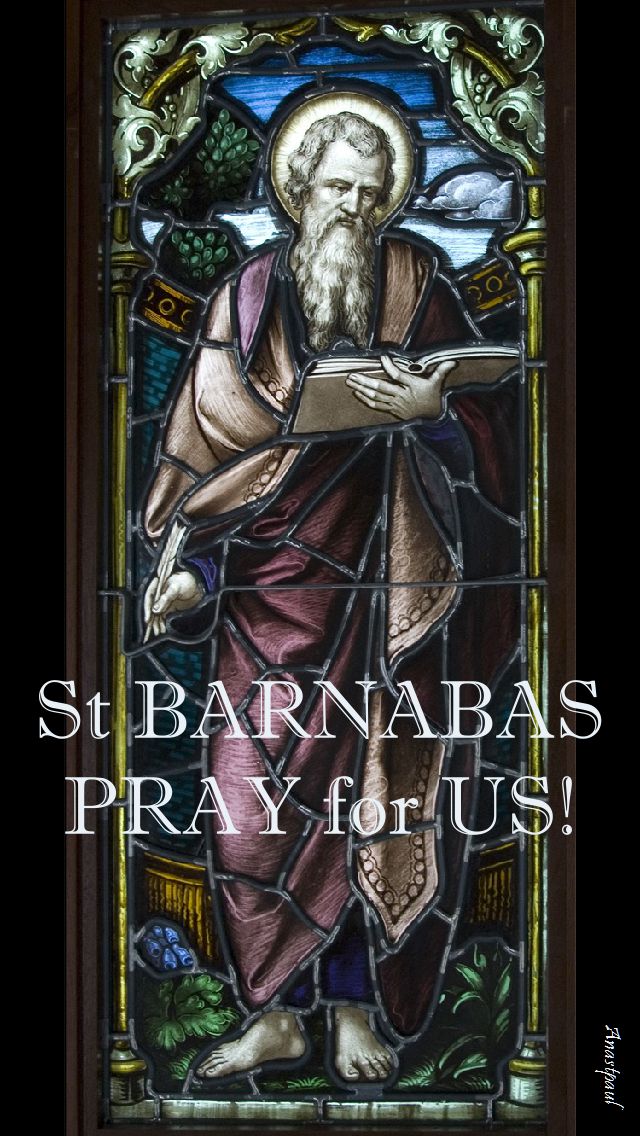
One Minute Reflection – 11 June – “The Month of the Sacred Heart” – Ember Saturday of Pentecost and the Feast of St Barnabas, Apostle and Martyr – Romans 5:1-5, Luke 4:38-44.
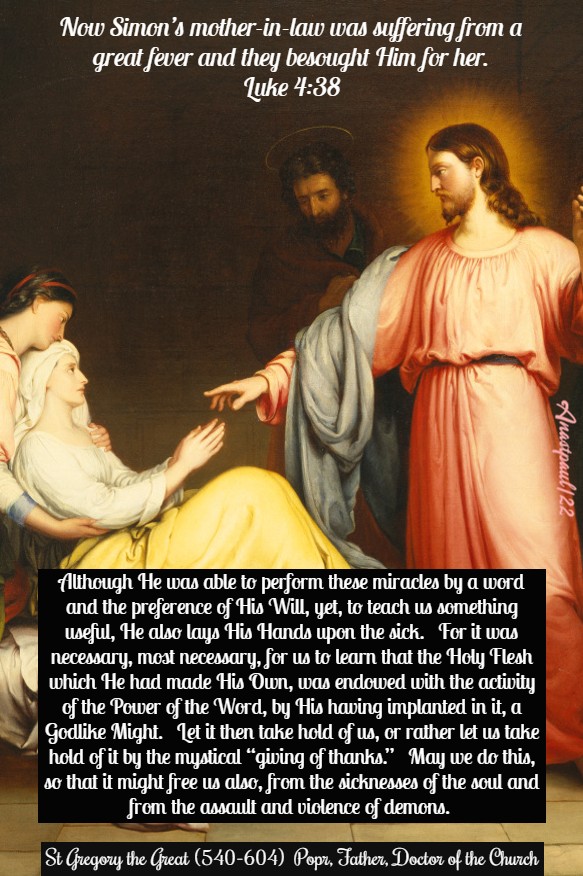
“At that time, Jesus rose from the synagogue and entered Simon’s house. Now Simon’s mother-in-law was suffering from a great fever and they besought Him for her.” – Luke 4:38
REFLECTION – “Jesus laid His Hands upon the sick, one by one and freed them from their malady. He demonstrated that the Holy Flesh, which He had made His Own and endowed with Godlike power, possessed the active presence of the Might of the Word. He intended us to learn, that, although the Only-begotten Word of God became like us, yet He is, nonetheless, God. He wants us to know, that He is easily able, even by His Own Flesh, to accomplish all things. His Body was the instrument by which He performed miracles.
Jesus, then, entered Peter’s house, where a woman was lying stretched upon a bed, exhausted with a violent fever . As God, He might have said, “Put away the disease, arise” but He adopted a different course of action. As a proof that His Own Flesh possessed the power of healing because it is the Flesh of God, He touched her hand. “Immediately,” it says, “the fever left her.” Let us, therefore, also receive Jesus. When He has entered into us and we have received Him into mind and heart, then, He will quench the fever of unbefitting pleasures. He will raise us up and make us strong, even in spiritual things, so that we might serve Him by performing those things which please Him. But observe again, I ask, how great is the usefulness of the touch of His Holy Flesh . For it both drives away diseases of various kinds and a crowd of demons,and overthrows the power of the devil. It heals a very great multitude of people in one moment of time. Although He was able to perform these miracles by a word and the preference of His Will, yet, to teach us something useful, He also lays His Hands upon the sick. For it was necessary, most necessary, for us to learn that the Holy Flesh which He had made His Own, was endowed with the activity of the Power of the Word, by His having implanted in it, a Godlike Might. Let it then take hold of us, or rather let us take hold of it by the mystical “giving of thanks.” May we do this, so that it might free us also, from the sicknesses of the soul and from the assault and violence of demons. ” – St Gregory the Great (540-604) Popr, Father, Doctor of the Church (Commentary on Luke, Homily 12)
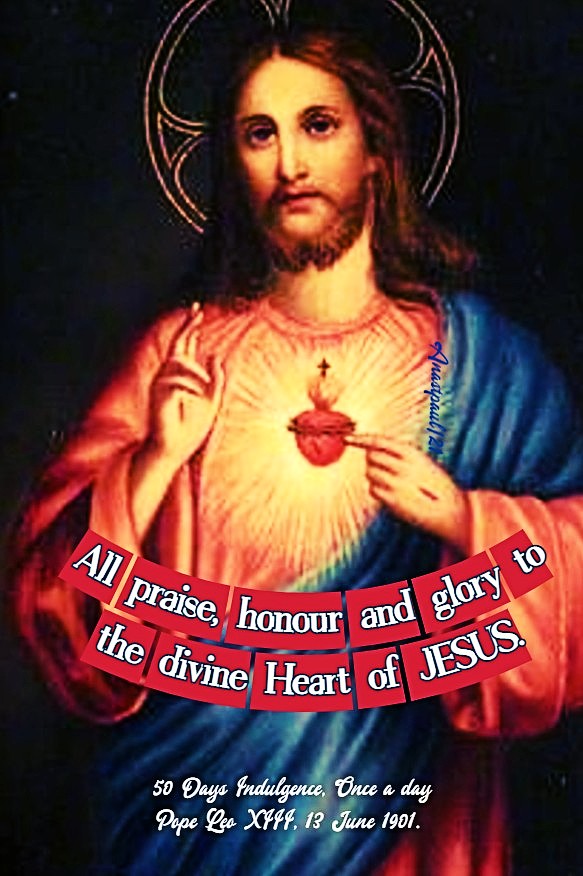
PRAYER – O God, Who gladden us by the merits and intercession of blessed Barnabas, Thy Apostle, mercifully grant that we, who ask Thee favours through him, may obtain them by the gift of Thy grace. Through Jesus Christ, Thy Son our Lord, Who lives and reigns with Thee, in the unity of the Holy Ghost, God, world without end. Amen (Collect). All praise, honour and glory to the divine Heart of JESUS.50 Days Indulgence, Once a day, Raccolta, 168 Pope Leo XIII, 13 June 1901.
Bl Kasper of Grimbergen St Maximus of Naples St Parisius ECMC (c 1160-1267) Priest and Monk of the Camaldolese Hermits of Mount Corona. St Paula Frasinetti St Riagail of Bangor Bl Stephen Bandelli OP St Tochumra of Kilmore St Tochumra of Tuam
Martyrs of Tavira – 7 Beati: Members of the Knights of Santiago de Castilla. During the re-conquest of the Iberian peninsula from the Muslims by Christian forces, in a period of truce between the armies, the group was allowed to leave the Portuguese camp to hunt. Near Tavira, Portugal, he and his companions were ambushed and killed by a Muslim force. Making a reprisal attack, the Portuguese army took the city of Tavira. The murdered knights were considered to be martyrs as they died in an action defending the faith. They were – • Blessed Alvarus Garcia • Blessed Beltrão de Caia • Blessed Damião Vaz • Blessed Estêvão Vasques • Blessed Garcia Roiz • Blessed Mendus Valle • Blessed Pedro Rodrigues They were martyred in 1242 outside Tavira, Faro, Portugal. Their relics are enshrined under the altar of Saint Barnabas in the Church of Our Lady, Queen of the Angels (modern Santa Maria do Castelo) in Tavria
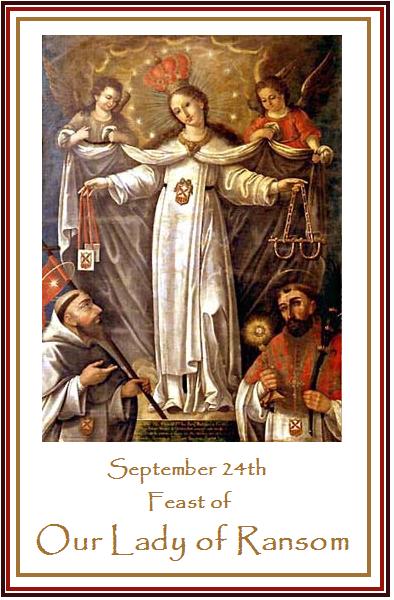
Mercedarian Martyrs of Damietta: Three Mercedarian lay knights who worked to ransom Christians enslaved by Muslims. During the 7th Crusade, a plague swept through the Christian army and these knights volunteered to work with the sick. During this work they were captured by Muslims and ordered to convert to Islam; they refused. They were tortured, taken to Damietta, Egypt where they were murdered for their faith. They were thrown from a tower in the mid-13th century in Damietta, Egypt.
St Anne Mary Taigi St Bron of Cassel St Calliope St Clodulf of Metz Bl Engelbert of Schäftlarn St Eustadiola of Moyen-Moutier St Fortunato of Fano St Gildard of Rouen (c 456-c 545Bishop, Confessor * Twin Brother of St Medard below Bl Giorgio Porta Bl Giselbert of Cappenberg St Heraclius of Sens Bl István Sándor
Bl John Davy OC (Died 1537) Deacon Martyr Bl essedJohn Rainuzzi Bl Maddallena of the Conception Bl Mariam Thresia Chiramel Mankidiyan St Maximinus of Aix
St Medard (c 456-545) Bishop and Convessor * Twin Brother of St Gildard above About this iluustrious Saint: https://anastpaul.com/2020/06/08/saint-of-the-day-8-june-saint-medard-c-456-545-bishop/ The Roman Martyrology states of St Medard and his twin brother, St Gildard, today: “At Soissons, in France, the birthday of St Medard, Bishop of Novon, whose life and precios death are illustrated by glorious miracles – at Rouen, St Gildard, Bishop, twin brother of St Medard,who was born with his brother on the same day, Consecrated Bishops at the same time and being taken away from this life, also on the same day, they entered Heaven together!”
St Melania the Elder St Muirchu St Pacificus of Cerano Bl Peter de Amer Bl Robert of Frassinoro St Sallustian St Syra of Troyes St Victorinus of Camerino
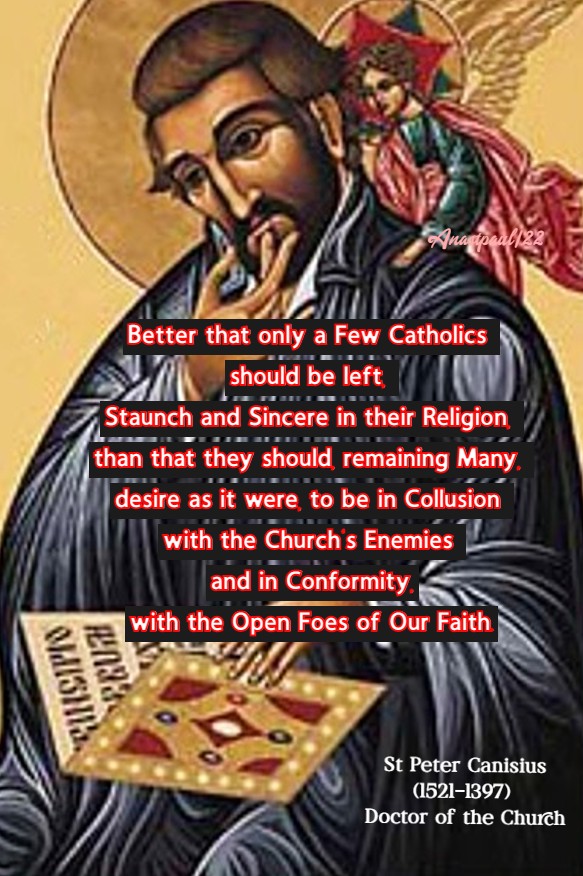
Quote/s of the Day – 27 April – The Memorial of St Peter Canisius SJ (1521-1597) Doctor of the Church
“Better that only a few Catholics should be left, staunch and sincere in their religion, than that they should, remaining many, desire as it were, to be in collusion with the Church’s enemies and in conformity with the open foes of our faith.”
Prayer of a Catechist to Jesus, Lover of Children
O Jesus, Friend of children, Who from Thy most tender years did grow visibly in wisdom and in grace before God and men. Who at the age of twelve, was seated in the Temple, in the midst of the doctors, listening to them attentively, humbly asking them questions and exciting their admiration by the prudence and wisdom of Thy discourse. Who didst receive, so willingly, the children, blessing them and saying to Thy disciples: Let them come to Me, for of such is the Kingdom of Heaven. Inspire me as Thou did inspire the blessed Peter Canisius, model and guide of the perfect Catechist, with a profound respect and a holy affection for childhood, a taste and a marked devotion for instructing them in Christian doctrine, a special aptitude, in making them understand its mysteries and love its beauties. I ask this of Thee, through the intercession of the Blessed Virgin Mary and Saint Peter Canisius. Amen.
St Peter Canisius (1521-1397) Doctor of the Church
Quote/s of the Day – 6 April – Wednesday of Passion Week, the Fifth Week of Lent Leviticus 19:1-2, 11-19, 25, John 10:22-38
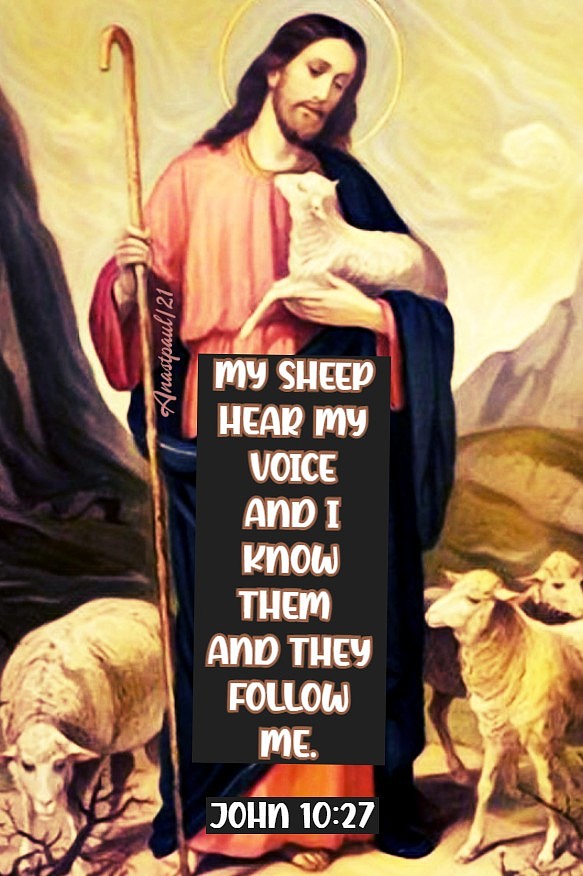
“My sheep hear My Voice; I know them and they follow Me.”
John 10:27
“The mark of Christ’s sheep is their willingness to hear and obey, just as disobedience is the mark of those who are not His. We take the word ‘hear’ to imply obedience to what has been said.”
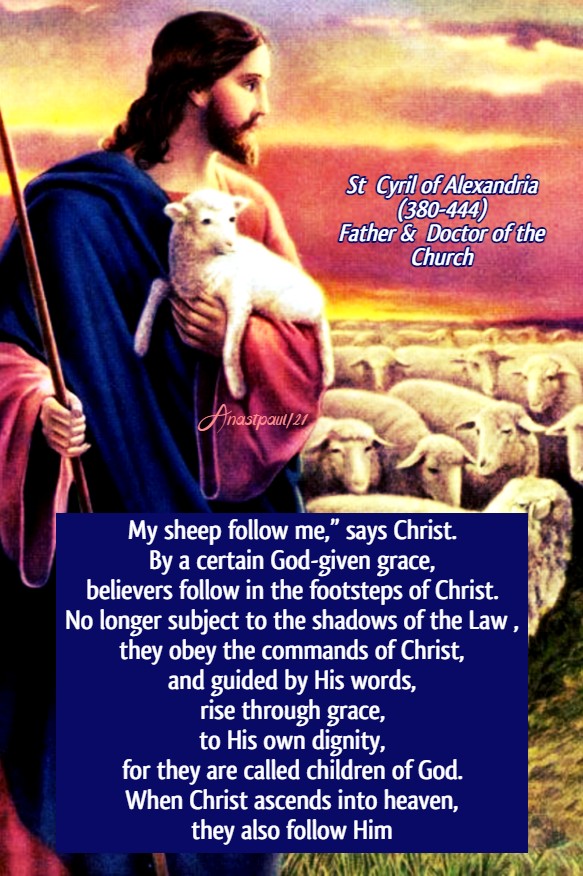
“My sheep follow me,” says Christ. By a certain God-given grace, believers follow in the footsteps of Christ. No longer subject to the shadows of the Law , they obey the commands of Christ, and guided by His words, rise through grace, to His own dignity, for they are called children of God. When Christ ascends into heaven, they also follow Him.”
St Cyril of Alexandria (376-444)
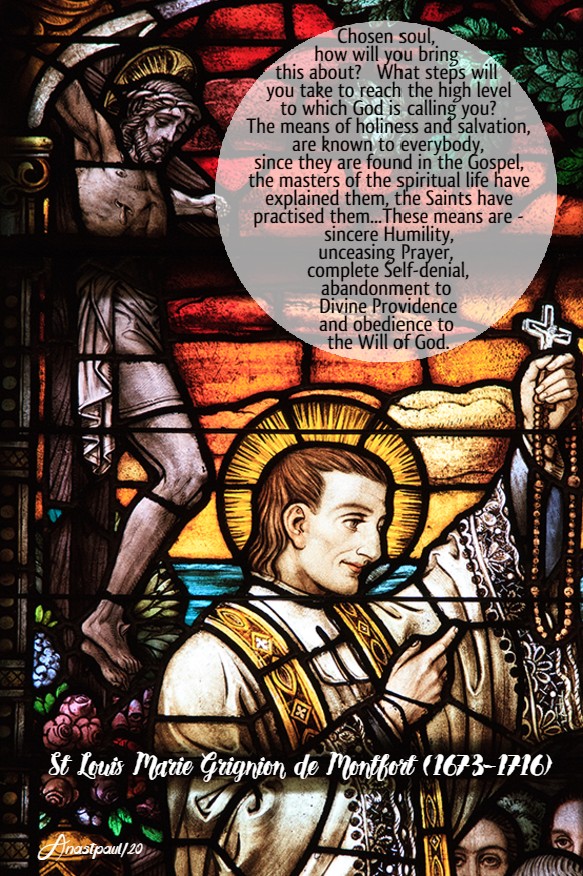
“Chosen soul, how will you bring this about? What steps will you take to reach the high level to which God is calling you? The means of holiness and salvation, are known to everybody, since they are found in the Gospel, the masters of the spiritual life have explained them, the Saints have practised them… These means are – sincere Humility, unceasing Prayer, complete Self-denial, abandonment to Divine Providence and obedience to the Will of God.”
St Louis Marie Grignion de Montfort (1673-1716)
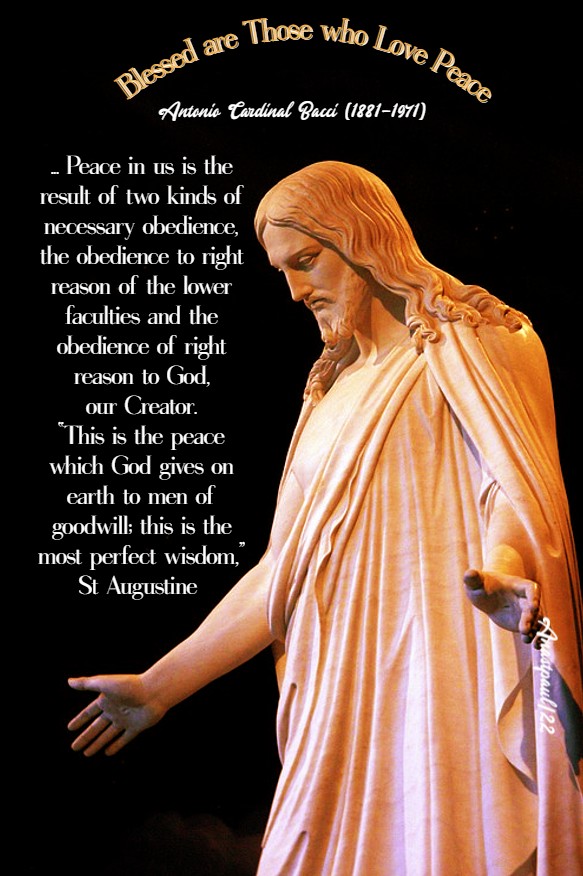
“Peace in us is the result of two kinds of necessary obedience, the obedience to right reason of the lower faculties and the obedience of right reason to God, our Creator. “This is the peace which God gives on earth to men of goodwill; this is the most perfect wisdom,” St Augustine.”
Thought for the Day – 4 April – Meditations with Antonio Cardinal Bacci (1881-1971)
Putting Christianity into Practice
“Imagine what the world would be like, if the Gospel of Christ, were practised in it’s entirety, everywhere and by everybody. It would not, of course, become another earthly Paradise, because suffering and death are the legacy of sin and Our Lord, did not remove these when He redeemed us but made them a necessary element, in our purification and spiritual elevation. Nevertheless, the full practice of Christianity would transform the world. A little reflection will convince us of this. Men would love God above all things and their neighbours as themselves. The sincere and ardent love of God, would cause wickedness, brutality and every kind of immorality to disappear. Love of their neighbour, would make men brothers in reality, so that there would be no more wars nor threats of conflict. The enormous wealth which is squandered on weapons of destruction, could then be diverted to good works. There would be no more poverty, because, if men loved one another, those who had more than enough, would give to those in want. There would be no more prisons, because, there would be no more criminals. There would be no need for a police force, because, everyone would do his duty of his own accord. The reign of love, which is the reign of Jesus Christ, would triumph upon earth. Excessive wealth and the selfish love of ease and pleasure, would disappear on one hand, while, on the other, the extreme need of those who can never be sure of a meal, nor of a roof over their heads, would be palliated, until they had been raised to a standard of living, consistent with the laws of God and with the dignity of men. The love of our neighbour as ourselves, would solve every individual and social problem in this life. Men would grow into a vast community of brothers devoid of all barriers of hate, selfishness and greed. This is not a Utopian dream, because it is the clear teaching of the Gospel. Jesus did not preach the impossible. He taught us the standards of the perfect life, which we are all obliged to try and lead.”
Thought for the Day – 25 February – Meditations with Antonio Cardinal Bacci (1881-1971)
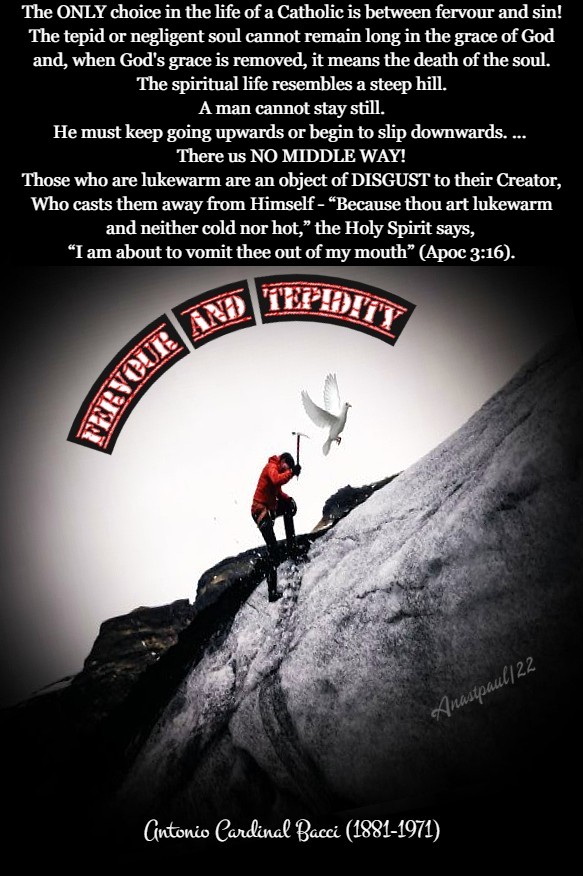
Fervour and Tepidity
“The ONLY choice in the life of a Catholic is between fervour and sin! The tepid or negligent soul cannot remain long in the grace of God and, when God’s grace is removed, it means the death of the soul.
The spiritual life resembles a steep hill. A man cannot stay still. He must keep going upwards or begin to slip downwards. Whoever struggles on, up the hill is approaching perfection and Heaven; whoever slips backwards, is approaching sin, a dead soul and Hell.
There us NO MIDDLE WAY! Those who are lukewarm are an object of DISGUST to their Creator, Who casts them away from Himself – “Because thou art lukewarm and neither cold nor hot,” the Holy Spirit says, “I am about to vomit thee out of my mouth” (Apoc 3:16).
So, it is not enough to be mediocre Catholic. The half-hearted and indifferent are already travelling along the slippery path of sin and are on the waiting list for hell! It is dangerous for anyone to remain thoughtlessly in this state of spiritude ineptitude. A man who never thinks of his own salvation, is suffering from a serious illness. He is running a very great risk of eternal damnation. He has one foot in Hell here on this earth!”
Quote/s of the Day – 18 February – “Month of the Most Blessed Trinity” – Septuagesima Weekday
ETERNAL LIFE
“And everyone who has left house, or brethren, or sisters, or father, or mother, or wife, or children, or lands for my name’s sake, shall receive a hundredfold and shall possess life everlasting.”
Matthew 19:29
“He seemed to me, a very foolish man and very wretched, who will not increase his understanding while he is in the world and ever with and long to reach that endless life, where all shall be made clear.”
St Alfred the Great (849-899) King
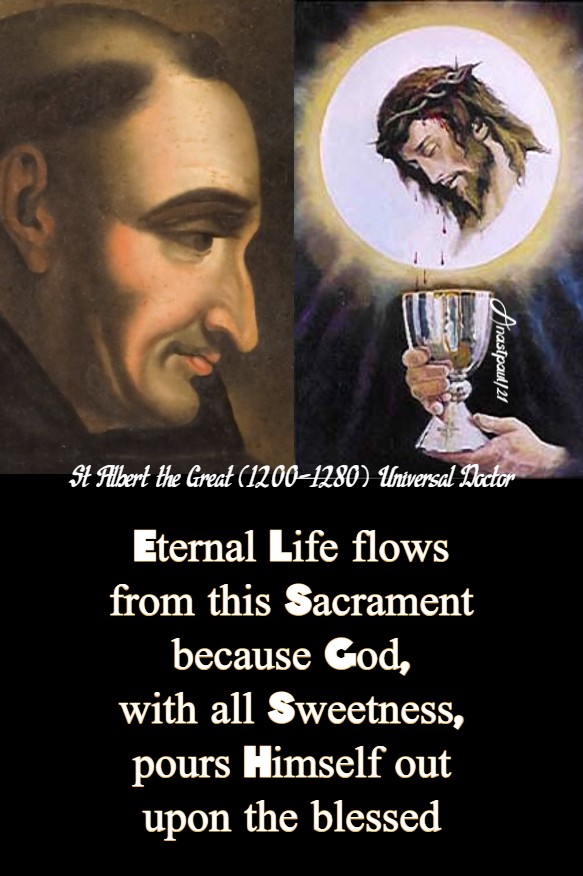
“Eternal life flows from this Sacrament because God, with all sweetness, pours Himself out upon the blessed.”
St Albert the Great OP (1200-1280) Bishop of Regensburg Universal Doctor of the Church
“We must make our way towards eternity, never regarding what men think of us, or of our actions, studying only to please God.”
St Francis Borgia SJ (1510-1572)
“By giving yourself to God, you not only receive Himself in exchange but, eternal life as well!”
St Francis de Sales (1567-1622) Doctor Caritatis
“On the journey of this life to eternity, let me carry You in my heart, following Mary’s example, who bore You in her arms, during the flight to Egypt.”
St Alphonsus Maria de Liguori (1696-1787) Most Zealous Doctor
Thought for the Day – 16 February – Meditations with Antonio Cardinal Bacci (1881-1971)
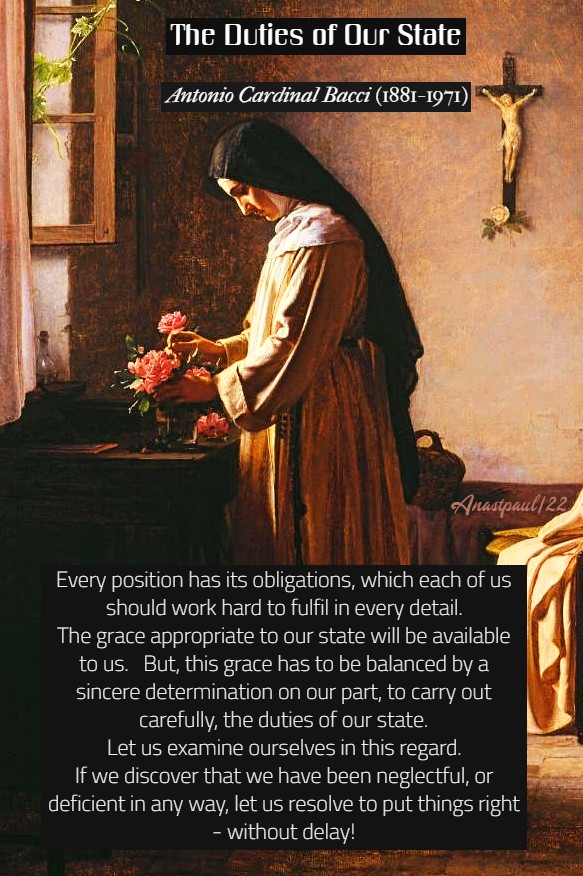
The Duties of Our State
“Some are called by God to the lofty state of the Ptiesthood, or of the Religious Life. This is a very great grace. We should co-operate generously and do our best to overcome any obstacles we meet.
Others are called to become good Catholic fathers and mothers and to rear a family. This is a most important role because4, the proper education of children and the future of the Church and of society, depend on it.
Every position has its obligations, which each of us should work hard to fulfil in every detail. The grace appropriate to our state will be available to us. But, this grace has to be balanced by a sincere determination on our part, to carry out carefully, the duties of our state.
Let us examine ourselves in this regard. If we discover that we have been neglectful, or deficient in any way, let us resolve to put things right – without delay!”
Quote/s of the Day – 16 February – Septuagessima Weekday – 1 Cor. 9:24-27; 10:1-5, Matthew 20:1-6
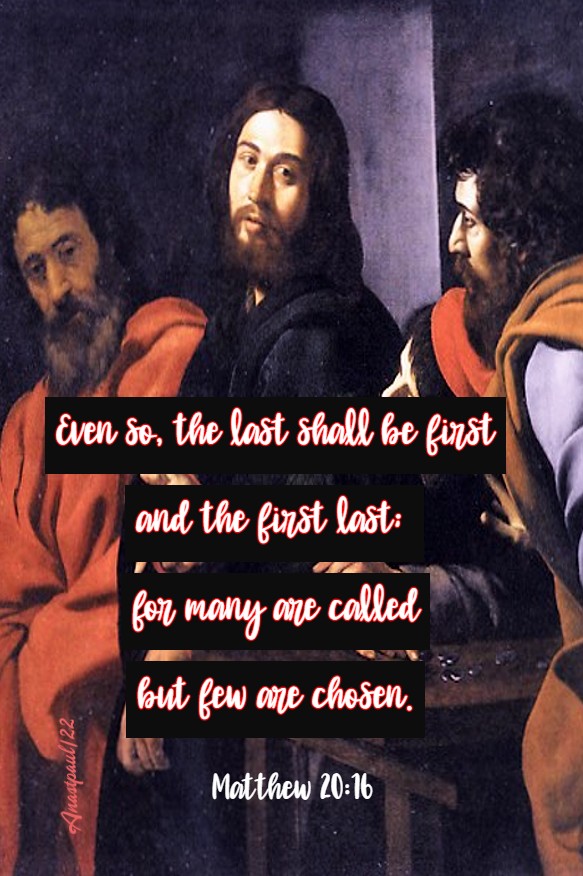
“Even so, the last shall be first and the first last; for many are called but few are chosen.”
Matthew 20:16
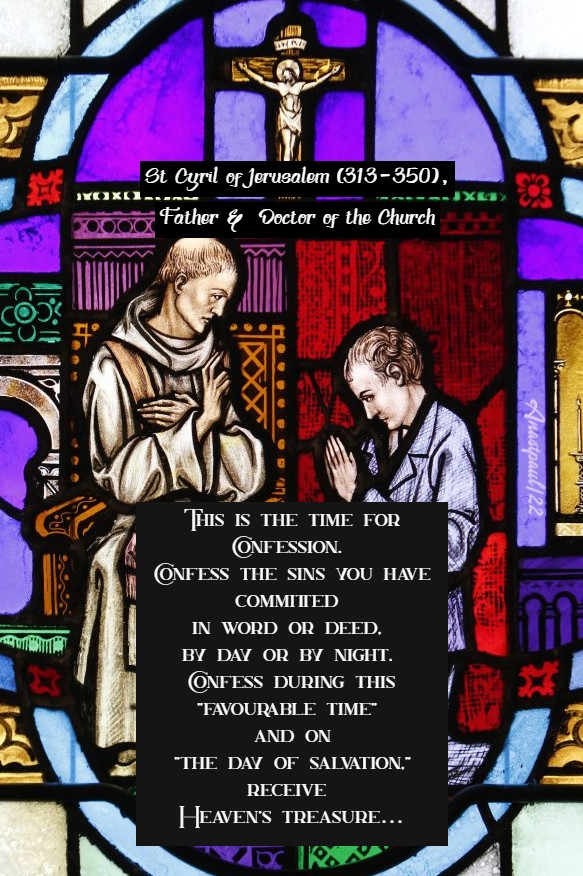
“This is the time for Confession. Confess the sins you have committed in word or deed, by day or by night. Confess during this “favourable time” and on “the day of salvation,” receive Heaven’s treasure… ”
St Cyril of Jerusalem (313-350), Father & Doctor of the Church
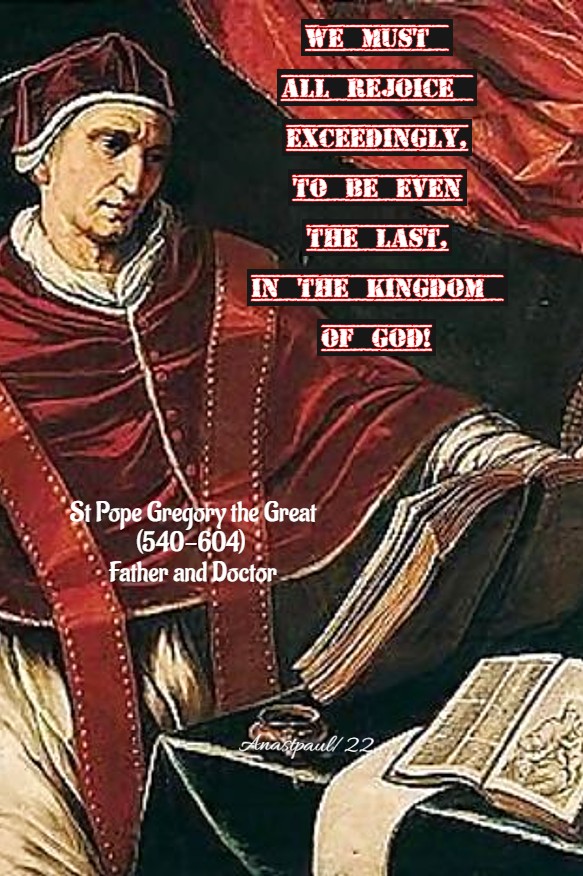
“… We must all rejoice exceedingly, to be even the last, in the Kingdom of God!”
St Pope Gregory the Great (540-604) Father and Doctor
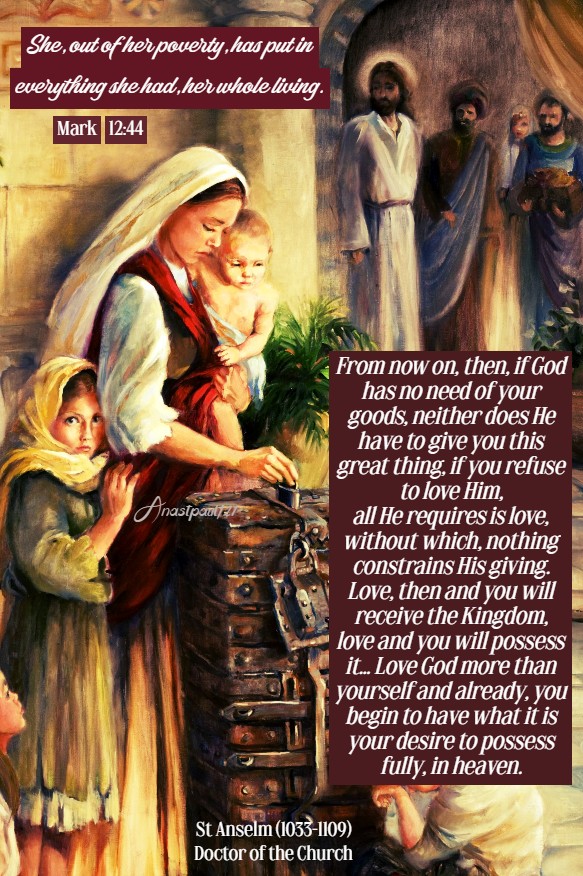
“From now on, then, if God has no need of your goods, neither does He have to give you this great thing, if you refuse to love Him, all He requires is love, without which nothing constrains His giving. Love, then and you will receive the Kingdom, love and you will possess it… Love God more than yourself and already, you begin to have what it is your desire to possess fully, in heaven.”
St Anselm (1033-1109) Doctor magnificus Doctor Marianus
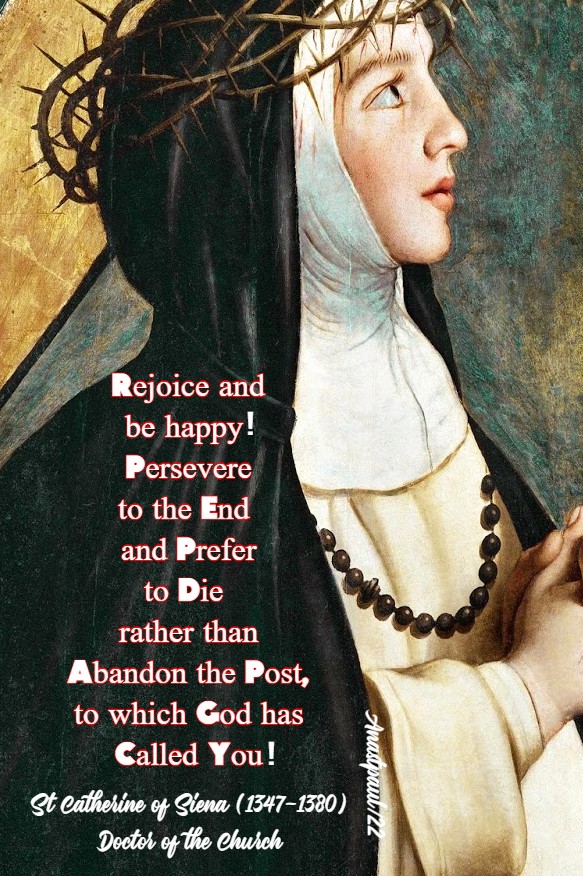
“Rejoice and be happy! Persevere to the end and prefer to die rather than abandon the post, to which God has called you!”
St Catherine of Siena (1347-1380) Doctor of the Church
Quote/s of the Day – 13 February – Septuagesima Sunday and the Memorial of Saint Catherine de Ricci OP (1522-1590) Virgin, Mystic, Stigmatist.
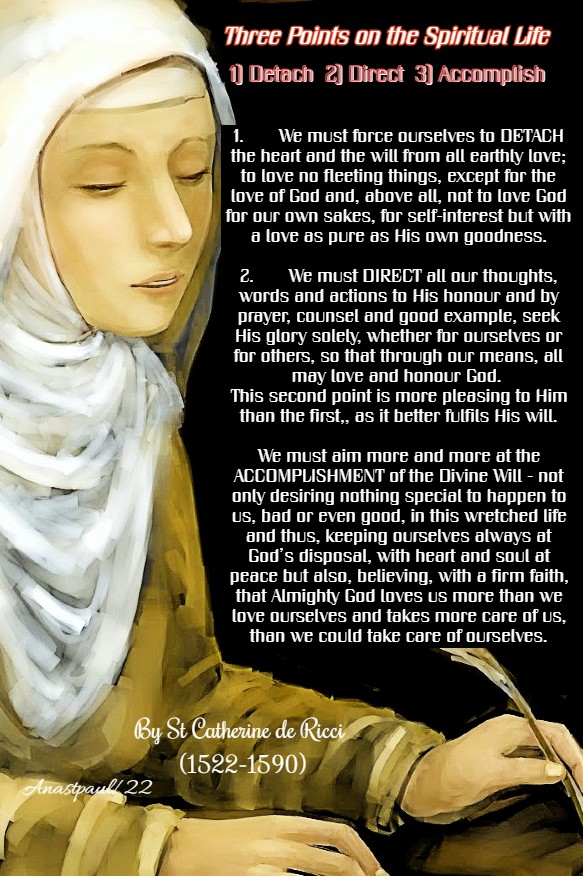
Three Points on the Spiritual Life By St Catherine de Ricci (1522-1590) 1) Detach 2) Direct 3) Accomplish
Letter to a Fellow Nun by St Catherine de Ricci
Very dear daughter, I have already sent you a letter to exhort you to the service of our Lord and now, I send you this one, in which I am going to give—first for myself and then for you—an account of the true way of faithfullyserving our Divine Spouse and a resume of the spiritual life, so that, by following it, we shall carry out the Holy Will of God.
If, then, my daughter, you would be the true spouses of Jesus, you must do His Holy Will in all things and you will do this, if you entirely give up your own will on every occasion and if you love the divine Spouse with your whole heart, your whole soul and your whole strength. Then, you must carefully attend to the following points (but it is necessary to weigh all these words), as they contain the summary of Christian perfection:
We must force ourselves to DETACH the heart and the will from all earthly love; to love no fleeting things, except for the love of God and, above all, not to love God for our own sakes, for self-interest but with a love as pure as His own goodness.
We must DIRECT all our thoughts, words and actions to His honour and by prayer, counsel and good example, seek His glory solely, whether for ourselves or for others, so that through our means, all may love and honour God. This second point is more pleasing to Him than the first, as it better fulfils His will.
We must aim more and more at the ACCOMPLISHMENT of the Divine Will – not only desiring nothing special to happen to us, bad or even good, in this wretched life and thus, keeping ourselves always at God’s disposal, with heart and soul at peace but also, believing, with a firm faith, that Almighty God loves us more than we love ourselves and takes more care of us, than we could take care of ourselves.
The more we conform to this way of acting, the more we shall find God present to help us and the more we shall experience, His most gentle love. But no-one can reach such perfection except by constant and courageous sacrifice of self-will and, if we would learn to practice such abnegation, it is necessary to keep ourselves in a state of great and deep humility, so that, by perfect knowledge of our own misery and weakness, we may rise to learn the greatness and beauty of our God.
Consider how just and necessary it is, to serve Him unceasingly, with love and obedience. I say just, because, God being Father and Master of all things, it is just that His Son and Servant, should obey and love Him. I say necessary because,, by acting otherwise, we could not be saved.
Let us always remember, never doubting, that it is the Eternal, Sovereign, All-powerful God, Who does, orders, or allows, everything that happens and that nothing comes to pass, without His Divine Will.
Let us remember that He is Himself that Wisdom, which, in the government of the universe – of heaven, earth and every single creature – cannot be deceived. (He would be neither God nor most wise, if it were otherwise). Let us look upon Him as supremely good, loving and beneficent.
If, through His Mercy, this conviction becomes strongly impressed upon our wills, we shall easily take all things from His Sacred Hand, with well-contented hearts, always thanking Him for fulfilling His most holy will in us. By acting thus. (with the help of His holy grace) we shall unite ourselves to Him, by true love in this life and by glory in eternity.
May He grant it to us in His goodness! Of your charity pray for me, a wretched sinner, who commends herself to you all.”





















 AnaStpaul
You must be logged in to post a comment.