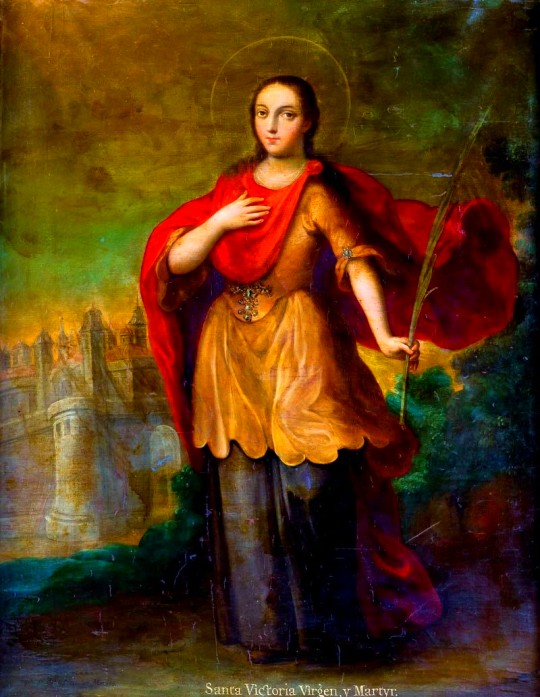
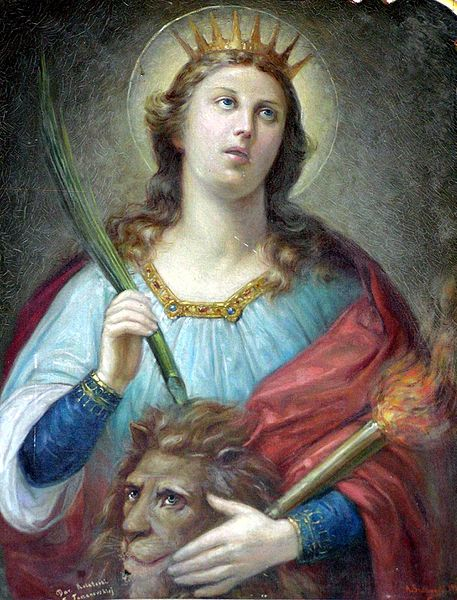
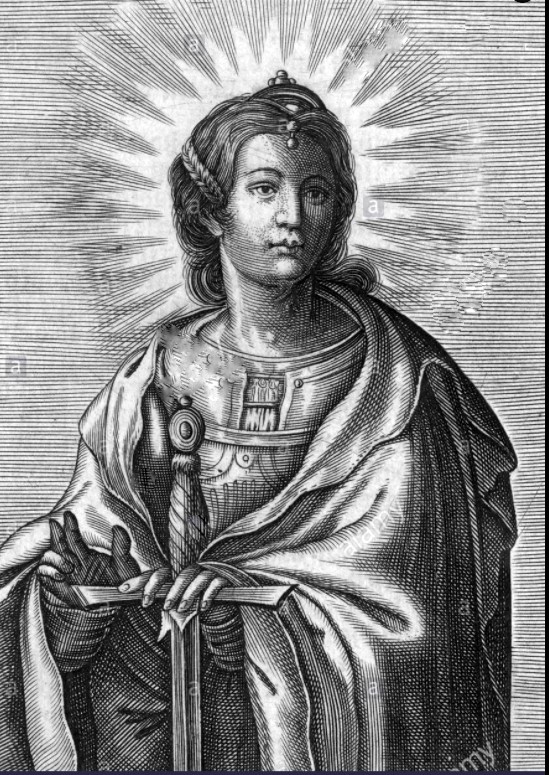
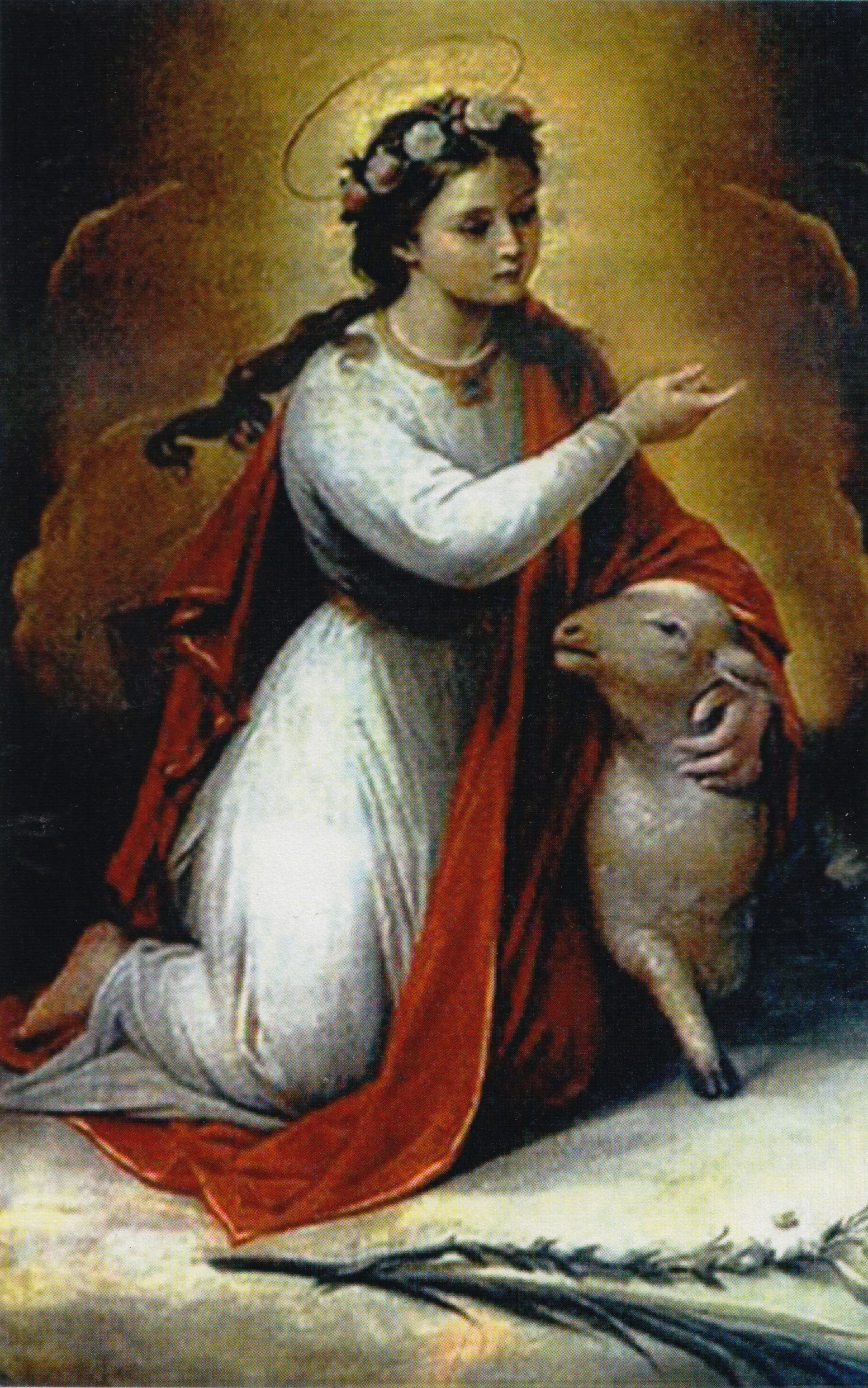
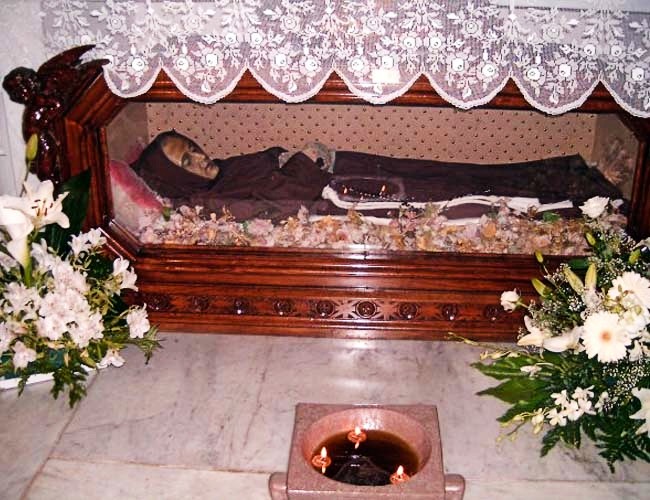
Saint of the Day –23 December – Saint Victoria (Died c250) Virgin Martyr of Rome. Born in Rome and died there by being stabbed through the heart. Many believe her body is incorrupt but I can find no conclusive evidence.
The Roman Martyrology reads today: “At Rome, the holy virgin Victoria, a Martyr in the persecution of Emperor Decius. She had been promised in marriage to a pagan names Eugene but because she refused to marry him and to offer sacrifices to idols and because, by working many miracles, she brought many to the service of God, she was at the request of her betrothed, stabbed in the heart with a sword by the executioner.”
Victoria was a Christian noblewoman. She, was forced into an arranged betroyal to a pagan nobleman. Desiring to devote and consecrate herself entirely to God rather than marry, she refused all connections with any man.
Upon this refusal, her suitor denounced her as Christians to the authorities under the persecution of Roman Emperor Decius. Victoria was seized and put under house arrest in order to break her courageous resistance and faith and convince her to marry. Instead of weakening, her faith in Christ, by His grace, became more resolute.
While under house arrest she sold all of her belongings, gave the proceeds to the poor and inspired and converted many young virgins as well as the servants and guards to Christianity.
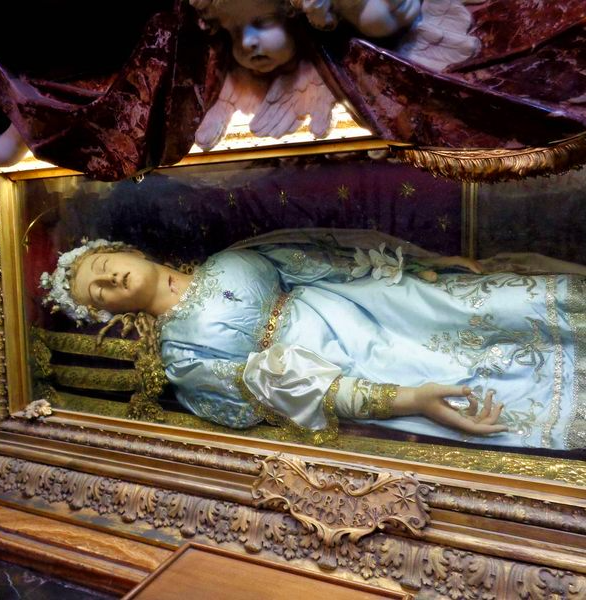
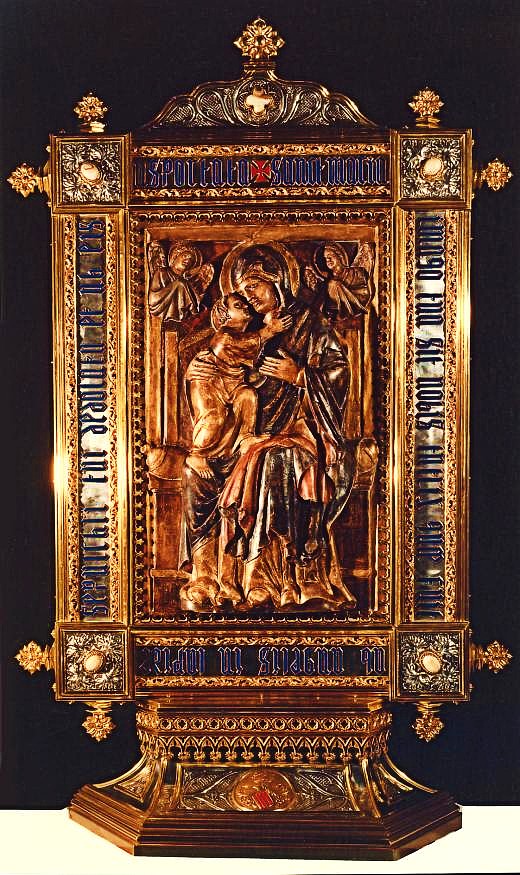
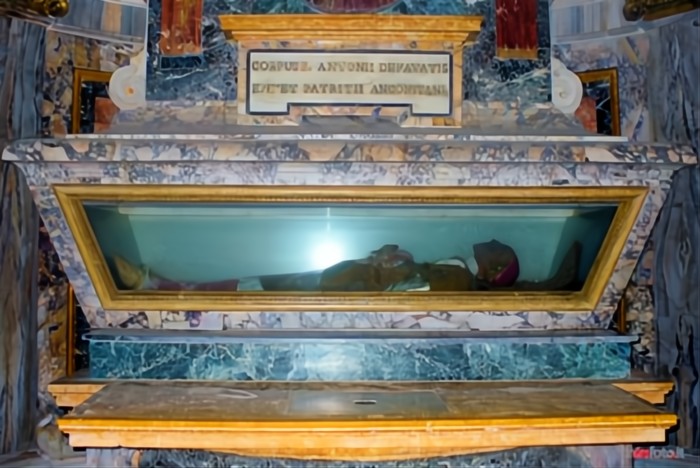
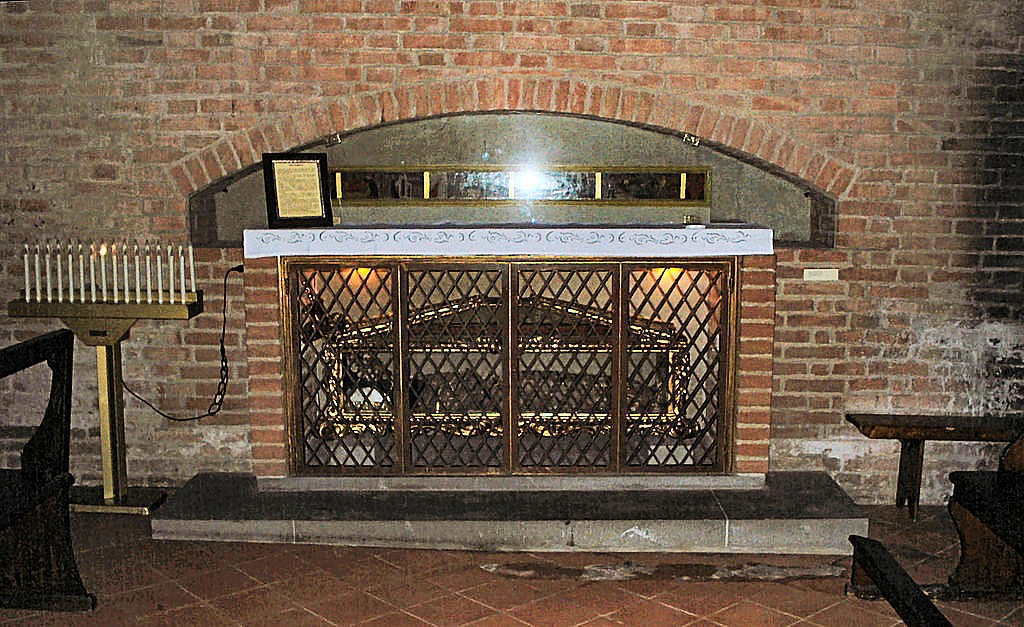
This so infuriated her rejected suitor, Eugene, he demanded immediate death by stabbing. She was stabbed through the heart. Below is her body in her Shrine in Rome.
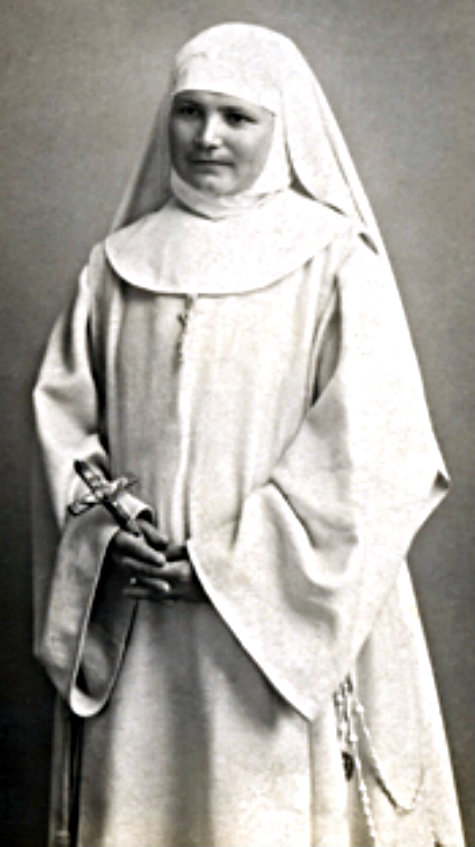
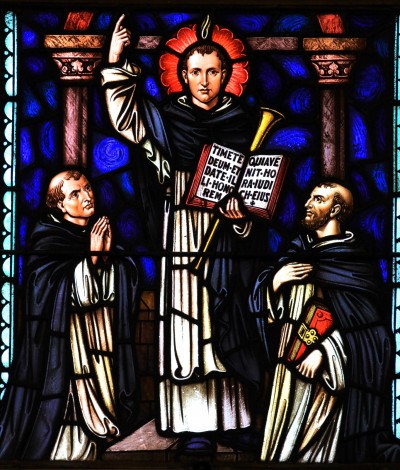
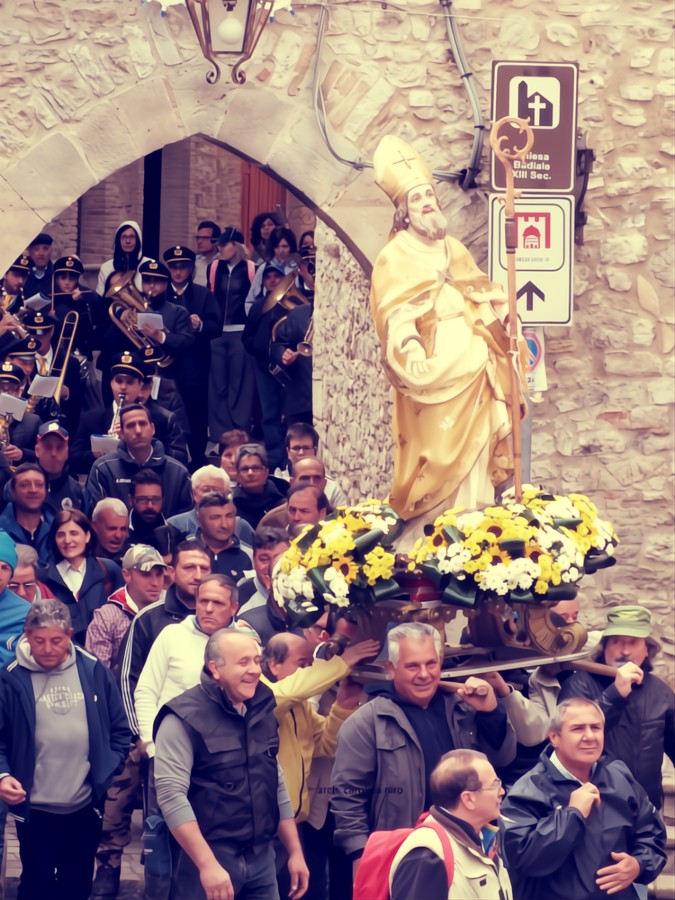
St Beoc St Dominic Dosso Bl Elizabeth of Saint Francis
St Everard of Friuli (c815-867) Duke, Count, Soldier, Founder of Churches and a Monastery. In contrast to his soldiering life, St Everard was a peacemaker, a humble and loving Master with a social conscience, striving always to free serfs, wherever possible or at least to free them from their burdens and assisting the poor and needy in all their deprivations. His Humble Life: https://anastpaul.com/2021/12/16/saint-of-the-day-16-december-saint-everard-of-friuli-c-815-867/
St Irenion (Died 389) Bishop No further information can be found Bl James of Tunis St Macarius (Died 1005) Abbot of Collesano
Martyred Women of North-West Africa: A large group of women Martyred in the persecutions of Hunneric, Arian King of the Vandals. 482 in North-West Africa.
Martyrs of Ravenna – 4 Saints: A group of Christians Martyred together. Four names and no other information has survived – Agricola, Concordius, Navalis and Valentine. c 305 at Ravenna, Italy.
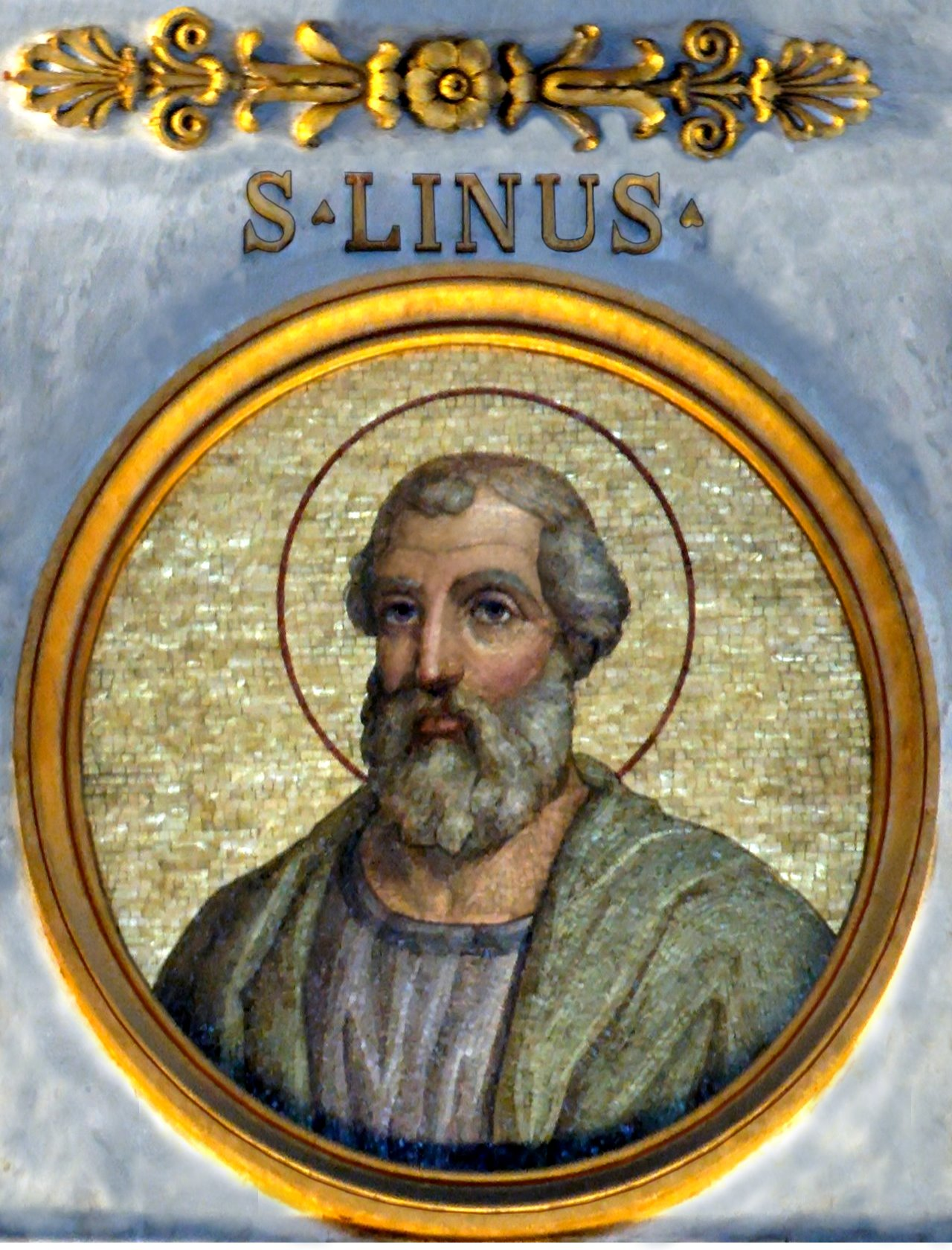
St Pope Linus (c 10 – c 76) Successor to St Peter. Papacy lasted from c 67 to his death as a Martyr. Among those to have held the position of Pope, Peter, Linus and Clement are specifically mentioned in the New Testament. Linus is mentioned in the closing greeting of the Second Epistle to Timothy as being with Paul in Rome near the end of Paul’s life. The Life and Death of St Linus: https://anastpaul.com/2018/09/23/saint-of-the-day-23-september-st-pope-linus-c-10-c-76-successor-to-st-peter/
St Sosius (275-305) Confessor, Deacon and Martyr. His holiness and wisdom drew many Prelates to his feet, seeking spiritual assistance. St Sosius was a Deacon of Misenum, an important naval base of the Roman Empire in the Bay of Naples. The Roman Martyrology reads: “At Capo Miseno in Campania, St Sosius, Deacon and Martyr, who, as Pope St Symmachus reports, wishing to save his Bishop from death, instead found death together with him, obtaining equal glory at the same price.” His Life and Death: https://anastpaul.com/2022/09/23/saint-of-the-day-23-september-saint-sosius-275-305-confessor-deacon-and-martyr/
St Adrian (Died 306) Confessor, Lay Martyr, Royal Court Guard in Roman Imperial Court at Nicomedia in Asia-Minor during the time of Emperor Maximian in the early 4th Century. Patronages – against the plague/epidemics, against epilepsy, arms dealers, butchers, guards, soldiers. The Roman Martyrology reads this day: “At Nicomedia, St Adrian, with twenty three other Martyrs, who ended their Martyrdom on the 4th day of March by having their limbs crushed, after enduring many torments, under the Emperors Diocletian and Maximian. Their remains were carried to Byzantium by the Christians and buried with due honours. Afterwards, the body of St Adrian was taken to Rome on this day, on which his festival is celebrated.” His Life and Death: https://anastpaul.com/2023/09/08/saint-of-the-day-8-september-st-adrian-died-306-confessor-martyr/
BlessedAlanus de Rupe OP (c1428-1475) Priest, “Apostle of the Holy Rosary”
Martyrs of Alexandria – 5 Saints: A group of Christians Martyred together in the persecutions of Diocletian – Ammon, Dio, Faustus, Neoterius and Theophilus. Martyred in Alexandria, Egypt.
Martyrs of Japan – (21 Beati: A group of 21 Missionaries and Converts, who were executed together for their faith. They were: Antonio of Saint Bonaventure, Antonio of Saint Dominic, Dominicus Nihachi, Dominicus of Saint Francis, Dominicus Tomach, Francisco Castellet Vinale, Franciscus Nihachi, Ioannes Imamura, Ioannes Tomachi, Laurentius Yamada, Leo Aibara, Lucia Ludovica, Ludovicus Nihachi, Matthaeus Alvarez Anji, Michaël Tomachi, Michaël Yamada Kasahashi, Paulus Aibara Sandayu, Paulus Tomachi, Romanus Aibar, Thomas of Saint Hyacinth, Thomas Tomachi Died on 8 September 1628 in Nagasaki, Japan Beatified on 7 May 1867 by Pope Pius XI.
DISCLAIMER: Please note: I cannot control the content of the Advertisements on this Site, or of pop-ups which may appear, The revenue from the Advertisements, however, does provide a little assistance in the support of the Site. I do apologise for any inappropriate content.
St Gedeon of Besancon St Hormisdas of Persia St Largus St Leobald of Fleury St Leonidas of Constantinople St Marinus of Anzarba St Mummolus of Fleury St Myron the Wonder Worker St Rathard of Diessen St Severus of Vienne St Sigrada St Smaragdus St Ternatius of Besançon St Ultan of Crayke
Martyrs of Albano – 4 Saints: Four Christians who were Martyred together, and about we today know little more than their names – Carpóforo, Secondo, Severiano and Vittorino. They were martyred in Albano, Italy – their remains are interred in the San Senator cemetery, on the Appian Way, 15 miles from Rome, Italy.
Martyrs of Rome – 5 Saints: Five Christians Martyred together; we know nothing else about them but the names – Ciriaco, Crescenziano, Giuliana, Memmia and Smaragdus. They were martyred at the 7 mile marker, on the Via Ostia, Rome, Italy.
St Bartholomew OP – ArchBishop of Braga also known as Bl Bartholomew of the Martyrs (Bartolomeu Fernandez dei Martiri Fernandes) (1514-1590) Portuguese Dominican Friar and Priest, Writer, Theologian, Advisor, Teacher and Catechetical writer, Apostle of Charity founding a series of hospitals and hospices in Braga and surrounds. St Bartholomew: https://anastpaul.com/2018/07/16/saint-of-the-day-16-july-blessed-bartholomew-of-the-martyrs-1514-1590/
St Generosus of Poitou St Gobbán Beg St Gondulf of Tongeren-Maastricht St Gondolf of Saintes St Grimoald of Saintes
St Helier (Died c555) Martyr, Hermit, Missionary to Jersey from Belgium, Hermit, Ascetic, Miracle-worker. PATRONAGES – St Helier is the Patron Saint of Jersey and in particular of the Diocese and Capital City of Jersey, named for him – Saint Helier, he is invoked against and for the cure of EYE diseases and skin disorders, His Life and Death: https://anastpaul.com/2023/07/16/saint-of-the-day-16-july-st-helier-of-jersey-died-c555-martyr-missionary-hermit/
Bl Irmengard St Landericus of Séez Bl Madeleine-Françoise de Justamond Bl Marguerite-Rose de Gordon Bl Marguerite-Thérèse Charensol Bl Marie-Anne Béguin-Royal Bl Marie-Anne Doux
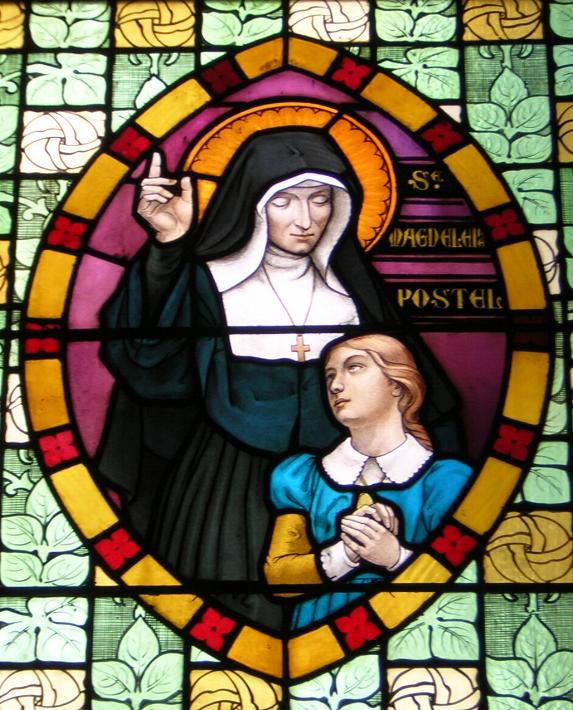
St Marie-Madeline (1756-1846Virgin, Religious Sister and Founder of the Sisters of Christian Schools of which she is the Patron, Teacher, Franciscan Tertiary. Pope Pius X later signified on 22 January 1908 his approval to two investigated miracles attributed to her intercession and so Beatified her on 17 May 1908. Pope Pius XI confirmed two additional miracles and Canonised Blessed Marie-Madeline on 24 May 1925. Her Devoted Life: https://anastpaul.com/2019/07/16/saint-of-the-day-16-july-st-marie-madeline-postel-
Bl Marie-Rose Laye Bl Milon of Thérouanne St Monulphus of Tongeren-Maastricht Bl Ornandus of Vicogne
Martyrs of Antioch – 5 Saints: Five Christians who were Martyred together. No details about them have survived by the names – Dionysius, Eustasius, Maximus, Theodosius and Theodulus. They were Martyred in Antioch, Syria, date unknown.
DISCLAIMER: Please note: I cannot control the content of the Advertisements on this Site, or of pop-ups which may appear, The revenue from the Advertisements, however, does provide a little assistance in the support of the Site. I do apologise for any inappropriate content.
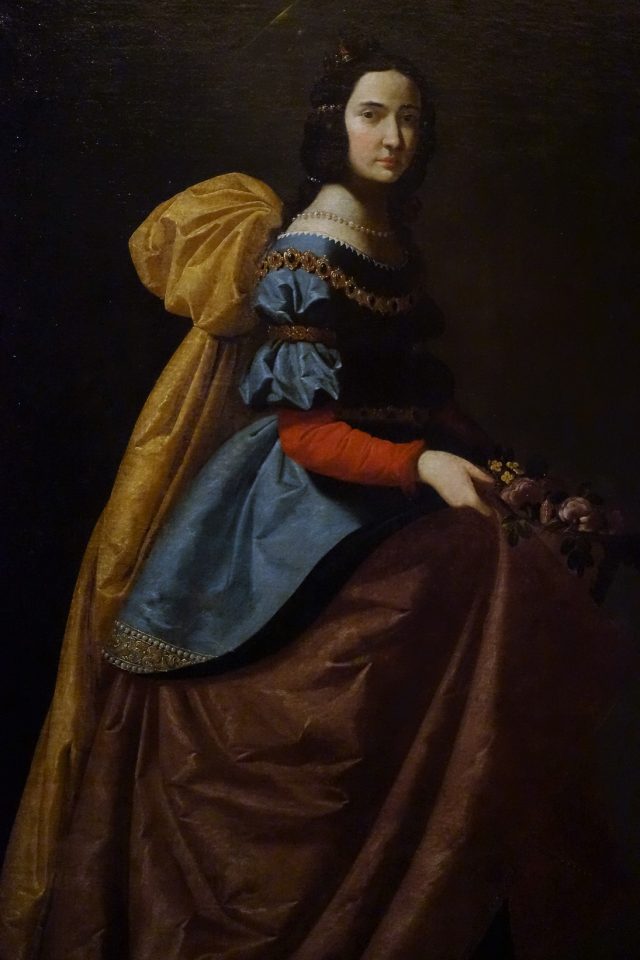
St Elizabeth of Portugal TOSF (1271-1336) Widow, Queen Consort, Franciscan Tertiary, Apostle of Charity and Peace, Political Negotiator and Mediator. In the year 1694 Pope Innocent XII moved her Feast to 8 July, so that it would not conflict with the celebration of the Octave of Saints Peter and Paul, Apostles. The Devoted Love of St Elizabeth: https://anastpaul.com/2018/07/04/saint-of-the-day-4-july-st-elizabeth-of-portugal-t-o-s-f-1271-1336/
St Abraham the Martyr Bl Adolf IV of Schauenburg St Pope Adrian III
St Arnold St Auspicius of Toul St Auspicius of Trier St Brogan of Mothil +St Colman (Died 689) Martyred Priest Missionary in Thuringia, Germany St Doucelin
St Morwenna – No details about her have survived. She is reported to have appeared in visions in Morwenstow, Cornwall, England, where her Relics are apparently buried under the Church floor.
St Pancras of Taormina Bl Peter the Hermit St Procopius of Ceasarea St Sunniva of Bergen St Thibaud de Marly +St Totnan (Died 689) Martyred Deacon Missionary in Thuringia, Germany
Abrahamite Monks/Martyrs of Constantinople: A group of Monks in a Monastery founded by Saint Abraham of Ephesus. Martyred in the iconoclast persecutions of Emperor Theophilus. In c 835 in Constantinople.
Martyrs of Shanxi – 7 Saints: In 1898 seven sisters of the Franciscan Missionaries of Mary were sent to the Shanxi Diocese in China to serve the poor in hospitals and care for the unwanted or other destitutes in orphanages. They were: Anne-Catherine Dierks, Anne-Francoise, Moreau, Clelia Nanetti, Irma Grivot, Jeanne-Marie Kuergin, Marianna Giuliani, Pauline Jeuris There they all died in one of the periodic persecutions against foreign missionaries. They were beheaded on 9 July 1900 at Taiyuanfu, China- Canonisedon 24 November 1946 by Pope Pius XII.
Martyrs of Syrmium – 5 Saints: Five Christians Martyred together for their faith. We know nothing else about them but the names – Cecilia, Eperentius, Eraclius, Sostratus and Spirus. They were martyred in the 4th century in Syrmium, Pannonia (modern Serbia).
St Agatho of Sicily St Athanasius the Athonite St Athanasius of Jerusalem St Cast St Cyprille of Libya St Cyrilla of Cyrene St Domèce St Domitius of Phrygia St Edana of West Ireland
St Numerian of Treves St Philomena (Died c500) Virgin of San Severino St Probus of Cornwall St Rosa Chen Aijieh St Sedolpha of Tomi St Stephen of Reggio St Teresia Chen Qingjieh St Theodotus of Tomi St Thomas of Terreti St Triphina of Brittany St Triphina of Sicily
St Zoe of Rome (Died c286) Married laywoman, Martyr. The Roman Martyrology reads today: “At Rome, St Zoe, Martyr, wife of the blessed Martyr Nicostratus. Whilst praying at the tomb of the Apostle, St Peter, during the time of Diocletian, she was seized by the persecutors and cast into a dark dungeon, then, being suspended on a tree by her neck and hair and suffocated by loathsome smoke, she yielded up her soul in the confession of the Lord.” Her Life and Death: https://anastpaul.com/2024/07/05/saint-of-the-day-5-july-saint-zoe-of-rome-died-c286-married-laywoman-martyr/
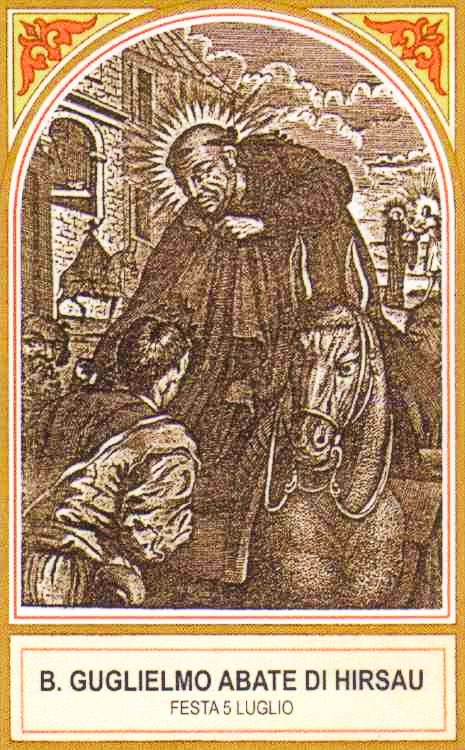
Saint of the Day – 4 July – St William (c1030- 1091) Abbot of Hirsau Monastery in Germany, Reformer. The date of his birth is unknown but it is known that he was born in the Bavarian City of Regensburg in Germany around the year 1030 and died on 4 or 5 July in 1091at the Monastery in Hirsau the Black Forest. His Body is Incorrupt.
William was soon entrusted, at a tender age, to the Monastery of St Emmeram to be educated .While still young, he took the Benedictine Habit, receiving a solid ascetic, literary, scientific and technical education.
Gifted with great prudence, William knew how to combine rigid personal asceticism with a charming kindness towards others. In 1069 he was called to govern the Monastery of Hirsau in the Black Forest, rebuilt shortly before by Count Adalbert with the help of the Monks of Einsiedeln. The small community numbered only fifteen Religious. William, however, did not want to receive the Abbatial blessing until after the death of Frederick (died in 1071), who had been illegally removed by CountAdalbert.
In order to obtain full exemption for the Monastery, in 1075, William went to Rome to Pope Gregory VII. In Hirsau, William first introduced the customs of St Emmeram, then, imitating those of Cluny, he drew up their rigid and detailed Rules.
The “Hirsau Reform” spread to numerous foundations and of already existing Monasteries throughout Europe, numbering more than one hundred Monasteries. The community of Hirsau itself, grew so vigorously that it soon numbered more than one hundred and fifty Monks, for whom a new building had to be built, dedicated to Sts Peter and Paul. From here, colonies of Monks were sent to elsewhere to encourage and spread the Hirsau Rule and custom of spiritual life.
William also organised the institute of Lay Brothers in the Benedictine monastic community which was then accepted everywhere and gathered around it men and women as ‘oblates.’ In the Investiture Controversy, William was one of the pillars of the Gregorian Reform in Germany which the Monks of Hirsau preached and propagated. He wrote dialogues on Music and Astronomy and had a copy of the Vulgate inscribed for his Monastery.
He died on 4 or 5 July 1091 and was buried in the Church of Saints Peter and Paul, which he himself had built. Around 1500 his Tomb was opened and it was found that both the body and the Abbot’s clothes were still perfectly well preserved. . Until the protestant suppression of Hirsau, he enjoyed public veneration.
Ehemalige Klosteranlage Hirsau, Stadt Calw, Baden-Württemberg
St Carileffo of Anille Bl Cesidio Giacomantonio St Donatus of Libya St Edward Fulthrop St Elias of Jerusalem St Finbar of Wexford St Fiorenzo of Cahors St Flavian of Antioch St Giocondiano St Haggai the Prophet Bl Henry Abbot St Henry of Albano St Hosea the Prophet St Innocent of Sirmium Bl John Carey
Blessed John Cornelius SJ (1557– 1594) Martyr, English Priest of the Society of Jesus, Missionary. Additional Memorials – 29 October as one of the Martyrs of Douai, 1 December as one of the Martyrs of Oxford University. Fr Cornelius and his three companions, the Martyrs of England, were Beatified by Pope Pius XI on 15 December 1929. All their bodies were retrieved and given proper burial by Lady Arundell. His Life and Death: https://anastpaul.com/2021/07/04/saint-of-the-day-4-july-blessed-john-cornelius-sj-1557-1594-martyr/
St Jucundian St Laurian of Seville St Lauriano of Vistin St Namphanion Bl Natalia of Toulouse St Odo the Good Bl Odolric of Lyon Bl Patrick Salmon St Sebastia of Sirmium St Theodore of Cyrene St Theodotus of Libya Bl Thomas Bosgrave Bl Thomas Warcop
St Ulric (c1214-1284) Bishop of Ratzeburg St Valentine of Langres St Valentine of Paris Bl William Andleby St William (c1030-1091) Abbot of Hirsau Monasteryin Germany. His Body is incorrupt.
St Boniface (6th Century) Bishop of Ferentino St Boniface of Tarsus Martyr St Corona the Martyr St Costanzo of Capri St Costanzo of Vercelli Bl Diego of Narbonne St Dyfan St Engelmer St Erembert of Toulouse St Felice of Aquileia St Fortunatus of Aquileia St Gal of Clermont-Ferrand
St Henedina of Sardinia St Justa of Sardinia St Justina of Sardinia
St Maria Domenica Mazzarello FMA (1837-1881) Virgin, Religious Sister and Founder with St John Bosco of the Daughters of Mary Help of Christians. They were founded to work alongside Saint John Bosco and his Salesians of Don Bosco in his teaching projects in Turin. They continue to be a teaching Order worldwide and are now called the Salesian Sisters of St John Bosco.Her Body is incorrupt. Maria was Beatified on 20 November 1938 and Canonised on 24 June 1951. Her incorrupt body is venerated in the Basilica of Our Lady Help of Christians, in Turin, Italy, which is the Mother Basilica of the Salesians, built by St John Bosco. A Church in southeast Rome bears her name, Santa Maria Domenica Mazzarello – the Statue below resides there. Her Saintly Life: https://anastpaul.com/2022/05/14/saint-of-the-day-14-may-st-maria-domenica-mazzarello-fma-1837-1881/
St Maria Domenica Mazzarello FMA (1837-1881) Virgin
St Pons of Pradleves St Pontius of Cimiez St Tuto of Regensburg St Victor the Martyr
Martyrs of Seoul – 5 Beata: A group of lay people Martyred together in the apostolic vicariate of Korea. • Petrus Choe Pil-je • Lucia Yun Un-hye • Candida Jeong Bok-hye • Thaddeus Jeong In-hyeok • Carolus Jeong Cheol-sang 14 May 1801 at the Small West Gate, Seoul, South Korea
DISCLAIMER: Please note: I cannot control the content of the Advertisements on this Site, or of pop-ups which may appear, The revenue from the Advertisements, however, does provide a little assistance in the support of the Site. I do apologise for any inappropriate content.
St Apollonius the Priest St Aristonicus of Melitene
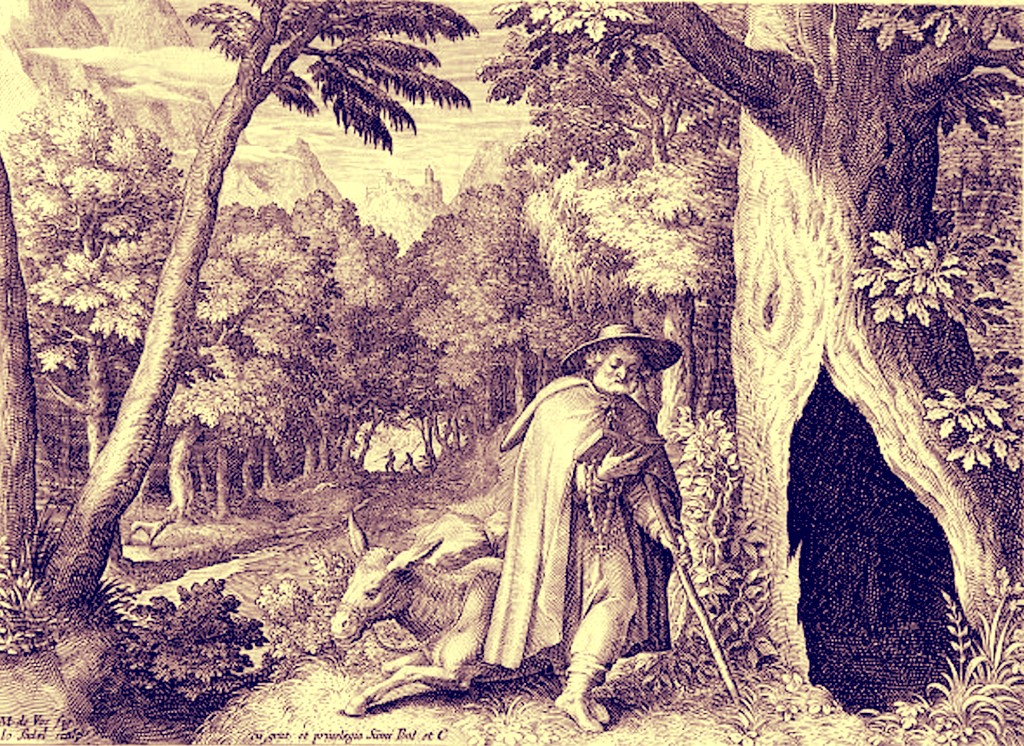
Blessed Bernard (Died 1182) Penitent, Pilgrim, Hermit. Patronages – of sinners, convicts, prisoners, penitents, pilgrims. The Roman Martyrology: “At the Monastery of Saint-Bertin in the territory of France in Thérouanne, lies the tomb of Blessed Bernard, penitent, who, eager to atone for the sins of his youth with an austere penitence, voluntarily chose exile and, barefooted, wearing rough garments, was a tireless pilgrim to the holy places.” Dear Blessed Bernard, pray for us!: https://anastpaul.com/2023/04/19/saint-of-the-day-19-april-blessed-bernard-of-sithiu-died-1182-layman-penitent/
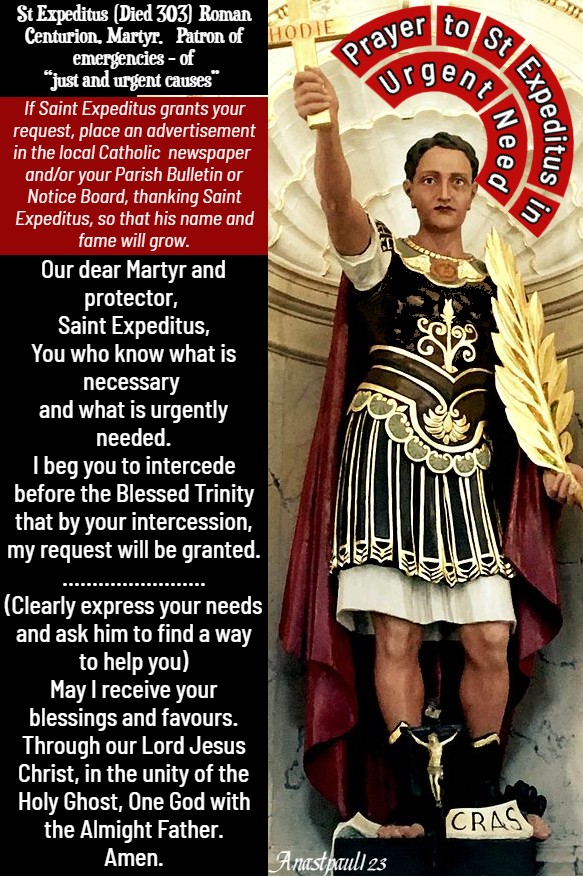
Our dear Martyr and protector, Saint Expeditus, You who know what is necessary and what is urgently needed. I beg you to intercede before the Blessed Trinity that by your intercession, my request will be granted. …………………… (Clearly express your needs and ask him to find a way to help you.) May I receive your blessings and favours. Through our Lord Jesus Christ, in the unity of the Holy Ghost, One God with the Almighty Father. Amen.
If Saint Expeditus grants your request, place an advertisement in the local Catholic newspaper and/or your Parish Bulletin or Notice Board, thanking Saint Expeditus, so that his name and fame will grow
St Gaius of Melitene St Galata of Melitene St George of Antioch
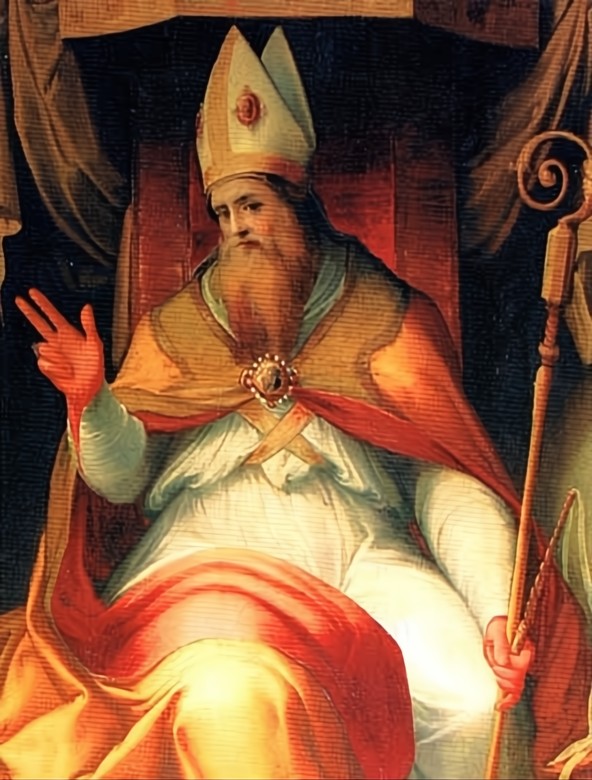
St Pope Leo IX (1002-1054) known as “The Apostolic Pilgrim” When the German Pope Damasus II died in 1048, Bishop Bruno was selected by the Emperor, Henry III, to succeed him. Bruno agreed to go to Rome and to accept the Papacy if freely elected thereto by the Roman people. He wished, at least, to rescue the See of Peter from its servitude to the German Emperors. When, in company with Hildebrand, he reached Rome and presented himself to its people clad in pilgrim’s guise and barefooted but still tall and fair to look upon, they cried out with one voice that him and no other would they have as Pope. Assuming the name of Leo, he was solemnly enthroned on 12 February, 1049. The Apostolic Pilgrim: https://anastpaul.wordpress.com/2018/04/19/saint-of-the-day-19-april-st-pope-leo-ix-1002-1954/
St Martha of Persia St Rufus of Melitene St Timon Deacon Martyr
St Vincent of Collioure
Martyrs of Carthage – 17 Saints: A group of Christians Martyred in the persecutions of Decius. We know little more than the names – Aristo, Basso, Credula, Donato, Ereda, Eremio, Fermo, Fortunata, Fortunio, Frutto, Julia, Mappalicus, Martial, Paul, Venusto, Victorinus and Victor. Died in the year 250 in prison in Carthage, North Africa (modern Tunis, Tunisia).
Tre Ore (The Three Hours Devotion) The Three Hours’ Agony on Good Friday from Noon until 3 o’clock to commemorate the three hours of Christ’s Hanging on the Cross. It includes sermons on the Seven Last Words from the Cross and usually occurs between Noon and 3PM, the latter being the time when Jesus Died on the Cross and the time the Liturgy of the Lord’s Passion begins. In 1815, Pope Pius VII decreed a Plenary Indulgence to those who practice this devotion on Good Friday.
It is a fine tradition to keep silent from Noon to 3:00 PM today.
St Gebuinus of Lyons St Genocus St Hermogenes of Melitene
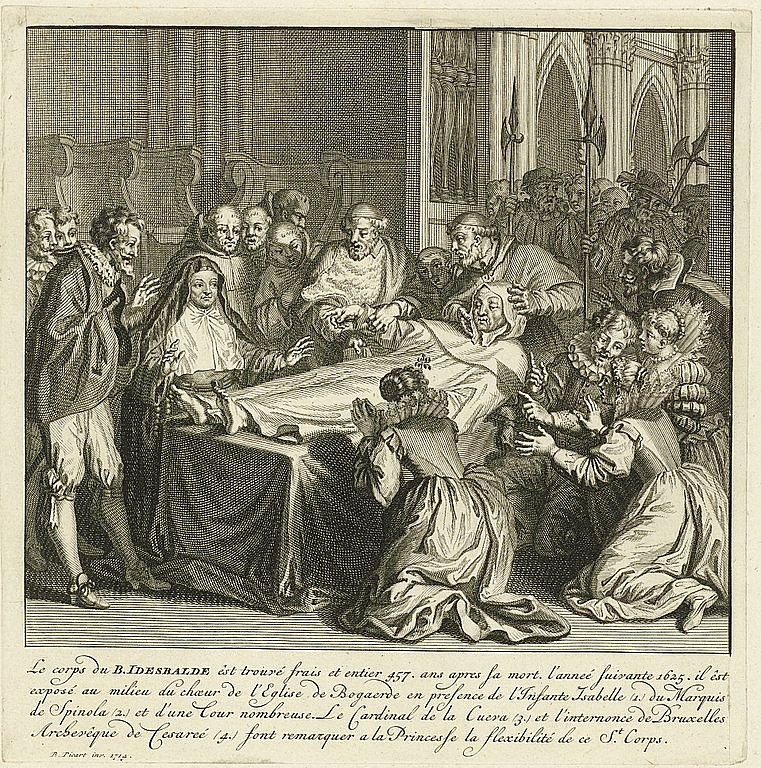
Blessed Idesbald O.Cist (c1095-1167) Cistercian Priest and Abbot of Ten Duinen Abbey, Our Lady of the Dunes. The Roman Martyrology states: “In Bruges in Flanders, in today’s Belgium, Blessed Idesbald, Abbot, who, soon became a widower and exercised for another thirty years, duties in the palace of the Counts, entered the Monastery of Dune at a mature age, which he held holy, as the third Abbot for twelve years.” His Body is Incorrupt. His Life of Grace: https://anastpaul.com/2021/04/18/saint-of-the-day-18-april-blessed-idesbald-of-dunes-o-cist-c-1095-1167/
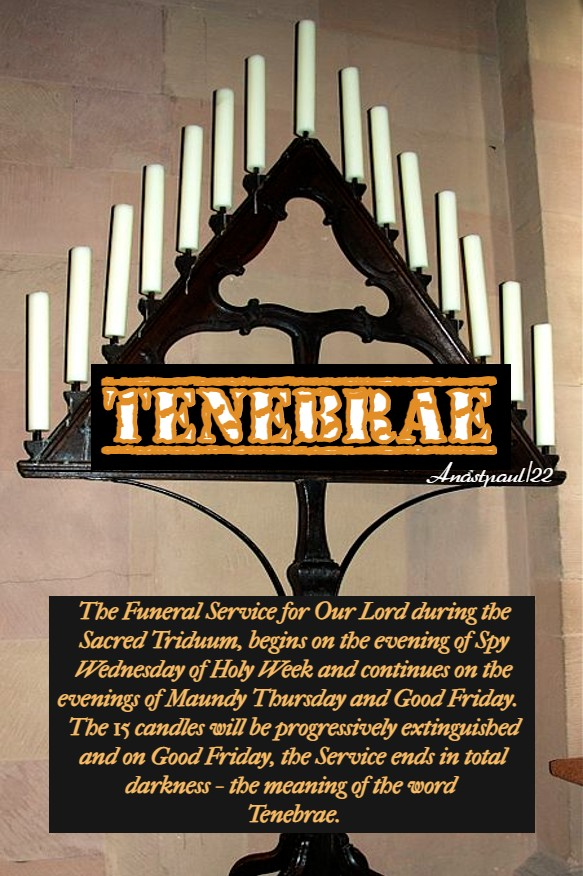
The Office of Tenebrae The public singing of part of the Divine Office, on Wednesday, Thursday and Friday evenings in Holy Week, anticipating Matins and Lauds of Holy Thursday, Good Friday and Holy Saturday. This custom goes back centuries and acquired the name because of the mourning ritual surrounding the ceremony which includes a triangular candlabra bearing fifteen candles. These are extinguishedt one by one until, after the last candle is extinguished, a prayer is said in darkness, one candle is lit and the assembly dispersed in silence.
St Benedict Joseph Labre – Known as the Beggar of Perpetual Adoration (1748-1783) Lay Penitent and Pilgrim – he “abandoned his country, his parents and whatever is flattering in the world, to lead a new sort of life, a life most painful, most penitential, not in a wilderness, nor in a cloister but in the midst of the world, devoutly visiting as a pilgrim the famous places of Christian devotion.” Canonised by Pope Leo XIII on 8 December 1881. Dearest St Benedict Joseph: https://anastpaul.wordpress.com/2017/04/16/saint-of-the-day-16-april-st-benedict-joseph-labre/
Blessed Arcangelo Canetoli (1460-1513) Priest and Canon of the Canons Regular of the Congregation of the Most Holy Saviour at Bologna, Mystic gifted with the charism of prophecy and of many visions of the Blessed Virgin, Born in 1460 in Bologna, Italy and died on 16 April 1513 (aged 53) in Gubbio, Italy of natural causes. His body is incorrupt. Arcangelo was Beatified on 2 October 1748 by Pope Benedict XIV. Holy Arcangelo: https://anastpaul.com/2023/04/16/saint-of-the-day-16-april-blessed-arcangelo-canetoli-crssb-1460-1513-priest/
St Turibius (c402-c460) Bishop of Astorga in Spain, Hermit, Monk, Defender of the Faith against heresy, in particular, the heresy of Priscilian., Miracle-worker. Born in Astorga, Spain in c402 and died there in c460 of natural causes. Patronages – Diocese of Palencia, Diocese of Santander, Diocese of Astorga, all in Spain. The Roman Martyrology reads: “At Palencia, St Turibius, the Bishop of Astorga, Spain, who with the aid of Pope St Leo the Great, drove the heresy of Priscilian entirely out of Spain and, went to rest in the Lord with a great renown for miracles.” Zealous and Miraculous St Turibius: https://anastpaul.com/2024/04/16/saint-of-the-day-16-april-saint-turibius-of-astorga-c402-c460-bishop/
St Vaise Blessed William Gnoffi (1256-1317) Hermit
Martyrs of Corinth – 9 Saints: A group of nine Christians who were tortured and Martyred together in the persecutions of Decius. We know little more than three of their names – Callistus, Charisius and Leonide. They were thrown into the sea at Corinth, Greece c250.
Martyrs of Saragossa: Group of 18 Martyrs murdered in 304 in Saragossa, Spain in the persecutions of Diocletian and the prefect Dacean. We know little more than the names – Apodemus, Caecilian, Caius, Crementius, Engratia, Eventius, Felix, Fronto, Gaius, Julia, Lambert, Lupercus, Martial, Optatus, Primitivus, Publius, Quintilian, Saturnius (4 men of this name), Succesus and Urban. Their graves re-discovered in 1389 in the crypt under the Church of San Encrazia in Saragossa.
St Hermengild (Died 585) Martyr, Confessor, King. The Roman Martyrology reads: “At Seville in Spain, St Hermenegild, son of Leovigild, Arian King of the Visigoths, who was incarcerated for the confession of the Catholic Faith. By order of his wicked father, he was beheaded because he had refused to receive communion from an Arian Bishop, on the Paschal Solemnity and thus exchanging an earthly for a heavenly Kingdom, he entered the abode of the blessed, both as a King and as a Martyr.” His Life and Death: https://anastpaul.com/2023/04/13/saint-of-the-day-13-april-st-hermenegild-died-585-martyr-confessor/
St Carpus of Pergamus Bl Edward Catherick Bl Francis Dickenson St Guinoc
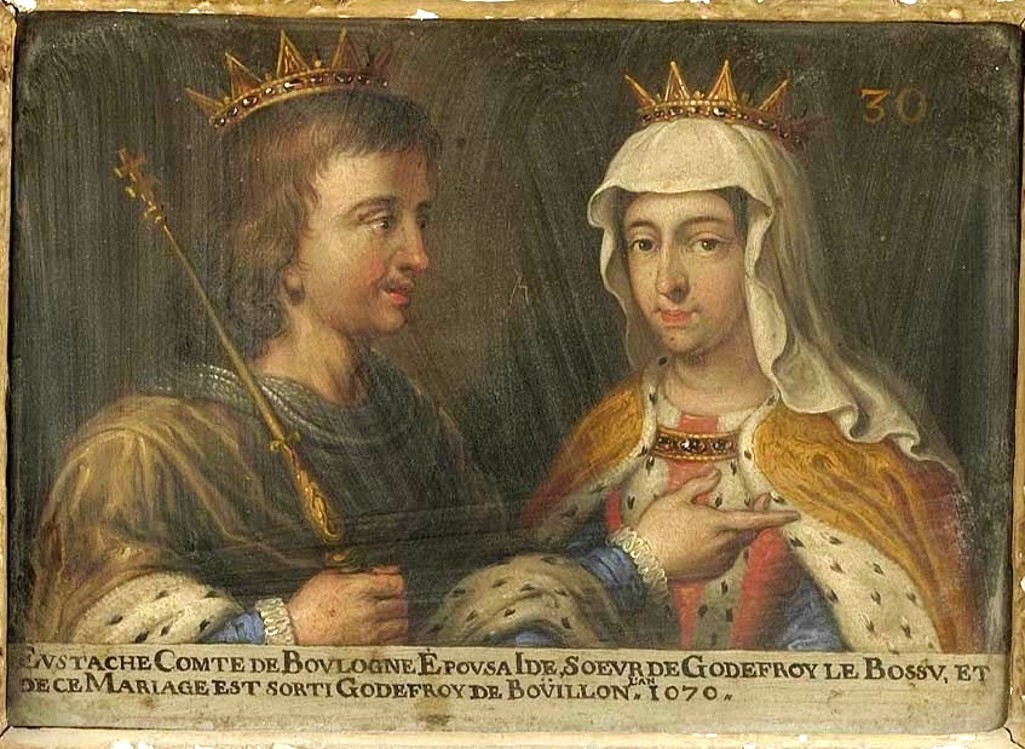
St Ida of Boulogne (c1040-1113) Widow, Countess, Apostle of charrity to the poor and needy, a lady of pious devotion and love for the Church to which she extended donations and assistance wherever needed. She supported and became a friend and correspondent of St Anselm of Canterbury who was deeply involved in the Cluniac reform in France. Born in c1040 in Ardennes, France and died on 13 April 1113 of natural causes. Patronage – of widows. Devoted St Ida: https://anastpaul.com/2024/04/13/saint-of-the-day-13-april-saint-ida-of-boulogne-c1040-1113/
Bl Ida of Louvain Bl James of Certaldo Bl John Lockwood
Blessed Margaret of Castello OP (1287-1320) Italian professed member of the Third Order of the Order of Preachers of St Dominic. Margaret was disabled and became known for her deep faith and holiness. Her body is incorrupt. Beatified on 19 October 1609 by Pope Paul V (concession of indult for Mass and Office). About Blessed Margaret: https://anastpaul.wordpress.com/2018/04/13/saint-of-the-day-13-april-blessed-margaret-of-castello-o-p-1287-1320/
St Martius of Auvergne Bl Miles Gerard St Papylus of Pergamus St Proculus of Terni St Ursus (Died c425) Bishop of Ravenna
Martyrs of Dorostorum – 3 Saints: A lector and two students Martyred together in the persecutions of Diocletian – Dadas, Maximus and Quinctillianus. Beheaded c303 in Dorostorum, Lower Mysia (modern Sillistria, Bulgaria.
St Albert of Tournai Bl Alexander Rawlins St Brenach of Carn-Engyle St Calliopus of Pompeiopolis Bl Cristoforo Amerio St Cyriaca of Nicomedia St Donatus of North Africa
St Epiphanius the Martyr St Finian of Kinnitty St George the Younger St Gibardus of Luxeuil St Goran St Guainerth
St Hegesippus (c110-c180) Ancient Christian Writer. The Roman Martyrology reads: “St Hegesippus, who lived near the time of the Apostles, He came to Rome whilst Anicetus was the Sovereign Pontiff and remained until the accession of Eleutherius. He wrote the history of the Church in a simple style, from the Passion of our Lord, to his own time and, delineated, in his narrative, the character of those whose lives he imitated.” https://anastpaul.com/2024/04/07/saint-of-the-day-7-april-saint-hegesippus-c110-c180-lay-ancient-christian-writer/
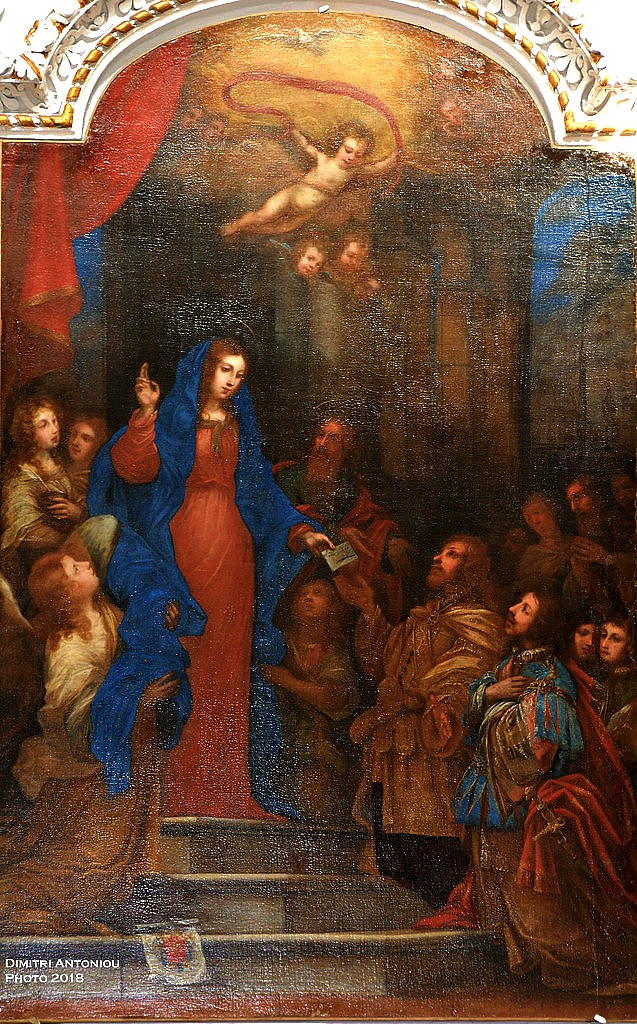
Saint Hermann Joseph O.Praem (c1150-1241) Priest, Friar of the Order of of Canons Regular of Prémontré (the Norbertines or White Canons), Mystic, a prolific writer on spiritual subjects and the Sacred Scriptures, known as “The Boy who Played with Angels.” Patronages – watch and clockmakers, children and young students, Altar boys, Acolytes, Sextons and Sacristans, expectant mothers and safe childbirth. This beautiful painting below by Sir Antony van Dyck, shows Mother Mary receiving an apple from Hermann, to give to Baby Jesus. His Holy Life: https://anastpaul.com/2023/04/07/saint-of-the-day-7-april-saint-hermann-joseph-o-praem-c1150-1241-priest/
Sir Antony van Dyck – The Vision of St Hermann Joseph
Blessed Maria Assunta Pallotta (1878-1905) Virgin, Italian professed Religious who served as a member of the Franciscan Missionaries of Mary, Missionary to China. Patronages – Missionaries, against typhus. Blessed Maria Assunta was Beatified on 7 November 1954 by Pope Pius XII. Her body is incorrupt. About Bl Maria Assunta: https://anastpaul.com/2019/04/07/saint-of-the-day-7-april-blessed-maria-assunta-pallotta-1878-1905/
St Peleusius of Alexandria Blessed Ralph Ashley (Died 1607) SJ Lay Brother,Martyr St Rufinus the Martyr St Saturninus of Verona Bishop and Confessor Bl Ursuline of Parma
Martyrs of Pentapolis – 4 Saints: A Bishop, Deacon and two Lectors at Pentapolis, Lydia who for their faith were tortured, had their tongues cut out, and were left for dead. They survived and each died years later of natural causes; however, because they were willing to die and because there were attempts to kill them, they are considered martyrs. We know little else except their names – Ammonius, Irenaeus, Serapion and Theodore c 310 at Pentapolis, Lybia.
Martyrs of Sinope – 200 Saints: 200 Christian soldiers Martyred together for their faith. We don’t even have their names. They were martyred in Sinope, Pontus, Asia Minor (in modern Turkey).
St Irene of Thessalonica St Maria Crescentia Hoss St Pausilippus Bl Peter Cerdan St Theodore the Martyr
Martyrs of Lesbos: 5 Saints: Five young Christian women Martyred together for their faith. We don’t even know their names. island of Lesbos, Greece.
Martyrs of North-West Africa: Large group of Christians murdered while celebrating Easter Mass during the persecutions of Genseric, the Arian king of the Vandals. They were Martyred in 459 at Arbal (in modern Algeria).
Martyrs of Seleucia: 120 Saints :One-hundred and eleven (111) men and nine (9) women who, because they were Christians, were dragged to Seleucia and Martyred for refusing to worship the sun or fire or other pagan idols during the persecutions of King Shapur II. They were burned alive in 344 in Seleucia, Persia.
St Benedict of Palermo OFM (1526-1589) Lay Friar of the Order of Friars Minor of the Observance, Confessor, spiritual counsellor, Apostle of the poor and needy, graced with the gift of healing the sick. St Benedict’s gifts for prayer, his love for the Blessed Virgin and the Infant Jesus and the wisdom displayed in his guidance of souls, earned him, a reputation for holiness, throughout Sicily. Following the example of St Francis, Benedict kept seven 40-day fasts throughout the year. He also slept only a few hours each night. His body is incorrupt. Kind and Holy Benedict: https://anastpaul.com/2023/04/03/saint-of-the-day-3-april-st-benedict-of-palermo-ofm-1526-1589-lay-friar/
St Burgundofara / more commonly known as Fara (c595-c 643) Virgin, Nun, Abbess, Founder of the famous Evoriacum Monastery, near Paris which after her death was renamed in her honour, Faremoutiers Abbey (Fara’s Monastery). She is celebrated on 7 December in France. Her Pious and Zealous Life: https://anastpaul.com/2022/12/07/saint-of-the-day-7-december-st-burgundofara-c-595-c-643-virgin/
St Chrestus St Comman St Evagrius of Tomi
Blessed Gandulphus OFM (c1200-1260) Priest, Friar of the First Order of St Francis. He was a renowned Preacher mainly in Sicily, Hermit, Miracle-worker . He was one of those who entered the Order while the Seraphic Father was still alive and the life he led was one of great self-abnegation. He was Beatified on 10 March 1881 by Pope Leo XIII. Biography: https://anastpaul.com/2022/04/03/saint-of-the-day-3-april-blessed-gandulphus-of-binasco-ofm-c-1200-1260/
Martyrs of Greece – 4 Saints: A group of young Christian men who protested to City authorities that gifts to temples of pagan gods should be used to feed the poor during a regional famine. When the officials refused, the group went to local temples, broke up the idols and fixtures and gave the gold and silver bits to the poor to use to buy food. The group was imprisoned and executed. The only other thing we know about these Martyrs are the names – Bythonius, Elpideforus, Dius and Galycus. They Died in the 3rd Century at an unknown location in Greece.
Martyrs of Tomi (Romania) – 9 Saints who were Martyred together. We know nothing else about them but the names – Arestus, Benignus, Chrestus, Evagrius, Papo, Patricius, Rufus, Sinnidia and Zosimus. They Died at Tomi, Scythia (modern Constanta, Romania).
Blessed Clement of Dunblane (1200-1258) Bishop of Dunblane in Scotland, , Priest and Friar of the Order of Preachers, a great and humble carer of the poor and needy, a zealous Administrator but just as much, a shepherd of souls, Reformer, Writer, a highly renowned Preacher and Linguist, a very learned man indeed. Clement was the first member of the Dominican Order in Britain and Ireland to become a Bishop. Born in Scotland in 1200 and died in 1258 in Dunblane, Scotland of natural causes. An Inspiring Life: https://anastpaul.com/2023/03/19/saint-of-the-day-19-march-blessed-clement-of-dunblane-op-1200-1258-bishop/
St Colocer of Saint-Brieuc St Corbasius of Quimperlé St Cuthbert of Brittany St Gemus
Blessed John of Parma OFM (c1209-1289) Priest, 7th Minister General of the Friars Minorfrom (1247–1257) and a noted Theologian. He was known for his attempts to bring back the earlier spirit of the Order after the death of Saint Francis of Assisi. Patronage – of his birthplace, Parma, Italy. His cult was confirmed in 1777 by his Beatification by Pope Pius VI. Blessed John’s Zealous Life: https://anastpaul.com/2024/03/19/saint-of-the-day-19-march-blessed-john-of-parma-ofm-c1209-1289-priest/
St John (6th Century) Abbot in Umbria, Italy St Lactali of Freshford St Landoald of Maastricht St Leontinus of Braga St Leontinus of Saintes Bl Mark of Montegallo St Pancharius of Nicomedia
Martyrs of Sorrento: A group of Three sisters and a brother who were Martyred together. We have little more than their names – Mark, Quartilla, Quintilla and Quintius. They were Martyred in Sorrento, Italy, date unknown.
Martyrs of Nicomedia – Commemorates the Christians who were Martyred anonymously, either singly and in small groups, by local pagans in the area of Nicomedia prior to the year 300 and who may have been over-looked in the waves of Diocletian persecutions that resulted in the deaths of thousands.
St Catherine de Ricci OP (1522-1590) Virgin, Tertiary of the Order of Preachers, Mystic, Stigmatist, Ecstatic, Counsellor to many in both secular and spiritual matters, a highly admired Administrator and Advisor,blessed with many mystical charism including visions of Christ, both as a Baby and Adult, bilocation and miracles. Her body is Incorrupt. A Mighty Handmaid: https://anastpaul.com/2022/02/13/saint-of-the-day-13-february-saint-catherine-de-ricci-op-1522-1590/
Bl Anthony Manzoni St Asclepiades St Autbert of Landevenec St Brigid of Fiesole St Cecilius of Granada St Cinnia of Ulster St Clarus of Seligenstadt St Crewenna St Darlaugdach of Kildare St Henry Morse St Jarlath Bl John of the Grating St Kinnia St Paul of Trois-Châteaux St Raymond of Fitero
St Agnes of Aislinger St Anastasius of Constantinople St Aquila of Trebizond St Candidus of Trebizond Bl Edward Stransham
St Epiphanius of Pavia (c 439–496) Bishop of Pavia, Italy from from 466 until his death. Papal and Secular Mediator and Peacemaker, Known as – “Epiphanius the Peacemaker,” “The Glory of Italy,” “The Light of Bishops.” The Roman Martyrology for 21 January reads : “In Pavia, Saint Epifanio, Bishop , who, at the time of the barbarian invasions, worked zealously for the reconciliation of the peoples, for the liberation of prisoners and for the reconstruction of the destroyed City.” Biography: https://anastpaul.com/2022/01/21/saint-of-the-day-21-january-saint-epiphanius-of-pavia-439-496/
St Eugenius of Trebizond Blessed Walter [Gautier] of Bruges OFM (c1225-1307) Bishop St Gunthildis of Biblisheim
Blessed Josefa María Inés de Benigánim OAD (1625–1696) Nun of the Discalced Augustinian Nuns with the religious name of “Josefa María of Saint Agnes,” Virgin, Mystic, gifted with the charism of prophecy and counsel. She became known for her profound spiritual and theological insight as well as for her severe austerities she practised during her life. Her body is Incorrupt. Blessed Josefa was Beatified on 26 February 1888, at Saint Peter’s Basilica by Pope Leo XIII. Biography: https://anastpaul.com/2020/01/21/saint-of-the-day-21-january-blessed-josefa-maria-ines-de-beniganim-oad-1625-1696/
St Lawdog St Maccallin of Waulsort
St Meinrad of Einsiedeln OSB (c 797–861) “Martyr of Hospitality,” Martyr, Priest, Monk, Hermit. In 1039, the year of Meinrad’s Canonisation as a Saint, his remains were brought back to Einsiedeln. During the French Revolution, Meinrad’s relics were hidden at Tyrol, Austria, by Abbot Conrad Tanner and his reliquary is now enshrined in the Grace Chapel of the Abbey Church at Einsiedeln. St Meinrad’s Life and Death: https://anastpaul.com/2021/01/21/saint-of-the-day-21-january-saint-meinrad-of-einsiedeln-osb-c-797-861-martyr/
St Patroclus of Troyes
St Publius of Athens (2nd Century) Bishop and Martyr. Died around 112. (Not to be confused with St Publius of Malta who is remembered on 22 January). The Roman Martyrology reads today: “At Athens, the birthday of St Publius, Bishop, who as successor of St Denis (Dionysius) the Areopagite, nobly governed the Church at Athens. No less celebrated for the lustre of his virtues than for the brilliance of his learning, he was gloriously crowned for having borne testimony to Christ.” His Life and Death: https://anastpaul.com/2024/01/21/saint-of-the-day-21-january-st-publius-of-athens-2nd-century-bishop-and-
St Valerian of Trebizond St Vimin of Holywood St Zacharias the Angelic
Blessed Martyrs of Laval – 19 Beati: Fifteen men and four women who were Martyred in Laval, France by anti-Catholic French Revolutionaries. The were born in France and they were Martyred on several dates in 1794 in Laval, Mayenne, France. They were Beatified on 19 June 1955 by Pope Pius XII at Rome, Italy.
Martyrs of Rome – 30 Saints: Thirty Christian soldiers executed together in the persecutions of Diocletian. They were Martyred in 304 in Rome, Italy.
Martyrs of Tarragona: Augurius, Eulogius, Fructuosus.
Saint of the Day – 12 January – Blessed Lucia (1370-1430) Consecrated Virgin, Founder of a Community of Nuns known as the “Poor Sisters of St Chiara” adopting the original Rule of St Clare of Assisi. Born in 1370 in Norcia, Perugia, Umbria, Italy and died on 12 January 1430 of natural causes at her Convent in Valcaldara di Norcia. Patronage – of Valcaldara. Also known as – Lucia of Norcia and Lucia of Valcaldara di Norcia.Her body is Incorrupt.
Lucia, born into a wealthy family in Norcia, consecrated herself totally to the Lord when she was only fifteen years old. With seven companions, she founded a religious Community which took up residence in her father’s house. Their choice of life was a great example to the entire City and on 28 January 1386 the City Council decided to help them. Previously, the Patriarch of Jerusalem, Ferdinand, administrator of the Diocese of Spoleto-Norcia (1370-1390), had recognised them as a valid Community, naming the Convent after Saint Jerome.
In 1390, Lucia founded another Convent and the Church of Santa Maria in Valcaldara (a hamlet of Norcia). With her companions she submitted to the Bishop’s obedience, “they wore ash and eremitic habits, lived a community life and observed the evangelical norm, not professing for many years any Rule approved by the Church”. In 1407 the two Convents united, with the approval of Bishop Augustine, giving life to the Convent of St Chiara. They called themselves the “Poor Sisters of St Chiara” expressing their desire to follow her Rule, although they could not officially observe it as it had been replaced by the Rule of Urban IV.
Lucia died in Valcaldara on 12 January 1430 and was immediately venerated and invoked as a Saint. Her body, still incorrupt today, kept in its shrine of 1637, is exhibited in the Church of the Poor Clares of Santa Maria della Pace, the nametaken by the Convent took after the earthquake of 1703. In Valcaldara, the celebrations in honour of their Patron Saint are solemnly celebrated with great festivities.
St Caesaria of Arles St Caroticus Bl Emmanuel d’Abreu St Eutropius St Ferreolus of Grenoble Bishop Martyr Bl John Gaspard Cratz St John of Ravenna Blessed Lucia (1370-1430) Virgin. Her Body is Incorrupt. St Martinian of Belozersk St Peter of Abessala St Probus of Verona St Quinctus the Soldier St Satyrus
St Tatiana of Rome (Died c 226) Virgin, Martyr. Patronage – students, school children. The Roman Martyrology reads today: “At Rome in the time of the Emperor Alexander, St Tatiana, Martyr who was torn with iron hooks and combs, thrown to the beasts and cast into the fire but, having received no injury, was beheaded and thus, went to Heaven.” Her Life and Death: https://anastpaul.com/2023/01/12/saint-of-the-day-12-january-saint-tatiana-of-rome-died-c-226-virgin-martyr/
St Tigrius St Victorian of Asana Bl Vincent da Cunha
Martyrs of Africa – 44 Saints: A group of 44 Christian soldiers murdered together for their faith in Africa. The only details that survive are four of their names – Castulus, Modestus, Rogatus and Zoticus.
Martyrs of Ephesus – 42 Saints: Forty-two Monks Martyred at a Monastery in Ephesus (modern Turkey) during the persecutions of the Iconoclast Byzantine Emperor Constantine V. Their names have not come down to us. Martyred c 762.
Martyrs of Iona – 38 Saints: Thirty-eight Monks Martyred in Iona, Ireland. Their names have not come down to us. They were Martyred in 750 at Iona, Ireland.
Saint of the Day – 10 January – Blessed Giles of Lorenzana OFM (1443-1518) Lay Brother of the Friars Minor, Hermit, Ascetic, Mystic, Apostle of the all in need. Born in 1443 in Laurenzana, Italy as Bernardin de Bello and died on 10 January 1518 in Laurenzana, Italy of natural causes. Patronage – of the City and Diocese of Laurenzana, Italy. Also known as – Giles di Bello, Bernardi … Bernardin … Egidi … Egidius … Blessed Giles was Beatified on 27 June 1880 by Pope Leo XIII. His body is Incorrupt.
Born of pious parents at Lorenzana in Italy, Giles received the name of Bernardine in Baptism. Even as a youth he received the gift of devotion in so eminent a degree that at prayer, his countenance glowed with fervour and he was often seen raised a foot or more from the floor. This attracted general attention and people came from the surrounding places in order to witness Giles at prayer.
The devout young man, however, desired nothing more than to serve God in seclusion. In order, therefore, to withdraw from the attention of the world and also, to progress in Christian perfection, he asked for admission as a Lay Brother at the Convent of the Friars Minor. This request was granted. He was given the name Giles after the saintly Brother Giles, one of the first companions of St Francis of Assisi.
Burning with love for God, Giles knew no greater joy in the Order than to devote himself to the contemplation of heavenly things and, since his superiors were convinced that he was doing great things for the honour of God and the salvation of souls, they permitted him to live in a hermitage close to the Convent.
Here he lived only for God, to Whom he sacrificed his body by severe fasting, and his soul by constant prayer. He overcame the attacks of hell which, like many other great Saints, he had frequently to endure, without ever yielding, for an instant. When he had finished his course, God called him to the eternal union on 10 January 1518.
The Convent bells rang by themselves when Giles of Lorenzana died and a very great concourse of people flocked to venerate him. Many miracles occurred at his grave. Several years after his death his body was found still perfect and Incorrupt, although he had been buried in a very damp place which should have promoted decay. The veneration which had been accorded to him since time immemorial was approved by Pope Leo XIII.
Even today, the cult of Blessed Egidio is very much alive among the people of the central-northern area of Basilicata.
Saint of the Day – 9 January – Blessed Antony Fatati (c1410-1484) Bishop, holding many illustrious Papal appointments for a few Popes in succession. Blessed Antony was austere to himself but generous towards the poor. As the long-serving Bishop of Teramo and then of Ancona, Antony displayed the perfect example of a zealous and loving shepherd. Born in c1410 in Ancona, in the Marches, Italy and died there on 9 January 1484 of natural causes, aged around 74 years. Additional Memorial – 2 September in Ancona. Blessed Antony was Beatified by Pope Pius VI on 9 May 1795. Also known as – Anthony of Teramo, Anthony of Ancona, Antoine… Antonio… His Body is Incorrupt.
Blessed Antony Fatati was born in Ancona to a noble family. He studied in Bologna, Italy and, after Ordination, was appointed a Canon and vicar of the Vatican Chapter of St Peter’s Basilica.
He was then appointed as a senior Chaplain and Cleric of the Apostolic Camera (Treasury) in the Roman Curia, the General Treasurer of the Marches and Vicar General of that Province.
In 1450 he was elected to the Episcopal See of Teramo and, in 1463, of Ancona. In between these elections, in 1456, the King of Naples Alfonso V of Aragon, became so impressed with Antony, the King asked him to be one of his Councilors.
In his long and fruitful pastoral activity, Blessed Antony distinguished himself for his prudence, equanimity, austerity and generosity. He was a shepherd attentive to the needs of his people, whom he guided with wisdom and firmness. He worked to promote charity and social justice and to defend the Catholic Faith.
He was also a man of great culture and profound devotion and piety, devoting himself to prayer and meditation and was an example of Christian life for all who knew him.
Blessed Antony died in his Diocese on 9 January 1484. He was interred in the Diocesan Cathedral. In 1529 his body were found incorrupt after their exhumation. In 1795 a new sarcophagus was commissioned in order to display Blessed Antony’s Incorrupt body for the veneration of the faithful.
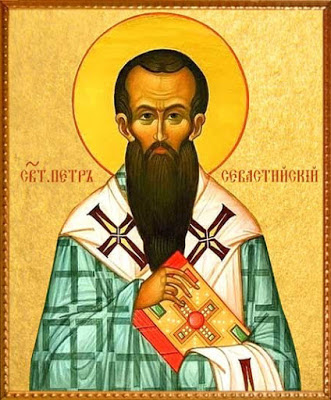
St Peter of Sebaste (c340-c391) Bishop of Sebaste in Lesser Armenia. Member of the glorious family of Saints – He was the younger brother of Basil the Great, Gregory of Nyssa, the famous Christian Hermit Naucratius and Macrina the Younger and a close friend of Gregory of Nazianzen, all Saints. Of course, Basil and Gregory of Nazianzen are both Doctors too. St Pete‘r’s Biography: https://anastpaul.com/2021/01/09/saint-of-the-day-9-january-st-peter-of-sebaste-c-340-c-391-bishop/
Blessed Antony Fatati (c1410-1484) Bishop. His Body is Incorrupt. St Brithwald of Canterbury St Eustratius of Olympus Bl Franciscus Yi Bo-Hyeon St Honorius of Buzancais
St Marcellinus of Ancona (Died c577) The 5th Bishop of Ancona, Italy. Patronages – against fire (a raging fire ceased by St Marcellinus waving his prayer book at it; the book survived the fire with only slight damage; afterwards, people who touched it, while praying, were cured of ailments), of Ancona, Italy. The Roman Martyrology reads: “At Ancona, St Marcellinus, Bishop, who, according to St Gregory the Great, miraculously delivered that City from destruction by fire.” Holy Marcellinus: https://anastpaul.com/2024/01/09/saint-of-the-day-9-january-saint-marcellinus-of-ancona-died-c577-bishop/
St Marciana Bl Martinus In Eon-min St Maurontius St Nearchus St Paschasia of Dijon St Philip Berruyer St Polyeucte
Martyrs of Africa – 21 Saints: A group of 21 Christians murdered together for their faith in the persecutions of Decius. The only details to survive are 14 of their names – Artaxes, Epictetus, Felicitas, Felix, Fortunatus, Jucundus, Pictus, Quietus, Quinctus, Rusticus, Secundus, Sillus, Vincent and Vitalis. They were Martyred in c 250.
Martyrs of Antioch – 6 Saints: A group of Christians Martyred together during the persecutions of Diocletian – Anastasius, Anthony, Basilissa, Celsus, Julian and Marcionilla.
The Epiphany of the Lord Epiphany celebrates the visit of the three Kings or Magi (Wise Men) to the Christ Child, signifying the extension of salvation to the Gentiles. The date of Epiphany, one of the oldest Christian Feasts, is 6 January, the 12th day after Christmas. However, in some countries, the celebration of Epiphany is transferred to the Sunday which falls between 2 January and 8 January (inclusive). Greece, Ireland, Italy and Poland continue to observe Epiphany on 6 January as do traditional Catholics throughout the world. Because Epiphany is one of the most important Feasts, it is a Holy Day of Obligation.
Saint Caspar, Saint Melchior and Saint Balthasar (1st Century) otherwise known as the Three Wise Men/Kings or the Magi – they are all Martyrs. Patronages – against epilepsy/of epileptics, against thunder, furriers, motorists, pilgrims, playing card manufacturers, sawmill workers, travellers, travelling merchants, Cologne, Germany, Saxony. Additional Memorials – 23 July (translation of Relics); 24 July (Cologne, Germany where their Relics lie). Their Lives and Deaths: https://anastpaul.com/2024/01/06/saints-of-the-day-6-january-saint-caspar-saint-melchior-and-saint-balthasar-1st-century-martyrs/
St Charles of Sezze OFM (1613-1670) Stigmatist, Friar, of the Friars Minor, Mystic, Writer, Advisor. His Beatification was celebrated in 1882 while Pope Pius XII approved his Canonisation in 1958 but the Pope died before he could Canonise the Friar so his successor, Pope John XXIII did so on 12 April 1959. His body is incorrupt. About St Charles: https://anastpaul.wordpress.com/2018/01/06/saint-of-the-day-6-january-st-charles-of-sezze-o-f-m-1613-1670/
St Demetrius of Philadelphia St Diman Dubh of Connor St Edeyrn St Eigrad St Erminold of Prüfening
St Julian of Antinoë St Julius Bl Luc of Roucy Bl Macarius the Scot St Macra of Rheims St Merinus
St Melaine of Rennes (Died 530) Bishop of Rennes in Brittany, France, Confessor, previously a Monk and Abbot, Royal Advisor, Miracle-worker. The Roman Martyrology reds: “At Rennes, in France, St Melanius, Bishop and Confessor, who displayed innumerable virtues and with his thoughts ever fixed on Heaven, passed from the world in glory.” Another Feast Day which should be today but was moved in 1969. His Holy Life: https://anastpaul.com/2023/11/06/saint-of-the-day-6-november-saint-melaine-of-rennes-died-c535-bishop-confessor/
St Nilammon of Geris (Died c404) Hermit St Petran of Landévennec
St Pia of Quedlinburg St Pompejanus Bl Raymond de Blanes St Schotin St Wiltrudis of Bergen
Martyrs in Africa: Unknown number of Christian men and women who were Martyred in the persecutions of Septimus Severus. They were burned to death c 210.
Martyrs of Sirmium – 8 Saints: A group of Christians Martyred together for their faith. The only surviving details are the names of eight of them – Anastasius VIII, Florianus, Florus, Jucundus, Peter, Ratites, Tatia and Tilis. They were martyred in the 4th century at Syrmium, Pannonia (modern Sremska Mitrovica, Vojvodina, Serbia).
Twelve Apostles – Saints of Ireland: Twelve 6th Century Irish Monks who studied under Saint Finian at Clonard Abbey and then spread the Faith throughout Ireland. Each has his own commemoration but on this day, they and their good works are considered and celebrated together. Although Saint Finian is sometimes included, most ancient writers list them as –










































 AnaStpaul
You must be logged in to post a comment.