Saint of the Day – 4 October – Saint Quintius (Died c570) Martyr. He was anative of Paris ad died in c.570 at L’Indrois near Montresor, France. Also known as – Quentin, Quintino.
According to a 13th Century Vita preserved in the Bibliothèque Nationale in Paris, Quintinus, a native of the Paris region, was in the service of Guntram, a nobleman and dignitary at the Court of Clotaire I (Died 561).
Having rejected the obscene advances of his master’s wife, Aza, this vengeful woman decided to get have him murdered. She tasked him with leading horses to the banks of the Indre, where, once there, she had him beheaded by her accomplices. His head was thrown into a fountain and its waters became miraculous.
The tale is highly credible if placed in the historical and still very barbaric context of the 6th Century, where lust and violence were common at Frankish Courts. The obscure author concludes his tale with a violent invective against wicked women, intending to teach a moral lesson.
Quintius had a cult on 4 October as early as the 11th Century in Tours which gradually spread from there throughout the entire region.
St Quintius’ Relics have been preserved in the Cathedral of St Stephen in Meaux since at least the 13th Century. He was venerated in Meaux and Martyred for respecting God’s Commandments and his loyalty to his master.
St Aurea of Paris (Died 666) Virgin, Abbessof Saint Martial Convent in Paris during the reigns of King Dagobert I and King Clovis II which Aurea ruled for 33 years, known as a Miracle-worker both before and after her death. The Roman Martyrology reads: “In Paris, still in France, Saint Aurea, Abbess, whom Saint Eligius placed at the head of a Monastery which he himself founded in this City under the rule of Saint Columba, in which he had gathered three hundred virgins.” Holy St Aurea: https://anastpaul.com/2023/10/04/saint-of-the-day-4-october-saint-aurea-of-paris-died-666-virgin-abbess/
St Berenice St Caius of Corinth St Callisthene of Ephesus St Crispus of Corinth St Damaris of Athens St Diogenes of Milan St Domnina St Hierotheus Bl Julian Majali St Lucius of Alexandria St Peter of Damascus
Martyrs of Alexandria: A group of Christians, men and women, young and old, murdered together for their faith.The only names that have come down to us are the brothers Mark and Marcian.
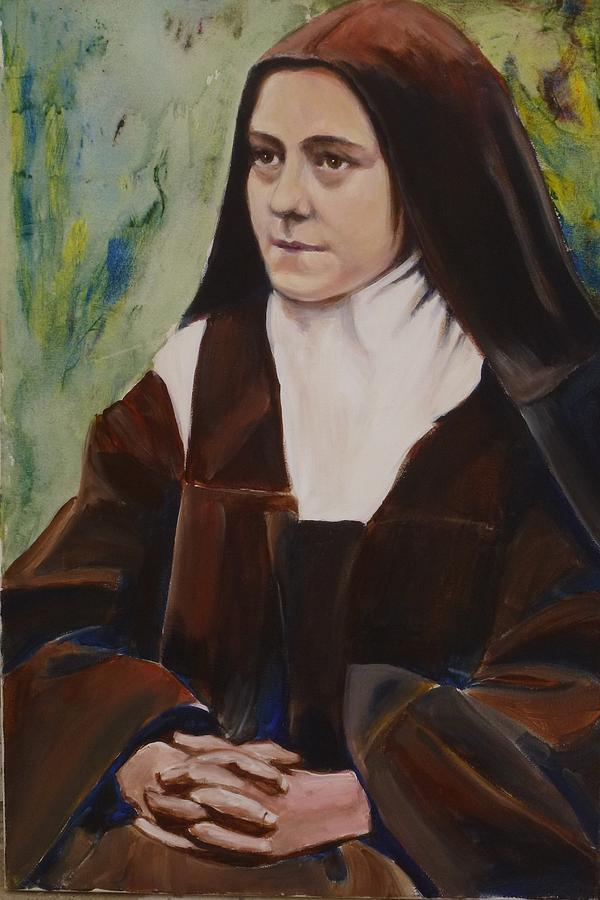
Quote/s of the Day – 3 October – St Thérèse of the Child Jesus (1873–1897)
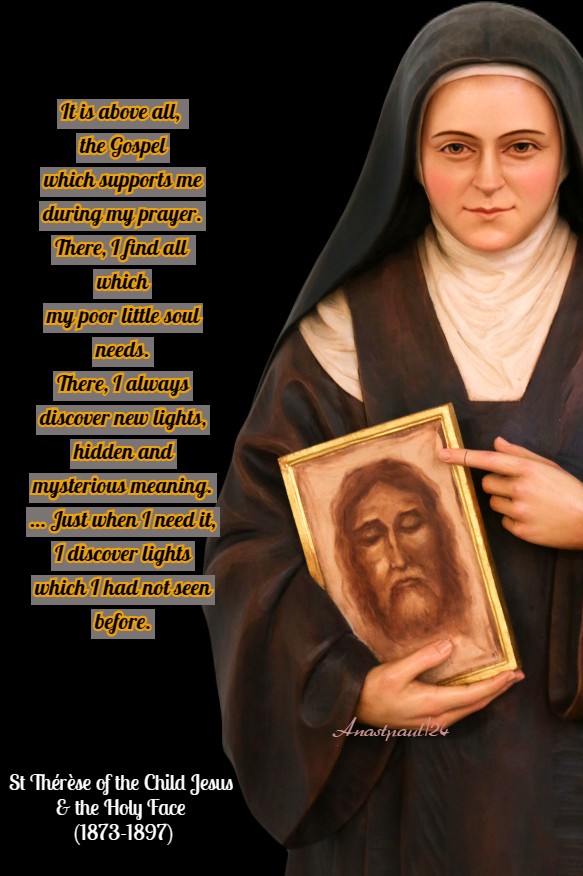
“It is above all, the Gospel which supports me during my prayer. There, I find all which my poor little soul needs. There, I always discover new lights, hidden and mysterious meaning. … Just when I need it, I discover lights which I had not seen before.”)
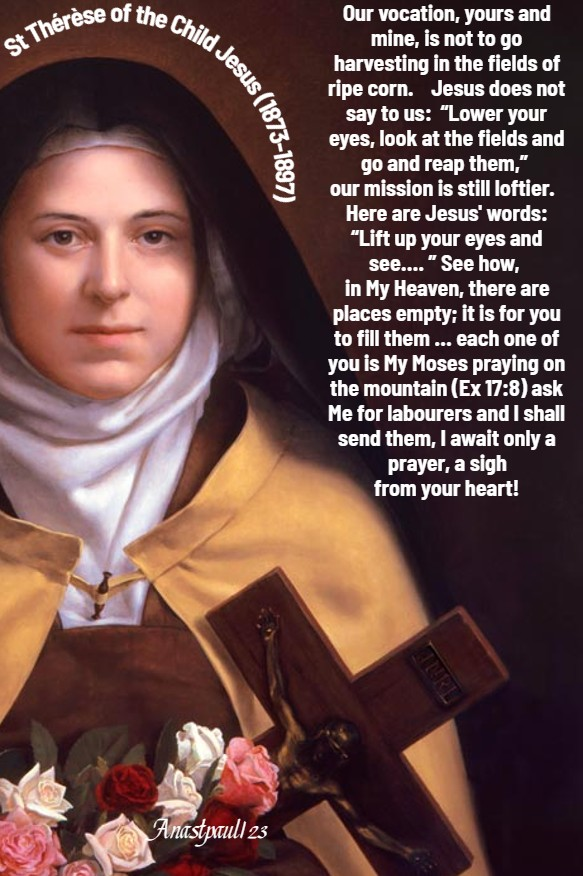
“Our vocation, yours and mine, is not to go harvesting in the fields of ripe corn. Jesus does not say to us: “Lower your eyes, look at the fields and go and reap them,” our mission is still loftier. Here are Jesus’ words: “Lift up your eyes and see…. ” See how, in My Heaven, there are places empty; it is for you to fill them … each one of you is My Moses praying on the mountain (Ex 17:8) ask Me for labourers and I shall send them, I await only a prayer, a sigh from your heart!” ”
O Jesus, Dear Holy Child By St Thérèse of the Child Jesus (1873 – 1897)
O Jesus, dear Holy Child, my only treasure, I abandon myself to Thy every whim. I seek no other joy than that of calling forth Thy sweet Smile. Vouchsafe to me, the graces and the virtues of Thy Holy Childhood, so that, on the day of my birth into Heaven, the Angels and Saints may recognise in Thy Spouse, Thérèse of the Child Jesus. Amen
Lenten Offering By St Thérèse of the Child Jesus and the Holy Face of Lisieux (1873-1897)
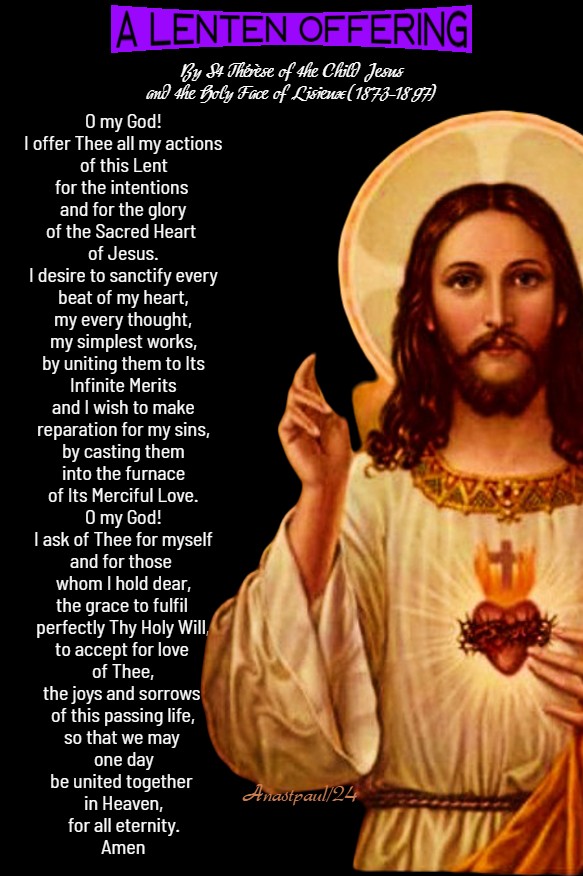
O my God! I offer Thee all my actions of this Lent for the intentions and for the glory of the Sacred Heart of Jesus. I desire to sanctify every beat of my heart, my every thought, my simplest works, by uniting them to Its Infinite Merits and I wish to make reparation for my sins, by casting them into the furnace of Its Merciful Love. O my God! I ask of Thee for myself and for those whom I hold dear, the grace to fulfil perfectly Thy Holy Will, to accept for love of Thee, the joys and sorrows of this passing life, so that we may one day be united together in Heaven, for all eternity. Amen
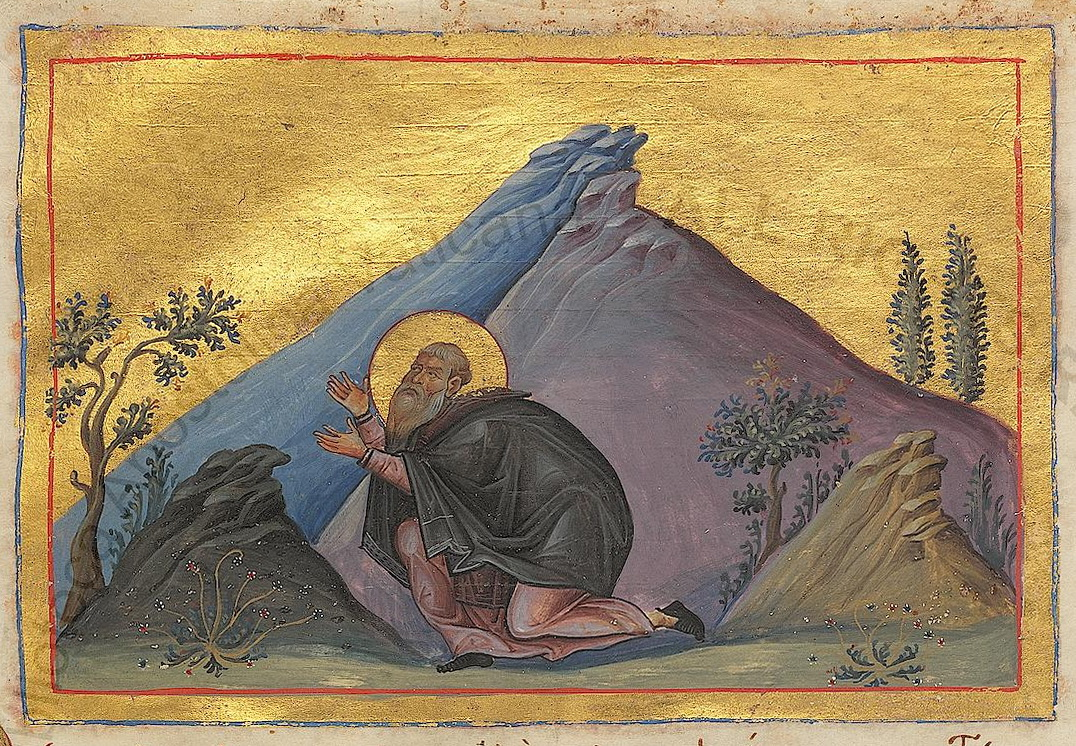
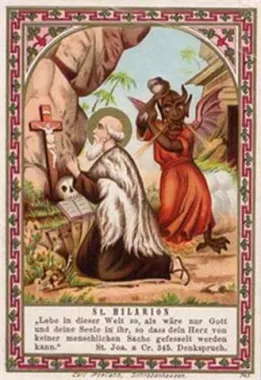
Saint of the Day – 3 October – St Hesychius (Died c381) Confessor and Hermit of Palestine, spiritual student of St Hilarion (c291-371). Also known as – Esichio.Not to be confused with: Saint Hesychius of Jerusalem (Died c450) Priest, Exegete, Scholar, Monk, Hermit, Writer OR: St Hesychius of Jerusalem, who lived a little time after the above Saint and was a contemporary of St Gregory the Great (540-604).
The Roman Martyrology reads today: “In Palestine, St Hesychius, Confessor, disciple of St Hilarion and the companion of his travels,”
According to the Life of Saint Hilarion by Saint Jerome, Hesychius became a Monk between 328 and 354 in Majuma, near the City of Gaza, in Palestine and accompanied his master to Egypt, for the first time in 359 and a second time in 362-63.
After returning to Gaza, where he restored the Monastery, he joined Hilarion in Sicily (365) and went with him to Epidaurus, in Dalmatia and then to Cyprus where St Hilarion remained. Hesychius, however, returned to Palestine, from where he occasionally went to Cyprus to see hisbeloved master.
Before dying, Saint Hilarion wrote a small will in favour of Hesychius, leaving him the Gospel, his clothes and a hair shirt. Hesychius took St Hilarion’s body to Majuma.
We do not know when and where he himself died. His Feast was fixed on today’s date by the Roman Martyrology.
St Adalgott O.Cist. (Died 1160) Bishopof Chur , Monk in Citeaux, then disciple of Saint Bernard at Clairvaux,, Abbot at Disentis in Switzerland and then Bishop of Chur, Reformer of monastic life and of the Clergy, Apostle of the sick and founder of a Hospital in his Diocese. The Roman Martyrology reads: “In Chur in Switzerland, blessed Adalgotto, Bishop, who, disciple of Saint Bernard in Clairvaux, was a great lover of monastic discipline.” Holy Adalgott: https://anastpaul.com/2023/10/03/saint-of-the-day-3-october-saint-adalgott-of-chur-o-cist-died-1160-bishop/
Bl Agostina of the Assumption St Candidus the Martyr St Cyprian of Toulon Bl Damian de Portu St Dionysius the Aeropagite Bl Dominic Spadafora Bl Edmund of Scotland St Ewald the Black St Ewald the Fair St Froilan
Martyrs of Alexandria – 9 Saints: A number of Christian Martyrs remembered together. We know the names Caius, Cheremone, Dionysius, Eusebio, Fausto, Lucio, Maximus, Paul, Peter and that there were at least two more whose names have not come down to us, and that’s about all we know.
Saint of the Day – 2 October – St Leudomer (Died c593) Abbot Founder of an Abbey at Corbion near Chartres, Miracle-worker. Also known as – Lomer (French), Laumer, Launomar or Launomaro.
The Vita of Saint Leudomer reveals that, as a youth, he was a shepherd, before being accepted into the Monastery of St Maximinus (Died 520) near Orleans and where he eventually became a Priest in Chartres.
The Vita also states that Leudomer lived to be more than one hundred years old. One known copy of this Vita was begun by Orderic Vitalis (Monk, Historian, Writer) while he was copyist at the library of Saint-Évroul.
Leudomer was initially trained for the Priesthood by a Priest by the name of Chirmirius, was Ordained and then served in Chartres and the surrounds, where he was made both Canon and Cellarer. Later in life, he withdrew to live a eremitic lifestyle in the forests of La Perche. There, due to his reputation for performing miracles, including the gift of prophecy, a number of disciples came to his hermitage in the forest.
According to Rev Alban Butler, the location of this hermitage was later the site of Fontevraud Abbey. In around 570, the presence of these disciples led Leudomer to found a monastic community, the Monastery of Curbio.
In c920, his Relics were translated to Blois where a Monastery had been constructed and dedicated to him, the Monastery of Saint-Leudomer. While most of his Relics were translated to the Monastery at Blois, his head was translated to a Priory in Auvergne.The monastery outside of Blois would eventually be destroyed during the French Revolution, although the Church itself still stands, known as the Church of Saint Nicholas.
In the early twentieth century, an event in the life of St Leudomer – an incident involving the theft of the Saint’s favourite cow – was published in The Book of Saints and Friendly Beasts, a collection of brief hagiographical tales for children, compiled by Abbie Farwell Brown. Leudomer’s Vita states that the Abbot was so holy that ‘savage wild beasts obeyed when he commanded’ amd this obedience was intended to remind readers of the idyllic lives of Adam and Eve in Paradise.
St Leudomer (Died c593) Abbot St Modesto of Sardinia St Saturius of Soria St Theophilus of Bulgaria
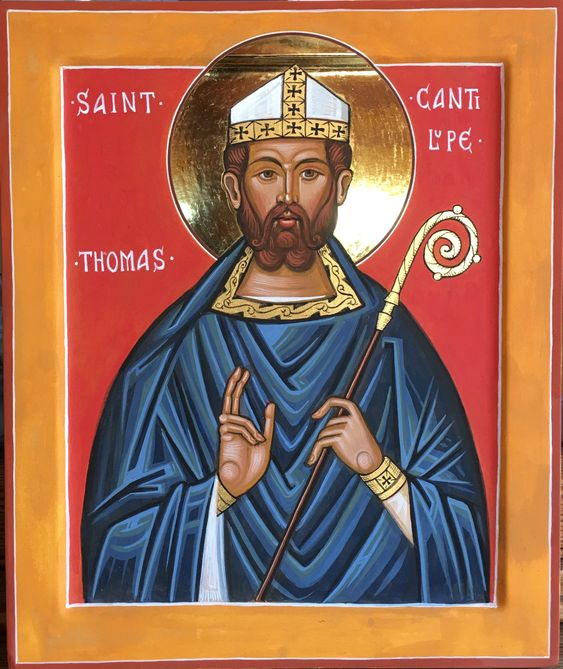
St Thomas de Cantilupe (c1218-1282) Bishop of Hereford, Confessor, learned Scholar, known for his care of the poor and his protection of them against feudal landlords, Miracle-worker, Chancellor of Oxford University, Lord Chancellor of England. Thomas de Cantilupe was the last Englishman Canonised before the Reformation. An amazing Life and in death, a wondrous Miracle-worker: https://anastpaul.com/2021/10/02/saint-of-the-day-2-october-saint-thomas-de-cantilupe-of-hereford-c-1218-1282/
St Ursicinus II (Died 760) Bishop of Chur in Switzerland, Monk, Abbot, Hermit, Restorer of the Monastery of Disentis and Architect and builder of 3 Churches in the Diocese. The Roman Martyrology states: “In the territory of today’s Switzerland, Saint Ursicinus, Bishop of Chur and first Abbot of the Monastery of Disentis which he founded.” His Zealous Life: https://anastpaul.com/2023/10/02/saint-of-the-day-2-october-saint-ursicinus-ii-died-760-bishop/
Martyred in Nagasaki, Japan: A husband, wife and two sons, who were all martyred together in the persecutions in Japan. They were beheaded on 2 October 1622 in Nagasaki, Japan and Beatified by Pope Pius IX on 7 May 1867. Blessed Andreas Yakichi Blessed Franciscus Yakichi Blessed Lucia Yakichi Blessed Ludovicus Yakichi
Saint of the Day – 1 October – Saint Severus Priest and Confessor of Orvieto, in Umbria, Italy, Miracle-worker. Two entries in the Roman Martyrology probably relate to this Saint: ✴under 15 February: “In the Province of Valeria, St Severus, Priest, of whom St Gregory (the Great) says that by his tears he recalled a dead man to life”; and: The Roman Martyrology reads today: “At Orvieto, St Severus, Priest and Confessor.”
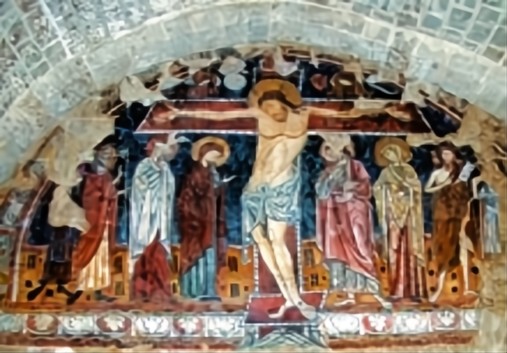
Crucifixion with the Virgin and SS Severus (damaged), Augustine, Mary Magdalene, John the Evangelist, Elizabeth, John the Baptist and Martirius (lost) Fresco (13th Century) in SS Severus and Martirius.
The Abbey of Saints Severus and Martirius (23 January) outside Orvieto is dedicated to our Saint together with St Martirius.
Dialogues of Pope Gregory the Great: These two men are mentioned in successive stories in the Dialogues of Pope Gregory.
Book I, Chapter 12: of Severus, a Priest in the same Province
This chapter relates of a Parish Priest called Severus who lived in a valley in the Province of Valeria.
The account records that he delayed visiting a dying man (because he was busy in his vineyard) and, therefore, failed to give him Extreme Unction before he died. On hearing of the death, “the good man fell a trembling and cried out aloud that he had killed him; whereupon he fell a weeping and in that manner came to the corpse … suddenly the dead man returned to life.”
He recounted that, as he had been taken “ through dark places, suddenly a beautiful young man with others met us, who said … ‘Carry him back again; for Severus the Priest laments his death and our Lord, for his tears, hath given him longer life.’”
Severus duly administered the Sacrament, and the man died again having confessed his sins.
The date chosen for the Feast of St Severus in Orvieto (1st October) is also the date of the translation of the presumed Relics of another St Severus whose Feast is 15 February to Trier in the 10th Century. This St Severus was from Munstermaifeld, in Germany and these Relics are now in Saints Martin and Severus Church there.
The supposed Relics of Saints Severus and Martirius in Orvieto were, in 1613, moved to Sant’ Angelo (which belonged to the Abbey), presumably for greater security. They were placed in a new Reliquary and the High Altar of Sant’ Angelo was restored in order to receive it. The old Reliquary was then destroyed. An attempt was made to steal the Reliquary in July 2011 but the stolen objects were, fortunately, recovered.
St Sazan of Abyssinia St Severus (1st Century) Priest and Confessor of Orvieto
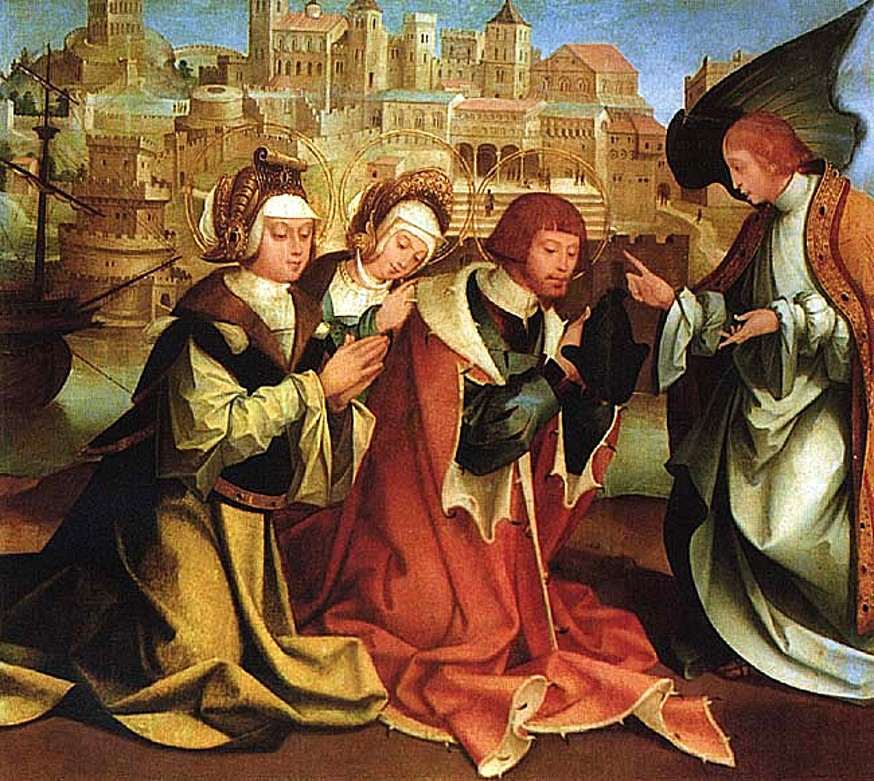
St Verissimus + The Holy Martyrs of Lisbon. The Holy Martyrs of Lisbon (Died c303) St Verissimus, St Maxima, St Julia. (Portuguese: Santos Mártires de Lisboa) were three siblings, the brother Verissimus and his two sisters , Maxima and Julia, who were Martyred n the Roman Province of Lusitania (modern-day Lisbon, Portugal) during the persecutions of Emperor Diocletian. The Roman Martyrology reads: “At Lisbon, in Portugal, the holy Martyrs Verissimus and his tow sisters, Maxima and Julia, who suffered in the persecution of Diocletian.” Their Holy Martyrdom: https://anastpaul.com/2023/10/01/saints-of-the-day-1-october-the-holy-martyrs-of-lisbon-died-c303-st-verissimus-st-maxima-st-julia/
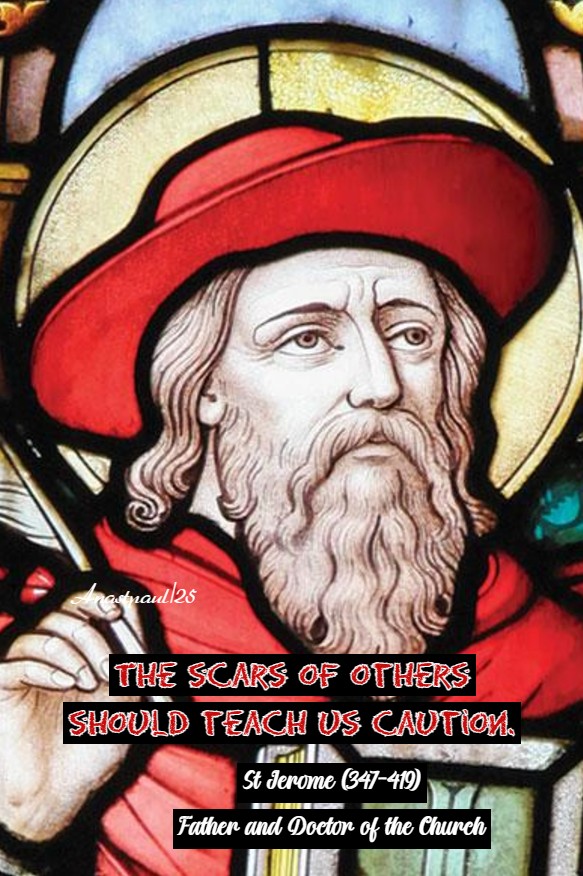
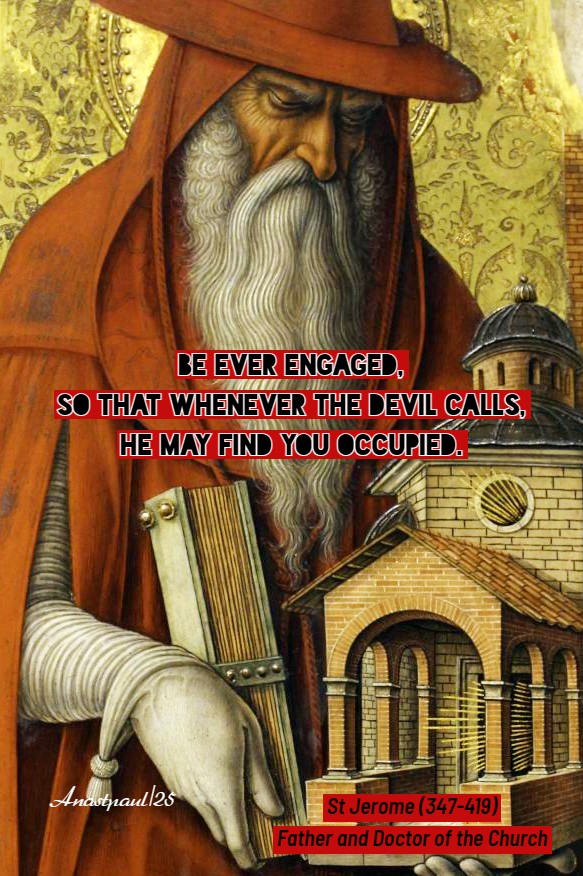
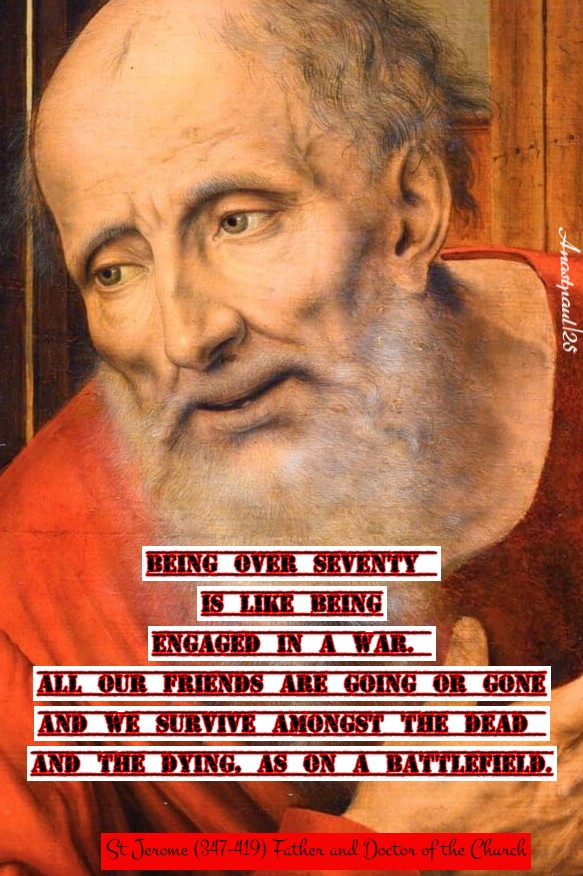
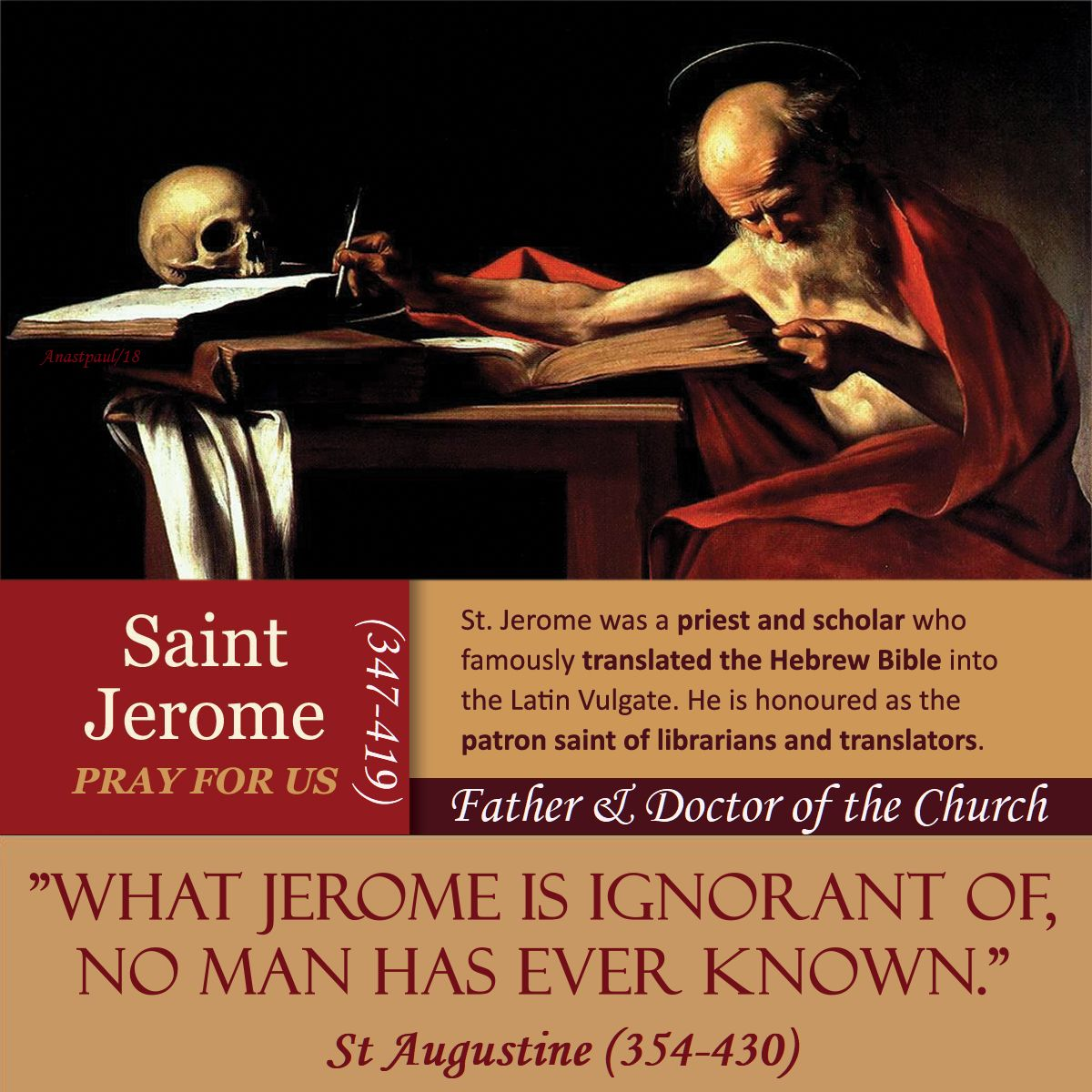
Quote/s of the Day – 30 September – St Jerome (347-419) Confessor, Father and Doctor
“The scars of others should teach us caution.”
“Be ever engaged, so that whenever the devil calls, he may find you occupied.”
“Being over seventy is like being engaged in a war. All our friends are going or gone and we survive amongst the dead and the dying, as on a battlefield.”
O Lord, Show Thy Mercy to Me By St Jerome (347-419) Confessor, Father and Doctor of the Church
O Lord, show Thy mercy to me and gladden my heart. I am like the man on the way to Jericho, who was overtaken by robbers, wounded and left for dead. O Good Samaritan, come to my aid. I am like the sheep which went astray. O Good Shepherd, seek me out and bring me home, in accord with Thy will. Let me dwell in Thy house all the days of my life and praise Thee, forever and ever with those who are there. Amen
Saint of the Day – 30 September – St Midan (Died c610) Missionary Bishop of Anglesey, Priest, Monk, Missionary, founder of Churches. Spiritual disciple and relative of St Kentigern. Born in Wales and died in Anglesey in Scotland. Also knwn as – Idan, Nidan,
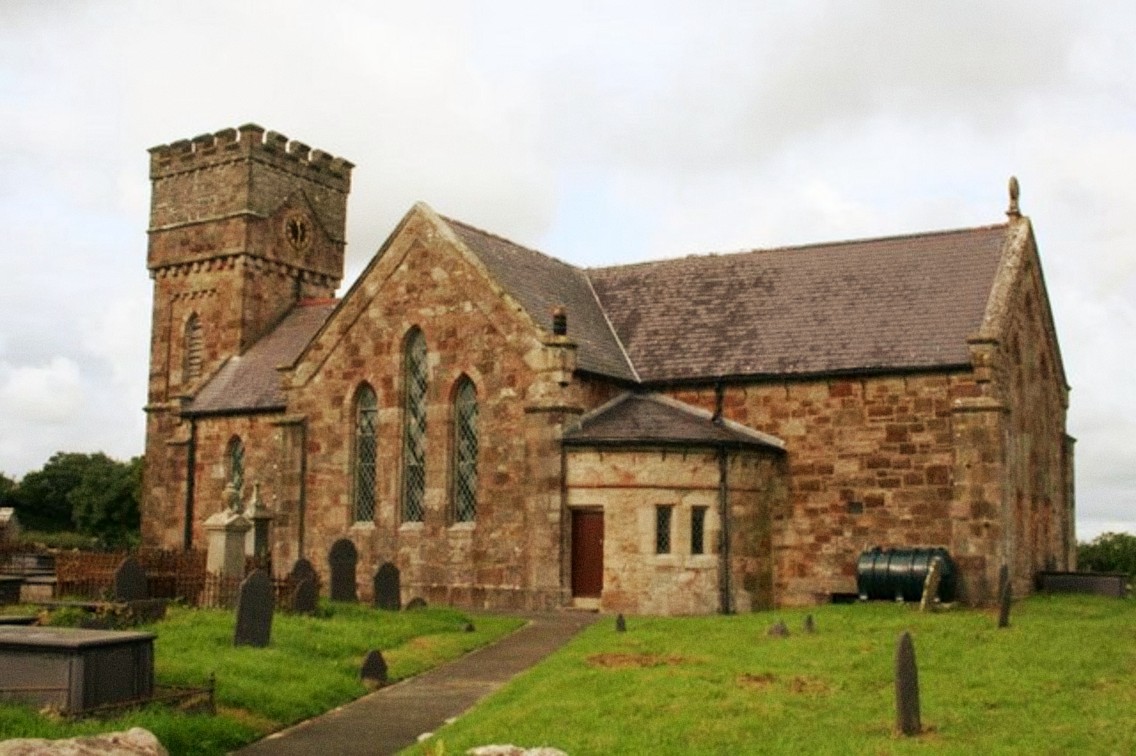
Littleis known in detail of Midan’s life. According to manscript sources, dated to the 14th Century) in the Natonal Library of Wales, he was the son of Gwrfyw. Midan became a Monk at St Seiriol’s Monatery at Penmon, on the eastern tip of Anglesey in north Wals and was the Monastery’s Confessor. He founded a Curch in what is now known as Llanidan, also in Anglesey, near to the Menai Straits. He is reported to have lived at Cadair Idan, near the Church and a well about 180 metres away from the Church is reputed to be his miraculous holy well.
St Midan’s Church, Llanidan
Midan is believed to have been one of the 665 Monks who travelled with St Kentigern, also known as St Mungo and thought to have been St Kentigern’s relative, probably his cousin. They travelled to Scotland to preach the Gospel as Missionaries. Together with another of Kentigern’s companions, Finan, they established Christianity in what is now Aberdeenshire and it is here that some sources record that our Saint Midan became a Bishop.
A Church in Midmar was dedicated to Midan. According to some sources, he died in about 610 which would be inconsistent with the reported Consecration date of 616, of the Church founded by him at Llanidan.
St Sophia Widow St Ursus the Theban St Victor the Theban
Martyrs of Valsery Abbey: An unknown number of Premonstratensian Monks at the Abbey of Notre-Dame de Valsery, Picardie, France who were Martyred by Calvinists. They were martyred in 1567 at Valsery, Pircardy, France.
Saint of the Day – 29 September – St Quiriacus (c449-557) Hermit of Palestine, Born in Corinth, Greece and died in Palestine Also known as – Ciriacus, Quiriaco, Kyriakos.
The Roman Martyrology reads today: “In Palestine, St Quiriacus, Anchorite.”
He was born in Corinth on 9 January probably in the year 449. Desiring perfection, he went to Palestine and received the habit of Saint Euthymius, one of the fathers of Palestinian monasticism.
However, Euthymius, judging him too young, refused to retain him under his supervision. Quiriacus then decided to join the disciples of Saint Gerasimus who lived near the Jordan River. Here he spent nine years of arduous novitiate. Upon the death of his two teachers, he returned to the care of Abbot Euthymius and remaining there for another nine years.
Over the course of his long life, he changed residence several more times. In his time, monastic life was often troubled by divisions and conflicts over theological doctrines not yet clarified by the Councils. Quiriacus was called upon to use his authority to confront the Monks who supported heretical theories.
His biographer, who went to visit him at the Monastery of Susakim, found him in the company of a large lion which lived with him like a guard dog.
He died in the cave of St Chariton (Died 3rd Century) at the age of 108, in 557.
THIS festival has been kept with great solemnity on the 29th of September ever since the Fifth Century and was certainly initially celebrated in Apulia in 493. The Dedication of the famous Church of St Michael on Mount Gargano, in Italy, gave occasion to the institution of this Feast in the West, which is hence called in the Martyrologies of St Jerome, St Bede and others, ‘The Dedication of St Michael.’ About the Apparition of St Michael at Mount Gargano in 492: https://anastpaul.com/2018/05/08/saint-of-the-day-8-may-apparition-of-michael-the-archangel-at-monte-gargano-italy-492/
St Quiriacus (c449-557)Hermit of Palestine St Rene Goupil St Rhipsime Bl Richard Rolle St Sapor of Persia St Theodota of Thrace
Martyrs of Thrace – 3 Saints: Three Christian men Martyred in Thrace for their faith. They are – Eutychius, Heracleas and Plautus.
DISCLAIMER: Please note: I cannot control the content of the Advertisements on this Site, or of pop-ups which may appear, The revenue from the Advertisements, however, does provide a little assistance in the support of the Site. I do apologise for any inappropriate content.
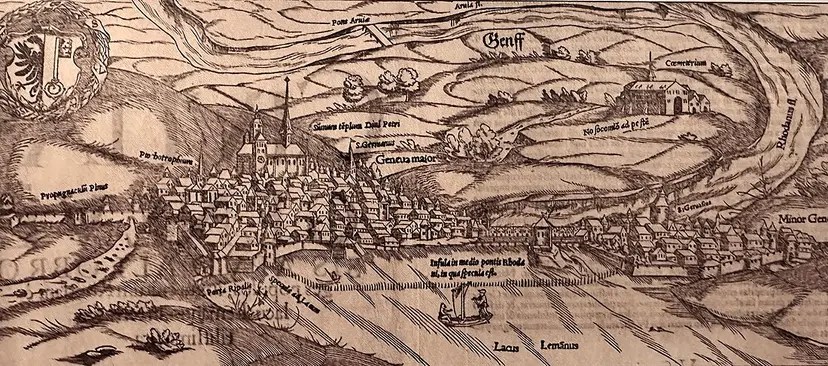
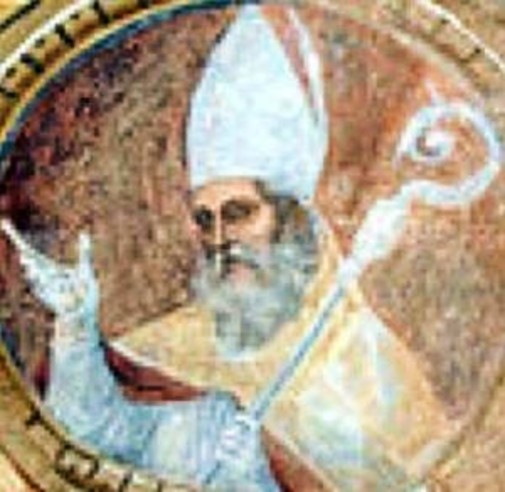
Saint of the Day – 28 September – Saint Salonius (c400-c475) Bishop and Confessor of Geneva in Switzerland, Scholar and Author, a zealous shepherd. A saintly Bishop much admired by many holy contemporise including St Pope Leo the Great.
The Roman Martyrology reads today: “At Geneva, St Salonius, Bishop and Confessor.”
When he was widowed, Eucherius retired to the Monastery founded by Saint Honoratus on one of the Lérins Islands and took his two sons with him, who received an excellent education. Among their teachers, it is enough to mention the Saints Hilary of Arles, Salvian and Vincent of Lérins. Veranus later became the Bishop of Venice and Salonius the Bishop of Geneva, by 439 at the latest.
Salonius succeeded Saint Isaac, the 1st Bishop of that City. He participated actively in the life of the Church, particularly attending the Councils of Orange in 441, Vaison in 442 and Arles in 451.
A highly cultured man, he wrote an important work, the “Expositio mystica in Parabolas Salomonis et in Ecclesiaste” (a commentary on the Scriptural books of Proverbs and Ecclesiastes in the form of questions and answers.
A letter he wrote to Pope Saint Leo I (the Great) also survives. It is interesting to note that other Authors dedicated their works to him. His father, St Eucherius also dedicated his “Instructionum libri” to Salonius, in which he proposed answers to certain questions in the Scriptures and explained words and expressions in Hebrew and Greek. Furthermore, St Salvian, the Bishop of Marseille, dedicated his “De Gubernatione Dei – On the government of God” and several other letters to our St Salonius..
Salonius died on 28 September of an unspecified year, probably at the beginning of the last quarter of the 5th century. On this very anniversary, the holy Bishop is still remembered today.
Salonius successors on the Episcopal sSe of Geneva include Saint Domitian at the time of Saint Clodild, Saint Maximus, friend of King Saint Sigismund and the very famous Saint Francis de Sales.
Bl Aaron of Auxerre St Alodius of Auxerre St Annemond of Lyons St Bardomianus
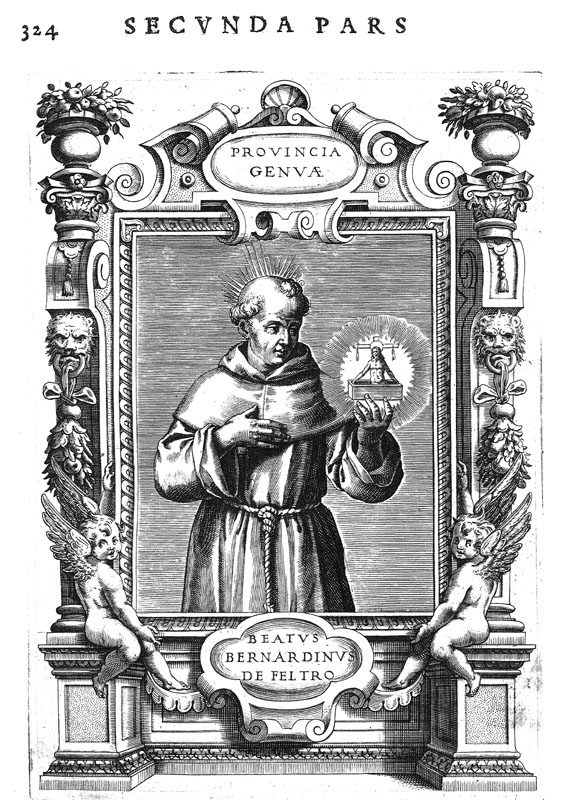
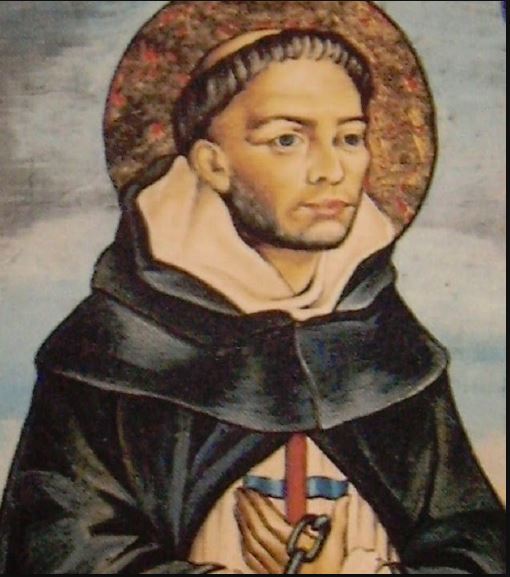
Blessed Bernardine of Feltre OFM (1439-1494) Franciscan Priest and Friar, Missionary Preacher, Poet, peace-maker, Civil protestor against the practice of usury, defender of the poor. He was a true ‘child prodigy’ – by the time he was 12 he was fluent in Latin and at the age of 15 he composed a poem and read it in the Town Square to celebrate a local peace treaty. He is remembered most especially, in connection with the “Monti di Pietà” “Mount of Piety” of which he was the reorganiser and, in a certain sense, the Founder, together with the Blessed Michele Carcano. On 13 April 1654, Pope Innocent X confirmed the cultus of Blessed Bernardine and he was formally Beatified in 1728 by Pope Benedict XIII. Holy Bernardine: https://anastpaul.com/2020/09/28/saint-of-the-day-28-september-blessed-bernardine-of-feltre-ofm-1439-1494/
St Chariton of Palestine Bl Christian Franco St Conval of Strathclyde St Eucarpus St Eustochium
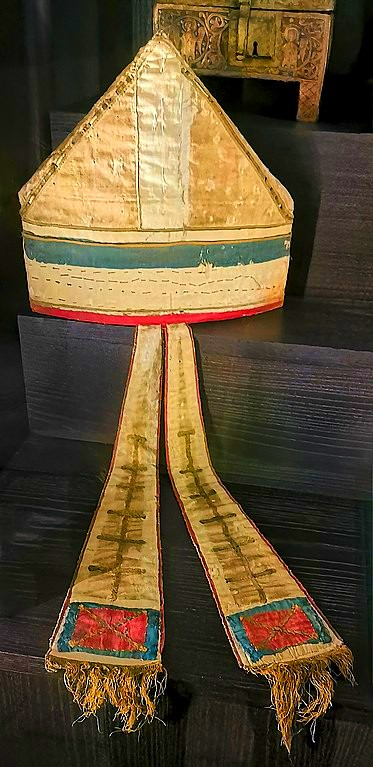
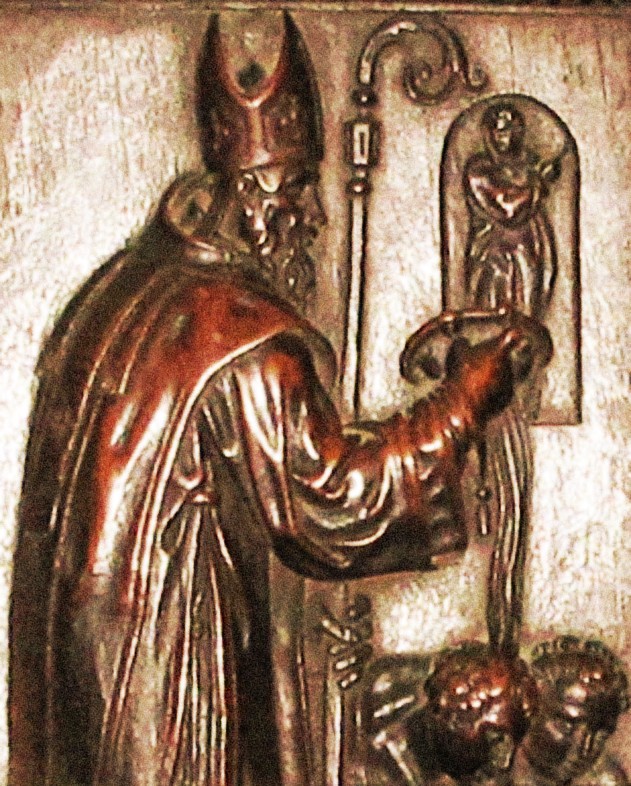
St Exuperius (Died c411) Bishop and Confessorof Toulouse, Apostle of the destitute, the poor, the deprived and needy including aid to the poor in Egypt and Palestine. , The Roman Martyrology reads today: “At Toulouse, St Exuperius, Bishop and Confessor. St Jerome bears witness to this blessed man, a memorable testimony, relating how severed he was towards himself and how gentle and liberal towards others.” Below we see our Saint’s Mitre more than 1500 years old! It is kept at the Basilica which he had completed dedicated to St Sernin A Most Acclaimed Saint: https://anastpaul.com/2024/09/28/saint-of-the-day-28-september-saint-exuperius-of-toulouse-died-c411-bishop-and-confessor/
St Faustus of Riez
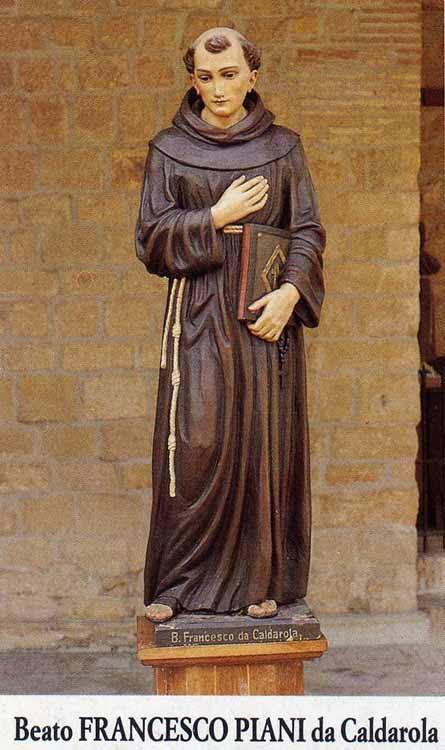
Blessed Francesco Piani OFM (1424-1507) Francisan Friar, renowned Preacher and Peacemaker, a collaborator in the fight against usury by the institution of the “Mount of Piety,” (a type of pawn shop), social activist and protector of the struggling rural communities. He was Beatified by Pope Urban VII in 1634 – his cult was reaffirmed on 1 September 1843 by Pope Gregory XVI. His Amazing Life: https://anastpaul.com/2021/09/28/saint-of-the-day-28-september-blessed-francesco-piani-of-caldarola-ofm-1424-1507/
St John of Dukla St Laurence of North Africa St Lioba of Bischofsheim St Machan St Martial of North Africa St Martin of Moyenmoutier St Paternus of Auch St Privatus of Rome St Salonius (c400-c475) Bishop and Confessor of Geneva St Silvinus (Died c444) Bishop of Brescia
St Stacteus St Tetta of Wimborne Bl Thiemo St Willigod of Moyenmoutier St Zama of Bologna
Augustinian Martyrs of Japan: The first Augustinian Missionaries arrived in Japan in 1602 and met with immediate success; many were brought to the faith; many of them became Augustinians and many of them were Martyred in the periodic persecutions of Christians. This memorial commemorates all of them, whether they have a sanctioned Cause for Canonisation or not. They include: • Blessed Bartolomé Gutiérrez Rodríguez • Blessed Ferdinand Ayala • Blessed Francisco Terrero de Ortega Pérez • Blessed Ioannes Mukuno Chozaburo • Blessed Laurentius Kaida Hachizo • Blessed Mancius Yukimoto Ichizaemon • Blessed Martín Lumbreras Peralta • Blessed Melchor Sánchez Pérez • Blessed Michaël Ichinose Sukezaemon • Blessed Pedro de Zúñiga • Blessed Petrus Sawaguchi Kuhyoe • Blessed Thomas Jihyoe of Saint Augustine • Blessed Thomas Terai Kahyoe • Blessed Vicente Simões de Carvalho • Saint Magdalena of Nagasaki
Martyrs of Antioch – 37 Saints: A group of 30 soldiers and 7 civilians who were murdered together for their faith. The names that have come down to us are – Alexander, Alphinus, Heliodorus, Mark, Neon, Nicon and Zosumus. c 303 at Antioch, Pisidia (in modern Turkey).
Saint of the Day – 27 September – St Gaius (1st Century) the 1st Bishop of Milan, disciple of St Barnabas, Apostle and possibly Consecrated as Bishop by him and sent to Milan. Also know as – Gaio.
The Roman Martyrology reads today: “At Milan, the holy Bishop Gaius, a disciple of the blessed Apostle, Barnabas, who passed calmly to rest after suffering severely in the persecution of Nero.”
Almost nothing is known regarding the life and the Episcopate of Caius, except that he was the Bishop of Milan in the 1st Century and that he died towards the end of September.
He was buried in a cemetery in the area of the Basilica Naboriana, now demolished. His Relics were later translated to the near Basilica of St Ambrose.
Some sources place our Saint in the 3rd Century and Medieval texts, such as the Historia Dataria dated 11th-Century, add some biographic details such as his presence in Rome at the Martyrdom of St Peter and St Paul and the his conversion of Saints Vitalis, Valeris and Gervasius and Protasius. None of this can be considered more than legendary.
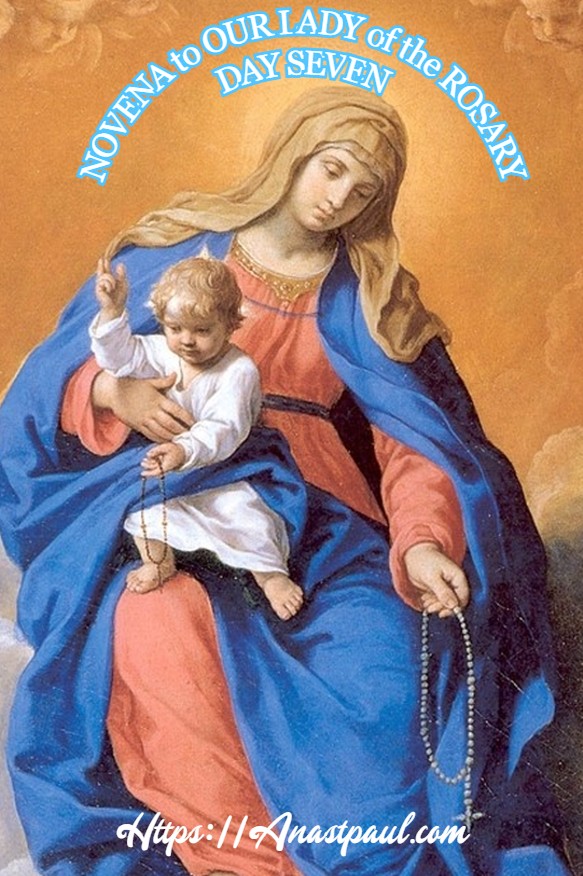
Announcing a Novena to Our Lady of the Rosary Begins 28 or 29 September. The Feast of the Most Holy Rosary is celebrated on 7 October.
NOTE on Novenas: As we are well aware, the First Novena is that which the Apostles and disciples prayed in the Upper Room in preparation for and anticipation of, the arrival of the Holy Ghost. Tradition says that after the Ascention the Apostles gathered and prayed for 9 days and on the 10the day, being the day of Pentecost, the Holy Ghost descended upon them. This is the way I grew up, praying for 9 days before the relevant Feast and celebrating the actual Feast concerned on the 10th day. BUT there is no problem in praying the Novena and finishing the 9th day on the actual Feast and indeed, Novenas may also be prayed at any time needed by the faithful.
We can even pray a Rosary Novena, where we pray the Rosary for 9 days, simply by stating a Special Intention for those 9 days BEFRE we pray our Daily Rosary … there is really no hard and fast rule, i.e. no Correct or Incorrect way. The important thing is that we are praying with faith and fervent devotion for 9 consecutive days. https://anastpaul.com/2022/09/27/announcing-a-novena-to-our-lady-of-the-rosary-begins-28-september-2/
St Elzear TOSF (1285-1323) Layman, Member of the Third Order of St Francis, Mystic, miracle-worker, Baron of Ansouis, Count of Ariano, France, Ruler, Diplomat, Military Leader. Patron of Tertiaries. A Saintly and Talented Ruler: https://anastpaul.com/2021/09/27/saint-of-the-day-st-elzear-tosf-1285-1323/
St Epicharis St Fidentius of Todi St Florentinus the Hermit St Gaius (1st Century) Bishop of Milan St Hilary the Hermit
Martyrs of Aegea – (3 Saints): Three Christians Martyred with Saints Cosmas and Damian in the persecutions of Diocletian – Anthimus, Euprepius and Leontius. They were tortured and beheaded c.303 in Aegea, Cilicia (modern Ayas, Turkey).
Saint of the Day – 26 September – Saint Eusebius (Died c390) Bishop and Confessor of Bologna, a Defender of the True Faith against heresies, in particular, Arianism. A close friend and disciple of St Ambrose, the Doctor of the Church, influence and instrument of God in converting St Augustine.
The Roman Martyrology reads today: “At Bologna, St Eusebius, Bishop and Confessor.”
In the Episcopal records of the Bolognese Church, known as the Renano List (a document of undoubted historical value), Eusebius is listed 5th in line.
The few details of his life are gleaned from Saint Ambrose (340-397), with whom he had a close friendship. He participated, together with the Bishop of Milan, in the Council of Aquileia in 381, where he played a significant role in opposing Arianism and condemning the heretics Palladius and Secundinus.
St Ambrose by Claude Vignon c1623-25
The Acta of the this Council reveal that, after Saint Ambrose, Eusebius was the Bishop who spoke most frequently in the discussion and signed the Decree of condemnation after the local Bishop and the Prelate of Milan.
Eusebius’ Episcopate in Bologna is believed to have lasted between 370 and 390. Saint Ambrose also informs us that in Bologna, there existed a a substantial nucleus of virgins who, under the impetus and promotion of Bishop Eusebius, distinguished themselves by their zeal and piety.
Some authors maintain that Letters 54 and 55 of Saint Ambrose were addressed to the Bishop of Bologna, like his ‘De Institutione Virginis’ these opinions are difficult now to verify.
Regarding his cult, no ancient document from the Bolognese Church mentions him being venerated as a Saint. The first texts which mention St Eusebius date to the late 16th Century when he was entered in the Roman Martyrology on 26 September.
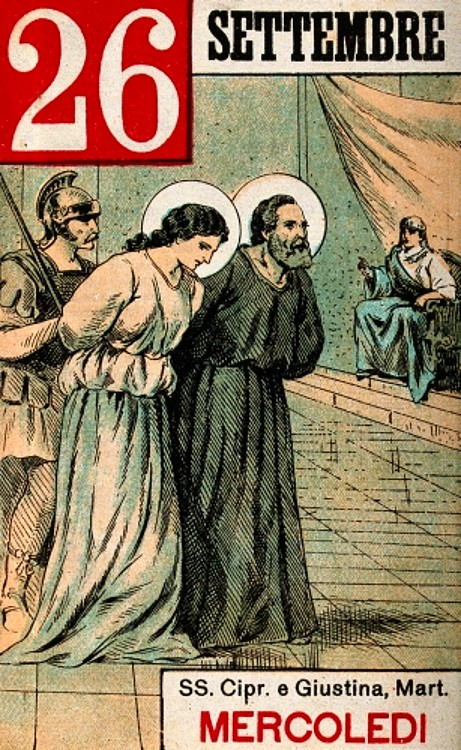
St Cyprian (Died 2nd Century) Bishop Martyr of Antioch AND St Justina of Antioch (Died 2nd Century) Virgin Martyr The Roman Martyrology reads today: “At Nicomedia, the birthday of the holy Martyrs Cyprian and Justina, Virgin. Under the Emperor Diocletian and the Governor Eutholmius, Justina suffered much for the Faith of Christ and coverted Cyprian, who while a magician, endeavoured to bring her under the influence of his magical practices. She afterwards suffered Martyrdom with him. Their bodies being exposed to the beasts, were taken away in the night by some Christian sailors and carried to Rome. They were subsequently taken into the Constantian Basilica and deposited near the Baptistry.” Their Martyrdom: https://anastpaul.com/2024/09/26/saints-of-the-day-26-september-st-cyprian-of-antioch-bishop-martyr-and-st-justina-virgin-martyr-died-2nd-century/
St Amantius of Tiphernum St Callistratus of Constantinople St Colman of Elo St Pope Eusebius St Eusebius (Died c390) Bishop and Confessor of Bologna
Saint of the Day – 25 September – St Principius (6th Century) Bishop of Soissons. Of French origin and presumably died there too, in his See of Soissons. He was the brother of the renowned St Remigius of Rheims. As I cannot find any images of our Saint today I include below a stained glass image of his brother below.
The Roman Martyrology reads today: “The same day, St Principius, Bishop of Soissons, brother of the blessed Bishop Remigius.”
St Remigius of Rheims
This Bishop is virtually unknown. Only a comparison of certain data from the Catholic Historians including St Sidonius Apollinaris allows us to assert, with some plausibility which according to tradition, he was a brother of a great Bishop of Reims, Saint Remigius. His origins would, therefore, be dated to the late 5th and early 6th Centuries but still before 511, the date when Lupus, his successor and perhaps nephew, attended the Council of Orléans.
His cult is confirmed by several medieval liturgical books which list his Fast Day as 25 September. His Relics were burned by the Protestants in 1567.
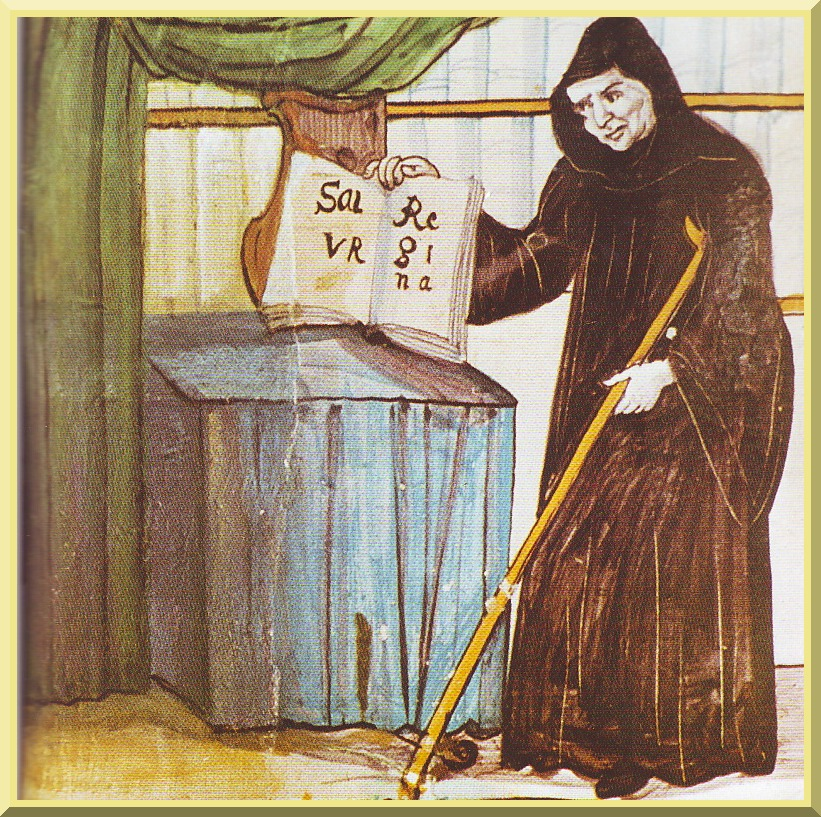
Blessed Herman of Reichenau/the Cripple (1013–1054) Benedictine Monk, Confessor, Scholar, Scientist, Writer, Hymnist, Poet, Musical Composer, Teacher. In his own day, the heroic cripple who achieved learning and holiness was called ‘The Wonder of His Age.’ Composer of the “Salve Regina” Hail Holy Queen, “Veni Sancte Spiritus” Come Holy Spirit and “Alma Redemptoris Mater” amongst many others. His Amazing Life and Works: https://anastpaul.com/2019/09/25/saint-of-the-day-blessed-herman-of-reichenau-the-cripple-osb-1013-1054-the-wonder-of-his-age/
St Mewrog St Neomisia of Mecerata St Paphnutius of Alexandria St Principius (6th Century) Bishop of Soissons St Solemnis of Chartres
Martyrs of Damascus: A Christian family of six who were tortured to death in a persecution by Roman authorities. They were: Eugenia, Maximus, Paul, Rufus, Sabinian and Tatta. They were tortured to death in Damascus, Syria, date unknown.
The Holy Bishops of Milan: Imagine being part of a Diocese in which 36 of your past Bishops are Saints and some are also Doctors of the Church and Popes (and others being considered for Sainthood)! Today, the Church in Milan commemorates these holy Bishops. They are: Blessed Alfredo Ildefonso Schuster Blessed Andrea Carlo Ferrari Pope Pius XI Saint Ambrose of Milan Saint Ampelius of Milan Saint Anathalon of Milan Saint Antoninus of Milan Saint Auxanus of Milan Saint Benedict Crispus of Milan Saint Benignus of Milan Saint Calimerius of Milan Saint Castritian of Milan Saint Charles Borromeo Saint Datius of Milan Saint Dionysius of Milan Saint Eugene of Milan Saint Eusebius of Milan Saint Eustorgius II of Milan Saint Eustorgius of Milan Saint Gaius of Milan Saint Galdinus of Milan Saint Geruntius of Milan Saint Glycerius of Milan Saint Honoratus of Milan Saint John Camillus the Good Saint Lazarus of Milan Saint Magnus of Milan Saint Mansuetus of Milan Saint Marolus of Milan Saint Martinian of Milan Saint Mirocles of Milan Saint Mona of Milan Saint Natalis of Milan Saint Protasius of Milan Saint Senator of Milan Saint Simplician of Milan Saint Venerius of Milan
Saint of the Day – 24 September – St Lupus (6th Century) Bishop of Lyon, Monk and Hermit. Also known as – Lupe, Lupo, Loup the Name means “Wolf.”
St Jerome’s Martyrology mentions Lupus on 24 September; the current Diocesan Order of Lyon lists him on 25 September.
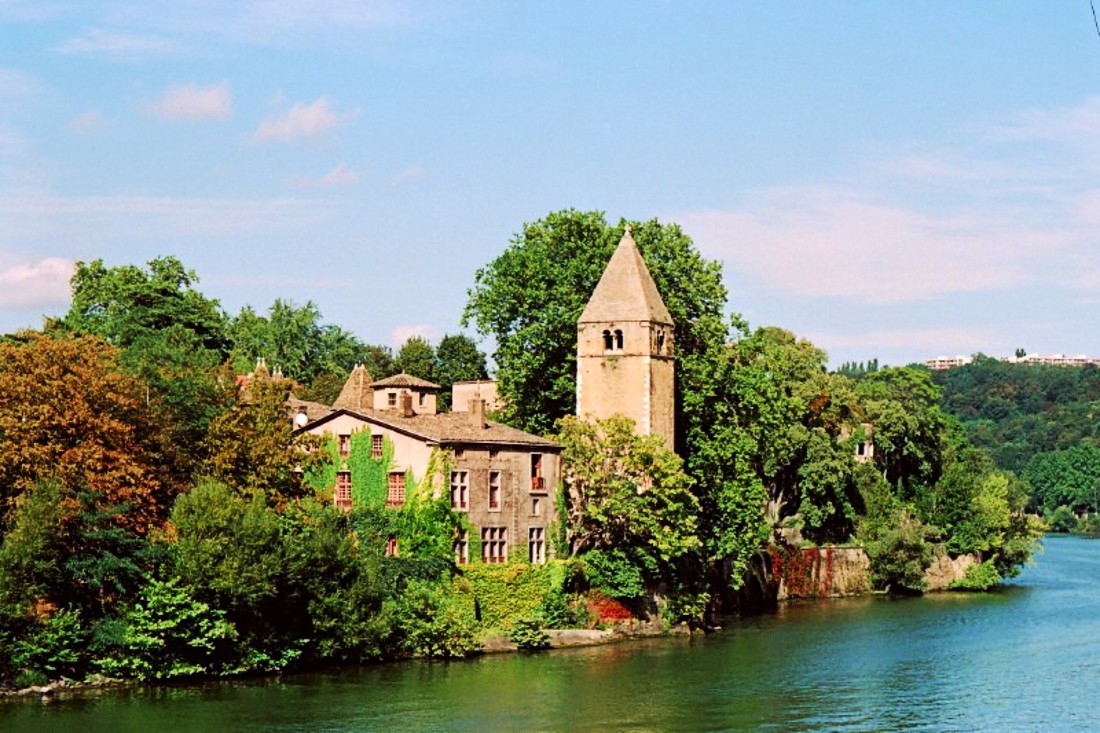
Around 528, the Life of Saint Lubin, Bishop of Chartres, mentions him as an illustrious Monk who led a Hermit’s life on Ile-Barbe located just above Lyon.
Ile-Barbe located just above Lyon
On 7 May 538, he presided as the Archbishop of Lyon at the 3rd Council of Orleans.
He died well before 28 October 549, the date on which his second successor, Sacerdos, presided over the 5th Council of Orleans, while Lupus’ immediate successor, Leontius, had governed the Church of Lyon for only two years.
Leidrat, Archbishop of Lyon (798-816), writing to Charlemagne, mentions Lupus along with two more Lyonnais Archbishops, Saints Eucherius and Genesius, in connection with the Monastery of Ile-Barbe.
On 20 September 1620, Cardinal de Marquemont, Archbishop of Lyon, proceeded with the Consecration of the restored Church of Ile-Barbe which retained its ancient titular Saints, Saints Martin and our Lupus.
Saint of the Day – 23 September – St Constantius (5th Century) Sacristan of Ancona, in the Marches, Italy, Miracle-worker. A gentle and humble man filled with supernatural gifts and graces and by his prayers, rendering grat miracles for those who beseeched his aid and for his Church when in need.
The Roman Martyrology reads today: “At Ancona, St Constantius, Sacristan of the Church, renowned for the gift of miracles.”
St Gregory the Great provides some information regarding our Saint Constantius in his Dialogues, highlighting his profound humility, a faith which “could move mountains” and miraculous power.
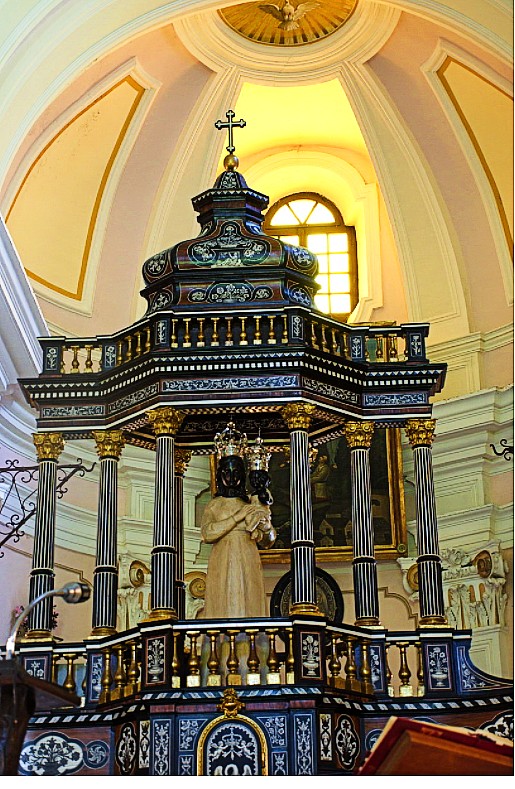
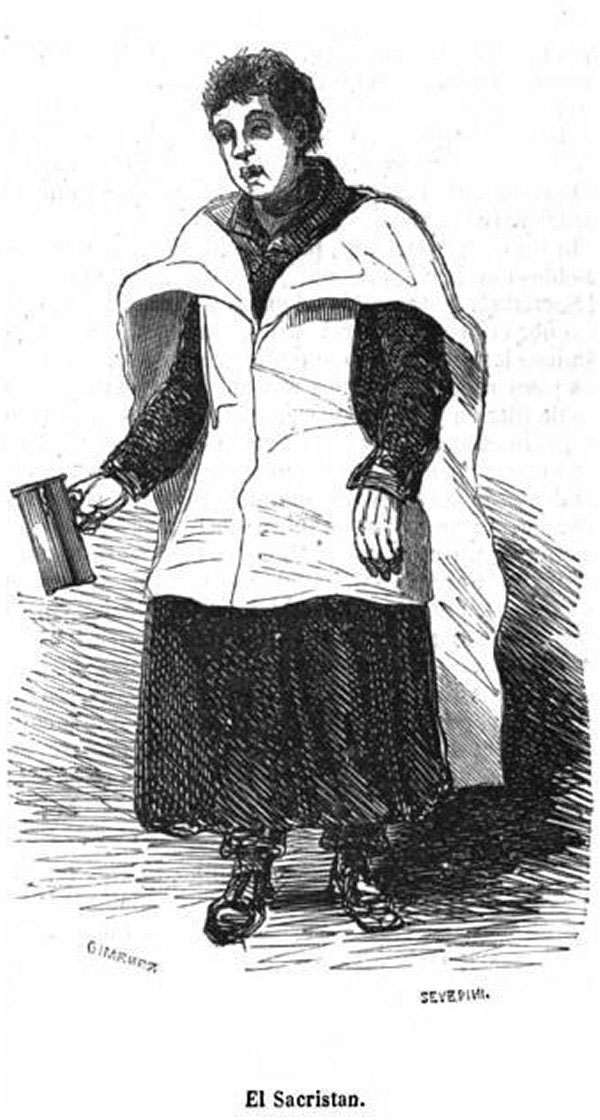
Unknown Spanish Sacristan
According to the illustrious Pontiff’s account, based on the testimony of his own Bishop (likely the City’s Bishop himself) and other locals, Constantius, dressed in monastic attire, served as a Sacristan in the Church of St Stephen, Ancona’s first Cathedral and a famous sanctuary, where, according to St Augustine, a Relic of the 1st Martyr was venerated.
St Gregory emphasises in particular, how the humble and almost threadbare appearance of the simple Sacristan corresponded to a great spirit of perfection which shone through the gift of miracles.
Among the prodigious events, it is recorded that, due to the miraculous power of the lowly Sacristan, the Church’s lamps burned, even though they were filled with water instead of oil. As the fame of the young Sacritan’s sanctity and extraordinary works spread, many flocked to see him and beg for spiritual favours. One day, a rough peasant came to the Church and, seeing the frail Sacristan on a ladder busy triming the lamps, refused to believe in his sanctity and began to mock him with insulting words, calling him a liar and presumptuous. Constantius, who had heard the insults, ran to embrace and kiss him, thanking him for his treatment and thus proving, as St Gregory concludes, that if he was great in miracles, he was even greater in humility of heart.
Nothing else is known of this gentle and holy Saint. His body was later translated to Venice and placed first in the Church of St.Basil, then in that of Saints Gervasius and Protasius, where he is currently venerated celebrated today 23 September as it is in the Diocese of Ancona. The reasons and exact date of this translation of St Constantius’ Relics is unknown, although some local sources believe the body was stolen in the 12th Century during a siege and following a robbery by Venetian merchants.
Today, the Cathedral in Ancona, possesses the only memento of St Costantius, a bone fragment donated in 1760, with authentication by the Patriarch of Venice.
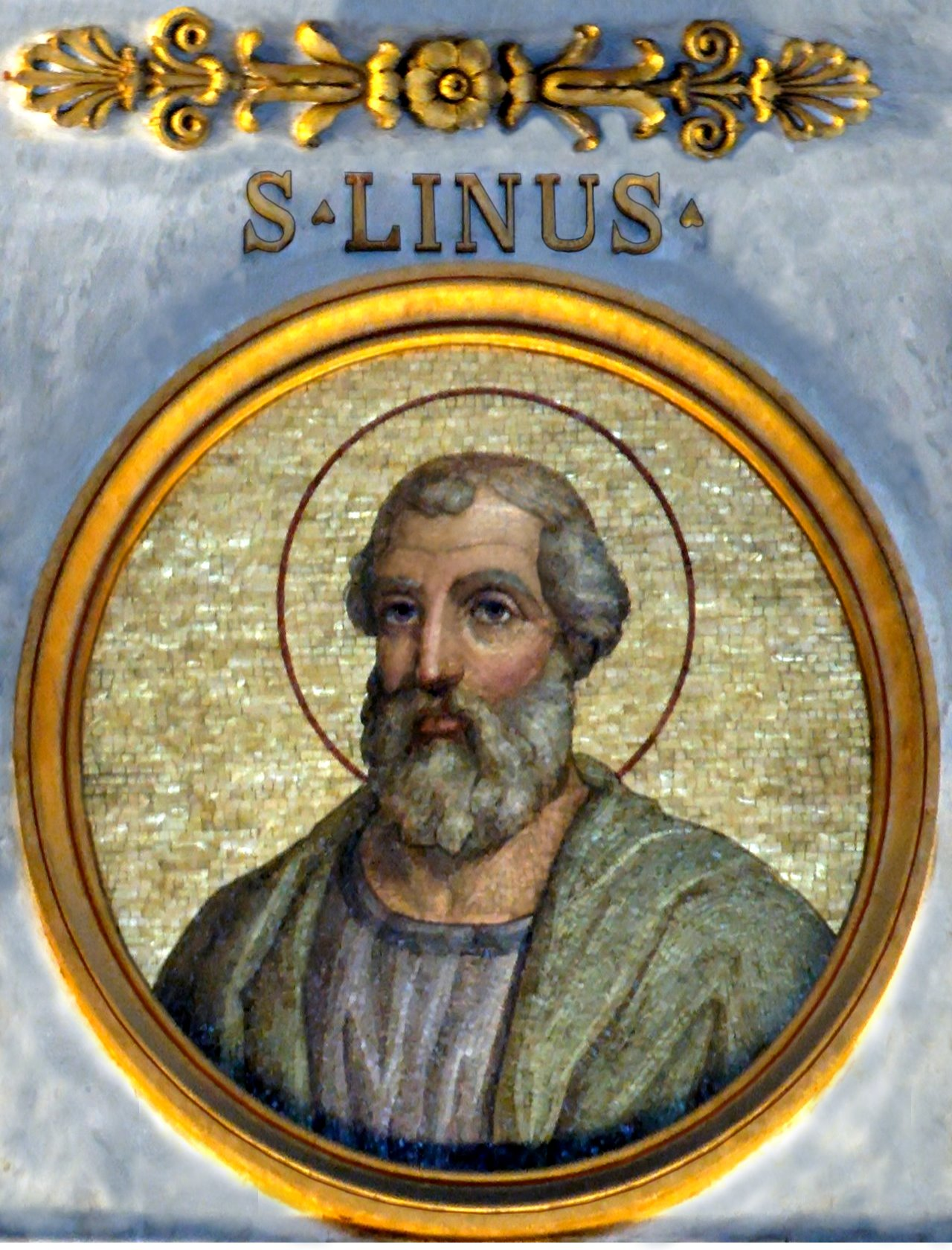
St Pope Linus (c 10 – c 76) Successor to St Peter. Papacy lasted from c 67 to his death as a Martyr. Among those to have held the position of Pope, Peter, Linus and Clement are specifically mentioned in the New Testament. Linus is mentioned in the closing greeting of the Second Epistle to Timothy as being with Paul in Rome near the end of Paul’s life. The Life and Death of St Linus: https://anastpaul.com/2018/09/23/saint-of-the-day-23-september-st-pope-linus-c-10-c-76-successor-to-st-peter/
St Sosius (275-305) Confessor, Deacon and Martyr. His holiness and wisdom drew many Prelates to his feet, seeking spiritual assistance. St Sosius was a Deacon of Misenum, an important naval base of the Roman Empire in the Bay of Naples. The Roman Martyrology reads: “At Capo Miseno in Campania, St Sosius, Deacon and Martyr, who, as Pope St Symmachus reports, wishing to save his Bishop from death, instead found death together with him, obtaining equal glory at the same price.” His Life and Death: https://anastpaul.com/2022/09/23/saint-of-the-day-23-september-saint-sosius-275-305-confessor-deacon-and-martyr/
Saint of the Day – 22 September – St Sanctinus (c270-356) the 1st Bishop of Verdun and Meaux, Missionary, evangelised the region, some sources consider him a Martyr. Sanctinus was a disciple of St Dionysius, the Bishop of Paris. Also known as – Xantin, Santin, Saintin or Sanctin; Name means: the holy one (Latin). Additional Feasts – 12 October in Verdun, 25 September (translation of Relics).
The Roman Martyrology reads today: “At Meaux, the blessed Sanctinus, Bishop, Disciple of St Dennis (Dionysius), the Areopagite, who, being Consecrated by St Denn is, as the Bishop of Meaux, was the first to preach the Gospel there.”
Sanctinus was a disciple of St Dionysius, the Bishop of Paris .. He worked as a Missionary in the area around Verdun and became the cCty’s first Bishop.
He is also said to have worked in Picardy and Champagne and is, therefore, considered the 1st Bishop of Meaux. In 332. in Verdun, he built the 1st Church, dedicated to Sts Peter and Paul , on the walls of a pagan temple on the site of the later Abbey of St Vanne —now ruins, within the City’s fortified citadel. According to tradition, he died in prison in Meaux and is, therefore, considered a martyr.
Statue of St Sanctinus in the Cloister of Verdun Cathedral
Sanctinus was buried in Meaux . Possibly, because of the Norman invasion, his remains were placed in the consecrated Church of the then Priory at Malemort-sur-Corrèze near Tulle for their protection, as it is dedicated to him as the Church of Saint-Xantin. In 1044, however, his remains were sold from Meaux to Verdun during a severe famine in Meaux; they now lie in the Cathedral in Verdun.
The Abbey of St Vanne in Verdun was closed in 1792 during the French Revolution and demolished in 1838. Today only the remains of a Church tower remain.
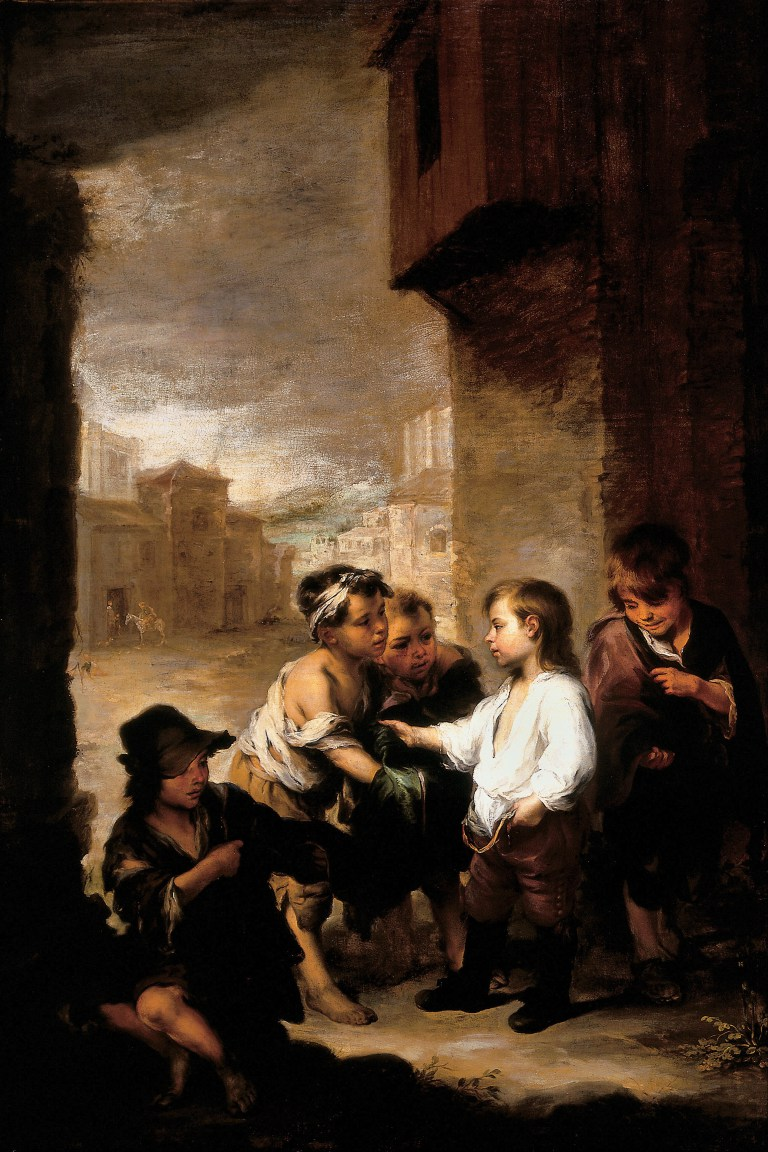
St Thomas of Villanueva/Villanova OSA (1488-1555) Archbishop, Confessor, Religious Priest of the Order of St Augustine,Writer, Preacher, Teacher, Apostle of Charity, Mystic, Miracle-Worker often called “the Almsgiver” and “the Father of the Poor“, Reformer. Canonised on 1 November 1658 by Pope Alexander VII. Beloved St Thomas here: https://anastpaul.com/2017/09/22/saint-of-the-day-22-september-st-thomas-of-villanova-o-s-a/
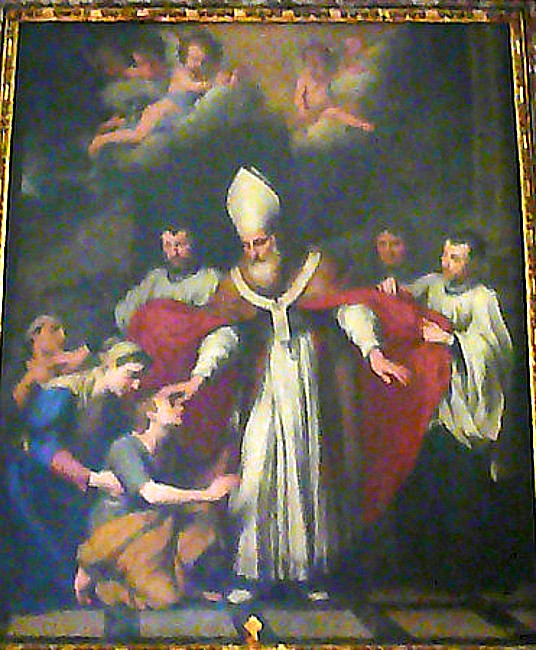
St Thomas Villanova Dividing His Clothes by Mas a child, urillo
St Maurice & Companions: Martyrs of the Theban Legion: + Martyrs (c 287) A Roman imperial legion of 6,600 soldiers, all of whom were Christians; they had been recruited from the area around Thebes in Upper Egypt, were led by Saint Maurice and served under Emperor Maximian Herculeus. Around the year 287, Maximian led the army across the Alps to Agaunum, an area in modern Switzerland, in order to suppress a revolt by the Bagandre in Gaul. In connection with battle, the army offered public sacrifices to the Roman gods; the Theban Legion refused to participate. For refusing orders, the Legion was decimated – one tenth of them were executed. When the remainder refused to sacrifice to the gods, they were decimated again. When the survivors still refused to sacrifice, Maximinian ordered them all killed. Martyrs. https://anastpaul.com/2018/09/22/saints-of-the-day-22-september-st-maurice-and-the-martyrs-of-the-theban-legion-martyrs-c-287/
Bl Alfonso da Cusco St Basilia St Digna of Rome St Emerita of Rome
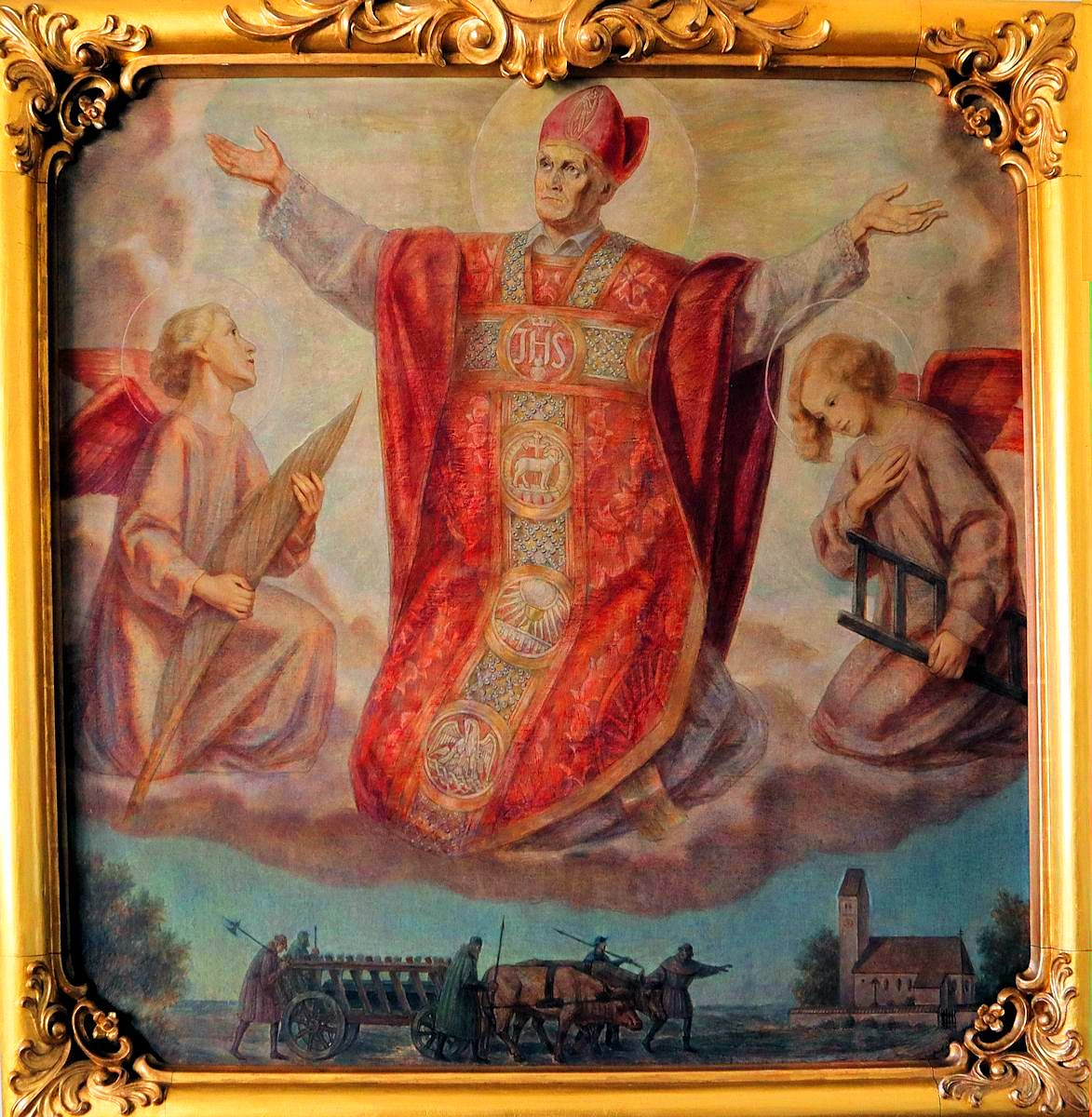
St Emmeramus(Died c690) Bishop of Regensburg, Martyr , Missionary Born in Poitiers, France and died on 22 September c652 in Feldkirchen near Munich in Bavaria by being murdered. Patronages – of Poitiers in France and of the City and Diocese of Regensburg in Germany. The Roman Martyrology reads today: “At Ratisbon, in Bavaria, St Emmeramus, Bishop and Martyr, who, to deliver others, endured patiently a most cruel death, for the sake of Our Lord.” His Life and Death: https://anastpaul.com/2024/09/22/saint-of-the-day-22-september-st-emmeramus-of-regensburg-bishop-martyr/
St Irais St Jonas St Lauto of Coutances St Lindru of Partois
Blessed Otto O.Cist. (c1111-1158) Bishop of Freising, Cistercian Priest and Abbot Historian, Reformer, Diplomatic Peace-maker, Defender of the Church, Crusader. Born between 1111 and 1114 in Klosterneuburg near Vienna, Austria and died at Morimond, Champagne, France, on 22 September, 1158 at the young age of 47 at the most. Holy Man of Many Talents St Otto: https://anastpaul.com/2023/09/22/saint-of-the-day-22-september-blessed-otto-of-freising-o-cist-c1111-1158-bishop/
St Sadalberga St Sanctinus (c270-356) Bishop of Verdun and Meaux, Martyr?
St Sigfrid of Wearmouth St Silvanus of Levroux St Symphorian
DISCLAIMER: Please note: I cannot control the content of the Advertisements on this Site, or of pop-ups which may appear, The revenue from the Advertisements, however, does provide a little assistance in the support of the Site. I do apologise for any inappropriate content.
Saint of the Day – 21 September – St Eusebius Martyr of Phoenicia. We have no dates for this Saint and little information of any kind, except that which we obtain from the Martyrology and a little from the Bollandists.
The Roman Martyrology reads today: “In Phoenicia, St Eusebius, Martyr, who of his own accord went to the Prefect and declared himself a Christian, was subjected by said Prefect to many torments and finally beheaded.”
According to the Roman Martyrology, in which he is commemorated as above and an Eastern Calendar cited by the Bollandist Stilting, which discusses the same date, Eusebius voluntarily presented himself to the Governor of Phoenicia, who questioned him to ascertain whether he was a following of Christ and a member of His Flock.
Upon his confirmation he was whipped until he bled, salt was placed on his bleeding wounds and numerous torments were inflicted upon him to break his faith but, to no avail.
The Martyr exulted as if it were someone else’s body which was suffering.
St Meletius of Cyprus – Bishop and Confessor in Cyprus. Martyr. No further information has survived.
Martyrs of Gaza – 3 Saints: Three brothers, Eusebius, Nestulus and Zeno, who were seized, dragged through the street, beaten and murdered by a pagan mob celebrating the renunciation of Christianity by Julian the Apostate. They were burned to death in 362 on a village garbage heap in Gaza, Palestine.




















 AnaStpaul
You must be logged in to post a comment.