Posted in SAINT of the DAY

Saint of the Day – 1 September – Saint Fiacre (Died 670)

Saint of the Day – 1 September – Saint Fiacre (Died 670) – Priest, Abbot, Monk, Hermit, apostle of charity, gardener – born (c 600-670).   Born in c 600 in Ireland and died on 18 August 570 probably in Saint-Fiacre, Seina-et-Marne, France.   Also known as Saint Fiacre of Breuil.   Patronages – gardeners, herbalists, victims of haemorrhoids and venereal diseases, Saint-Fiacre, Seine-et-Marne, France.

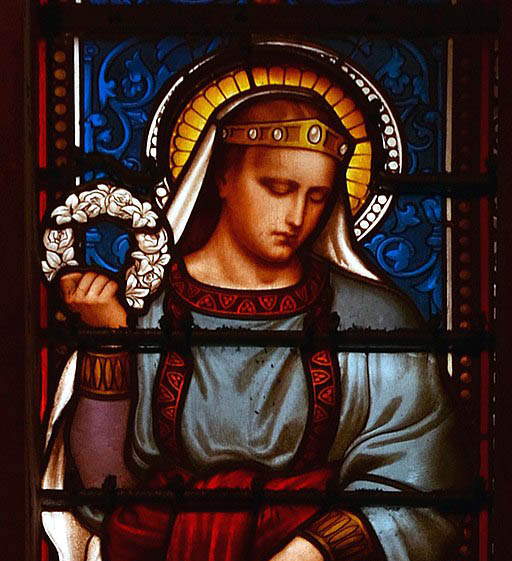
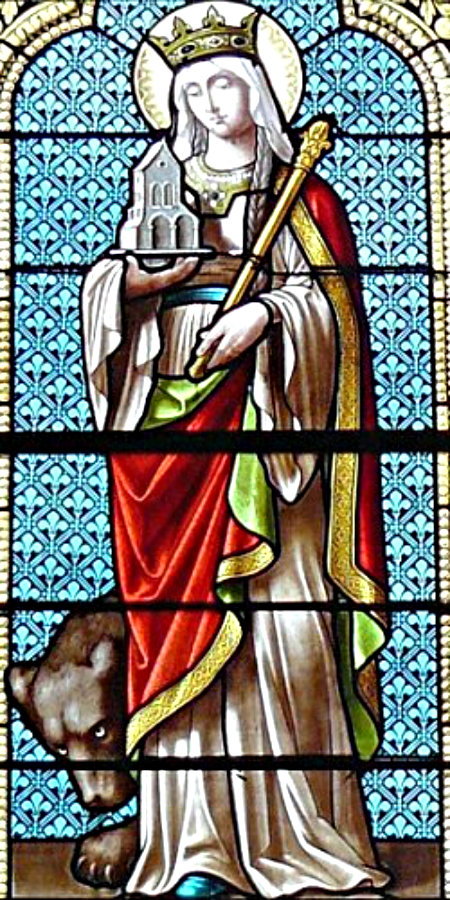
St Fiacre was famous for his sanctity and skill in curing infirmities.   He emigrated from his native Ireland to France, where he constructed for himself a hermitage together with a vegetable and herb garden, oratory and hospice for travellers.   He is the main patron saint of gardeners for he had what we call today “green fingers.”498px-Eglise_Notre-Dame_Bar-le-Duc_Vitrail_Saint_Fiacre_30_04_2012.jpg

St Fiacre is not mentioned in the earlier Irish calendars but it is said that he was born in Ireland in the early sixth century.  He was raised in a monastery where he became a monk and imbibed knowledge of herbal medicine.”   Fiacre was ordained a Priest and elevated to the rank of abbot.    In time he had his own hermitage and perhaps a monastery, possiblyst fiacre holy card.jpg near St Fiachra’s Well, County Kilkenny, Ireland.   As crowds flocked to him because of his reputation for his holiness and cures, he sailed to France in search of greater solitude, in which he might devote himself to God, unknown to the world.

He arrived at Meaux, where Saint Faro (Died 675), who was the Bishop of that city, gave him a solitary dwelling in a forest which was his own patrimony, called Breuil, in the province of Brie.   There is a legend that St Faro offered him as much land as he could turn up in a day and that St. Fiacre, instead of driving his furrow with a plough, turned the top of the soil with the point of his staff.   The anchorite cleared the ground of trees and briers, made himself a cell with a garden, built an oratory in honour of the Blessed Virgin and made a hospice for travellers which developed into the village of Saint-Fiacre in Seine-et-Marne.

Many resorted to him for advice and the poor, for relief.   His charity moved him to attend cheerfully those that came to consult him and in his hospice he entertained all comers, serving them with his own hands and sometimes miraculously restored to health those that were sick.

He lived a life of great mortification devoted to prayer, fasting, keeping vigils and manual cultivation of his garden.   His fame for miracles was widespread. He cured all manner of diseases by laying on his hands.   He died on 18 August 670 and his body was interred in the local church of the site of his hermitage complex, which church became his original shrine.st fiacre icon.jpg

The fame of Saint Fiacre’s miracles of healing continued after his death and crowds visited his shrine for centuries.   Mgr. Seguier, Bishop of Meaux in 1649 and John de Chatillon, Count of Blois, gave testimony of their own relief.   Anne of Austria attributed to the meditation of this saint, the recovery of Louis XIII at Lyons, where he had been dangerously ill, in thanksgiving for which, she made, on foot, a pilgrimage to the shrine in 1641.   She also sent to his shrine, a token in acknowledgement of his intervention in the birth of her son, Louis XIV.   Before that king underwent a severe operation, Bossuet, Bishop of Meaux, began a novena of prayers to Saint Fiacre to ask the divine blessing.

His relics at Meaux are still resorted to, and he is invoked against all sorts of physical ills, including venereal disease.   He isst fiacre french.jpg also a patron saint of gardeners and of cab-drivers of Paris. French cabs are called Fiacres because the first establishment to let coaches on hire, in the middle of the seventeenth century, was in the Rue Saint-Martin, near the hotel Saint-Fiacre, in Paris.   Saint Fiacre’s feast is kept in some dioceses of France and throughout Ireland on this date.   Many miracles were claimed through his working the land and interceding for others.

Posted in MARIAN TITLES, SAINT of the DAY

Sunday 22 C, Our Lady of Montevergine, 5th World Day of Prayer for the Care of Creation and Memorials of the Saints – 1 September

Twenty Second Sunday in Ordinary Time, Year C *2019
The 5th World Day of Prayer for the Care of Creation *2019

Our Lady of Montevergine:
Also known as –
• Madonna di Montevergine
• Madonna Bruna
• Mamma Schiavona
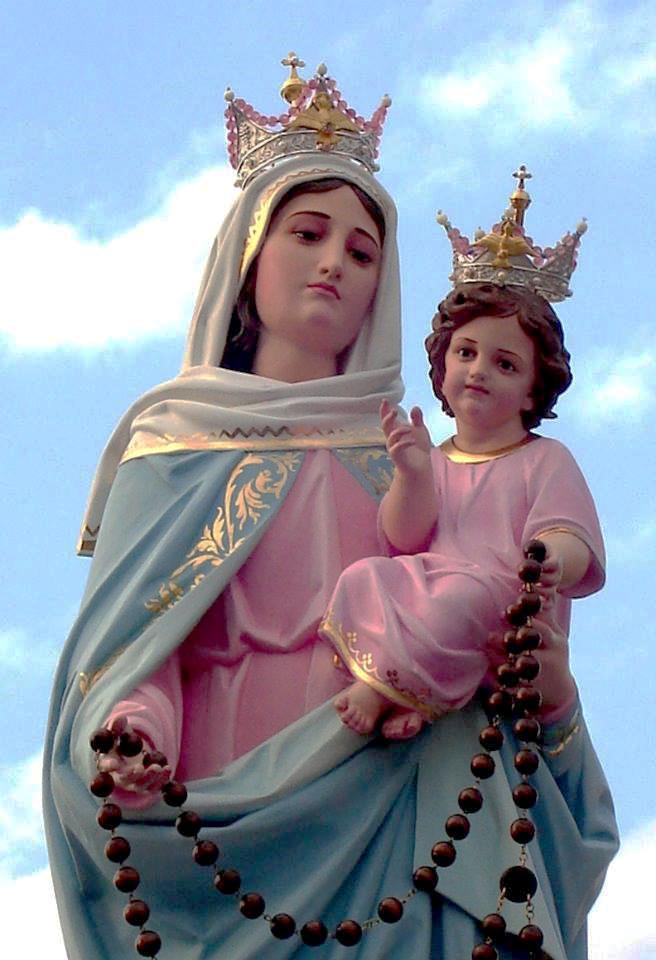
One of the so-called Black Madonnas, image of the Blessed Virgin Mary, normally holding the Christ Child, who have been “inculturated”, that is, made the little Jewish girl Mary look more like the people in the area of the artist, or which are actually black in color. This one serves as part of the altar piece of the Sanctuary on Montevergine. This site is the goal of thousands of pilgrims each year.
More on Our Lady of Montevergine here:
https://anastpaul.com/2018/09/01/1-september-the-memorial-of-our-lady-of-montevergine/

Abigail the Matriarch
St Aegidius
St Agia
St Anea
St Arcanus
St Arealdo of Brescia
Bl Colomba of Mount Brancastello
St Constantius the Bishop
St Donatus of Sentianum
St Felix of Sentianum
St Fiacre (Died 670)
St Gideon the Judge

St Giles (c 650 – c 710) One of the 14 Holy Helpers
About St Giles here:  https://anastpaul.wordpress.com/2017/09/01/saint-of-the-day-1-september-st-giles/
About the 14 Holy Helpers here:  https://anastpaul.wordpress.com/2018/07/25/thought-for-the-day-25-july-the-memorial-of-st-christopher-died-c-251-one-of-the-fourteen-holy-helpers/

Bl Giustino of Paris
Bl Giovanna Soderini
St Jane Soderini
St Joshua the Patriarch
Bl Juliana of Collalto
St Laetus of Dax
St Lupus of Sens
St Lythan
St Nivard of Rheims
St Priscus
St Regulus
St Sixtus of Rheims
St Terentian
St Verena
St Victorious
St Vincent of Xaintes

Exiles of Campania
Twelve Holy Brothers: Martyrs of the South –
A group of martyrs who died c 303 at various places in southern Italy. In 760 their relics were brought together and enshrined in Benevento, Italy as a group.
• Saint Arontius of Potenza
• Saint Donatus of Sentianum
• Saint Felix of Sentianum
• Saint Felix of Venosa
• Saint Fortunatus of Potenza
• Saint Honoratus of Potenza
• Saint Januarius of Venosa
• Saint Repositus of Velleianum
• Saint Sabinian of Potenza
• Saint Sator of Velleianum
• Saint Septiminus of Venosa
• Saint Vitalis of Velleianum
One tradition describes Saint Boniface of Hadrumetum and Saint Thecla of Hadrumetum as their parents.

Martyred in the Spanish Civil War:
Martyred Hospitallers of Saint John of God – (12 beati)
• Blessed Alejandro Cobos Celada
• Blessed Alfonso Sebastiá Viñals
• Blessed Amparo Carbonell Muñoz
• Blessed Antonio Villanueva Igual
• Blessed Carmen Moreno Benítez
• Blessed Crescencio Lasheras Aizcorbe
• Blessed Enrique López y López
• Blessed Francesc Trullen Gilisbarts
• Blessed Guillermo Rubio Alonso
• Blessed Isidro Gil Arano
• Blessed Joaquim Pallerola Feu
• Blessed Joaquín Ruiz Cascales
• Blessed José Franco Gómez
• Blessed José Prats Sanjuán
• Blessed Josep Samsó y Elias
• Blessed Manuel Mateo Calvo
• Blessed Mariano Niño Pérez
• Blessed Maximiano Fierro Pérez
• Blessed Miquel Roca Huguet
• Blessed Nicolás Aramendía García
• Blessed Pedro Rivera
• Blessed Pio Ruiz De La Torre
• Blessed Simó Isidre Joaquím Brun Ararà

Posted in QUOTES of the SAINTS, QUOTES on DEATH, SAINT of the DAY, The LAST THINGS, The WORD

Quote/s of the Day – 31 August – An eye to our end

Quote/s of the Day – 31 August – Saturday of the Twenty-first week in Ordinary Time, Year C, Gospel: Matthew 25:14–30 and the Memorial of  Blessed Pere (Peter) Tarrés i Claret (1905-1950)

“His master said to him,
‘Well done, good and faithful servant,
you have been faithful over a little,
I will set you over much, 
enter into the joy of your master.’ ”

Matthew 25:23matthew 25 23 his master said well done good and faithful 31 aug 2019.jpg

“Give me grace to amend my life
and to have an eye to mine end,
without grudge of death,
which to them that die in You,
good Lord,
is the gate of a wealthy life.”

St Thomas More (1478-1535) Martyrgive-me-grace-good-lord-st-thomas-more-31-aug-2018 and 2019.jpg

“A single resolution, Lord, cost what it may”

(on the eve of his Ordination)

Blessed Pere (Peter) Tarrés i Claret (1905-1950)a single resolution lord cost what it may bl pere tarres 31 aug 2019.jpg

Posted in INCORRUPTIBLES, VATICAN Resources

Saint of the Day – 31 August – Blessed Pere (Peter) Tarrés i Claret (1905-1950)

Saint of the Day – 31 August – Blessed Pere (Peter) Tarrés i Claret (1905-1950) aged 45 Priest, Medical Doctor, apostle of Eucharistic Adoration and of Mary, the Blessed Virgin, apostle of the sick and poor.  Co-Founder, with Dr Gerrado Manresa, of a clinic dedicated to the Blessed Mother for the ill but in particular for those who suffered from tuberculosis, he also ensured that the clinic would be able to cater to those people who could not afford adequate medical treatment. bl pere tarres claret

Pere (Peter) Tarrés i Claret was born on 30 May 1905 in Manresa, province of Barcelona, Spain, to Francesc Tarrés Puigdellívol and Carme Claret Masats.   His parents were deeply religious, which was a positive influence for himself and his two sisters, Francesca and Maria, who both entered the convent.

Pere had a very joyful and open spirit and loved nature and helping others.   As a boy, he assisted at the local pharmacy and the shop owner, Josep Balaguer, encouraged him to continue his studies in medicine.   In 1921 Pere transferred to Barcelona to study, he made the decision to follow his dream and one day become a doctor to help others.

During these years of study, Pere received spiritual direction from Fr Jaume Serra, a priest who encouraged him to enter the “Federation of Young Christians of Catalonia”. This organisation, which met regularly at the Oratory of St Philip Neri, worked for a renewal of the Christian spirit within society.   Pere was appointed President of the Federation and with his openness and enthusiasm, he knew how to give extraordinary “vigour” to the group.  bl pere tarres young.jpgHe was a beacon of good example for others and his zeal motivated him to travel the roads of Catalonia in his little automobile (which he called his “instrument of work”) as a lay missionary.   He spoke openly of God, the Church and Christian living to the youth and those who were gathered along the streets, he also assisted in the formation of new Federation groups.  Pere maintained a written correspondence with many members of the Federation (of whose federal council he was later appointed vice-president) and wrote articles that were published in the Federation’s weekly paper.

In addition to his work within this group, the young man was also involved in Catholic Action.   In 1935 he was appointed vice-secretary of the new diocesan committee, he later became secretary of the archdiocesan committee, having received the recommendation of the Cardinal, Francesc Vidal y Barraquer of Tarragona.

A year later, having earned his degree in medicine, Pere began his residency in Barcelona.   Here, together with Dr Gerardo Manresa, he founded a medical clinic for all those who needed assistance but could not afford it.

As a doctor, Pere was exemplary in his charity and life of piety.   He never lost his habitual joy and was always available to help and speak to those who needed him. During the Spanish Civil War (July 1936-April 1939), Pere lived as a “refugee” in Barcelona because the persecution of Christians forced many into hiding, during this time he prayed, read and studied.

In May 1938 he was forced to enter the Republican army to provide medical assistance; these were eight long months of suffering for Pere and living through the horrors of war probed deep into his soul.   Day after day he wrote about his life on the battle front in his “War Diary”.   The war experience and assistance given to the wounded and dying made Pere understand the necessity for “spiritual assistance” and he felt that God was calling him to be a “doctor of souls” by entering the priesthood.   As a result, he entered the Seminary of Barcelona on 29 September 1939 and was ordained a priest on 30 May 1942.pere_tarres.jpg

Fr Pere began by serving as a parochial vicar at the Parish of St Stephen Sesrovile and a year later he was sent to the Pontifical University of Salamanca to study theology.   After he earned his degree in 1944, Fr Pere returned to Barcelona where he dedicated much of his time to Catholic Action, as well as providing spiritual assistance to religious congregations and material and spiritual help to the sick, especially the poorest of the poor.   He also served as the diocesan delegate for the Protection of Women and as spiritual director of the “Magdalen Hospital” for female prostitutes.

Fr Pere lived his days to the full and had little time for res,; nonetheless, he carried out all his activity in peaceful recollection and a prayerful spirit.   Everyone who came into contact with him was left with the impression that he was a very holy priest who truly cared, sacrificing himself for the spiritual and physical well-being of all, particularly the most desolate.

At the beginning of 1950, Fr Pere noticed that his health was deteriorating.   Shortly thereafter, he was diagnosed with lymphatic cancer.   He accepted his illness and offered it up for the sanctification of priests, resolved to die “as a good priest”.

Fr Pere said that it was a “joy to have the possibility to be a priest and to die in a continual act of love and suffering… worthy of the Heavenly Father”. 

His “secret” in the spiritual life was Eucharistic devotion and filial love towards the Mother of God.

Fr Pere died on 31 August 1950 in the clinic that he founded.   He was 45 years old. … Vatican.va

Barcelona Cathedral Interior - Blessed Pere Tarrés by Montserrat García Rius
Monument in Barcelona Cathedral

His remains were re-located to the parish church of San Vicente de Sarria on 6 November 1975 where his Shrine now resides, see below.

383px-Església_Sarria_tomba_PereTarres_0084
Blessed Pere’s Shrine

In 1985 the Archbishop of Barcelona, Narcís Arnau,1024px-Fundació_Pere_Tarrés.jpg founded the Foundation Blessed Pere Tarrés in honour of the late priest, a nonprofit devoted to charitable works (above)

Posted in SAINT of the DAY

Memorials of the Saints – 31 August

St Aidan of Lindisfarne (died 651) Apostle of Northumbria
St Aidan’s Story:
https://anastpaul.com/2018/08/31/saint-of-the-day-31-august-st-aidan-of-lindisfarne-died-651-apostle-of-northumbria/
St Ammi of Caesarea
St Aristides the Philosopher
St Barbolenus of Bobbio
St Caesidius
St Cuthburgh of Wimborne
St Cwenburgh of Wimborne
St Mark of Milan
St Optatus of Auxerre
St Paulinus of Trier
Bl Pere (Peter) Tarrés i Claret (1905-1950)
St Raymond Nonnatus O.deM. (1204-1240)
Biography here:
https://anastpaul.wordpress.com/2017/08/31/saint-of-the-day-31-august-st-raymond-nonnatus-o-dem/

St Raymond Nonnatus Robustian of Milan
St Raymond Nonnatus Rufina of Caesarea
St Raymond Nonnatus Theodotus of Caesarea

Martyrs of Prague – 64 beati

Martyred in the Spanish Civil War:
Martyrs of Pozo de la Lagarta – 18 beati:
• Blessed Bernardo Cembranos Nistal
• Blessed Dionisio Ullivarri Barajuán
• Blessed Enrique Vidaurreta Palma
• Blessed Félix Paco Escartín
• Blessed Germán Martín y Martín
• Blessed Isidro Ordóñez Díez
• Blessed José María Palacio Montes
• Blessed Justo Zariquiegui Mendoza
• Blessed Marciano Herrero Martínez
• Blessed Miguel Menéndez García
• Blessed Tomás Alonso Sanjuán
• Blessed Ventureta Sauleda Paulís

Posted in PRAYERS for VARIOUS NEEDS, PRAYERS to the SAINTS, QUOTES of the SAINTS, QUOTES on SANCTITY, QUOTES on the CROSS of CHRIST, QUOTES on the DEVIL/EVIL, SAINT of the DAY, The SIGN of the CROSS

Thought for the Day – 30 August – The incorrupt Monk-Bishop-Cardinal-Man of God

Thought for the Day – 30 August – the Memorial of Blessed Alfredo Ildefonso Schuster OSB (1880-1954)

Today is the anniversary of the death of the Blessed Cardinal Alfredo Ildefonso Schuster, who passed to his reward in heaven in 1954, after serving the church of Milan as her shepherd for just over 25 years and was Beatified in 1996.

Blessed Alfredo had several difficult years as the Shepherd of Milan with rise of Fascism and then advent of WWII.   What is keenly recalled of Schuster as Bishop, is his solicitude for the people.   He visited every parish of the diocese five times, holding several diocesan synods, writing many pastoral letters and founding a Seminary in Venegono. Monk or not, he was a true apostle for the good of the Church’s holiness and engagement in the world.

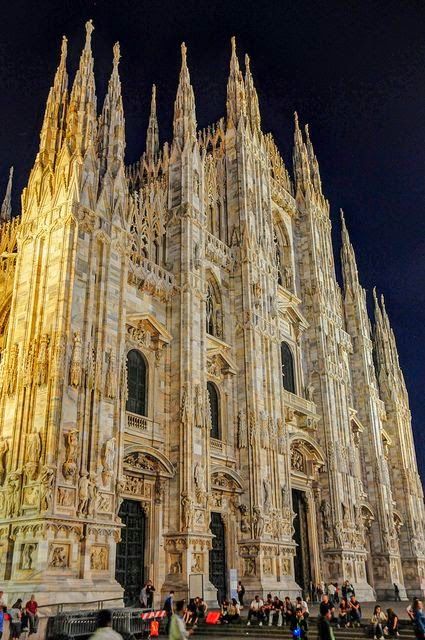
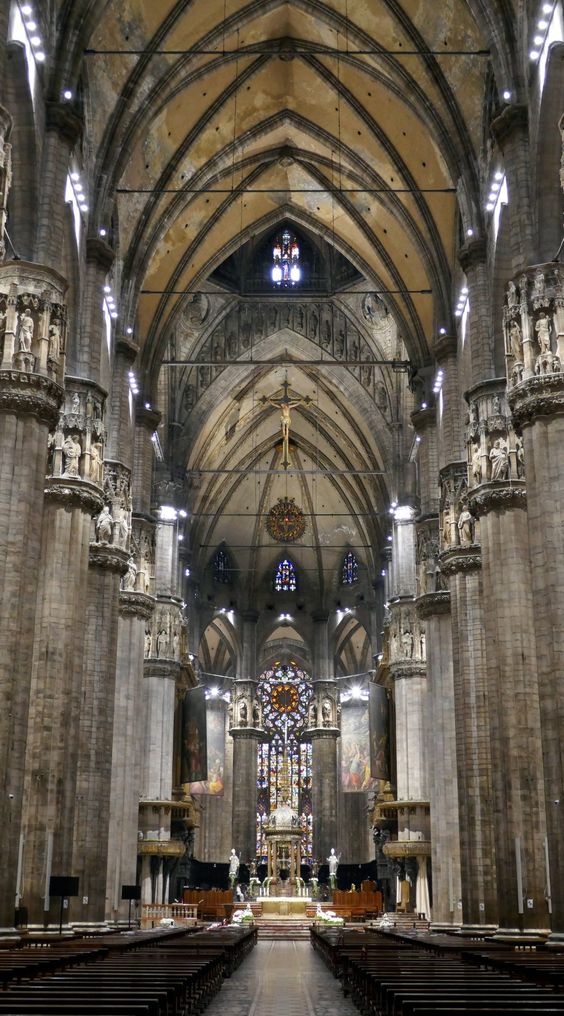
The funeral Mass was offered by the Cardinal Roncalli, now St John XXIII.   In 1985, the cardinal’s tomb was opened and his mortal remains were found to be intact, the monk-bishop-cardinal-man of God was beatified by Saint John Paul II on 12 May 1996.   The relics were given for the veneration of the faithful in one of the side-altars of the Duomo in Milan.

A treasure of Blessed Schuster is his scholarship in the Liber Sacramentorum, known in its English translation as The Sacramentary.   It was written while he was Benedictine monk with the supreme reverence for tradition, adoration and intellect.   In some ways, the volumes are dated, yet the work remains an invaluable reference point for liturgical scholarship today.

To the seminarians of Milan he taught in a characteristically Benedictine manner of the futility of ministry without personal holiness:
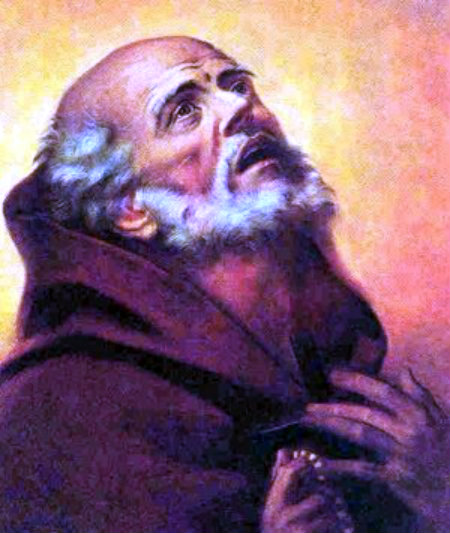
“I have no memento to give you, apart from an invitation to holiness.   It would seem that people are no longer convinced by our preaching but faced with holiness, they still believe, they still fall to their knees and pray.   People seem to live ignorant of supernatural realities, indifferent to the problems of salvation.   But when an authentic saint, living or dead passes by, all run to be there.   Do not forget that the devil is not afraid of our [parish] sports fields and of our movie halls – he is afraid, on the other hand, of our holiness.

Prayer on the occasion
of the Beatification of
Cardinal Alfredo Ildefonso Schuster

Father, origin and source of all good,
we praise You and thank You
because, in the Blessed Cardinal Alfredo Ildefonso Schuster
You have given us and made known
a gentle and tireless pastor,
“all-prayerful” man,
witness to the peace that only You can give.
Lord Jesus, Son of God,
You have been for the Cardinal Schuster, a model of life,
for Your love, he was a passionate servant of all.
Lord of life, peace and joy, grant that
his example may inspire us
and his prayer accompany us,
as we also give our lives
to the service of every human being.
Spirit of love, that makes us saints,
grant us to remember
his constant invitation to holiness.
Make us capable, as he was,
to love the poor, the forgotten, the persecuted;
give us the strength to dialogue with everyone,
with the confidence, to discover in every heart,
the seed of God.
Amen

May we not forget, the devil is afraid of our active striving for holiness.

In the name of the Father and of the Son and of the Holy Spirit, amen.the-sign-of-the-cross-st-john-vianney.-new-version-17-jan-2018-jpg.jpg

Blessed Alfredo, Pray for our Seminarians and Priests, Pray for us All!bl schuste pray for us no 2 30 aug 2019.jpg

Posted in QUOTES of the SAINTS, QUOTES on SANCTITY, SAINT of the DAY

Quote of the Day – 30 August – An invitation to holiness

Quote of the Day – 30 August – the Memorial of Blessed Alfredo Ildefonso Schuster OSB (1880-1954)

“You want something to remember me by.
I have no memento to give you,
apart from an invitation to holiness.”

Blessed Alfredo’s parting words
to the seminarians at Venegono,
a few days before his deathi have no memento to give you - bl alfredo schuster 30 aug 2019.jpg

Posted in DOCTORS of the Church, FATHERS of the Church, ONE Minute REFLECTION, QUOTES of the SAINTS, QUOTES on CHARITY, QUOTES on LOVE, SAINT of the DAY, The WORD

One Minute Reflection – 30 August – “That way above the rest”

One Minute Reflection – 30 August – Friday of the Twenty-first week in Ordinary Time, Year C, Gospel: Matthew 25:1–13 and the Memorial of Blessed Alfredo Ildefonso Schuster OSB (1880-1954)

“The foolish ones, when taking their lamps, brought no oil with them but the wise brought flasks of oil with their lamps.” … Matthew 25:3-4

REFLECTION – “It is some great thing, some exceedingly great thing, that this oil signifies.   Do you think it might be charity?   If we try out this hypothesis, we hazard no precipitate judgement.   I will tell you why charity seems to be signified by the oil.   The apostle says, “I will show you a still more excellent way.”   “If I speak with the tongue of mortals and of angels but do not have love, I am a noisy gong or a clanging cymbal.”  This is charity.   It is “that way above the rest,” which is with good reason signified by the oil.   For oil swims above all liquids.   Pour in water and pour in oil upon it, the oil will swim above.   If you keep the usual order, it will be uppermost, if you change the order, it will be uppermost.   “Charity never fails.”St Augustine (354-430) Father & Doctor – Sermon 93matthew 25 3-4 the foolish ones took no oil - it is some great thing that this oil signifies - st augustine - 30 aug 2019.jpg

PRAYER – God our Saviour, through the grace of Baptism you made us children of light. Hear our prayer, that we may always walk in that light and work for truth, love and charity, as Your witnesses before men.   Dispel from our hearts the darkness of sin and keep us ever watchful for the true light, Christ Your Son, who lives and reigns with You and the Holy Spirit, God forever.   Blessed Alfredo Schuster, you lived a life of total charity ever watchful to the needs of your neighbour, please pray for us, amen.bl alfredo schuster pray for us 30 aug 2019

Posted in INCORRUPTIBLES

Saint of the Day – 30 August – Blessed Alfredo Ildefonso Schuster OSB (1880-1954)

Saint of the Day – 30 August – Blessed Alfredo Ildefonso Schuster OSB (1880-1954) aged 74 Cardinal, Archbishop of Milan, Benedictine Monk and Abbot, Writer, Liturgical scholar – born Alfredo Ludovico Luigi Schuster on 18 January 1880 at Rome, Italy and died on 30 August 1954 at Venegono, Italy of natural causes.   Patronage – Archdiocese of Milan.   His body is incorupt.bl card alfredo.jpg

Alfredo Ludovico Schuster was born on 18 January 1880 in Rome, Italy, the son of Giovanni (Johann) Schuster, a Bavarian tailor and double widower and Maria Anna Tutzer.   Schuster’s sister, Giulia, entered the Daughters of Charity of Saint Vincent de Paul.   Schuster also had three half-siblings from his father’s second marriage.   As a young child, Schuster was briefly kidnapped.   He served as an altar boy at the church of the German Cemetery, next to St. Peter’s Basilica.

Schuster completed his secondary-level studies at the Basilica of Saint Paul Outside the Walls in November 1891.   On 13 November 1898, he joined the Order of St Benedict at the novitiate of the monastery community of Saint Paul Outside the Walls, when he took the name Ildefonso and later professed monastic vows on 13 November 1900.   He graduated as a Doctor of Philosophy on 14 June 1903 and later received a doctorate in theology from the Pontifical Atheneum of St Anselm in Rome.

He was ordained on 19 March 1904 at the patriarchal Lateran Basilica in Rome by Cardinal Pietro Respighi, its archpriest and Vicar general of Rome.   He returned to the Basilica of Saint Paul Outside the Walls in 1904 and became Master of novices in 1908, prior in 1916 and was elected abbot-ordinary of the abbey on 6 April 1918.

On 26 June 1029 he was elected Archbishop of Milan.   On the following 13 July, he took the oath of loyalty to the Italian state in front of King Victor Emmanuel III of Italy, the first Italian bishop to do so, as required by the Lateran Treaty.bl alfredo.jpg

He was created Cardinal priest by Pope Pius XI on 15 July 1929, receiving the titular church of Santi Silvestro e Martino ai Monti on 18 July 1929.   He was consecrated on 21 July 1929 in the Sistine Chapel by Pope Pius personally.    Cardinal Schuster served as a papal legate on several occasions.   On 15 August 1932, he was appointed legate to the celebration of Our Lady of Caravaggio;  on 21 March 1934, to the millennial anniversary of Einsiedeln Abbey in Switzerland;  on 15 September 1937, to the inauguration of the new facade of the cathedral of Desio;  and on 2 August 1951, to the National Eucharistic Conference in Assisi.   Bl Alfredo participated in the papal conclave of 1939, which elected Pope Pius XII on the eve of World War II.bl Schustercardinal.jpg

There were claims during the process for Schuster’s beatification that he was sympathetic to Italian Fascism.   While there is evidence of some support for Italy’s military ambitions, there is also evidence that he denounced the anti-Christian element of Fascist philosophy.   He reportedly refused to participate in ceremonies involving Mussolini and condemned racist legislation during the Fascist period.

Schuster was an enthusiastic supporter of the Italian invasion of Ethiopia in 1935, comparing it to the Crusades and viewing it as a potential source of converts. On 28 October 1935, while celebrating Mass in the Cathedral of Milan, he asked God to protect the Italian troops as “they open the door of Ethiopia to the Catholic faith and Roman civilisation” and blessed the banners of the departing troops.   In 1938, Bl Alfredo’s views changed sharply, after the annexation of Austria by Nazi Germany and the introduction of German racial doctrines into Italy with the Italian Racial Laws.   During World War II the Cardinal was attacked by the Fascist and Nazi press without suffering any loss of esteem among his people.   In the postwar years, Cardinal Schuster frequently emphasised the danger of totalitarianism inspired either by Fascism or Communism.

Although the cardinal sought Mussolini out on 25 April 1945 and urged him to make his peace with God and his fellow man, Mussolini spurned the admonition and was assassinated within a week.bl alfredo older

Bl Alredo died on 30 August 1954 in the Archiepiscopal Seminary Pio XI near Milan. Cardinal Angelo Giuseppe Roncalli (the future St Pope John XXIII) celebrated his funeral. He was buried on 2 September 1954 in the metropolitan cathedral of Milan, next to his two immediate predecessors.   He was honoured with the Order of the Holy Sepulchre.

The diocesan process of his cause for sainthood was opened on 30 August 1957 by Archbishop Giovanni Battista Montini (the future St Pope Paul VI) and concluded on 31 October 1963.   After his tomb was opened on 28 January 1985, his body was found to be intact.   Schuster was declared Venerable on 26 March 1994 by St Pope John Paul II and Beatified on 12 May 1996, after acceptance of a miracle involving the curing of an eye disease.bl card alfredo schuster.jpg

As a Liturgical scholar. his mosst famous work Liber Sacramentorum, known in its English translation as The Sacramentary, was written while he was still a Benedictine monk of the Roman Rite and although dated in some respects, remains an invaluable reference point for liturgical scholarship.   When he was appointed Archbishop of Milan by Pope Pius XI, (who was himself Milanese and had held that office for six months before his Papal election), he embraced the Ambrosian liturgy wholeheartedly, and as the ex-officio head of the Congregation for the Ambrosian Rite, strongly defended and promoted the authentic uses of that tradition.   He also oversaw important new editions of the Ambrosian musical books, which are still used in both the Ordinary and Extraordinary Form of the Rite to this day.    He wrote:
“The Church’s Liturgy may…be considered as a sacred poem, in the framing of which both heaven and earth have taken part and by which our humanity, redeemed in the blood of the Lamb without spot, rises on the wings of the Spirit even unto the throne of God Himself.   This is more than a mere aspiration, for the Sacred Liturgy not only shows forth and expresses the ineffable and the divine but also, by means of the sacraments and of its forms of prayer, develops and fulfils the supernatural in the souls of the faithful, to whom it communicates the grace of redemption.   It may even be said, that the very source of holiness of the Church is fully contained in her Liturgy; for, without the holy sacraments, the Passion of our Lord, in the existing dispensation instituted by almighty God, we would have no efficacy in us, since there would be no channels capable of conveying its treasure to our souls.”
                     Ildefonso Schuster, The Sacramentary, vol. I 

Almighty God, through Your grace,
Blessed Alfredo Ildefonso Schuster,
by his exemplary virtue, built up the flock entrusted to him.
Grant that we, under the guidance of the Gospel,
may follow his teaching and walk in sureness of life,
until we come to see You face-to-face in Your eternal kingdom.
We ask this through our Lord Jesus Christ,
Your son, who lives and reigns with You
and the Holy Spirit, one God, forever and ever.
Amen

Blessed_Ildefonso_Schuster_-_Duomo_-_Milan_2014.jpg
Bl Alfredo’s tomb in the Cathedral of Milan.
Posted in SAINT of the DAY

Memorials of the Saints – 30 August

St Adauctus of Rome
St Agilus
Bl Alfredo Ildefonso Schuster OSB (1880-1954)
St Arsenius the Hermit
St Boniface of Hadrumetum
St Bononius of Lucedio
Bl Bronislava of Poland
Bl Edward Shelley
Bl Ero di Armenteira
Bl Euphrasia of the Sacred Heart of Jesus (1877-1952)
Bl Eustáquio van Lieshout
St Fantinus of San Mercurius
St Felix of Rome
St Fiacre
St Gaudentia of Rome
Bl Giovanni Giovenale Ancina
St Jeanne Jugan LSP (Mary of the Cross) (1792 – 1879)
Biography:
https://anastpaul.com/2018/08/30/saint-of-the-day-30-august-st-mary-of-the-cross-1792-1879-jeanne-jugan/


Bl John Roche
St Loarn
St Margaret Ward
Bl María Rafols-Bruna
St Narcisa de Jesus Martillo Moran
St Pammachius  (c 340 – 410)

Biography:   https://anastpaul.com/2017/08/30/saint-of-the-day-30-august-st-pammachius/

St Pelagius the Hermit
St Peter of Trevi
Bl Riccardo of Lotaringia
Bl Richard Flower
Bl Richard Leigh
Bl Richard Martin
St Rumon of Tavistock
St Sylvanus the Hermit
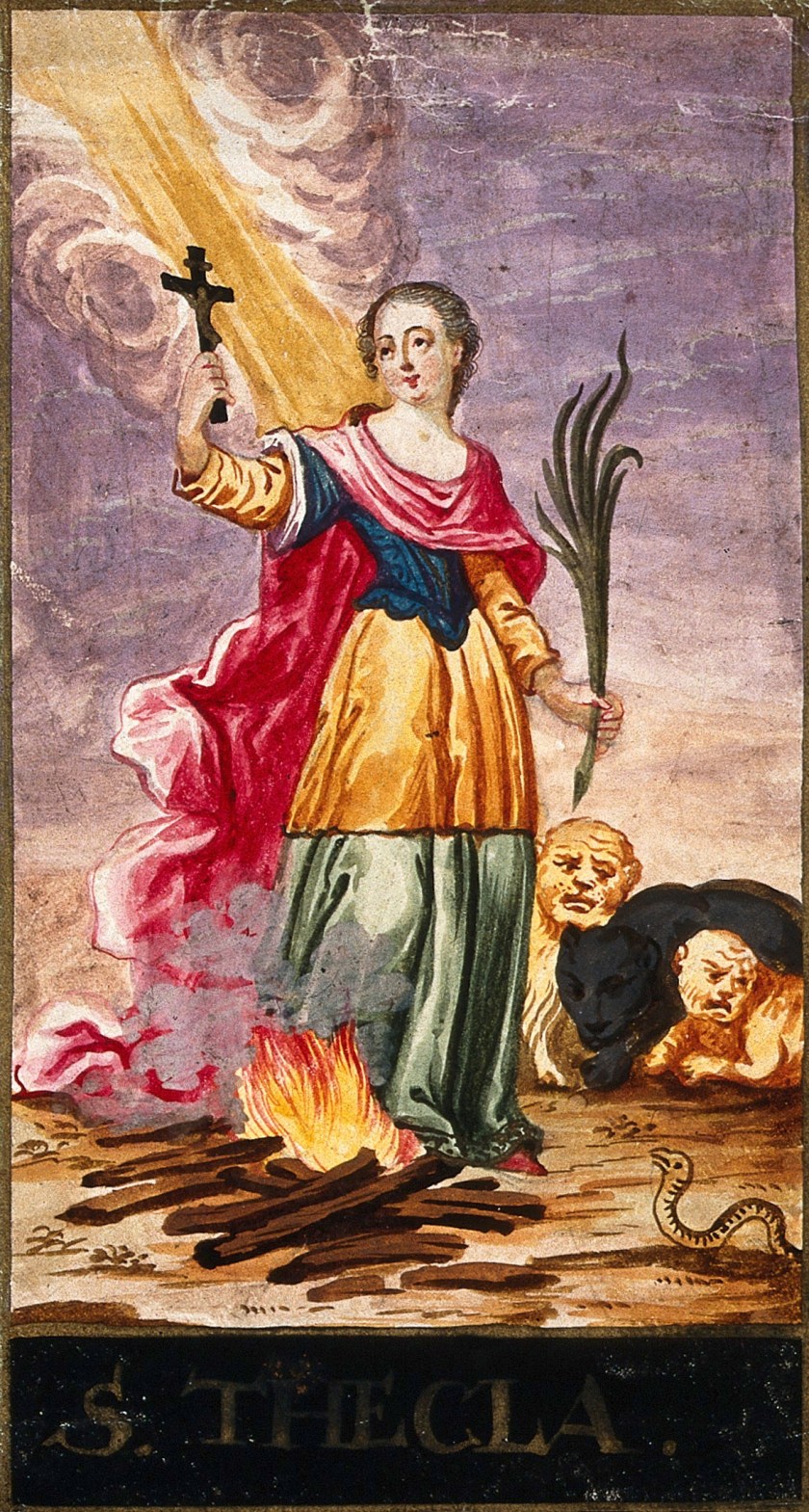
St Thecla of Hadrumetum
St Theodosius of Oria
Bl Yusuf Nehme

Martyrs of Colonia Suffetulana – 60 saints: A group of 60 Christians martyred for destroying a statue of Hermes.
They were martyred in Colonia Suffetulana, Africa.

Martyred in the Spanish Civil War:
• Blessed José Ferrer Adell
• Blessed Manuel Medina Olmos
• Blessed Vicente Cabanes Badenas
Martyrs of Barranco del Chisme (Spanish Civil War) – 10 beati:
• Blessed Alberto José Larrazábal Michelena
• Blessed Antonio María Arriaga Anduiza
• Carles Canyes Santacana
• Blessed Caterina Margenat Roura
• Diego Ventaja Milán
• Blessed Eleuterio Angulo Ayala
• Blessed Josefa Monrabal Montaner
• Manuel Medina Olmos
• Blessed Maria Dolores Oller Angelats
• Blessed Nicasio Romo Rubio

Posted in DOCTORS of the Church, FATHERS of the Church, QUOTES of the SAINTS, SAINT of the DAY, St JOHN the BAPTIST, The WILL of GOD

Quote/s of the Day – 29 August – Whatever He wants I want

Quote/s of the Day – 29 August – The Beheading of St John the Baptist and the Memorial of Blessed Sancja Szymkowiak CMBB (1910-1942)

“O great and admirable mystery!
He must increase but I must decrease, said John,
said the voice which personified all the voices
that had gone before announcing
the Father’s Word Incarnate in His Christ….
But He is said to grow in us, when we grow in Him.
To him, then, who draws near to Christ,
to him who makes progress in the contemplation of wisdom,
words are of little use, of necessity they tend to fail altogether.
Thus, the ministry of the voice falls short,
in proportion as the soul progresses towards the Word,
it is thus, that Christ must increase and John decrease.
The same is indicated by the beheading of John
and the exaltation of Christ upon the Cross,
as it had already been shown by their birthdays –
for, from the birth of John the days begin to shorten
and from the birth of Our Lord they begin to grow longer.”

St Augustine (354-420)
Father & Doctorthus-the-ministry-of-the-voice-falls-short-st-augustine -28 ayg 2019.jpg

“God’s will is my will.
Whatever He wants I want.”

Blessed Sancja Szymkowiak (1910-1942)

Blessed Sancja’s personal mottogod's will is my will - bl sancj szymkowiak 29 aug 2019.jpg

Posted in SAINT of the DAY

Saint of the Day – 29 August – Blessed Sancja Szymkowiak CMBB (1910-1942) – The “Angel of Goodness”

Saint of the Day – 29 August – Blessed Sancja Szymkowiak CMBB (1910-1942) aged 32 professed religious from the Daughters of the Sorrowful Mother of God, commonly known as the “Seraphic Sisters”.   Born on 11 July 1910 in Mozdzanów, Wielkopolskie, Poland as Janina “Giannina” Szymkowiak and died on 29 August 1942 in Poznan, Wielkopolskie, Poland of tuberculosis of the pharynx.   Patronages – Labourers and Translators.

Bl Sancja Szymkowiak, was born on 11 July 1910 in Mozdzanów (Ostrów Wielkopolski), Poland, to Augustine and Mary Duchalska.   She was the youngest of five children, her parents’ only girl.   She was baptised “Giannina.”   On 29 August 1942, she died of tuberculosis of the pharynx, brought on by the hardships of the war.   Throughout her life, she desired to become a saint in a “hidden way” and wanted only to do God’s will, living a profound union with Him in every event.

Her motto was “God’s will is my will.   Whatever He wants I want”.   By abandoning herself into the arms of a loving Father, she offered a wonderful example of serene acceptance of her sufferings.Janina-Szymkowiak

Education:
Giannina was born into a believing and well-to-do family, who gave her a wonderful education.   In 1929, after her high school studies, she studied Languages and Foreign Literature at the University of Poznan.   During her school years, she was an attractive person because she was a happy and joyful person who thought of those around her and was generous in reaching out to them in any need.   Throughout her school years, she was a member of the Sodality of Mary and was remembered for a discrete and effective apostolate of trying to share her happiness with those around her.

Giannina also went beyond her own circles and showed a special attention to the needs of the poor of the city.   She was interested in everyone, was open to others and had a “spirit of holiness” that struck those around her.

Call to religious life:
While still young, Giannina felt called to the religious life.   During the summer of 1934, she went on a pilgrimage to the Shrine of Lourdes, France and here offered herself to the Blessed Virgin, wanting to put her life entirely and without reserve into the hands of the Mother of God.   In June 1936, at Poznan, after spending a year with the Congregation of the Oblate Sisters of the Sacred Heart at Montluçon, she returned to Poland and entered the Congregation of the Daughters of Our Lady of Sorrows, better known as the “Seraphic Sisters.”   It was then that she received the name Mary Santia or Sancja in Polish.   From the beginning, she was zealous in observing the rules of the Congregation and in performing every kind of service.   Her life, which apparently had nothing extraordinary about it, hid a profound union with God with a total readiness to embraceHhis will in everything.   She desired to become a great saint and all her life tended to communion with Jesus, ready to bear any sacrifice and humiliation to console His Heart and make reparation for sin.

First Vows and apostolate:
On 30 July 1938 she made her first vows.   She once wrote in her diary:  “Jesus wants me to be a holy religious and He will not be happy with me until I use all my strength for Him and become a saint.   God is everything, I am nothing.   I have to become a saint at all costs.   This is my constant preoccupation”.

After her first vows, Sr Sancja worked for a year in the nursery school of Poznan-Naramowice and also began a course of studies in pharmacology.   However, she was unable to continue her studies, because in September 1939 the war broke out.sancja szymkowiak

World War II:
Poznan was occupied by the Germans and the sisters were put under house arrest.   They were forced to look after a hundred German soldiers who were housed there and English and French prisoners of war, who were lodged in and around the convent.   She was able to translate for the foreign prisoners.   The forced labour was very difficult but she was willing to serve everyone as she would Christ Himself.

In February 1940, the religious persecution worsened and Sr Sancja was given permission to return to her family for safety.   However, she stayed in the convent and submitted to the hard labour imposed by the occupying forces.   She believed it was God’s will that she remain, that she be a “mother” to those around her – the prisoners, the soldiers and her own sisters.   Sr Sancja was an instrument of God’s love and peace and became a sign of hope to those around her.   The English and French prisoners called her the “angel of goodness” and “Saint Sancja”.

The constant fatigue and difficult conditions took their toll on Sr Sancja and she began showing symptoms of tuberculosis.   She continued with the same spirit of abandonment and serenity and accepted her sufferings as a “preparation” for her solemn vows, which she professed on 6 July 1942  . She died a little more than a month later, on 29 August 1942, when she was 32 years old. … Vatican.va

Bl Sancja’s sainthood cause commenced under St Pope Paul VI on 24 March 1968 when she became titled as a Servant of God and St Pope John Paul named her as Venerable, upon the confirmation of her heroic virtue – on 18 December 2000 he presided over her Beatification on 18 August 2002 at Krakow, Poland.400px-Blessed_Sancja_Janina_Szymkowiak,_memorial_at_Poznan_convent

O God, You made Blessed Sancja, who lived, imitating the meek and humble Heart of Jesus, unite with You in perfect love, grant that we, following her path, may reach sainthood.   Through our Lord Jesus Christ, your Son, who lives and reigns with you in the unity of the Holy Spirit, one God, forever and ever. Amen.

Posted in SAINT of the DAY, St JOHN the BAPTIST

The Beheading of St John the Baptist and Memorials of the Saints – 29 August

The Beheading/Passion of John the Baptist (Memorial)
Here:
https://anastpaul.com/2018/08/29/saint-of-the-day-the-martyrdom-of-st-john-the-baptist/
And here:  https://anastpaul.wordpress.com/2017/08/29/saint-of-the-day-the-beheading-of-st-john-the-baptist-29-august/

St Adelphus
St Adausia of Rome
St Alberic of Bagno de Romagna
St Basilia of Sirmium
St Candida of Rome
Bl Dominik Jedrzejewski
St Edwold the Hermit
St Euthymius of Perugia
Bl Filippa Guidoni
Bl John of Perugia
St Louis-Wulphy Huppy
St Maximian of Vercelli
St Medericus
St Nicaeus of Antioch
St Paul of Antioch
Bl Peter of Sassoferrato
St Repositus of Velleianum
Bl Richard Herst
St Sabina of Rome
St Sabina of Troyes
Bl Sancja Szymkowiak CMBB (1910-1942)
St Sator of Velleianum
St Sebbe of Essex
Bl Teresa Bracco
St Velleicus
St Victor of La Chambon
St Vitalis of Velleianum

Martyred in the Spanish Civil War:
• Blessed Constantino Fernández Álvarez
• Blessed José Almunia López-Teruel
• Blessed Josep Maria Tarín Curto
• Blessed Pedro Asúa Mendía

Posted in DOCTORS of the Church, FATHERS of the Church, GOD is LOVE, GOD the FATHER, QUOTES of the SAINTS, SAINT of the DAY

Thought for the day – 28 August – O Eternal Truth, True Love and Beloved Eternity

Thought for the day – 28 August – The Memorial of St Augustine (354-430)
Father and Doctor of Grace

O Eternal Truth, True Love and Beloved Eternity

Saint Augustine of Hippo
Bishop and Great Western Father of the Church

An excerpt from his treatise, The Confessions

Urged to reflect upon myself, I entered under Your guidance into the inmost depth of my soul.   I was able to do so, because You were my helper.  On entering into myself I saw, as it were with the eye of the soul, what was beyond the eye of the soul, beyond my spirit: Your immutable light.   It was not the ordinary light perceptible to all flesh, nor was it merely something of greater magnitude but still essentially akin, shining more clearly and diffusing itself everywhere by its intensity.   No it was something entirely distinct, something altogether different from all these things and it did not rest above my mind as oil on the surface of water, nor was it above me as Heaven is above the Earth.   This light was above me because it has made me, I was below it because I was created by it.   He who has come to know the truth knows this light.

O Eternal truth, true love and beloved eternity.   You are my God.   To You do I sigh day and night.   When I first came to know You, You drew me to Yourself, so that I might see that there were things for me to see but that I myself was not yet ready to see them. Meanwhile, You overcame the weakness of my vision, sending forth most strongly, the beams of Your light, and I trembled at once with love and dread.   I learned that I was in a region unlike Yours and far distant from You and I thought I heard Your voice from on high:  “I am the food of grown men, grow then and you will feed on Me.   Nor will you change me into yourself like bodily food but you will be changed into Me.”

I sought a way to gain the strength which I needed to enjoy You.   But I did not find it until I embraced the mediator between God and men, the man Christ Jesus, who is above all, God blessed for ever.   He was calling me and saying – I am the way of truth, I am the life.   He was offering the food which I lacked the strength to take, the food He had mingled with our flesh.   For the Word became flesh, that Your wisdom, by which You created all things, might provide milk for us children.

Late have I loved You, O Beauty ever ancient, ever new, late have I loved You! You were within me but I was outside and it was there that I searched for You. In my unloveliness I plunged into the lovely things which You created.   You were with me but I was not with You.    Created things kept me from You, yet if they had not been in You they would not have been at all.   You called, You shouted and You broke through my deafness.   You flashed, You shone and You dispelled my blindness.   You breathed Your fragrance on me, I drew in breath and now I pant for You.   I have tasted You, now I hunger and thirst for more.   You touched me and I burned for Your peace.

St Augustine, Pray for Us!st augustine pray for us - 27 oct 2018

Posted in DOCTORS of the Church, EUCHARISTIC Adoration, FATHERS of the Church, QUOTES of the SAINTS, QUOTES on ALMS, QUOTES on ANGELS, QUOTES on GRATITUDE, QUOTES on HUMILITY, QUOTES on PRAYER, QUOTES on PRIDE, QUOTES on the CROSS of CHRIST, QUOTES on the DEVIL/EVIL, SAINT of the DAY, The HOLY EUCHARIST / The HOLY MASS, The HOLY SOULS, The SIGN of the CROSS

Quote/s of the Day – 28 August – Wonderful Augustine

Quote/s of the Day – 28 August – The Memorial of St Augustine (354-430)
Father and Doctor of Grace

“God in his omnipotence
could not give more,
in His wisdom –
He knew not how to give more,
in His riches: –
He had not more to give,
than the EUCHARIST!”god in his omnipotence in his wisdom in his riches - st augustine - the eucharist - 28 aug 2019.jpg

“I will suggest a means whereby
you can praise God all day long, if you wish.
Whatever you do,
do it well
and you have praised God.”i will suggest a means whereby you can - 28 aug 2019 - st augustine.jpg

“One of the holiest works,
one of the best exercises of piety
which we can practice in this world,
is to offer sacrifices,
alms
and prayer
for the dead.”one of the holiest works - prayers for the dead - st augustine - 28 aug 2019.jpg

“It was pride,
that changed angels
into devils;
it is humility
that makes men
as angels.”

it was pride - st augustine - 20 june 2018

“He need not fear anything
nor be ashamed of anything,
who bears the
Sign of the Cross
on his brow.”

St Augustine (354-430)
Father and Doctor of Grace

More here:
https://anastpaul.com/2018/08/28/quote-s-of-the-day-28-august-the-memorial-of-st-augustine-354-430-father-and-doctor-of-grace/he need not fear anything nor - st augustine ash wed 6 march 2019

Posted in CONFESSION/PENANCE, DOCTORS of the Church, FATHERS of the Church, ONE Minute REFLECTION, QUOTES of the SAINTS, QUOTES on CONVERSION, QUOTES on HYPOCRISY, QUOTES on REPENTANCE, SAINT of the DAY, The WORD

One Minute Reflection – 28 August – Flee to Him by Confessing

One Minute Reflection – 28 August – Wednesday of the Twenty-first week in Ordinary Time, Year C, Gospel: Matthew 23:27–32 and The Memorial of St Augustine of Hippo (354-430) – Doctor of Grace

“Woe to you, scribes and Pharisees, hypocrites! for you are like whitewashed tombs, which outwardly appear beautiful but within they are full of dead men’s bones and all uncleanness.” … Matthew 23:27woe to you scribes and pharisees - whitewashed tombs - matthew 23 27 - 28 aug 2019.jpg

REFLECTION – “You are before God.   Question your heart, see what you have done and what you have been yearning for there—your salvation or the windy praise of men.   Look within, for a person cannot judge one whom he cannot see.   If we are assuring our heart, let us assure it in His presence.
“Because if our heart thinks badly”—that is, if it accuses us within, because we aren’t acting with the spirit with which we should be acting —“God is greater than our heart, and he knows all things” (v.20).
You hide your heart from man – hide it from God if you can.   How will you hide it from Him to whom it was said by a certain sinner in fear and confession:  “Where shall 1 go from your spirit, and where shed!  I flee from your face?”…  For where does God not exist? “If,” he said, “I go up to heaven, you are there; if I go down to hell, you are present” (Ps 139[138]:7-8).   Where will you go?   Where will you flee?   Do you want to hear some advice?   If you want to flee from Him, flee to Him.   Flee to Him by Confessing, not from Him by hiding, for you cannot hide but you can Confess.   Tell Him. “You are my refuge” (Ps 32[31]:7) and let there be nursed in you the love that alone leads to life.”…St Augustine (354-430) – Doctor of Graceyou hide your heart from man - hide it from god if you can - st augustine 28 aug 2019

PRAYER – Renew in Your Church, we pray , O Lord, the spirit with which You endowed Your Bishop Saint Augustine, that, filled with the same spirit, we may thirst for You, the sole fount of true wisdom and seek You, the author of heavenly love. Through our Lord Jesus Christ, Your Son, who lives and reigns with You in the unity of the Holy Spirit, one God, forever and ever. St Augustine, pray for us! Amenst augustine pray for us 28 aug 2019.jpg

Posted in DOCTORS of the Church, FATHERS of the Church, MARIAN Saturdays, Our MORNING Offering, PRAYERS of the SAINTS, SAINT of the DAY

Our Morning Offering – 28 August – Go on, O Lord and Act

Our Morning Offering – 28 August – Wednesday of the Twenty-first week in Ordinary Time, Year C and The Memorial of St Augustine of Hippo (354-430) – Doctor of Grace and one of the original Four Fathers & Doctors of the Latin Church

Go on, O Lord and Act
By St Augustine (354-430) Father and Doctor of Grace

Go on, O Lord and act,
stir us up and call us back,
inflame us and draw us to Thee,
stir us up and grow sweet to us,
let us now love Thee,
let us run to Thee.
Are there not many men …
who, out of a deeper pit of darkness..
return to Thee–who draw near to Thee
and are illuminated by that light
which gives those
who receive it power from Thee
to become Thy sons?
Amengo on Lord and act - stir us up and call us back - st augustine - mem of simpliacinus 18 jan 2019.jpg

Posted in SAINT of the DAY

Saint of the Day – 28 August – Saint Vicinius (Died 330)

Saint of the Day – 28 August – Saint Vicinius (Died 330)- also known St Vicinius of Sarsinaas  – Bishop, Hermit, Miracle-Worker, healer.st vicinius

Vicinius, who, according to tradition, was the first Bishop of the diocese of Sarsina (now joined to Cesena), is considered to be of Ligurian origin.   He retired as a hermit on a mountain that now bears his name.   While priests and people of Sarsina were gathered to choose the bishop, a divine sign appeared on the top of the mountain.   Thus the solitary Vicinio became pastor of the Romagna community, from the early 4th century to 330, the date of his death  . His charisma was to cast out demons and heal the faithful from physical or spiritual illness through a iron collar that he had placed around his neck.st vicinius collar

The historical research on St Vicinius stops at an anonymous 12th century manuscript, called Lectionarium.   This is almost certainly the transcription of previous written notes on the life of St Vicinius, dating back at least a century before.   From this manuscript we learn that Vicinius is believed to have come from Liguria but it could also originate from the districts of the Savio area.   In the wake of the more consolidated tradition, we believe he came from Liguria in the period between the third and fourth centuries.

Vicinius, driven by the love of solitude, dedicated himself to prayer, meditation and penance in a solitary place that tradition identifies with Monte St Vicinius, located about six kilometers from Sarsina.

The holy life of Vicinius was of such satisfaction to the Lord, that He chose him pastor of the Christian community established in Sarsina.   Prayer and penance had certainly increased the zeal for the House of the Lord and Vicinius devoted himself to structuring the divine flock by spreading the Gospel even in the most inaccessible areas of the Diocese.   The historical records of the bishops of Sarsina, places him first bishop of the diocese and affirms that he was the leader of the Church until 28 August 330, the day of his birth in heaven.

Penance and prayer, evangelisation and conduct of the people of God are the cornerstones to which Saint Vicinius had chained his life and are also the high road he chose to carry out his personal call to holiness.

Each saint embodies a particular charism and St Vicinius expresses the power of God in the fight against the evil one in the spiritual battle of adhesion to the Gospel.

His entry into the ranks of the blessed with death to eternal life occurred after twenty-seven years and three months of episcopal ministry in Sarsina.   Even before his death, the intercession of St Vicinius proved to be powerful in favour of those who carried infirmities in body and spirit.   Many of them used to come to him when they suffered from ailments in the body, even very serious ones, anxieties, fatigues, pains, upset but above all, when existential and spiritual problems were manifested and through the use of a iron collar that the Saint himself used, by placing it around the neck of the faithful, they manage to find peace and serenity.collare san vicinio sarsina

We can still read in the Lectionarium of a beggar who attributed a high market value to the collar of Saint Vicinius, he stole it and fled.   He reached the river Savio, trying to get as far away as possible but in reality, he spent the night running, only to find himself in the morning, at the same point of the river at which he had begun.  Caught in fear and remorse, battered and wounded, he threw the collar into a river vortex, where it was found three days later floating near the shore.

St Vicinus relics are kept in the Sarsina Cathedral in the Chapel of St Vicinius.   The miraculous collar is there too and it still brings many pilgrims seeking healing.st vicinius body in sarsina churchst vicinius church in sarsina

Posted in DOCTORS of the Church, FATHERS of the Church, JESUIT SJ, SAINT of the DAY

Memorials of the Saints – 28 August

St Augustine of Hippo (354-430) – Doctor of Grace and one of the original Four Fathers & Doctors of the Latin Church(Memorial)
Wonderful St Augustine here:   https://anastpaul.wordpress.com/2017/08/28/saint-of-the-day-28-august-st-augustine-354-430-doctor-of-grace-and-one-of-the-original-four-fathers-doctors-of-the-latin-church/

StAdelindis of Buchau
St Agnes of Cologne
St Alexander of Constantinople
St Ambrose of Saintes
Bl Angelo da Pesche d’Isernia
St Anthes of Salerno
Bl Charles-Arnold Hanus
St Edmund Arrowsmith SJ (1585 – 1628) Martyr
About St Edmund:
https://anastpaul.com/2018/08/28/saint-of-the-day-28-august-st-edmund-arrowsmith-s-j-1585-1628-martyr/

St Facundinus of Taino
St Felix of Venosa
St Fortunatus of Salerno
St Gaius of Salerno
St Gorman of Schleswig
Bl Henry Webley
St Hermes of Rome
Bl Hugh More
Bl James Claxton
St Januarius of Venosa
St Joaquina Vedruna de Mas
St Julian of Auvergne
St Moses the Black
St Pelagius of Istria
St Restitutus of Carthage
St Rumwold the Prince
St Septiminus of Venosa
St Vicinius/of Sarsina (Died 330)
St Vivian of Saintes
Bl William Dean

Martyred in the Spanish Civil War:
Martyrs of Griñon – 10 beati
Martyrs of Tarragona – 6 beati
• Blessed Agustín Bermejo Miranda
• Blessed Alejandro Iñiguez De Heredia Alzola
• Blessed Andrés Merino Báscones
• Blessed Antonio Solá Garriga
• Blessed Arturo Ros Montalt
• Blessed Aurelio da Vinalesa
• Blessed Celestino Ruiz Alegre
• Blessed Cesáreo España Ortiz
• Blessed Eladi Peres Bori
• Blessed Evencio Castellanos López
• Blessed Francisco López Navarette
• Blessed Germán Arribas y Arribas
• Blessed Graciliano Ortega Narganes
• Blessed Isidre Fábregas Gils
• Blessed Jaume Tarragó Iglesias
• Blessed Javier Pradas Vidal
• Blessed Joan Tomás Gibert
• Blessed Joaquim Oliveras Puljarás
• Blessed José Gorastazu Labayen
• Blessed Josep Camprubí Corrubí
• Blessed Juan Bautista Faubel Cano
• Blessed Lázaro Ruiz Peral
• Blessed Manoel José Sousa de Sousa
• Blessed Modest Godo Buscato
• Blessed Modest Pamplona Falguera
• Blessed Nicolás Rueda Barriocanal
• Blessed Serviliano Solá Jiménez
• Blessed Teodoro Pérez Gómez

Posted in ON the SAINTS, QUOTES of the SAINTS, QUOTES on MOTHERHOOD, QUOTES on PERSEVERANCE, QUOTES on PRAYER, QUOTES on the FAMILY, SAINT of the DAY

Thought for the Day – 27 August -St Monica’s ‘Nunc Dimittis”

Thought for the Day – 27 August – Tuesday of the Twenty-first week in Ordinary Time, Year C and The Memorial of St Monica (322-387)

Blessed John Henry Newman (1801-1890)

Sermons preached on various occations

“Many a mother, who is anxious for her son’s bodily welfare, neglects his soul.
So, did NOT the Saint of today – her son might be accomplished, eloquent, able and distinguished – all this was nothing to her, while he was dead in God’s sight, while he was the slave of sin, while he was the prey of heresy.
She desired his true life.
She wearied heaven with prayer
and wore out herself,
with praying –
she did not at once prevail.
He left his home,
he was carried forward by his four bearers –
ignorance,
pride,
appetite
and ambition –
he was carried out into a foreign land,
he crossed over from Africa to Italy.
She followed him,
she followed the corpse,
the chief,
the only mourner-
she went where he went, from city to city.
It was nothing to her to leave her dear home and her native soil, she had no country below;  her sole rest, her sole repose, her Nunc dimittis, was his new birth.
So while she still walked forth in her deep anguish and isolation
and her silent prayer,
she was at length rewarded by the long-coveted miracle.
Grace melted the proud heart
and purified the corrupt breast of Augustine
and restored
and comforted
his mother!”

“How many difficulties there are also today in family relationships
and how many mothers are anguished because their children choose mistaken ways!
Monica, a wise and solid woman in the faith, invites us not to be discouraged
but to persevere in our mission of wives and mothers,
maintaining firm our confidence in God and clinging with perseverance to prayer.”

Pope Benedict XVI (27 August 2006)monica-a-wise-and-solid-woman-pope-benedict 27 aug 2017

St Monica, Pray with us for our sons, Pray for Us!st-monica-pray-for-us-27 aug 2017

Posted in FATHERS of the Church, PRACTISING CATHOLIC, QUOTES of the SAINTS, QUOTES on ALMS, QUOTES on CHARITY, QUOTES on CONSCIENCE, QUOTES on CONVERSION, QUOTES on ETERNAL LIFE, QUOTES on FORGIVENESS, QUOTES on GRACE, QUOTES on GRANDPARENTS, QUOTES on GRATITUDE, QUOTES on HEAVEN, QUOTES on HUMILITY, QUOTES on LOVE, QUOTES on MERCY, QUOTES on SANCTITY, SAINT of the DAY, The WORD

Quote/s of the Day – 27 August – St Caesarius of Arles (470-542)

Quote/s of the Day – 27 August – The Memorial of St Caesarius of Arles (470-542) Father of the Church

“What sort of people are we?
When God gives, we want to receive,
when He asks, we refuse to give?
When a poor man is hungry,
Christ is in need, as He said Himself:
“I was hungry and you gave me no food” (v. 42).
Take care not to despise the hardship of the poor,
if you would hope, without fear,
to have your sins forgiven…
What He receives on earth,
He returns in heaven!”matthew 18 35 should you not have pitty - what sort of people are we - st caesarius of arles 26 march 2019

” For true charity, beloved brethren,
is the soul of the whole of Scripture,
the strength of prophecy,
the structure of knowledge,
the fruit of faith,
the wealth of the poor,
the life of the dying.
So keep it faithfully,
cherish it with all your heart
and all the strength of your soul.”for true charity is the soul of all scripture-st caesarius of arles 27 aug 2019 memorial.jpg

“I put you this question, dearly beloved –
what is it you want,
what is it you are looking for,
when you come to church?
What indeed if not mercy?
Show mercy on earth and you will receive mercy in heaven.
A poor man is begging from you
and you are begging from God,
he asks for a scrap, you ask for eternal life…
And so when you come to church
give whatever alms you can to the poor
in accordance with your means.”

a poor man is begging from you - st caesarius of arles - 26 march 2019 matthew 18 21-35

“So hold fast to the sweet and salutary bond of love,
without which,
the rich are poor
and with which the poor are rich.
What do the rich possess if not charity? (…)
And since “God is love,” (1 Jn 4:8) as John the evangelist says,
what can the poor lack,
if they merit to possess God by means of charity? (…)
So love, dearest brethren
and hold fast to charity
without which no-one
will ever see God.”

Saint Caesarius of Arles (470-543)matthew 5 44 - love your enemies - so hold fast to the sweet - st caesarius of arles 18 june 2019

Posted in CONFESSION/PENANCE, FATHERS of the Church, ONE Minute REFLECTION, QUOTES of the SAINTS, QUOTES on CONSCIENCE, QUOTES on CONVERSION, QUOTES on PRIDE, QUOTES on REPARATION/EXPIATION, QUOTES on REPENTANCE, SAINT of the DAY, The HOLY EUCHARIST / The HOLY MASS, The WORD

One Minute Reflection – 27 August – “..Let us each examine our conscience..”

One Minute Reflection – 27 August – Tuesday of the Twenty-first week in Ordinary Time, Year C, Gospel: Matthew 23:23–26 and The Memorial of St Caesarius of Arles (470-542) Father of the Church

“You blind Pharisee! first cleanse the inside of the cup and of the plate, that the outside also may be clean.”…Matthew 23:26matthew 23 26 you blind pharisee first cleanse the inside of the cup - 27 aug 2019.jpg

REFLECTION – “And so, dearly beloved brethren, let us each examine his conscience and when he sees that he has been wounded by some sin, let him first strive to cleanse his conscience by prayer, fasting, almsgiving and so dare to approach the Eucharist.   If he recognises his guilt and is reluctant to approach the holy altar, he will be quickly pardoned by the Divine Mercy, “for whoever exalts himself will be humbled and whoever humbles himself will be exalted” (Mt 23:12).   If then, as I have said, a man conscious of his sins, humbly decides to stay away from the altar until he reforms his life, he will not be afraid of being completely excluded from the eternal banquet of heaven.
I ask you then, brethren, to pay careful attention.   If no-one dares approach an influential man’s table in tattered, soiled garments, how much more should one refrain in reverence and humility from the banquet of the Eternal King, that is, from the altar of the Lord, if one is smitten with poisonous envy, or anger, or is full of rage and fury? For it is written, “Go first and be reconciled to your brother and then come and offer your gift” (Mt 5:24).   And again, “Friend, how did you come in here without a wedding garment?” And when he kept silent, that man said to the attendants, ‘bind his hands and feet and cast him forth into the darkness outside, where there will be weeping and gnashing of teeth,” (Mt 22:12,13).   The same sentence awaits the man who dares present himself at the wedding feast, that is at the Lord’s table, if he is guilty of drunkenness, or adultery, or retains hatred in his heart.” … St Caesarius of Arles (470-542) Bishop of Arles, Father of the Churchi ask you then brethren to pay careful attention - st caesarius bishop and father 20 jan 2019.jpg

PRAYER – Lord God, renew Your Church with the Spirit of wisdom and love which You gave to St Caesarius.   Lead us by that same Spirit, to seek You, the only fountain of true wisdom and the source of everlasting love.   May we turn to You in sorrow and true repentance when we fail and strive always and everywhere to live in Your truth and Your love for all.   Through our Lord Jesus Christ, Your Son, in union with the Spirit, one God, forever and ever.   St Caesarius, pray for the Church and for us all, amen.st caesarius of arles pray for us 27 aug 2019.jpg

Posted in DOCTORS of the Church, FATHERS of the Church, Our MORNING Offering, PRAYERS of the SAINTS, SAINT of the DAY

Our Morning Offering – 27 August – Late Have I Loved You

Our Morning Offering – 27 August – Tuesday of the Twenty-first week in Ordinary Time, Year C and The Memorial of St Monica (322-387)

Late Have I Loved You
By St Augustine (354-430) Father & Doctor

Late have I loved You,
Beauty so ancient and so new,
late have I loved You!
Lo, you were within,
but I outside, seeking there for You
and upon the shapely things You have made
I rushed headlong – I, misshapen.
You were with me but I was not with You.
They held me back far from You,
those things which would have no being,
were they not in You.
You called, shouted, broke through my deafness.
You flared, blazed, banished my blindness.
You lavished Your fragrance, I gasped
and now I pant for You.
I tasted You and now I hunger and thirst;
You touched me and I burned for Your peace.late have i loved you 27 august 2019 st monica's feast day.jpg

Posted in Against STORMS, EARTHQUAKES, THUNDER & LIGHTENING, FIRES, DROUGHT / NATURAL DISASTERS, FATHERS of the Church, SAINT of the DAY

Saint of the Day – 27 August – Saint Caesarius of Arles (470-543) Father of the Church

Saint of the Day – 27 August – Saint Caesarius of Arles (470-543) – Archbishop and Church Father, Theologian, Preacher, Apostle of charity, Legislator, Administrator, Writer, Reformer – sometimes known as Caesarius of Chalon due to his birthplace, born in 470 at Châlons, Burgundy, Gaul (modern France) and died on 27 August 543 at Saint John’s Convent, ArleS.   Patronages – against fire.ST Caesarius-of-Arles

st caesarius icon

Caesarius was born at what is now Chalon-sur-Saône, to Roman-Burgundian parents in the last years of the Western Empire.   His sister, St Caesaria, to whom he addressed his “Regula ad Virgines” (Rule for Virgins), presided over the convent he had founded.   Unlike his parents, Caesarius was born with a very strong and intense feeling for religion which alienated him from his family for the majority of his adolescence.

He entered the monastery of Lérins when quite young but his health being affected, the abbot sent him to Arles in order to recuperate.   The Monastic community he joined there nursed  him back to health and he was soon popularly elected as their bishop.   By middle age, he had “become and was to remain the leading ecclesiastical statesman and spiritual force of his age.”   His concern for the poor and sick was famous throughout and beyond Gaul as he regularly provided ransom for prisoners and aided the sick and the poor.   Upon arriving in the city, the Vita Caesarii Life of Caesarius, says that Caesarius discovered, completely to his surprise, that the bishop of Arles – Aeonius – was a kinsman from Chalon (concivis pariter et propinquus “at once a fellow citizen and a relative”. Aeonius later ordained his young relative as deacon and then Priest.   For three years he presided over a monastery in Arles but of this building, no vestige is now left.

st caesarius holy card

On the death of the bishop Caesarius was unanimously chosen his successor.   He ruled the See of Arles for forty years with apostolic courage and prudence and stands out in the history of that unhappy period as the foremost bishop of Gaul.   His episcopal city, near the mouth of the Rhone and close to Marseilles, retained yet its ancient importance in the social, commercial, and industrial life of Gaul and the Mediterranean world generally.   As Bishop, Caesarius suffered much political hardship and attacks from many sides but he consistently remained true to his role as Bishop of the faith.

Caesarius, is, however, best known in his own day and is still best remembered, as a popular preacher, the first great ‘peoples’ preacher’ of the Christians, whose sermons have come down to us.   As a preacher, Caesarius displayed great knowledge of Scripture and was eminently practical in his exhortations.   Besides reproving ordinary vices of humanity, he had often to contend against lingering pagan practices, as auguries, or heathen rites.

Caesarius also has the reputation of being the faithful champion of Augustine of Hippo in the early middle ages.   Thus Augustine’s writings are seen to have profoundly shaped Caesarius’ vision of human community, both inside and outside the cloister and Caesarius’ prowess as a popular preacher, is understood to follow from his close attention to the example of the Bishop of Hippo.   A certain number of these discourses, forty more or less, deal with Old Testament subjects and follow the prevalent typology made popular by St Augustine.

230px-st caesarius_d'Arles_retable_de_la_cathédrale_Saint-Siffrein_de_Carpentras

Caesarius has over 250 surviving sermons in his corpus.   His sermons reveal him as a pastor dedicated to the formation of the clergy and the moral education of the laity.   He preached on Christian beliefs, values and practices against pagan syncretism.   He emphasises the life of a Christian as well as the love of God, reading the scriptures, asceticism, psalmody, love for one’s neighbour and the judgement that would come.   His works travelled to all parts of the Christian West, spreading his medieval sermon tradition and its topics.   His writings were used by monks in Germany, repeated in Anglo-Saxon poetry and turned up in the important works of Gatianus of Tours and Thomas Aquinas.

As the occupant of an important see, the bishop of Arles exercised considerable official, as well as personal, influence.   Caesarius was liberal in the loan of sermons and sent suggestions for discourses to priests and even bishops living in Spain, Italy, and elsewhere in Gaul.   The great doctrinal question of his age and country was that of semi-Pelagianism.   Caesarius, though evidently a disciple of St Augustine, displayed in this respect, considerable independence of thought.

Caesarius instituted many reforms, was the first to introduce in his cathedral the Divine Office, Hours of Terce, Sext and None and he also enriched with hymns, the Psalmody of every Hour.
On a visit to Rome, Pope St Symmachus gave him the Pallium and made him the apostolic delegate to France.   St Caesarius was the first in western Europe to receive the Pallium, thus being a forebear of this custom, which now is a rite of the Church.

St Caesarius published the Brevarium Alarici, an adaptation of Roman law which became the civil law of all Gaul.   Following the fall of Arles by the Franks in 536, Caesarius moved his offices and residence to Saint John’s convent where he lived out his last seven years, spending much of his time in prayer.

Caesarius was a perfect monk in the episcopal chair and as such, his contemporaries revered him.   He was a pious and a peaceful shepherd amid barbarism and war, generous and charitable to a fault, a great benefactor of his Church, mindful of the helpless, tactful in dealing with the powerful and rich, in all his life a model of Catholic speech and action.

400px-Reliquary_Caesarius_of_Arles_Saint-Trophime_Arles
19th-century reliquary of St Caesarius, Church of S. Trophime in Arles
Posted in FATHERS of the Church, SAINT of the DAY

Memorials of the Saints -27 August

St Monica (322-387) (Memorial)
Celebrating St Monica:
https://anastpaul.wordpress.com/2017/08/27/saint-of-the-day-27-august-st-monica-of-hippo/

St Agilo of Sithin
Bl Angelus of Foligno
St Anthusa the Younger
St Arontius of Potenza
St Baculus of Sorrento
St Caesarius of Arles (470-543) Father of the Church
St Carpophorus
St David Lewis
St Decuman
Bl Dominic Barberi of the Mother of God C.P. (1792-1849)
St Domiic Barberi’s Story:
https://anastpaul.com/2018/08/27/saint-of-the-day-27-august-blessed-dominic-barberi-of-the-mother-of-god-c-p-1792-1849-apostle-to-england/

St Ebbo of Sens
St Etherius of Lyons
St Euthalia of Leontini
St Fortunatus of Potenza
Bl Gabriel Mary
St Gebhard of Constance
St Giovanni of Pavia
St Honoratus of Potenza
Bl Jean Baptiste Guillaume
Bl Jean-Baptiste Souzy
St John of Pavia
St Licerius of Couserans
St Malrubius of Merns
Bl Maria del Pilar Izquierdo Albero
St Narnus of Bergamo
St Phanurius
St Poemen
Bl Roger Cadwallador
St Rufus of Capua
St Sabinian of Potenza
St Syagrius of Autun

Martyrs of Tomi – 5 saints: A group of 17 Christians imprisoned and excuted for their faith during the persecutions of Diocletian. They miraculously were unburned by fire and untouched by wild animals. We know the names and a few details on five of them – John, Mannea, Marcellinus, Peter and Serapion. They were tied to stakes and burned alive; they emerged unharmed – thrown to wild animals in the amphitheatre; the animals ignored them; they were beheaded in 304 in Tomi, Mesia (modern Costanza, Romania).

Martyred in the Spanish Civil War:
• Blessed Buenaventura Gabika-Etxebarria Gerrikabeitia
• Blessed Esteban Barrenechea Arriaga
• Blessed Fernando González Añon
• Blessed Francisco Euba Gorroño
• Blessed Hermenegildo Iza Aregita
• Blessed José María López Carrillo
• Blessed Juan Antonio Salútregui Iribarren
• Blessed Pedro Ibáñez Alonso
• Blessed Pelayo José Granado Prieto
• Blessed Plácido Camino Fernández
• Blessed Quirino Díez del Blanco
• Blessed Ramón Martí Soriano

Posted in CARMELITES, PRAYERS of the SAINTS, QUOTES of the SAINTS, SAINT of the DAY, The HOLY GHOST

Thought for the Day – 26 August – ‘It is in You, that I breathe’ – St Mary of Jesus Crucified

Thought for the Day – 26 August – The Memorial of St Mary of Jesus Crucified OCD (1846-1878)

From the Writings of St Mary of Jesus Crucified

Holy Spirit, inspire me.
Love of God, consume me.
Along the true road lead me.
Mary, my mother, look upon me.
With Jesus bless me.
From all evil, from all illusion,
from all danger, preserve me.

“Holy Spirit, enlighten me.   To find Jesus, what am I to do and how am I to do it?   The disciples were very ignorant, they were with Jesus yet did not understand Him.   I, too, live in the same house with Jesus yet did not understand Him.   The least thing troubles and upsets me.   I am too sensitive, I have not generosity enough to make sacrifices for Jesus. O Holy Spirit, when You gave them a ray of light, the disciples disappeared – they were no longer what they were before.   They found new strength, they found it easy to make sacrifices.   They knew Jesus better than they had ever known Him when with them.   Source of peace and light, come and enlighten me.   I am hungry, come and feed me;   thirsty, come and refresh me;   blind, come and give me sight;   poor, come and enrich me;  ignorant, come and instruct me.   Holy Spirit, I abandon myself to You!

Lord, how good You are to hold a weak reed in Your Hand!   I am that reed, I am even weaker.   But I shall always remain with You, like that reed. I  f You dropped it, it would get broken.   You carry it, it is not the reed that carries You.

My enraptured spirit contemplates all your works.   Who can speak of You, O God so great!   Omnipotent One, my soul is carried away!   His wonderful beauty delights my soul.   Who can tell what the Almighty looks upon?   One look!   You who gaze at me, come to me, a little nothing.   I cannot remain here on earth, my soul longing.   Call me close to You, awaken me.   You alone, my God, my All.   The heavens, the earth, the sun rejoice at your Name so great.   I see You, supreme goodness, Your gaze is maternal.   My Father, my Mother, it is in You, that I sleep.   It is in You, that I breathe.   Awaken!   My soul is mad with yearning, it can do no more, take it!   When will we see Him forever world without end!

What are You like , my God?   The ocean?   That comparison is too feeble.   One single raindrop is not enough to refresh the whole earth, so. too, the love of all hearts is not enough for You, my God.   The drop of water is myself, the ocean is You, I wish to have a heart greater than earth.

Lord, if You abandon me , I am like a cinder.   The cinder will not produce any fruit It hinders vegetable growth.   But if You Lord look down on me, I become a good earth, a fertile soil that brings forth good fruits and plants producing flowers. O Lord, look down on me always!

Thank You, My God, for making me aware of what I am.  I prefer to know my weakness than to perform miracles.   That is better for me, for when people see me fall I have nothing then to nourish my pride upon.   It is better for me because it makes me see You are my only strength, better for me to fall a thousand times, if it makes me say to You two thousand times ” “I hope in You, O Lord.   Thank You, thank You, Lord.”

Inscribed on Blessed Mary’s tombstone

“Here in the peace of the Lord reposes Sister Mary of Jesus Crucified, professed religious of the white veil.
A soul of singular graces, she was conspicuous for her humility,
her obedience and her charity.
Jesus, the sole love of her heart called her to Himself
in the 33rd year of her age and the 12th year of her religious life at Bethlehem, 26 August 1878.”

St Mary of Jesus Crucified, Pray for Us!st mary of jesus crucified pray for us 26 aug 2019.jpg

Posted in CARMELITES, GOD is LOVE, QUOTES of the SAINTS, QUOTES on HEAVEN, QUOTES on HUMILITY, QUOTES on LOVE, QUOTES on PRIDE, SAINT of the DAY

Quote/s of the Day – 26 August – St Mary of Jesus Crucified

Quote/s of the Day – 26 August – The Memorial of St Mary of Jesus Crucified OCD (1846-1878)

“Everything passes here on earth.
What are we?
Nothing but dust, nothingness
and God is so great,
so beautiful,
so lovable
and He is not loved.”everything passes here on earth - st mary of jesus crucified - 26 aug 2019.jpg

“The proud person is like a grain of wheat
thrown into water – it swells, it gets big.
Expose that grain to the fire – it dries up, it burns.
The humble soul, is like a grain of wheat,
thrown into the earth –
it descends, it hides itself,
it disappears, it dies
but to revive
in heaven.”

St Mary of Jesus Crucified (1846-1878)the proud person - st mary of jesus crucified 26 aug 2019

Posted in FATHERS of the Church, MARIAN TITLES, ONE Minute REFLECTION, QUOTES of the SAINTS, QUOTES on LOVE, SAINT of the DAY, The WORD

One Minute Reflection – 26 August – ‘It is from the heart…..’

One Minute Reflection – 26 August – Monday of the Year in Ordinary Time, Year C, Gospel: Matthew 23:13–22 and The Feast of Our Lady of Czestochowa

“And you say, ‘If one swears by the altar, it means nothing but if one swears by the gift on the altar, one is obligated.” … Matthew 23:18

REFLECTION – “Consider this analogy.   Think of the altar as the heart and the temple as the whole of Scripture. The temple of God’s glory, spiritually understood, is the divinely inspired Scripture.   The gold refers to the meanings it conveys.   To swear is to witness to the Scriptures, as a validation and confirmation of the word we speak.   Therefore, we ought to profess the whole sense of Scripture, as a confirmation of the sense which we invoke, in all of our words.
…The temple, that is, the reading of the Scriptures, makes a great and venerable sense, just as consecrated gold is valuable.   So we ought not to swear by our own intellects to confirm our beliefs, as if we were creating witnesses that could judge according to the truth.   But let us explore further the analogy of the temple, the gold and the altar.   The altar is the place where a vow is sanctified.   The altar in this passage is the heart of a man.   What happens in the heart happens deeply within a person.   Vows and gifts placed on the altar are clearly those placed upon the human heart.   When you begin to pray, you place the vow of your prayer upon your heart, as if you had placed something upon the altar, so that you might offer your prayer to God.
Suppose you are ready to place an offering of psalms upon your heart, so as to offer to God an offering of psalms, accompanying yourself with a harp.   Or suppose you are ready to give alms.  You make an offering of alms upon your heart, just as if you had placed something on the altar, as you would offer your alms to God  . Suppose you have proposed to fast, in order to make an offering of your fasting upon your heart, as if you had placed something upon the altar.
In this way the heart of a man makes vows in a holy and venerable way.    It is from the heart, that is, the altar, that the vow is offered to God.   Therefore, it is not possible for the offering of a man to be more honourable than his heart, from which the offering is sent up.” … Origen (c 185-253) (Commentary on Matthew, 2)matthew 23 18 if one swears by the altar - it is from the altar that is from the heart - origen 26 aug 2019.jpg

PRAYER – Lord, be the beginning and the end of all that we do and say.   Prompt our actions with Your grace and complete them with Your all-powerful help.   Fill us with the grace of Your true love, that our hearts may be made of flesh and not of stone.   May our hearts, minds and souls belong to You alone.   May the guiding hand of the Mother of Your Son lead us, with unfailing tenderness, to You.   Through our Lord, Jesus Christ, in union with the Holy Spirit, ‘totus tuus’ Maria – please pray for us, amen.our-lady-of-czestochowa-pray-for-us.jpg

Posted in CARMELITES, MYSTICS, SAINT of the DAY

Saint of the Day – 26 August – St Mary of Jesus Crucified OCD (1846-1878)

Saint of the Day – 26 August – St Mary of Jesus Crucified OCD (1846-1878) Discalced Carmelite nun of the Melkite Greek Catholic Church, Virgin, Stigmatist, Mystic, apostle of charity.   Born on 5 January 1846 at Galilee, Palestine as Mariam Baouardy and died on 26 August 1878, aged 32,  at Bethlehem of gangrene following an injury received at the construction site of the Bethlehem monastery.ST MARY OF JESUS CRUCIFIED - Mirjam_Abbelin_4

Mariam Baouardy was born on 5 January 1846 at Ibillin, a village in the Holy Land near Nazareth.   Her parents were George Baouardy and Mariam Shashyn, they were Greek Catholics in a predominantly Muslin area.   They were both persecuted for their faith and George spent some time in pri  son. Their first 12 children, all boys, died in infancy so they decided to go on pilgrimage to Bethlehem, to beg Our Lady for a daughter and they promised to call her Mariam.   Their prayers were answered when little Mariam was born, followed two years later by her only surviving brother, Paul.   Mariam was baptised and confirmed when she was ten days old according to the Greek Catholic Rite. Sadly before she was three years old both her parents died from an infectious illness, within a few days of each other.   When her father was dying he commended Mariam to the care of St Joseph, looking lovingly at a picture of him, he said ‘Great saint, here is my child, the Blessed Virgin is her mother, deign to look after her also, be her father’.

The siblings were then each taken in by relatives on different sides of her family living in different villages, she being taken in by a paternal uncle who lived in the same village and her brother went to live with a maternal aunt.   The brother and sister would never see one another again.   She was raised in a loving home in comfortable circumstances. As a child she had a marked spirit of religious fervour and at the age of five began to fast on Saturdays in honour of the Blessed Virgin.ST MARY OF JESUS CRUCIFIED ART

When Mariam was eight, her uncle and his wife moved to Alexandria, Egypt, to improve their situation.   Five years later, in 1858 when she was aged 13, in keeping with tradition, she was engaged by her uncle to his wife’s brother, who lived in Cairo.   The night before the wedding, she had a religious experience in which she felt called not to marry but to offer her life to God.   Upon being told this the following morning, her uncle flew into a rage and beat her severely.   Despite this and the subsequent ill treatment she began to experience from her uncle, she stayed firm in her decision.

Mariam felt depressed and alone.   She wrote her brother, then living in Nazareth, asking him to visit her.   The young male servant she asked to deliver the letter drew out of her the cause for her sadness.   Upon learning of this, he attempted to woo her for himself, inviting her to convert to Islam.   She rejected his proposal, which caused the young man to fly into a rage, in which he drew a knife and cut her throat.   He then dumped her body in a nearby alley.  And then a miracle saved her.   As she related later, a “nun dressed in blue” brought her to a grotto, which she could never identify, stitched her wounds and took care of her.   Her voice was affected for the rest of her life as a result of the cut, which a French doctor later measured as being 10 cm wide.   After being cared for by this mysterious figure for a month, she recovered enough to leave and find work as a domestic servant in the home of an Arab Christian family in the city.st mary of jesus icon Boston-Carmel_227

In May 1863 a generous patron made it possible for Baouardy to move to Marseille, France, where she became the cook for an Arab family.   While there, she felt called to enter a religious order.   Rejected by the first groups to which she sought admission, in May 1865 she was accepted as a postulant by the Congregation of the Sisters of St Joseph of the Apparition, who had communities in the Holy Land and already had several Palestinian candidates.   It was at this point, that she received the stigmata of Christ.

st mary of jesus crucified photo
St Mary of Jesus as a Postulant

During the last month of this period of candidacy, the Mistress of novices, Mother Honorine who had drawn Baouardy’s life story from her, was replaced by Mother Veronica of the Passion.   After two years as a postulant, Baouardy was up for a vote by the community regarding her admission to the congregation.   To her dismay, she was rejected by the sisters charged with making the decision.   But Divine Providence came to her aid for just then, Mother Veronica had just received permission to transfer to the Discalced Carmelite monastery at Pau to prepare for her forming a new congregation of Religious Sisters serving in India, the Sisters of the Apostolic Carmel.   She invited Baouardy to go with her, writing to the prioress of that community and recommending that they accept the young Arab woman.   The prioress accepted Mother Veronica’s advice and, in June 1867, both women went together to Pau, where they received the Carmelite religious habit and Baourdy was given the religious name of Mary of Jesus Crucified.ST MARY OF JESUS CRUCIFIED ARTWORK

In 1870, Baouardy went with the first group of Carmelite Apostolic Sisters to Mangalore, India.    She served there for two years before returning to Pau. It was there she made her profession of solemn vows as a member of the Order in November 1871.   In September 1875 she helped to found a new monastery in Bethlehem, the first of the Order in that region, where she lived until her death.   During her whole life, she experienced periods of religious ecstasy frequently throughout the day.

St Pope John Paul II declared Sister Mary of Jesus Crucified, Blessed on 13 November 1983 and she was Canonised on 15 May 2015 by Pope Francis.   She became the second Greek Catholic to be Canonised, the first being St Josaphat Kuntsevych in 1867.st mary of jesus crucified icon

Posted in CARMELITES, MARIAN TITLES, SAINT of the DAY

Feast of Our Lady of Czestochowa and Memorials of the Saints – 26 August

Our Lady of Czestochowa, Queen of Poland

czestochowa
Visit our Mother here:
https://anastpaul.wordpress.com/2017/08/26/blessed-feast-of-our-lady-of-czestochowa-queen-of-poland-26-august/

St Abundius the Martyr
St Alexander of Bergamo
St Anastasius the Fuller
St Bregwin of Canterbury
St Elias of Syracuse
St Eleutherius of Auxerre
St Felix of Pistoia
Bl Herluin
Bl Ioachim Watanabe Jirozaemon
St Irenaeus of Rome
Bl Jacques Retouret
St Jeanne Elizabeth des Bichier des Anges
Bl Jean Bassano
Bl Jean of Caramola
Bl Juan Urgel
Bl Levkadia Herasymiv
Bl Margaret of Faenza
St Mary of Jesus Crucified/Mariam Baouardy OCD (1846-1878)

St Maximilian of Rome
St Melchizedek the Patriarch
St Orontius of Lecce
St Pandwyna
St Rufinus of Capua
St Secundus the Theban
Bl Stanislaus Han Jeong-Heum
St Teresa de Gesu, Jornet y Ibars
St Victor of Caesarea
St Victor the Martyr
St Vyevain of York
St Pope Zephyrinus (died 217) Martyr
Biography:

Saint of the Day – 25 August – St Pope Zephyrinus (died 217) Martyr


Martyrs of Celano – 3 saints: Three Christians, Constantius, Simplicius and Victorinus, martyred in the same area at roughly the same time. That’s really all we know, though it didn’t stop writers in later centuries from inventing colourful histories, making them a father and sons, adding saintly family members, earthquakes, close escapes, etc.
They were martyred in c 159 in the Marsica region of Italy. At some point their relics were interred under the main altar of the San Giovanni Vecchio church in the Collegiata di Celano and were authenticated in 1057 by Pope Stephen IX. The city was depopulated in 1222; when it was re-built, the relics were re-enshrined in the church of San Vittorino on 10 June 1406. Patronage – Celano, Italy.

Martyred in the Spanish Civil War:
• Blessed Emilio Serrano Lizarralde
• Blessed Francesc Casademunt Ribas
• Blessed Josep Maria Tolaguera Oliva
• Blessed Luis Valls Matamales
• Blessed María de Los Ángeles Ginard Martí
• Blessed Pere Sisterna Torrent