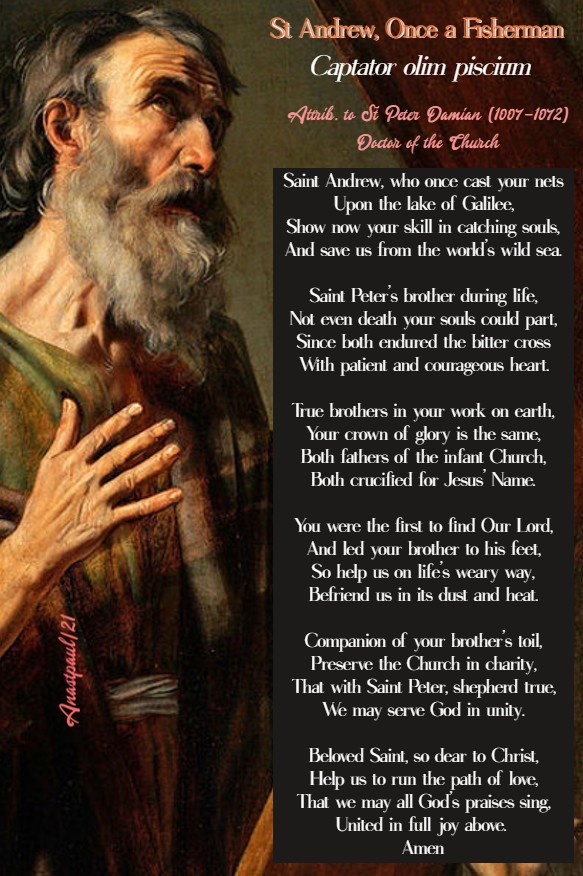
One Minute Reflection – 30 November – The Feast of St Andrew, Apostle of Christ – Readings: Romans 10: 9-18; Psalms 19: 8,-11; Matthew 4: 18-22
“At once they left their nets and followed him.” – Matthew 4:20
REFLECTION – “After Andrew had remained with Jesus (Jn 1:39) and had learned what he did learn, he did not keep his treasure concealed for himself but hastened to run quickly to his brother, Simon Peter, to share with him, the good things that he had received. Consider what he told his brother: “We have found the Messiah (which interpreted is Christ)” (Jn 1:41). Do you perceive, in these words, the fruit of what he had learned in such a short time? It shows, at once, the authority of the Teacher who taught His disciples and their own enthusiasm and will to learn from Him, since the very beginning.
Indeed Andrew’s eagerness, his zeal in wanting to spread immediately such a good news, supposes a soul who was longing to see the accomplishment of the many prophecies concerning Christ. It is a mark of brotherly kindness, of loving kinship, of genuine goodwill, to hasten to stretch out a helping hand to one another in spiritual matters. … ”We have found the Messiah”, he says; not any messiah but “the Messiah,” the one Christ they were awaiting.” – St John Chrysostom (347-407) Father and Doctor of the Church (Homely on the Gospel of Saint John, 19,1).
PRAYER – Lord, in Your kindness hear our petitions. You called Andrew the Apostle, to preach the Gospel and guide Your Church in faith. May he always be our friend in Your Presence, to help us with his prayers. We ask this through our Lord Jesus Christ, Your Son, who lives and reigns with You and the Holy Spirit, one God, forever and ever. Amen.
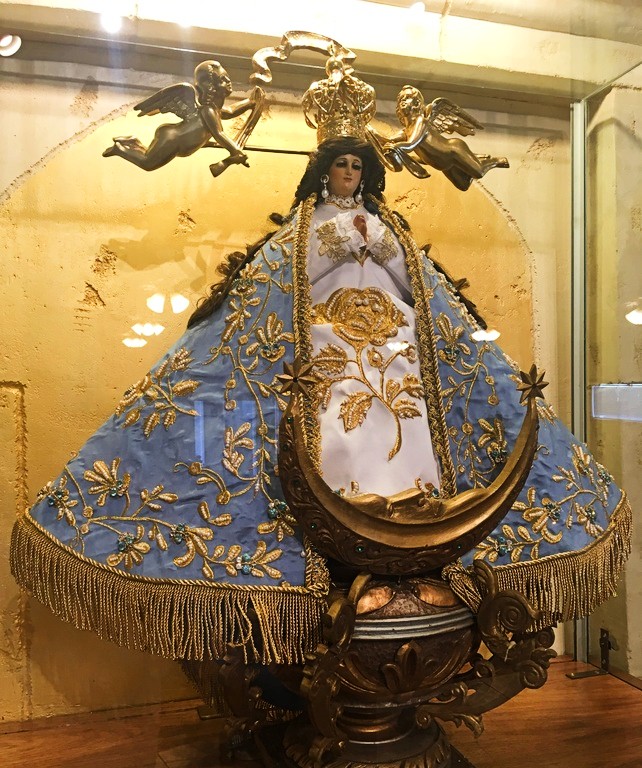
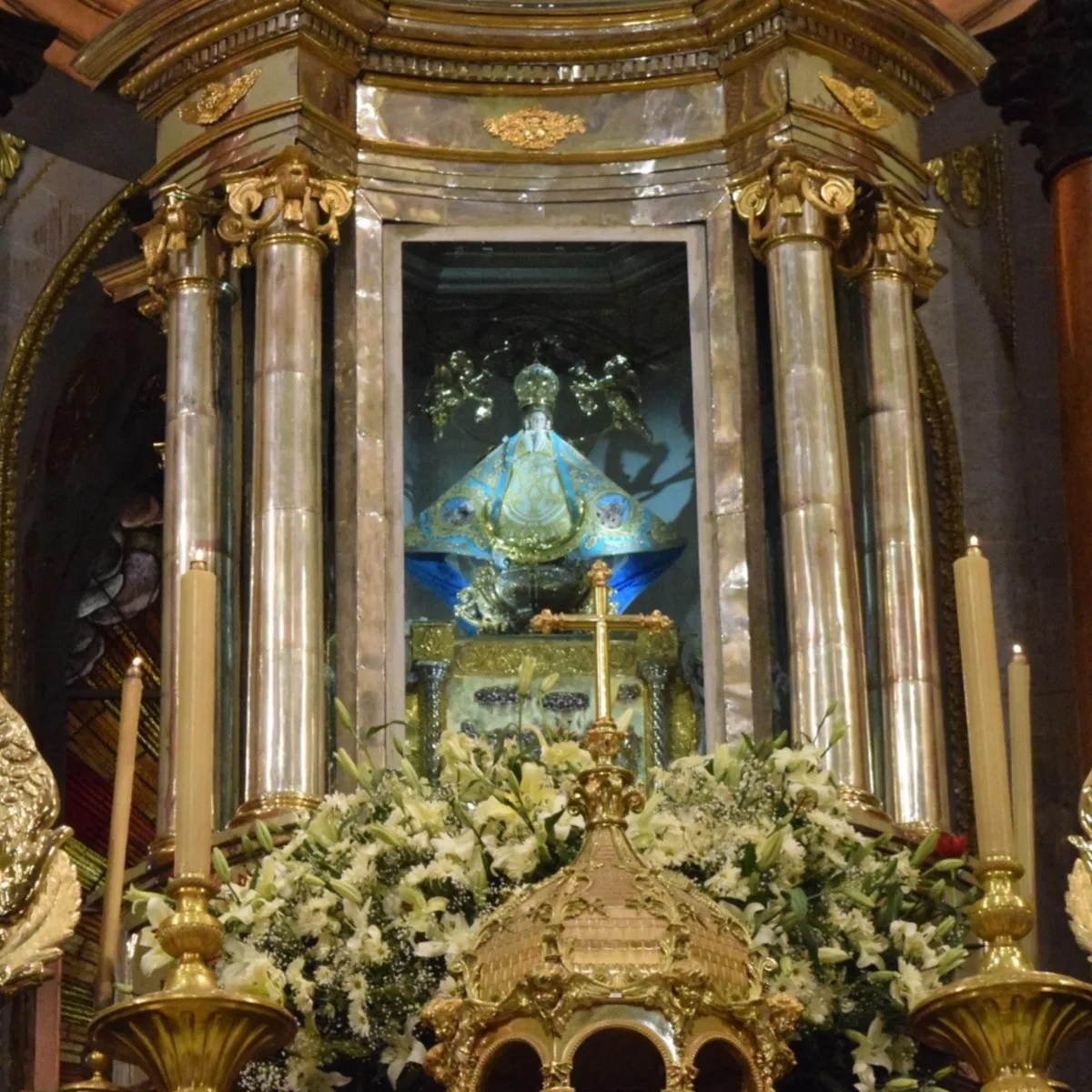
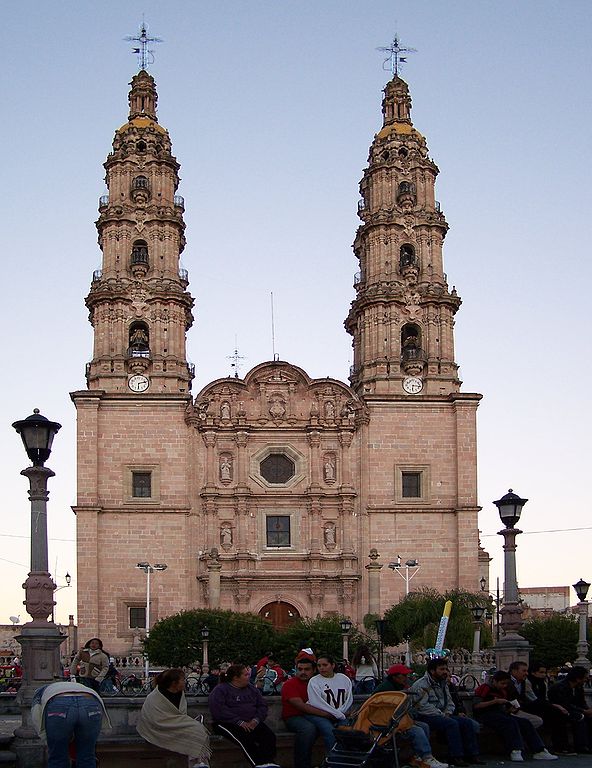
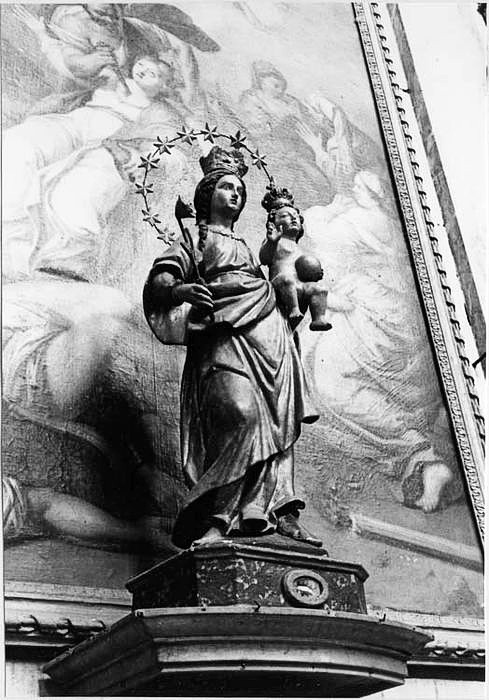
Virgen de la Concepción, San Juan de los Lagos / Mary Immaculate of Saint John of the Lakes, Mexico) (1524) – 30 November, 2 February, 24 June, 15 August, 8 December:
Fray Miguel de Bolonia, of the Spanish Netherlands, was one of the first Franciscans to enter Mexico in 1524. A saintly missionary who learned the native languages and stood up for natives when Spanish rulers threatened them, he travelled through Mexico, teaching and building, until his death in 1580. In 1542, he founded the village of San Juan Bautista de Mezquititlán (land of mesquite trees), where he built a hospital and Chapel in which he placed a half metre tall Statue of Mary Immaculate. In 1623, some trapeze artists brought the body of their daughter to the San Juan Chapel for burial. The young acrobat had fallen during practice onto some upright blades, buried blade side upward, in the earth to ensure the show was more dangerous and exciting. The chapel caretaker, an old woman named Ana Lucia put the Virgin’s Statue on the girl’s breast and the child revived. The grateful father took the fragile Statue, made of cornstalks and glue, to Guadalajara for restoration. From then on, the Shrine’s fame and miracles multiplied.
Meanwhile, the Town grew, changing its name to San Juan de los Lagos (St. John of the Lakes). A new Church was built and then another–each larger, more splendid, more worthy of the Immaculate Virgin. On 30 November, 1769, the Statue was installed in the third Church which is now a Basilica.
San Juan de los Lagos began holding a market fair in commemoration, annually around 30 November with festivities extending to the Feast of the Immaculate Conception, 8 December. The celebration eventually became so rowdy that the hierarchy decided to move the feast of the Virgen de San Juan de los Lagos to 2 February (Candlemas). The Candelaria fiesta has evolved into a month-long, mass pilgrimage to the Shrine from all over Mexico but 8 December is still observed, as well as 15 August (Feast of the Assumption). The beauty of the Sanctuary that hosts the Virgin, has become the main promoter of tourism in the region. After Our Lady of Guadalupe, it is the most visited Shrine in Mexico.
St Abraham of Persia Bl Alexander Crow St Anders of Slagelse Bl Andrew of Antioch Bl Arnold of Gemblours St Castulus of Rome St Constantius of Rome St Crider of Cornwall St Cuthbert Mayne St Domninus of Antioch St Euprepis of Rome Bl Everard of Stahleck Blessed Frederick of Regensburg OSA (Died 1329) Lay Friar of the Order of St Augustine St Galganus St Isaac of Beth Seleucia
Bl Joscius Roseus St Joseph Marchand St Justina of Constantinople Bl Ludwik Gietyngier St Mahanes the Persian St Maura of Constantinople St Merola of Antioch St Mirocles of Milan St Sapor St Simeon of Persia St Thaddeus Liu Ruiting St Trojan St Tudwal of Tréguier Bl William de Paulo Zosimus the Wonder Worker — Martyrs of Saxony – 6 saints: Missionaries who worked with Saint Willehad of Bremen. Martyrs. – Attroban, Benjamin, Emmingen, Folkard, Gerwald and Grisold. They were martyred on 30 November 782 at River Weser, Lawer Saxony, Germany.
Martyred in the Spanish Civil War – Martyred Augustinians of Madrid – 51 beati and Martyred Hospitallers of Madrid – 7 beati – Thousands of people were murdered in the anti-Catholic persecutions of the Spanish Civil War from 1934 to 1939.
Quote/s of the Day – 23 November – The Mmemorial of St Pope Clement I (Died c 101) Martyr, Apostolic Father
“Through Him, our gaze penetrates he heights of heaven and we see, as in a mirror, the most holy Face of God. Through Christ, the eyes of our hearts are opened and our weak and clouded understanding, reaches up toward the light.”
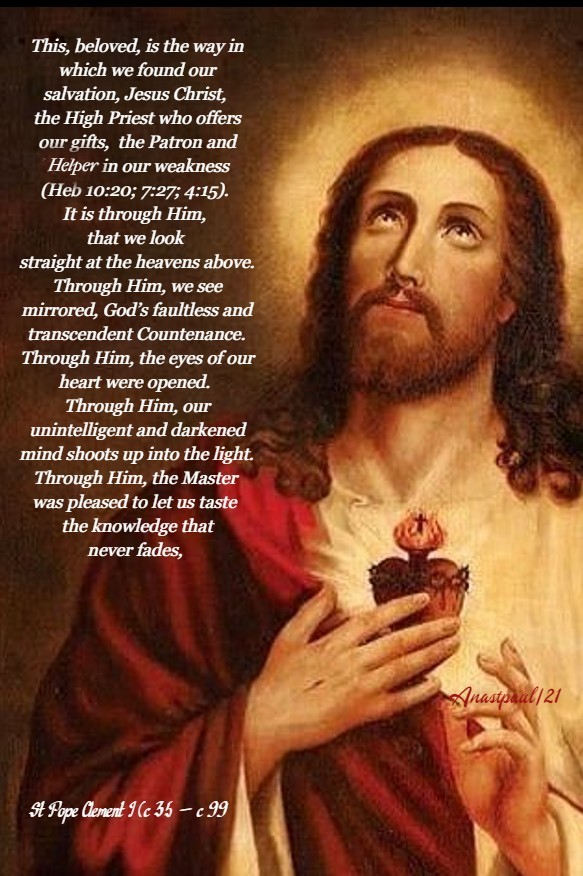
“This, beloved, is the way in which we found our salvation, Jesus Christ, the High Priest Who offers our gifts, the Patron and Helper in our weakness (Heb 10:20; 7:27; 4:15). It is through Him, that we look straight at the heavens above. Through Him, we see mirrored, God’s faultless and transcendent countenance. Through Him, the eyes of our heart were opened. Through Him, our unintelligent and darkened mind shoots up into the light. Through Him, the Master was pleased to let us taste the knowledge that never fades …”
“Charity unites us to God. There is nothing unkind in charity, nothing arrogant. Charity knows no schism, does not rebel, does all things in concord. In charity all the elect of God have been made perfect.”
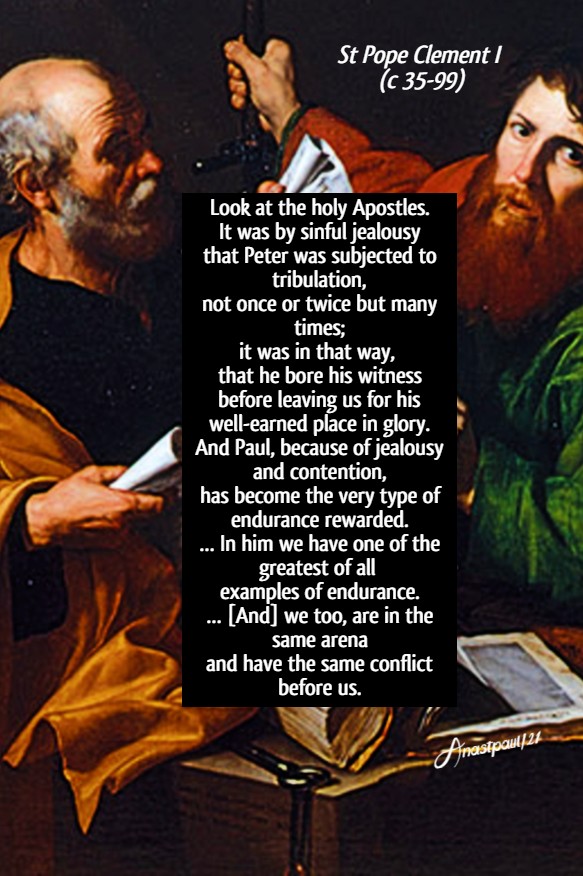
“Look at the holy Apostles. It was by sinful jealousy that Peter was subjected to tribulation, not once or twice but many times; it was in that way, that he bore his witness before leaving us for his well-earned place in glory. And Paul, because of jealousy and contention, has become the very type of endurance rewarded. … In him we have one of the greatest of all examples of endurance. … [And] we too, are in the same arena and have the same conflict before us.”
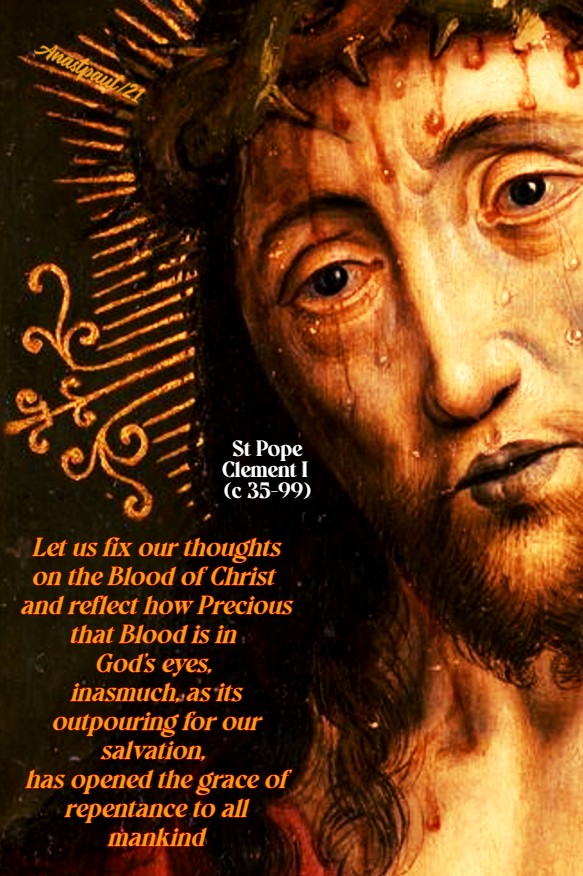
“Let us fix our thoughts on the Blood of Christ and reflect how Precious that Blood is, in God’s eyes, inasmuch, as its outpouring for our salvation, has opened the grace of repentance to all mankind.”
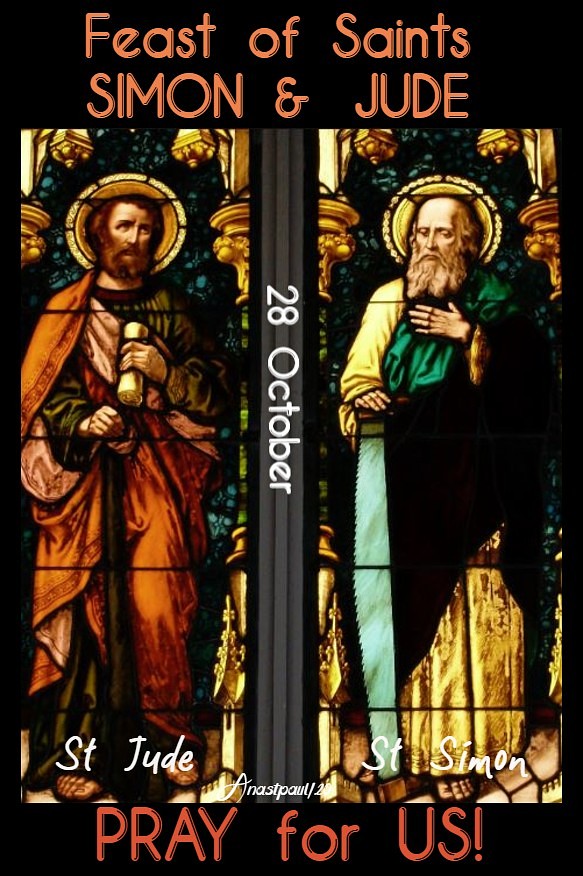
One Minute Reflection – 28 October – Feast of Saints Simon and Jude, Apostles and Martyrs – Readings: Ephesians 2: 19-22; Psalm 19: 2-5; Luke 6: 12-16
“When day came, he called his disciples to himself and from them, he chose Twelve, whom he also named Apostles…” – Luke 6:13
REFLECTION – “Our Lord Jesus Christ has appointed certain men to be guides and teachers of the world and stewards of His Divine Mysteries. Now He bids them to shine out like lamps and to cast out their light, not only over the land of the Jews but over every country under the sun and over people, scattered in all directions and settled in distant lands. That man has spoken truly who said – ‘No-one takes honour upon himself, except the one who is called by God,’ for it was our Lord Jesus Christ who called His own disciples before all others, to a most glorious apostolate. These holy men became the pillar and mainstay of the Truth and Jesus said, that He was sending them, just as the Father had sent Him.
… Accordingly, in affirming that they are sent by Him just as He was sent by the Father, Christ sums up in a few words the approach they themselves should take to their ministry. From what He said they would gather that it was their vocation to call sinners to repentance, to heal those who were sick whether in body or spirit, to seek in all their dealings never to do their own will but the will of Him who sent them and as far as possible, to save the world by their teaching.
Surely, it is in all these respects, that we find His holy disciples striving to excel. To ascertain this is no great labour, a single reading of the Acts of the Apostles or of Saint Paul’s writings is enough.” – St Cyril of Alexandria (376-444) Bishop, Fther & Doctor of the Church (An excerpt from his Commentary on the Gospel of John)
PRAYER – Lord God, You taught us to call upon Your name, through the preaching of the Apostles. Open our eyes each day, grant that we may see Jesus Your Son at our side, open our ears that we may hear His voice, open our mouths, that we may beg forgiveness and proclaim the good news, as we follow the way Your Son carved out for us. At the intercession of Sts Simon and Jude, may Your Church continue to grow and to hope in Your love. We make our prayer through Jesus our Lord, with the Holy Spirit, God forever, amen.
Our Morning Offering – 28 October – Feast of Saints Simon and Jude Apostles
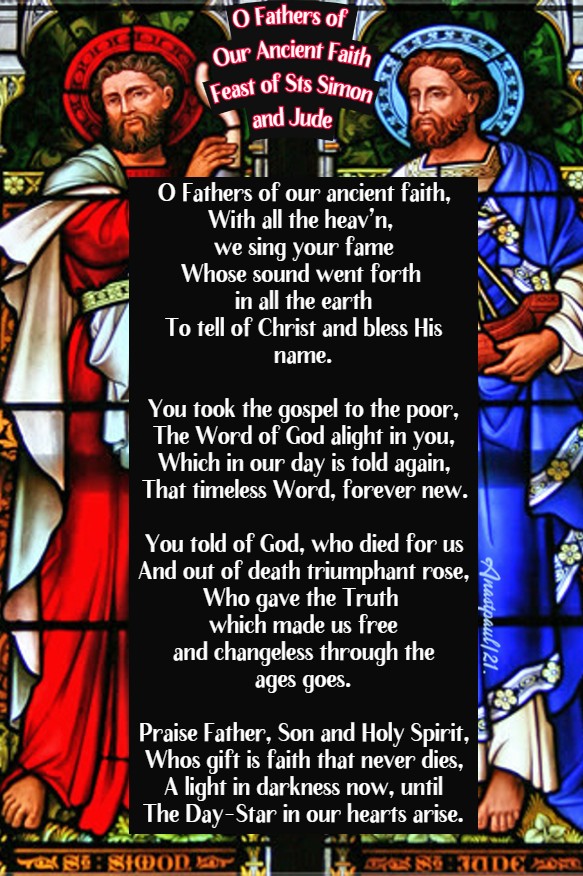
O Fathers of Our Ancient Faith
O Fathers of our ancient faith, With all the heav’n, we sing your fame Whose sound went forth in all the earth To tell of Christ and bless His name.
You took the gospel to the poor, The Word of God alight in you, Which in our day is told again, That timeless Word, forever new.
You told of God, who died for us And out of death triumphant rose, Who gave the Truth which made us free and changeless through the ages goes.
Praise Father, Son and Holy Spirit, Whos gift is faith that never dies, A light in darkness now, until The Day-Star in our hearts arise.
O Fathers of Our Ancient Faith is written by the Benedictine Nuns of Stanbrook Abbey. In the Divine Office (1974) it is sung at Morning Prayer in the Common of Apostles. It is set to the anonymous tune associated with the 7th century Latin hymn, Creator Alme Siderum.
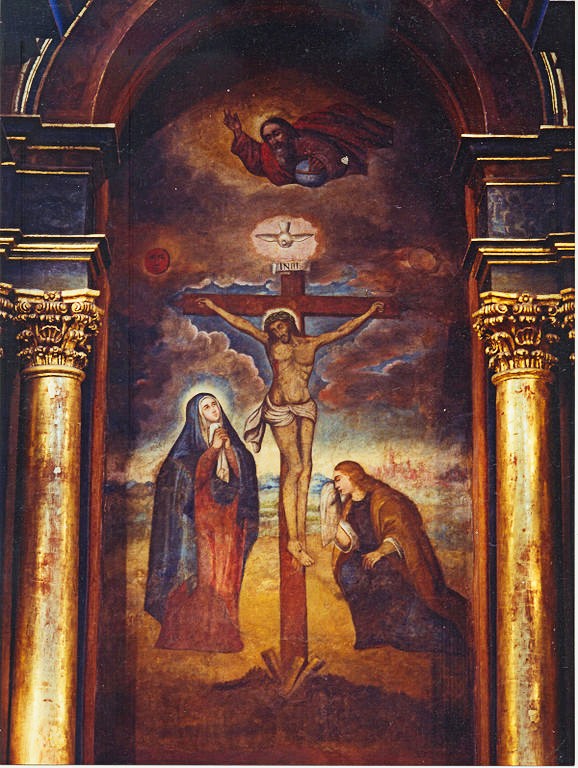
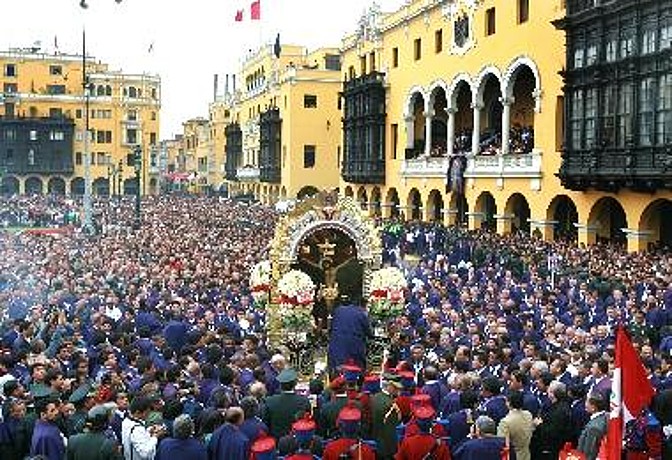
Lord of Miracles/Señor de los Milagros de Nazarenas – A mid-17th-century painting of the Crucifixion that is venerated in Lima, Peru and its celebration involves one of the largest processions in the world.
It was painted by an unnamed African taken to Peru as a slave from what is now Angola. Above the Cross is the Holy Spirit and God the Father. Below and to the right of Jesus, is His mother, the Virgin Mary with her heart pierced by a sword of sorrow. Kneeling and weeping at the foot of the cross is St Mary Magdalene.
The name originated on 13 November 1655 when everything around it was destroyed in an earthquake that left the painting standing and undamaged. Christ is shown enduring the pain of Crucifixion. Every year in October, hundreds of thousands of devotees from all races and economic backgrounds participate in a procession honouring the image through the streets of Lima. Boulevards are decorated in purple on 18,19 and the final Feast 28 October to celebrate the Lord of Miracles.
Notre-Dame de Vivonne / Our Lady of Vivonne, Savoy, France – 28 October:
The Abbot Mathieu Orsini wrote: “Our Lady of Vivonne, in Savoy, where a miraculous image is venerated, which was found by a ploughman while preparing his field for the spring planting.”
Vivonne is a village in France having a population of somewhat less than 5,000 inhabitants and located about 20 kilometers south of Poitiers. It is situated on a rocky height looking down upon the three rivers that flow through the region. There are apparently two Churches in the village, the better known church being the Church of Saint George, on which construction began in the twelfth century. The other Church is Our Lady of Sais-les-Vivonne. According to tradition, a farmer was ploughing his field when he overturned something peculiar in the sod. To his great surprise, the man found the object was a Statue of the Blessed Virgin Mary. The good farmer took the Statue, now known as Our Lady of Vivonne, or Notre-Dame de Vivonne, to his home. After lovingly cleaning the debris from the Statue, the farmer took it to the local Church and gave it to the Parish Priest. The Priest immediately placed the Statue in the Church later that same day. The next morning when he returned to the Church, he found that the Statue was missing. After much inquiry and searching the farmer found the Statue was once again in his field. The man returned it to the Church but once again it disappeared from its place, only to be found again in the field. This occurred a total of three times before it was decided to build a Shrine where it had been found. The strange phenomenon brought people from near and far to the Shrine. Soon the image proved to be miraculous and pilgrimages began. The Church which was built to honour the image of Our Lady was given to the Carmelite Order. I can find no images of this Church online.
St Abdias of Babylon St Abraham of Ephesus St Alberic of Stavelot St Anastasia the Elder St Anglinus of Stavelot St Cyril of Rome St Cyrilla of Rome St Diomedes the Younger St Dorbhene of Iona St Eadsin of Canterbury (Died 1050) Archbishop of Canterbury St Elius of Lyon St Faro of Meaux
St Genesius of Thiers St Gioan Dat St Godwin of Stavelot St Maria Ascuncion St Remigius of Lyons St Rodrigo Aguilar Aleman St Salvius of Amiens — Martyrs of Avila – 3 saints: Two sisters and a brother who, during a period of persecution, fled Talavera de la Reina, Spain, were caught and executed. Martyrs: Christeta, Sabina and Vincent. 303 in Avila, Spain.
Martyred in the Spanish Civil War: • Blessed Claudio Julían García San Román • Blessed Maria Asuncion
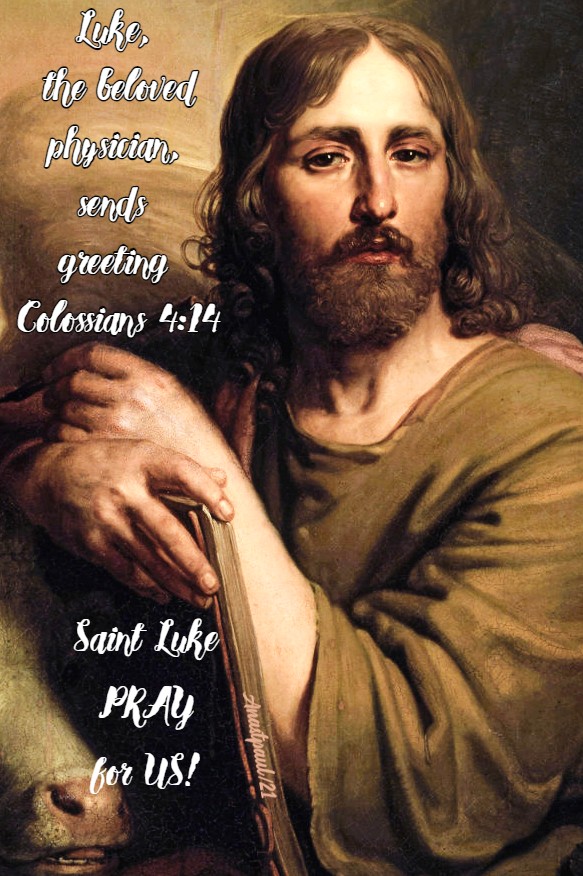
Quote/s of the Day – 18 October – The Feast of St Luke the Evangelist
“Luke, the beloved physician, sends greetings … ”
Colossians 4:14
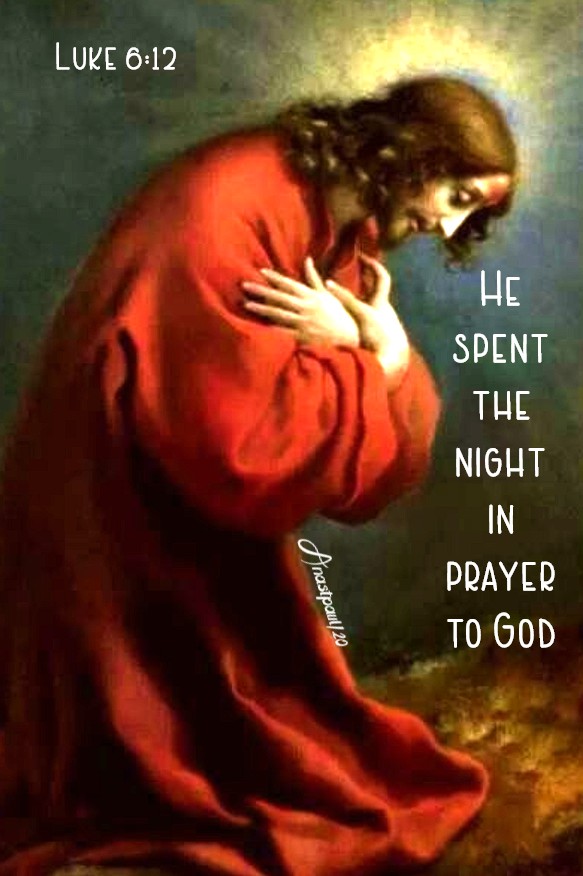
“He spent the night in prayer to God.”
Luke 6:12
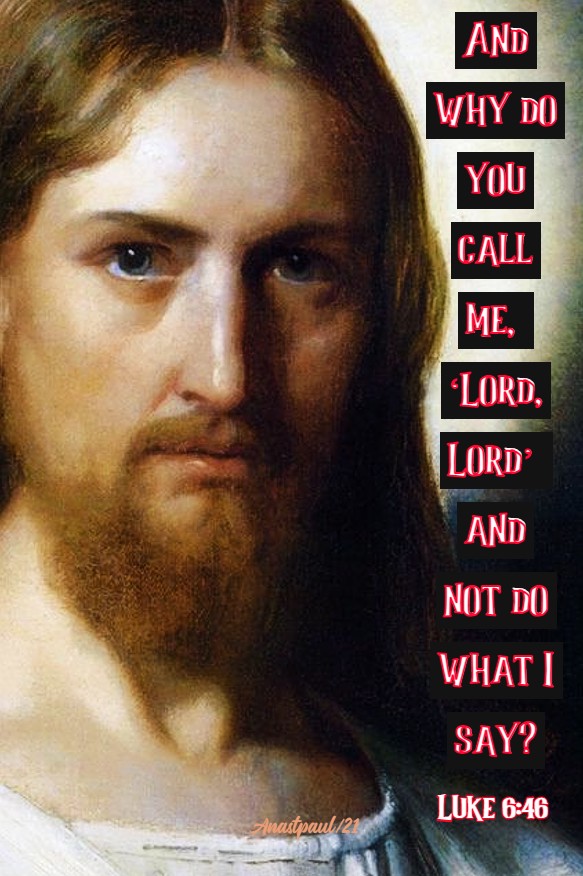
“And why do you call me, ‘Lord, Lord’ and not do what I say?”
Luke 6:46
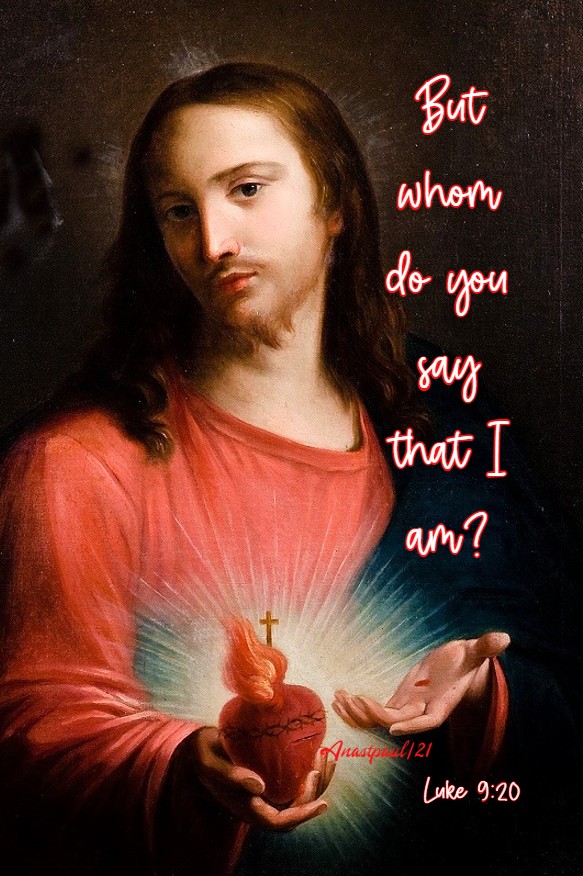
“But whom do you say that I am?”
Luke 9:20
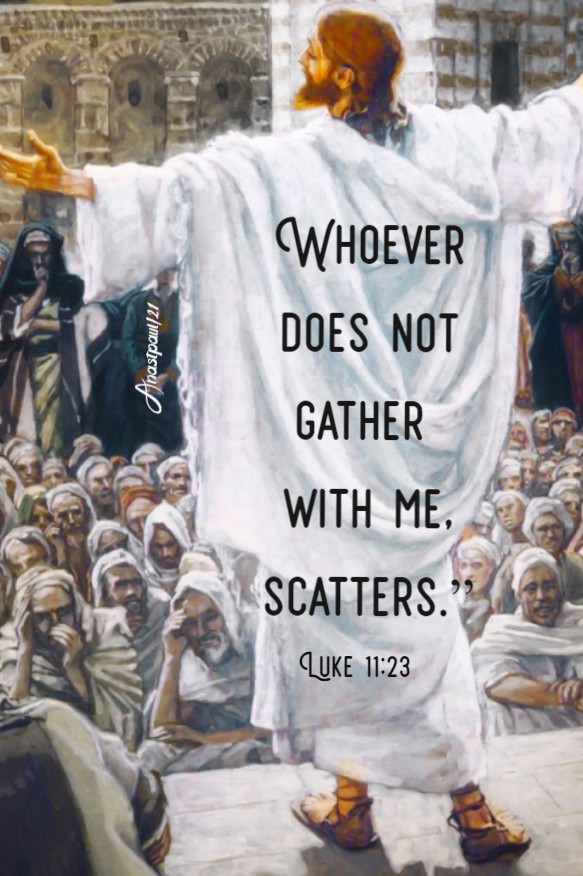
“Whoever does not gather with me, scatters.”
Luke 11:23
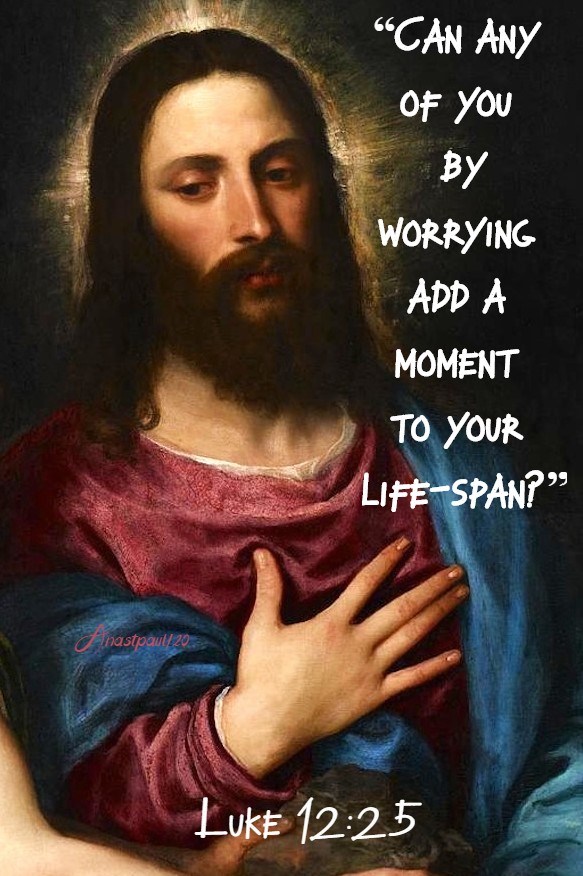
“Can any of you by worrying, add a moment to your lifespan?”
Luke 12:25
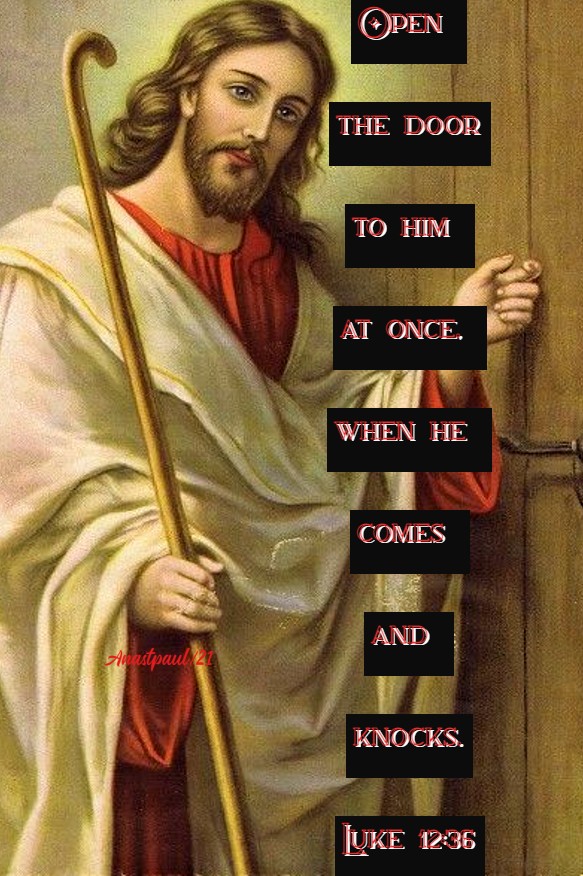
“Open the door to him at once, when he comes and knocks.”
Luke 12:36
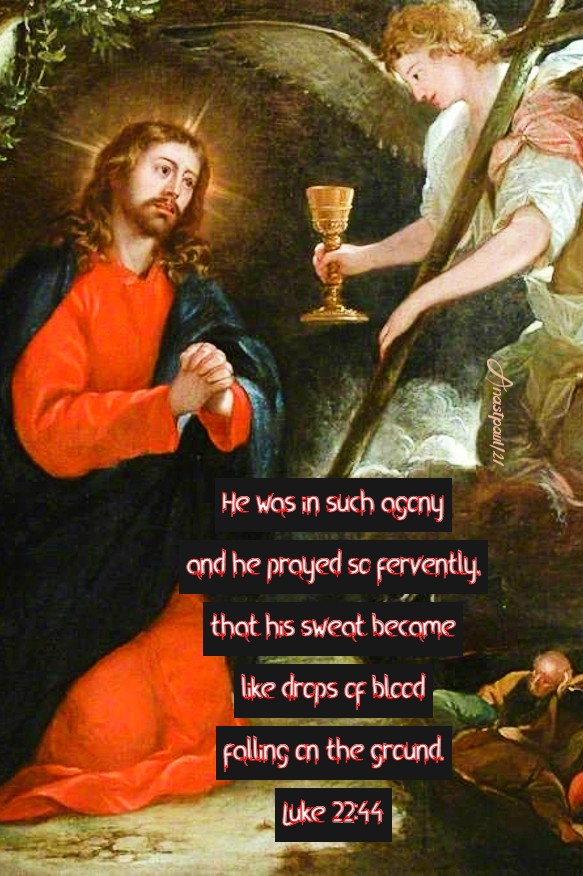
“He was in such agony and he prayed so fervently, that his sweat became like drops of blood falling on the ground.”
Luke 22:44
(St Luke, as a Medical Doctor is the only Evangelist who describes Jesus sweating blood. This video mentions the medical explanation for this occurrence).
One Minute Reflection – 18 October – The Feast of St Luke the Evangelist, Gospel: Luke 10:1-9
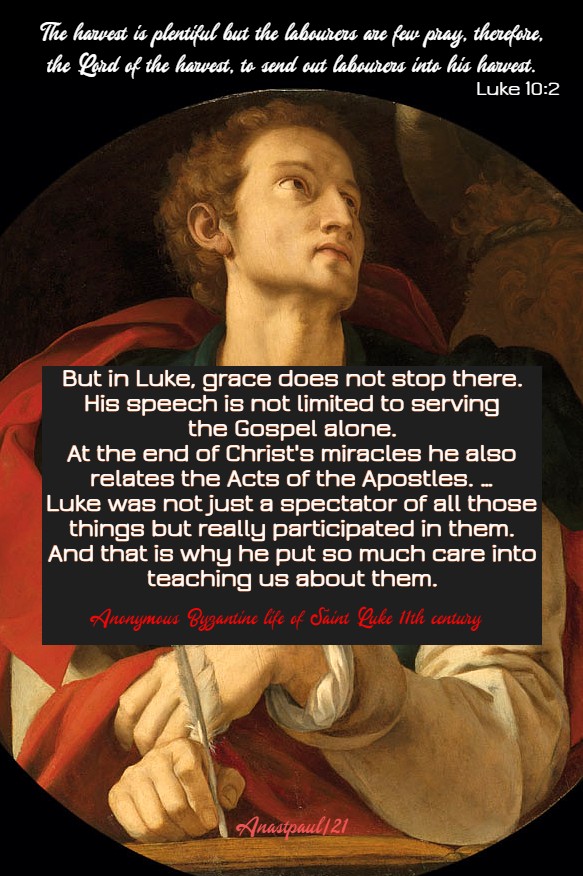
“And he said to them, “The harvest is plentiful but the labourers are few, pray therefore, the Lord of the harvest, to send out labourers into his harvest.” – Luke 10:2
REFLECTION – “When, after abandoning the darkness of error to bind himself to God’s love, Paul was joined to the number of the disciples, Luke went with him everywhere and became his travelling companion (Acts 16:10 f.). … He got on with him so well, was so close to him and shared all his graces so nearly, that Paul, in writing to the faithful, called Luke his “beloved” (Col 4:14). From Jerusalem and the country round about, as far as Dalmatia, (Rom 15:19) he preached the Gospel with him. From Judea to Rome he shared the same chains with him, the same work, the same difficulties, the same shipwrecks. He desired to receive the same prize with him since he had shared the same labours.
Having acquired the gift of preaching along with Paul and won over and led so many peoples to the love of God, Luke truly seemed like the Saviour’s loving and beloved disciple, in addition to being the Evangelist who wrote his sacred history. For formerly he had followed the Lord (cf. Lk 10:1), gathered together the testimonies of his first servants (Lk 1:1) and received inspiration from on high. It was this Evangelist who related the mystery of Gabriel, the messenger sent to the Virgin to announce joy to the whole world. It was he who told in full, the birth of Christ, showing us the newborn child lying in a manger and describing shepherds and Angels shouting for joy. … He reports the parabolic teachings in greater number than the other Evangelists. And just as he makes known to us the descent of the Word of God to earth, so too, he describes his Ascension to heaven and return to the Father’s throne (24:51). …
But in Luke, grace does not stop there. His speech is not limited to serving the Gospel alone. At the end of Christ’s miracles he also relates the Acts of the Apostles. … Luke was not just a spectator of all those things but really participated in them. And that is why he put so much care into teaching us about them.” – Anonymous Byzantine life of Saint Luke – 11th century (Saint Luke, Evangelist and companion of Paul – 6-7; PG 115, 1134-1135).
PRAYER – O Lord, we beseech Thee, that Luke, Thy holy Evangelist, who for the honour of Thy Name bore continuously in his body the suffering of the Cross, may intercede on our behalf. Through the same Jesus Christ, Thy Son our Lord, Who lives and reigns with Thee, in the unity of the Holy Ghost, God, world without end. Amen (Collect).
Our Morning Offering – 18 October – The Feast of St Luke, the Evangelist
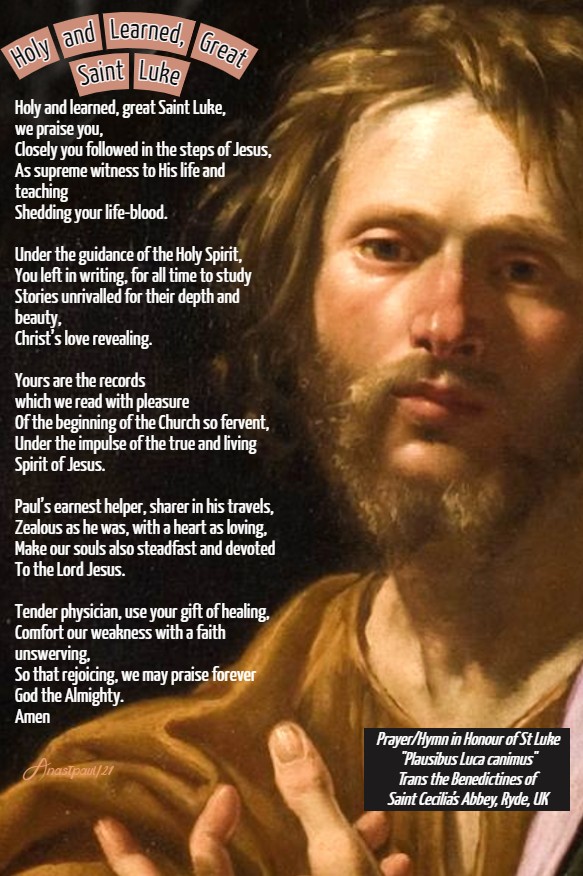
Holy and Learned, Great Saint Luke Prayer/Hymn in Honour of St Luke “Plausibus Luca canimus” Trans the Benedictines of Saint Cecilia’s Abbey, Ryde, UK
Holy and learned, great Saint Luke, we praise you, Closely you followed in the steps of Jesus, As supreme witness to His life and teaching Shedding your life-blood.
Under the guidance of the Holy Spirit, You left in writing, for all time to study Stories unrivalled for their depth and beauty, Christ’s love revealing.
Yours are the records which we read with pleasure Of the beginning of the Church so fervent, Under the impulse of the true and living Spirit of Jesus.
Paul’s earnest helper, sharer in his travels, Zealous as he was, with a heart as loving, Make our souls also steadfast and devoted To the Lord Jesus.
Tender physician, use your gift of healing, Comfort our weakness with a faith unswerving, So that rejoicing, we may praise forever God the Almighty. Amen
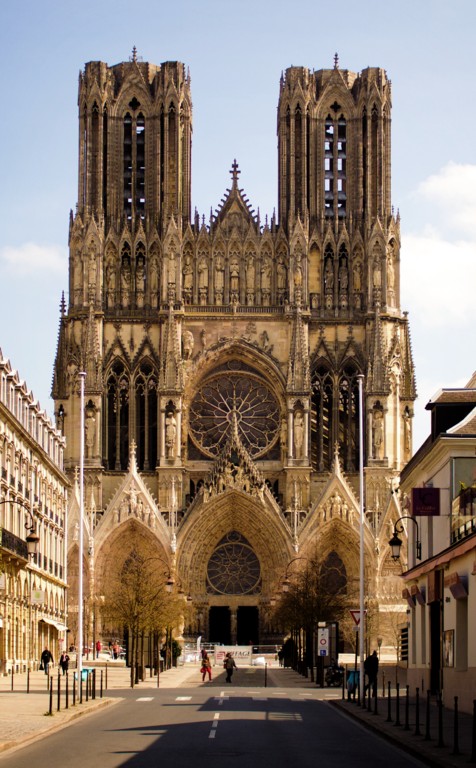
Notre-Dame de Reims / Our Lady of Rheims – Dedication of the Church of Our Lady of Rheims (405) built by St Nicasius – 18 October:
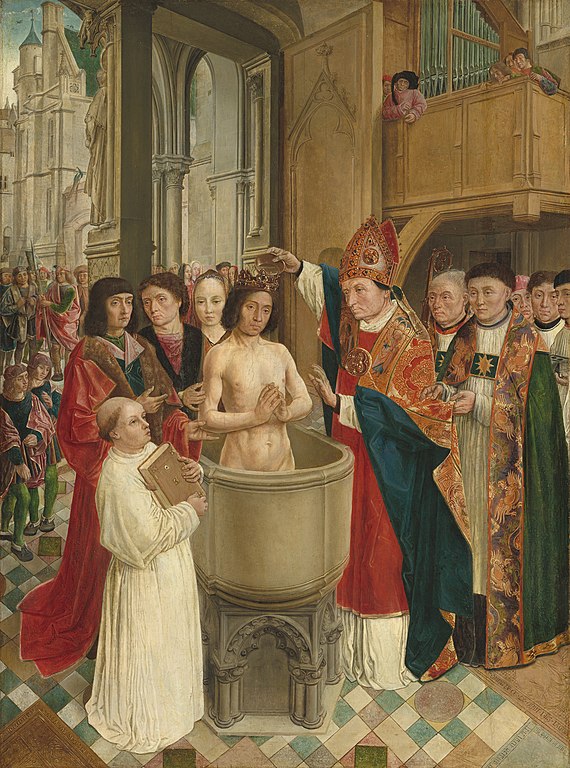
Dedication of Our Lady of Rheims, built by St Nicasius (died c 407), Archbishop of that City period in the year 405. It was Saint Nicasius who prophesised that France would be invaded by the Vandals, telling the people of Rheims to prepare themselves. When the Vandals finally arrived at the City gates, St Nicasius went out to meet them with his sister, a faithful deaconess. All were killed but their sacrifice gave time for more of the people of Rheims to flee to safety. It is interesting to note, that when St Nicasius was beheaded he was praying Psalm 119. He was slain at the moment when he reached the phrase “Adhaesit pavimento anima mea,” which means, “my soul is attached to dust.” After he was decapitated, his head struck the ground and he miraculously continued the psalm, saying: “Vivifica me, Domine, secundum verbum tuum,” which means, “revive me, Lord, with your words.” This was the Church where King Clovis humbly confessed his belief in the Triune God and was baptised by St Regimius in 496 and where, all of the subsequent French Kings were crowned. In the Gallery of the Kings there is a magnificent painting of the baptism of King Clovis surrounded by images of all of his successors.
The Baptism of King Clovis by the Master of Saint Giles (16th cent)
This Church, having fallen to ruins, was later rebuilt by Ebo and Hincmar. It was finished in the year 845 and still remains a place of pilgrimage to the Mother of God. At one time enemies of the Cathedral chapter set fire to a monastery of Rheims. Among the relics which the sacristan tried to save was an ivory statue of the Virgin, containing some of her hair. The sacristan prayed fervently to the Virgin that she would preserve this relic. The Abbot, entering the ruins of the Church, found the Statue upright and unharmed as if placed there reverently. From thence forward, the image was believed to be miraculous. The present Cathedral takes the place of the older churches, the previous one having been damaged by fire in 1210. It was not completed until the 14th century, and is the beautiful Gothic Cathedral that can still be seen today, after much restoration work after the bombardments of WWI and II.
St Acutius of Pozzuoli St Amabilis of Auvergne (c 397- c 475) Priest, Confessor St Asclepiades of Antioch St Athenodorus St Brothen Bl Burchard I St Cadwaladr of Brittany Bl Domenico of Perpignano St Eutychius of Pozzuoli St Gwen St Gwen of Tagarth St Gwendoline
Bl Margherita Tornielli St Monon of Nassogne St Proculus of Pozzuoli Bl Theobald of Narbonna St Tryphonia of Rome — Martyrs of Africa – 9 saints: A group of Christians martryed together in Africa. The only details that have survived are the names – Beresus, Dasius, Faustinus, Leucius, Lucius, Martialis, Victoricus, Victrix and Viktor. They were martyred in c.300 in Africa.
Martyred in the Spanish Civil War: • Blessed Alfredo Almunia López-Teruel • Blessed Francisco Roselló Hernández • Blessed Isidro Juan Martínez
Thought for the Day – 16 October – Meditations with Antonio Cardinal Bacci (1881-1971)
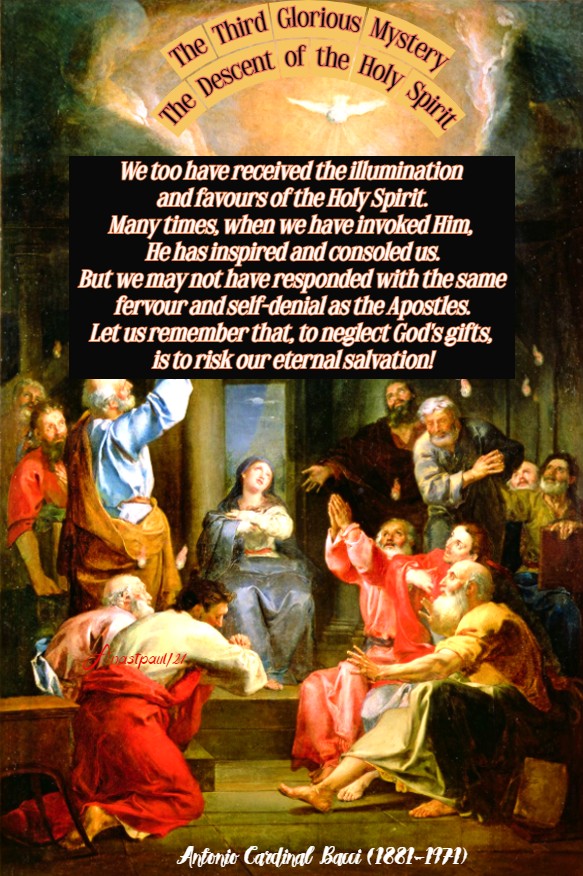
“Month of the Holy Rosary” The Third Glorious Mystery The Descent of the Holy Spirit
“The Apostles were completely transformed after the feast of Pentecost. They had ben ignorant rustics, timid and vacillating. They had hardly understood at all, the lofty teachings of Christ, for they were hoping still for an earthly kingdom in which they would occupy the highest posts.
When they received the Holy Spirit, however, their minds were flooded with supernatural light and they became heroic in their resolution. Ignorant, though they had been, they became masters of Truth, far superior to the sages of Athens or the philosophers of Rome. They were no longer timid and hesitating but, fearlessly encountered the power of the Sanhedrin, the whips of the soldiery, the dangers of long voyages and, Martyrdom itself.
We too have received the illumination and favours of the Holy Spirit. Many times, when we have invoked Him, He has inspired and consoled us. But we may not have responded with the same fervour and self-denial as the Apostles. Let us remember that, to neglect God’s gifts, is to risk our eternal salvation!”
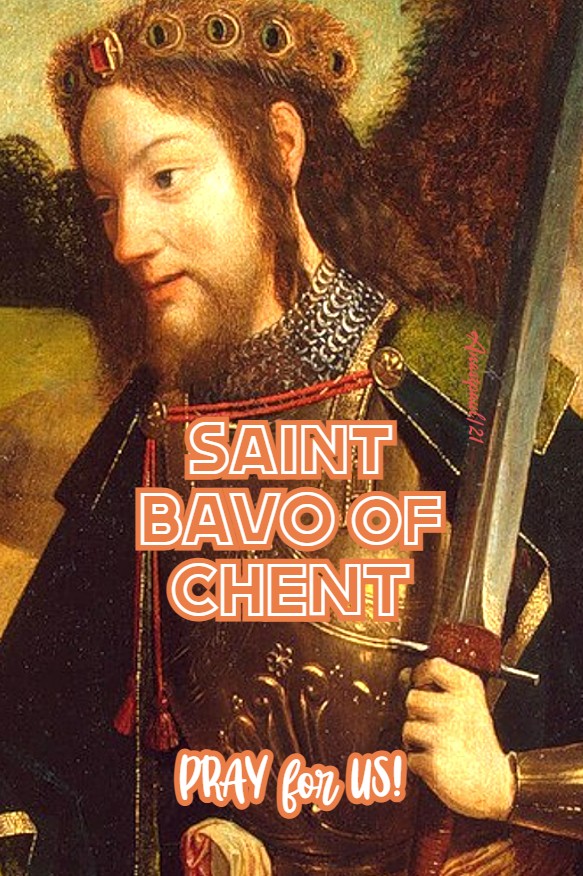
One Minute Reflection – 1 October – “Month of the Most Holy Rosary” – Readings: Baruch 1: 15-22; Psalms79: 1b-5, 8-9; Luke 10: 13-16 and the Memorial of St Bavo of Ghent (c 589–654
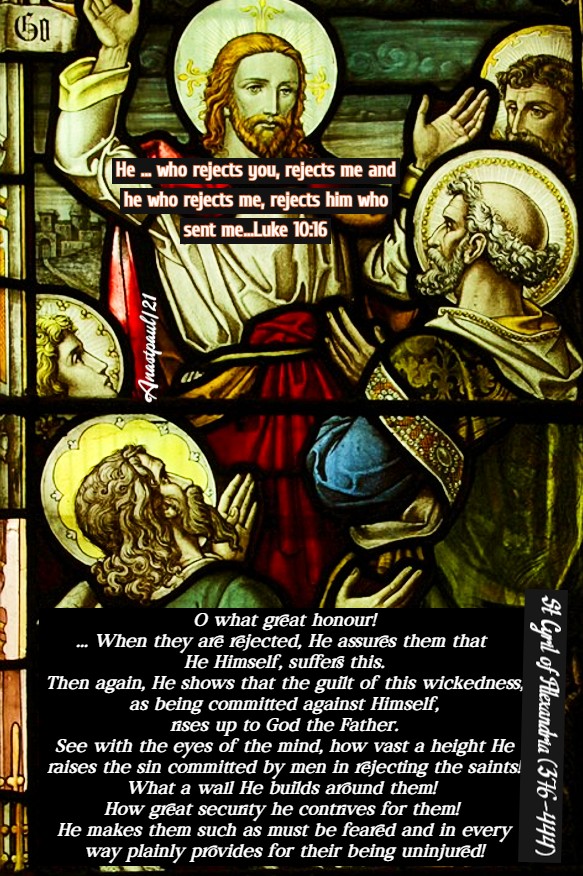
“He who hears you, hears me and he who rejects you, rejects me and he who rejects me, rejects him who sent me” – Luke 10:16
REFLECTION – “Consider the great authority He gave the holy Apostles, how He declared them praiseworthy,and how He decorated them with the highest honours. “He who hears you,” He says, “hears me and he that rejects you, rejects me and he who rejects me, rejects him who sent me.” O what great honour! What incomparable dignities! O what a gift worthy of God! Although men, the children of earth, He clothes them with a godlike glory. He entrusts His Words to them, that they, who resist anything, or venture to reject them, may be condemned. When they are rejected, He assures them that He Himself suffers this. Then again, He shows that the guilt of this wickedness, as being committed against Himself, rises up to God the Father. See with the eyes of the mind, how vast a height He raises the sin committed by men in rejecting the saints! What a wall He builds around them! How great security he contrives for them! He makes them such as must be feared and in every way plainly provides for their being uninjured!” – St Cyril of Alexandria (376-444)Known as ‘The Pillar o Faith,” Archbishop of Alexandria, Father and Doctor of the Incarnation)(Commentary on Luke, Homily 63)
PRAYER – God, our Father, Your promised Your Kingdom to the little ones and the humble of heart. Give us grace to walk confidently in the way of St Bavo of Ghent, so that helped by their prayers, we may see Your eternal glory. Through Christ our Lord, in the unity of the Holy Spirit, one God forever, amen.
One Minute Reflection – 28 September – “Month of the Seven Sorrows of Mary” Readings: Zechariah 8: 20-23; Psalm 87: 1b-7; Luke 9: 51-56
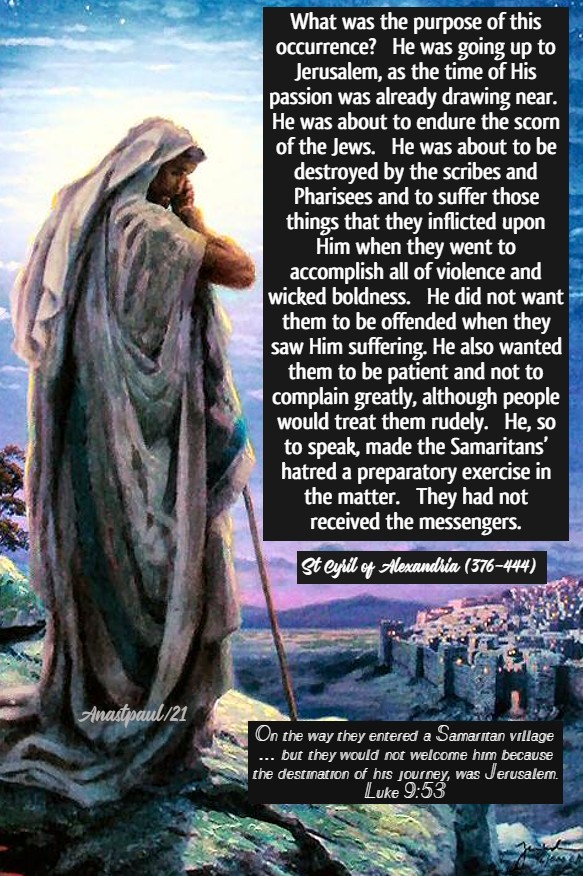
“… On the way they entered a Samaritan village … but they would not welcome him because the destination of his journey, was Jerusalem.” . – Luke 9:53
REFLECTION – “It says, “When the days drew near for him to be received up, he set his face to go to Jerusalem.” This means, that after He would endure His saving Passion for us, the time would come when He should ascend to heaven and dwell with God the Father, so He determined to go to Jerusalem. This is, I think, the meaning of his “set his face.”
It would be false to affirm, that our Saviour did not know what was about to happen because He knows all things. He knew, of course, that the Samaritans would not receive His messengers. There can be no doubt of this. Why then did He command them to go before Him? It was His custom to benefit diligently, the holy Apostles in every possible way and because of this, it was His practice, sometimes to test them…. On this occasion, He also tested them. He knew that the Samaritans would not receive those who went forward to announce that He would stay with them. He still permitted them to go, that this again might be a way of benefiting the holy Apostles.
What was the purpose of this occurrence? He was going up to Jerusalem, as the time of His passion was already drawing near. He was about to endure the scorn of the Jews. He was about to be destroyed by the scribes and Pharisees and to suffer those things that they inflicted upon Him when they went to accomplish all of violence and wicked boldness. He did not want them to be offended when they saw Him suffering. He also wanted them to be patient and not to complain greatly, although people would treat them rudely. He, so to speak, made the Samaritans’ hatred a preparatory exercise in the matter. They had not received the messengers.
For their benefit, He rebuked the disciples and gently restrained the sharpness of their wrath, not permitting them to grumble violently against those who sinned. He rather persuaded them to be patient and to cherish a mind that is unmovable by anything like this.” – St Cyril of Alexandria (376-444) Known as ‘THE PILLAR OF FAITH” Archbishop of Alexandria, Father and Doctor Incarnationis (Doctor of the Incarnation) (Commentary on Luke, Homily 56)
PRAYER – O God of love, You sent Your beloved Son to the world to proclaim the Good News of Salvation, to heal every illness and to cure all infirmity of body and soul. Help us to continue the mission of the merciful Christ in the service towards our neighbour, preaching the Gospel and offering our help in whatever way we can. May the example of Your saints, teach us how to love and serve You. Through their intercession, grant us the grace to go forth in love. We ask this through Jesus Christ our Lord, with the Holy Spirit, one God forever, amen.
One Minute Reflection – 28 September – –“Month of the Seven Sorrows of Mary” – Readings: Haggai 2: 1-9; Psalm 43: 1-4; Luke 9: 18-22
“But whom do you say that I am? Simon Peter answering, said: The Christ of God. … He commanded they should tell this to no man …” – Luke 9:20-21
REFLECTION – “Then he strictly ordered his disciples to tell no-one that he was the Messiah.” Why this order? So that, once all cause of scandal had been set aside, His Cross and Passion accomplished, every obstacle capable of preventing the crowd from believing in Him removed, an exact knowledge of Who He is, might be deeply and permanently engraved in their hearts. His power had not yet shone out in splendour. Before the Apostles were to preach it, He waited until the evidence of the truth and authority of the facts, could confirm their testimony.
Because, it was one thing to be seeing Him now, multiplying miracles in Palestine and then, as the butt of persecution and torture – and the Cross was going to follow these miracles. It was another thing to see Him worshiped, believed in by all the world, saved from the ill-treatment He had undergone before. That is why He suggests they say nothing to anyone… If the Apostles, who had been witnesses of His miracles and had taken part in so many inexpressible Mysteries, had difficulty in accepting a single word about the Passion and Peter himself, amongst them, the head of them all (Mt 16,22), what would the ordinary run of mortals think? After hearing that Jesus was the Son of God, what would they have thought to see Him dirtied by spitting and nailed to the Cross? And this, too, before the coming of the Holy Spirit, when the reason for these Mysteries was not yet known?” – St John Chrysostom (345-407) Bishop of Constantinople, Father & Doctor of the Church (Homilies on Saint Matthew’s Gospel, no.54, 1-3)
PRAYER – Lord God, You hold out the Light of Your Word to those who do not know You. Strengthen in our hearts, the faith You have given us and the Credo we profess, so that no trials may quench the fire Your Spirit has kindled in us. May the intercession of all the Apostles, grant us the grace of following the way of the Cross, to stand beneath it with our afflicted Mother, the Mother of God, Ave Maria! We make our prayer through Jesus Christ with the Holy Spirit, one God forever, amen.
Quote/s of the Day – 22 September – Readings: Ezra 9: 5-9; Tobit 13: 2-4, 7-8; Luke 9: 1-6
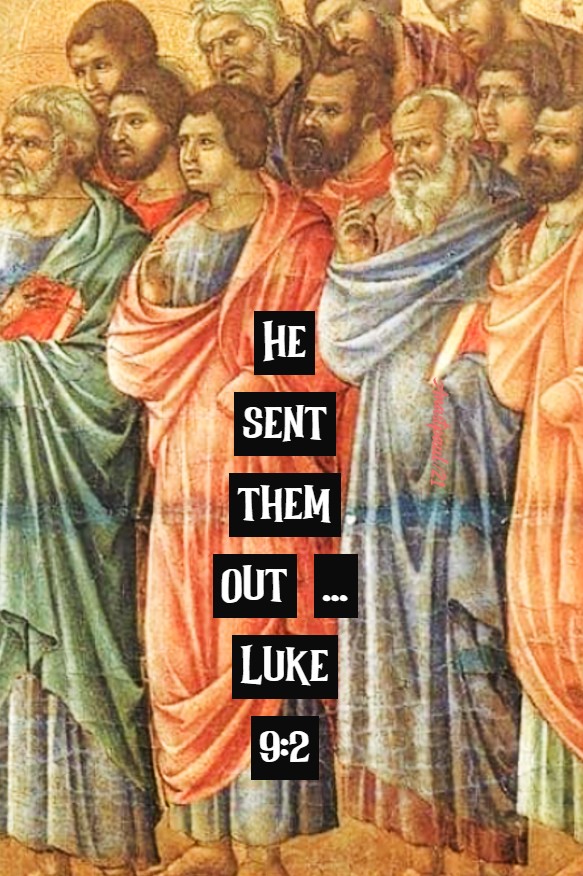
“He sent them out …”
Luke 9:2
“Let your light shine before men.”
Matthew 5:16
“Preach the gospel to every creature”
Mark 16:15
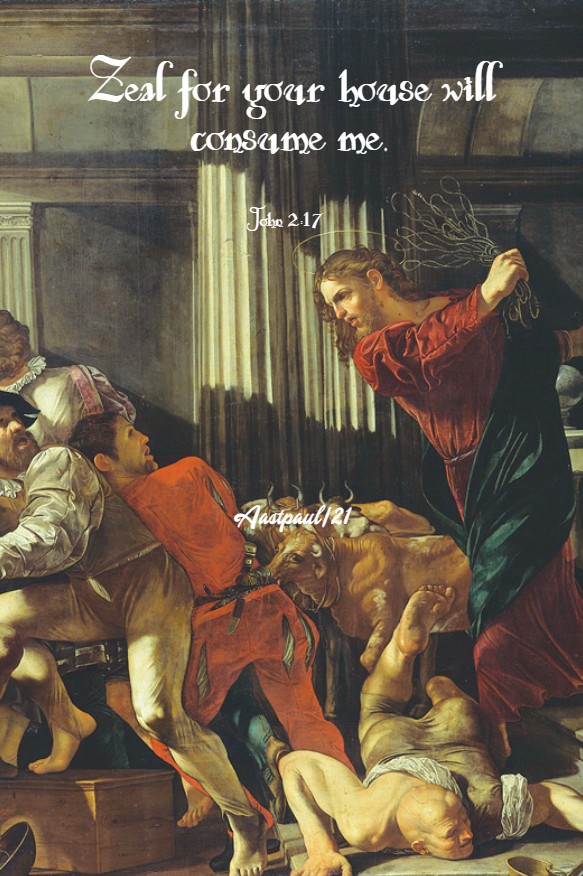
“Zeal for your house will consume me.”
John 2:17
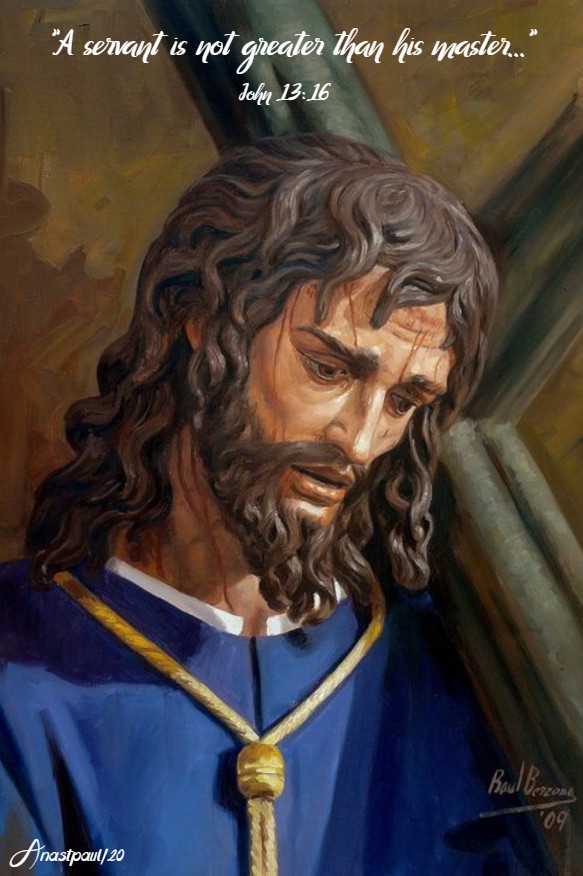
“A servant is not greater than his master, nor is a messenger greater than the one who sent him.”
John 13:16
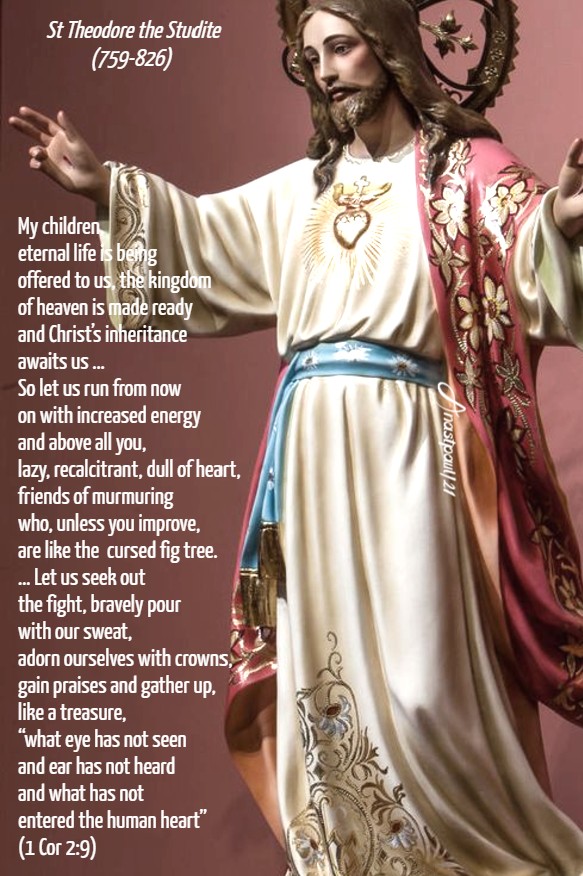
“My children, eternal life is being offered to us, the kingdom of heaven is made ready and Christ’s inheritance awaits us … So let us run from now on with increased energy and above all you, lazy, recalcitrant, dull of heart, friends of murmuring who, unless you improve, are like the cursed fig tree. … Let us seek out the fight, bravely pour with our sweat, adorn ourselves with crowns, gain praises and gather up, like a treasure, “what eye has not seen and ear has not heard and what has not entered the human heart” (1 Cor 2:9).
St Theodore the Studite (759-826)
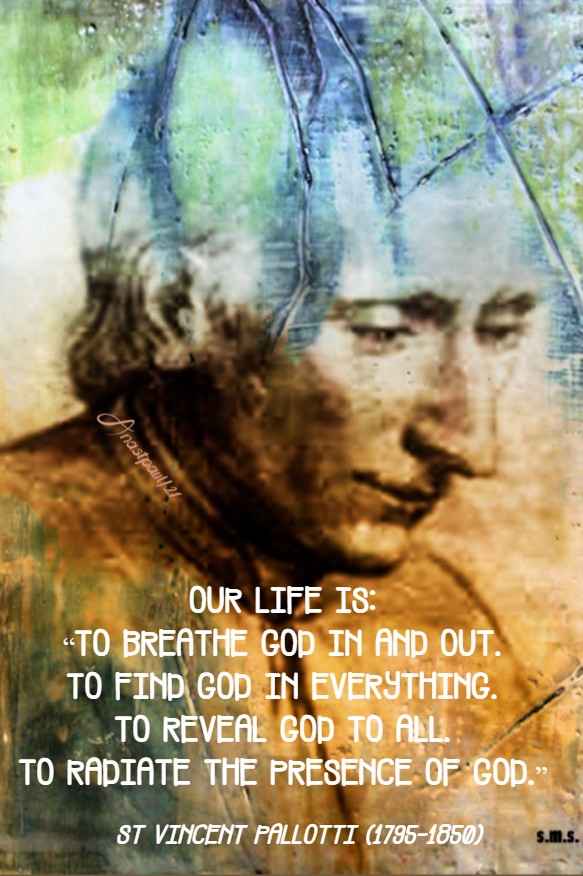
Our life is: “To breathe God in and out. To find God in everything. To reveal God to all. To radiate the presence of God.”
One Minute Reflection – 22 September – “Month of the Seven Sorrows of Mary”- Readings: Ezra 9: 5-9; Tobit 13: 2-4, 7-8; Luke 9: 1-6
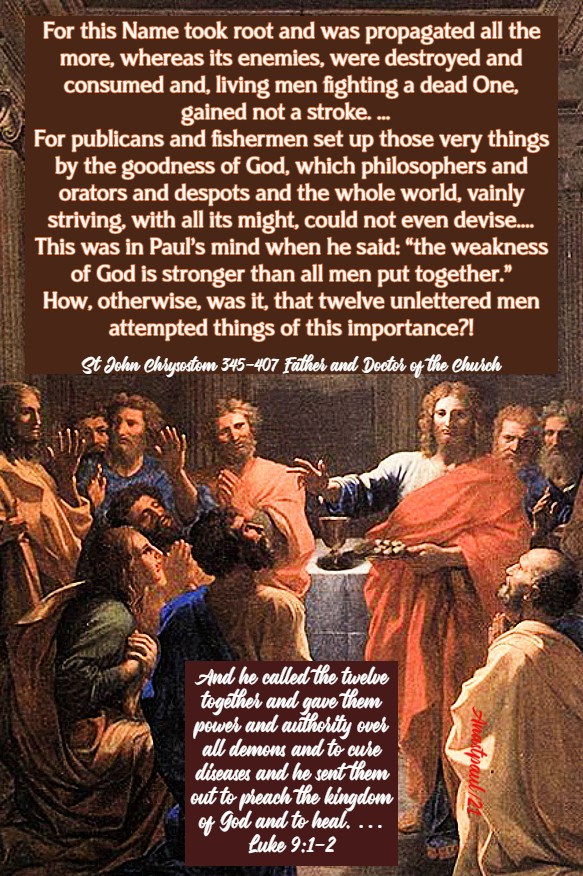
And he called the twelve together and gave them power and authority over all demons and to cure diseases and he sent them out to preach the kingdom of God and to heal. … Luke 9:1-2
REFLECTION – “The foolishness of God is wiser than human wisdom and the weakness of God is stronger than human strength” (1 Cor 1:25). Yes, the Cross is a foolishness and weakness in appearance only … It was through unlearned men that the Cross brought conviction and drew the world to itself. It spoke to men, not of chance things but of God and of piety in the truth, of the Gospel polity, of future judgement and it made uncouth and illiterate men, philosophers. This is how “the foolishness of God is wiser than man and His weakness stronger,” (1 Cor. 1:25).
How is it stronger? It is stronger in that it spread over the whole earth and seized all men by force and, whereas, thousands and thousands did their utmost, to stamp out the Name of the Crucified One, just the contrary came to pass. For this Name took root and was propagated all the more, whereas its enemies, were destroyed and consumed and, living men fighting a dead One, gained not a stroke. … For publicans and fishermen set up those very things, by the goodness of God, which philosophers and orators and despots and the whole world, vainly striving with all its might, could not even devise.… This was in Paul’s mind when he said: “the weakness of God is stronger than all men put together.” How, otherwise, was it, that twelve unlettered men attempted things of this importance?! – St John Chrysostom 345-407) Bishop of Constantinople, Father & Doctor of the Church (4th Homily on 1 Corinthians)
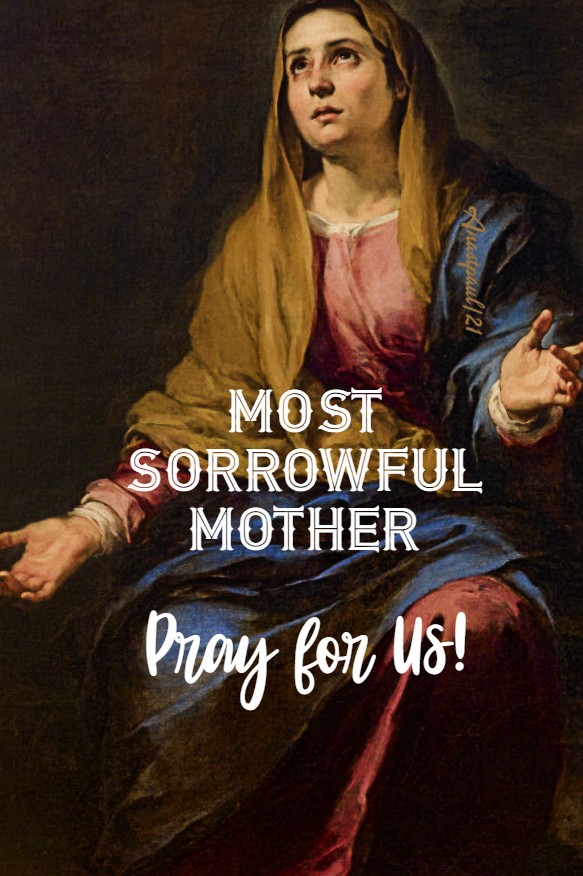
PRAYER – O God of love, You sent Your beloved Son to the world to proclaim the Good News of Salvation, to heal every illness and to cure all infirmity of body and soul. Help us to continue the mission of the merciful Christ in the service towards our neighbour, preaching the Gospel and offering our help in whatever way we can. May the example of suffering of our Blessed Mother Mary, teach us how to love and serve You. Through her intercession, grant us the grace to go forth in love. We ask this through Jesus Christ our Lord, with the Holy Spirit, one God forever, amen.
Quote/s of the Day – 21 September – The Feast of St Matthew, Apostle and Evangelist – Readings: Ephesians 4: 1-7, 11-13; Psalm 19: 2-5; Matthew 9: 9-13
“He said to him, “Follow me.” And he got up and followed him.”
Matthew 9:9
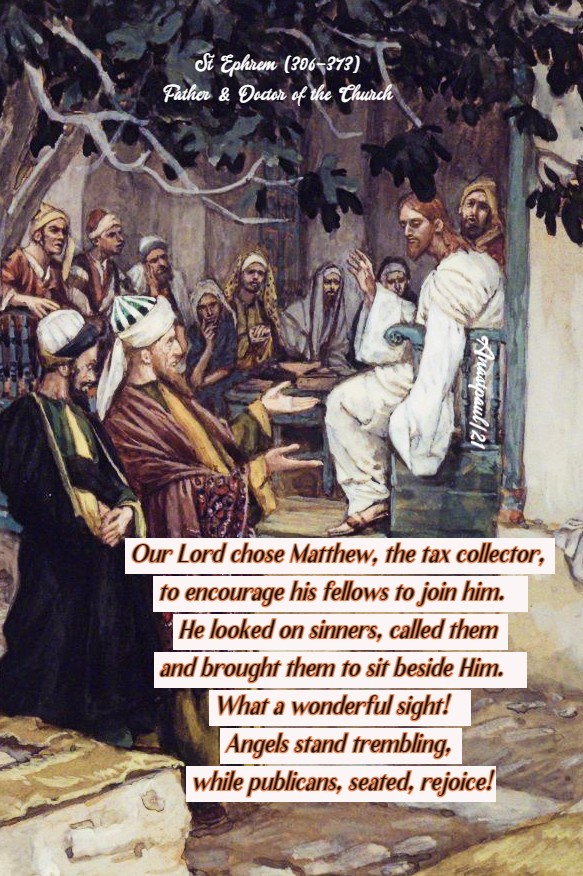
“Our Lord chose Matthew, the tax collector, to encourage his fellows to join him. He looked on sinners, called them and brought them to sit beside Him. What a wonderful sight! Angels stand trembling, while publicans, seated, rejoice!”
St Ephrem (306-373) Father & Doctor of the Church
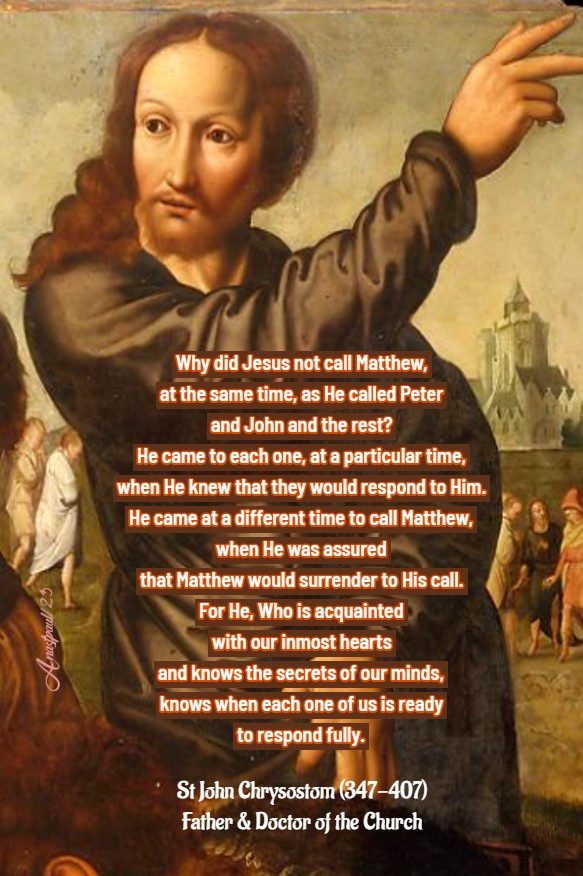
“Why did Jesus not call Matthew at the same time as He called Peter and John and the rest? He came to each one at a particular time when He knew that they would respond to Him. He came at a different time to call Matthew when He was assured that Matthew would surrender to His call. For He Who is acquainted with our inmost hearts and knows the secrets of our minds, knows when each one of us is ready to respond fully.”
St John Chrysostom (347-407) Father & Doctor of the Church
One Minute Reflection – 21 September – The Feast of St Matthew, Apostle and Evangelist- Readings: Ephesians 4: 1-7, 11-13; Psalm 19: 2-5; Matthew 9: 9-13
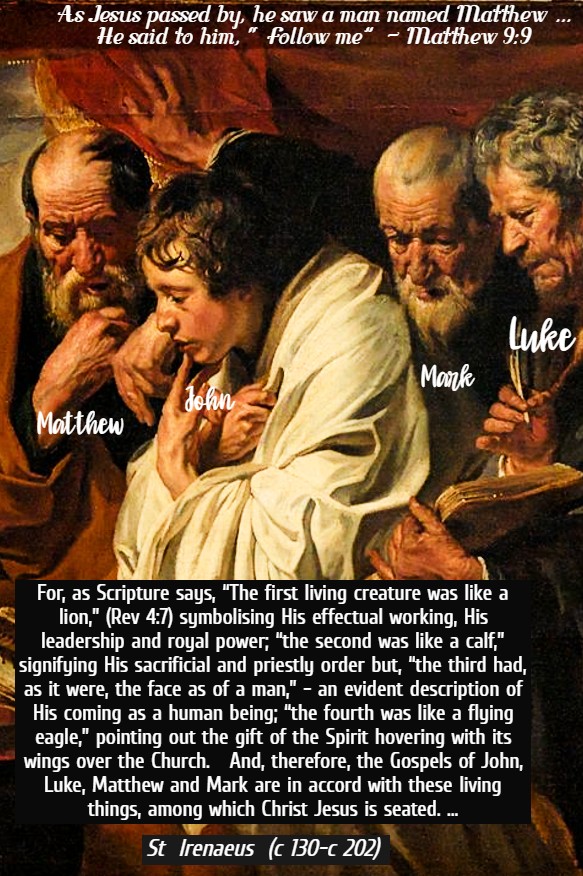
“As Jesus passed by, he saw a man named Matthew sitting at the customs post. He said to him, “Follow me.”And he got up and followed him.” – Matthew 9:9
REFLECTION – “It is not possible that the Gospels can be either more or fewer in number than they are. There are four zones of the world in which we live and four principal winds and the Church is scattered throughout all the world and her “pillar and ground” (1 Tm 3:15) is the Gospel and the Spirit of life; therefore, it is fitting that she should have four pillars, breathing out immortality on every side and vivifying us afresh. The Word, the Shaper of all things, Who sits upon the cherubim and upholds all things (Ps 79:2; Heb 1:3), Who was manifested to men, has given us the Gospel under four aspects but bound together by One Spirit. David says, when entreating this manifestation, “You that sit between the cherubim, shine forth.”(Ps 79:2) For the cherubim, too, were four-faced (Ez 1:6) and their faces were images of the dispensation of the Son of God.
For, as Scripture says, “The first living creature was like a lion,” (Rev 4:7) symbolising His effectual working, His leadership and royal power; “the second was like a calf,” signifying His sacrificial and priestly order but, “the third had, as it were, the face as of a man,” – an evident description of His coming as a human being; “the fourth was like a flying eagle,” pointing out the gift of the Spirit hovering with its wings over the Church. And, therefore, the Gospels of Mark, Luke, Matthew and John, are in accord with these living things, among which Christ Jesus is seated. …
Such was the form of the living creatures, so was also the character of the Word of God Himself – the Word of God Himself conversed with the patriarchs before Moses, in accordance with His divinity and glory but, for those under the law, He instituted a priestly and liturgical service. Afterwards, being made Man for us, He sent the gift of the Spirit over all the earth, protecting us with His Wings (Ps 16:8). … These things being so, all who reject the form the Gospel has taken – that is, those who say the Gospels should be more or fewer in number – are futile, ignorant, and presumptuous.” – St Irenaeus of Lyons (c 130-c 202) Bishop, Theologian and Martyr – (Against Heresies c. Book III, 11, 8-9).
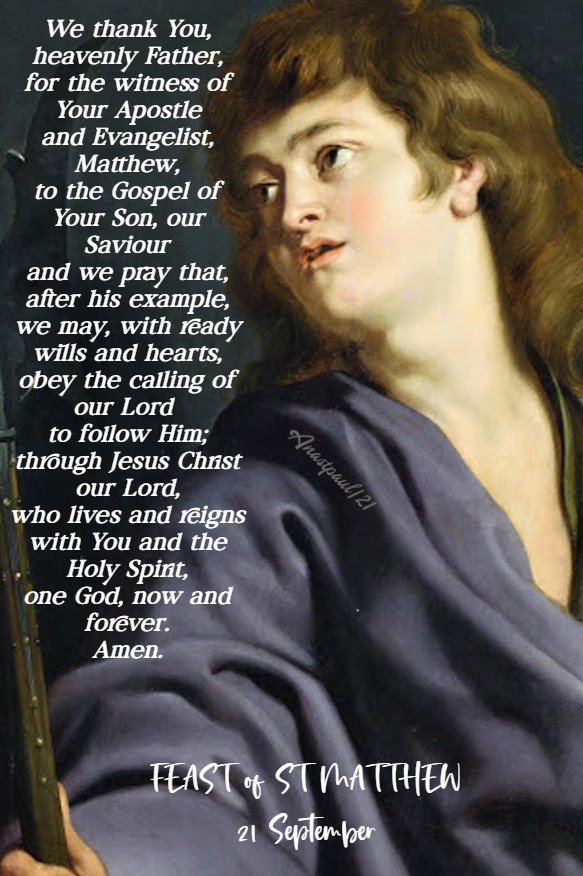
PRAYER – We thank You, heavenly Father, for the witness of Your Apostle and Evangelist, Matthew, to the Gospel of Your Son, our Saviour and we pray that, after his example, we may with ready wills and hearts, obey the calling of our Lord, to follow Him; through Jesus Christ our Lord, who lives and reigns with You and the Holy Spirit, one God, now and forever. Amen.
Beata Vergine del Tresto / The Blessed Virgin of Tresto, Ospedaletto Euganeo, Italy (1468) – 21September:
The complex of the Sanctuary of Tresto was built in the place of the miraculous Marian apparition to the boatman Giovanni di Bartolomeo Zielo da Ponso on the night of 21 September 1468, in the locality of Tresto, current fraction of the Municipality of Ospedaletto Euganeo near Padua, from where he was returning. Reaching Este in the evening, the man had stopped to sleep in the boat under the Borini bridge. Around midnight he was awakened by a female voice who called him three times. The man saw two beautiful ladies who enjoined him to follow them. Strangely finding the drawbridge of the City lowered, they walked towards the countryside where, in the locality of Tresto, one of the two ladies sat on the bank of a ditch and told the other to fetch her a bunch of grapes. Then she asked Giovanni if he knew her. To his negative answer she said that she was Mary, the Mother of God. She then enjoined him not to amend his life and to do his best to have a Church built on that place according to the plan and the measures she illustrated to him. But Giovanni objected saying that because of his poverty and ignorance, he would not be believed. Then Mary gave him a knife, instructing him to stick it into the ground and then to remove it. Giovanni obeyed and when he removed the blade from the ground, blood gushed. After having blessed him, the Madonna disappeared with her companion. T he next day Giovanni, afraid of not being believed, did not carry out the commands he had received but only confided in three friends. Losing his peace of mind, he eventually went with some people to the site of the apparition, where he tried to stick the knife into the ground, pulling it back wet with blood. Others wanted to try: the incredulous could not move the blade from the ground, while the others withdrew it bloody.
The miraculous event, renewed several times, convinced everyone to work together to erect the required Church. At the halfway point, due to the exceptional drought that had hit the area, there was no water. Everyone then invoked the help of Mary, who caused a spring appear next to the construction site. This spring since then, over the centuries, has been a source of miraculous cures just like the one at Lourdes. The custody of the Church, built in 9 months, was entrusted by the Paduan clergy to a Congregation of Mendicants of whom Giovanni wore the habit in a lay state.
The Sanctuary of Tresto became and remains a site of devotion and pilgrimage with the powerful and healing waters of the miraculous Spring, bringing many sick seeking cures. The Sanctuary preserves several works of art among which the painting on wood depicting the Virgin and Child shown above, stands out, a masterpiece attributed to Jacopo da Montagnana who created it between 1475 and 1480.
St Alexander of the Via Claudia Bl Diego Hompanera París St Eusebius of Phoenicia St Francisco Pastor Garrido St François Jaccard St Gerulph St Herminio García Pampliega St Iphigenia St Isaac of Cyprus Bl Jacinto Martínez Ayuela St Jacques Honoré Chastán St Johannes Ri St Jonah the Prophet Bl José María Azurmendi Mugarza Bl Josep Vila Barri St Landelino of Ettenheim Bl Manuel Torró García Blessed Mark Scalabrini of Modena OP (c 1420-1498) St Maura of Troyes St Meletius of Cyprus Bl Nicolás de Mier Francisco St Pamphilus of Rome St Pierre Philibert Maubant St Tôma Tran Van Thien Bl Vicente Galbis Gironés Bl Vicente Pelufo Orts — Martyrs of Gaza – 3 saints: Three brothers, Eusebius, Nestulus and Zeno, who were seized, dragged through the street, beaten and murdered by a pagan mob celebrating the renunciation of Christianity by Julian the Apostate. They were burned to death in 362 on a village garbage heap in Gaza, Palestine.
Martyred in the Spanish Civil War: • Blessed Diego Hompanera París • Blessed Jacinto Martínez Ayuela • Blessed José María Azurmendi Mugarza • Blessed Josep Vila Barri • Blessed Manuel Torró García • Blessed Nicolás de Mier Francisco • Blessed Vicente Galbis Gironés • Blessed Vicente Pelufo Orts
Notre-Dame-au-Pied-d’Argent / Our Lady with the Silver Foot), Toul, Meurthe-et-Moselle, Lorraine, France (1284) – 20 September:
At Toul, in Lorraine, there was a Statue, which, according to an ancient tradition, informed a woman on 20 September in the year 1284, of an act of treachery which was being planned against the City.
The Statue was called Our Lady with the Silver Foot, or Notre-Dame au pied d’argenth. The faithful keep the memory of this stone Statue of the Blessed Virgin Mary, which was located just inside the entrance of the Church and placed over a sculpted clam. In those days there would be a lamp burning before it on feast days and almost every day, the faithful offered small candles which they lit and rested on a circular iron candlestick that was placed before the Statue. It was well known that several people who prayed before this Statue were cured of various diseases but the devotion and respect of the people toward this image, grew more than ever at the time of the Bishop Conrad because of the miracle that occurred in the following manner:
A woman named Helwide was in the Cathedral Saint-Etienne de Toul praying to the Blessed Virgin for consolation and the repose of the souls of her husband and daughter who had recently died. It was about midnight, when the Canons were praying Matins, that the Blessed Virgin Mary suddenly appeared to her. The Virgin Mary ordered Helwide to go immediately to find a man named Rimbert, who was the guardian of “The Door to the Chair.” The Door to the Chair gave access to the Castrum, a little entrance to the City near Tanner Street. Helwide was urged to go quickly, for an enemy proposed to enter the City by the door to set their homes on fire and fill the streets with blood. Regaining her senses after the vision, Helwide got up feeling very puzzled. She was hesitant about what she should do, though as Rimbert’s home was not far distant and was on her way home anyway, she decided she would indeed go there. No sooner had Helwide stepped out of the Church, than she met the night-watch on patrol. She told them the tale of her vision and they responded by mocking her and making derogatory jokes. Despite this, two of them still decided to follow and actually see what would happen if Helwide could find the porter she sought. The pair arrived with Helwide at the house and simply thrust the door open. Rimbert sat on his bunk, seeming startled, yet as if expecting the visit. Helwide briefly stated the purpose of her visit and Rimbert exclaimed, “I had precisely the same vision and the same warning! I do not know if it occurred in my sleep or in the state of wakefulness but I have been told that the Statue will move her foot in testimony of the truth!” At these words, all those present were seized with a great desire to see such a prodigy. With a rush they ran to the Cathedral and removed the candles and all that stood before the image. To their disappointment they found that the Virgin’s feet remained mostly hidden beneath the folds of the clothing of the Statue as before. In the interim, several scholars and some laymen who were called to see the wonder, arrived on the scene. Seeing that nothing was apparently going to happen, they began cursing all the rest as senseless interpreters of dreams. As they stood not far from the Statue, many of them fell silent as they saw the Statue suddenly move as an entire foot of the Blessed Virgin Mary appeared from beneath the folds of her garment. Terrified, but convinced, this time they all agreed to announce the peril which they now knew actually threatened them. Quickly rendering their thanks to Mary, they agreed to defend the City and call for reinforcements. They arrived just in time to take up their positions to defend the entrance to the City with the assistance of the Episcopal palace guards. A tremendous struggle occurred when the invaders broke down the door and entered the courtyard, but the defenders were committed to the fight and held their own. When reinforcements arrived, the invaders fell to the last man.
To perpetuate the memory and recognize the protection granted to them by the Blessed Virgin Mary, the people of Toul had a shoe of pure silver made to cover the foot on the Blessed Virgin’s Statue. From that time on the Statue was known as Our Lady with the Silver Foot. They also hung on the wall of the cathedral a picture which represented the heavenly vision and Mary was declared Patroness of the City.
The image of Our Lady with the Silver Foot was venerated in the City and the surrounding areas and in case of the threat of any public calamity, the Blessed Virgin was invoked and ,henceforth, the Statue would be carried in procession throughout the streets of the City. The Governors themselves considered it an honour to take the Statue upon their own shoulders. Pilgrimages were made to Our Lady of the Silver Foot; prayers answered, graces bestowed and miracles wrought.
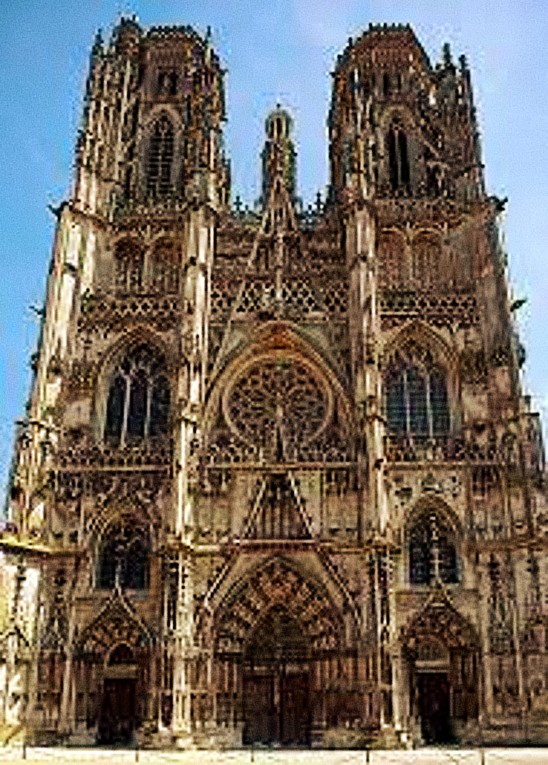
The original Statue of Our Lady with the Silver Foot was destroyed during the ravages of the French Revolution and was replaced later by a modern statue that was stolen in the 1980’s. The Gothic Cathedral was repaired after being damaged during the French Revolution but still awaits repair after the damage caused when it was struck during an aerial bombardment in the Second World War. There was once also a Monastery at Toul,but no trace of it remains.
A photography of the stolen Statue
Vigil of St Matthew, Apostle and Evangelist St Agapitus of Rome St Candida of Carthage St Dionysius of Phrygia St Dorimedonte of Synnada St Eusebia of Marseilles
Martyrs of Constantinople – 3 saints: A priest and two bishops who were imprisoned, tortured and martyred for the defense of icons in the iconoclast persecutions of emperor Leo the Isaurian. – Andrea, Asiano and Hypatius. They were martyred in 735 in Constantinople (modern Istanbul, Turkey) and their bodies were thrown to the dogs.
Martyrs of Pergen – 6 saints: A group of lay people martyred in the persecutions of Emperor Elagabalus. The names that have come down to us are Dionysius, Dioscorus, Philippa, Privatus, Socrates and Theodore. They were crucified c 220 at Pergen, Pamphylia, Asia Minor (in modern Turkey).
Martyred in the Spanish Civil War: • Blessed Cristobal Iturriaga-Echevarría Irazola • Blessed Santiago Vega Ponce • Blessed Juan Antonio López Pérez
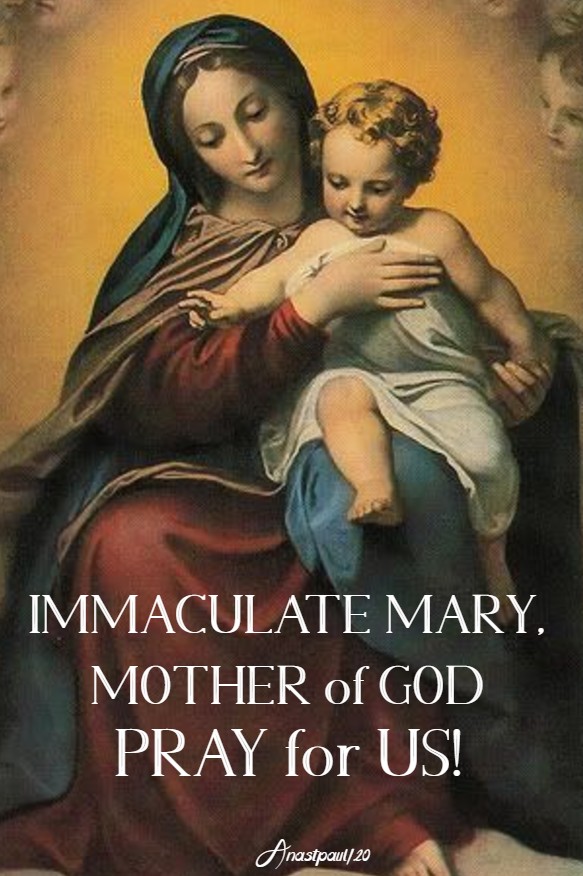
One Minute Reflection – 5 August – “Month of the Immaculate Heart of Mary” – Readings: Numbers 20: 1-13; Psalm 95: 1-2, 6-9; Matthew 16: 13-23 – The Memorial of the Dedication of Mary Major, Our Lady of the Snows
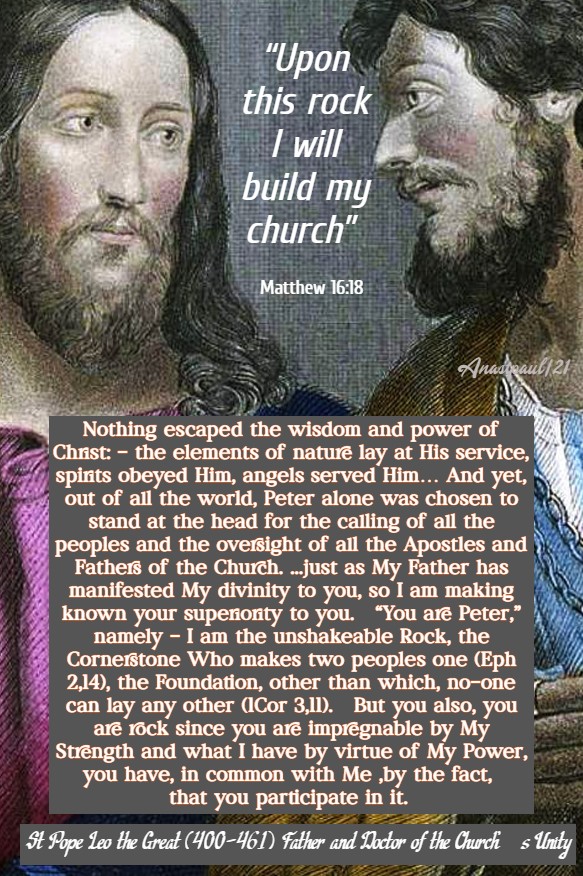
“Upon this rock I will build my church” – Matthew 16:18
REFLECTION – “Nothing escaped the wisdom and power of Christ: – the elements of nature lay at His service, spirits obeyed Him, angels served Him… And yet, out of all the world, Peter alone was chosen to stand at the head for the calling of all the peoples and the oversight of all the Apostles and Fathers of the Church. Thus, even though there are many priests and shepherds among the people of God, Peter governed them all in person while Christ also governs them in the capacity of Head…
The Lord asks all the Apostles what people think of Him and they all say the same thing so long as they are making known the doubts deriving from human ignorance. But when the Lord demands to know what the disciples themselves think, the first to confess the Lord is he who is the first in dignity of the Apostles. As he had said: “You are the Christ, the Son of the Living God”, Jesus answers him: “Blessed are you, Simon son of Jonah. For flesh and blood has not revealed this to you but my heavenly Father.” That is to say: blessed are you because my Father taught this to you. Earthly opinion has not led you astray but it is heavenly inspiration that has instructed you. It is not flesh and blood that enabled you to discover me but He whose only Son I am.
“And so I say to you”, that is to say: – just as My Father has manifested My divinity to you, so I am making known your superiority to you. “You are Peter,” namely – I am the unshakeable Rock, the Cornerstone Who makes two peoples one (Eph 2,14), the Foundation, other than which, no-one can lay any other (1Cor 3,11). But you also, you are rock since you are impregnable by My Strength and what I have by virtue of My Power, you have, in common with Me by the fact, that you participate in it. “On this rock I will build my Church”… On the firmness of this foundation, He says, will I build an everlasting temple and My Church, whose summit is to reach to heaven, will be raised on the strength of that faith.” – St Pope Leo the Great (400-461) Father and Doctor of the Church’s Unity 4th Sermon for the Anniversary of his Ordination ; PL 54, 14a ; SC 200
PRAYER – Forgive the sins of Your people Lord and since of ourselves, we are unable to do what pleases You, lead us on the way of salvation by the prayers of Mary, the Immaculate Mother of Your Son, Our Lord Jesus Christ, Who lives and reigns with You and the Holy Spirit, God forever and ever, amen.
One Minute Reflection – 25 July – “Month of the Most Precious Blood” – Feast of St James the Greater – Reaqdings: Second Kings 4: 42-44; Psalms 145: 10-11, 15-16, 17-18; Ephesians 4: 1-6; John 6: 1-15
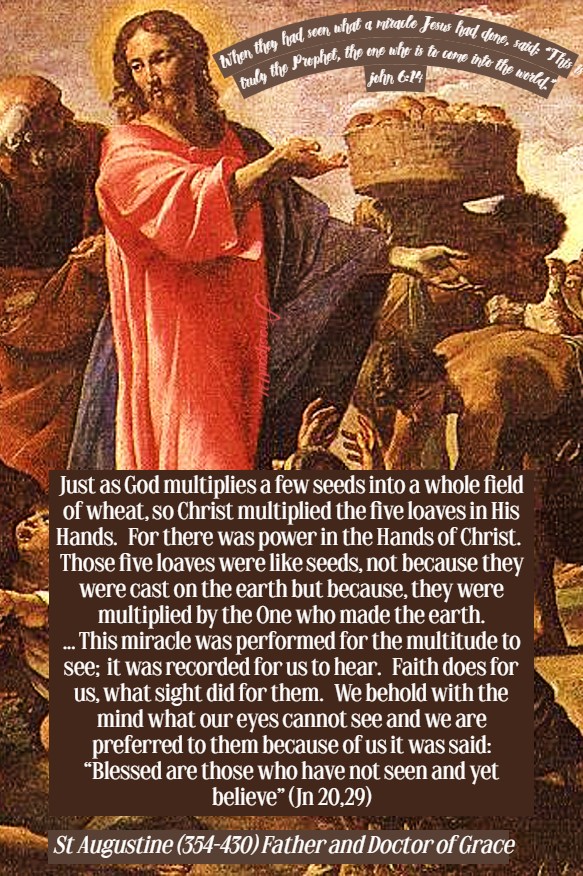
When they had seen what a miracle Jesus had done, said: , “This is truly the Prophet, the one who is to come into the world.” – John 6:14
REFLECTION – “Governing the entire universe is a greater miracle than feeding five thousand people with five loaves of bread, yet no-one marvels at it. People marvel at the feeding of the five thousand not because this miracle is greater but because, it is out of the ordinary. Who is even now providing nourishment for the whole world if not the God Who creates a field of wheat from a few seeds? Christ did what God does. Just as God multiplies a few seeds into a whole field of wheat, so Christ multiplied the five loaves in His Hands. For there was power in the Hands of Christ. Those five loaves were like seeds, not because they were cast on the earth but because, they were multiplied by the One who made the earth.
This miracle was presented to our senses, in order to stimulate our minds… and so make us marvel at “the God we do not see because of his works, which we do see” (Rom 1,20). For then, when we have been raised to the level of faith and purified by faith, we shall long to behold, though not with our eyes, the invisible God Whom we recognise through what is visible. This miracle was performed for the multitude to see; it was recorded for us to hear. Faith does for us, what sight did for them. We behold with the mind what our eyes cannot see and we are preferred to them because of us, it was said: “Blessed are those who have not seen and yet believe” (Jn 20,29). – St Augustine (354-430) Father and Doctor of Grace – Homilies on Saint John’s gospel, 24, 1.6.7.
PRAYER – Lord our God, You accepted the sacrifice of St James, the first of Your Apostles to give his life for Your sake. May Your Church find strength in his martyrdom and support in his constant prayer. Through our Lord Jesus Christ, your Son, who lives and reigns with you in the unity of the Holy Spirit, one God, for ever and ever. St James the Greater, Apostle of Christ, Pray for us! Amen
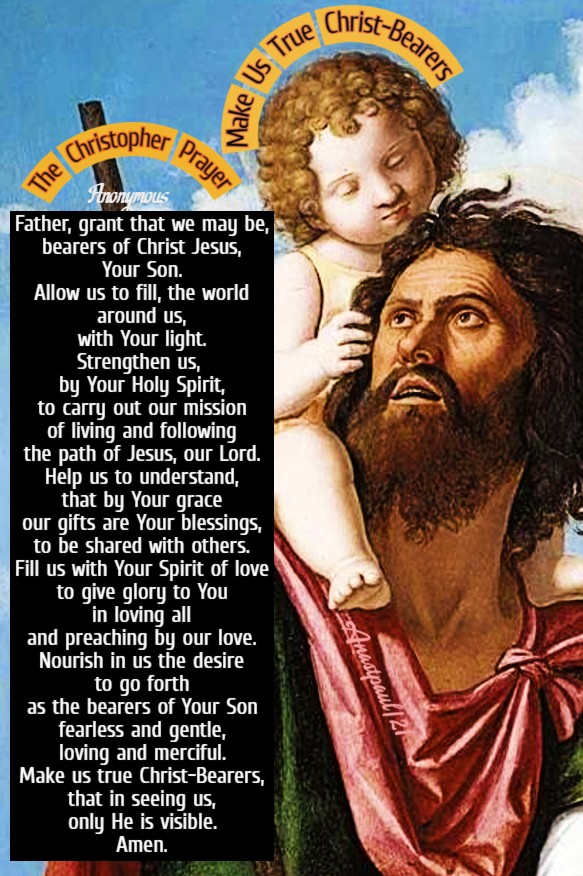
Our Morning Offering – 25 July – “Month of the Most Precious Blood” – Feast of St James the Greater and the Memorial of St Christopher (died c 251)
The Christopher Prayer, Make Us True Christ-Bearers Anonymous
Father, grant that we may be, bearers of Christ Jesus, Your Son. Allow us to fill, the world around us, with Your light. Strengthen us, by Your Holy Spirit, to carry out our mission of living and following the path of Jesus, our Lord. Help us to understand, that by Your grace our gifts are Your blessings, to be shared with others. Fill us with Your Spirit of love to give glory to You in loving all and preaching by our love. Nourish in us the desire to go forth as the bearers of Your Son fearless and gentle, loving and merciful. Make us true Christ-Bearers, that in seeing us, only He is visible. Amen.
Notre-Dame du Saguenay / Our Lady of Lac Bouchet, Quebec (1920) – 25 July:
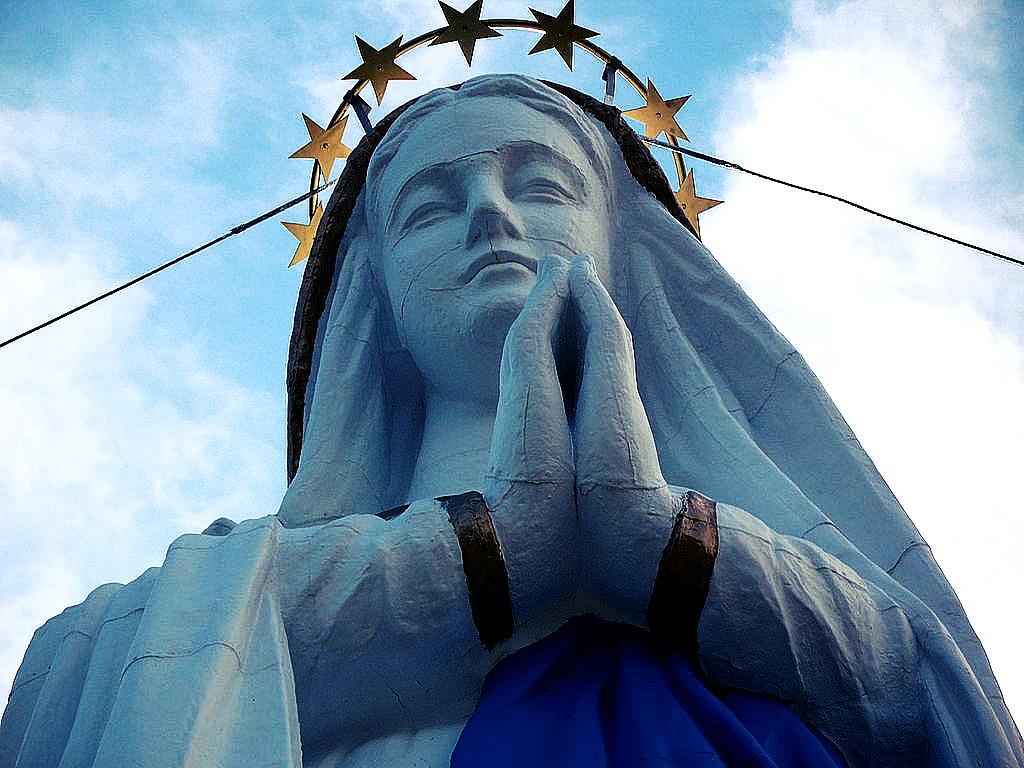
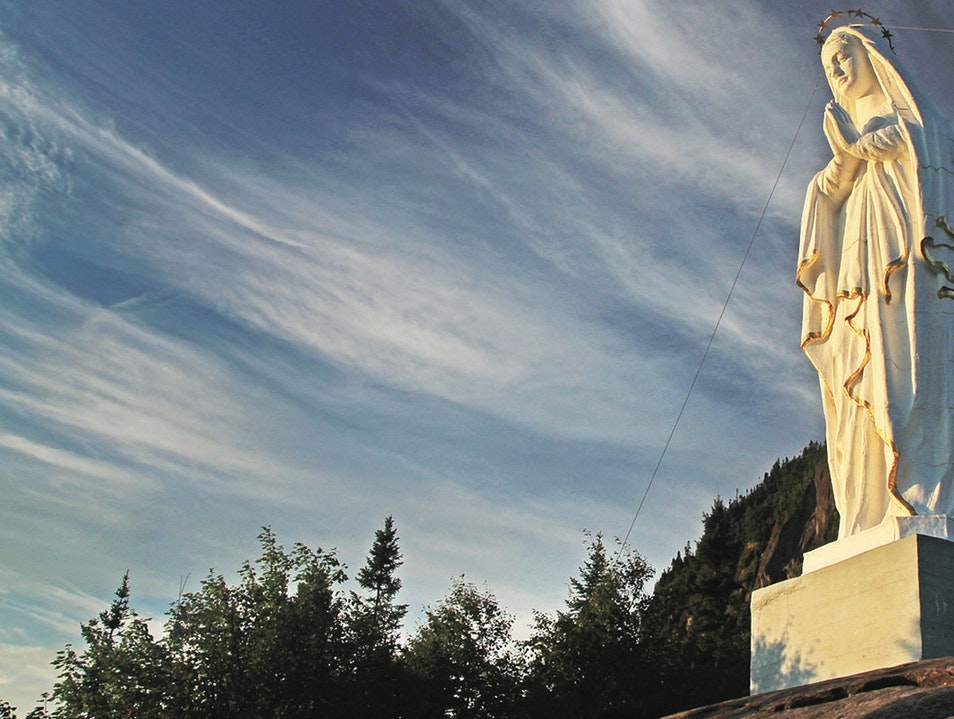
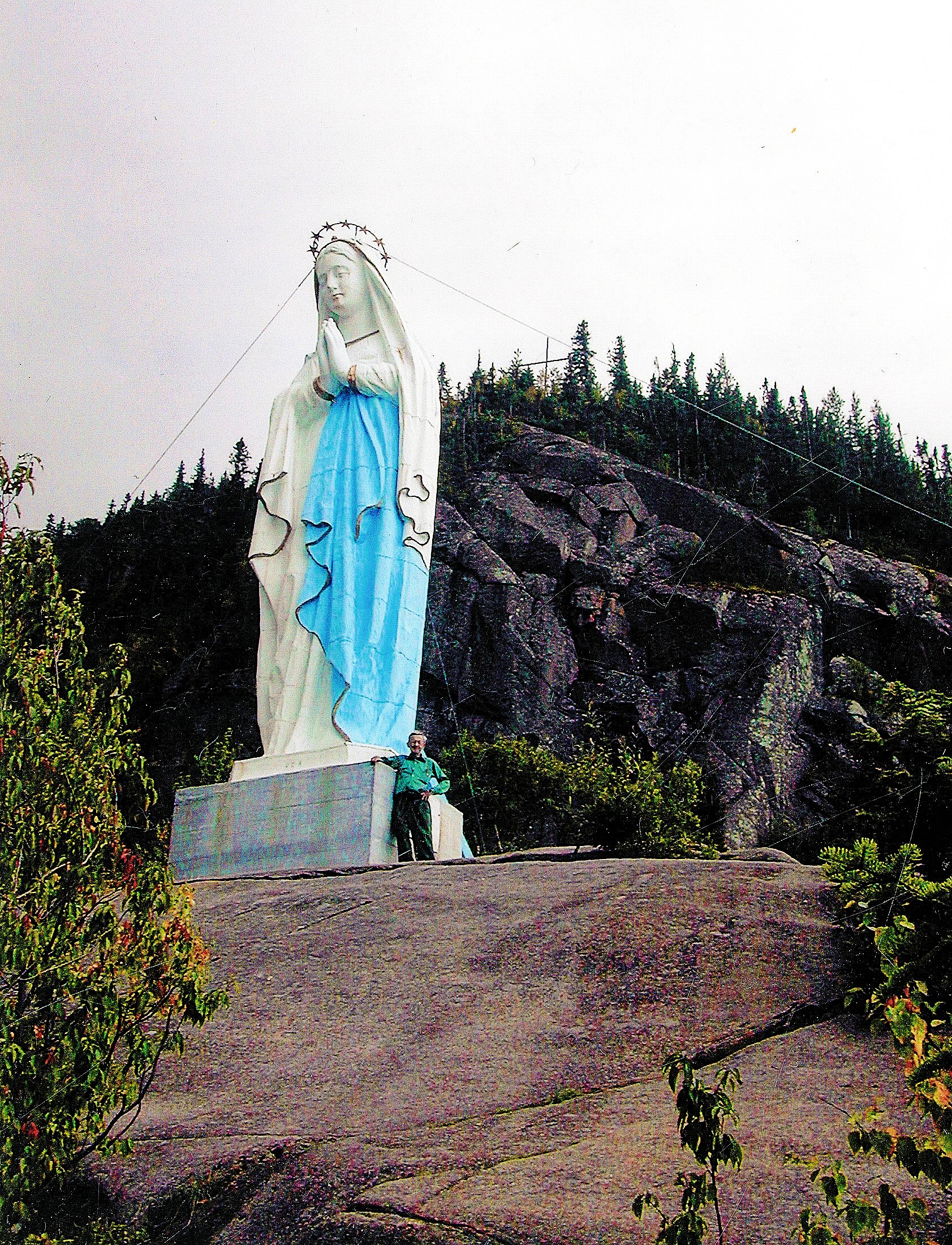
The Saguenay Fjord is an ancient glacial valley that has been overrun with sea water. In the year 1828 a surveyor, Joseph Bouchette, ventured into the region for the purpose of collecting data for topographical maps. It was during this expedition that he found a suitable site for a future village, which Pascal Dumais and his family later settled. This marked the founding of the village of Lac-Bouchette, with more and more people coming to settle in the area until the village had 300 inhabitants by 1888. Our story actually begins with a man named Charles Napoleon Robitaille, a salesman who travelled the roads in and around Quebec. During the winters he would have to cross frozen rivers and it was in the winter of 1878 while trying to cross the Saguenay River that the ice broke under the weight of his horse and sleigh. Pulled beneath the surface of the icy waters, Charles was alone and completely helpless. Knowing he was dying, he implored the Blessed Virgin Mary to save him. Charles miraculously survived, and managed to escape from the river with his life. He knew the Virgin had assisted him and so to honour Mary and her recent apparition at Lourdes, he asked Louis Jobin to create a huge Statue of the Blessed Virgin sculpted in the image of Our Lady of Lourdes, the Immaculate Conception. He envisioned the Statue in the heights overlooking the mouth of the river. The Statue Jobin sculpted became known as Notre-Dame du Saguenay.
The finished Statue is an impressive more than 10,5 metres high and weighs 3 tons. Sculpted of solid white pine, it was then sheathed in lead to protect it from the harsh weather. Hauling such a huge Statue into place was a difficult task in the late nineteenth century. After being constructed, it was broken down into 14 separate pieces and then hoisted into place and rebuilt. The Statue made Louis Jobin the most famous sculptor of the time,and it has become a regional landmark, with visitors from all over the world assembling at her feet to sing the Ave Maria.
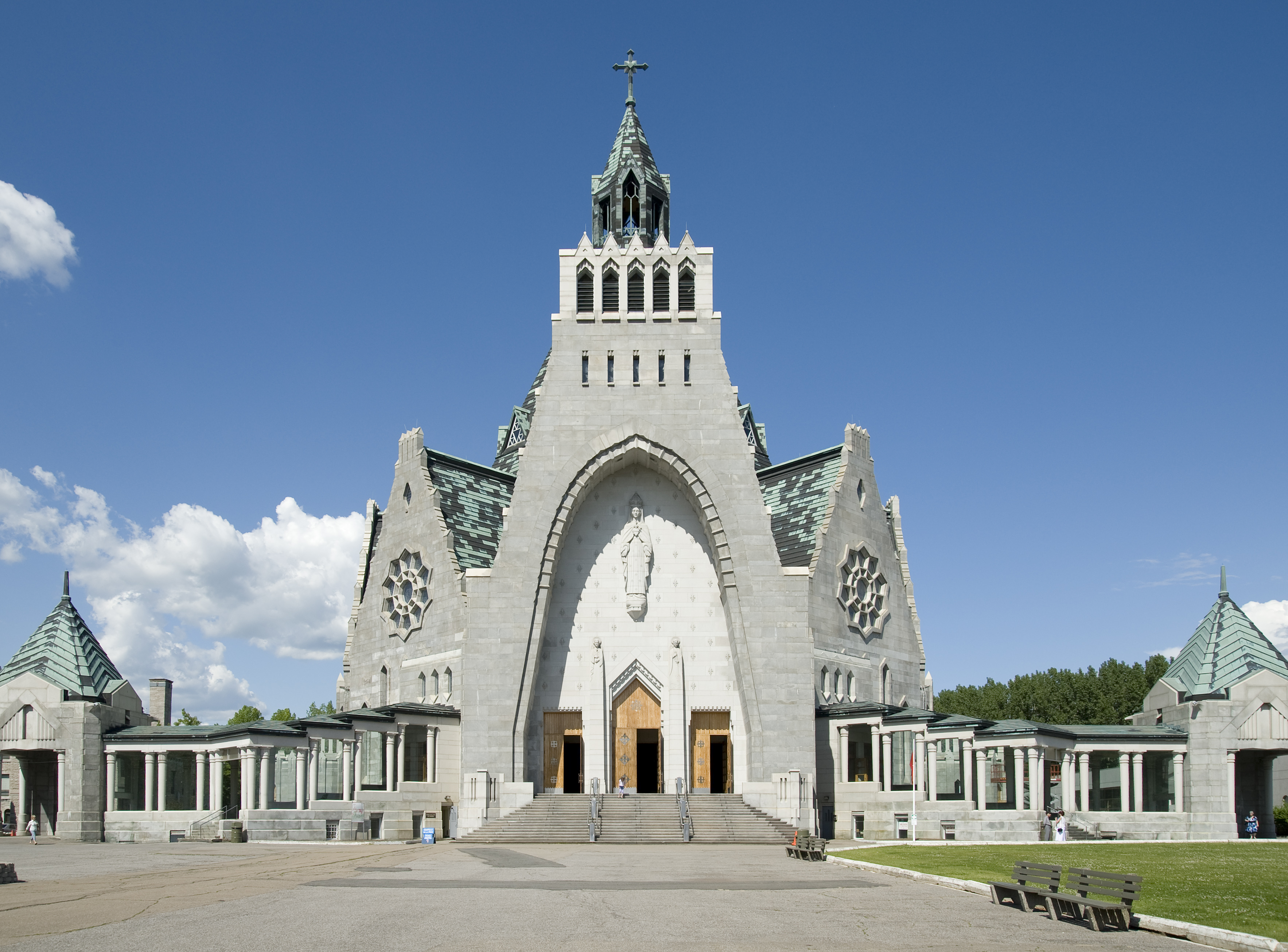
In 1889 the mission Church of Saint Thomas Aquinas was built and the next year Father Joseph Ironwood became the first Priest there A second Church was soon built, in 1898, as the population increased dramatically. Now, on the north shore of Lake Bouchet, in the Province of Quebec, there stand the buildings of a Friary and the Sanctuary of Our Lady of the Saguenay. In 1920, Father Elzear Delamarre built a house and a private Chapel dedicated to Saint Anthony of Padua on the site, which later became known as the hermitage of Saint Anthony and is one of the national Shrines in Quebec. So began the pilgrimage-shrine that has since grown steadily in popularity. After Father de Lamarre’s death in 1925, the Capuchin Franciscans took over the property, built their house and Church there and minister to the thousands of pilgrims who visit the Blessed Mother at her Sanctuary.
St Cugat del Valles Bl Darío Acosta Zurita St Ebrulfus St Fagildo of Santiago St Felix of Furcona St Florentius of Furcona St Glodesind of Metz St Magnericus of Trier (c 520-596) Bishop and Confessor Bl Michel-Louis Brulard Bl Mieczyslawa Kowalska St Mordeyren St Nissen of Wexford St Olympiad of Constantinople St Paul of Palestine
St Theodemir of Cordoba — Martyrs of Caesarea – 3 saints: Three Christians martyred together in the pesecutions of emperor Maximilian and governor Firmilian – Paul, Tea and Valentina. 309 in Caesarea, Palestine.
Martyrs of Cuncolim – 20 saints: On 15 July 1583 the group met at the church of Orlim, and hiked to Cuncolim to erect a cross and choose land for a new church. Local anti-Christian pagans, seeing the unarmed Christians, gathered their weapons and marched on them. One of the parishioners, a Portuguese emigre named Gonçalo Rodrigues, carried a firearm, but Father Alphonsus Pacheco stopped him from using it. The pagans then fell upon them, and killed them all without mercy. They were – • Alphonsus Pacheco • Alphonsus the altar boy • Anthony Francis • Dominic of Cuncolim • Francis Aranha • Francis Rodrigues • Gonçalo Rodrigues • Paul da Costa • Peter Berno • Rudolph Acquaviva • ten other native Christian converts whose names have not come down to us They were martyred on Monday 25 July 1583 at the village of Cuncolim, district of Salcete, territory of Goa, India. Beatified on 30 April 1893 by Pope Leo XIII.
Saint of the Day – 20 July – Saint Joseph Barsabbas the Just (1st Century) Disciple of Jesus, Martyr Bishop. Also known as – Justus, Barsabbas, Joseph Basassas, Joseph of Barsabas, Joseph the Just.
The Roman Martyrology states today: “The birthday of the blessed Joseph, surnamed the Just, whom the Apostles selected with the blessed Matthias, for the Apostleshop in the place of the traitor, Judas. The lot having fallen upon Matthias, Joseph, notwithstanding, continued to preach and advance in virtue and after having sustained from the Jews, many persecutions for the Faith of Christ, happoily ended his life in Judea.”
“Wherefore, of these men who have companied with us all the time that the Lord Jesus came in and went out among us; beginning from the baptism of John, until the day wherein he was taken up from us, one of these must be made a witness with us of his resurrection. And they appointed two, Joseph, called Barsabas, who was surnamed Justus,and Matthias. And praying, they said: Thou, Lord, who knowest the heart of all men, shew whether of these two thou hast chosen, to take the place of this ministry and apostleship, from which Judas hath, by transgression fallen, that he might go to his own place. And they gave them lots and the lot fell upon Matthias and he was numbered with the eleven apostles.” ― Acts 1:21 – 26 D-R
St John Chrysostom writes, “The other candidate (Joseph) was not annoyed, for the apostolic writers would not have concealed failings of their own, seeing they have told of the very chief Apostles, that on other occasions had indignation and not only once but again and again.”
It clear that Joseph Barsabbas (also called “Justus”) must have spent much time with the Apostles and witnessed many of the wondrous events in the life of Jesus. Further identification of Joseph is uncertain. In Christian tradition he is numbered among the Seventy disciples mentioned in Luke 10:1–24, although the biblical text mentions no names. “After these things the Lord appointed other seventy also and sent them two and two before his face into every city and place, whither he himself would come.” (10:1)
Very little is known about Joseph Barsabbas outside of the apostle selection by lots. Tradition believes that he went to Eleutheropolis (about 25 miles from Jerusalem) where he became Bishop Justus of Eleutheropolis. The town was renamed over the centuries. Its original Aramaic name Beth Gabra, translates as the “house of the mighty one.” The Romans gave it the Greek name, Eleutheropolis, meaning “City of the Free.”
Rev Alban Butler says – “After the dispersion of the disciples he preached the gospel to many nations and among other miracles, drank poison without receiving any hurt, as Papias and from him ,Eusebius, testify. This saint, from his extraordinary piety, was surnamed the Just.“
One Minute Reflection – 8 July – “Month of the Most Precious Blood” – Readings: Genesis 44, 18-21, 23b-29, 45: 1-5; Psalms 105: 16-17, 18-19, 20-21; Matthew 10: 7-15.
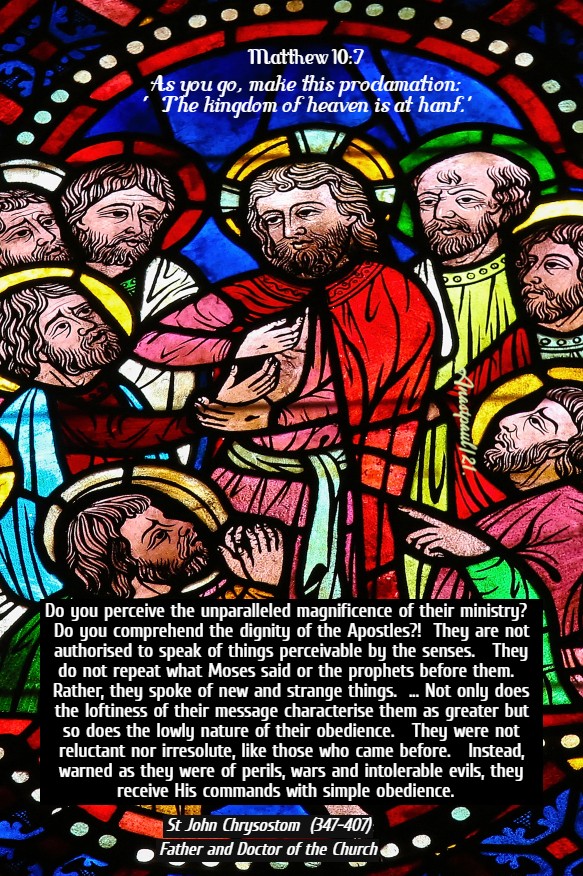
“As you go, make this proclamation: ‘The kingdom of heaven is at hand.’” – Matthew 10:7
REFLECTION – “Do you perceive the unparalleled magnificence of their ministry? Do you comprehend the dignity of the Apostles?! They are not authorised to speak of things perceivable by the senses. They do not repeat what Moses said or the prophets before them. Rather, they spoke of new and strange things. Moses and the prophets spoke of temporal promises of an earthly land. The Apostles proclaimed the Kingdom of Heaven and all that this implies.
Not only does the loftiness of their message characterise them as greater but so does the lowly nature of their obedience. They were not reluctant nor irresolute, like those who came before. Instead, warned as they were of perils, wars and intolerable evils, they receive His commands with simple obedience. They immediately became heralds of the coming Kingdom.” – St John Chrysostom (347-407) Bishop, Father, Doctor – The Gospel of Matthew: Homily, 32.
PRAYER – Holy God and Almighty Father, we are the disciples of Your Son as we follow Him home to You. As He taught His Apostles, so they have passed their learning onto us and we reach out in love and obedience for the Kingdom of Heaven. Grant us we pray, the strength and love to imitate Jesus Our Lord in all things and to daily, pick up our cross with joy and commitment. May the Blessed Virgin, be a constant protection and assistance in our times of struggle and may all your Angels and Saints and Martyrs, pray for us, through our Lord Jesus Christ, with the Holy Spirit, God for always and forever, amen.
Solemnity of Saints Peter and Paul (29 June) +2021
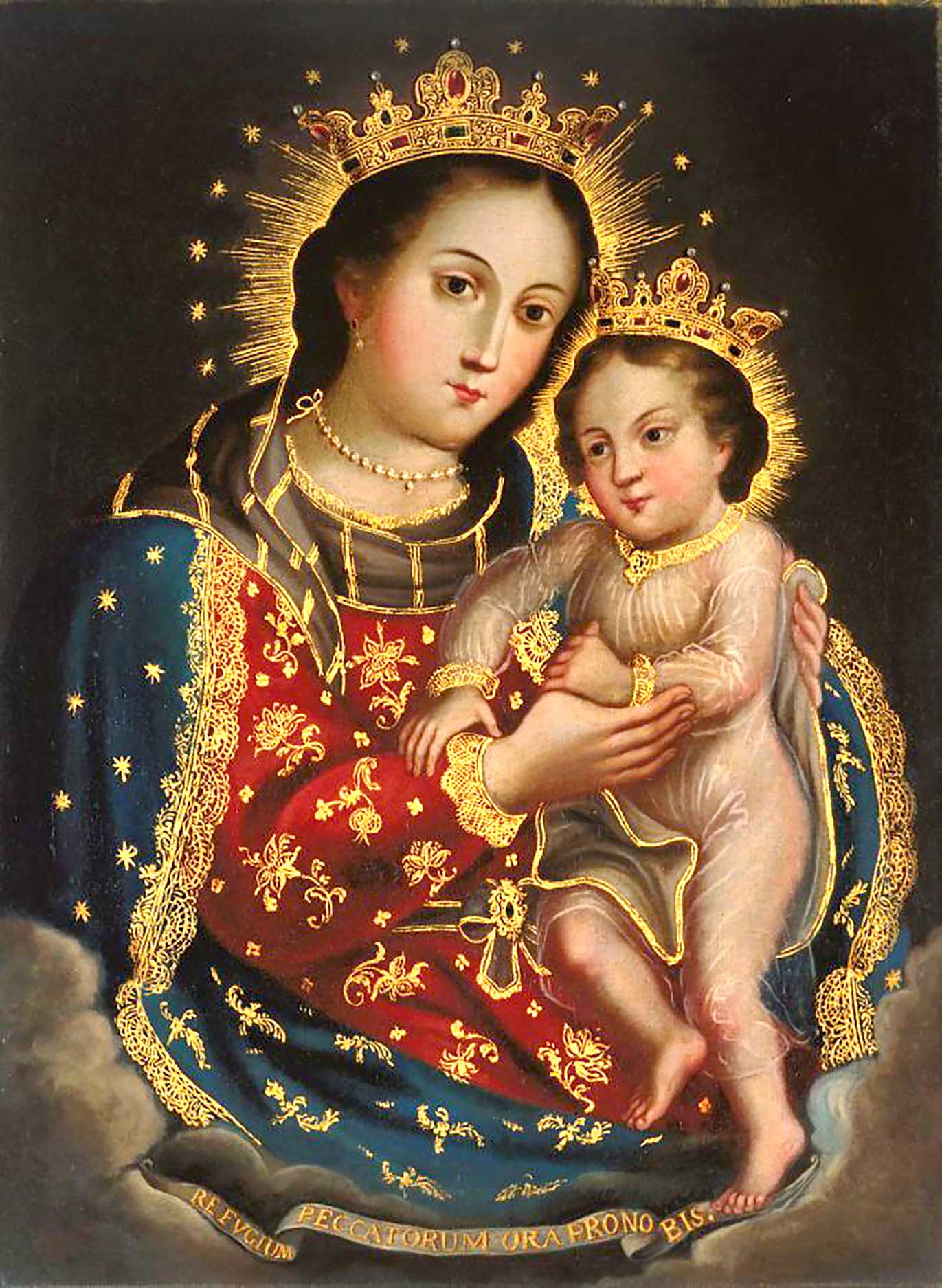
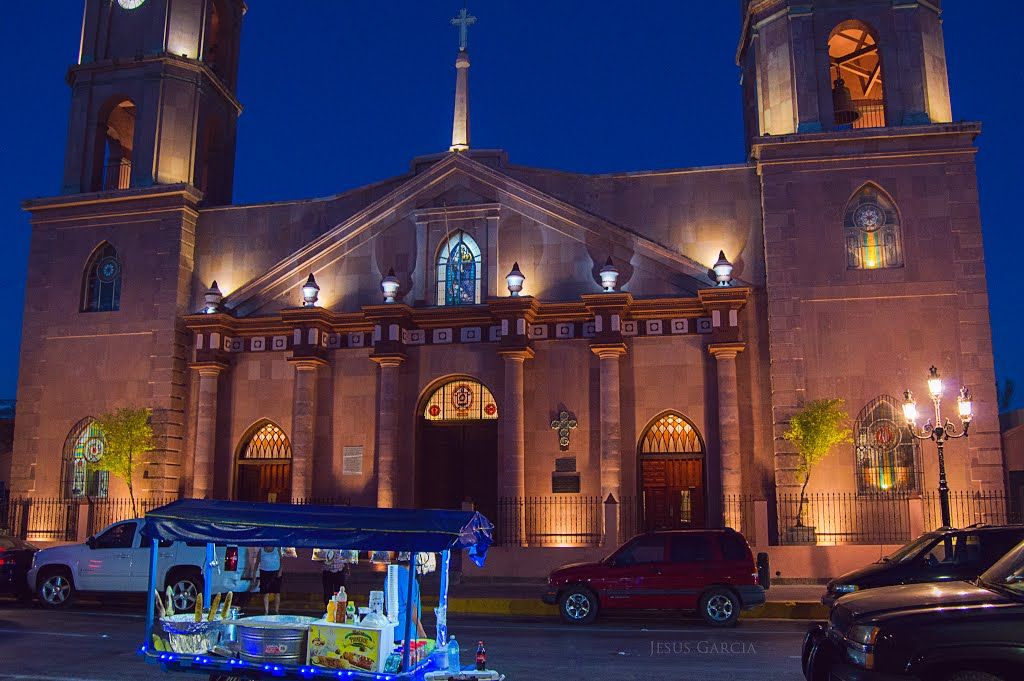
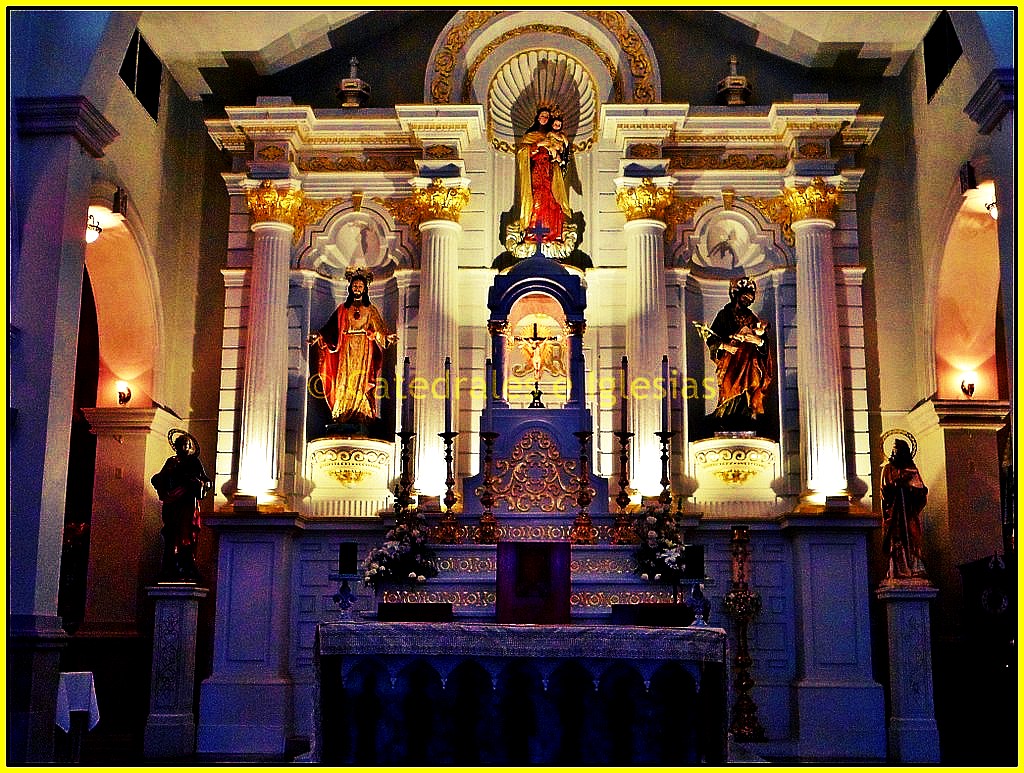
Nuestra Señora del Refugio / Our Lady of Refuge, Matamoros, Tamaulipas, Mexico (1720) – 4 July:
Jesuit Missionary Father Juan José Güica brought a painting of Our Lady, Refuge of Sinners from Italy to Mexico in 1720. In a dream, the Virgin told Padre Güica to ask the Franciscans of Zacatecas to use and promote the image; – they distributed over 150 copies, making this one of the most widespread Marian devotions in Mexico.
In 1793 Franciscan Friars came to the new settlement which would become Matamoros, renaming the area “Nuestra Señora del Refugio de los Esteros Hermosos” (Our Lady of the Refuge of the Lovely Marshes).
The Cathedral of Our Lady of Refuge, built in 1832, displays an 1886 painting of her. Her fiesta, celebrated in many Mexican Towns, commemorates the coronation of the original “Refugium Peccatori” in the Jesuit Church of Frascati, Italy, on 4 July 1717.
Bl Agatha Yun Jeom-Hye St Albert Quadrelli St Andrew of Crete St Anthony Daniel St Aurelian of Lyons St Bertha of Blangy St Carileffo of Anille Bl Catherine Jarrige St Cesidio Giacomantonio Bl Damiano Grassi of Rivoli St Donatus of Libya St Edward Fulthrop St Elias of Jerusalem St Finbar of Wexford St Fiorenzo of Cahors St Flavian of Antioch St Giocondiano Bl Giovanni of Vespignano St Haggai the Prophet Bl Hatto of Ottobeuren Bl Henry Abbot St Henry of Albano St Hosea the Prophet St Innocent of Sirmium Bl John Carey Blessed John Cornelius SJ (1557– 1594) Martyr, English Priest of the Society of Jesus, Missionary. Bl Jozef Kowalski St Jucundian St Laurian of Seville St Lauriano of Vistin Bl Maria Crocifissa Curcio St Namphanion the Archmartyr Bl Natalia of Toulouse St Odo the Good Bl Odolric of Lyon Bl Patrick Salmon Bl Pedro Romero Espejo
Quote/s of the Day – 3 July – Feast of St Thomas Apostle – Readings: Ephesians 2: 19-22, Psalms 117: 1bc, 2, John 20: 24-29
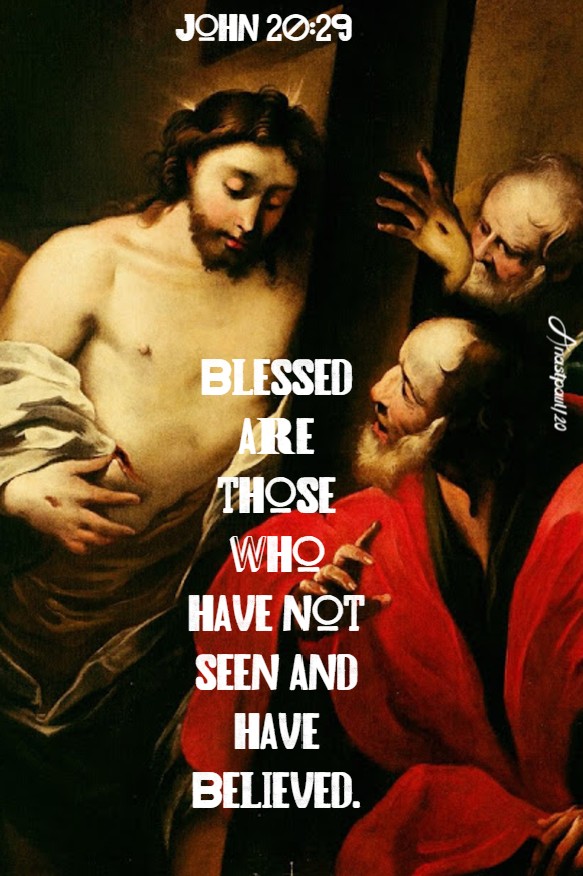
Jesus said to him, “Have you come to believe because you have seen me? Blessed are those who have not seen and have believed.”
John 20:28-29
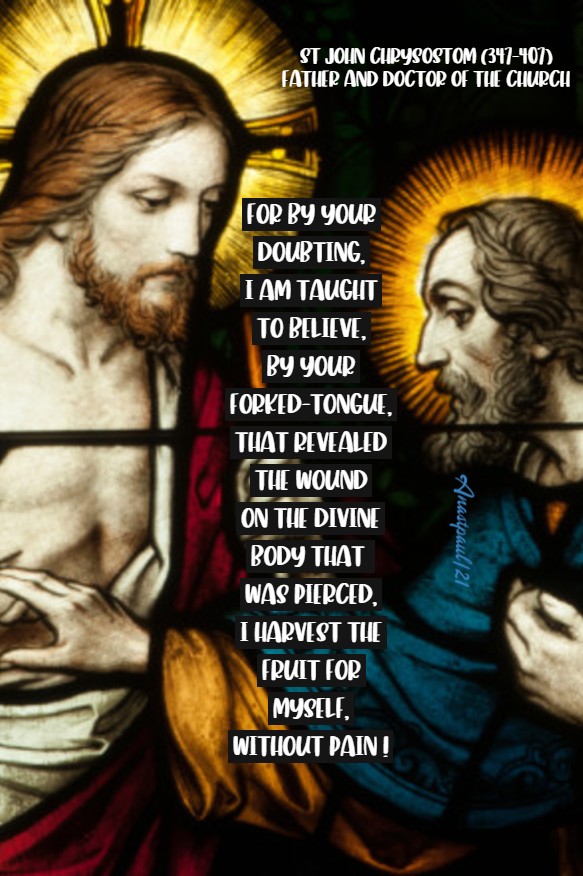
“For by your doubting, I am taught to believe, by your forked-tongue, that revealed the Wound on the Divine Body that was pierced, I harvest the fruit for myself, without pain!”
St John Chrysostom (347-407) Father and Doctor
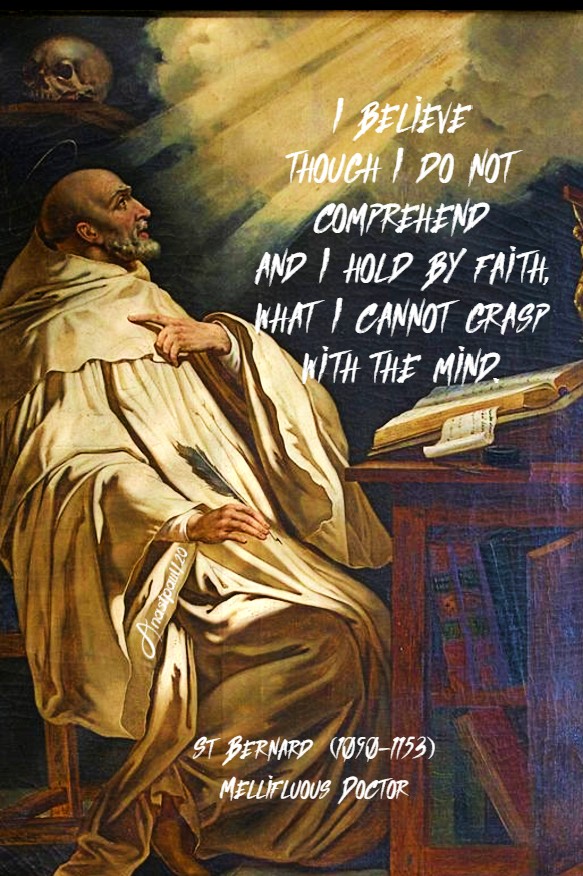
“I believe though I do not comprehend and I hold by faith, what I cannot grasp with the mind.”
St Bernard (1090-1153) Mellifluous Doctor
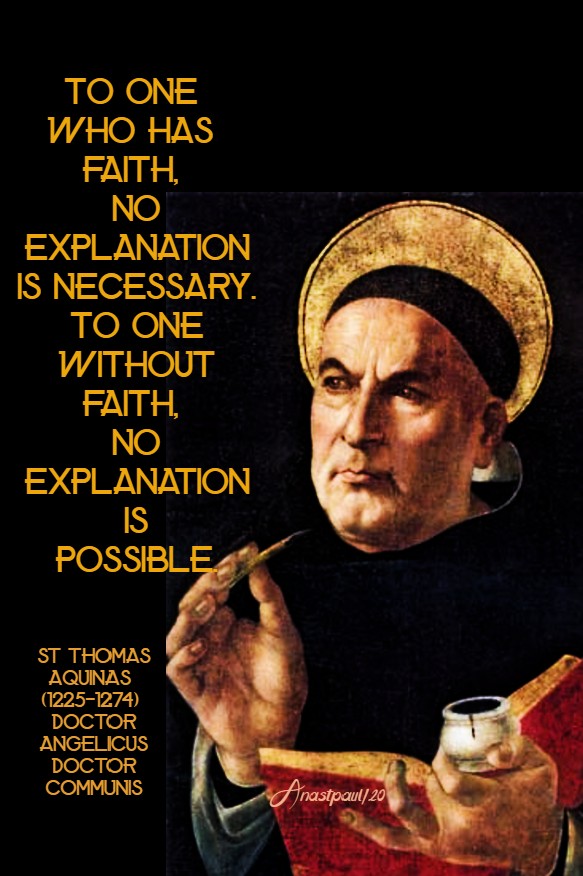
“To one who has faith, no explanation is necessary. To one without faith, no explanation is possible.”
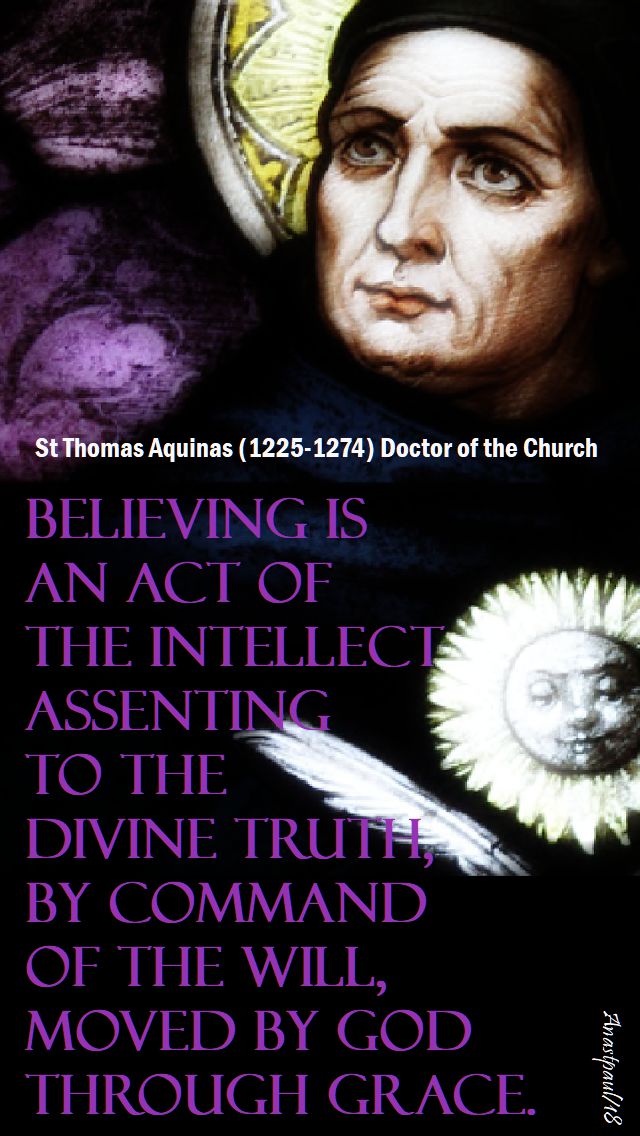
“Believing is an act of the intellect assenting to the divine truth, by command of the will, moved by God through grace.”
St Thomas Aquinas (1225-1274) Doctor Angelicus/Doctor Communis
























You must be logged in to post a comment.