Posted in MARIAN TITLES

The Twenty Fifth Sunday after Pentecost, Nossa Senhora dos Remédios / Our Lady of Remedies, (Lamego, Portugal) 6th Century) and Memorials of the Saints – 14 November

Nossa Senhora dos Remédios / Our Lady of Remedies, (Lamego, Portugal) 6th Century) Also known as – Nossa Senhora da Gruta / Our Lady of the Grotto – 14 November:
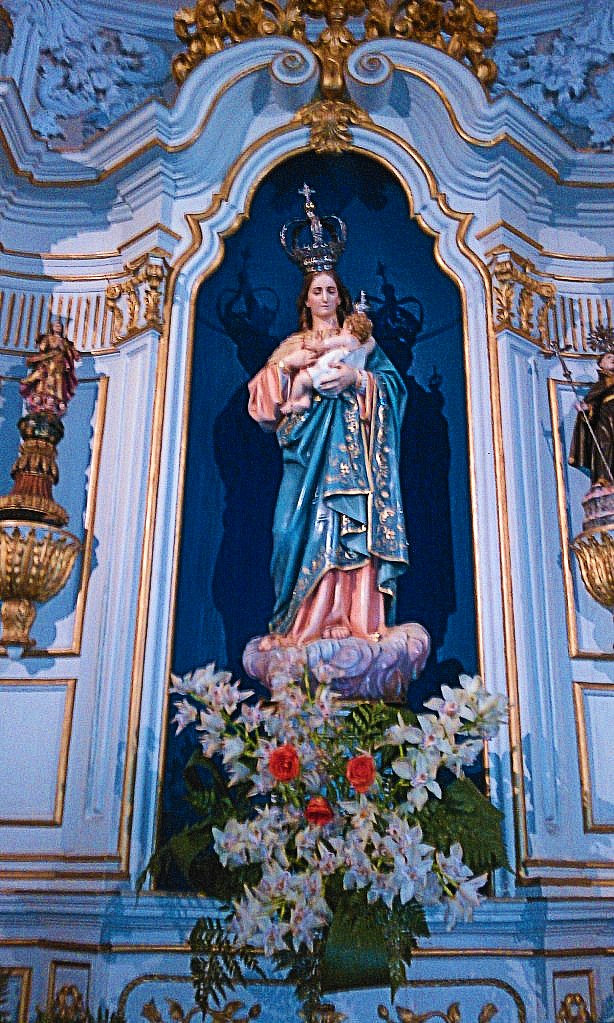
The Abbot Orsini wrote: “Our Lady of the Grotto, in the Diocese of Lamego, in Portugal. This Chapel was cut in the rock, in the same place where an image of the Blessed Virgin had been found.”

Lamego is both a Municipality and a City in northern Portugal, the City having a total of less than 9,000 inhabitants. The City is an ancient one, as the Roman’s came to settle the area in about the year 500 BC. The people became Catholic when Ricardo I, the Visigothic King, converted to Christianity late in the 6th century.

The Sanctuary of Nossa Senhora dos Remedios, or Our Lady of Remedies, is in the location of Our Lady of the Grotto. It is in the Town of Lamego, district of Viseu, Portugal and is located atop the hill of Saint Stephen.

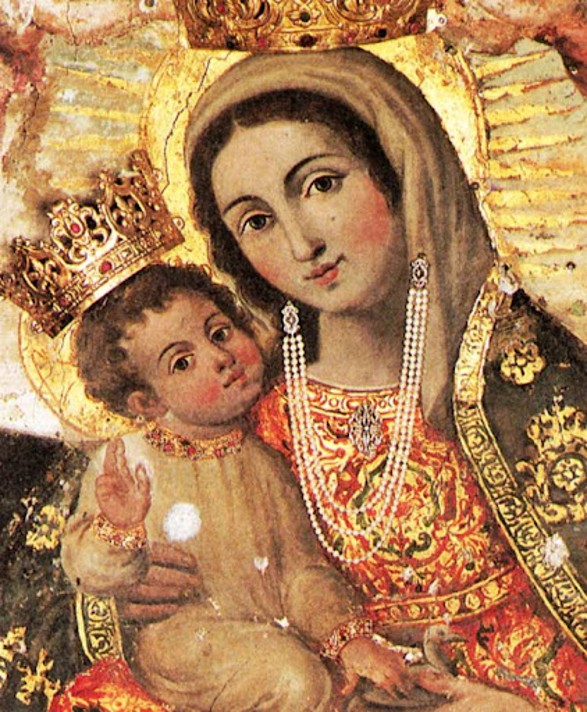
This site begins as an old hermitage that was dedicated to Saint Stephen (Santo Estevao) constructed in 1361, so Catholic devotion here goes well back into the Middle Ages. By the 16th century, the old hermitage was at risk of collapsing and so was demolished, to make way for the construction of a new hermitage in the same spot. The Bishop of Lamego placed an image of the Virgin and Child there and thus over time, Marian devotion eclipsed devotion to Saint Stephen. Miraculous cures, especially of diseases, brought more pilgrims and the name for the image as Our Lady of Remedies.

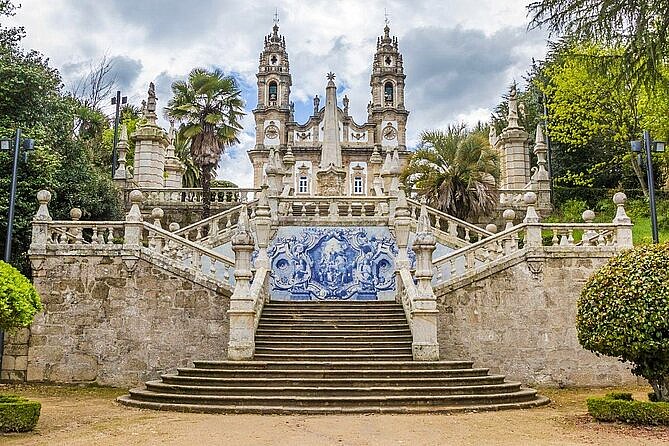
The Marian Shrine that can be seen there today, however, was built during the 18th through the 20th centuries, from 1750 to 1905 when it was completed. 8 September the Feast of the Nativity of the Blessed Virgin, is the date when there are feasts in honor of Our Lady of Remedies.

The celebration in September includes fireworks, musicals, sporting events and recreational activities that take place in amid the trees in a grove of a nearby park. There is a parade known as the Procession of the Triumph, who’s participants are richly dressed, that is the highpoint of the celebration.
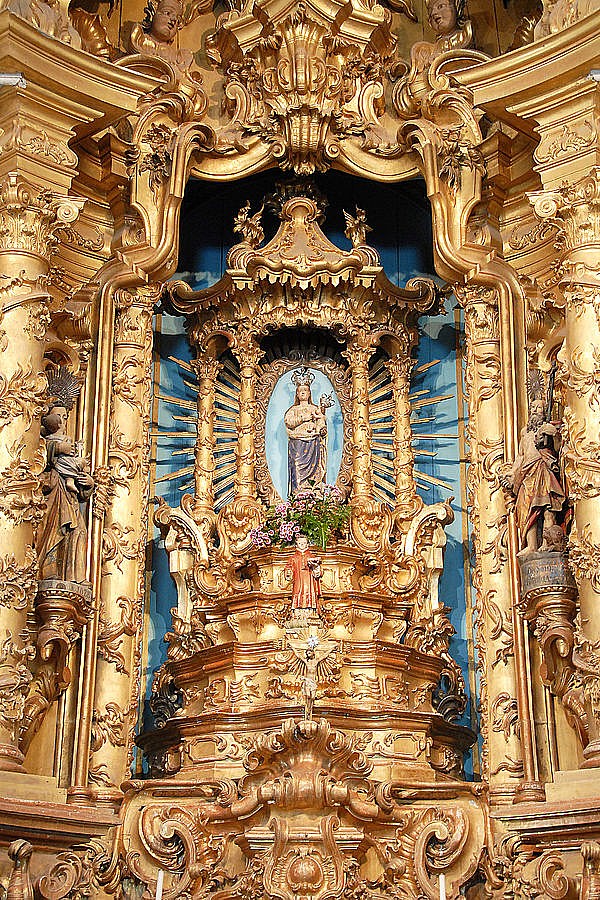
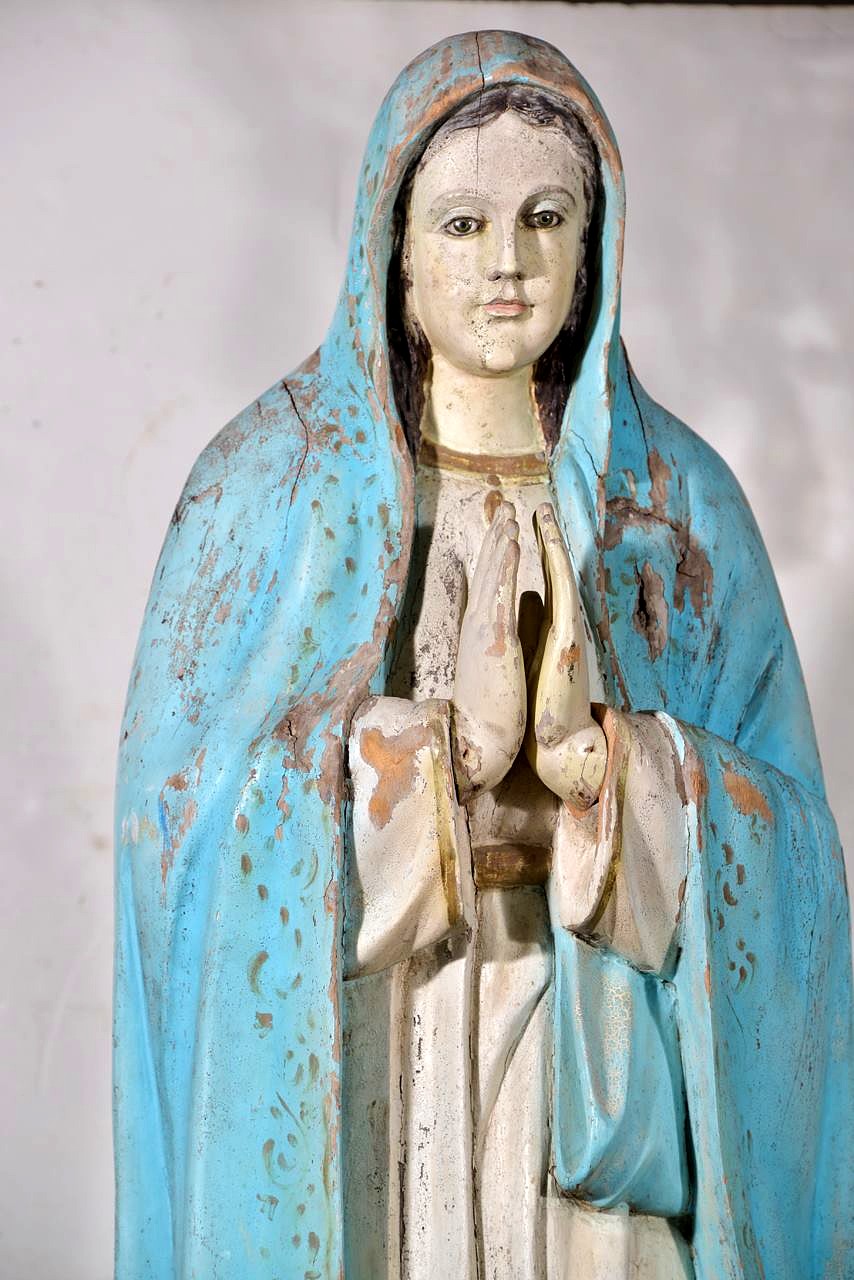
Inside the Church there is an Altar above which the image of Nossa Senhora dos Remedios rests. It is carved in wood and is surrounded by stained glass windows having images of Our Lady of the Immaculate Conception, the Sacred Heart of Jesus and the Annunciation. Two side Altars are dedicated to the parents of the Blessed Virgin, Joachim and Saint Anna.
There is also a famous Baroque staircase, having 686 steps, that leads to the Sanctuary. There are several levels, decorated with sculptures of kings and eight fountains. There is also a “Court of the Kings” where eighteen Kings of Israel, all belonging to the family tree of the Blessed Virgin and Mother of God, can be seen.
St Adeltrude of Aurillac
St Alberic of Utrecht
St Antigius of Langres
St Dubricius of Wales
St Etienne-Théodore Cuenot
St Hypatius of Gangra
Bl Jean of Tufara

Blessed John Licci OP (1400-1511) Priest of the Order of Preachers, Miracle-Worker.

St John Osorinus

St Joseph Maria Pignatelli SJ (1737 – 1811) known as “The Restorer of the Society of Jesus” and “The Second Founder of the Society of Jesus” following the suppression of the Society of Jesus by Pope Clement XIV in 1773.

St Jucundus of Bologna

St Laurence O’Toole/Lorcán Ua Tuathail (c 1128 – 1180) Archbishop of Dublin, Abbot, Reformer, Mediator, Preacher, Apostle of Charity, Papal Legate to Ireland, he established new Churches and Monasteries.

Bl Maria Louise Merkert
Bl Maria Teresa of Jesus
St Modanic
St Ruf of Avignon
St Serapion of Alexandria
St Serapion of Algiers OdeM (c 1179–1240) Priest Martyr
St Siard
St Venerando the Centurian
St Venerandus of Troyes
—
Holy Fathers of Merida

Martyrs of Emesa: Group of Christian women tortured and executed for their faith in the persecutions of the Arab chieftain Mady. They died in Emesa (modern Homs, Syria).

Martyrs of Heraclea – (3 saints): Group of Christians murdered together for their faith. The only details we have are three of their names – Clementinus, Philomenus and Theodotus. They were martyred in Heraclea, Thrace.

Martyrs of the Jaffa Gate:
• Blessed Déodat of Rodez
• Blessed Nikola Tavelic
• Blessed Pierre of Narbonne
• Blessed Stefano of Cuneo
Posted in MARIAN TITLES

Nossa Senhora do Português / Our Lady of the Portuguese, Diu, India (1546) and Memorials of the Saints – 11 November

Nossa Senhora do Português / Our Lady of the Portuguese, Diu, India (1546) – 11 November:

The Abbot Orsini wrote: “On this day, about the year 1546, the Portuguese gained a great victory over the infidels, who had been before the castle of Die, in the East Indies, for the space of seven months and who would have carried it by storm, if Our Lady had not appeared upon the walls – which caused so great terror in the enemy’s camp, that the siege was at once raised.”

The Portuguese began building the stronghold of Diu, their symbol of Portuguese influence and authority in the region, protecting their lucrative trade with India, on 20 November 1535 and finished the work a short time later, on 29 February of the following year. The fort was circular in shape, having walls 6 metres high and 3.50 metres thick, made of solid stone and lime. There was a deep ditch immediately before these stout walls and the fort had three triangular shaped bastions. Manned with a garrison of three hundred and fifty men, it was further supported by a fleet of eleven ships. Manuel De Souza was named the fort’s first Captain.

It was not long before the Portuguese came under siege, as a powerful Ottoman fleet made up of 72 ships laid siege to the stronghold in September of 1538. The Turks arrived with an army of at least 20,000 men, far more than the 400 or so Portuguese who made up the entire garrison.

There were many pitched battles after an intense bombardment and as time wore on the Portuguese suffered from an acute shortage of men and ammunition and a lack of adequate nutrition, bringing scurvy and great suffering to the remaining defenders.

The defenders were at their last extreme and the fort had less than 40 men left alive when the siege suddenly ended. Modern history records that, “for unknown reasons” the savage Turks gave up the siege and sailed away for no reason. It was obvious to the battle hardened Turkish troops, that the defence was about to collapse and that victory was at hand, so there must have been a reason that they fled. The Portuguese defenders could have said that the victory was the result of their gallantry defending the fort and to the grim determination with which they held the bastions against every manner of assault. Instead, however, the Portuguese recalled that Our Lady appeared on the battlements herself, as had recently happened at the Siege of Rhodes and that it was their fear of her ,that the Turks ran for their lives.

In 1546 there was a second assault on Diu that began on the eve of Easter and this time the Portuguese thwarted the efforts of the Turks to capture the fort in a pitched battle recorded as one of the greatest ever fought by the Portuguese troops in India. The siege had continued uninterrupted from 20 April 1546 until 7 November, when a Portuguese fleet finally arrived on the scene under Viceroy Juan de Castro.

The Portuguese success in Diu confirmed Portuguese dominion and their hold over the region. Contemporary accounts, of course, do not mention the miraculous intervention of the Blessed Virgin Mary during the siege, even though it was recorded that she appeared on the ramparts holding a lance in her hand to defend the fort from the enemy, for the ‘City of Men’ cannot accept the glories of God!

St Martin of Tours (c 316-397) (Memorial) “Martin the Merciful,” Bishop, Confessor, Miracle-Worker.

Bl Alicia Maria jadwiga Kotowska
St Bartholomew of Rossano (c 970-c 1065) Abbot Confessor
St Bertuin of Malonne
St Cynfran of Wales
St Isidre Costa Hons
Bl Josaphat Chichkov
Bl Kamen Vitchev

St Marina of Omura
St Menas Kallikelados
St Mennas of Santomenna
St Mercurius the Soldier
Bl Pavel Dzjidzjov
St Rhediw
St Theodore the Studite
St Turibius of Palencia
St Veranus of Lyon
St Veranus of Vence
Blessed Vincent Eugene Bossilkoff
—
Martyrs of Torredembarra: Members of the Brothers of the Christian Schools, Discalced Carmelites, and Carmelite Tertiaries of Education who were martyred together in the Spanish Civil War.
• Blessed Bonaventura Toldrà Rodon
• Blessed Damián Rodríguez Pablo
• Blessed Felipe Arce Fernández
• Blessed Frederíc Vila Bartolì
• Blessed Isidre Tarsá Giribets
• Blessed Joan Roca Vilardell
• Blessed José Alberich Lluch
• Blessed Josep Boschdemont Mitjavila
• Blessed Josep Maria Bru Ralduá
• Blessed Julio Alameda Camarero
• Blessed Lluís Domingo Oliva
• Blessed Mariano Navarro Blasco
• Blessed Miquel Saludes Ciuret
• Blessed Pedro de Eriz Eguiluz
They were martured on 11 November 1936 in Torredembarra, Tarragona, Spain, Beatification celebrated in Tarragona, Spain.

Posted in MARIAN TITLES

Madonna di Valverde di Rezzato / Our Lady of Valverde di Rezzato, Italy (1399 and 1711) and Memorials of the Saints – 1 October

Madonna di Valverde, / Our Lady of Valverde di Rezzato, Italy (1399 and 1711) – 1 October:

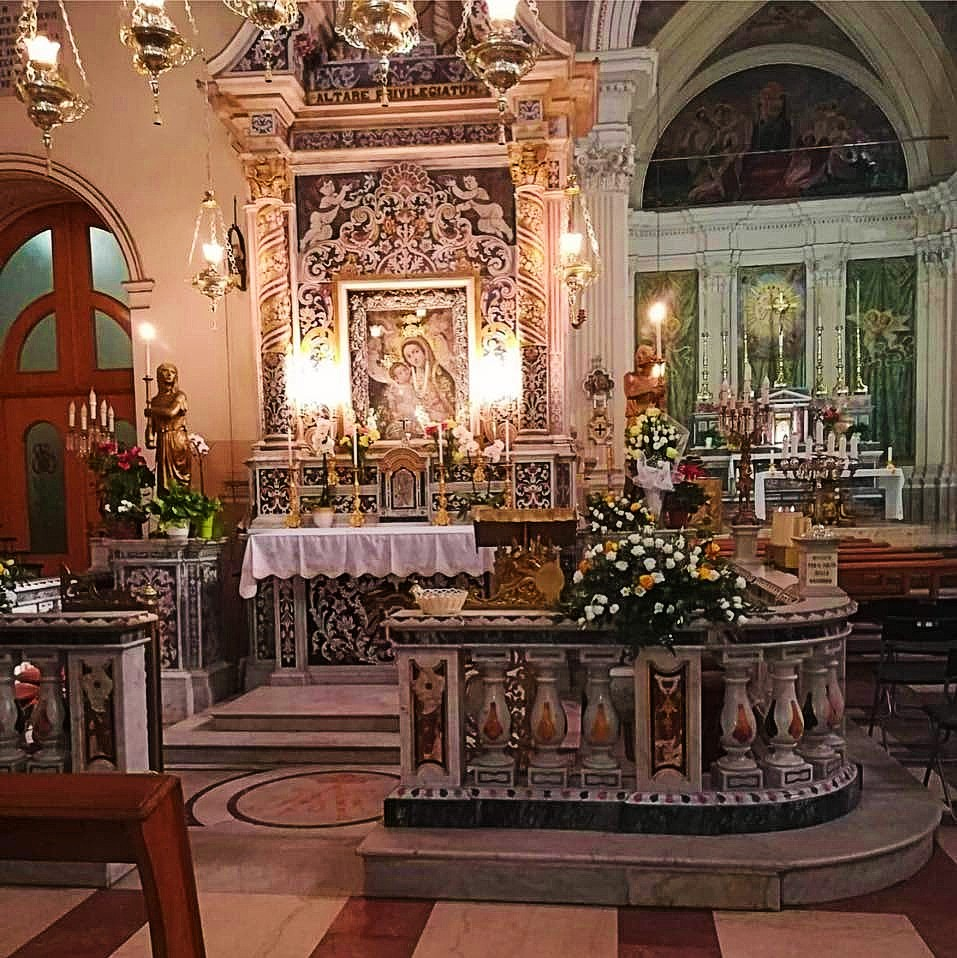
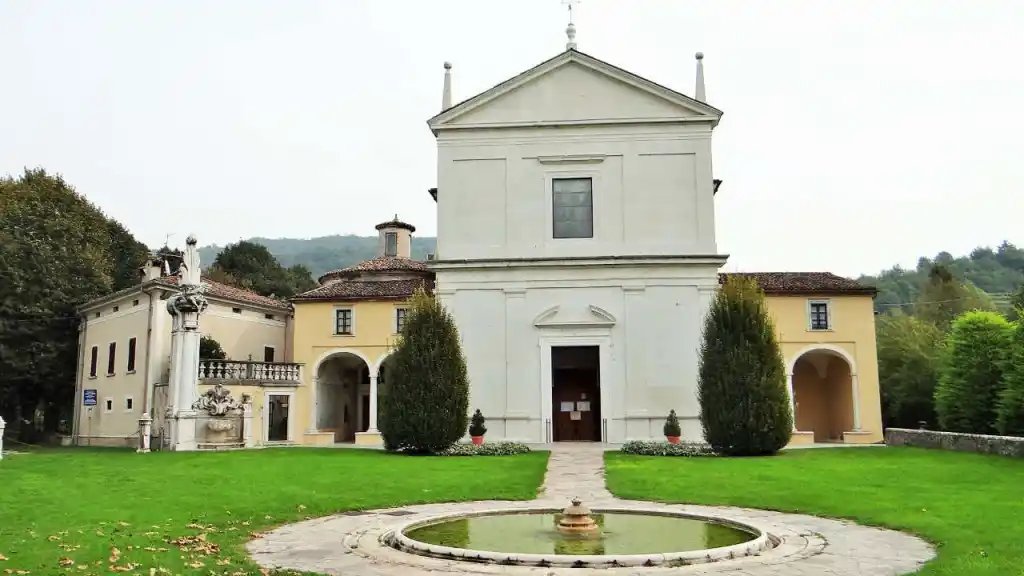
The Sanctuary of the Madonna di Valverde, belonging to the Parish of San Giovanni Battista di Rezzato Diocese of Brescia, is located in Valverde, at the foot of the Botticino and Serle hills. The Sanctuary was born in the places of the apparitions of 1399, the only one in history where both the Madonna and her Divine Son, Jesus Christ, the Saviour aooeared with His Mother and the second Marian Apparition of 1711.

For over six centuries the Sanctuary of the Madonna di Valverde has been a destination of pilgrimages from all over the north of Italy and is, above al,l in the heart of the community of Rezzato – Virle, which every year, on the Feast of St Anna on 26 July, recalls, with a solemn historical procession, the miracle of the apparitions.

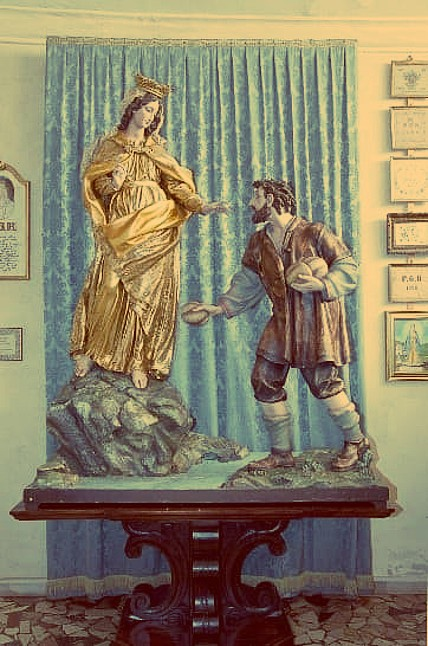
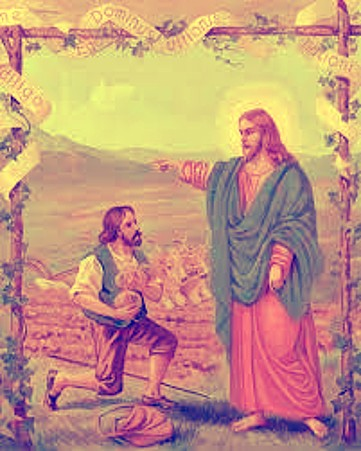
In 1399, more than six hundred years ago, during the ploughing work in a field near Valverde, the oxen pulling the plough stopped and bent their knees. A man in a red robe and a blue mantle (Christ) appeared to the worker who guided them and ordered him to throw the three loaves that he kept in his saddlebag into the nearby pond. The peasant got ready to obey the order but was held back by the Apparition of the Madonna who advised him to return to beg the Lord, to revoke the order just given. If the three loaves had touched the waters of the lake, three scourges would have been unleashed (famine, plague and war) with which Christ intended to punish men for their impiety. Jesus, by the insistence of tHis Holy Mother, consented to the peasant’s plea and agreed that only one of the loaves need be thrown into the water and, therefore, only the scourge of the epidemic would spread throughout the area. Our Lady recommended to the peasant to announce to everyone, what he had seen with his own eyes, exhorting men to repent and to approach faith and the Sacraments again.

A Chapel was first built near the lake, then, in the early seventeenth century, a large and beautifully decorated Sanctuary followed.

St Thérèse of Lisieux/St Thérèse of the Child Jesus and the Holy Face/The Little Flower OCD (1873 – 1897) Virgin, Carmelite Nun, Doctor of the Church (Memorial) She was Canonised by Pope Pius XI on 17 May 1925. The same Pope proclaimed her Universal Patron of the Missions, alongside Saint Francis Xavier, on 14 December 1927.
Up until 1969 her Memorial was celebrated on 3 October.

St Aizan of Abyssinia
St Albaud of Toul
Bl Andrew Sushinda
Bl Antoni Rewera
St Aretas of Rome
St Bavo of Ghent (c 589–654) Married. Widower, Monk and Hermit.
Bl Cecilia Eusepi
Bl Christopher Buxton
St Crescens of Tomi
St Dodo
Bl Dominic of Villanova
Bl Edward James
St Evagrius of Tomi
St Fidharleus
Bl Gaspar Fisogiro
St John Kukuzelis
Bl John Robinson

St Julia of Lisbon

St Maxima of Lisbon
Bl Nikita Budka
St Piaton of Tournai
St Priscus of Tomi
Bl Ralph Crockett
Bl Robert Widmerpool
Bl Robert Wilcox

St Romanos the Melodist (c 490-c 556) Deacon, Hymnographer, Poet, Writer. He is said to have composed more than 1,000 hymns celebrating various festivals of the ecclesiastical year, the lives of the saints and other sacred subjects, some 60 to 80 of which survive.

St Sazan of Abyssinia
St Verissimus of Lisbon
St Virila
St Wasnulf
—
Martyred in the Spanish Civil War:
• Blessed Carmelo Juan Pérez Rodríguez
• Blessed Higinio Mata Díez
• Blessed Juan Mata Díez
• Blessed Álvaro Sanjuán Canet
• Blessed Florencia Caerols Martínez

Posted in MARIAN TITLES

Holy Cross, Nossa Senhora de Nazaré / Our Lady of Nazareth, Portugal (1182) and Memorials of the Saints – 14 September

Exaltation of the Holy Cross (Feast) This feast was observed in Rome before the end of the seventh century. It commemorates the recovery of the Holy Cross, which had been placed on Mount Calvary by St Helena.

Nossa Senhora de Nazaré / Our Lady of Nazareth, Portugal (1182) -14 September:

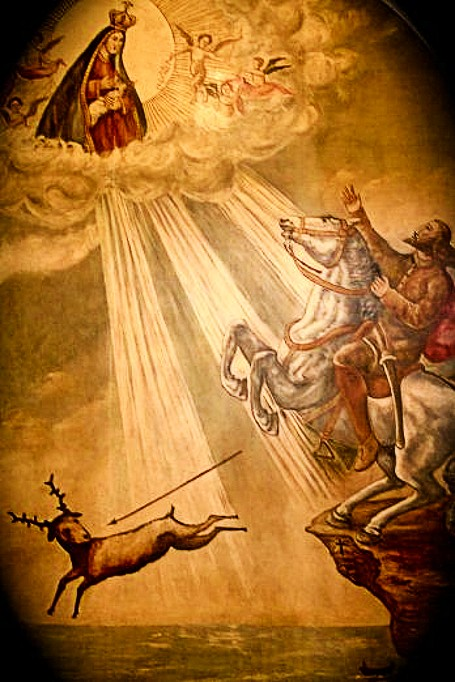
The chronicles of old Portugal report this episode that took place in the year 1182, on the day of the Exaltation of the Holy Cross. Dom Fuas Roupinho, a Knight and vassal of King Afonso Henriques, was out hunting on a foggy day. He was pursuing a deer when it came to an unexpected precipice and fell to its death into the sea below.

The horse, which was in close pursuit, reared on the very edge of the cliff and it seemed certain that Dom Fuas would follow the deer to his death. Knowing that a little distance to his left was a cave with the Statue of the Virgin of Nazareth, Dom Fuas immediately invoked her protection. He was saved and in thanksgiving he built a small “Chapel of memory” (Ermida da Memória) over the cave in her honour.

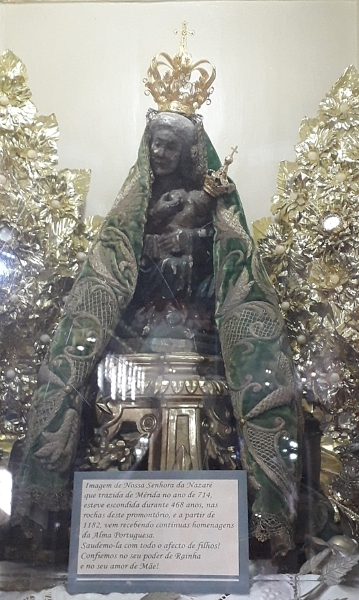
According to a document found with it, the little Statue of the Virgin had been venerated in Nazareth in the times of early Christianity. When the iconoclast heresy started in Constantinople and the heretics were destroying all the Statues, a Monk called Ciriaco took it to a Monastery in Spain in the proximity of Merida.

In 714, when the Saracens invaded the Iberian Peninsula, King Rodrigo fled with Friar Germano to the Atlantic coast, bearing the Statue with them. They hid the Statue in a small cave off the coast of the site that was later to become Nazaré, where it remained until it was found by a shepherd in 1179.

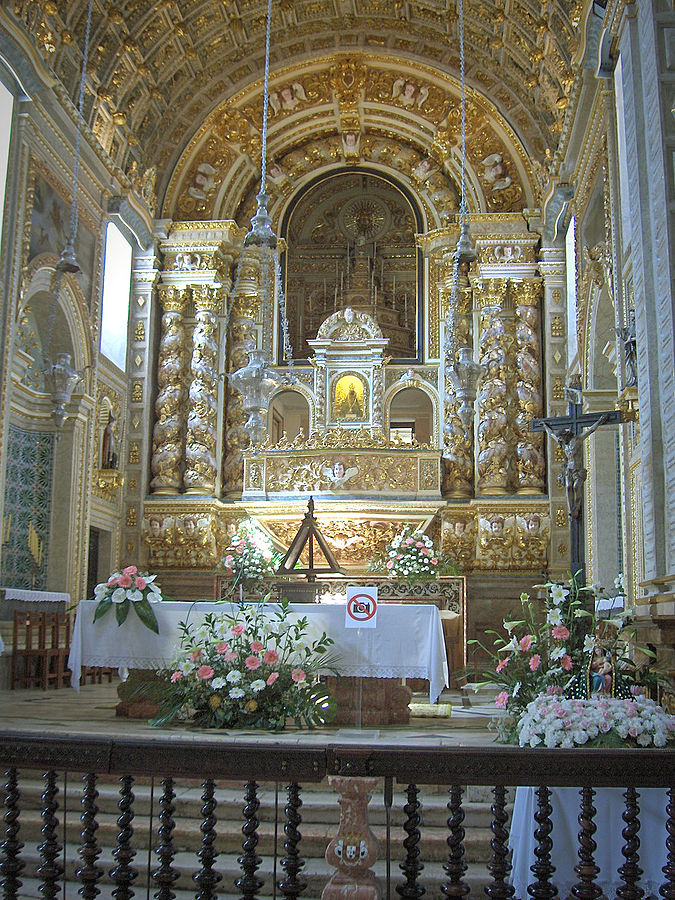
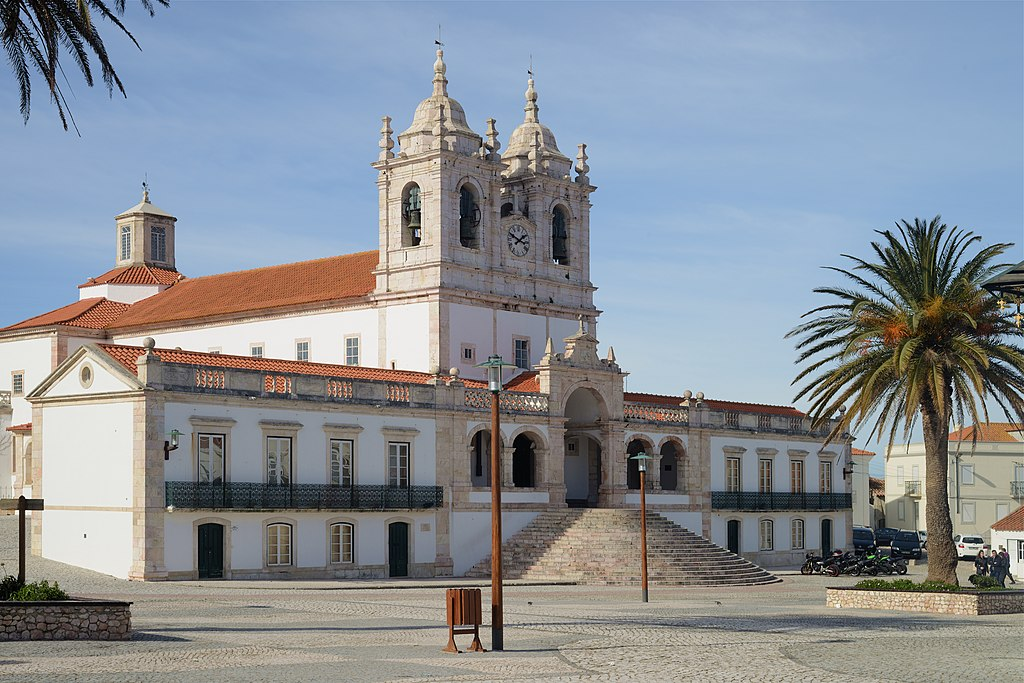
After Our Lady miraculously saved the life of Dom Fuas, the devotion to Our Lady of Nazareth spread throughout the country and was the source of countless graces for the people. In 1377 King Fernando ordered a large Church to be built near the little Chapel, and the Statue is venerated there now.

St Aelia Flaccilla

St Albert of Jerusalem (1149-1215) also known as St Albert of Vercelli – Bishop, Canon Lawyer, Diplomat and Peacemaker and is regarded as a Co-Founder of the Carmelite Order.

St Caerealis
Bl Claude Laplace
St Cormac of Cashel
St Crescentian of Carthage
St Crescentius of Rome
St Generalis of Carthage
St Giulia Crostarosa
St Jean Gabriel Taurin du Fresse
St Maternus of Cologne (Died c 325) Bishop

St Peter of Tarentaise O.Cist (1102-1174) Cistercian Monk, Archbishop of Tarentaise from 1141 until his death, Abbot, Apostle of Charity, Miracle-worker.
There are two men named Saint Peter of Tarentaise who lived one century apart. The man we honour today is the younger Peter, born in France in the early part of the 12th century. The other man with the same name became Pope Innocent the Fifth.

Bl Pedro Bruch Cotacáns
St Rosula of Carthage
St Sallustia
St Victor of Carthage