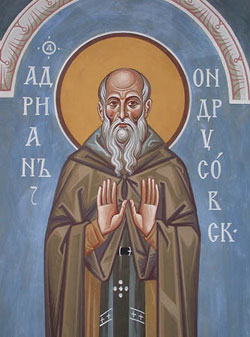
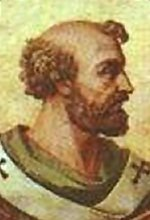
Pope Adrian III or Hadrian III was the bishop of Rome and leader of the Papal States from 17 May 884 to his death on 8 July 885. He served for little more than a year, during which he worked to help the people of Italy in a very troubled time of famine and war. Adrian III was the 109th pope and was born within the Papal States. During his brief reign of sixteen months, violent vendettas that arose from the assassination of John VIII continued. He laboured hard to alleviate the misery of the people of Italy, prey to famine and to continuous war. He is also known to have written a letter condemning the Christians of both Muslim-ruled and Christian-ruled parts of Spain for being too friendly with the Jews in these lands. Adrian also sent Theodosius, the bishop of Brindisi and Oria, to Constantinople to deliver a synodal letter about faith and the filioque to patriarch Photius I.
Adrian died in July 885 at San Cesario sul Panaro, not long after embarking on a trip to Worms, in the Rhineland. The purpose of the journey was to attend an Imperial Diet after being summoned by Emperor Charles the Fat to settle the imperial succession and discuss the rising power of the Saracens. His death under dubious circumstances led many to believe that he had been assassinated.
Adrian’s death and subsequent burial in the church of San Silvestro Nonantola Abbey near Modena is commemorated in the sculpted reliefs that frame the doorway of this church. His relics are found near the high altar, and his tomb at once became a popular place of pilgrimage. His cult was confirmed by Pope Leo XIII on 2 June 1891, and his feast day is celebrated on 8 July.
StAngelelmus (Angelelme, Angelaume, died 828) was bishop of Auxerre from 813 to 828. He was Bavarian, and became abbot of the monastery of SS Gervais and Protase, Auxerre. Angelelmus may have been a Benedictine.
St. Maelruain of Tallaght
St Maelruain is venerated as the founder and first abbot of Tallaght Monastery in County Dublin in Ireland, as well as the compiler of the martyrology of the same name. He is considered to be one of the leading figures in the Irish monastic movement known as the Culdees (‘Companions of God’) which flourished in Ireland and Scotland from the eighth to the twelfth centuries.
“Maelruain” (not to be confused with the later namesake Máel Ruain, bishop of Lusca) is not the baptismal name of the saint, rather, it was his monastic name. The form “Maelruain” consists of two parts: “mael” meaning “he who was tonsured”, and “ruain” which refers to the saint with the name Ruadan. From this it can be concluded that St. Maelruain was trained in the monastery founded by St. Ruadan, in Lothra in County Tipperary. The Martyrology of Tallaght (below) says that Maelruain “came here with the relics of holy martyrs and virgins”, to establish a monastery there. The foundation was dedicated to ‘God and St Michael’, and held the Virgin Mary and St Michael in special veneration. The monastery was later joined with Finglas in the reform movement as ‘the two eyes of Ireland’.
By the eighth century Irish monasteries had become lax, and Maelruain’s reform was necessarily severe. It put emphasis on preserving the enclosure and there was a strong ascetical component, focused spiritual direction, frequent confession, as well as long fasts and harsh penances, such as standing in cold water for long periods to control the flesh. With Aengus his disciple, Maelruain is regarded as joint author of The Rule of the Céilí Dé which contains a detailed series of rules for the regulation of the lives of the Companions.
Little is known of his early life. The Annals of Ulster report that in the year 792 Máel Ruain died a peaceful death, calling him a bishop and soldier of Christ.
These are two lines from a poem in the Leabhar Breac. They say of Maelruan:
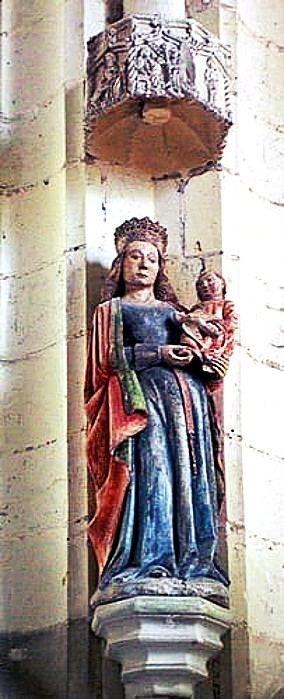
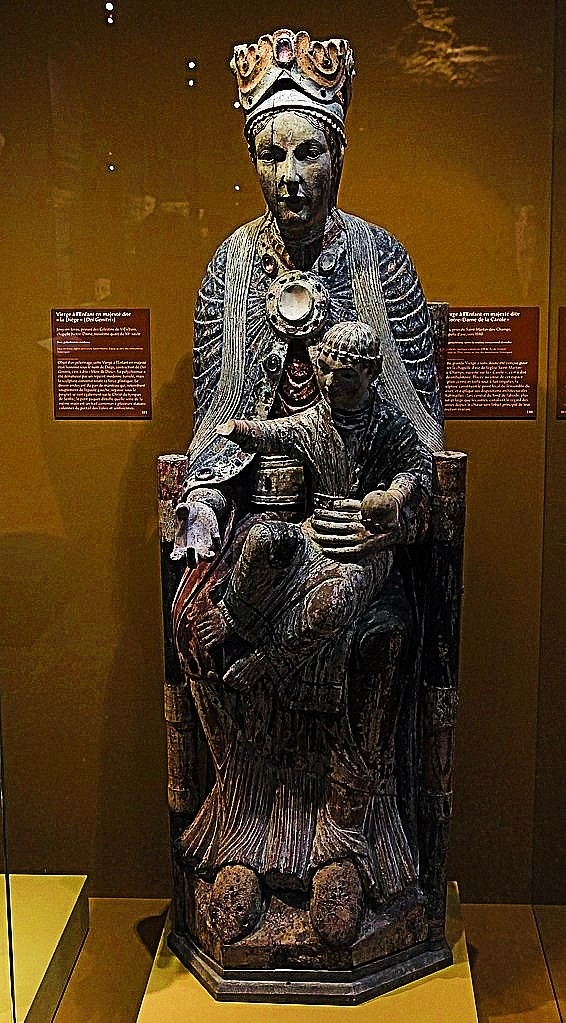
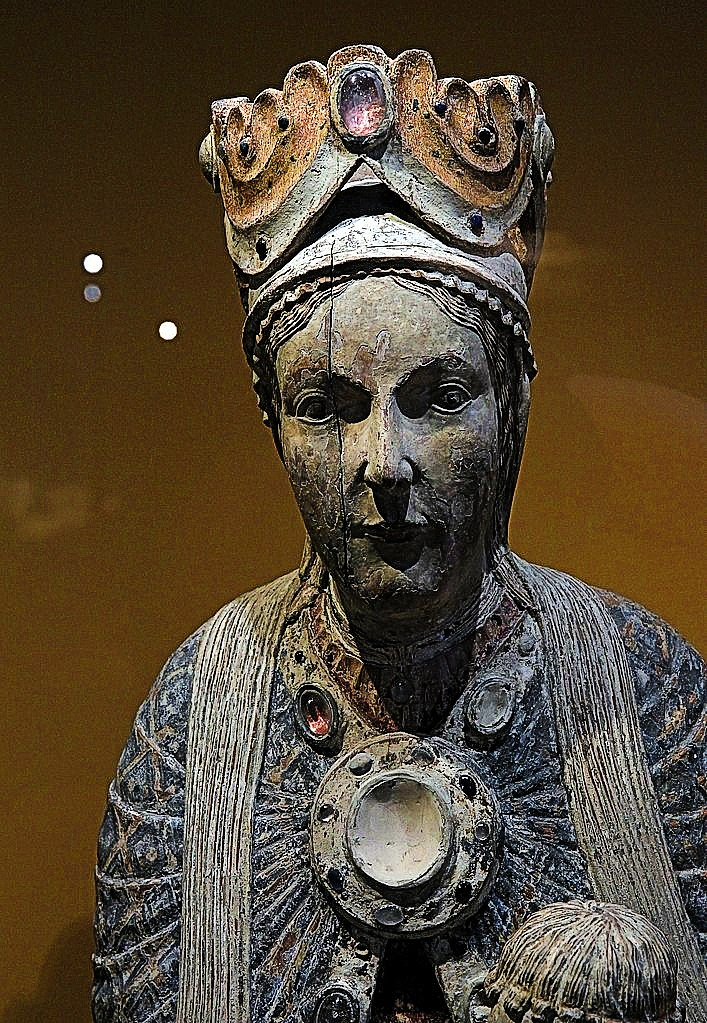
Notre-Dame d’Iron / Our Lady of Iron, Dunois, France (1631) – 6 July:
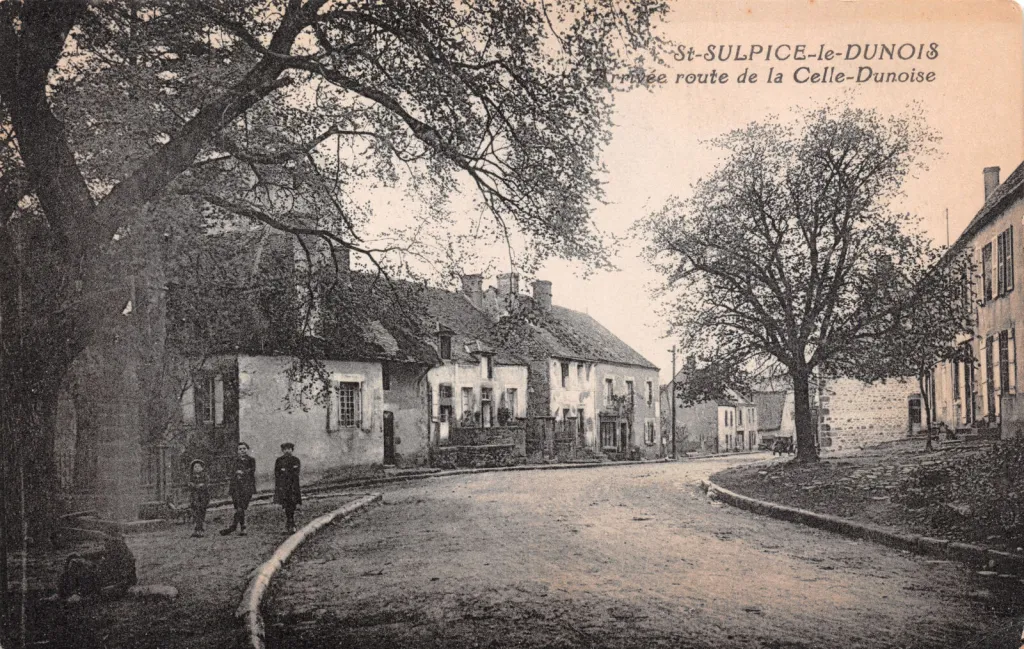
Saint-Sulpice-le-Dunois is a small Village located near the centre of France. Once home to Our Lady of Iron, it is situated near the larger Town of Blois, its population was only 517 citizens in the year 2007, which was a decrease from the 636 citizens who had lived there in 1999. It was in the Chapel of this tiny Village of Saint-Sulpice-le-Dunois, in the year 1631, that our story takes place involving Our Lady of Iron.
There was a young French couple living in the village at that time, who felt themselves singularly blessed. Were they not fortunate? They took pleasure in their youth and enjoyed good health, had happy employment,lived in a modest home and they had recently been blessed with a fine baby whom they felt was as sweet as the Babe of Bethlehem. Thus they mused on their way home together after early morning Mass one day.
As soon as they entered their home, Pierre hurried to the cradle to gaze lovingly at his infant son. The child must have been restless, he thought, as there was evidence that he had struggled with the bedclothes which were tossed about and tangled strangely about the infant. Pierre reached in and lifted his son to hold him in his arms, only to find that the tiny figure was rigid and cold. Stunned, he called for his wife disbelieving, for it seemed their baby was dead!
Pierre’s thoughts turned to Our Blessed Mother and then to the Statue of Our Lady of Iron at the Parish Church. They had spent many hours there in the past praying for her assistance and her help had never failed them. They determined to take their baby there instantly! Surely, Mary would not fail them in this time of dire need.
Together they entered the Church, and sadly laid the lifeless form at the feet of the Statue of Our Lady of Iron. As they began to pray for her intercession, they dedicated their baby to the Blessed Virgin Mary. In that very instant, the child who had been smothered by struggling in its cradle, cried out and came back to life. News of the miracle spread far and wide and the fame of Our Lady of Iron was assured.
Bl Angela of Bohemia Bl Augustin-Joseph Desgardin Bl Christopher Solino St Cyril of Thessaloniki St Dominica of Campania (c 287-303) Virgin Martyr St Gervais St Giusto of Condat St Goar of Aquitaine St Godelieve
St Saxburgh of Ely St Sisoes the Great Bl Suzanne Agathe de Loye St Thomas Alfield St Tranquillinus of Rome — Martyrs of Campania – 23 saints: A group of 23 Christians arrested, tortured and then beheaded together in the later 3rd century by order of governor Rictiovarus in the persecutions of Diocletian. The names that have come down to us are – Antoninus, Arnosus, Capicus, Cutonius, Diodorus, Dion, Isidore, Lucia, Lucian, Rexius, Satyrus and Severinus.
Martyrs of Fiesole – 5 saints: Five Christians martyred together in the persecutions of emperor Domitian – Carissimus, Crescentius, Dulcissimus, Marchisianus and Romulus. c 90 near Fiesole, Italy.
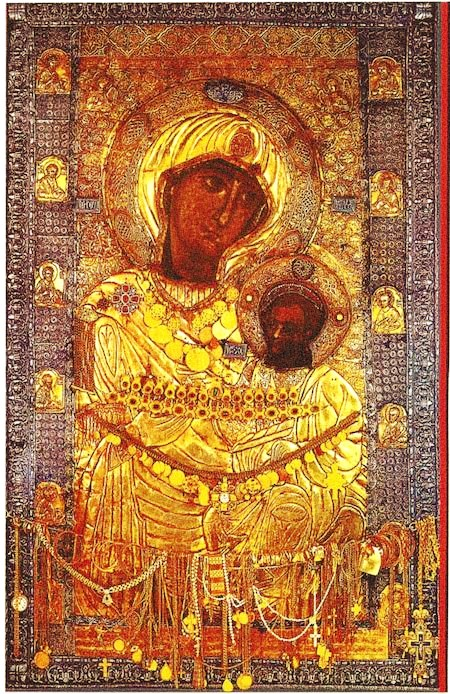
Our Lady of Mount Athos, Great Lavra, Greece , 8th cent. – 5 July:
In the 900s, the unfinished Great Monastery on Mount Athos ran out of funds and the starving Monks had to leave. Finally the Monastery Founder, St Athanasius the Athonite, left too in search of help. On the road he met a woman in a long blue veil, who said, “Go back! You will have everything you need if you do not abandon the Monastery!” When Athanasius asked the lady’s name, she answered, “I am the Mother of your Lord.”
The Abbot asked for a sign. “Strike the rock with your staff,” she said, and promised to be responsible for the Monastery provisions herself — to be its stewad. As water flowed from the rock, she vanished.
Athanasius returned to find the building completed and stocked with supplies. Soon it was full of Monks again. To this day, the Great Lavra regards the Mother of God as its steward, helped by a Monk with the title of assistant steward. In a Shrine on the left of the entrance to the Monastery Church, the Icons depict many saints connected with the Monastery. To Our Lady’s right St. Athanasius holds a model of the building. Down the road, the holy spring still flows.
St Agatho of Sicily St Athanasius the Athonite St Athanasius of Jerusalem St Cast St Cyprille of Libya / St Cyrilla of Cyrene St Domèce St Domitius of Phrygia St Edana of West Ireland Bl Edward Cheevers Blessed Elias of Bourdeilles OFM (c 1407-1484) Archbishop of Tours and Cardinal St Erfyl St Fragan Bl George Nichols St Grace of Cornwall St Gwen Bl Humphrey Pritchard
St Marinus of Tomi St Mars of Nantes St Marthe Bl Matthew Lambert St Modwenna St Numerian of Treves Bl Patrick Cavanagh St Philomena of San Severino St Probus of Cornwall Bl Richard Yaxley Bl Robert Meyler St Rosa Chen Aijieh St Sedolpha of Tomi St Stephen of Reggio St Teresia Chen Qingjieh St Theodotus of Tomi Bl Thomas Belson St Thomas of Terreti St Triphina of Brittany St Triphina of Sicily St Zoe of Rome
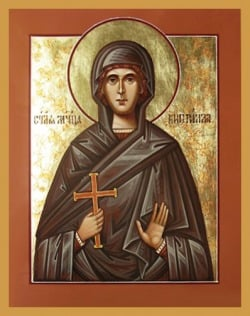
Saint Cyrilla of Cyrene, also known as Cyrilla of Libya, Ciprilla, Cirilla, Cypria, or Cyprille, was an elderly widow who lived during the time of the persecutions of Emperor Diocletian. She was a devout Christian who refused to worship idols, no matter what she was threatened with. Coming from the city of Cyrene in Libya, her unbreakable faith made her a target for the pagan authorities. Despite her advanced age, she became one of the countless victims of the brutal persecution campaign. The barbaric Romans concocted a wicked ploy to force her to make a sacrifice to their gods by placing live coals and incense in her bare hands, so as to force her to drop the flaming mass onto the altar and make it appear as though she had consented.
But, demonstrating heroic fortitude and resolution, she instead clung tightly to the coals, refusing to cooperate with the demon worshippers. Her refusal to renounce her faith left her tormentors astounded and enraged. Undeterred by her unwavering commitment to the faith, they resorted to further extreme measures. They subjected her to various forms of torture in an attempt to break her spirit, but she remained utterly resolute in her commitment to Christ. Ultimately, Cyrilla was tortured to death. Her body was torn apart with metal hooks, an experience she endured with incredible bravery and unwavering faith.
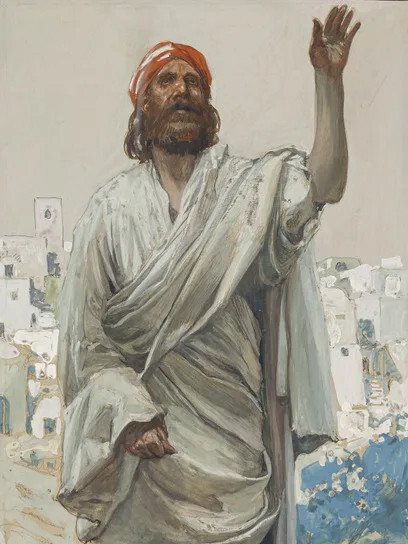
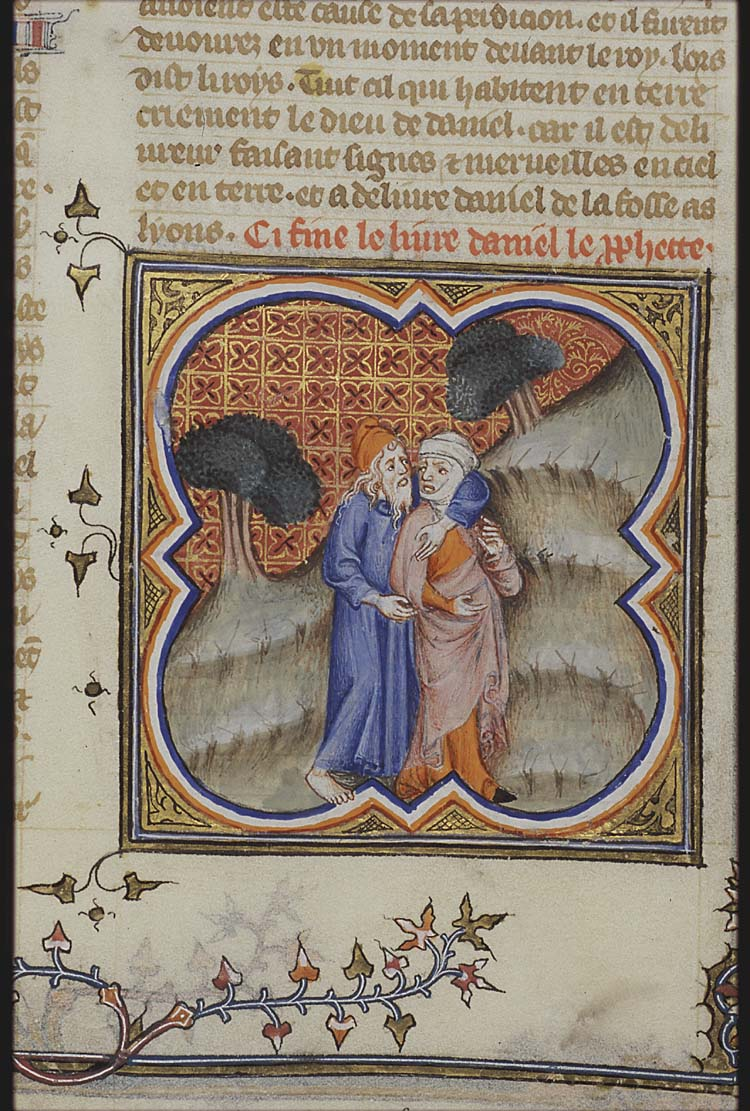
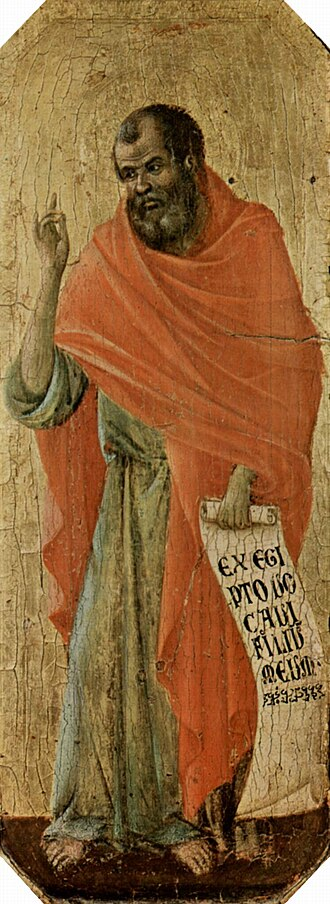
Hosea (‘Salvation’), also known as Osee, son of Beeri, was an 8th-century BC prophet in Israel and the author of the Book of Hosea. He is the first of the Twelve Minor Prophets. Hosea is often seen as a “prophet of doom”, but underneath his message of destruction is a promise of restoration. Hosea was a contemporary of Jonah, Amos, Isaiah and Micah.
He married Gomer, but she proved to be unfaithful. Hosea knew she would be such, as God tells him so in the opening statements of the book. This marriage was arranged in order to serve as a symbol of Israel’s unfaithfulness to the Lord, and dramatizes the breakdown in the relationship between God and his people Israel. Hosea’s family reflected the adulterous relationship which Israel built with other gods.
His children’s names likewise represent God’s estrangement from Israel. They are prophetic of the fall of the ruling dynasty and the severed covenant with God. The name of Hosea’s daughter, Lo-ruhamah, which translates as ‘not pitied’, is chosen as a sign of displeasure with the people of Israel for following false gods. The name of Hosea’s son, Lo-ammi, which translates as ‘not my people’, is chosen as a sign of the Lord’s displeasure with the people of Israel for following those false gods.
Even though Gomer runs away from Hosea and sleeps with another man, he loves her anyway and forgives her. Likewise, even though the people of Israel worshipped false gods, God continued to love them and did not abandon his covenant with them. The buying back of Gomer is also an analogy to the redemptive qualities of Jesus Christ’s sacrifice on the cross, and his buying back of the human race from the devil.
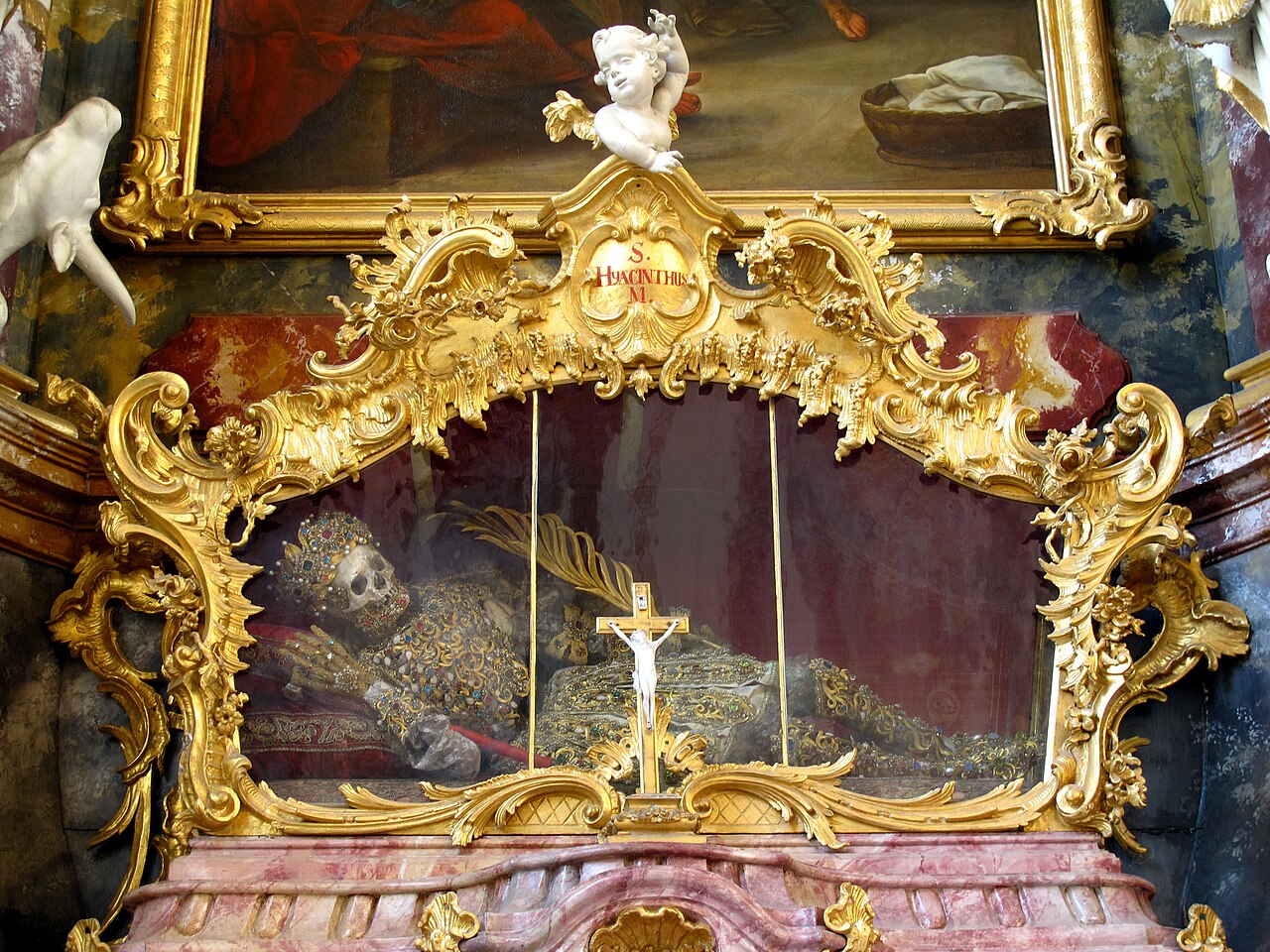
Hyacinth was a native of Caesarea in Cappadocia, and a member of a Christian family. As a boy, he was appointed to serve as an assistant to the chamberlain to the Emperor Trajan. His failure to participate in the sacrifices to the official Roman gods soon came to be noticed by other members of the Imperial household. One day, while the emperor and his entourage were offering sacrifice to idols, Hyacinth remained at the palace, shut himself up in a small room, and prayed fervently to the Lord Jesus Christ. One of the servants overheard him praying and denounced him to the emperor.
When he was denounced as a Christian, Hyacinth proclaimed his faith. He was brought to trial before Trajan, who tried to persuade him to deny Christ and sacrifice to idols, but the young boy refused. As a result, he was imprisoned and underwent numerous scourgings and tortures. He was deliberately served only food which had been blessed for sacrifice to the gods, the eating of which was banned to Christians. Thus, he starved to death after thirty-eight days, dying at the age of twelve. Just before his death, his jailers saw him being comforted by a pair of angels, one who covered him with his own robe, the other who bestowed a crown on him.
Hyacinth died in the city of Rome. Later, his relics were transferred to Caesarea.
Notre-Dame-de-la-Carole / Our Lady of la Carole, Paris (1418) – 3 July:
Roadside Shrines can still be seen in places all over Europe, though it is nothing like it used to be in the Middle Ages when these Shrines were extremely prevalent. They were public reminders of God and His Saints and were meant for the good of the general public, who would come upon the Shrine and pause for a moment to pray. They could be simple or somewhat elaborate, ranging from unadorned crosses to free standing towers or even small Chapels.
On 3 July in the year 1418, a Swiss soldier committed a sacrilege upon a Statue of the Blessed Virgin known as Our Lady of la Carole, or Our Lady of Carole. It was located at the corner of the Rue aux Ours, which was built in the 13th century and terminated at the hospital of Saint John, which is no longer in existence. The Rue aux Ours is now a short street that begins at Rue Saint-Martin and ends at the Boulevard Sebastopol in Paris, France. The soldier of the Duke of Burgandy’s troops, said to be a Swiss soldier, came upon the Shrine of the Blessed Virgin after having left a tavern where he had gambled away his money. He was probably intoxicated when he drew his sword and repeatedly struck the Statue of the Blessed Virgin with the weapon. The Statue of Our Lady of Carole then began to bleed profusely, as if made of flesh and blood and WAS wounded by the blows.
The citizens who had observed the sacrilege were outraged and followed the soldier as he fled from the scene of his crime. The man was eventually caught and apprehended and then brought before the Chancellor where he was sentenced to death for the outrage.
In remembrance of this incident and in expiation for the crime, there was a popular feast that took place on the Rue aux Ours every year. There were fireworks and a wax figure representing the sacrilegious wretch who had struck the image of the Blessed Virgin was set ablaze. This festival continued until the French Revolution brought an end to the traditional observance.
St Anatolius of Constantinople (Diedc 458) Bishop Bl Andreas Ebersbach Bl Barbara Jeong Sun-mae St Bladus St Byblig St Cillene St Dathus of Ravenna St Eusebius of Laodicea St Firminus St Firmus Bl Gelduin St Giuse Nguyen Ðình Uyen St Gunthiern St Guthagon St Heliodorus of Altinum St Hyacinth of Caesarea St Ioannes Baptista Zhao Mingxi St Irenaeus of Chiusi
St Maelmuire O’Gorman St Mark of Mesia St Mennone the Centurian St Mucian of Mesia St Paul of Mesia St Petrus Zhao Mingzhen St Philiphê Phan Van Minh St Raymond of Toulouse (Died 1118) Layman — Martyrs of Alexandria – 13 saints: Thirteen Christian companions marytred together. No details about them have survived but the names – Apricus, Cyrion (2 of), Eulogius, Hemerion, Julian, Julius, Justus, Menelaus, Orestes, Porfyrios and Tryphon (2 of). They martyred in Alexandria, Egypt, date unknown.
Martyrs of Constantinople – 24 saints: A group of 24 Christians martyred in the persecutions of Arian emperor Valens. We know little more than their names – Acacios, Amedinos, Ammonius, Ammus, Cerealis, Cionia, Cionius, Cyrianus, Demetrius, Eulogius (2), Euphemia, Heliodoros, Heraclios, Horestes, Jocundus, Julian, Martyrios, Menelaeus, Sestratus, Strategos, Thomas, Timotheos and Tryphon. They were martyred in c367 in Constantinople.
Theodotus and Companions – 6 saints: Six Christians who were imprisoned, tortured and martyred together in the persecutions of Trajan. Saint Hyacinth ministered to them in prison. We know nothing else about them but their names – Asclepiodotus, Diomedes, Eulampius, Golinduchus, Theodota and Theodotus. They were beheaded in c110, location unknown.
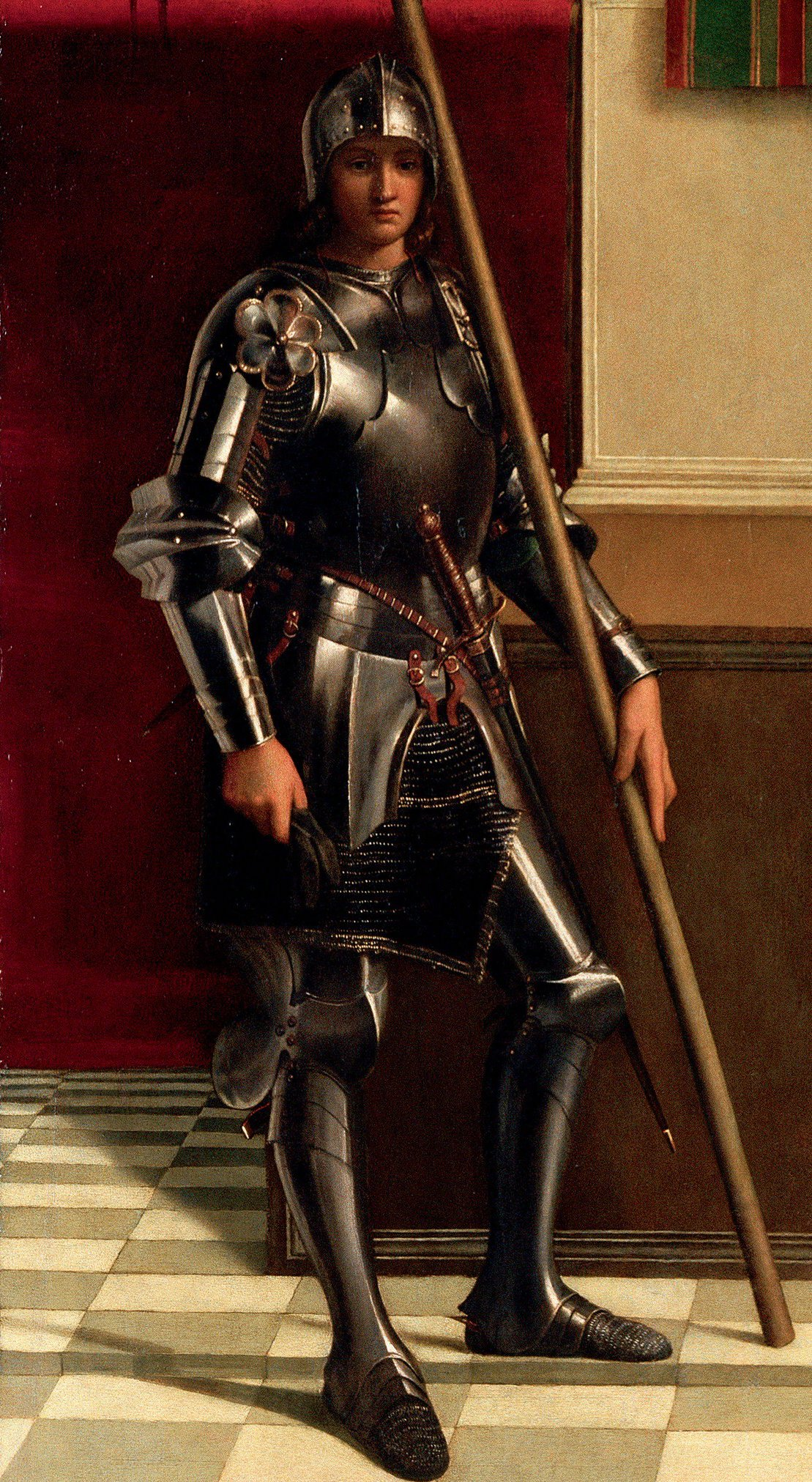
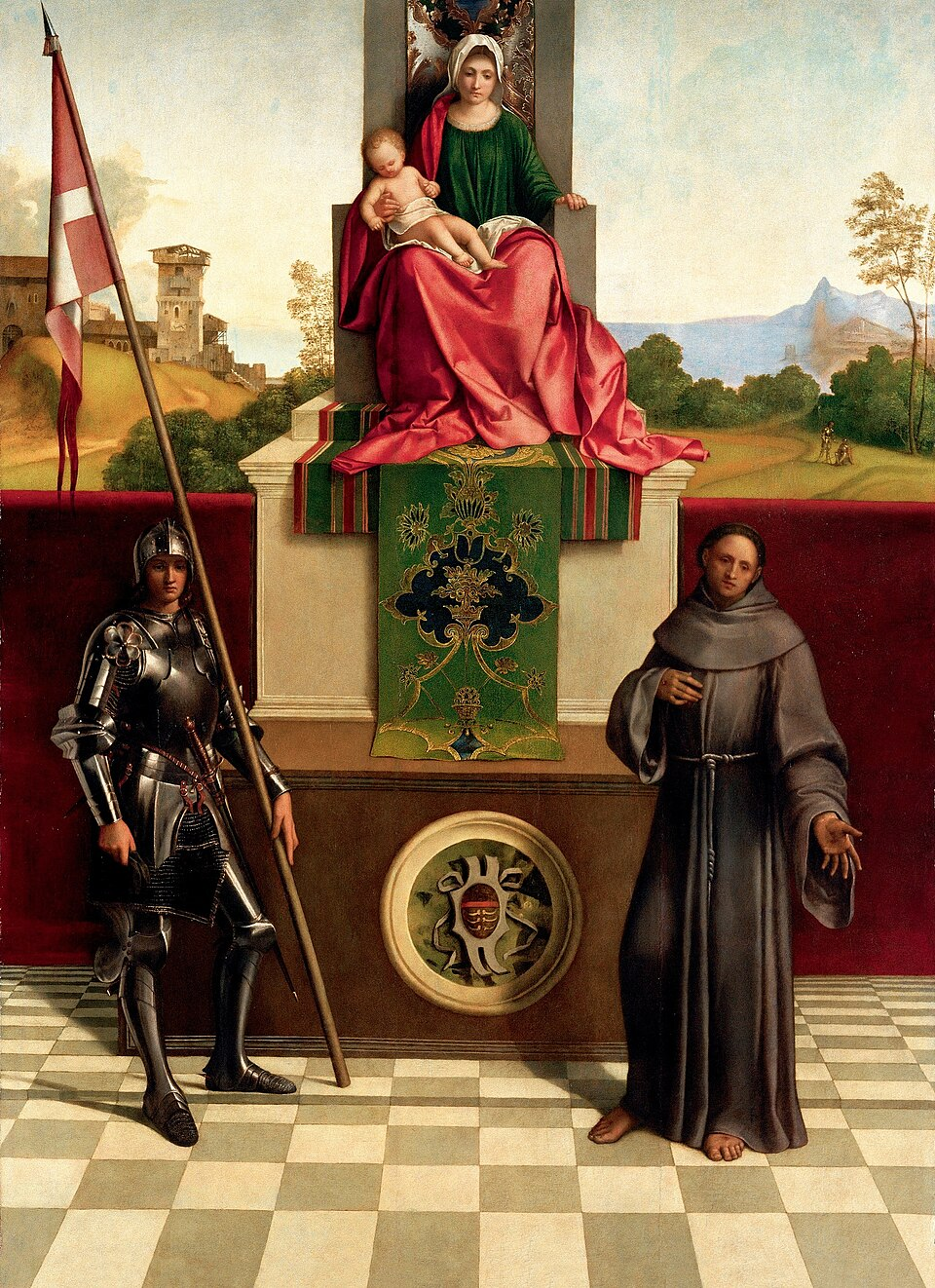
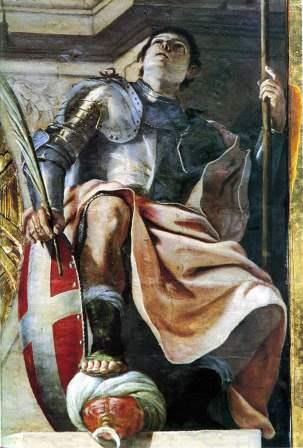
Saint Nicasius of Jerusalem, was born around 1135 in Sicily, Italy. The son of Roberto de Burgio and his wife Aldegonda, Nicasius descended from the Saracens on his father’s side and from the Normans on the mother’s. He joined the Knights Hospitaller with his brother, Ferrandino, and in 1185 they answered the call of Roger de Moulins and travelled to the Holy Land.
The Order of Saint John of Jerusalem (now known as the Order of Malta) was a monastic community founded to care for the sick and pilgrims traveling to the Holy Land. With the creation of the Kingdom of Jerusalem, the Order added a military side to its religious character, because it now had to defend pilgrims and the sick, together with the Holy Places and all of Christianity, as well as care for them. Care for the sick and pilgrims, commitment to Christian solidarity, justice and peace according to evangelical teaching, and the defense of the Christian faith were the basis of the Order. Nicasio and his brother took the three monastic vows of Poverty, Chastity, and Obedience.
As a captain, Nicasius fought in the defense of Acre, and during the battle he was captured by the Saracens. They demanded that he renounce his Christian faith and convert to Islam. But he remained steadfast and refused to renounce Christianity, choosing martyrdom over apostasy. He was decapitated in the presence of Saladin himself.
Saint Nicasius is particularly venerated in Caccamo, Italy. Numerous miracles were obtained there through the intercession of this glorious martyr, amongst them deliverances from the plague in 1575 and 1624. Saint Nicasius is invoked to free supplicants from terror, from infectious diseases, from maladies of the throat, neck, and lymph glands, and for the healing of scrofula.
St Agapetus of Ruthenia Bl Alfonso Navarrete Benito Bl Arnald Arench Bl Arnold of Geertruidenberg St Atto of Oca St Candida of Whitchurch St Caprasius of Lérins (Died 430) Hermit St Clarus of Aquitaine St Claudius of Vienne Bl Conrad of Hesse St Conrad of Trier Bishop, Martyr St Crescentinus (Died 303) Martyr, Soldier St Cronan of Lismore St Damian of Scotland St Dionysius of Ruthenia St Donatus of Lucania St Felinus of Perugia Bl Ferdinand Ayala St Firmus St Fortunatus of Spoleto Bl Gaius Xeymon St Gaudentius of Ossero St Giuse Túc St Gratian of Perugia Bl Herculanus of Piegare St Iñigo of Oña St Ischryrion and Companions Bl James of Strepar Bl John Pelingotto Bl John Storey St Juventius Bl Leo Tanaka St Melosa St Pamphilus of Alexandria
St Porphyrius of Alexandria St Proculus of Bologna St Proculus the Soldier St Ronan St Secundus of Amelia St Seleucus of Alexandria St Simeon of Syracuse St Telga of Denbighshire St Thecla of Antioch
Blessed Teobaldo Roggeri (c1100-1150) Layman Shoemaker, Porter, Apostle of the poor and needy, Penitent, Pilgrim. The Roman Martyrology states of him today: “In Alba in Piedmont, Blessed Teobaldo, who, driven by love for poverty, gave all his possessions to a widow and became a porter out of a spirit of humility, to carry the burdens of others on himself.” Biography: https://anastpaul.com/2021/06/01/saint-of-the-day-1-june-blessed-teobaldo-roggeri-c-1100-1150/
St Thespesius of Cappadocia St Wistan of Evesham St Zosimus of Antioch
Martyrs of Alexandria – 5 Saints: A group five of imperial Roman soldiers assigned to guard a group of Egyptian Christians who were imprisoned for their faith in the persecutions of Decius. During their trial, they encouraged the prisoners not to apostatize. This exposed them as Christians, were promptly arrested and executed. Martyrs. Their names are – Ammon, Ingen, Ptolomy, Theophilis and Zeno. They were beheaded in 249 at Alexandria, Egypt.
Martyrs of Caesarea – 3 Saints: Three Christians Martyred together in the persecutions of Galerius. We know little more about them than the name – Paul, Valens and Valerius. They diedf in 309 at Caesarea, Palestine.
Martyrs of Lycopolis – 6 Saints: Five foot soldiers and their commander who were Martyred for their faith by order of the imperial Roman prefect Arriano during the persecutions of Decius. In Lycopolis, Egypt.
Martyrs of Rome – 6 Saints: A group of spiritual students of Saint Justin Martyr who died with him and about whom we know nothing else but their names – Carito, Caritone, Evelpisto, Ierace, Liberiano and Peone. In Rome, Italy.




 AnaStpaul
You must be logged in to post a comment.