Posted in BAPTISM, CARMELITES, DOCTORS of the Church, DOMINICAN OP, MORNING Prayers, QUOTES of the SAINTS, QUOTES on CONVERSION, QUOTES on SANCTITY, SAINT of the DAY, The HOLY GHOST, The WORD

One Minute Reflection – 29 April – “A ray of sunlight shining on a smudgy window”

One Minute Reflection – 29 April – Monday of the Second week of Easter, Year C, Gospel: John 3:1–8 and the Memorial of St Peter of Verona OP (1205–1252)

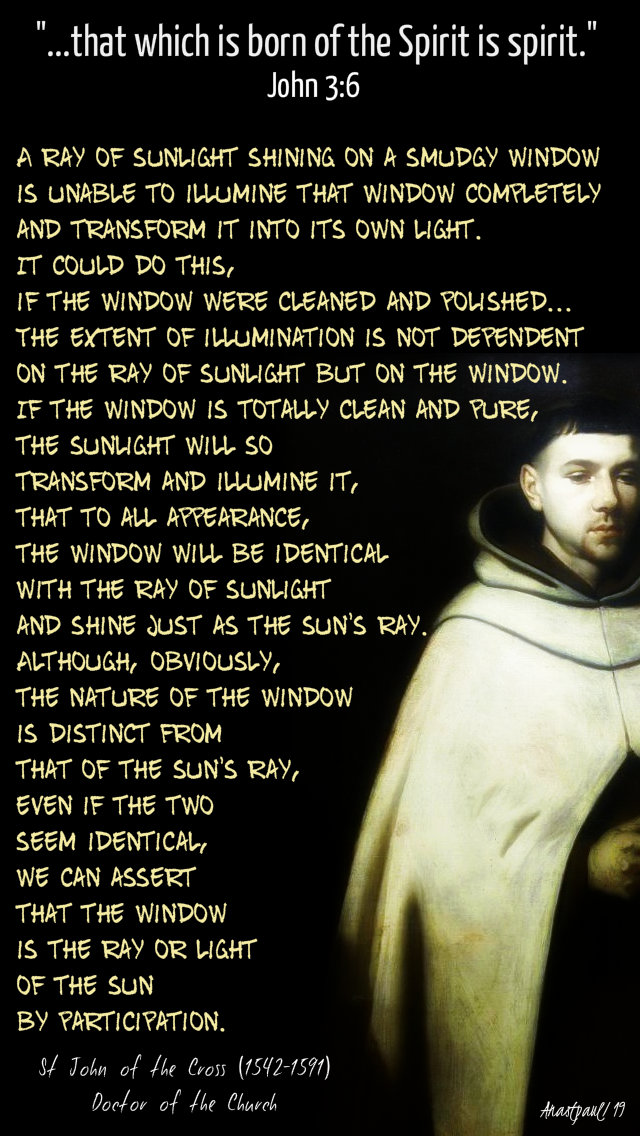
“…that which is born of the Spirit is spirit.”...John 3:6

REFLECTION – “We read in Saint John – No one can enter the Kingdom of God without being born of water and Spirit.   To be reborn in the Holy Spirit during this life is to become most like God in purity, without any mixture of imperfection.   Accordingly, pure transformation can be effected – although not essentially – through the participation of union.

Here is an example that will provide a better understanding of this explanation.   A ray of sunlight shining on a smudgy window, is unable to illumine that window completely and transform it into its own light.   It could do this, if the window were cleaned and polished… The extent of illumination is not dependent on the ray of sunlight but on the window.   If the window is totally clean and pure, the sunlight will so transform and illumine it, that to all appearances the window will be identical with the ray of sunlight and shine just as the sun’s ray.   Although, obviously, the nature of the window is distinct from that of the sun’s ray, even if the two seem identical, we can assert, that the window is the ray or light of the sun by participation.

The soul on which the divine light of God’s being is ever shining, or better, in which it is ever dwelling by nature, is like this window.   A soul makes room for God by wiping away all the smudges and smears of creatures, by uniting its will perfectly to God’s, for to love is to labour, to divest and deprive oneself for God, of all that is not God.   When this is done, the soul will be illumined by and transformed in God.”…St John of the Cross (1542-1591) Doctor of the Churchjohn 3 6 that which is born of the spirit - a ray of sunlight - st john of the cross - 29 april 2019

PRAYER – Almighty God and Father, grant that Your faithful people who were buried with Your Son in baptism, may by His Resurrection and intercession at Your right hand, obtain for us eternal life.   Send Your Spirit upon Your adopted children and lead us in Your way.   Grant that by the intercession of St Peter of Verona, our path may be straightened and glow with Your light.   Through Christ our Lord, with the Holy Spirit, God forever, amen.st peter of verona pray for us 29 april 2019

Posted in DOCTORS, / SURGEONS / MIDWIVES., DOMINICAN OP, SAINT of the DAY

Saint of the Day – 29 April – St Peter of Verona OP (1205–1252)

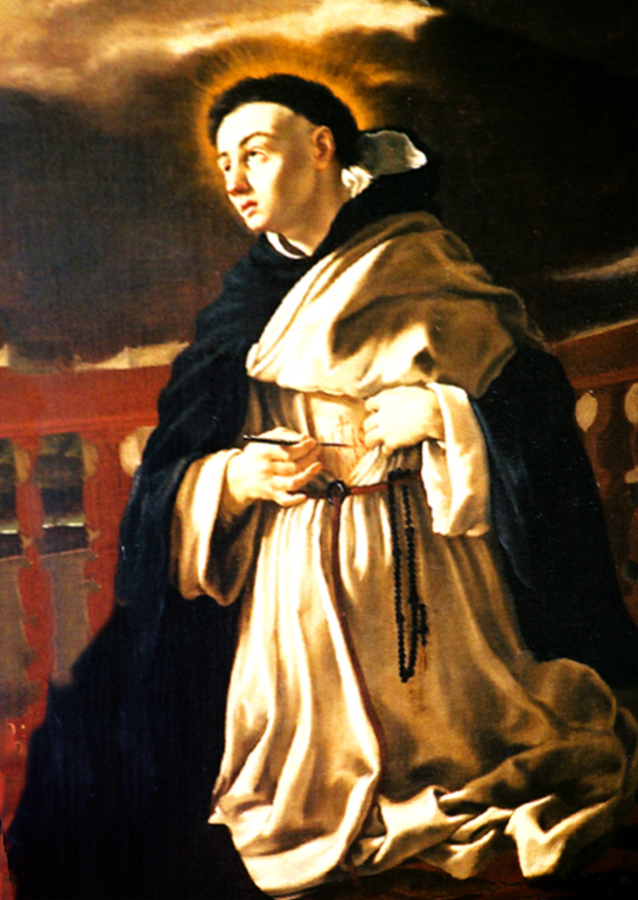
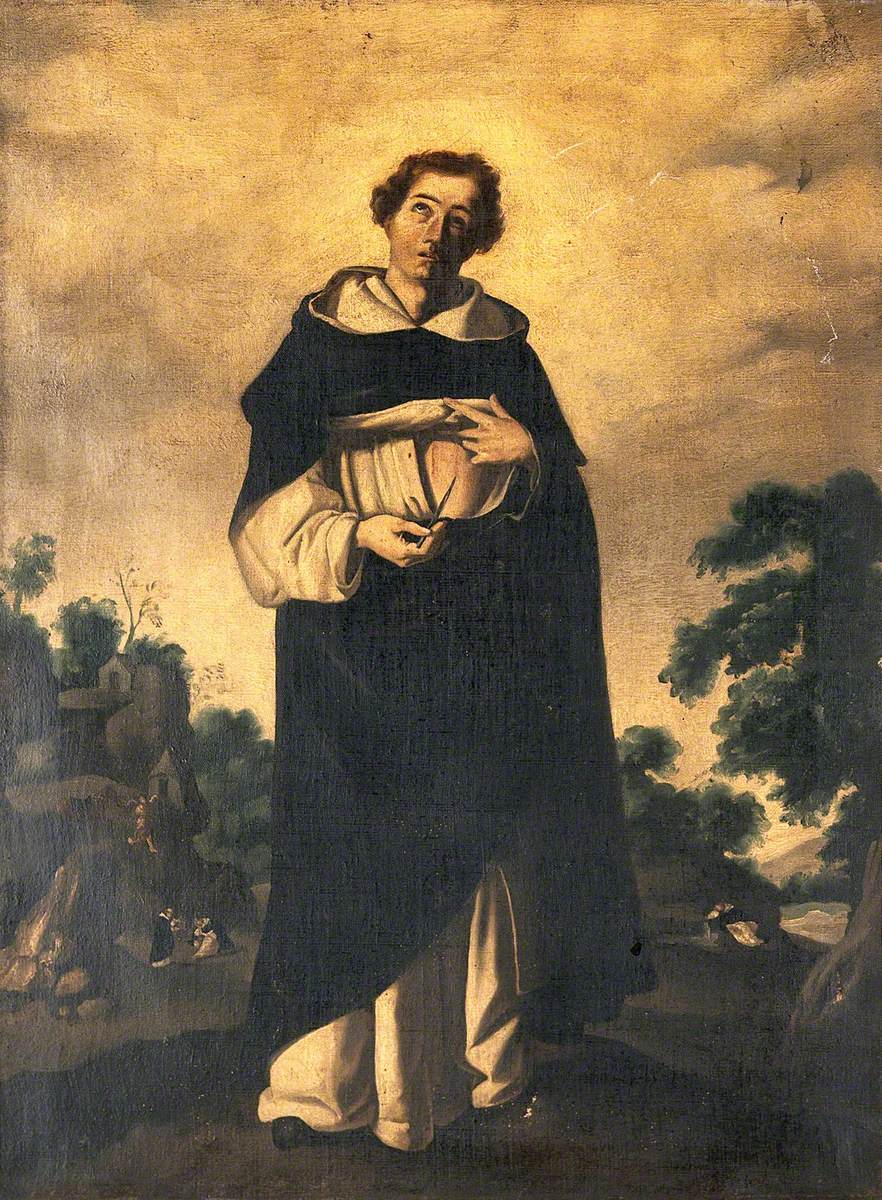
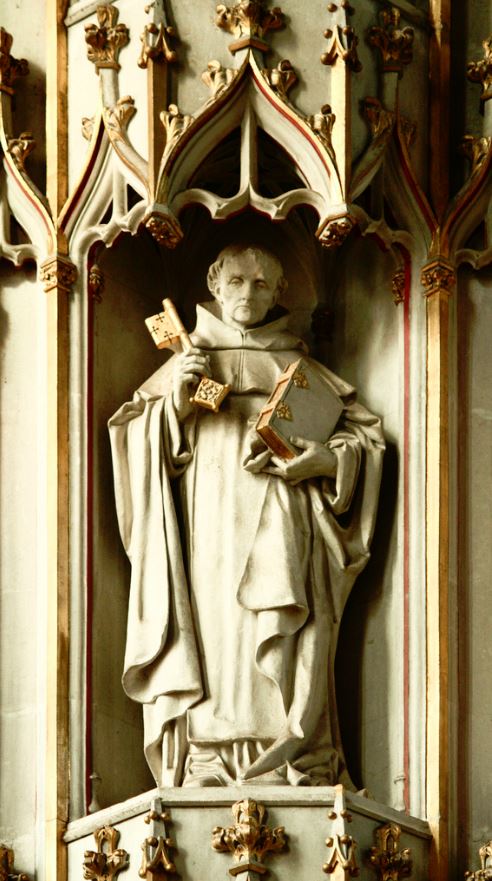
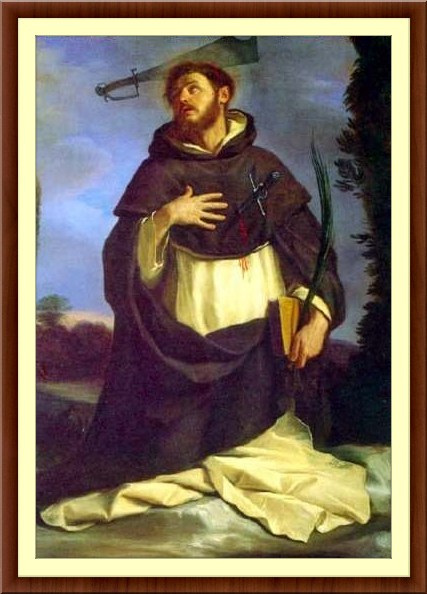
Saint of the Day – 29 April – St Peter of Verona OP (1205–1252) also known as St Peter Martyr – Priest and Friar of the Order of Preachers, a celebrated Preacher, Miracle-worker, Marian devotee.   He served as Inquisitor in Lombardy, was murdered by an assassin and was Canonised 11 months after his death, making his, the fastest Canonisation in history. Patronages – inquisitors, midwives, Castelleone di Suasa, Italy, Verona, Italy, Diocese of, Guaynabo, Puerto Rico. St Peter is the the first Canonised Martyr of the Dominican Order.st PeterMartyr-400x526

In the English-speaking part of the world especially, all too little is known about this illustrious Friar Preacher.   Possibly this is in part due to the well-known bias in England against the old-time inquisition, which spread thence into the colonies founded by that country, for Saint Peter was closely connected with that institution.   Indeed, by not a few he is considered as a man without a heart.   Yet he was most compassionate.   His character was rounded out by an admirable strength of will and a mind so judiciously balanced that he neither shrank from duty, whatever the sacrifice, or even danger, it involved, nor allowed his heart to control his judgement.

Father Thomas Agni of Leontino, another noted Dominican, archbishop of Cosenza and later patriarch of Jerusalem, was the first to write a life of the blessed martyr.   His testimony should he all the more reliable because he lived for many years with Saint Peter of Verona, had been his superior and was an eye-witness of the principal events in his life.   The work shows no signs of undue predilection.   Agni’s original manuscript was for long years at Saint Mark’s Convent, Florence. Another, with some additions by Father Ambrose Taegio, was preserved in the Convent of Nostra Donna delle Grazie, Milan.

Peter was born in Verona, Italy in 1205, of parents who had embraced the heresy of Cartharism but he did attend a Catholic school.   He was educated at the University of Bologna and was accepted into the Dominican Order by Dominic himself.  st peter martyr beautiful lg

Because the Dominicans were theologically trained preachers, the popes entrusted the Inquisition to them.   In 1234, Pope Innocent IV recognised Peter’s virtues (severity of life and doctrine, talent for preaching, and zeal for the orthodox Catholic faith) and appointed him Inquisitor in Lombardy.   He spent about six months in that office and it is unclear whether he was ever involved in any trials.   His one recorded act was a declaration of clemency for those confessing heresy or sympathy to heresy.   In 1251 his jurisdiction was extended to most of northern Italy. Although he attracted huge crowds with his preaching, as an inquisitor he also made enemies.

Marvellously filled with the gifts of the Holy Spirit, he laboured continually for the propagation and defence of the true faith, being zealous for its promotion among the people.   To this end he established the Association of the Faith and the Confraternity of the Blessed Virgin Mary.   He was a fervent of promoter of community and fraternal life and served the brethren wisely as a prior.   He was also greatly solicitous for the spiritual good of the sisters, lovingly assisting them with his advice and exhortations to their spiritual benefit.

In his sermons he denounced heresy and also those Catholics who professed the Faith by words but acted contrary to it in deeds.   Crowds came to meet him and followed him, conversions were numerous, including many Cathars who returned to orthodoxy.

Because of this, a group of Milanese Cathars conspired to kill him.   They hired an assassin, one Carino of Balsamo.   Carino’s accomplice was Manfredo Clitoro of Giussano. On 6 April 1252, when Peter was returning from Como to Milan, the two assassins followed Peter to a lonely spot near Barlassina and there killed him and mortally wounded his companion, a fellow friar named Domenico.SaintPeterTheMartyr'sAssasination.JPG

Carino struck Peter’s head with an axe and then attacked Domenico.   Peter rose to his knees and recited the first article of the Symbol of the Apostles (the Apostle’s Creed). Offering his blood as a sacrifice to God, according to legend, he dipped his fingers in it and wrote on the ground: “Credo in Deum” “I believe in God”, the first words of the Apostles’ Creed.   The blow that killed him cut off the top of his head but the testimony given at the inquest into his death confirms that he began reciting the Creed when he was attacked.   Domenico was carried to Meda, where he died five days afterwards.st peter of verona icon

The murderer Carino, renounced heresy, became a Dominican co-operator brother and died with a reputation for sanctity.  He is the subject of a local cult as Blessed Carino of Balsamo.

Wherever he went, the deaf, the dumb, the blind, the lame and people sick with every kind of ailment were brought to him.   Ordinarily all were benefited by his prayers.  They praised God for the power of healing which He had given His servant.st Peter-of-Verona-Full-e1425844752637-400x454.jpg

Peter of Verona and with reason, was considered a learned doctor.   Yet he ever continued to store his mind with new knowledge, whether through prayer, meditation, or reading the Sacred Writings.   The example which he set his religious brethren showed them by what means they could perfect themselves in their state of life and make themselves useful to the Church.   Never did his degree of Master in Sacred Theology cause him to neglect study.   Study never prevented him from being the first at all the regular exercises.   Well did he know how to combine the practices of the cloister with the labours of the apostolic life.st petermartyr1
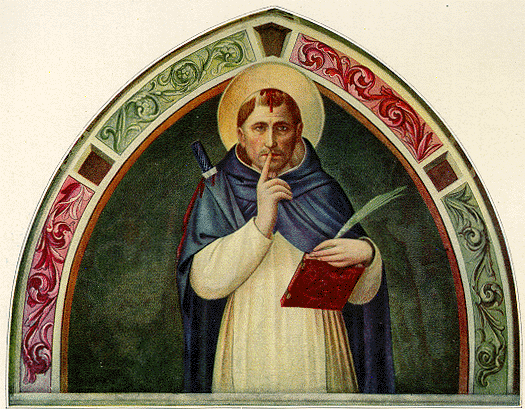
In private conversation, just as in his sermons, he stimulated the faithful with his personal sentiments of love for the Blessed Virgin.   Because of his influence in their favour the Servites (they were investigated to ensure their orthodoxy) have ever regarded Peter of Verona in the light of a second founder of their order.   After his Canonisation, they placed him on the list of their holy patrons and protectors.

The Bull of Canonisation was sent at once to all bishops and ecclesiastical superiors, with an order that the feast of Peter of Verona should he celebrated every year on 29 April. This day was chosen for the celebration because that of his martyrdom, 6 April often falls in Holy Week, or within the octave of Easter.   Alexander IV and several of his successors, prescribed that the feast should he of the same obligation as that of Saint Dominic. Finally, Clement X, by a papal decree, ordered that the feast of Saint Peter Martyr should have the rank of a duplex for the whole Church.   This was in 1670 and the practice is in use today, wherever the Roman breviary is recited.

However, veneration of Peter of Verona is especially noteworthy in the Order of Friars Preacher and in that of the Servites.   It is particularly the case in Italy, the land of his birth, the field of his labours and the place of his holy death.   There many are the churches, chapels and confraternities erected in his honour.st peter martyr of verona
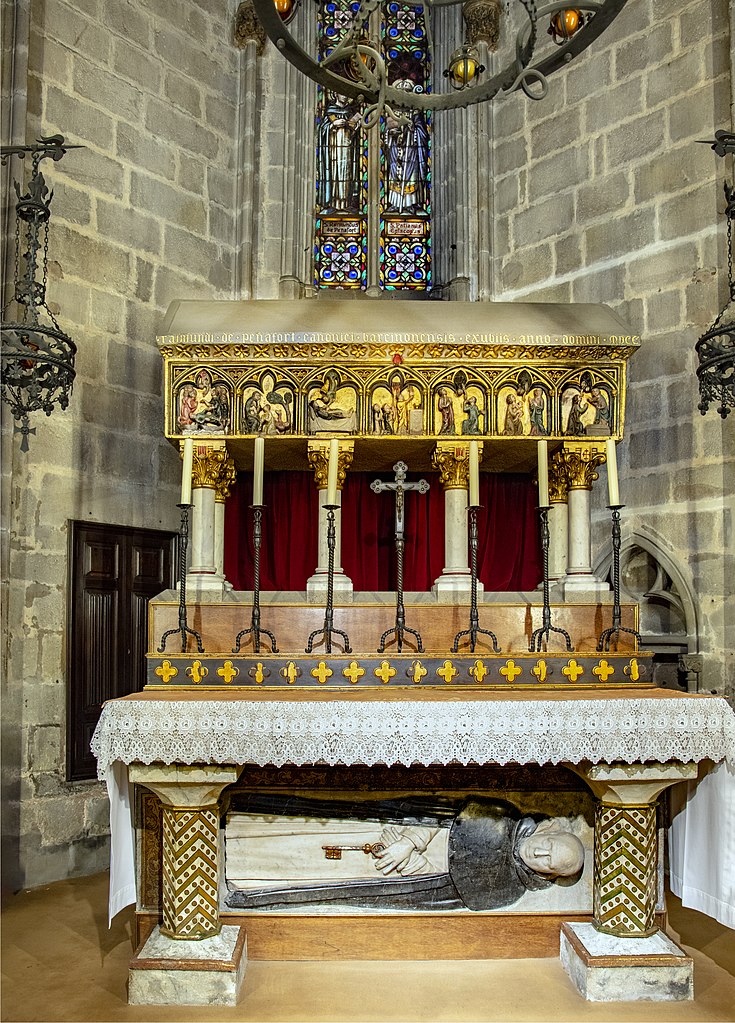
The body of the martyr is still preserved and venerated in a magnificent chapel of Saint Eustorgio, Milan.   Princes and noblemen of France, Germany, England and Italy (particularly the archbishops of Milan) imitated the king and queen of Cyprus with their rich gifts for the enshrinement of the saint’s relics.   At each time of their various translations (1253, 1340, 1651 and 1736) many miracles were wrought.   Suffice it to say that the Acta Sanctorum, in the third volume for April, where they treat of our martyr, give a long list of attested wonders worked by him.tomb of st peter martyr 439px-Lombardia_Milano4_tango7174.jpg

Saint Thomas of Aquinas, the Angelic Doctor, was an ardent admirer of Peter of Verona.  In 1263 he visited the martyr’s sepulchre.   While at Saint Eustorgio’s Convent, the great theologian and poet wrote the following verses in eulogy of the valiant athlete of the faith, which were afterwards engraved on a marble slab and placed near his tomb, where they may still he read:

Here silent is Christ’s Herald.
Here quenched, the People’s Light.
Here lies the martyred Champion
Who fought Faith’s holy fight.
The Voice the sheep heard gladly,
The light they loved to see
He fell beneath the weapons
Of graceless Cathari.

The Saviour crowns His Soldier.
His praise the people psalm.
The Faith he kept adorns him
With martyr’s fadeless palm.

His praise new marvels utter,
New light he spreads abroad
And now the whole wide city
Knows well the path to God.

Posted in DOMINICAN OP, SAINT of the DAY

Memorials of the Saints – 29 April

St Catherine of Siena (1347-1380) Doctor of the Church (Memorial)
St Catherine here:   https://anastpaul.wordpress.com/2018/04/29/saint-of-the-day-29-april-st-catherine-of-siena-1347-1380-doctor-of-the-church/

Abbots of Cluny: A feast that recognises the great and saintly early abbots of Cluny Abbey:
• Saint Aymardus of Cluny
• Saint Berno of Cluny
• Saint Hugh of Cluny
• Saint Mayeul
• Saint Odilo of Cluny
• Saint Odo of Cluny
• Saint Peter the Venerable


St Antonius Kim Song-u
St Ava of Denain
St Daniel of Gerona
St Dichu
St Endellion of Tregony
St Fiachan of Lismore
St Hugh of Cluny
St Gundebert of Gumber
St Joseph Benedict Cottolengo
St Paulinus of Brescia
St Peter of Verona OP (1205–1252) – St Peter Martyr
Bl Robert Gruthuysen
St Senan of Wales
St Severus of Naples
St Theoger
St Torpes of Pisa
St Tychicus
St Wilfrid the Younger

Martyrs of Cirta: A group of clergy and laity martyred together in Cirta, Numidia (in modern Tunisia) in the persecutions of Valerian. They were – Agapius, Antonia, Emilian, Secundinus and Tertula, along with a woman and her twin children whose names have not come down to us.

Martyrs of Corfu: A gang of thieves who converted while in prison, brought to the faith by Saint Jason and Saint Sosipater who were had been imprisoned for evangelizing. When the gang announced their new faith, they were martyred together. They were – Euphrasius, Faustianus, Insischolus, Januarius, Mammius, Marsalius and Saturninus. They were boiled in oil and pitch in the 2nd century on the Island of Corcyra (modern Corfu, Greece.
Also known as:
• Martyrs of Corcyra
• Seven Holy Thieves
• Seven Holy Robbers
• Seven Robber Saints

Posted in DOMINICAN OP, SAINT of the DAY

Memorials of the Saints – 13 April

St Pope Martin I (598-655) Martyr (Optional Memorial)
Biography:   https://anastpaul.wordpress.com/2017/04/13/saint-of-the-day-13-april-st-pope-martin-i/

St Agathonica of Pergamus
St Agathodorus of Pergamus
St Caradoc of Wales
St Carpus of Pergamus
Bl Edward Catherick
Bl Francis Dickenson
St Guinoc
St Hermengild
St Ida of Boulogne
Bl Ida of Louvain
Bl Isabel Calduch Rovira
Bl James of Certaldo
Bl John Lockwood
Bl Margaret of Castello OP (1287-1320)
About Blessed Margaret:   https://anastpaul.wordpress.com/2018/04/13/saint-of-the-day-13-april-blessed-margaret-of-castello-o-p-1287-1320/

St Martius of Auvergne
Bl Miles Gerard
St Papylus of Pergamus
St Proculus of Terni
St Sabas Reyes Salazar
Bl Scubilion Rousseau FSC (1797-1867)

St Ursus of Ravenna

Martyrs of Dorostorum – 3 saints: A lector and two students martyred together in the persecutions of Diocletian – Dadas, Maximus and Quinctillianus. Beheaded c303 in Dorostorum, Lower Mysia (modern Sillistria, Bulgaria.

Posted in DOMINICAN OP, LENT 2019, PRACTISING CATHOLIC, QUOTES of the SAINTS, QUOTES on CHARITY, QUOTES on HUMILITY, QUOTES on LOVE, SAINT of the DAY

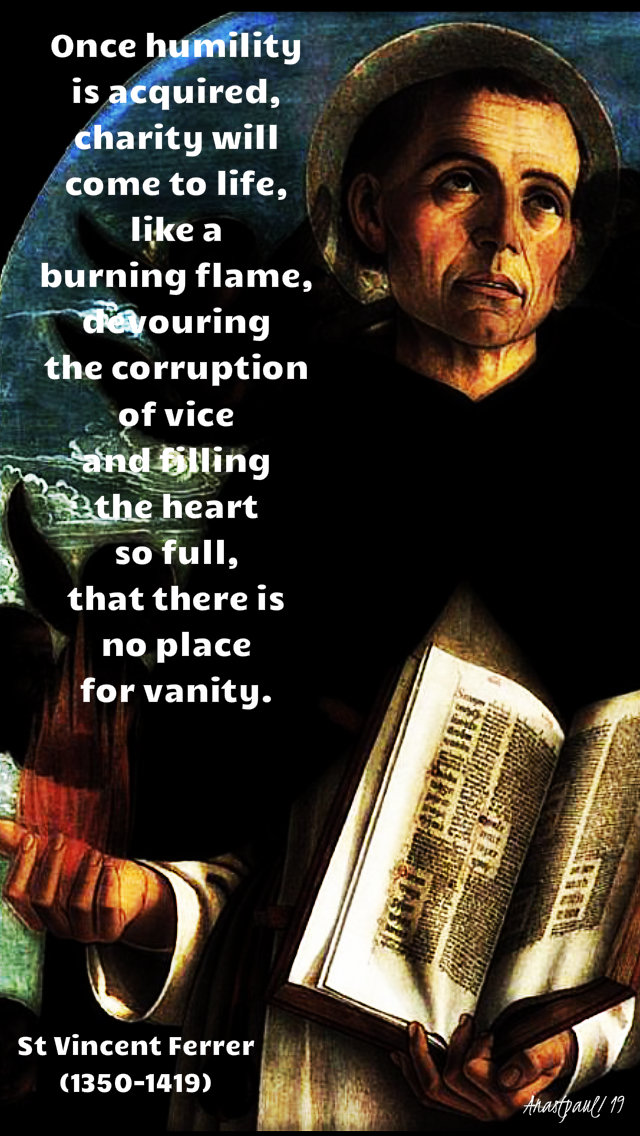
Quote of the Day – 5 April – “Humility”

Quote of the Day – 5 April – Friday of the Fourth Week of Lent, Year C and the Memorial of St Vincent Ferrer OP (1350-1419)

“Once humility is acquired,
charity will come to life,
like a burning flame,
devouring the corruption of vice
and filling the heart so full,
that there is no place for vanity.”…

St Vincent Ferrer (1350-1419)once humility is acquired - st vincent ferrer - 5 april 2019.jpg

Posted in DOMINICAN OP, Our MORNING Offering, PRAYERS of the SAINTS, SAINT of the DAY

Our Morning Offering – 5 April – Grant me, O my God

Our Morning Offering – 5 April – Friday of the Fourth Week of Lent, Year C and the Memorial of St Vincent Ferrer OP (1350-1419)

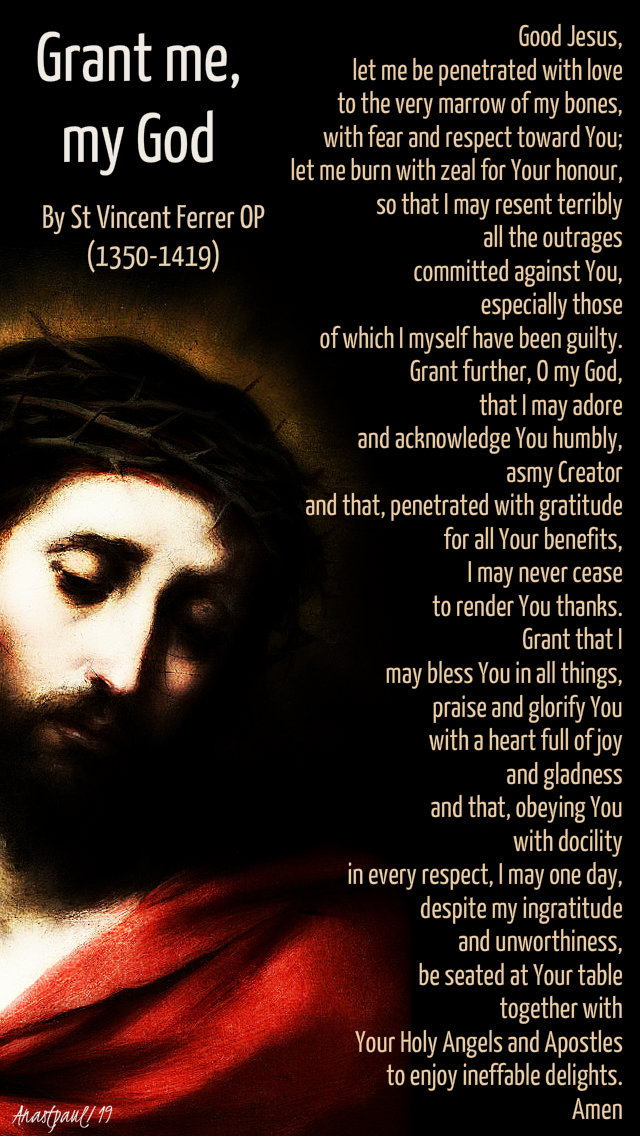
Grant me, O my God
By St Vincent Ferrer (1350-1419)

Good Jesus,
let me be penetrated with love
to the very marrow of my bones,
with fear and respect toward You;
let me burn with zeal for Your honour,
so that I may resent terribly all the outrages
committed against You, especially those
of which I myself have been guilty.
Grant further, O my God,
that I may adore
and acknowledge You humbly, as my Creator
and that, penetrated with gratitude
for all Your benefits,
I may never cease to render You thanks.
Grant that I may bless You in all things,
praise and glorify You
with a heart full of joy and gladness
and that, obeying You with docility
in every respect, I may one day,
despite my ingratitude and unworthiness,
be seated at Your table
together with Your Holy Angels and Apostles
to enjoy ineffable delights.
Amengrant me o my god by st vincent ferrer - 5 april 2019.jpg

Posted in DOMINICAN OP, SAINT of the DAY

Memorials of the Saints – 5 April

St Vincent Ferrer OP (1350-1419) (Optional Memorial)
Biography of St Vincent:  https://anastpaul.wordpress.com/2018/04/05/saint-of-the-day-5-april-st-vincent-ferrer-o-p-1350-1419/

St Albert of Montecorvino
Bl Antonius Fuster
St Becan
Bl Blasius of Auvergne
St Claudius of Mesopotamia
St Derferl Gadarn
St Gerald of Sauve-Majeure
St Irene of Thessalonica
St Maria Crescentia Hoss
Bl Mariano de la Mata Aparicio OSA (1905-1983)
St Pausilippus
Bl Peter Cerdan
St Theodore the Martyr

Martyrs of Lesbos: 5 saints – Five young Christian women martyred together for their faith. We don’t even know their names. island of Lesbos, Greece.

Martyrs of North-West Africa: Large group of Christians murdered while celebrating Easter Mass during the persecutions of Genseric, the Arian king of the Vandals. They were martyred in 459 at Arbal (in modern Algeria).

Martyrs of Seleucia: 120 saints – One-hundred and eleven (111) men and nine (9) women who, because they were Christians, were dragged to Seleucia and martyred for refusing to worship the sun or fire or other pagan idols during the persecutions of King Shapur II. They were burned alive in 344 in Seleucia, Persia.

Posted in DOMINICAN OP, LENT 2019, LENTEN THOUGHTS, QUOTES - J R R Tolkien and MORE, QUOTES on DIVINE PROVIDENCE, QUOTES on JOY, QUOTES on SACRIFICE, QUOTES on SANCTITY, QUOTES on SUFFERING, QUOTES on the CROSS of CHRIST

Lenten Thoughts – 1 April – Coming nigh to God

Lenten Thoughts – 1 April – Monday of the Fourth week of Lent, Year C

Act of self-abandonment
Coming nigh to God

This is an anonymous prayer, inspired by St Augustine – taken from “Providence” – God’s loving care for man and the need for confidence in Almighty God” by Fr Reginald Garrigou-Lagrange OP (1877-1964)

O my God, I leave myself entirely in Your hands.
Turn and turn again, this mass of clay, as a vessel that is fashioned in the potter’s hand (Jer 18:6).
give it a shape, then break it if You will –
it is Yours, it as nothing to say.
Enough for me that it serves all Your designs
and that nothing resists Your good pleasure,
for which I was made.
Ask, command.
What would You have me to do?
What would You have me not to do?
Lifted up, cast down, in persecution,
in consolation, in suffering,
intent upon Your work,
good for nothing,
I can do no more than repeat
with Your holy Mother –
“Be it done unto me according to Your word” (Luke 1:38).
Give me that love which is beyond all loves,
the love of the Cross –
not those heroic crosses with a glory that might foster self-love
but those ordinary crosses
which we bear with so much distaste –
those daily crosses with which our life is strewn
and which at every moment
we encounter on our way through life –
contradictions,
neglect,
failures,
opposition,
false judgements,
the coldness or impulsiveness of some,
the rebuffs or contempt of others,
bodily infirmities,
spiritual darkness,
silence and interior dryness.
Only then, will You know that I love You,
even though I neither know
nor feel it myself
and that is enough for me!

And, may we:

“Be holy by living out your commitment with joy.”

Pope Francisbe holy by living out your commitment with joy - pope francis 1 april 2019.jpg

Posted in DOCTORS of the Church, DOMINICAN OP, Our MORNING Offering, PRAYERS of the SAINTS

Our Morning Offering – 28 March -O Jesus, Mary’s Son!

Our Morning Offering – 28 March – Thursday of the Third Week of Lent, Year C

As, today, we celebrate Blessed Venturino of Bergamo OP, we pray a prayer, from one of the greatest of all Dominicans:

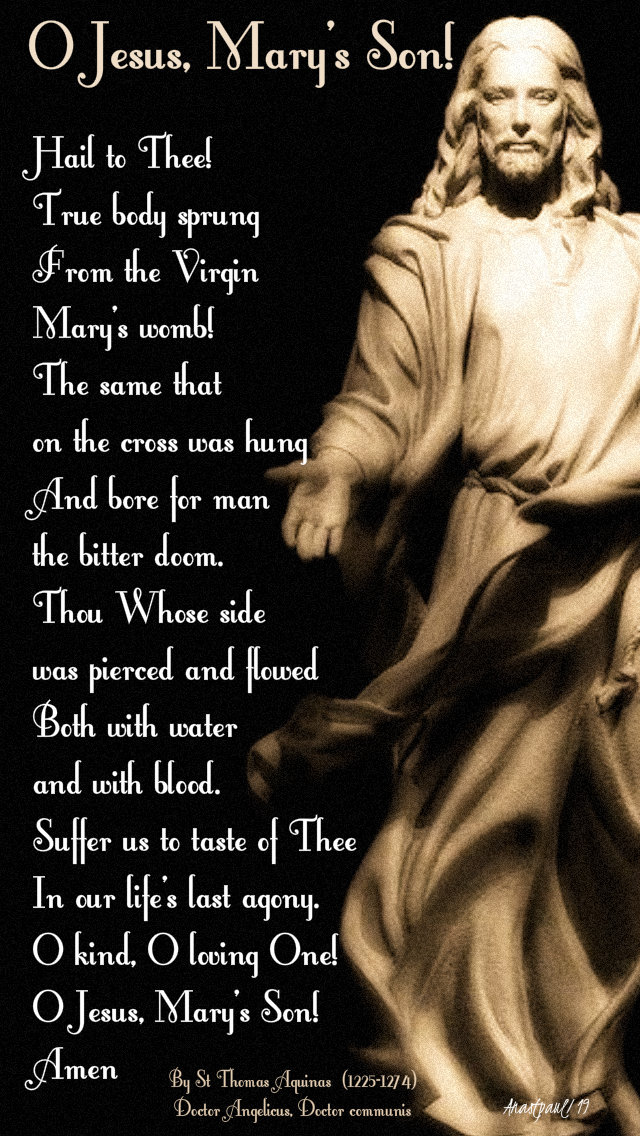
O Jesus, Mary’s Son!
By St Thomas Aquinas (1225-1274)
Doctor Angelicus, Doctor communis

Hail to Thee!  True body sprung
From the Virgin Mary’s womb!
The same that on the cross was hung
And bore for man the bitter doom.
Thou Whose side was pierced and flowed
Both with water and with blood.
Suffer us to taste of Thee
In our life’s last agony.
O kind, O loving One!
O Jesus, Mary’s Son!
Ameno jesus mary's son by st thomas aquinas 28 march 2019.jpg

Posted in DOMINICAN OP, SAINT of the DAY

Saint of the Day – 28 March – Blessed Venturino of Bergamo OP (1304-1346)

Saint of the Day – 28 March – Blessed Venturino of Bergamo OP (1304-1346) – Priest, Friar of the Order of Preachers of St Dominic, Preacher, Missionary Preacher of the Crusades, Writer. Born on 9 April 1304 in Bergamo, Italy as Lorenzo de Apibus and died on 28 March 1346 at Smyrna, Asia Minor (in modern Turkey) of natural causes. Also known as – Venturinus, Lorenzo de Apibus.dominican saints.jpg

He was born at Bergamo and received the habit of the Order of Friars Preachers at the convent of St Stephen, Bergamo, on 22 January 1319.

His rich spiritual life, given expression in his treatise De profectu spirituali, suggests the mystical idea of penance propagated by Saint Vincent Ferrer OP.   He founded the Convent of nuns, St Mary’s in Bergamo.   From 1328 to 1335 he soon distinguished himself as a brilliant preacher, attracting huge crowds throughout northern Italy.

dominican

In February 1335, he planned to make a penitential pilgrimage to Rome with about thirty thousand of his converts.   His purpose was misunderstood and Pope Benedict XII, then residing at Avignon, thought that Venturino wished to make himself pope  . He wrote letters to Giovanni Pagnotti, Bishop of Anagni, his spiritual vicar, to the Canons of St Peter’s and St John Lateran’s and to the Roman senators empowering them to stop the pilgrimage.

This complaint to the Dominican Master General resulted in an ordinance of the Chapter of London (1335) condemning such pilgrimages.   The pope’s letters and commands, however, did not reach Venturino and he arrived in Rome on 21 March 1335.   He was well received and preached in various churches.   Twelve days later he left Rome, as the news of the Ordinance of the Dominican Master General and the Pope had reached him and the pilgrimage ended.

st-dominic-de-guzman-pedro-berruguete.jpg
St Dominic (1170-1221)

In June, he requested an audience with Benedict XII at Avignon, in order to explain the intentions of the pilgrimage but he was seized and cast into prison (1335–43), where he was kept for eight years!   He was restored to favour by Pope Clement VI, who appointed him to preach a crusade against the Turks on 4 January 1344.    His success was remarkable.   He urged the pope to appoint Humbert II of Dauphiné, whose friend and spiritual adviser he had been, leader of the crusade, but Humbert proved incapable and the crusade came to nothing.

Venturino’s writings consist of sermons (now lost) and letters.   He died at Smyrna and although called “Blessed” he was never formally Beatified.

P.S.  The only image available is NOT Blessed Venturino but is, in fact, St Raymond of Pennafort.

OPCrestWindowV
Dominican Crest
Posted in DOMINICAN OP, SAINT of the DAY

Memorials of the Saints – 28 March

St Alkelda of Middleham
Bl Antonio Patrizi
St Castor of Tarsus
Bl Christopher Wharton
Bl Conon of Naso
St Cyril the Deacon
Bl Dedë Maçaj
St Donal O’Neylan
St Dorotheus of Tarsus
St Gundelindis of Niedermünster
St Guntramnus
St Hesychius of Jerusalem
St Hilarion of Pelecete
Bl Jean-Baptiste Malo
Bl Jeanne Marie de Maille
St Proterius of Alexandria
Bl Renée-Marie Feillatreau épouse Dumont
St Rogatus the Martyr
St Successus the Martyr
St Tutilo of Saint-Gall
Bl Venturino of Bergamo OP (1304-1346)

Posted in DOMINICAN OP, LENT 2019, LENTEN THOUGHTS, ON the SAINTS, QUOTES of the SAINTS, QUOTES on COURAGE, QUOTES on ETERNAL LIFE

Lenten Thoughts – 23 March – Behave like a true Knight!

Lenten Thoughts – 23 March – Saturday of the Second Week of Lent, Year C

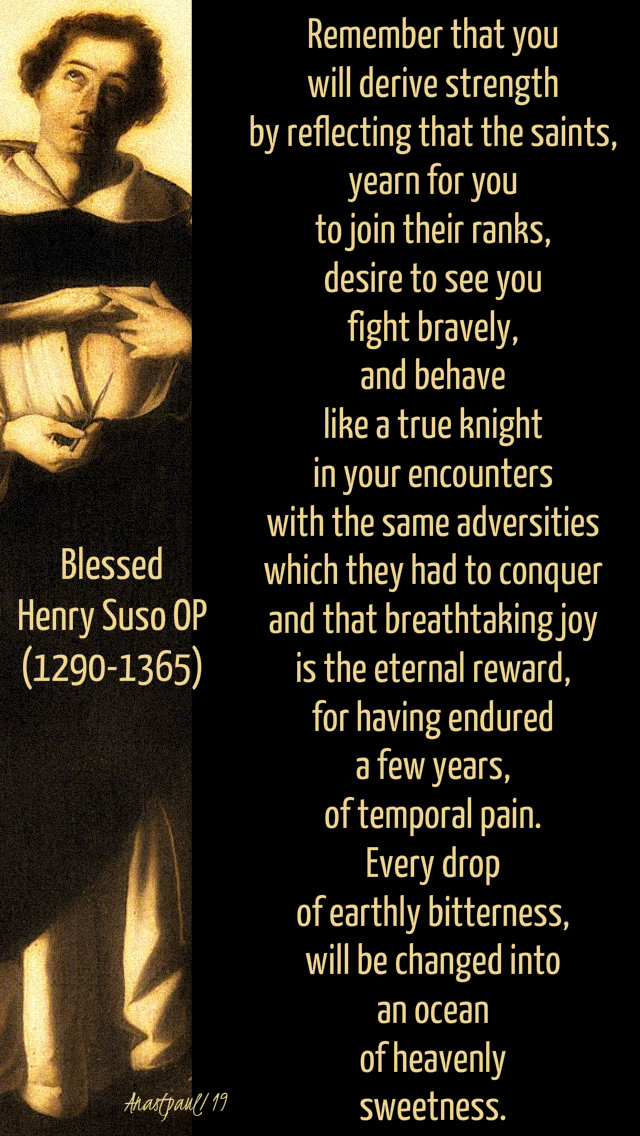
“Remember that you will derive strength
by reflecting that the saints, 
yearn for you
to join their ranks,
desire to see you fight bravely,
and behave like a true knight
in your encounters
with the same adversities
which they had to conquer
and that breathtaking joy
is the eternal reward,
for having endured a few years, 
of temporal pain.
Every drop of earthly bitterness,
will be changed into
an ocean of heavenly sweetness.”

Blessed Henry Suso OP (1290-1365)remember that you will derive strength - lenten thought 23 march 2019 bl henry suso.jpg

Posted in DOCTORS of the Church, DOMINICAN OP, PRACTISING CATHOLIC, QUOTES of the SAINTS, QUOTES on HUMILITY, QUOTES on SUFFERING, QUOTES on the CROSS of CHRIST, The WORD

Quote/s of the Day – 24 February- Humility

Quote/s of the Day – 24 February – Seventh Sunday in Ordinary Time, Year C

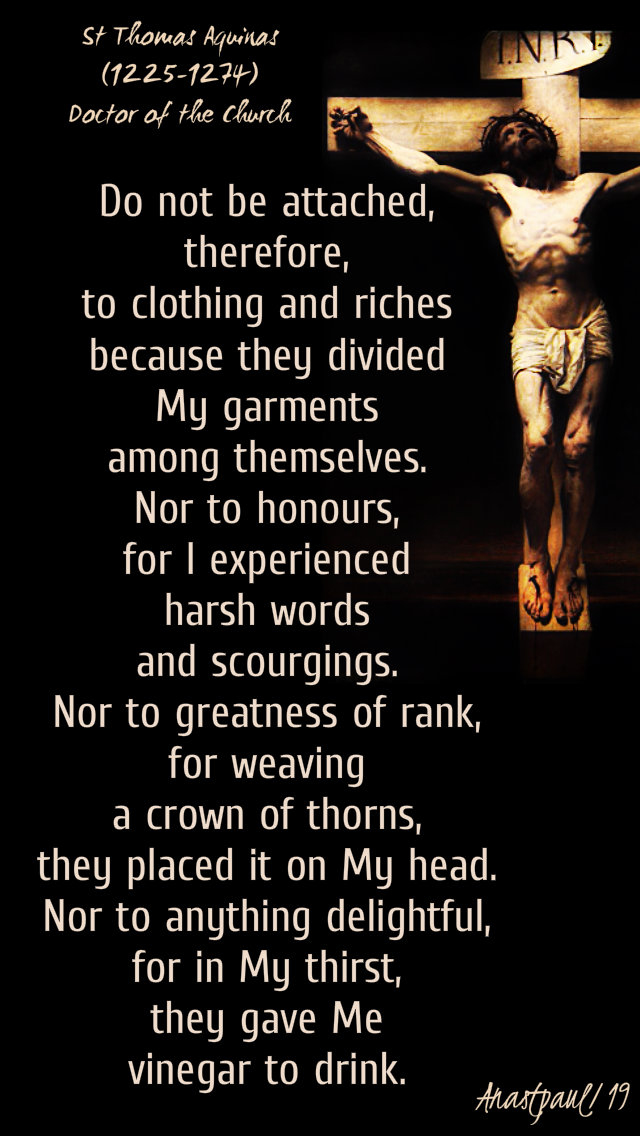
Do not be attached, therefore,
to clothing and riches
because they divided My garments among themselves.
Nor to honours, for I experienced harsh words and scourgings.
Nor to greatness of rank,
for weaving a crown of thorns,
they placed it on My head.
Nor to anything delightful,
for in My thirst, they gave Me vinegar to drink.

St Thomas Aquinas (1225-1274)
Doctor of the Church

(The Cross Exemplifies every Virtue
An excerpt from a Conference)do not be attached therefore - st thomas aquinas - 24 feb - humility.jpg

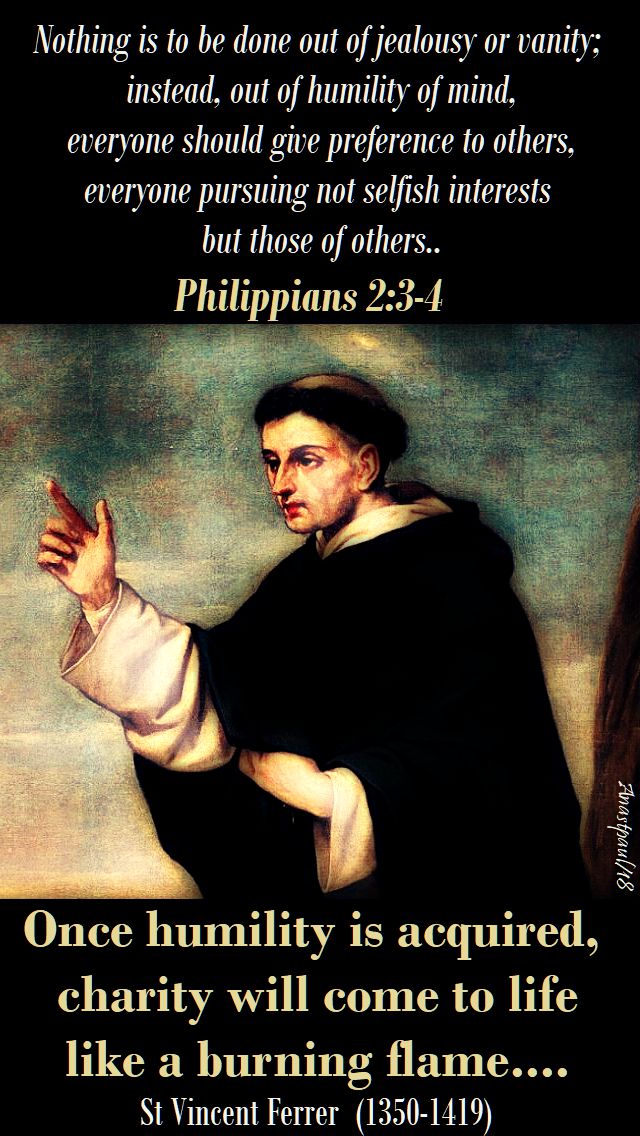
Nothing is to be done out of jealousy or vanity; instead, out of humility of mind everyone should give preference to others, everyone pursuing not selfish interests but those of others…Philippians 2:3-4

“Once humility is acquired,
charity will come to life, like a burning flame
devouring the corruption of vice
and filling the heart so full,
that there is no place for vanity.”…

St Vincent Ferrer (1350-1419)once-humility-is-acquired-st-vincent-ferrer-5-april-2018.jpg

Posted in DOMINICAN OP, Our MORNING Offering, PRAYERS of the SAINTS, The HOLY EUCHARIST / The HOLY MASS

Our Morning Offering – 24 February – Grant me, O my God

Our Morning Offering – 24 February – Seventh Sunday in Ordinary Time, Year C

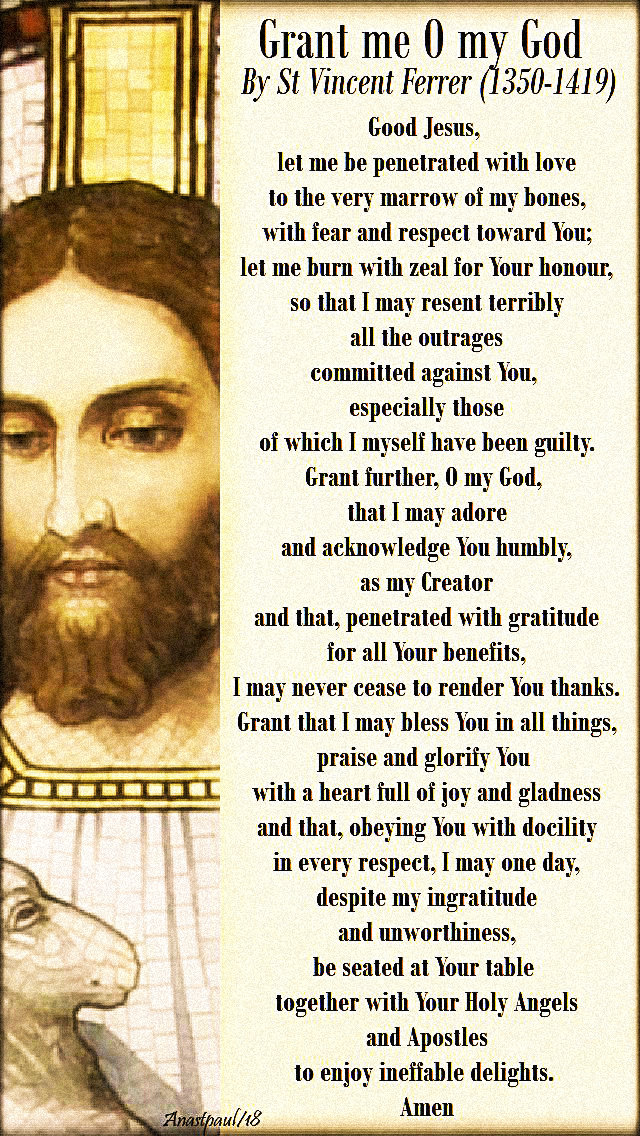
Grant me, O my God
By St Vincent Ferrer OP (1350-1419)

Good Jesus,
let me be penetrated with love
to the very marrow of my bones,
with fear and respect toward You;
let me burn with zeal for Your honour,
so that I may resent terribly all the outrages
committed against You, especially those
of which I myself have been guilty.
Grant further, O my God,
that I may adore
and acknowledge You humbly, as my Creator
and that, penetrated with gratitude
for all Your benefits,
I may never cease to render You thanks.
Grant that I may bless You in all things,
praise and glorify You
with a heart full of joy and gladness
and that, obeying You with docility
in every respect, I may one day,
despite my ingratitude and unworthiness,
be seated at Your table
together with Your Holy Angels and Apostles
to enjoy ineffable delights.
Amengood-jesus-let-me-be-penetrated-with-love-st-vincent-ferrer no 2 -24 feb-2019.jpg

Posted in DOMINICAN OP, SAINT of the DAY

Saint of the Day – 24 February – Blessed Constantius of Fabriano OP (1401-1481)

Saint of the Day – 24 February – Blessed Constantius of Fabriano OP (1401-1481) Dominican Priest, Prior, Reformer, Preacher of renown, Writer, known as a Miracle-Worker and had the gift of prophecy, peacemaker – born Constantius Bernocchi in 1401 at Fabriano, Marches of Ancona, Italy and died in 1481 at Ascoli Piceno, Italy of natural causes.

Constantius had an remarkable childhood, not only for the usual signs of precocious piety but also for a miracle that he worked when he was a little boy. Constantius had a sister who had been bedridden most of her nine years of life.   One day, the little boy brought his parents in to her bedside and made them pray with him.   The little girl rose up, cured and she remained well for a long and happy life.   Naturally, the parents were amazed and they were quite sure it had not been their prayers that effected the cure but those of their little son.Beato_Costanzo_Servoli_da_Fabriano

Constantius entered the Dominicans at age 15 and had as his masters Blessed Conradin and Saint Antoninus.   He did well in his studies and wrote a commentary on Aristotle. His special forte was Scripture and he studied it avidly.   After his ordination, he was sent to teach in various schools in Italy, arriving eventually at the convent of San Marco in Florence, which had been erected as a house of strict observance.   Constantius was eventually appointed prior of this friary that was a leading light in the reform movement.   This was a work dear to his heart and he himself became closely identified with the movement.

Several miracles and prophecies are related about Constantius during his stay in Florence.  He one day told a student not to go swimming, because he would surely drown if he did.   The student, of course, dismissed the warning and drowned.   One day, Constantius came upon a man lying in the middle of the road.   The man had been thrown by his horse and was badly injured, he had a broken leg and a broken arm.   All he asked was to be taken to some place where care could be given him but Constantius did better than that–he cured the man and left him, healed and astonished.

Constantius was made prior of Perugia, where he lived a strictly penitential life.  Perhaps the things that he saw in visions were responsible for his perpetual sadness, for he foresaw many of the terrible things that would befall Italy in the next few years.   He predicted the sack of Fabriano, which occurred in 1517.   At the death of Saint Antoninus, he saw the saint going up to heaven, a vision which was recounted in the canonisation process.bl constanzo snip

He was also credited with the power of working miracles and besides the care of his office, he acted as peacemaker outside the convent and quelled popular tumults.

Blessed Constantius is said to have recited the Office of the Dead every day, and often the whole 150 Psalms, which he knew by heart and used for examples on every occasion.  He also said that he had never been refused any favour for which he had recited the whole psalter.   He wrote a number of books, these, for the most part, were sermon material and some were the lives of the blesseds of the order.

He was esteemed so holy that it was reckoned a great favour to speak to him or even to touch his habit.

On the day of Constantius’s death, little children of the town ran through the streets crying out, “The holy prior is dead!   The holy prior is dead!”   Upon the news of his death, the senate and council assembled, “considering his death a public calamity” and resolved to defray the cost of a public funeral.   The cultus of Blessed Constantius was confirmed in 1821 by Pope Pius VII.

The relics of Blessed Constantius have suffered from war and invasion.   After the Dominicans were driven from the convent where he was buried, his tomb was all but forgotten for a long time.   Then one of the fathers put the relics in the keeping of Camaldolese monks in a nearby monastery, where they still remain.

bl constanzo right - virgin and child with saints.jpg
Virgin & Child with Dominican Saints, Bl Constantius on the right

Posted in DOMINICAN OP, SAINT of the DAY

Thought for the Day – 20 February – The Angel of Mercy, Blessed Julia Rodzinska

Thought for the Day – 20 February – The Memorial of Blessed Julia Rodzinska OP (1899-1945) Martyr

Excerpt from the account of the Works of Mercy, Spirituality, Love of God and the Church and the Martyrdom of Blessed Julia Rodzinska, by Eva Hoff, a prisoner of KL Stutthof, a German Jewess, who survived and after the war settled in Sweden

In her presence, you felt the need and urge to pray.
Everything she had, she shared with others, even the last piece of bread.   Though devastated by starvation, she saw others to be in greater need and offered them her meagre ration of bread.
When other prisoners did everything to avoid contact with those who were sick and dying of typhus, she, instead, rushed to assist them.
Her sacrificial love of neighbour was stronger than fear of exposing herself to a deadly disease.   She cared more for others than herself.   The person in need was her key concern.
She assisted anyone in need with no difference.   Her heart’s desire was to be wherever she was of help.   She never thought about herself, yet always about others.
She was very devout.   Her piety was contagious and inspired others to pray.
She sought the brokenhearted and downcast to console and uplift their spirits.
Strikingly noticeable was tranquillity, her face radiated with.   Every time I had been with her, I could sense how calm and recollected she was.
She died of exhaustion and commitment to her sacrificial ministry, so we, whom she served, could survive.
She performed works of mercy where there was no mercy!
I got to know sister Julia in that ghastly concentration camp of Stutthof near Gdańsk (Poland), where we suffered humiliation at every turn.   The initial selection after arrival at the camp was already horrible.   People were sent to the gas, based on external appearance.

I accompanied Sister Julia until her last days.   She never concealed that she was a religious.   She showed unwavering faith and hope in God.   She consoled all of us, entrusted us to God and encouraged us to pray.   She organised and led common prayers. We always prayed the rosary, the litany of Our Lady, hymns and any number of prayers she composed according to our needs and situation.   Prisoners of different nationalities came to pray.   People spread the word – let’s pray the rosary with sister Julia.   The image will always stay with me – the small, poorly lit room overflowing with people on bunk beds, three or even four levels high;  here and there, rags drying in the air.   Kneeling on a wooden plank, straight, with her head lifted up and eyes aimed at the Infinite is our Sister Julia.   She holds a rosary in her strong, shapely hands.   Her face is focused… She was very pious.   Her piety influenced others.   In her presence, one felt the need to pray.
She was outstanding in her love of God and the Church.   She made arrangements secretly to meet with a priest—also a prisoner—to go to confession and to give others an opportunity for reconciliation.   On many a Sunday morning, when the circumstances allowed, we walked in silence around the barrack taking part spiritually in the Mass.
When I encouraged her to talk about the convent, she spoke about the noble customs and lofty ceremonies of religious life.   At those time, she became absorbed by what was highest and dearest to her.   She thanked me at the end of such conversations, whereas it was I who should have thanked her, for what those conversations meant to me.

Sister Julia performed works of mercy in the camp, where people had nearly forgotten that mercy even exists.   She was cheerful, prayerful, obliging and self-sacrificing.   She risked her life to help others.   She cared for those who despaired.   She showed the same attitude toward every person, regardless of nationality or religion.   She knew how to offer consolation because of her profound hope in God.   She literally shared everything—to the last piece of bread—with those who suffered hunger more than she did.
She reminded us frequently that God guides everything.   She said that we needed to obey God’s will, even if we had to suffer everything in such humiliation or die in the camp, that everything was in God’s hands.   She accepted her fate in the spirit of faith in Divine Providence, even as she sensed that she would not survive.   She prayed constantly and served her neighbour until the very end.

She visited the victims of typhus—so terribly contagious—when others did everything to avoid them.   She wouldn’t lie down herself, despite her own illness, in order to help others.   Led by love, by sacrificial love, she succumbed to the disease.   Despite everything, she couldn’t imagine abandoning those who needed her help.   Her sacrificial love was stronger.

Sensing imminent death, she missed her Community and those she would not see again. She cried in her helplessness but she didn’t despair.   She overcame her weakness by prayer, serving the sick until the end.   Sister Julia died from typhus.   She gave her life for others.   The survivors spoke of her, as a great and holy person.

Oh that we had one ounce of your love!

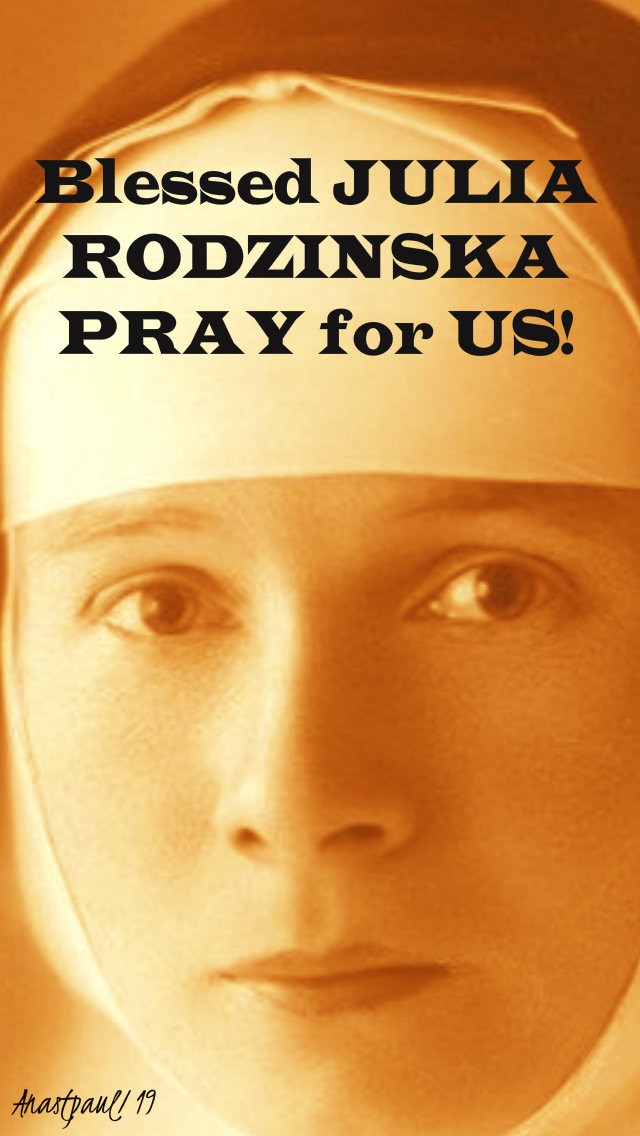
Blessed Julia Rodzinska, Pray for Us!bl julia rodzinska pray for us 20 feb 2019.jpg

Posted in DOMINICAN OP, SAINT of the DAY

Saint of the Day – 20 February – Blessed Julia Rodzinska OP (1899-1945) Martyr

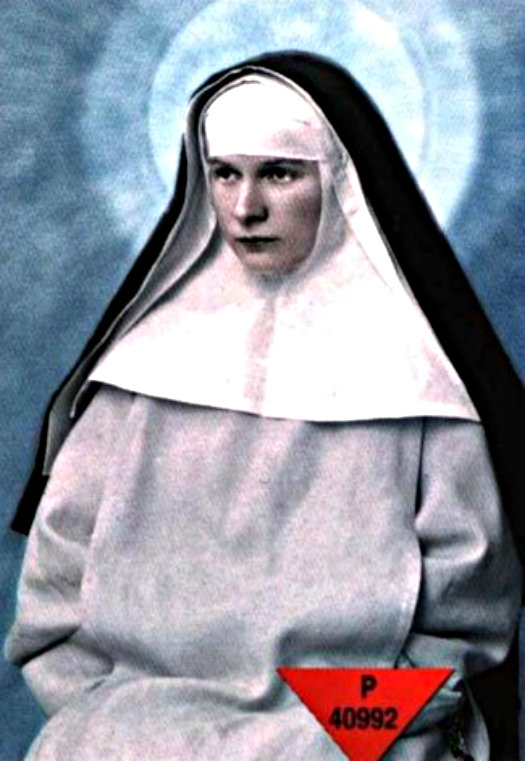
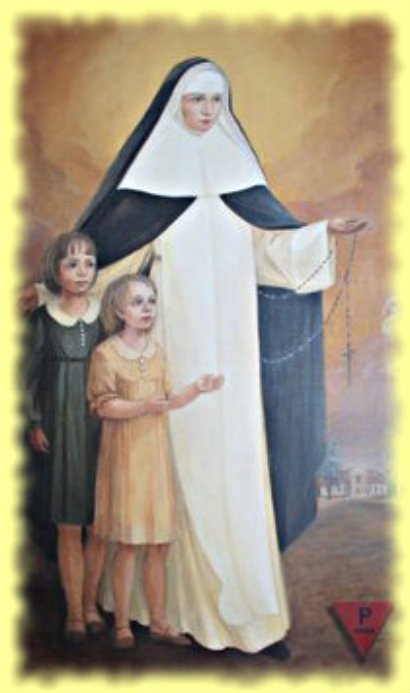
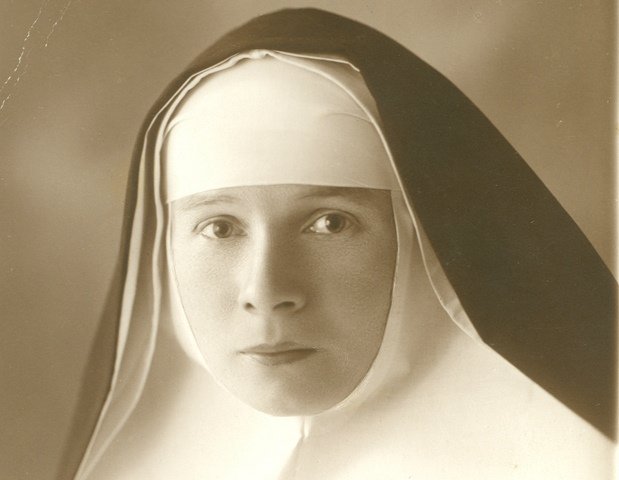
Saint of the Day – 20 February – Blessed Stanislawa/Julia Rodzinska OP (1899-1945) Martyr – Dominican Sister, known as the “Mother of Orphans” and the “Apostle of the Rosary”, Apostle of Charity, Teacher, Catechist, also known as Sister Maria Julia, Mother Maria Julia, prisoner P40992.img-Blessed-Stanislawa-Rodzinska.jpg

Blessed Sister Julia Stanisława was born on 16 March 1899 in Nawojowa, a town near Nowy Sącz.   She was baptised and given the names, Stanisława Marta Józefa.   Her father was an organist.   He also worked in a savings bank and in the District Office.   There were four other children in the family.   When Stanisława was 8 years old, her mother died and two years later, her father.   After her parents’ death, the Dominican Sisters from a nearby convent run by Sr Stanisława Lenart took care of her.   There, she finished school and then she started her studies in the Teachers’ College which she was unable to complete because she began her religious formation in Wielowieś.   On 3 August 1917 she assumed the habit together with a new name – Maria Julia.   On 4 September 1918 she continued her studies in the Holy Family Teachers’ College in Kraków, from which she graduated in May 1919.

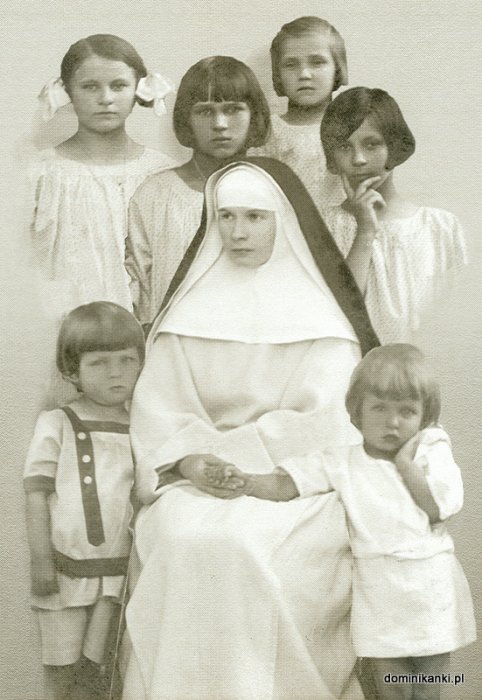
After having completed her studies, Sister Julia Rodzińska began to work as a teacher, mainly among orphaned children.   She made her monastic vows on 5 August 1924.   She then continued her education and in 1925-1926 she completed an Advanced Teachers’ Course and at the age of 27 she was named the director of the State Primary School of Our Lady of the Gate of Dawn in Vilnius.   Sr Julia was not strong physically, suffering from a very serious stomach disorder, which meant she had to undergo a difficult operation in 1937.julia2

After the Soviet army occupied Vilnius, the situation of the Dominican Sisters was put into jeopardy.   In September 1940, the sisters who worked as teachers were dismissed from work.   At first, they tried to work as technical personnel but finally in 1941 the Home for Orphans was removed from their authority and placed under that of Lithuanian authorities and Sister Julia left the Home forever.   The schooling work done by the Dominican Sisters since 1922 was terminated.

The Dominicans did not leave Vilnius.   Together with Sister Julia, they stayed on Parkowa Street and in the convent of the Nuns of Visitation on Rossa Street.   In these conditions, Sister Julia continued to teach in secret, also during the German occupation, until she was arrested in 1943.

On 12 July 1943, Sister Julia was arrested by the Gestapo on a charge of political activity and collaboration with the Polish partisans.   She was imprisoned in Vilnius and for almost a year she was kept in an isolation cell.   Then she was transported to the disciplinary camp but soon, she was evacuated together with other prisoners to Stutthof concentration camp.   She arrived there on 9 July 1944 and was given number 40992. Together with a group of women from the Vilnius intelligence, she was assigned to block no 27 in the “Jewish Camp”.   The conditions were indescribable.   Filth, vermin, overcrowding in the barracks (three or four women slept on one bed on a three-storey bunk bed), low-calorie food rations given out in extreme conditions, unbearable physical work, limited access to water, lack of hygienic products, necessity to satisfy one’s bodily needs in public – these are only some of the elements of the indirect extermination used in the camp.   An additional torment, was the inhumane treatment carried out by the prisoners who were assigned as ‘wardens’ – mainly German criminals and SS men.julia-pow-1386

In these conditions sister Julia did not lose her hope for survival.   She shared her hope and spiritual strength with other prisoners.   In the camp it had a special meaning because the inhumane treatment distorted the prisoners’ minds and changed the moral norms of many of them.   In the barrack, where mostly Jews lived, Sister Julia organised and led the prayers.   She also constantly reminded the prisoners about the religious values.   Religious observances were strictly prohibited and punished in the camp. Therefore this was one of the forms of moral resistance of the prisoners to what was happening in the camp.   Sister Julia was never guided by nationality or religion in her way of helping others.   She was kind to all the needful.   She was known as the one who consoled and encouraged all the adrift and miserable.   She knew that one prisoners, whose wife was living in the “Jewish Camp”, was about to commit suicide.   She sent him notes until he assured her that he wouldn’t take his life.   According to the testimony of this prisoner, he survived the camp thanks to Sister Julia, who awaken his hope for survival and overcame the fear of the life in the camp.

In November 1944 a typhus epidemic devastated the camp.   The illness spread mainly among the prisoners in the Jewish part of the camp.   The authorities of KL Stutthof isolated the “Jewish Camp” from the rest of the compound and left the women without any help.   Risking her own life, Sister Julia Rodzińska undertook the task of helping the Jews from block XXX, who were dying alone.   When the majority avoided this “death block” fearing the infection, Sister Julia took a decision that meant the acceptance of death among those who she helped.   She organised water to drink, dressings and medicines that where available in the camp.   She served the needful even when she got infected with typhus and was suffering from serious illness.

The Dominican Sister, Julia Rodzińska, died on 20 February 1945 in block no 27.   Her body was burnt on a pyre.   An amazing testimony about the heroic conduct and the martyr’s death of Sr Julia has been written and declared by Eva Hoff, a prisoner of KL Stutthof, a German Jewess, who survived the marine evacuation and after the war settled in Sweden.   There, she gave an oral and written account of the life and the circumstances of the death of Sr Julia in KL Stutthof.   The account has been confirmed by other prisoners of KL Stutthof and Father Franciszek Grucza who heard Sr Julia’s confessions and gave her Communion.

place where bl julia's body was burnt.jpg
A Shrine where Sr Julia’s body was burnt

On the 13 June 1999, during his pilgrimage to Poland, the Holy Father John Paul II beatified 108 martyrs of World War II.   Sister Julia Rodzińska, the Dominican nun, was among them.

On 12 June 2006 the Primary School in Nawojowa has been named after blessed Sister Julia Rodzińska.wilno_-_z_dziecmi-352

Posted in CATHOLIC-PRAYERS OF THE CHURCH, DOMINICAN OP, MARIAN DEVOTIONS, MARIAN PRAYERS, PRAYERS of the CHURCH, SAINT of the DAY, The BLESSED VIRGIN MARY

Thought for the Day – 13 February – Friendship with Christ

Thought for the Day – 13 February – the Memorial of Blessed Jordan of Saxony OP (1190-1237)

We know little of Jordan’s life before he came into contact with the famous Dominican Reginald of Orleans, a contemporary of St Dominic himself.   Jordan was a successful young student at the University of Paris, already known for the unembarrassed witness of his holy life, when he first heard Reginald preach and met the Dominicans in Paris. God used this contact with the friars to enable Jordan to discern his own call to the Order and once he entered, he gave all he had.   Jordan’s spiritual and practical gifts were recognised immediately and when he had worn the habit only two months he was chosen as a delegate to the Dominican general chapter in Bologna, Italy.   The following year Jordan was elected a provincial superior and when St Dominic died, Jordan succeeded him as the master general of the entire Order.   The Order was only six years old!   It developed rapidly under his leadership, however, growing both in membership and influence throughout Europe.   Jordan was able to carry out the dream which St Dominic had only begun before his death.

Even this brief sketch could make us suspicious, that perhaps Jordan was simply a brilliant young man with leadership skills, that enabled him to rise quickly in his chosen career, at the same time winning success for the Order.   Closer consideration, however, gives us deeper insight into Jordan’s success.   Youthful himself, he had a tremendous respect for the young and their desire to give themselves to something great.   In his own restlessness to give himself, he had obviously come face to face with the restless love of Christ Himself and he had surrendered to it.   Jesus was real to Jordan, a Friend whom he’d come to know and love deeply in his life of prayer.   Jordan understood the restless hunger of the world around him and he couldn’t rest, until that world would come to know this same Friend.   It was this selfless love for Jesus Christ (the kind which St Thomas calls the love of friendship) which gave Jordan the drive to preach, to spend his time with the young, to pour himself out in the building tasks required in a growing religious order.   We are told that he added four new provinces, gained teaching positions for the friars at the University of Paris and established the first general house of studies of the Order.   Jordan also served as spiritual director to many, among them a young Italian noblewoman named Blessed Diana d’Andalo (1201–1236) (who became a Dominican nun).   In the midst of all of this, he found time to write a number of books, including a life of St Dominic (whom he knew personally and loved deeply).

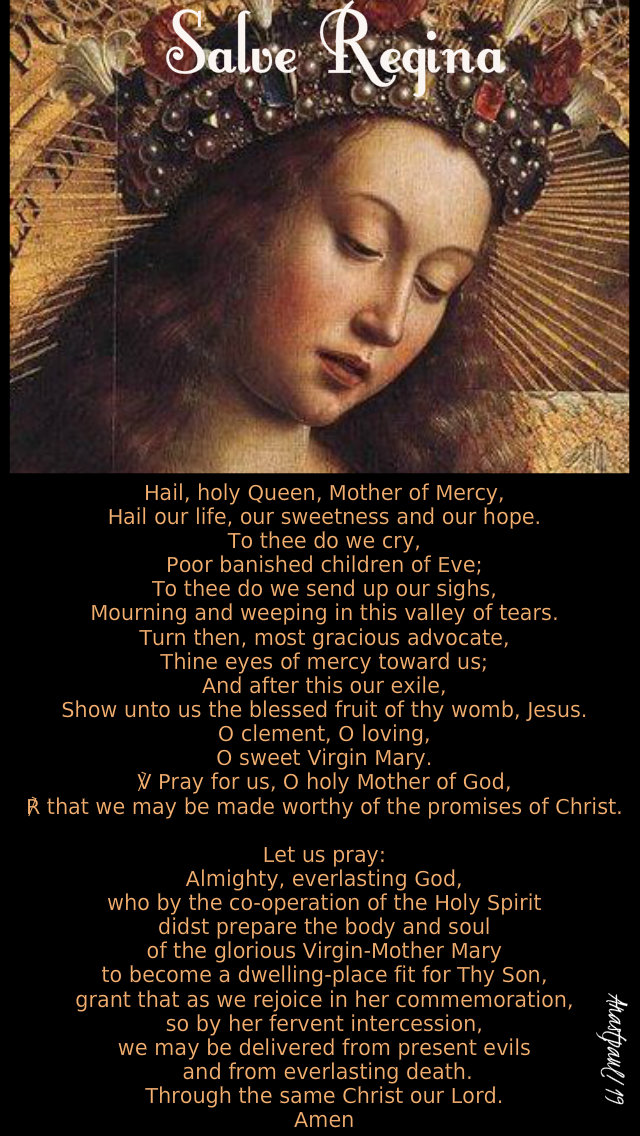
Men of his day responded by the hundreds, to Jordan’s zeal for Christ, some of them mere youths and others established professionals who felt the call of God through Jordan’s words and example.   They were drawn to a life of holiness by this Dominican with a gift of preaching, who lived what he preached with such obvious joy.   It was Jordan who initiated the custom of singing the Salve Regina in procession each night after Compline, to ask Our Lady’s protection of the brothers against temptations from the devil.   This is a custom still practised by Dominicans throughout the world and by our community each night.

Hail, holy Queen, Mother of Mercy,
Hail our life, our sweetness and our hope.
To thee do we cry,
Poor banished children of Eve;
To thee do we send up our sighs,
Mourning and weeping in this valley of tears.
Turn then, most gracious advocate,
Thine eyes of mercy toward us;
And after this our exile,
Show unto us the blessed fruit of thy womb, Jesus.
O clement, O loving,
O sweet Virgin Mary.

℣ Pray for us, O holy Mother of God,
℟ that we may be made worthy
of the promises of Christ.

Let us pray:
Almighty, everlasting God,
who by the co-operation of the Holy Spirit
didst prepare the body and soul
of the glorious Virgin-Mother Mary
to become a dwelling-place fit for Thy Son,
grant that as we rejoice in her commemoration,
so by her fervent intercession,
we may be delivered from present evils
and from everlasting death.
Through the same Christ our Lord.
Amensalve regina - hail holy queen 13 feb 2019.jpg

Jordan of Saxony met an untimely death at the age of 47, drowning in an accident which occurred on his return from a pilgrimage to the Holy Land in 1237.   In his vigorous life, Jordan extended what Father Dominic had begun so carefully and he opened avenues on which the Order would continue to struggle and to flourish.

The secret that makes his message so relevant today?   It is the secret of deep and personal friendship with Christ, a friendship which cannot be contained but sets the world on fire.

Blessed Jordan of Saxony, Pray for Us!bl jordan of saxony pray for us 13 feb 2019.jpg

Posted in DOMINICAN OP, QUOTES of the SAINTS, QUOTES on CHARITY, QUOTES on SANCTITY, SAINT of the DAY, The WORD

Quote/s of the Day – 13 February – Blessed Jordan of Saxony OP (1190-1237)

Quote/s of the Day – 13 February – the Memorial of Blessed Jordan of Saxony OP (1190-1237)

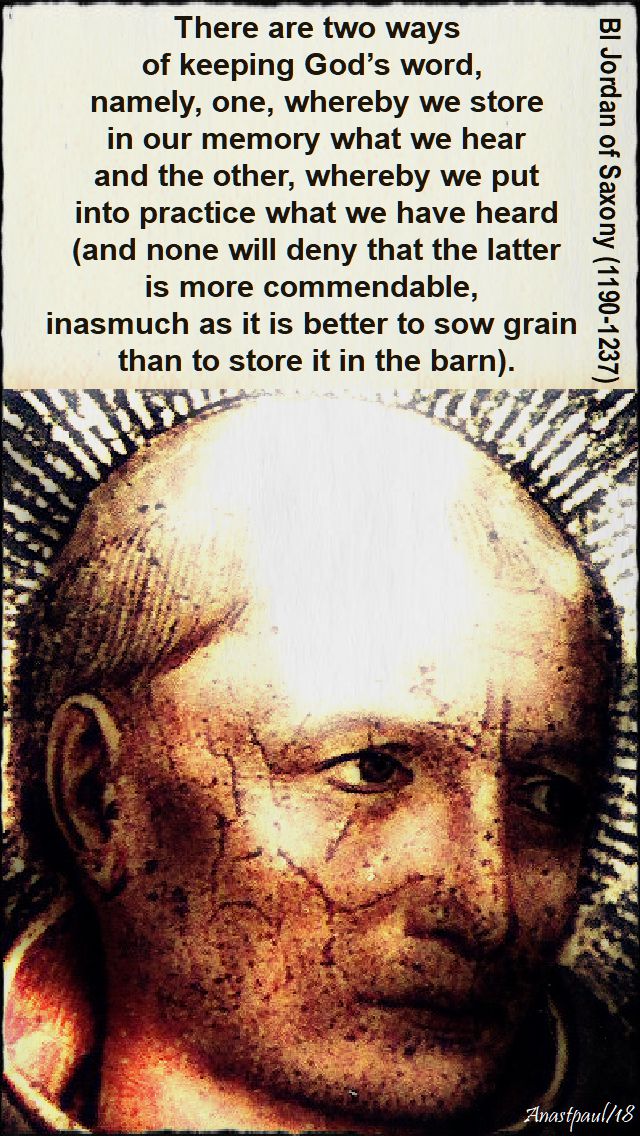
“There are two ways of keeping God’s word,
namely, one, whereby we store in our memory
what we hear and the other,
whereby we put into practice, what we have heard
(and none will deny that the latter, is more commendable,
inasmuch, as it is better to sow grain,
than to store it in the barn).”there-are-two-ways-bl-jordan-of-saxony-13-feb-2018.jpg

Meeting a vagabond upon the road who feigned sickness and poverty, Blessed Jordan gave him one of his tunics, which the fellow at once carried straight to a tavern for drink. The brethren, seeing this done, taunted him with his simplicity:

‘There now, Master, see how wisely you have bestowed your tunic.’

‘I did so,’ said he,
‘because I believed him to be in want,
through sickness and poverty
and it seemed, at the moment,
to be a charity to help him. 
Still, I reckon it better, to have parted
with my tunic than with charity.’

Blessed Jordan of Saxony (1190-1237)

Posted in DOMINICAN OP, MORNING Prayers, SAINT of the DAY, The WORD

One Minute Reflection – 13 February – “All these evil things come from within and they defile a man.”

One Minute Reflection – 13 February – Wednesday of the Fifth week in Ordinary Time, Year C. Gospel: Mark 7:14-23 and the Memorial of Blessed Jordan of Saxony OP (1190-1237)

And he said, “What comes out of a man is what defiles a man.   For from within, out of the heart of man, come evil thoughts, fornication, theft, murder, adultery, coveting, wickedness, deceit, licentiousness, envy, slander, pride, foolishness.   All these evil things come from within and they defile a man.” Mark 7:20-23

REFLECTION – “The boundary between good and evil does not pass outside of us but rather within us.   We could ask ourselves: where is my heart?   Jesus said:  “Where your treasure is, there will your heart be also”.   What is my treasure?   Is it Jesus, is it His teaching?   If so, then the heart is good.   Or is my treasure something else?   Thus it is a heart which needs purification and conversion.   Without a purified heart, one cannot have truly clean hands and lips which speak sincere words of love — it is all duplicitous, a double life — lips which speak words of mercy, of forgiveness but only a sincere and purified heart can do this.”…Pope Francis – Angelus, 30 August 2015mark 7 20 what comes out of a man - the boundary between good and evil - pope francis 13feb2019.jpg
PRAYER – God our Saviour, through the grace of Baptism, You made us children of light. Hear our prayer, that we may always walk in that light and work for truth, as Your witnesses before men.   May our hearts be purified by You grace and may our hands and lips speak with sincere words of love. Blessed Jordan, you worked and walked with zeal and passion in the light of the Lord, please pray for us.   We make our prayer, through Christ our Lord with the Holy Spirit, God forever, amen.bl-jordanofsaxony-prayforus-13-feb-2017-2.jpg

Posted in DOMINICAN OP, franciscan OFM, MARIAN QUOTES, PRACTISING CATHOLIC, QUOTES of the SAINTS, QUOTES on LOVE, QUOTES on SACRIFICE, QUOTES on SUFFERING, SAINT of the DAY

Quote/s of the Day – 23 January – The Memorial of St Ildephonsus (607-667), Blessed Henry Suso OP (1295-1366) and St Marianne Cope (1838-1918)

Quote/s of the Day – 23 January – The Memorial of St Ildephonsus (607-667), Blessed Henry Suso OP (1295-1366) and St Marianne Cope (1838-1918)

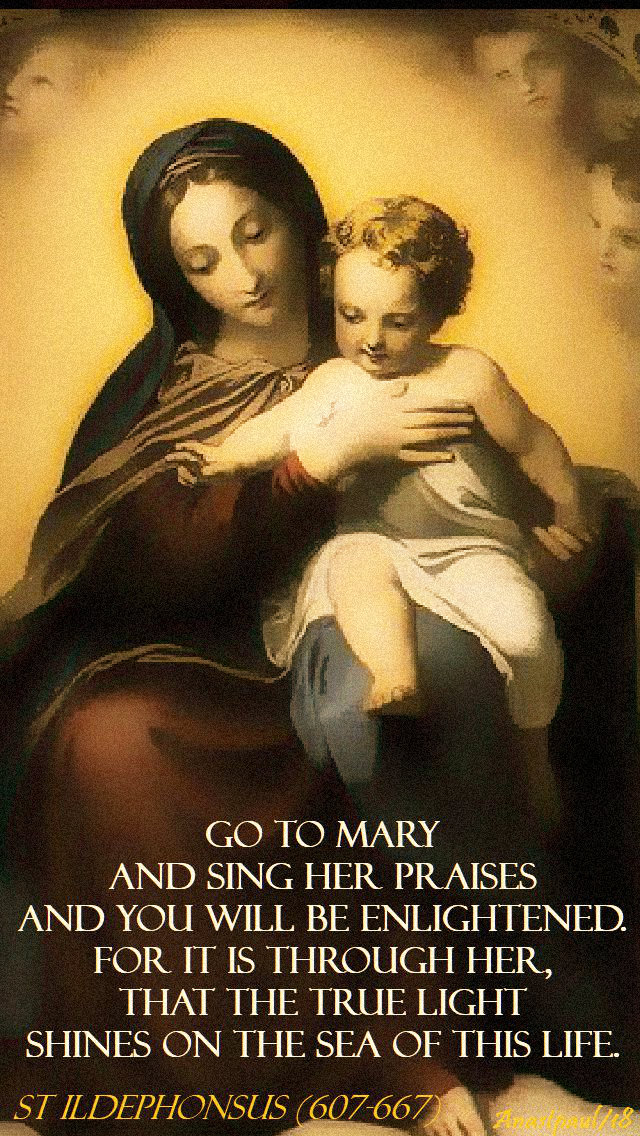
“Go to Mary and sing her praises
and you will be enlightened.
For it is through her,
that the true Light
shines on the sea of this life.”

St Ildephonsus (607-667)go-to-mary-st-ildephonsus-23-jan-2018.jpg

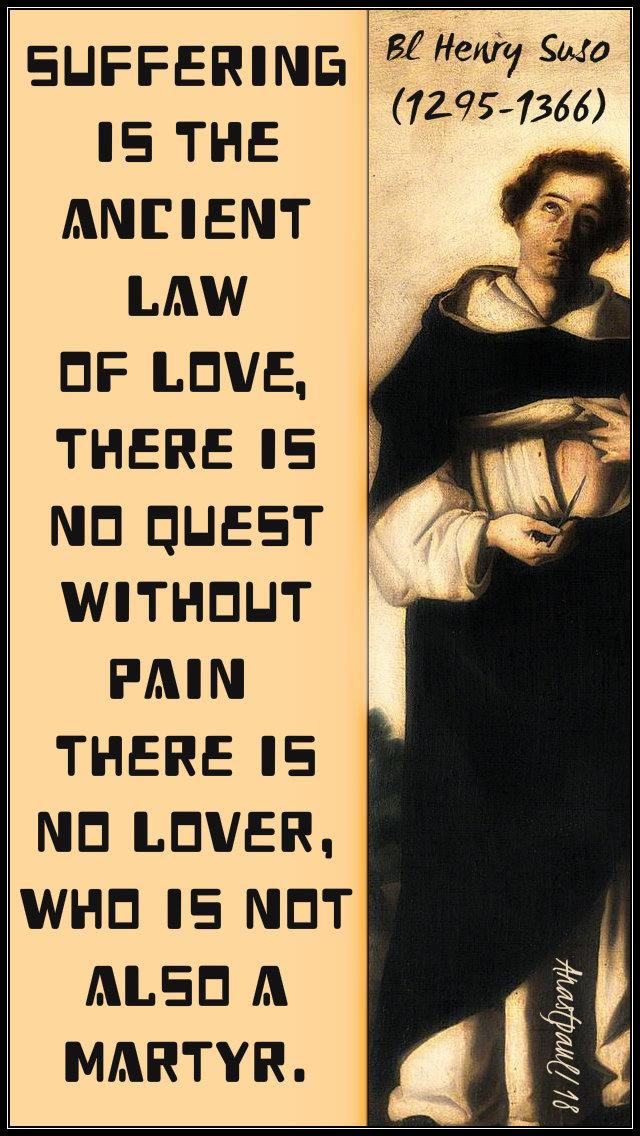
“Suffering is the ancient law of love;
there is no quest without pain;
there is no lover,
who is not also a martyr.”

Blessed Henry Suso (1295-1366)suffering is the ancient law of love - bl henry suso 23 jan 2019.jpg

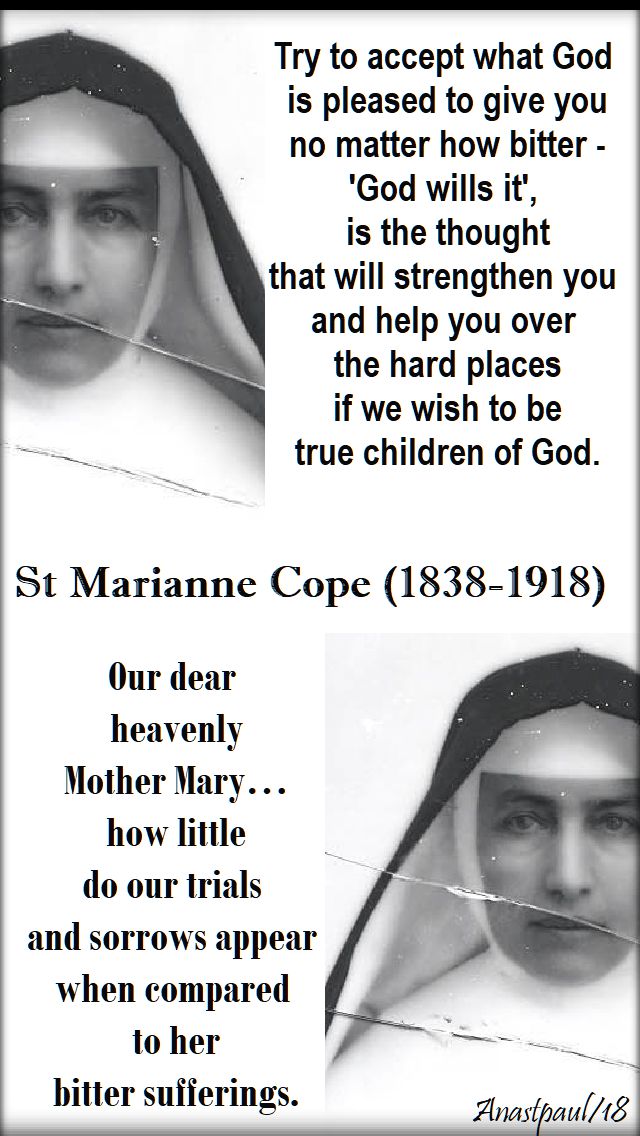
“Try to accept what God
is pleased to give you
no matter how bitter –
‘God wills it’,
is the thought
that will strengthen you
and help you over
the hard places
if we wish to be
true children of God.”

“Our dear
heavenly Mother Mary…
how little do our trials
and sorrows appear
when compared
to her bitter sufferings.”

St Marianne Cope (1838-1918)try-to-accept-what-god-st-marianne-cope-23-jan-2018.jpg

Posted in DOMINICAN OP, FATHERS of the Church, MORNING Prayers, SAINT of the DAY, The WORD

One Minute Reflection – 23 January –Wednesday of the Second week in Ordinary Time – First Reading: Hebrews 7:1–3

One Minute Reflection – 23 January –Wednesday of the Second week in Ordinary Time – First Reading: Hebrews 7:1–3 – and The Memorial of Blessed Henry Suso OP (1295-1366)

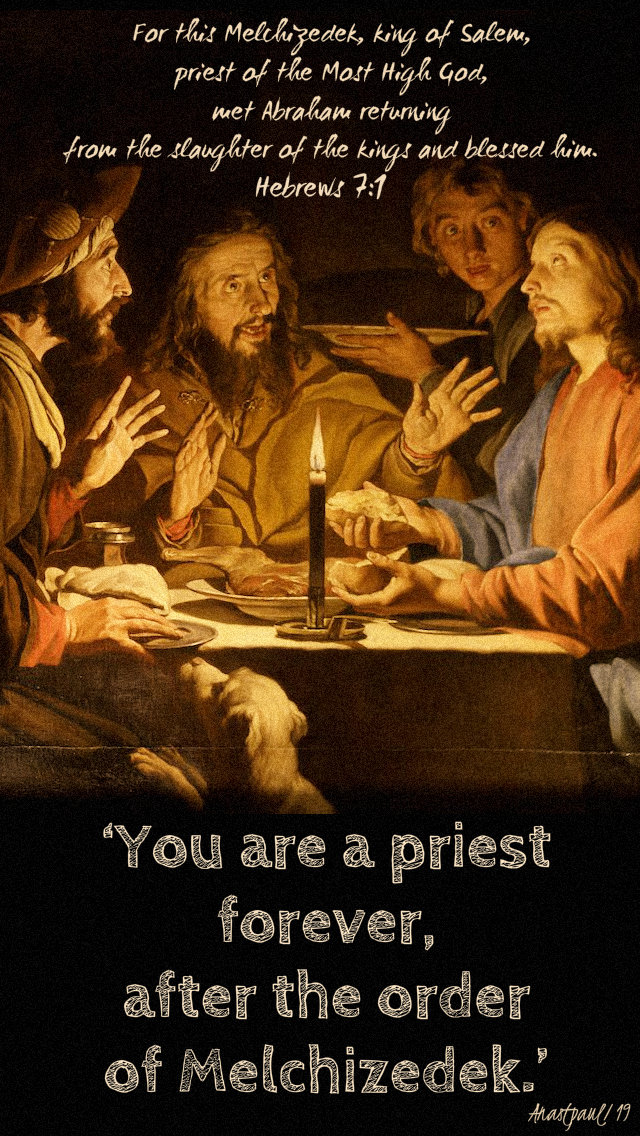
For this Melchizedek, king of Salem, priest of the Most High God, met Abraham returning from the slaughter of the kings and blessed him…Hebrews 7:1

REFLECTION – “An ancient priest of the Mosaic order could only be selected from the tribe of Levi.   It was obligatory without exception that he should be of the family descending from Aaron and do service to God in outward worship with the sacrifices and blood of irrational animals.   But he that is named Melchizedek, which in Greek is translated “king of righteousness,” who was king of Salem, which would mean “king of peace,” without father, without mother, without line of descent, not having, according to the account, “beginning of years or end of life,” had no characteristics shared by the Aaronic priesthood.
For he was not chosen by humans, he was not anointed with prepared oil, he was not of the tribe of those who had not yet been born and, strangest of all, he was not even circumcised in his flesh and yet he blesses Abraham, as if he were far better than he.   He did not act as priest to the Most High God with sacrifices and libations, nor did he minister at the temple in Jerusalem.   How could he?   It did not yet exist.   And he was such, of course, because there was going to be no similarity between our Saviour Christ and Aaron, for He was neither to be designated priest after a period when he was not priest, nor was He to become priest but be it.   For we should notice carefully in the words, “You are a priest forever,” he does not say, “You shall be what you were not before,” any more than, “You were that before which you are not now” — but by Him who said, “I am who I am,”1 it is said, “You are, and remain, a priest forever.”

And the fulfilment of the oracle is truly wondrous to one who recognises how our Saviour Jesus, the Christ of God, now performs through His ministers even today, sacrifices after the manner of Melchizedek’s.   For just as He, who was priest of the Gentiles, is not represented as offering outward sacrifices but as blessing,  Abraham only with wine and bread, so in exactly the same way our Lord and Saviour Himself first and then all His priests among all nations, perform the spiritual sacrifice according to the customs of the church and with wine and bread darkly express the mysteries of His body and saving blood.   This, by the Holy Spirit, Melchizedek foresaw and used the figures of what was to come, as the Scripture of Moses witnesses, when it says, “And Melchizedek, king of Salem, brought out bread and wine; he was priest of God Most High, and he blessed Abraham.”   And thus it followed that to Him only was the addition of an oath, “The Lord God has sworn and will not change his mind, ‘You are a priest forever after the order of Melchizedek.’”.Eusebius of Caesarea (c 260-339) Bishop “Father of Church History”hebrews 2 1 - for this melchizidek - you are a priest forever - 23 jan 2019.jpg

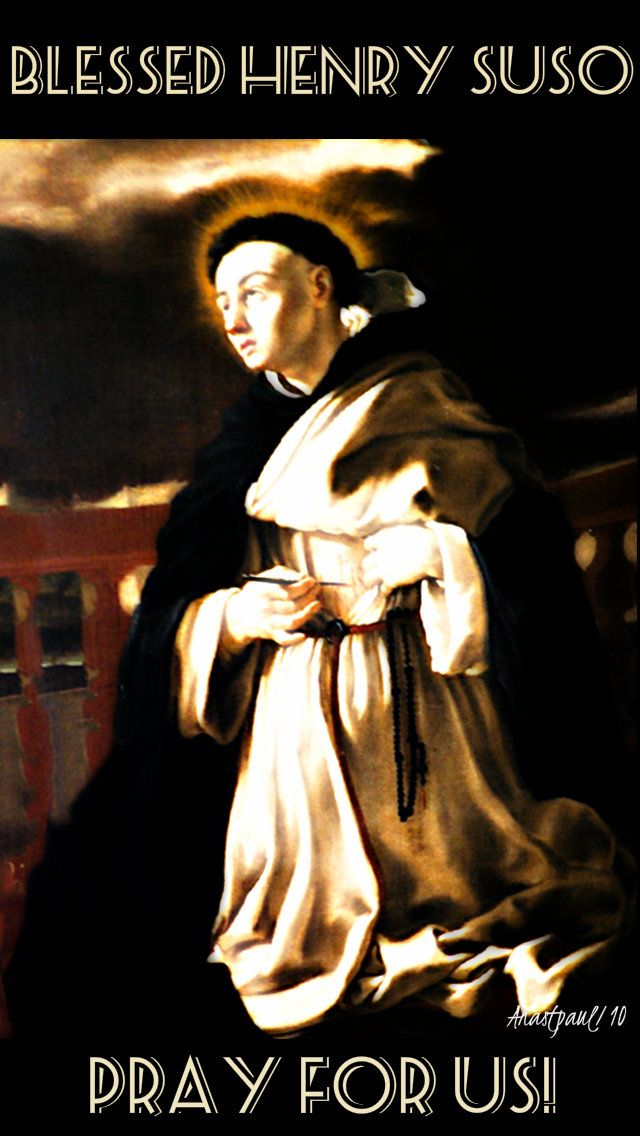
PRAYER – Loving Father, grant me to have a true fervour in Your service. Help me to become a zealous worker for Your honour and glory, in imitation of your Son and of your holy saints. Grant that by the prayers of Blessed Henry Suso, we may grow in love, by Your grace. Through our Lord Jesus Christ, in unity with the Holy Spirit, one God forever.

“In the history of early Christianity there is a fundamental distinction between the first three centuries and those that followed the Council of Nicaea in 325, the first Ecumenical Council.   Like a “hinge” between the two periods are the so-called “conversion of Constantine” and the peace of the Church, as well as the figure of Eusebius, Bishop of Caesarea in Palestine.   He was the most highly qualified exponent of the Christian culture of his time in very varied contexts, from theology to exegesis, from history to erudition.   Eusebius is known above all as the first historian of Christianity but he was also the greatest philologist of the ancient Church.”…Pope Benedict XVI, 13 June 2007bl henry suso pray for us 23 jan 2019

Posted in DOMINICAN OP, PRAYERS of the SAINTS, SAINT of the DAY

Our Morning Offering – 23 January – The Memorial of Blessed Henry Suso OP (1295-1366)

Our Morning Offering – 23 January – The Memorial of Blessed Henry Suso OP (1295-1366)

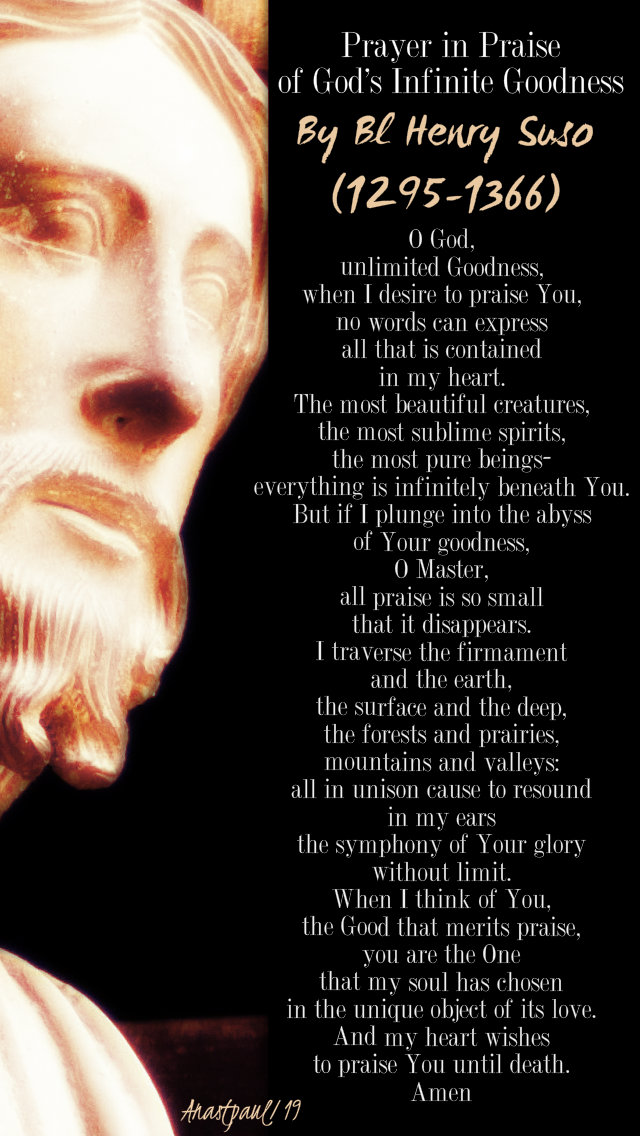
Prayer in Praise of God’s Infinite Goodness
By Bl Henry Suso (1295-1366)

O God, unlimited Goodness,
when I desire to praise You,
no words can express
all that is contained in my heart.
The most beautiful creatures,
the most sublime spirits,
the most pure beings-
everything is infinitely beneath You.
But if I plunge into the abyss of Your goodness,
O Master,
all praise is so small that it disappears.
I traverse the firmament and the earth,
the surface and the deep,
the forests and prairies,
mountains and valleys:
all in unison cause to resound in my ears
the symphony of Your glory without limit.
When I think of You,
the Good that merits praise,
you are the One
that my soul has chosen
in the unique object of its love.
And my heart wishes to praise You until death.
Amenprayer in praise of god's infinite goodness bl henry suso 23 jan 2019.jpg

Posted in DOMINICAN OP, INCORRUPTIBLES, SAINT of the DAY

Saint of the Day – 23 January – Blessed Henry Suso OP (1295-1366)

Saint of the Day – 23 January – Blessed Henry Suso OP (1295-1366) Henry (also called Amandus, a name adopted in his writings and Heinrich Seuse in German), was a German Dominican Priest and Friar and the most popular vernacular writer of the fourteenth century.   Suso is thought to have been born on 21 March 1295.   An important author in both Latin and Middle High German, he is also notable for defending Meister Eckhart’s legacy after Eckhart was posthumously condemned for heresy in 1329.   He died in Ulm on 25 January 1366 and was Beatified 1831, by Pope Gregory XVI. Blessed Henry was a Priest, Preacher, Writer, Poet, Mystic.   His body is incorrupt.bl henry suso.jpg

Henry was born in Switzerland—hence the epithet “Suso,” or “Swiss”—in 1290.   The gentle Henry was a great disappointment to his military family.   Gifted with a deep awareness of God’s presence within him and drawn to a life of prayer, at the age of thirteen, he entered the Dominican convent at Lake Constance near the Alps on the Swiss-German border.   His Dominican formation developed and matured his natural contemplative gifts, giving his prayer an outlet in a joyful zeal to share its fruits with others.   Once ordained, he travelled constantly and widely, preaching and hearing confessions.henri_suzo_45_02

Bl Henry Suso is known in the Order for his gentleness and slight eccentricity.   For example, he once erected a Maypole and danced around it in a joyful display of uninhibited love for the Lord.    He used to call his beloved crucified Lord “God’s Eternal Wisdom”, which indeed Christ is.   Although in his lifetime Blessed Henry suffered much and was not renowned for being a great theologian or preacher, the manuscripts surviving of his writings suggest he was the most widely read spiritual author in the later Middle Ages until the publication of the Imitatio Christi.   Henry wrote the spiritual classic The Little Book of Eternal Wisdom, or The Exemplar.    He had a very strong devotion to Christ’s passion and crucifixion and speaks of it in very human terms. This makes him and especially his Little Book of Eternal Wisdom, ideal reading and material for meditation during Lent.   In many images you will  see him writing the name of Jesus under his heart – it is believed that he really did ‘tattoo’ himself in this way.blessed-henry-suso

From his teens, Henry had imposed severe penances on himself.   However, his greatest sufferings were not of his own making.   In his innocence, he was constantly misunderstood and taken advantage of.   On one preaching tour, Henry was victim of the deceit of his lay companion, who lied about Henry’s poisoning a well in the town.   The story was believed and Henry was almost clubbed to death.   In another situation, which found him in the middle of disputes between feuding families, he was falsely accused by a woman from one of them as being the father of her child.

Henry was a contemporary of John Tauler OP and Master Eckhart, Dominican theological writers of the Rhineland Mystics of Germany in the fourteenth century.   Henry complemented their theology with his beautiful devotional poetry.

He died in Ulm, near Bavaria, in 1365.   His body was later found incorrupt and emitting a fragrance reminiscent of that of his Holy Father Dominic 150 years before.

Suso was esteemed as a preacher and was heard in the cities and towns of Swabia, Switzerland, Alsace and the Netherlands.   His apostolate, however, was not with the masses but rather with individuals of all classes who were drawn to him by his singularly attractive personality and to whom he became a personal director in the spiritual life.

The words of the Christmas Hymn “In dulci jubilo” are attributed to Suso.   In his biography (or perhaps autobiography), it was written:
Now this same angel came up to the Servant (Suso) brightly and said that God had sent him down to him, to bring him heavenly joys amid his sufferings, adding that he must cast off all his sorrows from his mind and bear them company and that he must also dance with them in heavenly fashion.   Then they drew the Servant by the hand into the dance and the youth began a joyous song about the infant Jesus ..:

In sweet rejoicing,
now sing and be glad!
Our hearts’ joy
lies in the manger;
And it shines like the sun
in the mother’s lap.
You are the alpha and omega!bl henry suso lg.jpg

Posted in DOMINICAN OP, PRAYERS of the SAINTS, QUOTES of the SAINTS, QUOTES on CONVERSION, QUOTES on FAITH, QUOTES on PATIENCE, QUOTES on PEACE, QUOTES on PERSECUTION, QUOTES on PERSEVERANCE, QUOTES on SANCTITY, SAINT of the DAY

Thought for the Day – 7 January – The Memorial of St Raymond of Peñafort (1175-1275) “Father of Canon Law”

Thought for the Day – 7 January – The Memorial of St Raymond of Peñafort (1175-1275) “Father of Canon Law”

As a lawyer, priest and preacher, St Raymond of Penyafort made a significant mark on the history of Spain and the church.   His preaching helped re-Christianise Spain after the Moors were overthrown.   And his compilation of papal and conciliar decrees was the main source of canon law for seven centuries.

An accomplished lawyer and scholar, Raymond joined the Dominicans at Barcelona in 1222.   The 47-year-old novice was assigned to develop a book of case studies for confessors that helped to shape the medieval church’s penitential system.   Also a gifted preacher, Raymond had remarkable success evangelising Moors and Jews.   And he travelled throughout Spain, rejuvenating the spiritual life of Christians, that the Moors had enslaved.   Among his main themes were spiritual combat and standing firm in trials.

He wrote:

“Your purity of life, your devotion, deserve and call for a reward, because you are acceptable and pleasing to God, your purity of life must be made purer still, by frequent buffetings, until you attain perfect sincerity of heart.   If from time to time you feel the sword falling on you with double or treble force, this also should be seen as sheer joy and the mark of love.”

And then, he encouraged and prayed for us all:

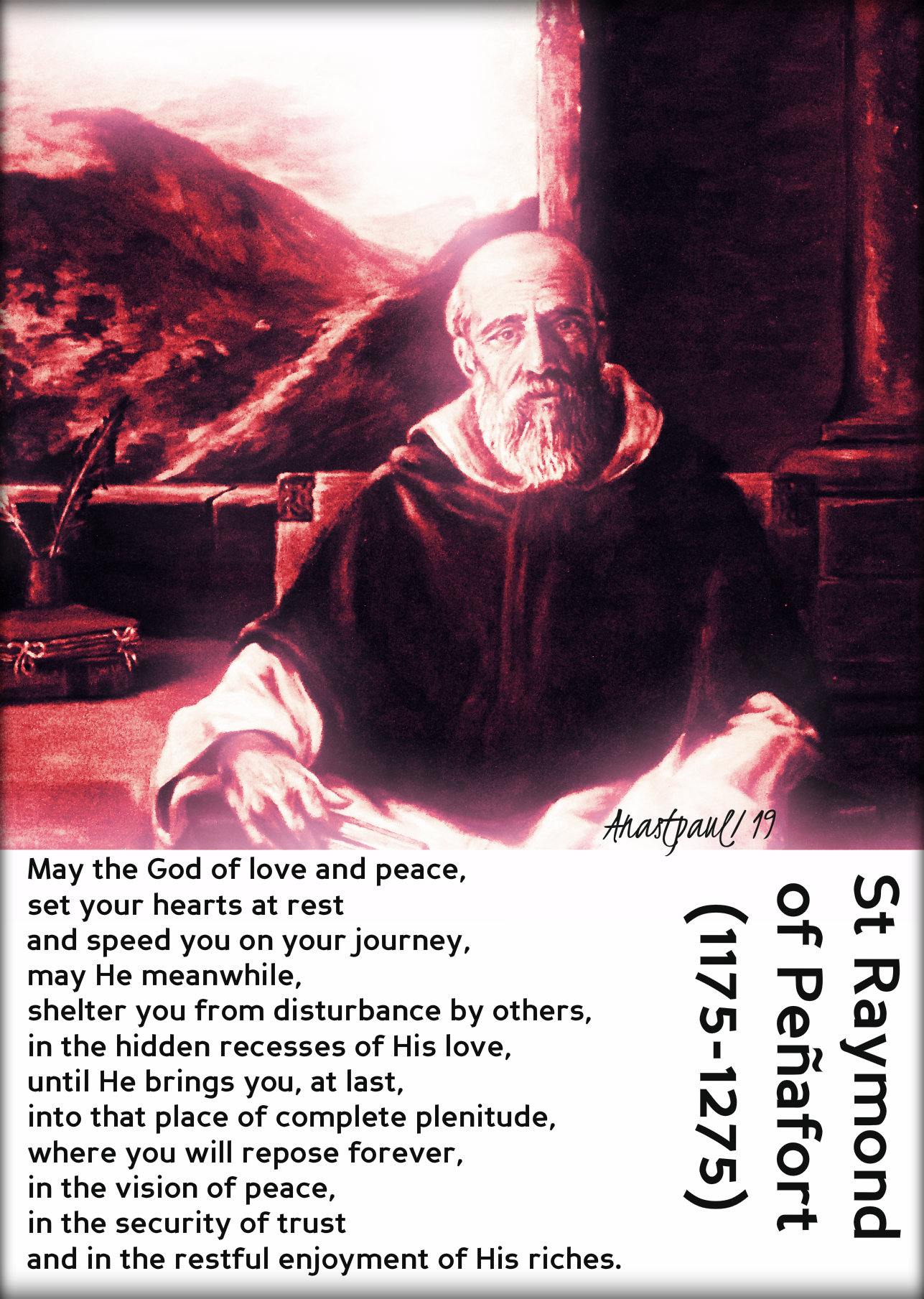
“May the God of love and peace,
set your hearts at rest
and speed you on your journey,
may He meanwhile,
shelter you from disturbance by others,
in the hidden recesses of His love,
until He brings you, at last,
into that place of complete plenitude,
where you will repose forever,
in the vision of peace,
in the security of trust
and in the restful enjoyment of His riches.”may the god of love and peace - st raymond of penafort - 7 jan 2019.jpg

St Raymond of Peñafort, Pray for Us!st raymond of penafort pray for us no 2. 7 jan 2019.jpg

Posted in DOMINICAN OP, SAINT of the DAY

Memorials of the Saints -7 January

St Raymond of Peñafort OP (1175-1275) (“Father of Canon Law”) (Optional Memorial)

St Aldric of Le Mans
Bl Ambrose Fernandez
St Anastasius of Sens
St Brannock of Braunton
St Candida of Greece
St Canute Lavard
St Cedd
St Clerus of Antioch
St Crispin I of Pavia
St Cronan Beg
St Emilian of Saujon
St Felix of Heraclea
Bl Franciscus Bae Gwan-gyeom
St Januarius of Heraclea
St Julian of Cagliari
St Kentigerna
St Lucian of Antioch
Bl Marie-Thérèse Haze
St Pallada of Greece
St Polyeuctus of Melitene
St Reinhold of Cologne
St Spolicostus of Greece
St Theodore of Egypt
St Tillo of Solignac
St Valentine of Passau
St Virginia of Ste-Verge
Bl Wittikund of Westphalia

Posted in DOMINICAN OP, Of LAWYERS & CANON Lawyers, Attorneys, Solicitors, Barristers, Notaries, Para-Legals, SAINT of the DAY

Saint of the Day – St Raymond of Peñafort OP (1175-1275) “Father of Canon Law”

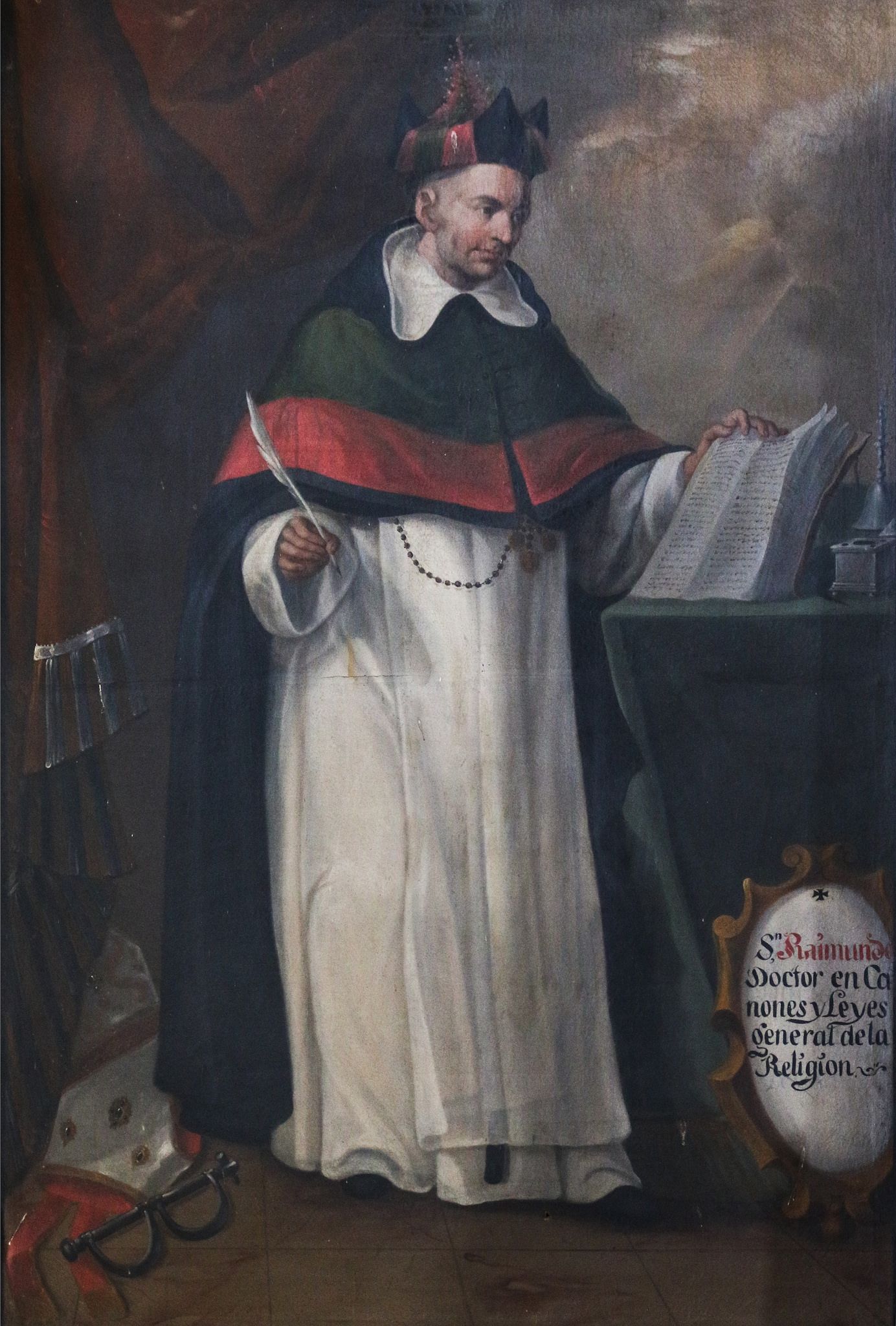
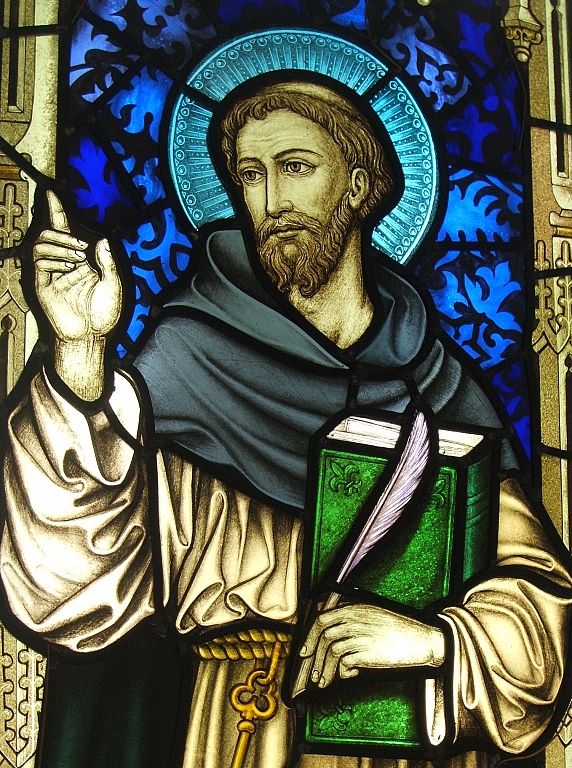
Saint of the Day – St Raymond of Peñafort OP (1175-1275) “Father of Canon Law” Dominican Priest, Doctor of Canon Law, Founder of the Mercedarian friars, the third Master of the Order of Preachers, Writer, Teacher, Miracle-Worker – born on 1175 at Peñafort, Catalonia, Spain and died on 6 January 1275 at Barcelona, Spain of natural causes. PatronagesLawyers, Canonists, Medical Record Librarians, Barcelona, Spain, Navarre, Spain.

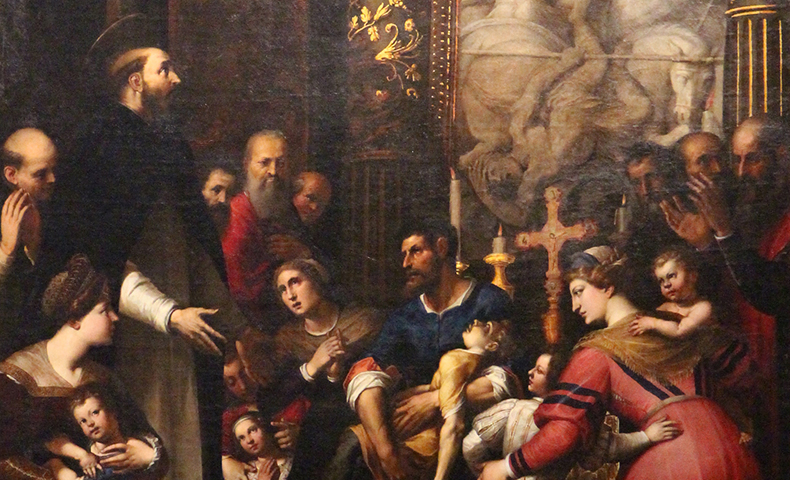
sod-0107-saintraymondofpeñafort-790x480
Saint Raymond of Peñafort’s Miracle by Jacopo Ligozzi 

Raymond was born of a noble Spanish family, at the age of twenty, taught philosophy at Barcelona with marvellous success.   Ten years later his rare abilities won for him the degree of Doctor in the University of Bologna and many high dignities.

A tender devotion to our blessed Lady, which had grown up with him from childhood, determined him in middle life to renounce all his honours and to enter her Order of St. Dominic.   There, again, a vision of the Mother of Mercy instructed him to co-operate with his penitent St Peter Nolasco (1189-1256) and with James, King of Aragon, in founding the Order of Our Lady of Ransom for the Redemption of Captives (the Mercedarian friars).  He began this great work by preaching a crusade against the Moors and rousing to penance the Christians, enslaved in both soul and body by the infidel.   King James of Aragon, a man of great qualities but held in bond by a ruling passion, was bidden by the Saint to put away the cause of his sin.  saint_raymond

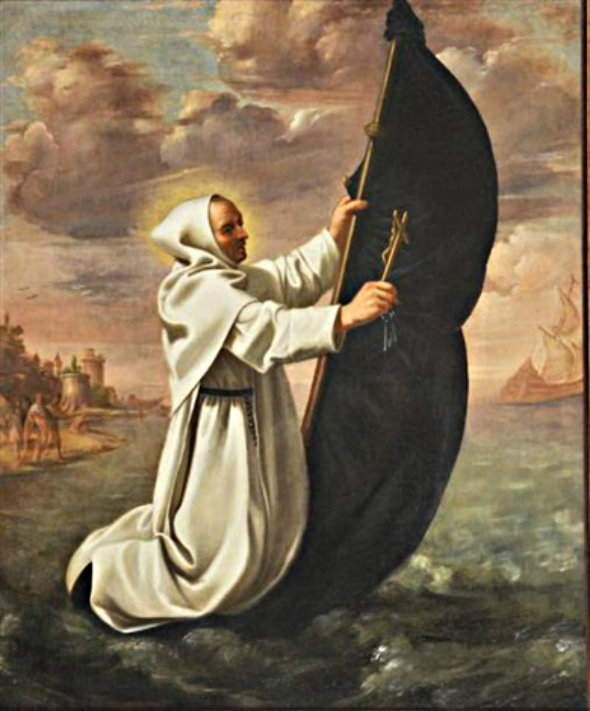
On his delay, Raymond asked for leave to depart from Majorca, since he could not live with sin.   The king refused and forbade, under pain of death, his conveyance by others.  Full of faith, Raymond spread his cloak upon the waters and, tying one end to his staff as a sail, made the sign of the cross and fearlessly stepped upon it.   In six hours he was borne to Barcelona, where, gathering up his cloak dry, he stole into his monastery.   The king, overcome by this miracle, became a sincere penitent and the disciple of the Saint till his death.french-school-(17)-le-miracle-de-saint-raymond-de-penyafort-(1175-1275)

In 1230, Gregory IX. summoned Raymond to Rome, made him his confessor and grand penitentiary and directed him to compile “The Decretals,” a collection of the scattered decisions of the Popes and Councils.  st raymond penafort - canonist.jpg

Having refused the archbishopric of Tarragona, Raymond found himself in 1238 chosen third General of his Order  which post he again succeeded in resigning, on the score of his advanced age.  Rejoicing to see himself again free of office, he applied himself with fresh vigour to the Christian ministry, especially working for the conversion of the Moors.   To this end he encouraged Thomas Aquinas to write his work Against the Gentiles.   He instituted the teaching of Arabic and Hebrew in several houses of the friars.   He also founded priories in Murcia (then still ruled by Arabs) and in Tunis.   Additionally he went to help establish the Church in the recently conquered island of Mallorca.   In 1256 Raymond, then eighty-one, was able to report that ten thousand Saracens had received Baptism.  st-raymond-011,-louth-1318847641.jpg

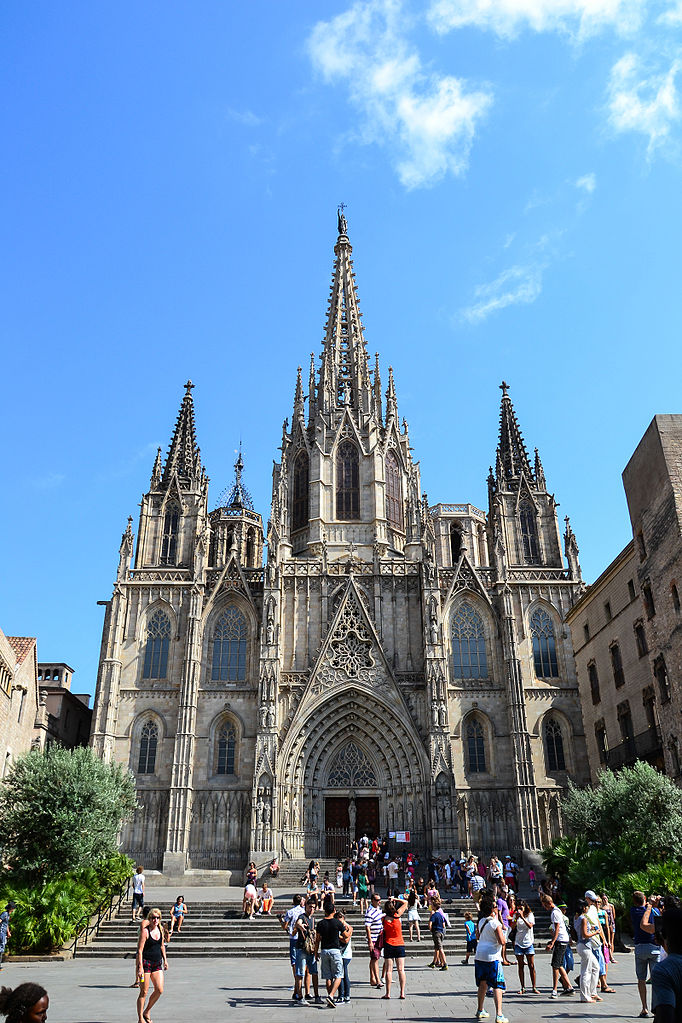
Raymond died at the age of 100 in Barcelona in 1275 and was Canonised by Pope Clement VIII in 1601.   He was buried in the Cathedral of Santa Eulalia in Barcelona.cathedral_of_the_holy_cross_and_saint_eulaliashrine 735px-barcelona_cathedral_interior_-_capella_de_sant_ramon_de_penyafortst raymondf penafort statue

Here is one of my first posts on the saints but it has a lot more detail of his life – St Raymond:  https://anastpaul.wordpress.com/2017/01/07/saint-of-the-day-7-january/

Posted in DOMINICAN OP, INCORRUPTIBLES, SAINT of the DAY

Saint of the Day – 16 December – Blessed Sebastian Maggi OP (1414–1496)

Saint of the Day – 16 December – Blessed Sebastian Maggi OP (1414–1496) Religious Priest of the Order of Preachers, Confessor – born in 1414 at Brescia, Italy and died in 1496 at Genoa, Italy of natural causes.   Blessed Sebastian also served as the confessor to both Girolamo Savonarola (1452–1498) and Saint Catherine of Genoa (1447–1510).   His body is incorrupt.

Sebastian Maggi was born in Brescia to nobles in 1414.   He is related to Bishop Berardo Maggi who was also the Duke and Count of Brescia.

Maggi began his work in 1429 when he joined the Order of Preachers.   His intelligence was noticed and he later received a master’s degree in theological studies.   He rose through the ranks and became the superior of several religious Dominican houses.   He practised corporal mortification and was strict in discipline.   He would often tell his subordinates: “When you have committed a fault, come to me, not as prior but as your father.   If you will not have me as a father, you will find me a severe judge.”bl sebastian maggi op

He appointed the monk Girolamo Savonarola to the position of novice master and set that famous Florentine friar on his own path to fame.   In his time he was regarded as one of the greatest preachers in the Italian state.

Pope Alexander VI chose Father Maggi to investigate revelations that Savonarola claimed were given to him directly from God.   Savonarola appealed the choice and believed that Sebastian – as Vicar-General of the Lombard Congregation – would be biased and try to take over his recently-emancipated “San Marco” facility in Florence.   Alexander VI, however, had already decided to give the facility back to the Congregation, making Sebastian, Savonarola’s canonical superior.

Perhaps, if Sebastian Maggi had lived, he might have saved Savonarola from the political entanglements that sent him to his death.   Sebastian was his confessor for a long time and always testified in his favour when anyone attacked the reformer’s personal life.   It is hard to say just where he stood politically in the long and complex series of events concerning the separation of Lombard province from the province of Italy.   But all that has been written of him, conveys the same impression, he was a kind and just superior, who kept the rule with rigid care but was prudent in exacting it of others.

Girolamo_Savonarola
Girolamo Savonarola

Several times Sebastian Maggi was sent on missions of reform and he died on one of these.   On his way to a convent for visitation, he became ill at Genoa and died there in 1496.   He is buried at the Dominican “Santa Maria di Castello” complex in Genoa (see below).1280px-Genova-centro_storico-IMG_1503

History has written of Blessed Sebastian that his greatest virtues were seen in his governing.   As the prior of several convents, Blessed Sebastian often loved to wait on his Dominican sisters and brothers with his own hands and to minister to them when they were ill.   It was commonly said, that when Blessed Sebastian visited the sick, he did so with as much joy as attending a wedding.

Posted in DOMINICAN OP, SAINT of the DAY

Memorials of the Saints – 12 November

St Josaphat Kuncewicz OSBM (1584-1623) Martyr (Memorial)
All About St Josaphat:   https://anastpaul.wordpress.com/2017/11/12/saint-of-the-day-12-november-st-josaphat-kuncewicz-1584-1623/

St Arsatius
St Astricus of Ungarn
St Aurelius
St Cadwallader
St Cummian Fada
St Cunibert of Cologne
St Emilian Cucullatus
St Evodius of Le Puy
St Hesychius of Vienne
Bl John Cini della Pace
Bl José Medes Ferrís
St Lebuin of Deventer
St Livinus of Alost
St Machar of Aberdeen
St Margarito Flores-García
St Namphasius
St Nilus the Elder
St Paternus of Sens
St Publius
St Renatus of Angers
St Rufus of Avignon
Bl Ursula Medes Ferris
St Ymar of Reculver

Five Polish Brothers – martyrs:  They weren’t Polish and they weren’t related but were instead five Italian Benedictine monks who worked with Saint Adalbert of Prague as missionaries to the Slavs and were martyred together.   They were – Benedict, Christinus, Isaac, John and Matthew. Born in Italy.   They were martyred in 1005 at the Benedictine monastery near Gnesen, Poland and Canonised by Pope Julius II.

Posted in DOMINICAN OP, SAINT of the DAY

Thought for the Day – 3 November – The Memorial of St Martin de Porres OP (1579-1639)

Thought for the Day – 3 November – The Memorial of St Martin de Porres OP (1579-1639)

In normal times, Saint Martin succeeded with his alms to feed 160 poor persons every day and distributed a remarkable sum of money every week to the indigent — the latter phenomenon hard to explain by ordinary calculations.   To Saint Martin the city of Lima owed a famous residence founded for orphans and abandoned children, where they were formed in piety for a creative Christian life.   This lay Brother had always wanted to be a missionary but never left his native city;  yet even during his lifetime he was seen elsewhere, in regions as far distant as Africa, China, Algeria, Japan.   An African slave who had been in irons said he had known Martin when he came to relieve and console many like himself, telling them of heaven.   When later the same slave saw him in Peru, he was very happy to meet him again and asked him if he had had a good voyage, only later did he learn that Saint Martin had never left Lima.   A merchant from Lima was in Mexico and fell ill, he said aloud:  Oh, Brother Martin, if only you were here to care for me..! and immediately saw him enter his room.   And again, this man did not know until later that he had never been in Mexico.

When he died in 1639, Saint Martin was known to the entire city of Lima, word of his miracles had made him known as a Saint to every resident of the region.   After his death, the miracles and graces received when he was invoked multiplied in such profusion that his body was exhumed after 25 years and found intact and exhaling a fine fragrance.

Letters to Rome pleaded for his Beatification the decree affirming the heroism of his virtues was issued in 1763 by Clement XIII, Gregory XVI beatified him in 1836 and in 1962 St Pope John XXIII Canonised him.

The poor and the sick will never fail to find in him a friend having great power over the Heart of God.

St Martin de Porres, Pray for Us!st martin de porres pray for us - 3 nov 2018