Thought for the Day – 17 August – The Memorial of St Hyacinth of Poland – “Apostle of Poland” “Apostle of the North”
“Our readers, we can but fancy, have marvelled at the prodigious labours and travelling of Saint Hyacinth, although we have given only a meager account of them. They extended over a period of nearly forty years and carried him through a large part of Europe and Asia. Doubtless, if they were recorded in detail and in proper sequence, they would be found infinitely more stupendous than we have painted them. He alone could have told them as they should be recounted. Yet it possibly never entered his mind to leave posterity any information on his life. The one thing that engaged his thoughts was, after saving his own soul, to help those of others, to make God known and to extend the kingdom of Christ. The same idea filled the minds of the confrères who were often his companions in labour. In this way, it was only through the scanty records discovered in cities and the early convents that historians have been able to tell us the little we do know about him. Still perhaps never was there a life which should be more completely written than that of Saint Hyacinth Odrowaz.
One may consider the practical, lively faith of the Poles, whether in the home land or in others, as a perpetual miracle of Saint Hyacinth. In no small measure they owe it to him. To that keen faith we must attribute the magnificent institutions of learning, charity, benevolence and the like, as well as the churches, monasteries and similar edifices, in which Poland abounds and in which it has found expression. All these are filled with the spirit which the people largely derived from him. They simply thrill with love and gratitude for him. This true spirit of Catholicity, we must remember, has been preserved undiminished for centuries through wars of every kind, division, hardships, persecution and every sort of oppression-the like of which the world has seen few parallels. We have here, it would seem, the greatest miracle of the zealous apostle’s life. At least, it has contributed more to the glory of God, the good of the Church, and the salvation of souls than any miracle he performed.” (Acta; STANISLAUS, Father, O. P., of Cracow, manuscript Vita Sancti Hyacinthi.)
Saint Hyacinth teaches us to spare no effort in the service of God but to rely for success not on our industry but on the assistance of the Holy Eucharist and the prayer of the Immaculate Mother of God.
St Hyacinth of Poland pray for the Poland, the Church and for us all!
Our Lord, King of all! By St Albert the Great O.P. (1200-1280) Doctor of the Church
We pray to You, O Lord,
who are the supreme Truth,
and all truth is from You.
We beseech You, O Lord,
who are the highest Wisdom,
and all the wise depend on You
for their wisdom.
You are the supreme Joy,
and all who are happy
owe it to You.
You are the Light of minds
and all receive
their understanding from You.
We love, we love You above all.
We seek You, we follow You,
and we are ready to serve You.
We desire to dwell under Your power
for You are the King of all.
Amen
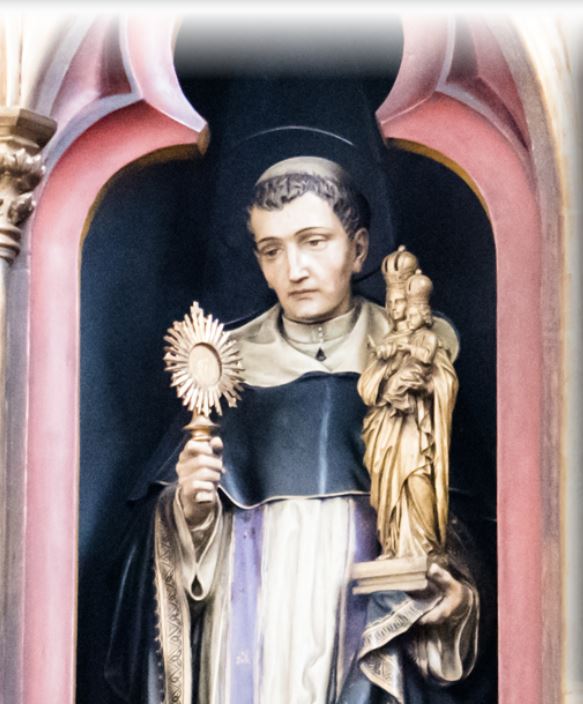
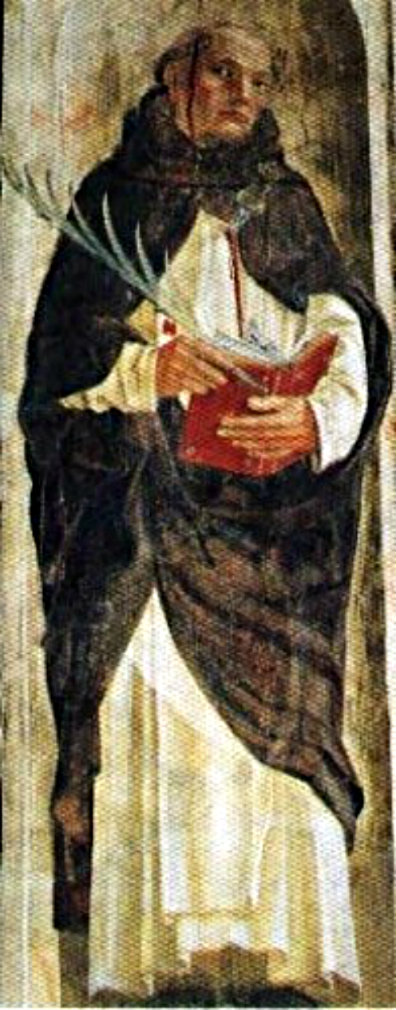
Saint of the Day – 17 August – St Hyacinth OP (1185-1257) – (born Jacek Odrowąż) “Apostle of Poland” and “Apostle of the North” also known as “the Polish St Dominic”– Religious Priest, Confessor, Doctor of Law and Divinity, Missionary, Preacher, Miracle Worker, Mystic (1185 at Lanka Castle, Kamien Slaski, Opole, Upper Silesia (in modern Poland) – 15 August 1257 at Krakow, Poland of natural causes). His major relics are in Paris, France. He was Canonised on 17 April 1594 by Pope Clement VIII. Patronages – against drowning, Camalaniugan, Philippines, Ermita de Piedra de San Jacinto, Tuguegarao, Philippines, Krakow, Poland, archdiocese of, Lithuania (named by Pope Innocent XI in 1686), Poland, Lithuania. Attributes – statue of the Blessed Virgin Mary; Monstrance or Ciborium.
Called the “Apostle of Poland” and the “Apostle of the North”, Hyacinth was the son of Eustachius Konski of the noble family of Odrowąż. He was born in 1185 at the castle of Lanka, at Kamin, in Silesia, Poland. A near relative of Blessed Ceslaus, he made his studies at Kraków, Prague and Bologna and at the latter place merited the title of Doctor of Law and Divinity. On his return to Poland he was given a stipend at Sandomir. He subsequently accompanied his uncle Ivo Konski, the Bishop of Kraków, to Rome.
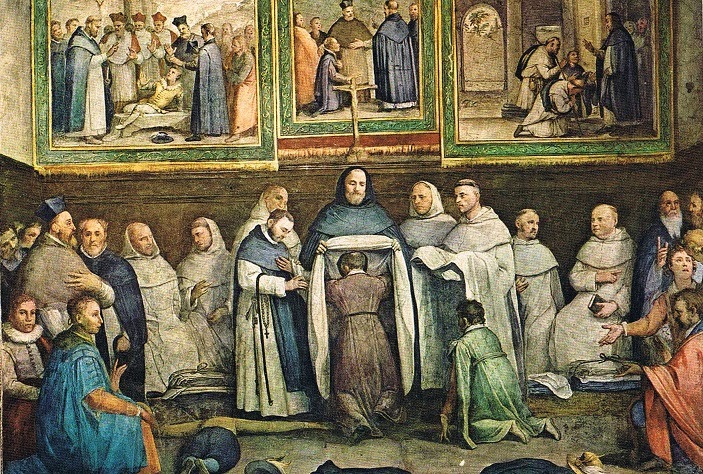
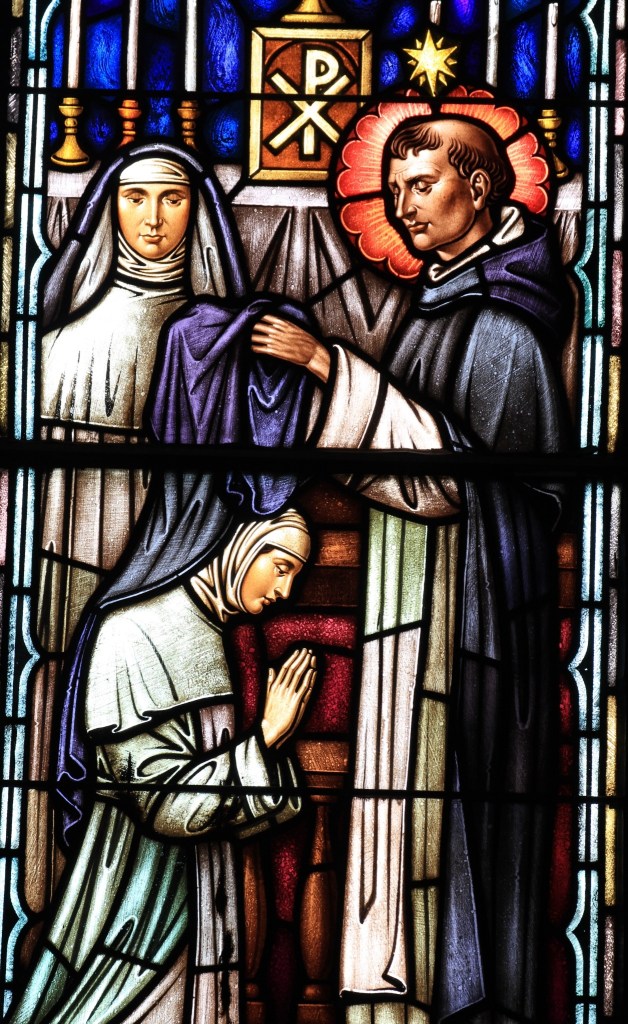
While in Rome, he witnessed a miracle performed by Saint Dominic and became a Dominican friar, along with the Blessed Ceslaus and two attendants of the Bishop of Kraków – Herman and Henry. In 1219 Pope Honorius III invited Saint Dominic and his followers to take up residence at the ancient Roman basilica of Santa Sabina, which they did by early 1220. Before that time, the friars had only a temporary residence in Rome at the convent of San Sisto Vecchio which Honorius III had given to Dominic circa 1218, intending it to be used for a reformation of Roman nuns under Dominic’s guidance. Hyacinth and his companions were among the first to enter the convent. They were also the first alumni of the studium of the Dominican Order at Santa Sabina out of which would grow the 16th century College of Saint Thomas at Santa Maria sopra Minerva, which became the Pontifical University of Saint Thomas Aquinas, Angelicum in the 20th century. After an abbreviated novitiate, Hyacinth and his companions received the religious habit of the Order from St Dominic himself in 1220.
The young friars were then sent back to their homeland to establish the Dominican Order in Poland and Kiev. As Hyacinth and his three companions travelled back to Kraków, he set up new monasteries with his companions as superiors, until finally he was the only one left to continue on to Kraków, where he founded two houses.
His apostolic journeys extended over numerous and vast regions, he walked a total of nearly twenty five thousand miles in his apostolic travels. Austria, Bohemia, Livonia, the shores of the Black Sea, Tartary, Northern China in the east, Sweden, Norway and Denmark to the west, were evangelised by him and he is said to have visited Scotland. Everywhere he travelled unarmed, without a horse, with no money, no interpreters, no furs in the severe winters and often without a guide, abandoning to Divine Providence his mission in its entirety. Everywhere multitudes were converted, churches and convents were built; one hundred and twenty thousand pagans and infidels were baptised by his hands. He worked many miracles; at Krakow he raised a dead youth to life. His progress among these hostile peoples, with their barbarous customs and unknown languages, through trackless forests, in the fierce cold of the North, can be explained as a miracle.
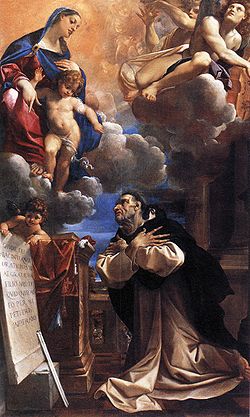
He had inherited from Saint Dominic a perfect filial confidence in the Mother of God; to Her he ascribed his success and to Her aid he looked for his own salvation. Early in his mission career, Our Lady appeared to Hyacinth and promised him that she would never refuse him anything. Through the years of his arduous labour she kept her promise, and his ministry was rich with a harvest of souls. He performed many astounding miracles, including countless cures. On one occasion he gave sight to two boys who had been born without eyes. He raised several dead people to life. The best known incident in his life has to do with Our Lady, which is not surprising.
Apparition of the Virgin to Saint Hyacinth, Ludovico Carracci (1592), in the Louvre Museum
It was at the request of this indefatigable missionary that Saint Thomas Aquinas wrote his famous philosophical Summa contra Gentiles, proving the reasonableness of the Faith on behalf of those unfamiliar with doctrine.
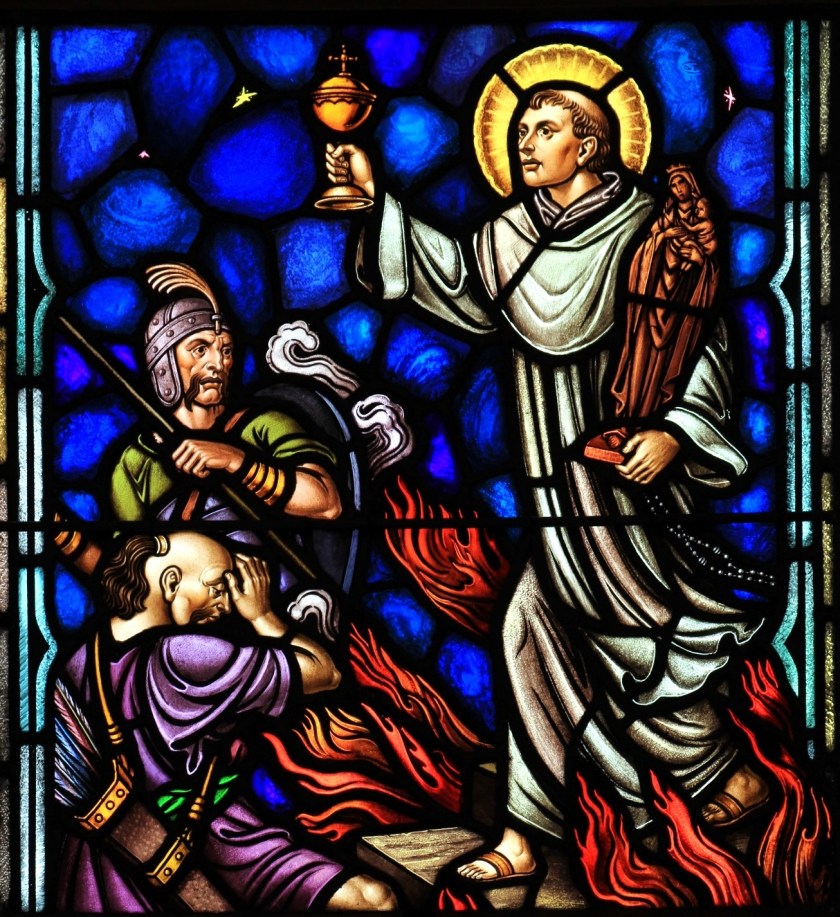
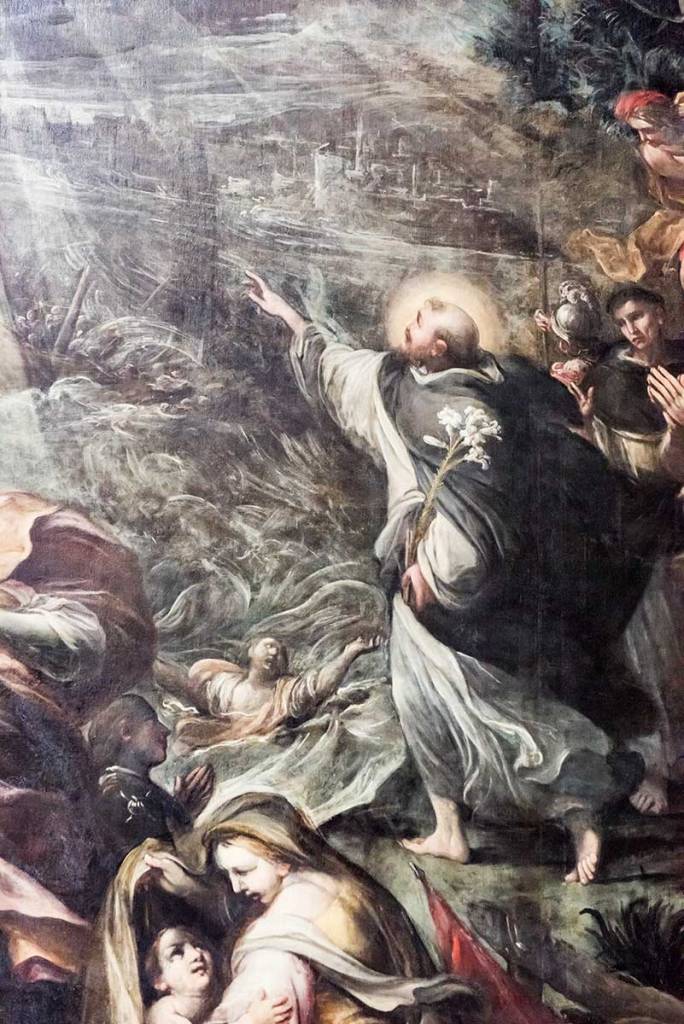
While Saint Hyacinth was at Kiev the Tartars sacked the town but it was only as he finished Mass that the Saint heard of the danger. Without waiting to unvest, he took the ciborium in his hands and was leaving the church. Then occurred the most famous of his countless prodigies. As he passed by a statue of Mary a voice said: “Hyacinth, My son, why do you leave Me behind? Take Me with you…” The statue was of heavy alabaster but when Hyacinth took it in his arms it was light as a reed. With the Blessed Sacrament and the statue he walked to the Dnieper river and crossed dry-shod over the surface of the waters to the far bank.
On the eve of the Assumption, 1257, he was advised of his coming death. In spite of an unrelenting fever, he celebrated Mass on the feast day and communicated as a dying man. He was anointed at the foot of altar and died on the great Feast of Our Lady.
A note on the name “Hyacinth”: Jacek is the common form in Polish, for the name “Hyacinth.” Literally understood, “Hyacinth” is said to derive from the hyacinth flower or hyacinth stone and thus its meaning has two interpretations.
In the first place he is called “Hyacinth,” because the flower has a stalk with a crimson blossom: this suits Blessed Jacek well for he was a simple stalk in his docility of heart, a flower in his chastity, a crimson blossom in his vow of poverty and lack of material goods.
Secondly, he is called “Hyacinth” from the hyacinth stone, for he shines brilliantly in the way he handed on the teaching of the gospel, was resplendent in his holy way of life and most steadfast in spreading the catholic faith.
Thought for the Day – 8 August – The Memorial of St Dominic de Guzman
Words of Pope Benedict XVI on St Dominic
In the second volume of his work “Jesus of Nazareth”, in speaking of the first and last coming of Christ, he introduces a “middle coming”, through his word, the sacraments, events. And he continues: ” But there are also modalities of this coming season. The impact of two great figures -Francisco and Domingo- between the twelfth and thirteenth centuries, has been a way in which Christ has re-entered history, re-enforcing His word and his love; a way with which He has renewed the Church and has driven history to itself. ” In St Dominic’s words: “You are my companion and must walk with me. If we hold together, no earthly power can withstand us.”
Likewise, Benedict XVI, recognising the Marian devotion of Saint Dominic, manifested in his catechesis on February 3, 2010: ” First and foremost, Marian devotion, which he cultivated with tenderness and left his spiritual children as an inheritance, Which in the history of the Church have had the great merit of spreading the prayer of the holy rosary, so rooted in the Christian people and so rich in evangelical values, a true school of faith and piety.
Once, at a difficult point in the preaching ministry, St Dominic had a dream in which he saw heaven. Christ was there, arrayed like a king, with His Mother beside Him cloaked in a magnificent mantle. Around the Blessed Mother were countless souls from all walks of life: clergy, laypersons, and members of every religious order ever founded. Among the religious there were Benedictines, Augustinians, Carmelites, Franciscans, everyone, except the Order of Preachers. Struck to the heart, Dominic said, “Is there not a single one of mine?” The Lord gestured to his Mother, who opened her mantle. There, under it, were hundreds and hundreds of Dominican souls in their black and white habits. The Lord said, “Behold, I have left your Order in the care of My Mother.”
And, in the catechesis of August 8, 2012, he referred to another characteristic of St Dominic, the prayer : “St Dominic was a man of prayer. In love with God, he had no other aspiration than the salvation of souls, especially those who had fallen into the webs of the heresies of his time; Imitator of Christ, incarnated radically the three evangelical counsels joining to the proclamation of the Word the testimony of a poor life; under the guidance of the Holy Spirit, progressed in the path of Christian perfection. At all times prayer was the force that renewed and made more and more fruitful his apostolic works.
St Dominic reminds us that at the origin of the witness of faith, which every Christian should give in family, work, social commitment and also in times of relaxation, is prayer, personal contact with God. Only this real relationship with God gives us the strength to live intensely every event, especially moments of greater suffering. “
Quote/s of the Day – 8 August – The Memorial of St Dominic de Guzman, Founder of the Dominicans
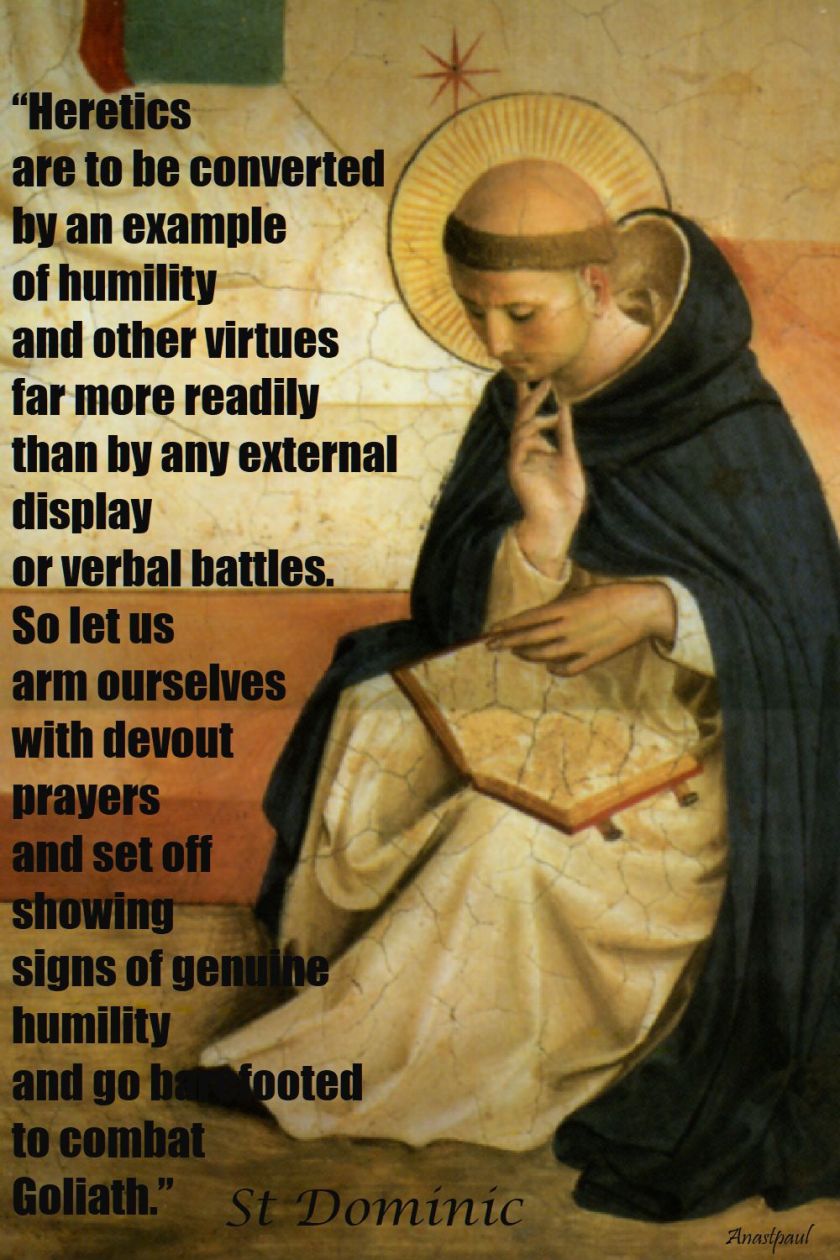
“Heretics are to be converted by an example of humility and other virtues far more readily than by any external display or verbal battles. So let us arm ourselves with devout prayers and set off showing signs of genuine humility and go barefooted to combat Goliath.”
“A man who governs his passions is master of his world. We must either command them or be enslaved by them. It is better to be a hammer than an anvil.”
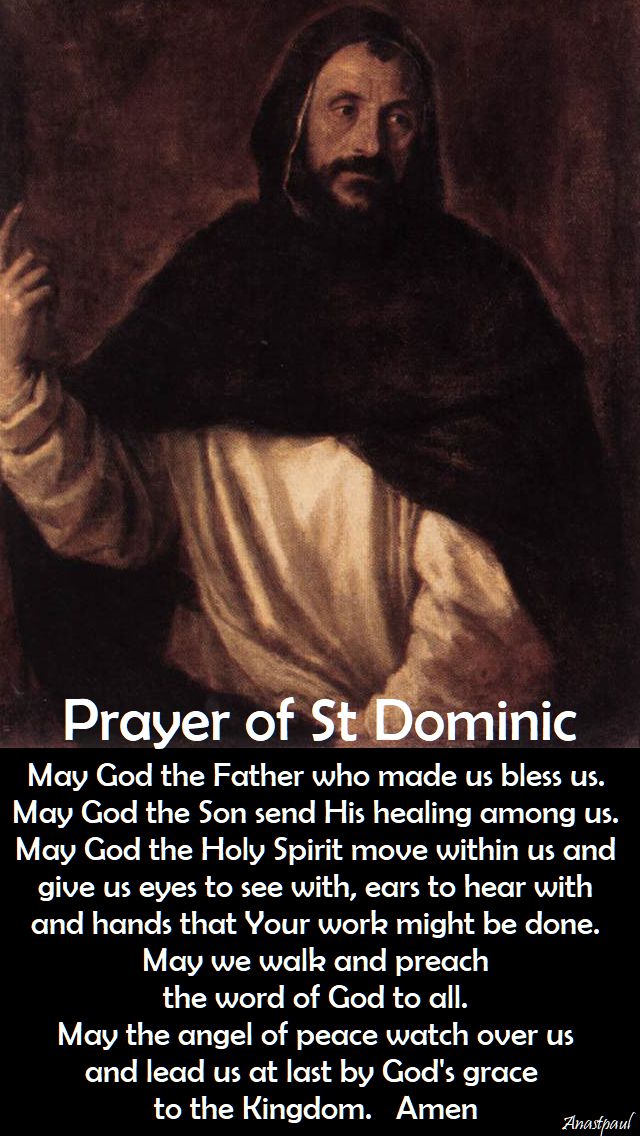
May God the Father who made us bless us.
May God the Son send His healing among us.
May God the Holy Spirit move within us and
give us eyes to see with, ears to hear with,
and hands that Your work might be done.
May we walk and preach
the word ofGod to all.
May the angel of peace watch over us
and lead us at last, by God’s grace,
to the Kingdom. Amen
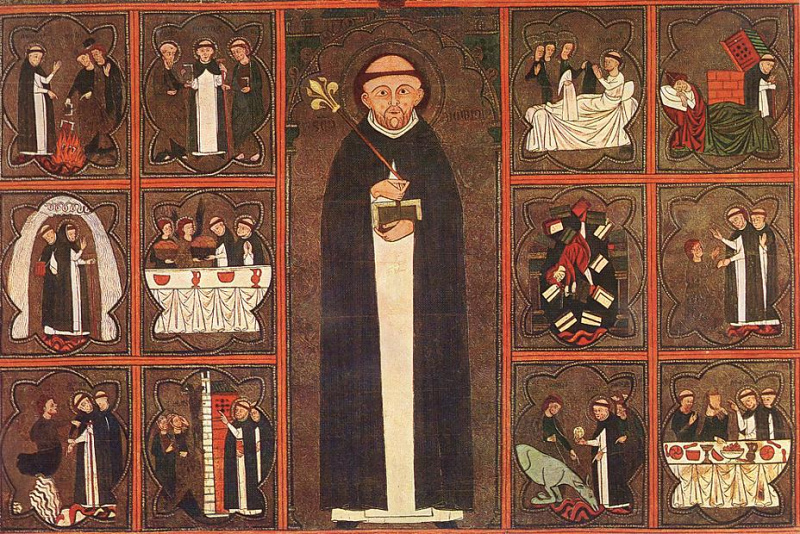
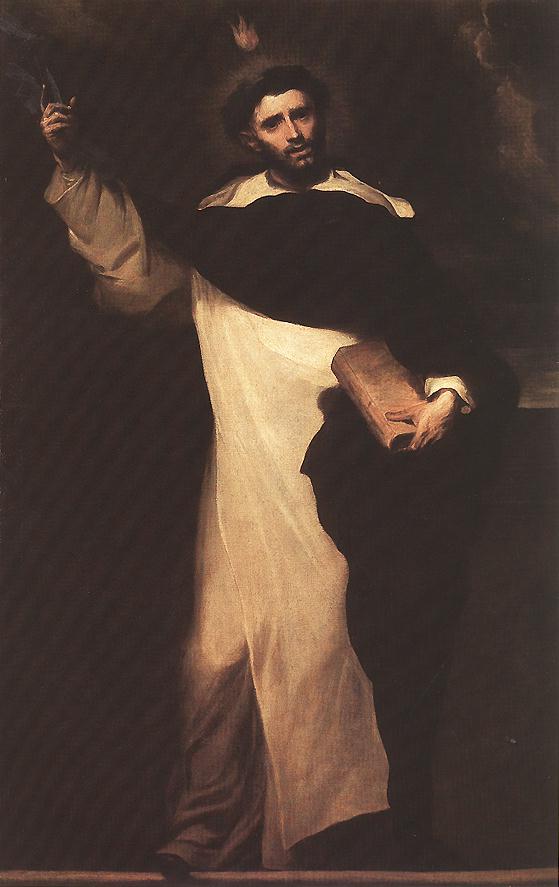
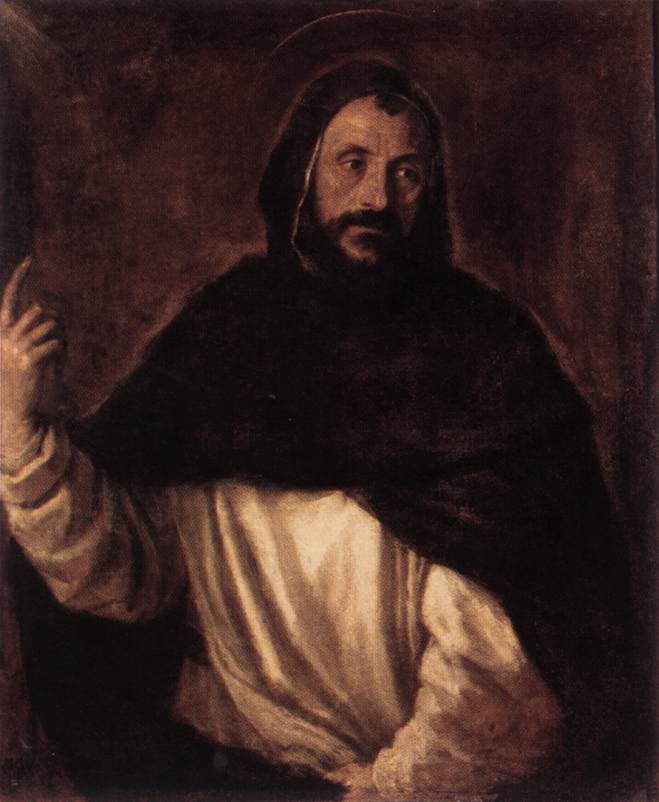
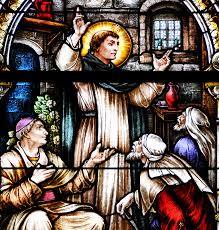
Saint of the Day – 8 August – St Dominic de Guzman (1170-1221) – Confessor, Founder of the Dominican Order of Preachers – Priest, Founder, Teacher, Preacher, Mystic, Miracle-Worker, Apostle of the Holy Rosary (1170 at Calaruega, Burgos, Old Castile – noon 6 August 1221 at Bologna, Italy). He was Canonised on 13 July 1234 by Pope Gregory IX at Rieti, Italy who declared, after signing the Bull of Canonisation on 13 July, 1234, Pope Gregory IX declared that he no more doubted the saintliness of Saint Dominic than he did that of Saint Peter and Saint Paul. Patronages: astronomers, astronomy, the falsely accused, of scientists, The Dominican Republic, Batanes-Babuyanes, in the Philippines, prelature of, Bayombong, Philippines, Diocese of, Santo Domingo, Santo Domingo Indian Pueblo, Valletta, Malta. Attributes – chaplet, Dominican carrying a rosary and a tall cross, Dominican holding a lily, Dominican with dog and globe, Dominican with fire, Dominican with star shining above his head, dog with a torch in its mouth, rosary, star.
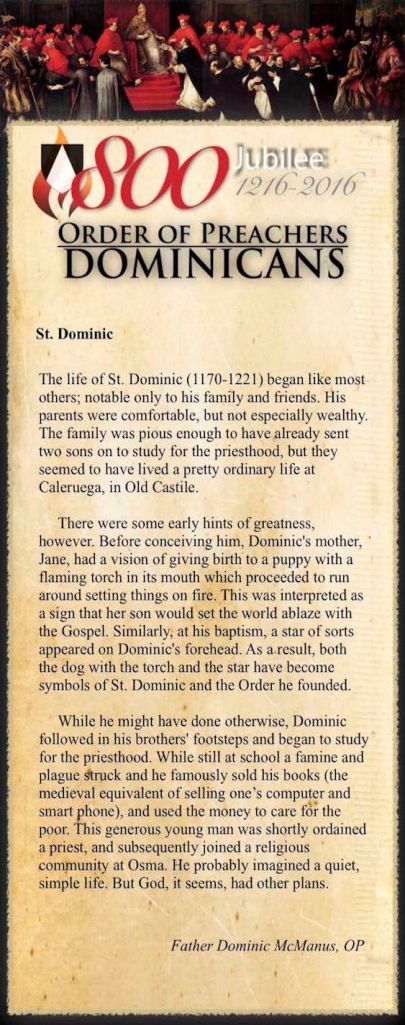
Dominic de Guzman was born in Calaruega, Spain, son to noble parents Felix Guzman and Blessed Joan of Aza. While only a boy, he demonstrated great piety, spending his days in contemplation and prayer, under the influence of his mother’s great love of the Lord. At Dominic’s baptism, Blessed Joan saw a star shining from his chest, which became another of his symbols in art, and led to his patronage of astronomy.
Educated by his uncle, a Priest, Dominic soon travelled to Palencia, where he attended University and was eventually Ordained to the Priesthood. While at University, he demonstrated strict penances and rigorous study but his teachers and classmates soon also noted the tenderest of hearts and the gentlest of spirits. Dominic demonstrated great care for those in need, practising love and charity without judgement.
Following his Ordination, Dominic was appointed the Prior Superior of his Augustinian Order and strictly observed the Benedictine rule prescribed. Selected as Canon to the Bishop of Osma, he accompanied Bishop Diego de Avezedo to Languedoc to join with the Cistercian Order in their fight against heresy. It was here that the idea of founding an Order of Preachers, committed to eradicating heresy, first occurred to Dominic.
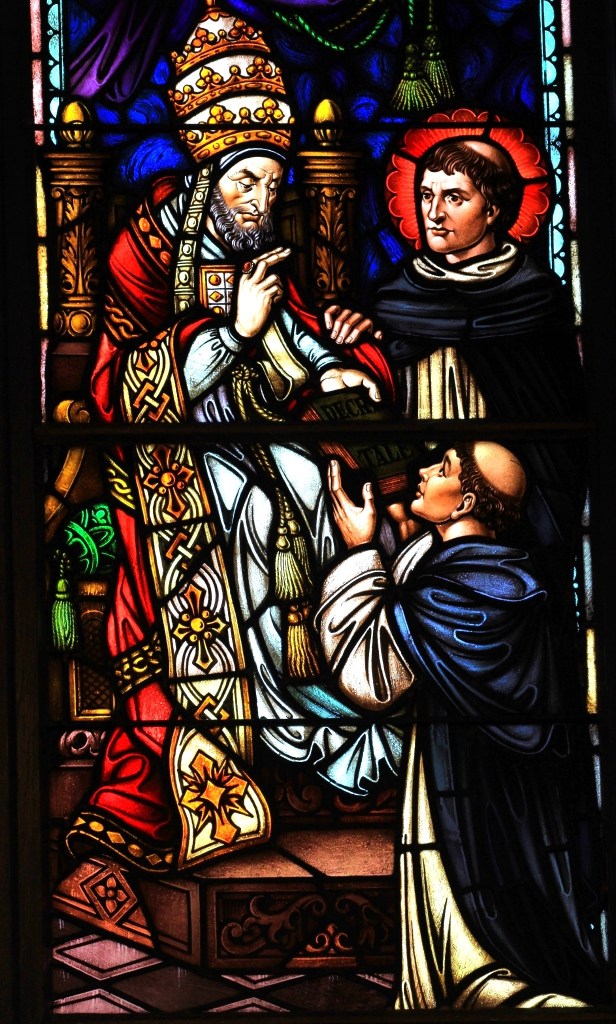
In 1215, Dominic established himself, with six followers, in a house given by Peter Seila, a rich resident of Toulouse. Dominic saw the need for a new type of organisation to address the spiritual needs of the growing cities of the era, one that would combine dedication and systematic education, with more organisational flexibility than either monastic orders or the secular clergy. He subjected himself and his companions to the monastic rules of prayer and penance; and meanwhile bishop Foulques gave them written authority to preach throughout the territory of Toulouse. In the same year, the year of the Fourth Lateran Council, Dominic and Foulques went to Rome to secure the approval of the Pope, Innocent III. Dominic returned to Rome a year later and was finally granted written authority in December 1216 and January 1217 by the new pope, Honorius III for an order to be named “The Order of Preachers” (“Ordo Praedicatorum”, or “O.P.,” popularly known as the Dominican Order).
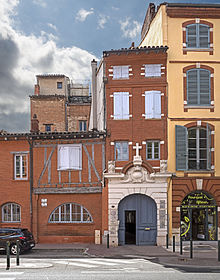
St Dominic’s House in Toulouse
It was not long thereafter that Dominic founded an institute for women at and attached several preaching friars to it. During a subsequent crusade against the Albigensian heresy, Dominic followed the papal armies and preached to all who would listen. He had little success, however and returned home to a castle bequeathed to him, where he founded an order dedicated to the conversion of the Albigensians. The order was canonically approved by the bishop of Toulouse the following year and two years later received Pope Honorius III’s approval. The Order of Preachers, the Dominicans, was founded.
Saint Dominic spent the remaining years of his life organising his new order, traveling throughout Europe preaching and attracting new members and establishing new houses. The new order, under his direction, was astoundingly successful in conversion, based upon contemplative and intellectual approaches, coupled with the contemporary and popular needs of the people. His ideal, and that of his Order, was to link organically a life with God, study and prayer in all forms, with a ministry of salvation to people by the word of God. His ideal: contemplata tradere: “to pass on the fruits of contemplation” or “to speak only of God or with God.” (Read the Nine Ways of Prayer of St Dominic here: https://www.fisheaters.com/stdominic9ways.html)
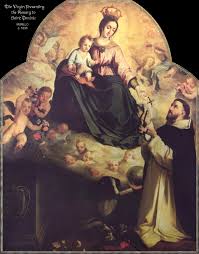
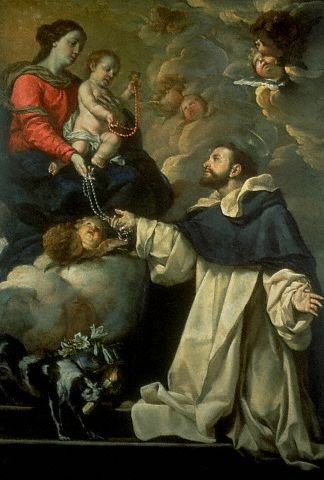
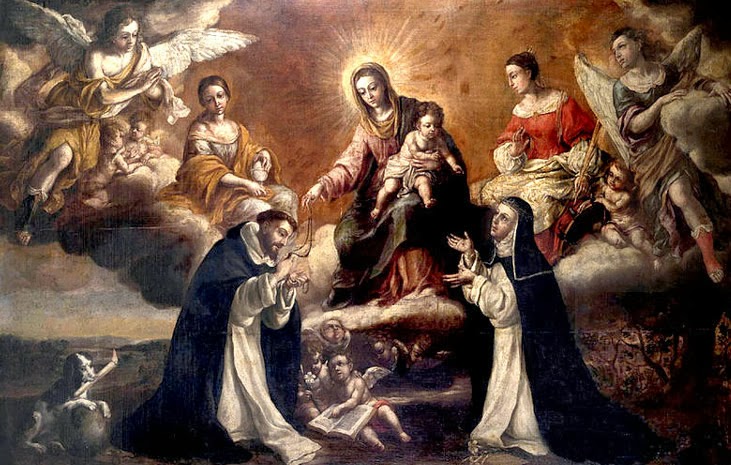
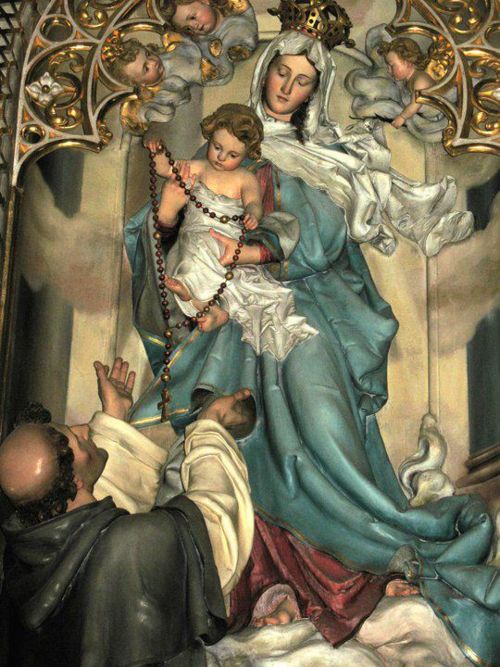
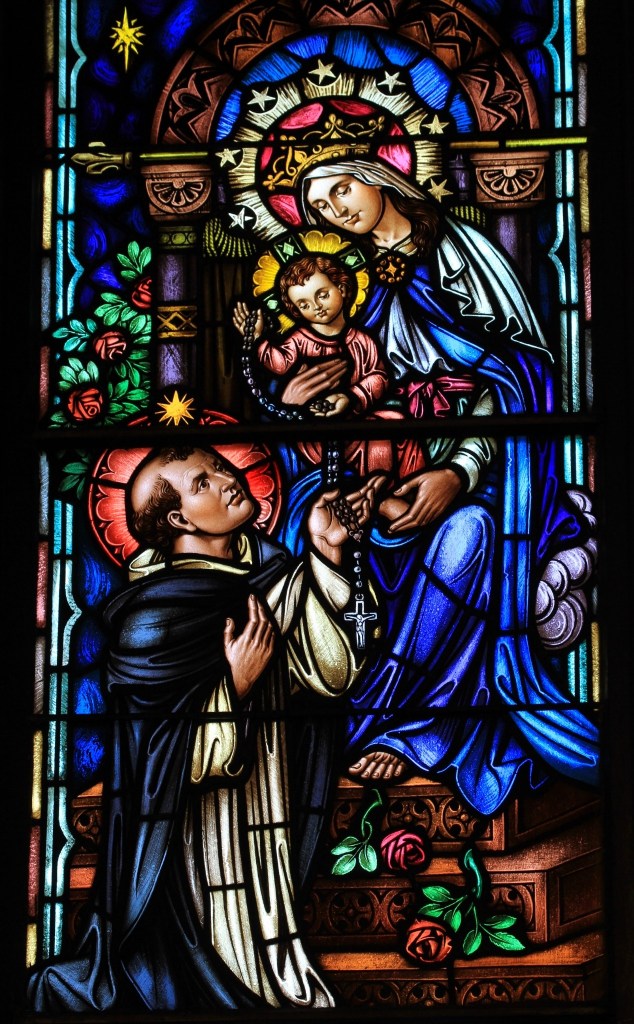
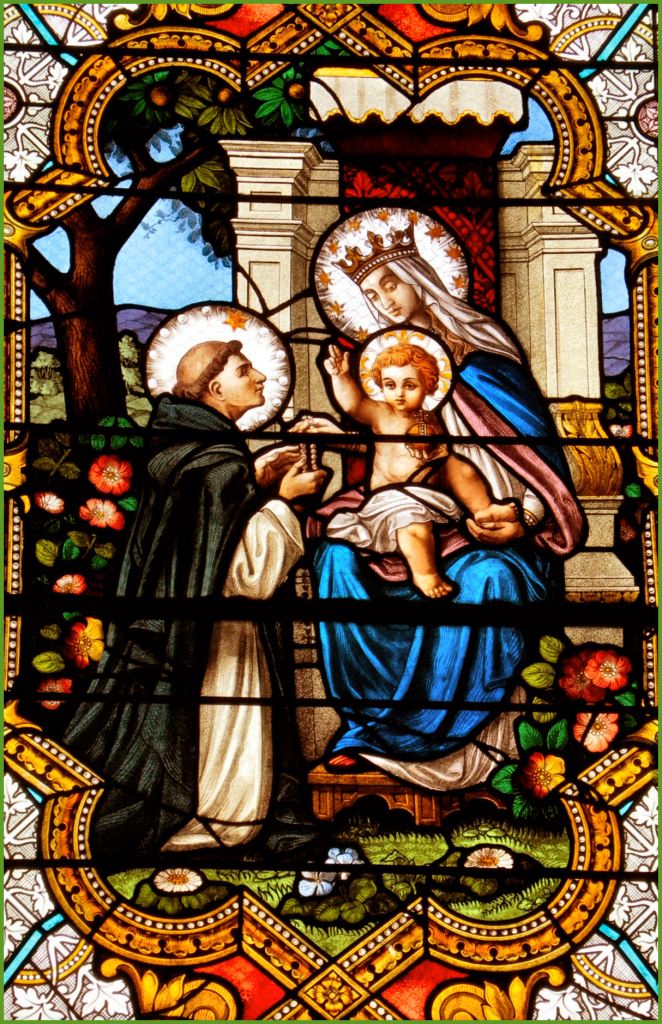
There was a time that St Dominic became discouraged at the progress of his mission. To him, it seemed that no matter how much he worked, heresy remained. As he contemplated the future of his order, he received a vision from Our Blessed Mother, who showed him a wreath of roses, representing the Holy Rosary. Mary told him to say the Rosary daily, to teach it to all who would listen and eventually the faith would defeat heresies. The spread of the Rosary, is attributed to the preaching of Saint Dominic. The Rosary has for centuries been at the heart of the Dominican Order. Pope Pius XI stated, “The Rosary of Mary is the principle and foundation on which the very Order of Saint Dominic rests for making perfect the life of its members and obtaining the salvation of others.” For centuries, Dominicans have been instrumental in spreading the rosary and emphasizing the Catholic belief in the power of the rosary. Saint Dominic is spread devotion to the Rosary, and used it to strengthen his own spiritual life.
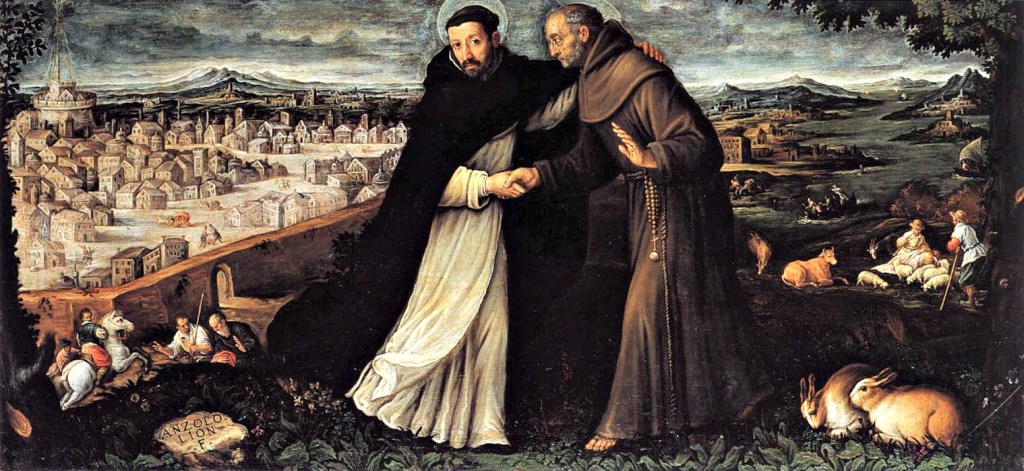
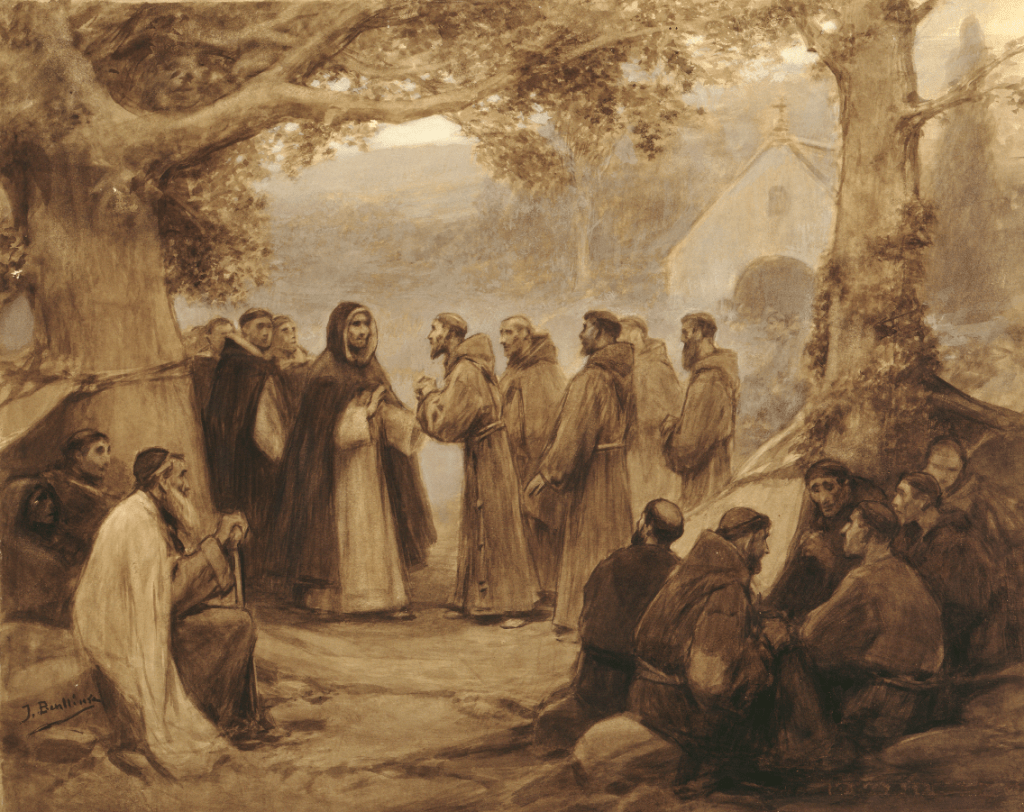
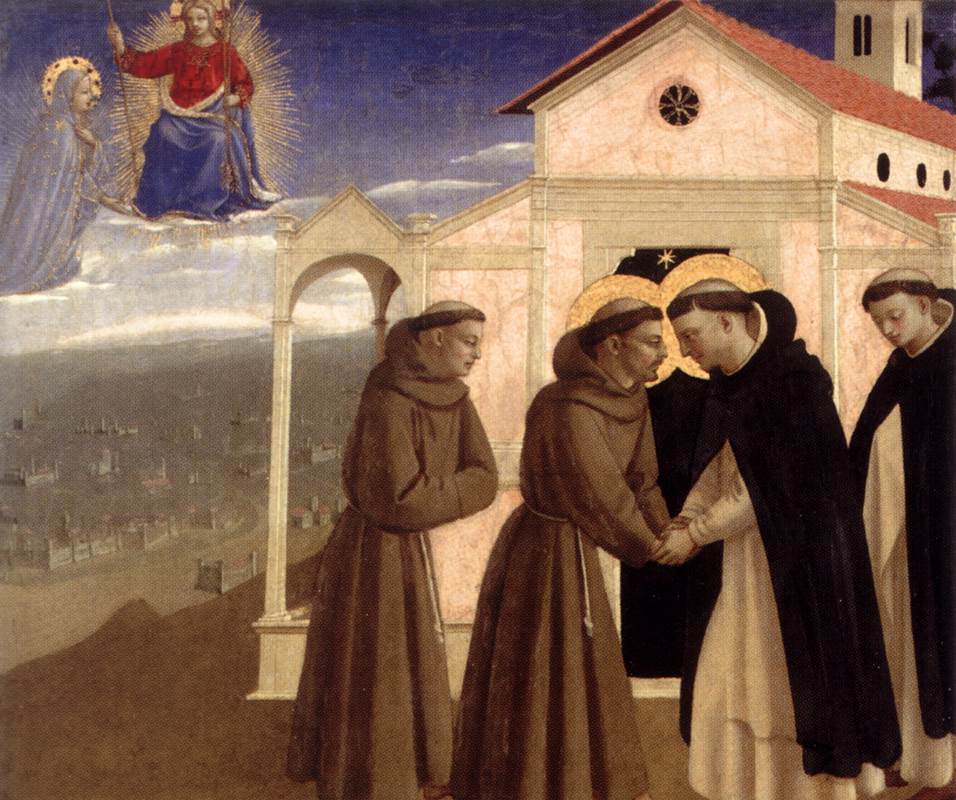
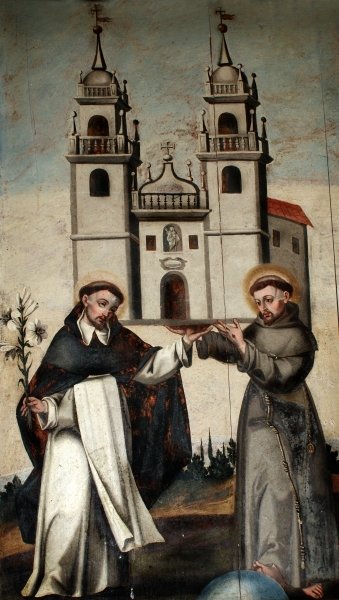
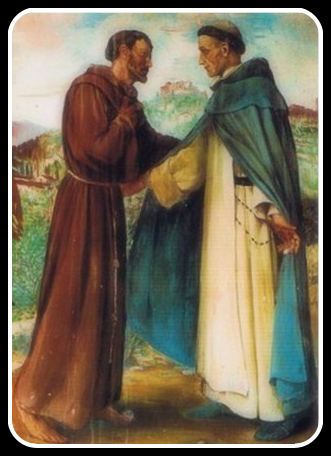
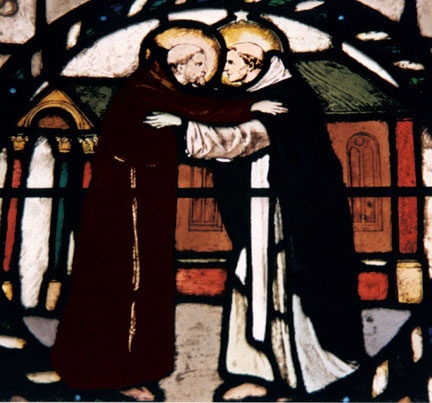
Saint Dominic is also remembered for miracles (raising four people from the dead) and miraculous visions. On one occasion, he received a vision of a poor beggar, who he sought out the following day. Finding the beggar, Dominic embraced him and said, “You are my companion and must walk with me. If we hold together, no earthly power can withstand us.” The beggar turned out to be Saint Francis of Assisi and the two holy men became the closest of friends.
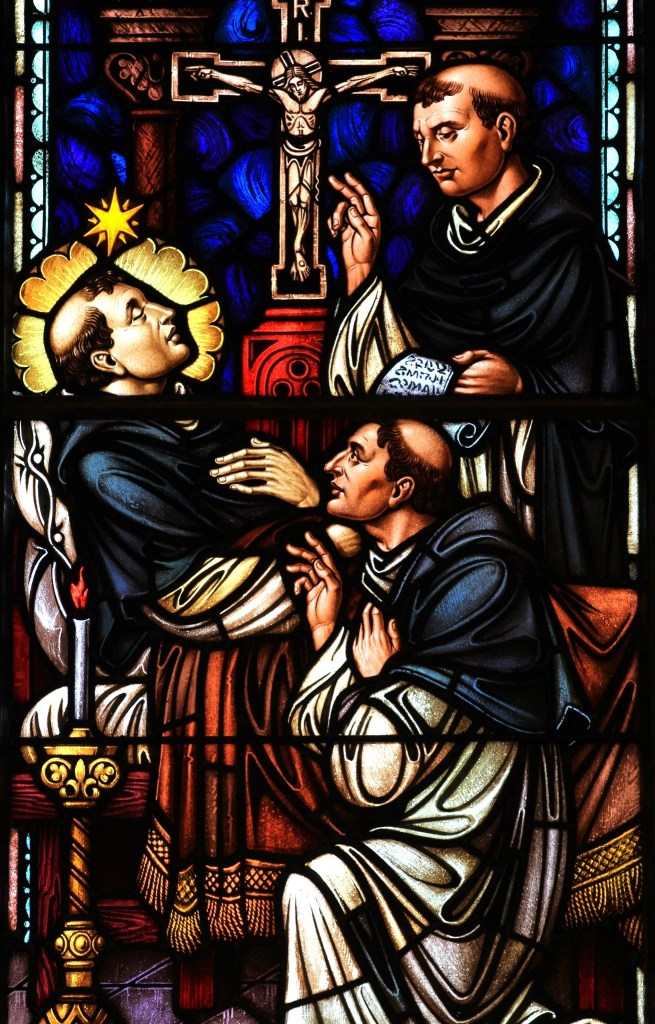
St Dominic died at the age of fifty-one, “exhausted with the austerities and labours of his career”. He had reached the convent of St Nicholas at Bologna, Italy, “weary and sick with a fever”. He “made the monks lay him on some sacking stretched upon the ground” and that “the brief time that remained to him was spent in exhorting his followers to have charity, to guard their humility, and to make their treasure out of poverty”. He died at noon on 6 August 1221. His body was moved to a simple sarcophagus in 1233. Under the authority of Pope Gregory IX, Dominic was canonised in 1234. In 1267 Dominic’s remains were moved to the shrine, made by Nicola Pisano and his workshop. The feast of Saint Dominic is celebrated with great pomp and devotion in Malta, in the old city of Birgu and the capital city Valletta. The Dominican order has very strong links with Malta and Pope St. Pius V, a Dominican friar himself, aided the Knights of St. John to build the city of Valletta.
This is the covenant with them which I myself have made, says the Lord: and my words that I have put into your mouth shall never leave your mouth, nor the mouths of your children, nor the mouths of your children’s children, from now on and forever, says the Lord. (Isaiah 59:21)
As St. Dominic lay dying just outside of Bologna at St. Mary of the Hills, he requested to be taken back at once to Bologna that he might be buried “under the feet of my brethren.” There, having assured his spiritual children that he would be of greater assistance where he was going, he left them his last will and testament: “Behold, my children, the heritage I leave you: have charity for one another, guard humility, make your treasure out of voluntary poverty.”
Be therefore followers of me, even as I also am of Christ. (1 Corinthians 11:1)
O wondrous hope that you did give at the hour of death to those who mourned you, when you did promise to help them even after death.
St Dominic, keep your word and aid us by your prayers.
You who did shine by so many signs in the bodies of the afflicted, bear us the help of Christ and heal our souls in illness and unrest.
St Dominic, keep your word and aid us by your prayers.
Glory to the Father, and to the Son, and to the Holy Spirit.
St Dominic, keep your word and aid us by your prayers.
Pray for us, blessed St Dominic, That we may be made worthy of the promises of Christ.
Let us pray:
O God, who enlightened Your Church
by the merits and teachings of blessed Dominic, Your confessor
grant through his intercession
we may never be destitute of temporal help
and may always increase in spiritual growth.
that persevering until death, we may,
ever work for the glory of God
and the salvation of souls,
especially the return to the one, true, faith
of our family and friends who have lapsed.
Finally, we ask for this our special intention …
(make your request)
Through Christ our Lord. Amen
Well done, good and faithful servant; because you have been faithful over a few things, I will place you over many. Enter into the joy of the Lord. (Matthew 25:2)
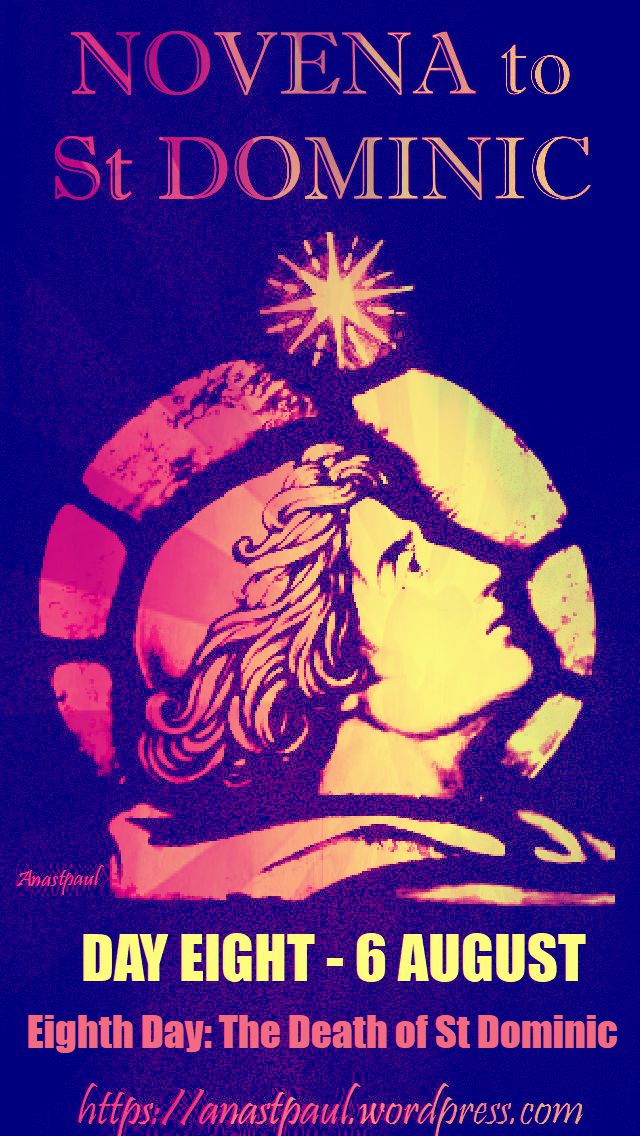
St. Dominic died at Bologna, August 6, 1221, at midday. Father Ventura, prior of Bologna, was present and thus describes the death of St. Dominic. “Father Dominic returned from Venice about the end of July. Although very weary with traveling, he conversed on the affairs of the Order with me till late. I begged him to rest that night but he prayed in the Church till Matins at midnight and then was present in choir. Afterwards he complained of his head and his last illness began. Lying on a straw mattress, he called the novices around him and exhorted them to fervour with cheerful words and smiling countenance. After being carried to a hill not far off, for better air, he preached to his brethren and was then anointed. Fearing that he would not be buried ‘under the feet of his brethren,’ he was carried back to the convent. The brethren recited prayers for a departing soul. When they came to the words, ‘Come to his help, ye saints of God; hasten to meet him, ye angels of the Lord: receive his soul and offer it in the sight of the Most High,’ having lifted his hands to Heaven, he gave up his spirit.”
Eye has not seen, nor ear heard, neither has it entered the heart of man to conceive what God has prepared for those who love him. (1 Corinthians 2:9)
Pray for us, blessed father, St. Dominic, That we may be made worthy of the promises of Christ.
Let us pray:
O most kind father, St. Dominic,
by your saintly life and death,
bless and guide us in the path of your holy way,
that persevering until death, we may,
ever work for the glory of God
and the salvation of souls,
especially the return to the one, true, faith
of our family and friends who have lapsed.
Finally, we ask for this our special intention …
(make your request)
Through Christ our Lord. Amen
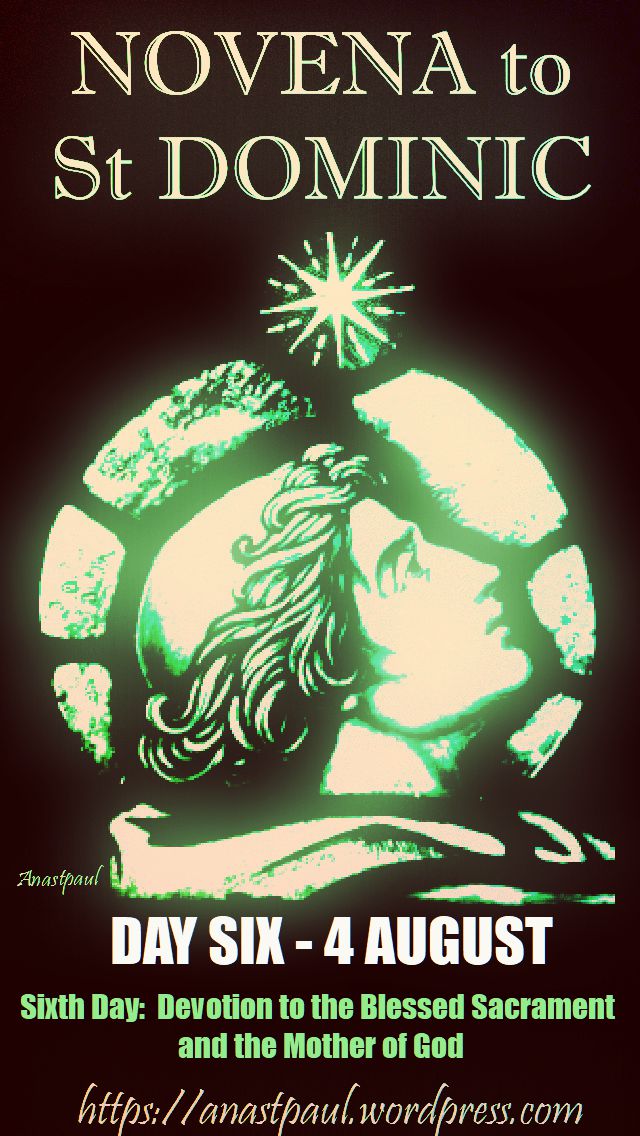
Sixth Day: Devotion to the Blessed Sacrament and the Mother of God
How lovely is your dwelling place, O Lord of hosts! My soul yearns and pines for the courts of the Lord. My heart and my flesh cry out for the living God. Even the sparrow finds a home and the swallow a nest in which she puts her young by your altars, O Lord of hosts, my King and my God! (Psalms 84:2-4)
The Eucharist and the Mother of God were objects of Dominic’s special devotion. Before the tabernacle he spent his nights, finding there rest after his labours; and arriving weary and foot sore from a journey, he always visited the Blessed Sacrament before refreshing his body. However much fatigued, he always celebrated Mass and if possible sang it. During the celebration of Mass tears were often seen flowing down his face, moving all to devotion.
Of God’s Mother he was always an ardent and reverent lover. His life, his work, his Order were placed under her protection, and he invoked her in every difficulty and danger. He began the custom of saying the Hail Mary before preaching. The Blessed Mother filled him with heavenly favors, watched over him with motherly care and gave him the habit of his Order. A tradition cherished in his Order and supported by the testimonies of many popes, ascribes to him the first teaching of devotion to the recitation of the Rosary. His disciples were called “Friars of Mary” and have carried her Rosary and scapular to the uttermost parts of the earth.
I myself am the bread of life. No one who comes to me shall ever be hungry, and no one who believes in me shall ever thirst. (John 6:35)
I am the mother of fair love, and of fear, and of knowledge, and of holy hope. In me is all grace of the way and of the truth, in me is all hope of life and of virtue. Come to me, all you that desire me, and be filled with my goodness. (Sirach 24: 18; John 14:6)
Pray for us, blessed father, St. Dominic, That we may be made worthy of the promises of Christ.
Let us pray:
O most blessed father, St. Dominic,
who loved our Lord Jesus Christ
in the most perfect manner
and served Mary, His Virgin Mother,
with most fervent devotion,
pray for us, your children,
that we may ever grow in love
of the Sacrament of the Altar,
and that, next to God,
we may at all times trust in the protection
of the Queen of Heaven,
so that at the hour of death
we may be received by her into heaven
and ever abide under the mantle of her love.
We pray that we may grow
in love and devotion
for our Lord Jesus in the Holy Eucharist
and attach ourselves, with unfailing confidence,
to His Holy Mother’s protection.
We ask too Holy St Dominic,
that our prayers and yours,
may draw back those
who have lapsed from the one, true faith
and for this our special intention …
(make your request)
Through Christ our Lord. Amen
Be filled with the Spirit, addressing one another in psalms and hymns and inspired songs. Sing praise to the Lord with all your hearts. Give thanks to God the Father always and for everything in the name of our Lord Jesus Christ. (Ephesians 5:18-20)
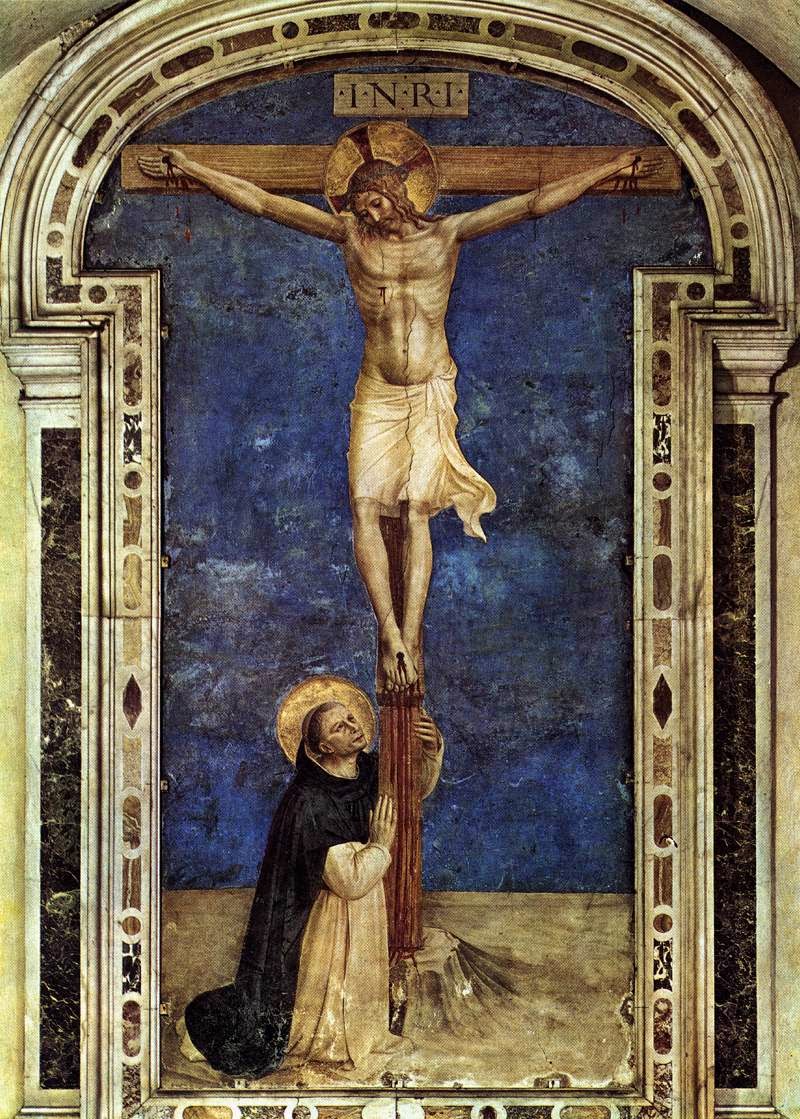
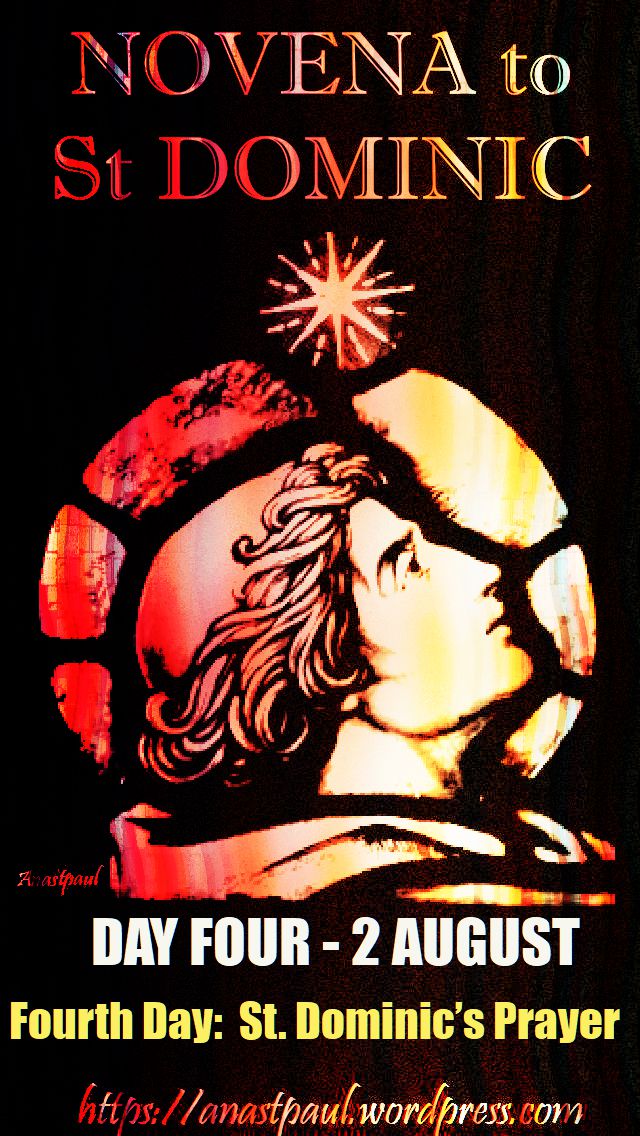
Prayer was the breath of St. Dominic’s life, the light on his path, the staff on his pilgrimage. He prayed always. In childhood his delight was to serve Mass, to visit the Blessed Sacrament and to chant Office. As a student, he learned wisdom more from prayer than from books. He won more souls by prayer than by preaching or miracles. In traveling, St Dominic prayed as he went, sometimes the Veni Creator Spiritus or the Ave Maris Stella or sometimes he recited psalms. He often reminded his companions to think of God. Many times St. Dominic spent the night in prayer before the altar. His methods of prayer were various: sometimes he lay prostrate, then stood erect, then knelt down. For hours he would stand before a crucifix, genuflecting and making fervent ejaculations. Often he stretched out his arms like a cross, pleading earnestly to God. On occasion he was seen in rapture by the vehemence of his prayer. “In all labours and trials, in hunger, thirst, fatigue, his heart turned always to God.”
Pray for us, blessed father, St. Dominic, That we may be made worthy of the promises of Christ.
Let us pray:
O God,
who enlightened Your Church
by the virtues and preaching of St Dominic,
Your confessor and our father,
mercifully grant that by his prayers
we may be delivered from present dangers
and ever increase in spiritual blessings.
We pray too, that we may learn
from our blessed St Dominic,
to pray always, constantly living with You
in our hearts, minds and souls.
Pray too Holy St Dominic,
that our prayers and yours,
may draw back those
who have lapsed from the one, true faith
and for this our special intention …
(make your request)
Through Christ our Lord. Amen
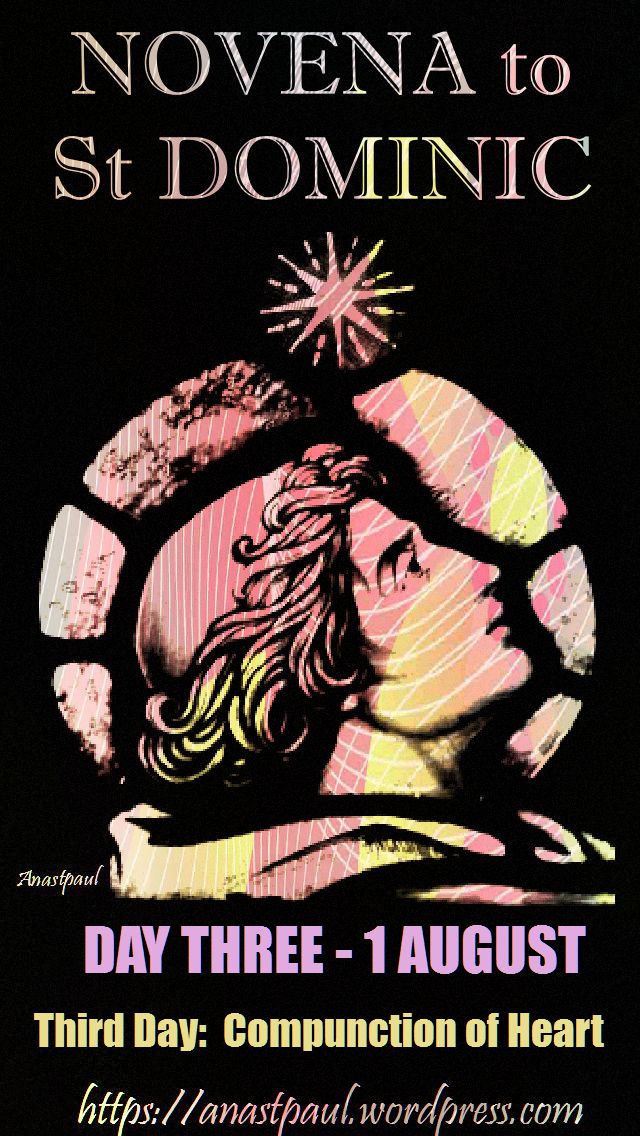
Third Day: Compunction of Heart Those who fear the Lord seek to please him, those who love him are filled with his law. Those who fear the Lord prepare their hearts and humble themselves before him. Let us fall into the hands of the Lord and not into the hands of men, for equal to his majesty is the mercy that he shows. (Sirach 2: 16-18)
ROSA PATIENTIAE ROSE OF PATIENCE
Though so pure that Holy Church calls him “Ivory of Chastity” and Christian art puts a lily into his hands, Dominic was always weeping over sin. His soul being full of contrition, acts of sorrow were constantly upon his lips. On seeing towns or villages, he used to weep over the sins committed there against God. But this sorrow was not merely hidden in the soul; it bore fruit in works of penance. Three times every night he scourged himself: once for his own sins, once for those of others and once for the suffering souls. He was a rule of abstinence, even on journeys never eating meat or food cooked with meat. His fasts were strict and continual; even when traveling over Europe on foot, he fasted from September until Easter, though preaching daily. He never had a room of his own but slept anywhere: on the ground, a bench, or the altar step. Being a zealous lover of the rule, he punished faults but with such fatherly love that penance was accepted and even desired from his hands.
“If you have no sins of your own to weep for,” St. Dominic would say, “still weep, after the example of our Lord Jesus Christ and grieve for the sinners of the world that they may repent.”
Anyone who does not take up his cross and follow me cannot be my disciple. (Luke 14:27)
Pray for us, blessed father, St. Dominic, That we may be made worthy of the promises of Christ.
Let us pray:
O zealous preacher of penance,
Holy Father St. Dominic,
whose ardent desire for the salvation of souls,
made you ever ready to endure the greatest labours and fatigues
and even to give your life in order to win them to God,
pray for us, that treading in the steps of Jesus Crucified,
the Redeemer and Physician of souls,
we may disregard all suffering
and generously sacrifice ourselves
for the needs of others.
Grant us we pray, true contrition and
sadness for our sins and for those of all the world.
Teach us how to do penance for all the pain we cause
our Lord and Saviour.
Pray too Holy St Dominic,
that our penance may draw back those
who have lapsed from the one, true faith
and for this our special intention …
(make your request)
Through the same Christ our Lord. Amen
Saint of the Day – 18 July – St Bruno of Segni OSB (1049-1123) – Benedictine Bishop, Confessor, Missionary, Papal Advisor, Theologian, (1049 at Solero, Piedmont, Italy – 1123 of natural causes). He was Canonised on 5 September 1183 by Pope Lucius III. Patron of Segni, Italy.
St Bruno was of the illustrious family of the lords of Asti in Piemont and born near that city. From his cradle he considered that man’s happiness is only to be found in loving God: and to please Him in all his actions was his only and his most ardent desire. He made his studies in the monastery of St Perpetuus, in the diocess of Asti.
In the Roman council in 1079, he defended the doctrine of the Catholic Church concerning the blessed eucharist against Berengarius; and Pope Gregory VII nominated him bishop of Segni in the ecclesiastical state in 1081. Bruno, who had been compelled to submit to the appointment, after a long and strenuous resistance, served his flock and on many important occasions the universal church with unwearied zeal. Gregory VII who died in 1085, Victor III formerly abbot of mount Cassino, who died in 1087 and Urban II who had been scholar to St. Bruno (afterwards institutor of the Carthusians) at Rheims, then a monk at Cluni and afterwards bishop of Ostia, had the greatest esteem for our saint.
He attended Urban II into France in 1095 and assisted at the council of Tours in 1096. After his return into Italy he continued to labour for the sanctification of his soul and that of his flock, till not being able any longer to resist his inclination for solitude and retirement, he withdrew to mount Cassino and put on the monastic habit. The people of Segni demanded him back; but Oderisus, abbot of mount Cassino and several cardinals, whose mediation the saint employed, prevailed upon the pope to allow his retreat. The abbot Oderisus was succeeded by Otho in 1105 and this latter dying in 1107, the monks chose bishop Bruno abbot. He was often employed by the pope in important commissions and by his writings laboured to support ecclesiastical discipline and to extirpate simony. This vice he looked upon as the source of all the disorders which excited the tears of all zealous pastors in the church, by filling the sanctuary with hirelings, whose worldly spirit raises an insuperable opposition to that of the gospel.
Paschal II formerly a monk of Cluni, succeeded Urban II in the pontificate in 1099. By his order St. Bruno having been abbot of mount Cassino about four years, returned to his bishopric and left his abbatial crozier on the altar. He continued faithfully to discharge the episcopal functions to his death, which happened at Segni on the 31st of August in 1125. He was canonized by Lucius III in 1183.
The works of St. Bruno of Segni, or of Asti, with a preliminary dissertation of Dom Maur Marchesi, were printed at Venice in 1651, in two vols. folio and in the Bibl. Patr. at Lyons in 1677, t. 20. They consist of comments on several parts of scripture, one hundred and forty-five sermons, several dogmatical treatises and letters; and a life of St Leo IX and another of St Peter, bishop of Anagnia, whom Paschal II canonised. Most importantly Bruno’s theologial work on the Holy Eucharist set the standard for centuries and he is considered one of the greatest biblical commentators of his era.
Fr Alban Butler (1711–73). Volume VII: The Lives of the Saints. 1866
Saint of the Day – 9 April – Blessed Antony of Pavon OP (1326-1374) Priest and Marty, Friar of the Order of Preachers, Inquisitor-General in Lombardy, Prior. Patronage – of lost articles. Beatified on 4 December 1856 by Pope Pius IX.
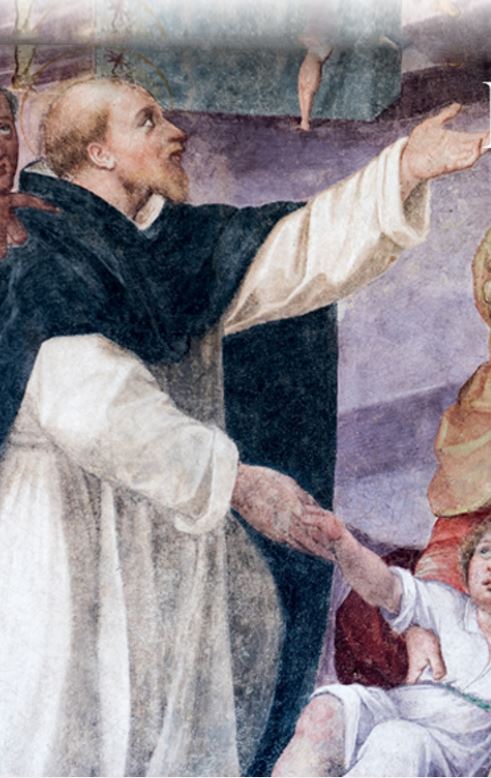
BLESSED ANTONY was born about the year 1326 of the noble Piedmontese family of the Pavoni. His father was at the head of a school of music; he also held some important municipal offices in the town of Savigliano. After a childhood of great promise, Antony, at the age of fifteen, received the Dominican habit. His extraordinary learning, his eloquence, his practical talents for government and, most of all, the sanctity of his life, caused him to be raised to important offices; and, after the martyrdom of Blessed Peter Ruffia, he was appointed his successor as Inquisitor-General in Piedmont, Upper Lombardy and the Genoese territory, then much infected by the Waldensian heresy. Being made Prior of Savigliano in the year 1368, he undertook the rebuilding of his Convent on so noble a scale that Provincial Chapters,and even a General Chapter, were subsequently held there.
The indefatigable labours of Blessed Antony for the conversion of the heretics rendered him an object of hatred in their eyes, and they determined to rid themselves of so formidable an enemy. The holy man had long prayed that the grace of martyrdom might be vouchsafed to him, and God revealed to him the day and hour of his death. Transported with joy, he thenceforth had continually on his lips the words of the Psalmist, “I have rejoiced at the things that are said unto me; we will go into the house of the Lord.” Regardless of the threats of the heretics, he persevered with renewed zeal in his apostolic labours, patiently awaiting the accomplishment of the Divine will.
On the eve of his death, he went, radiant with joy, to a barber of Bricherasio, in which town he was then preaching and bade him shave him well, “for,” said he, “I am invited to a wedding.” “That cannot be,” replied the man; “all the news of the town comes to my shop and if a wedding had been in preparation, I should certainly have heard of it.” “Believe me,” answered Blessed Antony, “I am telling you the truth.”
The following day, being Low Sunday, April 9, A.D. 1374, after a night spent in prayer, the holy man for the last time offered the Holy Sacrifice and preached in refutation of the Waldensian errors. On leaving the church after his thanksgiving, he was attacked by seven armed men, who inflicted many wounds on him and finally hacked his body to pieces, in presence of the weeping multitude, who had not the courage to stop the brutal deed. The sacred remains were brought to the Convent at Savigliano and many miracles were worked at the Martyr’s tomb.
Like his namesake, the glorious Saint Anthony of Padua, Blessed Antony of Pavoni, as the Lessons of his Office in the Dominican Breviary testify, is invoked by the faithful specially for the recovery of things lost. A gentleman of the name of Brian Taparelli, having mislaid a legal document, for lack of which he was exposed to the danger of imprisonment and almost total ruin, made a vow to the holy Martyr, promising to offer a candle of fifty pounds’ weight at his tomb if he recovered the deed. The following night, Blessed Antony appeared to him in his sleep and told him where he would find the missing document.
In the year 1468, Blessed Aimo Taparelli, a kinsman of the gentleman just mentioned, having a great devotion to Blessed Antony, caused his holy relics to be solemnly translated to a more worthy resting-place.
Pius IX. raised both these holy men to the altars of the Church.
Prayer
O God, who, to promote the unity of the faith, didst endow Blessed Antony, Thy Martyr, with invincible fortitude of soul, grant, we beseech Thee, that we may so follow in his footsteps as to attain the end of our faith, even the salvation of our souls. Through Christ our Lord. Amen.












You must be logged in to post a comment.