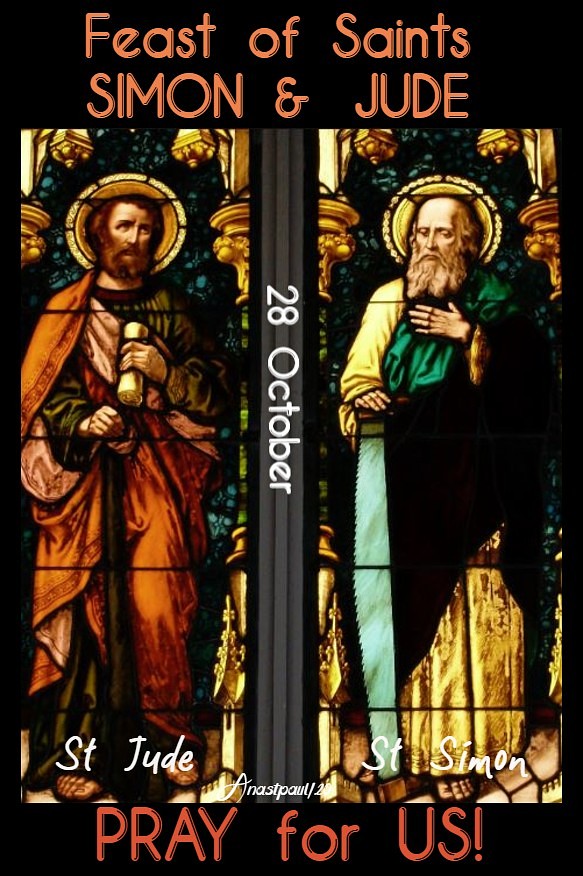
One Minute Reflection – 28 October – Feast of Saints Simon and Jude, Apostles and Martyrs – Readings: Ephesians 2: 19-22; Psalm 19: 2-5; Luke 6: 12-16
“When day came, he called his disciples to himself and from them, he chose Twelve, whom he also named Apostles…” – Luke 6:13
REFLECTION – “Our Lord Jesus Christ has appointed certain men to be guides and teachers of the world and stewards of His Divine Mysteries. Now He bids them to shine out like lamps and to cast out their light, not only over the land of the Jews but over every country under the sun and over people, scattered in all directions and settled in distant lands. That man has spoken truly who said – ‘No-one takes honour upon himself, except the one who is called by God,’ for it was our Lord Jesus Christ who called His own disciples before all others, to a most glorious apostolate. These holy men became the pillar and mainstay of the Truth and Jesus said, that He was sending them, just as the Father had sent Him.
… Accordingly, in affirming that they are sent by Him just as He was sent by the Father, Christ sums up in a few words the approach they themselves should take to their ministry. From what He said they would gather that it was their vocation to call sinners to repentance, to heal those who were sick whether in body or spirit, to seek in all their dealings never to do their own will but the will of Him who sent them and as far as possible, to save the world by their teaching.
Surely, it is in all these respects, that we find His holy disciples striving to excel. To ascertain this is no great labour, a single reading of the Acts of the Apostles or of Saint Paul’s writings is enough.” – St Cyril of Alexandria (376-444) Bishop, Fther & Doctor of the Church (An excerpt from his Commentary on the Gospel of John)
PRAYER – Lord God, You taught us to call upon Your name, through the preaching of the Apostles. Open our eyes each day, grant that we may see Jesus Your Son at our side, open our ears that we may hear His voice, open our mouths, that we may beg forgiveness and proclaim the good news, as we follow the way Your Son carved out for us. At the intercession of Sts Simon and Jude, may Your Church continue to grow and to hope in Your love. We make our prayer through Jesus our Lord, with the Holy Spirit, God forever, amen.
Our Morning Offering – 28 October – Feast of Saints Simon and Jude Apostles
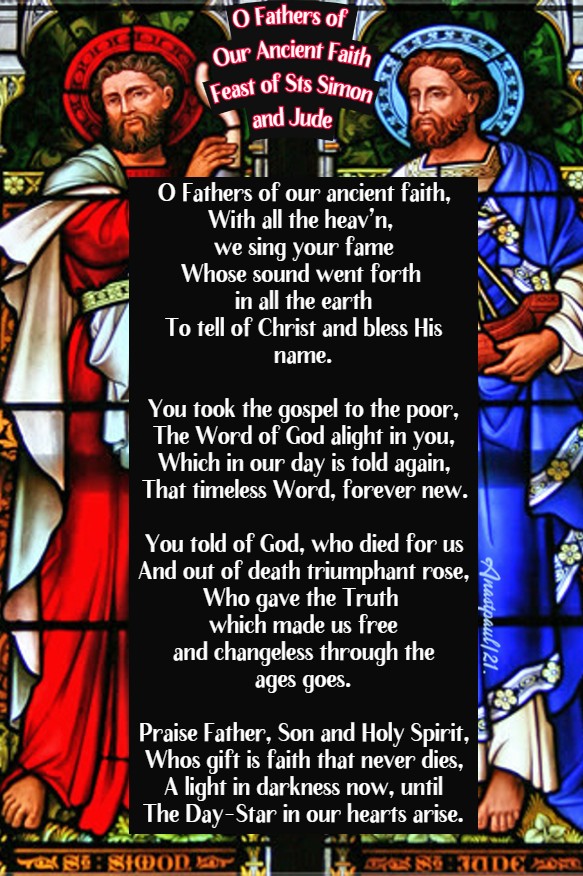
O Fathers of Our Ancient Faith
O Fathers of our ancient faith, With all the heav’n, we sing your fame Whose sound went forth in all the earth To tell of Christ and bless His name.
You took the gospel to the poor, The Word of God alight in you, Which in our day is told again, That timeless Word, forever new.
You told of God, who died for us And out of death triumphant rose, Who gave the Truth which made us free and changeless through the ages goes.
Praise Father, Son and Holy Spirit, Whos gift is faith that never dies, A light in darkness now, until The Day-Star in our hearts arise.
O Fathers of Our Ancient Faith is written by the Benedictine Nuns of Stanbrook Abbey. In the Divine Office (1974) it is sung at Morning Prayer in the Common of Apostles. It is set to the anonymous tune associated with the 7th century Latin hymn, Creator Alme Siderum.
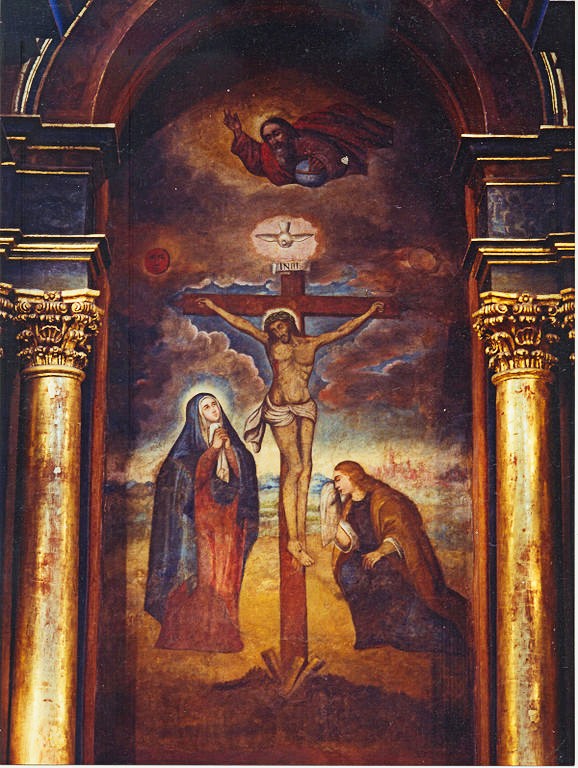
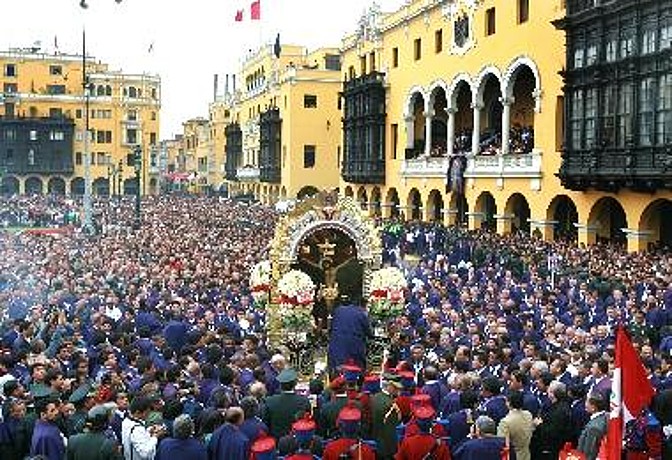
Lord of Miracles/Señor de los Milagros de Nazarenas – A mid-17th-century painting of the Crucifixion that is venerated in Lima, Peru and its celebration involves one of the largest processions in the world.
It was painted by an unnamed African taken to Peru as a slave from what is now Angola. Above the Cross is the Holy Spirit and God the Father. Below and to the right of Jesus, is His mother, the Virgin Mary with her heart pierced by a sword of sorrow. Kneeling and weeping at the foot of the cross is St Mary Magdalene.
The name originated on 13 November 1655 when everything around it was destroyed in an earthquake that left the painting standing and undamaged. Christ is shown enduring the pain of Crucifixion. Every year in October, hundreds of thousands of devotees from all races and economic backgrounds participate in a procession honouring the image through the streets of Lima. Boulevards are decorated in purple on 18,19 and the final Feast 28 October to celebrate the Lord of Miracles.
Notre-Dame de Vivonne / Our Lady of Vivonne, Savoy, France – 28 October:
The Abbot Mathieu Orsini wrote: “Our Lady of Vivonne, in Savoy, where a miraculous image is venerated, which was found by a ploughman while preparing his field for the spring planting.”
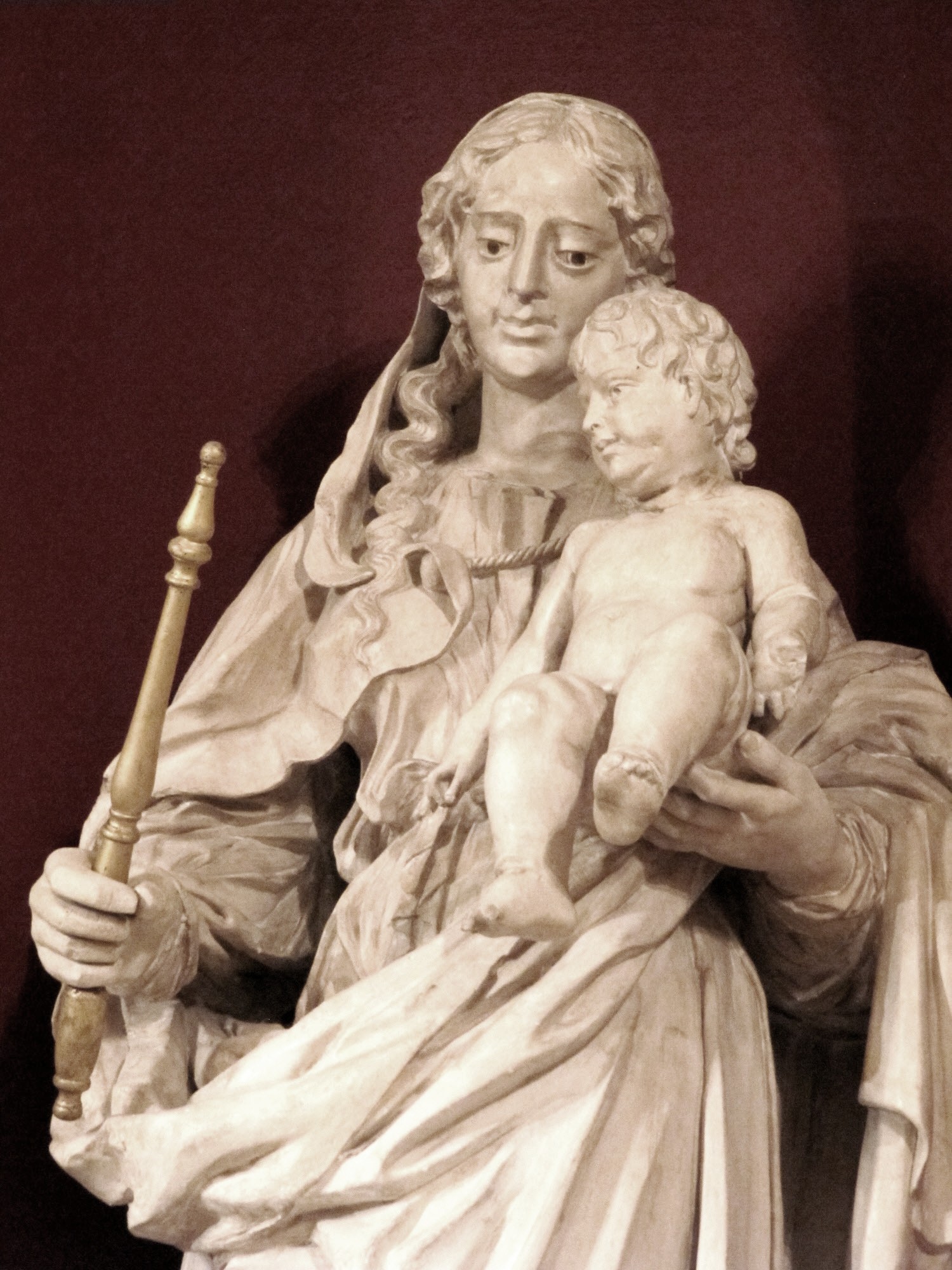
Vivonne is a village in France having a population of somewhat less than 5,000 inhabitants and located about 20 kilometers south of Poitiers. It is situated on a rocky height looking down upon the three rivers that flow through the region. There are apparently two Churches in the village, the better known church being the Church of Saint George, on which construction began in the twelfth century. The other Church is Our Lady of Sais-les-Vivonne. According to tradition, a farmer was ploughing his field when he overturned something peculiar in the sod. To his great surprise, the man found the object was a Statue of the Blessed Virgin Mary. The good farmer took the Statue, now known as Our Lady of Vivonne, or Notre-Dame de Vivonne, to his home. After lovingly cleaning the debris from the Statue, the farmer took it to the local Church and gave it to the Parish Priest. The Priest immediately placed the Statue in the Church later that same day. The next morning when he returned to the Church, he found that the Statue was missing. After much inquiry and searching the farmer found the Statue was once again in his field. The man returned it to the Church but once again it disappeared from its place, only to be found again in the field. This occurred a total of three times before it was decided to build a Shrine where it had been found. The strange phenomenon brought people from near and far to the Shrine. Soon the image proved to be miraculous and pilgrimages began. The Church which was built to honour the image of Our Lady was given to the Carmelite Order. I can find no images of this Church online.
St Abdias of Babylon St Abraham of Ephesus St Alberic of Stavelot St Anastasia the Elder St Anglinus of Stavelot St Cyril of Rome St Cyrilla of Rome St Diomedes the Younger St Dorbhene of Iona St Eadsin of Canterbury (Died 1050) Archbishop of Canterbury St Elius of Lyon St Faro of Meaux
St Genesius of Thiers St Gioan Dat St Godwin of Stavelot St Maria Ascuncion St Remigius of Lyons St Rodrigo Aguilar Aleman St Salvius of Amiens — Martyrs of Avila – 3 saints: Two sisters and a brother who, during a period of persecution, fled Talavera de la Reina, Spain, were caught and executed. Martyrs: Christeta, Sabina and Vincent. 303 in Avila, Spain.
Martyred in the Spanish Civil War: • Blessed Claudio Julían García San Román • Blessed Maria Asuncion
One Minute Reflection – 24 October – “Month of the Holy Rosary” – Jeremiah 31: 7-9; Psalm 126: 1-6; Hebrews 5: 1-6; Mark 10: 46-52 and the Feast of Saint Raphael the Archangel
“And immediately he received his sight and followed him on the way” .…Mark 10:52
REFLECTION – “[Moses said to the Lord on Mount Sinai]: “Let me see your glory!” He answered: “I will make all my beauty pass before you … but my face you cannot see” (Ex 33:18 f).] Such an experience seems to me to belong to the soul which loves what is beautiful. Hope always draws the soul from the beauty which is seen, to what is beyond … And the bold request which goes up the mountains of desire, asks this – to enjoy the Beauty, not in mirrors and reflections but face-to-face. The divine Voice granted what was requested in what was denied … – the munificence of God assented to the fulfilment of the desire but did not promise any cessation or satiety of the desire … The true sight of God consists in this, that the one who looks up to God never ceases in that desire. For He says: “You cannot see my face and live” …
But when the Lord who spoke to Moses came to fulfil His own law, He likewise gave a clear explanation to His disciples, laying bare the meaning of what had previously been said in a figure, when He said: “If anyone wants to be a follower of mine “ (Lk 9:23) and not “If any man will go before me.” And to the one asking about eternal life, He proposes the same thing, for He says: “Come, follow me” (Lk 18:22). Now, he who follows, sees the back. So Moses, who eagerly seeks to behold God, is now taught how he can behold Him – to follow God wherever he might lead, is to behold God (…).
Someone who does not know the way, cannot complete his journey safely in any other way, than by following behind his guide. He who leads, then, by His guidance shows the way to the one following. He who follows, will not turn aside from the right way, if he always keeps the back of his leader in view. For he who moves to one side or brings himself to face his guide, assumes another direction for himself, than the one his guide shows him. Therefore, God says to the one who is led: “My face is not to be seen”, that is, “Do not face your guide”. If he does so, his course will certainly be in the opposite direction …. to follow God wherever He might lead, is to behold God! No longer does any offence which comes about through evil, withstand the one who thus follows Him.” – St Gregory of Nyssa (c.335-395) Bishop, Father (Brother of St Basil the Great) – The Life of Moses, II.
PRAYER – Lord God of Hosts, in Your all-wise Providenc, You assign to Angels and to men, the services they have to render You. Grant that the Angels who adore You in Heaven, may protect and guid us here on earth. We make our prayer through Jesus Christ in the unity of the Holy Ghost, God now and for all eternity, amen.
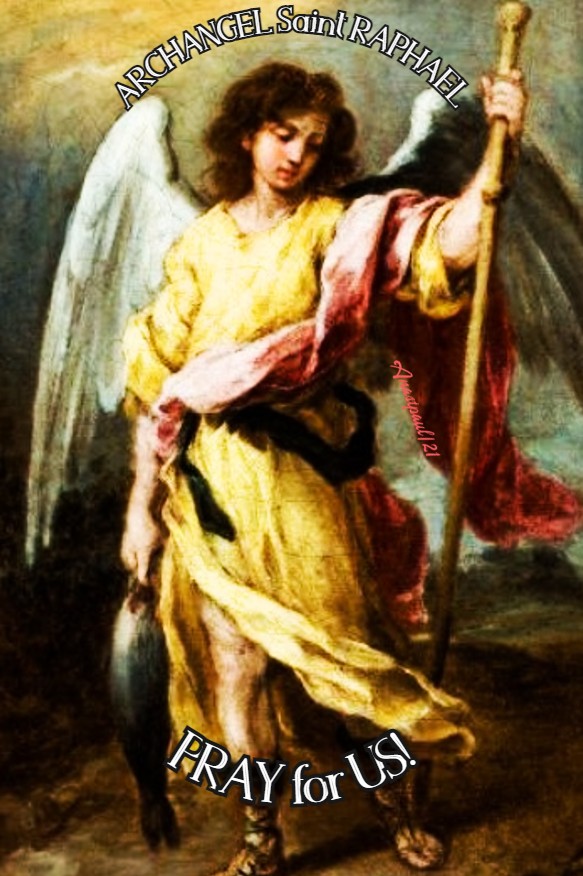
Saint of the Day – 24 October – St Raphael the Archangel. Patronages – the blind, travellers, happy meetings, nurses, physicians, medical workers, matchmakers, Catholic Marriage and Catholic studies.The Feast day of Saint Raphael was included for the first time in the General Roman Calendar in 1921, for celebration on 24 October. With the 1969 revision of the General Roman Calendar, the Feast was transferred to 29 September for celebration together with the Archangels, Saints Michael and Gabriel.
O God, Who gave Blessed Raphael the Archangel to Tobias as his travelling companion, grant to us Thy servants, that we also may be guarded by his care and receive the protection of his assistance. Through Our Lord Jesus Christ. Amen
St Raphael, Archangel By Father Francis Xavier Weninger, 1876
The two youths then set out on their journey. After the first day’s march, Tobias rested on the bank of the river Tigris and when he went to wash his feet in this river, an immense fish came suddenly up to devour him. When he called to his companion for help, Raphael told him to seize the fish courageously and draw him to land. Tobias did so, after which, Raphael told him to open the fish, take out the entrails and keep the heart, liver and gall, as useful medicines. They continued their journey,and took lodgings in the house of Raguel, who was of the same tribe as Tobias and who had an only daughter, named Sara, whom Raphael advised Tobias to take as wife. Tobias feared to do this, as he had heard that Sara had already been given in marriage to seven husbands, all of whom had been killed by the devil. Raphael, however, said: “Hear me and I will tell thee who they are, over whom the devil can prevail. It is they who in such manner receive matrimony, as to shut out God from their heart and mind.”
Tobias exactly followed the directions of his holy companion and remained unharmed. From how many evils would persons about to be married be saved, if they had first received and followed suitable instructions from their pastors who, in regard to them, take the place of Raphael, advising them what they should do in order to enter the state of holy matrimony properly prepared. They should purify their heart by a good general confession and be married, not like heathens in the darkness of night but at Mass receiving the blessing of the Priest at the Altar. After marriage, they should live as becomes the marriage state, faithfully fulfilling the admonition of St Paul, sanctifying each other and taking care, that their children shall become, without delay, children of God through Baptism. Indeed, how much displeased must be the Guardian Angels of new-born children at seeing them, through the neglect of their parents, to have them Baptised in time, left in the power of the devil, in original sin and in danger of eternal perdition. While Tobias remained at the house of Raguel, his heavenly companion went to Rages, demanded and received, without any hesitation, the borrowed money from Gabelus, returned to Raguel and having made a short stay there, accompanied Tobias back to his home at Ninive.
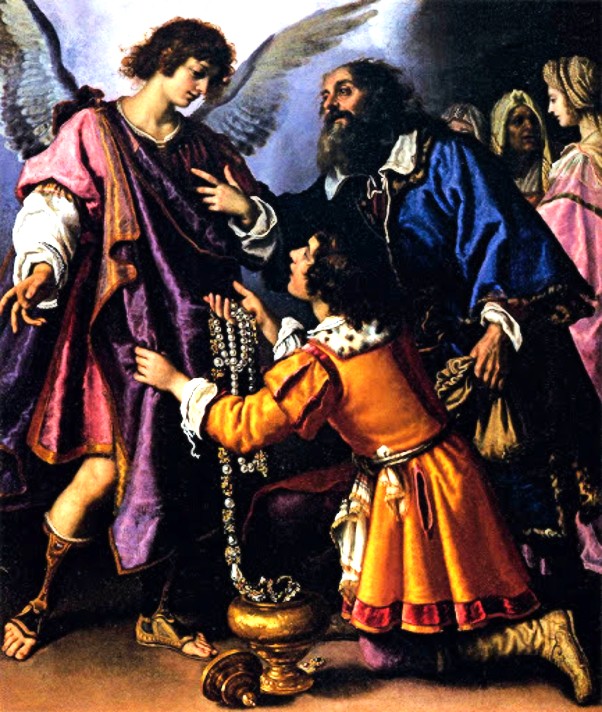
Anna, Tobias’ mother, had meanwhile, grieved very much at the long absence of her son. She daily went to a high mountain and looked into the distance, to see whether her son was approaching and, when, on the day of his return, she saw him from afar, she ran to her husband and informed him of his son’s approach. Being blind, Tobias gave his hand to a servant and went to meet his son, as also did Anna. Both fell on his neck, kissed him and wept for joy. Having all entered their house, they adored the Almighty and gave due thanks to Him for the happy issue of the journey. Tobias, the son, then took some of the gall of the fish, and anointed his father’s eyes, as the Angel Raphael had told him to do, before they had reached the house and immediately, the blind father recovered his sight. Indescribably great ,was the joy of the father, the mother, the whole household and neighbourhood. Having given humble thanks to God for this new grace, Tobias told his parents how many benefits he had received from his travelling companion. “He conducted me and brought me safely back again,” said he; “he received the money from Gabelus, he caused me to obtain my wife and he chased from her the evil spirits and gave joy to her parents. Myself, he delivered from being devoured by the fish, thee also, father hath he made to see the light of heaven and we are filled with all good things through him. What can we give him sufficient for all these?“
Before his father could answer, he begged him to give so faithful a companion, as recompense, one-half of all the things they had brought. Tobias acceded to this proposal of his son without hesitation and calling the Angel, they both begged him to accept one-half of all the things they had brought, as a recompense for his services. But the Angel said to them: “Bless ye the God of heaven, give glory to Him in the sight of all that live because he hath showed mercy to you. For it is good to hide the secret of a king but honourable to confess and reveal the works of God. Prayer is good with fasting and alms, more than to lay up treasures of gold; for alms delivereth from death and the same is that which purgeth away sin and maketh us to find mercy and life everlasting. But they that commit sin and iniquity, are enemies to their own soul. When thou didst pray with tears and didst bury the dead and didst leave thy dinner and hide the dead by day in thy house and bury them by night, I offered thy prayers to the Lord. And because thou wast acceptable to God, it was necessary that temptation should prove thee. And now the Lord hath sent me to heal thee and to deliver Sara thy son’s wife from the devil. For I am the Angel Raphael, one of the seven who stand before the Lord.”
Having thus spoken, the Holy Archangel was silent but Tobias and his son were seized with fear and fell trembling, with their faces to the ground. The Angel cheered them, with the words: “Peace be to you, fear not. For when I was with you, it was by the will of God: bless ye Him and sing praises unto Him. It is time now that I return to Him that sent me but bless ye God and publish all His wonderful works.” Having said these words, he vanished from their sight. They, however, lay prostrate on the ground for three hours, partly from fear, partly in wonder at the great goodness of God who had sent so high a Prince of Heaven to protect, comfort and help them. At length, having overcome their awe they repeated their thanks to God and announced everywhere, the benefits He had bestowed upon them. The beautiful hymn of praise which Tobias composed on that occasion is to be found in Holy Writ. From this event, as true as it is wonderful, several historians, not without reason, conclude that the intercession of St Raphael ought to be invoked by those who are either troubled or tempted by the Evil One, who are blind, or otherwise infirm, or who go on a journey. The name, Raphael, means “the remedy, or the physician of God” and shows ,that this Holy Angel assists, particularly those who are sick, either in soul or body. The true Church teaches those who intend to undertake a journey to pray: “May the Angel Raphael be with us on our way!” from which we infer, that he is the especial patron of all travellers.
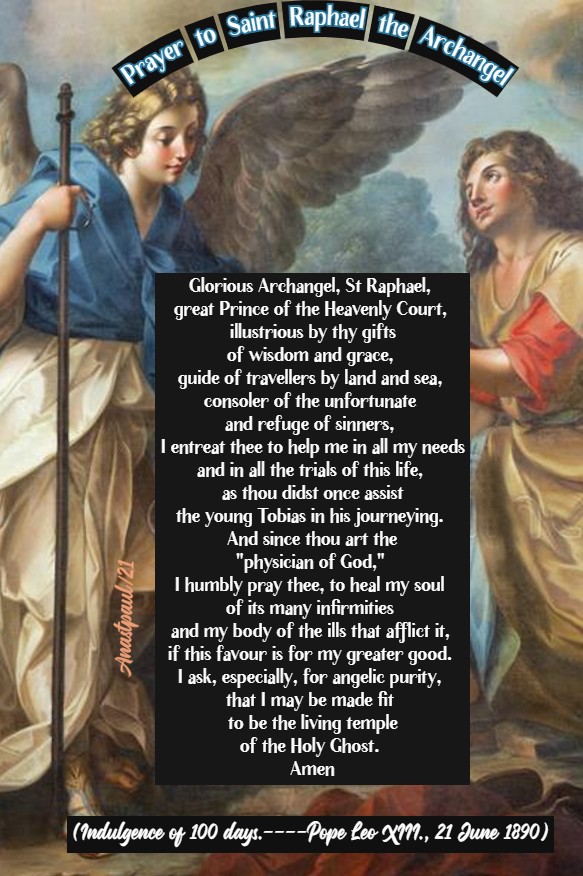
Prayer to Saint Raphael the Archangel
Glorious Archangel, St Raphael, great Prince of the Heavenly Court, illustrious by thy gifts of wisdom and grace, guide of travellers by land and sea, consoler of the unfortunate and refuge of sinners, I entreat thee to help me in all my needs and in all the trials of this life, as thou didst once assist the young Tobias in his journeying. And since thou art the “Physician of God,” I humbly pray thee to heal my soul of its many infirmities and my body of the ills that afflict it, if this favour is for my greater good. I ask, especially, for angelic purity, that I may be made fit to be the living temple of the Holy Ghost. Amen
(Indulgence of 100 days.—-Pope Leo XIII., 21 June 1890)
Twenty Second Sunday after Pentecost Thirtieth Sunday in Ordinary Time
Saint Raphael the Archangel The Feast day of Saint Raphael was included for the first time in the General Roman Calendar in 1921, for celebration on 24 October. With the 1969 revision of the General Roman Calendar, the Feast was transferred to September 29 for celebration together with Archangels Saints Michael and Gabriel.
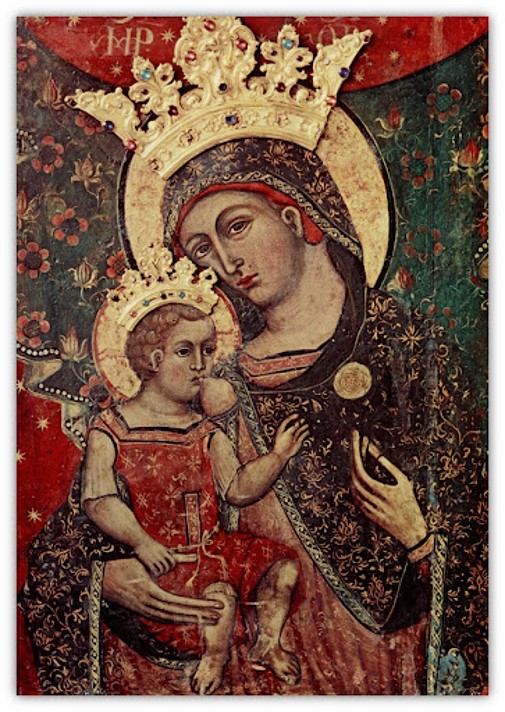
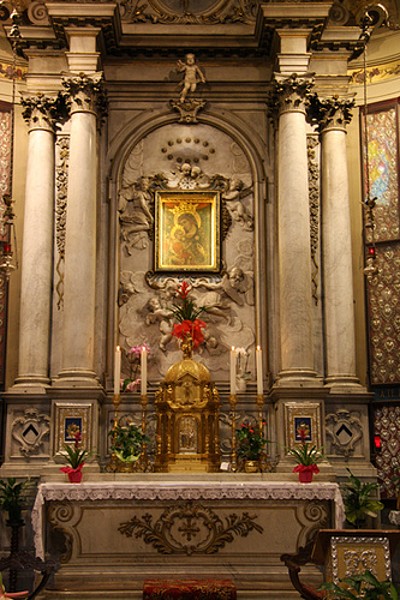
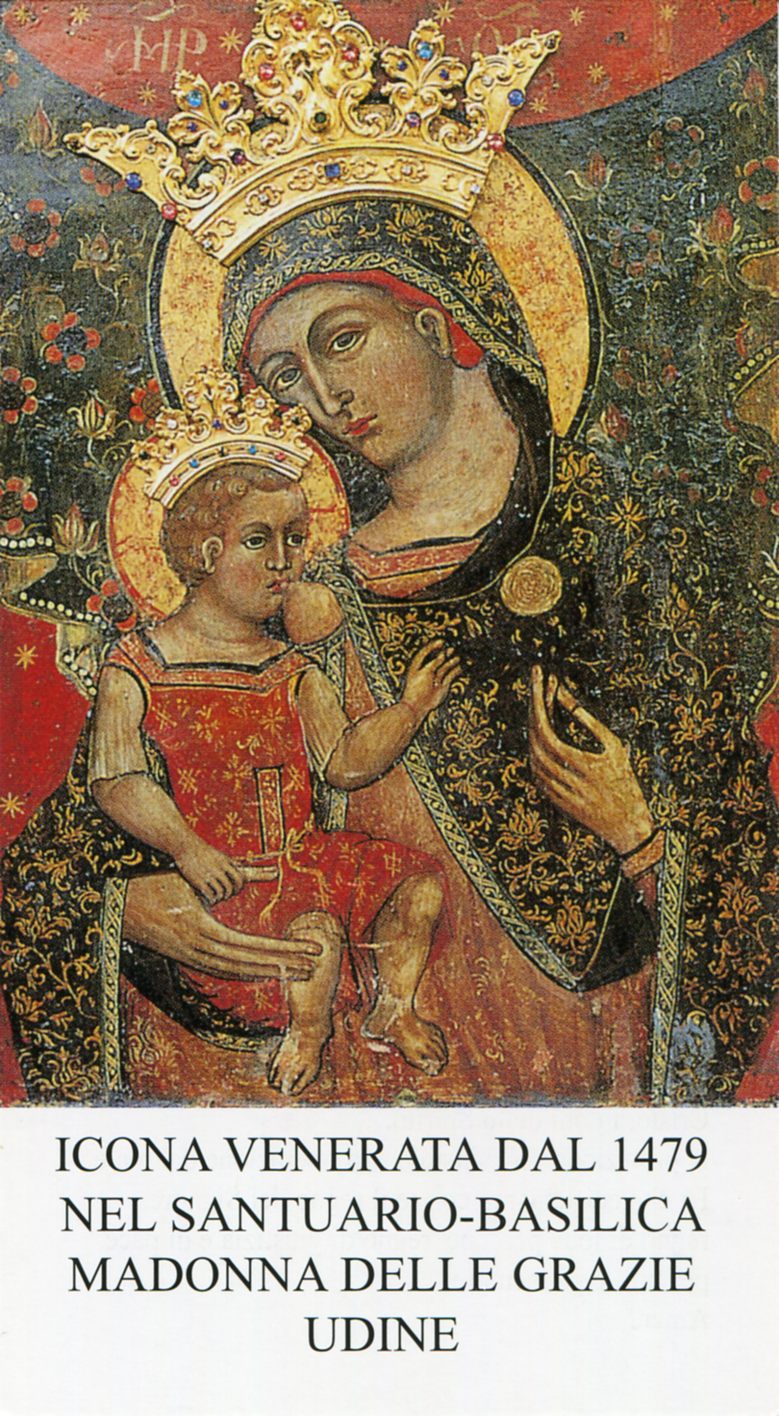
Beata Vergine delle Grazie / The Blessed Virgin of Grace, Udine, Friuli-Venezia Giulia, Italy (1479) – Fourth Sunday of October:
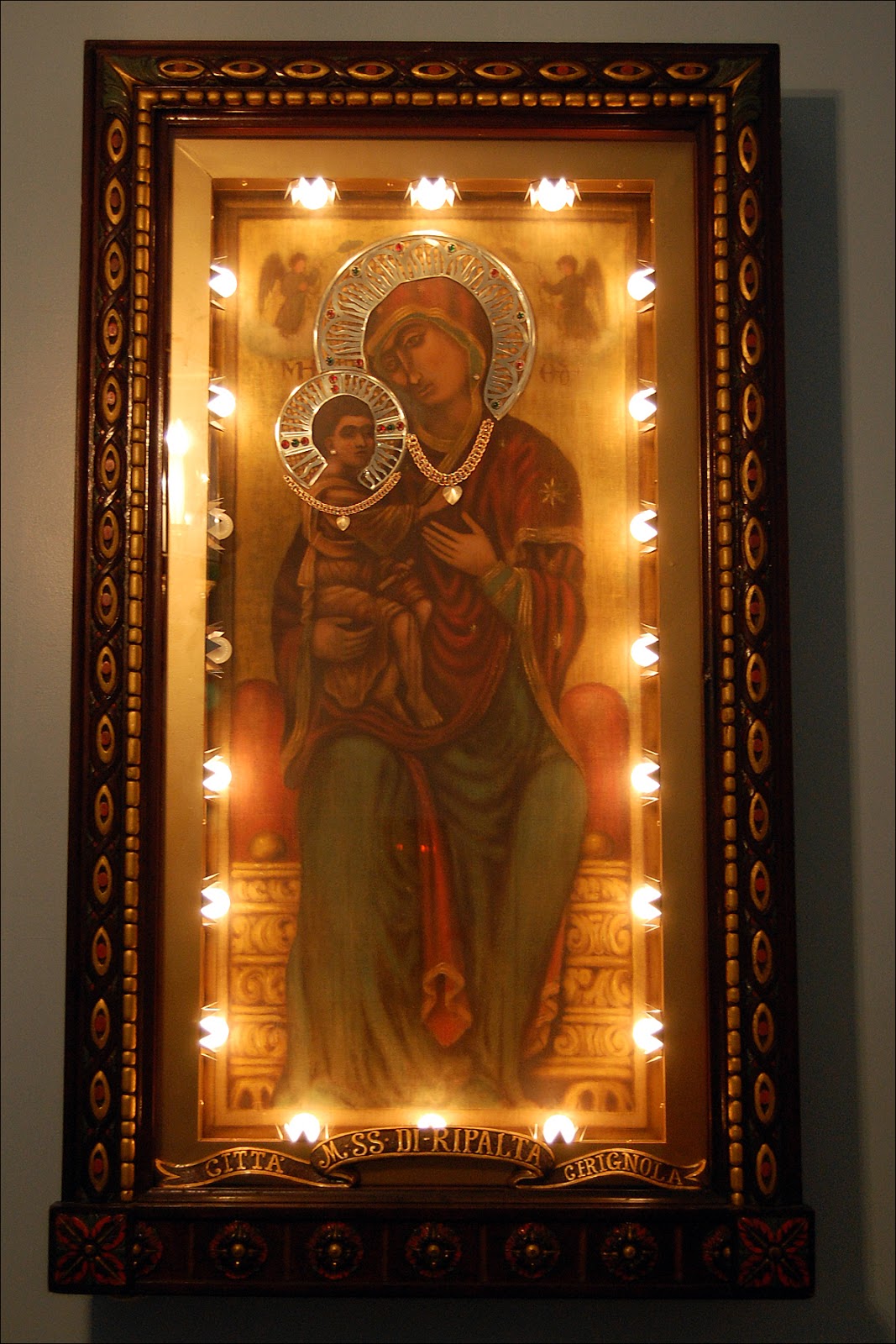
When Sir John Emo was serving as Venetian Ambassador to Constantinople, Sultan Mohammed II gave him a Byzantine-style icon of the Virgin nursing the Child. In 1479, Sir Emo became Lieutenant of Udine, a City in northeast Italy then under the Republic of Venice, bringing the icon with him to the governor’s castle. Not long afterward, one of the palace cooks nearly lost a hand in the kitchen but it healed when touched to the image. News of the miracle inspired popular devotion, so Sir Emo decided to move the image to the Church of Sts. Gervais and Protasius, where it entered in procession on 8 September 1479. By 1495, the Church was too small for all the pilgrims and a new Sanctuary was begun, consecrated to Our Lady of Graces and run by the Servants of Mary. On 6 September 1870 the Church Crowned the icon; in 1922, it named the Shrine a Minor Basilica.
On the fourth Sunday of October, the City both fulfills and renews, a vow made during the plague of 1555. The Beata Verginedelle Grazie is also credited with saving the region from the plague of 1599, the cholera of 1836 and the bombardment of the war in1944.
St Anthony Mary Claret CMF (1807-1870) Known as “The Spiritual Father of Cuba.” In the first years, records show, that he Confirmed 100,000 people and performed 9,000 Sacramental Marriages.Archbishop of Cuba, one of the Fathers of the First Vatican Council,Confessor to the Queen of Spain, Missionary, Founder of the Congregation of Missionary Sons of the Immaculate Heart of Mary, commonly called the Claretians, Confessor, Mystic, Social Reformer, Spiritual Director, Writer, Publisher, Preacher, Apostle of Charity. He was declared venerable by Pope Leo XIII in 1899. He was Beatified in 1934 and in 1950, Canonised by Pope Pius XII. His heart is incorrupt. The 1969 revision of the calendar moved St Anthony Feast to the day of his death, 24 October (from the 23rd) which had been the Feast of Saint Raphael the Archangel since 1921. (Optional Memorial) About St Anthony Mary here: https://anastpaul.wordpress.com/2017/10/24/saint-of-the-day-24-october-st-anthony-mary-claret-1807-1870-cmf/
Bl Amado García Sánchez St Audactus of Thibiuca St Cadfarch St Ciriacus of Hierapolis St Claudian of Hierapolis St Ebregislus of Cologne St Felix of Thibiuca St Fortunatus of Thibiuca St Fromundus of Coutances St Giuse Lê Dang Thi
St Luigi Guanella (1842-1915) “Servant of Charity,” Priest, Founder the Daughters of Saint Mary of Providence (1890) and the Servants of Charity (24 March 1908) alongside his friends Fr David Albertario (1846-1902) and Blessed Giuseppe Toniolo (1845-1918). Apostle of Charity, Marian devotee, Eucharistic Adorer and passionate promoter. Guanella also founded the Pious Union of Saint Joseph (1914) with his supporter and first member St Pope Pius X. St Luigi’s Life: https://anastpaul.com/2018/10/24/saint-of-the-day-24-october-st-luigi-guanella-1842-1915-servant-of-charity/
St Maglorius of Wales St Marcius of Monte Cassino St Martin of Vertou
St Senoch St Senócus of Tours St Septimus of Thibiuca — Martyrs of Ephesus – 3 saints: Three Christians martyred together. All we know about them are the names Mark, Sotericus and Valentina. They were stoned to death near Ephesus, Asia Minor (in modern Turkey). Their relics are enshrined on the island of Tasos.
Feast of the Most Holy Redeemer – The Feast of the Most Holy Redeemer was a Catholic liturgical feast. It is celebrated in Venice as the Festa del Redentore. It is also celebrated by the Redemptorists and was celebrated in the City of Rome. The feast is found only in the special calendar of some Diocese and religious Orders and is celebrated with proper Mass and Office either on the third Sunday of July or on 23 October. https://anastpaul.com/2019/10/23/the-feast-of-the-most-holy-redeemer-23-october/
St John of Capistrano OFM (1386-1456) “The Soldier Saint.” Franciscan Friar and Priest, Confessor and Preacher. Famous as a preacher, theologian and inquisitor, trained lawyer, he earned himself the nickname ‘the Soldier Saint’ when in 1456 at age 70 he led a crusade against the invading Ottoman Empire at the siege of Belgrade with the Hungarian military commander John Hunyadi, called the Athleta Christi (“Christ’s Champion”) by Pope Pius II. (Optional Memorial) St John’s Story here: https://anastpaul.wordpress.com/2017/10/23/saint-of-the-day-23-october-st-john-capistrano-ofm-1386-1456-the-soldier-saint/
Bl John Buoni St John of Syracuse St Oda of Aquitaine St Phaolô Tong Viet Buong St Romanus of Rouen St Severinus of Cologne St Syra of Faremoutiers St Theodoret of Antioch Bl Thomas Thwing St Verus of Salerno — Martyrs of Cadiz – 2 saints Germanus Servandus Martyrs of Hadrianopolis – 2 saints Dorotheus Severus Martyrs of Nicaea – 3 saints Euerotas Socrates Theodota
Martyrs of Valenciennes – 6 beati: A group of Urusuline and Briggittine nuns murdered together in the anti-Christian excesses of the French Revolution. They were guillotined on 23 October 1794 in Valenciennes, Nord, France and Beatified on 13 June 1920 by Pope Benedict XV. • Anne-Joseph Leroux • Clotilde-Joseph Paillot • Jeanne-Louise Barré • Marie-Augustine Erraux • Marie-Liévine Lacroix • Marie-Marguerite-Joseph Leroux
Martyred in the Spanish Civil War including Martyrs of Manzanares (7 beati): • Agapit Gorgues Manresa • Agustín Nogal Tobar • Andrés Navarro Sierra • César Elexgaray Otazua • Cristóbal González Carcedo • Dorinda Sotelo Rodríguez • Eduardo Valverde Rodríguez • Felipe Basauri Altube • José María Fernández Sánchez • Juan Nuñez Orcajo • Leonardo Olivera Buera • Manuel Navarro Martínez • Roque Guillén Garcés • Toribia Marticorena Sola
Quote/s of the Day – 18 October – The Feast of St Luke the Evangelist
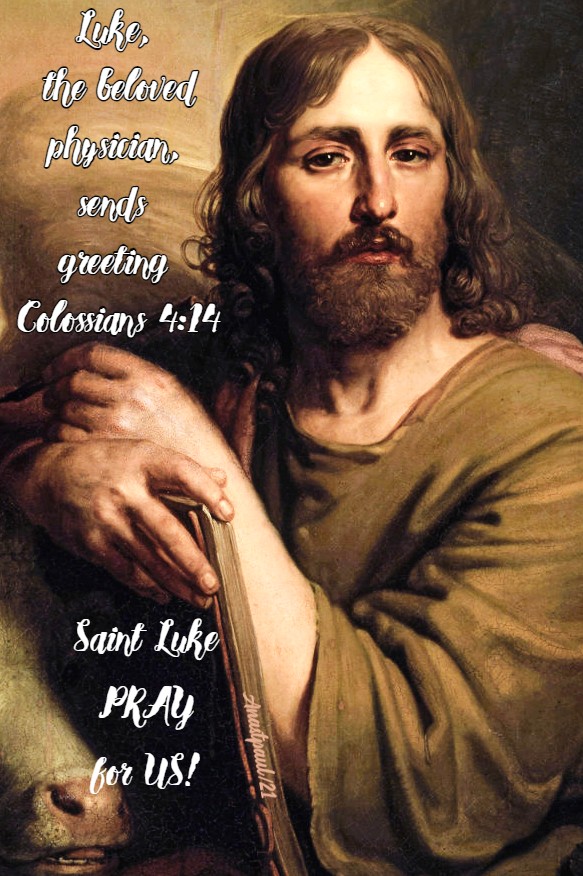
“Luke, the beloved physician, sends greetings … ”
Colossians 4:14
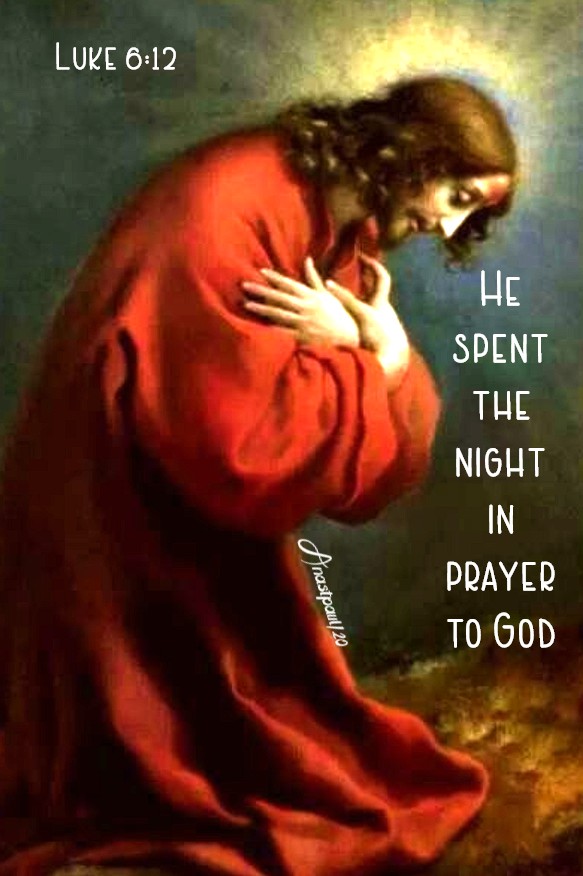
“He spent the night in prayer to God.”
Luke 6:12
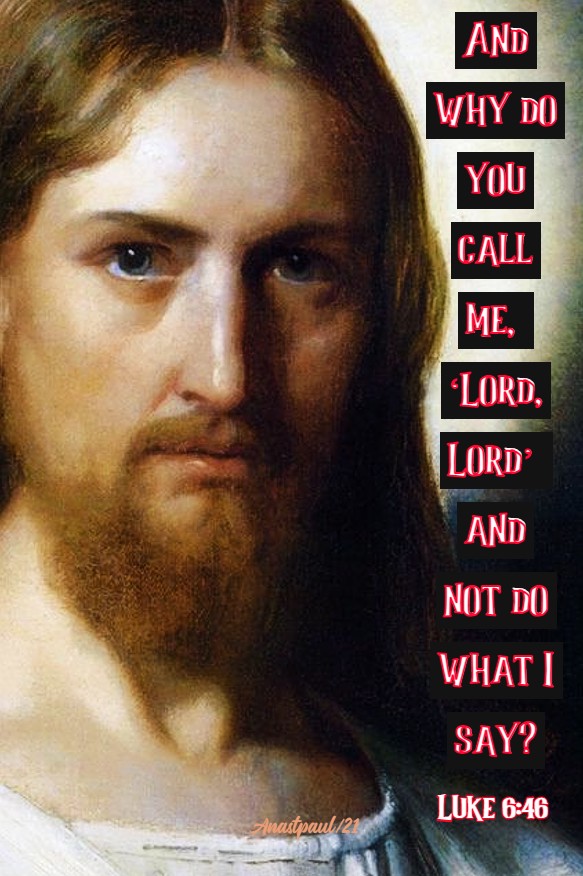
“And why do you call me, ‘Lord, Lord’ and not do what I say?”
Luke 6:46
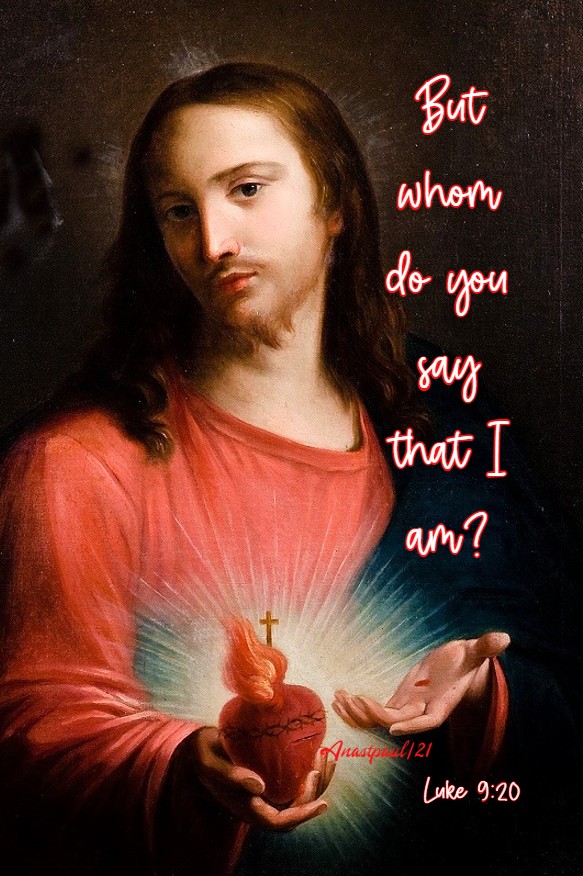
“But whom do you say that I am?”
Luke 9:20
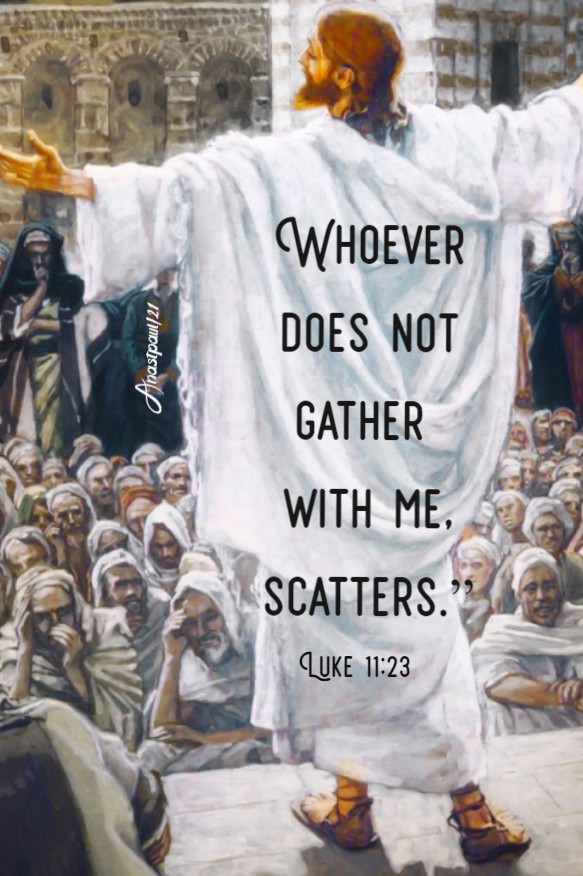
“Whoever does not gather with me, scatters.”
Luke 11:23
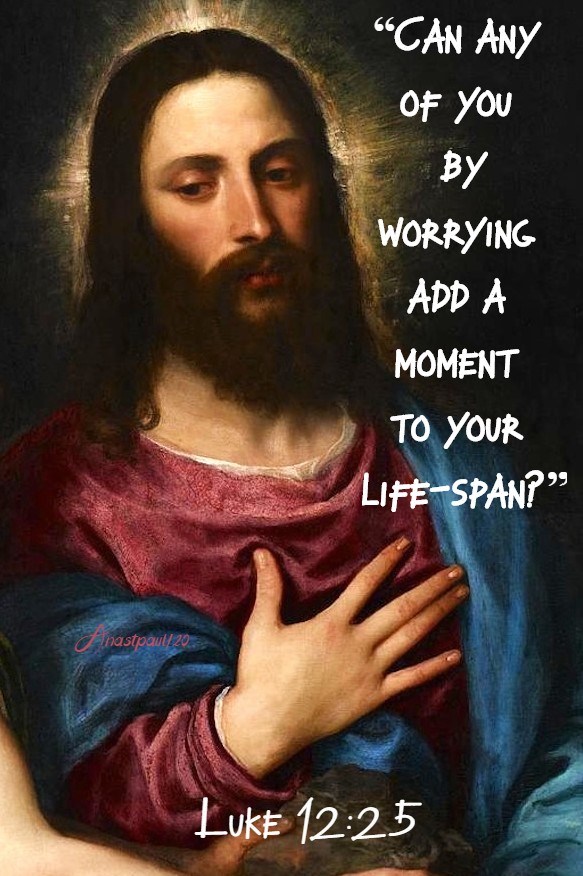
“Can any of you by worrying, add a moment to your lifespan?”
Luke 12:25
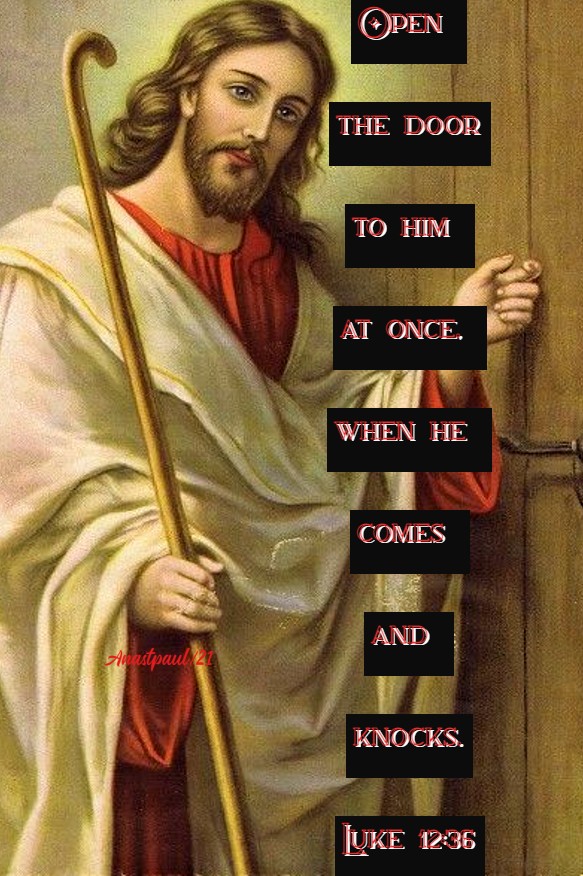
“Open the door to him at once, when he comes and knocks.”
Luke 12:36
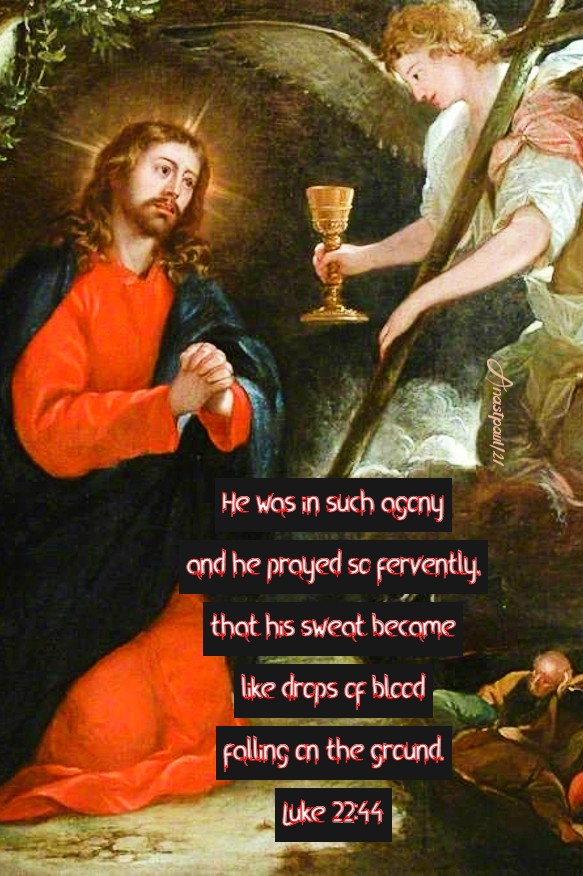
“He was in such agony and he prayed so fervently, that his sweat became like drops of blood falling on the ground.”
Luke 22:44
(St Luke, as a Medical Doctor is the only Evangelist who describes Jesus sweating blood. This video mentions the medical explanation for this occurrence).
One Minute Reflection – 18 October – The Feast of St Luke the Evangelist, Gospel: Luke 10:1-9
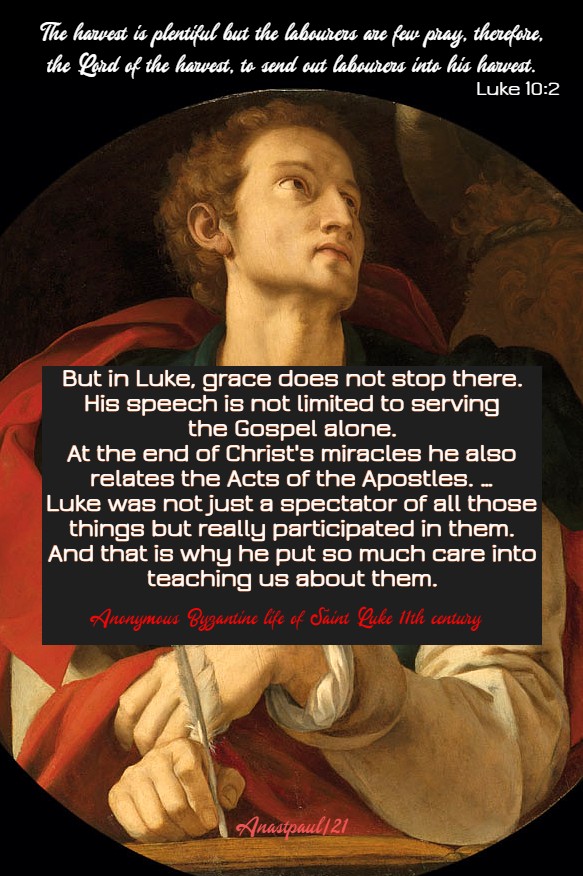
“And he said to them, “The harvest is plentiful but the labourers are few, pray therefore, the Lord of the harvest, to send out labourers into his harvest.” – Luke 10:2
REFLECTION – “When, after abandoning the darkness of error to bind himself to God’s love, Paul was joined to the number of the disciples, Luke went with him everywhere and became his travelling companion (Acts 16:10 f.). … He got on with him so well, was so close to him and shared all his graces so nearly, that Paul, in writing to the faithful, called Luke his “beloved” (Col 4:14). From Jerusalem and the country round about, as far as Dalmatia, (Rom 15:19) he preached the Gospel with him. From Judea to Rome he shared the same chains with him, the same work, the same difficulties, the same shipwrecks. He desired to receive the same prize with him since he had shared the same labours.
Having acquired the gift of preaching along with Paul and won over and led so many peoples to the love of God, Luke truly seemed like the Saviour’s loving and beloved disciple, in addition to being the Evangelist who wrote his sacred history. For formerly he had followed the Lord (cf. Lk 10:1), gathered together the testimonies of his first servants (Lk 1:1) and received inspiration from on high. It was this Evangelist who related the mystery of Gabriel, the messenger sent to the Virgin to announce joy to the whole world. It was he who told in full, the birth of Christ, showing us the newborn child lying in a manger and describing shepherds and Angels shouting for joy. … He reports the parabolic teachings in greater number than the other Evangelists. And just as he makes known to us the descent of the Word of God to earth, so too, he describes his Ascension to heaven and return to the Father’s throne (24:51). …
But in Luke, grace does not stop there. His speech is not limited to serving the Gospel alone. At the end of Christ’s miracles he also relates the Acts of the Apostles. … Luke was not just a spectator of all those things but really participated in them. And that is why he put so much care into teaching us about them.” – Anonymous Byzantine life of Saint Luke – 11th century (Saint Luke, Evangelist and companion of Paul – 6-7; PG 115, 1134-1135).
PRAYER – O Lord, we beseech Thee, that Luke, Thy holy Evangelist, who for the honour of Thy Name bore continuously in his body the suffering of the Cross, may intercede on our behalf. Through the same Jesus Christ, Thy Son our Lord, Who lives and reigns with Thee, in the unity of the Holy Ghost, God, world without end. Amen (Collect).
Our Morning Offering – 18 October – The Feast of St Luke, the Evangelist
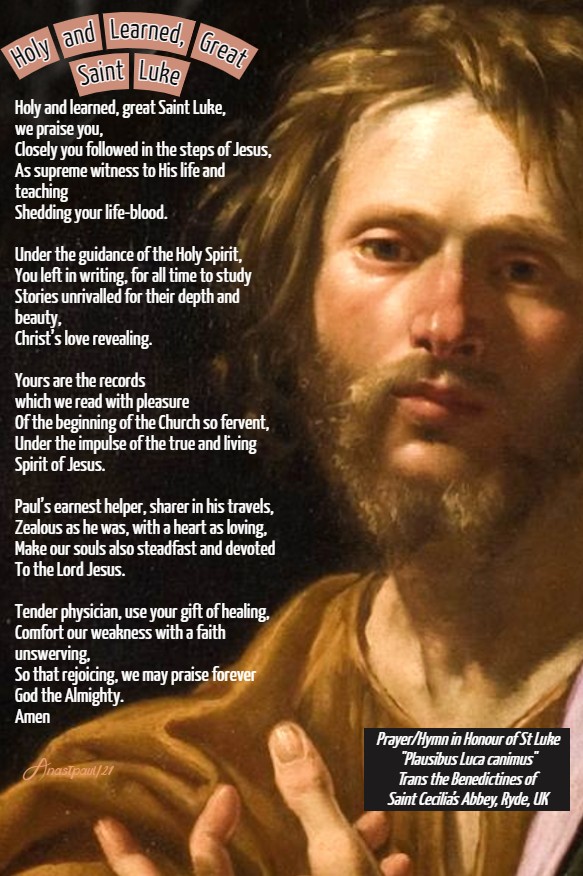
Holy and Learned, Great Saint Luke Prayer/Hymn in Honour of St Luke “Plausibus Luca canimus” Trans the Benedictines of Saint Cecilia’s Abbey, Ryde, UK
Holy and learned, great Saint Luke, we praise you, Closely you followed in the steps of Jesus, As supreme witness to His life and teaching Shedding your life-blood.
Under the guidance of the Holy Spirit, You left in writing, for all time to study Stories unrivalled for their depth and beauty, Christ’s love revealing.
Yours are the records which we read with pleasure Of the beginning of the Church so fervent, Under the impulse of the true and living Spirit of Jesus.
Paul’s earnest helper, sharer in his travels, Zealous as he was, with a heart as loving, Make our souls also steadfast and devoted To the Lord Jesus.
Tender physician, use your gift of healing, Comfort our weakness with a faith unswerving, So that rejoicing, we may praise forever God the Almighty. Amen
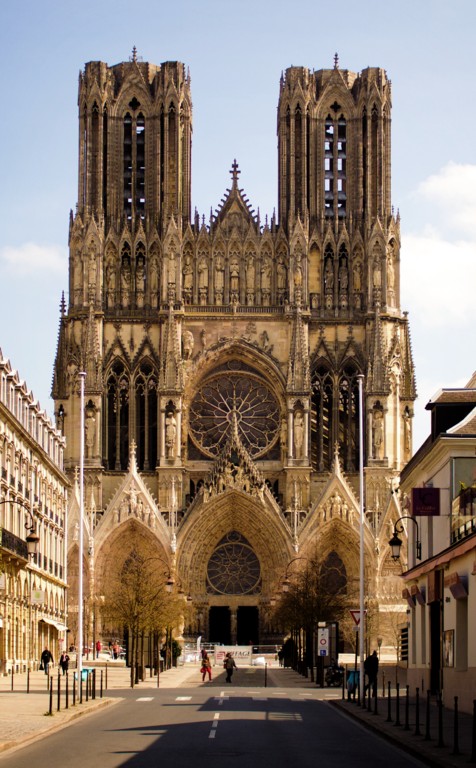
Notre-Dame de Reims / Our Lady of Rheims – Dedication of the Church of Our Lady of Rheims (405) built by St Nicasius – 18 October:
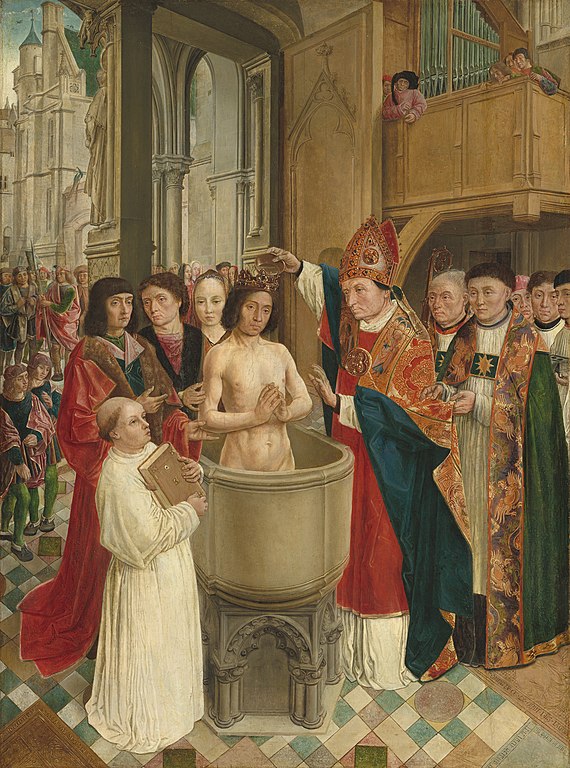
Dedication of Our Lady of Rheims, built by St Nicasius (died c 407), Archbishop of that City period in the year 405. It was Saint Nicasius who prophesised that France would be invaded by the Vandals, telling the people of Rheims to prepare themselves. When the Vandals finally arrived at the City gates, St Nicasius went out to meet them with his sister, a faithful deaconess. All were killed but their sacrifice gave time for more of the people of Rheims to flee to safety. It is interesting to note, that when St Nicasius was beheaded he was praying Psalm 119. He was slain at the moment when he reached the phrase “Adhaesit pavimento anima mea,” which means, “my soul is attached to dust.” After he was decapitated, his head struck the ground and he miraculously continued the psalm, saying: “Vivifica me, Domine, secundum verbum tuum,” which means, “revive me, Lord, with your words.” This was the Church where King Clovis humbly confessed his belief in the Triune God and was baptised by St Regimius in 496 and where, all of the subsequent French Kings were crowned. In the Gallery of the Kings there is a magnificent painting of the baptism of King Clovis surrounded by images of all of his successors.
The Baptism of King Clovis by the Master of Saint Giles (16th cent)
This Church, having fallen to ruins, was later rebuilt by Ebo and Hincmar. It was finished in the year 845 and still remains a place of pilgrimage to the Mother of God. At one time enemies of the Cathedral chapter set fire to a monastery of Rheims. Among the relics which the sacristan tried to save was an ivory statue of the Virgin, containing some of her hair. The sacristan prayed fervently to the Virgin that she would preserve this relic. The Abbot, entering the ruins of the Church, found the Statue upright and unharmed as if placed there reverently. From thence forward, the image was believed to be miraculous. The present Cathedral takes the place of the older churches, the previous one having been damaged by fire in 1210. It was not completed until the 14th century, and is the beautiful Gothic Cathedral that can still be seen today, after much restoration work after the bombardments of WWI and II.
St Acutius of Pozzuoli St Amabilis of Auvergne (c 397- c 475) Priest, Confessor St Asclepiades of Antioch St Athenodorus St Brothen Bl Burchard I St Cadwaladr of Brittany Bl Domenico of Perpignano St Eutychius of Pozzuoli St Gwen St Gwen of Tagarth St Gwendoline
Bl Margherita Tornielli St Monon of Nassogne St Proculus of Pozzuoli Bl Theobald of Narbonna St Tryphonia of Rome — Martyrs of Africa – 9 saints: A group of Christians martryed together in Africa. The only details that have survived are the names – Beresus, Dasius, Faustinus, Leucius, Lucius, Martialis, Victoricus, Victrix and Viktor. They were martyred in c.300 in Africa.
Martyred in the Spanish Civil War: • Blessed Alfredo Almunia López-Teruel • Blessed Francisco Roselló Hernández • Blessed Isidro Juan Martínez
Thought for the Day – 11 October – Feast of the Divine Maternity – Meditations with Antonio Cardinal Bacci (1881-1971)
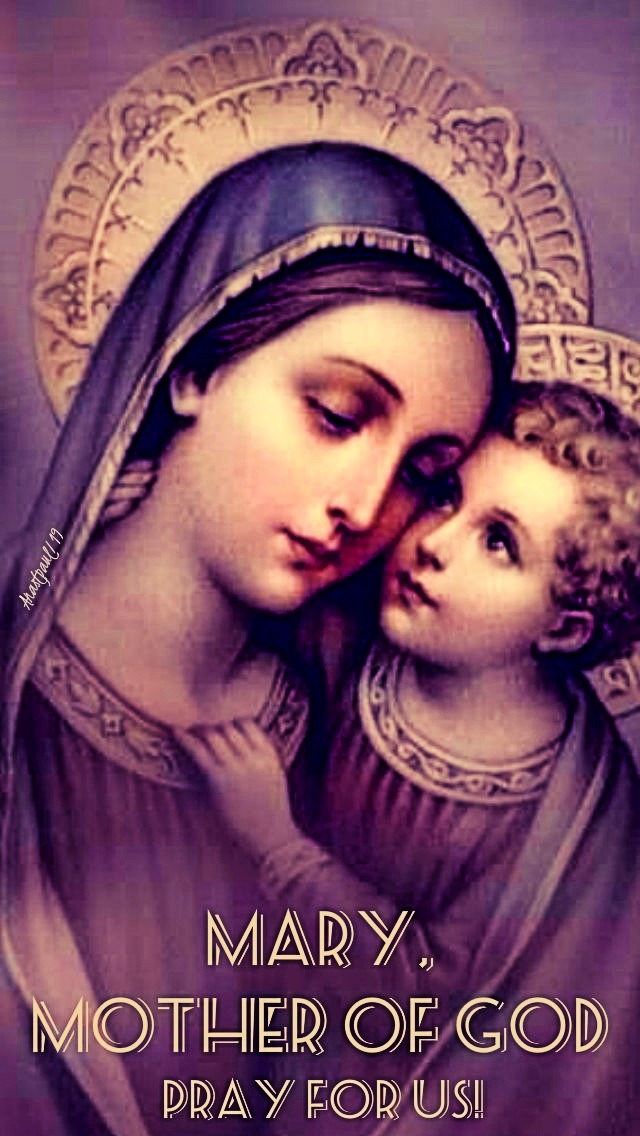
Mary, Mother of God
“The near-infinite greatness of Mary, flows from the fact, that she is the Mother of God. The Eternal Word of the Father, consubstantial with Him in nature and equal to Him in majesty, willed to become man in order to set us free from the slavery of sin and to regain Heaven for us. He became man in the chaste womb of the Virgin Mary. He took a human body and soul and was born of her, as the God-Man. For this reason, there is attributed to His Divine Person, the title of Son of Mary and to Mary, the title of Mother of God.
There is a relationship between Mary and each of the three Divine Persons, for she is the daughter of God the Father, the spouse of the Holy Spirit by whose power the Word became incarnate in her and the mother of the Word made Man. She is, moreover, in the words of Dante, the “termine fisso di eterno consiglio” (Paradiso 33:1-3). In other words, she is the centre of the eternal plan which God established for the redemption of the human race. It was God’s eternal design to reunite creation to the Uncreated, by means of Mary. She became the mother of the Eternal Word, in whom the divine and human natures were indissolubly united. He redeemed us by His infinite merits but, in this work of redemption, He employed the co-operation of His holy Mother. All the graces, privileges and virtues of Mary, flow from this great mystery of her divine Motherhood. As befitted the future Mother of God, she was conceived free from the stain of original sin and full of grace. Her mortal life was a continuous ascent towards the highest peak of sanctity. When she died, she was assumed body and soul into Heaven, where she was crowned in glory, as Queen of Angels and Queen of Saints. When we consider the sublime nobility of Our Lady, we should be moved to love and venerate her. This love and veneration does not subtract in the slightest from God’s glory, because, she is the Mother of God. In fact, it is a great advantage to us, to imitate her and to call on her to intercede for us.”
Quote/s of the Day – 11 October – “Month of the Holy Rosary” – Feast of the Divine Maternity – Readings: Ecclus 24:23-31, Gospel: Luke 2: 43-51
But Mary kept all these things, pondering them in her heart.
Luke 2:19
“Having confidence in you, O Mother of God, I shall be saved. Being under you protection, I shall fear nothing. With your help, I shall give battle to my enemies and put them to flight, for devotion to you, is an arm of Salvation.”
St John Damascene (676-749) Father and Doctor of the Church
Alma Redemptoris Mater Loving Mother of the Redeemer By Blessed Herman of Reichenau/the Cripple OSB (1013–1054)
Loving Mother of the Redeemer! Hear thou thy people’s cry, Star of the deep and portal of the sky! Mother of Him Who thee from nothing made, Sinking we strive and call to thee for aid; Oh, by that joy which Gabriel brought to thee, Thou Virgin first and last, let us thy mercy see.
“Wherefore, in the same holy bosom of His most chaste Mother, Christ took to Himself flesh and united to Himself, the spiritual Body formed by those who were to believe in Him. Hence Mary, carrying the Saviour within her, may be said, to have also carried, all those. whose life was contained in the life of the Saviour. Therefore, all we who are united to Christ and, as the Apostle says, are members of His body, of His flesh and of His bones (Eph 5:30), have issued from the womb of Mary, like a body united to it’s head.”
St Pius X (1835-1914) Pope from 1903 to 1914
Encyclical “Ad diem illum laetissimum” #10-11
Hail O Mary, Mother of God By St Cyril of Alexander (376-444) Doctor of the Incarnation Known as ‘The Pillar of Faith”
Hail, O Mary, Mother of God, Virgin and Mother! Morning Star, perfect vessel. Hail, O Mary, Mother of God, Holy Temple in which god Himself was conceived. Hail, O Mary, Mother of God, Chaste and pure dove. Hail, O Mary, Mother of God, Who enclosed the One who cannot be encompassed in your sacred womb. Hail, O Mary, Mother of God, From you flowed the true light, Jesus Christ, our Lord. Hail, O Mary, Mother of God, Through you the Conqueror and triumphant Vanquisher of hell came to us. Hail, O Mary, Mother of God, Through you, the glory of the Resurrection blossoms. Hail, O Mary, Mother of God, You have saved every faithful Christian. Hail, O Mary, Mother of God, Pray for us sinners now and at the hour of our death. Amen
One Minute Reflection – 11 October – “Month of the Holy Rosary” – Feast of the Divine Maternity – Readings: Ecclus 24:23-31, Gospel: Luke 2: 43-51
“And his mother kept all these words in her heart.” – Luke 2:51
REFLECTION – “Often, it seems to us, Mary forgot to eat and to drink, keeping vigil in order to think about Christ, to see Christ in His flesh. She burned with love of Him and passionately loved to serve Him. She often did what the Song of Songs sings about: “I was sleeping, but my heart kept vigil.” (Song 5:2) Even when she was resting, she continued to dream of Him who filled her thoughts throughout the day. Whether she was keeping vigil or resting in peace, she always lived in Him, was always occupied with Him.
Where her treasure was, there also was her heart (Mt 6:21); where her glory was, there also was her mind. She loved her Lord and her Son with all her heart, with all her mind, with all her strength (Mt 22:37). She saw with her eyes, touched with her hands, the Word of Life (1 Jn 1:1). How blessed was Mary, to whom it was given to embrace Him who embraces and nourishes everything! How happy was she who carried Him, who carries the universe (Heb 1:3), she who nursed a Son, who gives her life, a Son who nourishes her and all beings on earth (Ps 145:15).
The One Who is the wisdom of the Father, put His arms around her neck, the One Who is the strength, that gives movement to everything sat in her arms. He Who is the rest of souls, (Mt 11:29) rested on her motherly breast. How gently He held her in His hands, peacefully looked at her, He Whom the angels wish to contemplate (1 Pet 1:12) and He gently called her, He Whom every being calls upon when in need. Filled with the Holy Spirit, she held Him close to her heart … She never had enough of seeing Him or of hearing Him, Whom “many prophets and kings wished to see … but did not see.” (Lk 10:24) Thus Mary grew evermore in love and her mind was unceasingly attached to divine contemplation.” – St Amadeus of Lausanne (1108-1159) Bishop (Homily on the Motherhood of Mary, 4).
PRAYER – Lord open our hearts to Your grace. As You brought joy to the world through the incarnation of Your Son, Our Lord Jesus Christ, grant that through the prayer of His Immaculate Ever-Virgin Mother, our hearts too may grow in virtue and love by learning to reflect constantly on His commandments and counsels. We make our prayer through our Lord Jesus, with the Holy Spirit, God forever, amen.
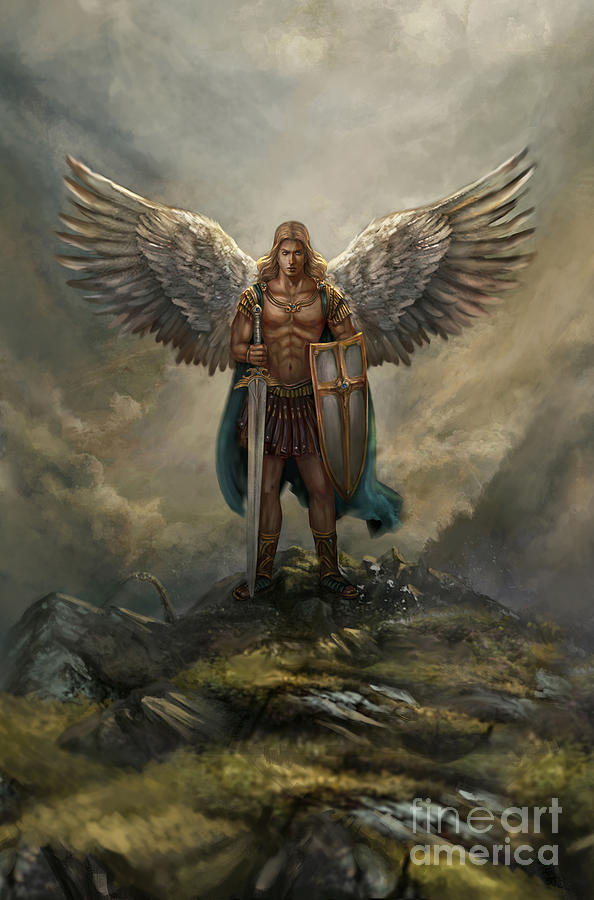
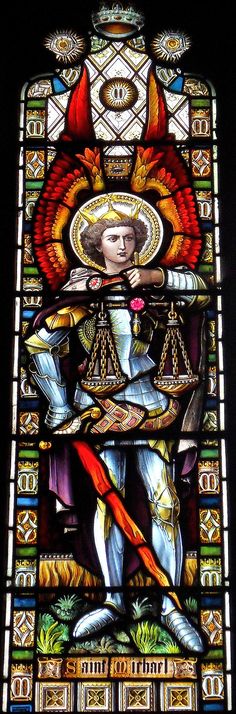
Quote/s of the Day – 29 September – Feast of the Dedication of St Michael the Archangel
“Michael is the Breath of the Redeemer’s Spirit, Who at the end of the World, will combat and destroy the antichrist, as he did Lucifer in the beginning.”
St Thomas Aquinas (1225-1274) Doctor Angelicus Doctor Communis
“Among the Angels in Heaven none surpasses St Michael in Glory …”
“St Michael has the honourable office of presenting to Jesus Christ the Judge, all the souls that depart out of this world in the grace of God.”
St Alphonsus Maria De Liguori (1696-1787) Most Zealous Doctor
Our Morning Offering – 29 September – Feast of the Dedication of St Michael
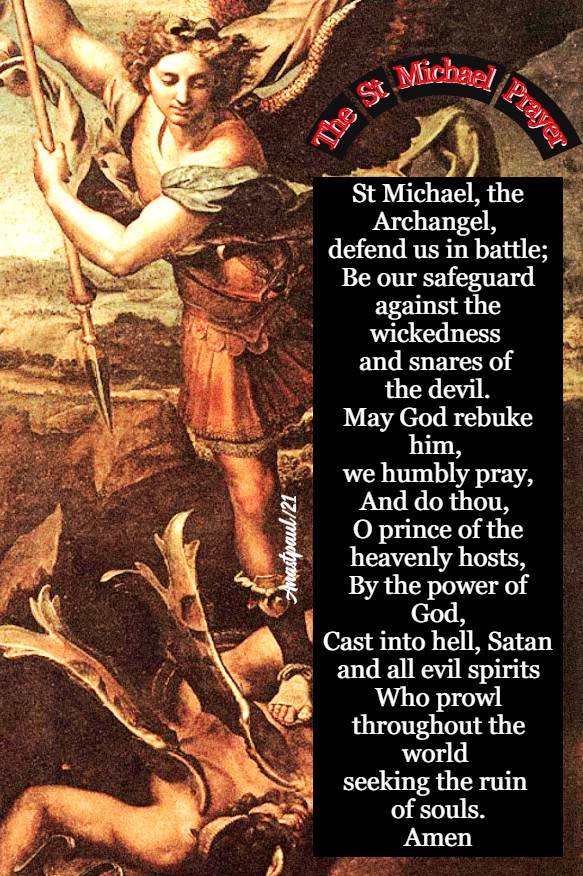
The St Michael Prayer
St Michael, the Archangel, defend us in battle; Be our safeguard against the wickedness and snares of the devil. May God rebuke him, we humbly pray, And do thou, O prince of the heavenly hosts, By the power of God, Cast into hell, Satan and all evil spirits Who prowl throughout the world seeking the ruin of souls. Amen.
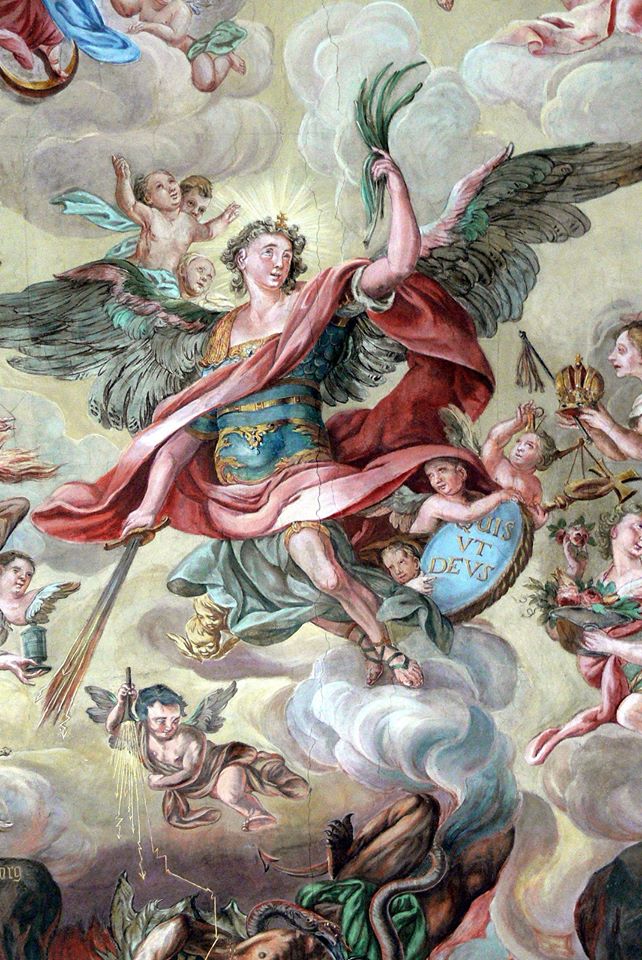
You will know or even recall ,that when the Mass was only in Latin (1570-1969) after the High Mass, known in those days as the Summa (Latin for: The Greatest) the St Michael prayer was recited. This St Michael prayer was placed at the end of the Mass by Pope Leo XIII (1878-1903) in the 1890’s as a result of a vision he saw concerning the dire state of the world in the 20th century! The Church has always prayed to St Michael for protection against the evils of the devil. Michael’s name means “Who is like God.” In Latin: “Quis ut Deus.” He can be found in the Book of The Prophet Daniel (Old Testament) Dn. 10:13; Dn. 10:21; Dn 12:1. In the New Testament he can be found in the Book of Revelation 12:7-9; Epistle of St Jude 1:9 and the Letter of St. Paul to Thessalonians (4:16). St Thomas Aquinas (1214-1274) writes of him: “Michael is the Breath of the Redeemer’s Spirit, Who at the end of the World will combat and destroy the antichrist, as he did Lucifer in the beginning.” St Michael is invoked in sickness and most especially at the hour of our death, when Satan makes his last and fiercest attack on our soul, seeking with cunning, craft, fears and despair to drag us into Hell with him. Please, let us all restore St Michael to our hearts and pray to him for protection each day, after Holy Mass and after the Holy Rosary.
Saint of the Day – 29 September – Feast of the Dedication of St Michael the Archangel
By St Alphonsus Maria De Liguori (1696-1787)
Among the Angels in heaven, none surpasses St Michael in glory and according to St Basil and others, there is none that equals him and with good reason because St Michael was chosen to subdue the pride of Lucifer and of all the rebel angels and, to expel them from heaven.
Christian, if thou lovest this Archangel, who has such great love for men, rejoice at the glory which he enjoys in heaven and beseech him, that, as he is the protector of the whole Church and of all the faithful, he will be thy special protector with God, Who loves him so much,and who rejoices in beholding one, who is so faithful to Him and so zealous for His honour, so much glorified by all.
In the Mass for the dead, the Church prays: “Let the standard bearer, St Michael, bring them into the holy light.” The learned explain this prayer and say, that St. Michael has the honourable office of presenting to Jesus Christ the Judge, all the souls that depart out of this world in the grace of God. Protect me, therefore, O holy Archangel and by your protection, enable my soul to become worthy of being presented, by your hands on the day of my death, ornamented with divine grace, before my Judge Jesus Christ.
Again, the Holy Church prays to St. Michael in the name of all the faithful, to defend us from the assaults of the wicked enemy at the hour of our death, that we may not be conquered and lose our souls: “Holy St Michael, the Archangel, defend us in battle, that we may not be lost at the dreadful judgement.“
O holy Archangel, the devil has many weapons to employ against me at the hour of my death; these weapons are my sins, by which he will then endeavour to throw me into despair; he is also preparing furious assaults of temptations to cause me then to fall again into sin. You, who conquered him and expelled him from heaven, conquer him again for me and drive him far away from me at the hour of my death; I beseech you to grant this my prayer, for the love of that God, Who so much loves you and whom you so much love. O Mary, Queen of heaven, procure for me the assistance of St Michael at the hour of my death. Amen!
St Michael as the Angel of death – Evelyn de Morgan
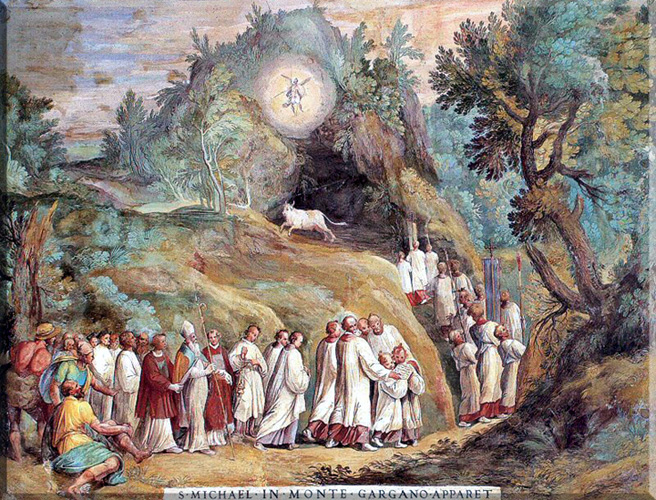
THIS festival has been kept with great solemnity on the 29th of September ever since the Fifth Century and was certainly initially celebrated in Apulia in 493. The Dedication of the famous Church of St Michael on Mount Gargano, in Italy, gave occasion to the institution of this feast in the West, which is hence called in the Martyrologies of St Jerome, St Bede and others, ‘The Dedication of St Michael.’ About the Apparition of St Michael at Mount Gargano in 492: https://anastpaul.com/2018/05/08/saint-of-the-day-8-may-apparition-of-michael-the-archangel-at-monte-gargano-italy-492/
The Apparition of St Michael at Gargano
The Dedication of the Church at Gargano
The Dedication of St Michael’s Church in Rome, which was performed by Pope Boniface IV. in 610 and that of several other Churches in the West, in honour of this Archangel, were also performed on this same day.
The name Michaelmas comes from a shortening of “Michael’s Mass,” in the same style as Christmas (Christ’s Mass) and Candlemas (Candle Mass, the Mass where traditionally the candles to be used throughout the year would be blessed). During the Middle Ages, Michaelmas was celebrated as a Holy Day of Obligation but this tradition was abolished in the 18th century.
The Church gives to St Michael four offices:
To fight against Satan.
To rescue the souls of the faithful from the power of the enemy, especially at the hour of death.
To be the champion of God’s people, the Jews in the Old Law, the Christians in the New Testament; therefore, he is the Patron of the Church and of the Orders of Knights during the Middle Age
To call away from earth and bring men’s souls to judgement.
Madonna di Tirano / Our Lady of Tirano, Sondrio, Lombardy, Italy (1504) – 29 September:
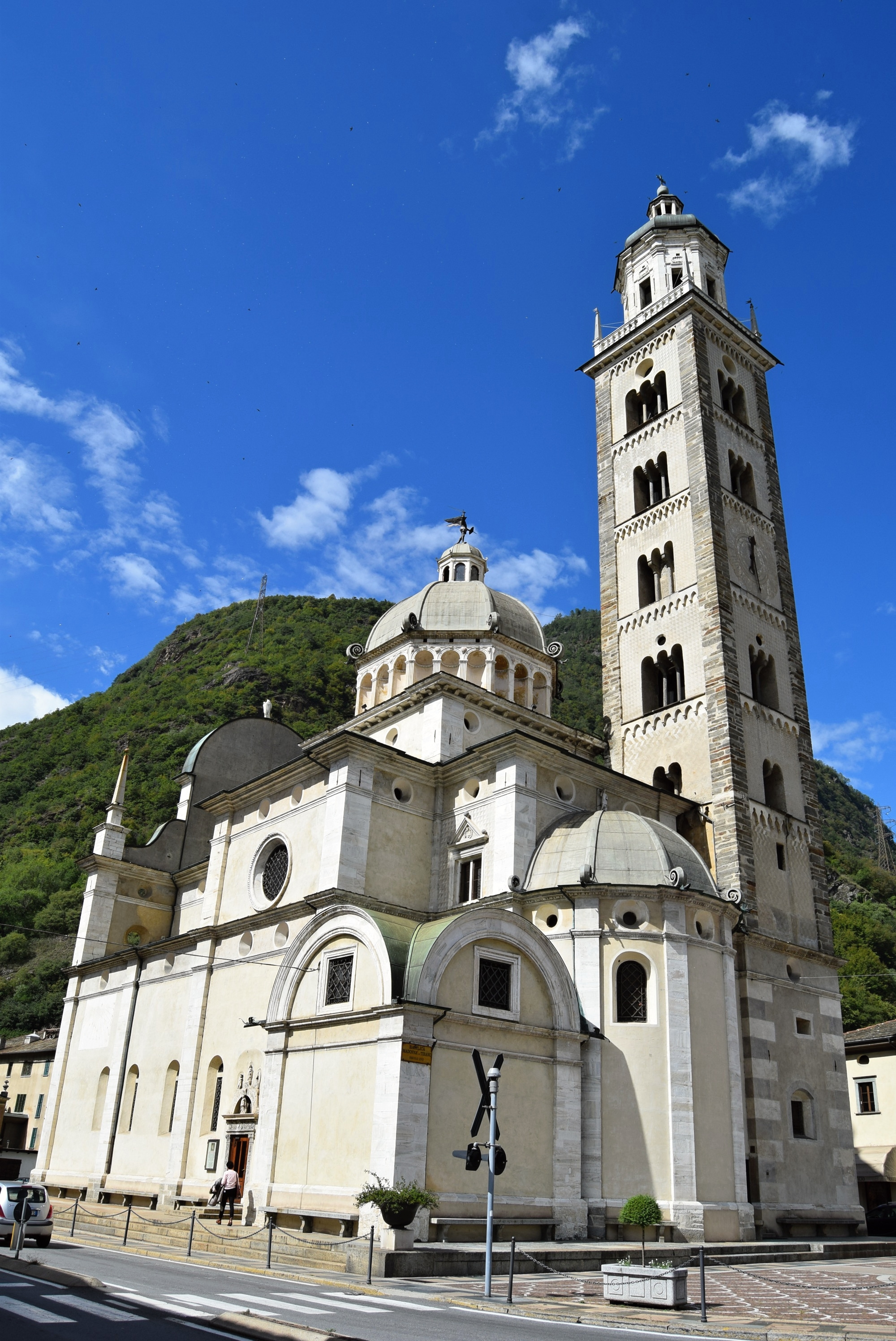
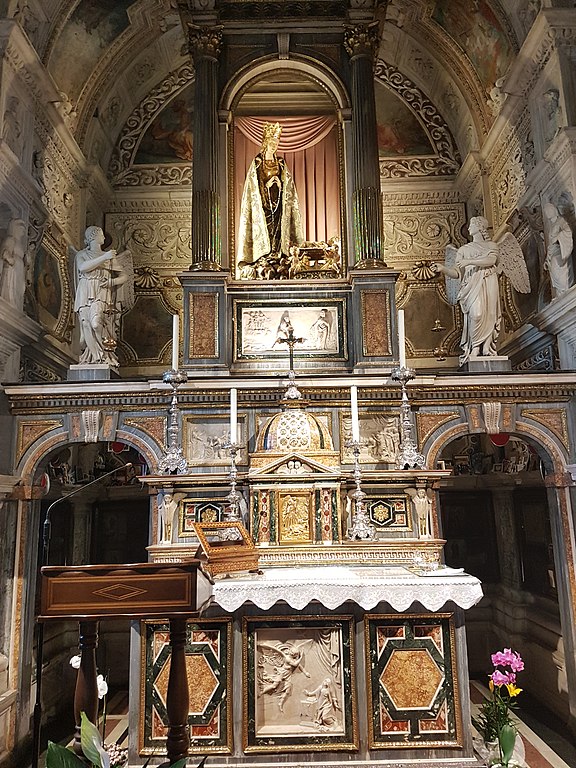
The Sanctuary of the Madonna of Tirano stands on the Swiss-Italian border, where the Virgin appeared to Mario Omodei on 29 September 1504, promising an end to the plague which was decimating the region, if a Church in her honour would be built, on the spot outside the City walls. The epidemic subsided and the townspeople placed the first stone of the Sanctuary on 25 March 1505.
Because of its crossroads location, it has always drawn pilgrims from throughout Europe.
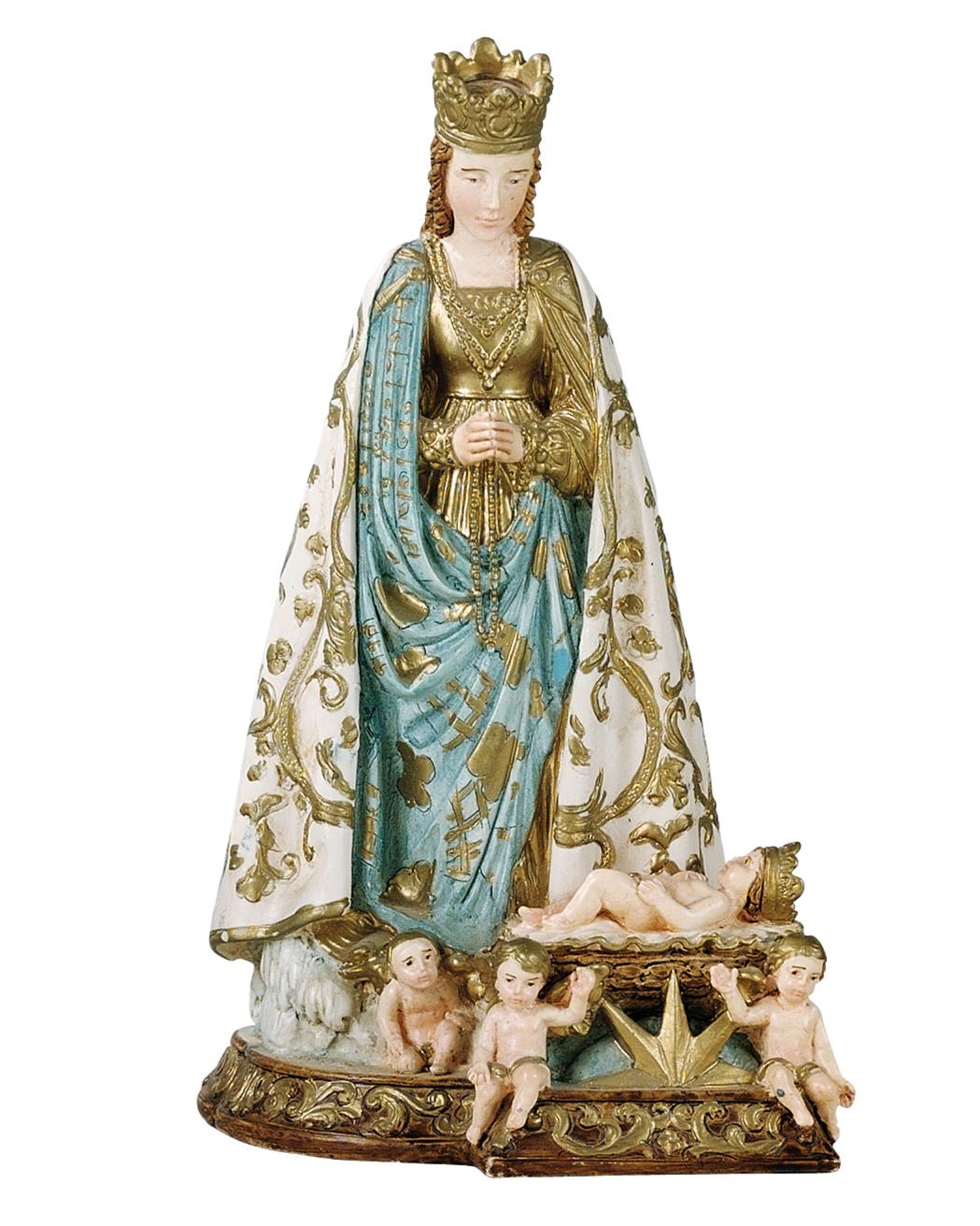
The Virgin’s Statue was part of a silver-clad grouping executed by woodcarver G Angelo Mayno around 1520. Napoleonic raiders stripped off the precious metal and destroyed the other Statues.
In 1946 Pope Pius XII proclaimed the Blessed Virgin of Tirano “special heavenly Patron of all Europe.”
Bl Alericus St Anno of Eichstätt St Casdoe of Persia St Catholdus of Eichstätt
St Dadas of Persia St Diethardus of Eichstätt St Fraternus of Auxerre St Gabdelas of Persia St Grimoaldus of Pontecorvo St Gudelia St Guillermo Courtet
St Miguel de Aozaraza St Quiriacus of Palestine St Rene Goupil St Rhipsime Bl Richard Rolle St Sapor of Persia St Theodota of Thrace St Vicente Shiwozuka de la Cruz — Martyrs of Thrace – 3 saints: Three Christian men murdered in Thrace for their faith. They are – Eutychius, Heracleas and Plautus.
Martyred in the Spanish Civil War: • Blessed Antonio Arribas Hortigüela • Blessed Antonio Martínez López • Blessed Dario Hernández Morató • Blessed Francesc de Paula Castelló Aleu • Blessed Francisco Edreira Mosquera • Blessed José Villanova Tormo • Blessed Pau Bori Puig • Blessed Vicente Sales Genovés • Blessed Virgilio Edreira Mosquera
Quote/s of the Day – 21 September – The Feast of St Matthew, Apostle and Evangelist – Readings: Ephesians 4: 1-7, 11-13; Psalm 19: 2-5; Matthew 9: 9-13
“He said to him, “Follow me.” And he got up and followed him.”
Matthew 9:9
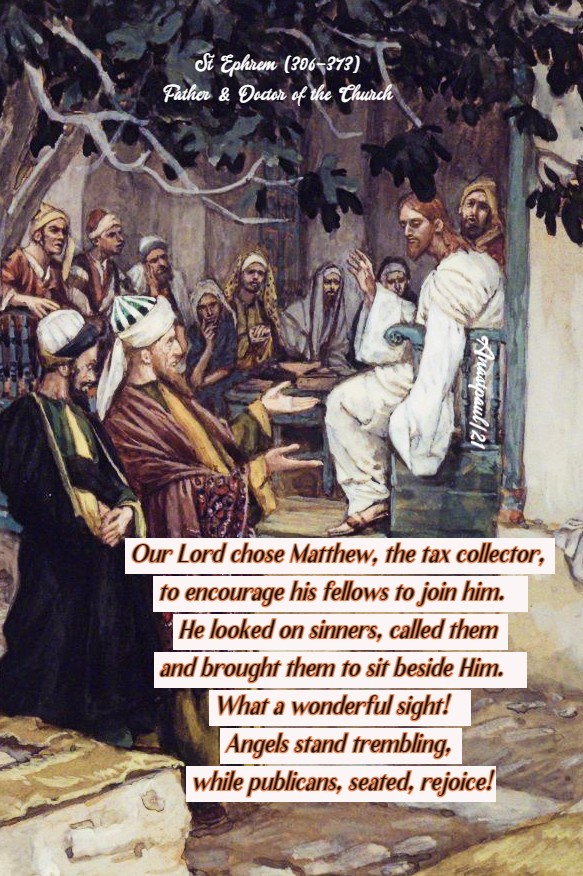
“Our Lord chose Matthew, the tax collector, to encourage his fellows to join him. He looked on sinners, called them and brought them to sit beside Him. What a wonderful sight! Angels stand trembling, while publicans, seated, rejoice!”
St Ephrem (306-373) Father & Doctor of the Church
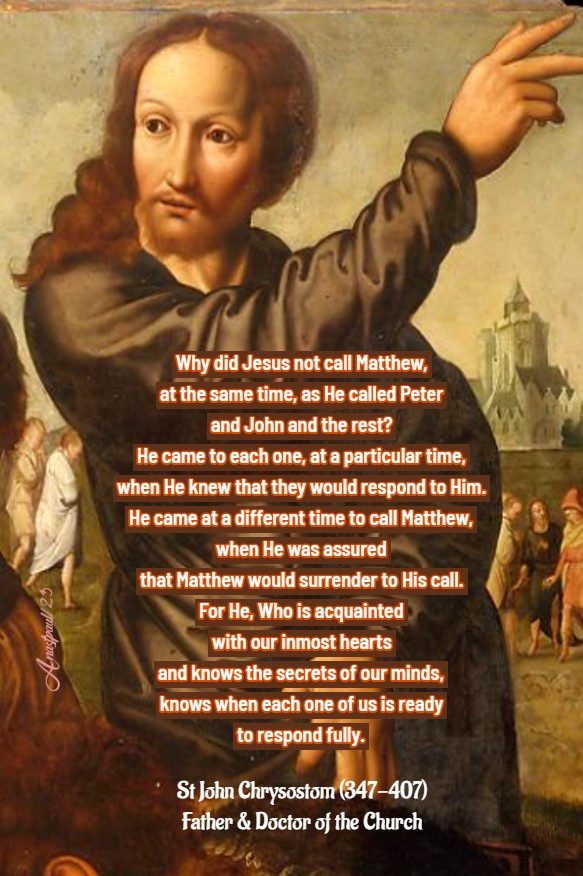
“Why did Jesus not call Matthew at the same time as He called Peter and John and the rest? He came to each one at a particular time when He knew that they would respond to Him. He came at a different time to call Matthew when He was assured that Matthew would surrender to His call. For He Who is acquainted with our inmost hearts and knows the secrets of our minds, knows when each one of us is ready to respond fully.”
St John Chrysostom (347-407) Father & Doctor of the Church
One Minute Reflection – 21 September – The Feast of St Matthew, Apostle and Evangelist- Readings: Ephesians 4: 1-7, 11-13; Psalm 19: 2-5; Matthew 9: 9-13
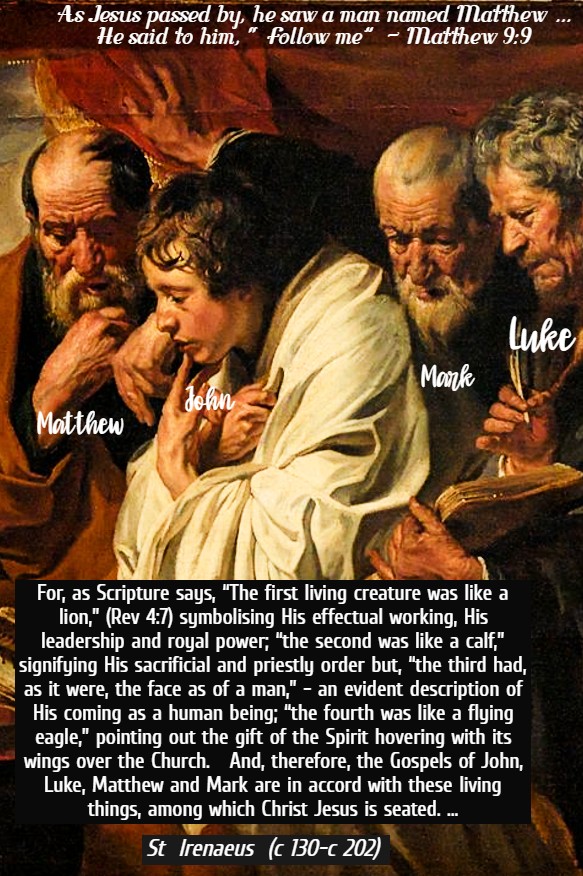
“As Jesus passed by, he saw a man named Matthew sitting at the customs post. He said to him, “Follow me.”And he got up and followed him.” – Matthew 9:9
REFLECTION – “It is not possible that the Gospels can be either more or fewer in number than they are. There are four zones of the world in which we live and four principal winds and the Church is scattered throughout all the world and her “pillar and ground” (1 Tm 3:15) is the Gospel and the Spirit of life; therefore, it is fitting that she should have four pillars, breathing out immortality on every side and vivifying us afresh. The Word, the Shaper of all things, Who sits upon the cherubim and upholds all things (Ps 79:2; Heb 1:3), Who was manifested to men, has given us the Gospel under four aspects but bound together by One Spirit. David says, when entreating this manifestation, “You that sit between the cherubim, shine forth.”(Ps 79:2) For the cherubim, too, were four-faced (Ez 1:6) and their faces were images of the dispensation of the Son of God.
For, as Scripture says, “The first living creature was like a lion,” (Rev 4:7) symbolising His effectual working, His leadership and royal power; “the second was like a calf,” signifying His sacrificial and priestly order but, “the third had, as it were, the face as of a man,” – an evident description of His coming as a human being; “the fourth was like a flying eagle,” pointing out the gift of the Spirit hovering with its wings over the Church. And, therefore, the Gospels of Mark, Luke, Matthew and John, are in accord with these living things, among which Christ Jesus is seated. …
Such was the form of the living creatures, so was also the character of the Word of God Himself – the Word of God Himself conversed with the patriarchs before Moses, in accordance with His divinity and glory but, for those under the law, He instituted a priestly and liturgical service. Afterwards, being made Man for us, He sent the gift of the Spirit over all the earth, protecting us with His Wings (Ps 16:8). … These things being so, all who reject the form the Gospel has taken – that is, those who say the Gospels should be more or fewer in number – are futile, ignorant, and presumptuous.” – St Irenaeus of Lyons (c 130-c 202) Bishop, Theologian and Martyr – (Against Heresies c. Book III, 11, 8-9).
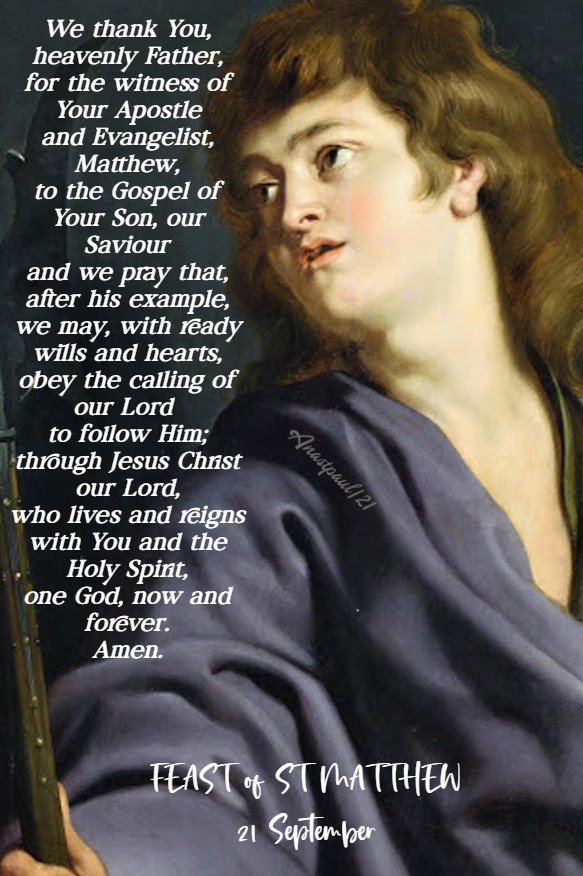
PRAYER – We thank You, heavenly Father, for the witness of Your Apostle and Evangelist, Matthew, to the Gospel of Your Son, our Saviour and we pray that, after his example, we may with ready wills and hearts, obey the calling of our Lord, to follow Him; through Jesus Christ our Lord, who lives and reigns with You and the Holy Spirit, one God, now and forever. Amen.
Beata Vergine del Tresto / The Blessed Virgin of Tresto, Ospedaletto Euganeo, Italy (1468) – 21September:
The complex of the Sanctuary of Tresto was built in the place of the miraculous Marian apparition to the boatman Giovanni di Bartolomeo Zielo da Ponso on the night of 21 September 1468, in the locality of Tresto, current fraction of the Municipality of Ospedaletto Euganeo near Padua, from where he was returning. Reaching Este in the evening, the man had stopped to sleep in the boat under the Borini bridge. Around midnight he was awakened by a female voice who called him three times. The man saw two beautiful ladies who enjoined him to follow them. Strangely finding the drawbridge of the City lowered, they walked towards the countryside where, in the locality of Tresto, one of the two ladies sat on the bank of a ditch and told the other to fetch her a bunch of grapes. Then she asked Giovanni if he knew her. To his negative answer she said that she was Mary, the Mother of God. She then enjoined him not to amend his life and to do his best to have a Church built on that place according to the plan and the measures she illustrated to him. But Giovanni objected saying that because of his poverty and ignorance, he would not be believed. Then Mary gave him a knife, instructing him to stick it into the ground and then to remove it. Giovanni obeyed and when he removed the blade from the ground, blood gushed. After having blessed him, the Madonna disappeared with her companion. T he next day Giovanni, afraid of not being believed, did not carry out the commands he had received but only confided in three friends. Losing his peace of mind, he eventually went with some people to the site of the apparition, where he tried to stick the knife into the ground, pulling it back wet with blood. Others wanted to try: the incredulous could not move the blade from the ground, while the others withdrew it bloody.
The miraculous event, renewed several times, convinced everyone to work together to erect the required Church. At the halfway point, due to the exceptional drought that had hit the area, there was no water. Everyone then invoked the help of Mary, who caused a spring appear next to the construction site. This spring since then, over the centuries, has been a source of miraculous cures just like the one at Lourdes. The custody of the Church, built in 9 months, was entrusted by the Paduan clergy to a Congregation of Mendicants of whom Giovanni wore the habit in a lay state.
The Sanctuary of Tresto became and remains a site of devotion and pilgrimage with the powerful and healing waters of the miraculous Spring, bringing many sick seeking cures. The Sanctuary preserves several works of art among which the painting on wood depicting the Virgin and Child shown above, stands out, a masterpiece attributed to Jacopo da Montagnana who created it between 1475 and 1480.
St Alexander of the Via Claudia Bl Diego Hompanera París St Eusebius of Phoenicia St Francisco Pastor Garrido St François Jaccard St Gerulph St Herminio García Pampliega St Iphigenia St Isaac of Cyprus Bl Jacinto Martínez Ayuela St Jacques Honoré Chastán St Johannes Ri St Jonah the Prophet Bl José María Azurmendi Mugarza Bl Josep Vila Barri St Landelino of Ettenheim Bl Manuel Torró García Blessed Mark Scalabrini of Modena OP (c 1420-1498) St Maura of Troyes St Meletius of Cyprus Bl Nicolás de Mier Francisco St Pamphilus of Rome St Pierre Philibert Maubant St Tôma Tran Van Thien Bl Vicente Galbis Gironés Bl Vicente Pelufo Orts — Martyrs of Gaza – 3 saints: Three brothers, Eusebius, Nestulus and Zeno, who were seized, dragged through the street, beaten and murdered by a pagan mob celebrating the renunciation of Christianity by Julian the Apostate. They were burned to death in 362 on a village garbage heap in Gaza, Palestine.
Martyred in the Spanish Civil War: • Blessed Diego Hompanera París • Blessed Jacinto Martínez Ayuela • Blessed José María Azurmendi Mugarza • Blessed Josep Vila Barri • Blessed Manuel Torró García • Blessed Nicolás de Mier Francisco • Blessed Vicente Galbis Gironés • Blessed Vicente Pelufo Orts
Quote/s of the Day – 14 September – Feast of the Exaltation of the Holy Cross
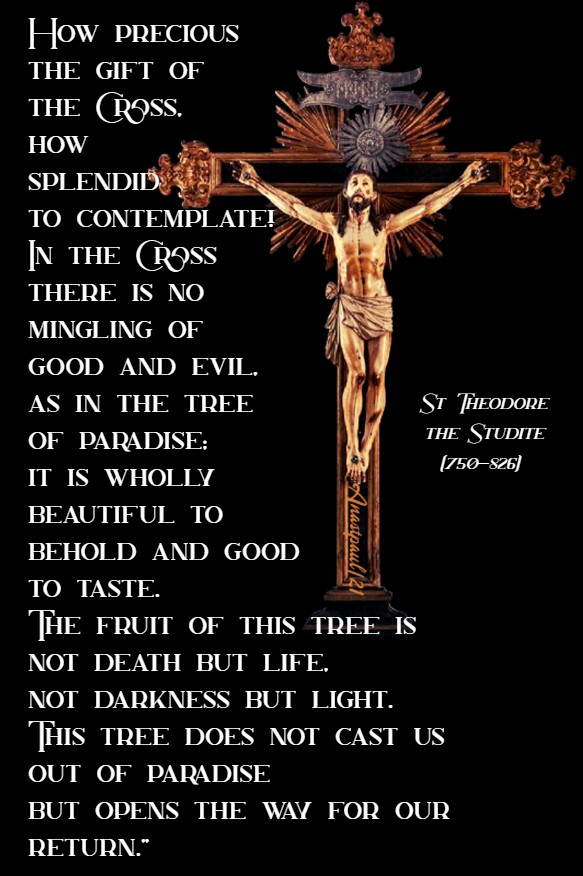
“How precious the gift of the Cross, how splendid to contemplate! In the Cross there is no mingling of good and evil, as in the tree of paradise; it is wholly beautiful to behold and good to taste. The fruit of this tree is not death but life, not darkness but light. This tree does not cast us out of paradise but opens the way for our return.”
St Theodore the Studite (750–826)
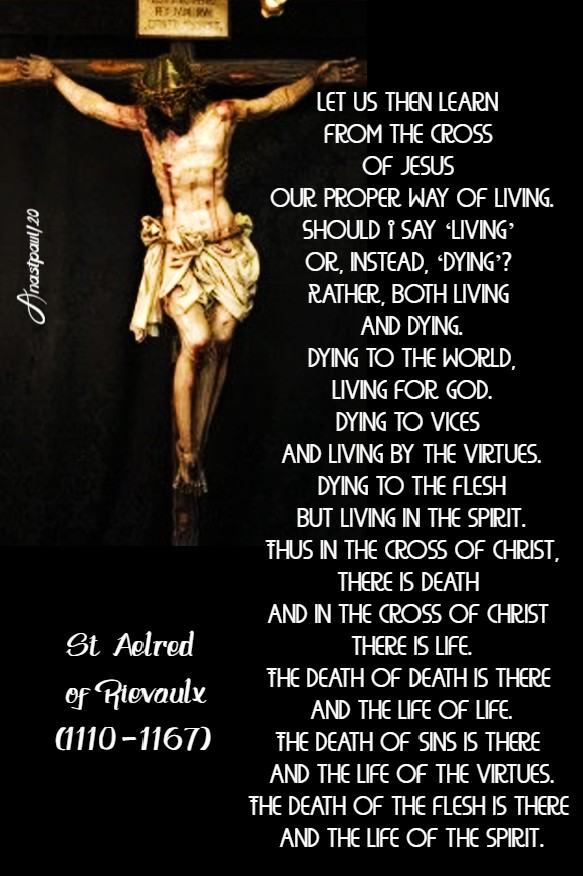
“Let us then learn from the Cross of Jesus our proper way of living. Should I say ‘living’ or, instead, ‘dying’? Rather, both living and dying. Dying to the world, living for God. Dying to vices and living by the virtues. Dying to the flesh, but living in the spirit. Thus in the Cross of Christ, there is death and in the Cross of Christ there is life. The death of death is there and the life of life. The death of sins is there and the life of the virtues. The death of the flesh is there and the life of the spirit.”
St Aelred of Rievaulx (1110-1167)
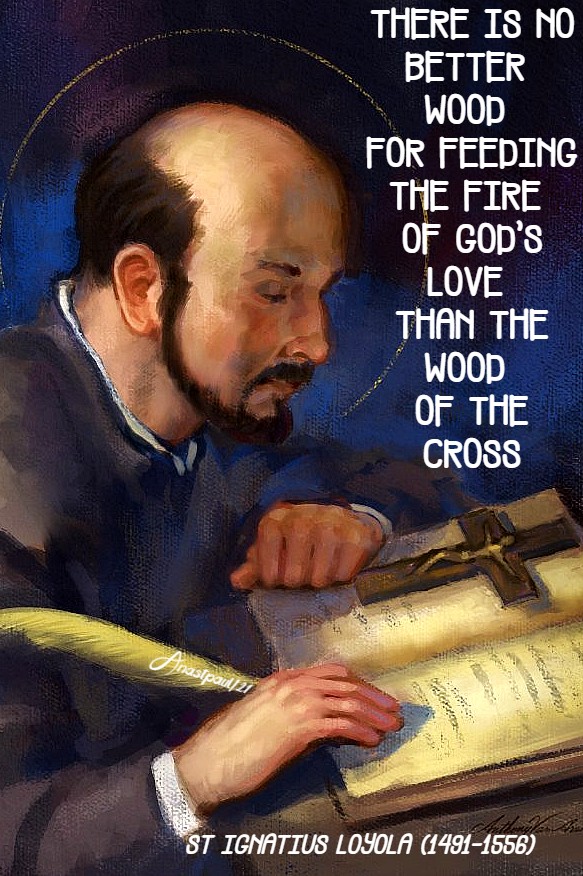
“There is no better wood for feeding the fire of God’s love than the wood of the Cross.”
St Ignatius Loyola (1491-1556)
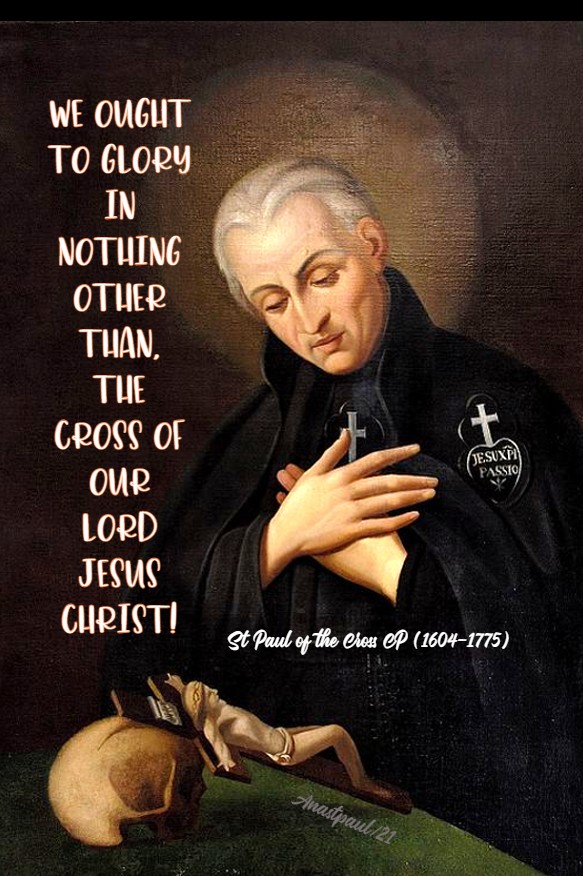
“We ought to glory in nothing other than, the Cross of our Lord Jesus Christ! …”
St Paul of the Cross CP (1604-1775)
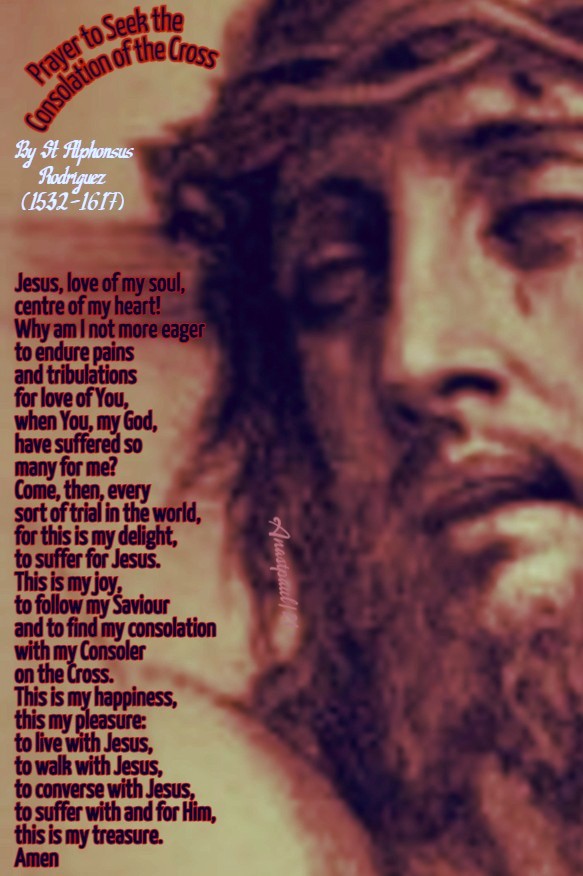
A Prayer to Seek the Consolation of the Cross By St Alphonsus Rodriguez SJ (1532-1617)
Jesus, love of my soul, centre of my heart! Why am I not more eager to endure pains and tribulations for love of You, when You, my God, have suffered so many for me? Come, then, every sort of trial in the world, for this is my delight, to suffer for Jesus. This is my joy, to follow my Saviour and to find my consolation with my Consoler on the Cross. This is my happiness, this my pleasure: to live with Jesus, to walk with Jesus, to converse with Jesus, to suffer with and for Him, this is my treasure. Amen
One Minute Reflection – 14 September – Feast of the Exaltation of the Holy Cross – Readings: Numbers 21:4-9, Psalms 78:1-2, 34-35, 36-37, 38, Philippians 2:6-11, John 3:13-17
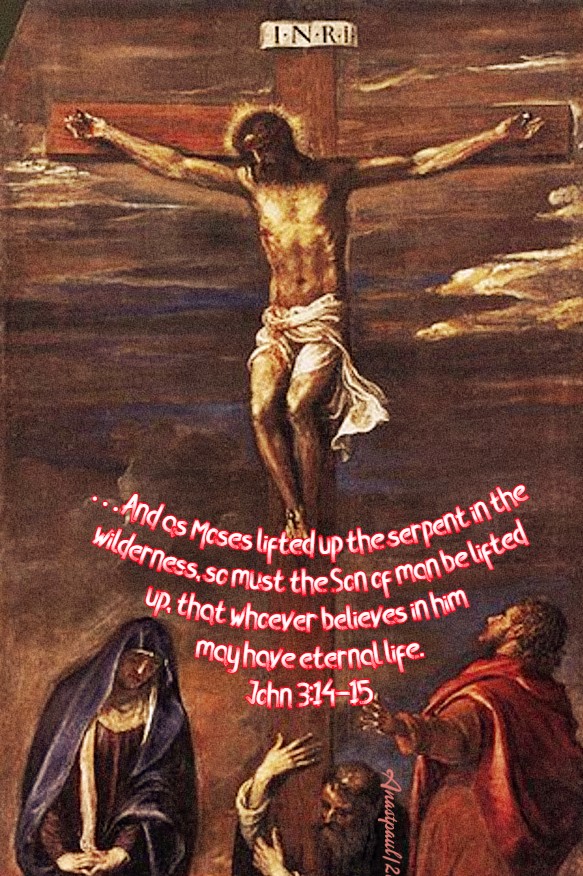
“…And as Moses lifted up the serpent in the wilderness, so must the Son of man be lifted up, that whoever believes in him may have eternal life.” – John 3:14-15
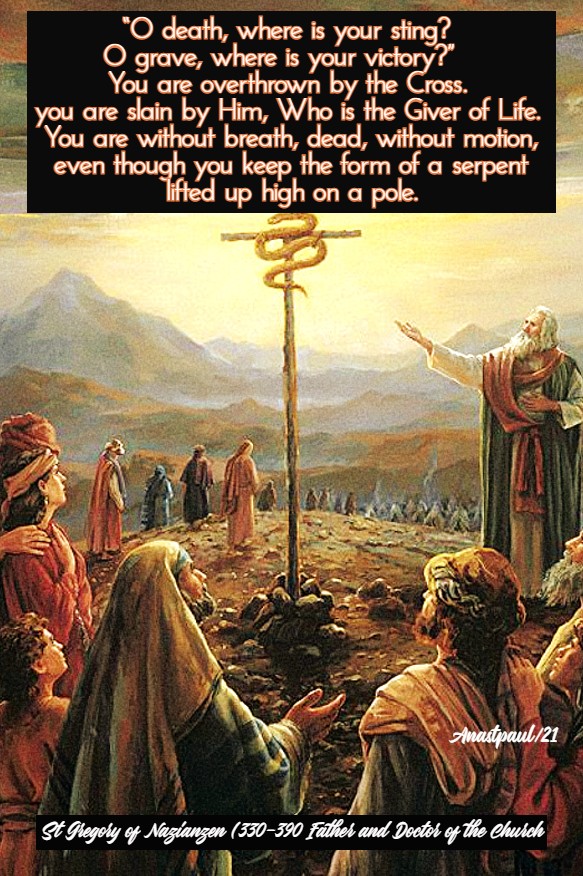
REFLECTION – “That brazen serpent was hung up as a remedy for the biting serpents, not as a type of Him that suffered for us but, as a contrast. It saved those that looked upon it, not because they believed it to live but because it was killed and killed with it, were the powers that were subject to it, being destroyed as it deserved. And what is the fitting epitaph for it from us? “O death, where is your sting? O grave, where is your victory?” You are overthrown by the Cross. you are slain by Him, Who is the Giver of Life. You are without breath, dead, without motion, even though you keep the form of a serpent lifted up high on a pole.” – St Gregory of Nazianzen (330-390) Archbishop of Constantinople, Father and Doctor of the Church (Oration 45).
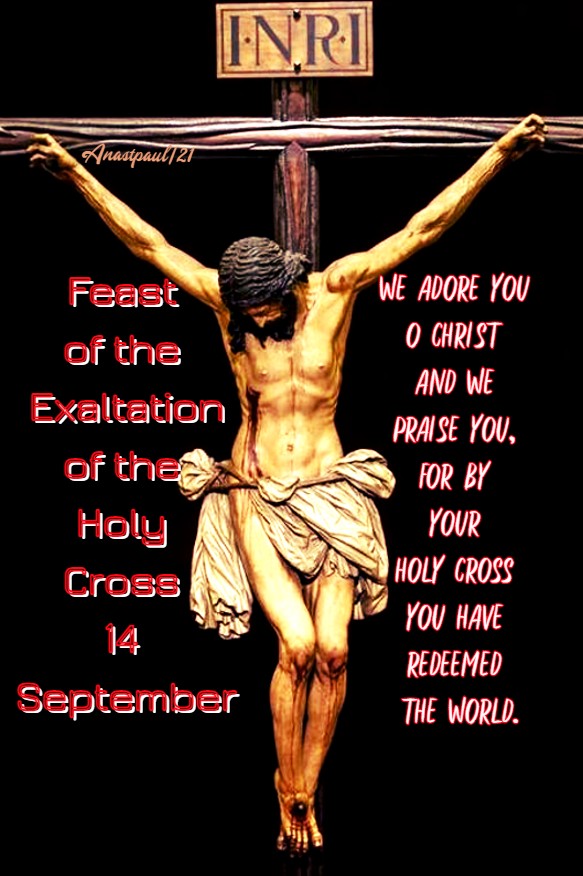
PRAYER – O God, who willed that Your Only Begotten Son should undergo the Cross to save the human race, grant, we pray, that we, who have known His mystery on earth, may merit the grace of His redemption in heaven. For You placed the salvation of the human race on the wood of the Cross, so that, where death arose, life might again spring forth and the evil one, who conquered on a tree, might likewise on a tree be conquered through Christ. O Cross, You are the glorious sign of victory. Through your power may we share in the triumph of Christ Jesus. We adore You O Christ and we praise You, for by Your Holy Cross You have redeemed the world. Amen.
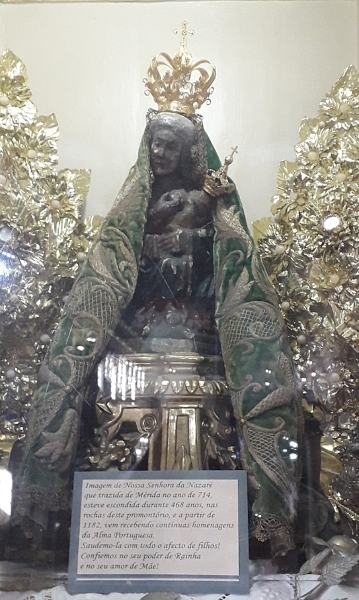
Nossa Senhora de Nazaré / Our Lady of Nazareth, Portugal (1182) -14 September:
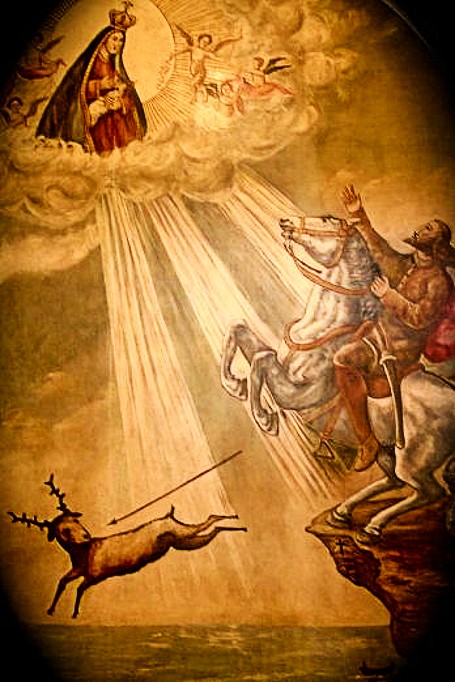
The chronicles of old Portugal report this episode that took place in the year 1182, on the day of the Exaltation of the Holy Cross. Dom Fuas Roupinho, a Knight and vassal of King Afonso Henriques, was out hunting on a foggy day. He was pursuing a deer when it came to an unexpected precipice and fell to its death into the sea below.
The horse, which was in close pursuit, reared on the very edge of the cliff and it seemed certain that Dom Fuas would follow the deer to his death. Knowing that a little distance to his left was a cave with the Statue of the Virgin of Nazareth, Dom Fuas immediately invoked her protection. He was saved and in thanksgiving he built a small “Chapel of memory” (Ermida da Memória) over the cave in her honour.
According to a document found with it, the little Statue of the Virgin had been venerated in Nazareth in the times of early Christianity. When the iconoclast heresy started in Constantinople and the heretics were destroying all the Statues, a Monk called Ciriaco took it to a Monastery in Spain in the proximity of Merida.
In 714, when the Saracens invaded the Iberian Peninsula, King Rodrigo fled with Friar Germano to the Atlantic coast, bearing the Statue with them. They hid the Statue in a small cave off the coast of the site that was later to become Nazaré, where it remained until it was found by a shepherd in 1179.
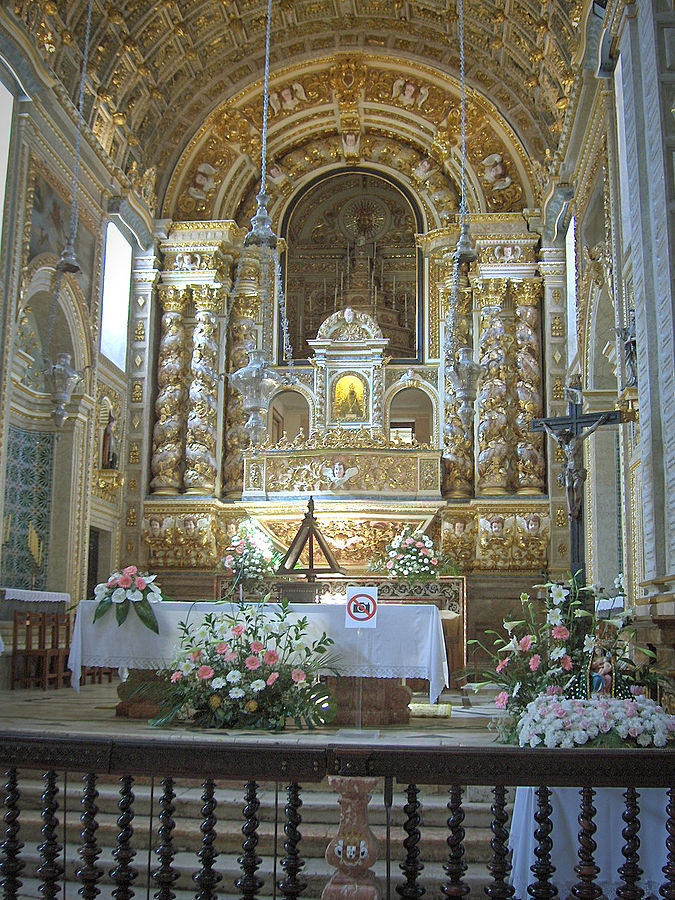
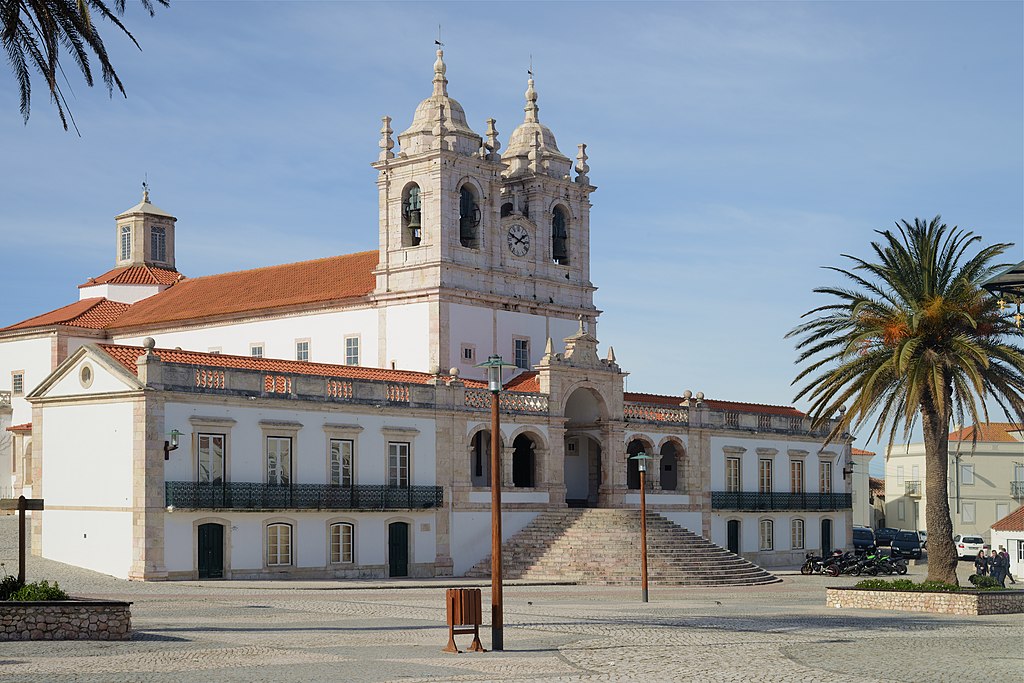
After Our Lady miraculously saved the life of Dom Fuas, the devotion to Our Lady of Nazareth spread throughout the country and was the source of countless graces for the people. In 1377 King Fernando ordered a large Church to be built near the little Chapel, and the Statue is venerated there now.
St Caerealis Bl Claude Laplace St Cormac of Cashel St Crescentian of Carthage St Crescentius of Rome St Generalis of Carthage St Giulia Crostarosa St Jean Gabriel Taurin du Fresse St Maternus of Cologne (Died c 325) Bishop
St Peter of Tarentaise O.Cist (1102-1174) Cistercian Monk, Archbishop of Tarentaise from 1141 until his death, Abbot, Apostle of Charity, Miracle-worker. There are two men named Saint Peter of Tarentaise who lived one century apart. The man we honour today is the younger Peter, born in France in the early part of the 12th century. The other man with the same name became Pope Innocent the Fifth. His Life: https://anastpaul.com/2019/09/14/saint-of-the-day-14-september-saint-peter-of-tarentaise-o-cist-1102-1174/
Bl Pedro Bruch Cotacáns St Rosula of Carthage St Sallustia St Victor of Carthage
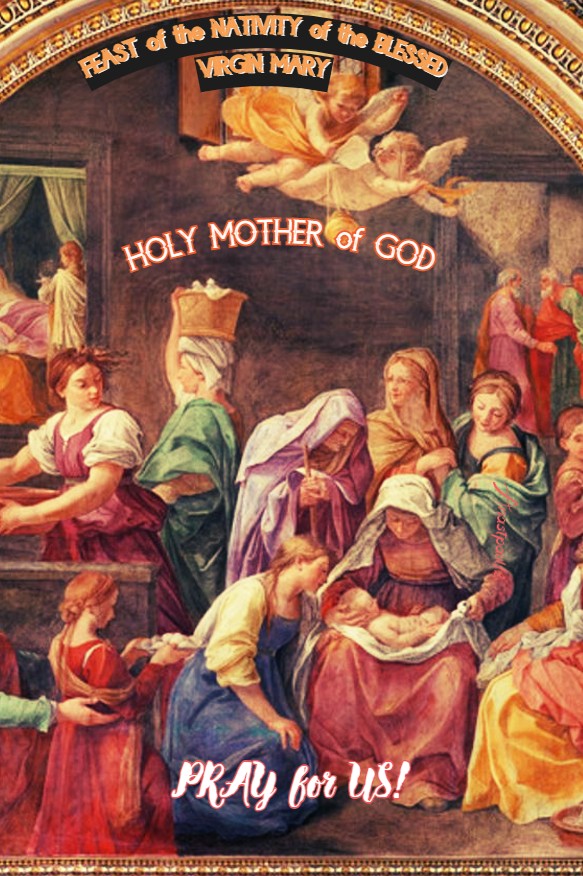
Quote/s of the Day – 8 September – Feast of the Nativity of the Blessed Virgin Mary
“Mary, Mother of Grace, it becomes you to be mindful of us, as you stand near Him who granted you all graces, for you are the Mother of God and our Queen. Help us for the sake of the King, the Lord God and Master, Who was born of you.”
St Athanasius (297-373) Father & Doctor of the Church
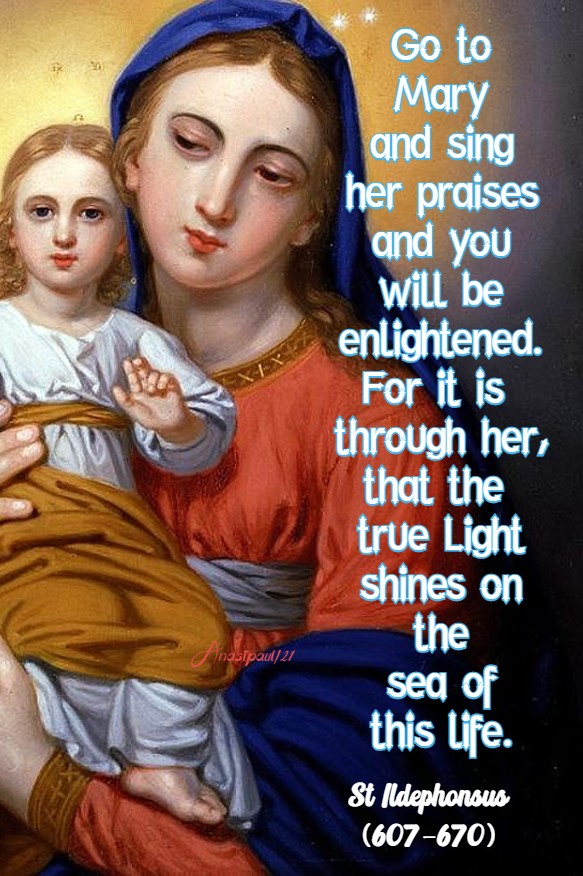
“Go to Mary and sing her praises and you will be enlightened. For it is through her, that the true Light shines on the sea of this life.”
St Ildephonsus (607-670)
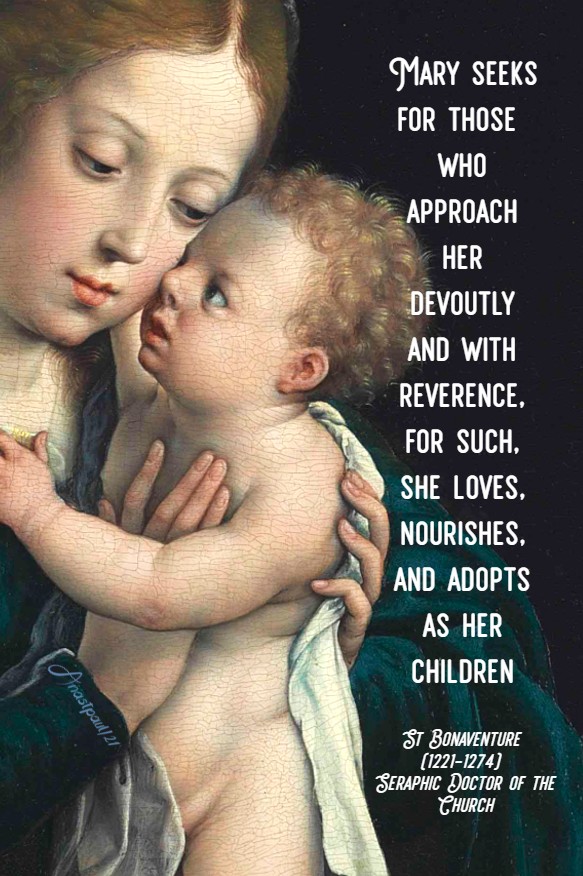
“Mary seeks for those who approach her devoutly and with reverence, for such she loves, nourishes, and adopts as her children. ”
St Bonaventure (1221-1274) Seraphic Doctor of the Church
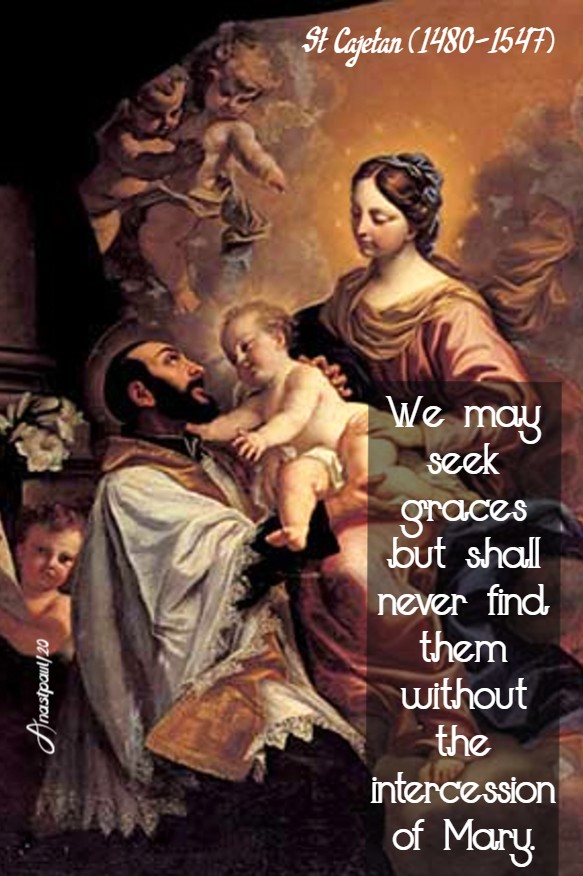
“We may seek graces but shall never find them without the intercession of Mary.”
St Cajetan (1480-1547)
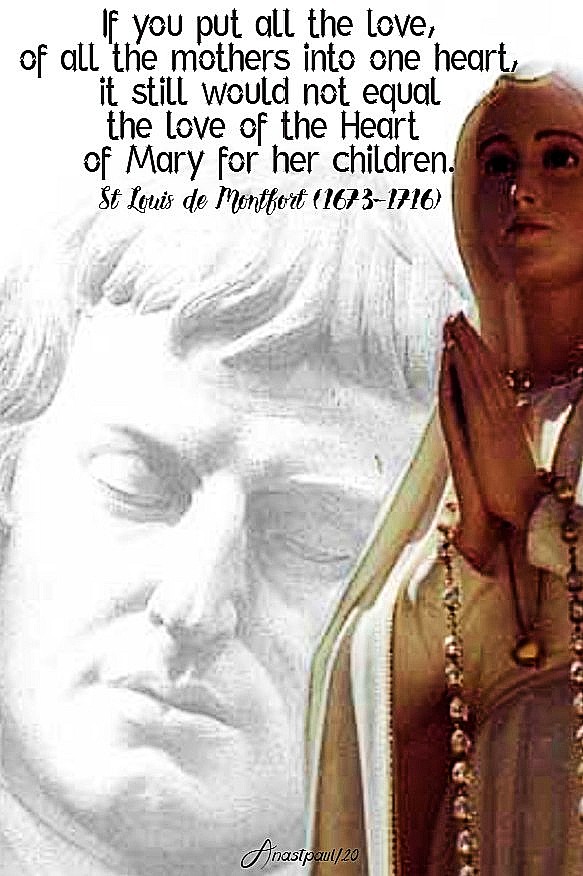
“If you put all the love, of all the mothers into one heart, it still would not equal the love of the Heart of Mary for her children.”
St Louis de Montfort (1673-1716)
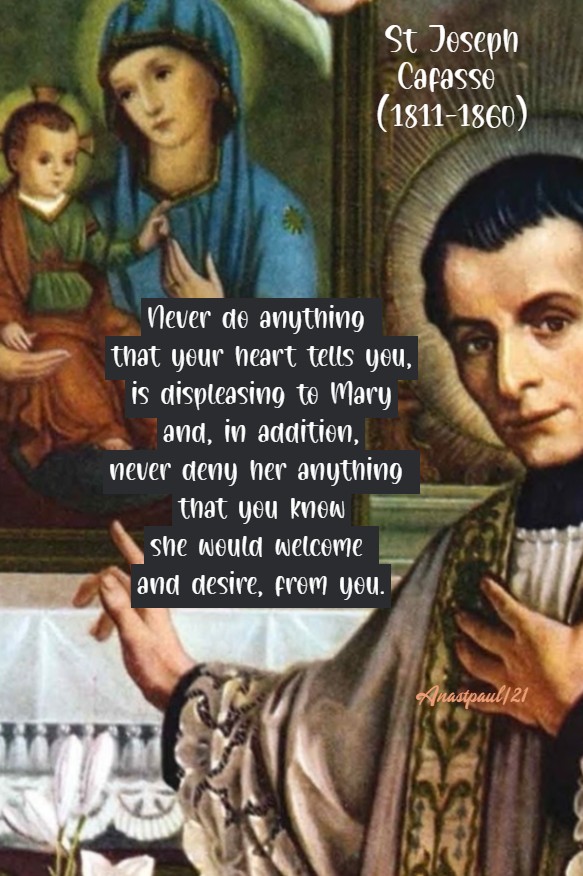
“Never do anything that your heart tells you, is displeasing to Mary and, in addition, never deny her anything that you know she would welcome and desire from you.”
St Joseph Cafasso (1811-1860)
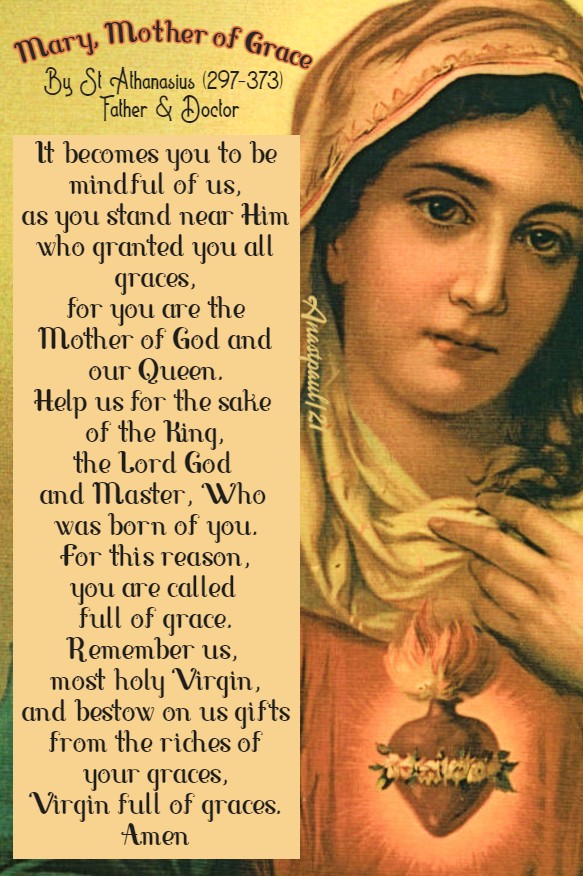
Mary, Mother of Grace St Athanasius (297-373) Father & Doctor of the Church
It becomes you to be mindful of us, as you stand near Him who granted you all graces, for you are the Mother of God and our Queen. Help us for the sake of the King, the Lord God and Master, Who was born of you. For this reason, you are called full of grace. Remember us, most holy Virgin, and bestow on us gifts from the riches of your graces, Virgin full of graces. Amen
One Minute Reflection –8 September – Feast of theNativity of the Blessed Virgin Mary – Readings: Micah 5:1-4a or Romans 8:28-30, Psalms 13:6, 6, Matthew 1:1-16, 18-23
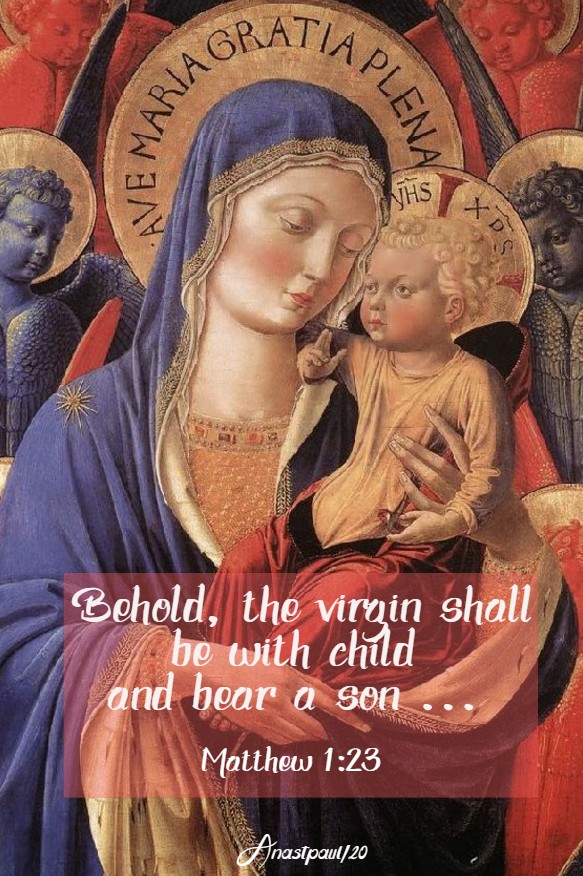
“Behold, the virgin shall be with child and bear a son – Matthew 1:23
REFLECTION – “Come, you nations; come, all peoples of every race and language, every age and rank. Joyfully let us celebrate the nativity of the whole world’s joy! If even the pagans honour the birthday of their king … what ought not we to do to honour that of the Mother of God, through whom all humanity has been transformed and the pain of Eve, our first mother, has been turned to joy? For Eve heard God’s sentence: “You will bring forth children in pain” (Gn 3:16) but Mary: “Rejoice, most highly favoured … the Lord is with you” (Lk 1:28). …
Let all creation celebrate and sing the holy childbirth of a holy woman, for she has brought a lasting treasure into the world. … Through her, the creative Word of God has been united to the whole creation and we celebrate the ending of human barrenness, the ending of the sickness that kept us from possessing all our good. … Nature has given way to grace … As the Virgin Mother of God had to be born of barren Anna, so nature remained without fruit until grace had produced its own. It was to open the womb of its mother, she who would give birth to “The Firstborn of all creation” in whom “all things hold together” (Col 1:15,17).
O blessed couple, Joachim and Anna! All creation owes you thanks; through you it has offered the Creator the best of all His gifts: a Mother worthy of veneration, the only Mother worthy of the One who created her. ”- St John Damascene (675-749) Monk, Theologian, Father and Doctor of the Church – Homily on the Nativity of the Virgin Mary, 1-2 (cf SC 80, p. 48)
PRAYER – Lord God, the day of our salvation dawned when the Blessed Virgin gave birth to Your Son. As we celebrate her nativity, grant us Your grace and Your peace. Through Christ, our Lord, Your Son in union with the Holy Spirit. Mary, Mother of God, pray for us, amen.
Nuestra Senora de la Covadonga, also named “La Santina” / Our Lady of Covadonga (720) – 8 September:
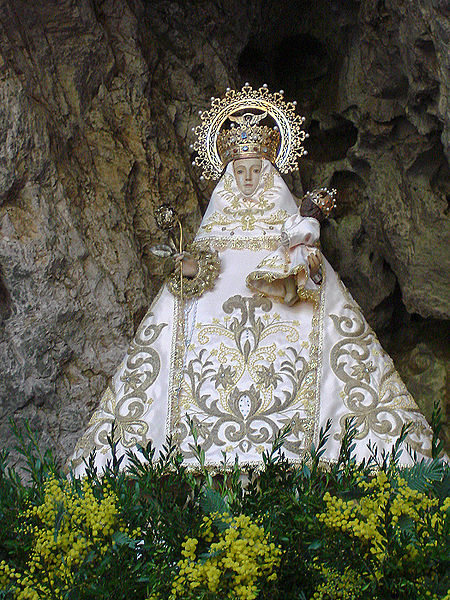
This is a title of the Blessed Virgin Mary and the name of a Marian Shrine devoted to her at Covadonga, Asturias. The Shrine in northwestern Spain rose to prominence following the Battle of Covadonga in about 720, which was the first defeat of the Moors during their invasion of Spain. A Statue of the Virgin Mary, secretly hidden in one of the caves, was believed to have miraculously aided the Christian victory. Our Lady of Covadonga is the Patron of Asturias, and a Basilica was built to house the current Statue. Our Lady of Covadong’s east day is 8 September.
Our Lady of Health of Vailankanni (16th Century) – 8 September:
This is the title given to the Blessed Virgin Mary by people as she twice appeared in the town of Velankanni, Tamil Nadu, India, in the 16th to 17th centuries. The Feast of the Nativity of Mary, is also commemorated as the feast of Our Lady of Good Health. The celebration starts on 29 August and ends on the day of the feast. The feast day prayers are said in Tamil, Marathi, East Indian, Malayalam, Telugu, Kannada, Konkani, Hindi and English.
Nuestra Senora de la Meritxell / Our Lady of Meritxell (12th Century) – 8 September:
This is an Andorran Roman Statue depicting an apparition of the Virgin Mary. Our Lady of Meritxell is the Patron Saint of Andorra. On 6 January in the late 12th century, villagers from Meritxell, Andorra were going to Mass in Canillo. Though it was winter, they found a wild rose in bloom by the roadside. At its base was a Statue of the Virgin and Child. They placed the Statue in a Chapel in the Church in Canillo. The next day the Statue was found sitting under the wild rose again. Villagers from Encamp took the Statue to their Church but the next day the Statue had returned to the rose bush. Though it was snowing, an area the size of a Chapel was completely bare and the villagers of Meritxell took this to mean that they should build a Chapel to house the Statue and so they did. On 8-9 September 1972 the Chapel burned down and the Statue was destroyed, a copy now resides in the new Meritxell Chapel. The feast day of Our Lady of Meritxell is 8 September and the Andorran National Day.
St Adam Bargielski St Adela of Messines Bl Alanus de Rupe
St Disibod of Disenberg St Ethelburgh of Kent St Faustus of Antioch St Isaac the Great St István Pongrácz St Kingsmark St Peter of Chavanon Bl Seraphina Sforza St Pope Sergius I (c 650–701)
St Timothy of Antioch Bl Wladyslaw Bladzinski — Martyrs of Alexandria – (5 saints) A group of Christians martyred together in the persecutions of Diocletian – Ammon, Dio, Faustus, Neoterius and Theophilus. Martyred in Alexandria, Egypt.
Martyrs of Japan – (21 beati): A group of 21 missionaries and converts who were executed together for their faith. • Antonio of Saint Bonaventure • Antonio of Saint Dominic • Dominicus Nihachi • Dominicus of Saint Francis • Dominicus Tomachi • Francisco Castellet Vinale • Franciscus Nihachi • Ioannes Imamura • Ioannes Tomachi • Laurentius Yamada • Leo Aibara • Lucia Ludovica • Ludovicus Nihachi • Matthaeus Alvarez Anjin • Michaël Tomachi • Michaël Yamada Kasahashi • Paulus Aibara Sandayu • Paulus Tomachi • Romanus Aibara • Thomas of Saint Hyacinth • Thomas Tomachi Died on 8 September 1628 in Nagasaki, Japan Beatified on 7 May 1867 by Pope Pius XI
Martyred in England: Bl John Norton Bl Thomas Palaser
Martyred in the Spanish Civil War: • Blessed Adrián Saiz y Saiz • Blessed Apolonia Lizárraga Ochoa de Zabalegui • Blessed Bonifacio Rodríguez González • Blessed Dolores Puig Bonany • Blessed Eusebio Alonso Uyarra • Blessed Ismael Escrihuela Esteve • Blessed Josefa Ruano García • Blessed Josep Padrell Navarro • Blessed Mamerto Carchano y Carchano • Blessed Marino Blanes Giner • Blessed Miguel Beato Sánchez • Blessed Pascual Fortuño Almela • Blessed Segimon Sagalés Vilá • Blessed Tomàs Capdevila Miquel






















You must be logged in to post a comment.