St Bertulph St Buo of Ireland St Calamanda of Calaf St Dominica of Shapwick St Fingen of Metz Bl Françoise Mézière St Gabriel de Duisco St Genuinus of Sabion St Indract St Isidore of Alexandria St Jesús Méndez-Montoya Bl John Morosini St Kichi Franciscus St Luca di Demenna St Modestus of Carinthia
Bl Primo Andrés Lanas St Saba the Younger St Vodoaldus of Soissons
Martyrs of Pontus: An unknown number of Christians who were tortured and martyred in assorted painful ways in the region of Pontus (in modern Turkey) during the persecutions of Maximian.
The Twenty-Six Martyrs of Japan: 26 Saints – the First Martyrs of Japan. Martyred on 5 February 1597 by Crucifixion, also known as Pedro Bautista Blasquez y Blasquez and 22 companions, along with Paulus Miki and 2 companions, were Beatified on 14 September 1627 by Pope Urban VIII, and Canonised on 8 June 1862 by Pope Pius IX.
Bl Dionisio de Vilaregut St Donatus of Fossombrone St Eutychius of Rome St Filoromus of Alexandria St Firmus of Genoa Bl Frederick of Hallum St Gelasius of Fossombrone St Geminus of Fossombrone St Gilbert of Limerick (c 1070–1145) Bishop St Gilbert of Sempringham (c 1083-1189) Priest, Founder of the Gilbertine order, St Isidore of Pelusium
St Jane de Valois O.Ann.M and TOSF (1464-1505) Princess, Queen, Founder, Religious Sister, Mystic, Teacher. Founded the monastic Order of the Sisters of the Annunciation of Mary. From this Order later sprang the religious congregation of the Apostolic Sisters of the Annunciation, founded in 1787 to teach the children of the poor. Biography: https://anastpaul.wordpress.com/2018/02/04/saint-of-the-day-4-february-saint-jane-of-valois-o-ann-m-1464-1505/
St Rembert St Themoius St Theophilus the Penitent St Vincent of Troyes St Vulgis of Lobbes
Jesuit Martyrs of Japan: A collective memorial of all members of the Jesuits who have died as Martyrs for the faith in Japan.
Martyrs of Perga – 4 Saints: A group of shepherds martyred in the persecutions of Decius. The only details we have about them are the names – Claudian, Conon, Diodorus and Papias. They were martyred in c 250 in Perga, Asia Minor (in modern Turkey).
St Anna the Prophetess St Berlinda of Meerbeke St Blasius of Armentarius St Blasius of Oreto St Caellainn St Celerinus of Carthage St Claudine Thevenet St Clerina of Carthage St Deodatus of Lagny St Eutichio St Evantius of Vienne St Felix of Africa St Felix of Lyons St Hadelin of Chelles Bl Helena Stollenwerk Bl Helinand of Pronleroy St Hippolytus of Africa St Ia of Cornwall St Ignatius of Africa Bl Iustus Takayama Ukon
Bl John Zakoly St Laurentinus of Carthage St Laurentius of Carthage St Lawrence the Illuminator St Liafdag St Lupicinus of Lyon St Margaret of England Bl Marie Rivier St Oliver of Ancona St Philip of Vienne St Remedius of Gap St Sempronius of Africa Blessed Stephen Bellesini OSA (1774-1840) Priest of the Hermits of St Augustine St Tigrides St Werburga of Bardney St Werburga of Chester
Benedictine Martyrs: A collective memorial of all members of the Benedictine Order who have died as Martyrs for the Faith.
Our Lady of the Candles – (formally known as Nuestra Señora de la Purificación y la Candelaria) is a Marian title and image venerated by Filipino Catholics. The image, which is enshrined on the balcony of Jaro Cathedral, is known as the patroness of Jaro District of Iloilo City and the whole of the Western Visayas. The feast day of Our Lady of the Candles is on Candlemas (2 February) and is celebrated in Iloilo City with a Solemn Pontifical Mass presided by the Archbishop of Jaro.
St Adalbald of Ostrevant St Adeloga of Kitzingen St Agathodoros of Tyana St Andrea Carlo Ferrari St Apronian the Executioner St Bruno of Ebsdorf St Burchard of Wurzburg St St Candidus the Martyr St Columbanus of Ghent St Cornelius the Centurion St Felician the Martyr St Feock St Firmus of Rome St Flosculus of Orléans St Fortunatus the Martyr St Hilarus the Martyr St Jeanne de Lestonnac St Lawrence of Canterbury (Died 2 February 619) The Second Archbishop of Canterbury Bl Louis Alexander Alphonse Brisson
St Rogatus the Martyr St Saturninus the Martyr St Sicharia of Orleans St Simon of Cassia Fidati St Theodoric of Ninden St Victoria the Martyr
Martyrs of Ebsdorf: Members of the army of King Louis III of France under the leadership of Duke Saint Bruno of Ebsdorf. The Martyrs died fighting invading pagan Norsemen, and defending the local Christian population. Four bishops, including Saint Marquard of Hildesheim and Saint Theodoric of Ninden, eleven nobles, and countless unnamed foot soldiers died repelling the invaders. They were martyred in the winter of 880 in battle at Luneberg Heath and Ebsdorf, Saxony (modern Germany).
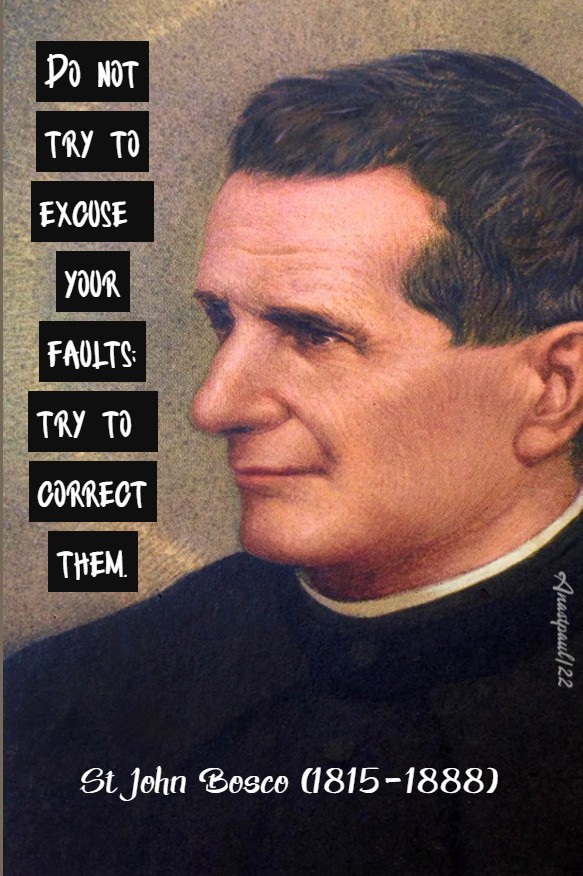
Quote/s of the Day – 31 January – The Memorial of St John Bosco (1815-1888)
“Do not try to excuse your faults; try to correct them.”
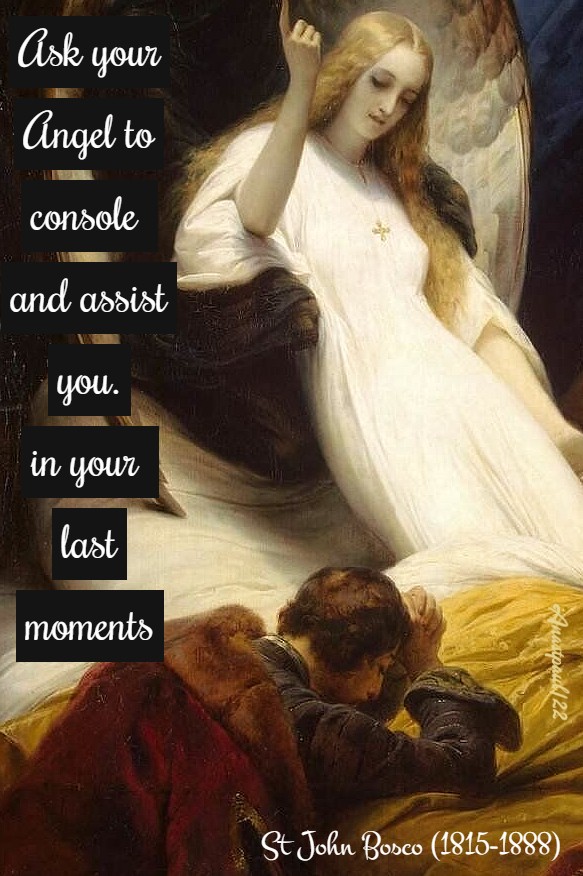
“Ask your Angel to console and assist you in your last moments.”
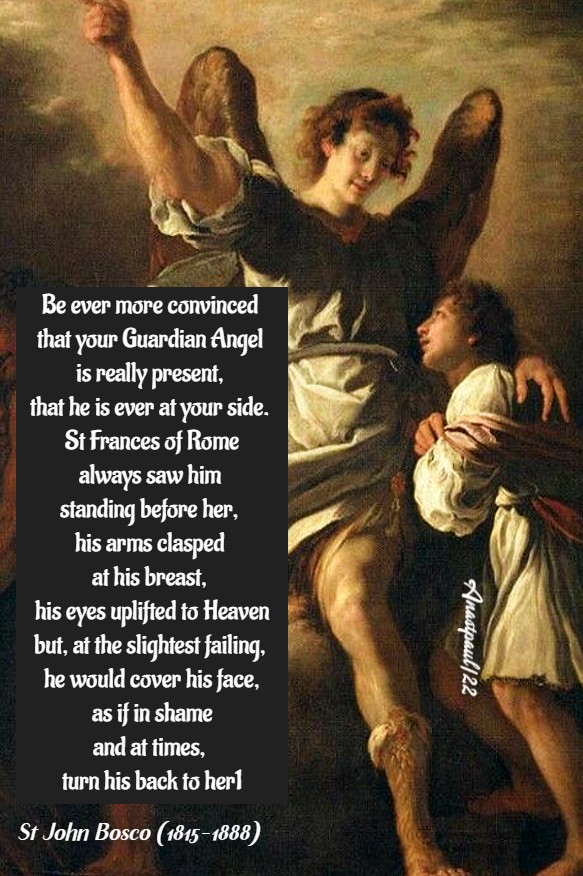
“Be ever more convinced that your Guardian Angel is really present, that he is ever at your side. St Frances of Rome always saw him standing before her, his arms clasped at his breast, his eyes uplifted to Heaven but, at the slightest failing, he would cover his face, as if in shame and at times, turn his back to her!”
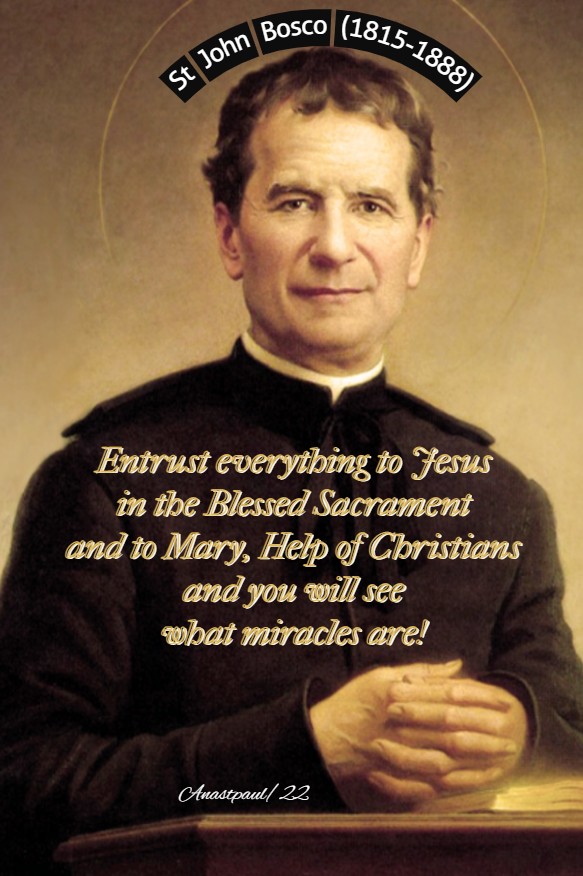
“Entrust everything to Jesus in the Blessed Sacrament and to Mary, Help of Christians and you will see what miracles are!”
St Abraham of Abela Bl Adamnan of Coldingham St Aedan of Ferns (c 550-632) Bishop St Aiden St Athanasius of Modon St Bobinus of Troyes St Eusebius of Saint Gall
St Geminian of Modena Bl John Angelus St Julius of Novara Bl Louise degli Albertoni Bl Luigi Talamoni St Madoes St Marcella Bl Maria Cristina di Savoia St Martin Manuel St Nicetas of Novgorod St Tryphaena of Cyzicus St Tysul St Ulphia of Amiens St Waldo of Evreux St Wilgils
Martyrs of Corinth – 14 Saints: A group of Christians tortured and martyred together in Corinth, Greece in the persecutions of Decius. We know nothing about them except some names – Anectus, Claudius, Codratus, Crescens, Cyprian, Diodorus, Dionysius, Nicephorus, Papias, Paul, Serapion, Theodora, Victor and Victorinus.
Martyrs of Canope: Athanasia Cyrus the Physician Eudoxia John the Physician Theoctista Theodotia
Martyred in Alexandria, Egypt: Cyriacus Metranus Saturninus Tarskius Thyrsus Victor Zoticus
Martyred in the Spanish Civil War: José Acosta Alemán Juan José Martínez Romero Pedro José Rodríguez Cabrera
Martyrs of Korea: Thousands of people were murdered in the anti-Catholic persecutions in Korea. • Saint Agatha Kwon Chin-i • Saint Agatha Yi Kyong-I • Saint Augustinus Park Chong-Won • Saint Magdalena Son So-Byok • Saint Maria Yi In-Dok • Saint Petrus Hong Pyong-Ju
St Felix IV, Pope Bl Francis Taylor Bl Haberilla Saint Hyacintha of Mariscotti TOR (1585-1646) Virgin, Sister of the Tertiary or Third Order Regular of St Francis (also TOSF). St Hippolytus of Antioch Bl Margaret Ball Bl Maria Bolognesi St Martina of Rome St Matthias of Jerusalem St Mutien Marie Wiaux St Paul Ho Hyob St Philippian of Africa St Savina of Milan
St Abundantia the Martyr St Aphraates St Aquilinus of Milan St Barbea of Edessa St Blath of Kildare Bl Boleslawa Maria Lament St Caesarius of Angoulême Bl Charles of Sayn St Constantius of Perugia (Died c 170) Martyr Bishop
St John Chrysostom (347-407) Father and Doctor of the Church – “Golden Mouthed,” Preacher, Orator, Writer, Theologian, Confessor. Name Meaning – God is gracious; gift of God (John), golden-mouthed (Chrysostom). Biography: https://anastpaul.com/2017/09/13/saint-of-the-day-13-september-st-john-chrysostom-347-407-father-and-doctor-of-the-church-golden-mouthed/ AND: https://anastpaul.com/2018/09/13/saint-of-the-day-13-september-st-john-chrysostom-347-407-father-and-doctor-of-the-church-golden-mouthed-2/ His Feast Day is today (changed in 1969 to 13 September). The Roman Martyrology states of him today: “At Constantinople, St John, Bishop, who was surnamed Chrysostom on account of his golden flow of eloquence. He greatly promoted the interests of the Christian religion by his preaching and exemplary life and, after many toils, closed his life in banishment. His sacred body was brought to Constantinople on this day in the reign of Theodosius the younger and afterwards taken to Rome and placed in the Basilica of the Prince of the Apostles. This illustrious Preacher of the Word of God, Pope Pius X declared and appointed as the Heavenly Patron of Sacred Orators.”
Bl Antonio Mascaró Colomina St Avitus St Candida of Bañoles St Carolina Santocanale St Devota of Corsica (Died c 303) Virgin Martyr St Domitian of Melitene St Emerius of Bañoles
Blessed Jurgis Matulaitis-Matulewicz/George Matulaitis MIC (1871-1927) Archbishop of Vilnius from late 1918 until his resignation in 1925, Apostolic Nuncio in Lithuania, Founder of the Congregation of the Poor Sisters of the Immaculate Conception of the Blessed Virgin Mary and the Handmaids of Jesus in the Eucharist, Professor, Spiritual Director, Superior-General of the Marian Fathers from 1911 until his death and is known as the “Renovator of The Marians.” His Story: https://anastpaul.com/2020/01/27/saint-of-the-day-27-january-blessed-george-matulaitis-mic-1871-1927/
St Gilduin Bl Gonzalo Diaz di Amarante St Henry de Osso y Cervello St John Maria Muzeyi Bl John of Warneton St Julian of Le Mans St Julian of Sora St Lupus of Châlons
St Marius of Bodon Bl Michael Pini St Natalis of Ulster St Paul Josef Nardini Bl Rosalie du Verdier de la Sorinière St Theodoric of Orléans St Pope Vitalian
Martyrs of North Africa – 30 Saints: A group of 30 Christians martyred together by Arian Vandals. The only details to have survived are four of their names – Datius, Julian, Reatrus and Vincent. c 500 in North Africa.
St Alphonsus of Astorga St Ansurius of Orense St Athanasius of Sorrento St Conan of Iona Bl Eystein Erlandsön Bl José Gabriel del Rosario Brochero Bl Marie de la Dive veuve du Verdier de la Sorinière Bl Michaël Kozal
St Theofrid of Corbie St Theogenes of Hippo St Tortgith of Barking
Martyred Family of Constantinople: Saint Mary and Saint Xenophon were married and the parents of Saint John and Saint Arcadius. Theirs was a wealthy family of Senatorial rank in 5th century imperial Constantinople, but were known as a Christians who lived simple lives. To give their sons a good education, Xenophon and Mary sent them to university in Beirut, Phoenicia. However, their ship wrecked, there was no communication from them, and the couple assumed, naturally, that the young men had died at sea. In reality, John and Arcadius had survived and decided that instead of continuing to Beirut, they were going to follow a calling to religious life and became monks, eventually living in a monastery in Jerusalem. Years later, Mary and Xenophon made a pilgrimage to Jerusalem – where they encountered their sons. Grateful to have their family re-united and taking it as a sign, Xenophon and Mary gave up their positions in society in Constantinople, and lived the rest of their lives as a monk and anchoress in Jerusalem. A few years later, the entire family was martyred together. They were martyred in 5th century Jerusalem.
St Raymond of Peñafort OP (1175-1275) “Father of Canon Law” Dominican Priest, Doctor of Canon Law, the Third Master of the Order of Preachers, Founder of the Mercedarian friars, Writer, Teacher, Miracle-Worker. St Raymond of Peñafort’s Feast day was inserted in the General Roman Calendar in 1671 for celebration on 23 January. In 1969 it was moved to 7 January, the day after that of his death. He is the Patron Saint of canon lawyers, specifically and lawyers, in general. Biography: https://anastpaul.com/?s=st+raymond+penafort
St Ildephonsus (506-667) Archbishop of Toledo. Theologian, Scholar, Marian devotee, Writer, Evangeliser. Abbot Dom Guéranger calls him the Doctor of the Virginity of Mary. Saint Ildephonsus established the feast of the Expectation of the Blessed Virgin Mary, which is still kept in some places on 18 December. Biography: https://anastpaul.wordpress.com/2018/01/23/saint-of-the-day-23-january-st-ildephonsus-607-667/
Bl Juan Infante St Jurmin St Lufthild St Maimbod Bl Margaret of Ravenna Martyrius of Valeria St Messalina of Foligno St Ormond of Mairé St Parmenas the Deacon St Severian the Martyr
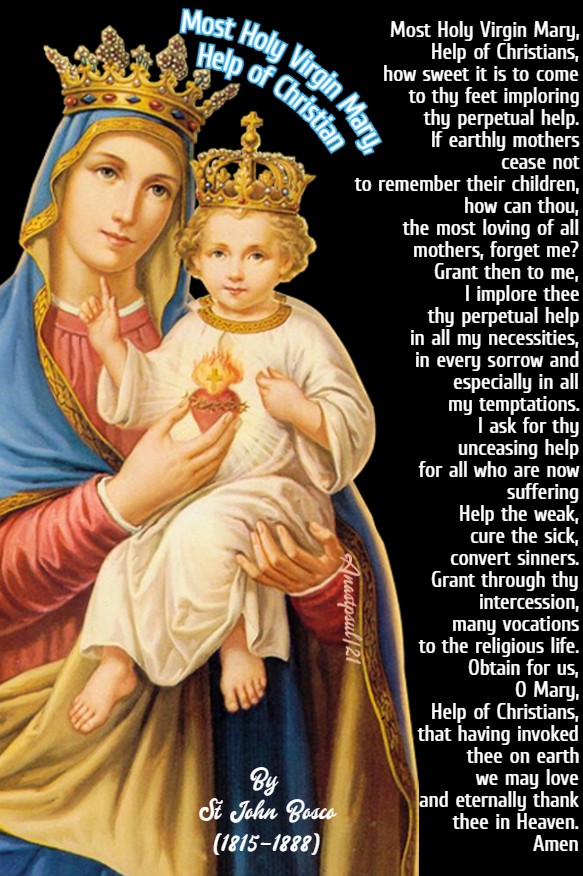
Our Morning Offering – 22 January – Mary’s Saturday
Most Holy Virgin Mary, Help of Christian By St John Bosco (1815-1888)
Most Holy Virgin Mary, Help of Christians, how sweet it is to come to thy feet imploring thy perpetual help. If earthly mothers cease not to remember their children, how can thou, the most loving of all mothers, forget me? Grant then to me, I implore thee thy perpetual help in all my necessities, in every sorrow and especially in all my temptations. I ask for thy unceasing help for all who are now suffering. Help the weak, cure the sick, convert sinners. Grant through thy intercession, many vocations to the religious life. Obtain for us, O Mary, Help of Christians, that having invoked thee on earth we may love and eternally thank thee in Heaven. Amen
St Agnes of Aislinger St Alban Bartholomew Roe St Anastasius of Constantinople St Aquila of Trebizond St Brigid of Kilbride St Candidus of Trebizond Bl Edward Stransham St Epiphanius of Pavia (c 439–496) Bishop St Eugenius of Trebizond Bl Franciscus Bang St Gunthildis of Biblisheim
Blessed Josefa María Inés de Benigánim OAD (1625–1696) Nun of the Discalced Augustinian Nuns with the religious name of “Josefa María of Saint Agnes,” Virgin, Mystic, gifted with the charism of prophecy and counsel. She became known for her profound spiritual and theological insight as well as for her severe austerities she practised during her life. Her body is incorrupt. Biography: https://anastpaul.com/2020/01/21/saint-of-the-day-21-january-blessed-josefa-maria-ines-de-beniganim-oad-1625-1696/
St John Yi Yun-on St Lawdog St Maccallin of Waulsort
St Nicholas Woodfen St Patroclus of Troyes St Publius of Malta Bl Thomas Reynolds St Valerian of Trebizond St Vimin of Holywood St Zacharias the Angelic
Blessed Martyrs of Laval – 19 Beati: Fifteen men and four women who were martyred in Laval, France by anti-Catholic French Revolutionaries. • Blessed André Duliou • Blessed Augustin-Emmanuel Philippot • Blessed François Duchesne • Blessed François Migoret-Lamberdière • Blessed Françoise Mézière • Blessed Françoise Tréhet • Blessed Jacques André • Blessed Jacques Burin • Blessed Jean-Baptiste Triquerie • Blessed Jean-Marie Gallot • Blessed Jeanne Veron • Blessed John Baptist Turpin du Cormier • Blessed Joseph Pellé • Blessed Julien Moulé • Blessed Julien-François Morin • Blessed Louis Gastineau • Blessed Marie Lhuilier • Blessed Pierre Thomas • Blessed René-Louis Ambroise The were born in France and they were martyred on several dates in 1794 in Laval, Mayenne, France. They were Beatified on 19 June 1955 by Pope Pius XII at Rome, Italy.
Martyrs of Rome – 30 Saints: Thirty Christian soldiers executed together in the persecutions of Diocletian. They were martyred in 304 in Rome, Italy.
Martyrs of Tarragona: Augurius, Eulogius, Fructuosus.
St Ascla of Antinoe Bl Basil Anthony Marie Moreau St Basilides the Senator St Bassus the Senator Bl Benedict Ricasoli Bl Bernardo of Poncelli Bl Cyprian Michael Iwene Tansi St Daniel of Cambron Bl Didier of Thérouanne St Eusebius the Senator St Eustochia Calafato
St Eutyches the Senator St Fechin of Fobhar Bl Francesco Paoli Saint Henry of Uppsala (Died c 1156) Bishop, Martyr Bl Jeroni Fábregas Camí St Maria Cristina dell’Immacolata Concezione St Molagga of Fermoy St Neophytus of Nicaea St Stephen Min Kuk-ka St Wulfsin
Feast of the Chair of St Peter: In 1960, Pope John XXIII removed from the General Roman Calendar, the 18 January Feast of the Chair of Peter, Two Liturgical Feasts were celebrated in Rome, in Honour of Chairs of Saint Peter, one of which was kept in the Baptismal Chapel of St Peter’s Basilica, the other at the Catacomb of Priscilla. The dates of these celebrations are 18 January and 22 February. The two Feasts were included in the Tridentine Calendar with the rank of Double, which, in 1604, Pope Clement VIII raised to the rank of Greater Double. Those traditional Catholics. who do not accept the changes made by Pope John XXIII, continue to celebrate both Feast days: “Saint Peter’s Chair at Rome” on 18 January and the “Chair of Saint Peter at Antioch” on 22 February. https://anastpaul.com/2017/02/22/feast-of-the-chair-of-st-peter-22-february/
St Archelais the Martyr Bl Beatrix of Este the Younger Bl Charlotte Lucas St Catus
Blessed Cristina Ciccarelli OSA (1481–1543) Religious of the Order of Saint Augustine, Mystic, Stigmatist, Apostle of the poor, Reformer, she had a had a particular devotion to the Eucharist and to the Passion and Death of Christ, she was granted the gift of Prophecy, visions and levitation. About Bl Cristina: https://anastpaul.com/2020/01/18/saint-of-the-day-18-january-blessed-cristina-ciccarelli-osa-1481-1543/
St Day/Dye St Deicola of Lure Bl Fazzio of Verona Bl Félicité Pricet St Leobard of Tours
Bl Monique Pichery St Moseus of Astas St Prisca of Rome (1st Century) Child Virgin Martyr St Susanna the Martyr St Thecla the Martyr St Ulfrid of Sverige Bl Victoire Gusteau St Volusian of Tours
Martyrs of Carthage – 3 saints Martyrs of Egypt -37 saints Martyrs of Nicaea – 3 saints
St Achillas of Sketis St Amoes of Sketis St Antony of Rome Bl Euphemia Domitilla Blessed Gamelbert of Michaelsbuch (c 720-c 802) Priest St Genitus St Genulfus St Jenaro Sánchez Delgadillo St John of Rome Bl Joseph of Freising St Julian Sabas the Elder St Marcellus of Die St Merulus of Rome St Mildgytha St Nennius St Neosnadia St Pior St Richimir
St Juana Maria Condesa Lluch Bl Konrad II of Mondsee St Leobazio St Liberata of Pavia St Pope Marcellus I (Died 309) Martyr, Papal Ascension May-June 308 St Melas of Rhinocolura St Priscilla of Rome St Sigeberht of East Anglia St Titian of Oderzo St Triverius St Valerius of Sorrento
St Arnold Janssen SVD (1837-1909) Priest, Founder, Missionary, Teacher, advocate of the Sacred Heart, Director of the Apostleship of Prayer, He founded the Society of the Divine Word, a Catholic missionary religious congregation, also known as the Divine Word Missionaries, as well as two congregations for women. Biography: https://anastpaul.com/2020/01/15/saint-of-the-day-15-january-st-arnold-janssen-svd-1837-1909/
St Blaithmaic of Iona St Bonitus of Clermont St Britta St Ceolwulf of Northumbria St Emebert of Cambrai St Ephysius of Sardinia St Eugyppius St Francis Ferdinand de Capillas Bl Geoffrey of Peronne Bl Giacomo Villa St Gwrnerth St Habakkuk the Prophet St Isidore of Scété St Isidore the Egyptian St Ita of Killeedy St John Calabytes St Liewellyn St Lleudadd of Bardsey St Macarius of Egypt St Malard of Chartres
St Maurus OSB (c 512-584) Benedictine Monk, Abbot and Deacon, miracle-worker. Maurus was the first disciple of Saint Benedict of Nursia (512–584). He is mentioned in Saint Gregory the Great’s biography of the latter as the first oblate, offered to the Monastery by his noble Roman parents as a young boy, to be brought up in the monastic life. The formula and blessing of St Maurus were universally adopted and approved for use in the Blessing of the Sick. His Life and Miracles: https://anastpaul.com/2021/01/15/saint-of-the-day-15-january-saint-maurus-osb-c-512-584/
Bl Peter of Castelnau St Placid St Probus of Rieti St Romedio of Nonsberg St Sawl St Secondina of Anagni St Secundina of Rome St Tarsicia of Rodez St Teath
Martyrs of Suances – 5 Beati: A Priest and four laymen in the Archdiocese of Burgos, Spain who were Martyred together in the Spanish Civil War. • Blessed Donato Rodríguez García • Blessed Emilio Huidobro Corrales • Blessed Germán García y García • Blessed Valentín Palencia Marquina • Blessed Zacarías Cuesta Campo They were martyred on 15 January 1937 near Suances, Cantabria, Spain The Beatification was celebrated in Burgos, Spain, presided by Cardinal Angelo Amato.
Bl Amadeus of Clermont St Barbasymas St Caldeoldus of Vienne St Datius of Milan Bl Devasahayam Pillai St Engelmaro St Eufrasio of Clermont St Euphrasius the Martyr
St Felix of Rome St Fermin of Mende St Glycerius of Antioch St Godfrey of Cappenberg (c 1097-1127) Monk St Isaias the Martyr St Jesaja of Sinai St Macrina the Elder St Nino of Georgia Bl Odoric of Pordenone
St Potitus Bl Rainer of Arnsberg St Sabas of Sinai St Sava of Serbia St Successus of Africa St Theodolus of Sinai Bl William de Sanjulia
Martyrs of Mount Sinai: A group of Monks on Mount Sinai who were Martyred by desert Bedouins. Their names and exact number have not come down to us. Martyred by Bedouins.
Martyrs of Raithu – 43 saints: A group of 43 Monks in the Raithu Desert near Mount Sinai, Palestine, near the Red Sea. They were Martyred for their faith by desert Bedouins. Their names have not come down to us. Martyred by Bedouins.
St Agrecius of Trier St Andrew of Trier St Berno of Cluny St Ðaminh Pham Trong Kham St Designatus of Maastricht St Elian of Brittany St Emil Szramek St Enogatus of Aleth St Erbin of Cornwall
Blessed Francesco Maria Greco (1857-1931) Priest and Founder with Servant of God Raffaela De Vincentis (Sr Maria Teresa De Vincenti (1872-1936) of the Little Workers of the Sacred Hearts, Professor of Dogmatic Theology and Sacred Scripture, Apostle of Charity, devotee of Eucharistic Adoration, the Blessed Virgin and the Sacred and Immaculate Hearts. Blessed Francesco’s Life: https://anastpaul.com/2019/01/13/saint-of-the-day-13-january-blessed-francesco-maria-greco-1857-1931/
Bl Francisca Inés Valverde González St Giuse Pham Trong Ta St Glaphyra St Gumesindus of Córdoba St Hermylus Bl Hildemar of Arrouaise Bl Ida of Argensolles Bl Ivetta of Huy
St Leontius of Caesarea St Luca Pham Trong Thìn Bl María Francisca Espejo y Martos Bl Matteo de Lana St Peter of Capitolíade St Remigius of Rheims (c 438-533) Bishop “Apostle of the Franks” St Servusdei of Córdoba St Stephen of Liège St Stratonicus
St Bernard of Corleone St Caesaria of Arles St Caroticus Bl Emmanuel d’Abreu St Eutropius St Ferreolus of Grenoble Bl John Gaspard Cratz St John of Ravenna Bl Lucia of Valcaldara
St Probus of Verona St Quinctus the Soldier St Satyrus St Tatiana of Rome St Tigrius St Victorian of Asana Bl Vincent da Cunha
Martyrs of Africa – 44 Saints: A group of 44 Christian soldiers murdered together for their faith in Africa. The only details that survive are four of their names – Castulus, Modestus, Rogatus and Zoticus.
Martyrs of Ephesus – 42 Saints: Forty-two monks martyred at a monastery in Ephesus (modern Turkey) during the persecutions of the Iconoclast Byzantine Emperor Constantine V. Their names have not come down to us. Martyred c 762.
Martyrs of Iona – 38 Saints: Thirty-eight monks martyred in Iona, Ireland. Their names have not come down to us. They were Martyred in 750 at Iona, Ireland.
Madonna della Vetrana / Our Lady of the Vetrana(Castellana Grotte, Bari, Puglia, Italy (1691) – 11 January:
In Castellana from time immemorial, there was a small Chapel dedicated to the Mother of God which contained a miraculous Fresco which was greatly revered ,after the Madonna had rid the region of the plague in the seventeenth century. Since then, the Shrine became a destination for faithful pilgrims reaping countless miracles, which the Virgin Mother obtained from her Divine Son.
In late 1690 the Church was almost ruined when a serious incident came to disturb the Castellana and the surrounding area. A serious disease spread, carrying death and mourning. Casimiro wrote in 1726. “This evil that made a great slaughter among the people, once attacked, all six children of Hadrian (Count of Conversano) and his wife Isabel Caracciolo. He who loved his wife and children, seeing this danger, resorted to the intercession of the Virgin … All his family was spared from evil. “ Two good priests’ recourse to the intercession of Saint Mary of the Vetrana and on 11 January 1691 one of them heard a voice that ordering the scourge to cease. “The Lady also expressed her desire to expand the Church.“ “So – continues Casimiro – “the Castellana people in recognition of the benefits received from the Virgin, immediately agreed to rebuild and expand the Church of St Maria della Vetrana.” The work lasted only a year and all the citizens of the Castellana took part.
Castellana, began to be known around the world after 23 January 1938, when Prof. Franco Anelli, a Caver, discovered a karst cave system. In 1959 because of this fascinating underground world, Castellana changed its name to ‘Castellana Grotte.‘
The festivities and celebrations on 11 January
St Alexander of Fermo St Anastasius of Suppentonia
St Boadin of Ireland St Breandan of Ireland (the name is not an error) St Eithne St Fedelemia Bl Francis Rogaczewski St Francisca Salesia Aviat St Honorata of Pavia St Pope Hyginus (Died 142) Papal Ascension c 138 St Leucius of Alexandria St Leucius of Brindisi St Liberata of Pavia St Lucius the Soldier St Luminosa of Pavia St Mark the Soldier St Michael of Klopsk St Palaemon St Paldo St Peter Balsam St Peter of Alexandria St Peter of Anea St Peter the Soldier
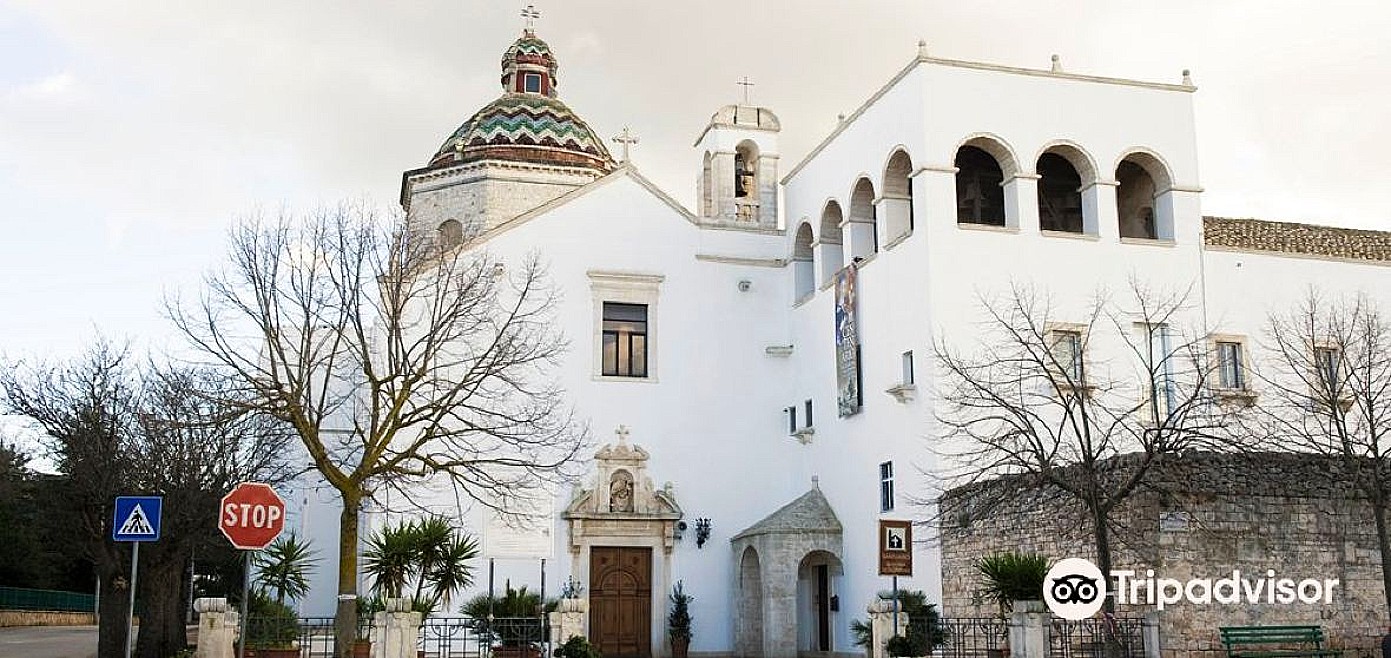
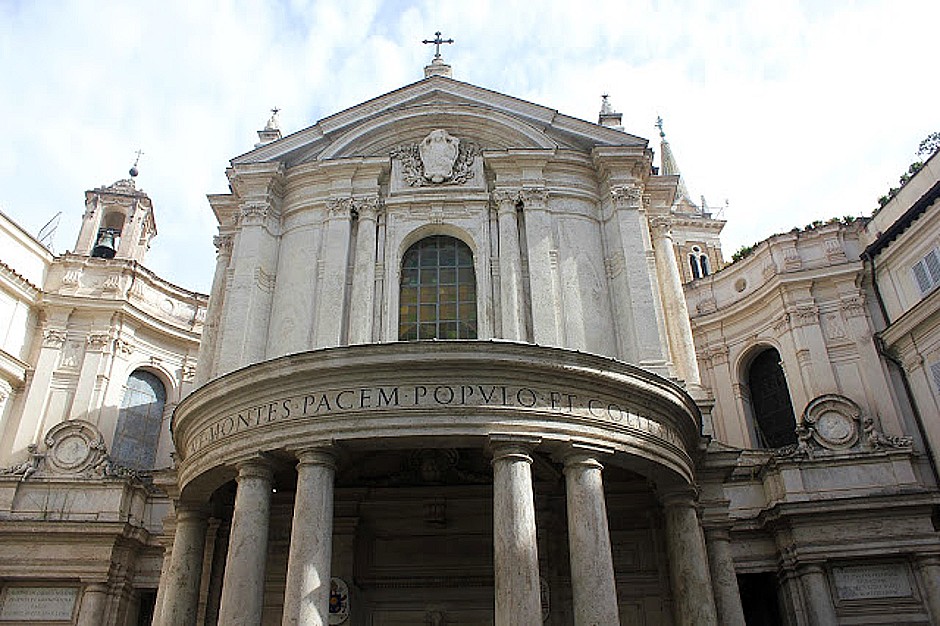
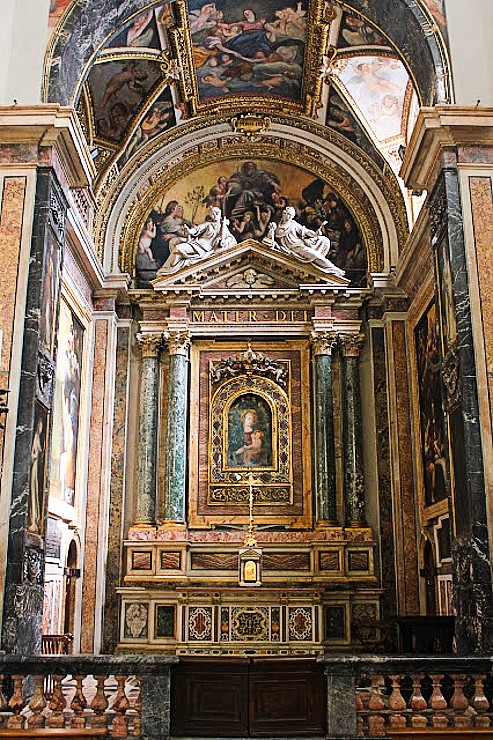
Madonna del Pianto / Madonna of the Lament or the Weeping Madonna, Rome, Italy (1546) – 10 January:
On 10 January1546, two men quarreled violently near the street Shrine of the Madonna del Portico d’Ottavia, on via Arco dei Cenci near the Roman Ghetto. One begged the other to spare him for love of the Virgin Mary, then stabbed that man in the back when he hugged him in forgiveness. The image of the Virgin wept three days. The 15th-century fresco was then moved into the nearby Church of San Salvatore de Cacabariis.
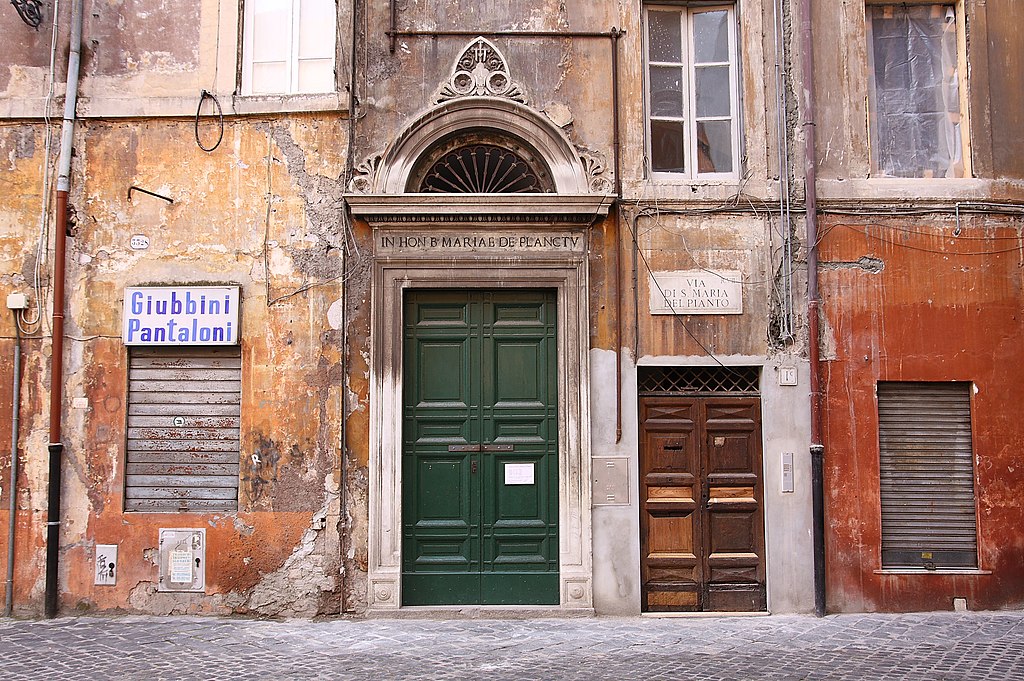
The old entrance to the church at Via Santa Maria del Pianto.
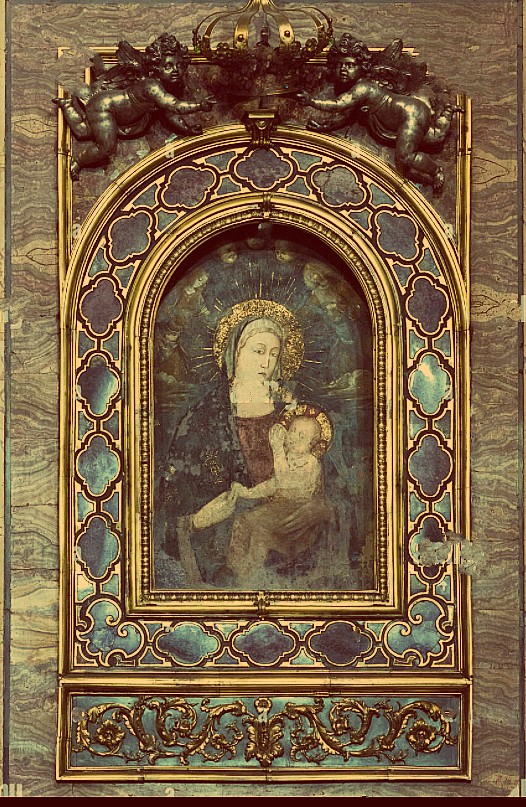
In 1612 the Church reconstruction began and in 1616 the image was re-installed and the Church re-dedicated to the Weeping Madonna. The event is commemorated in a fresco, the Madonna of the Lament, over the high Altar. There is also the painting of the Miracle of the Weeping Madonna opposite the organ on one of the two sides of the Altarpiece. Mother and Child were crowned on 20 May 1643. The ancient image is a representation of Mary nursing the Child.
St Aldo of Carbonari St Pope Agatho Bl Anna of the Angels Monteagudo St Arcontius of Viviers Bl Benincasa of Cava St Dermot of Inis Clothrann St Domitian of Melitene Blessed Pope Gregory X TOSF (1210-1276) Bishop of Rome 1272-1276 Bl Giles of Lorenzana
St Maurilius of Cahors St Nicanor of Cyprus St Paul the Hermit (c 230-342) The First Desert Hermit “In Thebais, the birthday of St Paul, the first Hermit, who lived alone in the desert from the sixteenth to the one hundred and thirteenth year of his age. His soul was seen by St Anthony Abbot, carried by Angels among the choirs of Apostles and Prophets. His Feast is celebrated on the 15th day of this Month. (Roman Martyrology)”
St Agatha Yi Bl Antony Fatati St Brithwald of Canterbury St Eustratius of Olympus Bl Franciscus Yi Bo-Hyeon St Honorius of Buzancais Bl Józef Pawlowski
Blessed Julia of Certaldo OSA (1319-1367) Recluse, Laywoman, Third Order Augustinian
Bl Kazimierz Grelewski St Marcellinus of Ancona St Marciana Bl Martinus In Eon-min St Maurontius St Nearchus St Paschasia of Dijon
St Peter of Sebaste (c 340-c 391) Bishop of Sebaste in Lesser Armenia. Member of the glorious family of Saints – He was the younger brother of Basil of the Great, Gregory of Nyssa, the famous Christian Hermit Naucratius and Macrina the Younger and a close friend of Gregory of Nazianzen, all Saints. Of course, Basil and Gregory of Nazianzen are both Doctors too. About St Peter: https://anastpaul.com/2021/01/09/saint-of-the-day-9-january-st-peter-of-sebaste-c-340-c-391-bishop/
St Philip Berruyer St Polyeucte St Teresa Kim St Waningus of Fécamp (Died c 688) Monk, Abbot
Martyrs of Africa – 21 Saints: A group of 21 Christians murdered together for their faith in the persecutions of Decius. The only details to survive are 14 of their names – Artaxes, Epictetus, Felicitas, Felix, Fortunatus, Jucundus, Pictus, Quietus, Quinctus, Rusticus, Secundus, Sillus, Vincent and Vitalis. They were Martyred in c 250. Martyrs of Antioch – 6 saints: A group of Christians Martyred together during the persecutions of Diocletian – Anastasius, Anthony, Basilissa, Celsus, Julian and Marcionilla.
Our Morning Offering – 8 January – Octave of Epiphany and Mary’s Day
Mother of Salvation, Blessed Lady By Anselm (1033-1109) Magnificent Doctor Marian Doctor
Mother of Salvation, Blessed Lady, you are the Mother of Justification and those who are justified; the Mother of Reconciliation and those who are reconciled; the Mother of Salvation and those who are saved. What a blessed trust and what a secure refuge! The Mother of God is our Mother. The Mother of the One in Whom alone, we hope and Whom alone, we fear, is our Mother! … The One Who partook of our nature and by restoring us to life, made us children of His Mother, invites us by this grace, to proclaim that we are His brothers and sisters. Therefore, our Judge, is also our Brother. The Saviour of the world, is our Brother. Our God has become – through Mary – our Brother! Anen
St Abo of Tblisi St Albert of Cashel St Apollinaris the Apologist (Died 2nd Century) Bishop, Apologist St Athelm of Canterbury St Atticus of Constantinople St Carterius of Caesarea Bl Edward Waterson St Ergnad of Ulster St Erhard of Regensburg St Eugenian of Autun
St Garibaldus of Regensburg St Gudule of Brussels St Helladius St Julian of Beauvais St Lawrence Giustiniani St Lucian of Beauvais St Maximian of Beauvais St Maximus of Pavia Bl Nathalan of Aberdeen St Patiens of Metz St Pega of Peakirk
St Peter Thomas OCD (1305-1366) Carmelite Priest and Friar, Archbishop of Crete, Latin Patriarch of Constantinople, noted Preacher, Papal legate, the Carmelite Order’s Procurator-General to the Papal Court, Teacher, Marian devotee, miracle-worker (somehow this Saint crept into the list for 6 January, today is his correct Memorial). His Life: https://anastpaul.com/2021/01/08/saint-of-the-day-6-january-st-peter-thomas-ocd-c-1305-1366/
St Severinus of Noricum St Theophilus the Martyr St Thorfinn
The above film was the winner of the International “Festival dobrých správ” (of Good News) honoured a short film about the life of Blessed Titus Zeman SDB. The video entitled “Titus Zeman – a Martyr for Spiritual Freedom to Follow Oneʹs Vocation” was first place in the category of short films under 15 minutes and takes a closer look at the heroic sacrifice of the Salesian. The author of the winning film is Salesian past pupil Roman Maturkanič from Slovakia who currently works as a film director. “Probably the biggest challenge was to narrate the very eventful life of Titus in such a short time. We won the first place prize but we could say that this is Titusʹ victory,” said the director of the film’s achievement in the competition.
St Wulsin of Sherborne
Martyrs of Greece – 9 saints: A group of Christians honored in Greece as martyrs, but we have no details about their lives or deaths – Euctus, Felix, Januarius, Lucius, Palladius, Piscus, Rusticus, Secundus and Timotheus
Martyrs of Terni – 4 saints: A group of Christian soldiers in the imperial Roman army. Executed during the persecutions of emperor Claudius. Martyrs. – Carbonanus, Claudius, Planus and Tibudianus. They were martyred in 270 in Terni, Italy.
Madonna delle Grazie / Our Lady of Grace, Costa Folgaria, Italy (1588) – 7 January, 8 September:
Brother Pietro Dal Dosso di Folgaria – a young Hermit Friar of the Order, Saint Jerome of Vicenza – was inspired directly by the Virgin Mary into building a small Church in her honour on the Echen Peak during the second half of the 16th century. Obediently, the Friar began his work and built a small Chapel, occupying what is now the Apse of the Sanctuary of the Madonna delle Grazie. In the 17th Century, the Magnifica Comunità di Folgaria expanded the small building and endowed it with a Bell Tower (1662). The Sanctuary currently hosts the miraculous Madonna, which was declared Holy Patron of Skiers by Papal Decree. The Terracotta statue of the Virgin Mary dates to the second half of the 16th century and is venerated by thousands of believers, who hold an ancient feast – as well as a solemn procession – on the 8th of September every year, when the Statue is carried by ski instructors. All along its age-old history, the Sanctuary of Echen has always been a pilgrimage destination and numerous faithful have put up their own votive offers for graces received in the small Church. The Sanctuary is approximately 2 km away from Folgaria, near the hamlet of Costa and can be easily reached on foot after an easy walk. I am not sure why this Title is listed for today, 7 January but there must be a good reason.
St Aldric of Le Mans Bl Ambrose Fernandez St Anastasius of Sens St Brannock of Braunton St Candida of Greece St Canute Lavard St Cedd St Clerus of Antioch St Crispin I of Pavia St Cronan Beg St Emilian of Saujon St Felix of Heraclea Bl Franciscus Bae Gwan-gyeom St Januarius of Heraclea St Julian of Cagliari St Kentigerna
St Lucian of Antioch Bl Marie-Thérèse Haze Blessed Matthew of Agrigento OFM (1377-1450) “Apostle of the Holy Name of Jesus,” Franciscan Priest and Friar, Bishop, Missdionary Preacher often with St Bernardine of Siena. St Pallada of Greece St Polyeuctus of Melitene St Reinhold of Cologne St Spolicostus of Greece St Theodore of Egypt St Tillo of Solignac St Valentine of Passau St Virginia of Ste-Verge Bl Wittikund of Westphalia
The Solemnity of the Epiphany of the Lord – 6 January: Epiphany celebrates the visit of the three kings or wise men to the Christ Child, signifying the extension of salvation to the Gentiles. The date of Epiphany, one of the oldest Christian Feasts, is 6 January, the 12th day after Christmas. However, in some countries, the celebration of Epiphany is transferred to the Sunday that falls between 2 January and 8 January (inclusive). Greece, Ireland, Italy and Poland continue to observe Epiphany on 6 January as do some Dioceses ithroughout the world. Because Epiphany is one of the most important Christian Feasts, it is a Holy Day of Obligation in most countries.
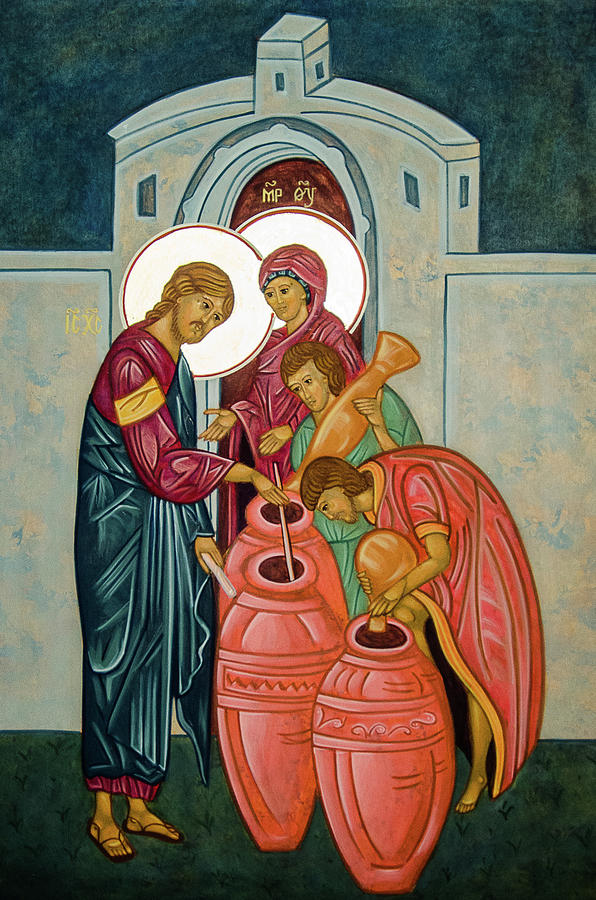
Nostra Signora di Cana / Our Lady of Cana – 6 January:
The title recalls the First Miracle of Our Lord through the intercession of His Mother at the Marriage at Cana in Judea, commemorated annually on 6 January. Christ turns water in wine at the request ofHhis Mother (Gospel of John 2:1-10).
Two days of festivities preceded the wedding, which was followed by an evening banquet. It was here that Mary noticed the wine was scarce. She reminded Jesus that He had promised to supply the wine. The Divine Saviour replied “What is that to you or to me, Woman? My hour has not yet come.” Entirely relieved of anxiety for the guests and trusting the Father would reveal the Lord’s power at the right moment, she went to the worried servants and said to them with quiet modesty and confidence: “Do whatever He tells you.” The servants brought in six large, stone jars, which when full were so heavy, two men had to carry one. That they were now empty was evident. Then Jesus said to the waiters: “Fill the jars with water.” After this was done, Jesus went to the jars and blessed them; then He said to the waiters: “Draw out now and take them to the chief steward.” When the chief steward, who did not know where the wine came from, tasted the water after it had become wine, he went to the bridegroom, exclaiming in surprise: “Every man first sets forth the good wine, and when they have drunk freely, then that which is poorer in quality. But you have kept the good wine until now!” When the bridegroom and the bride’s father tasted the miraculous wine, they too were amazed, for the servants insisted they had just filled the jars with nothing but water from the well. Then all the guests drank the new wine and were silent with awe and reverence as they realized they had just witnessed a striking miracle wrought by the Master, Jesus of Nazareth, at the request of His beloved Mother.
Mary Mother of Mercy willingly assists all the poor and afflicted who fear God. From this incident, St. Bonaventure judges of the many graces which we can hope for through Mary, now that she reigns in Heaven; “For,” he says, “if Mary while yet on earth was so compassionate, how much more so is she now, reigning in Heaven!” He gives the reason by adding: “Mary, now that she sees the face of God, knows our necessities far better than when she was on earth and in proportion to the increase of her compassion, her power to aid us has been augmented.” Ah! Why do we not take refuge in all our necessities to this merciful Mother, who, assists the needly?
St Demetrius of Philadelphia St Diman Dubh of Connor St Edeyrn St Eigrad St Erminold of Prüfening St Felix of Nantes (c 515-584) Bishop Bl Frederick of Saint-Vanne Bl Gertrud of Traunkirchen Bl Gertrude van Oosten St Guarinus of Sion St Guy of Auxerre St Honorius St Hywyn of Aberdaron
St Julian of Antinoë St Julius Bl Luc of Roucy Bl Macarius the Scot St Macra of Rheims St Merinus St Nilammon of Geris St Petran of Landévennec St Peter of Canterbury St Pia of Quedlinburg St Pompejanus St Rafaela Porras y Ayllón Bl Raymond de Blanes Bl Rita Amada de Jesus St Schotin St Wiltrudis of Bergen
Martyrs in Africa: Unknown number of Christian men and women who were martyred in the persecutions of Septimus Severus. They were burned to death c 210.
Martyrs of Sirmium – 8 saints: A group of Christians martyred together for their faith. The only surviving details are the names of eight of them – Anastasius VIII, Florianus, Florus, Jucundus, Peter, Ratites, Tatia and Tilis. They were martyred in the 4th century at Syrmium, Pannonia (modern Sremska Mitrovica, Vojvodina, Serbia).
Bl Bl Convoyon of Redon St Deogratias of Carthage (Died 457) Bishop St Dorotheus the Younger St Emiliana of Rome (6th Century) Virgin Bl François Peltier St Gaudentius of Gnesen
Bl Jacques Ledoyen Bl Joan Grau Bullich St Kiara St Lomer of Corbion Bl Marcelina Darowska Bl Maria Repetto Bl Paula of Tuscany Nl Pierre Tessier Bl Pietro Bonilli St Simeon Stylites St Syncletica St Talida of Antinoë
Martyrs of Africa – 14 saints: A group of Christians martyred together in Africa, date unknown, exact location unknown. We know nothing more than their names – Acutus, Anastasia, Candidus, Coelifloria, Felix, Honorius, Januaria, Jucundus, Lucianus, Marcus, Petrus, Secundus, Severus and Telesphorus.
Martyrs of Sais: A group of Christians martyred for their faith, but about whom no details have survived. They were martyred by drowning near Sais, Egypt.
Martyrs of Upper Egypt: There were many martyrs who suffered in the persecutions of Diocletian in the Thebaid region. Though we know these atrocities occurred, to the point that witnesses claim the torturers and executioners were exhausted by the work, we do not know the names of the saints and we honour them as a group. Many were beheaded and or burned alive in 303 in Upper Egypt.
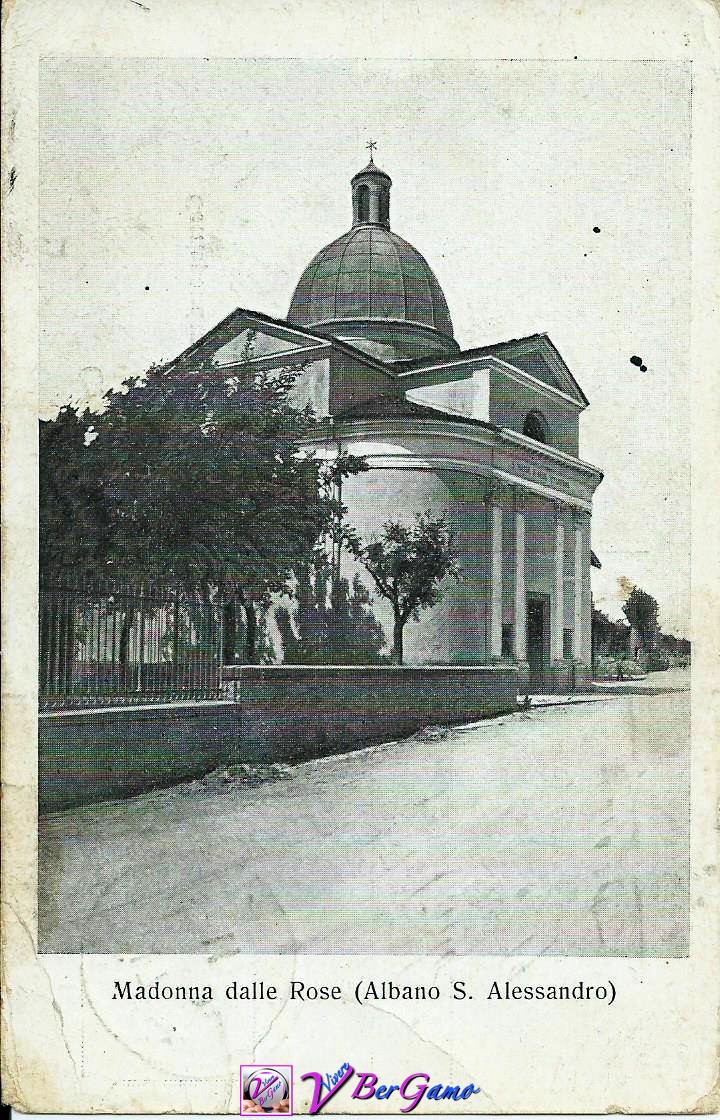
Madonna delle Rose / Our Lady of the Rose s(Albano Sant’Alessandro, Italy) (1417) – 4 January:
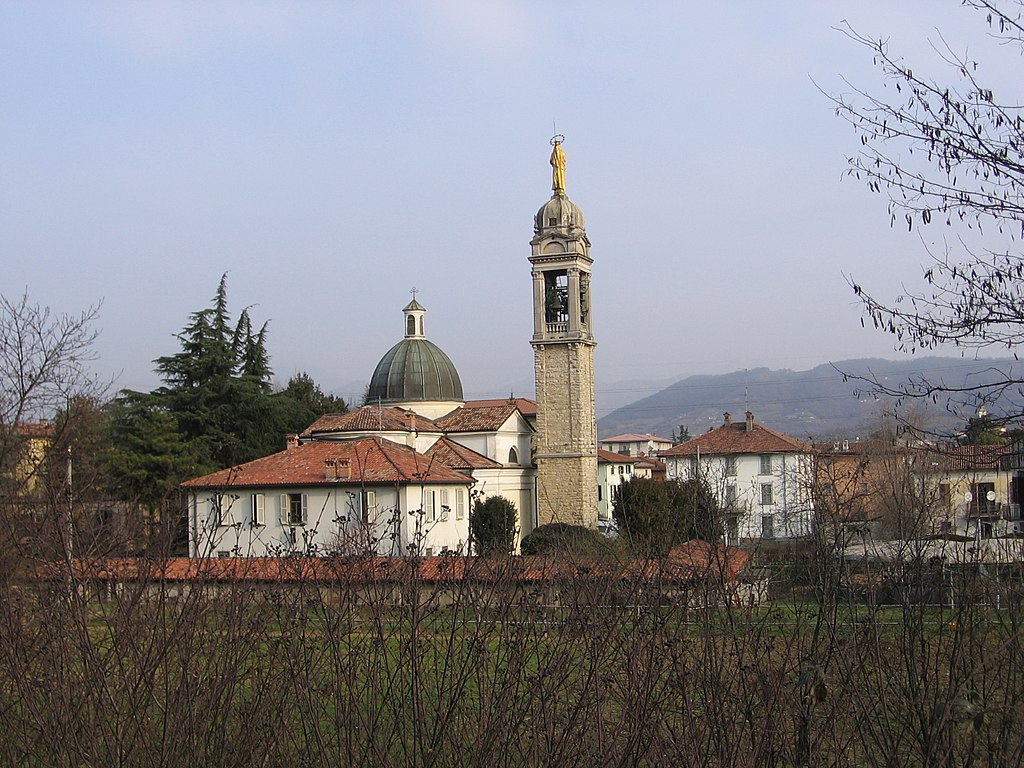
A few kilometers from Bergamo, on the way to Trescore Balneario , in a pleasant plain, lies Albano St. Alexander , a Town famous for its Roman origin and for many historical events and bloody battles between the Guelphs and Ghibellines. Today it is famous for the beautiful Shrine of Our Lady of the Roses.
Until 1855, anyone travelling along this road came upon a small, rustic Chapel that appeared to manifest nothing special, neither painted nor written, which makes the unique devotion it attracted even more amazing. The Parish Priest of Albano, zealous and pious , devoted himself to research among the ancient documents the history of this powerful devotion. From this story , printed in Bergamo in 1880 , we are able to establish the origin of the Shrine of Our Lady of the Roses in Albano St. Alexander.
The events of the night between 3 and 4 January 1417, are as follows: – two Roman merchants travelling from Bergamo to Brescia, got lost and found themselves in a thicket near the Village called Albano. Bergamo is only eight miles away but for them, in the dark, between bushes and marshes covered by snow, they felt as if they would never find their way and would die of cold and fear . They turned so fervently to the Madonna with invocations and a vow to build a Chapel, if they would be rescued. Suddenly rays of bright light penetrated the darkness and a strip of luminous light shows them the way. With hearts relieved and grateful, they followed the light to the path and heard “This is the way, walk in it,” until its junction with the main road. Accompanied by a friendly glow they very quickly reached the City of Bergamo .
Desiring to thank the Blessed Virgin , they went to the Basilica of Santa Maria Maggiore but given the hour of the night, it was closed. They found shelter in the nearby ruined tower, ruined by war. There, a great light stopped them and they saw the Immaculate Virgin sitting on a wreath of roses, which surrounded her completely, quite high up from the ground. The Blessed Virgin held the Divine Child close to her breast and the Child Jesus held, in one hand, a small bouquet of white roses, in the act of offering them to His Mother. The eyes of the Blessed Virgin and of the Divine Child, were turned compassionately towards the two merchants, who prostrated themselves at this heavenly vision.
Since that night, the site of the apparition was called “the Hill of Roses.” When day came, the merchants spread the news and attended at the Bishop’s house. After much investigation and many miracles at the Hill of Roses, the Bishop confirmed the miraculous event, judging it as a heavenly sign of mercy and protection for the City of Bergamo beset by many problems, for Italy plagued by discord and enmity, for the Church, torn by division and schism.
St Bernardine of Siena, who at this time was in Bergamo, was appointed as the final arbiter of the Blessing of Our Lady of the Night and of the Hill of Roses. The same Saint also had a vision of the Madonna in the same year, in Siena . The Holy Virgin appeared with great splendour to him, promising to help him in his mission to convert sinners.
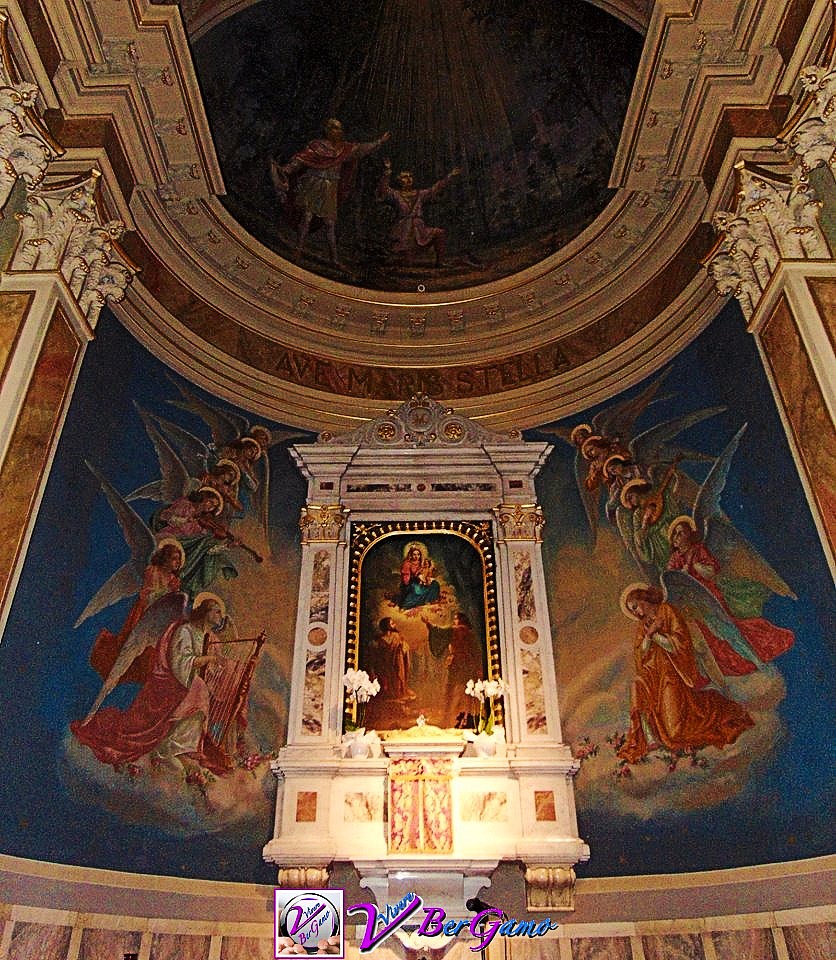
All were eager to erect a Church in gratitude for so many graces from the Virgin Mary, The new Pope, Martin V also appointed in 1417, authorised the construction of a new Church. The two blessed visionaries returned to Albano to the site where they had been lost and seen the immense light. ,They bought the land at the place where the path of light guided them to Bergamo and there built the Chapel that would, for 438 years, in future generation,s attract the devotion of countless numbers of the faithful , until 1855. Then a terrible cholera epidemic ravaged the area and by unanimous vote of the population , they erected a new Sanctuary to the Blessed Virgin in thanksgiving and veneration. The epidemic subsided and on 20 September 1855 the construction of the Sanctuary began. The apse and dome of the Church are decorated with frescoes by Luigi Tagliaferri, the walls are adorned with paintings of the Nativity of Mary and the Descent of Jesus from the Cross by Vittorio Manini, the central painting above the High Altar depicting the Apparition to the two merchants and the medallions of the vault, are by Arturo Compagnoni. The Madonna of the Roses was canonically crowned in 1917. The terrible war that plagues the whole world prevented the solemn ceremony, which only occurred on 14 September 1920 celebrated by Don Mario Morra SDB.
St Angela of Foligno TOSF (1248-1309) known as the “Mistress of Theologians” – Wife, Mother, Widow, Religious, Mystic, Writer, Third Order Franciscan, Foundress of a religious community, which refused to become an enclosed religious order, so that it might continue her vision of caring for those in need. It is still active today. About St Angela: https://anastpaul.com/2020/01/04/saint-of-the-day-4-january-saint-angela-of-foligno-tosf-1248-1309/
St Celsus of Trier Bl Chiara de Ugarte St Chroman St Dafrosa of Acquapendente St Ferreolus of Uzès St Gaius of Moesia St Gregory of Langres St Hermes of Moesia St Libentius of Hamburg Bl Louis de Halles
St Mavilus of Adrumetum St Neophytos St Neopista of Rome St St St Oringa of the Cross Bl Palumbus of Subiaco St Pharaildis of Ghent (c 650-c 740) Virgin St Rigobert of Rheims Bl Roger of Ellant St Stephen du Bourg St Theoctistus
Martyrs of Africa – 7 saints: A group of Christians martyred together in the persecutions of the Arian Vandal king Hunneric. Saint Bede wrote about them. – Aquilinus, Eugene, Geminus, Marcian, Quintus, Theodotus and Tryphon. In 484 in North Africa.
Martyrs of Rome – 3 saints: Three Christians martyred together in the persecutions of Julian the Apostate for refusing to renounce Christianity as ordered. – Benedicta, Priscillianus and Priscus. In 362 in Rome, Italy.



















 AnaStpaul
You must be logged in to post a comment.