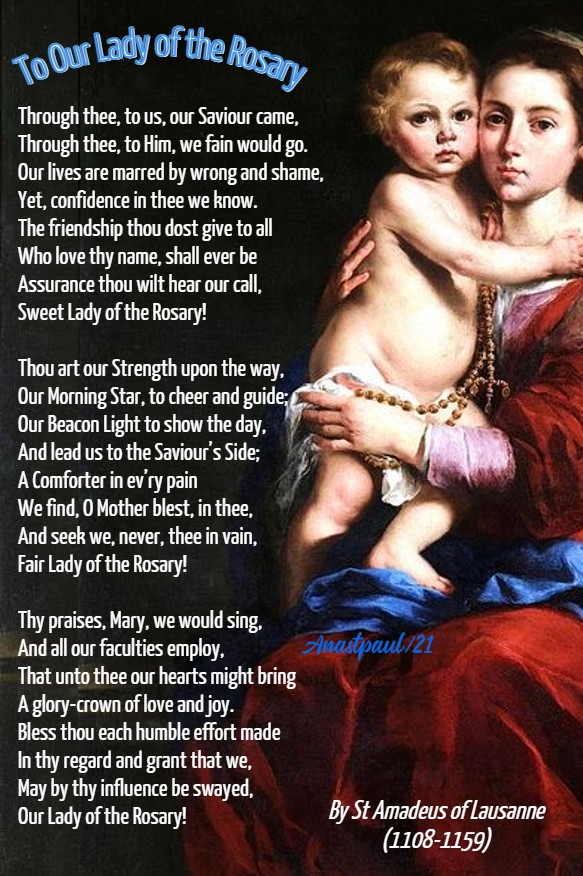
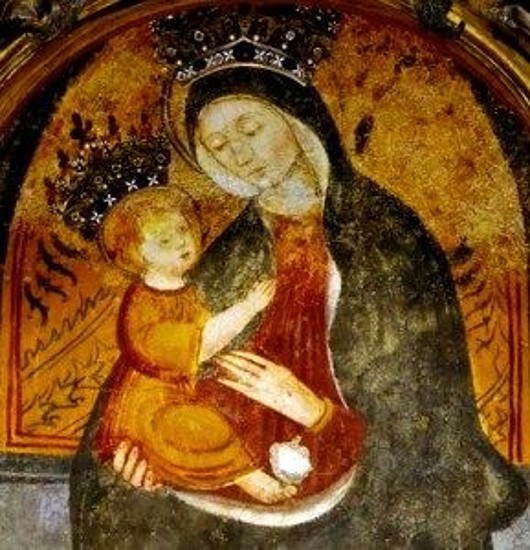
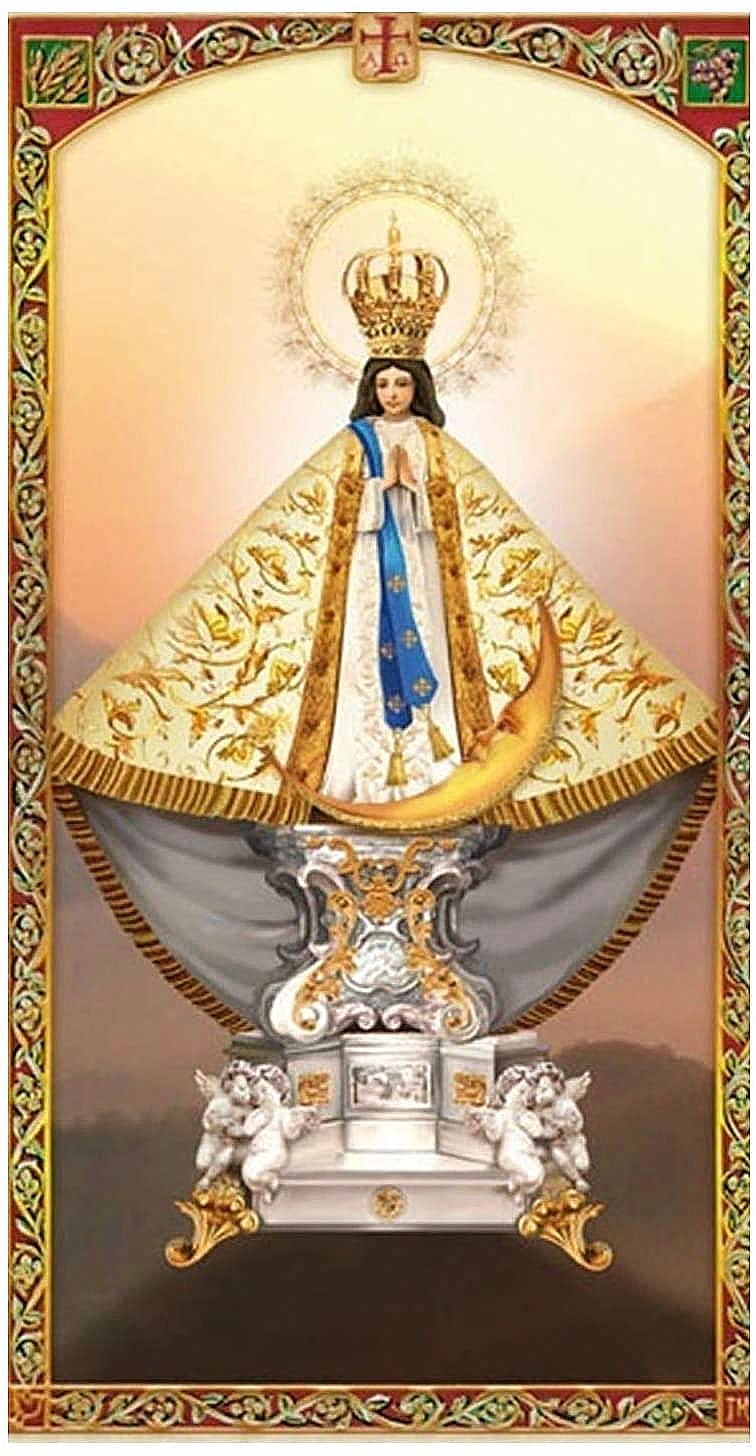
Our Morning Offering – 16 July – The Memorial of Our Lady of Mount Carmel
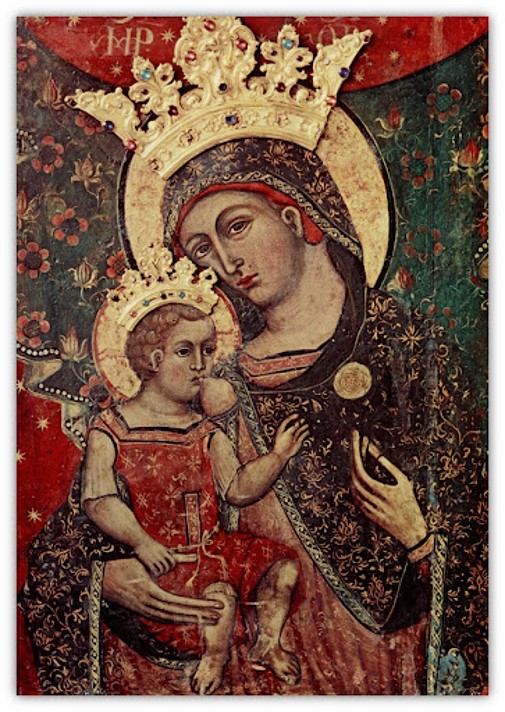
“The Flos Carmeli The Flower of Carmel” By St Simon Stock (1165-1265)
O most beautiful Flower of Mount Carmel, fruitful vine, splendour of Heaven, Blessed Mother of the Son of God, Immaculate Virgin, assist me in this my necessity. O Star of the Sea, help me and show me herein that thou art my Mother. O Holy Mary, Mother of God, Queen of Heaven and earth, I humbly beseech thee from the bottom of my heart, to succour me in this my necessity. There are none that can withstand thy power. O show me herein, that thou art my Mother. Amen.
O Mary, conceived without sin, pray for those who have recourse to thee. (Repeat three times)
Sweet Mother, I place this cause in thy hands. (Repeat three times)
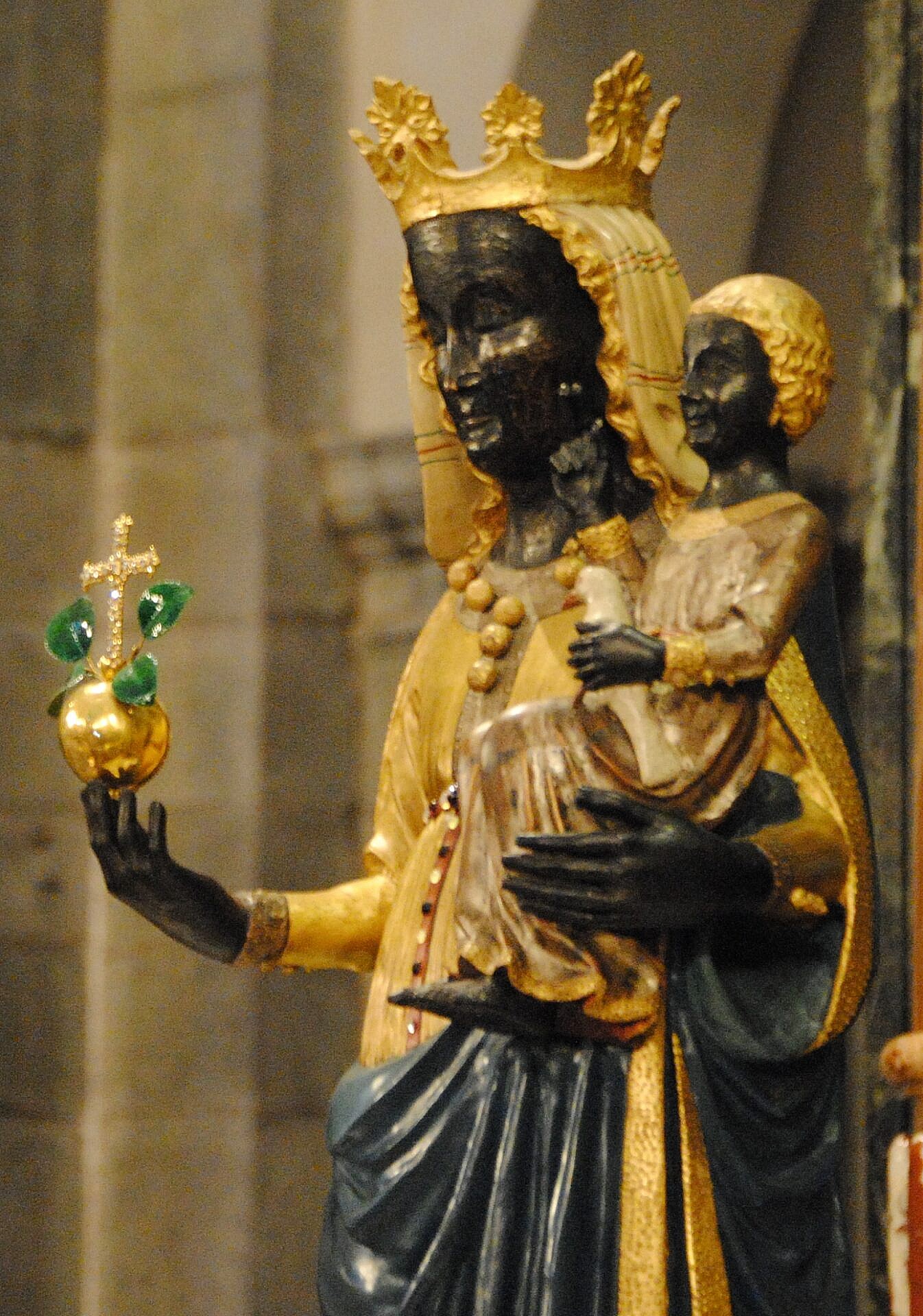
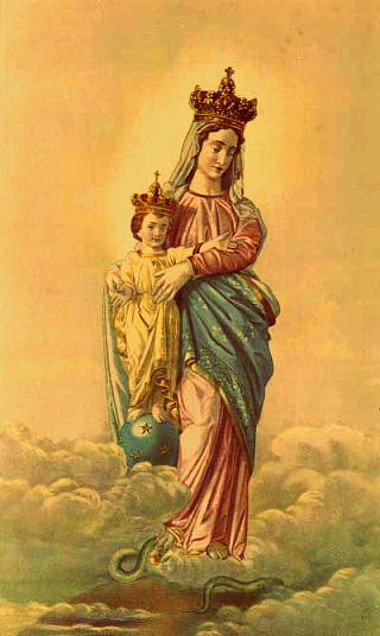
This prayer, the “Flos Carmeli” (“The Flower of Carmel”), was composed by St Simon Stock (1165-1265), a Carmelite, so-called because he and other members of his order lived atop Mount Carmel in the Holy Land. St Simon Stock was visited by the Blessed Virgin Mary on 16 July 1251, at which time, she bestowed upon him a scapular, or habit, (commonly called “the Brown Scapular”), which became part of the liturgical clothing of the Carmelite order Oral tradition tells of St Simon Stock praying, with a passionate intensity to Our Lady of Mount Carmel, during a time of great distress and hardship for the Order. With fervour and faith, he prayed his prayer, the Flos Carmeli for the first time. And Our Lady answered his prayer. Thus, for seven centuries the Flos Carmeli continues to be prayed to the Blessed Mother with the firm faith that she she will answer its request with her powerful help.
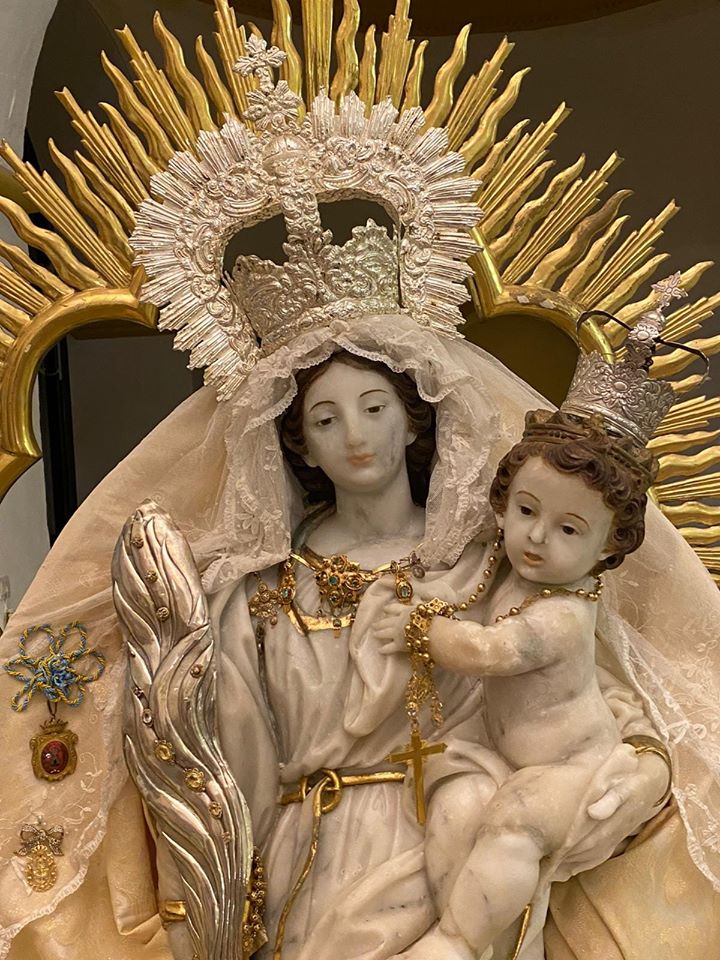
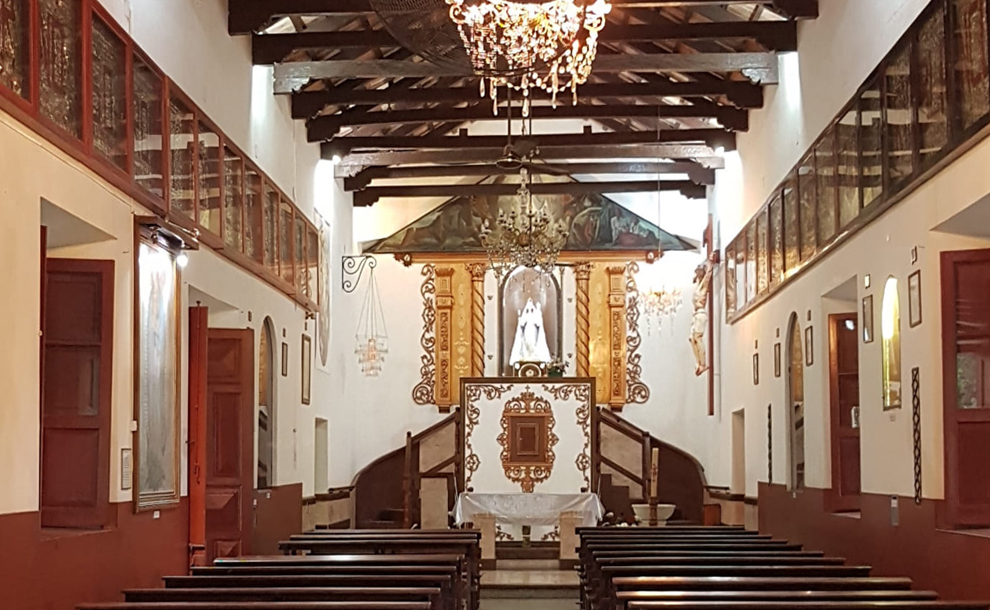
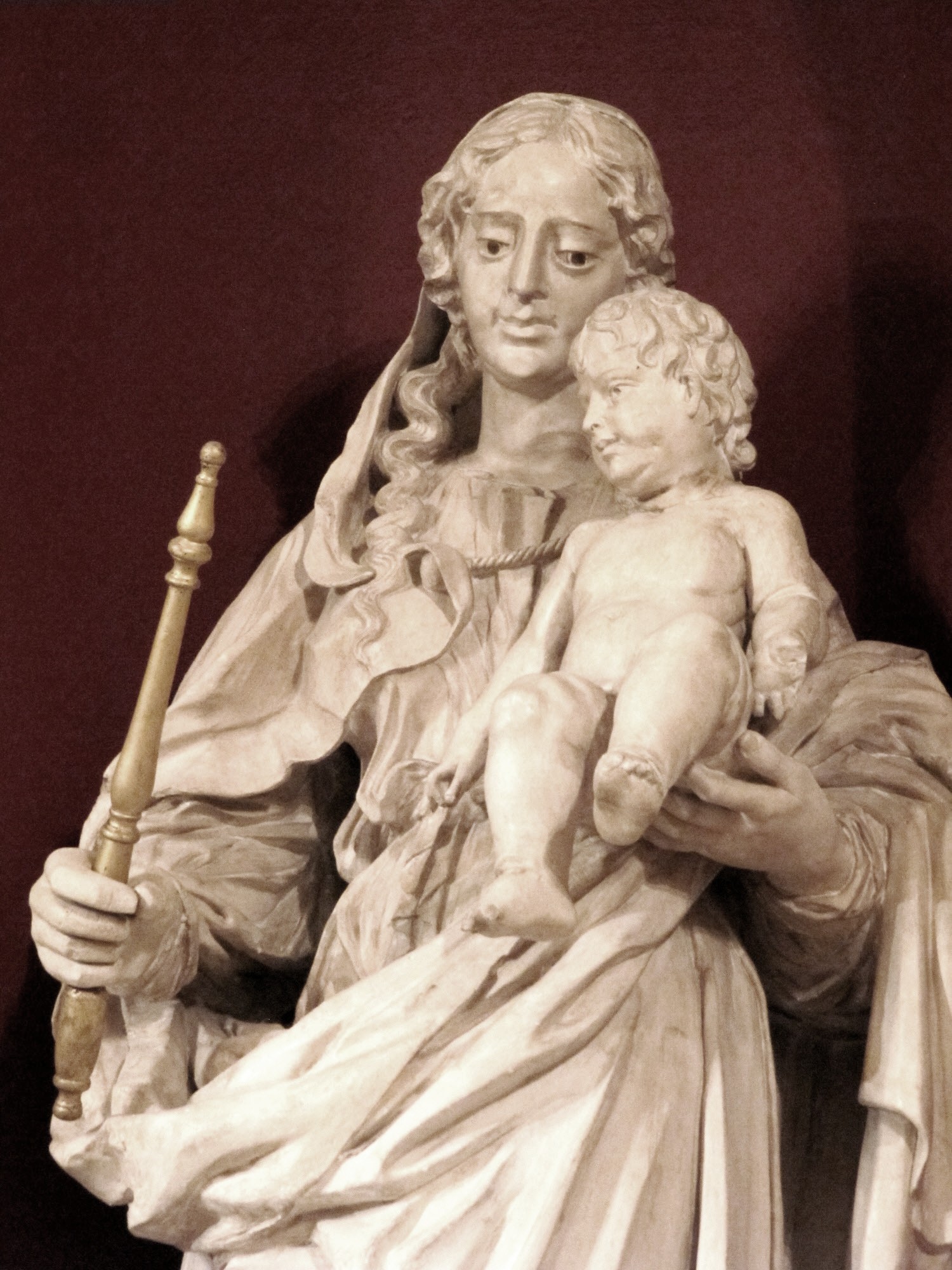
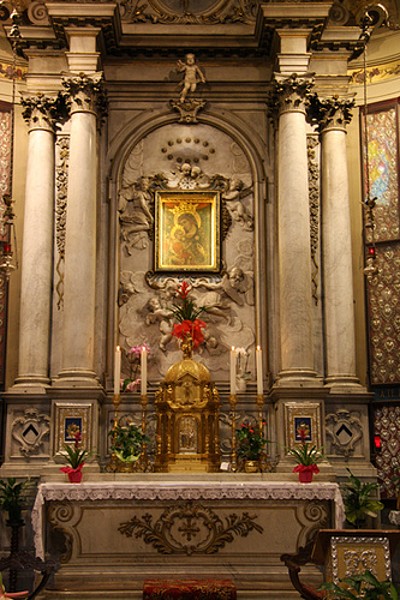
Nuestra Señora del Carmen (Rute, Córdoba, Andalucía, Spain) (17th Century)– 16 July, 13 February – Patron of Rute:
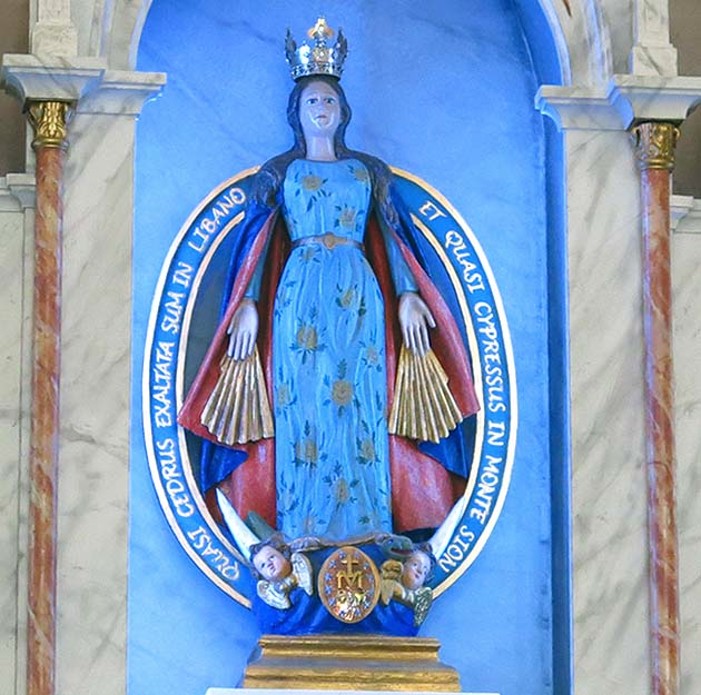
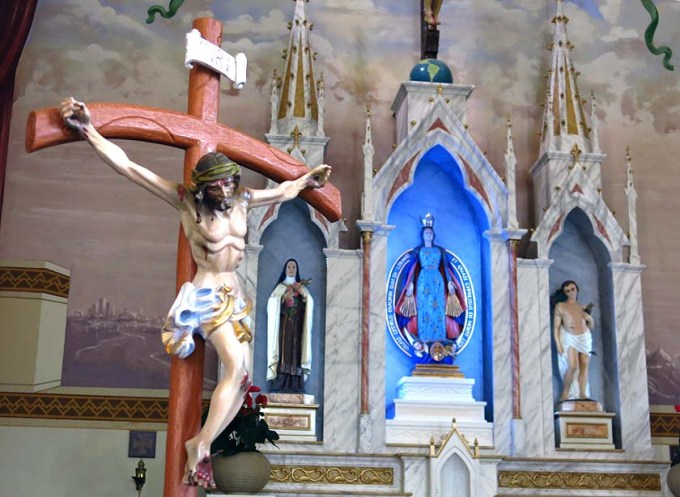
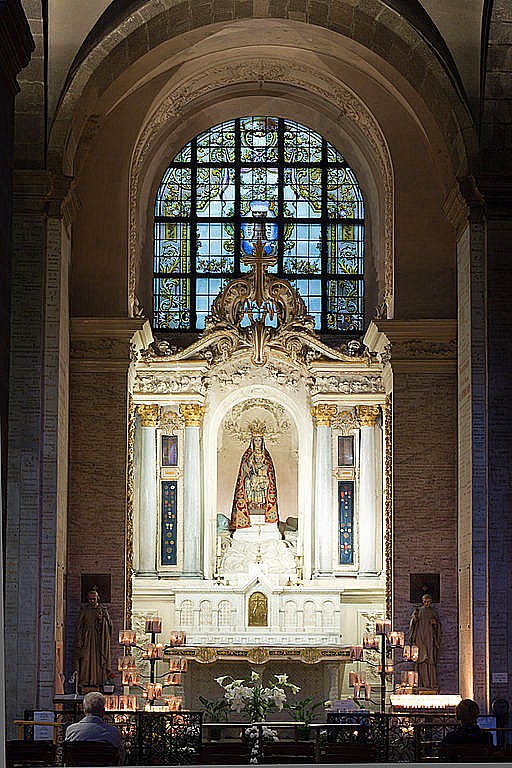
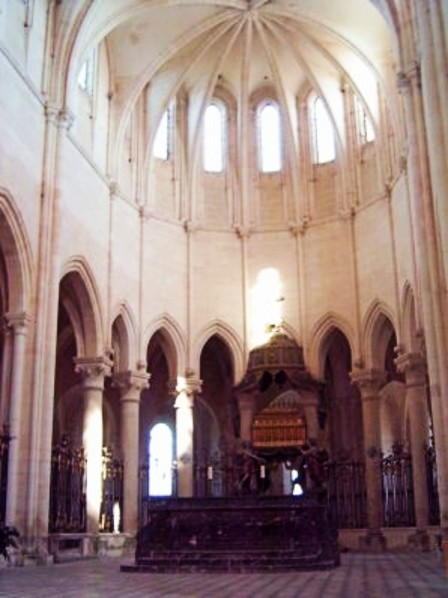
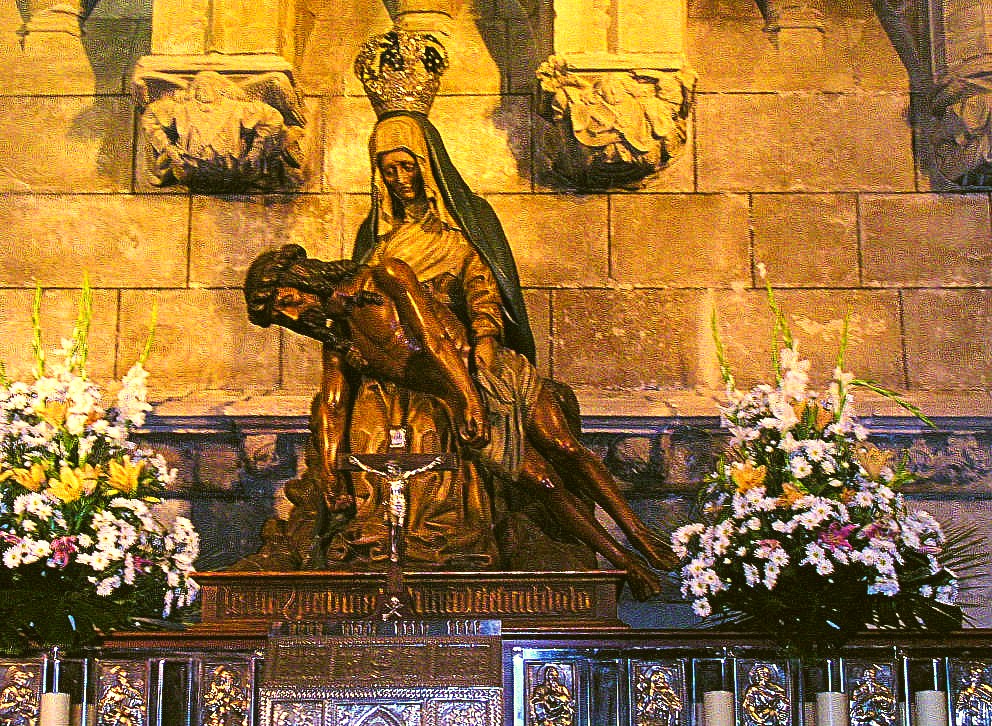
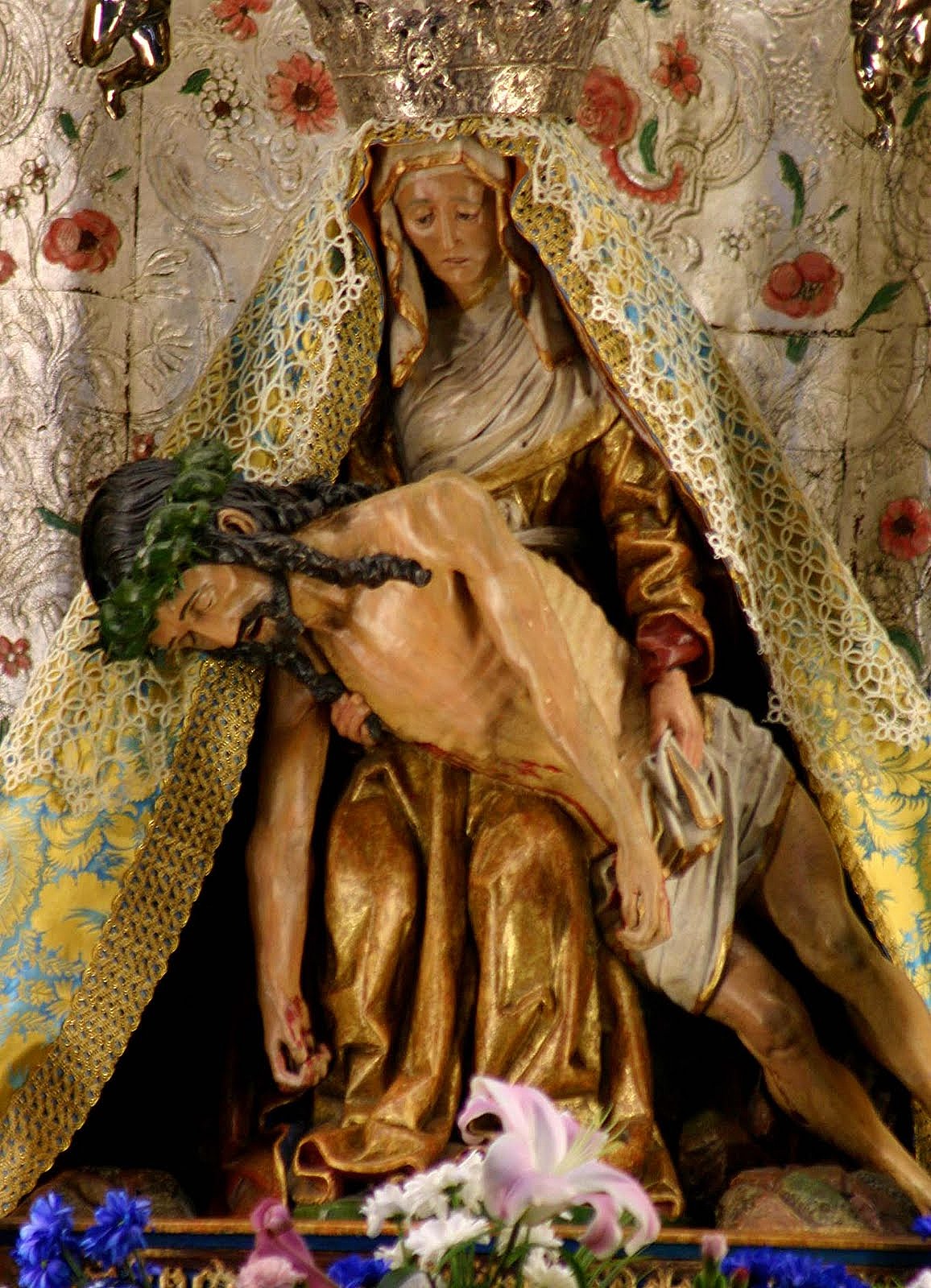
By order of Pope Pius XI, Our Lady of Mount. Carmel was proclaimed Patron of the Town of Rute in southern Spain on 13 February1924. Her beloved image goes back to the late 1600s, when Luisa Roldán (La Roldana) of Seville carved the head and hands. Made to be dressed, the Statue did not have a proper body until the 1960s.
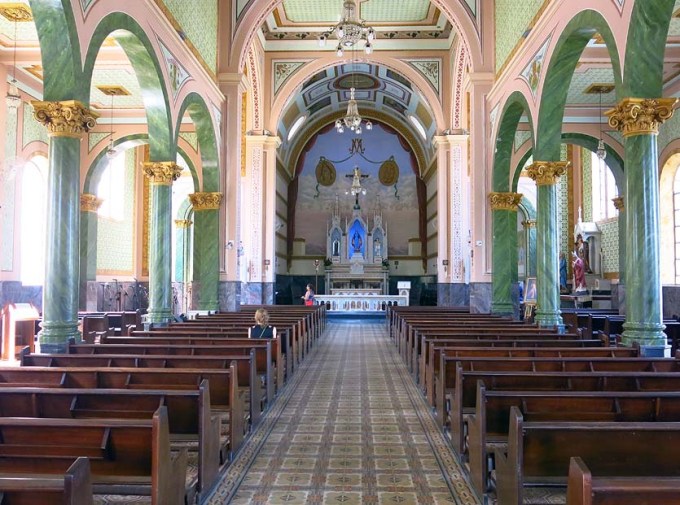
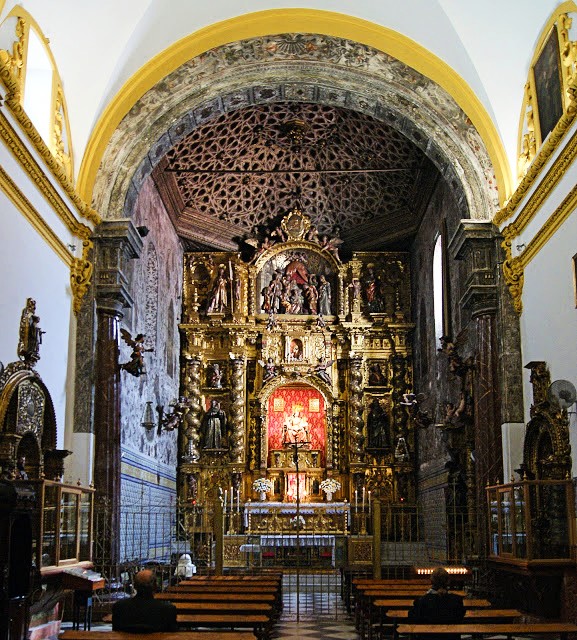
It occupies a neo-baroque setting over the High Altar, also of the 1960s. Rute honours its Patron several times a year. The anniversary celebration lasts three days, culminating on 13 February with Mass, presentations to the Chief of the Brotherhood and the Fiesta Queen of gifts made for the Virgin, and a ceremony of kissing the Scapular of Our Lady of Mount. Carmel. Her liturgical feast day, 16 July is the focus of another three-day celebration. On the last Sunday of June, the procession is held, when the Statue goes in procession through the neighbourhood to the main Parish Church of Santa Catalina Mártir. Another triduum is celebrated around the feast of the Assumption, 14-16 August.
Bl André de Soveral St Andrew the Hermit St Antiochus of Sebaste Bl Arnold of Clairvaux Bl Arnold of Hildesheim St Athenogenes of Sebaste
St Bartholomew of Braga OP – ArchBishop of Braga also known as Bl Bartholomew of the Martyrs (Bartolomeu Fernandez dei Martiri Fernandes) (1514-1590) Portuguese Dominican Friar and Priest, Writer, Theologian, Advisor, Teacher and Catechetical writer, Apostle of Charity founding a series of hospitals and hospices in Braga and surrounds. St Bartholomew: https://anastpaul.com/2018/07/16/saint-of-the-day-16-july-blessed-bartholomew-of-the-martyrs-1514-1590/
Bl Claude Beguignot Bl Domingos Carvalho St Domnin St Domnio of Bergamo Bl Dorothée-Madeleine-Julie de Justamond St Elvira of Ohren St Eugenius of Noli St Faustus St Faustus of Rome and Milan St Fulrad of Saint Denis St Generosus of Poitou St Gobbán Beg St Gondolf of Saintes St Grimoald of Saintes St Helier of Jersey Bl Irmengard Bl John Sugar St Landericus of Séez Bl Madeleine-Françoise de Justamond Bl Marguerite-Rose de Gordon Bl Marguerite-Thérèse Charensol Bl Marie-Anne Béguin-Royal Bl Marie-Anne Doux
Bl Marie-Rose Laye Bl Milon of Thérouanne Bl Nicolas Savouret Bl Ornandus of Vicogne St Paulus Lang Fu St Reinildis of Saintes ( c 630 – c 700) Virgin, Laywoman, Martyr Bl Robert Grissold Bl Simão da Costa St Sisenando of Cordoba St Tenenan of Léon St Teresia Zhang Heshi St Valentine of Trier St Vitalian of Capua St Vitaliano of Osimo St Yangzhi Lang — Martyrs of Antioch – 5 saints: Five Christians who were martyred together. No details about them have survived by the names – Dionysius, Eustasius, Maximus, Theodosius and Theodulus. They were Martyred in Antioch, Syria, date unknown.
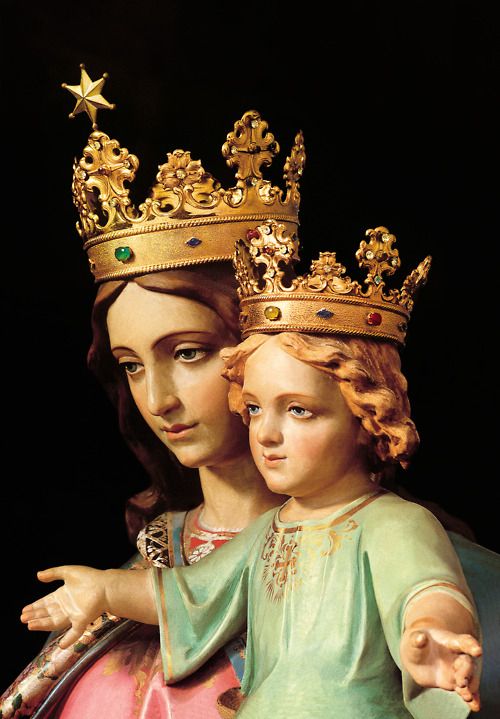
Mariae Virginis Molanus / Our Lady of Molanus, Jerusalem (1099) – 15 July :
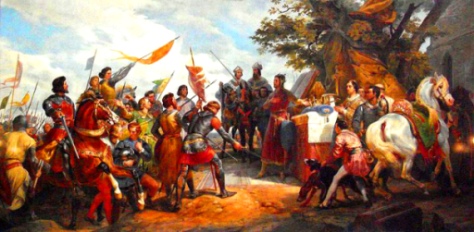
In the year 1099, the Christian armies arrived in Jerusalem, overjoyed that they had survived and reached their objective. Their joy turned nearly to despair, however, as they ran short of food and suffered greatly with a plague during the siege of the City. The leaders of the Crusade concluded, that they could not win without courting the Divine Assistance. It was agreed by all, that they should march together barefoot around the City while singing litanies to the Blessed Virgin Mary. This they did, as the Jews had done centuries before at Jericho, while praying, fasting and giving alms. Eight days later, Godfrey of Bouillon, known as the “Defender of the Holy Sepulchre,” was the first to breach the walls and set foot in Jerusalem, which was then swiftly taken. The Turks were finally defeated after what had been a long and difficult siege and the First Crusade ended with a Christian victory. Now that the City was in Christian hands, the Crusaders desired that they should have a king for the new Kingdom of Jerusalem. The nobleman Raymond of Saint Gilles was offered the crown but he refused, as it did not seem proper to him to be named king in that holy place. Next, Robert Courte-Heuse also refused. Finally, Godfrey of Bouillon, who had so distinguished himself in the taking of Jerusalem, was asked to accept the crown.
Godfrey of Bouillon, from a fresco painted by Giacomo Jaquerio in Saluzzo, northern Italy, around 1420.
Godfrey of Bouillon was a good man, the son of Blessed Ida of Bouillon, whose father was the Duke Godfrey of Lorraine, himself a descendent of Blessed Charles the Great. Although Godfrey agreed to be made king, still, as they were about to crown him King of Jerusalem, Godfrey pushed aside the crown, saying, “I cannot wear a diadem in the place where my Lord wore a Crown of Thorns.” Instead, as he had prayed at Our Lady at Boulogne-sur-mer before leaving on the Crusade, he credited the Blessed Virgin Mary with the victory, and symbolically gave the crown to Our Lady of Molanus. After the victory, clad in white garments, the Crusaders expressed, in solemn procession, hymns and prayers, their gratitude to the Mother of God for giving them this singular victory over the enemies of the Church.
The annual celebration in remembrance of the victory occurs each year on15 July with a Mass offered to Our Lady of Molanus. Formerly the feast of this event was celebrated with a double office and octave.
Dispersion of the Apostles: Commemorates the missionary work of the Twelve Apostles. It was first mentioned in the 11th century and was celebrated in the northern countries of Europe during the Middle Ages. It is now observed in Germany, Poland and some dioceses of England, France and the United States.
St Abundantia of Spoleto St Abudemius of Bozcaada St Adalard the Younger St Anrê Nguyen Kim Thông
Bl essed Anne-Mary Javouhey (1779-1851) “The Mother of the Slaves,” Religious Sister, Missionary and Founder of the Sisters of Saint Joseph of Cluny. Imagine a Mother Teresa in the France of Napoleon’s day and you will have a picture of Anne-Marie Javouhey. Nanette, as she was called, was a “velvet brick,” a thin layer of gentleness covering her determined core. A competent leader, Nanette dominated every scene in her adventurous life. Blessed Anne-Marie was Beatified on 15 October 1950 by Ven Pope Pius XII. Biography: https://anastpaul.com/2019/07/15/saint-of-the-day-15-july-blessed-anne-mary-javouhey-1779-1851/
Bl Antoni Beszta-Borowski St Apronia St Athanasius of Naples St Antiochus of Sebaste St Benedict of Angers Blessed Bernard of Baden TOSF (1428-1458) St David of Sweden St Donivald St Eberhard of Luzy St Edith of Tamworth St Eternus St Felix of Pavia St Gumbert of Ansbach St Haruch of Werden St Jacob of Nisibis St Joseph Studita of Thessalonica Bl Michel-Bernard Marchand Bl Peter Aymillo St Phêrô Nguyen Bá Tuan St Plechelm of Guelderland Bl Roland of Chézery St Valentina of Nevers St Vladimir I of Kiev — Martyred Jesuit Missionaries of Brazil – 40 beati: A band of forty Spanish, Portugese and French Jesuit missionaries martyred by the Huguenot pirate Jacques Sourie while en route to Brazil. They are – • Aleixo Delgado • Alonso de Baena • álvaro Borralho Mendes • Amaro Vaz • André Gonçalves • António Correia • Antônio Fernandes • António Soares • Bento de Castro • Brás Ribeiro • Diogo de Andrade • Diogo Pires Mimoso • Domingos Fernandes • Esteban Zuraire • Fernando Sánchez • Francisco Alvares • Francisco de Magalhães • Francisco Pérez Godoy • Gaspar Alvares • Gonçalo Henriques • Gregorio Escribano • Ignatius de Azevedo • Iõao • João Fernandes • João Fernandes • Juan de Mayorga • Juan de San Martín • Juan de Zafra • Luís Correia • Luís Rodrigues • Manuel Alvares • Manuel Fernandes • Manuel Pacheco • Manuel Rodrigues • Marcos Caldeira • Nicolau Dinis • Pedro de Fontoura • Pedro Nunes • Simão da Costa • Simão Lopes • They were martyed on 15 and 16 July 1570 on the ship Santiago near Palma, Canary Islands. They were beatified on 11 May 1854 by Pope Pius IX.
Martyrs of Alexandria – 13 saints: Thirteen Christians who were martyred together. We know the names of three, no details about them and the other ten were all children. – Narseus, Philip and Zeno. Martyred in the early 4th-century in Alexandria, Egypt.
Martyrs of Carthage – 9 saints: A group of nine Christians who were martyred together. We know nothing else but their names – Adautto, Catulinus, Felice, Florentius, Fortunanziano, Januarius, Julia, Justa and Settimino. They were martyred in Carthaginian and their relics at the basilica of Fausta at Carthage.
Martyrs of Pannonia – 5 saints: Five 4th-century martyrs killed together. No information about them has survived except the names – Agrippinus, Fortunatus, Martialis, Maximus and Secundinus.
Mare de Déu de Canòlich / Mother of God of Canòlich, Canòlich, Sant Julià de Lòria, Andorra, Spain (1223) – 14 July and 4th Saturda\y of May:
On 14 July 1223, a shepherd was pasturing his flock near the village of Canòlich in southern Andorra, when suddenly a bird with brilliant plumage came to rest on an outcrop. The shepherd approached and caught the bird with no trouble and carried it to his house. The next day the bird had disappeared and again he found it in the field. The sequence recurred three times but the last time, the shepherd found an image of the Virgin Mary in a niche in the rock.
In response to this prodigy, the people of Sant Julià de Lòria Parish decided to build a Shrine to the Virgin where her Statue was found. Many miracles ensued at the Shrine and still do. Sadly now, nothing remains of that Church. The present Sanctuary, containing a baroque Altarpiece from a previous Shrine, dates from the 1970s. The Romanesque image of the Mother of God of Canòlich resides in the Parish Church of Sant Julià y San Germà in the urban centre of Sant Julià de Lòria: a wooden Statue from the late 1100s, with original polychrome, crowned by the Vatican in 1999.
On the last Saturday in May, parishioners gather in Sant Julià de Lòria for morning fireworks and Mass in the Virgin’s honour. Then the celebration — moves to Canòlich, for Masses at the Sanctuary and after Mass, dancing, and blessing and distribution of bread.
Bl Boniface of Canterbury St Colman of Killeroran St Cyrus of Carthage St Deusdedit of Canterbury St Donatus of Africa Bl Dorotea Llamanzares Fernández
Blessed Gaspar de Bono OM (1530– 1604) Priest, Friar of the Order of Minims Bl Giorgio of Lauria Bl Hroznata of Bohemia Bl Humbert of Romans St Idus of Ath Fadha St Ioannes Wang Kuixin St Just St Justus of Rome
Madonna del Soccorso / Our Lady of Soccorso, Castellammare del Golfo, Trapani, Sicily, Italy ( 1718)- 13 July, 21 August:
In Castellammare del Golfo , in the Province of Trapani, a miraculous event occurred on 13 July 1718, when the Town was in the midst of war between Philip V and Amedeo di Savoia, for the possession of Sicily. A Spanish ship, pursued by five English ships, arrived to take refuge under the castle, from where the enemy ships were repelled. The people, frightened, cried out for a miraculous help to their Patron – all fled the City, and despite the blows of the English artillery, no-one was killed or injured. But all of a sudden, to everyone’s amazement, the white-dressed Madonna appeared from Mount delle Scale, followed by a group of Angels, who descended towards Cala Marina. This vision terrified the British who hastened in retreat and left the port. The name of Madonna del Soccorso derives from this extraordinary event. Every two years, in fact, on 13 July in the Town of the Gulf the “Historical Re-enactment” of the miraculous intervention of Maria Santissima del Soccorso, in the City of Castellammare.
Devotion to the Madonna del Soccorso is particularly felt in the Magolà hamlet, in Lamezia Terme but also, in the whole area. The Sanctuary of the Madonna del Soccorso is located on a green hill overlooking the City of Lamezia Terme and overlooking the plain of Sant’Eufemia, in the most panoramic point . The presence of this Church then gave its name to the whole area. According to a historical research by Don Pietro Bonacci ( 1915 – 2007 ), devotion to the Madonna del Soccorso is very ancient and was initially practiced in the Church of the Reformed Fathers of St Frances (currently the Church of Santa Maria Maggiore) in very remote times. This devotion was also in use in the Church of Santa Lucia , which until the eighteenth century, had the title of Parish of St Maria del Soccorso, then passed to the Church of Magolà. It is said that the Reformed Fathers decorated with great piety and love, a miraculous image of the Madonna painted by St Luke and brought from Jerusalem by a Franciscan Friar who landed in Sant’Eufemia, fell ill and died with the Reformed Fathers. This image was of great veneration for its continuous graces but no trace has been found, it has disappeared.
The current Church was built shortly after the construction of the votive Shrine. In fact, a document reports that it was completed in 1740. . At the beginning of the nineteenth century cholera broke out and a small hospital was built to treat the sick. In the twentieth century everything returned to normal and the celebrations in honour of the Madonna began, which were established on the third Sunday of July, preceded by the Novena. On Saturdays it was customary to celebrate The Rosary and other Marian devotions, in which one spent a whole day with the Madonna and sang traditional hymns. On the day of the festival, after several Masses, the procession with the Statue of the Madonna begins,and looks out from the hill to bless the City. There was also a great fair. Today the festival is held the same way.
St Henry (972-1024) Holy Roman Emperor (Optional Memorial) Henry was well known for his missionary spirit and for his protection of the Pope in times of trouble. Henry ruled with a spirit of great humility and always sought to give the glory to God. He used his position to promote the work of the Church and the peace and happiness of the people. Biography: https://anastpaul.wordpress.com/2017/07/13/saint-of-the-day-13-july-st-henry-ii-holy-roman-emperor/
Bl Anne-Andrée Minutte St Arno of Würzburg Bl Barthélemy Jarrige de la Morelie de Biars Bl Berthold of Scheide
St Dogfan Bl Élisabeth Verchière St Emanuele Lê Van Phung St Esdras the Prophet St Eugene of Carthage Bl Ferdinand Mary Baccilleri St Iosephus Wang Kuiju Blessed James of Voragine OP (c 1226 – 3 or 16 July 1298) Bishop, Author of the ‘Golden Legend.’ Bl Jean of France St Joel the Prophet Bl Louis-Armand-Joseph Adam
Bl Marie-Anastasie de Roquard Bl Marie-Anne Depeyre Bl Marie-Anne Lambert St Mildred of Thanet St Muritta of Carthage St Myrope St Paulus Liu Jinde St Salutaris of Carthage St Sarra of Egypt St Serapion of Alexandria Serapion of Macedonia Bl Thérèse-Henriette Faurie Bl Thomas Tunstal St Turiaf — Martyrs of Cyprus – 300 saints: 300 Christians who retired to Cyprus to live as cave hermits, devoting themselves to prayer and an ascetic life devoted to God. Tortured and martyred for their faith and their bodies dumped in the various caves in which they had lived. We know the names of five of them but no other details even about them – Ammon, Choulélaios, Epaphroditus, Eusthénios and Héliophotos. They were beheaded in the 12th century on Cyprus and their bodies dumped in the cave where they had lived and only rediscovered long afterwards.
Martyrs of Philomelio – 31 saints: 31 soldiers martyred for their faith in the persecutions of prefect Magno, date unknown. The only name that has come down to us is Alexander. In Philomelio, Phrygia (in modern Turkey).
Notre-Dame -de- lure / Our Lady of Lure, Avignon, France (1110) – 12 July:
At the beginning of the 6th century, a Priest from Orleans, France, named Saint Donat du Val, in search of solitude, made his way into the Alps. The mountain of Lure seemed to be the kind of place he was looking for and with the approval of the Bishop of Sisteron, he settled there. On the side of the mountain he built an oratory for which he himself made the Statue of Our Lady, carving it from native stone. When after 32 years he died, having spent these years in penance and apostolic work, he was replaced by the Benedictines of Val-Benoit. A Chapel was built to replace the oratory which proved too small to accommodate the many pilgrims. When the Saracens invaded Provence, the religious had to flee and so they hid the Statue. Barbarians ravaged the country several times and the Convent was destroyed. In 1110, the Countess Adelaide, to whom the land of Lure belonged, gave the place of the original oratory to the Bishop of Sisteron. Several nobles aided in the work of restoring the Monastery of Our Lady of Lure. The ancient sSatue was found and placed above the tomb of Saint Donat. The Church became well known and pilgrimages were well attended. In 1318, Pope John XXII attached the Shrine of Our Lady of Lure, to the metropolitan area or See of Avignon. In 1481, Pope Sixtus IV called back to Avignon the 12 canons at the Shrine. The Church fell into disrepair. For 80 years the place remained desolate. One day a shepherd, who was resting near the ruins, heard a voice saying, “Oh, how many graces I would give to men in this place, if my Sanctuary were rebuilt.” The ecclesiastics to whom he told his story took the shepherd seriously. The Shrine was rebuilt and the Statue rescued from the debris, was placed on a new Altar which was Consecrated in 1637. Pilgrimages again flourished. During the French Revolution the Chapel was pillaged and the Statue mutilated. With the return of peace, pilgrims again came. On a number of occasions, Mary granted the miracle of an abundant rain to pilgrims that had come to seek this favour. The largest number of pilgrims were wont to come on Pentecost, the Feast of the Assumption and the Nativity of Our Lord.
St Agnes De St Andreas the Soldier St Ansbald of Prum St Balay St Clement Ignatius Delgado Cebrian St Colmán of Cloyne (c 522-600) Priest, Monk Bl David Gonson St Epiphana St Faustus the Soldier St Felix of Milan St Fortunatus of Aquileia (1st Century – Died c 66) Deacon St Hermagorus of Aquileia (1st Century – Died c 66) Bishop, Disciple of St Mark the Evangelist St Hilarion of Ancyra St Jason of Tarsus Bl Jeanne-Marie de Romillon
Bl Madeleine-Thérèse Talieu Bl Marguerite-Eléonore de Justamond Bl Marie Cluse St Menas the Soldier St Menulphus of Quimper St Nabor of Milan St Paternian of Bologna St Paulinus of Antioch St Phêrô Khan St Proclus of Ancyra St Proculus of Bologna St Uguzo of Carvagna St Ultán
St Viventiolus of Lyons — Martyrs of Nagasaki – 8 beati: Additional Memorial – 10 September as one of the 205 Martyrs of Japan Eight lay people, many them related to each other, who were martyred together: • Catharina Tanaka • Ioannes Onizuka Naizen • Ioannes Tanaka • Ludovicus Onizuka • Matthias Araki Hyozaemon • Monica Onizuka • Petrus Araki Chobyoe • Susanna Chobyoe 12 July 1626 in Nagasaki, Japan Beatified on 7 May 1867 by Pope Blessed Pius IX.
Seventh Sunday after Pentecost (Traditional Calendar) +2021 Fifteenth Sunday in Ordinary Time +2021
Madonna del Carmine / Our Lady of Carmine, Combarbio di Anghiari, Arezzo, Tuscany, Italy, (1536) – 11 July:
A 12-year-old shepherdess, Marietta Del Mazza, reported apparitions of the Virgin on 11 July 1536 and days following. When news spread through the region, along with reports of miracles attributed to the Virgin’s intercession, the Bishops of Arezzo and Sansepolcro, conducted an investigation and authorised a Shrine at the apparition site.
The Shrine was completed in 1539. The Sanctuary was staffed by the Franciscan order at first, then by the Carmelites until 1782. Since 1987 it has been under the jurisdiction of the local Bishop.
The Sanctuary took the name of Our Lady of Carmel and over the centuries, it has continued uninterruptedly to recall the devotion of the people of the surrounding area. A fervent testimony of trust and love to Our Lady of Carmel occurred on the evening of 11 July 1986, 450 years anniversary from the date of the first apparition.
On the main Altar you can admire a beautiful Florentine school painting representing the Madonna and the Child with Saint John the Baptist pointing to the Lord, from the 16th century.
St Abundius of Ananelos St Amabilis of Rouen St Anna An Jiaoshi St Anna An Xingshi Bl Antonio Muller St Berthevin of Lisieux St Cindeus St Cowair St Cyprian of Brescia St Cyriacus the Executioner St Hidulf of Moyenmoutier St Januarius St John of Bergamo Bl Kjeld of Viborg St Leontius the Younger St Marcian of Lycaonia St Marciana of Caesarea Bl Maria An Guoshi Maria An Linghua Bl Marie-Clotilde Blanc Bl Marie-Elisabeth Pélissier Bl Marie-Marguerite de Barbégie d’Albrède
St Olga Queen of Kiev (c 890-969) She was known as a ruthless and effective ruler but “when Olga was enlightened, she rejoiced in soul and body. The Bishop, who instructed her in the faith, said to her, ‘Blessed art thou among the women of Rus,’,for thou hast loved the light and quit the darkness. The sons of Rus’ shall bless thee to the last generation of thy descendants.” About St Olga: https://anastpaul.com/2020/07/11/saint-of-the-day-11-july-saint-olga-queen-of-kiev-c-890-969/
St Pelagia St Pius I, Pope (Died c 154) (Martyr?) The ninth successor of St Peter. St Placid of Dissentis Bl Rosalie-Clotilde Bes St Sabinus of Brescia St Sabinus of Poitiers St Sidronius St Sigisbert of Dissentis Bl Thomas Hunt Bl Thomas Sprott St Thurketyl
Notre-Dame de Boulogne -sur-Mer , France / Our Lady of Boulogne-Sur-Mer (1469) – 10 July:
In the year 636, a small group of people standing on the seashore witnessed a boat without oars or sails came into the harbour of Boulogne. It finally came to rest in the estuary, seemingly of its own accord. One of the witnesses boarded the boat and confirmed that there was n-one aboard, and that the vessel had no rudder, oars or sails. The ship, however, bore a luminous Statue of Our Lady. Taking hold of it to bring it to land, a voice was heard saying, “I choose your City as a place of grace.” The citizens welcomed Mary to their City by erecting a Shrine in her honour, which reached its height of glory in the 12th Century.
King Henry VIII is reported to have stolen the Statue of Our Lady of Boulogne and taken it to England. After many negotiations, the French managed to get it back. The image had been stolen and hidden many other times, but always saved and returned. World War II almost completely destroyed the Statue. In modern times, four exact replicas of Our Lady of Boulogne toured France for more than seven years as a symbol of French devotion to Mary. One of these was taken to Walsingham, England, in 1948 and carried in procession by the Cross-bearing pilgrims. Boulogne was one of the most important Lady Shrines of medieval France; among its noted pilgrims have been: Henry III, Edward II, the Black Prince, John of Gaunt. The dedication of a new Church built in honour of Our Lady of Boulogne was Consecrated in the year 1469 by Bishop Chartier of Paris. The confraternity of Our Lady of Boulogne was so celebrated, that six French Kings have chosen to belong to it. At the French Revolution, the Statue was burnt to ashes and the Church pulled down. A new Statue was made in 1803 and pilgrimages began again. The image represents the Mother with the Child in her arms, standing in a boat, with an angel on either side. At the Marian Congress in Bolougne in 1938, a the custom began, to take replicas of this Statue on visitations through France and abroad. A branch of the Confraternity of Our Lady of Compassion at Boulogne has been established for the reconciliation of the Church of England.
The Sanctuary Church at Boulogne was badly damaged during World War II, and Mary’s image smashed but the return, the “Great Return” of one of the copies of the Statue which had been sheltered at Lourdes, took place in 1943, and the occasion will long be remembered by lovers of the Blessed Virgin Mary. There is an ancient offshoot of this Shrine at Boulogne-sur-Seine.
St Cuán of Airbhre St Elilantus St Etto Bl Euménios St Lantfrid Bl Marie-Gertrude de Ripert d’Alauzier Bl Parthenios St Pascharius of Nantes St Peter Vincioli St Phêrô Nguyen Khac Tu St Rufina and St Secunda of Rome (3rd Century) Virgin Martyrs
St Sylvanus of Pisidia Bl Sylvie-Agnès de Romillon St Waltram — Martyrs of Africa – 4 saints: A group of Christians martyred together in Africa. The only information that has survived are four of their names – Felix, Januarius, Marinus and Nabor.
Martyrs of Antioch – 10 saints: A group of ten Christians martyred together. We have no details about them but the names – Diogenes, Domnina, Esicius, Macarius, Maxima, Maximus, Rodigus, Timoteus, Veronia and Zacheus. They were martyred in Antioch, date unknown.
Martyrs of Damascus – 11 beati: A group of Franciscans and laymen ordered by Druz Muslims to convert to Islam. They refused and were hacked to pieces. • ‘Abd Al-Mu’ti Masabki • Carmelo Bolta Bañuls • Engelbert Kolland • Francisco Pinazo Peñalver • Fransis Masabki • Juan Jacobo Fernández y Fernández • Manuel Ruiz López • Nicanor Ascanio de Soria • Nicolás María Alberca Torres • Pedro Soler Méndez • Rufayil Masabki They were cut to pieces on 9-10 July 1860 in Damascus, Syria. Beatified on 10 October 1926 by Pope Pius XI.
Martyrs of Nicopolis – 45 saints: A group of 45 Christians tortured and martyred together in the persecutions of emperor Licinius. We know nothing else but six of their names – Anicetus, Anthony, Daniel, Leontius, Mauritius and Sisinno. c 329 in Nicopolis, Armenia (modern Koyulhisar, Turkey).
Martyrs of Nitria – 5 saints: Fathers of Nitria – Four monks and the bishop of Alexandria, Egypt who were martyred by heretics. Saint John Chrysostom wrote about them but their names have not come down to us. They were martyred in the 4th century in Nitria, Egypt.
Virgen de Itatí / Our Lady of Itati (17th Century) – 9 July:
Our Lady of Itatí is a celebrated wooden representation of Virgin Mary in the City of Itatí, Corrientes Province, Argentina.
According to legend, it saved the life of 17th Century Jesuit missionary Friar Luis de Bolaños. In 1950 a Basilica was built with one of the tallest domes in South America.
The Virgin of Itatí is venerated in the City of Itatí , Province of Corrientes , Argentina . The devotion dates to a Jesuit historical legend, according to which, the recitation of the Rosary saved the missionary Spanish Jesuit Luis de Bolaños and natives he had converted, from an attack by natives who fought with the the conquerors. The legend relates how the Yaguar river opened, creating a passage and the rebels retreated and dispersed, leaving the people of Itatí safe, thanks to the intervention of the Virgin.
Today the Blessed Virgin of Itati is the Patron of the Province of Corrientes and enjoys great popular devotion. The Basilica of Itatí has become the major Pilgrimage centre of the Country.
St Augustine Zhao Rong, Priest and Martyr (Died + 1815) and his 119 companions or Martyrs of China (Died 1648–1930, Qing dynasty and Republic of China) (Optional Memorial): 25 priests, friars, nuns, seminarians and lay people. The 87 Chinese Catholics and 33 Western missionaries, from the mid-17th century to 1930, were martyred because of their ministry and, in some cases, for their refusal to apostatise. Many died in the Boxer Rebellion, in which xenophobic peasants slaughtered 30,000 Chinese converts to Christianity along with missionaries and other foreigners. Canonised on 1 October 2000 by Pope John Paul II in Rome. Full story here: https://anastpaul.com/2019/07/09/saints-of-the-day-st-augustine-zhao-rong-and-companions-or-martyrs-of-china/
Blessed Adrian Fortescue TOSD (1476-1539) Martyr,. A husband and father, a Justice of the Peace, a Knight of the Realm, a Knight of Malta and a Dominican Tertiary (Lay Dominican), he was at once a loyal servant of the Crown so far as he could be but still more, he was a man of unshakeable faith. About Blessed Adrian: https://anastpaul.com/2018/07/09/saint-of-the-day-blessed-adrian-fortescue-1476-1539-martyr/
St Agrippinus of Autun St Alexander of Egypt St Audax of Thora St Brictius of Martola St Copra of Egypt St Cyril of Gortyna Bl Dionysius the Rhetorician St Everild of Everingham St Faustina of Rome St Felician of Sicily Bl Fidelis Chojnacki Blessed Giovanna Scopelli O.Carm (1428 – 1491) Virgin, Religious of the Carmelites. Incorrupt. St Floriana of Rome St Hérombert of Minden St Joachim Ho Bl Luigi Caburlotto Bl Marguerite-Marie-Anne de Rocher Bl Marie-Anne-Madeleine de Guilhermier
Four Holy Polish Brothers – 4 saints: Four brothers who became hermits, Benedictine monks and saints – Andrew, Barnabas, Benedict and Justus. They were born in Poland and died in 1008 of natural causes.
Martyrs of Gorkum – 19 saints: Nineteen martyrs killed by Calvinists for loyalty to the Pope and for their belief in the Real Presence in the Eucharist. They are – • Adrianus van Hilvarenbeek • Andreas Wouters • Antonius van Hoornaar • Antonius van Weert • Cornelius van Wijk • Francisus de Roye • Godfried van Duynen • Godfried van Melveren • Hieronymus van Weert • Jacobus Lacops • Joannes Lenaerts • John of Cologne • Leonardus van Veghel • Nicasius Janssen van Heeze • Nicolaas Pieck • Nicolaas Poppel • Petrus van Assche • Theodorus van der Eem • Willehad van Deem • They werehanged on 9 July 1572 in Brielle, Zuid-Holland, Netherlands. Beatified on 24 November 1675 by Pope Clement X and Canonised on 29 June 1867 by Pope Pius IX.
Martyrs of Orange – 32 beati: 32 nuns from several orders who spent up to 18 months in prison and were finally executed for refusing to renounce Christianity during the persecutions of the French Revolution. • Anne Cartier • Anne-Andrée Minutte • Dorothée-Madeleine-Julie de Justamond • élisabeth Verchière • élisabeth-Thérèse de Consolin • Jeanne-Marie de Romillon • Madeleine-Françoise de Justamond • Madeleine-Thérèse Talieu • Marguerite-Eléonore de Justamond • Marguerite-Marie-Anne de Rocher • Marguerite-Rose de Gordon • Marguerite-Thérèse Charensol • Marie Cluse • Marie-Anastasie de Roquard • Marie-Anne Béguin-Royal • Marie-Anne Depeyre • Marie-Anne Doux • Marie-Anne Lambert • Marie-Anne-Madeleine de Guilhermier • Marie-Claire du Bac • Marie-Clotilde Blanc • Marie-Elisabeth Pélissier • Marie-Gabrielle-Françoise-Suzanne de Gaillard de Lavaldène • Marie-Gertrude de Ripert d’Alauzier • Marie-Marguerite Bonnet • Marie-Marguerite de Barbégie d’Albrède • Marie-Rose Laye • Rosalie-Clotilde Bes • Suzanne-Agathe Deloye • Sylvie-Agnès de Romillon • Thérèse-Henriette Faurie They were guillotined between 6 July and 26 July 1794 at Orange, Vaucluse, France. Beatified on 10 May 1925 by Pope Pius XI.
Martyrs of the Baths – 10,204 saints: A group of Christians enslaved by Diocletian to build the gigantic baths in imperial Rome, Italy. The end of their labours coincided with the beginning of the great persecutions of Diocletian and they were all executed. Ancient records indicated there were 10,204 of them; Zeno of Rome is the only one whose name has come down to us and we know nothing else about any of their individual lives.
Nostra Signora della Neve, Adro, Italy/ Our Lady of the Snow, Adro, Brescia, Italy (1519) – 8 July, 5 August:
Adro is a Town in the Province of Brescia, in the Lombardy region, northern Italy. The Sanctuary emerged after the appearance of the Madonna in this place. to Battista Bajoni Comino, the deaf-mute who was visited by the Holy Mother on 8 July 1519. The Virgin appeared saying she was the Mother of God and sent a message to the people of Adro. Our Lady’s message contained a reference to a Christian life, repentance for sins and conversion and reparation and the construction of a Sanctuary in her honour. The built the Church at the place of vision, and began to amend their lives. They practised devotion on Sundays and Holy Days, stopped blaspheming the Holy Name and refrained from other evil habits, for Our Lady had also said that if they did not repent they could expect a serious penalty . Mary said – “And if they wonder how it is that you speak, tell them that you have been with the Advocate of Sinners. Everyone knows you were dumb. Now take this stone with you and show it to them as it will change colour from time to time. “
The central Feast of Our Lady of the Snows is celebrated on 5 August Immediately after the miracle, it was called “Madonna della Cava,” the place where the Virgin had appeared to the Shepherd and the feast was celebrated on 8 July the anniversary of the vision. Later, however, Church officials transferred the Feast to 5 August, the day the dedication of Santa Maria Maggiore in Rome, also known as “Santa Maria de las Nieves,” built by Pope Liberius commemorates after Miracle of snow (that happened in Rome). It was then that this temple took the name of “Our Lady of the Snows.” In pilgrimage season (April to October) groups of pilgrims arriving from neighbouring provinces, especially from Brescia, Bergamo, Como, Varese, Milan, Cremona, Mantua and Verona. Sunday is preferred by families. All opportunities for spiritual growth are offered through preaching and the Sacraments.
Such is the fascination of the Virgin on the pilgrims who will then return again. It is a ceremony in which you have to enter the crypt “to see the Madonna”.
The miracle of the deaf-mute who began to hear and speak gave rise to a small Shrine (1521). It remains alongside the current main Altar. It was visited by Saint Charles Borromeo in 1581 and visited by John XXIII and Paul VI being Cardinals. Being too small for the influx of pilgrims,the Church was demolished in 1750 and enlarged. It was built on a design by architect Gaspare Turbini and opened in 1776.
The Carmelites of St Teresa, built a Monastery nearby.
The current statue is gilded wood sculptor . Next to the Shrine a discreet and well-shaded park with tables and benches offers a welcome drink to pilgrims.
St Abraham the Martyr Bl Adolf IV of Schauenburg St Pope Adrian III St Ampelius of Milan St Apollonius of Benevento
St Arnold St Auspicius of Toul St Auspicius of Trier Brogan of Mothil St Colman of Thuringia St Doucelin St Edgar the Peaceful Blessed Pope Eugene III O.Cist (c 1080-1153) Papal Ascension – 15 February 1145 until his death. The 167th Pope.
St Procopius of Ceasarea St Sunniva of Bergen St Thibaud de Marly St Totnan of Thuringia — Abrahamite Monks/Martyrs of Constantinople: A group of monks in a monstery founded by Saint Abraham of Ephesus. Martyred in the iconoclast persecutions of emperor Theophilus. In c 835 in Constantinople. Martyrs of Shanxi – 7 saints: In 1898 seven sisters of the Franciscan Missionaries of Mary were sent to the Shanxi diocese in China to serve the poor in hospitals and care for the unwanted or other destitutes in orphanages. They were – • Anne-Catherine Dierks • Anne-Francoise Moreau • Clelia Nanetti • Irma Grivot • Jeanne-Marie Kuergin • Marianna Giuliani • Pauline Jeuris There they all died in one of the periodic crackdowns against foreign missionaries. They were beheaded on 9 July 1900 at Taiyuanfu, China- Beatified on 24 November 1946 by Pope Pius XII and Canonised on 1 October 2000 by Pope John Paul II. Martyrs of Syrmium – 5 saints: Five Christians martyred together for their faith. We know nothing else about them but the names – Cecilia, Eperentius, Eraclius, Sostratus and Spirus. They were martyred in the 4th century in Syrmium, Pannonia (modern Serbia).
Onze Zoeten Dame van Den Bosch , Arras / Our Lady of Arras, Netherlands (1380) – 7 July:
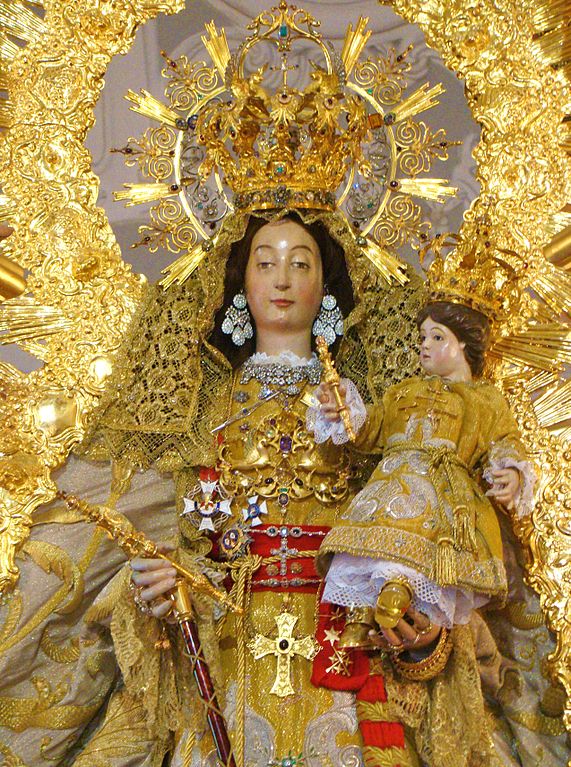
The image known as the “Kind Mother” at Sint Hertogenbosch, or “Our Sweet Lady” of Den Bosch, as she is also known in the north Brabant Province of the Netherlands, was an object of derision when it was first heard of in 1380. It had been found dirty and damaged in a builder’s junk-yard, but it soon became celebrated for the wonders connected with it. It was in 1380, when Saint John’s Cathedral was being renovated, that the Statue was found. An apprentice stone mason, was looking for wood for his fire when he uncovered a scruffy wooden Statue in the rubble. The Statue was in such poor conditio, that he didn’t recognise it as the Mother of God. The mason in charge somehow recognised Her, even without the Infant Jesus in her arms. The Statue was placed on the Altar of Saint Martin, in the Cathedral,but the faithful did not like it and were upset that such a dilapidated Statue was exposed for veneration. It wasn’t long before one of the Priests attempted to remove the Statue but found that it had become so heavy, that he could not move it. It was soon noted, though, that any who spoke disapprovingly of the Statue became weak, fainted, or had nightmares. One woman mocked the Statue, and became partially paralysed. That night, she had a vision of Our Lord, who ordered her to repair the Statue and honour it. The next day she was able to drag herself to the Cathedral to begin the work. At the end of each day, she was able to walk a little more. It was an entire year later when a Brother Wout ,found the missing image of the Infant Jesus that berlonged to the Statue. Local children were using if for a toy but now the Statue was reunited and complete. There were still some who ridiculed the Statue but now they fainted on the spot. Many experienced strange pains, headaches,and even indigestion. On the other hand, those who prayed before the Statue received a cure of their illnesses and otherwise were greatly favoured. Due to the presence of the Statue, the Church became a place of pilgrimage. Emperor Maximilian, Holy Roman Emperor, and King Fernando of Castile were among the notables who visited the miraculous Statue. The Statue of Our Sweet Lady is of oak and is nearly four feet tall and is of an unusual pattern – Our Lady stands upright, while her forearms are extended at right angles to her body. The Child is balanced on her left hand and in her right she holds an apple. The dedication of the new Church of Our Lady of Arras occurred in the year 1484 by Bishop Peter de Ranchicourt, who was Bishop of that City. The first Church which had been built at the site had been constructed by Saint Vaast, who had been the Bishop of Arras, in the year 542, using the liberal donations of the first Kings of France. The desolation caused by the Calvinists began in 1566 and many Churches were plundered. The Kind Mother was hidden and saved from the destruction. Years later, when the City was seized by the Spanish, two Carmelites took the Statue to Bishop Ophovius, who gave it to one of the women of the parish to safeguard. Eventually it was feared that the Statue of the Kind Lady would not be safe if it stayed were it was and so, it was decided to take the Statue to Brussels for safety. The Statue had to be hidden and was placed in a chest and smuggled through the Town gates. It was then taken to St Geradus’s Church in Belgium before being taken to Koudenberg Church in Brussels. It wasn’t until the year 1810 when the Cathedral at Den Bosch was returned to the Catholics by Napoleon. Then, it took the prolonged efforts of Bishop J. Zwijsen, the Bishop of Hertogenbosh, to have the beloved Statue of Our Sweet Lady returned to his Cathedral in 1878. It was Crowned by the grateful Bishop in the name of Pope Leo XIII that same year and the Feast is 7 July with proper Mass and Office in certain places.
INTERESTING NOTE: Around 7% of the men in the Netherlands are called Maria. Yes, over 1/20 of Dutch men are named after the Virgin Mary. In 1954, a Marian Year, 17% of Dutch men where named after the Blessed Virgin. Incidentally, most of those men named Mary live in or around Den Bosch, and Mary is one of the Patron Saints of this beautiful City.
St Alexander St Angelelmus of Auxerre St Antonino Fantosati St Apollonius of Brescia
Blessed Pope Benedict XI OP (1240-1303) Cardinal-Priest of St Sabina, Bishop of Ostia then of Rome, Dominican Friar, Prior Provincial of Lombardy prior to becoming the Master of the Order in 1296, Apostolic Papal Legate to Hungary and France, Teacher, Preacher, Writer and renowned Scholar with special emphasis on Biblical commentary. His Papacy began on 22 Ocober 1303 and ended at his death on 7 July 1304. His Life: https://anastpaul.com/2020/07/07/saint-of-the-day-7-july-blessed-pope-benedict-xi-1240-1303/
Bl Bodard of Poitiers St Bonitus of Monte Cassino St Carissima of Rauzeille St Eoaldus of Vienne St Ethelburga of Faremoutier Bl Francisco Polvorinos Gómez St Hedda of Wessex Bl Joseph Juge de Saint-Martin Bl Juan Antonio Pérez Mayo Bl Juan Pedro del Cotillo Fernández Bl Justo González Lorente St Maelruan Bl Manuel Gutiérrez Martín St Marcus Ji Tianxiang Bl María del Consuelo Ramiñán Carracedo
Blessed Maria Romero Meneses FMA (1902-1977) “The Social Apostle of Costa Rica” and “The Female John Bosco” – a Salesian Religious, Apostle of Charity and Social Reform, Teacher, Catechist, establishing whole villages with work opportunities for the poor, Mystic and Apostle of the Holy Eucharist and of Mary, Mother of God. Biography: https://anastpaul.com/2018/07/07/saint-of-the-day-7-july-blessed-maria-romero-meneses-1902-1977/
Bl Marie-Gabrielle-Françoise-Suzanne de Gaillard de Lavaldène St Medran St Merryn Bl Oddino Barrotti St Odo of Urgell St Odran St Palladius of Ireland St Pantaenus of Alexandria
St Pantænus (Died c 216) Father of the Church, Theologian, Philosopher, Teacher, Confessor and Defender of the Faith, Writer and interpreter of the Bible, the Trinity and Christology, |Missionary. Convert ofthe disciples of the Apostles. Head of the Alexandrian School of Learning – a famous pupil was St Clement of Alexandria. Biography: https://anastpaul.com/2019/07/07/saint-of-the-day-7-july-st-pantaenus-father-of-the-church-died-c-216/
St Prosper of Aquitaine St Syrus of Genoa St Th St Willibald of Eichstätt (c.700 – 787) Bishop, Prince, Missionary — Martyrs of Durres – 7 saints: Also known as – Martyrs of Dyrrachium/ Martyrs of Durazzo. A group of seven Italian Christians who fled Italy to escape the persecutions of emperor Hadrian. Arrived in Dyrrachium, Macedonia to find Saint Astius tied to a cross, covered in honey, laid in the sun and left to be tortured by biting and stinging insects. When they expressed sympathy for Astius, they were accused of being Christians, arrested, chained, weighted down, taken off shore and drowned. We know little more about each of them than their names – Germaus, Hesychius, Lucian, Papius, Peregrinus, Pompeius and Saturninus. They were born in Italy and were martyred at sea c117 off the coast of Dyrrachium (Durazzo), Macedonia (modern Durres, Albania).
Notre-Dame d’Iron / Our Lady of Iron, Dunois, France (1631) – 6 July:
Saint-Sulpice-le-Dunois is a small Village located near the centre of France. Once home to Our Lady of Iron, it is situated near the larger Town of Blois, its population was only 517 citizens in the year 2007, which was a decrease from the 636 citizens who had lived there in 1999. It was in the Chapel of this tiny Village of Saint-Sulpice-le-Dunois, in the year 1631, that our story takes place involving Our Lady of Iron.
There was a young French couple living in the village at that time, who felt themselves singularly blessed. Were they not fortunate? They took pleasure in their youth and enjoyed good health, had happy employment,lived in a modest home and they had recently been blessed with a fine baby whom they felt was as sweet as the Babe of Bethlehem. Thus they mused on their way home together after early morning Mass one day. As soon as they entered their home, Pierre hurried to the cradle to gaze lovingly at his infant son. The child must have been restless, he thought, as there was evidence that he had struggled with the bedclothes which were tossed about and tangled strangely about the infant. Pierre reached in and lifted his son to hold him in his arms, only to find that the tiny figure was rigid and cold. Stunned, he called for his wife disbelieving, for it seemed their baby was dead! Pierre’s thoughts turned to Our Blessed Mother and then to the Statue of Our Lady of Iron at the Parish Church. They had spent many hours there in the past praying for her assistance and her help had never failed them. They determined to take their baby there instantly! Surely, Mary would not fail them in this time of dire need. Together they entered the Church, and sadly laid the lifeless form at the feet of the Statue of Our Lady of Iron. As they began to pray for her intercession, they dedicated their baby to the Blessed Virgin Mary. In that very instant, the child who had been smothered by struggling in its cradle, cried out and came back to life. News of the miracle spread far and wide and the fame of Our Lady of Iron was assured.
Bl Angela of Bohemia Bl Augustin-Joseph Desgardin Bl Christopher Solino St Cyril of Thessaloniki St Dominica of Campania (c 287-303) Virgin Martyr St Gervais St Giusto of Condat St Goar of Aquitaine St Godelieve
St Saxburgh of Ely St Sisoes the Great Bl Suzanne Agathe de Loye St Thomas Alfield St Tranquillinus of Rome — Martyrs of Campania – 23 saints: A group of 23 Christians arrested, tortured and then beheaded together in the later 3rd century by order of governor Rictiovarus in the persecutions of Diocletian. The names that have come down to us are – Antoninus, Arnosus, Capicus, Cutonius, Diodorus, Dion, Isidore, Lucia, Lucian, Rexius, Satyrus and Severinus.
Martyrs of Fiesole – 5 saints: Five Christians martyred together in the persecutions of emperor Domitian – Carissimus, Crescentius, Dulcissimus, Marchisianus and Romulus. c 90 near Fiesole, Italy.
Our Lady of Mount Athos, Great Lavra, Greece , 8th cent. – 5 July:
In the 900s, the unfinished Great Monastery on Mount Athos ran out of funds and the starving Monks had to leave. Finally the Monastery Founder, St Athanasius the Athonite, left too in search of help. On the road he met a woman in a long blue veil, who said, “Go back! You will have everything you need if you do not abandon the Monastery!” When Athanasius asked the lady’s name, she answered, “I am the Mother of your Lord.” The Abbot asked for a sign. “Strike the rock with your staff,” she said, and promised to be responsible for the Monastery provisions herself — to be its stewad. As water flowed from the rock, she vanished.
Athanasius returned to find the building completed and stocked with supplies. Soon it was full of Monks again To this day, the Great Lavra regards the Mother of God as its steward, helped by a Monk with the title of assistant steward. In a Shrine on the left of the entrance to the Monastery Church, the Icons depict many saints connected with the Monastery. To Our Lady’s right St. Athanasius holds a model of the building. Down the road, the holy spring still flows.
St Agatho of Sicily St Athanasius the Athonite St Athanasius of Jerusalem St Cast St Cyprille of Libya St Cyrilla of Cyrene St Domèce St Domitius of Phrygia St Edana of West Ireland Bl Edward Cheevers Blessed Elias of Bourdeilles OFM (c 1407-1484) Archbishop of Tours and Cardinal St Erfyl St Fragan Bl George Nichols St Grace of Cornwall St Gwen Bl Humphrey Pritchard
St Marinus of Tomi St Mars of Nantes St Marthe Bl Matthew Lambert St Modwenna St Numerian of Treves Bl Patrick Cavanagh St Philomena of San Severino St Probus of Cornwall Bl Richard Yaxley Bl Robert Meyler St Rosa Chen Aijieh St Sedolpha of Tomi St Stephen of Reggio St Teresia Chen Qingjieh St Theodotus of Tomi Bl Thomas Belson St Thomas of Terreti St Triphina of Brittany St Triphina of Sicily St Zoe of Rome
Solemnity of Saints Peter and Paul (29 June) +2021
Nuestra Señora del Refugio / Our Lady of Refuge, Matamoros, Tamaulipas, Mexico (1720) – 4 July:
Jesuit Missionary Father Juan José Güica brought a painting of Our Lady, Refuge of Sinners from Italy to Mexico in 1720. In a dream, the Virgin told Padre Güica to ask the Franciscans of Zacatecas to use and promote the image; – they distributed over 150 copies, making this one of the most widespread Marian devotions in Mexico.
In 1793 Franciscan Friars came to the new settlement which would become Matamoros, renaming the area “Nuestra Señora del Refugio de los Esteros Hermosos” (Our Lady of the Refuge of the Lovely Marshes).
The Cathedral of Our Lady of Refuge, built in 1832, displays an 1886 painting of her. Her fiesta, celebrated in many Mexican Towns, commemorates the coronation of the original “Refugium Peccatori” in the Jesuit Church of Frascati, Italy, on 4 July 1717.
Bl Agatha Yun Jeom-Hye St Albert Quadrelli St Andrew of Crete St Anthony Daniel St Aurelian of Lyons St Bertha of Blangy St Carileffo of Anille Bl Catherine Jarrige St Cesidio Giacomantonio Bl Damiano Grassi of Rivoli St Donatus of Libya St Edward Fulthrop St Elias of Jerusalem St Finbar of Wexford St Fiorenzo of Cahors St Flavian of Antioch St Giocondiano Bl Giovanni of Vespignano St Haggai the Prophet Bl Hatto of Ottobeuren Bl Henry Abbot St Henry of Albano St Hosea the Prophet St Innocent of Sirmium Bl John Carey Blessed John Cornelius SJ (1557– 1594) Martyr, English Priest of the Society of Jesus, Missionary. Bl Jozef Kowalski St Jucundian St Laurian of Seville St Lauriano of Vistin Bl Maria Crocifissa Curcio St Namphanion the Archmartyr Bl Natalia of Toulouse St Odo the Good Bl Odolric of Lyon Bl Patrick Salmon Bl Pedro Romero Espejo
Notre-Dame-de-la-Carole / Our Lady of la Carole, Paris (1418) – 3 July:
Roadside Shrines can still be seen in places all over Europe, though it is nothing like it used to be in the Middle Ages when these Shrines were extremely prevalent. They were public reminders of God and His Saints and were meant for the good of the general public, who would come upon the Shrine and pause for a moment to pray. They could be simple or somewhat elaborate, ranging from unadorned crosses to free standing towers or even small Chapels. On 3 July in the year 1418, a Swiss soldier committed a sacrilege upon a Statue of the Blessed Virgin known as Our Lady of la Carole, or Our Lady of Carole. It was located at the corner of the Rue aux Ours, which was built in the 13th century and terminated at the hospital of Saint John, which is no longer in existence. The Rue aux Ours is now a short street that begins at Rue Saint-Martin and ends at the Boulevard Sebastopol in Paris, France. The soldier of the Duke of Burgandy’s troops, said to be a Swiss soldier, came upon the Shrine of the Blessed Virgin after having left a tavern where he had gambled away his money. He was probably intoxicated when he drew his sword and repeatedly struck the Statue of the Blessed Virgin with the weapon. The Statue of Our Lady of Carole then began to bleed profusely, as if made of flesh and blood and WAS wounded by the blows. The citizens who had observed the sacrilege were outraged and followed the soldier as he fled from the scene of his crime. The man was eventually caught and apprehended and then brought before the Chancellor where he was sentenced to death for the outrage.
In remembrance of this incident and in expiation for the crime, there was a popular feAST that took place on the Rue aux Ours every year. There were fireworks and a wax figure representing the sacrilegious wretch who had struck the image of the Blessed Virgin was set ablaze. This festival continued until the French Revolution brought an end to the traditional observance.
St Anatolius of Constantinople (Diedc 458) Bishop Bl Andreas Ebersbach Bl Barbara Jeong Sun-mae St Bladus St Byblig St Cillene St Dathus of Ravenna St Eusebius of Laodicea St Firminus St Firmus Bl Gelduin St Giuse Nguyen Ðình Uyen St Gunthiern St Guthagon St Heliodorus of Altinum St Hyacinth of Caesarea St Ioannes Baptista Zhao Mingxi St Irenaeus of Chiusi
St Maelmuire O’Gorman St Mark of Mesia St Mennone the Centurian St Mucian of Mesia St Paul of Mesia St Petrus Zhao Mingzhen St Philiphê Phan Van Minh St Raymond of Toulouse (Died 1118) Layman — Martyrs of Alexandria – 13 saints: Thirteen Christian companions marytred together. No details about them have survived but the names – Apricus, Cyrion (2 of), Eulogius, Hemerion, Julian, Julius, Justus, Menelaus, Orestes, Porfyrios and Tryphon (2 of). They martyred in Alexandria, Egypt, date unknown.
Martyrs of Constantinople – 24 saints: A group of 24 Christians martyred in the persecutions of Arian emperor Valens. We know little more than their names – Acacios, Amedinos, Ammonius, Ammus, Cerealis, Cionia, Cionius, Cyrianus, Demetrius, Eulogius (2), Euphemia, Heliodoros, Heraclios, Horestes, Jocundus, Julian, Martyrios, Menelaeus, Sestratus, Strategos, Thomas, Timotheos and Tryphon. They were martyred in c367 in Constantintinople.
Theodotus and Companions – 6 saints: Six Christians who were imprisoned, tortured and martyred together in the persecutions of Trajan. Saint Hyacinth ministered to them in prison. We know nothing else about them but their names – Asclepiodotus, Diomedes, Eulampius, Golinduchus, Theodota and Theodotus. They were beheaded in c110, location unknown.
Our Lady of the Walnut Our Lady of Madhu Our Lady of Montallegro Our Lady of the Grove Our Lady of the Leśniów Spring Our Lady of the Visitation Our Lady of the Way of Leon Our Lady of Vaussivieres
Notre Dame de la Visitation / Our Lady of the Visitation, Lescure, Valuéjols, Cantal, Auvergne, France (1717) – Commemorated on the Fourth Sunday of June, 2 July :
At around 19 years old, Shepherd Jean Paillé was devoted to the Virgin Mary, and would daily lead his flock, from his little village in central France ,to a wayside Cross on a bluff, where he would kneel to say the Rosary. On 2 July, 1717, his prayers at the Cross were met by an apparition of the Virgin herself, who asked that a Church be built on that spot, leaving behind a small Statuette of herself at the foot of the Cross. She returned several times with the same request. Finally, Jean answered, “But no one will believe me.”“Keep telling the people of Lescure,” she said “and eventually they will listen.” Both were right. When the shepherd mustered the courage to tell the villagers about his visions, they ridiculed him as a simpleton. So he built a small Shrine in the holy place himself, of dry stone, placing the Statuette inside it.
When bad weather threatened, Jean would go there to pray for help. Seeing those prayers answered, the villagers began to believe in his communication with the Virgin and decided to build her a Church in the village. Jean argued that the Holy Virgin wanted her Church on the promontory but wanting the convenience of building and having it in town, the people built the new Church in Lescure and installed the Statuette there. But, the next day, it had returned to the bluff. Jean was suspected of moving it but the same thing kept happening, even with the shepherd under watch, so finally everyone agreed, that Heaven wanted the Virgin’s Chapel to be on the heights and not in the town. This time Jean Paillé himself organised the work. Building materials poured in, which oxen carried up the hill as easily if they were made of feathers.
In 1724, some 3,000 pilgrims camped in the open air to witness the Consecration of the new Church. The Bishop’s delegate dedicated the Sanctuary to Our Lady of the Visitation, in memory of the first apparition date, 2 July, then the Catholic Feast of the Visitation, commemorating the visit of Mary, pregnant with Jesus, to her cousin Elizabeth, pregnant with John the Baptist. In recent years, the Feast of the Visitation has been moved to 31 May and the Solemnity of Our Lady of Lescure to the last Sunday in June.
She is invoked against illness, of the sick and for cures. Notre-Dame de Lescure, santé des infirmes, priez pour nous. Our Lady of Lescure, health of the sick, pray for us.
Bl Giovanni da Fabriano Becchetti St Jacques Fermin Bl Jarich of Mariengaarde St Jéroche St Lidanus of Sezze St Martinian of Rome St Monegundis St Oudoceus
Martyred Soldiers of Rome – 3 saints: Three soldiers who were converted at the martyrdom of Saint Paul the Apostle. Then they were martyred, as well. We known nothing else about them but their names – Acestes, Longinus and Megistus. Martyred c68 in Rome, Italy
Martyrs in Carthage by Hunneric – 7 saints: A group of seven Christians tortured and murdered in the persecutions of the Arian Vandal king Hunneric for remaining loyal to the teachings of orthodox Christianity. They were some of the many who died for the faith during a period of active Arian heresy. – Boniface, Liberatus, Maximus, Rogatus, Rusticus, Septimus and Servus.
Martyrs of Campania – 10 saints: A group of ten Christians marytred together in the persecutions of Diocletian. The only details about them to have survived are their names – Ariston, Crescention, Eutychian, Felicissimus, Felix, Justus, Marcia, Symphorosa, Urban and Vitalis. Martyred in 284 in Campania, Italy.
Martyrs of Seoul – 8 saints: Additional Memorial – 20 September as part of the Martyrs of Korea. A group of eight Christians who were martyred together as part of the lengthy persecutions in Korea. • Agatha Han Sin-ae • Antonius Yi Hyeon • Bibiana Mun Yeong-in • Columba Gang Wan-suk • Ignatius Choe In-cheol • Iuliana Gim Yeon-i • Matthaeus Gim Hyeon-u • Susanna Gang Gyeong-bok They were martyred on 2 July 1801 at the Small West Gate, Seoul, South Korea. Beatified on 15 August 2014 by Pope Francis.
The Most Precious Blood of Our Lord, Jesus Christ – 1 July: The feast was removed from the General Roman Calendar in 1969, “because the Most Precious Blood of Christ the Redeemer is already venerated in the solemnities of the Passion, of Corpus Christi, of the Sacred Heart of Jesus and in the feast of the Exaltation of the Holy Cross.” However, as this is the Month of the Most Precious Blood, this day, is most worthy of celebrating this Feast Day everyday. There is a wonderful Sermon here: https://altcensored.com/watch?v=Lfju6KSKc5Q
Dedication of the Church of Jumieges, Normandy, France (1067) 1 July:
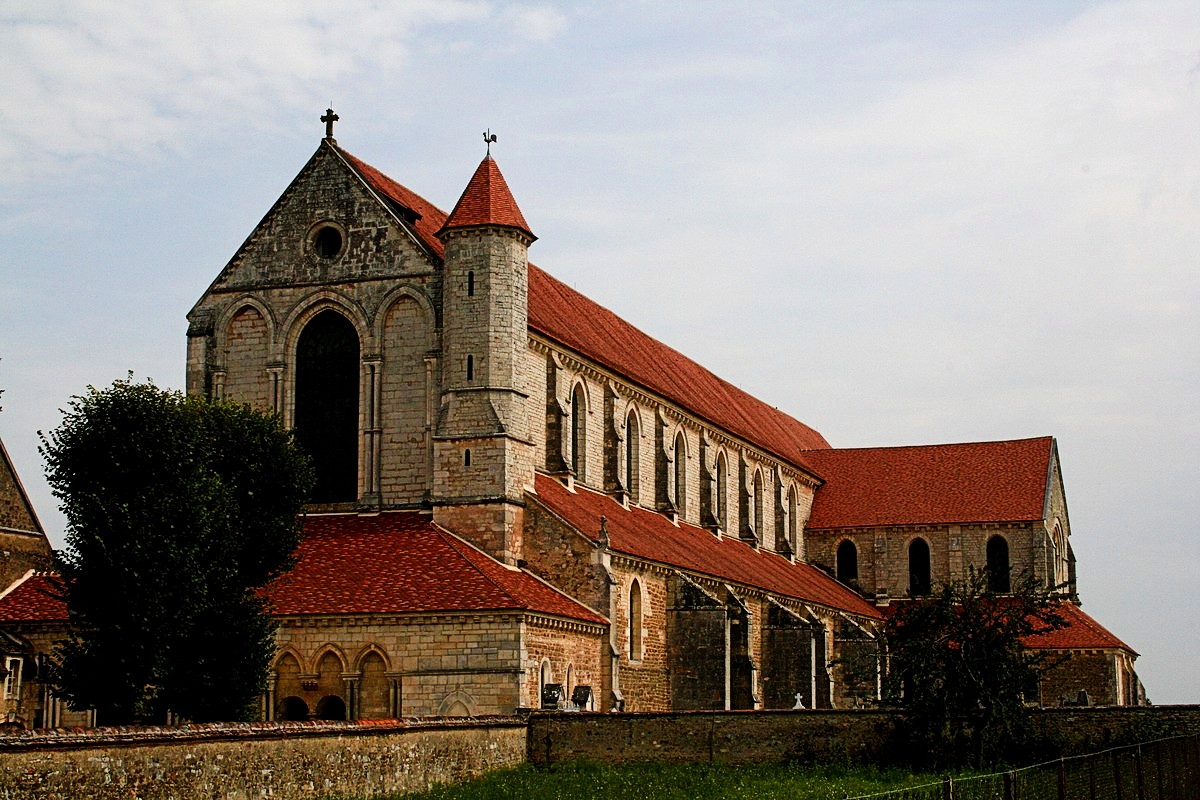
The Benedictine Abbey of Jumieges in Normandy has an ancient and remarkable history. Founded in the year 654 by Saint Philibert, it was once one of the magnificent Benedictine Monasteries in France and the home of some 700 Monks with over twice that number of lay brothers. Sadly, it is now nothing more than a tourist attraction and the vestiges of the surviving structures, though vacant, scarred and exposed to the elements, are celebrated as a magnificent example of Romanesque art. All that remains standing today are the Church of Notre Dame with its impressive twin towers soaring to a height of 150 feet, the western façade, and sections of which, were once the cloisters and library. The rest is but a pile of rubble, though it is proudly proclaimed the largest medieval ruin in France. Victor Hugo notably Baptised there “the most beautiful ruin in France” but one is left to wonder how it once appeared when the Catholic Faith was still vibrant and alive in France. Located a little west of Rouen along a bend in the Lower Seine, it was vulnerable to the attacks of the Vikings in the ninth and tenth centuries. During one invasion it was set on fire and pillaged of its wealth. It was soon lovingly rebuilt, however, by the Duke of Normandy. The Church of Jumieges was consecrated by Maurice, the Archbishop of Rouen, in the year 1067. William the Conqueror attended the dedication of the Church of Jumieges and the subsequent celebrations. Larger and more beautiful than ever before, the Abbey once again became wealthy and influential. A centre of learning, it was famed for its Scriptorium where Monks worked diligently copying and illustrating manuscripts by hand. The errors of Martin Luther came to France, as they did to all of Christendom, followed by the usual looting of Churches. The destruction was widespread and the Abbey of Jumieges was not spared. When the French Revolution came along, the Monastery was finished, and only the imposing ruins of what had once been a thriving community was left in its wake. In 1793 the whole was sold at auction and mined as a stone quarry. The Chancel, with its marble Altar and the lantern tower were intentionally imploded and the rest was subject to the deprivations of vandals. What remained was rescued in the year 1852 by the Lepel-Cointet family. A lodge was built and the rest landscaped and made into a park before being sold to the State in the year 1946. The Church is not open but one can walk about the ruins and imagine the glory that once was.
St Arnulf of Mainz Bl Assunta Marchetti St Atilano Cruz Alvarado St Calais of Anisole St Carilephus St Castus of Sinuessa St Cewydd St Concordius of Toledo St Cuimmein of Nendrum St Domitian of Lerins Bl Elisabeth de Vans St Eparchius of Perigord St Eutychius of Umbria St Esther the Queen St Gall of Clermont Bl George Beesley St Golvinus of Leon St Gwenyth of Cornwall St Huailu Zhang Bl Jan Nepomucen Chrzan Bl Jean-Baptiste Duverneuil St Julius of Caerleon St Justino Orona Madrigal St Juthware St Leonorious of Brittany St Leontius of Autun Bl Luis Obdulio Navarro St Martin of Vienne Bl Montford Scott
Blessed Ignatius “Nazju” Falzon OFS (1813-1865) Catechist, Confessor, Evangelist, Apostle of seamen, the poor and the marginalised, Apostle of the Passion of Our Lord and of the Blessed Virgi Mary, Doctor of Civil and Canon Law, Writer. He spread devotion to both the Stations of the Cross and the Holy Rosary in all his works His Life: https://anastpaul.com/2020/07/01/saint-of-the-day-1-july-blessed-ignatius-nazju-falzon-ofs-1813-1865/
St Nicasius of Jerusalem
St Oliver Plunkett (1629-1681) Martyr, Archbishop and Primate of All Ireland
Bl Pierre-Yrieix Labrouhe de Laborderie St Secundinus of Sinuessa St Servan of Culross St Theobald of Vicenza St Theodoric of Mont d’Or Bl Thomas Maxfield Bl Tullio Maruzzo St Veep — Martyrs of Rome – 6 saints: Six Christians who were martyred together. No details have survived except their names – Esicius, Antonius, Processus, Marina, Serenus and Victor. They were martyred in Rome, Italy, date unknown.
Notre-Dame-de-Bon-Secours / Our Lady of Good Help, Montréal, Québec, Canada (1672) – 30 June:
Dedicated to Our Lady of Good Help, Notre-Dame-de-Bon-Secours, has been for 350 years the Sanctuary for seamen leaving Montreal for the seven seas. A wooden Chapel was built in 1657, replaced in 1675 by a building whose foundations serve the present Church which was erected in 1771.
Over the entrance is an inscribed message: “If the love of Mary is graven in your heart, forget not a prayer in passing.”
Our Lady of Good Help is a beautiful little Church, with fine paintings. On the walls are mosaics of St Marguerite Bourgeoys, who inspired the first Chapel and of Maisonneuve, Founder of Montreal, said to have felled the first oak for the Chapel. A narrow stairway, lined with pilgrims’ acknowledgments, leads to an aerial Chapel set in the roof. Here is a facsimile of the Santa Casa, the house of the Virgin carried by angels from Nazareth to Loreto. Saint Marguerite Bourgeoys was the Founder of the Congregation of Notre Dame. When she returned from France in 1673 she brought back with her a wooden statue of Our Lady of Good Help. It can still be seen in the reliquary on the gospel side of the altar, for when the Church burned in 1754, the statue was saved from the fire. This is not to say that someone took the statue from the Church, for after the fire had ravaged the original Chapel, the statue was found uninjured among the smouldering embers that remained. The mortal remains of Saint Marguerite Bourgeoys were interred in the Sanctuary of the Church in the year 2005, the 350th anniversary of Notre-Dame-de-Bon-Secours. She rests now at the feet of the statue she herself had brought from France.
In 1849 the Bishop of Montreal placed a statue of the Blessed Virgin, Star of the Sea, atop the tower facing the harbour. For this reason, the Chapel is also known as the Sailor’s Church. There are votive offerings, carved ships, models of sailing ships suspended from the vault of the Chapel in thanksgiving to the Blessed Virgin for her assistance in their safe return from the sea.
St Adolphus of Osnabrück St Alpinian of Limoges St Alrick the Hermit Bl Ambrose de Feis Bl Anthony de Tremoulières Bl Arnulf of Villers St Austriclinian of Limoges St Basilides of Alexandria St Bertrand of Le Mans St Clotsindis of Marchiennes St Donatus of Münstereifel (c 140-c 180) Roman Soldier and Martyr Bl Elisabeth Heimburg St Emiliana of Rome St Erentrude St Eurgain St Gaius
Bl Jacob Clou St Leo the Deacon St Lucina of Rome St Lucina of the Callistus Catacombs St Marcian of Pampeluna St Martial of Limoges St Ostianus St Otto of Bamberg St Peter of Asti St Petrus Li Quanhui
St Theobald of Provins St Vihn Son Ðo Yen Bl Zenon Kovalyk — Martyrs of Africa – 7 saints: Seven Christians martyred together. No detail about them have surived but the names – Cursicus, Gelatus, Italica, Leo, Timotheus, Zoilus, and Zoticus. Date and precise location in Africa unknown.
Notre-Dame de Buglose / Our Lady of Buglose, France (1634) – 29 June:
Located about two leagues from Acqe in Glascony is the Shrine containing a miraculous image of Our Lady of Buglose. The original Shrine of Notre-Dame de Buglose was burned and completely destroyed by the Huguenots, and the Statue of Our Lady was hidden in a marsh. The exact location of the Statue was eventually forgotten, as was the memory even that the place had once been the location of a Shrine in honour of the Blessed Virgin. Years later, a shepherd led his herd into the marshes and observed that one of his oxen did not go with the others but went into an area of the marsh alone and began to bellow in a strange manner. The shepherd climbed a tree to see what was happening, and saw the ox licking an unknown object that was half buried in the mud. Not understanding the mystery, he ran into Town to bring others back with him to see what had happened. When the shepherd returned, the Statue of the Blessed Virgin holding the baby Jesus in her arms had been revealed. It was respectfully removed from the water and the Bishop of Dax desired to take the image to his Church in Pouy. He placed the Statue in a cart that was pulled by oxen to transport it back to Pouy. The procession began with hymns and prayers but had only gone a short distance, when the oxen stopped and would not move any further. It was understood that the Blessed Virgin desired that her image should stay near the fountain. The Bishop accepted the revelation as a divine order and thanks to the zeal and enthusiastic support of the people living in the region, a new Church was built with prodigious speed. The Shrine was, for a long time, popular as a place of pilgrimage in France – now it is further renowned as the birthplace of Saint Vincent de Paul. The house where he was born and where he spent his boyhood, is still visited as a Museum of the Saint.
|The Basilica of St Vincent de Paul and Our Lady of Buglose
There have been many miracles at the Shrine, as indeed Buglose had become known as a land of miracles. There were 19 miracles recorded in the year 1622 alone. There is a fountain near the Chapel marking the place where the Statue of Our Lady of Buglose was found buried. In 1623, a man named Bernard Ducassou came to the shrine seeking a cure for the seven boils that covered his left leg. He spent the entire night in prayer and the next day bathed at the fountain. The ulcers that would not heal were suddenly closed. Pilgrims still travel to the famous Shrine of Our Lady where miracles are continuously granted to pious devotees.
St Anastasius of Bourges St Benedicta of Sens St Cassius of Narni St Ciwg ap Arawn St Cocha St Ilud Ferch Brychan St Judith of Niederaltaich St Marcellus of Bourges St Mary, the Mother of John Mark St Salome of Niederaltaich St Syrus of Genoa Bl William of Sann — Martyrs of China Ioannes Baptista Wu Mantang Magdalena Du Fengju Maria Du Tianshi Paulus Wu Anju Paulus Wu Wanshu
Matka Boża / Mother of God of Gietrzwald, Gietrzwałd, Olsztyński, Warmia, Poland, 1877 – 27 June, 8 September;
Our Lady appeared for the first time to Justyna Szafrynska (13) when she was returning home with her mother after having taken an examination prior to receiving the First Holy Communion. The next day, Barbara Samulowska (12) also saw the ‘Bright Lady’ sitting on the throne with Infant Christ among Angels over the maple tree in front of the church while reciting the rosary. The girls asked “Who are you?” she answered, “I am the Blessed Virgin Mary of the Immaculate Conception!” “What do you require, Mother of God?” they asked, the answer was: “I wish you recite the Rosary everyday!” There were 13 more apparitions from 27 June 1877 to 16 September 1877. 2 February 1970 – Pope Paul VI elevated the Church in Gietrzwald to the rank of Basilica Minor.
St Adeodato of Naples St Aedh McLugack St Anectus of Caesarea St Arialdus of Milan St Arianell of Wales Blessed Benvenutus of Gubbio OFM ) (Died 1232) Lay brother of the Order of the Friars Minor of St Francis St Brogan St Crescens of Galatia St Crescentius of Mainz Bl Daniel of Schönau Bl Davanzato of Poggibonsi St Desideratus of Gourdon St Dimman St Felix of Rome St Ferdinand of Aragon St Gudene of Carthage
Bl Hemma of Gurk St Joanna the Myrrhbearer St John of Chinon
Blessed Maria Pia Mastena St Sampson of Constantinople St Spinella of Rome St Tôma Toán St Zoilus of Cordoba — Martyrs Killed Under Communist Regimes in Eastern Europe: Among the thousands of Christians murdered by various Communist regimes in their hatred of the faith, there were 25 members of the Ukrainian Greek Catholic Church and Russian Byzantine Catholic Church, priests, bishops, sisters and lay people, whose stories are sufficiently well documented that we know they were murdered specifically for their faith in eastern Europe and whose Causes for Canonization were opened. Their Causes were combined and they were beatified together. They have separate memorials but are remembered together today. They are – • Andrii Ischak • Hryhorii Khomyshyn • Hryhorii Lakota • Ivan Sleziuk • Ivan Ziatyk • Klymentii Sheptytskyi • Leonid Feodorov • Levkadia Harasymiv • Mykola Konrad • Mykola Tsehelskyi • Mykolai Charnetskyi • Mykyta Budka • Oleksa Zarytskyi • Ol’Ha Bida • Ol’Ha Matskiv • Petro Verhun • Roman Lysko • Stepan Baranyk • Symeon Lukach • Vasyl Vsevolod Velychkovskyi • Volodomyr Bairak • Volodymyr Ivanovych Pryima • Yakym Senkivsky • Yosafat Kotsylovskyi • Zenon Kovalyk. Beatified – 27 June 2001 by Pope John Paul II in Ukraine.
One Minute Reflection – 27 June – “Month of the Sacred Heart”- Readings: Genesis 18: 1-15, Luke 1: 46-47, 48-49, 50 and 53, 54-55, Matthew 8: 5-17
“Many will come from the east and the west and shall sit down with Abraham, and Isaac and Jacob, in the kingdom of heaven” – Matthew 8:11
REFLECTION – “I have seen our Lord in the Gospel accomplish many miracles and, reassured by them, have strengthened my fearful words. I have seen the centurion throw himself at the Lord’s feet, nations send their firstfruits to Christ. The Cross has not yet been erected and already, pagans hasten towards their Master. The words “Go, teach all nations” have not yet been heard (Mt 28,19) but the nations are already hastening. Their race precedes their call, they are burning with desire for the Lord. The sound of preaching has not yet been heard but they are hurrying towards the one who preaches. Peter… they have now been instructed and they gather around the one who is teaching them; the light of Paul has not yet blazed beneath Christ’s standard and nations are coming with incense, to adore the King (Mt 2,11).
And now, see how a centurion begs Him and says to Him: “Lord, my servant is lying at home paralysed, suffering dreadfully.” Here is a new miracle indeed! The servant whose limbs are paralysed leads his master to the Lord; the slave’s sickness gives health to his owner. Seeking his servant’s healing, he finds our Lord and while he is seeking for his slave’s cure, he becomes Christ’s conquest.” – Basil of Seleucia (?-c 468), Bishop, Father of the Church – Homily 19 on the Centurion.
PRAYER – God our Father, You open the gates of the kingdom of heaven to those who are born again of water and the Holy Spirit. Increase the grace You have given, so that the people who have been purified from all sin, may not forfeit the promised blessing of Your love. Grant that we may ever keep Your Son, the Lord Jesus Christ, before our eyes and do all in Him and through Him and for Him and may the prayers of our Mother of Perpetual Succour ever guide and bear us in her care! We make our pray through Christ, our Lord, in union with You and the Holy Spirit, one God forever, amen.
Our Morning Offering – 26 June – “Month of the Sacred Heart”
As the Feast day of Our Lady of Perpetual Succour falls tomorrow, being a Sunday, it is appropriate to remember her today instead. Let us remind ourselves of the great power of this Marian devotion.
Prayer to our Mother of Perpetual Succour, When In Need By St Alphonsus’ Redemptorists
O Mother of Perpetual Succour, numerous clients continually surround thy Holy picture, all imploring thy mercy. All bless thee as the assured help of the miserable, all feel the benefit of thy motherly protection. With confidence then, do we present ourselves before thee in our misery. See, dear Mother, the many evils to which we are exposed, see how numerous are our wants. Trials and sorrows often depress us, reverses of fortune and privations, often grievous, bring misery into our lives, everywhere we meet the Cross. Have pity, compassionate Mother, on us and on our dear ones, especially in this our necessity …………… (mention your need). Help us, dear Mother in our distress, deliver us from all our ills, or, if it be the Will of God, that we should suffer still longer, grant that we may endure all, with love and patience. These Grace’s we expect of thee with confidence, because thou art our Perpetual Succour, amen.
Matka Boża Tęskniąca / Longing Mother of God, Warsaw, Poland – 26 June:
One of the oldest Churches in the Archdiocese of Warsaw is St Elizabeth Powsin Located on the main Altar is a painting of th Longing Mother of God– artist unknown – from the first half of the seventeenth century. At either side, the image is surrounded by statues of Saints Adalbert and Stanislaus – Polish Bishops and Martyrs. The testimony of miracles and graces relating to the Longing Mother of God icon, have been collected at least since the mid-seventeenth century. On 28 June 1998, the image became the fourth image of Mary in the Archdiocese of Warsaw to be canonically Crowned.
Bl Andrii Ischak St Anthelm of Belley O. Cart. (c 1105-1178) Bishop, Prior St Babolenus of Stavelot-Malmédy St Barbolenus of Fossés Bl Bartholomew of Vir St Corbican St David of Thessalonica St Deodatus of Nola St Dionysius of Bulgaria St Edburga of Gloucester St Hermogius of Tuy St Iosephus Ma Taishun St John of Rome St John of the Goths St José Maria Robles Hurtado
Blessed Jacques Ghazir Haddad OFM Cap (1875-1954) the “St Vincent de Paul of Lebanon,” “the Apostle of the Cross” and “the Apostle of Lebanon.” Priest, Religious of the Order of Friars Minor as a Capuchin Friar, Founder of the Franciscan Sisters of the Holy Cross of which he is the Patron, noted Preacher and founder of many orphanages and schools across Lebanon. Beautiful Blessed Jacques: https://anastpaul.com/2019/06/26/saint-of-the-day-blessed-jacques-ghazir-haddad-ofm-cap-1875-1954/
St Maxentius of Poitou St Medico of Otricoli Bl Mykola Konrad St Paul of Rome St Pelagius of Oviedo St Perseveranda of Poitiers Bl Raymond Petiniaud de Jourgnac St Salvius Bl Sebastian de Burgherre St Soadbair St Superius St Terence of Rome St Vigilius of Trent Bl Volodymyr Ivanovych Pryima — Martyrs of Africa – 4 saints: Four Christians who were martyred together – Agapitus, Emerita, Felix and Gaudentius at an unknown location in Africa, date unknown.
Martyrs of Alexandria – 3 saints: Three Christians who were martyred together, but we really know little more that the names – Agatho, Diogenes and Luceja. They were martyred in Alexandria, Egypt, date unknown.
Martyrs of Cambrai – 4 beati: Four Daughters of Charity of Saint Vincent de Paul nuns at Arras, France. Imprisoned together in 1792 and executed together two years later in the anti-Catholic excesses of the French Revolution. They were: • Jeanne Gerard • Marie-Françoise Lanel • Marie-Madeleine Fontaine • Thérèse-Madeleine Fantou They were guillotined on 26 June 1794 at Cambrai, Nord, France and Beatified in June 1920 by Pope Benedict XV.
St Adalbert of Egmond (Died c 740) Deacon, Missionary_ St Amand of Coly Bl Burchard of Mallersdorf St Cyneburga of Gloucester St Domingo Henares de Zafra Cubero Bl Dorothy of Montau St Eurosia of Jaca St Febronia of Nisibis Bl Fulgentius de Lara St Gallicanus of Embrun St Gallicanus of Ostia St Gohard of Nantes Bl Guy Maramaldi Bl Henry Zdick Bl John the Spaniard St Luceias and Companions
Madonna della Navicella / Our Lady of the Ship , Chioggia, Venezia, Veneto, Italy (1508) – 24 June:
On 24 June 1508, in the afternoon, a strong storm, with disastrous effects, hit the inhabited area of Chioggia and Sottomarina. Rain, wind and storm had lashed the coast for a few hours. In the evening, fortunately, the storm abated and the weather improved. A greengrocer, Baldissera Zalon, went to the vegetable gardens, where the Sanctuary now stands , to see for himself the damage that the powerful storm had caused. Baldissera was a simple man, a peasant, who lived near his fields and lived on his work in the vegetable gardens. As soon as he left the house, after scanning the clouds of the sky that were moving away and the setting sun was peeping, he heard himself called by name. After the first moments of amazement, Baldissera turned and saw a majestic Lady, all dressed in black, who sat on a treetrunk thrown on the beach by the waves of the stormy sea. The greengrocer was stunned, so much so, that he was about to pass out, when the Lady revealed to him that she was the Mother of God, giving him courage and inviting him to go to the Bishop to warn him that the sins of the Chioggia challenged the justice of God and that penance had to be preached tenaciously, to avoid worse punishment. Then the Lady got on a craft that was near the shore but before leaving and disappearing, she opened her cloak showing the wounded and bleeding body of Jesus, making it clear that it had also been reduced by the sins of the Chioggiotti.
Baldiserra wasted no time and went to the Bishop, who organised a pilgrimage to the place of the apparition and the turnout of the faithful became more and more consistent day after day. In a short time, a Chapel was built on the spot and then, in 1515, a Sanctuary which was, however, destroyed in 1814. The current Church was built between 1952 and 1958 and was Consecrated on 24-25 June 1958 by Bishop Piasentini. The miraculous image was found, according to popular belief, a few days after the apparition, together with the log on which the Madonna sat when she appeared to Baldissera. The image and the LOG are preserved and are visible in the Basilica of San Giacomo.
St Aglibert of Créteil St Agoard of Créteil St Alena of Brussels St Amphibalus of Verulam
Bl Christopher de Albarran St Erembert I of Kremsmünster St Faustus of Rome and Companions St Festus of Rome St Germoc St Gohardus of Nantes Bl Henry of Auxerre/the Hagiographer St Ivan of Bohemia St John of Rome St John Theristus (c 1049-1129) Monk St John of Tuy St Joseph Yuan Zaide Bl Maksymilian Binkiewicz
St Rumold St Simplicio of Autun Bl Theodgar of Vestervig St Theodulphus of Lobbes — Martyrs of Satala: Seven Christian brothers who were soldiers in the imperial Roman army. They were kicked out of the military, exiled and eventually martyred in the persecutions of Maximian. We know little more about them than their names – Cyriacus, Firminus, Firmus, Longinus, Pharnacius, Heros and Orentius. The martyrdoms occurred in c 311 at assorted locations around the Black Sea.
Saint John‘s Eve Vigil of the Feast of the Nativity of Saint John the Baptist
Madonna del Sasso, Bibbiena, Arezzo, Toscana, Italy (1347) – 23 June:
The little seer , Caterina, 7 years old, while her mother was washing clothes in the Vessa stream, moved away a little, placing herself near a stone . Here she saw a beautiful lady dressed all in white who, having entered the nearby field of beans, collected several and placed them in the bosom of the girl. Meanwhile, the mother was busy and the little girl ran to tell her of the lady and showed her the beans she had received but the mother paid no attention to her daughter’s meeting.
Returning to the village, Caterina complained to her mother because the beans had grown so much that their weight was difficult for her to bear but her mother told her to be patient as they would soon be home. In the evening, the mother wanted to cook some of those beans but she noticed that they were full of blood. The whole country ran to see the prodigy. The following morning, everyone went in procession to the stone and here they decided to build a Chapel in honour of the Madonna. The apparition of the Madonna del Sasso was preceded and followed by two further miraculous events.
Also in 1347, shortly before the vision, a white dove appeared on the top of the stone and was approached only by children and an old hermit , Beato Martino da Poppi, a Camaldolese Monk, who had his hermitage nearby . When the children approached it, the dove pecked at their fingers and hands but if adults approached, it flew away. In 1444, several people saw golden-blue light globes inside and outside the C hurch these appeared for about three months The podestà, together with some family and friends, returning from a hunting party, about 300 meters away from the sacred stone, saw a crowd of white-dressed young men heading in procession to the Church. A small Chapel was immediately built next to the boulder, later enlarged to include the entire boulder. It now host sthe beautiful image of the Madonna del Sasso, painted by Bicci di Lorenzo in 1435 . This image miraculously remained intact in the fire that completely destroyed the Church in 1486.
The Dominican Fathers were custodians of the Sanctuary since 1468,. They immediately worked on the construction of the current Sanctuary, in pure Renaissance style, based on a design by Giuliano da Maiano. A great amount of funds for the construction of the Sanctuary and Convent, came from Savonarola in 1495, who solicited help from noble families of Florence and from the Medici in particular.
Bl Félix of Cîteaux St Felix of Sutri Bl Frances Martel Bl Francis O’Sullivan St Hidulphus of Hainault St James of Toul St John of Rome
St Joseph Cafasso (1811-1860) “Priest of the Gallows”, Priest, Theology Lecturer, Social Reformer, Confessor, Spiritual Director (of St John Bosco and quite a few other Saints), Rector of a post-Ordination Theological College, member of the Third Order of St Francis. His will bequeathed everything to aid the Little House of Divine Providence which was the religious order founded by St Joseph Benedict Cottolengo (1786-1842). St John Bosco (1815-1888) preached the funeral Mass homily. Patronages – Italian prisons, Prison chaplains, Prisoners, those condemned to death. St Joseph Cafasso’s Biography: https://anastpaul.com/2018/06/23/saint-of-the-day-23-june-st-joseph-cafasso-1811-1860-priest-of-the-gallows/
Bl Lupo de Paredes Blessed Marie of Oignies (1167-1213) Recluse, Mystic, Ascetic St Moeliai of Nendrum Bl Peter of Juilly Bl Thomas Corsini of Orvieto St Thomas Garnet Bl Walhere of Dinant St Zenas of Philadelphia St Zeno of Philadelphia — Martyrs of Ancyra: A family of converts who were arrested, tortured and sent in chains to Ancyra, Galatia (modern Ankara, Turkey) where he was tortured more by order of governor Agrippinus during the persecutions of Diocletian. Martyr. They were – Eustochius, Gaius, Lollia, Probus, Urban. They were roasted over a fire and finally beheaded c 300 in Ancyra, Galatia (modern Ankara, Turkey).
Martyrs of Nicomedia: During the persecutions of Diocletian, many Christians fled their homes to live in caves in the area of Nicomedia. In 303 troops descended on the area, systematically hunted them down and murdered all they could find.
Madonna Ta’ Pinu, Gharb, Gozo, Malta ( 1883) – 22 June and 15 Augus,the Feast of the Assumpton:
“Ta’ Pinu” means “Philip’s,” a reference to Pinu (Philip) Gauchi, who financed restoration of the country Chapel and in 1619, commissioned its Altarpiece, a painting of the Assumption by Amadeo Perugino. The Chapel was again in disrepair by 22 June 1883, when Karmela Grima, a 40, year old woman, heard a female voice coming from the Chapel on her way home from the nearby fields: “Come, because it will be another year before you will be able to return.” After Karmela knelt to pray in the Chapel, the voice said, “Recite three Hail Marys in honour of the three days my body remained in the tomb” (before being assumed into heaven). Very soon the pious woman fell ill, remaining bedridden over a year without telling anyone about the voice. In 1885, she told a friend, Francesco Pinelli, who revealed that about the same time, he also had heard a woman’s voice, asking for devotion to the “hidden wound” of her Son from carrying the Cross. When Francesco’s mother was miraculously healed after praying to Our Lady of Ta Pinu, the isolated Chapel began attracting pilgrims. Soon a better building was needed. A new Church, begun in 1920, was finally Consecrated in 1932. Still a place of pilgrimage, its major festival is the Assumption, on 15 August.
Basilica of the Blessed Virgin Of Ta’ Pinu.
Ta’ Pinu Sanctuary holds an annual ceremony of the presentation of babies to Our Lady of Ta’ Pinu, during which. Baptised babies are presented to The Blessed Mother of Ta’ Pinu, while the parents pray to the Mother of God that she may keep her maternal protection over their children and families. The Virgin of Ta’ Pinu has often been connected to several miraculous cures and graces, of both Maltese and foreigners, who have been saved, cured or helped through the intercession of the Virgin. The Sanctuary is adorned with many ex-votos which have been left by those who have either been cured, saved or received favours and graces through the intercession of Our Lady Of Ta’ Pinu. Today, these can still be seen by the many people who everyday visit the Basilica.
A mosaic of the Altarpiece image, one of 6 mosaics. There are also 76 stained glass windows in the Basilica.
Some of the ex-voto in the Ta’ Pinu Sanctuary.
St Paulinus of Nola (c 354-431) Bishop, Confessor, Poet, Writer, Apostle of Charity, Preacher, Orator, Senator and Governor. St Paulinus was an inspiration to many—including six great Saints of the Church, who referenced him in letters of encouragement to others: St Augustine, St Jerome, Melania, St Martin of Tours, St Gregory and St Ambrose. St Augustine wrote, “Go to Campania– there study Paulinus, that choice servant of God. With what generosity, with what still greater humility, he has flung from himself the burden of this world’s grandeurs to take on him the yoke of Christ and in His service how serene and unobtrusive his life!” About St Paulinus: https://anastpaul.com/2018/06/22/saint-of-the-day-22-june-st-paulinus-of-nola-c-354-431/
St Aaron of Brettany St Aaron of Pais-de-Laon St Alban of Britain Bl Altrude of Rome St Consortia St Cronan of Ferns St Eberhard of Salzburg St Eusebius of Samosata St Exuperantius of Como St Flavius Clemens St Gregory of Agrigento St Heraclius the Soldier St Hespérius of Metz Blessed Pope Innocent V OP (c 1225-1275) Papal Ascesion 21 January 1276 St John IV of Naples St Julius of Pais-de-Laon Bl Kristina Hamm Bl Marie Lhuilier St Nicetas of Remesiana St Precia of Epinal St Rotrudis of Saint-Omer St Rufinus of Alexandria — Martyrs of Samaria – 1480 saints: 1480 Christians massacred in and near Samaria during the war between the Greek Emperor Heraclius and the pagan Chosroas of Persia. c 614 in the vicinity of Samaria, Palestine.
Madonna dei Miracoli / Our Lady of the Miracles, Alcamo, Sicily (1547) – 21 June:
The Processional Statue
The cult of Our Lady of the Miracles in Alcamo dates to 21 June 1547, the day people remember the Madonna’s apparition to some women near a stream running north of Alcamo. According to tradition while washing their clothes in the stream, the women, with a blind and a deaf one among them, saw the apparition of a woman with a child and were hit by a gust of pebbles, during the apparition but without receiving any injury or pain; on the contrary, after being hit by the pebbles, they strangely felt a certain sense of wellbeing and recovered their health. After learning the news, the women’s husbands, thinking that it was a joke, went to investigate, thinking that someone was hidden among the bushes but they didn’t find anybody. Then the local authorities inquired on the spot, cut down the near grove and found the ruins of a “cuba,” an old arc of a mill that nobody remembered any longer and insidem there was a fresco on a stone made by an anonymous painter of the 13th century representing Our Lady with the Child Jesus, which at first. the believers called “Madonna Fons Misericordiae” (that is Our Lady Source of Mercy).
A representation of the discovery of Our Lady of Miracles’ image (inside its Chapel in the Basilica of Our Lady of the Assumption in Alcamo).
After this discovery, all the people started praying before the rediscovered image and in the following days there were several miracles. Our Lady of Miracles became the Patron of Alcamo, in substitution of the Holy Crucified, who was the Patron Saint of Alcamo and other near small towns (among which Calatafimi and Salemi). The old Patron Saint’s memory however, remains: in fact, they call St Francesco of Paola “santu patri” (whose translation means “Patron Saint”) as the Church named after him was called the Holy Crucified Church. The Madonna’s discovered image was first called “Our Lady Source of Mercy” but thanks to the high number of subsequent miracles, in 1583 the name was changed into “Our Lady of Miracles”. Further to these events, Don Fernando Vega, Alcamo’s governor, ordered the construction of the Sanctuary of Our Lady of Miracles, which hosts the Madonna’s image. Inside the Church there is a white marble sarcophagus containing the mortal remains of the governor Don Fernando Vega, according to his will.
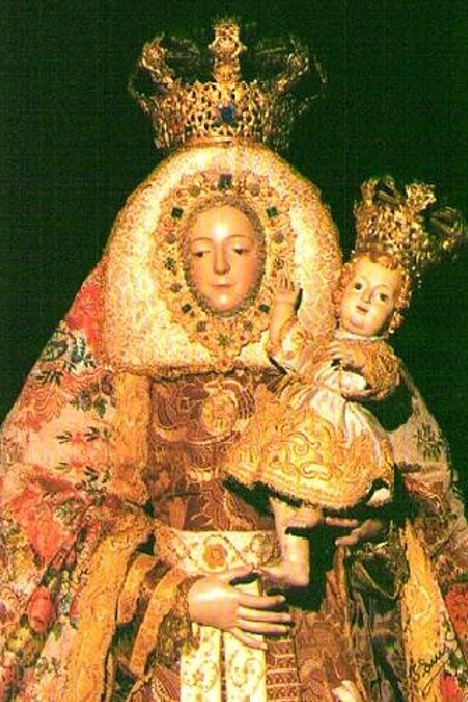
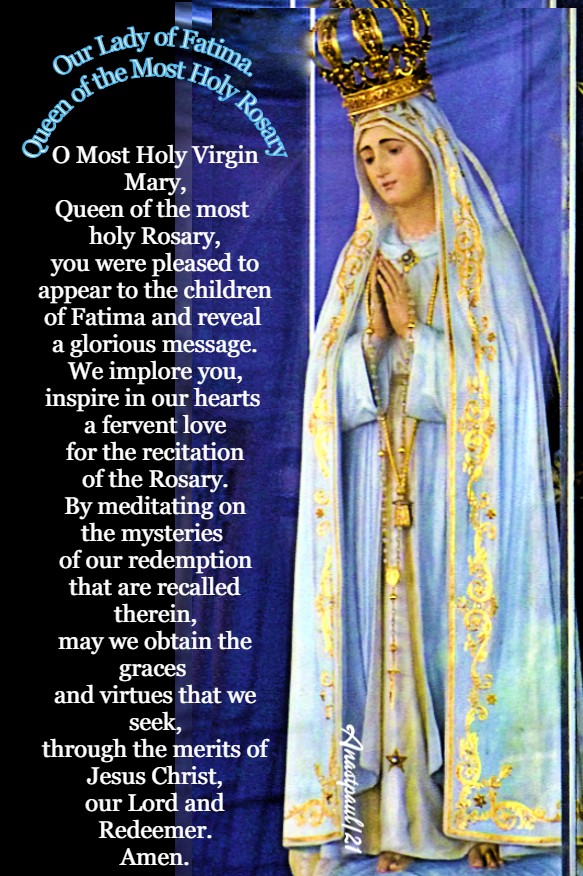
The Crowned Painting of the Madonna of Miracles in the Sanctuary at Alcamo
Every year in Alcamo there are the celebrations in honour of Our Lady of Miracles from 19 June until 21 of June. This is the most important religious festivity in Alcamo. The real celebrations are often anticipated by other events, so extending the feast to about two weeks, in this way the beginning of the celebrations changes every year, while the last day is always the 21 June. The celebrations include: The pealing of church bells” which opens the celebrations together with the burst of fireworks and the passing of the band through the town streets; in the past Alcamo’s band also joined the musical band of Partinico (a neighbouring small town). The Holy Mass in honour of Our Lady of Miracles in the Basilica di Santa Maria Assunta (also called “Mother Church”), in which all confraternities and laity groups in Alcamo take part. The procession to the Sanctuary of Madonna of Miracles (called “calata”), in which all civil and religious authorities of the town (together with the Mayor) take part; they are preceded by the band of the town. In old times people took also the animals that had recovered from an illness. Inside the Sanctuary they sing Vespers and then there is the Eucharistic Blessing/Benediction.
St Raymond of Barbastro St Rufinus of Syracuse St Suibhne the Sage St Terence St Ursicenus of Pavia — Martyrs of Taw – 3+ saints: Three Christians of different backgrounds who were martyred together – Moses, Paphnutius, Thomas. They were beheaded in Taw, Egypt, date unknown.
Fourth Sunday after Pentecost (Traditional Calendar) +2021 Twelfth Sunday in Ordinary Time +2021
Notre-Dame-de-Grace / Our Lady of Grace in Equemauville, Honfleur, France – also known as Our Lady of Consolation (1524) 20 June (The Crowning) and 23 October:
The Abbot Orsini wrote: “Our Lady of Consolation, near Honfleur. This Chapel is much frequented; two children have been raised to life there, in memory of which ,their figures are there in silver.”
Also known as Our Lady of Grace, or Notre-Dame-de-Grace, the first thing that can be seen among the trees upon the height is a large Crucifix that seems to bless the sea, although the Chapelle Notre-Dame-de-Grace is still invisible, hidden under the old trees that surround it. The present Chapel is a small one, located a short distance from that Crucifix and the tall trees and lawns that surround the Church are in stark contrast to the Church’s humble dimensions.
Once inside, everything is modest but exudes an atmosphere of holiness. There is a low arch, and passing beneath it, the view from the windows inside, is obscured by the thick foliage of the surrounding trees. On the Gospel side is the Statue of the Blessed Virgin on a short pillar. A fabric canopy frames the Statue which depicts the Mother of God holding her Divine Child. At the feet of Our Lady are placed small anchors and hearts of silver gilt that shine on the dais and we see a small amount of flowers that are the humble obeisance’s of children and the poor. There are votive offerings hundreds of years old, and paintings of ships battered by storms, or broken upon the rocks, beneath which are brief accounts of the perils and the salvation sent after prayer to Notre-Dame-de Grace. Crutches lean against the wall as trophies demonstrating the victorious prayers of the healed cripples who now walk, and burning candles, are constantly renewed beneath the holy image, exhibiting the persevering ardoUr of the faithful. It is a collective testimony of piety and edification from the servants of Mary.
The origin of the pilgrimage to Notre-Dame de Grace goes back to the eleventh century. According to tradition, in the year 1034, Robert the Magnificent, Duke of Normandy, was sailing to England. He was suddenly assailed by a violent storm and at the height of the danger he promised to build three Chapelsdevoted to the Blessed Virgin if he returned safely to his lands. The storm ended at once and the Prince immediately returned home to take care of his vow. He built one of the Chapels promised near his Castle, and dedicated it to Our Lady of Mercy. Another he built near Caen, which he called Notre-Dame de la Deliverance,and the third he built on the plateau in Equemauville overlooking Honfleur, which was named Notre Dame de Grace. This Chapel near Honfleur, soon became a busy place of pilgrimage. There is an authentic document at the Church from King Louis XI dated 28 January 1478 and letters showing that the Chapel was endowed with a certain tract of land containing a house, a barn, etc.
The Chapel partially collapsed and the sea swallowed part of the cliff near the Church during a violent earthquake that occurred on 29 September 1538. Only a section of one wall, the Altar, and the Statue of the Virgin Mary remained standing but such was the devotion of the people to this special place that many pilgrims continued to come and pray kneeling amid the debris. Unfortunately the landslides did not cease, so finally, in 1602, the last vestiges of the Sanctuary were removed to prevent the faithful from exposing their lives to the unremitting danger. The faithful regretted the loss of their Chapel, and one of them, Mr. Gonnyer, undertook to raise a new one. He dug the foundations one hundred paces from the old Church to the south-west but he was forced to stop at that point for lack of money. Offerings from the inhabitants of Honfleur did the rest and in 1613 the Chapel was acquired. It was a small building three times as long as it was wide;,thatched, isolated among the heather and looked more like a barn than a chapel. The Capuchins took possession on 16 March 1621, and they planted a large wooden Crucifix amid the ruins of the old chapel. They eventually replaced it with a stone Crucifix that they placed closer to the chapel than the old one had been. In the Middle Ages people understood that the Church provided for the moral and physical welfare of the people, as well as, the state. They knew that the apostolate of the monastic orders was necessary to form and maintain the ties of charity between the rich and poor, adjust the opulent life of one to soften the sufferings of others and to communicate to all, through preaching and by the Sacraments and example, the secret of living and dying well. When the Revolution erupted there was wide-spread desecration throughout France and all religious communities were dissolved. In vain the faithful recipients of so many graces endeavoured to protect their Sanctuary and the religious who served there. At one time it was hoped Honfleur could keep the Capuchins and so, a petition was drafted for that purpose in 1790. “Through the removal of religious communities,” said the petitioners, “we fear being deprived of the significant relief that we receive from the Capuchins. These men are religious at all times, labour for the good of the City and the neighbouring countryside and through the uprightness of their intentions and the justice of their actions, they have earned public esteem and confidence. They have a small Chapel, located on the coast under the invocation of the Blessed Virgin, which is held in great reverence throughout the Country and we urge its conservation.” The petition was sent to the National Assembly, who refused it. The Chapel was plundered and converted into a tavern. The old Statue was destroyed and sadly “those who were but lately to pray and ask for graces forgot themselves to commit orgies in a place where everything, even the walls, reproached them for their apostasy.” That was so long ago and now the tides of commercial prosperity have come to caress the people and promote the development of the City and the Port of La Havre. Hanfleur possesses all the signs of a prosperous City that is increasing in wealth and population, regardless of the attendant demoralisation and miseries of every kind, that accompany the seeming prosperity. La Havre is the seat of business where speculators contest in the commercial sphere where they work without ceasing to earn their fortune and contribute to each other’s ruin. Without the aid of the Blessed Virgin, there was no longer any hope for relief. After the atrocities had subsided the Chapel was restored and a copy of the original Statue created from Church records.
It was on 15 February 1912 that the Chapter of Saint Peter in Rome awarded the Golden Crown to the sSatue of Our Lady of Grace. The solemn Feasts of her Coronation were celebrated on 20 June 1913. Many people from Honfleur think that it is thanks to the intercession of Notre Dame de Grâce that Honfleur is the only Norman city not to have been bombed during the Second World War. The Chapel was classified as a historical monument in 1938.
Still, it was here, at this remote Chapel about 5 kilometers from Honfleur, that Marie-Francoise-Therese Martin came with her father and sister Celine in July of the year 1887 to pray to Notre-Dame-de Grace that she might be able to enter Carmel. That woman is better known today as Saint Therese of the Child Jesus and the Holy Face, or simply Therese of Lisieux, the “Little Flower.”
Irish Martyrs – 17 beati – This is the collective title given to the 260 or more persons who are credited with dying for the faith in Ireland between 1537 and 1714. Seventeen of them were beatified together on 27 September 1992 by St Pope John Paul II. • Blessed Conn O’Rourke• Blessed Conor O’Devany• Blessed Dermot O’Hurley• Blessed Dominic Collins• Blessed Edward Cheevers• Blessed Francis Taylor• Blessed George Halley• Blessed John Kearney• Blessed Matthew Lambert• Blessed Maurice Eustace• Blessed Patrick Cavanagh• Blessed Patrick O’Healy• Blessed Patrick O’Loughran• Blessed Peter Higgins• Blessed Robert Meyler• Blessed Terrence Albert O’Brien• Blessed William Tirry
Martyrs of Lower Moesia: Martyred on the Black Sea at Lower Moesia (in modern Bulgaria), date unknown. St Cyriacus St Paul
Martyred in Nagasaki: 9 Beati : burned alive on 20 June 1626 in Nagasaki, Japan. Their ashes were thrown into the sea and no relics remain. They were Beatified on 7 May 1867 by Pope Pius IX. • Blessed Baltasar de Torres Arias • Blessed Francisco Pacheco • Blessed Gaspar Sadamatsu • Blessed Giovanni Battista Zola • Blessed Ioannes Kisaku • Blessed Michaël Tozo • Blessed Paulus Shinsuke • Blessed Petrus Rinsei • Blessed Vincentius Kaun
Nostra Signora d Montesenario / Our Lady of Monte Senario, Florence, Italy – Ordo Servorum Beatae Mariae Virginis (OSM) (1240) – 19 June:
The cradle of the Order of the Servants of Mary began at Monte Senario in the year 1233 in the City of Florence, Italy, by a group of Hermits now known as the Seven Holy Founders Saints of the Servite Order – Ordo Servorum Beatae Mariae Virginis (OSM). They were sons of wealthy families and they retired from the world for a life of prayer and devotion to the praises of Mary. Leaving La Camarzia, a Suburb of Florence, the seven went to Monte Senario in the region of Tuscany. Uncertain of what way of life to follow, they turned to Our Lady in prayer and supplication and she appeared to them on the Feast of the Assumption in the year 1240.
Monte Senario
The Blessed Virgin, Our Lady of Monte Senario, presented the Seven Holy Founders with the Habit of their new Order and an Angel stood nearby bearing a scroll that was marked, “Servants of Mary.” He read to the Seven Holy Founders the following words: “You will found a new order, and you will be my witnesses throughout the world. This is your name: Servants of Mary. This is your rule: that of Saint Augustine. And here is your distinctive sign: the black scapular, in memory of my sufferings.”
From that day in 1240, the seven were known as the Servants of Mary, the Order of Servants of Mary, or the Servites. under her title of Mother of Sorrows (Italian: Madonna Addolorata) Members of the Order take solemn vows to especially honour the Seven Sorrows of the Blessed Virgin Mary. The sorrows are, in order, the prophecy of Simeon, the flight into Egypt, the loss of the Holy Child at Jerusalem, meeting Jesus on His Way to Calvary, standing at te foot of the Cross, Jesus taken down from the Cross, and the burial of Christ. According to an ancient document called the “Legenda de Origin ordini,” “Our Lady wanted to begin her Order with seven men to show everyone, with absolute clarity, that she wanted to adorn her Order, endowing it with the seven gifts of the Holy Spirit.”
The Order gained official recognition in 1249 but was not officially approved until Pope Benedict IX issued a Bull in 1304. Their Church on Monte Senario, rebuilt in 1700, is a favourite resort of pilgrims from Florence especially. Mary here, as Our Lady of Monte Senario, as well as elsewhere, proves herself the miraculous Mother of God. The names of the Seven Holy Founders are Saint Alexis Falconieri, Saint Bartholomew degli Amidei, Saint Benedict dell’Antella, Saint Buonfiglio Monaldi, Saint Gherardino Sostegni, Saint Hugh dei Lippi-Uguccioni, and Saint John Buonagiunta Monetti.
St Adleida of Bergamo Bl Arnaldo of Liniberio St Culmatius of Arezzo St Deodatus of Jointures St Deodatus of Nevers St Gaudentius of Arezzo St Gervase and St Protase (Died c 165) Martyrs, Twin Brothers of Martyr Parents, Laymen St Hildegrin of Châlons-sur-Marne Bl Humphrey Middlemore St Innocent of Le Mans
St Modeste Andlauer St Nazario of Koper Bl Odo of Cambrai St Rémi Isoré Bl Sebastian Newdigate Bl Thomas Woodhouse Bl William Exmew St Zosimus of Umbria
You must be logged in to post a comment.