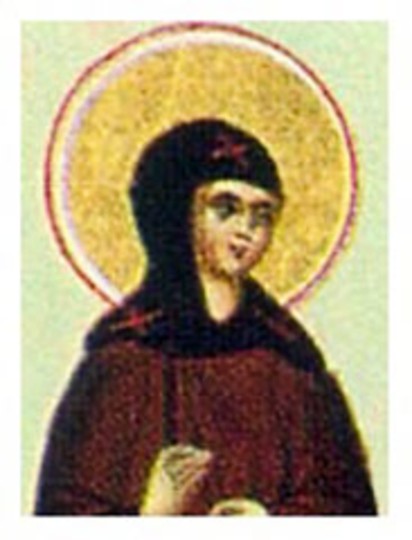
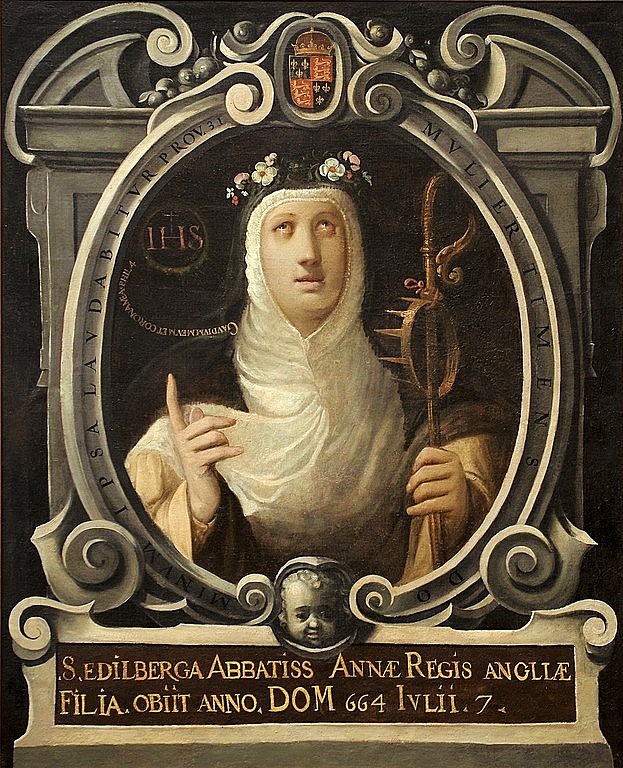
Saint of the Day – 9 July – St Everilda (7th Century) Abbess in Everingham, England. Everilda was the Founder of a Convent at Everingham, in the English County of Yorkshire in the East Riding All we know of her comes from the York Breviary. She died in c700. Also known as – Averil, Everildis.
Everilda was converted to Christianity by Saint Birinus, along with King Cynegils of Wessex, in 635. Her legend in the York Breviary states that she was of the Wessex nobility.
She fled from home to avoid arranged marriage and to dedicate herself to God. She consecrated herself to God and became a Nun, joined by Saints Bega and St Wuldreda.
Saint Wilfrid of York officiated at their Consecration at a place called the Bishop’s Farm, later known as Everildisham. This place has been identified with present-day Everingham. The Monastery quickly became a very important centre of spirituality, around the Abbess, our Saint Everilda a large community of about 80 Nuns formed.
Tradition has it that the Abbess “formed many virgins to the perfection of divine love, the pinnacle of Christian virtue, animating them with the true spirit and continually encouraging them in the most fervent and faithful fulfillment of all the duties, and application to all the exercises of their holy profession.”
Everilda died peacefully when her mission was accomplished.
Her name appears in the Martyrology of Usuard, as well as in the Church calendars of York and Northumbria.
There are two Churches dedicated to St Everilda – St Everilda’s Church, Nether Poppleton and Sts Mary & Everilda, Everingham.
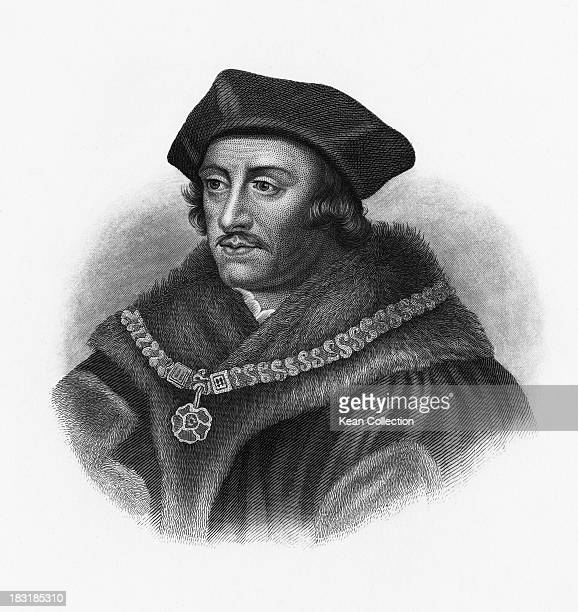
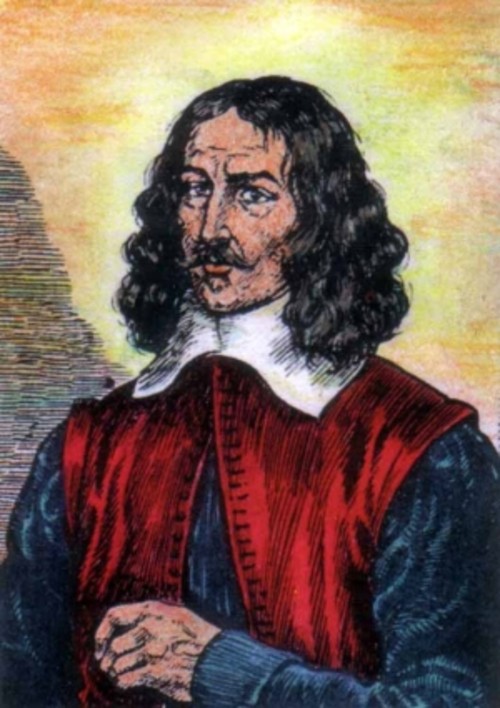
English lawyer, writer and statesman Sir Thomas More (1478 – 1535). Engraving by W. Wellstood & Co. (Photo by Kean Collection/Getty Images)
St Maria Goretti (1890-1902) Virgin and Martyr, known as “Saint Agnes of the 20th Century.” She was Canonised on 24 June 1950 by Pope Pius XII The ceremony was attended by 250,000 including her mother, the only time a parent has witnessed her child’s Canonisation. Her Life and Death: https://anastpaul.com/2017/07/06/saint-of-the-day-6-july-st-maria-goretti/
Blessed Adrian Fortescue TOSD (1476-1539) Martyr,. A husband and father, a Justice of the Peace, a Knight of the Realm, a Knight of Malta and a Dominican Tertiary (Lay Dominican), he was at once a loyal servant of the Crown so far as he could be but still more, he was a man of unshakeable faith and love of the One True Faith. He was Beatified on 13 May 1895 by Pope Leo XIII. His Life and Death: https://anastpaul.com/2018/07/09/saint-of-the-day-blessed-adrian-fortescue-1476-1539-martyr/
St Agrippinus of Autun St Alexander of Egypt St Audax of Thora
St Copra of Egypt St Cyril of Gortyna St Everilda (7th Century) Abbess in Everingham, England St Faustina of Rome St Felician of Sicily
Blessed Giovanna Scopelli O.Carm (1428 – 1491) Virgin, Mystic, Italian Religious of the Carmelites and established her own Convent as its first Prioress. She was known, during her lifetime as a Miracle-worker with many coming to her to ask for her assistance and prayers. Her body is incorrupt. About Blessed Giovanna: https://anastpaul.com/2021/07/09/saint-of-the-day-9-july-blessed-giovanna-scopelli-o-carm-1428-1491/
St Floriana of Rome St Hérombert of Minden Bl Joachim HoBl Luigi Caburlotto St Patermutius of Egypt St Paulina do Coração Agonizante de Jesus
Four Holy Polish Brothers – 4 Saints: Four brothers who became Hermits, Benedictine Monks and Saints – Andrew, Barnabas, Benedict and Justus. They were born in Poland and died in 1008 of natural causes.
Martyrs of the Baths – 10,204 Saints: A group of Christians enslaved by Diocletian to build the gigantic Baths in Imperial Rome, Italy. The end of their labours coincided with the beginning of the great persecutions of Diocletian and they were all executed. Ancient records indicated there were 10,204 of them; Zeno of Rome is the only one whose name has come down to us and we know nothing else about any of their individual lives.
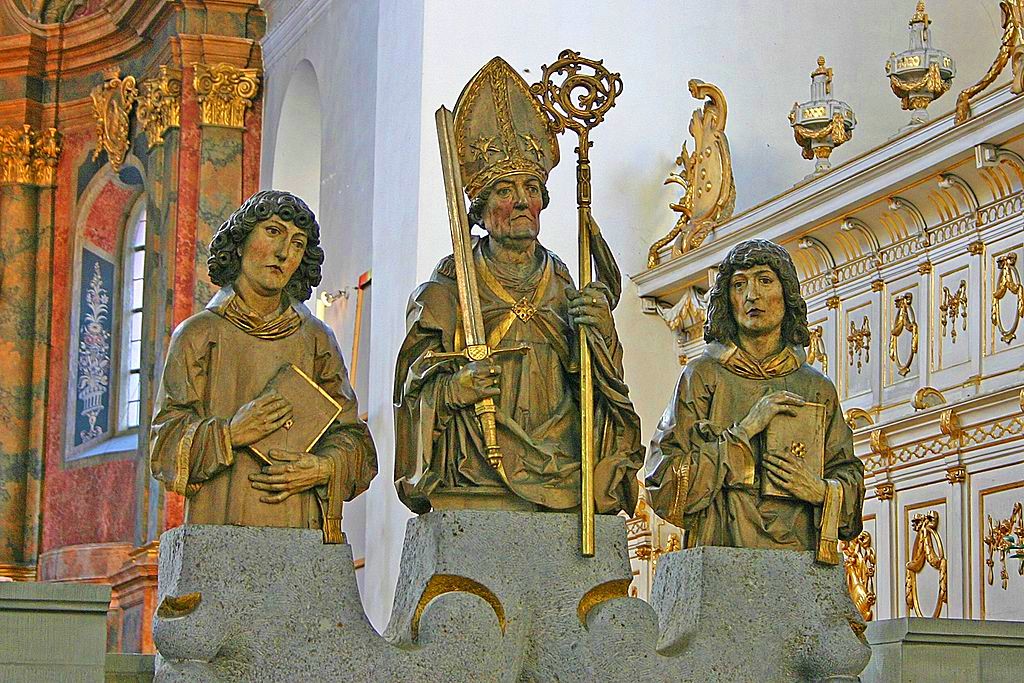
Saint/s of the Day – 8 July – St Colman (Died 689) Martyr Priest, Missionary in Thuringia, Germany, together with his master, the Bishop St Killian “Apostle of Franconia”(nowadays the northern part of Bavaria) and the Martyr Deacon St Totnan. Born in Ireland and died on 8 July 689 in Wurzburg. Patronages against gout and rheumatism, against deception, in Germany – of the Diocese of Aschaffenburg and Würzburg. Also known as – Colomann, Kolonat..
The Roman Martyrology reads today: “At Wurzburg in Germany, St Killian, a Bishop, who was commissioned by the Roman Pontiff to preach the Gospel. After having converted many to Christ, he was put to death with his companions, Colman, a Priest and Totnan, a Deacon.”
In 686 Pope Conon Ordained St Killian as a Missionary Bishop. St Kilian then returned to Würzburg in 687 with Saint Colman and Saint Totnan, as an assistant Priest and Deacon respectively.
The trio evangelised East Franconia and East Thuringia, areas in modern Bavaria, Germany, converted Duke Gozbert and a large part of Gozbert’s subjects.
St Colman
Like most Irish missionaries, they spoke fearlessly against any breach of faith or morals. In this case St Kilian openly rebuked the Duke for his irregular marriage to his brother’s widow. According to legend, while Gosbert was away on a military expedition, Geilan, his irregular wife, had the three missionaries beheaded when she found that Gosbert was going to leave her because their marriage was forbidden by the Church.
A strong cultus was immediately established in Germany and spread as far as Vienna, Austria and Ireland. Even today, the Kilianfest is one of the better known festivals of the German faithful which celebrates the lives of all tbree of these brave Missionary Saints.
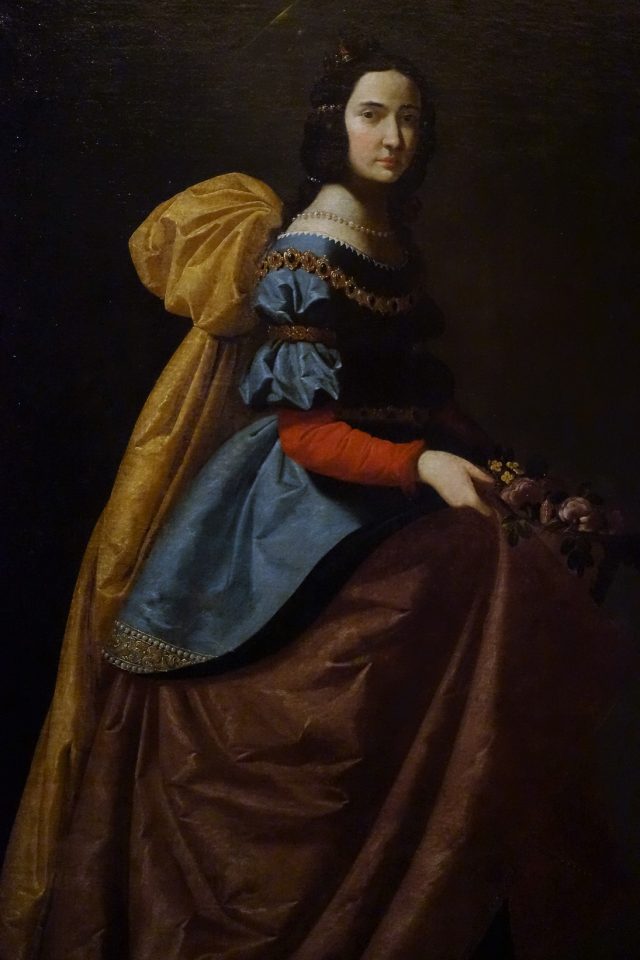
St Elizabeth of Portugal TOSF (1271-1336) Widow, Queen Consort, Franciscan Tertiary, Apostle of Charity and Peace, Political Negotiator and Mediator. In the year 1694 Pope Innocent XII moved her Feast to 8 July, so that it would not conflict with the celebration of the Octave of Saints Peter and Paul, Apostles. The Devoted Love of St Elizabeth: https://anastpaul.com/2018/07/04/saint-of-the-day-4-july-st-elizabeth-of-portugal-t-o-s-f-1271-1336/
St Abraham the Martyr Bl Adolf IV of Schauenburg St Pope Adrian III
St Arnold St Auspicius of Toul St Auspicius of Trier St Brogan of Mothil +St Colman (Died 689) Martyred Priest Missionary in Thuringia, Germany St Doucelin
St Morwenna – No details about her have survived. She is reported to have appeared in visions in Morwenstow, Cornwall, England, where her Relics are apparently buried under the Church floor.
St Pancras of Taormina Bl Peter the Hermit St Procopius of Ceasarea St Sunniva of Bergen St Thibaud de Marly +St Totnan (Died 689) Martyred Deacon Missionary in Thuringia, Germany
Abrahamite Monks/Martyrs of Constantinople: A group of Monks in a Monastery founded by Saint Abraham of Ephesus. Martyred in the iconoclast persecutions of Emperor Theophilus. In c 835 in Constantinople.
Martyrs of Shanxi – 7 Saints: In 1898 seven sisters of the Franciscan Missionaries of Mary were sent to the Shanxi Diocese in China to serve the poor in hospitals and care for the unwanted or other destitutes in orphanages. They were: Anne-Catherine Dierks, Anne-Francoise, Moreau, Clelia Nanetti, Irma Grivot, Jeanne-Marie Kuergin, Marianna Giuliani, Pauline Jeuris There they all died in one of the periodic persecutions against foreign missionaries. They were beheaded on 9 July 1900 at Taiyuanfu, China- Canonisedon 24 November 1946 by Pope Pius XII.
Martyrs of Syrmium – 5 Saints: Five Christians Martyred together for their faith. We know nothing else about them but the names – Cecilia, Eperentius, Eraclius, Sostratus and Spirus. They were martyred in the 4th century in Syrmium, Pannonia (modern Serbia).
Saint of the Day – 7 July – Saint Hedda (Died 705) Bishop of Winchester, England, Monk, Abbot Believed to have been born in Headingley, Leeds and died on 7 July 705 in Winchester, after having served his huge Diocese as a faithful shepherd for around 30 years. He had been a man of love and justice, of knowledge and eloquence and great determination. Also known as – Hedda of Dorchester, Hedda of Wessex, Edda… Haeddi…
The Roman Martyrology reads today: “In England, St Hedda, Bishop of the West -Saxons.”
Almost nothing is known of the early life of Hedda, who, according to the historian, William of Malmesbury (1080-1143), was first a Monk and then an Abbot, possibly of a Monastery in Wessex.
His signature on a document, suggests that Hedda was the Abbot of a Monastery in Wessex, perhaps Glastonbury. Moreover, this hypothesis seems confirmed by the fact that his name was found among those of Abbots and illustrious men on one of the ancient and almost illegible records engraved on stone “pyramids” at Glastonbury.
According to other sources, Hedda was a Monk at St Hilda’s Monastery at Whitby but, the fame of Whitby as a centre of learning, taken together with the statements of the Venerable St Bede about Hedda’s less comprehensive education, make this thesis seem unlikely. St Bede states further, that Hedda was “a just and good man”and that he governed his Diocese with love being “more inspired by a love of virtue, than by lessons … ” However, William of Malmesbury insists that after having read much of Hedda’s correspondence, he found our Saint to be a man of great knowledge and profound eloquence.
Hedda settled in Winchester, as the Episcopal Seat of the Diocese of the West-Saxons, (formerly in Dorchester) making this move permanent and then proceeding to transfer the Relics of St Birinus from Dorchester to Winchester . These Relics he had placed in the Church of Sts Peter and Paul.
St Hedda holding the Relics of St Birnus
It was Hedda who brought King Cenwalh to the Faith, who, despite the conversion of his father, Cynogils, had long remained a pagan. Hedda was also a valued advisor to King St Ina (689-726) in whose law code of Wessex, the Bishop is mentioned as contributing to the laws and thus, was not a stranger to the wise laws issued by King Ina. He also visited the Hermit St Gutlach, on the Island of Croyland, Ordained him a Priest and Consecrated his Church. The Bishop Hedda, was one of the first benefactors, (probably affirming his deep connections to it) of Glastonbury Abbey, to which he made a gift of lands and on which he directed the favours of the sovereigns.
Throughout his Episcopate, Hedda strenuously opposed any attempt to divide his Diocese and this seems also in consideration of the precarious and difficult political situation of the Kingdom of Wessex, whose unity would have been favoured by that of the Diocese. Archbishop Theodore of Canterbury, had divided numerous Diocese, left that of Wessex intact until the death of Hedda, perhaps because of the friendship which bound him to the latter.
In 704 the question was again raised, as is evident from a letter written by Wealdheri, the Bishop of London, to Archbishop Britwald to inform him that a Synod of Bishops held that year, had decided to exclude the West-Saxons from communion, unless they conformed to the disposition of the same Archbishop which seems to have referred to the question of the division of the Diocese. Hedda, however, persisted in his position.
Hedda died in Winchester in 705. The faithful of his Diocese, whom he had governed for about thirty years, soon venerated him as a Saint. So many were the miracles and cures at his tomb, St Bede says even the dust from his grave had the power to perform miraculous cures.
His memory is celebrated on 7 July and on that day Hedda is also commemorated in the Roman Martyrology. His Feast is still celebrated Liturgically today in the Archdiocese of Birmingham which governs Winchester.
Saint Cyril (827-869) Saint Methodius (826-885) “Apostles to the Slavs,” Sibling Brother Bishops, Confessors, Theologians, Missionaries, Writers, Preachers, Patrons of Europe. Creators of the Glagolitic alphabet, the first alphabet used to transcribe Old Church Slavonic and Cyrillac Alphabet, which was developed from it. Their Feast Day is 7 July (moved in 1969). The great Saints Cyril & Methodius: https://anastpaul.wordpress.com/2018/02/14/saints-of-the-day-14-february-sts-cyril-827-869-methodius-826-885/
St Lawrence of Brindisi OFM Cap (1559-1619) Confessor, The “Franciscan Renaissance Man,” Priest and Friar of the Friars Minor Capuchin, Theologian, Vicar General of the Franciscans, Language scholar, Humanist, Philosopher, Biblicist, Preacher, Missionary, Professor, International Administrator, Confidant of Popes, Emperors, Kings and Princes, Diplomatic envoy, Army Chaplain, Military Strategist and Morale builder, Polemicist, Prolific writer. He was Beatified on 1 June 1783 by Pope Pius VI and Canonised on 8 December 1881 by Pope Leo XIII. His Zealous Life: https://anastpaul.com/2017/07/21/saint-of-the-day-21-july-st-lawrence-of-brindisi-o-f-m-cap-doctor-of-the-church/
St Alexander St Angelelmus of Auxerre St Apollonius of Brescia
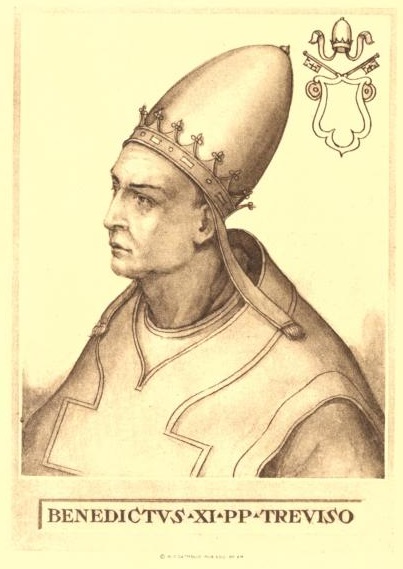
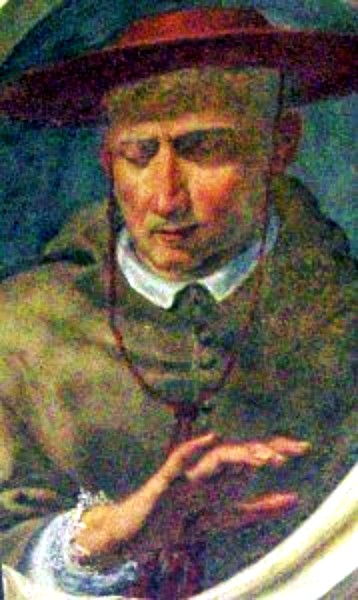
Blessed Pope Benedict XI OP (1240-1303) Cardinal-Priest of St Sabina, Bishop of Ostia then of Rome, Dominican Friar, Prior Provincial of Lombardy prior to becoming the Master of the Order in 1296, Apostolic Papal Legate to Hungary and France, Teacher, Preacher, Writer and renowned Scholar with special emphasis on Scriptural commentary. His Papacy began on 22 Ocober 1303 and ended at his death on 7 July 1304. His Life pf Grace: https://anastpaul.com/2020/07/07/saint-of-the-day-7-july-blessed-pope-benedict-xi-1240-1303/
Bl Bodard of Poitiers St Bonitus of Monte Cassino St Carissima of Rauzeille St Eoaldus of Vienne
St Hedda (Died 705) Bishop of Winchester, England St Maelruan St Medran St Merryn Bl Oddino Barrotti
St Odo (c1063-1122) Bishopof Urgella zealous Defender of the rights of his See, builder and restorer of numerous Churches but most of all, Bishop Odo is remembered as a most gentle and generous benefactor of the poor, the needy and the ill. Patronage – of La Seu d’Urgell, Spain. A Holy and Zealous Bishop: https://anastpaul.com/2024/07/07/saint-of-the-day-7-july-saint-odo-of-urgell-c1063-1122-bishop/
St Odran St Palladius of Ireland
St Pantænus (Died c216) Father of the Church, Theologian, Philosopher, Teacher, Confessor and Defender of the Faith, Writer and interpreter of the Sacred Scriptures, the Trinity and Christology, Missionary. Convert of the disciples of the Apostles. Head of the Alexandrian School of Learning – a famous pupil was St Clement of Alexandria. A Life of Love: https://anastpaul.com/2019/07/07/saint-of-the-day-7-july-st-pantaenus-father-of-the-church-died-c-216/
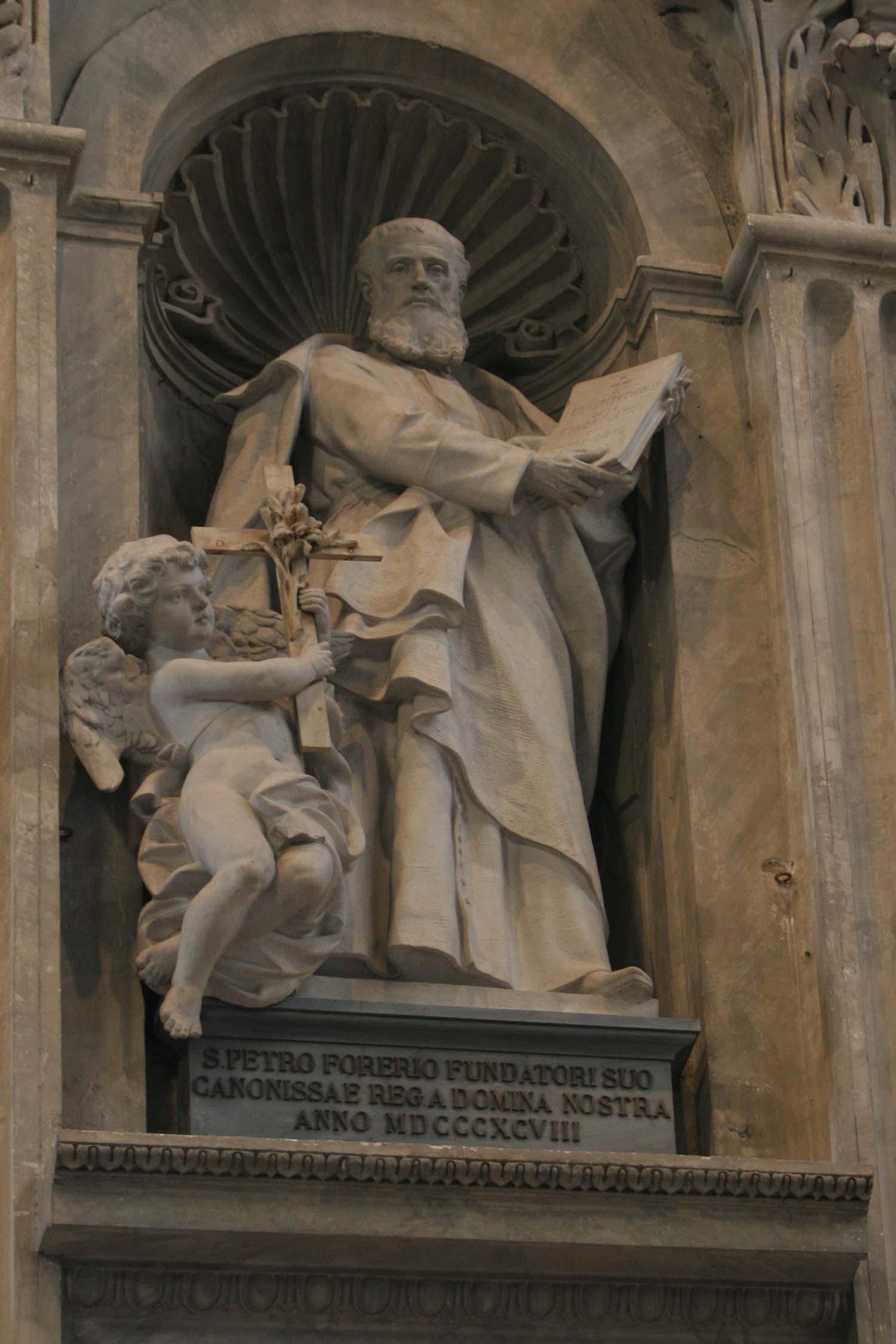
St Peter Fourier CRSA (1565-1640) Priest, Founder, Reformer, Confessor, Theologian, Teacher, Preacher, Apostle of Prayer, Penance and Charity, Marian devotee – “the Good Father of Mattaincourt” “le bon pere de Mattaincourt”. Although he died on 9 December his Feast Day is celebrated today, 7 July, possibly the date of the translation of part of his Relics. St Peter spread everywhere devotion to the Immaculate Conception of the Blessed Virgin. More than two centuries before the Miraculous Medal in 1830 and the proclamation of the dogma in 1854, he saw to the distribution of large quantities of a medal he had struck, on which were engraved the words – “Mary was conceived without sin.” He was Beatified by Pope Benedict XIII in 1730 and Canonised by Pope Leo XIII in 1897. St Peter Fourier is honoured by a statue in St Peter’s Basilica among the Founders of religious orders. His Zealous Life: https://anastpaul.com/2018/12/09/saint-of-the-day-9-december-st-peter-fourier-c-r-s-a-1565-1640/
Martyrs of Durres – 7 Saints: Also known as – Martyrs of Dyrrachium/Martyrs of Durazzo. A group of seven Italian Christians who fled Italy to escape the persecutions of Emperor Hadrian. Arrived in Dyrrachium, Macedonia to find Saint Astius tied to a cross, covered in honey, laid in the sun and left to be tortured by biting and stinging insects. When they expressed sympathy for Astius, they were accused of being Christians, arrested, chained, weighted down, taken off shore and drowned. We know little more about each of them than their names – Germaus, Hesychius, Lucian, Papius, Peregrinus, Pompeius and Saturninus. They were born in Italy and were Martyred at sea c117 off the coast of Dyrrachium (Durazzo), Macedonia (modern Durres, Albania).
DISCLAIMER: Please note: I cannot control the content of the Advertisements on this Site, or of pop-ups which may appear, The revenue from the Advertisements, however, does provide a little assistance in the support of the Site. I do apologise for any inappropriate content.
Saint of the Day – 6 July – Saint Justus (6th Century?) Monk of Condat, Jura, in the valley of Bienne, France. Also known as – Giusto.
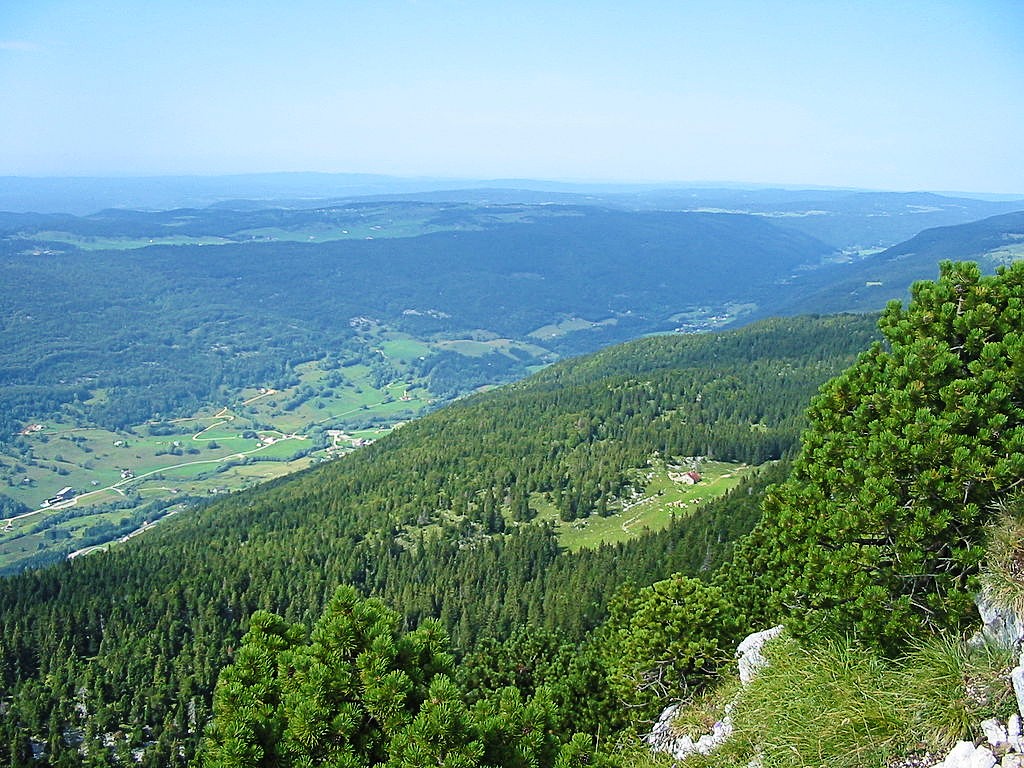
In the heart of the Jura mountains, in France, the name of Saint Justus of Condat resonates, a Monk shrouded in mystery and veneration. His figure, although outlined by hagiographic fragments, emerges as a beacon of faith and devotion, illuminating the centuries with the light of his sanctity.
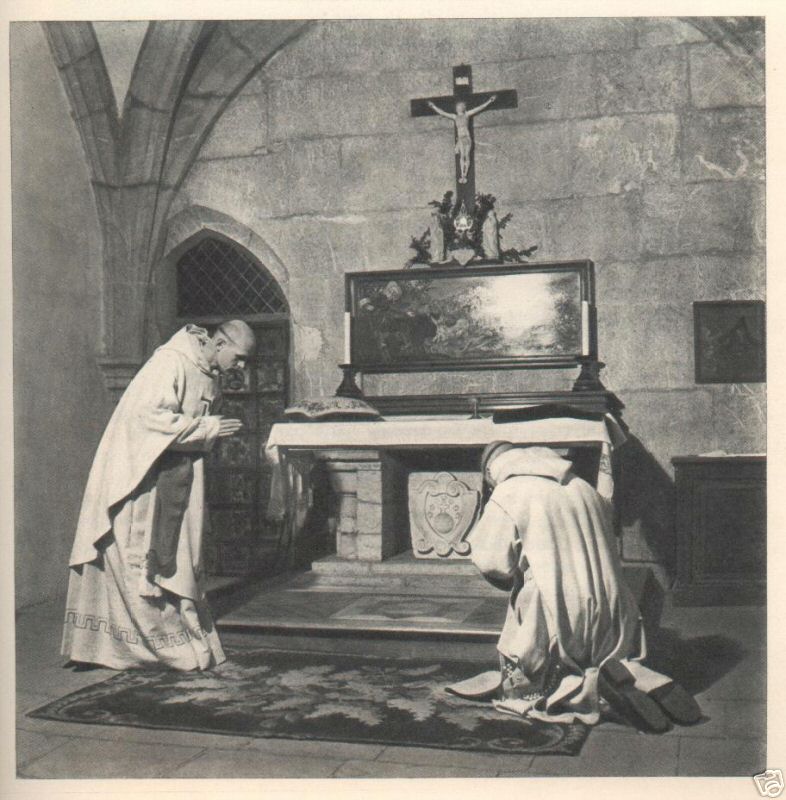
Unknown Monks kneeling in prayer
The ancient papers and records of the Monastery of Condat, today known as Saint-Claude, preserve his name, awarded the title of Saint. Since the most remote times, his memory was celebrated on 6 July fueling the cult of a pious man dedicated to monastic life.
However, the biographical information on Saint Justus is fragmentary, almost evanescent like the mists which envelop his mountains. History gives us only echoes of his existence, whispers of a Monk who dedicated his life to prayer and contemplation in that territory of Condat.
The choirstalls at Condat, illustrated by Eugène Viollet-le-Duc, 1856
Despite the scarcity of details, devotion to Saint Justus has not been affected. Indeed, over the centuries his fame has spread, so much so that, in the 9th Century some of his Relics were transferred to Salaise in France, where they still rest today.
In 1903, St Pius X, officially confirmed the cult of Saint Justus, elevating him to an illustrious witness of the Christian Faith. His figure, although shrouded in mystery, continues to inspire and call the faithful to contemplate the Divine and to devote themselves to the spiritual life.
Martyrs of Campania – 23 Saints: A group of 23 Christians arrested, tortured and then beheaded together in the later 3rd century by order Gf Governor Rictiovarus during the persecutions of Diocletian. The names that have come down to us are – Antoninus, Arnosus, Capicus, Cutonius, Diodorus, Dion, Isidore, Lucia, Lucian, Rexius, Satyrus and Severinus.
Martyrs of Fiesole – 5 Saints: Five Christians Martyred together during the persecutions of Emperor Domitian – Carissimus, Crescentius, Dulcissimus, Marchisianus and Romulus. c 90 near Fiesole, Italy.
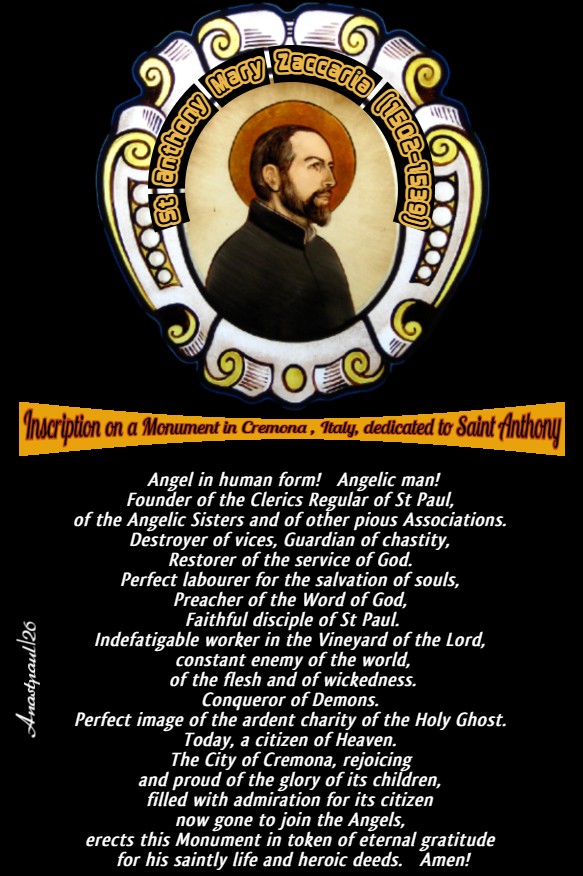
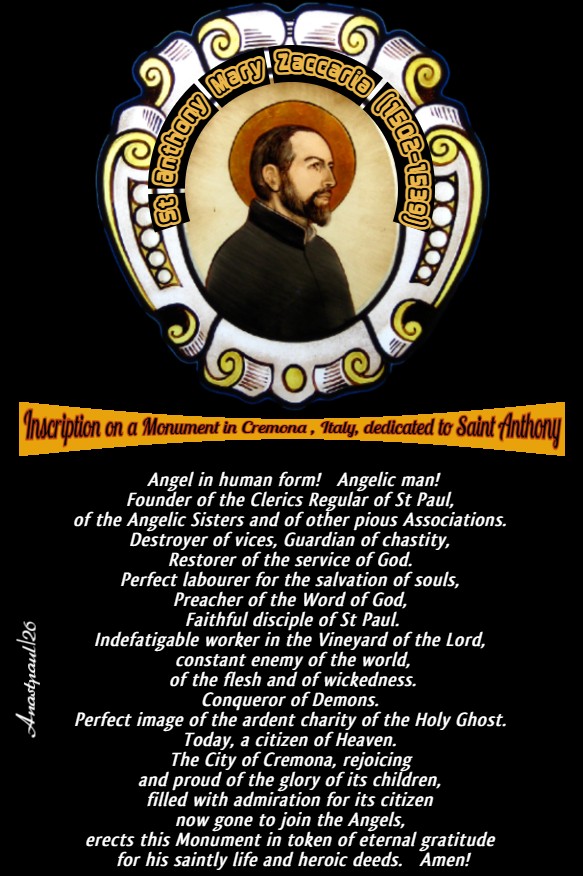
Quote/s of the Day – 5 July – St Anthony Mary Zaccaria (1502-1539) Confessor, Priest, Founder of the Barnabits – The First Religious Order Named after St Paul The Apostle – Canonised by Pope Leo XIII on 27 May 1897.
“Angel in human form! Angelic man! Founder of the Clerics Regular of St Paul, of the Angelic Sisters and of other pious Associations. Destroyer of vices, Guardian of chastity, Restorer of the service of God. Perfect labourer for the salvation of souls, Preacher of the Word of God, Faithful disciple of St Paul. Indefatigable worker in the Vineyard of the Lord, constant enemy of the world, of the flesh and of wickedness. Conqueror of Demons. Perfect image of the ardent charity of the Holy Ghost. Today, a citizen of Heaven. The City of Cremona, rejoicing and proud of the glory of its children, filled with admiration for its citizen now gone to join the Angels, erects this Monument in token of eternal gratitude for his saintly life and heroic deeds. Amen!”
Inscription on a Monument in Cremona, Italy dedicated to Saint Anthony
Saint of the Day – 5 July – Saint Philomena (Died c500) Virgin of San Severino in Italy. Patronage of San Severino, Centola, Italy. Also known as – Filomena. Additional Feastday – the 1st Sunday in July in Sab Severino.
The Roman Martyrology reads today: “At San Severino in the Marche of Ancona, St Philomena, Virgin.”
The figure of Saint Philomena, venerated in various Italian locations, presents complex and fascinating aspects, intertwining elements of popular devotion with historical and hagiographic records.
In particular, the Saint discovered in San Severino Marche in 1527 raises questions about her real identity and the cult associated with her.
In 1527, during excavations under the High Altar of the Church of San Lorenzo in Doliolo in San Severino Marche, a female body came to light accompanied by a epithet which attributed the body belonging to Saint Philomena of the Chiavelli lineage. According to the inscription, the Saint was transferred to that place by San Severino the Bishop during the era of the Gothic Kings. In the same year, Cardinal Ciocchi del Monte arranged for the body to be placed under an Altar dedicated to the Saint.
Initially, the Feast in honour of Saint Philomena was celebrated on 5 July, a date present in the Roman Martyrology. Subsequently, the anniversary was moved to the first Sunday of the same month in San Severino.
Despite popular devotion, a rigourous analysis from a historical point of view leads to the conclusion that the body found is not actually that of a holy Martyr. In fact, before the 16th Century, there is no mention in San Severino of the name, cult or relics of Saint Philomena. Furthermore, the content of the inscription which accompanied the body, attributing its deposition to San Severino, does not present historically valid elements.
Therefore, the most likely hypothesis is that it is a ‘holy body’ similar to that of the more famous Roman Saint Philomena, a figure around whom a wide and widespread cult developed.
St Agatho of Sicily St Athanasius the Athonite St Athanasius of Jerusalem St Cast St Cyprille of Libya St Cyrilla of Cyrene St Domèce St Domitius of Phrygia St Edana of West Ireland
St Numerian of Treves St Philomena (Died c500) Virgin of San Severino St Probus of Cornwall St Rosa Chen Aijieh St Sedolpha of Tomi St Stephen of Reggio St Teresia Chen Qingjieh St Theodotus of Tomi St Thomas of Terreti St Triphina of Brittany St Triphina of Sicily
St Zoe of Rome (Died c286) Married laywoman, Martyr. The Roman Martyrology reads today: “At Rome, St Zoe, Martyr, wife of the blessed Martyr Nicostratus. Whilst praying at the tomb of the Apostle, St Peter, during the time of Diocletian, she was seized by the persecutors and cast into a dark dungeon, then, being suspended on a tree by her neck and hair and suffocated by loathsome smoke, she yielded up her soul in the confession of the Lord.” Her Life and Death: https://anastpaul.com/2024/07/05/saint-of-the-day-5-july-saint-zoe-of-rome-died-c286-married-laywoman-martyr/
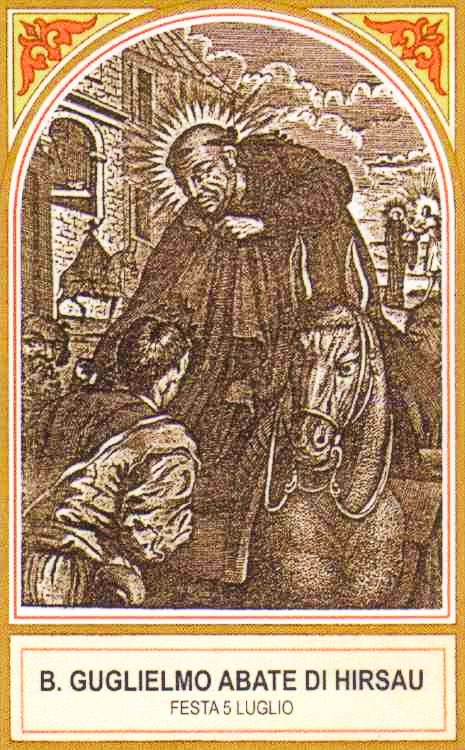
Saint of the Day – 4 July – St William (c1030- 1091) Abbot of Hirsau Monastery in Germany, Reformer. The date of his birth is unknown but it is known that he was born in the Bavarian City of Regensburg in Germany around the year 1030 and died on 4 or 5 July in 1091at the Monastery in Hirsau the Black Forest. His Body is Incorrupt.
William was soon entrusted, at a tender age, to the Monastery of St Emmeram to be educated .While still young, he took the Benedictine Habit, receiving a solid ascetic, literary, scientific and technical education.
Gifted with great prudence, William knew how to combine rigid personal asceticism with a charming kindness towards others. In 1069 he was called to govern the Monastery of Hirsau in the Black Forest, rebuilt shortly before by Count Adalbert with the help of the Monks of Einsiedeln. The small community numbered only fifteen Religious. William, however, did not want to receive the Abbatial blessing until after the death of Frederick (died in 1071), who had been illegally removed by CountAdalbert.
In order to obtain full exemption for the Monastery, in 1075, William went to Rome to Pope Gregory VII. In Hirsau, William first introduced the customs of St Emmeram, then, imitating those of Cluny, he drew up their rigid and detailed Rules.
The “Hirsau Reform” spread to numerous foundations and of already existing Monasteries throughout Europe, numbering more than one hundred Monasteries. The community of Hirsau itself, grew so vigorously that it soon numbered more than one hundred and fifty Monks, for whom a new building had to be built, dedicated to Sts Peter and Paul. From here, colonies of Monks were sent to elsewhere to encourage and spread the Hirsau Rule and custom of spiritual life.
William also organised the institute of Lay Brothers in the Benedictine monastic community which was then accepted everywhere and gathered around it men and women as ‘oblates.’ In the Investiture Controversy, William was one of the pillars of the Gregorian Reform in Germany which the Monks of Hirsau preached and propagated. He wrote dialogues on Music and Astronomy and had a copy of the Vulgate inscribed for his Monastery.
He died on 4 or 5 July 1091 and was buried in the Church of Saints Peter and Paul, which he himself had built. Around 1500 his Tomb was opened and it was found that both the body and the Abbot’s clothes were still perfectly well preserved. . Until the protestant suppression of Hirsau, he enjoyed public veneration.
Ehemalige Klosteranlage Hirsau, Stadt Calw, Baden-Württemberg
St Carileffo of Anille Bl Cesidio Giacomantonio St Donatus of Libya St Edward Fulthrop St Elias of Jerusalem St Finbar of Wexford St Fiorenzo of Cahors St Flavian of Antioch St Giocondiano St Haggai the Prophet Bl Henry Abbot St Henry of Albano St Hosea the Prophet St Innocent of Sirmium Bl John Carey
Blessed John Cornelius SJ (1557– 1594) Martyr, English Priest of the Society of Jesus, Missionary. Additional Memorials – 29 October as one of the Martyrs of Douai, 1 December as one of the Martyrs of Oxford University. Fr Cornelius and his three companions, the Martyrs of England, were Beatified by Pope Pius XI on 15 December 1929. All their bodies were retrieved and given proper burial by Lady Arundell. His Life and Death: https://anastpaul.com/2021/07/04/saint-of-the-day-4-july-blessed-john-cornelius-sj-1557-1594-martyr/
St Jucundian St Laurian of Seville St Lauriano of Vistin St Namphanion Bl Natalia of Toulouse St Odo the Good Bl Odolric of Lyon Bl Patrick Salmon St Sebastia of Sirmium St Theodore of Cyrene St Theodotus of Libya Bl Thomas Bosgrave Bl Thomas Warcop
St Ulric (c1214-1284) Bishop of Ratzeburg St Valentine of Langres St Valentine of Paris Bl William Andleby St William (c1030-1091) Abbot of Hirsau Monasteryin Germany. His Body is incorrupt.
Saint of the Day – 3 July – St Dathus (Died c190) Bishop and Confessor of Ravenna in Italy during the reign of the Roman Emperor, Commodus. Also known as – Dato, Datus, Dathius.
The Roman Martyrology reads today: “At Ravenna, St Dathus, Bishop and Confessor.”
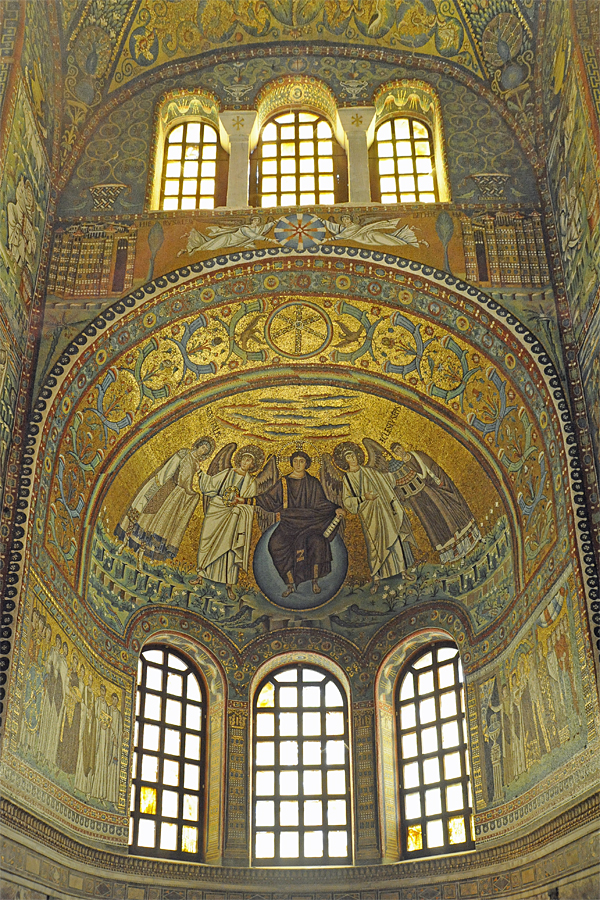
The renowned Ravenna Cathedral Mosaics
Legend has it that he was elected as the Bishop thanks to the miraculous appearance of a dove flying above his head. He served faithfully during the respite from persecution under the reign of Emperor Commodus.
Bl Andreas Ebersbach Bl Barbara Jeong Sun-mae St Bladus St Byblig St Cillene St Dathus (Died c190) Bishop and Confessor of Ravenna St Eusebius of Laodicea St Firminus St Firmus Bl Gelduin St Giuse Nguyen Ðình Uyen St Gunthiern St Guthagon
St Heliodorus (c332-c390) the first Bishop of Altino in Italy, disciple, close friend and assistant of St Jerome. Scholar, ex-soldier, The Roman Martyrology reads: “At Altino, St Heliodorus, a Bishop, distinguished for holiness and learning.” Holy Heliodorus: https://anastpaul.com/2024/07/03/saint-of-the-day-3-july-st-heliodorus-332-390-bishop/
St Hyacinth of Caesarea St Irenaeus of Chiusi St Maelmuire O’Gorman St Mark of Mesia St Mennone the Centurian St Mucian of Mesia St Paul of Mesia
St Raymond Gayrard(Died 1118) ArchDeacon, Canon of the Lateran Canons Regular at St Sernin Basilica in Toulouse, France. The Roman Martyrology reads: “In Toulouse on the Garonne in France, Saint Raymond Gayrard, who, as a teacher, remained a widower, passionately devoted himself to works of charity, founded a hospice and was finally admitted among the Canons of the Basilica of St Saturnin.” https://anastpaul.com/2023/07/03/saint-of-the-day-3-july-saint-raymond-of-toulouse-died-1118/
Martyrs of Alexandria – 13 Saints: Thirteen Christian companions Marytred together. No details about them have survived but the names – Apricus, Cyrion (2 of), Eulogius, Hemerion, Julian, Julius, Justus, Menelaus, Orestes, Porfyrios and Tryphon (2 of). They martyred in Alexandria, Egypt, date unknown.
Martyrs of Constantinople – 24 Saints: A group of 24 Christians Martyred in the persecutions of Arian Emperor Valens. We know little more than their names – Acacios, Amedinos, Ammonius, Ammus, Cerealis, Cionia, Cionius, Cyrianus, Demetrius, Eulogius (2), Euphemia, Heliodoros, Heraclios, Horestes, Jocundus, Julian, Martyrios, Menelaeus, Sestratus, Strategos, Thomas, Timotheos and Tryphon. They were martyred in c367 in Constantintinople.
Theodotus and Companions – 6 Saints: Six Christians who were imprisoned, tortured and Martyred together in the persecutions of Trajan. Saint Hyacinth ministered to them in prison. We know nothing else about them but their names – Asclepiodotus, Diomedes, Eulampius, Golinduchus, Theodota and Theodotus. They were beheaded in c110, location unknown.
DISCLAIMER: Please note: I cannot control the content of the Advertisements on this Site, or of pop-ups which may appear, The revenue from the Advertisements, however, does provide a little assistance in the support of the Site. I do apologise for any inappropriate content.
Saint/s of the Day – 2 July – Blessed/s Giovanni (Died c1420) and Pietro da Fabriano Becchetti OSA (Died c1421) Priests and cousins (some sources make them brothers) of the Order of the Hermits of Saint Augustine. Born in the 14th Century in Fabriano, Italy and died in the 15th Century in the their Birth Town. Also known as – John and Peter Becchetti.
In the history of the Order we read: “In Fabriano in the Marches, commemoration of the blesseds Giovanni and Pietro Becchetti, Priests of the Order of the Hermits of St Augustine; united more by the same way of life than by blood ties; they died in 1420 and 1421, respectively.”
Blessed Giovanni Becchetti
Giovanni, who had taught at Rimini, earned his Bachelor’s Degree in Theology in 1385. He then was sent to Oxford, England for further study. There he earned his Master’s in Theology.
He returned to Italy and was appointed as the Director of the Augustinian House of Studies in Perugia.
The date of Giovanni’s death is not known. We know that he was still living in May 1420, as a letter written by him on 7 May of that year is preserved in the Archives of the Order in Rome.
Blessed Pietro Becchetti
Documents show that Pietro was studying for the Degree of Lector in Theology in 1385. He was professor in the Augustinian House of Studies in Rimini in 1388.
While he was in Rimini, the Prior General appointed him Visitator to investigate a complaint which had been made about that House. Later he was professor in Venice.
Greatly devoted to the Passion of Christ, Pietro made a pilgrimage to the Holy Land to follow Our Lord’s Steps and to visit Jesus’ holy Tomb.
The date of Pietro’s death is not known. We know that he was still living in 1421, as there is record of the Prior General having written a letter to him on 20 February of that year.
Both Giovanni and Pietro died at Fabriano. Their remains are preserved at the Church of Saint Augustine there.
Both being distinguished by their scholarly wisdom, personal piety, deep prayer life and preaching, our Blesseds were Beatified in 1835 by Pope Gregory XVI.
Bl Giovanni (Died c1420) and Bl Pietro da Fabriano BecchettiOSA (Died c1421) Priests of the Order of the Hermits of Saint Augustine St Jacques Fermin Bl Jarich of Mariengaarde St Jéroche
Martyred Soldiers of Rome – 3 Saints: Three soldiers who were converted at the Martyrdom of Saint Paul the Apostle. Then they were martyred, as well. We known nothing else about them but their names – Acestes, Longinus and Megistus. Martyred c68 in Rome, Italy
Martyrs in Carthage by Hunneric – 7 Saints: A group of seven Christians tortured and murdered in the persecutions of the Arian Vandal king Hunneric for remaining loyal to the teachings of orthodox Christianity. They were some of the many who died for the faith during a period of active Arian heresy. – Boniface, Liberatus, Maximus, Rogatus, Rusticus, Septimus and Servus.
Martyrs of Campania – 10 Saints: A group of ten Christians Marytred together in the persecutions of Diocletian. The only details about them to have survived are their names – Ariston, Crescention, Eutychian, Felicissimus, Felix, Justus, Marcia, Symphorosa, Urban and Vitalis. Martyred in 284 in Campania, Italy.
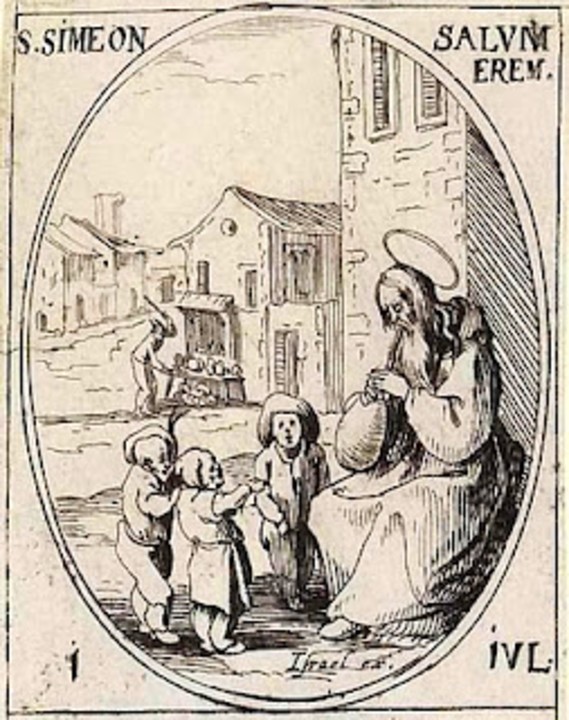
Saint of the Day – 1 July – St Simeon Salus (Died c570) Confessor, Monk, Hermit, Apostle of the poor and needy, Miracle-worker known as “The Holy Fool”
The Roman Martyrology reads today: “At Emesa, St Simeon, surnamed Salus, Confessor, who feigned to be an idiot for Christ but God manifested His high Wisdom by great miracles,”
Born in Syria, at the age of 30 Simeon entered the Monastery of Abbot Gerasimus in Syria. He spent the next 29 years in a desert near the Dead Sea. He felt inspired to move to Emesa to help the poor of that City without any formal recognition.
He came to learn that the best way to be humble was to love humiliation, so he took it upon himself to act foolishly. Only the truly wise could see Simeon’s sanctity.
By simulating simplicity, he saved many souls and brought them to Christ. He was also able to heal many possessed people by his prayer, fed the hungry, preached the Gospel,and helped the poor and needy of the Town. Most of Simeon’s good deeds were done secretly.
Simeon did not play a fool with his friend John, Deacon of the Church in Emesa. Simeon once saved John from being executed when he was falsely accused. Shortly before his death, Simeon told John:
“I beg you, never disregard a single soul, especially when it happens to be a Monk or a beggar. For your charity knows that His place is among the beggars, especially among the blind, people made as pure as the sun through their patience and distress …Show love of your neighbour through almsgiving. For this virtue, above all,, will help us on the Day of Judgment.”
Simeon died in c570 and was buried by the City’s poor in a potter’s field. While the Saint’s body was carried there, people heard a choir singing though none could be found anywhere.
St Aaron of Caerleon St Aaron the Patriarch St Arnulf of Mainz St Calais of Anisole St Carilephus St Castus of Sinuessa St Cewydd St Concordius of Toledo St Cuimmein of Nendrum
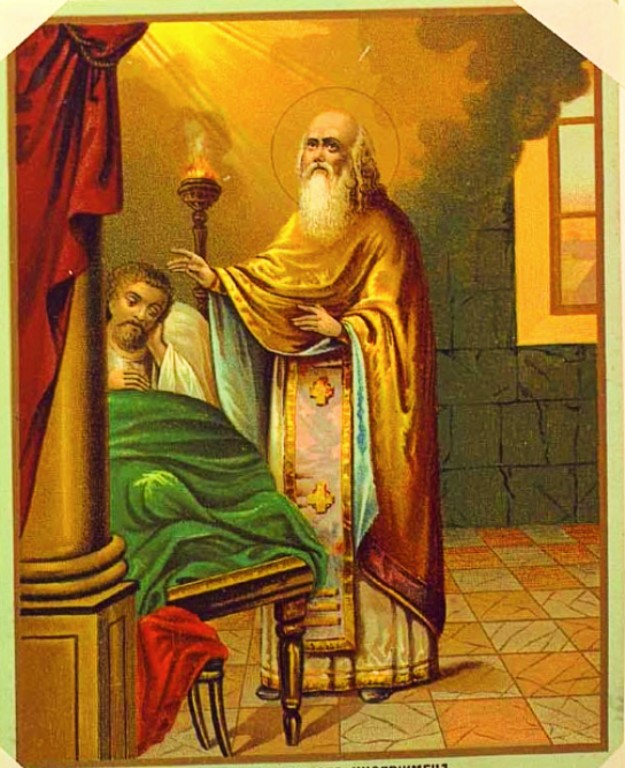
St Domitian (c347-440) Abbot, who had been the first Hermit of the surrounding region in France, Founder of a Monastery which became the foundation of the spiritual, cultural and social teachings of its region and day. Born in c347 in Rome and died in 440 at the Saint Rambert de Joux Abbey in the Diocese of Lyons in France. The Roman Martyrology reads: “In the Diocese of Lyons, the decease of St Domitian, Abbot, who was the first to lead there, an eremitical life. After having assembled, in that place, many servants of God and gained great renown for virtues and miracles, he was gathered to his fathers at an advanced age.” His Devoted Life: https://anastpaul.com/2024/07/01/saint-of-the-day-1-july-st-domitian-c347-440-abbot/
Bl Elisabeth de Vans St Eparchius of Perigord St Eutychius of Umbria St Esther the Queen
St Gall of Clermont St Golvinus of Leon St Gwenyth of Cornwall Bl Huailu Zhang St Julius of Caerleon St Justino Orona Madrigal St Juthware St Leonorious of Brittany St Leontius of Autun St Martin of Vienne St Nicasius of Jerusalem
St Secundinus of Sinuessa St Servan of Culross St Simeon Salus (Died c570) Confessor, Monk, Hermit known as “The Holy Fool”
St Theobald of Vicenza St Theodoric of Mont d’Or St Veep
Martyrs of Rome – 6 Saints: Six Christians who were Martyred together. No details have survived except their names – Esicius, Antonius, Processus, Marina, Serenus and Victor. They were martyred i
Saint of the Day – 30 June – Saint Ostian (6th Century) Priest, Confessor and Hermit in Viviers, France, Miracle-worker. Patronages – Viviers, France, for rain (most especially in Viviers). Also known as – Ostianus, Ostiane, Ostiano, Hostien.
The Roman Martyrology reads today: “In the territory of Viviers, St Ostian, Priest and Confessor.”
“Living in the 6th Century, Ostian first evangelised the Dioceses of Viviers and Le Puy. He was then a Hermit near Viviers. The 16th Century handwritten Martyrology mentions him in these terms: ‘in the territory of Viviers, in the Church of St Martin of the Couspié valley, one mile north of the City, at the foot of the mountain of the Tour St Martin, the body of the blessed Ostian, Priest, rests to this day.’ His Relics were solemnly brought to the Cathedral on 19 August 1880. He is the Patron of the City of Viviers.” ( Diocese of Viviers: Consecrated life. He is celebrated on 30 June in the Calendar of the Diocese of Viviers).
We have very limited information of our Saint Ostian. He is believed to have been a relative of Sigismund, the King of Burgundy.
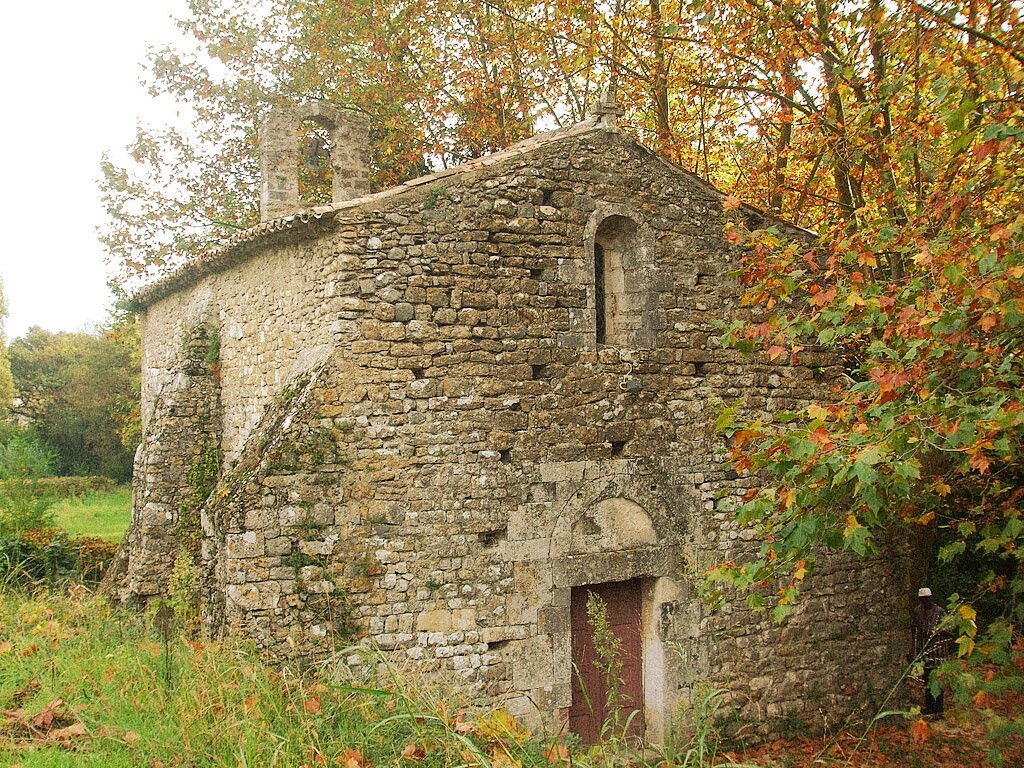
After distributing all his possessions, Ostian is said to have followed the King’s son, Saint Venantius, who was the Bishop of Viviers. The Bishop, wanting to fulfill Ostian’s wish, is said to have granted him ownership of a piece of land in the Couspier valley, at the foot of Mount Bayna, where the Saint lived for 15 years. During these 15 years, it is believed he performed various miracles, including the cures of some blind people. Below is his little stone Chapel where he lived and preached and spread the Gospel, evangelising the region and confessing Christ to all who had ears to hear.
In the 9th Century, Bishop Bernoin (851-874) made a first survey of the Relics of Saint Ostian. And, in the 18th Century, it was believed that his body was in the Church of St Martin di Couspiè. In 1711, in the annotations of the resolutions of the City Council, was presented that the “request for a Procession and Solemn Mass at the Church of Saint-Martin to put an end to the drought, in honour of Sant’Ostian.”
The stone Sarcophagus containing his bones was found in 1869. After these Relics were declared authentic, on 19 August 1880, some bones were transferred to the Cathedral of Viviers and deposited in the Chapel of the Holy Relics. The rest of the Relics had been left in the original restored crypt of the Chapel of Saint-Ostian in San Martin.
The inhabitants of Viviers traditionally invoke Saint Ostian to obtain rain in times of drought. Although the first to introduce the name of this saint in a martyrology was Usvardo, while in Vivers, in some Liturgical records of the 14th and 15th Centuries, his memory was remembered. Currently, Saint Ostian, Priest and Confessor, is remembered and celebrated today, 30 June.
The Town called Saint-Hostien (Sant Ostian in Occitan) is part of the Saint Régis en Mézenc-Meygal Parish complex of the Diocese of Puy.
St Adolphus of Osnabrück O.Cist. (1185-1224) Bishop St Alpinian of Limoges St Alrick the Hermit Bl Ambrose de Feis Bl Anthony de Tremoulières Bl Arnulf of Villers St Austriclinian of Limoges St Basilides of Alexandria St Bertrand of Le Mans St Clotsindis of Marchiennes
Bl Elisabeth Heimburg St Emiliana of Rome St Erentrude St Eurgain St Gaius Bl Jacob Clou St Leo the Deacon St Lucina of Rome St Lucina of the Callistus Catacombs St Marcian of Pampeluna St Martial of Limoges St Ostian (6th Century) Priest, Confessor St Otto of Bamberg St Peter of Asti St Petrus Li Quanhui
Blessed Raymond Lull TOSF (c1232 – c 1315) Martyr – known as “Doctor Illuminatus,” Raymond was a Philosopher, Logician, Writer, Poet, Pioneer in computation theory, Franciscan tertiary. Within the Franciscan Order he is honoured as a Martyr. He was Beatified on 25 February 1750 by Pope Benedict XIV (cultus confirmed) and reaffirmed in 1847 by Pope Pius IX. His Life and Death: https://anastpaul.com/2018/06/30/saint-of-the-day-30-june-blessed-raymond-lull-t-o-s-f-c-1232-c1315-martyr/
St Vihn Son Ðo Yen
Martyrs of Africa – 7 Saints: Seven Christians Martyred together. No detail about them have surived but the names – Cursicus, Gelatus, Italica, Leo, Timotheus, Zoilus, and Zoticus. Date and precise location in Africa unknown.
Saint/s of the Day – 29 June – Saint Judith Widow, Recluse and St Salome (9th Century) Recluse both of Niederaltaich in Bavaria.
There is considerable debate regarding the identity of Judith and her companion, St Salome. They may have been cousins (or Judith the aunt of Salome) of Anglo-Saxon Royal lineage, who lived for a considerable period as Recluses under Abbot Walther (or Walker) in Oberaltaich-am-Donau. A later tradition identifies Salome as St Edburga, daughter of King Offa of Mercia, who was exiled for accidentally poisoning her husband. She was then befriended by the Bavarian widow, Judith.
Relics of both were later disinterred and buried near the Altar of St Giles. It is thought that their bodies came to Niederaltaich on the occasion of the destruction of Oberaltaich by the Hungarians.
Another source states that the two Recluses lived in Niederaltaich in about 1100. According to this version, while in the neighbourhood of Regensburg in Germany, after a pilgrimage to the Holy Land, Salome became blind, in answer to prayer, asking for this affliction to escape from sinful proposals.
St Salome
She lived by begging. Once she fell into the Danube and was rescued by a passing boat which took her to Passau. She was recommended to the Abbot of Niederaltaich, who had a Recluse’s cell built for her beside the Monastery Church. Here she was found by her blood relative and childhood playmate, Judith, who having been widowed young and having likewise gone to Jerusalem, had searched for Salome. With permission of the Abbot and the Chapter, Judith was then also given a cell by the Church of Niederaltaich. Both women worked as servants in the Monastery. Both died before the end of the 11th Century, Salome first. This Vita dates from the 13th or 14th Century.
It claims that both bodies were interred in a common Shrine before the Altar of St Giles although they have since been lost.
Judith and Salome were venerated in monastic martyrologies and in art but had no liturgical cult.
Sts Peter and Paul, Apostles: The joint commemoration of the Apostles, Peter and Paul, is one of the most ancient customs of the Roman Church, attested already in the oldest surviving Roman Liturgical Calendar, the Depositio Martyrum, written in 336. A verse of the Hymn, Apostolorum Passio, an authentic work of St Ambrose († 397) and still used in the Ambrosian liturgy, says that “the thick crowds make their way through the circuit of so great a city; the feast of the sacred Martyrs is celebrated on three streets.” These “three streets” are the via Cornelia, the main street running up to and over the Vatican hill; the via Ostiensis, where the burial and Church of St Paul are and the via Appia, on which resides the Cemetery “in Catacumbas.”
St Anastasius of Bourges (Died c274) Soldier. Martyr. Scourged to death in c274, no other information has survived.
St Benedicta of Sens
St Cassius (Died 558) Bishop of Narni, Italy from 537 to 558, the date of his deat, Miracle-worker. He was praised by St Gregory the Great and was noted for his charity. Died on 30 June 558 in Narni, Italy of natural causes. Relics enshrined in the Cathedral of Narni, Italy. The Roman Martyrology reads: “At Narni, St Cassius, Bishop of that City of whom St Gregory the Great relates, in writing and in sermons, that Cassius permitted scarely any day of his life to pass without offering the Victim of propitiation to Almight God and he was well worthy to do so, for he distributed in alms, all he possessed and his devotion was such that abundant tears flowed from his eyes during the Holy Sacrifice.At Last, he came to Rome on the birthday of the Apostles, as was his yearly custom and after having solemnly celebrated Mass and given the Lord’s Body and the Kiss of Peace to all, he departed for Heaven, the next day at Narni” This Holy man of God: https://anastpaul.com/2023/06/29/saint-of-the-day-29-june-st-cassius-died-558-bishop-of-narni/
St Ciwg ap Arawn St Cocha St Ilud Ferch Brychan St Judith (9th Century) Widow and Recluse AND St Salome (9th Century) Recluse of Niederaltaich
St Marcellus of Bourges (Died c274) Soldier. Martyr. Beheaded in c274, no other information has survived.
Saint of the Day – 28 June – Saint Egilo (Died 871) Abbot of Prüm Abbey near Trier, Germany. Also known as – Egilon, Eigil.
We have no information of our Saint’s birth and life before becoming a Monk.
At Trier he founded the Abbey of Prüm and there he clothed St Humphrey in the Benedictine Habit.
In 860, he was directed by Emperor Charles the Bald, to restore Flavigny Abbey in Dijon, France which he successfully completed. Thereafter, Egilo founded the Abbey of Corbigny, in France.
St John Southworth (1592-1654) Priest Martyr, Missionary. Known as ‘The Parish Priest of Westminster.’ Patronage – the Clergy of the Westminster Diocese. His remains were purchased by the Spanish Ambassador to England and were sent to the English College in Douai, France. There the Relics were hidden to prevent destruction during the French Revolution and were only rediscovered in 1927 and are now housed at Westminster Cathedral, London. His Life and Death: https://anastpaul.com/2024/06/28/saint-of-the-day-28-june-st-john-southworth-1592-1654-priest-martyr-the-parish-priest-of-westminster/
Martyrs of Africa – 27 Saints: 27 Christians Martyred together. The only details about them to survive are the names – Afesius, Alexander, Amfamon, Apollonius, Arion, Capitolinus, Capitulinus, Crescens, Dionusius, Dioscorus, Elafa, Eunuchus, Fabian, Felix, Fisocius, Gurdinus, Hinus, Meleus, Nica, Nisia, Pannus, Panubrius, Plebrius, Pleosus, Theoma, Tubonus and Venustus. Unknown location in Africa, date unknown.
Martyrs of Alexandria – 8 Saints: A group of spiritual students of Origen who were Martyred together in the persecutions of emperor Septimius Severus – Heraclides, Heron, Marcella, Plutarch, Potamiaena the Elder, Rhais, Serenus and Serenus. They were burned to death c206 in Alexandria, Egypt.
Saint of the Day – 27 June – St Desideratus (6th Century) Priest, Monk and Hermit in Gourdon, near Chalon-sur-Saône in Burgundy, Miracle-worker. Patronage – against toothache. Also known as – Désiré, Desert, Didier.
Unknown Hermit
Desideratus lived in the 6th Century in what is now France. The holy Pope St Gregory I the Great (590-604) wrote of him and considered him a man of admirable holiness.
The holy Bishop St Gregory of Tours relates that Desideratus was distinguished by his holiness and that he had seen him in the Monastery of Gourdon, where he restored many sick people to health through his prayers, especially those suffering from toothache.
Details of his life as a Hermit are not known but he was venerated in the Monastery of Mont-Saint-Vincent in Burgundy and in the entire region.
His Feastday is 27 June but 30 April is also mentioned.
In an old record of the Church of Chalon, printed in Lyon in 1520, one finds the Feast of the holy Priest Hermit, St Desideratus celebrated on 30 April.
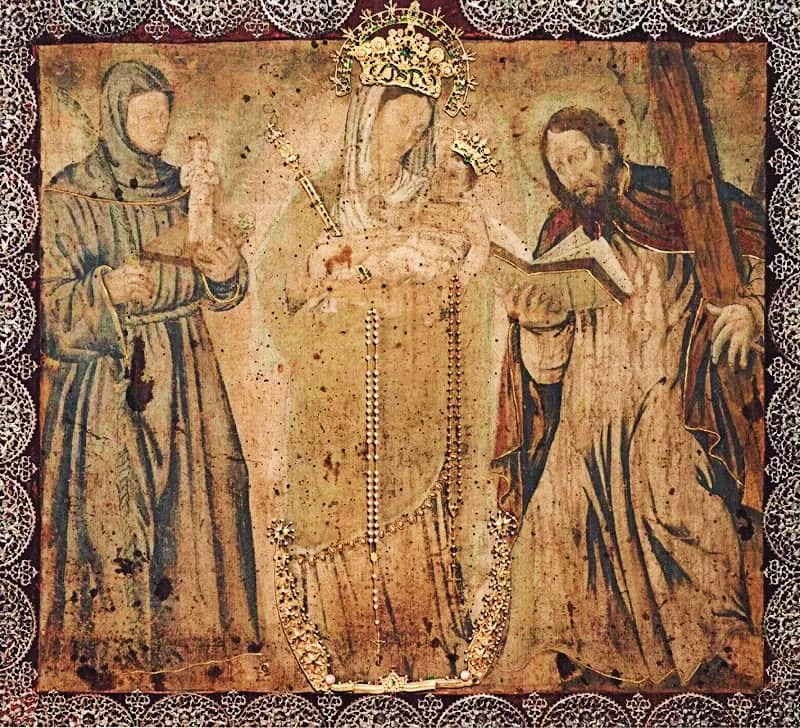
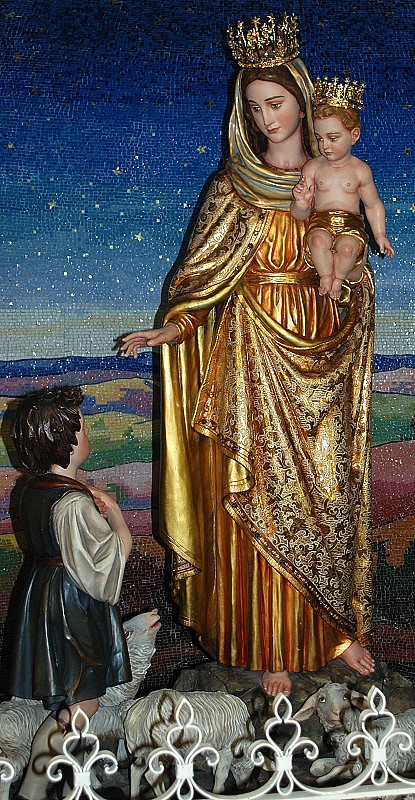
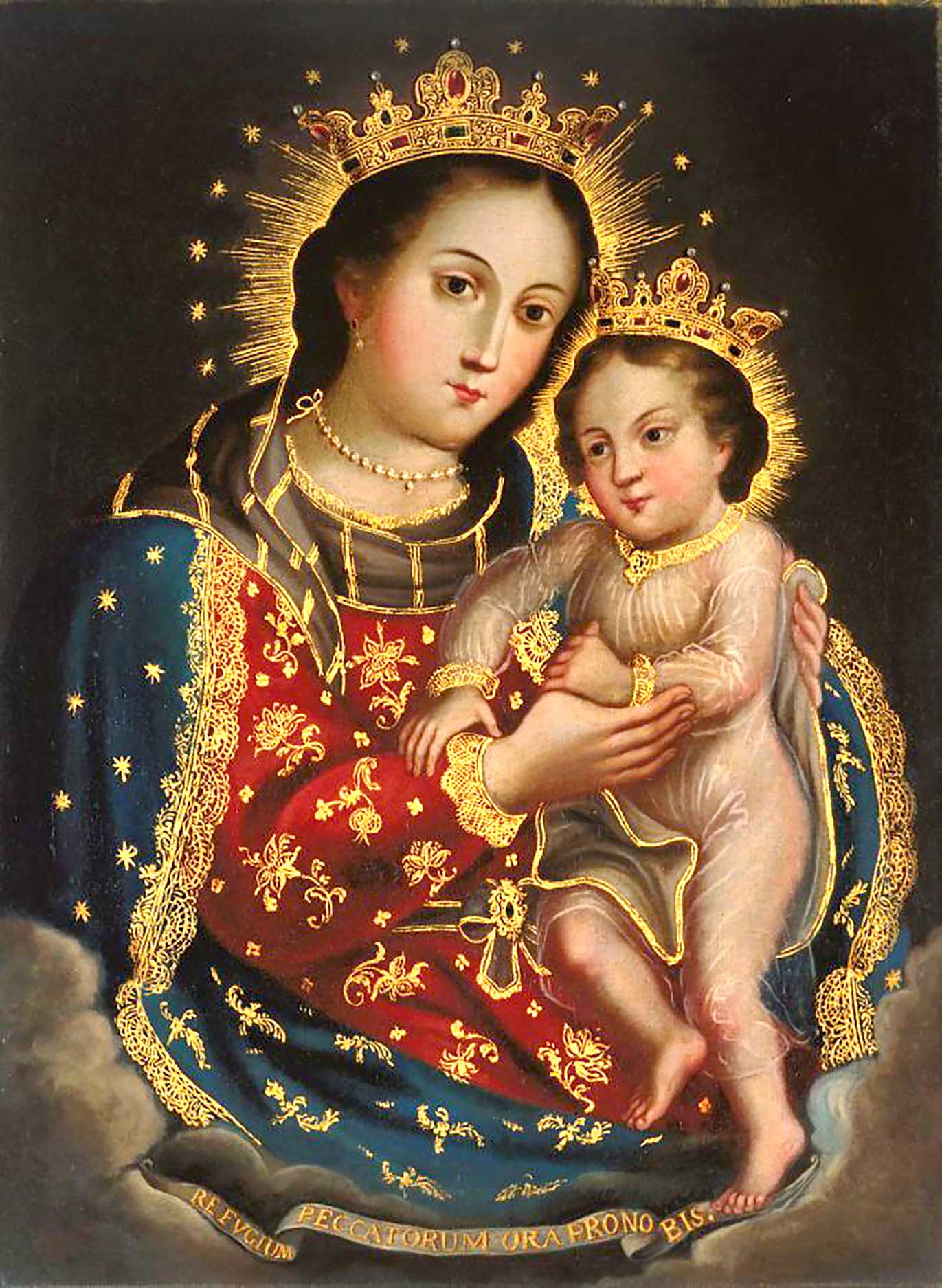
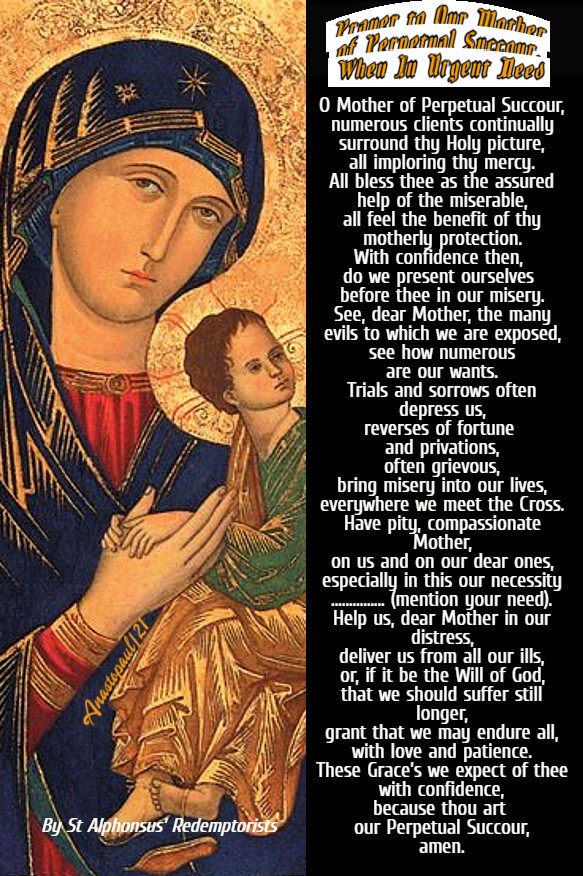
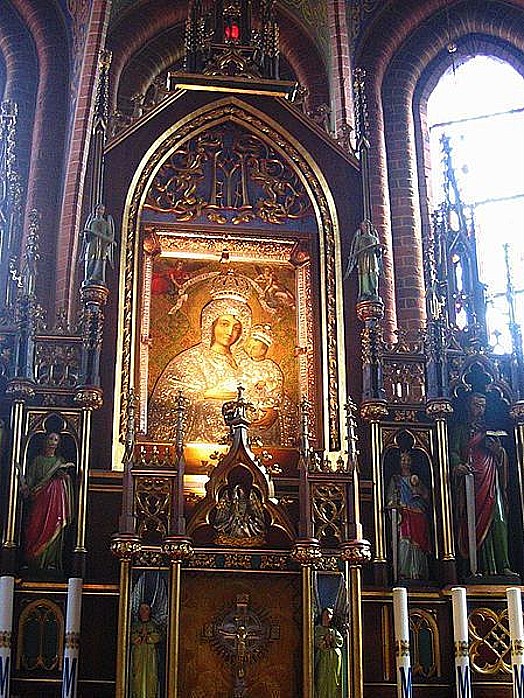
Madre del Perpetuo Soccorso / Mother of Perpetual Succour (Help) – Feast 27 June: Patronage: Porto Cesareo, Italy, Haiti, Labrador City, Labrador, Yorkton, Saskatchewan, 8 Diocese.
Prayer to Our Mother of Perpetual Succour, When In Urgent Need By St Alphonsus’ Redemptorists
O Mother of Perpetual Succour, numerous clients continually surround thy Holy picture, all imploring thy mercy. All bless thee as the assured help of the miserable, all feel the benefit of thy motherly protection. With confidence then, do we present ourselves before thee in our misery. See, dear Mother, the many evils to which we are exposed, see how numerous are our wants. Trials and sorrows often depress us, reverses of fortune and privations, often grievous, bring misery into our lives, everywhere we meet the Cross. Have pity, compassionate Mother, on us and on our dear ones, especially in this our necessity …………… (mention your need). Help us, dear Mother in our distress, deliver us from all our ills, or, if it be the Will of God, that we should suffer still longer, grant that we may endure all, with love and patience. These Grace’s we expect of thee with confidence, because thou art our Perpetual Succour, amen.
St Adeodato of Naples St Aedh McLugack St Anectus of Caesarea St Arialdus of Milan St Arianell of Wales
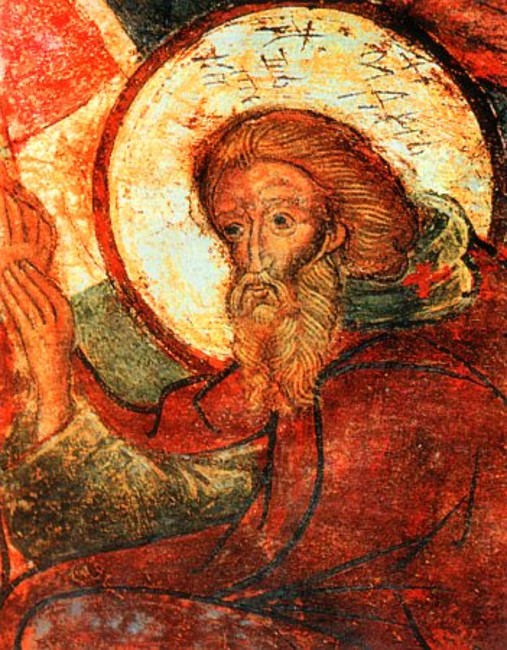
Blessed Benvenutus of Gubbio OFM ) (Died 1232) Lay brother of the Order of the Friars Minor of St Francis, ex-Soldier, Apostle of the sick and of lepers. Benvenutus was graced with an ardent and mystical devotion to the Blessed Eucharist and to the Mother of God. So ardent was his faith and contemplation that he was seen to hold the Divine Infant in his arms. Biography: https://anastpaul.com/2021/06/27/saint-of-the-day-27-june-blessed-benvenutus-of-gubbio-ofm-died-1232/
St Crescentius of Mainz Bl Daniel of Schönau Bl Davanzato of Poggibonsi OFM (c1200-1295) Priest St Desideratus (6th Century) Priest and Hermit in Gourdon, France St Dimman St Felix of Rome St Ferdinand of Aragon St Gudene of Carthage Bl Hemma of Gurk St Joanna the Myrrhbearer St John of Chinon
St Spinella of Rome St Tôma Toán St Zoilus of Cordoba
DISCLAIMER: Please note: I cannot control the content of the Advertisements on this Site, or of pop-ups which may appear, The revenue from the Advertisements, however, does provide a little assistance in the support of the Site. I do apologise for any inappropriate content.
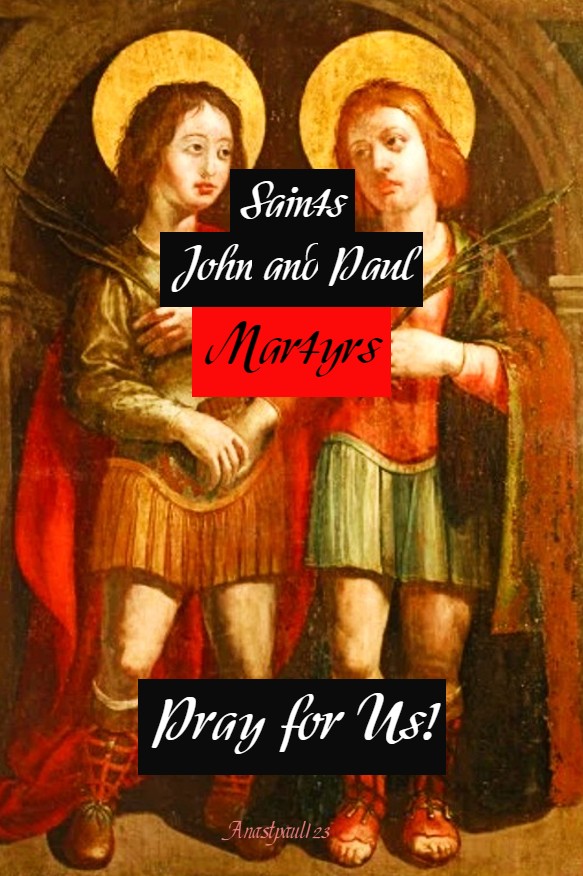
One Minute Reflection – 26 June – “The Month of the Most Sacred Heart of Jesus” – Saint John and Saint Paul of Rome (Died c362) Martyrs – The Octave Day of Corpus Christi – 1 Corinthians 23-29 – John 6:56-59 – Scripture search here: https://www.drbo.org/
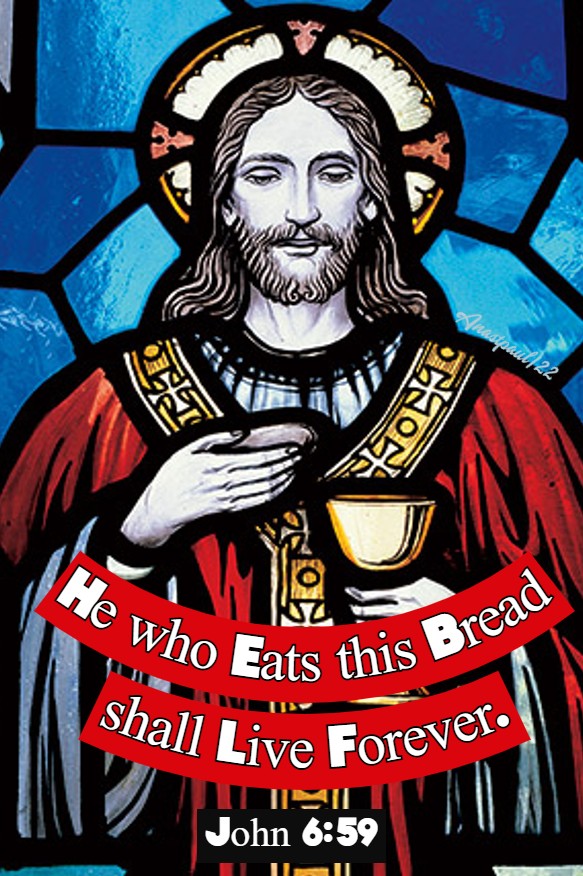
“He who eats this Bread shall live forever.” – John 6:59
REFLECTION – “Since it was the Will of God’s Only-Begotten Son that men should share in His Divinity, He assumed our nature in order that, by becoming Man. He might make men gods . Moreover, when He took our flesh. He dedicated the whole of its substance to our salvation. He offered His Body to God the Father, on the Altar of the Cross, as a sacrifice for our reconciliation. He shed His Blood for our ransom and purification, so that we might be redeemed, from our wretched state of bondage and cleansed from all sin. But to ensure that the memory of so great a gift would abide with us forever, He left His Body as food and His Blood as drink, for the faithful to consume in the form of bread and wine.
O precious and wonderful banquet which brings us salvation and contains all sweetness! Could anything be of more intrinsic value? Under the old law, it was the flesh of calves and goats, which was offered but here, Christ Himself, the True God, is set before us as our food! What could be more wonderful than this? No other Sacrament has greater healing power; through it, sins are purged away, virtues are increased and the soul is enriched with an abundance of every spiritual gift. It is offered in the Church for the living and the dead, so that what was instituted for the salvation of all, may be for the benefit of all. Yet, in the end, no-one can fully express the sweetness of this Sacrament, in which spiritual delight is tasted at its very source, and in which, we renew the memory, of that surpassing love for us, which Christ revealed in His Passion.
It was to impress the vastness of this Love, more firmly upon the hearts of the faithful, that our Lord instituted this Sacrament at the Last Supper. As He was on the point of leaving the world to go to the Father, after celebrating the Passover with His disciples, He left it as a perpetual memorial of His Passion. It was the fulfilment of ancient figures and the greatest of all His Miracles, while, for those who were to experience the sorrow of His departure, it was destined to be a unique and abiding consolation.” – St Thomas Aquinas (1225-1274) Dominican Priest and Theologian, Doctor of the Church (An excerpt from On the Feast of the Body of Christ).
PRAYER – We beseech Thee, Almighty God that on this feast-day, we may have the double joy of celebrating blessed John and Paul, true brothers ,who obtained eternal glory through one Faith and one Martyrdom. Through Jesus Christ, Thy Son our Lord, Who lives and reigns with Thee, in the unity of the Holy Ghost, God, world without end. Amen (Collect).
O HEART of love, I place all my trust in Thee; for though I fear all things from my weakness, I hope all things from Thy mercies. – Ejaculation of Saint Margaret Mary – Indulgence 300 Days, Everytime – Raccolta 180St Pius X, 3 June 1908.
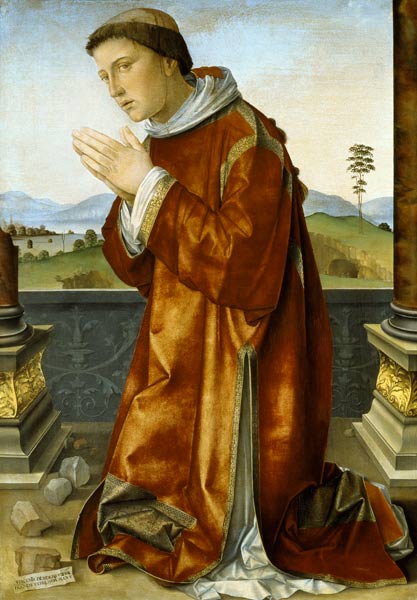
Saint of the Day – 26 June – St Deodatus (Died 473) Bishop of Nola succeeding St Paulinus the Younger after having been his Archpriest. He had previously been the Deacon of St Paulinus Nola (c354-431) (St Paulinus image below).
The life of Saint Deodatus, although rich in virtues and meritorious works, has come down to us in fragments.
From various sources we learn that Deodato was first Archpriest of the City of Nola during the Episcopate of Saint Paulinus the Younger, who died in 442. His wisdom and prudence were such that “with the consent of all the Presbyters and Clerics of the entire Nolan Church,, he was entrusted with the administration of the revenues to be collected and distributed and, in a certain sense, he was a bishop.”
However, his moral integrity was put to the test by slanderous accusations. Malicious individuals denounced him to the Emperor Valentinian III, accusing him of disposing of Ecclesiastical goods “at his pleasure and for his own use.”
Following these accusations, Deodato was imprisoned, exiled and only thanks to divine intervention was he able to regain his freedom.
Unknown Deacon
Two years after the death of St Paulinus the Younger, in 444, Deodatus was elected as the Bishop of Nola, assuming the leadership of the Diocese with dedication and wisdom.
His Episcopate was characterised by intense pastoral activity and deep attention to the needs of the faithful. Deodatus distinguished himself by his humility and charity, earning the affection and esteem of all. He died on 26 June 473 and was buried in his hometown of Nola.
Already in life, Deodatus was venerated for his sanctity. While still the Archpriest, he had prepared a cenotaph with an inscription which emphasised his humility: “Deodatus, unworthy Archpriest of the Holy Church of Nola, rests here.” After his death, another epigraph was dedicated to him, extolling his virtues: “Beloved by God and men in the Priesthood.”
Several historical sources, including the author of the Vita himself, confirm that Deodatus was both Archpriest and Bishop of Nola.
Around 840, his Relics were transported to Benevento, where they are still venerated today.
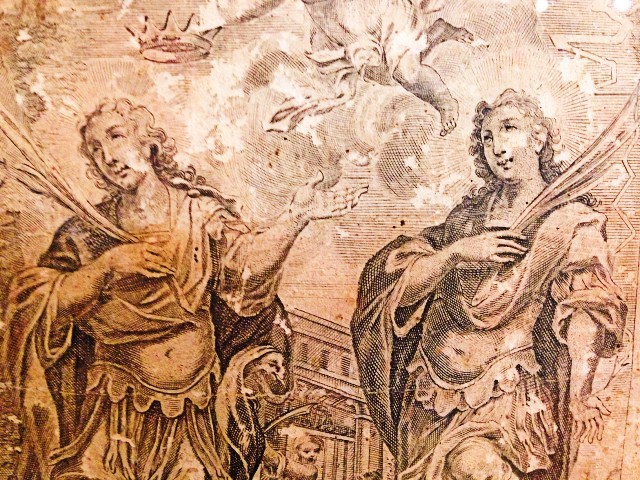
St John of Rome * Layman Brothers, Martyr St Paul of Rome * Layman Brothers, Martyr The year of their Martyrdom is uncertain according to their Acts; it occurred under the Emperor, Julian the Apostate. The Roman Martyrology reads today: “At Rome, on Mount Coelus, the holy Martyrs, John and Paul, brothers. The former was Steward, the other Secretary of the virgin Constantia, daughter of the Emperor Constantine. Afterwards, under Hulian the Apostate, they received the Palm of Martyrdom by being beheaded.” Their Lives and Deaths: https://anastpaul.com/2023/06/26/saints-of-the-day-26-june-saint-john-and-saint-paul-died-c362-laymen-brothers-martyrs/
St Acteie of Rome St Albinus of Rome
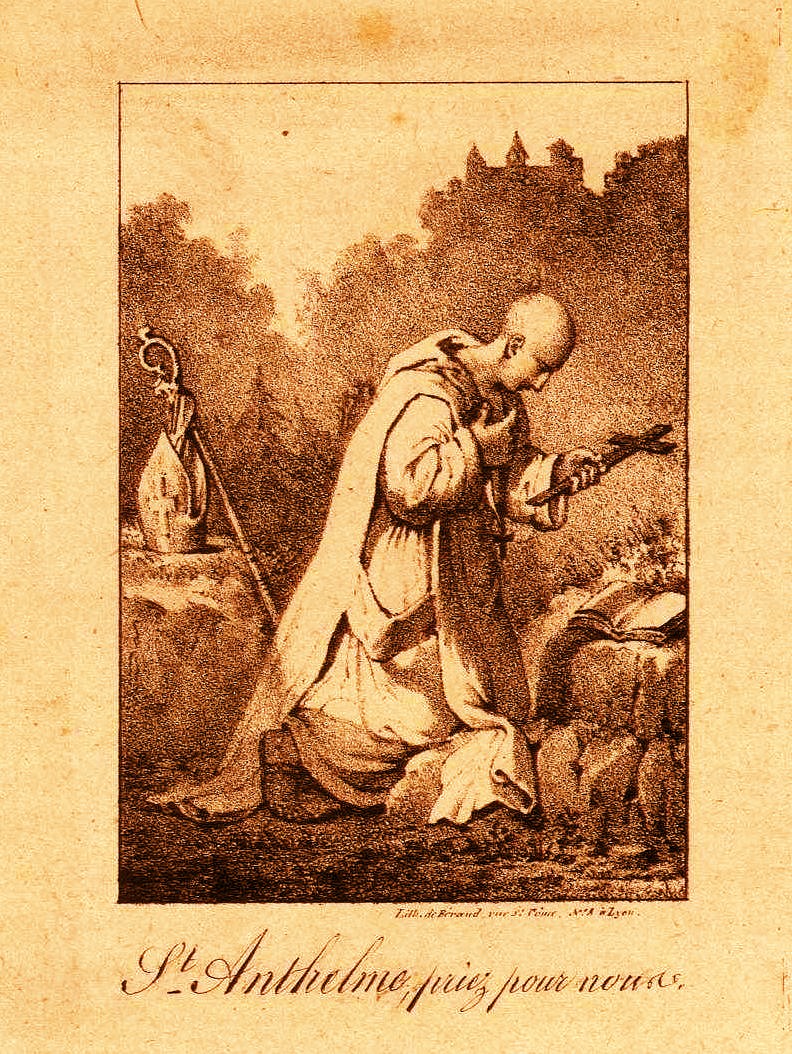
St Anthelm O. Cart. (c1105-1178) Bishop of Belley, France, Prior of the Carthusian Grand Chartreuse. Reformer, talented Administrator, Founder of the female Carthusians and originated of the Carthusian Rule (with the zealous and learned assistance of Bless John the Spaniard whom we celebrated yesterday) Apostle of the poor, the sick and the needy. The wonderful St Anthelm: https://anastpaul.com/2021/06/26/saint-of-the-day-st-anthelm-of-belley-o-cart-c-1105-1178/
St Babolenus of Stavelot-Malmédy St Barbolenus of Fossés Bl Bartholomew of Vir St Corbican St David of Thessalonica St Deodatus (Died 473) Deacon of St Paulinus Nola (c354-431) St Dionysius of Bulgaria St Edburga of Gloucester St Hermogius of Tuy St John of the Goths
St Medico of Otricoli St Pelagius of Oviedo St Perseveranda of Poitiers Bl Raymond Petiniaud de Jourgnac St Salvius Bl Sebastian de Burgherre St Soadbair St Superius St Terence of Rome St Vigilius of Trent
Martyrs of Africa – 4 Saints: Four Christians who were Martyred together – Agapitus, Emerita, Felix and Gaudentius at an unknown location in Africa, date unknown.
Martyrs of Alexandria – 3 Saints: Three Christians who were Martyred together but we really know little more that the names – Agatho, Diogenes and Luceja. They were Martyred in Alexandria, Egypt, date unknown.
Martyrs of Cambrai – 4 Beati: Four Daughters of Charity of Saint Vincent de Paul, Nuns at Arras, France. Imprisoned together in 1792 and executed together two years later in the anti-Catholic excesses of the French Revolution. They were: , Jeanne Gerard, Marie-Françoise Lanel, Marie-Madeleine Fontaine, Thérèse-Madeleine Fantou, They were guillotined on 26 June 1794 at Cambrai, Nord, France and Beatified in June 1920 by Pope Benedict XV.







































You must be logged in to post a comment.