Posted in SAINT of the DAY

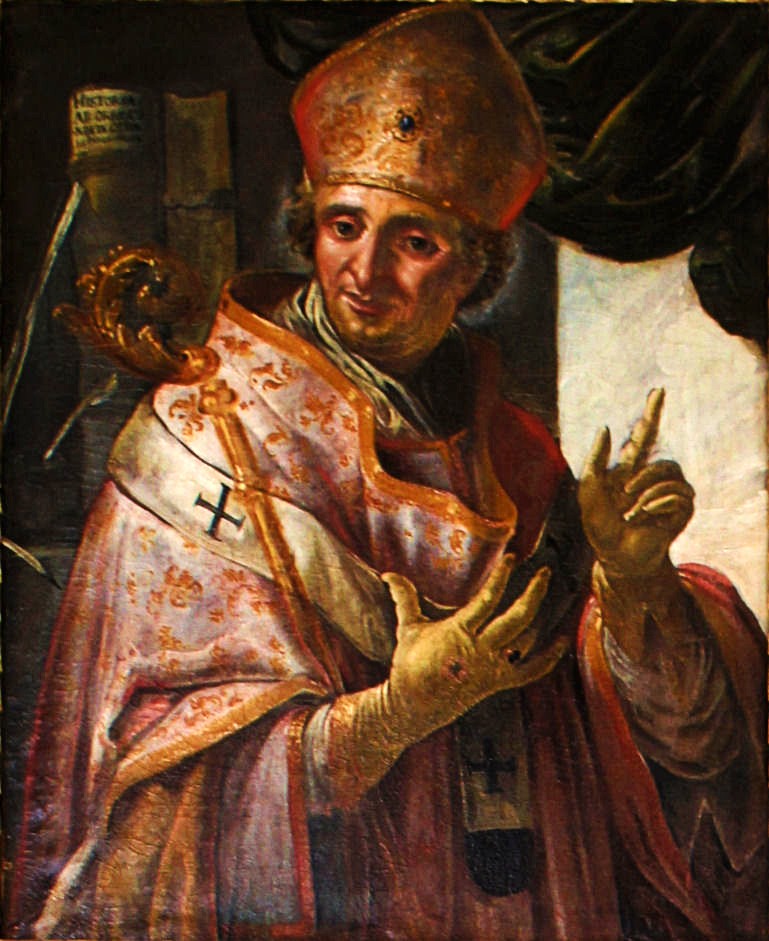
Saint of the Day – 11 August – Saint Tiburtius (Died c286) Martyr

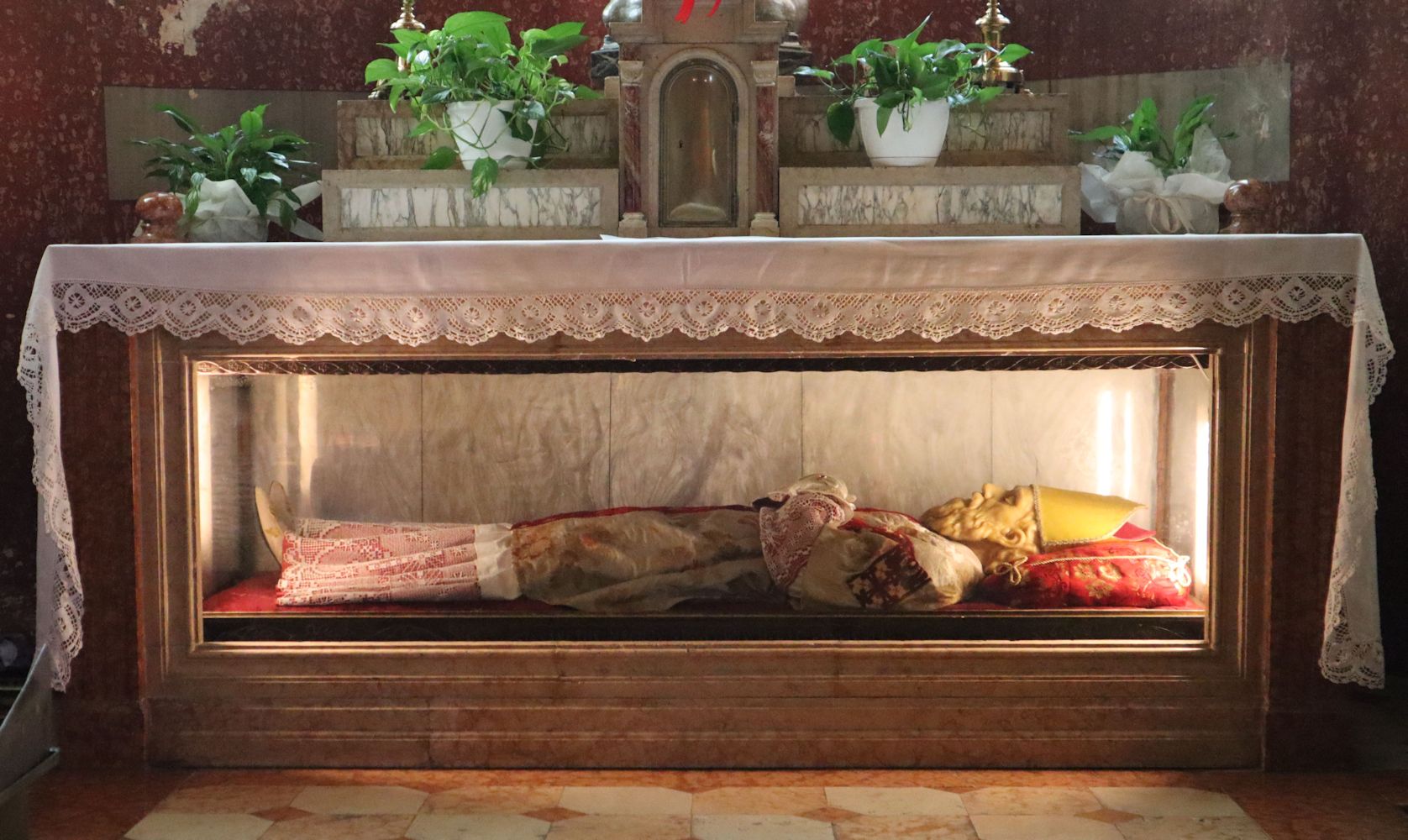
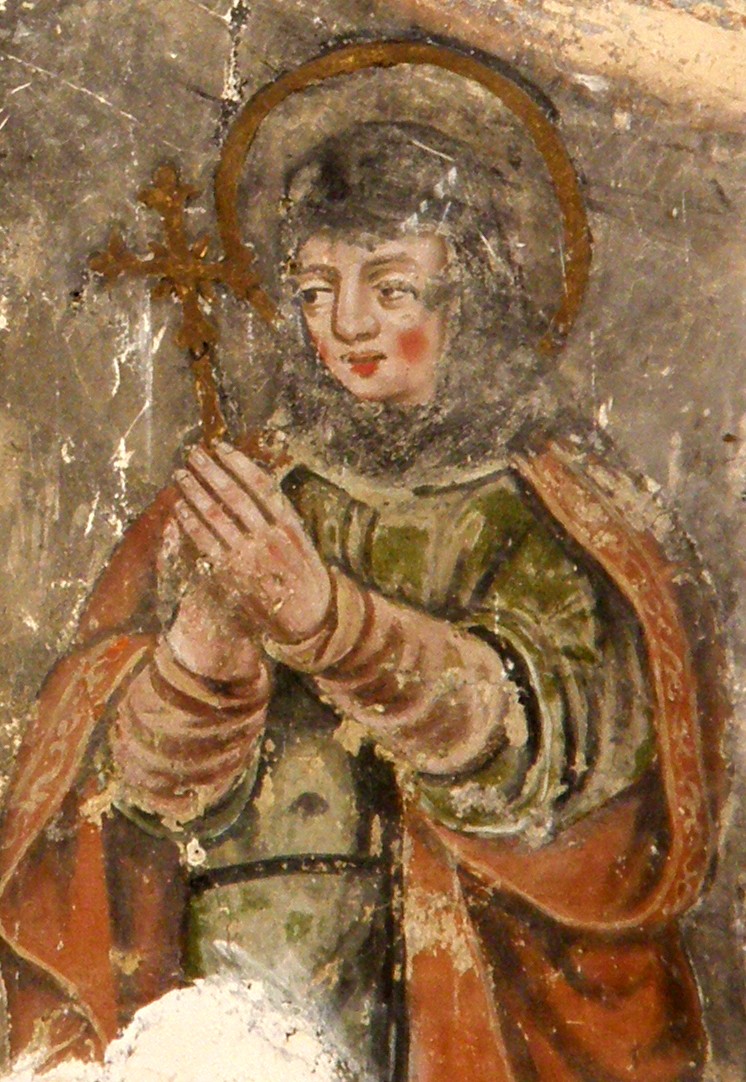
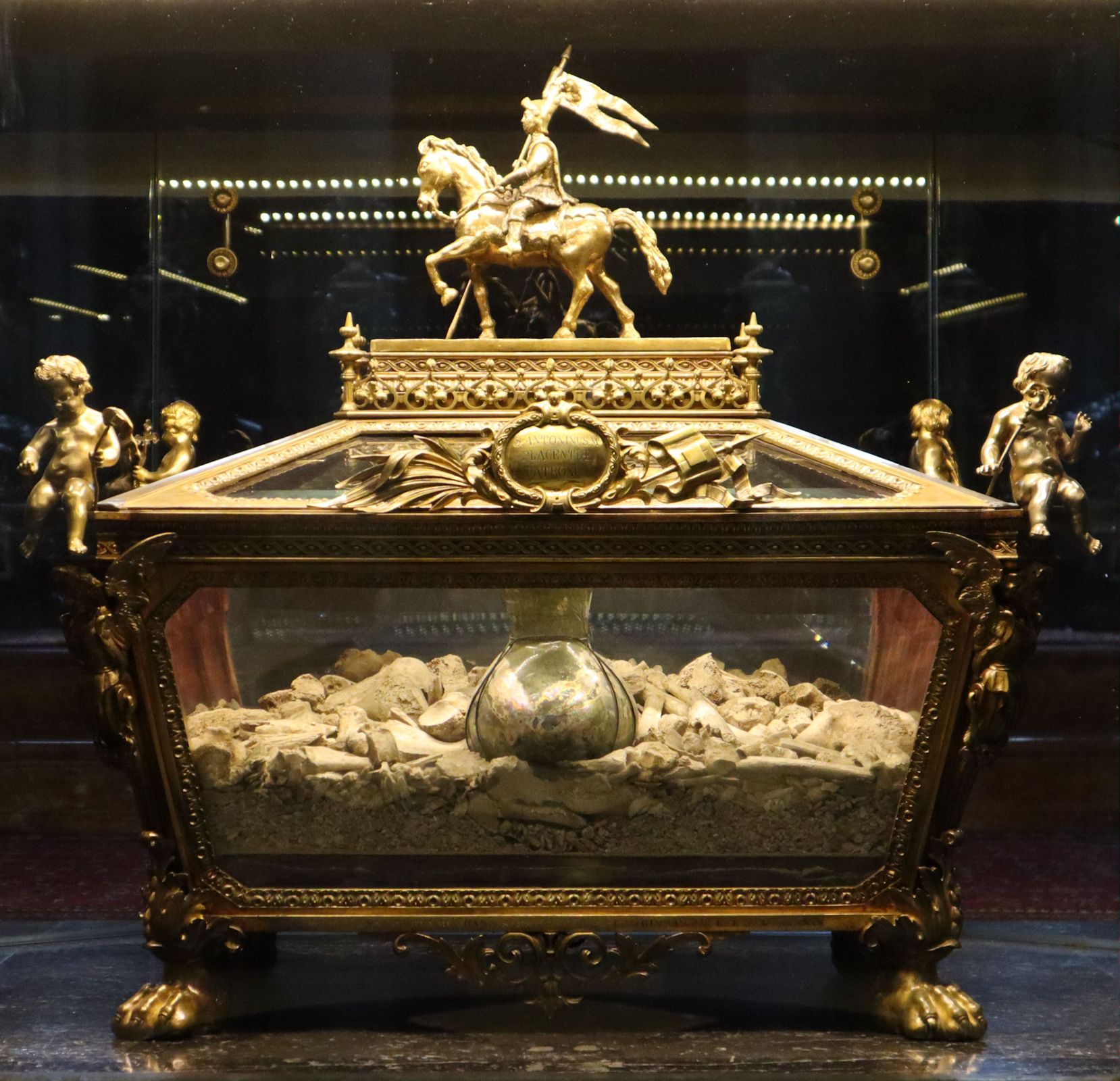
Saint of the Day – 11 August – Saint Tiburtius (Died c286) Martyr, Layman, the son of Saint Chromatius the Prefect of Rome, also a Martyr. St Damasus (c305-384), the Pope, wrote about Tiburtius. He died by being beheaded in c286 in Rome, Italy and his remains are entombed in the Ad Duas Lauros Cemetery at the three mile marker on the Via Lavicana in Rome. Also known as – Tiburcio, Tiburzio.

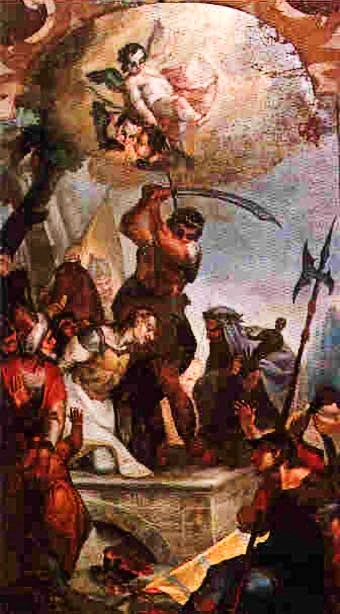
The Roman Martyrology reads today: “At Rome, between the two laurels situate about three miles from the City, the birthday of St Tiburtius, Martyr, under the Judge Fabian, in the persecution of Diocletian. After he had walked barefoot on burning coals and confessed Christ with increased constancy. he was put to the sword.

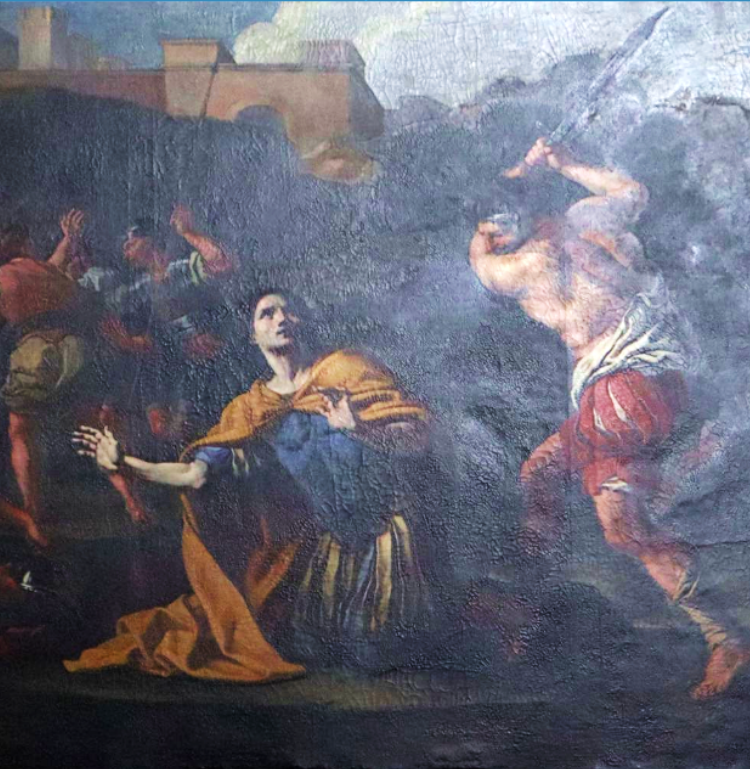
St Tiburtius walking barefoot on burning coals

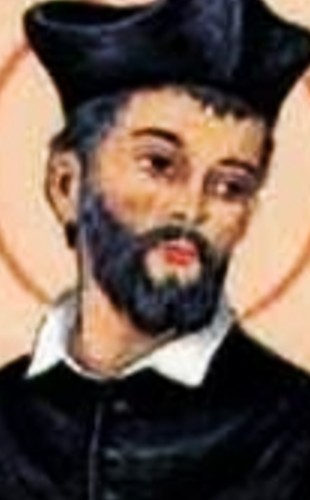
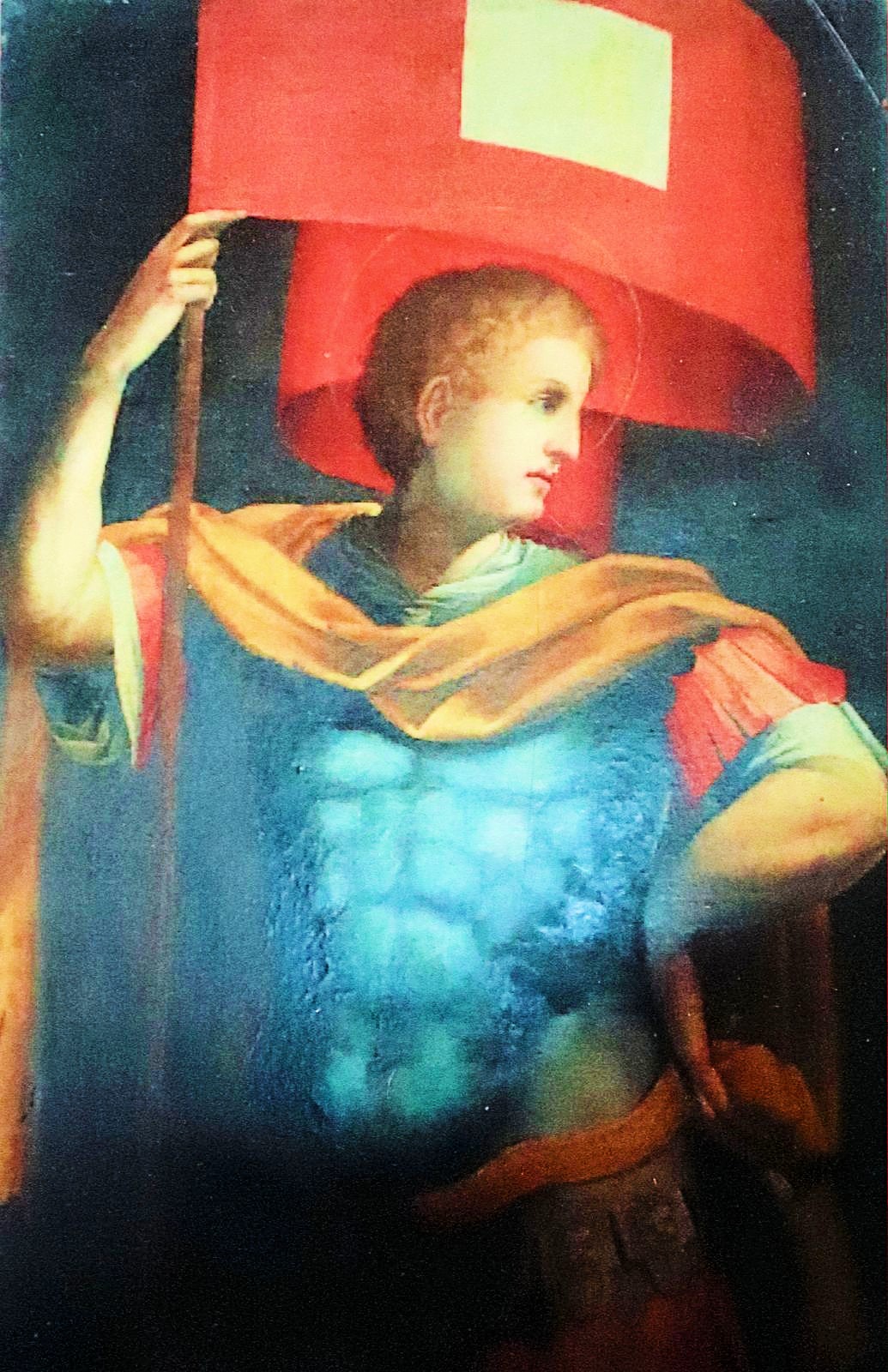
St Tiburtius, Martyr
By Father Francis Xavier Weninger SJ (1805-1888)

Tiburtius, a son of the noble Roman Prefect, Chromatius, received holy Baptism at the same time as his father and, not only endeavoured to lead a Christian life but also, to bring others to the knowledge of the True Faith.

One day, while he was walking through the street, a boy fell from the roof of a house to the pavement. He was so injured that it was thought that every moment would be his last. Tiburtius going towards him, made the Sign of the Cross over him and commanded him, in the Name of Jesus Christ, to rise and to abandon heathenism. The boy immediately arose, became a Christian and persuaded many, who had witnessed the miracle, to do likewise.

At another time, Tiburtius went to a youth named Torquatus, who, although Baptised and calling himself a Christian, did not conduct himself according to the dictates of the Church. His dress was too luxurious; he spent too much time in idleness, gaming, dancing and other amusements; he was unrestrained and licentious in his conversation and conduct. He was seldom at prayer but frequently, in dangerous company. Tiburtius exhorted him most earnestly to change his unchristian behaviour. Torquatus feigned a determination to follow his advice but secretly went to the Judge Fabian and revealed to him that Tiburtius was a Christian.

This he did in revenge for the reproofs which Tiburtius had given him. But, that he might not be known as the accuser, he requested to be arraigned with Tiburtius. When this had taken place, the Judge asked Torquatus who he was. “I am a Christian,” was his reply, “and this man ,Tiburtius has converted me to the True Faith.” But Tiburtius said: “I have never recognised you as a Christian; for, your life has not been that of a Christian. To dress luxuriously, not to observe the fast days, to be indifferent to your prayers, to pass the day in idleness, to associate with the other sex, to be licentious in your words, are not the characteristics of a Christian. Christ does not recognise such as His followers.” Fabian the Judge, would not listen to these reproofs but, having the ground strewn with hot coals, he said to the Saint: “You have your choice either to throw incense over these coals and thus offer to the gods, or to walk barefoot over them.

Tiburtius, without a moment’s hesitation, took off his shoes, and courageously stepping upon the coals, walked up and down over them, without a sign of pain. Addressing the Judge, he said: “See and know that the God of the Christians is the only God, Whom all creatures obey. Your live coals seem to me but lovely flowers.” The Judge, highly incensed, exclaimed: “I knew long since that your Christ instructed His followers in magic. I shall, however, pay no attention to it.” The holy Martyr rebuked this blasphemy and as Fabian saw that the heathens began to admire the God of the Christians, he ordered him to be beheaded, thus bestowing upon him the Crown of Martyrdom.

St Tiburtius walking barefoot on burning coals
Posted in SAINT of the DAY

St Philomena (Died 304), St Susanna of Rome (Died c 295) Virgins Martyrs, St Tiburtius (Died c286) Martyr, Layman and more Saints for 11 August

St Tiburtius (Died c286) Martyr, Layman

St Cassian of Benevento
St Chromatius the Prefect
St Digna of Todi
St Equitius of Valeria

St Lelia
St Rusicola of Arles
St Rufinus of Marsi
Bl Theobald of England and Companion
St Taurinus of Evreux

Posted in CATHOLIC-PRAYERS OF THE CHURCH, HYMNS, Our MORNING Offering, PRAYERS of the CHURCH, SAINT of the DAY

Our Morning Offering – 10 August – Holy Deacon Martyr, St Lawrence!

Our Morning Offering – 10 August – St Lawrence (Died 258) “Keeper of the Treasures of he Church,” Martyr, Archdeacon.

Holy Deacon Martyr, St Lawrence!
Unknown Author

Holy Deacon! by thy yearning
For the Martyr’s glorious crown;
By thy tortures, by thy burning,
By thy death of bright renown;
When the world and flesh and devil
Tempt our souls to sin and evil,
Dear Saint Lawrence, pray for us!

By the love that thou didst ever
To thy Pontiff-Father bear,
Pray that no base act may sever
Us from Peter’s loving care!
But when men would once more lead us
Into bonds from which Christ freed us,
Dear Saint Lawrence, pray for us!

By the Pontiff’s words of warning,
Bidding all thy sorrows cease,
Words foretelling bitter mourning
Leading unto lasting peace!
That to Jesus in our sadness
We may look for help and gladness,
Dear Saint Lawrence, pray for us!

By thy love, which knew no measure,
For the needy and the old,
Giving them the Church’s treasure
Dearer they than gems and gold!
Teaching us that alms well given
Are but treasures stored in Heaven,
Dear Saint Lawrence, pray for us!

By thy fervent love for Jesus,
By thy strong and constant faith,
Of our sinful burdens ease us!
Help us at the hour of death!
When the fears of death confound us
When the cleansing fires surround us!
Dear Saint Lawrence, pray for us!

Posted in PATRONAGE, PATRONAGE - of BASKET-WEAVERS, CRAFTSMEN, SAINT of the DAY

Saint of the Day – 10 August – St Deusdedit the Cobbler (6th Century) Confessor, Layman

Saint of the Day – 10 August – St Deusdedit the Cobbler (6th Century) Confessor, Layman – Deusdedit was a poor layman shoemaker in 6th Century Rome, Italy. Patronages – shoemakers, of the poor. His name meaning, “dedicated to God.

The Roman Martyrology reads of him today: “At Rome, the holy Confessor Deusdedit, a working man, who gave to the poor, every Saturday, whatever he had earned during the week.

We have little information of Deusdedit except that which St Gregory the Great (540-604) left us, having lived in the same years and been the Pope at the time that this holy shoemaker visited St Peter’s on Saturdays. Besides this we know nothing further of his life.

There was a pious shoemaker named Deusdedit, in Rome [so Gregory tells us]. Every Saturday he took his week’s earnings to the courtyard of the Shrine of St Peter in the Vatican, Rome. With these hard-earned wages, he gave alms to the poor who assembled at the Shrine.

The result of the cobbler’s charity was revealed in a vision to a pious person praying nearby. The vision was of a house being built in Heaven. But this building occurred only on Saturdays. For Saturday was the day on which Deusdedit went to St Peter’s to give alms to the poor.

The house was the cobbler’s “Mansion” in Heaven, built by the “Treasure” which he had transferred to Heaven every Saturday through his gifts to the poor.

A similar vision revealed that these Mansions are Treasure Houses in themselves – for they are built with bricks of pure gold!

Posted in franciscan OFM, MARIAN TITLES, SAINT of the DAY

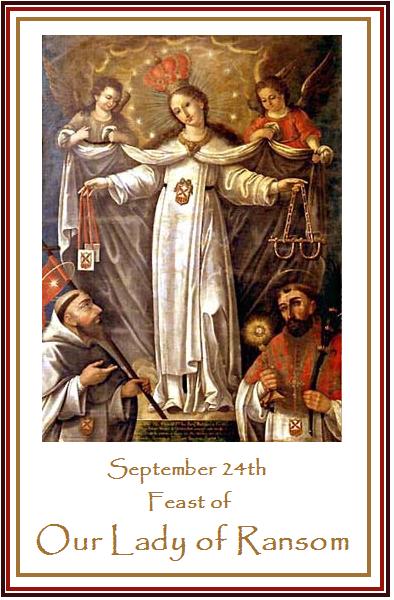
St Lawrence (Died 258) Martyr “Keeper of the Treasures of he Church,” Nuestra Señora de las Mercedes / Our Lady of Ransom, Barcelona, Spain (1218) and the Saints for 10 August

St Agathonica of Carthage
St Agilberta of Jouarre

St Aredius of Lyon
St Asteria of Bergamo
Bl Augustine Ota
St Bassa of Carthage

St Bettelin

St Deusdedit the Cobbler (6th Century)
St Gerontius
Bl Hugh of Montaigu
St Paula of Carthage
St Thiento of Wessobrunn

Posted in MARIAN PRAYERS, PRAYERS for VARIOUS NEEDS, PRAYERS of the SAINTS, QUOTES on DEATH, QUOTES on LOVE of GOD, SAINT of the DAY, Uncategorized

Our Morning Offering – 9 August – St John Vianney’s I Love Thee, O My God

Our Morning Offering – 9 August – “The Month of the Immaculate Heart of Mary” and the Memorial of St John Vianney (1786-1859) Confessor

I Love Thee, O My God
By St John Vianney (1786-1859)

I love Thee,
O my God
and my only desire is to love Thee
until the last breath of my life.
I love Thee,
O my infinitely lovable God
and I would rather die loving Thee
than live without loving Thee.
I love Thee, Lord
and the only grace I ask,
is to love Thee eternally.
My God,
if my tongue cannot say
in every moment that I love Thee,
I wish my heart to repeat it to Thee
as often as I draw breath!
Amen

Posted in SAINT of the DAY

Saint of the Day – 9 August – Saint Autor of Metz (5th Century) Bishop

Saint of the Day – 9 August – Saint Autor of Metz (5th Century) the 13th Bishop of Metz in France, for 29 years, Miracle-worker. Patronage – of Braunschweig, Germany. Also known as – Adinctor, Auctor, Auteur, Autore, Author. Additional Memorials – 11 August (Diocese of Metz, France), 10 August – the presumed date of his death (Martyrology of St Jerome), 20 August (Braunschweig, Germany), 13 March (translation of relics).
This image shows St Autor as the Patron of Braunschweig, Germany.

Tradition says that Autor was a cobbler, known in the City of Metz, France for his holiness. When Bishop Valerius was murdered, local people approached Autor to take the office. He initially refused but while he was arguing with the faithful, he dropped his leather awl – it landed point down, punched a small hole in the dirt and a spring of fresh water erupted from it. Both he and the townspeople knew a sign when they saw it and he became the 13th bishop of Metz

His position was assigned by the most ancient catalogue of the City’s Bishops, compiled around 776 and which has survived to this day. Saint Autor is mentioned in 451.

It is believed from these records that our Saint governed the Diocese for twenty-nine years. According to Paul the Deacon in his text ‘Gesta Episcoporum Metensium – Acts of the Bishops of Metz,’ Saint Autor lived at the time of Attila and, with many others, was deported by the Huns. But a miracle by Autor’s prayers, saved him from deportation. It is said, in fact, that he miraculously restored the sight of some barbarians who had been struck blind as they had come to send him out of Metz. Their vision returned when they freed Autor and he prayed for them.

Some historians inform us that Autor ruled the fate of the Diocese of Trier, as well as Metz, in a period in which it remained vacant but this statement has no historical basis.

There is a legend about the translation of his Relics. In the year 852, Bishop Drogone brought back his remains together with those of St Celeste, his predecessor, to the Monastery of Marmoutier. A procession had been organized to display the cloth Relics to the faithful but a strange thing happened. The remains of Saint Autor which were placed in front of those of St Celeste, would not move, until those of St Celeste were placed first in the procession.

St Autor’s Relics remained in the Alsatian Monastery of Marmoutier in Strasbourg, until the Saint is said to have appeared in a dream to the Margravine of Braunschweig, Gertrude the Younger, asking her to transport his remains to Braunschweig, to the newly founded Aegidien Monastery. This iis mentioned in an historical record, completed around 1210. According to another source, St Autor’s Relics were transferred from St. Maximin to the Helmarshausen Monastery as early as 1105 from where they were finally taken to Braunschweig.

In 1200 , during a throne dispute, the troops of the King Philip of Swabia besieged the City of Braunschweig. On 20 August of that year, Saint Autor saved the City from being taken, by appearing, sword in hand to the enemy troops, who then retreated in fear. Since then he has been the Patron Saint of Braunschweig and 20 August is the “Autor’s Day.”

The relatively peaceful ending of inner-city revolts during the 14th and 15th Centuries were also attributed to the intercession of the City Saint.

Posted in SAINT of the DAY

Vigil of St Lawrence, St Jean Marie Baptiste Vianney (1786-1859) Confessor, St Emigdius (c279-c309) and the Saints for 9 August

Vigil of St Lawrence

St Romanus Martyr, Soldier

St Amor of Franche-Comté
St Autor of Metz (5th Century) Bishop
St Bandaridus of Soissons
St Bonifacia Rodriguez Castro

St Claude Richard
St Domitian of Châlons
Bl Falco the Hermit
St Firmus of Verona

Bl John Talbot
St Marcellian of Civitavecchia

St Nathy
St Numidicus of Carthage
St Phelim
St Rusticus of Sirmium
St Rusticus of Verona
St Secundian of Civitavecchia
St Stephen of Burgos
St Verian of Civitavecchia

Posted in franciscan OFM, SAINT of the DAY

Saint of the Day – 8 August – Blessed William of Castellammare di Stabia OFM (Died 1364) Martyr

Saint of the Day – 8 August – Blessed William of Castellammare di Stabia OFM (Died 1364) Martyr, Friar of the Order of Friar’s Minor, Missionary to Palestine. Born in Castellammare di Stabia, Naples, Italy and died a most horrific death in 1364 in Gaza, Palestine. His body and all his property, including his Breviary, were burned. We have no images of Blessed William – those below are of various Franciscan Martyrs.

Franciscan Martyrs in China

Franciscans, have, from the earliest times of St Francis, had, as one of their objectives, the evangelisation of the Islamic world. Already St Francis went to Palestine in 1219, after two unsuccessful attempts, presenting himself to the Sultan Al-Malik al Kamil, establishing an interesting contact, which revealed, after the centuries-old struggles between Saracens and Christians, the possibility, at least on the Christian side, of a dialogue of the love between the two great religions, for their common origins in Abraham.

In 1220, one of the first disciples of Francis, the learned and miracle-worker St Anthony of Padua, attempted to go to North Africa among the Saracens, but a storm forced him to be shipwrecked in Sicily. But, already at that time, the beginning of 1220, there were the first Franciscan Martyrs at the hands of the Saracens – St Francis had sent five Friars as Missionaries to Muslim-occupied Spain, Saints Berard, Peter, Otho, Accursius, and Adjutus, considered the Protomartyrs of the Franciscans. They began to preach in the Mosques and were, therefore sentenced to death by the Sultan but then they were pardoned and, like so many other Christians in the region, sent to Morocco to work as forced labourers.

Franciscan Martyrs of the Spanish Civil War

However, the courageous Friars continued to preach the Gospel and were imprisoned again, they were flogged and finally beheaded on 16 January 1220. After them, many Franciscans lost their lives in an attempt to spread the Gospel in the hostile and closed Muslim world. Already, in 1227, there were seven more Franciscan Martyrs in Morocco, the Saints Daniel and companions and other Orders also brought their bloody contribution to the conversion of the Saracens, who, it is good to remember, dominated the coasts of the Mediterranean with violent raids, plundering, killing, kidnapping women and men enslaved, all in the name of a ‘holy war’ in name of Allah. The Mercedarian Order distinguished itself in that sad period, for the ransom of Christians from slavery in Arab land and many of them died Martyrs amid unheard-of torments.

This was the situation of those centuries of terror and the Holy Land was occupied by Muslims, generating the phenomenon of the Crusades, which sharpened even more the ideological contrast and the bloody clashes between the Christian and Muslim worlds, with excesses from both sides.

In this historical-religious context, the story of the Franciscan Friar Minor, Blessed William of Castellammare di Stabia, a native of the beautiful, historic, rich in thermal waters, City of the Gulf of Naples.

Unfortunately we have not received much information of this Franciscan Missionary in Palestine but that he proclaimed the Gospel publicly, courageously accusing the Muslim religion of falsehood. Perhaps, at the time, there was no other way to carry out the Apostolate, other than to make these public sermons which evidently were striking, both for the content and the great courage shown in preaching in this way at all!

Naturally, William was arrested and during his detention they tried to make him apostatise with threats and promises, it does not appear that he was tortured, as happened to many others. Refusing all attempts to bend his staunch convictions, William was finally Martyred in 1364 in Gaza (apparently sawn in two).

His body was burned together with his Breviary with which he recited the canonical prayers – the bodies of the Martyrs were burned so as not to create a cult of Relics among Christians, a cult which Muslims saw as smoke and mirrors.

Blessed William is commemorated on 8 August.

The Martyrs of Morocco, 1508, by Francisco Henriques
Posted in franciscan OFM, MARIAN TITLES, SAINT of the DAY

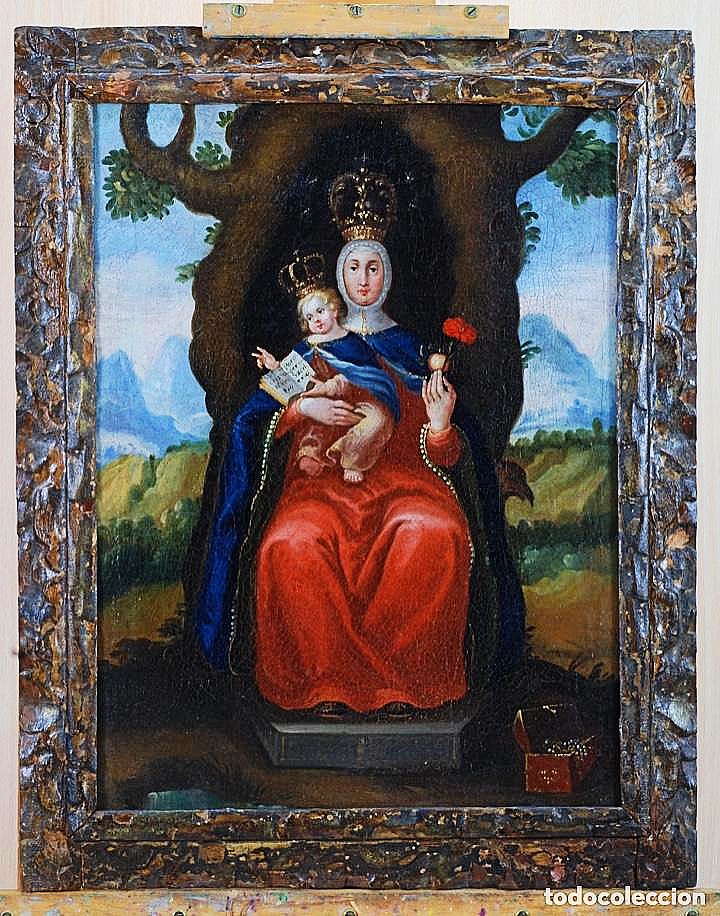
Santa Maria della Querce / Our Lady of the Oak, Italy (1417), The Fourteen Holy Helpers and all the Saints for 8 August

St Aemilian of Cyzicus (9th Century) Confessor, Bishop

St Eleutherius of Constantinople
St Ellidius
St Famianus of Compostela
St Gedeon of Besancon
St Hormisdas of Persia
St Largus
St Leobald of Fleury
St Leonidas of Constantinople
St Marinus of Anzarba
St Mummolus of Fleury
St Myron the Wonder Worker
St Rathard of Diessen
St Severus of Vienne
St Sigrada
St Smaragdus
St Ternatius of Besançon
St Ultan of Crayke
Blessed William of Castellammare di Stabia OFM (Died 1364) Martyr

Posted in CONFESSION/PENANCE, IMMACULATE CONCEPTION Prayers and Novena, IMMACULATE HEART PRAYERS, MARIAN PRAYERS, PAPAL PRAYERS, PRAYERS for VARIOUS NEEDS, QUOTES on PEACE, QUOTES on PURITY, SAINT of the DAY

Quote/s of the Day – 7 August – St Cajetan

Quote/s of the Day – 7 August – St Cajetan (1480-1547) Confessor – “The Month of the Immaculate Heart of Mary” –

There is no road to Heaven
but that of innocence or penance.

Prayer for Peace to the Immaculate Virgin
By Pope Paul IV CR (1476-1559)

Look down with maternal clemency,
most Blessed Virgin,
upon all your children.
Consider the anxiety of Bishops
who fear that their flocks will be tormented
by a terrible storm of evils.
Heed the anguish of so many people,
fathers and mothers of families
who are uncertain about their future
and beset by hardships and cares.
Soothe the minds of those at war
and inspire them with ‘thoughts of peace.’
Through your intercession,
may God, the avenger of injuries,
turn to mercy.
May He give back to nations
the tranquility they seek
and bring them to a lasting age
of genuine prosperity.
Amen

(Pope Paul IV was a friend of St Cajetan and also a member
of his Order, the Theatines, named after Paul IV’s See as Bishop)
.

MORE QUOTES HERE:
https://anastpaul.com/2022/08/07/quote-s-of-the-day-7-august-st-cajetan/

St Cajetan (1480-1547)

Posted in EYES - Diseases, of the BLIND, SAINT of the DAY

Saint of the Day – 7 August – Saint Victricius (c339-407) Confessor, Bishop

Saint of the Day – 7 August – Saint Victricius (c339-407) Confessor, Bishop of Rouen from 393 until his death in 407, of natural causes by the will of God, Victricius narrowly escaped Martyrdom, Miracle-worker, friend of St Martin of Tours, St Ambrose and other great Father Saints. Also known as – Victricius of Rouen, Victrice, Vittricio. Patronage – against blindness, of the blind, of eye disorders.

The Roman Martyrology reads: “At Rouen, the holy Bishop St Victricius. Whilst he was yet a soldier under Julian the Apostate, he threw away his military belt for Christ and after being subjected, by the Tribunal to many torments, was condemned to capital punishment. But, the executioner who had been sent to put him to death, being struck blind and, the Confessor’s chains being loosened, he made his escape. Afterwards, being made Bishop, by preaching the word of God, he brought the barbarous people of Belgic Gaul, to the Faith of Christ and finally, died a Confessor in peace.”

Victricius was born in the first half of the 4th Century on the borders of the Roman Empire. His family was illustrious and Victricius studied humanities before enlisting in the army, like Saint Martin (of Tours), his future friend. He served there for several years, the Christian religion was then honoured in the Roman army. The old soldiers of the first Christian Emperor, Constantine the Great, told of the marvellous appearance of the Cross ofd Christ which had announced victory to them on the banks of the Tiber, when they were marching against the pagan army of Maxentius.
From then on, the Cross had always been part of the Banners, ceremonial dress, stationery etc.

But, in 360, the son of Constantine, Constance, was succeeded, byJulian the Apostate. Julian, after having renounced the Christian Faith to return to the worship of idols, put great energy into fighting Christianity. We know that he wanted several times to force the soldiers of his army to offer sacrifices to idols. Because of this and also because his military time was coming to an end, Victricius wanted to leave the army and, henceforth, dedicate himself to the service of God.

One day during the military review, when the Colonel passed in front of him, Victricius came forward and said, throwing down his arms: “I am a Christian and I ask for my release because I now wish to dedicate myself to peace and Christian justice.” .

The Colonel was a pagan and took this action as a protest against the Emperor’s edicts. Immediately he had the soldier Victricius, our Saint, flogged and when he was nothing more than a wound, he was thrown into a dungeon where he remained lying on the floor for a long time. This did not reduce his faith, his courage and his trust in God and by his contual refusal to deny his Faith in Christ, he was condemned to death.

On the way to the place of execution, the executioner mocked his victim while tightly restraining Victricius by his neck. He said to Victricius: “We are going to cut off this head. What madness to allow oneself to be killed in this way, for a God Whom the Jews Crucified!” The poor man had not finished his blasheming when he was struck blind!

Another miracle followed closely on this one . The jailer had so tightened the chains that they entered the flesh of the condemned man. Victricius begged the soldiers, who accompanied him, to loosen them a little but they refused. Then he began to invoke aloud the help of Jesus Christ and immediately the chains fell off by themselves. Seized with amazement, the soldiers dared not kill a man whom the heavens was so visibly protecting. They re-traced their steps to tell this to the Colonel who, having observed the facts for himself, became Victricius’ friend and had him released.

Victricius, his freedom regained, left to train in a Monastery, it is believed in Ligugé, near Poitiers, under the direction of Saint Hilairy and Saint Martin.
He became a great evangeliser in modern day Belgium. Many were converted and baptised by his preaching.

A few years later, he was appointed as the Archbishop of Rouen. There he established a deep affection with his co-Bishops – Saint Martin, Saint Ambrose, Saint Paulinus of Nola. There is still extant correspondence which testifies to this fraternal friendship.

One day, in Chartres, while Saint Martin was there accompanied by Victricius, an inhabitant brought his daughter, who was blind from birth, to the holy Bishop, begging him to heal her. “Speak to the Bishop of Rouen,” replied Saint Martin, “he is more capable than us of obtaining these marvels for you.” Making the Sign of the Cross on the eyes of the child, the Bishop of Tours yielded and the child was immediately healed

Victricius had just returned to his Diocese when Saint Ambrose announced to him that he was sending him various Relics. Victriciud hastened to seek out this great treasure. So hehad a new Church built in Rouen to honourably place these precious Relics. When this was done, he made a great speech in which he exhorted the people to consider the Martyrs as their protectors:

We must,” he said, “devoutly embrace these precious remains of the tortures and seek there, like the woman at the fringe of the mantle of the Saviour, the healing of our wounds…. for me, a soldier tested by years, aged in battles, fatigue and vigils, I only value present life in its relationship with eternity and, I never think myself richer, than when my hands are laden with the Relics of Saints. … The dwelling place of these blessed ones is in Heaven but, they are here as guests, to whom we can take our prayers.

And he declared again that the small fragments of their remains. as well as larger parts. can be the instrument of many miracles… In 404, Pope Innocent I addressed an important Decree to Victricius on various points of discipline, about which the Bishop of Rouen had consulted him. At the same time, he instructed him to communicate this letter to his colleague Bishops in the surrounding Diocese.

Saint Victricius died in 407, his tomb was a source of miracles and remains in great veneration in Rouen.

In the middle of the 9th Century, to save his Relics from the devastation of Norman pirates, they were transported to the fortified castle of Braine, four leagues from Soissons. They were kept there until the revolution, that is to say, in 1793 when, fortunately, they were able to escape destruction. But it was not until 1865 – on 16 and 17 October that Cardinal de Bonnechose, Archbishop of Rouen, transferred the Relics of Saint Victricicious into a beautiful gilded copper casing, decorated with enamels and fine stones.

A most impressive article on Rouen Cathedral on Wikepedia:
https://en.wikipedia.org/wiki/Rouen_Cathedral

Rouen Cathedral in 1664
Posted in CARMELITES, franciscan OFM, SAINT of the DAY

St Cajetan (1480-1547) Confessor, Founder, St Donatus of Arezzo (Died 362) Bishop, Martyr and all the Saints for 7 August

St Afra of Augsburg
Bl Agathangelus Nourry

Bl Cassian Vaz Lopez-Neto
St Claudia of Rome
St Donat
St Donatian of Chalons-sur-Marne
St Donatus of Besancon
St Faustus of Milan
St Hilarinus of Ostia
St Hyperechios
Bl Jordan Forzatei
St Julian of Rome
St Peter of Rome

St Victricius of Rouen (c339-407) Bishop

Posted in CHILDREN / YOUTH, EPILEPSY, EYES - Diseases, of the BLIND, MIRACLES, PATRONAGE - HEADACHES, SAINT of the DAY

Saint of the Day – 6 August – Saint Gezelin of Schlebusch O.Cist. (Died 1149)

Saint of the Day – 6 August – Saint Gezelin of Schlebusch O.Cist. (Died 1149) known as “The Apostle of Hainaut” – Lay Brother of the Cistercian Order, Hermit, Gezelin’s duties included shepherding the sheep of the Monastery, Miracle-worker. Died on 29 July 1149 in Gut Alkenrath, Schlebusch, Germany. Patronages children, against epilepsy in children, against eye disorders, against headaches. Also known as – Gezelin of Altenberg, Gezelinus of… Gezzelin of… Gezzelino of… Ghislain of… Gisle of… Gozelin of… Jocelin of… Schezelinus of… Gezelin was Canonised by the Bishop of Cologne, Germany, which was a common practice at that time.

The window of St Gezelin near his Shrine in the Andreas Church in Schlebusch

Gezelin was a lay brother in the Cistercian Monastery of Morimond – in today’s Fresnoy-en-Bassigny. In around 1135 he came to the new Altenberg Abbey and worked as a shepherd on the Alkenrath estate belonging to the Monastery in Schlebusch. Even during his lifetime, he was highly praised and revered for his always kind and helpful support of the rural population and the news of miraculous deeds spread more and more. For example, during a drought – in which even the Rhine had dried up – a copious Spring spurted out by his fervent prayers.

In his modesty, Gezelin requested not to be buried in the Abbey in Altenberg but, in the Parish Church near his sheep in Alkenrath. His bones were collected there in 1814. After the demolition of this Church, In 1890, the Relics were taken to the Andreas Church in Schlebusch where they now rest in an oak Shrine made in 1903. More of Gezelin’s Relics were enshrined in Altenberg Cathedral.

The Andreas Church

A Chapel dedicated to him, renovated in 1659 and rebuilt from 1864 to 1868, still stands above the Holy Spring in Gut Alkenrath, which Gezelin caused to rise and whose water heals head and eye ailment and which is still a site of pilgrimage. Many local residents used to fetch their drinking water there and to this day the Baptismal water for the Andreas Church in Schlebusch, is fetched from it. A pilgrimage takes place on the Sunday after Corpus Christi and on his Feast day . The source flow was disturbed by canal work in the 1950s, since then the water is pumped at certain times to the outflow on the west side of the Chapel. The St Gezelin Chapel is normally locked except, of course, during Mass but the Miraculous Spring flows everyday – a sign is posted outside the Chapel of the times when it is pumped.

St Gezelin Chapel
Posted in FEASTS and SOLEMNITIES, MARIAN TITLES, SAINT of the DAY, The TRANSFIGURATION

The Transfiguration of Our Lord, The Tenth Sunday after Pentecost, Nossa Senhora das Graças / Our Lady of Graces, Brazil (1936) and Memorials of the Saints – 6 August

The Tenth Sunday after Pentecost

The Transfiguration of Our Lord
https://anastpaul.com/2018/08/06/feast-of-the-transfiguration-of-the-lord-6-august-todays-gospel-mark-92-10/
AND:
https://anastpaul.wordpress.com/2017/08/06/august-6-the-feast-of-the-transfiguration-of-the-lord/
AND:
https://anastpaul.com/2022/08/06/the-transfiguration-of-our-lord-6-august/

St Gezelin of Schlebusch O.Cist. (Died 1149) Lay Brother of the Cistercian Order, Hermit.
St Gislain of Luxemburg
St Glisente of Brescia
Bl Goderanno
Bl Guillermo Sanz
St Hardulf of Breedon

St James the Syrian

Bl Octavian of Savona
St Stephen of Cardeña
Bl William of Altavilla

Posted in DOCTORS of the Church, Of a Holy DEATH & AGAINST A SUDDEN DEATH, of the DYING, FINAL PERSEVERANCE, DEATH of CHILDREN, DEATH of PARENTS, SAINT of the DAY

Saint of the Day – 5 August – St Nonna of Nazianzen (c305-374) Widow

Saint of the Day – 5 August – St Nonna of Nazianzen (c305-374) Widow of St Gregory Nazianzen the Elder, (c276-374) the saintly Bishop of Nazianzen and Mother of St Gregory Nazianzen (330-390) Doctor of the Church, his younger brother St Caesarius Nazianzen (c331-368) a Physician and St Gorgonia (Died c375) Married, Mother. Born in Nazianzen in Cappadocia (modern day Turkey) in around 305 and died in c374 in her home town, of natural causes. Patronages – death of children, Information services. Also known as – Nona.

The Roman Martyrology states: “In Nazianzus in Cappadocia, in today’s Turkey, Saint Nonna, who was the wife of the holy Bishop Gregory the Elder and mother of the Saints Gregory, Cesario and Gorgonia.

Nonna was born and raised as a deeply religious Christian. After she married, she converted her husband Gregory to Christianity. He had been a member of the Hypsistarians, a Jewish-pagan sect which worshipped Hypsistos, the “Most High” God. Both Gregory and Nonna came from wealthy families and Gregory was able to personally finance the construction of a Church in the region. In 328, Gregory was selected as the Bishop of Nazianzen, a position he held until his death. At one point, Gregory subscribed to an Arian understanding of the Blessed Trinity. However, this was for a very brief time and he quickly renounced that position.

Nonna became the mother of three children, each of whom became Saints, the most notable of whom being the Doctor of the Church, St Gregory Nazianzen.

Nonna outlived her husband and two of her children, dying, almost certainly in 374.

Her son Gregory tells of an occasion in 351 when Nonna fell terribly sick with a severe illness and appeared to be at the point of death. On his way to visit a friend, Gregory hurried instead to his mother who, in the meantime, had begun to recover. She had a vision in which Gregory had given her magical cakes marked with the Sign of the Cross and blessed by him.

Gregory championed Nonna as a model of Christian motherhood. He wrote of her:

My mother was a worthy companion for such a man [as my father] and her qualities were as great as his. She came from a pious family but was even more pious than they, although, in her body she was but a woman, in her spirit she was above all men…

Her mouth knew nothing but the truth but, in her modesty, she was silent about those deeds which brought her glory. She was guided by the fear of God. …

Posted in MARIAN TITLES, SAINT of the DAY

First Saturday + Dedication of the Basilica of Saint Mary Major / Our Lady of the Snows, Nostra Signora della Neve / Our Lady of the Snow, Adro, Italy (1519) and Memorials of the Saints – 5 August

First Saturday +

St Abel of Rheims
St Addai
St Aggai of Edessa
Bl Arnaldo Pons
St Cantidianus
St Cantidius
St Cassian of Autun
St Casto of Teano
Bl Corrado of Laodicea

St Eusignius
St Gormeal of Ardoilen
Bl James Gerius
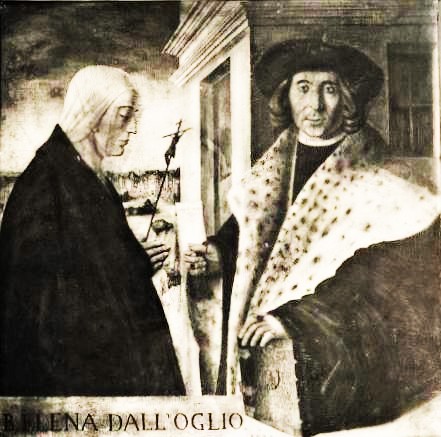
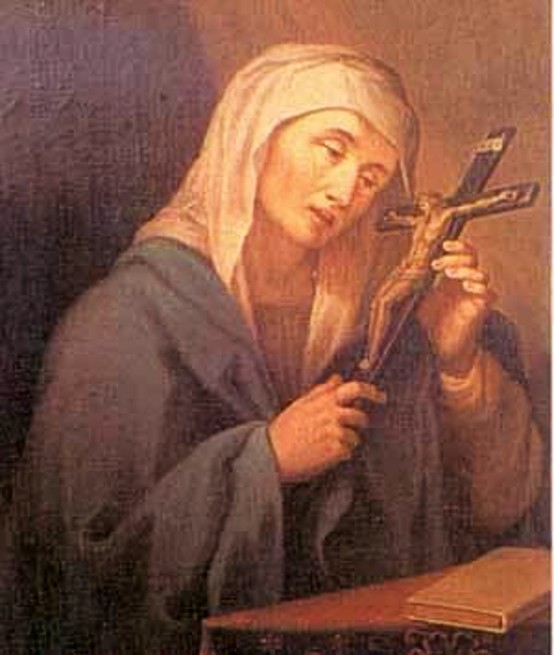
St Margaret the Barefooted (1335-1395) Married Laywoman
St Mari
St Memmius of Châlons-sur-Marne
St Nonna of Nazianzen (c305-c374) Widow. Mother

St Paris of Teano
Bl Pierre-Michel Noël

St Sobel
St Theodoric of Cambrai-Arras
St Venantius of Viviers
St Viator

Posted in CHRIST the SUN of JUSTICE, CHRIST the WORD and WISDOM, DOCTORS of the Church, DOMINICAN OP, Our MORNING Offering, QUOTES on CONSCIENCE, SAINT of the DAY, The GOOD SHEPHERD

Our Morning Offering – 4 August – Guide Me Lord

Our Morning Offering – 4 August – On the Feast of St Dominic, we pray a prayer by one of his most illustrious children, St Albert the Great

Guide Me Lord
By St Albert the Great (1200-1280)
Doctor of the Church

O Lord Jesus Christ,
Who seeks those who stray
and receives them when returning,
make me approach Thee
through the frequent hearing of Thy Word,
lest I sin against my neighbour,
by the blindness of human judgement,
through the austerity of false justice,
through comparing his inferior status,
through too much trust in my merits
or through ignorance of the Divine Judgement.
Guide me to search diligently,
each corner of my conscience,
lest the flesh dominate the spirit!
Amen

Posted in SAINT of the DAY

Saint of the Day – 4 August – Saint Agabius of Verona (Died c350) Bishop, Confessor

Saint of the Day – 4 August – Saint Agabius of Verona (Died c350) Bishop, Confessor – the Ninth Bishop of Verona, Italy. His birth date and place are unknown but he died in c350 in Verona, of natural causes. Also known as – Agabio, Agapio, Agapito. Agabius was the Bishop of the Diocese of Verona who lived in the 4th Century. The name Agabius is of Greek origin and derives from the verb “agapao” to love.

We know very little about our Saint today. Our only certain knowledge is that he was buried in the Church of St Proculus and when the Church was suppressed on 28 September 1806, his remains were moved to the crypt of the Basilica of St Zeno, the Cathedral Church of Verona.

The Martyrology of the Veronese Church states: “Saint Agabius of Verona, Bishop of the same City, who, excelling in piety to God and gentleness of manners, he of all virtues, of great faith … and of liberality to all the poor, left behind him examples to the … Bishops.” (The gaps are due to the Italian translation which makes little sense).

Another clarification on this holy Bishop is made by Msgr Dario Cervato in his recent work “Verona Agiografica” where he states: “some said he was a native of Caesarea in Palestine, where he was the Bishop, successor of Teotemius and then transferred to Verona but this is unsupported information.

Posted in DOMINICAN OP, MARIAN TITLES, SAINT of the DAY

First Friday + Madonna dell’Apparizione / Our Lady of the Apparition, Italy (1716), St Dominic and the rest of the Saints for 4 August

First Friday +

St Agabius of Verona (Died c350) Bishop
St Aristarchus of Thessalonica (1st Century)
St Crescentio of Rome
St Eleutherius of Bithynia
St Epiphanes of Besançon

St Hyacinth of Rome
St Ia of Persia
St Isidore of Besançon
St Lua of Limerick
St Onofrio of Panaia
St Perpetua of Rome
St Protasius of Cologne
St Rainerio of Split
St Sithney (Died c 529)
St Tertullinus of Rome
Blessed William Horne O.Cart. (Died 1540) Martyr, Carthusian Lay Brother

Posted in SAINT of the DAY

Saint of the Day – 3 August – St Benno of Einsiedeln (Died 940) Bishop

Saint of the Day – 3 August – St Benno of Einsiedeln (Died 940) Bishop of Metz, Hermit, Monk, Co-founder of the renowned Einsiedeln Abbey in Switzerland. Born in the late 9th Century in Swabia (part of modern Germany) and died on 3 August 940 in Einsiedeln, Switzerland of natural causes. Also known as – Benno of Metz.

Born in the late 9th Century in the Swabian region of Germany, Benno was a member of the Duke of Swabia’s noble family. But Benno chose rather the service of the Lord and he became a hermit in Einsiedeln and is, together with his kinsman, St Eberhard, the founder of the Monastery there.

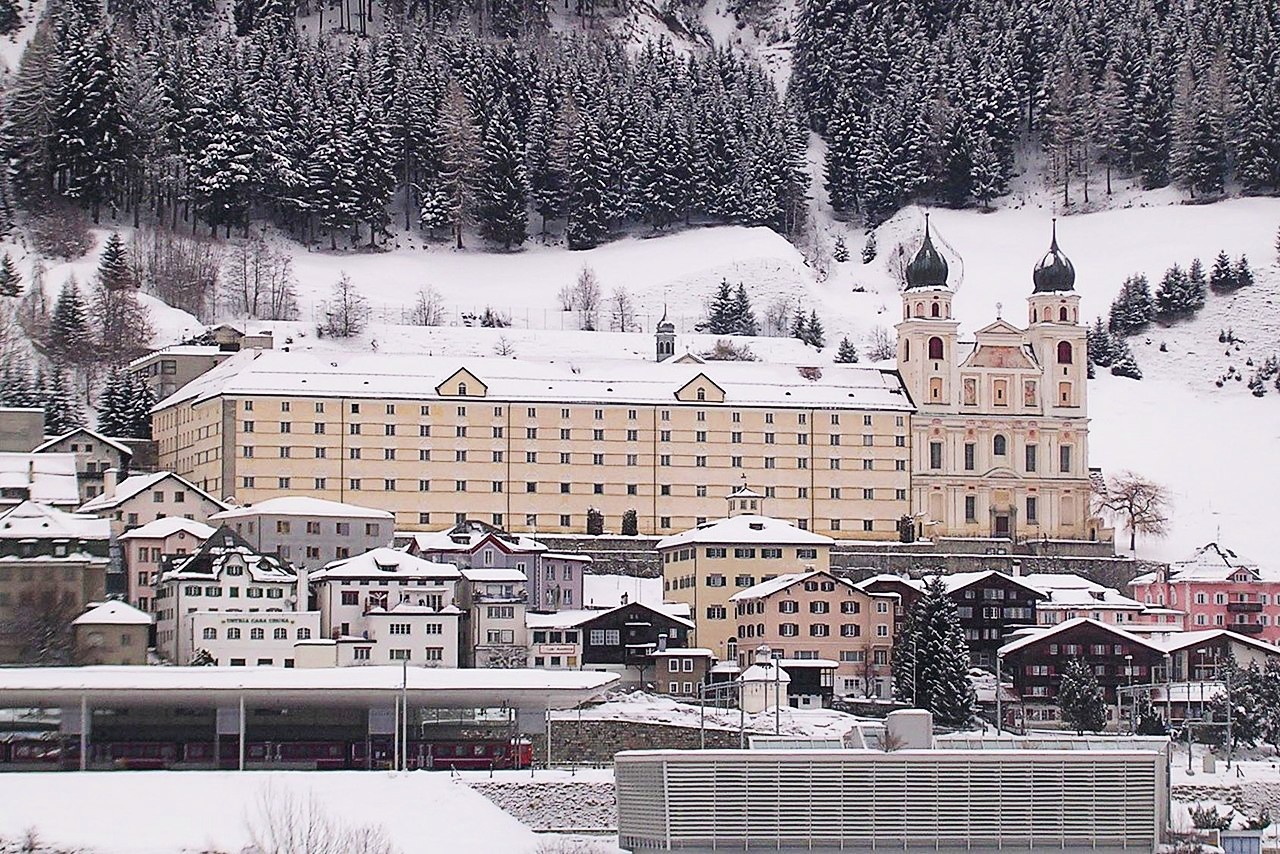
Einsiedeln Abbey

After Ordination to the Priesthood, he served as a Canon at Strasbourg in France. In 906, he retired to the former hermitage of St Meinrad, on Mount Etzel near Lake Zurich in Switzerland. There Benno rebuilt Meinrad’s Chapel, restored the miraculous Statue of Our Lady of Einsiedeln to a place of honour and soon attracted a group of disciples.

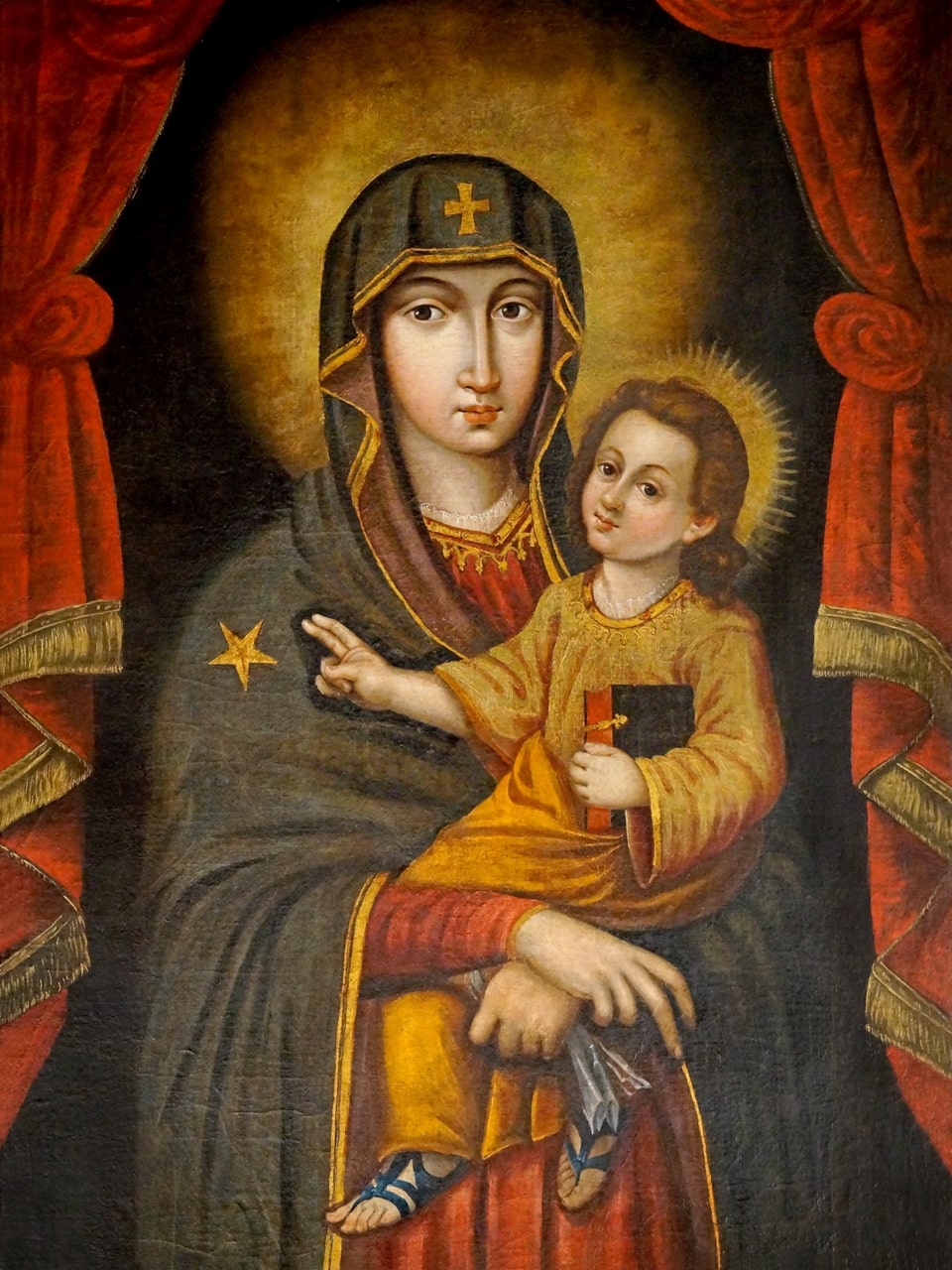
May be St Benno before Our Lady of Einsiedeln – also known as the Black Madonna of Einsiedeln

In 927, Benno was named Bishop of Metz in France, by King Henry I of Germany, in opposition to the locally elected candidate. Bishop Benno was attacked and blinded by the disgruntled opposition of his Diocese and in 929 he resigned his office and returned to his hermitage at Einsiedeln. He was joined by his kinsman St Eberhard in 934 and the Benedictine Monastery was soon established.

Hillside pastures near the Monastery
Fathers of Einsiedeln – Detail from the Icon in the Russian-Orthodox Church of Christ’s Resurrection in Zurich.

Benno lived his remaining years as a Monk in peace at the Monastery until his death on 3 August in the year 940, his Feast day. Benno’s Relics are kept at Einsiedeln Abbey.

Metz Cathedral – equally famous for its Art and Architecture
Posted in MARIAN TITLES, SAINT of the DAY

The Finding of the Relics of St Stephen, Protomartyr, Maria Santissima Scala del Paradiso / Holy Mary, Ladder to Paradise, Italy (1498) and Memorials of the Saints – 3 August

St Abibas

St Benno of Einsiedeln (Died 940) Bishop

St Dalmatius
St Euphronius of Autun
St Gamaliel
St Gaudentia
Bl Godfrey of Le Mans
Bl Gregory of Nonantula
St Hermellus
St Nicodemus
St Senach of Clonard (Died 6th Century) One of the Twelve Apostles of Ireland
St Trea of Ardtree

Posted in DOCTORS of the Church, MARIAN TITLES, REDEMPTORISTS CSSR, SAINT of the DAY

Santa Maria degli Angelis / Our Lady of Angels, Assisi (13th Century), St Alphonsus Maria de Liguori, St Stephen I (Died 257) Pope, Martyr and the Saints for 2 August

“The Month of the Immaculate Heart of Mary”

St Auspicius of Apt
St Betharius of Chartres
St Centolla of Burgos
St Etheldritha of of Croyland
Bl Frederic Campisani
Bl Gundekar of Eichstätt
Bl Joanna of Aza
Bl John of Rieti
St Maximus of Padua
St Pedro de Osma
St Plegmund
St Rutilius

St Sidwell

Posted in SAINT of the DAY, Spinsters - Single LAYWOMEN

Saint of the Day – 21 July – St Praxedes (Died c165) Virgin

Saint of the Day – 21 July – St Praxedes (Died c165) Virgin Laywoman
Born and died in Rome, (whose name means ‘one who does well’), Patronage – single laywoman. Also known as – Prassede, Praxedes, Praxidis.

The Roman Martyrology reads: “At Rome, the holy virgin, Praxedes, who was brought up in all chastity and in the knowledge of the Divine law. Assiduously attending to watching, prayer and fasting, she rest in Christ and was buried near her sister St Pudentiana and family, on the Salarian Road.

St Praxedes by Simone Pignoni (1611–1698)

Praxedes was the daughter of St Pudens, a Roman Senator who was a disciple of St Paul and sister to Saint Pudentiana. In the days of Pope Pius I and the Emperor Antoninus, Praxedes edified the Church of Rome by the bright lustre of her virtues.

All her great wealth and riches she employed in relieving the poor and the necessities of the Church. By the comfort and succours which she afforded the Martyrs, she endeavoured to make herself partaker of their crowns and she lived in the assiduous exercise of prayer, watching and fasting.

Paolo Rossetti and Federico Zuccari
Saints Praxedes and Pudentiana Burying the Martyrs
Late 16th or early 17th Century Oil
Caetani Chapel – Basilica of St Pudentiana, Rome

Praxedes died in peace and was buried near her sister on the Salarian Road. St Bede and other Hagiographers on the lives of the Saints, style her as a Virgin. An old title of St Praxedes of a Parish Church, now a Basilica, in Rome bearing her name is mentioned in the life of Pope Symmachus. It was repaired by Pope Adrian I and Paschal I and lastly by Saint Charles Borromeo, who took from it his title of Cardinal.

The Basilica includes splendid Mosaics behind the simple and very Roman facade. However, the very simple exterior is augmented by an interior which is extraordinary – in particular for its mosaics, commissioned by Pope Paschal (817-824) as well as a beautiful ciborium magnum. (Pope Paschal himself maybe found in the mosaics, bearing a square halo — a sign given to someone who was yet living.)

The ancient Christians [and so it should be for ourselves too], lived only for Heaven and in every step looked up to God, regardless of all lower pursuits or meaner advantages which could interfere with their great design of knowing and loving Him alone. This constant attention to God awed them in their leisure; this gave life and wings to their devotions and animated them to fervour in all their actions; this carried them through the greatest difficulties and temptations and supported them under all troubles and afflictions. (Essentially from Lives of the Saints, by Father Alban Butler (1710–1773) English Priest and Hagiographer.)

Posted in MARIAN TITLES, SAINT of the DAY

Notre-Dame-de-Verdun / Our Lady of Verdun, France (5th Century), St Daniel the Prophet and the Saints for 21 July

Notre-Dame-de-Verdun / Our Lady of Verdun, Lorraine , France (5th Century) – 21 July:
HERE:

https://anastpaul.com/2021/07/21/notre-dame-de-verdun-our-lady-of-verdun-lorraine-france-5th-century-and-memorials-of-the-saints-21-july/

St Daniel the Prophet (Died 5th-century BC) One of the four Great Prophets in the Old Testament and the Writer of the book of Sacred Scripture which bears his name.
St Daniel!

https://anastpaul.com/2022/07/21/saint-of-the-day-21-july-st-daniel-the-prophet-died-5th-century-bc/

Blessed Angelina of Marsciano TOR (1357-1435) – Abbess, Foundress of the Franciscan Sisters of Blessed Angelina who work with the poor and the sic
Her Lifestory:

https://anastpaul.com/2020/07/21/saint-of-the-day-21-july-blessed-angelina-of-marsciano-tor-1357-1435/

St Arbogast of Strasbourg (Died c 678) Confessor, Bishop of Strasbour, Missionary, Monk, Hermit, Miracle-worker.
Biography:

https://anastpaul.com/2021/07/21/saint-of-the-day-21-july-saint-arbogast-of-strasbourg-died-678/

St Barhadbescialas
St Benignus of Moyenmoutier
Bl Claudius of Avignon
St Claudius of Troyes
St Corona of Marceille
Bl Cristóbal López de Valladolid Orea
Bl Daniel Molini
St Eleutherius of Marseille
St Eternus of Evreaux
Bl Gabriel Pergaud
St Iosephus Wang Yumei
St John of Edessa
St John of Moyenmoutier
Bl Juan de Las Varillas
Bl Juan de Zambrana
St Jucundinus of Troyes
St Julia of Troyes
St Justus of Troyes
Bl Parthenius of Thessaly
St Praxedes (Died c165) Virgin Laywoman

St Simeon Salus

St Victor (of Marseilles) (3rd century) Martyr, Confessor, Roman soldier.
His Life and Death:

https://anastpaul.com/2019/07/21/saint-of-the-day-21-july-st-victor-3rd-century-martyr/

St Wastrada
St Zoticus of Comana

Martyrs of Africa – 6 Saints: Six Christians who were Martyred together. We know no other details about them but the names – Emilian, Hugal, Motanus, Saphus, Stercorius and Victor. They were martyred in an unknown location in Africa, date unknown.

Posted in ARTISTS, PAINTERS, GOLDSMITHS, SILVERSMITHS, GILDERS, MINERS, JEWELLERS, CLOCK/WATCH-MAKERS, METAL CRAFTSMEN, Of BUILDERS, CONSTRUCTION WORKERS, SAINT of the DAY

Saint of the Day – 20 July – St Bernward of Hildesheim (c960-1022) Bishop.

Saint of the Day – 20 July – St Bernward of Hildesheim (c960-1022) Bishop. Bernward was the thirteenth Bishop of Hildesheim from 993 until his death in 1022. He was an exceptionally gifted and talented Creative Artist and Craftsman, in particular, in the creation of Sacred Vessels and adornments of Holy items, in precious metals. Born – c960 at Saxony and died on 20 November 1022 of natural causes. Patronages – Architects, Builders, Goldsmiths, Sculptors, Craftsmen, Painters, Artists. . Also known as – Berward, Bernward. Canonised in 1193 by Pope Celestine III.

Bernward came from a noble German family. His grandfather was Athelbero, Count Palatine of Saxony (in the coastal region of today’s north Germany). Having lost his parents at an early age, he came under the care of his uncle,Volkmar, Bishop of Utrecht, who entrusted his education to Thangmar, learned director of the Cathedral school at Heidelberg.

Under this master, Bernward made rapid progress in the sciences and in the liberal and even mechanical arts. He became very proficient in mathematics, painting, architecture and particularly. in the manufacture of Sacred Ecclesiastical Vessels and ornaments of silver and gold. He completed his studies at Mainz, where he was Ordained to the Priesthood by Archbishop Willigis, Chancellor of the Empire (975-1011).

Bernward declined a valuable preferment in the Diocese of his uncle, Bishop Volkmar and chose to remain with his grandfather, Athelbero, to comfort him in his old age. Upon the death of the latter, in 987, he became Chaplain at the Imperial Court and, in 987 shortly afterwards, appointed by the Empress-Regent Theophan, as the Tutor to her son, the future Emperor Otto III, then six years of age.

In 993, Bernward was appointed as the Bishop of Hildesheim. His time in office fell during the era of the Saxon Emperors, who had their roots in the area around Hildesheim and were personally related to Bernward. During this time, Hildesheim was a centre of power in the Holy Roman Empire and Bernward was determined to give his City an image fitting for one of its stature.

Bernward ecouraged the arts, commissioned religious paintings and sculpture, refurbished existing Ecclesiastical buildings, built new ones, he built up the Cathedral district with a strong twelve-towered wall and erected further forts in the countryside to protect against attacks by the neighbouring Slavic peoples. Under his direction numerous Churches and other edifices arose, including even fortifications for the defence of his Episcopal City against the invasions of the pagan Normans. He protected his Diocese vigorously from all attacks and consequently his administration was marked by peace. Around 1020, he retired to a Benedictine Monastary to spend his remaining days in prayer.

His life was set down in writing by his mentor, Thangmar, in Vita Bernwardi. He died on 20 November 1022, a few weeks after the Consecration of the magnificent Church of St Michael, which he had built. Beloved Bishop Bernward was Canonized by Pope Celestine III on 8 January 1193.

One of the most famous examples of Bernward’s work ,is a monumental set of cast bronze doors, known as the Bernward Doors, now installed at St. Mary’s Cathedral. The Doors are sculpted with scenes of the Fall of Man and the Salvation of Man – Life of Christ and which are related, in some ways to the wooden doors of Santa Sabina in Rome.

St Bernward’s Doors at St Mary’s Cathedral

Bernward was instrumental in the construction of the early Romanesque St Michael’s Church was completed after Bernward’s death and he is buried in the western crypt. These projects of Bernward’s are today UNESCO World Heritage Sites.

St Michael’s Church has exerted great influence on developments in Architecture. The complex bears exceptional testimony to a civilization that has disappeared. These two edifices and their artistic treasures, give a better overall and more immediate understanding, than any other decoration in Romanesque Churches.
St Michael’s Church was built between 1010 and 1020 on a symmetrical plan with two apses that was characteristic of Ottonian Romanesque art in Old Saxony. Its interior, in particular the wooden ceiling and painted stucco-work, its famous bronze doors and the Bernward bronze column, are – together with the treasures of St Mary’s Cathedral – of exceptional interest as examples of the Romanesque Churches of the Holy Roman Empire.

St Mary’s Cathedral, rebuilt after the fire of 1046, still retains its original Crypt. The nave arrangement, with the familiar alternation of two consecutive columns for every pillar, was modelled after that of St Michael’s but its proportions are more slender.

St Bernward’s Church in Hildesheim, a Neo-Romanesque Church built 1905-07 and St Bernward’s Chapel in Klein Düngen which dates from the 13th Century nad St Bernward’s in Hanover and all dedicated to our Saint.

Posted in MARIAN TITLES, SAINT of the DAY

Nuestra Señora de Zocueca / Our Lady of Zocueca, Spain (1808), St Jerome Emiliani and the Saints of 20 July

Nuestra Señora de Zocueca / Our Lady of Zocueca, Bailén, Jaén, Andalucía, Spain (1808) – 20 July:
HERE:

https://anastpaul.com/2021/07/20/nuestra-senora-de-zocueca-our-lady-of-zocueca-bailen-jaen-andalucia-spain-1808-and-memorials-of-the-saints-20-july/

St Jerome Emiliani (1486–1537) Confessor, Layman, Founder of the Somascan Fathers, Apostle of the poor, orphans, the sick, Catechist, Apostle of prayer. He was Beatified in 1747 by Pope Benedict XIV and Canonised in 1767 by Pope Clement XIII
About St Jerome:

https://anastpaul.com/2019/02/08/saint-of-the-day-8-february-st-jerome-emiliani-crs-1486-1537/
AND:
https://anastpaul.com/2022/07/20/saint-of-the-day-20-july-st-jerome-emiliani-1486-1537-confessor/

St Margaret of Antioch (3rd century) Virgin Martyr. Margaret is one of the Fourteen Holy Helpers and is one of the Saints who spoke to St Joan of Arc.
St Margaret’s Story:

https://anastpaul.com/2019/07/20/saint-of-the-day-20-july-st-margaret-of-antioch-3rd-century-martyr/

Bl Anne Cartier
St Ansegisus
St Aurelius of Carthage
St Bernward of Hildesheim (c960-1022) Bishop
St Cassian of Saint Saba
St Elijah the Prophet

St Elswith
St Frumentius of Ethiopia

Blessed Gregory Lopez (1542-1596) “The Mystery Man” – Hermit, Spiritual Advisor, Writer. Around 1585, word of a “Mystery Man” began to leak into Mexico City, a strange hermit who lived out in the lonely valley of Guesteca, who walked miles to go to Mass, lived totally subject to “Lady Poverty” and had travelled from the Shrine of Our Lady of Guadalupe in Spain (which dates from 712), to her Shrine in Mexico (which dates from 1531).
Biography:

https://anastpaul.com/2018/07/20/saint-of-the-day-20-july-blessed-gregory-lopez-1542-1596/

St Joseph Barsabbas the Just (1st Century) Disciple of Jesus, Bishop, Martyr. The Roman Martyrology states today: “The birthday of the blessed Joseph, surnamed the Just, whom the Apostles selected with the blessed Matthias, for the Apostleshop in the place of the traitor, Judas. The lot having fallen upon Matthias, Joseph, notwithstanding, continued to preach and advance in virtue and after having sustained from the Jews, many persecutions for the Faith of Christ, happoily ended his life in Judea.”
His Life and Death:

https://anastpaul.com/2021/07/20/saint-of-the-day-20-july-saint-joseph-barsabbas-the-just-1st-century-disciple-of-jesus/

St Mère
St Paul of Saint Zoilus
St Rorice of Limoges
St Severa of Oehren
St Severa of Saint Gemma
St Wulmar

Martyrs of Corinth – 22 Saints: 22 Christians who were Martyred together. We know nothing else about them but the names – • Appia • Calorus • Cassius • Celsus • Cyriacus • Donatus • Emilis • Felix • Fructus • Magnus • Maximus • Nestita • Partinus • Pasterus • Paul • Romanus • Spretus • Tertius • Theodolus • Ueratia • Valerian • Victor. They were martyred in Corinth, Greece.

Martyrs of Damascus – 16 Saints: 16 Christians who were Martyred together. We know the names of six of then, but no details about any of them – Cassia, Julian, Macrobius, Maximus, Paul and Sabinus. They were martyred in Damascus, Syria, date unknown.

Posted in SAINT of the DAY, St PAUL!

Saint of the Day – 19 July – St Epaphras of Colossae (1st Century) Bishop, Martyr

Saint of the Day – 19 July – St Epaphras of Colossae (1st Century) Bishop, Martyr, pagan Convert and Disciple of St Paul. Also known as – Epafra, Epagaphras.

The Roman Martyrology reads today: “The birthday of St Epaphras, whom the Apostle St Paul calls his fellow-prisoner. By the same Apostles, he was Consecrated Bishop of Colossae, where, becoming renowned for his virtues, he received the Palm of Martyrdom, for courageously defending the flock commited to his charges. His body now lies at the Basilica of St Mary Major in Rome.

St Epaphras Statue at St Mary Major in Rome

In St Paul’s letters to the Colossians and the letter to Philemon, he conveyed greetings from Epaphras:

Epaphras saluteth you, who is one of you, a servant of Christ Jesus, who is always solicitous for you in prayers, that you may stand perfect, and full in all the will of God.
For I bear his testimony that he hath laboured much for you,and for those who are at Laodicea, and those at Hierapolis.

Colossians 4:12–13

Originally from Colossae (in modern Turkey) and a pagan. Epaphras was converted by St Paul during the three years of apostolate in Ephesus. He is the founder and head of the Church of Colossae. The Apostle praises it twice: in Colossians 1:7 – the Colossians were evangelised by Epaphras “our beloved companion in the ministry, faithful minister of Christ, all devoted to your good.

Finally, in the Epistle to Philemon, St Paul calls him “my fellow prisoner in Christ Jesus.” Epaphras, in fact, was in Rome with him, having come there from Colossae to visit and comfort him, with the assurance of the warm affection of all his faithful flock and disciples.

In the fervour of his apostolic zeal, Epaphras also made present to St Paul that heresy was trying to penetrate those Churches and to preserve them from danger, he had the Apostle write to them.

According to some critics, since the name Epaphras is a contraction of Epaphroditus, our Epaphras and the Epaphroditus mentioned by St Paul in the Epistle to the Philippians (3:25-28; 4:18) would be one and the same person. This identification, which rests only on the possible identity of the name, has nothing else on which to base itself and we agree to exclude it.

The tradition formed on this holy disciple of St Paul, was collected by Adonis: “On the birthday of the blessed Epaphras, who was Ordained Bishop of Colossae by the blessed Paul, famous for his virtues, received the Palm of Martyrdom for the sheep commended to him by a courageous struggle. He was buried in the same City but later his body was moved to St Mary Major in Rome.

Posted in MARIAN TITLES, SAINT of the DAY

Nuestra Señora del Milagro / Our Lady of the Miracle, Lima, Peru (1630), St Vincent de Paul and all the Saints for 19 July

Nuestra Señora del Milagro / Our Lady of the Miracle, Lima, Peru (1630) – 19 July and 27 November:
HERE:

https://anastpaul.com/2021/07/19/nuestra-senora-del-milagro-our-lady-of-the-miracle-lima-peru-1630-and-memorials-of-the-saints-19-july/

St Vincent de Paul CM (1581-1660) Confessor, known as the “Holy Hero of Divine Charity.” and “Great Apostle of Trumpets” – Priest, Founder, Apostle of Charity, Doctor of Canon Law, Reformer of Society and Priests, founder of Hospital and Orphanages. St Vincent was Beatified on 13 August 1729 by Pope Benedict XIII and Canonised on 16 June 1737 by Pope Clement XII. His Body was incorrupt until it was damaged by underwater floods. His bones have been encased in a waxen figure which is displayed in a glass Reliquary in the Chapel of the headquarters of the Vincentian fathers in Paris,
Biography:

https://anastpaul.com/2017/09/27/saint-of-the-day-27-september-st-vincent-c-m-1581-1660/
AND:
https://anastpaul.com/2022/07/19/saint-of-the-day-19-july-st-vincent-de-paul-1581-1660-holy-hero-of-divine-charity/

St Ambrose Autpertus
Bl Antonio of Valladolid
St Aurea of Cordoba

St Arsenius the Great (c 354-c 449) Deacon, Hermit, Desert Father, Theologian, writer. Arsenius one of the most highly regarded of the Desert Fathers, whose teachings were greatly influential on the development of asceticism and the contemplative life. His contemporaries so admired him as to surname him “the Great”.
His Lifestory:
https://anastpaul.com/2021/07/19/saint-of-the-day-19-july-saint-arsenius-the-great-c-354-c-449/

Bl Bernhard of Rodez
St Daria of Constantinople
St Epaphras of Colosse (1st Century) Bishop, Martyr, Disciple of St Paul
St Felix of Verona

St John Plessington (c 1637-1679) Martyr, Priest. Also celebrated on 25 October as one of the Forty Martyrs of England and Wales.
About St John Plessington:

https://anastpaul.wordpress.com/2017/07/19/saint-of-the-day-19-july-st-john-plessington/

St Macrina the Younger (c 327-379) Virgin, Ascetic. With charm and grace, St Macrina ruled the roost in a family of saints. St Basil the Elder and St Emmelia, her parents, had ten children including the younger St Basil the Great (329-379) Father and Doctor of the Church, St Gregory of Nyssa (c 335–C 395) Father of the Church and St Peter of Sebaste Bishop (c 340–391). As the eldest child, Macrina exercised a formative influence on her more famous brothers and even on her mother.
Her Life:

https://anastpaul.com/2019/07/19/saint-of-the-day-19-july-saint-macrina-the-younger-c-327-379/

St Martin of Trier
St Michael the Sabaitè
Bl Pascasio of Lyon

St Peter Crisci of Foligno TOSF (c 1243-1323) called a “Fool for Christ” – Franciscan Tertiary, Penitent, Hermit, Pilgrim, Beggar, Preacher.
His Life:

https://anastpaul.com/2020/07/19/saint-of-the-day-19-july-st-peter-crisci-of-foligno-tosf-c-1243-1323/

St Romain of Ryazan
St Pope Symachus (Died 514) Bishop of Rome from 22 November 498 until his death.
St Vicente Cecilia Gallardo

Martyrs of Meros – 3 Saints: Three Christians tortured and Martyred together in the persecutions of emperor Julian the Apostate and governor Almachio. We know nothing else about them but the names – Macedoniuis, Tatian and Theodule.
They were burned to death on an iron grill in Meros, Phrygia (in modern Turkey).

Martyrs of China: 3 Beati: Beatified on 17 April 1955 by Pope Pius XII.
Elisabeth Qin Bianshi Elisabeth
Ioannes Baptista Zhu Wurui
Simon Qin Chunfu

Posted in CONFESSION/PENANCE, QUOTES on FEAR, QUOTES on SIN, QUOTES on THE WORLD, SAINT of the DAY

Quote/s of the Day – 18 July – St Camillus de Lellis

Quote/s of the Day – 18 July – “The Month of the Most Precious Blood of Jesus” – St Camillus de Lellis MI (1550-1614) “The Giant of Charity,” Confessor, Priest and Founder the Order of the Ministers of the Sick, or simply as the “Camillians”

Why are you afraid?
Do you not realise
that this is not your work
but mine?

Christ on the Cross speaking to Saint Camillus

Lord, forgive this great sinner.
Give me time to do penance.
No more world, no more sins!

MORE:
https://anastpaul.com/2022/07/18/quote-s-of-the-day-18-july-st-camillus/

St Camillus de Lellis MI (1550-1614