Saint Mercurius the Soldier, also known as Abu-Sayfain, Abu-Sifin or Abu-Sefein, was a martyr and the one who slew Julian the Apostate. Born in 224 in Cappadocia, he was of Scythian (Indo-Persian) descent and the son of an officer in the imperial Roman army. Abu-Sefein means “wielder of two swords”, referring to the second sword given to him by the Archangel Michael.
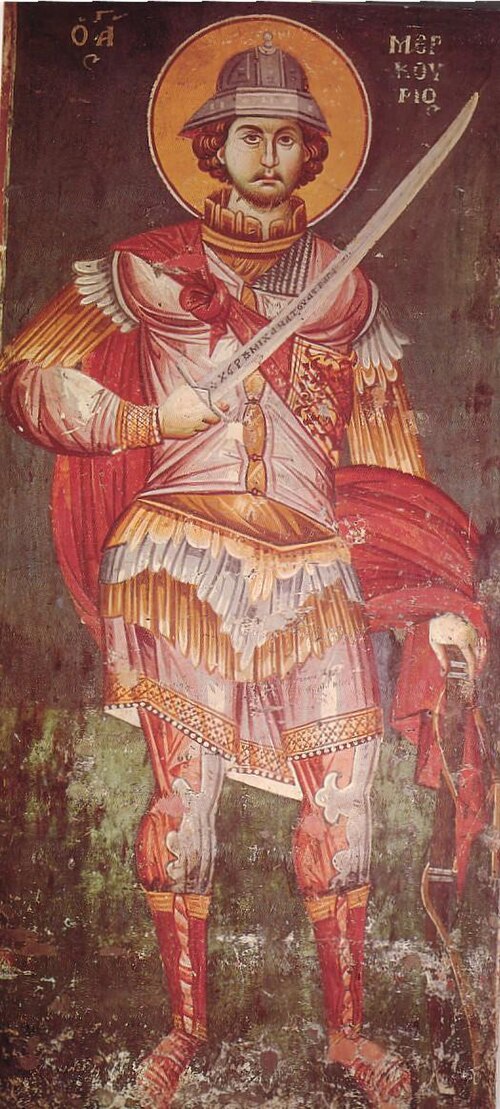
His parents were converts to Christianity and they called him “Philopateer” or “Philopatyr” (‘Lover of the Father’). They raised him in a Christian manner. At the age of 17 he enlisted in the Roman army during the reign of Emperor Decius. He gained a great reputation among his superiors as a swordsman and a tactician.
After the death of Mercurius’ father, Decius chose him to replace his father. When barbarians attacked Rome, Decius went out to fight them but became afraid when he saw how many there were. Mercurius then came to him and said, “Do not be afraid, because God will kill our enemies and will bring us victory.”
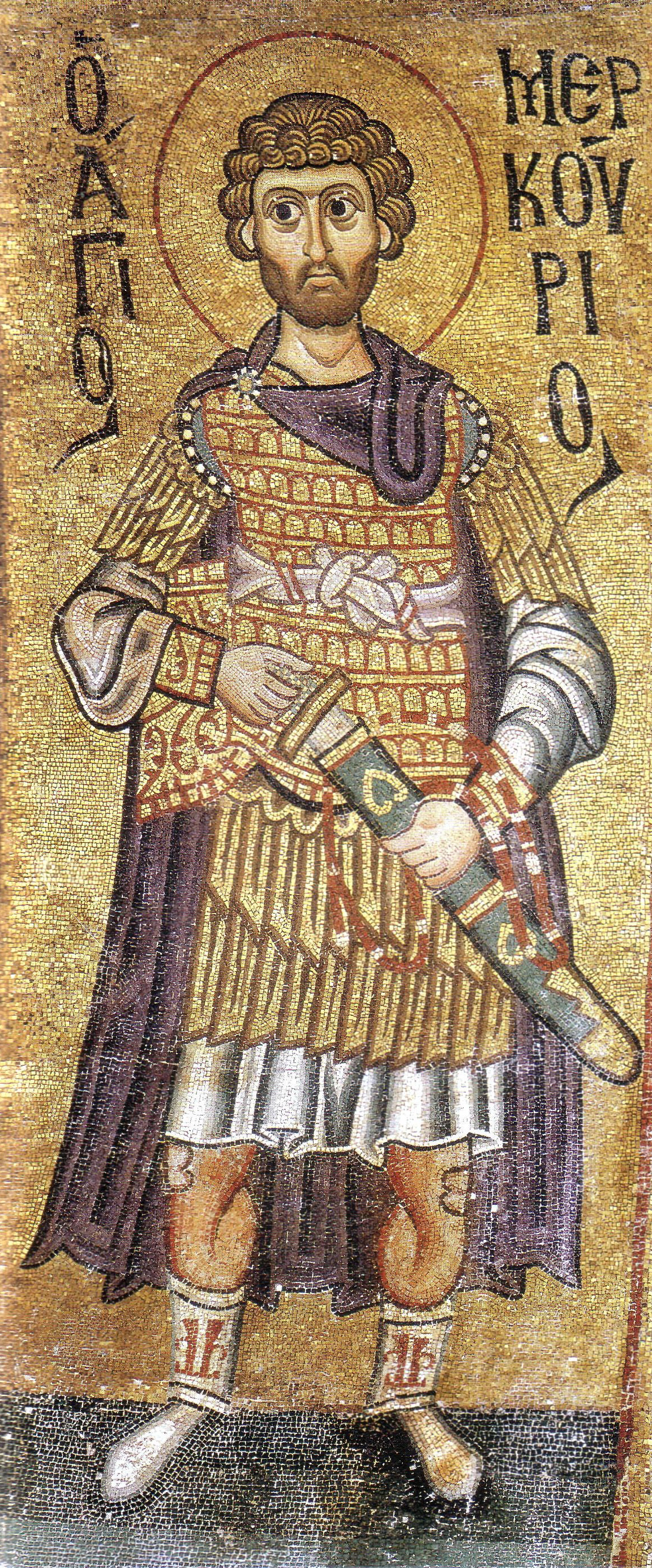
After several days of fighting, the Archangel Michael appeared to Mercurius holding a shining sword. With this he conquered the barbarians. When Decius heard news of the triumphant victory, he named Mercurius a prince.
In 249 AD, Decius began his persecution of Christians, compelling everyone to offer sacrifices to his pagan gods. The Archangel Michael appeared to Mercurius and told him to remember God and not be fearful of persecution. Mercurius was encouraged and spent the whole night praying fervently, confessing his weakness to God. The emperor sent messengers to summon him to the palace, saying: “Dear Mercurius, let us go offer incense to the gods who helped us attain victory in the war.” As they were leaving, Mercurius slipped through the crowd and went away. However, one of the guards reported his absence, and the emperor called Mercurius and asked him: “Is it true that you refused to worship the idols who helped us during the war?” Mercurius declared himself a Christian, saying, “I do not worship anyone except my Lord and my God, Jesus Christ.”
The emperor tried to persuade him to give up his faith but failed. He then ordered Mercurius to be stripped of his rank and tortured. Fearing a revolt because the people loved Mercurius, the emperor had him bound in iron fetters and sent him to Caesarea. Mercurius was beheaded on 4 December 250 AD. He was 25 years old.
After the end of the first persecution, the place of Mercurius’s burial was revealed. Mercurius appeared to a poor man in the city and told him that he was “Mercurius, the Martyr of the Lord” and that “my body is buried in Cappadocia Gardens, under the old house on the way to the royal palace. My body looks as white as snow, because Jesus was present at the time of my martyrdom.”
The next morning, the man went to dig under the old house. He began to smell the scent of perfume, seeing the body of Mercurius. The news spread quickly and many people came to take a look at the blessed body. They moved it temporarily to the local church until they built a new church bearing his name where Mercurius’ body was buried with respect and devotion.

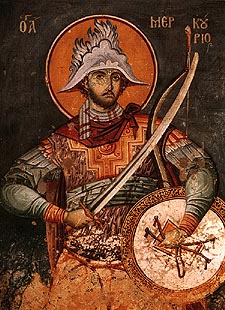
Saint Basil once prayed before an icon on which Mercurius was portrayed as a soldier carrying a spear. He asked God not to permit the emperor Julian the Apostate to return from his war against the Persians and resume his oppression of Christians. The image of the holy Mercurius depicted on the icon became invisible, only to reappear later with a bloodied spear. Julian the Apostate, on his Persian campaign, was mortally wounded by the spear of an unknown Persian soldier. He also appeared and fought with the Christian forces in the First Crusade.



You must be logged in to post a comment.