Our Morning Offering – 24 June – “The Month of the Sacred Heart of Jesus” – Pentecost V
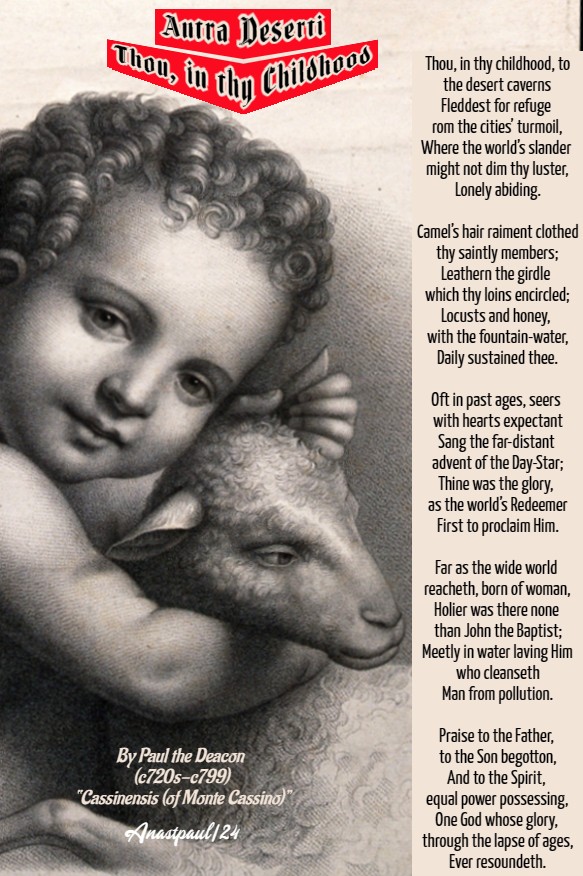
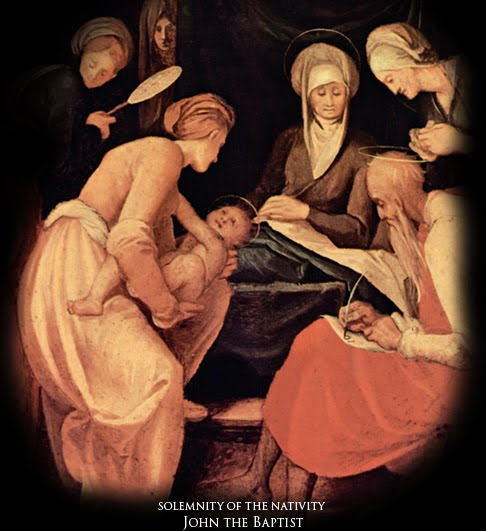
Antra Deserti Thou, in thy Childhood By Paul the Deacon (c720s-c799) “Cassinensis (of Monte Cassino)” Monk, Spiritual Author, Historian, Poet
Thou, in thy childhood, to the desert caverns Fleddest for refuge from the cities’ turmoil, Where the world’s slander might not dim thy luster, Lonely abiding.
Camel’s hair raiment clothed thy saintly members; Leathern the girdle which thy loins encircled; Locusts and honey, with the fountain-water, Daily sustained thee.
Oft in past ages, seers with hearts expectant Sang the far-distant advent of the Day-Star; Thine was the glory, as the world’s Redeemer First to proclaim Him.
Far as the wide world reacheth, born of woman, Holier was there none than John the Baptist; Meetly in water laving Him who cleanseth Man from pollution.
Praise to the Father, to the Son begotton, And to the Spirit, equal power possessing, One God whose glory, through the lapse of ages, Ever resoundeth.
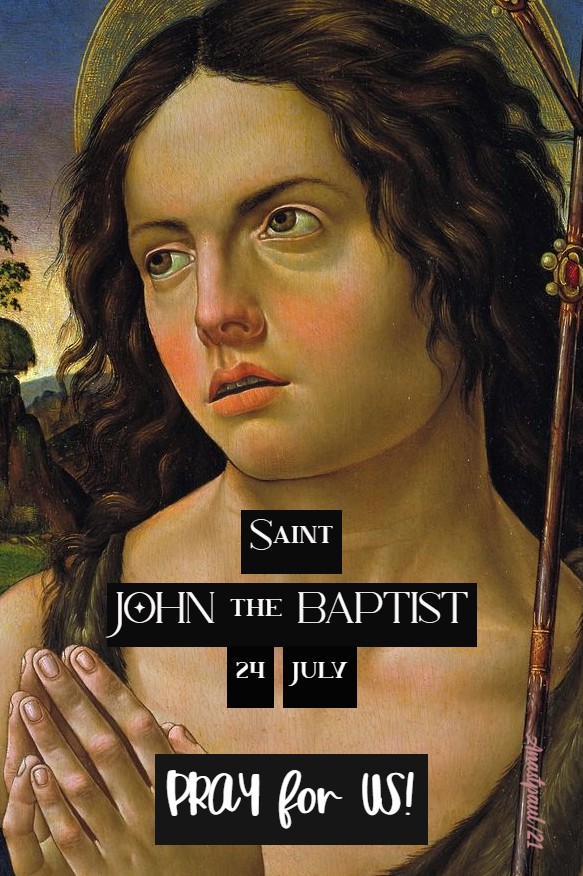
This Hymn, “Ut queant laxis resonare fibris”, is in three parts. The Breviary and Roman Missal list the above for Matins today, on the Feast of the Nativity of St John the Baptist.
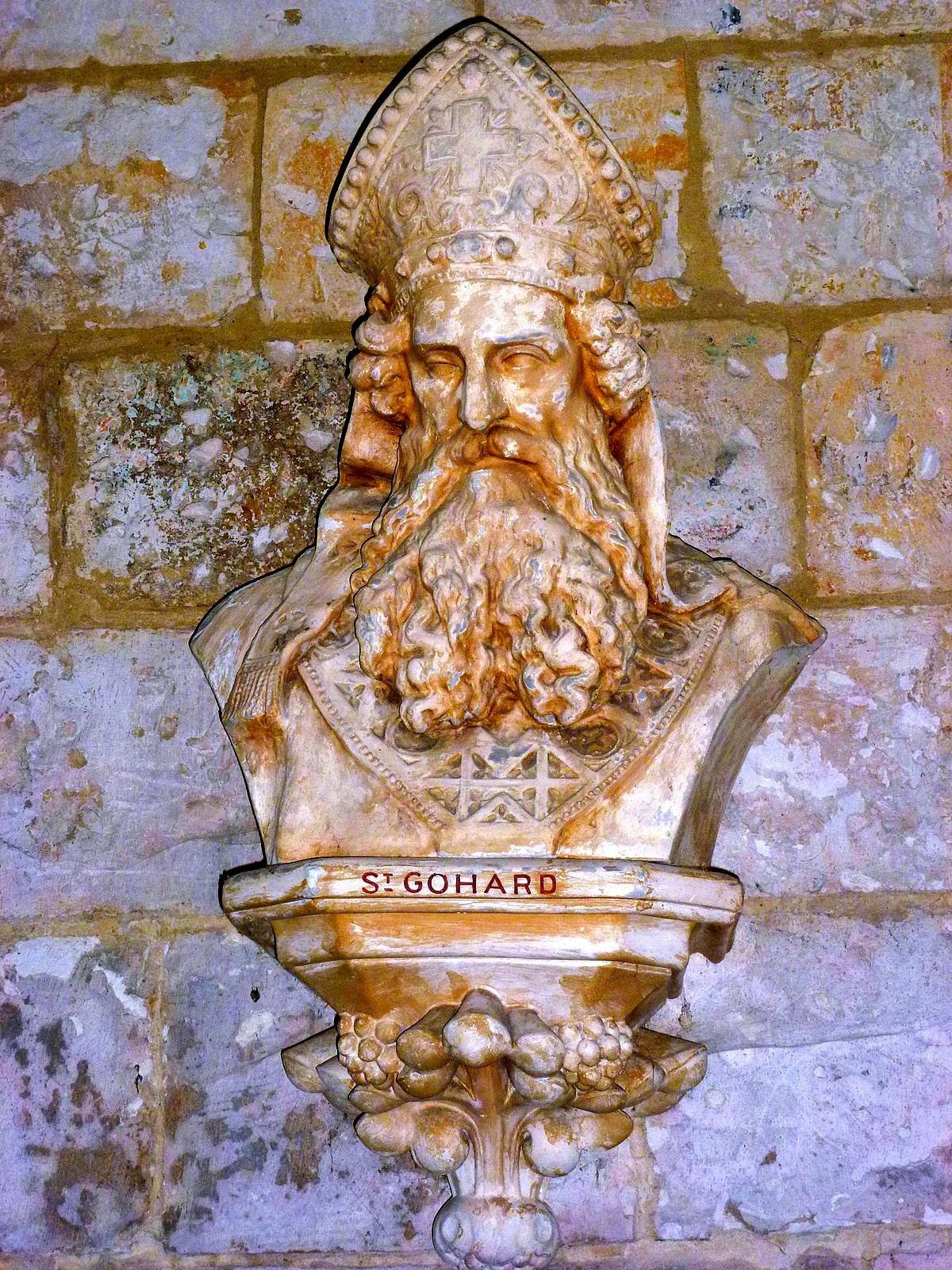
Saint of the Day – 24 June – Saint Gohardus of Nantes (Died 843) and his Companions, Bishop Martyr, a Cephalophore (from the Greek for “head-carrier”), Lord of Blain. Born in 8th Century Angers, Neustria (in modern France) died on 24 June 843 in the Cathedral of Saint Peter, Nantes, Marche de Bretagne. Also known as – Gohard, Gunardo, Gunhard, Gundhard, Gunthard, Godard, Gonhard, Guichard, Guihard, Wighard.
Gohardus was born in Blain in Angers. It was during his Episcopate, in 843 that the Battle of Blain took place, the first major battle between the Franks and the Britons. Damage caused by struggles between these two factions in the area was compounded by Viking raids.
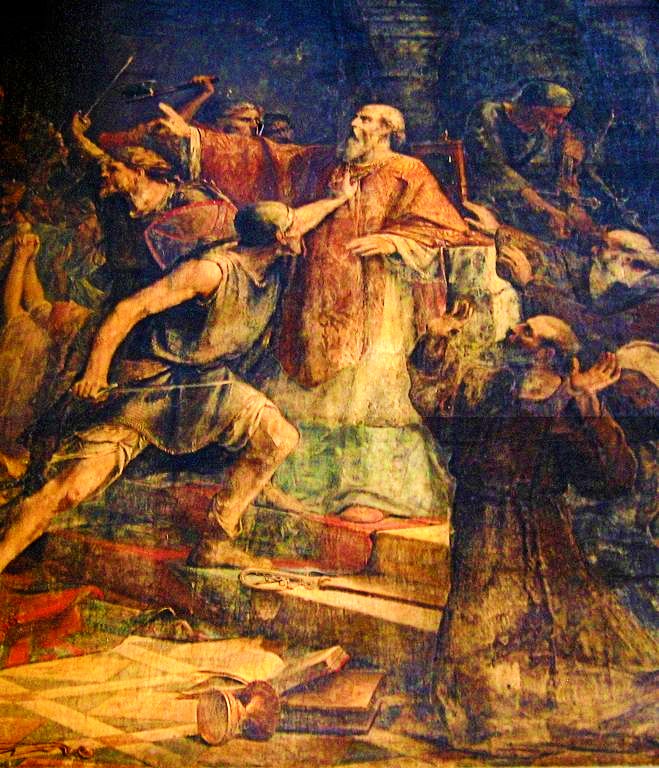
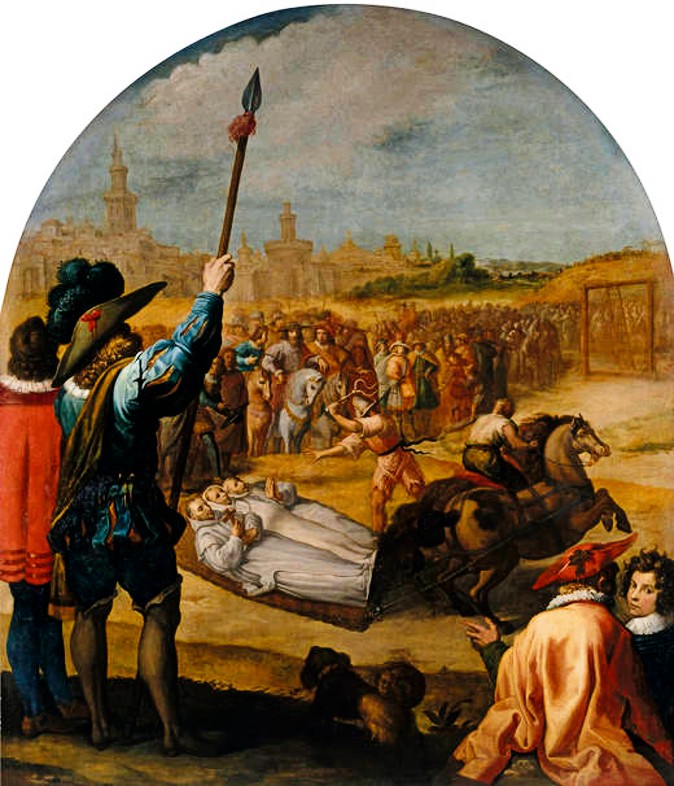
On the Feast day of St John the Baptist, a month after the defeat of Blain, the Vikings arrived at Nantes. Gohardus was celebrating Mass in Nantes Cathedral with a large community of Monks and Priests, when the Vikings attacked, killing the Bishop and his congregation.
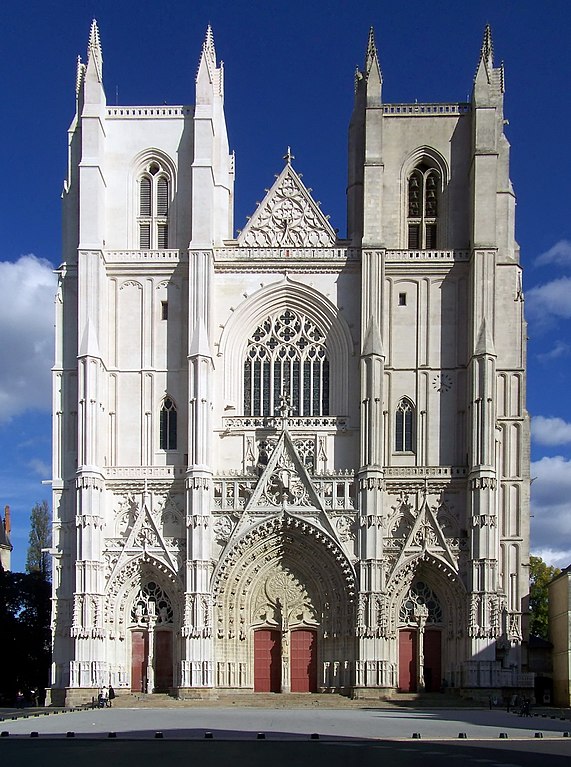
Nantes Cathedra
Legend says that Gohardus picked up his severed head and walked down to the Loire River, where a boat took him to Angers. His body was buried in St Peter’s Collegiate Church in Angers, the City where he was born.
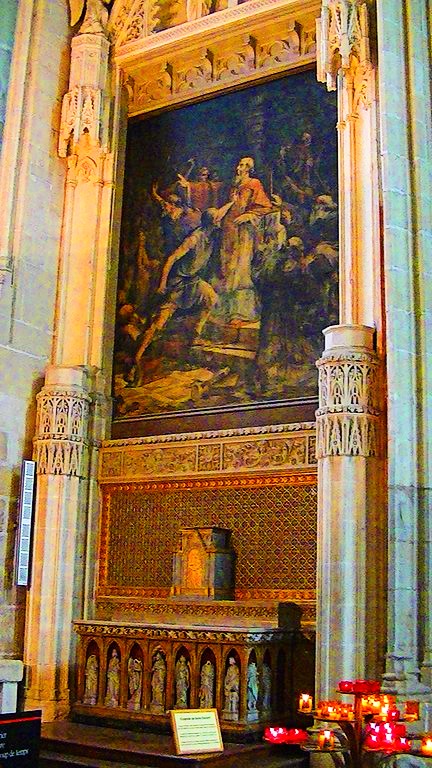
Gohardus was Canonised in 1096 by Pope Urban II. The Romanesque Crypt of Nantes Cathedral is dedicated to our Saint Gohardus and was redesigned shortly after his Canonisation to house his Relics brought from Angers. A side Chapel of the Cathedral is dedicated to enshrine his Relics.
His Feast Day is celebrated on 24 June.
St Gohardus Shrine and Relics in the Side Chapel at Nantes Cathedral dedicated to him
St Erembert I of Kremsmünster St Faustus of Rome and Companions St Festus of Rome St Germoc St Gohardus of Nantes (Died 843) Bishop Martyr St Henry of Auxerre/the Hagiographer St Ivan of Bohemia St John of Rome
St John of Tuy St Joseph Yuan Zaide St Rumold St Simplicio of Autun St Theodulphus of Lobbes
The First Martyrs of the Church of Rome: Countless numbers were Christians Martyred in the City of Rome during Nero’s persecution in 64. The event is recorded by both Tacitus and Pope Clement I, among others. They are celebrated today.
Martyrs of Satala: Seven Christian brothers who were soldiers in the imperial Roman army. They were expelled from the military, exiled and eventually martyred in the persecutions of Maximian. We know little more about them than their names – Cyriacus, Firminus, Firmus, Longinus, Pharnacius, Heros and Orentius. The martyrdoms occurred in c 311 at assorted locations around the Black Sea.
Quote/s of the Day – 23 June – “The Month of the Sacred Heart of Jesus” –The Fifth Sunday after Pentecost – 1 Peter 3:8-15; Matthew 5:20-24. – Scripture search here: https://www.drbo.org/
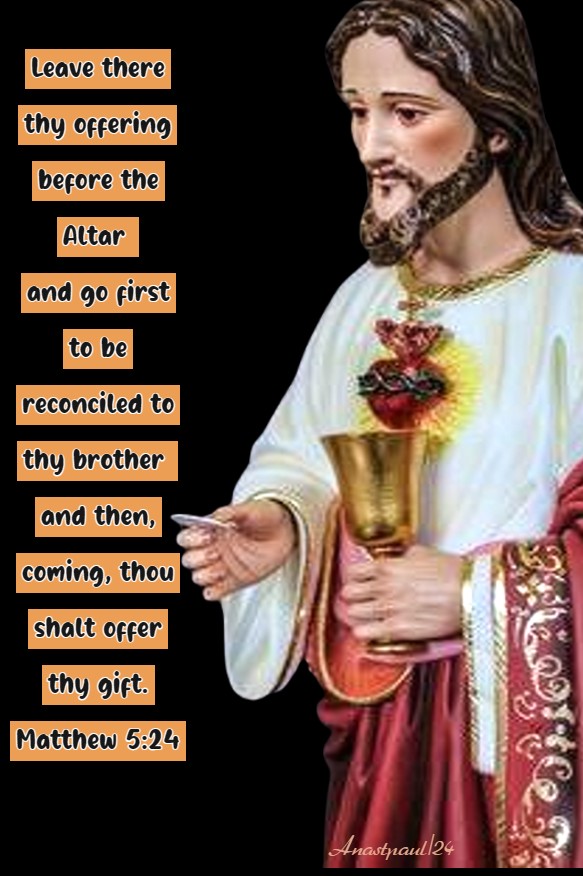
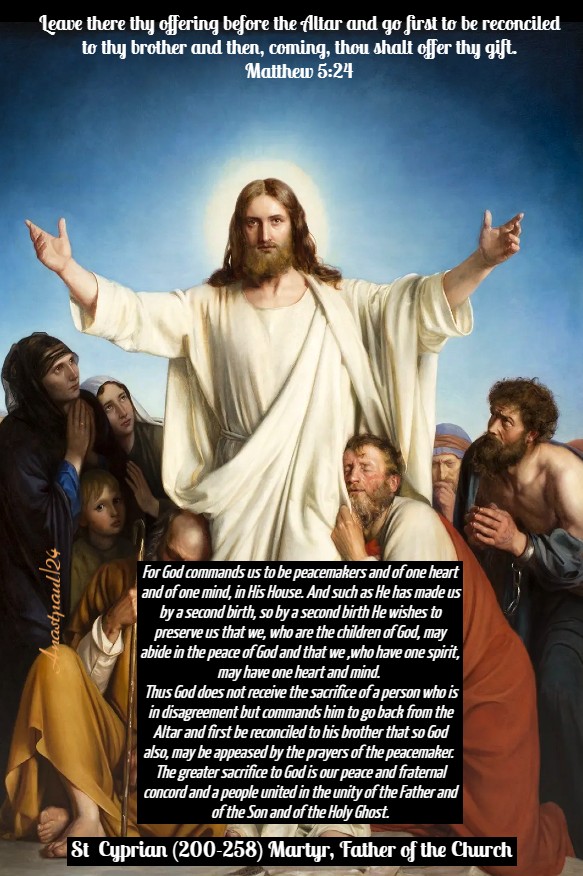
“Leave there thy offering before the Altar and go first to be reconciled to thy brother and then, coming, thou shalt offer thy gift.”
Matthew 5:24
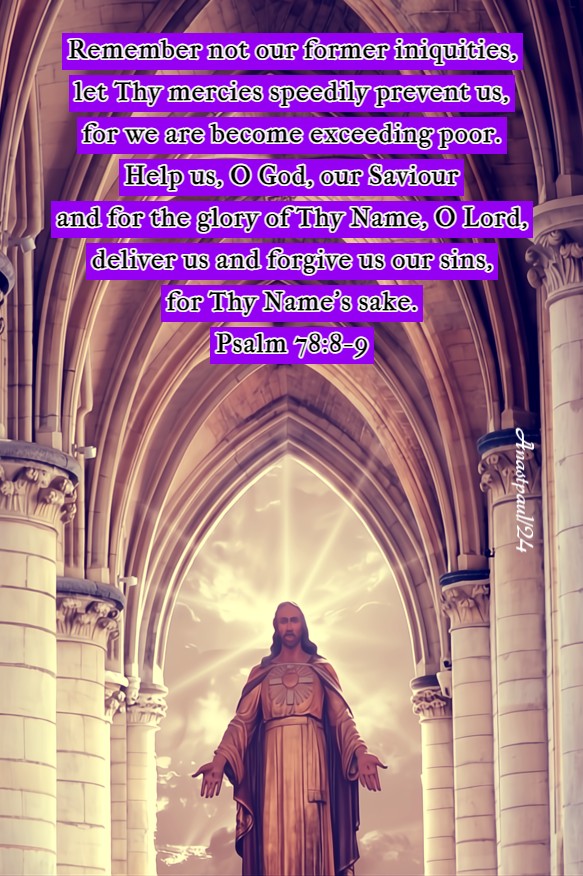
“Remember not our former iniquities, let Thy mercies speedily prevent us, for we are become exceeding poor. Help us, O God, our Saviour and for the glory of Thy Name, O Lord, deliver us and forgive us our sins, for Thy Name’s sake.”
Psalm 78:8-9
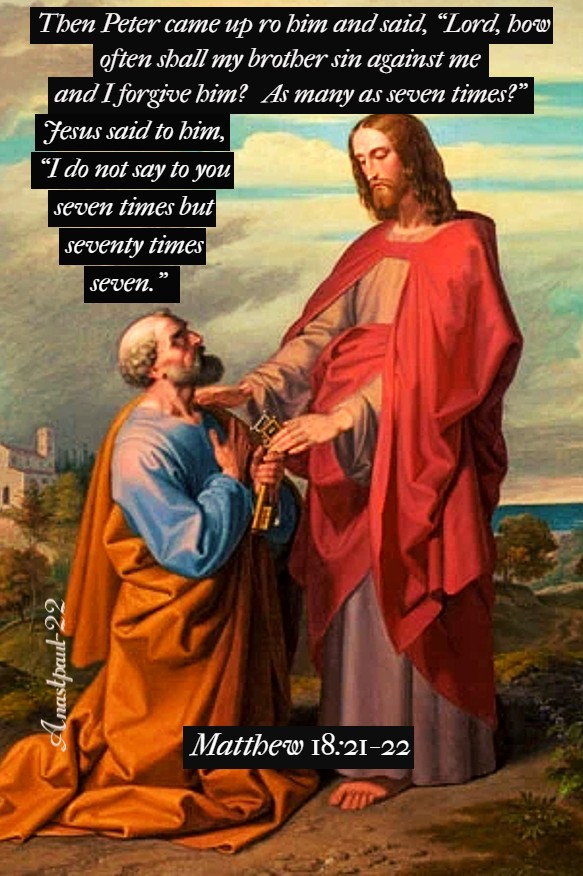
“Then Peter came up and said to Him, “Lord, how often shall my brother sin against me and I forgive him? As many as seven times?” Jesus said to him, “I do not say to you seven times but seventy times seven.”
Matthew 18:21-22
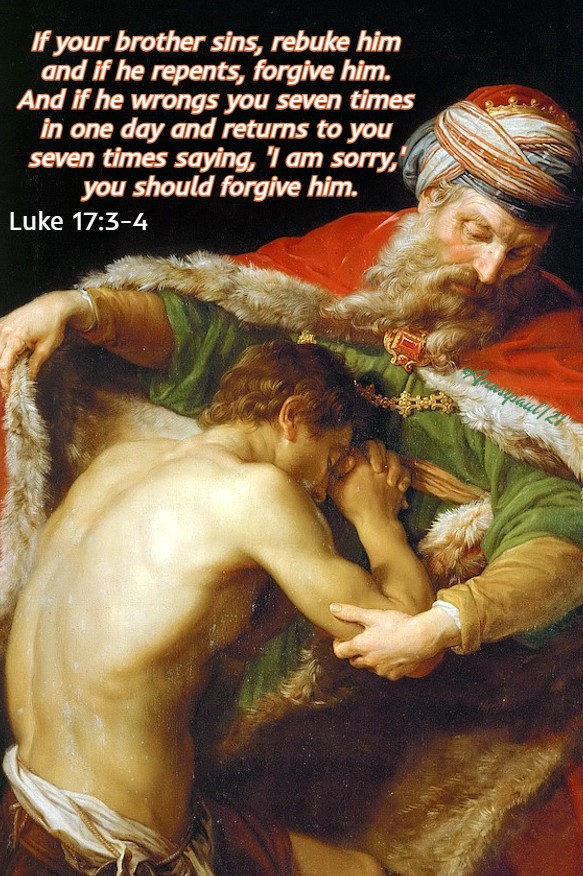
“If your brother sins, rebuke him and if he repents, forgive him. And if he wrongs you seven times in one day and returns to you seven times saying, ‘I am sorry,’ you should forgive him.”
Luke 17:3-4
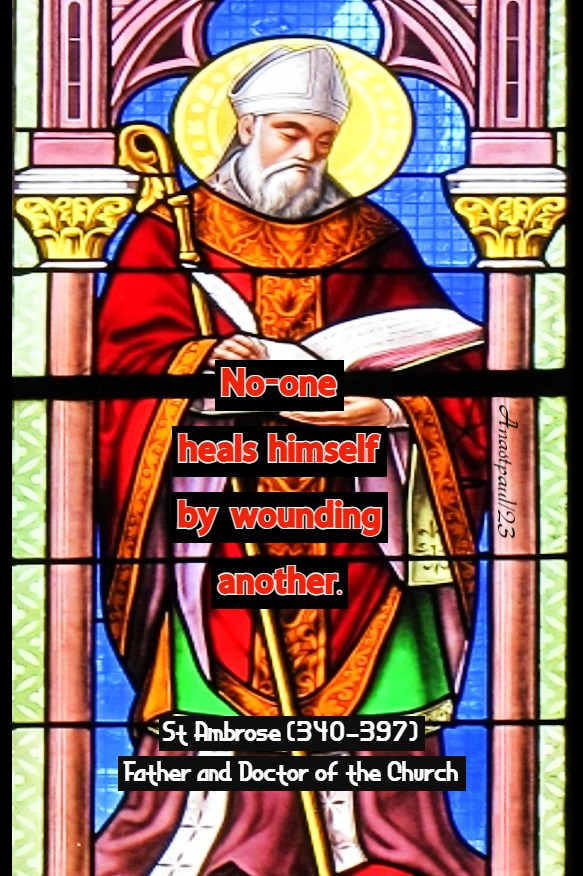
“No-one heals himself by wounding another.”
St Ambrose (340-397) Father and Doctor of the Church
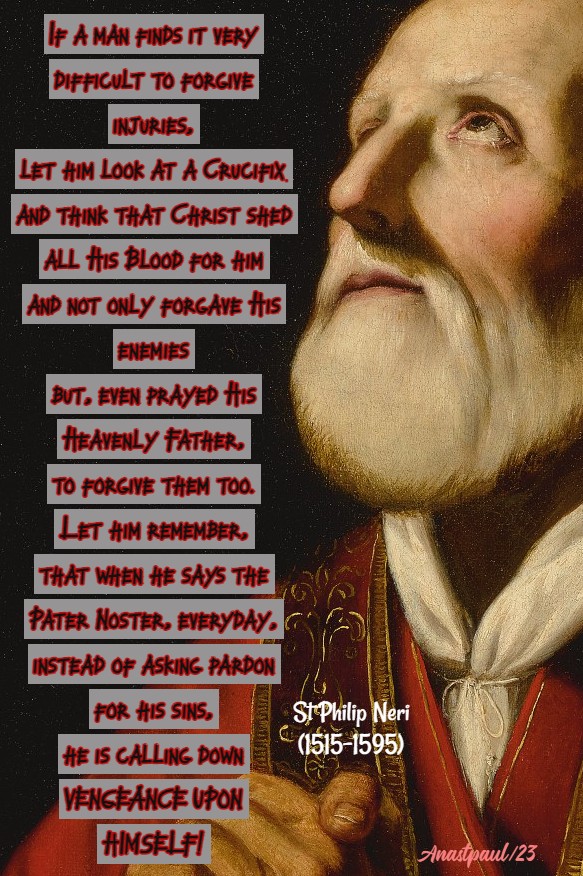
“If a man finds it very difficult to forgive injuries, let him look at a Crucifix and think that Christ shed all His Blood for him and not only forgave His enemies but, even prayed His Heavenly Father, to forgive them too. Let him remember, that when he says the Pater Noster, everyday, instead of asking pardon for his sins, he is calling down VENGEANCE UPON HIMSELF!”
One Minute Reflection – 23 June – “The Month of the Sacred Heart of Jesus” –The Fifth Sunday after Pentecost – 1 Peter 3:8-15; Matthew 5:20-24. – Scripture search here: https://www.drbo.org/
“Leave there thy offering before the Altar and go first to be reconciled to thy brother and then, coming, thou shalt offer thy gift.” – Matthew 5:24
REFLECTION – “The measure with which you measure shall be measured out to you” (Mt 7:2). And the servant who, after having had all his debt forgiven him by his master, would not forgive his fellow-servant, is confined to prison. Because he was unwilling to forgive his fellow-servant, he lost the forgiveness which had been granted him by the Lord (Mt 18:23f). And these things Christ sets forth still more strongly in his precepts by the greater force of his censure. He says: “When you stand praying, forgive anyone against whom you have a grievance, so that your heavenly Father may in turn forgive you your transgressions. But if you do not forgive, neither will your heavenly Father forgive your transgressions” (Mk 11:25) …
For God commands us to be peacemakers and of one heart and of one mind, in His House. And such as He has made us by a second birth, so by a second birth He wishes to preserve us that we, who are the children of God, may abide in the peace of God and that we ,who have one spirit, may have one heart and mind. Thus God does not receive the sacrifice of a person who is in disagreement but commands him to go back from the Altar and first be reconciled to his brother that so God also, may be appeased by the prayers of the peacemaker. The greater sacrifice to God is our peace and fraternal concord and a people united in the unity of the Father and of the Son and of the Holy Ghost.” – St Cyprian of Carthage (200-258) Bishop of Carthage, Martyr, Father of the Church (The Lord’s Prayer, 23).
PRAYER – O God, Thou Who hast prepared good things as yet unseen for those who love Thee, pour a burning love into our hearts, so that we, loving Thee, in and above all things, may obtain Thy promises which surpass all desire. Through Jesus Christ, Thy Son our Lord, Who lives and reigns with Thee, in the unity of the Holy Ghost, God, world without end. Amen (Collect).
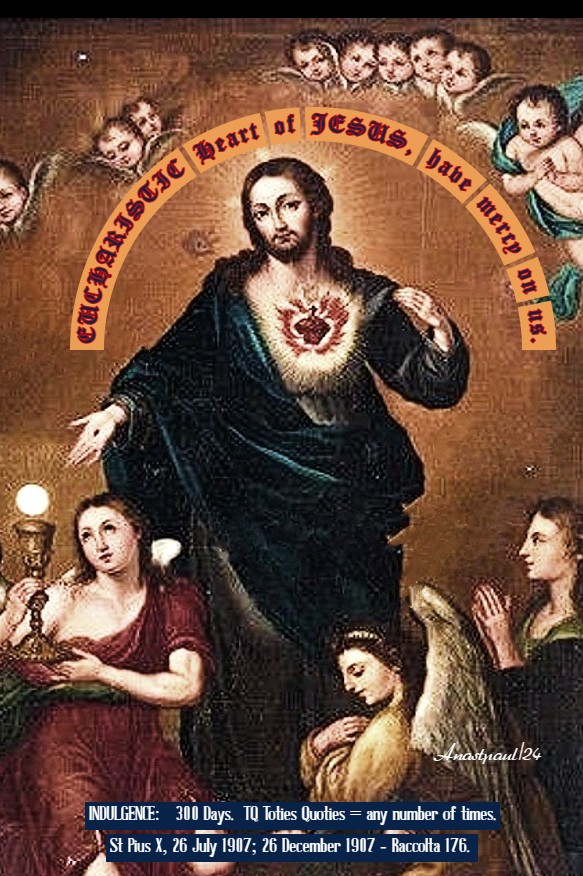
EUCHARISTIC Heart of JESUS, have mercy on us. INDULGENCE: 300 Days. TQ Toties Quoties = any number of times. St Pius X, 26 July 1907; 26 December 1907 – Raccolta 176.
Our Morning Offering – 23 June – “The Month of the Sacred Heart of Jesus” – Pentecost V
Auctor Beate Sæculi Jesu, Creator of the World! Unknown Author
Jesu, Creator of the world! Of all mankind Redeemer blest! True God of God in whom we see The Father’s Image clear expressed!
Thee Saviour, love alone constrained To make our mortal flesh Thine own; And as a second Adam come, For the first Adam to atone.
That selfsame Love that made the sky, Which made the sea and stars and earth, Took pity on our misery, And broke the bondage of our birth.
O Jesu! in Thy Heart Divine May that same Love forever flow, Forever mercy to mankind From that exhaustless Fountain flow.
For this Thy Sacred Heart was pierced, And both with blood and water ran; To cleanse us from the stains of guilt, And be the hope and strength of man.
Jesu! to Thee be glory giv’n, Who from the Heart dost grace outpour, With Father and with Holy Ghost, Through endless ages evermore.
Trans. The Benedictines of Saint Cecilia’s Abbey, Ryde, UK slightly adapted from Fr Edward Caswell CO (1814-1878) original translation Music: PUER NOBIS, LM; adapted by Michael Praetorius, (1571-1621). This particular Vespers Hymn is taken from the Feast of the Sacred Heart. In a Seminary or Monastery, this hymn would be sung. It has a very compelling melody, which adds to the beauty of a Hymn which extolls the mercy of Our Lord Jesus Christ. The theme of the entire piece is Our Lord’s Sacred Heart and how It is the Fount of Mercy for all who come to Him. It tells how we should value the Infinite Redemption He wrought for us.
Bl Peter of Juilly Bl Thomas Corsini of Orvieto St Thomas Garnet Bl Walhere of Dinant St Zenas of Philadelphia St Zeno of Philadelphia
Martyrs of Ancyra: A family of converts who were arrested, tortured, and sent in chains to Ancyra, Galatia (modern Ankara, Turkey) where they was tortured again by order of governor Agrippinus during the persecutions of Diocletian. Martyrs. They were – Eustochius, Gaius, Lollia, Probus, Urban. Died by being roasted over a fire and finally beheaded c300 in Ancyra, Galatia (modern Ankara, Turkey).
Martyrs of Nicomedia: During the persecutions of Diocletian, many Christians fled their homes to live in caves in the area of Nicomedia. In 303 troops descended on the area, systematically hunted them down and murdered all they could find.
Thought for the Day – 22 June – Meditations with Fr Richard Frederick Clarke SJ (1839-1900)
HUMILITY Meditations for a Month
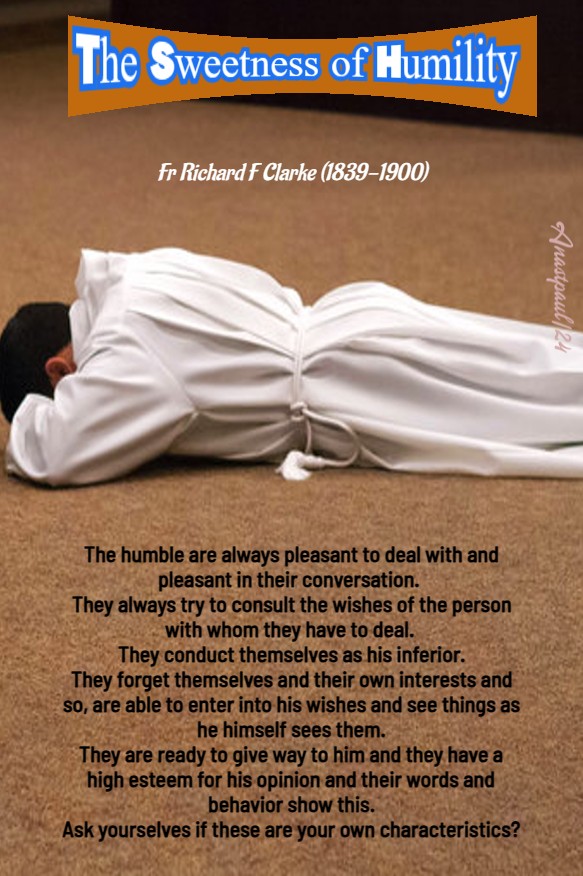
The Sweetness of Humility
The humble are always pleasant to deal with and pleasant in their conversation. They always try to consult the wishes of the person with whom they have to deal. They conduct themselves as his inferior. They forget themselves and their own interests and so, are able to enter into his wishes and see things as he himself sees them. They are ready to give way to him and they have a high esteem for his opinion and their words and behavior show this. Ask yourselves if these are your own characteristics?
The humble show a special sweetness towards those to whom they are naturally disinclined and whom they are tempted to regard with repugnance and aversion. Instead of turning their back on such and having nothing to do with them, they recognise, in this natural aversion, a sign of pride against which they must struggle and which has to be overcome. They remember that, in themselves, there are defects far greater than those they dislike in others. Remembering this, they not only put up with the disagreeable qualities of others but for this reason, they also determine, with a sort of Divine generosity, to show the greater kindness to them.
This is always the conduct of the Saints. We admire their self-conquest in tenderly nursing those affected with loathsome diseases or in kissing their sores but, we should admire still more, their gentleness to those who insult them and their sweetness and charity to the coarse, rude and brutal. This is the way to win sinners to Christ! This is the way to attain solid peace and joy of heart. It is the charity of Christ overcoming self which makes the humble always contented and happy.
Quote/s of the Day – 22 June – St Paulinus of Nola (c 354-431) Bishop, Confessor, Father.
“The present is nothing. But eternity abides for those on whom all Truth, all Good, has shone, in One Entire and Perfect Light. ”
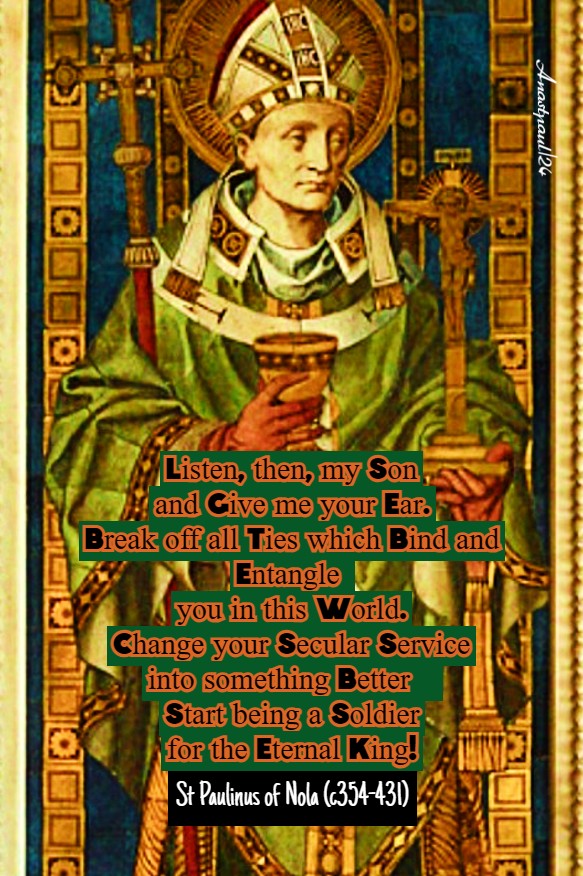
“Listen, then, my son and give me your ear. Break off all ties which bind and entangle you in this world. Change your secular service into something better – start being a soldier for the eternal King!”
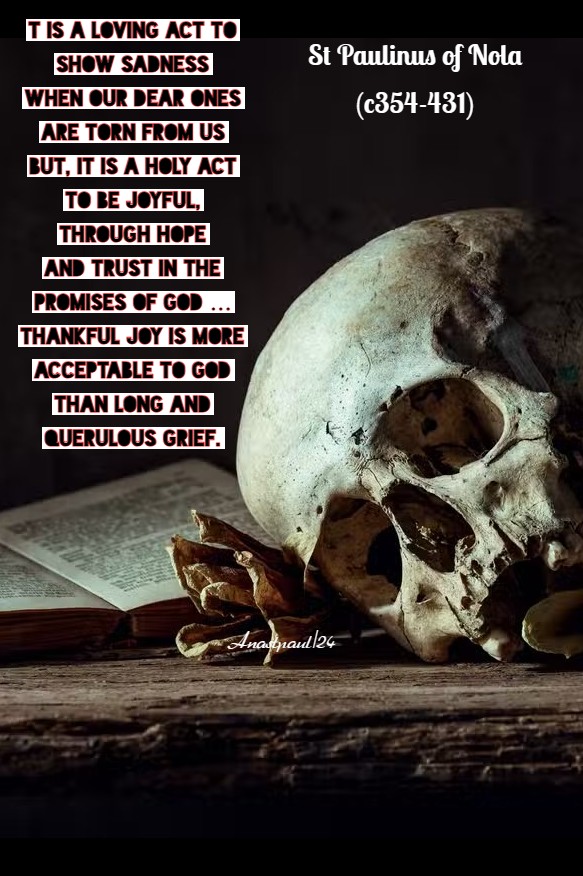
“It is a loving act to show sadness when our dear ones are torn from us but, it is a holy act to be joyful,through hope and trust in the promises of God … Thankful joy is more acceptable to God than long and querulous grief.”
One Minute Reflection – 22 June – “The Month of the Sacred Heart of Jesus” – St Paulinus of Nola (c 354-431) Bishop, Confessor, Father of the Church –2 Corinthians 8:9-15; Luke 12:32-34 – Scripture search here: https://www.drbo.org/
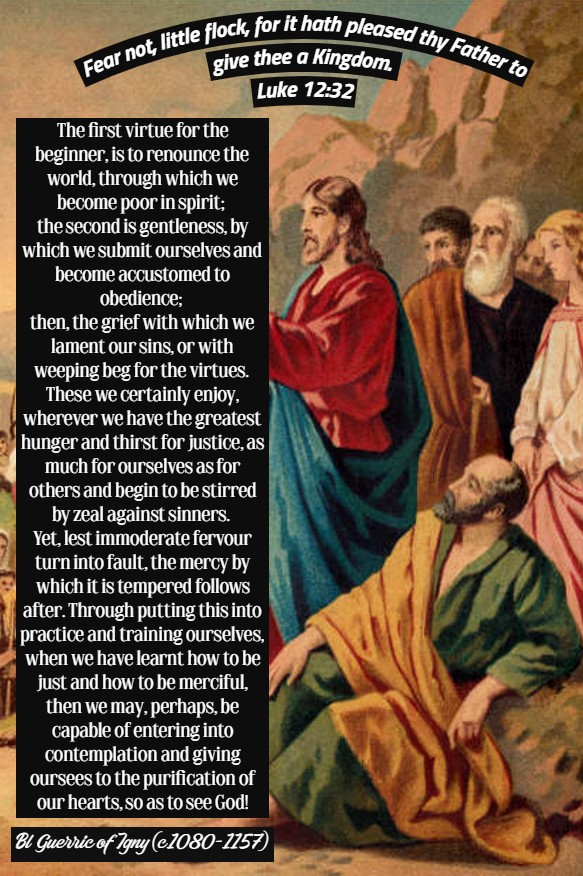
“Fear not, little flock, for it hath pleased thy Father to give thee a Kingdom. ” – Luke 12:32
REFLECTION – “Blessed are the poor in spirit, for theirs is the Kingdom of Heaven”. The beginning of the New Testament is altogether joyful and full of fresh grace. It even nudges the unbeliever and sluggish to pay heed and, more to the point, to act, by promising happiness to the unfortunate and the Kingdom of Heaven to those in exile, those in any kind of distress. The beginning of the new Law is pleasant to hear and starts off under happy auspices, since the Legislator follows on from this beginning ,by giving so many assurances of beatitude. In this way those who have been attracted by them will go from one virtue to the next, climbing the eight steps that this Gospel has set up and placed within our hearts… For, it is clear that what it is all about, is the ascent of the heart and of the progress of merit, through eight steps of virtue, leading men gradually from the lowest to the highest levels of evangelical perfection. In this way they will at last enter and see the God of gods in Zion (Ps 83: 8), in His Temple, of which the Prophet has said: “It had a stairway of eight steps,” (Ez 40:37).
The first virtue for the beginner, is to renounce the world, through which we become poor in spirit; the second is gentleness, by which we submit ourselves and become accustomed to obedience; then, the grief with which we lament our sins or with weeping beg for the virtues. These we certainly enjoy, wherever we have the greatest hunger and thirst for justice, as much for ourselves as for others and begin to be stirred by zeal against sinners. Yet, lest immoderate fervour turn into fault, the mercy by which it is tempered follows after. Through putting this into practice and training ourselves, when we have learnt how to be just and how to be merciful, then we may, perhaps, be capable of entering into contemplation and giving oursees to the purification of our hearts, so as to see God!” – Blessed Guerric of Igny (c1080-1157) Cistercian Abbot (Sermon for All Saints).
PRAYER – O God, Who promised to those who forsake all things in this world for Thee, a hundred-fold reward in the world to come and life everlasting, mercifully grant that, following closely in the footsteps of the holy Bishop, Paulinus, we may look upon earthly things as nought and long only for those of Heaven. Who lives and reigns with God the Father, in the unity of the Holy Spirit, God, world without end. Amen (Collect).
OUR Lady of the Sacred Heart, pray for us. 100 Days. St Pius X, 9 July 1904. Raccolta 174
Thought for the Day – 21 June – Meditations with Fr Richard Frederick Clarke SJ (1839-1900)
HUMILITY Meditations for a Month
The Patience of Humility
The humble are always patient and these two virtues are most intimately connected with each other. He who forms a low estimation of himself, is convinced that it is well for him to suffer, to be contradicted, to wait for others, to be thwarted in his projects, to have to bear with the ill temper of others and the unkindness of others. He regards all this as his due and takes it accordingly. Am I thus patient and ready to submit to the disagreeable?
On the other hand, impatience is one of the surest signs of hidden pride! If we detect ourselves succombing to impatience and becoming “put our or upset” when we cannot get our own way and carry all before us, we may put it down, as certain, that we are still very deficient in the virtue of humility! Even physical impatience (except when it arises from weakness and ill health) is a mark of pride. It shows that we have not learned perfectly the lesson of submission. Alas, how impatient I am in spite of long years of striving after virtue. How deeply rooted pride must be in me! How can I get rid of this most detestable of vices!
One of the best means of acquiring humility is to school ourselves in patience. Everyday a hundred occasions present themselves when we can, if we choose, prevent the rising spirit of impatience. We wait at a friend’s door, or we are hindered by persons who walk in our way, while walking. Some sound annoys us or others take our turn or place. All these are splendid opportunities to acquire humility by schooling ourselves to patient endurance.
Our Morning Offering – 21 June – “The Month of the Sacred Heart of Jesus” –
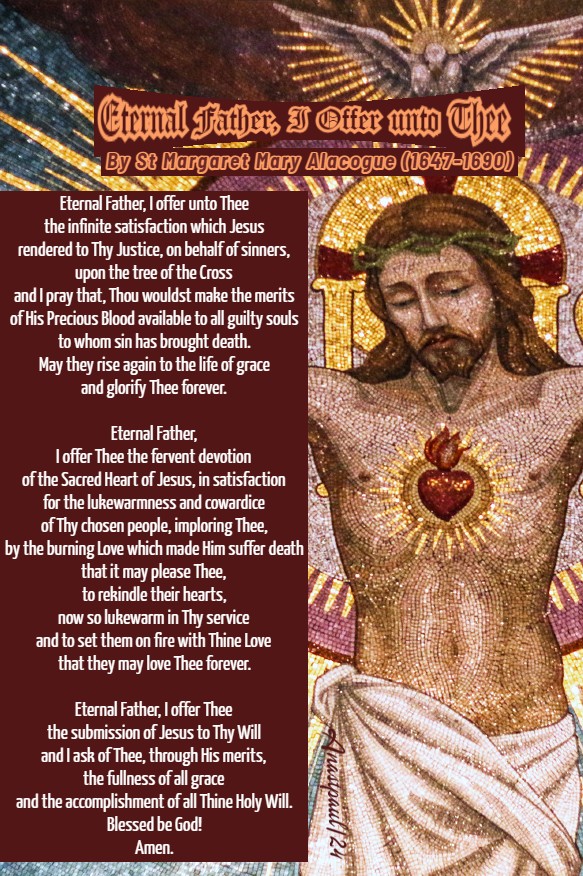
Eternal Father, I Offer unto Thee By St Margaret Mary Alacogue (1647-1690) Visionary and Apostle of the Sacred Heart of Jesus
Eternal Father, I offer unto Thee the infinite satisfaction which Jesus rendered to Thy Justice, on behalf of sinners, upon the tree of the Cross and I pray that, Thou wouldst make the merits of His Precious Blood available to all guilty souls to whom sin has brought death. May they rise again to the life of grace and glorify Thee forever.
Eternal Father, I offer Thee the fervent devotion of the Sacred Heart of Jesus, in satisfaction for the lukewarmness and cowardice of Thy chosen people, imploring Thee, by the burning Love which made Him suffer death that it may please Thee, to rekindle their hearts, now so lukewarm in Thy service and to set them on fire with Thine Love that they may love Thee forever.
Eternal Father, I offer Thee the submission of Jesus to Thy Will and I ask of Thee, through His merits, the fullness of all grace and the accomplishment of all Thine Holy Will. Blessed be God! Amen.
Saint of the Day – 21 June – Saint Suibhne of Cobran (c670- c730) Bishop of Armagh, Ireland from 715 to 21 June 730. Died on 21 June c 730 of natural causes. Also known as – Suibhne of Armagh,Suibhne In-Sui, Suibhney… Suibne…Suivney…
Saint Suibhne depicted in the Lichfield Gospels,
The Martyrology of Tallagh, an ancient Irish text which lists the Saints venerated by the Irish Church, mentions Saint Suibhne as the Bishop of Cobran, a Diocese which unfortunately has not been identified with certainty. This mention, although valuable, provides no further details about his life or Episcopate.
However, modern hagiographers propose an alternative identification – Saint Suibhne as the Bishop of Armagh, one of the most important Episcopal sees of medieval Ireland. This hypothesis is based on a genealogy reported in the records of Armagh which indicates him as the son of Crundmáel mac Rónáin. These records also places him as the Bishop from 715 to 730, the year of his death.
Regardless of his Episcopal seat, Suibhne is commemorated on 21 June, the day dedicated to his memory. His veneration, attested by several hagiographic sources, suggests a significant role in the religious life of medieval Ireland. However, the lack of concrete details about his life and works, makes it difficult to fully understand the nature and extent of his cult.
St Cyriacus of Africa – Martyr. No other information has survived.
St Demetria of Rome St Dominic of Comacchio St Engelmund
St John Rigby (1570-1600) Martyr, Confessor, Layman’ The Roman Martyrology reads: “In London, England, St John Rigby, Martyr, who, arrested and sentenced to death under Queen Elizabeth I for reconciling with the Catholic Church, was hanged in Southwark and disemboweled while still alive.” His Life and Horrible Tortuous Death: https://anastpaul.com/2023/06/21/saint-of-the-day-21-june-saint-john-rigby-1570-1600-martyr/
Bl Juan of Jesus
St Lazarus the Leper St Leutfridus of La-Croix St Martia of Syracuse St Martin of Tongres St Melchiorre della Pace St Mewan of Bretagne Bl Nicholas Plutzer
St Rufinus of Syracuse Martyr. No other information has survived.
St Suibhne of Cobran (c670-730) Bishop St Terence St Ursicenus of Pavia
Martyrs of Taw – 3+ Saints: Three Christians of different backgrounds who were Martyred together – Moses, Paphnutius, Thomas. They were beheaded in Taw, Egypt, date unknown.
Thought for the Day – 20 June – Meditations with Fr Richard Frederick Clarke SJ (1839-1900)
HUMILITY Meditations for a Month
Humility in Our Estimation of Ourselves
There is no better test of humility than the opinion we form about others as compared to ourselves. If we had to make a list of the virtuous, in what position should we place ourselves? A man who is truly humble will place himself,not only last but least, with a great interval between himself and the rest of mankind! Saint Dominic used to place himself, in spirit, beneath the feet of the very demons, as being far worse than them. Saint Paul declared himself the very worst of sinners. Can I honestly speak of myself thus? Do I regard myself as the worst of all men in the sight of God?
What should be the ground of this humility? We must not attempt impossibilities. I ought not to think myself worst of all, unless I really am so. It may be that I cannot truthfully say that I am in the habit of committing mortal sins. How, then, can I be worse than the notorious sinner? Yet, when I think of all the graces God has given me, I must confess that, if He had given them to those who sin most deeply, they would be far better than I am. My only superiority is in greater graces! Humble yourself at the thought of all the graces you have received and of your frequent failures to co-operate with them.
Even if we had never sinned, this would not free us from the obligation of putting ourselves below all and beneath all. Our exemption would be no credit to ourselves. It would simply be a fresh gift of God which ought to make us more vividly conscious, of our vileness and nothingness, in His sight. We must always be as nothing in His sight but sin makes us worse than nothing. It makes us a blot upon creation, inferior to the dumb creatures which have never sinned!
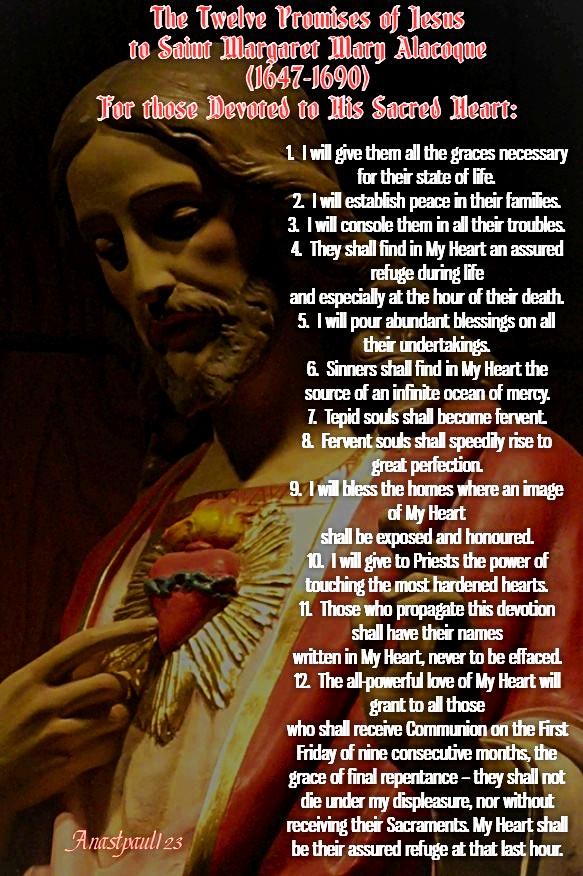
The Twelve Promises of Jesus to Saint Margaret Mary and to those Devoted to His Sacred Heart:
I will give them all the graces necessary for their state of life.
I will establish peace in their families.
I will console them in all their troubles.
They shall find in My Heart an assured refuge during life and especially at the hour of their death.
I will pour abundant blessings on all their undertakings.
Sinners shall find in My Heart the source of an infinite ocean of mercy.
Tepid souls shall become fervent.
Fervent souls shall speedily rise to great perfection.
I will bless the homes where an image of My Heart shall be exposed and honoured.
I will give to priests the power of touching the most hardened hearts.
Those who propagate this devotion shall have their names written in My Heart, never to be effaced.
The all-powerful love of My Heart will grant to all those who shall receive Communion on the First Friday of Nine consecutive months the grace of final repentance; they shall not die under my displeasure, nor without receiving their Sacraments; My heart shall be their assured refuge at that last hour.
“His Heart is the natural Sign and Symbol of His boundless love for the human race.”
One Minute Reflection – 20 June – “The Month of the Sacred Heart of Jesus” – St Pope Silverius (Died 538) Martyr – Jude 1:17-21; Matthew 16:13-19 – Scripture search here: https://www.drbo.org/
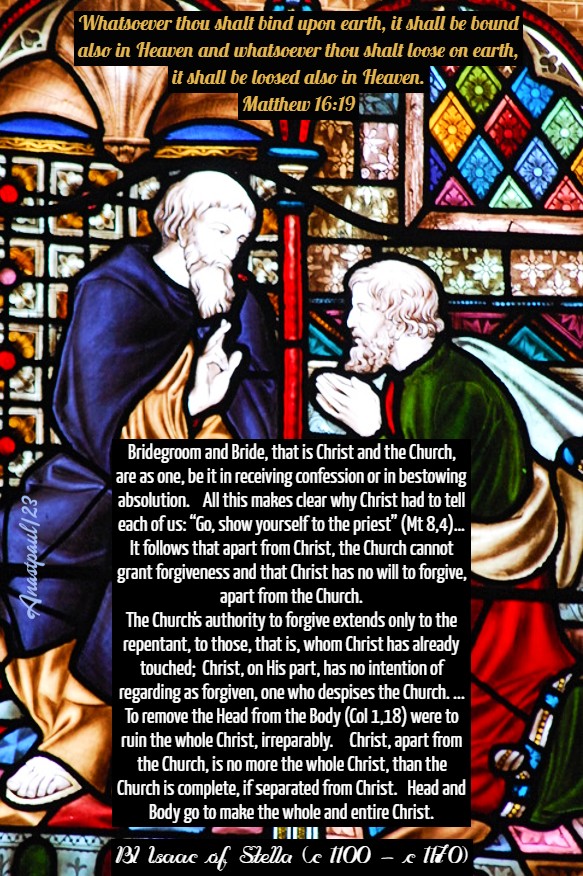
“Whatsoever thou shalt bind upon earth, it shall be bound also in Heaven and whatsoever thou shalt loose on earth, it shall be loosed also in Heaven.” – Matthew 16:19
REFLECTION – “Bridegroom and Bride, that is Christ and the Church, are as one, be it in receiving confession or in bestowing absolution. All this makes clear why Christ had to tell each of us: “Go, show yourself to the priest” (Mt 8:4)… It follows that apart from Christ, the Church cannot grant forgiveness and that Christ has no will to forgive, apart from the Church. The Church’s authority to forgive extends only to the repentant, to those, that is, whom Christ has already touched; Christ, on His part, has no intention of regarding as forgiven, one who despises the Church.
Doubtless, Christ need accept no restraints to His power of Baptising, Consecrating the Eucharist, Ordaining Priests, forgiving sins and the like but, the humble and faithful Bridegroom, prefers to confer such blessings, with the co-operation of His Bride. “What God,” then, “has joined, let no man put asunder” (Mt 19:6). “I say this is a great mystery and refers to Christ and the Church” (Eph 5:32)… To remove the Head from the Body (Col 1:18) were to ruin the whole Christ, irreparably. Christ, apart from the Church, is no more the whole Christ, than the Church is complete, if separated from Christ. Head and Body go to make the whole and entire Christ.” – Bl Isaac of Stella (c 1100 – c 1170) Cistercian Monk, Abbot, Theologian, Philosopher (Sermon 11, §11-814).
PRAYER – Look forgivingly on Thy flock, Eternal Shepherd and keep it in Thy constant protection, by the intercession of blessed Sylverius Thy Martyr and Sovereign Pontiff, whom Thou didst constitute Shepherd of the whole Church. Through Jesus Christ, Thy Son our Lord, Who lives and reigns with Thee, in the unity of the Holy Ghost, God, world without end. Amen (Collect).
ALL PRAISE, honour and glory to the Divine Heart of JESUS.Indulgenced– 50 Days, once a day. 168 Pope Leo XIII, 14 June 1901.
Our Morning Offering – 20 June – “The Month of the Sacred Heart of Jesus”
Act of Love to the Sacred Heart of Jesus By Servant of God Cardinal Rafael Merry del Val (1865-1930)
Reveal Thy Sacred Heart to me, O Jesus and show me Its attractions. Unite me to It forever. Grant that all my aspirations and all the beats of my heart, which cease, not even while I sleep, may be a testimonial to Thee, of my love for Thee and may it say to Thee – “Yes, Lord, I am all Thine” the pledge of my allegiance to Thee, rests forever in my heart and will never cease to be there. May Thou accept, the slight amount of good that I do and be graciously pleased, to repair all my wrong-doing – so that I may be able, to bless Thee, in time and in eternity. Amen
Saint of the Day – 20 June – Saint Bagne of Thérouanne (Died c706) the 5th Bishop of Thérouanne in northwest France (now St Omer) and then Abbot of Fontanelle, the Monastery of Saint Wandrille in Normandy, a disciple of *St Wandrille (c 605–668) Priest, Monk, Abbot. Died in c711 of natural causes Patronage – of Calais, France. Also known as – Theodericus Buinu (his birth name), Bagne of Calais, Bagnus, Bain, Baino, Bainus, Baiano. Additional Memorial – 10 June in Calais and possible universally at one time.
Fontanelle Abbey St Wandrille’s Monastery
Bagne was born to an illustrious family and was named Theodericus Buinus. He embraced the monastic life and was one of the most fervent disciples of St Wandrille. He built up the Monastery of Fontenelle so much by his prudence, his learning and his holiness that, after the death of Saint Drancius, Successor of Saint Omer to the see of Thérouanne and Boulogne, he was elected and called to govern the Diocese.
Baigne was at the head of this See for twelve years, fulfilling all the duties of his pastoral charge with extraordinary zeal and with the greatest perfection, from the year 685 to the year 697. He made several translations and went to Rome, where Pope Sergius I showered him with precious gifts and gave him marks of his high esteem and friendship.
Finally, overwhelmed by the fatigue of the pastoral care and jealous of imitating so many holy Bishops whose veneration he had made honourable, in 697, our Saint Bagne resigned from his Office and chose ,for the place of his retreat, his dear Abbey of Fontenelle, in which he had once spent days so full of meditation, prayer and peace.
Three years after his retirement. he had to yield to the entreaties of the Monks and accept the new Office of Abbot of Fontenelle. In 705 he transferred, from the Church of Saint Paul to that of Saint Peter, the bodies of Saint Wandrille and Saint Ansbert, which were found intact and emmiting the sweetest smell.
Saint Bagne only lived, it seems, for a very short time after this transfer. We are unsure of the precise date of his death, which is usually placed in c706.
There remains, says Father Van-Drival, who provided us with the above details (1635), a living memory of this holy Bishop in the name of the village of “Binghem” the home of Bagne. We have, in fact, the tradition that Saint Bagne sometimes lived in this place, where he had acquired land for the Church of Thérouanne. In 846, the Relics of Saint Bagne were translated to Saint Omer, in order to protect them from the desecration of the Danes. The City of Calais having been the Saint’s favourite place for preaching and this holy Bishop having reaped great fruits of conversion there, the Calaisians have always considered him as their very own Apostle and honoured him as their Patron. His feast is celebrated on 10 June in that City.
St Bagne of Thérouanne (Died c706) Bishop Blessed Benignus of Breslau O,Cist. (13th-14th Century) Cistercian Monk and Martyr St Edburga of Caistor St Florentia of Seville
Blessed Francisco Pacheco SJ (1566-1626) Martyr, Priest of the Society of Jesus, Missionary to India, China and Japan, Provincial Superior. Fr Pacheco and his eight Jesuit companions, together with the nine lay Christians, were included among the 205 Martyrs Beatified by Blessed Pope Pius IX on 7 May1867. His Life and Death: https://anastpaul.com/2021/06/20/saint-of-th-day-20-june-blessed-francisco-pacheco-sj-1566-1626/
St Gemma of Saintonge St Goban of Picardie St Helen of Öehren
St Macarius of Petra (Died c350) Bishop and Confessor St Methodius of Olympus
Blessed Michelina of Pesaro TOSF (1300-1356) Widow, Religious of the Third Order of the Friars Minor, Stigmatic, Penitent, Apostle of all in need, Founder of the Confraternity of the Annunciation, to care for the poor, nurse the sick and bury the dead. Patronages – Pesaro, widows, against mental illness, against death of children. Beatified on 13 April 1737 by Pope Clement XII. Her Holy Life: https://anastpaul.com/2022/06/20/saint-of-the-day-20-june-blessed-michelina-of-pesaro-tosf-1300-1356/
St Novatus of Rome (Died c151) Confessor, Layman. The Roman Martyrology reads today: “At Rome, the demise of St Novatus, son of the blessed Senator, Puden and brother of the saintly Priest, Timothy and of the Holy Virgins of Christ, Pudentiana and Praxedes, who were instructed in the Faith by the Apostles. Their house was converted into a Church and bore the title of Pastor.” A Zealous Life: https://anastpaul.com/2023/06/20/saint-of-the-day-20-june-saint-novatus-of-rome-died-c151-confessor/
Martyred in London: Bl Anthony Turner Bl John Fenwick Bl John Gavan BL Thomas Whitbread Blessed William Harcourt
Irish Martyrs – 260 Beati – This is the collective title given to the 260 or more persons who are credited with dying for the Faith in Ireland between 1537 and 1714.
Martyrs of Lower Moesia: Martyred on the Black Sea at Lower Moesia (in modern Bulgaria), date unknown. St Cyriacus St Paul
Martyred in Nagasaki: 9 Beati : burned alive on 20 June 1626 in Nagasaki, Japan. Their ashes were thrown into the sea and no relics remain. They were Beatified on 7 May 1867 by Pope Pius IX. Blessed Baltasar de Torres Arias Blessed Francisco Pacheco Blessed Gaspar Sadamatsu Blessed Giovanni Battista Zola Blessed Ioannes Kisaku Blessed Michaël Tozo Blessed Paulus Shinsuke Blessed Petrus Rinsei Blessed Vincentius Kaun
Quote/s of the Day – 19 June – 2 Corinthians 10:17-18, 11:1-2; Matthew 25:1-13 – Scripture search here: https://www.drbo.org/
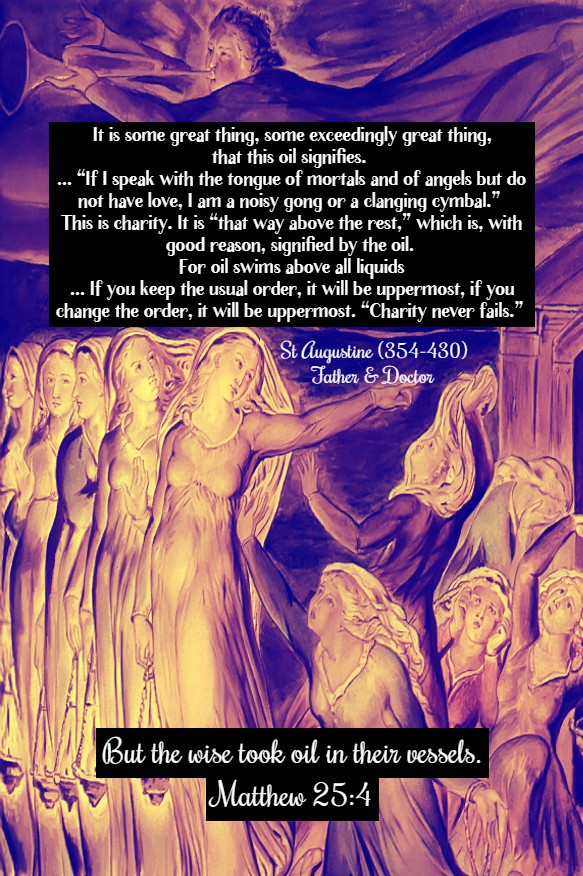
“But the wise took oil in their vessels” Matthew 25:4
“It is some great thing, some exceedingly great thing that this oil signifies. … “If I speak with the tongue of mortals and of angels but do not have love, I am a noisy gong or a clanging cymbal.” This is charity. It is “that way above the rest,” which is, with good reason, signified by the oil. For oil swims above all liquids. If you keep the usual order, it will be uppermost, if you change the order, it will be uppermost. “Charity never fails!”
St Augustine (354-430) Father and Doctor of Grace
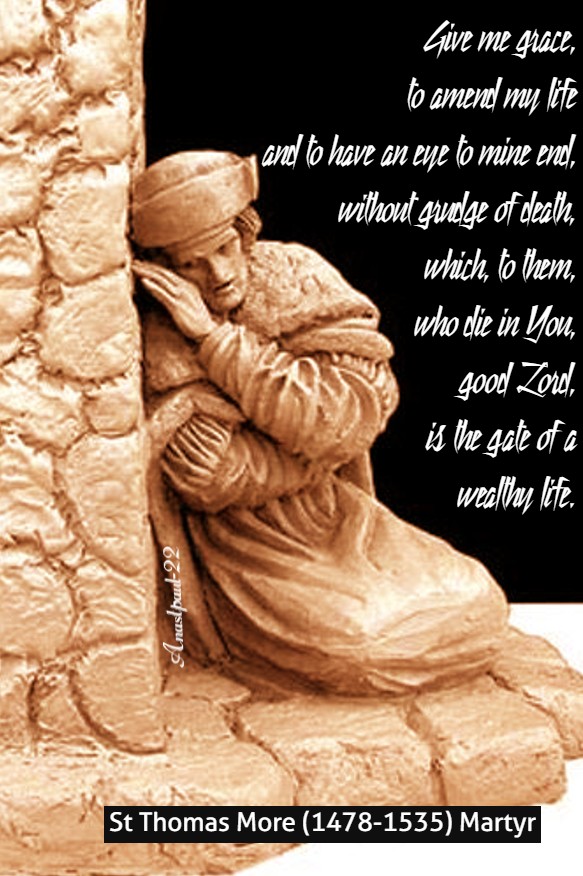
“Give me grace, to amend my life and to have an eye to mine end, without grudge of death, which, to them, who die in You, good Lord, is the gate of a wealthy life.”
St Thomas More (1478-1535) Martyr
“Love consists, not in feeling great things but, in having great detachment and in suffering for the Beloved.”
St John of the Cross (1542-1591) Doctor Mysticus
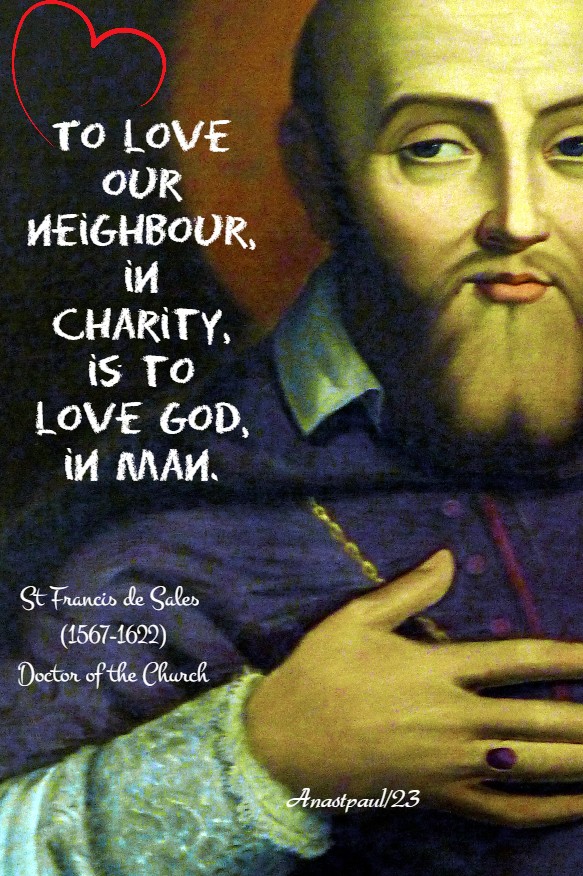
“To love our neighbour, in charity, is to love God, in man.”
(Treatise on the Love of God Book 10 Chapter 11)
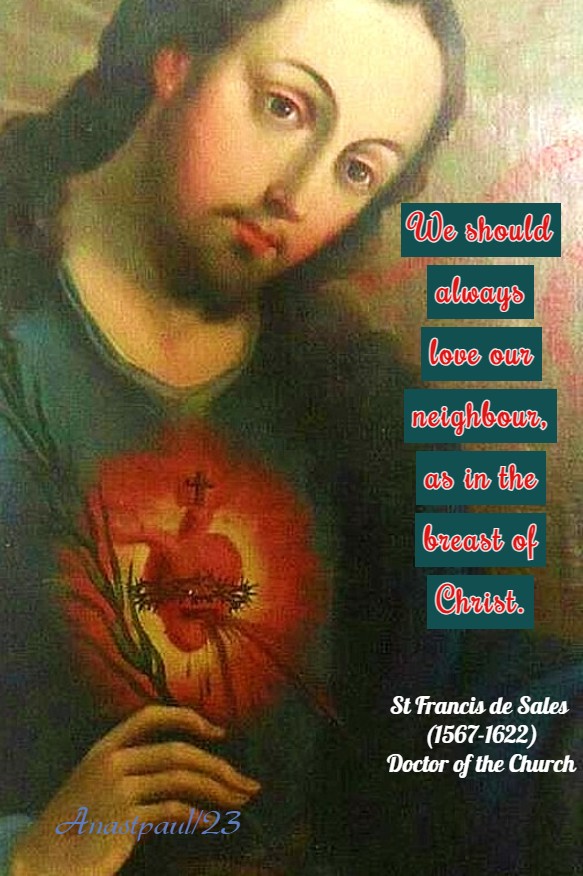
“We should always love our neighbour, as in the breast of Christ”
(The Spirit of St François de Sales II, 1)
St Francis de Sales (1567-1622) Doctor of the Church
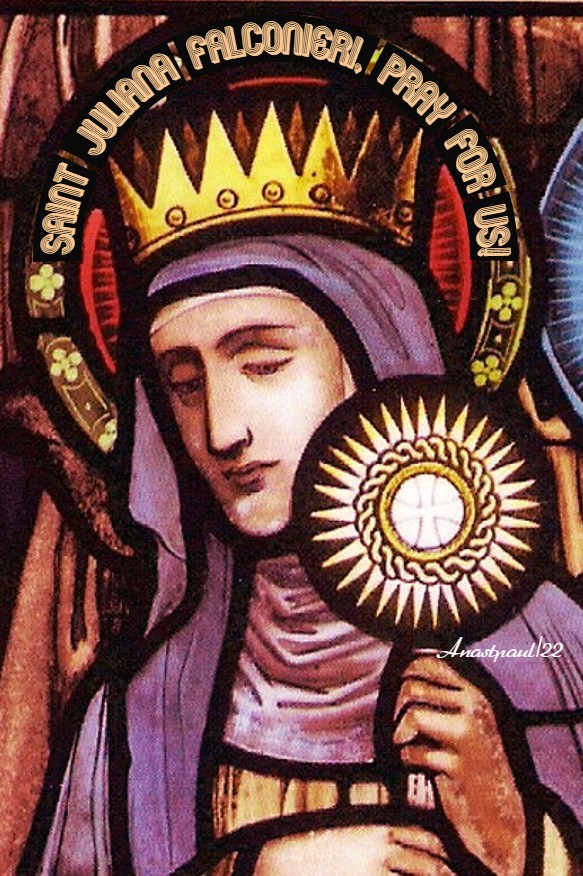
One Minute Reflection – 19 June – “The Month of the Sacred Heart of Jesus” – St Juliana Falconieri OSM (1270 – 1341) Virgin – 2 Corinthians 10:17-18, 11:1-2; Matthew 25:1-13 – Scripture search here: https://www.drbo.org/
“ … The Bridegroom came and they, who were ready, went in with Him … ” – Matthew 25:10
REFLECTION – “In this world, which is to say, in the Church, wholly following Christ, He says to all of us: “Whoever wishes to come after Me must deny himself.” This command is not being directed to virgins but not married women, to widows but not wives, to Monks but not husbands, to Priests but not laity. It is the whole Church, the whole Body of Christ with all its members, differentiated and divided according to their proper functions that is, to follow Christ. May she wholly follow Him, she who is one alone, the dove, the bride (Sg 6:9); may she follow Him, she who has been redeemed and endowed with the Blood of her Bridegroom. Virginal purity has its place here; the continence of widows has its place here; wedded chastity has its place here…
These members who have their place here should follow Christ, each according to their category, each according to their status, each after its fashion. Let them deny themselves, that is to say, let them not rely on themselves. Let them carry their cross that is to say, bear, for Christ’s sake in the world, all that the world inflicts on them. May they love Him, He, the Only One, Who never deceives or is deceived, the Only One ,Who is not mistaken. May they love Him because, what He promises is true. Yet because, He does not give it to us now, our faith falters. Keep going, persevere, bear and accept this delay and you have carried His Cross!” – St Augustine (354-430) Father and Doctor of Grace (Sermon 96:9)
PRAYER – O God, Who miraculously fortified blessed Juliana, Thy Virgin, in her last illness with the precious Body of Thy Son, grant, we beseech Thee, that with her merits pleading for us, we also, refreshed and strengthened by the same Sacrament in our dying agony, may be brought to our heavenly home. Through Jesus Christ, Thy Son our Lord, Who lives and reigns with Thee, in the unity of the Holy Ghost, God, world without end. Amen (Collect).
EUCHARISTIC Heart of JESUS, model of the priestly heart, have mercy on us. COR JESU Eucharisticum, cordis sacerdotalis exemplar, miserere nobis.– Indulgence 300 Days, Everytime – Raccolta 177St Pius X, 11 Sept
Our Morning Offering – 19 June – “The Month of the Sacred Heart of Jesus” –
O DIVINE Heart of JESUS Pope Leo XIII Indulgence 100 Days, Once a day Raccolta 167 13 March 1901.
O DIVINE Heart of JESUS, grant, we beseech Thee, eternal rest to the souls in purgatory, the final grace to those who shall die today, true repentance to sinners, the light of the faith to pagans and Thy Blessing to me and mine. To Thee, O most compassionate Heart of JESUS! I commend all these souls and I offer to Thee, on their behalf, all Thy merits, together with the merits of Thy most Holy Mother and of all the Saints, Angels and all the Sacrifices of the Holy Mass, Communions, prayers and good works, which shall be accomplished today, throughout the Christian world. Amen
Saint of the Day – 19 June – Blessed Humphrey Middlemore O.Cart. (Died 1535) Priest, Martyr, Carthusian Monk and Prior. Died on 19 June 1535at Tyburn Tree , London for refusal to take the new Oath of Supremacy by being hanged, drawn and quartered. Additional Memorial – on 4 May as one of the Carthusian Martyrs of London during the violent horrors perpetrated by Henry VIII when Catholics refused to recognise his so-called marriage to Anne Boleyn.
Although the date of his birth is uncertain, his father was Thomas Middlemore of Edgbaston, Warwickshire, who had acquired his estate at Edgbaston by marriage with the heiress of Sir Henry Edgbaston. Humphrey’s mother was Ann Lyttleton, of Pillaton Hall, Staffordshire. Humphrey became attracted to the Carthusian Order at an early age and entered the London Charterhouse, where he was Professed and Ordained. He was subsequently appointed to the Office of Procurator. He was esteemed by the Prior, Dom John Houghton (also Martyred).
In 1534 the question of King Henry VIII’s marriage with Anne Boleyn arose. The King was determined that the more prominent of his subjects should expressly acknowledge the validity of the marriage and the right of succession of any issue therefrom. The Crown was at first anxious to secure the public acquiescence of the Monks of the London Charterhouse in this matter, since they enjoyed great prestige for the austerity and sincerity of their mode of life. Accordingly, the Royal Commissions paid a visit to the Charterhouse and required the Monks to take the Oath to that effect. Doms John Houghton and Humphrey Middlemore refused and were, in consequence, imprisoned in the Tower of London but, after a month’s imprisonment, they were persuaded to take the Oath conditionally and were released.
In the following year, on 4 May 1535, the authorities sent to their death at Tyburn Tree, three leading English Carthusians, first among them John Houghton, Prior of the London Charterhouse but also Robert Lawrence and Augustine Webster, respectively Priors of Beauvale and Axholme. This led to Middlemore becoming Vicar of the community.
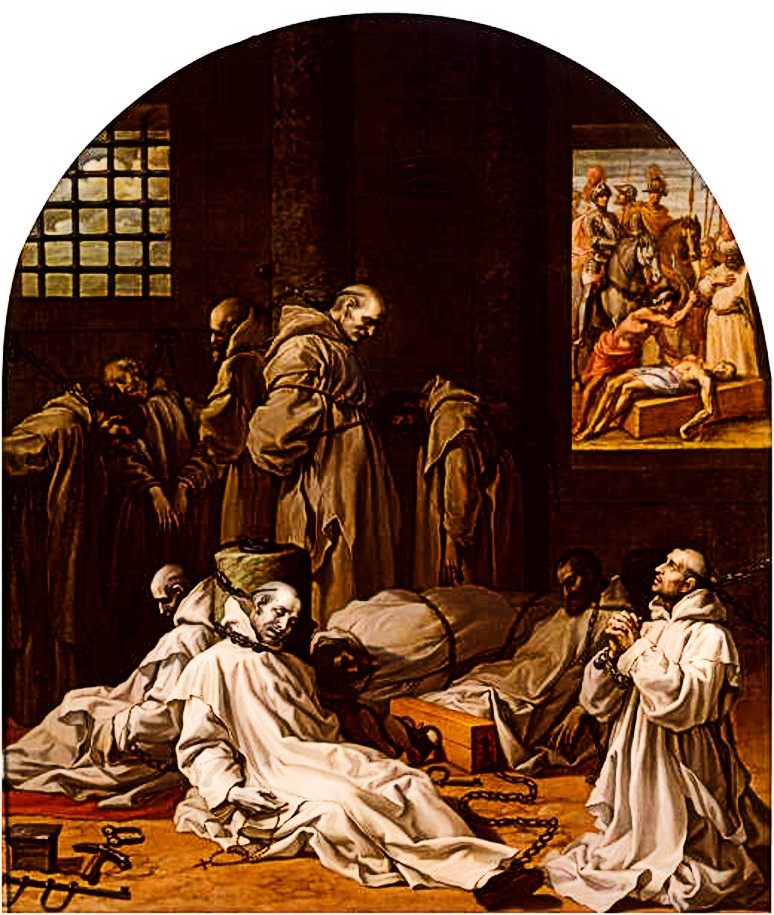
Meanwhile, Thomas Bedyll, one of the Royal Commissioners, had again visited the Charterhouse and endeavoured, both by conversation and writing, to shake the faith of Middlemore and his community, in the Papal supremacy. His efforts left them unmoved and, after debating with them, he obtained authority from Thomas Cromwell to arrest three leading Monks of the London House: Middlemore, as the Vicar and with him ,Doms William Exmew and Sebastian Newdigate. All three were thrown into prison, where they were treated with cruelty, being bound to posts with chains round their necks and legs and compelled to remain thus day and night for two weeks. They were then brought before the Council and required to take the Oath. They refused and gave arguments from Scripture and the Church Fathers in favour of the Pope and his supremacy over the Church of Christ.
They were accordingly condemned to death and executed at Tyburn Tree on 19 June, being hanged, drawn and quartered. This was a little more than a month after their fellow Monks. This process of attrition was to claim fifteen of the London Carthusians.
Pope Leo XIII Beatified Blessed Humphrey on 29 December 1886.
Part of a stained glass window in St. Mary’s Roman Catholic Church in Bridge Gate, Derby
Sts Adleida and Lupo of Bergamo Married Martyrs Bl Arnaldo of Liniberio St Culmatius of Arezzo St Deodatus of Jointures St Deodatus of Nevers St Gaudentius of Arezzo
St Hildegrin of Châlons-sur-Marne Bishop St Hildemarca of Fecamp (Died c682) Abbess Blessed Humphrey Middlemore O.Cart. (Died 1535) Priest, Martyr St Innocent of Le Mans St Lambert of Saragossa Layman Martyr St Lupo of Bergamo St Modeste Andlauer St Nazario of Koper Bl Odo of Cambrai St Rémi Isoré Bl Sebastian Newdigate Bl Thomas Woodhouse Bl William Exmew St Zosimus of Umbria
Thought for the Day – 18 June – Meditations with Fr Richard Frederick Clarke SJ (1839-1900)
HUMILITY Meditations for a Month
Humility and Curiosity
Curiosity at first sight does not seem to have any direct bearing on humility but, in point of fact, it is very injurious to humility. Those who pry into matters which do not concern them, will find this eagerness after unnecessary information, very injurious to their humility. It is opposed to the quiet, peaceful temper of one, who does his own work ,without concerning himself with that of others. It leads to criticism, the habit of rash judgement and a dissatisfaction with what goes on around us. It makes the mind dissipated and unsettled and fosters an unhealthy activity outside our own sphere of duty.
Curiosity does not mean we should not be eager for knowledge but, not for knowledge which does not, directly or indirectly, help forward the work which God has given us to do. What are the affairs of our neighbours to us? We say, perhaps that to know them, will increase our influence. It certainly will not increase our influence for good. It may puff us up with an idea of our own importance and make us believe that others admire us for it but, to know too much, is not only most dangerous to our humility but, it alienates others from us and makes them fear and dislike us.
Curiosity is one of the effects of pride. In Eve, it was the immediate effect of her sin of pride. Before she had indulged a rebellious thought against God, she had no wish for knowledge which God had forbidden. It is often the stepping-stone from pride to other sins — to evil speaking, to luxury, to greediness, to lying and, above all, to the weakening of faith and hope. Examine yourself as to whether you indulge in this dangerous habit of curiosity?
One Minute Reflection – 18 June – “The Month of the Sacred Heart of Jesus” –“The Harp of the Holy Ghost!” Father & Doctor of the Church, Confessor – 2 Timothy 4:1-8; Matthew 5:13-19 – Scripture search here: https://www.drbo.org/
“Neither do men light a candle and put it under a bushel but upon a candlestick that it may shine to all in the house.” – Matthew 5:15
REFLECTION – “Men do not light a candle and put it under a bushel …” Through these words, Jesus again encourages His disciples to lead an irreproachable life, by advising them to watch over themselves constantly because, they are placed in the sight of all humankind, like athletes in a stadium, who are seen by the whole world (1 Cor 4:9).
He told them: “Do not say to yourselves: ‘Now we can stay here quietly sitting, we are hidden in a little corner of the world,’ for you will be visible to all humankind, like a City on top of a mountain (Mt 5:14), like a light in the house which has been placed on the lamp stand … I have lit the light of your torch but it is up to you to see it is kept burning, not just to your personal advantage but also, in the interest of all who will see it and who, through it, will be led to the Truth. The worst wickedness would not put a shadow over your light, if you live with the vigilance of those who are called to bring the whole world to good. So, let your life correspond to the holiness of your mission, so that God’s grace may be proclaimed everywhere.” – St John Chrysostom (347-407) Father and Doctor of the Church (Homilies on St Matthew’s Gospel No 15).
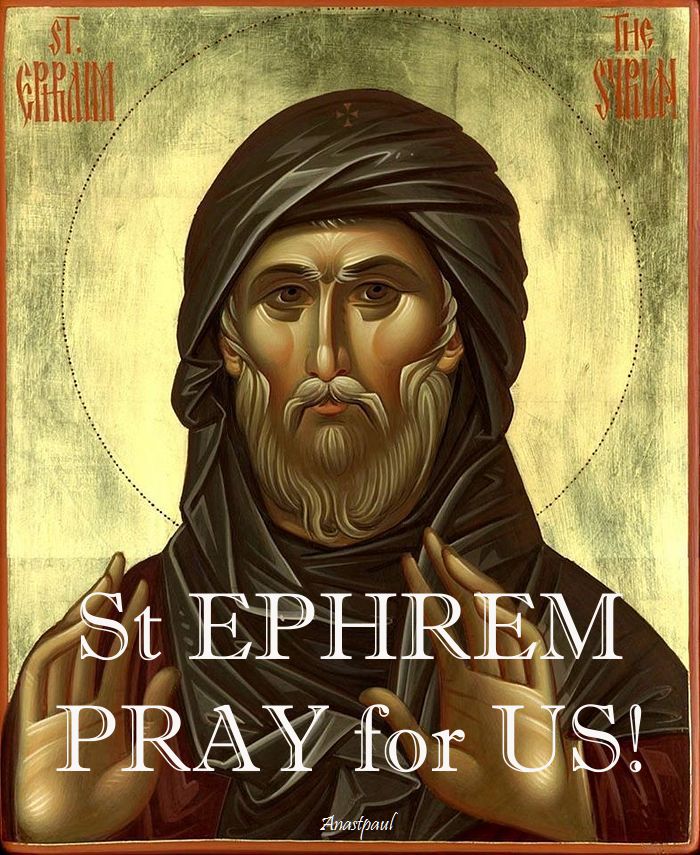
PRAYERS – O God, Who willed to enlighten Thy Church by the wondrous learning and glorious merits of the life of blessed Ephrem, Thy Confessor and Doctor, we humbly pray Thee that, by his pleading, Thou will shield her with Thy lasting power, against the snares of error and evil. Through Jesus Christ, Thy Son our Lord, Who lives and reigns with Thee, in the unity of the Holy Ghost, God, world without end. Amen (Collect).
MAY the Heart of JESUS in the most Blessed Sacrament be praised, adored and loved with grateful affection, at every moment, in all the Tabernacles of the world, even to the end of time. Amen.Indulgence 100 Days, Once a day. Raccolta 161 Blessed Pius IX, 29 February 1868.
Our Morning Offering – 18 June – “The Month of the Sacred Heart of Jesus” –
May the Heart of Jesus be the King of My Heart! By St Francis de Sales (1567-1622) Doctor of Charity
May Thy Heart dwell always, in our hearts! May Thy Blood ever flow, in the veins of our souls! O Sun of our hearts, Thou give life to all things, by the rays of Thy goodness! I will not go, until Thy Heart has strengthened me, O Lord Jesus! May the Heart of Jesus be the King of my heart! Blessed be God forever! Amen
Saint of the Day – 18 June – Saint Abraham of Clermont (Died c479) Abbot and Founder of the Monastery of St Cyriacus in Clermont-Ferrand, Hermit, Miracle-worker. Born in 5th Century Syria and died in c479 of natural causes in his Monastery in France. Patronage – against fever. Also known as – Abraham the Abbot.
Ancient Monks with an old Abbot
Abraham was born in Syria, along the Euphrates River and was of Persian origins. He later left for Egypt, to visit some of the hermits and Monks there, seeking knowledge of monastic life and rules. However, on the way to Egypt, he was kidnapped and held prisoner for five years.
Finally. he managed to escape and ardously travelled to Gaul (France). He settled in Clermont in the Auvergne region as a Hermit. His reputation for holiness spread rapidly and he attracted so many disciples that he needed to build a Monastery to house them, near the Basilica of Saint Cyricus not far from St Illidius Church in Clermont.
He died around 479. St Apollinaris Sedonius, the Bishop of Clermont wrote an Epitaph on the grave of St Abraham from which we have been granted confirmation of some facts concerning our Saint’s life.
St Alena of Dilbeek St Amandus of Bordeaux St Arcontius of Brioude St Athenogenes of Pontus St Calogero of Sicily St Calogerus of Fragalata St Calogerus the Anchorite St Colman mac Mici St Cyriacus of Malaga St Demetrius of Fragalata St Edith of Aylesbury
St Elpidius of Brioude St Equizio of Telese St Erasmo St Etherius of Nicomedia Bl Euphemia of Altenmünster St Fortunatus the Philosopher St Gerland of Caltagirone St Gregory of Fragalata
St Osanna of Northumberland St Osmanna of Jouarre St Paula of Malaga Bl Peter Sanchez
Hermits of Karden: A father (Felicio) and his two sons (Simplicio and Potentino) who became pilgrim to various European holy places and then hermits at Karden (modern Treis-Karden, Germany). (Born in Aquitaine (in modern France. ) Their relics transferred to places in the Eifel region of western Germany at some point prior to 930. They were canonised on 12 August 1908 by Pope Pius X (cultus confirmation).
Martyrs of Ravenna – 4 Saints: A group of four Christians Martyred together. We have no details but their names – Crispin, Cruciatus, Emilius and Felix. They were martyred in Ravenna, Italy, date unknown.
Martyrs of Rome – 3 Saints: Three Christians Martyred together . We have no details but their names – Cyriacus, Paul and Thomas. In Rome, Italy, date unknown.
Martyrs of Tripoli – 3 Saints: Three imperial Roman soldiers, at last two of them recent converts, who were imprisoned, tortured and executed for their faith. Martyrs – Hypatius, Leontius and Theodulus. They were Greek born and they died c135 at Tripoli, Phoenicia (in modern Lebanon).
You must be logged in to post a comment.