Blessed Delphine, also known as Delphina, was born in 1284 in region of Provence, now part of France. She died on 26 November 1358, having lived as a Franciscan tertiary for most of her life. Delphine was the daughter and heiress of the Count of Puy-Michel. Left an orphan in her infancy, she was placed under the guardianship of her uncles, and was brought up under the direction of her aunt, who was the abbess of the Convent of St. Catherine of Sorps, at Bauduen. As a young girl, she took a vow of virginity.
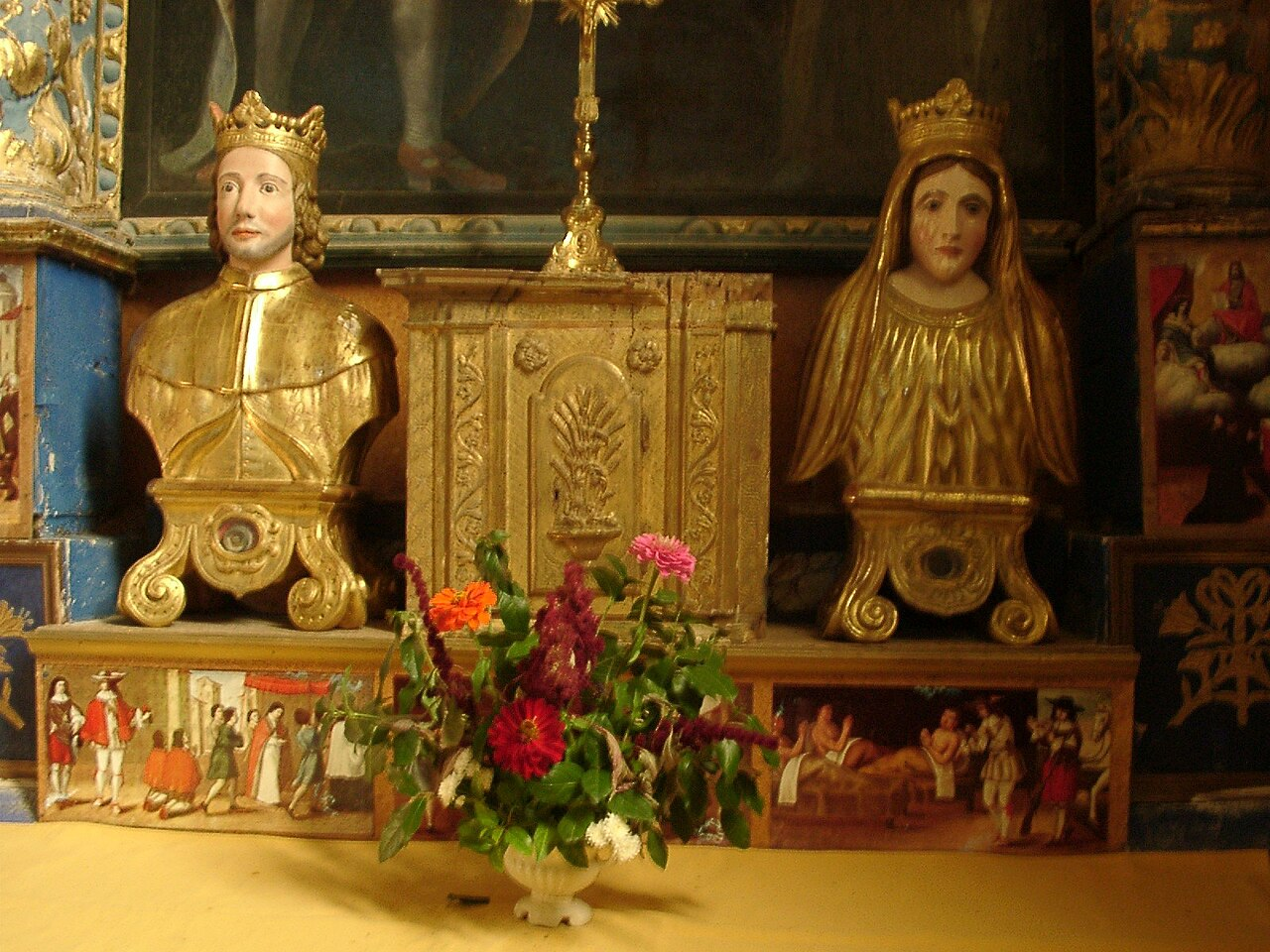
Reliquaries of St. Elzéar and Bl. Delphine in the Franciscan church of Ansouis, France
Despite her vow, at the age of twelve she was espoused to the ten-year-old Elzéar, Count of Sabran. They were married three years later at the castle of Puy-Michel. Having grown up together, they regarded each other as brother and sister, rather than husband and wife. Inspired by her example, her husband also took a vow of celibacy, which both honored throughout their married life.
Elzear took his place as a trusted aide at the court in Aix-en-Provence. The couple, having both received the habit of the Third Order of St. Francis, lived together at their castle in Ansouis in the practice of prayer, penance and charity towards the poor. After seven years, they moved to Puy-Michel. When Elzear had to go to Naples to see to some inherited property, they kept up a regular correspondence.
Elzear died on an errand to Paris in the interests of the king. Delphina wept bitterly when she heard the news. Nevertheless she prayed:
“My God, may Thy most holy will be done!”
Urged by the spirit of God toward still greater perfection, Blessed Delphina presently renounced all temporal goods and added to her vow of chastity the vow of holy poverty and retired first to Naples and then to Cabrières, which was the location of the castle where her husband had born. She finally returned to Apt where her husband had been buried. Upon her death, she was buried with him in the church of the Friars Minor there, wearing the habit of the Order.
The veneration that had begun to be given to Delphine was confirmed by Pope Urban V, godson of Elzéar, who canonized her husband at that time.
September 27: Our Lady of Happy Assembly, Le Laus, France (1664)
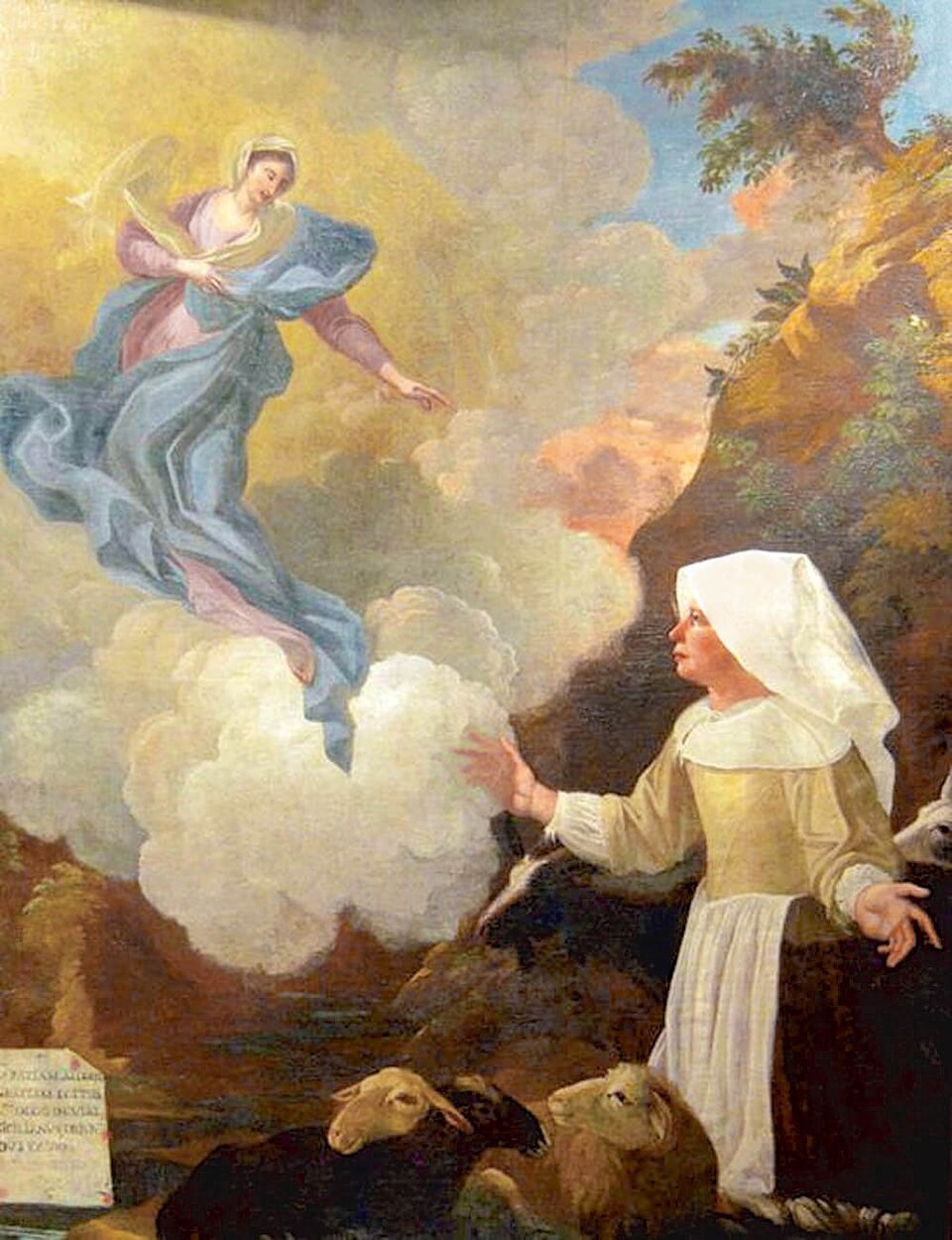
Le Laus is a little village in southeastern France, 60 miles to the southeast of Grenoble. The story of Mary’s shrine there centers around a young woman named Benoite Rencurel, who was born on September 29, 1647 of humble parents in the little village of Saint Etienne, not far from Le Laus. Her father died when she was seven and after his death her mother found life rather difficult. So, when Benoite was 12, she went to work on a neighboring farm, tending the farmer’s sheep. Each day while the flock grazed she spent a few minutes praying to the Blessed Virgin at a little wayside chapel.
One day, in 1664, Benoite led her little flock into a small valley near Saint Etienne and there toward the end of the afternoon, a Lady and Child appeared to her, standing on top of a rock, a large rock, known locally as Les Flours. The Lady did not speak to Benoite, but smiled in a very friendly way and after a few minutes Lady and Child vanished. However, similar apparitions continued almost daily for two months. Of course, rumors of what was occurring gradually spread around the neighboring countryside.
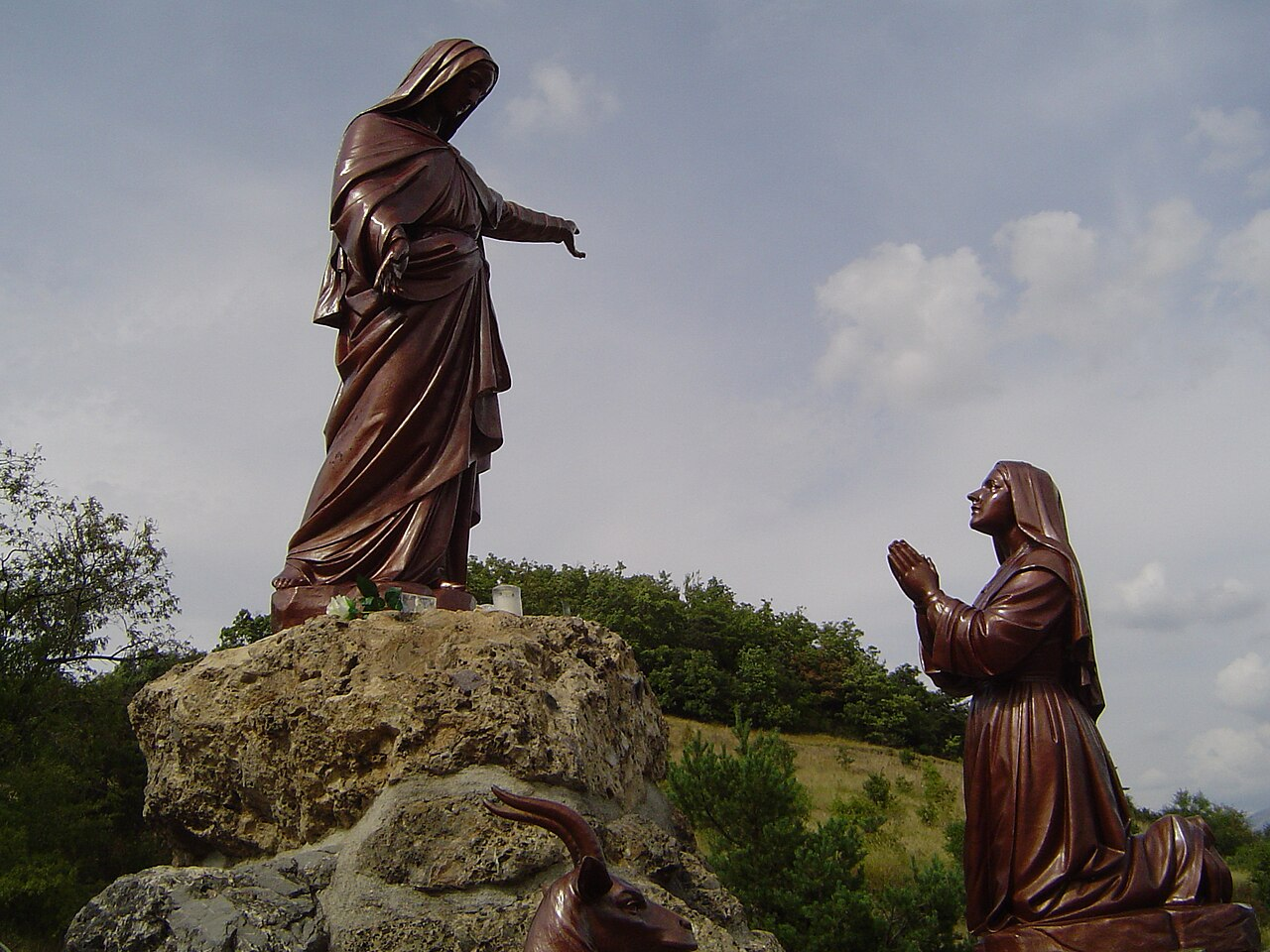
The Monument of Pindreau, in Saint-Étienne-le-Laus, depicting the apparition of the Virgin Mary to Benoîte Rencurel.
Finally, M. Grimaud, a district magistrate, questioned Benoite at length and suggested that if the lady appeared again, Benoite should ask her who she was. The girl agreed; on the very next day the Lady appeared, she asked her to please say who she was – was she the Mother of God? The Lady answered:
“Yes, I am Mary, the Mother of Jesus. My Son wishes to be especially honored in this valley, but not on this spot.”
With these words she vanished. Benoite did not see her again for a few days. On September 29, while tending her flock at another pasture, Pindreau, a very brilliant light suddenly appeared on top of some rocks. In the center of the light stood the Blessed Virgin. She told Benoite to go to Le Laus, where she would find a little chapel, filled with a delicious perfume, and there she would also see her. Benoite soon found herself at the little chapel of Our Lady of Good Meeting or Happy Assembly (Notre-Dame de Bon Recontre) and going in, she saw the Blessed Virgin over the high altar, on which stood her image. And the Virgin said to Benoite,
“On this spot I wish a church built – a privileged sanctuary, wherein many sinners will repent. Means will not be wanting, despite the poverty of the country people around.”
The news of this event soon spread; crowds came to the little chapel, which was too small to contain them. So, in 1665, Msgr. Lambert, Vicar General of the Archdiocese, gave permission for a church to be built over the little chapel.
Since there was very little money available with which to hire workmen, the villagers and peasants for miles around carried the stones and built the walls for Our Lady of Happy Assembly – aided by the many pilgrims who came to worship and remained a while to help in the building of the church.
In 1692, during an invasion by the Duke of Savoy the church was partly destroyed, but the statue of Our Lady of Happy Assembly was not damaged. The church was soon repaired and restored. In 1716 a new statue of the Virgin was carved and enshrined behind the main altar of the church. It is said that Benoite wished the new statue to be named Our Lady of Happy Assembly of Laus. The original statue was transferred to a chapel behind the main altar. In 1885 Pope Pius IX gave official recognition to the title of Our Lady of Laus of Happy Assembly, when he ordered the new statue to be solemnly crowned. Benoite Rencurel died on December 28, 1718, and was buried in a vault in front of the altar in the church at Le Laus.
For 54 years, the Virgin Mary continued to appear to Benoîte throughout her life. Benoîte became a Dominican Tertiary and was called “Sister Benoîte”. She was given by Mary the mission to welcome the pilgrims. Benoîte was also given the gift of reading souls, to help the pilgrims make good confessions to the priests, by making them know their sins, remember the forgotten ones, and confess them and repent. There have been many testimonies saying that a heavenly perfume would fill the church every time Mary would appear to Benoîte. In addition to Marian apparitions, Benoîte also had apparitions of angels, several saints, and mystical experiences such as visions of Paradise.
Between 1669 and 1684, she was also granted the vision of the crucified Christ on the cross of Avançon five times. On a Friday in July of 1673, according to Benoîte, Jesus on the cross told her: “My daughter, I show myself in this state so that you can participate in my Passion.” United with Him, she lived a “mystical crucifixion” every Friday for several years and bore stigmata.
French philosopher and theologian Jean Guitton said, “The Shrine of Laus is one of the most hidden and also most powerful treasures in the history of Europe.”
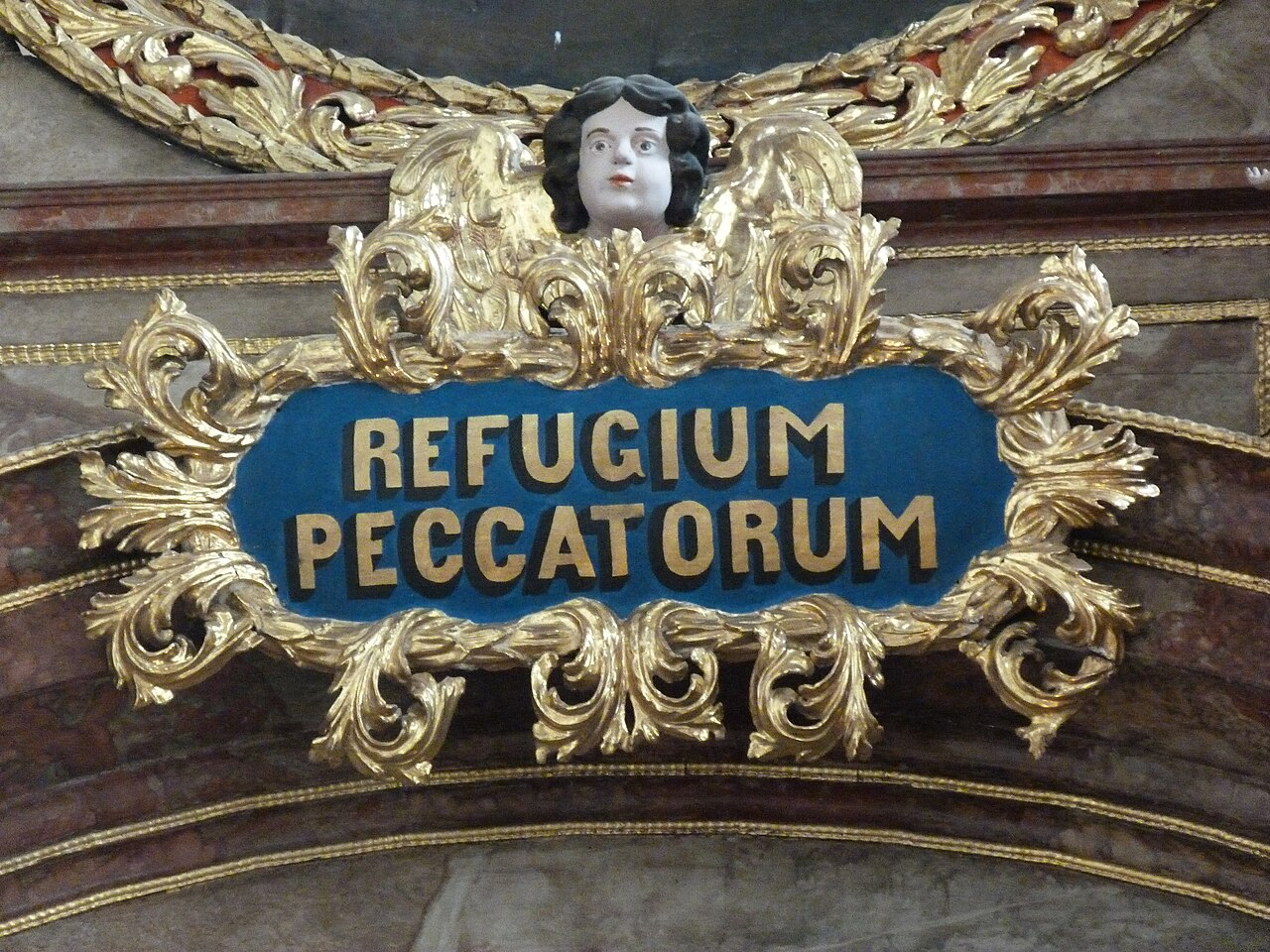
Refugium Peccatorum/ Refuge of Sinners
St Vincent de Paul CM (1581-1660) (Memorial) Known as the “Great Apostle of Trumpets” – Priest, Founder, Apostle of Charity, Doctor of Canon Law, Reformer of Society and Priests, Founder of Hospital and Orphanages. Born on 24 April 1581 near Ranquine, Gascony near Dax, southwest France – the Town is now known as Saint-Vincent-de-Paul, Landes, France. His body is incorrupt.
St Adheritus St Adolphus of Cordoba St Antonio de Torres St Barrog the Hermit
St Ceraunus of Paris St Chiara of the Resurrection St Deodatus of Sora Saint Delphina of Glandenes St Elzear of Sabran TOSF (1285-1323) Layman, Member of the Third Order of St Francis St Epicharis St Fidentius of Todi St Florentinus the Hermit St Gaius of Milan St Hilary the Hermit St Hiltrude of Liessies Bl Jean-Baptiste Laborie du Vivier St John of Cordoba
Blessed Lorenzo of Ripafratta OP (c 1373-1456) Dominican Priest and Friar, Penitent, Vicar General, Teacher, Reformer, brilliant Preacher and Spiritual director – known as “the Ark of Science.”
St Marcellus of Saint Gall St Terence of Todi — Martyrs of Aegea – (3 saints)
Martyred in the Spanish Civil War: • Blessed Crescencia Valls Espí • Blessed Herminia Martínez Amigó de Martínez • Blessed José Fenollosa Alcaina • Blessed Maria Carme Fradera Ferragutcasas • Blessed Maria Magdalena Fradera Ferragutcasas • Blessed Maria Rosa Fradera Ferragutcasas
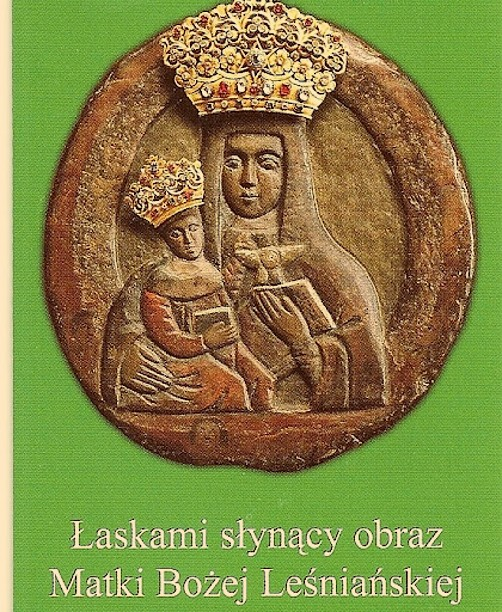
Matka Boża Leśniańska / Blessed Mother of Leśna, Leśna Podlaska, Biała Podlaska, Lublin, Poland (1683) – 26 September:
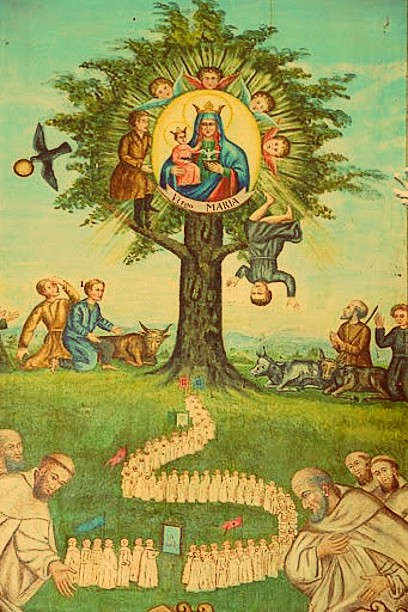
The Leśnia Sanctuary begins on 26 September 1683. On that day, two shepherds – Miron Makaruk and Aleksander Stelmaszuk – looking for the lost cattle in the bushes, noticed a stone image of the Mother of God hanging on a wild pear tree, which gave an extraordinary glow. Wanting to take the painting off, one of the bravest young men climbed the tree but each time fell to the ground. The local inhabitants, seeing what was happening, began to pray fervently. Soon, Zabłocki’s elders from nearby Bordziłówka arrived and only he, as an unusually prayerful man, took the painting off the tree. Droplets of “sweat” appeared on the image and this phenomenon continued for a long time. Then the painting was taken to the manor in Bukowice.
This extraordinary find deeply touched the religious and secular authorities of the time. Soon a wooden Church was erected on the site of the appearance of the Image. On 26 September 1695, a Parish was established in Lesna. From the very beginning, the Image attracted crowds of believers who experienced many favours thanks to the Blessed Mother, especially cures of illnesses. The Bishop of Lutsk, Franciszek Prażmowski, issued a decree in 1700, in which he stated that the appearance of the Image should be considered miraculous.
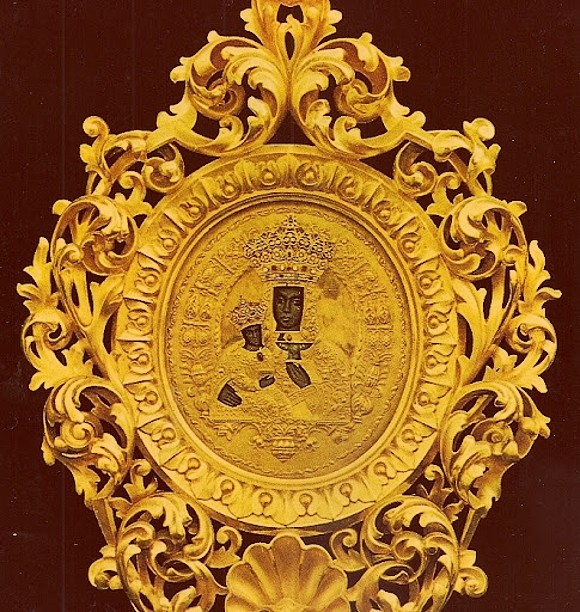
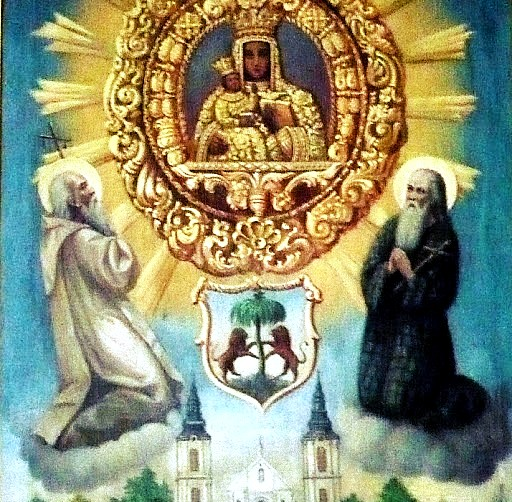
In the Lesnian Image, Mary is presented, embracing the Child Jesus with her right arm. The Child Jesus is holding the book with his right hand and his left hand is raised up in a gesture of teaching. Mary, standing in half-figure, is facing the viewer. In her left hand she holds an open book, on which, with outstretched wings, a dove – a symbol of the Holy Spirit – is supported. The figure of the Mother of God is covered with a coat.
The image of the Mother of God is a relief carved in field stone. The dimensions of the Image are: width 29.3 cm, height 31.4 cm, thickness 4.6 cm, weighs 9.5 kg.
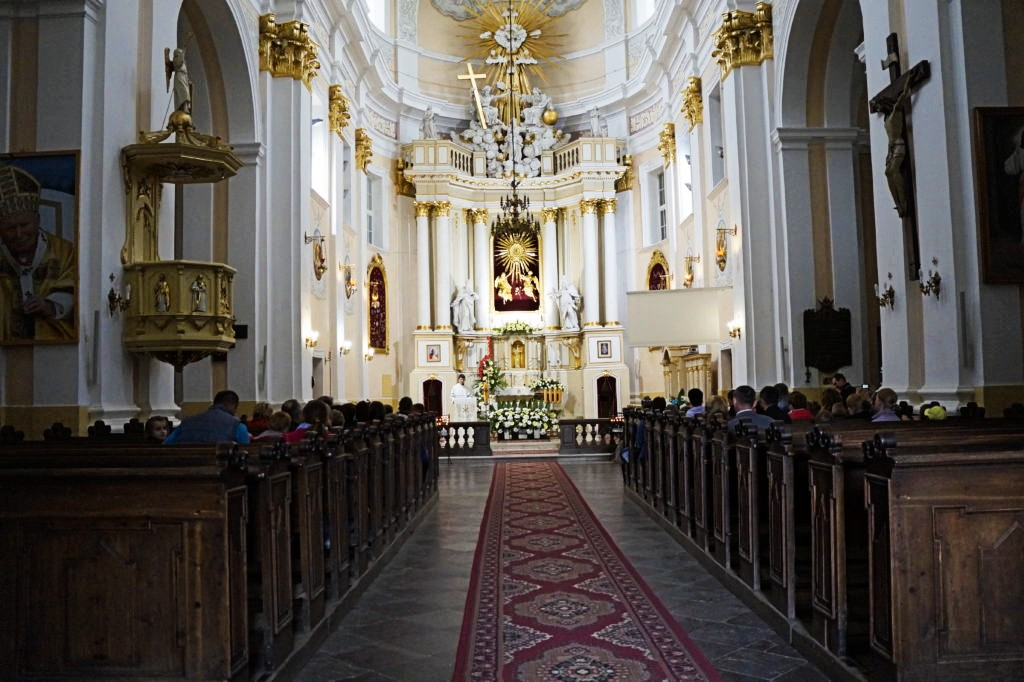
On the site of the appearance of the Image of the Mother of God in 1718. a small Church was built. It exists to this day and is called the “Chapel of the Appearance of the Miraculous Image.” In 1727, the Parish of Leśna and the care of the Miraculous Image were taken over by the Pauline Fathers from Jasna Góra. They began the construction of a magnificent Church, which was erected in the years 1731 – 1758. It was consecrated under the invocation of the “Nativity of the Blessed Virgin Mary and the Holy Apostles Peter and Paul” on 8 September 1758. Huge crowds of the faithful of the Latin and Uniate rite were drawn to the Leśnia Sanctuary.
The situation changed with the partitions of Poland, when Leśna found itself under the Russian partition. After the fall of the January Uprising, the Lesnian Sanctuary found itself in a desperate situation. As part of the repression for helping the insurgents, on the night of 27-28 October 1864 , the Pauline Fathers were deported from Leśna. It was then, that the Bishop of Janów, Beniamin Szymanski, ordered to secretly take out the Miraculous Image and put a copy in its place. It was done in 1865. Soon the tsarist government abolished the Podlasie Diocese. The exiled Bishop took the Miraculous Picture with him to Łomża. He put it in the Church of the Benedictine Sisters. In 1875, the Church in Leśnia was taken over for the purposes of the Orthodox Church. Then the pilgrimages stopped. In 1889, an Orthodox nunnery was established in Lesna. It was to become the centre of Russification of Poles. In 1905 Tsar Nicholas II came to Lesna, whose relative was the superior of the nuns of Leśna. After the outbreak of World War I, the sisters left Leśna and took with them a copy of the painting of the Mother of God, still being firmly convinced that it was the original painting.
On 16 August 1915, the temple in Leśnia returned to Catholic worship. On 25 May 1919 . The Pauline Fathers returned to Lesna and immediately began renovation works in the Sanctuary. First of all, the search for the Miraculous Picture began, which was not found until 5 May 1926 in Łomża. It happened thanks to Fr. Aleksander Łaziński. After the canonical trial conducted by Bishop H. Przeździecki, the Miraculous Image returned in a triumphant parade from Siedlce to Leśna on 25 September 1927. It was a great celebration for the entire Podlasie Diocese and over 25,000 people attended this event. In the interwar period, the Pauline Fathers decorated the Sanctuary. They looked after the pilgrims who were again in large numbers at the feet of their Lesnian Mother.
In 1939, the difficult time of the Nazi occupation began. In the fall of 1940, the Germans occupied the Monastery and expelled the Pauline Fathers. After the war, in 1951, under the direction of the Prior – Father Jerzy Tomziński, the Church received a Pulpit and an Organ.
On 18 August 1963 , the Primate of Poland, Cardinal Stefan Wyszyński, together with the Bishop of Podlasie, Ignacy Świrski, crowned the Miraculous Image with papal crowns. From 11 to 12 June 1970, Cardinal Karol Wojtyła stayed in Leśna. On 25 September 1977, the 50th anniversary of the return of the Miraculous Image was solemnly celebrated. In 1983, the solemn celebrations of 300 years of the appearance of the Miraculous Image took place and in 1984 the Church in Leśnia was elevated to the rank of a Minor Basilica. In 1992, a break-in was made to the temple in Leśnia and attempts were made to steal the golden crowns from the Miraculous Image. In 1995, the 300th anniversary of the establishment of the Parish in Leśna Podlaska was celebrated. This time the ceremony was presided over by the Primate of Poland, Cardinal Józef Glemp. In 1996, works on frescoes and paintings in the Basilica began and they were completed in 2002. On 26 September 2019, the Leśnia Sanctuary celebrated the 100th anniversary of the return of the Pauline Order to Leśna Podlaska.
St Cosmas(Optional Memorial) St Damian(Optional Memorial) (Died c 286 ) Martyrs. Twin brothers and Physicians, Apostles of Charity, Evangelists – born in the 3rd century, of Arabic descent and died by being tortured, without suffering any injury and finally they were beheaded c 286 in Aegea, Cilicia (modern Ayas, Turkey). The Martyr twins are remembered in the Roman Canon of the Mass in the prayer known as the Communicantes (from the first Latin word of the prayer). They are also recalled in the Litany of the Saints and in the older form of the Roman rite, in the Collect for Thursday in the Third Week of Lent, as the Station Church for this day is Santi Cosma e Damiano.
St Nilus the Younger (910-1005) Abbot and Confessor and Founder of Italo-Greek Monasticism in southern Italy.. St Nilus was a charismatic leader and leading spiritual personality of his time.
St Senator of Albano St Vigilius of Brescia — Martyrs of Korea – 12 saints: Twelve lay people in the apostolic vicariate of Korea who were imprisoned, tortured and martyred together in the persecutions in Korea. • Saint Agatha Chon Kyong-Hyob • Saint Carolus Cho Shin-Ch’ol • Saint Catharina Yi • Saint Columba Kim Hyo-Im • Saint Ignatius Kim Che-Jun • Saint Iulitta Kim • Saint Lucia Kim • Saint Magdalena Cho • Saint Magdalena Ho Kye-Im • Saint Magdalena Pak Pong-Son • Saint Perpetua Hong Kum-Ju • Saint Sebastianus Nam I-Gwan They were beheaded September 1839 in Seoul Prison, South Korea and Canonised on 6 May 1984 by St Pope John Paul II.
Martyred in the Spanish Civil War: • Blessed Amalia Abad Casasempere de Maestre • Blessed Andreu Felíu Bartomeu • Blessed Antonio Cid Rodríguez • Blessed Josefa Romero Clariana • Blessed Manuel Legua Martí • Blessed María Jord´ Botella • Blessed Pau Castell´ Barber´ • Blessed Teresa Rosat Balasch
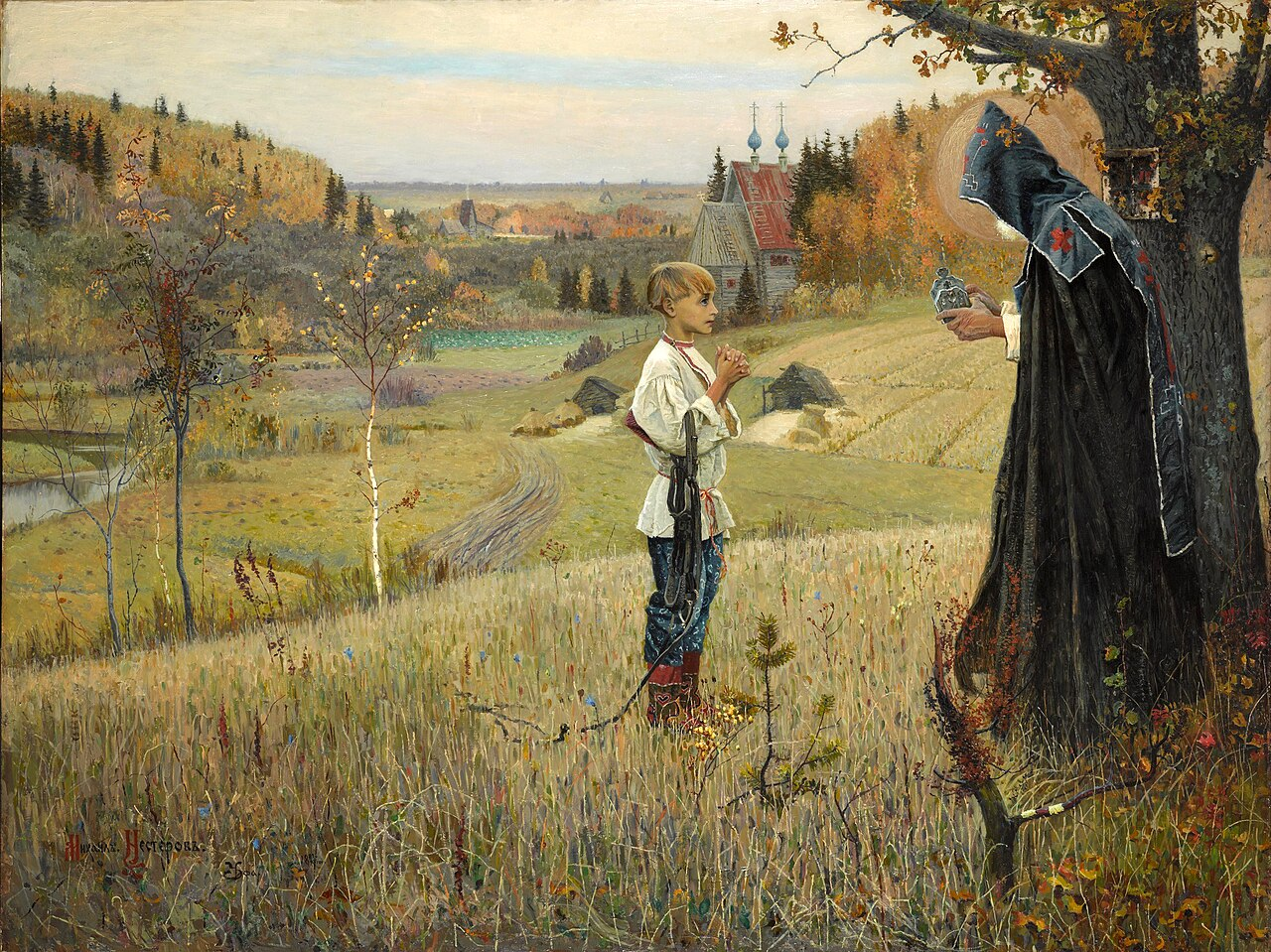
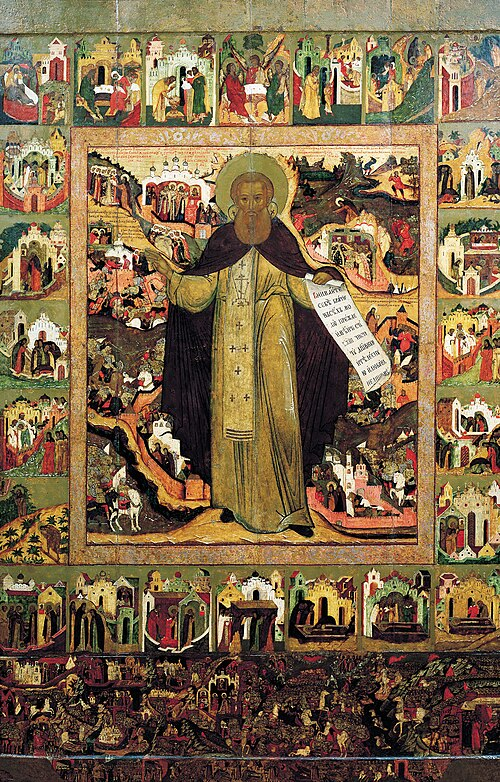
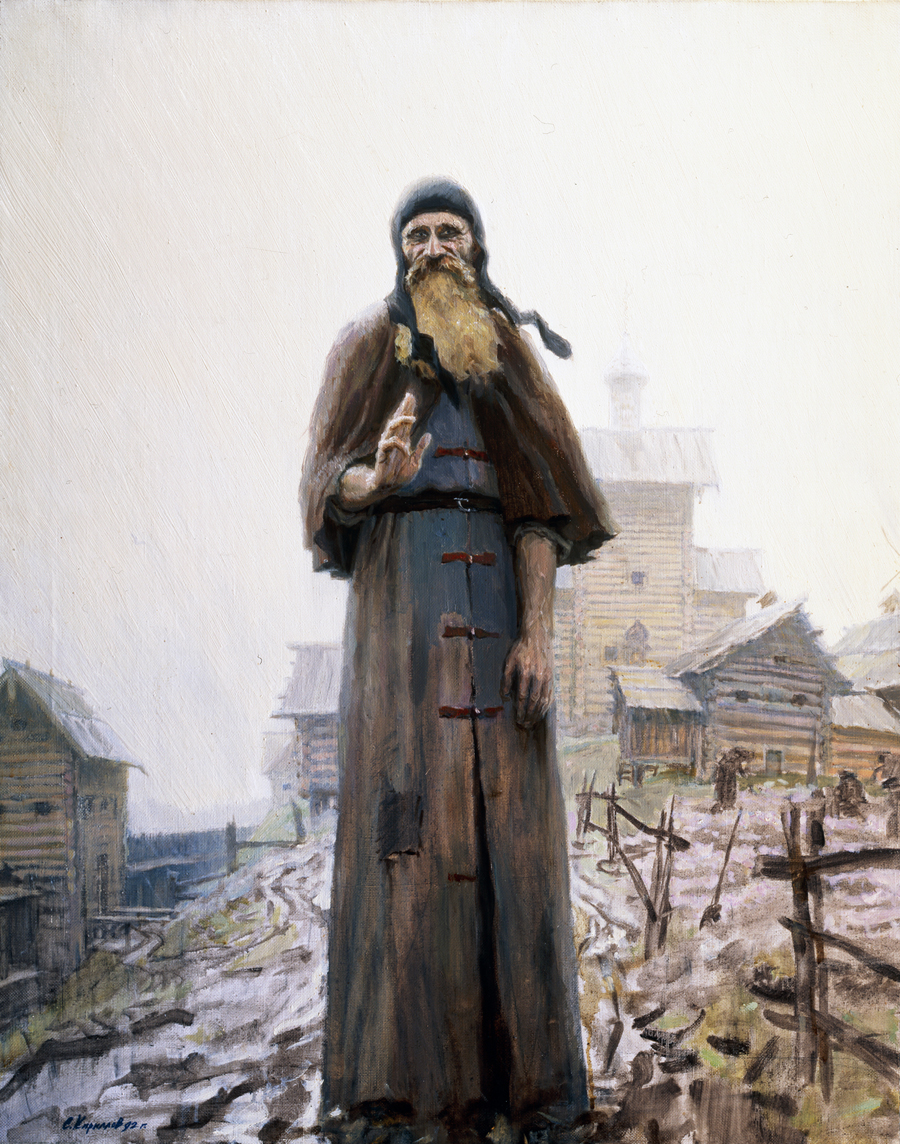
Saint Sergius of Moscow, also known as Sergius of Radonezh and Bartholomew of Radonezh, was a Russian (Eastern Catholic) monk. Born to nobility in 1314, Bartholomew, although intelligent, had great difficulty learning to read. This affliction was only removed from him when an angel disguised as a holy man gave him a piece of holy bread. When the Rostov principality fell into the hands of Ivan I of Moscow, his parents Kirill and Maria became impoverished and moved to the village of Radonezh together with their three sons, Stefan, Bartholomew and Peter.
Vison of St Bartholomew
Upon his parents’ death, Bartholomew went to Khotkovo near Moscow, where his older brother Stefan was a monk. He persuaded Stefan to find a more secluded place to live the ascetic life. In the deep forest at Makovets Hill they decided to build a small monastic cell and a church dedicated in honor of the Trinity.
As Sergius’s reputation for holiness spread, he attracted so many students that he founded the Holy Trinity monastery for them; following his ordination at Pereyaslav Zalesky, he served as its first abbot. His brother joined the monastery, but when he opposed Sergius’s strict rule, Sergius left the community to live again as a hermit. However, the monastery began to decline, causing the metropolitan of Moscow to order Sergius to return as abbot. Advisor to the Prince of Moscow, he encouraged the campaign that ended with the Battle of Kulikovo in 1380 which ended the Mongol domination of Russia. In the Russia that followed he founded forty monasteries. Metropolitan Alexius, Metropolitan of Moscow asked Sergius to become his successor but Sergius declined, preferring to remain a simple monk rather than be a bishop
Late in life he resigned his position and retired to live his last few months as a prayerful monk. He died on 25 September 1392 at the Trinity Lavra of Saint Sergius of natural causes. He is venerated as the foremost saint of Russia.
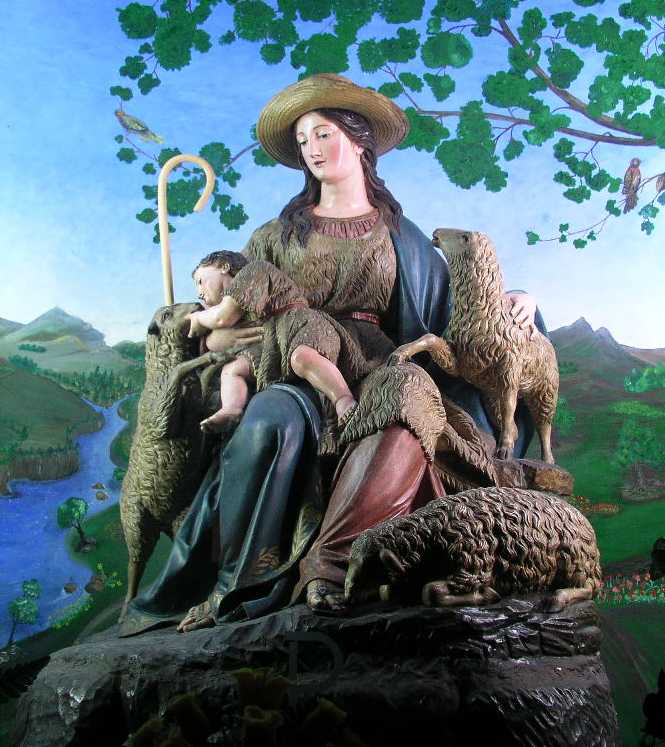
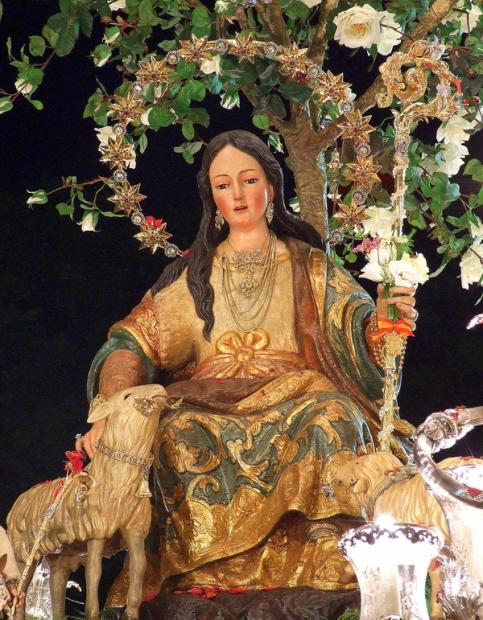
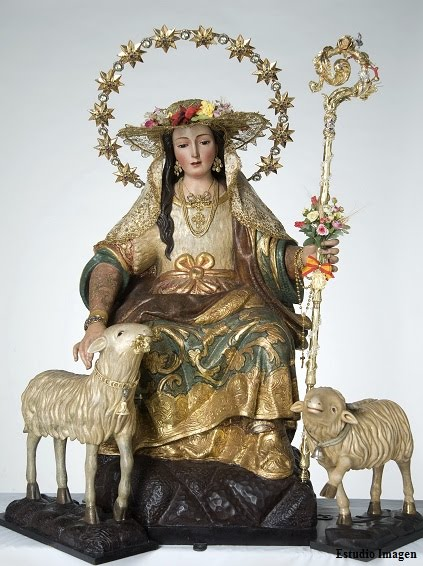
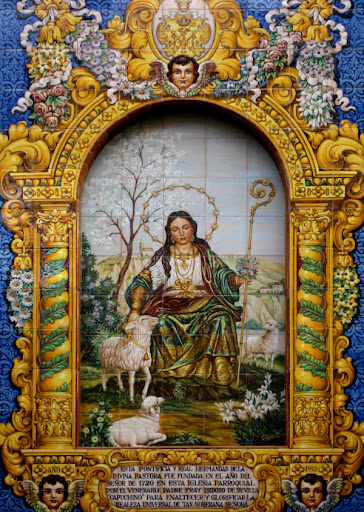
Divina Pastora de las Almas ‘ The Divine Shepherdess of Souls, Cantillana, Sevilla, Andalucía, Spain (1703)
St. Isidore of Seville (560-636) Bishop of Seville, Father and Doctor of the Church, spread devotion to the Divine Shepherdess of Souls. The first image of the Divina Pastora in Cantillana was a banner, attributed to the painter Germán Llorente, carried in Rosary.
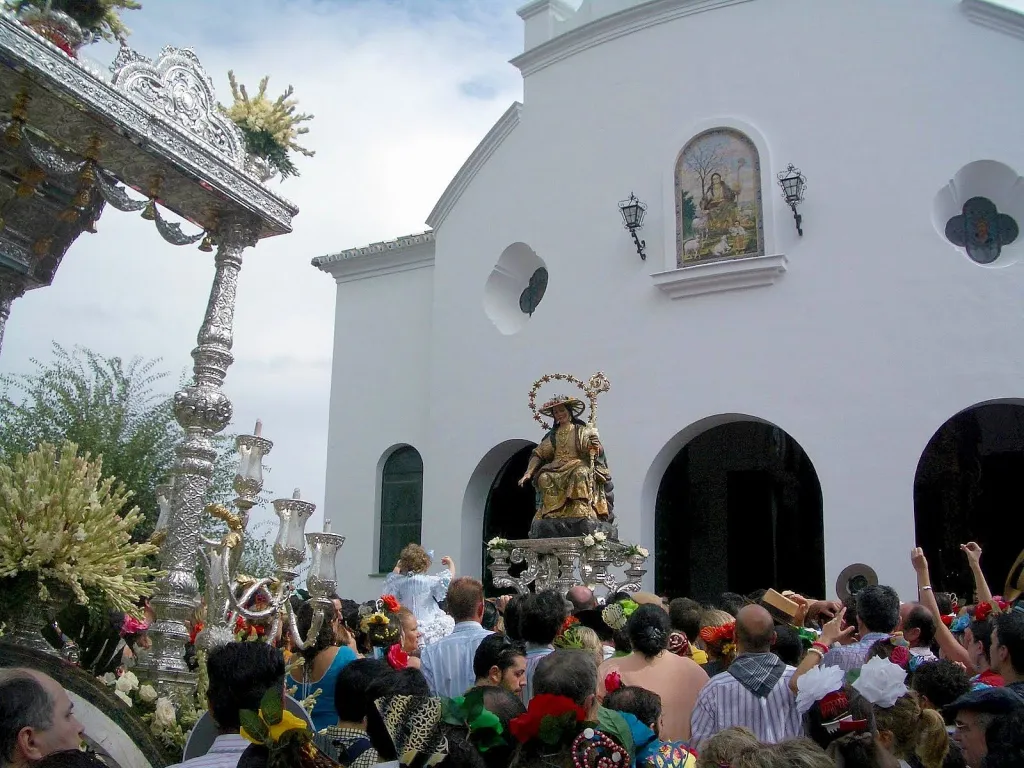
In 1800 a yellow fever epidemic ravaged the area,but Cantillana was largely spared, for which people thanked the Divine Shepherdess of Souls. Soon thereafter, the Hermandad de la Divina Pastora was chartered, a Rosary apostolate or brotherhood. The Brotherhood’s processional image is a seated statue, attributed to Francisco Antonio Ruiz Gijón (1653-1705).
For special occasions, of which there are many, she wears a large sombrero. On 31 August, a grand procession fetches the Statue from its Sanctuary into the Town, for celebrations leading up to the fiesta from 8 September. On the last weekend in September, with equal splendour and devotion, the Divine Shepherdess returns to her Shrine. A procession accompanies her canopied float on Saturday. On Sunday, there is Mass and music and then an all-night exposition of the Statue with devotions lasting into Monday morning.
St Anacharius of Auxerre St Aurelia of Macerata St Caian of Tregaian St Ceolfrid St Cleopas St Egelred of Crowland St Ermenfridus of Luxeuil
St Firminus of Amiens St Fymbert St Herculanus the Soldier
Blessed Herman of Reichenau/the Cripple (1013–1054) Benedictine Monk, Confessor, Scholar, Scientist, Writer, Hymnist, Poet, Musical Composer, Teacher. In his own day, the heroic cripple who achieved learning and holiness was called ‘The Wonder of His Age.’. Composer of the “Salve Regina” Hail Holy Queen, “Veni Sancte Spiritus” Come Holy Spirit and “Alma Redemptoris Mater” amongst many others.
Bl Marco Criado St Mewrog St Neomisia of Mecerata St Paphnutius of Alexandria St Principius of Soissons St Sergius of Moscow St Solemnis of Chartres
Martyrs of Damascus: A Christian family of six who were tortured to death in a persecution by Roman authorities. They were: Eugenia, Maximus, Paul, Rufus, Sabinian and Tatta. They were tortured to death in Damascus, Syria, date unknown.
Martyred in the Spanish Civil War: • Blessed Jose María Bengoa Aranguren • Blessed Josep Maria Vidal Segú • Blessed Juan Agustín Codera Marqués • Blessed Julio Esteve Flors • Blessed Pedro Leoz Portillo • Blessed Rafael Pardo Molina • Blessed Tomás Gil de La Cal
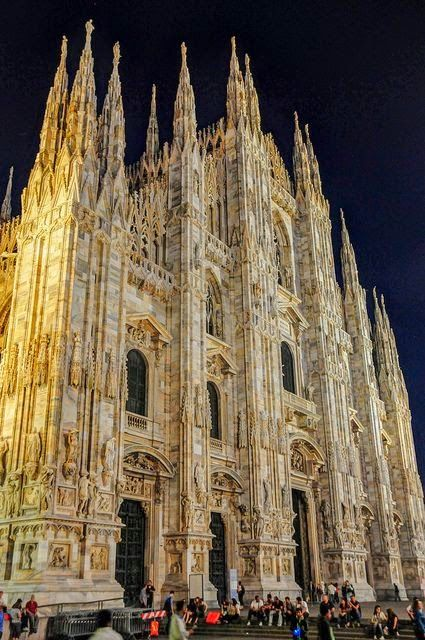
Feast of the Holy Bishops of Milan – a 1st Century Diocese!
Imagine being part of a Diocese in which 36 of your past Bishops are saints and some are also Doctors of the Church and Popes (and others being considered for sanctity)! The latest addition to this illustrious role-call, is Pope Paul VI. Today, the Church in Milan commemorates these holy Bishops. They are: • Blessed Alfredo Ildefonso Schuster • Blessed Andrea Carlo Ferrari • Pope Pius XI • Saint Ambrose of Milan • Saint Ampelius of Milan • Saint Anathalon of Milan • Saint Antoninus of Milan • Saint Auxanus of Milan • Saint Benedict Crispus of Milan • Saint Benignus of Milan • Saint Calimerius of Milan • Saint Castritian of Milan • Saint Charles Borromeo • Saint Datius of Milan • Saint Dionysius of Milan • Saint Eugene of Milan • Saint Eusebius of Milan • Saint Eustorgius II of Milan • Saint Eustorgius of Milan • Saint Gaius of Milan • Saint Galdinus of Milan • Saint Geruntius of Milan • Saint Glycerius of Milan • Saint Honoratus of Milan • Saint John Camillus the Good • Saint Lazarus of Milan • Saint Magnus of Milan • Saint Mansuetus of Milan • Saint Marolus of Milan • Saint Martinian of Milan • Saint Mirocles of Milan • Saint Mona of Milan • Saint Natalis of Milan
• Saint Protasius of Milan • Saint Senator of Milan • Saint Simplician of Milan • Saint Venerius of Milan
Saint Paphnutius of Egypt, a hermit and martyr. During the persecution under Diocletian (284-305), the governor Hadrian commanded that Paphnutius be brought to him. Instead of waiting to be brought, Paphnutius appeared before the governor, confessed his faith in Christ, and was subjected to torture.
The soldiers involved in his torture, Dionysius and Callimachus, were converted by his faith. They were then beheaded. Cast into prison after the tortures, Paphnutius converted forty prisoners to the Faith. They were all burnt alive.
Paphnutius was eventually set free, and a Christian named Nestorius took him in. He and all his family, through the influence of the saint, became steadfast in the Faith, and ultimately endured martyrdom. Paphnutius strengthened many other Christians to confess our Lord Jesus Christ, and they all died as martyrs. Some were cut down with swords, others were burned. There were 546 in all.
The hermit himself was thrown by the torturers into a river with a stone about his neck, but he miraculously floated to shore, still with the stone about him. Fustrated, they sent him to the emperor Diocletian himself, who commanded him to be crucified on a date tree.
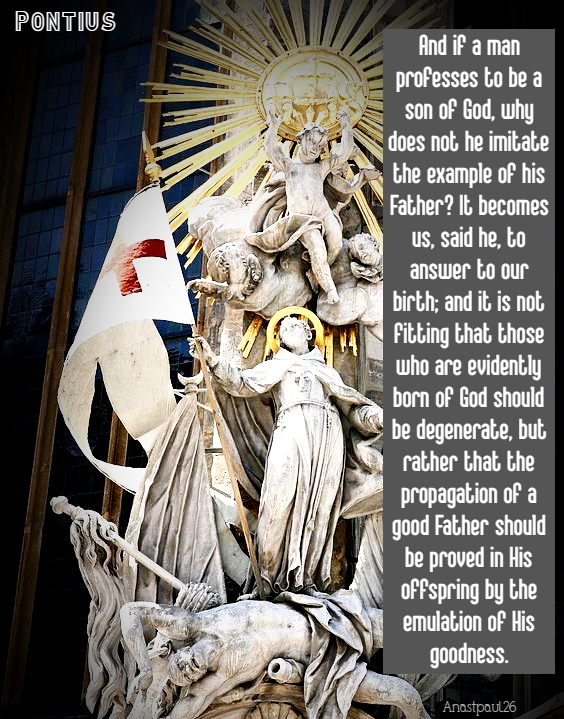
And if a man professes to be a son of God, why does not he imitate the example of his Father? It becomes us, said he, to answer to our birth; and it is not fitting that those who are evidently born of God should be degenerate, but rather that the propagation of a good Father should be proved in His offspring by the emulation of His goodness.
Our Lady of Walsingham / Virgin of the Sea (1061) – 24 September:
The story of the Walsingham Shrine begins in Saxon times. In 1061, the Lady of the Manor, Richeldis de Faverches, was taken in spirit to Nazareth, shown the House where the Annunciation took place and asked by Our Lady, to build a replica in Norfolk. She was promised that ‘Whoever seeks my help there will not go away empty-handed.‘ The simple wooden house that she built soon became the focus of special devotion to Our Lady. The ‘Holy House’ was later encased in stone to protect it from the elements.
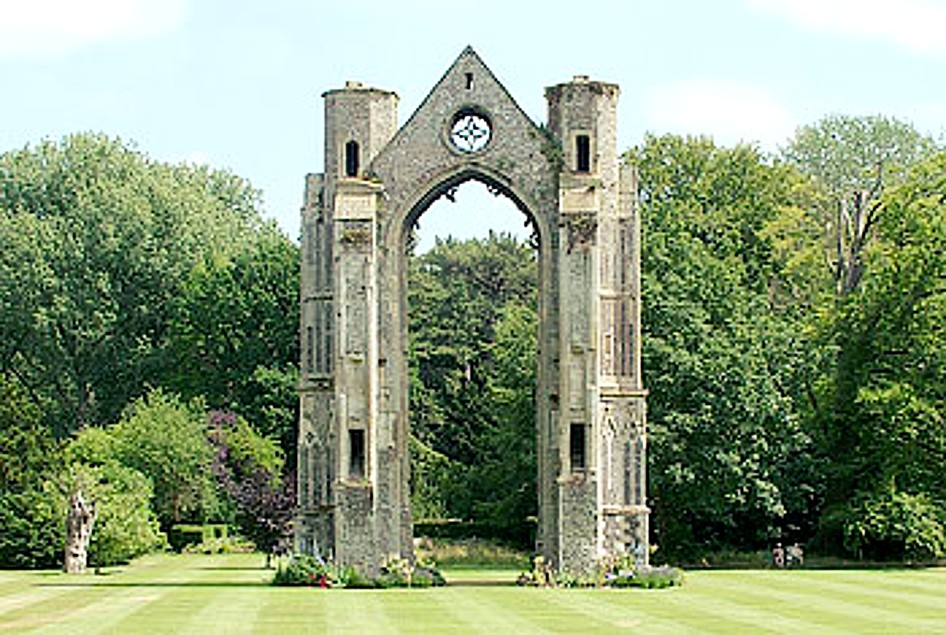
In 1153, the Augustinian Canons founded a Priory to care for the spiritual needs of the pilgrims. Their magnificent Priory Church was added in the fifteenth century. Only the ruin of the Priory Arch remains and archaeology has placed the site of the ‘Holy House’ in its shadow.
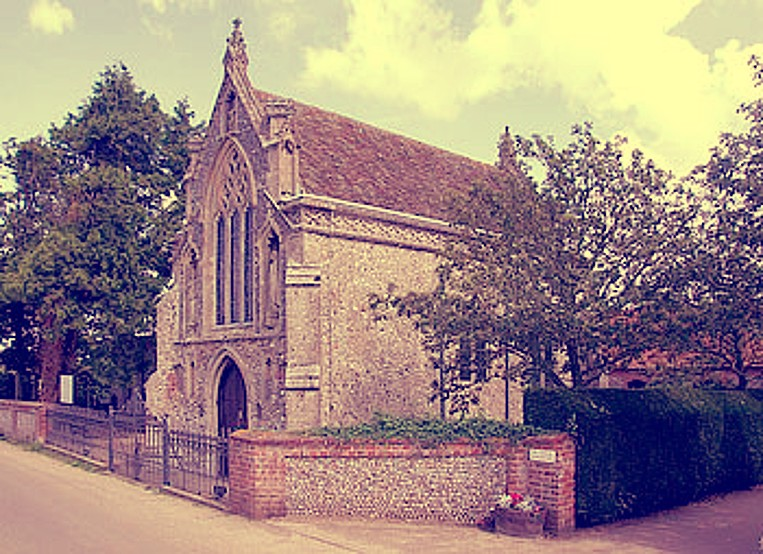
Walsingham became one of the foremost Shrines of medieval Christendom. Among the pilgrims to the ‘Holy House’ were many royal visitors. Henry III in 1226, Edward I (eleven times), Edward II in 1315, Edward III in 1361, Richard II in 1383, Edward IV in 1469, Henry VI in 1487 (and many other times) and Henry VIII in 1511, in thanksgiving for the birth of his son, Prince Henry. In 1340, the Slipper Chapel was built at Houghton St Giles, a mile outside Walsingham. This was the final ‘Station’ Chapel on the way to Walsingham. It was here, that pilgrims would remove their shoes to walk the final ‘Holy Mile’ to the Shrine barefoot.
The Slipper Chapel
Erasmus, the Dutch scholar, visited Walsingham in 1513 and was impressed by the splendour of the Shrine. He wrote:
‘When you look inside, you would say, it is the abode of saints, so brilliantly does it shine with gems, gold and silver … Our Lady stands in the dark at the right side of the Altar … a little image, remarkable neither for its size, material or workmanship.’
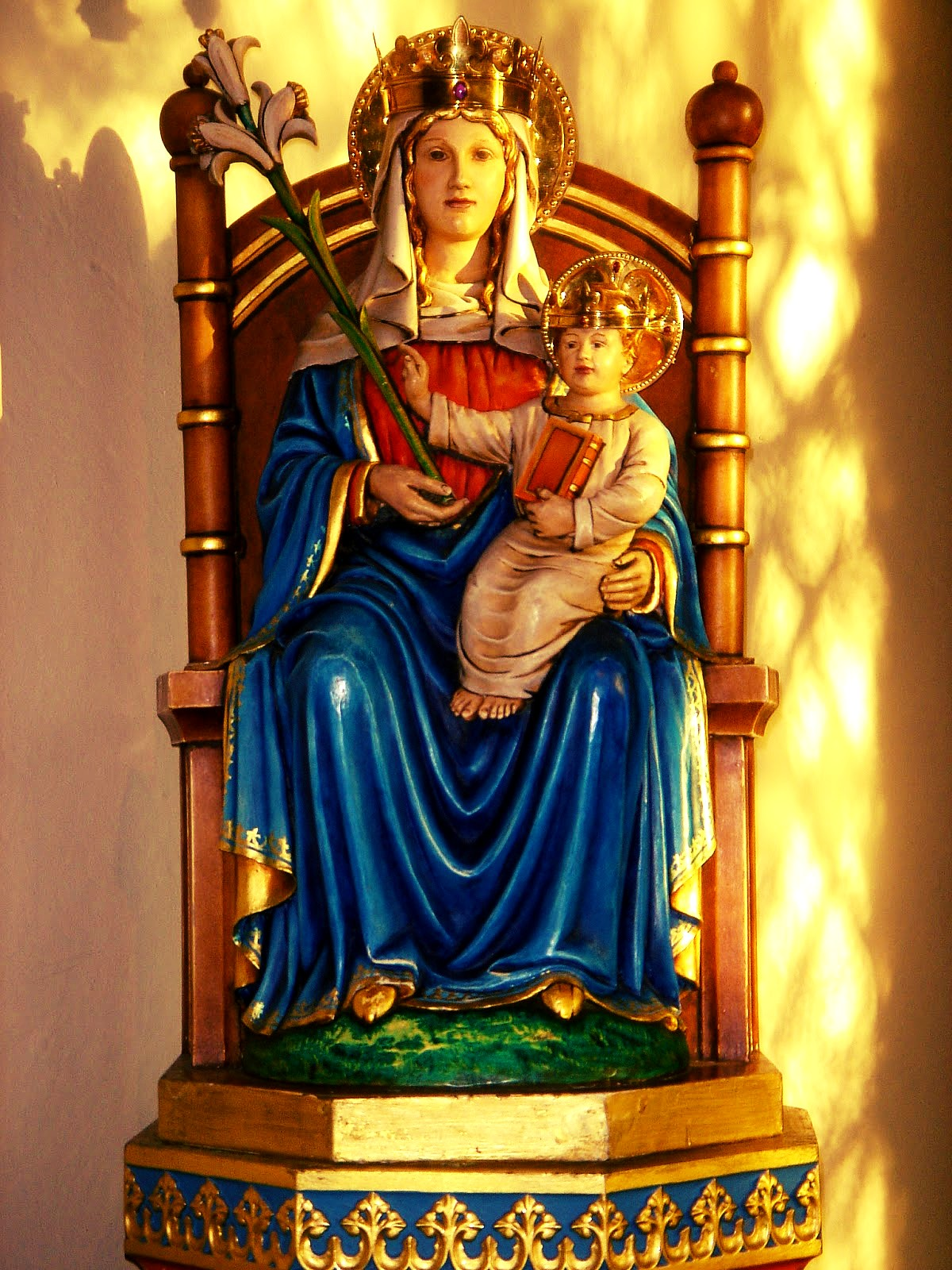
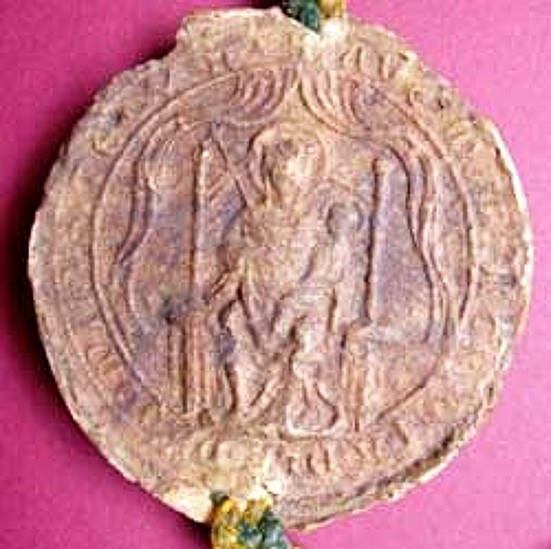
This was soon to come to an end. Henry VIII ordered the dissolution of the monasteries and in 1538 the Priory was closed, the ‘Holy House’ burned to the ground and the Statue of Our Lady taken to London to be destroyed. In 1896 Miss Charlotte Boyd bought the Slipper Chapel, which had seen centuries of secular use. She devoted herself to its restoration. The Statue of the Mother and Child was carved at Oberammergau and based on the design of the original statue – a design found on the medieval seal of Walsingham Priory, an imprint of which is in the British Museum.
The Walsingham seal: around the edges Ave Maria gratia plena dominus tecum
The first Mass since the Reformation was offered in the Slipper Chapel on 15 August 1934 and a few days later Cardinal Francis Bourne led a pilgrimage of 10,000 people to the Chapel and declared it to be the Catholic National Shrine of Our Lady.
St Chuniald Bl Colomba Matylda Gabriel St Coprio St Erinhard St Felix of Autun
St Gerard Sagredo OSB (980-1046) Bishop and Martyr, “The Apostle of Hungary,” Venetian nobleman, Benedictine monk, Prior of San Giorgio, Missionary to Hungary, Adviser to King Saint Stephen, Tutor to Prince Saint Emeric, Hermit, Bishop of Csanád, Writer, Reformer
St Pacificus of Severino OFM (1653-1721) Priest, Franciscan Friar, Mystic, Miracle-worker, Missionary, Superior of the Friary of San Severino and joyful sufferer for Christ.
St Paphnutius of Egypt Bl Robert Hardesty St Rusticus of Clermont St. Rupert of Salzburg St Terence of Persaro (c 210-c 247) Martyr Layman St Thyrsus of Autun St Ysarn of Saint Victor Bl William Spenser — Martyrs of Chalcedon – (49 saints): Forty-nine Christian choir singers of the church in Chalcedon in Asia Minor who were martyred together in their persecutions of Diocletian in 304.
Martyred in the Spanish Civil War: • Blessed Antonio Pancorbo López • Blessed Esteban García y García • Blessed José María Ferrándiz Hernández • Blessed Juan Francisco Joya Corralero • Blessed Luis de Erdoiza Zamalloa • Blessed Manuel Gómez Contioso • Blessed Melchor Rodríguez Villastrigo • Blessed Pascual Ferrer Botella • Blessed Rafael Rodríguez Mesa • Blessed Santiago Arriaga Arrien
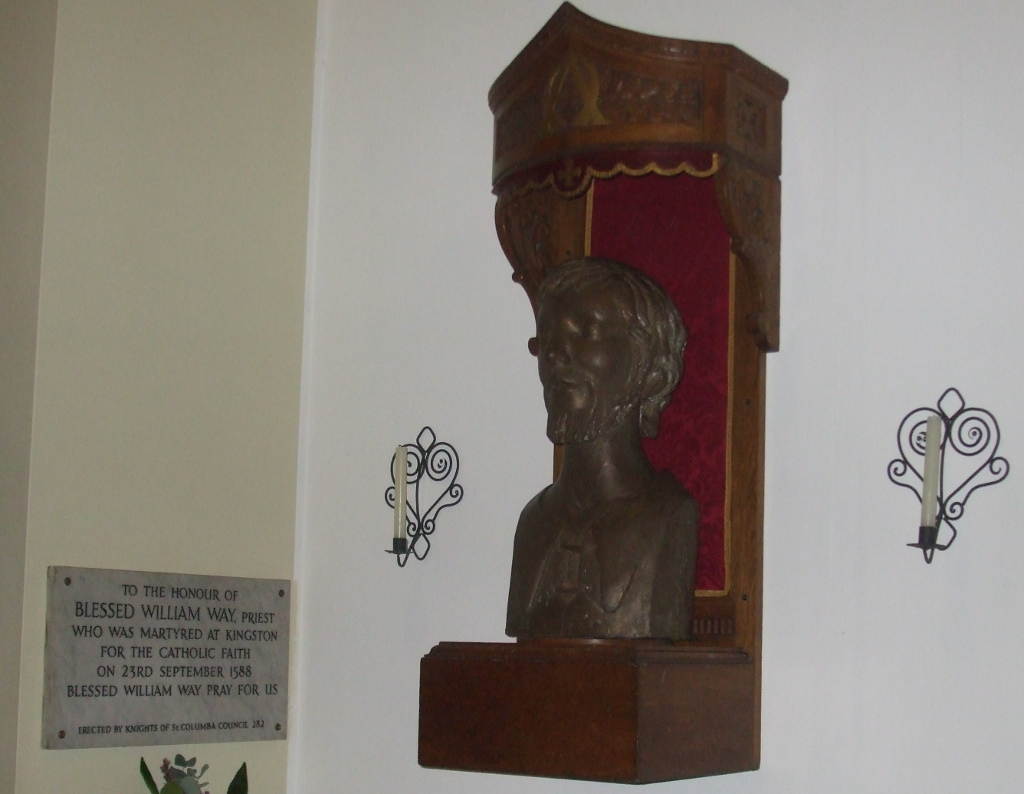
Blessed William Way, was a priest and martyr executed under Elizabeth I. Born in 1560 in Cornwall or Devon, England, William went to France to study for the priesthood since the Protestant revolution in England had closed the seminaries. On 31 March 1584, he received his first tonsure in the Cathedral of Reims from the Cardinal of Guise. On 22 March he was ordained subdeacon, on 5 April deacon, and priest on 18 September 1586, at Laon, probably by Bishop Valentine Douglas, O.S.B
William departed for England on 9 December 1586, and by June 1587, was imprisoned. He was indicted at Newgate in September 1588, for being a Roman Catholic priest. He declined to be tried by a secular judge, whereupon the Bishop of London was sent for. William, refusing to acknowledge him as a bishop or Elizabeth I as head of the church, was immediately condemned as a traitor and to death.
When called to trial at the Sessions in August, “he had so much joy that he seemed past himself”. Way was “hung, drawn and quartered” at Kingston upon Thames on 23rd September 1588.
For nothing else was proper than that he who in the secret recesses of his conscience was rich in the full honour of religion and faith, should moreover be renowned in the publicly diffused report of the Gentiles.
Nuestra Senora de Valvanera / Our Lady of Valvanera, La Rioja, Spain (9th Century) – 23 September:
This image is a replica of the original which appears to have dated from the ninth century and is preserved in the Royal Abbey Shrine of Our Lady of Valvanera, or Valvanere, in Rioja, jealously guarded by Benedictine Monks. The oldest documents preserved, dates from the thirteenth century and tells how, according to tradition, the original image was found by a thief who later converted and became a hermit.
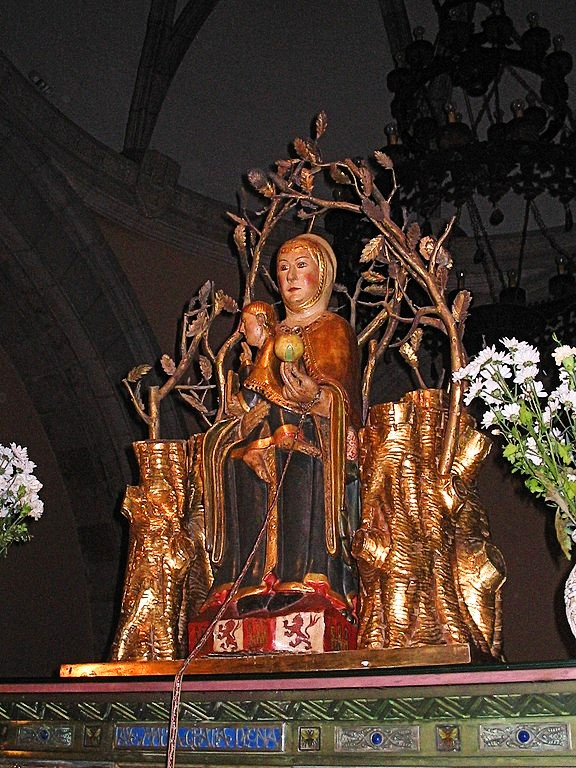
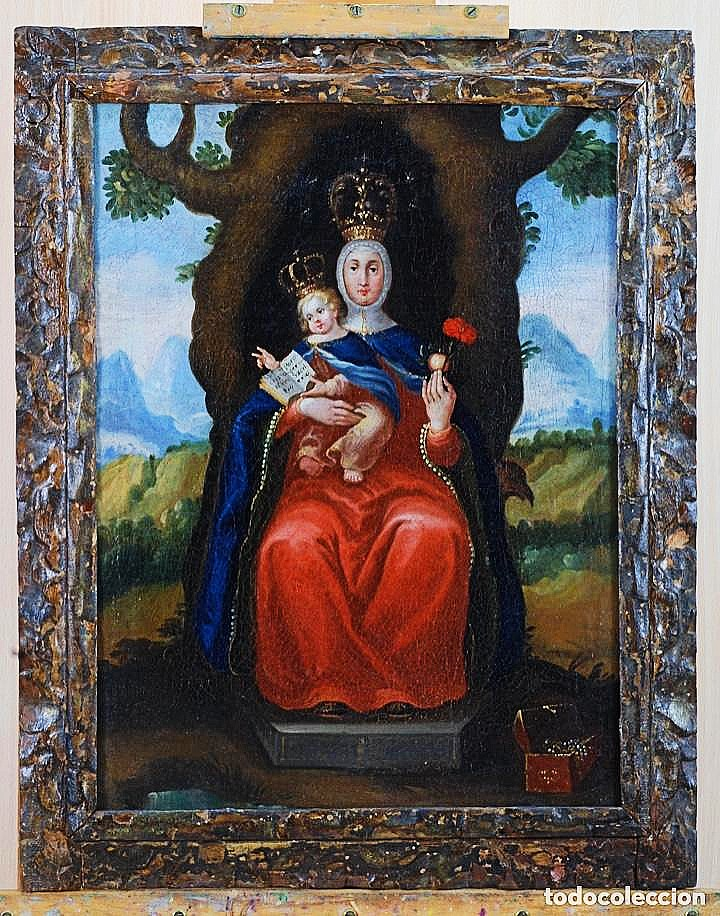
There was a thief named Nuno Onez, who was a hardened criminal and a “man of licentious life and dedicated to looting.” One day, however, upon hearing the prayer of a man who was to be his next victim, he was touched by Divine grace and repented of his many crimes, turning to the Blessed Virgin Mary to help him change his life. One day while he was praying, an Angel appeared to him to tell him to go to Valvanera and search for an oak that stood out from the rest, with a fountain that gushed at its feet and surrounded by swarms of bees. There, in the branches of a strong and noble oak, in the presence of a fountain of pure and clear water, the trunk of which was overflowing with the sweetness of honey, he found an image of the Mother of God, the Blessed Virgin Mary.
Nuno went to the place with a Priest on the following Sunday and found the image, just as the Angel had said. The Statue had probably been hidden there when the Moslems invaded the Iberian Peninsula in the 8th century. In that place, in the last third of the ninth century, he began to build a place of worship that became known as the Chapel of Santo Cristo. Soon there was a small group of hermits who met to pray around this image, men who eventually adopted a regular life inspired by the Rule of Saint Benedict. Thus, this small Shrine is believed to have given rise to the Monastery of Valvanera, where the Virgin is currently venerated.
Valvanera Monastery is surrounded by a forest near the Town of Anguiano in the valley of the Sierra Demand La Rioja. Its name derives from the Latin “Vallis Venaria,” which literally means: “Valley water veins.” The first Abbot was a man named Don Sancho in the year 990.
Our Lady apparently has a preference for oak trees, since this is one of several Statues found in or on an oak tree. On that very spot today is seen the magnificent Church which Alphonsus IV, King of Castile, built in honour of the Mother of God in 1073 and which houses the image.
St Alfonso Burgos St Adamnan of Iona/Eunan of Iona (c 628-704) Monk, Abbot Bl Antonio of Tlaxcala Bl Bernardina Maria Jablonska St Cissa of Northumbria St Constantius of Ancona Bl Cristobal of Tlaxcala Bl Emilie Tavernier Gamelin Bl Francisco de Paula Victor Bl Guy of Durnes Bl Helen Duglioli Bl Juan of Tlaxcala
St Pope Linus (c 10 – c 76) Successor to St Peter. Papacy lasted from c 67 to his death. Among those to have held the position of pope, Peter, Linus and Clement are specifically mentioned in the New Testament. Linus is mentioned in the closing greeting of the Second Epistle to Timothy as being with Paul in Rome near the end of Paul’s life.
St Peter Acontanto St Polyxena
St Thecla (1st century) Virgin Martyr, Disciple of St Paul.
Bl William Way St Xantippa — Martyrs of Syracuse – (4 saints): Group of Christians deported from Syracuse, Sicily by invading Saracens and sent to North Africa where they were tortured and executed for their faith. Martyrs. The names that have survived are Andrew, Antony, John and Peter. c900
Martyred in the Spanish Civil War: • Blessed Crispulo Moyano Linares • Blessed María Josefa del Río Messa • Blessed Norberto Cembranos de la Verdura • Blessed Purificación Ximénez y Ximénez • Blessed Sofía Ximénez y Ximénez del Río • Blessed Vicente Ballester Far
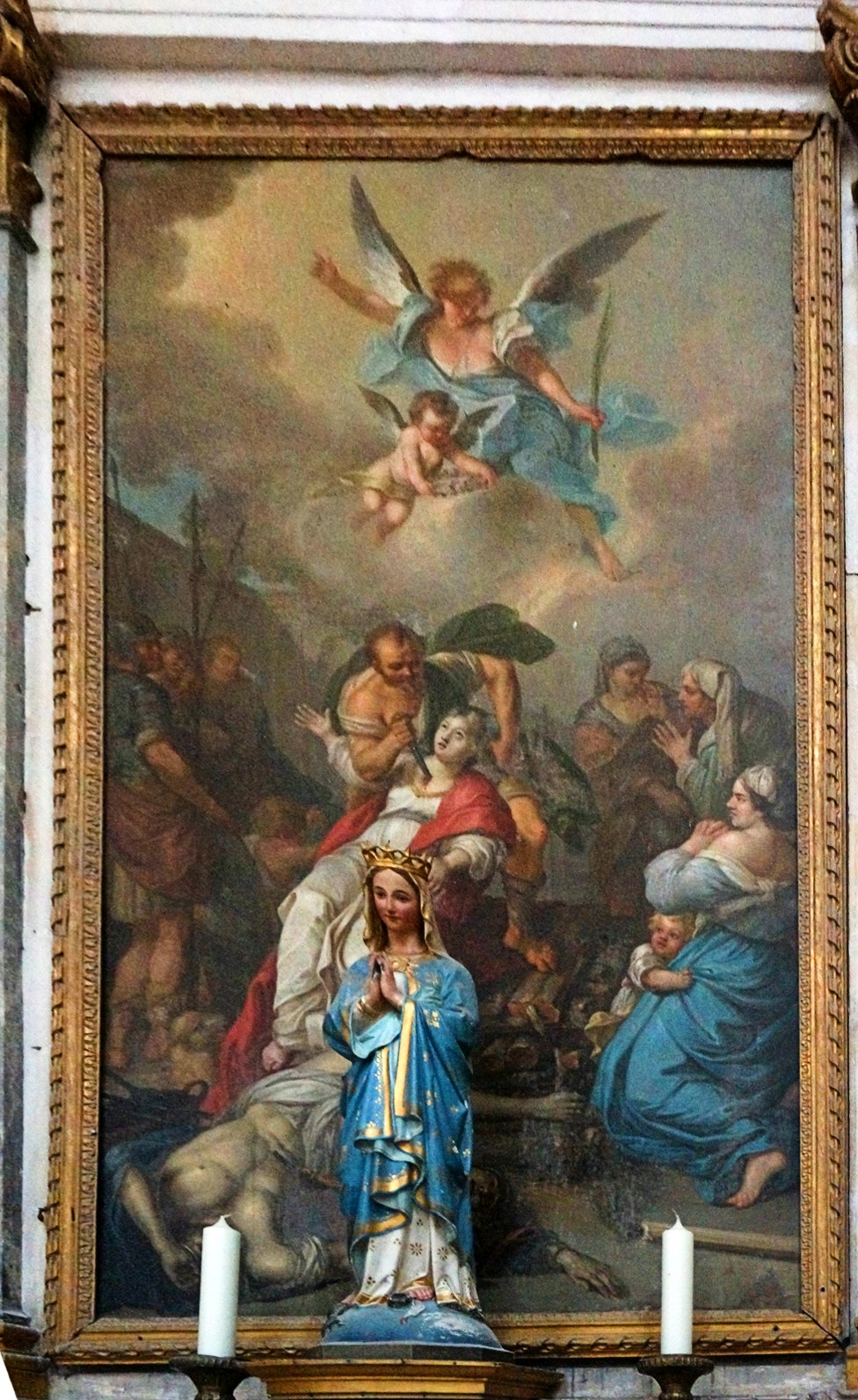
Saints Digna and Emerita of Rome, martyrs, were consecrated virgins in the 3rd century. When dragged to court for the crime of Christianity during the persecutions of Valerian, they simply stood in front of the judge and prayed.
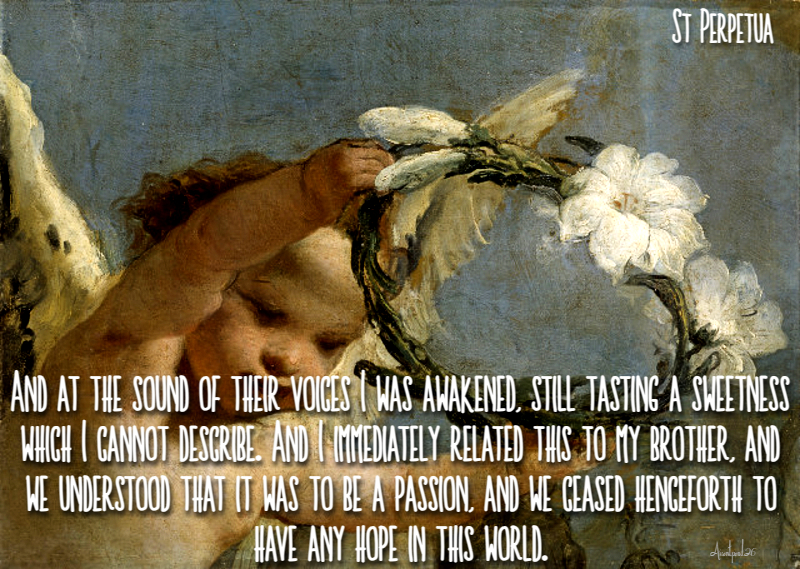
And at the sound of their voices I was awakened, still tasting a sweetness which I cannot describe. And I immediately related this to my brother, and we understood that it was to be a passion, and we ceased henceforth to have any hope in this world.
Beata Vergine del Tresto / The Blessed Virgin of Tresto, Ospedaletto Euganeo, Italy (1468) – 21September:
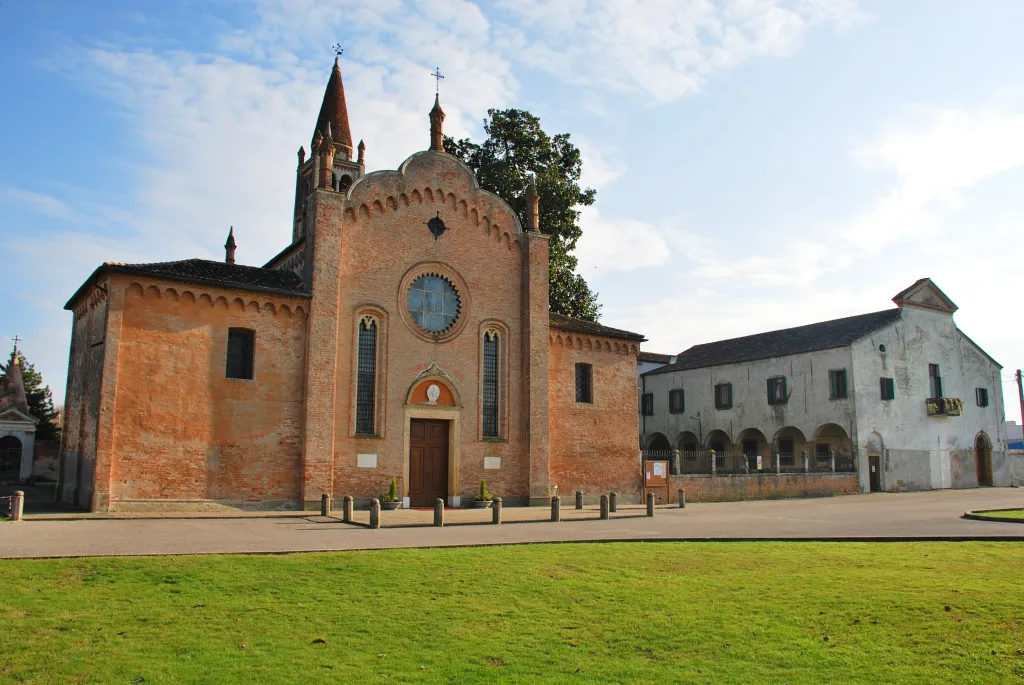
The complex of the Sanctuary of Tresto was built in the place of the miraculous Marian apparition to the boatman Giovanni di Bartolomeo Zielo da Ponso on the night of 21 September 1468, in the locality of Tresto, current fraction of the Municipality of Ospedaletto Euganeo near Padua, from where he was returning. Reaching Este in the evening, the man had stopped to sleep in the boat under the Borini bridge. Around midnight he was awakened by a female voice who called him three times. The man saw two beautiful ladies who enjoined him to follow them.
Strangely finding the drawbridge of the City lowered, they walked towards the countryside where, in the locality of Tresto, one of the two ladies sat on the bank of a ditch and told the other to fetch her a bunch of grapes. Then she asked Giovanni if he knew her. To his negative answer she said that she was Mary, the Mother of God. She then enjoined him not to amend his life and to do his best to have a Church built on that place according to the plan and the measures she illustrated to him.
But Giovanni objected saying that because of his poverty and ignorance, he would not be believed. Then Mary gave him a knife, instructing him to stick it into the ground and then to remove it. Giovanni obeyed and when he removed the blade from the ground, blood gushed. After having blessed him, the Madonna disappeared with her companion. T he next day Giovanni, afraid of not being believed, did not carry out the commands he had received but only confided in three friends. Losing his peace of mind, he eventually went with some people to the site of the apparition, where he tried to stick the knife into the ground, pulling it back wet with blood. Others wanted to try: the incredulous could not move the blade from the ground, while the others withdrew it bloody.
The miraculous event, renewed several times, convinced everyone to work together to erect the required Church. At the halfway point, due to the exceptional drought that had hit the area, there was no water. Everyone then invoked the help of Mary, who caused a spring appear next to the construction site. This spring since then, over the centuries, has been a source of miraculous cures just like the one at Lourdes. The custody of the Church, built in 9 months, was entrusted by the Paduan clergy to a Congregation of Mendicants of whom Giovanni wore the habit in a lay state.
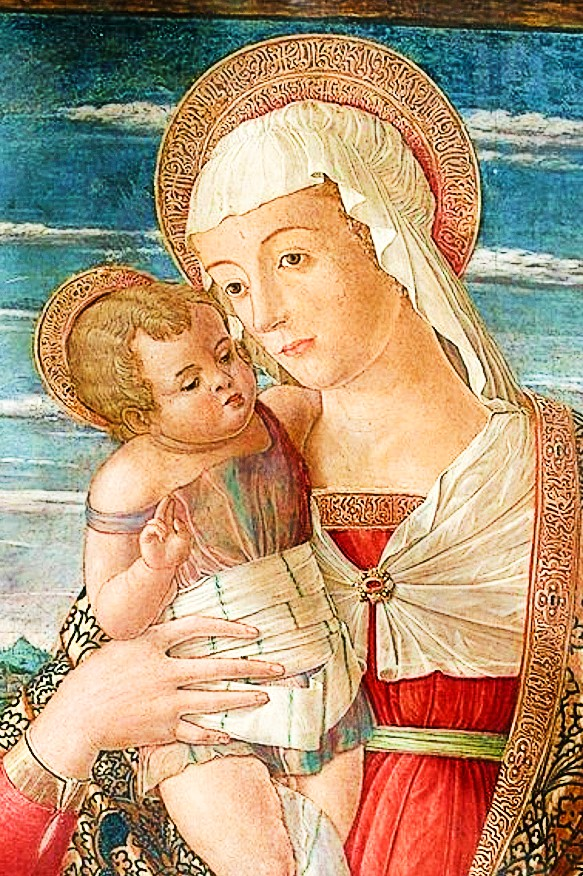
The Sanctuary of Tresto became and remains a site of devotion and pilgrimage with the powerful and healing waters of the miraculous Spring, bringing many sick seeking cures. The Sanctuary preserves several works of art among which the painting on wood depicting the Virgin and Child shown above, stands out, a masterpiece attributed to Jacopo da Montagnana who created it between 1475 and 1480.
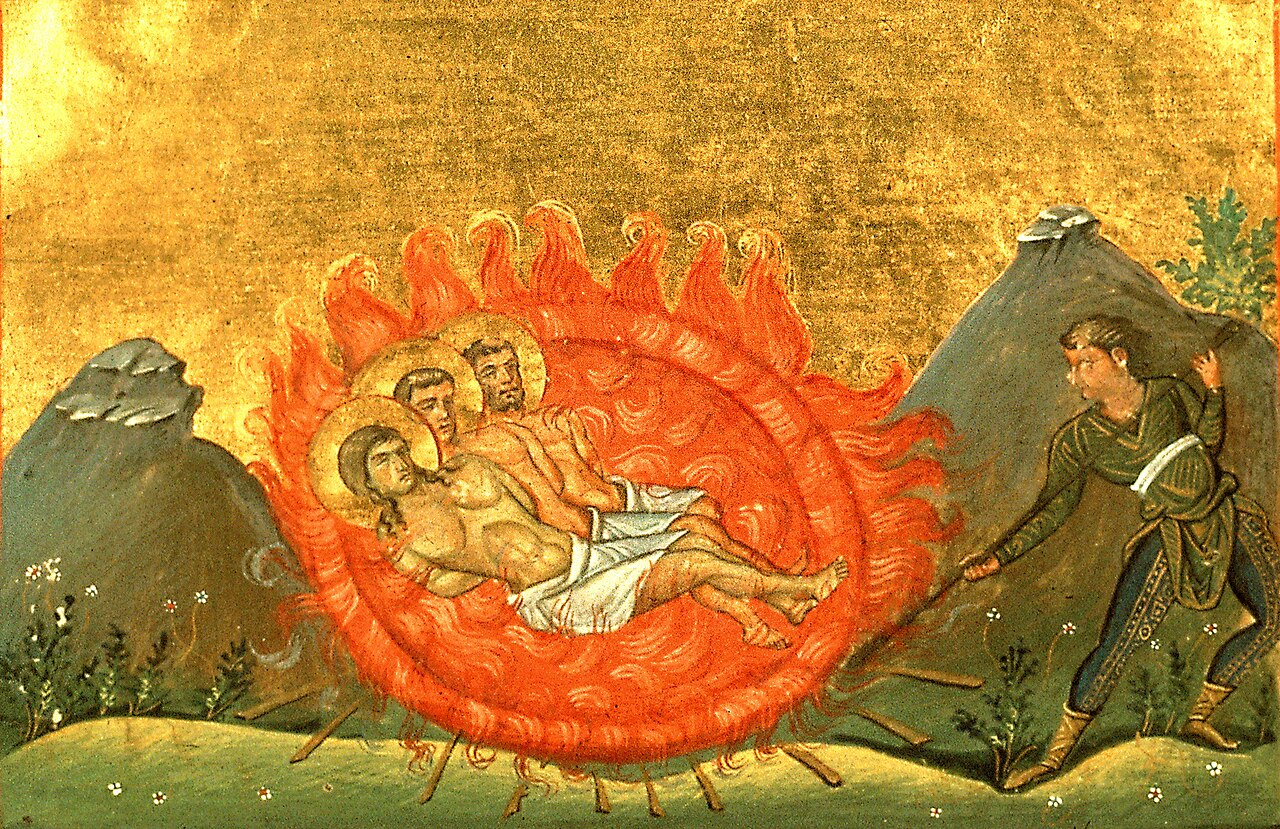
St Alexander of the Via Claudia Bl Diego Hompanera París St Eusebius of Phoenicia St Francisco Pastor Garrido St François Jaccard St Gerulph St Herminio García Pampliega St Iphigenia St Isaac of Cyprus Bl Jacinto Martínez Ayuela St Jacques Honoré Chastán St Johannes Ri St Jonah the Prophet Bl José María Azurmendi Mugarza Bl Josep Vila Barri St Landelino of Ettenheim Bl Manuel Torró García Blessed Mark Scalabrini of Modena OP (c 1420-1498) St Maura of Troyes St Meletius of Cyprus Bl Nicolás de Mier Francisco St Pamphilus of Rome St Pierre Philibert Maubant St Tôma Tran Van Thien Bl Vicente Galbis Gironés Bl Vicente Pelufo Orts — Martyrs of Gaza – 3 saints: Three brothers, Eusebius, Nestulus and Zeno, who were seized, dragged through the street, beaten and murdered by a pagan mob celebrating the renunciation of Christianity by Julian the Apostate. They were burned to death in 362 on a village garbage heap in Gaza, Palestine.
Martyred in the Spanish Civil War: • Blessed Diego Hompanera París • Blessed Jacinto Martínez Ayuela • Blessed José María Azurmendi Mugarza • Blessed Josep Vila Barri • Blessed Manuel Torró García • Blessed Nicolás de Mier Francisco • Blessed Vicente Galbis Gironés • Blessed Vicente Pelufo Orts
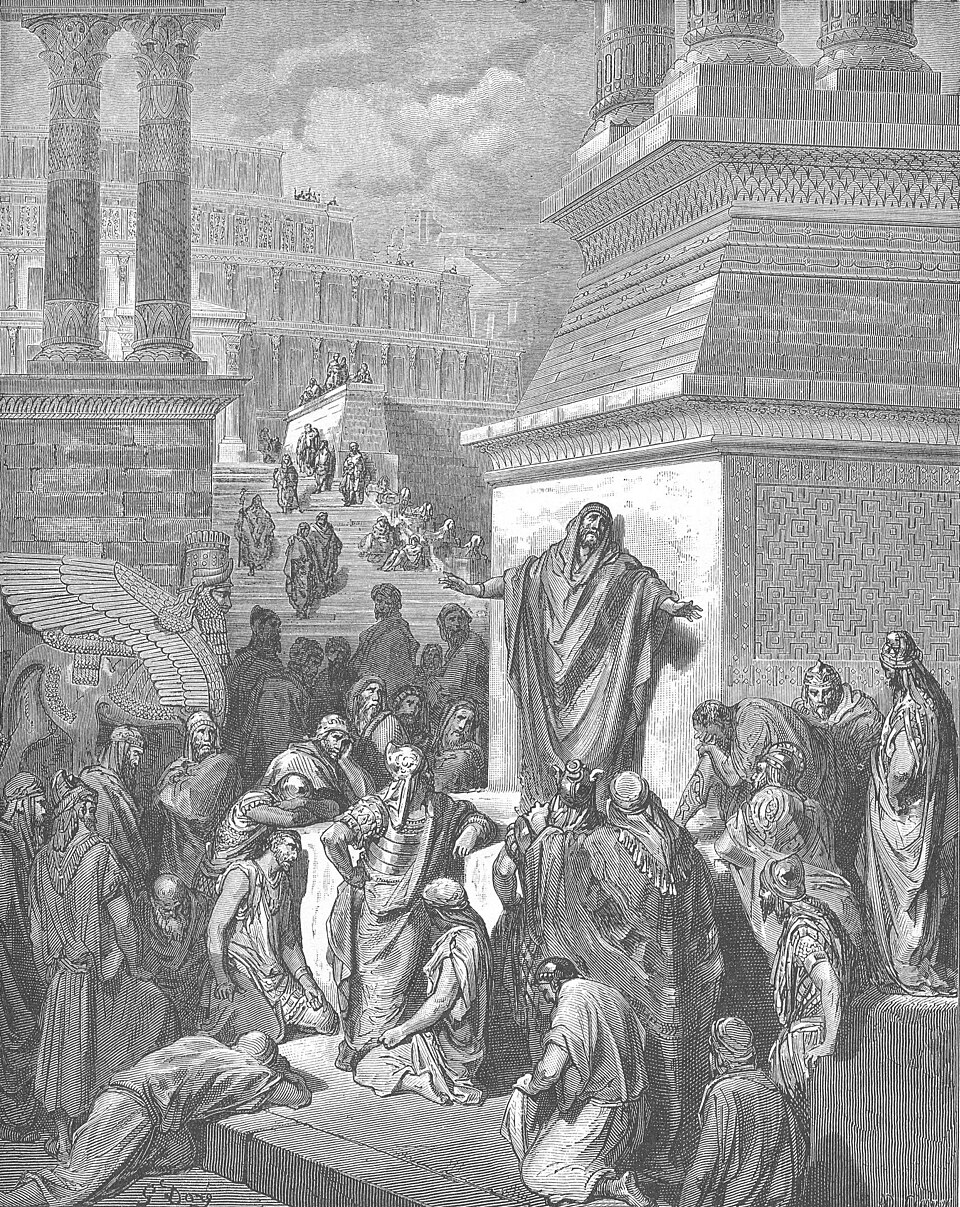
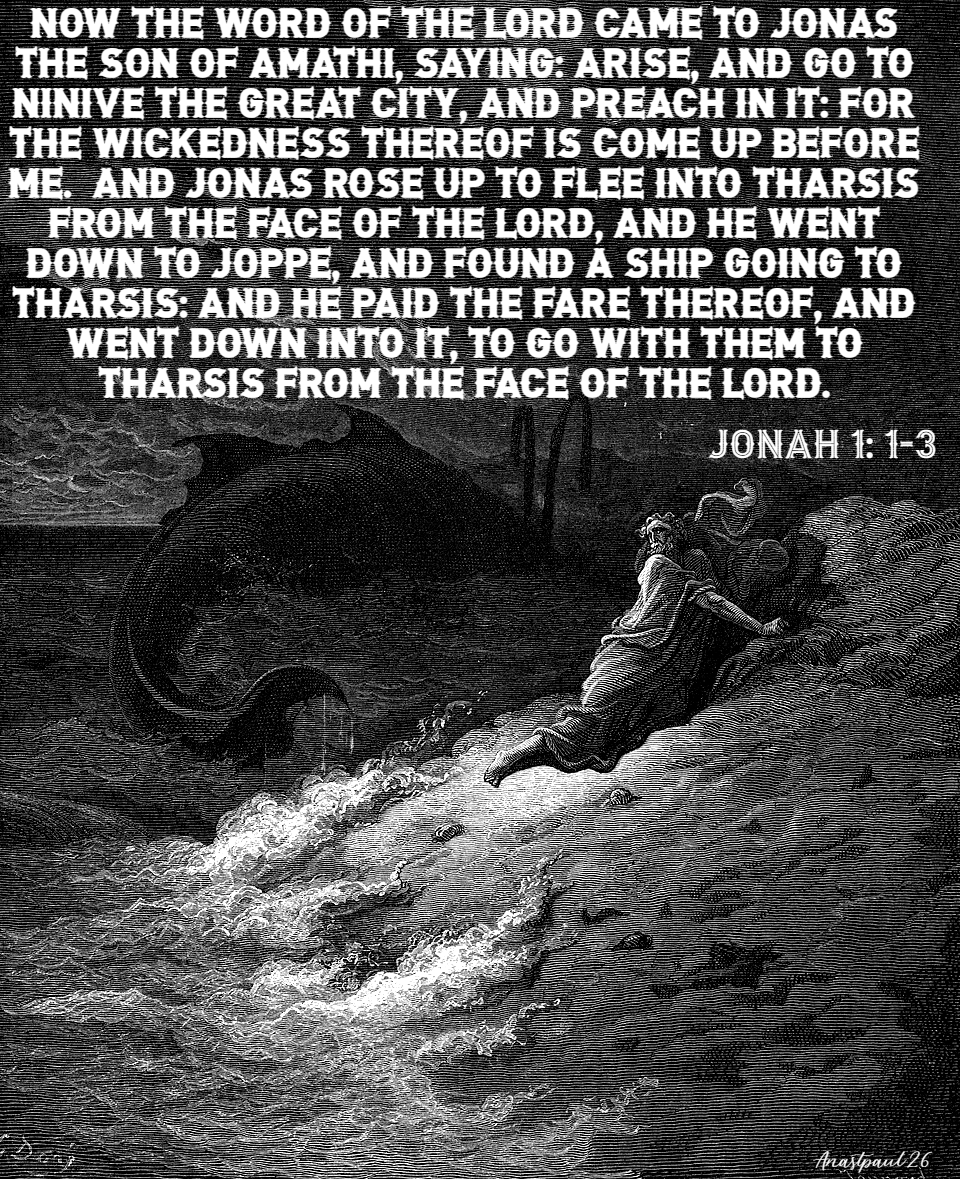
Saint Jonah the Prophet, also known as Ionas, Jonas, Yona, Yunaan, Yunus, was an Old Testament patriarch and prophet. Hero of the Book of Jonah, he was so reluctant to deliver his prophecy against the city of Nineveh that God had to have him swallowed by a giant fish and then spat out on the city’s shore.
Jonah Preaching to the Ninevites
Jesus calls himself “greater than Jonah” and promises the Pharisees “the sign of Jonah” when referring to his resurrection. Jonah is viewed as a type of Jesus.
He died in 761 B.C. Tradition says he was buried in a tomb in modern Mosul, Iraq. The tomb was enclosed in a shrine in the 8th century BC. The tomb and shrine were destroyed by Muslims in July 2014.
Notre-Dame-au-Pied-d’Argent / Our Lady with the Silver Foot), Toul, Meurthe-et-Moselle, Lorraine, France (1284) – 20 September:
At Toul, in Lorraine, there was a Statue, which, according to an ancient tradition, informed a woman on 20 September in the year 1284, of an act of treachery which was being planned against the City.
The Statue was called Our Lady with the Silver Foot, or Notre-Dame au pied d’argenth. The faithful keep the memory of this stone Statue of the Blessed Virgin Mary, which was located just inside the entrance of the Church and placed over a sculpted clam. In those days there would be a lamp burning before it on feast days and almost every day, the faithful offered small candles which they lit and rested on a circular iron candlestick that was placed before the Statue. It was well known that several people who prayed before this Statue were cured of various diseases but the devotion and respect of the people toward this image, grew more than ever at the time of the Bishop Conrad because of the miracle that occurred in the following manner:
A woman named Helwide was in the Cathedral Saint-Etienne de Toul praying to the Blessed Virgin for consolation and the repose of the souls of her husband and daughter who had recently died. It was about midnight, when the Canons were praying Matins, that the Blessed Virgin Mary suddenly appeared to her.
The Virgin Mary ordered Helwide to go immediately to find a man named Rimbert, who was the guardian of “The Door to the Chair.” The Door to the Chair gave access to the Castrum, a little entrance to the City near Tanner Street. Helwide was urged to go quickly, for an enemy proposed to enter the City by the door to set their homes on fire and fill the streets with blood. Regaining her senses after the vision, Helwide got up feeling very puzzled. She was hesitant about what she should do, though as Rimbert’s home was not far distant and was on her way home anyway, she decided she would indeed go there.
No sooner had Helwide stepped out of the Church, than she met the night-watch on patrol. She told them the tale of her vision and they responded by mocking her and making derogatory jokes. Despite this, two of them still decided to follow and actually see what would happen if Helwide could find the porter she sought.
The pair arrived with Helwide at the house and simply thrust the door open. Rimbert sat on his bunk, seeming startled, yet as if expecting the visit. Helwide briefly stated the purpose of her visit and Rimbert exclaimed, “I had precisely the same vision and the same warning! I do not know if it occurred in my sleep or in the state of wakefulness but I have been told that the Statue will move her foot in testimony of the truth!” At these words, all those present were seized with a great desire to see such a prodigy. With a rush they ran to the Cathedral and removed the candles and all that stood before the image. To their disappointment they found that the Virgin’s feet remained mostly hidden beneath the folds of the clothing of the Statue as before. In the interim, several scholars and some laymen who were called to see the wonder, arrived on the scene. Seeing that nothing was apparently going to happen, they began cursing all the rest as senseless interpreters of dreams. As they stood not far from the Statue, many of them fell silent as they saw the Statue suddenly move as an entire foot of the Blessed Virgin Mary appeared from beneath the folds of her garment.
Terrified, but convinced, this time they all agreed to announce the peril which they now knew actually threatened them. Quickly rendering their thanks to Mary, they agreed to defend the City and call for reinforcements. They arrived just in time to take up their positions to defend the entrance to the City with the assistance of the Episcopal palace guards.
A tremendous struggle occurred when the invaders broke down the door and entered the courtyard, but the defenders were committed to the fight and held their own. When reinforcements arrived, the invaders fell to the last man.
To perpetuate the memory and recognize the protection granted to them by the Blessed Virgin Mary, the people of Toul had a shoe of pure silver made to cover the foot on the Blessed Virgin’s Statue. From that time on the Statue was known as Our Lady with the Silver Foot. They also hung on the wall of the cathedral a picture which represented the heavenly vision and Mary was declared Patroness of the City.
The image of Our Lady with the Silver Foot was venerated in the City and the surrounding areas and in case of the threat of any public calamity, the Blessed Virgin was invoked and ,henceforth, the Statue would be carried in procession throughout the streets of the City. The Governors themselves considered it an honour to take the Statue upon their own shoulders. Pilgrimages were made to Our Lady of the Silver Foot; prayers answered, graces bestowed and miracles wrought.
The original Statue of Our Lady with the Silver Foot was destroyed during the ravages of the French Revolution and was replaced later by a modern statue that was stolen in the 1980’s. The Gothic Cathedral was repaired after being damaged during the French Revolution but still awaits repair after the damage caused when it was struck during an aerial bombardment in the Second World War. There was once also a Monastery at Toul,but no trace of it remains.
Vigil of St Matthew, Apostle and Evangelist St Agapitus of Rome St Candida of Carthage St Dionysius of Phrygia St Dorimedonte of Synnada St Eusebia of Marseilles
St Eustachius, Wife and Sons – Martyrs (Died c 188) St Eustachius is one of the Fourteen Holy Helpers – Patronages – against fire, difficult situations, fire prevention, firefighters, hunters, hunting, huntsmen, Madrid, torture victims, trappers.
St Evilasius of Cyzicum St Fausta of Cyzicum Bl Francisco Martín Fernández de Posadas St Glycerius of Milan St John Charles Cornay Bl John Eustace
Martyrs of Korea:St Andrew Kim Taegon, St Paul Chong Hasang & Companions – 103 saints and beati. The Korean Martyrs were the victims of religious persecution against Catholics during the 19th century in Korea. At least 8,000 (as many as 10,000) adherents to the faith were killed during this period. (Memorial)
Martyrs of Constantinople – 3 saints: A priest and two bishops who were imprisoned, tortured and martyred for the defense of icons in the iconoclast persecutions of emperor Leo the Isaurian. – Andrea, Asiano and Hypatius. They were martyred in 735 in Constantinople (modern Istanbul, Turkey) and their bodies were thrown to the dogs.
Martyrs of Pergen – 6 saints: A group of lay people martyred in the persecutions of Emperor Elagabalus. The names that have come down to us are Dionysius, Dioscorus, Philippa, Privatus, Socrates and Theodore. They were crucified c 220 at Pergen, Pamphylia, Asia Minor (in modern Turkey).
Martyred in the Spanish Civil War: • Blessed Cristobal Iturriaga-Echevarría Irazola • Blessed Santiago Vega Ponce • Blessed Juan Antonio López Pérez
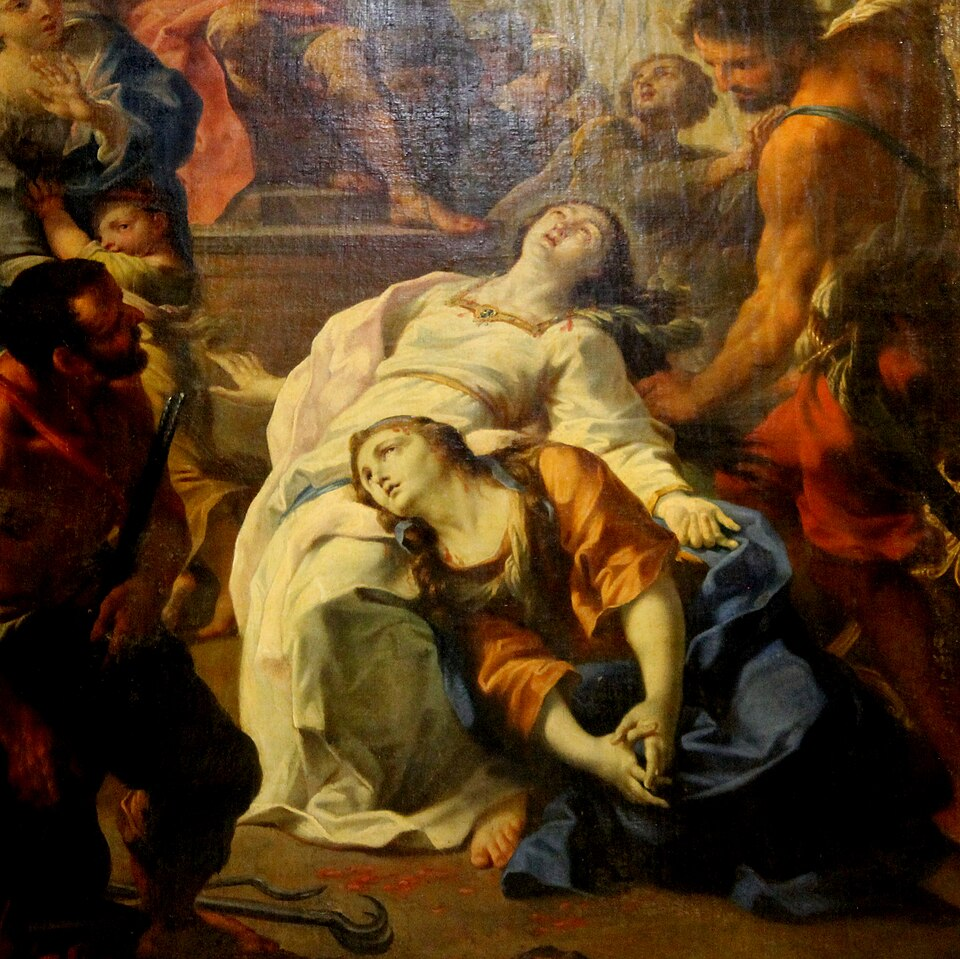
Saint Fausta of Cyzicus also known as Saint Fausta, was a thirteen year old girl born in 298, in modern-day Turkey. At the age of 13, she was arrested, tortured, and executed for being a Christian in the year 311. A pagan priest, Saint Evilasius was the one responsible for torturing and executing her. Seeing her courage, and moved by her prayers, he converted, and died with her in a cauldron of boiling water.
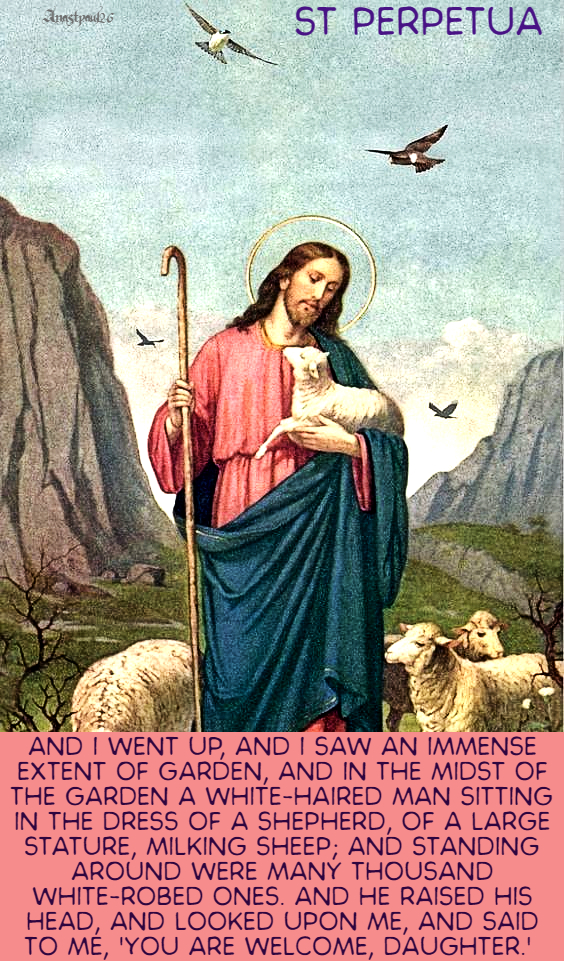
And I went up, and I saw an immense extent of garden, and in the midst of the garden a white-haired man sitting in the dress of a shepherd, of a large stature, milking sheep; and standing around were many thousand white-robed ones. And he raised his head, and looked upon me, and said to me, ‘You are welcome, daughter.’
Notre-Dame de la Salette / Our Lady of La Salette, La Salette-Fallavaux, Isère, Rhône-Alpes, France (1846) 19 September: Mary appeared to two small children, Melanie Mathieu and Maximin Giraud, on the mountain of La Salette in the French Alps. She was crying and around her neck was a crucifix, with a hammer and pincers on either side – 19 September 1846. Approved by the Diocesan Bishop in 1851.
St Alonso de Orozco Mena OSA (1500 – 1591) Augustinian Priest, Preacher, Writer, Apostle of Charity, Spiritual Director, Marian Devotee, Ascetic.
St Arnulph of Gap St Carolus Hyon Song-Mun St Constantia of Nocera St Desiderius of Pozzuoli
St Emilie de Rodat (1787–1852) Nun and Founder of the Sisters of the Holy Family, Mystic. Venerable Pope Pius XII Beatified her on 9 June 1940 and Canonised her on 23 April 1950.
St Pomposa St Sequanus St Sosius of Puzzuoli St Theodore of Canterbury St Trophimus of Synnada — Martyrs of Antioch – (3 saints): Christians imprisoned, tortured and executed in various ways in the persecutions of Emperor Probus; some names have come down to us – Dorymedon, Sabbatius and Trophimus. c 277 at Antioch (in modern Turkey).
Martyrs of Phunon – (4 saints): Four bishops in Egypt who were sentenced to forced labour in a rock quarry and martyred in the persecution of Diocletian. Noted for celebrating Mass in prison. – Elias, Nilus, Patermuzio and Peleus. They were burned to death in 310 at Phunon, near Petra in Palestine.
Martyred in the Spanish Civil War: • Blessed Consuelo Aguiar-Mella Díaz • Blessed Herman José Fernández Sáenz • Blessed Juan Pérez Rodrigo • Blessed Lucas Martín Puente • Blessed María de La Encarnación de La Yglesia de Varo • Blessed María Dolores Aguiar-Mella Díaz • Blessed Miguel Faúndez López • Blessed Sebastián Obeso Alario
Saint Ariadne of Phrygia, also known as Ariadna, Ariane, Arianna, was a martyr and slave woman in the the 2nd century, who was owned by a Phrygian prince called Tertullus. When by an edict of emperors Hadrian and Antoninus, Christianity was outlawed. When she refused to partake in the pagan rituals on the birthday of Tertullus’ son, she was punished and her case became known to the provincial governor, Gordios.
Both she and Tertullus were convened before a tribunal where Tertullus was acquitted while she was condemned to be crucified. The people of Prymnessus intervened on her behalf to give her three days of repentance in which she then escaped the Roman authorities, fleeing into the nearby mountains where she was saved from her pursuers by a rock which opened miraculously before her and closed behind her, providing her with a tomb.
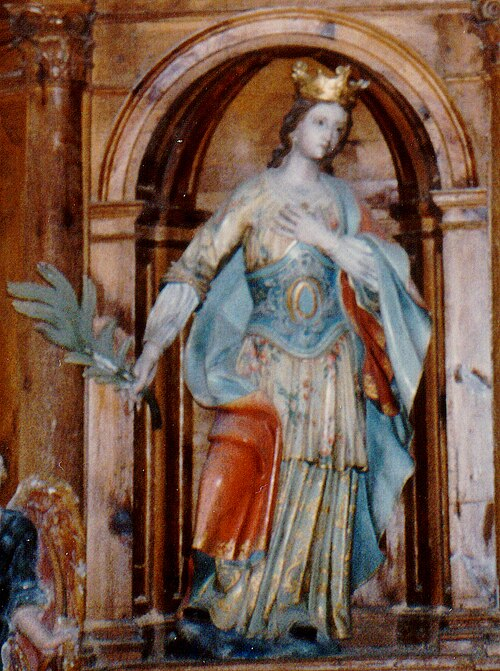
Saint Columba of Cordova, also known as Columba of Cordoba and Columba of Spain, martyr. She is a part of the Martyrs of Córdoba. Born to a pious family in the 8th century, Columba’s brother was an abbot, and her sister and brother-in-law founded a double monastery at Tabanos, Spain. Her mother wanted her to marry, but Columba was drawn to religious life, and entered her sister’s monastery at Tabanos.
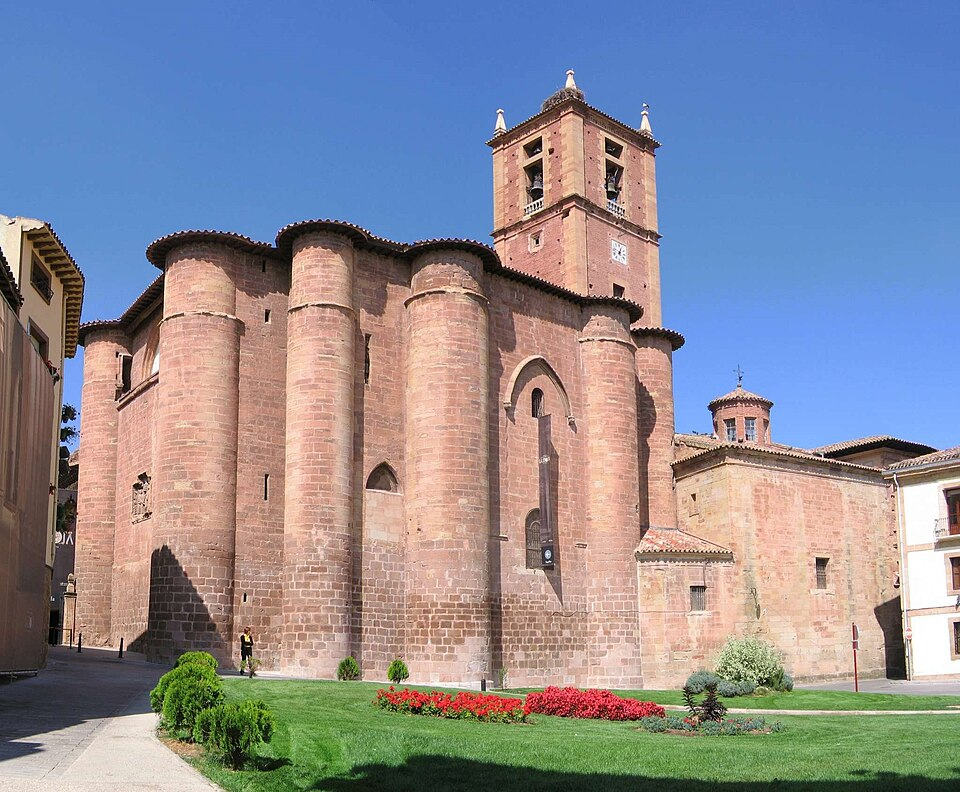
During the Moorish persecutions of Christians in 852, most of the nuns of Tabanos fled to Cordova. Columba refused to run, and made a public proclamation of her faith to a Moorish magistrate and denounced Muhammed and his law. The magistrate condemned her to be beheaded on September 17, 853. Her body was thrown into the Guadalquivir Marshes, but was recovered by other Christians and buried at the basilica of St. Eulalia at Fragellas. Her relics were taken later to and venerated at two churches, the abbey of Santa Maria de Nájera and to its dependent priory, which was dedicated to Saint Columba.
The fortified Santa María la Real of Nájera
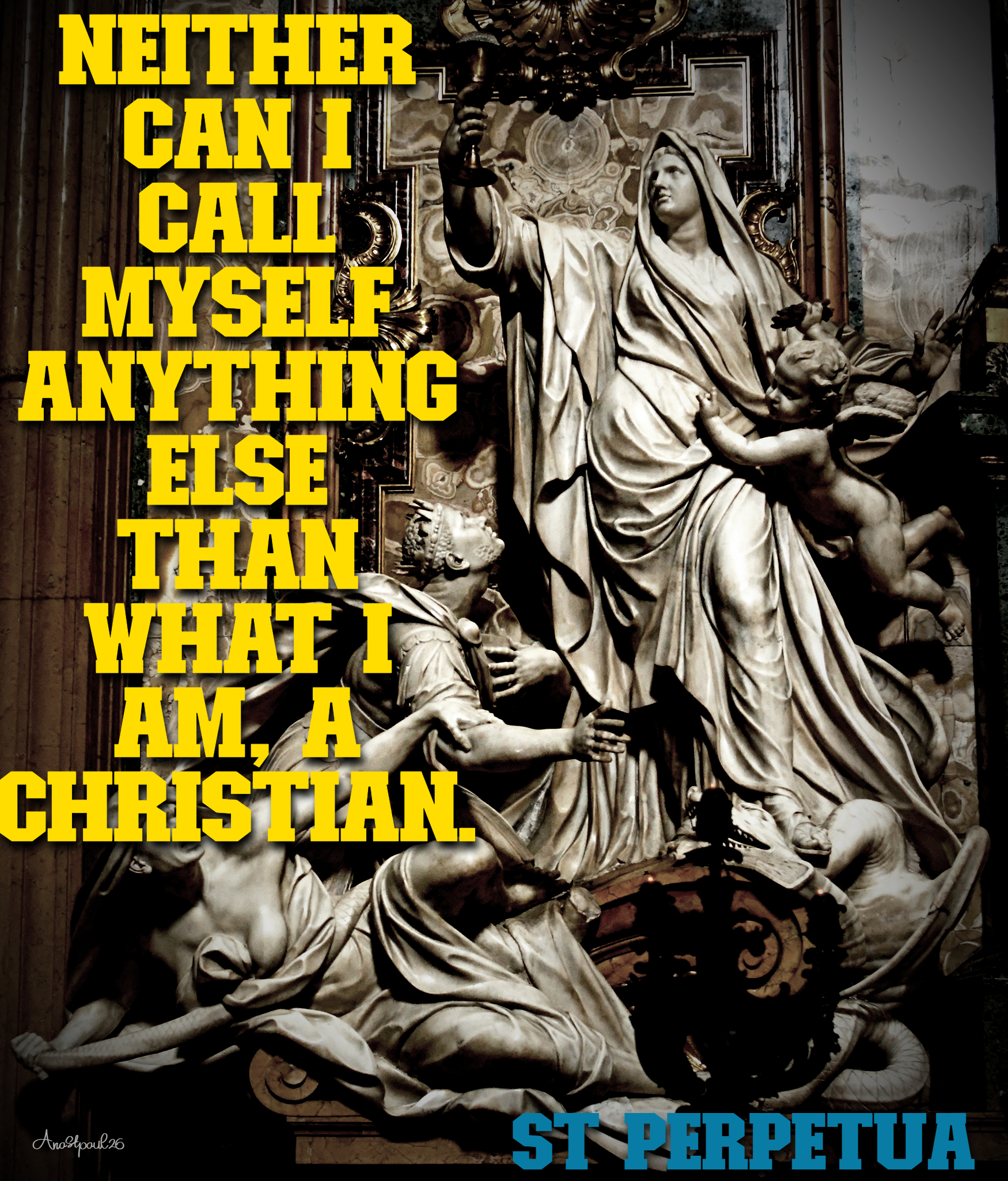
Neither can I call myself anything else than what I am, a Christian.
St Robert Bellarmine SJ (1542-1621) Doctor of the Church, Bishop, Confessor, Theologian, Professor, Writer, Preacher, Mediator. (Optional Memorial) Feast day – 13 May (General Roman Calendar, 1932–1969)
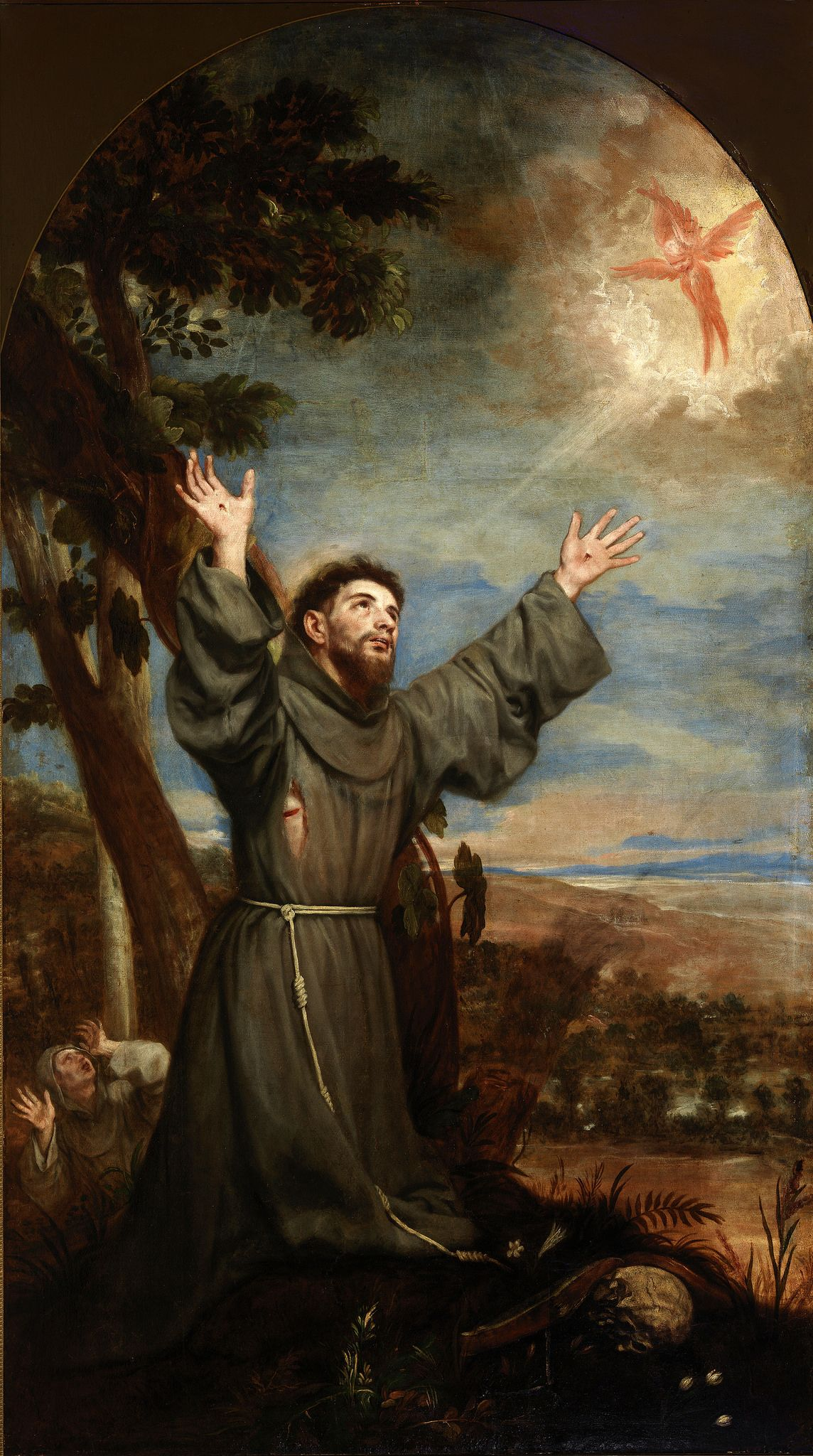
Stigmata of St Francis of Assisi: Two years before the great Saint Francis of Assisi died and when he was forty-two years old — one year after he had built the first crib in honour of Our Lord — he went off to a lonely mountain called Mount Alvernia, to prepare himself by forty days of fasting and prayer for the Feast of Saint Michael, the greatest of God’s Angels, whose Feast day is 29 September. On the Feast of the Exaltation of the Holy Cross on 14 September, Saint Francis received in his hands, feet and side the Sacred Wounds from Our Lord’s own body.
Never was a Saint more beautifully loved by Jesus than Saint Francis of Assisi. The wounds Jesus gave him stayed in his hands, feet and side and continually bled for two more years, until he died in 1226. The day on which Saint Francis received the Five Wounds of Our Lord was 14 September but so, that this beautiful event might have a feast day for itself, the Stigmata of Saint Francis is commemorated today, on 17 September. The simple liturgy of this holy Saint’s life might be put this way – the crib in 1223 and the Cross in 1224.
St Agathoclia St Brogan of Ross Tuirc St Columba of Cordova St Crescentio of Rome St Emmanuel Nguyen Van Trieu St Flocellus
St Hildegard von Bingen OSB (1098-1179) Doctor of the Church, German Benedictine Abbess, Theologian, Writer, Composer, Philosopher, Poet, Mystic, Visionary, Founder, Scientist, Artist and Polymath. She is considered to be the founder of scientific natural history in Germany.
St Justin of Rome
St Lambert (c 635-c 700) Bishop & Martyr, Bishop of Maastricht, Confessor, Missionary.
St Narcissus of Rome St Peter Arbues OSA (1442-1485) Priest Martyr St Rodingus St Satyrus of Milan St Socrates Bl Stanislaus of Jesus and Mary St Stephen of England St Theodora St Uni of Bremen St Zygmunt Sajna
St Zygmunt Szcesny Felinski TOSF (1822-1895) Archbishop of Warsaw and founder of the Franciscan Sisters of the Family of Mary, Apostle of poor, Confessor, Professor, Writer, Reformer.
Martyred in the Spanish Civil War • Blessed Álvaro Santos Cejudo Moreno Chocano • Blessed Juan Ventura Solsona • Blessed Timoteo Valero Pérez
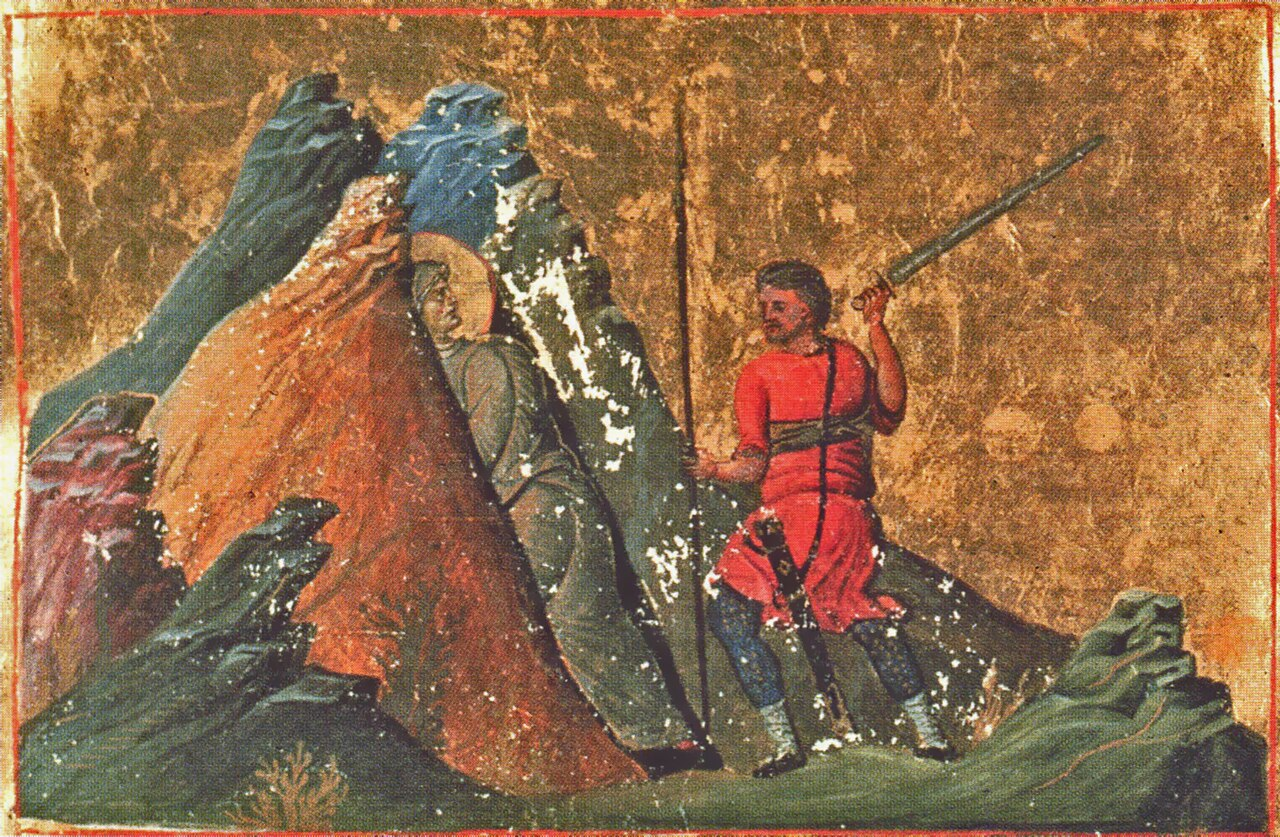
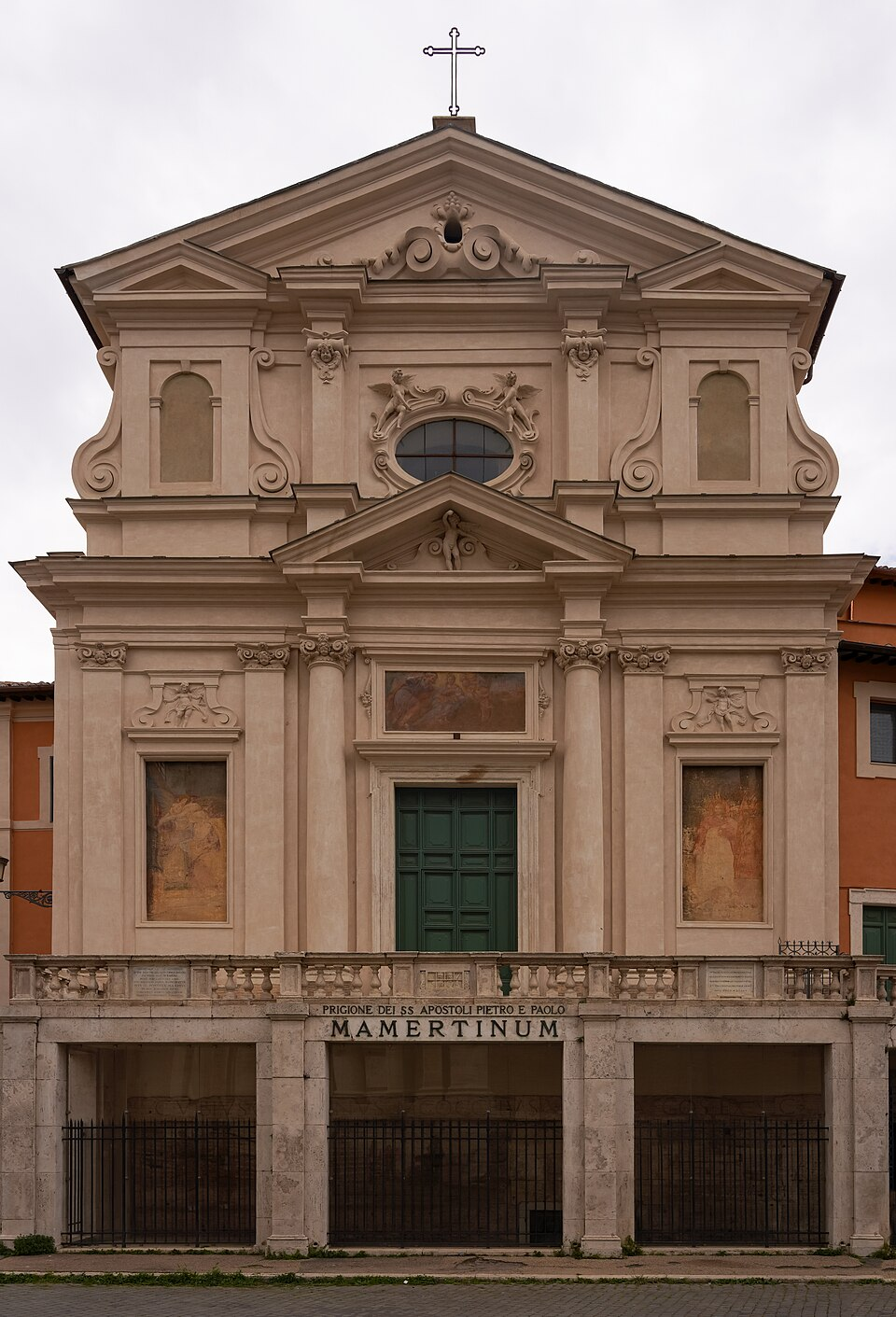
Saints Abundius and Abundantiusof Rome were martyrs who killed during the Diocletian persecution in the year 304. Abundius was a priest and Abundantius a deacon. The emperor ordered them to be arrested on suspicion of Christianity. When they refused to sacrifice to Hercules, they were tortured at Mamertine prison, and condemned to be beheaded. On the way to execution the two passed Senator Marcian who was grieving over his son John who had just died. Abundius prayed over John, and the boy returned to life; Marcian and John converted to Christianity on the spot.
Prison of the Holy Apostles Peter & Paul (Mamertinum)
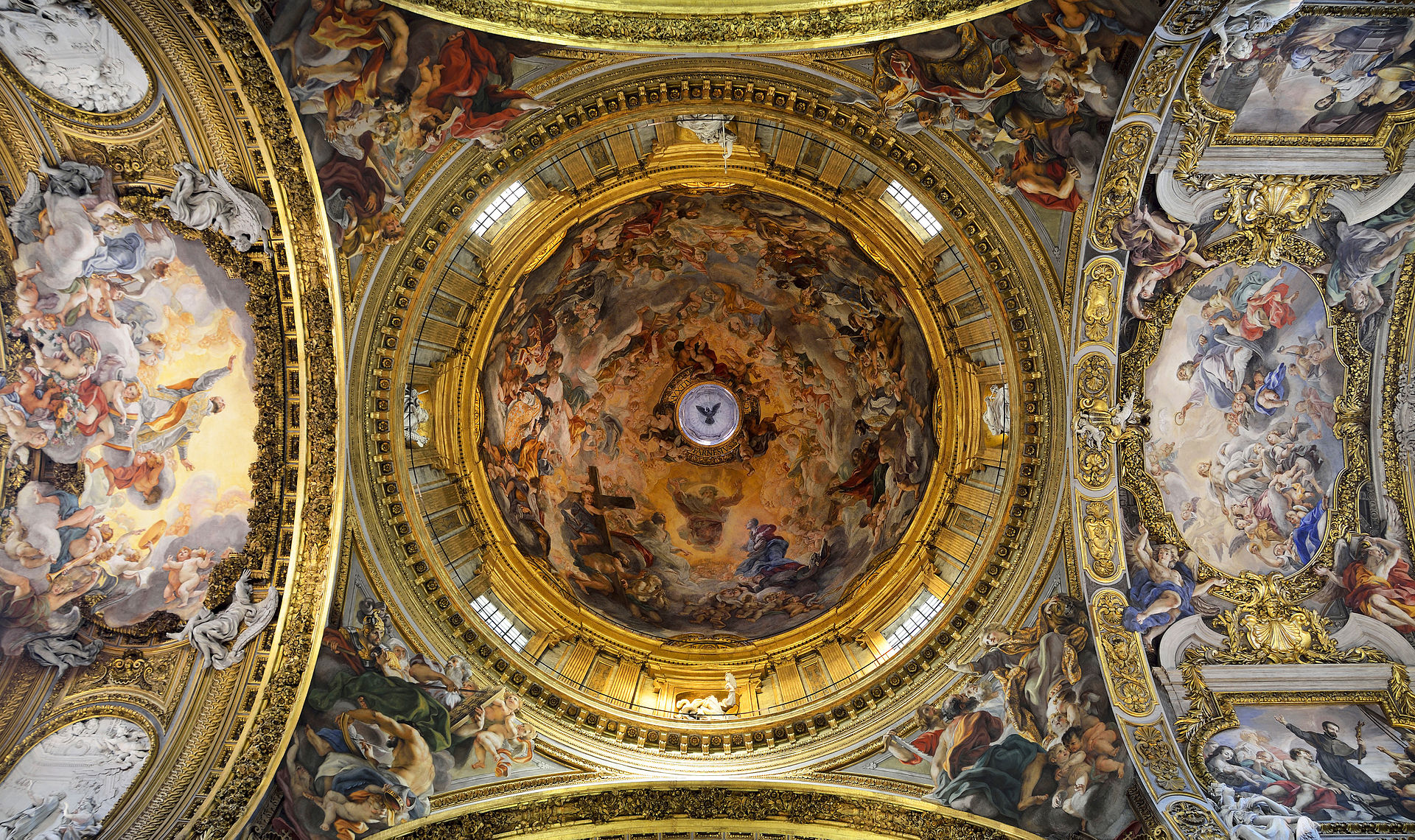
The executions were carried out at the 26th milestone of the Via Flaminia. Their bodies were later transferred to the church of Cosmas and Damian in Rome. The bodies of Marcianus and John were found around 1001 and transferred to Civita Castellana. In 1583, the relics of Abundius and Abundantius were transferred to the SS. Nome di Gesu, where they were placed under the church’s high altar. Aloysius Gonzaga heard mass there before becoming a Jesuit.
Church of the Gesù
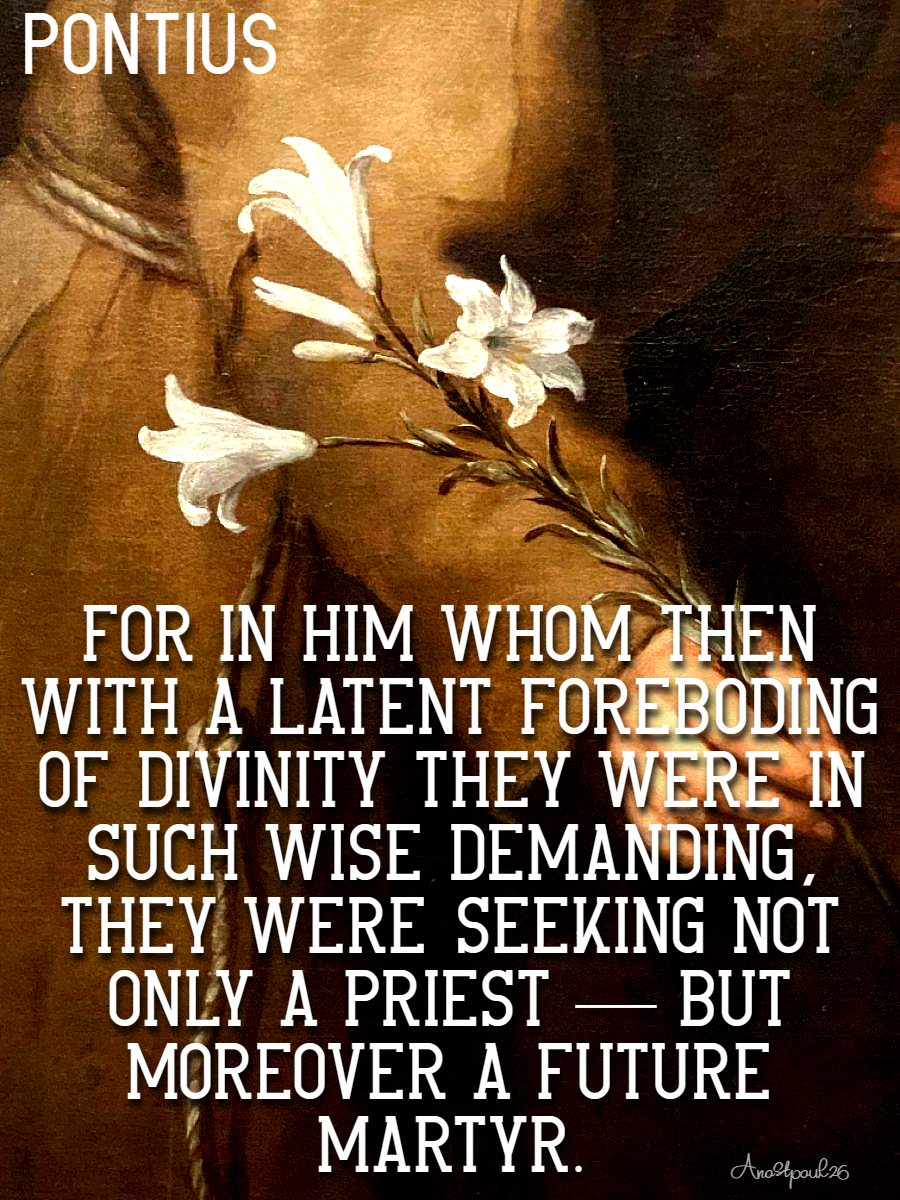
For in him whom then with a latent foreboding of divinity they were in such wise demanding, they were seeking not only a priest — but moreover a future martyr.
Nuestra Señora de las Lajas / Our Lady of the Flagstones, Potosí, Caldas, Colombia (1754) – 16 September:
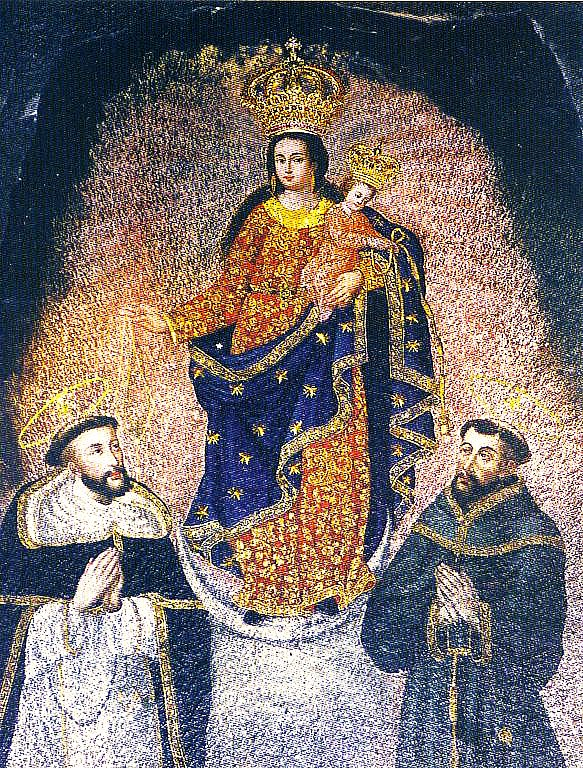
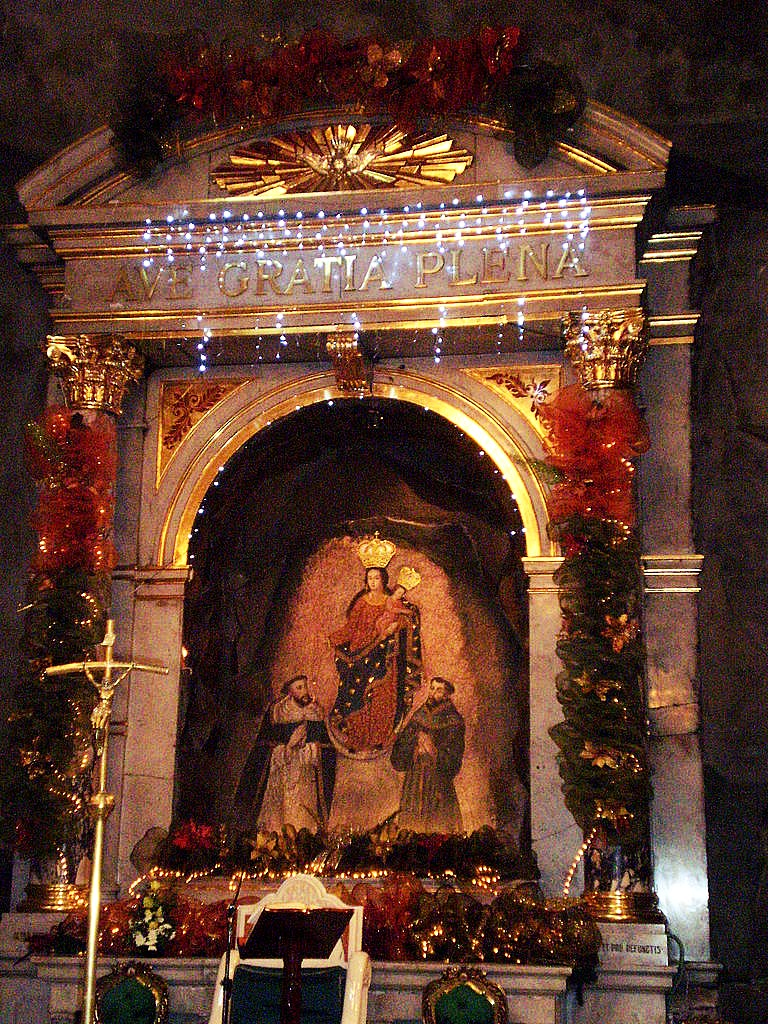
In 1754, Maria Mueses de Quinones, an Indian woman from the village of Potosi, Colombia and her deaf-mute daughter, Rosa, were caught in a very strong storm. They sought refuge in a cave in the gigantic Lajas mountains. To Maria’s surprise, her mute daughter, Rosa exclaimed with her first words “the mestiza is calling me…” Maria did not see the figures of a woman and child that the girl described and fearfully ran back with her daughter to Ipiales and told the townspeople. After later returning to the spot, the woman saw an apparition of Our Lady and Child. Some months later, Rosa died and was returned to life when her mother prayed again at the cave. The townspeople came to see this place and encountered the miraculous image burned into the rocks!
The congregation celebrated the first Mass in the Pastarán river cave – it was 16 September 1754 and they built a straw grotto. With the endorsement of the ecclesiastical authorities, who declared the event as a miracle on 15 September 1754. Very soon, the image began to be venerated with great fervour and many miraculous events occurred there.
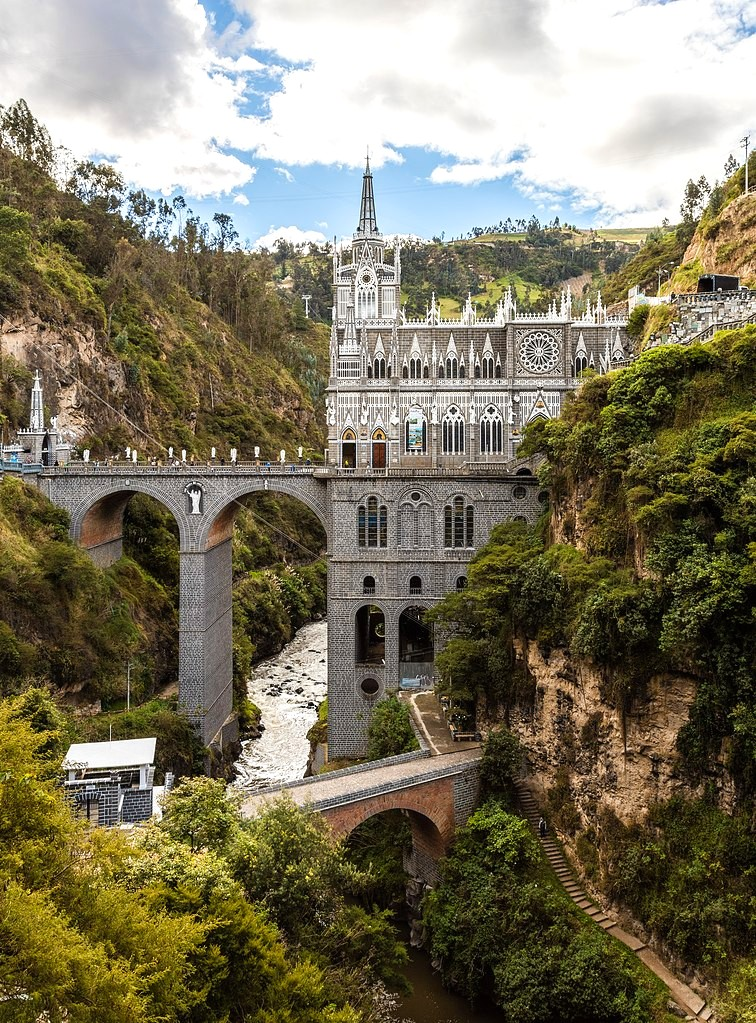
Around the image the faithful devotees have erected four successively larger Churches, until culminating in the current Sanctuary whose construction lasted 30 years and was completed in 1949. In 1952 , Pope Pius XII granted the image the canonical coronation and in 1954 he granted the Sanctuary, the title of Minor Basilica.
St Abundantius of Rome St Abundius of Rome St Andrew Kim Taegon St Cunibert of Maroilles St Curcodomus Bl Dominic Shobyoye St Dulcissima of Sutri St Edith of Wilton St Eugenia of Hohenburg St Euphemia (c 290-c 305) Virgin Martyr St Geminianus of Rome St John of Rome
Blessed Luigi Ludovico Allemandi (c 1390-1450) Bishop and Cardinal, called “The Cardinal of Arles.” Blessed Luigi was a Priest driven by immense love for the Holy Mother of God and for the Church. His involvement in various Councils and Papal dissentions, were the result of his great desire to maintain the purity of the Chair of Peter. He was Beatified in 1527 by Pope Clement VII.
St Lucy of Rome St Ludmila St Marcian the Senator Bl Martin of Huerta Bl Michael Himonaya
St Ninian (Died 432) “Apostle to the Southern Picts,” Bishop, Missionary, Monastic Founder, Wonderworker.
Bl Paul Fimonaya St Priscus of Nocera St Rogellus of Cordoba St Sebastiana St Servus Dei St Stephen of Perugia
Blessed Pope Victor III OSB (1027-1087) Known as “the Gentle Pope,” Prince, Benedictine Abbot, Monk, Advisor, diplomat, reformer – Papal ascension – elected 24 May 1086 and enthroned on 9 May 1087 – until his death. Few have been more reluctant to accept the Papacy than the humble Monk and Hermit, who became Victor III.
St Vitalis of Savigny
Martyrs of the Via Nomentana: Four Christian men martyred together, date unknown – Alexander, Felix, Papias and Victor. They were martyred on the Via Nomentana outside Rome, Italy.
Martyred in the Spanish Civil War: • Blessed Antonio Martínez García • Blessed Ignasi Casanovas Perramón • Blessed Manuel Ferrer Jordá • Blessed Pablo Martínez Robles • Blessed Salvador Ferrer Cardet
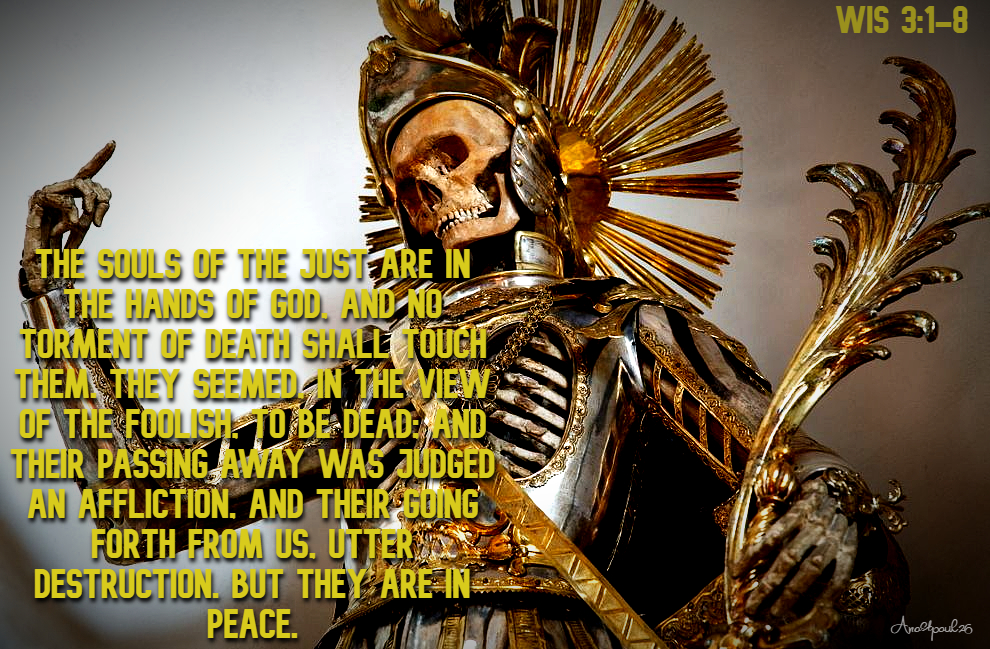
One Minute Reflection – 16 September – “Month of the Seven Sorrows of the Blessed Virgin Mary ” – Readings: Ps 78:11; 78:12; 78:10, Ps 78:1, Wis 3:1-8, Luke 21:9-19
The souls of the just are in the hands of God, and no torment of death shall touch them. They seemed, in the view of the foolish, to be dead; and their passing away was judged an affliction, and their going forth from us, utter destruction. But they are in peace.
Wis 3:1-8
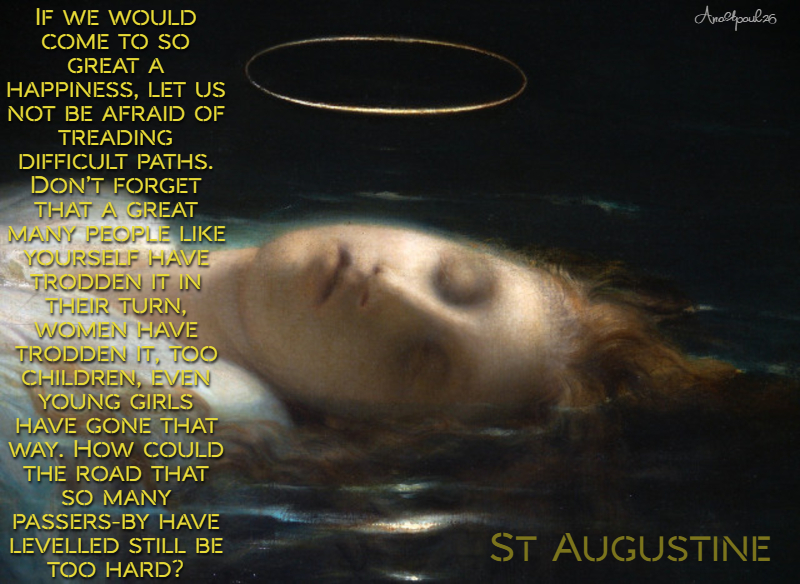
REFLECTION – Do you want to come to that life where you will be sheltered from error forever? Who does not want this? We all desire life and truth but how are we to attain it? What path are we to follow? Certainly, we have not reached the end of the journey yet we can already see it, we yearn for life and truth. Christ is both one and the other. What is the way to it? “I am the way,” he says. To what will we come? “I am the truth and the life”.
This is what the martyrs loved; this is why they looked beyond the love of present goods that pass away. Don’t be astonished at their bravery: in them love overcame suffering.Let us walk in their footsteps, our eyes fixed on him who is both their Leader and ours. If we would come to so great a happiness, let us not be afraid of treading difficult paths. He who has promised is true; he is faithful; he could not deceive us. Why fear the hard road of suffering and tribulation? Our Saviour in person has trodden it.
You answer: “But that was him, the Saviour!” Know that the apostles passed that way too. Now you’re going to say: “But they were apostles!” Yes, I know. But don’t forget that a great many people like yourself have trodden it in their turn, women have trodden it, too children, even young girls have gone that way. How could the road that so many passers-by have levelled still be too hard?
Saint Augustine
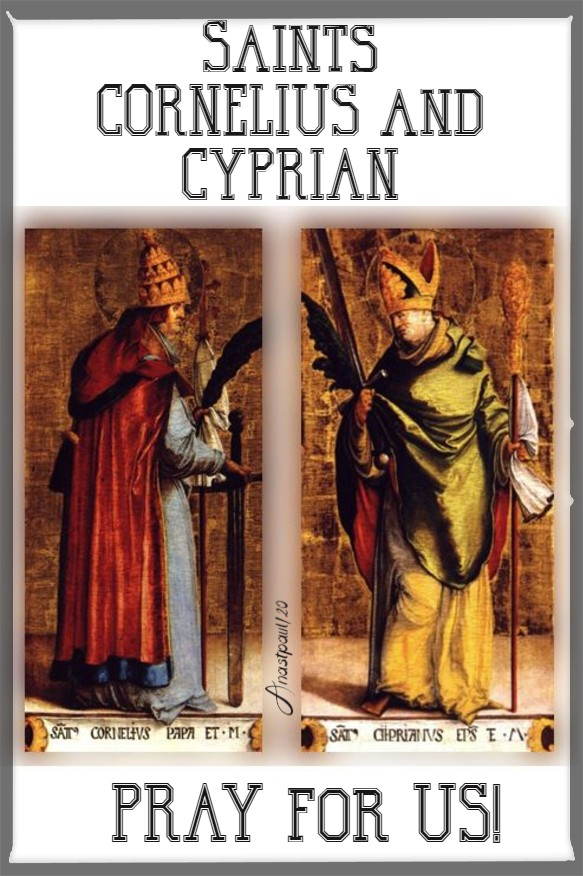
PRAYER – Look upon us Lord, Creator and Ruler of the whole world, give us the grace to serve You with all our hearts, to take up our cross and follow You, that we may come to know the power of Your love and the forgiveness which You give and You teach. Grant that by the intercession of Sts Cornelius and Cyprian, we may attain the glory of Your kingdom and see You face to face. We make our prayer through Christ our Lord with the Holy Spirit, one God forever, amen.
St Aichardus St Albinus of Lyon Bl Anton Maria Schwartz St Aprus of Toul St Bond of Sens
St Catherine of Genoa (1447-1510) Married laywoman, Mystic, Apostle of the sick, the poor and the needy, Writer. Her body is incorrupt and rests in a glass reliquary at the Capuchin Church in Genoa. Catherine’s writings were examined by the Holy Office and declared to contain doctrine that would alone be enough to prove her sanctity and she was accordingly Beatified in 1675 by Pope Clement X and Canonised in 1737 by Pope Clement XII. Her writings also, became sources of inspiration for other religious leaders such as Robert Bellarmine and Francis de Sales and Cardinal Henry Edward Manning. Pope Pius XII declared her Patroness of the hospitals in Italy.
Bl Camillus Constanzo St Emilas of Cordoba St Eutropa of Auvergne St Hernan Bl Jacinto de Los Ángeles and Bl Juan Bautista St Jeremias of Cordoba St Joseph Abibos St Mamillian of Palermo St Melitina St Mirin of Bangor St Nicetas the Goth St Nicomedes of Rome
St Porphyrius the Martyr St Ribert St Ritbert of Varennes Bl Rolando de Medici Bl Tommasuccio of Foligno St Valerian of Châlon-sur-Saône St Valerian of Noviodunum St Vitus of Bergamo Bl Wladyslaw Miegon — Martyrs of Adrianopolis – 3 saints: Three Christian men martyred together in the persecutions of Maximian – Asclepiodotus, Maximus and Theodore. They were martyred in 310 at Adrianopolis (Adrianople), a location in modern Bulgaria.
Martyrs of Noviodunum – 4 saints: Three Christian men martyred together, date unknown – Gordian, Macrinus, Stratone and Valerian. They were martyred in Noviodunum, Lower Moesia (near modern Isaccea, Romania).
Mercedarian Martyrs of Morocco – 6 beati: A group of six Mercedarians who were captured by Moors near Valencia, Spain and taken to Morocco. Though enslaved, they refused to stop preaching Christianity. Martyrs. – Dionisio, Francis, Ildefonso, James, John and Sancho. They were crucified in 1437 in Morocco.
Martyred in the Spanish Civil War: Bl Antonio Sierra Leyva Bl Pascual Penades Jornet
Saint Nicetas the Goth was a soldier and martyr born in the 4th-century, in the Gothic territory north of the Danube River. Coming from the upper class of his people. He was instructed in Christianity by Theophilus of Gothia, a converted bishop, between 325 and 341 AD.
Nicetas received his Greek name on the occasion of his baptism by Theophilus, a participant in the First Ecumenical Council. Pagan Goths began to oppose the spread of Christianity, which resulted in internecine strife. Nicetas fought in the Gothic civil war between the pagan Alaric and the Christian Fritigern. After the defeat of Alaric and after the invention of Gothic alphabets by Ulfilas, Nicetas worked intensely among the Goths for their conversion.
Later, Alaric returned, defeated Fritigern, and resumed his persecution of Christians. The s aint denounced the persecutor for his cruelty and impiety, because he subjected the Christians to severe torments. Nicetas endured many tortures himself and was condemned to the stake in 372. All the while, he hept over his heart, under his robes, an icon of the Blessed Virgin Mary and the Christ Child holding the Cross, carrying this after the Blessed Virgin appeared to him to provide comfort.The devil, shaped as an angel, induced Nicetas to sacrifice to the pagan gods for saving his life; the saint, however, put him to flight by means of prayer and the assistance of St Michael. Although he died at the stake, miraculously the fire did not touch his body, which was buried in Cilicia, and later transferred to Constantinople.
The veneration of this saint gave rise to the Slavic forms of his name: Nikita, Mykyta and Mikita. St Nicetas is prayed to for the preservation of children from birth defects and he is patron of Melendugno, Lecce, Italy.
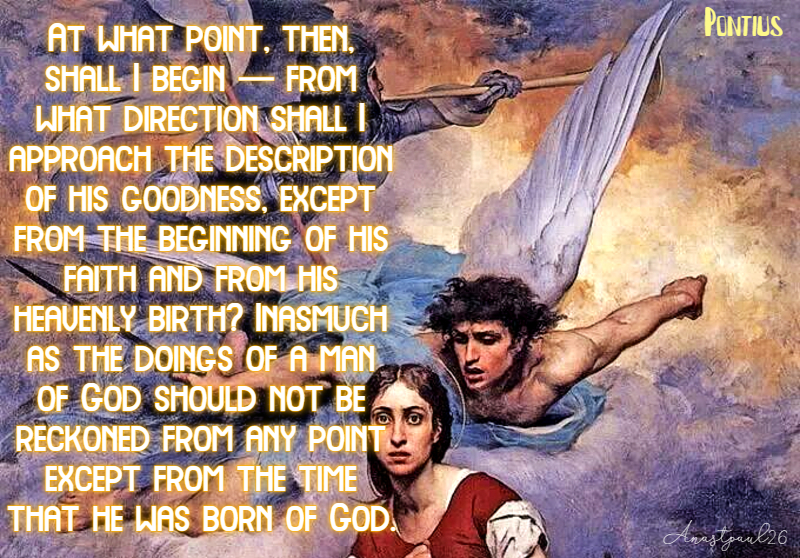
At what point, then, shall I begin — from what direction shall I approach the description of his goodness, except from the beginning of his faith and from his heavenly birth? Inasmuch as the doings of a man of God should not be reckoned from any point except from the time that he was born of God.
Exaltation of the Holy Cross(Feast) This feast was observed in Rome before the end of the seventh century. It commemorates the recovery of the Holy Cross, which had been placed on Mount Calvary by St Helena.
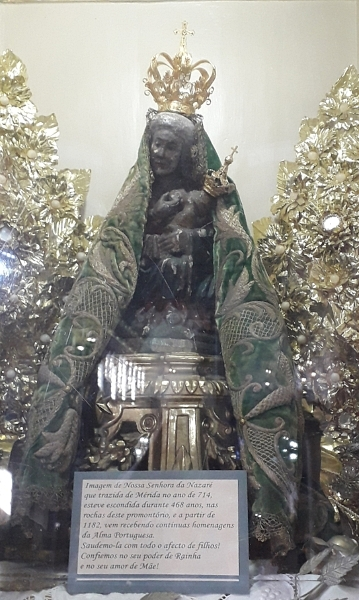
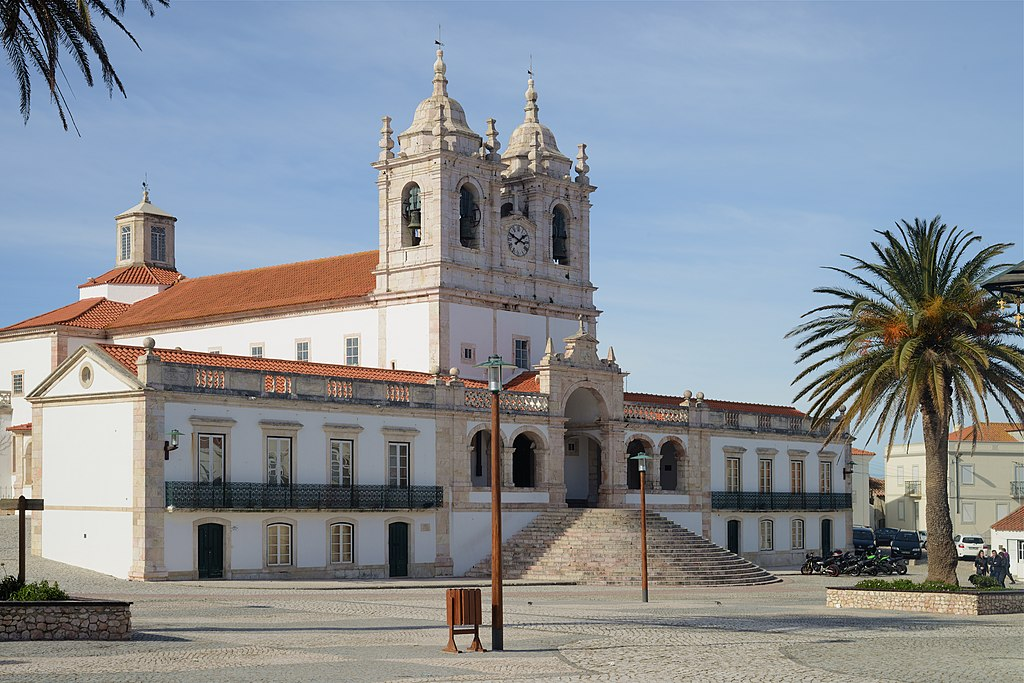
Nossa Senhora de Nazaré / Our Lady of Nazareth, Portugal (1182) -14 September:
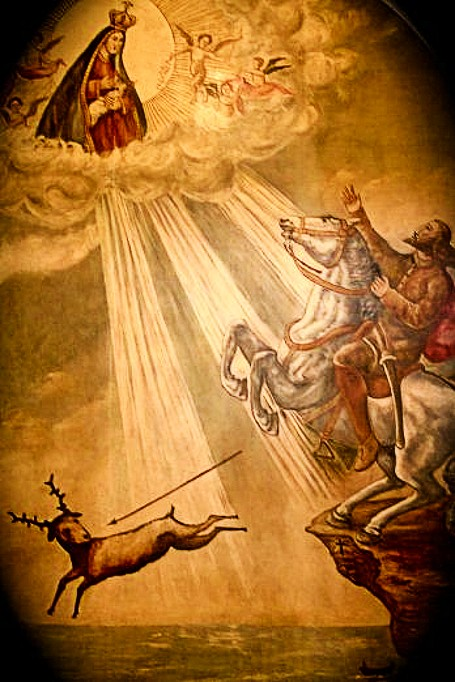
The chronicles of old Portugal report this episode that took place in the year 1182, on the day of the Exaltation of the Holy Cross. Dom Fuas Roupinho, a Knight and vassal of King Afonso Henriques, was out hunting on a foggy day. He was pursuing a deer when it came to an unexpected precipice and fell to its death into the sea below.
The horse, which was in close pursuit, reared on the very edge of the cliff and it seemed certain that Dom Fuas would follow the deer to his death. Knowing that a little distance to his left was a cave with the Statue of the Virgin of Nazareth, Dom Fuas immediately invoked her protection. He was saved and in thanksgiving he built a small “Chapel of memory” (Ermida da Memória) over the cave in her honour.
According to a document found with it, the little Statue of the Virgin had been venerated in Nazareth in the times of early Christianity. When the iconoclast heresy started in Constantinople and the heretics were destroying all the Statues, a Monk called Ciriaco took it to a Monastery in Spain in the proximity of Merida.
In 714, when the Saracens invaded the Iberian Peninsula, King Rodrigo fled with Friar Germano to the Atlantic coast, bearing the Statue with them. They hid the Statue in a small cave off the coast of the site that was later to become Nazaré, where it remained until it was found by a shepherd in 1179.
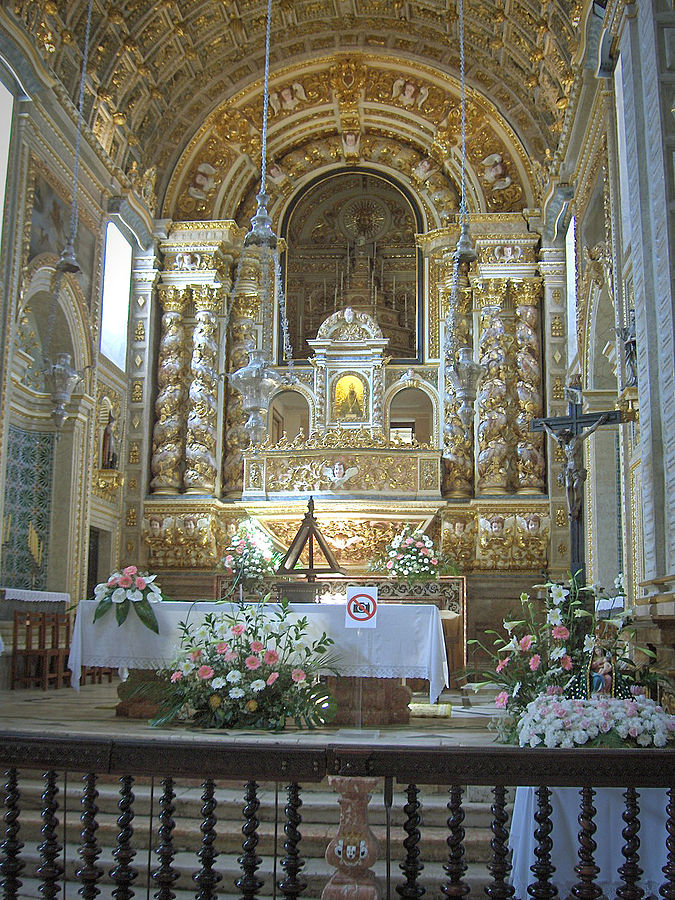
After Our Lady miraculously saved the life of Dom Fuas, the devotion to Our Lady of Nazareth spread throughout the country and was the source of countless graces for the people. In 1377 King Fernando ordered a large Church to be built near the little Chapel, and the Statue is venerated there now.
St Aelia Flaccilla
St Albert of Jerusalem (1149-1215) also known as St Albert of Vercelli – Bishop, Canon Lawyer, Diplomat and Peacemaker and is regarded as a Co-Founder of the Carmelite Order.
St Peter of Tarentaise O.Cist (1102-1174) Cistercian Monk, Archbishop of Tarentaise from 1141 until his death, Abbot, Apostle of Charity, Miracle-worker. There are two men named Saint Peter of Tarentaise who lived one century apart. The man we honour today is the younger Peter, born in France in the early part of the 12th century. The other man with the same name became Pope Innocent the Fifth.
Bl Pedro Bruch Cotacáns St Rosula of Carthage St Sallustia St Victor of Carthage
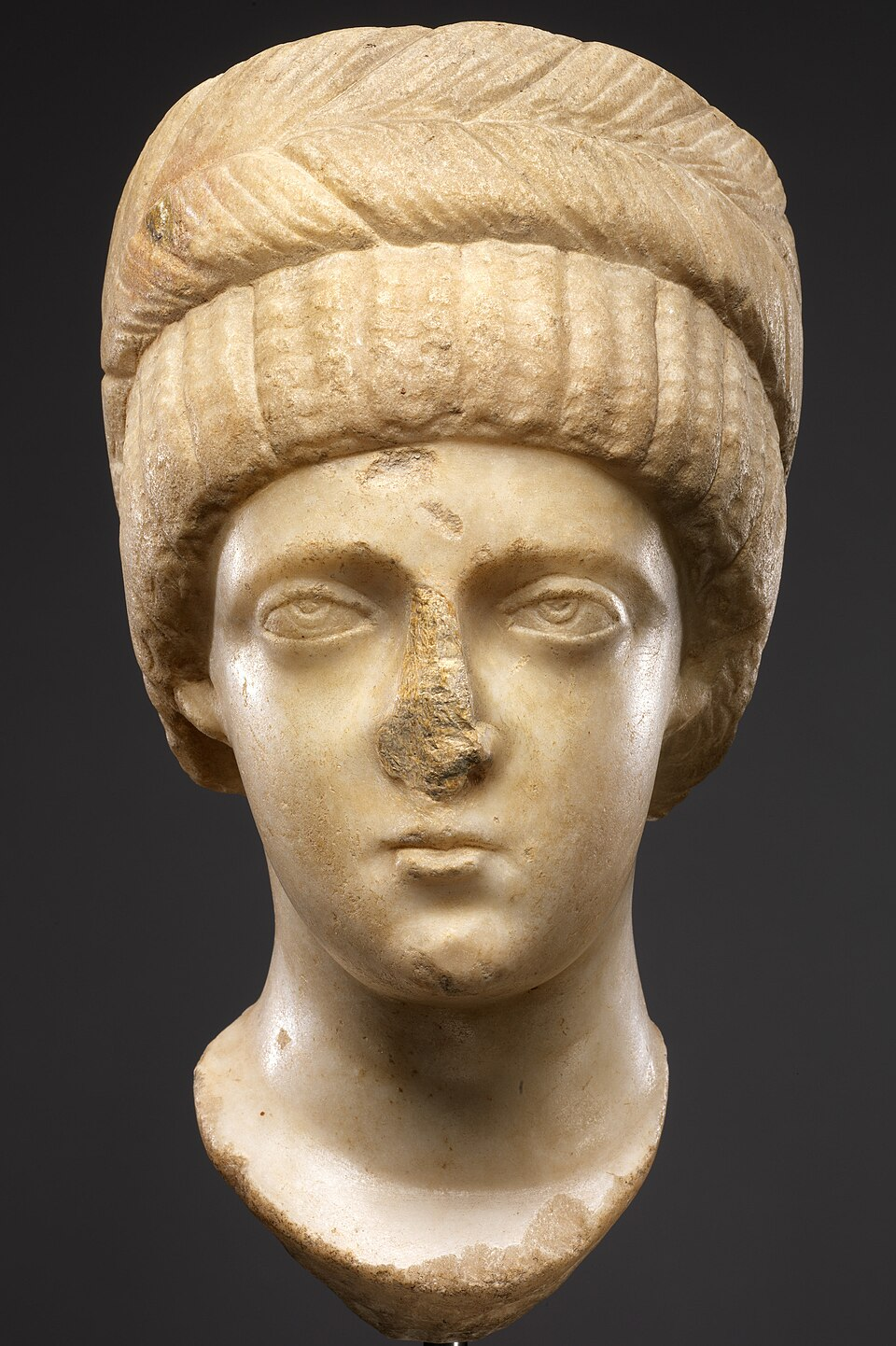
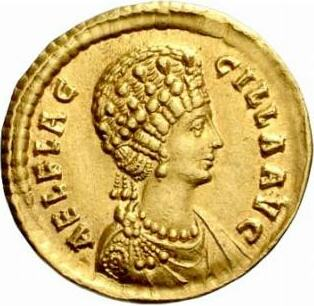
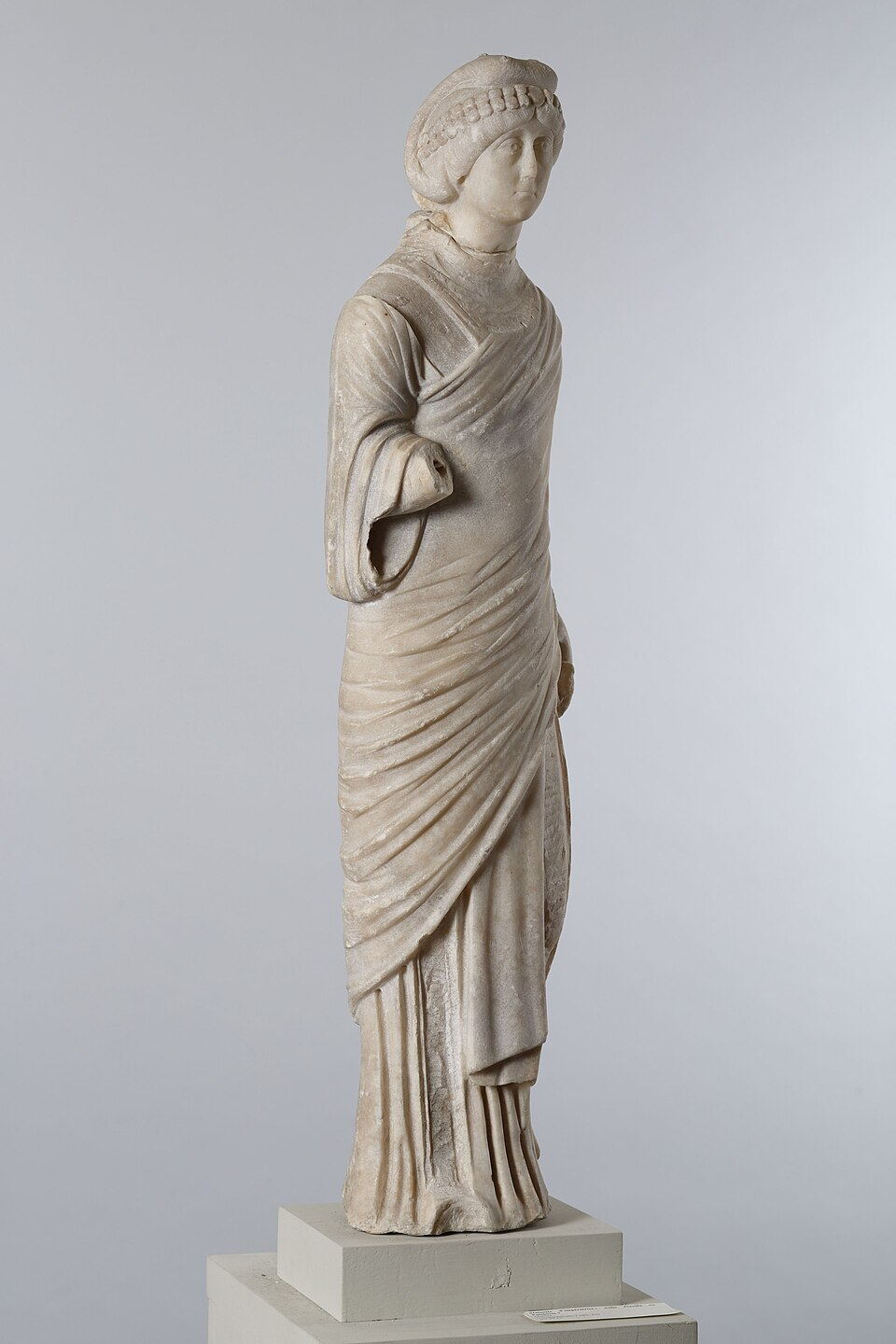
SaintAelia Flavia Flaccilla, known as Aelia Flacilla or Flacilla, was a Roman empress and may have been the daughter of Claudius Antonius, Prefect of Gaul. She was the first wife of Emperor Theodosius I. She was of Spanish descent. During her marriage to Theodosius, she gave birth to two sons, the future Emperors Arcadius and Honorius, as well as a daughter, Aelia Pulcheria.
Aelia Flacilla was a zealous supporter of the Nicene Creed, and she was considered a pillar of the Church and model of Christian virtue by Saint Gregory of Nyssa and others. She died in 385 of natural causes.
"The greatness of the good gift given her made her love for Him who gave it all the greater, so she bestowed every kind of attention on the maimed and the mutilated, declining all aid from her household and her guards, herself visiting the houses where the sufferers lodged, and providing every one with what he required. She also went about the chambers of the churches and ministered to the wants of the sick, herself handling pots and pans, and tasting broth, now bringing in a dish and breaking bread and offering morsels, and washing out a cup and going through all the other duties which are supposed to be proper to servants and maids. To them who strove to restrain her from doing these things with her own hands she would say, "It befits a sovereign to distribute gold; I, for the sovereign power that has been given me, am giving my own service to the Giver."
-Theodoret, Ecclesiastical History (Book V.18)
"It appears that, during the reign of Valens, had some dispute with his own clergy at Cyzicus, and had in consequence seceded from the Arians, and retired to Bithynia, near Constantinople. Here multitudes resorted to him; some also gathered from different quarters, a few with the design of testing his principles, and others merely from the desire of listening to his discourses. His reputation reached the ears of the emperor, who would gladly have held a conference with him. But the Empress Flacilla studiously prevented an interview from taking place between them; for she was the most faithful guard of the Nicene doctrines, and feared lest Eunomius might, by his powers of disputation, induce a change in the sentiments of the emperor."
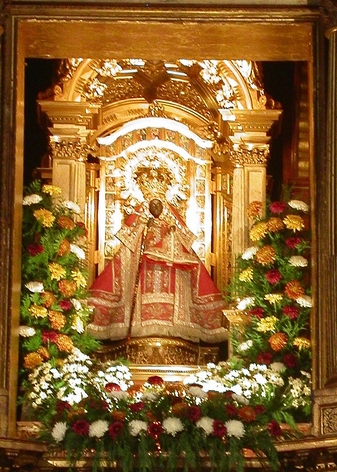
The Marian shrine of Our Lady of Guadalupe is located in the Extremadura region of what was the Kingdom of Castile. The shrine houses a Black Madonna, a statue crafted by the loving hands of Saint Luke the Evangelist himself and given to Saint Leander, Archbishop of Seville, by Pope Gregory I. It is one of the fifteen Black Madonnas in Spain. The statue was canonically crowned on 12 October 1928 by Pope Pius XI with a crown designed and crafted by Father Felix Granda, and crowned in the presence of King Alfonso XIII of Spain.
Spain was invaded by the Muslims in the year 711. The beloved statue of the Blessed Virgin was taken by the Christians who fled before the advance of the invading hordes, placing the statue in a strongbox and burying it in a cave in the hills near the Guadalupe River in Extremadura. When those who had safeguarded the statue died, the existence of it and the knowledge of its location was lost.
In the year 1326, the Blessed Virgin appeared to a shepherd near the village of Guadalupe, asking him to have priests dig at the site of the apparition. When they did, the priests found the strongbox that had been buried in the earth over 600 years previously. It contained documents that identified the cherished statue that became known as Our Lady of Guadalupe. A Marian shrine was built there in her honor.
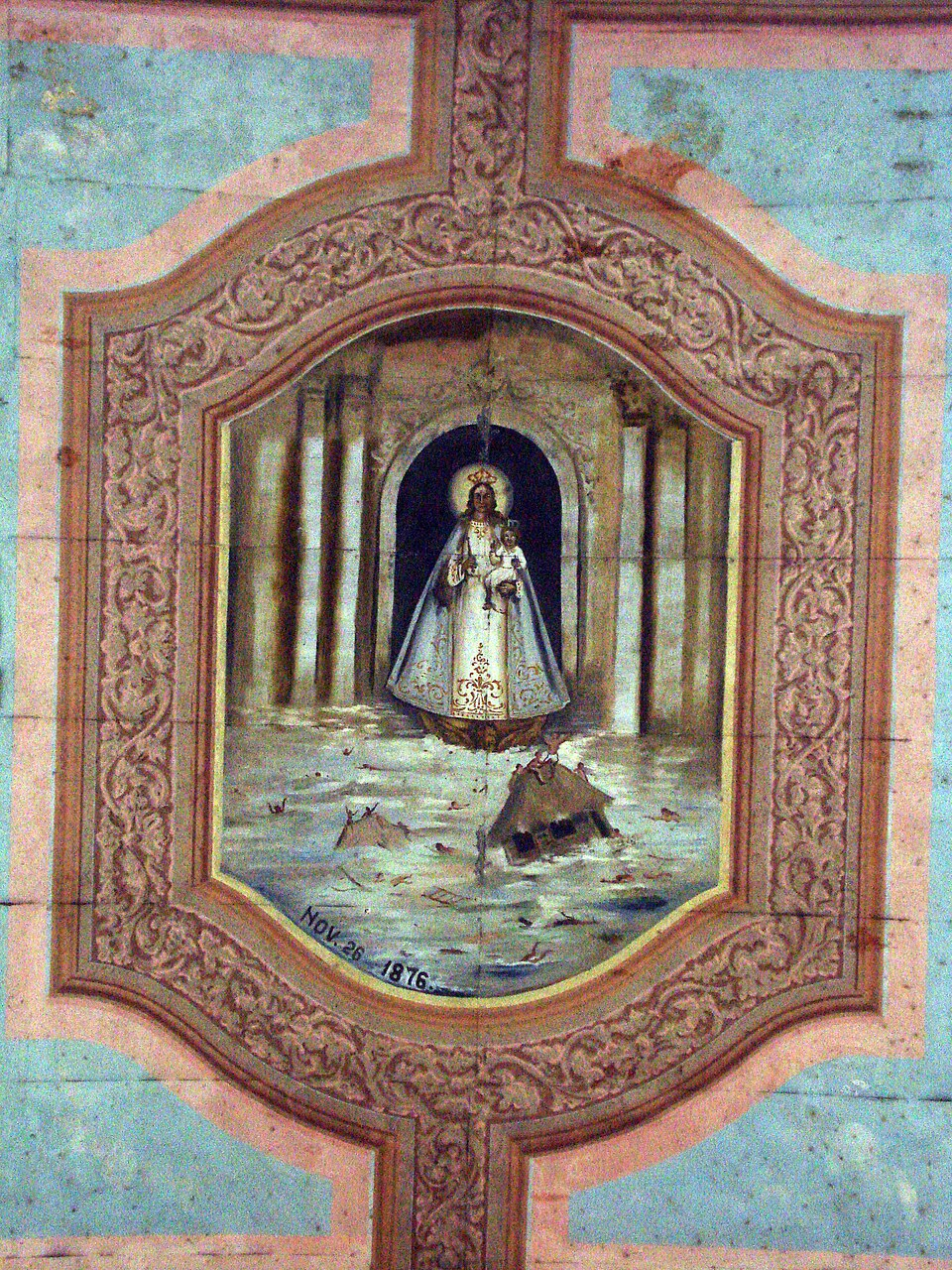
A copy of the Extremaduran image is enshrined in Loboc Church in the island province of Bohol, and has documented miracles attributed to the Virgin.
Immediately pilgrims began to visit the shrine dedicated to Our Lady of Guadalupe, and in 1340, King Alfonso XI endowed the sanctuary over which he took a particular interest. It was in that same year that Abu Hasan of Morocco had invaded the Iberian Peninsula with a huge army, intending to march into Castile and reverse the earlier Catholic expansion into what had been Muslim territory. The battle of Rio Salado had been hard fought, though it ended in a Christian victory that King Alfonso attributed to the intercession of the Blessed Virgin, Our Lady of Guadalupe.
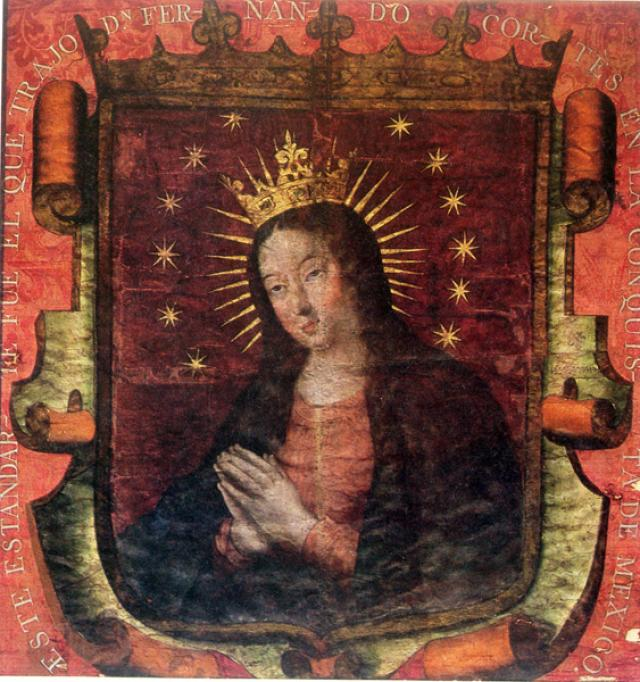
Banner of Cortés preserved in the Army Museum in Toledo (Spain)
In 1389 the Spanish architect, Juan Alphonso, began the church, which has walls ornamented with magnificent votive offerings, attesting to more than three thousand authentic miracles of the Blessed Virgin, Our Lady of Guadalupe.
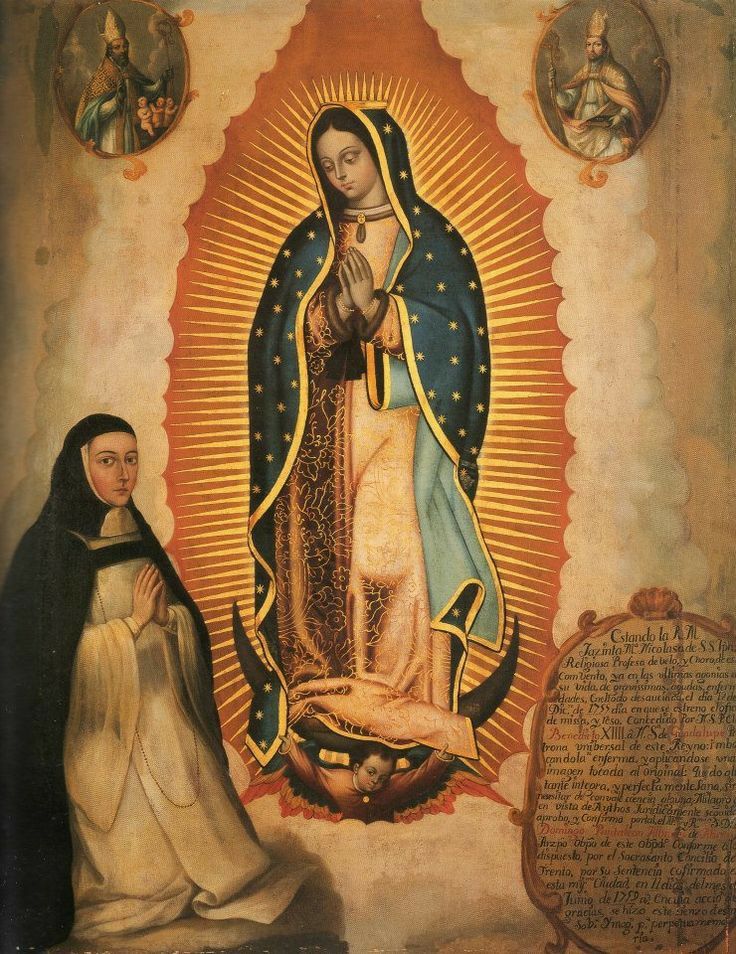
The veneration for Our Lady of Guadalupe crossed the ocean, and was established by miracles in Mexico. The magnificent captain, Hernan Cortez, conquered the evil Aztec Empire under a Marian standard. Cortez himself was from Extremadura.
Dedication of the Basilicas of Jerusalem: Commemoration of the dedications of the Basilicas built on Mount Calvary and the Church of the Holy Sepulchre in Jerusalem. — St Aigulf
St Amatus OSB (c 560-c 627) Monk, Abbot, Hermit, Penitent, miracle-worker, together with St Romaric, he founded Remiremont Abbey.
St Barsenorius Bl Claude Dumonet St Columbinus of Lure St Emiliano of Valence St Evantius of Autun St Gordian of Pontus Bl Hedwig of Hreford St Julian of Ankyra St Ligorius St Litorius of Tours St Macrobius St Marcellinus of Carthage Bl María López de Rivas Martínez
St Maurilius of Angers (c 336-426) Bishop of Angers, Cantor for Saint Ambrose, (Bishop of Milan and Father and Doctor of the Church), Disciple of St Martin of Tours.
St Nectarius of Autun
St Notburga (c 1265-1313) Virgin St Philip of Rome St Venerius of Tino — Martyrs of Ireland: • Blessed Edward Stapleton • Blessed Elizabeth Kearney • Blessed James Saul • Blessed Margaret of Cashel • Blessed Richard Barry • Blessed Richard Butler • Blessed Theobald Stapleton • Blessed Thomas Morrissey • Blessed William Boyton
Martyred in the Spanish Civil War including the Martyrs of Pozo de Cantavieja – 11 beati: • Blessed Bienvenido Villalón Acebrón • Blessed Emilio Antequera Lupiáñez • Blessed Florencio Arnáiz Cejudo • Blessed Francisco Rodríguez Martínez • Blessed Joaquín Gisbert Aguilera • Blessed José Álvarez-Benavides de La Torre • Blessed José Cano García • Blessed José Román García González • Blessed Juan Capel Segura • Blessed Juan Ibáñez Martín • Blessed Luis Eduardo López Gascón • Blessed Manuel Alvarez y Alvarez • Blessed Manuel Martínez Giménez • Blessed Pío Navarro Moreno • Blessed Ramiro Argüelles Hevia • Blessed Sabino Ayastuy Errasti • Blessed Teófilo Montes Calvo
Saint Aigulf, also known as Aigulphe, Aygulf or Ayoul. He was Abbot of Lérins, and a martyr.
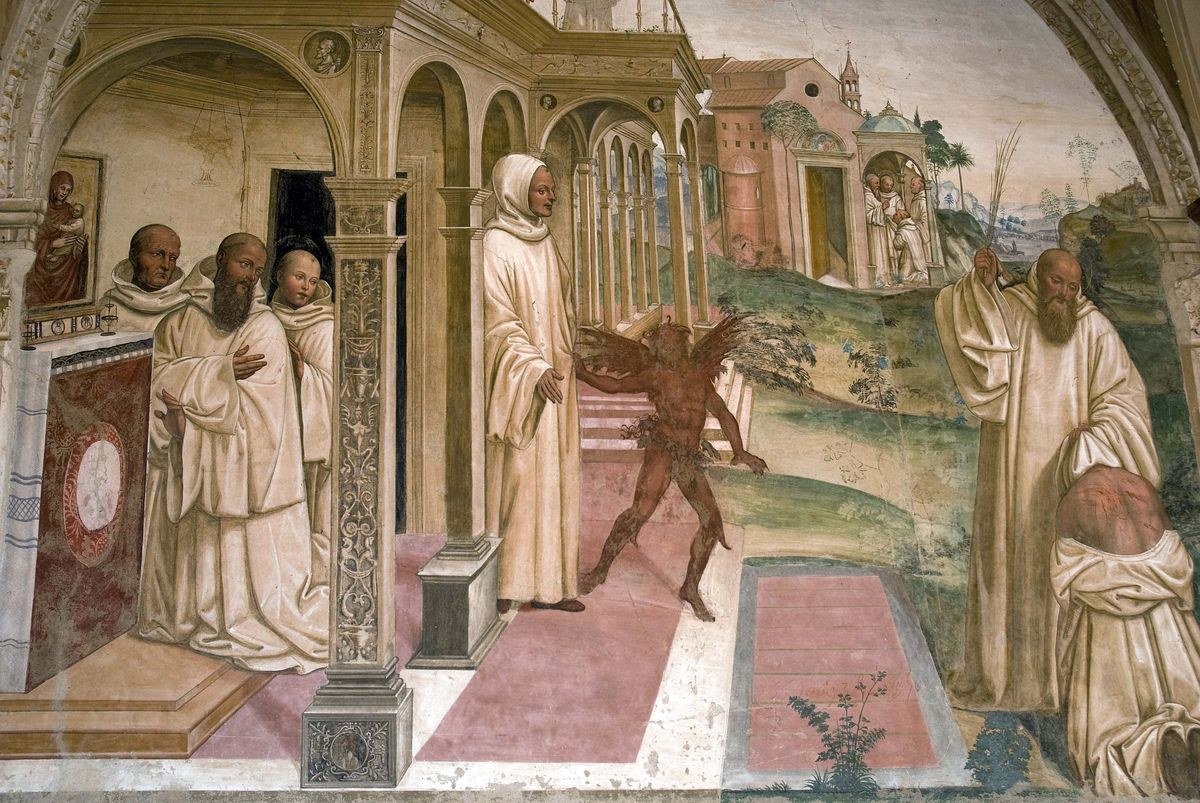
St. Benedict frees a monk possessed by a demon by striking him.
Aigulf was born in 630 in Blois and was a Benedictine monk at Fleury, France. He led a party of monks sent to retrieve the relics of Saint Bernard from the Lombards. Later, he was called upon to reform the Abbey of Saint Honorat.
He became abbot of Lérins around 671 and worked to restore monastic discipline, which had weakened over time. He replaced the monks’ own rules, which had been followed since the abbey’s origins, with the Rule of Saint Benedict. Many of the brothers supported him, but some resisted, and following a riot they conspired to have Aigulf and four of his supporters kidnapped by soldiers, taken to the island of Capri, Italy, blinded, tortured and murdered. The monks of Lérins claimed possession of his relics and have always considered Aygulf a martyr. A chapel was dedicated to him in the fortified monastery.
Saint Aygulf is invoked for the healing of eye ailments.
Blessed Thomas of Zumárraga was a Dominican friar, priest, missionary, and martyr of Japan.
Thomas was born in Vitoria, Spain, in 1577. In 1594, he was professed in the Order of Preachers in Vitoria. After he entered the Convento de San Esteban de Salamanca, he received the name of Fray Tomás del Espíritu Santo(Brother Thomas of the Holy Spirit). In 1601, he was sent to Mexico en route to the Philippines. Shortly after arriving, in 1603, Fray Francisco Morales, superior of the Dominicans in Manila, sent him to Japan to found a mission.
By the early 17th century Japan was mostly closed to foreigners, but he fearlessly preached the Gospel and worked tirelessly to establish Christian communities. He hid in the mountains in the area of Nagasaki and Ōmura, but in 1617 he was arrested alongside several other missionaries. After five years of imprisonment, he was burnt alive on 12 September 1622.
Pope Pius IX venerated him on 26 February 1866 with a decree of martyrdom, and later proclaimed him blessed on 7 May 1867.
On all sides all men were flocking together to a spectacle, to us glorious from the devotion of faith, and to be mourned over even by the Gentiles.
Feast of the Holy Name of Mary (1683 ) – 12 September: Feast of the entire Latin Church. It was first observed at Cuenca, Spain in 1513, then extended to the universal Church and assigned to its present place and rank by Pope Innocent XI in 1683 in thanksgiving to God and the Blessed Virgin for the liberation of Vienna, France and the signal victory over the Turks on 12 September 1683. It is the titular feast of the Society of Mary (Marianists) and of the Congregation of the Oblates of Mary Immaculate.
St Ailbe (Died 528) Bishop “The Patrick of Munster,” Confessor, Evangelist – Saint Ailbe is venerated as one of the four great Patrons of Ireland.
Bl Maria Luisa Angelica/Gertrude Prosperi (1799-1847) St Mancius of Saint Thomas St Paul of Saint Clare Bl Pierre-Sulpice-Christophe Faverge St Sacerdos of Lyon St Silvinus of Verona St Tomás de Zumárraga Lazcano — Martyrs of Alexandria – 6 saints: A group of Christians martyred in the persecutions of Diocletian. We know little more than their names – Hieronides, Leontius, Sarapion, Seleusius, Straton and Valerian. They were drowned c 300 at Alexandria, Egypt.
Martyrs of Phrygia – 3 saints: Three Christians who were martyred for destroying pagan idols. We know little more than their names – Macedonius, Tatian and Theodolus. They were burned to death in 362 in Phrygia (modern Turkey).
Martyred in the Spanish Civil War: • Blessed Fortunato Arias Sánchez • Blessed Francisco Maqueda López • Blessed Jaume Puigferrer Mora • Blessed Josep Plana Rebugent • Blessed Julián Delgado Díez
Saints Felix, Regula and Essuperanzio were martyrs beheaded together in the 3rd century, near Zürich, Switzerland, for converting to Christianity. Felix and Regula were brother and sister, while Essuperanzio was their servant. They are the patron saints of Zürich.
Felix was a member of the Theban legion which was based in Egypt under Saint Maurice and stationed in Agaunum in the Valais, Switzerland. When the legion refused to sacrifice to Emperor Maximian, the order was given to execute them. The siblings fled, reaching Zürich before they were caught, tried and executed in 286. After decapitation, they miraculously stood to their feet, picked up their own heads, walked forty paces uphill, and prayed before lying down in death. They were buried on the spot where they lay down, on the hilltop which would become the site of the Grossmünster.
This was revealed in a dream to a monk called Florentius in the 8th century. It contributed greatly to the massive conversion of the inhabitants of these regions to Christianity and had such an impact on Zurich that these three saints still appear on the seal of Zurich today.
And Hilarianus the procurator, who had just received the power of life and death in the place of the proconsul Minucius Timinianus, who was deceased, said, ‘Spare the grey hairs of your father, spare the infancy of your boy, offer sacrifice for the well-being of the emperors.’ And I replied, ‘I will not do so.’ Hilarianus said, ‘Are you a Christian?’ And I replied, ‘I am a Christian.’



You must be logged in to post a comment.