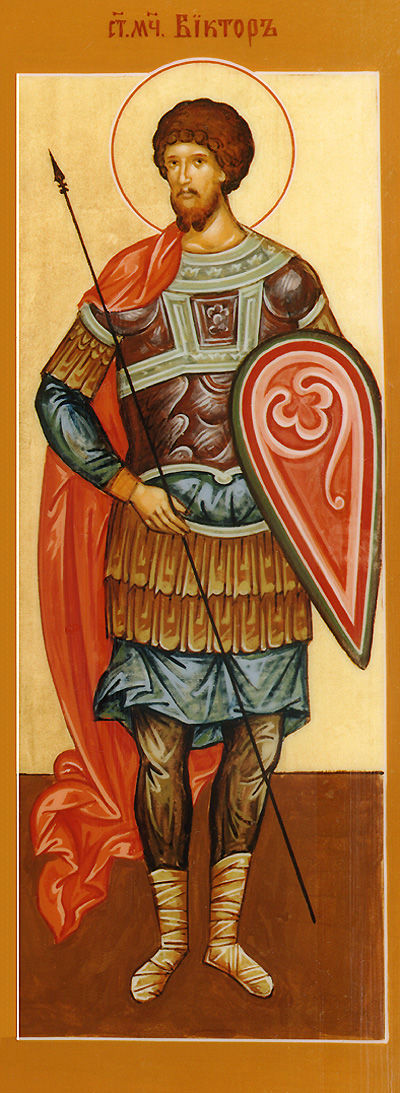
Saints Victor and Sosthenes of Chalcedon were soldiers and the executioners assigned to torture Saint Euphemia. However her faith and prayers converted them to Christianity. The Proconsul Priscus ordered Victor and Sosthenes to throw the saint into a red-hot furnace. In the flames, however, they saw angels who prevented them from touching the saint. When they refused to carry out the order, they were placed in shackles. Other soldiers, who threw Saint Euphēmia into the fire, were burnt by the flames, but inside the furnace the martyr remained unharmed.
St Victor of Chalcedon
They were subsequently martyred in the persecutions of Diocletian. The Proconsul tried to make them bow down to the idols, but they replied that they had come to know the true God and would not offer homage to demons. As they were led to the wild beasts, they begged the Lord to forgive the sins they had committed as pagans. Then a divine voice came from Heaven, calling them to their rest. The animals did not touch their bodies. Later, the two martyrs were buried secretly by some Christians.
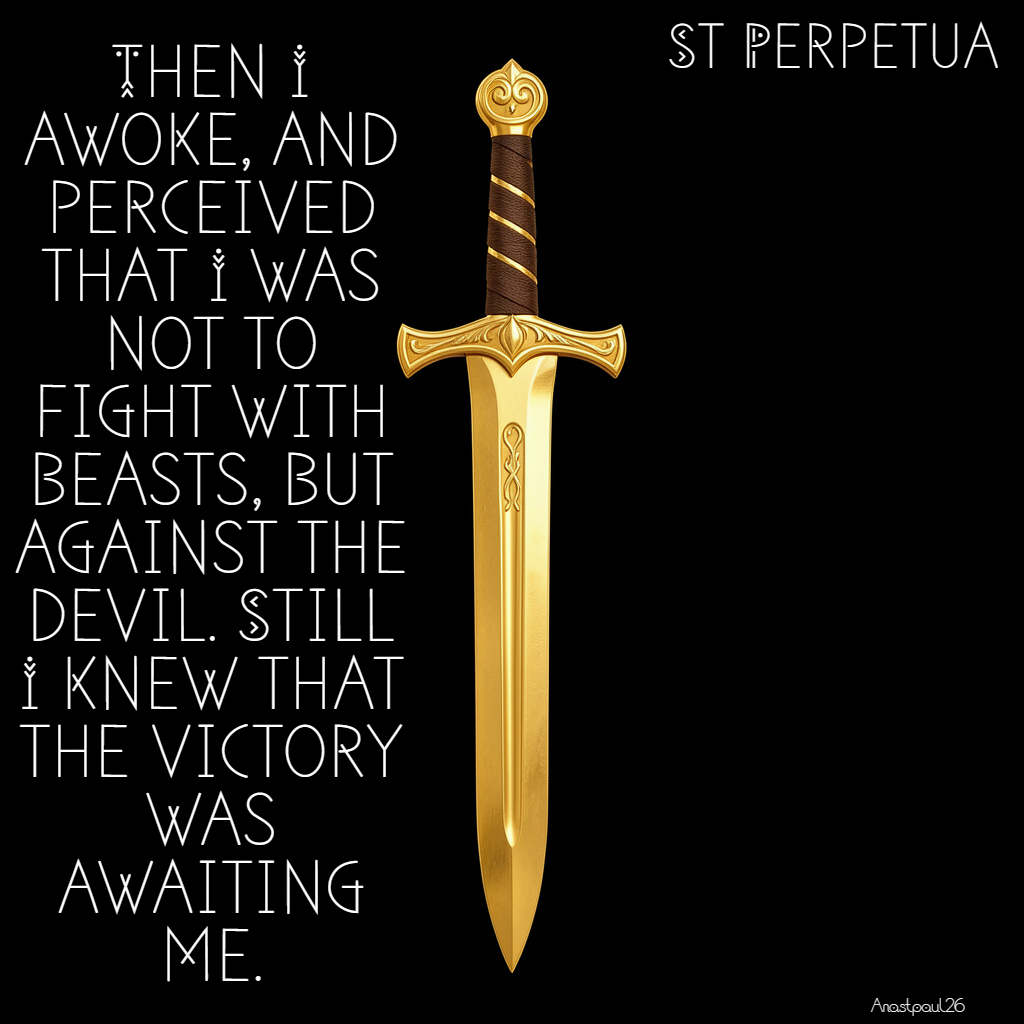
Then I awoke, and perceived that I was not to fight with beasts, but against the devil. Still I knew that the victory was awaiting me.
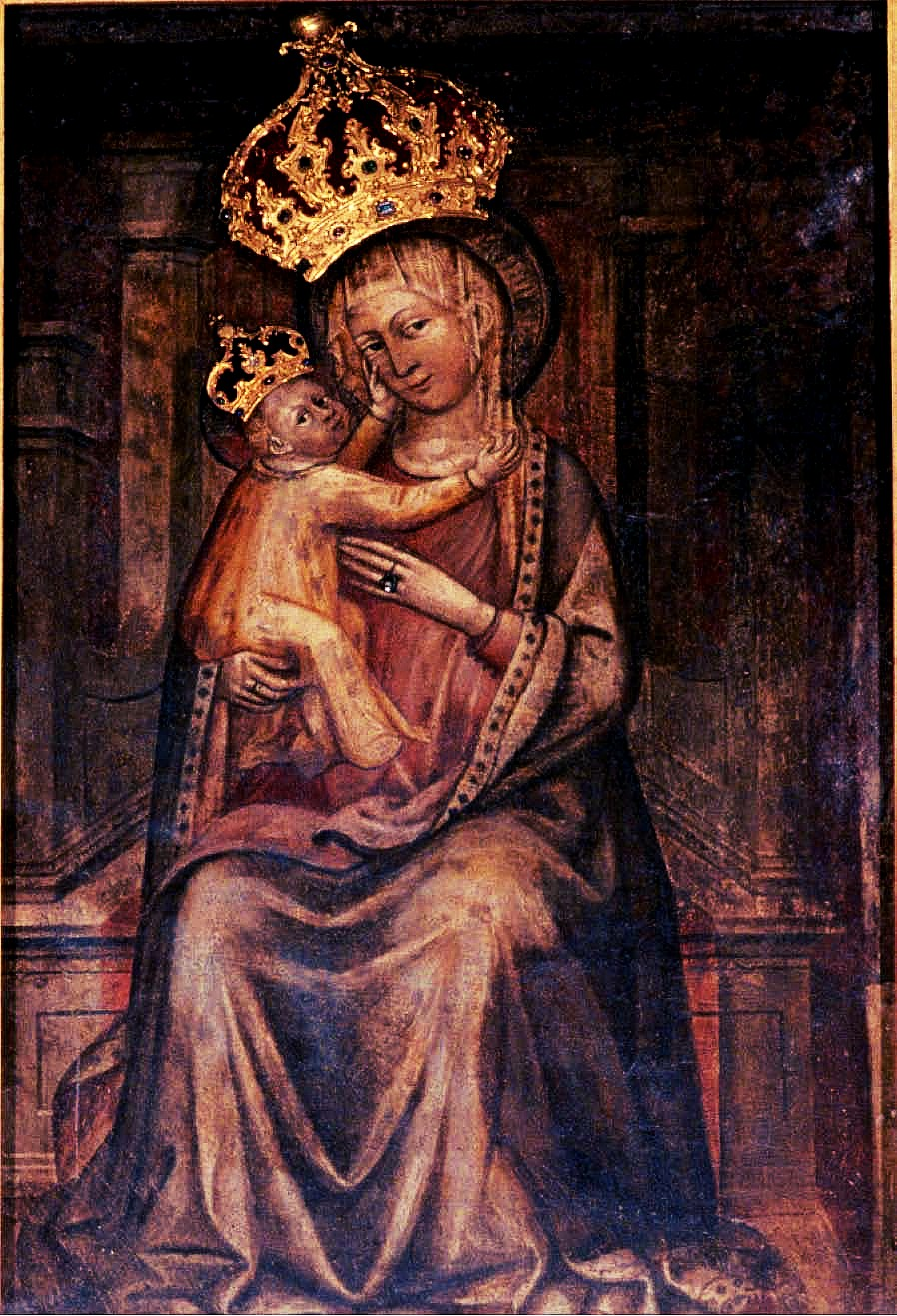
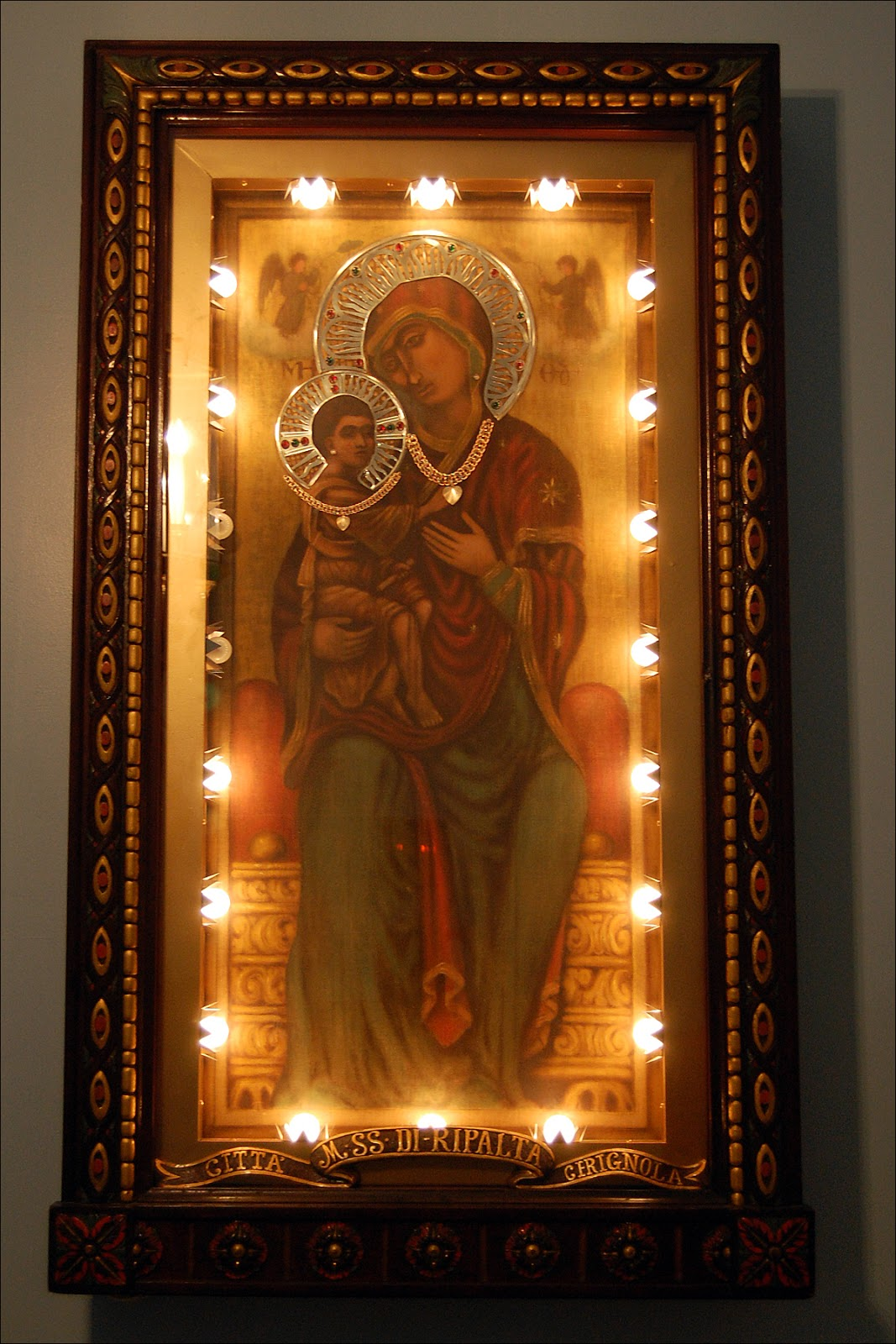
Beata Vergine Maria della Vita / Our Lady of Life (1289) 10 September: Patronage – hospitals in the Diocese of Bologna, Italy.
The cult of the Madonna della Vita is connected with the hospital of the same name founded in 1289 by the Compagnia dei Battuti, present in Bologna since 1261. In the Sanctuary dedicated to her, between 1370 and 1380, Simone dei Crocefissi frescoed the image of the Blessed Virgin, which remained covered during the renovations in the years 1454-1502 and accidentally found among the exultation of the Bolognese people on 10 September 1614. It depicts Mary Mother and Queen as she rests her face to the cheek of Jesus, according to the iconography of the Mother of Tenderness. The close link between the original hospital activity and the devotion of the brothers, was also expressed by the motto inscribed under the double Cross: “Vitam dat nobis crux tua, Christe Jesu” “Your Cross gives us life, Christ Jesus.”
St Peter Martinez St Pulcheria (399-453) Empress, Widow St Salvius of Albi St Sosthenes of Chalcedon St Theodard of Maastricht St Victor of Chalcedon — Martyrs of Bithynia – 3 sister saints: Three young Christian sisters martyred in the persecutions of emperor Maximian and governor Fronto: Menodora, Metrodora, Nymphodora. They were martyred in 306 in Bithynia, Asia Minor (in modern Turkey).
Martyrs of Japan – 205 beati: A unified feast to memorialise 205 missionaries and native Japanese known to have been murdered for their faith between 1617 and 1637.
Martyrs of Sigum – 8 saints: A group of Nicomedian martyrs, condemned for their faith to be worked to death in the marble quarries of Sigum. There were priests, bishops and laity in the group but only a few names have come down to us: Dativus, Felix, Jader, Litteus, Lucius, Nemesian, Polyanus, Victor. They were worked to death c 257 in Sigum.
Martyred in the Spanish Civil War: • Blessed Félix España Ortiz • Blessed Leoncio Arce Urrutia • Blessed Tomàs Cubells Miguel
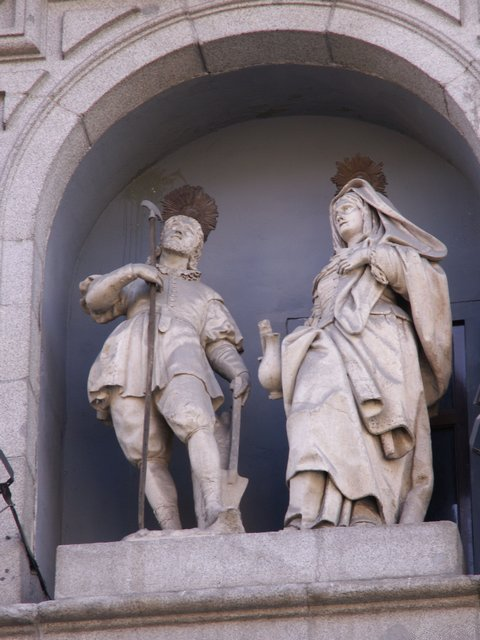
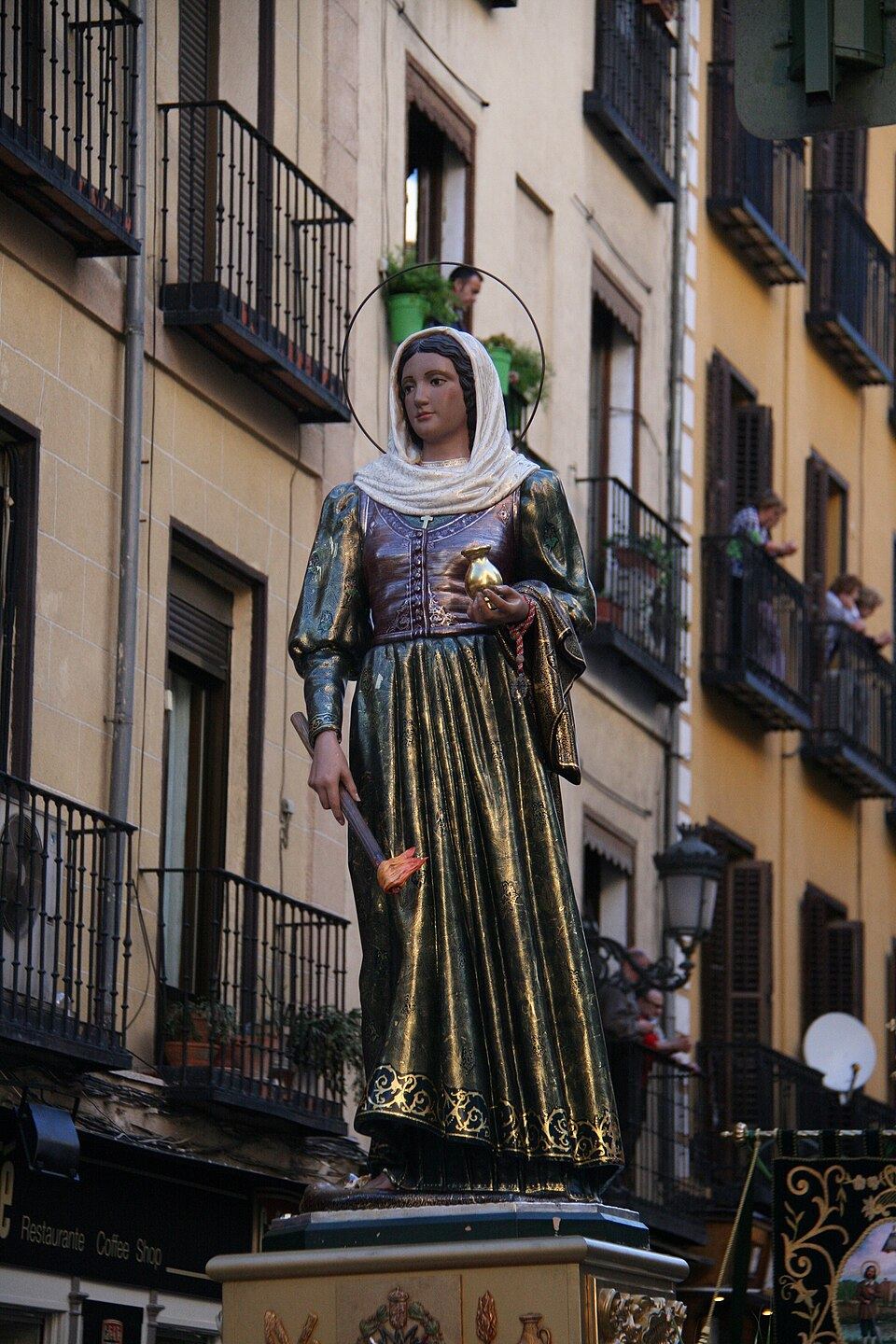
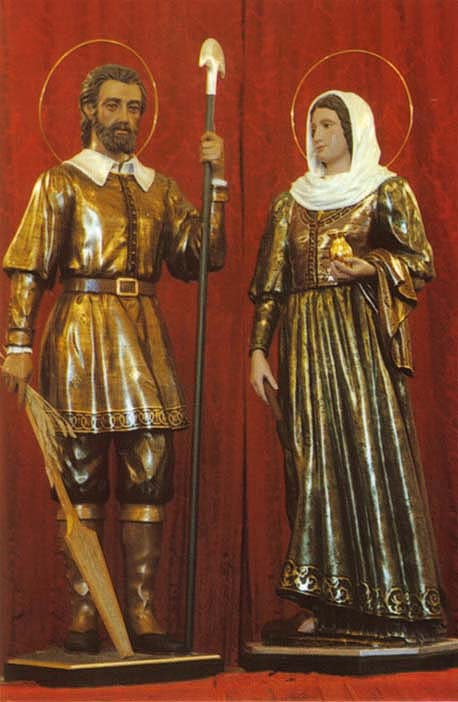
Blessed Maria de la Cabeza, born at Uceda, Guadalajara, Spain, was a Spanish peasant woman who married Saint Isidore. She is known in Spain as Santa María de la Cabeza (“Saint Mary of the Head”) or Maria Toribia.
Ss. Isidore and Maria Torribia
Maria’s date of birth is unknown, but it was sometime near the end of the 11th century or at the beginning of the 12th century. She is believed to have been born in Caraquiz, a little village close to Uceda. She subsequently lived in Torrelaguna, where she met and married Saint Isidore the Farmer. She spent her life working on the farm, cleaning local chapels and shrines, helping the poor.
With her husband she had her only son, Illan. The child one day fell down a deep well, leaving the parents with no recourse but prayer. Miraculously, the water level suddenly rose to the level of the ground, and the floating baby was rescued unharmed. As a result of this, she and her husband committed themselves to sexual abstinence as a form of devotion, and, from that time on, lived in different homes.
One story relates that Maria always kept a pot of stew on the fireplace in their humble rural dwelling. She knew that her husband Isidore would often bring home anyone who was hungry. One day he brought home more hungry people than usual. After she served many of them, Maria told him that there simply was no more stew in the pot. He insisted that she check the pot again, and she was able to spoon out enough stew to feed them all.
Torribia outlived her husband, who died in 1130. After his death, she lived as a hermit, performed miracles, and had visions.
The title of the Head is due to her head being a relic venerated for centuries, and the need to distinguish her from so many other Saints Mary.
She died in 1175 and her relics were displayed in a Franciscan convent in Torrelaguna, Spain, before being moved to Saint Andrew’s Church in Madrid in 1645, placed with the incorruptible body of her husband. In 1769, Charles III of Spain had the remains of Saint Isidore and his wife Maria relocated to the San Isidro Church, Madrid. The sepulcher has nine locks and only the King of Spain has the master key.
She was beatified by Pope Innocent XII on 11 August 1697.
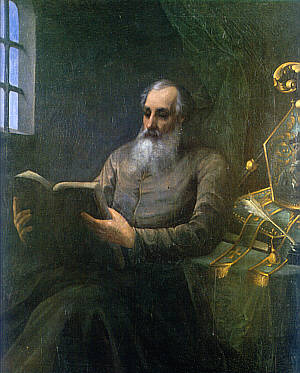
Saint Isaac the Great, also known as Sahak and Parthev, was born in 338, the son of Saint Nerses the Great, Catholicos of Armenia.
Left an orphan at a very early age, he received in Constantinople an excellent education, particularly in the Eastern languages. He was a married layman for several years. When he wife died he became a monk, succeeding his father as Catholicos (Patriarch) of Armenia in 390. He secured recognition from Constantinople of the status, rights and independence of the Armenian Church. From his position he worked to reform the Armenian Church, evangelize the Armenian people, and establish an Armenian identity. Through Isaac’s efforts the churches and monasteries destroyed by the Persians were rebuilt, education was cared for in a generous way, the pagan worship of Ormuzd which Shah Yezdigerd tried to set up was cast out, and three councils held to re-establish ecclesiastical discipline. He was also noted for his ascetic life.
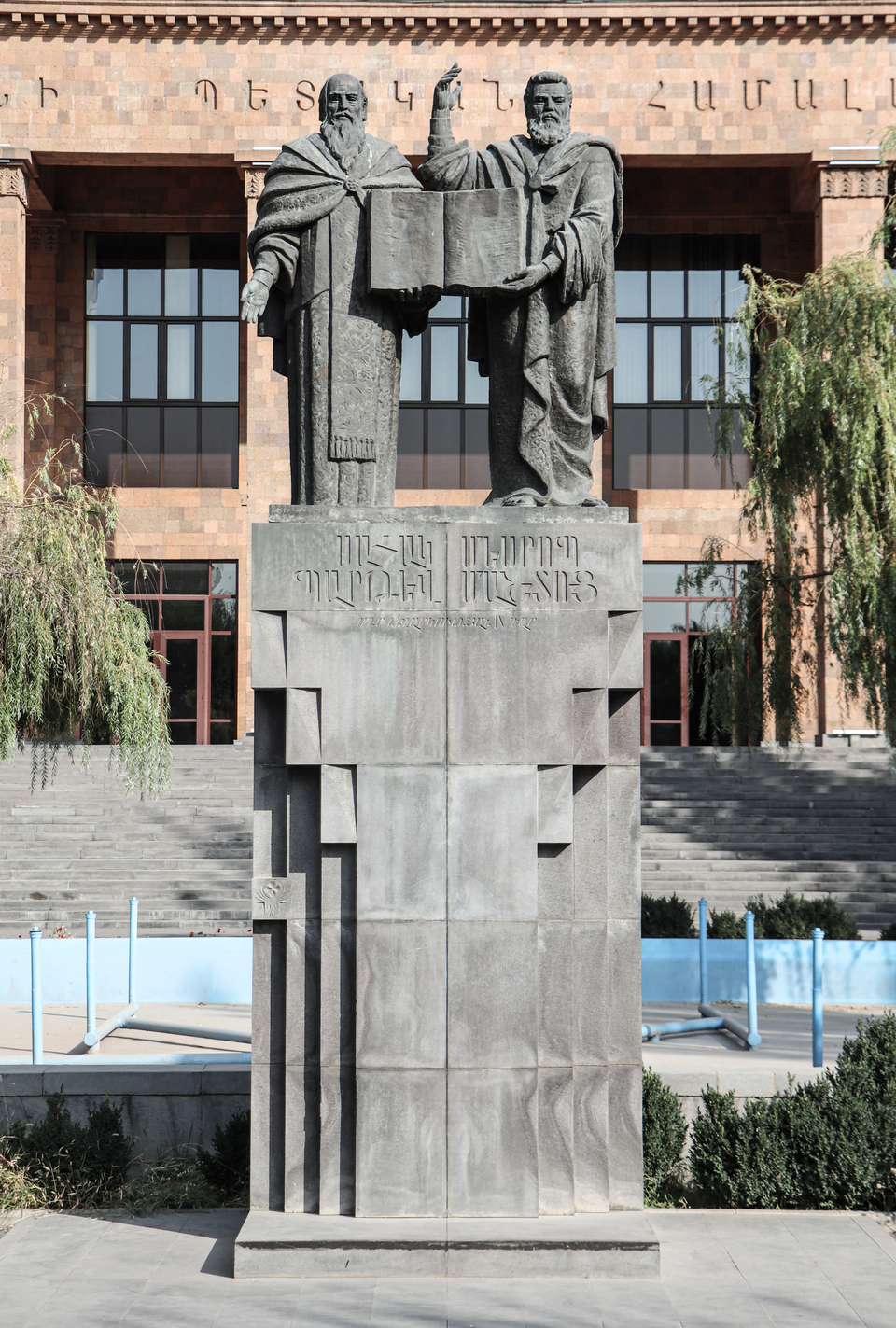
Isaac worked with Saint Mesrop the Teacher to evangelize Armenia, and to develop an alphabet for the Armenian language. He supported the translation of the Bible and the Greek and Syrian Doctors of the Church into Armenian, and translated some of holy scripture himself. Isaac served as both civil and religious ruler of his people, established a national liturgy, and was responsible for the beginnings of Armenian literature. He was driven into retirement in 428 when the Persians conquered part of his territory, but later returned as Catholicos at Ashtishat from where he worked until he death. He is considered the founder of the Armenian Church.
He died at the age of 110 at Ashtishat, of natural causes.
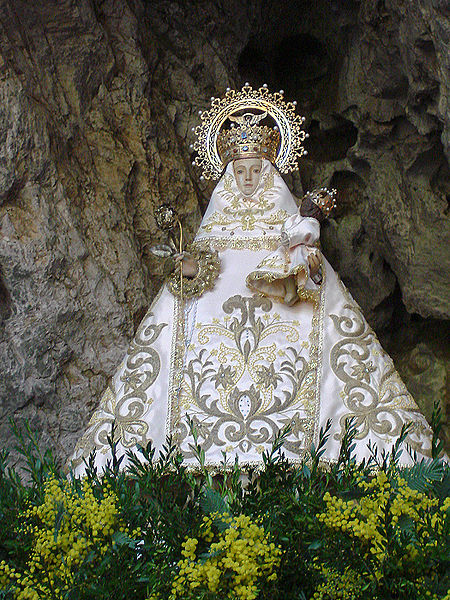
Nuestra Senora de la Covadonga, also named “La Santina” / Our Lady of Covadonga (720) – 8 September:
This is a title of the Blessed Virgin Mary and the name of a Marian Shrine devoted to her at Covadonga, Asturias. The Shrine in northwestern Spain rose to prominence following the Battle of Covadonga in about 720, which was the first defeat of the Moors during their invasion of Spain. A Statue of the Virgin Mary, secretly hidden in one of the caves, was believed to have miraculously aided the Christian victory. Our Lady of Covadonga is the Patron of Asturias, and a Basilica was built to house the current Statue. Our Lady of Covadong’s east day is 8 September.
Our Lady of Health of Vailankanni (16th Century) – 8 September:
This is the title given to the Blessed Virgin Mary by people as she twice appeared in the town of Velankanni, Tamil Nadu, India, in the 16th to 17th centuries. The Feast of the Nativity of Mary, is also commemorated as the feast of Our Lady of Good Health. The celebration starts on 29 August and ends on the day of the feast. The feast day prayers are said in Tamil, Marathi, East Indian, Malayalam, Telugu, Kannada, Konkani, Hindi and English.
Nuestra Senora de la Meritxell / Our Lady of Meritxell (12th Century) – 8 September:
This is an Andorran Roman Statue depicting an apparition of the Virgin Mary. Our Lady of Meritxell is the Patron Saint of Andorra. On 6 January in the late 12th century, villagers from Meritxell, Andorra were going to Mass in Canillo. Though it was winter, they found a wild rose in bloom by the roadside. At its base was a Statue of the Virgin and Child. They placed the Statue in a Chapel in the Church in Canillo. The next day the Statue was found sitting under the wild rose again. Villagers from Encamp took the Statue to their Church but the next day the Statue had returned to the rose bush. Though it was snowing, an area the size of a Chapel was completely bare and the villagers of Meritxell took this to mean that they should build a Chapel to house the Statue and so they did. On 8-9 September 1972 the Chapel burned down and the Statue was destroyed, a copy now resides in the new Meritxell Chapel. The feast day of Our Lady of Meritxell is 8 September and the Andorran National Day.
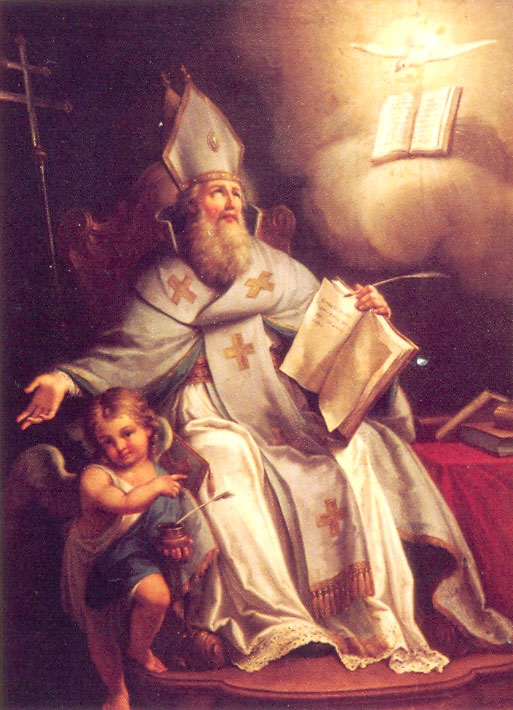
St Thomas of Villanova OSA (1488 – 1555) Bishop, Religious Priest of the Order of St Augustine, Confessor, Writer, Preacher, Teacher, Apostle of Charity, Mystic, Miracle-Worker often called “the Almsgiver” and “the Father of the Poor“, Reformer.
St Timothy of Antioch Bl Wladyslaw Bladzinski — Martyrs of Alexandria – (5 saints) A group of Christians martyred together in the persecutions of Diocletian – Ammon, Dio, Faustus, Neoterius and Theophilus. Martyred in Alexandria, Egypt.
Martyrs of Japan – (21 beati): A group of 21 missionaries and converts who were executed together for their faith. • Antonio of Saint Bonaventure • Antonio of Saint Dominic • Dominicus Nihachi • Dominicus of Saint Francis • Dominicus Tomachi • Francisco Castellet Vinale • Franciscus Nihachi • Ioannes Imamura • Ioannes Tomachi • Laurentius Yamada • Leo Aibara • Lucia Ludovica • Ludovicus Nihachi • Matthaeus Alvarez Anjin • Michaël Tomachi • Michaël Yamada Kasahashi • Paulus Aibara Sandayu • Paulus Tomachi • Romanus Aibara • Thomas of Saint Hyacinth • Thomas Tomachi Died on 8 September 1628 in Nagasaki, Japan Beatified on 7 May 1867 by Pope Pius XI
Martyred in England: Bl John Norton Bl Thomas Palaser
Martyred in the Spanish Civil War: • Blessed Adrián Saiz y Saiz • Blessed Apolonia Lizárraga Ochoa de Zabalegui • Blessed Bonifacio Rodríguez González • Blessed Dolores Puig Bonany • Blessed Eusebio Alonso Uyarra • Blessed Ismael Escrihuela Esteve • Blessed Josefa Ruano García • Blessed Josep Padrell Navarro • Blessed Mamerto Carchano y Carchano • Blessed Marino Blanes Giner • Blessed Miguel Beato Sánchez • Blessed Pascual Fortuño Almela • Blessed Segimon Sagalés Vilá • Blessed Tomàs Capdevila Miquel
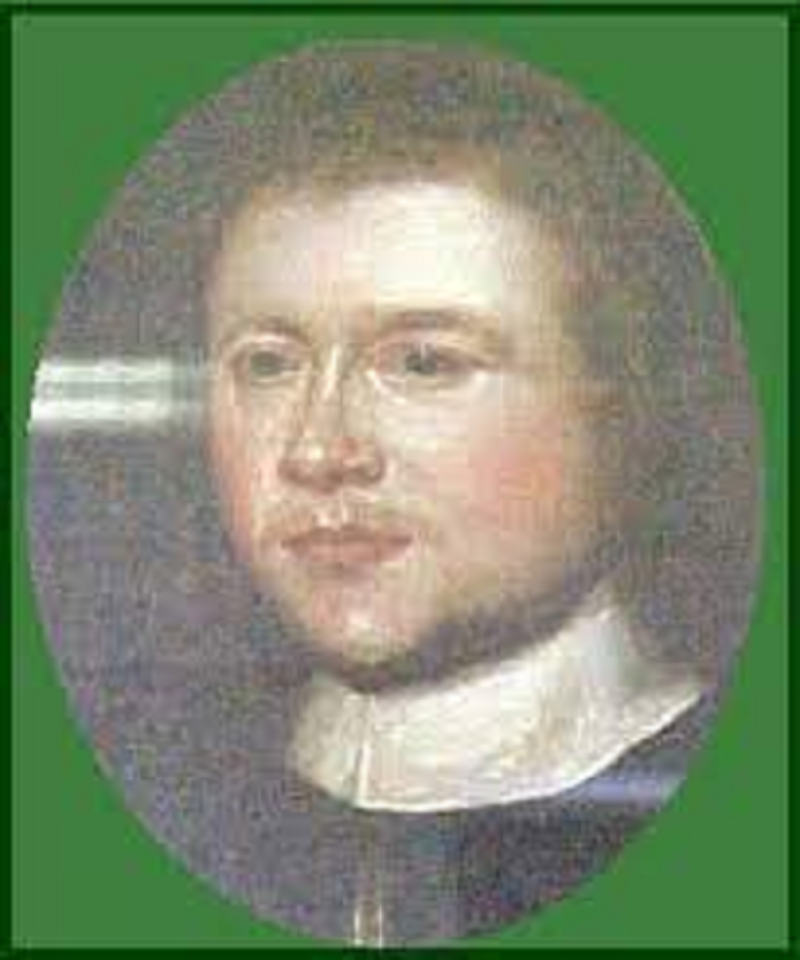
Blessed John Duckett, was a priest and martyr, one of the Martyrs of Douai. Born in 1613 in Sedbergh, Yorkshire, the son of James and Francis Duckett and a relative and possibly the grandson of Blessed James Duckett, who had been executed at Tyburn on 19 April 1601 for printing Catholic books.
He was baptized on 24 February 1614 and educated at Sedbergh School. At the age of seventeen, he entered the English College, Douai; where he was ordained a priest by the Archbishop of Cambrai in 1639.
John possessed an extraordinary gift for prayer, and would spend whole nights in contemplation. On his way to the English mission, he spent two months in spiritual exercises, under the direction of his uncle, the Carthusian prior at Nieuport. He laboured for about a year in Durham and was arrested near Whisingham on his way to baptize two children, 2 July, 1644. The place which tradition declares to be that of his arrest is now marked by a tall stone cross. Carried to Sunderland, he was examined by a Parliamentary Committee of sequestrators, and placed in irons. He confessed his priesthood and was thereupon sent up to London with Father Ralph Corbie, S.J., who had been arrested about the same time near Newcastle-on-Tyne.
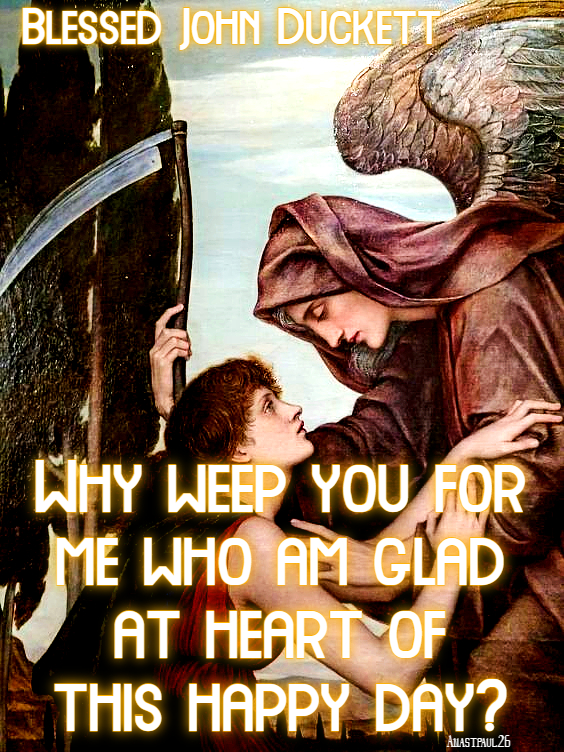
They were committed to Newgate, and edified the crowds of Catholics who flocked to see them by their joyousness, their sanctity, and their longing to suffer for Christ. A reprieve for one of them having been obtained, each refused to take it for himself. On his way to execution, Duckett astonished all by his supernatural joy; comforting those who wept for him, he said smiling: “Why weep you for me who am glad at heart of this happy day?” His jailers even were so struck by his gladness that they exclaimed “assuredly this man dies for a good cause”.
He suffered with Father Corbie, at Tyburn. In a farewell letter to the Bishop of Chalcedon, he wrote on the eve of his martyrdom: “I fear not death, nor I contemn not life. If life were my lot, I would endure it patiently; but if death, I shall receive it joyfully, for that Christ is my life, and death is my gain. Never since my receiving of Holy Orders did I so much fear death as I did life, and now, when it approacheth can I faint?”
Vigil of the Nativity of the Nativity of the Blessed Virgin Mary, instituted by Pope Gregory II (722):
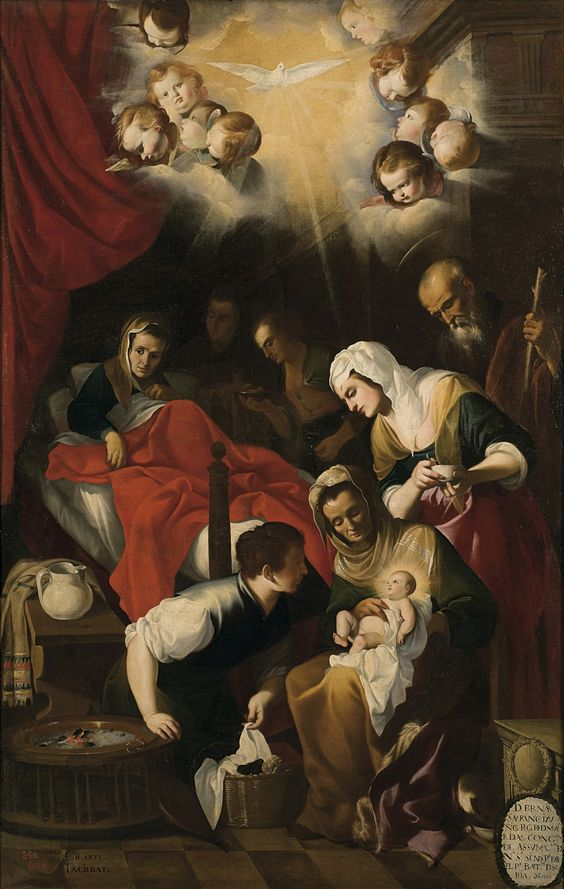
The day destined for the parturition of Saint Anne and for the birth of her, who was consecrated and sanctified to be the Mother of God, had arrived – a day most fortunate for the world. This birth happened on the eighth day of September, fully nine months having elapsed since the Conception of the soul of our most holy Queen and Lady.
Saint Anne was prepared by an interior voice of the Lord, informing Her, that the hour of her parturition had come. Full of the joy of the Holy Spirit at this information, she prostrated herself before the Lord and besought the assistance of his grace and his protection for a happy deliverance.
Presently she felt a movement in her womb similar to that which is proper to creatures being born to the light. The most blessed child Mary was at the same time, by divine providence and power, ravished into a most high ecstasy. Hence Mary was born into the world without perceiving it by her senses, for their operations and faculties were held in suspense. As She had the use of her reason, she would have perceived it by her senses, if they would have been left to operate in their natural manner at that time. However, the Almighty disposed otherwise, in order that the Princess of heaven might be spared the sensible experience, otherwise connected with birth. she was born pure and stainless, beautiful and full of grace, thereby demonstrating, that she was free from the law and the tribute of sin. Although she was born substantially like other daughters of Adam, yet her birth was accompanied by such circumstances and conditions of grace, that it was the most wonderful and miraculous birth in all creation and will eternally redound to the praise of her Maker.
At twelve o-clock in the night this divine child issued forth, dividing the night of the ancient Law and its pristine darknesses from the new day of grace, which now was about to break into dawn. She was clothed, handled and dressed like other infants, through she excelled all mortals and even all the angels in wisdom. Her mother did not allow her to be touched by other hands than her own but she, herself, wrapped her in swaddling clothes: and in this Saint Anne was not hindered by her present state of incapacity, for she was free from the toils and labours, which mothers endure in such circumstances.
So then Saint Anne received in her arms she, who was her Daughter but at the same time, the most exquisite treasure of all the universe, inferior only to God and superior to all other creatures. (The City of God, by Venerable Mary of Jesus of Agreda OIC (1602-1665) [Her body is incorrupt].
St Alcmund of Hexham Bl Alexander of Milan St Augustalus St Balin St Carissima of Albi St Chiaffredo of Saluzzo Bl Claude-Barnabé Laurent de Mascloux
St Cloud (522-c 560) Priest, Hermit, Confessor and Abbot.
St Desiderio of Benevento St Dinooth Bl Eugenia Picco St Eupsychius of Caesarea St Eustace of Beauvais St Evortius of Orleans St Faciolus St Festo of Benevento Bl François d’Oudinot de la Boissière
St Giovanni of Lodi St Goscelinus of Toul St Gratus of Aosta St Grimonia of Picardy St Hiduard Bl Ignatius Klopotowski Bl John Duckett Bl John Maki Bl John of Nicomedia Bl Ludovicus Maki Soetsu St Madalberta Bl Maria of Bourbon St Marko Križevcanin St Melichar Grodecký St Memorius of Troyes St Pamphilus of Capua Bl Ralph Corby
St Tilbert of Hexham — Martyrs of Noli: Four Christians who became soldiers and were martyred together for their faith. A late legend makes them member of the Theban Legend who escaped their mass martyrdom but that’s doubtful – Paragorius, Partenopeus, Parteus and Severinus. They were born in Noli, Italy and martyred in Corsica, France. Attribute – soldiers with a banner of Noli.
Martyred in the Spanish Civil War: • Blessed Antoni Bonet Sero • Blessed Ascensión Lloret Marcos • Blessed Gregorio Sánchez Sancho • Blessed Félix Gómez-Pinto Piñero
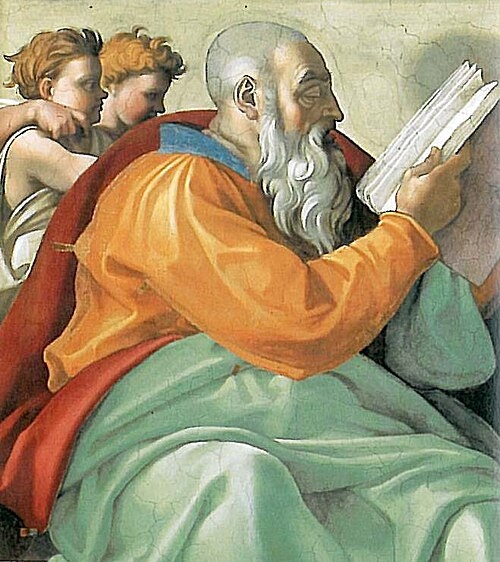
Saint Zacharius the Prophet, also known as Zaccaria, Zechariah (“Yahweh remembers”), was the son of Barachias, son of Addo, and a prophet who rose in Israel in the eighth month of the seventh year of the reign of King Darius, 520 B.C. He began to prophesy just two months after Haggai. The urgings of the two Prophets brought about the building of the second temple. He is the the author of the Book of Zechariah, the eleventh of the Twelve Minor Prophets.
Zechariah on the ceiling of the Sistine Chapel
The Book of Zechariah introduces him as the son of Berechiah, the son of Iddo. The Book of Nehemiah identifies him as a Levitical priest. His work has both an allegorical history of his people, and prophecies of the Messiah to come.
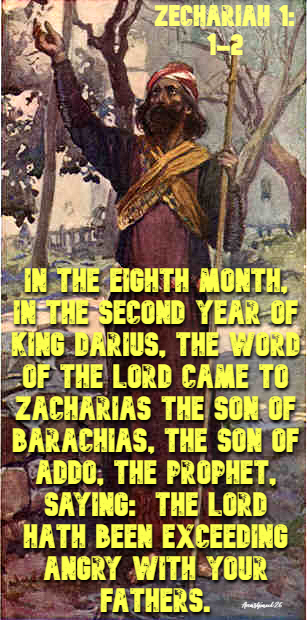
In the eighth month, in the second year of king Darius, the word of the Lord came to Zacharias the son of Barachias, the son of Addo, the prophet, saying: The Lord hath been exceeding angry with your fathers.
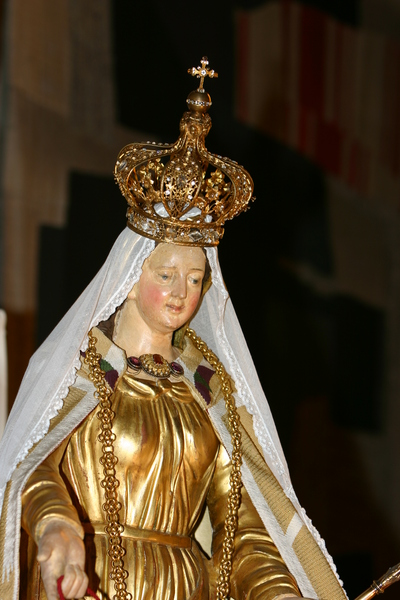
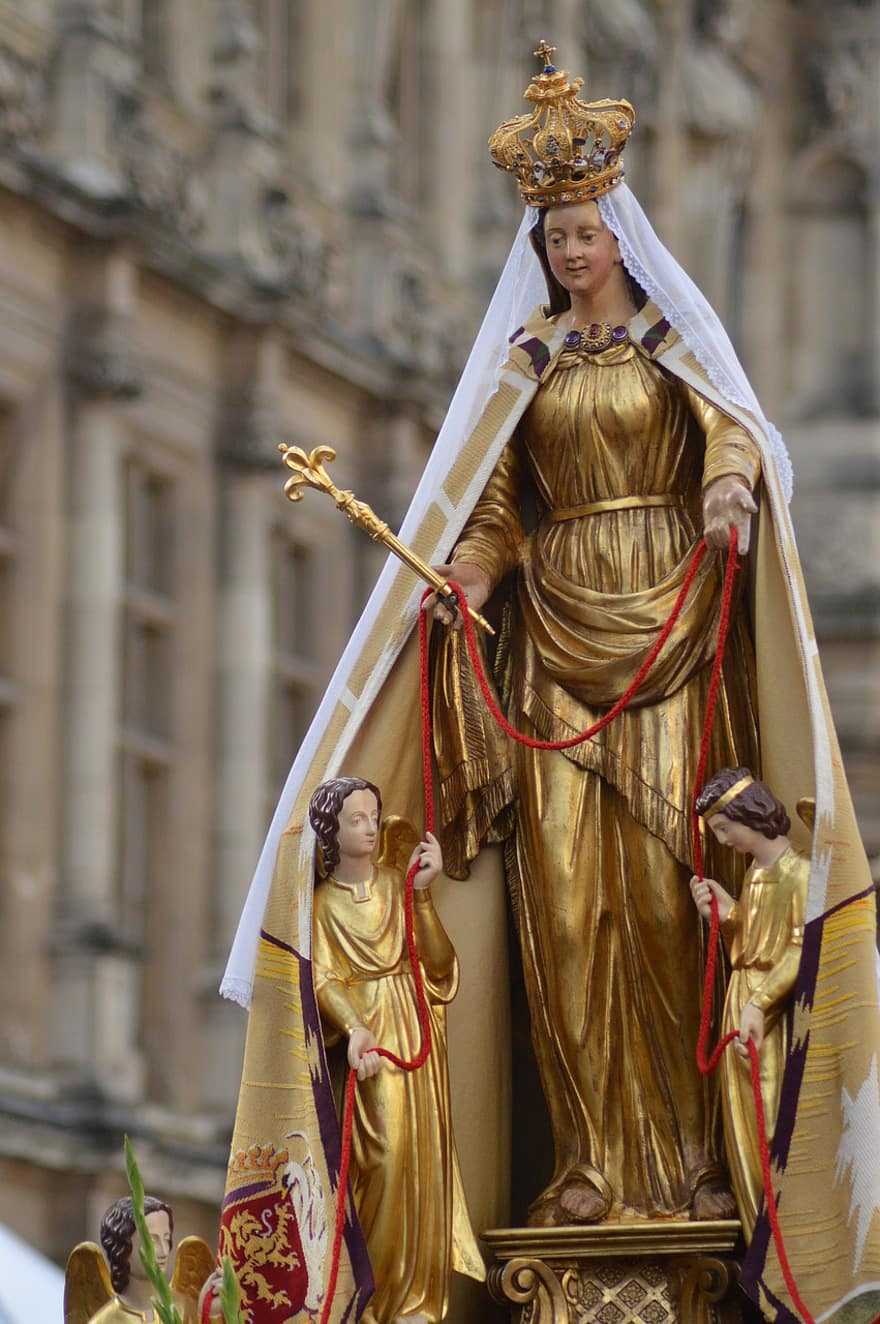
Notre-Dame de la Fontaine / Our Lady of the Fountain, Valenciennes, France (1008) – 6 September:
Valenciennes is a City in northern France on the Scheldt River and Our Lady of the Fountain was located half a league from the City in the year 1008. According to tradition, there was a terrible famine that preceded the Plague in that fateful year of 1008. It is recorded that the City of Valenciennes was so ravaged by the plague that nearly 8,000 people died in only a few days, so that the chronicles of the time tell us that it seemed “the dead outnumber the living.” The people grieved profoundly at the spectacle of death which constantly surrounded them,and having no other recourse, went in great crowds to their Churches to take refuge at the feet of Our Mother of Mercy and beg for her intercession.
A holy hermit named Bertholin, who lived nearby Our Lady of the Fountain, was touched by the misfortune of his brothers and redoubled his austerities and prayers. He prayed for the people of Valenciennes, saying, “O Mary! Rescue these afflicted who have cried out to you! Will you let this people die who have called upon you for rescue and who confide their cares to you? Will you be invoked in vain?”
The Blessed Virgin appeared to the hermit Bertholin while he was fervently praying on the night of the 5th of September. The pious hermit was suddenly dazzled by the brilliance of a light purer than the sun, while at the same time the Mother of Mercy appeared to him with an air of kindness. She commanded Bertholin to tell the inhabitants to fast on the following day and then pass the night in prayer to bring an end to the Plague. “Go to my people of Valenciennes. On the eve of my nativity they will see the guarantee of protection that I want to give them.”
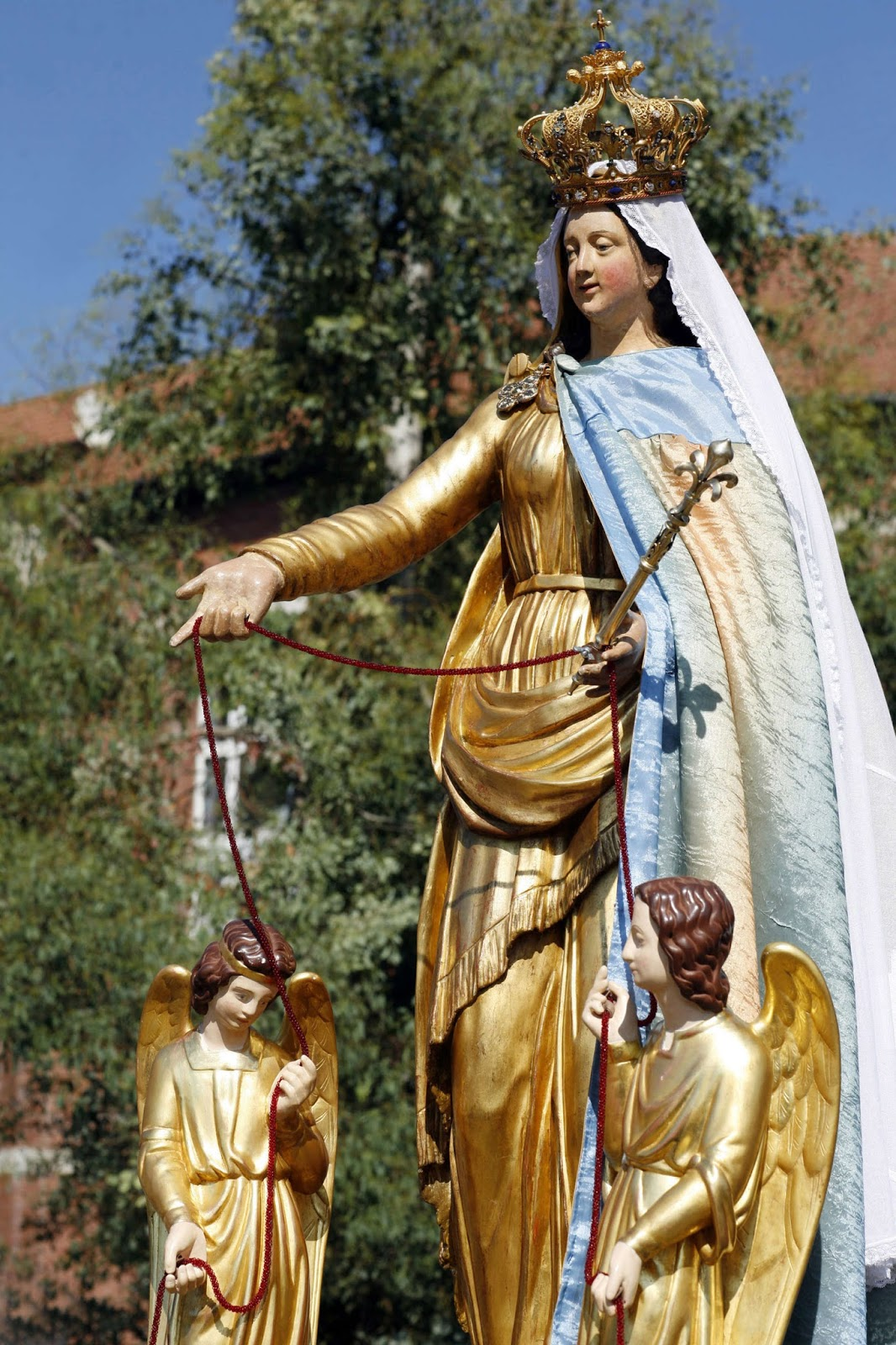
The response was overwhelming. The people of Valenciennes did as they were told,and on the eve of the Nativity, the 7th of September, the people of Valenciennes stood upon the ramparts and towers of the City excitedly awaiting the fulfilment of the heavenly promise. Their confidence was not in vain, for suddenly the night seemed to turn into day and they witnessed the Queen of Heaven descending to earth in majesty, sparkling like a light of heaven, brighter than the sun. Accompanied by a host of Angels, Our Lady seemed to gird the town all round with a cord.
Nothing can convey the feelings of joy and devotion with which the people of Valenciennes were seized at this sight. At one point they all bowed and asked the Blessed Virgin’s blessing. Their Heavenly Mother did indeed bless them and those who were sick recovered their health and the inhabitants of Valenciennes have been forever freed from the plague.
The Blessed Virgin instructed the hermit to tell the people that they were to make a solemn procession, and then to do so every year. The people were eager to fulfill this desire of their Heavenly Mother and left the City singing praises to the Blessed Virgin Mary.
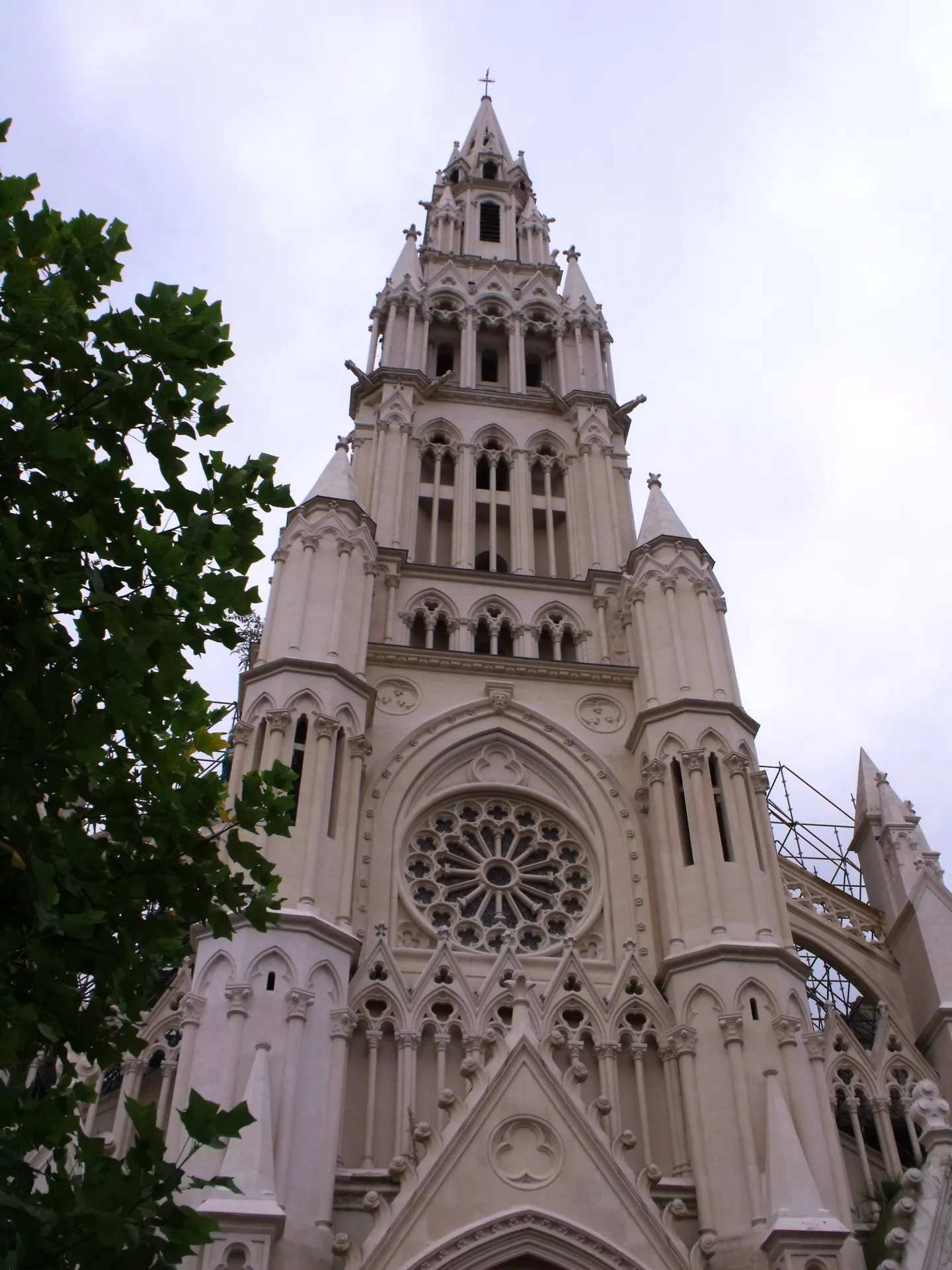
Since that time the procession of Our Lady of Saint-Cordon, or the Tour of the Holy Cordon, takes place every year, always along the same route where the holy cord had been placed. The cord of the Blessed Virgin was locked up in a Shrine at a beautiful Gothic Church, Notre-Dame-la-Grande.
This cord, the Abbot Orsini related, was still preserved at Valenciennes while he was alive. That is no longer the case, as it disappeared during the Terror that was the French Revolution. The Church was sold at auction and then razed to the ground, and the reliquary sent to the mint. Of the Holy Cord nothing is now known, although no one witnessed its destruction when it disappeared in the year 1793.
St Arator of Verdun St Augebert of Champagne St Augustine of Sens St Beata of Sens St Bega
St Cagnoald St Consolata of Reggio Emilia St Cottidus of Cappadocia
St Eleutherius the Abbot (Died c 585) Monk and Abbot. A wonderful simplicity and spirit of compunction were the distinguishing virtues of this holy sixth century Abbot.
St Eugene of Cappadocia St Eve of Dreux St Faustus of Alexandria St Faustus of Syracuse St Felix of Champagne St Frontiniano of Alba (Died 311) Deacon Martyr St Gondulphus of Metz St Imperia St Liberato of Loro Piceno St Macarius of Alexandria St Maccallin of Lusk
St Magnus of Füssen (Died c 666) Religious Priest, Monk, Abbot, Missionary, Spiritual student of Saint Columban and Saint Gall.
St Mansuetus of Toul St Onesiphorus St Petronius of Verona St Sanctian of Sens St Zacharius the Prophet — Martyrs of Africa – 6 saints: There were thousands of Christians exiled, tortured and martyred in the late 5th century by the Arian King Hunneric. Six of them, all bishops, are remembered today; however, we really know nothing about them except their names and their deaths for the faith – Donatian, Fusculus, Germanus, Laetus, Mansuetus and Praesidius.
Martyred in the Spanish Civil War: • Blessed Diego Llorca Llopis • Blessed Felipe Llamas Barrero • Blessed Pascual Torres Lloret • Blessed Vidal Ruiz Vallejo
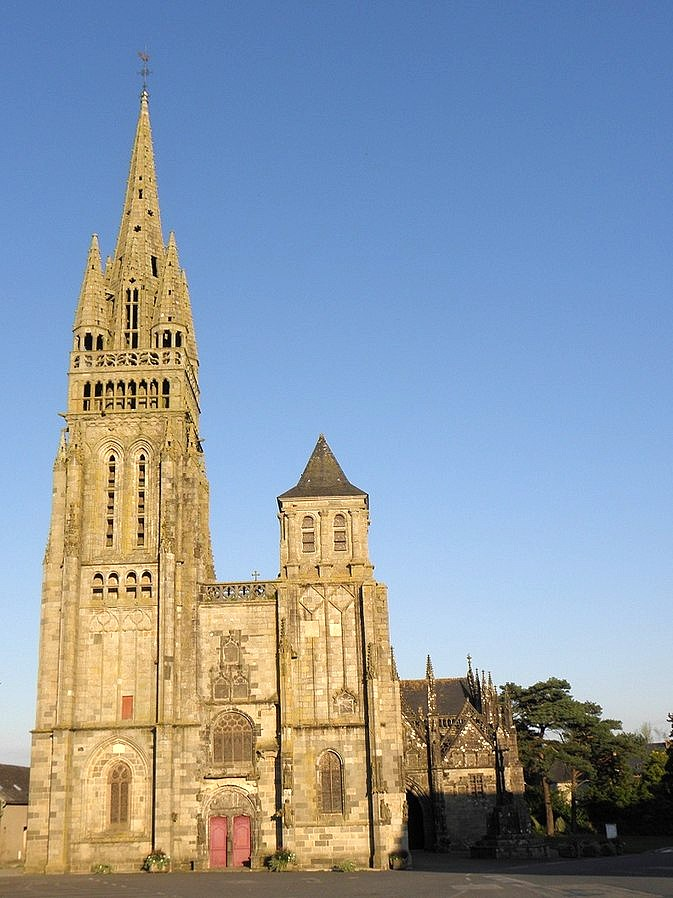
Notre-Dame, Folgoët / Our Lady of Folgoët Finistère, Brittany, France (1650) – First Sunday or the First Week of September:
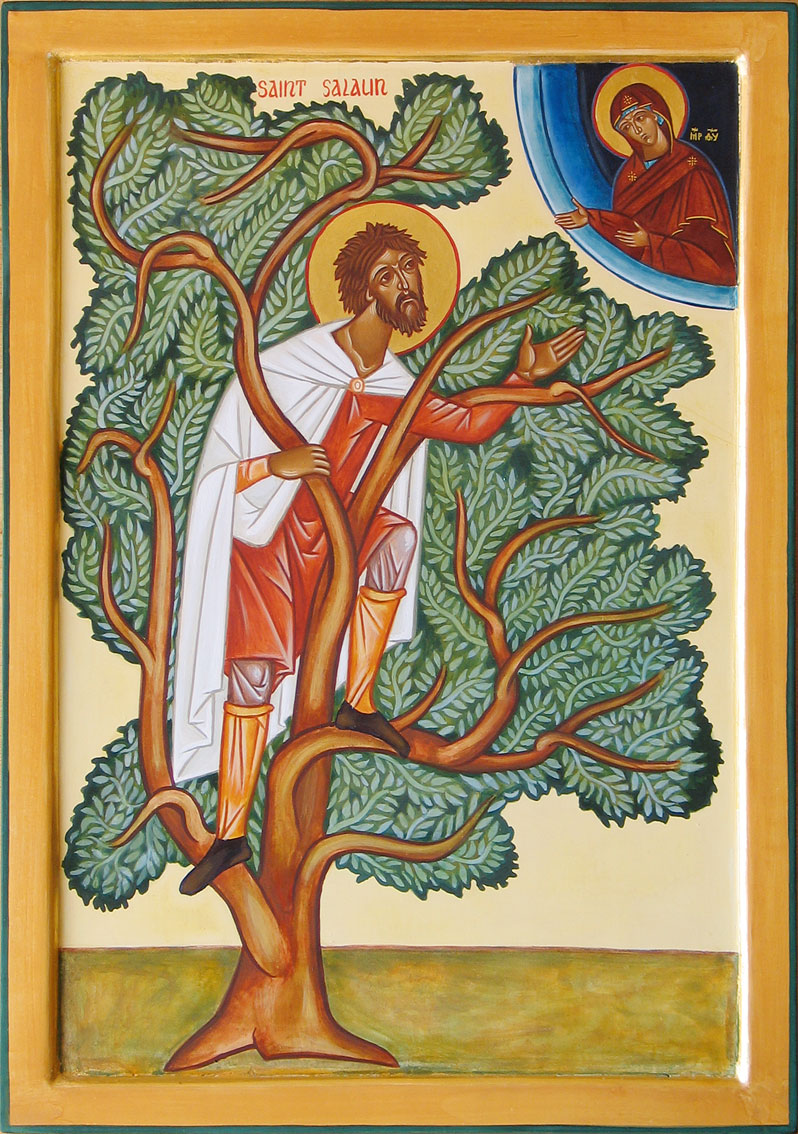
Known as the “the fool of the woods,” St Salaün (Died1358 – Memorial on1 November) lived in a forest clearing near a spring, over which he enjoyed hanging from an oak branch, immersed to his shoulders, singing “O Maria.” He lived by begging: “Ave Maria! Salaün could eat some bread!” After he died in 1358, aged 48, in the woods near the spring, people found a white lily with “Ave Maria” in gold lettering on its petals — growing from the mouth of the dead fool buried beneath.
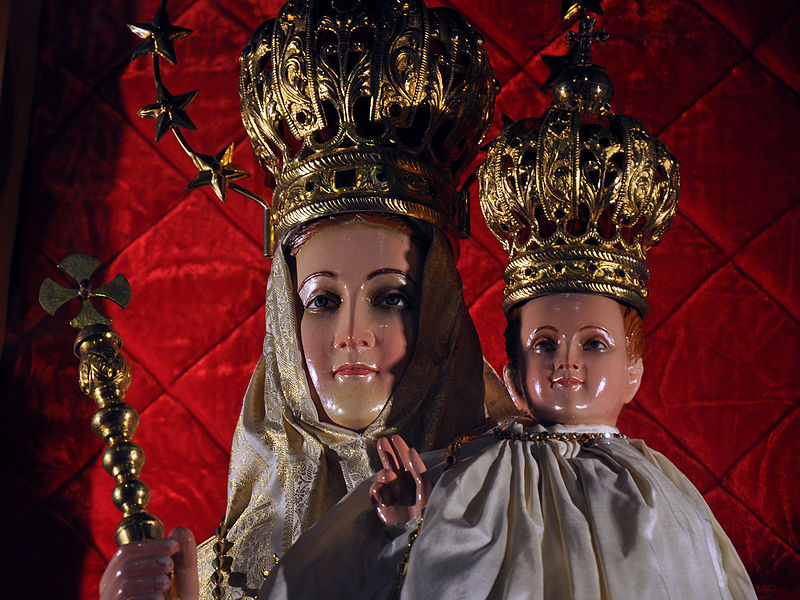
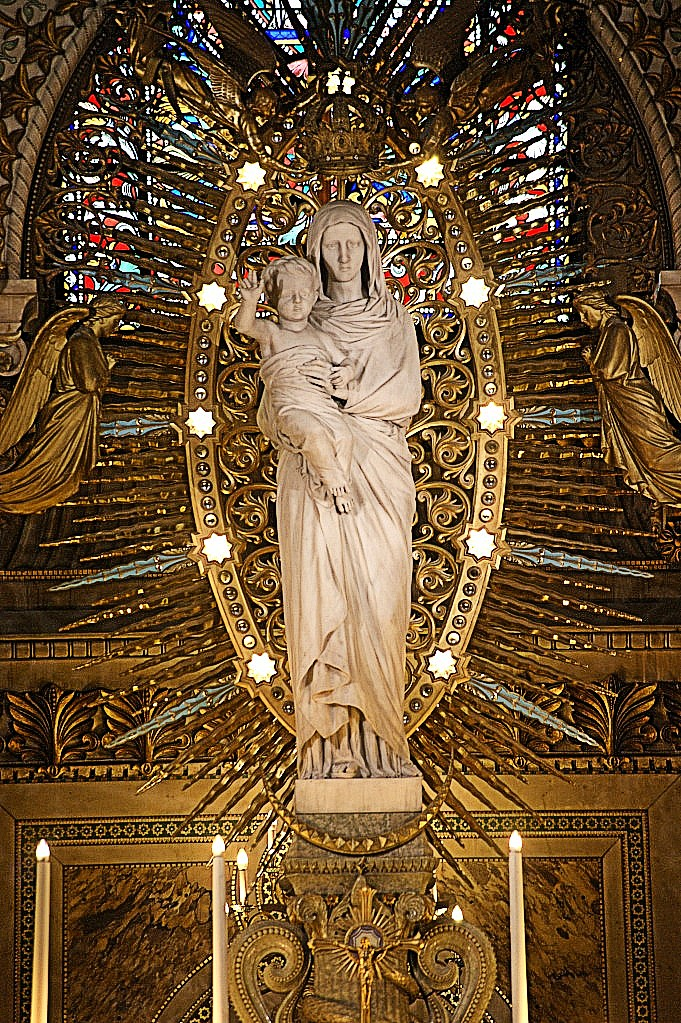
The Basilica of Notre-Dame du Folgoët was begun on the spot in 1365, completed in 1419 and consecrated in 1423. Its main Altar is over the spring, channeled into a basin behind the Church. In 1888, a dark stone Virgin was crowned Our Lady of Folgoët, replacing a polychrome wooden Statue which was moved to a side Altar. The Black Virgin is standing, holding the Child with her left arm; both wear large crowns. Her back is flat; the statue may have been on the exterior of the Church before the Revolution, when some Statues were damaged and removed for safekeeping from the marauding mobs of the French Revolution.
In the late 1500s, the big pilgrimage date was 15 August Feast of the Assumption. Three hundred years later, the celebration moved to 8 September, Nativity of the Virgin. Since 1970 the Grand Pardon has been held the first weekend in September, with a succession of processions and Masses in the Breton language.
St Albert of Butrio
St Alvito de León (Died 1063) Bishop. Alvito was the Confessor to King Fernando I of León, a Monk and the Benedictine Abbot of the Sahagún Monastery.
Bl Florent Dumontet de Cardaillac St Genebald of Laon Bl Gendtilis Bl Gerbrand of Dokkum St Guise Hoang Luong Canh Blessed John the Good OSA (c 1168-1249) Bishop Bl Jordan of Pulsano St Lawrence Justinian (1381-1455) Bishop St Obdulia St Phêrô Nguyen Van Tu St Romulus of Rome
St Victorinus of Amiterme St Victorinus of Como Bl William Browne — Martyrs of Armenia – 1,000 saints: A group of up to 1,000 Christian soldiers in the 2nd century imperial Roman army of Trajan, stationed in Gaul. Ordered to sacrifice to pagan gods, they refused and were transferred to Armenia. Ordered again to sacrifice to pagan gods, they refused again. Martyrs. We know the names of three of them, but nothing else – Eudoxius, Macarius and Zeno.
Martyrs of Capua – 3 saints: Three Christians who were martyred together. Long venerated in Capua, Italy. We know their names, but little else – Arcontius, Donatus and Quintius. They were martyred in Capua, Italy.
Martyrs of Nicomedia – 80 saints: A group of 80 Christians, lay and clergy, martyred together in the persecutions of Valens. We know little more than the names of three of them – Menedemo, Teodoro and Urbano. They were locked on a boat which was then set on fire on the shore of Nicomedia, Bithynia (in modern Turkey) c 370.
Martyrs of Porto Romano – 4+ saints: A group of Christians martyred together in the persecutions of Marcus Aurelius. We know little more than their names – Aconto, Herculanus, Nonno and Taurino. c180 at Porto Romano, Italy.
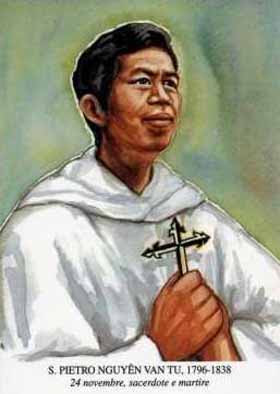
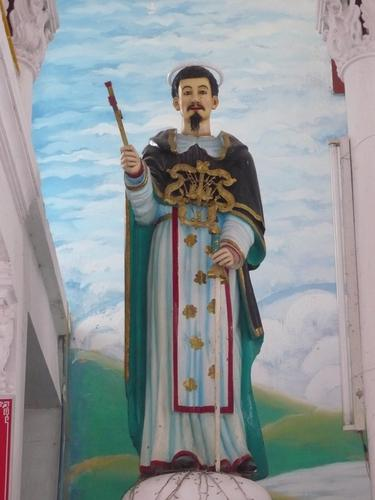
Blessed Peter Nguyễn Văn Tự, also known as Phêrô Nguyễn Văn Tự or Peter Tu Van Nguyen, was a Dominican priest and martyr born in 1796, Nam Dinh, Vietnam. Growing up during a time of persecutions of Christians, he entered the seminary, was ordained a priest in 1826, and joined the Dominican Order on January 4, 1827.
For 12 years Peter served in parishes across the Diocese of Bùi Chu. When the 1832 edict under Emperor Minh Mạng came, he went into hiding for six years, yet continued ministering secretly, often at great risk. In June 1838, soldiers raided Kẻ Mốt village, confiscating religious items and torturing locals. His hiding spot was betrayed and he was arrest on June 29, 1838, alongside catechist Bùi Văn Úy.
While imprisoned, Peter boldly preached during interrogations and refused to trample on a crucifix. Sentenced to death, he prepared with prayer, confessing to a fellow priest and receiving Holy Communion. On September 5, 1838, at age 42, he was beheaded at Cổ Mễ execution grounds alongside Joseph Hoàng Lương Cảnh. His body was buried at Nghĩa Vũ parish, with relics now at Trung Lại church in Bắc Giang province.
He was beatified on May 27, 1900, by Pope Leo XIII.
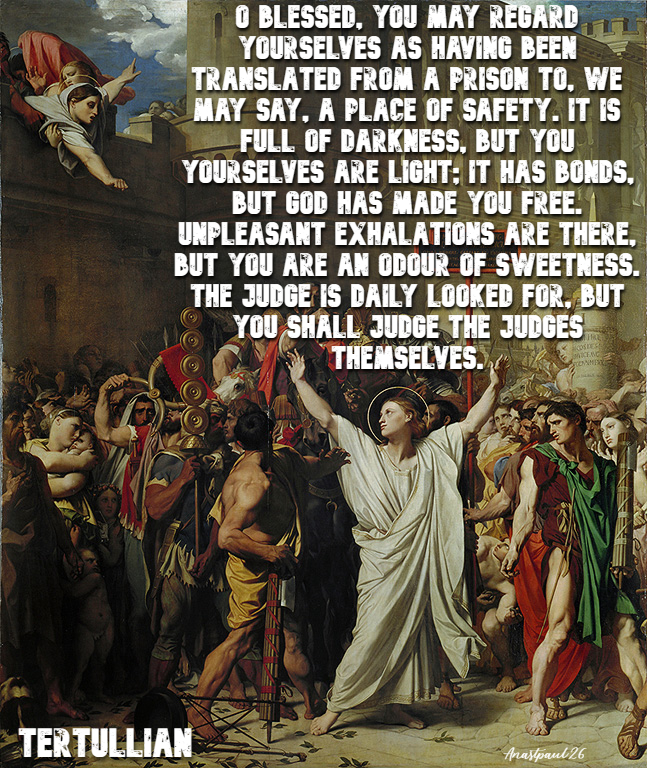
O blessed, you may regard yourselves as having been translated from a prison to, we may say, a place of safety. It is full of darkness, but you yourselves are light; it has bonds, but God has made you free. Unpleasant exhalations are there, but you are an odour of sweetness. The judge is daily looked for, but you shall judge the judges themselves.
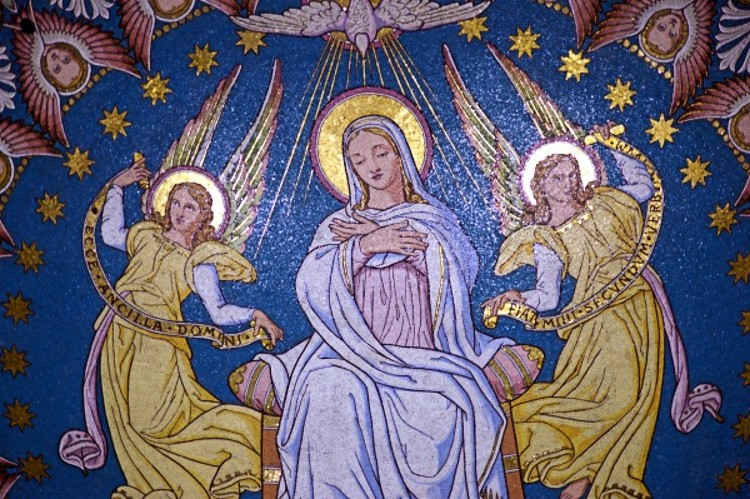
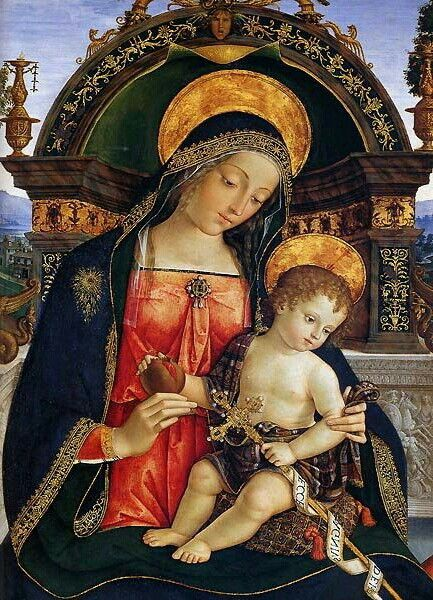
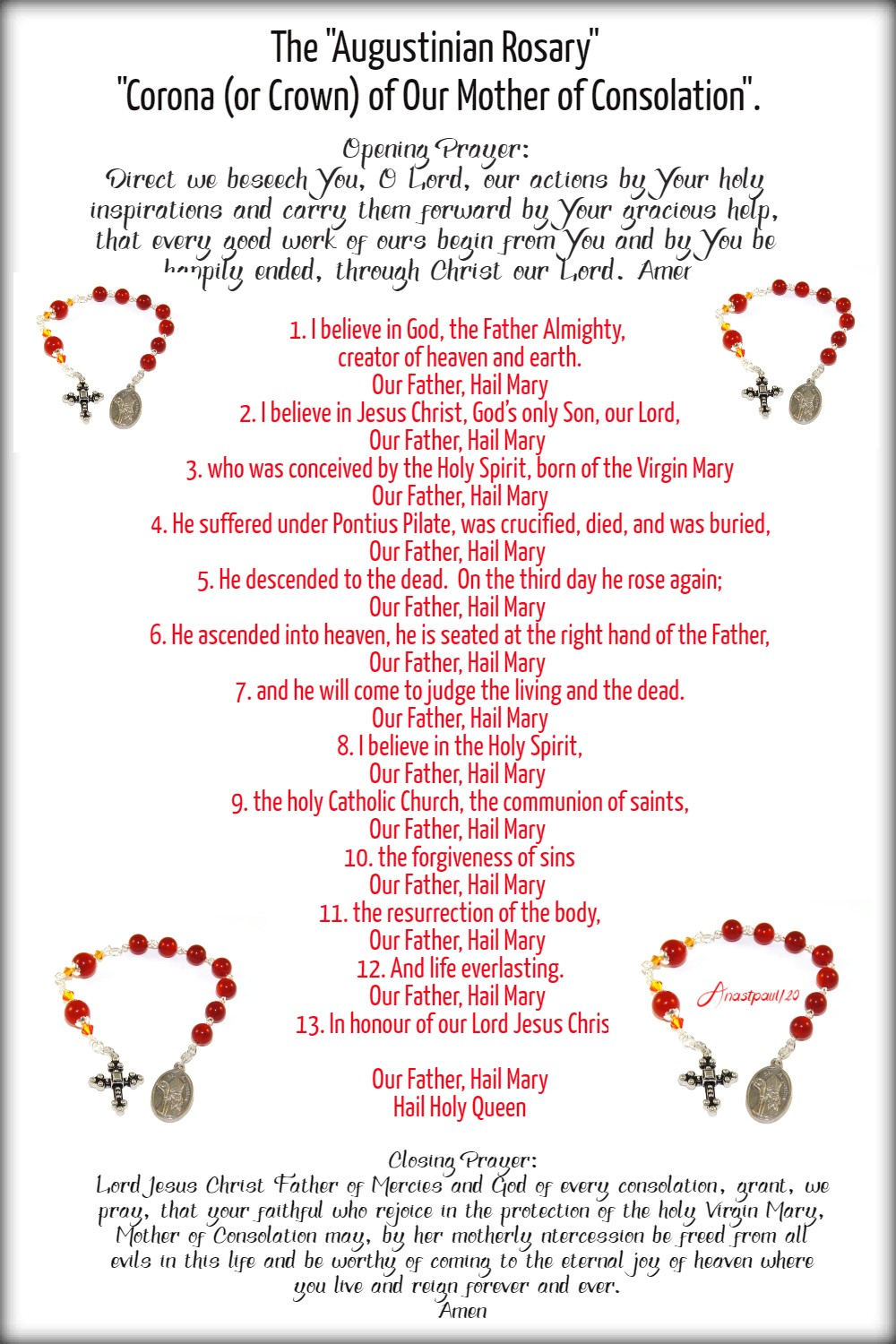
Madonna della Consolazione / Our Lady of Consolation, or Mary, Consoler of the Afflicted, (from the Latin Consolatrix Afflictorum):(1436) – 4 September
It is found in the Litany of Loreto. The feast of Our Lady of Consolation is one of the solemnities not inscribed in the General Roman Calendar but which are observed in particular places, regions, churches or religious institutes. Augustinians and many regions, observe today 4 September, the Benedictines 5 July.
St Irmgard of Süchteln St Julian the Martyr St Magnus of Ancyra St Marcellus of Chalon-sur-Saône St Marcellus of Treves St Maximus of Ancyra St Monessa St Moses the Prophet Bl Nicolò Rusca St Oceanus the Martyr Bl Peter of Saint James St Rebecca of Alexandria St Rhuddlad St Rosalia (c 1130-c 1160) Virgin, Recluse, known as “La Santuzza” – “The Little Saint.“
St Rose of Viterbo TOSF (c 1233 – 1251) Virgin, Preacher – Member of the Franciscan Third Order, Recluse, Miracle-Worker.
St Rufinus of Ancyra St Salvinus of Verdun Bl Scipion-Jérôme Brigeat Lambert St Silvanus of Ancyra St Sulpicius of Bayeux St Thamel St Theodore the Martyr St Ultan of Ardbraccan St Victalicus — Blessed Martyrs of Nowogródek: The Eleven Nuns of Nowogródek or Blessed Mary Stella and her Ten Companions were a group of members of the Sisters of the Holy Family of Nazareth, a Polish Roman Catholic religious congregation, executed by the Gestapo in August 1943 in occupied Poland (present-day Navahrudak, Belarus).
But of the fruit of the Spirit is: charity, joy, peace, patience, kindness, goodness, long-suffering, mildness, faith, modesty, continency, chastity. Against such things there is no law. And they who belong to Christ have crucified their flesh with its passions and desires.
Gal 5:16-24
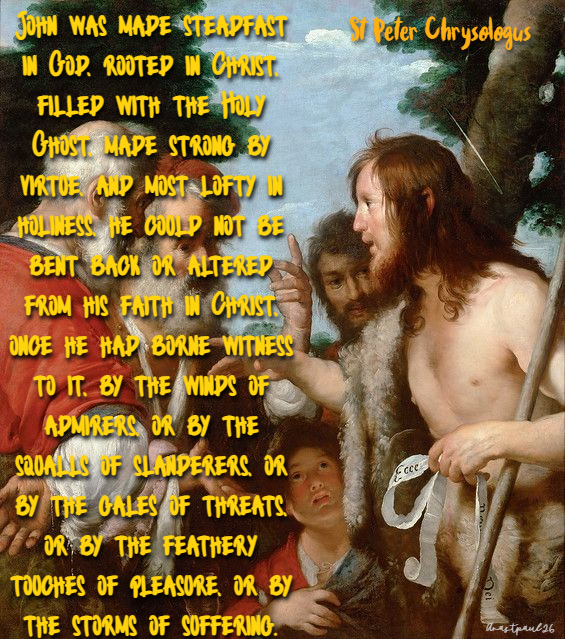
John was made steadfast in God, rooted in Christ, filled with the Holy Ghost, made strong by virtue, and most lofty in holiness, he could not be bent back or altered from his faith in Christ, once he had borne witness to it, by the winds of admirers, or by the squalls of slanderers, or by the gales of threats, or by the feathery touches of pleasure, or by the storms of suffering.
St Peter Chrysologus
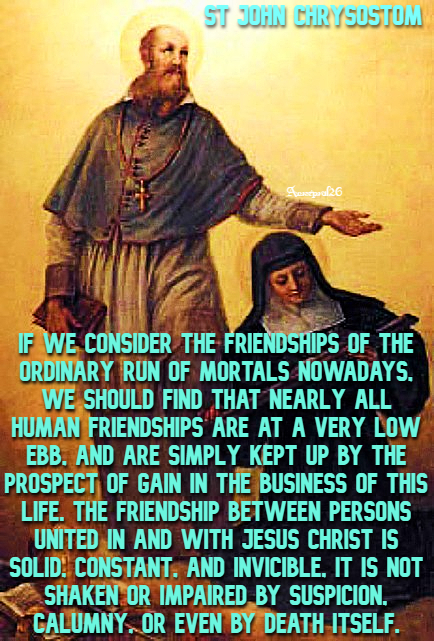
If we consider the friendships of the ordinary run of mortals nowadays, we should find that nearly all human friendships are at a very low ebb, and are simply kept up by the prospect of gain in the business of this life. The friendship between persons united in and with Jesus Christ is solid, constant, and invicible, it is not shaken or impaired by suspicion, calumny, or even by death itself.
St John Chrysostom
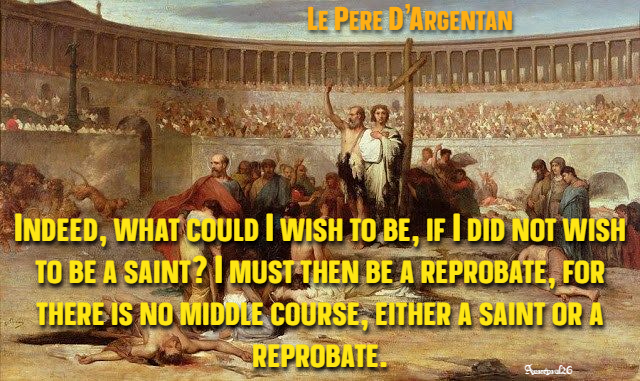
Indeed, what could I wish to be, if I did not wish to be a saint? I must then be a reprobate, for there is no middle course, either a saint or a reprobate.
LePere D’Argentan
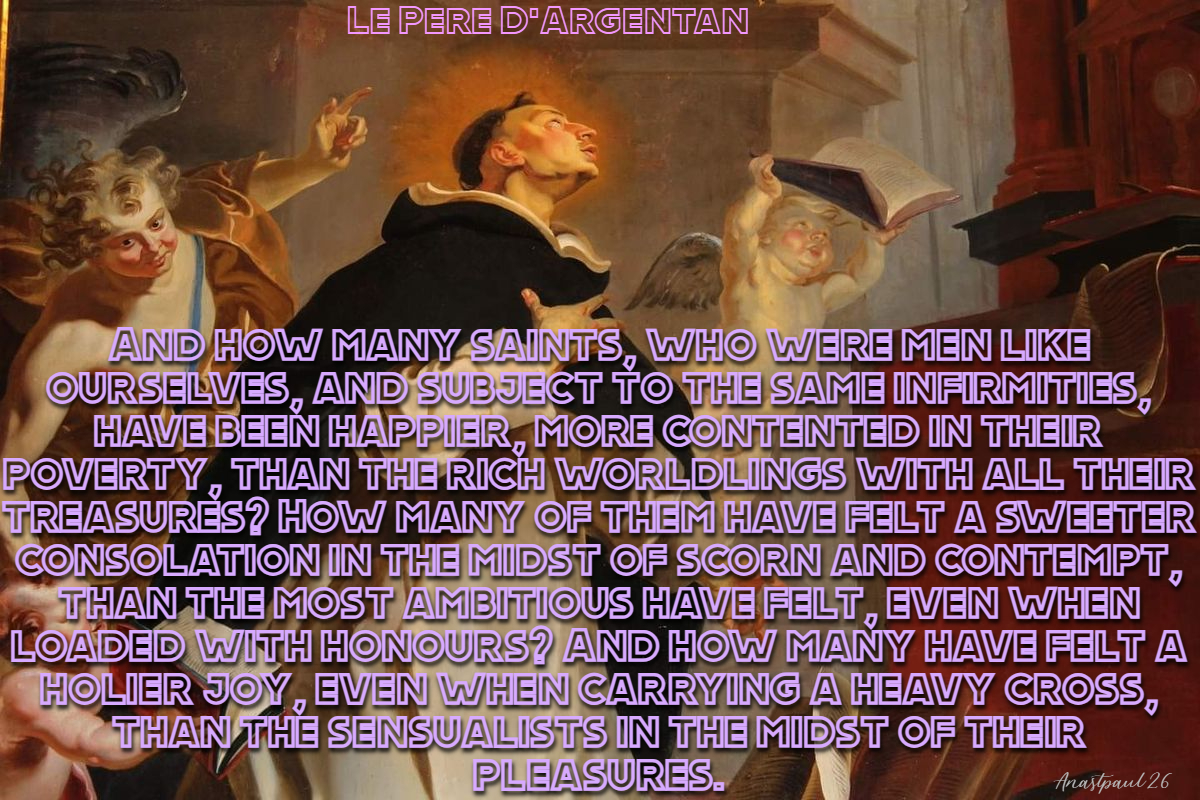
And how many saints, who were men like ourselves, and subject to the same infirmities, have been happier, more contented in their poverty, than the rich worldlings with all their treasures? How many of them have felt a sweeter consolation in the midst of scorn and contempt, than the most ambitious have felt, even when loaded with honours? And how many have felt a holier joy, even when carrying a heavy cross, than the sensualists in the midst of their pleasures.
LePere D’Argentan
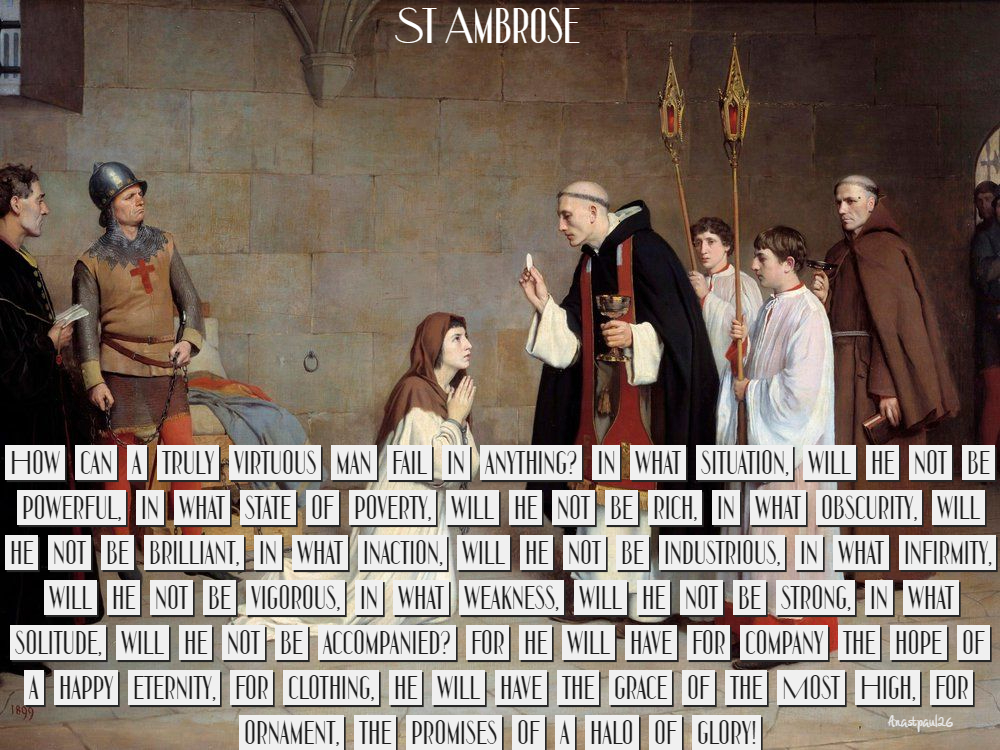
How can a truly virtuous man fail in anything? In what situation, will he not be powerful, in what state of poverty, will he not be rich, in what obscurity, will he not be brilliant, in what inaction, will he not be industrious, in what infirmity, will he not be vigorous, in what weakness, will he not be strong, in what solitude, will he not be accompanied? for he will have for company the hope of a happy eternity, for clothing, he will have the grace of the Most High, for ornament, the promises of a halo of glory! Let us recollect that the Saints were not of a more excellent nature than ours, but were more orderly and regular, that they were not exempt from sins, but that they took pains to correct their faults.
St Ambrose
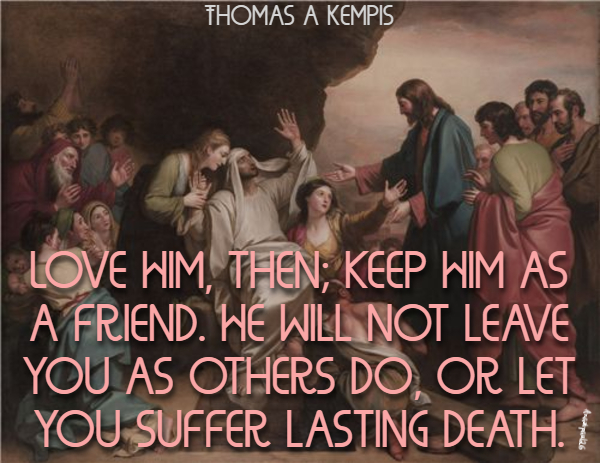
Love Him, then; keep Him as a friend. He will not leave you as others do, or let you suffer lasting death. Sometime, whether you will or not, you will have to part with everything. Cling, therefore, to Jesus in life and death; trust yourself to the glory of Him who alone can help you when all others fail. You will quickly be deceived if you look only to the outward appearance of men, and you will often be disappointed if you seek comfort and gain in them. If, however, you seek Jesus in all things, you will surely find Him. Likewise, if you seek yourself, you will find yourself — to your own ruin. For the man who does not seek Jesus does himself much greater harm than the whole world and all his enemies could ever do.
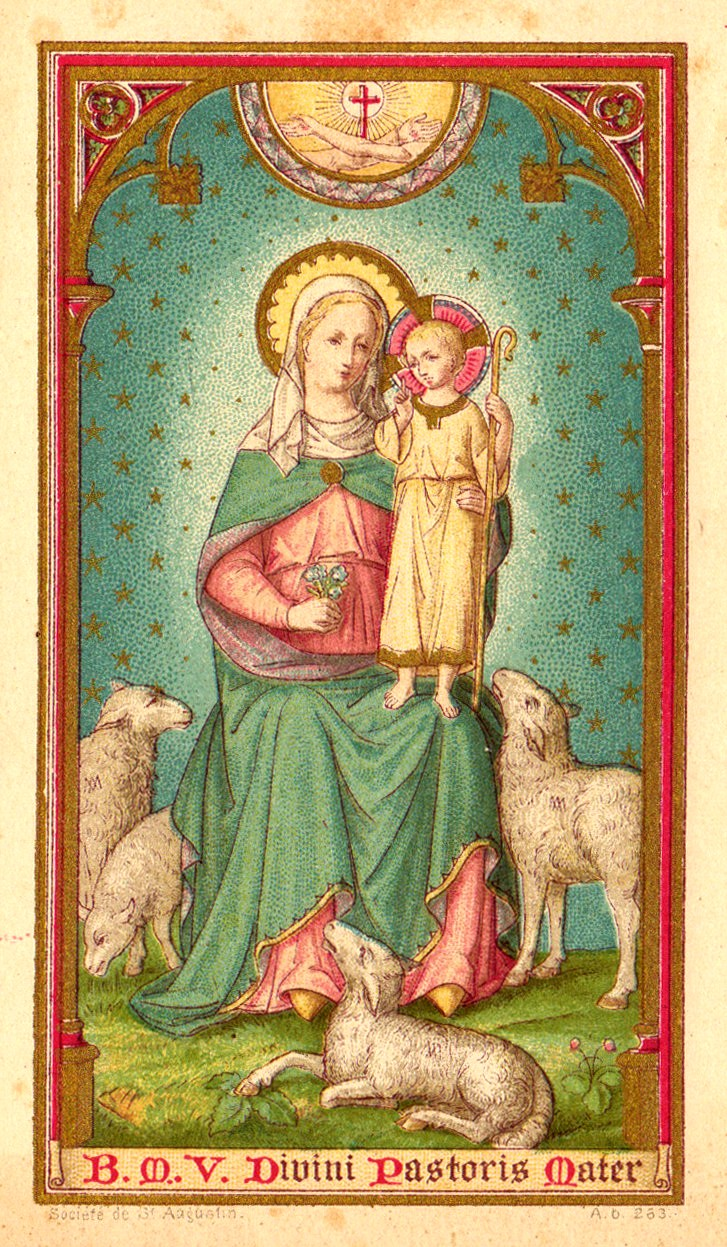
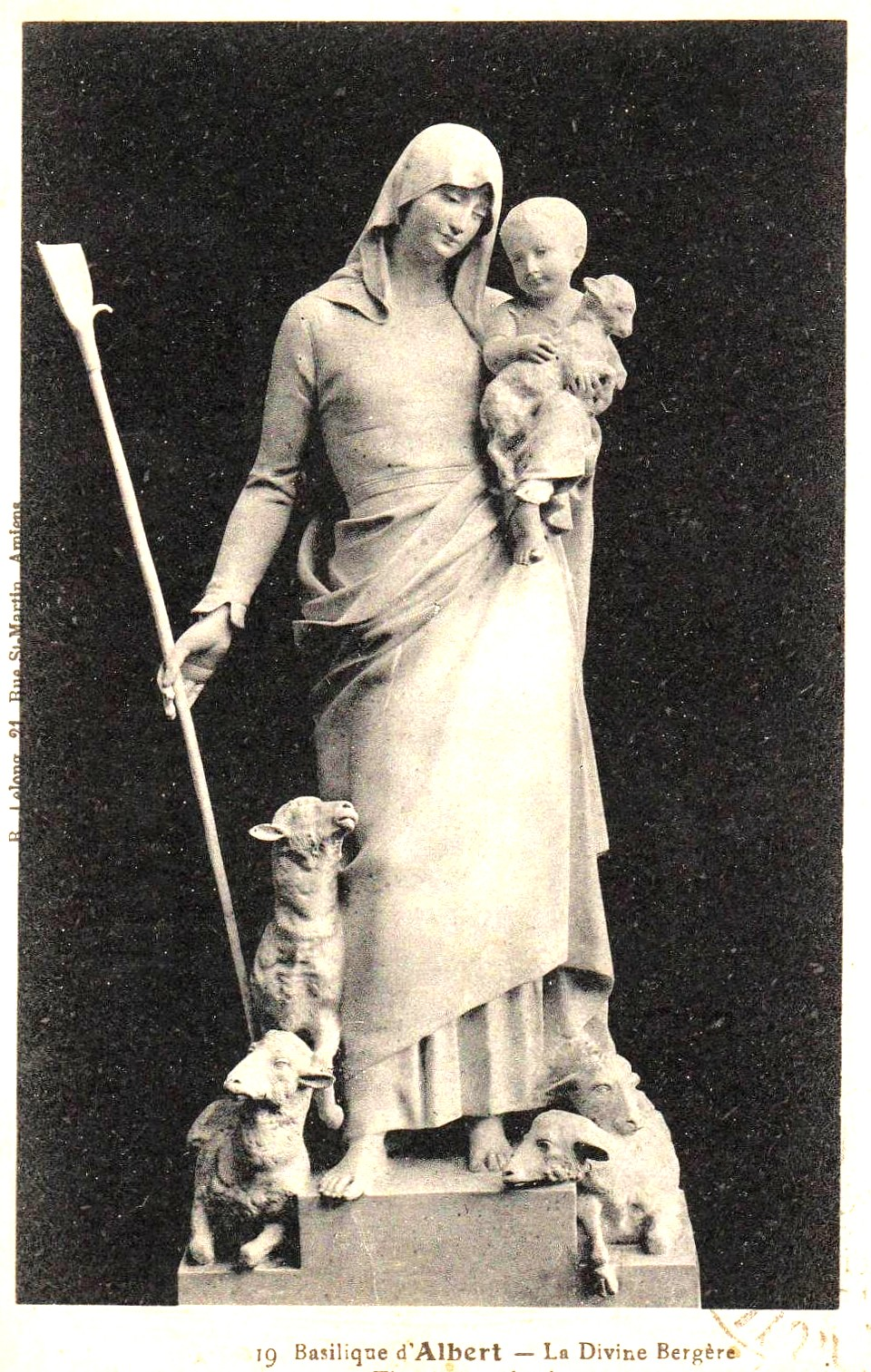
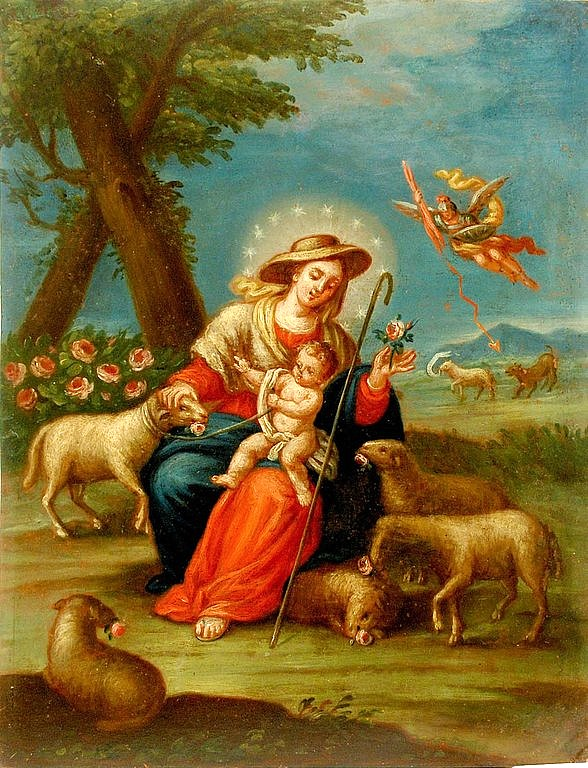
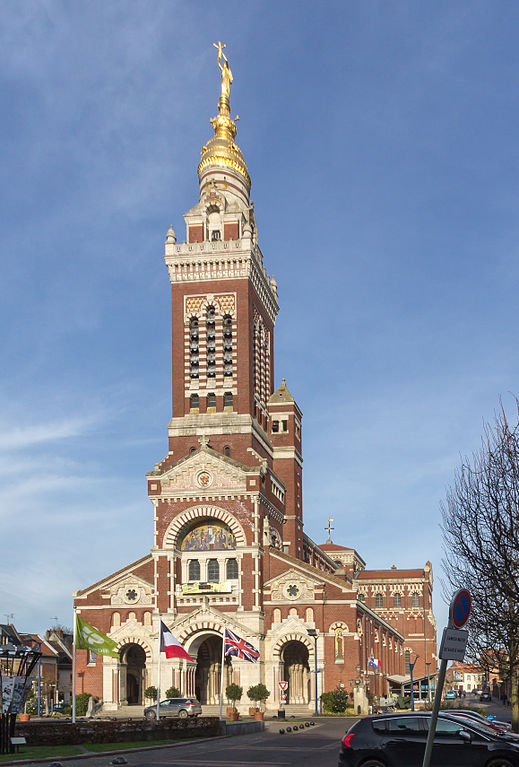
Notre Dame de Brebières / Mother of the Divine Shepherd, France (also known as Le Divine Bergère – The Divine Shepherdess) – 3 September:
Our Lady, Mother of the Divine Shepherd, or Notre Dame de Brebières, is located in the small town of Albert in the Diocese of Amiens, France. At one time, probably sometime in the 12th century and according to local tradition, a shepherd was grazing his sheep at Brebières when he observed that many of the animals were staying in the same area to eat, ripping the grass out by the roots. It must have seemed very odd to the shepherd, who decided that the sheep were trying to uncover something, so he started to dig in the very spot himself. In a short time he uncovered a Statue of the Blessed Virgin sculpted from a single piece of solid stone.
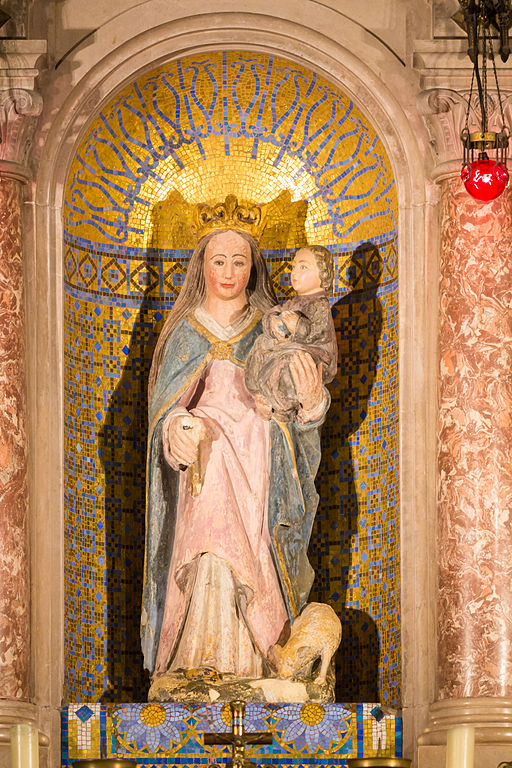
The Statue was fairly large, nearly 1,22 metres tall and represented the Blessed Mother holding the Divine Child in her arm. There was a sheep depicted quietly reclining at Mary’s feet. As has happened so often throughout history, the finding of the Statue increased the enthusiasm and affection of the local populace toward the Mother of God. A small Chapel was built at the site to honour the Statue and receive the pilgrims who had already begun coming to Albert to visit the Holy Mother.
Saint Colette can be credited for helping to spread the fame of Our Lady, Mother of the Divine Shepherd. At age fourteen, she was somewhat short and had a delicate constitution. Seeking a remedy through the favour of the Blessed Virgin, Saint Colette prayed to Our Lady of Brebières She not only obtained vigour and good health, she also found that several inches were miraculously added to her height!
In 1637 the Sanctuary was partially burned and IN 1727 the miraculous image was moved to the Parish Church of Albert. During the French Revolution the Church was made into a pagan temple to the goddess of Reason, while the image of the Mother of God was hidden until 1802 when the horrors of the Terror during this supposed time of reason subsided.
This feast is celebrated in a number of places and by certain religious communities and congregations: Capuchins, Marists and others, on widely different dates. It is a special festival of the Shrine of Our Lady of Brebières a very old Sanctuary near Albert in France, formerly much resorted to by the shepherds.
The pilgrimage here was revived after 1870 and a beautiful Basilica was completed in 1887. The Statue was crowned in 1901 and miraculously survived the devastation of both world wars. The Basilica has again been rebuilt.
The collect of the Mass prays that by following the Good Shepherd on earth, we may reach the pastures of eternal life with Mary in heaven.
St Chariton St Chrodegang of Séez St Frugentius the Martyr Bl Guala of Brescia St Hereswitha Bl Herman of Heidelberg St Macanisius St Mansuetus of Toul St Marinus (Died c 366) St Martiniano of Como St Natalis of Casale
St Phoebe (1st Century) Disciple of St Paul – Deaconess at Cenchrese, Matron and possibly a widow. She is mentioned by the Apostle St Paul in his Epistle to the Romans, verses 16:1-2.
St Regulus of Rheims St Remaclus St Sandila of Cordoba St Vitalian of Capua (Died 699) Bishop — Martyrs of Aquileia – 4 saints: Four young women, variously sisters and cousins, who were born to the nobility, the daughters of the pagans Valentinianus of Aquileia and Valentius of Aquileia. Each woman converted and made private vows, dedicating themselves to God. They were arrested, tortured and martyred by order of Valentius for becoming a Christian. We know little else but their names – Dorothy, Erasma, Euphemia and Thecla. They were martyred by beheaded in the 1st century in Aquileia, Italy and their bodies were thrown into a nearby river.
Martyrs of Nagasaki – 6 beati: A group of priests and clerics, native and foreign, murdered together in the anti-Christian persecutions in Japan. They were scalded in boiling water and then burned alive on 3 September 1632 in Nishizaka, Nagasaki, Japan and Beatified on 7 May 1867 by Pope Pius IX.
• Anthony Ishida • Bartolomé Gutiérrez Rodríguez • Francisco Terrero de Ortega Pérez • Gabriel Tarazona Rodríguez • Jerome of the Cross de Torres • Vicente Simões de Carvalho
Martyrs of Seoul – 6 saints: A group of Christian lay people martyred together in the persecutions in Korea. • Agnes Kim Hyo-Ch’u • Barbara Kwon Hui • Barbara Yi Chong-hui • Ioannes Pak Hu-jae • Maria Pak K’Un-agi • Maria Yi Yon-hui
Martyred in the Spanish Civil War: • Blessed Andrea Calle González • Blessed Concepción Pérez Giral • Blessed Dolores Úrsula Caro Martín • Blessed Joaquim Balcells Bosch • Blessed Pius Salvans Corominas
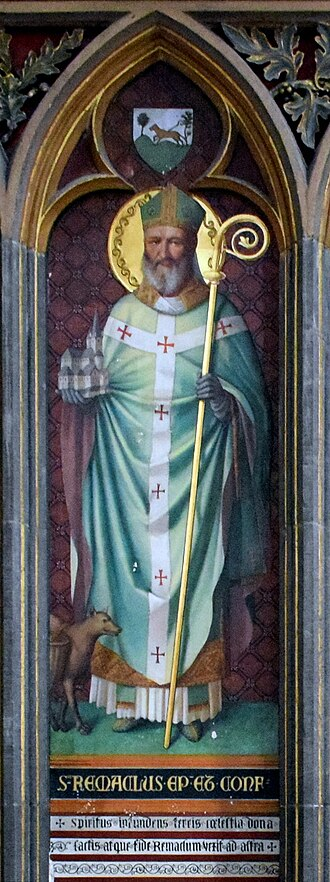
Saint Remaclus, also known asRemaclus von Stablo, Remacle, Remaculus, Rimagilus, was a Benedictine monk, priest, and the first abbot at Solignac Abbey in France, a position to which he was appointed by Saint Eligius. Th leader of a busy life, he was born in the early 7th century, in Aquitaine, France, he came from nobility. Remaclus grew up in and around the royal court of Aquitaine, and studied under Saint Sulpicius of Bourges.
He became an advisor to King Sigebert II of Austrasia and convinced the king to found the double abbey of Stavelot, Belgium, and Malmedy, Ardennes, France, in 648. Saint Remaclus served as its first abbot. He then became missionary bishop of Maastricht, Netherlands from 652 to 663, a diocese frequently out of touch with the Church. Also a diocese which had murdered some of its previous bishops. He worked to spread monasticism in the region.
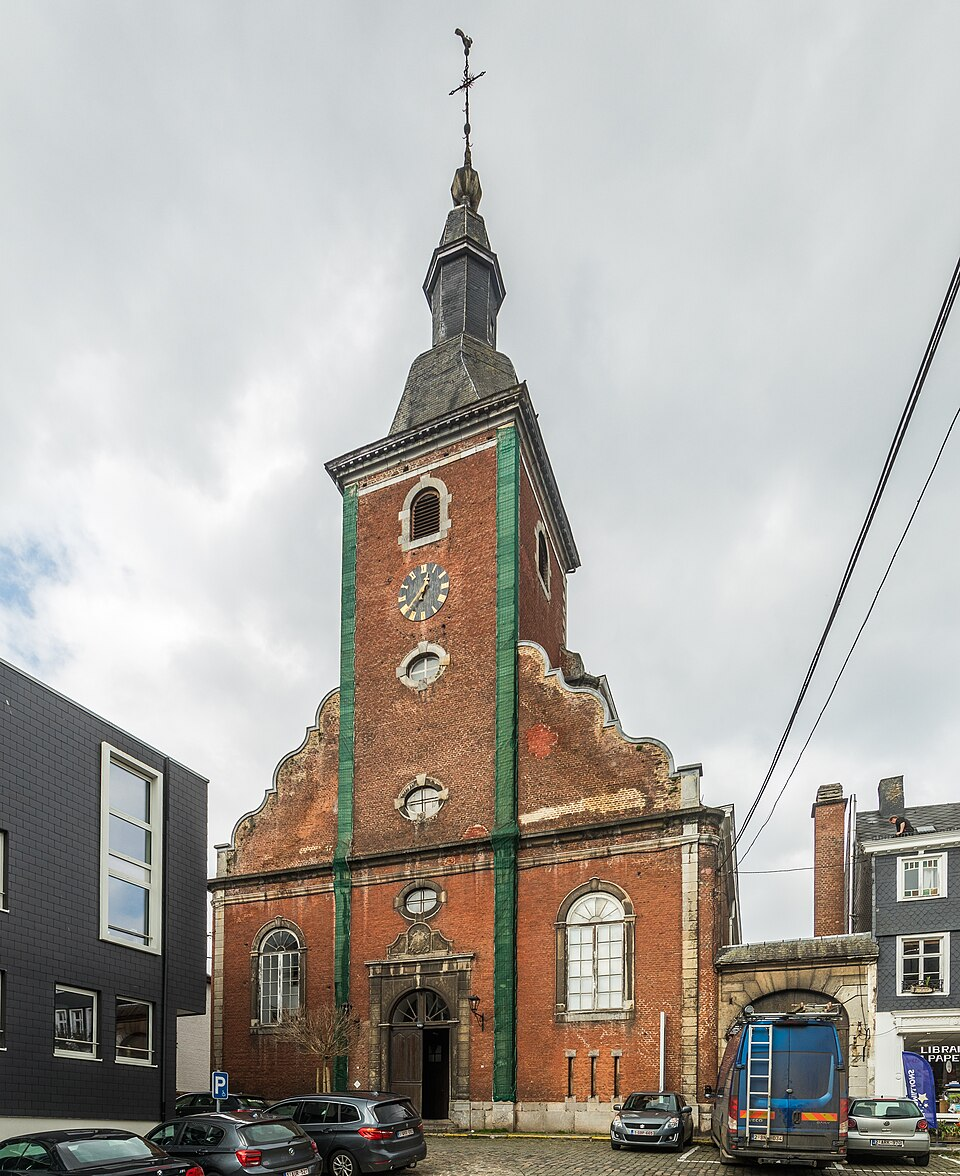
He was friends with Saint Hadelin and the spiritual father of Saint Trond, Saint Babolen, Saint Theodard of Maastricht, and Saint Lambert of Maestricht. In his later years he retired to the abbey at Stavelot to spend his final days as a prayerful monk, dying 663 of natural causes. His relics lie in St. Sebastian Church in Stavelot.
Church of St. Sebastian in Stavelot
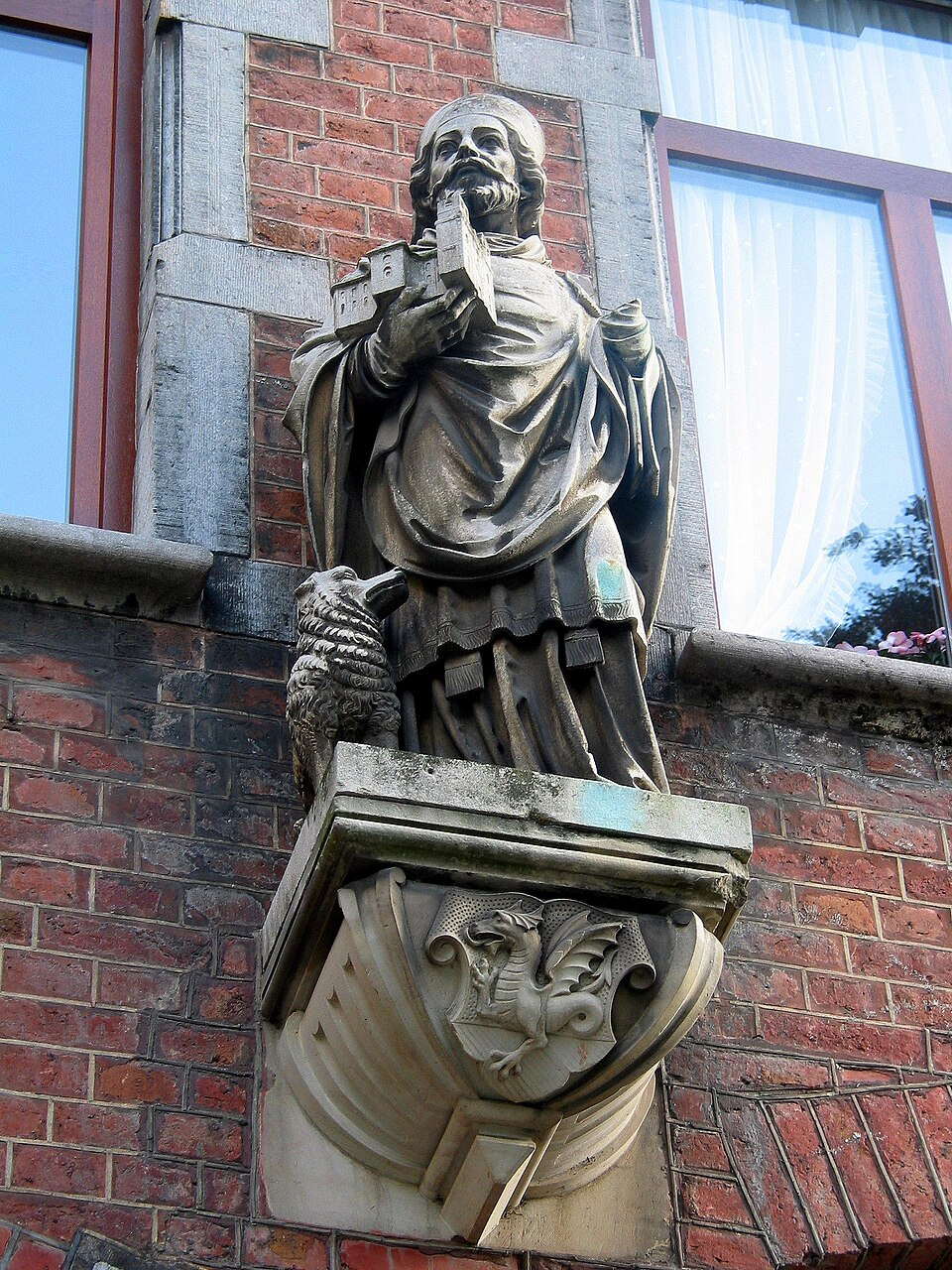
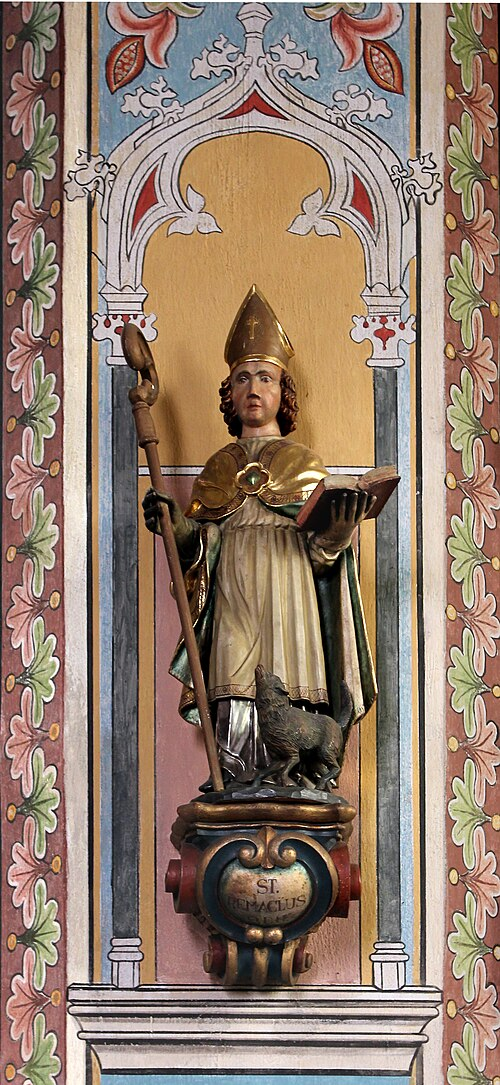
He is often depicted with a wolf because a wolf able to drive away the devil accompanied him. With his staff, the saint discovered springs which possessed healing waters.
Saint Margaret of Louvain, also known as known as Margaretula, Margaret la Fière, Margaret van Leuven, Margaret van Löwen, Margarita Lovania, Fiere Margriet.
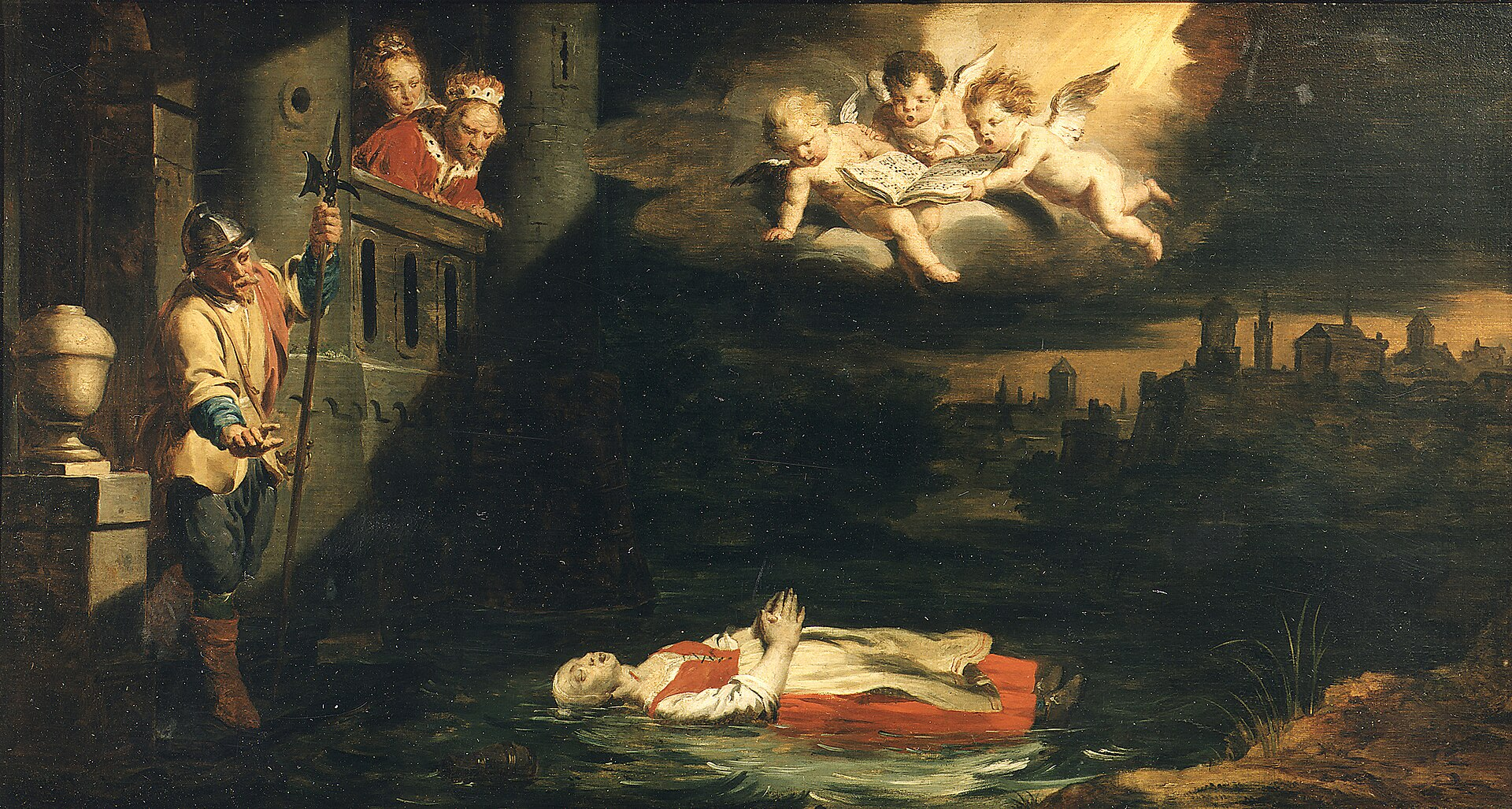
Death of Margaretha of Louvain by Pieter-Jozef Verhaghen
She was a maid born in 1207 to a poor family at Louvain, Brabant, Belgium. When a teenager, Margaret worked as a maid at the Sint Joris, an inn in Louvain owned by her uncle Aubert. Aubert and his wife sold the inn, planning to each enter the religious life. Margaret herself wanted to become a Cistercian nun.
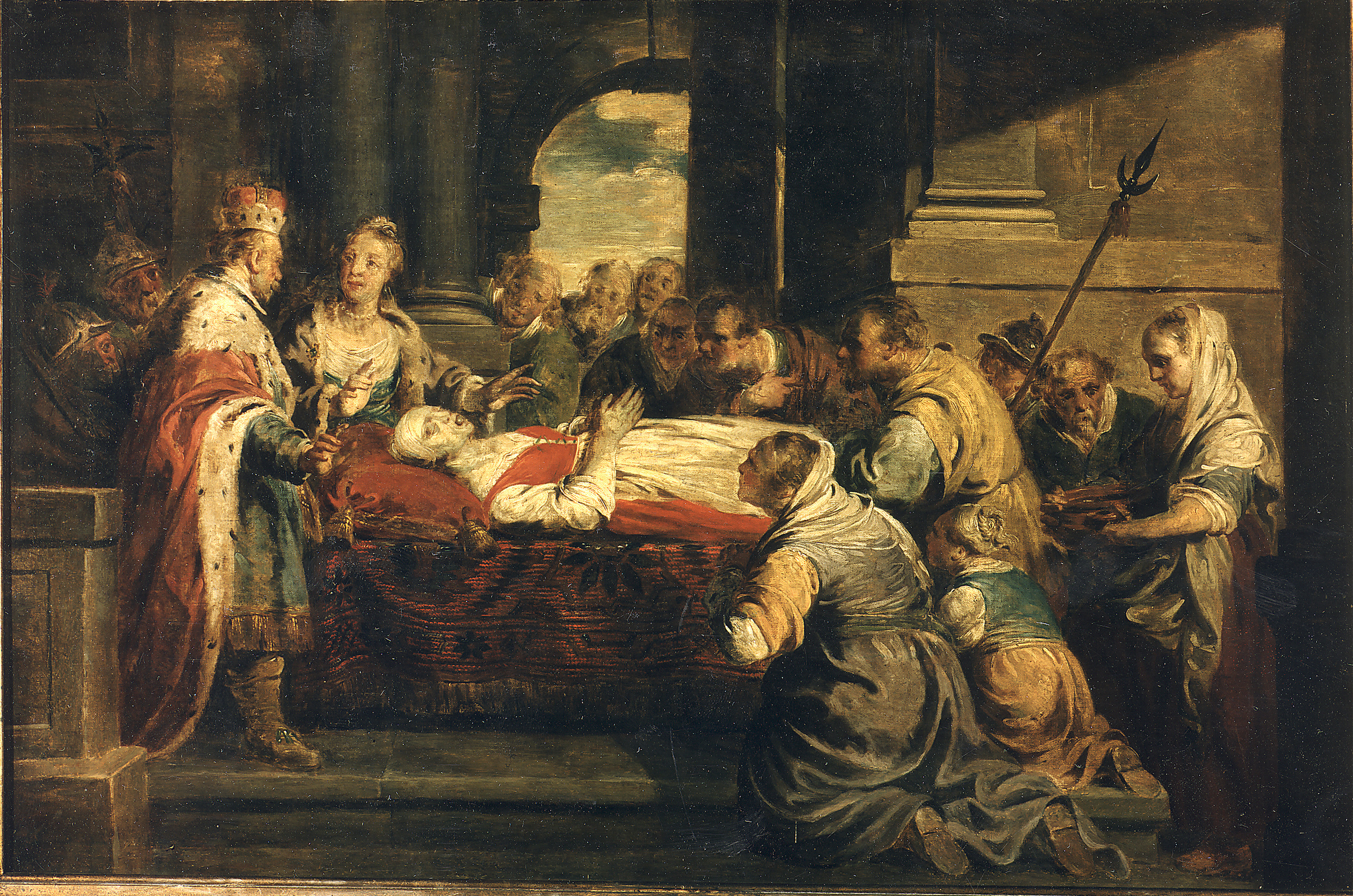
The body of the blessed Margaretha of Louvain laid out.
On their last night in the inn, thieves broke in and murdered the owners while Margaret was out. She came home as the killers were leaving, seeing what they had done. She ran and the thieves gave chase. They caught up with her along the banks of the Dyle River, where they murdered her by slitting her throat. They threw her corpse into the Dyle, but when a large fish pushed the body upstream and an angel hovered over the river, shining a light on the body, it was recovered and buried on the riverbank where she was killed. Miracles were reported at her gravesite, and her remains were then translated and reinterred in a chapel in the yard of Saint Peter’s Church in the centre of town, where many miracles occured.
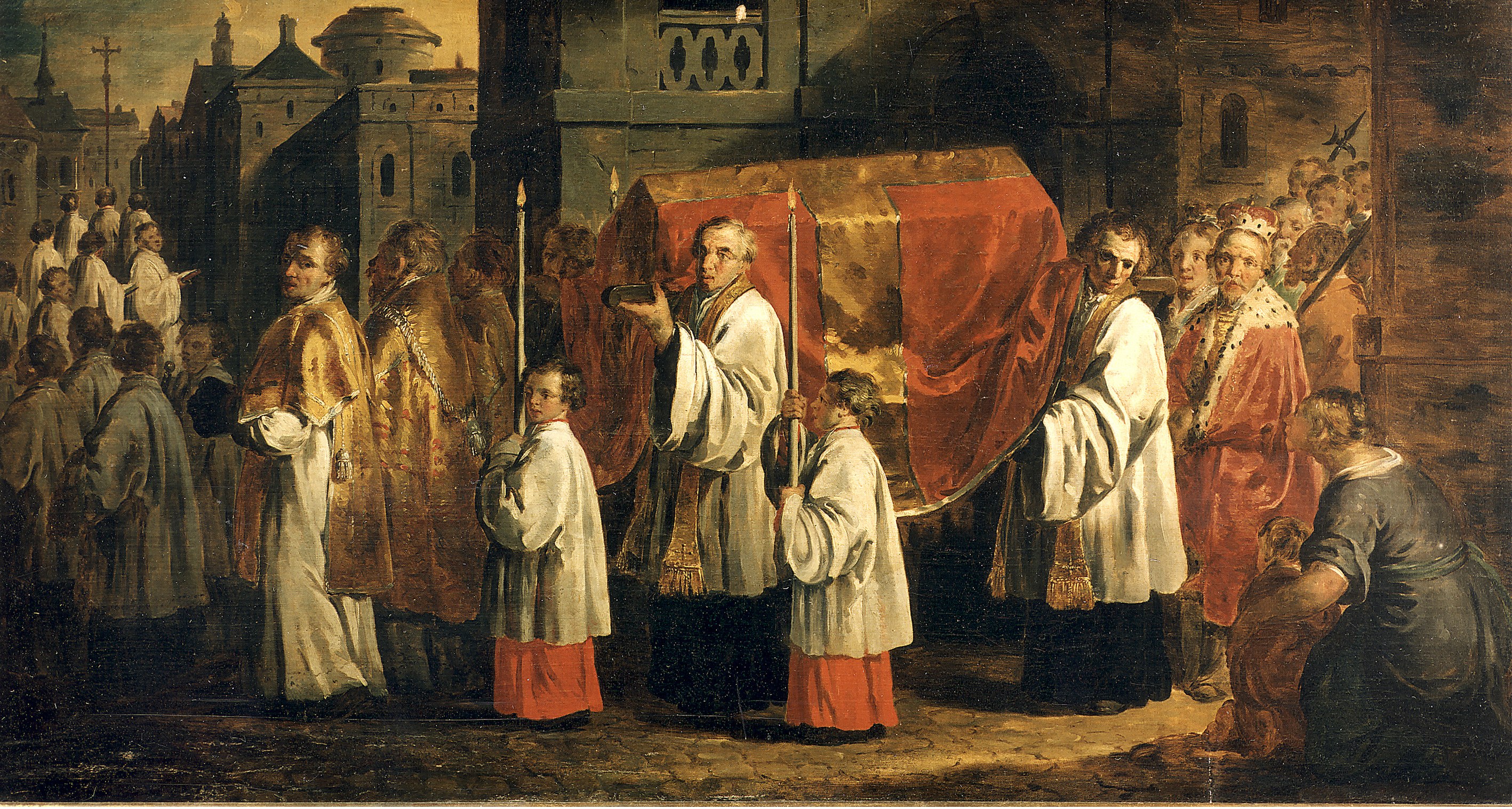
In 1905, Pope Pius X confirmed her cultus. Her shrine was made of gilded copper and adorned with semi-precious stones and co-financed by gifts from parishioners and young maids who honor Marguerite la Fière as their patron saint.
The funeral procession of Blessed Margaretha of Louvain
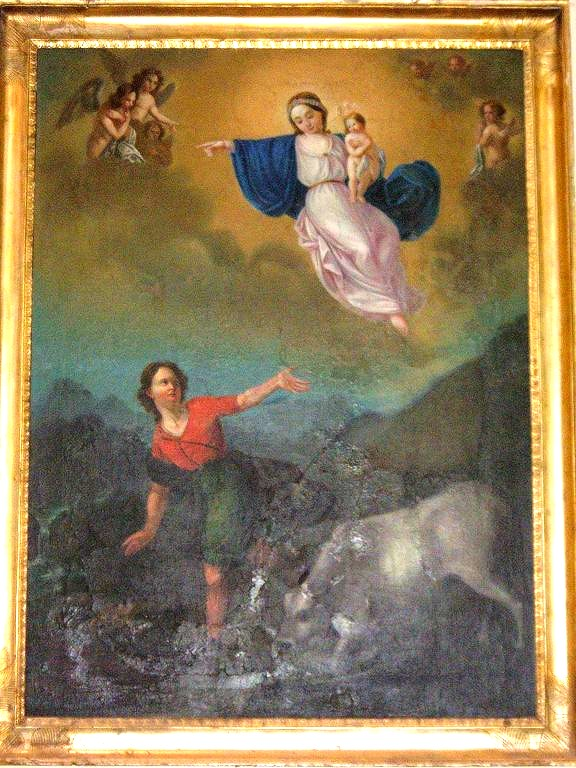
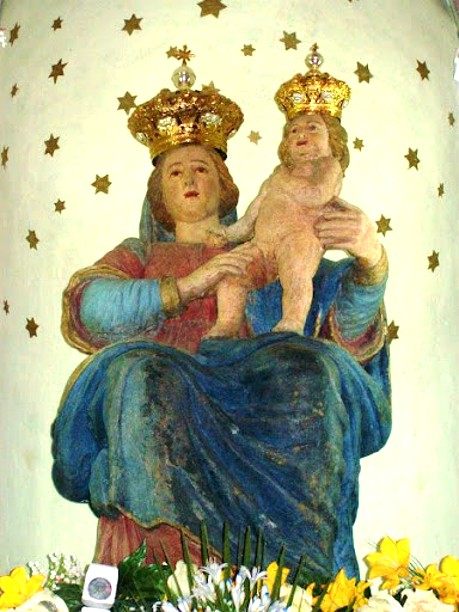
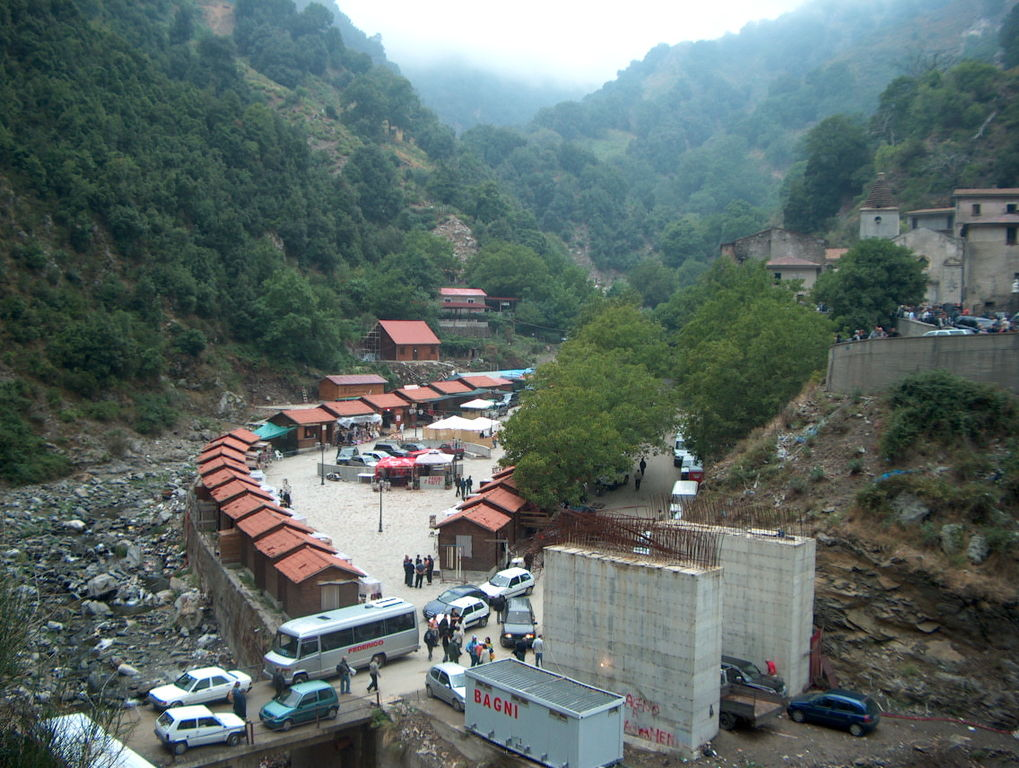
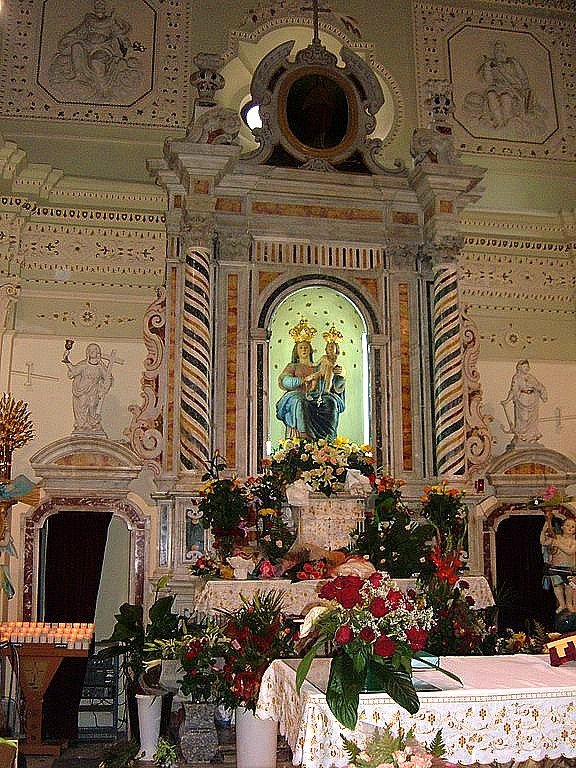
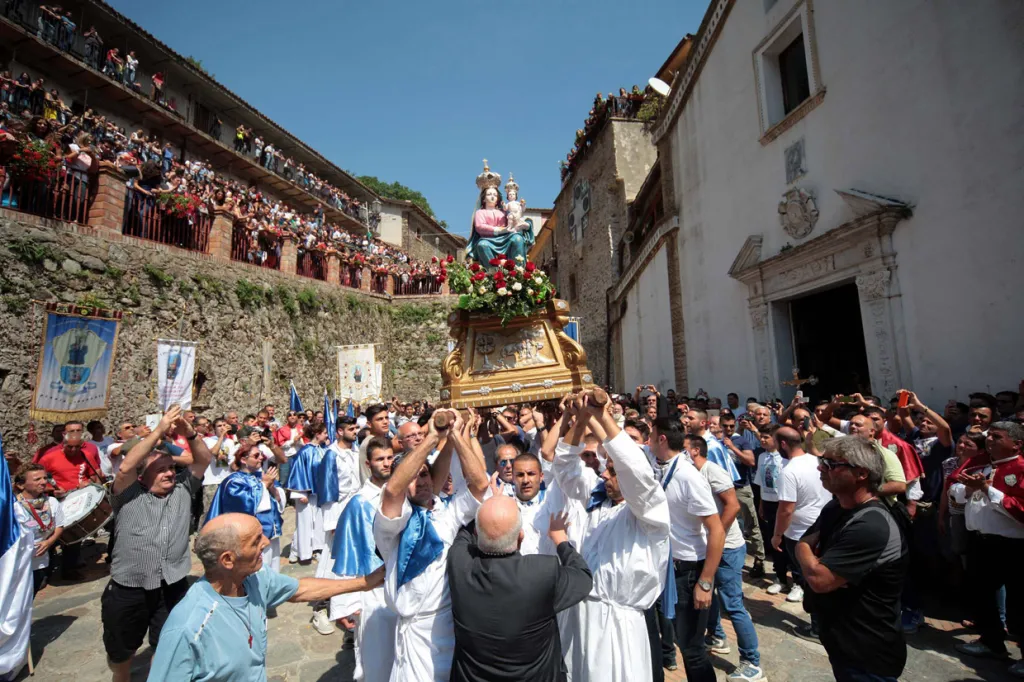
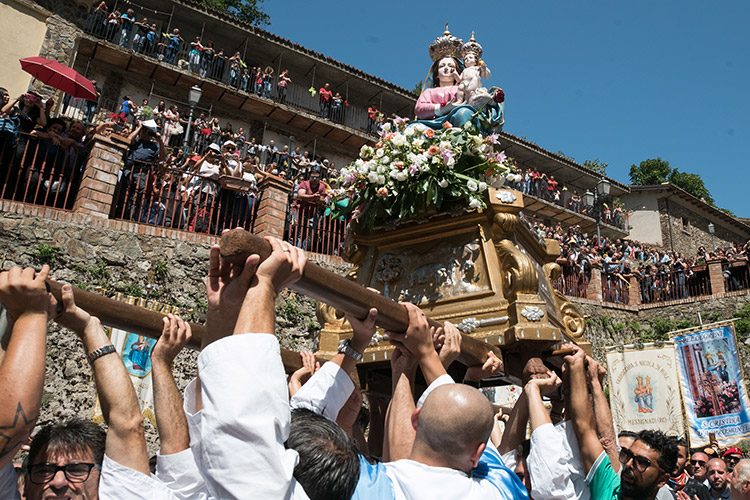
Madonna della Montagna / Our Lady of the Mountain, Polsi di San Luca, Reggio Calabria, Calabria, Italy (1144) – 2 September :
In 1144, a boy found his calf kneeling before an unusual iron Cross, apparently just unearthed. The Madonna appeared, asking for the young herder to spread the news and for a Church to be built on the spot, half a mile high in the mountains.
In 1560, a chest was found floating in the sea. It was taken ashore and found to contain a stone Statue of the Madonna. When the chest was placed in a cart, the oxen suddenly took off for the mountain pass and nothing more was heard of the Statue until it turned up in the heart of Aspromonte, at the place where a calf had found a Cross and the Madonna had requested a Church. The Sanctuary there became a place of pilgrimage.
Every year, people from all over Calabria and Sicily would make the 24-hour walk, enlivened by hymns and ballads, along the rugged path to Polsi, where they would greet the Madonna with gunshots on their arrival on 2 September As pilgrims still do — though now they can travel by road or train as well — they would spend the night in one of the hostels near the Shrine. On 3 September, a wooden Madonna is carried in procession. The stone Statue is only taken from its place on the main Altar every 25 years or in special circumstances. Also known as the Mother of the Good Shepherd, the Madonna of the Mountain was crowned in 1881, 1931 and on 2 September 1981.
Bl Albert of Pontida St Antoninus of Pamiers St Antoninus of Syria
St Solomon le Clerq FSC (1745-1792) Martyr, Religious Brother of the De La Salle Brothers, Teacher.
St Theodota of Bithynia St Valentine of Strasbourg St William of Roeskilde — Marytrs of Nicomedia – 3 saints: Three Christians who were martyred together in the persecutions of Diocletian. No details about them but their names have survived – Concordius, Theodore and Zenone. They were martyrd in Nicomedia, Bithynia (in modern Turkey).
Martyrs of 2 September – 10 saints: A group of ten Christian martyrs; their names are on old martyrologies but we have lost all record of their lives and deaths. They were canonised. • Antoninus • Diomedes • Eutychian • Hesychius • Julian • Leonides • Menalippus • Pantagapes • Philadelphus • Philip
Holy Bishops of Rennes: Honors all the bishops of the Diocese of Rennes, France who have been recognized as saints and beati. They include : Saint Maximinus of Rennes Saint Modéran of Rennes Saint Rambert of Rennes Saint Riotisme of Rennes Saint Servius of Rennes Saint Synchronius of Rennes
Martyred in the Spanish Civil War: • Blessed Baldomer Margenat Puigmitja • Blessed Fortunato Barrón Nanclares • Blessed Joan Franquesa Costa • Blessed José María Laguía Puerto • Blessed Lorenzo Insa Celma
Collection of all the Feasts of Our Lady, celebrated at Louvain – 1 September:
The Abbot Orsini writes that “A feast is kept in honour of the Blessed Virgin, called the Collection of all the Feasts of Our Lady.”
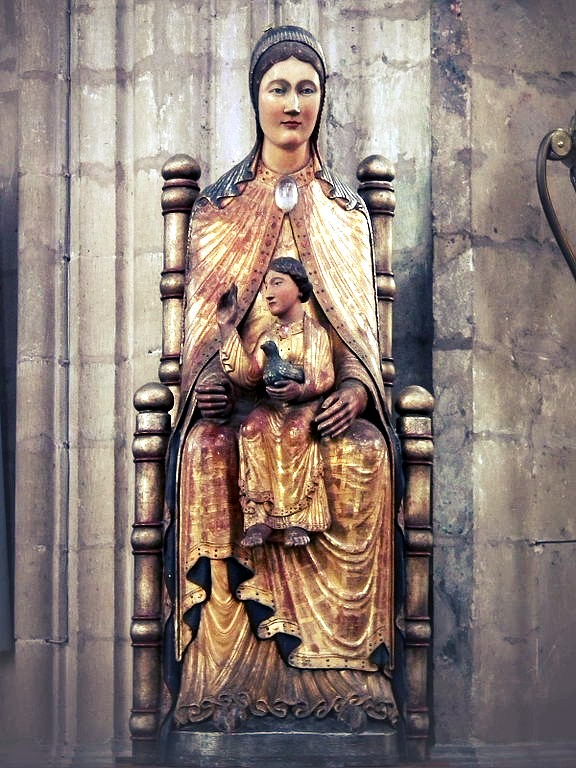
Louvain refers to Leuven, the capital of the Province of Flemish Brabant in the Flemish Region of Belgium. There was once a Chapel called Our Lady of Louvain, which had stood near the Church tower of a separate Church dedicated to Saint Peter. The Chapel owed its origin to an image of the Blessed Virgin Mary that was given by a group of Monks from Abbey Park as a sign of brotherhood in 1132. According to tradition, the wooden statue, which depicted the Blessed Virgin seated with the Divine Child in her lap, was a gift from heaven deposited on the earth by heavenly Angels. The image excited a lively religious fervour upon its reception and there are numerous miracles credited to pious devotion to the image of Our Lady of Louvain.
Over 350 years later, as the Chapel of Our Lady of Louvain was built on land that was needed for the construction of the new and larger Church of Saint Peter, it was necessary to demolish the Chapel. In a letter dated 28 March 1496, Bishop John Horne of Liege, authorised the transfer of materials from the Chapel of Our Lady of Louvain to the new Basilica of Saint Peter The old Chapel was demolished two years later in 1498 and the Statue of the Virgin was placed on a special Altar in the collegiate Church of Saint Peter. Every year, on the eve of the first Sunday in September, the miraculous image of Our Lady of Louvain had been carried in procession by the canons and members of the local council while bells tolled and musicians accompanied the image singing the Salve Regina.
Sometime later, the Statue became known by the title of Notre-Dame-sous-la-Tour. The original Church of Saint Peter was made entirely of wood and completed in about 986. It burned to the ground in 1176. It was rebuilt in Romanesque style with two west towers, and that image is still used as the ancient seal for the City. The Church was then enlarged in 1425 in the Brabantine Gothic style. The Church of Saint Peter was heavily damaged in both world wars but most importantly, the original Statue of Our Lady of Louvain was completely destroyed in 1944 by allied bombing during World War II and it is now only a replica that is on display at the Church.
Abigail the Matriarch
St Abdon the Judge St Aegidius St Agia St Anea St Arcanus St Arealdo of Brescia Bl Colomba of Mount Brancastello St Constantius the Bishop St Donatus of Sentianum St Felix of Sentianum
St Ibzan the Judge St Jane Soderini St Joshua the Patriarch Bl Juliana of Collalto St Laetus of Dax
St Lupus of Sens (Died 623) Bishop of Sens – France, Confessor, Monk, Missionary.
St Lythan St Nivard of Rheims St Priscus St Regulus St Sixtus of Rheims St Terentian St Verena St Victorious St Vincent of Xaintes — Exiles of Campania Twelve Holy Brothers: Martyrs of the South – A group of Martyrs who died c 303 at various places in southern Italy. In 760 their relics were brought together and enshrined in Benevento, Italy as a group. • Saint Arontius of Potenza • Saint Donatus of Sentianum • Saint Felix of Sentianum • Saint Felix of Venosa • Saint Fortunatus of Potenza • Saint Honoratus of Potenza • Saint Januarius of Venosa • Saint Repositus of Velleianum • Saint Sabinian of Potenza • Saint Sator of Velleianum • Saint Septiminus of Venosa • Saint Vitalis of Velleianum One tradition describes Saint Boniface of Hadrumetum and Saint Thecla of Hadrumetum as their parents.
Martyred in the Spanish Civil War: Martyred Hospitallers of Saint John of God – (12 beati) • Blessed Alejandro Cobos Celada • Blessed Alfonso Sebastiá Viñals • Blessed Amparo Carbonell Muñoz • Blessed Antonio Villanueva Igual • Blessed Carmen Moreno Benítez • Blessed Crescencio Lasheras Aizcorbe • Blessed Enrique López y López • Blessed Francesc Trullen Gilisbarts • Blessed Guillermo Rubio Alonso • Blessed Isidro Gil Arano • Blessed Joaquim Pallerola Feu • Blessed Joaquín Ruiz Cascales • Blessed José Franco Gómez • Blessed José Prats Sanjuán • Blessed Josep Samsó y Elias • Blessed Manuel Mateo Calvo • Blessed Mariano Niño Pérez • Blessed Maximiano Fierro Pérez • Blessed Miquel Roca Huguet • Blessed Nicolás Aramendía García • Blessed Pedro Rivera • Blessed Pio Ruiz De La Torre
St Theodotus and St Rufina of Caesarea were husband and wife, martyrs in the persecutions of Aurelian, and parents of Saint Mamas. Born to patrician families in Paphlagonia, Asia Minor, they were devout Christians. When the persecutions of Christians began, Alexander, the magistrate of the city of Gangra, summoned them to trail because they refused to obey the imperial decree requiring all citizens to worship the pagan gods. Those who disobeyed would be tortured and put to death.
Since Theodotus was a noble, and Alexander could not torture or murder him because of that, so he sent him to the governor Faustus in Caesarea of Cappadocia. Faustus, who was notoriously ruthless, threw Theodotus into prison. Though pregnant, Rufina followed her husband into gaol. Fearing that he would not be able to withstand torture and would apostatise, Theodotus asked God to take his soul, a prayer which was granted. As a result of sorrow and the privations she experienced in prison, Saint Rufina gave birth prematurely. She prayed that God would permit her to follow her husband in death, and that He would also protect her child. Her prayer was also granted and Saint Mamas was raised by a pious woman named Ammia.
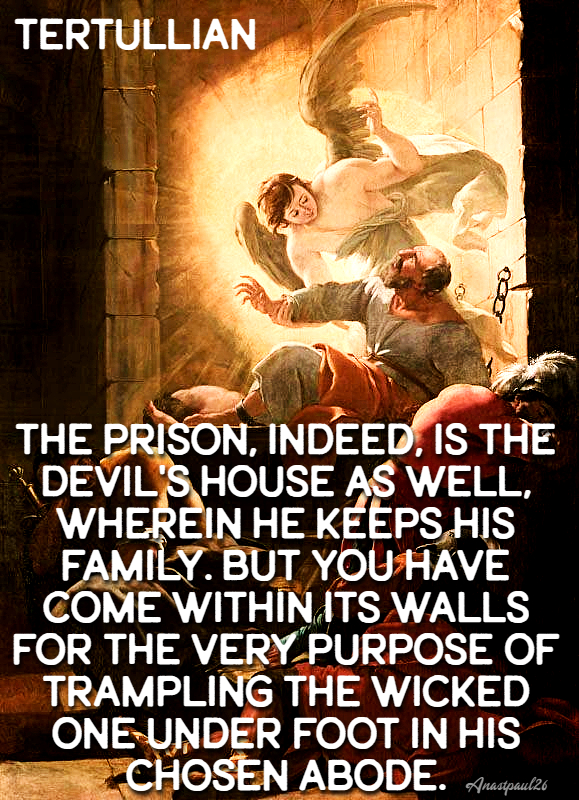
The prison, indeed, is the devil’s house as well, wherein he keeps his family. But you have come within its walls for the very purpose of trampling the wicked one under foot in his chosen abode.
Our Lady of the Founders – The Relic of the Girdle of Our Lady, Constantinople (5th Century) – 31 August:
St Aidan of Lindisfarne (Died 651) Apostle of Northumbria, Bishop, Monk, Missionary, Abbot, Ascetic.
St Raymond Nonnatus O.deM. (1204-1240) Religious Priest, Confessor, Cardinal, Friar of the Mercedarian Order. Beatified on 5 November 1625 by Pope Urban VIII and Canonised in 1657 by Pope Alexander VII. Raymond was delivered by Caesarean operation when his mother died during childbirth – hence the name: non natus = not born.
St Ammi of Caesarea St Aristides the Philosopher St Barbolenus of Bobbio St Bonajuncia OSM Confessor St Caesidius St Cuthburga of Wimborne St Cwenburgh of Wimborne
St Rose of Lima OP (1586-1617) Virgin and Penitent, Mystic, Visionary, Stigmatist (invisible), Apostle of the Poor. Also known as “St Rose of Saint Mary” – her Religious name.
St Adauctus AND St Felix of Rome (Died c303) St Agilus St Arsenius the Hermit St Boniface of Hadrumetum St Bononius of Lucedio Bl Bronislava of Poland Bl Edward Shelley Bl Ero di Armenteira Bl Eustáquio van Lieshout St Fantinus of San Mercurius
Saint Fiacre (Died 670) Priest, Abbot, Monk, Hermit, Apostle of charity, gardener.
St Gaudentia of Rome
Blessed Giovanni Giovenale Ancina CO (1545–1604) Bishop of Saluzzo, member of the Oratory of St Philip Neri, Scholar, Musician and Composer, renowned Preacher Doctor of Medicine. Commonly known as Blessed Juvenal Ancina.
St Pammachius (c340 – 410) Senator, Monk, Apostle of Charity, friend of St Jerome and he was praised by St Augustine.
St Pelagius the Hermit St Peter of Trevi Bl Richard Flower Bl Richard Leigh Bl Richard Martin St Rumon of Tavistock St Sylvanus the Hermit St Thecla of Hadrumetum St Theodosius of Oria
Martyrs of Colonia Suffetulana – 60 Saints: A group of 60 Christians Martyred for destroying a statue of Hermes. They were Martyred in Colonia Suffetulana, Africa.
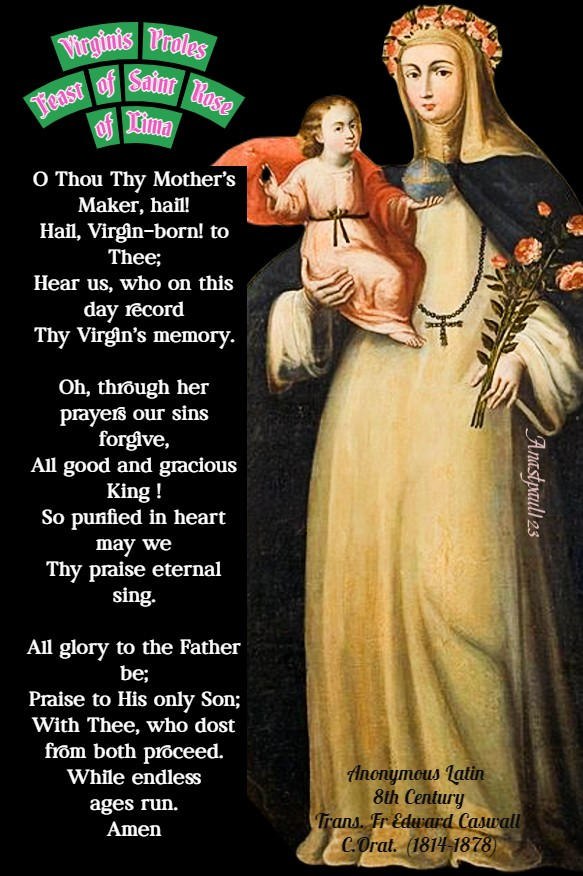
Our Morning Offering – 30 August – St Rose of Lima OP (1586-1617) Virgin
Virginis Proles Anonymous Latin, 8th Century Trans. Fr Edward Caswall C.Orat. (1814-1878)
O Thou Thy Mother’s Maker, hail! Hail, Virgin-born! to Thee; Hear us, who on this day record Thy Virgin’s memory.
Oh, through her prayers our sins forgive, All good and gracious King ! So purified in heart may we Thy praise eternal sing.
All glory to the Father be; Praise to His only Son; With Thee, who dost from both proceed. While endless ages run.
This Hymn is used for Matins in the Common of Virgins in the Extraordinary form of the Roman Breviary. Verses 1, 4 and 5 above, are used for a Virgin who is not a Martyr.
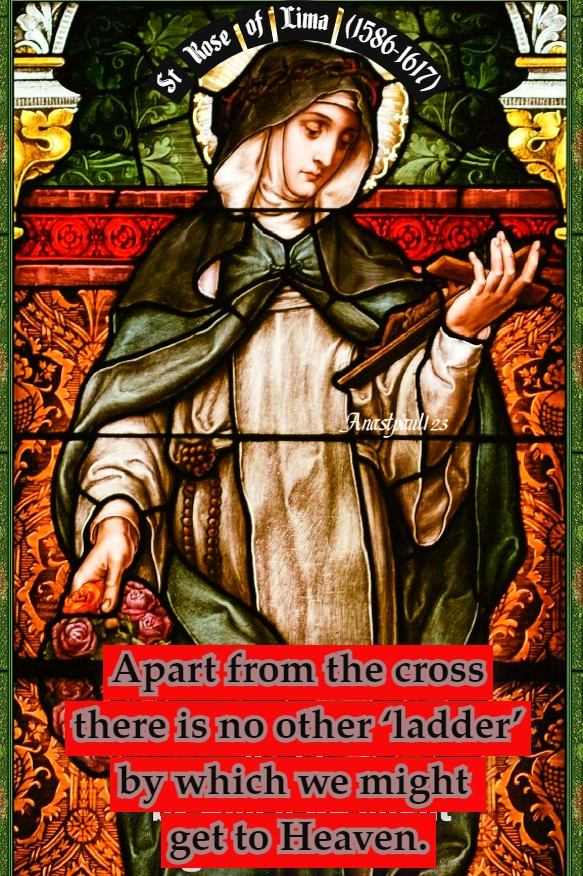
Quote/s of the Day – 30 August – St Rose of Lima OP (1586-1617) Virgin
“Apart from the cross there is no other ‘ladder’ by which we might get to Heaven.”
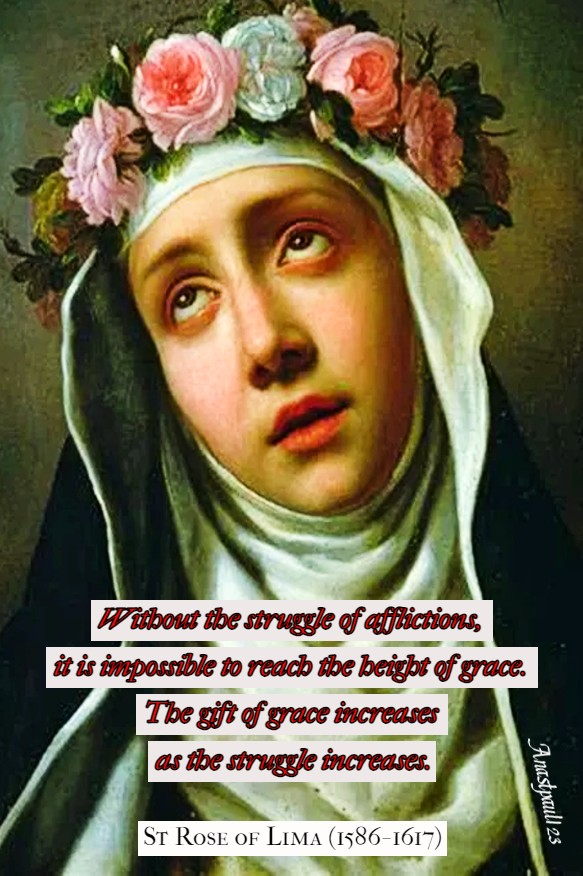
“Without the struggle of afflictions, it is impossible to reach the height of grace. The gift of grace increases as the struggle increases.”
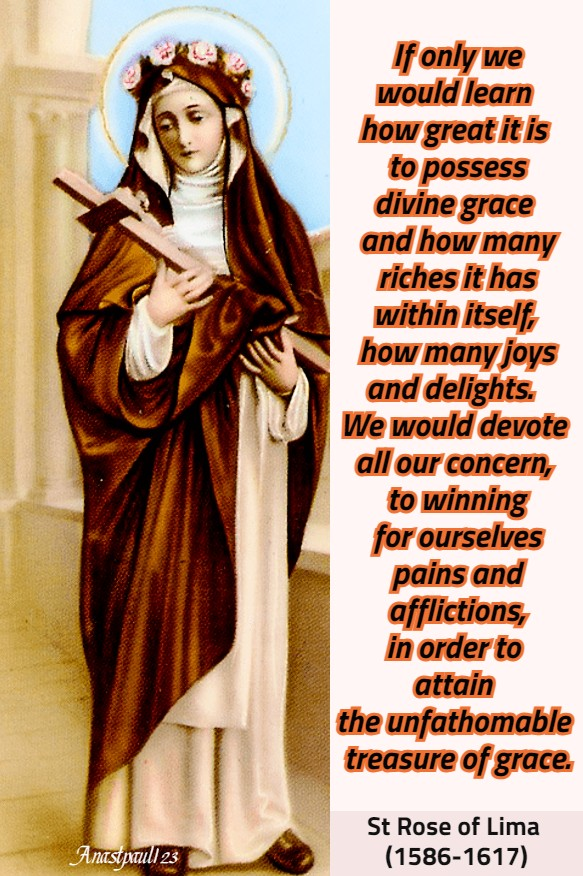
“If only we would learn how great it is to possess divine grace and how many riches it has within itself, how many joys and delights. We would devote all our concern, to winning for ourselves pains and afflictions, in order to attain the unfathomable treasure of grace.”
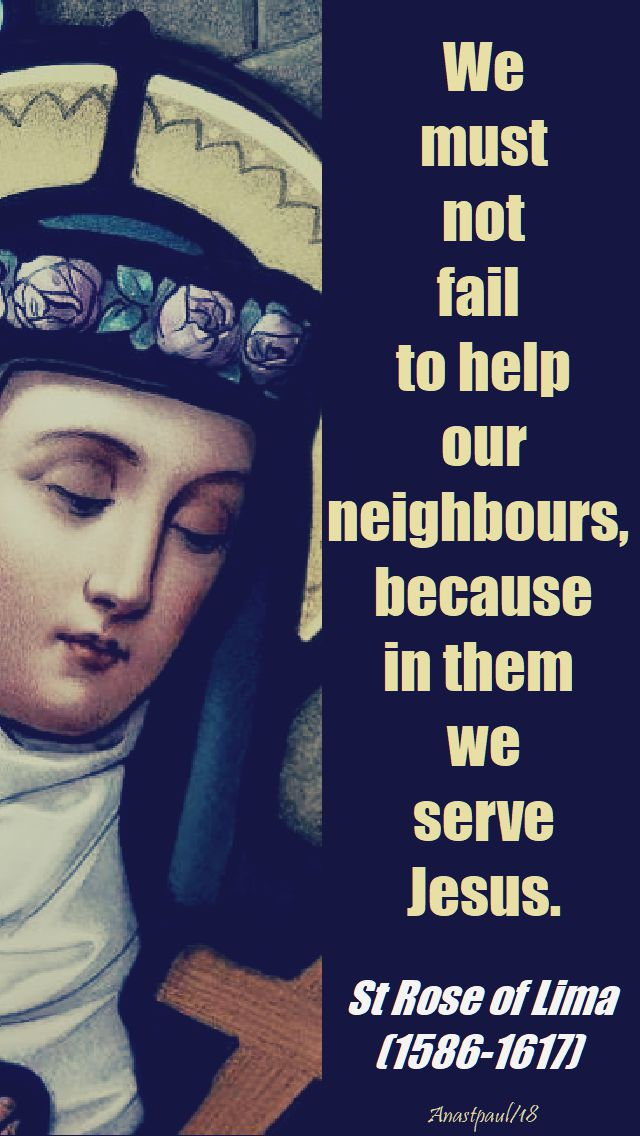
“We must not fail to help our neighbours, because in them we serve Jesus.”
St Adelphus St Adausia of Rome St Alberic of Bagno de Romagna St Basilia of Sirmium Bl Bronislava St Candida of Rome St Edwold the Hermit St Euthymius of Perugia St Maximian of Vercelli St Medericus St Nicaeus of Antioch St Paul of Antioch St Repositus of Velleianum Bl Richard Herst St Sabina of Troyes St Sator of Velleianum St Sebbe of Essex St Velleicus St Victor of La Chambon St Vitalis of Velleianum
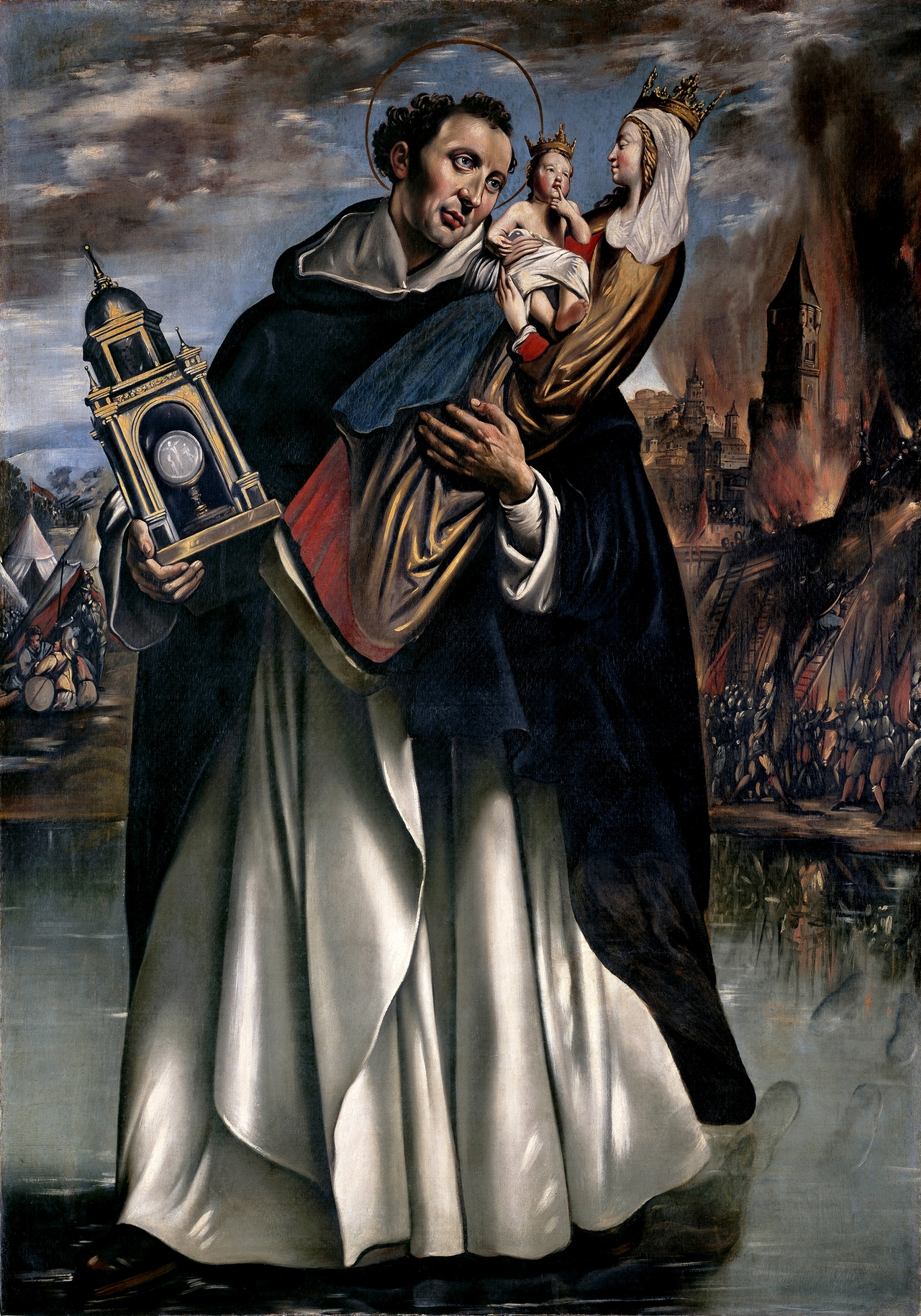
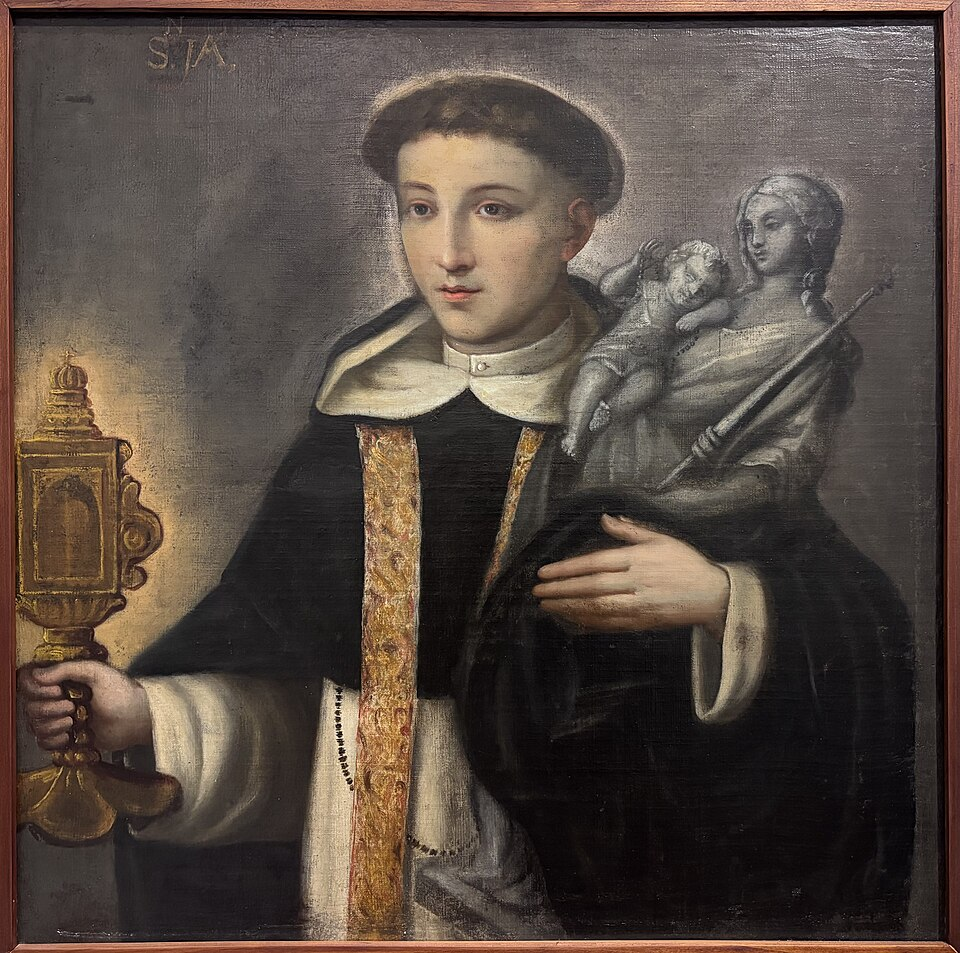
Saint Hyacinth of Poland, the Apostle of the North, during the Siege of Kiev in 1240 by Mongols, went to save save the Blessed Sacrament from capture and desecration. He had removed the Sacred Host from the Tabernacle and was hurrying down the aisle when he heard a voice call, “Hyacinth, are you going to leave me here at the mercy of the Tartans?” The voice seemed to be coming from the statue of the Blessed Virgin on one of the side altars. Hyacinth stopped and turned his gaze toward the statue which was of alabaster, fairly large in size, and obviously much too weighty for one man to carry.
Then the voice spoke again: “Take me with you, Hyacinth, I will make the burden light.” So, holding the Blessed Sacrament in one hand, he picked up the statue with the other, and, to his surprise, found he could easily carry it. Leaving the church, he fled from the city, and saved the Blessed Sacrament and the statue of Our Lady from harm.
Eighty years later, the statue was returned to Kiev. The city became the center of great devotion to the Blessed Virgin, and people gave the statue the name of Our Lady of Kiev.
The statue was later taken to a Dominican convent in Lwow in Poland. What has happened to it since the Communists took over Poland is unknown. Meanwhile, the icon known as The Virgin of Kyiv (created by a Byzantine artist about the year 1132) and the most famous icon in the world, is housed in the Tretyakov Gallery in Moscow.
St Augustine of Hippo (354-430) – Bishop, Confessor, Doctor of Grace and one of the original Four Fathers & Doctors of the Latin Church.
Bl Adelindis of Buchau St Agnes of Cologne St Alexander of Constantinople St Ambrose of Saintes
Blessed Angelo da Pesche d’Isernia TOR (c 1400-1460) Lay Franciscan Tertiary, Holy Beggar, gifted with the charism of levitation, Apostle of the poor, spiritual adviser.
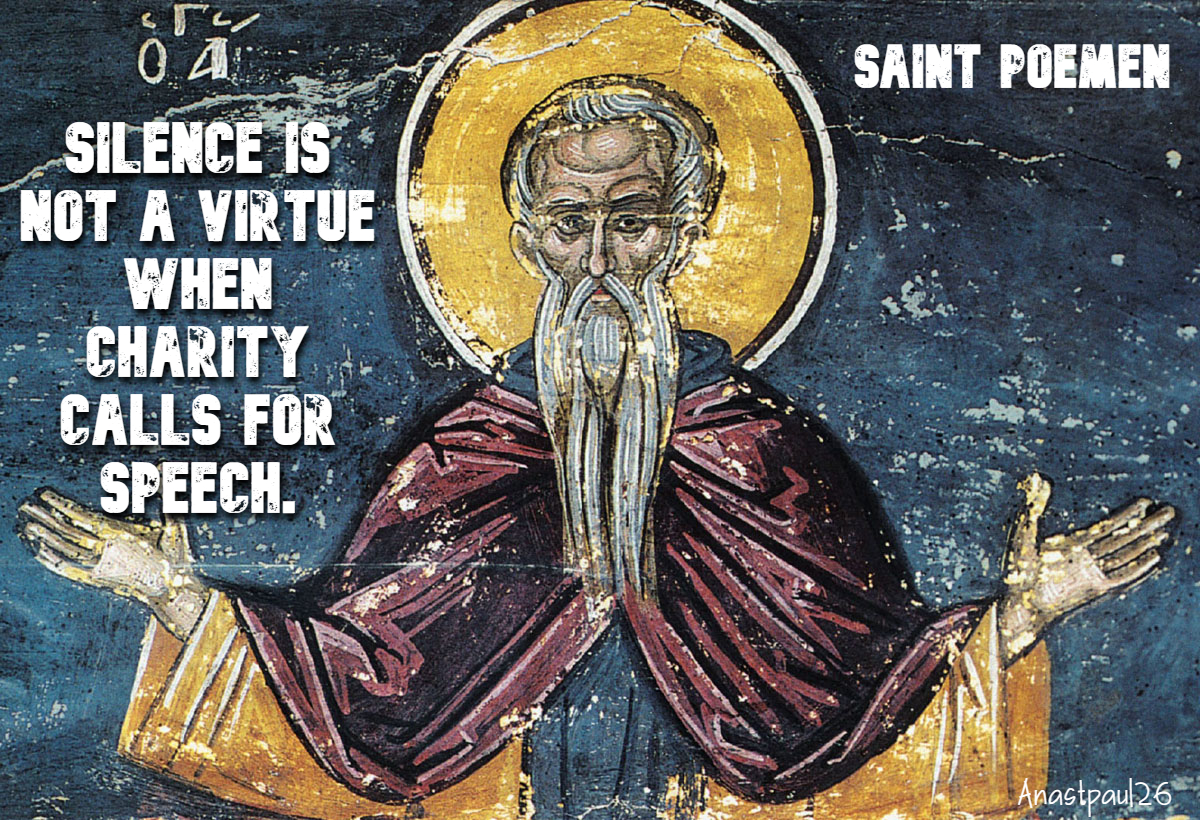
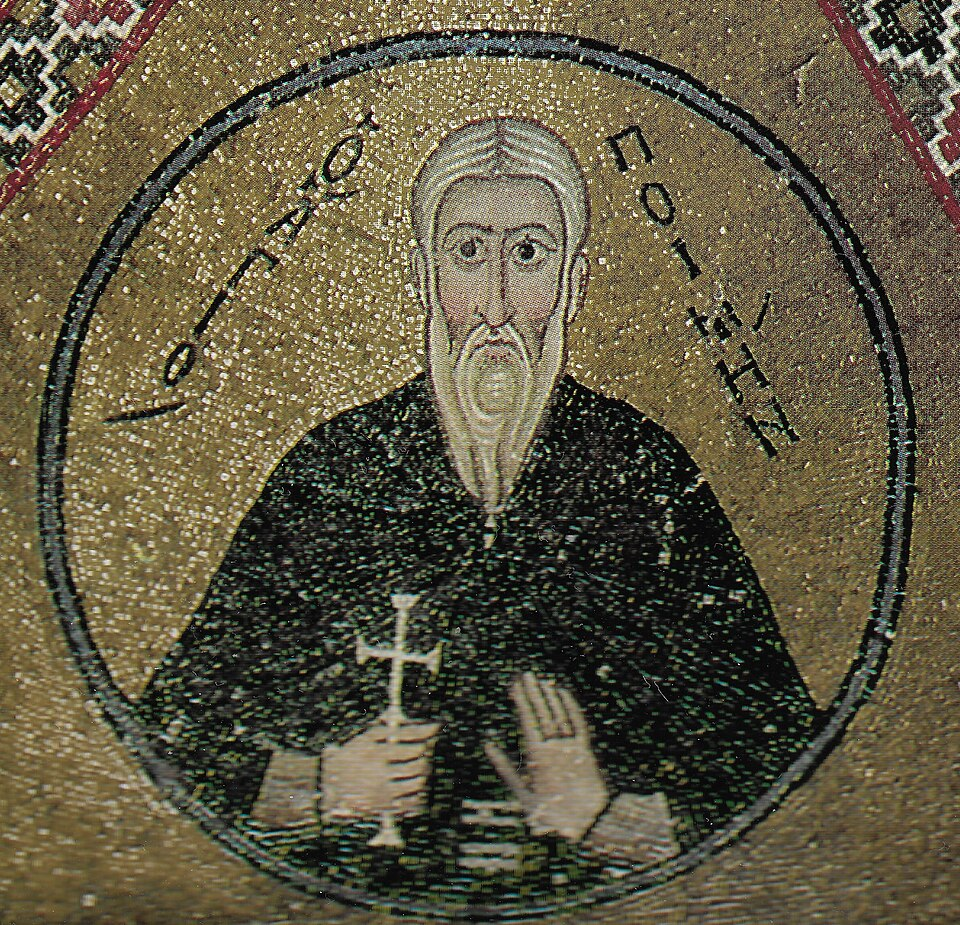
Saint Poemen (meaning ‘Shepherd’), born in 340, is the most quoted Father in the Sayings of the Desert Fathers.
Poemen lived at a monastery in Scetis in Egypt, one of the earliest centres of Christian monasticism. In 407 AD the monastery was overrun by barbarian raiders, scattering the monks. Poemen and Anoub, along with a handful of monks, fled to Terenuthis, on the river Nile. After leaving Scetis, his group first lived in an abandoned pagan temple. The diaspora of monks resulting from these raids lead to Poemen and his group keeping alive the collective wisdom of the monks of Scetis by creating the bulk of the Sayings of the Desert Fathers.
Although noted for his strong discipline, (permitting himself and his brothers four hours of sleep a day and spending the rest of the time in chores, prayers or study) he was also tolerant of the weakness of others. One story recounts that some of the older monks approached Poemen for his advice on how to treat monks who fell asleep during their prayers. They were inclined to wake the sleeping monk, while Poemen took a more compassionate approach, advising, “For my part, when I have seen a brother who is dozing, I put his head on my knees and let him rest.” Poemen was typically opposed to giving excessively harsh penances —when a monk came to him who had committed a “great sin”, Poemen reduced his penance from three years to three days.
He once recalled a straying monk back to virtue by sending him a bottle of wine on the birth of a bastard child, in ‘celebration’, which struck the monk’s conscience so hard that he dismissed his mistress. Poemen was described as a charismatic speaker who taught more by example than by lecturing others. When a visiting monk asked him if he should assume a role of authority over the brothers he was living with, Poemen responded by saying, “No, be their example, not their legislator.” Judgment of others was also abhorrent to him. He once stated that, “A man may seem to be silent, but if his heart is condemning others, he is babbling incessantly.” He also urged frequent Communion for all.
He died in 450, of natural causes.
Selected sayings of Poemen
The beginning of evil is the lack of vigilance.
Silence is not a virtue when charity calls for speech.
A living faith consists of thinking little of self, and showing consideration for others.
Do not lay open your conscience to anyone whom you do not trust in your heart.
To instruct your neighbour is the same thing as reproving him.
If you take little account of yourself, you will have peace, wherever you live.
To throw yourself before God, not to measure your progress, to leave behind all self-will; these are the instruments for the work of the soul.
Give not your heart to that which does not satisfy your heart.
If you are silent, you will possess peace wherever you live.
The nature of water is soft, and the nature of stone is hard; but if a bottle is hung above the stone, allowing the water to fall down drop by drop, it wears away the stone. So it is with the Word of God: it is soft and our heart is hard, but the man who hears the Word of God often opens his heart to the fear of God.
One Minute Reflection – 27 August – “The Month of the Immaculate Heart of Mary” and the celebration of St Joseph Calasantius (1557-1648) Spanish Confessor – Readings: Ps 33:12, Ps 33:2, Wis 10:10-14, Matt 18:1-5
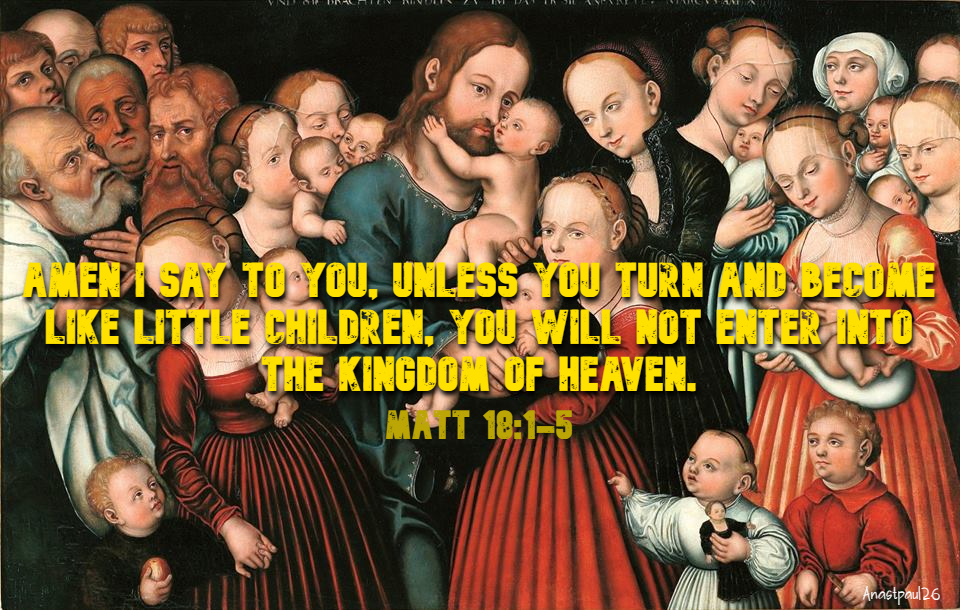
At that time, the disciples came to Jesus, saying, Who then is greatest in the kingdom of heaven? And Jesus called a little child to Him, set him in their midst, and said, Amen I say to you, unless you turn and become like little children, you will not enter into the kingdom of heaven.
Matt 18:1-5
REFLECTION – “Come,” said Christ to his apostles, “and learn from me” – not, to be sure, how to cast out demons with heavenly power, nor how to cleanse lepers, nor how to enlighten the blind, nor how to raise the dead… But you, he says, “Learn from me, for I am meek and humble of heart”. For this can be learned and practiced by everyone in general, whereas the works of signs and mighty deeds are neither always necessary and appropriate for everyone, nor are they bestowed on everyone.
Humility, then, is the teacher of all the virtues; it is the most firm foundation of the heavenly edifice; it is the Savior’s own magnificent gift. For a person may perform without danger of pride all the miracles that Christ worked if he strains after the meek Lord not because of his exalted signs but because of his patience and humility. But a person who itches to command unclean spirits, to bestow the gift of health on the sick, or to show some wondrous sign to the people is far from Christ even though he invokes the name of Christ in his displays, because by reason of his proud mind he does not follow the Teacher of humility.
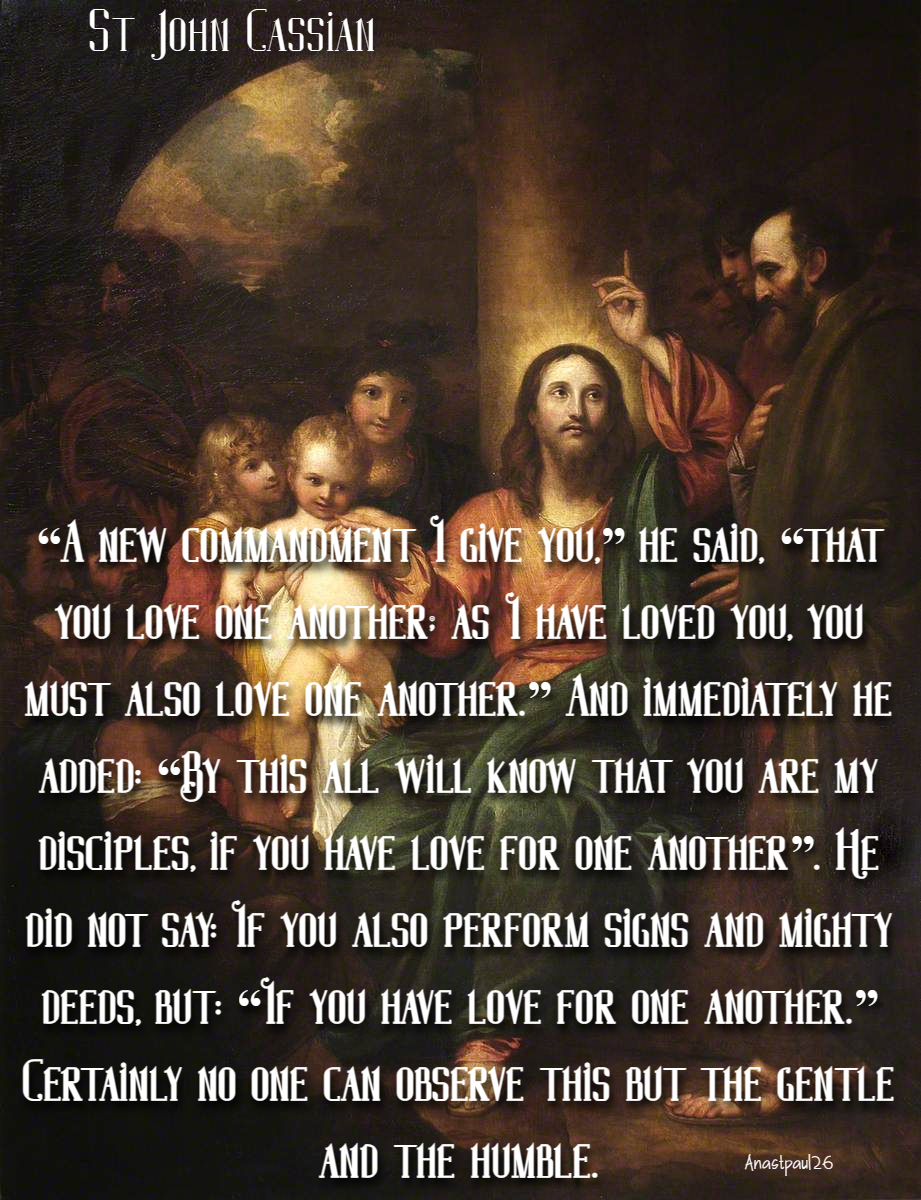
Even when he was returning to his Father he prepared what I might call his testament, and he left this to his disciples: “A new commandment I give you,” he said, “that you love one another; as I have loved you, you must also love one another.” And immediately he added: “By this all will know that you are my disciples, if you have love for one another”. He did not say: If you also perform signs and mighty deeds, but: “If you have love for one another.” Certainly no one can observe this but the gentle and the humble.
St John Cassian
PRAYER – O God, Who through St Joseph, Thy Confessor, did graciously will to provide Thy Church with a new method for the training of youth, in the spirit of understanding and holiness grant, we beseech Thee, that, following his example and through his intercession, we may live and teach so as to acquire an everlasting reward. Through Jesus Christ, Thy Son our Lord, Who lives and reigns with Thee, in the unity of the Holy Ghost, God, world without end. Amen
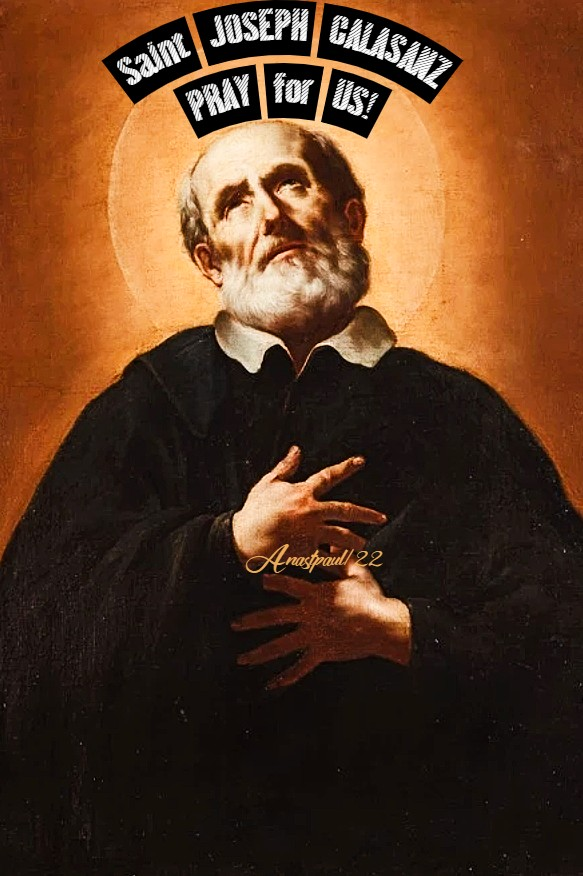
St Joseph Calasanz Sch.P. (1557-1648) Spanish Confessor, Priest, Teacher, Lawyer, Founder of the Pious Schools. Patron of all Schools, Colleges, all study institutions and of all students.
St Caesarius of Arles (470-543) Archbishop and Church Father, Theologian, Preacher, Apostle of charity, Legislator, Administrator, Writer, Reformer.
St Carpophorus St David Lewis St Decuman St Ebbo of Sens St Etherius of Lyons St Euthalia of Leontini St Fortunatus of Potenza Bl Gabriel Mary St Gebhard of Constance St Giovanni of Pavia St Honoratus of Potenza St John of Pavia St Licerius of Couserans St Malrubius of Merns St Narnus of Bergamo St Phanurius St Poemen Bl Roger Cadwallador St Rufus of Capua St Sabinian of Potenza St Syagrius of Autun
Martyrs of Tomi – 5 Saints: A group of 17 Christians imprisoned and executed for their faith during the persecutions of Diocletian. They miraculously were unburned by fire and untouched by wild animals. We know the names and a few details on five of them – John, Mannea, Marcellinus, Peter and Serapion. They were tied to stakes and burned alive; they emerged unharmed – thrown to wild animals in the amphitheatre; the animals ignored them; they were beheaded in 304 in Tomi, Mesia (modern Costanza, Romania).
Martyrs of Nagasaki – 14 Beati: A group of fourteen missionaries and Japanese native Christians, who were Martyred together for their faith. They died on 16 August 1627 in Nagasaki, Japan and were Beatified on 7 May 1867 by Pope Pius IX. • Blessed Antonius of Saint Francis • Blessed Bartolomé Díaz Laurel • Blessed Caius Akashi Jiemon • Blessed Francisca Pinzokere • Blessed Francisco of Saint Mary • Blessed Franciscus Kuhyoe • Blessed Leo Kurobyoe Nakamura • Blessed Lucas Tsuji Kyuemon • Blessed Ludovicus Matsuo Soyemon • Blessed Magdalena Kiyota • Blessed Maria Shobyoe • Blessed Michaël Koga Kizayemon • Blessed Thomas Sato Shin’emon • Blessed Tsuji Shobyoe
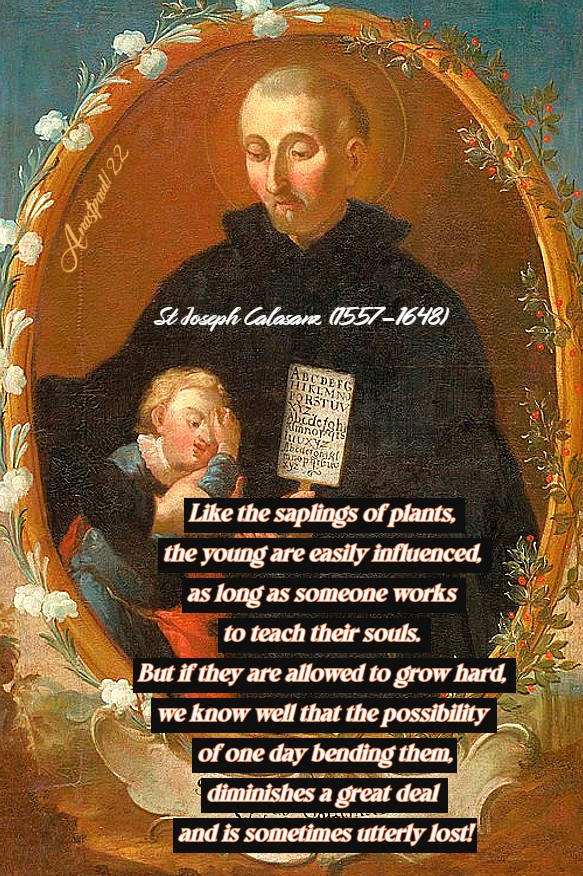
Quote/s of the Day – 27 August – St Joseph Calasanz/Calasantius (1557-1648) Spanish Confessor
“Like the saplings of plants, the young are easily influenced, as long as someone works to teach their souls. But if they are allowed to grow hard, we know well that the possibility of one day bending them, diminishes a great deal and is sometimes utterly lost.”
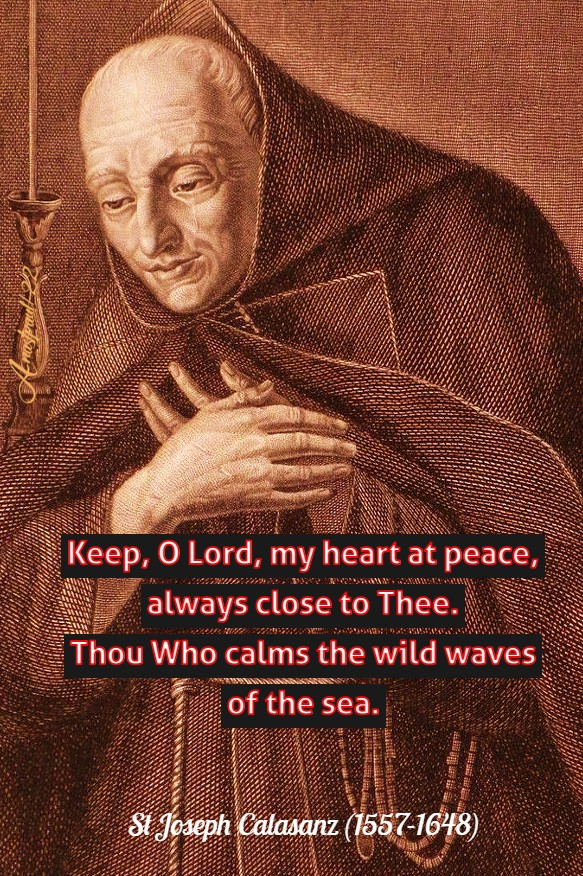
“Keep, O Lord, my heart at peace, always close to Thee. Thou Who calms the wild waves of the sea.”
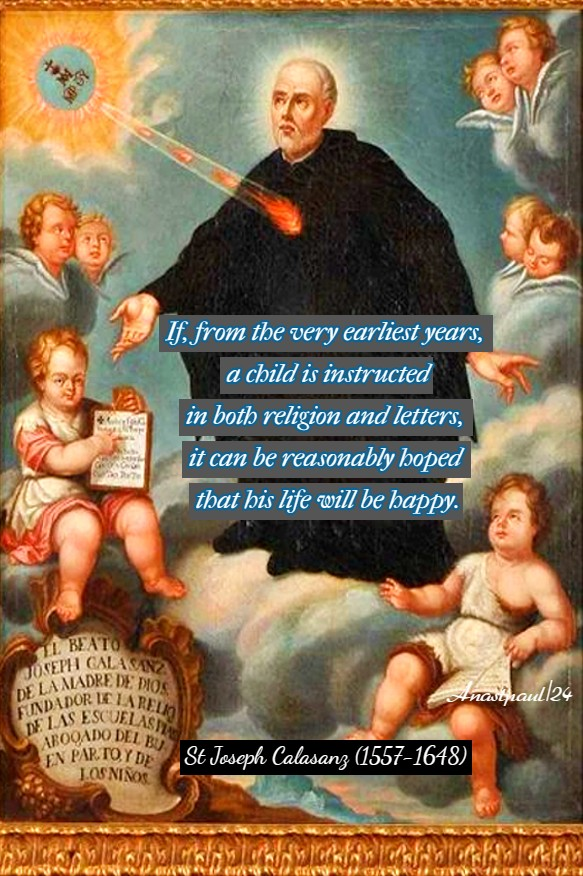
“If, from the very earliest years, a child is instructed in both religion and letters, it can be reasonably hoped that his life will be happy.”
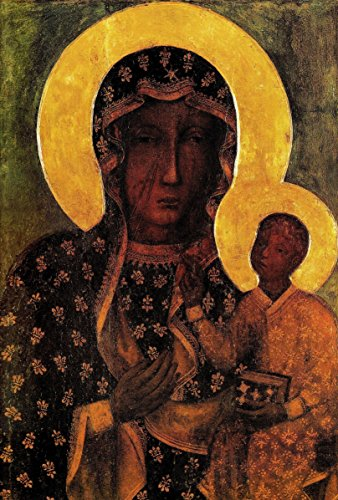
Our Lady of Czestochowa, Queen of Poland– Our Lady of Czestochowa is a revered icon of the Virgin Mary housed at the Jasna Góra Monastery in Częstochowa, Poland. Several Pontiffs have recognised the venerated icon, beginning with Pope Clement XI who issued a Canonical Coronation to the image on 8 September 1717 via the Vatican Chapter. Patron of Poland. According to tradition, the Icon of Jasna Góra (Bright Mountain) was painted by St Luke the Evangelist on a tabletop built by Jesus Himself and the Icon was discovered by St Helen, mother of Emperor Constantine and collector of Christian Relics, in the Holy Land.
St Pope Zephyrinus (died 217) Martyr, he was Bishop of Rome or Pope from 199 to his death in 217. He was born in Rome. He is known for combatting heresies and defending the Divinity of Christ.
St Jeanne Elisabeth des Bichier des Anges FC (1773-1838) (commonly referred to as St Elisabeth Bichier) and known as “the Good Sister” – Religious and co-Founder with Saint André Hubert Fournet (whom we celebrate on 13 May) of the Sisters of the Cross, Sisters of St Andrew, a religious congregation which was established for the care of the poor and the instruction of rural children in the Diocese of Poitiers in 1807. She also helped to inspire the founding of a community of Priests dedicated to Missionary service, the St Elisabeth died in 1838, at which time there were about 600 Daughters of the Cross serving in some 100 communities. She was Beatified by Pope Pius XI in 1934 and Canonised by Pope Pius XII in 1947.
Bl Jean Bassano Bl Jean of Caramola Bl Juan Urgel Bl Margaret of Faenza St Maximilian of Rome St Melchizedek the Patriarch St Orontius of Lecce St Pandwyna St Rufinus of Capua St Secundus the Theban St Victor of Caesarea St Victor the Martyr St Vyevain of York
Martyrs of Celano – 3 Saints: Three Christians, Constantius, Simplicius and Victorinus, Martyred in the same area at roughly the same time. They were Martyred in c 159 in the Marsica region of Italy. At some point their relics were interred under the main Altar of the San Giovanni Vecchio Church in the Collegiata di Celano and were authenticated in 1057 by Pope Stephen IX. The city was depopulated in 1222; when it was re-built, the relics were re-enshrined in the Church.
Martyred in the Spanish Civil War:
Bl Emilio Serrano Lizarralde Bl Francesc Casademunt Ribas Bl Josep Maria Tolaguera Oliva Bl Luis Valls Matamales Bl María de Los Ángeles Ginard Martí Bl Pere Sisterna Torrent



You must be logged in to post a comment.