Second Thoughts of the Day – 17 August – The Memorial of St Jeanne of the Cross Delanoue (1666-1736)
Saint Jeanne of the Cross —like many of us—found it difficult not to get caught up in the events and yearnings of the world. She approached her religion as a checklist, rather than a force of faith and direction in her life, simply going through the expected motions and not opening herself to the benefits and riches. Through the most unexpected of sources, Joan came to hear the call of God and embraced her mission of charity on earth and found she could do the work of armies!
She grew in faith in Divine Providence which never wavered and Divine Providence, never disappointed her.
Today we pray for the same openness to those around us and to the message and providence of God, the ability to believe that He is always in control and to rely only on Him —that we might serve Him humbly, obediently and faithfully to the betterment and salvation of mankind.
Thought for the Day – 17 August – The Memorial of St Hyacinth O.P. (1185-1257) – “Apostle of Poland” “Apostle of the North”
“Our readers, we can but fancy, have marvelled at the prodigious labours and travelling of Saint Hyacinth, although we have given only a meager account of them. They extended over a period of nearly forty years and carried him through a large part of Europe and Asia. Doubtless, if they were recorded in detail and in proper sequence, they would be found infinitely more stupendous than we have painted them. He alone could have told them as they should be recounted. Yet it possibly never entered his mind to leave posterity any information on his life. The one thing that engaged his thoughts was, after saving his own soul, to help those of others, to make God known and to extend the kingdom of Christ. The same idea filled the minds of the confrères who were often his companions in labour. In this way, it was only through the scanty records discovered in cities and the early convents that historians have been able to tell us the little we do know about him. Still perhaps never was there a life which should be more completely written than that of Saint Hyacinth Odrowaz.
One may consider the practical, lively faith of the Poles, whether in the home land or in others, as a perpetual miracle of Saint Hyacinth. In no small measure they owe it to him. To that keen faith we must attribute the magnificent institutions of learning, charity, benevolence and the like, as well as the churches, monasteries and similar edifices, in which Poland abounds and in which it has found expression. All these are filled with the spirit which the people largely derived from him. They simply thrill with love and gratitude for him. This true spirit of Catholicity, we must remember, has been preserved undiminished for centuries through wars of every kind, division, hardships, persecution and every sort of oppression-the like of which the world has seen few parallels. We have here, it would seem, the greatest miracle of the zealous apostle’s life. At least, it has contributed more to the glory of God, the good of the Church, and the salvation of souls than any miracle he performed.” (Acta; STANISLAUS, Father, O. P., of Cracow, manuscript Vita Sancti Hyacinthi.)
Saint Hyacinth teaches us to spare no effort in the service of God but to rely for success not on our industry but on the assistance of the Holy Eucharist and the prayer of the Immaculate Mother of God.
St Hyacinth of Poland pray for the Poland, the Church and for us all!
Quote/s of the Day – 17 August – Friday of the Nineteenth week in Ordinary Time, Year B – Today’s Gospel: Matthew 19:3–12
“Have you not read that he who made them from the beginning made them male and female and said, ‘For this reason a man shall leave his father and mother and be joined to his wife, and the two shall become one flesh’? So they are no longer two but one flesh. What therefore God has joined together, let not man put asunder.” Matthew 19:4-6
“Speaking of Marriage”
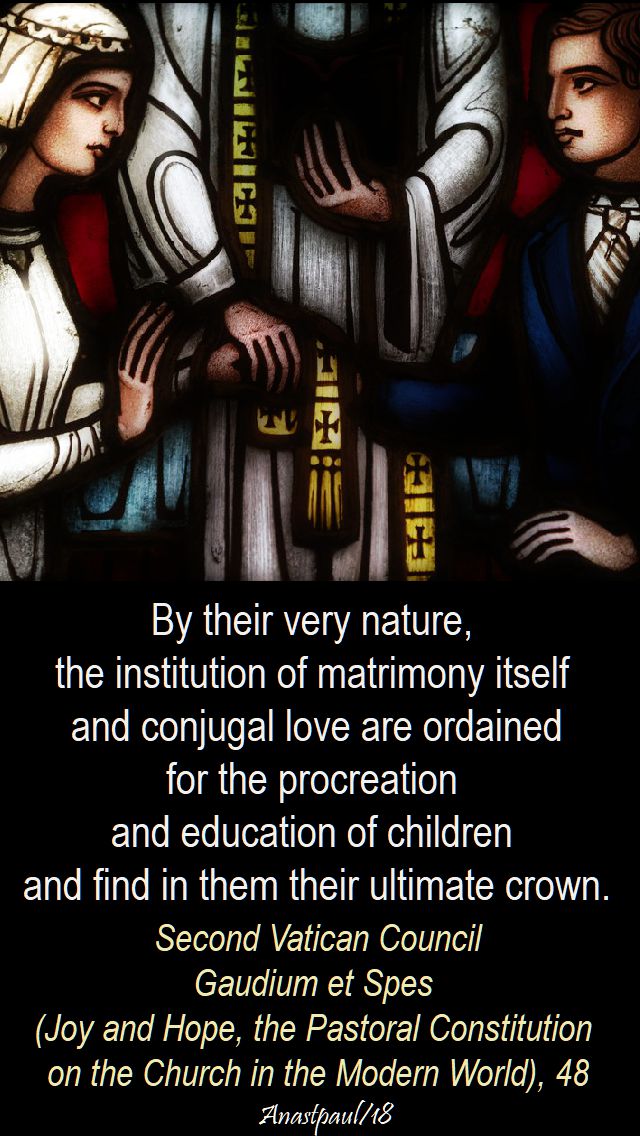
“By their very nature, the institution of matrimony itself and conjugal love are ordained for the procreation and education of children and find in them their ultimate crown.”
Second Vatican Council
Gaudium et Spes (Joy and Hope, the Pastoral Constitution on the Church in the Modern World), 48
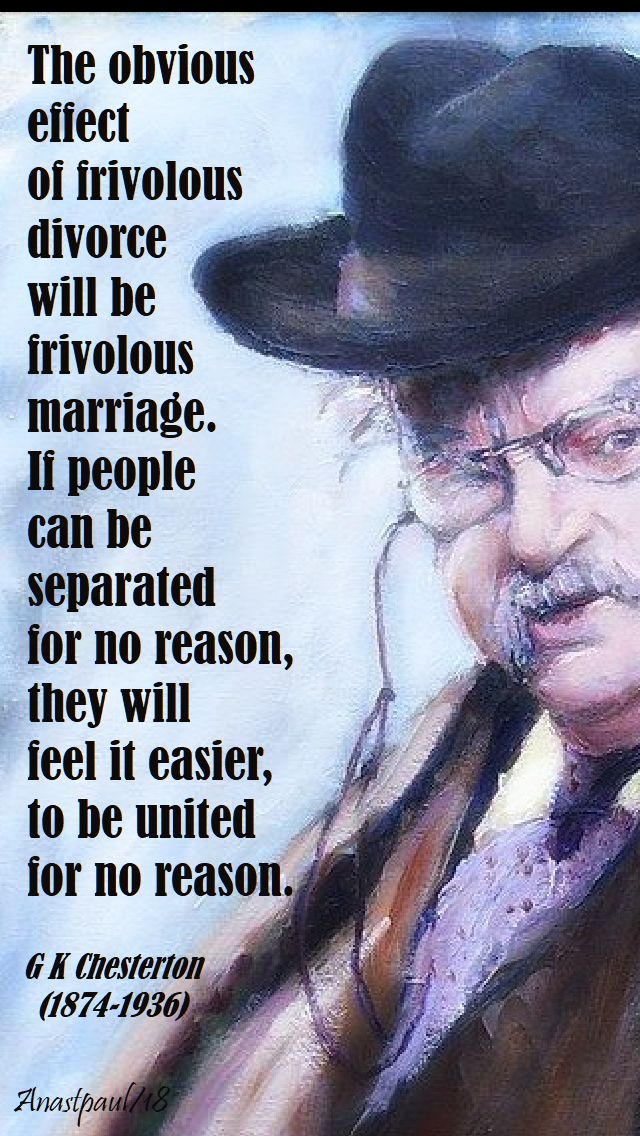
“The obvious effect of frivolous divorce will be frivolous marriage. If people can be separated for no reason, they will feel it easier, to be united for no reason.”
G K Chesterton (1874-1936)
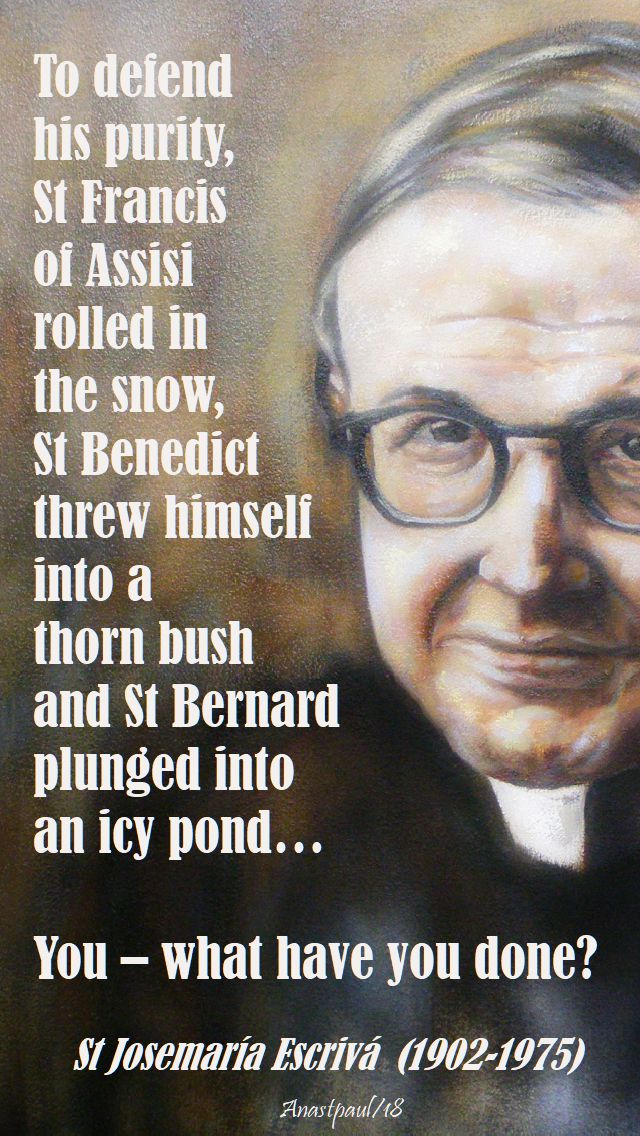
“To defend his purity, Saint Francis of Assisi rolled in the snow, Saint Benedict threw himself into a thorn bush and Saint Bernard plunged into an icy pond… You – what have you done?”
St Josemaría Escrivá (1902-1975)
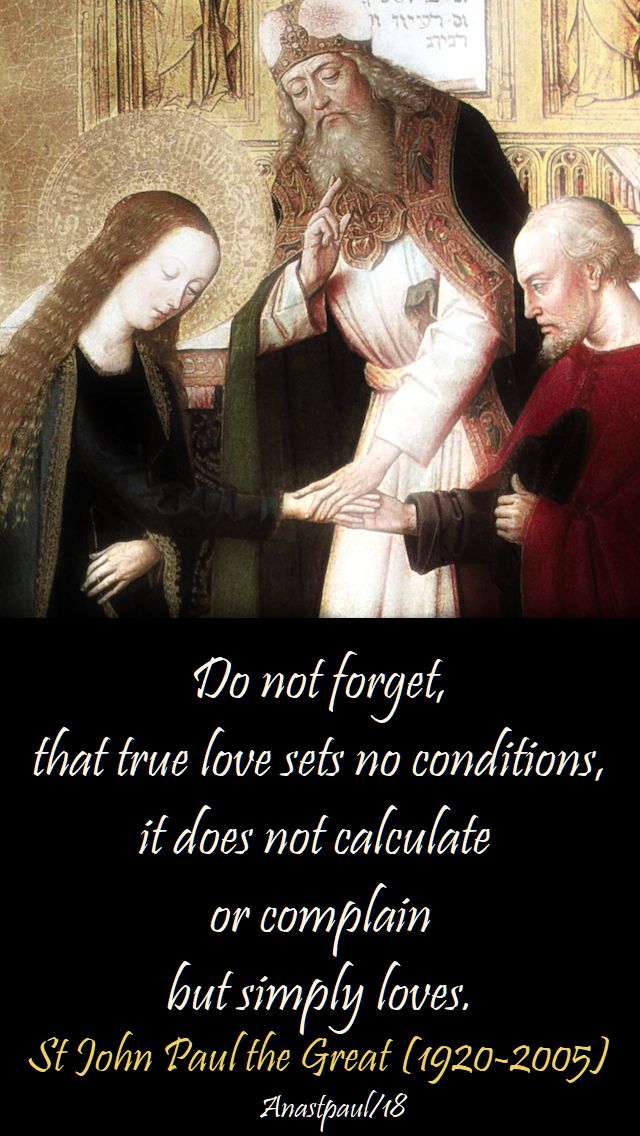
“Do not forget, that true love sets no conditions, it does not calculate or complain but simply loves.”
St John Paul the Great (1920-2005)
“No one justifies lying, cheating, betraying, promise breaking, devastating and harming strangers. But we expect and we tolerate doing this, to the one person in the world, we promised most seriously, to be faithful to forever – we justify divorce.”
Peter Kreeft
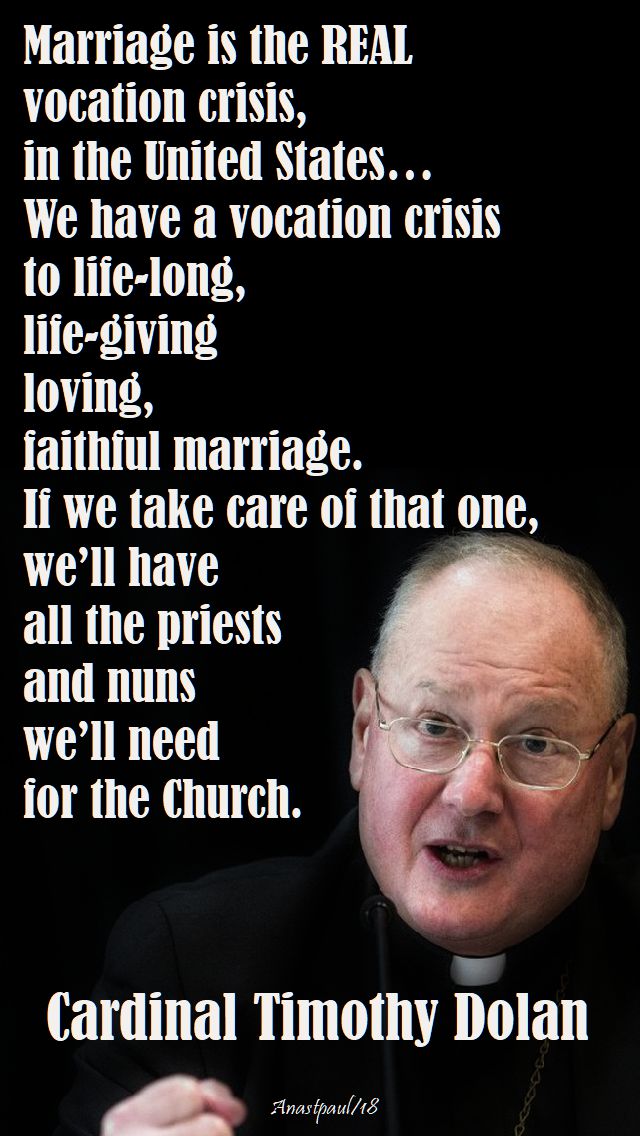
“Marriage is the real vocation crisis in the United States… We have a vocation crisis to life-long, life-giving, loving, faithful marriage. If we take care of that one, we’ll have all the priests and nuns we’ll need for the Church.”
One Minute Reflection 17 August – Friday of the Nineteenth week in Ordinary Time, Year B – Today’s Gospel: Matthew 19:3–12
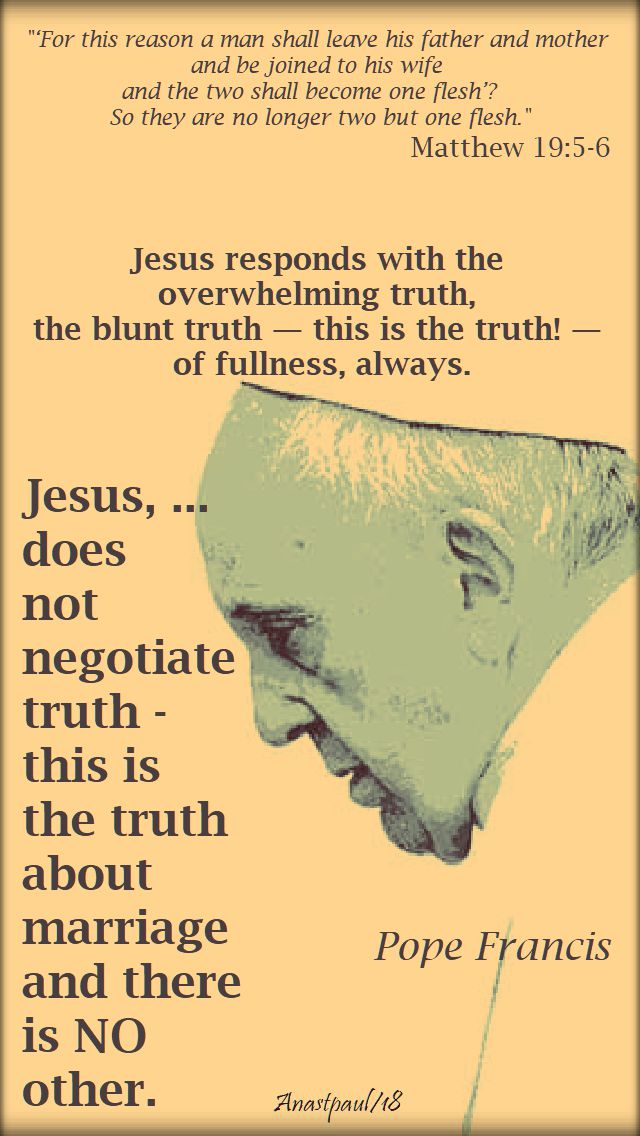
“‘For this reason a man shall leave his father and mother and be joined to his wife and the two shall become one flesh’? So they are no longer two but one flesh.”…Matthew 19:5-6
REFLECTION – “Jesus responds with the overwhelming truth, the blunt truth — this is the truth! — of fullness, always. And Jesus never negotiates the truth. And this small group of enlightened theologians always negotiated truth, reducing it to a case study. Jesus, on the contrary, does not negotiate truth – this is the truth about marriage and there is no other…Pope Francis (Santa Marta, May 20, 2016)
PRAYER – Lord our God,
creator of the universe and all living things,
You made man and woman in your own likeness (Gn 1:27)
and gave them loving hearts
with which to participate in Your work of love.
You willed that in this church today
the lives of your servants, N….. and N….., should be united,
and now You will that they may make their home together,
may seek to love each other more and more each day
and follow Christ’s example in His love for others
even to death on the cross.
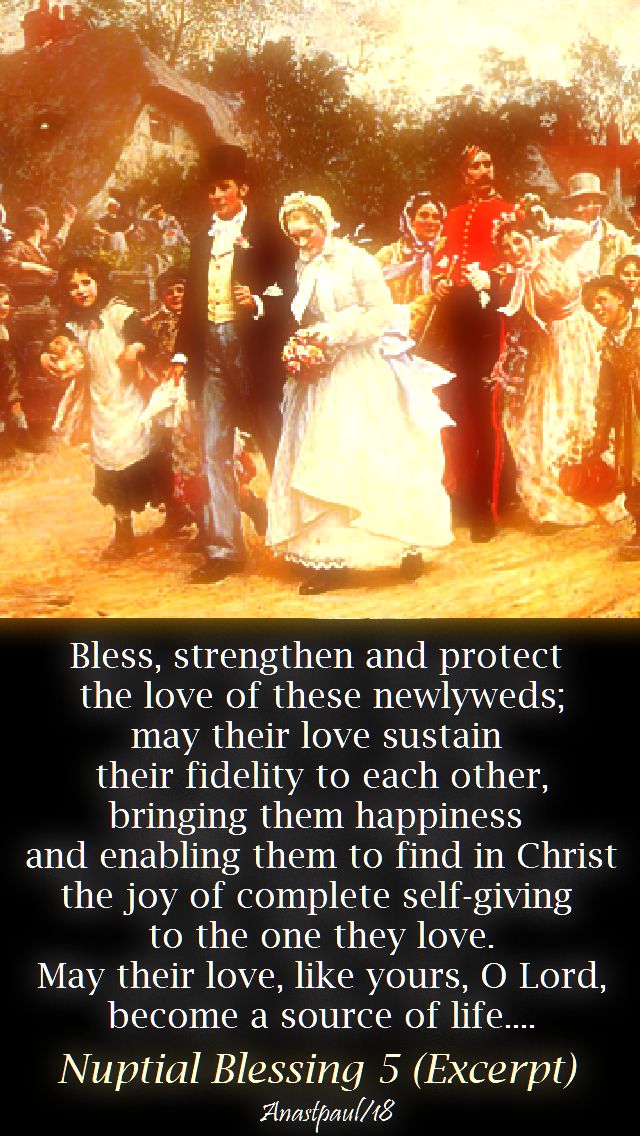
Bless, strengthen and protect the love of these newlyweds;
may their love sustain their fidelity to each other,
bringing them happiness and enabling them to find in Christ
the joy of complete self-giving to the one they love.
May their love, like Yours, O Lord,
become a source of life;
may it make them ever attentive to the needs of their neighbours;
and may their home be open to all in need.
Supported by their love and the love of Christ,
may they play an active part
in building up a more just and fraternal world
and thus be faithful to their human and christian vocation.
Amen…The Roman Missal – Rite of marriage : Nuptial Blessing 5
Our Morning Offering – 17 August – Friday of the Nineteenth week in Ordinary Time, Year B
Steer the Vessel of our Life, O God By St Augustine (354-430) Father & Doctor
Frail is our vessel,
and the ocean is wide;
but as in Your mercy
You have set our course,
so steer the vessel of our life
towards the everlasting shore of peace,
and bring us at length
to the quiet haven of our heart’s desire,
where You, O God, are blessed,
and live and reign for ever and ever.
Amen
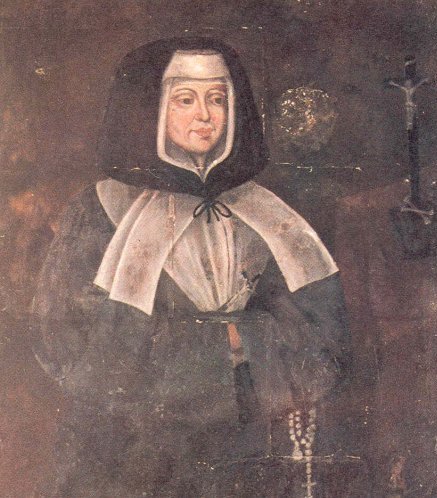
Saint of the Day – 17 August – St Jeanne Delanoue (1666-1736) – Foundress of the Congregation of St Anne de la Providence, Apostle of Charity – born on 18 June 1666 at Samur, Anjou, France as Jeanne Delanoue and died on 17 August 1736 at Fencet, France of natural causes.
JEANNE DELANOUE was born in Saumur, in the valley of the Loire River, on 18 June 1666. She was the youngest in a family of twelve. Her parents owned a business near the sanctuary of Notre-Dame-des-Ardilliers. Although but six years of age when her father died, she helped her mother run the store in order to maintain the family. Her qualities were remarkable: she was skillful, energetic and indefatigable, even to the point of keeping the store open on Sundays and holy days.
Orginal Family Shop– “the little Providence House”
The future was hers. Her “business” was growing and prospering. It was precisely within this context of success that, at the age of 27, shortly after the death of her mother, an elderly woman, a faithful pilgrim to the shrine of NotreDame-des-Ardilliers, invited Jeanne to consecrate herself to the many poor people of her neighbourhood.
Despite the responsibilities she had accrued, in response to this call which she believed to have come from God, Jeanne turned toward the poor. They assumed more of her time each day than did her clients until finally they became her full-time occupation. Within a short time no longer did the poor await her visits to them but they came to her. In 1700, she warmly welcomed a child into her home and soon after she took in the sick, the aged and the destitute.
With so many needing lodging, the only place for the poor were the grottos hollowed out in the tuff. She made them as comfortable as she could, however it was necessary for her to seek help. Within four years, in 1704, some young girls were interested in helping Jeanne and were even willing to wear a religious habit if she wished them to do so. It was thus that the congregation of Sainte-Anne de la Providence was born. Under this name the constitutions were approved in 1709.
Jeanne Delanoue’s tenacity, supported by the dedicated women who worked with her, brought about the foundation of Saumur’s first home for the poor (in 1715) – a home which King Louis XIV visted in 1672.
Very quickly her charity spread beyond the limits of Saumur and of her diocese. More than that, already there were forty helpers who were under her direction and who had made the decision to follow her example of self-sacrifice, of prayer and of mortification.
At her death, August 17, 1736, Jeanne Delanoue left a dozen communities, as well as homes for the poor and schools. “The saint is dead”, they said in Saumur.
Everyone could admire her zeal and the work she accomplished in the numerous visits she received and made, but only her closest friends knew about her mortification, her life of prayer and of union with God. It is from this that her untiring charity proceeded. She was attracted toward all those who suffer but especially those who are poor and God knows they were many during those sad years of want, of cold, of famine and of war.
The Sisters of Jeanne Delanoue, as they simply call themselves today, number about 400 sisters in France, in Madagascar and in Sumatra, where they began in 1979.
On 5 November 1947 Venerable Pope Pius XII beatified Jeanne Delanoue. On 31 October 1982 St Pope John Paul 11 singled out for the people of God, yet another saint, Saint Jeanne Delanoue…vatican.va
St Jacobo Kyushei Gorobioye Tomonaga
St James the Deacon
St Jeanne of the Cross Delanoue (1666-1736)
St Jeroen of Noordwijk
St Juliana of Ptolemais
St Leopoldina Naudet
St Mamas
Bl Marie-Élisabeth Turgeon
St Michaël Kurobyoie
St Myron of Cyzicus
Bl Nicholas Politi
Bl Noël-Hilaire Le Conte
St Paul of Ptolemais
St Theodore of Grammont
—
Martyred in the Spanish Civil War: Bl Antoni Carmaniú Mercarder, Bl Facundo Escanciano Tejerina, Bl Eugenio Sanz-Orozco Mortera, Bl Enric Canadell Quintana, Florencio López Egea and see below –
Martyrs of Malaga – 8 beati: A priest and seven brothers, all members of the Hospitallers of Saint John of God, all martyred together in the Spanish Civil War:
• Antonio del Charco Horques
• Eusebio Ballesteros Rodríguez
• Florentino Alonso Antonio
• Isidro Valentín Peña Ojea
• Juan Antonio García Moreno
• Manuel Sanz y Sanz
• Pedro Pastor García
• Silvestre Perez Laguna
17 August 1936 in Málaga, Spain – they were Beatified on 13 October 2013 by Pope Francis.
Martyrs of Maspujols – 3 beati: Three priests in the archdiocese of Tarragona, Spain.
Martyred together in the Spanish Civil War:
• Josep Mañé March
• Magí Civit Roca
• Miquel Rué Gené
17 August 1936 in Maspujols, Tarragona, Spain. They were Beatified on 13 October 2013 by Pope Francis. The beatification ceremony was celebrated in Tarragona, Spain.
Thought for the Day – 16 August – The Memorial of St Stephen of Hungary (c 975- 1038)
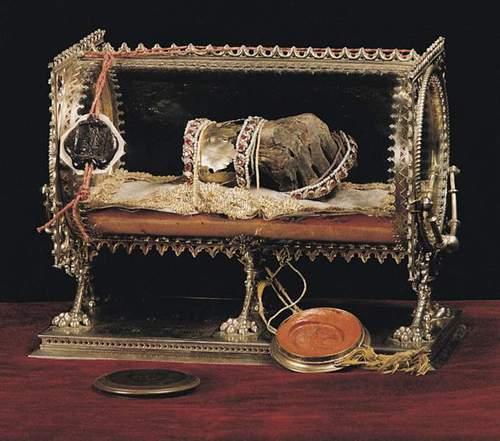
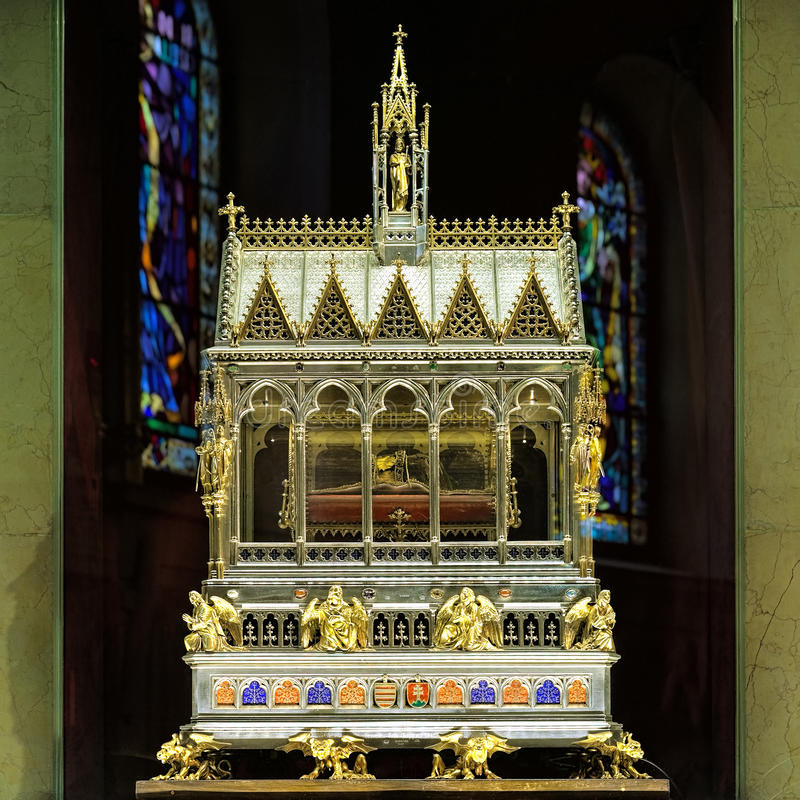
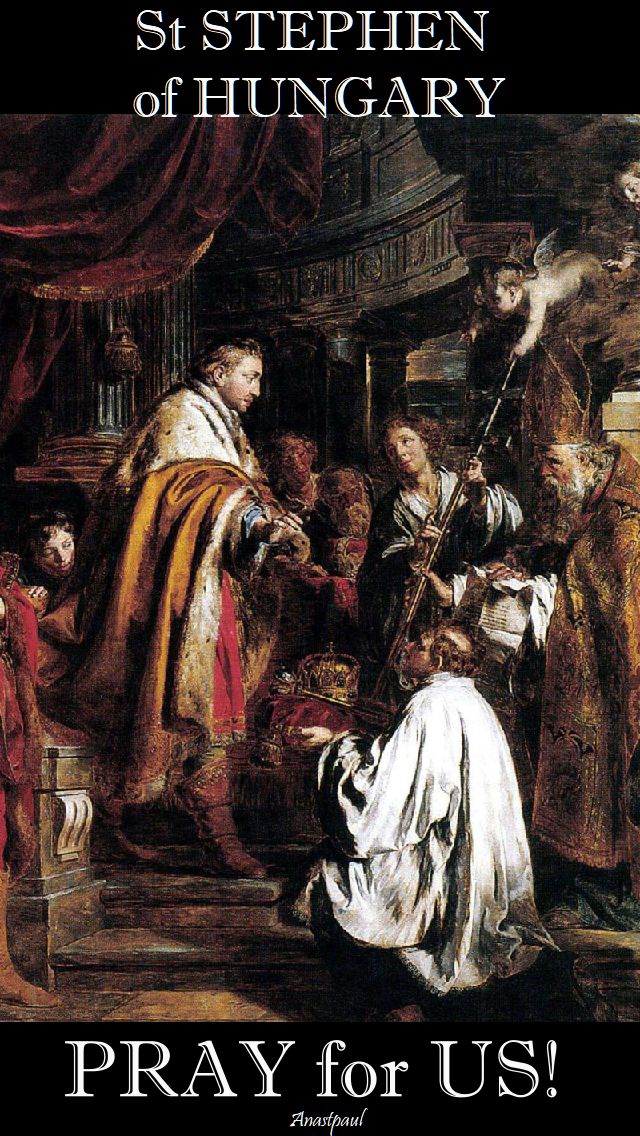
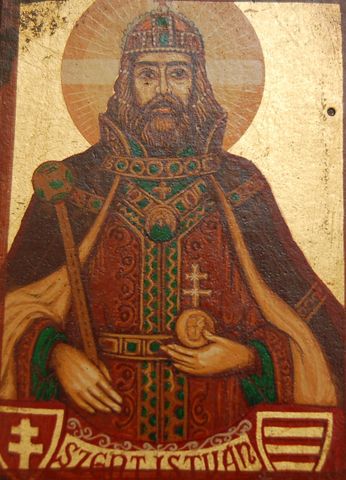
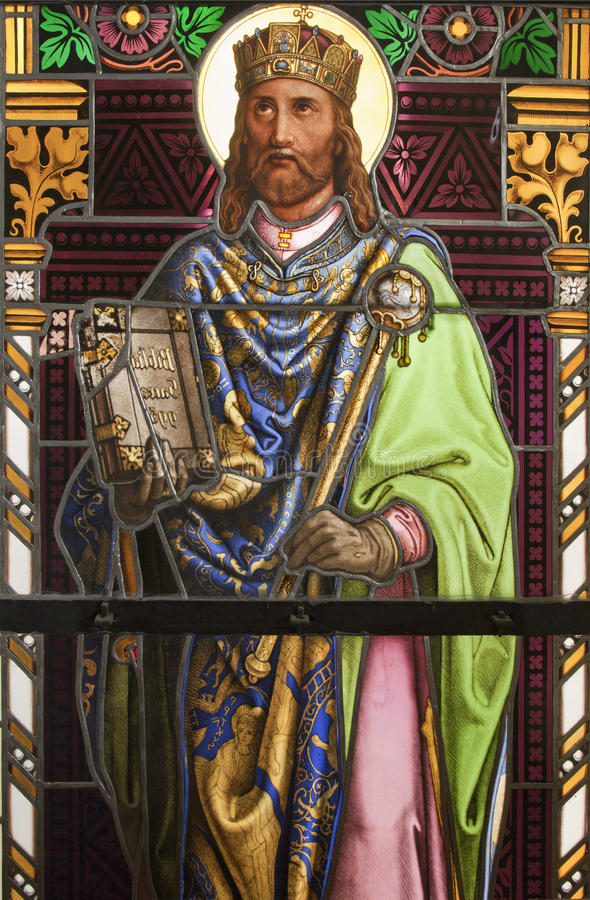
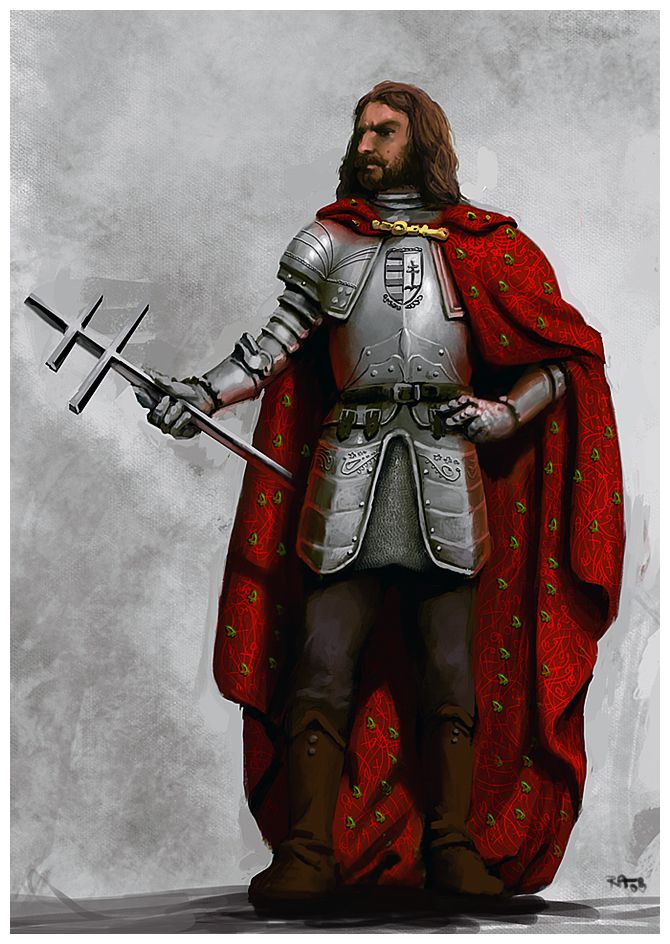
St Stephen introduced into Hungary both the Faith of Christ and regal dignity. He obtained his royal crown from the Roman Pontiff and having been, by his command, anointed King, he offered his kingdom to the Apostolic See. He built several houses of charity at Rome, Jerusalem and Constantinople and with a wonderfully munificent spirit of religion, he founded the See of Gran and ten other bishoprics. His love for the poor was equalled only by his generosity towards them, for, seeing in them Christ Himself, he never sent anyone away sad or empty-handed. So great indeed was his charity, that, to relieve their necessities, after expending large sums of money, he often bestowed upon them his household goods. It was his custom to wash the feet of the poor with his own hands and to visit the hospitals at night, alone and unknown, serving the sick and showing them every charity. As a reward for these good deeds his right hand remained incorrupt after death, when the rest of his body had returned to dust – it resides in a chapel of the Basilica of St Stephen, Budapest, Hungary.
Having married Gisela of Bavaria, sister of the Emperor St Heinrich, he had by her a son, Emeric, whom he brought up in such regularity and piety as to form him into a saint. In the following letter to his son, Stephen lays out his vision of what a Christian monarch must be but in fact, the counsel remains a letter to us all. For this and your intercession, we bless and thank you St Stephen!
“My dearest son, if you desire to honour the royal crown, I advise, I counsel, I urge you above all things to maintain the Catholic and apostolic faith with such diligence and care that you may be an example for all those placed under you by God and that all the clergy may rightly call you a man of true Christian profession. Failing to do this, you may be sure that you will not be called a Christian or a son of the Church. Indeed, in the royal palace – after the faith itself – the Church holds second place, first propagated as she was by our head, Christ, then transplanted, firmly constituted and spread through the whole world by His members, the apostles and holy fathers. And though she always produced fresh offspring, nevertheless in certain places she is regarded as ancient.
However, dearest son, even now in our kingdom, the Church is proclaimed as young and newly planted and for that reason, she needs more prudent and trustworthy guardians, lest a benefit which the divine mercy bestowed on us undeservedly, should be destroyed and annihilated, through your idleness, indolence or neglect.
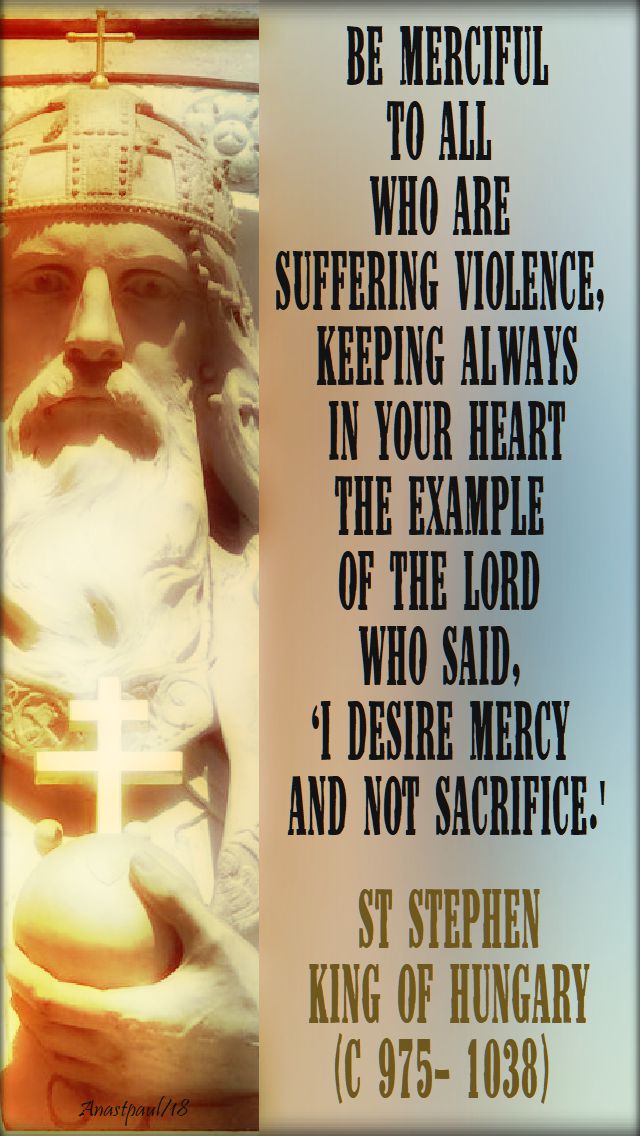
My beloved son, delight of my heart, hope of your posterity, I pray, I command, that at every time and in everything, strengthened by your devotion to me, you may show favour not only to relations and kin, or to the most eminent, be they leaders or rich men or neighbours or fellow-countrymen but also to foreigners and to all who come to you. By fulfilling your duty in this way you will reach the highest state of happiness. Be merciful to all who are suffering violence, keeping always in your heart the example of the Lord who said: “I desire mercy and not sacrifice.” Be patient with everyone, not only with the powerful but also with the weak.
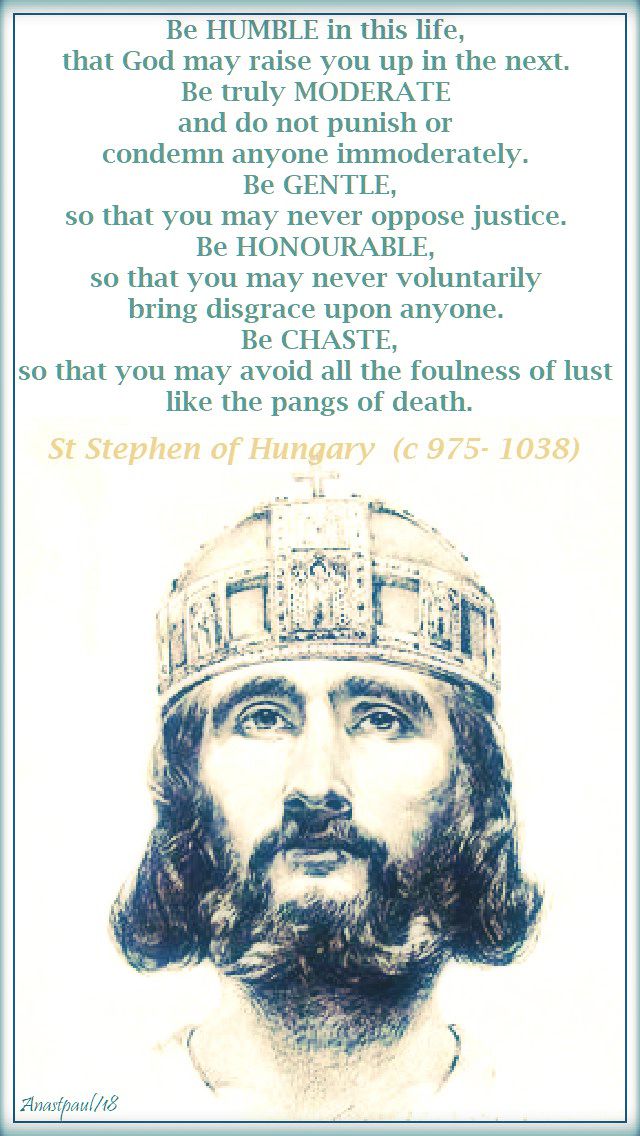
Finally be strong, lest prosperity lift you up too much or adversity cast you down. Be humble in this life, that God may raise you up in the next. Be truly moderate and do not punish or condemn anyone immoderately. Be gentle so that you may never oppose justice. Be honourable so that you may never voluntarily, bring disgrace upon anyone. Be chaste so that you may avoid all the foulness of lust, like the pangs of death.
All these virtues I have noted above make up the royal crown and without them no one is fit to rule here on earth or attain to the heavenly kingdom.”
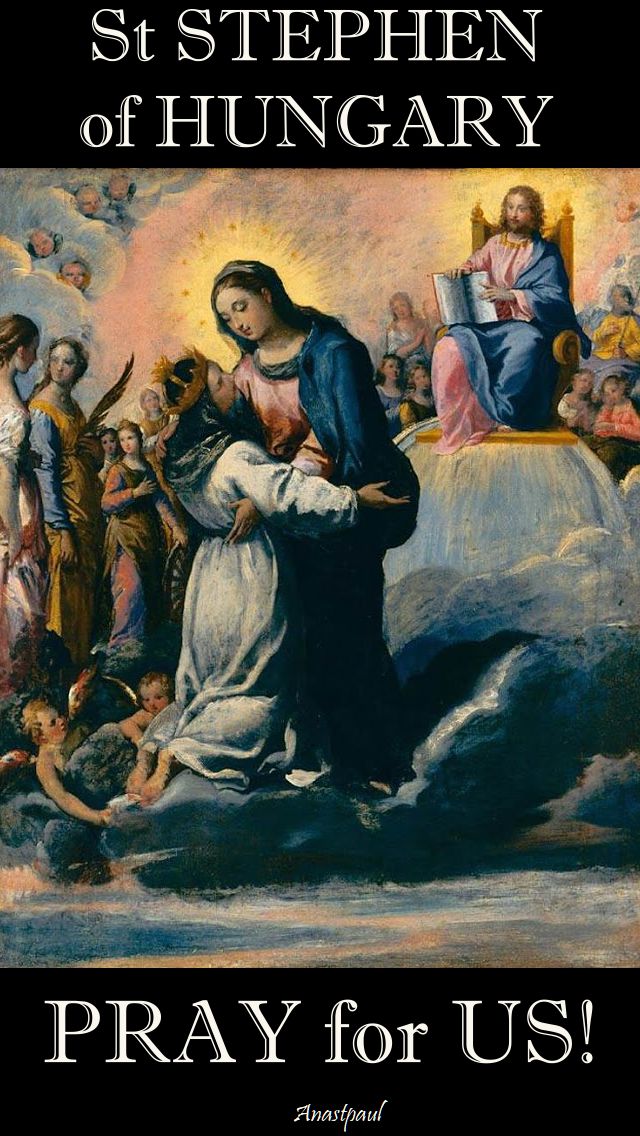
St Stephen the Great, King of Hungary, Pray for us!
Quote/s of the Day – 16 August – The Memorial of St Stephen of Hungary (c 975- 1038)
“Be HUMBLE in this life, that God may raise you up in the next. Be truly MODERATE and do not punish or condemn anyone immoderately. Be GENTLE, so that you may never oppose justice. Be HONOURABLE, so that you may never voluntarily bring disgrace upon anyone. Be CHASTE, so that you may avoid all the foulness of lust like the pangs of death.”
“Be merciful to all who are suffering violence, keeping always in your heart the example of the Lord who said, ‘I desire mercy and not sacrifice.’”
One Minute Reflection – 16 August – The Memorial of St Stephen of Hungary (c 975- 1038) – Today’s Gospel: Matthew 18:21–19:1
“So also my heavenly Father will do to every one of you, if you do not forgive your brother from your heart.”…Matthew 18:35
If you show favouritism, you commit sin and are convicted by the law…..James 2:9
REFLECTION – “Do not show favour only to relations and kin, or to the most eminent – whether they are leaders or the wealthy or neighbours or citizens of the same country. Show favour to all who come to you. By fulfilling your duty in this way, you will reach the highest state of happiness.”…St Stephen of Hungary
PRAYER – Just and Holy Father, help me to overcome all tendencies to show favouritism in my life. Let me treat all persons as brothers and sisters in Christ and work and pray for their salvation. As You forgive me, teach me Lord, to forgive all. Grant that the prayers of St Stephen of Hungary may continue to defend us, as he did in the world. Through Jesus our Lord, with the Holy Spirit, one God forever, amen.
Our Morning Offering – 16 August – The Memorial of St Stephen of Hungary (c 975- 1038)
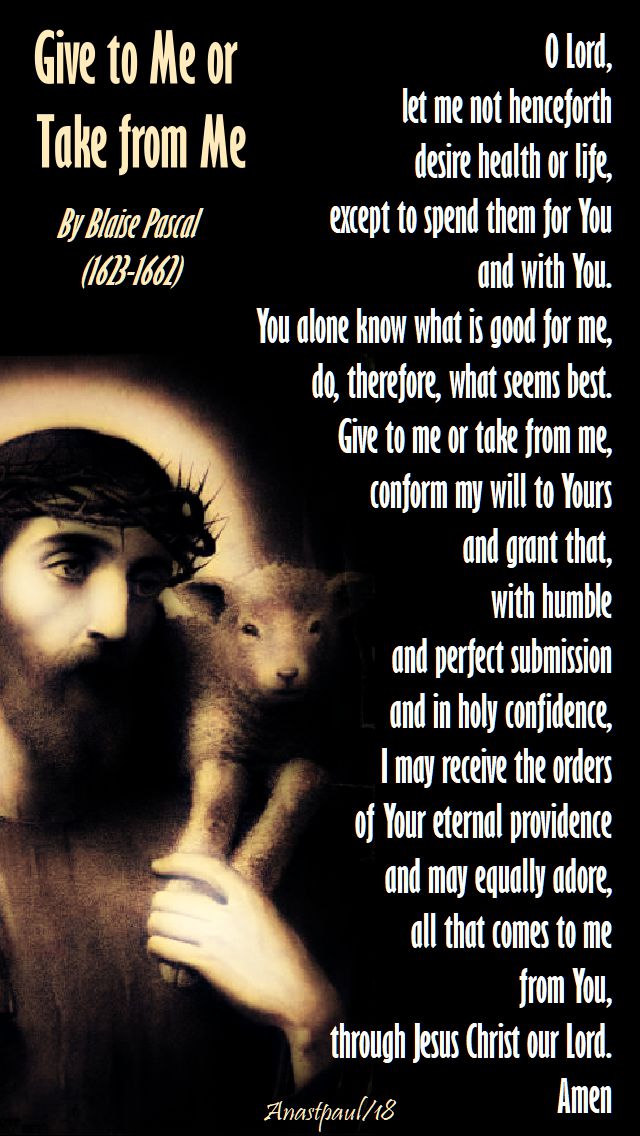
Give to Me or Take from Me By Blaise Pascal (1623-1662)
O Lord,
let me not henceforth desire health or life,
except to spend them for You
and with You.
You alone know what is good for me,
do, therefore, what seems best.
Give to me or take from me,
conform my will to Yours
and grant that,
with humble and perfect submission
and in holy confidence,
I may receive the orders
of Your eternal providence
and may equally adore,
all that comes to me from You,
through Jesus Christ our Lord.
Amen
Saint of the Day – 16 August – St Stephen of Hungary (c 975- 1038) Apostle of Hungary, King and Confessor, Marian devotee, Apostle of Charity, Evangeliser and Missionary – born at Esztergom, Hungary and died on 15 August 1038 at Szekesfehervar, Hungary. Also known as – Stephen the Great, Apostolic King, Istvan. Patronages – Patron saint of Hungary, of kings, masons, stonecutters, stonemasons and bricklayers and a protector against child death.
The fourth Duke of the Huns of Hungary, by the name of Geysa, was converted to the Faith and baptised with his wife and several ministers. With the Christian missionaries, he laboured to convince his pagan subjects of the divinity of this religion. His wife saw in a vision the protomartyr Saint Stephen, who told her they would have a son who would perfect the work already begun. This son, born in the year 977, was given the name of Stephen.
The little prince was baptised by Saint Adalbert (c 956-997), bishop of Prague, who preached to the Hungarians for a time and was educated under the care of that bishop and a pious count of Italy.
When he was fifteen years old, his father gave him the commandment of his armies, seeing his virtue and Christian ardour. Already Stephen was beginning to root out idolatry and transform the pagan customs still existing among the people. At twenty years of age, he succeeded his good father, who died in 997. He suppressed a rebellion of his pagan subjects and founded monasteries and churches all over the land. He sent to Pope Sylvester, begging him to appoint bishops to the eleven sees he had endowedand to bestow on him, for the greater success of his work, the title of king. The Pope granted his requests, and sent him a cross to be borne before him, saying that he regarded him as the true apostle of his people.
Saint Stephen’s devotion was fervent. He placed his realms under the protection of our Blessed Lady and kept the feast of Her Assumption with great affection. He established good laws and saw to their execution. Throughout his life, we are told, he had Christ on his lips, Christ in his heart and Christ in all he did. His only wars were wars of defence, and in them he was always successful. He married the sister of the Emperor Saint Henry, who was a worthy companion for him. God sent him many grievous trials amid his successes, one by one his children died, though his successor, Emeric, survived and was the love of his heart but he too died as a young adult.
He often went out in disguise to exercise his charities and one day a troop of beggars, not satisfied with the alms they received, threw him down, tore out handfuls of his hair and beard and took his purse. He prayed to the Lord and thanked Him for an insult he would not have suffered from enemies but accepted gladly from the poor who, he said to Him, “are called Your own and for whom I can have only indulgence and tenderness.” He bore all reversals with perfect submission to the Will of God.
When Saint Stephen was about to die, he summoned the bishops and nobles and told them to choose his successor. He urged them to nurture and cherish the Catholic Church, which was still a tender plant in Hungary, to follow justice, humility and charity, to be obedient to the laws and to show at all times a reverent submission to the Holy See. Then, raising his eyes towards heaven, he said: “O Queen of Heaven, August Restorer of a prostrate world, to Thy care I commend the Holy Church, my people and my realm and my own departing soul.” It was on his favourite feast day, the Assumption, that he died in peace, in the year 1038.
St Stephen’s Canonisation ceremony began at Stephen’s tomb, where on 15 August 1083 masses of believers began three days of fasting and praying. The opening of Stephen’s tomb was followed by the occurrence of healing miracles. Stephen’s biographers also says that his “balsam-scented” remains were elevated from the coffin, which was filled with “rose-coloured water”. On the same day, Stephen’s son, Emeric and the bishop of Csanád, Gerard, were also canonised.
“Having completed the office of Vespers the third day, everyone expected the favours of divine mercy through the merit of the blessed man; suddenly with Christ visiting His masses, the signs of miracles poured forth from heaven throughout the whole of the holy house. Their multitude, which that night were too many to count, brings to mind the answer from the Gospel which the Saviour of the world confided to John, who asked through messengers whether he was the one who was to come: the blind see, the lame walk, the deaf hear, the lepers are cleansed, the crippled are set straight, the paralysed are cured…”…Bishop Hartvic, Life of King Stephen of Hungary
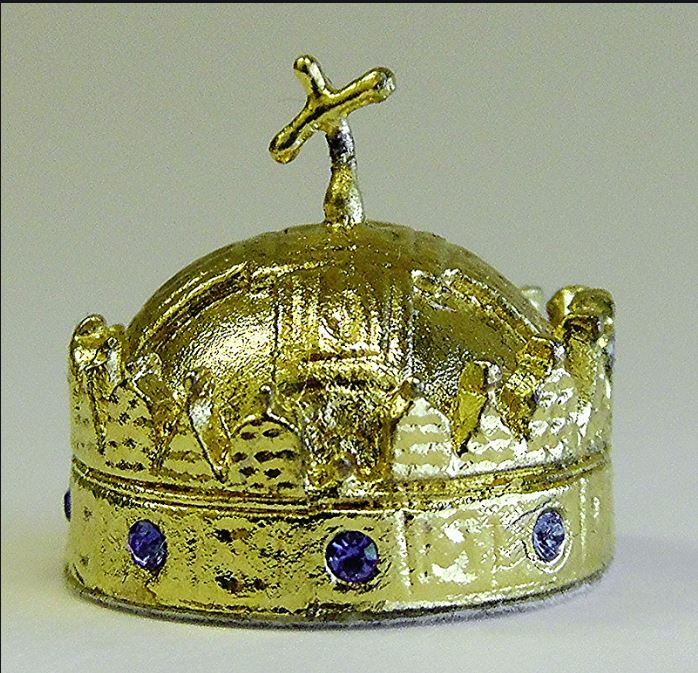
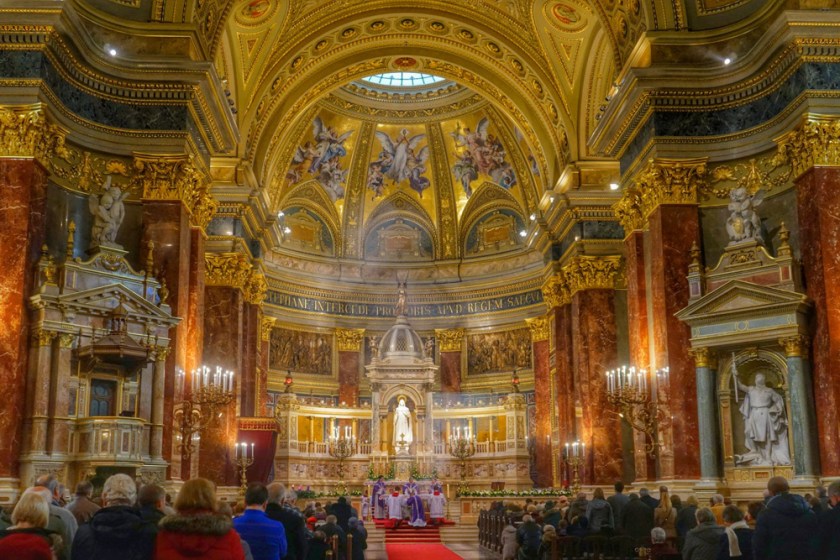
The Holy Crown of St StephenBasilica of St Stephen in Budepest & the interior below
St Stephen of Hungary (c 975- 1038) King of Hungary (Optional Memorial)
Bl Angelus Agostini Mazzinghi
St Armagillus of Brittany
St Arsacius of Nicomedia
St Frambaldo
Bl Iacobus Bunzo Gengoro
Bl Jean-Baptiste Menestrel
Bl John of Saint Martha
Bl Laurence Loricatus
Bl Magdalena Kiyota Bokusai
Bl Maria Gengoro
Bl Ralph de la Futaye
St Roch (1295-1327) “Pilgrim”
The story of St Roch here: https://anastpaul.wordpress.com/2017/08/16/saint-of-the-day-16-august-st-roch/
St Serena
Bl Simon Kiyota Bokusai
Bl Thomas Gengoro
St Titus the Deacon
—
Martyrs of Palestine – 33 saints: Thirty-three Christians martyred in Palestine; they are commemorated in old martyrologies, but the date and exact location have been lost.
Martyred in the Spanish Civil War:
Bl Amadeu Monje Altés
Bl Antonio María Rodríguez Blanco
Bl Enrique García Beltrán
Bl José María Sanchís Mompó
Bl Laurentí Basil Matas
Second Thoughts for the Day – 15 August – The Memorial of St Tarcisius (Died c 257) Martyr of the Holy Eucharist – Patron of Altar Servers
Pope Benedict XVI – 4 August 2010 – General Audience to the International Pilgrimage of Altar Servers to St Peter’s, Rome
I am addressing those of you who are present here and, through you, all the altar servers of the world!
Serve Jesus present in the Eucharist generously. It is an important task that enables you to be particularly close to the Lord and to grow in true and profound friendship with Him. Guard this friendship in your hearts jealously, like St Tarcisius, ready to commit yourselves, to fight and to give your lives so that Jesus may reach all peoples.
May you too communicate to your peers the gift of this friendship with joy, with enthusiasm, without fear, so that they may feel that you know this Mystery, that is true and that you love it!
Every time that you approach the altar, you have the good fortune to assist in God’s great loving gesture as He continues to want to give Himself to each one of us, to be close to us, to help us, to give us strength to live in the right way. With consecration, as you know, that little piece of bread becomes Christ’s Body, that wine becomes Christ’s Blood. You are lucky to be able to live this indescribable Mystery from close at hand!
Do your task as altar servers with love, devotion and faithfulness, do not enter a church for the celebration with superficiality but rather, prepare yourselves inwardly for Holy Mass! Assisting your priests in service at the altar helps to make Jesus closer, so that people can understand, can realise better – He is here. You collaborate to make Him more present in the world, in everyday life, in the Church and everywhere.
Dear friends! You lend Jesus your hands, your thoughts, your time. He will not fail to reward you, giving you true joy and enabling you to feel where the fullest happiness is. St Tarcisius has shown us that love can even bring us to give our life for an authentic good, for the true good, for the Lord.
Martyrdom will probably not be required of us but Jesus asks of us fidelity in small things, inner recollection, inner participation, our faith and our efforts to keep this treasure present in every day life. He asks of us fidelity in daily tasks, a witness to His love, going to church through inner conviction and for the joy of His presence. Thus we can also make known to our friends that Jesus is alive. May St John Mary Vianney’s intercession help us in this commitment. Today is the liturgical Memorial of this humble French Parish Priest who changed a small community and thus gave the world a new light. May the example of St Tarcisius and St John Mary Vianney impel us every day to love Jesus and to do His will, as did the Virgin Mary, faithful to her Son to the end. Thank you all once again! May God bless you in these days and I wish you a good journey home!
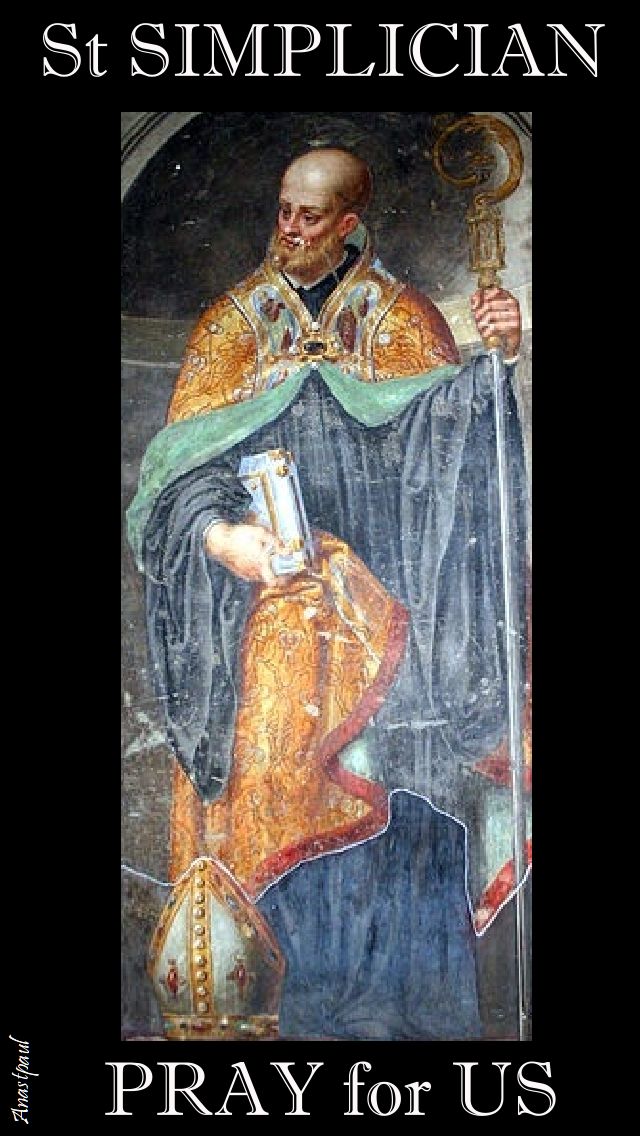
Thought for the Day – The Memorial of St Simplician (c 320-c 401),– 15 August
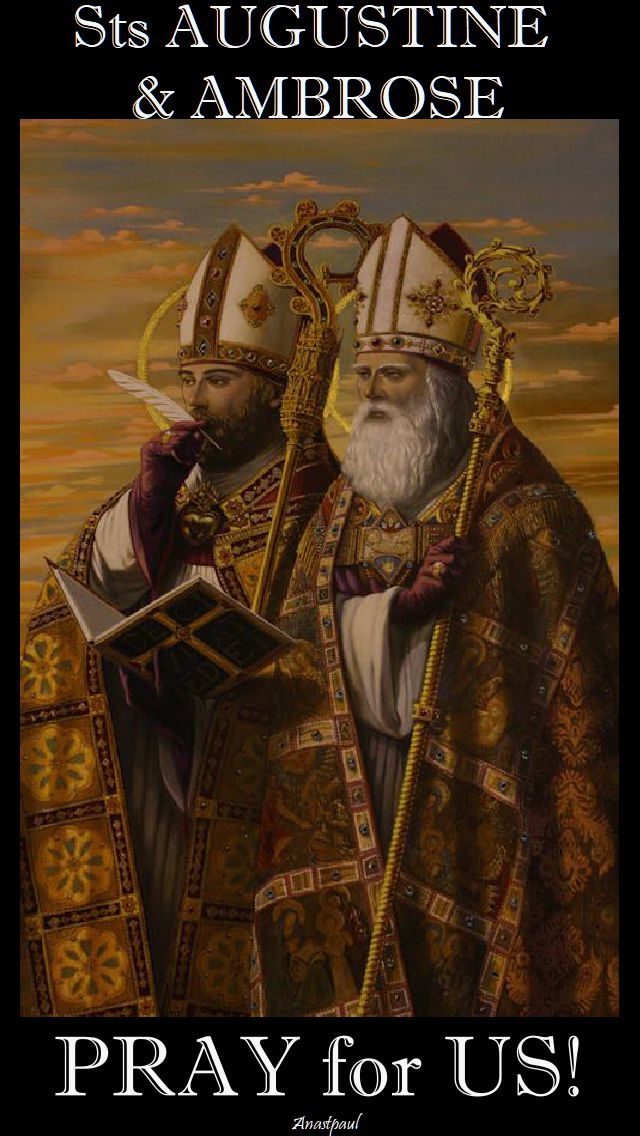
“Augustine and Simplician, sons of Milan, followers of Christ”
“Another great name enters Milan’s rich story in 384, that of the man who became St Augustine. In 384 he was not yet a saint. But he was a man who was searching, probing and asking questions, testing the spirits that drove him. First he found Ambrose, who “welcomed me as a father would and like a good bishop approved of my journeying,”according to his Confessions. Still, he was not ready to accept the Christian faith and way of life. But Ambrose could not be the spiritual director he needed.
Augustine had gotten through his doctrinal doubts and he “liked the Way, which was our Saviour, though the tight and narrow parts of that way” annoyed him. So God put it in his mind to go to Simplician, “whom I considered to be your good servant and your grace shone in him. I heard that since his youth he lived most devoted to you.”Now he had grown old and to Augustine he seemed to have become a great expert in studying God’s ways. “And so he was! So I wanted to share with him my inner turmoil so he might teach me how best I, as I was, could walk in your ways.”
That is quite an endorsement! From one saint-to-be about a wise and holy mentor, guide, companion on the road. One intently searching, the other guiding that search. We all need help from time as we make our authentic way. Maybe it can sound trite, an easy image, our life as a journey or pilgrimage, our walking the camino to a holy goal. But it speaks a deep truth.“…(Fr Edward W Schmidt S.J.)
St Simplician, Sts Augustine & Ambrose, pray for us!
Quote/s of the Day – 15 August – The Memorial of St Simplicain (c 320-c 401), Friend and Teacher of St Ambrose and the “spiritual father of my soul” of St Augustine, Fathers and Doctors of the Church
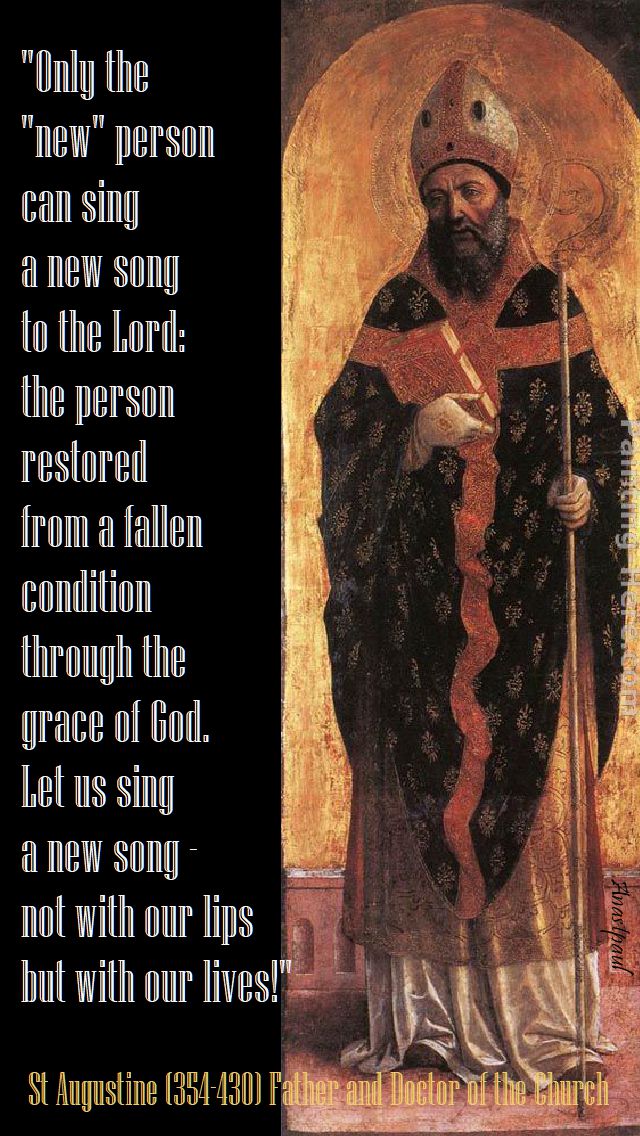
“Only the “new” person can sing a new song to the Lord: the person restored from a fallen condition, through the grace of God. Let us sing a new song – not with our lips but with our lives!”
St Augustine (354-430) Father and Doctor of the Church
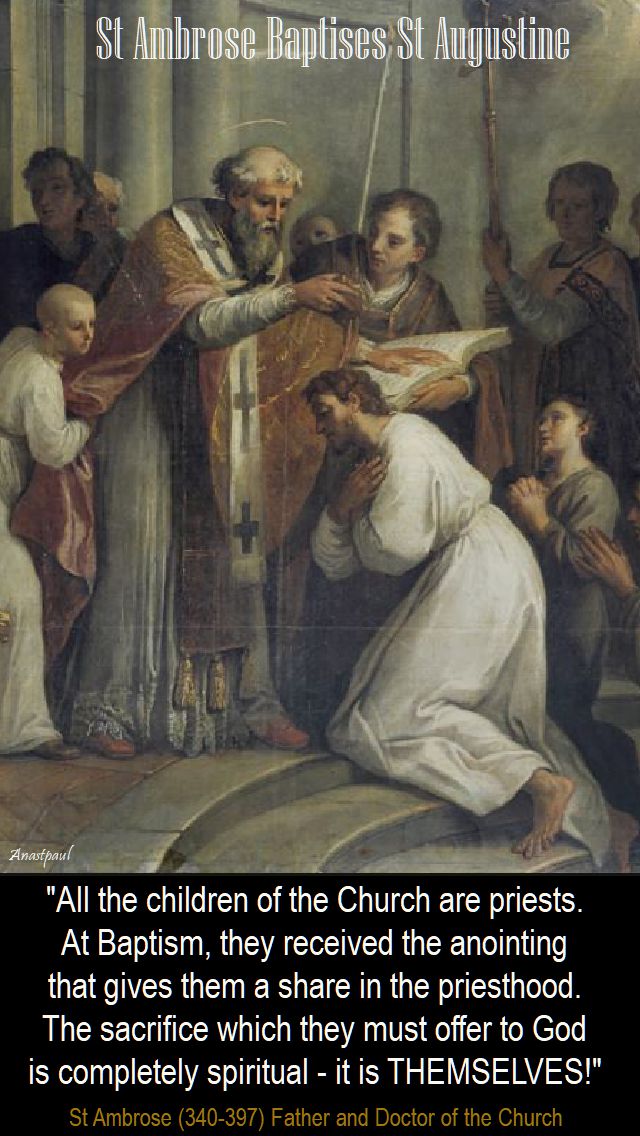
“All the children of the Church are priests. At Baptism, they received the anointing that gives them a share in the priesthood. The sacrifice which they must offer to God is completely spiritual – it is THEMSELVES!”
St Ambrose (340-397) Father and Doctor of the Church
One Minute Reflection – 15 August – The Memorial of St Simplician (c 320-c 401) Bishop and Successor of St Ambrose (340-397) in the ArchDiocese of Milan.
“For I am the LORD, your God, who grasp your right hand; It is I who say to you, Do not fear, I will help you.”….Isaiah 41:13
The Confessions – Book VIII – St Augustine’s Conversion to Christ: Augustine is deeply impressed by Simplicianus’ story of the conversion to Christ of the famous orator and philosopher, Marius Victorinus. He is stirred to emulate him but finds himself still enchained by his incontinence and preoccupation with worldly affairs. He is then visited by a court official, Ponticianus, who tells him and Alypius the stories of the conversion of Anthony and also of two imperial “secret service agents.” These stories throw him into a violent turmoil, in which his divided will struggles against himself. He almost succeeds in making the decision for continence but is still held back. Finally, a child’s song, overheard by chance, sends him to the Bible; a text from Paul resolves the crisis; the conversion is a fact. Alypius also makes his decision and the two inform the rejoicing Monica.
REFLECTION – “And Thou didst put it into my mind and it seemed good in my own sight, to go to Simplicianus, who appeared to me a faithful servant of Thine and Thy grace shone forth in him. I had also been told that from his youth up he had lived in entire devotion to Thee. He was already an old man and because of his great age, which he had passed in such a zealous discipleship in Thy way, he appeared to me likely to have gained much wisdom–and, indeed, he had. From all his experience, I desired him to tell me–setting before him all my agitations–which would be the most fitting way for one who felt as I did to walk in thy way.”…St Augustine (From the Confessions – Book VIII – Chapter 1)
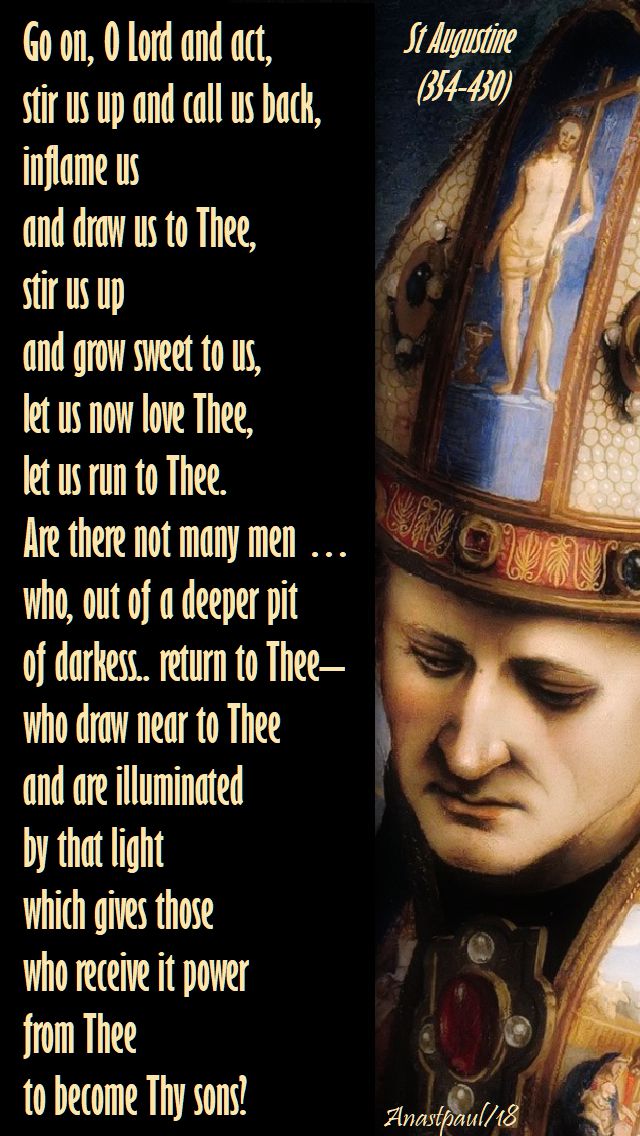
PRAYER – “Go on, O Lord and act, stir us up and call us back, inflame us and draw us to Thee, stir us up and grow sweet to us, let us now love Thee, let us run to Thee. Are there not many men … who, out of a deeper pit of darkess.. return to Thee–who draw near to Thee and are illuminated by that light which gives those who receive it power from Thee to become Thy sons? “… (St Augustine – From the Confessions Book VIII – Chapter IV) St Simplician, pray for us, Amen.
Our Morning Offering – 15 August – The Memorial of St Tarcisius (Died c 257) – Martyr of the Holy Eucharist
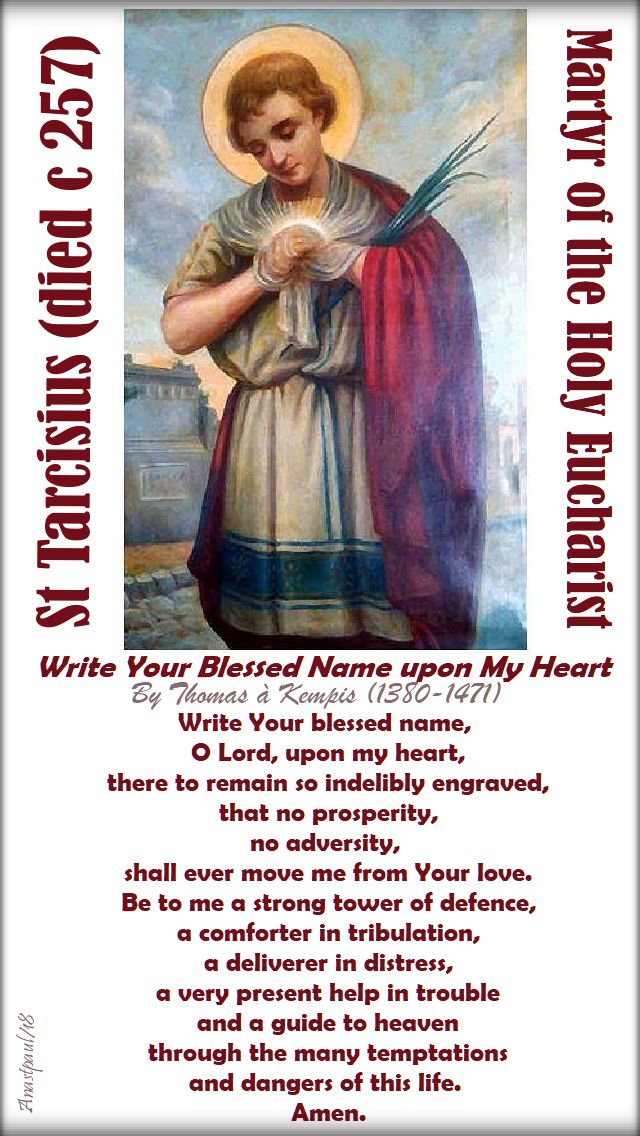
Write Your Blessed Name upon My Heart By Thomas à Kempis (1380-1471)
Write Your blessed name,
O Lord, upon my heart,
there to remain so indelibly engraved,
that no prosperity,
no adversity,
shall ever move me from Your love.
Be to me, a strong tower of defence,
a comforter in tribulation,
a deliverer in distress,
a very present help in trouble
and a guide to heaven,
through the many temptations
and dangers of this life.
Amen
Saint of the Day – 15 August – St Tarcisius (3rd century) Martyr of the Eucharist – Patronages – Altarboys, First Holy Communicants.
Here is Pope Benedict’s story of St Tarcisius from his Homily at the General Audience for the International Pilgrimage of Altar Servers on 4 August 2010
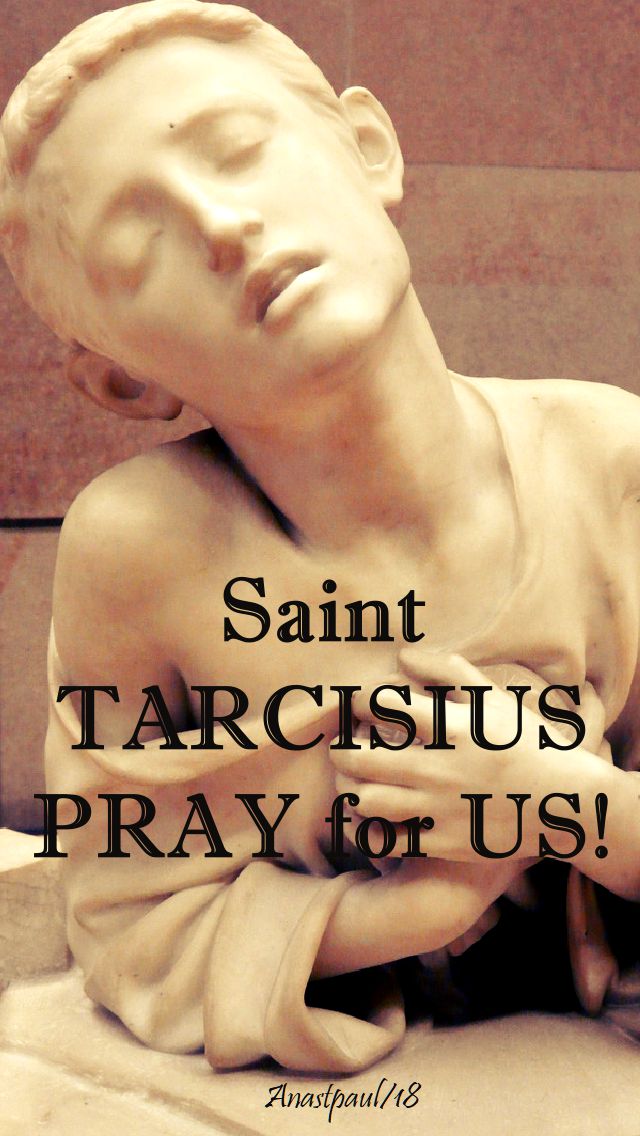
“How many of you there are! While flying over St Peter’s Square in the helicopter I saw all the colours and the joy filling this Square! Thus not only do you create a festive atmosphere in the Square but you also fill my heart with joy! Thank you! The statue of St Tarcisius has come to us after a long pilgrimage. In September 2008 it was unveiled in Switzerland in the presence of 8000 altar servers, some of you were certainly present. From Switzerland it travelled through Luxembourg on the way to Hungary. Let us greet it festively today, glad at being able to become better acquainted with this figure of the early Church. Later, as Bishop Gächter told us, the statue will be taken to the Catacombs of St Calixtus, where St Tarcius was buried. The hope that I express to all is that this place, namely the Catacombs of St Calixtus and this statue, may become a reference point for altar servers, boys and girls, and for all who wish to follow Jesus more closely through the priestly, religious or missionary life. May they all be able to look at this strong and courageous boy and renew their commitment to friendship with the Lord, to learn to live with Him always, following the path He points out to us with His word and the witness of so many Saints and Martyrs whose brothers and sisters we have become through Baptism.
Who was St Tarcisius? We do not have much information about him. We are dealing with the early centuries of the Church’s history or, to be more precise, with the third century.
It is said that he was a boy who came regularly to the Catacombs of St Calixtus here in Rome and took his special Christian duties very seriously. He had great love for the Eucharist and various hints lead us to conclude that he was presumably an acolyte, that is, an altar server.
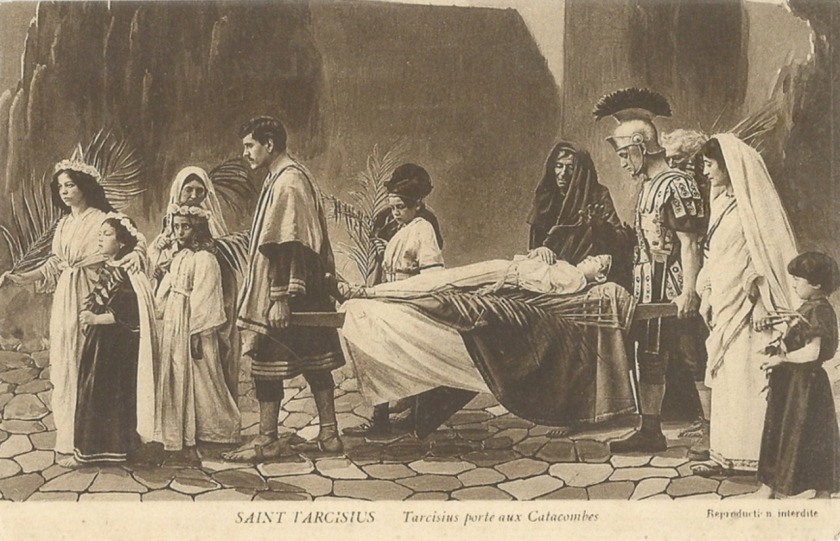
Those were years in which the Emperor Valerian was harshly persecuting Christians who were forced to meet secretly in private houses or, at times, also in the Catacombs, to hear the word of God, to pray and to celebrate Holy Mass. Even the custom of taking the Eucharist to prisoners and the sick became increasingly dangerous. One day, when, as was his habit, the priest asked who was prepared to take the Eucharist to the other brothers and sisters who were waiting for it, young Tarcisius stood up and said: “send me!”. This boy seemed too young for such a demanding service! “My youth”, Tarcisius said, “will be the best shield for the Eucharist”.Convinced, the priest entrusted to him the precious Bread, saying: “Tarcisius, remember that a heavenly treasure has been entrusted to your weak hands. Avoid crowded streets and do not forget that holy things must never be thrown to dogs nor pearls to pigs. Will you guard the Sacred Mysteries faithfully and safely?”. “I would die”, Tarcisio answered with determination, “rather than let go of them”.
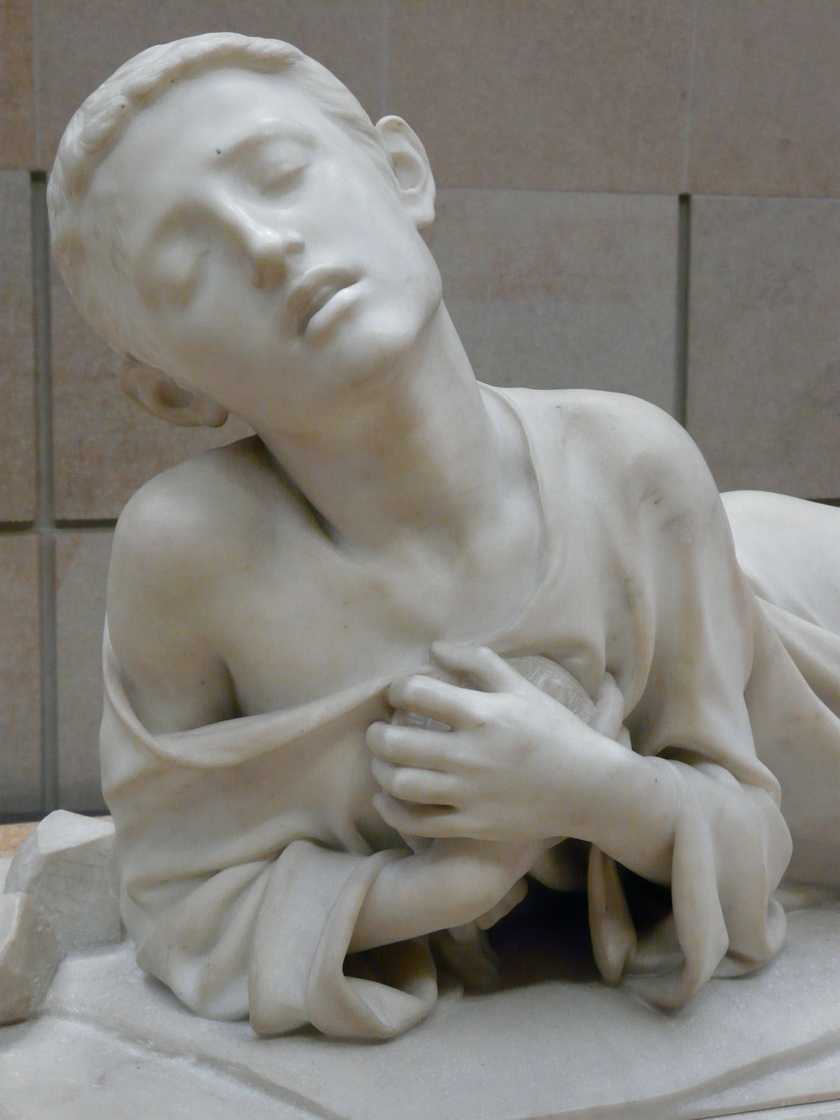
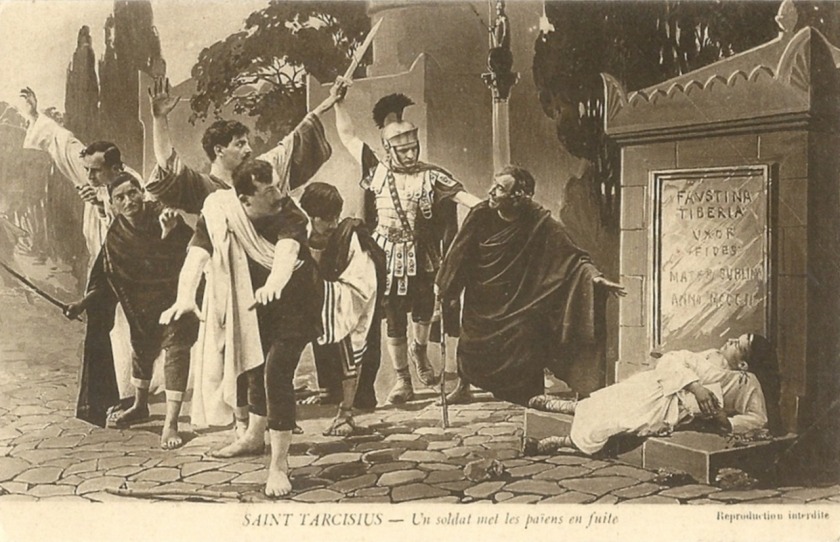
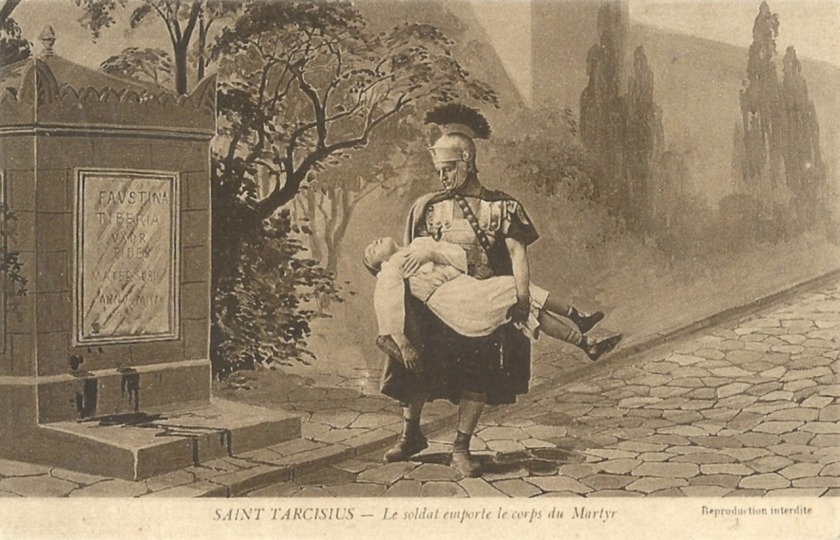
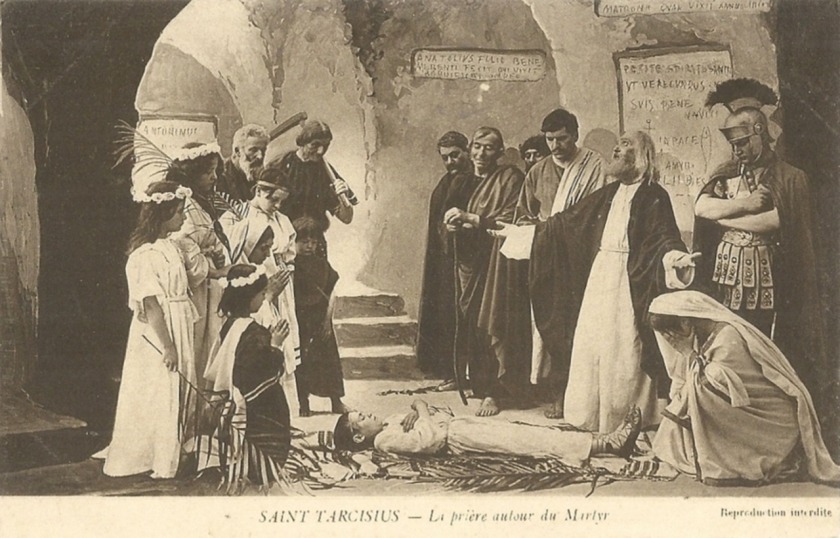
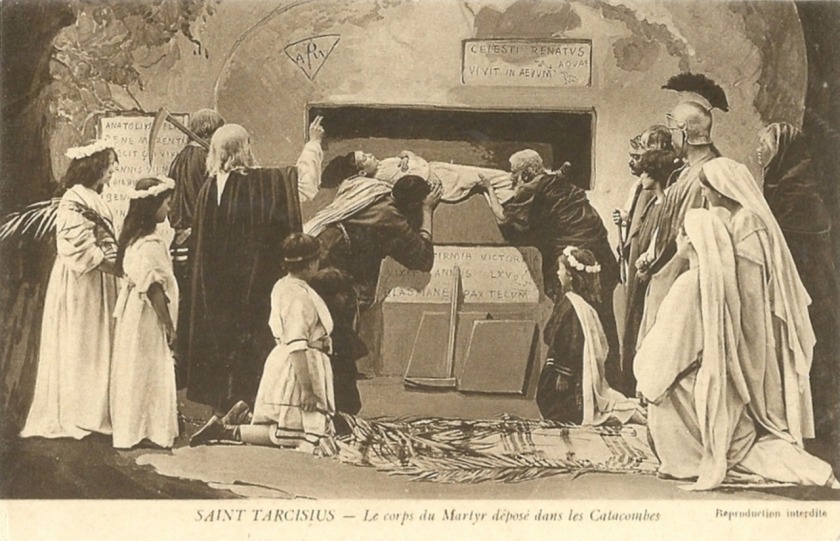
As he went on his way he met some friends who approached him and asked him to join them. As pagans they became suspicious and insistent at his refusal and realised he was clasping something to his breast that he appeared to be protecting. They tried to prize it away from him but in vain. The struggle became ever fiercer, especially when they realised that Tarcisius was a Christian. They kicked him, they threw stones at him but he did not surrender. While Tarcisius was dying a Pretorian guard called Quadratus, who had also, secretly, become a Christian, carried him to the priest. Tarcisius was already dead when they arrived but was still clutching to his breast a small linen bag containing the Eucharist. He was buried straight away in the Catacombs of St Calixtus.
Pope Damasus had an inscription carved on St Tarcisius’ grave, it says that the boy died in 257. The Roman Martyrology fixed the date as 15 August and in the same Martyrology a beautiful oral tradition is also recorded. It claims that the Most Blessed Sacrament was not found on St Tarcisius’ body, either in his hands or his clothing. It explains that the consecrated Host which the little Martyr had defended with his life, had become flesh of his flesh thereby forming, together with his body, a single immaculate Host offered to God.
Dear altar servers, St Tarcisius’ testimony and this beautiful tradition teach us the deep love and great veneration that we must have for the Eucharist: it is a precious good, a treasure of incomparable value, it is the Bread of life, it is Jesus Himself who becomes our nourishment, support and strength on our daily journey and on the open road that leads to eternal life. The Eucharist is the greatest gift that Jesus bequeathed to us.”
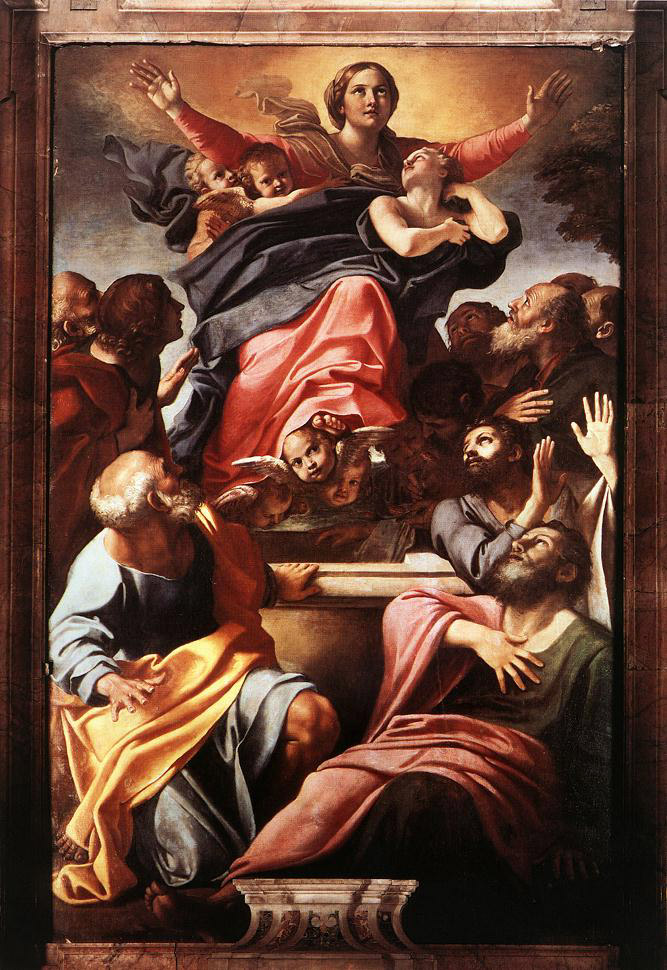
Solemnity of the Assumption of the Blessed Virgin Mary – 15 August (in the US, however, in most countries of Africa, the Solemnity will celebrated on Sunday 19 AUGUST): The feast celebrates the assumption of the body of the Blessed Virgin Mary into heaven upon her death. According to Pope Benedict XIV, it is a probable opinion, which it is impious to deny, though not an article of faith but has since in 1950 has been raised to a DOGMA of the Faith. The origin of the feast day is not known but it was celebrated in Palestine before the year 500. It is a holy day of obligation, its vigil being a fast day, in many English-speaking countries. Among the many masters who have painted the subject of the Assumption are Fra Angelico, Ghirlandajo, Rubens, Del Sarto and Titian.
Patronages:
• Acadians, Cajuns
• Cistercian Order, Cistercians
• fish dealers, fishmongers
• French air crews
• harness makers
• France
• Guatemala
• India
• Jamaica
• Malta
• Paraguay
• Slovakia
• East Africa (region of east Africa which includes diverse countries, proclaimed on 15 March 1952 by Pope Pius XII)
• South Africa (THIS IS NOT A REGION BUT A COUNTRY and the Assumption is, therefore, the Patronal Feast of the Country of South Africa – proclaimed on 15 March 1952 by Pope Pius XII)
• 24 dioceses
• 38 cities
Annabale Carraci 1600-1601
St Alipius of Tagaste
Bl Alfred of Hildesheim
Bl Agustín Hurtado Soler
St Arduinus of Rimini
St Arnulphus of Soissons
Bl Claudio Granzotto
Bl George Halley
St Napoleon of Alexandria
Bl Pio Alberto del Corona
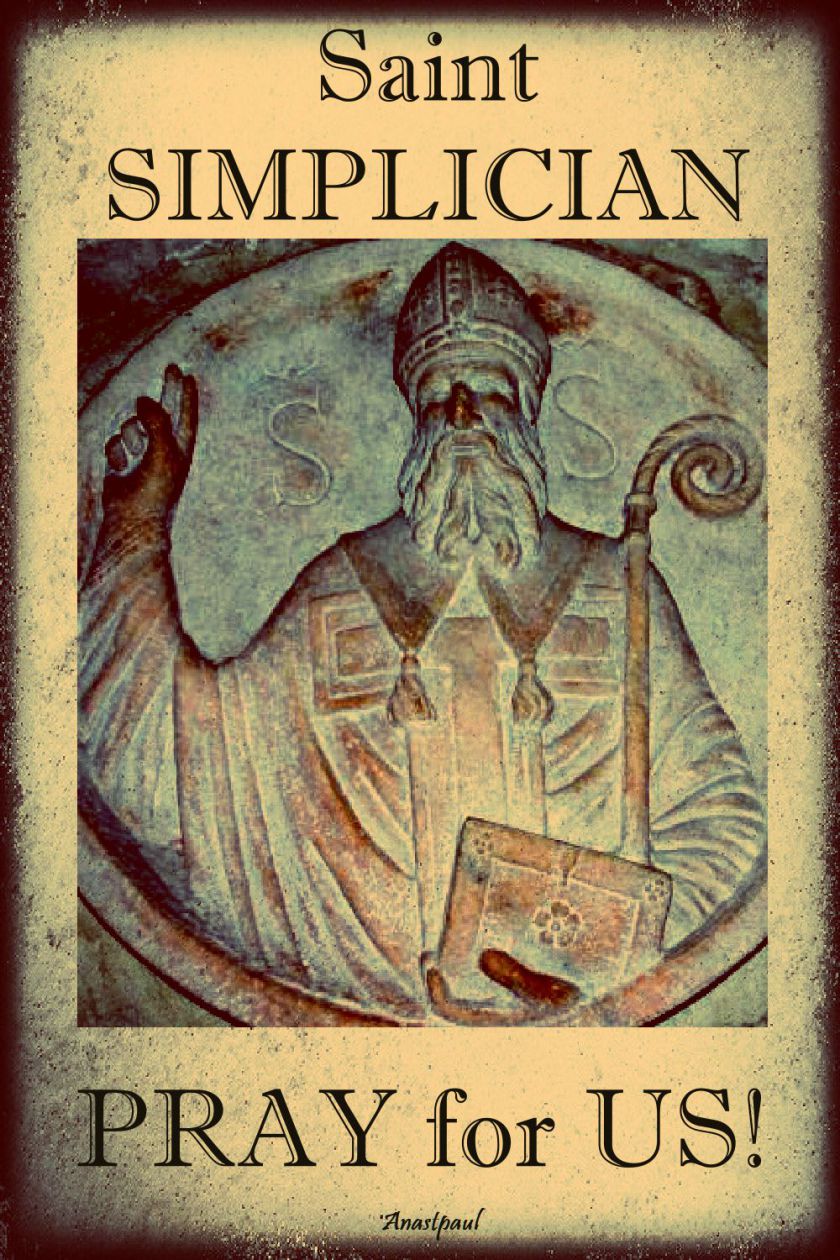
St Simplician (c 320-c 401) Bishop and Successor of St Ambrose (340-397) Doctor of the Church in the ArchDiocese of Milan.
Details of the life of St Simplician here: https://anastpaul.wordpress.com/2017/08/15/saint-of-the-day-15-august-st-simplician-of-milan/
St Tarcisius (3rd century) Martyr
Martyrs of Nicomedia – 3 saints: Three Christians martyred together. No details survive but the names – Eutychian, Philip and Straton. They were martyred in Nicomedia, Bithynia (in modern Turkey).
Martyred in the Mexican Revolution: 4 Saints –
St David Roldán Lara
St Luis Batiz Sainz
St Manuel Moralez
St Salvador Lara Puente
Martyred in the Spanish Civil War: Thousands of people were murdered in the anti-Catholic persecutions of the Spanish Civil War from 1934 to 1939.
• Blessed Agustì Ibarra Angüela
• Blessed Carmelo Sastre y Sastre
• Blessed Clemente Vea Balaguer
• Blessed Francisco Míguez Fernández
• Blessed Ildefonso Alberto Flos
• Blessed Jaume Bonet Nadal
• Blessed Joan Ceró Cedó
• Blessed Josep Santonja Pinsach
• Blessed Juan Francisco Barahona Martín
• Blessed Juan Mesonero Huerta
• Blessed Luis Ros Ezcurra
• Blessed Manuel Formigo Giráldez
• Blessed Miguel Alberto Flos
• Blessed Sebastià Balcells Tonijuan
• Blessed Severiano Montes Fernández
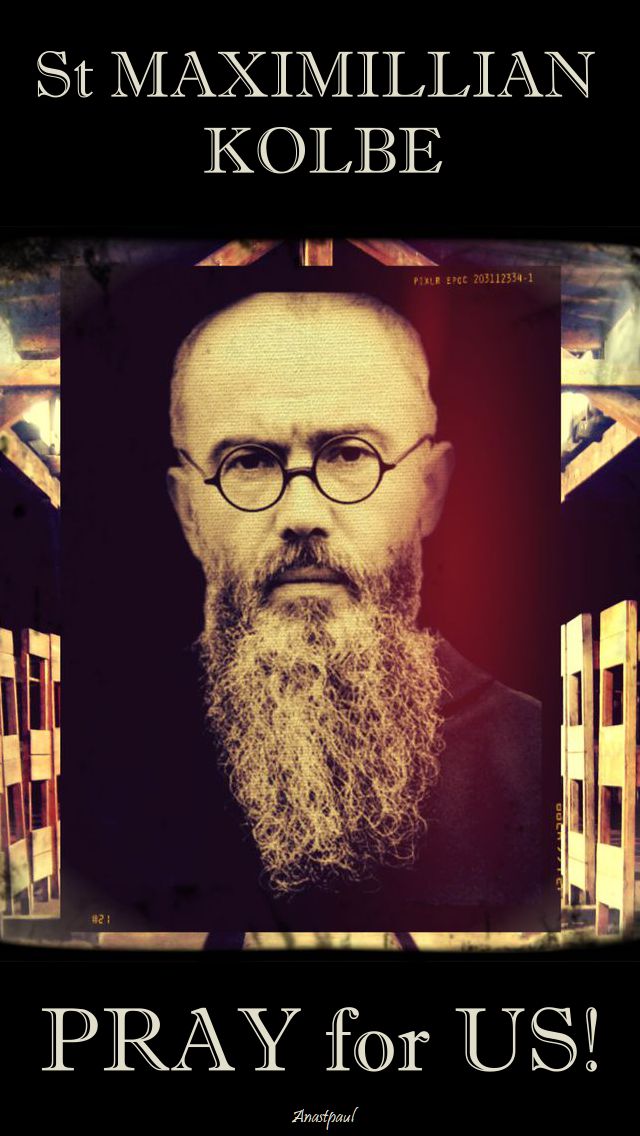
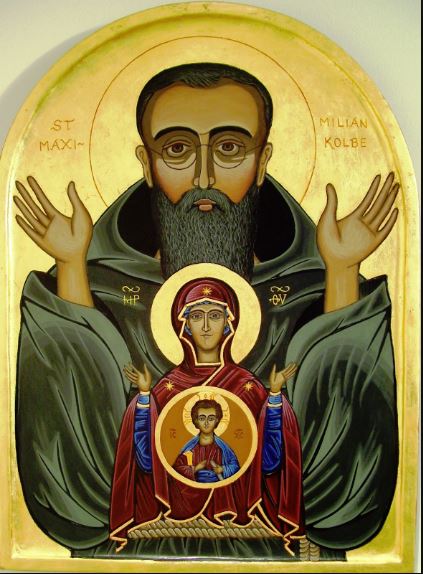
Thought for the Day – 14 August – The Memorial of St Maximillian Kolbe OFM Conv (1894 -1941) “Martyr of Charity”and “Apostle of Consecration to Mary”
“Greater love than this no man hath, that a man lay down his life for his friends.”
John 15:13
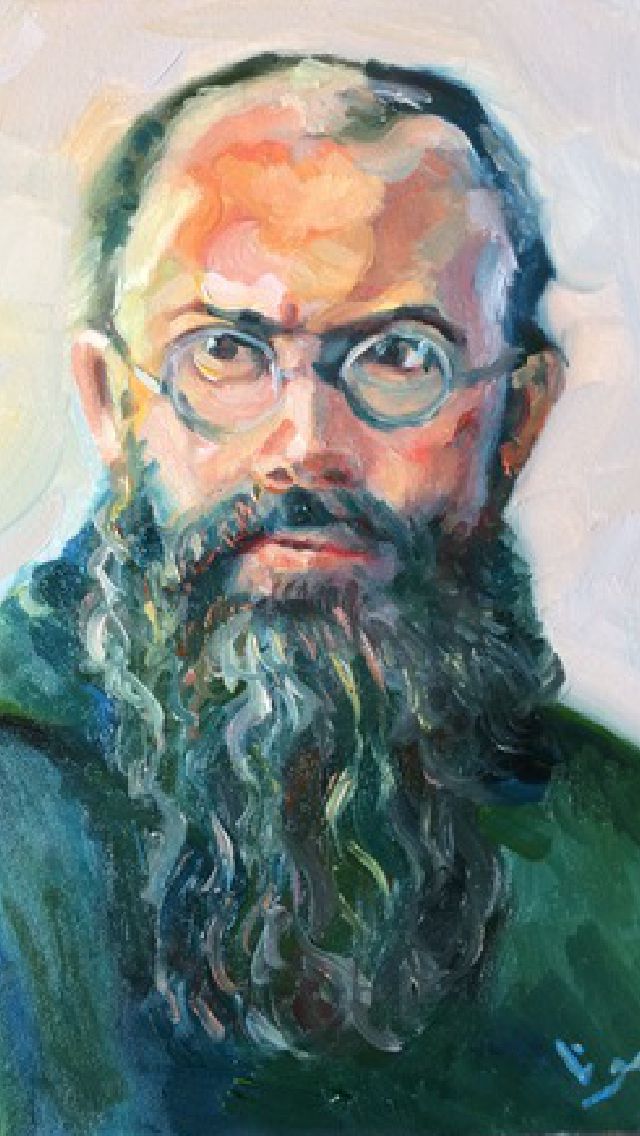
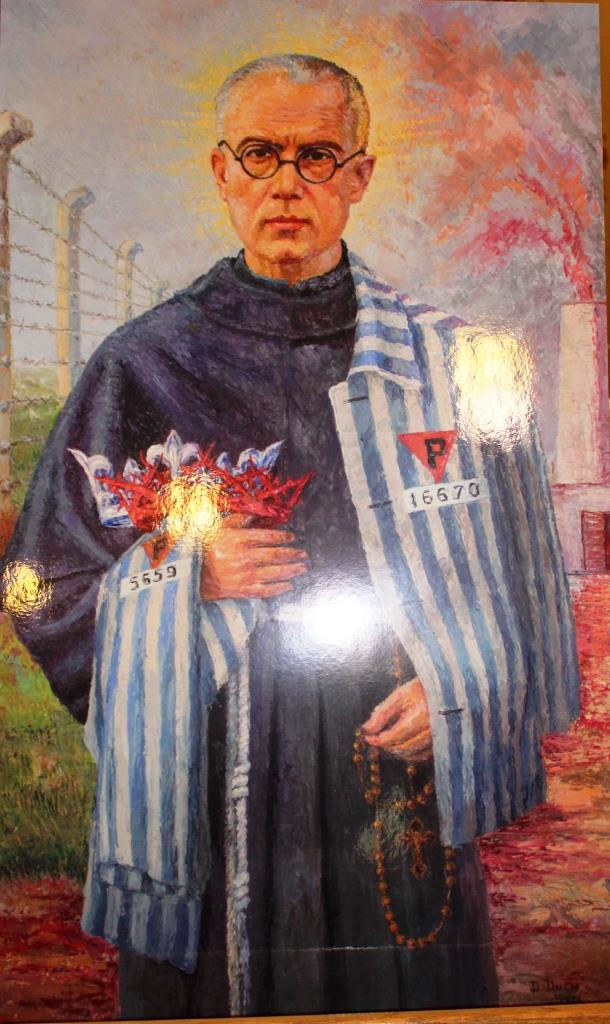
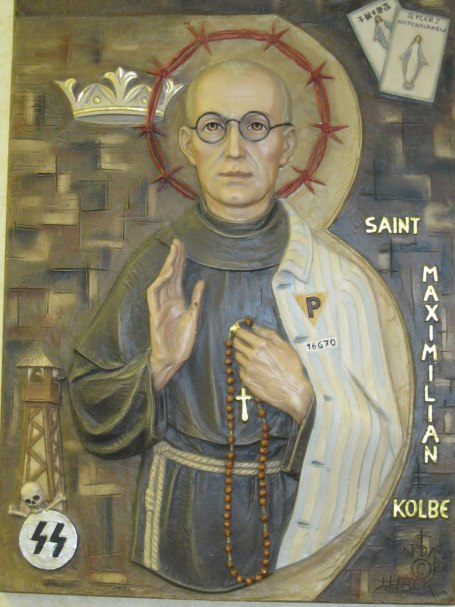
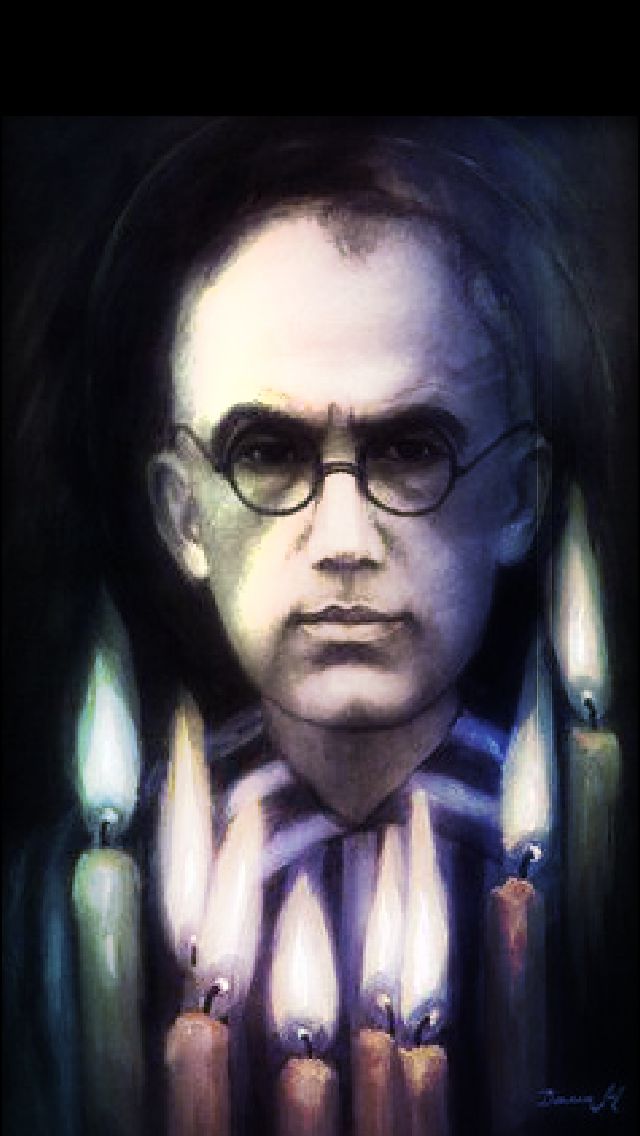
That verse certainly comes to mind whenever I think of St Maximilian Kolbe, whose feast we celebrate today. So it’s not surprising to read that these were the opening words of the papal decree introducing his Beatification. St Maximilian Kolbe was arrested in Poland in February of 1941 and in May sent to the Auschwitz death camp. As prisoner #16670, he eventually laid down his life for another prisoner on 14 August 1941, at the young age of 47.
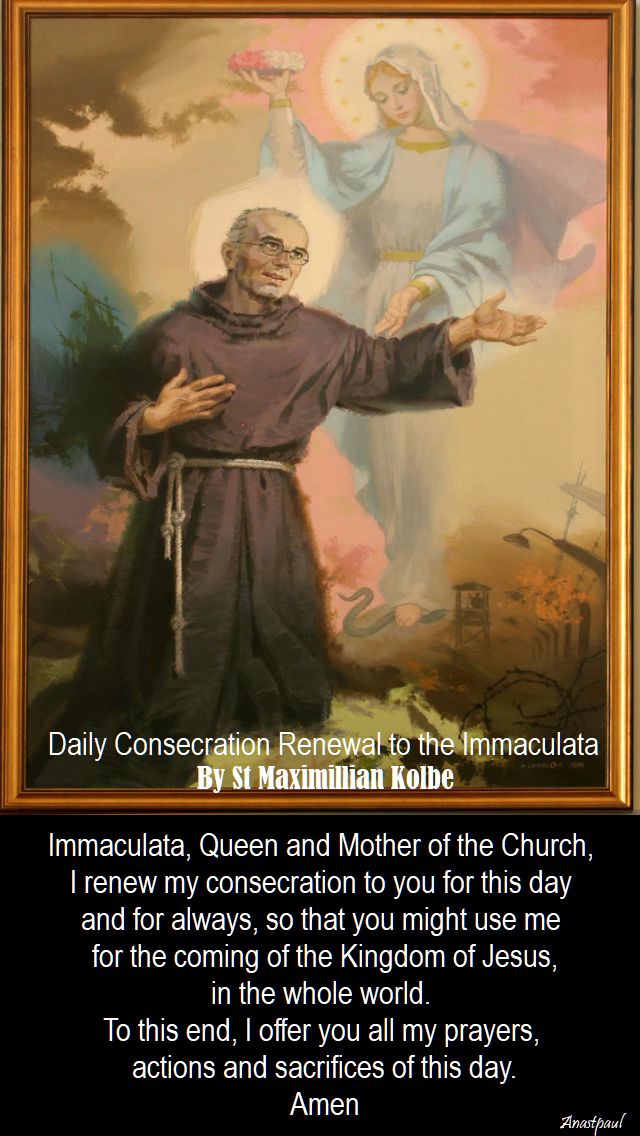
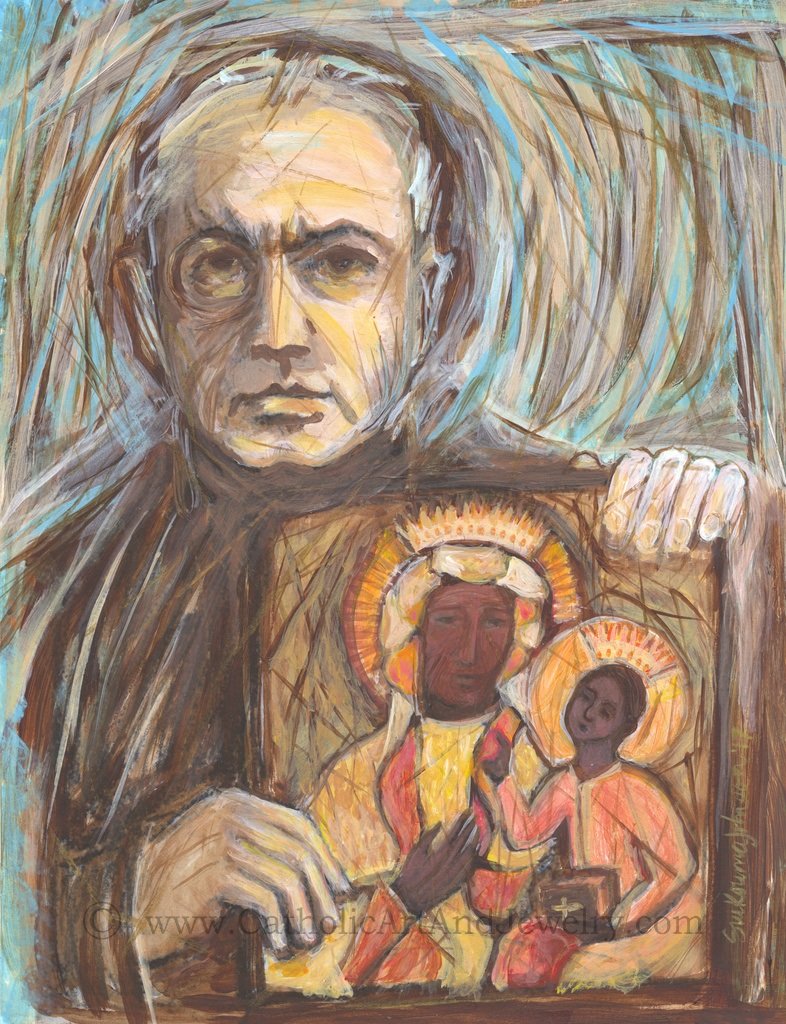
Father Kolbe’s death was not a sudden, last-minute act of heroism. His whole life had been a preparation. His holiness was a limitless, passionate desire to convert the whole world to God. And his beloved Immaculata, was his inspiration.
St Maximillian is the patron saint of families, prisoners, journalists, political prisoners, drug addicts and the pro-life movement. St John Paul II declared him to be “the patron saint of our difficult century.” The evils which made the twentieth century so difficult were not left behind as we moved into the twenty-first century.
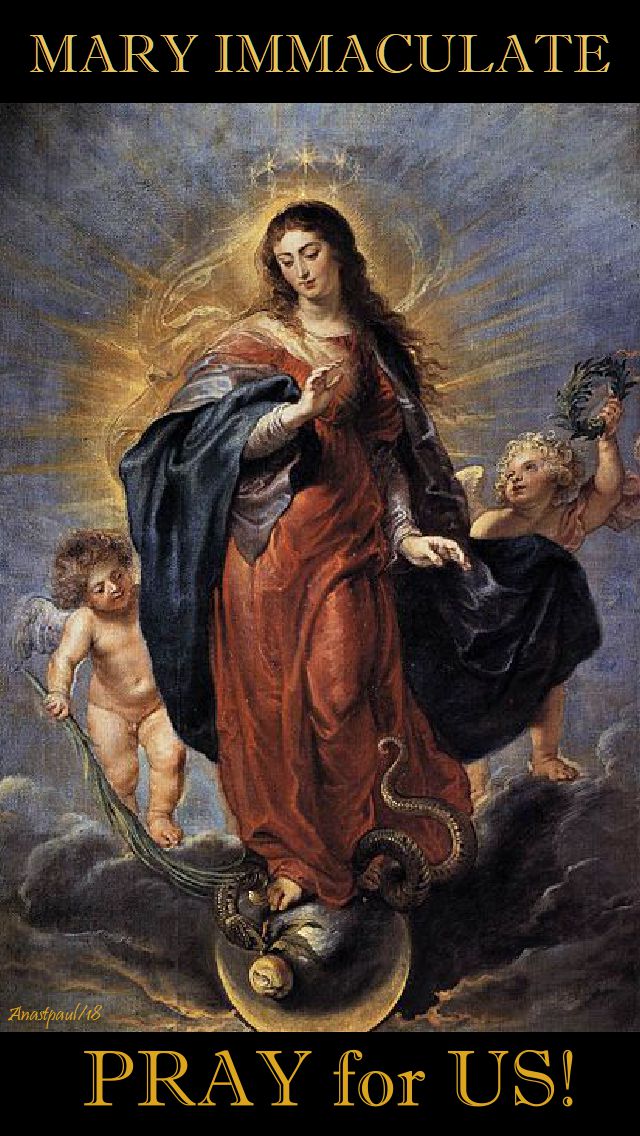
Let us continue to call upon the intercession of this saint and continue to come to Jesus through His mother, Mary, the Immaculata.
Daily Consecration Renewal to the Immaculata By St Maximillian Kolbe
Immaculata, Queen and Mother of the Church,
I renew my consecration to you for this day
and for always, so that you might use me
for the coming of the Kingdom of Jesus in the whole world.
To this end, I offer you all my prayers,
actions and sacrifices of this day.
Amen
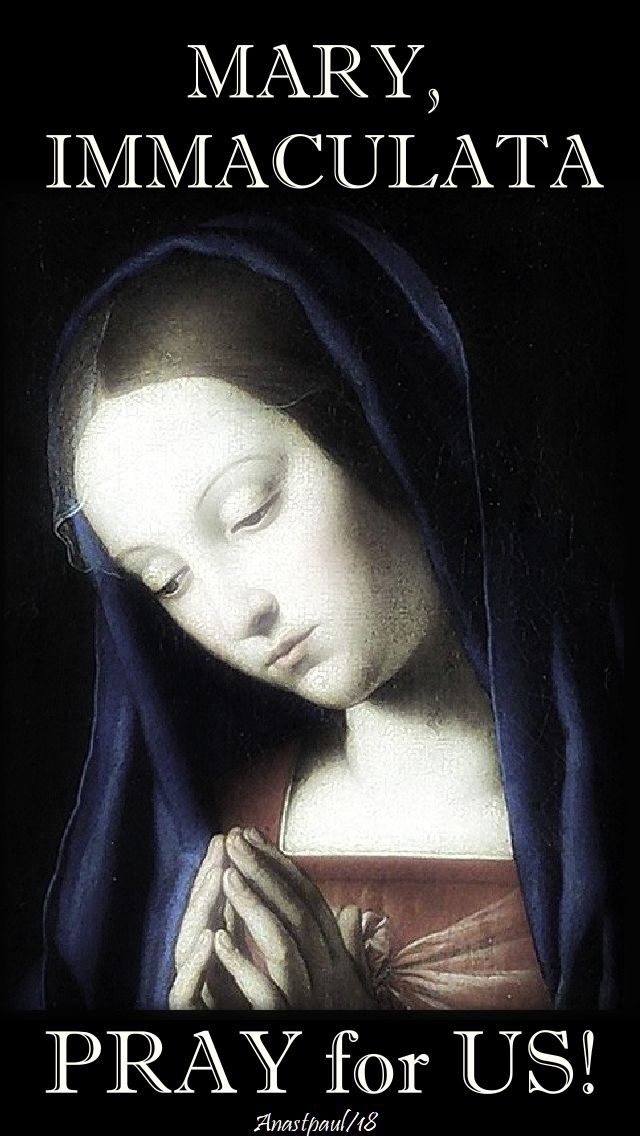
Mary, Immaculata, Pray for us!
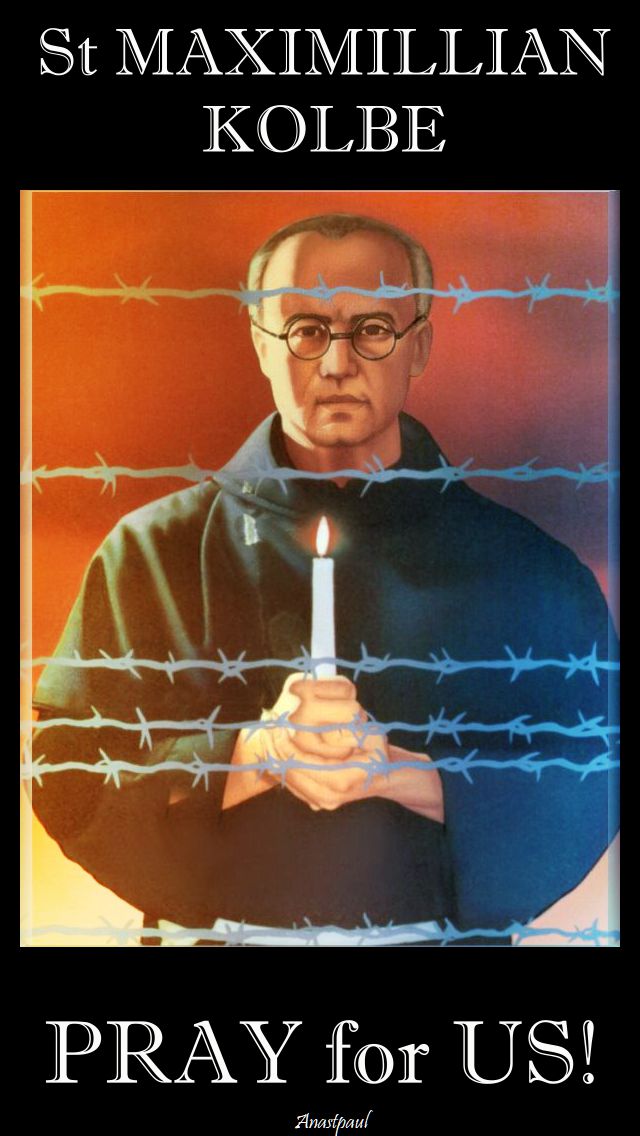
St Maximillian Kolbe, pray for us!
Quote/s of the Day – 14 August – The Memorial of St Maximillian Kolbe OFM Conv (1894 -1941) “Martyr of Charity”and “Apostle of Consecration to Mary”
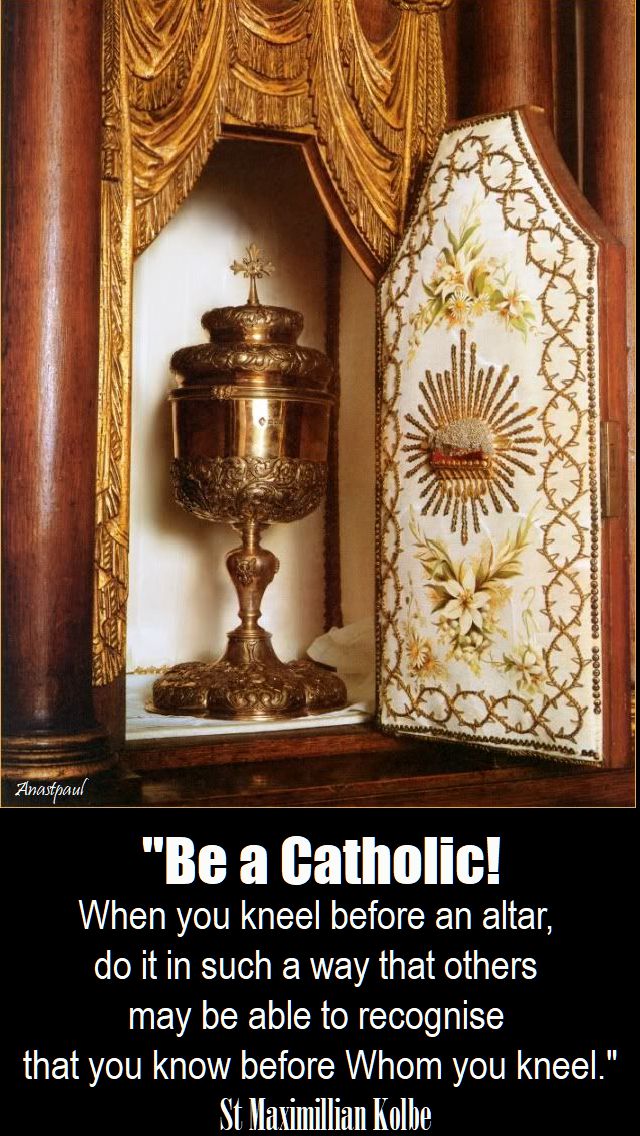
“Be a Catholic! When you kneel before an altar, do it in such a way that others may be able to recognise that you know before Whom you kneel.”
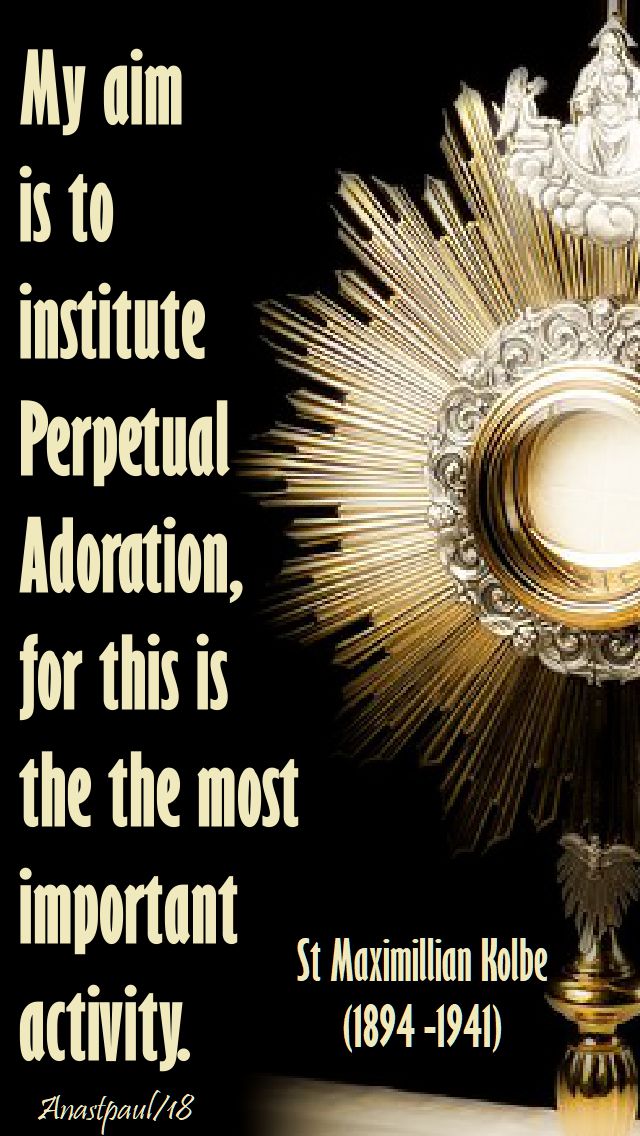
“My aim is to institute Perpetual Adoration, for this is the the most important activity.”
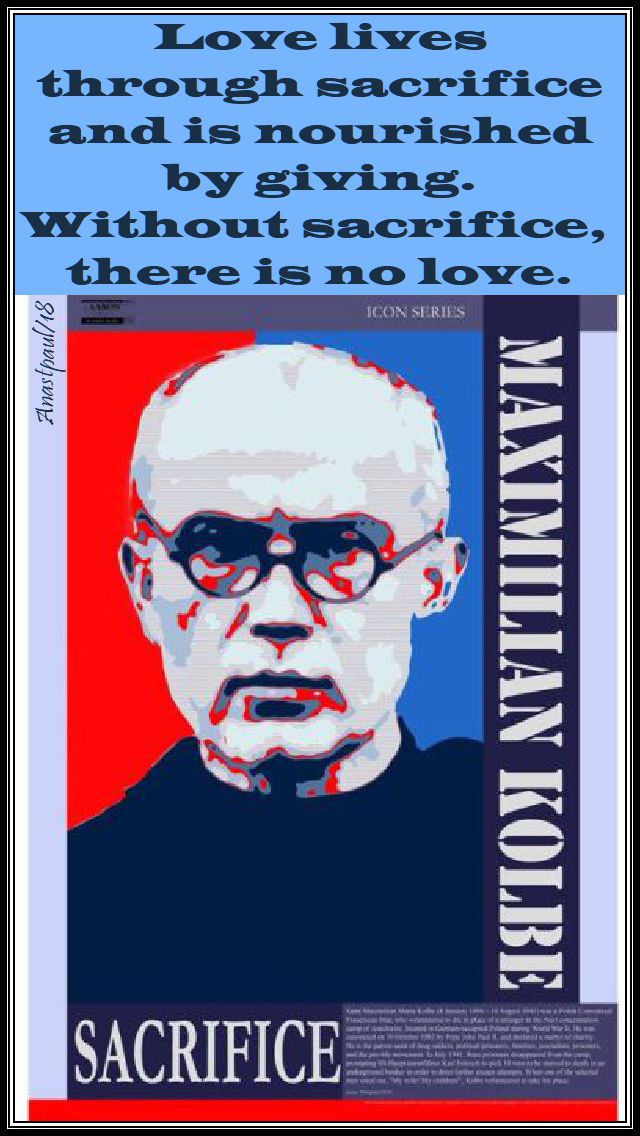
“Let us remember, that love lives through sacrifice and is nourished by giving. Without sacrifice, there is no love.”
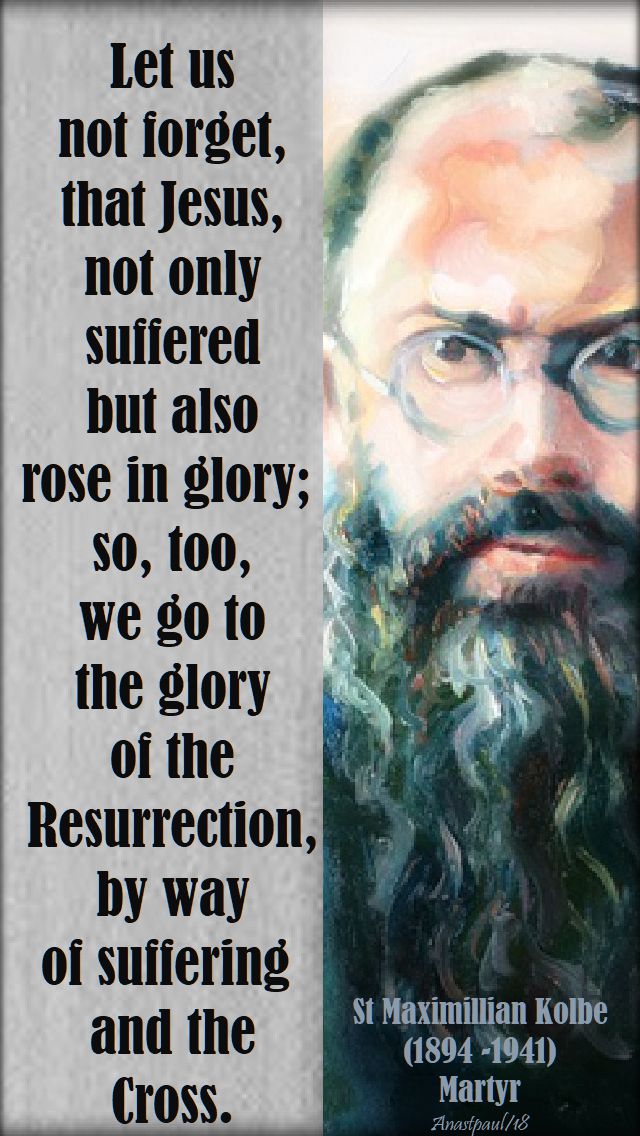
“Let us not forget, that Jesus not only suffered but also rose in glory; so, too, we go to the glory of the Resurrection, by way of suffering and the Cross.”
“Let us give ourselves to the Immaculata. Let her prepare us, let her receive Him in Holy Communion. This is the manner most perfect and pleasing to the Lord Jesus and brings great fruit to us.” Because “the Immaculata knows the secret, how to unite ourselves totally with the heart of the Lord Jesus…”
“We do not limit ourselves in love. We want to love the Lord Jesus, with her heart, or rather, that she would love the Lord, with our heart.”
One Minute Reflection – 14 August – The Memorial of St Maximillian Kolbe OFM Conv (1894 -1941) “Martyr of Charity”and “Apostle of Consecration to Mary”
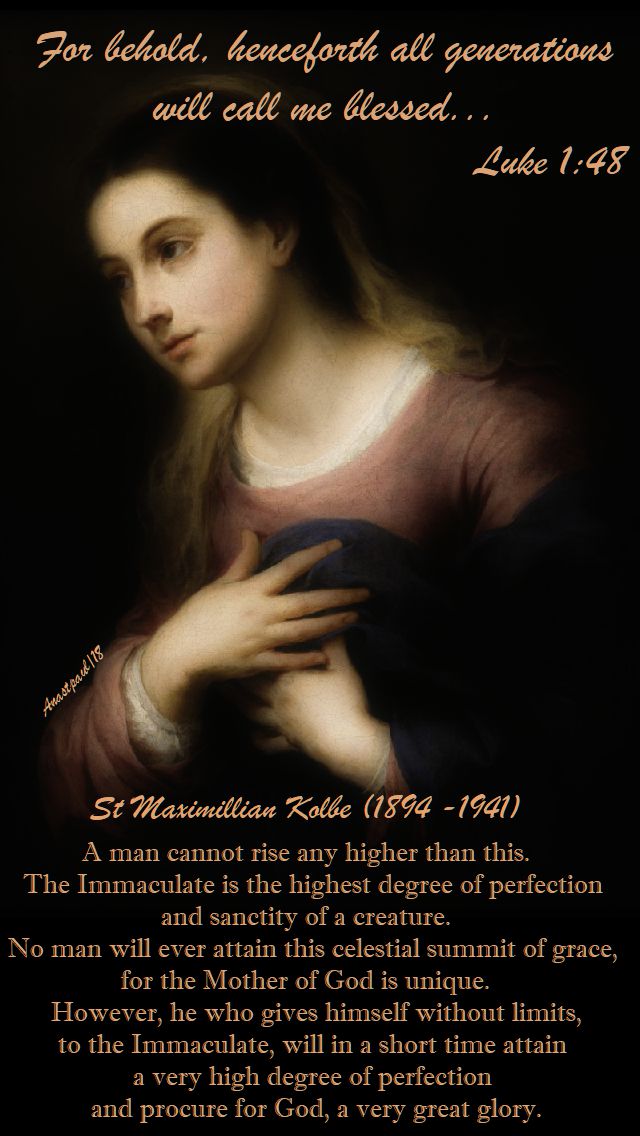
For behold, henceforth all generations will call me blessed…Luke 1:48
REFLECTION – “A man cannot rise any higher than this. The Immaculate is the highest degree of perfection and sanctity of a creature. No man will ever attain this celestial summit of grace, for the Mother of God is unique. However, he who gives himself without limits, to the Immaculate, will in a short time attain a very high degree of perfection and procure for God, a very great glory.”…St Maximillian Kolbe
PRAYER – My Lord and my God, You who are the fruit of Mary’s blessed womb and the most Divine Son of our Father, grant that we may always have recourse to You, through her who bore You. Grant that she may help and comforus me and lead us to You. Mary, Holy and loving Mother of God, pray for us all. Grant O Lord, that through the intercession of St Maximillian, we may entrust ourselves to You through Your and our blessed Mother, amen.
Our Morning Offering – 14 August – The Memorial of St Maximillian Kolbe OFM Conv (1894 -1941) “Martyr of Charity”
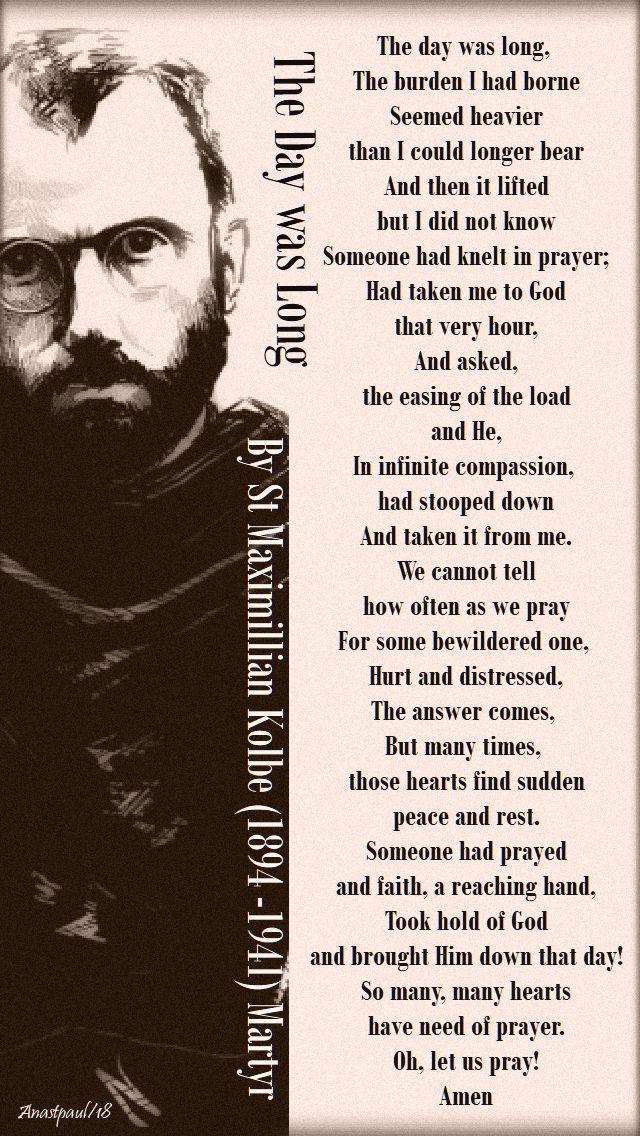
The Day was Long By St Maximillian Kolbe (1894 -1941) Martyr
The day was long,
The burden I had borne
Seemed heavier than I could longer bear
And then it lifted
but I did not know
Someone had knelt in prayer;
Had taken me to God that very hour,
And asked the easing of the load
and He,
In infinite compassion,
had stooped down
And taken it from me.
We cannot tell how often as we pray
For some bewildered one,
Hurt and distressed,
The answer comes,
But many times,
those hearts find sudden peace and rest.
Someone had prayed
and faith, a reaching hand,
Took hold of God
and brought Him down that day!
So many, many hearts have need of prayer.
Oh, let us pray!
Amen
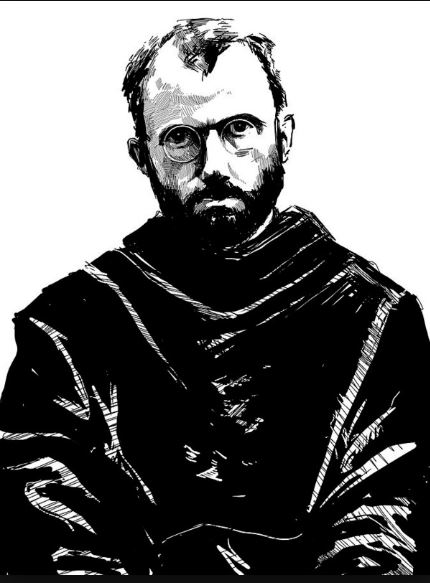
Saint of the Day – 14 August – St Maximilian Kolbe, Priest and Martyr (1894-1941) Prisoner 16670 – “Martyr of Charity”, “Apostle of Consecration to Mary”.
Raymond Kolbe was born on the 8th of January 1894 in Zdunska Wola, which at that time was occupied by Russia. The Kolbe home was poor but full of love. The parents, hardworking and religious, educated their three sons with rectitude.
Around 1906, an event took place that marks a fundamental milestone in the life of the young boy. His mother herself related the event a few months after her son’s martyrdom.
“I knew ahead of time, based on an extraordinary event that took place in his infancy, that Maximilian would die a martyr. I just don’t recall if it took place before or after his first confession. Once I did not like one of his pranks and I reproached him for it: ‘My son, what ever will become of you?!’ Later, I did not think of it again but I noticed that the boy had changed so radically, he was hardly recognisable. We had a small altar hidden between two dressers before which he used to often retire without being noticed and he would pray there crying. In general, he had a conduct superior to his age, always recollected and serious and when he prayed he would burst into tears. I was worried, thinking he had some sort of illness so I asked him: ‘Is there anything wrong? You should share everything with your mommy!’ Trembling with emotion and with his eyes flooded in tears, he shared: ‘Mama, when you reproached me, I pleaded with the Blessed Mother to tell me what would become of me. At Church I did the same, I prayed the same thing again. So then the Blessed Mother appeared to me holding in her hands two crowns: one white the other red. She looked at me with tenderness and asked me if I wanted these two crowns. The white one signified that I would preserve my purity and the red that I would be a martyr. I answered that I accepted them…(both of them). Then the Virgin Mary looked at me with sweetness and disappeared.’ The extraordinary change in the boys’ behaviour testified to me the truth of what he related. He was fully conscious and as he spoke to me, with his face radiatin,; it showed me his desire to die a martyr.”
When he was 13 years old he entered the Franciscan Fathers Seminary in the polish city of Lvov, which was at that time occupied by Austria. It was in the seminary where he adopted the name Maximilian. He completed his studies in Rome. Before his ordination as a priest in 1918, Maximilian founded the Immaculata Movement devoted to our Lady. He spread the movement through a magazine entitled “The Knight of the Immaculata”.“We should conquer the universe and each soul, now and in the future until the end of time, for the Immaculata and through her for the Sacred Heart of Jesus.”(St Maximilian Maria Kolbe, The Knight of the Immaculata)
Maximilian went to Japan and then on to India where he furthered the Movement. After a few years in Japan, St Maximilian was summoned back to Poland, largely due to his ever-declining health.
Three years later, in the midst of the Second World War, he was imprisoned along with other friars and sent to concentration camps in Germany and Poland. In February of 1941 he was again made a prisoner and sent to the concentration camp in Auschwitz, where in spite of the terrible living conditions he continued his ministry.
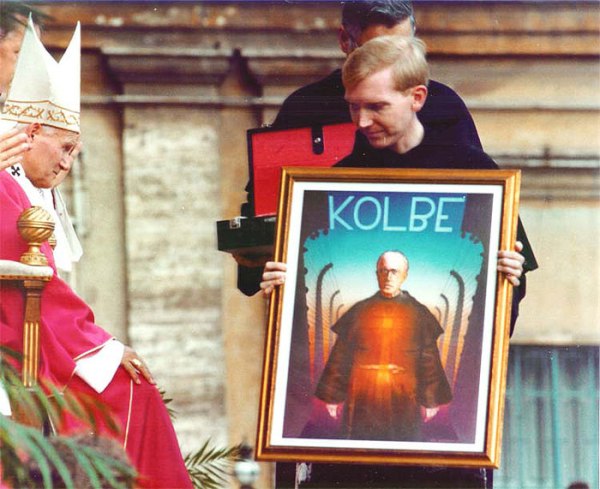
On 31 July 1941, in reprisal for one prisoner’s escape, ten men were chosen to die. Father Kolbe offered himself in place of a young husband and father. And he was the last to die, enduring two weeks of starvation, thirst and neglect. He was Canonised by St Pope John Paul II in 1982 as a Martyr of Charity.
St Maximillian Kolbe OFM Conv (1894 -1941) “Martyr of Charity” (Memorial)
Full Biography here: https://anastpaul.wordpress.com/2017/08/14/saint-of-the-day-14-august-st-maximillian-kolbe-ofm-conv-martyr-of-charity-and-apostle-of-consecration-to-mary/
Bl Aimo Taparelli
St Antony Primaldo
St Arnulf of Soissons
St Athanasia of Timia
St Callistus of Todi
St Demetrius of Africa
St Domingo Ibáñez de Erquicia
St Eberhard of Einsiedeln
St Eusebius of Palestine
St Eusebius of Rome
St Fachanan of Ross
St Francisco Shoyemon
Bl Juliana Puricelli
St Marcellus of Apamea
Bl Sanctes Brancasino
St Ursicius of Nicomedia
St Werenfridus
__
Martyred in the Spanish Civil War: 11 Beati
• Blessed Ángel de la Red Pérez
• Blessed Antonio María Martín Povea
• Blessed Basilio González Herrero
• Blessed Ezequiél Prieto Otero
• Blessed Félix Yuste Cava
• Blessed Joaquín Frade Eiras
• Blessed Jocund Bonet Mercadé
• Blessed José García Librán
• Blessed Ricardo Atanes Castro
• Blessed Segundo Pérez Arias
• Blessed Vicente Rubiols Castelló
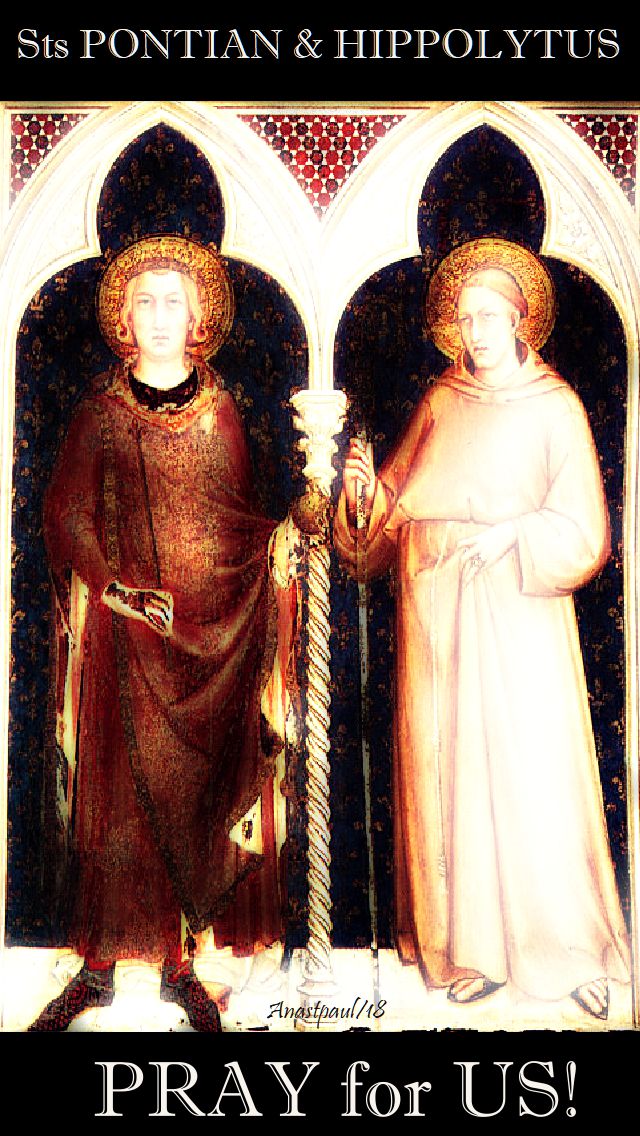
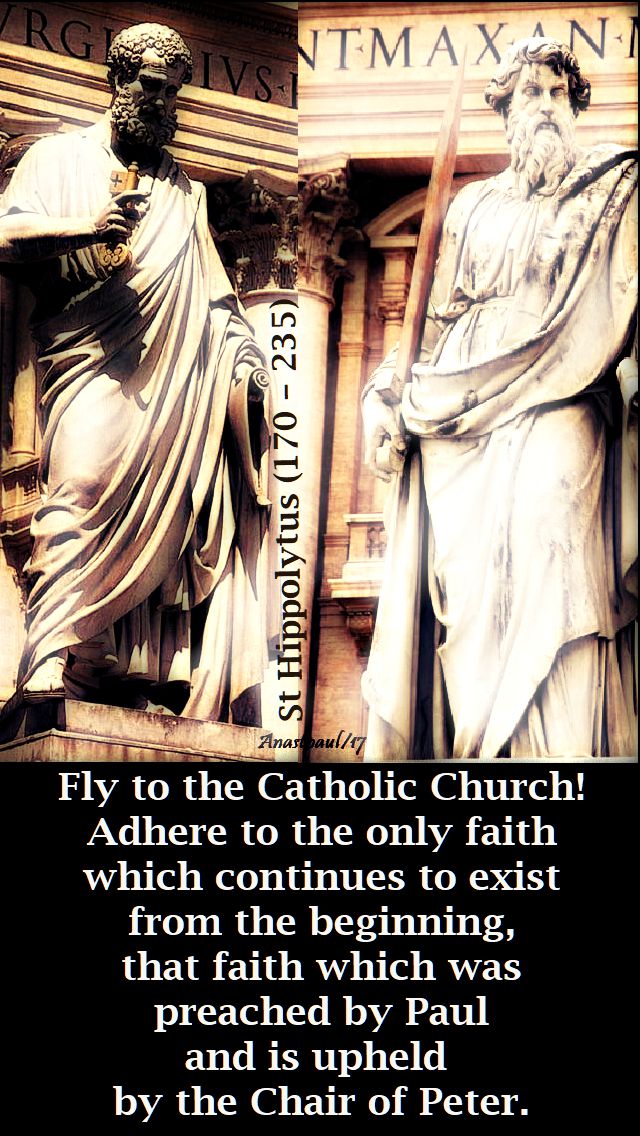
Thought for the Day – 13 August – The Memorial of Sts Pontian (Died 235) & Hippolytus (170 – 235) Martyrs
Two men died for the faith after harsh treatment and exhaustion in the mines of Sardinia. One had been pope for five years, the other an antipope for 18. They died reconciled.
Pontian: Pontian was a Roman who served as pope from 230 to 235. During his reign he held a synod in Alexandria which confirmed the excommunication of the great theologian Origen. Pontian was banished to exile by the Roman emperor in 235 and resigned so that a successor could be elected in Rome. He was sent to the “unhealthy” island of Sardinia, where he died that same year of harsh treatment. With him was Hippolytus with whom he was reconciled. The bodies of both were brought back to Rome and buried as martyrs with solemn rites.
Hippolytus: As a priest in Rome, Hippolytus—the name means “a horse turned loose”—was at first “holier than the Church.” He censured the pope for not coming down hard enough on a certain heresy—calling him a tool in the hands of one Callistus, a deacon—and coming close to advocating the opposite heresy himself. When Callistus was elected pope, Hippolytus accused him of being too lenient with penitents and had himself elected antipope by a group of followers. He felt that the Church must be composed of pure souls uncompromisingly separated from the world, Hippolytus evidently thought that his group fitted the description. He remained in schism through the reigns of three popes. In 235, he also was banished to the island of Sardinia. Shortly before or after this event, he was reconciled to the Church and died in exile with Pope Pontian.
Hippolytus was a rigourist, a vehement and intransigent man for whom even orthodox doctrine and practice were not purified enough. He is, nevertheless, the most important theologian and prolific religious writer before the age of Constantine. His writings are the fullest source of our knowledge of the Roman liturgy and the structure of the Church in the second and third centuries. His works include many Scripture commentaries, polemics against heresies and a history of the world. A marble statue dating from the third century, representing the saint sitting in a chair, was found in 1551. On one side is inscribed his table for computing the date of Easter; on the other, a list of how the system works out until the year 224. St Pope John XXIII installed the statue in the Vatican library.
Hippolytus was a strong defender of orthodoxy and admitted his excesses by his humble reconciliation. He was not a formal heretic but an overzealous disciplinarian. What he could not learn in his prime as a reformer and purist, he learned in the pain and desolation of imprisonment. It was a fitting symbolic event that Pope Pontian shared his martyrdom.
Sts Pontian and Hippolytus, pray for the Church, pray for those who have divided themselves into factions, forsaking unity in Christ, pray for us all that we may granted the virtue of humility!
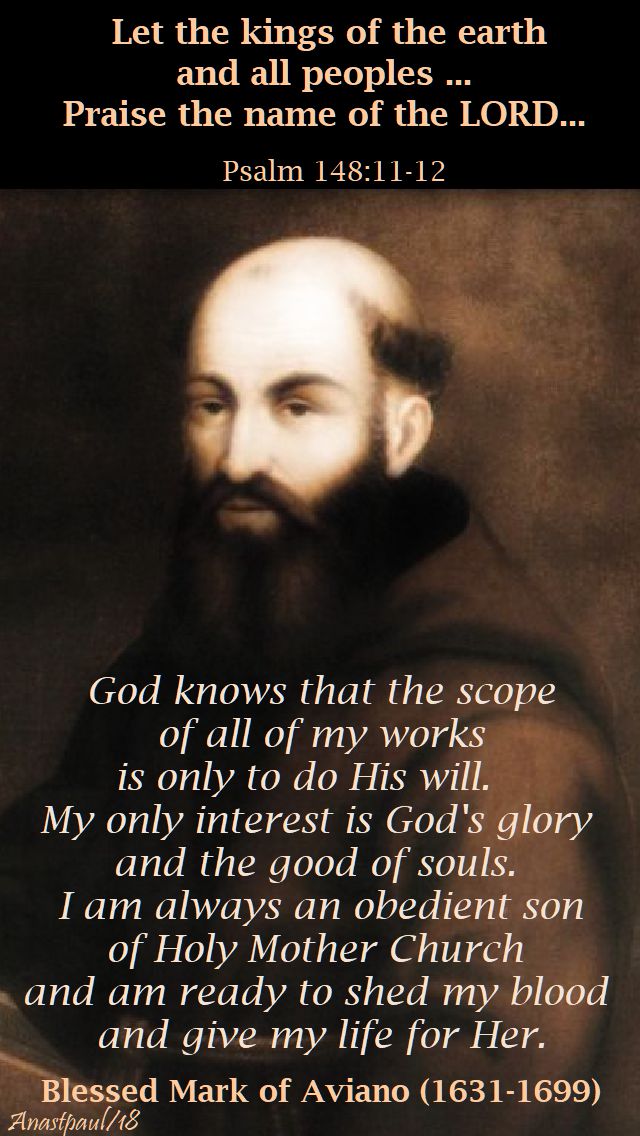
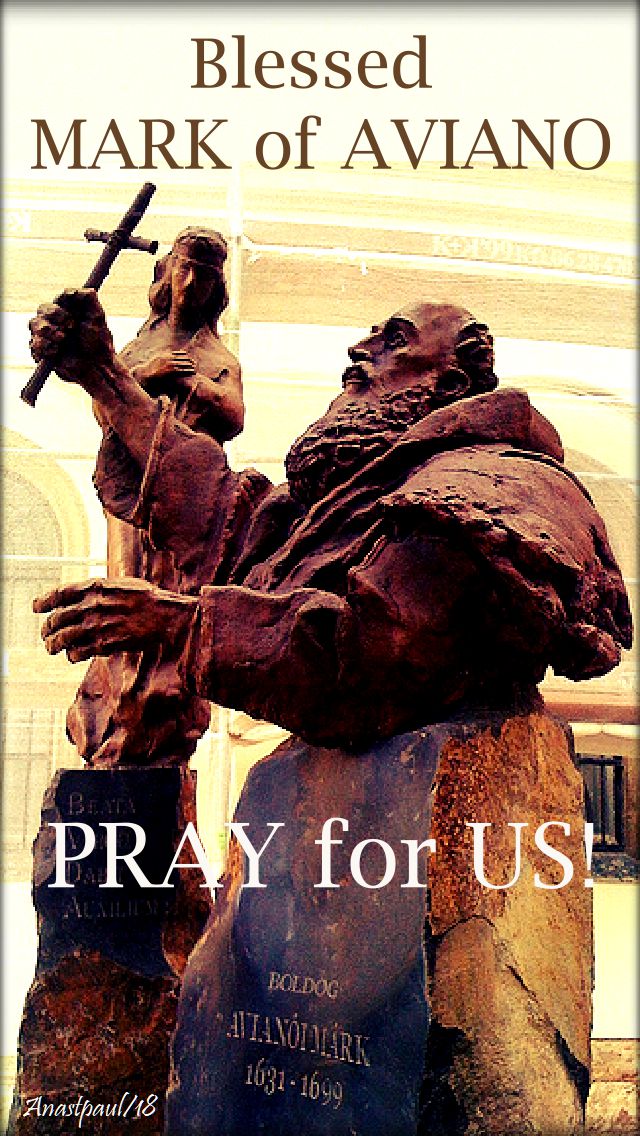
One Minute Reflection – 13 August -The Memorial of Blessed Mark of Aviano OFM Cap (1631-1699) – Today’s Psalm 148(147) 11-12
Let the kings of the earth and all peoples … Praise the name of the LORD... Psalm 148(147): 11-12
REFLECTION – “God knows that the scope of all of my works is only to do His will. My only interest is God’s glory and the good of souls. I am always an obedient son of Holy Mother Church and am ready to shed my blood and give my life for Her.”…. Blessed Mark of Aviano
PRAYER – Lord God, who bestowed Your spirit of truth and of love in full measure on Blessed Mark of Aviano, grant that we, who are celebrating his feast, may be supported by his prayer and grow in perfection, as we follow his example. We make our prayer through Christ, our Lord in the unity of the Holy Spirit, one God forever, amen.
Our Morning Offering – 13 August – Monday of the Nineteenth week in Ordinary Time, B
The Day is Filled with Splendour, is a hymn written by the Benedictine Nuns of Stanbrook Abbey. It is sung during Morning Prayer in the Divine Office. It is set to the hymn tune: Paderborn, first published in the Katholische Kirchengesänge of 1616. Psalter Week 3.
The Day is Filled with Splendour
The day is filled with splendour
When God brings light from light,
And all renewed creation
Rejoices in His sight. —
The Father gives His children
The wonder of the world
In which His power and glory
Like banners are unfurled. —
With every living creature,
Awaking with the day,
We turn to God our Father,
Lift up our hearts and pray: —
O Father, Son and Spirit,
Your grace and mercy send,
That we may live to praise You
Today and to the end.













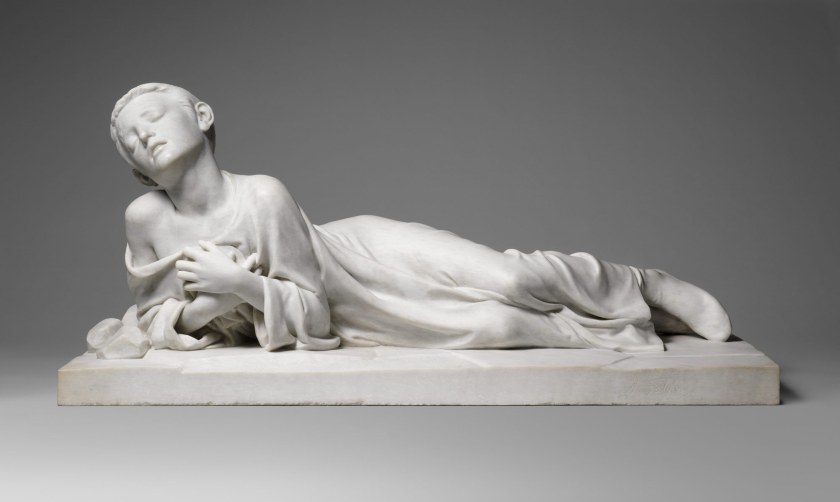
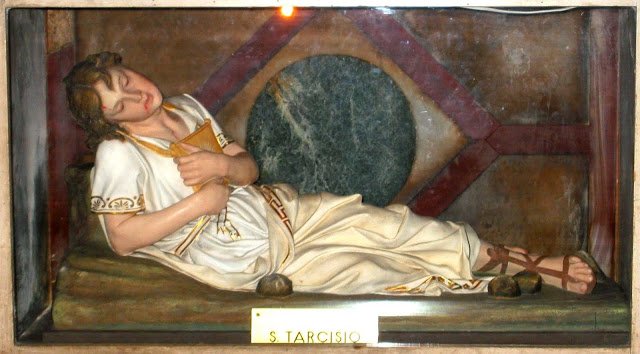
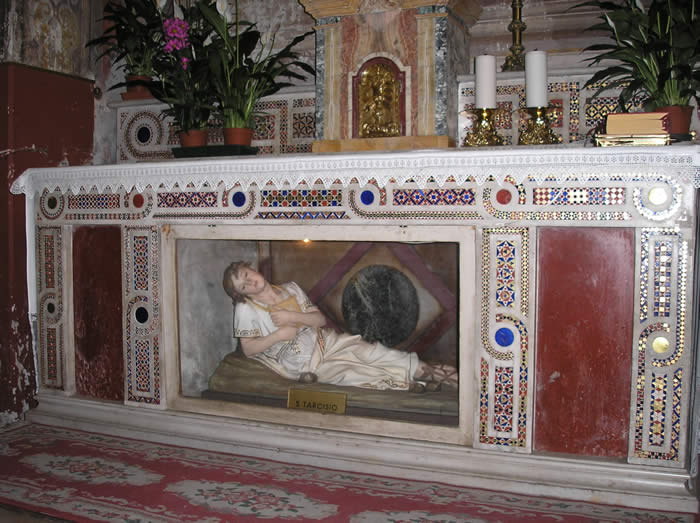
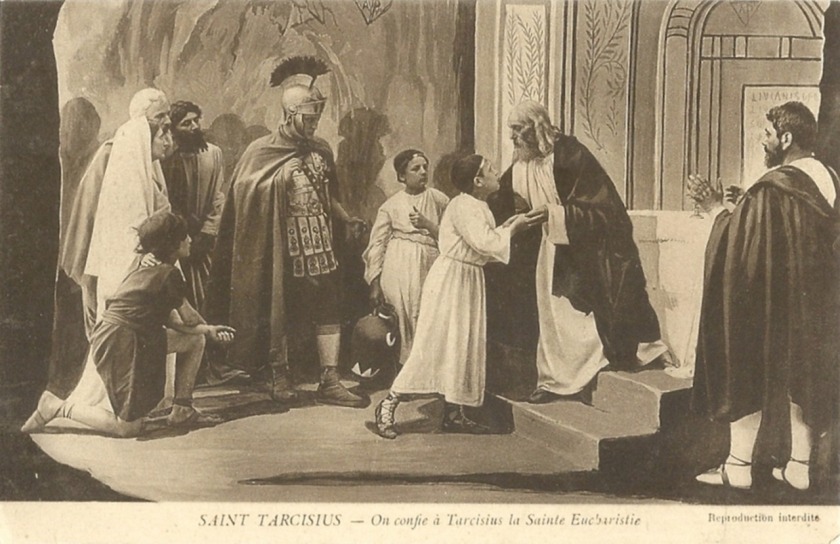 Convinced, the priest entrusted to him the precious Bread, saying: “Tarcisius, remember that a heavenly treasure has been entrusted to your weak hands. Avoid crowded streets and do not forget that holy things must never be thrown to dogs nor pearls to pigs. Will you guard the Sacred Mysteries faithfully and safely?”. “I would die”, Tarcisio answered with determination, “rather than let go of them”.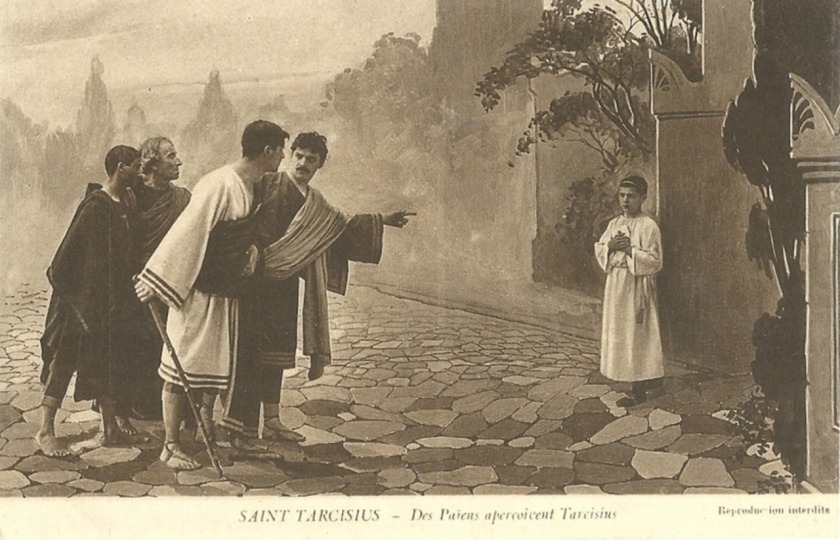






 AnaStpaul
You must be logged in to post a comment.