St Abundantius of Rome St Abundius of Rome St Andrew Kim Taegon St Cunibert of Maroilles St Curcodomus St Dulcissima of Sutri St Edith of Wilton (961-984) Virgin, Nun, Princess St Eugenia of Hohenburg
Blessed Luigi Ludovico Allemandi (c 1390-1450) Bishop and Cardinal, called “The Cardinal of Arles.” Blessed Luigi was a Priest driven by immense love for the Holy Mother of God and for the Church. His involvement in various Councils and Papal dissentions, were the result of his great desire to maintain the purity of the Chair of Peter. He was Beatified in 1527 by Pope Clement VII. His Life; https://anastpaul.com/2020/09/16/saint-of-the-day-blessed-luigi-ludovico-allemandi-c-1390-1450/
St Lucia and St Geminianus of Rome + St Ludmila St Marcian the Senator Bl Martin of Huerta Bl Michael Himonaya
Bl Paul Fimonaya St Priscus of Nocera St Rogellus of Cordoba St Sebastiana St Servus Dei St Stephen of Perugia
Martyrs of the Via Nomentana: Four Saints: Christian men Martyred together, date unknown – Alexander, Felix, Papias and Victor. They were Martyred on the Via Nomentana outside Rome, Italy.
St Aichardus St Albinus of Lyon St Aprus of Toul St Bond of Sens St Emilas of Cordoba St Eutropa of Auvergne St Hernan St Jeremias of Cordoba St Joseph Abibos St Mamillian of Palermo St Melitina St Mirin of Bangor St Nicetas the Goth
St Nicomedes (Died c71) Priest and Martyr
St Porphyrius the Martyr St Ribert St Ritbert of Varennes Bl Rolando de Medici Bl Tommasuccio of Foligno St Valerian of Châlon-sur-Saône St Valerian of Noviodunum St Vitus of Bergamo
Martyrs of Adrianopolis – 3 Saints: Three Christian men Martyred together in the persecutions of Maximian – Asclepiodotus, Maximus and Theodore. They were martyred in 310 at Adrianopolis (Adrianople), a location in modern Bulgaria.
Martyrs of Noviodunum – 4 Saints: Three Christian men martyred together, date unknown – Gordian, Macrinus, Stratone and Valerian. They were martyred in Noviodunum, Lower Moesia (near modern Isaccea, Romania).
Mercedarian Martyrs of Morocco – 6 Beati: A group of six Mercedarians who were captured by Moors near Valencia, Spain and taken to Morocco. Though enslaved, they refused to stop preaching Christianity. Martyrs. – Dionisio, Francis, Ildefonso, James, John and Sancho. They were crucified in 1437 in Morocco.
St Caerealis Bl Claude Laplace St Cormac of Cashel (c836-908) Bishop, King St Crescentian of Carthage St Crescentius of Rome St Generalis of Carthage St Giulia Crostarosa St Jean Gabriel Taurin du Fresse
St Maternus of Cologne (Died c 325) Bishop, the first Bishop of Cologne and Founder of the Diocese of Tongeren, Germany. In Cologne and in his hometown of Trier, the faithful began to venerate him as a Saint. A popular cult of which the splendid 13th century stained glass windows in the Cathedral Chapel dedicated to his name, also testify. He was buried in the Cathedral of Cologne but the Cathedral of St Peter in Trier boasts a large Reliquary, which became and remains, a pilgrimage site. Biography; https://anastpaul.com/2021/09/14/saint-of-the-day-14-september-saint-maternus-of-cologne-died-c-325/
St Peter of Tarentaise O.Cist (1102-1174) Cistercian Monk, Archbishop of Tarentaise from 1141 until his death, Abbot, Apostle of Charity, Miracle-worker. There are two Saints named Saint Peter of Tarentaise who lived one Century apart. The Saint we honour today, is the younger Peter, born in France in the early part of the 12th Century. The other Saint Peter if Tarentaise, became Pope Innocent V. His Life: https://anastpaul.com/2019/09/14/saint-of-the-day-14-september-saint-peter-of-tarentaise-o-cist-1102-1174/
Bl Pedro Bruch Cotacáns St Rosula of Carthage St Sallustia St Victor of Carthage
St Evantius of Autun St Gordian of Pontus Bl Hedwig of Hereford St Julian of Ankyra St Ligorius St Litorius of Tours St Macrobius St Marcellinus of Carthage
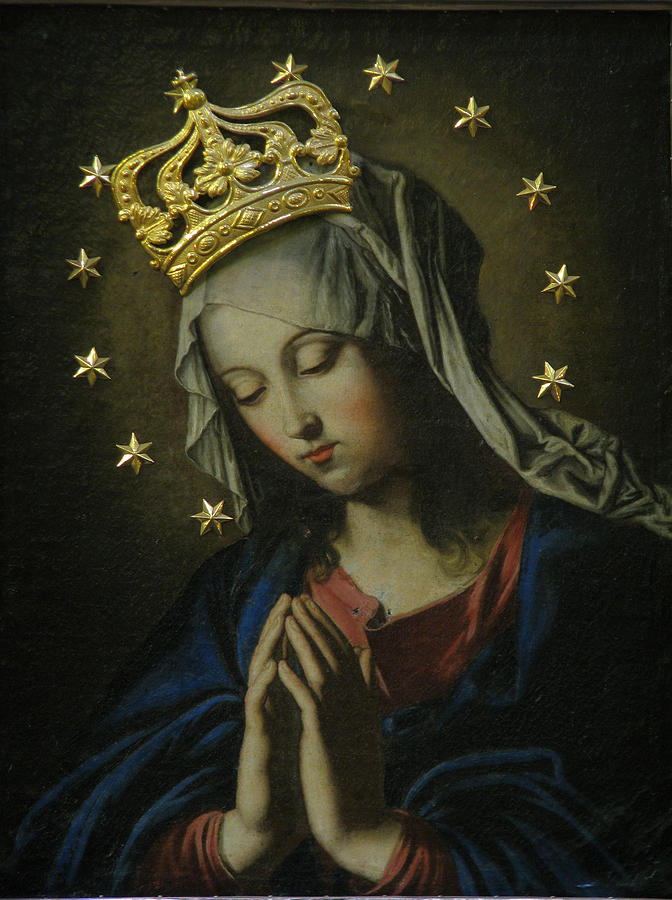
Saint of the Day – 12 September – The Feast of the Holy Name of Mary (1683 ) from the Liturgical Year, 1903
“And the Virgin’s name was Mary (St Luke 1:27).’ Let us speak a little about this name, which signifies Star of the Sea and which, so well befits the Virgin Mother. Sightly is she likened to a star – for as a star emits its ray without being spoilt, so the Virgin, brought forth her Son, without receiving any injury – the ray takes nought from the brightness of the Star, nor the Son from His Mother’s integrity. This is the noble Star risen out of Jacob, whose ray illumines the whole world, whose splendour shines in the heavens, penetrates the abyss,and traversing the whole earth, gives warmth, rather to souls than to bodies, cherishing virtues, withering vices. Mary, I say, is that bright and incomparable Star, whom we need to see raised above this vast sea and shining by her merits, giving us light by her example.
‘O whosoever thou art, that seest thyself, amid the tides of this world, tossed about by storms and tempests, rather than walking on the land, turn not thine eyes away from the shining of this Star, if thou wouldst not be overwhelmed by the hurricane. If squalls of temptations arise, or thou fall upon the rocks of tribulation, look to the Star, call upon Mary. If thou art tossed by the waves of pride or ambition, detraction or envy, look to the Star, call upon Mary. If anger or avarice or the desires of the flesh dash against the ship of thy soul, turn thine eyes towards Mary. If, troubled by the enormity of thy crimes, ashamed of thy guilty conscience, terrified by dread of the judgement, thou beginnest to sink into the gulf of sadness, or the abyss of despair, think of Mary. In dangers, in anguish, in doubt, think of Mary, call upon Mary.’ … (St Bernard)
St Peter Chrysologus adds … “Mary, in Hebrew, signifies Lady or Sovereign and truly, the authority of her Son, Who is the Lord of the world, constituted her Queen, both in fact and in name, from her very birth ”(Petr. Chrys. Sermo cxlii, de Annuntiat. Homily of the 3rd Nocturn).”
Our Lady – such is the title which befits her in every way, as that of Our Lord beseems her Son – it is the doctrinal basis of that worship of hyperdulia which belongs to her alone. She is below her Son, Whom she adores as we do but above all God’s servants, both Angels and men, inasmuch as she is His Mother. At the Name of Jesus every knee is bent; at the Name of Mary, every head is bowed. And although, the former is the only Name whereby we may be saved; yet, as the Son can never be separated from His Mother, Heaven unites their two Names in its Hymns of praise, earth in its confidence, hell in its fear and hatred!
It was, therefore, in the order of Divine Providence that devotion to the most Holy Name of Mary should spread, simultaneously with the cultus of the adorable Name of Jesus, of which St Bernadine of Siena was the Apostle in the 15th Century. In 1513 the Church of Cuenca in Spain was the first to celebrate, with the approbation of the Holy See, a special Feast in honour of the Name of Mary; while the Franciscan Order had not yet succeeded in obtaining a like privilege for the Adorable Name of Jesus. The reason for this, is that the memory of that Sacred Name included in the Feast of the Circumcision, seemed to the prudence of the Pontiffs to suffice. From the same motive we find the Feast of the Most Holy Name of Mary extended to the universal Church in the year 1683 and, that of the Most Holy Name of Jesus not until 1721.
Our Lady justifies her beautiful title by partaking in the warlike exploits of the King of kings, her Son. The City of Vienna, having been delivered by her from the power of the Crescent, contrary to all hope, the venerable Innocent XI. made this Feast the memorial of universal gratitude to the liberatrix of the West.
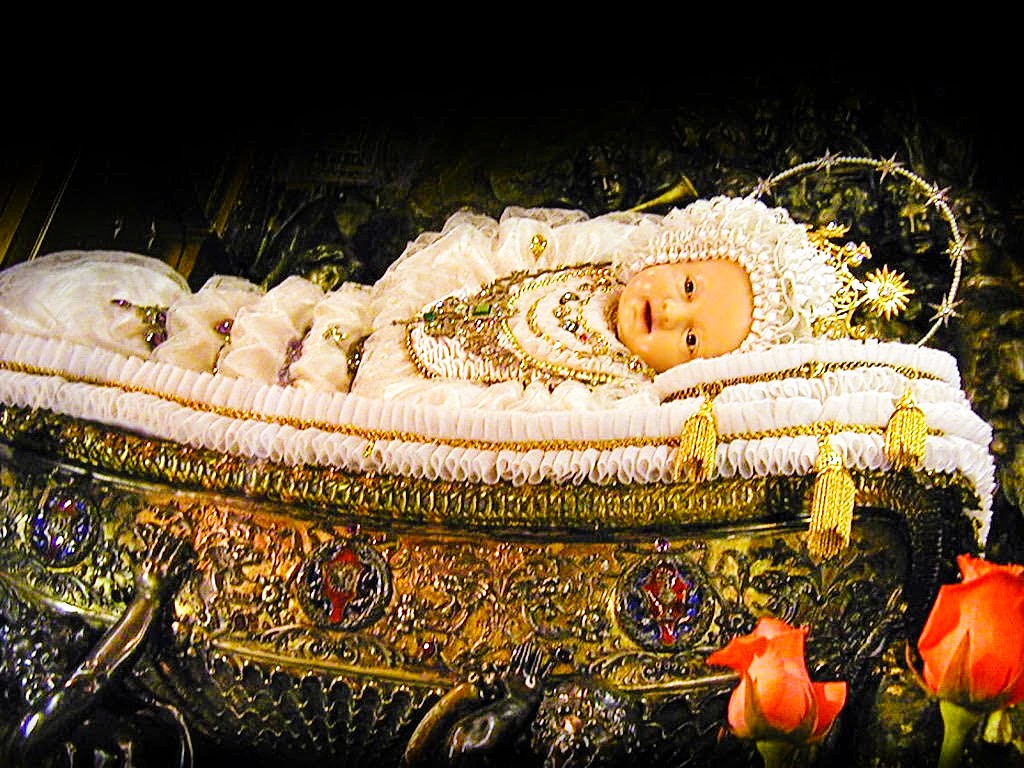
The Name of Mary, which is the joy of Angels and the terror of demons, protects man against countless evils and supports him on his way to Heaven. All the delight of Heaven, all the hopes of earth, are centred on the cradle where Mary sleeps, while her heart is watching before God.
Wisdom praises her own self – by the blessed daughter of Anne and Joachim, the loving preference shown by that Divine Wisdom from the beginning of the world, is already justified. Forevermore, it will be her delight to be with the children of men. The chosen vine, the vine of the Peaceful One is before us, announcing, by its fragrant blossom, the divine grape, whose juice, pressed out in the wine-press of the Cross, will give fruitfulness to every soul and will inebriate earth and Heaven.”
St Emilian of Vercelli St Essuperanzio of Zurich St Felix of Zurich Bl Franciscus Takeya Bl François Mayaudon Bl Gaspar Koteda St Gusmeo of Gravedona sul Lario St Leudinus of Toul St Matthew of Gravedona sul Lario St Paphnutius of Thebes St Patiens of Lyon Bl Peter Taaffe Bl Petrus Kawano St Regula of Zurich St Sperandea St Theodora the Penitent
St Salvius of Albi St Sosthenes of Chalcedon St Theodard of Maastricht St Victor of Chalcedon
Martyrs of Bithynia – 3 Sister Saints: Three young Christian sisters Martyred in the persecutions of Emperor Maximian and governor Fronto: Menodora, Metrodora, Nymphodora. They were Martyred in 306 in Bithynia, Asia Minor (in modern Turkey).
Martyrs of Japan – 205 Beati: A unified feast to memorialise 205 Missionaries and native Japanese known to have been murdered for their Faith between 1617 and 1637.
Martyrs of Sigum – 8 Saints: A group of Nicomedian Martyrs, condemned for their faith to be worked to death in the marble quarries of Sigum. There were Priests, Bishops and Laity in the group but only a few names have come down to us: Dativus, Felix, Jader, Litteus, Lucius, Nemesian, Polyanus, Victor. They were worked to death c 257 in Sigum.
St Peter Claver SJ (1581-1654) Confessor, Priest of the Society of Jesus, Missionary, Confessor, Patron of the missions to African peoples and Human Rights Defender, Apostle of Charity. Also known as “The Apostle of Cartagena” and “The Slave of the Slaves.” Biography: https://anastpaul.com/2017/09/09/saint-of-the-day-9-september-st-peter-claver-s-j/
St Alexander of Sabine St Basura of Masil St Bettelin St Dorotheus of Nicomedia (Died c303) Martyr, Soldier Bl Gaudridus St Gorgonio of Rome St Gorgonius of Nicomedia(Died c303) Martyr, Soldier St Isaac the Great St Joseph of Volokolamsk (c1439-1515) Abbot, Founder
Bl Maria Eutimia Uffing Bl Mary de la Cabeza St Omer St Osmanna St Rufinian St Peter of Nicomedia (Died c303) Martyr, Soldier St Severian St Straton St Tiburtius St Valentinian of Chur St Wilfrida St Wulfhilda
St Disibod of Disenberg St Ethelburgh of Kent St Faustus of Antioch St Isaac the Great Blessed István Pongrácz St Kingsmark St Peter of Chavanon Bl Seraphina Sforza
Martyrs of Alexandria – 5 Saints: A group of Christians Martyred together in the persecutions of Diocletian – Ammon, Dio, Faustus, Neoterius and Theophilus. Martyred in Alexandria, Egypt.
Martyrs of Japan – (21 Beati: A group of 21 Missionaries and Converts, who were executed together for their faith. They were: Antonio of Saint Bonaventure, Antonio of Saint Dominic, Dominicus Nihachi, Dominicus of Saint Francis, Dominicus Tomach, Francisco Castellet Vinale, Franciscus Nihachi, Ioannes Imamura, Ioannes Tomachi, Laurentius Yamada, Leo Aibara, Lucia Ludovica, Ludovicus Nihachi, Matthaeus Alvarez Anji, Michaël Tomachi, Michaël Yamada Kasahashi, Paulus Aibara Sandayu, Paulus Tomachi, Romanus Aibar, Thomas of Saint Hyacinth, Thomas Tomachi Died on 8 September 1628 in Nagasaki, Japan Beatified on 7 May 1867 by Pope Pius XI.
St Cagnoald St Consolata of Reggio Emilia St Cottidus of Cappadocia
St Eleutherius the Abbot (Died c 585) Monk and Abbot. A wonderful simplicity and spirit of compunction were the distinguishing virtues of this holy sixth century Abbot. His Lifestory: ttps://anastpaul.com/2020/09/06/saint-of-the-day-saint-eleutherius-the-abbot-at-spoleto-died-c-585/
St Eugene of Cappadocia St Eve of Dreux St Faustus of Alexandria St Faustus of Syracuse St Felix of Champagne
St Mansuetus of Toul St Onesiphorus St Petronius of Verona St Sanctian of Sens St Zacharius the Prophet
Martyrs of Africa – 6 Saints: There were thousands of Christians exiled, tortured and Martyred in the late 5th Century by the Arian King Hunneric. Six of them, all Bishops, are remembered today; however, we really know nothing about them except their names and their deaths for the Christ and the Faith – Donatian, Fusculus, Germanus, Laetus, Mansuetus and Praesidius.
St Lawrence Justinian (1381-1455) Bishop of Venice, Confessor, Reformer, Spiritual writer. The Roman Martyrology states of him today: “The Feast of St Lawrence Justinian, first Patriarch of Venice, who, by glorious miracles and virtues, illustrated the Episcopal dignity which he received against his will on this day. His birthday into Heaven is 8 January.” His Zealous Life: https://anastpaul.com/2021/09/05/saint-of-the-day-5-september-saint-lawrence-justinian-1381-1455/
St Charbel Bl Florent Dumontet de Cardaillac St Genebald of Laon Bl Gendtilis Blessed Gerbrand of Dokkum OPraem (Died 1267) Priest Abbot St Guise Hoang Luong Canh Blessed John the Good OSA (c 1168-1249) Bishop Blessed Jordan of Pulsano Abbot
St Obdulia Bl Phêrô Nguyen Van Tu St Romulus of Rome St Victorinus of Amiterme St Victorinus of Como Bl William Browne
Martyrs of Armenia – 1,000 Saints: A group of up to 1,000 Christian soldiers in the 2nd Century Imperial Roman Army of Trajan, stationed in Gaul. Ordered to sacrifice to pagan gods, they refused and were transferred to Armenia. Ordered again to sacrifice to pagan gods, they refused again. Martyrs. We know the names of three of them but nothing else – Eudoxius, Macarius and Zeno.
Martyrs of Capua – 3 Saints: Three Christians who were Martyred together. Long venerated in Capua, Italy. We know their names, but little else – Arcontius, Donatus and Quintius. They were martyred in Capua, Italy.
Martyrs of Nicomedia – 80 Saints: A group of 80 Christians, Lay and Clergy, Martyred together in the persecutions of Valens. We know little more than the names of three of them – Menedemo, Teodoro and Urbano. They were locked on a boat which was then set on fire on the shore of Nicomedia, Bithynia (in modern Turkey) c370.
Martyrs of Porto Romano – 4+ Saints: A group of Christians Martyred together in the persecutions of Marcus Aurelius. We know little more than their names – Aconto, Herculanus, Nonno and Taurino. c180 at Porto Romano, Italy.
St Rose of Viterbo TOSF (c 1233 – 1251) Virgin, Preacher – Member of the Franciscan Third Order, Recluse, Miracle-Worker. Rose was quickly acclaimed a Saint by the people of Viterbo who brought her incorrupt body to the Poor Clare Monastery which had refused her entry in life. Pope Innocent IV immediately began the process for her Canonisation but, for various reasons, her cause did not proceed 1457 when she was Canonised. Her Story: https://anastpaul.com/2018/09/04/saint-of-the-day-4-september-st-rose-of-viterbo-c-1233-1251/
St Ammianus the Martyr St Caletricus of Chartres St Candida of Naples St Candida the Elder St Castus of Ancyra
St Irmgard of Cologne (c1000-c1065 or c1082-1089) Countess, Recluse, Pilgrim. St Julian the Martyr St Magnus of Ancyra St Marcellus of Chalon-sur-Saône St Marcellus of Treves St Maximus of Ancyra St Monessa St Moses the Prophet St Oceanus the Martyr Bl Peter of Saint James St Rebecca of Alexandria St Rhuddlad
St Rufinus of Ancyra St Salvinus of Verdun St Silvanus of Ancyra St Sulpicius of Bayeux St Thamel St Theodore the Martyr St Ultan of Ardbraccan St Victalicus
St Aigulphus of Lérins St Ambrose of Sens St Ammon of Heraclea Bl Andrew Dotti St Auxanus St Balin St Basilissa of Nicomedia
St Chariton St Chrodegang of Séez St Frugentius the Martyr Blessed Guala de Ronii of Brescia OP ( 1180-1244) Bishop St Hereswitha Bl Herman of Heidelberg St Macanisius St Mansuetus of Toul St Marinus (Died c 366) St Martiniano of Como St Natalis of Casale
St Regulus of Rheims St Remaclus St Sandila of Cordoba St Vitalian of Capua (Died 699) Bishop
Martyrs of Aquileia – 4 Saints: Four young women, variously sisters and cousins, who were born to the nobility, the daughters of the pagans Valentinianus of Aquileia and Valentius of Aquileia. Each woman converted and made private vows, dedicating themselves to God. They were arrested, tortured and martyred by order of Valentius for becoming a Christian. We know little else but their names – Dorothy, Erasma, Euphemia and Thecla. They were martyred by beheaded in the 1st century in Aquileia, Italy and their bodies were thrown into a nearby river.
Martyrs of Nagasaki – 6 Beati: A group of Priests and Clerics, native and foreign, murdered together in the anti-Christian persecutions in Japan. They were scalded in boiling water and then burned alive on 3 September 1632 in Nishizaka, Nagasaki, Japan and Beatified on 7 May 1867 by Pope Pius IX. They are: Anthony Ishida, Bartolomé Gutiérrez Rodríguez, Francisco Terrero de Ortega Pérez, Gabriel Tarazona Rodríguez, Jerome of the Cross de Torres, Vicente Simões de Carvalho
St Prospero of Tarragona St Theodota of Bithynia St Valentine of Strasbourg St William of Roeskilde
Marytrs of Nicomedia – 3 Saints: Three Christians who were Martyred together in the persecutions of Diocletian. No details about them but their names have survived – Concordius, Theodore and Zenone. They were martyrd in Nicomedia, Bithynia (in modern Turkey).
The Holy Martyrs of September (Died 1792) – 191 beati: Also known as – Martyrs of Paris, Martyrs of Carmes. They were massacred by a mobs on 2 September and 3 September 1792 and Beatified on 17 October 1926 by Pope Pius XI. THEIR LIVES AND DEATHS: https://anastpaul.com/2021/09/02/saint-s-of-the-day-2-september-
Martyrs of 2 September – 10 Saints: A group of ten Martyrs; their names are on old Martyrologies but we have lost all record of their lives and deaths. They were Canonised: Antoninus, Diomedes, Eutychian, Hesychius, Julian, Leonides, Menalippus, Pantagapes, Philadelphus, Philip.
Holy Bishops of Rennes: Honours all the Bishops of the Diocese of Rennes, France who have been recognised as Saints and Beati. They include Saint Maximinus of Rennes Saint Modéran of Rennes Saint Rambert of Rennes Saint Riotisme of Rennes Saint Servius of Rennes Saint Synchronius of Rennes
St Abigail the Matriarch St Aegidius St Agia St Anea St Arcanus St Arealdo of Brescia Bl Colomba of Mount Brancastello St Constantius the Bishop St Donatus of Sentianum St Felix of Sentianum
St Lythan St Nivard of Rheims (Died 673) Bishop St Priscus St Regulus St Sixtus of Rheims St Terentian St Verena St Victorious St Vincent of Xaintes
Exiles of Campania
Twelve Holy Brothers: Martyrs of the South – A group of Martyrs who died c303 at various places in southern Italy. In 760 their relics were brought together and enshrined in Benevento, Italy as a group. Saint Arontius of Potenza, Saint Donatus of Sentianum, Saint Felix of Sentianum, Saint Felix of Venosa, Saint Fortunatus of Potenza, Saint Honoratus of Potenza, Saint Januarius of Venosa, Saint Repositus of Velleianum, Saint Sabinian of Potenza, Saint Sator of Velleianum, Saint Septiminus of Venosa, Saint Vitalis of Velleianum. One tradition describes Saint Boniface of Hadrumetum and Saint Thecla of Hadrumetum as their parents.
St Raymond Nonnatus O.deM. (1204-1240) Religious Priest, Confessor, Cardinal, Friar of the Mercedarian Order. Beatified on 5 November 1625 by Pope Urban VIII and Canonised in 1657 by Pope Alexander VII. Raymond was delivered by Caesarean operation when his mother died during childbirth – hence the name: non natus = not born. Biography here: https://anastpaul.wordpress.com/2017/08/31/saint-of-the-day-31-august-st-raymond-nonnatus-o-dem/
St Ammi of Caesarea St Aristides the Philosopher St Barbolenus of Bobbio St Bonajuncia OSM Confessor St Caesidius St Cuthburga of Wimborne St Cwenburgh of Wimborne
St Adauctus AND St Felix of Rome (Died c303) St Agilus St Arsenius the Hermit St Boniface of Hadrumetum St Bononius of Lucedio Bl Bronislava of Poland Bl Edward Shelley Bl Ero di Armenteira Bl Eustáquio van Lieshout St Fantinus of San Mercurius
St Pelagius the Hermit St Peter of Trevi Bl Richard Flower Bl Richard Leigh Bl Richard Martin St Rumon of Tavistock St Sylvanus the Hermit St Thecla of Hadrumetum St Theodosius of Oria
Martyrs of Colonia Suffetulana – 60 Saints: A group of 60 Christians Martyred for destroying a statue of Hermes. They were Martyred in Colonia Suffetulana, Africa.
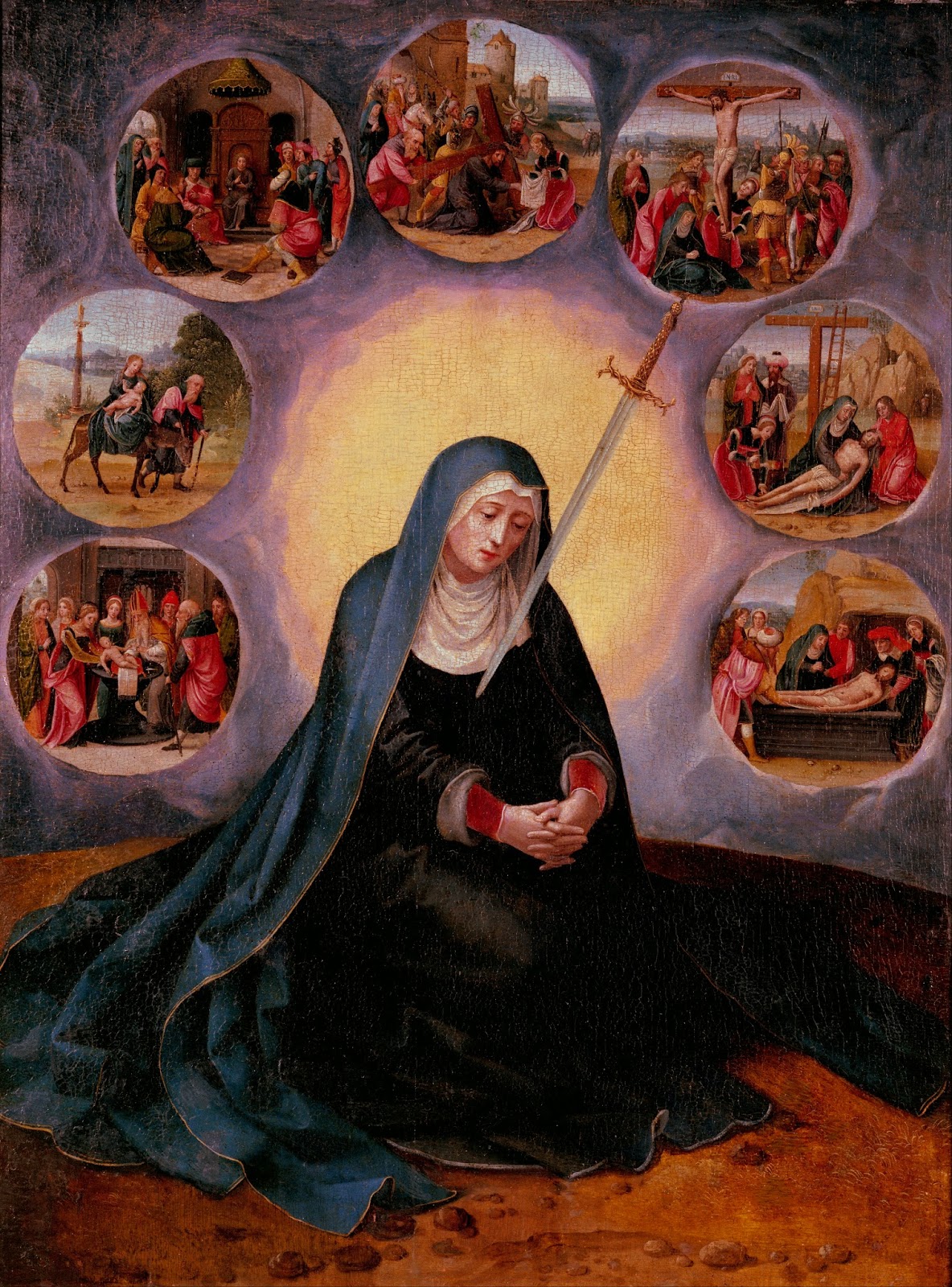
Feast of the Seven Joys of Our Lady – This Feast is also known as “The Franciscan Crown,” The Seven Joys of the Virgin. Today was kept by the Franciscans as the Feast of the Seven Joys of the Virgin Mary. As an expression of the Seraphic Order’s devotional life, it corresponds to the Feast of the Holy Rosary, which began among the Dominicans and the observance on 15 September of the Seven Sorrows of the Virgin, https://anastpaul.com/2022/08/27/27-august-feast-of-the-seven-joys-of-our-lady-the-franciscan-crown/
St Agilo of Sithin St Angelus of Foligno St Anthusa the Younger St Arontius of Potenza St Baculus of Sorrento St Carpophorus St David Lewis St Decuman St Ebbo of Sens St Etherius of Lyons St Euthalia of Leontini St Fortunatus of Potenza Blessed Gabriel Mary Nicholas OFM (c1463-1532) Priest St Gebhard of Constance St Giovanni of Pavia St Honoratus of Potenza St John of Pavia St Licerius of Couserans St Malrubius of Merns St Narnus of Bergamo St Phanurius St Poemen Bl Roger Cadwallador St Rufus of Capua St Sabinian of Potenza St Syagrius of Autun
Martyrs of Tomi – 5 Saints: A group of 17 Christians imprisoned and excuted for their faith during the persecutions of Diocletian. They miraculously were unburned by fire and untouched by wild animals. We know the names and a few details on five of them – John, Mannea, Marcellinus, Peter and Serapion. They were tied to stakes and burned alive; they emerged unharmed – thrown to wild animals in the amphitheatre; the animals ignored them; they were beheaded in 304 in Tomi, Mesia (modern Costanza, Romania).
Martyrs of Nagasaki – 14 Beati: A group of fourteen missionaries and Japanese native Christians, who were Martyred together for their faith. They died on 16 August 1627 in Nagasaki, Japan and were Beatified on 7 May 1867 by Pope Pius IX. They are – Blessed Antonius of Saint Francis, Blessed Bartolomé Díaz Laurel, Blessed Caius Akashi Jiemon, Blessed Francisca Pinzokere, Blessed Francisco of Saint Mary, Blessed Franciscus Kuhyoe, Blessed Leo Kurobyoe Nakamura, Blessed Lucas Tsuji Kyuemon, Blessed Ludovicus Matsuo Soyemon, Blessed Magdalena Kiyota, Blessed Maria Shobyoe, Blessed Michaël Koga Kizayemon, Blessed Thomas Sato Shin’emon, Blessed Tsuji Shobyoe.
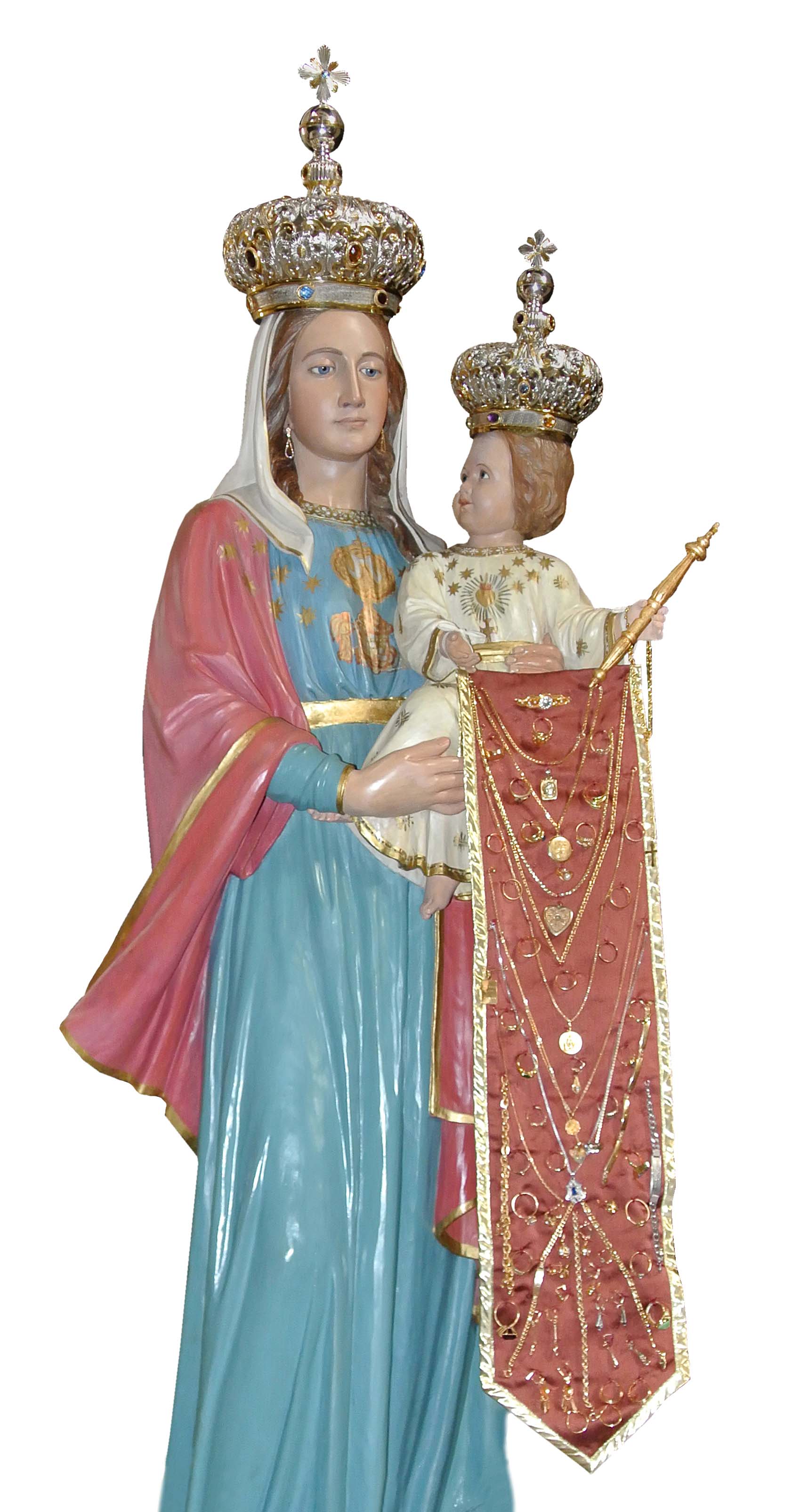
Our Morning Offering – 26 August – “The Month of the Immaculate Heart of Mary” and Feast of Our Lady Health of the Sick
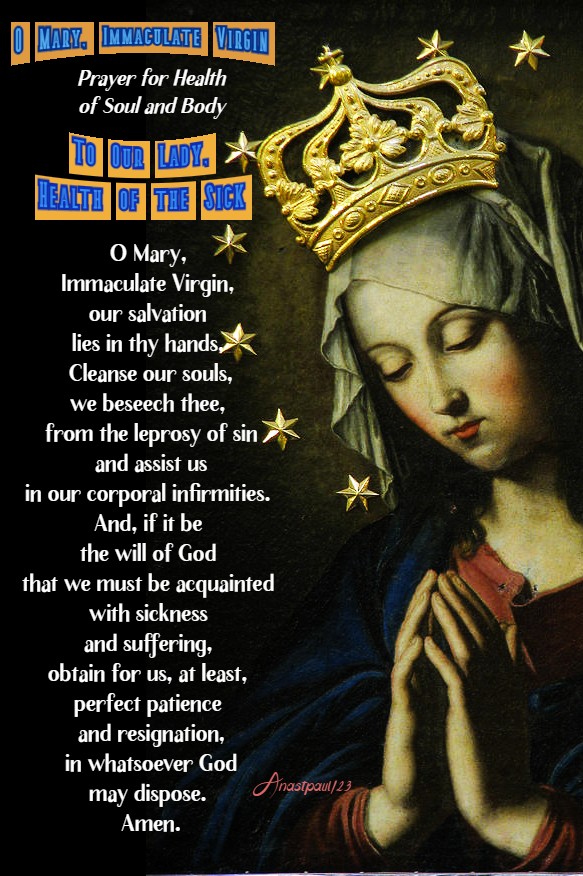
O Mary, Immaculate Virgin Prayer for Health of Soul and Body
O Mary, Immaculate Virgin, our salvation lies in thy hands. Cleanse our souls, we beseech thee, from the leprosy of sin and assist us in our corporal infirmities. And, if it be the will of God that we must be acquainted with sickness and suffering, obtain for us, at least, perfect patience and resignation, in whatsoever God may dispose. Amen.
26 August – Feast of Salus Infirmorum / Our Lady, Health of the Sick – Saturday before the last Sunday in August:
Salus Infirmorum / Our Lady, Health of the Sick By Cardinal Alexis Henri Marie Lepicier OSM (1863-1936) Prefect of the Sacred Congregation for Religious
“And I perfumed my dwelling as storax and galbanum and onyx and aloes and as the frankincense not cut and my odour is, as the purest balsam.“” (Ecclus 24:21)
Salus Infirmorum
The sin of our first parents not only deprived man of original justice and of all the gifts consequent thereon; it reduced him, furthermore, to a state of great weakness, so that it is impossible for us to accomplish works of supernatural value, without a special grace. Fallen man is like one sick, who has no relish for any nourishment, whatever. He is deficient in vital energy and his actions are wanting, in that vigour which naturally belongs to a healthy person. He is strongly inclined to vice and finds the practice of virtue tedious and difficult!
This natural incapacity regarding the performance of good works, is further increased, by actual sin, whether mortal or venial. The former, by depriving the soul of divine grace which is the principle of spiritual life, hinders man from doing anything pleasing to God, so as to merit eternal happiness. The latter, venial sin, by diminishing the fervour of charity, makes the practice of virtue labourious, since charity has for its effect, precisely to facilitate the performanc, of what is good. Sin is, therefore, a great evil because, if mortal, it saps altogetherthe spiritual energy of the soul and if venial, it notably weakens it. If, from individuals we pass onto nations, we perceive that sin, like a subtle poison, eats into the heart of them, weakening and preparing their ruin.
Divine bounty, which for bodily ailments, has procured us efficacious remedies, is not less industrious in providing the means to heal our spiritual maladies. With the Sacraments instituted by Jesus Christ, to restore our souls to grace or to augment it within us, God has also been pleased to grant us, in Mary’s aid, a potent remedy for our spiritual infirmities. In fact, Our Lady has not only given us Jesus Christ, the Shepherd and Physician of our souls but, furthermore, she watches over us as a tender mother does, by the cradle of an ailing child.
Besides this, Our Lady’s example encourages us in our conflict with the devil. For she is the Immaculate Virgin, who never was defiled by sin. Her sweet soul was always filled with the perfume of the noblest virtues.
Mary never ceases also to hearken to the voice of our supplications and to present them before the throne of God, often anticipating our requests and obtaining for us, through her own merits and those of Jesus Christ, all the helps necessary to us in our spiritual needs.
And what Our Lady does for individuals, she also does for whole nations. As a pity-full Queen, she succours them in their distress; she raises them from their bed of sickness and is, for them, a bulwark of defence (Cant. 8:10).
Our Lady’s power and motherly care not only embrace spiritual miseries: they also extend to the ills of the body. How often do we see Our Lady restoring health to the sick, who have recourse to her with filial confidence!
In Our Lady’s readiness to alleviate bodily ailments, shines forth, most splendidly, God’s love for her. It seems as if the Most High had placed no limit to the efficacy of His Mother’s intercession. While other saints are invoked only in particular cases of corporal infirmity, Our Lady’s power, on the other hand, is exercised over every kind of malady. Hence, we may say that, at her word, as once at the word of Jesus, the blind see, the lame walk, the lepers are cleansed and the deaf hear (Mt 11:5). The sole difference is that Jesus Christ, being God, wrought these miracles of His own personal authority, while Our Lady, obtains for us, of the Divine Clemency, the graces she asks, by virtue of the efficacy of her intercession with God.
However, although Our Lady is so powerful in curing all bodily ailments, yet, she does not always deliver her clients from every such trial because, God sees best to exercise them in patience that they may, thereby, win the reward prepared for them in Heaven. But when Our Lady does not restore bodily health, yet, for all that, she never ceases to act the part of a tender Mother toward us, watching over us and obtaining for us, in place of bodily strength, resignation to the divine will and interior peace – two sovereign means of sanctification and salvation!
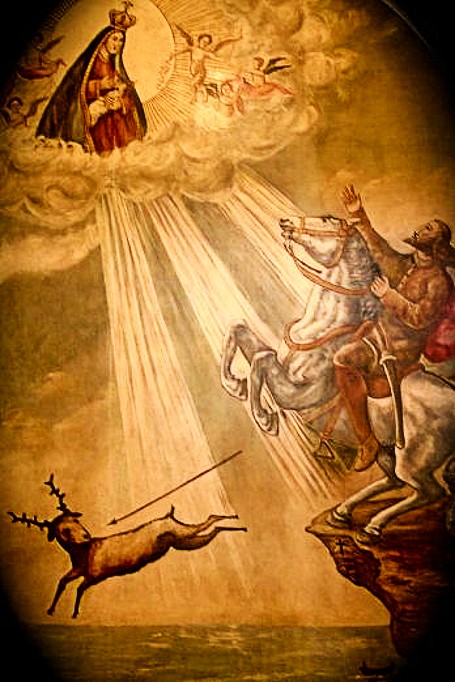
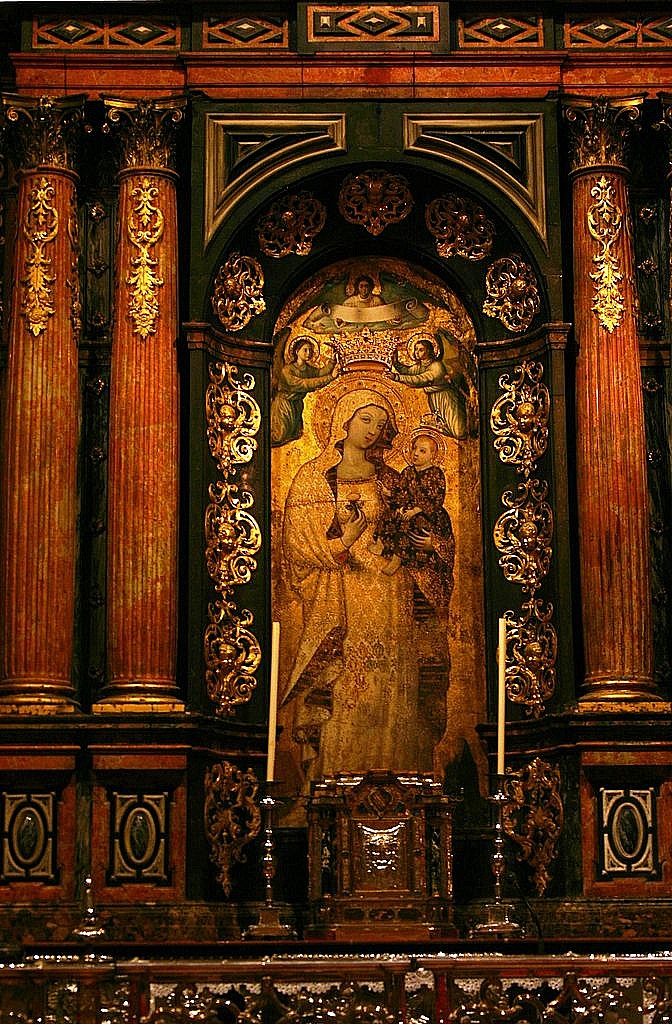
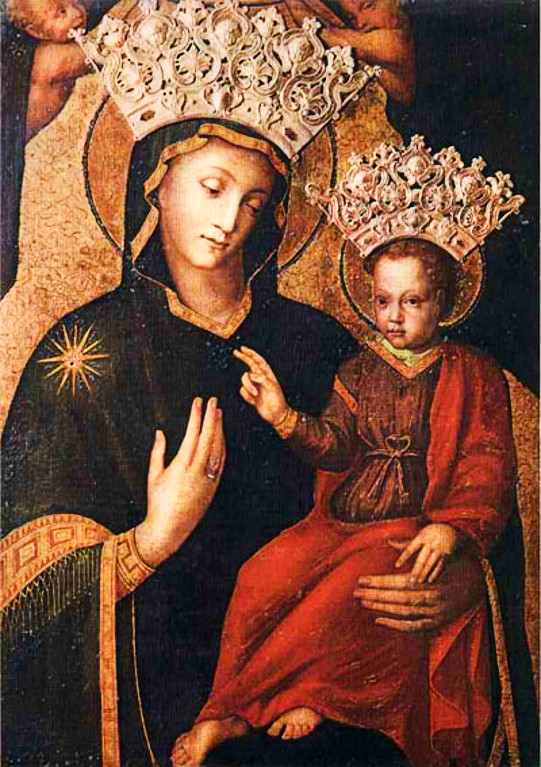
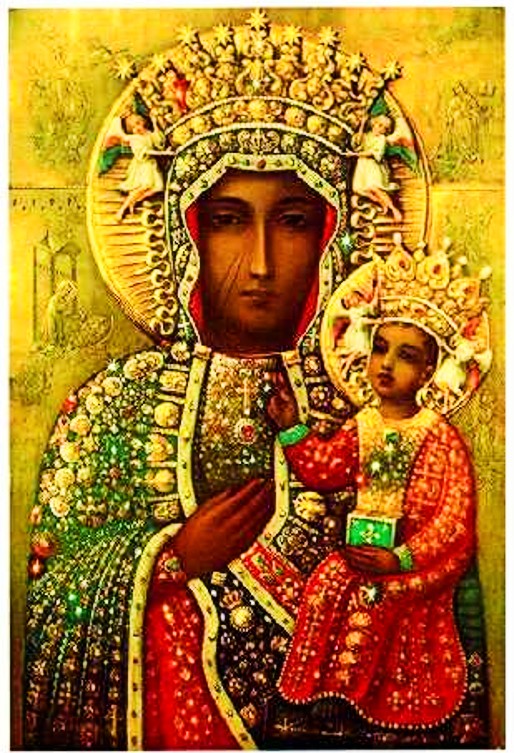
Our Lady of Czestochowa, Queen of Poland – Our Lady of Czestochowa is a revered icon of the Virgin Mary housed at the Jasna Góra Monastery in Częstochowa, Poland. Several Pontiffs have recognised the venerated icon, beginning with Pope Clement XI who issued a Canonical Coronation to the image on 8 September 1717 via the Vatican Chapter. Patron of Poland. According to tradition, the Icon of Jasna Góra (Bright Mountain) was painted by St Luke the Evangelist on a tabletop built by Jesus Himself and the Icon was discovered by St Helen, mother of Emperor Constantine and collector of Christian Relics, in the Holy Land. Visit our Mother here: https://anastpaul.wordpress.com/2017/08/26/blessed-feast-of-our-lady-of-czestochowa-queen-of-poland-26-august/
Salus Infirmorum / Our Lady, Health of the Sick – Saturday before the last Sunday in August
St Anastasius the Fuller St Bregwin of Canterbury St Elias of Syracuse St Eleutherius of Auxerre St Felix of Pistoia Bl Herluin Bl Ioachim Watanabe Jirozaemon St Irenaeus of Rome
St Jeanne Elisabeth des Bichier des Anges FC (1773-1838) (commonly referred to as St Elisabeth Bichier) and known as “the Good Sister” – Religious and co-Founder with Saint André Hubert Fournet – [After the approval of 2 miracles, he was Beatified on 16 May 1926 by Pope Pius XI and Canonised on June 1933 by the same Pope, after a further 2 miracles.](whom we celebrate on 13 May –https://anastpaul.com/2020/05/13/saint-of-the-day-13-may-saint-andre-hubert-fournet-1752-1834-the-good-father/) of the Sisters of the Cross, Sisters of St Andrew, a religious congregation which was established for the care of the poor and the instruction of rural children in the Diocese of Poitiers in 1807. She also helped to inspire the founding of a community of Priests dedicated to Missionary service, the St Elisabeth died in 1838, at which time there were about 600 Daughters of the Cross serving in some 100 communities. She was Beatified by Pope Pius XI in 1934 and Canonised by Pope Pius XII in 1947. Biography: https://anastpaul.com/2020/08/26/saint-of-the-day-26-august-saint-jeanne-elisabeth-des-bichier-des-anges-fc-1773-1838/
St Jean Bassano St Jean of Caramola Bl Juan Urgel Bl Margaret of Faenza St Maximilian of Rome St Melchizedek the Patriarch St Orontius of Lecce St Pandwyna St Rufinus of Capua St Secundus the Theban St Victor of Caesarea St Victor the Martyr St Vyevain of York
Martyrs of Celano – 3 Saints: Three Christians, Constantius, Simplicius and Victorinus, Martyred in the same area at roughly the same time. They were Martyred in c 159 in the Marsica region of Italy. At some point their relics were interred under the main Altar of the San Giovanni Vecchio Church in the Collegiata di Celano and were authenticated in 1057 by Pope Stephen IX. The city was depopulated in 1222; when it was re-built, the relics were re-enshrined in the Church.
St Philip Benizi OSM (1233-1285) Confessor, Co-Founder (one of the Seven Holy Founders of the Order of Servants of Mary) OSM, Servite Priest Genera\Superior, Reformer, Preacher, Medical Doctor. St Philip was Beatified on 8 October 1645 by Pope Innocent X and Canonised on 12 April 1671 by Pope Clement X – he was the first Servite to be Canonised. Born on15 August (Feast of the Assumption and the day that the Blessed Virgin appeared to the first of the Founders of the Servite Order) 1233 at district of Oltrarno, Florence, Italy -and died on 22 August (Octave of the Assumption i.e. the Feast of the Immaculate Heart of Mary) 1285 at Todi, Italy). This Amazing Life: https://anastpaul.wordpress.com/2017/08/23/saint-of-the-day-23-august-st-philip-benezi/ AND: https://anastpaul.com/2022/08/23/saint-of-the-day-23-august-st-philip-benizi-osm-1233-1285-confessor/
St Abbondius of Rome St Altigianus St Apollinaris of Rheims St Archelaus of Ostia St Asterius of Aegea St Claudius of Aegea St Domnina of Aegea St Eleazar of Lyons St Eonagh St Flavian of Autun Bl Giacomo Bianconi of Mevania St Hilarinus St Ireneus of Rome St Lupo of Novi St Luppus St Marcian of Saignon, France – Priest, Abbot St Maximus of Ostia St Minervius of Lyons St Neon of Aegea St Quiriacus of Ostia St Theonilla of Aegea St Timothy of Rheims
Martyrs of Agea – 4 Saints: A group of Christian brothers, Asterius, Claudius and Neon, denounced by their step-mother who were then tortured and Martyred in the persecutions of Pro-consul Lysias. They were crucified in 285 outside the walls of Aegea, Cilicia (in Asia Minor) and their bodies left for scavengers.
St Andrew of Fiesole (Died c880) Archdeacon, his body is incorrupt. St Anthusa of Seleucia St Antoninus of Rome St Arnulf of Eynesbury St Athanasius of Tarsus Bl Bernard Perani St Dalmau Llebaría Torné St Epictetus of Ostia St Ethelgitha of Northumbria St Fabrician of Toledo St Felix of Ostia
St John Kemble (1599 – 1679) Martyr, Priest. Ordained in 1625, he returned to Monmouthshire and served more than 50 years as an itinerant Priest, winning admirers even among Protestants. After being dragged on a hurdle to Widemarsh Common, Kemble declared on the scaffold that he died for the religion that had made this country Christian and that he forgave all his enemies. He was then obliged to encourage the executioner, who had no stomach for his task. Life and Death: https://anastpaul.com/2018/08/22/saint-of-the-day-22-august-st-john-kemble-1599-1679-martyr/
St John Wall St Josep Roselló Sans St Julio Melgar Salgado St Maprilis of Ostia St Martial of Ostia St Maurus of Rheims St Philibert of Toledo Bl Richard Kirkman St Saturninus of Ostia Bl Simeon Lukach St Sigfrid of Wearmouth St Symphorian of Autun
St Agapius of Edessa St Agathonicus of Constantinople St Anastasius Cornicularius St Aria of Rome St Avitus I of Clermont (c525-c600) Bishop St Bassa of Edessa Bl Beatrice de Roelas St Bernhard of Lérida St Bernard de Alziva St Bonosus St Camerinus of Sardinia St Cameron St Cisellus of Sardinia St Cyriaca St Euprepius of Verona St Fidelis of Edessa St Theogonius of Edessa St Gracia of Lérida St Hardulph St Joseph Nien Vien St Leontius the Elder St Luxorius of Sardinia St Maria of Lérida St Maximianus the Soldier St Maximilian of Antioch St Natale of Casale Monferrato St Paternus of Fondi St Privatus of Mende St Quadratus of Utica
St Amor of Amorbach St Anastasius of Terni St Benedicta of Lorraine St Carloman St Cecilia of Lorraine
St Clare of the Cross of Montefalco (c 1269-1308) Augustinian Nun and Abbess, before becoming a nun, St Clare was a member of the Third Order of St Francis (Secular), Mystic, Penitent, Spiritual adviser. Beatified by Pope Clement XII. On 8 December 1881, the Feast of the Immaculate Conception, Pope Leo XIII Canonised Clare. Her Life: https://anastpaul.com/2019/08/17/saint-of-the-day-17-august-saint-clare-of-the-cross-of-montefalco-c-1269-1308/
St Donatus of Ripacandida OSB (1179-1198) Monk St Drithelm St Elias the Younger St Eusebius of Sicily St James the Deacon St Jeroen of Noordwijk St Juliana of Ptolemais St Mamas St Myron of Cyzicus
St Nicolò Politi (1117-1167) Basilian Monk and Hermit. He was known for his miracles even during his childhood and was Venerated as a saint even before his death. St Nicolò was Canonised on 7SJune 1507, at Saint Peter’s Basilica, Rome, by Pope Julius II. About St Nicolò: https://anastpaul.com/2020/08/17/saint-of-the-day-17-august-st-nicolo-politi-1117-1167/
Blessed Angelo Agostini Mazzinghi O.Carm. (1385-1438) was an Italian Priest and a professed member of the Carmelite Order. He was a noted Preacher, Prior and Reformer, Teacher of theology and was known for his pious devotion to the Holy Eucharist, the Blessed Virgin Mary and the Carmelite Rule of Life and to the profession of the Gospel. His Life: https://anastpaul.com/2019/08/16/saint-of-the-day-16-august-blessed-angelo-agostini-mazzinghi-o-carm-1385-1438/
St Arsacius of Nicomedia St Frambaldo Bl Iacobus Bunzo Gengoro Bl Jean-Baptiste Menestrel Bl John of Saint Martha Bl Laurence Loricatus Bl Magdalena Kiyota Bokusai Bl Maria Gengoro Bl Ralph de la Futaye St Serena Bl Simon Kiyota Bokusai St Theodulus of Valais (4th Century) Bishop Bl Thomas Gengoro St Titus the Deacon
St Ugolina of Vercelli (c 1239-c 1300) Anchorite, Recluse, Penitent, Spiritual advisor. The very strange story that of this Blessed Ugolina who shut herself in a hermitage, representing herself as a man and remained there for forty-seven years! The aim of her subterfuge was to escape the aims of her father, who wished her to marry. In order not to reveal her secret, she called herself Ugo without revealing her identity to anyone. for nearly fifty years Her Life: https://anastpaul.com/2021/08/16/saint-of-the-day-16-august-saint-ugolina-of-vercelli-c-1239-c-1300/
Martyrs of Palestine – 33 Saints: Thirty-three Christians Martyred in Palestine; they are commemorated in old martyrologies but the date and exact location have been lost.
St John Berchmans SJ (1599-1621) Jesuit Novice – born Jan Berchmans on 13 March 1599 at Driest, Brabant, Belgium and died on 13 August 1621 at Rome, Italy of natural causes. Patronages – Altar Servers, Jesuit novices and students. He had a special devotion to God’s Mother and to him is owed the Little Rosary of the Immaculate Conception. Biography: https://anastpaul.com/2019/08/13/saint-of-the-day-13-august-saint-john-berchmans-sj-1599-1621/
St Anastasius the Monk St Anastasius the Priest St Benildus Romançon FSC (1805-1862) Teacher of the Brothers of Christian Schools St Cassian of Todi St Concordia Bl Gertrude of Altenberg St Helen of Burgos St Herulph of Langres Bl John of Alvernia St Junian of Mairé St Ludolph
St Maximus the Confessor (c 580-662) Father of the Church, Monk, Abbot, Theologian, Confessor, Scholar, Writer. Also known as St Maximus of Constantinople and St Maximus the Theologian. St Maximus, a man of fearless courage in witnessing to – “confessing” – even while suffering, the integrity of his faith in Jesus Christ, true God and true man, Saviour of the world and of His Holy Catholic Church. His Life: https://anastpaul.com/2020/08/13/saint-of-the-day-13-august-saint-maximus-the-confessor-c-580-662-father-of-the-church/
St Wigbert of Fritzlar (c 675-c 746) Born in England, a learned Scholar and Abbot, Missionary, Miracle-worker, gifted with a penetrating understanding of Sacred Scripture as well as the gift of prophecy, companion of St Boniface, the Apostle of Germany. Wigbert was known as a quiet and gentle man and a great teacher. Both St Alcuin and St Bede knew and mentioned him in their historical writings of the times and of the Church. St Bede admired his contempt of this world and his learning. A fascinating and much-admired Saint: https://anastpaul.com/2022/08/13/saint-of-the-day-13-august-st-wigbert-of-fritzlar-c-675-c-746/
St Porcarius of Lerins St Simplicio of Vercelli St Ust
Martyrs of Augsburg – 4 Saints: The mother, Hilaria,and three friends of of Saint Afra ofAugsburg. While visiting the tomb of Saint Afra who were seized by the authorities and Martyred when they visited Afra’s tomb – Digna, Eunomia, Euprepia and Hilaria. They were burned alive c 304.
Martyrs of Rome – 5 Saints: A group of Christians Martyred together in the persecutions of Diocletian. We know little more than their names – Crescentian, Juliana, Largio, Nimmia and Quiriacus. They died in c304 in Rome, Italy and were buried on the Ostian Way outside Rome.
St Deusdedit the Cobbler (6th Century) St Gerontius Bl Hugh of Montaigu St Paula of Carthage St Thiento of Wessobrunn
Martyrs of Alexandria – 260+ Saints: A large number of Christians who were Martyred in Alexandria, Egypt between 260 and 267 in the persecutions of Decius and Valerian, whose names have not come down to us and who are commemorated together.
Martyrs of Rome – 165 Saints: Group of 165 Christians Martyred in the persecutions of Aurelian. 274 in Rome, Italy.
St Eleutherius of Constantinople St Ellidius St Famianus of Compostela St Gedeon of Besancon St Hormisdas of Persia St Largus St Leobald of Fleury St Leonidas of Constantinople St Marinus of Anzarba St Mummolus of Fleury St Myron the Wonder Worker St Rathard of Diessen St Severus of Vienne St Sigrada St Smaragdus St Ternatius of Besançon St Ultan of Crayke Blessed William of Castellammare di Stabia OFM (Died 1364) Martyr
Martyrs of Albano – 4 Saints: Four Christians who were Martyred together, and about we today know little more than their names – Carpóforo, Secondo, Severiano and Vittorino. They were martyred in Albano, Italy – their remains are interred in the San Senator cemetery, on the Appian Way, 15 miles from Rome, Italy.
Martyrs of Rome – 5 Saints: Five Christians Martyred together; we know nothing else about them but the names – Ciriaco, Crescenziano, Giuliana, Memmia and Smaragdus. They were martyred at the 7 mile marker, on the Via Ostia, Rome, Italy.

















 AnaStpaul
You must be logged in to post a comment.