Posted in MARIAN TITLES

Nuestra Señora del Milagro / Our Lady of the Miracle, Lima, Peru (1630) and Memorials of the Saints – 19 July

Nuestra Señora del Milagro / Our Lady of the Miracle, Lima, Peru (1630) – 19 July and 27 November:

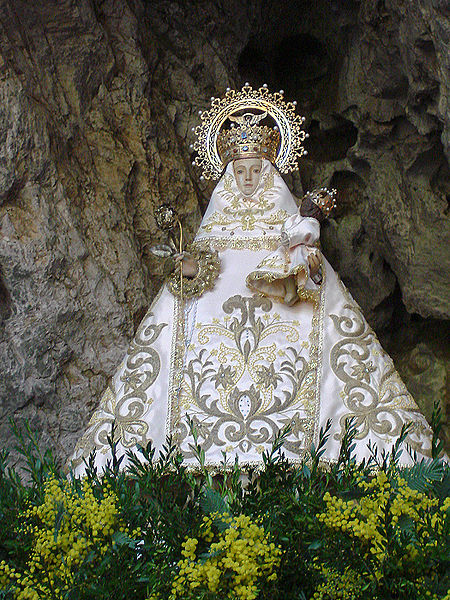
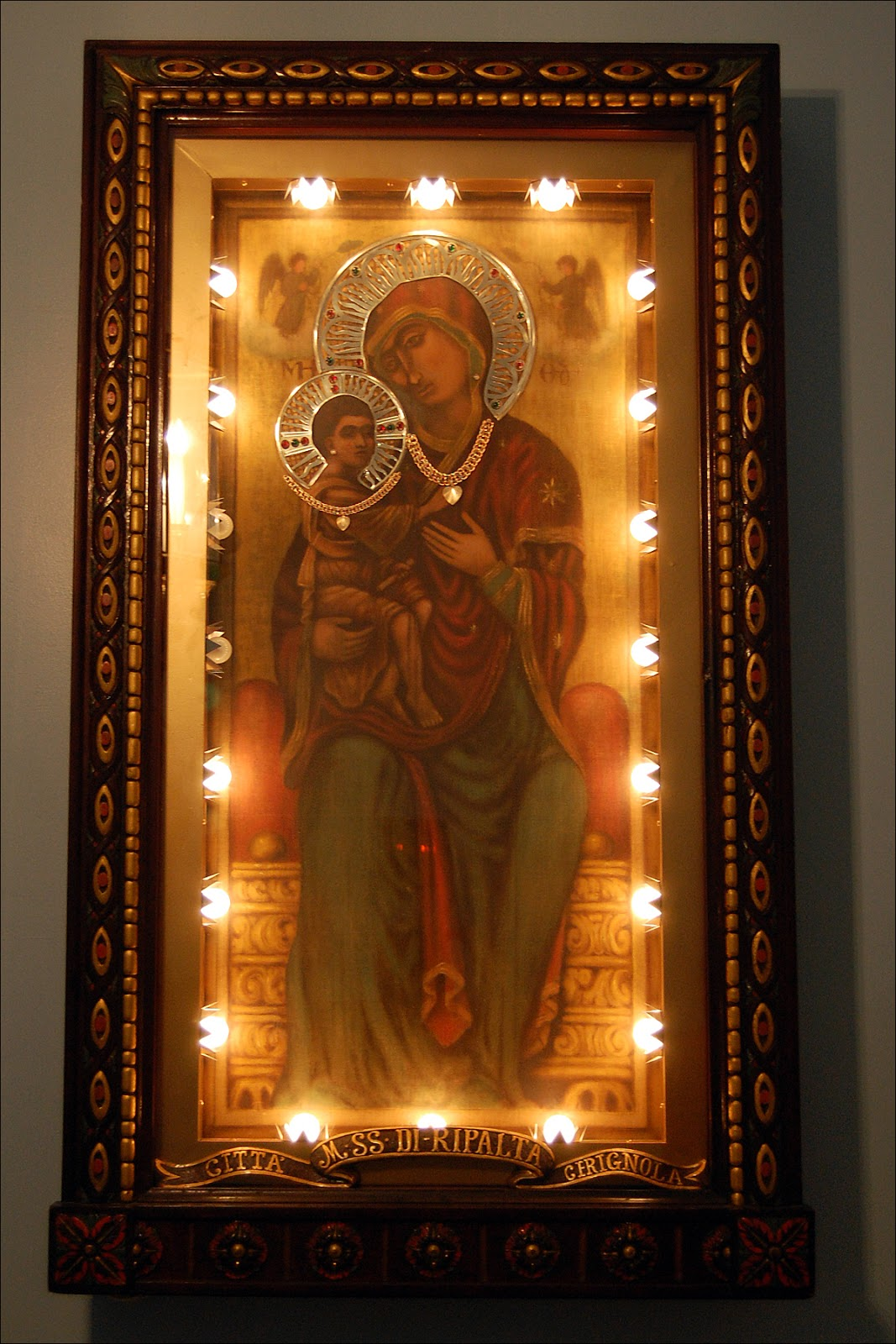
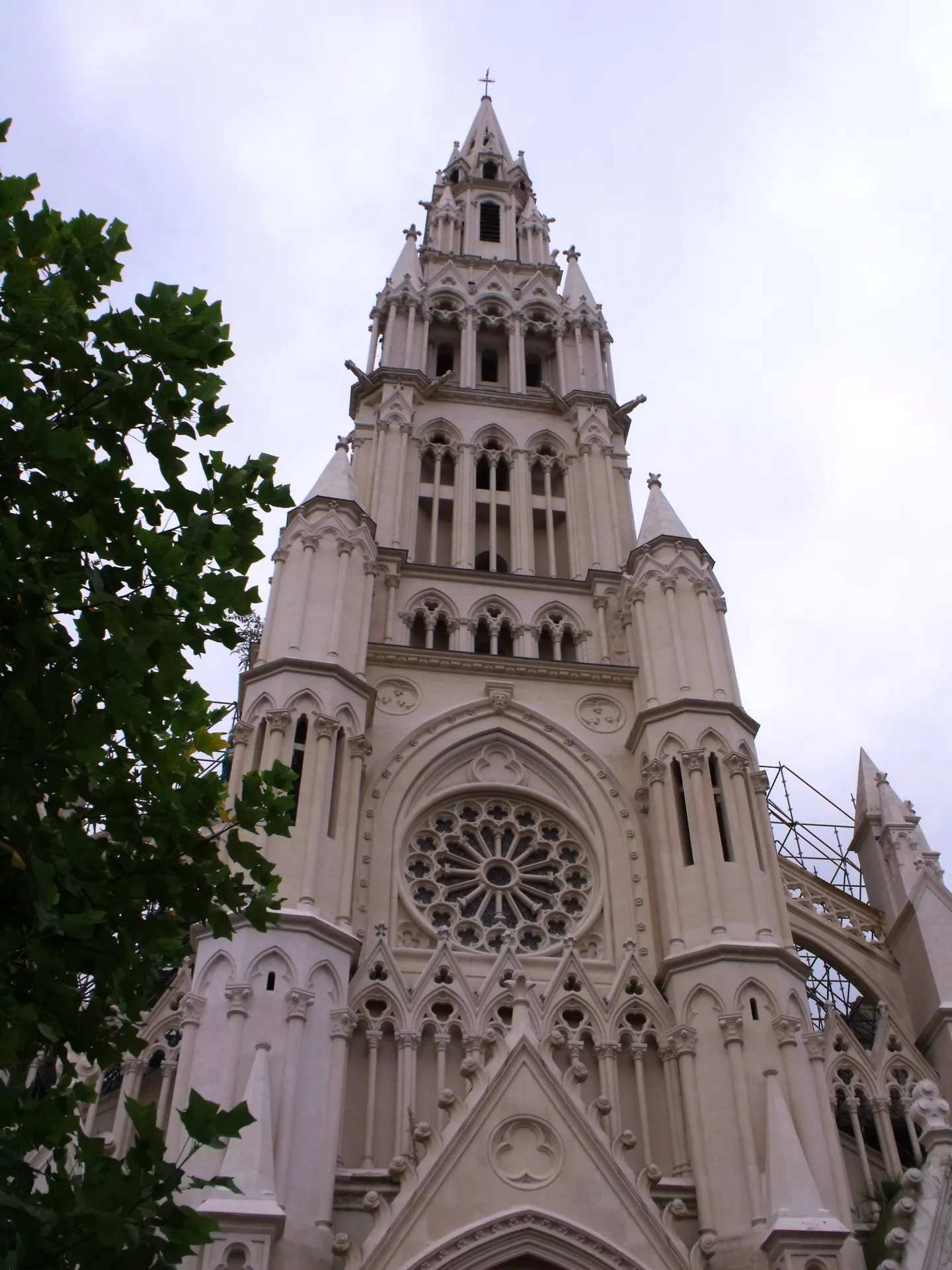
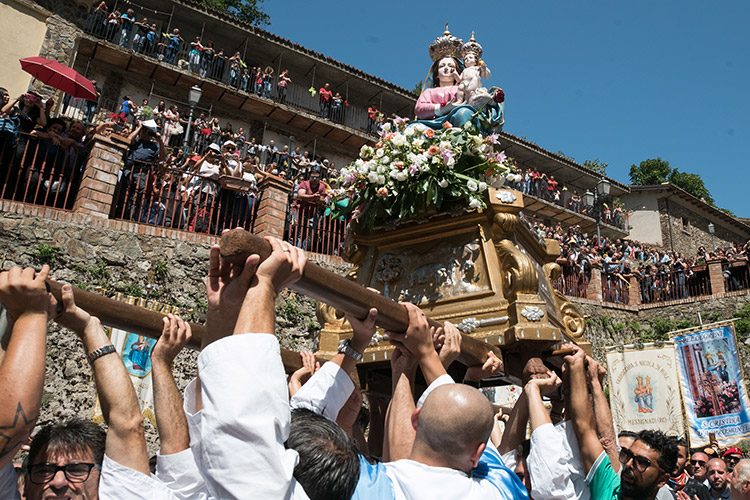
The Franciscan Friars who accompanied the Conquest to Peru hung an image of the Immaculate Conception over the door of their first Church in Lima. On missionary journeys around the region, they would take the image, “La Misionera,” with them. They were in Cusco, the Inca capital, on 23 May 1536 when, during the rebellion of Manco Inca against the two-year Spanish regime, natives trapped many Spaniards in a hut and set fire to the straw roof. La Misionera was seen by all to leave her place inside and to appear above the burning building together with Santiago (St.James the Greater). The fire ceased and all were saved. In honour of this event, the Spanish built the Church of the Triumph, now an adjunct of the Cusco Cathedral.

Back in Lima, after the Franciscans surrounded the little Chapel with a big Monastery complex, the image over the door was gradually forgotten. By the 1600s, it had one regular devotee, a poor woman. One day she heard the Virgin speak: “You alone, daughter, among all the people here, visit me and pray to me. One day I will repay you.” After the woman told saintly Brother Juan Gomez, he often remarked, “Lima does not recognise the great good it has in this miraculous image, but soon it will know.”

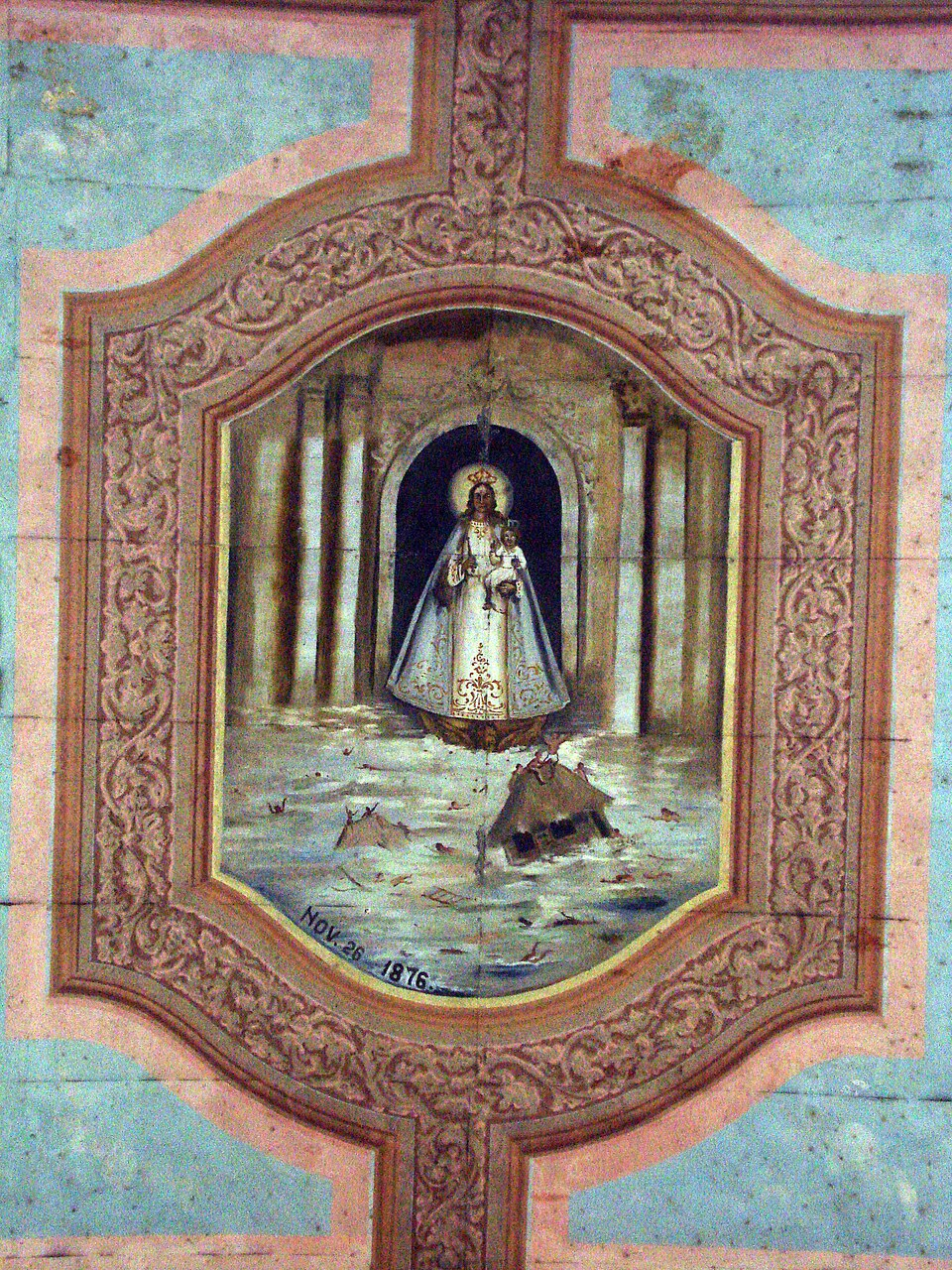
On 27 November 1630, when most of the people of Lima were attending a bullfight in the main plaza, a violent earthquake struck the City. All were terrified, for it seemed certain that they would perish. But those near the Franciscan Church saw the image of Our Lady turn in the direction of the Blessed Sacrament, with her hands held in suppliant gesture. Abruptly, the earthquake stopped.

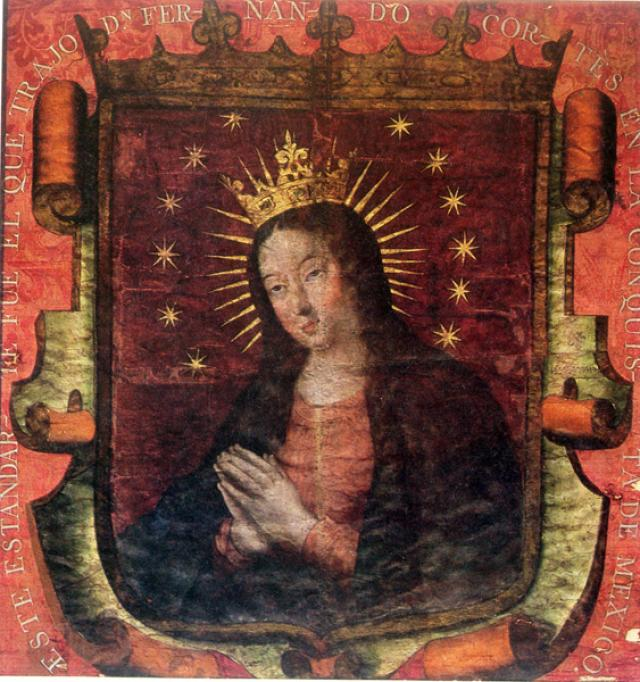
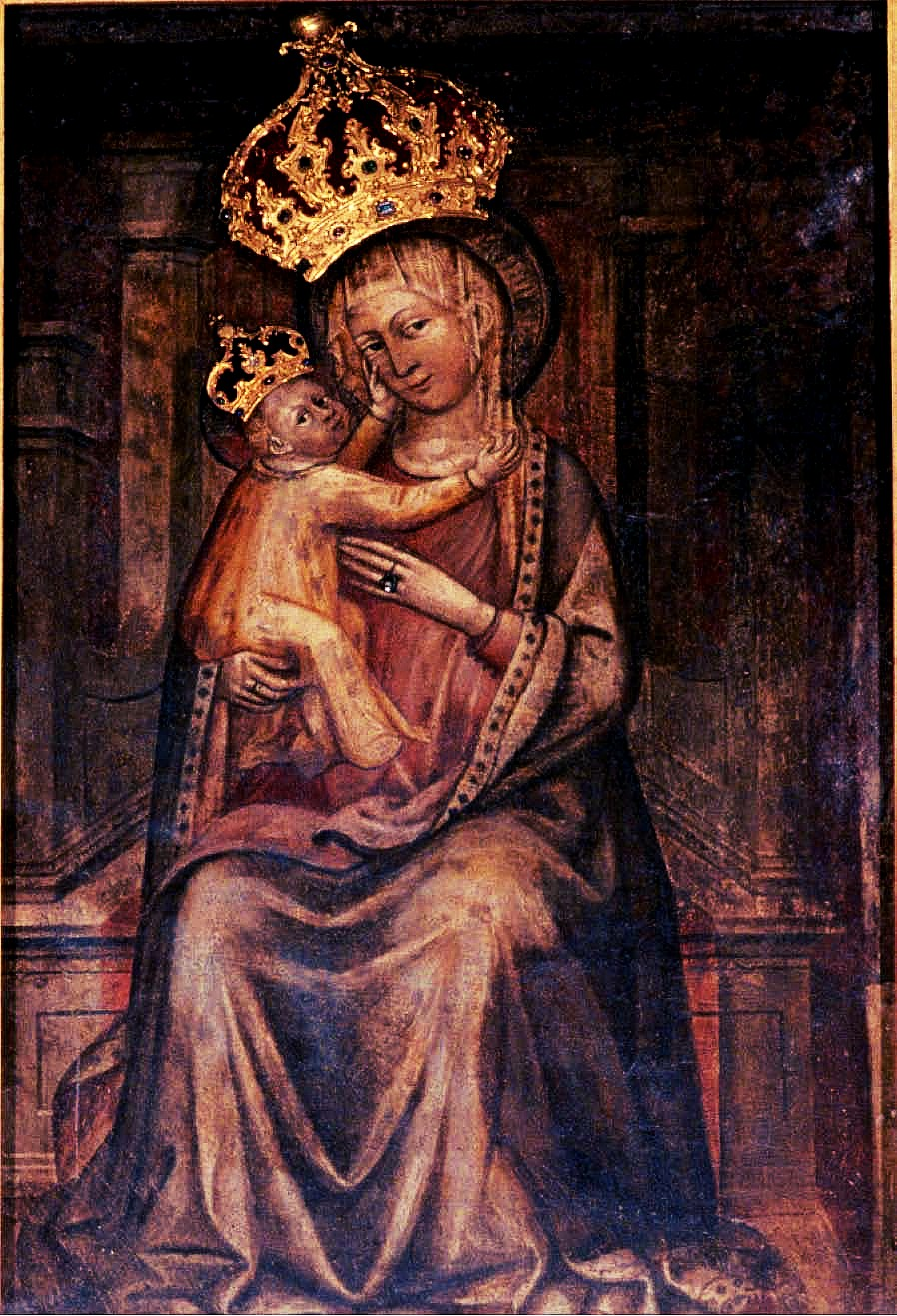
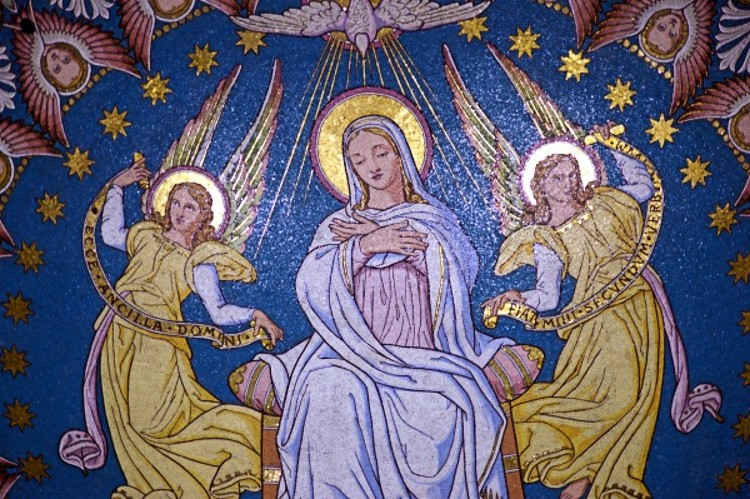
Several hours later, at vespers that evening, while the populace was leaving the Church, the image, in full view of all present, returned to its original position, when the Marian hymn Tota Pulchra was intoned. This painting shows the Virgin kneeling in prayer, with her arms crossed upon her breast, presumably interceding for Lima.

Now called “Our Lady of the Miracle,” the image was given a magnificent new Church. In 1835, the church burned down. Only the image remained intact. On J19 une 1953, the Papal Nuncio crowned the miraculous image The feast of Our Lady of the Miracle is on 27 November the anniversary of the 1630 earthquake and today the Crowning is honoured each year.

St Ambrose Autpertus
Bl Antonio of Valladolid
St Aurea of Cordoba
St Arsenius the Great (c 354-c 449) Deacon, Hermit, Desert Father.
Bl Bernhard of Rodez
St Daria of Constantinople
St Epaphras of Colosse
St Felix of Verona

St John Plessington (c 1637-1679) Martyr, Priest. Also celebrated on 25 October as one of the Forty Martyrs of England and Wales.

St Macrina the Younger (c 327-379) Virgin, Ascetic. With charm and grace, St Macrina ruled the roost in a family of saints. St Basil the Elder and St Emmelia, her parents, had ten children including the younger St Basil the Great (329-379) Father and Doctor of the Church, St Gregory of Nyssa (c 335–C 395) Father of the Church and St Peter of Sebaste Bishop (c 340–391). As the eldest child, Macrina exercised a formative influence on her more famous brothers and even on her mother.

St Martin of Trier
St Michael the Sabaitè
Bl Pascasio of Lyon

St Peter Crisci of Foligno TOSF (c 1243-1323) called a “Fool for Christ” – Franciscan Tertiary, Penitent, Hermit, Pilgrim, Beggar, Preacher.

St Romain of Ryazan
St Pope Symachus
St Vicente Cecilia Gallardo

Martyrs of Meros – 3 saints: Three Christians tortured and martyred together in the persecutions of emperor Julian the Apostate and governor Almachio. We know nothing else about them but the names – Macedoniuis, Tatian and Theodule.
They were burned to death on an iron grill in Meros, Phrygia (in modern Turkey).

Martyrs of China: 3 Beati
Elisabeth Qin Bianshi Elisabeth
Ioannes Baptista Zhu Wurui
Simon Qin Chunfu

Posted in SAINT of the DAY

Saint of the Day – 19 July – Saint Romain of Ryazan

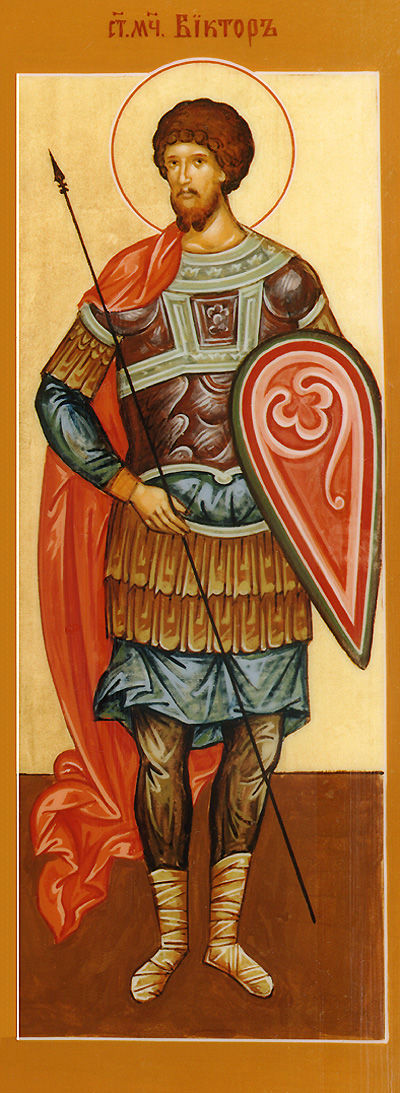
Saint Romain of Ryazan, also known as Romanus or Roman. Son of the Prince of Ryazan, Russia, Roman was from a family who, during the Tatar yoke, became famous as defenders of Christianity. Both of his grandfathers died for their country in battle with Batu Khan, the founder of the Golden Horde. Raised to have a great love for the Catholic faith, the prince took care of impoverished and oppressed subjects, and protected them from the violence and robbery of the Khan’s tax collectors. As a consequence, these people denounced him before the Tatar Khan Mengu-Timur.

In 1270, Roman was summoned to the Horde, where the Khan declared that he would have to choose: either martyrdom or the Tatar (Islamic) faith. The prince answered that a Christian cannot change a true faith to a false one. For his firmness in the confession of faith, he was subjected to cruel tortures: they cut off his tongue, gouged out his eyes, cut off his ears and lips, cut off his arms and legs, flayed the skin from his head and, having chopped it off, put it onto a spear. Veneration for him began immediately. His relics were secretly returned to Ryazan and buried. Their place of burial remains unknown.

The first defeat of Napoleon by the Russians when he invaded in 1812, occured on St Roman’s feast day.

Posted in MARIAN TITLES

Notre-Dame-de-Bonne Délivrance / Our Lady of Good Deliverance, Schwarzen Madonna / Black Madonna of Einsiedeln, Schwyz, Switzerland (853) and Memorials of the Saints – 18 July

Notre-Dame-de-Bonne Délivrance / Our Lady of Good Deliverance (14th Century): 18 July
Since the 1000s, the Church of Saint-Etienne-des-Grès in the old Latin Quarter of Paris had a chapel to Our Lady of Good Deliverance, where, across the centuries, pilgrims sought the Virgin’s help in their of sufferings. During the Wars of Religion and counter-Reformation, her Confraternity had 12,000 members, including the King and Queen of France.

Schwarzen Madonna / Black Madonna of Einsiedeln, Schwyz, Switzerland (853) – First Sunday after Our Lady of Mount Carmel:

“Einsiedeln” means “hermitage.” It was the home of St Meinrad (c 797–861) Martyr, a Benedictine Monk who retreated to this place in the pine woods to live in solitude, with a pair of tame crows for company. Abbess Hildegarde of Zurich gave him a Statue of the Madonna for the forest Chapel built in 853, which soon became a place of pilgrimage. In 863, hoping to get his stash of pilgrim donations, two thieves murdered the Saint, who was living in poverty. The crows alerted people, who found and buried the body and executed the killers.

In 948, Benedictines built a Church on the site of St Meinrad’s hermitage. On 14 September, the night before Bishop Conrad was to bless the new Church, he dreamed that Jesus Himself was blessing it. In the morning, when he began the ceremony, everyone heard a voice say, “Stop, for the Church has been Consecrated divinely.” In 1028 the first of five fires destroyed everything but the Chapel containing the Statue. These miracles increased popular devotion to the Shrine, which was repeatedly rebuilt.

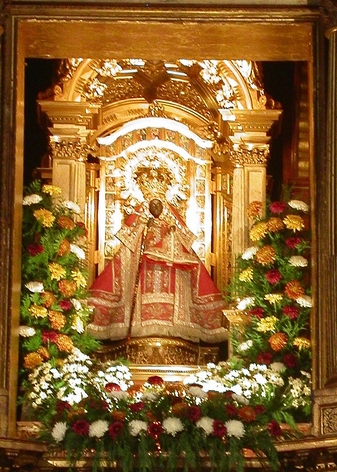
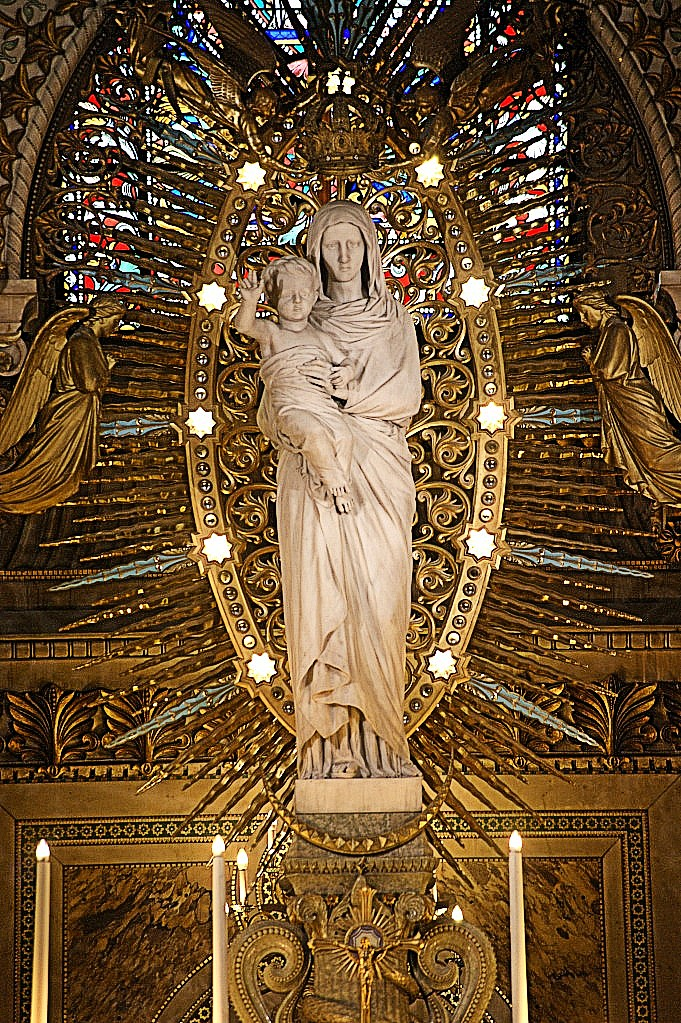
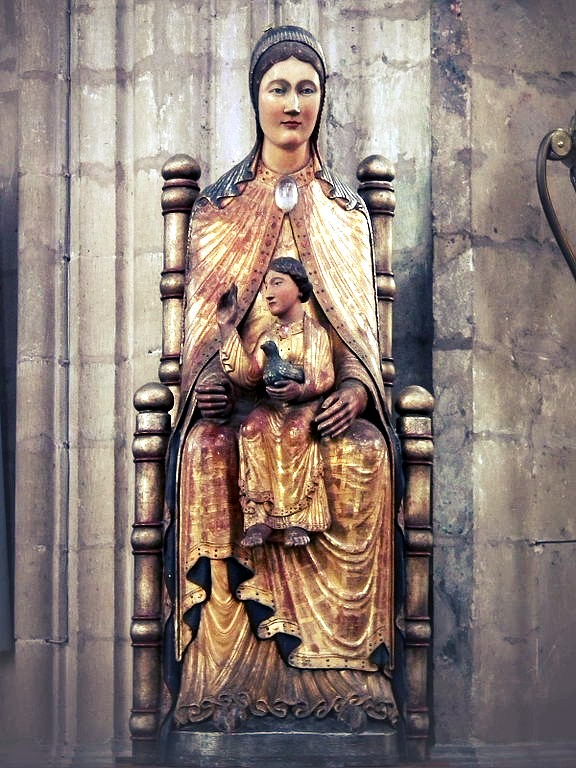
Although tradition holds the present Statue to be the original, it is unlike any that remain from the Ottonian period. Carved of dark wood, the graceful, sweet-faced Madonna, her right knee slightly bent, stands a little over three feet tall, holding the Divine Child in her left arm. This is a typical late Gothic work of the mid-1400s, possibly installed after the third fire in 1465. Displayed before a great aureole of golden rays,the Statue has worn elaborate vestments in colours matching those of Priests for each liturgical season. The Feast of Our Lady of Einsiedeln is 16 July but is usually celebrated on the Sunday following. Even greater pilgrimages occur on 14 September in honour of the Church’s miraculous Consecration.

St Aemilian of Dorostorium
St Alanus of Sassovivo
St Alfons Tracki
Blessed Angeline of Marsciano
Bl Arnold of Amiens
St Arnold of Arnoldsweiler
St Arnoul the Martyr
St Arnulf of Metz (c 580-640) Bishop
St Athanasius of Clysma
Bl Bernard de Arenis
Bl Bertha de Marbais

St Bruno of Segni OSB (1049-1123) Benedictine Bishop, Confessor, Missionary, Papal Advisor, Theologian.

St Ðaminh Ðinh Ðat
St Edburgh of Bicester (Died c 620) Abbess, Nun, Pr5incess
St Elio of Koper

St Frederick of Utrecht (c 815 – c 838) Martyr Bishop

St Goneri of Treguier
St Gundenis of Carthage
Bl Herveus
Bl Jean-Baptiste de Bruxelles
St Marina of Ourense
St Maternus of Milan
St Minnborinus
St Pambo of the Nitrian Desert
St Philastrius of Brescia
St Rufillus of Forlimpopoli
St Scariberga of Yvelines

St Simon (Szymon) of Lipnica OFM Cap (1435/1440-c 1482) Priest of the Franciscan Order of Friars Minor Capuchin.

St Theneva
St Theodosia of Constantinople

Martyrs of Silistria – 7 saints: Seven Christians who were martyred together. No details about them have survived but the names – Bassus, Donata, Justus, Marinus, Maximus, Paulus and Secunda. They were martyred in Silistria (Durostorum), Moesia (in modern Bulgaria), date unknown.

Martyrs of Tivoli – 8 saints: A widow, Symphorosa and her seven sons ( Crescens, Eugene, Julian, Justin, Nemesius, Primitivus and Stracteus) martyred in Tivoli, Italy in the 2nd-century persecutions of Hadrian.

Posted in SAINT of the DAY

Saint of the Day – 18 July – Saint Clair of Epte

St Clair of Epte, also known as Clair of Beauvais or Clare. The name Sinclair comes indirectly from St. Clare or St. Clere, or St. Clair, or in Latin, Sanctus Clarus. He lived near the town that is now called St. Clair sur l’Epte, northwest of Paris in France, on the edge of Normandy.

Born to the nobility, Clair felt a call to religious life, and lived at home much like a monk. His father arranged a marriage for him to a nearby wealthy heiress, and when the young man said he preferred to devote himself to God, the woman tried to seduce him in order to joined the two families together. When he refused her, she became enraged, and swore vengeance. Clair fled to the region of Normandy, France, where he lived as a hermit. Word spread of his wisdom and ability to heal by prayer, and Clair had to keep moving from place to place in order to have solitude. Ordained a priest in 870. Hermit in the woods around Nacqueville, France, and then at a hermitage on the banks of the river Epte where he lived with brother hermit and spiritual son named Cyrin. He was finally located by agents sent by his spurned would-be wife, and murdered on her orders.

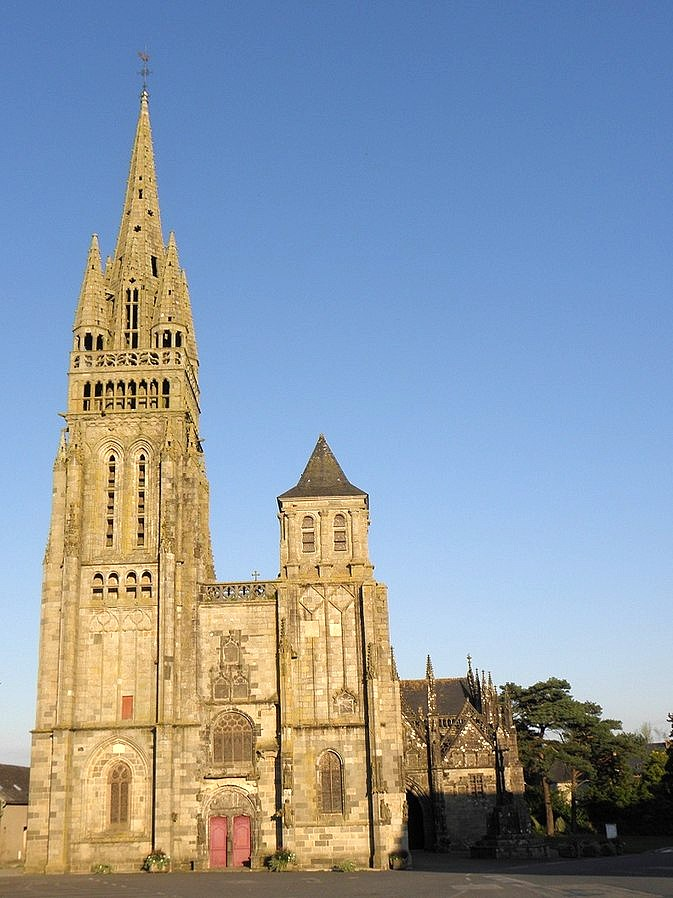
The church of Our Lady, in Saint-Clair-sur-Epte

One of the agents beheaded Clair whilst he knelt in prayer, which is why he is frequently depicted, like St Denis, holding his head in his hands. The blood flowed copiously from his neck but a spring instantly flowed out of the ground and washed away all signs of it.

Clair’s death and the miracle of the spring increased his renown. His hut was transformed into a chapel and eventually a church was built on the spot. Ten years after the murder enough houses were built at the spot to establish a village which was named, St Clair, after the martyr.

The treaty of Saint-Clair-sur-Epte in 911 established Rollo, a Norse warlord and Viking leader, as the first Duke of Normandy.

Posted in JULY - The MOST PRECIOUS BLOOD

Thought for the Day – 18 July – 18th Day – The Precious Blood a Lesson of Sacrifice

The Precious Blood – Short Meditations for July

By Rev. Richard F. Clarke

18th Day – The Precious Blood a Lesson of Sacrifice

Why did the Eternal Father choose for His co-equal Son that He should close His sojourn on earth by the cruel agony and unspeakable degradation of shedding for man the last drop of the Precious Blood? Would it not have sufficed to redeem us from sin if He had appeared on earth for one instant clad in human form? Yes, but then man would never have learnt the lesson of sacrifice. He would not have been moved to regard suffering as a necessary part of the ideal life. We thank Thee, O Lord, for this Thy commiseration for our blindness and our ignorance!

The lesson of sacrifice for the sake of others is one that Our Lord’s life teaches us throughout. Nothing for Himself, no concession to His human nature for its own sake. No avoiding of pain or reproach on account of the suffering it entailed, but rather a joyful acceptance of all that might be to man a source of grace and a motive of virtue. May I rejoice, O Lord, to have the privilege of following Thee step by step along Thy path of suffering.

This road of suffering is also one that leads us to solid happiness in this world and eternal joy in the next. It is for our own interest to sacrifice ourselves. Who are so happy as they who shed their blood for Christ? For them no purgatory, whatever their past life, but an immediate entrance into the celestial paradise. Such a sacrifice as this may not be asked of me, but how do I make those that I know would be pleasing to Him Who sacrificed Himself wholly for me?

Posted in SAINT of the DAY

Saint of the Day – 2 June – Saint Photinus of Lyons (c87-177) & Companions, Bishop and Martyr

Saint of the Day – 2 June – Saint Photinus of Lyons (c87-177) & Companions the First Bishop of Lyons, Martyr . Name means: the sweet one / the lovely one (Greek). Patronages – of the Archdiocese of Lyons and of the City of Lyons. Also known as – Pothin, Pothinus, Potino, Potinus.

The Roman Martyrology reads today: “At Lyons, many holy Martyrs (Photinus, the Bishop, Sanctus, the Deacond, Vetius, Epagathus, Maturus, Pontictus, Biblis, Attalus, Alexander and Blandina, with many others, whose many valiant combats in the time of Marcus Aurelius are recorded in a letter from the Church at Lyons to the Churches of Asia and Phrygia. …”

According to St Irenaeus, Photinus was born around the year 87, probably at Smyrna. He was a disciple of St Polycarp, the Apostolic Father and Martyr Bishop of Smyrna and accompanied him to Rome in 158.

St Pope Anicletus sent him to evangelise the Gauls. Photinus established himself at Lyons and founded there a flourishing Church, over which he presided for almost twenty years. In asserting his own authority as bishop of Lyons, St Irenaeus says that Pothinus had been his predecessor in the position and the first Bishop of that City.

By 177, a large number of the Christians in the area of Vienne and Lyons were Greeks from Asia. A violent persecution began against them while Photinus was the Bishop of Lyons and St Irenæus, who had been sent there by St Polycarp, was a Priest of that City.

Photinus died at the age of ninety, in 177, Martyred along with Alexander, Attalus, Espagathus, Maturus and Sanctius, during the tenure of Emperor Marcus Aurelius. Pothinus and several companions were seized by a mob and taken to the magistrate. Pothinus is believed to have died from the abuse he suffered in prison, while the others were killed by wild beasts in the local amphitheatre.

St Eusebius of Caesarea also reports on the number and nature of the battles for the Faith in Gaul. The Martyrology of St Jerome reports a total of 48 Martyrs.

St Photinus Church in Lyons
Posted in DOCTORS of the Church, FATHERS of the Church, OUR Cross, POETRY, QUOTES on HERESY, QUOTES on MARTYRDOM, QUOTES on PERSECUTION, QUOTES on the CHURCH, QUOTES on the CROSS of CHRIST, QUOTES on the DEVIL/EVIL, REDEMPTORISTS CSSR, The APOSTLES & EVANGELISTS, The HOLY CROSS, The WORD

Quote/s of the Day – 11 August – Martyrs

Quote/s of the Day – 11 August – Saint Susanna of Rome (Died c 295) Virgin Martyr and and St Philomena (Died 304) Virgin Martyr – Hebrews 11:33-39, Luke 21:9-19

But others were racked,
not accepting deliverance
that they might find
a better resurrection.

Hebrews 11:35

The Passion of Andrew:
Hail, O Cross, yes, hail indeed!

Hail, O Cross, inaugurated by the Body of Christ
and adorned with His limbs
as though they were precious pearls.
Before the Lord mounted you,
you inspired an earthly fear.
Now, instead, endowed with heavenly love,
you are accepted as a gift.

Believers know of the great joy that you possess
and of the multitude of gifts you have prepared.
I come to you, therefore,
confident and joyful,
so that you too may receive me,
exultant as a disciple of the One
Who was hung upon you
….

O blessed Cross, clothed in the majesty
and beauty of the Lord’s limbs!

Take me, carry me far from men
and restore me to my Teacher,
so that, through you,
the One who redeemed me by you,
may receive me.

Hail, O Cross, yes, hail indeed!

Without the Cup of the Lord
preserving the holy bond of love,
even if a man should deliver his body
to be burned, he gains nothing!

St Fulgentus of Ruspe (c 462 – 533)

We should not forget,
that the devil has his martyrs
and that he infuses into them
a false constancy.
It is not the punishment
but the cause,
that makes the Martyr;
that is – the confession
of the True Faith.

St Alphonsus de Liguori (1696-1787)
Doctor of the Church

Posted in QUOTES of the SAINTS, QUOTES on COURAGE, QUOTES on DEATH, QUOTES on ETERNAL LIFE, SAINT of the DAY, The WORD

Quote/s of the Day – 20 January – Martyrs for Christ

Quote/s of the Day – 20 January – The Memorial of St Pope Fabian (c 200 – c 250) and St Sebastian (Died c 288) – Martyrs for Christ

What will separate us from the love of Christ?   Will anguish, or distress, or persecution, or famine, or nakedness, or peril, or the sword? …No, in all these things we conquer overwhelmingly through him who loved us.   For I am convinced that neither death, nor life, nor angels, nor principalities, nor present things, nor future things, nor powers, nor height, nor depth, nor any other creature will be able to separate us from the love of God in Christ Jesus our Lord.

Romans 8:35,37-39romans-8-3537-39-20 jan 2018 one min reflctn

“Long live Christ the King!”
“Viva Cristo Rey!”

Blessed Miguel Pro, Martyr (1891-1927)
(Last words addressed to his executioners)viva-cristo-rey-bl-miguel-pro-20-jan-2019

“From the very beginning of the life of the Church, Christians have always believed that the blood of martyrs is a seed for Christians, as Tertullian said.   Today too, in a dramatic way, the blood of a great number of Christian martyrs continues to be shed on the field of the world,with the certain hope that will bear fruit in a rich harvest of holiness, justice, reconciliation and love of God. But we must remember that one is not born a martyr. 

Archbishop Romero remarked, ‘We must be willing to die for our faith, even if the Lord does not grant us this honour. …   Giving life does not only mean being assassinated;  giving life, having the spirit of martyrdom, means offering it in silence, in prayer, in the honest fulfilment of one’s duty; in this silence of everyday life, giving life a little at a time.’”

Pope Francis 30 October 2015but-we-must-remember-that-one-pope-francis-20-jan-20181 (1)

Posted in MORNING Prayers, QUOTES of the SAINTS, QUOTES on SUFFERING, SAINT of the DAY

Quote of the Day – 2 June – Martyrs – The Memorial of Sts Erasmus (martyred in c 303 and Marcellinus and Peter – Martyrs (martyred in 304)

Quote of the Day – 2 June – Martyrs – The Memorial of Sts Erasmus (martyred in c 303 and Marcellinus and Peter – Martyrs (martyred in 304)

“He who wants to win the world for Christ
must have the courage
to come in conflict with it.”

Blessed Titus Brandsma (1881-1942) Martyrhe who wants to win the world for christ - bl titus brandsma - 2 june 2018


Posted in MORNING Prayers, SAINT of the DAY, The BLESSED VIRGIN MARY

Thought for the Day – 7 February

Thought for the Day – 7 February

Perhaps we wonder how we could possibly endure the sufferings that the martyrs suffered, such terrible and prolonged sufferings and where would we find the strength and endurance to suffer to death, for our faith?   The martyrs do not endure by their own strength and they are well aware of this.   If that time should ever come to us, the strength would be given us by God.   Believe it!

Our Lady, Queen of Martyrs and all Martyrs of the Faith, Pray for us!

our-lady-queen-of-martyrs-pray-for-us


Posted in MORNING Prayers, QUOTES of the SAINTS, The WORD

One Minute Reflection – 22 December

One Minute Reflection – 22 December

A child is born to us, a son is given us;  upon his shoulder dominian rests……Is 9:5

REFLECTION – In adoring our Saviour’s birth, it is our origin that we celebrate.  Christ’s temporal generation is the source of the Christian people, the birth of His Mystical Body. All of us encounter in this Mystery a new birth in Christ…………….St Leo the Great.

PRAYER – Heavenly Father, in celebrating the birth of Your Son on earth, let me also celebrate my birth in His Mystical Body.  Grant that I may thus be brought closer to You in union with Your only Son.  Saints and Martyrs and all Christ’s Holy Ones, Pray for us! Amen

isaiah-9-5quote-st-leo-the-greatgolden