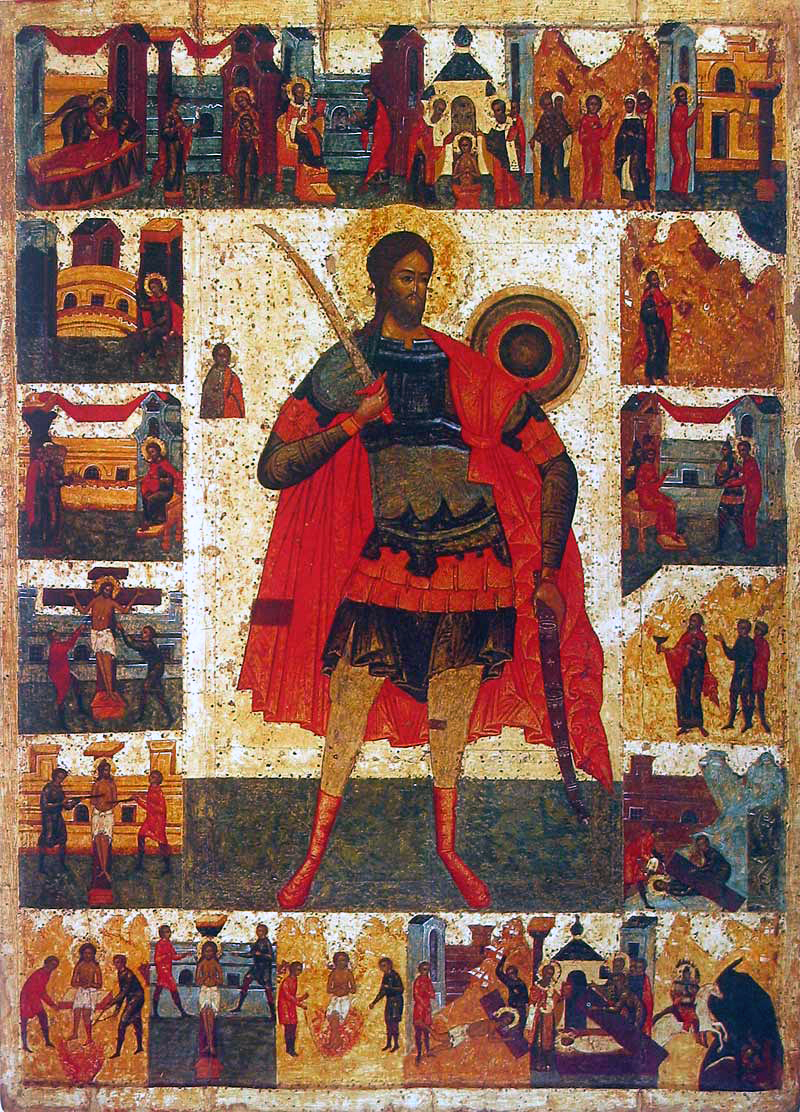
Saint Nicetas the Goth was a soldier and martyr born in the 4th-century, in the Gothic territory north of the Danube River. Coming from the upper class of his people. He was instructed in Christianity by Theophilus of Gothia, a converted bishop, between 325 and 341 AD.
Nicetas received his Greek name on the occasion of his baptism by Theophilus, a participant in the First Ecumenical Council. Pagan Goths began to oppose the spread of Christianity, which resulted in internecine strife. Nicetas fought in the Gothic civil war between the pagan Alaric and the Christian Fritigern. After the defeat of Alaric and after the invention of Gothic alphabets by Ulfilas, Nicetas worked intensely among the Goths for their conversion.
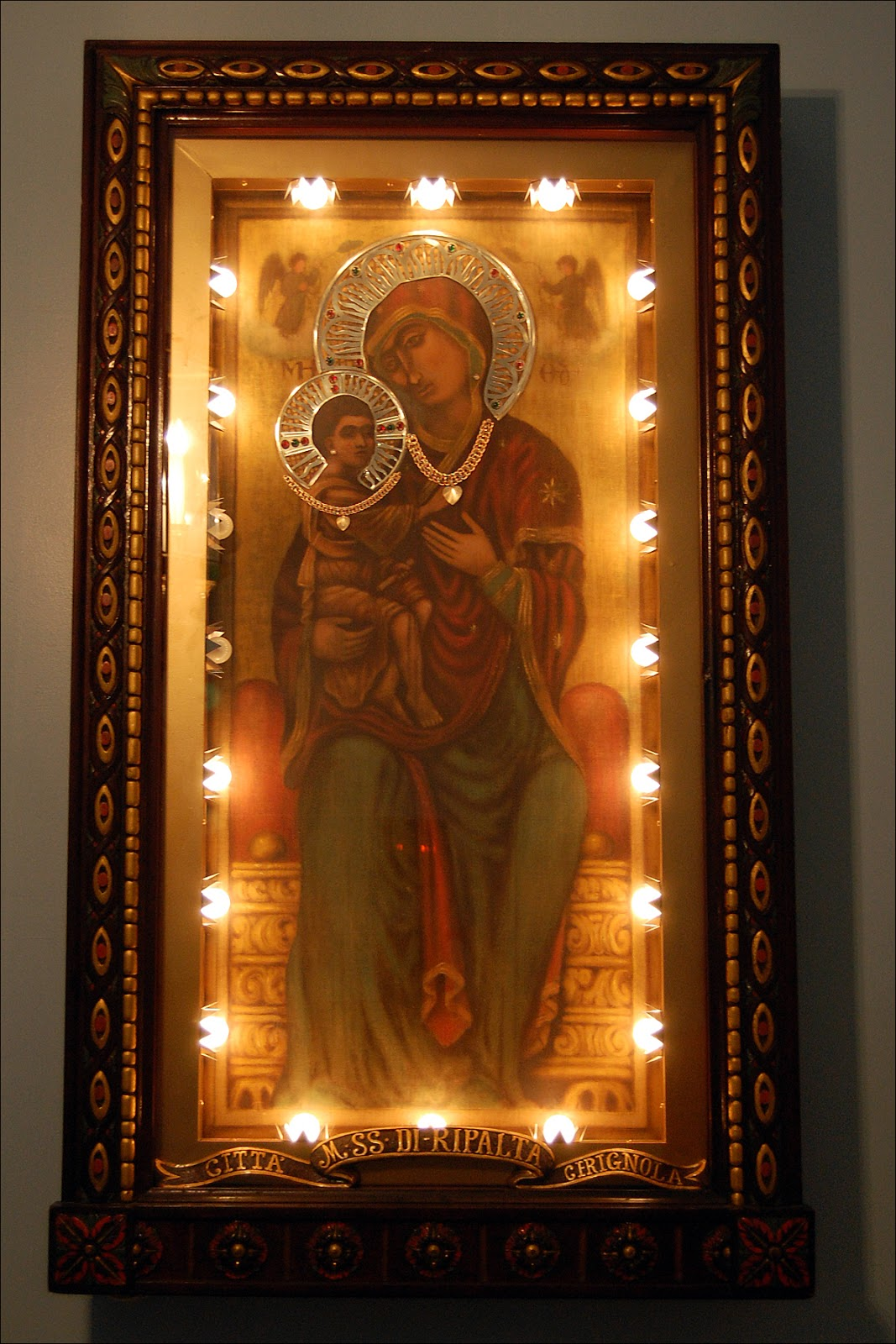
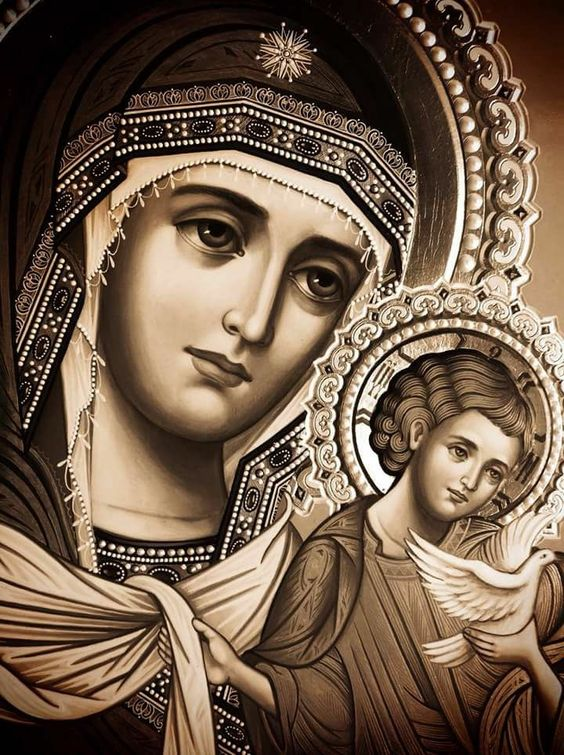
Later, Alaric returned, defeated Fritigern, and resumed his persecution of Christians. The s aint denounced the persecutor for his cruelty and impiety, because he subjected the Christians to severe torments. Nicetas endured many tortures himself and was condemned to the stake in 372. All the while, he hept over his heart, under his robes, an icon of the Blessed Virgin Mary and the Christ Child holding the Cross, carrying this after the Blessed Virgin appeared to him to provide comfort.The devil, shaped as an angel, induced Nicetas to sacrifice to the pagan gods for saving his life; the saint, however, put him to flight by means of prayer and the assistance of St Michael. Although he died at the stake, miraculously the fire did not touch his body, which was buried in Cilicia, and later transferred to Constantinople.
The veneration of this saint gave rise to the Slavic forms of his name: Nikita, Mykyta and Mikita. St Nicetas is prayed to for the preservation of children from birth defects and he is patron of Melendugno, Lecce, Italy.
At what point, then, shall I begin — from what direction shall I approach the description of his goodness, except from the beginning of his faith and from his heavenly birth? Inasmuch as the doings of a man of God should not be reckoned from any point except from the time that he was born of God.
St Aichardus St Albinus of Lyon Bl Anton Maria Schwartz St Aprus of Toul St Bond of Sens
St Catherine of Genoa (1447-1510) Married laywoman, Mystic, Apostle of the sick, the poor and the needy, Writer. Her body is incorrupt and rests in a glass reliquary at the Capuchin Church in Genoa. Catherine’s writings were examined by the Holy Office and declared to contain doctrine that would alone be enough to prove her sanctity and she was accordingly Beatified in 1675 by Pope Clement X and Canonised in 1737 by Pope Clement XII. Her writings also, became sources of inspiration for other religious leaders such as Robert Bellarmine and Francis de Sales and Cardinal Henry Edward Manning. Pope Pius XII declared her Patroness of the hospitals in Italy.
Bl Camillus Constanzo St Emilas of Cordoba St Eutropa of Auvergne St Hernan Bl Jacinto de Los Ángeles and Bl Juan Bautista St Jeremias of Cordoba St Joseph Abibos St Mamillian of Palermo St Melitina St Mirin of Bangor St Nicetas the Goth St Nicomedes of Rome
St Porphyrius the Martyr St Ribert St Ritbert of Varennes Bl Rolando de Medici Bl Tommasuccio of Foligno St Valerian of Châlon-sur-Saône St Valerian of Noviodunum St Vitus of Bergamo Bl Wladyslaw Miegon — Martyrs of Adrianopolis – 3 saints: Three Christian men martyred together in the persecutions of Maximian – Asclepiodotus, Maximus and Theodore. They were martyred in 310 at Adrianopolis (Adrianople), a location in modern Bulgaria.
Martyrs of Noviodunum – 4 saints: Three Christian men martyred together, date unknown – Gordian, Macrinus, Stratone and Valerian. They were martyred in Noviodunum, Lower Moesia (near modern Isaccea, Romania).
Mercedarian Martyrs of Morocco – 6 beati: A group of six Mercedarians who were captured by Moors near Valencia, Spain and taken to Morocco. Though enslaved, they refused to stop preaching Christianity. Martyrs. – Dionisio, Francis, Ildefonso, James, John and Sancho. They were crucified in 1437 in Morocco.
Martyred in the Spanish Civil War: Bl Antonio Sierra Leyva Bl Pascual Penades Jornet
Exaltation of the Holy Cross(Feast) This feast was observed in Rome before the end of the seventh century. It commemorates the recovery of the Holy Cross, which had been placed on Mount Calvary by St Helena.
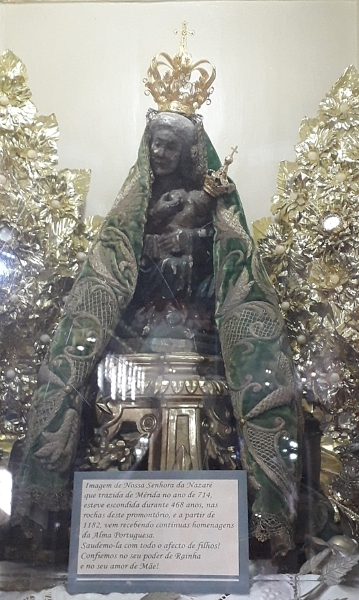
Nossa Senhora de Nazaré / Our Lady of Nazareth, Portugal (1182) -14 September:
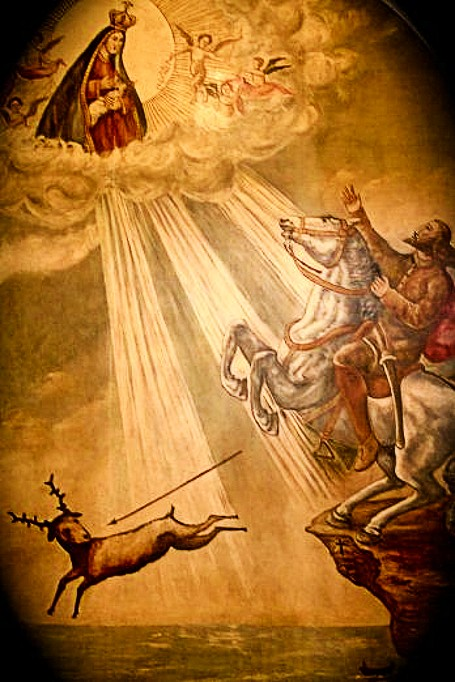
The chronicles of old Portugal report this episode that took place in the year 1182, on the day of the Exaltation of the Holy Cross. Dom Fuas Roupinho, a Knight and vassal of King Afonso Henriques, was out hunting on a foggy day. He was pursuing a deer when it came to an unexpected precipice and fell to its death into the sea below.
The horse, which was in close pursuit, reared on the very edge of the cliff and it seemed certain that Dom Fuas would follow the deer to his death. Knowing that a little distance to his left was a cave with the Statue of the Virgin of Nazareth, Dom Fuas immediately invoked her protection. He was saved and in thanksgiving he built a small “Chapel of memory” (Ermida da Memória) over the cave in her honour.
According to a document found with it, the little Statue of the Virgin had been venerated in Nazareth in the times of early Christianity. When the iconoclast heresy started in Constantinople and the heretics were destroying all the Statues, a Monk called Ciriaco took it to a Monastery in Spain in the proximity of Merida.
In 714, when the Saracens invaded the Iberian Peninsula, King Rodrigo fled with Friar Germano to the Atlantic coast, bearing the Statue with them. They hid the Statue in a small cave off the coast of the site that was later to become Nazaré, where it remained until it was found by a shepherd in 1179.
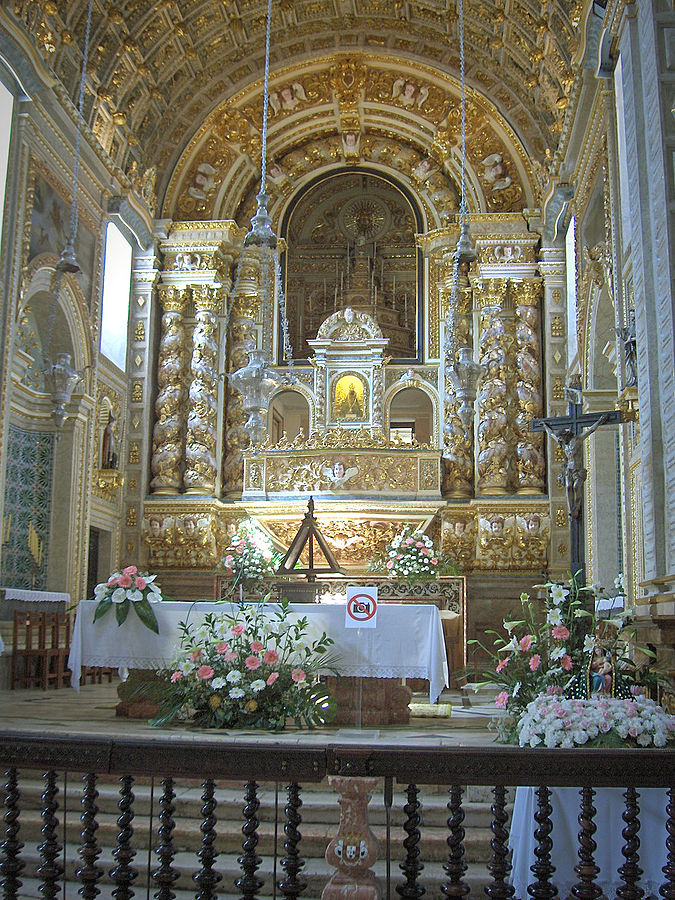
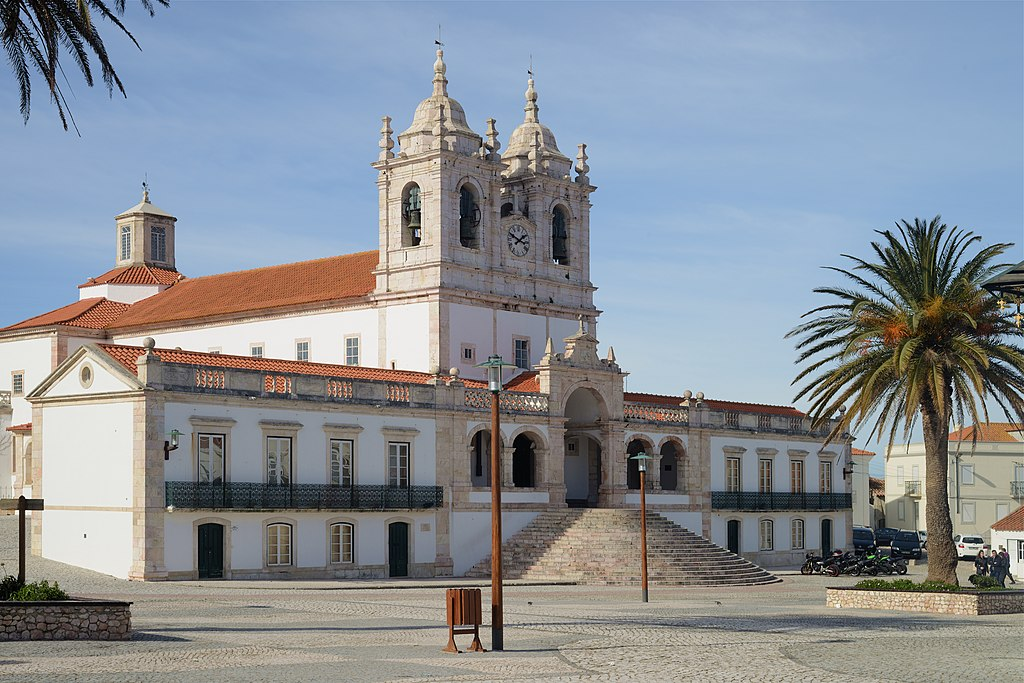
After Our Lady miraculously saved the life of Dom Fuas, the devotion to Our Lady of Nazareth spread throughout the country and was the source of countless graces for the people. In 1377 King Fernando ordered a large Church to be built near the little Chapel, and the Statue is venerated there now.
St Aelia Flaccilla
St Albert of Jerusalem (1149-1215) also known as St Albert of Vercelli – Bishop, Canon Lawyer, Diplomat and Peacemaker and is regarded as a Co-Founder of the Carmelite Order.
St Peter of Tarentaise O.Cist (1102-1174) Cistercian Monk, Archbishop of Tarentaise from 1141 until his death, Abbot, Apostle of Charity, Miracle-worker. There are two men named Saint Peter of Tarentaise who lived one century apart. The man we honour today is the younger Peter, born in France in the early part of the 12th century. The other man with the same name became Pope Innocent the Fifth.
Bl Pedro Bruch Cotacáns St Rosula of Carthage St Sallustia St Victor of Carthage
Saint Aigulf, also known as Aigulphe, Aygulf or Ayoul. He was Abbot of Lérins, and a martyr.
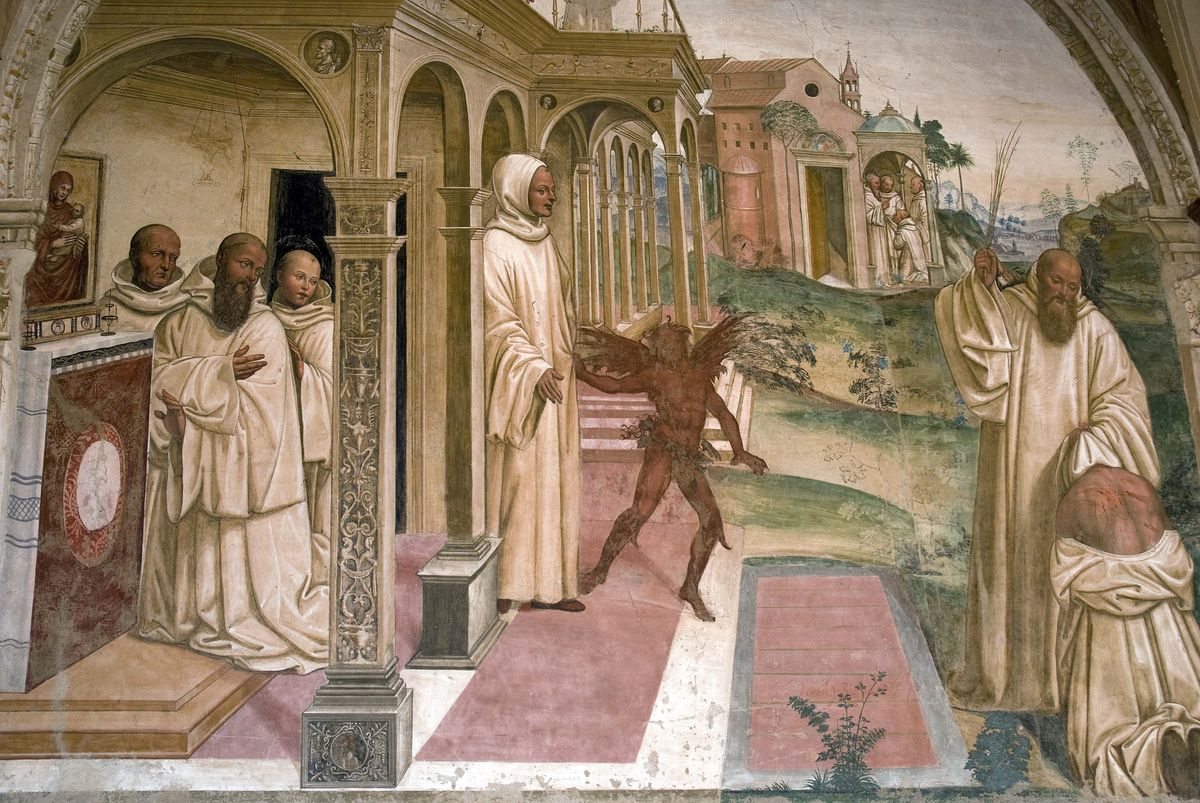
St. Benedict frees a monk possessed by a demon by striking him.
Aigulf was born in 630 in Blois and was a Benedictine monk at Fleury, France. He led a party of monks sent to retrieve the relics of Saint Bernard from the Lombards. Later, he was called upon to reform the Abbey of Saint Honorat.
He became abbot of Lérins around 671 and worked to restore monastic discipline, which had weakened over time. He replaced the monks’ own rules, which had been followed since the abbey’s origins, with the Rule of Saint Benedict. Many of the brothers supported him, but some resisted, and following a riot they conspired to have Aigulf and four of his supporters kidnapped by soldiers, taken to the island of Capri, Italy, blinded, tortured and murdered. The monks of Lérins claimed possession of his relics and have always considered Aygulf a martyr. A chapel was dedicated to him in the fortified monastery.
Saint Aygulf is invoked for the healing of eye ailments.
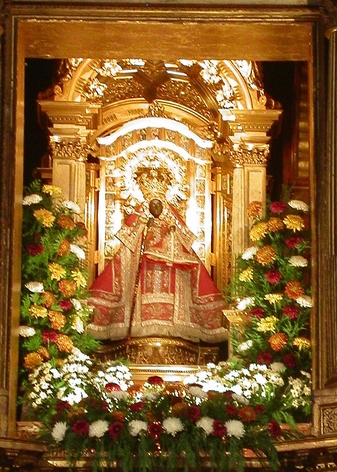
The Marian shrine of Our Lady of Guadalupe is located in the Extremadura region of what was the Kingdom of Castile. The shrine houses a Black Madonna, a statue crafted by the loving hands of Saint Luke the Evangelist himself and given to Saint Leander, Archbishop of Seville, by Pope Gregory I. It is one of the fifteen Black Madonnas in Spain. The statue was canonically crowned on 12 October 1928 by Pope Pius XI with a crown designed and crafted by Father Felix Granda, and crowned in the presence of King Alfonso XIII of Spain.
Spain was invaded by the Muslims in the year 711. The beloved statue of the Blessed Virgin was taken by the Christians who fled before the advance of the invading hordes, placing the statue in a strongbox and burying it in a cave in the hills near the Guadalupe River in Extremadura. When those who had safeguarded the statue died, the existence of it and the knowledge of its location was lost.
In the year 1326, the Blessed Virgin appeared to a shepherd near the village of Guadalupe, asking him to have priests dig at the site of the apparition. When they did, the priests found the strongbox that had been buried in the earth over 600 years previously. It contained documents that identified the cherished statue that became known as Our Lady of Guadalupe. A Marian shrine was built there in her honor.
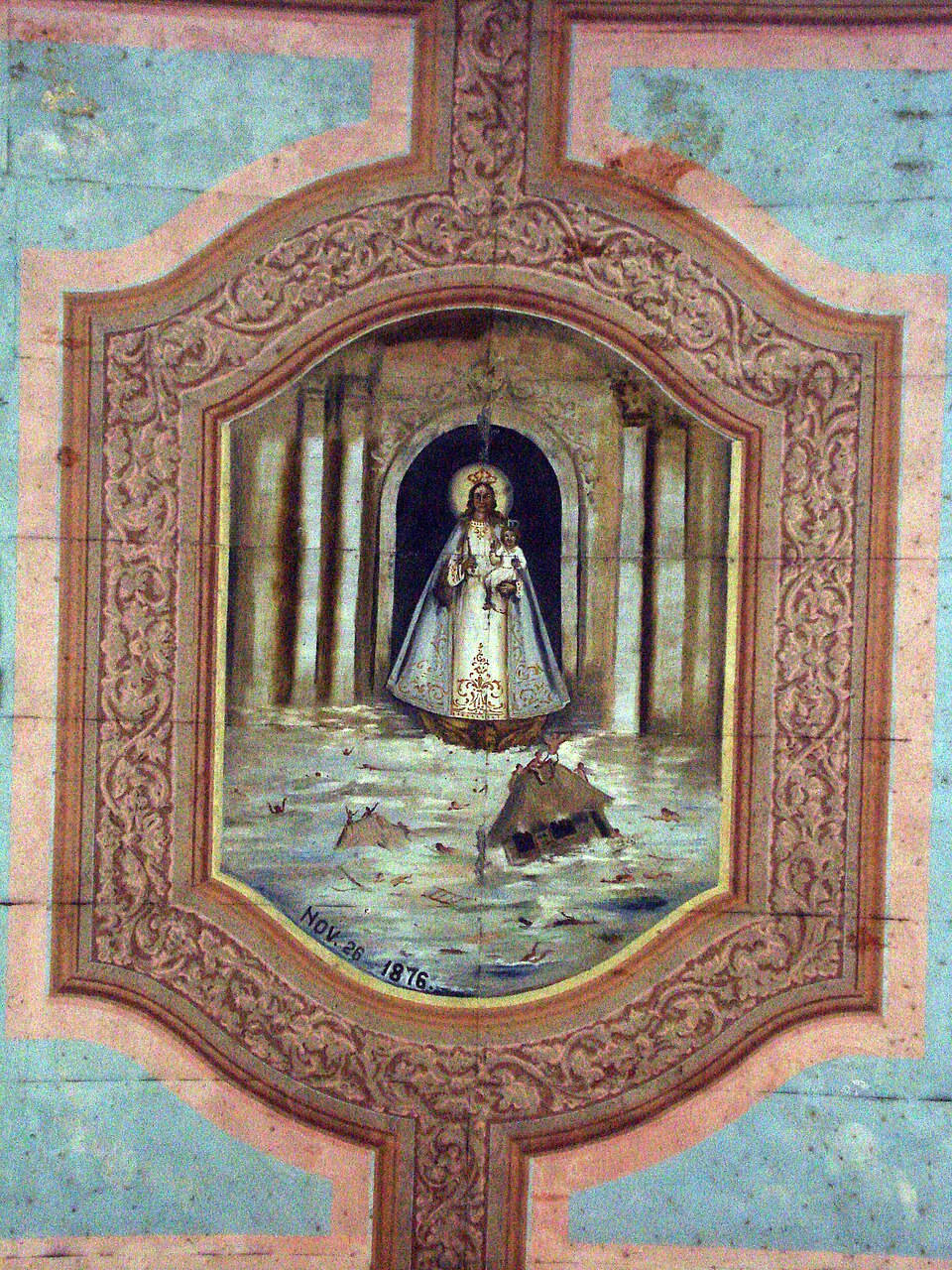
A copy of the Extremaduran image is enshrined in Loboc Church in the island province of Bohol, and has documented miracles attributed to the Virgin.
Immediately pilgrims began to visit the shrine dedicated to Our Lady of Guadalupe, and in 1340, King Alfonso XI endowed the sanctuary over which he took a particular interest. It was in that same year that Abu Hasan of Morocco had invaded the Iberian Peninsula with a huge army, intending to march into Castile and reverse the earlier Catholic expansion into what had been Muslim territory. The battle of Rio Salado had been hard fought, though it ended in a Christian victory that King Alfonso attributed to the intercession of the Blessed Virgin, Our Lady of Guadalupe.
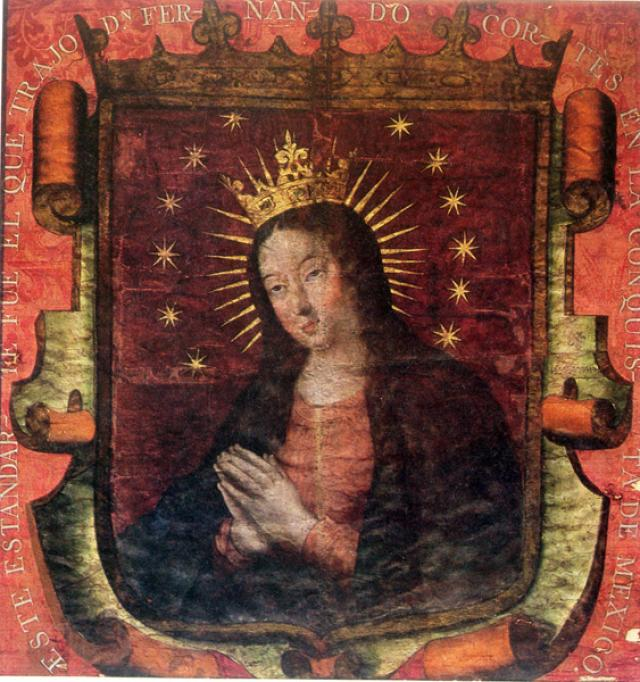
Banner of Cortés preserved in the Army Museum in Toledo (Spain)
In 1389 the Spanish architect, Juan Alphonso, began the church, which has walls ornamented with magnificent votive offerings, attesting to more than three thousand authentic miracles of the Blessed Virgin, Our Lady of Guadalupe.
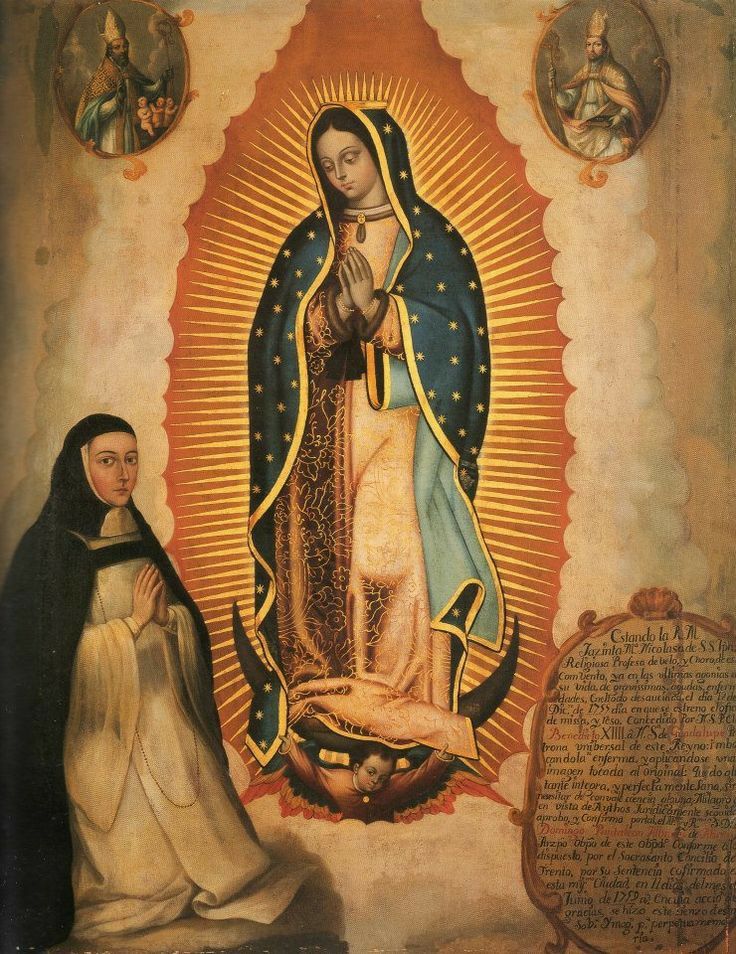
The veneration for Our Lady of Guadalupe crossed the ocean, and was established by miracles in Mexico. The magnificent captain, Hernan Cortez, conquered the evil Aztec Empire under a Marian standard. Cortez himself was from Extremadura.
Dedication of the Basilicas of Jerusalem: Commemoration of the dedications of the Basilicas built on Mount Calvary and the Church of the Holy Sepulchre in Jerusalem. — St Aigulf
St Amatus OSB (c 560-c 627) Monk, Abbot, Hermit, Penitent, miracle-worker, together with St Romaric, he founded Remiremont Abbey.
St Barsenorius Bl Claude Dumonet St Columbinus of Lure St Emiliano of Valence St Evantius of Autun St Gordian of Pontus Bl Hedwig of Hreford St Julian of Ankyra St Ligorius St Litorius of Tours St Macrobius St Marcellinus of Carthage Bl María López de Rivas Martínez
St Maurilius of Angers (c 336-426) Bishop of Angers, Cantor for Saint Ambrose, (Bishop of Milan and Father and Doctor of the Church), Disciple of St Martin of Tours.
St Nectarius of Autun
St Notburga (c 1265-1313) Virgin St Philip of Rome St Venerius of Tino — Martyrs of Ireland: • Blessed Edward Stapleton • Blessed Elizabeth Kearney • Blessed James Saul • Blessed Margaret of Cashel • Blessed Richard Barry • Blessed Richard Butler • Blessed Theobald Stapleton • Blessed Thomas Morrissey • Blessed William Boyton
Martyred in the Spanish Civil War including the Martyrs of Pozo de Cantavieja – 11 beati: • Blessed Bienvenido Villalón Acebrón • Blessed Emilio Antequera Lupiáñez • Blessed Florencio Arnáiz Cejudo • Blessed Francisco Rodríguez Martínez • Blessed Joaquín Gisbert Aguilera • Blessed José Álvarez-Benavides de La Torre • Blessed José Cano García • Blessed José Román García González • Blessed Juan Capel Segura • Blessed Juan Ibáñez Martín • Blessed Luis Eduardo López Gascón • Blessed Manuel Alvarez y Alvarez • Blessed Manuel Martínez Giménez • Blessed Pío Navarro Moreno • Blessed Ramiro Argüelles Hevia • Blessed Sabino Ayastuy Errasti • Blessed Teófilo Montes Calvo
Blessed Thomas of Zumárraga was a Dominican friar, priest, missionary, and martyr of Japan.
Thomas was born in Vitoria, Spain, in 1577. In 1594, he was professed in the Order of Preachers in Vitoria. After he entered the Convento de San Esteban de Salamanca, he received the name of Fray Tomás del Espíritu Santo(Brother Thomas of the Holy Spirit). In 1601, he was sent to Mexico en route to the Philippines. Shortly after arriving, in 1603, Fray Francisco Morales, superior of the Dominicans in Manila, sent him to Japan to found a mission.
By the early 17th century Japan was mostly closed to foreigners, but he fearlessly preached the Gospel and worked tirelessly to establish Christian communities. He hid in the mountains in the area of Nagasaki and Ōmura, but in 1617 he was arrested alongside several other missionaries. After five years of imprisonment, he was burnt alive on 12 September 1622.
Pope Pius IX venerated him on 26 February 1866 with a decree of martyrdom, and later proclaimed him blessed on 7 May 1867.
On all sides all men were flocking together to a spectacle, to us glorious from the devotion of faith, and to be mourned over even by the Gentiles.
Feast of the Holy Name of Mary (1683 ) – 12 September: Feast of the entire Latin Church. It was first observed at Cuenca, Spain in 1513, then extended to the universal Church and assigned to its present place and rank by Pope Innocent XI in 1683 in thanksgiving to God and the Blessed Virgin for the liberation of Vienna, France and the signal victory over the Turks on 12 September 1683. It is the titular feast of the Society of Mary (Marianists) and of the Congregation of the Oblates of Mary Immaculate.
St Ailbe (Died 528) Bishop “The Patrick of Munster,” Confessor, Evangelist – Saint Ailbe is venerated as one of the four great Patrons of Ireland.
Bl Maria Luisa Angelica/Gertrude Prosperi (1799-1847) St Mancius of Saint Thomas St Paul of Saint Clare Bl Pierre-Sulpice-Christophe Faverge St Sacerdos of Lyon St Silvinus of Verona St Tomás de Zumárraga Lazcano — Martyrs of Alexandria – 6 saints: A group of Christians martyred in the persecutions of Diocletian. We know little more than their names – Hieronides, Leontius, Sarapion, Seleusius, Straton and Valerian. They were drowned c 300 at Alexandria, Egypt.
Martyrs of Phrygia – 3 saints: Three Christians who were martyred for destroying pagan idols. We know little more than their names – Macedonius, Tatian and Theodolus. They were burned to death in 362 in Phrygia (modern Turkey).
Martyred in the Spanish Civil War: • Blessed Fortunato Arias Sánchez • Blessed Francisco Maqueda López • Blessed Jaume Puigferrer Mora • Blessed Josep Plana Rebugent • Blessed Julián Delgado Díez
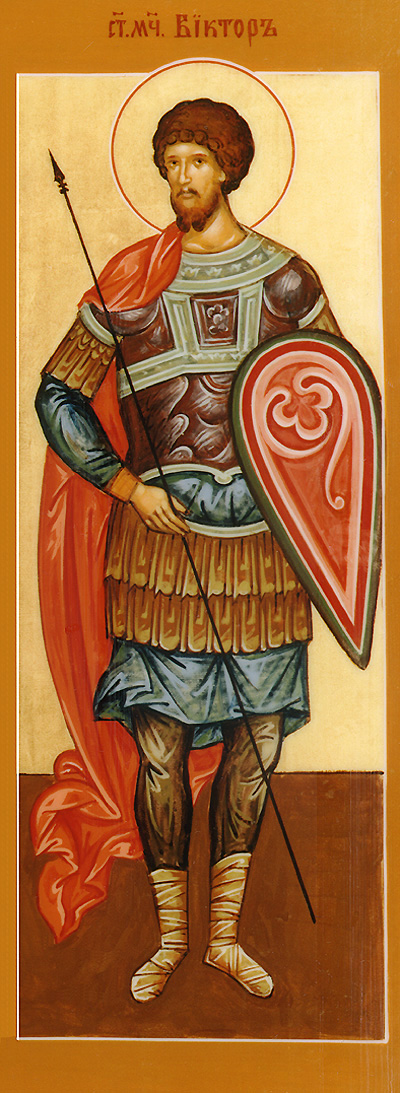
Saints Victor and Sosthenes of Chalcedon were soldiers and the executioners assigned to torture Saint Euphemia. However her faith and prayers converted them to Christianity. The Proconsul Priscus ordered Victor and Sosthenes to throw the saint into a red-hot furnace. In the flames, however, they saw angels who prevented them from touching the saint. When they refused to carry out the order, they were placed in shackles. Other soldiers, who threw Saint Euphēmia into the fire, were burnt by the flames, but inside the furnace the martyr remained unharmed.
St Victor of Chalcedon
They were subsequently martyred in the persecutions of Diocletian. The Proconsul tried to make them bow down to the idols, but they replied that they had come to know the true God and would not offer homage to demons. As they were led to the wild beasts, they begged the Lord to forgive the sins they had committed as pagans. Then a divine voice came from Heaven, calling them to their rest. The animals did not touch their bodies. Later, the two martyrs were buried secretly by some Christians.
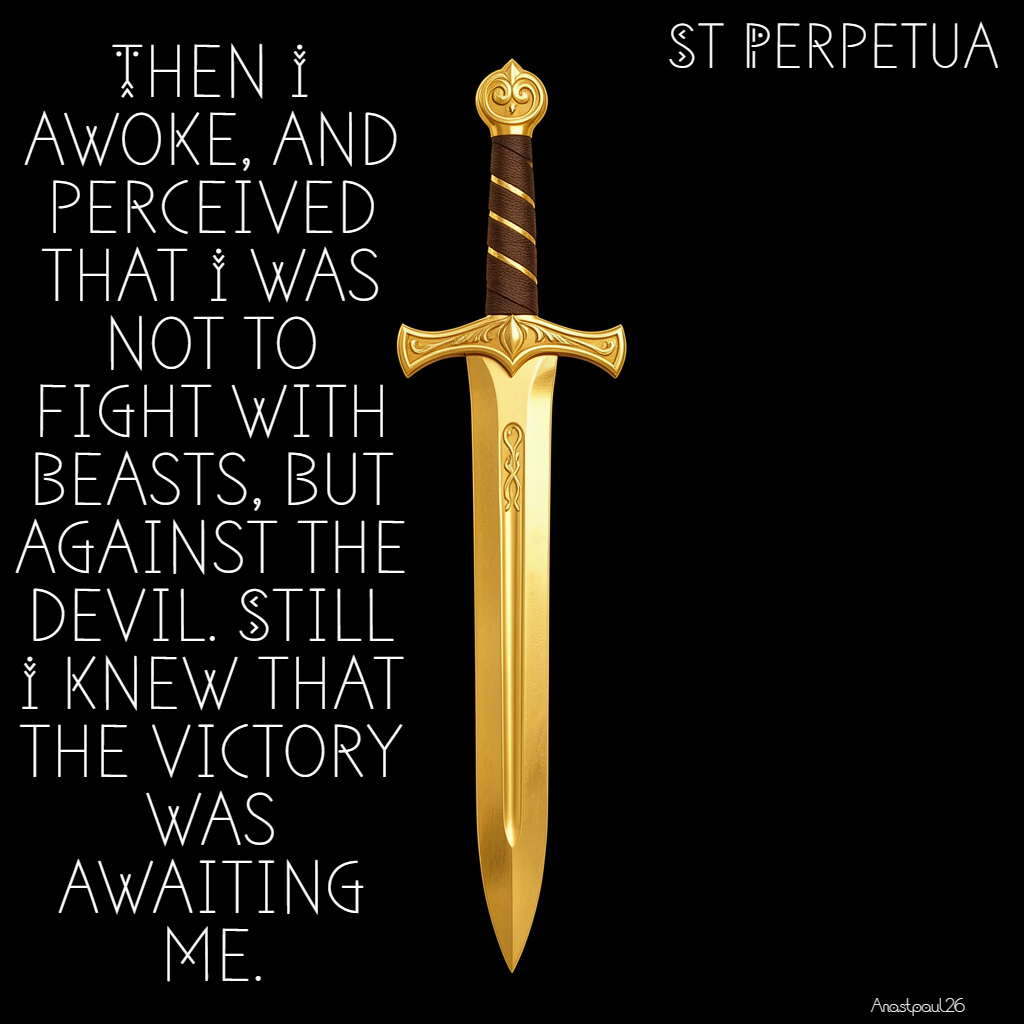
Then I awoke, and perceived that I was not to fight with beasts, but against the devil. Still I knew that the victory was awaiting me.
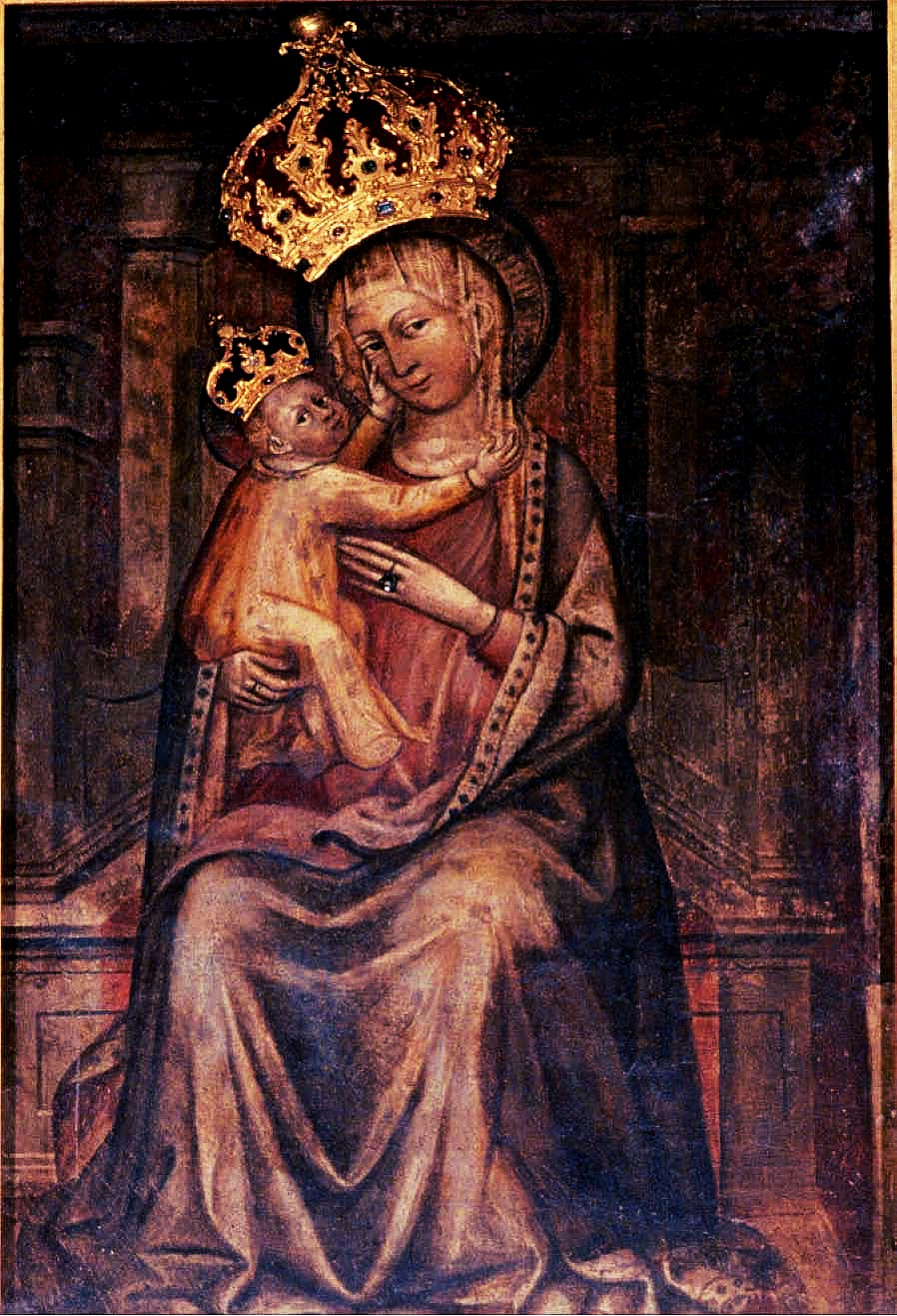
Beata Vergine Maria della Vita / Our Lady of Life (1289) 10 September: Patronage – hospitals in the Diocese of Bologna, Italy.
The cult of the Madonna della Vita is connected with the hospital of the same name founded in 1289 by the Compagnia dei Battuti, present in Bologna since 1261. In the Sanctuary dedicated to her, between 1370 and 1380, Simone dei Crocefissi frescoed the image of the Blessed Virgin, which remained covered during the renovations in the years 1454-1502 and accidentally found among the exultation of the Bolognese people on 10 September 1614. It depicts Mary Mother and Queen as she rests her face to the cheek of Jesus, according to the iconography of the Mother of Tenderness. The close link between the original hospital activity and the devotion of the brothers, was also expressed by the motto inscribed under the double Cross: “Vitam dat nobis crux tua, Christe Jesu” “Your Cross gives us life, Christ Jesus.”
St Peter Martinez St Pulcheria (399-453) Empress, Widow St Salvius of Albi St Sosthenes of Chalcedon St Theodard of Maastricht St Victor of Chalcedon — Martyrs of Bithynia – 3 sister saints: Three young Christian sisters martyred in the persecutions of emperor Maximian and governor Fronto: Menodora, Metrodora, Nymphodora. They were martyred in 306 in Bithynia, Asia Minor (in modern Turkey).
Martyrs of Japan – 205 beati: A unified feast to memorialise 205 missionaries and native Japanese known to have been murdered for their faith between 1617 and 1637.
Martyrs of Sigum – 8 saints: A group of Nicomedian martyrs, condemned for their faith to be worked to death in the marble quarries of Sigum. There were priests, bishops and laity in the group but only a few names have come down to us: Dativus, Felix, Jader, Litteus, Lucius, Nemesian, Polyanus, Victor. They were worked to death c 257 in Sigum.
Martyred in the Spanish Civil War: • Blessed Félix España Ortiz • Blessed Leoncio Arce Urrutia • Blessed Tomàs Cubells Miguel
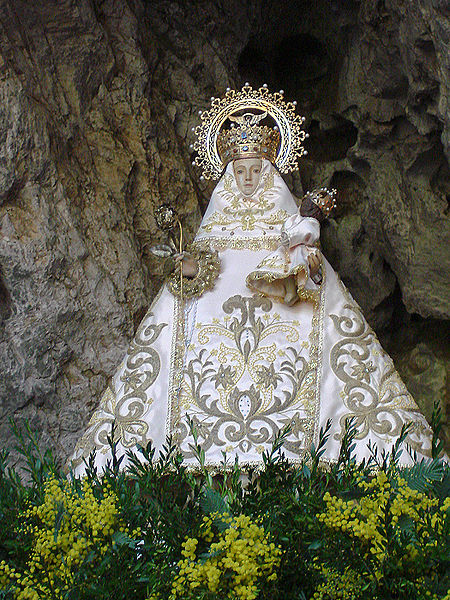
Nuestra Senora de la Covadonga, also named “La Santina” / Our Lady of Covadonga (720) – 8 September:
This is a title of the Blessed Virgin Mary and the name of a Marian Shrine devoted to her at Covadonga, Asturias. The Shrine in northwestern Spain rose to prominence following the Battle of Covadonga in about 720, which was the first defeat of the Moors during their invasion of Spain. A Statue of the Virgin Mary, secretly hidden in one of the caves, was believed to have miraculously aided the Christian victory. Our Lady of Covadonga is the Patron of Asturias, and a Basilica was built to house the current Statue. Our Lady of Covadong’s east day is 8 September.
Our Lady of Health of Vailankanni (16th Century) – 8 September:
This is the title given to the Blessed Virgin Mary by people as she twice appeared in the town of Velankanni, Tamil Nadu, India, in the 16th to 17th centuries. The Feast of the Nativity of Mary, is also commemorated as the feast of Our Lady of Good Health. The celebration starts on 29 August and ends on the day of the feast. The feast day prayers are said in Tamil, Marathi, East Indian, Malayalam, Telugu, Kannada, Konkani, Hindi and English.
Nuestra Senora de la Meritxell / Our Lady of Meritxell (12th Century) – 8 September:
This is an Andorran Roman Statue depicting an apparition of the Virgin Mary. Our Lady of Meritxell is the Patron Saint of Andorra. On 6 January in the late 12th century, villagers from Meritxell, Andorra were going to Mass in Canillo. Though it was winter, they found a wild rose in bloom by the roadside. At its base was a Statue of the Virgin and Child. They placed the Statue in a Chapel in the Church in Canillo. The next day the Statue was found sitting under the wild rose again. Villagers from Encamp took the Statue to their Church but the next day the Statue had returned to the rose bush. Though it was snowing, an area the size of a Chapel was completely bare and the villagers of Meritxell took this to mean that they should build a Chapel to house the Statue and so they did. On 8-9 September 1972 the Chapel burned down and the Statue was destroyed, a copy now resides in the new Meritxell Chapel. The feast day of Our Lady of Meritxell is 8 September and the Andorran National Day.
St Thomas of Villanova OSA (1488 – 1555) Bishop, Religious Priest of the Order of St Augustine, Confessor, Writer, Preacher, Teacher, Apostle of Charity, Mystic, Miracle-Worker often called “the Almsgiver” and “the Father of the Poor“, Reformer.
St Timothy of Antioch Bl Wladyslaw Bladzinski — Martyrs of Alexandria – (5 saints) A group of Christians martyred together in the persecutions of Diocletian – Ammon, Dio, Faustus, Neoterius and Theophilus. Martyred in Alexandria, Egypt.
Martyrs of Japan – (21 beati): A group of 21 missionaries and converts who were executed together for their faith. • Antonio of Saint Bonaventure • Antonio of Saint Dominic • Dominicus Nihachi • Dominicus of Saint Francis • Dominicus Tomachi • Francisco Castellet Vinale • Franciscus Nihachi • Ioannes Imamura • Ioannes Tomachi • Laurentius Yamada • Leo Aibara • Lucia Ludovica • Ludovicus Nihachi • Matthaeus Alvarez Anjin • Michaël Tomachi • Michaël Yamada Kasahashi • Paulus Aibara Sandayu • Paulus Tomachi • Romanus Aibara • Thomas of Saint Hyacinth • Thomas Tomachi Died on 8 September 1628 in Nagasaki, Japan Beatified on 7 May 1867 by Pope Pius XI
Martyred in England: Bl John Norton Bl Thomas Palaser
Martyred in the Spanish Civil War: • Blessed Adrián Saiz y Saiz • Blessed Apolonia Lizárraga Ochoa de Zabalegui • Blessed Bonifacio Rodríguez González • Blessed Dolores Puig Bonany • Blessed Eusebio Alonso Uyarra • Blessed Ismael Escrihuela Esteve • Blessed Josefa Ruano García • Blessed Josep Padrell Navarro • Blessed Mamerto Carchano y Carchano • Blessed Marino Blanes Giner • Blessed Miguel Beato Sánchez • Blessed Pascual Fortuño Almela • Blessed Segimon Sagalés Vilá • Blessed Tomàs Capdevila Miquel
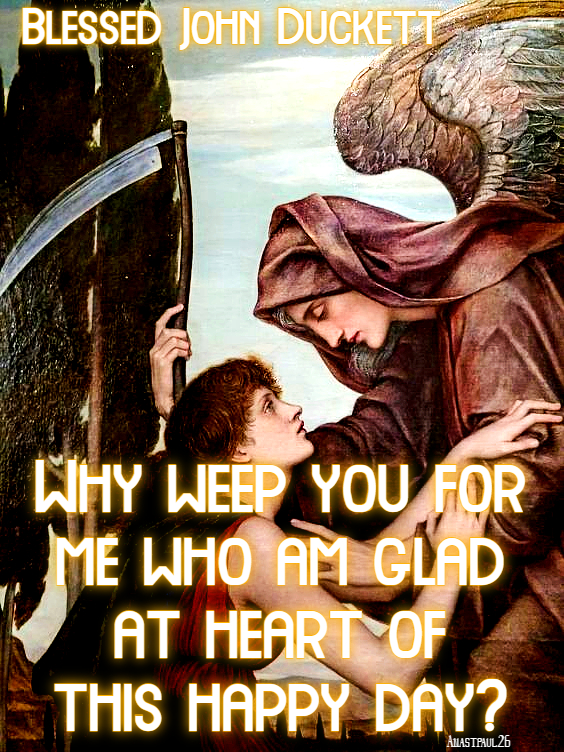
Blessed John Duckett, was a priest and martyr, one of the Martyrs of Douai. Born in 1613 in Sedbergh, Yorkshire, the son of James and Francis Duckett and a relative and possibly the grandson of Blessed James Duckett, who had been executed at Tyburn on 19 April 1601 for printing Catholic books.
He was baptized on 24 February 1614 and educated at Sedbergh School. At the age of seventeen, he entered the English College, Douai; where he was ordained a priest by the Archbishop of Cambrai in 1639.
John possessed an extraordinary gift for prayer, and would spend whole nights in contemplation. On his way to the English mission, he spent two months in spiritual exercises, under the direction of his uncle, the Carthusian prior at Nieuport. He laboured for about a year in Durham and was arrested near Whisingham on his way to baptize two children, 2 July, 1644. The place which tradition declares to be that of his arrest is now marked by a tall stone cross. Carried to Sunderland, he was examined by a Parliamentary Committee of sequestrators, and placed in irons. He confessed his priesthood and was thereupon sent up to London with Father Ralph Corbie, S.J., who had been arrested about the same time near Newcastle-on-Tyne.
They were committed to Newgate, and edified the crowds of Catholics who flocked to see them by their joyousness, their sanctity, and their longing to suffer for Christ. A reprieve for one of them having been obtained, each refused to take it for himself. On his way to execution, Duckett astonished all by his supernatural joy; comforting those who wept for him, he said smiling: “Why weep you for me who am glad at heart of this happy day?” His jailers even were so struck by his gladness that they exclaimed “assuredly this man dies for a good cause”.
He suffered with Father Corbie, at Tyburn. In a farewell letter to the Bishop of Chalcedon, he wrote on the eve of his martyrdom: “I fear not death, nor I contemn not life. If life were my lot, I would endure it patiently; but if death, I shall receive it joyfully, for that Christ is my life, and death is my gain. Never since my receiving of Holy Orders did I so much fear death as I did life, and now, when it approacheth can I faint?”
Notre-Dame de la Fontaine / Our Lady of the Fountain, Valenciennes, France (1008) – 6 September:
Valenciennes is a City in northern France on the Scheldt River and Our Lady of the Fountain was located half a league from the City in the year 1008. According to tradition, there was a terrible famine that preceded the Plague in that fateful year of 1008. It is recorded that the City of Valenciennes was so ravaged by the plague that nearly 8,000 people died in only a few days, so that the chronicles of the time tell us that it seemed “the dead outnumber the living.” The people grieved profoundly at the spectacle of death which constantly surrounded them,and having no other recourse, went in great crowds to their Churches to take refuge at the feet of Our Mother of Mercy and beg for her intercession.
A holy hermit named Bertholin, who lived nearby Our Lady of the Fountain, was touched by the misfortune of his brothers and redoubled his austerities and prayers. He prayed for the people of Valenciennes, saying, “O Mary! Rescue these afflicted who have cried out to you! Will you let this people die who have called upon you for rescue and who confide their cares to you? Will you be invoked in vain?”
The Blessed Virgin appeared to the hermit Bertholin while he was fervently praying on the night of the 5th of September. The pious hermit was suddenly dazzled by the brilliance of a light purer than the sun, while at the same time the Mother of Mercy appeared to him with an air of kindness. She commanded Bertholin to tell the inhabitants to fast on the following day and then pass the night in prayer to bring an end to the Plague. “Go to my people of Valenciennes. On the eve of my nativity they will see the guarantee of protection that I want to give them.”
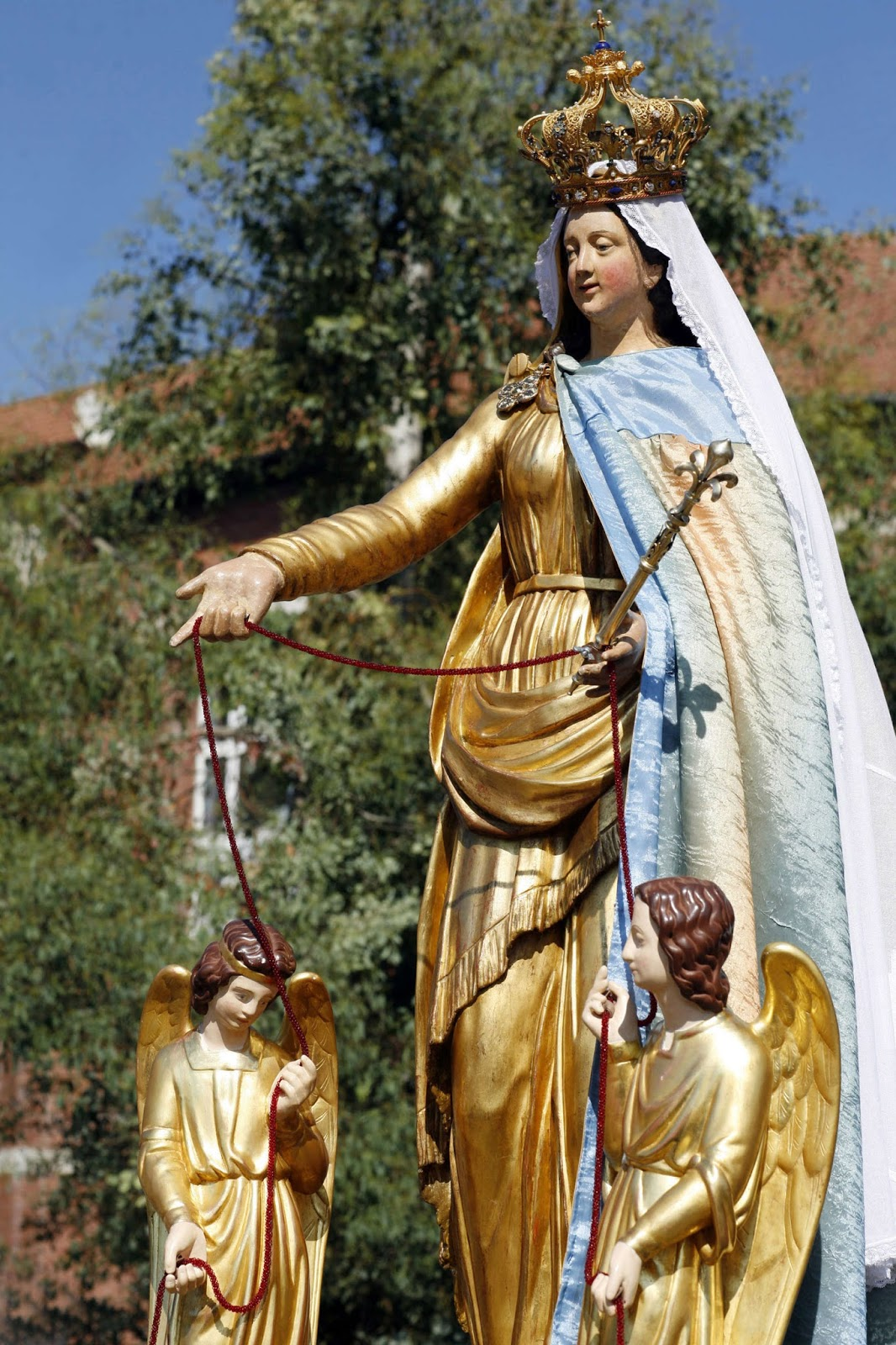
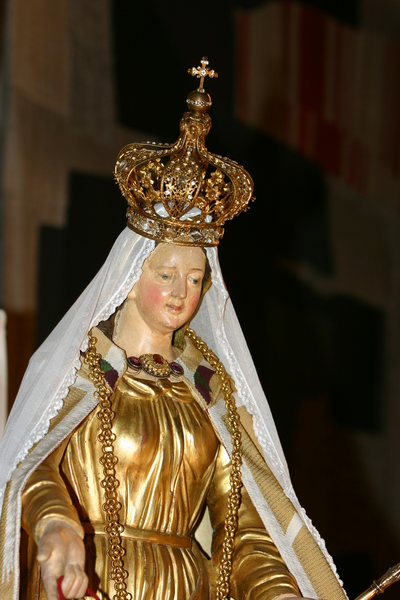
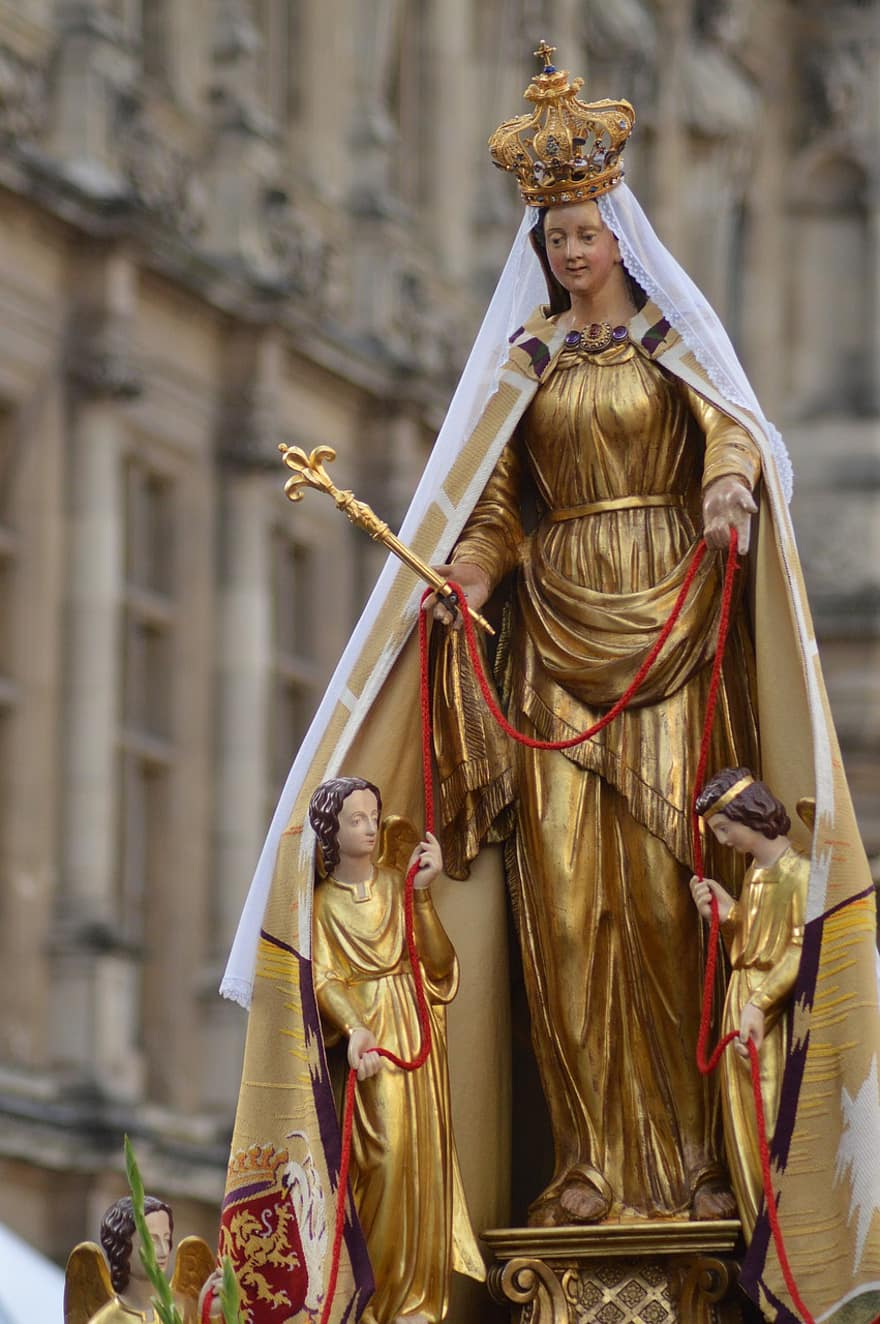
The response was overwhelming. The people of Valenciennes did as they were told,and on the eve of the Nativity, the 7th of September, the people of Valenciennes stood upon the ramparts and towers of the City excitedly awaiting the fulfilment of the heavenly promise. Their confidence was not in vain, for suddenly the night seemed to turn into day and they witnessed the Queen of Heaven descending to earth in majesty, sparkling like a light of heaven, brighter than the sun. Accompanied by a host of Angels, Our Lady seemed to gird the town all round with a cord.
Nothing can convey the feelings of joy and devotion with which the people of Valenciennes were seized at this sight. At one point they all bowed and asked the Blessed Virgin’s blessing. Their Heavenly Mother did indeed bless them and those who were sick recovered their health and the inhabitants of Valenciennes have been forever freed from the plague.
The Blessed Virgin instructed the hermit to tell the people that they were to make a solemn procession, and then to do so every year. The people were eager to fulfill this desire of their Heavenly Mother and left the City singing praises to the Blessed Virgin Mary.
Since that time the procession of Our Lady of Saint-Cordon, or the Tour of the Holy Cordon, takes place every year, always along the same route where the holy cord had been placed. The cord of the Blessed Virgin was locked up in a Shrine at a beautiful Gothic Church, Notre-Dame-la-Grande.
This cord, the Abbot Orsini related, was still preserved at Valenciennes while he was alive. That is no longer the case, as it disappeared during the Terror that was the French Revolution. The Church was sold at auction and then razed to the ground, and the reliquary sent to the mint. Of the Holy Cord nothing is now known, although no one witnessed its destruction when it disappeared in the year 1793.
St Arator of Verdun St Augebert of Champagne St Augustine of Sens St Beata of Sens St Bega
St Cagnoald St Consolata of Reggio Emilia St Cottidus of Cappadocia
St Eleutherius the Abbot (Died c 585) Monk and Abbot. A wonderful simplicity and spirit of compunction were the distinguishing virtues of this holy sixth century Abbot.
St Eugene of Cappadocia St Eve of Dreux St Faustus of Alexandria St Faustus of Syracuse St Felix of Champagne St Frontiniano of Alba (Died 311) Deacon Martyr St Gondulphus of Metz St Imperia St Liberato of Loro Piceno St Macarius of Alexandria St Maccallin of Lusk
St Magnus of Füssen (Died c 666) Religious Priest, Monk, Abbot, Missionary, Spiritual student of Saint Columban and Saint Gall.
St Mansuetus of Toul St Onesiphorus St Petronius of Verona St Sanctian of Sens St Zacharius the Prophet — Martyrs of Africa – 6 saints: There were thousands of Christians exiled, tortured and martyred in the late 5th century by the Arian King Hunneric. Six of them, all bishops, are remembered today; however, we really know nothing about them except their names and their deaths for the faith – Donatian, Fusculus, Germanus, Laetus, Mansuetus and Praesidius.
Martyred in the Spanish Civil War: • Blessed Diego Llorca Llopis • Blessed Felipe Llamas Barrero • Blessed Pascual Torres Lloret • Blessed Vidal Ruiz Vallejo
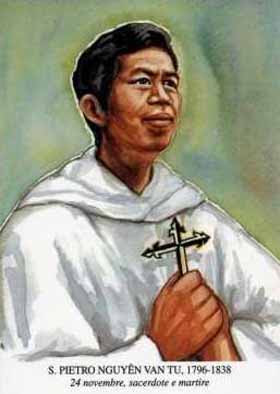
Blessed Peter Nguyễn Văn Tự, also known as Phêrô Nguyễn Văn Tự or Peter Tu Van Nguyen, was a Dominican priest and martyr born in 1796, Nam Dinh, Vietnam. Growing up during a time of persecutions of Christians, he entered the seminary, was ordained a priest in 1826, and joined the Dominican Order on January 4, 1827.
For 12 years Peter served in parishes across the Diocese of Bùi Chu. When the 1832 edict under Emperor Minh Mạng came, he went into hiding for six years, yet continued ministering secretly, often at great risk. In June 1838, soldiers raided Kẻ Mốt village, confiscating religious items and torturing locals. His hiding spot was betrayed and he was arrest on June 29, 1838, alongside catechist Bùi Văn Úy.
While imprisoned, Peter boldly preached during interrogations and refused to trample on a crucifix. Sentenced to death, he prepared with prayer, confessing to a fellow priest and receiving Holy Communion. On September 5, 1838, at age 42, he was beheaded at Cổ Mễ execution grounds alongside Joseph Hoàng Lương Cảnh. His body was buried at Nghĩa Vũ parish, with relics now at Trung Lại church in Bắc Giang province.
He was beatified on May 27, 1900, by Pope Leo XIII.
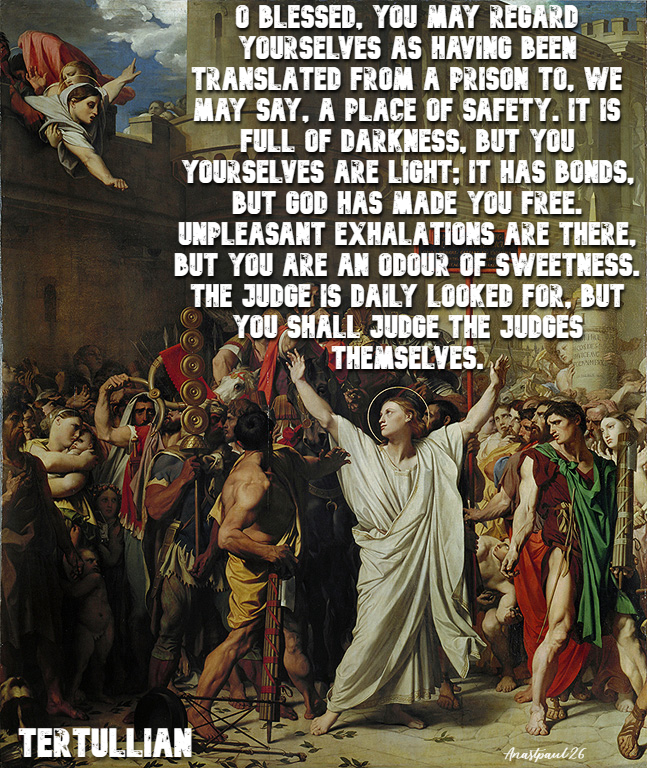
O blessed, you may regard yourselves as having been translated from a prison to, we may say, a place of safety. It is full of darkness, but you yourselves are light; it has bonds, but God has made you free. Unpleasant exhalations are there, but you are an odour of sweetness. The judge is daily looked for, but you shall judge the judges themselves.
Notre-Dame, Folgoët / Our Lady of Folgoët Finistère, Brittany, France (1650) – First Sunday or the First Week of September:
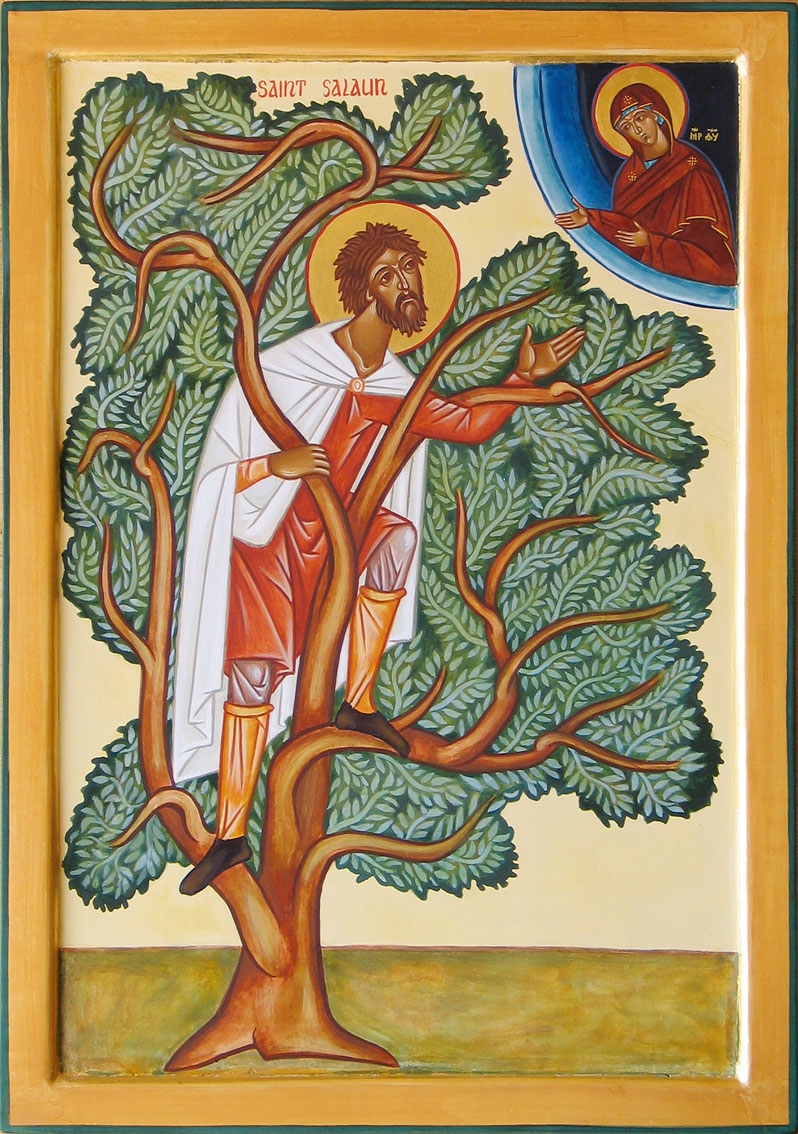
Known as the “the fool of the woods,” St Salaün (Died1358 – Memorial on1 November) lived in a forest clearing near a spring, over which he enjoyed hanging from an oak branch, immersed to his shoulders, singing “O Maria.” He lived by begging: “Ave Maria! Salaün could eat some bread!” After he died in 1358, aged 48, in the woods near the spring, people found a white lily with “Ave Maria” in gold lettering on its petals — growing from the mouth of the dead fool buried beneath.
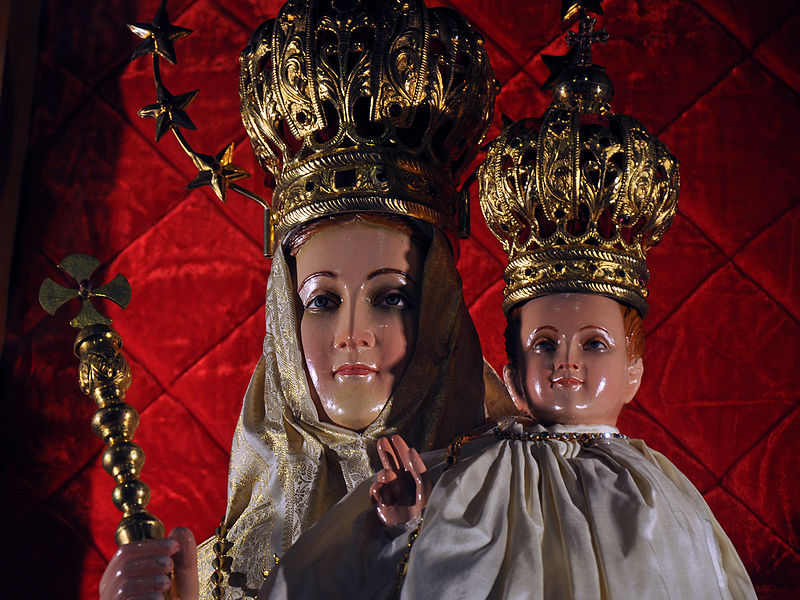
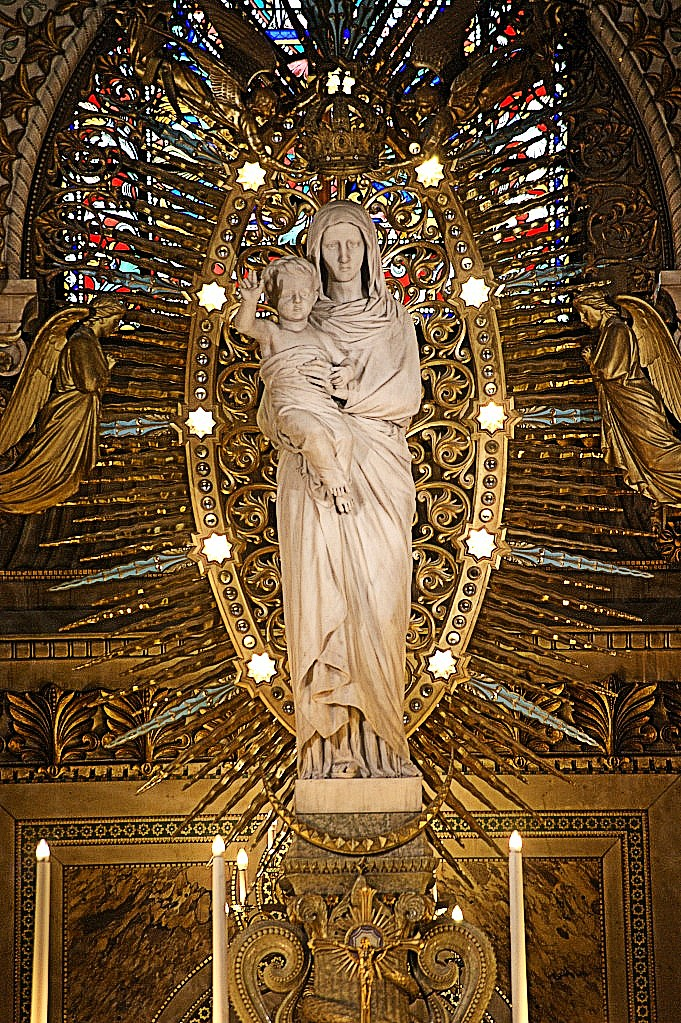
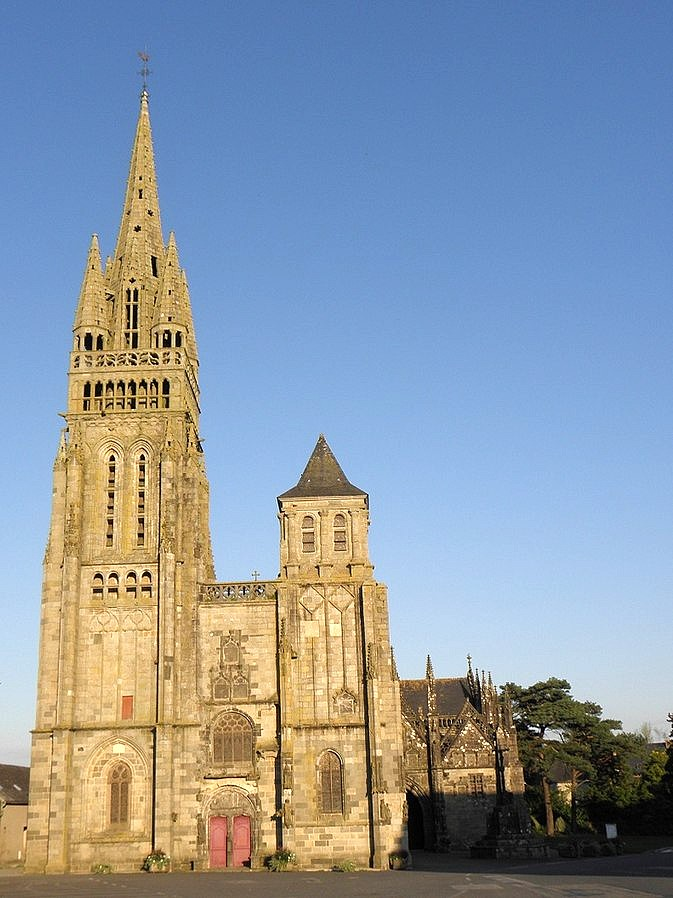
The Basilica of Notre-Dame du Folgoët was begun on the spot in 1365, completed in 1419 and consecrated in 1423. Its main Altar is over the spring, channeled into a basin behind the Church. In 1888, a dark stone Virgin was crowned Our Lady of Folgoët, replacing a polychrome wooden Statue which was moved to a side Altar. The Black Virgin is standing, holding the Child with her left arm; both wear large crowns. Her back is flat; the statue may have been on the exterior of the Church before the Revolution, when some Statues were damaged and removed for safekeeping from the marauding mobs of the French Revolution.
In the late 1500s, the big pilgrimage date was 15 August Feast of the Assumption. Three hundred years later, the celebration moved to 8 September, Nativity of the Virgin. Since 1970 the Grand Pardon has been held the first weekend in September, with a succession of processions and Masses in the Breton language.
St Albert of Butrio
St Alvito de León (Died 1063) Bishop. Alvito was the Confessor to King Fernando I of León, a Monk and the Benedictine Abbot of the Sahagún Monastery.
Bl Florent Dumontet de Cardaillac St Genebald of Laon Bl Gendtilis Bl Gerbrand of Dokkum St Guise Hoang Luong Canh Blessed John the Good OSA (c 1168-1249) Bishop Bl Jordan of Pulsano St Lawrence Justinian (1381-1455) Bishop St Obdulia St Phêrô Nguyen Van Tu St Romulus of Rome
St Victorinus of Amiterme St Victorinus of Como Bl William Browne — Martyrs of Armenia – 1,000 saints: A group of up to 1,000 Christian soldiers in the 2nd century imperial Roman army of Trajan, stationed in Gaul. Ordered to sacrifice to pagan gods, they refused and were transferred to Armenia. Ordered again to sacrifice to pagan gods, they refused again. Martyrs. We know the names of three of them, but nothing else – Eudoxius, Macarius and Zeno.
Martyrs of Capua – 3 saints: Three Christians who were martyred together. Long venerated in Capua, Italy. We know their names, but little else – Arcontius, Donatus and Quintius. They were martyred in Capua, Italy.
Martyrs of Nicomedia – 80 saints: A group of 80 Christians, lay and clergy, martyred together in the persecutions of Valens. We know little more than the names of three of them – Menedemo, Teodoro and Urbano. They were locked on a boat which was then set on fire on the shore of Nicomedia, Bithynia (in modern Turkey) c 370.
Martyrs of Porto Romano – 4+ saints: A group of Christians martyred together in the persecutions of Marcus Aurelius. We know little more than their names – Aconto, Herculanus, Nonno and Taurino. c180 at Porto Romano, Italy.
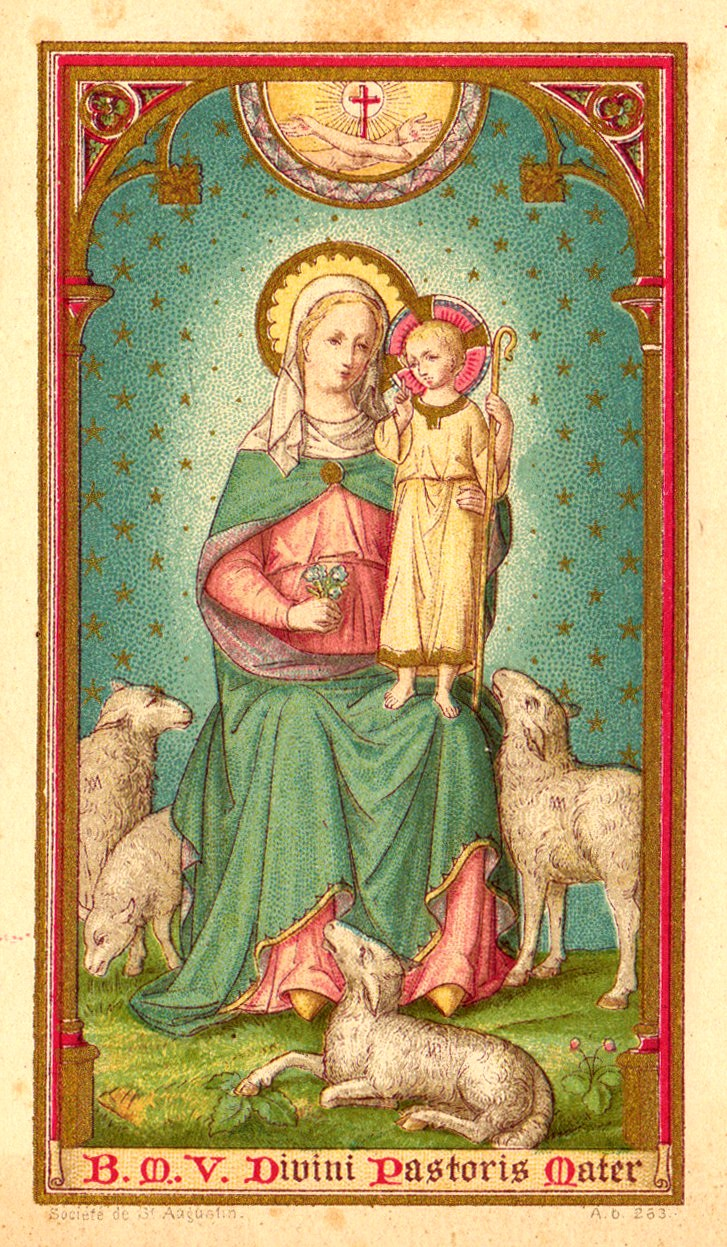
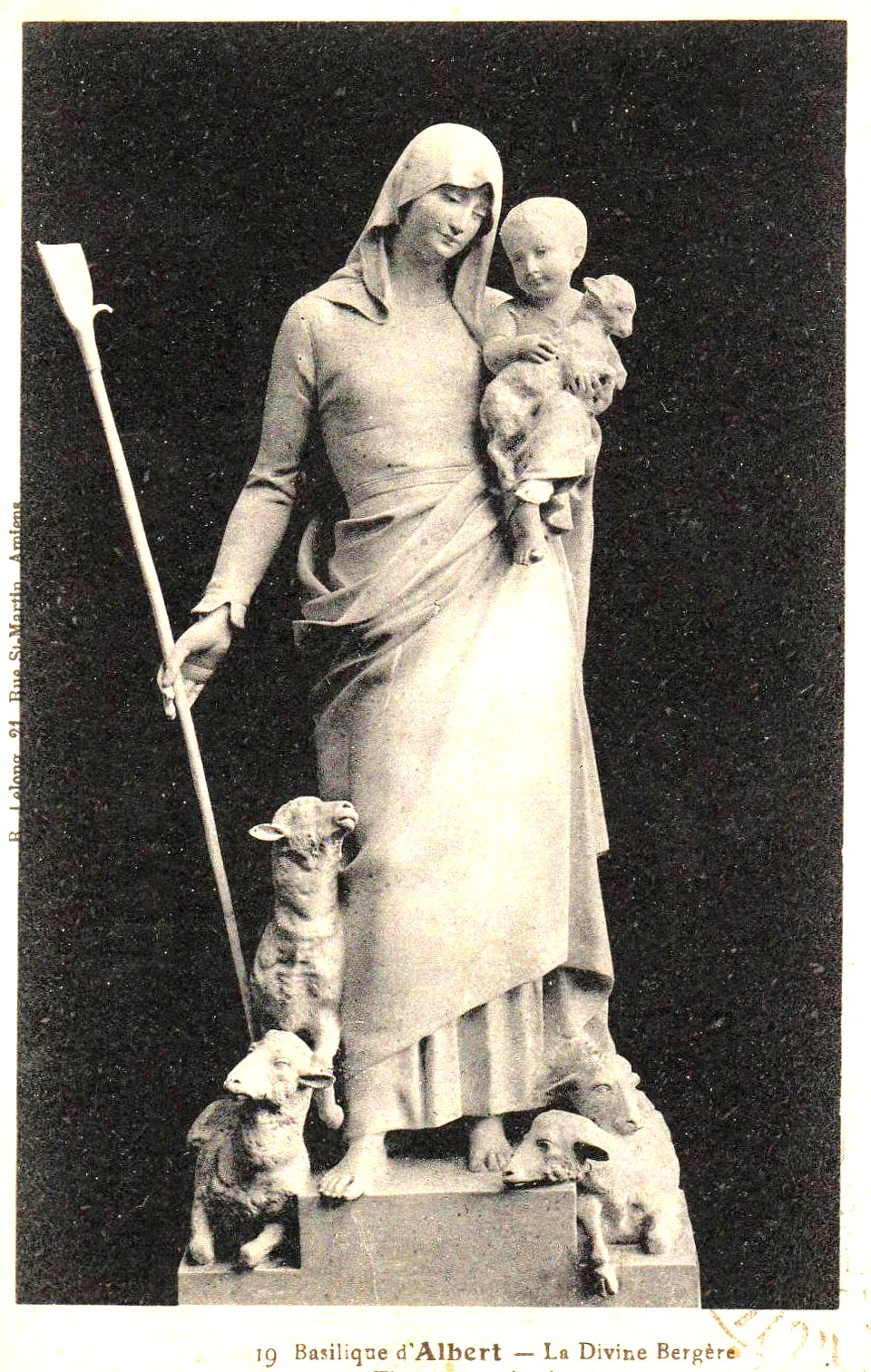
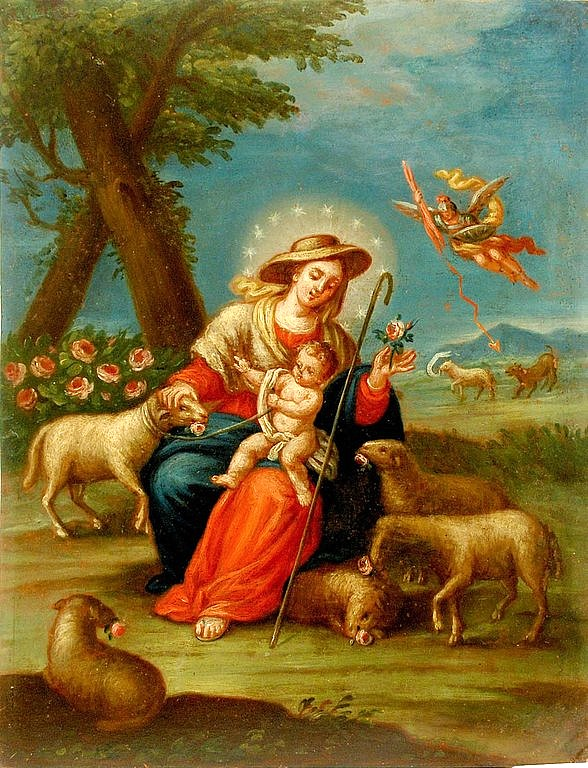
Notre Dame de Brebières / Mother of the Divine Shepherd, France (also known as Le Divine Bergère – The Divine Shepherdess) – 3 September:
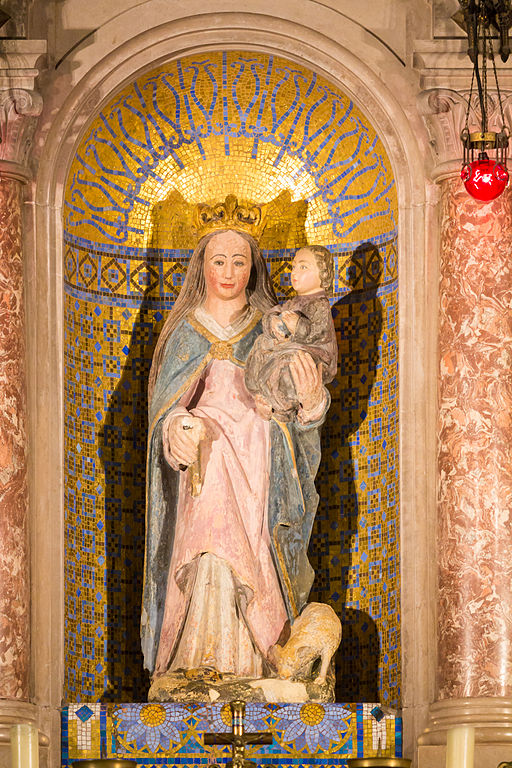
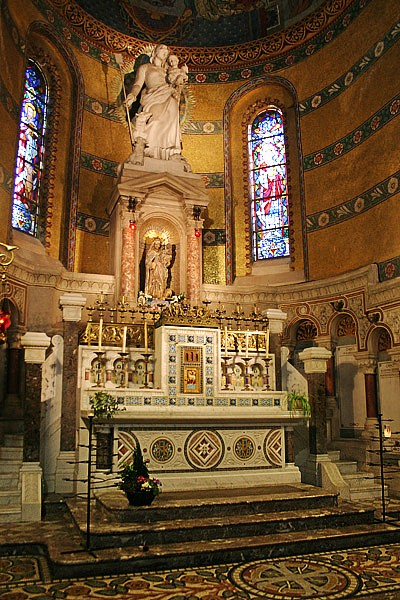
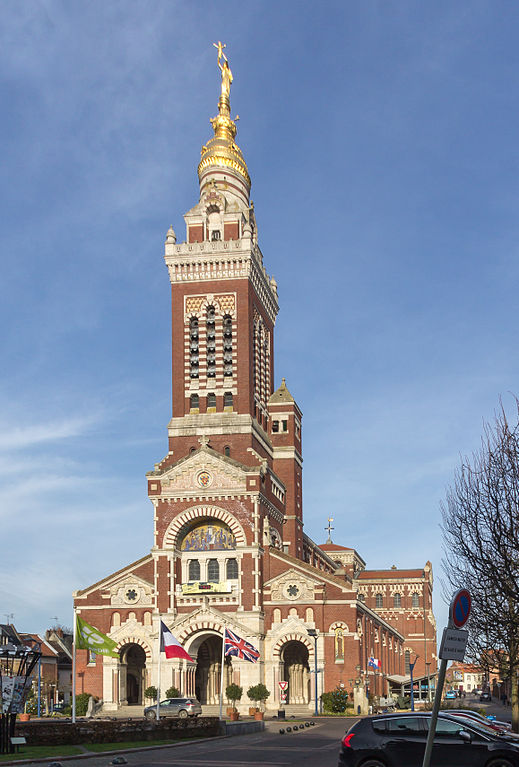
Our Lady, Mother of the Divine Shepherd, or Notre Dame de Brebières, is located in the small town of Albert in the Diocese of Amiens, France. At one time, probably sometime in the 12th century and according to local tradition, a shepherd was grazing his sheep at Brebières when he observed that many of the animals were staying in the same area to eat, ripping the grass out by the roots. It must have seemed very odd to the shepherd, who decided that the sheep were trying to uncover something, so he started to dig in the very spot himself. In a short time he uncovered a Statue of the Blessed Virgin sculpted from a single piece of solid stone.
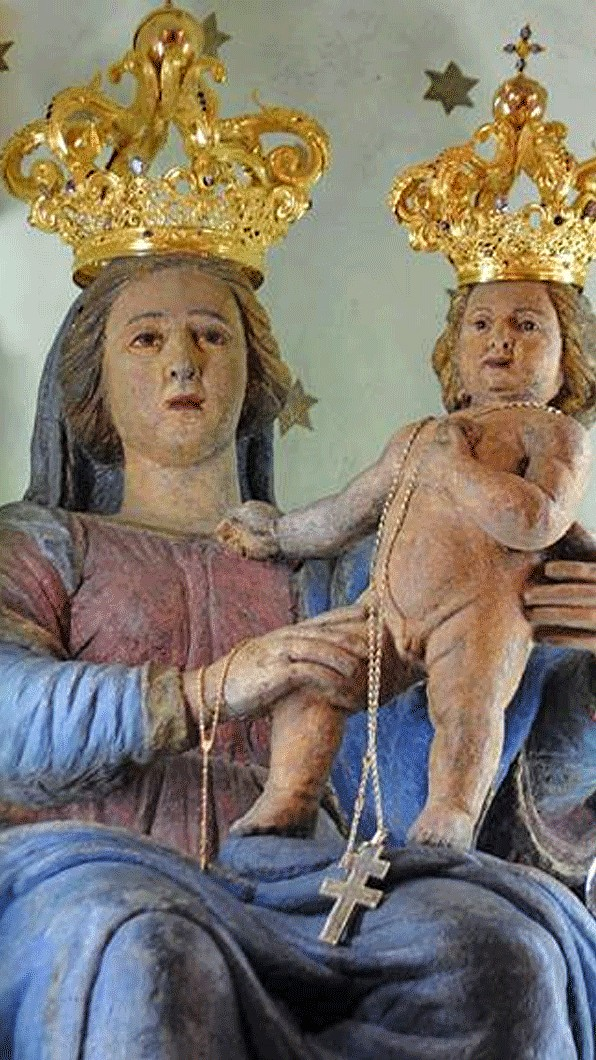
The Statue was fairly large, nearly 1,22 metres tall and represented the Blessed Mother holding the Divine Child in her arm. There was a sheep depicted quietly reclining at Mary’s feet. As has happened so often throughout history, the finding of the Statue increased the enthusiasm and affection of the local populace toward the Mother of God. A small Chapel was built at the site to honour the Statue and receive the pilgrims who had already begun coming to Albert to visit the Holy Mother.
Saint Colette can be credited for helping to spread the fame of Our Lady, Mother of the Divine Shepherd. At age fourteen, she was somewhat short and had a delicate constitution. Seeking a remedy through the favour of the Blessed Virgin, Saint Colette prayed to Our Lady of Brebières She not only obtained vigour and good health, she also found that several inches were miraculously added to her height!
In 1637 the Sanctuary was partially burned and IN 1727 the miraculous image was moved to the Parish Church of Albert. During the French Revolution the Church was made into a pagan temple to the goddess of Reason, while the image of the Mother of God was hidden until 1802 when the horrors of the Terror during this supposed time of reason subsided.
This feast is celebrated in a number of places and by certain religious communities and congregations: Capuchins, Marists and others, on widely different dates. It is a special festival of the Shrine of Our Lady of Brebières a very old Sanctuary near Albert in France, formerly much resorted to by the shepherds.
The pilgrimage here was revived after 1870 and a beautiful Basilica was completed in 1887. The Statue was crowned in 1901 and miraculously survived the devastation of both world wars. The Basilica has again been rebuilt.
The collect of the Mass prays that by following the Good Shepherd on earth, we may reach the pastures of eternal life with Mary in heaven.
St Chariton St Chrodegang of Séez St Frugentius the Martyr Bl Guala of Brescia St Hereswitha Bl Herman of Heidelberg St Macanisius St Mansuetus of Toul St Marinus (Died c 366) St Martiniano of Como St Natalis of Casale
St Phoebe (1st Century) Disciple of St Paul – Deaconess at Cenchrese, Matron and possibly a widow. She is mentioned by the Apostle St Paul in his Epistle to the Romans, verses 16:1-2.
St Regulus of Rheims St Remaclus St Sandila of Cordoba St Vitalian of Capua (Died 699) Bishop — Martyrs of Aquileia – 4 saints: Four young women, variously sisters and cousins, who were born to the nobility, the daughters of the pagans Valentinianus of Aquileia and Valentius of Aquileia. Each woman converted and made private vows, dedicating themselves to God. They were arrested, tortured and martyred by order of Valentius for becoming a Christian. We know little else but their names – Dorothy, Erasma, Euphemia and Thecla. They were martyred by beheaded in the 1st century in Aquileia, Italy and their bodies were thrown into a nearby river.
Martyrs of Nagasaki – 6 beati: A group of priests and clerics, native and foreign, murdered together in the anti-Christian persecutions in Japan. They were scalded in boiling water and then burned alive on 3 September 1632 in Nishizaka, Nagasaki, Japan and Beatified on 7 May 1867 by Pope Pius IX.
• Anthony Ishida • Bartolomé Gutiérrez Rodríguez • Francisco Terrero de Ortega Pérez • Gabriel Tarazona Rodríguez • Jerome of the Cross de Torres • Vicente Simões de Carvalho
Martyrs of Seoul – 6 saints: A group of Christian lay people martyred together in the persecutions in Korea. • Agnes Kim Hyo-Ch’u • Barbara Kwon Hui • Barbara Yi Chong-hui • Ioannes Pak Hu-jae • Maria Pak K’Un-agi • Maria Yi Yon-hui
Martyred in the Spanish Civil War: • Blessed Andrea Calle González • Blessed Concepción Pérez Giral • Blessed Dolores Úrsula Caro Martín • Blessed Joaquim Balcells Bosch • Blessed Pius Salvans Corominas
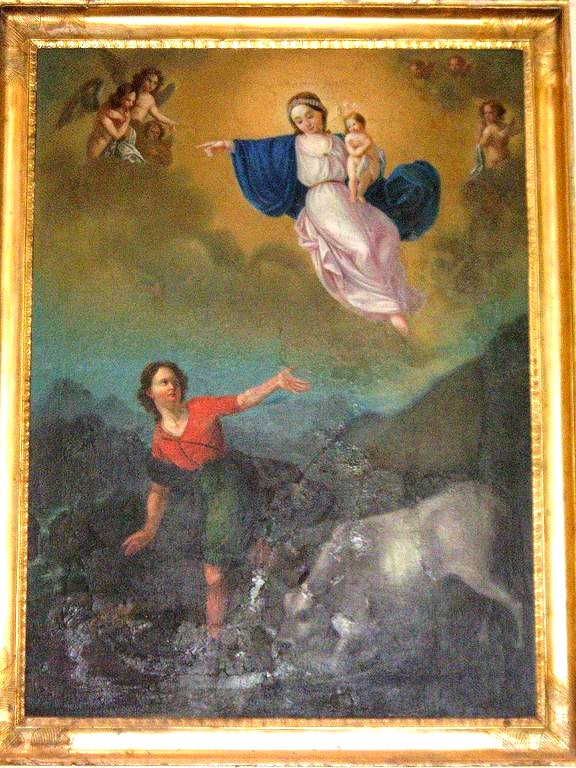
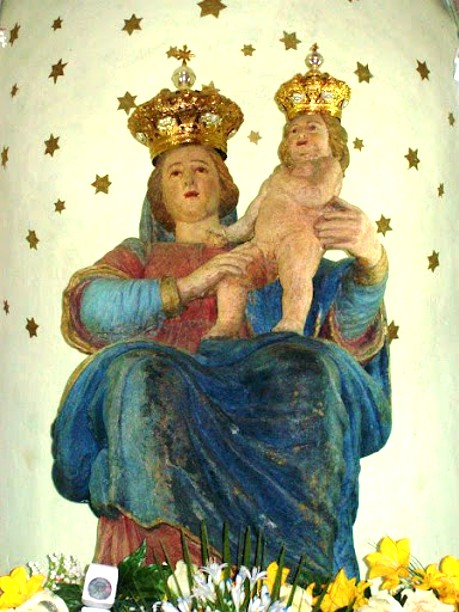
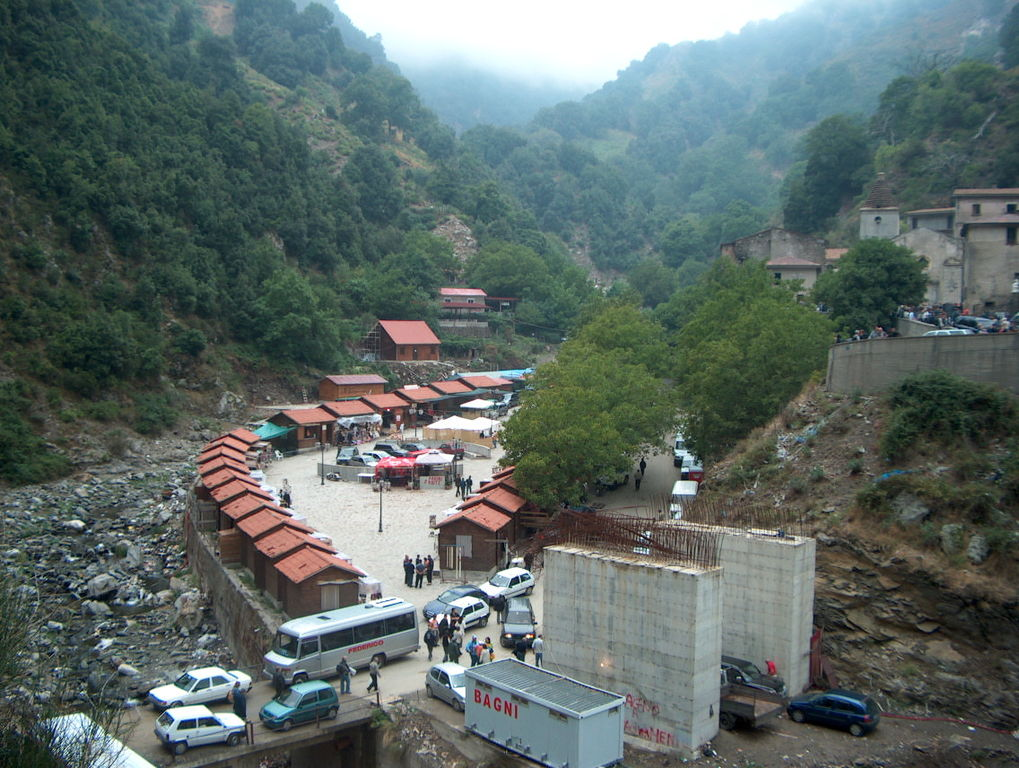
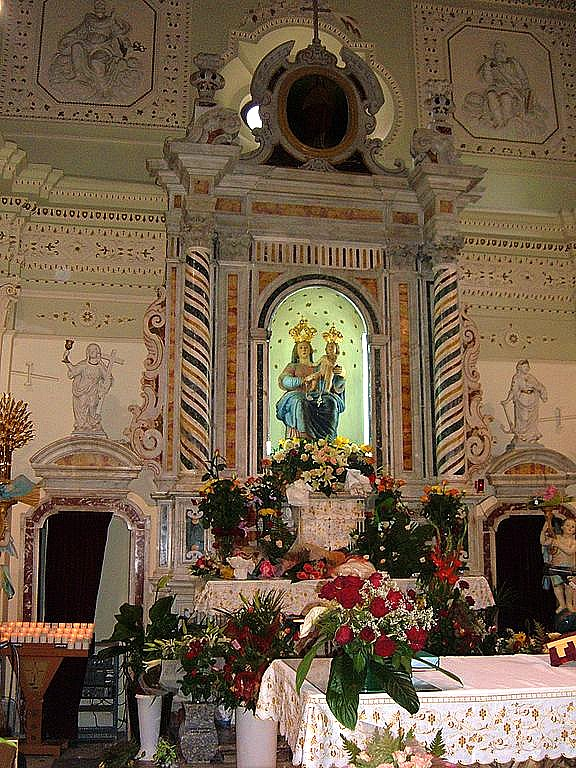
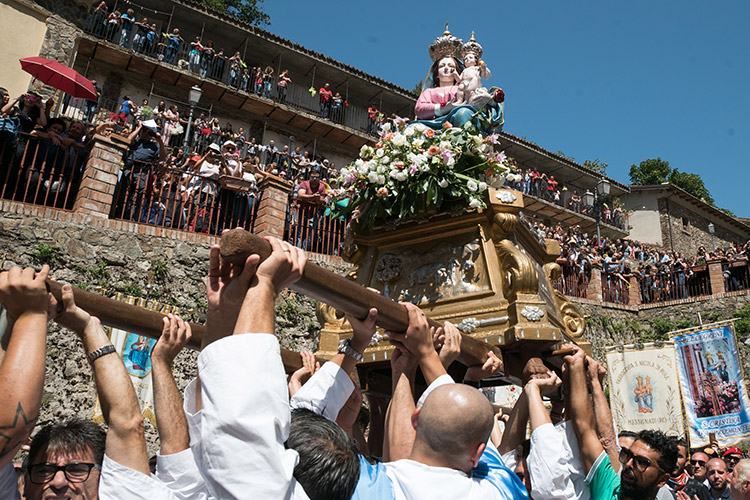
Madonna della Montagna / Our Lady of the Mountain, Polsi di San Luca, Reggio Calabria, Calabria, Italy (1144) – 2 September :
In 1144, a boy found his calf kneeling before an unusual iron Cross, apparently just unearthed. The Madonna appeared, asking for the young herder to spread the news and for a Church to be built on the spot, half a mile high in the mountains.
In 1560, a chest was found floating in the sea. It was taken ashore and found to contain a stone Statue of the Madonna. When the chest was placed in a cart, the oxen suddenly took off for the mountain pass and nothing more was heard of the Statue until it turned up in the heart of Aspromonte, at the place where a calf had found a Cross and the Madonna had requested a Church. The Sanctuary there became a place of pilgrimage.
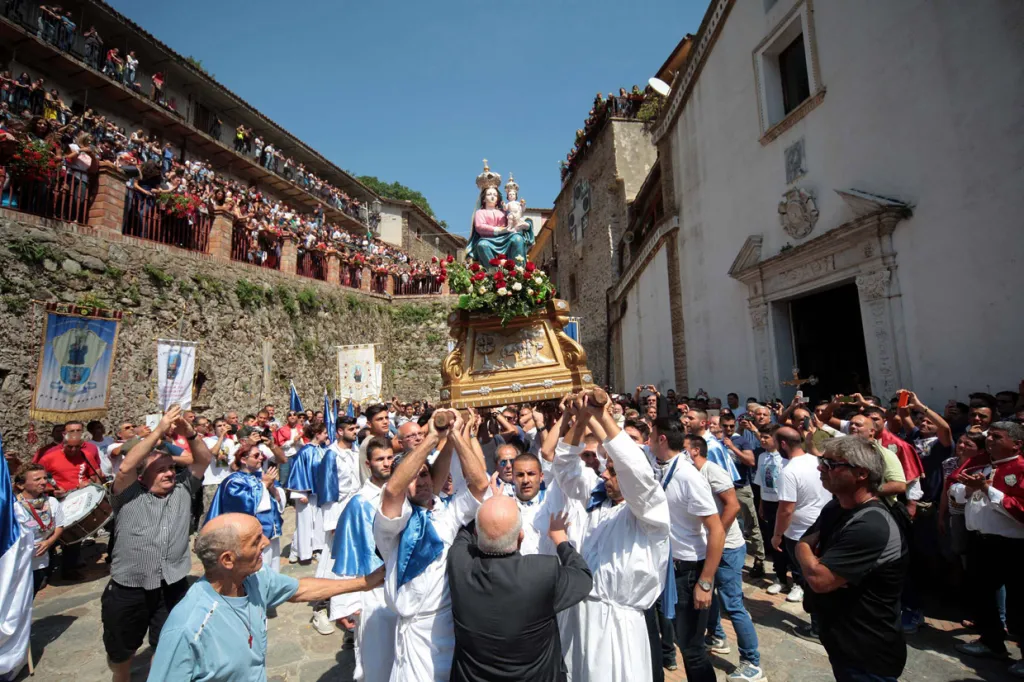
Every year, people from all over Calabria and Sicily would make the 24-hour walk, enlivened by hymns and ballads, along the rugged path to Polsi, where they would greet the Madonna with gunshots on their arrival on 2 September As pilgrims still do — though now they can travel by road or train as well — they would spend the night in one of the hostels near the Shrine. On 3 September, a wooden Madonna is carried in procession. The stone Statue is only taken from its place on the main Altar every 25 years or in special circumstances. Also known as the Mother of the Good Shepherd, the Madonna of the Mountain was crowned in 1881, 1931 and on 2 September 1981.
Bl Albert of Pontida St Antoninus of Pamiers St Antoninus of Syria
St Solomon le Clerq FSC (1745-1792) Martyr, Religious Brother of the De La Salle Brothers, Teacher.
St Theodota of Bithynia St Valentine of Strasbourg St William of Roeskilde — Marytrs of Nicomedia – 3 saints: Three Christians who were martyred together in the persecutions of Diocletian. No details about them but their names have survived – Concordius, Theodore and Zenone. They were martyrd in Nicomedia, Bithynia (in modern Turkey).
Martyrs of 2 September – 10 saints: A group of ten Christian martyrs; their names are on old martyrologies but we have lost all record of their lives and deaths. They were canonised. • Antoninus • Diomedes • Eutychian • Hesychius • Julian • Leonides • Menalippus • Pantagapes • Philadelphus • Philip
Holy Bishops of Rennes: Honors all the bishops of the Diocese of Rennes, France who have been recognized as saints and beati. They include : Saint Maximinus of Rennes Saint Modéran of Rennes Saint Rambert of Rennes Saint Riotisme of Rennes Saint Servius of Rennes Saint Synchronius of Rennes
Martyred in the Spanish Civil War: • Blessed Baldomer Margenat Puigmitja • Blessed Fortunato Barrón Nanclares • Blessed Joan Franquesa Costa • Blessed José María Laguía Puerto • Blessed Lorenzo Insa Celma
Collection of all the Feasts of Our Lady, celebrated at Louvain – 1 September:
The Abbot Orsini writes that “A feast is kept in honour of the Blessed Virgin, called the Collection of all the Feasts of Our Lady.”
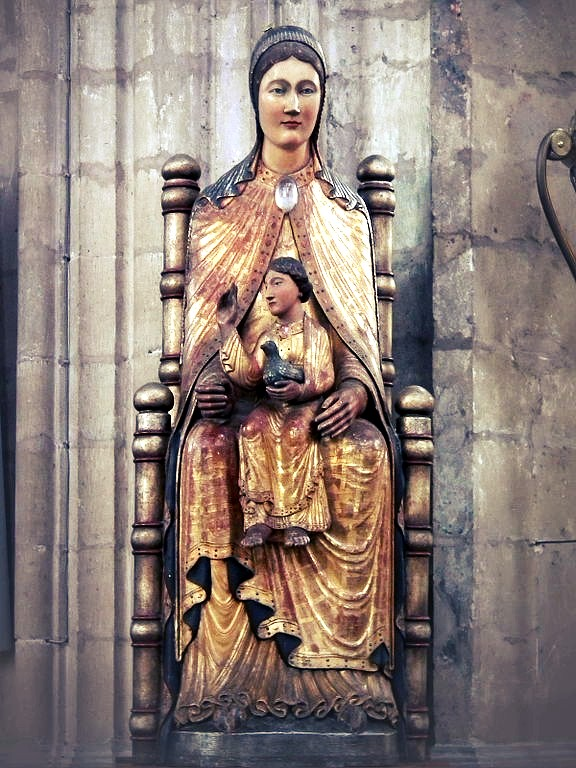
Louvain refers to Leuven, the capital of the Province of Flemish Brabant in the Flemish Region of Belgium. There was once a Chapel called Our Lady of Louvain, which had stood near the Church tower of a separate Church dedicated to Saint Peter. The Chapel owed its origin to an image of the Blessed Virgin Mary that was given by a group of Monks from Abbey Park as a sign of brotherhood in 1132. According to tradition, the wooden statue, which depicted the Blessed Virgin seated with the Divine Child in her lap, was a gift from heaven deposited on the earth by heavenly Angels. The image excited a lively religious fervour upon its reception and there are numerous miracles credited to pious devotion to the image of Our Lady of Louvain.
Over 350 years later, as the Chapel of Our Lady of Louvain was built on land that was needed for the construction of the new and larger Church of Saint Peter, it was necessary to demolish the Chapel. In a letter dated 28 March 1496, Bishop John Horne of Liege, authorised the transfer of materials from the Chapel of Our Lady of Louvain to the new Basilica of Saint Peter The old Chapel was demolished two years later in 1498 and the Statue of the Virgin was placed on a special Altar in the collegiate Church of Saint Peter. Every year, on the eve of the first Sunday in September, the miraculous image of Our Lady of Louvain had been carried in procession by the canons and members of the local council while bells tolled and musicians accompanied the image singing the Salve Regina.
Sometime later, the Statue became known by the title of Notre-Dame-sous-la-Tour. The original Church of Saint Peter was made entirely of wood and completed in about 986. It burned to the ground in 1176. It was rebuilt in Romanesque style with two west towers, and that image is still used as the ancient seal for the City. The Church was then enlarged in 1425 in the Brabantine Gothic style. The Church of Saint Peter was heavily damaged in both world wars but most importantly, the original Statue of Our Lady of Louvain was completely destroyed in 1944 by allied bombing during World War II and it is now only a replica that is on display at the Church.
Abigail the Matriarch
St Abdon the Judge St Aegidius St Agia St Anea St Arcanus St Arealdo of Brescia Bl Colomba of Mount Brancastello St Constantius the Bishop St Donatus of Sentianum St Felix of Sentianum
St Ibzan the Judge St Jane Soderini St Joshua the Patriarch Bl Juliana of Collalto St Laetus of Dax
St Lupus of Sens (Died 623) Bishop of Sens – France, Confessor, Monk, Missionary.
St Lythan St Nivard of Rheims St Priscus St Regulus St Sixtus of Rheims St Terentian St Verena St Victorious St Vincent of Xaintes — Exiles of Campania Twelve Holy Brothers: Martyrs of the South – A group of Martyrs who died c 303 at various places in southern Italy. In 760 their relics were brought together and enshrined in Benevento, Italy as a group. • Saint Arontius of Potenza • Saint Donatus of Sentianum • Saint Felix of Sentianum • Saint Felix of Venosa • Saint Fortunatus of Potenza • Saint Honoratus of Potenza • Saint Januarius of Venosa • Saint Repositus of Velleianum • Saint Sabinian of Potenza • Saint Sator of Velleianum • Saint Septiminus of Venosa • Saint Vitalis of Velleianum One tradition describes Saint Boniface of Hadrumetum and Saint Thecla of Hadrumetum as their parents.
Martyred in the Spanish Civil War: Martyred Hospitallers of Saint John of God – (12 beati) • Blessed Alejandro Cobos Celada • Blessed Alfonso Sebastiá Viñals • Blessed Amparo Carbonell Muñoz • Blessed Antonio Villanueva Igual • Blessed Carmen Moreno Benítez • Blessed Crescencio Lasheras Aizcorbe • Blessed Enrique López y López • Blessed Francesc Trullen Gilisbarts • Blessed Guillermo Rubio Alonso • Blessed Isidro Gil Arano • Blessed Joaquim Pallerola Feu • Blessed Joaquín Ruiz Cascales • Blessed José Franco Gómez • Blessed José Prats Sanjuán • Blessed Josep Samsó y Elias • Blessed Manuel Mateo Calvo • Blessed Mariano Niño Pérez • Blessed Maximiano Fierro Pérez • Blessed Miquel Roca Huguet • Blessed Nicolás Aramendía García • Blessed Pedro Rivera • Blessed Pio Ruiz De La Torre
Our Lady of the Founders – The Relic of the Girdle of Our Lady, Constantinople (5th Century) – 31 August:
St Aidan of Lindisfarne (Died 651) Apostle of Northumbria, Bishop, Monk, Missionary, Abbot, Ascetic.
St Raymond Nonnatus O.deM. (1204-1240) Religious Priest, Confessor, Cardinal, Friar of the Mercedarian Order. Beatified on 5 November 1625 by Pope Urban VIII and Canonised in 1657 by Pope Alexander VII. Raymond was delivered by Caesarean operation when his mother died during childbirth – hence the name: non natus = not born.
St Ammi of Caesarea St Aristides the Philosopher St Barbolenus of Bobbio St Bonajuncia OSM Confessor St Caesidius St Cuthburga of Wimborne St Cwenburgh of Wimborne
St Theodotus and St Rufina of Caesarea were husband and wife, martyrs in the persecutions of Aurelian, and parents of Saint Mamas. Born to patrician families in Paphlagonia, Asia Minor, they were devout Christians. When the persecutions of Christians began, Alexander, the magistrate of the city of Gangra, summoned them to trail because they refused to obey the imperial decree requiring all citizens to worship the pagan gods. Those who disobeyed would be tortured and put to death.
Since Theodotus was a noble, and Alexander could not torture or murder him because of that, so he sent him to the governor Faustus in Caesarea of Cappadocia. Faustus, who was notoriously ruthless, threw Theodotus into prison. Though pregnant, Rufina followed her husband into gaol. Fearing that he would not be able to withstand torture and would apostatise, Theodotus asked God to take his soul, a prayer which was granted. As a result of sorrow and the privations she experienced in prison, Saint Rufina gave birth prematurely. She prayed that God would permit her to follow her husband in death, and that He would also protect her child. Her prayer was also granted and Saint Mamas was raised by a pious woman named Ammia.
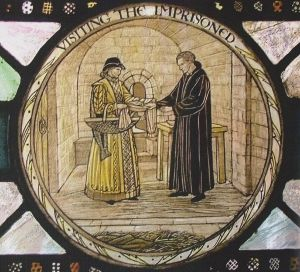
The prison, indeed, is the devil’s house as well, wherein he keeps his family. But you have come within its walls for the very purpose of trampling the wicked one under foot in his chosen abode.
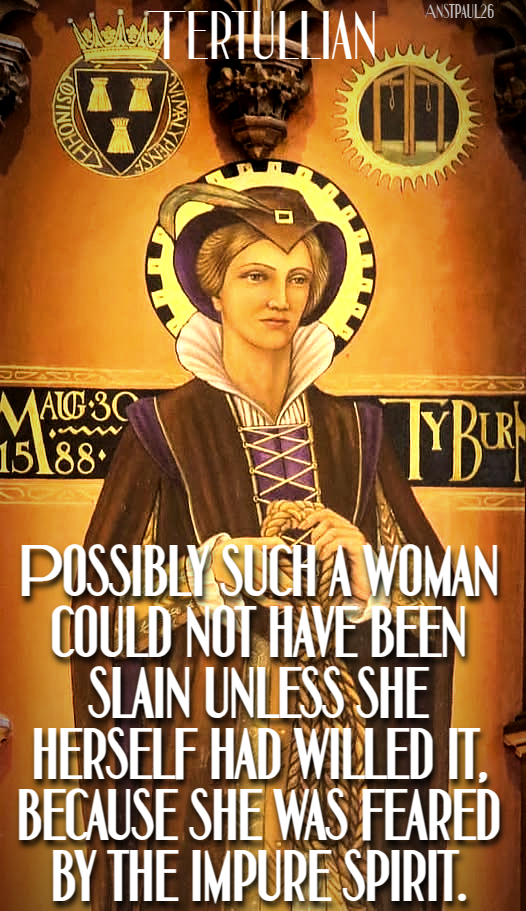
Blessed Margaret Ward, known as the Pearl of Tyburn, a martyr during the reign of Elizabeth I. Margaret was born a gentlewoman in Congleton, Cheshire, in Northwest England, in 1550. Later she travelled to London and went to work in the home of a woman of distinction called Whitall.
Whilst in London she assisted a priest called William Watson, who was imprisoned in the Bridewell prison. Ward befriended the gaoler’s wife, took food to Watson, and smuggled in rope to help Watson escape. She arranged for two Catholic watermen to meet Watson on the Thames below the prison walls; even though he broke his arm and leg during his escape, he was picked up by the watermen, “who rowed him to a safe hiding place”. The rope was traced back to Ward. She was arrested, charged, and tried for “aiding a traitor to escape” and was tortured by being hung by her wrists and beaten for eight days.
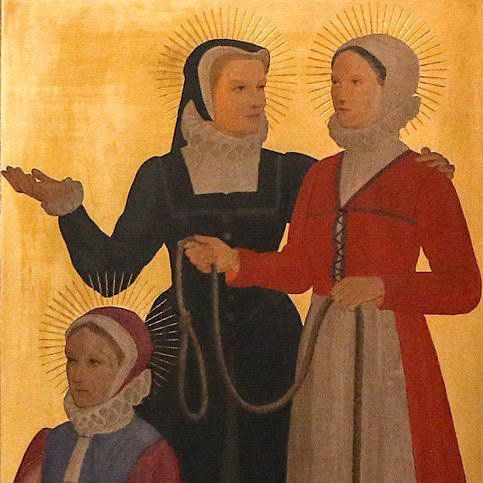
Margaret Clitherow, Anne Line, and Margaret Ward
Blessed Robert Southwell said Ward “was flogged and hung up by the wrists, the tips of her toes only touching the ground, for so long a time that she was crippled and paralyzed, but these sufferings greatly strengthened the glorious martyr for her last struggle”. Blessed John Roche was arrested and tried with Ward. They were offered release if they asked for the queen’s pardon and agreed to “conform to the established Church”, but they refused and were hanged at Tyburn on 30 August 1588. Ward and Roche were beatified in a large group in 1929.
Possibly such a woman could not have been slain unless she herself had willed it, because she was feared by the impure spirit.
St Adelphus St Adausia of Rome St Alberic of Bagno de Romagna St Basilia of Sirmium Bl Bronislava St Candida of Rome St Edwold the Hermit St Euthymius of Perugia St Maximian of Vercelli St Medericus St Nicaeus of Antioch St Paul of Antioch St Repositus of Velleianum Bl Richard Herst St Sabina of Troyes St Sator of Velleianum St Sebbe of Essex St Velleicus St Victor of La Chambon St Vitalis of Velleianum
St Joseph Calasanz Sch.P. (1557-1648) Spanish Confessor, Priest, Teacher, Lawyer, Founder of the Pious Schools. Patron of all Schools, Colleges, all study institutions and of all students.
St Caesarius of Arles (470-543) Archbishop and Church Father, Theologian, Preacher, Apostle of charity, Legislator, Administrator, Writer, Reformer.
St Carpophorus St David Lewis St Decuman St Ebbo of Sens St Etherius of Lyons St Euthalia of Leontini St Fortunatus of Potenza Bl Gabriel Mary St Gebhard of Constance St Giovanni of Pavia St Honoratus of Potenza St John of Pavia St Licerius of Couserans St Malrubius of Merns St Narnus of Bergamo St Phanurius St Poemen Bl Roger Cadwallador St Rufus of Capua St Sabinian of Potenza St Syagrius of Autun
Martyrs of Tomi – 5 Saints: A group of 17 Christians imprisoned and executed for their faith during the persecutions of Diocletian. They miraculously were unburned by fire and untouched by wild animals. We know the names and a few details on five of them – John, Mannea, Marcellinus, Peter and Serapion. They were tied to stakes and burned alive; they emerged unharmed – thrown to wild animals in the amphitheatre; the animals ignored them; they were beheaded in 304 in Tomi, Mesia (modern Costanza, Romania).
Martyrs of Nagasaki – 14 Beati: A group of fourteen missionaries and Japanese native Christians, who were Martyred together for their faith. They died on 16 August 1627 in Nagasaki, Japan and were Beatified on 7 May 1867 by Pope Pius IX. • Blessed Antonius of Saint Francis • Blessed Bartolomé Díaz Laurel • Blessed Caius Akashi Jiemon • Blessed Francisca Pinzokere • Blessed Francisco of Saint Mary • Blessed Franciscus Kuhyoe • Blessed Leo Kurobyoe Nakamura • Blessed Lucas Tsuji Kyuemon • Blessed Ludovicus Matsuo Soyemon • Blessed Magdalena Kiyota • Blessed Maria Shobyoe • Blessed Michaël Koga Kizayemon • Blessed Thomas Sato Shin’emon • Blessed Tsuji Shobyoe
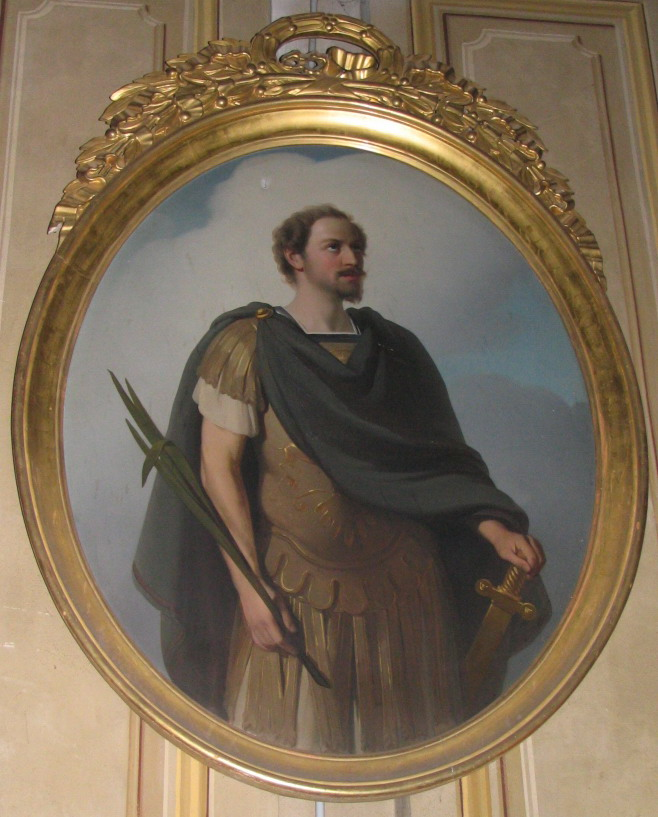
Saint Victor of Caesarea, martyr. Also known as Vittore. He was crucified at Caesarea, Mauretania, in Africa during the persecutions of the first century. Not to be confused with Saint Victor the Martyr, a Spanish hermit martyred by Moors in the ninth century.
Saint Victor of Caesarea
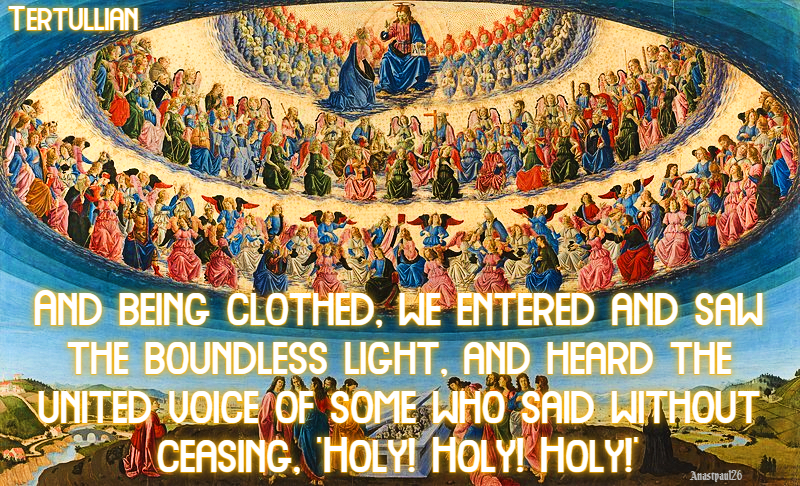
And we came near to place, the walls of which were such as if they were built of light; and before the gate of that place stood four angels, who clothed those who entered with white robes. And being clothed, we entered and saw the boundless light, and heard the united voice of some who said without ceasing, ‘Holy! Holy! Holy!’
Miguel de Carvalho SJ, also known as Michael Carvalho, was born in Braga, in 1579, to a noble and wealthy family. In 1597, he joined the Society of Jess in. In 1602, he studied in Portuguese India. After completing his studies of philosophy and theology at St. Paul’s College in Goa, he was ordained to the priesthood. For several years, he was a professor of theology at the Academy. On 21 August 1621, he arrived in Japan where there was an increasing persecution of Catholics in social life. Hidetada Tokugawa, the second shōgun of the Tokugawa dynasty, issued a decree which banned the practice and teaching of the Christian faith, and under the threat of loss of life, all missionaries had to leave Japan. This decree started the bloody persecution of Christians, which lasted several decades.
Carvalho hid in plain view, disguised as a soldier for two years. When the local governor openly confessed that Carvalho was a missionary, and the actual purpose of his stay was to preach and convert the locals to Christianity, he was expelled from the island. With the help of fellow believers, he went to Nagasaki, where the Jesuit Provincial, Francisco Pacheco advised him to remain prudent in the implementation of the apostolate and directed him to care for a small group living in a suburban area. On 22 July 1623, as he returned from the pastoral ministry in Ōmura, Carvalho was arrested thanks to an accusation from an informant.
In the local prison, he joined Franciscan Luis Sotelo, Dominican Pedro Vásquez, and two Japanese Franciscans, Ludovicus Sasada and tertiary Ludovicus Baba. Miguel spent his time in captivity with the celebration of daily Mass and prayer. On 24 August, a death sentence was ordered, which was performed the next day in Ōmura. On 25 August 1624, Carvalho and his companions were burned at the stake.
The steadfastness and joy that he showed convicts in the face of martyrdom for the faith, aroused the admiration of his contemporaries. Carvalho was beatified by Pope Pius IX on 7 July 1867. The death of the martyrs is commemorated by an obelisk in Ōmura.
‘Thanks be to God, that joyous as I was in the flesh, I am now more joyous here.’
St George Limniotes, a martyr and hermit. Born in 635, he pursued the life of a hermit on Mount Olympus, near Constantinople. Like all hermits, he prayed, fasted, and practiced contemplation, his sanctity gaining him the love of the locals, who sought his counsel and prayers. During his life the heresy of Iconoclasm raged, and he fiercely defended icons and demolished the arguments of the Iconoclasts. For this, in the year 730, at age ninety-five, he was martyred. His murderers mutilated his face, cutting off his nose before they burnt him to death.
Manifestly he was assuredly saved who had been glorified in such a spectacle.
Saints Altigianus and Hilarinus, martyrs and monks of the French Burgundian monastery of Saint-Seine founded two centuries earlier by Saint Sequanus. The Moors who had invaded Spain in the early eighth century spread their conquest for a time into parts of France, and penetrated the country all the way to the Burgundian city of Autun. Their advance was not halted until 732, when the Frankish ruler Charles Martel defeated them between Poitiers and Tours. It was about this time that Altigianus and Hilarinus were slain with the sword by the Moors at or close to the Saint-Seine monastery, not far from Autun.
He was bathed with such a quantity of blood, that the people shouted out to him as he was returning, the testimony of his second baptism, “Saved and washed, saved and washed.”
St Andrew of Fiesole St Anthusa of Seleucia St Antoninus of Rome St Arnulf of Eynesbury St Athanasius of Tarsus Bl Bernard Perani St Dalmau Llebaría Torné St Epictetus of Ostia St Ethelgitha of Northumbria St Fabrician of Toledo St Felix of Ostia
Blessed Giacomo/James Bianconi OP (1220–1301) Confessor, Priest and Friar of the Order of Preachers, Spiritual Advisor, founder and restorer of Convents and Churches. Pope Urban VIII Beatified the Blessed Giacomo in 1641.
St Joan Farriol Sabaté
St John Kemble (1599 – 1679) Martyr, Priest. Ordained in 1625, he returned to Monmouthshire and served more than 50 years as an itinerant Priest, winning admirers even among Protestants. After being dragged on a hurdle to Widemarsh Common, Kemble declared on the scaffold that he died for the religion that had made this country Christian and that he forgave all his enemies. He was then obliged to encourage the executioner, who had no stomach for his task.
St John Wall St Josep Roselló Sans St Julio Melgar Salgado St Maprilis of Ostia St Martial of Ostia St Maurus of Rheims St Narciso de Esténaga y Echevarría St Philibert of Toledo Bl Richard Kirkman St Saturninus of Ostia Bl Simeon Lukach St Sigfrid of Wearmouth St Symphorian of Autun
Blessed Timoteo da Monticchio OFM (1444-1503) Priest of the Order of the Friars Minor, he was endowed with mystical gifts, especially of the Blessed Virgin and of St Francis of Assisi. On 10 March 1870, his Beatification was confirmed by Pope Pius IX. His body is incorrupt.
St Thomas Percy St Timothy of Rome Bl William Lacey
Blessed William Lacey, was a martyr of England and a priest. Born in Horton, West Riding, Yorkshire, he married a widow and both his step-sons became Jesuits.
He distinguished himself as a lawyer and as an ardent Catholic, using his house as a refuge for the much-oppressed Catholics of the time, being one of those gentlemen whose house was open to priests that came from the colleges abroad. Having been advised by them that he could not in good conscience attend Protestant churches, his absence was noted and he was forced to give up his position. He was subject to repeated fines, until he had to leave his home and stay with friends, but never long in one place. For fourteen years he suffered persecution for his faith, which included imprisonment at Hull. After the death of his wife, he went abroad and arrived at Reims, 22 June 1580. On 25 September following he went on to Pont-à-Mousson, and thence to Rome, where he obtained a dispensation. The dispensation was necessary as Lacy had been married twice.
He arrived at Douai in 1577 and, after the transference of the English College to Reims, was ordained priest on Holy Saturday, 1579. On his return to England in August he seems to have found a refuge with Robert Dymoke, hereditary Champion of England (d. in Lincoln gaol for his faith, 11 Sept 1580), at Scrivelsby, Lincolnshire. He was eventually arrested, 8 August, 1582. After condemnation the two martyrs shared one cell in a turret till 10 August, when Blessed Richard was moved to an underground dungeon.
York’s ‘Tyburn’ at Knavesmire, where the martyrs were executed
He was executed at Knavesmaire, just outside of York with Blessed Richard Kirkman. They are both members of the 158 Douai Martyrs.
My son, my son, remember eternal life; look up to Heaven and see the One Who reigns there; life is not taken from thee, it is exchanged for a better one.
Siblings, and children of Almanzor, Muslim caliph of Lerida, Catalonia, Spain, during the Moorish Occupation in the 12th century. Saint Bernard converted and became a Benedictine Cistercian monk at Poblet, taking the name Bernard. He then converted his two sisters Gracia and Maria, and together they attempted to convert their other brother, Almanzor, who turned them over to Moorish authorities. They were martyred in 1180.
Saint Bernard
Saint Gracia
Saint Maria
The exact circumstances surrounding their deaths are not known. Bernard, Gracia and Maria are venerated as the patron saints of Alcira, Valencia, Spain.
Muslim army in Iberia
Stand fast in the faith, and love one another, all of you, and be not offended at my sufferings.
St Bernard O.Cist. (1090-1153) Abbot of the Order of Citeaux (the Cistercians), Confessor, “Doctor Mellifluus” of the Church and the Last Father of the Church,“The Bard of Mary”- Theologian, Reformer, Writer, Mystic, Preacher, Mariologist, Advisor, Mediator, Poet. St Bernard, the Founding Abbot of Clairvaux Abbey in Burgundy, France, was one of the most commanding Church leaders in the first half of the twelfth century, as well as, one of the greatest spiritual masters of all time and the most powerful propagator of the Cistercian reform.
St Brogan St Burchard of Worms St Christopher of Cordoba St Cristòfol Baqués Almirall St Edbert of Northumbria Bl Georg Hafner Bl Gervais-Protais Brunel St Gobert of Apremont St Haduin of Le Mans St Heliodorus of Persia St Herbert Hoscam St Leovigild of Cordoba Bl Louis-François Lebrun St Lucius of Cyprus St Maximus of Chinon
Blessed Maria de Mattias ASC (1805-1866) Founder of the religious Congregation of the Sisters Adorers of the Blood of Christ, Mystic, Teacher, Preacher, Catechist
St Oswine of Deira (Died 651) King, Martyr, King of Deira in northern England.









You must be logged in to post a comment.