St John Eudes (1601-1680) Confessor, Priest, Missionary, Founder, Preacher, Writer, Mystic, he founded the Congregation of Jesus (The Eudists) and Mary and the Order of Our Lady of Charity and was the Author of the propers for the Mass and Divine Office of the Sacred Hearts of Jesus and Mary. Known as “The Apostle of Two Hearts.” Beatified on 25 April 1909 by Pope Pius X and Canonised on 31 May 1925 by Pope Pius XI.
St Andrew the Tribune St Badulf of Ainay St Bertulf of Luxeuil St Calminius St Credan of Evesham St Donatus of Mount Jura St Elaphius of Châlons St Guenninus Bl Guerricus Bl Hugh Green
Blessed Jordan of Pisa OP (c 1255–1311) Dominican Friar, Theologian, Professor, renowned Preacher, Founder of the Confraternity of the Holy Redeemer at Pisa, Visionary, Marian devotee, promoter and daring innovator of the vernacular Italian language as a ‘church’ language and a tool for evangelisation. On 23 August 1833, Blessed Jordan’s cultus was confirmed by Pope Gregory XVI and in 1838 he was Beatified by Pope Gregory XVI.
St Julius of Rome
St Louis of Toulouse OFM (1274-1297) Prince and Bishop, Neapolitan Prince of the Capetian House of Anjou, Franciscan Friar and Priest, Apostle of Prayer, of Penance and of the poor and the sick. He had received the last sacraments on the Feast of the Assumption of Our Lady and on the 19th of August, 1297, while pronouncing the holy name of Mary, he yielded his soul to God. Because of the many miracles that were wrought at his tomb, he was Canonised as early as 1317, during the lifetime of his mother.
St Magnus of Anagni St Magnus of Avignon St Magnus of Cuneo St Marianus of Entreaigues St Marinus of Besalu St Magino of Tarragona St Mochta St Namadia of Marsat St Rufinus of Mantua St Sarah the Matriarch St Sebaldus St Thecla of Caesarea St Timothy of Gaza
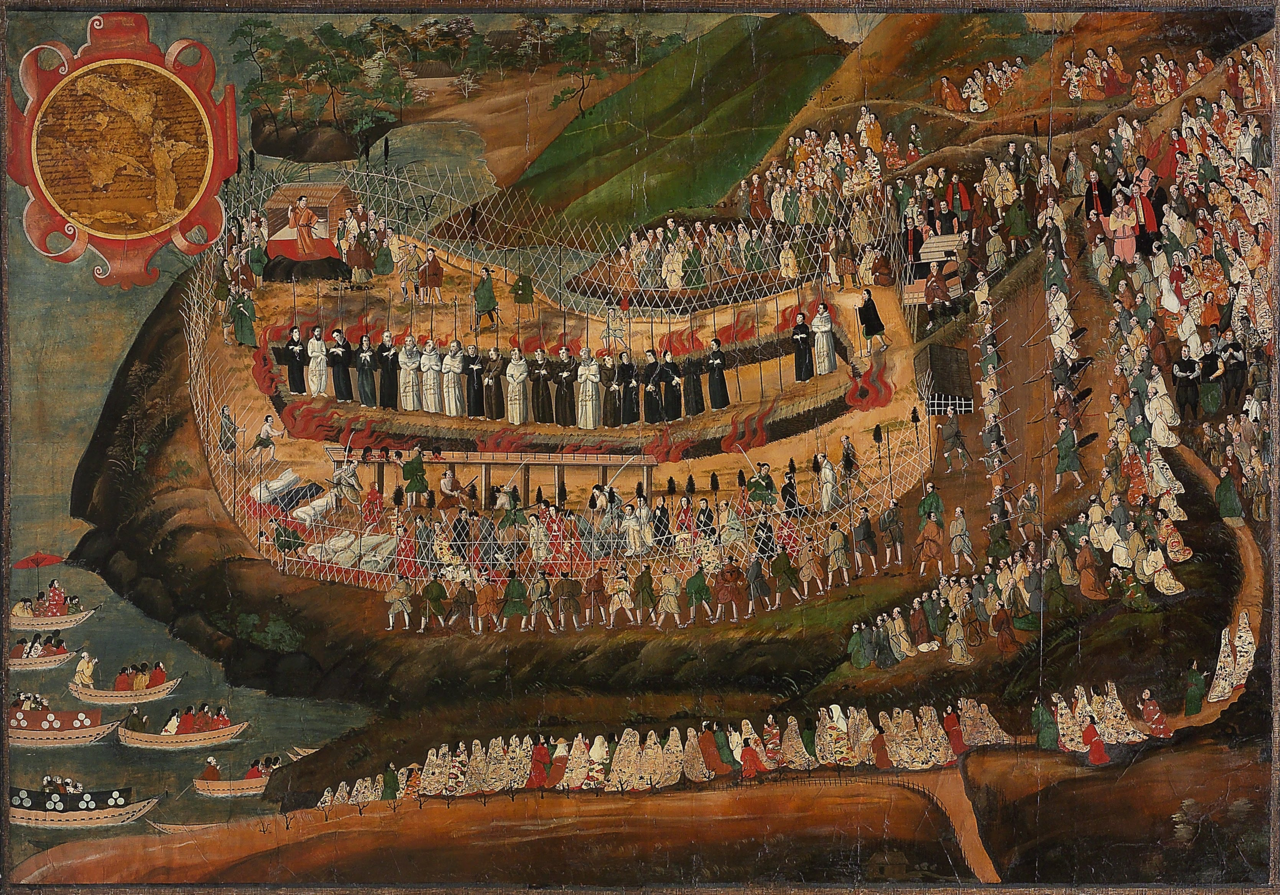
Martyrs of Nagasaki – 15 Beati: A group of missionaries and their laymen supporters who were executed for spreading Christianity in Japan. • Antonius Yamada • Bartholomaeus Mohyoe • Iacobus Matsuo Denji • Ioachim Díaz Hirayama • Ioannes Miyazaki Soemon • Ioannes Nagata Matashichi • Ioannes Yago • Laurentius Ikegami Rokusuke • Leo Sukeemon • Ludovic Frarijn • Marcus Takenoshita Shin’emon • Michaël Díaz Hori • Paulus Sankichi • Pedro de Zúñiga • Thomas Koyanagi They were beheaded on 19 August 1622 at Nagasaki, Japan and Beatified on 7 May 1867 by Pope Pius IX.
St Crispus of Rome St Daig Maccairaill Bl Domenico de Molinar St Eonus of Arles St Ernan St Evan of Ayrshire St Firminus of Metz St Florus of Illyria Bl Francus of Francavilla Bl Gaspar di Salamanca St Hermas of Rome St John of Rome St Juliana of Myra St Juliana of Stobylum St Laurus of Illyria St Leo of Myra Bl Leonard of Cava St Maximus of Illyria Bl Milo of Fontenelle St Polyaenus of Rome St Proculus of Illyria
Blessed Rinaldo of Concorezzo (c 1245 – 1321) Bishop of Vicenza from 1296 until his 1303 appointment as the Archbishop of Ravenna-Cervia holding that until his death, Doctor of Canon Law, Papal envoy, Arbitrator and Peace-maker. Archbishop Rinaldo was also a close friend of Dante Alighieri.
St Ronan of Iona St Serapion of Rome
Massa Candida: Also known as Martyrs of Utica and the White Company: Three hundred 3rd century Christians at Carthage, who were ordered to burn incense to Jupiter or face death by fire. Martyrs. Saint Augustine of Hippo and the poet Prudentius wrote about them. They were forced to cast themselves into a pit of burning lime c 253 at Carthage, North Africa.
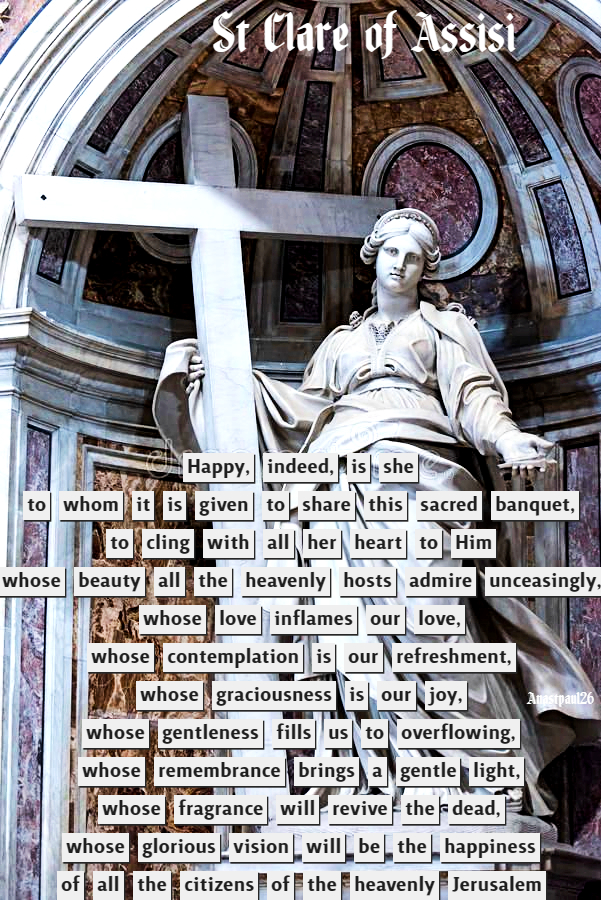
Happy, indeed, is she to whom it is given to share this sacred banquet, to cling with all her heart to Him whose beauty all the heavenly hosts admire unceasingly, whose love inflames our love, whose contemplation is our refreshment, whose graciousness is our joy, whose gentleness fills us to overflowing, whose remembrance brings a gentle light, whose fragrance will revive the dead, whose glorious vision will be the happiness of all the citizens of the heavenly Jerusalem
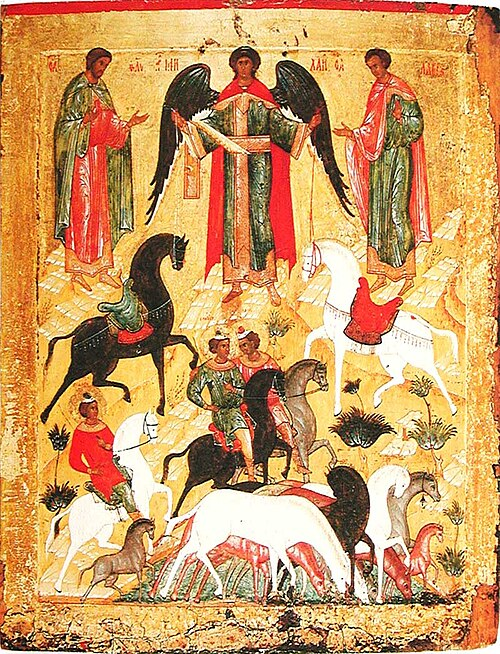
Saints Florus and Laurus were twin brothers who worked as stonemasons. They were originally from Byzantium but settled in Ulpiana, Dardania, south of modern Pristina, Kosovo. They were educated in masonry by two men named Maximus and Proculus, who were Christians, and who were later sentenced to death for being so.
Novgorod icon of Sts. Florus and Laurus
Likaion, the prefect of the district, employed the brothers in the construction of a pagan temple. The brothers gave their salaries to the poor. When the son of a local pagan priest named Mamertin was blinded by a chip of stone from the saints’ temple, Florus and Laurus cured the boy after he converted to Christianity. Mamertin also converted to Christianity as a result of his son’s recovery.
After the temple was finished, the twins brought together many local Christians. The group smashed all of the statues of the pagan gods, and a cross was set up in the temple, then they spent the whole night in prayer within it. As a result of this action, the local authorities had 300 Christians, including Mamertin and Mamertin’s son, burned to death.
Florus and Laurus were executed differently; Likaion had them thrown down an empty well, which was then covered with earth. Many years later their relics were recovered and transferred to Constantinople.
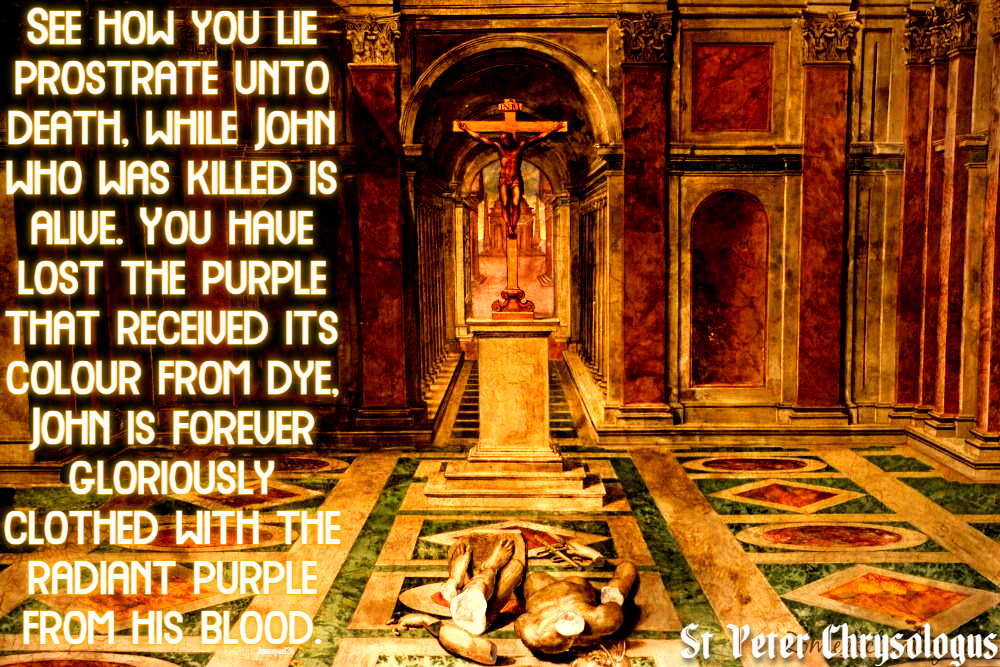
See how you lie prostrate unto death, while John who was killed is alive. You have lost the purple that received its colour from dye, John is forever gloriously clothed with the radiant purple from his blood.
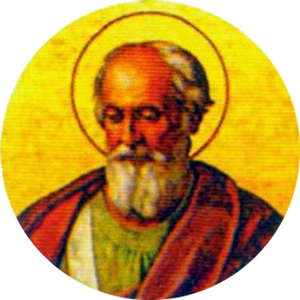
Saint Eusebius (died 21 October 310) was the bishop of Rome from 18 April 309 until his exile on 17 August 310. Not much is known about Eusebius’s early life, but he was probably Greek. His reign was short. The Liberian Catalogue gives its duration as only four months, from 18 April to 17 August, 309 or 310.
We learn some details of his career from an epitaph for his tomb which Pope Damasus ordered. It appears that the grave internal dissentions caused in the Roman Church by the readmittance of the apostates (lapsi) during the persecution of Diocletian, and which had already arisen under Marcellus, continued under Eusebius. The latter maintained the attitude of the Roman Church, adopted after the Decian persecutions (250-51), that the apostates should not be forever debarred from ecclesiastical communion, but on the other hand, should be readmitted only after doing proper penance.
This view was opposed by a faction of Christians in Rome under the leadership of one Heraclius. It is likely that Heraclius and his supporters sought to compel by force their admittance to divine worship, which was resented by the faithful gathered in Rome about Eusebius. In consequence both Eusebius and Heraclius were exiled by Emperor Maxentius. Eusebius was deported to Sicily, where he died soon after. Miltiades ascended the papal throne, 2 July, 311. The body of his predecessor was brought back to Rome, probably in 311, and was placed in a separate cubiculum of the Catacomb of Callistus. His firm defense of ecclesiastical discipline and the banishment which he suffered therefore caused him to be venerated as a martyr, and in his epitaph Pope Damasus honours Eusebius with this title.
St Marcellus of Apamea, bishop and martyr. Marcellus was born in Cyprus and martyred in Syria in the year 389. Having been raised strongly in the Faith by an illustrious Cypriot family, and after the reception of a great education, Saint Marcellus became a high ranking civil magistrate noted for his possessing all the virtues. In the year 375, when his wife died and his children were provided for, he left the island and devoted himself to a monastic life in Syria. Whilst there the people of Apamea chose him as their bishop. As bishop, he worked with evangelical fervor to bring pagans to Christ.
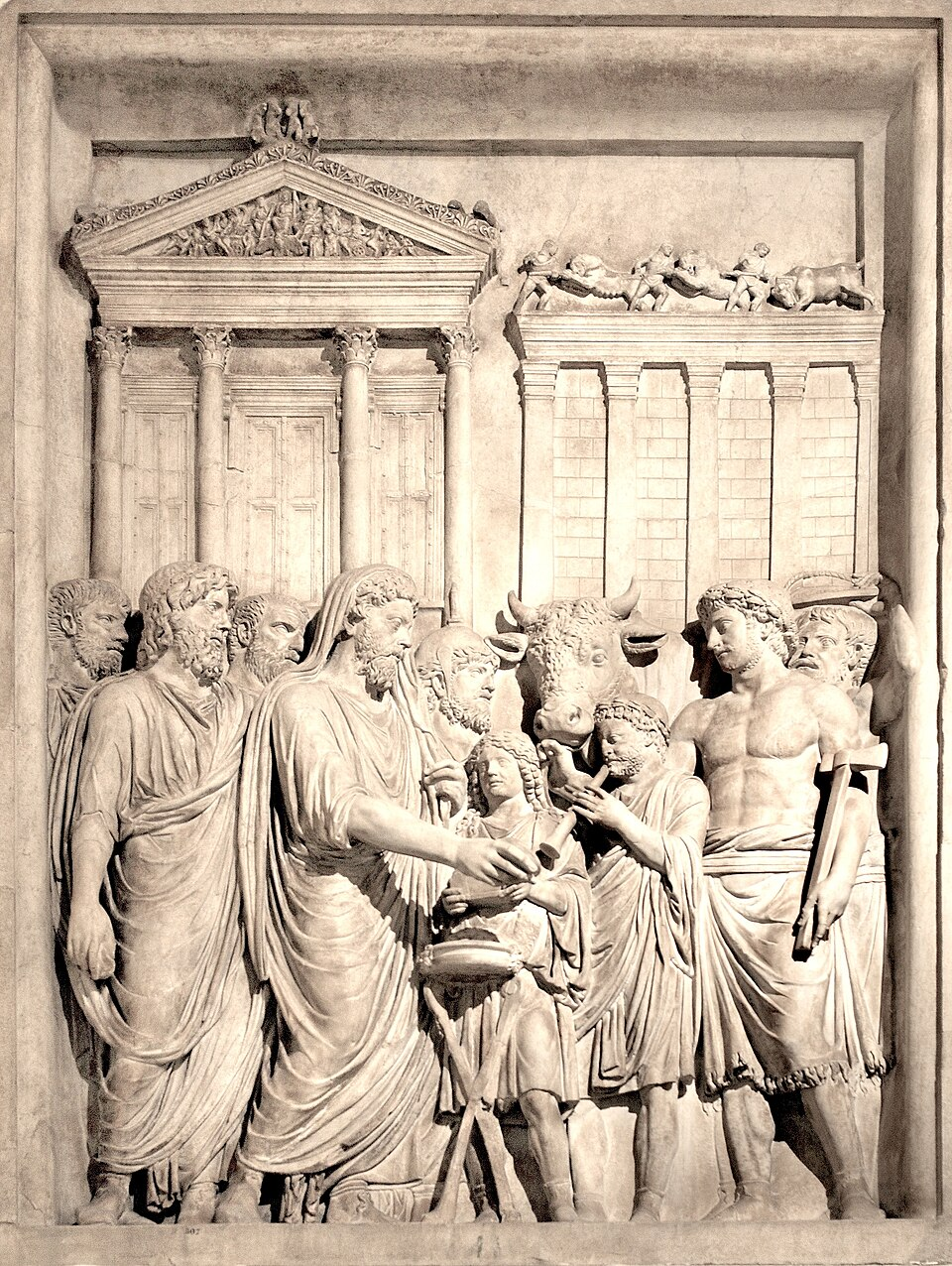
Saint Marcellus received permission from the emperor Theodosius the Great to destroy a temple of Jupiter at Apamea, but the demon inhabiting it resisted all attempts to demolish its lair. Saint Marcellus blessed some water and commanded that this be sprinkled around the wood used as leverage to undermine the great stone columns of the temple. After this, the wood burned fast, the columns fell down and the whole pagan temple collapsed in upon itself.
The Temple of Jupiter on the Capitolium
When the Roman soldiers sent to assist him, demolished another pagan temple, the saint was seized by furious pagans and thrown into a fire, where he died.
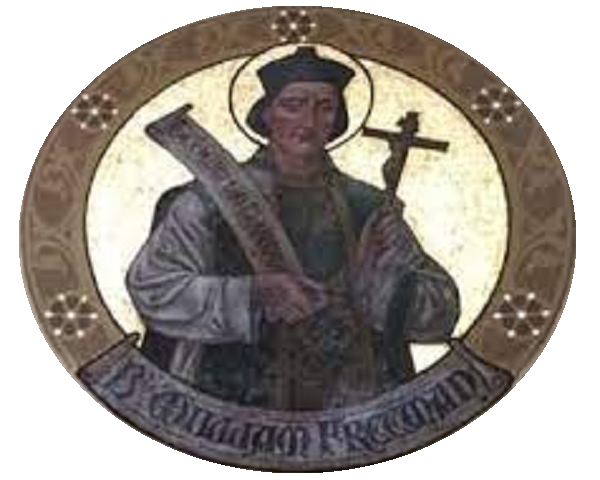
Blessed William Freeman, priest and martyr. He was born at Manthorp near York in 1558; educated at Oxford, and died at Warwick on the 13th of August, 1595. He is one of 136 martyrs who were beatified by Pius XI in 1929.
His parents were recusants, but for a while he pretended to be Anglican. This changed when he went to live in London, where he witnessed the martyrdom of Blessed Edward Stransham at Tyburn in 1586. The death of his fellow Blessed changed his life the same way Bl Edmund Campion’s had changed Bl Henry Walpole’s and Bl Philip Howard’s, converting him to the Faith. He left England and was ordained priest in 1587 at Reims.
Returning to England in 1589, he worked for six years on the borders of Warwickshire, and met many people who were contemporaries or friends of Shakespeare. In January, 1595, in Stratford-on-Avon he was arrested, and spent seven months in prison. He denied his priesthood, but also refused all friendly offers to escape, not wishing to lose his opportunity of martyrdom. Owing to the treachery of a fellow-prisoner, William Gregory, he was at last sentenced as a seminary priest and in spite of a protest of loyalty, was put to the death of a traitor (hanging, drawing, quartering) at Warwick.
Bl Edward Stransham, Bl Henry Walpole and Bl Philip Howard were also beatified by Pius XI in 1929.
St Anastasius the Monk St Anastasius the Priest St Benildus St Cassian of Imola St Cassian of Todi St Concordia St Conn O’Rourke Bl Gertrude of Altenberg St Helen of Burgos St Herulph of Langres Bl Jakob Gapp Bl John of Alvernia
St John Berchmans SJ (1599-1621) Jesuit Novice – born Jan Berchmans on 13 March 1599 at Driest, Brabant, Belgium and died on 13 August 1621 at Rome, Italy of natural causes. Patronages – Altar Servers, Jesuit novices and students. He had a special devotion to God’s Mother and to him is owed the Little Rosary of the Immaculate Conception.
St Junian of Mairé St Ludolph
Blessed Marco d’Aviano/Mark of Aviano OFM Cap (1631-1699) Franciscan Capuchin Friar, Priest, Preacher, Spiritual Advisor, Political Advisor, Peace-maker, Miracle worker and the inventor of Cappuccino (Coffee).
St Maximus the Confessor (c 580-662) Father of the Church, Monk, Abbot, Theologian, Confessor, Scholar, Writer. Also known as St Maximus of Constantinople and St Maximus the Theologian. St Maximus, a man of fearless courage in witnessing to – “confessing” – even while suffering, the integrity of his faith in Jesus Christ, true God and true man, Saviour of the world and of His Holy Catholic Church.
St Nerses Glaietsi St Patrick O’Healy Bl Pierre Gabilhaud St Radegunde (c 518-587) Queen, Nun, Abbess St Wigbert of Fritzlar Bl William Freeman — Martyred in the Spanish Civil War: • Blessed Francesc Castells Areny • Blessed Inocencio García Díez • Blessed José Bonet Nadal • Blessed José Boher y Foix • Blessed José Juan Perot y Juanmarti • Blessed Jose Tàpies y Sirvant • Blessed Josep Alsina Casas • Blessed Luciano Hernández Ramírez • Blessed Maria de Puiggraciós Badia Flaquer • Blessed Mateo Despóns Tena • Blessed Modesto García Martí • Blessed Pascual Araguàs y Guàrdia • Blessed Pedro Martret y Molet • Blessed Silvestre Arnau y Pascuet
Madonna del Bosco / Our Lady of the Woods, Montemilone, Potenza, Basilicata, Italy(13th Century) – 12 August:
The shrine of the Glorious Virgin was built on the slopes of a hill, about 400 meters above sea level, at the behest of the Basilian Monks, who preferred to raise their convents and shrines on the banks of rivers or on the mountain ranges, with the intention to raise, more and more, the spirit to Heaven. The site is located about 3 kilometers from the Town centre. the church was built on the design of the brothers Luigi and Ruggiero Sarolo , sculptors of Muro Lucano, which began construction in 1187 and finished in 1189 . The sanctuary, to see it from a distance, has something magical with its stand on the slope of the hill.
The statue, which was recently restored, is roughly made but expressive and full of solemn majesty. The Virgin seated on a throne in the chest holds the Divine Child. The peculiar characteristics of the statue and , particularly , the crowns of the Virgin and Child, recall those of the French art of the post- Carolingian period but the clothes and painted decorations are purely Byzantine and Byzantine unmistakably is the posture of the blessing hand of the Child – the two fingers, the index and middle fingers open and the other closed.
St Jeanne de Chantal/Jane Frances de Chantal (1572-1641) Mother, Widow, Foundress of the Congregation of the Visitation with the assistance and guidance of St Francis de Sales, whose great friend and collaborator she was. St Vincent de Paul served as her spiritual director after St Francis de Sales’ death. Her favourite devotions were the Sacred Heart of Jesus and the Immaculate Heart of Mary. St Jane was buried in the Annecy Convent next to St Francis de Sales. Canonised on 16 July 1767 by Pope Clement XIII .(Optional Memorial)
Blessed Pope Innocent XI (1611-1689) Lawyer, Apostle of Charity, Reformer, Administrator. He is known in Budapest as the “Saviour of Hungary” and “Father of the Poor”
St Jambert of Canterbury St Julian of Syria
St Macarius of Syria St Merewenna St Micae Nguyen Huy My St Murtagh of Killala St Photinus of Marmora
St Pedro del Barco (1088-1155) Hermit, Penitent, Canon, Apostle of the needy, he is regarded as the father of the agricultural industry in Avila, Spain.
St Porcarius of Lerins St Simplicio of Vercelli St Ust — Martyrs of Augsburg – 4 saints: The mother, Hilaria, and three friends of of Saint Afra of Augsburg. While visiting the tomb of Saint Afra who were seized by the authorities and martyred when they visited Afra’s tomb – Digna, Eunomia, Euprepia and Hilaria. They were burned alive c 304.
Martyrs of Rome – 5 saints: A group of Christians martyred together in the persecutions of Diocletian. We know little more than their names – Crescentian, Juliana, Largio, Nimmia and Quiriacus. • c.304 in Rome, Italy • buried on the Ostian Way outside Rome.
Our Lady’s Veil was given by the Byzantine Empress Irene as a gift to the Emperor Charlemagne. In 876, Charles the Bald, Charlemagne’s grandson, donated the unfathomably precious relic to Chartres, where it remains. One of the many miracles which it has performed, is the saving of Chartres from pagan Viking invaders. Rollo, the Norsemen’s chieftain, besieged the city, but when the bishop of Chartres processed with Our Lady’s veil around the city walls, the Christian army rallied and launched a ferocious counter attack, while the Vikings suddenly lost courage and fled in terror.
Later that same year, Rollo was baptised and granted Normandy as his fiefdom. The time of the Vikings was almost over.
Our Lady’s Veil at Chartres CathedralRollo’s grave within Rouen Cathedral
St Cassian of Benevento St Chromatius the Prefect St Digna of Todi St Equitius of Valeria
St Géry/Gaugericus of Cambrai (c 550 – 626), Bishop of Cambrai, France, Founder of Monasteries, Churches and of St Géry Island off Belgium, Géry devoted himself to the fight against paganism, Miracle-worker.
Bl Jean-Georges Rehm Bl John Sandys St Lelia St Rusicola of Arles St Rufinus of Marsi Bl Theobald of England and Companion St Taurinus of Evreux Bl William Lampley
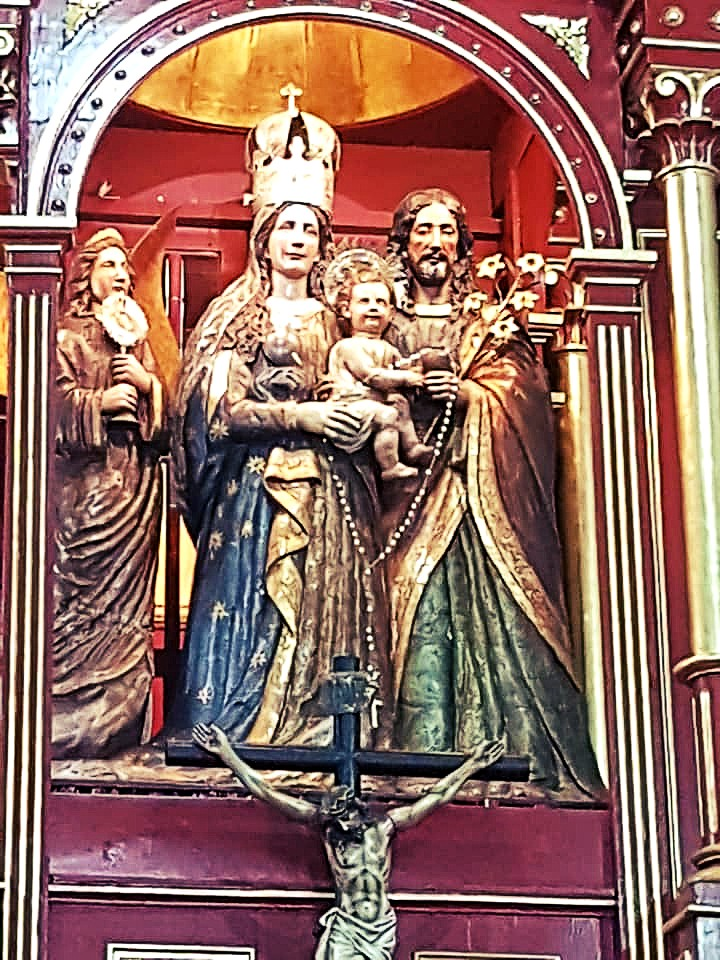
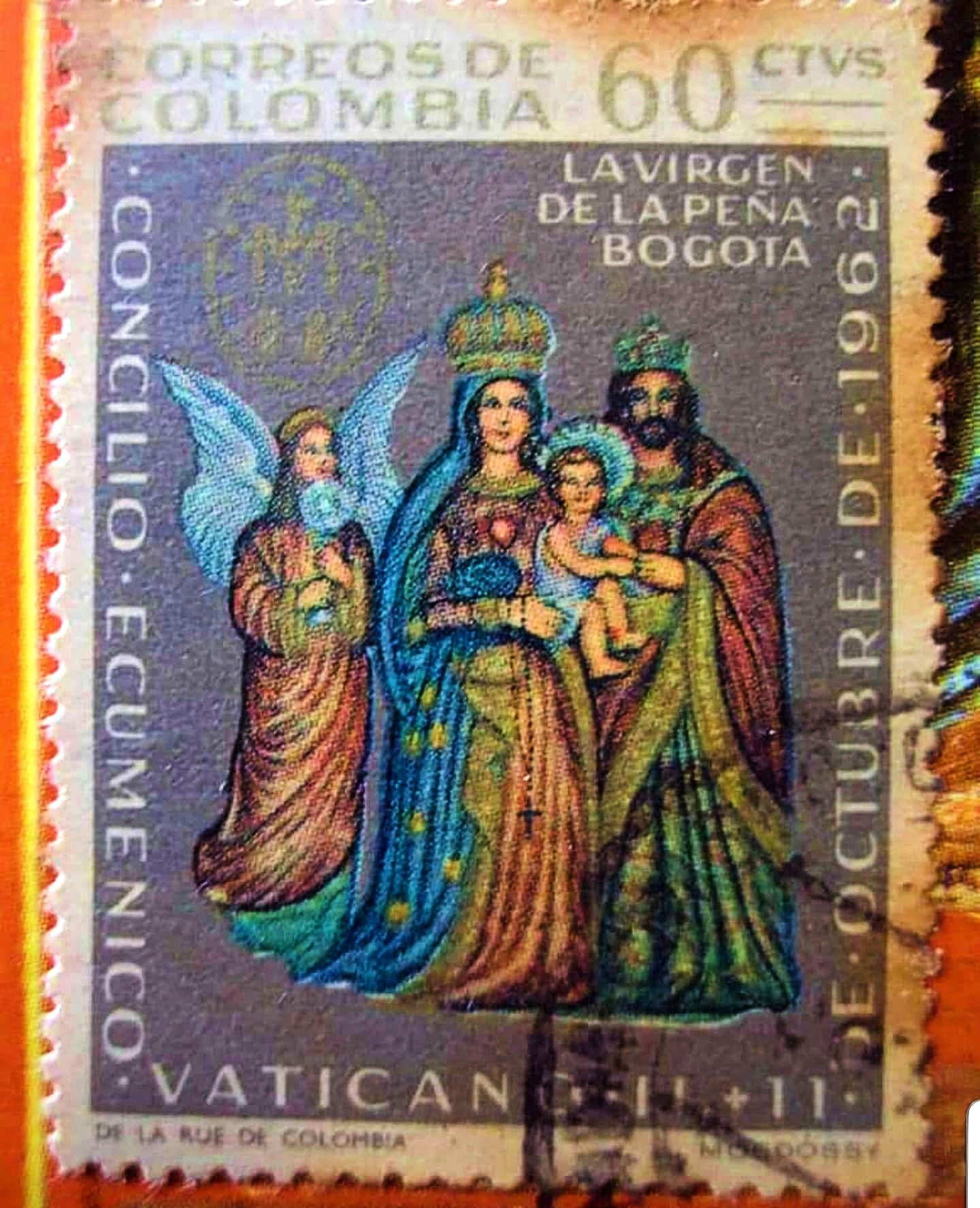
Virgen de la Peña / Our Lady of the Crag, Bogotà, Colombia (1685 )– 10 August:
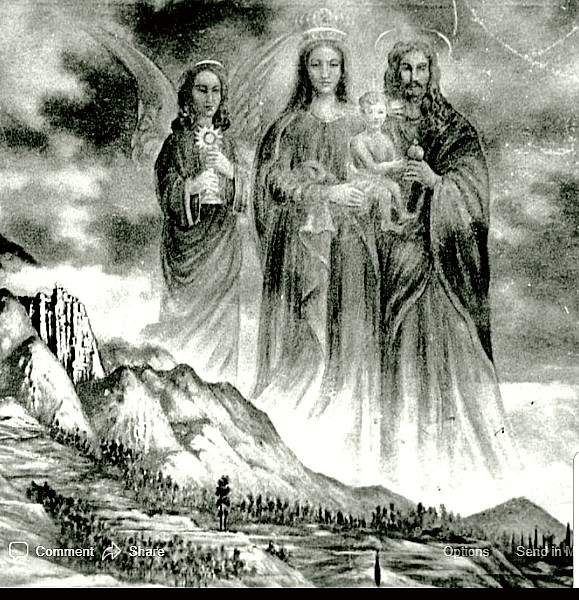
On 10 August 1685, Bernardino Rodríguez de León“saw a great and unusual radiance that was not the natural light of day” in the peaks east of Bogotá. On drawing near, he realised the light was coming from an image of an Angel, the Virgin and Child and St Joseph, outlined in the living rock.
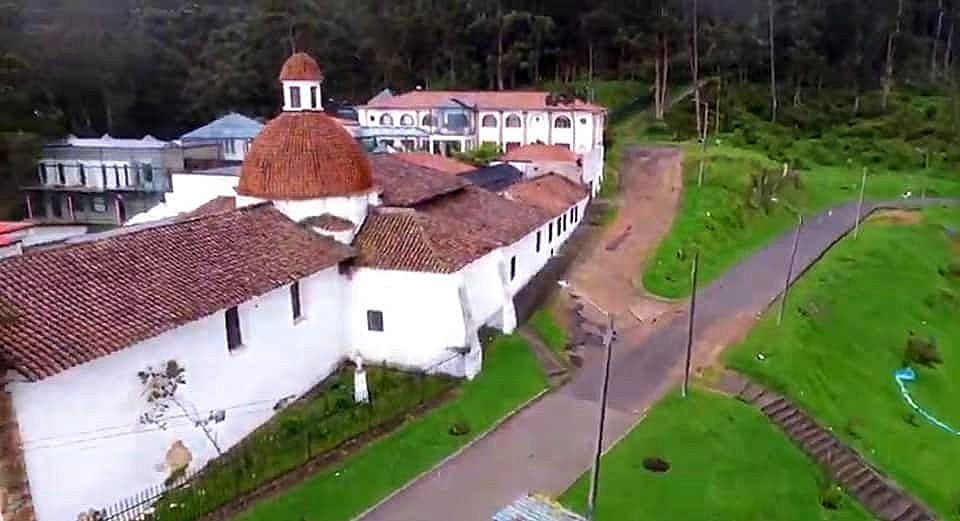
News of the discovery soon spread throughout the capital and after an investigation, the Archbishop authorised the construction of a chapel on the mountainside and public veneration on the Sunday before Ash Wednesday of 1686. The thatched chapel collapsed in 1714 and a sturdier stone building took its place. Mysteriously, people began to see Our Lady’s face change expression – sad, tearful, joyous. On 8 May 1716, the left wall of the chapel collapsed to its foundation, after only 150 days. It was decided to move the images from the mountain. In early June, stonemason Luis de Herrera began separating the images from the underlying rock. Legend relates that when he finished, a bird flew out. The images were cleaned, polished and touched up to make the figures and clothing more distinct. They still weighed 750 pounds. In November, men carried them on their shoulders to the plain, where they were greeted with rejoicing and dancing. Another straw shelter protected the statues until completion of a new chapel in 1722. Now a national monument, Our Lady of the Crag is still a very active church and an Archdiocesan Sanctuary.
St Lawrence (Died 258) Martyr (Feast) “Keeper of the Treasures of he Church,” Martyr, Archdeacon. St Lawrence was one of the seven Deacons of the City of Rome under Pope St Sixtus II, who were martyred in the persecution of the Christians by decree of the Roman Emperor Valerian.
St Agathonica of Carthage St Agilberta of Jouarre
Blessed Amadeus of Portugal OFM (1420–1482) Friar of the Order of Friars Minor, Reformer, Miracle-Worker and Confessor
Bl Claude-Joseph Jouffret de Bonnefont St Deusdedit the Cobbler Bl Edward Grzymala Bl Franciszek Drzewiecki Bl Francois François St Gerontius Bl Hugh of Montaigu Bl Lazare Tiersot St Paula of Carthage St Thiento of Wessobrunn — Martyrs of Alexandria – 260+ saints: A large number of Christians who died in Alexandria, Egypt between 260 and 267 in the persecutions of Decius and Valerian, whose names have not come down to us and who are commemorated together.
Martyrs of Rome – 165 saints: Group of 165 Christians martyred in the persecutions of Aurelian. 274 in Rome, Italy.
Martyred in the Spanish Civil War: • Blessed Antonio González Penín • Blessed José Toledo Pellicer • Blessed José Xavier Gorosterratzu Jaunarena • Blessed Juan Martorell Soria • Blessed Pedro Mesonero Rodríguez • Blessed Victoriano Calvo Lozano
Blessed Augustine Ota, a martyr of Japan and a native Japanese. He was born in 1572 in Ojika, Goto-retto, Nagasaki, and grew up Buddhist. Jesuits converted and baptised him in 1585. After his wife died, he devoted all his time to spreading Christianity and evangelising his countrymen. Because of his knowledge of Buddhism, he was especially valuable to the Jesuit missionaries.
The mass killing at Nagasaki in 1622
Despite the persecution Christians were facing, Augustine joined Father Camillus Costanzo and served as his catechist on visits to the islands of the western shore of Japan and to some of the mainland. They were betrayed by a Japanese man who feigned interest in hearing Father Costanzo. After finding out the secret whereabouts of the priest, the man passed the information to the police who tracked him and Augustine down on the island of Uku and arrested them.
Knowing he would be executed, Augustine wrote to the Jesuit provincial in Japan, requesting for admission into the Society. An affirmative answer arrived, and Father Costanzo accepted Augustine as a novice. The day before his death Augustine pronounced the three vows. He was beheaded on August 10, 1622 and his body thrown into the sea.
The Church venerated him on February 26, 1866, through a decree of martyrdom issued by Pope Pius IX. The Pope then beatified him on May 7, 1867.
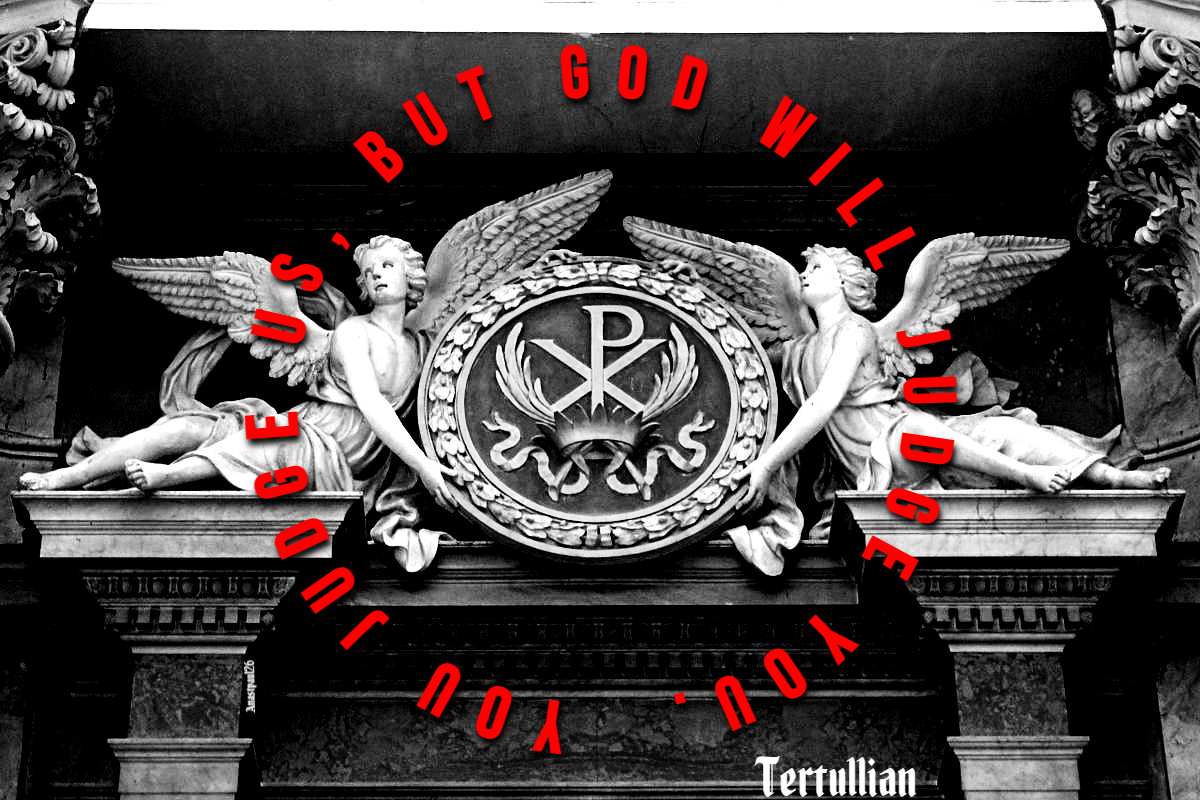
When they came within sight of Hilarianus, by gesture and nod, they began to say to Hilarianus, You judge us, say they, but God will judge you. At this the people, exasperated, demanded that they should be tormented with scourges as they passed along the rank of the venatores. And they indeed rejoiced that they should have incurred any one of their Lord’s passions.
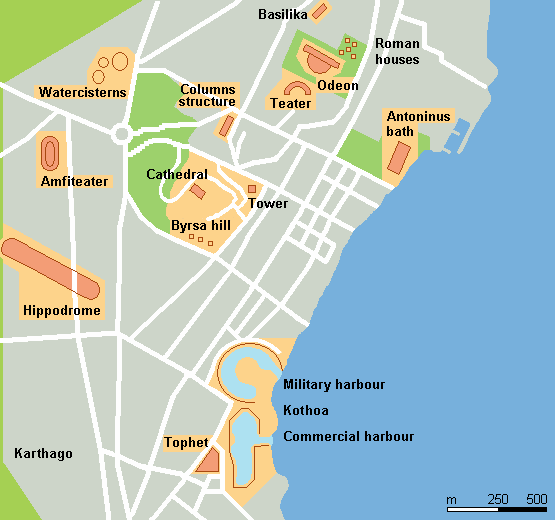
Saint Numidicus was a seminarian and martyr, and one of a group of Christians persecuted in the persecutions of Decius. The persecutions of Emperor Decius in the year 251 were fierce. Some of the clergy lapsed, others fled; Saint Cyprian of Carthage encouraged the confessors and wrote eloquent panegyrics on the martyrs. On the arrival of the proconsul in April the severity of the persecution increased. Women and children were tortured. Numidicus, who had encouraged many, saw his wife burnt alive. Arrested, he was brought before the authorities and sentenced to be burnt at the stake.
Roman Carthage
Just before his death, Numidicus was miraculously saved by Saint Cyprian. As he was about to be burnt, Cyprian, who was hiding nearby, intervened and dragged him from the flames. Cyprian, who would himself die a martyr in their shared city, recognised the sanctity of Numidicus, and immediately ordained him a priest, ensuring that he died as a clergyman.
These doings of his were such, and so great, and so admirable, that I am deterred by the contemplation of their greatness, and confess myself incompetent to discourse in a way that shall be worthy of the honour of his deserts, and unable to relate such noble deeds in such a way that they may appear as great as in fact they are, except that the multitude of his glories is itself sufficient for itself, and needs no other heraldry.
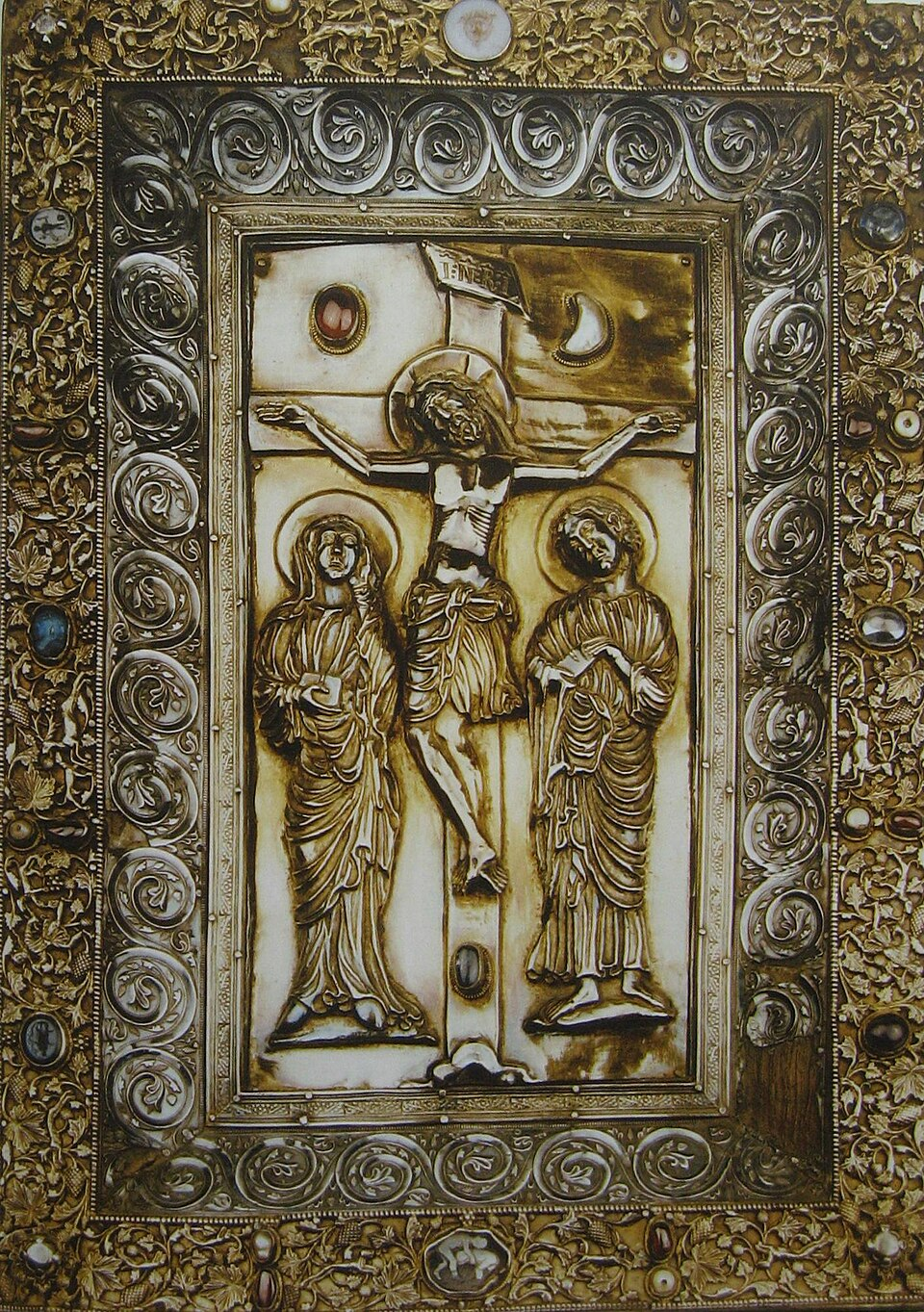
There is no image or other information on this image, but it is connected with Blessed Marie of Oignies and the Treasure of Oignies, which consists of thirty reliquaries, crosses, and other precious items dating from the 13th century. Oegnies, also spelled Oignies and known as Ongniacume in ancient times, is a village located in the north of France. It is thought to be the birthplace of Mary of Oegnies, who visited the holy image of Our Lady of Oegnies once every year, even walking barefoot to the shrine during the severe rigors of winter.
Bl John Talbot St Marcellian of Civitavecchia St Maurilio of Rouen (c.1000–1067) Bishop Bl Michal Tomaszek St Nathy St Numidicus of Carthage St Phelim Bl Richard Bere St Romanus Ostiarius St Rusticus of Sirmium St Rusticus of Verona St Secundian of Civitavecchia St Stephen of Burgos Bl Thomas Palaser St Verian of Civitavecchia Bl Zbigniew Adam Strzalkowski — Martyrs of Civitavecchia: Three Christians martyred together in the persecutions of Decius. We know little more than the names – Marcellian, Secundian and Verian. 250 near Civitavecchia, Italy.
Martyrs of Constantinople: 10 saints: A group of ten Christians who were arrested, tortured and executed for defending an icon of Christ in defiance of orders from Emperor Leo the Isaurian. We know the names of three, but nothing else about them – Julian, Marcian and Mary. They were beheaded in Constantinople.
Martyred in the Spanish Civil War: Bl Antonio Mateo Salamero Bl Faustino Oteiza Segura Bl Florentín Felipe Naya Bl Florentino Asensio Barroso Bl Francisco López-Gasco Fernández-Largo Bl Guillermo Plaza Hernández Bl Joan Vallés Anguera Bl José María Garrigues Hernández Bl Josep Figuera Rey Bl Josep Maria Aragones Mateu Bl Julián Pozo Ruiz de Samaniego Bl Mateo Molinos Coloma Bl Narcís Sitjà Basté
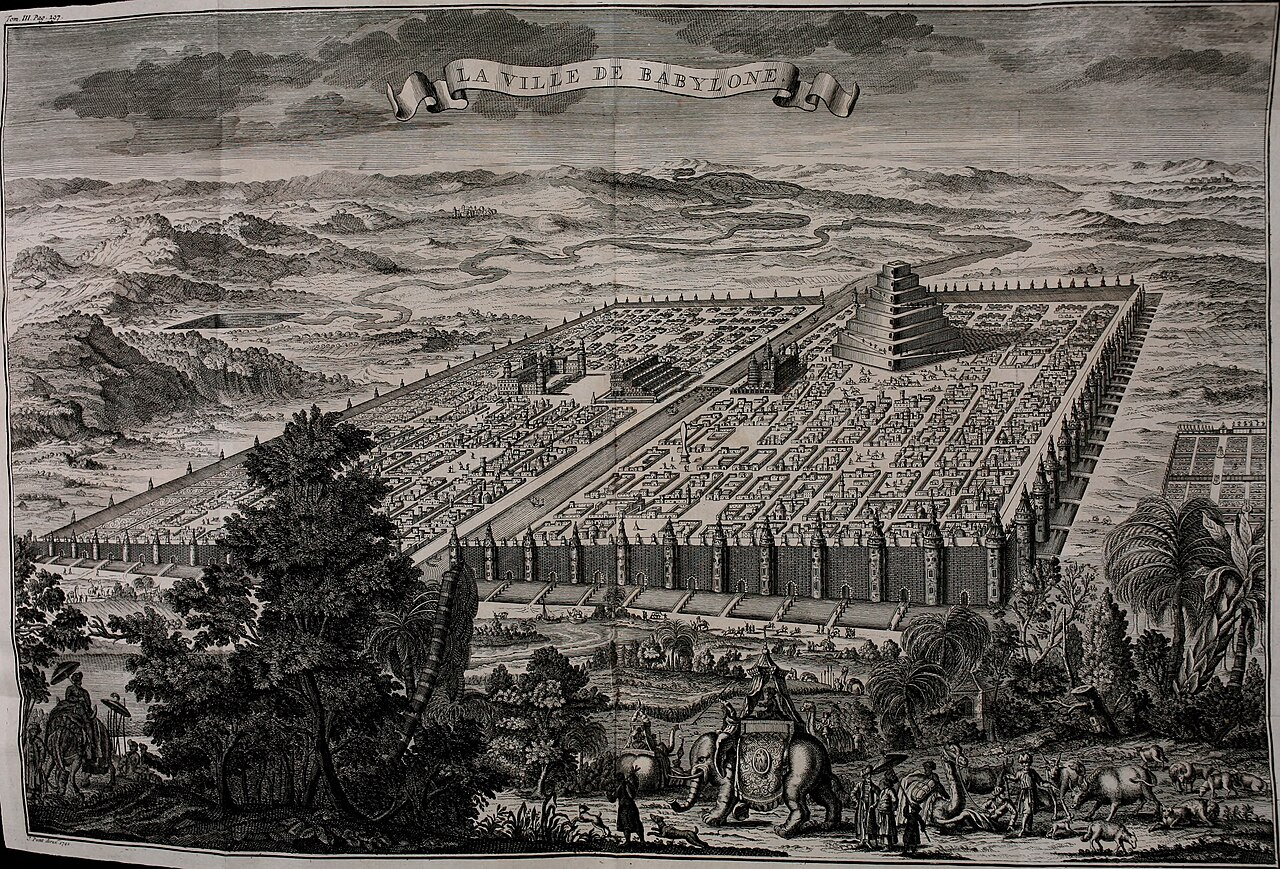
St Hormisdas of Persia (or Hormizd) was the son of a governor and a Persian martyr who died in the fifth century. At the time Christians were being persecuted by the Persian kings, and the tortures and method of murder inflicted upon them ws so cruel and horrible that according to sources from the period, it was difficult to even put it into words. Even worse than threat of pain, the Persian kings offered barbarism in one hand, and offers of power in the other. Despite this dual onslaught against weak human nature, the most terrible possible, many Christians stood fast to the Faith.
Babylon
High status and power were taken from Hormisdas because of his strict allegiance to Christianity. From a nobleman, he was stripped of everything, including most of his clothes, and made to take care of the royal camels.
In answer to the king’s demand that he renounce Christ, Hormisdas refused, saying that such a denial would offend God, and that a man willing to violate the supreme law of the sovereign Lord of all could not be trusted to remain faithful even to his earthly king. He added that if treason against an earthly sovereign is punishable by death, “what must it be to renounce the God and ruler of the universe?”
After a long time suffering humiliation, the king pitied the saint, gave Hormisdas a tunic and offered him clemency if he would “renounce the Carpenter’s Son.”In response, Hormisdas stripped off the tunic, asking the emperor how he could have believed it would persuade him to abandon the law of God. He was executed in the year 420 by Bahram V.
Santa Maria della Querce / Our Lady of the Oak, Lucignano, Arezzo, Tuscany, Italy (1417) – 8 August, Third Saturday of September:
In 1417 Feliciano Batone painted a fresco of the Pietà on a wayside Shrine beneath a great oak . Fifty years later, there was a surge in devotion to the Madonna of the Oak after the story circulated that on 8 August 1467, a man from Siena, running from his enemies, stopped there to pray to Mary, who made him invisible to his pursuers.
A small wooden Chapel was built to protect the image and Consecrated that year. Located on a hill northeast of the old City centre, beyond the Medici Fortress and the cemetery, the present Church was designed by Giorgio Vasari in 1558 and Consecrated in 1617.
On the third Sunday of September, near the feast of the Sorrowful Mother on S15 September, Lucignano celebrates St. Mary of the Oak with religious services, food, games and fireworks.
St Eleutherius of Constantinople St Ellidius St Famianus of Compostela St Gedeon of Besancon St Hormisdas of Persia Bl John Felton
Bl John Fingley St Largus St Leobald of Fleury St Leonidas of Constantinople St Marinus of Anzarba
St Mummolus of Fleury St Myron the Wonder Worker St Paulus Ge Tingzhu St Rathard of Diessen St Severus of Vienne St Sigrada St Smaragdus St Ternatius of Besançon St Ultan of Crayke Bl William of Castellammare di Stabia Bl Wlodzimierz Laskowski — Martyrs of Albano – 4 saints: Four Christians who were martyred together, and about we today know little more than their names – Carpóforo, Secondo, Severiano and Vittorino. They were martyred in Albano, Italy – their remains are interred in the San Senator cemetery, on the Appian Way, 15 miles from Rome, Italy.
Martyrs of Rome – 5 saints: Five Christians martyred together; we know nothing else about them but the names – Ciriaco, Crescenziano, Giuliana, Memmia and Smaragdus. They were martyred at the 7 mile marker, on the Via Ostia, Rome, Italy.
Martyred in the Spanish Civil War – Martyrs of El Saler – 5 beati: Five nuns, all members of the Sisters of the Pious Schools, all teachers, and all martyred together in the Spanish Civil War. • Antonia Riba Mestres • Maria Baldillou Bullit • María Luisa Girón Romera • Nazaria Gómez Lezaun • Pascuala Gallén Martí They were martyred on 8 August 1936 in El Saler, Valencia, Spain.
Martyred in the Spanish Civil War: Bl Cruz Laplana Laguna Bl Fernando Español Berdie Bl Leoncio López Ramos Bl Manuel Aranda Espejo Bl Mariano Pina Turón Bl Pedro Álvarez Pérez
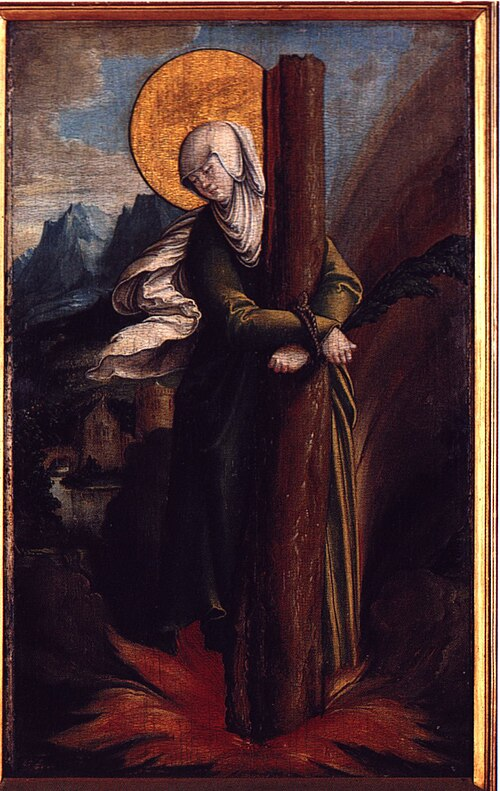
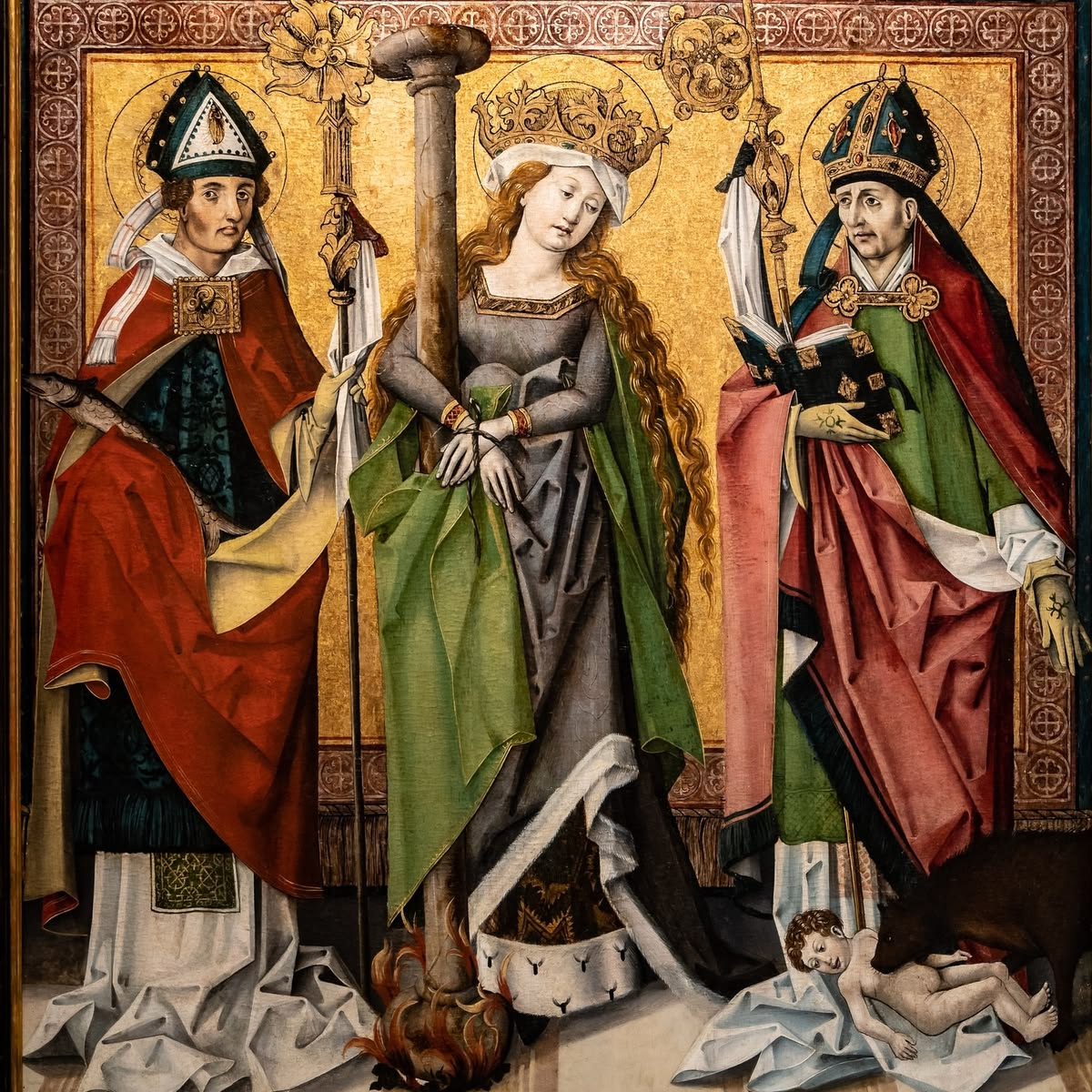
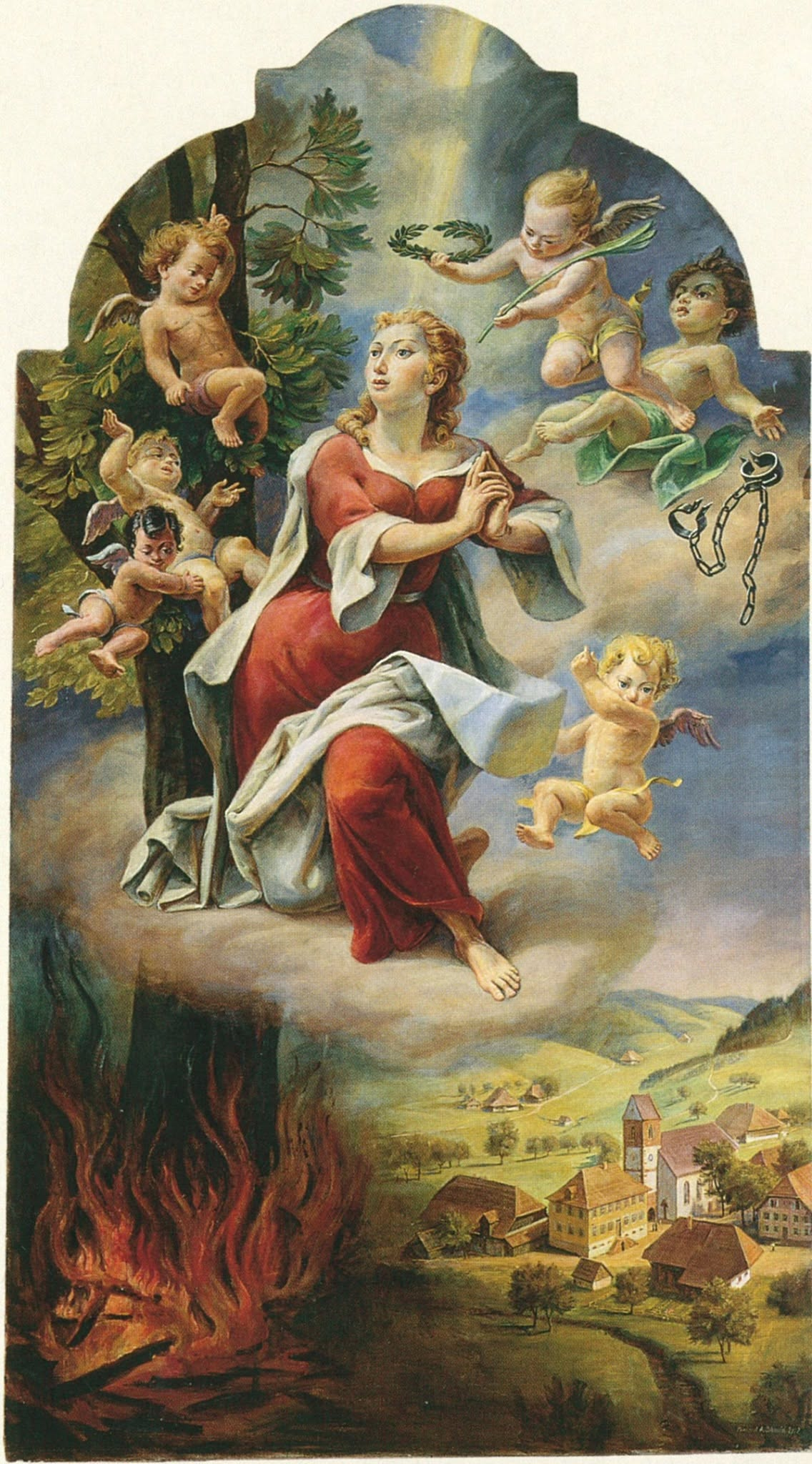
Saint Afra, martyr and penitent, listed in some records as the daughter of the king of Cyprus. In the late 3rd century, her pagan family journeyed from Cyprus to Augsburg. Afra was dedicated to the service of the goddess Venus by her mother, Hilaria, a service which involved ritual prostitution.
When the persecutions started in Augsburg, Bishop Narcissus of Gerona, Spain, arrived in the city and took lodging with Afra and her mother, not knowing their profession. His holiness and the doctrine of redemption he brought converted the women, who were baptised, and Afra’s uncle Dionysius was ordained as a bishop. She immediately began to give liberally to the poor. When officials came looking for the bishop, Afra hid him under a pile of flax.
Arrested for being a Christian and refusing to participate in pagan rites, she was burned to death, tied to a tree on the small island of Lech. She was buried in Augsburg and her mother erected a chapel for her tomb. Soon after, Hilaria and her serving women were also martyred, burned alive in their house. Afra’s remains were buried in a church named after her. Pilgrims visited her shrine as early as 565. In 1012, the Benedictine monastery of St. Ulrich and St. Afra displayed her sarcophagus. The Acts of Afra give an account of her martyrdom.
The judge, Gaius, said to her: “Come now, sacrifice to the gods; it is better to live than to die amid torments.”
The saint replied: “The sins which I have committed before I knew the true God are sufficient; wherefore I cannot now do that which thou commandest. I never will do so: it would be adding a new insult to my God.”
The judge having ordered her to repair to the temple, she answered with great courage: “My temple is Jesus Christ, whom I have continually before mine eyes, and to whom I every day confess my sins. Since I am unworthy to offer him any other sacrifice, I am anxious to sacrifice myself, in order that this body, with which I have offended him, may be purified by torments; this reflection shall make me suffer most willingly.”
“Since, therefore,” said Gaius, “by reason of thy wicked life thou hast nothing to expect from the God of the Christians, thou hadst better sacrifice to our gods.”
The saint replied: “My Lord Jesus Christ has said that he descended from heaven to save sinners. We read in the Gospel that a sinful woman, having washed his feet with her tears, obtained from him the forgiveness of all her offences; and, moreover, that he never rejected sinful creatures nor publicans; but, on the contrary, condescended to converse and even to eat with them.”
The iniquitous judge was not ashamed to counsel her to return to her infamous practices, in order that she might gain the favor of the gallants, and enrich herself.
“I renounce,” said the penitent Saint Afra,“that execrable gain, and look upon it with horror. That which I had, I have cast from me and given to the poor, imploring them to accept it; how, then, can I consent to earn it again?”
Afra’s martyrdom deeply influenced the Christian community in Augsburg. A church was built over her burial site, and she became the patron saint of the city. Over the centuries, her veneration grew beyond Germany, and she became known in other parts of Europe. During the Middle Ages, pilgrims visited her shrine, and her cult was promoted by the Benedictine monks who cared for the church bearing her name—St. Ulrich and Afra Abbey. Her remains are still there.
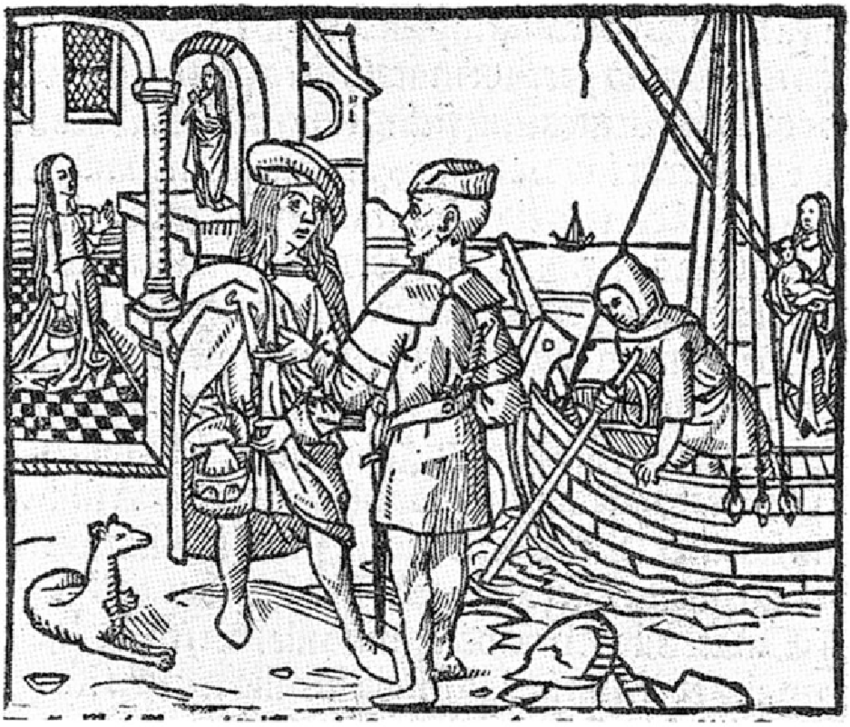
Our Lady of Schiedam is a statue of Our Lady in Holland, the Netherlands. A merchant stole this image with the intention of selling it at a fair at Antwerp, but no matter what he attempted, he could never leave port. Frightened by this miracle, he restored the image, and it was solemnly transported to the Church of St. John the Baptist.
Our Lady of Schiedam in the boat and church
It was at the shrine of Our Lady of Schiedam that the mystic, St. Lidwina spent whole nights in prayer. Early in her life, Lidwina was drawn toward the Mother of God and prayed a great deal before this miraculous image. The Mother of God revealed to her the extent of suffering Christ would ask her to endure, but likewise assured her that she, Mary, would sustain her through her grace and intercessory power. The Blessed Virgin was true to her word, as was St. Lidwina in accepting the will of God in imitation to Our Lady’s Fiat.
St Cajetan (1480-1547) (Optional Memorial) Known as the “Father of Providence” and the “Huntsman of Souls” – Founder of the Theatine Order – Priest, Confessor, Reformer, Doctor of Civil and Canon Law, Diplomat, Mystic, Miracle Worker, apostle of the sick and the poor.
St Albert of Trapani O.Carm. (c 1240-1307) Carmelite Priest, Confessor, Preacher, Evangeliser, apostle of prayer and a devout servant of the Blessed Virgin and the Passion of Christ. St Teresa of Jesus (1515-1582) and St Mary Magdalene de Pazzi (1566-1607) were especially devoted to him, the Bl Baptist Spagnoli (1447–1516) composed a sapphic ode in his honour.
Bl Cassian Vaz Lopez-Neto St Claudia of Rome St Donat St Donatian of Chalons-sur-Marne
St Donatus of Arezzo (Died 362) Bishop and possibly a Martyr, Confessor, Miracle-worker.
St Donatus of Besancon Bl Edmund Bojanowski Bl Edward Bamber St Faustus of Milan St Hilarinus of Ostia St Hyperechios Bl John Woodcock Bl Jordan Forzatei St Julian of Rome St Miguel de la Mora Bl Nicholas Postgate St Peter of Rome Bl Thomas Whitaker Blessed Vincent de L’Aquila OFM (c 1435-1504) St Victricius of Rouen — Martyred Deacons of Rome – 6 saints: A group of deacons who were martyred with Pope Saint Sixtus II. We know nothing about them but their names and their deaths – Agapitus, Felicissimus, Januarius, Magnus, Stephen and Vincent. They were beheaded on 6 August 258 in a cemetery on the Appian Way, Rome, Italy.
Martyrs of Como – 6 saints: A group of Christian soldiers in the imperial Roman army. Martyred in the persecutions of Maximian. We know little else but the names – Carpophorus, Cassius, Exanthus, Licinius, Secundus and Severinus. c.295 on the north side of Lake Como, near Samolaco, Italy. Their relics in the church of San Carpoforo, Como, Italy.
Martyred in the Spanish Civil War: 10 Beati Bl Dalmacio Bellota Perez Bl Diodorus Hernando Lopez Bl Francisco Gargallo Gascón Bl Luis Villanueva Montoya Bl María del Carmen Zaragoza y Zaragoza Bl María Rosa Adrover Martí Bl Rafaél Severiano Rodríguez Navarro Bl Tomás Carbonell Miquel
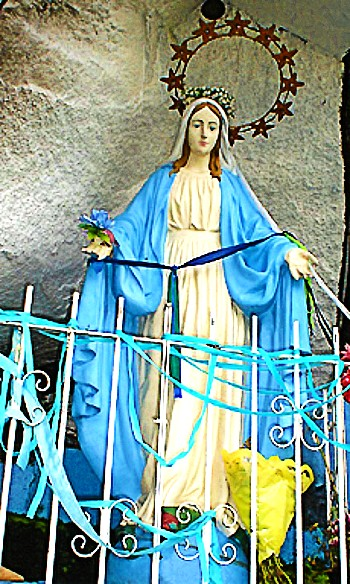
Nossa Senhora das Graças / Our Lady of Graces, Pesqueira, Pernambuco, Northeast, Brazil (1936) – 6 August :
On 6 August 1936,Maria da Luz Teixeira, 13, and Maria da Conceição, 16 (a poor girl living with the Teixeira family), were gathering castor beans on Guarda mountain in the Cimbres district, 15 miles from Pesqueira. There was a flash of light and then Maria da Conceição said, “Look, there’s an image that looks like Our Lady.” Maria da Luz saw it too, up on a rock. They ran home and told Maria da Luz’s parents. At her mother’s insistence, Artur Teixeira climbed the hill with the girls, who reached the spot long before he struggled up through the brush. He saw nothing unusual but, at his suggestion, the girls together asked the image, “Who are you?”“I am Grace.” They asked what she wanted. “I’ve come to warn of three punishments sent by God. Tell the people to pray much and do penance.”
After this the girls returned to the site daily, where they prayed with a growing crowd of pilgrims. On 9 August, the crowd demanded a sign; reluctantly, the girls asked for one. The next day, they found water flowing from the rock and two sets of footprints embedded in stone, one an adult’s and one a child’s. The apparition confirmed they belonged to her and her son. The Bishop conducted an investigation. Maria da Luz described Our Lady of Grace as “similar to Our Lady of Mount Carmel in Pesqueira Cathedral but her mantle is blue and her dress cream, with a belt. She has a little child in her left arm and both have very beautiful crowns on their heads.”
Eventually the Virgin told her that the people’s response had been sufficient to avert the three chastisements, sometimes identified as armed bandits (particularly the notorious Lampião, killed by police in 1938) and the coming of World War II or a Communist regime to Brazil. Maria da Conceição died young. In 1940, Maria da Luz joined the Religious of Christian Instruction, taking the name Sister Adélia. In her absence, pilgrims continued to visit the Shrine at the apparition site, where 296 carved stone steps lead to a Statue of Our Lady of Grace (as depicted on the Miraculous Medal, without the Child, not as the girls saw her) and to report miracles there.
St Justus and St Pastor of Alcala – Holy Martyred Children (Died 304) Saints Justus and Pastor of Alcala were two brothers, who in their tender age overcame, with an heroic courage, the rage and power of Dacian, armed with all the instruments of cruelty.
St Stephen of Cardeña Bl Tadeusz Dulny Bl William of Altavilla — Martyrs of Cardeña: Two hundred Benedictine monks at the Saint Peter of Cardegna monastery, Burgos, Spain who were martyred in the 8th century by invading Saracens. They were buried by local Christians in a nearby churchyard in Burgos, Spain and Beatified in 1603 by Pope Clement VIII (cultus confirmed).
Martyred in the Spanish Civil War: 10 Beati • Blessed Alejandro Casare Menéndez • Blessed Andrés Soto Carrera • Blessed José González Ramos Campos • Blessed José María Recalde Magúregui • Blessed Juan Silverio Pérez Ruano • Blessed Saturnino Ortega Montealegre
St Sobel St Theodoric of Cambrai-Arras St Venantius of Viviers St Viator — Martyrs of Fuente la Higuera: A group of Augustinian priests and clerics who were martyred together in the Spanish Civil War. 5 August 1936 in Fuente la Higuera, Valencia, Spain: • Anastasio Díez García • Ángel Pérez Santos • Cipriano Polo García • Emilio Camino Noval • Felipe Barba Chamorro • Gabino Olaso Zabala • Luciano Ramos Villafruela • Luis Blanco Álvarez • Ubaldo Revilla Rodríguez • Victor Gaitero González
Martyrs of the Salarian Way: Twenty-three Christians who were martyred together in the persecutions of Diocletian. 303 on the Salarian Way in Rome, Italy.
Martyred in the Spanish Civil War: Bl Eduardo González Santo Domingo Bl Jaume Codina Casellas Bl José Trallero Lou Bl Lluís Domingo Mariné Bl Manuel Moreno Martínez Bl Maximino Fernández Marinas Bl Victor García Ceballos
Madonna dell’Apparizione / Our Lady of the Apparition, Pellestrina, Italy (1716) – 4 August:
The Sanctuary of Madonna dell’Apparizione in Pellestrina was built in July 1717, a year after the appearance of the Madonna on the island. The event of 4 August 1716, the Feast day of St Dominic, was in fact confirmed true by canonical process: – a young boy from Pellestrina met a woman who advised him to tell the parish priest to celebrate Mass and to pray for the salvation of Venice, which, at that time, was besieged by the Turks. The following day, at the same hour of the Apparition, the Venetians won the Battle of Petrovaradin against the Turks.
Throughout the entire year the Sanctuary is a destination for many pilgrims and devotees in search of grace and even today, on 4 August in Pellestrina, the Madonna dell’Apparizione and the victory of Venice is celebrated over three days.
St Dominic de Guzman OP (1170-1221) (Memorial) Founder of the Dominican Order of Preachers – Priest, Founder, Confessor, Teacher, Preacher, Mystic, Miracle-Worker, Apostle of the Holy Rosary. At Dominic’s baptism, Blessed Joan, his Mother, saw a star shining from his chest, which became another of his symbols in art, and led to his patronage of astronomy. The Roman Martyrology states today: “At Bologna, St Dominic, Confessor, Founder of the Order of Friars Preachers, most renowned for sanctity and learning. He preserved his chastity unsullied to the end of his life and by his great merits, raised three persons from the dead. After having repressed heresies by his preaching and instructed many in the religious and Godly life, he rested in peace on the 6th of this month. His Feast, however, is celebrated on this day by decree of Pope Paul IV.
St Hyacinth of Rome St Ia of Persia St Isidore of Besançon St Lua of Limerick St Onofrio of Panaia St Perpetua of Rome St Protasius of Cologne St Rainerio of Split St Sithney (Died c 529) St Tertullinus of Rome Bl William Horne
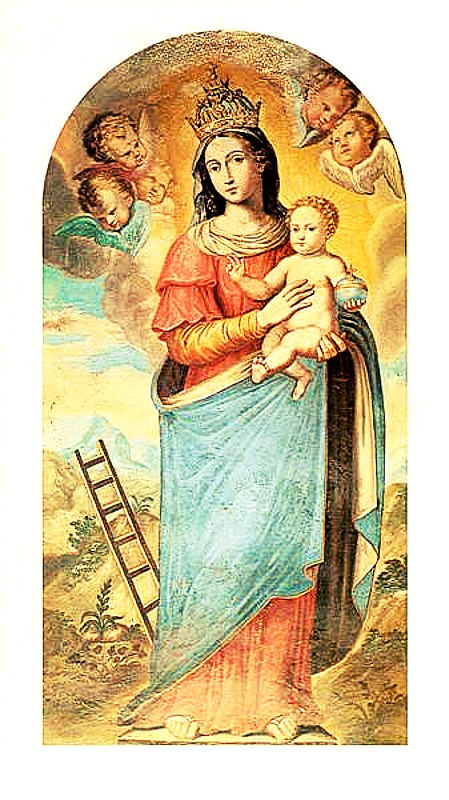
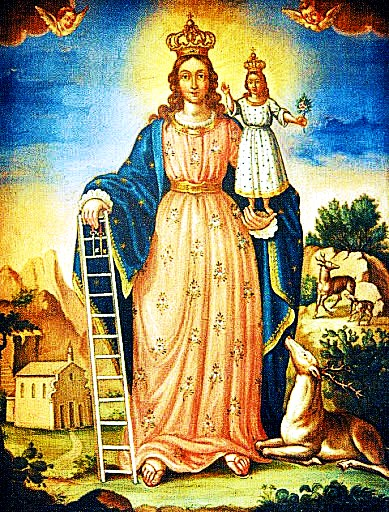
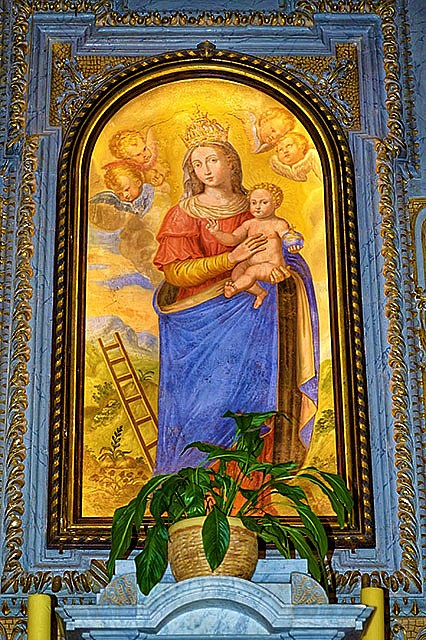
Maria Santissima Scala del Paradiso / Holy Mary, Ladder to Paradise, Noto, Siracusa, Sicily, Italy (1498) – 3 August:
Local tradition holds that Angels frescoed the image of the Madonna, Ladder to Paradise, on a rock wall in the countryside before St. Corrado di Fuori’s arrival in 1340 and, that it was discovered there on 3 August 1498. However, the Diocese of Noto, of which the Madonna della Scala is the Patron, suggests that an unknown artist created the fresco in the late 1500s or early 1600s, a period more in keeping with its style.
In any case, by the time of the earthquake that destroyed the City of Noto on 11 January 1693, popular devotion had grown around the image, surrounding it with votive lamps, ex votos left in thanksgiving for answered prayers, and eventually, an Oratory. The earthquake demolished the chapel but the image remained intact.
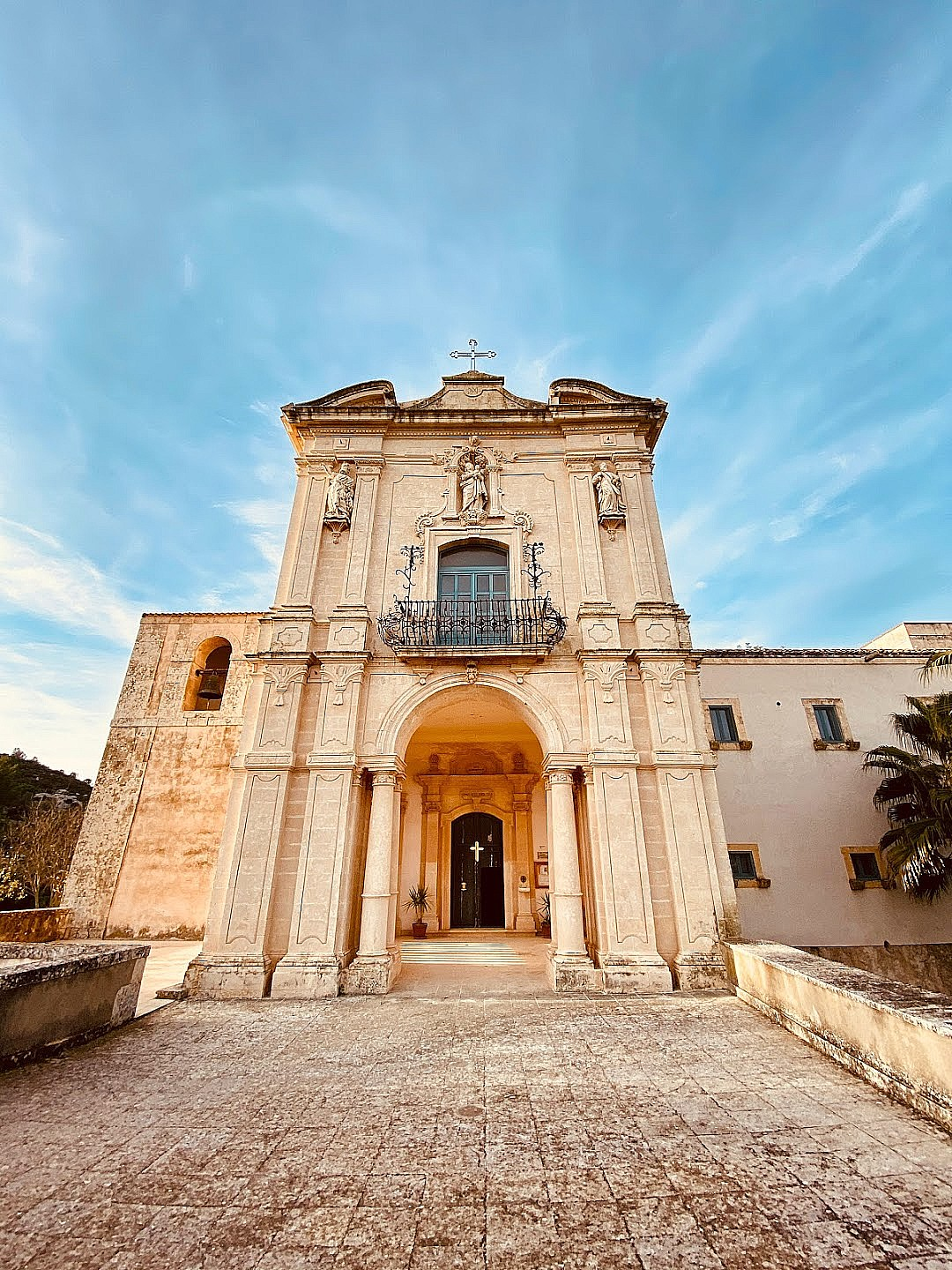
In 1708, a group of Carmelite Hermits took over the site and undertook the building of another church, which was blessed the following year. In 1712, Ven. Girolamo Terzo, recently appointed the group’s Superior, hired an expert to detach the fresco from its rock and arranged its spectacular transfer to the church, pulled by a team of untamed oxen. Ven. Girolamo promoted devotion to the Madonna of the Ladder by distributing copies of the image on evangelical visits throughout the region.
With a reputation for cures and other miracles, the Hermitage became a place of pilgrimage, particularly on the Feast of the Nativity of Mary, 8 September. The Sanctuary suffered damage during World War I.
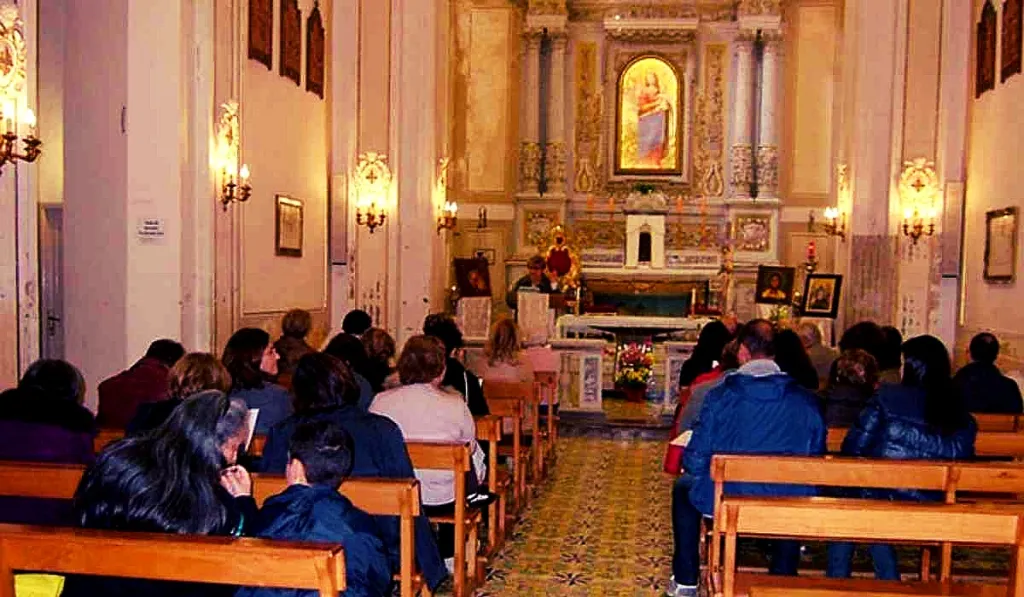
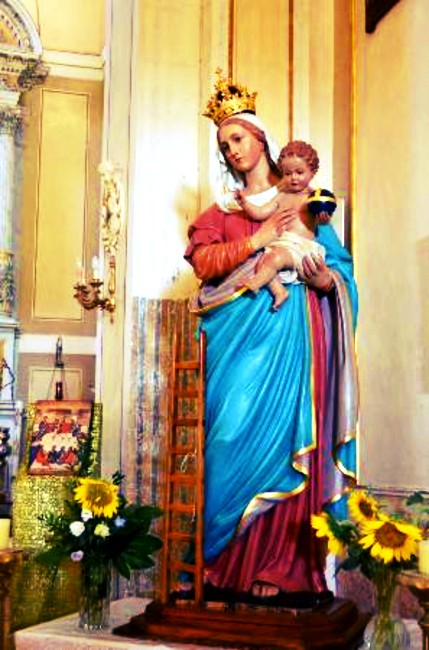
Afterwards it was restored and in 1919 the Catholic Church gave the Madonna, Ladder to Paradise, her own liturgical feast day, 3 August. An annual festa on this date draws the people of Noto to the Shrine seven miles distant, where after Mass in the Carmelite Chapel a statuary version of the image goes in procession through all the neighbouring districts.
The image of the “Ladder to Paradise” echoes the story of Jacob (Genesis 28:12) and St John Climacus’s Ladder of Ascent, a guide to the spiritual life written in Greek in the 600s, which became popular among Western religious after its translation into Latin in the 1500s (Scala Paradisi). Here, the Virgin is identified with the way to heaven because of her role in bringing Christ to humanity and her ongoing help to all who follow Him.
St Abibas St Aspren (1st Century) Bishop of Naples
Blessed Augustine Gazotich OP (1262-1323) Bishop of Lucera, Croatia, Of the Order of Preachers. He was also noted for being the guide for Dante Alighieri as the poet travelled through Croatia. His reputation for personal holiness remained noted long after his death; this resulted in Pope Innocent XII confirming the late Bishop’s beatification in 1700.
St Dalmatius St Euphronius of Autun St Gamaliel St Gaudentia Bl Godfrey of Le Mans Bl Gregory of Nonantula St Hermellus St Nicodemus St Senach of Clonard (Died 6th Century) One of the Twelve Apostles of Ireland St Trea of Ardtree
Martyred in the Spanish Civil War: Biandrés Avelino Gutiérrez Moral Bl Antonio Isidoro Arrué Peiró Bl Eleuterio Mancho López Bl Geronimo Limón Márquez Bl Patricio Beobide Cendoya The Story of these around 10000 Martyrs of Spain:
Saint Sidwell, also known as Sidwella, was a virgin saint from Devon, in England. She is the patroness of Exeter and sister of Saint Urith and Saint Juthwara. A Saxon living in Exeter in the 8th century, her father was a wealthy landowner named Benna, who died leaving his daughter in the care of a cruel stepmother, who was jealous of her beauty and virtue and coveted her inheritance.
The girl often left the city to bring food to the villagers working the fields outside the city walls. The Catalogus Sanctorum Pausantium in Anglia says she was beheaded by a couple of corn reapers, hired to do so by her stepmother. They cut off her head with a scythe, and where her head came to rest, water sprang up. A shaft of light shone over the site for three nights. She was buried at St Sidwells. Her ghost was seen carrying her severed head and putting it back on her shoulders at the spot where she was later buried. The spring became the Well of St Sidwell, and was a place of pilgrimage in Anglo-Saxon and Norman England.
The Church of St Sidwell, located just outside the site of Exeter’s east gate, still exists, and one of the main streets in Exeter is Sidwell Street.
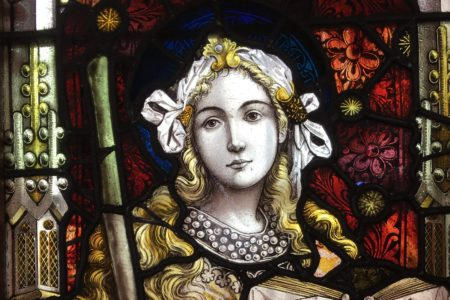
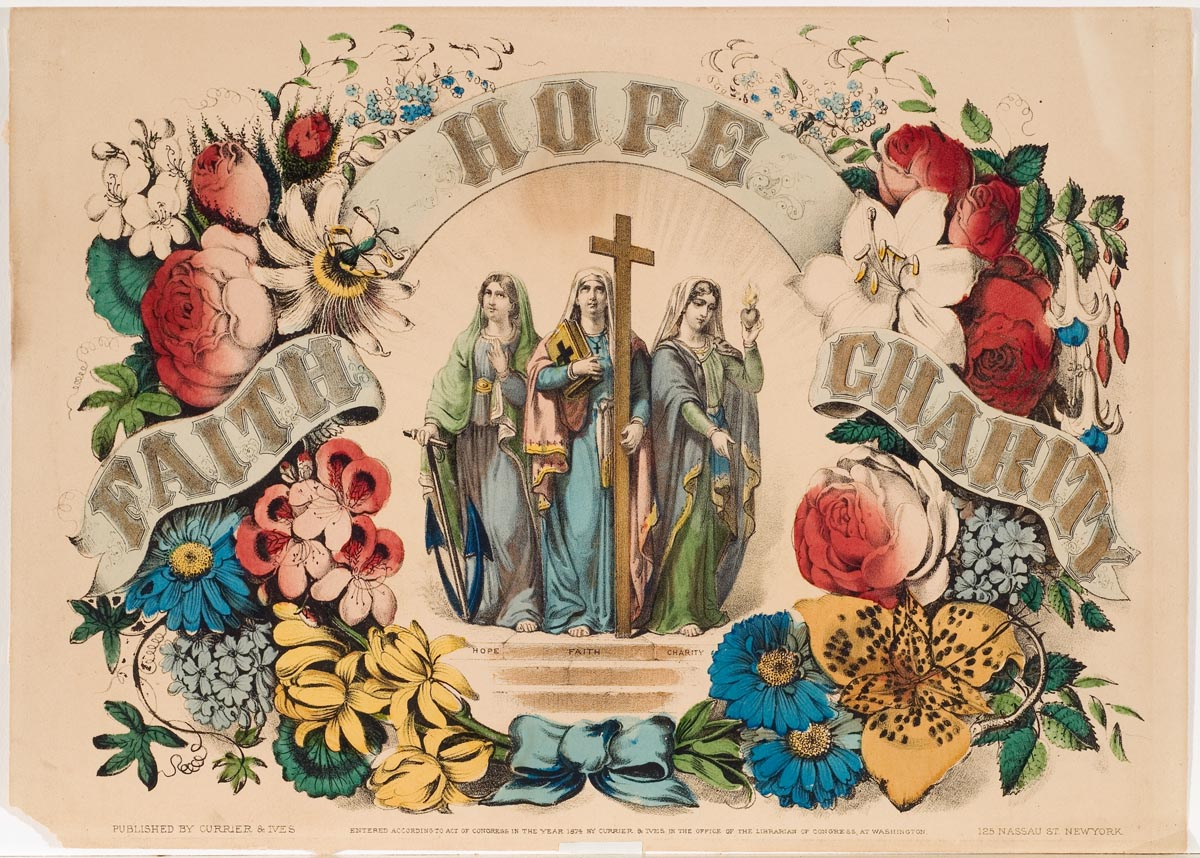
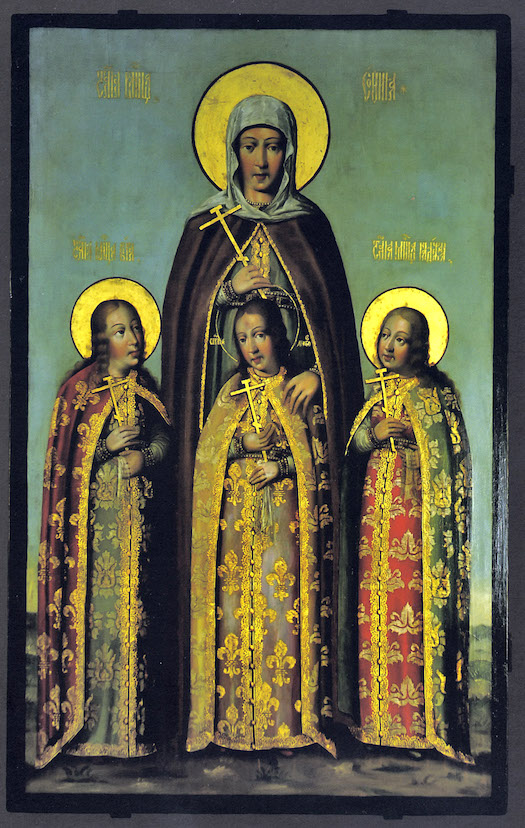
Saints Faith, Hope and Charity were the daughters of Saint Sophia (Wisdom). Sophia was a widow of Milan who gave away her possessions and moved to Rome with her daughters. Her daughters were martyred before her and she buried them at Via Appia. She died a natural death three days later while praying at their grave. Their tomb in a crypt beneath the church afterwards erected to Saint Pancratius was long a place of pilgrimage, as detailed in various documents of the seventh century. Oils were gathered from their tombs and sent to Queen Theodelinda in the time of Gregory the Great.
Early Christians from the 4th century often took in baptism mystical names indicative of Christian virtues, and Sophia, Sapientia, and Fides are attested as names of Christian women in Catacomb inscriptions. While still children, the daughters were tortured and martyred in the persecutions of Hadrian. They were scourged, thrown into a fire, and then beheaded.
Portiuncula Indulgence: An Indulgence which may be gained in any Church so designated by the Bishop, by all the faithful who, after Confession and Holy Communion, visit such Churches between noon of 1 August and midnight of 2 August, or on the Sunday following. The Indulgence is toties quoties and is applicable to the souls in Purgatory.
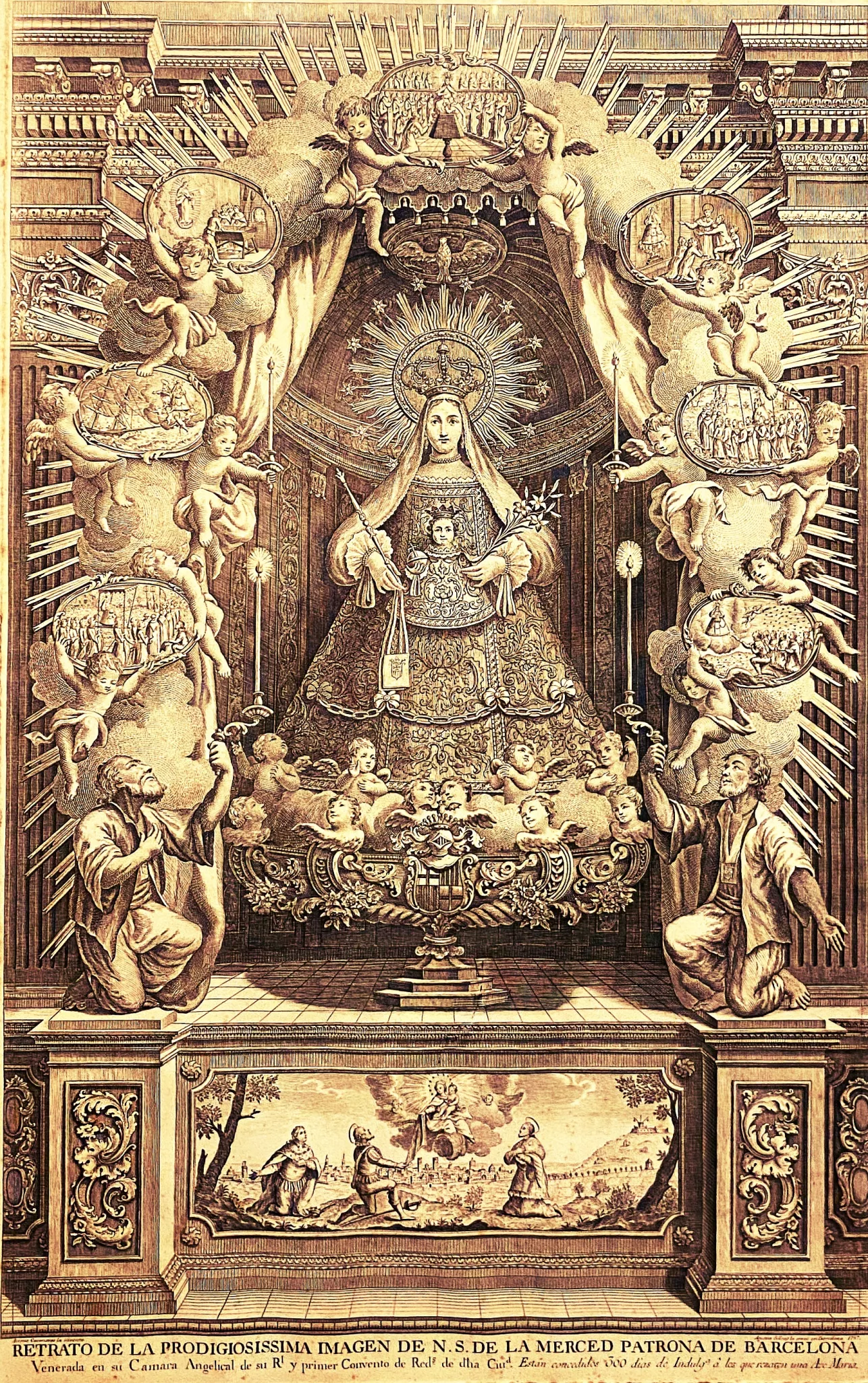
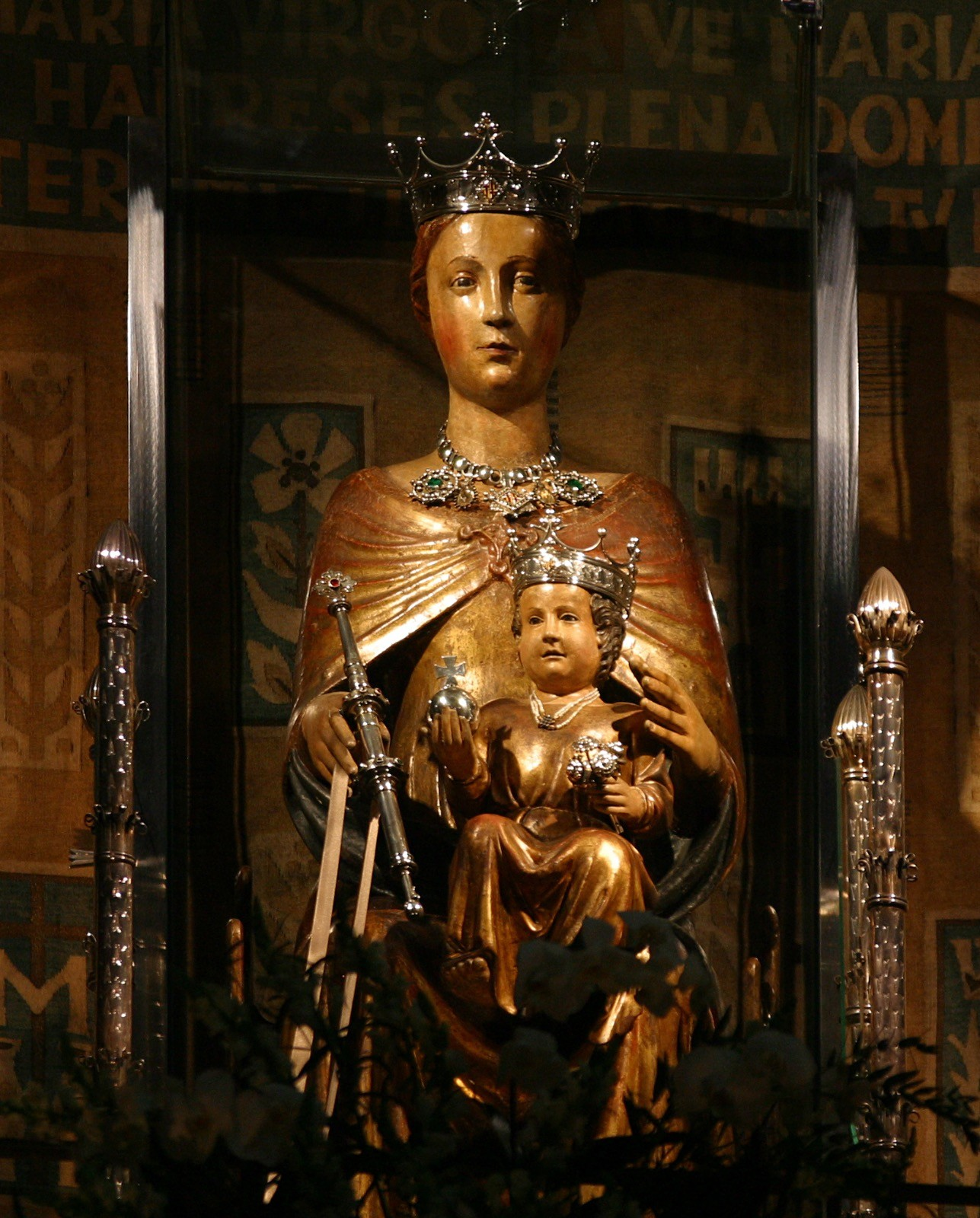
Nuestra Señora de las Mercedes / Our Lady of Mercy, Barcelona, Spain (1218,) Founding of the Mercedarian Order – 1 August, 24 September :
On 1 August of 1218, St Peter Nolasco, St Raymund of Penafort and James, King of Aragon, each had a vision of the Virgin Mary asking them to found a religious Order devoted to freeing Christian captives from the Muslims, who still held much of Spain. The Order of the Blessed Virgin Mary of Mercy grew quickly, collecting alms for ransom and sometimes offering themselves in exchange for prisoners. The Statue of the Mother of God of Mercy in Barcelona (below) dates from the 1300s. She became the City’s Patron after saving it from a plague of locusts in 1687. Before the counter-reformation, the Mercedarian Order celebrated the Feast of Our Lady of Ransom on 1 August, the date when she showed St. Peter Nolasco their white habit. The Vatican changed the date to 24 September when it extended the feast to entire Church in 1696. Since Vatican II, Catholic observance of Our Lady of Mercy’s day is limited to places and organisations that claim her as Patron.
Meanwhile, the Mercedarians have changed their mission to teaching and chaplaincy and the Barcelona soccer team visits the Basilica of La Mercè after victories in thanksgiving for her help. Her fiesta in Barcelona is a spectacular sequence of processions, dances, music, games and fireworks.
St Adela Mardosewicz Bl Aleksy Sobaszek St Alexander of Perga St Almedha St Arcadius St Attius of Perga St Buono St Brogan St Charity St Ethelwold of Winchester (c 912-984) Bishop St Exuperius of Bayeux St Faith St Faustus St Felix of Gerona St Friard Bl Giovanni Bufalari St Hope St Jadwiga Karolina Zak St Jonatus St Justin of Paris St Kenneth of Wales St Leontius of Perga St Maur St Nemesius of Lisieux Bl Orlando of Vallombrosa St Peregrinus of Modena St Rioch Bl Rudolph St Secundel St Secundus of Palestrina St Sophia St Verus of Vienne
Holy Maccabees: Jewish dynasty which began with the rebellion of Mathathias and his five sons against the Syrian king, Antiochus IV (168 BC) and ruled the fortunes of Israel until the advent of Herod the Great. Syrian attempts to force Greek paganism on the Jews, the profanation of the Temple at Jerusalem and the massacre which followed, brought the nation to arms under Mathathias, a priest of the sons of Joarib. At the death of Mathathias, Judas Machabeus, his third son, drove the Syrians and Hellenists out of Jerusalem, rededicated the Temple and began an offensive and defensive alliance with the Romans. Before the treaty was concluded, however, Judas, with 800 men, risked battle at Laisa with an overwhelming army of Syrians under Bacchides, and was slain. He was succeeded in command by his youngest brother, Jonathan (161 BC). Jonathan defeated Bacchides, revenged the death of his brother and made peace with Alexander who had usurped the throne of Demetrius, the successor to Antiochus. A period of peace followed in which Jonathan ruled as high priest in Jerusalem but Tryphon, who was plotting for the throne of Asia, treacherously captured him at ptolemais and later put him to death. The captaincy of the armies of Israel then fell to Simon, the second son of Mathathias. Under him the land of Juda flourished exceedingly. He obtained the complete independence of the country and a grateful people bestowed upon him the hereditary kingship of the nation. His rule marked five years of uninterrupted peace. He was treacherously slain by his son-in-law, Ptolemy, about the year 135 BC After Simon the race of the Machabees quickly degenerated. In 63 BC the Romans thought it necessary to interfere in the fratricidal war between Hyrcanus II and Aristobulus II. With this interference and the advent of Herod the Great the sceptre passed forever from the land of Juda. The story of the Machabees is written in the two books of the Old Testament which bear that name.
Martyrs of Nowogrodek – 11 beati: A group of eleven Holy Family of Nazareth nuns who were murdered by the Nazi Gestapo in exchange for 120 condemned citizens of Nowogrodek, Belarus who were scheduled for revenge killings. They are – • Adela Mardosewicz • Anna Kukolowicz • Eleonora Aniela Józwik • Eugenia Mackiewicz • Helena Cierpka • Jadwiga Karolina Zak • Józefa Chrobot • Julia Rapiej • Leokadia Matuszewska • Paulina Borowik • Weronika Narmontowicz They were machine-gunned by firing squad on 1 August 1943 by the Gestapo about three miles outside Novogrudok (Nowogródek), Hrodzyenskaya voblasts’, in Nazi occupied Belarus and buried on the site of the execution in a common grave. One of their surviving sisters, Maria Malgorzata Banas, located the grave on 19 March 1945 and tended to it until her death in 1966. Their relics have since been re-interred in a common sarcophagus in the chapel of the Novograd Farny Church (the Church of the Transfiguration, also known as Biala Fara or the White Church).
Our Lady of the Slain, also known as Our Lady of the Murdered, is located at a Cistercian monastery in Ceica, near Lorban, in the country of Portugal.
It is believed that this image was brought directly from heaven to be given to the Abbot John, who was the uncle of King Afonso I of Portugal. The statue earned its unique title through many spectacular miracles. It is best known for the fact that life was restored to several persons who had been murdered. In memory of these miracles, those who had been raised from the dead would bear from that time forward, a red mark upon their throats, like that which was seen on the throat of the image.
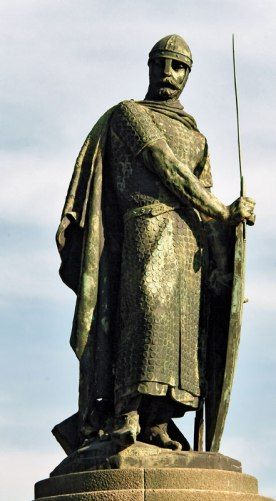
King Afonso I, the Conqueror, (also known as Afonso Henriques), was the first king of Portugal and a lifelong sworn opponent of Islam. He spent 46 years as king of Portugal waging war against the Moors in order to drive the invaders from his land. He was also known for his piety and great love for God. A relative of Saint Bernard of Clairvaux, he bestowed many privileges and benefits to the religious orders and built Alcobaca Monastery for the Cistercian Order. He was responsible for the foundation of several monasteries and convents, and was favorable especially toward the Cistercians.
St Calimerius of Milan Bl Cecilia Schelingov Bl Everard Hanse St Fabius of Caesarea St Firmus of Tagaste
St Germanus of Auxerre (c 378 – c 448) Bishop of Auxerre (c 378 – c 448), Lawyer, Missionary, Reformer, Exorcist, Miracle-Worker.
Blessed Giovanni Colombini (1300-1367) Layman, Husband and Father, Founder of the Apostolic Clerics of Saint Jerome (the Jesuati).
St Giustino de Jacobis CM (1800-1860) Bishop, Apostolic Vicar of Abyssinia, Missionary of the Congregation of the Mission.
St Helen of Skofde Bl Jean-François Jarrige de La Morelie de Breuil St Marcel Denis St Neot — Martyrs of Syria – 350 saints: 350 monks massacred by heretics for their adherence to orthodox Christianity and the decrees of the Council of Chalcedon. 517 in Syria.
Martyrs of Synnada: 3 Saints Democritus Dionysius the Martyr Secundus
Martyred in the Spanish Civil War: Thousands of people were murdered in the anti-Catholic persecutions of the Spanish Civil War from 1934 to 1939. • Blessed Ciriaco Olarte Pérez de Mendiguren • Blessed Dionisio Vicente Ramos • Blessed Francisco Remón Játiva • Blessed Miguel Goñi Ariz • Blessed Miguel Francisco González-Díez González-Núñez • Blessed Agapito Alcalde Garrido • Blessed Ciriaco Olarte Pérez de Mendiguren • Blessed Dionisio Vicente Ramos • Blessed Francisco Remón Játiva • Blessed Jaume Buch Canals • Blessed Maria Roqueta Serra • Blessed Miguel Goñi Ariz • Blessed Miguel Francisco González-Díez González-Núñez • Blessed Prudencio Gueréquiz y Guezuraga • Blessed Segundo de Santa Teresa • Blessed Teresa Subirà Sanjaume • Blessed Vicenta Achurra Gogenola • Blessed Francisca Pons Sardá
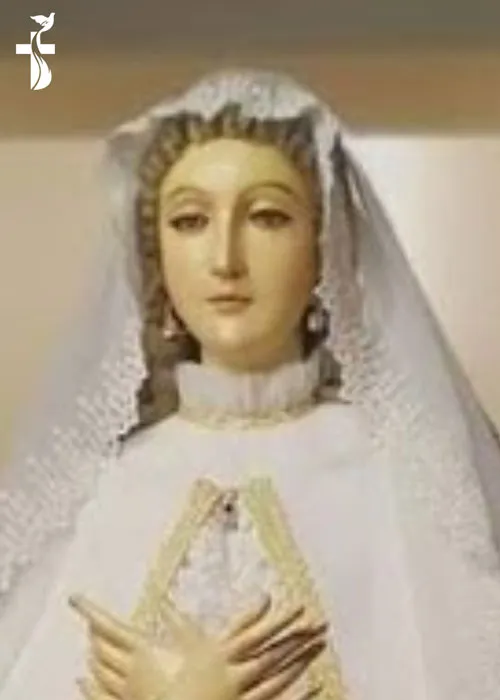
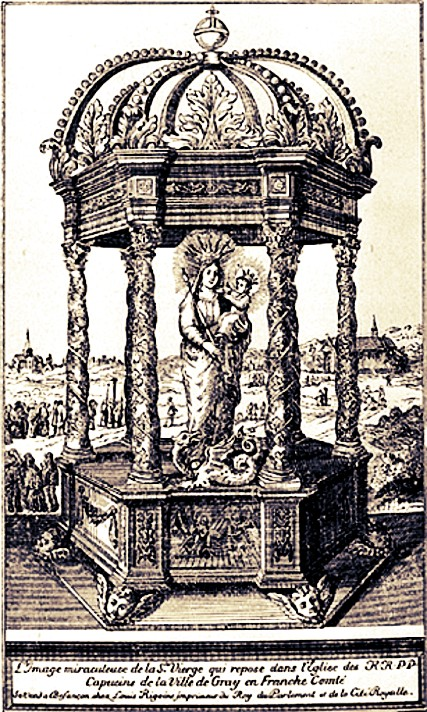
Notre-Dame-de-Gray / Our Lady de Gray, France (1602) – 30 July:
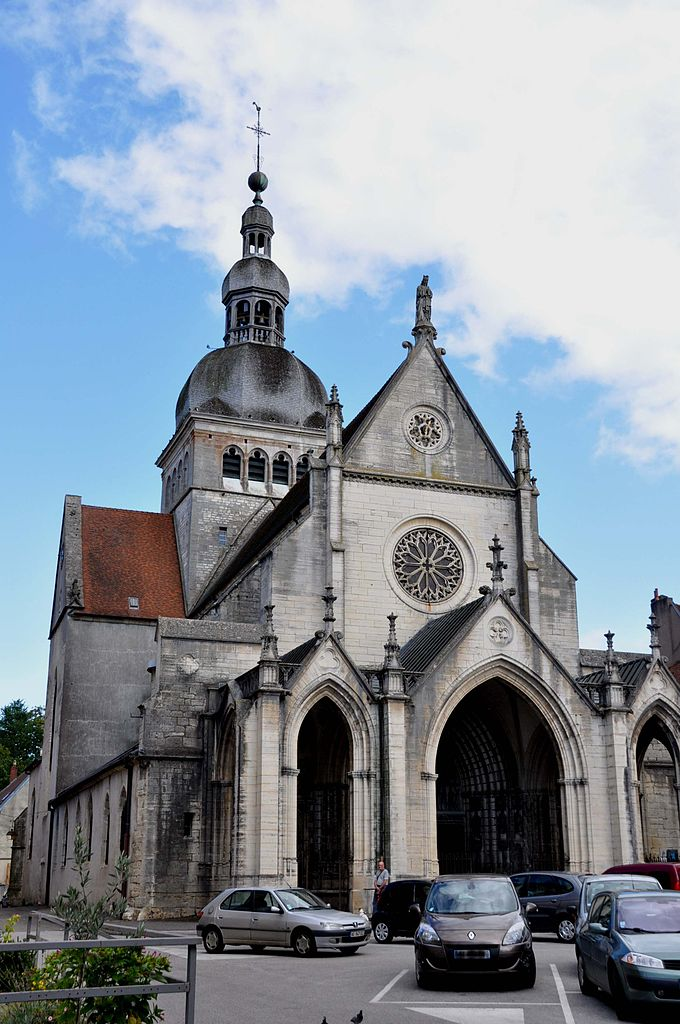
The Shrine of Notre-Dame-de-Gray, or Our Lady of Gray, is located near Besancon in Northern France near Franche-Comte. The Statue of Our Lady of Gray is made of an oak tree from Montaigu, has a dark wooden colour and is only 14.5 centimeters tall. It is much honoured in the country and there are many miracles and graces granted to petitioners that are attributed to Our Lady’s intercession at this shrine.
About five centuries ago, on a hill near Montaigu, a pious person placed a small statue of the Blessed Virgin Mary upon an old oak tree. The tree itself is believed to date from the time of the Druids and crested one of the hills in the Diocese of Malines. Soon the faithful began to come in crowds from throughout the region, for there were miraculous cures and various miracles granted to the pilgrims who invoked Mary under the name of Our Lady of the Oak.
In the year 1602 a small wooden chapel was built on the hill of Montaigu. The oak upon which the statue of Our Lady had once been displayed was now cut up into small pieces and carved by a local craftsman into statuettes of the same image. These statues were presented as a mark of respect to patrons of the shrine. Even the wood of the oak was considered almost a precious relic, for it had once touched the miraculous statue of the Blessed Virgin. Wherever they went these figures were enshrined with honour and it seemed as if Our Lady of Montaigu sent her favour, for her miraculous power went with them.
In the year 1613, a poor, seventy year old widow named Jeanne Bonnet de Salins made a pilgrimage to the shrine. She obtained a piece of the venerable old oak and took it to a sculptor named Jean Brange to carve into a statue similar to that of the original. On 4 April 1613, the Archbishop of Besancon blessed the Statue and allowed it to be exhibited for public veneration.
It is reported, that Jeanne Bonnet was rewarded by signal graces she obtained through Our Lady’s intercession. She intended to give the statue to a local church but, in 1616, yielded to the repeated entreaties of Father Gabriel Appremont, who wanted to have the image for the Capuchins of Gray. A special chapel was richly decorated to receive it. The news soon spread in the region of Gray and the faithful flocked to pay their respects to the new Madonna, Our Lady of Gray.
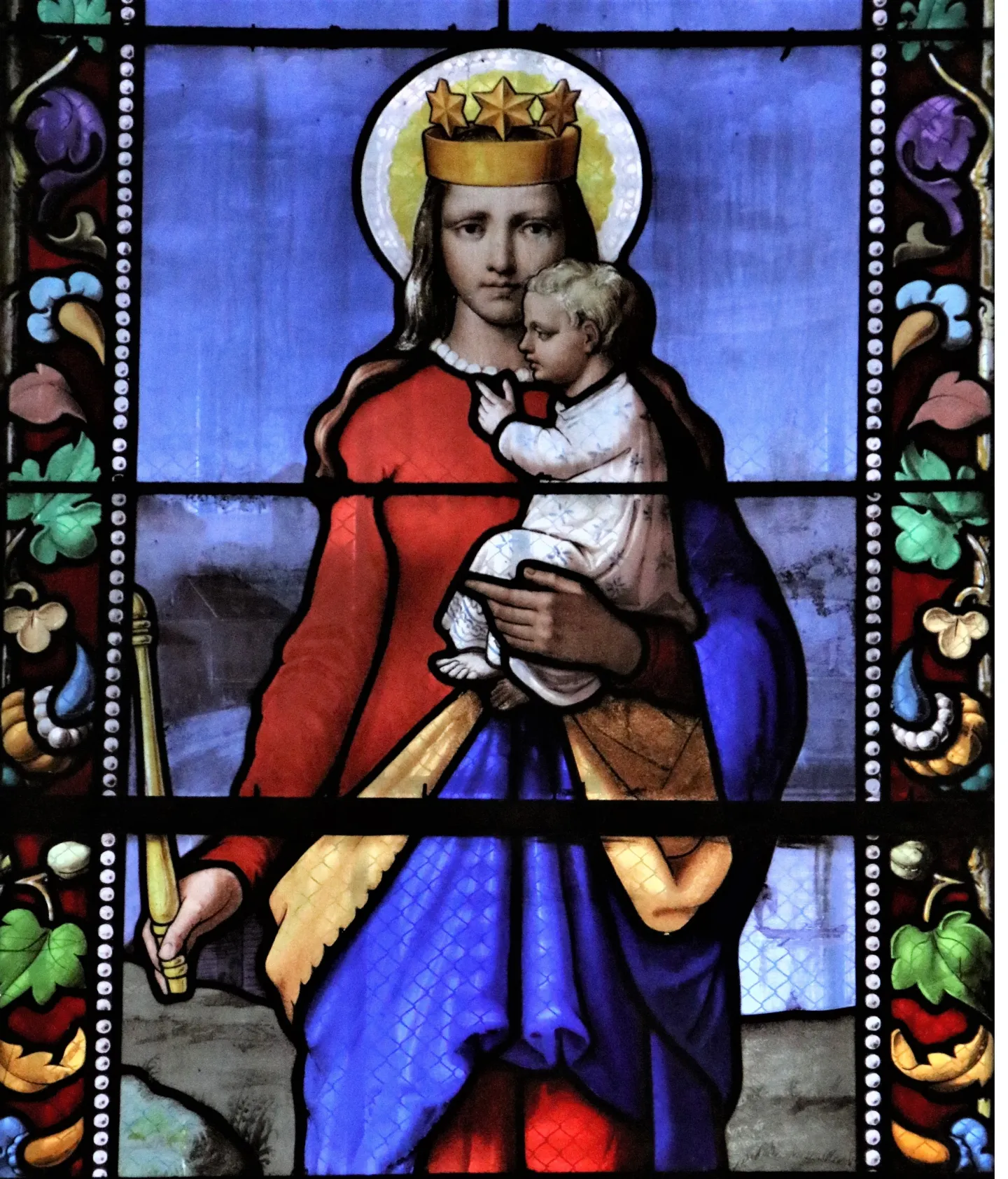
Our Lady of Gray holds in her right hand a gleaming sceptre of gold that a parishioner donated in the year 1807. It was at this time that the chapel – now a Basilica (see below), was undergoing reconstruction after the ravages of the French Revolution. There are also three semi-precious stones set in the front of the base of the statue that were given by grateful petitioners to the Blessed Virgin. Finally, the two gold crowns were created in 1909 on the occasion of the celebration of the coronation of the statue of Our Lady of Gray.
St Abdon Bl Antonio di San Pietro Bl Edward Powell St Ermengyth St Hatebrand St Julitta of Caesarea Blessed Manés de Guzmán OP (c 1168-1235) Dominican Priest and Friar, Brother of Saint Dominic
Bl Richard Featherstone St Rufinus of Assisi St Senen St Tatwine of Canterbury St Terenzio of Imola Bl Thomas Abel St Ursus of Auxerre Bl Vicenta Chavez-Orozco — Martyrs of Castelseras: Three Dominicans, two of them priests, one a novice, who were martyred together in the Spanish Civil War for refusing to renounce Christianity. • Joaquín Prats Baltueña • José María Muro-Sanmiguel • Zosimo Izquierdo Gil They were shot on 30 July 1936 at a farm house outside Castelserás, Teruel, Spain.
Martyrs of Tebourba – 3 saints: Three girls martyred together in the persecutions of Diocletian. We know little else about them but the names – Donatilla, Maxima and Secunda. 304 at Tebourba in North Africa.
The Martyrs of the Spanish Civil War: Bl Alejandro González Blanco Bl Eugenio García Tribaldos Bl Guillermo Álvarez Quemada Bl Juan Lanz Palanca Bl Luis Herrero Arnillas Bl Miguel Solas del Val Bl Pablo Díaz de Zárate y Ortiz de Zárate Bl Racardo Pla Espí Bl Sergio Cid Paz
Edward Powell (c.1478 – 30 July 1540) was a Welsh priest, theologian, and opponent to King Henry VIII. He was beatified in 1886. Powell was born in Wales, was M.A. of the University of Oxford, and a Fellow of Oriel College. He received the degree of Doctor of Divinity on 26 June 1506 and was styled perdoctus vir by the university.
A court preacher in high favour with Henry VIII, he helped the King write Assertio Septem Sacramentorum, a reply to Martin Luther, and then published his own work on the subject in December 1523. The University of Oxford commended this work, and styled Powell “the glory of the university” in a letter to the king. Powell was one of the four theologians selected to defend the legality of the king’s marriage of Catherine of Aragon, in connection with which he wrote the “Tractatus de non dissolvendo Henrici Regis cum Catherina matrimonio”.
In March, 1533, Powell was selected to answer Hugh Latimer at Bristol, and was alleged to have disparaged his moral character. Latimer complained to Thomas Cromwell, and Powell fell into further disfavour by denouncing Henry’s marriage with Anne Boleyn. He was discharged from the proctorship of Salisbury in January, 1534, and in November he was attainted, together with John Fisher, for high treason in refusing to take the oath of succession, deprived of his benefices, and imprisoned in the Tower of London.
The sentence was not carried out until 30 July 1540. Three Catholics (Powell, Abel, and Richard Featherstone) and three Protestants suffered together. (The protestants were were condemned for teaching Zwinglianism.) The victims were dragged on hurdles from the Tower to Smithfield, a Catholic and a Protestant on each hurdle. Powell’s companion was Robert Barnes, the Protestant divine. The Catholics were hanged, drawn, and quartered as traitors; the others were burned as heretics.
The site of executions at Smithfield
Blessed Thomas Abel
Blessed Thomas Abel (also Able, or Abell), priest and martyr, born about 1497; died 30 July, 1540. He was chaplain to Queen Catherine, and defender of the validity of her marriage to Henry VIII, for which reason he was put to death. He was a graduate of Oxford, and taught the queen modern languages and music. After a journey to Spain on her behalf, he received the parochial benefice of Bradwell in Sussex. He soon published in defence of the queen’s marriage a work entitled: “Invicta Veritas, an answer to the determination of the most famous Universities, that by no manner of law it may be lawful for King Henry to be divorced from the Queen’s grace, his lawful and very wife”. The work contained an answer to the numerous tracts supporting Henry’s ecclesiastical claims. The king, enraged and terrified, bought up copies of the book in order to destroy them.
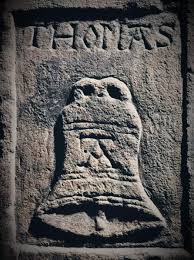
A carving Blessed Thomas created in Beauchamp Tower
For his defence of holy matrimony, he was thrown into Beauchamp Tower, and after a year’s liberation again imprisoned, in December, 1533, on the charges of disseminating the prophecies of the Maid of Kent, encouraging the queen “obstinately to persist in her wilful opinion against the same divorce and separation”, and maintaining her right to the title of queen. He was kept in close confinement until his execution at Tyburn, two days after the execution of Cromwell himself. There is extant a very pious Latin letter written by him to a fellow-martyr, and another to Cromwell, begging for some slight mitigation of his “close prison” — i.e. “license to go to church and say Mass here within the Tower and for to lie in some house upon the Green”. It is signed “by your daily bedeman, Thomas Abell, priest”.
His act of attainder states that he and three others “have most traitorously adhered themselves unto the bishop of Rome, being a common enemy unto your Majesty and this your Realm, refusing your Highness to be our and their Supreme Head of this your Realm of England“.
The Tyburn ‘Tree’
Blessed Richard Fetherston
BlessedRichard Fetherston (Fetherstone, Featherstone) was an English priest. He was Archdeacon of Brecon, Chaplain to Catherine of Aragon, and Latin tutor to her daughter, Mary Tudor. He was executed on 30 July 1540 and beatified by Pope Leo XIII on 29 December 1886.
Richard Featherstone studied at Cambridge where he became a doctor of divinity. In 1523 he was appointed archdeacon of Brecon in South Wales. By 1525 he had become the Princess Mary’s Latin tutor. When the Convocation of Canterbury met in November 1529 and considered whether Henry VIII and Queen Catherine were truly married, he spoke in defence of the marriage. The Act of Parliament which condemned St John Fisher in 1534 for his refusal to take the Oath of Succession, also referred to Fetherstone, who was sent to the Tower of London on 13 December of the same year. There he was confined until his execution in 1540. As in these cases, the limbs of all three were fixed over the gates of the city, and their heads were placed upon poles on London Bridge.
Madonna dei Miracoli / Holy Mary of Miracles, Morbio Inferiore, Ticino, Switzerland (1594) – 29 July:
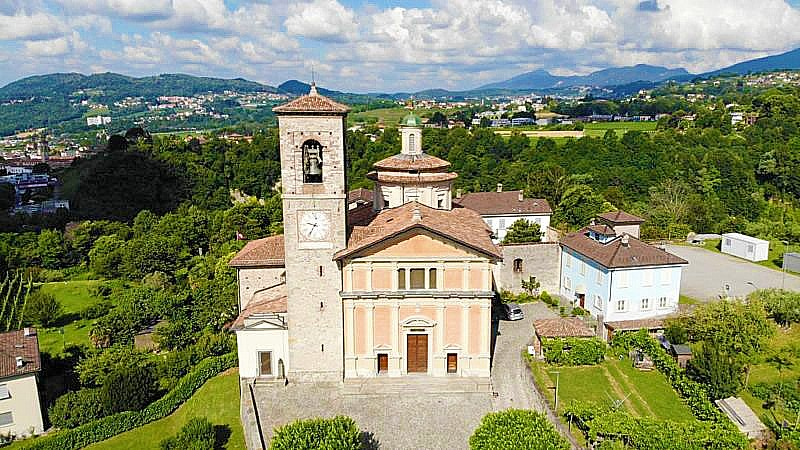
Where the Sanctuary of Morbio now stands, a castle stood centuries ago, attested in 1198 and destroyed in the first half of the sixteenth century. Only the ruins of a Chapel, dedicated to St Bernardino of Siena, transformed over time into a pile of rubble, buried by weeds, brambles and thorns., remained. Surrounded by ivy and fortunately well preserved, remained the Fresco in the Chapel, depicting the Virgin with the Child.
The history of the Sanctuary of Holy Mary of Miracles began on 29 July 1594. It was a Friday when the two mothers with their daughters, Catherine and Angela , respectively ten and seven years old, travelled to Morbio to entreat the assistance of Fr Gaspare Basbetrini. They were sick girls, tormented by the devil and had travelled to Morbio, to ask for the blessing of Don Gaspare Barberini, the assistant Priest at Morbio, who was well-known as an Exorcist. However, sadly for the pilgrims, Fr Basbetrini was absent.
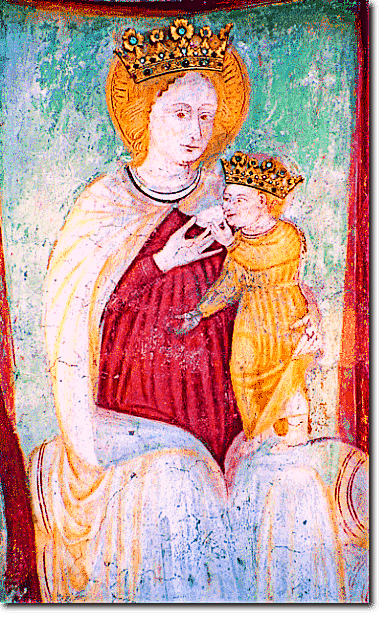
To the tiredness of the journey and the sadness of illness, the bitterness of disappointment was added. Among the ruins of the ancient castle the little group of supplicants waited and discovered on the crumbling and crumbling walls, the faded remains of a fresco depicting the Virgin in a deeply maternal position nursing Baby Jesus.
The two mothers knelt before the Virgin with their daughters and prayed in deep sadness and devotion for the intercession of the Holy Mother to come to the aid of the sick children.
And then the miracle happened. Those two poor simple and innocent creatures were cured. This is Morbio’s miracle – the Madonna appeared to the two little girls and cureds them of all their illnesses, dispelling any demonic presence within them.
Our Lady spoke to the elder girl, Catherine and instructed her to tell the Bishop that the Church should be rebuilt and that the Holy Rosary must be said everyday.
Eight days after the event, on 5 August 1594, the episcopal curia of Como, whose ecclesiastical jurisdiction also extended to the southern regions of Ticino, instructed the regular canonical process, which recognized, upon the sworn deposition of the main eyewitnesses, the truth of what happened and their prodigious and supernatural nature.
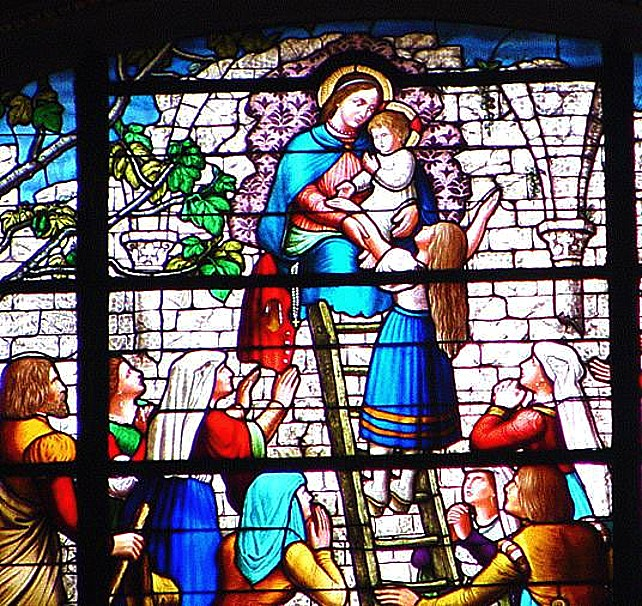
A stained-glass window, located at the top of the apse and placed at the beginning of this century, illustrates and reminds those who enter the Sanctuary of this miracle. Catherine is depicted on a ladder, with her arms outstretched, listening in front of the image of the Madonna dei Miracoli. At the foot of the ladder, Angela, the other sick girl, is lying asleep.
In a short while an Oratory was built on the site to recite the Rosary and celebrate Mass there, as the Madonna had said to Catherine, while on 29 July 1595, the Anniversary of the apparition and the miracle, the first stone was blessed and laid for the construction of the Sanctuary, Consecrated on 16 May 1631 by the Bishop of Como, Msgr Filippo Archinti.
St Antony St Beatrix of Rome Bl Beatrix of Valfleury St Callinicus of Paphlagonia Bl Charles-Antoine-Nicolas Ancel St Faustinus of Rome St Faustinus of Spello St Felix of Rome St John Baptist Luo Tingyin St John the Soldier Bl José Calasanz Marqués St Joseph Zhang St Kilian of Inishcaltra St Lek Sirdani Bl Luis Bertran St Lupus of Troyes Bl Mancius of the Cross St Martha Wang St Olaf II St Olaus of Sweden St Paulus Chen Changpin Bl Petrus of Saint Mary St Pjetër Çuni St Prosper of Orleans St Rufo of Rome St Seraphina St Serapia of Syria St Simplicius of Rome St Sulian
Blessed Pope Urban II (c 1035-1099) Bishop of Rome from 1088 until his death, Carthusian Abbot, Confessor
Martyrs of Calanda – 8 beati: A group of Dominican priests and friars who were martyred over the course of a day in the same town by the same group of anti-Christian forces in the Spanish Civil War. • Antonio Manuel López Couceiro • Felicísimo Díez González • Gumersindo Soto Barros • Lamberto María de Navascués de Juan • Lucio Martínez Mancebo • Matías Manuel Albert Ginés • Saturio Rey Robles • Tirso Manrique Melero They were martyred on 29 July 1936 in Calanda, Teruel, Spain I.
Martyrs of Lleida – 12 beati: Carmelites of the Ancient Observance novices, friars and priests who were all martyred together in the Spanish Civil War. • Àngel Prat Hostench • Eliseo Maneus Besalduch • Gabriel Escoto Ruiz • Ginés Garre Egea • Joan Maria Puigmitjà Rubió • Joan Prat Colldecarrera • Josep Solé Rovira • Lluis Fontdecava Quiroga • Manuel Serrano Buj • Miquel Soler Sala • Pere Dorca Coromina • Pere Ferrer Marín They were martyred on 29 July 1936 in Clot dels Aubens, Cervera, Lleida, Spain.
Martyred in the Spanish Civil War: Thousands of people were murdered in the anti-Catholic persecutions of the Spanish Civil War from 1934 to 1939. • Blessed Bartolomé Rodríguez Soria
Martyrs of Rome – 23 saints Eugene Flora the Martyr Lucilla Theodore
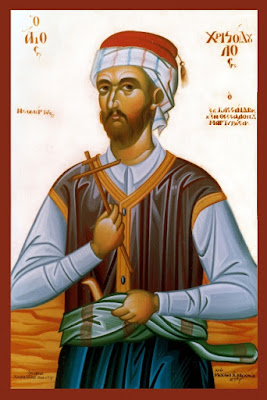
Blessed Christodoulus was born in the village of Kassandra in Halkidiki, Macedonia. He was a young tailor in Thessaloniki during a period of occupation by Ottoman Turks. Seeing local Christians giving in to pressure and proclaiming themselves Muslim, Christodoulus took a cross and went into the streets to encourage Christians, as well as into the coffee shops were the ‘ceremony’ of conversion would take place, and offered them the cross to kiss as a sign of their faith, urging them to recover, repent, and stand strong in the love of Christ. Most courageously, he would make the Sign of the Cross over crowds of Turks as well as the dreaded Janissaries, the most fanatical muslim warriors of all, the elite bodyguard of the Sultan. Janissaries who were themselves once Christian, before being enslaved by the Ottoman emperors as youth.
Enraged by this, the Turks imprisoned and tortured Christodoulus. They urged him to deny the Faith, but in return he urged them to turn away from the false religion of Islam. Driven to an excess of hatred by this, the Turks tortured him gruesomely and then hung him in front of a church in 1777.
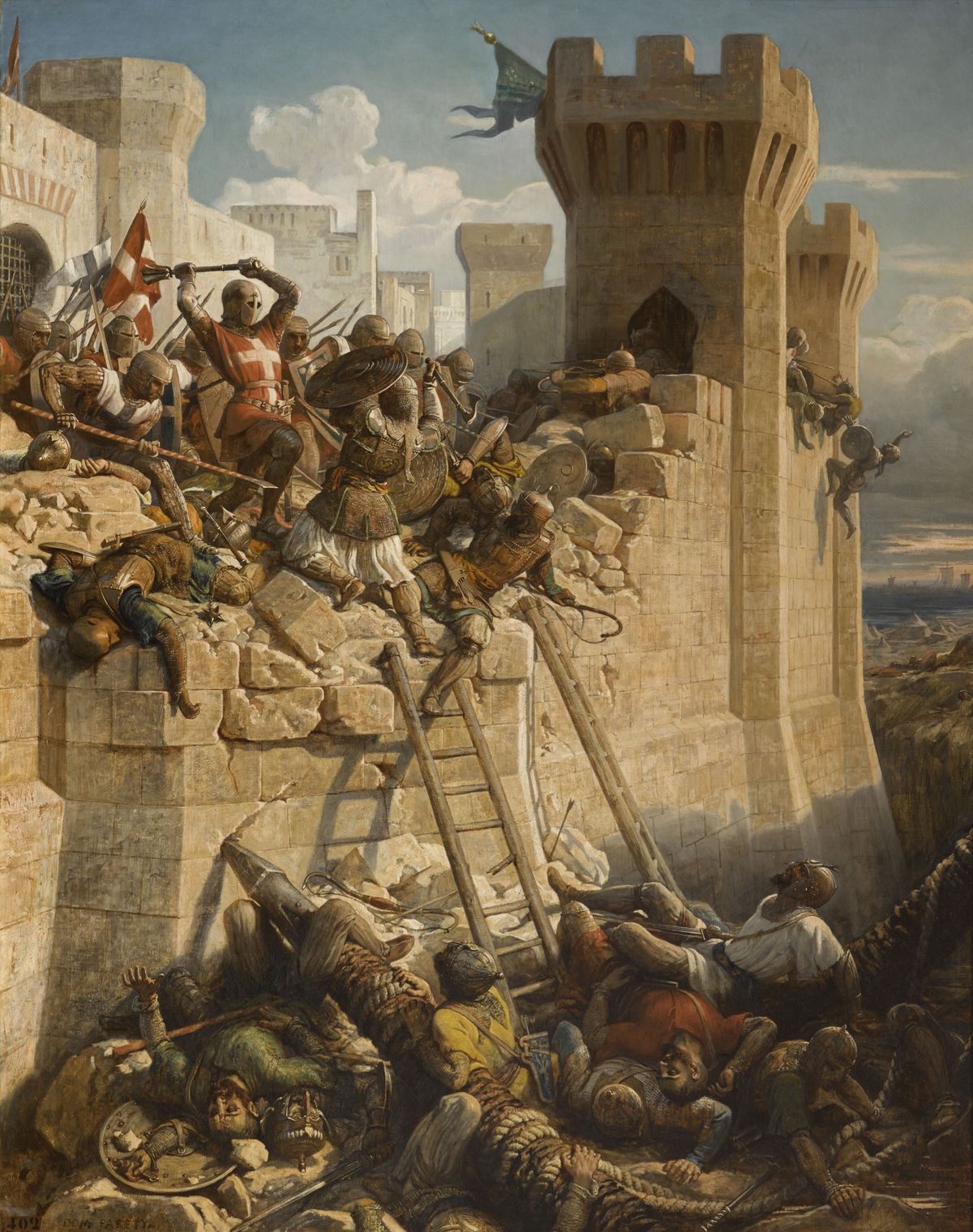
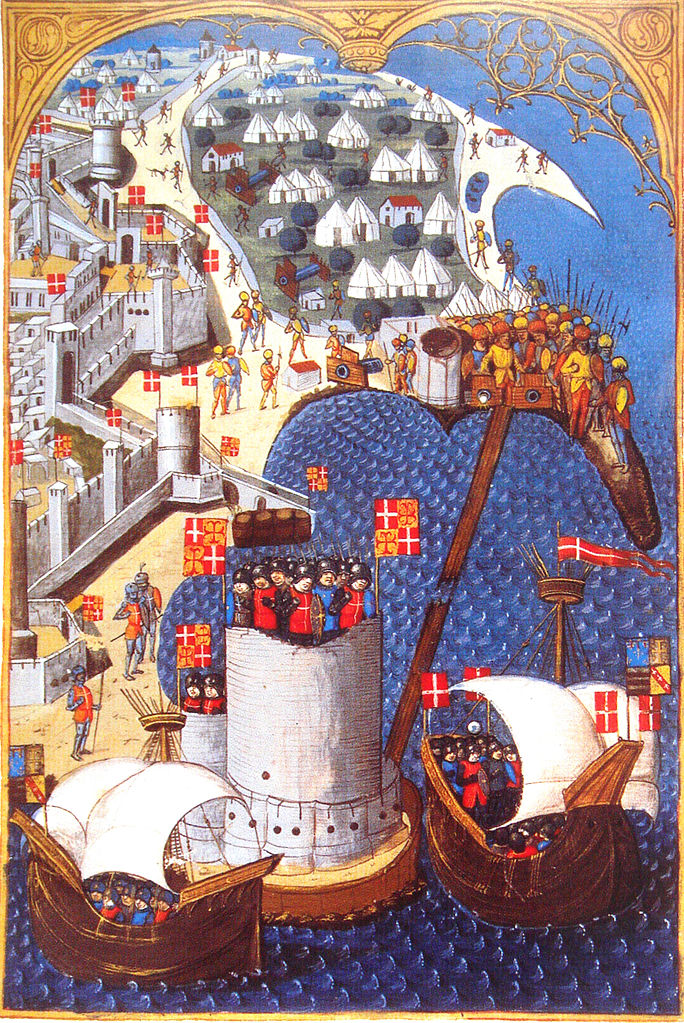
The Siege of Rhodes. Victory over the Turks by the Knights Hospitaller at Rhodes in 1480 through the intercession of Our Lady, final battle 27 July 1480 – commemorated on 28 July:
Constantinople, the capital of the Byzantine Empire, the last remnant of the Holy Roman Empire, fell to the “Scourge of Europe,” the Sultan Mehmet II, in the year 1453. This dire news was almost impossible to believe in the rest of Christendom but, it was sadly true and Constantinople was made into the new seat of the Ottoman Empire.
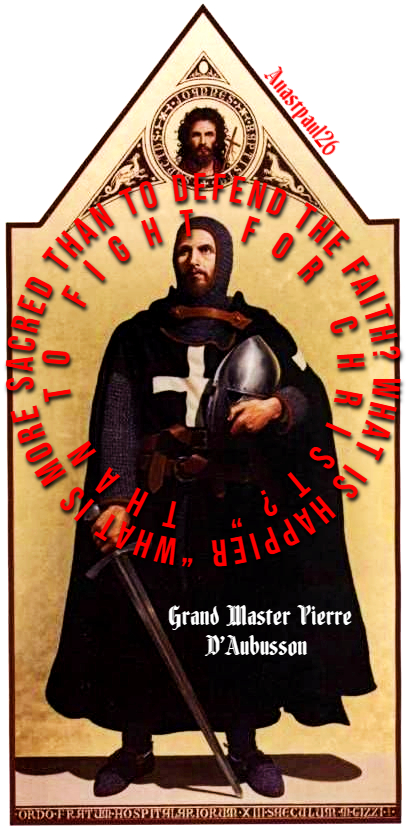
A few short years later, Pierre D’Aubusson was Grand Master of the Hospitallers, the Knights of Saint John, living on the island of Rhodes. He and his Knights were untiring opponents of Islam, sworn to do everything in their power to fight against them. Having made the island of Rhodes their home, the Knights harassed Ottoman shipping lanes and assisted with attacks against the Ottoman Empire.
In the year 1479, D’Aubusson refused to pay tribute to Mehmet in exchange for peace and furthermore, had the audacity to continue harassing the sultan’s shipping lanes. The Grand Master continued to work on the massive fortifications on Rhodes as he awaited the siege of Rhodes that he knew would soon come. His walls were strong but the Grand Master had only a few hundred Knights and about 2,000 natives to defend them.
Mehmet was not intimidated by the Christian defenses on Rhodes, for he had huge cannons and basilisks which had blasted holes in the stout walls of Constantinople. He also had over 70,000 men in his army, and he was determined to wipe out “that abode of the sons of Satan,” as he referred to the Catholic Knights of Rhodes.
The Siege of Rhodes began with a tremendous bombardment on the Tower of Saint Nicholas. Grand Master Pierre D’Aubusson was not intimidated as he asked: “What is more sacred than to defend the Faith? What is happier than to fight for Christ?”
Breaches were eventually made in the walls and the Muslim’s unremittingly attempted to rush through the breaches. Many of the Turks had to be forced to attack the defenses, as their commanders lashed them forward with whips and chains. The Janissaries, however, did not have to be urged, for they were the sultan’s finest troops. They were warriors to the core and advanced over the fallen bodies of their comrades, anxious to cross swords with the Catholic Knights.
Finally, the Tower of Italy began to crumble from the terrific assault, and large breaches opened in the wall. The Bashi-Bazouks and Janissaries rushed into the breach, placing the standard of Islam above the Tower.
On witnessing this act, the Grandmaster rushed into the breach together with a few of his excellent Knights. Howling and raging like madmen, the Janissaries pressed the assault, for the Knights seemed too few to stand against their wave after wave of thousands of elite warriors. Yet, the Grandmaster stood, insensible of any wounds he received in return for the carnage he wreaked among the fanatical Muslim warriors.
Fighting with broken blades and notched axes, the Knights of Saint John continued to hold the breach, cutting down any who approached them, until a huge Janissary rose up and hurled a spear with all his might directly at the Grand Master. Propelled at incredible speed, the sharp steel tip easily pierced D’Aubusson’s breastplate, puncturing a lung. The Grand Master went down beneath a torrent of hacking blades as the Knights struggled to drag his body from the fray.
By his courageous stand D’Aubusson had proven he was at least the equal of any Grand Master in history, but now, he was wounded unto death and could do no more. The siege of Rhodes appeared to be lost as D’Aubusson’s Knights struggled to haul him to safety. Thousands of Jannisaries were rushing into the breach with no-one to stop them and at this point the Knights knew, it would take a miracle to keep Rhodes from being overrun.
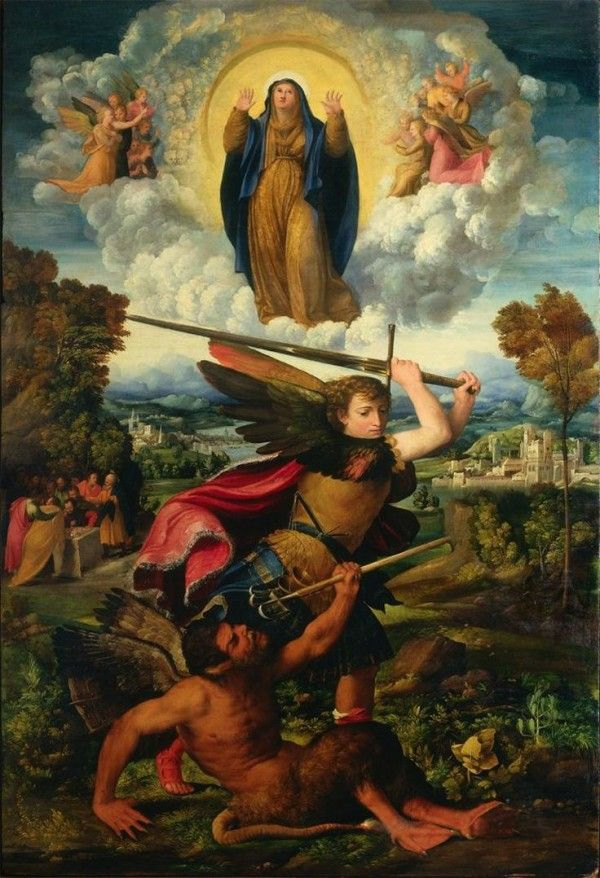
A miracle is exactly what they got. Suddenly there appeared in the sky “a refulgent cross of gold, by the side of which stood a beautiful woman clothed in garments of dazzling white, a lance in her hand and a shield on her arm, accompanied by a man dressed in goatskins and followed by a band of heavenly warriors armed with flaming swords.” It was the glorious figures of Saint John the Baptist, the Patron Saint of the Order of Saint John, Saint Michael the Archangel brandishing his unsheathed sword and the Queen of Heaven, the Blessed Virgin Mary herself, dressed in battle array!
The Turks turned at the sight and ran in panic-stricken flight. Thousands fell as they fled, cut down and pursued through the breaches by the Knights of Rhodes and their heavenly allies. Chased all the way back to their camp, it was now the defeated Muslims who suffered the insult of having their sultan’s own standard captured.
The siege of Rhodes had ended, and Grandmaster D’Aubusson later recovered of his wounds. He had lost 231 of his Knights but that was nothing compared to the thousands upon thousands of Muslim warriors who lay dead upon his shores.
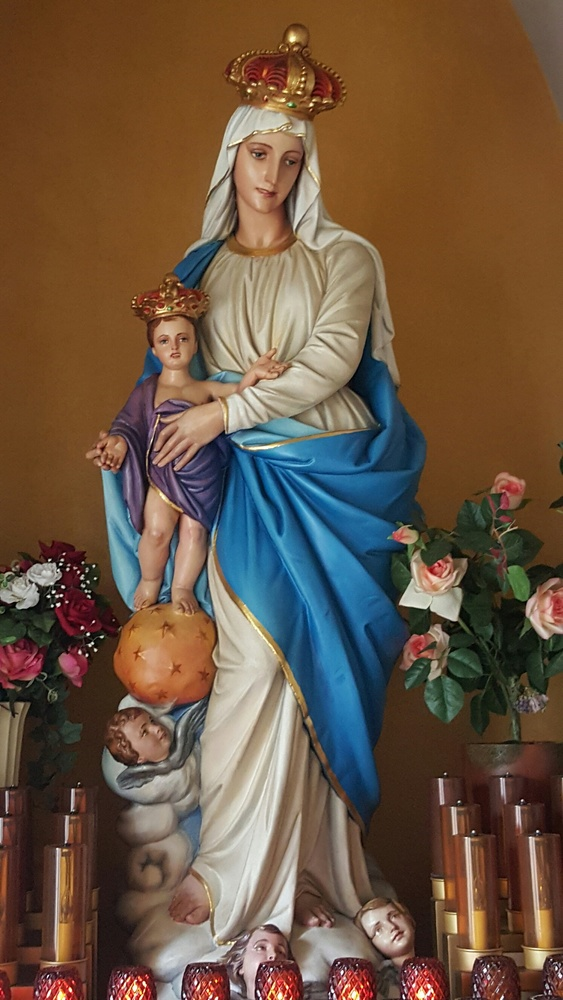
It was in the year of Our Lord 1480 that the Knights of Rhodes had gained this signal victory over the Turks, by the help of the Blessed Virgin, whom the Knights regarded ever after as Our Lady of Victory. They renewed their dedication to her who had appeared on the walls during the siege of Rhodes holding a lance in her hand to defend them, bringing with her Saint Michael the Archangel and a heavenly army. She, the Patroness of the Sovereign and Military Order of Hospitallers, had turned the formerly obstinate enemy, who retired in disorder, to lose the greater part of their army. Thanks BE to Our Lady of Victory, the all-conquering sword of Mehmet II had shattered upon the walls of Rhodes!
St Acacius of Miletus
St Arduinus of Trepino St Botwid of Sudermannland St Camelian of Troyes St Celsus of Rome Bl Christodoulos Bl Davíd Carlos-Marañon St Eustathius of Galatia St Pope Innocent I (Died 417) St Irene of Cappadocia Bl John Soreth St José Caselles-Moncho Bl José Melchór García-Sampedro Suárez Bl Josep Castell-Camps St Longinus of Satala St Lucidius of Aquara St Lyutius Bl Manuel Segura-López St Nazarius of Rome
Martyred in the Spanish Civil War – Thousands of people were murdered in the anti-Catholic persecutions of the Spanish Civil War from 1934 to 1939.
Martyrs of Fernán Caballero – 14 beati: Fourteen Claretian clerics who were martyred together in the Spanish Civil War. – 28 July 1936 in Fernán Caballero, Ciudad Real, Spain. Bl Antolín Astorga Díez Bl Enrique Serra Chorro Bl Gregorio Charlez Ribera Bl Joan Ayats Plantalech Bl Joan Bover Teixidor Bl Joan Costa Canal Bl José Aurelio Calleja de Hierro Bl José Gutiérrez Arranz Bl Josep Camí y Camí Bl Josep Martí Coll Bl Lluis Casanovas Vila Bl Lorenzo Arribas Palacio Bl Manuel Collellmir Sentíes Bl Miguel Léibar Garay Bl Narcís Felíu Costa Bl Pedro Alonso Fernández Bl Pelagi Ayats Vergés Bl Pere Vilar Espona Bl Primitivo Sandín Miñambres Bl Ramon Gros Ballbé Bl Vicente Toledano Valenciano













You must be logged in to post a comment.