Quote/s of the Day – 15 September – “Month of the Seven Sorrows of the Blessed Virgin Mary” and Memorial of the Seven Sorrows of our Mother
“Let my heart languish and my soul melt away and be consumed with love of You, my beloved Saviour Jesus and my dear Mother Mary! But because I cannot love You unless You give me grace, then give me grace, O Jesus and Mary — by Your merits, not mine — to love You as You deserve to be loved. O God, lover of humankind, You loved sinful human beings to the point of death. Will You deny Your love and Your Mother’s to anyone who begs for it?”
St Alphonsus Maria de Liguori (1696-1787) Most Zealous Doctor of the Church
“During the entire course of her life, the Blessed Virgin Mary, Mother of God, never deviated in the slightest from the precepts and examples of her Divine Son. This was true both in the most sweet joys Mary experienced and in the cruel sufferings she underwent, which made the the Queen of Martyrs.”
Venerable Pope Pius XII (1876-1958)
When Mary Weeps By Father Frederick M Lynk (1881-unknown)
When Mary weeps, her mother’s heart Is full to overflowing. When Mary weeps, pain’s piercing dart Stabs Him beyond all knowing, Who is by sinners Crucified, Blasphemed, forsaken and denied.
When Mary weeps, God’s holy wrath Is kindling cruel fires. When Mary weeps, poor mankind’s path Leads through war’s blood-soaked mires And makes all human mothers moan In love and pity for their own.
When Mary weeps, it’s time to pray To have our sins forgiven. When Mary weeps, each night and day By sorrow must be riven, Until His and her children will Once more seek peace on Calvary’s hill. When Mary weeps, we all must try To dry her tears of sorrow. When Mary weeps, we too must cry To glimpse a brighter morrow, When her Son’s name is recognised And all, in love adore the Christ. Amen
Saint of the Day – 15 September – Our Sorrowful Mother Mary –
The Seven Sorrows of the Blessed Virgin Mary Also known as: • Septem Dolorum. • Beata Maria Virgo Perdolens • Beata Vergine Addolorata • Dolorosa • Maria Santissima Addolorata • Mater Dolorosa • Mother of Sorrows • Our Lady of the Seven Dolours • Our Lady of the Seven Sorrows • Sorrowful Mother
The Seven Sorrows of Mary
The Prophecy of Simeon at the Presentation of the Lord in the Temple: Forty days after Christ’s birth, Mary presented Him in the temple. The aged Simeon, a just and devout servant of the Lord, took Jesus into his arms and inspired by the Holy Spirit, exclaimed:
“Behold, this child is destined for the fall and for the rise of many in Israel and for a sign that shall be contradicted. And thy own soul a sword shall pierce, that the thoughts of many hearts may be revealed.” Luke 2:34-35
The Flight Into Egypt: No sooner did the heartless Herod hear that Jesus, the Infant King of the Jews, had been born, than he sought His life. But an Angel of the Lord appeared to Saint Joseph in a dream and warned:
“Arise, take the Child and His mother and flee into Egypt and remain there until I tell thee.” – Matthew 2:13
The Loss of Child Jesus for 3 Days: The third sword that pierced Our Lady’s heart was the three-day loss in the temple. At the age of twelve, Jesus went with Mary and Joseph to Jerusalem. Only when Mary and Joseph were travelling home, realise that Jesus was not with them. They hurried back and for three days sought Him among friends and relatives in Jerusalem. Finally, they found Him in the temple, listening and discussing with the teachers there , who were amazed at his knowledge and wisdom.
The Meeting of Jesus on the Way of The Cross: Mary’s fourth great sorrow we remember in the fourth Sorrowful Mystery of the Rosary and also the fourth Station of the Cross. Mary meets Jesus carrying His Cross to Calvary. What a mournful meeting. Imagine the pain in Mary’s heart to see her Jesus groaning and staggering under the cruel Cross. What an anguish to see the One she loved so dearly, being tortured by the taunts of the crowd, as well as the weight of the wood. And there is nothing she is able to do to help Him.
The Crucifixion and Death of Jesus: But the sword will plunge still deeper. She must see Him shamefully stripped of His garments, rudely thrown upon the Cross and then hear the sickening strokes of the hammer. Helplessly and heartbroken, she must stand beneath His cross watching Him writhe in torture, listening to His parting words, listening for His parting breath.
The Pieta – Jesus Is Laid In The Arms Of His Mother: And now comes the moment when they take Him down from the Cross. As each nail and each thorn was pulled from His body, it was a new blow to the heart of His Mother. How she must have hugged Him to her heart!
Jesus is Laid in The Tomb: The seventh sword was to witness that broken body laid in the grave. It was a Mother putting her child to bed. What a grief-stricken good-night that was. Mary must have wished that she could bury her heavy heart with Him.
During Passiontide, on the Friday before Palm Sunday, a second feast of Mary’s Dolors is held, which emphasises particularly, the four last mentioned of the seven sorrows above.
Thus the Church reflects on the feast of the Seven Sorrows of the Blessed Virgin Mary. The prayers of the Mass and the Office are indicative of her sorrows.
The first trace of the feast, St Alphonsus Liguori tells us, is found in Germany towards the beginning of the fifteenth century. Archbishop Theodoric’s ordered the keeping of this day at an assembly convened at Cologne in 1413 to wage battle against heresies of the iconoclast “Hussites,” who were very active in destroying images and pictures of Our Lady of Sorrows.
Before the sixteenth century the feast was observed only in the Diocese of North Germany, Scandinavia and Scotland but by the end of the sixteenth century, it extended over the south of Europe. In 1506 the celebration was granted the Friday before Passion Sunday as the feast of the Sorrows of Mary. To the whole German Church this last date was later assigned. On 22 April 1727, Pope Benedict XIII, extended it to the entire Latin Church under the title “Septem dolorum.”
St Aichardus St Albinus of Lyon Bl Anton Maria Schwartz St Aprus of Toul St Bond of Sens
St Catherine of Genoa (1447-1510) Married laywoman, Mystic, Apostle of the sick, the poor and the needy, Writer. Her body is incorrupt and rests in a glass reliquary at the Capuchin Church in Genoa. Catherine’s writings were examined by the Holy Office and declared to contain doctrine that would alone be enough to prove her sanctity and she was accordingly Beatified in 1675 by Pope Clement X and Canonised in 1737 by Pope Clement XII. Her writings also, became sources of inspiration for other religious leaders such as Robert Bellarmine and Francis de Sales and Cardinal Henry Edward Manning. Pope Pius XII declared her Patroness of the hospitals in Italy. Her Life: https://anastpaul.com/2020/09/15/saint-of-the-day-15-september-st-catherine-of-genoa-1447-1510/
Bl Camillus Constanzo St Emilas of Cordoba St Eutropa of Auvergne St Hernan Bl Jacinto de Los Ángeles and Bl Juan Bautista St Jeremias of Cordoba St Joseph Abibos St Mamillian of Palermo St Melitina St Mirin of Bangor St Nicetas the Goth St Nicomedes of Rome
St Porphyrius the Martyr St Ribert St Ritbert of Varennes Bl Rolando de Medici Bl Tommasuccio of Foligno St Valerian of Châlon-sur-Saône St Valerian of Noviodunum St Vitus of Bergamo Bl Wladyslaw Miegon — Martyrs of Adrianopolis – 3 saints: Three Christian men martyred together in the persecutions of Maximian – Asclepiodotus, Maximus and Theodore. They were martyred in 310 at Adrianopolis (Adrianople), a location in modern Bulgaria.
Martyrs of Noviodunum – 4 saints: Three Christian men martyred together, date unknown – Gordian, Macrinus, Stratone and Valerian. They were martyred in Noviodunum, Lower Moesia (near modern Isaccea, Romania).
Mercedarian Martyrs of Morocco – 6 beati: A group of six Mercedarians who were captured by Moors near Valencia, Spain and taken to Morocco. Though enslaved, they refused to stop preaching Christianity. Martyrs. – Dionisio, Francis, Ildefonso, James, John and Sancho. They were crucified in 1437 in Morocco.
Martyred in the Spanish Civil War: Bl Antonio Sierra Leyva Bl Pascual Penades Jornet
Nossa Senhora de Nazaré / Our Lady of Nazareth, Portugal (1182) -14 September:
The chronicles of old Portugal report this episode that took place in the year 1182, on the day of the Exaltation of the Holy Cross. Dom Fuas Roupinho, a Knight and vassal of King Afonso Henriques, was out hunting on a foggy day. He was pursuing a deer when it came to an unexpected precipice and fell to its death into the sea below.
The horse, which was in close pursuit, reared on the very edge of the cliff and it seemed certain that Dom Fuas would follow the deer to his death. Knowing that a little distance to his left was a cave with the Statue of the Virgin of Nazareth, Dom Fuas immediately invoked her protection. He was saved and in thanksgiving he built a small “Chapel of memory” (Ermida da Memória) over the cave in her honour.
According to a document found with it, the little Statue of the Virgin had been venerated in Nazareth in the times of early Christianity. When the iconoclast heresy started in Constantinople and the heretics were destroying all the Statues, a Monk called Ciriaco took it to a Monastery in Spain in the proximity of Merida.
In 714, when the Saracens invaded the Iberian Peninsula, King Rodrigo fled with Friar Germano to the Atlantic coast, bearing the Statue with them. They hid the Statue in a small cave off the coast of the site that was later to become Nazaré, where it remained until it was found by a shepherd in 1179.
After Our Lady miraculously saved the life of Dom Fuas, the devotion to Our Lady of Nazareth spread throughout the country and was the source of countless graces for the people. In 1377 King Fernando ordered a large Church to be built near the little Chapel, and the Statue is venerated there now.
St Caerealis Bl Claude Laplace St Cormac of Cashel St Crescentian of Carthage St Crescentius of Rome St Generalis of Carthage St Giulia Crostarosa St Jean Gabriel Taurin du Fresse St Maternus of Cologne (Died c 325) Bishop
St Peter of Tarentaise O.Cist (1102-1174) Cistercian Monk, Archbishop of Tarentaise from 1141 until his death, Abbot, Apostle of Charity, Miracle-worker. There are two men named Saint Peter of Tarentaise who lived one century apart. The man we honour today is the younger Peter, born in France in the early part of the 12th century. The other man with the same name became Pope Innocent the Fifth. His Life: https://anastpaul.com/2019/09/14/saint-of-the-day-14-september-saint-peter-of-tarentaise-o-cist-1102-1174/
Bl Pedro Bruch Cotacáns St Rosula of Carthage St Sallustia St Victor of Carthage
Beata Vergine delle Grazie / Blessed Virgin of Grace, Chieri, Torino, Piedmont, Italy (1630) – Second Monday of September:
The Bubonic Plague that swept Europe in 1630 was especially deadly in northern Italy. The City of Turin lost over 70 percent of its population. The neighbouring City of Chieri appointed a commission to control the epidemic. In the absence of reliable medical solutions, the commission’s first action was to seek divine help, vowing on 26 June to build a Chapel to the Blessed Virgin of Graces in Chieri’s main Church, Santa Maria della Scala (St. Mary of the Stair). Chieri had lost 40 percent of its population. The survivors built the Chapel, where a wooden Statue of the Madonna and Child by Piedmontese sculptor, Pietro Botto, was installed in 1642. The Blessed Virgin of Graces became the Patron Saint of Chieri, which celebrates her with a Novena of special Masses and prayers and a secular program of music, dancing and food, culminating in her festa on the second Monday in September.
Dedication of the Basilicas of Jerusalem: Commemoration of the dedications of the Basilicas built on Mount Calvary and the Church of the Holy Sepulchre in Jerusalem. — St Aigulf
St Barsenorius Bl Claude Dumonet St Columbinus of Lure St Emiliano of Valence St Evantius of Autun St Gordian of Pontus Bl Hedwig of Hreford St Julian of Ankyra St Ligorius St Litorius of Tours St Macrobius St Marcellinus of Carthage Bl María López de Rivas Martínez
St Notburga (c 1265-1313) Virgin St Philip of Rome St Venerius of Tino — Martyrs of Ireland: • Blessed Edward Stapleton • Blessed Elizabeth Kearney • Blessed James Saul • Blessed Margaret of Cashel • Blessed Richard Barry • Blessed Richard Butler • Blessed Theobald Stapleton • Blessed Thomas Morrissey • Blessed William Boyton
Martyred in the Spanish Civil War including the Martyrs of Pozo de Cantavieja – 11 beati: • Blessed Bienvenido Villalón Acebrón • Blessed Emilio Antequera Lupiáñez • Blessed Florencio Arnáiz Cejudo • Blessed Francisco Rodríguez Martínez • Blessed Joaquín Gisbert Aguilera • Blessed José Álvarez-Benavides de La Torre • Blessed José Cano García • Blessed José Román García González • Blessed Juan Capel Segura • Blessed Juan Ibáñez Martín • Blessed Luis Eduardo López Gascón • Blessed Manuel Alvarez y Alvarez • Blessed Manuel Martínez Giménez • Blessed Pío Navarro Moreno • Blessed Ramiro Argüelles Hevia • Blessed Sabino Ayastuy Errasti • Blessed Teófilo Montes Calvo
The 16th Sunday after Pentecost Twenty-fourth Sunday in Ordinary Time
Feast of the Holy Name of Mary (1683 ) – 12 September: Feast of the entire Latin Church. It was first observed at Cuenca, Spain in 1513, then extended to the universal Church and assigned to its present place and rank by Pope Innocent XI in 1683 in thanksgiving to God and the Blessed Virgin for the liberation of Vienna, France and the signal victory over the Turks on 12 September 1683. It is the titular feast of the Society of Mary (Marianists) and of the Congregation of the Oblates of Mary Immaculate.
Bl Maria Luisa Angelica/Gertrude Prosperi (1799-1847) St Mancius of Saint Thomas St Paul of Saint Clare Bl Pierre-Sulpice-Christophe Faverge St Sacerdos of Lyon St Silvinus of Verona St Tomás de Zumárraga Lazcano — Martyrs of Alexandria – 6 saints: A group of Christians martyred in the persecutions of Diocletian. We know little more than their names – Hieronides, Leontius, Sarapion, Seleusius, Straton and Valerian. They were drowned c 300 at Alexandria, Egypt.
Martyrs of Phrygia – 3 saints: Three Christians who were martyred for destroying pagan idols. We know little more than their names – Macedonius, Tatian and Theodolus. They were burned to death in 362 in Phrygia (modern Turkey).
Martyred in the Spanish Civil War: • Blessed Fortunato Arias Sánchez • Blessed Francisco Maqueda López • Blessed Jaume Puigferrer Mora • Blessed Josep Plana Rebugent • Blessed Julián Delgado Díez
Our Morning Offering – 4 September – “Month of the Seven Sorrows of the Blessed Virgin Mary and always Mary’s Saturday
Catholic Time,Saturday: Our Lady – There are a number of theological reasons Saturdays are dedicated to Our Lady, perhaps the most significant is that on Holy Saturday, when everyone else had abandoned Christ in the tomb, she was faithful to Him, confidently waiting for His Resurrection on the first day of the week On Saturdays, we make the “First Saturdays Devotion” which entails going to Mass and receiving Communion and going to Confession, for the first Saturday of the month for 5 consecutive months in reparation to the Immaculate Heart of Mary. Our Lady promises those who make the 5 First Saturdays to be with them at the hour of their death.
Mother of Love, of Sorrow and of Mercy By St Bridget of Sweden (1303-1373)
O Blessed Virgin Mary, Immaculate Mother of God, who endured a martyrdom of love and grief, beholding the sufferings and sorrows of Jesus! Thou didst co-operate in the benefit of my redemption by thy innumerable afflictions and by offering to the Eternal Father, His only-begotten Son, as a holocaust and victim of propitiation for my sins. I thank thee for the unspeakable love which led thee to deprive thyself of the Fruit of thy womb, Jesus, true God and true Man, to save me, a sinner. Oh! make use of the unfailing intercession of thy sorrows with the Father and the Son, that I may steadfastly amend my life and never again crucify my loving Redeemer by my sins and that, persevering till death in His grace, I may obtain eternal life through the merits of His Cross and Passion. Amen Mother of love, of sorrow and of mercy, pray for us!
Nuestra Señora de la Leche y Buen Parto / Our Lady of La Leche, St Augustine, Florida, USA , 16th century – First Saturday after The Nativity of the Blessed Virgin Mary:
On 8 September 1565, Feast of the Nativity of Mary, Pedro Menendez de Aviles landed at St Augustine, Florida and claimed it for Spain. At the Mission of Nombre de Dios here, Spanish missionaries installed a Statue of the nursing Madonna, Nuestra Señora de la Leche y Buen Parto – Our Lady of Milk and Good Childbirth.
This first Shrine to Our Lady in what is now the United States is still an active place of devotion, as well as a tourist attraction. On the Saturday closest to 8 September, Holy Mass is celebrated at an outdoor rustic Atar to accommodate the large numbers who attend the commemoration of the Anniversary of the First Mass and the founding of the Mission.
Interior view of the National Shrine of Our Lady of La Leche, located on the grounds of Mission Nombre de Dios in St. Augustine. The shrine was established in 1609, a devotion brought to the U.S. by the Spanish explorers and missionaries.
St Adelphus of Remiremont St Almirus Bl Baldassarre Velasquez
St Deiniol of Bangor St Didymus of Laodicea St Diodorus of Laodicea Bl Dominic Dillon St Elijah Speleota OSBM (863-960) Basilian Monk and Hermit St Emilian of Vercelli St Essuperanzio of Zurich St Felix of Zurich Bl Francesco Giovanni Bonifacio Bl Franciscus Takeya Bl François Mayaudon Bl Gaspar Koteda St Gusmeo of Gravedona sul Lario St Hyacinth of Rome
Bl John Bathe St Leudinus of Toul St Matthew of Gravedona sul Lario St Paphnutius of Thebes St Patiens of Lyon Bl Peter Taaffe Bl Petrus Kawano St Protus of Rome St Regula of Zurich Bl Richard Overton St Sperandea St Theodora the Penitent Bl Thomas Bathe — Martyred in the Spanish Civil War: • Blessed José María Segura Panadés • Blessed José Piquer Arnáu • Blessed Josep Pla Arasa • Blessed Lorenzo Villanueva Larrayoz
Beata Vergine Maria della Vita / Our Lady of Life (1289) 10 September: Patronage – hospitals in the Diocese of Bologna, Italy.
The cult of the Madonna della Vita is connected with the hospital of the same name founded in 1289 by the Compagnia dei Battuti, present in Bologna since 1261. In the Sanctuary dedicated to her, between 1370 and 1380, Simone dei Crocefissi frescoed the image of the Blessed Virgin, which remained covered during the renovations in the years 1454-1502 and accidentally found among the exultation of the Bolognese people on 10 September 1614. It depicts Mary Mother and Queen as she rests her face to the cheek of Jesus, according to the iconography of the Mother of Tenderness. The close link between the original hospital activity and the devotion of the brothers, was also expressed by the motto inscribed under the double Cross: “Vitam dat nobis crux tua, Christe Jesu” “Your Cross gives us life, Christ Jesus.”
St Peter Martinez St Pulcheria (399-453) Empress, Widow St Salvius of Albi St Sosthenes of Chalcedon St Theodard of Maastricht St Victor of Chalcedon — Martyrs of Bithynia – 3 sister saints: Three young Christian sisters martyred in the persecutions of emperor Maximian and governor Fronto: Menodora, Metrodora, Nymphodora. They were martyred in 306 in Bithynia, Asia Minor (in modern Turkey).
Martyrs of Japan – 205 beati: A unified feast to memorialise 205 missionaries and native Japanese known to have been murdered for their faith between 1617 and 1637.
Martyrs of Sigum – 8 saints: A group of Nicomedian martyrs, condemned for their faith to be worked to death in the marble quarries of Sigum. There were priests, bishops and laity in the group but only a few names have come down to us: Dativus, Felix, Jader, Litteus, Lucius, Nemesian, Polyanus, Victor. They were worked to death c 257 in Sigum.
Martyred in the Spanish Civil War: • Blessed Félix España Ortiz • Blessed Leoncio Arce Urrutia • Blessed Tomàs Cubells Miguel
Santa María la Antigua / St Mary the Ancient, Panama City, Panama , 16th century, Patron of the Republic of Panama – 9 September:
In 1510 Martín Fernández de Enciso and Vasco Nuñez de Balboa founded a Town in Chief Cémaco’s territory on the west shore of the Gulf of Urabá, initially named La Guardia and a few months later renamed Santa María la Antigua, fulfilling a vow they made to the Virgin if they emerged alive from the confrontation with the natives.
Chief Cémaco’s house was converted into a Chapel in honour of St Mary the Ancient, named for the Madonna in the Cathedral in Fernández de Enciso’s home town of Seville, Spain. A Christian community developed there composed of native converts and Spaniards.
On 9 September 1513, Pope Leo X created the first mainland Diocese with the bull “Pastoralis Officii Debitum,” transforming the little Chapel of St Mary the Ancient into a Cathedral under the Archdiocese of Seville. Later the see moved to the newer City of Panama, whose Cathedral was dedicated to Santa María la Antigua on 4 April 1796. In 2001 the Vatican confirmed St. Mary the Ancient as Patron of the Republic of Panama, setting 9 September as her feast day for the country.
St Peter Claver SJ (1581-1654) (Memorial) Priest of the Society of Jesus, Missionary, Confessor, Patron of the missions to African peoples and Human Rights Defender, Apostle of Charity. Also known as “The Apostle of Cartagena” and “The Slave of the Slaves.” Biography: https://anastpaul.com/2017/09/09/saint-of-the-day-9-september-st-peter-claver-s-j/
St Alexander of Sabine
Blessed Antoine-Frédéric Ozanam (1813–1853) “Servant to the Poor” Married layman, Literary scholar, Lawyer, Journalist, Professor of Law and of Foreign Literature, Apostle of Charity, Writer and Equal Rights Advocate, Doctor of Letters. He founded, with colleagues, the Conference of Charity, later known as the Society of Saint Vincent de Paul. About: https://anastpaul.com/2019/09/09/saint-of-the-day-9-september-blessed-antoine-frederic-ozanam-1813-1853/
St Basura of Masil St Bettelin St Dorotheus of Nicomedia Bl Gaudridus Bl George Douglas St Gorgonio of Rome St Gorgonius of Nicomedia St Isaac the Great Bl Jacques Laval St Joseph of Volokolamsk St Kieran the Younger (c 516-c 550) Monk, Abbot, One of the Twelve Apostles of Ireland. Bl Maria Eutimia Uffing Bl Mary de la Cabeza St Omer St Osmanna Bl Pierre Bonhomme St Rufinian St Rufinus Bl Seraphina Sforza St Severian St Straton St Teódulo González Fernández St Tiburtius St Valentinian of Chur St Wilfrida St Wulfhilda
Thought for the Day – 8 September – Meditations with Antonio Cardinal Bacci (1881-1971)
Mary, Mother of God
“The near-infinite greatness of Mary, flows from the fact, that she is the Mother of God. The Eternal Word of the Father, consubstantial with Him in nature and equal to Him in majesty, willed to become man in order to set us free from the slavery of sin and to regain Heaven for us. He became man in the chaste womb of the Virgin Mary. He took a human body and soul and was born of her, as the God-Man. For this reason, there is attributed to His Divine Person, the title of Son of Mary and to Mary, the title of Mother of God.
There is a relationship between Mary and each of the three Divine Persons, for she is the daughter of God the Father, the spouse of the Holy Spirit by whose power the Word became incarnate in her and the mother of the Word made Man. She is, moreover, in the words of Dante, the “termine fisso di eterno consiglio” (Paradiso 33:1-3). In other words, she is the centre of the eternal plan which God established for the redemption of the human race. It was God’s eternal design to reunite creation to the Uncreated, by means of Mary. She became the mother of the Eternal Word, in whom the divine and human natures were indissolubly united. He redeemed us by His infinite merits but, in this work of redemption, He employed the co-operation of His holy Mother. All the graces, privileges and virtues of Mary, flow from this great mystery of her divine Motherhood. As befitted the future Mother of God, she was conceived free from the stain of original sin and full of grace. Her mortal life was a continuous ascent towards the highest peak of sanctity. When she died, she was assumed body and soul into Heaven, where she was crowned in glory, as Queen of Angels and Queen of Saints. When we consider the sublime nobility of Our Lady, we should be moved to love and venerate her. This love and veneration does not subtract in the slightest from God’s glory, because, she is the Mother of God. In fact, it is a great advantage to us, to imitate her and to call on her to intercede for us.”
Nuestra Senora de la Covadonga, also named “La Santina” / Our Lady of Covadonga (720) – 8 September:
This is a title of the Blessed Virgin Mary and the name of a Marian Shrine devoted to her at Covadonga, Asturias. The Shrine in northwestern Spain rose to prominence following the Battle of Covadonga in about 720, which was the first defeat of the Moors during their invasion of Spain. A Statue of the Virgin Mary, secretly hidden in one of the caves, was believed to have miraculously aided the Christian victory. Our Lady of Covadonga is the Patron of Asturias, and a Basilica was built to house the current Statue. Our Lady of Covadong’s east day is 8 September.
Our Lady of Health of Vailankanni (16th Century) – 8 September:
This is the title given to the Blessed Virgin Mary by people as she twice appeared in the town of Velankanni, Tamil Nadu, India, in the 16th to 17th centuries. The Feast of the Nativity of Mary, is also commemorated as the feast of Our Lady of Good Health. The celebration starts on 29 August and ends on the day of the feast. The feast day prayers are said in Tamil, Marathi, East Indian, Malayalam, Telugu, Kannada, Konkani, Hindi and English.
Nuestra Senora de la Meritxell / Our Lady of Meritxell (12th Century) – 8 September:
This is an Andorran Roman Statue depicting an apparition of the Virgin Mary. Our Lady of Meritxell is the Patron Saint of Andorra. On 6 January in the late 12th century, villagers from Meritxell, Andorra were going to Mass in Canillo. Though it was winter, they found a wild rose in bloom by the roadside. At its base was a Statue of the Virgin and Child. They placed the Statue in a Chapel in the Church in Canillo. The next day the Statue was found sitting under the wild rose again. Villagers from Encamp took the Statue to their Church but the next day the Statue had returned to the rose bush. Though it was snowing, an area the size of a Chapel was completely bare and the villagers of Meritxell took this to mean that they should build a Chapel to house the Statue and so they did. On 8-9 September 1972 the Chapel burned down and the Statue was destroyed, a copy now resides in the new Meritxell Chapel. The feast day of Our Lady of Meritxell is 8 September and the Andorran National Day.
St Adam Bargielski St Adela of Messines Bl Alanus de Rupe
St Disibod of Disenberg St Ethelburgh of Kent St Faustus of Antioch St Isaac the Great St István Pongrácz St Kingsmark St Peter of Chavanon Bl Seraphina Sforza St Pope Sergius I (c 650–701)
St Timothy of Antioch Bl Wladyslaw Bladzinski — Martyrs of Alexandria – (5 saints) A group of Christians martyred together in the persecutions of Diocletian – Ammon, Dio, Faustus, Neoterius and Theophilus. Martyred in Alexandria, Egypt.
Martyrs of Japan – (21 beati): A group of 21 missionaries and converts who were executed together for their faith. • Antonio of Saint Bonaventure • Antonio of Saint Dominic • Dominicus Nihachi • Dominicus of Saint Francis • Dominicus Tomachi • Francisco Castellet Vinale • Franciscus Nihachi • Ioannes Imamura • Ioannes Tomachi • Laurentius Yamada • Leo Aibara • Lucia Ludovica • Ludovicus Nihachi • Matthaeus Alvarez Anjin • Michaël Tomachi • Michaël Yamada Kasahashi • Paulus Aibara Sandayu • Paulus Tomachi • Romanus Aibara • Thomas of Saint Hyacinth • Thomas Tomachi Died on 8 September 1628 in Nagasaki, Japan Beatified on 7 May 1867 by Pope Pius XI
Martyred in England: Bl John Norton Bl Thomas Palaser
Martyred in the Spanish Civil War: • Blessed Adrián Saiz y Saiz • Blessed Apolonia Lizárraga Ochoa de Zabalegui • Blessed Bonifacio Rodríguez González • Blessed Dolores Puig Bonany • Blessed Eusebio Alonso Uyarra • Blessed Ismael Escrihuela Esteve • Blessed Josefa Ruano García • Blessed Josep Padrell Navarro • Blessed Mamerto Carchano y Carchano • Blessed Marino Blanes Giner • Blessed Miguel Beato Sánchez • Blessed Pascual Fortuño Almela • Blessed Segimon Sagalés Vilá • Blessed Tomàs Capdevila Miquel
Notre-Dame de la Fontaine / Our Lady of the Fountain, Valenciennes, France (1008) – 6 September:
Procession du millenaire du miracle du Saint-Cordon a Valenciennes. En 1008, la Vierge est apparue et a delivre Valenciennes de la peste.
Valenciennes is a City in northern France on the Scheldt River and Our Lady of the Fountain was located half a league from the City in the year 1008. According to tradition, there was a terrible famine that preceded the Plague in that fateful year of 1008. It is recorded that the City of Valenciennes was so ravaged by the plague that nearly 8,000 people died in only a few days, so that the chronicles of the time tell us that it seemed “the dead outnumber the living.” The people grieved profoundly at the spectacle of death which constantly surrounded them,and having no other recourse, went in great crowds to their Churches to take refuge at the feet of Our Mother of Mercy and beg for her intercession. A holy hermit named Bertholin, who lived nearby Our Lady of the Fountain, was touched by the misfortune of his brothers and redoubled his austerities and prayers. He prayed for the people of Valenciennes, saying, “O Mary! Rescue these afflicted who have cried out to you! Will you let this people die who have called upon you for rescue and who confide their cares to you? Will you be invoked in vain?” The Blessed Virgin appeared to the hermit Bertholin while he was fervently praying on the night of the 5th of September. The pious hermit was suddenly dazzled by the brilliance of a light purer than the sun, while at the same time the Mother of Mercy appeared to him with an air of kindness. She commanded Bertholin to tell the inhabitants to fast on the following day and then pass the night in prayer to bring an end to the Plague. “Go to my people of Valenciennes. On the eve of my nativity they will see the guarantee of protection that I want to give them.”
The response was overwhelming. The people of Valenciennes did as they were told,and on the eve of the Nativity, the 7th of September, the people of Valenciennes stood upon the ramparts and towers of the City excitedly awaiting the fulfilment of the heavenly promise. Their confidence was not in vain, for suddenly the night seemed to turn into day and they witnessed the Queen of Heaven descending to earth in majesty, sparkling like a light of heaven, brighter than the sun. Accompanied by a host of Angels, Our Lady seemed to gird the town all round with a cord. Nothing can convey the feelings of joy and devotion with which the people of Valenciennes were seized at this sight. At one point they all bowed and asked the Blessed Virgin’s blessing. Their Heavenly Mother did indeed bless them and those who were sick recovered their health and the inhabitants of Valenciennes have been forever freed from the plague. The Blessed Virgin instructed the hermit to tell the people that they were to make a solemn procession, and then to do so every year. The people were eager to fulfill this desire of their Heavenly Mother and left the City singing praises to the Blessed Virgin Mary.
Since that time the procession of Our Lady of Saint-Cordon, or the Tour of the Holy Cordon, takes place every year, always along the same route where the holy cord had been placed. The cord of the Blessed Virgin was locked up in a Shrine at a beautiful Gothic Church, Notre-Dame-la-Grande. This cord, the Abbot Orsini related, was still preserved at Valenciennes while he was alive. That is no longer the case, as it disappeared during the Terror that was the French Revolution. The Church was sold at auction and then razed to the ground, and the reliquary sent to the mint. Of the Holy Cord nothing is now known, although no one witnessed its destruction when it disappeared in the year 1793.
Saint-Cordon bASILICA
St Arator of Verdun St Augebert of Champagne St Augustine of Sens St Beata of Sens St Bega
St Cagnoald St Consolata of Reggio Emilia St Cottidus of Cappadocia
St Eleutherius the Abbot (Died c 585) Monk and Abbot. A wonderful simplicity and spirit of compunction were the distinguishing virtues of this holy sixth century Abbot. His Lifestory: ttps://anastpaul.com/2020/09/06/saint-of-the-day-saint-eleutherius-the-abbot-at-spoleto-died-c-585/
St Eugene of Cappadocia St Eve of Dreux St Faustus of Alexandria St Faustus of Syracuse St Felix of Champagne St Frontiniano of Alba (Died 311) Deacon Martyr St Gondulphus of Metz St Imperia St Liberato of Loro Piceno St Macarius of Alexandria St Maccallin of Lusk
St Mansuetus of Toul St Onesiphorus St Petronius of Verona St Sanctian of Sens St Zacharius the Prophet — Martyrs of Africa – 6 saints: There were thousands of Christians exiled, tortured and martyred in the late 5th century by the Arian King Hunneric. Six of them, all bishops, are remembered today; however, we really know nothing about them except their names and their deaths for the faith – Donatian, Fusculus, Germanus, Laetus, Mansuetus and Praesidius.
Martyred in the Spanish Civil War: • Blessed Diego Llorca Llopis • Blessed Felipe Llamas Barrero • Blessed Pascual Torres Lloret • Blessed Vidal Ruiz Vallejo
The Fifteenth Sunday after Pentecost +2021 Twenty third Sunday in Ordinary Time
Notre-Dame, Folgoët / Our Lady of Folgoët Finistère, Brittany, France (1650) – First Sunday or the First Week of September:
Known as the “the fool of the woods,” St Salaün (Died1358 – Memorial on1 November) lived in a forest clearing near a spring, over which he enjoyed hanging from an oak branch, immersed to his shoulders, singing “O Maria.” He lived by begging: “Ave Maria! Salaün could eat some bread!” After he died in 1358, aged 48, in the woods near the spring, people found a white lily with “Ave Maria” in gold lettering on its petals — growing from the mouth of the dead fool buried beneath.
The Basilica of Notre-Dame du Folgoët was begun on the spot in 1365, completed in 1419 and consecrated in 1423. Its main Altar is over the spring, channeled into a basin behind the Church. In 1888, a dark stone Virgin was crowned Our Lady of Folgoët, replacing a polychrome wooden Statue which was moved to a side Altar. The Black Virgin is standing, holding the Child with her left arm; both wear large crowns. Her back is flat; the statue may have been on the exterior of the Church before the Revolution, when some Statues were damaged and removed for safekeeping from the marauding mobs of the French Revolution.
Basilica ceiling
In the late 1500s, the big pilgrimage date was 15 August Feast of the Assumption. Three hundred years later, the celebration moved to 8 September, Nativity of the Virgin. Since 1970 the Grand Pardon has been held the first weekend in September, with a succession of processions and Masses in the Breton language.
St Charbel Bl Florent Dumontet de Cardaillac St Genebald of Laon Bl Gendtilis Bl Gerbrand of Dokkum St Guise Hoang Luong Canh Blessed John the Good OSA (c 1168-1249) Bishop Bl Jordan of Pulsano St Lawrence Justinian (1381-1455) Bishop St Obdulia St Phêrô Nguyen Van Tu St Romulus of Rome
St Victorinus of Amiterme St Victorinus of Como Bl William Browne — Martyrs of Armenia – 1,000 saints: A group of up to 1,000 Christian soldiers in the 2nd century imperial Roman army of Trajan, stationed in Gaul. Ordered to sacrifice to pagan gods, they refused and were transferred to Armenia. Ordered again to sacrifice to pagan gods, they refused again. Martyrs. We know the names of three of them, but nothing else – Eudoxius, Macarius and Zeno.
Martyrs of Capua – 3 saints: Three Christians who were martyred together. Long venerated in Capua, Italy. We know their names, but little else – Arcontius, Donatus and Quintius. They were martyred in Capua, Italy.
Martyrs of Nicomedia – 80 saints: A group of 80 Christians, lay and clergy, martyred together in the persecutions of Valens. We know little more than the names of three of them – Menedemo, Teodoro and Urbano. They were locked on a boat which was then set on fire on the shore of Nicomedia, Bithynia (in modern Turkey) c 370.
Martyrs of Porto Romano – 4+ saints: A group of Christians martyred together in the persecutions of Marcus Aurelius. We know little more than their names – Aconto, Herculanus, Nonno and Taurino. c180 at Porto Romano, Italy.
Madonna della Consolazione / Our Lady of Consolation, or Mary, Consoler of the Afflicted, (from the Latin Consolatrix Afflictorum):(1436) – 4 September
It is found in the Litany of Loreto. The feast of Our Lady of Consolation is one of the solemnities not inscribed in the General Roman Calendar but which are observed in particular places, regions, churches or religious institutes. Augustinians and many regions, observe today 4 September, the Benedictines 5 July.
St Irmgard of Süchteln St Julian the Martyr St Magnus of Ancyra St Marcellus of Chalon-sur-Saône St Marcellus of Treves St Maximus of Ancyra St Monessa St Moses the Prophet Bl Nicolò Rusca St Oceanus the Martyr Bl Peter of Saint James St Rebecca of Alexandria St Rhuddlad St Rosalia (c 1130-c 1160) Virgin, Recluse, known as “La Santuzza” – “The Little Saint.“
St Rufinus of Ancyra St Salvinus of Verdun Bl Scipion-Jérôme Brigeat Lambert St Silvanus of Ancyra St Sulpicius of Bayeux St Thamel St Theodore the Martyr St Ultan of Ardbraccan St Victalicus — Blessed Martyrs of Nowogródek: The Eleven Nuns of Nowogródek or Blessed Mary Stella and her Ten Companions were a group of members of the Sisters of the Holy Family of Nazareth, a Polish Roman Catholic religious congregation, executed by the Gestapo in August 1943 in occupied Poland (present-day Navahrudak, Belarus).
Notre Dame de Brebières / Mother of the Divine Shepherd, France (also known as Le Divine Bergère – The Divine Shepherdess) – 3 September:
The original Statue
Our Lady, Mother of the Divine Shepherd, or Notre Dame de Brebières, is located in the small town of Albert in the Diocese of Amiens, France. At one time, probably sometime in the 12th century and according to local tradition, a shepherd was grazing his sheep at Brebières when he observed that many of the animals were staying in the same area to eat, ripping the grass out by the roots. It must have seemed very odd to the shepherd, who decided that the sheep were trying to uncover something, so he started to dig in the very spot himself. In a short time he uncovered a Statue of the Blessed Virgin sculpted from a single piece of solid stone.
The Statue was fairly large, nearly 1,22 metres tall and represented the Blessed Mother holding the Divine Child in her arm. There was a sheep depicted quietly reclining at Mary’s feet. As has happened so often throughout history, the finding of the Statue increased the enthusiasm and affection of the local populace toward the Mother of God. A small Chapel was built at the site to honour the Statue and receive the pilgrims who had already begun coming to Albert to visit the Holy Mother. Saint Colette can be credited for helping to spread the fame of Our Lady, Mother of the Divine Shepherd. At age fourteen, she was somewhat short and had a delicate constitution. Seeking a remedy through the favour of the Blessed Virgin, Saint Colette prayed to Our Lady of Brebières She not only obtained vigour and good health, she also found that several inches were miraculously added to her height!
In 1637 the Sanctuary was partially burned and IN 1727 the miraculous image was moved to the Parish Church of Albert. During the French Revolution the Church was made into a pagan temple to the goddess of Reason, while the image of the Mother of God was hidden until 1802 when the horrors of the Terror during this supposed time of reason subsided.
This feast is celebrated in a number of places and by certain religious communities and congregations: Capuchins, Marists and others, on widely different dates. It is a special festival of the Shrine of Our Lady of Brebières a very old Sanctuary near Albert in France, formerly much resorted to by the shepherds.
The pilgrimage here was revived after 1870 and a beautiful Basilica was completed in 1887. The Statue was crowned in 1901 and miraculously survived the devastation of both world wars. The Basilica has again been rebuilt. The collect of the Mass prays that by following the Good Shepherd on earth, we may reach the pastures of eternal life with Mary in heaven.
St Chariton St Chrodegang of Séez St Frugentius the Martyr Bl Guala of Brescia St Hereswitha Bl Herman of Heidelberg St Macanisius St Mansuetus of Toul St Marinus (Died c 366) St Martiniano of Como St Natalis of Casale
St Regulus of Rheims St Remaclus St Sandila of Cordoba St Vitalian of Capua (Died 699) Bishop — Martyrs of Aquileia – 4 saints: Four young women, variously sisters and cousins, who were born to the nobility, the daughters of the pagans Valentinianus of Aquileia and Valentius of Aquileia. Each woman converted and made private vows, dedicating themselves to God. They were arrested, tortured and martyred by order of Valentius for becoming a Christian. We know little else but their names – Dorothy, Erasma, Euphemia and Thecla. They were martyred by beheaded in the 1st century in Aquileia, Italy and their bodies were thrown into a nearby river.
Martyrs of Nagasaki – 6 beati: A group of priests and clerics, native and foreign, murdered together in the anti-Christian persecutions in Japan. They were scalded in boiling water and then burned alive on 3 September 1632 in Nishizaka, Nagasaki, Japan and Beatified on 7 May 1867 by Pope Pius IX.
• Anthony Ishida • Bartolomé Gutiérrez Rodríguez • Francisco Terrero de Ortega Pérez • Gabriel Tarazona Rodríguez • Jerome of the Cross de Torres • Vicente Simões de Carvalho
Martyrs of Seoul – 6 saints: A group of Christian lay people martyred together in the persecutions in Korea. They were beheaded on 3 September 1839 at the Small West Gate, Seoul, South Korea and Canonised on 6 May 1984 by Pope John Paul II. • Agnes Kim Hyo-Ch’u • Barbara Kwon Hui • Barbara Yi Chong-hui • Ioannes Pak Hu-jae • Maria Pak K’Un-agi • Maria Yi Yon-hui
Martyred in the Spanish Civil War: • Blessed Andrea Calle González • Blessed Concepción Pérez Giral • Blessed Dolores Úrsula Caro Martín • Blessed Joaquim Balcells Bosch • Blessed Pius Salvans Corominas
Madonna della Montagna / Our Lady of the Mountain, Polsi di San Luca, Reggio Calabria, Calabria, Italy (1144) – 2 September :
The stone Statue found in the Chest
in 1144, a boy found his calf kneeling before an unusual iron Cross, apparently just unearthed. The Madonna appeared, asking for the young herder to spread the news and for a Church to be built on the spot, half a mile high in the mountains.
In 1560, a chest was found floating in the sea. It was taken ashore and found to contain a stone Statue of the Madonna. When the chest was placed in a cart, the oxen suddenly took off for the mountain pass and nothing more was heard of the Statue until it turned up in the heart of Aspromonte, at the place where a calf had found a Cross and the Madonna had requested a Church. The Sanctuary there became a place of pilgrimage.
This is the replica Statue which is used for the Processions
Every year, people from all over Calabria and Sicily would make the 24-hour walk, enlivened by hymns and ballads, along the rugged path to Polsi, where they would greet the Madonna with gunshots on their arrival on 2 September As pilgrims still do — though now they can travel by road or train as well — they would spend the night in one of the hostels near the Shrine. On 3 September, a wooden Madonna is carried in procession. The stone Statue is only taken from its place on the main Altar every 25 years or in special circumstances. Also known as the Mother of the Good Shepherd, the Madonna of the Mountain was crowned in 1881, 1931 and on 2 September 1981.
The stone Statue above the Altar
Bl Albert of Pontida St Antoninus of Pamiers St Antoninus of Syria
St Theodota of Bithynia St Valentine of Strasbourg St William of Roeskilde — Marytrs of Nicomedia – 3 saints: Three Christians who were martyred together in the persecutions of Diocletian. No details about them but their names have survived – Concordius, Theodore and Zenone. They were martyrd in Nicomedia, Bithynia (in modern Turkey).
The Holy Martyrs of September (Died 1792) – 191 beati:Also known as – • Martyrs of Paris,• Martyrs of Carmes.
Martyrs of 2 September – 10 saints: A group of ten Christian martyrs; their names are on old martyrologies but we have lost all record of their lives and deaths. They were canonised. • Antoninus • Diomedes • Eutychian • Hesychius • Julian • Leonides • Menalippus • Pantagapes • Philadelphus • Philip
Holy Bishops of Rennes: Honors all the bishops of the Diocese of Rennes, France who have been recognized as saints and beati. They include : Saint Maximinus of Rennes Saint Modéran of Rennes Saint Rambert of Rennes Saint Riotisme of Rennes Saint Servius of Rennes Saint Synchronius of Rennes
Martyred in the Spanish Civil War: • Blessed Baldomer Margenat Puigmitja • Blessed Fortunato Barrón Nanclares • Blessed Joan Franquesa Costa • Blessed José María Laguía Puerto • Blessed Lorenzo Insa Celma
September – Month of The Seven Sorrows of the Blessed Virgin Mary
The Seven Sorrows of the Blessed Virgin Mary
1, The prophecy of Simeon 2. The Flight to Egypt 3. Loss of Child Jesus for 3 days 4. Meeting Jesus carrying His Cross 5. The Crucifixion of Jesus 6. The Pieta – receiving Jesus’ Body The Burial of Jesus
The Seven Sorrows of the Virgin – Altarpiece by Albrecht Dürer.
During this month of September, we are drawn into the spiritual Martyrdom which the Blessed Mother experienced during the physical Martyrdom of Jesus. The evils of sin are manifest but conquered through intense suffering. The Blessed Mother’s tears of anguish reflect God’s washing away of sin.
We see this theme of joy followed by affliction mirrored in the liturgical calendar in two September Feasts – the Exaltation of the Holy Cross on 14 September and the Feast of Our Lady of Sorrows on 15 September. Happy the heart of the blessed Virgin Mary! She, without dying, earned the treasure of Martyrdom beneath the Cross of our Lord for her anguish.
The name of Our Lady of Sorrows centres on the extraordinary and bittersweet suffering the Blessed Mother experienced during Christ’s Passion. As seen in the artwork above, her agony is composed of “The Seven Dolors,” that pierced the Heart of Mary. Dürer’s portrayal of each event encompasses the central figure of Christ’s sorrowful Mother.
Our Morning Offering – 1 September – “Month of the Seven Sorrows of Mary”
As we enter the Month of our Sorrowful Mother, let us unite ourselves to her and offer her our meagre consolation.
What Can I Say? By St Anselm (1033-1109) Magnificent Doctor Marian Doctor
My most merciful Lady, what can I say about the fountains that flowed from your most pure eyes when you saw your only Son before you, bound, beaten and suffering? What do I know of the flood that drenched your matchless face, when you beheld your Son, your Lord and your God, stretched on the Cross without guilt, when the flesh of your flesh was cruelly butchered by wicked men? How can I judge, what sobs, troubled your most pure breast, when you heard, “Woman, behold your son,” and the disciple, “Behold, your Mother,” when you received as a son the disciple in place of the Master, the servant for the Lord? Amen
From “The Prayers and Meditations of Saint Anselm with the Proslogion,” Benedicta Ward, trans,1973, Penguin classics, Penguin Group (UK)
Collection of all the Feasts of Our Lady, celebrated at Louvain – 1 September:
The Abbot Orsini writes that “A feast is kept in honour of the Blessed Virgin, called the Collection of all the Feasts of Our Lady.”
Louvain refers to Leuven, the capital of the Province of Flemish Brabant in the Flemish Region of Belgium. There was once a Chapel called Our Lady of Louvain, which had stood near the Church tower of a separate Church dedicated to Saint Peter. The Chapel owed its origin to an image of the Blessed Virgin Mary that was given by a group of Monks from Abbey Park as a sign of brotherhood in 1132. According to tradition, the wooden statue, which depicted the Blessed Virgin seated with the Divine Child in her lap, was a gift from heaven deposited on the earth by heavenly Angels. The image excited a lively religious fervour upon its reception and there are numerous miracles credited to pious devotion to the image of Our Lady of Louvain.
Over 350 years later, as the Chapel of Our Lady of Louvain was built on land that was needed for the construction of the new and larger Church of Saint Peter, it was necessary to demolish the Chapel. In a letter dated 28 March 1496, Bishop John Horne of Liege, authorised the transfer of materials from the Chapel of Our Lady of Louvain to the new Basilica of Saint Peter The old Chapel was demolished two years later in 1498 and the Statue of the Virgin was placed on a special Altar in the collegiate Church of Saint Peter. Every year, on the eve of the first Sunday in September, the miraculous image of Our Lady of Louvain had been carried in procession by the canons and members of the local council while bells tolled and musicians accompanied the image singing the Salve Regina. Sometime later, the Statue became known by the title of Notre-Dame-sous-la-Tour. The original Church of Saint Peter was made entirely of wood and completed in about 986. It burned to the ground in 1176. It was rebuilt in Romanesque style with two west towers, and that image is still used as the ancient seal for the City. The Church was then enlarged in 1425 in the Brabantine Gothic style. The Church of Saint Peter was heavily damaged in both world wars but most importantly, the original Statue of Our Lady of Louvain was completely destroyed in 1944 by allied bombing during World War II and it is now only a replica that is on display at the Church.
Abigail the Matriarch St Aegidius St Agia St Anea St Arcanus St Arealdo of Brescia Bl Colomba of Mount Brancastello St Constantius the Bishop St Donatus of Sentianum St Felix of Sentianum
Blessed Giuliana of Collalto OSB (1186-1262) Benedictine Nun Bl Giustino of Paris Bl Giovanna Soderini St Jane Soderini St Joshua the Patriarch Bl Juliana of Collalto St Laetus of Dax
St Lythan St Nivard of Rheims St Priscus St Regulus St Sixtus of Rheims St Terentian St Verena St Victorious St Vincent of Xaintes — Exiles of Campania Twelve Holy Brothers: Martyrs of the South – A group of Martyrs who died c 303 at various places in southern Italy. In 760 their relics were brought together and enshrined in Benevento, Italy as a group. • Saint Arontius of Potenza • Saint Donatus of Sentianum • Saint Felix of Sentianum • Saint Felix of Venosa • Saint Fortunatus of Potenza • Saint Honoratus of Potenza • Saint Januarius of Venosa • Saint Repositus of Velleianum • Saint Sabinian of Potenza • Saint Sator of Velleianum • Saint Septiminus of Venosa • Saint Vitalis of Velleianum One tradition describes Saint Boniface of Hadrumetum and Saint Thecla of Hadrumetum as their parents.
Martyred in the Spanish Civil War: Martyred Hospitallers of Saint John of God – (12 beati) • Blessed Alejandro Cobos Celada • Blessed Alfonso Sebastiá Viñals • Blessed Amparo Carbonell Muñoz • Blessed Antonio Villanueva Igual • Blessed Carmen Moreno Benítez • Blessed Crescencio Lasheras Aizcorbe • Blessed Enrique López y López • Blessed Francesc Trullen Gilisbarts • Blessed Guillermo Rubio Alonso • Blessed Isidro Gil Arano • Blessed Joaquim Pallerola Feu • Blessed Joaquín Ruiz Cascales • Blessed José Franco Gómez • Blessed José Prats Sanjuán • Blessed Josep Samsó y Elias • Blessed Manuel Mateo Calvo • Blessed Mariano Niño Pérez • Blessed Maximiano Fierro Pérez • Blessed Miquel Roca Huguet • Blessed Nicolás Aramendía García • Blessed Pedro Rivera • Blessed Pio Ruiz De La Torre
Our Lady of the Founders – The Relic of the Girdle of Our Lady, Constantinople (5th Century) – 31 August:
The Abbot Giovanni Battista Orsini tells us the Empress Saint Pulcheria had this Church built, and gave to it the Girdle of Our Lady. A feast of this relic is kept at Constantinople, under the title of the Deposition of Our Lady’s Girdle. The French having taken this City, this precious treasure was carried off by Nivellon, Bishop of Soissons and placed in the celebrated Abbey of Our Lady, with a portion of the veil of that Queen of Heaven.
The Empress Saint Pulcheria lived in Constantinople in the 5th century, and she built many Churches, hospitals and public houses for the destitute. She is responsible for at least three Churches in Constantinople that were dedicated to the Blessed Virgin – the Blachemae, the Chalkoprateia and the Hodegetria. The Church of the Virgin of Blachernae, now known as the Church of Panagia of Blachernae, is located in Istanbul. It was once the most celebrated Shrine in Constantinople and lies inside the high walls of the City, only a short distance from the Golden Horn. The Church was begun by the Empress Pulcheria, and completed by her husband, the Emperor Marcian. It was built upon the site of what was thought to be a sacred spring, the waters of which are still thought to have therapeutic value. The Emperor Leo I made several additions, including the Hagai Soros, which was actually a small Chapel next to the Church where the Holy Robe and Girdle of the Blessed Virgin Mary were kept in a silver and gold reliquary. The relics had been brought from Palestine in 458.
In the year 911 it was reported that there was a Marian apparition at this Church. The City was under siege by a large Muslim army, so the citizens of Constantinople had recourse to Mary, praying for relief at the Blachernae Church. Very early one morning the Blessed Virgin, preceded by a host of Angels, was seen to enter through the Church doors, escorted by Saint John the Baptist and Saint John the Apostle. She advanced to the centre of the Church and knelt there to pray fervently with tears in her eyes. After a time she moved to the Altar and continued praying before she removed her veil and held it out over the faithful as she ascended back into Heaven. This was seen as a sign that she was taking the City under her protection and so it happened that the Christian’s won a striking victory over their enemies, who were driven off. The City of Constantinople came under siege during the Fourth Crusade in the year 1203 and was captured in April of 1204. The Bishop Nivelon de Cherisy was one of the first men to scale the walls of mighty Constantinople when it was finally opened to the Crusaders. Despite the fact that there was a stern prohibition against plundering relics from Churches and monasteries, many holy relics were obtained and brought back to the West. Bishop Conrad of Halberstadt, Abbot Martin of Pairis, and Nivelon of Soiccons were known to have taken relics. Nivelon of Soiccons enriched his Cathedral at Soissons with several important relics. Robert of Clari later includes in a list of relics he viewed at the Church of the Blessed Virgin of the Pharos (Lighthouse) the Crown of Thorns, the Virgin’s Robe, the Head of St John the Baptist and two large pieces of the True Cross. The robe was a large portion of the sleeveless shirt worn by the Virgin Mary, as well as her Girdle.
St Ammi of Caesarea St Aristides the Philosopher St Barbolenus of Bobbio St Caesidius St Cuthburgh of Wimborne St Cwenburgh of Wimborne St Joseph of Arimathea (Died 1st Century) “The Secret Disciple of Jesus” St Mark of Milan St Optatus of Auxerre
Santa Maria del Pozzo, Mother and Queen of Mercy / Our Lady of the Well – Capurso, Bari, Italy (1705) – 30 August and 20 May:
The town of Capurso (Bari), on the east coast of southern Italy, claims Our Lady of the Well as its Patron under the title Madonna del Pozzo. Tradition says that it was on 30 August 1705, that the image of Our Lady sculpted in wood was found in a well. It is now preserved in the Basilica St Maria del Pozzo, construction on which began in 1770. On 20 May 1852, the image of the Blessed Mother was solemnly crowned. The Societá Maria del Pozzo, dedicated to Madonna del Pozzo and her traditions was established in 1922. The Society has its origins at Capursoand its Headquarteredare in Chicago, Illinois,
On 30 August 1705, the Priest, Don Domenico Tanzella , after recovering from a serious illness that forced him to bed drinking the water of the well of “Santa Maria”, descending into the hollow shaft of the Piscino found, on the wall, an icon of the Holy Virgin. Don Domenico Capurso exhibited the icon in the Tanzella Chapel dedicated to St Lawrence Martyr . Many miracles, were recorded, one, to a certain Caterina, crippled for many years, wife of Lorenzo Maffiola. Our Lady would appear in a dream and told her that she was to go to the Chapel of Tanzella and she would receive healing grace. The next day Catherine dragged herself there and with tears implored the Madonna for a cure. Suddenly she felt a sensation and tried to walk succeeded! At the news of this new miracle pilgrims began to flow in Capurso from countries near and far, on foot and by every means available at the time, singing hymns glorifying Mary. Today in celebration on 30 August or the last Sunday in August., 100s descend upon the Sanctuary to process the Statue through the streets. Everyone wants to touch and venerate the miraculous Madonna.
St Arsenius the Hermit St Boniface of Hadrumetum St Bononius of Lucedio Bl Bronislava of Poland Bl Edward Shelley Bl Ero di Armenteira Bl Euphrasia of the Sacred Heart of Jesus (1877-1952) Bl Eustáquio van Lieshout St Fantinus of San Mercurius St Felix of Rome
St Pelagius the Hermit St Peter of Trevi Bl Riccardo of Lotaringia Bl Richard Flower Bl Richard Leigh Bl Richard Martin St Rumon of Tavistock St Sylvanus the Hermit St Thecla of Hadrumetum St Theodosius of Oria Bl Yusuf Nehme — Martyrs of Colonia Suffetulana – 60 saints: A group of 60 Christians martyred for destroying a statue of Hermes. They were martyred in Colonia Suffetulana, Africa.
Martyred in the Spanish Civil War: • Blessed José Ferrer Adell • Blessed Manuel Medina Olmos • Blessed Vicente Cabanes Badenas Martyrs of Barranco del Chisme (Spanish Civil War) – 10 beati: • Blessed Alberto José Larrazábal Michelena • Blessed Antonio María Arriaga Anduiza • Carles Canyes Santacana • Blessed Caterina Margenat Roura • Diego Ventaja Milán • Blessed Eleuterio Angulo Ayala • Blessed Josefa Monrabal Montaner • Manuel Medina Olmos • Blessed Maria Dolores Oller Angelats • Blessed Nicasio Romo Rubio
Victory of the King of France (Philip the Fair), imploring the help of Our Lady of Chartres (1304) – 17 August:
It was on this day in the year 1304 that “Philip the Fair” gained a signal victory over the Flemish after recommending himself to Our Lady of Chartres.
The eldest son of King Philip and Isabella of Aragon, he was nicknamed Philip the Fair while yet a Prince for his handsome features. He became King of France at only 17 years of age and married Joan of Navarre in 1284, which enlarged his Kingdom. In the year 1302, Philip sent an inadequate army into Flanders to suppress the Flemish, who were making incursions into his realm at will. His army was soundly defeated at the Battle of the Golden Spurs. Philip responded by winning a naval victory over the Flemish at Zierichzee and then met the Flemish army at the Battle of Mons-en-Pevele, also known as Mons-en-Puelle, on 17 August 1304.
King Philip the Fair
The battle was furious, lasting all day in extreme heat. Eventually the majority of the French army fled the field, leaving Philip alone with only ten Knights fighting desperately to save themselves and their King. Philip’s horse collapsed, having been killed under him and his life was in great danger of being lost. At that moment, while facing death and certain defeat in battle, Philip turned to the Queen of Heaven, Our Lady of Chartres, begging her assistance to save the day and his life. Suddenly the French Knights, who had been fleeing the field, turned and saw the King’s Royal Standard still stood, and that he, himself, fought like a Knight of great renown amidst a sea of raging enemies. Racing to the scene with their swords and lances, they turned the Flemish and drove them from the field in what became a resounding victory for the King of France. The Battle of the Golden Spurs was well compensated. In gratitude for this victory and favour of Our Lady of Chartres, King Philip went at once to do homage to the Virgin Mary at her Cathedral. He took off his own armour and gave it to the Cathedral at the Altar. He also gave to it, in perpetuity, the land and lordship of Barrus, founded a daily Mass forever and left to this Church ,all of the other accoutrements which he had worn on that day of victory. This feast is kept in the Church of Notre Dame, at Paris, on the following day, the 18th and the office is double. This armour is formerly exhibited in the Church ,on the Anniversary of the battle.
King Philip’s Armour
St Amor of Amorbach St Anastasius of Terni St Beatrice da Silva Meneses OIC (1424-1492) Virgin, Nun, Founder
St Benedicta of Lorraine St Carloman St Cecilia of Lorraine
St Donatus of Ripacandida St Drithelm St Elias the Younger Bl Enric Canadell Quintana Bl Eugenio Sanz-Orozco Mortera St Pope Eusebius St Eusebius of Sicily
Bl Noël-Hilaire Le Conte St Paul of Ptolemais St Theodore of Grammont — Martyred in the Spanish Civil War: Bl Antoni Carmaniú Mercarder, Bl Facundo Escanciano Tejerina, Bl Eugenio Sanz-Orozco Mortera, Bl Enric Canadell Quintana, Florencio López Egea and see below – Martyrs of Malaga – 8 beati: A priest and seven brothers, all members of the Hospitallers of Saint John of God, all martyred together in the Spanish Civil War.
Nuestra Señora de las Gracias de Torcoroma / Our Lady of Graces of Torcoroma, Ocaña, Norte de Santander, Colombia (1711) – 16 August:
The holy apparition took place on 16 August, 1711. At that time, there lived in the Mountains of Torcoroma in the Ocaña region, a peasant family dedicated mainly to the cultivation of cane with which they made sweets. The family consisted of Don Cristóbal Melo, his wife Pascuala Rodríguez and their two children, José and Felipe. According to their contemporaries, the Melo-Rodríguez were people of good morals and a life consecrated to the Christian Faith. One morning Don Cristóbal sent his children to cut down a tree, that had wood good enough to carve the box or “canoe” with which he made his sweets. The young boys went into the mountain and as they entered the thick of the forest ,they marked the oaks that were suitable for their purpose. Until they found one that was a “wonder” and despite the fact that it was summer, it had fragrant red flowers. Such was the perfume that it could be perceived from afar. Excited about the great find, they proceeded to cut down the tree. Given its complicated location, when cutting its base, the main part fell into a ravine. It was dusk and the boys resolved to return home and discuss the event with their father. The next day they restarted their search for the appropriate tree, but not finding one that suited their purposes, they determined to use the one already felled and went to the place where it had fallen. They began to carve the “canoe” right there and shortly after taking the first ax blows, a light so intense came out that it reached out and illumined the lush forest. When the father realised what was lying in the middle of the splinters of the trunk, he, without thinking for a second, put his hands where his sons were preparing to take the next blow, stopping them suddenly. The father and his children were astonished when they saw, in the heart of the trunk, the image of the Virgin, with her hands together and placed on her chest, with the action of her face “as if directed to heaven,” shining with a great light and with an intense and aromatic perfume. The news of the holy apparition quickly spread through the Ocaña region. Upon reaching the ears of the Priest and Vicar of the City, Fr.Diego Gabino Quintero, he asked Cristóbal Melo to present himself with the image of the Virgin. After carefully examining it and having listened to numerous testimonies that affirmed the divinity of the image, the Priest authorised its private worship.
In 1716 Fray Antonio Monroy y Meneses, Bishop of Santa Marta , came on a pastoral visit and after a rigorous analysis of the image that appeared and the testimony of the witnesses, he granted permission for a Chapel to be erected on the site of the appearance and ordered that the image be brought to the cCty to place it on the Altar of the main Church, today the Cathedral of Santa Ana . The image would rest in the Church for several years while awaiting the Chapel, which was only built in 1882 thanks to the financing of Bogota parishioners. Finally, at the beginning of the 20th century, the image would be definitively transferred to the Sanctuary, where it is visited not only by its faithful but by thousands of pilgrims every year..
Blessed Angelo Agostini Mazzinghi O.Carm. (1385-1438) was an Italian Priest and a professed member of the Carmelite Order. He was a noted preacher, prior and reformer, teacher of theology and was known for his pious devotion to the Holy Eucharist, the Blessed Virgin Mary and the Carmelite Rule of Life and to the profession of the Gospel. His Life: https://anastpaul.com/2019/08/16/saint-of-the-day-16-august-blessed-angelo-agostini-mazzinghi-o-carm-1385-1438/
St Arsacius of Nicomedia St Frambaldo Bl Iacobus Bunzo Gengoro Bl Jean-Baptiste Menestrel Bl John of Saint Martha Bl Laurence Loricatus Bl Magdalena Kiyota Bokusai Bl Maria Gengoro Bl Ralph de la Futaye
St Serena Bl Simon Kiyota Bokusai Bl Thomas Gengoro St Titus the Deacon St Ugolina of Vercelli (c 1239-c 1300) Anchorite, Recluse — Martyrs of Palestine – 33 saints: Thirty-three Christians martyred in Palestine; they are commemorated in old martyrologies, but the date and exact location have been lost.
Martyred in the Spanish Civil War: Bl Amadeu Monje Altés Bl Antonio María Rodríguez Blanco Bl José María Sanchís Mompó Bl Laurentí Basil Matas Bl Plácido García Gilabert
Our Morning Offering – 15 August – The Solemnity of the Assumption of the Blessed Virgin Mary
Prayer in Honour of the Assumption of the Blessed Virgin Mary By Venerable Pope Pius XII (1876-1958)
O Immaculate Virgin, Mother of God and Mother of men, we believe with all the fervour of our faith, in thy triumphal Assumption, both body and soul, into Heaven, where thou art acclaimed as Queen by all the Choirs of Angels and all the legions of the Saints. And we unite with them to praise and bless the Lord, who has exalted thee above all other pure creatures and to offer thee the tribute of our devotion and our love. Amen
Fra Angelico, The Death and the Assumption of the Virgin, c1432. This work combines the ancient iconography of the Dormition–showing the Virgin’s body surrounded by the Apostles, while Christ receives her soul, shown as a baby because she is reborn into Heaven–with the evolving imagery of the Assumption.
The Feast celebrates the Assumption of the body of the Blessed Virgin Mary into heaven upon her death. According to Pope Benedict XIV, it is a probable opinion, which it is impious to deny, though not an article of faith but has since in 1950 has been raised to a DOGMA of the Faith. The origin of the Feast day is not known but it was celebrated in Palestine before the year 500. It is a holy day of obligation, it’s Vigil being a fast day, in many English-speaking countries. In 1950, Pope Pius XII proclaimed Mary’s Assumption a Catholic Dogma: “the Immaculate Mother of God, the ever Virgin Mary, having completed the course of her earthly life, was assumed body and soul into heavenly glory” (Munificentissimus Deus). He did not specify whether she died first – Catholic Doctrine leaves that open. St Epiphanius of Salamis (Cyprus, died 403) had written, “No-one knows how her life ended.” But the Assumption of Mary is a nexus of Catholic faith in God’s power to resurrect the body and unite it with the soul in everlasting life. Among the many masters who have painted the subject of the Assumption are Fra Angelico, Ghirlandaio, Rubens, Del Sarto and Titian. Patronages – Acadians, Cajuns, Cistercian Order, Cistercians, fish dealers, fish-mongers, French air crews, harness makers, France, Guatemala, India, Jamaica, Malta, Paraguay, Slovakia, east Africa (region of east Africa which includes diverse countries, proclaimed on 15 March 1952 by Pope Pius XII) South Africa (this is not a region but a country) and the Assumption is, therefore, the Patronal Feast of the Country of South Africa – proclaimed on 15 March 1952 by Pope Pius XII), 24 dioceses, 38 cities.
Blessed Alfred of Hildesheim OSB (Died 874) Bishop, Benedictine Monk, Confessor, Founder of Essen Abbey, Hildesheim Cathedral, many Convents, Schools and Seminaries, Royal Spiritual Adviser to the East Frankish King Louis the German, Diplomatic Peacemaker, he was know for his great devotion to the Blessed Virgin Mary. His Lifestory: https://anastpaul.com/2020/08/15/saint-of-the-day-15-august-blessed-alfred-of-hildesheim-osb-died-874-bishop/
Bl Agustín Hurtado Soler St Arduinus of Rimini Bl Claudio Granzotto Bl George Halley
St Simplician (c 320-c 401) Archbishop of Milan and Successor of St Ambrose (340-397) Doctor of the Church in the Archdiocese of Milan, Teacher, Catechist, Writer, Mystic. St Ambrose used to call Simplician father, as a sign of spiritual relationship but they were also great friends. Simplician took also an active part in the conversions of both Alypius of Thagaste and Augustine of Hippo. The meeting between Augustine and Simplican occurred in Milan in 386 and it is recorded in Augustine’s Confessions. After his conversion, Augustine also called Simplician father and in 397 he dedicated to Simplician two books on the issue of predestination, known as De Diversis Quaestionibus ad Simplicianum. St Augustine, remembered and referred to him with deep gratitude, calling him the “spiritual father of my soul” and would submit his own writings to him to review and comment. Details of the life of St Simplician here: https://anastpaul.wordpress.com/2017/08/15/saint-of-the-day-15-august-st-simplician-of-milan/
St Stanislaus Kostka SJ (1550-1568) Polish Jesuit Novice. On the evening of the Feast of Saint Lawrence (10 August), Stanislaus felt a mortal weakness, magnified by a high fever and clearly saw, that his last hour had come. He wrote a letter to the Blessed Virgin begging her to call him to the skies, there to celebrate with her, the glorious Anniversary of her Assumption (15 August). His confidence in the Blessed Virgin, which had already brought him many favours, was this time again rewarded – on 15 August 1568, towards 4:00 in the morning, while he prayed to God, to the Saints and to the Virgin Mary, he died. Many in the City proclaimed him a saint and people hastened from all parts to venerate his remains and to obtain, if possible, arelic. St Stanislaus was Beatified on 19 October 1605 by Pope Paul V and Canonised on 31 December 1726 by Pope Benedict XIII. https://anastpaul.com/2017/11/13/saint-of-the-day-13-november-st-stanislaus-kostka-sj-1550-1568/
Martyrs of Nicomedia – 3 saints: Three Christians martyred together. No details survive but the names – Eutychian, Philip and Straton. They were martyred in Nicomedia, Bithynia (in modern Turkey).
Martyred in the Mexican Revolution: 4 Saints – St David Roldán Lara St Luis Batiz Sainz St Manuel Moralez St Salvador Lara Puente
Martyred in the Spanish Civil War: Thousands of people were murdered in the anti-Catholic persecutions of the Spanish Civil War from 1934 to 1939. • Blessed Agustì Ibarra Angüela • Blessed Carmelo Sastre y Sastre • Blessed Clemente Vea Balaguer • Blessed Francisco Míguez Fernández • Blessed Ildefonso Alberto Flos • Blessed Jaume Bonet Nadal • Blessed Joan Ceró Cedó • Blessed Josep Santonja Pinsach • Blessed Juan Francisco Barahona Martín • Blessed Juan Mesonero Huerta • Blessed Luis Ros Ezcurra • Blessed Manuel Formigo Giráldez • Blessed Miguel Alberto Flos • Blessed Sebastià Balcells Tonijuan • Blessed Severiano Montes Fernández
Daily Prayer: Lord Jesus Christ, Thou has destroyed the power of death and given the hope of eternal life, for body and soul. Thou granted Thy Mother a special place in Thy glory and did not allow decay to touch her body. As we rejoice in the Assumption of the Blessed Virgin Mary, grant us renewed confidence in the victory of life over death. Amen
Day 9: O Blessed Mother Assumed into Heaven, after years of heroic martyrdom on earth, we rejoice that thou hast at last been taken to the throne prepared for thee in Heaven by the Holy Trinity. Lift our hearts with thee in the glory of thy Assumption above the dreadful touch of sin and impurity. Teach us how small earth becomes when viewed from Heaven. Make us realise, that death is the triumphant gate through which we shall pass to thy Son and that someday, our bodies shall rejoin our souls in the unending bliss of Heaven. From this earth, which we tread as pilgrims, we look to thee for hope and help. In honour of thy Assumption into Heaven, we ask for this favour: ……………………………….. (Mention your request) At the hour of our death, lead us safely to the presence of Jesus to enjoy the vision of God for all eternity together with thee. O Queen Assumed into Heaven, pray for us, that we may be made worthy of the promises of Christ. Amen
Our Morning Offering – 14 August – “Month of the Immaculate Heart of Mary”
O Immaculate Heart of Mary, Heart of Love and Mercy
O Most Blessed Mother, heart of love, heart of mercy, ever listening, caring, consoling, hear our prayer. As your children, we implore your intercession with Jesus your Son. Receive with understanding and compassion the petitions we place before you today, especially those so deep in our heart. We are comforted in knowing your heart is ever open to those who ask for your prayer. We trust to your gentle care and intercession, those whom we love and those who are sick or lonely or hurting. Help all of us, Holy Mother, to bear our burdens in this life until we may share eternal life and peace with God forever. Amen
The Vigil of the Assumption of the Blessed Virgin Mary – 14 August:
Mention is made of this vigil, with fasting, by Pope Nicolas I, who was the Pope in the year 858. It is recorded that on this day, Angels were heard, near the City of Soissons, singing this anthem:
“Felix namque es, sacra Virgo Maria, et omni laude dignissima, quia ex te ortus est Sol justitiae, Christus Deus noster.”
Vigils were kept on the evening before each feast day from the earliest days of the Church. On that evening all of the faithful would gather together to prepare themselves for the feast they were about to celebrate. This might also include listening to readings from the Scriptures and a sermon on the topic by a Priest. Mass would then be celebrated on the feast day and the fast would be broken. It is said that both Saint Augustine and Saint Jerome practiced and fully supported, the idea of the vigil. The Vigil of the Assumption would have been one of the Church’s most important vigils.
“Of the glory and felicity of the Saints in the beatific vision Saint Paul says with Isaias (I Cor. 2,9; Is. 64, 4), that neither have mortal eyes seen, nor ears heard, nor can it enter into the heart of man what God has prepared for those who love Him and who hope in Him. In accordance with this Catholic truth, we should not wonder at what is related of Saint Augustine, the great light of the Church, that, in setting out to write a book on the glory of the blessed, he was visited by his friend, Saint Jerome, who had just died and entered into the glory of the Lord and was admonished by his visitor, that he would not be able to compass his design; since no tongue or pen of man could describe the least part of the blessings enjoyed by the Saints in the Beatific Vision. Such is the testimony of Saint Jerome; and if through holy Scriptures we had no other information than that this glory is eternal, it would be beyond all our comprehension. For, however much of our intellect may expand, it will never comprehend eternity and ,as this is infinite and boundless, it is inexhaustible and incomprehensible, how much soever it may be known and loved. Just as God, the Infinite and the Almighty, created all things, without being thereby exhausted and even if He had created endless worlds ever anew, would remain still infinite and immutable; so also, although seen and enjoyed by countless Saints, He will remain an infinite source of new knowledge and love; for in creation and in glory, all creatures participate in Him only to a limited extent, each according to its condition, while He, in Himself, is without limitation or end.
If on this account the glory even of the least of the Saints is ineffable, what shall we say of the glory of the most Blessed Mary, since among the Saints she is the most holy and she by Herself is more like to her Son than all the Saints together, and since her grace and glory, exceed those of all the rest, as those of an Empress or Sovereign over her vassals?” – From the writings of Abbot Giovanni Battista Orsini (c 1450-1503) (the 39th Grand Master of the Order of the Knights Hospitaller from 1467 to 1476).
St Athanasia of Timia St Callistus of Todi St Demetrius of Africa St Domingo Ibáñez de Erquicia St Eberhard of Einsiedeln St Eusebius of Palestine
St Eusebius of Rome (Died 357) Priest, Confessor. “At Rome, the birthday of the blessed Priest Eusebius, who for the defence of the Catholic Faith, was shut up in a room of his own house by the Arian Emperor, Constantius, where constantly persevering in prayer for seven months, he rested in peace. His body was removed by the Priests, Gregory and Orosius and buried in the cemetery of Cllistus on the Appian Way.” – Roman Martyrology. His Life: https://anastpaul.com/2020/08/14/saint-of-the-day-14-august-saint-eusebius-of-rome-died-357-priest-confessor/
St Fachanan of Ross St Francisco Shoyemon Bl Juliana Puricelli St Marcellus of Apamea Bl Sanctes Brancasino St Ursicius of Nicomedia St Werenfridus OSB (Died c 780) Priest, Monk, Missionary __
Martyred in the Spanish Civil War: 11 Beati • Blessed Ángel de la Red Pérez • Blessed Antonio María Martín Povea • Blessed Basilio González Herrero • Blessed Ezequiél Prieto Otero • Blessed Joaquín Frade Eiras • Blessed Jocund Bonet Mercadé • Blessed José García Librán • Blessed Ricardo Atanes Castro • Blessed Segundo Pérez Arias • Blessed Vicente Rubiols Castelló
Daily Prayer: Lord Jesus Christ, Thou has destroyed the power of death and given the hope of eternal life, for body and soul. Thou granted Thy Mother a special place in Thy glory and did not allow decay to touch her body. As we rejoice in the Assumption of the Blessed Virgin Mary, grant us renewed confidence in the victory of life over death. Amen
Day 8: Mary, Queen Assumed into Heaven, we rejoice that thou art the Queen of Heaven and Earth. Thou hast given thy holy fiat to God and thou art the Mother of our Saviour. Obtain peace and salvation for us through thy prayers, for thou have given birth to Christ our Lord, the Saviour of all mankind. Intercede for us and bring our petitions before the Throne of God. ………………………………. (Mention your request) Through thy prayers, may our souls be filled with an intense desire to be like thee a humble vessel of the Holy Spirit and a servant of the Almighty God. O Queen Assumed into Heaven, pray for us. Amen

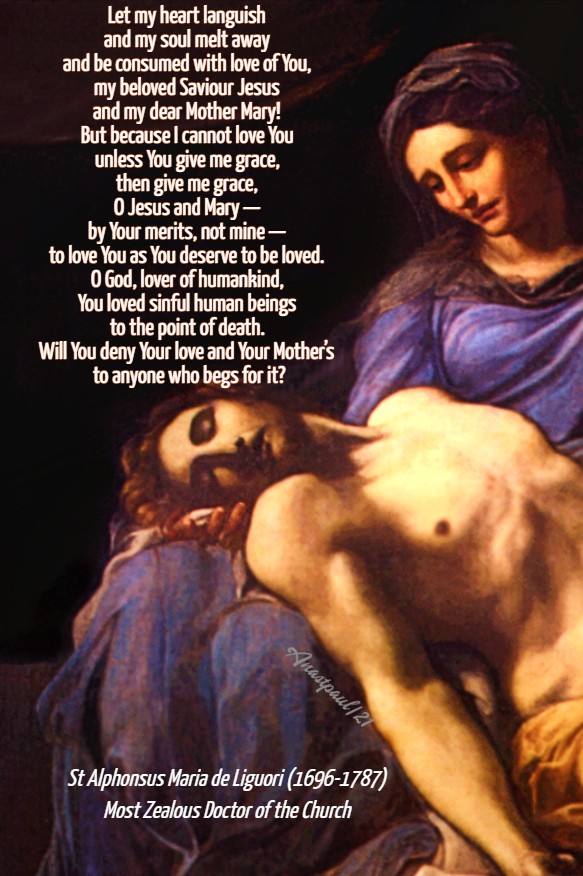
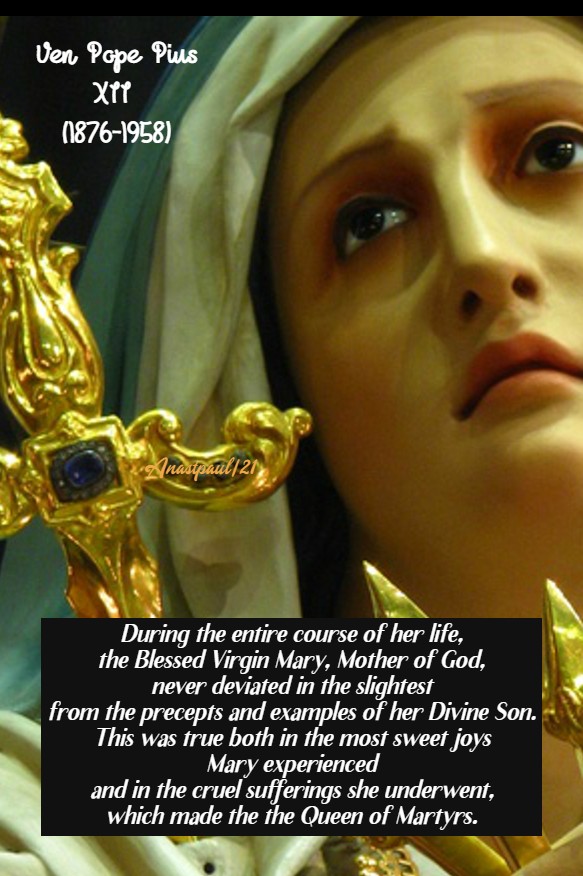
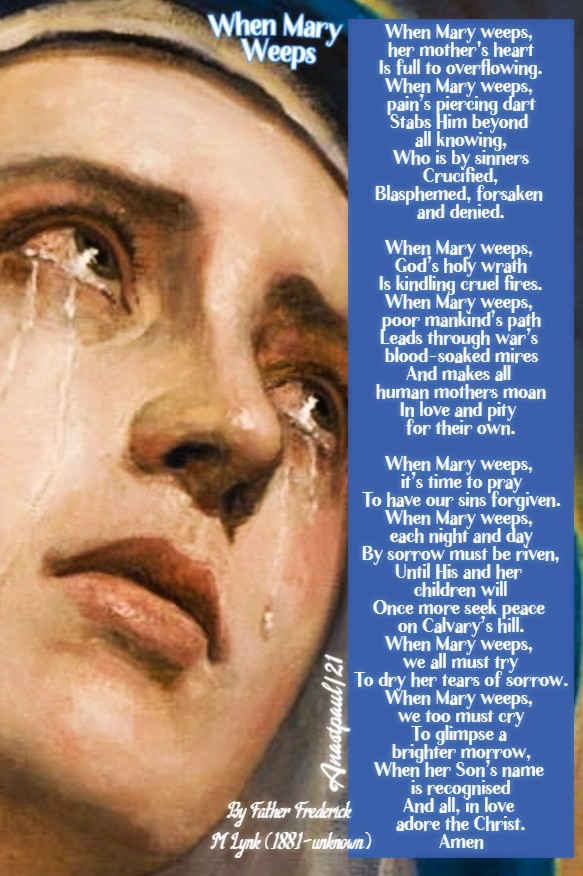
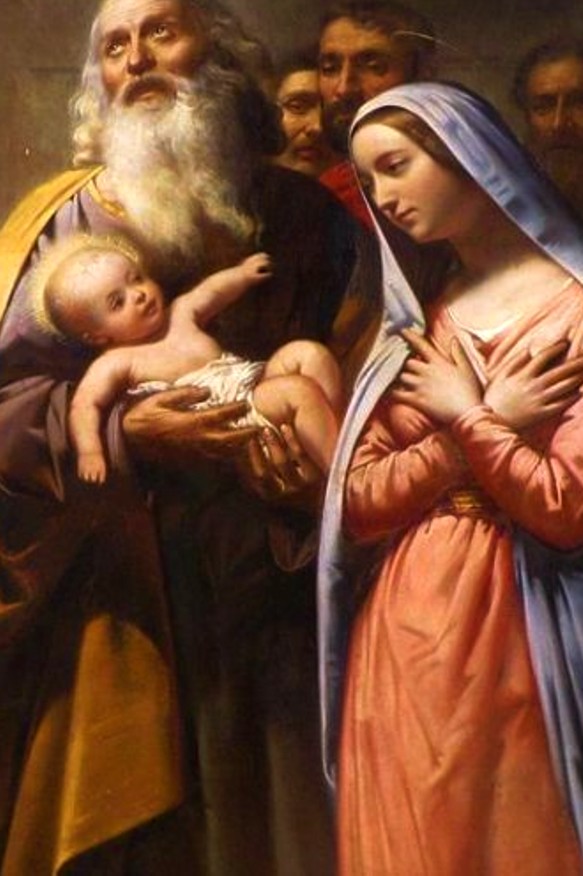
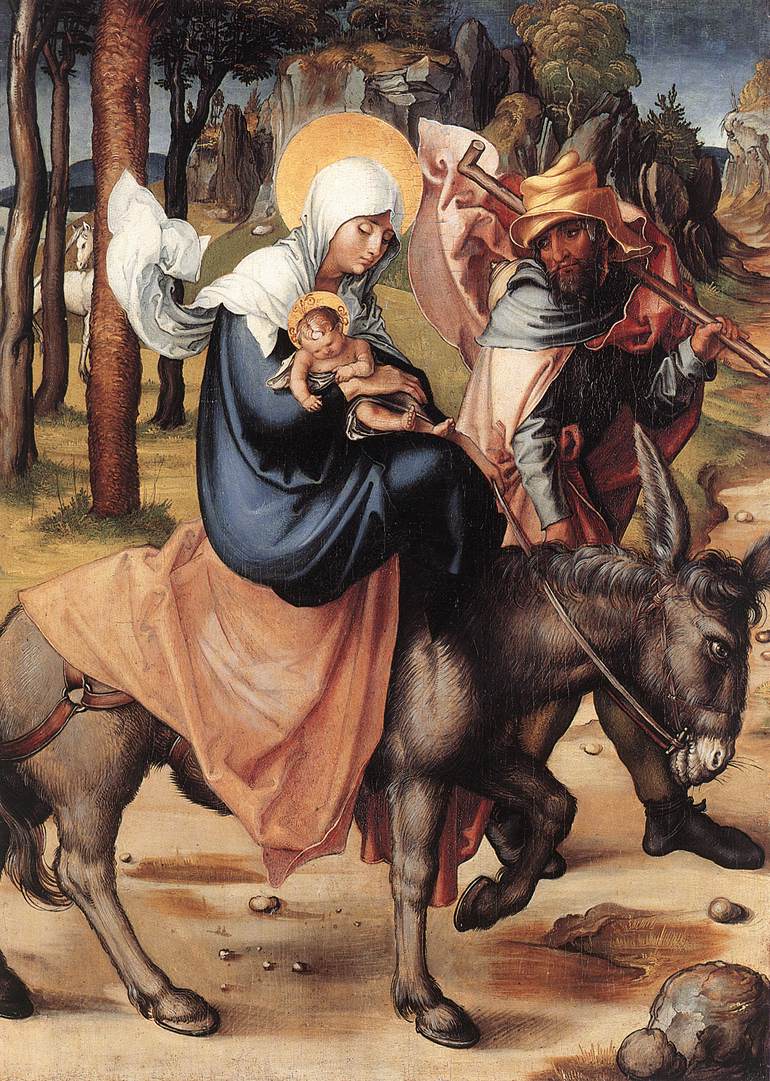

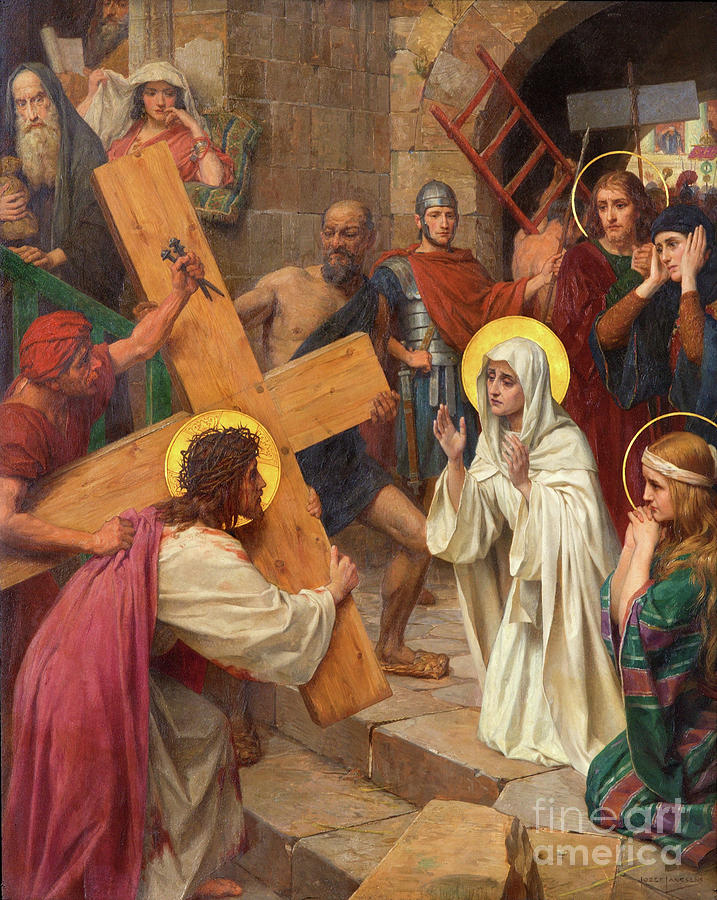


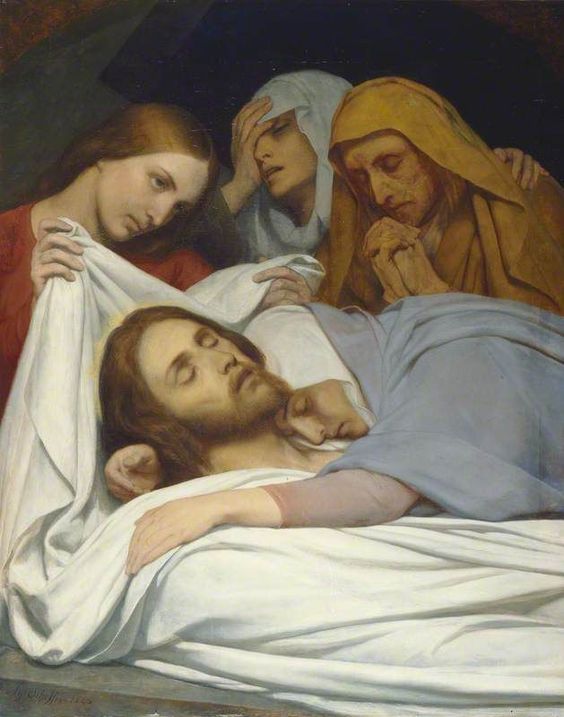
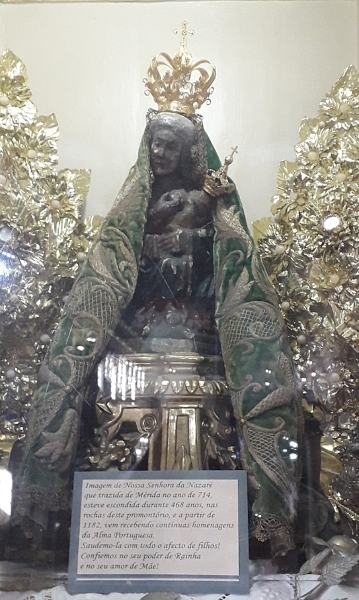
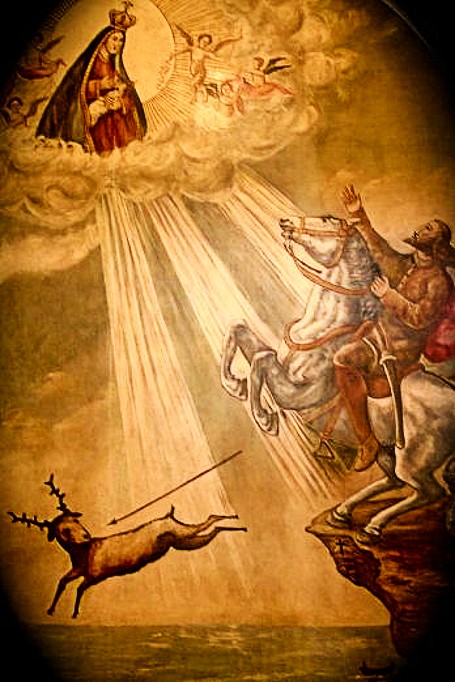
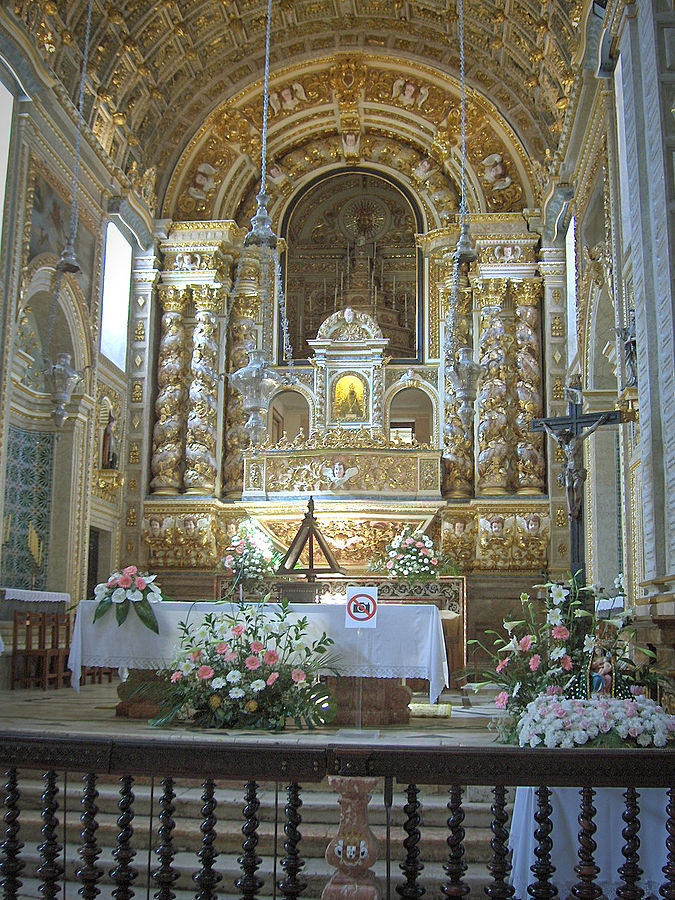
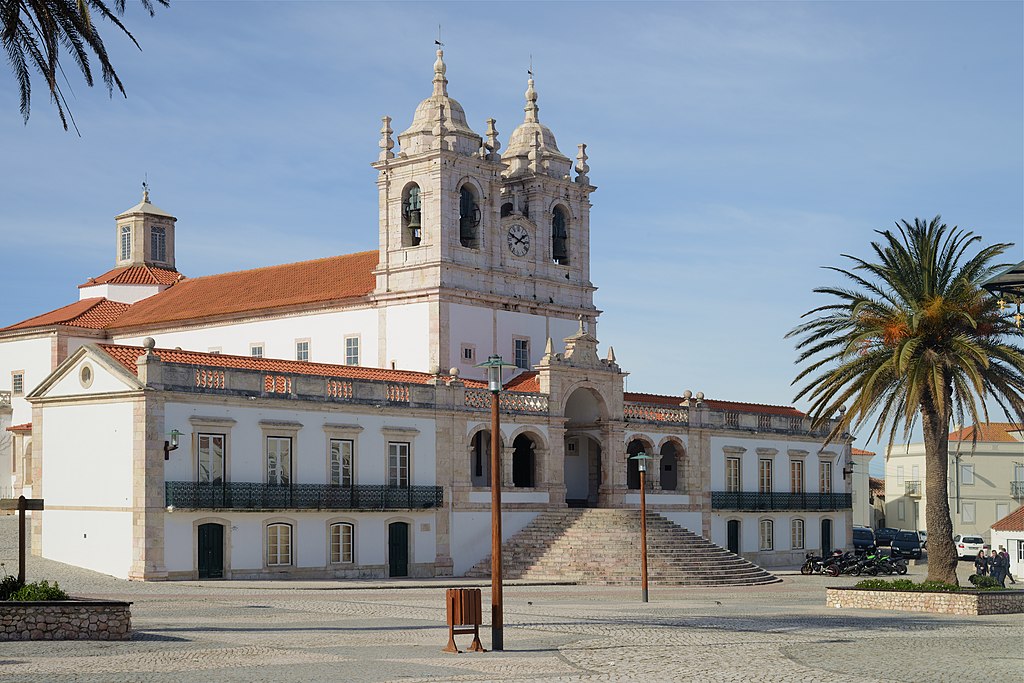

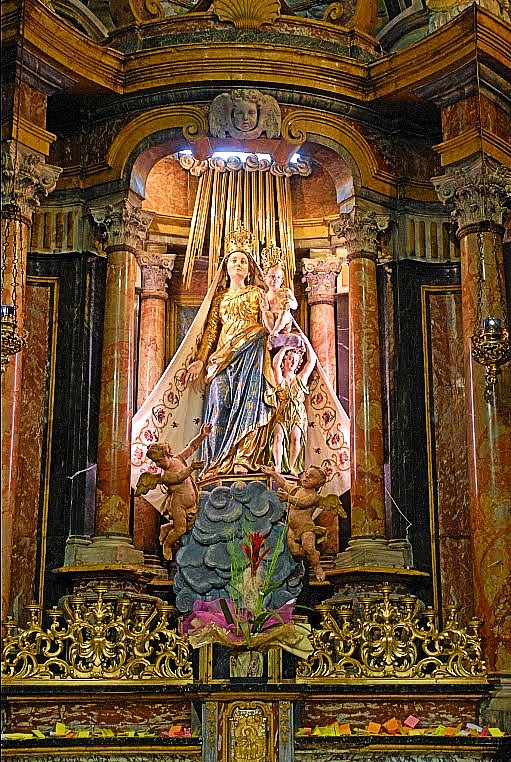



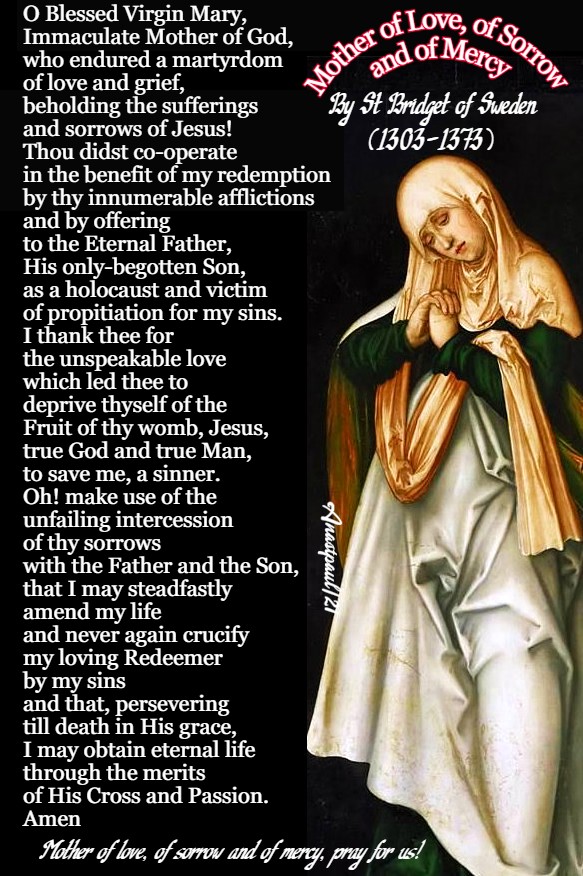
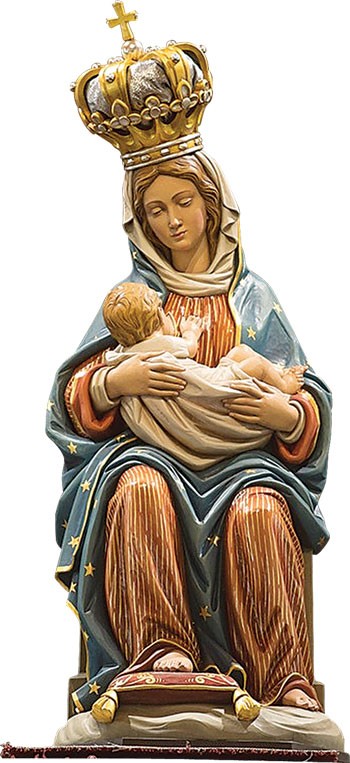

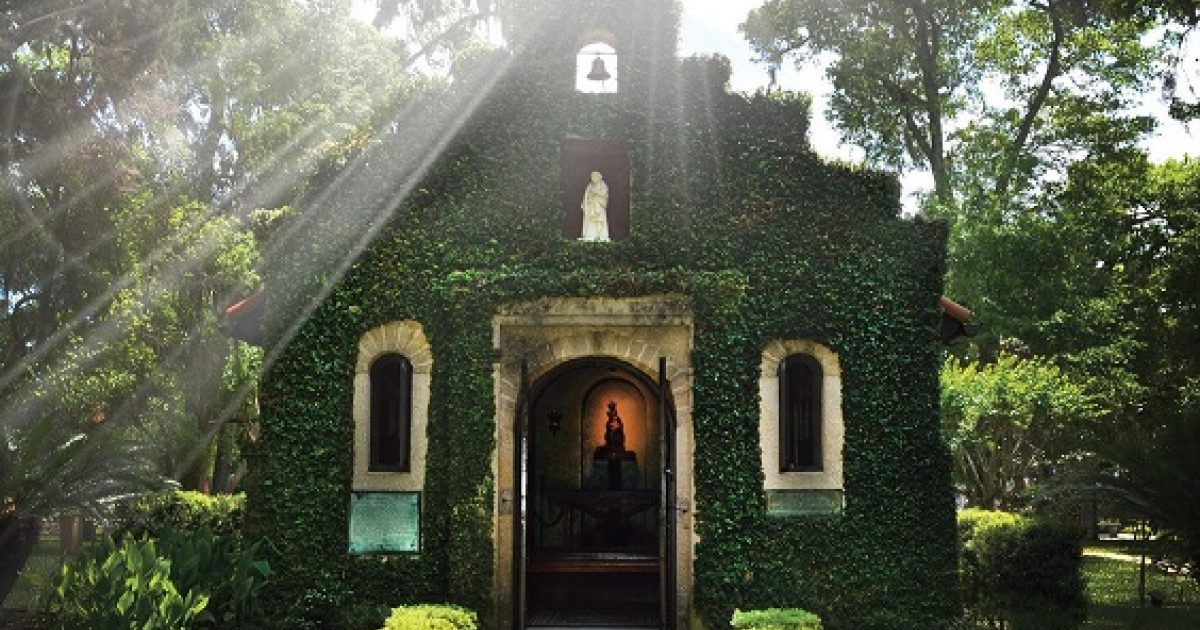
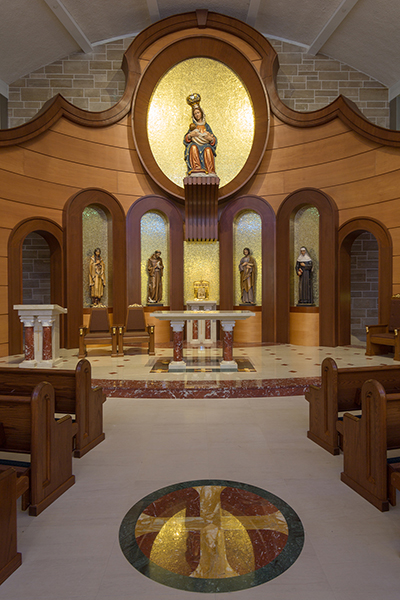

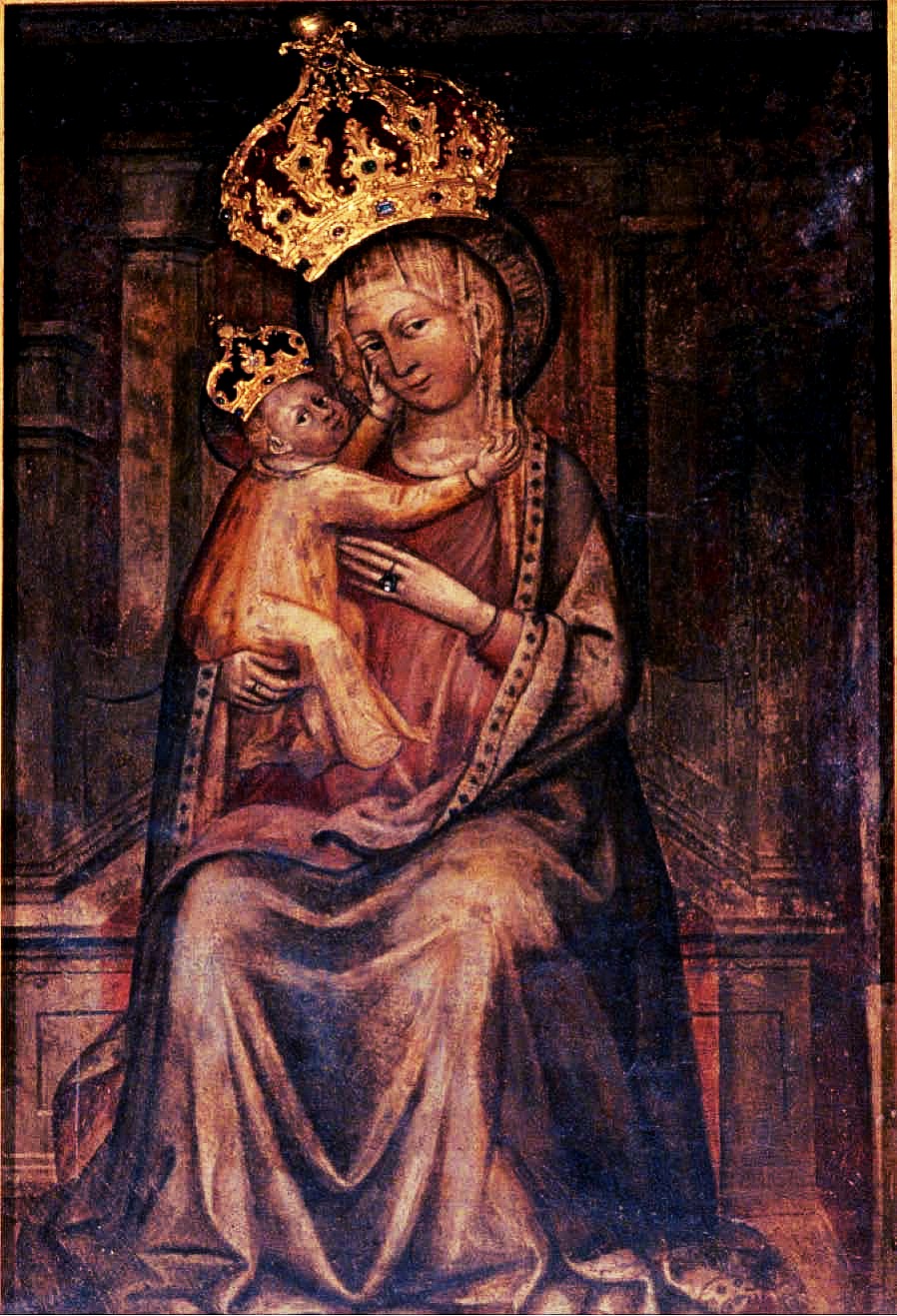

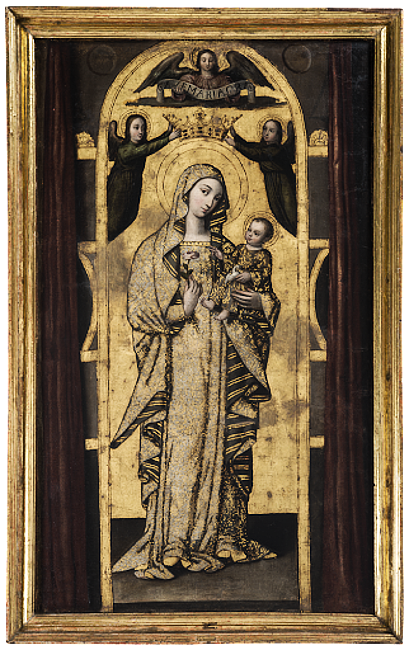
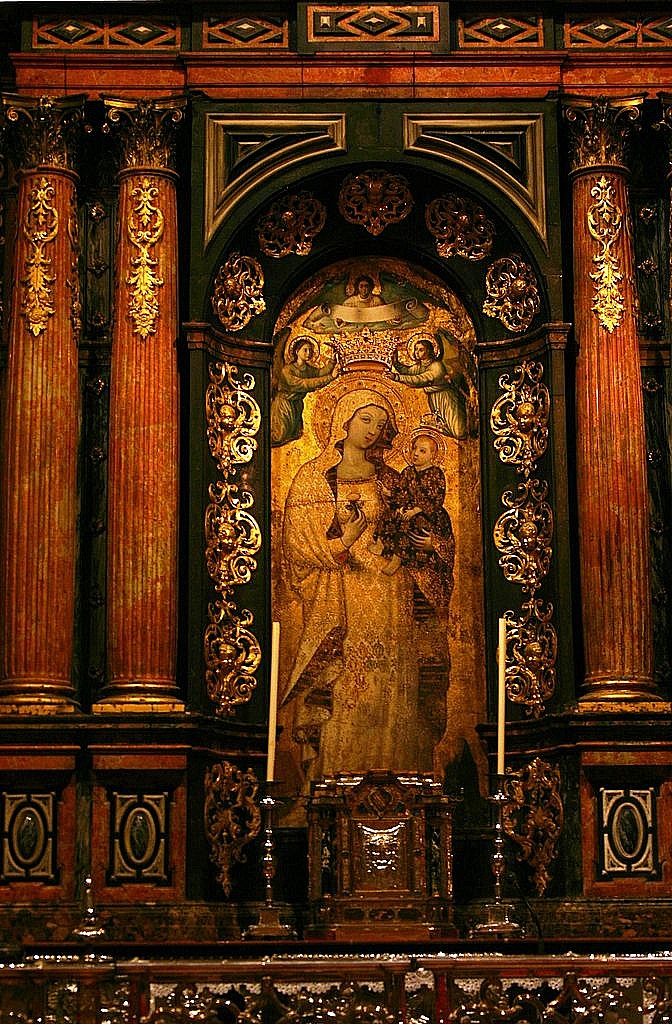

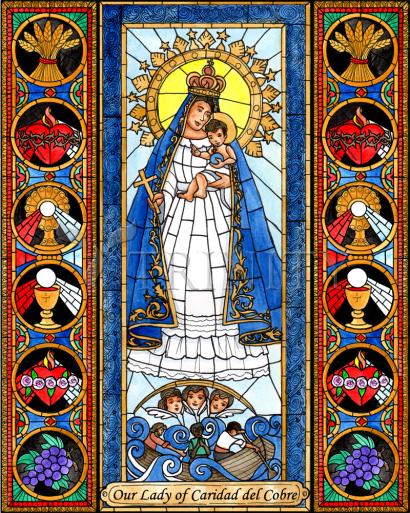
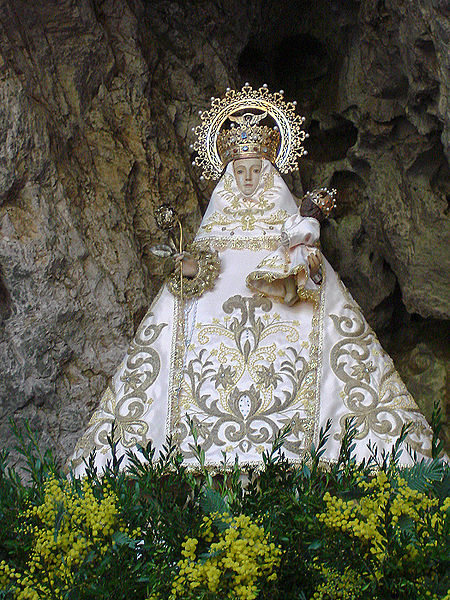
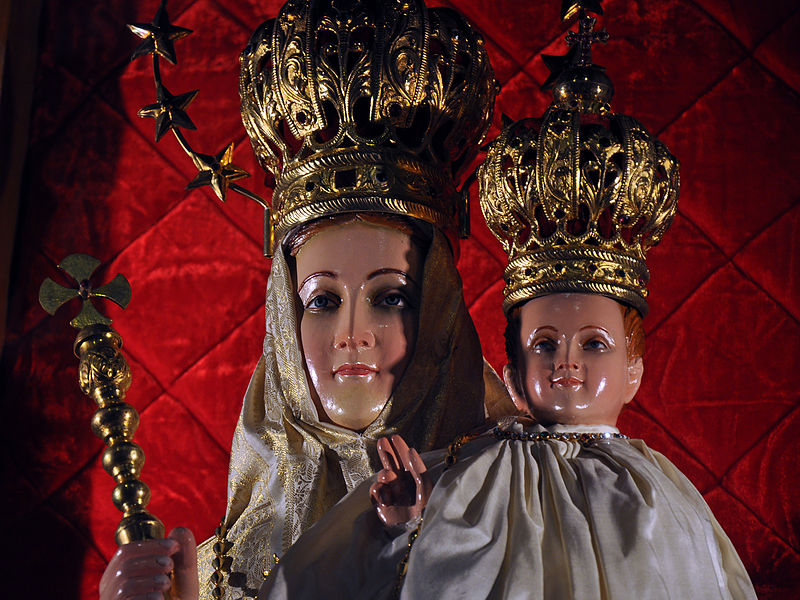
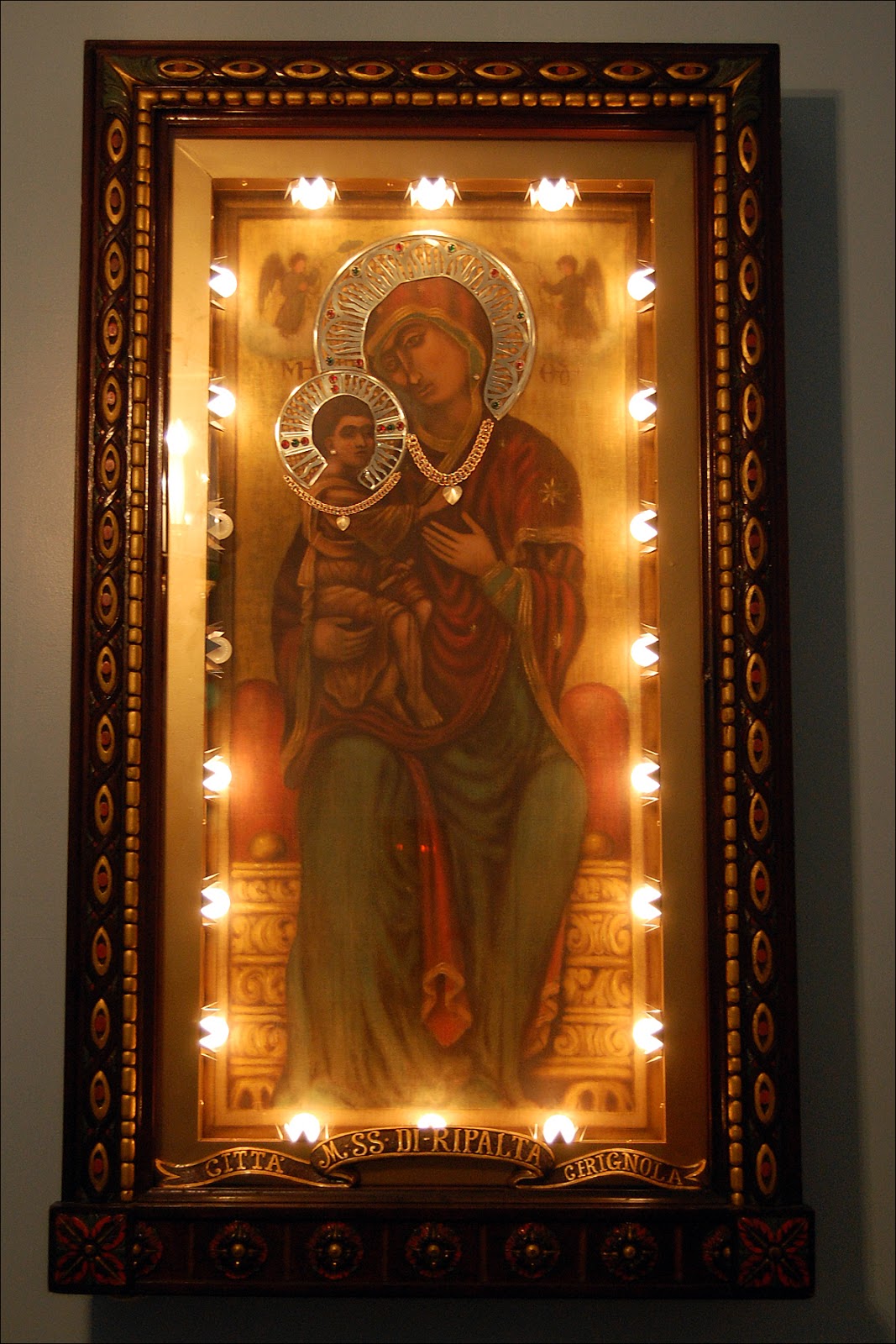
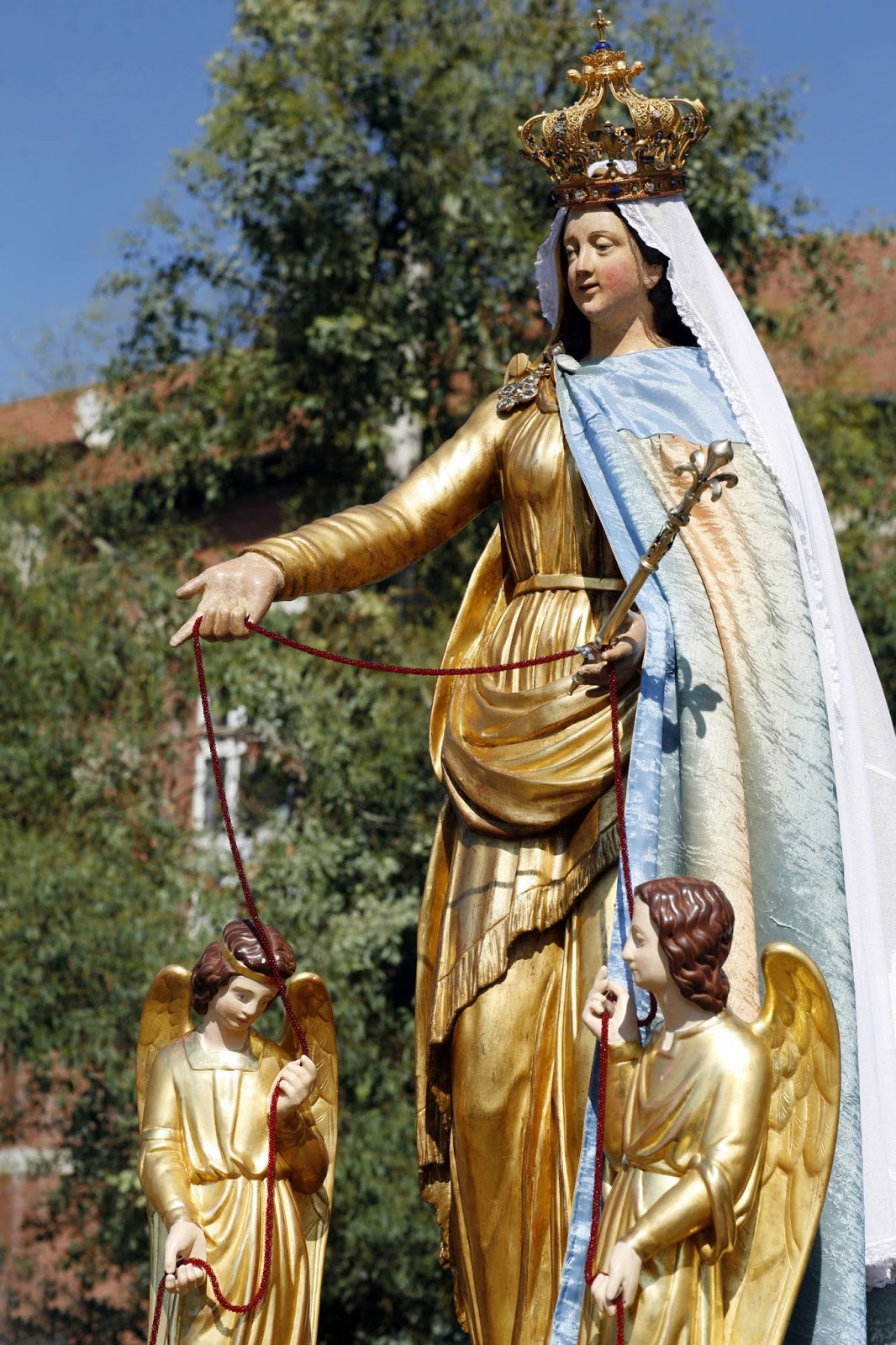
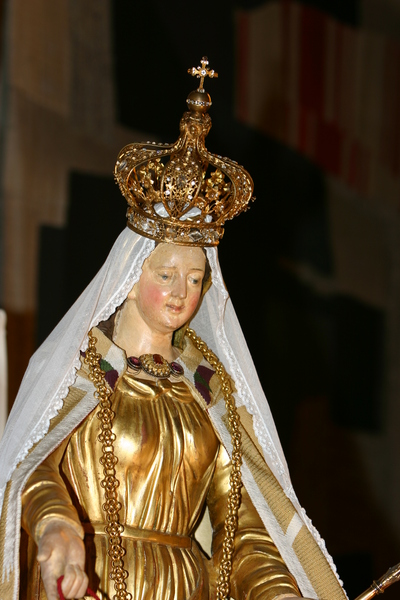
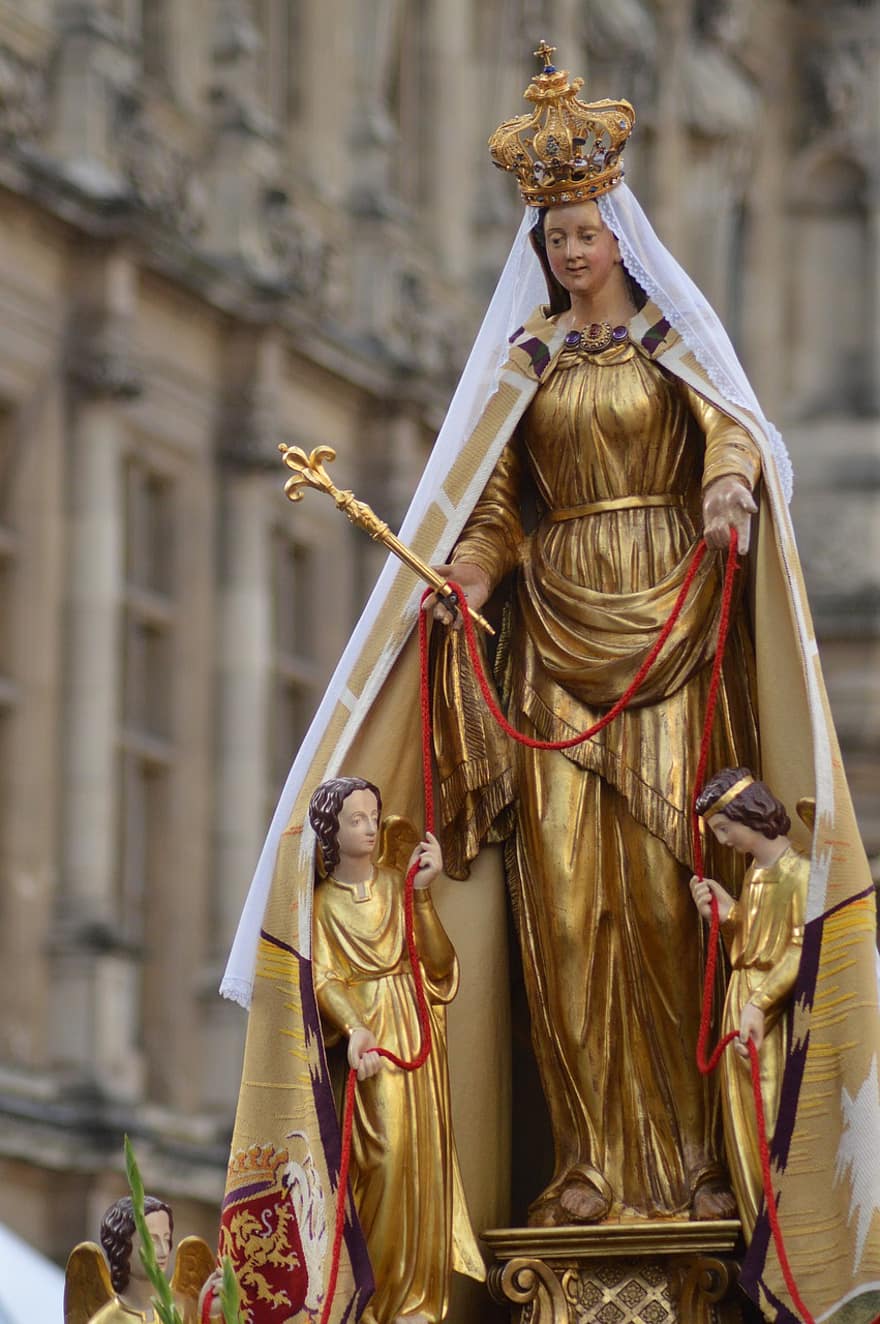

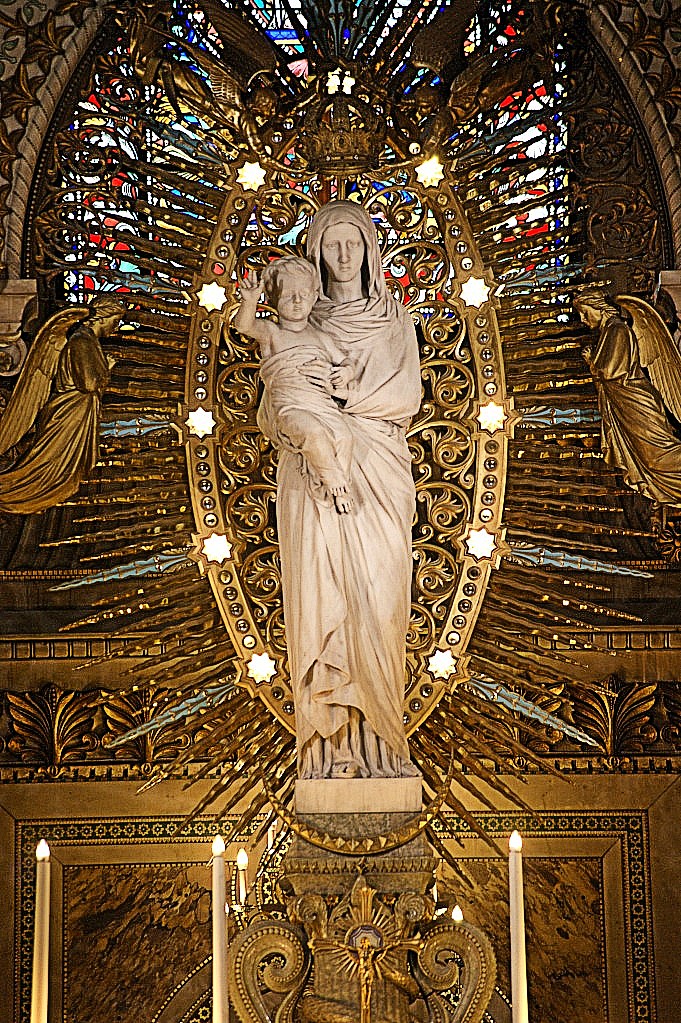
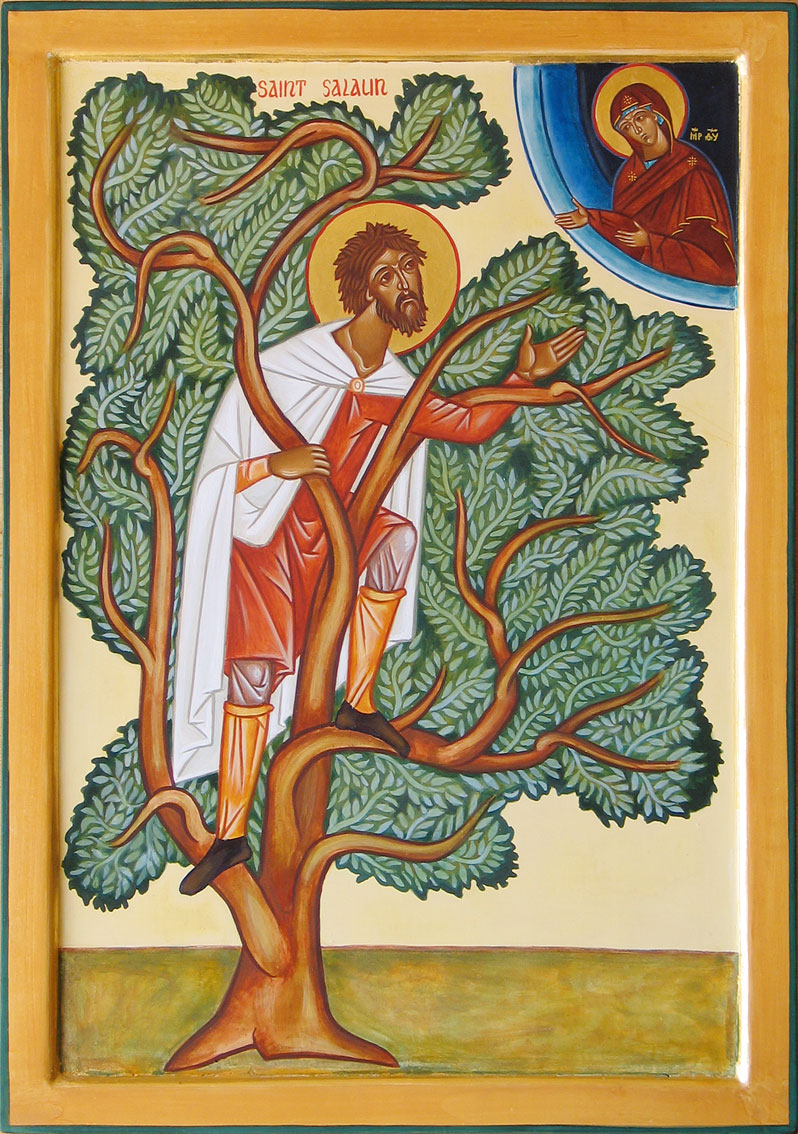
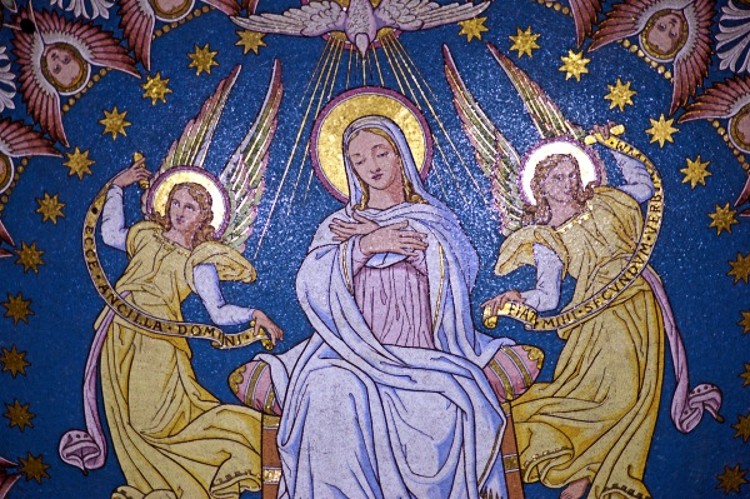
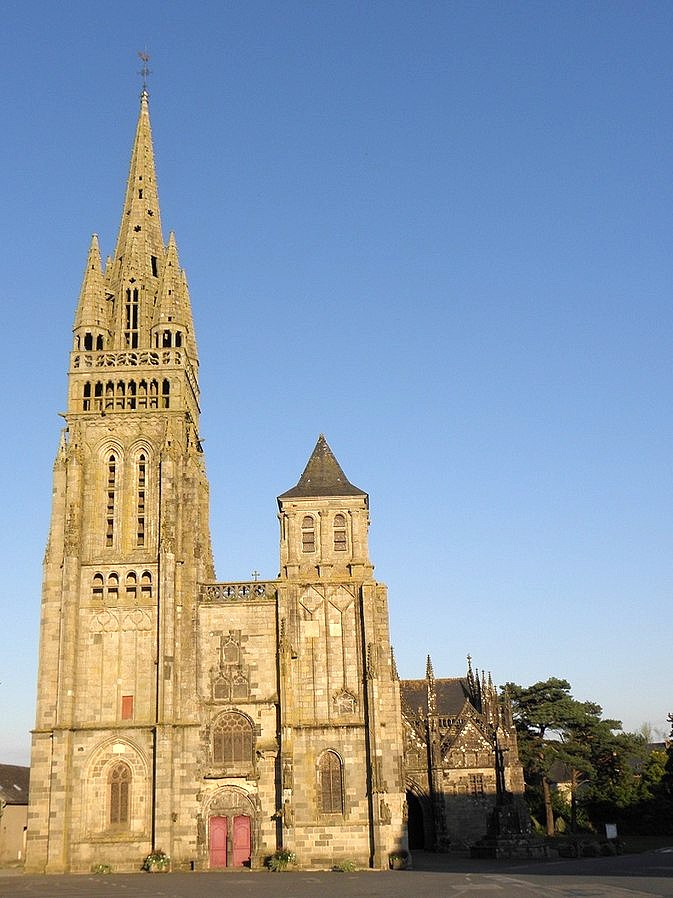
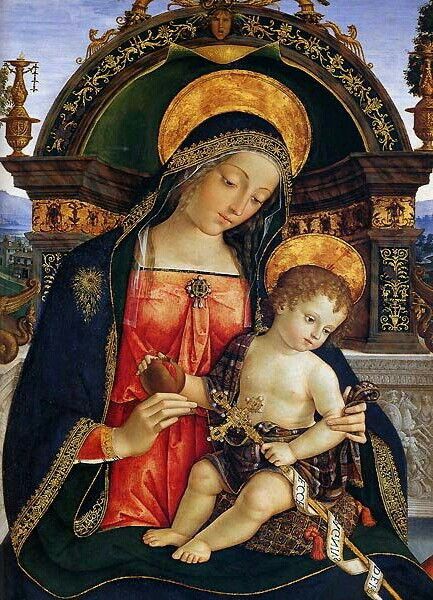

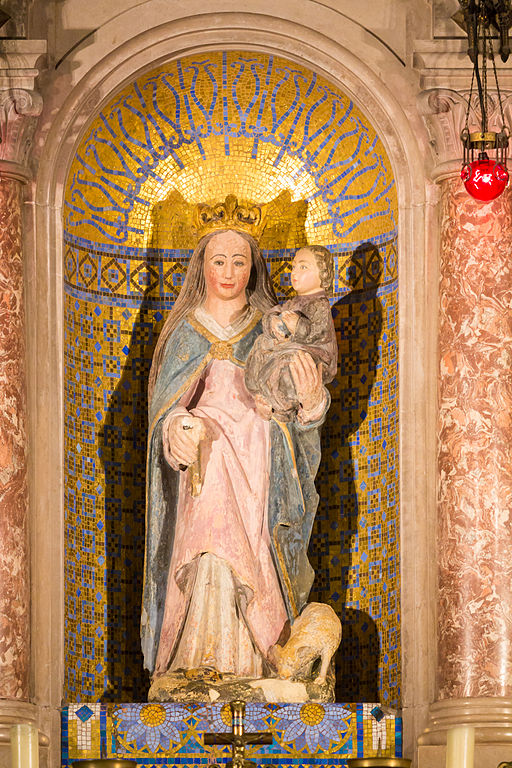
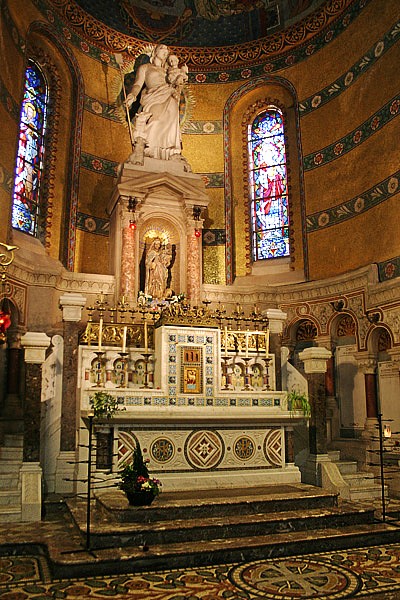
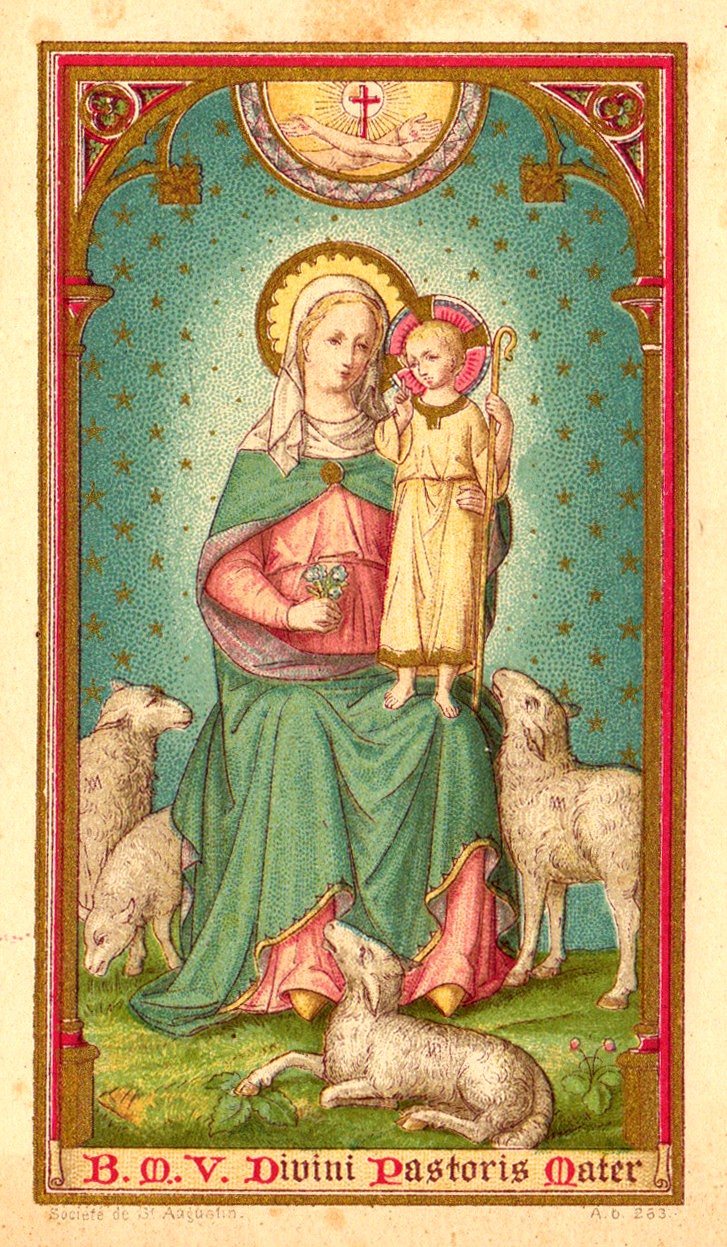

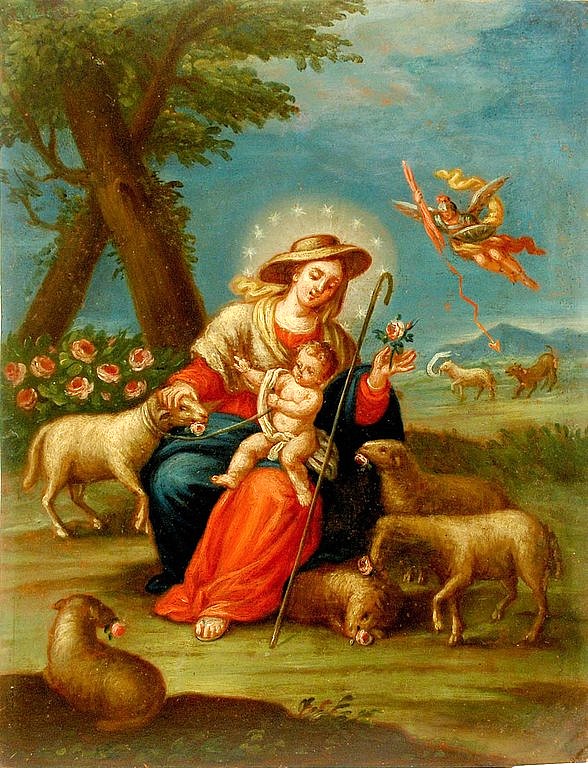
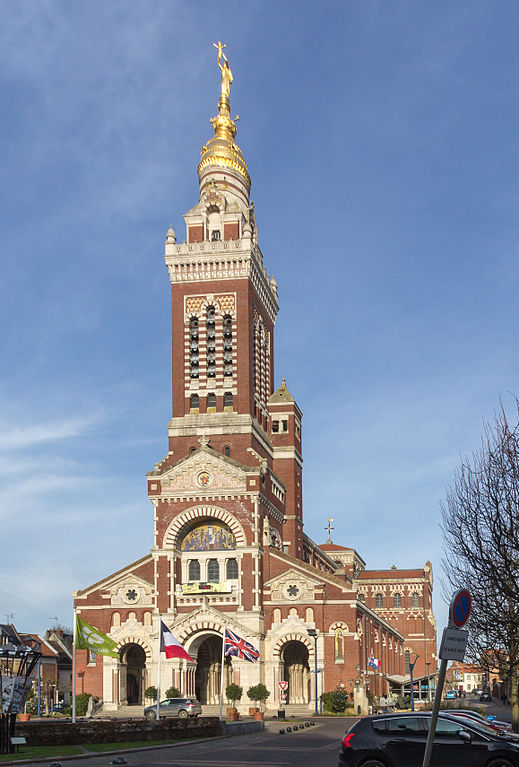

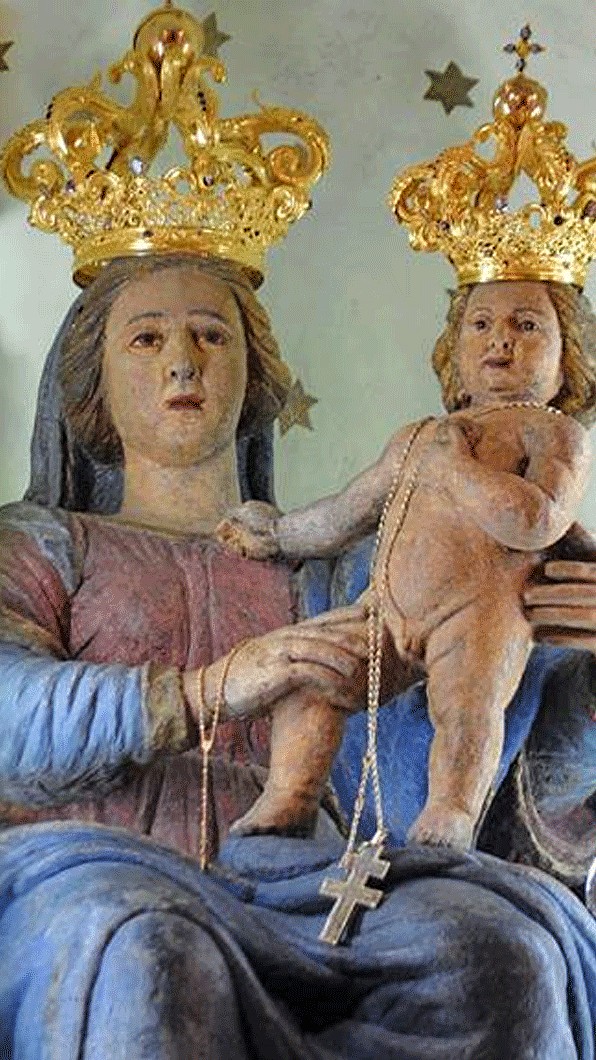
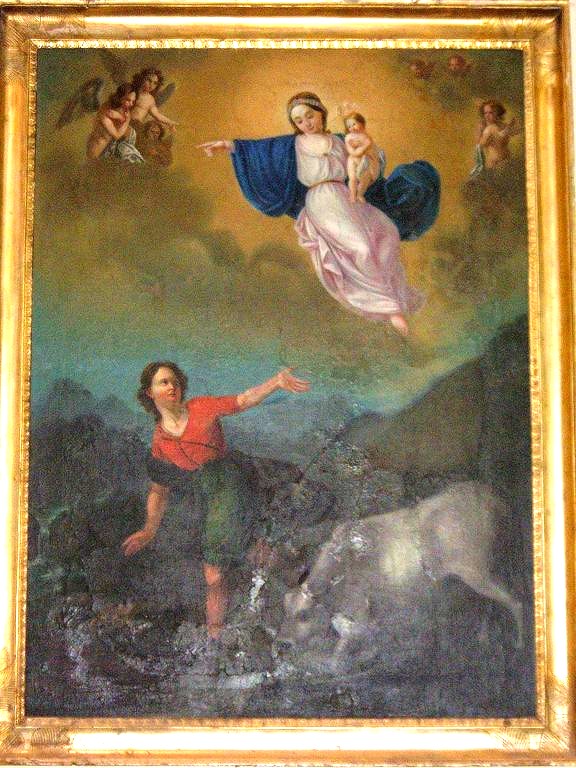
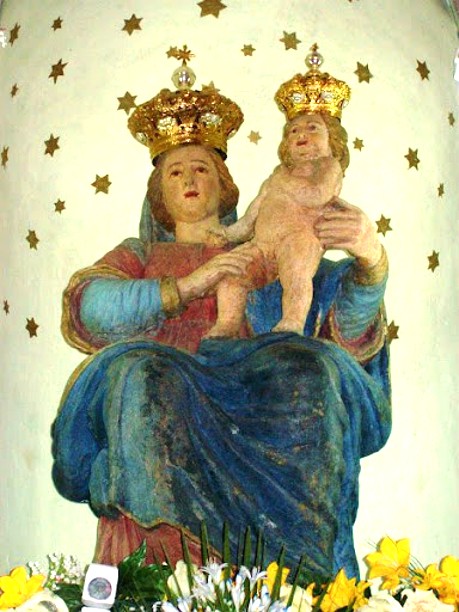
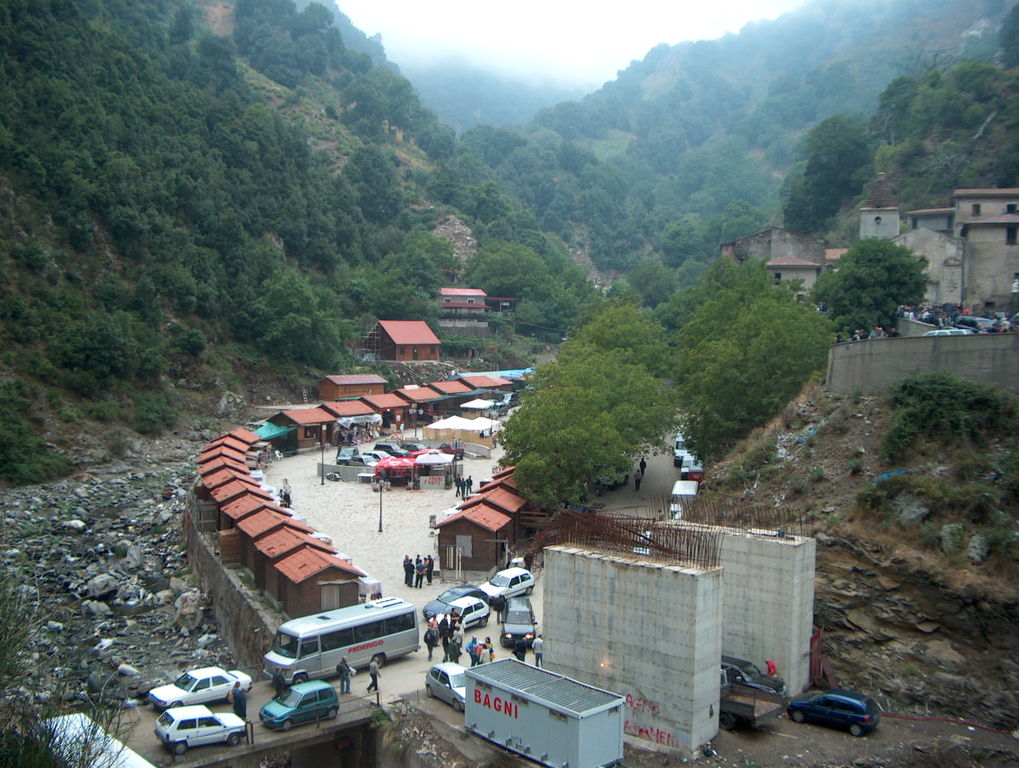
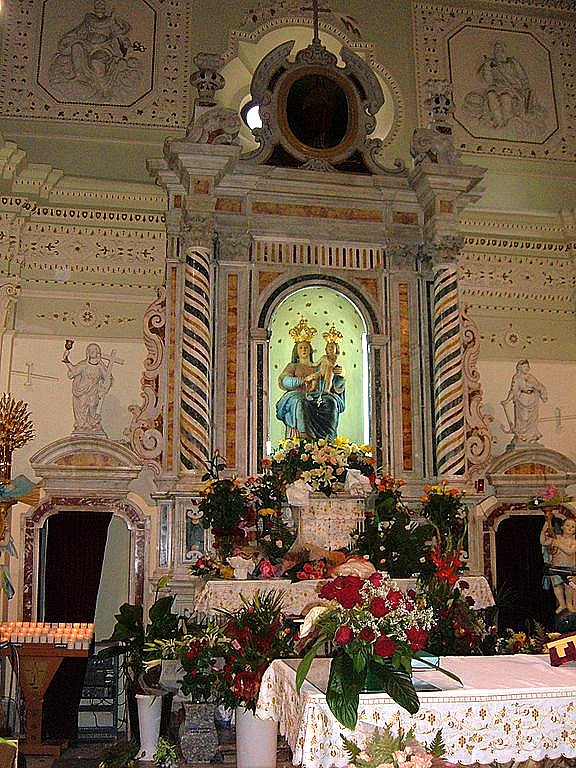
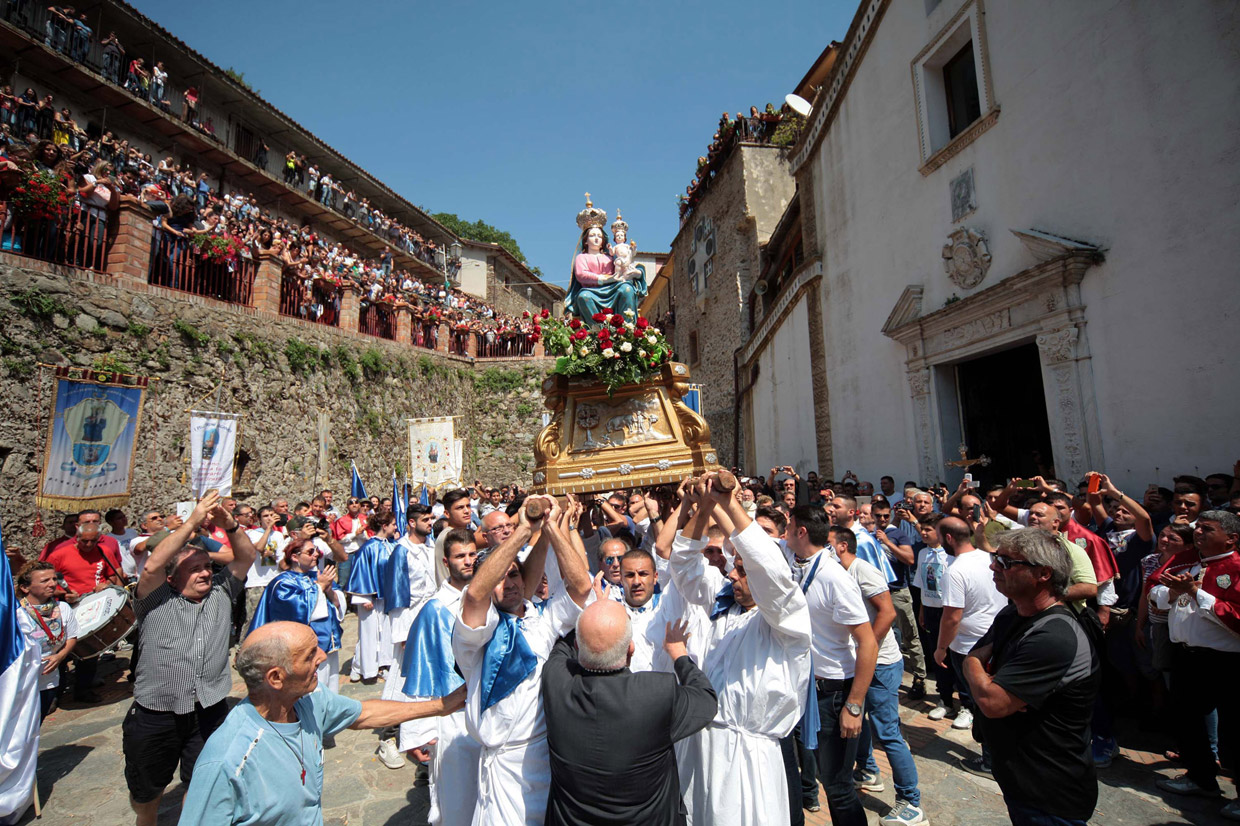
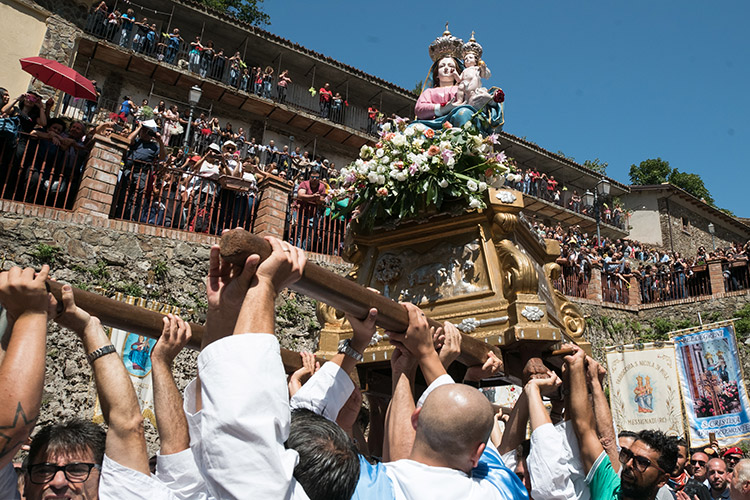


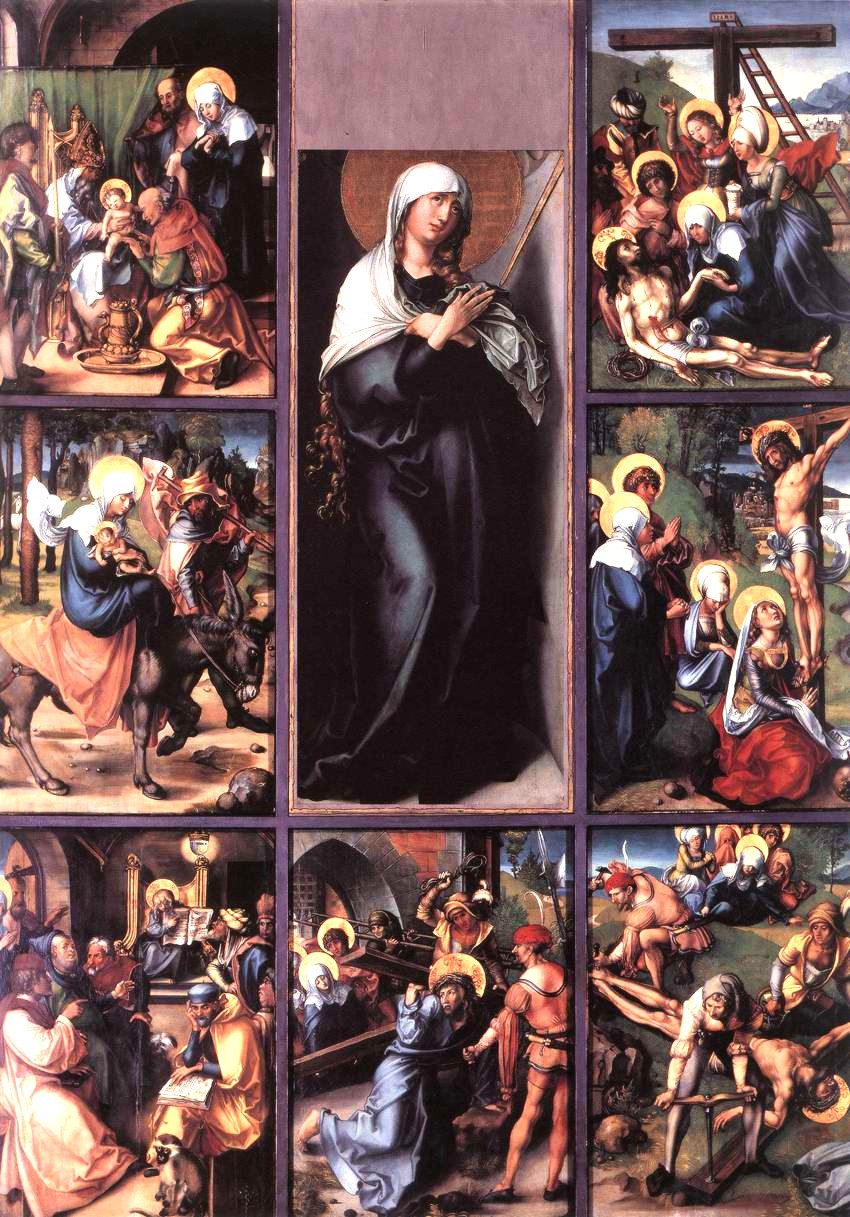


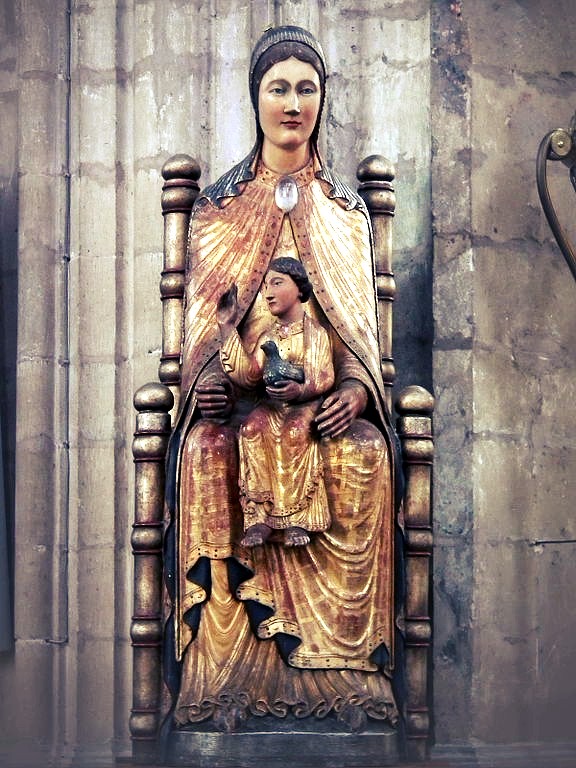

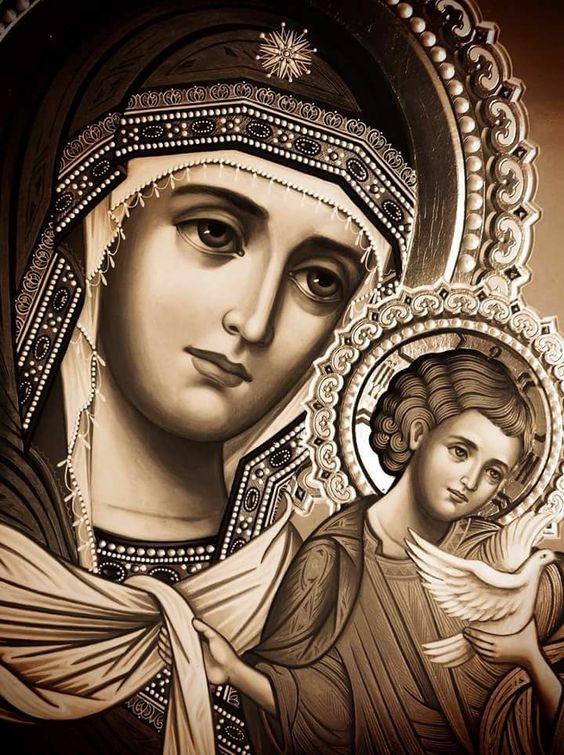
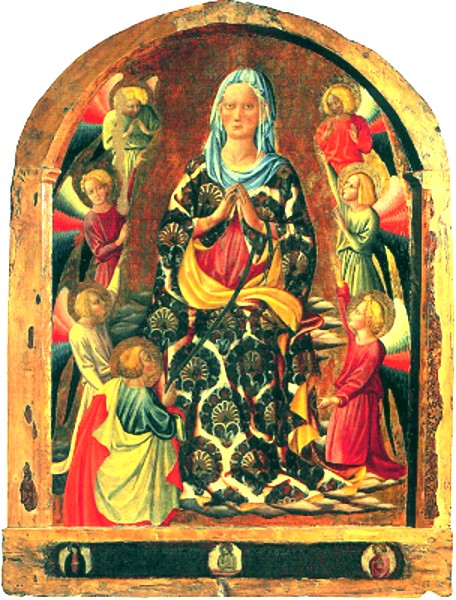
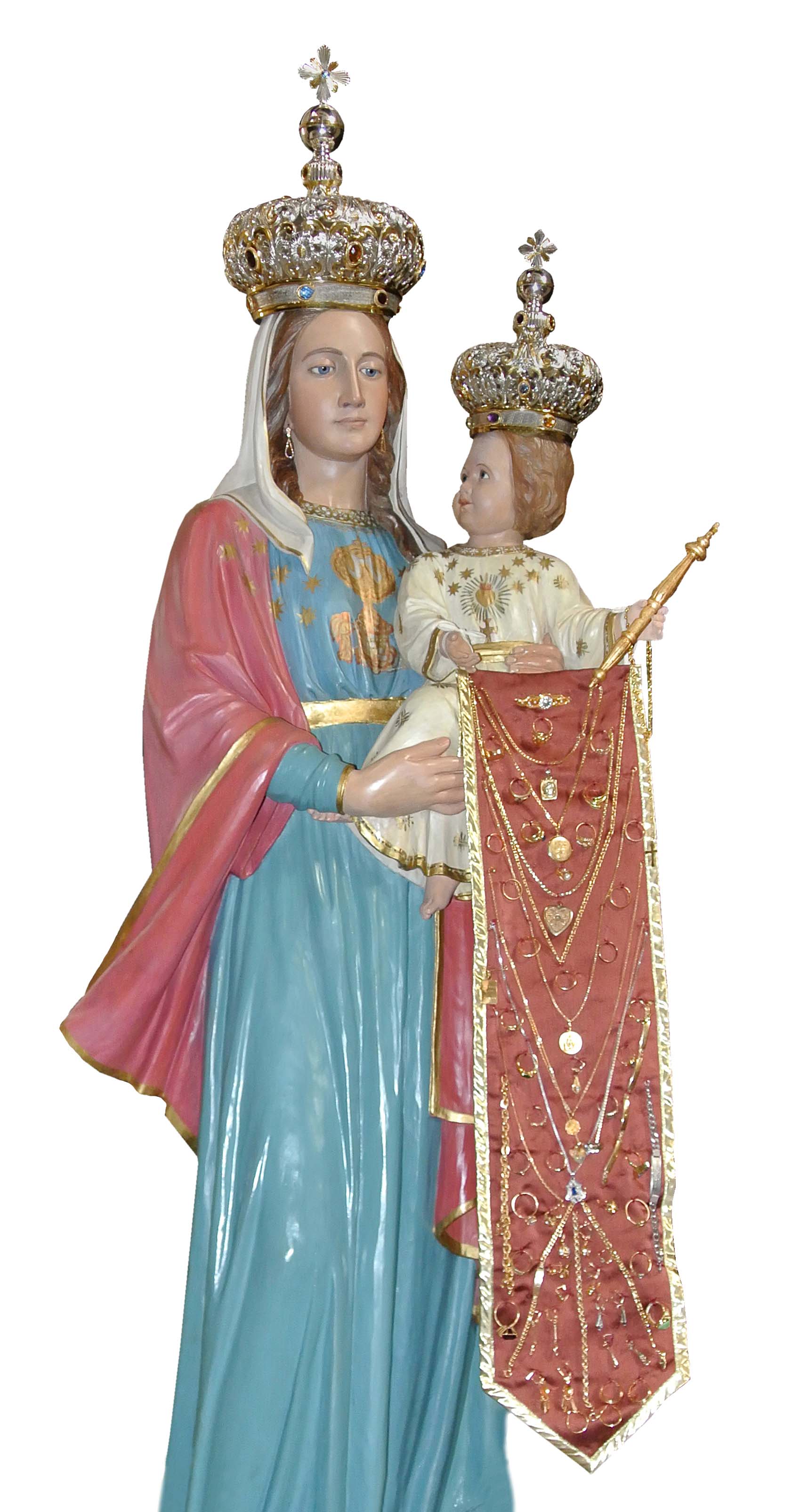


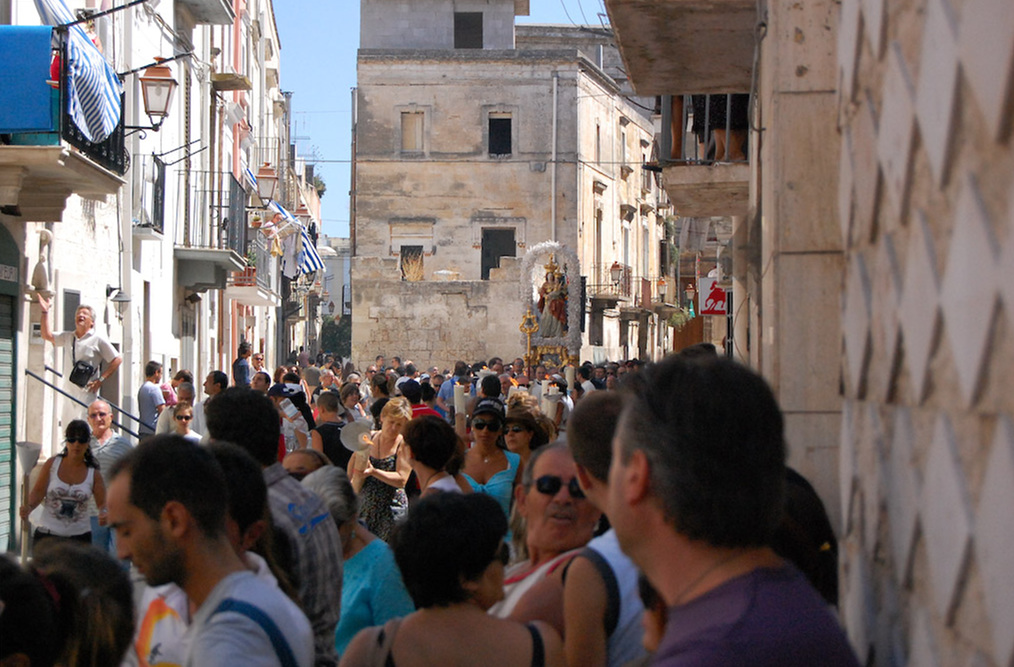


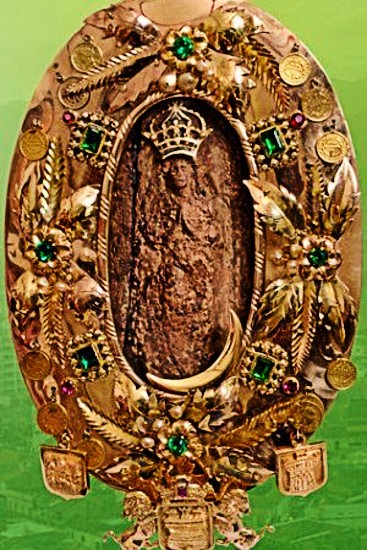
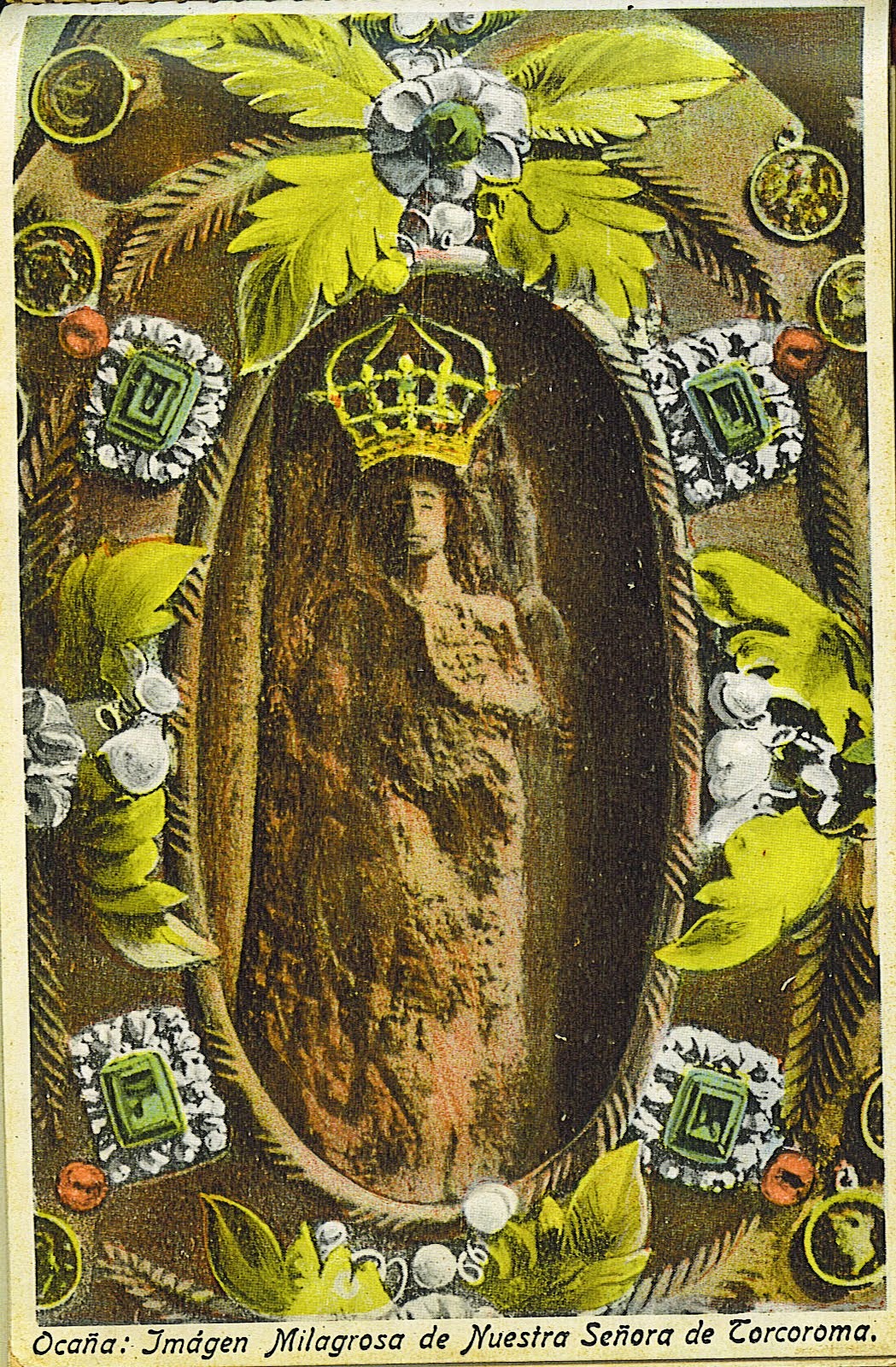


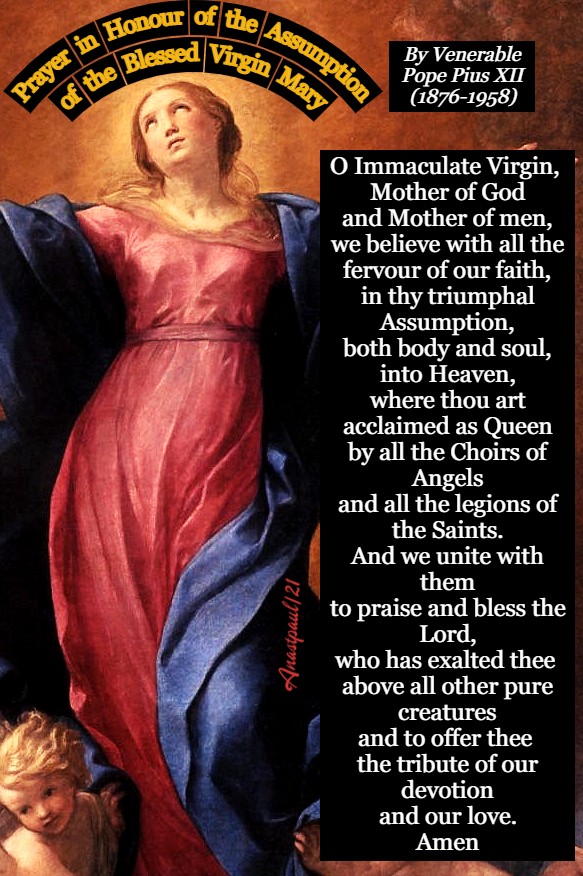

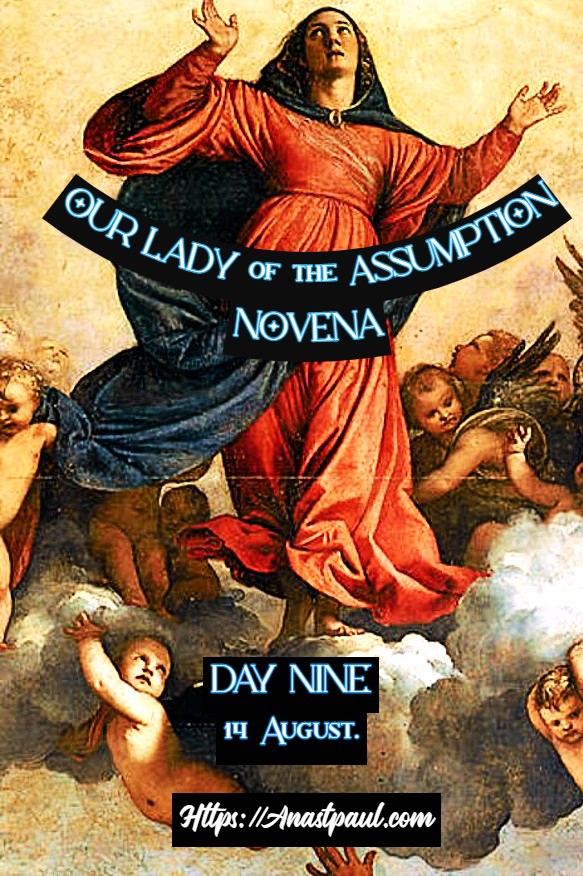



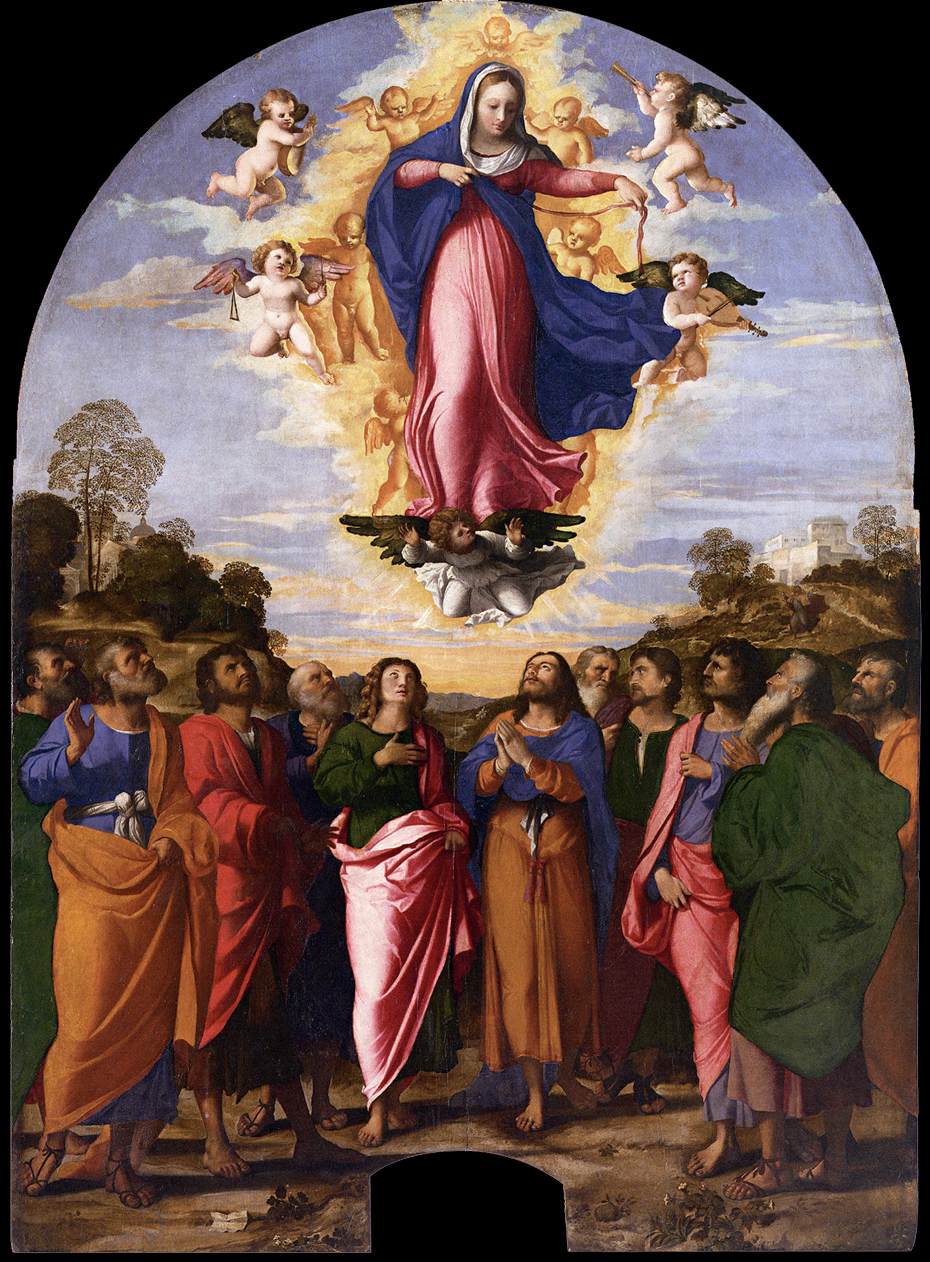
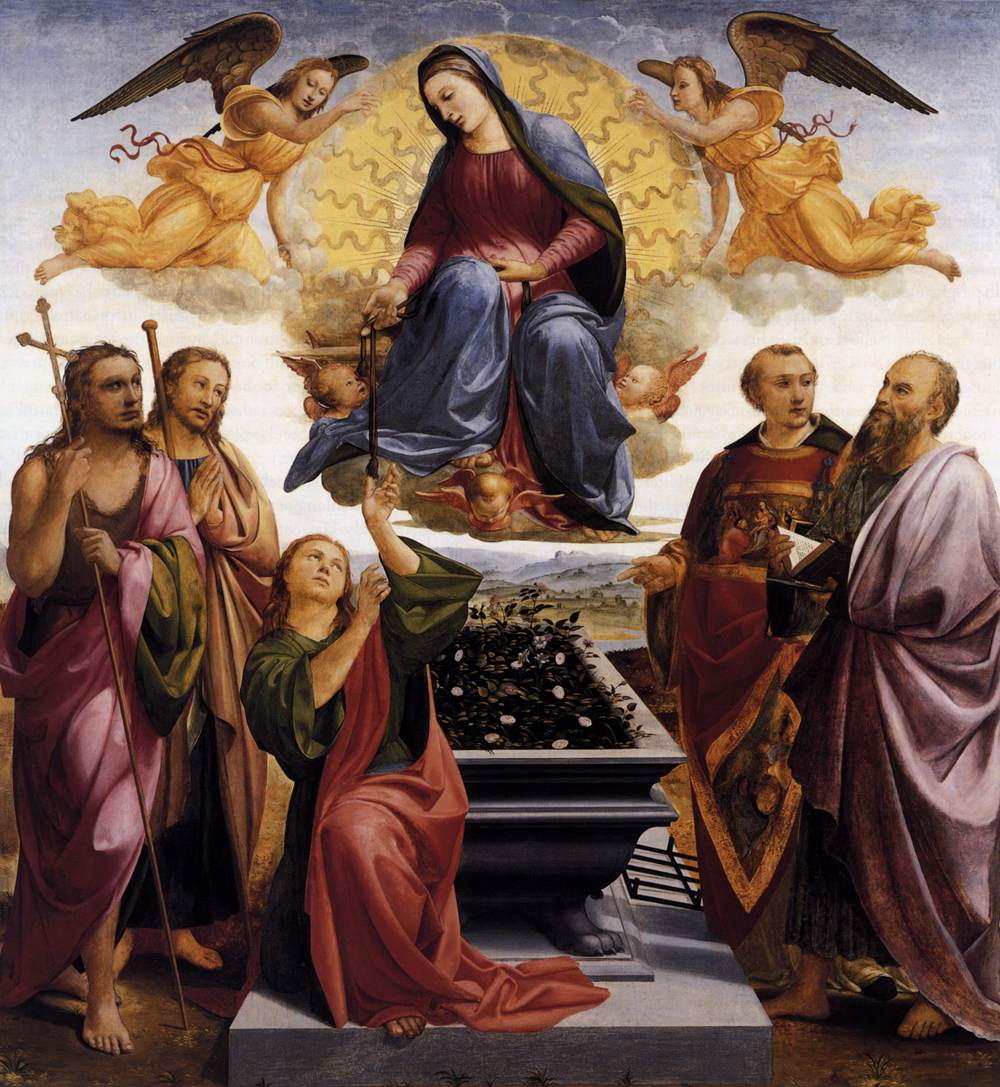
 AnaStpaul
You must be logged in to post a comment.